


LPU Reviews on Placements, Faculty and Facilities
What Students Say
Likes
- StaffIn LPU, more than 550+ national and multinational companies visit for placement. A few of them are Microsoft, Amazon, Adobe, etc. in which they are placed. The maximum package availed for the Engineering programme is 42 LPA. ~ Ashish Sahu, BCA
- The examination system . If you got fail there would be reappear and also 5 chances of reappera which is of 350rs and then backlog. Compare to other colleges it is a good idea ~ Chandana Mukesh, B.Tech
- It is 97% paper less- environment friendly. .... ~ Khyati Kumari, BCA
Dislikes
- 75% attendence are compulsory here so we go class regulary ~ Ritu Raj, B.Tech
- Coding is zero and their is not such good dsa ~ Amodh Kumar, B.Tech
- Schedule is very very hectic. Everyone just gets tired a lot after every classes . Almost 7 to 9 classes are held everyday. ~ Mihir, B.Tech
Why To Join LPU - Reviews & Rating


Most Popular Tags

Likes
- LPU have very nice environment for every people
Dislikes
- The crowd will very much there it will be a problem
Placement Experience:

Likes
- The university boasts an excellent, massive campus infrastructure with great amenities and highly diverse student crowd provides great cultural exposure
- While the engineering batches naturally leans towards more boys (around 1:3 girl to boy ratio)
- Availability off dedicated campus mentorship programming and technical club provided a great platform.
Dislikes
- The campus administration enforced incredibly strict security and daily restrictions which feel a little overwhelmed
- The total no of students in a course like cse is massive. So the competition for the high tier placement is very intense.
- If we need any information or some help from the administration they will make it lag and go to that window this window and we will not get the information ww required
Placement Experience:
Likes
- The Scholarship benefit is good when compared to other universities the fee is also not very huge.The Infrastructure of the campus was vast and there arelots of stall to purchase food items etc
- There is a big mall through which You can get necessary items .In every hostel you will have departmental stores
- The faculty was highly qualified. The Placements opportunities are also good The average was offered was 5-6 LPA.The Lpu newly Launched Education Revolution is very good for students
Dislikes
- The mandatory 75% attendance policy for every subject.If you not maintain you will debar from End term examinations which is not all good
- The Roads are not that much good .The roads are made of parking tiles instead of Thar
- The distance between hostels and main gates are nearly 1.5 -2 km which not at all good .but there e-rickshaw they charge 15 rupees per person to drop from hostel to main gate
Course Curriculum Overview:

Placement Experience:

Likes
- I like most things in the in university like the infrastructure and the places like UNIMALL, ROBO PARK AND INNOVATION STUDIO and etc..
- and even faculty explain will about the subjects and even we do real life projects to learn the subject
- we have clubs and many more things engage in the college life where we can meet with different deparment students
Dislikes
- most disliked thing is the poor internet connection across the university and in many places there are no proper no internet
- I come from the south India i cannot talk it as most disliked thing
- And even some times they respond where late when some of the information was asked.
Placement Experience:

Likes
- Learning and skill development - my college provided a good foundation in acadmics and good infrustucture .
- campus life social interacaction - campus life was decent i got oppourtinities to intract people diffrent country. so thats why my communication skill was improved .
- Faculty Support- My fav topic thats why i mention the faculty support .my teacghers and faculty was very supportive and very friendly .
Dislikes
- placement support - placement support little bit bad beacuse i am tech person but mostly company are vissited sells so little bit improved .
- cariculam revenece - the sylabus was outdated
- limited exposure -there weere feweer industry
Course Curriculum Overview:
Likes
- Campus is big as well as scope in games and art and culture.
- Gender ratio is comparatively way better than other engineering colleges.
- Learning facilities is good. Specially if you are good in sports art and culture.
Dislikes
- Too much restriction.rules are followed at every point in campus
- Faculties are not as experienced as they should be.
- Crowd is there , specially in computer science and engineering.
Placement Experience:
Likes
- Large and beautiful campus with new technologies.
- Opportunities provided by College and clubs.
- Coding culture inside college is very good.
Dislikes
- There are lot of students for B. Tech CSE so high competition.
- Sometimes theory subject teacher can be average but coding teachers are always good.
Student Snaps:

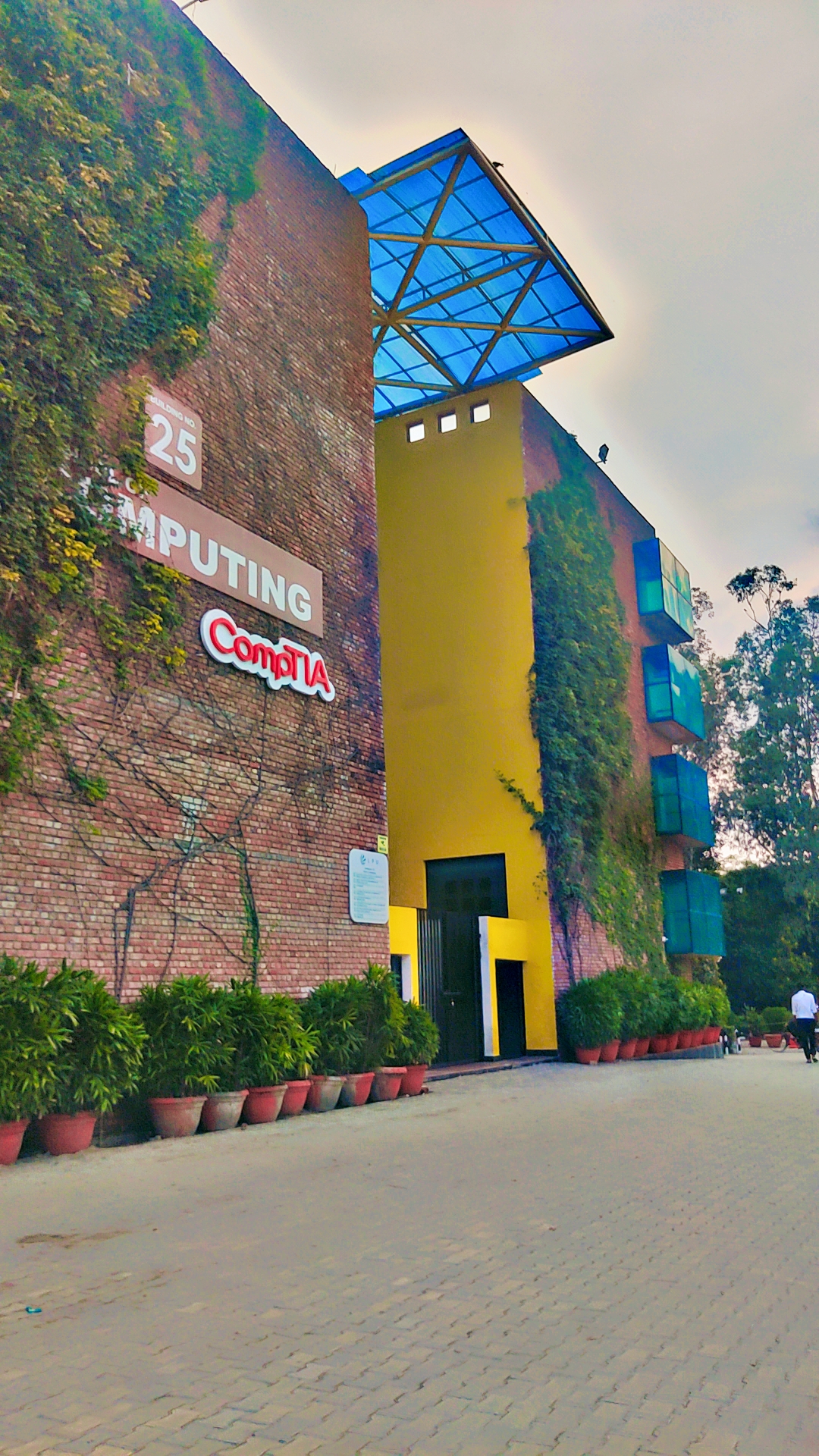
Placement Experience:
Likes
- Course structure is good compared to many other universities.
- Campus space is quite big for refreshment
- overall building structure is good in looking
Dislikes
- Unprofessional faculties, no proper teaching manner
- Very wide range of subjects, this divert the attention from main job oriented subject like programming languages.
- Behaviour of faculties, Guards not well, both needs behavioural tranning
Course Curriculum Overview:
Likes
- Teachers and faculty are helpful and nice
- Food and overall environment of college is good
- Campus is happening also many opportunities are available
Dislikes
- Course layout can be improved for certain subjects in a course
- Population is very high making the competition strong
- Cleanliness can be upgraded especially during rainy season
Placement Experience:
Do you think the data is wrong ? Report Here
LPU: 6 Answered Questions
Can I get an honest review on LPU University placements in engineering?

An honest review of LPU engineering placements has to separate the marketing from the experience. A current student describes the experience as a wild ride, with many of the best moments happening outside class. Their own view, shared in a discussion on private colleges, is that if you cannot get an IIT, NIT or IIIT, then VIT, Thapar, BITS Pilani or SRM Chennai are stronger choices for CSE, and that LPU is good for specific categories such as sports or modelling. That is a candid personal opinion.
On the other side, university-linked answers say LPU is strong for placements, and one mentions that a 30 percent scholarship on tuition applies across all eight semesters of B.Tech. That scholarship point is worth checking in writing, since it changes the true cost a lot.
Placement outcomes at LPU depend heavily on branch and on your own preparation. Core branches such as mechanical and civil are widely seen to have fewer campus opportunities than CSE, so ask what the branch you want actually gets. Request the last batch's details:
- the list of companies that visited
- the number of students placed
- the median package
Combine that with the real fee after scholarship before you decide.
What is your review of Lovely Professional University (LPU)?

LPU gets a largely positive review from current students, with a few real complaints worth knowing before you apply. A first-year B.Tech student describes the campus as huge, green and well kept, with digitised processes, helpful staff and seniors, and facilities that justify the high fees. Classes are taught in English so that students from different regions can follow, and a scholarship, once awarded, is reported to continue every year without a minimum CGPA condition.
The drawbacks mentioned are about rules and culture:
- the campus is entirely vegetarian, which is a clear disadvantage if you eat eggs or meat
- safety rules are strict, and some students feel that certain professors treat college students like school children, with rigid classroom discipline and even restrictions on leaving the class
- a few teachers are said to be biased when awarding lab marks, so build good relations with your faculty and keep records of your work
Remember that this is one student's early experience, and quality can differ by school and programme. Before you take admission, ask for the actual fee break-up, the scholarship conditions in writing, and the placement report for your own branch. Talk to seniors in your course, and visit if possible to see whether the strict environment and food policy suit you.
What is your review of Lovely Professional University?

A BTech fresher at LPU lists a mix of merits and demerits that is more useful than a glowing summary.
On the plus side, they praise the facilities, which they say are digitalised and clearly justify the high fees, a huge green campus, helpful seniors and cooperative staff. Classes are taught in English, scholarships continue every year, and there is no minimum CGPA requirement to keep them. Strict safety rules are also mentioned as a positive.
The downsides are real:
- the campus is fully vegetarian, which matters if you eat meat or eggs
- some professors are described as biased in lab marking or strict to the point of treating students like school children, with absence marked for small things such as smiling in class
- food, hostel, mess and transport are expensive, and the same student feels the university is designed mostly for upper middle class and rich families
So the review comes down to this. If you want a well-equipped campus with scholarships and can handle strict rules and the cost, it can work. If you want freedom, a flexible diet or a low budget, think twice. Before deciding, speak to a few current students about the placement outcome in your own branch.
What is an honest review of LPU based on user experience?
An honest review of LPU is that experiences vary widely, and your outcome depends on your branch and effort. On the positive side, students point to approachable faculty, lots of workshops, hackathons and project work, a large number of recruiters visiting, and the chance to pursue internships and even startup ideas. The business school is reported to offer internships that can lead to pre-placement offers.
On the negative side, some students describe LPU as a tier-3 style option for placements, say the sheer crowd means less individual attention, and warn that high headline packages come from a small number of students. One reviewer suggests that for engineering you should first aim for IITs, NITs or IIITs through JEE, and that LPU is strongest in areas like sports or modelling for some students.
If you do join, the students who do best are those who build skills early, do projects, take certifications and use the placement training seriously instead of relying on the brand name.
My advice: compare the fee after scholarship, ask seniors in your exact branch about placements, and read scholarship renewal terms carefully before you decide.
What is your review of LPU faculty and campus life?
Students describe LPU as a campus that feels like a small city. It's large, has students from many Indian states and foreign countries, and offers more than 150 programmes. An MBA student says the campus design impressed them, though newcomers may find it confusing at first to find their way around the blocks.
Faculty is where opinions vary the most. Friends and relatives of students often say teaching, infrastructure and facilities are good, and one reply says the university has about 2,300 faculty members. A more balanced view says teaching quality can change from batch to batch and department to department, and that a very large intake can dilute individual attention. Another voice calls the glowing reviews paid and the university poor, which shows that there are strong critics too.
My honest reading: LPU can work very well for a self-driven student who uses the clubs, labs, internships and training sessions, and it can disappoint someone who expects everything to be arranged for them. The experience also depends heavily on your course and section.
My advice: visit before you decide if possible, talk to seniors in your own branch rather than relying on general reviews, and check hostel and mess arrangements. Ask about faculty qualifications for your specific department and compare your options with at least one other college.
What is your review of the BPT department of LPU?
A fair review of LPU's BPT department has to cover the training quality and the career outlook, and the information we have points to decent training with a cautious view on jobs.
On training, people close to the university say the BPT programme is approved by the Indian Association of Physiotherapists and includes a compulsory full-time six-month internship in multi-specialty hospitals. A resident of Jalandhar added that the university runs a full outpatient physiotherapy hospital that treats outside patients too, so students can see many types of cases. A BPT student at another university also noted that this course isn't easy, with practicals, case presentations and clinical postings, so expect real work whichever college you choose.
On career, a student advising someone choosing between LPU and Amity for BPT was blunt. They said that starting pay is modest, that even large corporate hospitals employ only a small number of physiotherapists, and that long-term salary growth is slow, so the course suits you only if you're passionate about the work.
My suggestion is to visit the department if you can. Ask where interns are posted, how many clinical hours you get, what the faculty qualifications are, and where graduates from the last two batches are working. Think about a master's degree for better opportunities, and compare the total cost with other recognised colleges before deciding.
SUBSCRIBE TO OUR NEWS LETTER



Comments
Found 1 Comment