




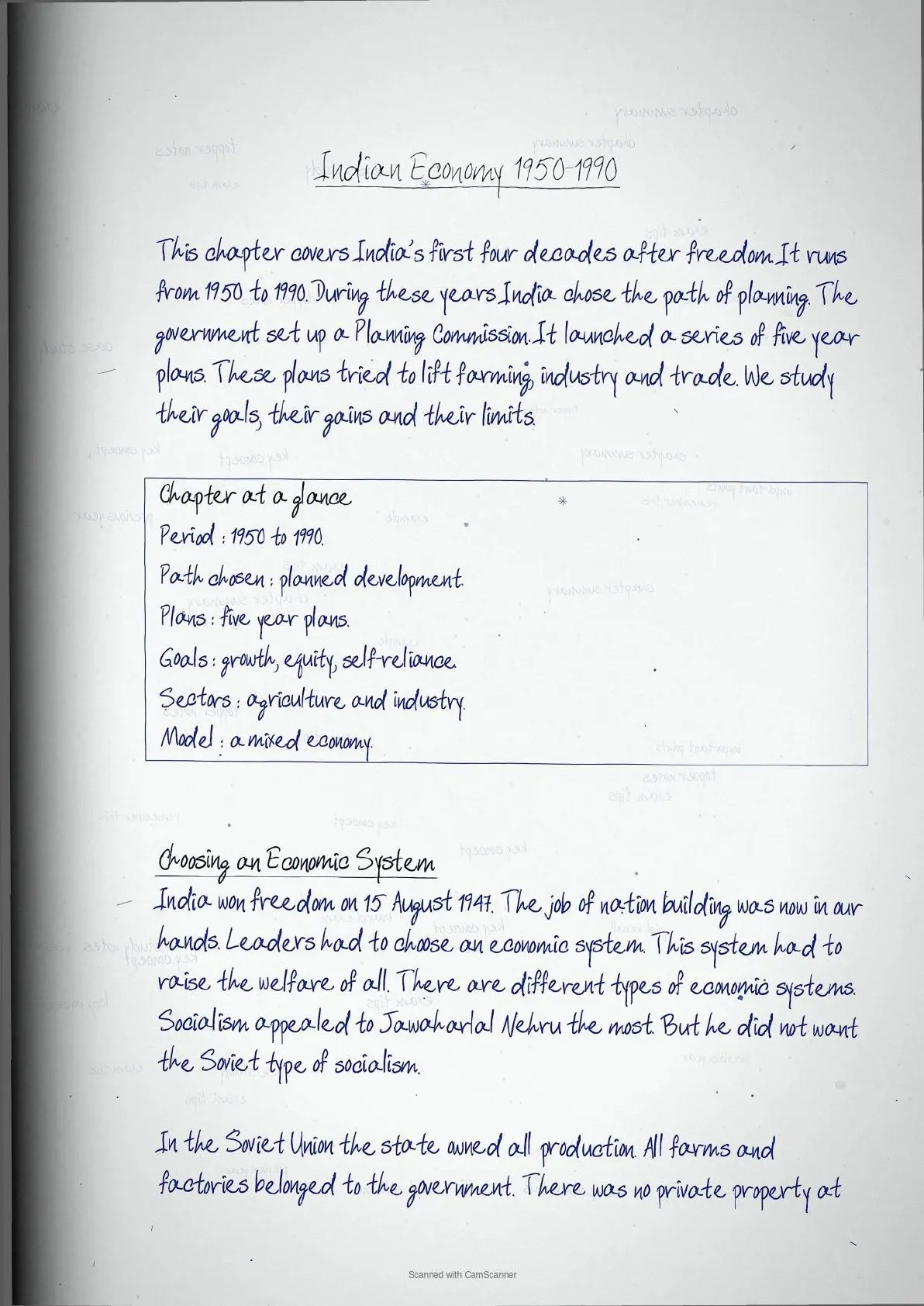
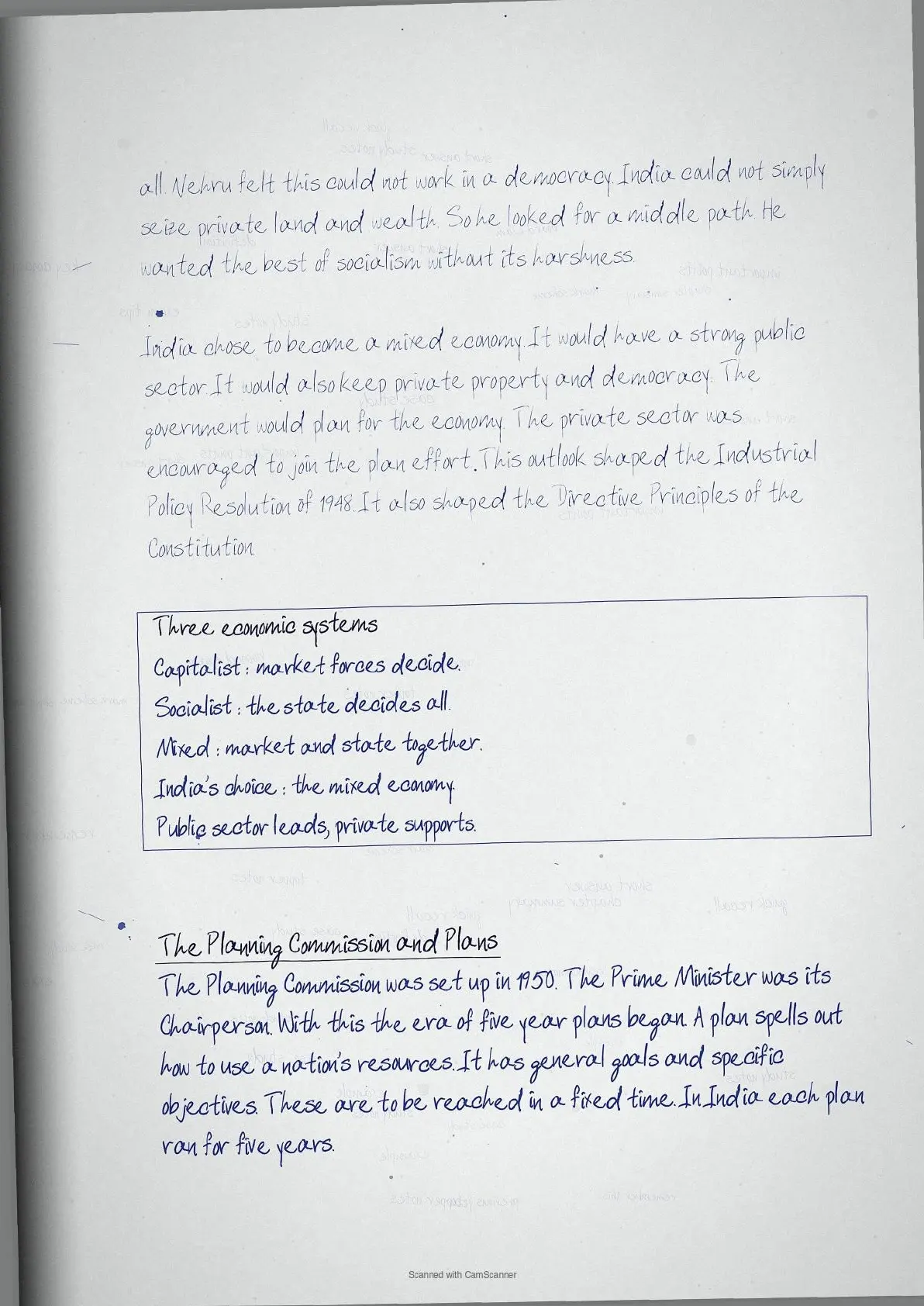
India chose planned development through five year plans, building industry and food self-sufficiency while facing over-regulation and public sector losses. Class 11 Economics Chapter 10 Indian Economy 1950-1990 builds this idea step by step. These class 11 economics handwritten notes chapter 10 Indian Economy 1950-1990 follow the 2026-27 NCERT and cover choice of a mixed economy after independence,.
- CBSE Class 11 Weightage: a scoring chapter in the Economics paper, asked in short and long answers.
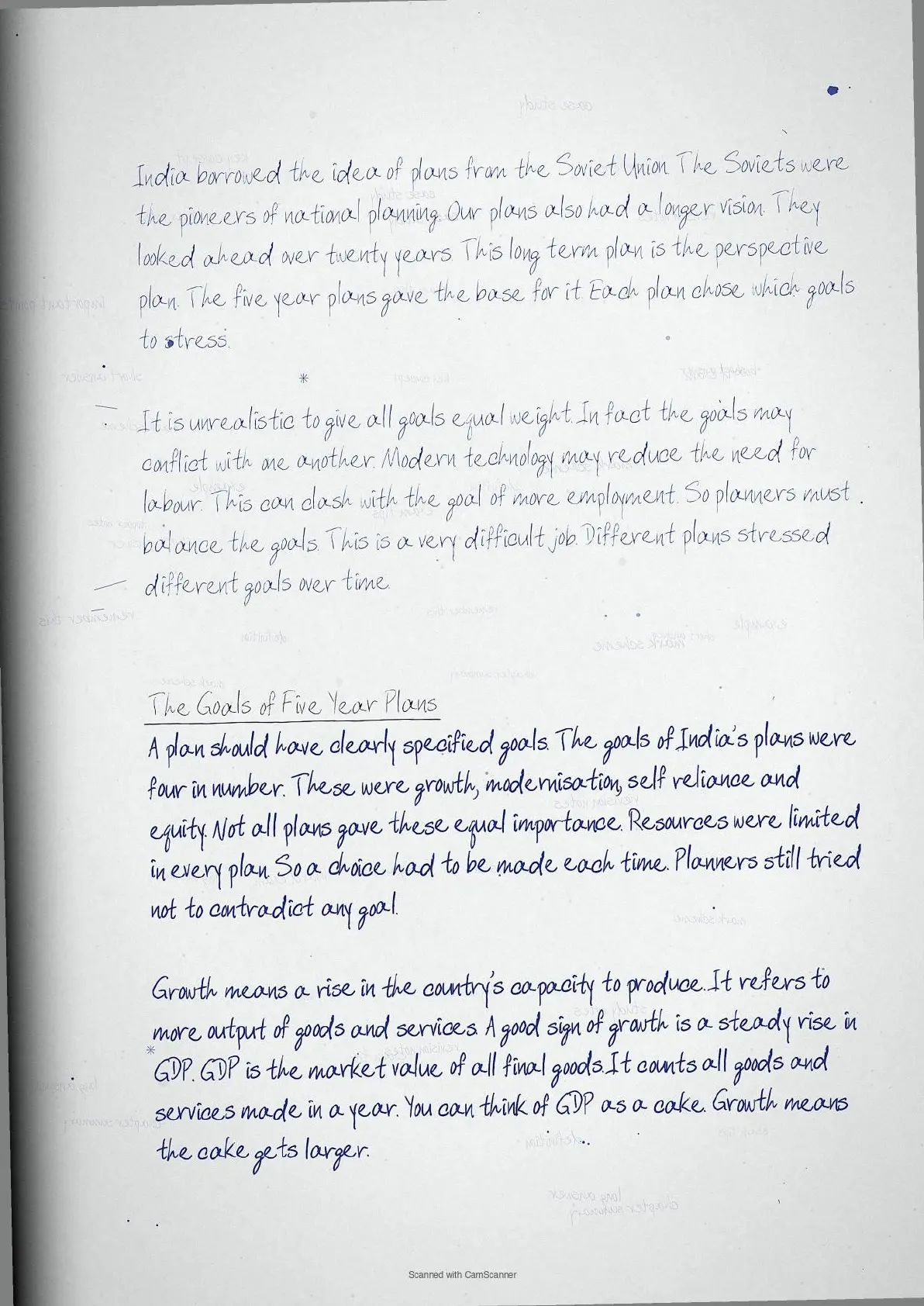
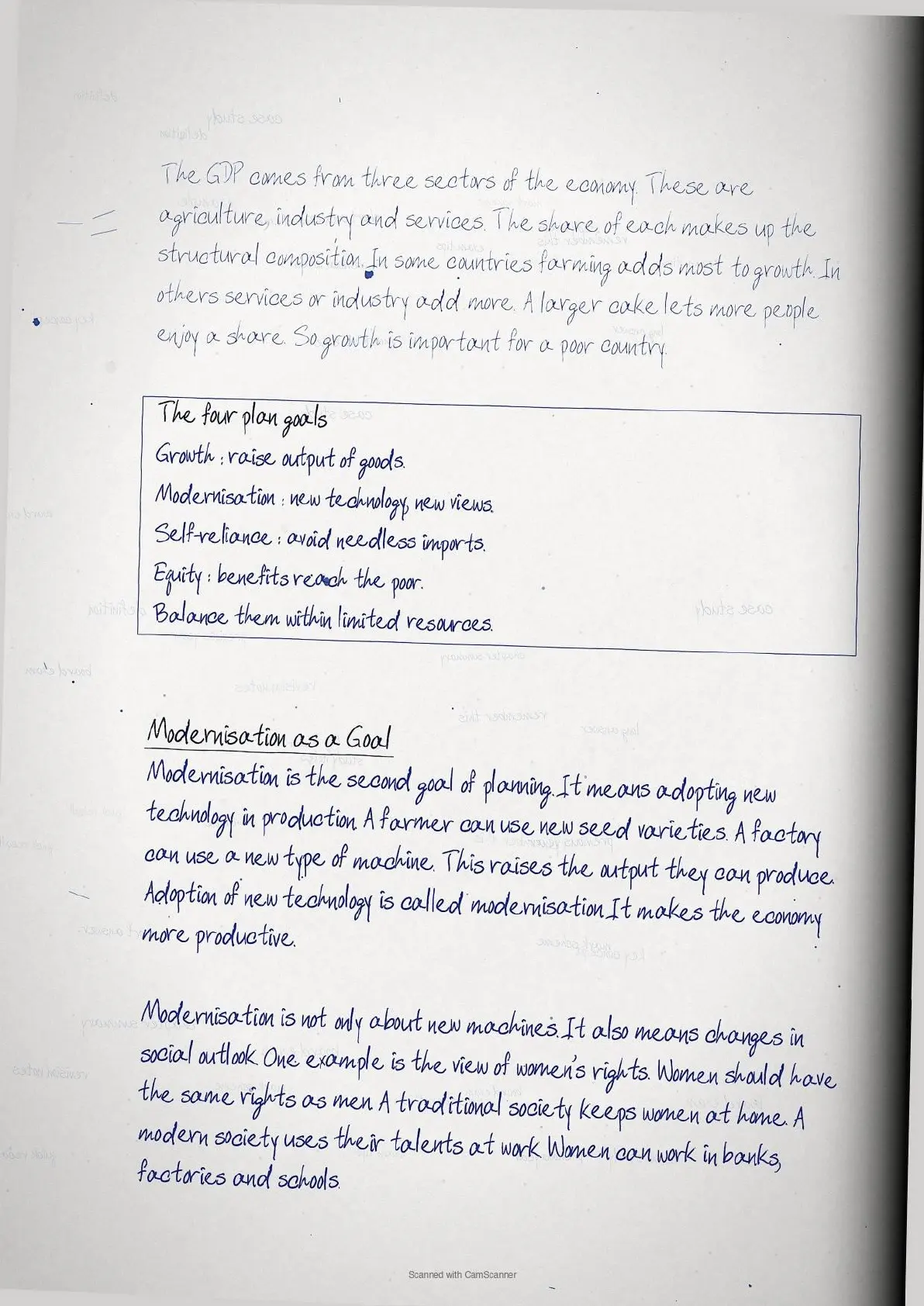
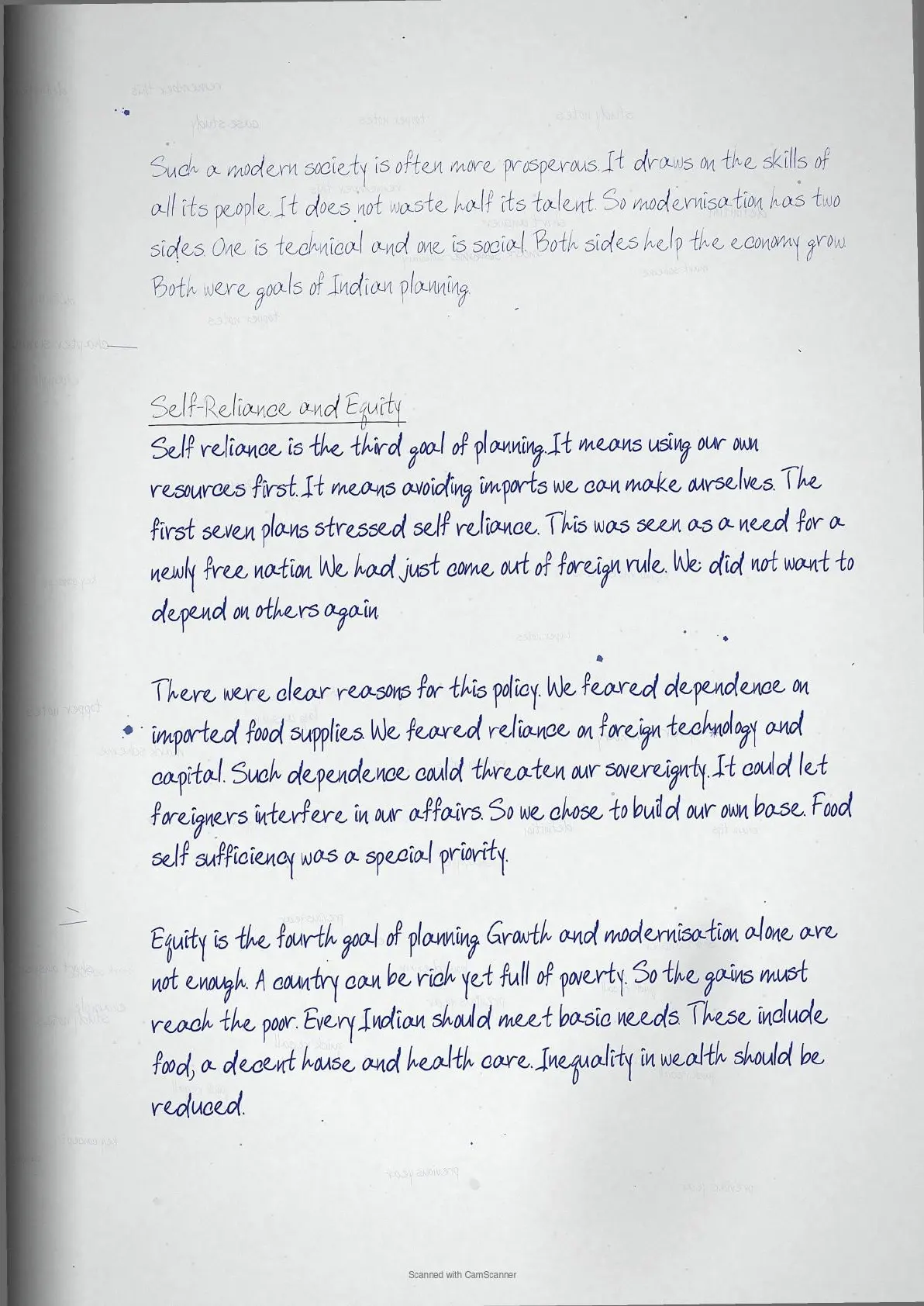
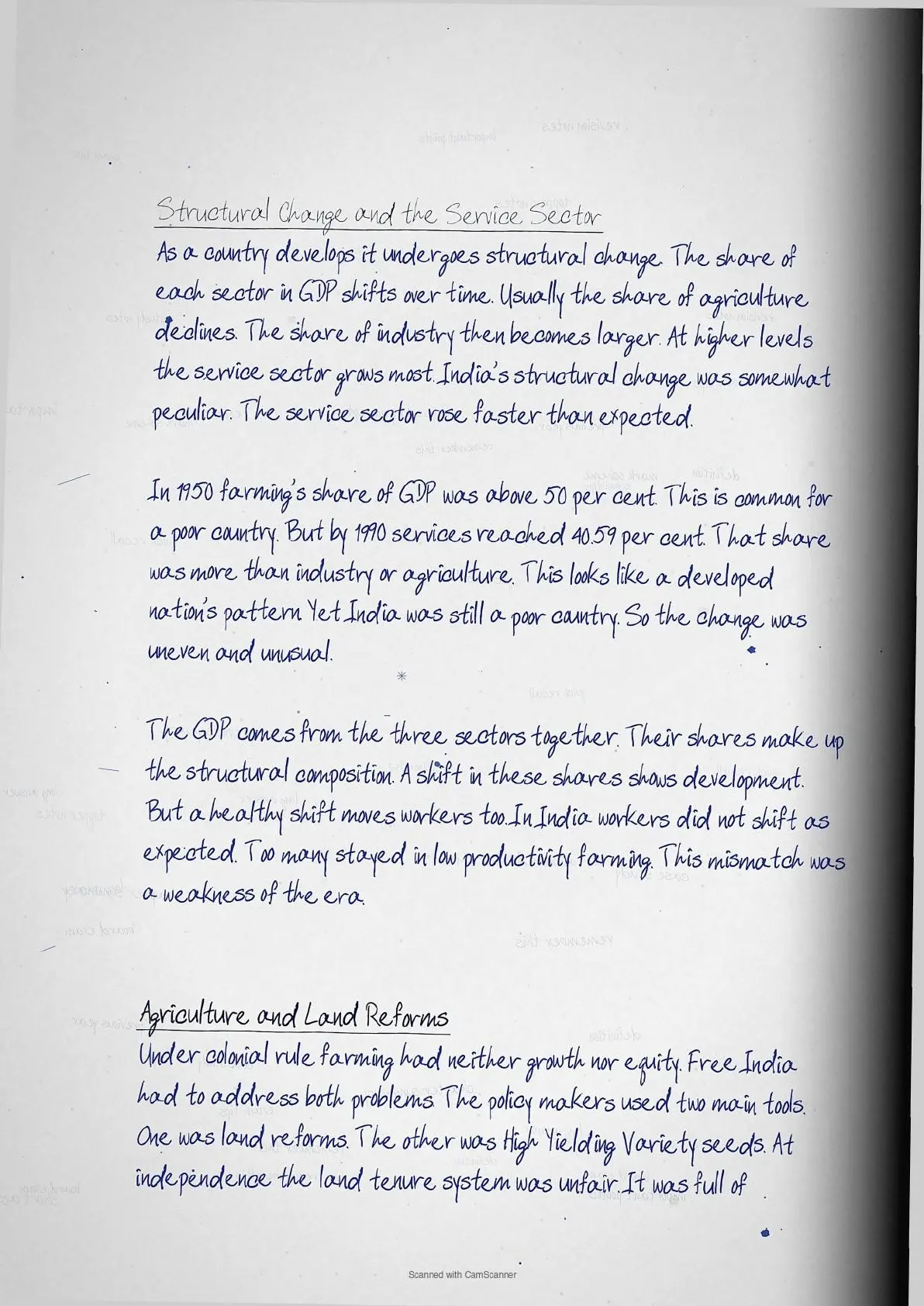
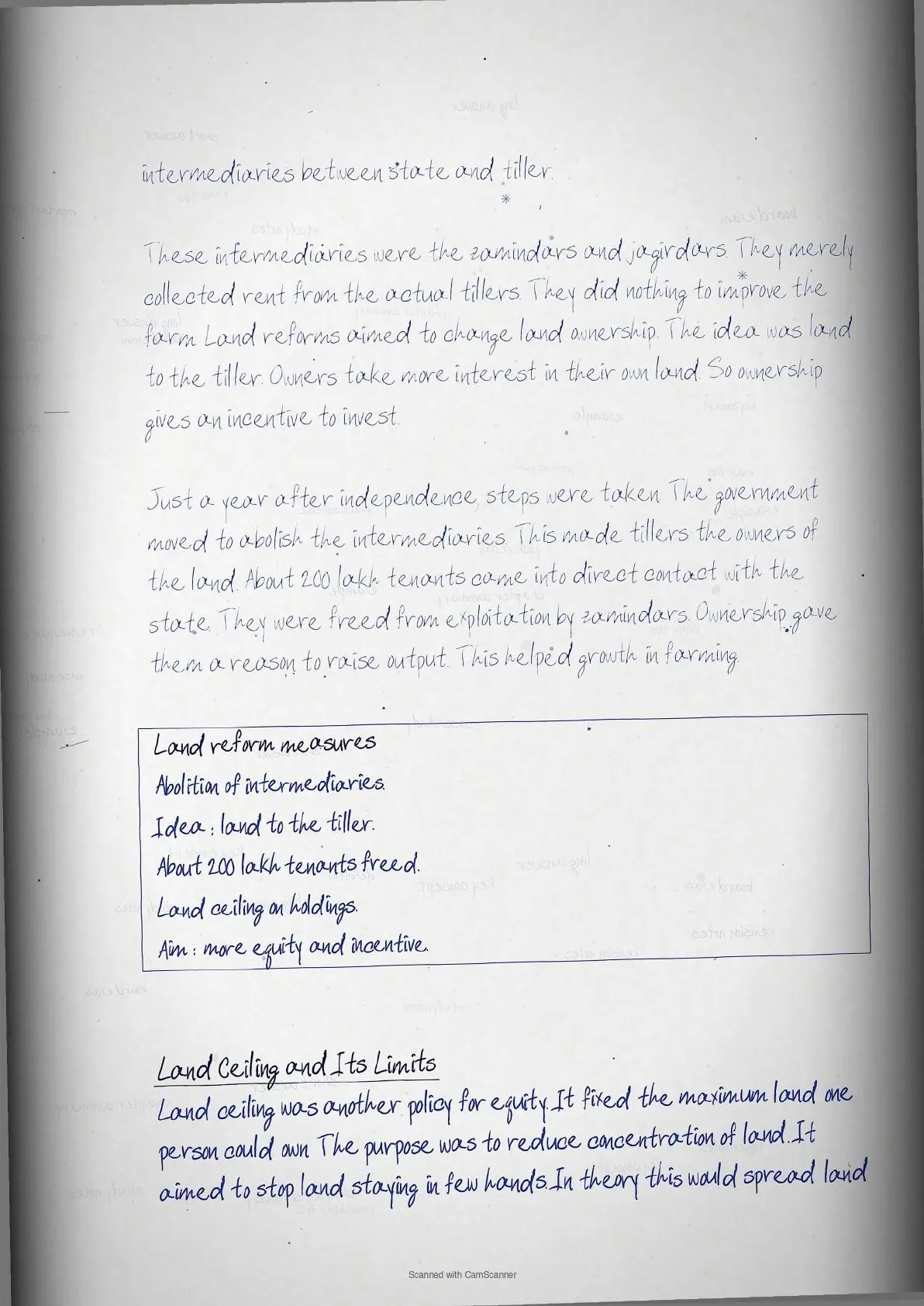
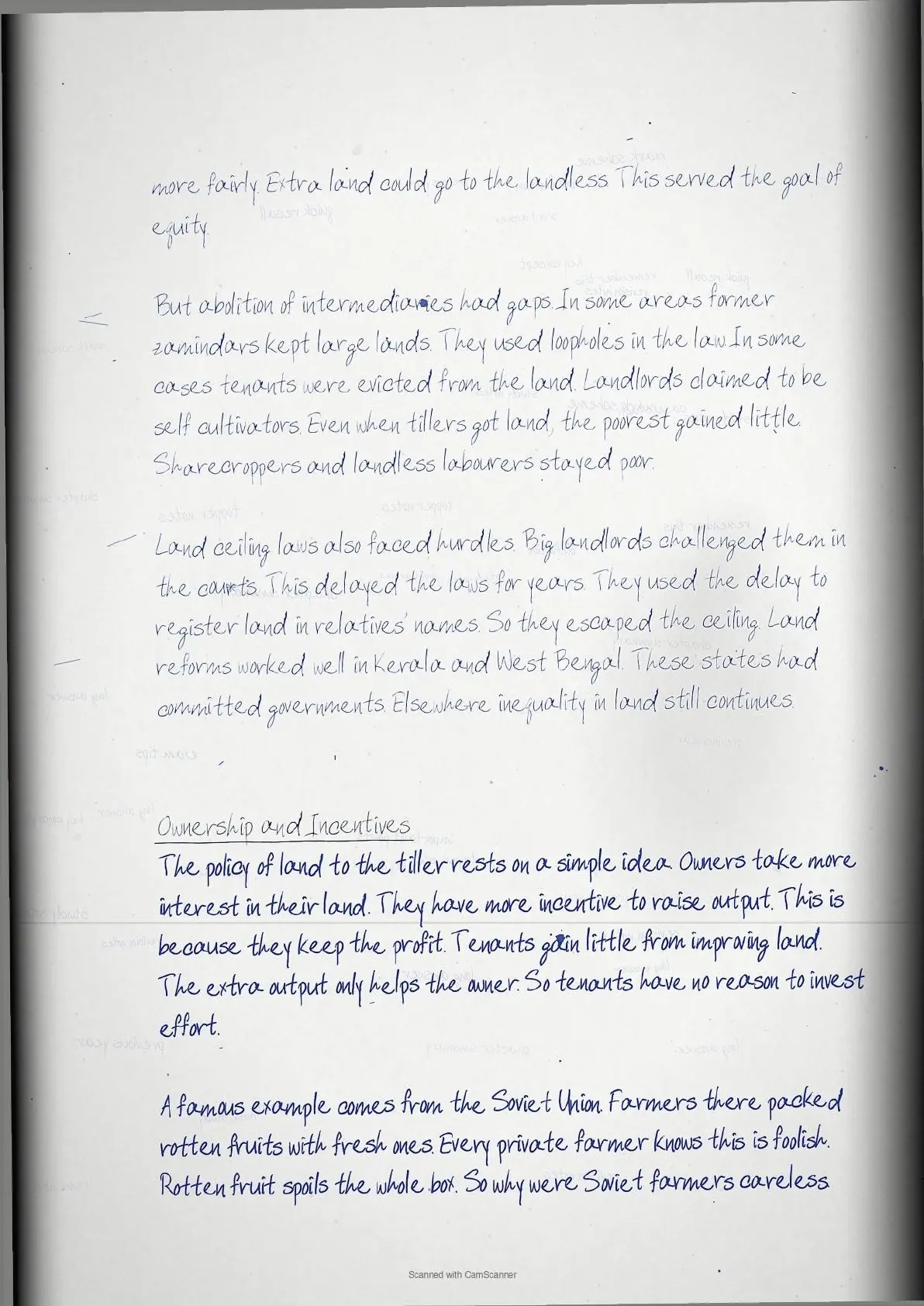
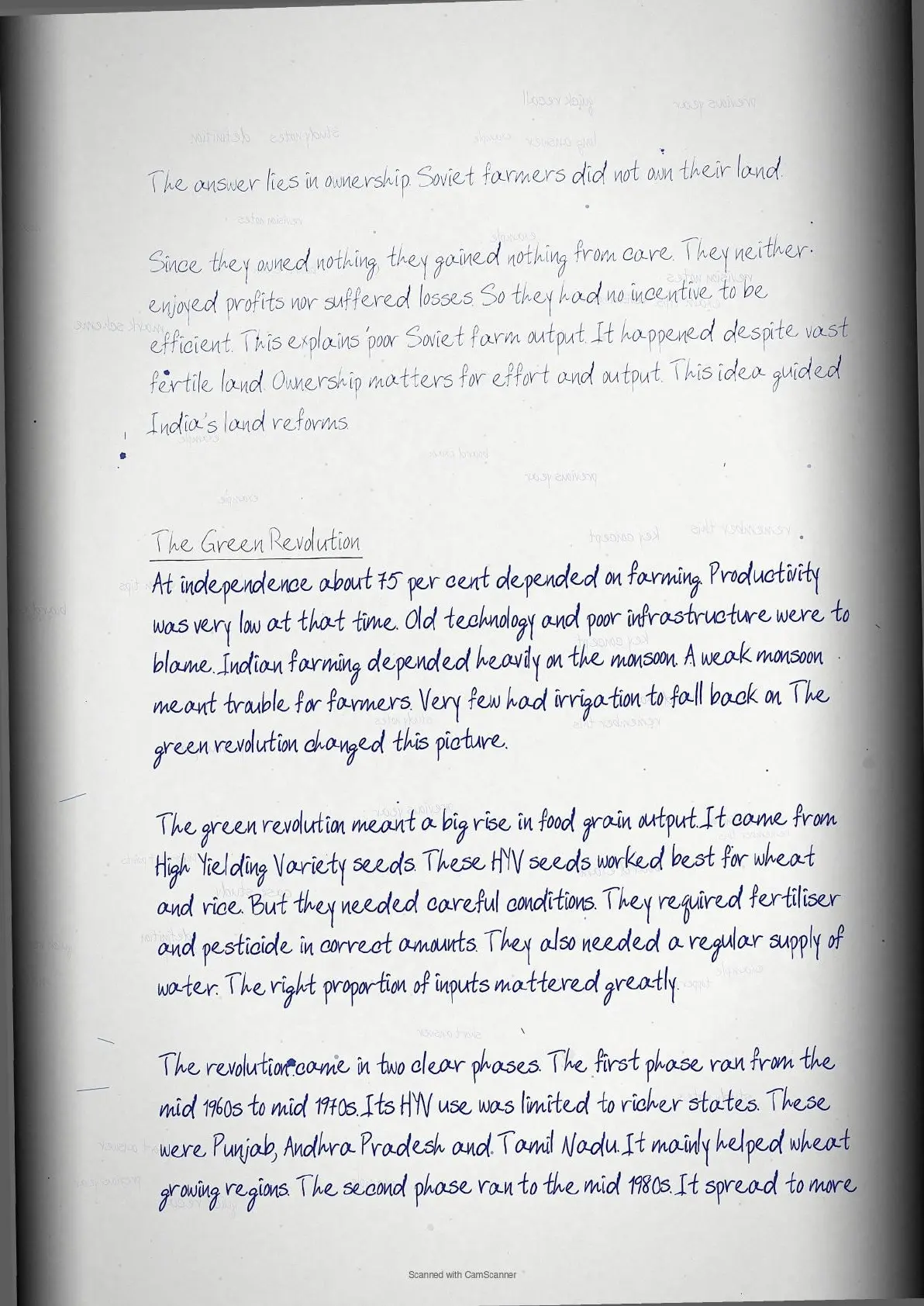
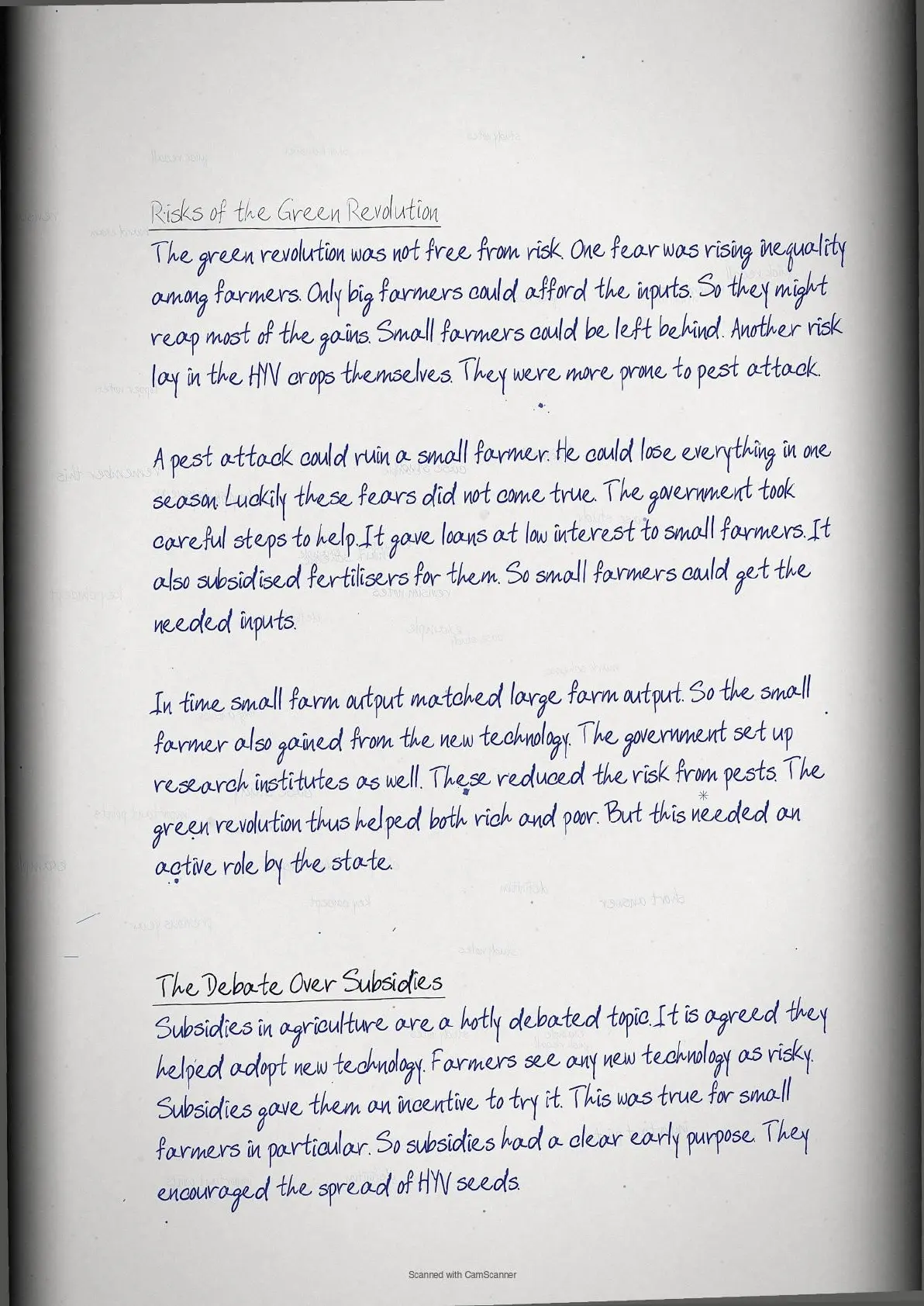
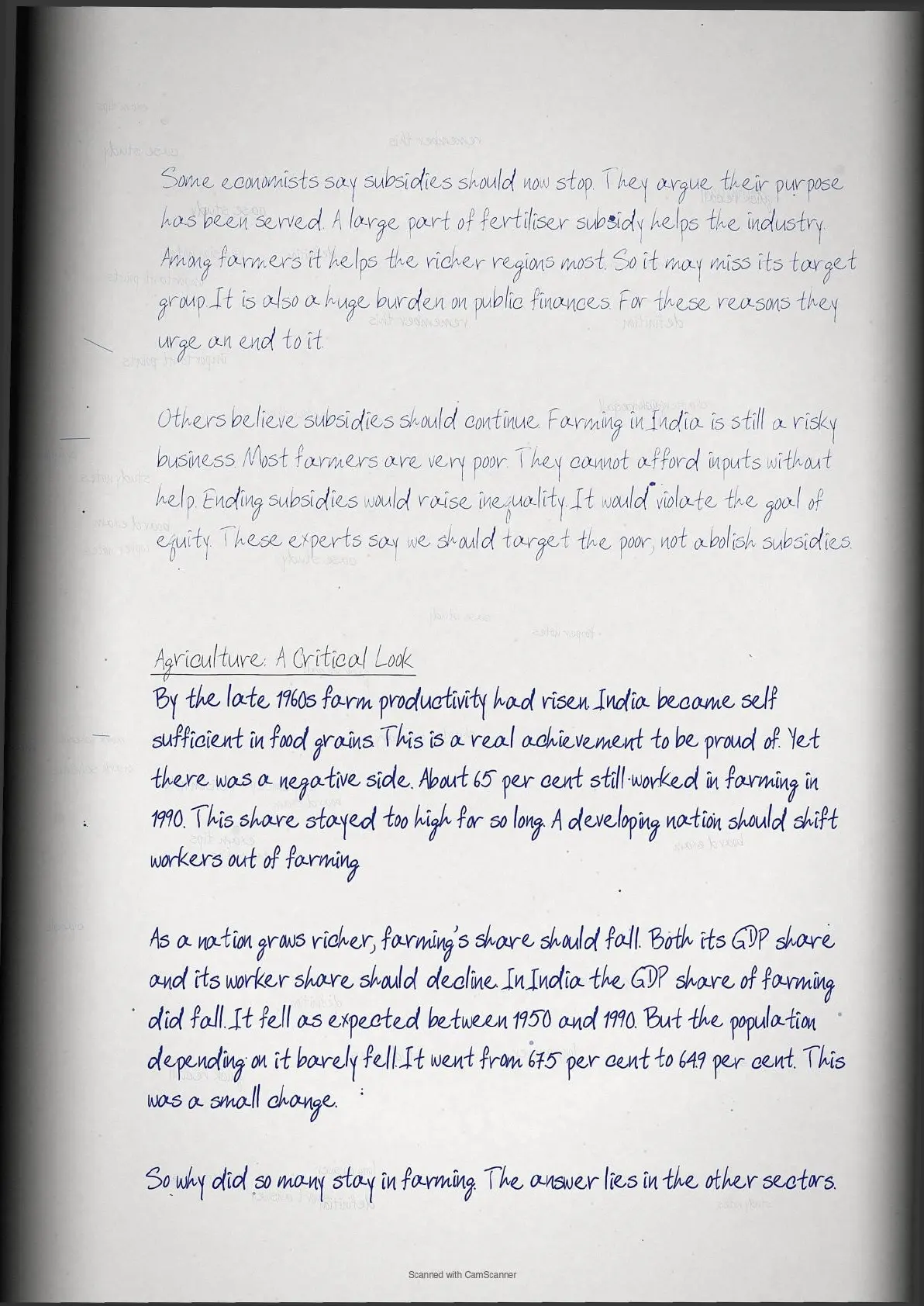
- What the notes cover: choice of a mixed economy after independence, the planning commission and five year plans, goals: growth, modernisation, self-reliance, equity, land reforms and the green revolution.
- Best for: quick revision before Class 11 exams and a base for CUET later.
You can read the complete class 11 economics handwritten notes for Indian Economy 1950-1990, with key terms, boxed definitions, and quick revision points, in the PDF below.
These handwritten notes are written by subject teachers, mapped to the 2026-27 NCERT, and checked against the last five years of CBSE Class 11 Economics papers.
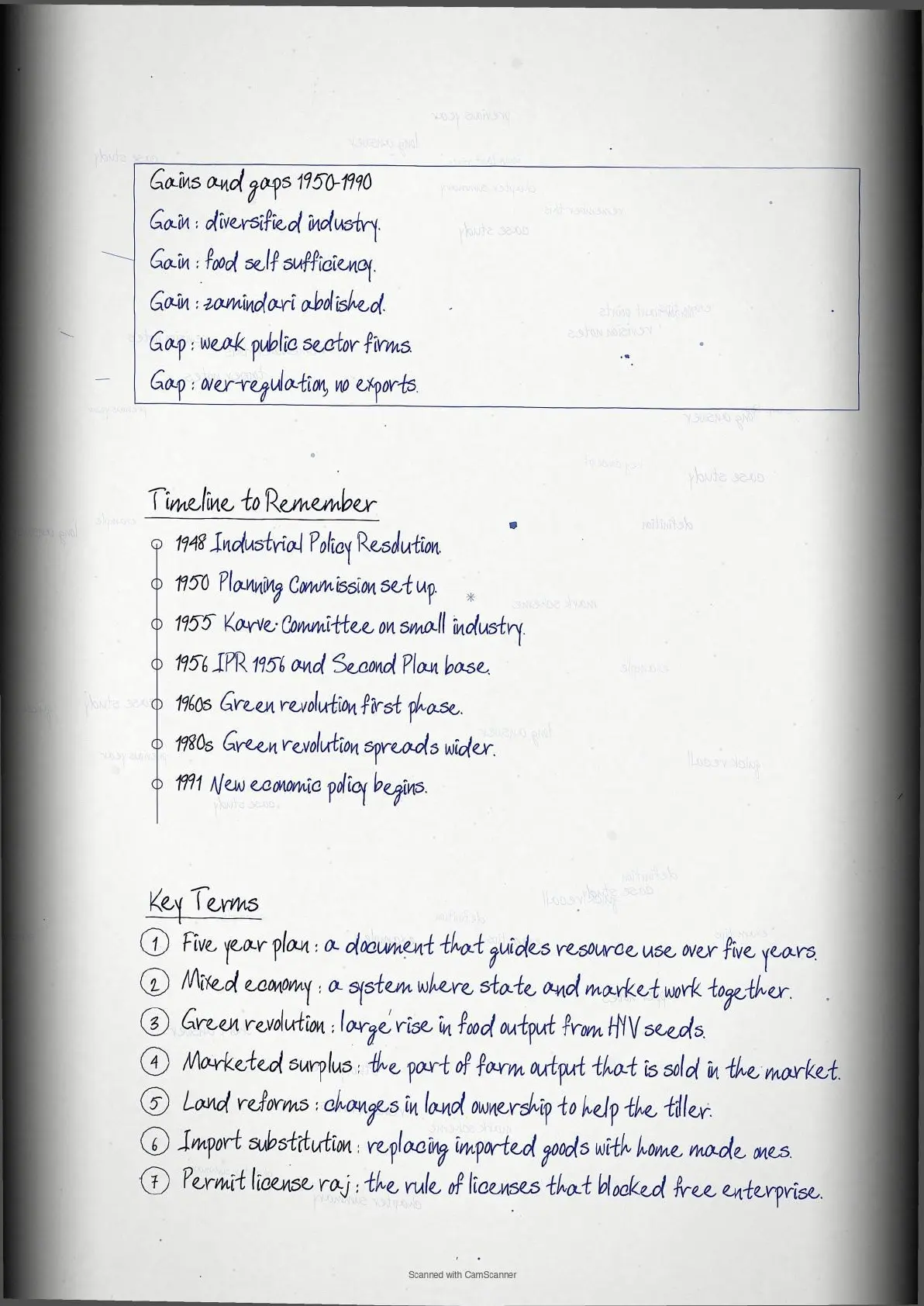
Key Terms and Ideas in Indian Economy 1950-1990
These are the terms and ideas the exam asks about most. Learn each one so you can define it and use it in your answers.
| Term / Idea | What it means |
|---|---|
| Five year plan | a document that guides resource use over five years |
| Mixed economy | a system where state and market work together |
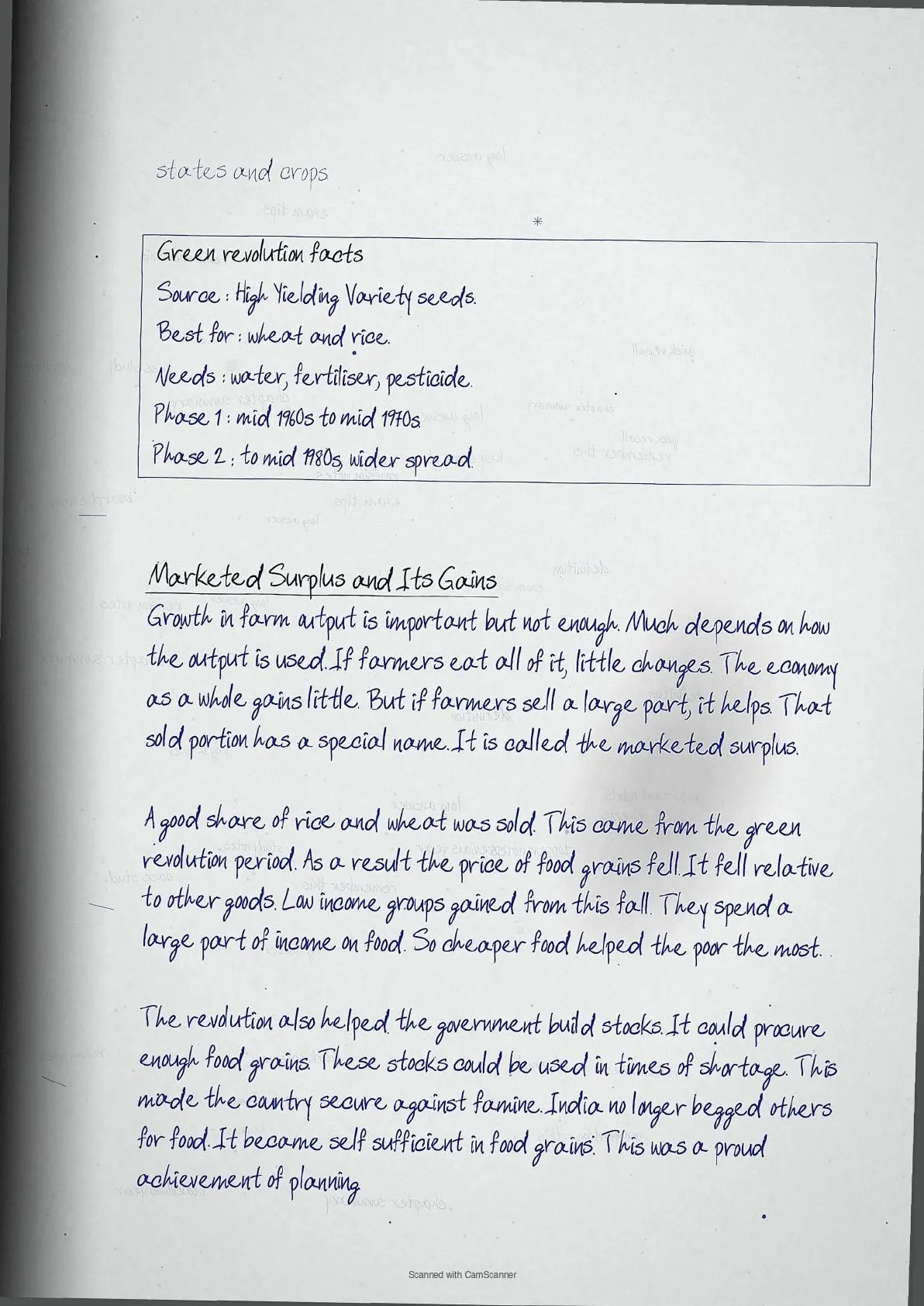
| Green revolution | large rise in food output from HYV seeds |
| Marketed surplus | the part of farm output that is sold in the market |
| Land reforms | changes in land ownership to help the tiller |
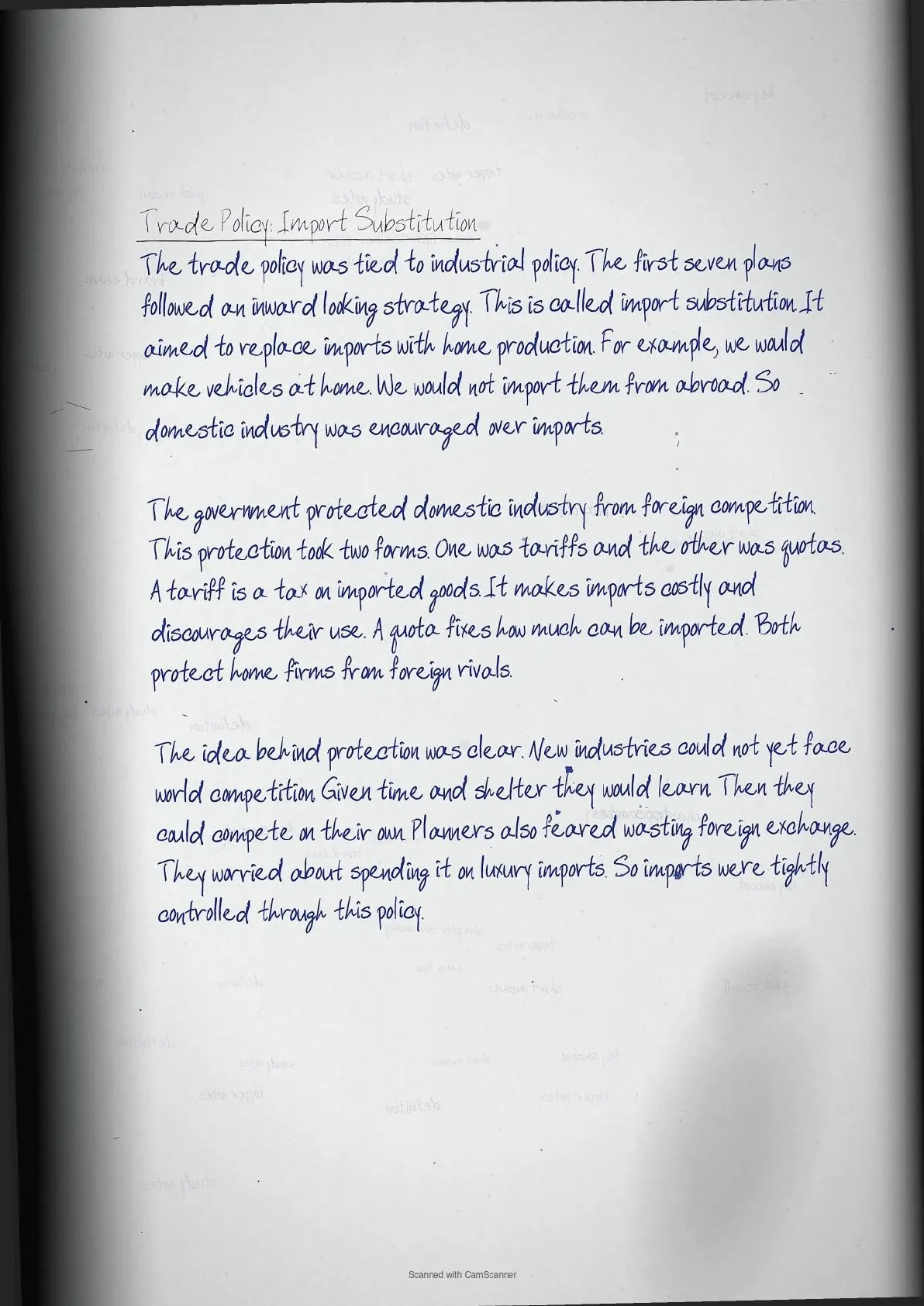
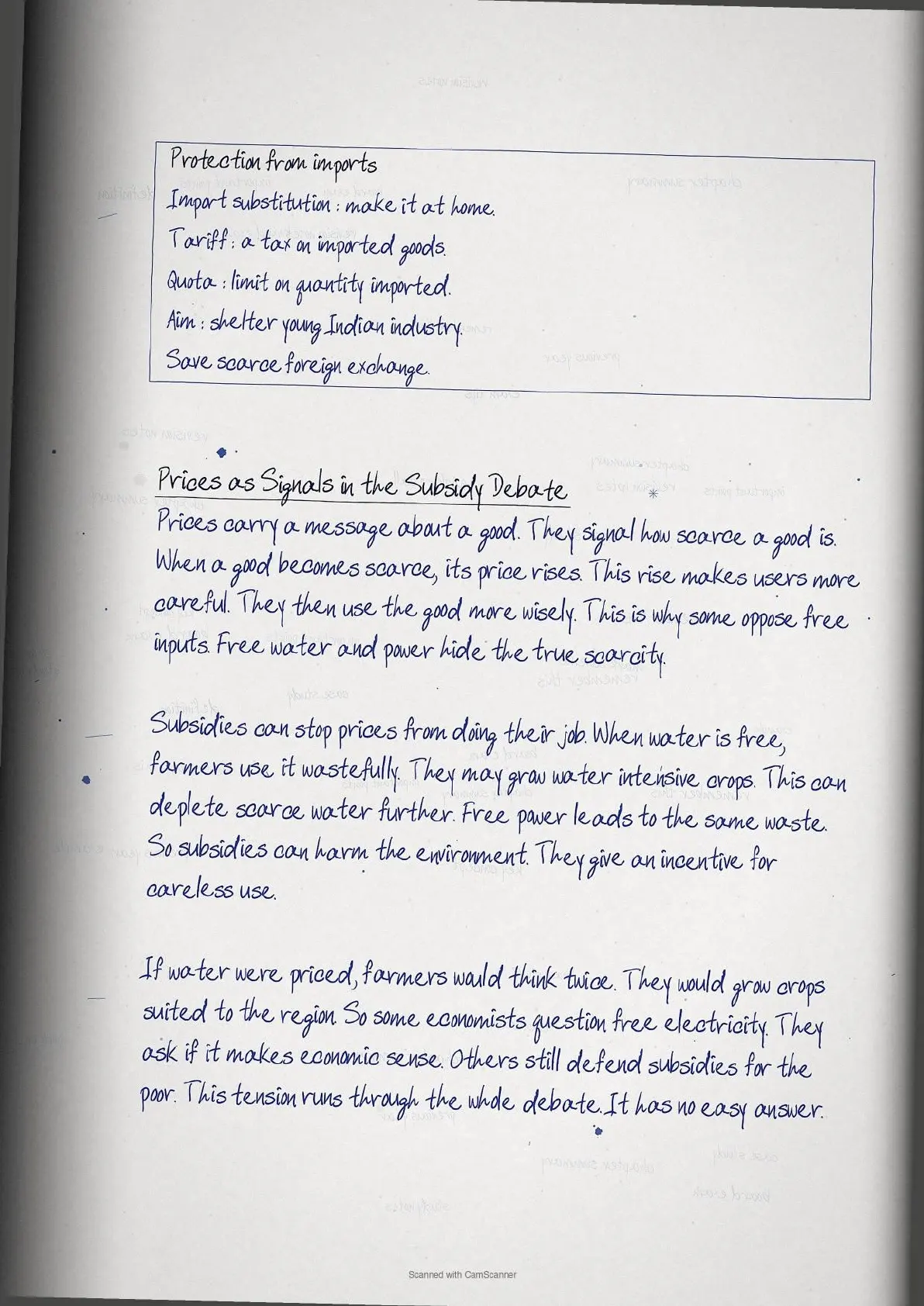
| Import substitution | replacing imported goods with home made ones |
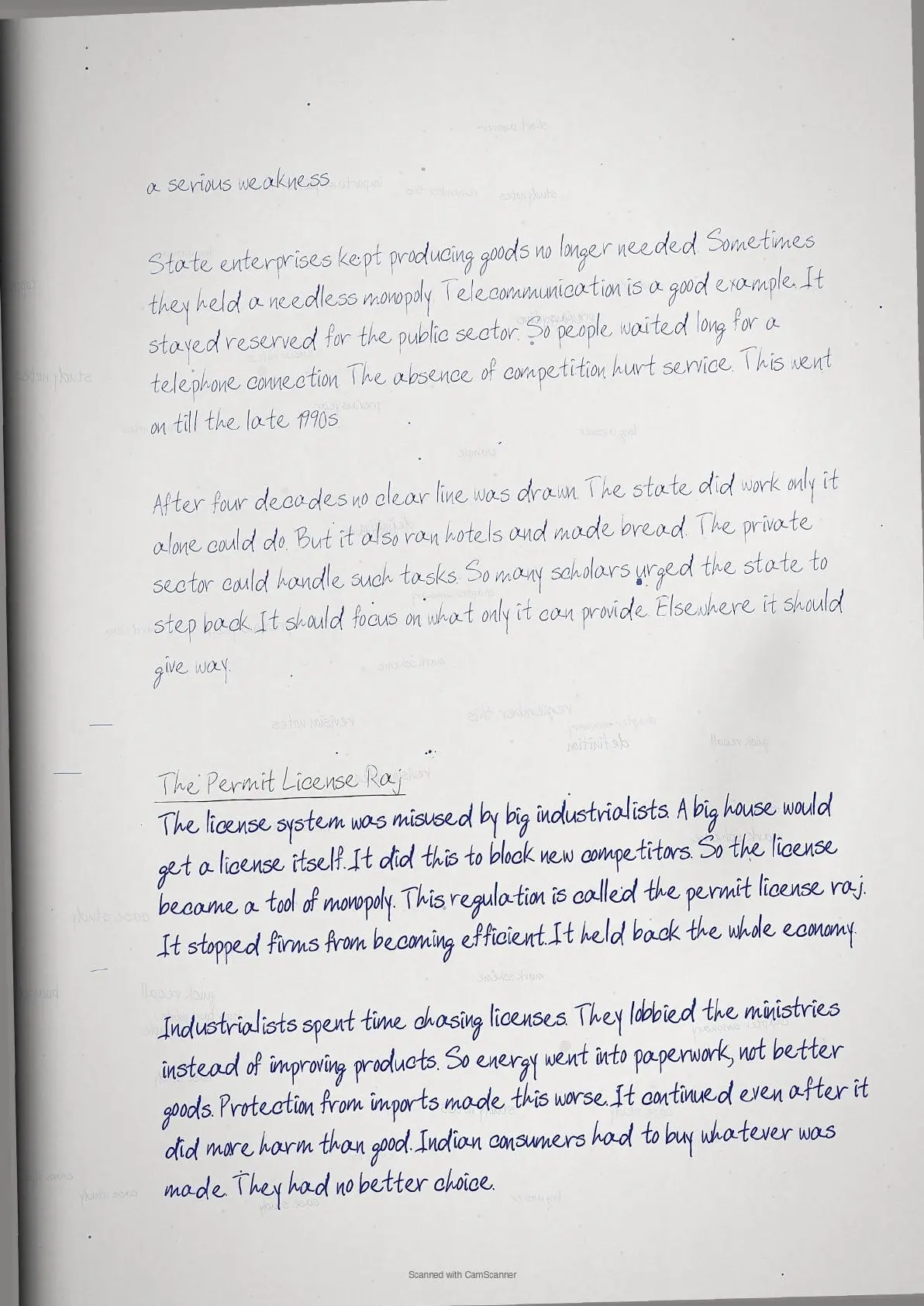
| Permit license raj | the rule of licenses that blocked free enterprise |
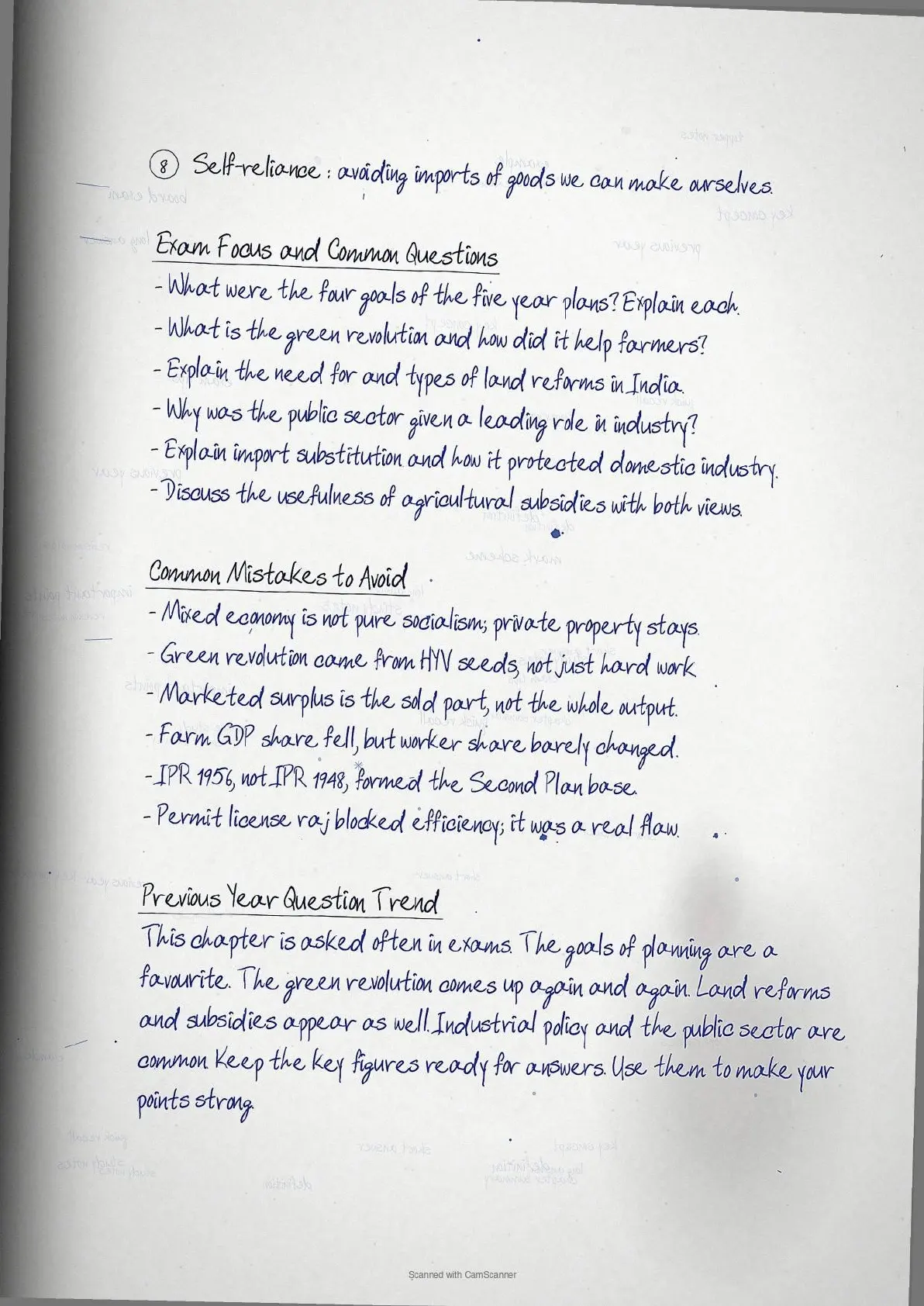
| Self-reliance | avoiding imports of goods we can make ourselves |
What the Indian Economy 1950-1990 Handwritten Notes Cover
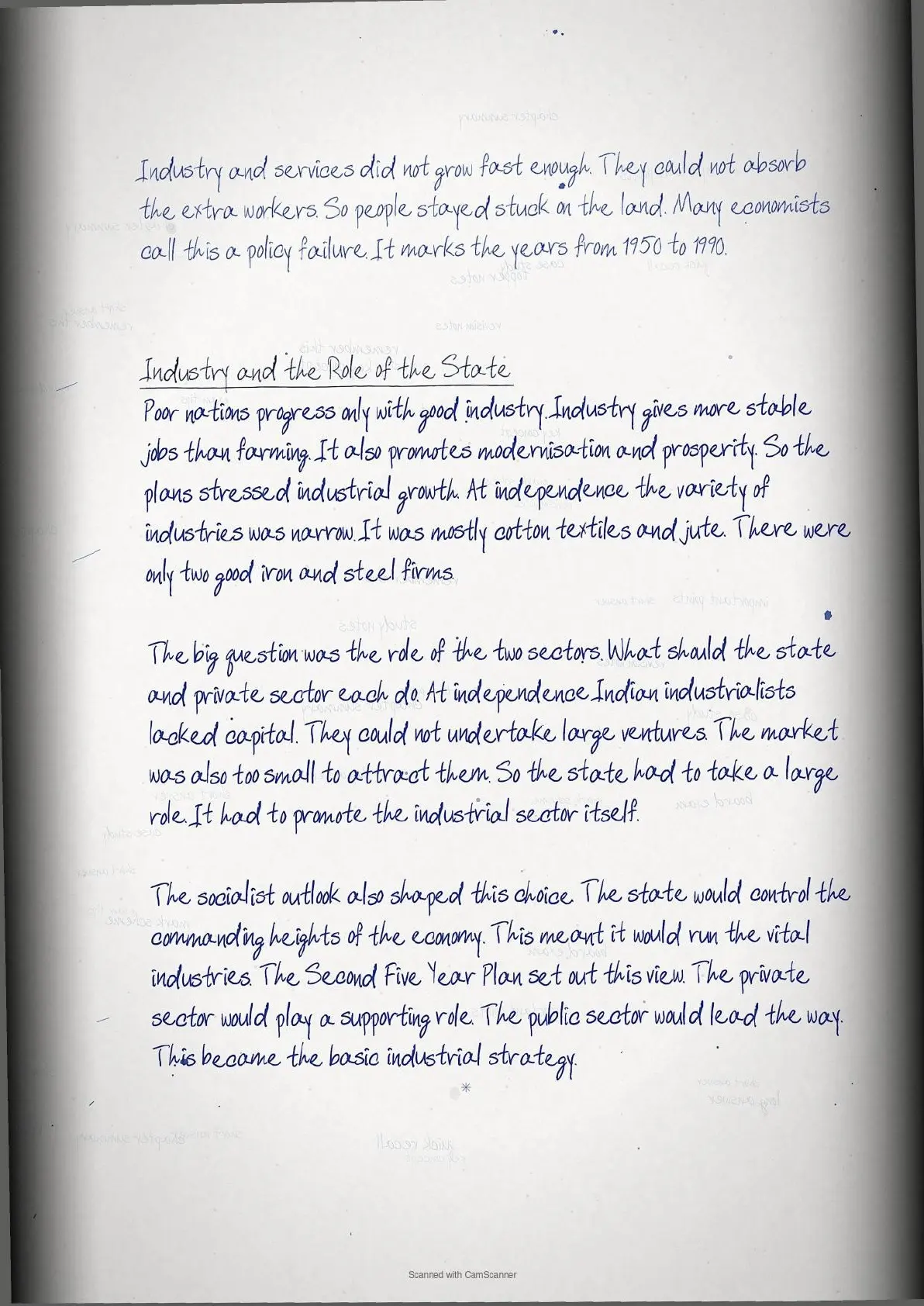
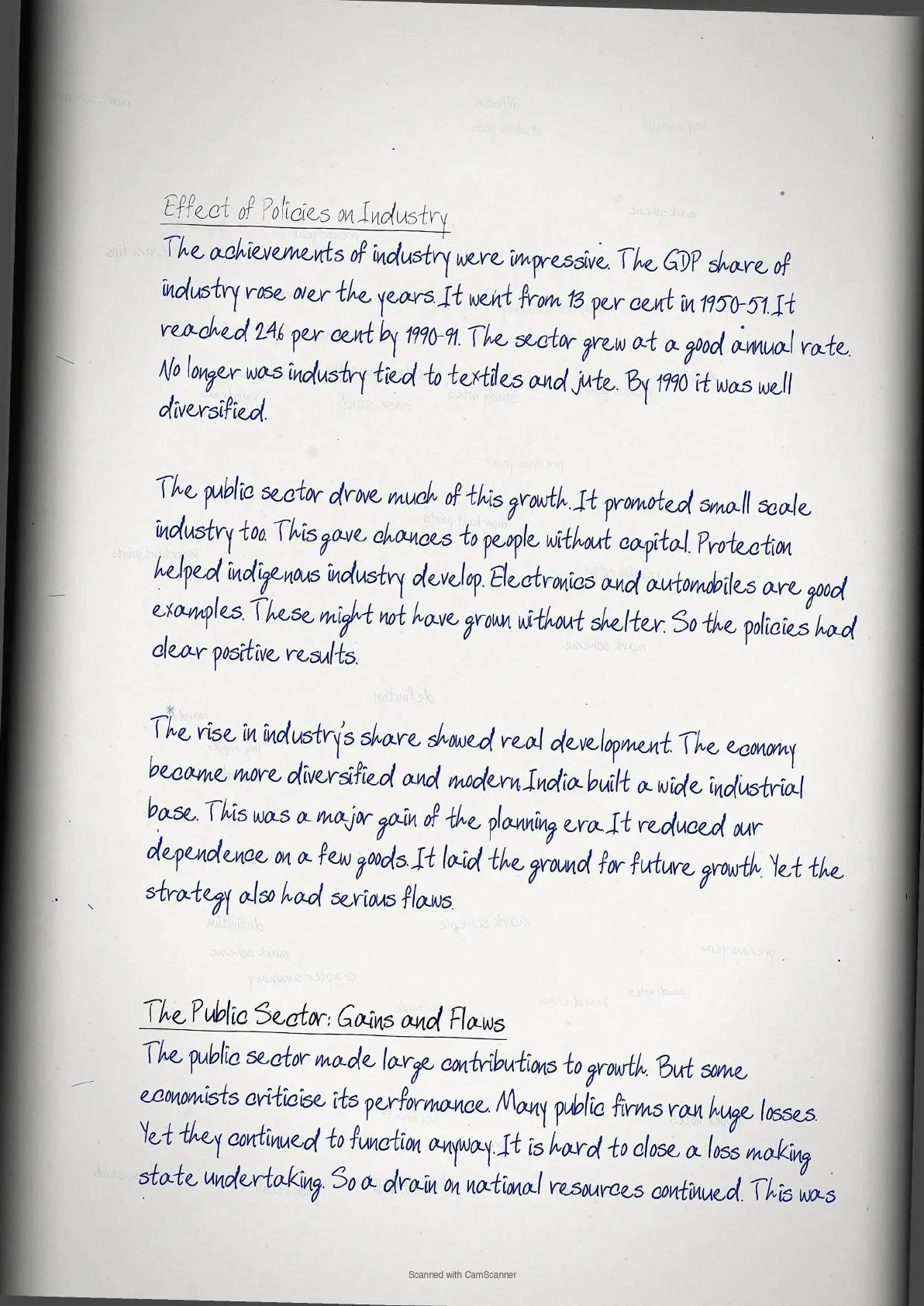
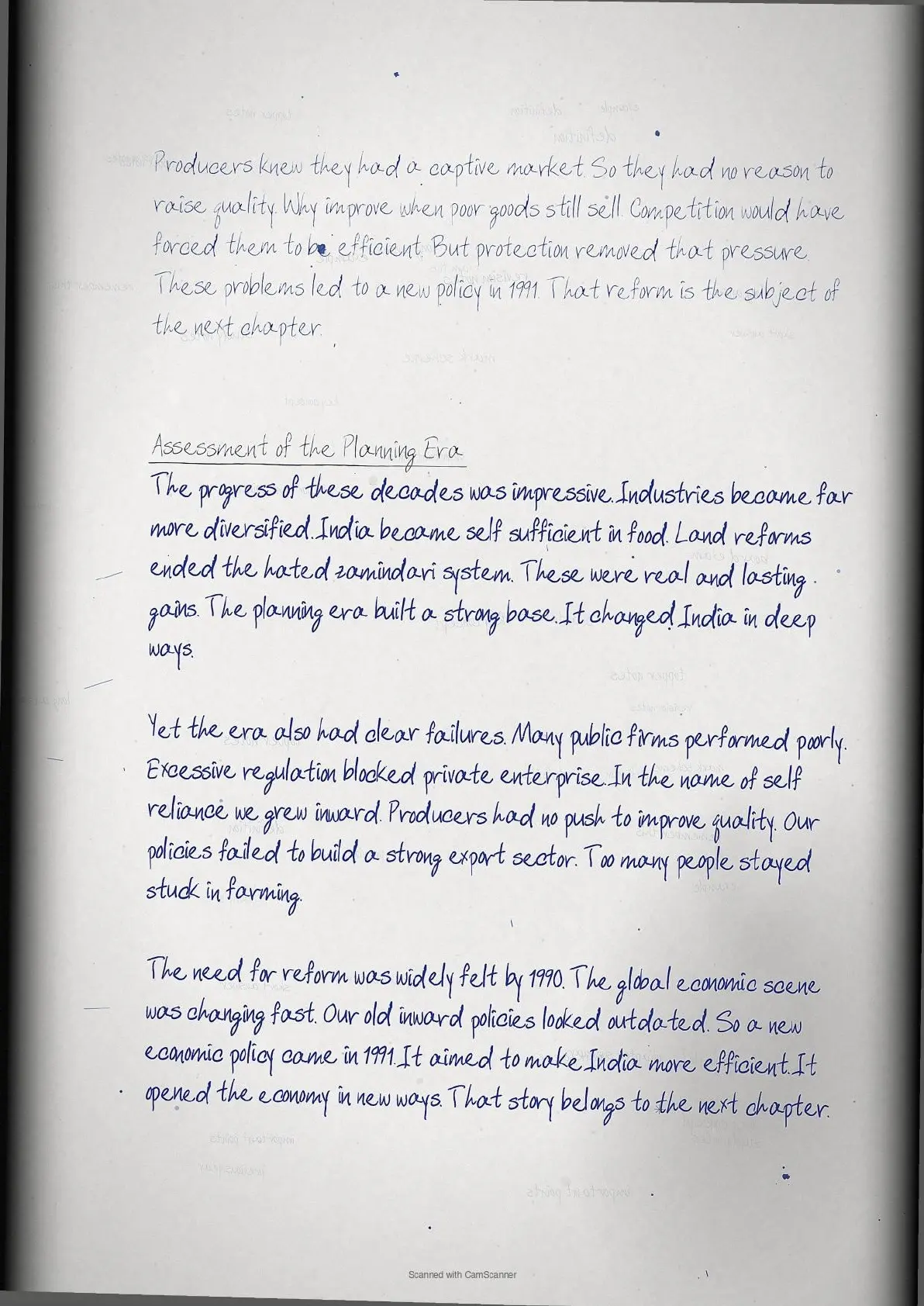
These handwritten notes cover Class 11 Economics Chapter 10, India's first four decades of planning. They explain the five year plans, their goals and the policies for farming and industry. All facts and figures are drawn from NCERT, from 1950 to 1990.
- Choice of a mixed economy after independence
- The Planning Commission and five year plans
- Goals: growth, modernisation, self-reliance, equity
- Land reforms and the green revolution
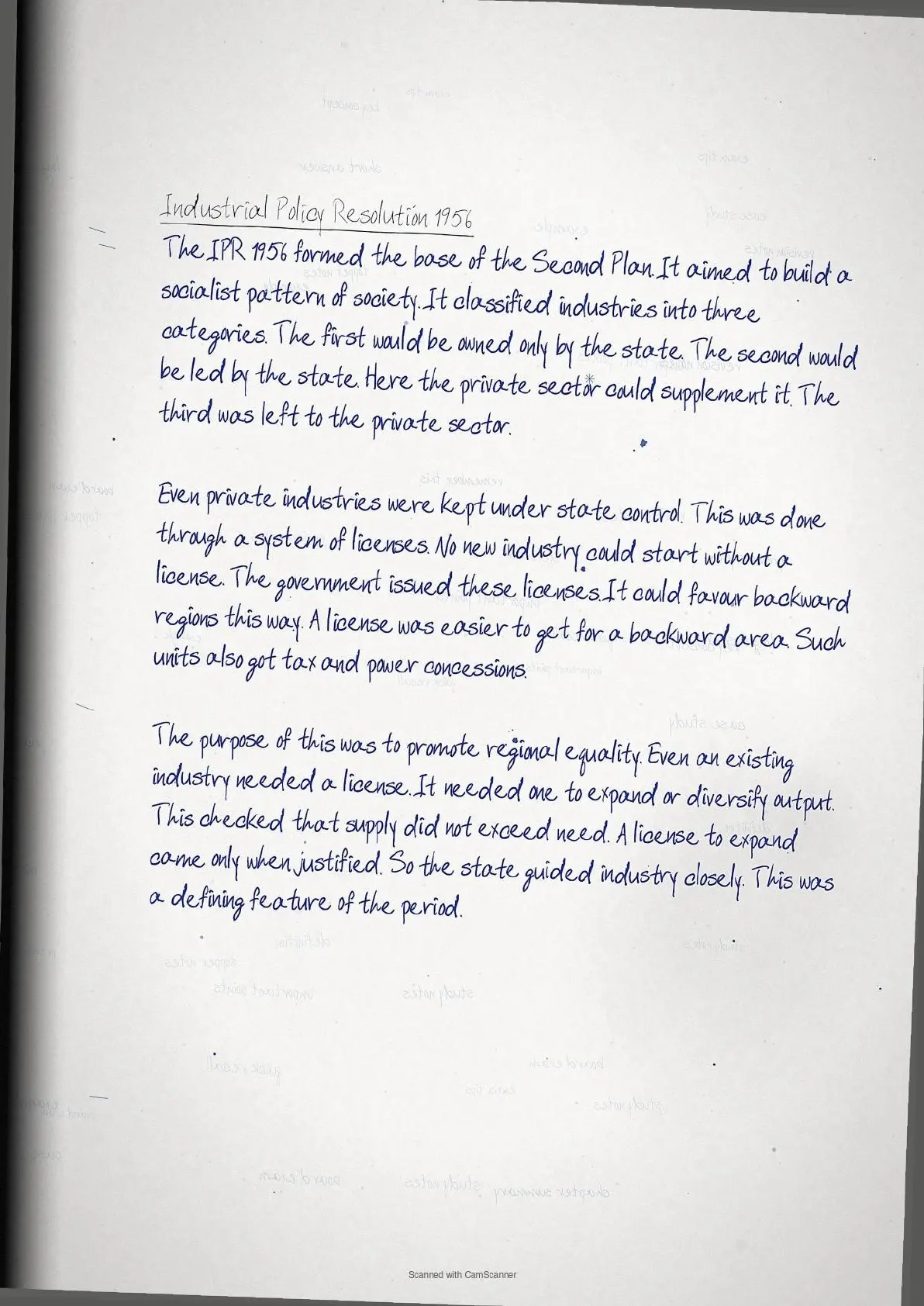
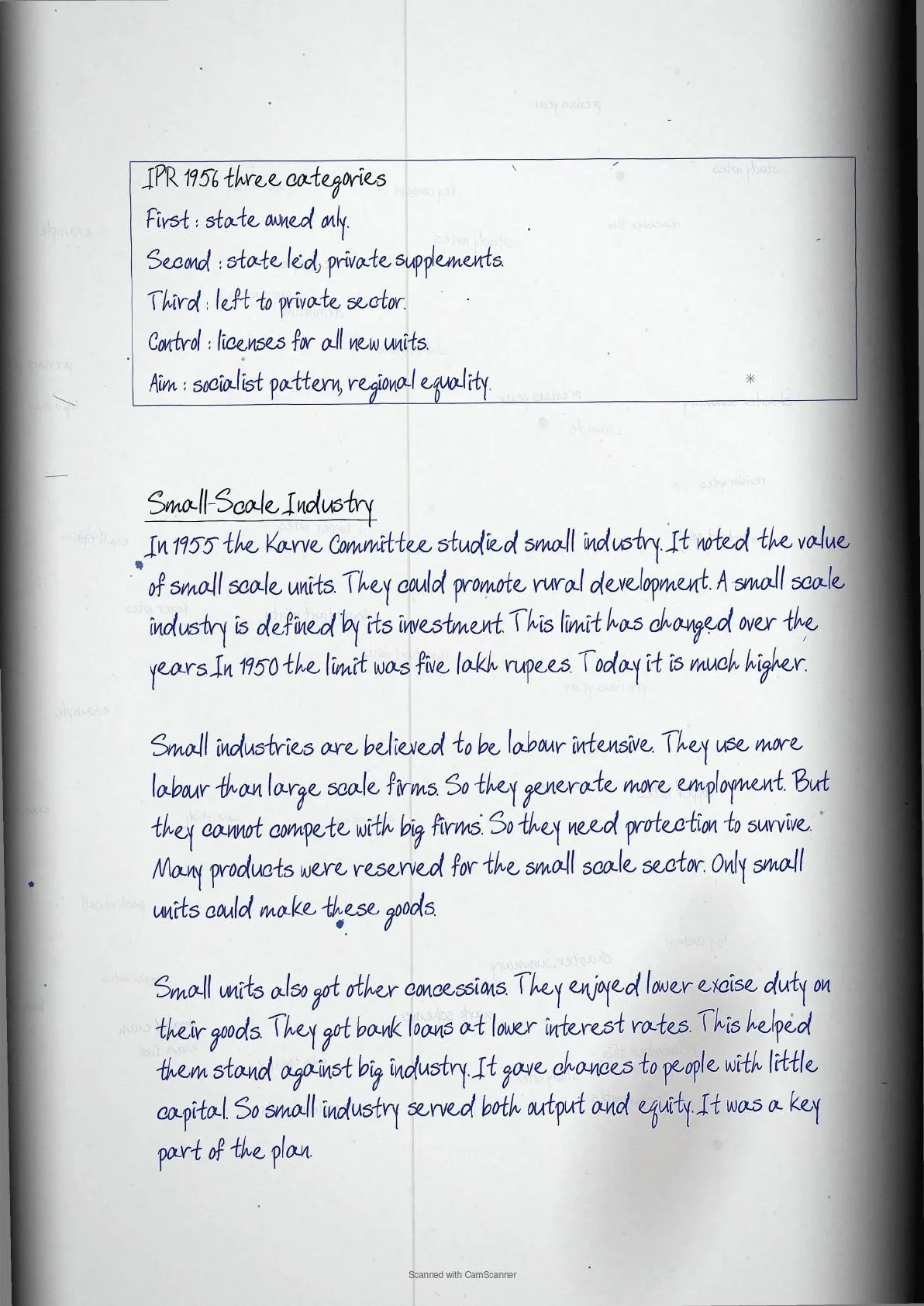
- Industrial Policy Resolution 1956 and licensing
- Import substitution and the public sector
- Gains, failures and the road to 1991 reform
Indian Economy 1950-1990 Topic-wise Weightage for CBSE Class 11 Economics
Some parts of this chapter are asked more often than others. The table below shows which sub-topics to revise first, based on recent CBSE Class 11 question trends.
| Sub-topic | Weightage | CBSE Frequency |
|---|---|---|
| Goals of five year plans | High | very frequent |
| Green revolution and HYV seeds | High | very frequent |
| Land reforms and land ceiling | Medium | frequent |
| IPR 1956 and industrial licensing | Medium | frequent |
| Import substitution and public sector | Low | occasional |
How Collegedunia's Handwritten Notes Help You Revise Indian Economy 1950-1990
These notes are made for the night before the exam. They keep the facts short and easy to scan. Collegedunia maps every point to the 2026-27 NCERT.
- Clear handwriting: each topic is written in neat, easy-to-read handwriting.
- Boxed key terms: the main terms and definitions are boxed by hand for fast recall.
- Diagrams and tables: simple hand-drawn tables and charts make ideas clear.
- Colour-coded headings: new sub-topics stand out, so you find any section in seconds.
Indian Economy 1950-1990 Self-Assessment Quiz
Try these quick questions after you read the notes. Tap each question to check your answer. They cover the points CBSE asks most often.
In which year was the Planning Commission of India set up?
(a) 1947 (b) 1948 (c) 1950 (d) 1956
Answer: (c) 1950 correct - the Planning Commission was set up in 1950 with the PM as chair.
The green revolution was mainly linked to which two crops?
(a) pulses and oilseeds (b) wheat and rice (c) sugarcane and cotton (d) tea and coffee
Answer: (b) wheat and rice correct - HYV seeds worked best for wheat and rice.
Which policy formed the base of the Second Five Year Plan?
(a) IPR 1948 (b) IPR 1956 (c) Karve Committee (d) FERA
Answer: (b) IPR 1956 correct - the Industrial Policy Resolution 1956 shaped the Second Plan.
The part of farm output sold in the market is called
(a) buffer stock (b) marketed surplus (c) procurement (d) subsidy
Answer: (b) marketed surplus correct - it is the portion of produce sold rather than consumed.
India's inward trade strategy in the first seven plans was called
(a) export promotion (b) import substitution (c) free trade (d) devaluation
Answer: (b) import substitution correct - it replaced imports with domestic production behind tariffs and quotas.
How to Use These Handwritten Notes for Class 11 Economics Revision
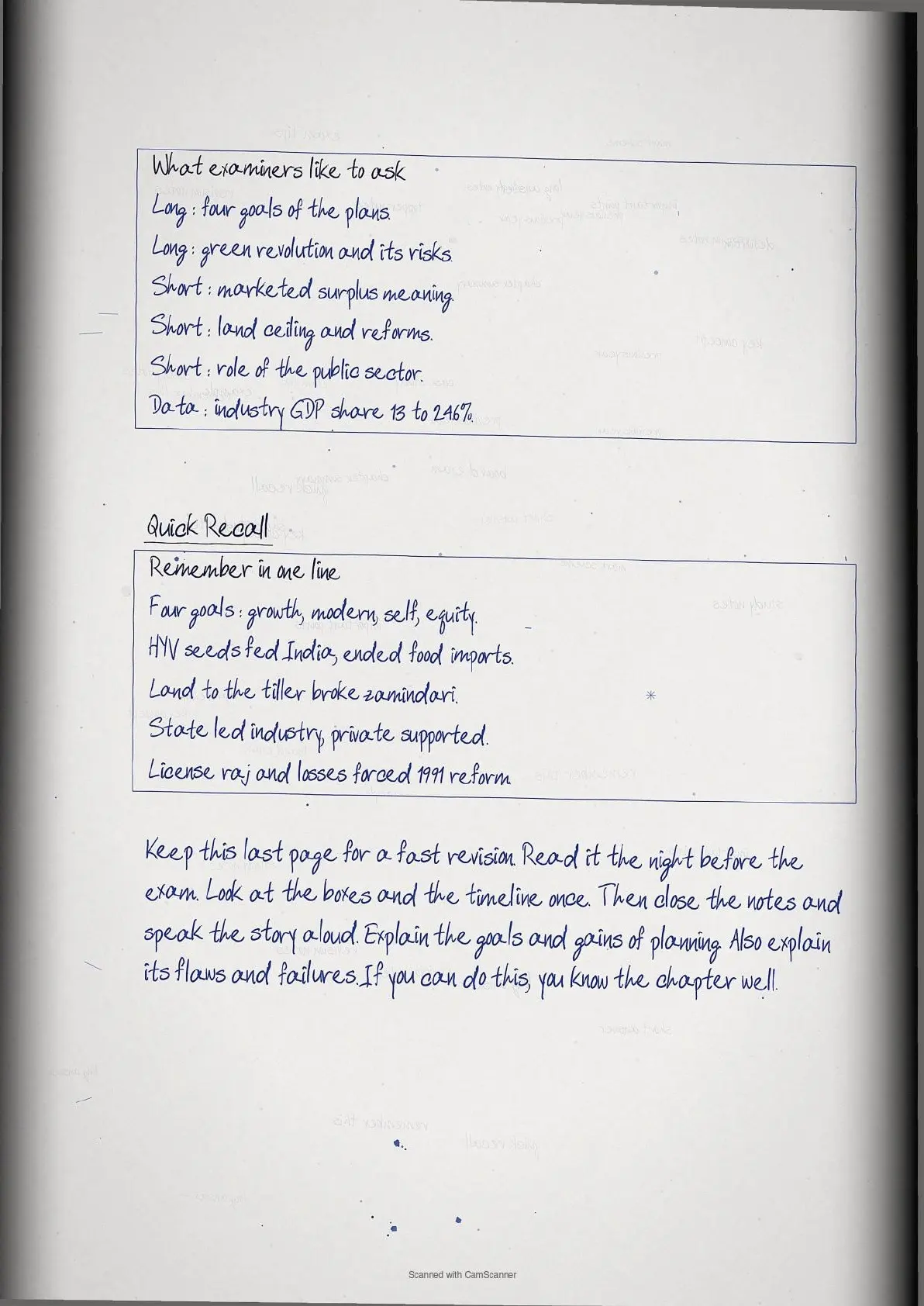
Use these class 11 economics handwritten notes in two passes. Read them slowly once for the full chapter. Then, near the exam, read only the boxes and key terms for a fast recall.
- Read the notes once with the NCERT chapter open beside you.
- Say each key term and idea in your own words.
- Practise one long-answer question from a past paper.
- On the last day, revise only the key terms and the boxes.
Class 11 Economics Handwritten Notes for All Chapters
The table below links the class 11 economics handwritten notes for every chapter. Use it to jump to any other chapter's notes.
Indian Economy 1950-1990 Class 11 Economics Handwritten Notes FAQs
Ques. Where can I download Indian Economy 1950-1990 Class 11 Economics Handwritten Notes PDF?
Ans. You can download the Indian Economy 1950-1990 Class 11 Economics Handwritten Notes PDF directly from this page. Both the Normal and HD versions are free.
Ques. Are these handwritten notes aligned with the 2026-27 NCERT?
Ans. Yes. These notes follow the current 2026-27 syllabus for Class 11 Economics. Students often ask why India followed planning and a mixed economy after 1947.
Ques. How many pages is the Class 11 Economics Indian Economy 1950-1990 Handwritten Notes PDF?
Ans. The notes run about 22 pages. They cover the full chapter with key terms, hand-drawn boxes, and a short self-assessment quiz.
Ques. What is the main idea of the 11th standard Economics chapter Indian Economy 1950-1990?
Ans. India wanted the welfare of all and feared depending on other nations. So it chose a mixed economy with a leading public sector and used five year plans to guide growth, farming and industry from 1950 to 1990.
Ques. Are these Indian Economy 1950-1990 notes enough for the CBSE Class 11 exam?
Ans. Yes, for revision. The Collegedunia handwritten notes cover every key point and exam term. Read them with the NCERT chapter and practise past questions.



Comments