




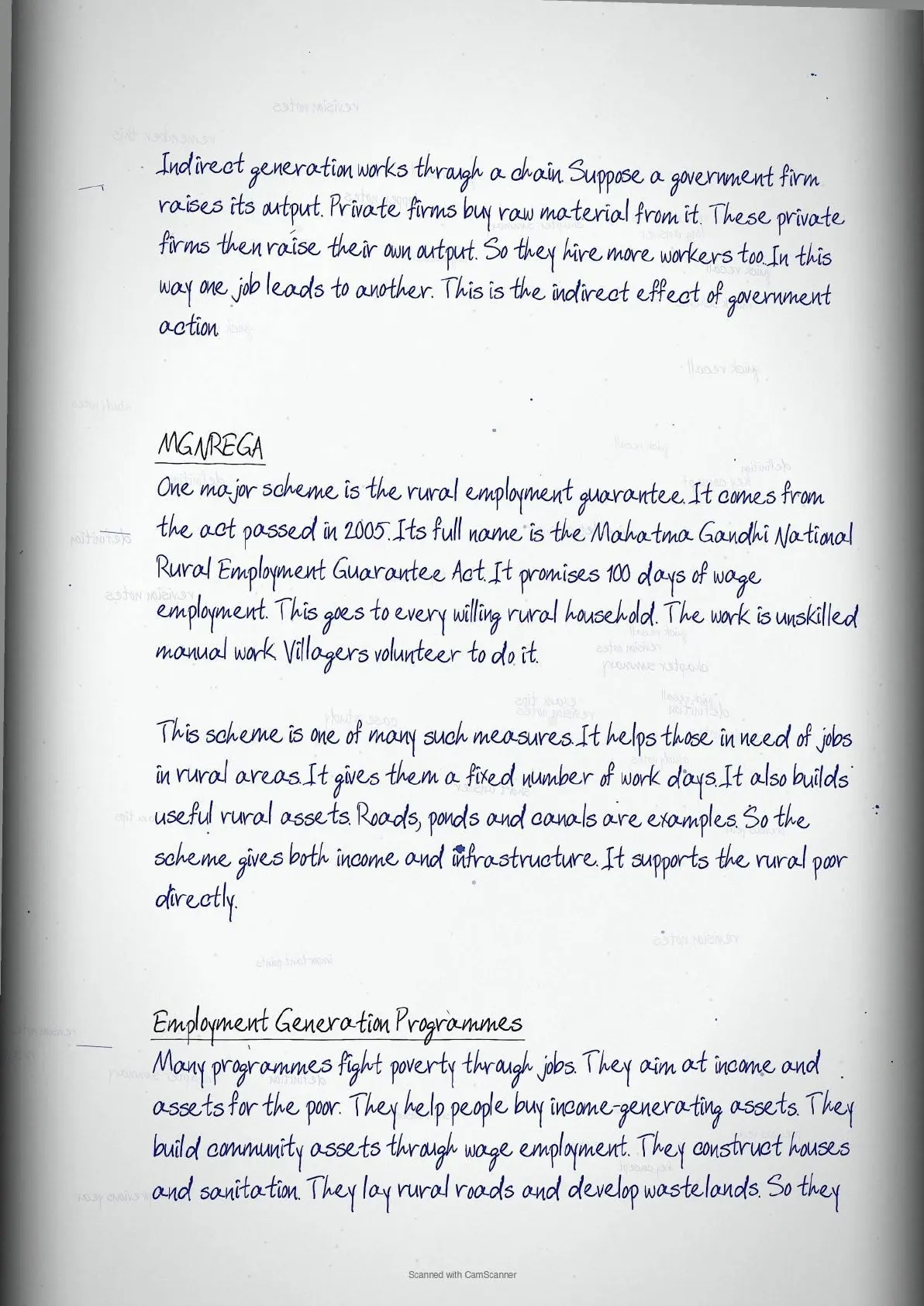
Employment in India is shaped by casualisation, informalisation, jobless growth and different kinds of unemployment. Class 11 Economics Chapter 14 Employment: Growth, Informalisation and Other Issues builds this idea step by step. These class 11 economics handwritten notes chapter 14 Employment: Growth, Informalisation and Other Issues follow the 2026-27 NCERT and cover who is a worker and the.
- CBSE Class 11 Weightage: a scoring chapter in the Economics paper, asked in short and long answers.
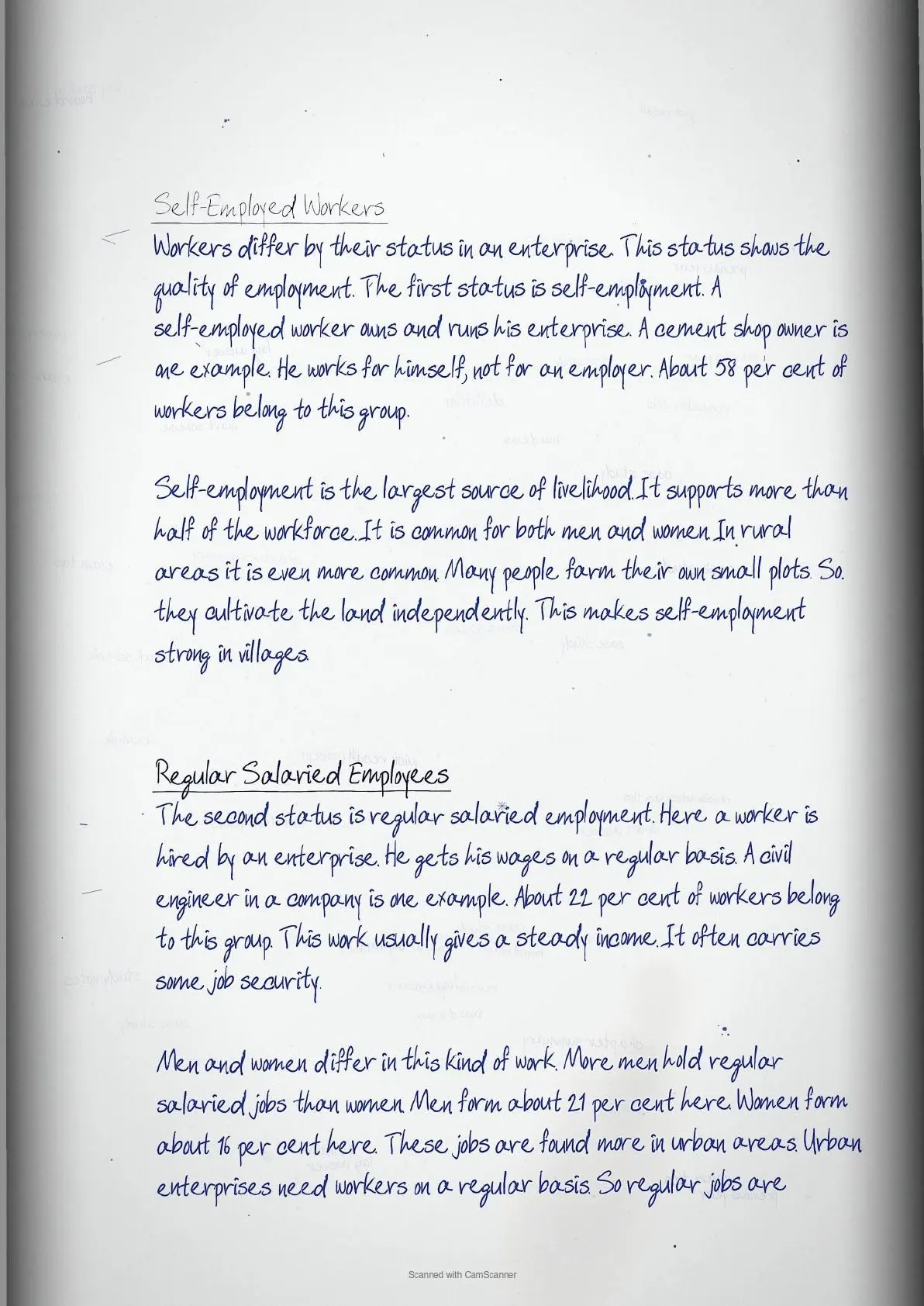
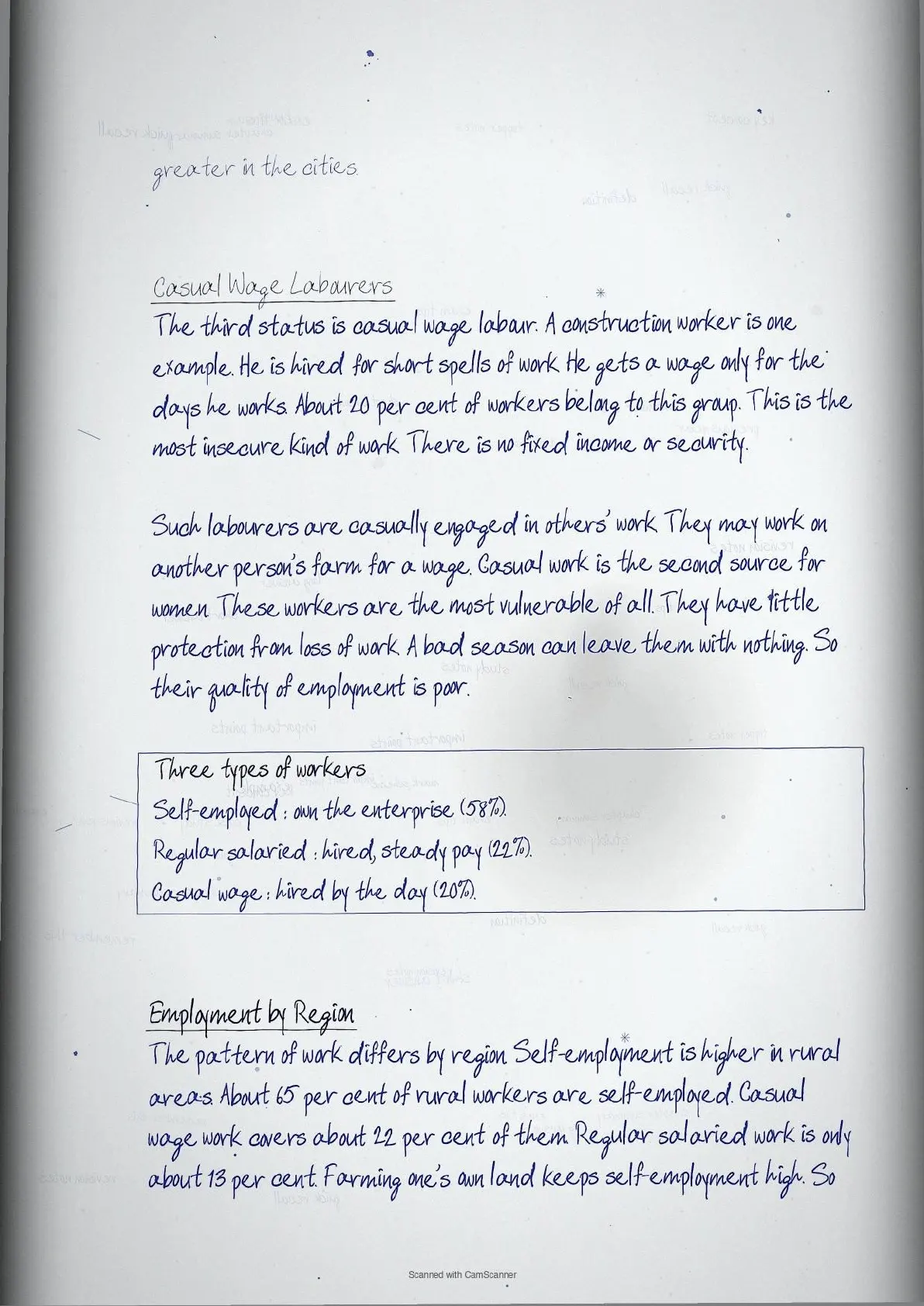
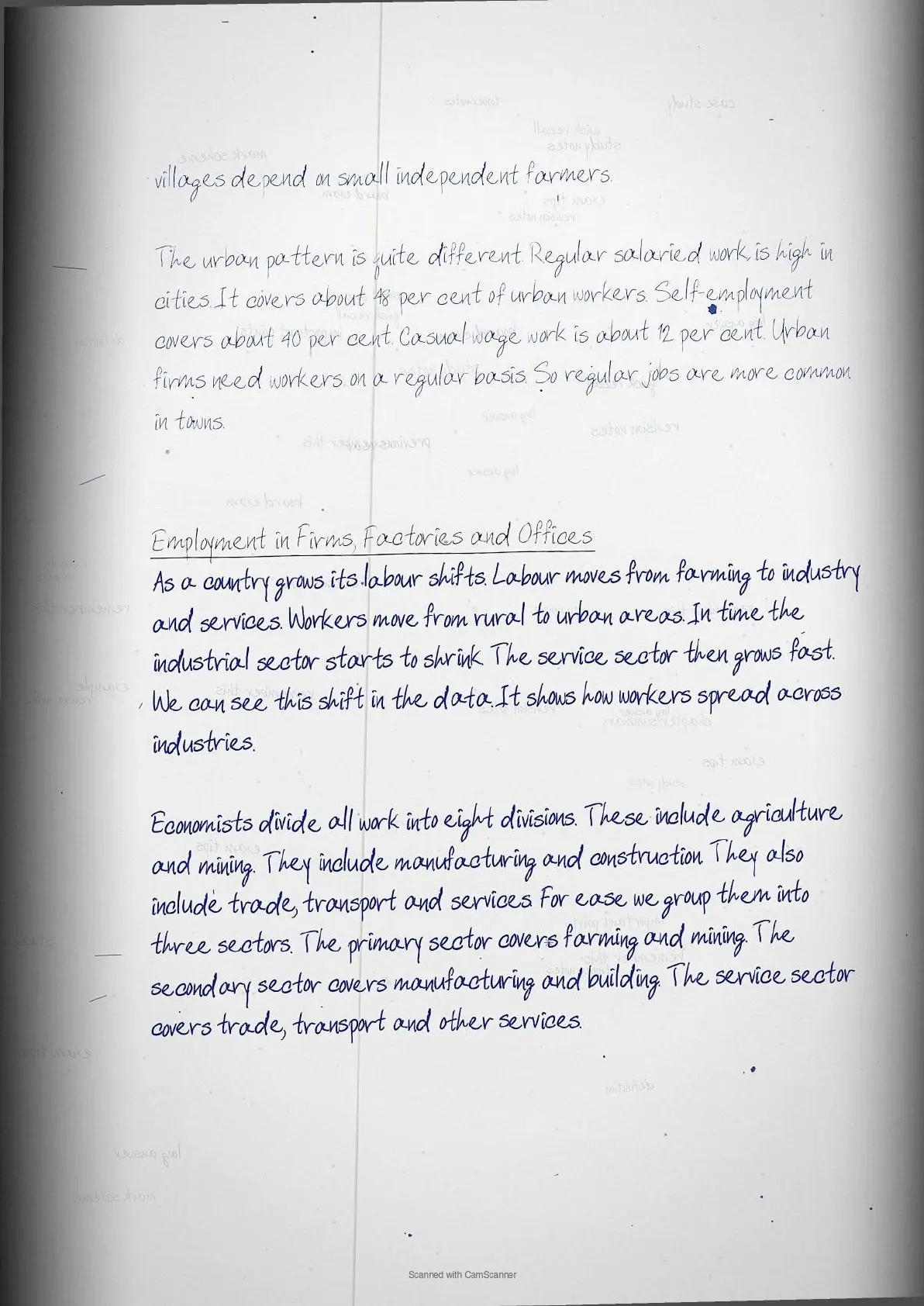
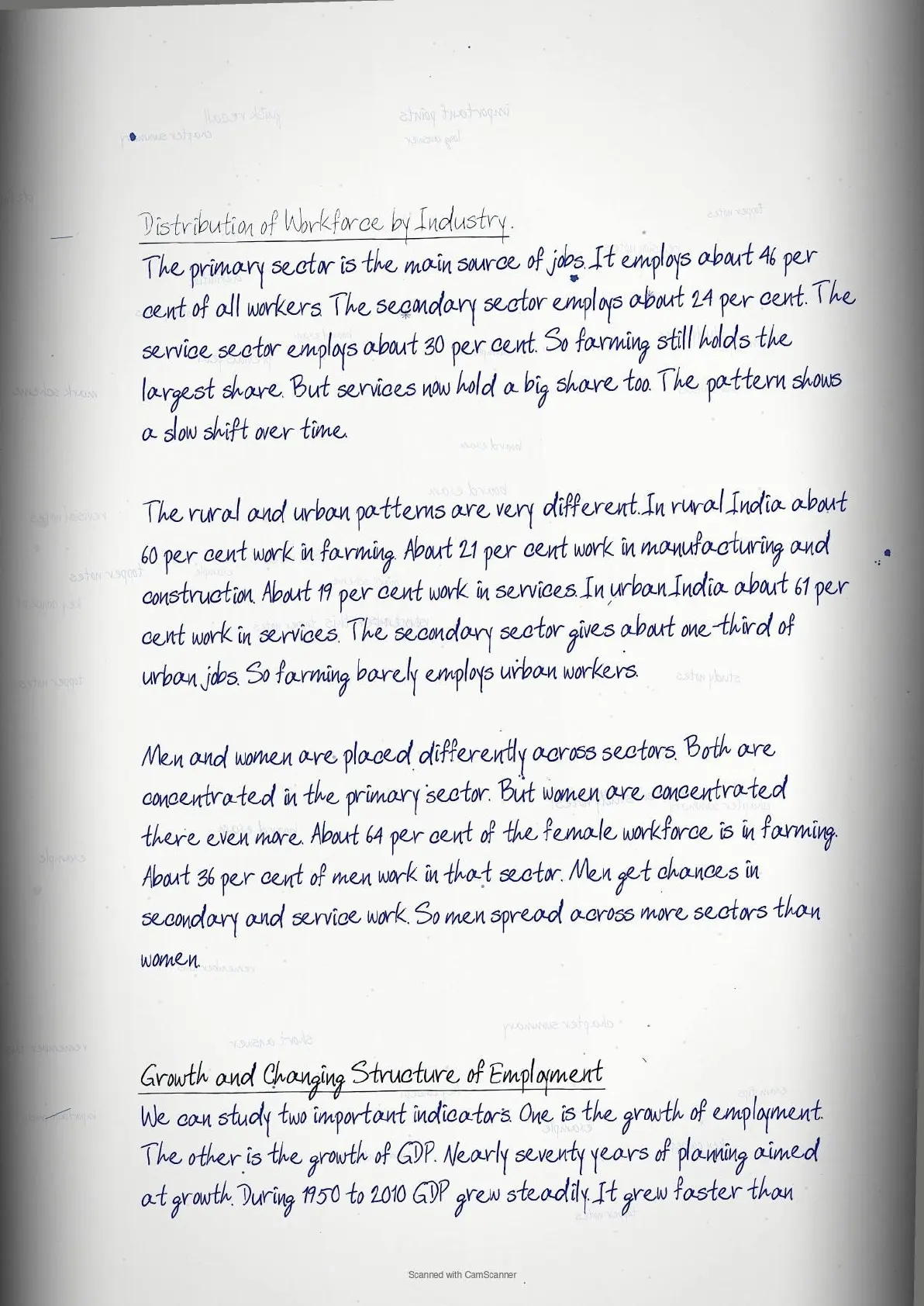
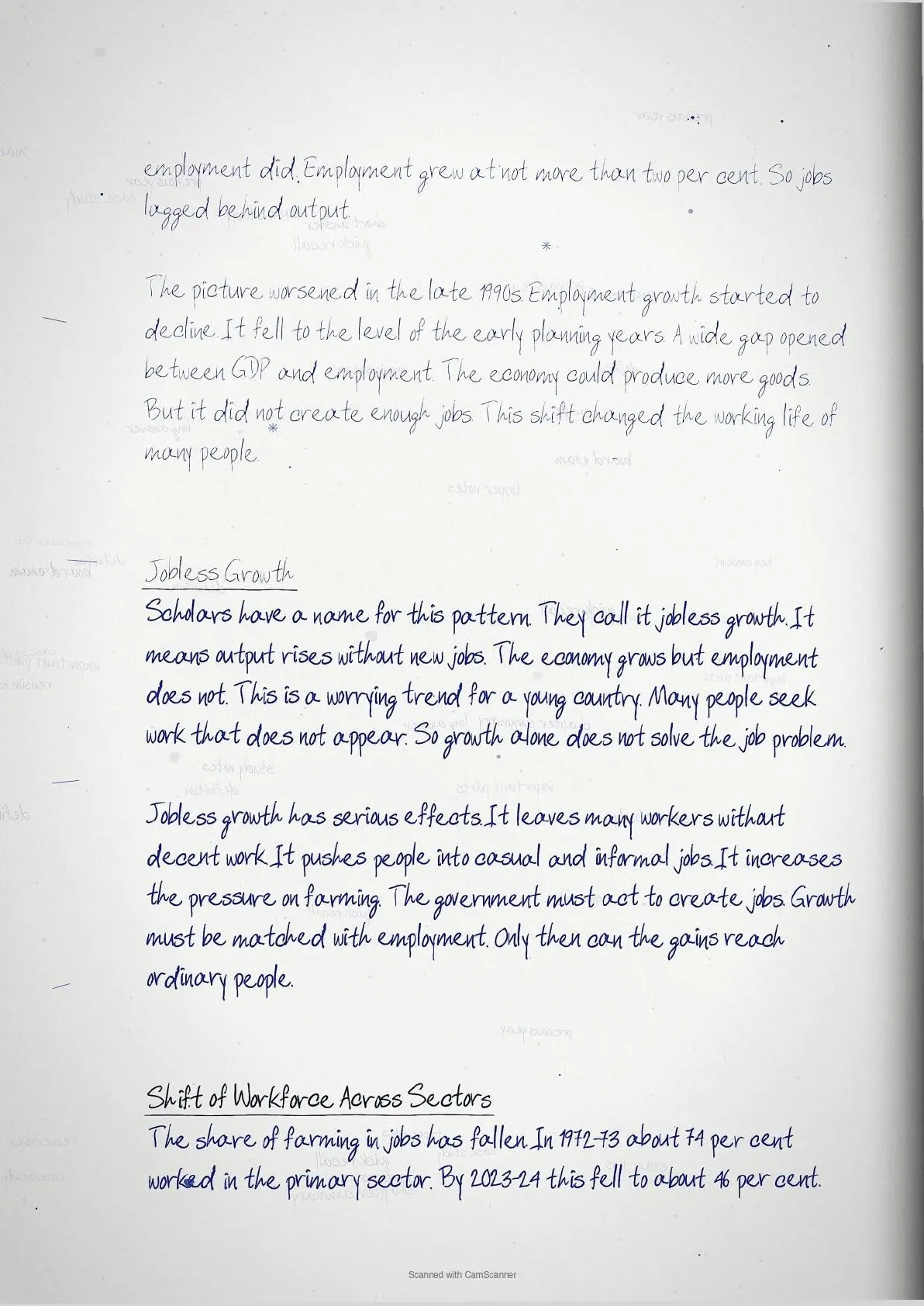
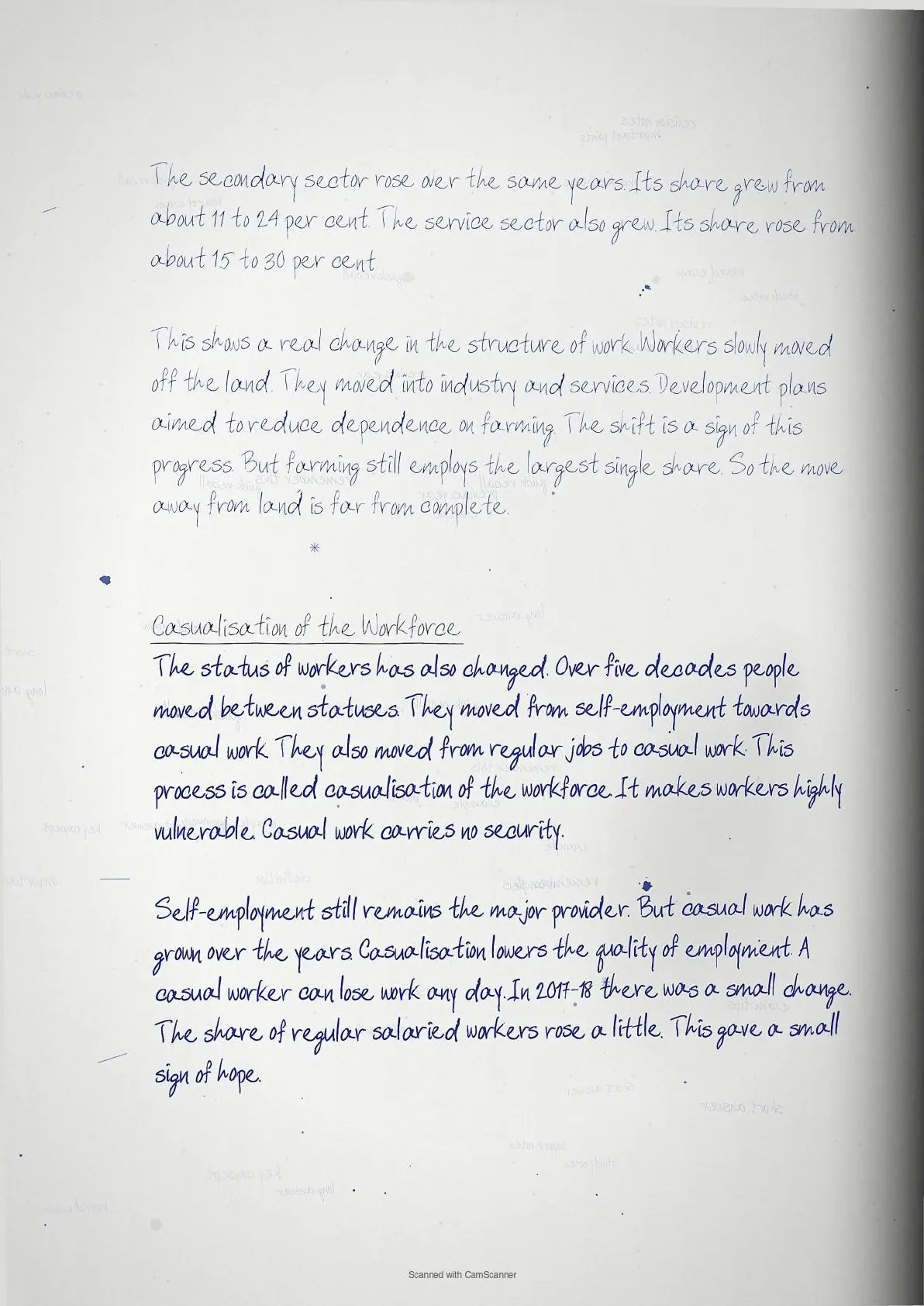
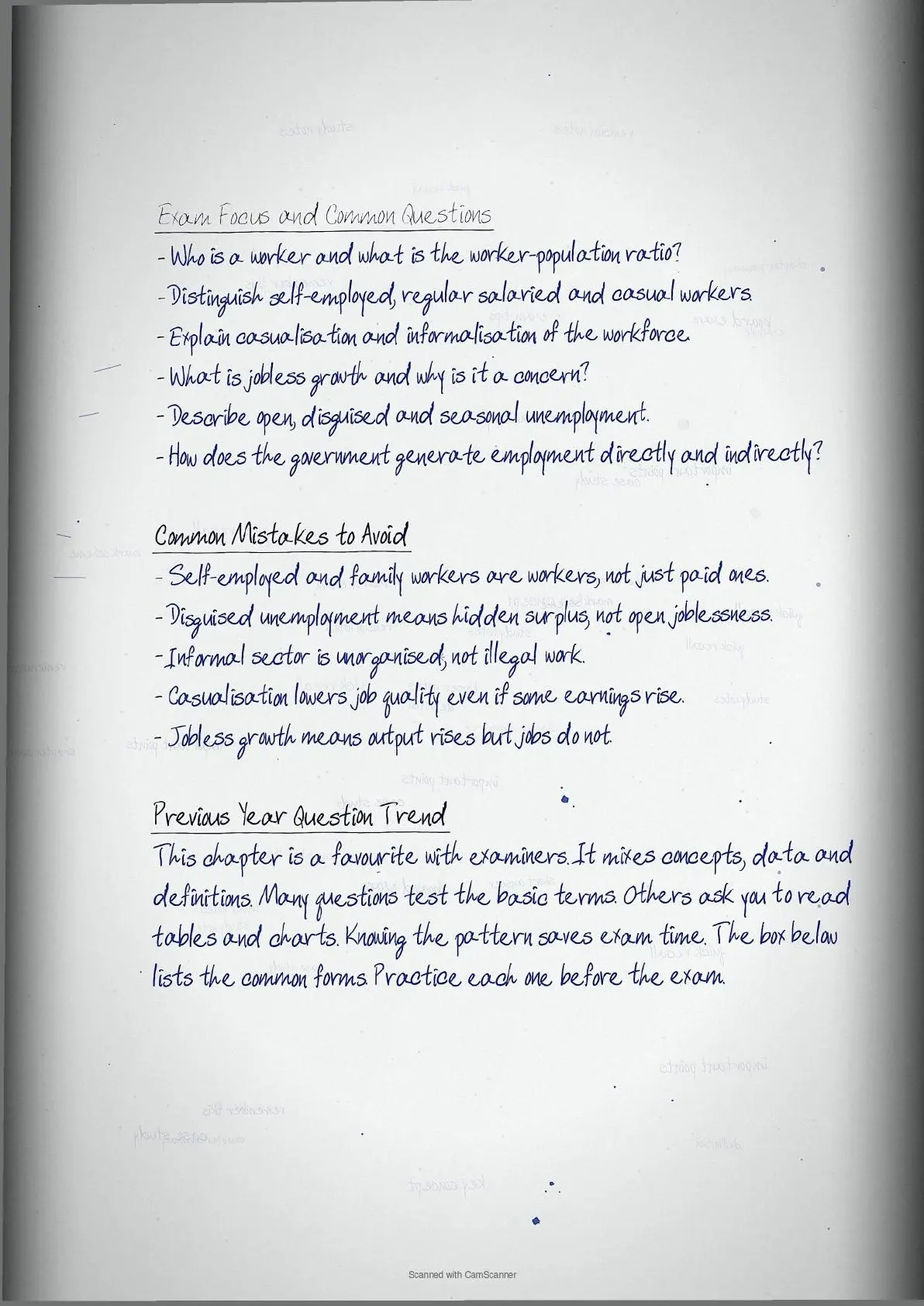
- What the notes cover: who is a worker and the worker-population ratio, participation of men and women in work, self-employed, regular salaried and casual workers, workforce across primary, secondary and service sectors.
- Best for: quick revision before Class 11 exams and a base for CUET later.
You can read the complete class 11 economics handwritten notes for Employment: Growth, Informalisation and Other Issues, with key terms, boxed definitions, and quick revision points, in the PDF below.
These handwritten notes are written by subject teachers, mapped to the 2026-27 NCERT, and checked against the last five years of CBSE Class 11 Economics papers.
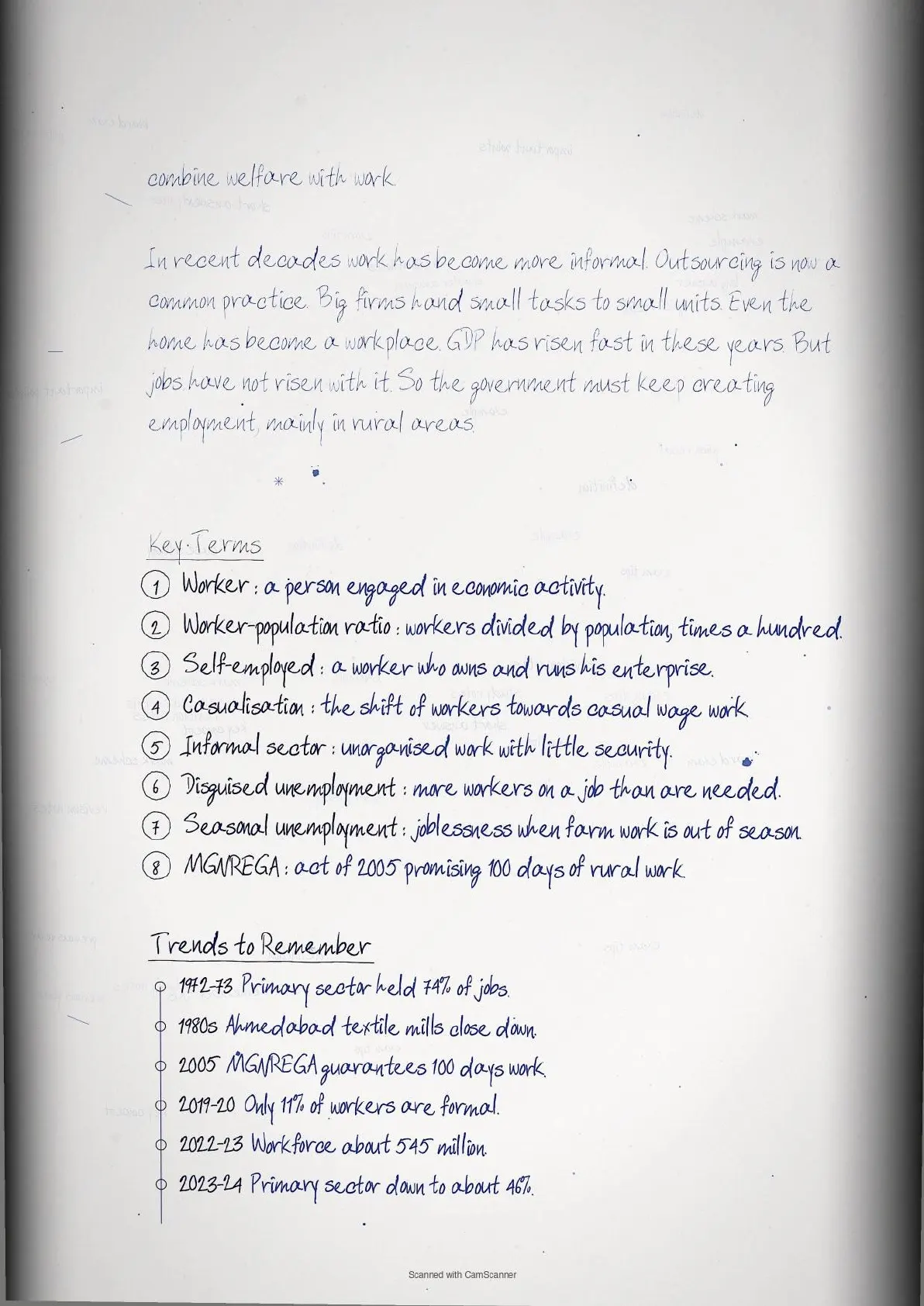
Key Terms and Ideas in Employment: Growth, Informalisation and Other Issues
These are the terms and ideas the exam asks about most. Learn each one so you can define it and use it in your answers.
| Term / Idea | What it means |
|---|---|
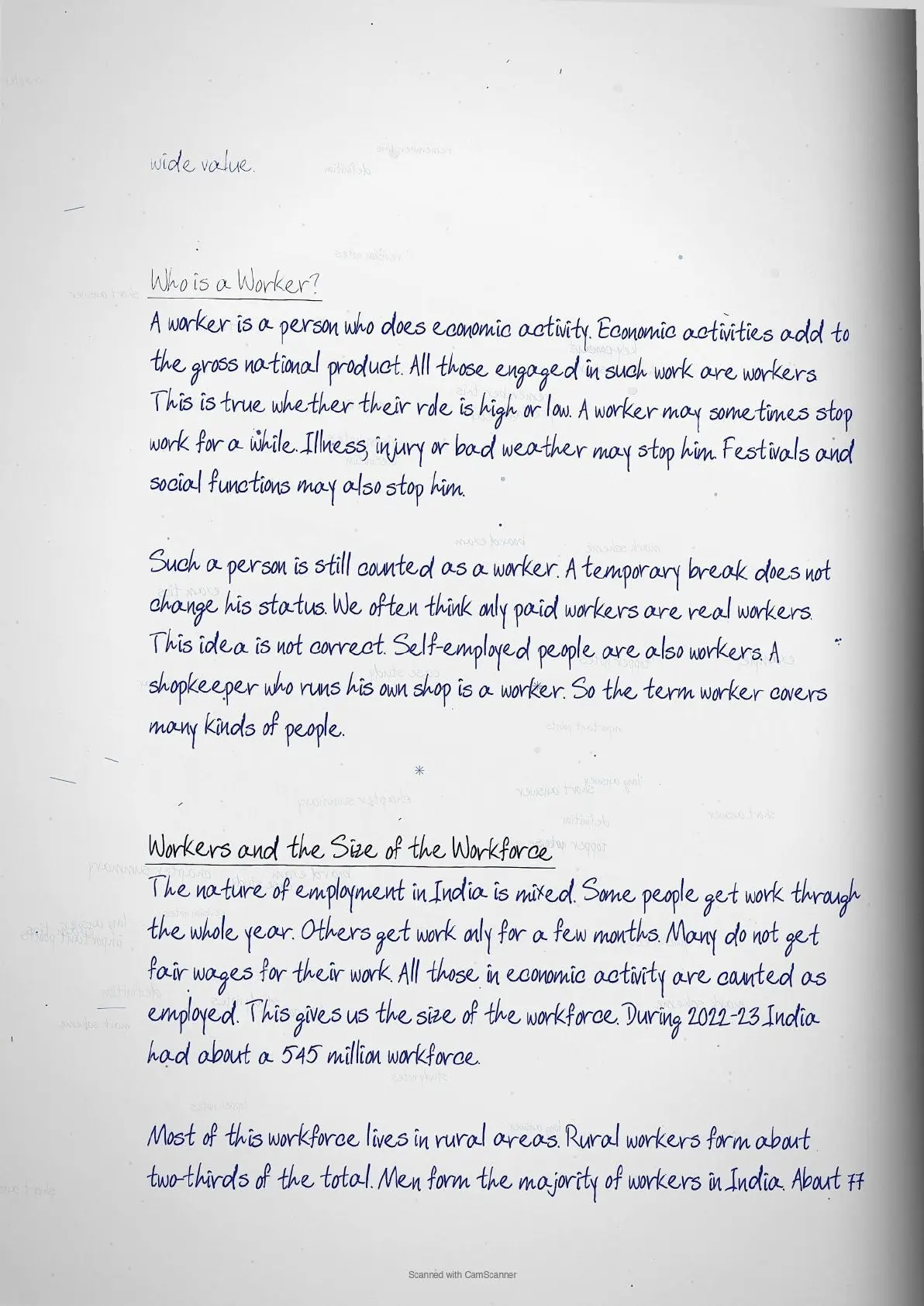
| Worker | any person engaged in economic activity, paid or self-employed |
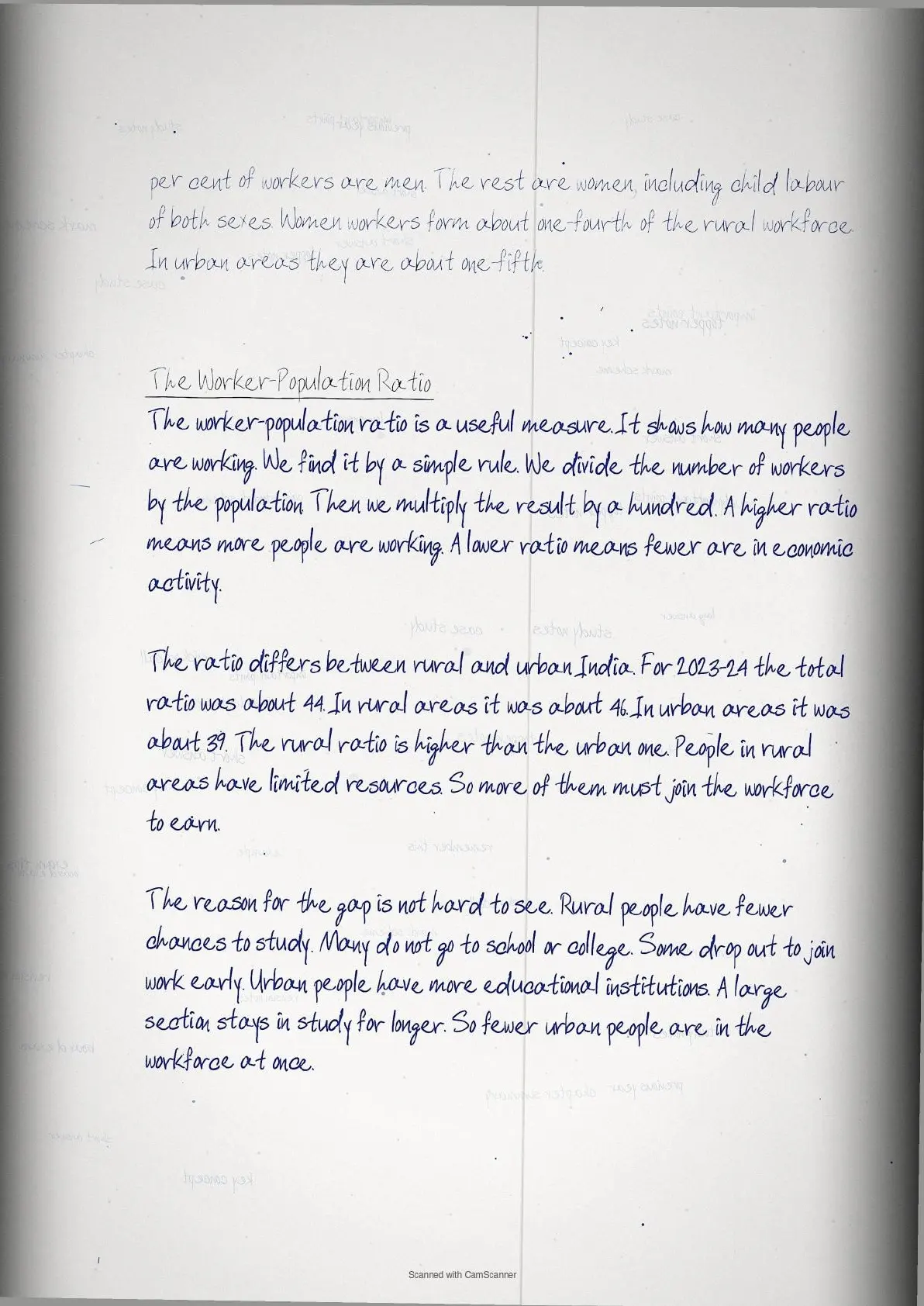
| Worker-population ratio | workers divided by population, times a hundred |
| Self-employed | largest group, about 58 per cent of workers |
| Casualisation | shift of workers towards insecure casual wage work |
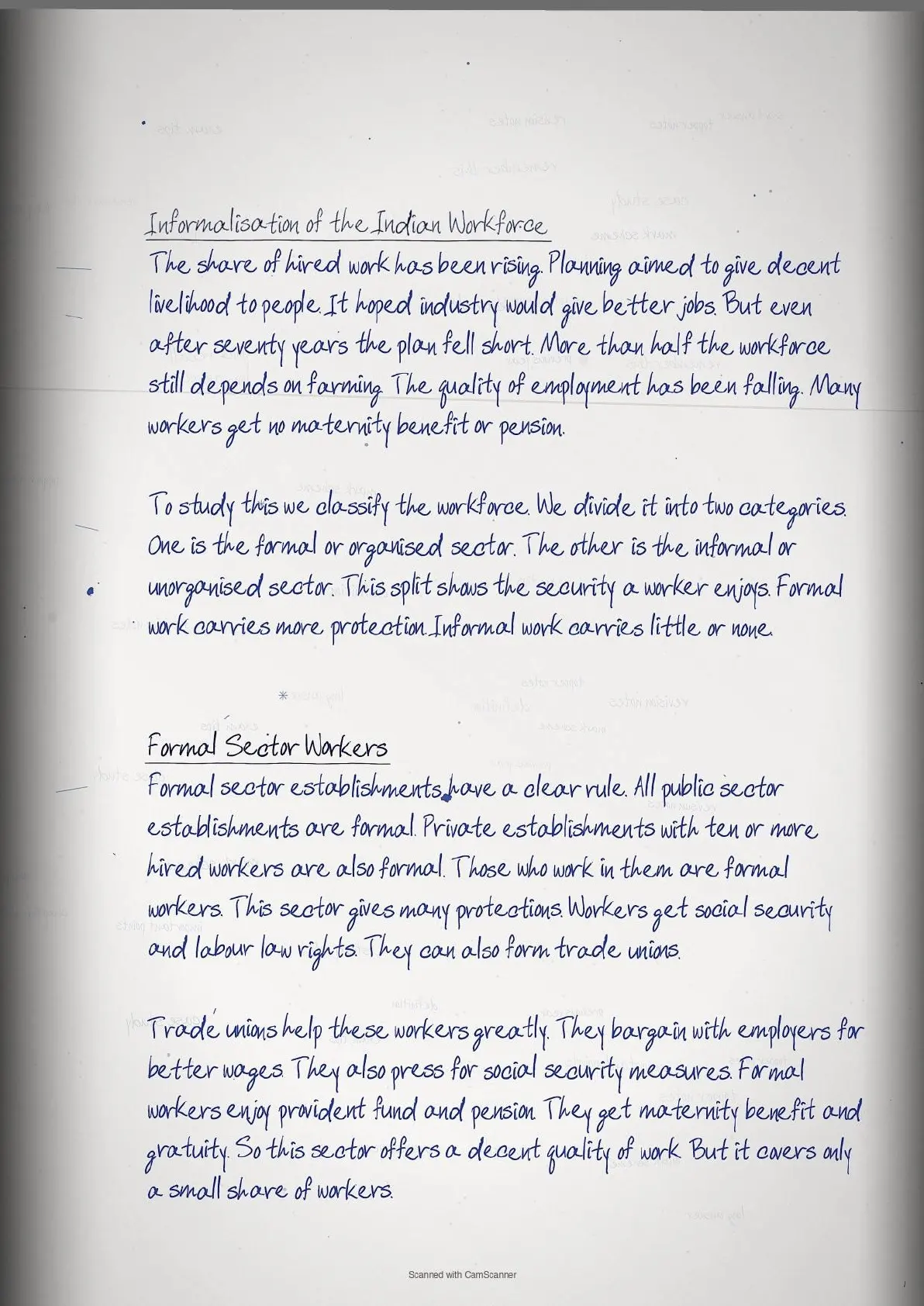
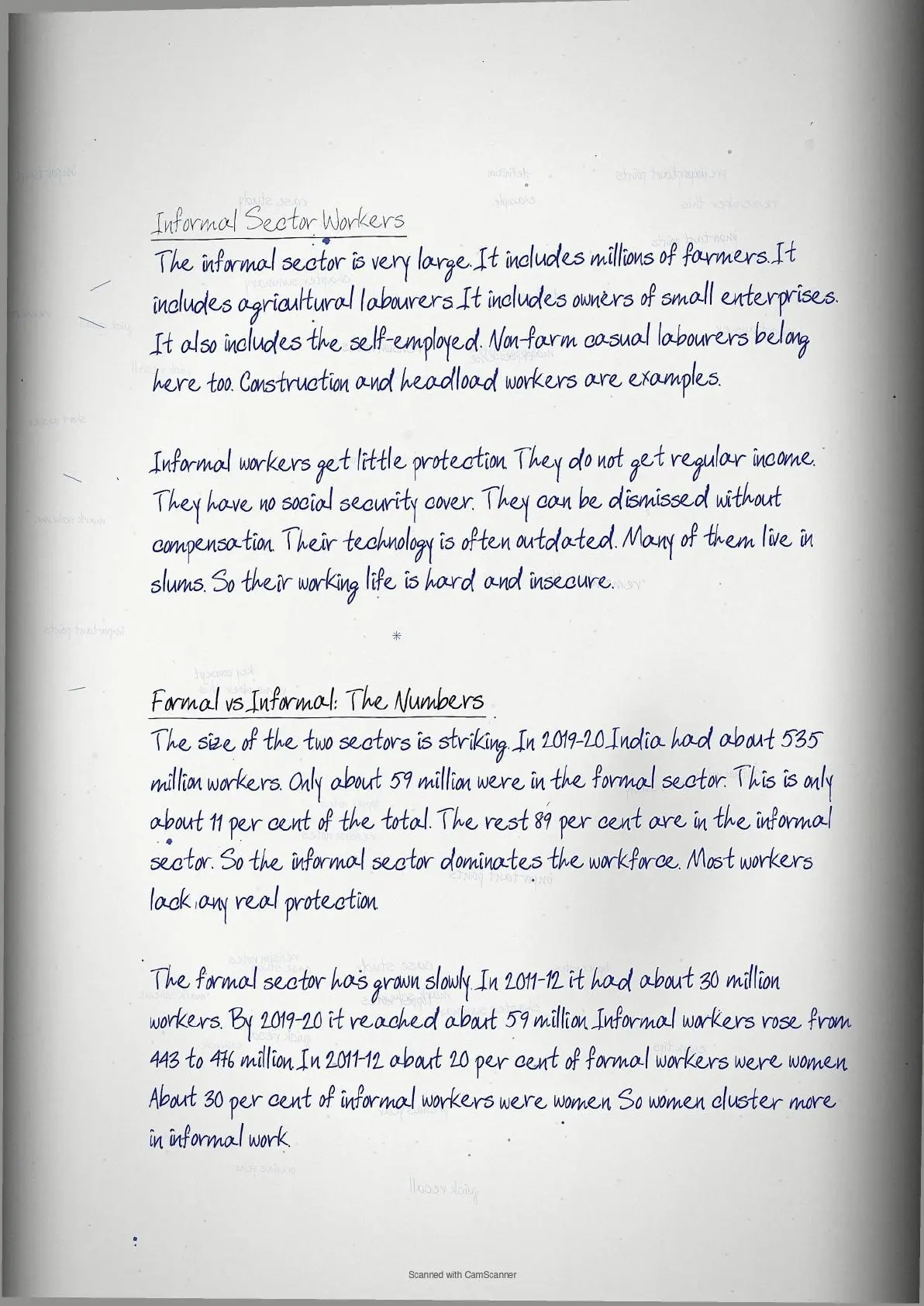
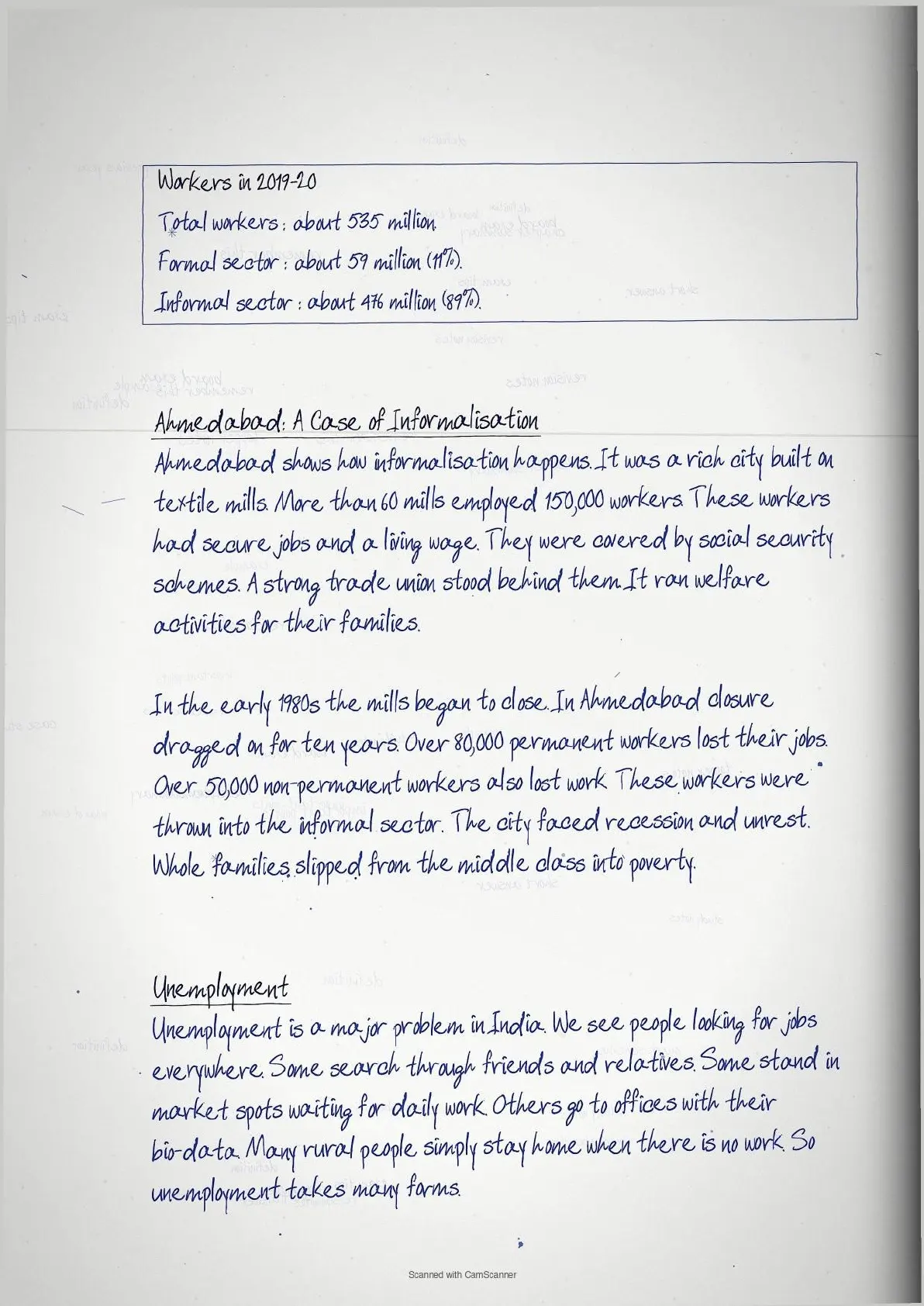
| Informal sector | about 89 per cent of workers, with little protection |
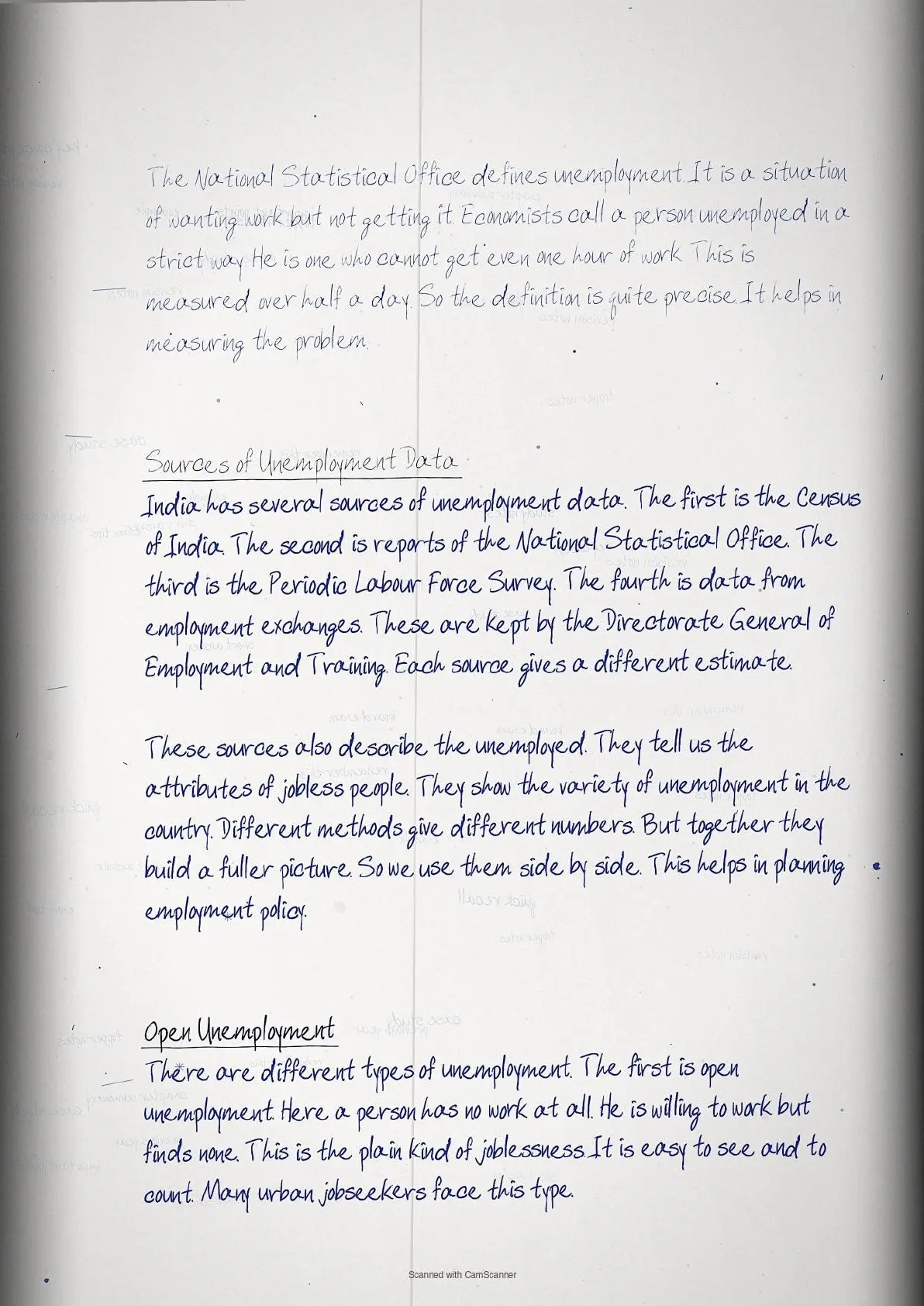
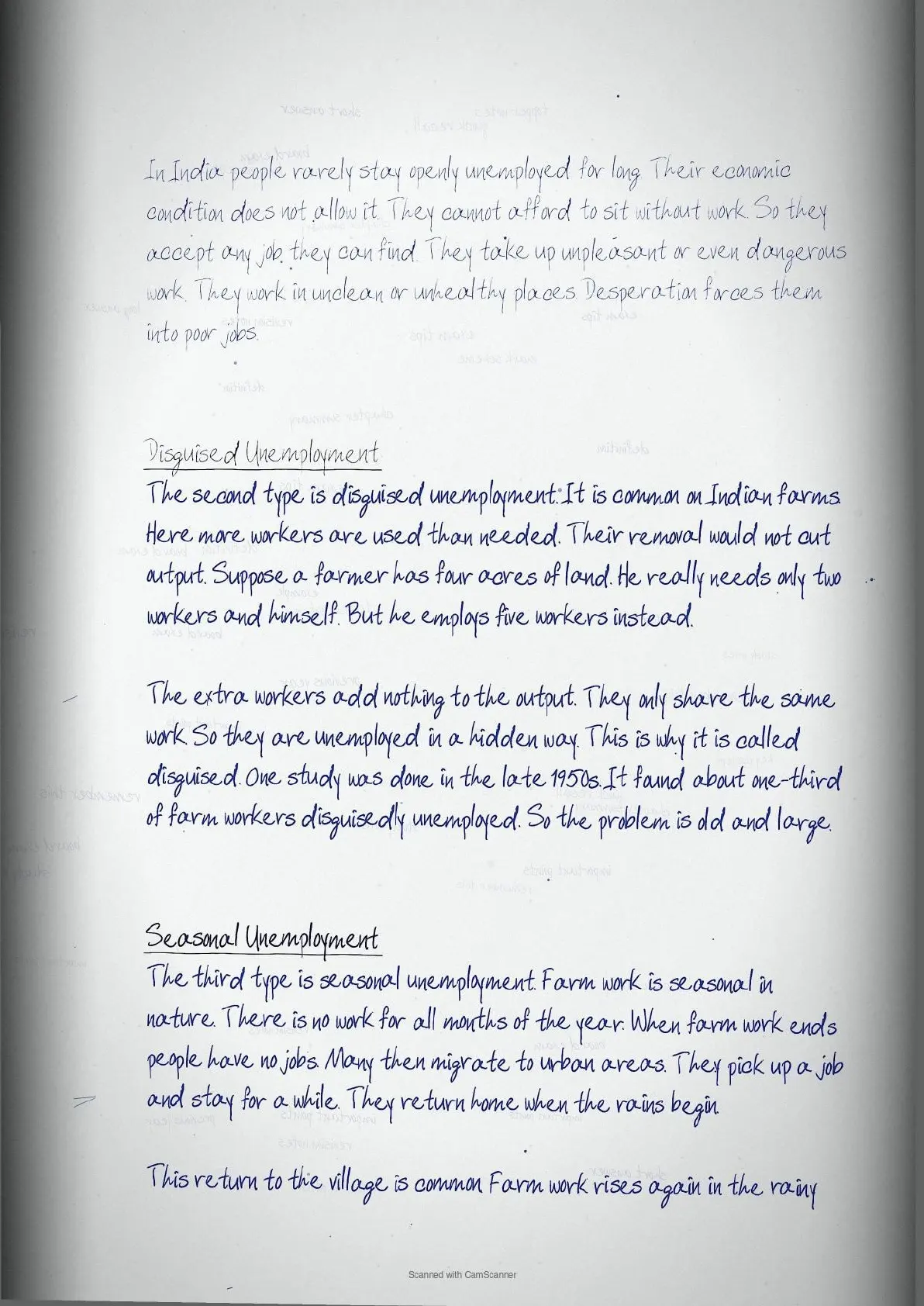
| Disguised unemployment | more workers on a job than actually needed |
| Jobless growth | GDP rises but employment does not |
| MGNREGA | 2005 act promising 100 days of rural work |
What the Employment: Growth, Informalisation and Other Issues Handwritten Notes Cover
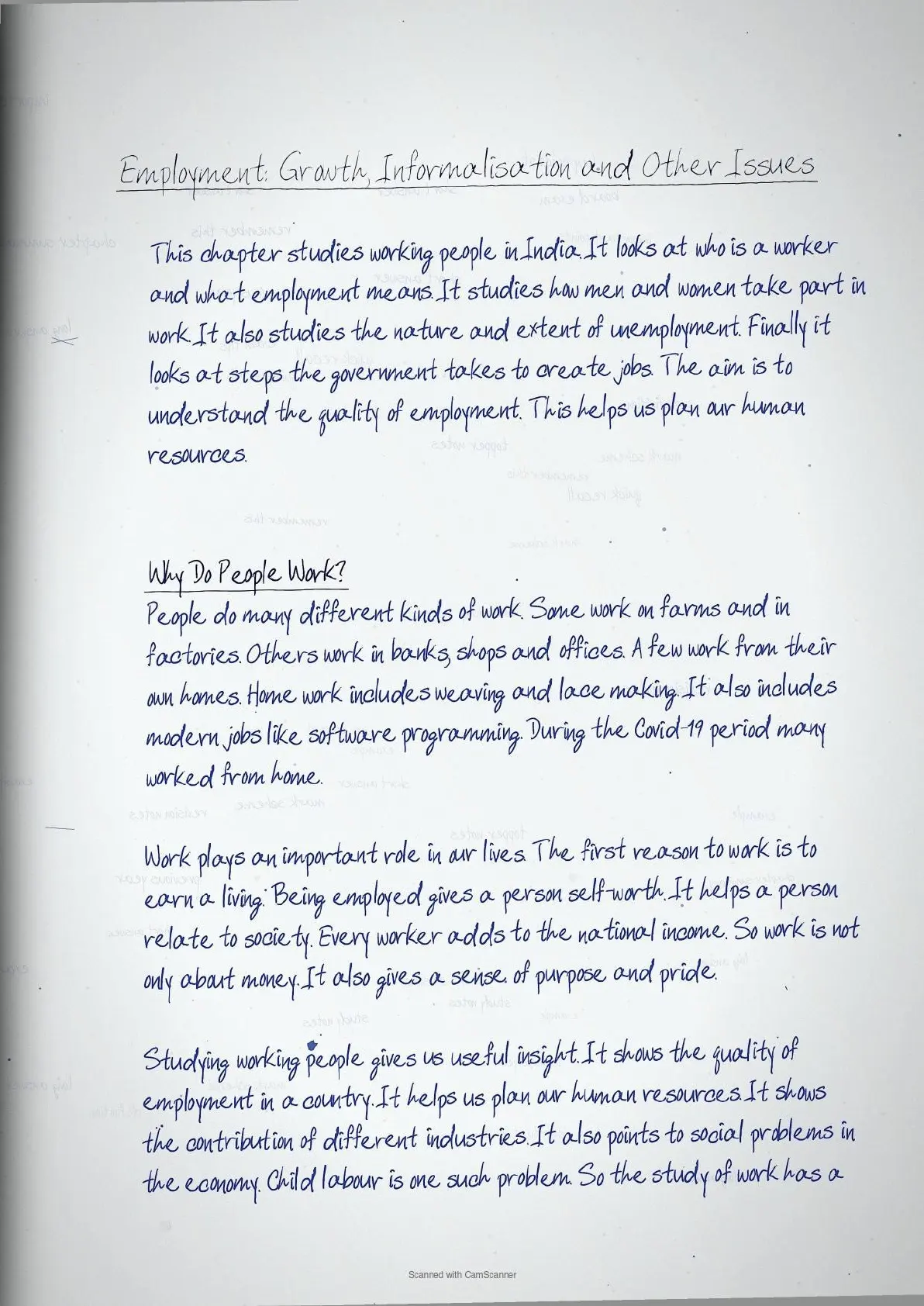
This chapter studies working people in India. It looks at who is a worker, how men and women take part in work, the nature of unemployment, and the steps the government takes to create jobs. It also explains casualisation and informalisation of the workforce.
- Who is a worker and the worker-population ratio
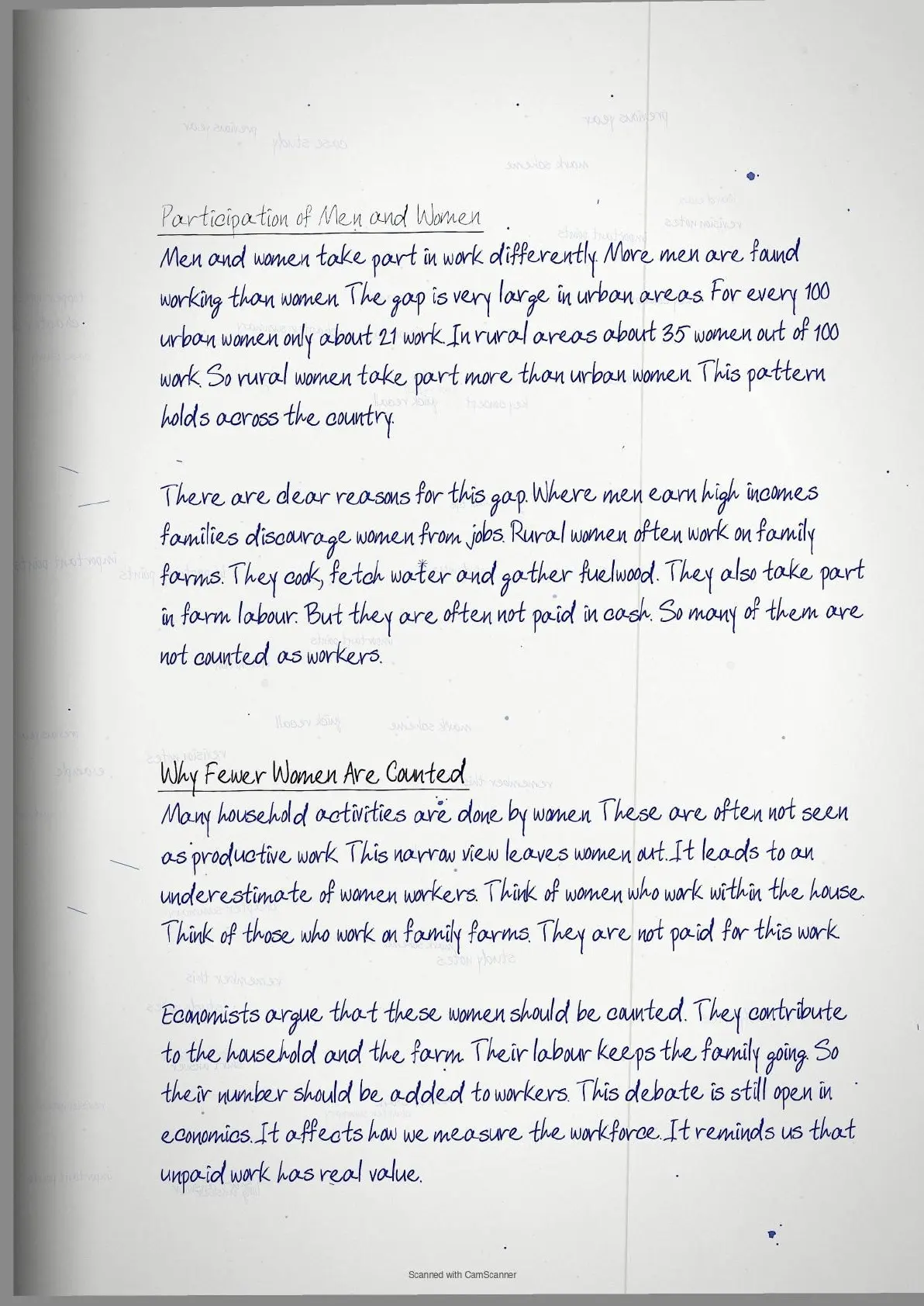
- Participation of men and women in work
- Self-employed, regular salaried and casual workers
- Workforce across primary, secondary and service sectors
- Jobless growth and casualisation
- Formal and informal sectors of the workforce
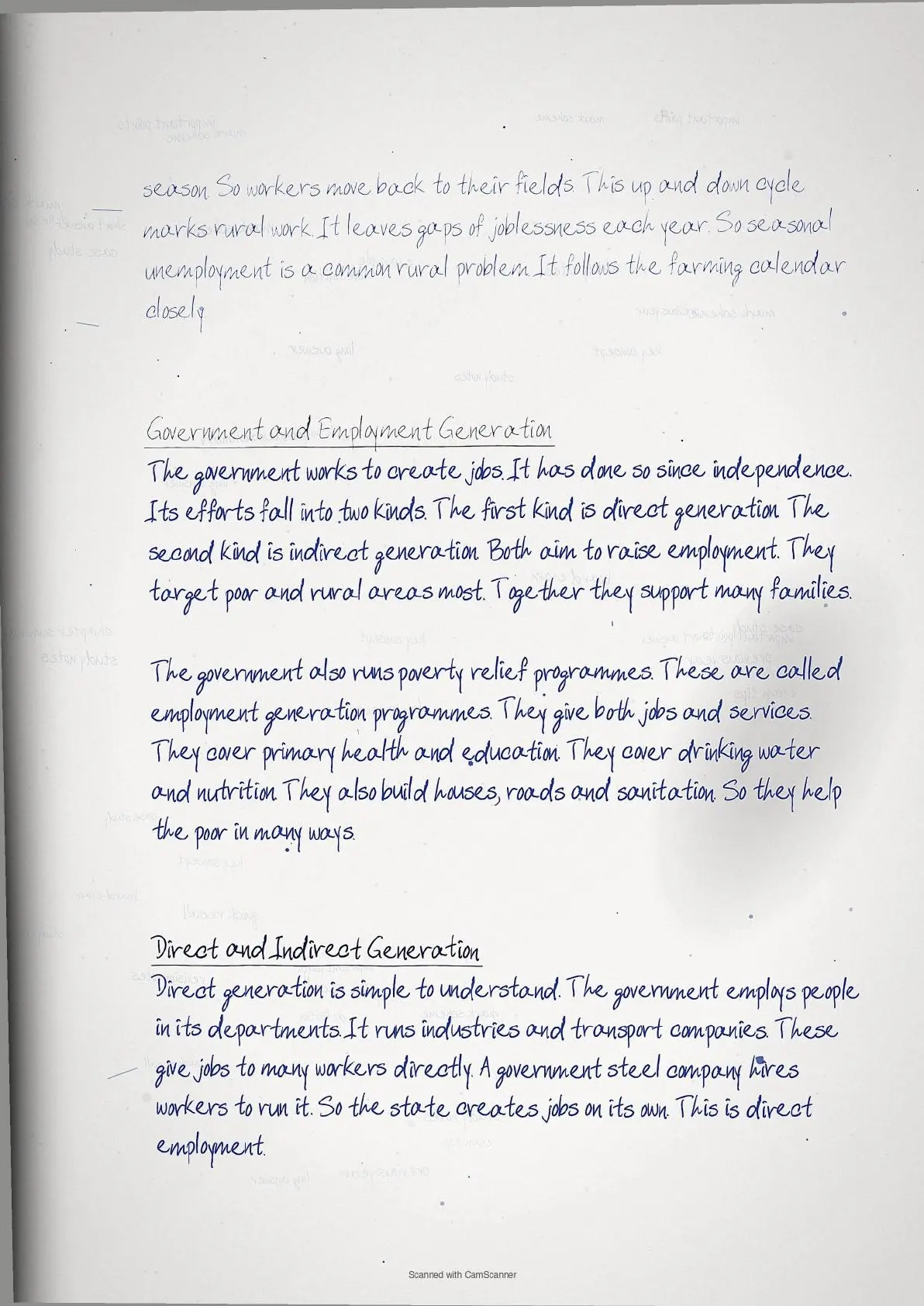
- Types of unemployment and government job schemes
Employment: Growth, Informalisation and Other Issues Topic-wise Weightage for CBSE Class 11 Economics
Some parts of this chapter are asked more often than others. The table below shows which sub-topics to revise first, based on recent CBSE Class 11 question trends.
| Sub-topic | Weightage | CBSE Frequency |
|---|---|---|
| Types of unemployment | High | asked most years |
| Formal and informal sectors | High | frequent |
| Self-employed, salaried, casual workers | High | frequent |
| Worker-population ratio and participation | Medium | often |
| Government employment generation | Medium | sometimes |
How Collegedunia's Handwritten Notes Help You Revise Employment: Growth, Informalisation and Other Issues
These notes are made for the night before the exam. They keep the facts short and easy to scan. Collegedunia maps every point to the 2026-27 NCERT.
- Clear handwriting: each topic is written in neat, easy-to-read handwriting.
- Boxed key terms: the main terms and definitions are boxed by hand for fast recall.
- Diagrams and tables: simple hand-drawn tables and charts make ideas clear.
- Colour-coded headings: new sub-topics stand out, so you find any section in seconds.
Employment: Growth, Informalisation and Other Issues Self-Assessment Quiz
Try these quick questions after you read the notes. Tap each question to check your answer. They cover the points CBSE asks most often.
The worker-population ratio is found by
(a) workers times population (b) workers over population times 100 (c) population over workers (d) workers minus population
Answer: (b) workers over population times 100 correct - it shows the share of people working.
The largest group of Indian workers is
(a) casual wage (b) regular salaried (c) self-employed (d) formal sector
Answer: (c) self-employed correct - about 58 per cent of workers own and run their enterprise.
About what share of workers is informal?
(a) 11 per cent (b) 46 per cent (c) 58 per cent (d) 89 per cent
Answer: (d) 89 per cent correct - only about 11 per cent are in the formal sector.
A farmer using five workers where two are needed shows
(a) open unemployment (b) disguised unemployment (c) seasonal unemployment (d) full employment
Answer: (b) disguised unemployment correct - the extra workers add nothing to output.
MGNREGA promises how many days of work?
(a) 50 (b) 100 (c) 150 (d) 200
Answer: (b) 100 correct - it guarantees 100 days of wage employment to rural households.
How to Use These Handwritten Notes for Class 11 Economics Revision
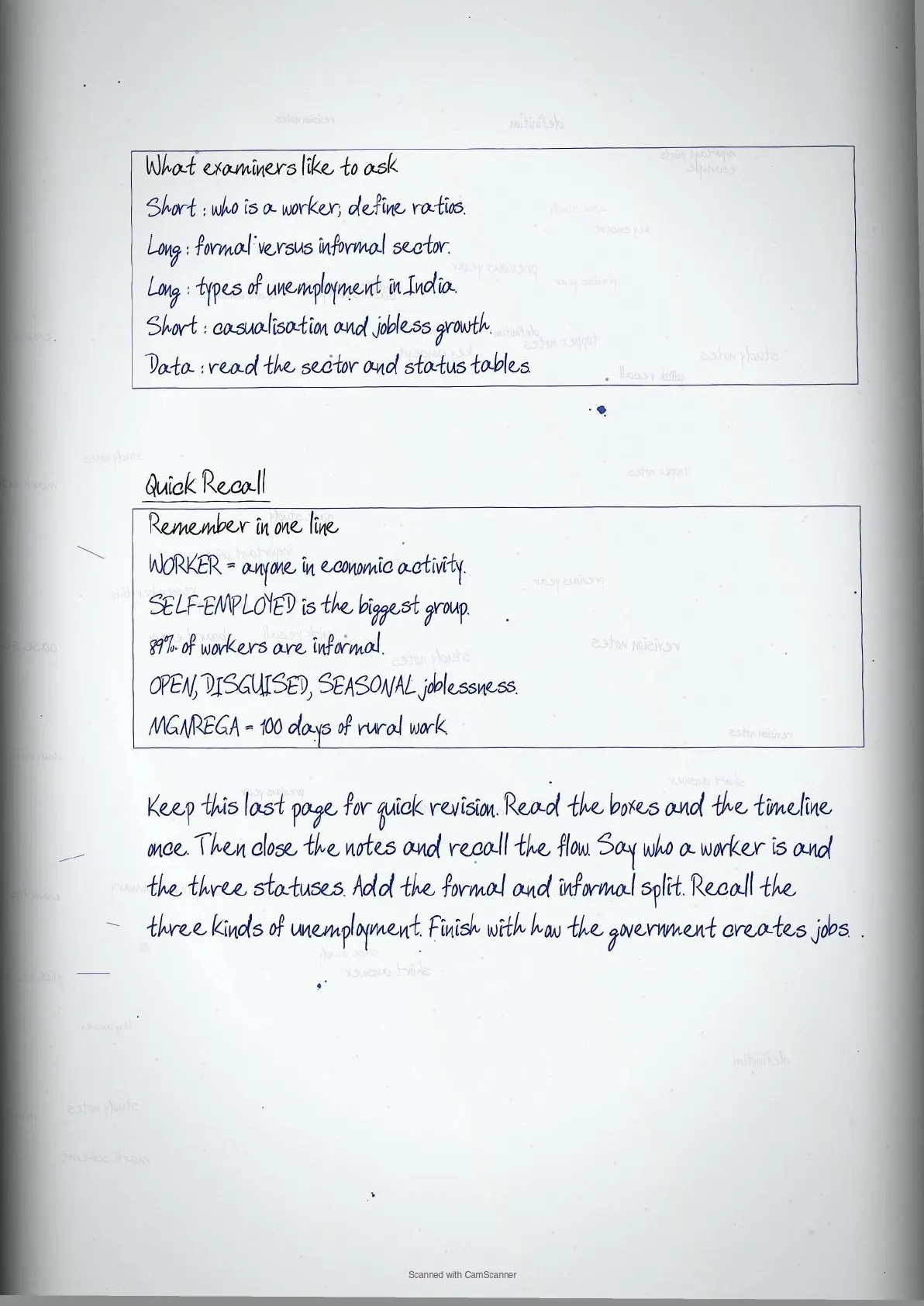
Use these class 11 economics handwritten notes in two passes. Read them slowly once for the full chapter. Then, near the exam, read only the boxes and key terms for a fast recall.
- Read the notes once with the NCERT chapter open beside you.
- Say each key term and idea in your own words.
- Practise one long-answer question from a past paper.
- On the last day, revise only the key terms and the boxes.
Class 11 Economics Handwritten Notes for All Chapters
The table below links the class 11 economics handwritten notes for every chapter. Use it to jump to any other chapter's notes.
Employment: Growth, Informalisation and Other Issues Class 11 Economics Handwritten Notes FAQs
Ques. Where can I download Employment: Growth, Informalisation and Other Issues Class 11 Economics Handwritten Notes PDF?
Ans. You can download the Employment: Growth, Informalisation and Other Issues Class 11 Economics Handwritten Notes PDF directly from this page. Both the Normal and HD versions are free.
Ques. Are these handwritten notes aligned with the 2026-27 NCERT?
Ans. Yes. These notes follow the current 2026-27 syllabus for Class 11 Economics. What is the difference between the formal and informal sectors?
Ques. How many pages is the Class 11 Economics Employment: Growth, Informalisation and Other Issues Handwritten Notes PDF?
Ans. The notes run about 22 pages. They cover the full chapter with key terms, hand-drawn boxes, and a short self-assessment quiz.
Ques. What is the main idea of the 11th standard Economics chapter Employment: Growth, Informalisation and Other Issues?
Ans. Formal sector work covers public establishments and private ones with ten or more hired workers, giving social security, pension and trade union rights. The informal sector holds about 89 per cent of workers, such as farmers, labourers and the self-employed, who get little income security or protection.
Ques. Are these Employment: Growth, Informalisation and Other Issues notes enough for the CBSE Class 11 exam?
Ans. Yes, for revision. The Collegedunia handwritten notes cover every key point and exam term. Read them with the NCERT chapter and practise past questions.



Comments