




The 2026-27 NCERT keeps Class 11 Economics Chapter 16 Comparative Development Experiences of India and its Neighbours in full for the CBSE course. These class 11 economics handwritten notes chapter 16 Comparative Development Experiences of India and its Neighbours follow the 2026-27 NCERT and cover developmental paths of india, china and pakistan, great leap forward and china's 1978.

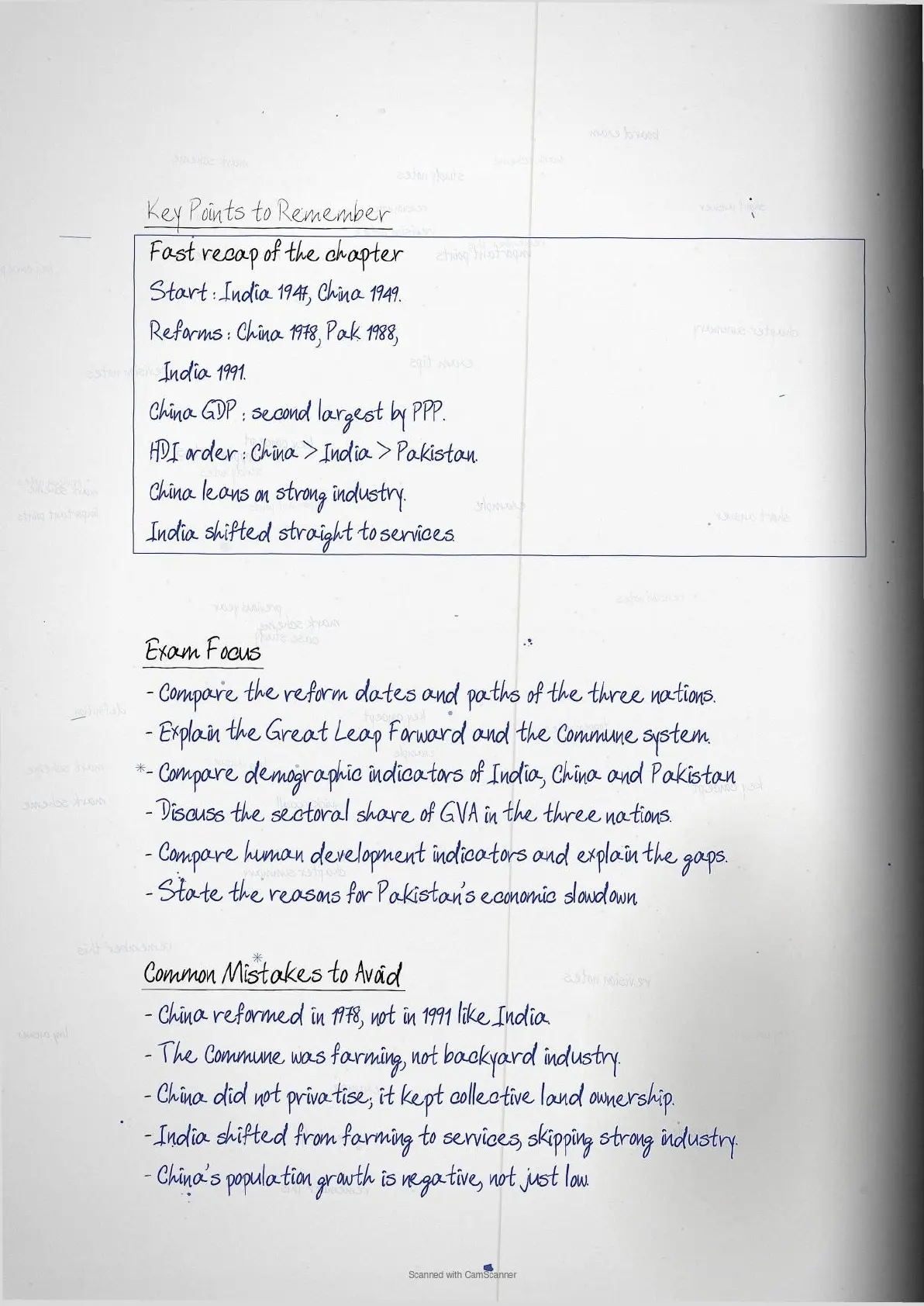
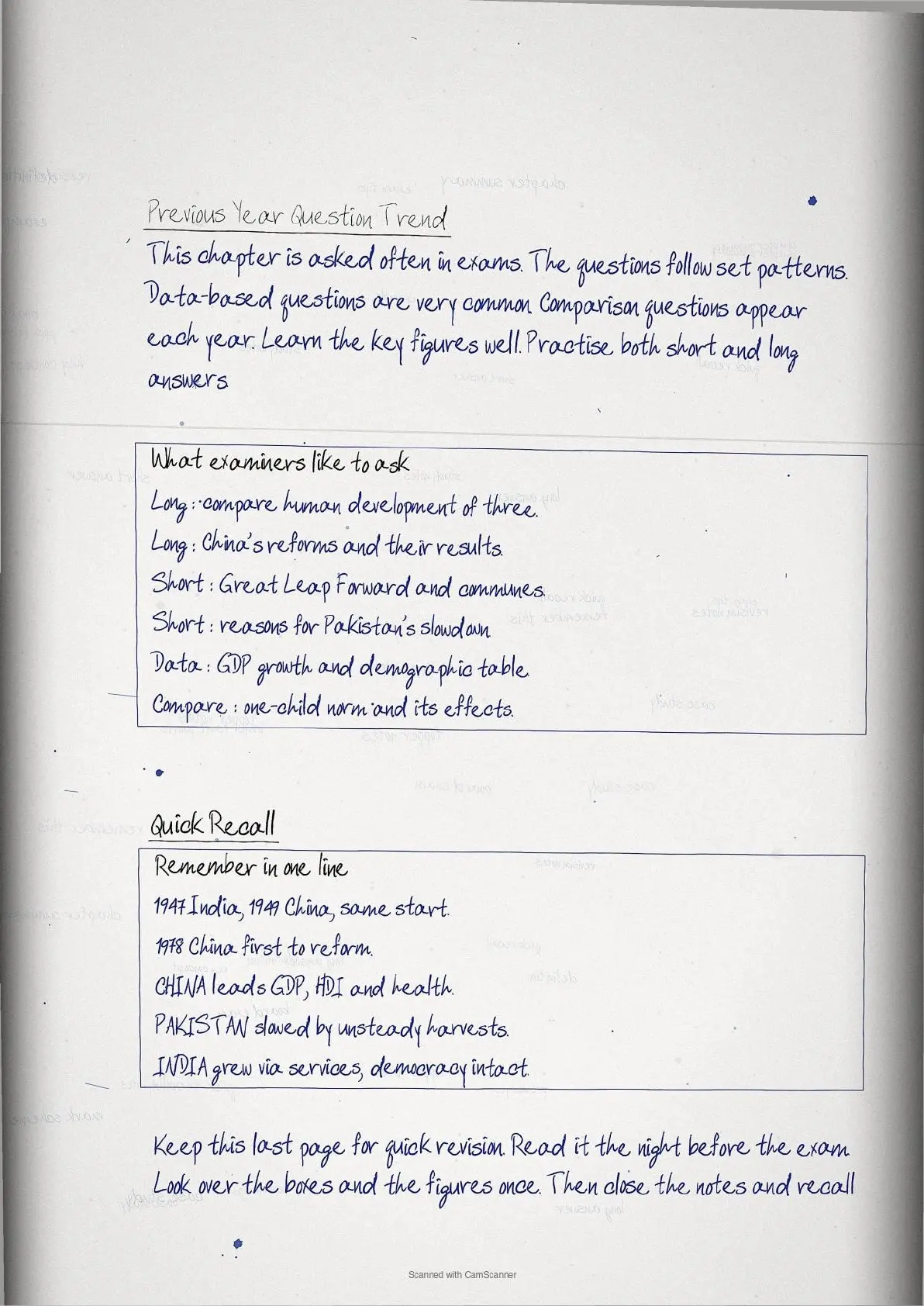

- CBSE Class 11 Weightage: a scoring chapter in the Economics paper, asked in short and long answers.
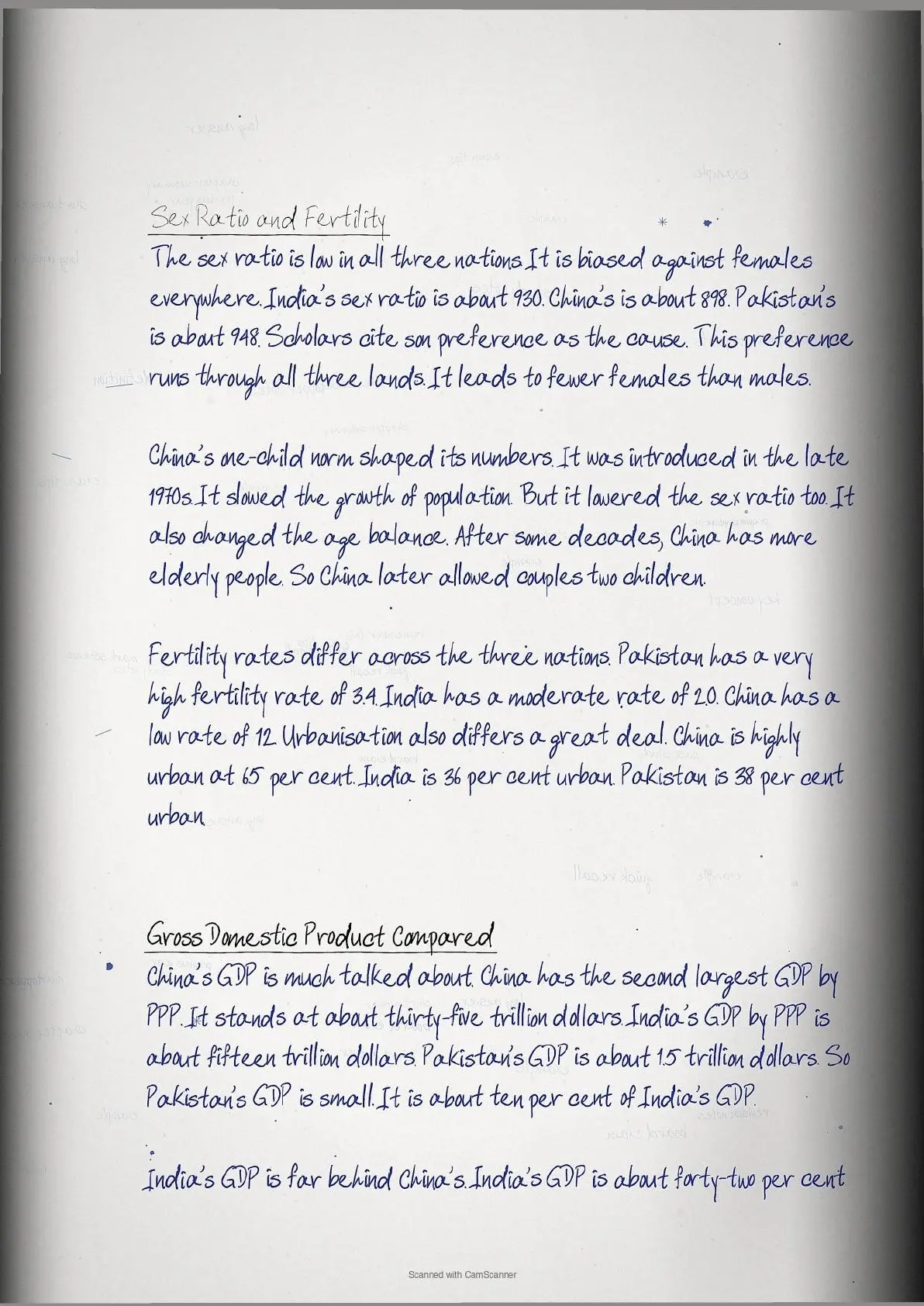
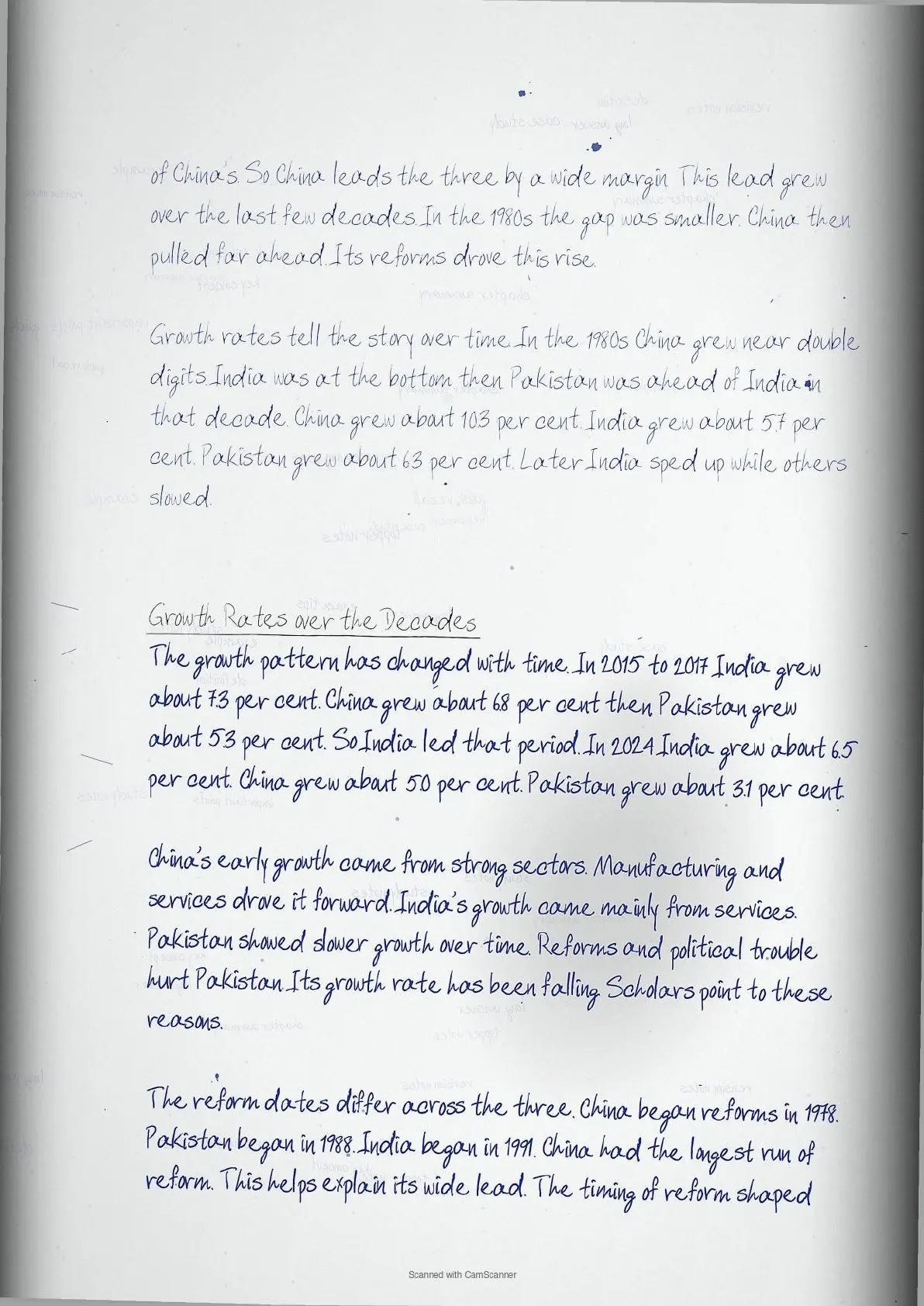
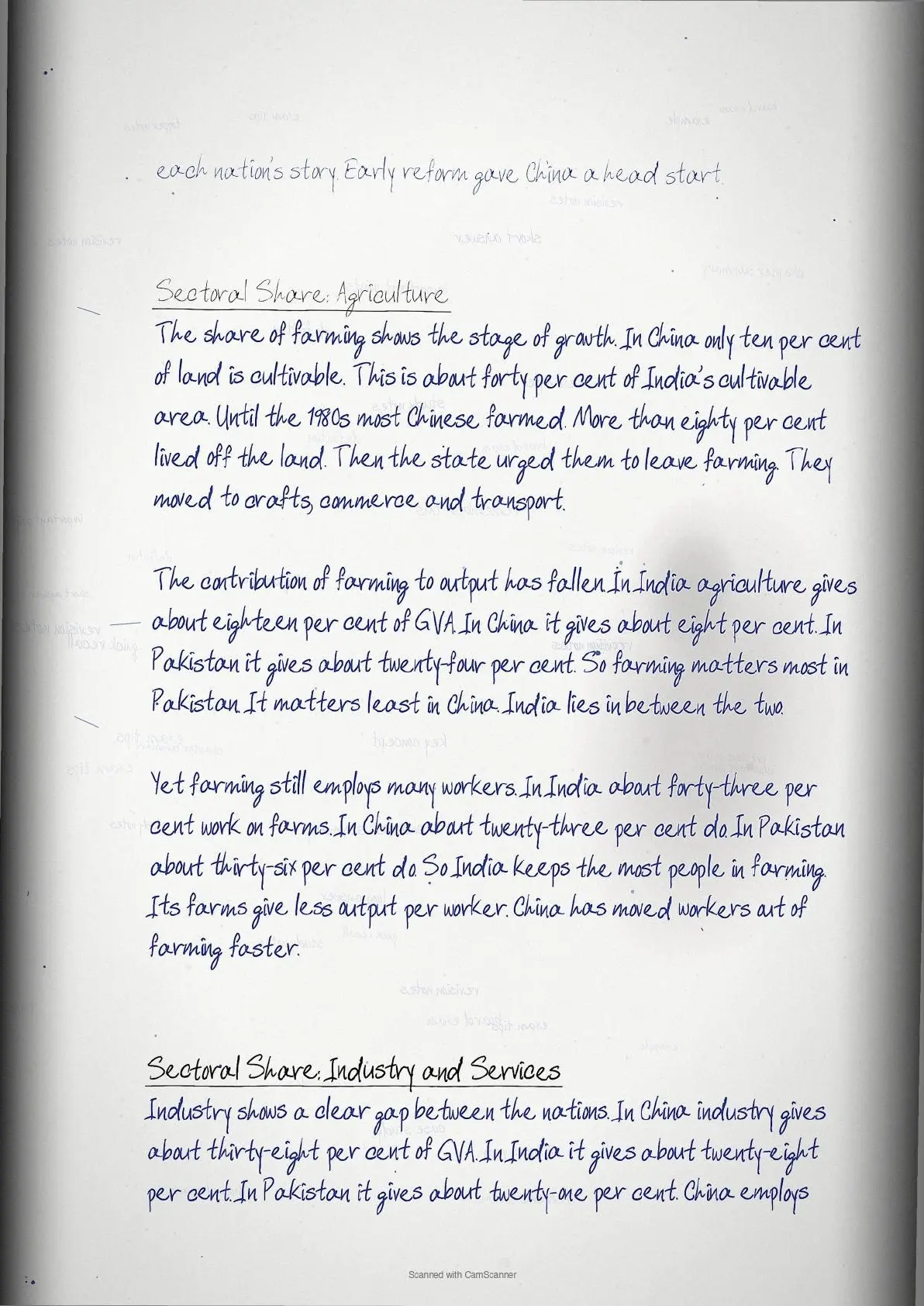
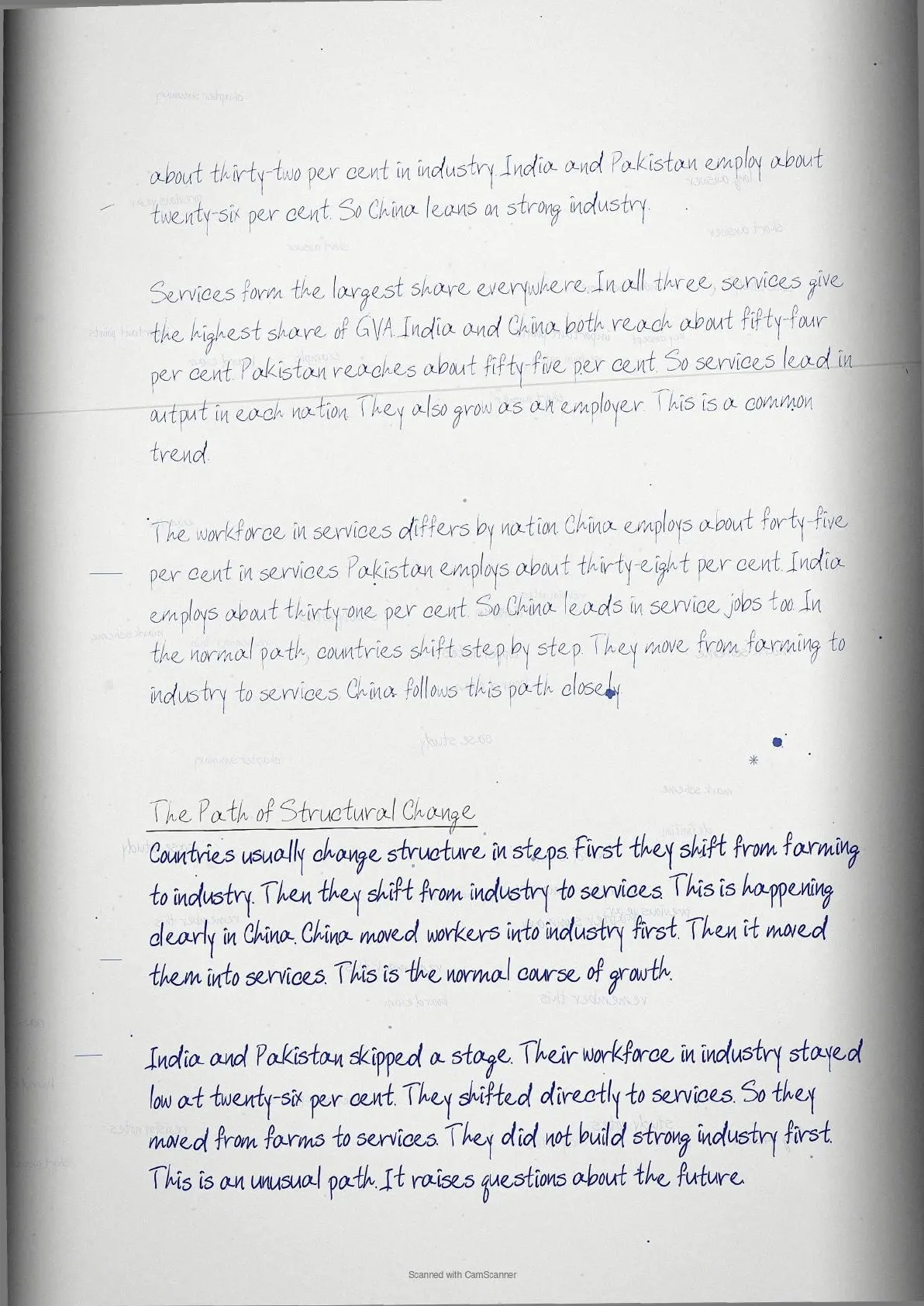
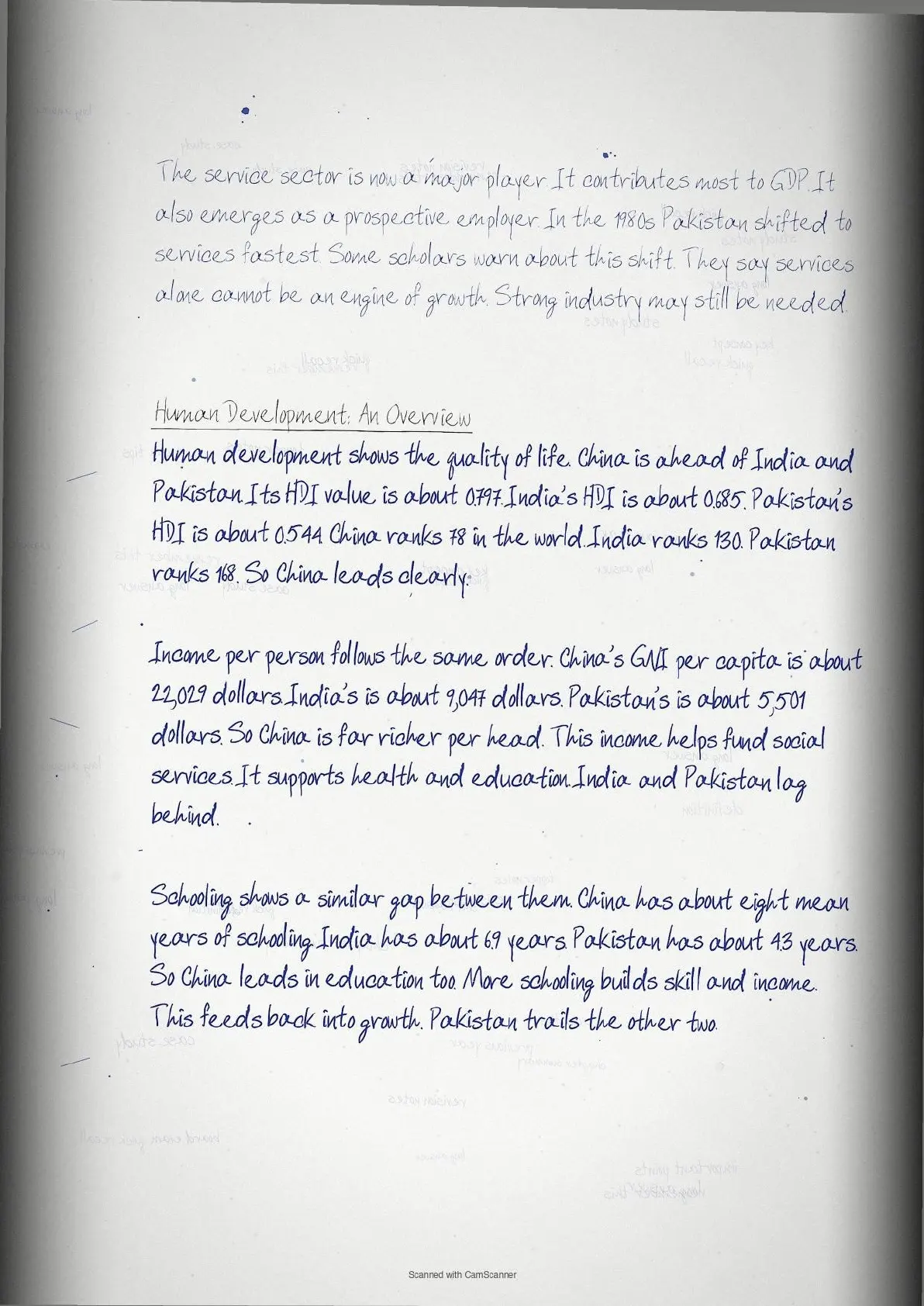
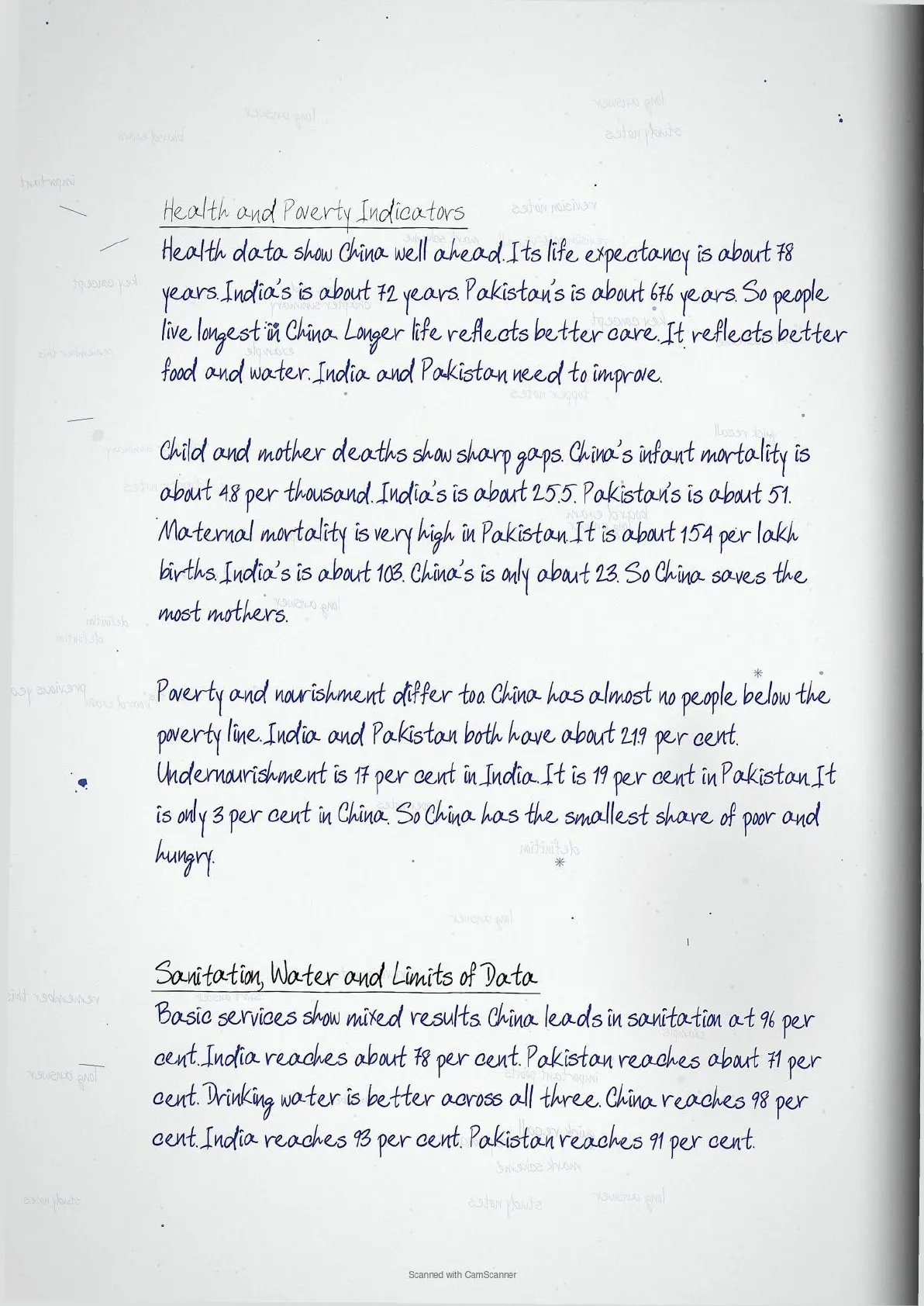
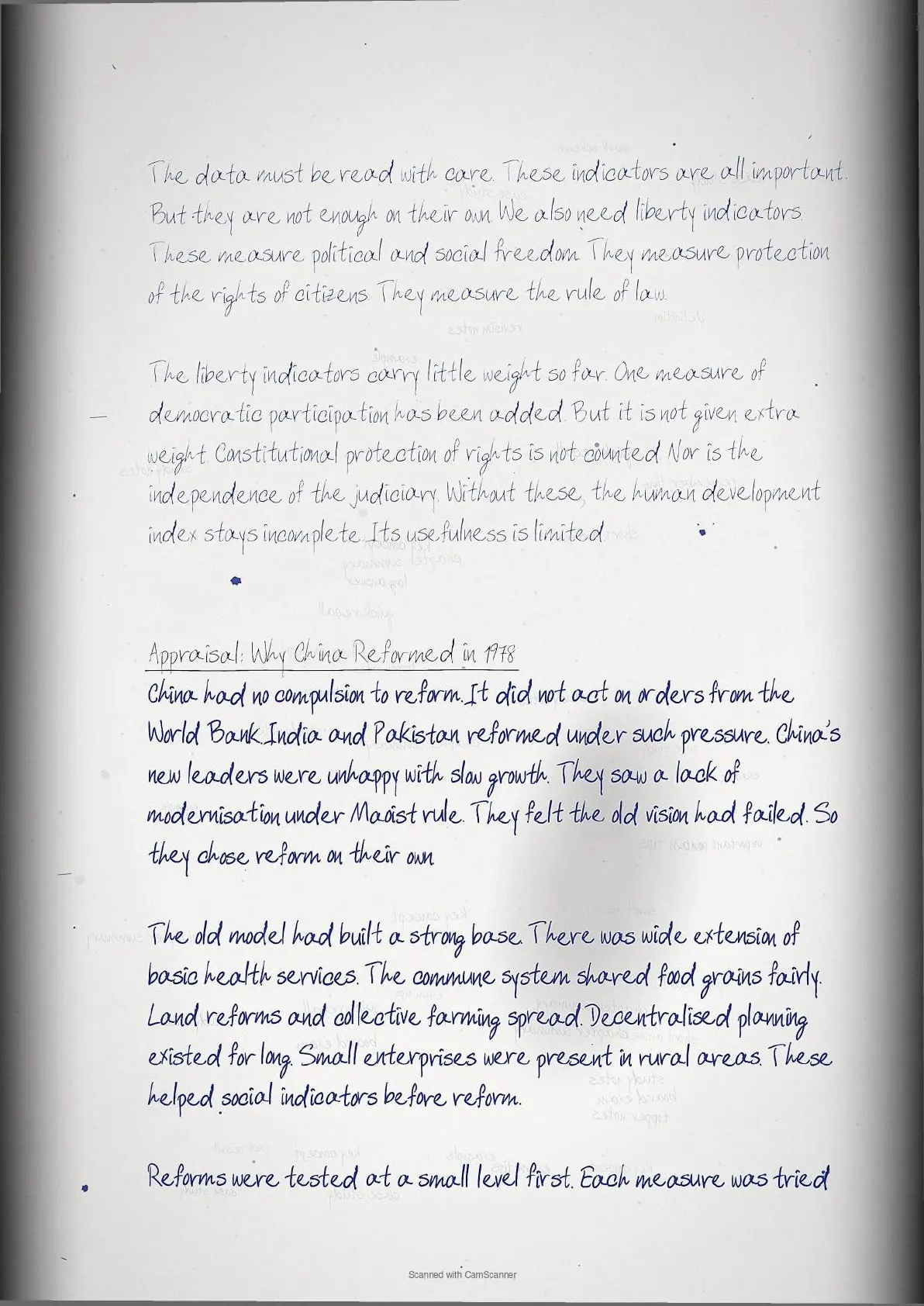
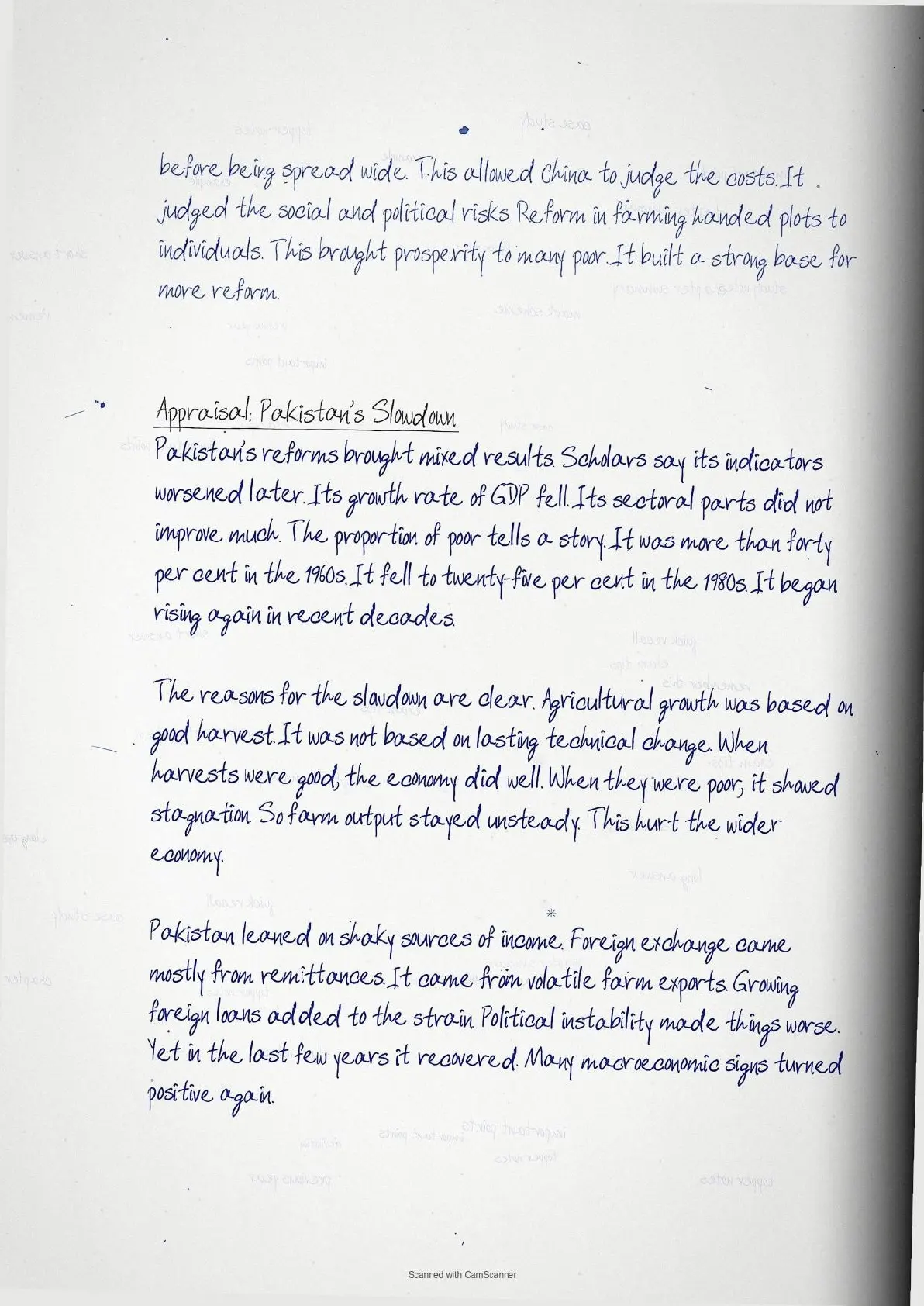
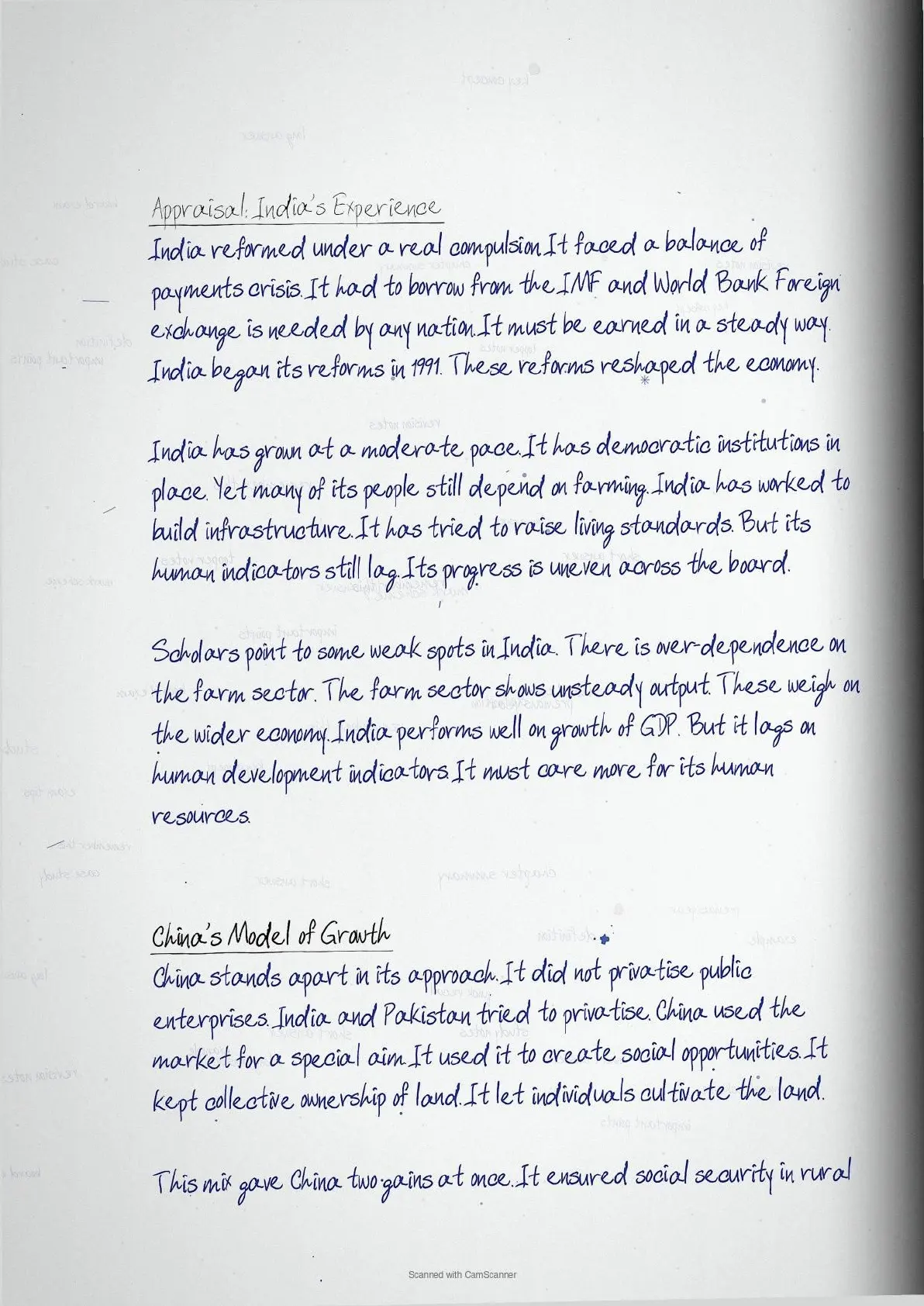
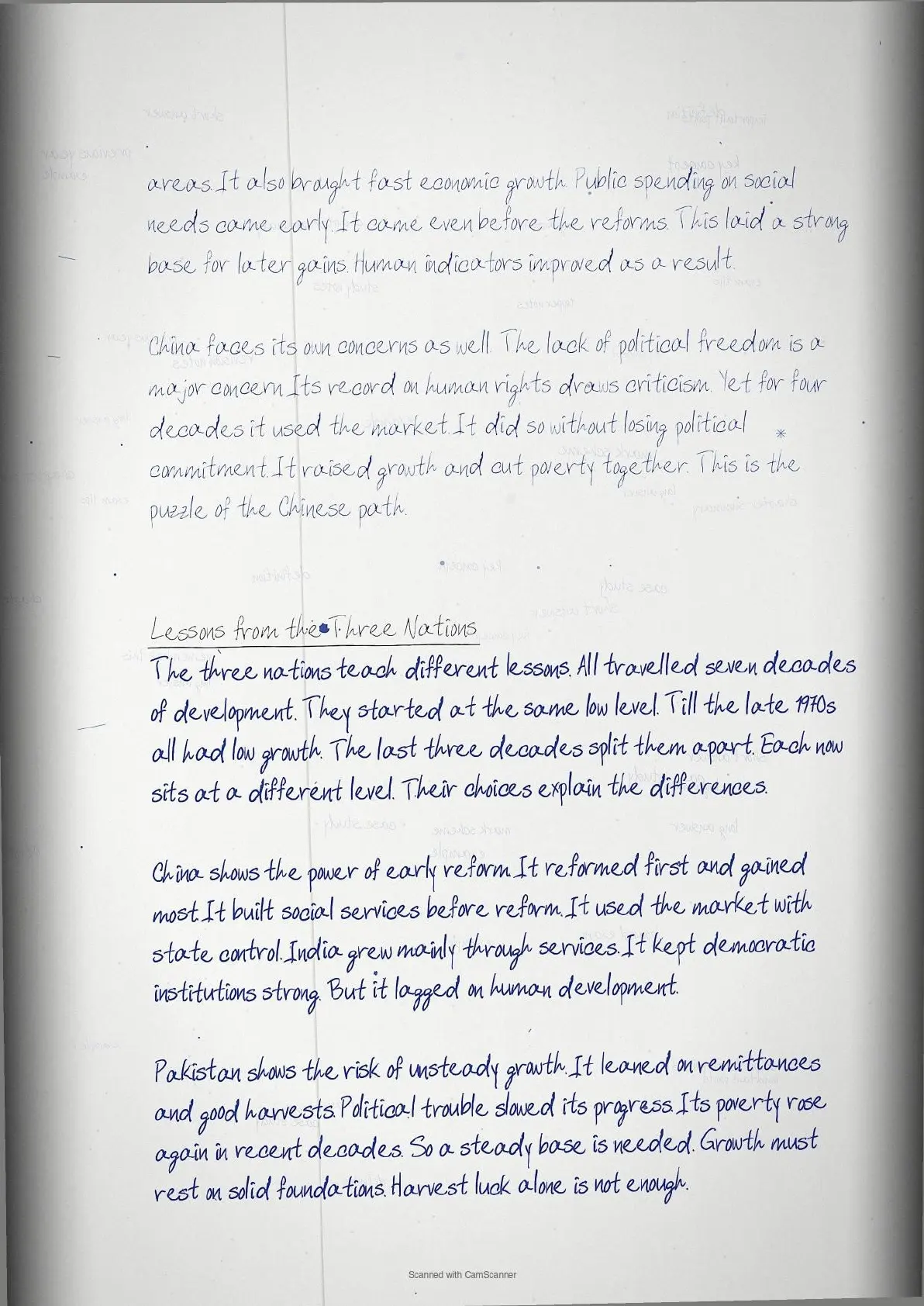
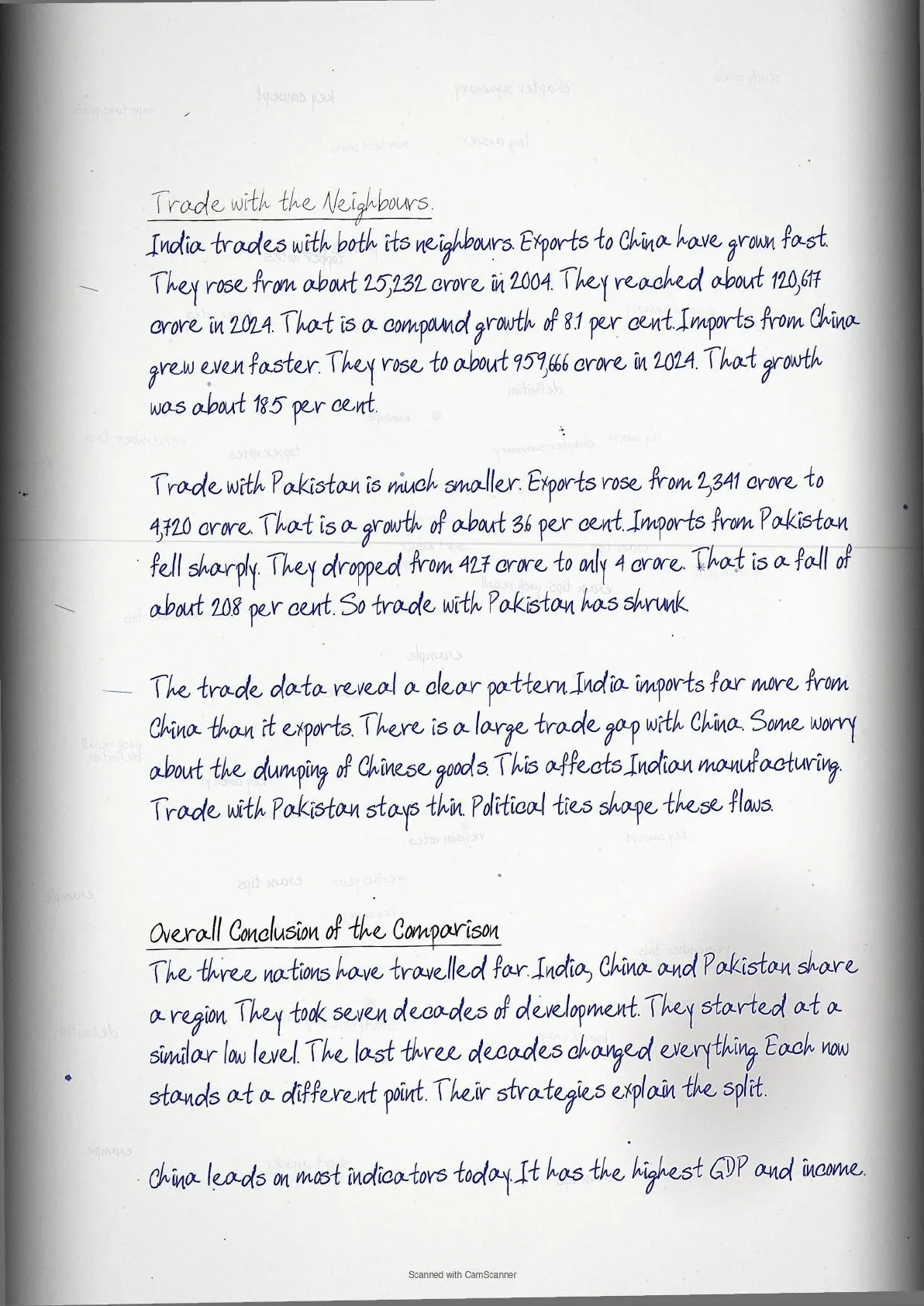
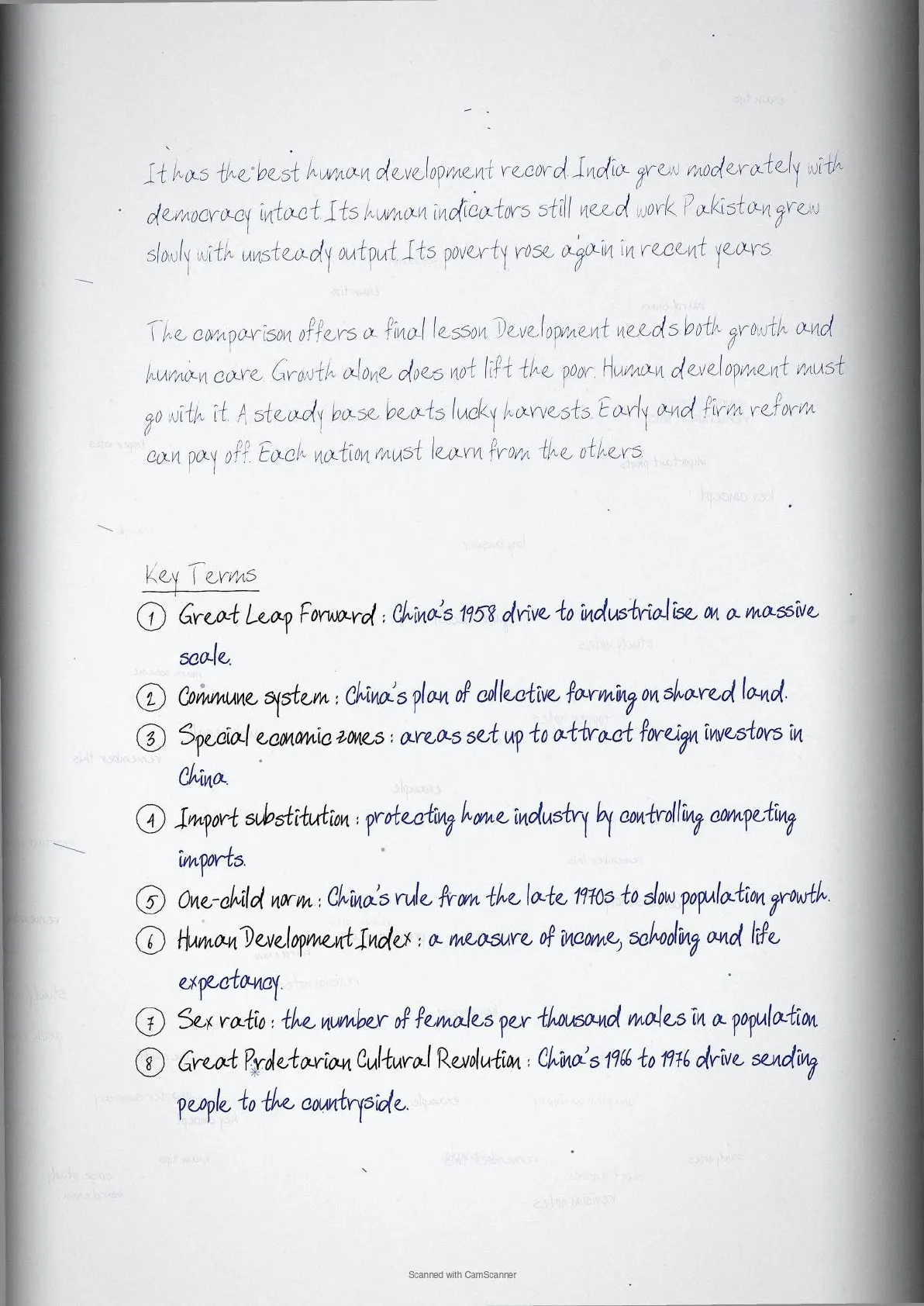
- What the notes cover: developmental paths of india, china and pakistan, great leap forward and china's 1978 reforms, reform dates: china 1978, pakistan 1988, india 1991, demographic indicators compared.
- Best for: quick revision before Class 11 exams and a base for CUET later.
You can read the complete class 11 economics handwritten notes for Comparative Development Experiences of India and its Neighbours, with key terms, boxed definitions, and quick revision points, in the PDF below.
These handwritten notes are written by subject teachers, mapped to the 2026-27 NCERT, and checked against the last five years of CBSE Class 11 Economics papers.
Comparative Development Experiences of India and its Neighbours Topic-wise Weightage for CBSE Class 11 Economics
Some parts of this chapter are asked more often than others. The table below shows which sub-topics to revise first, based on recent CBSE Class 11 question trends.
| Sub-topic | Weightage | CBSE Frequency |
|---|---|---|
| Human development indicators compared | High | asked most years |
| China's reforms and strategy | High | asked most years |
| Demographic indicators table | Medium | frequent data question |
| Sectoral share of GVA and workforce | Medium | frequent data question |
| Reasons for Pakistan's slowdown | Low | occasional question |
What the Comparative Development Experiences of India and its Neighbours Handwritten Notes Cover
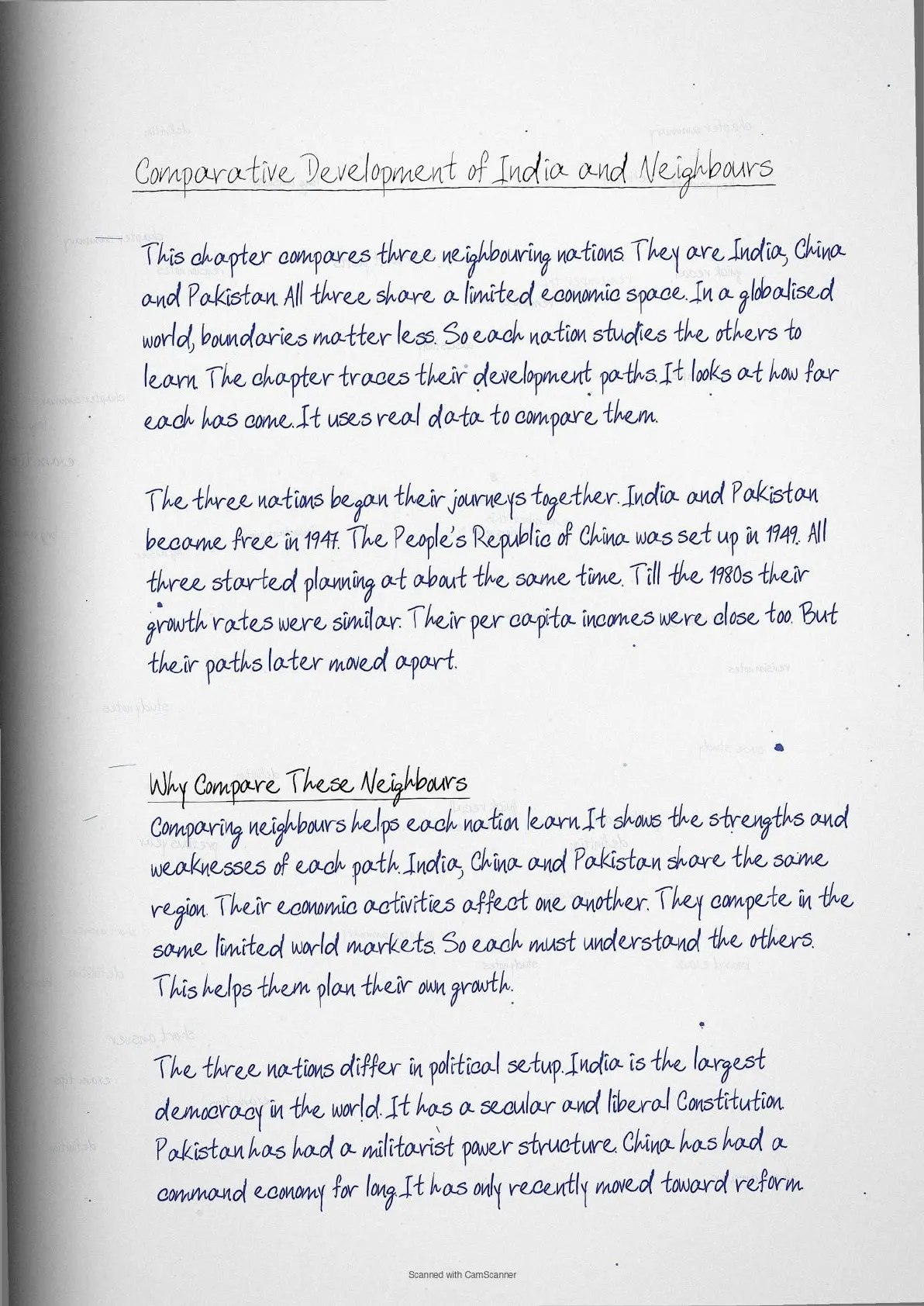
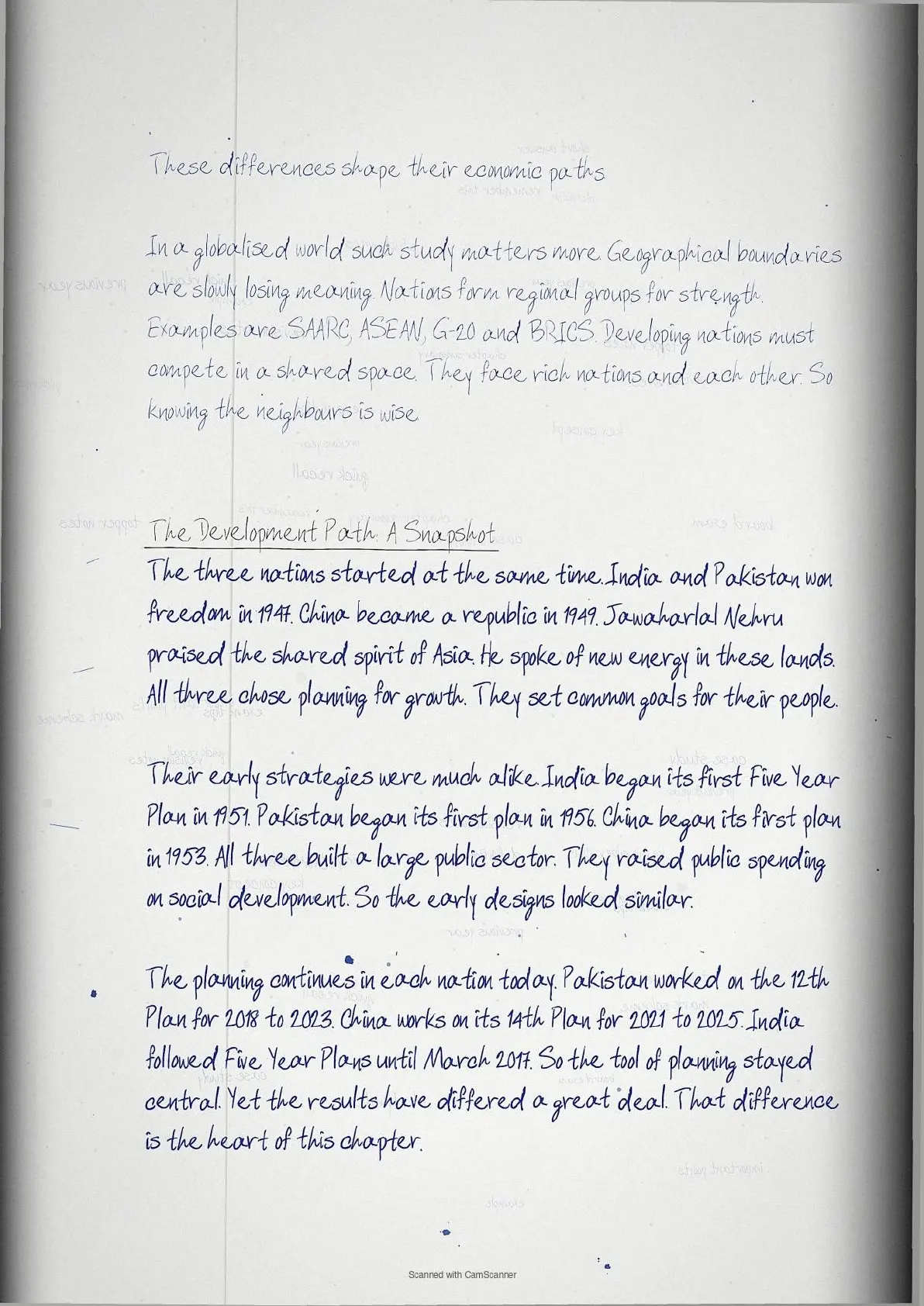
India, China and Pakistan started their journeys at about the same time. This chapter compares their development paths, key indicators, and the strategies that took them to different levels.
- Developmental paths of India, China and Pakistan
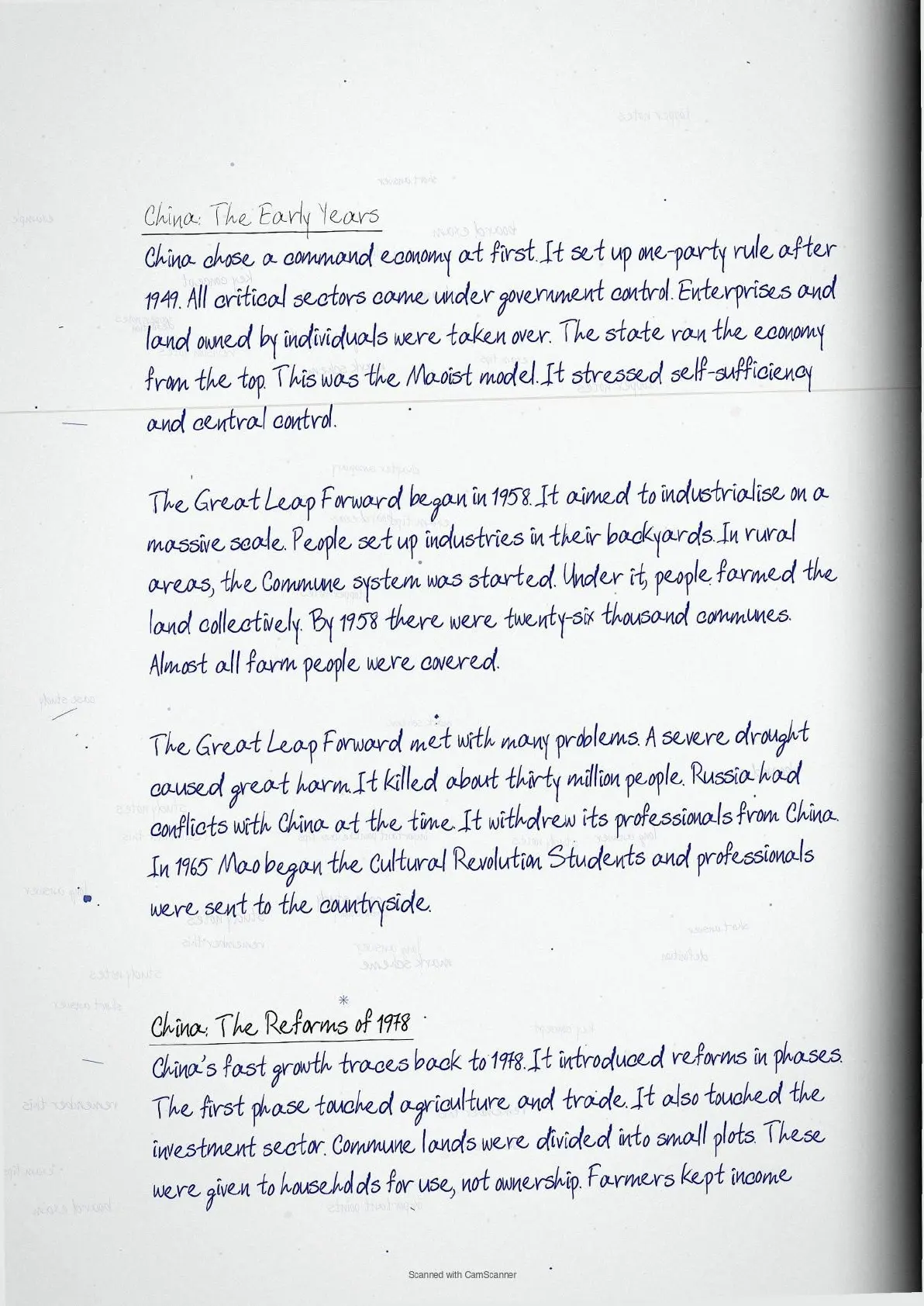
- Great Leap Forward and China's 1978 reforms
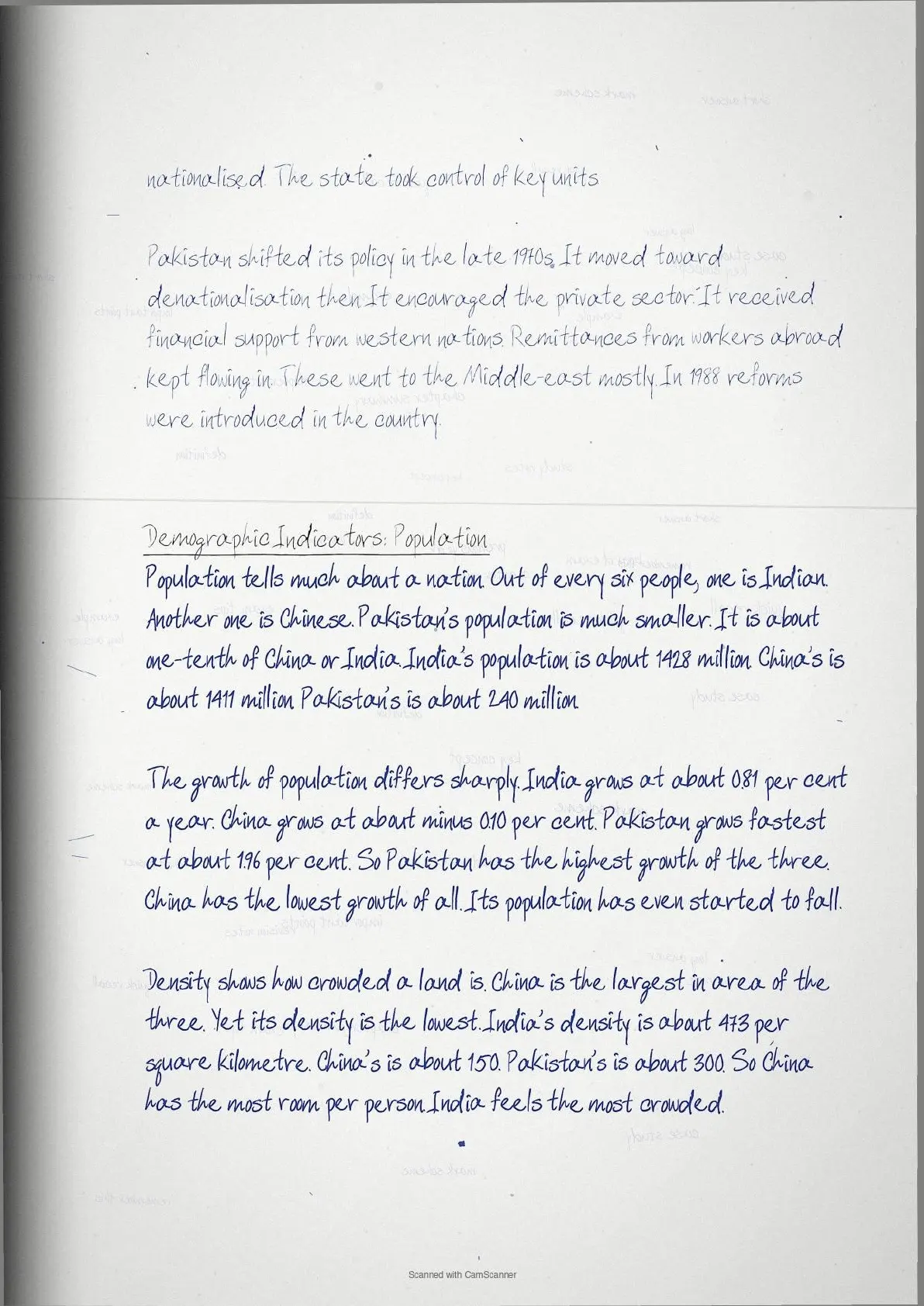
- Reform dates: China 1978, Pakistan 1988, India 1991
- Demographic indicators compared
- Sectoral share of GVA and workforce
- Human development indicators
- Appraisal of the three strategies
Key Terms and Ideas in Comparative Development Experiences of India and its Neighbours
These are the terms and ideas the exam asks about most. Learn each one so you can define it and use it in your answers.
| Term / Idea | What it means |
|---|---|
| Start dates | India and Pakistan 1947, China 1949 |
| Reform dates | China 1978, Pakistan 1988, India 1991 |
| Great Leap Forward | China's 1958 drive to industrialise massively |
| Commune system | collective farming with 26,000 communes by 1958 |
| China GDP | second largest in the world by PPP |
| HDI order | China ahead of India, India ahead of Pakistan |
| Structural change | India shifted from farming straight to services |
| Pakistan slowdown | reliance on remittances and unsteady harvests |
How Collegedunia's Handwritten Notes Help You Revise Comparative Development Experiences of India and its Neighbours
These notes are made for the night before the exam. They keep the facts short and easy to scan. Collegedunia maps every point to the 2026-27 NCERT.
- Clear handwriting: each topic is written in neat, easy-to-read handwriting.
- Boxed key terms: the main terms and definitions are boxed by hand for fast recall.
- Diagrams and tables: simple hand-drawn tables and charts make ideas clear.
- Colour-coded headings: new sub-topics stand out, so you find any section in seconds.
Comparative Development Experiences of India and its Neighbours Self-Assessment Quiz
Try these quick questions after you read the notes. Tap each question to check your answer. They cover the points CBSE asks most often.
The People's Republic of China was established in
(a) 1947 (b) 1949 (c) 1951 (d) 1953
Answer: (b) 1949 - India and Pakistan became free in 1947
China introduced its structural reforms in
(a) 1978 (b) 1988 (c) 1991 (d) 1958
Answer: (a) 1978 - Pakistan reformed in 1988 and India in 1991
The Commune system in China was based on
(a) private farms (b) collective farming (c) backyard steel (d) foreign trade
Answer: (b) collective farming - by 1958 there were 26,000 communes
Which nation has the highest HDI of the three?
(a) India (b) Pakistan (c) China (d) all equal
Answer: (c) China - its HDI is about 0.797, ahead of India and Pakistan
India's structural change moved workforce mainly from farming to
(a) industry (b) services (c) mining (d) construction
Answer: (b) services - it skipped a strong industrial stage
How to Use These Handwritten Notes for Class 11 Economics Revision
Use these class 11 economics handwritten notes in two passes. Read them slowly once for the full chapter. Then, near the exam, read only the boxes and key terms for a fast recall.
- Read the notes once with the NCERT chapter open beside you.
- Say each key term and idea in your own words.
- Practise one long-answer question from a past paper.
- On the last day, revise only the key terms and the boxes.
Class 11 Economics Handwritten Notes for All Chapters
The table below links the class 11 economics handwritten notes for every chapter. Use it to jump to any other chapter's notes.
Comparative Development Experiences of India and its Neighbours Class 11 Economics Handwritten Notes FAQs
Ques. Where can I download Comparative Development Experiences of India and its Neighbours Class 11 Economics Handwritten Notes PDF?
Ans. You can download the Comparative Development Experiences of India and its Neighbours Class 11 Economics Handwritten Notes PDF directly from this page. Both the Normal and HD versions are free.
Ques. Are these handwritten notes aligned with the 2026-27 NCERT?
Ans. Yes. These notes follow the current 2026-27 syllabus for Class 11 Economics. Why did China grow faster than India and Pakistan?
Ques. How many pages is the Class 11 Economics Comparative Development Experiences of India and its Neighbours Handwritten Notes PDF?
Ans. The notes run about 22 pages. They cover the full chapter with key terms, hand-drawn boxes, and a short self-assessment quiz.
Ques. What is the main idea of the 11th standard Economics chapter Comparative Development Experiences of India and its Neighbours?
Ans. China reformed earliest in 1978 and built social services before reform, using the market with state control. This gave it a long head start in growth, human development and poverty reduction.
Ques. Are these Comparative Development Experiences of India and its Neighbours notes enough for the CBSE Class 11 exam?
Ans. Yes, for revision. The Collegedunia handwritten notes cover every key point and exam term. Read them with the NCERT chapter and practise past questions.



Comments