




Class 11 Economics Chapter 1 Introduction to Statistics for Economics is a high-frequency chapter in the CBSE Class 11 Economics exam. These class 11 economics handwritten notes chapter 1 Introduction to Statistics for Economics follow the 2026-27 NCERT and cover why we study economics and the ordinary business of life, scarcity, unlimited wants and limited means, consumer, seller,.


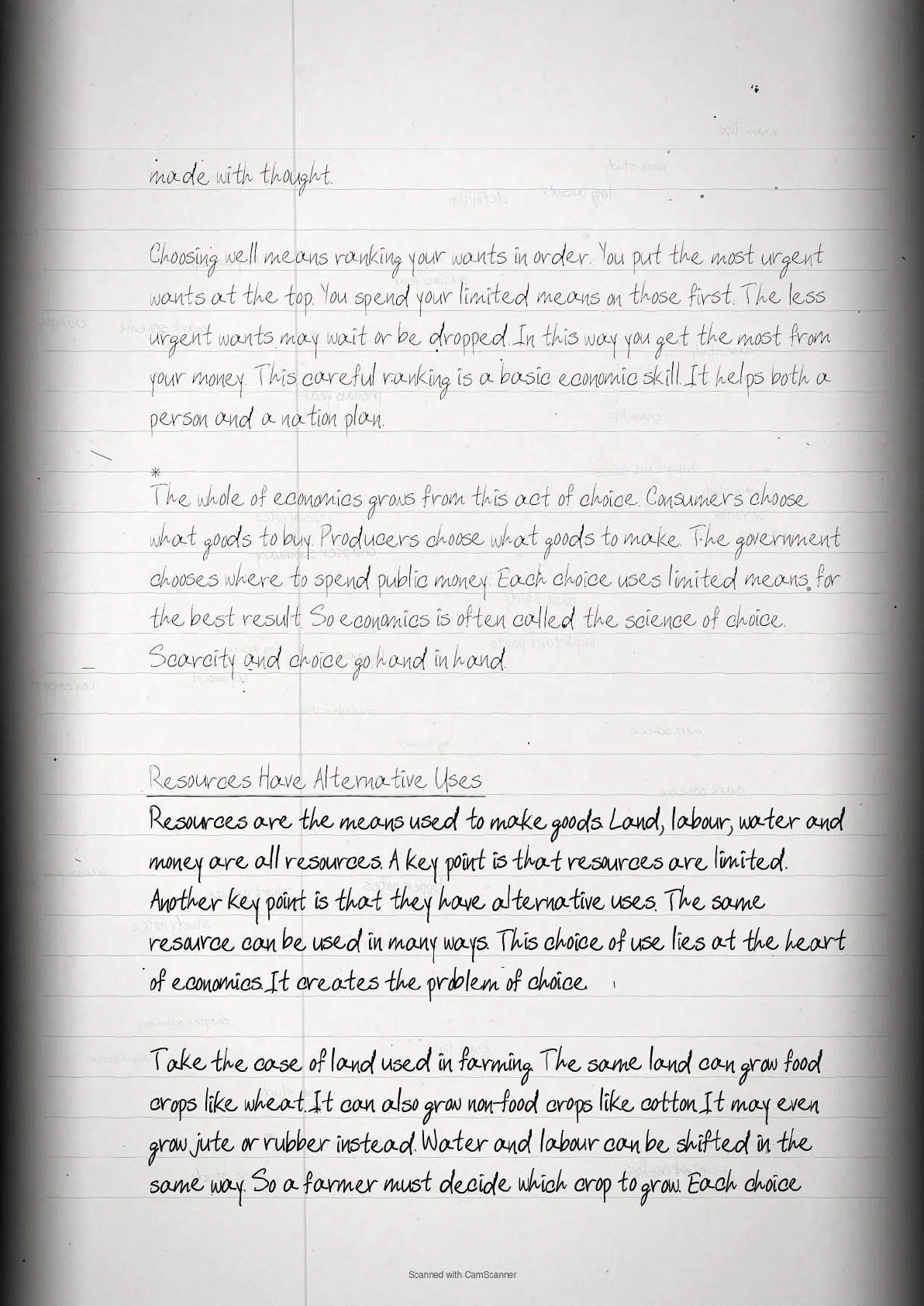
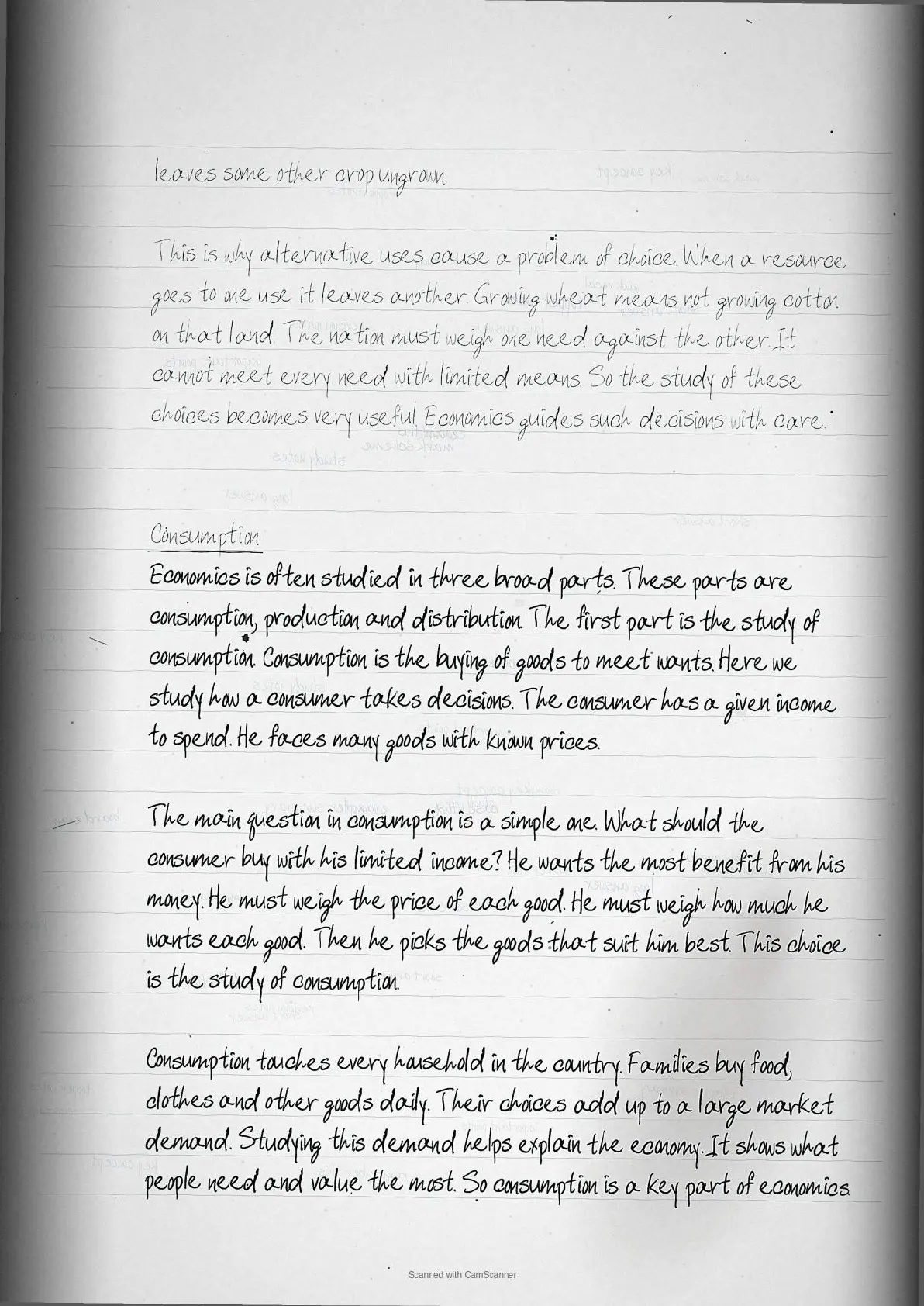
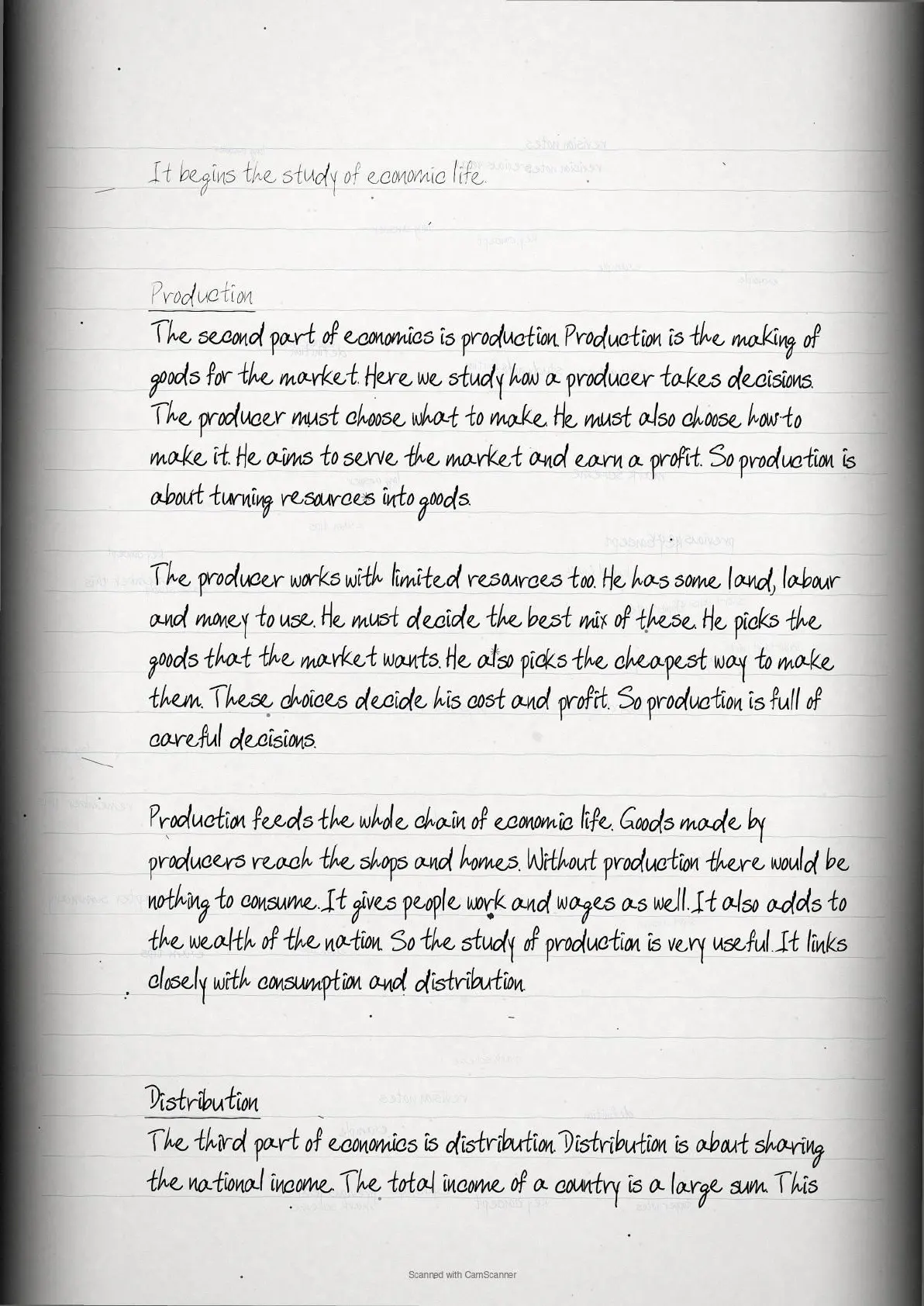
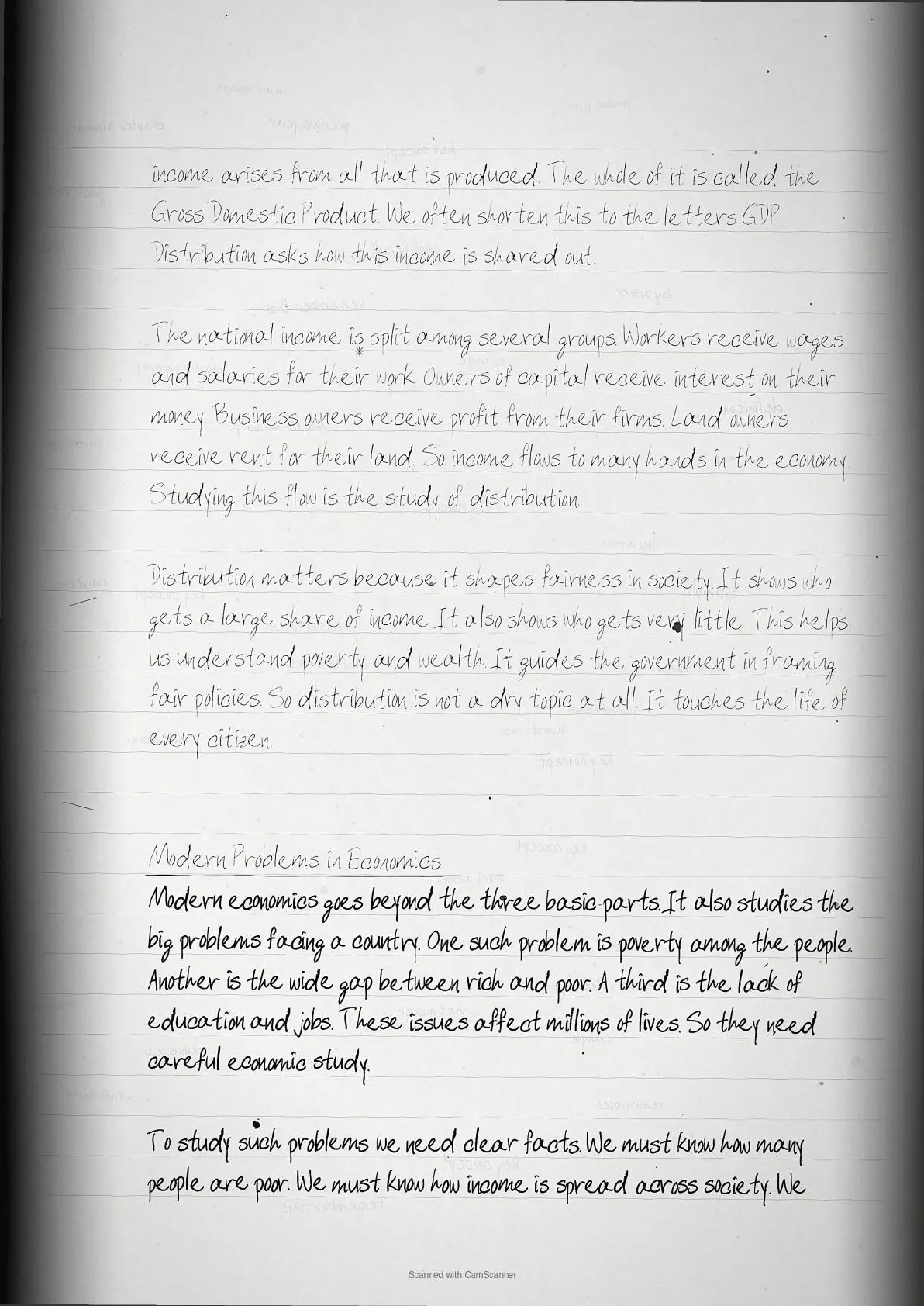
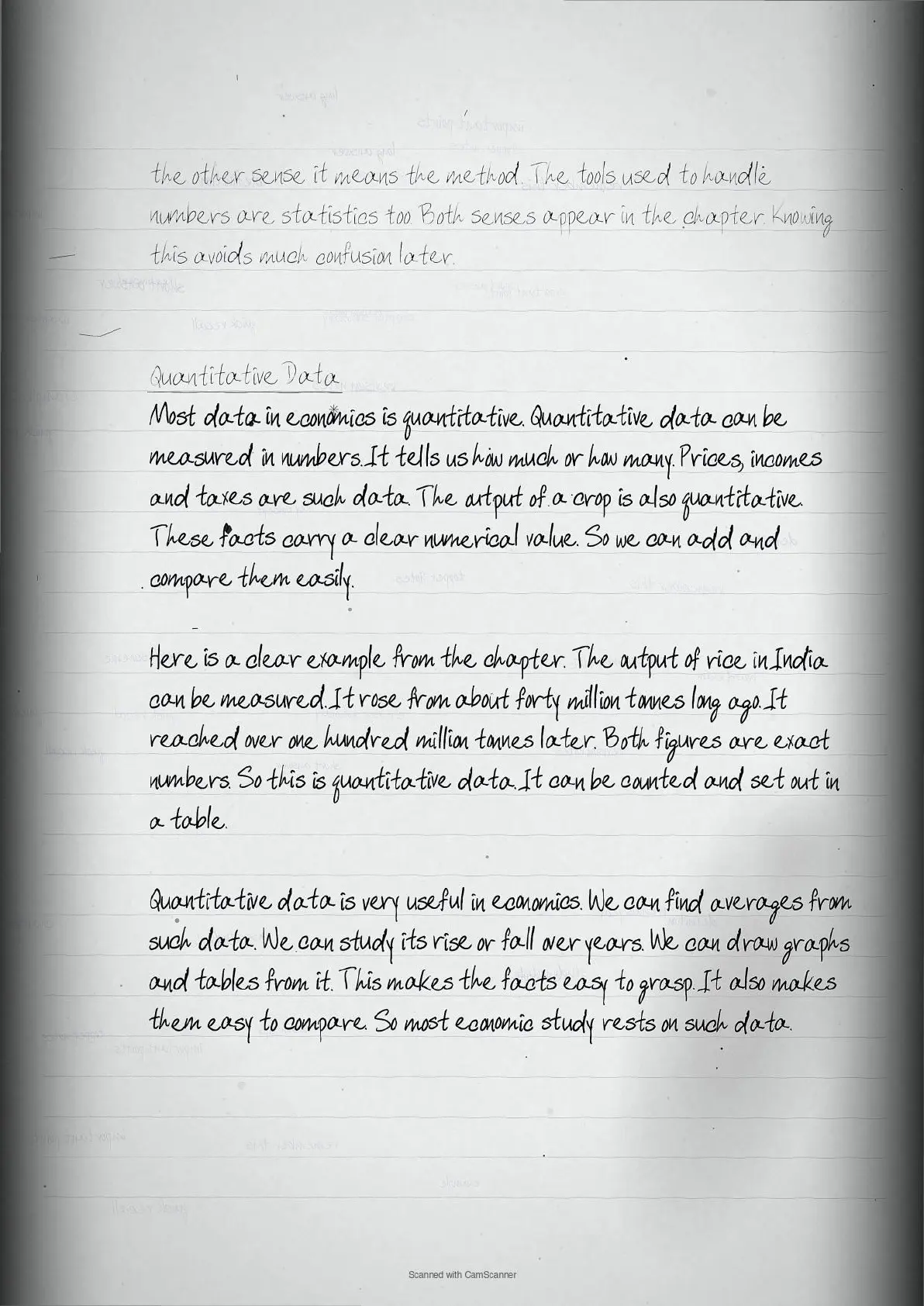
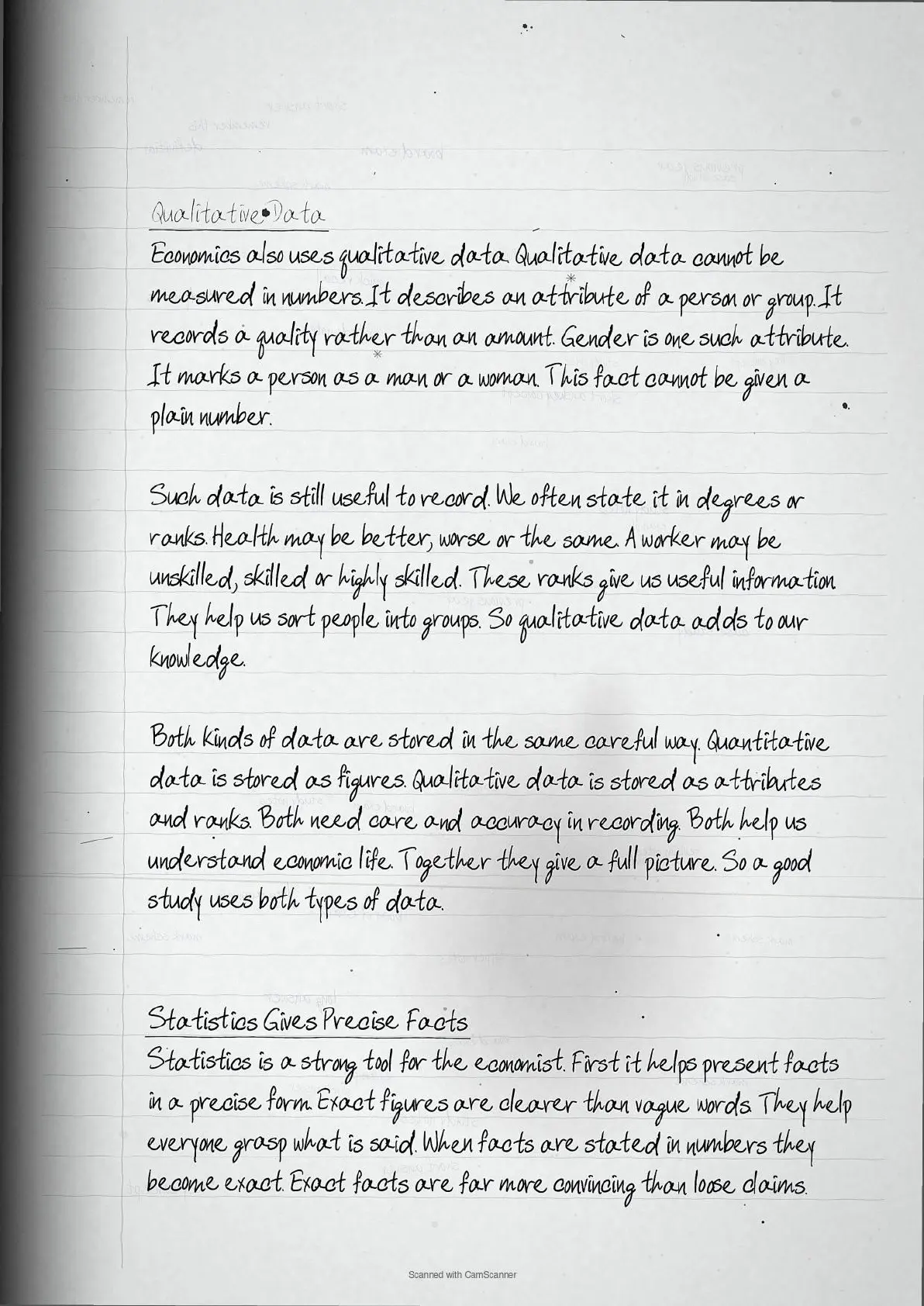
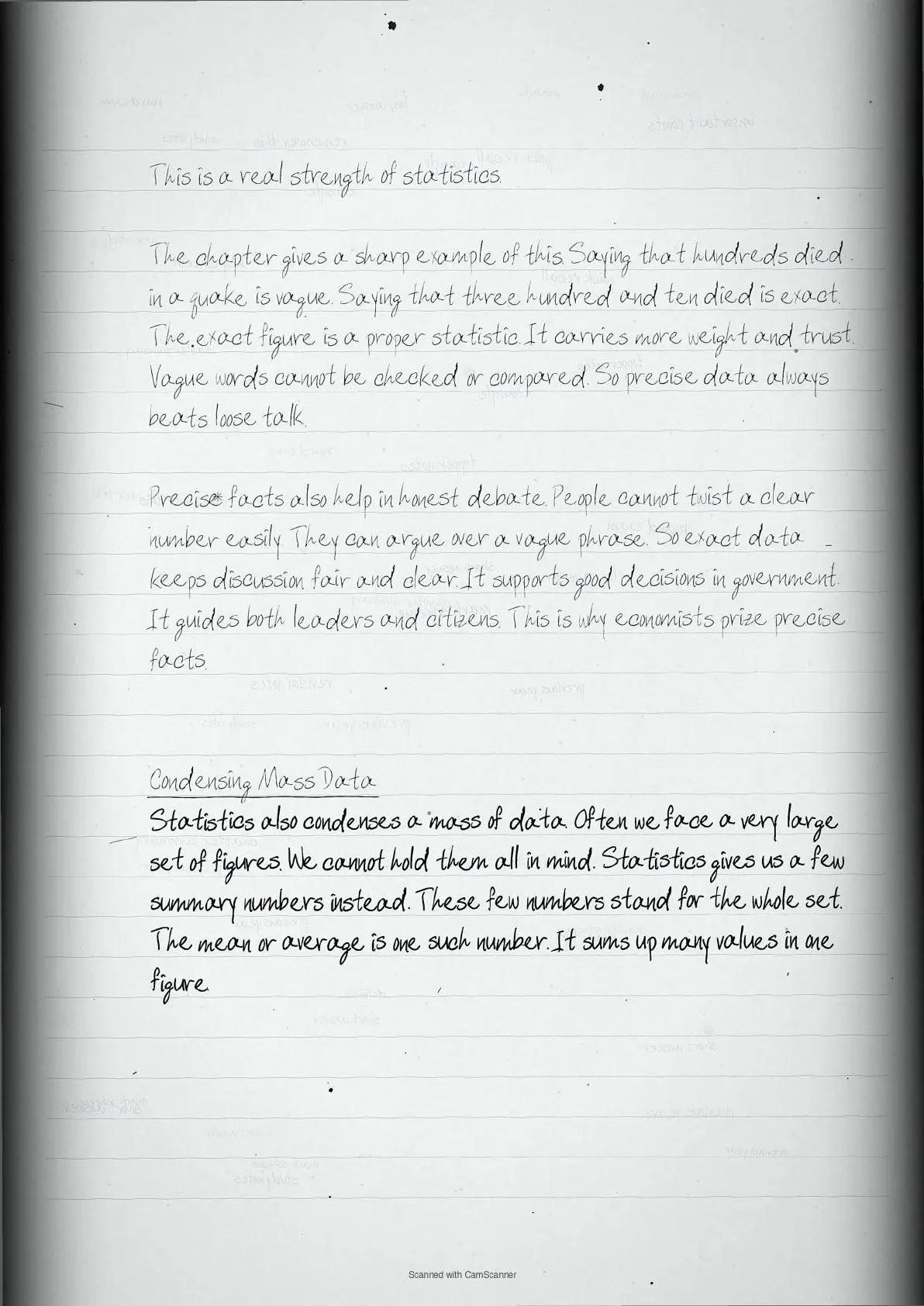
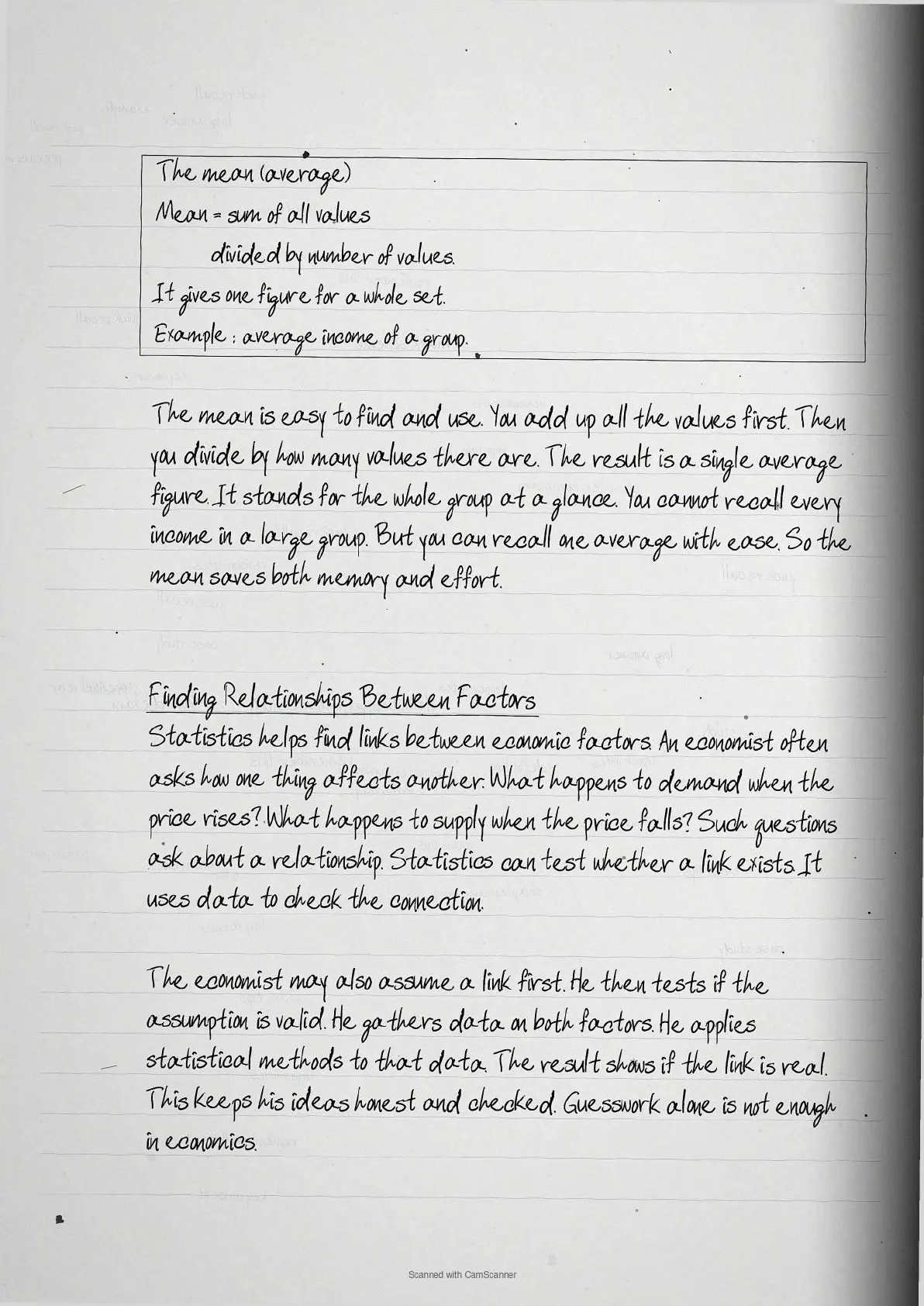
- CBSE Class 11 Weightage: a scoring chapter in the Economics paper, asked in short and long answers.
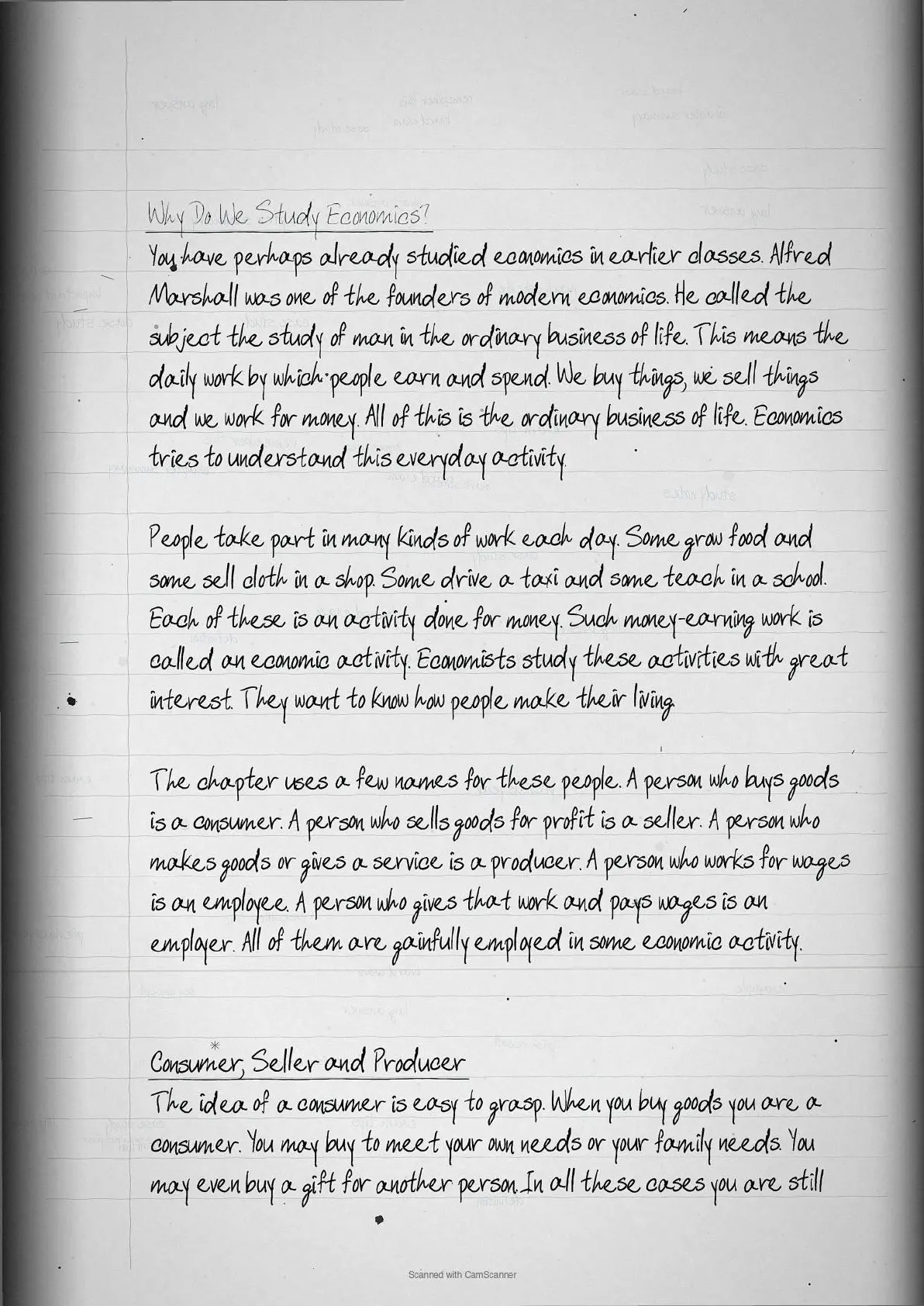
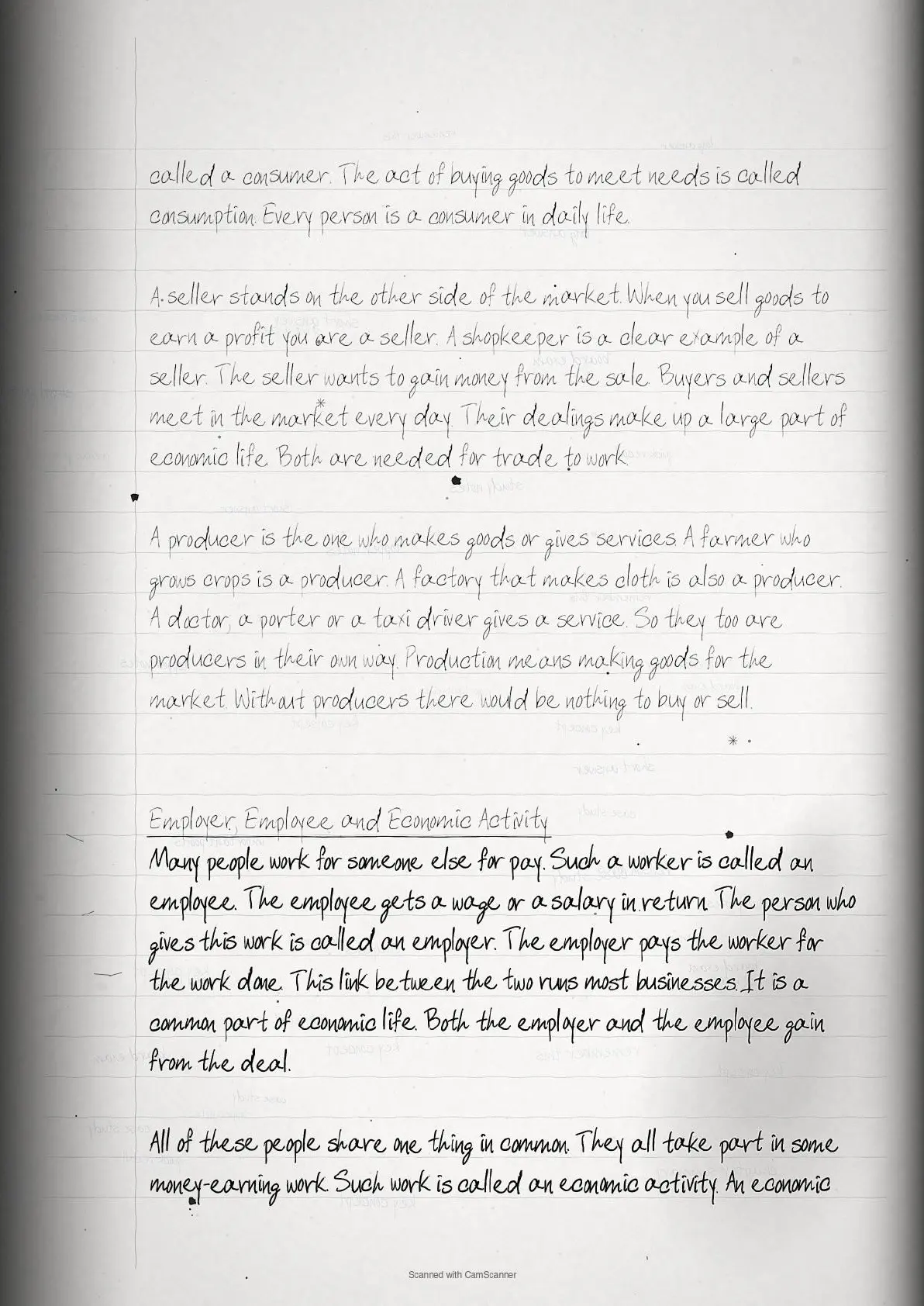
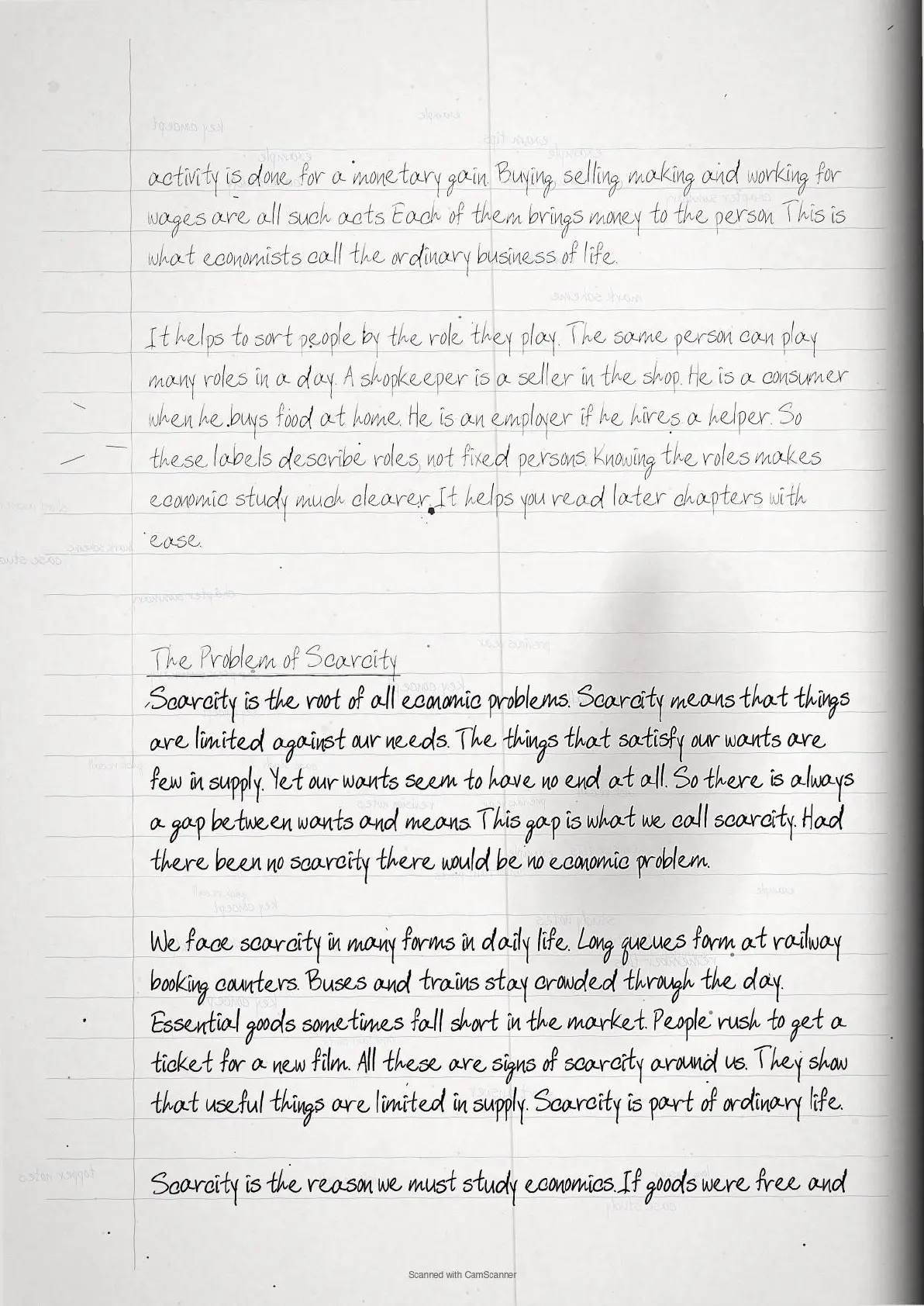
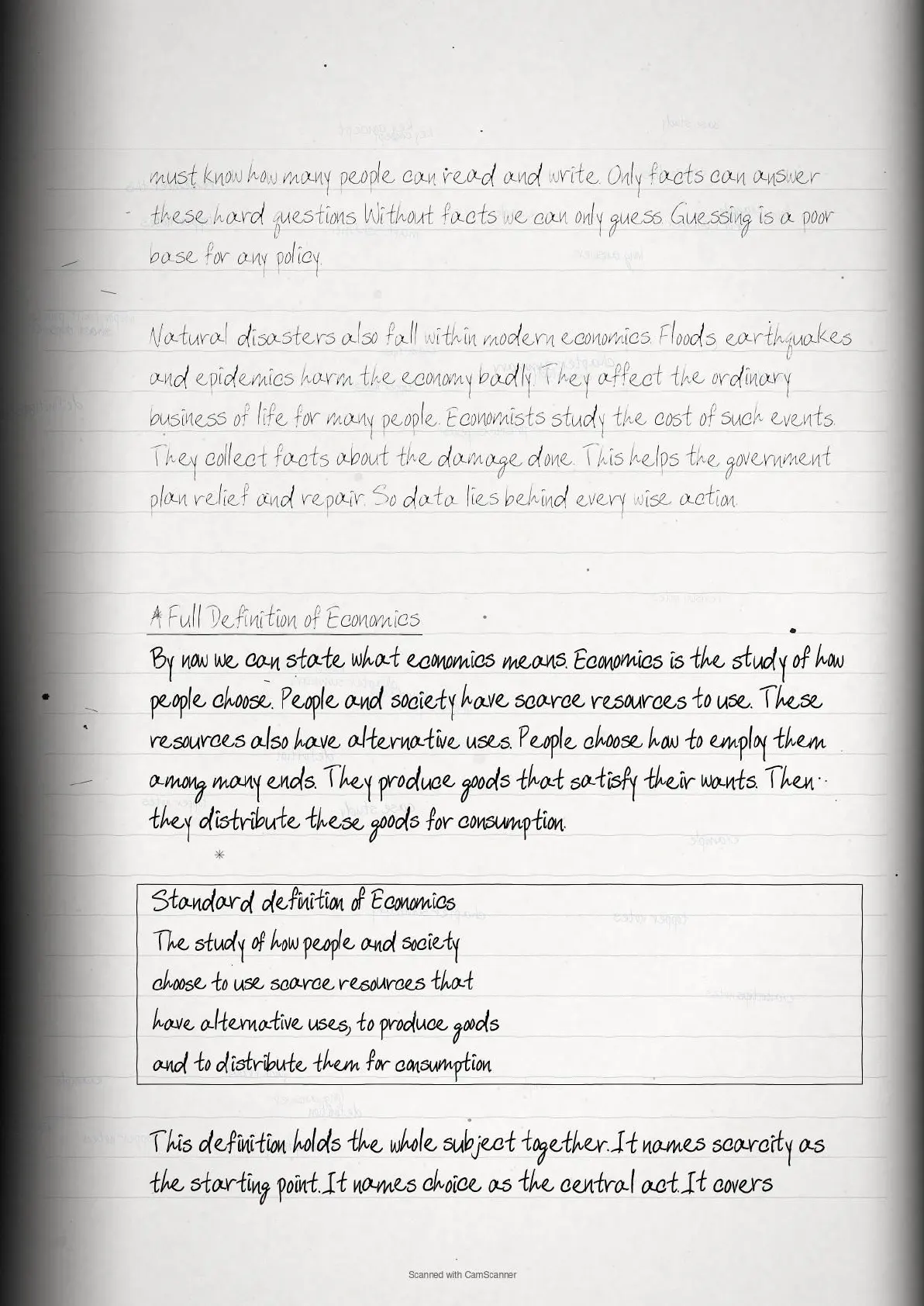
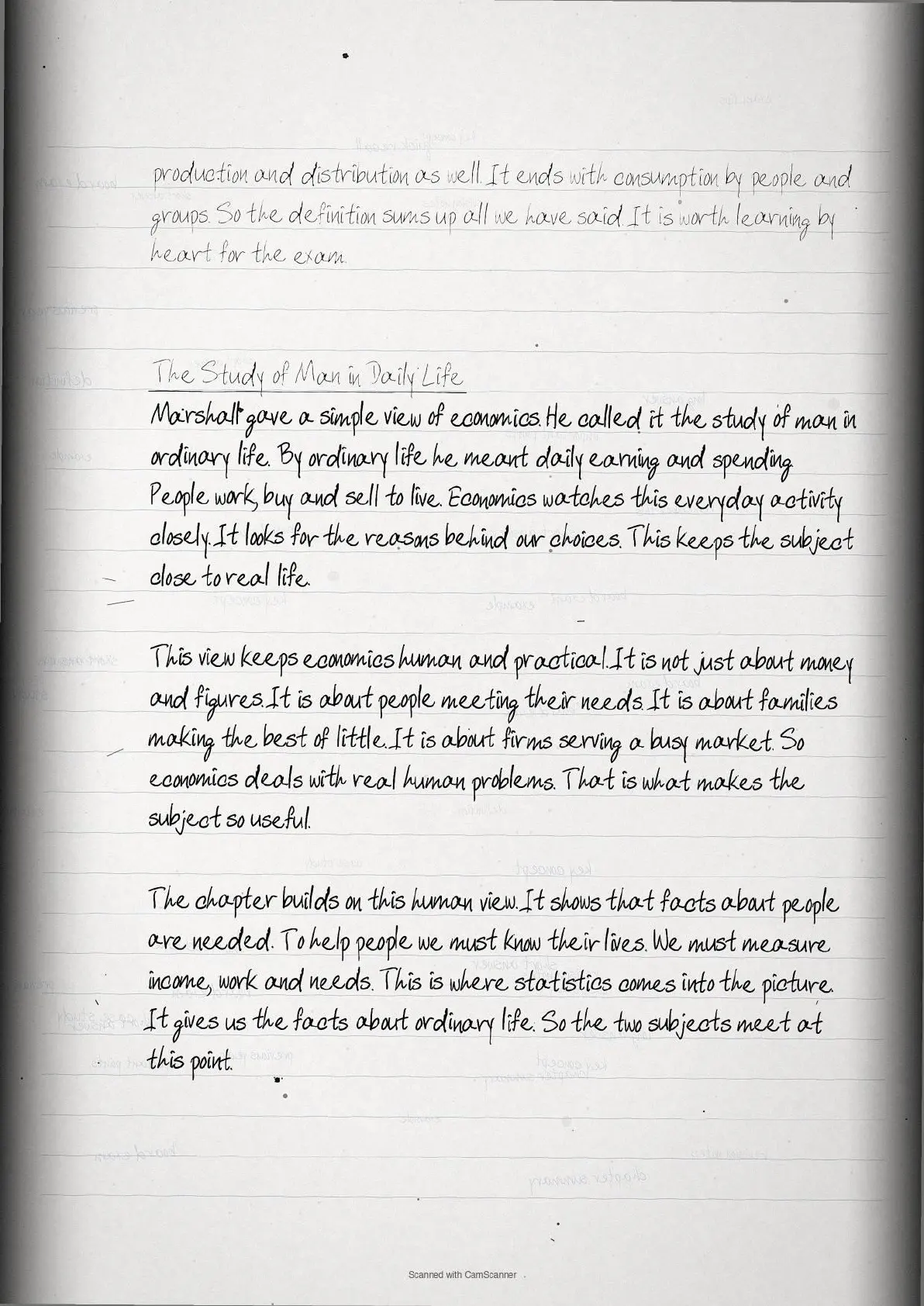
- What the notes cover: why we study economics and the ordinary business of life, scarcity, unlimited wants and limited means, consumer, seller, producer, employer and employee, consumption, production and distribution.
- Best for: quick revision before Class 11 exams and a base for CUET later.
You can read the complete class 11 economics handwritten notes for Introduction to Statistics for Economics, with key terms, boxed definitions, and quick revision points, in the PDF below.
These handwritten notes are written by subject teachers, mapped to the 2026-27 NCERT, and checked against the last five years of CBSE Class 11 Economics papers.
What the Introduction to Statistics for Economics Handwritten Notes Cover
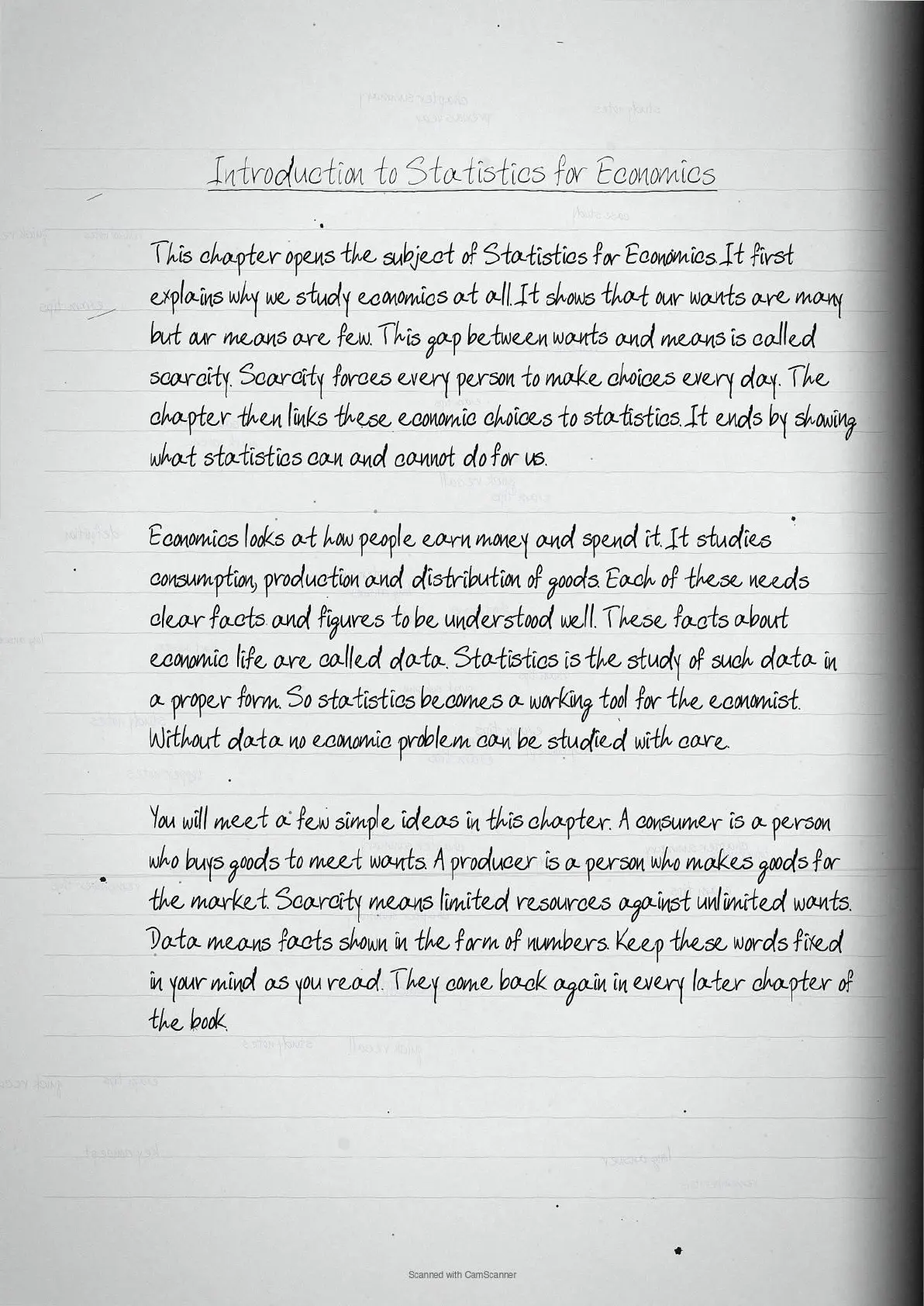
This chapter opens Statistics for Economics. It shows why our unlimited wants and limited means create scarcity. It then links these economic choices to the study of data called statistics.
- Why we study economics and the ordinary business of life
- Scarcity, unlimited wants and limited means
- Consumer, seller, producer, employer and employee
- Consumption, production and distribution
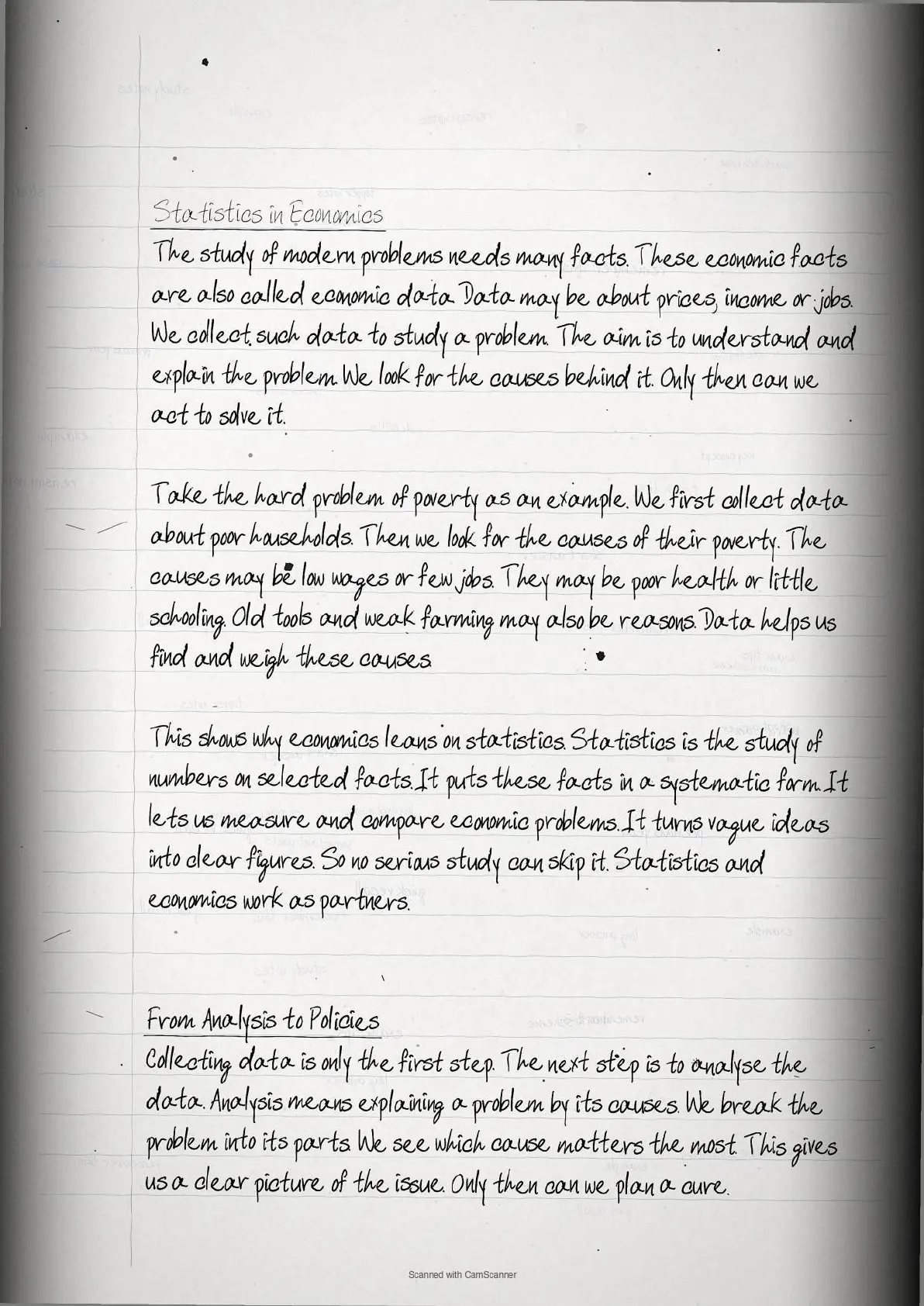
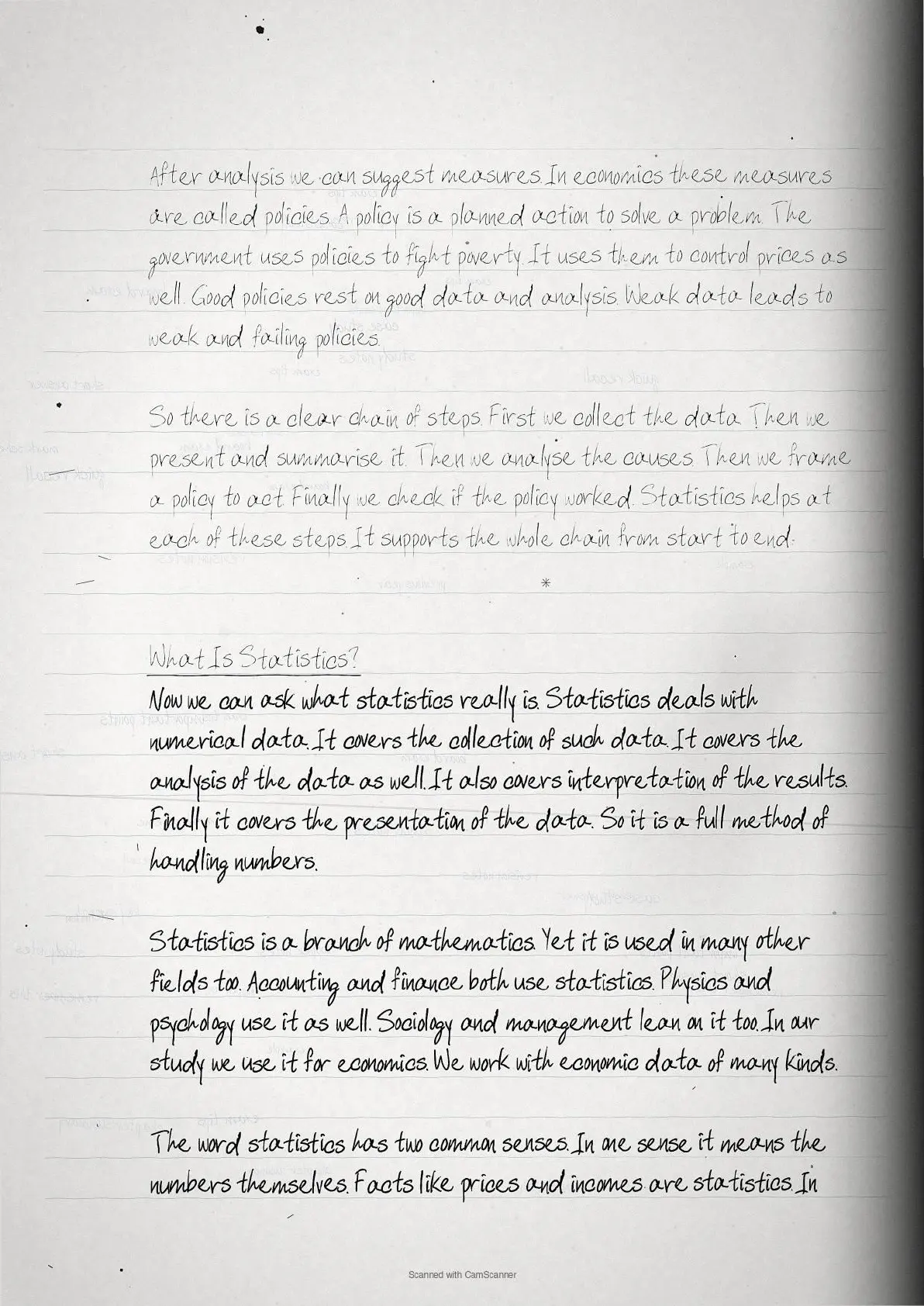
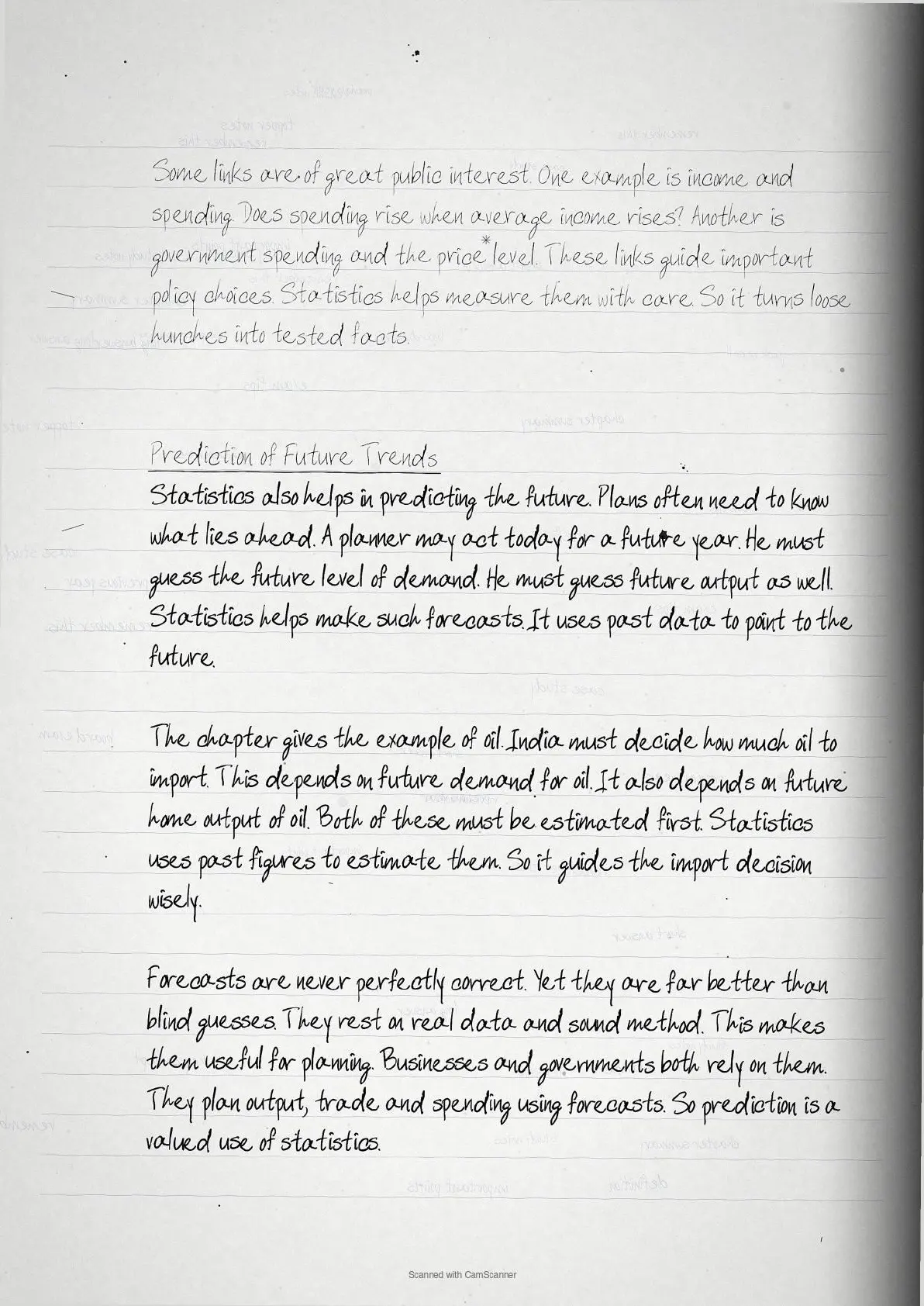
- Statistics in economics and economic data
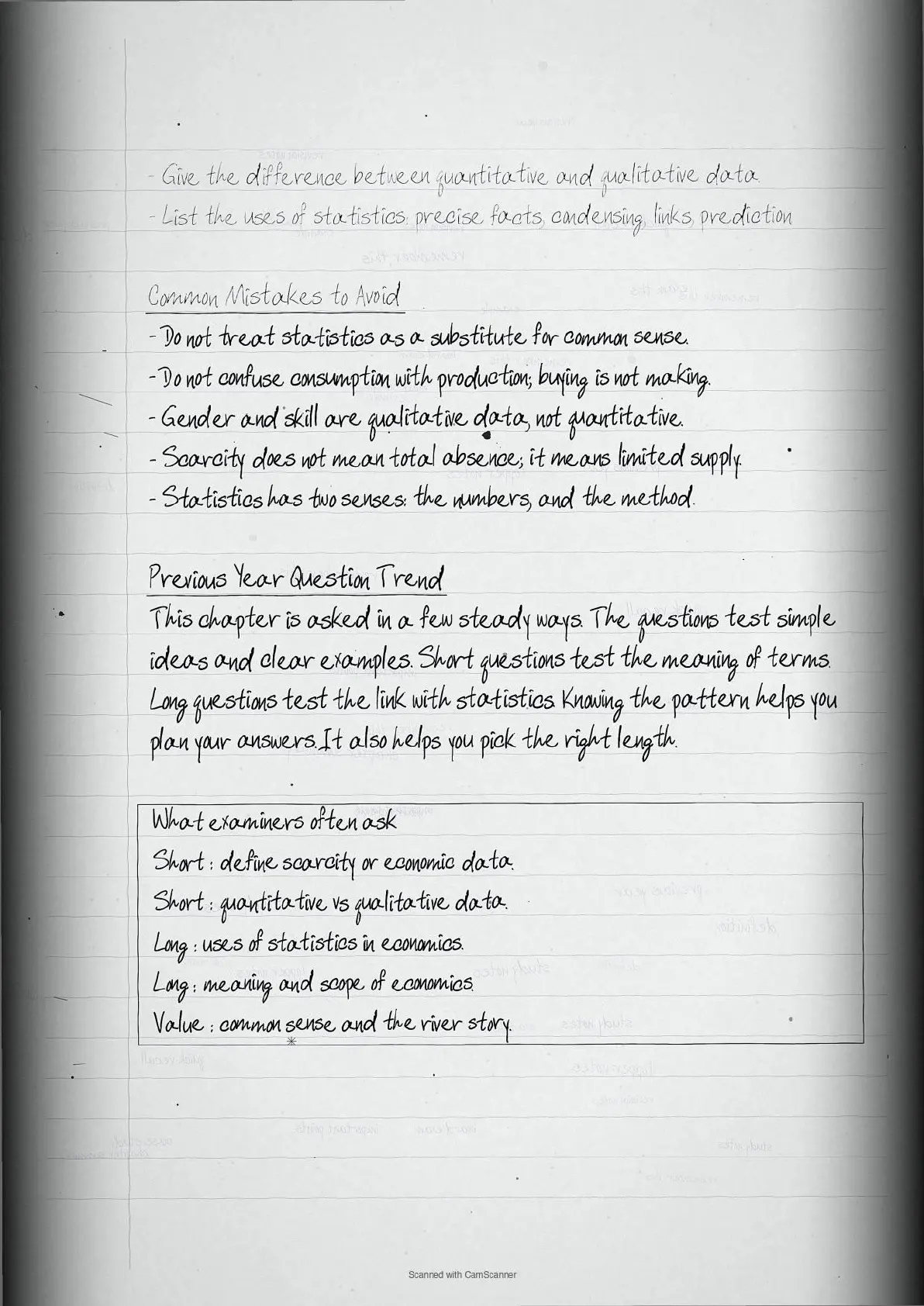
- Quantitative and qualitative data
- Uses of statistics: precise facts, condensing, links, prediction
Introduction to Statistics for Economics Self-Assessment Quiz
Try these quick questions after you read the notes. Tap each question to check your answer. They cover the points CBSE asks most often.
Scarcity is the root of all what?
(a) wealth (b) economic problems (c) taxes (d) trade
Answer: (b) economic problems - wants exceed limited means
Which is qualitative data?
(a) income (b) price (c) gender (d) tax paid
Answer: (c) gender - it is an attribute, not a measured number
Division of economics that studies buying goods is:
(a) production (b) distribution (c) consumption (d) exchange
Answer: (c) consumption - it deals with buying goods to meet wants
The full income of a country produced is called:
(a) GDP (b) profit (c) wages (d) rent
Answer: (a) GDP - the Gross Domestic Product
Statistics helps an economist mainly by:
(a) removing scarcity (b) giving precise facts (c) ending poverty (d) fixing prices
Answer: (b) giving precise facts - it presents data in an exact form
Introduction to Statistics for Economics Topic-wise Weightage for CBSE Class 11 Economics
Some parts of this chapter are asked more often than others. The table below shows which sub-topics to revise first, based on recent CBSE Class 11 question trends.
| Sub-topic | Weightage | CBSE Frequency |
|---|---|---|
| Meaning and definition of economics | High | asked often |
| Uses of statistics in economics | High | asked often |
| Quantitative vs qualitative data | Medium | asked sometimes |
| Scarcity and problem of choice | Medium | asked sometimes |
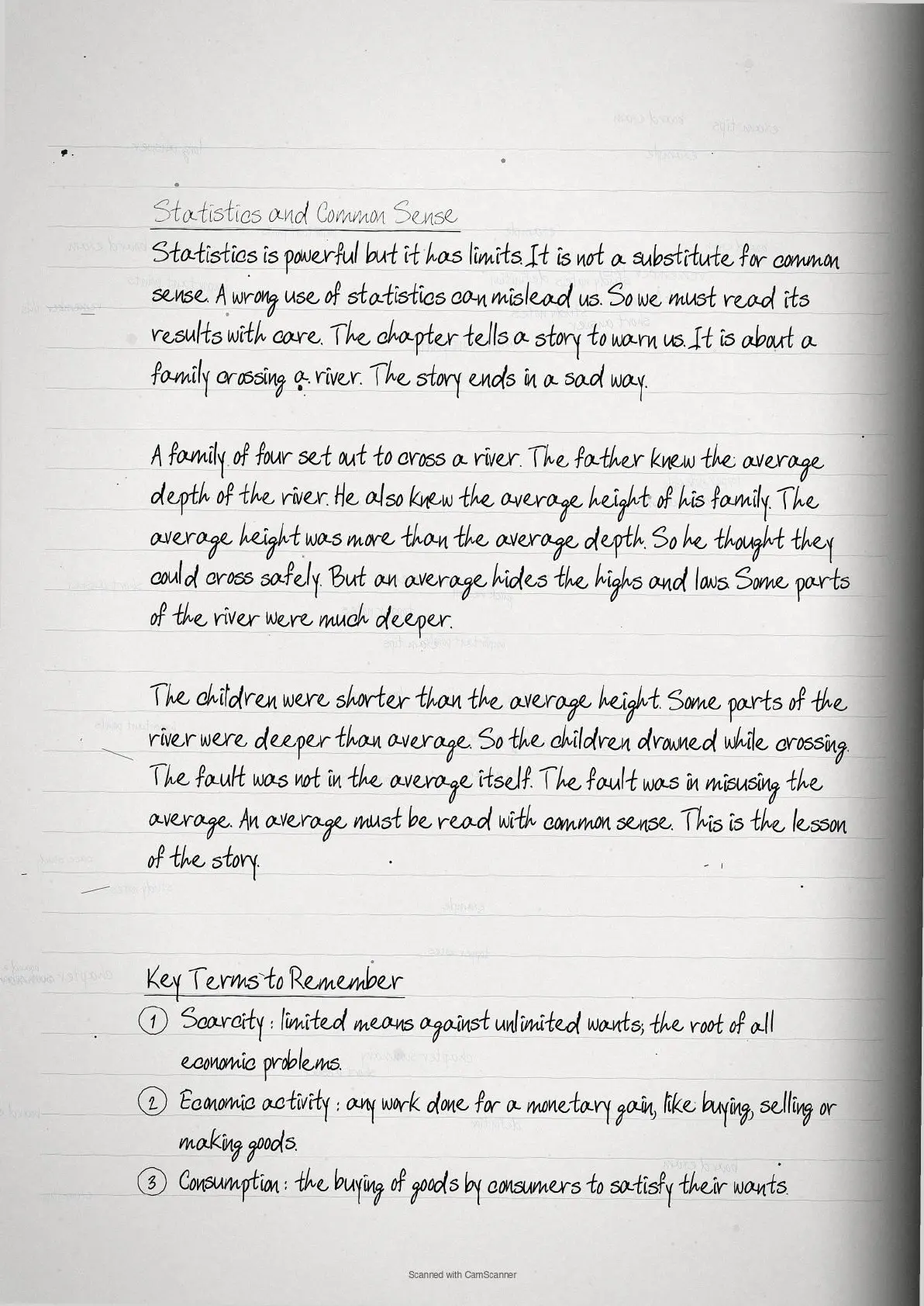
| Statistics and common sense | Low | asked rarely |
Key Terms and Ideas in Introduction to Statistics for Economics
These are the terms and ideas the exam asks about most. Learn each one so you can define it and use it in your answers.
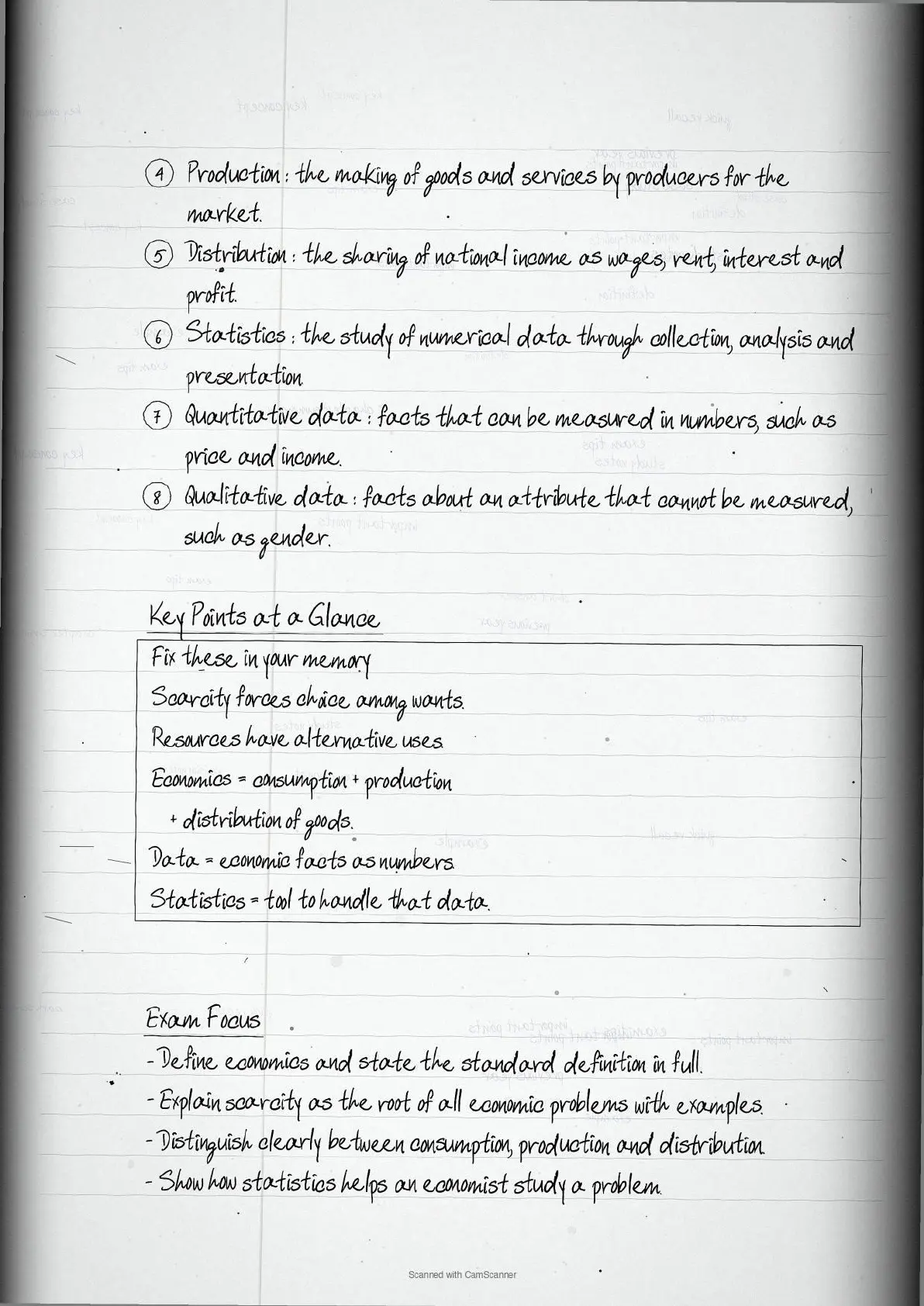
| Term / Idea | What it means |
|---|---|
| Scarcity | limited means against unlimited wants, the root of economic problems |
| Economic activity | any work done for a monetary gain |
| Consumption | buying of goods by consumers to meet wants |
| Production | making of goods and services for the market |
| Distribution | sharing of national income as wages, rent, interest and profit |
| Statistics | study of numerical data through collection, analysis and presentation |
| Quantitative data | facts measured in numbers like price and income |
| Qualitative data | facts about an attribute that cannot be measured, like gender |
How Collegedunia's Handwritten Notes Help You Revise Introduction to Statistics for Economics
These notes are made for the night before the exam. They keep the facts short and easy to scan. Collegedunia maps every point to the 2026-27 NCERT.
- Clear handwriting: each topic is written in neat, easy-to-read handwriting.
- Boxed key terms: the main terms and definitions are boxed by hand for fast recall.
- Diagrams and tables: simple hand-drawn tables and charts make ideas clear.
- Colour-coded headings: new sub-topics stand out, so you find any section in seconds.
How to Use These Handwritten Notes for Class 11 Economics Revision
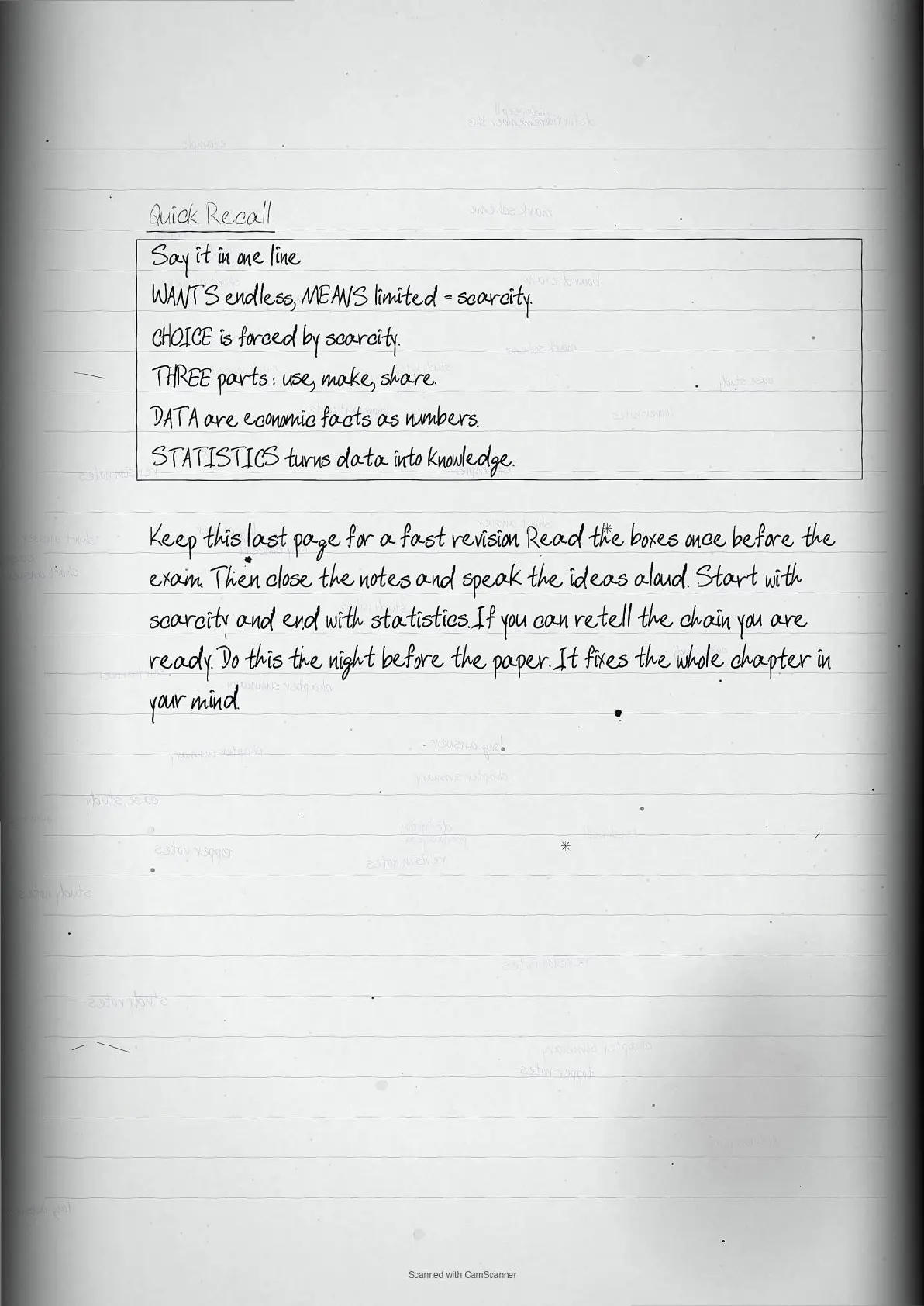
Use these class 11 economics handwritten notes in two passes. Read them slowly once for the full chapter. Then, near the exam, read only the boxes and key terms for a fast recall.
- Read the notes once with the NCERT chapter open beside you.
- Say each key term and idea in your own words.
- Practise one long-answer question from a past paper.
- On the last day, revise only the key terms and the boxes.
Class 11 Economics Handwritten Notes for All Chapters
The table below links the class 11 economics handwritten notes for every chapter. Use it to jump to any other chapter's notes.
Introduction to Statistics for Economics Class 11 Economics Handwritten Notes FAQs
Ques. Where can I download Introduction to Statistics for Economics Class 11 Economics Handwritten Notes PDF?
Ans. You can download the Introduction to Statistics for Economics Class 11 Economics Handwritten Notes PDF directly from this page. Both the Normal and HD versions are free.
Ques. Are these handwritten notes aligned with the 2026-27 NCERT?
Ans. Yes. These notes follow the current 2026-27 syllabus for Class 11 Economics. Difference between economics and statistics for a Class 11 student
Ques. How many pages is the Class 11 Economics Introduction to Statistics for Economics Handwritten Notes PDF?
Ans. The notes run about 22 pages. They cover the full chapter with key terms, hand-drawn boxes, and a short self-assessment quiz.
Ques. What is the main idea of the 11th standard Economics chapter Introduction to Statistics for Economics?
Ans. Economics studies how people use scarce resources to satisfy wants. Statistics is the tool that collects and analyses the data economics needs to study these problems.
Ques. Are these Introduction to Statistics for Economics notes enough for the CBSE Class 11 exam?
Ans. Yes, for revision. The Collegedunia handwritten notes cover every key point and exam term. Read them with the NCERT chapter and practise past questions.



Comments