




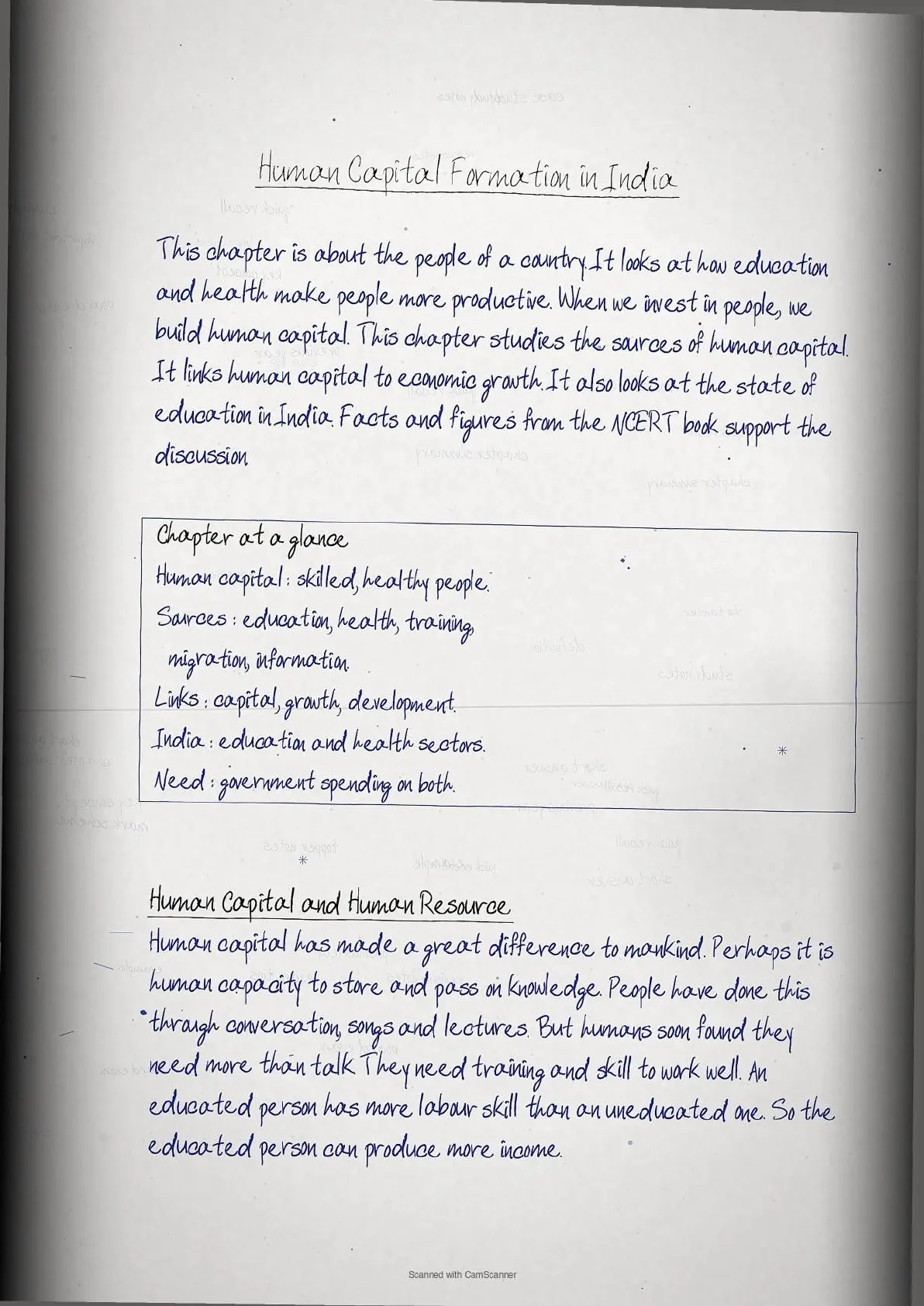
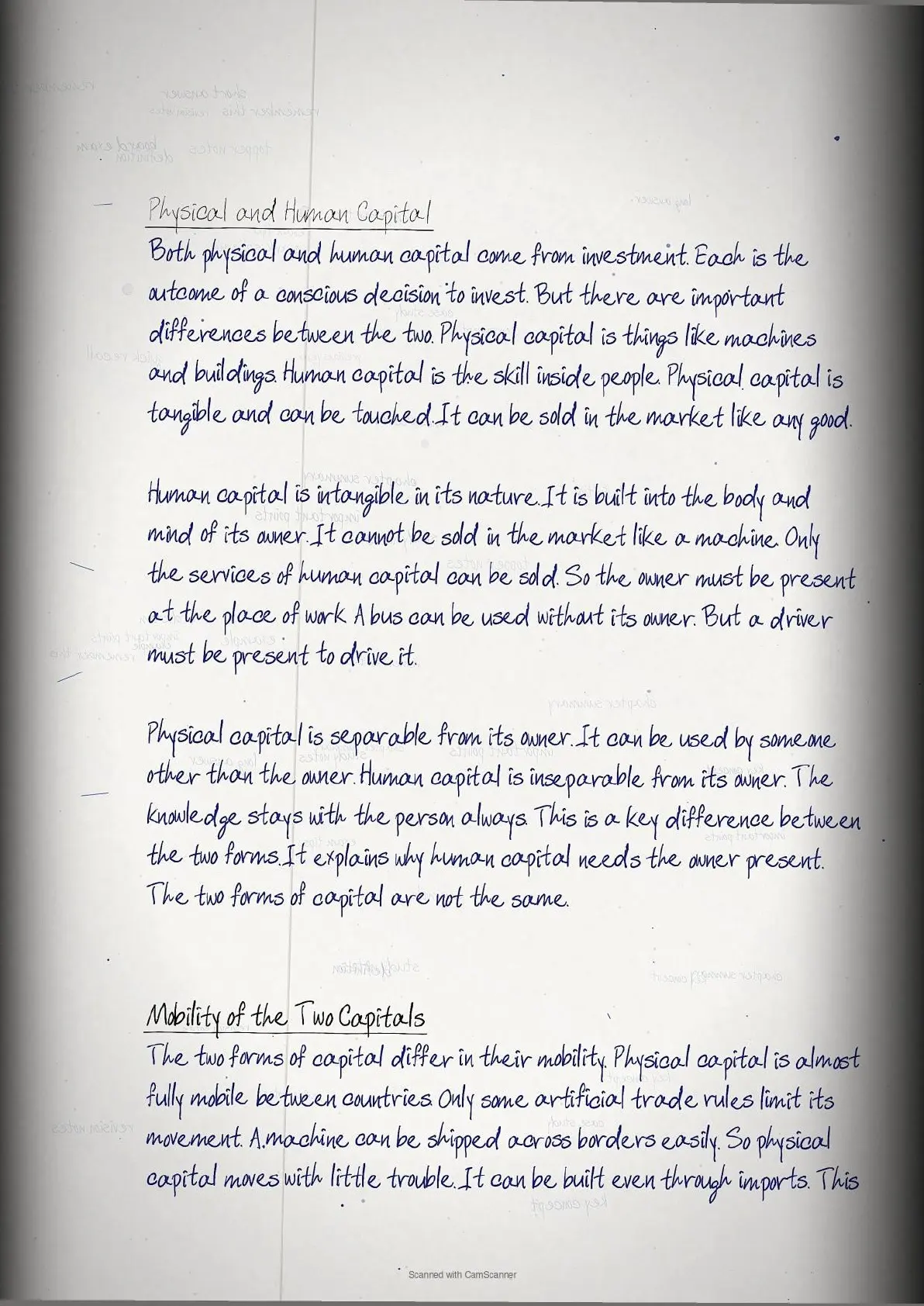
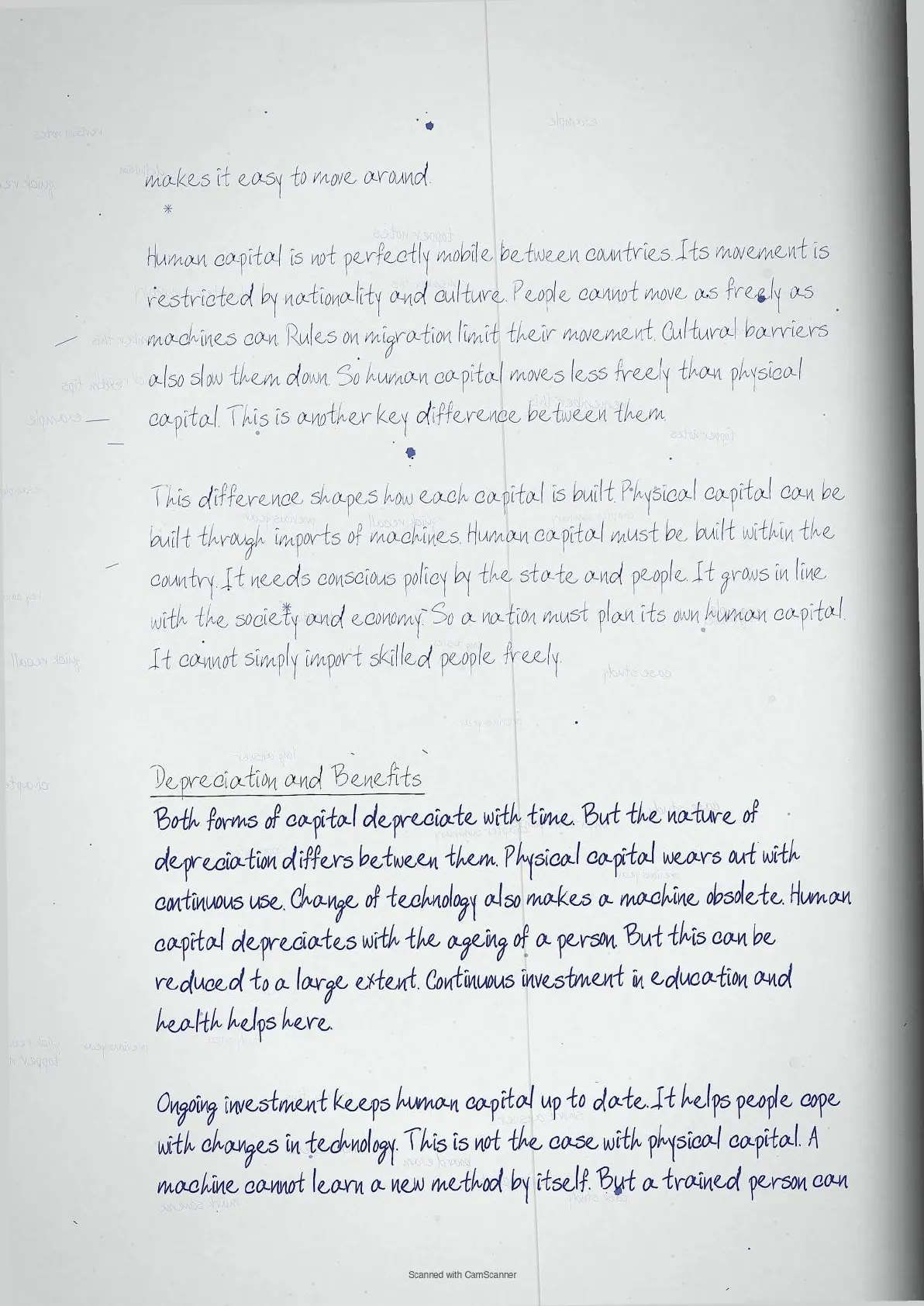
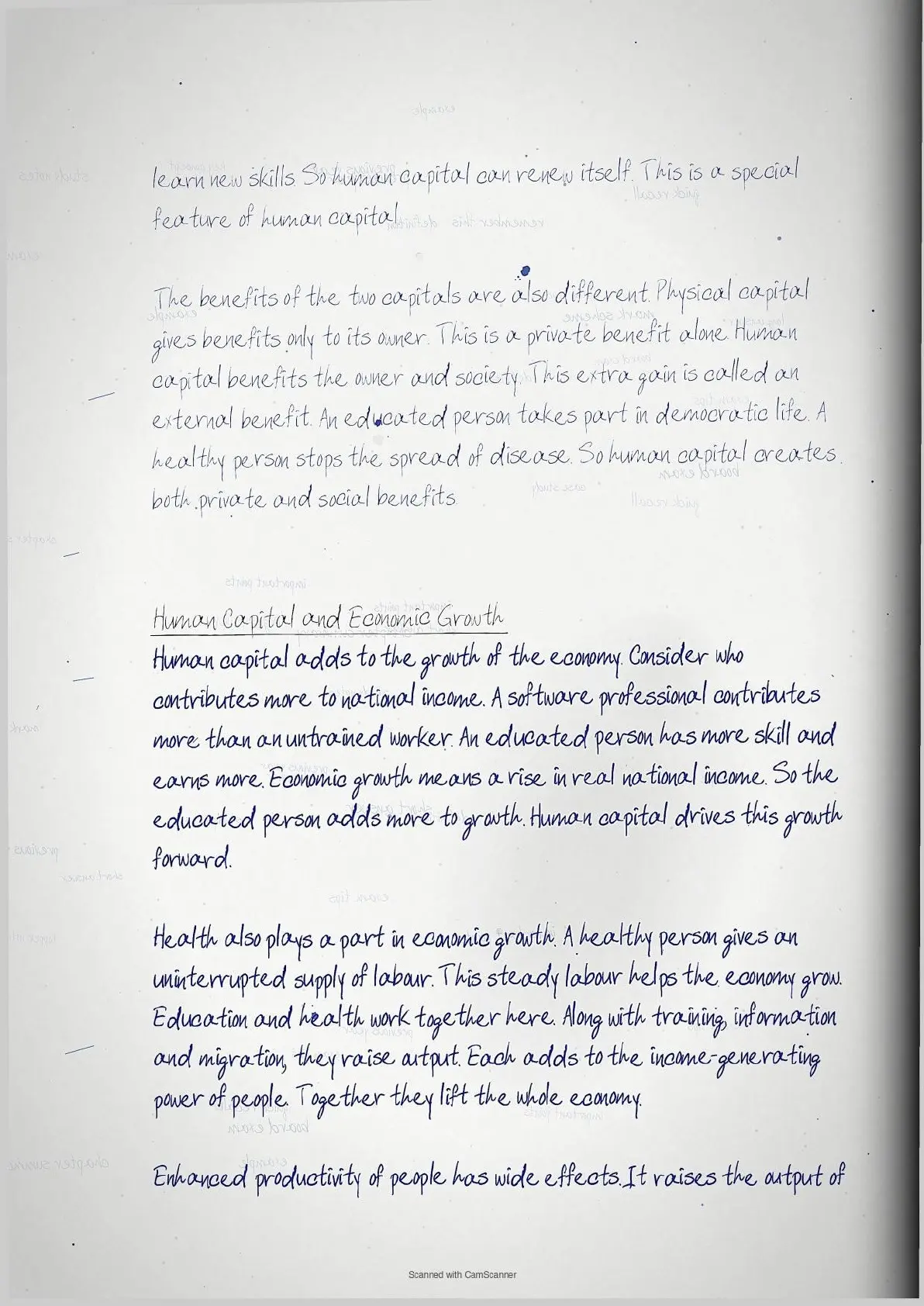
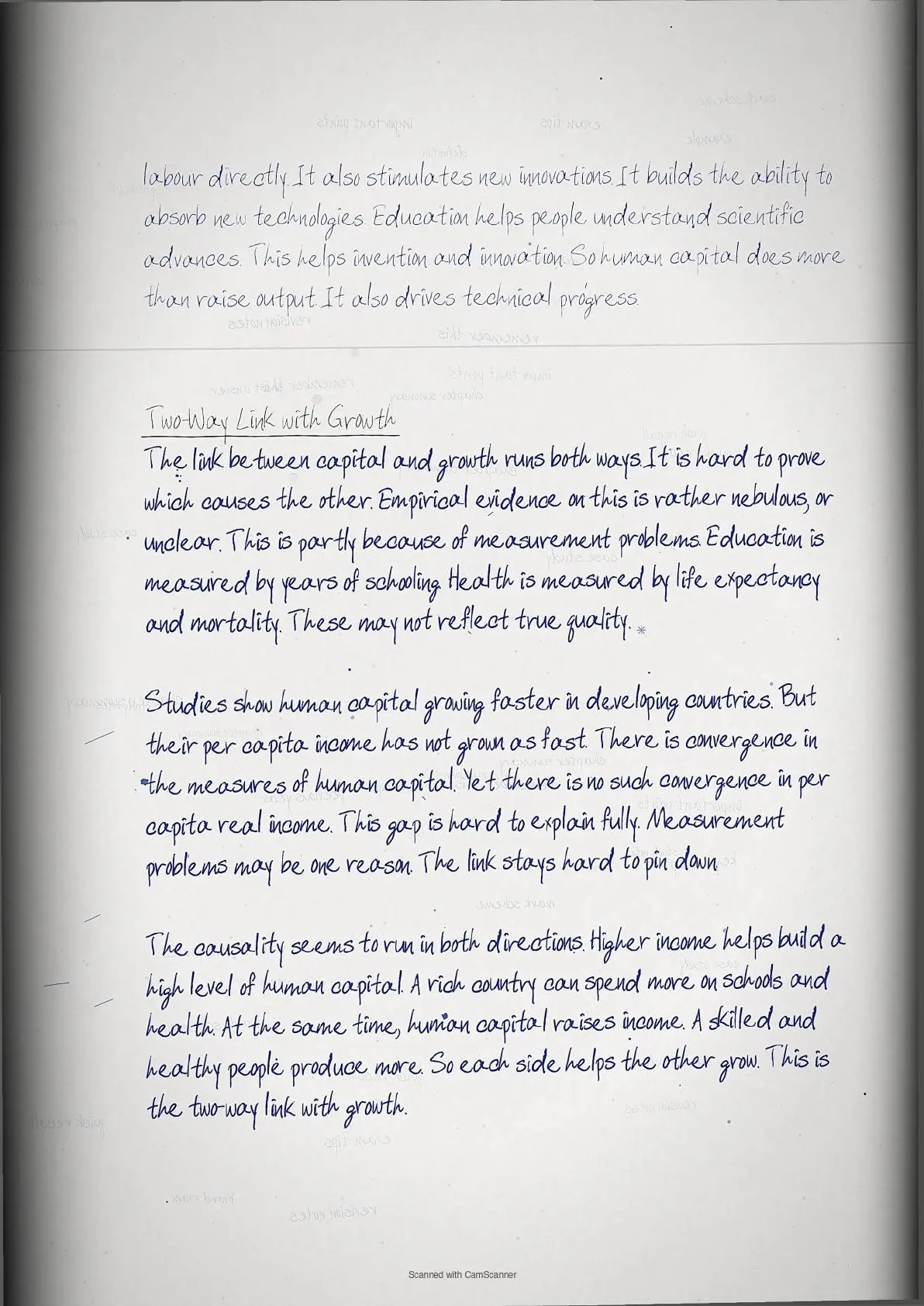
The 2026-27 NCERT keeps Class 11 Economics Chapter 12 Human Capital Formation in India in full for the CBSE course. These class 11 economics handwritten notes chapter 12 Human Capital Formation in India follow the 2026-27 NCERT and cover human capital versus human resource, five sources of human capital formation, physical capital compared with human capital. This page.
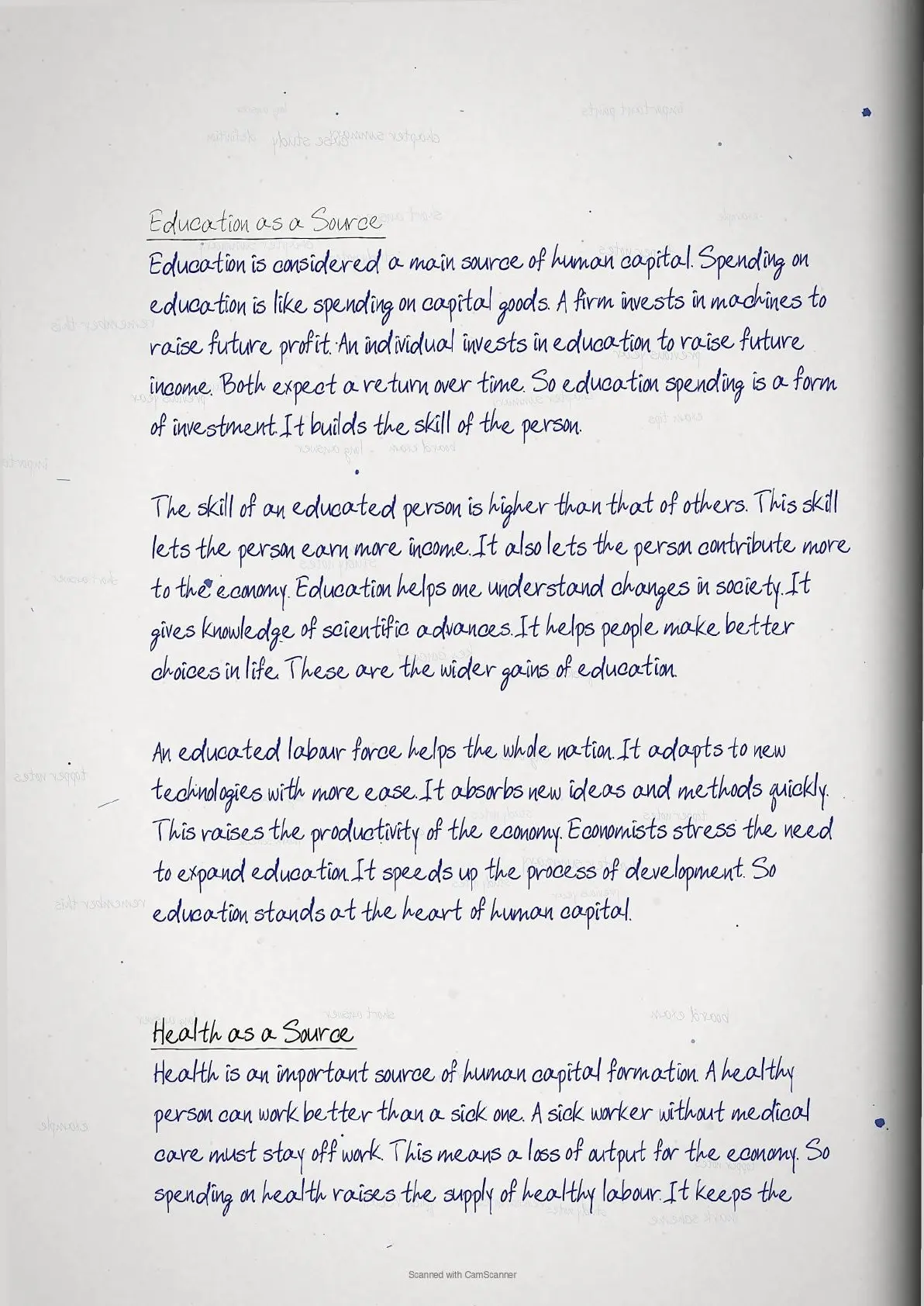
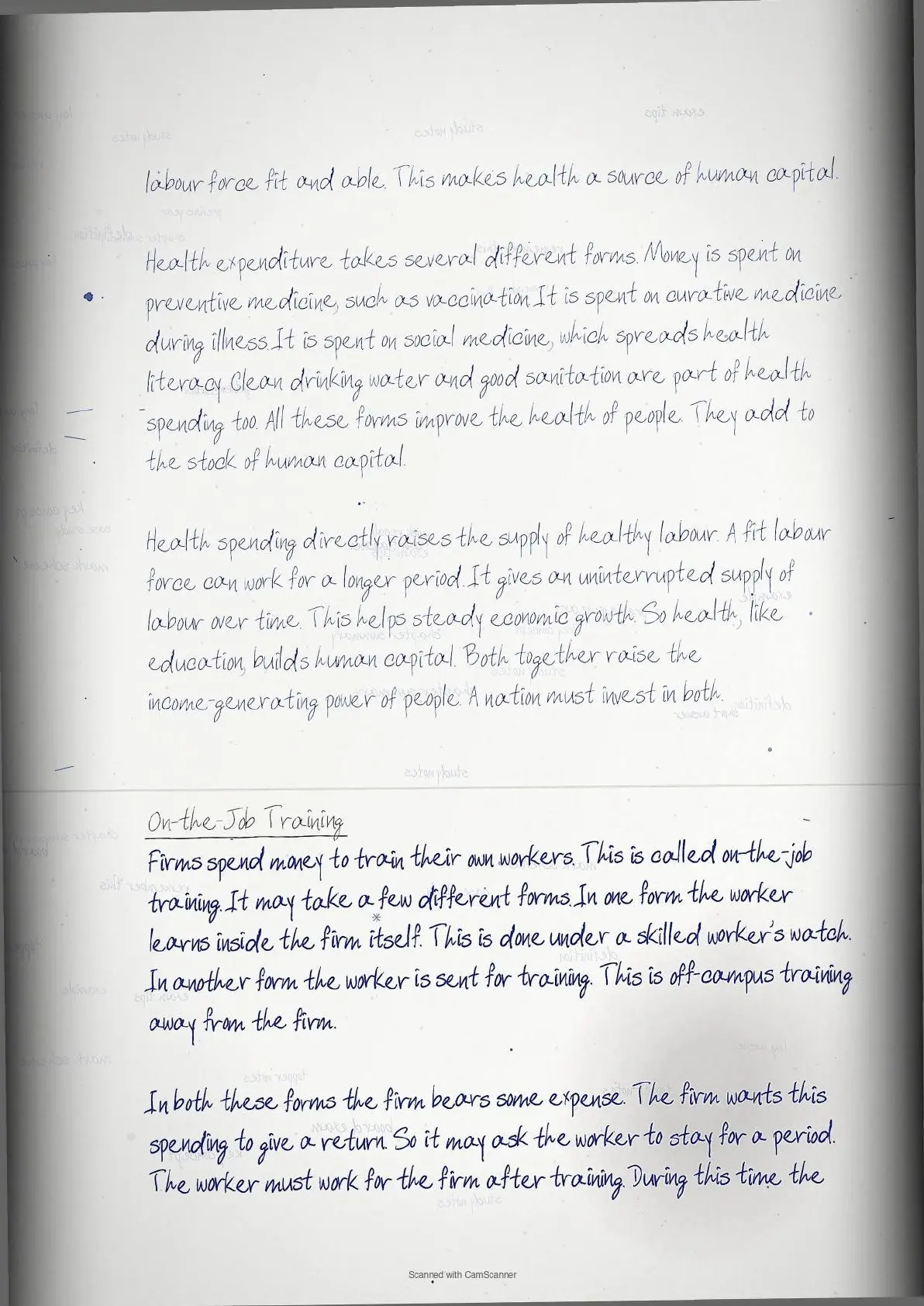
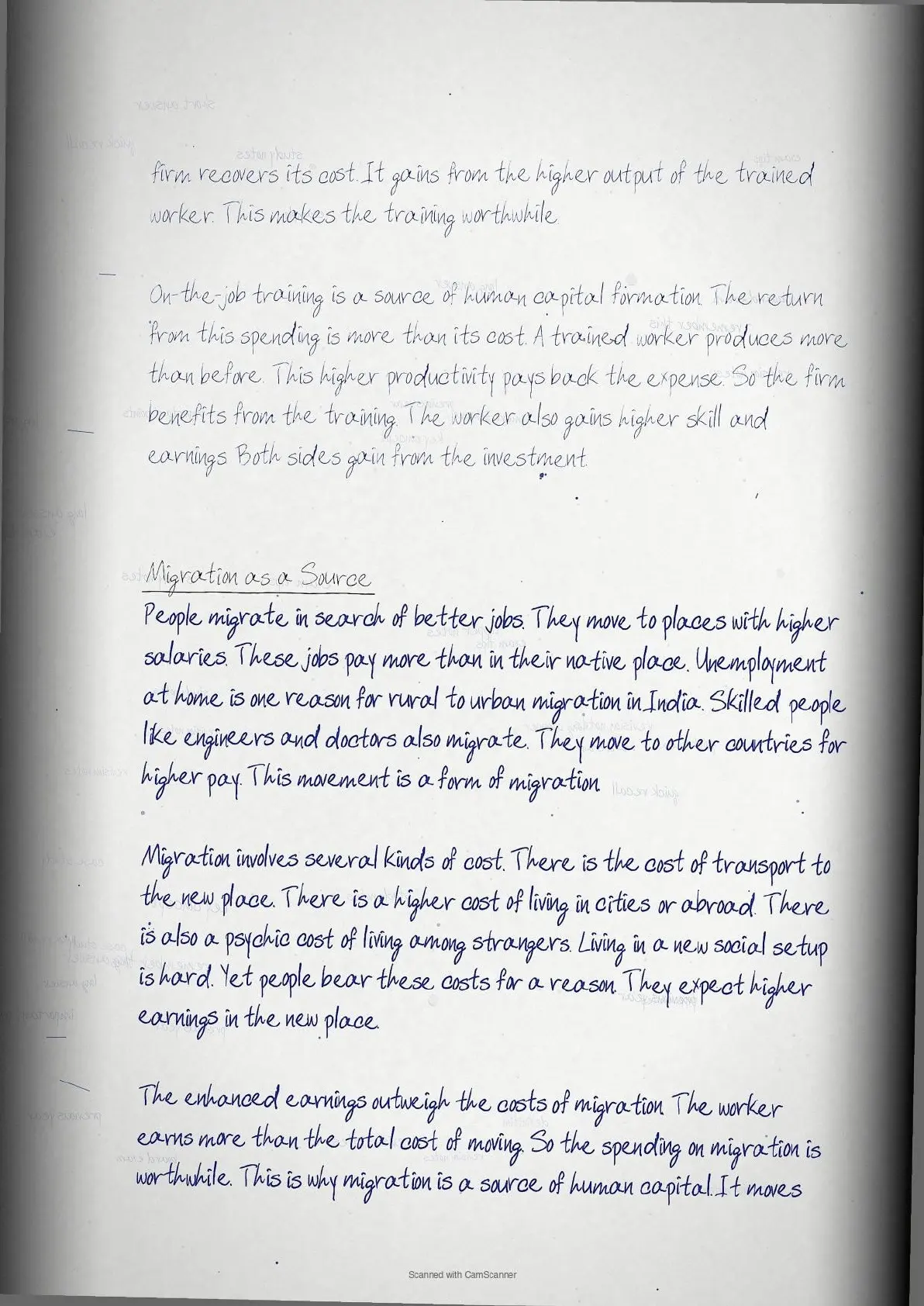
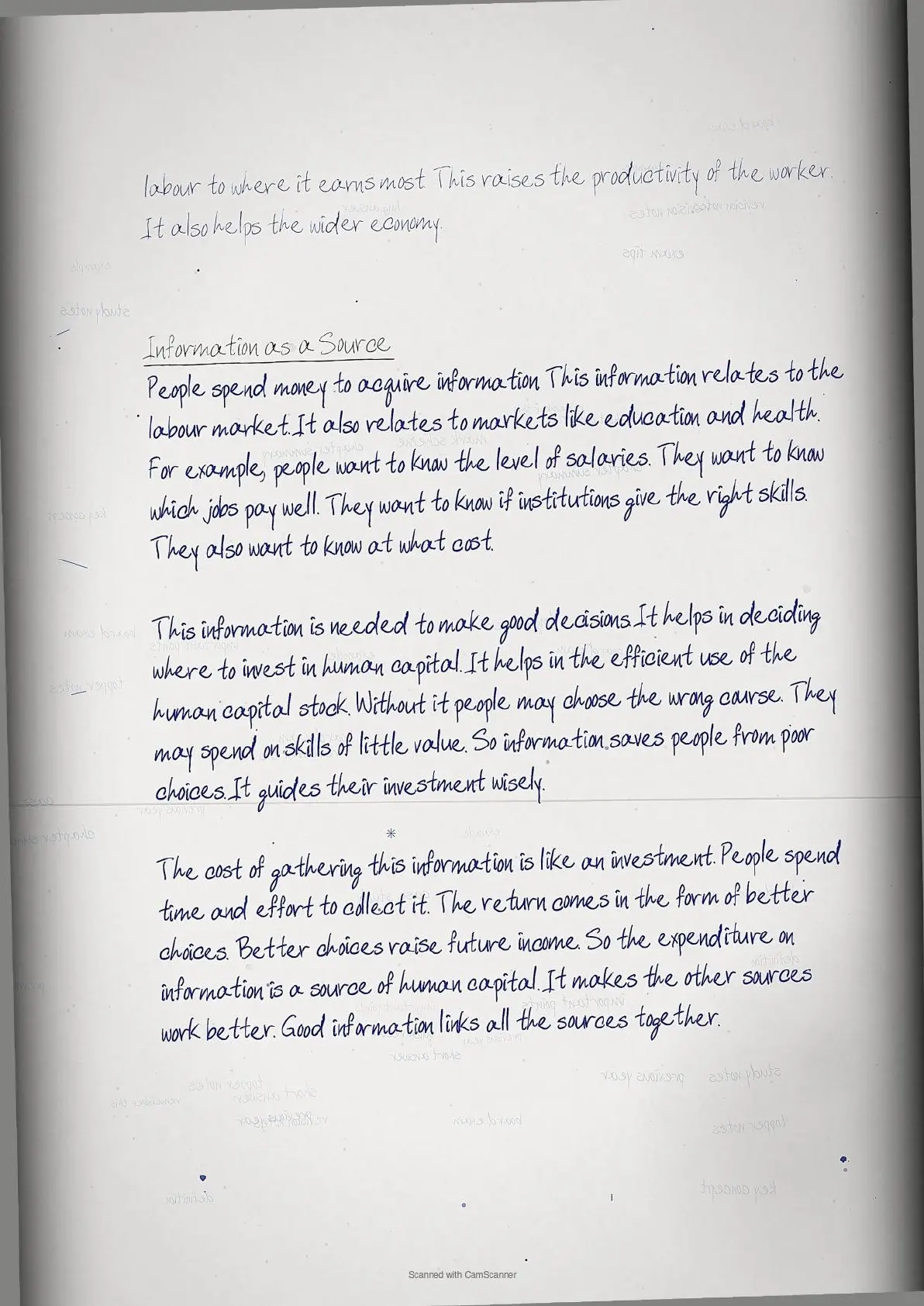


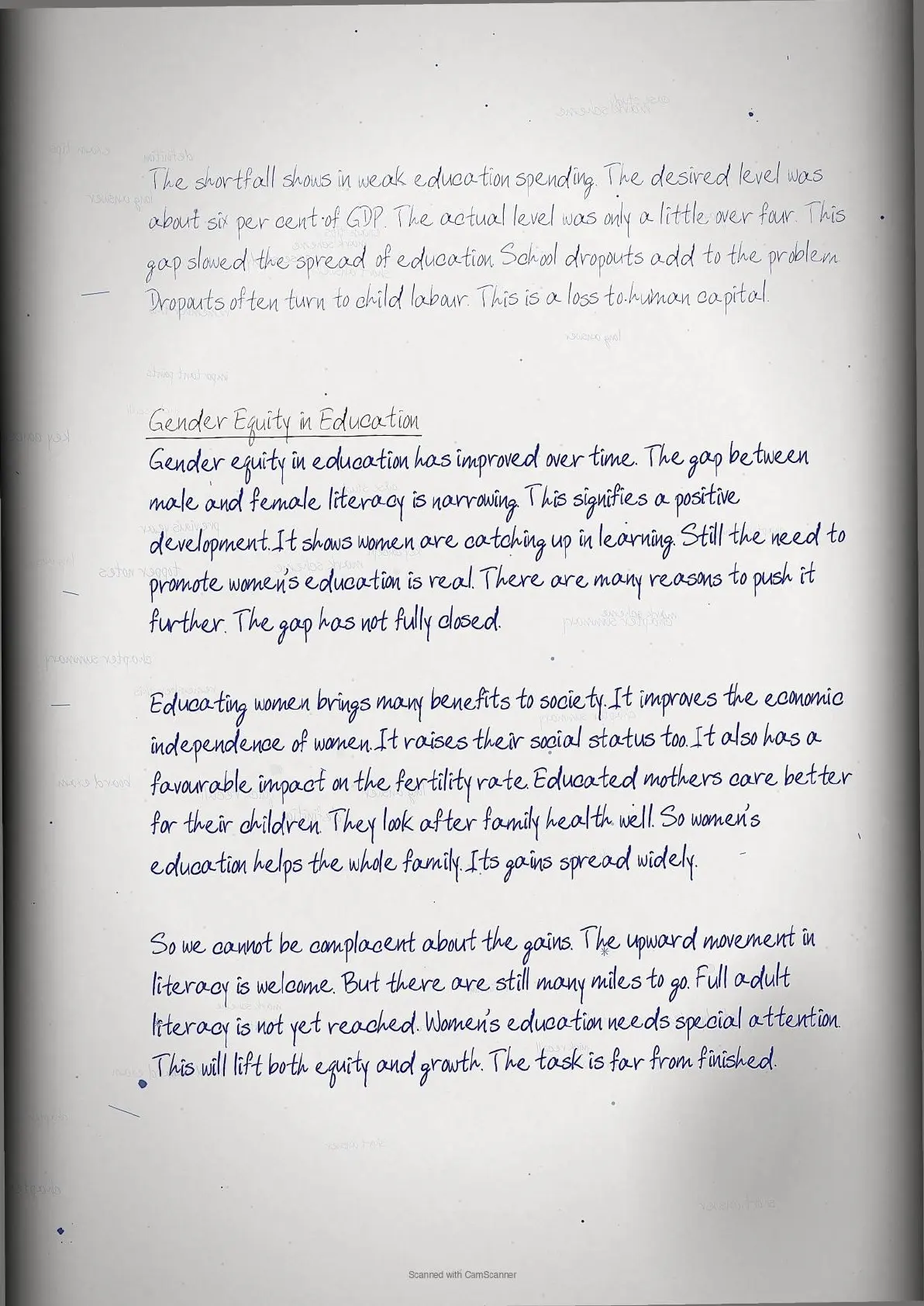
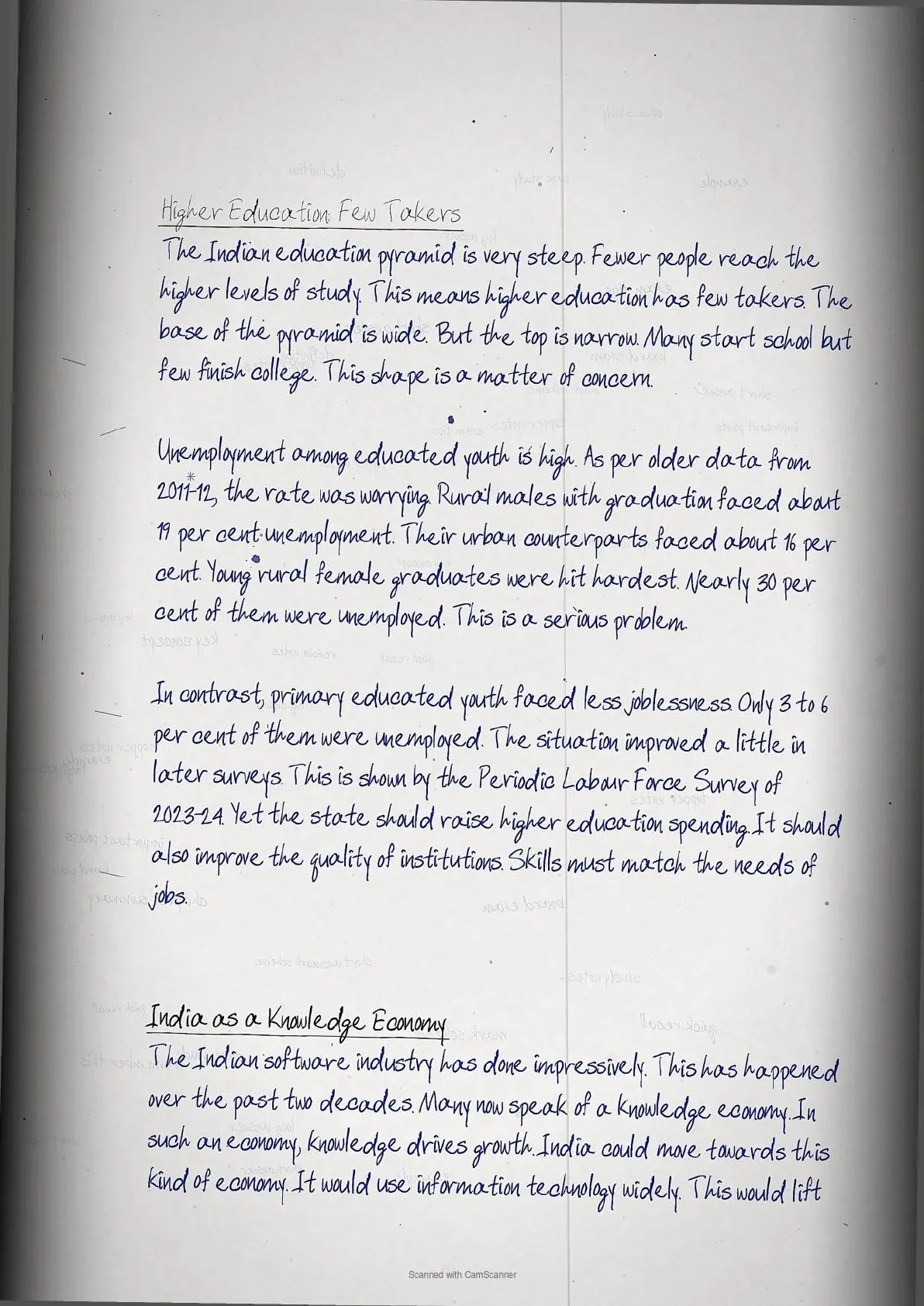
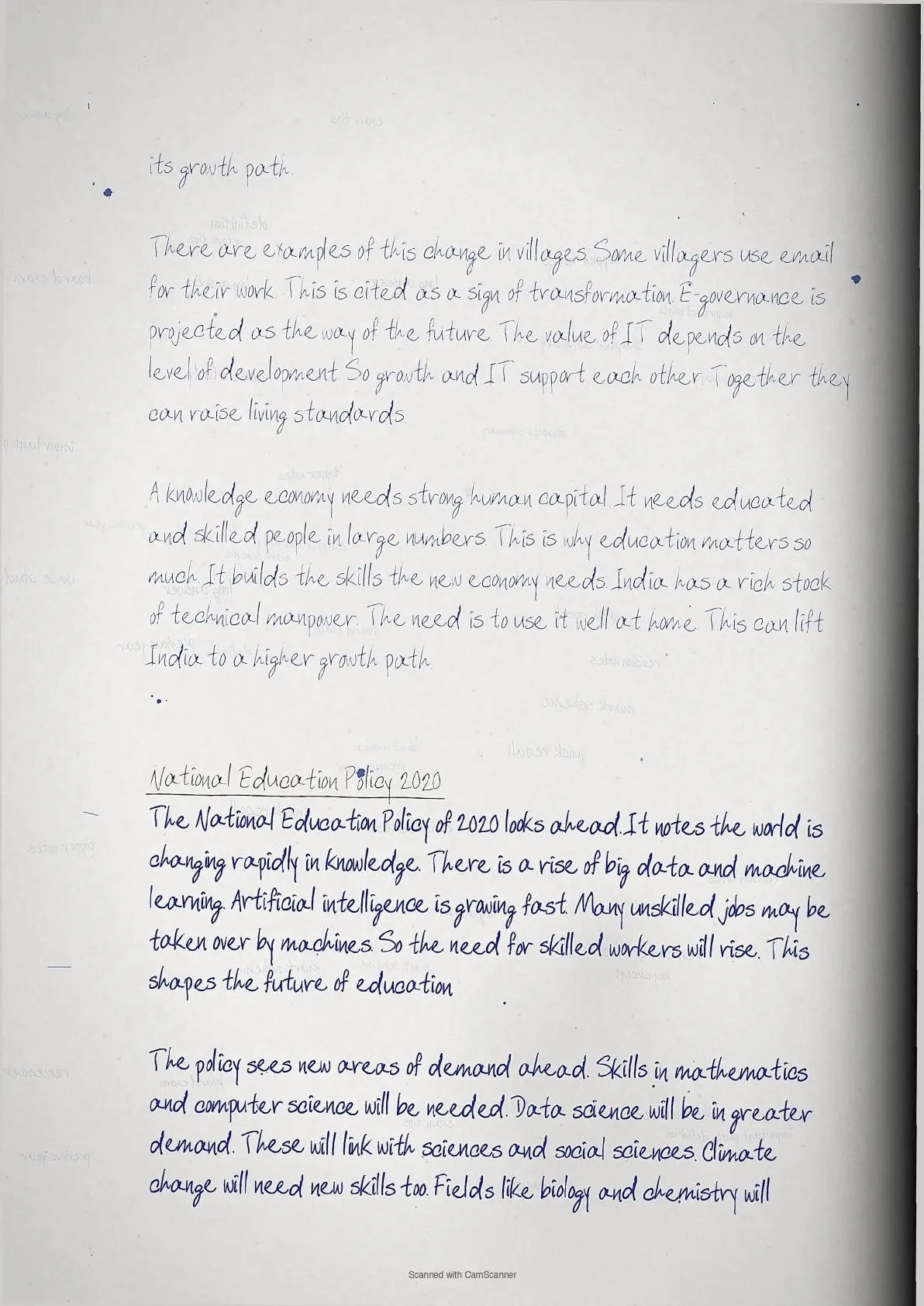
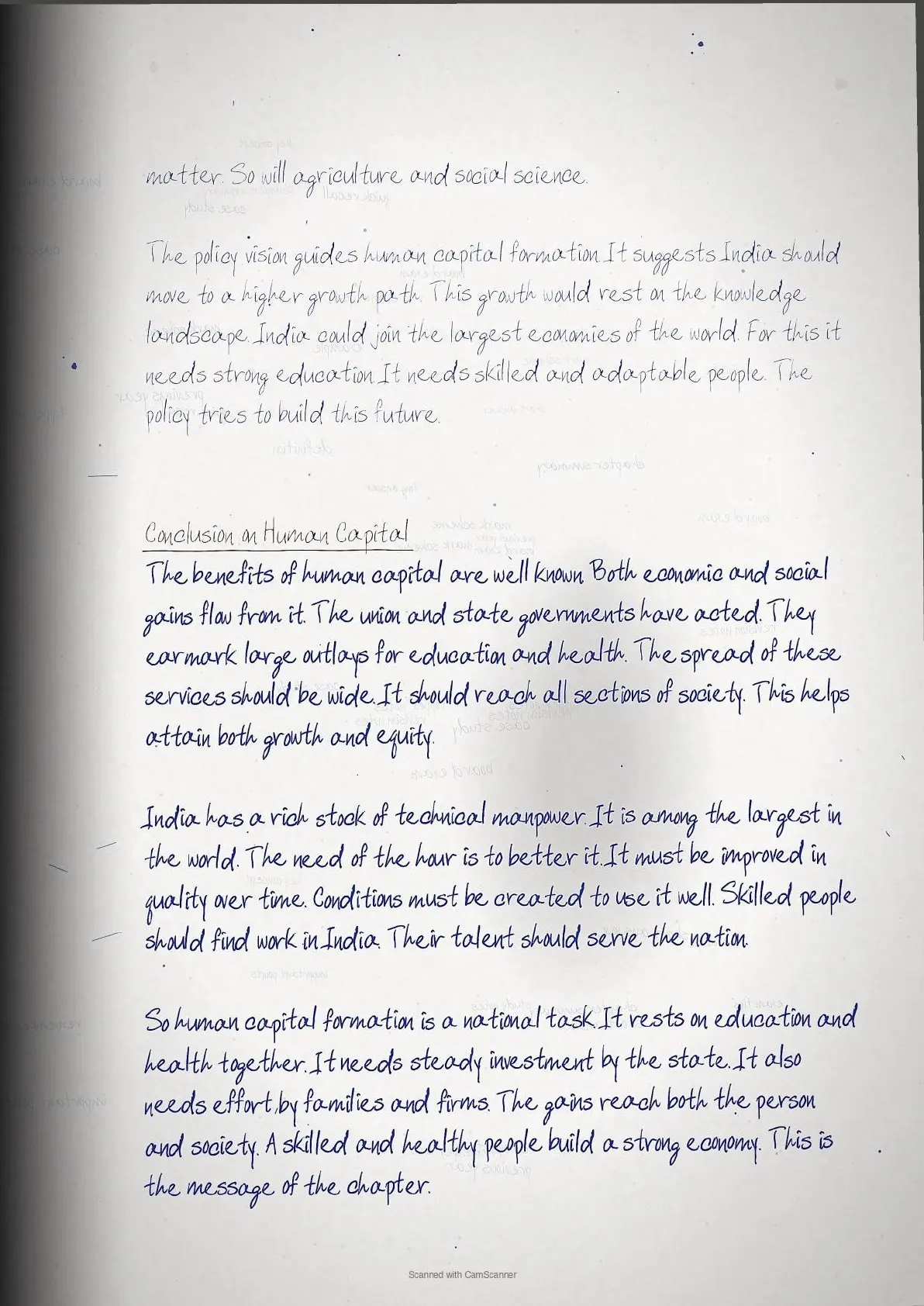
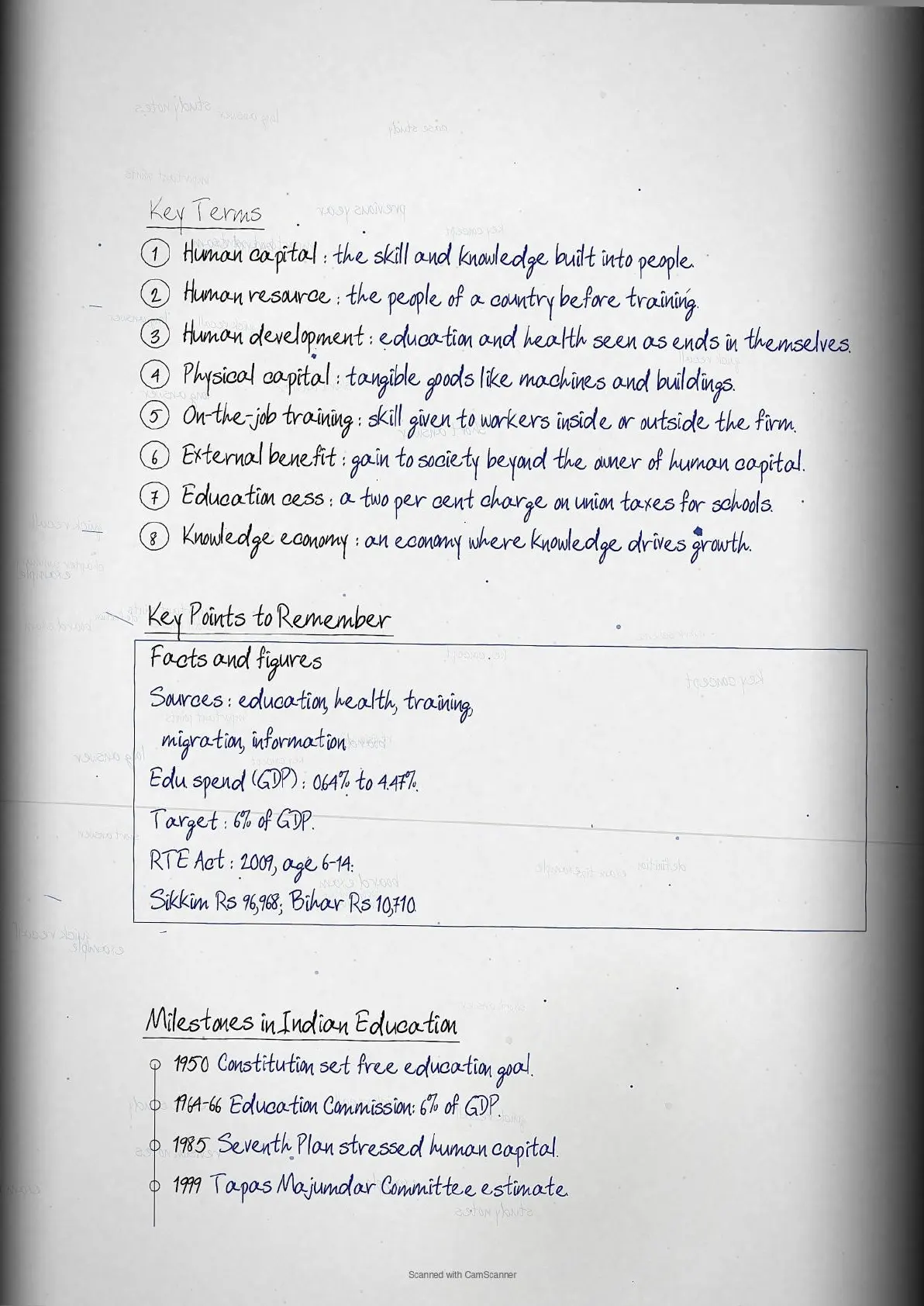
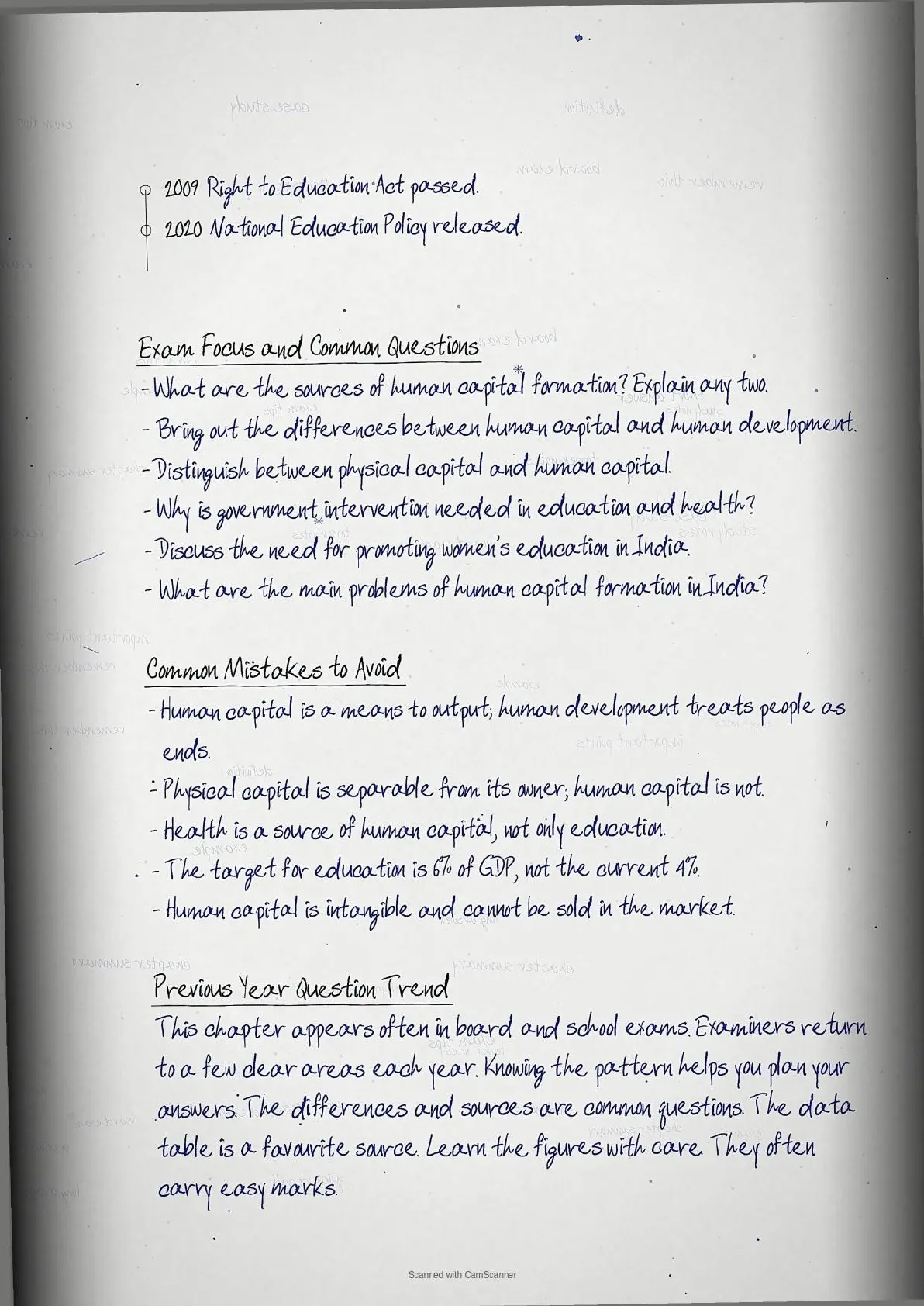
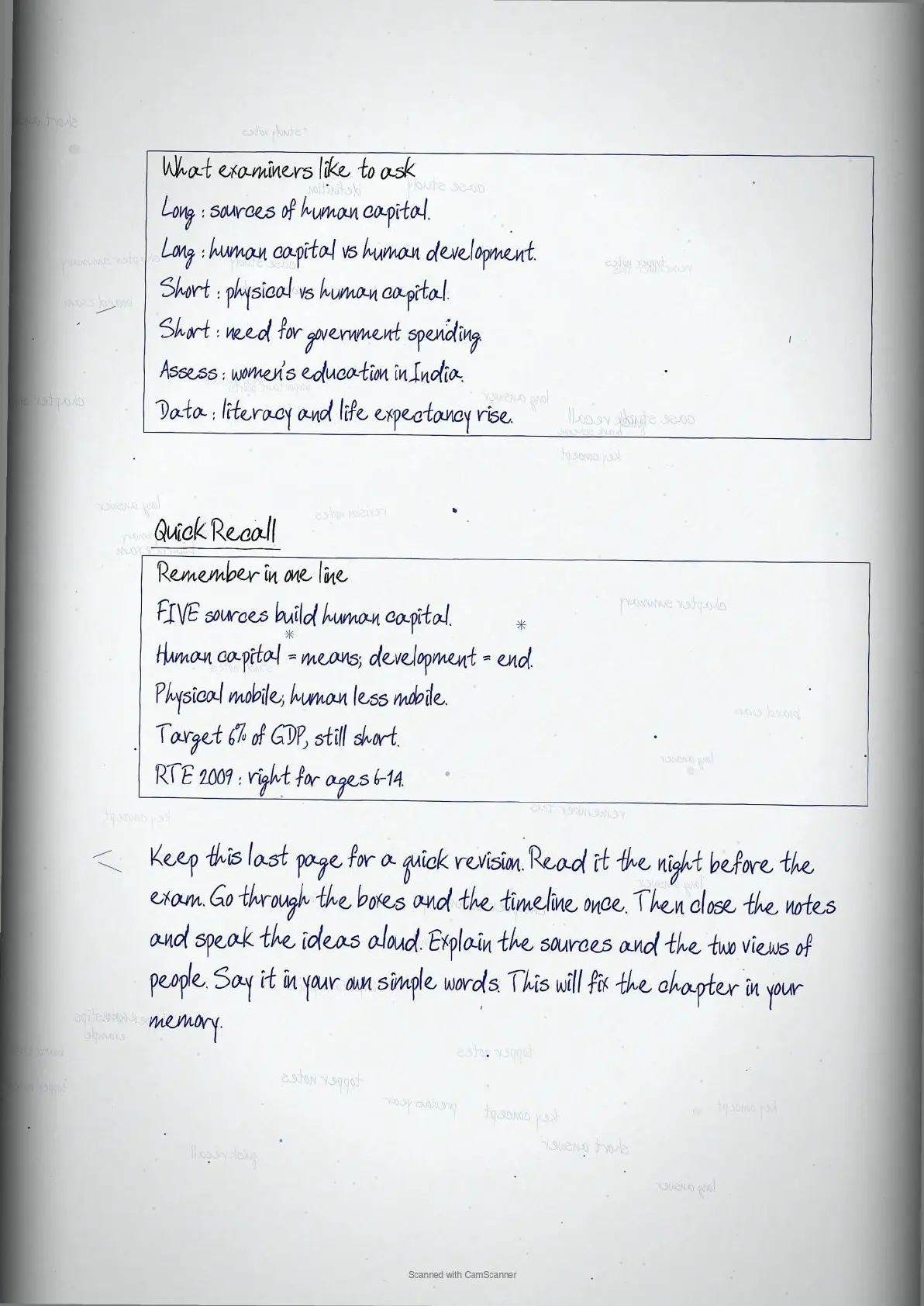
- CBSE Class 11 Weightage: a scoring chapter in the Economics paper, asked in short and long answers.
- What the notes cover: human capital versus human resource, five sources of human capital formation, physical capital compared with human capital, human capital and economic growth.
- Best for: quick revision before Class 11 exams and a base for CUET later.
You can read the complete class 11 economics handwritten notes for Human Capital Formation in India, with key terms, boxed definitions, and quick revision points, in the PDF below.
These handwritten notes are written by subject teachers, mapped to the 2026-27 NCERT, and checked against the last five years of CBSE Class 11 Economics papers.
Human Capital Formation in India Topic-wise Weightage for CBSE Class 11 Economics
Some parts of this chapter are asked more often than others. The table below shows which sub-topics to revise first, based on recent CBSE Class 11 question trends.
| Sub-topic | Weightage | CBSE Frequency |
|---|---|---|
| Sources of human capital formation | High | Very frequent |
| Physical versus human capital | High | Very frequent |
| Human capital versus human development | High | Frequent |
| Government spending and education sector | Medium | Frequent |
| Educational achievements and problems | Medium | Frequent |
What the Human Capital Formation in India Handwritten Notes Cover
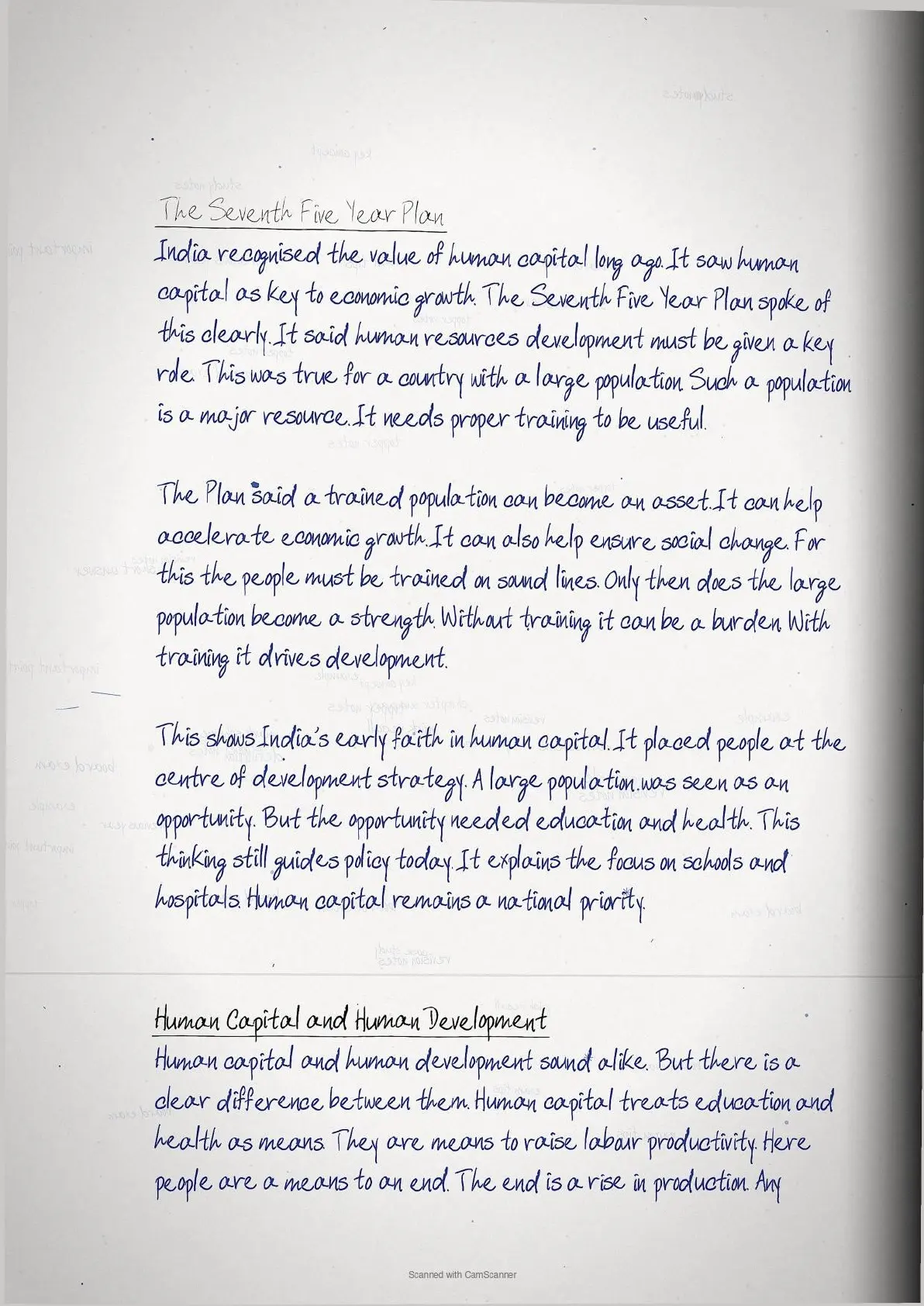
Human capital is the skill and health built into a country's people through education and health care. This chapter studies its sources and its link with economic growth. It also reviews the state of education in India.
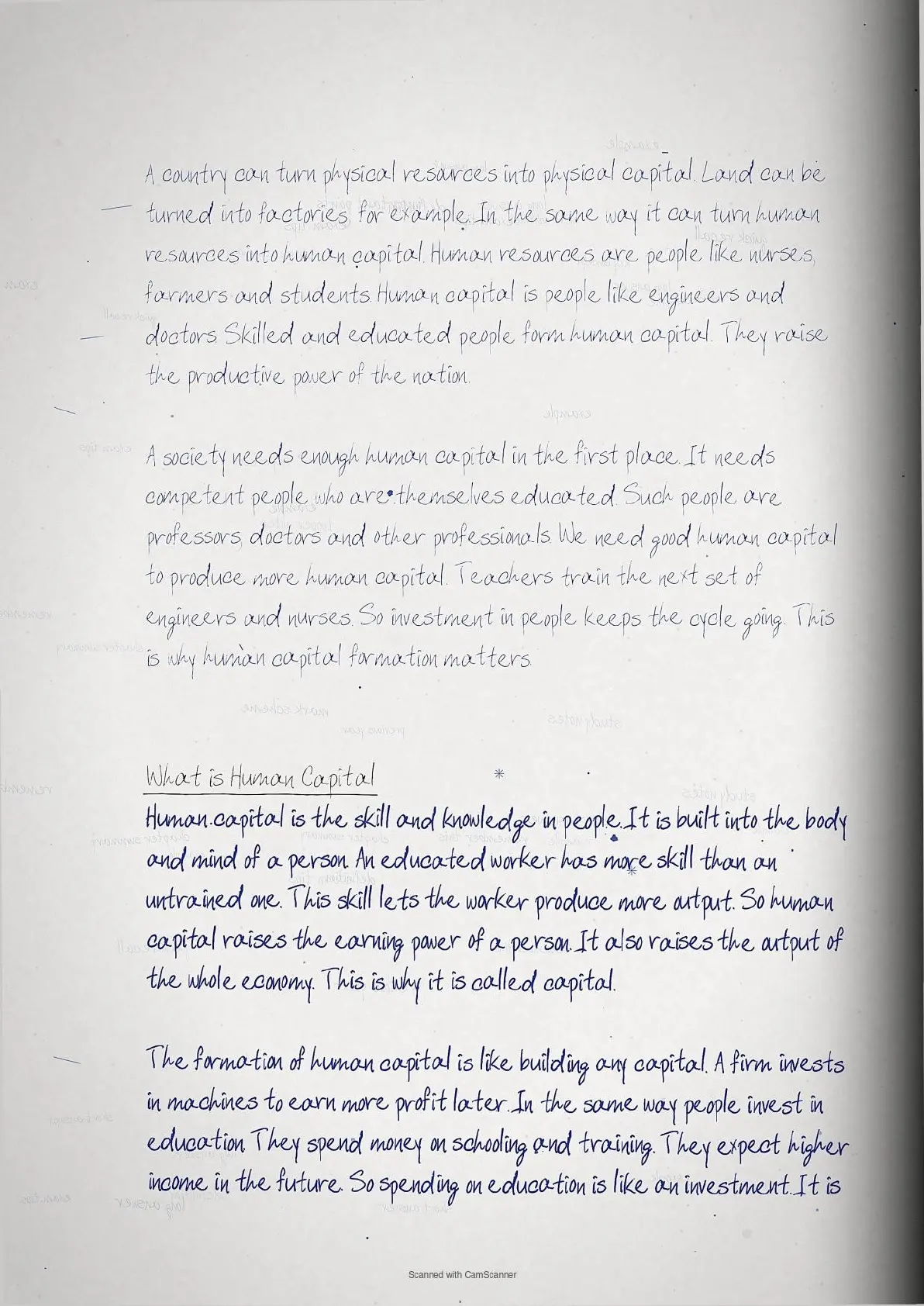
- Human capital versus human resource
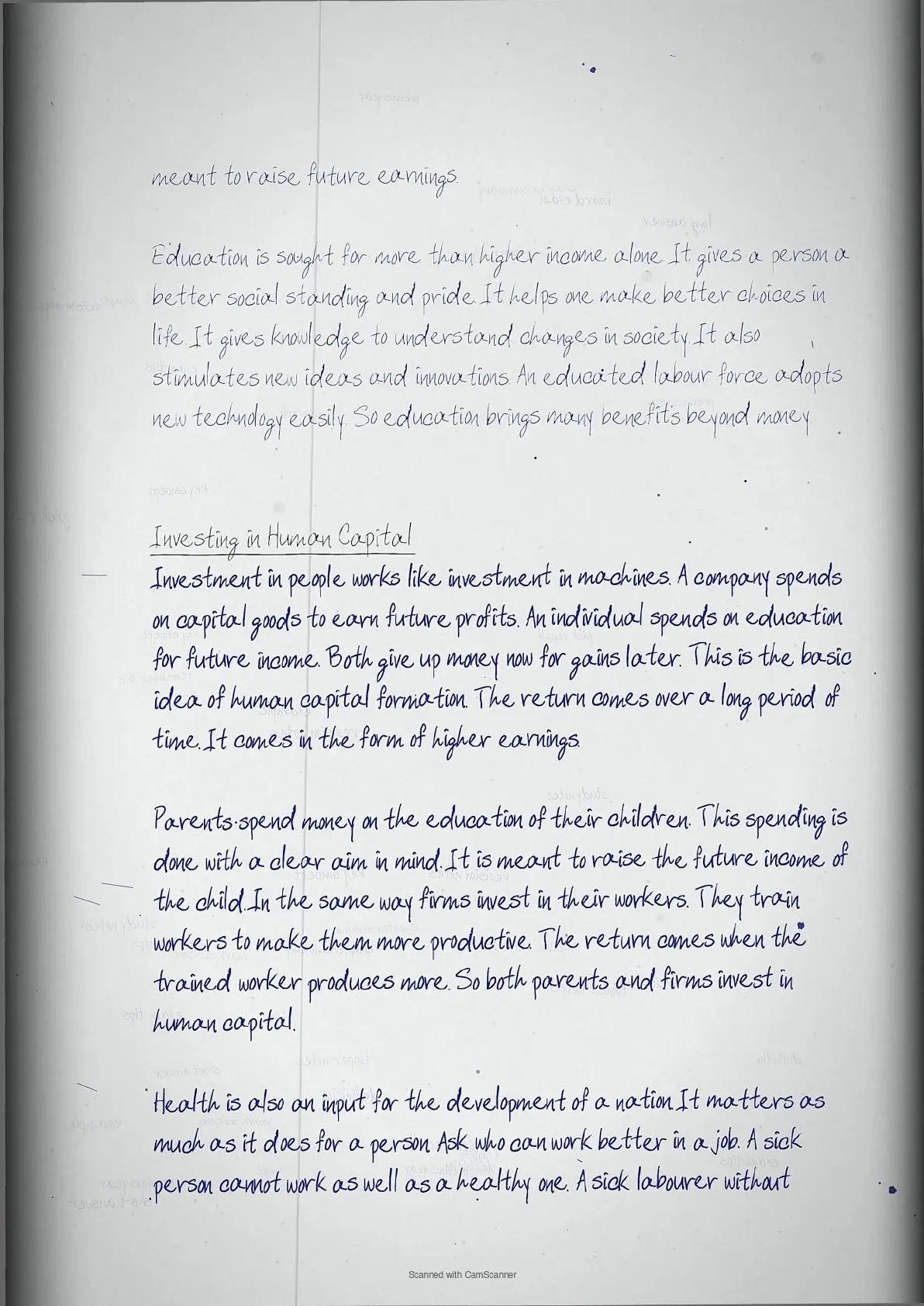
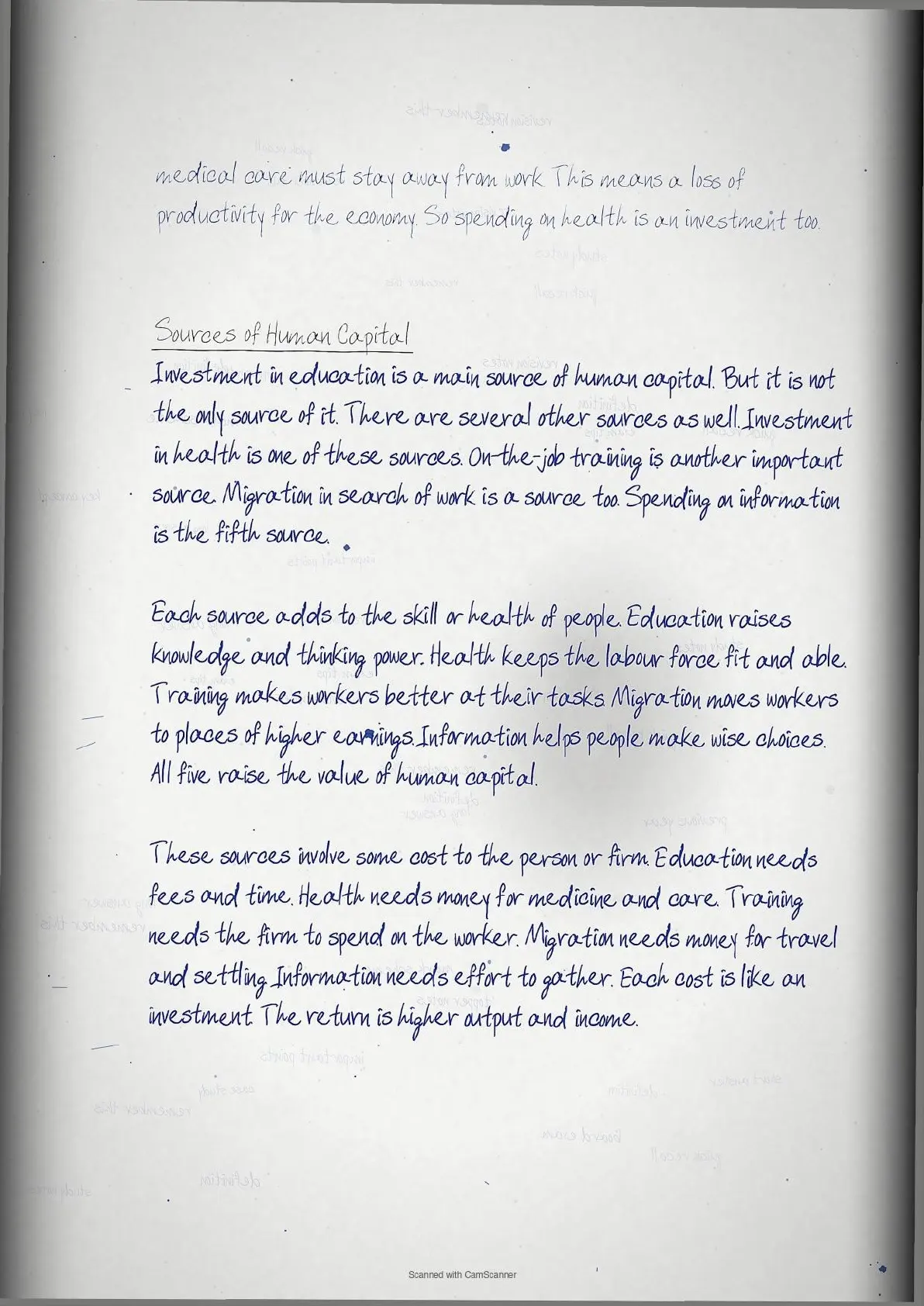
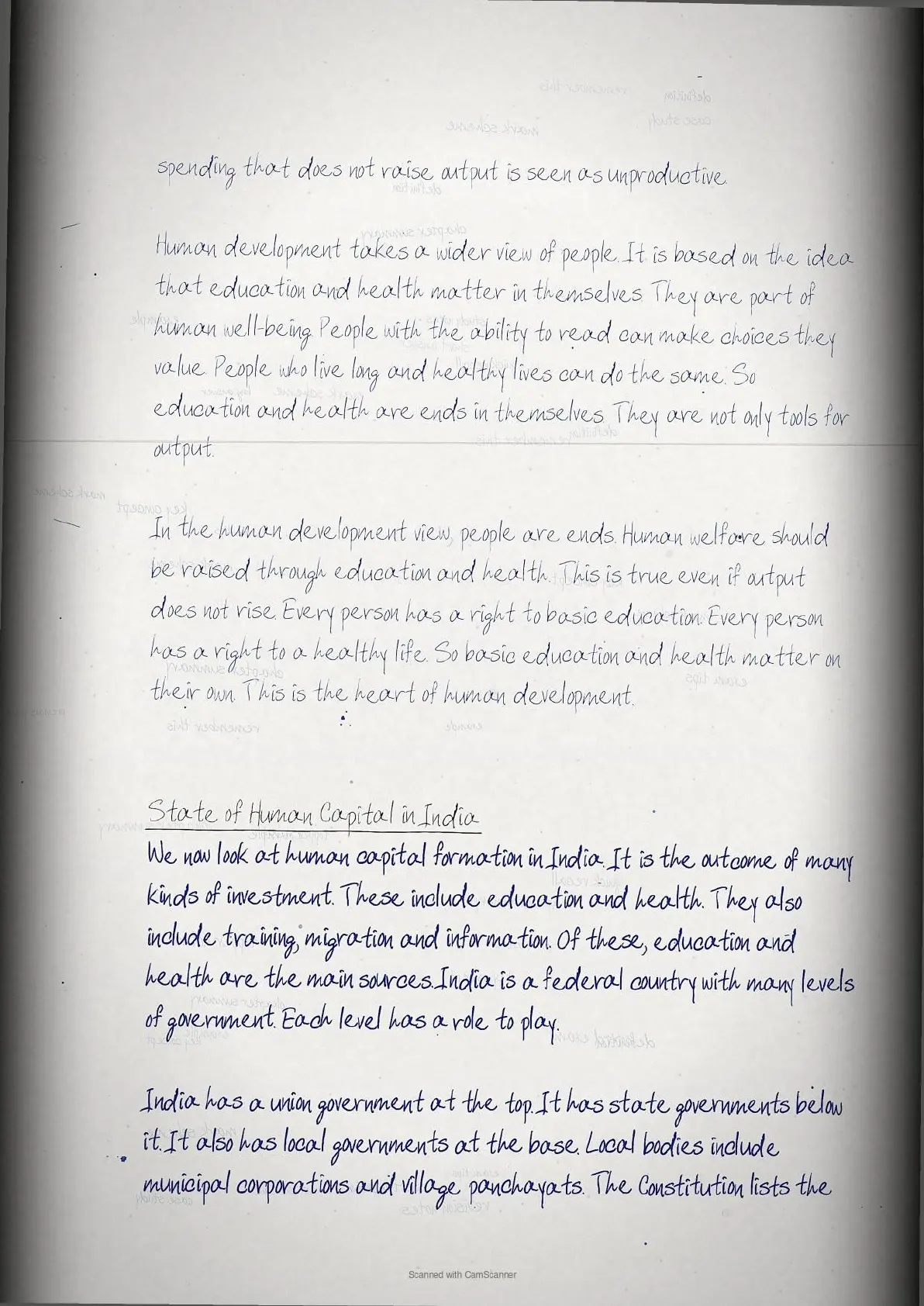
- Five sources of human capital formation
- Physical capital compared with human capital
- Human capital and economic growth
- Human capital versus human development
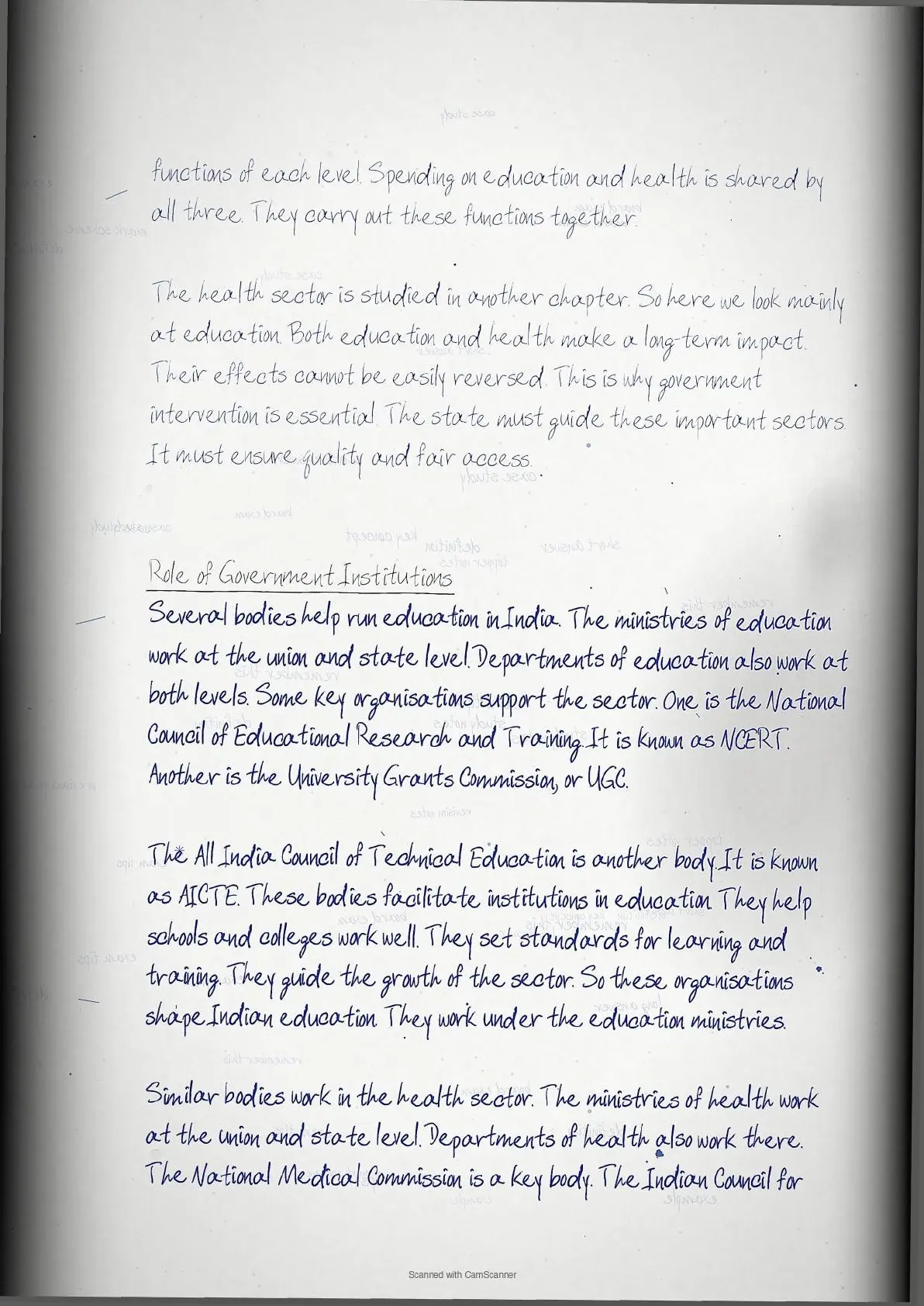
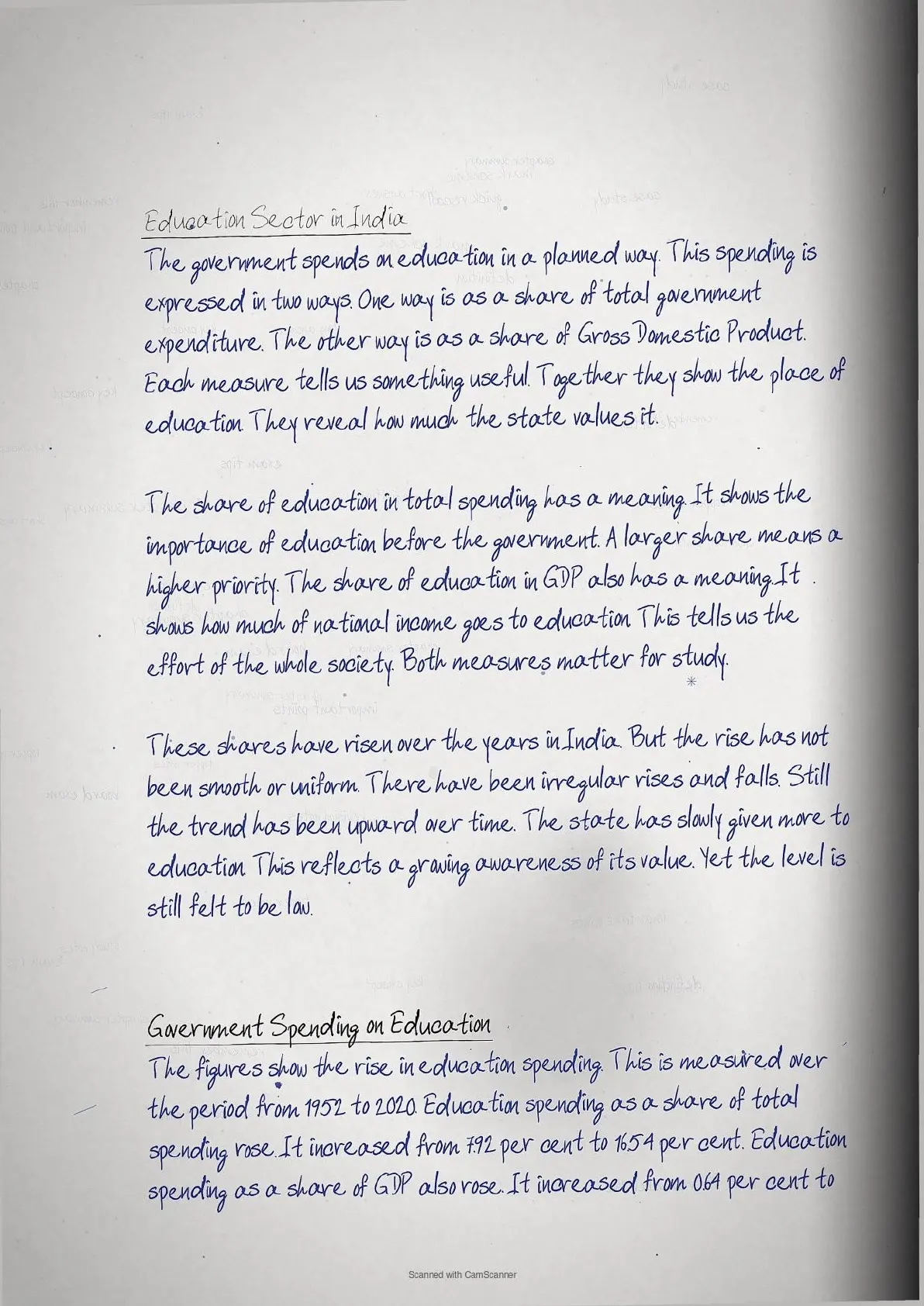
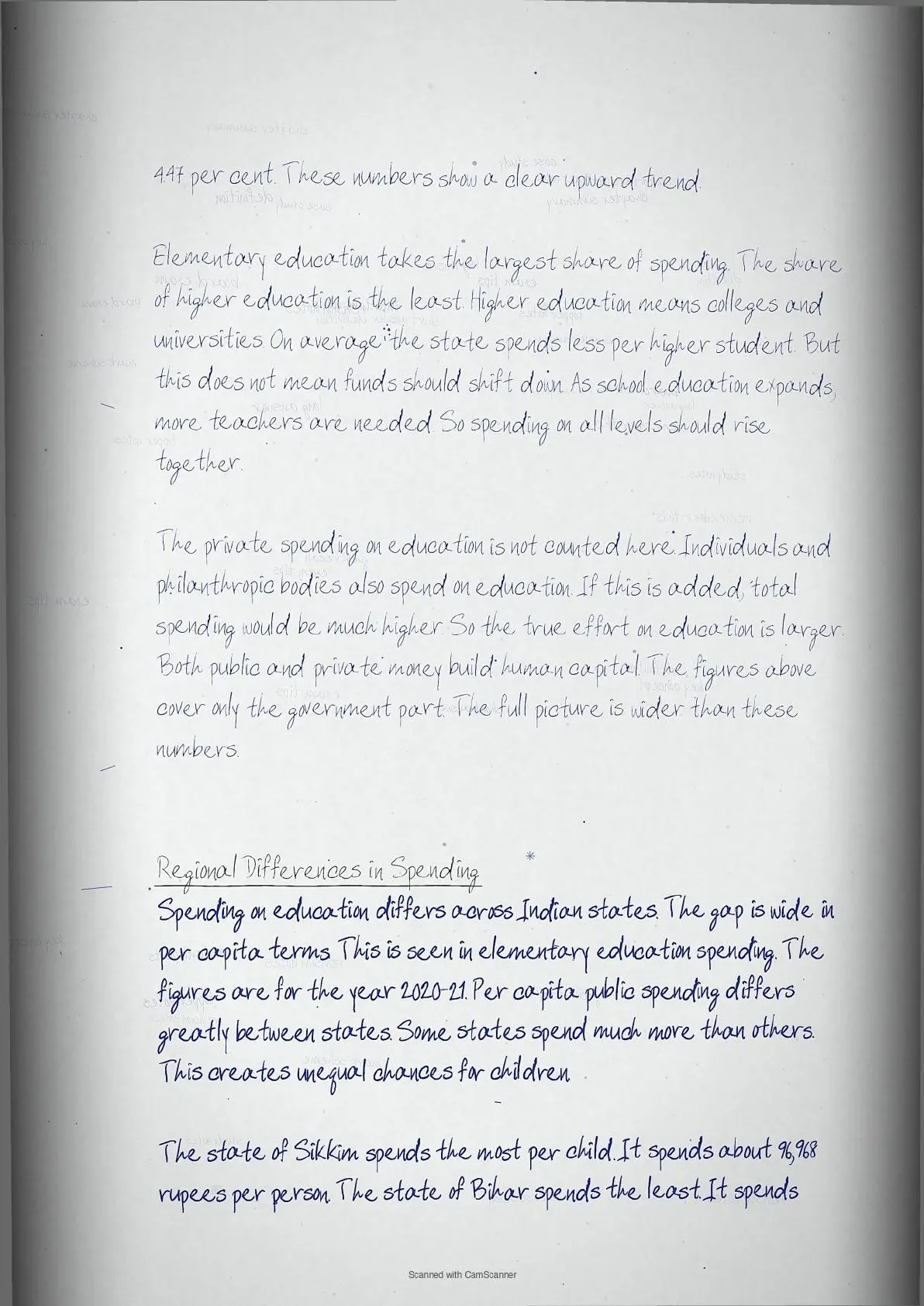
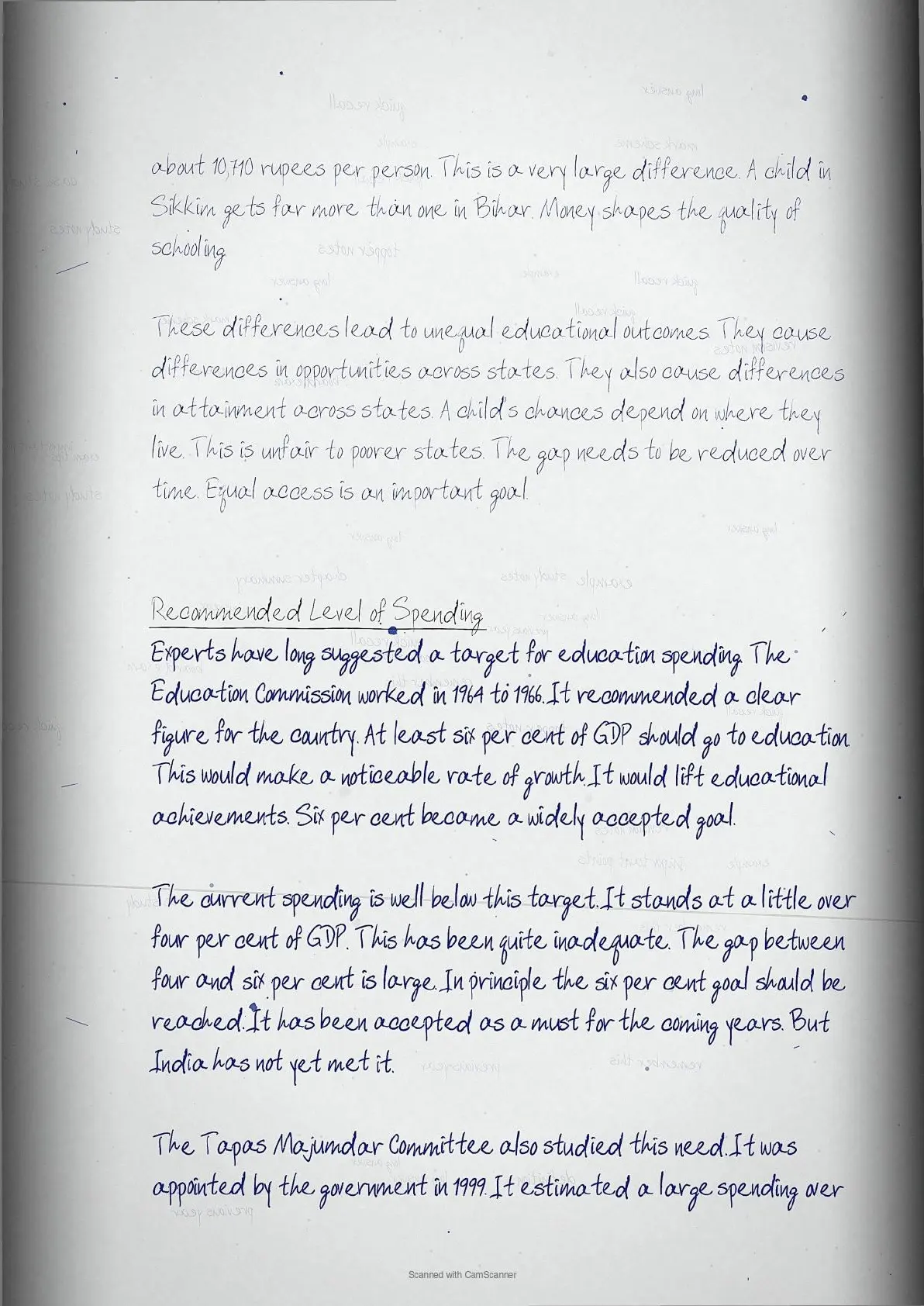
- Government spending on education in India
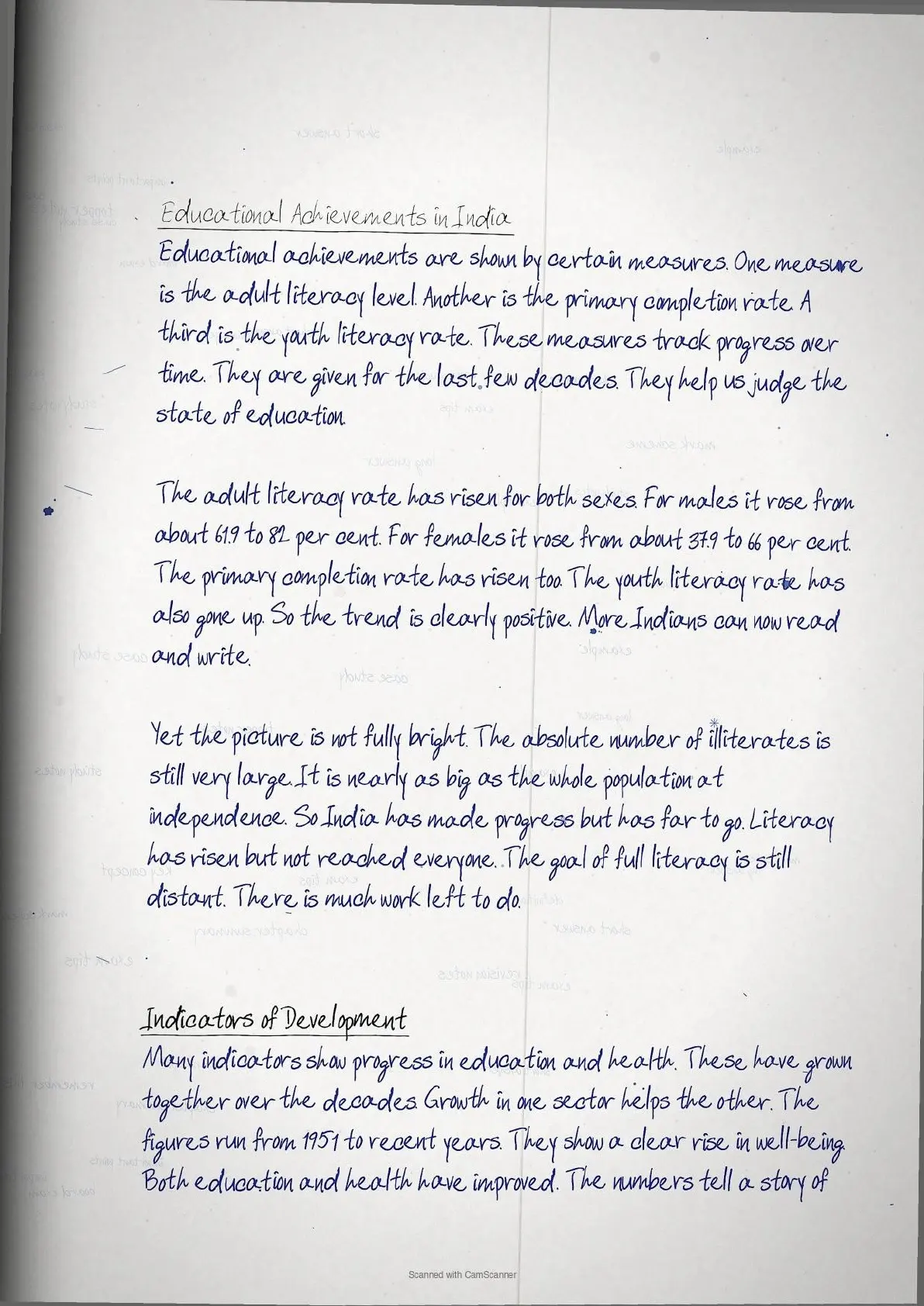
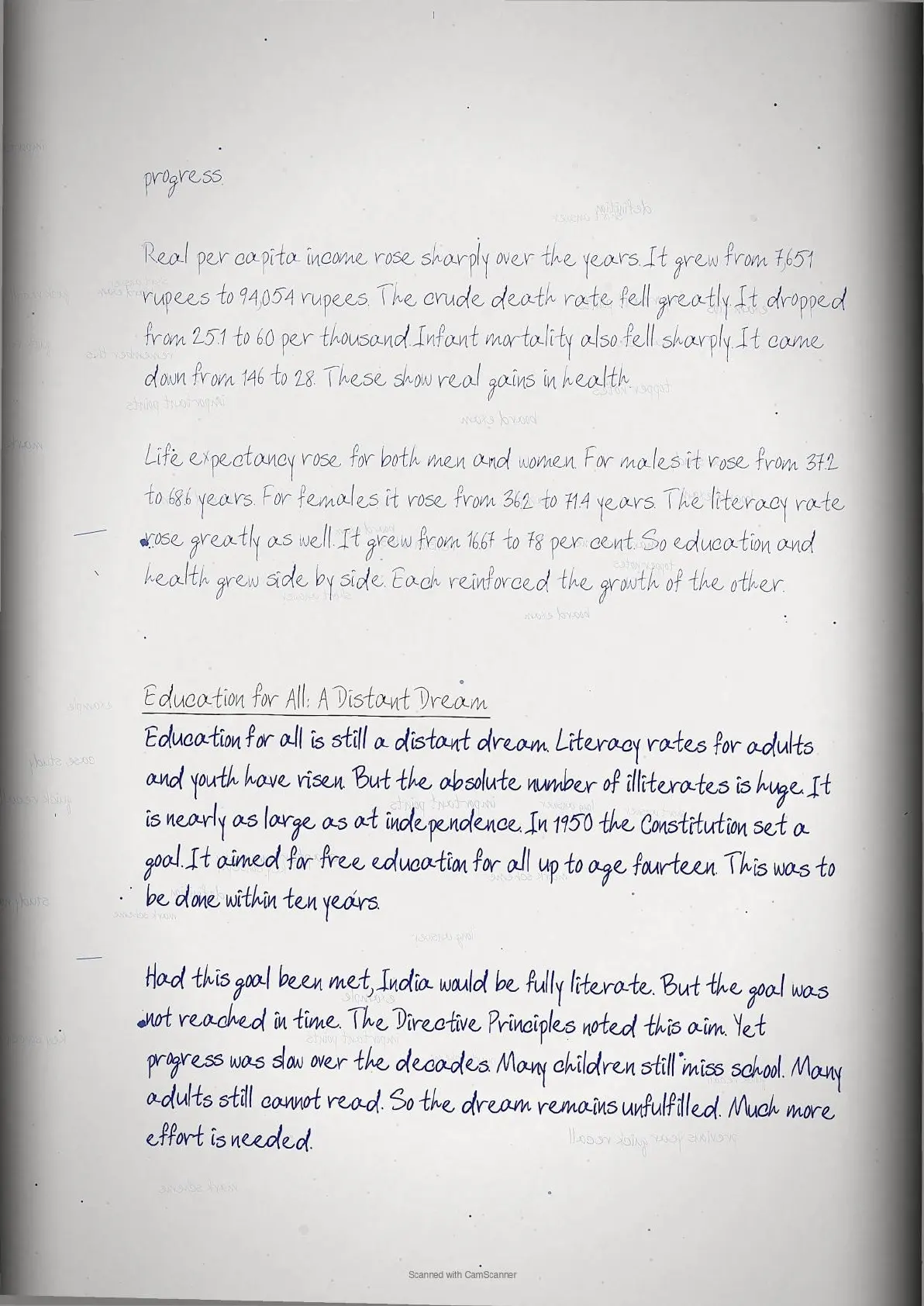
- Educational achievements and future prospects
Key Terms and Ideas in Human Capital Formation in India
These are the terms and ideas the exam asks about most. Learn each one so you can define it and use it in your answers.
| Term / Idea | What it means |
|---|---|
| Human capital | the skill and knowledge built into people |
| Human resource | the people of a country before training |
| Human development | education and health seen as ends in themselves |
| Physical capital | tangible goods like machines and buildings |
| On-the-job training | skill given to workers inside or outside the firm |
| External benefit | gain to society beyond the owner of human capital |
| Education cess | a two per cent charge on union taxes for schools |
| Knowledge economy | an economy where knowledge drives growth |
How Collegedunia's Handwritten Notes Help You Revise Human Capital Formation in India
These notes are made for the night before the exam. They keep the facts short and easy to scan. Collegedunia maps every point to the 2026-27 NCERT.
- Clear handwriting: each topic is written in neat, easy-to-read handwriting.
- Boxed key terms: the main terms and definitions are boxed by hand for fast recall.
- Diagrams and tables: simple hand-drawn tables and charts make ideas clear.
- Colour-coded headings: new sub-topics stand out, so you find any section in seconds.
Human Capital Formation in India Self-Assessment Quiz
Try these quick questions after you read the notes. Tap each question to check your answer. They cover the points CBSE asks most often.
Which of these is NOT a source of human capital formation?
(a) education (b) health (c) migration (d) devaluation
Answer: (d) devaluation - the five sources are education, health, training, migration and information
Human capital differs from physical capital because it is
(a) tangible (b) separable from its owner (c) inseparable from its owner (d) fully mobile
Answer: (c) inseparable from its owner - the knowledge stays with the person
The Education Commission recommended education spending of at least
(a) 2% of GDP (b) 4% of GDP (c) 6% of GDP (d) 10% of GDP
Answer: (c) 6% of GDP - to make a noticeable rate of growth in education
The Right to Education Act was passed in the year
(a) 1999 (b) 2005 (c) 2009 (d) 2016
Answer: (c) 2009 - it made free education a right for children aged 6 to 14
Human development treats education and health as
(a) means to output (b) ends in themselves (c) private goods only (d) unproductive
Answer: (b) ends in themselves - people have a right to be literate and healthy
How to Use These Handwritten Notes for Class 11 Economics Revision
Use these class 11 economics handwritten notes in two passes. Read them slowly once for the full chapter. Then, near the exam, read only the boxes and key terms for a fast recall.
- Read the notes once with the NCERT chapter open beside you.
- Say each key term and idea in your own words.
- Practise one long-answer question from a past paper.
- On the last day, revise only the key terms and the boxes.
Class 11 Economics Handwritten Notes for All Chapters
The table below links the class 11 economics handwritten notes for every chapter. Use it to jump to any other chapter's notes.
Human Capital Formation in India Class 11 Economics Handwritten Notes FAQs
Ques. Where can I download Human Capital Formation in India Class 11 Economics Handwritten Notes PDF?
Ans. You can download the Human Capital Formation in India Class 11 Economics Handwritten Notes PDF directly from this page. Both the Normal and HD versions are free.
Ques. Are these handwritten notes aligned with the 2026-27 NCERT?
Ans. Yes. These notes follow the current 2026-27 syllabus for Class 11 Economics. Students often ask about the difference between human capital and human development.
Ques. How many pages is the Class 11 Economics Human Capital Formation in India Handwritten Notes PDF?
Ans. The notes run about 22 pages. They cover the full chapter with key terms, hand-drawn boxes, and a short self-assessment quiz.
Ques. What is the main idea of the 11th standard Economics chapter Human Capital Formation in India?
Ans. Human capital treats education and health as means to raise labour productivity, so people are a means to the end of higher output. Human development sees education and health as important in themselves, because every person has a right to be literate and to lead a long and healthy life.
Ques. Are these Human Capital Formation in India notes enough for the CBSE Class 11 exam?
Ans. Yes, for revision. The Collegedunia handwritten notes cover every key point and exam term. Read them with the NCERT chapter and practise past questions.



Comments