




NCERT Handwritten Notes for Class 11 Legal Studies Chapter 1 Concept of State help students revise law, society, State, Article 12, origin theories and welfare state roles for the 2026-27 session.
- Resource: topper-style handwritten revision notes PDF for Legal Studies Concept of State.
- Chapter focus: four elements of State, Article 12 and theories of origin.
- Revision use: quick answer frames, comparison tables and common mistakes before tests.
Student Feedback: In a Collegedunia survey of 12,460 students, 74% said this chapter became easier after they memorised the four State elements first.
Concept of State Handwritten Notes Overview
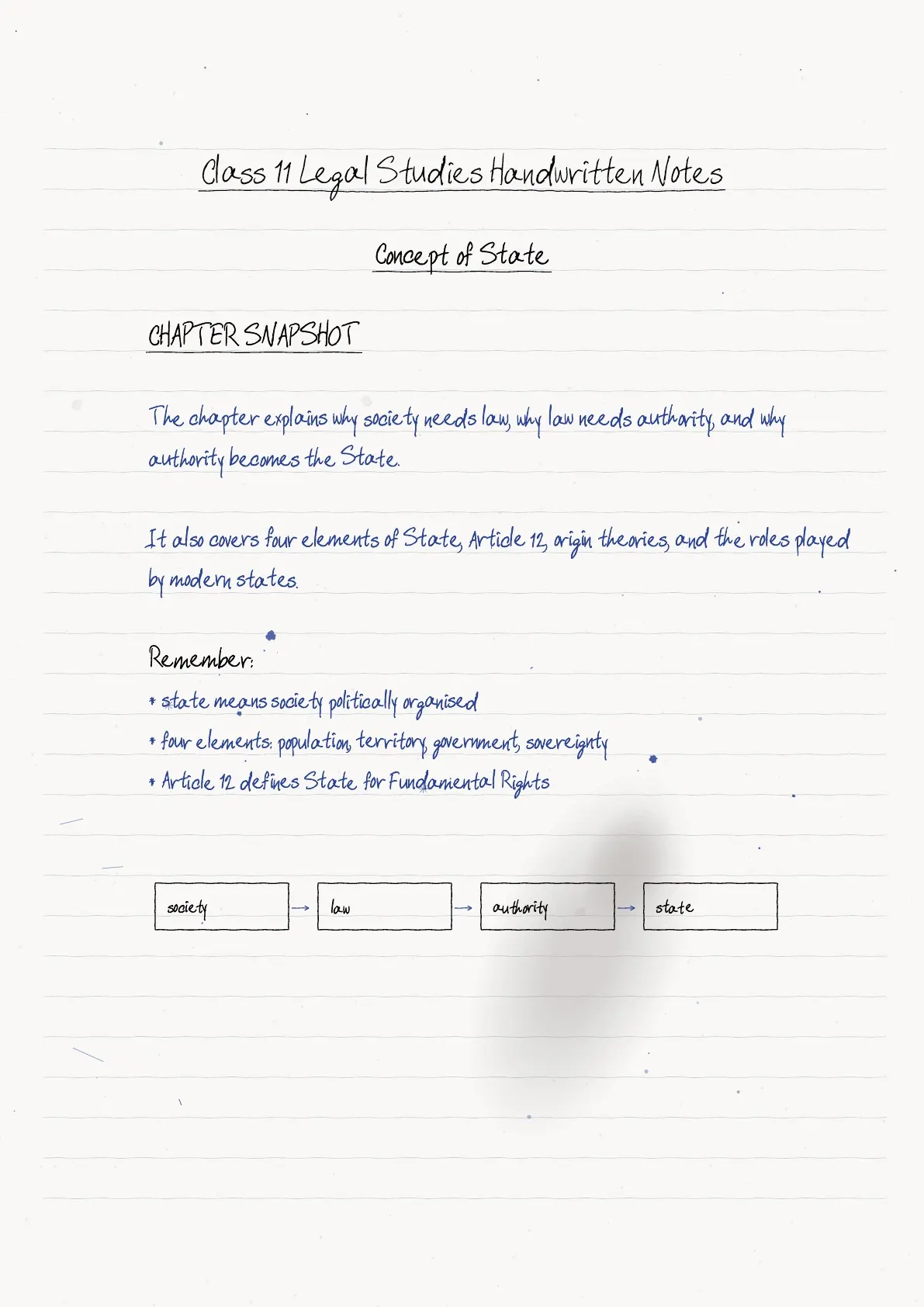
The Concept of State handwritten notes turn a theory-heavy Legal Studies chapter into exam-ready points. Students can revise the link between society, law and State before moving to definitions, elements and origin theories.
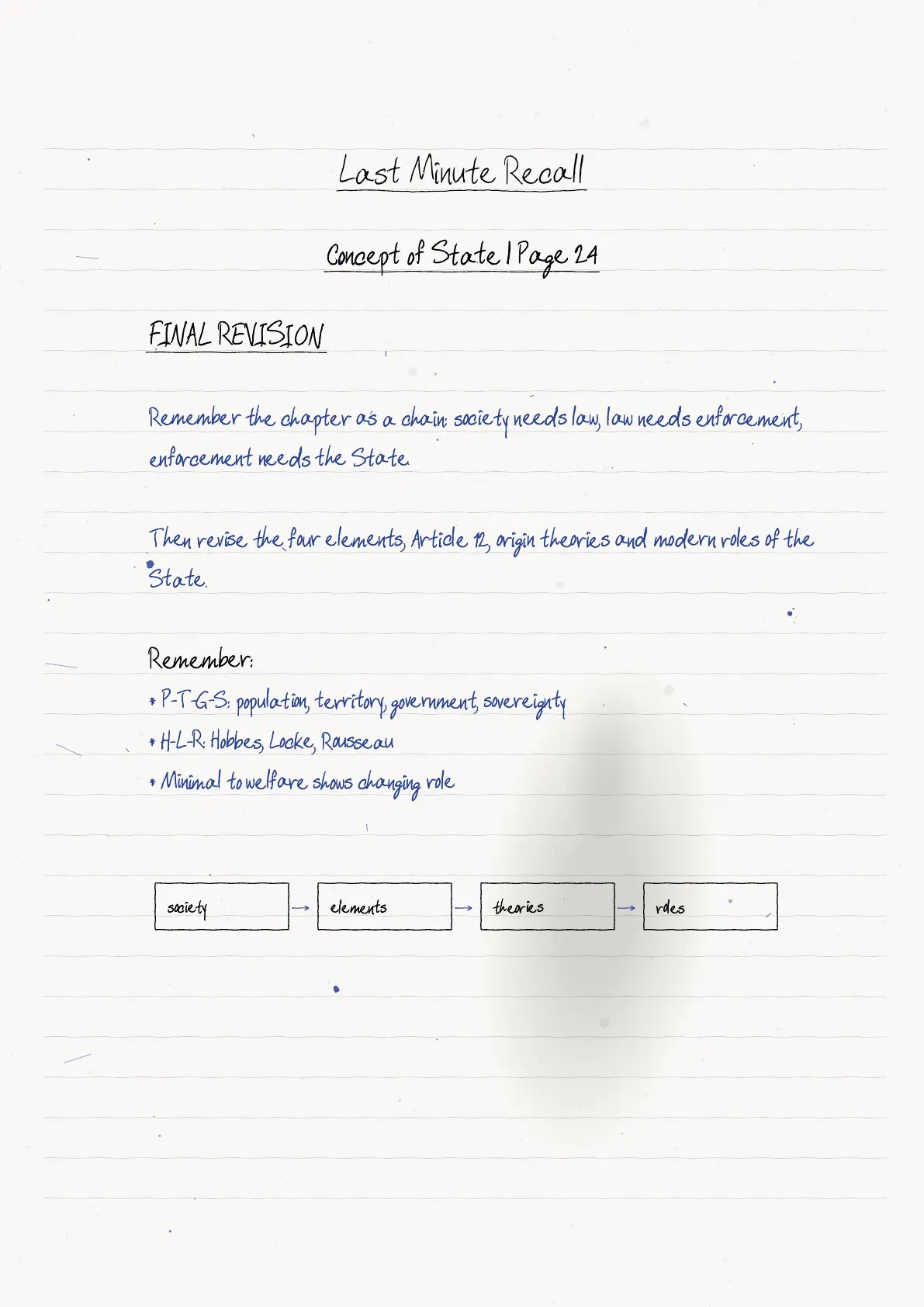
- Best starting point: learn population, territory, government and sovereignty.
- Constitution angle: Article 12 explains State for Fundamental Rights.
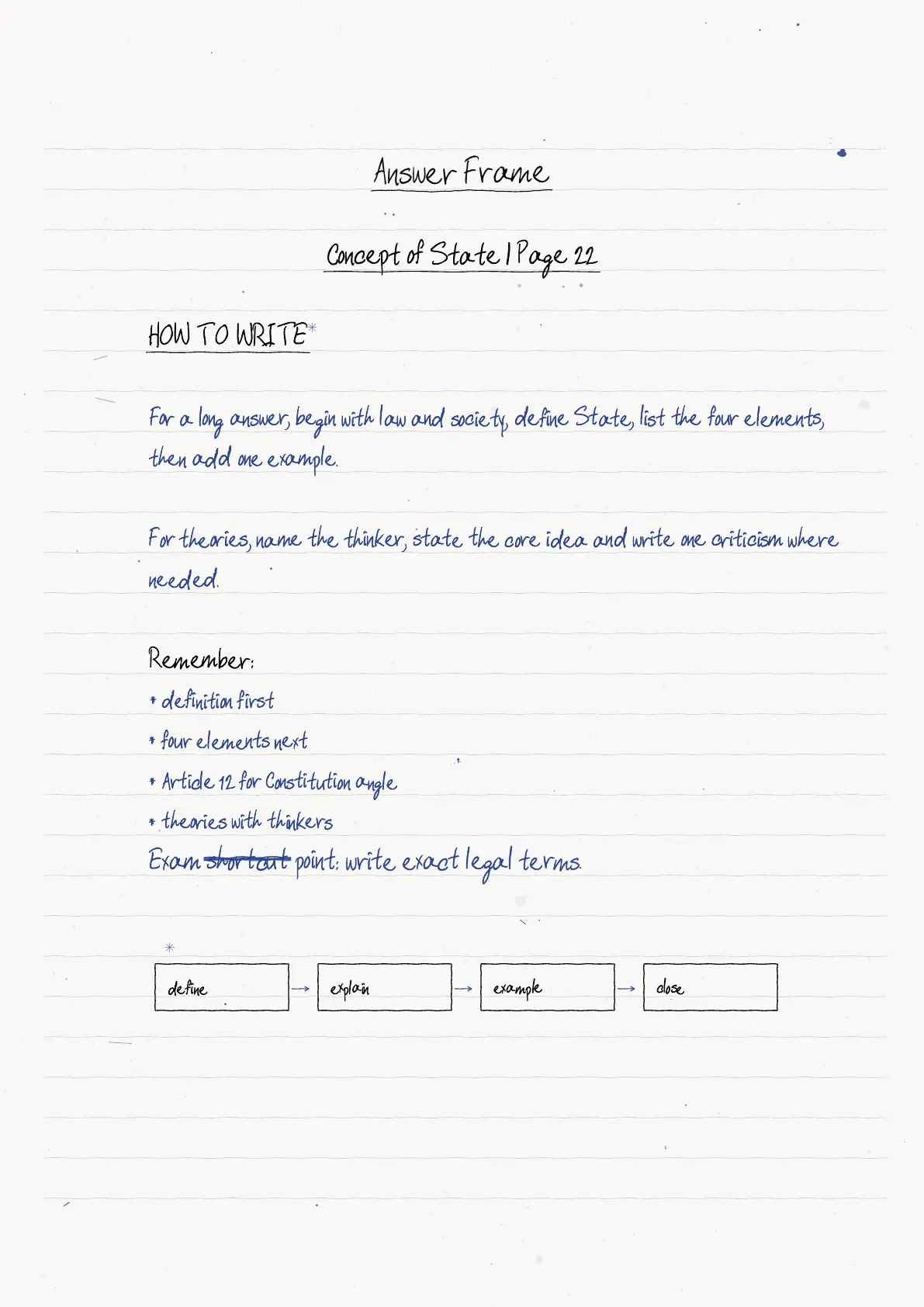
- Long-answer route: define State, add elements, then use examples.
Law, Society and Need for State in Concept of State
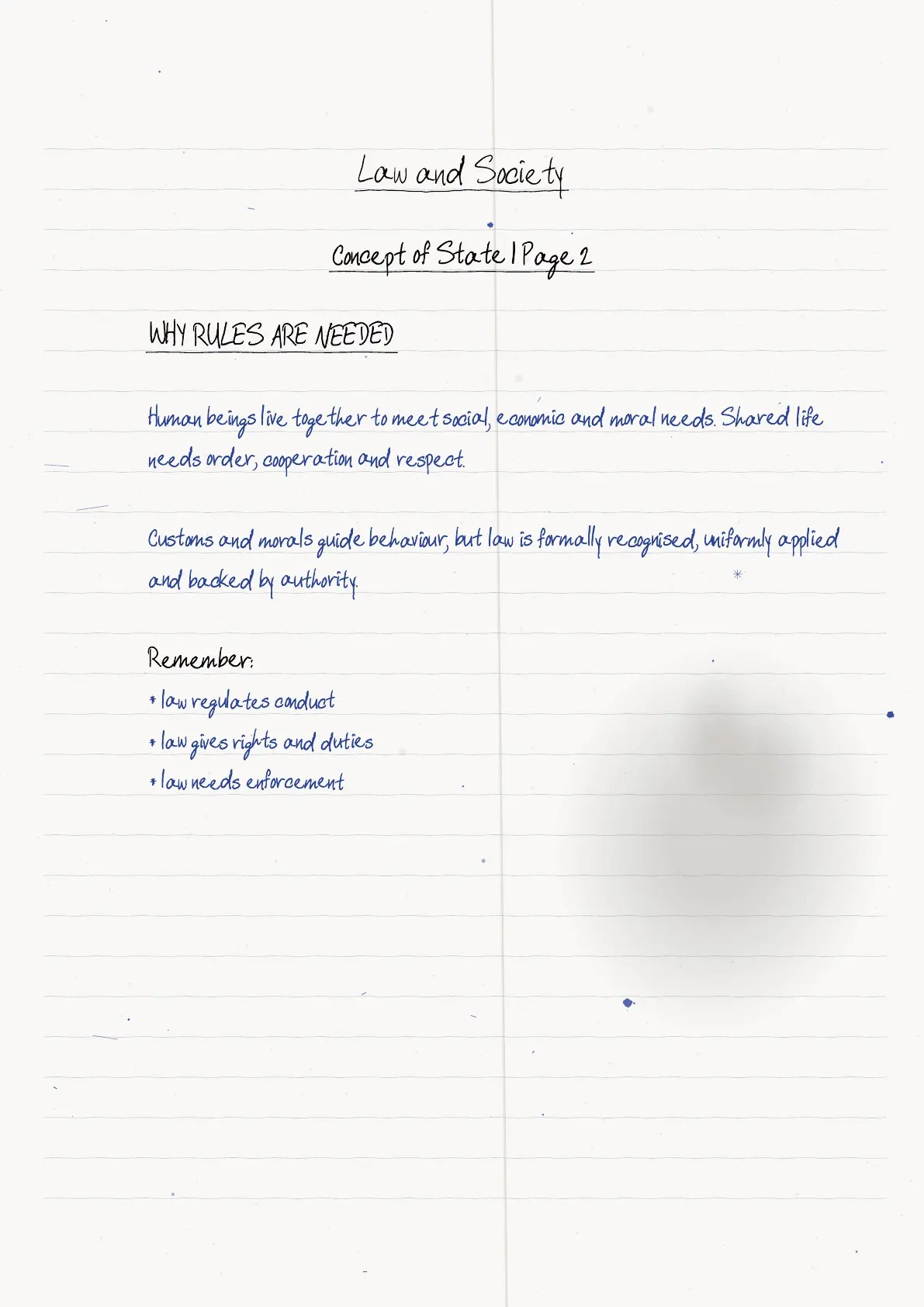
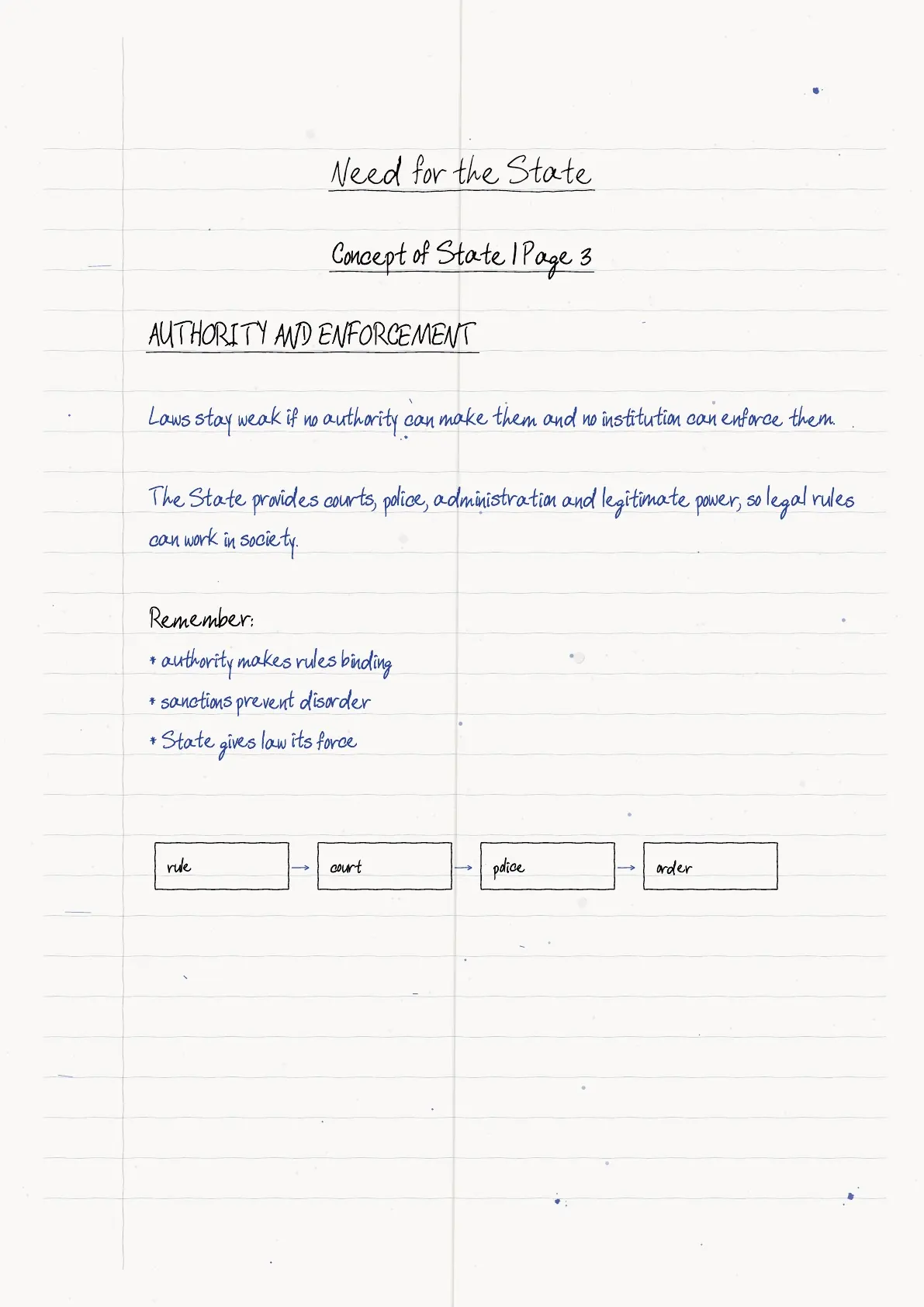
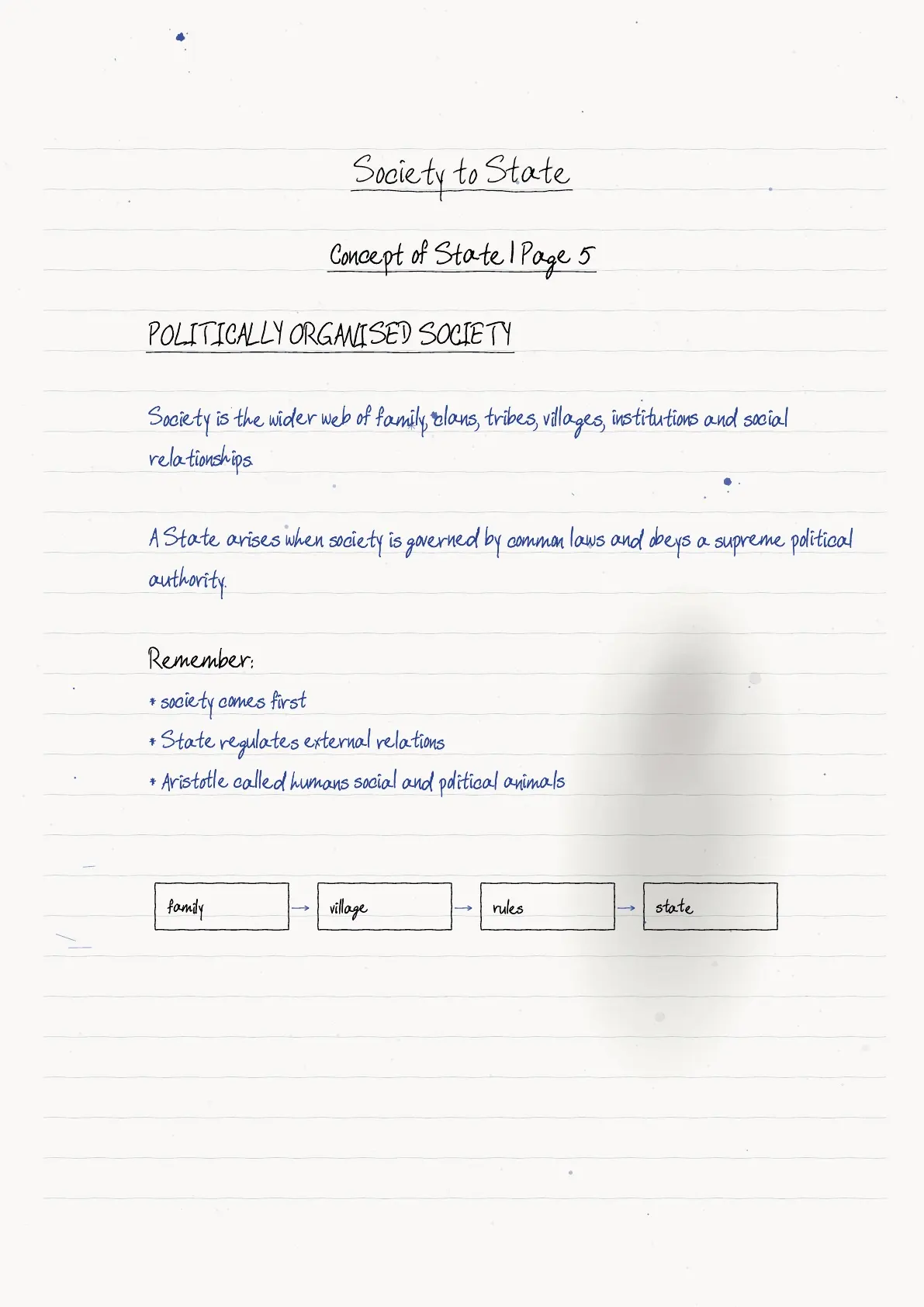
Society develops rules to keep order, cooperation and peace. Once those rules become formally recognised and enforceable, they become law. The State gives law binding force through authority and enforcement.
| Idea | Plain meaning | Exam use |
|---|---|---|
| Society | People living together through social relationships. | Use it as the starting point of the chapter. |
| Law | Formal rules backed by authority and sanctions. | Show why customs alone are not enough. |
| State | Society politically organised through law and authority. | Connect it to courts, police and government. |
Concept of State Video for Class 11 Legal Studies
Source: Magnet Brains on YouTube
Four Elements of State in Legal Studies
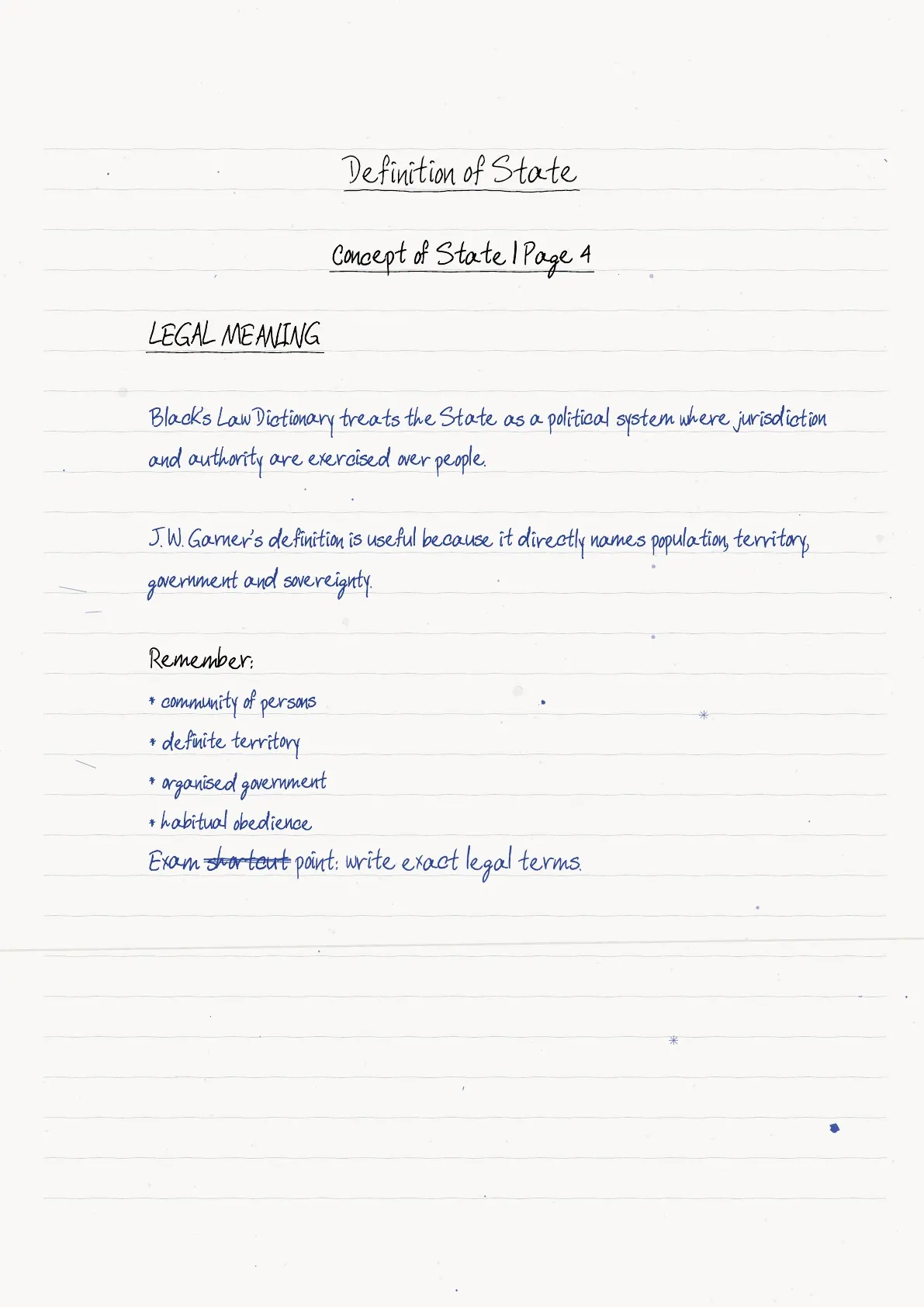
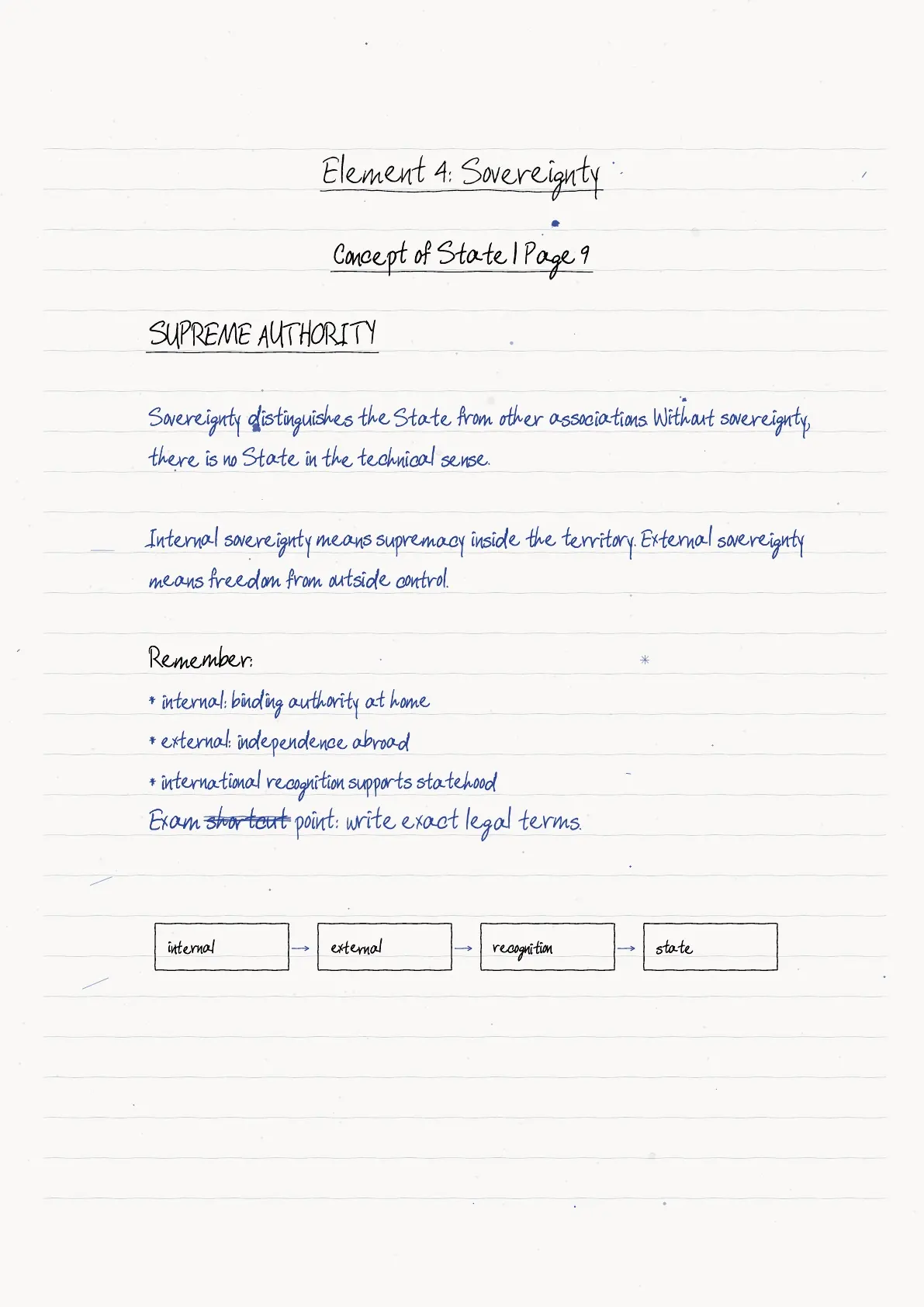
Garner's definition is useful because it carries all four State elements. Population gives the human base. Territory gives physical identity. Government acts for the State. Sovereignty gives supreme authority.
| Element | Meaning | One-line recall |
|---|---|---|
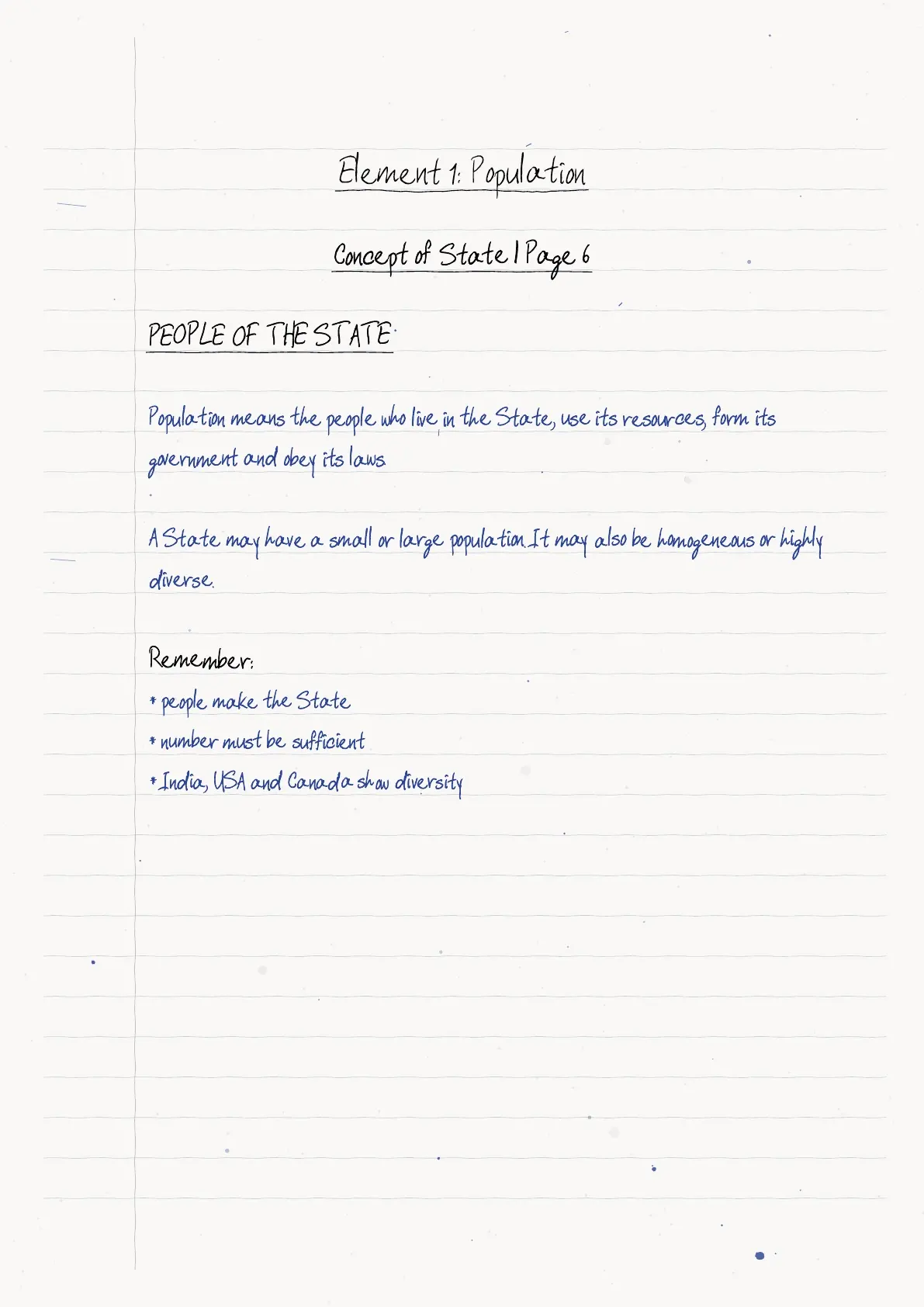
| Population | People living in the State. | No people, no State. |
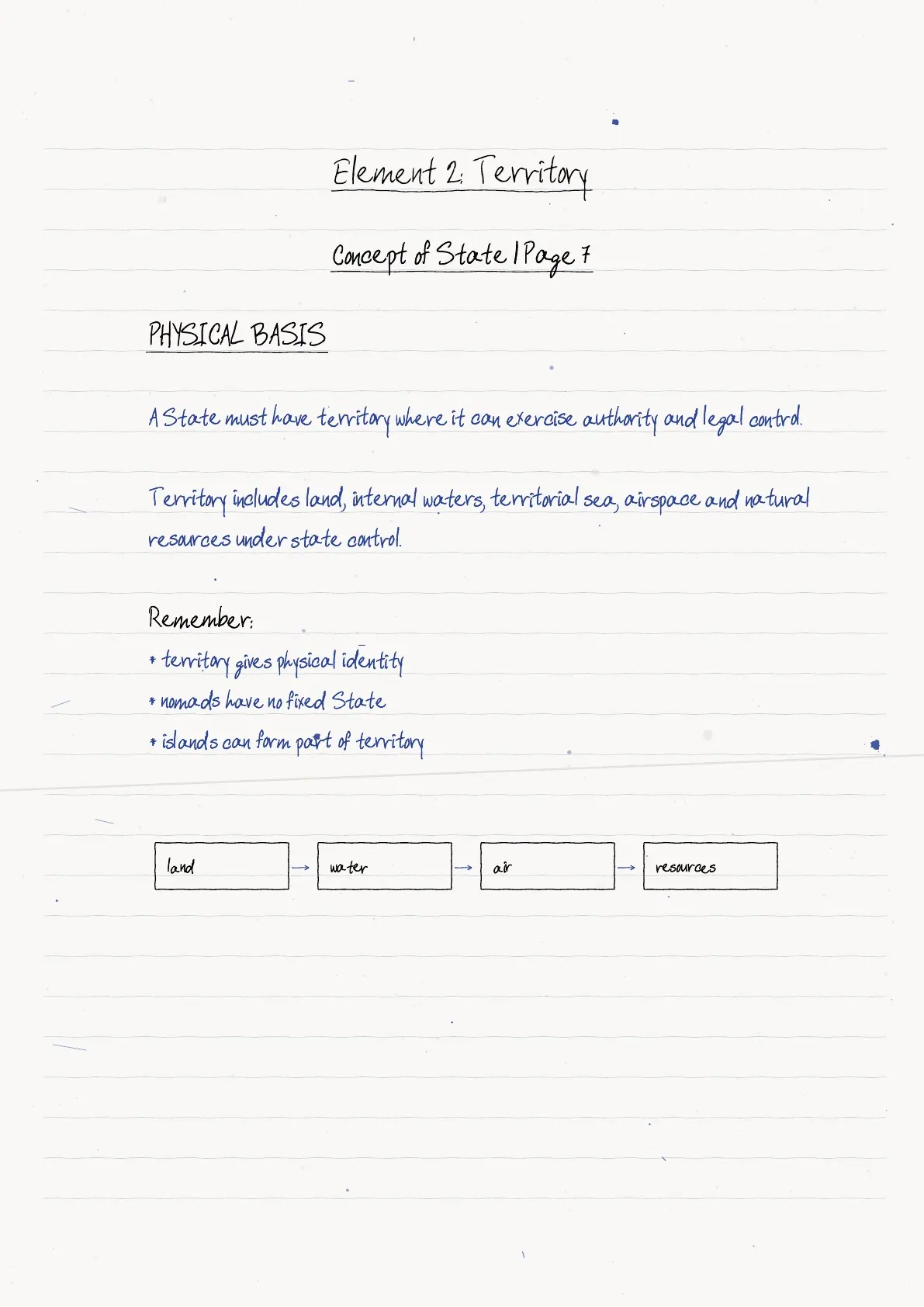
| Territory | Land, water, airspace and resources under control. | No fixed territory, no modern State. |
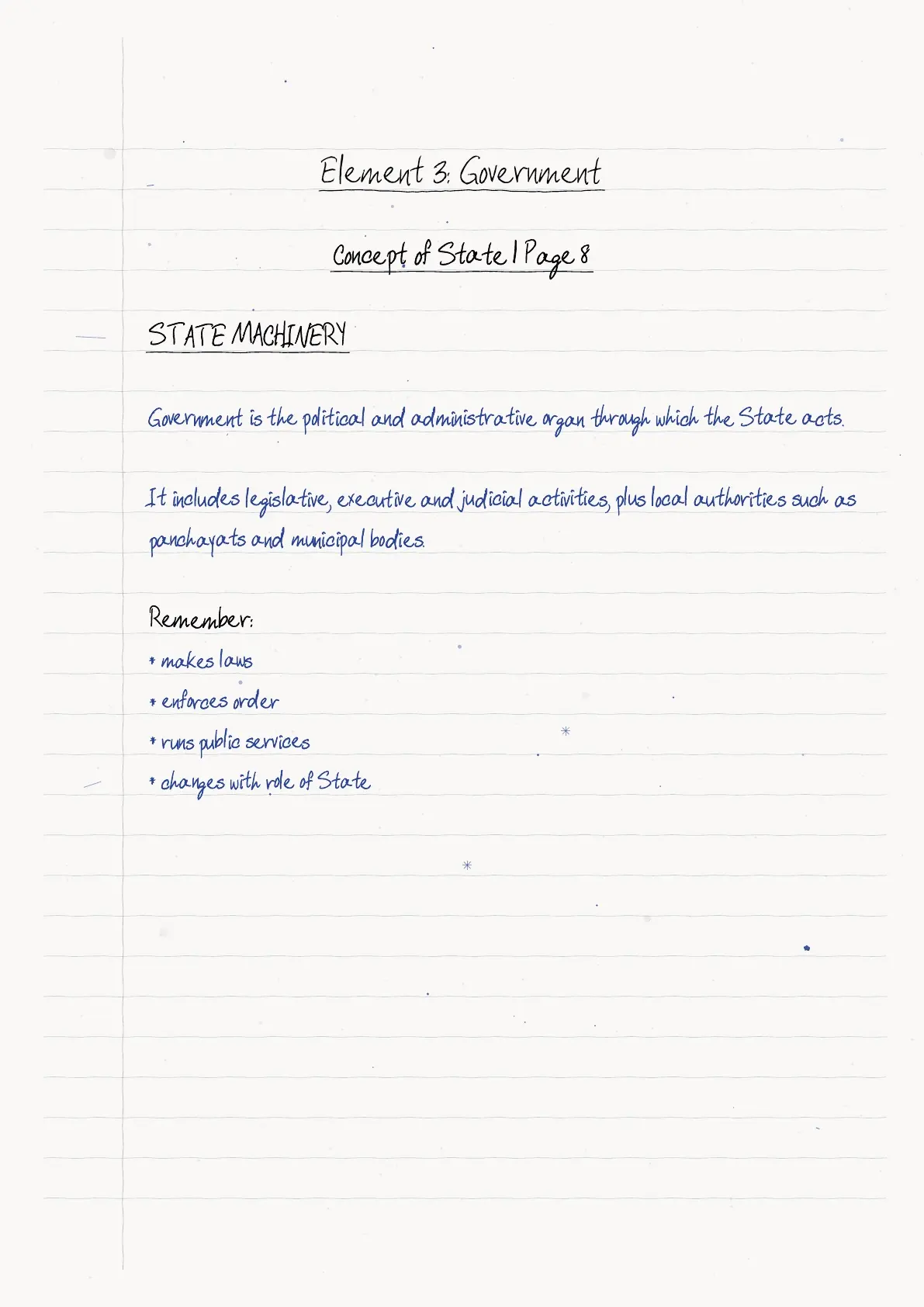
| Government | Political and administrative machinery. | Government acts for the State. |
| Sovereignty | Internal supremacy and external independence. | This separates State from other associations. |
Article 12 and State Government Difference
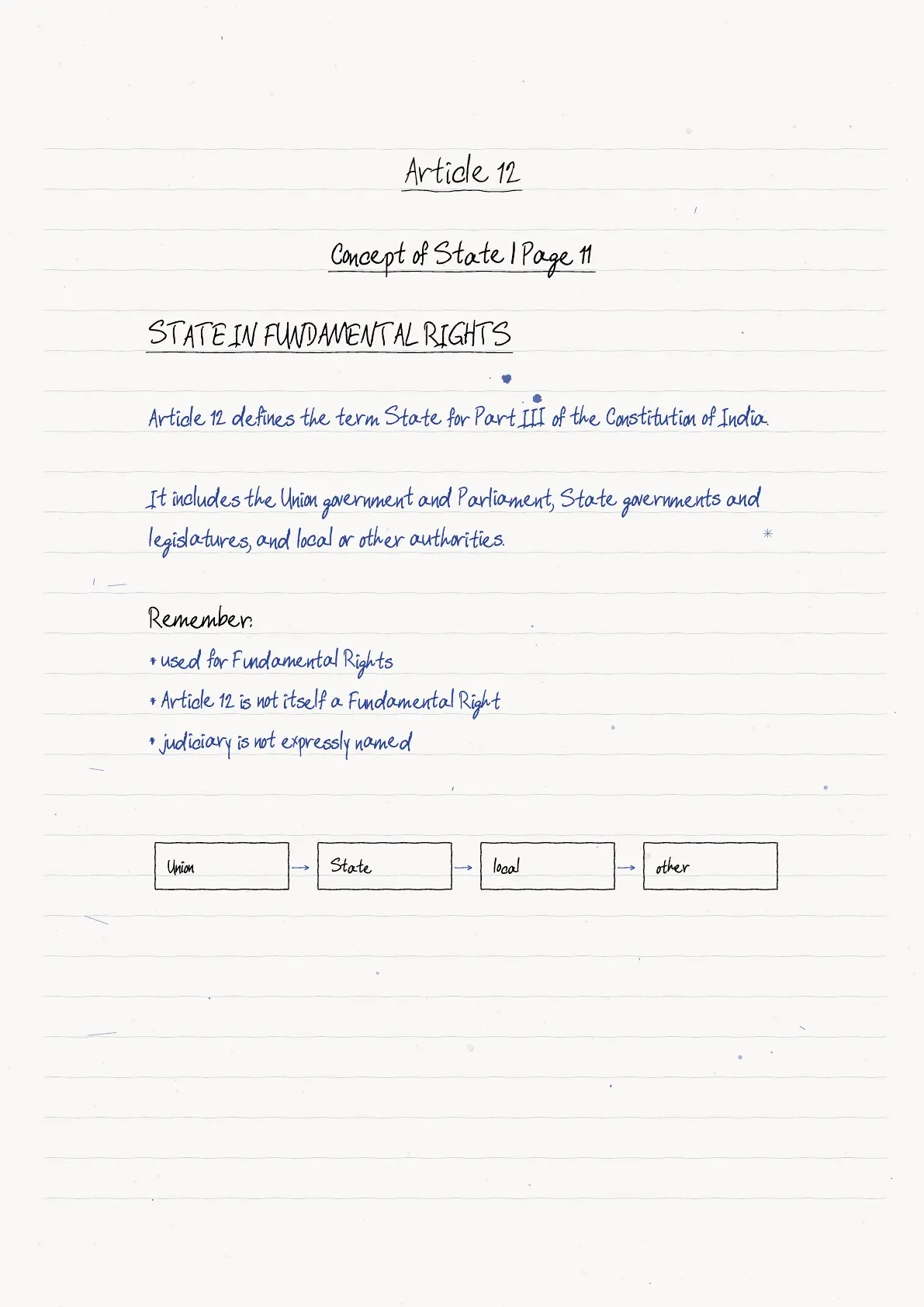
Article 12 defines State for Part III of the Indian Constitution. It includes the Union government and Parliament, State governments and legislatures, plus local or other authorities.
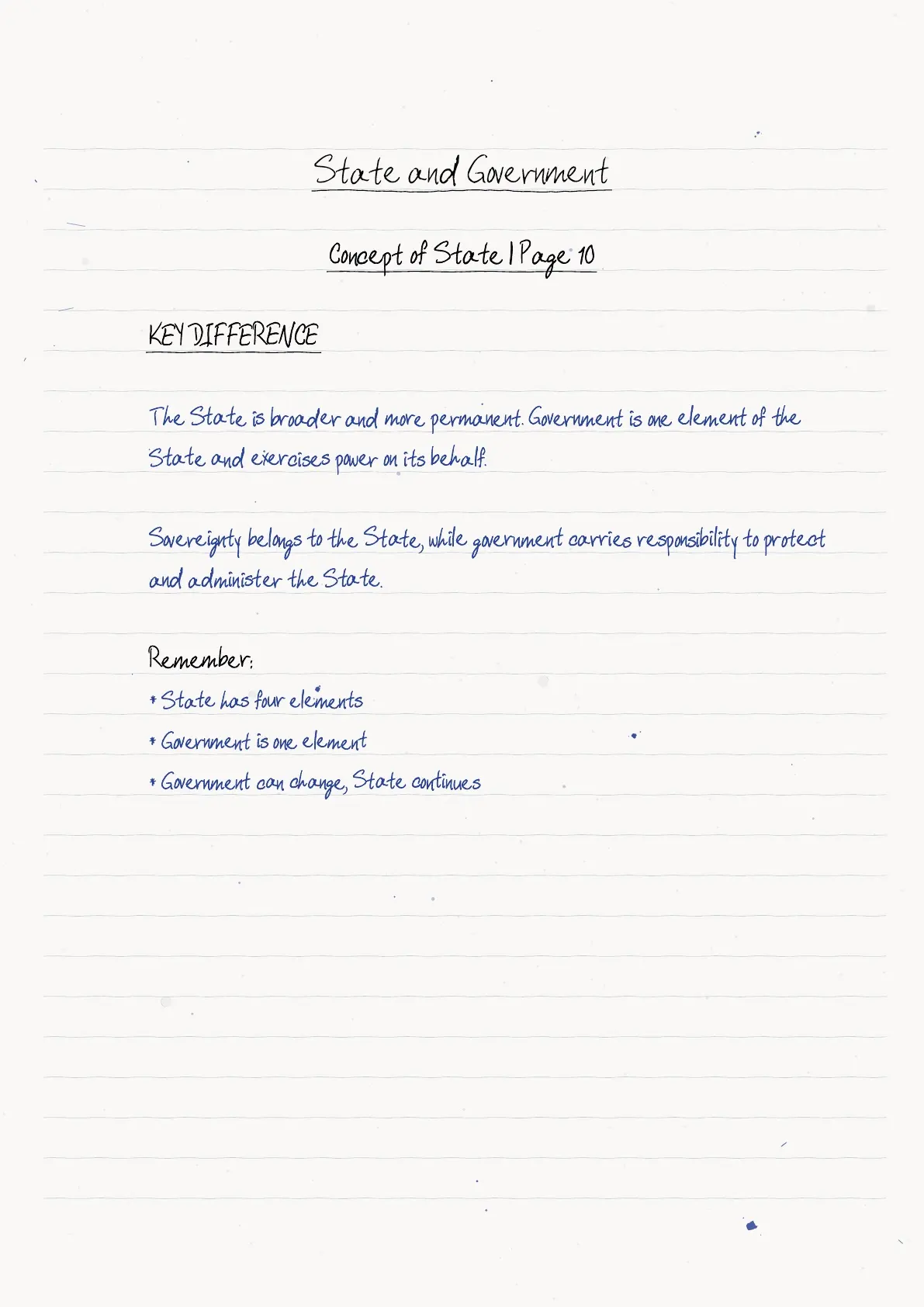
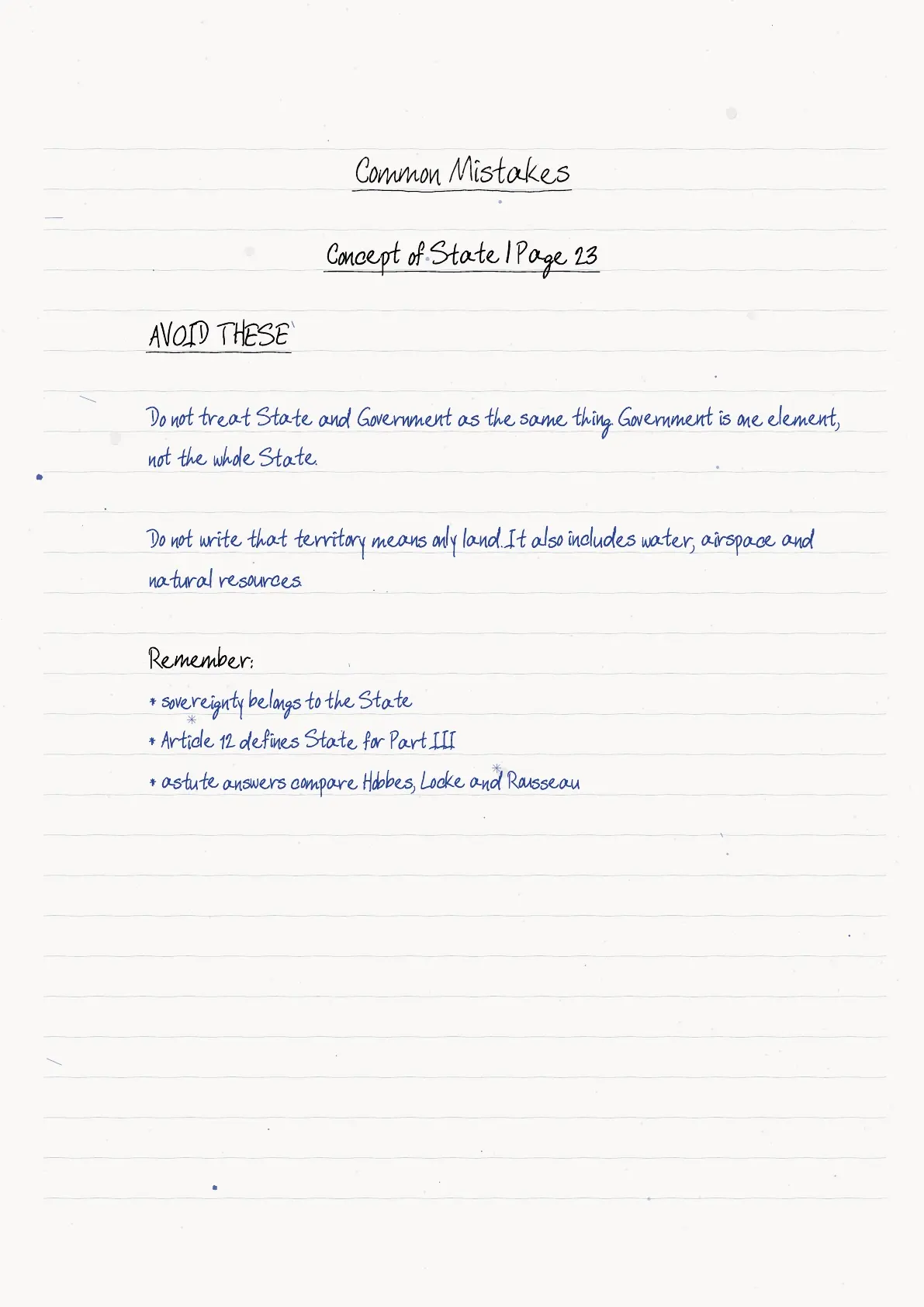
Government is only one element of the State. The State is wider, more permanent and sovereign.
| Point | State | Government |
|---|---|---|
| Status | Broader political entity. | One organ or element of State. |
| Sovereignty | Belongs to the State. | Exercised on behalf of State. |
| Territory | Owns and controls territory. | Protects and administers territory. |
Theories on Origin of State for Class 11 Legal Studies
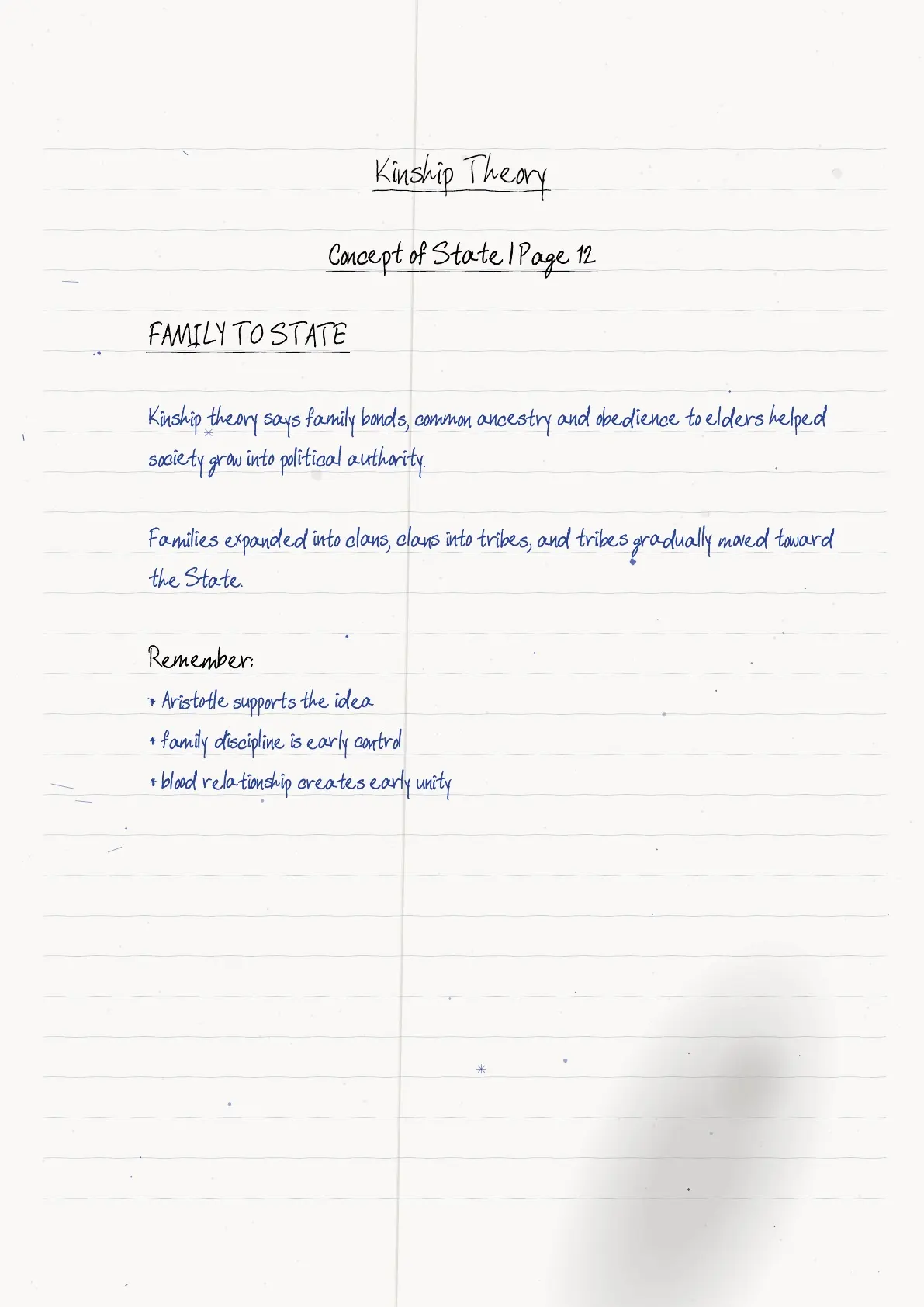
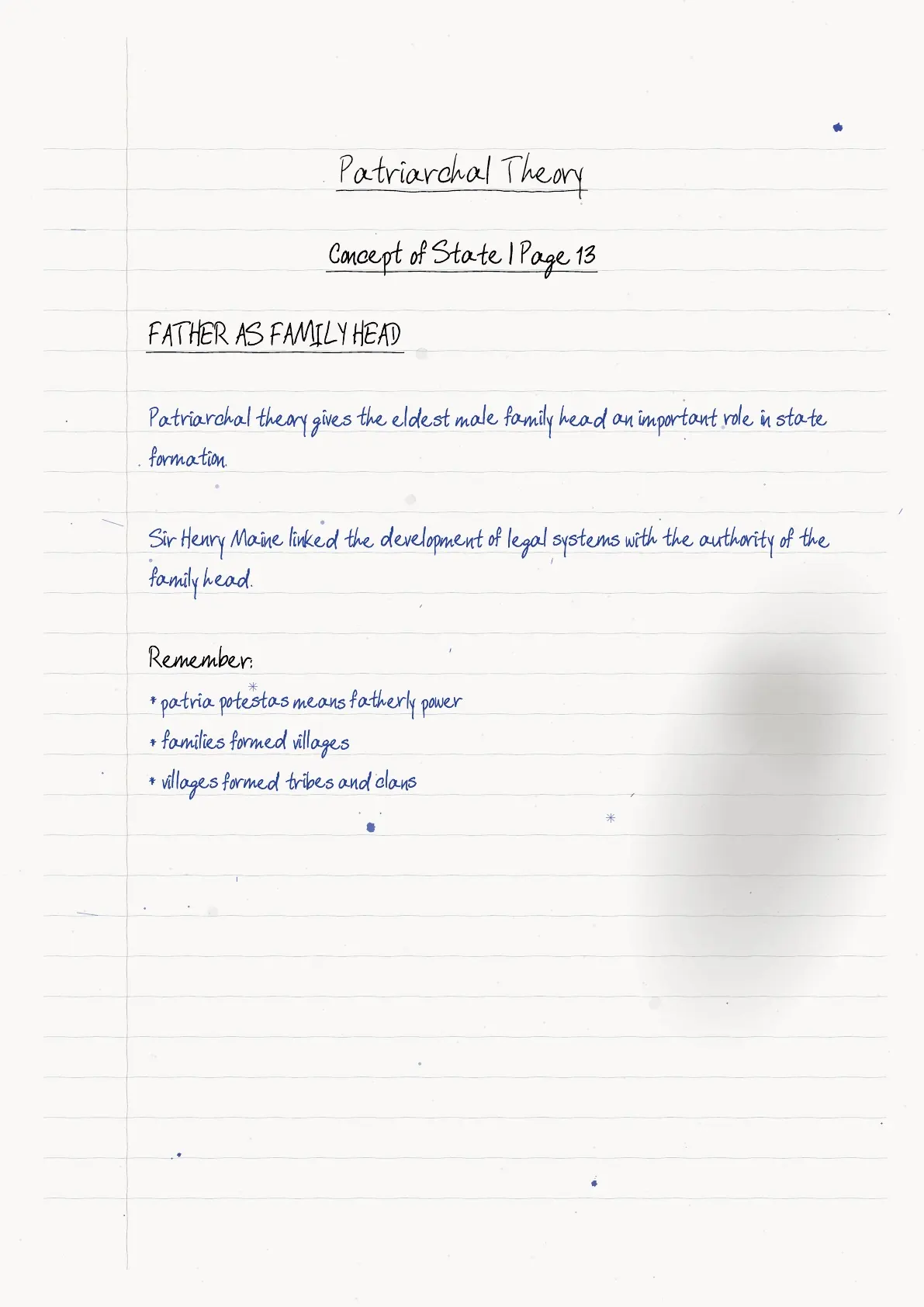
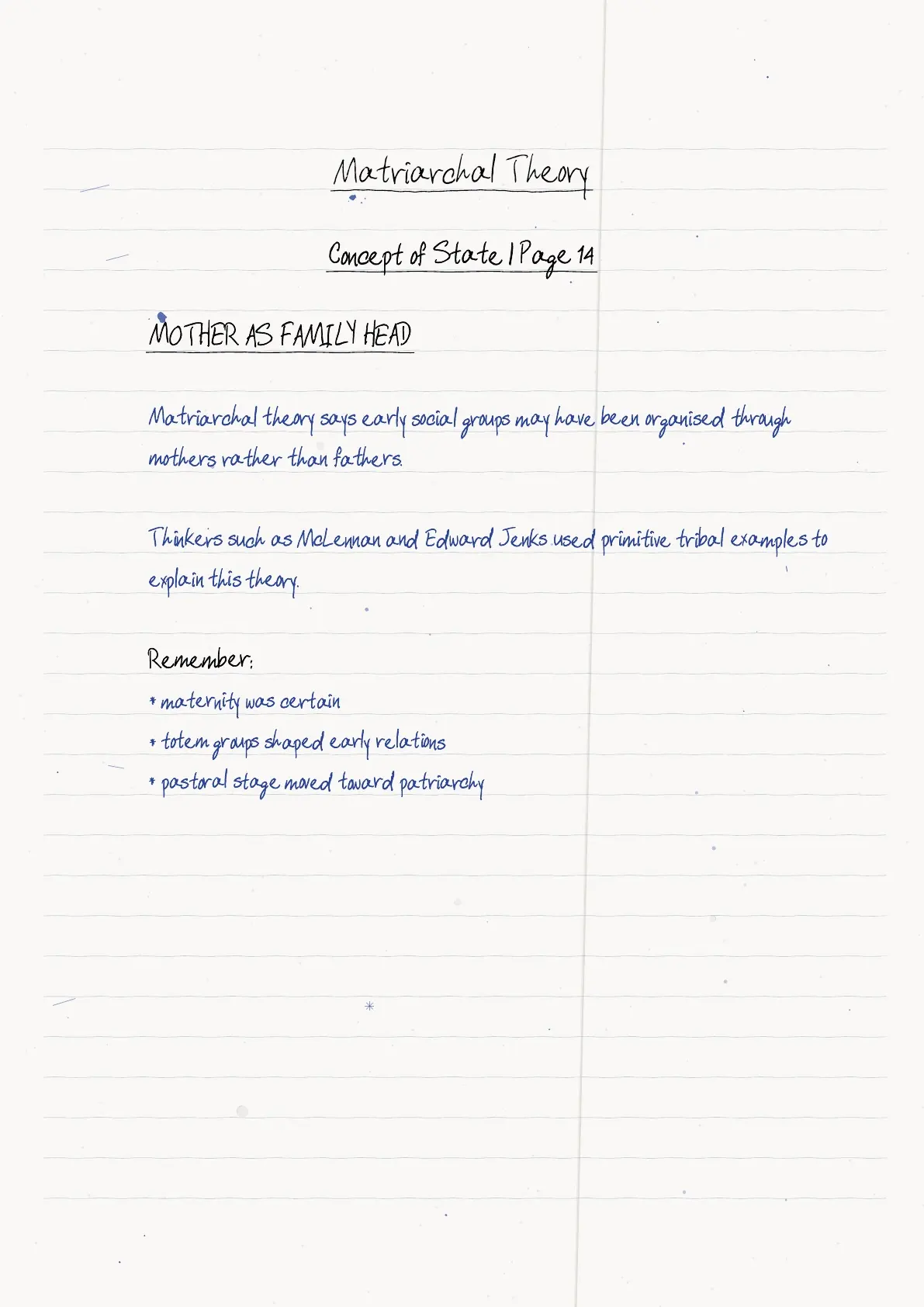
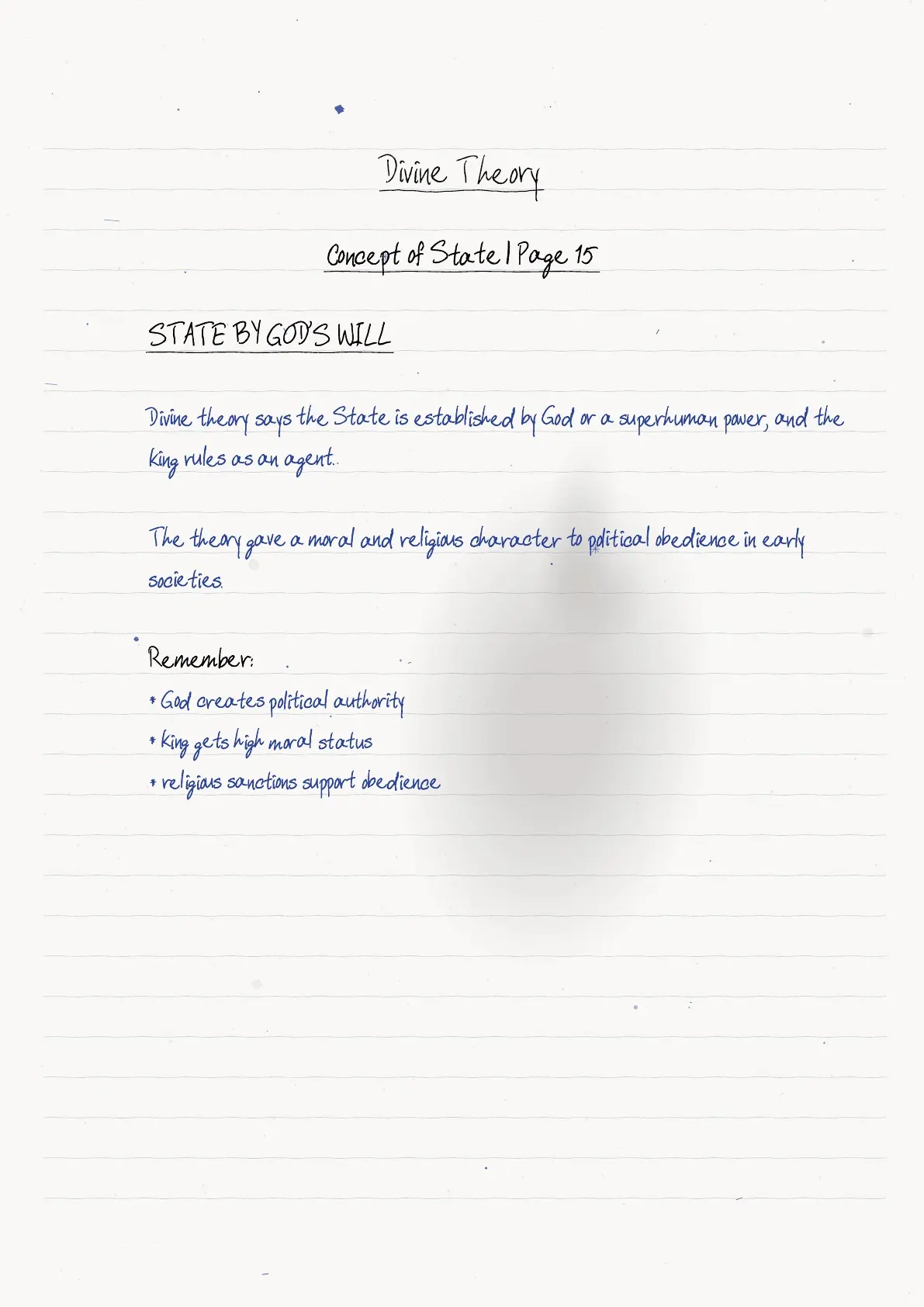
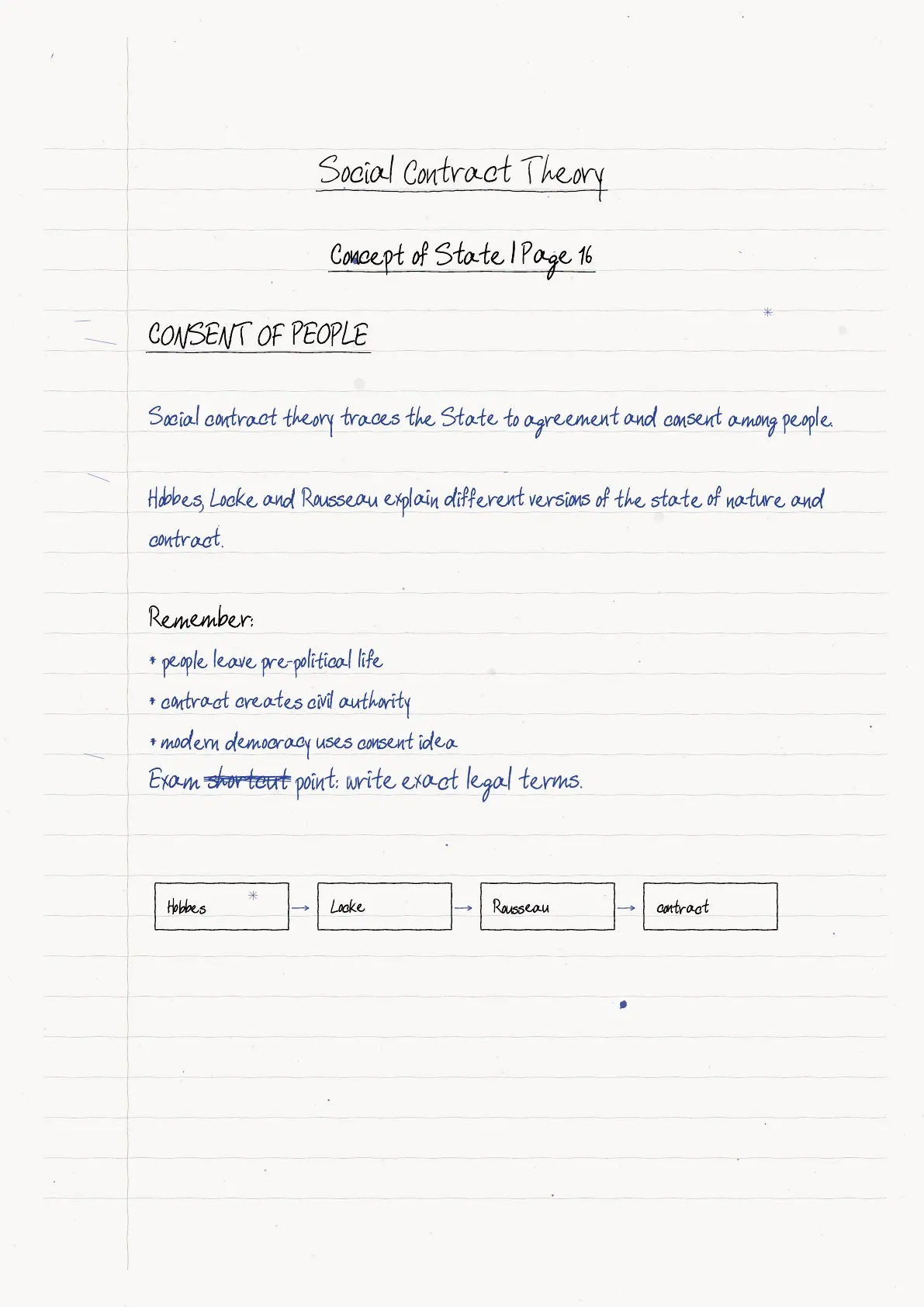
The chapter lists several origin theories. Kinship grows from family bonds. Patriarchal and matriarchal theories focus on family authority. Divine theory gives religious sanction. Social contract theory uses consent.
| Theory | Core idea | Thinker cue |
|---|---|---|
| Kinship | Family, clan and tribe gradually lead to State. | Aristotle and MacIver. |
| Patriarchal | Eldest male family head shapes authority. | Sir Henry Maine. |
| Matriarchal | Mother-centred early groups shape social authority. | McLennan and Edward Jenks. |
| Divine | State and king draw authority from God. | James I and Filmer. |
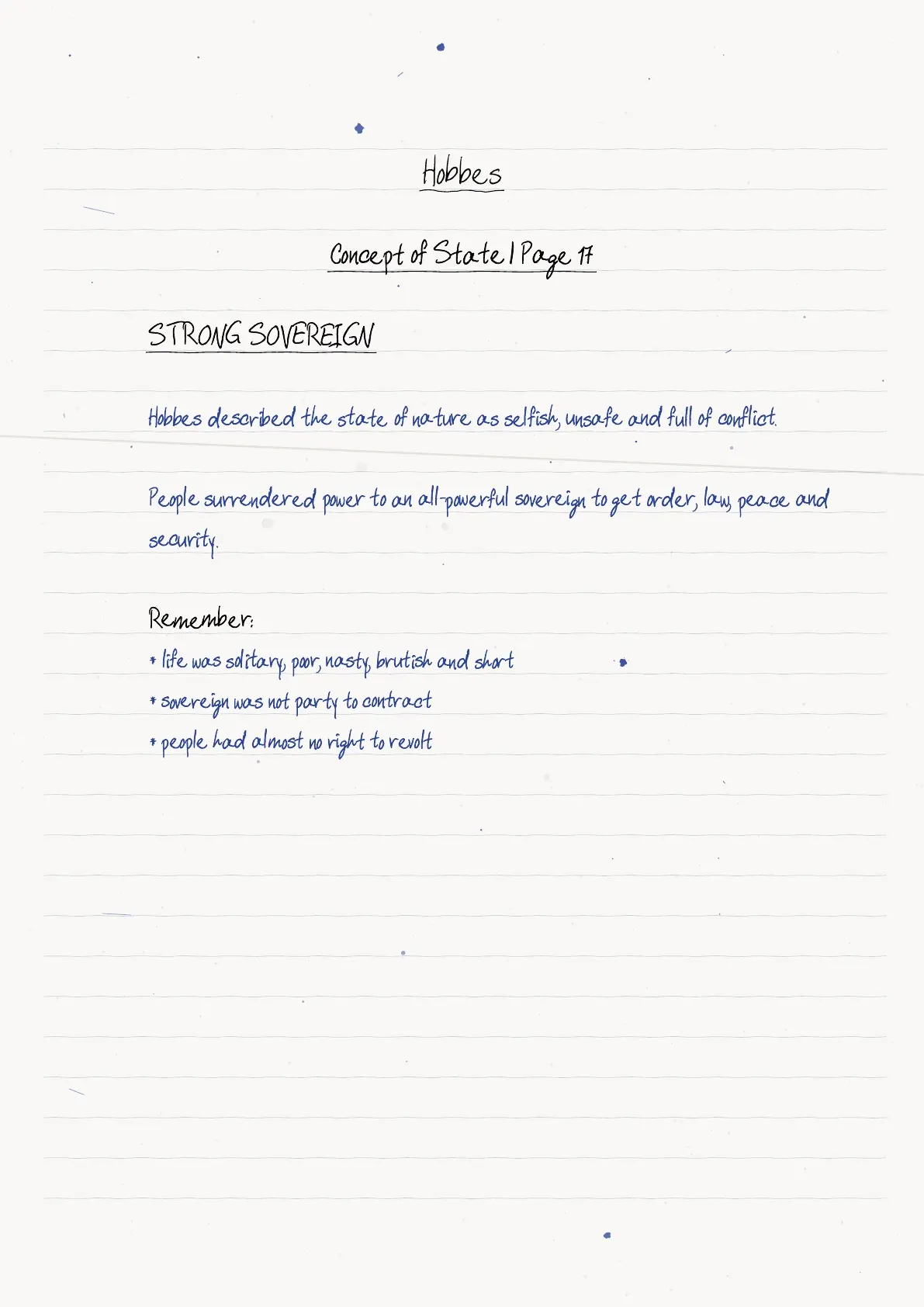
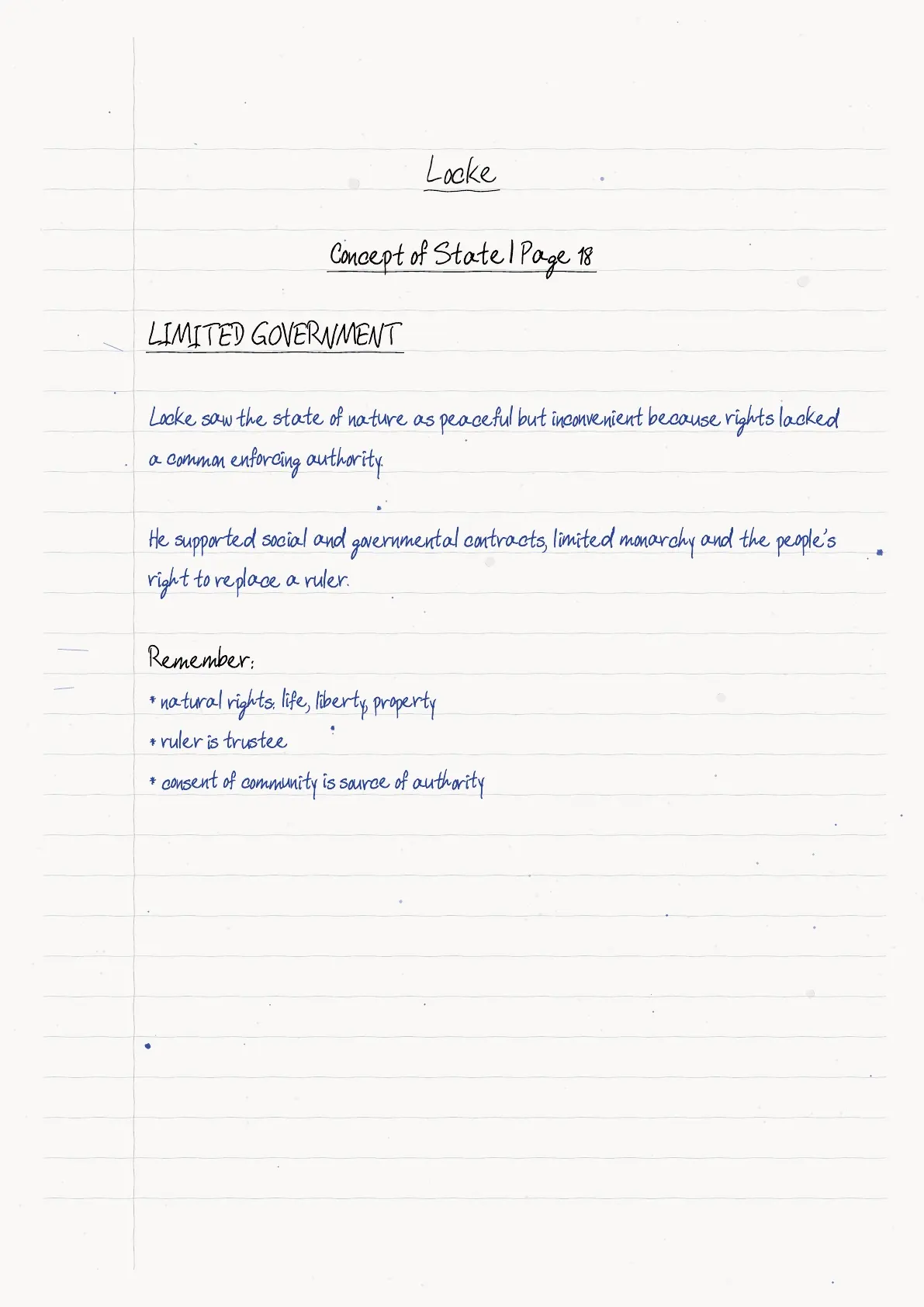
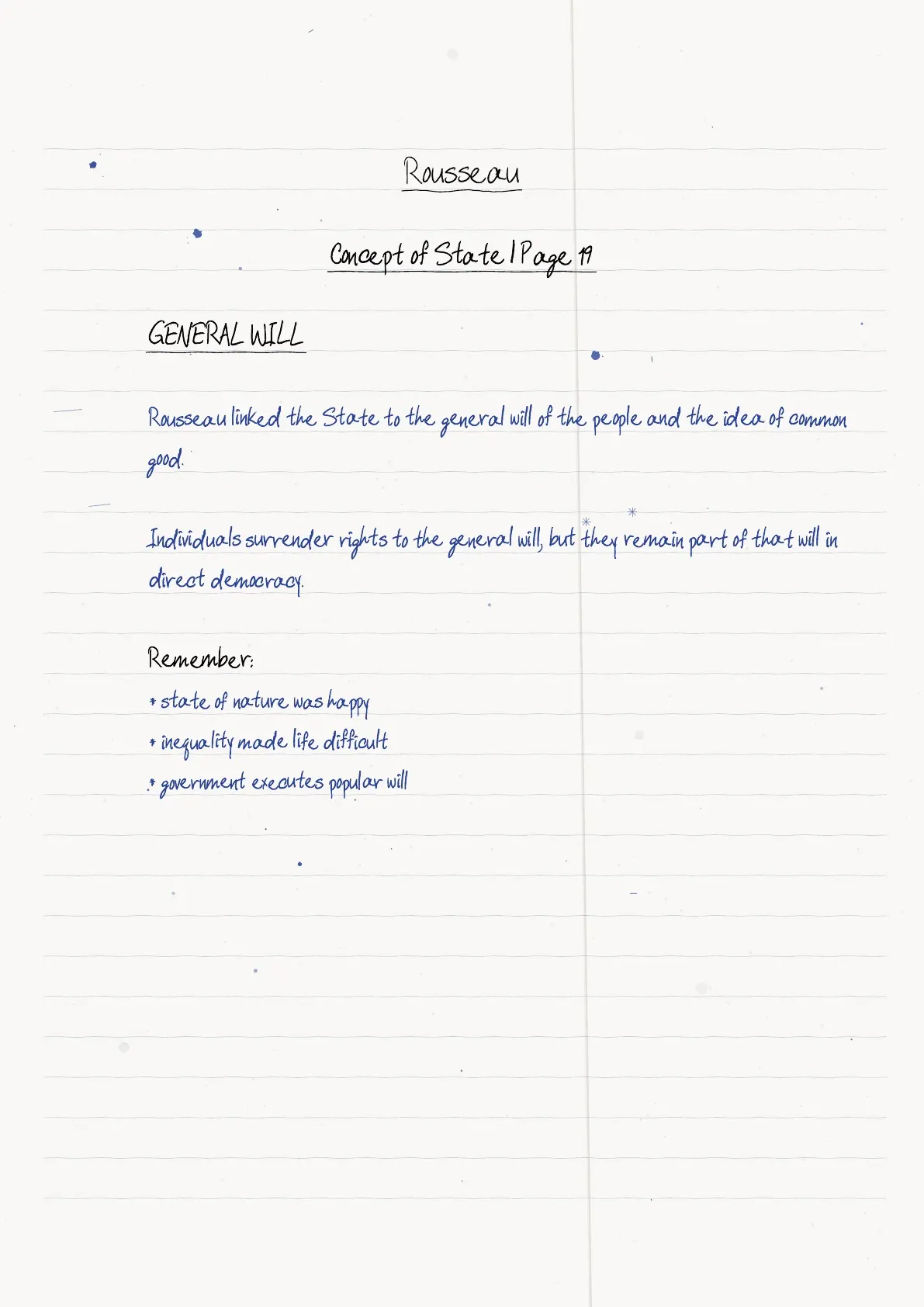
| Social Contract | People agree to create political authority. | Hobbes, Locke and Rousseau. |
Role of Modern Welfare State in Concept of State
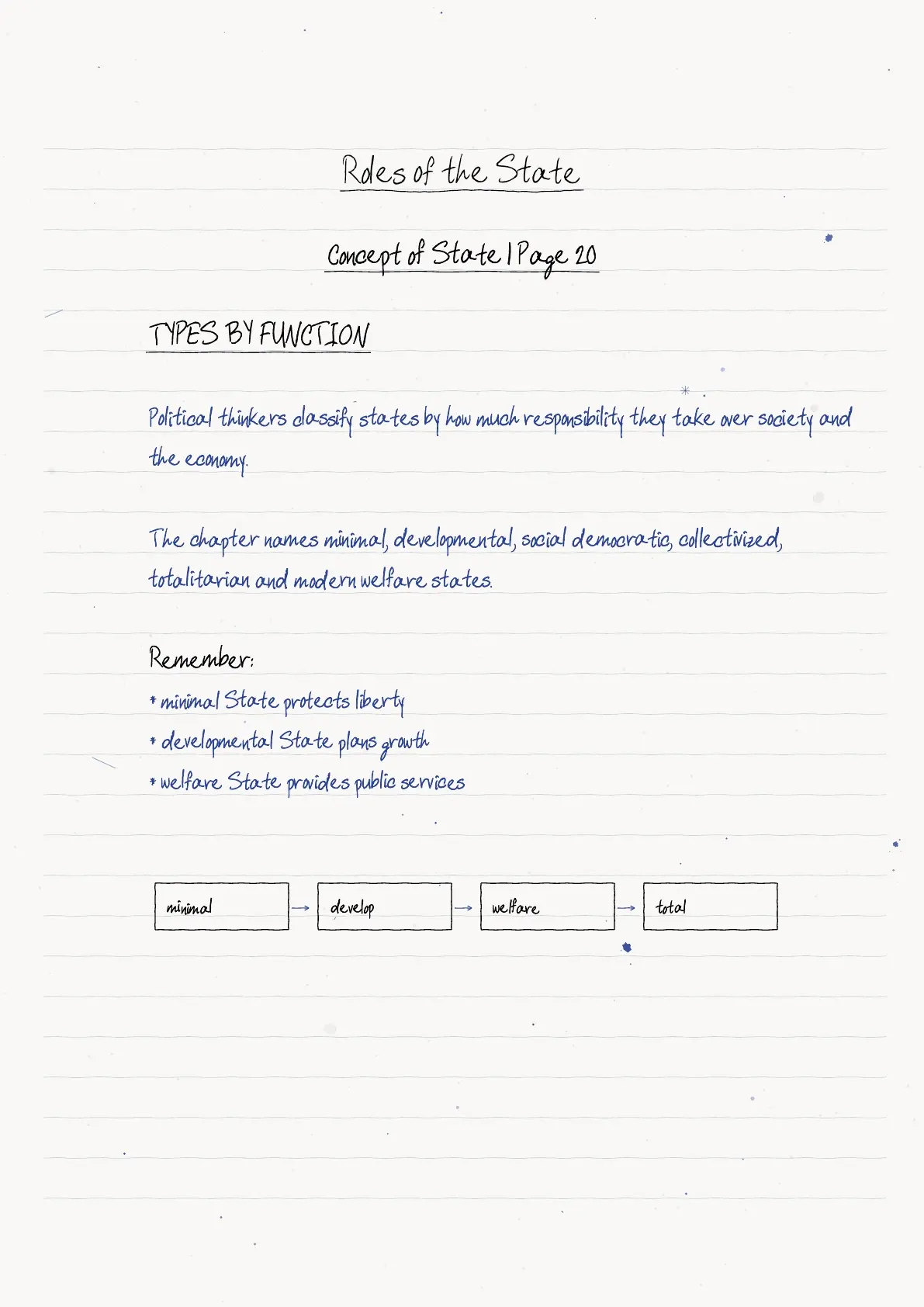
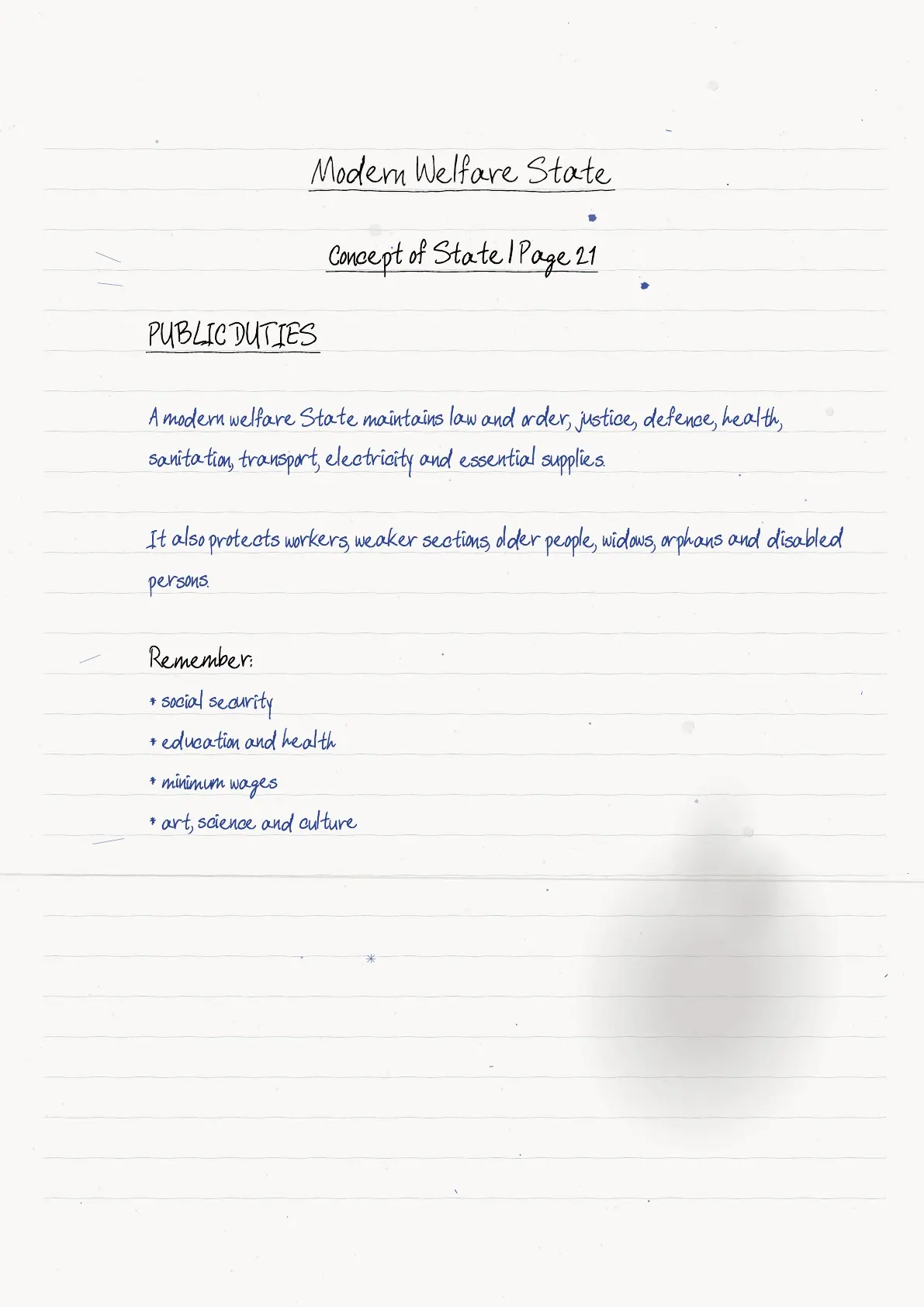
Modern states do much more than protect borders. A welfare State maintains law and order, justice, defence, public health, sanitation, transport, electricity and social security.
- Minimal State: protects liberty and keeps order with limited interference.
- Developmental State: plans growth and directs national resources.
- Social democratic State: works for equality, fairness and welfare.
- Totalitarian State: claims absolute power over individual life.
Related Class 11 Legal Studies Resources
| Resource | Use it for | Link |
|---|---|---|
| NCERT Solutions | Exercise answers for Concept of State. | Class 11 Legal Studies Concept of State Solutions |
| NCERT Book PDF | Original textbook reading and source examples. | Class 11 Legal Studies Concept of State Book PDF |
| Handwritten Notes | Quick one-shot revision before tests. | Class 11 Legal Studies Concept of State Handwritten Notes |
All Class 11 Legal Studies Handwritten Notes
| Chapter | Title | Handwritten Notes |
|---|---|---|
| Chapter 1 | Concept of State | Open handwritten notes |
| Chapter 2 | Forms and Organs of Government | Open handwritten notes |
| Chapter 3 | Separation of Powers | Open handwritten notes |
| Chapter 4 | Salient Features of the Constitution of India | Open handwritten notes |
| Chapter 5 | Administrative Law | Open handwritten notes |
| Chapter 6 | Jurisprudence, Nature and Meaning of Law | Open handwritten notes |
| Chapter 7 | Classification of Laws | Open handwritten notes |
| Chapter 8 | Sources of Laws | Open handwritten notes |
Class 11 Legal Studies Concept of State Handwritten Notes FAQs
Ques. What is covered in Class 11 Legal Studies Concept of State handwritten notes?
Ans. The PDF covers law, society, need for State, definitions, four elements, Article 12, origin theories and modern welfare State roles.
Ques. What are the four elements of State?
Ans. The four elements are population, territory, government and sovereignty. These elements are central to Garner's definition of State.
Ques. Why is Article 12 important in this chapter?
Ans. Article 12 defines State for Part III of the Constitution, so it decides who must respect Fundamental Rights.
Ques. Which theories on the origin of State should students revise?
Ans. Students should revise kinship, patriarchal, matriarchal, divine and social contract theories with thinker names.



Comments