




NCERT Handwritten Notes for Class 11 Legal Studies Chapter 3 Separation of Powers help students revise Montesquieu, checks and balances, liberty, defects of the doctrine and its practice in India, Britain and the United States for the 2026-27 session.
- Resource: topper-style handwritten revision notes PDF for Legal Studies Separation of Powers.
- Chapter focus: legislature, executive, judiciary, Montesquieu, checks and balances and constitutional practice.
- Revision use: quick answer frames, comparison tables and common mistakes before tests.
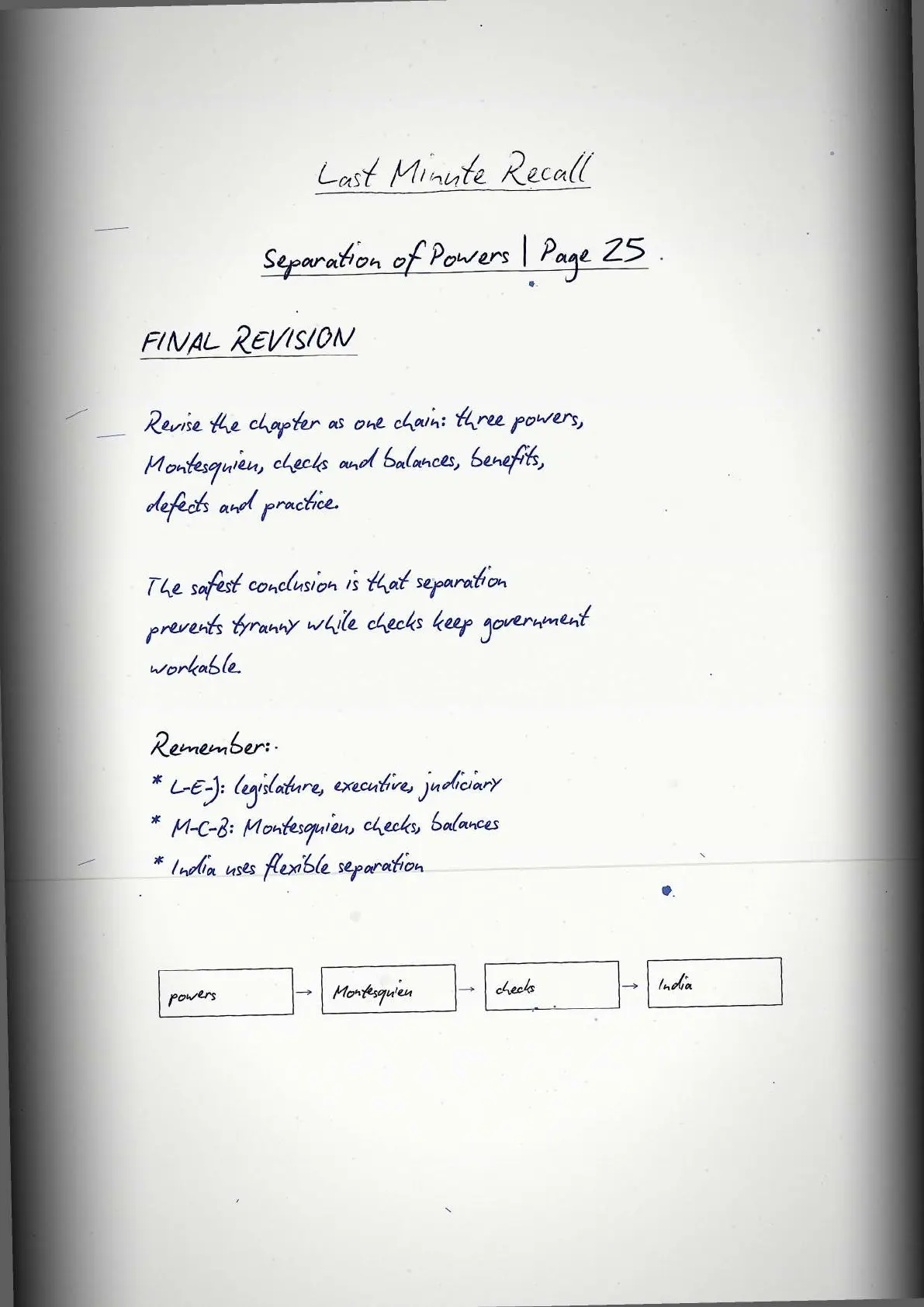
Student Feedback: In a Collegedunia survey of 12,460 students, 73% said checks and balances tables helped them revise this chapter faster.
Separation of Powers Handwritten Notes Overview
The Separation of Powers handwritten notes turn a theory-heavy chapter into short revision pages. Students can revise the three organs first, then connect Montesquieu, checks and balances and constitutional practice.
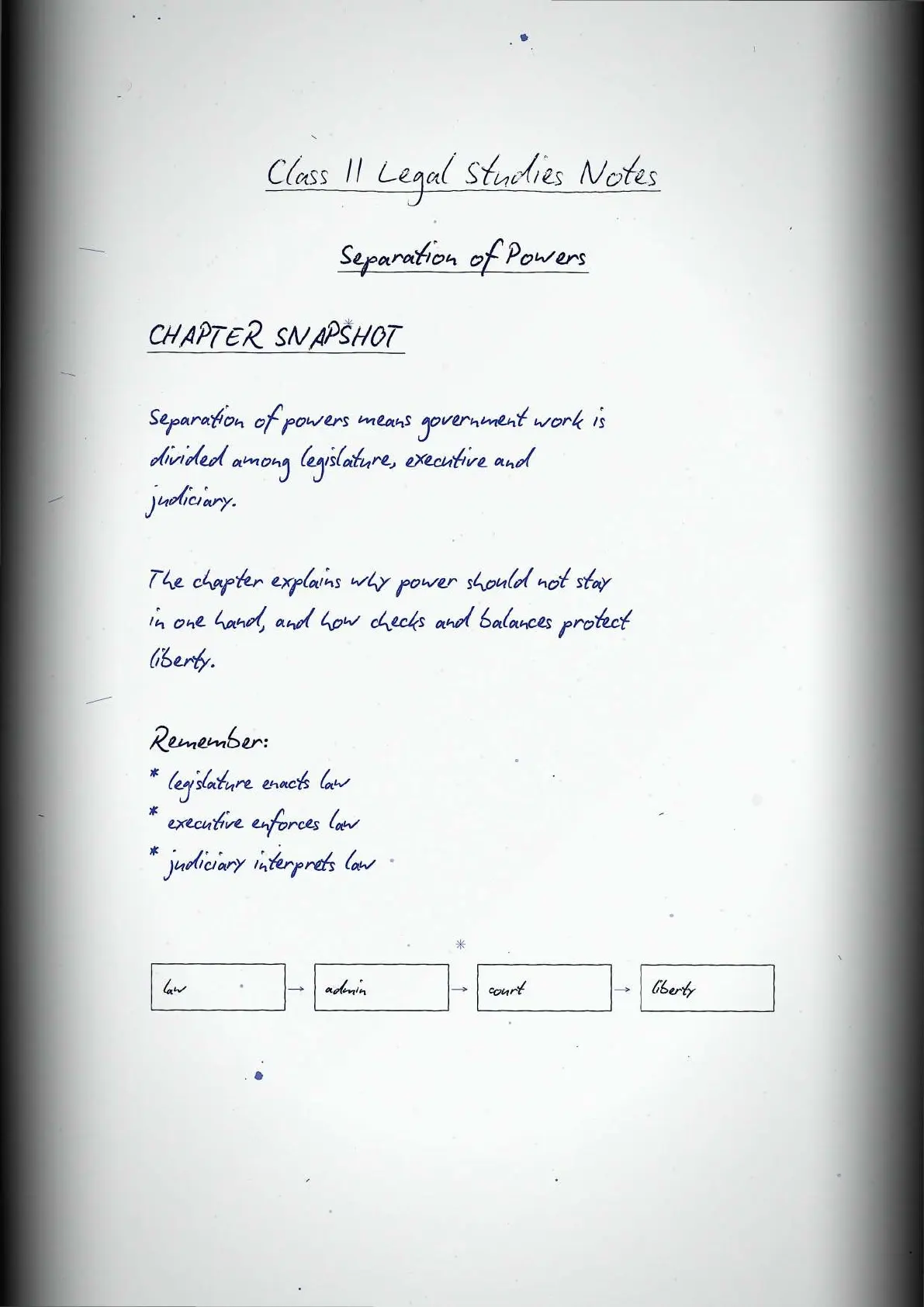
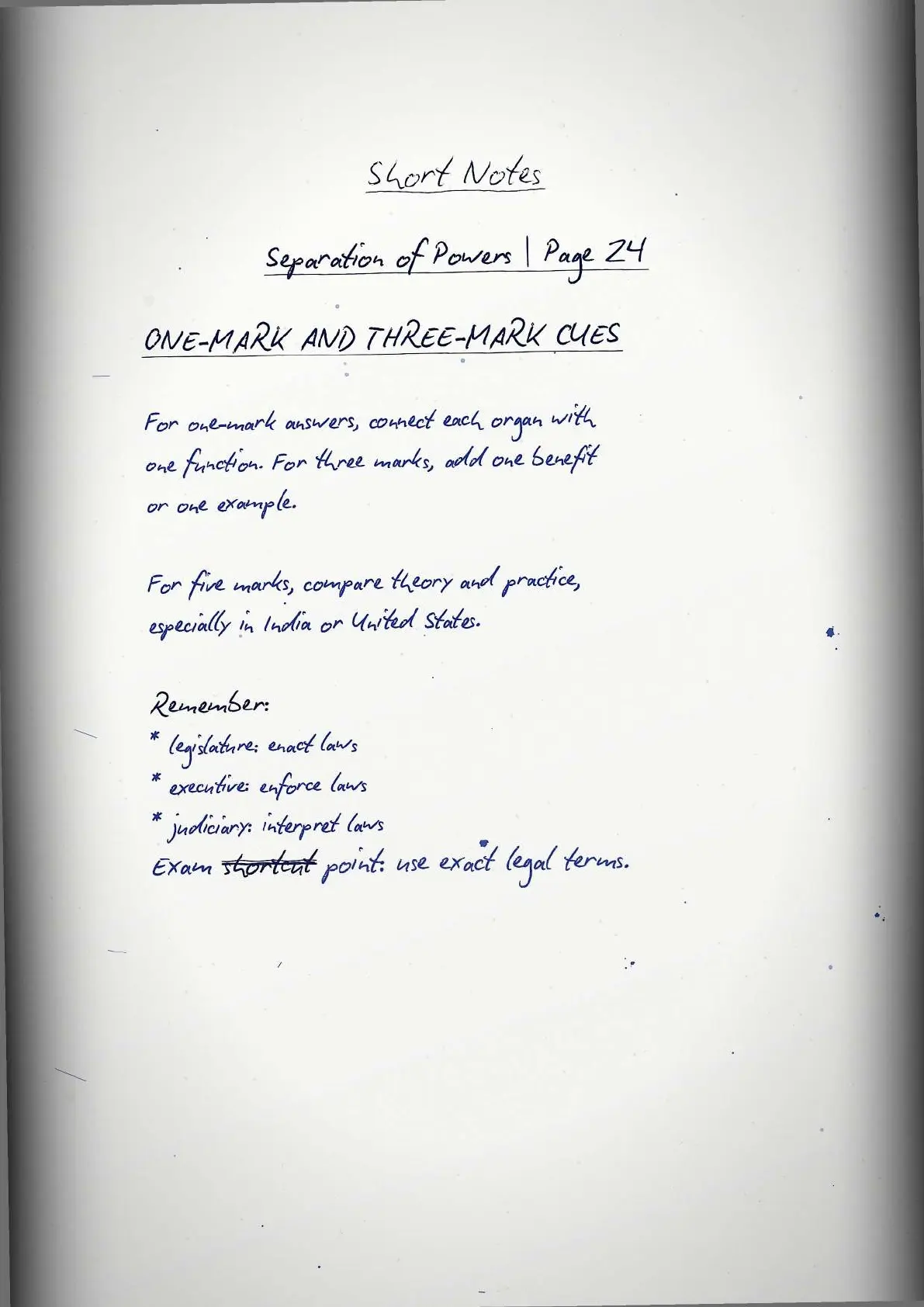
- Best starting point: remember that legislature enacts, executive enforces and judiciary interprets law.
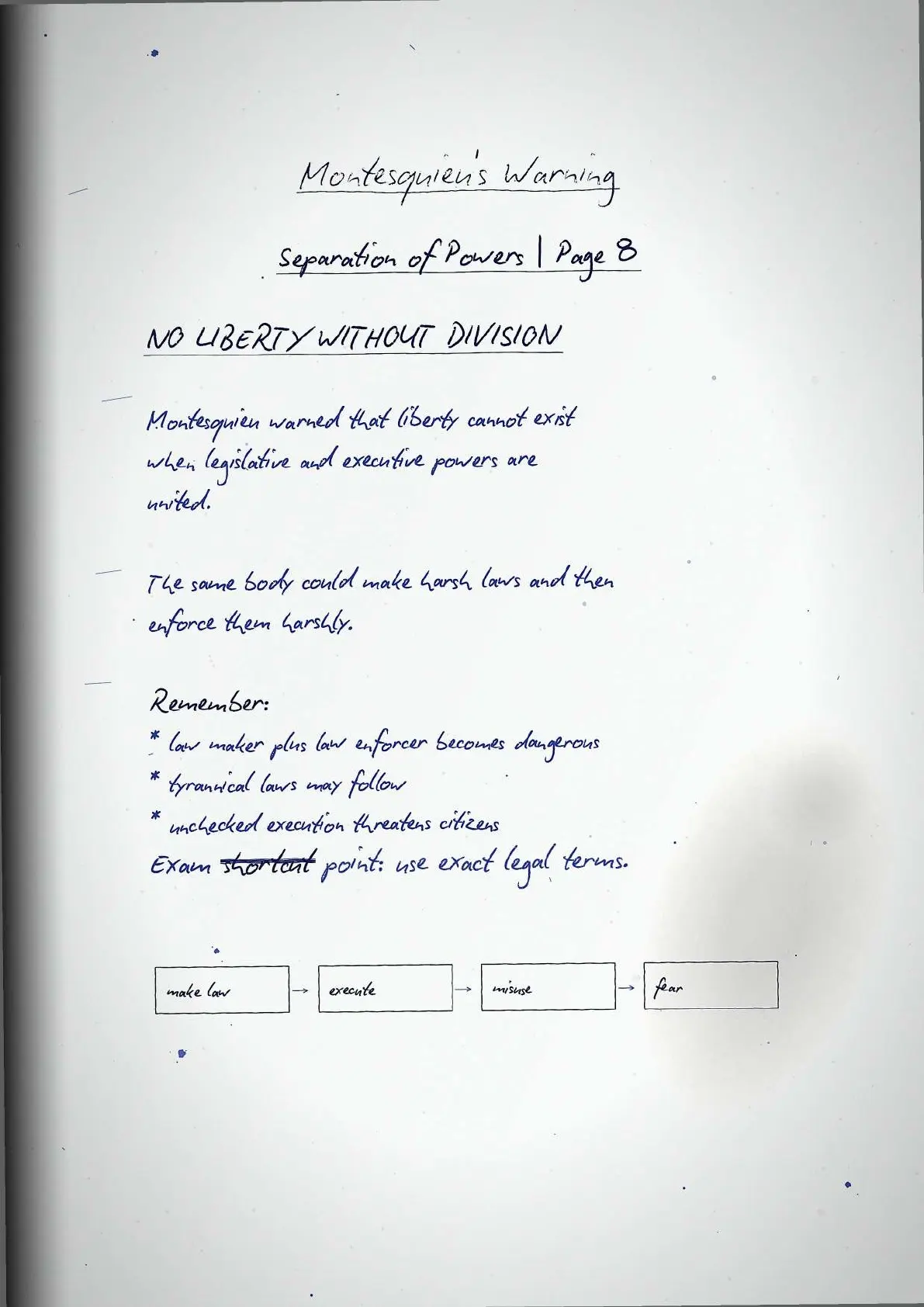
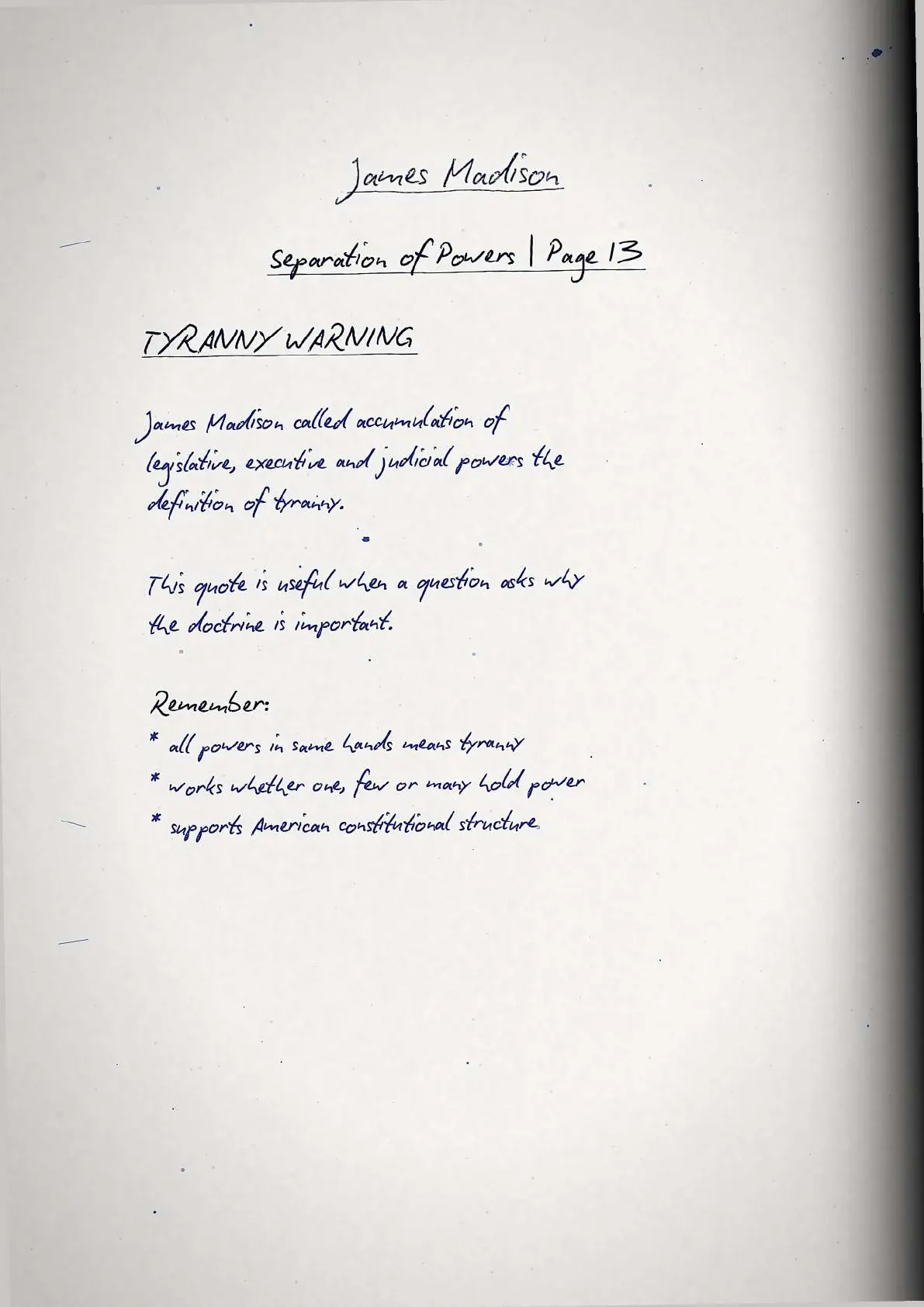
- Scoring area: Montesquieu's warning that concentration of powers can lead to tyranny.
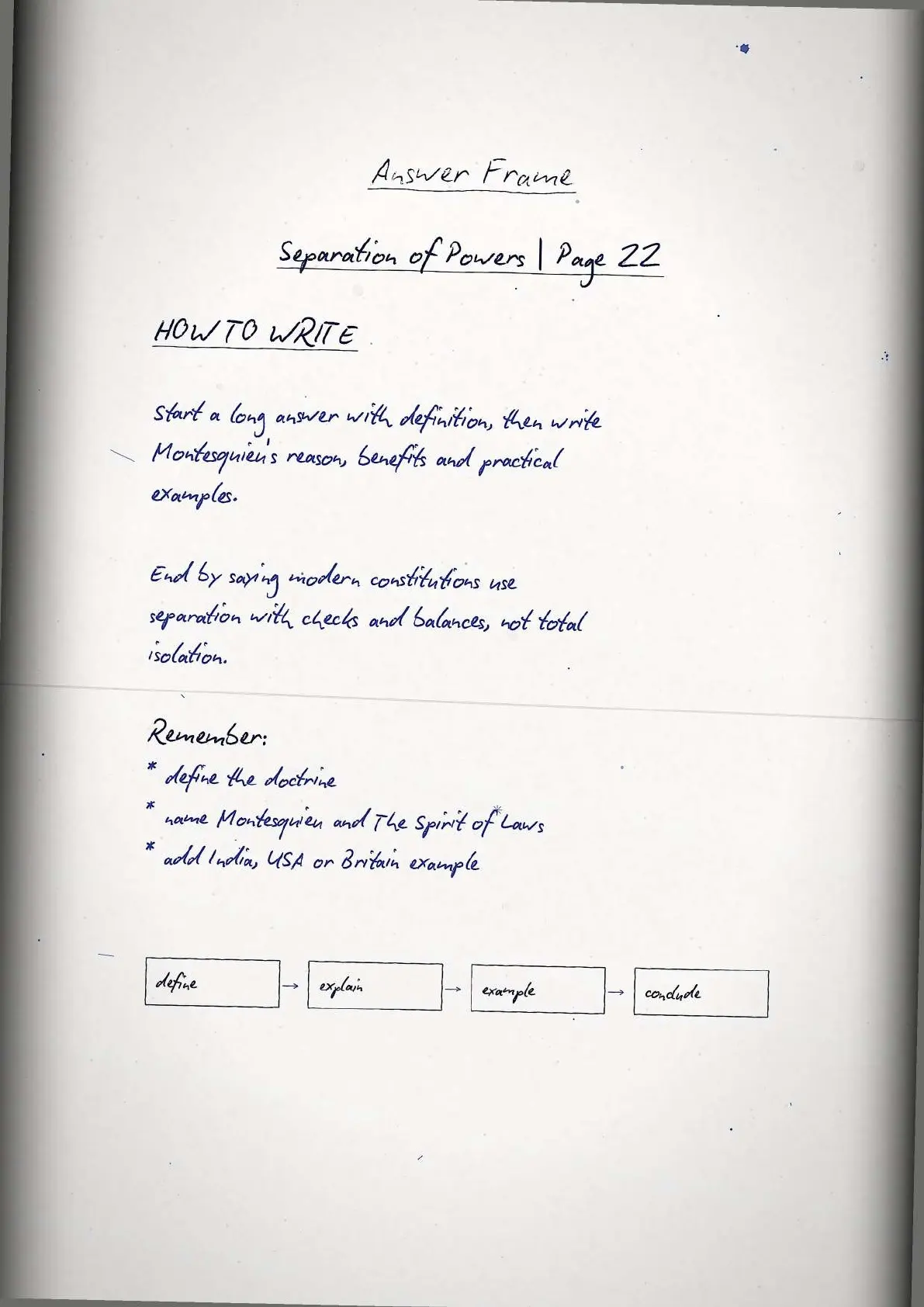
- Long-answer route: define the doctrine, explain checks and balances, then add India, Britain or USA.
Meaning of Separation of Powers
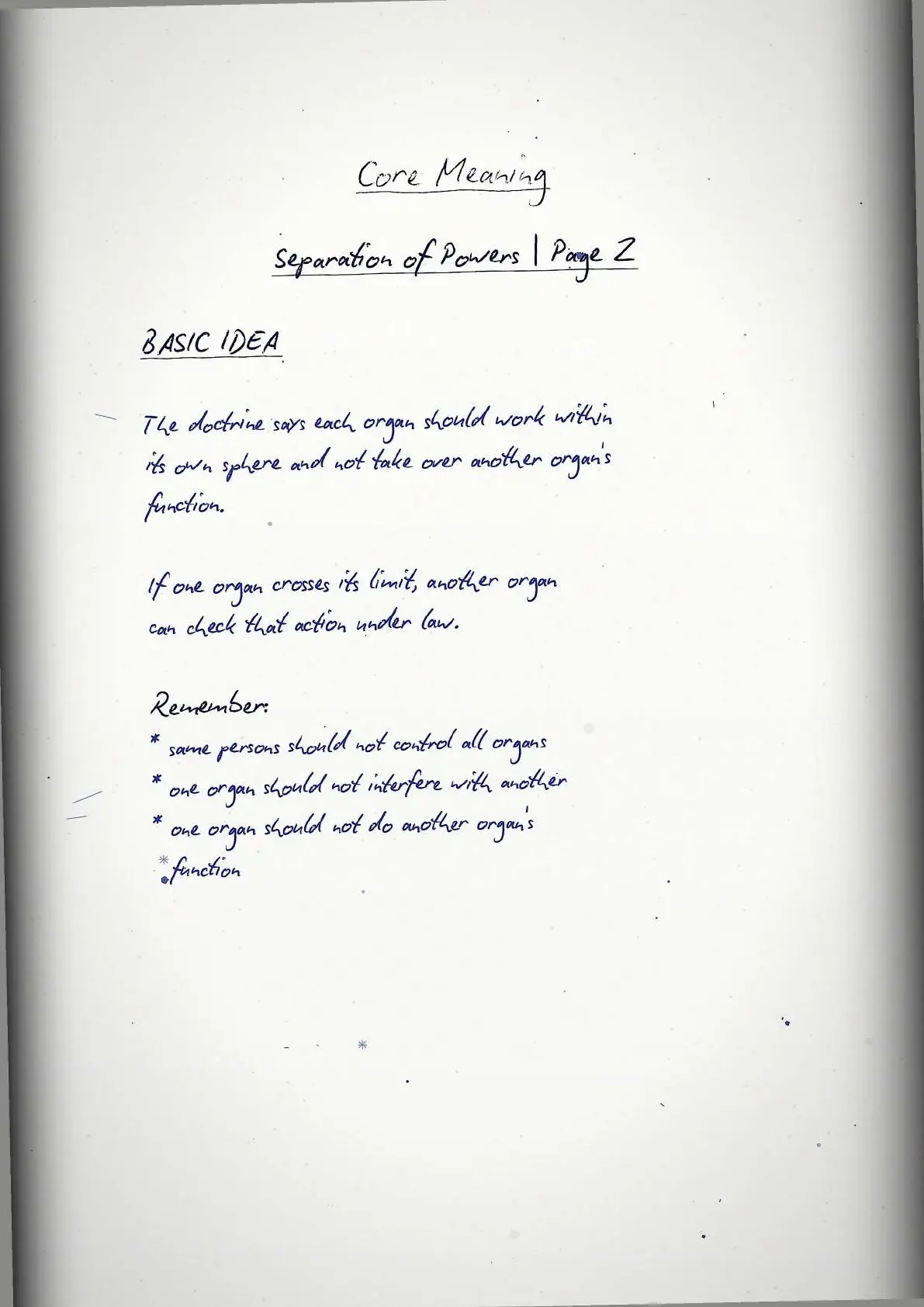
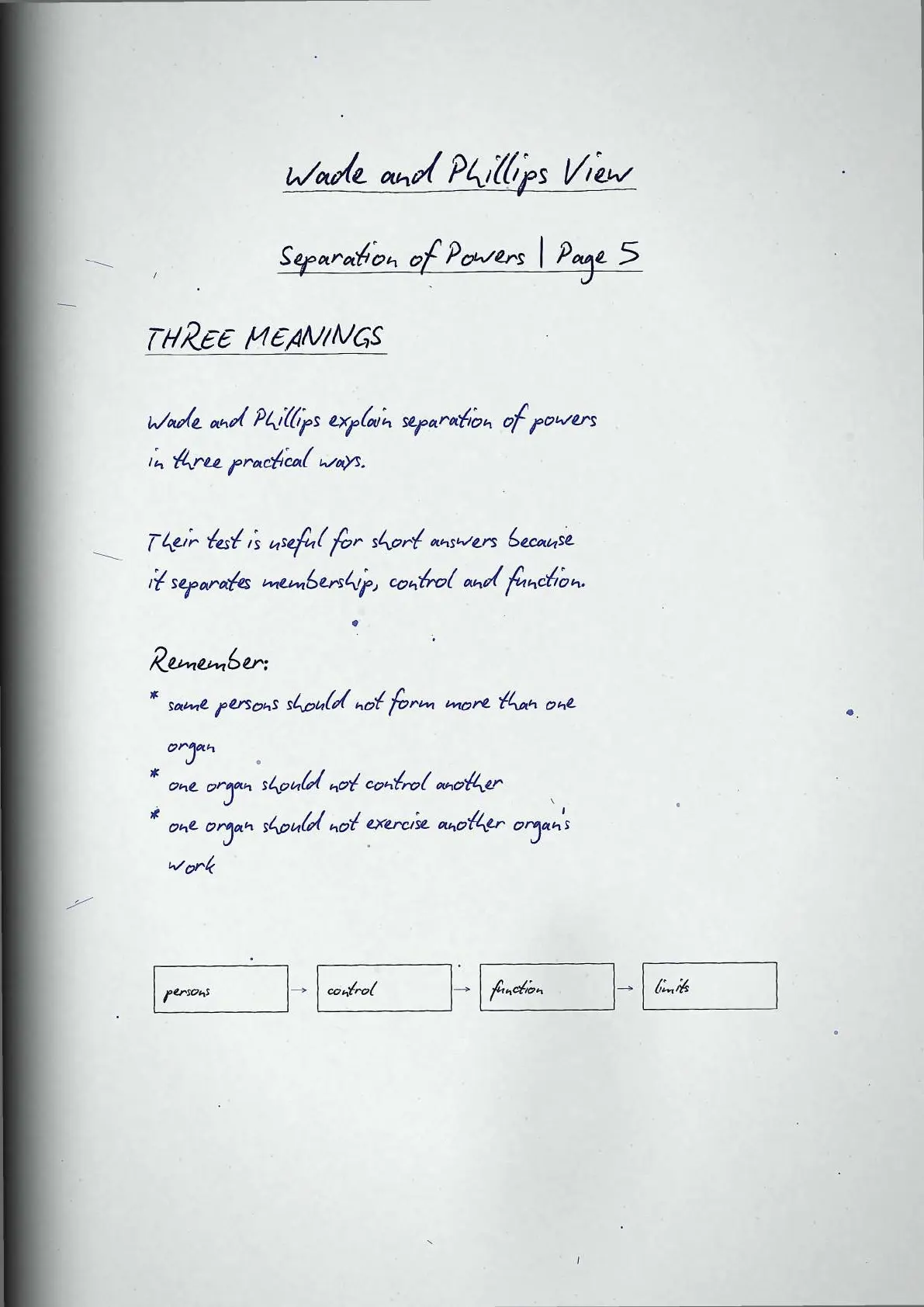
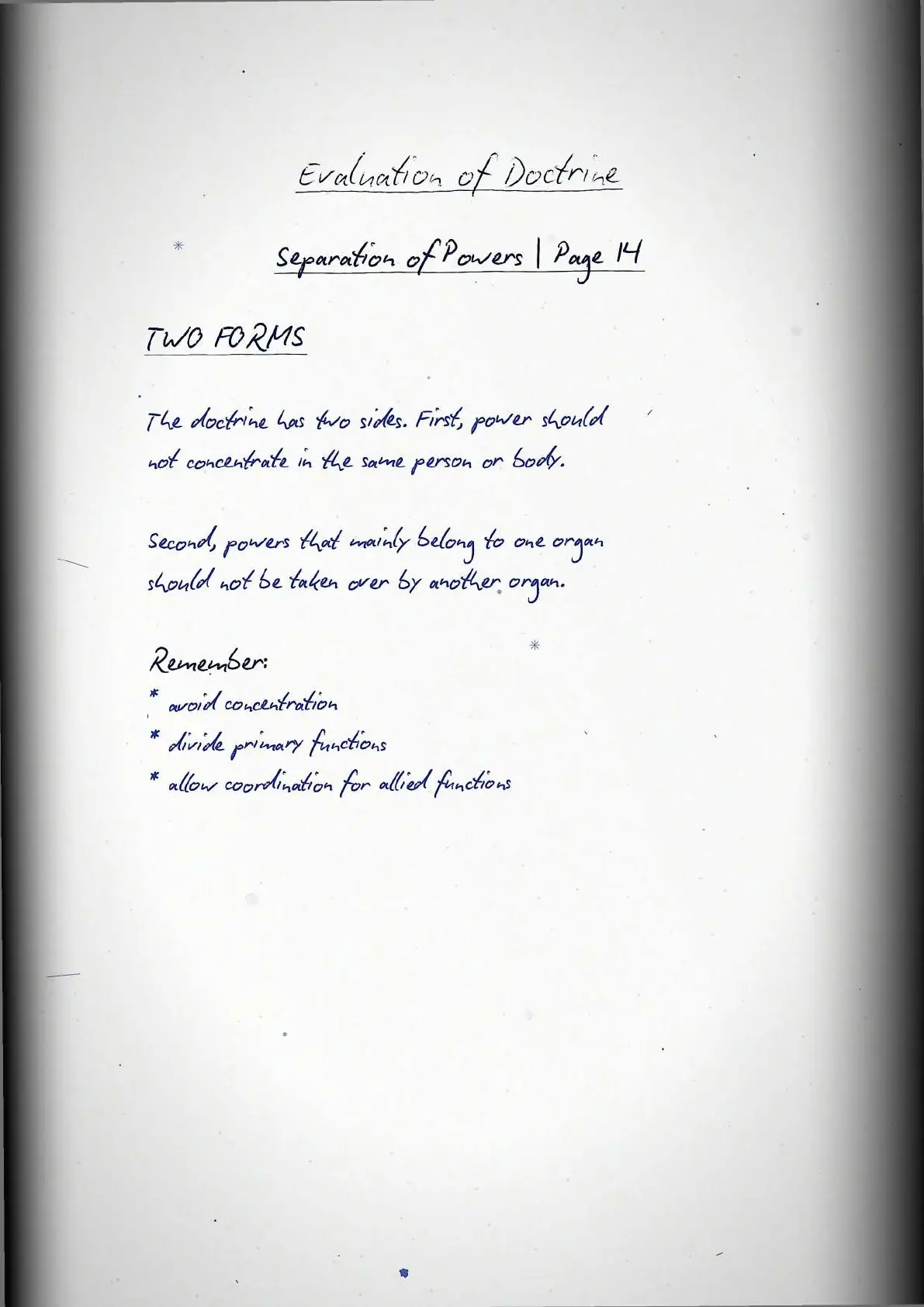
Separation of powers means the powers of government are divided among three organs. Each organ has its own main sphere and should not take over another organ's work.
| Power | Organ | Plain meaning |
|---|---|---|
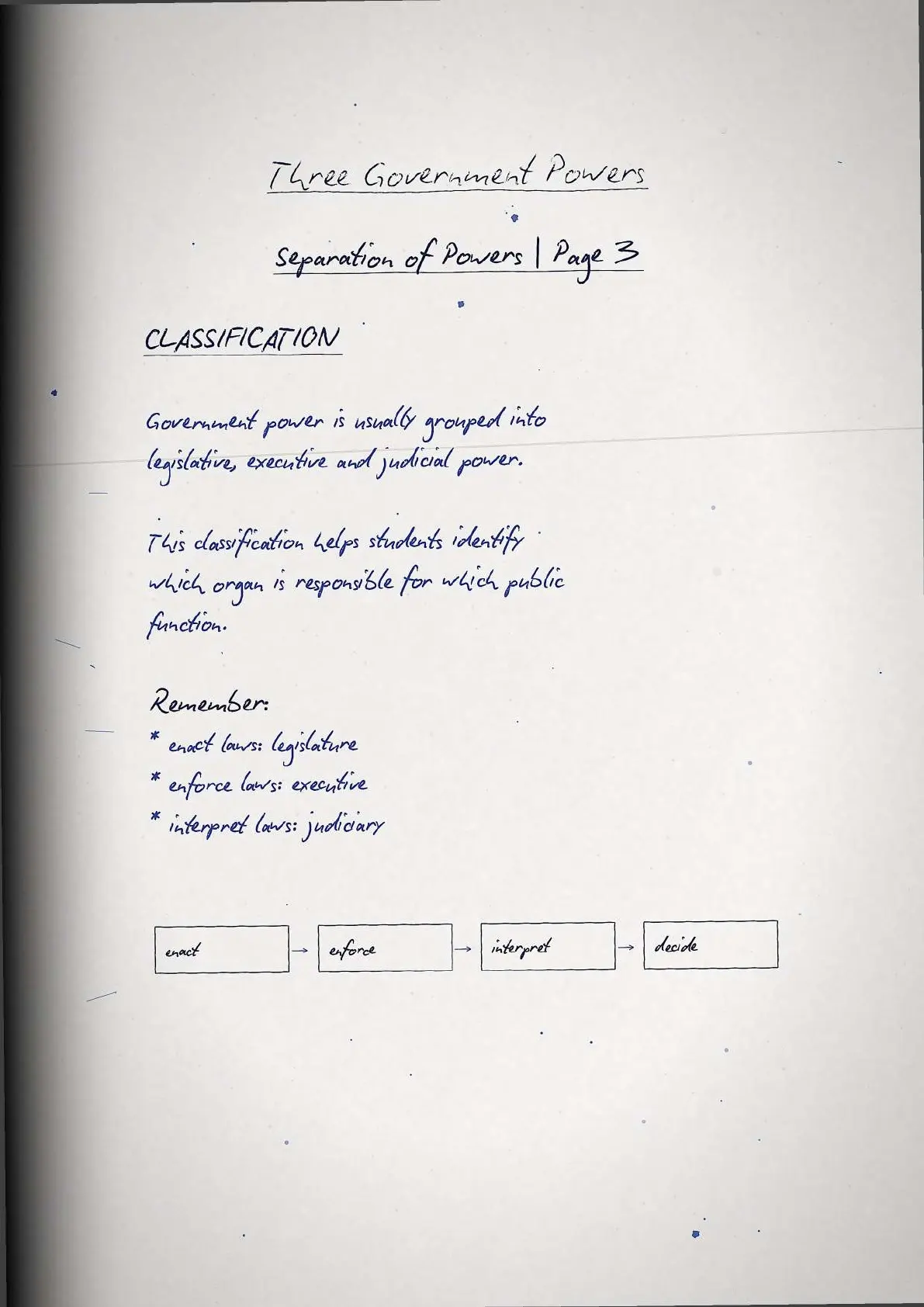
| Legislative power | Legislature | Makes laws for the State. |
| Executive power | Executive | Enforces laws and runs administration. |
| Judicial power | Judiciary | Interprets law and decides disputes. |
Separation of Powers Video for Class 11 Legal Studies
Source: Magnet Brains on YouTube
Montesquieu and Checks and Balances
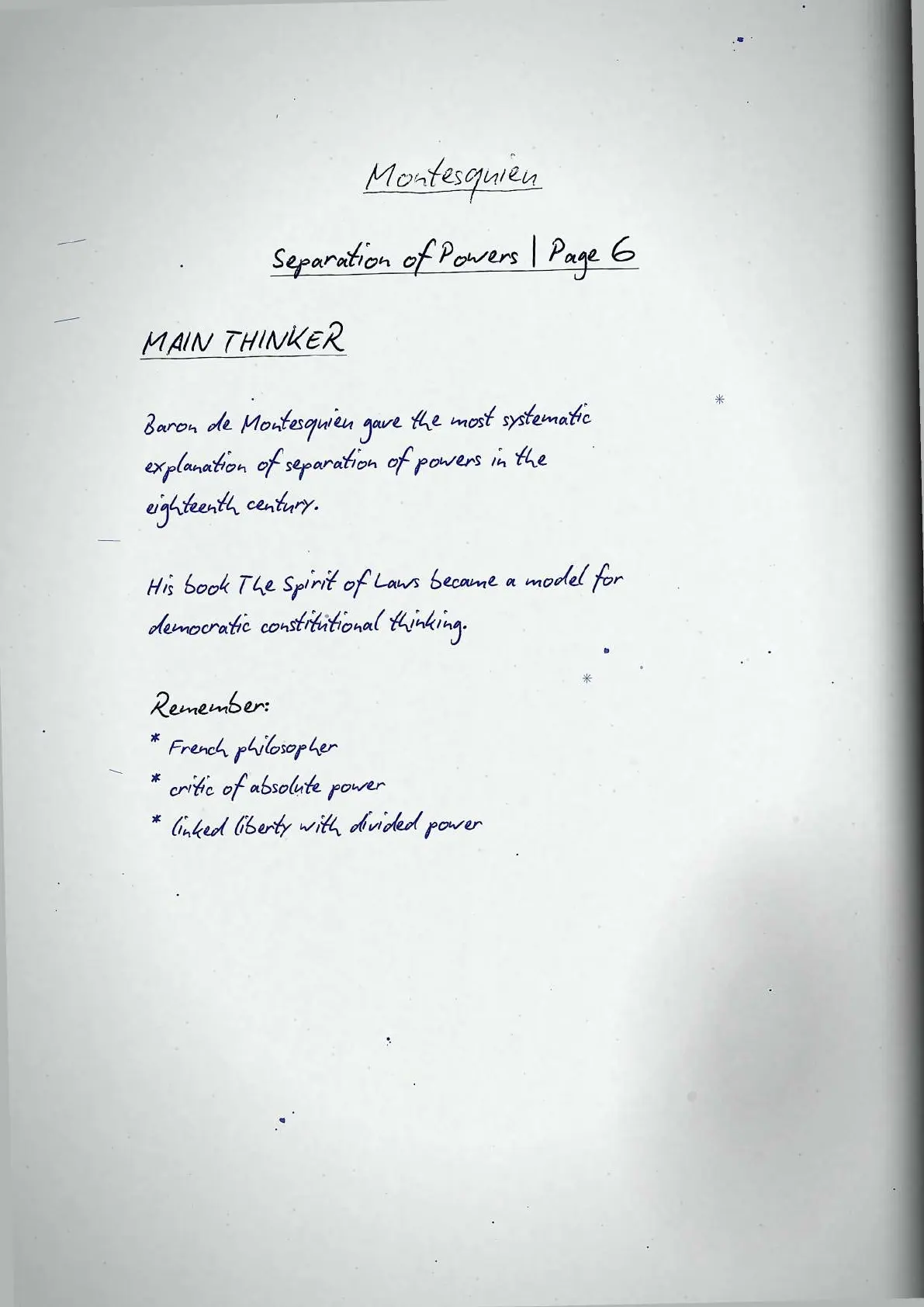
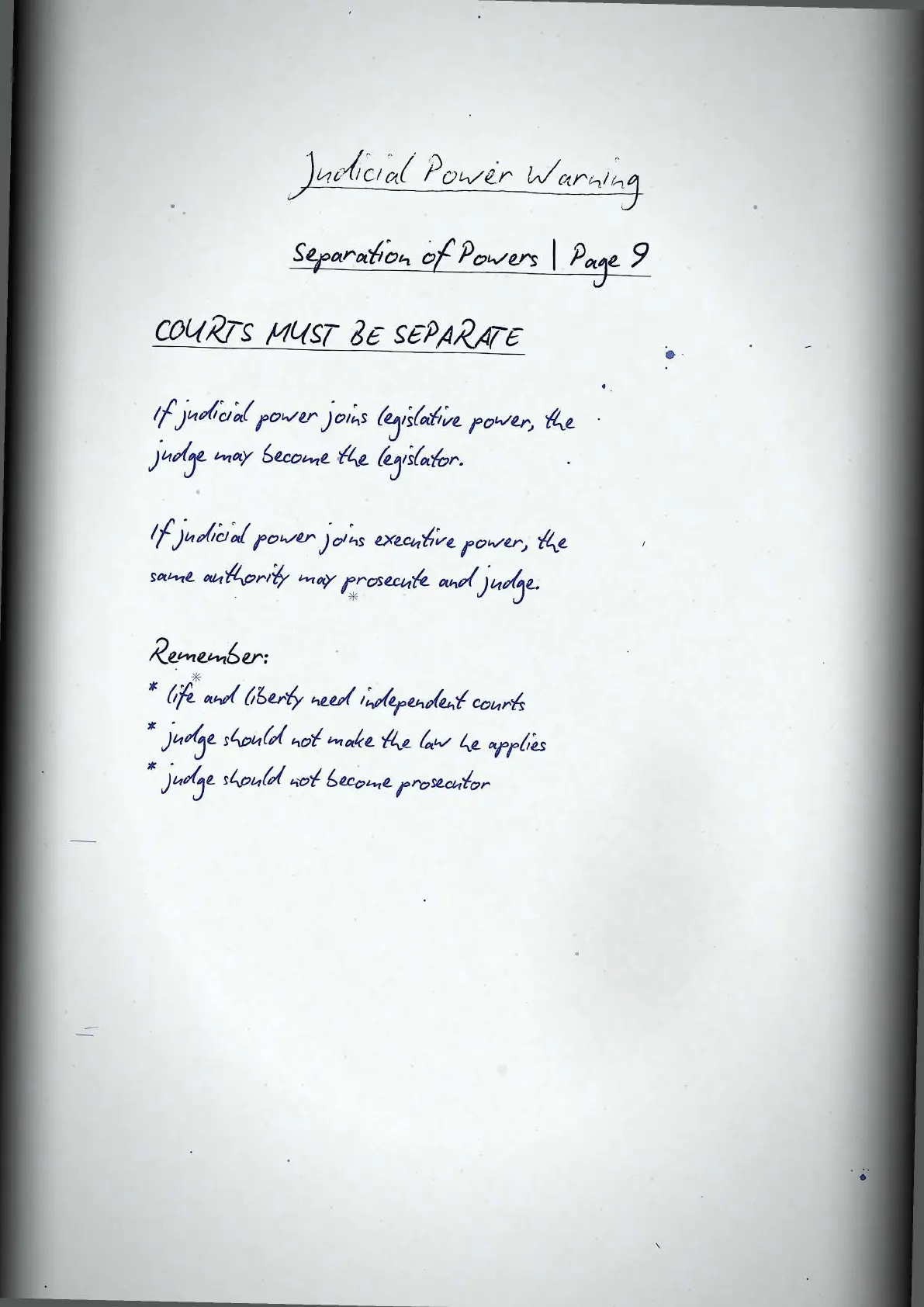
Montesquieu explained separation of powers in The Spirit of Laws. He argued that liberty is unsafe when the same authority makes law, executes law and judges disputes.
| Idea | Exam point | Use in answer |
|---|---|---|
| Montesquieu | French philosopher linked liberty with divided power. | Name him in the introduction. |
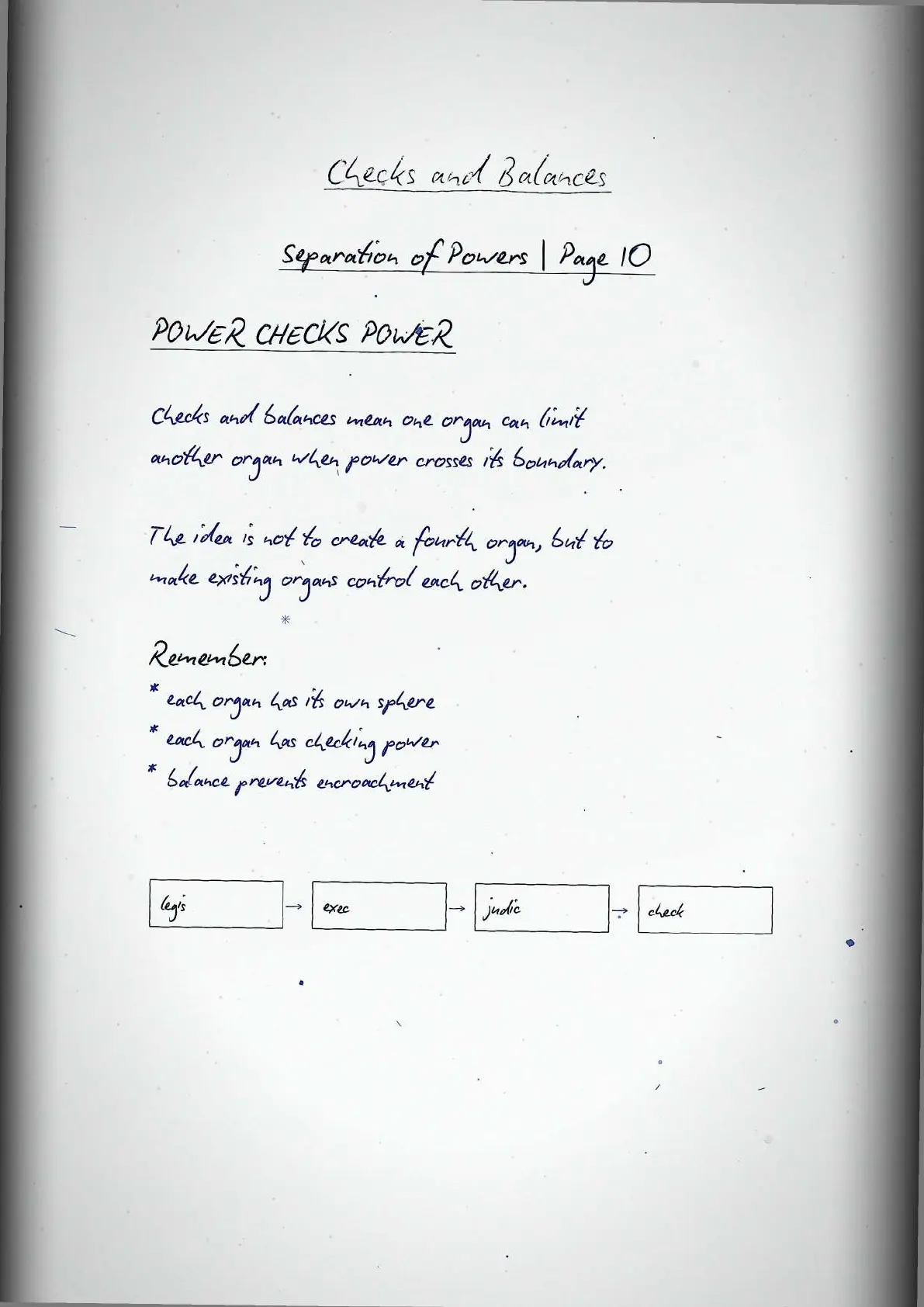
| Checks and balances | One organ can limit another organ. | Use the phrase power checks power. |
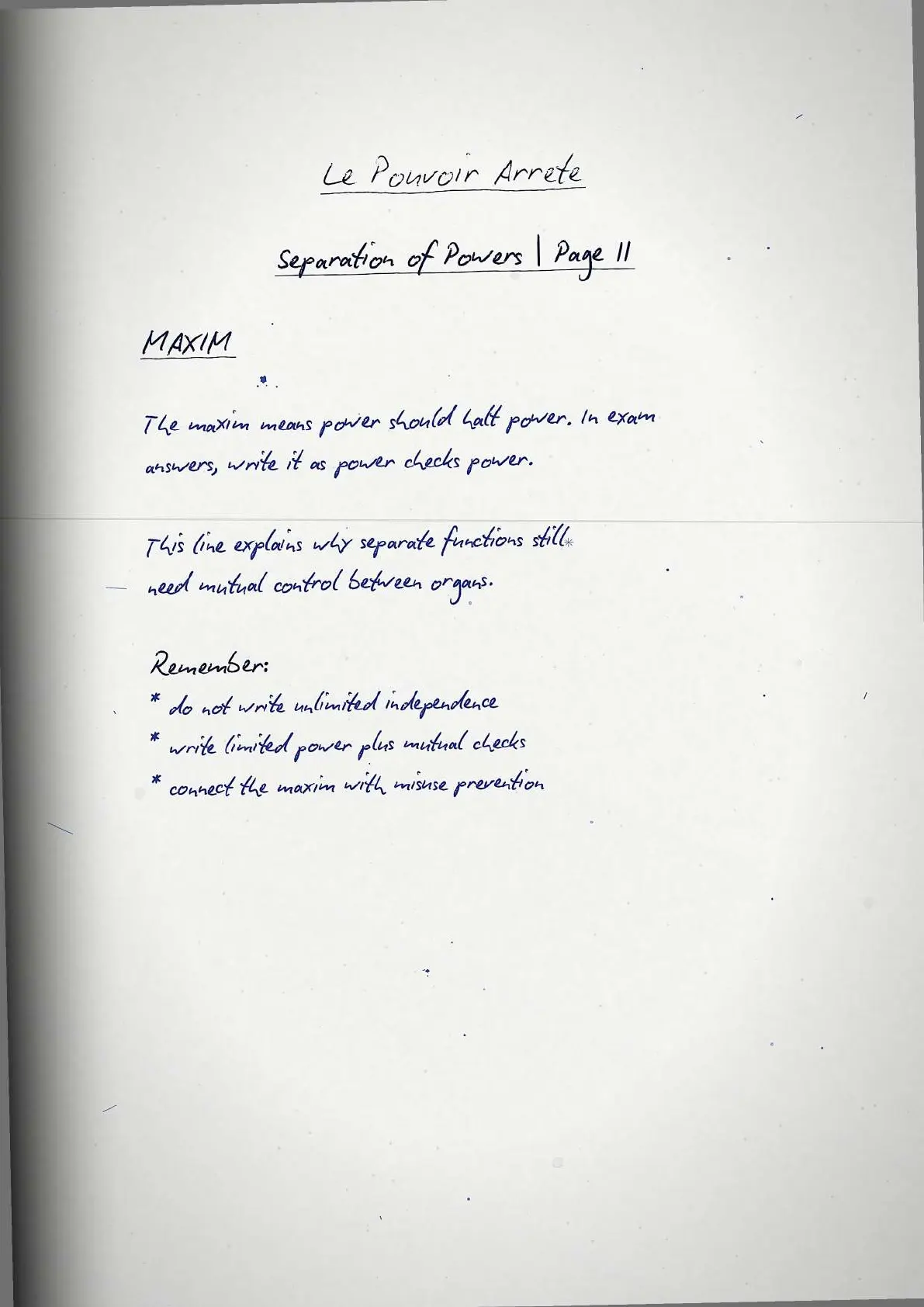
| Le pouvoir arrete le pouvoir | Power should halt power. | Write it as a short quote cue. |
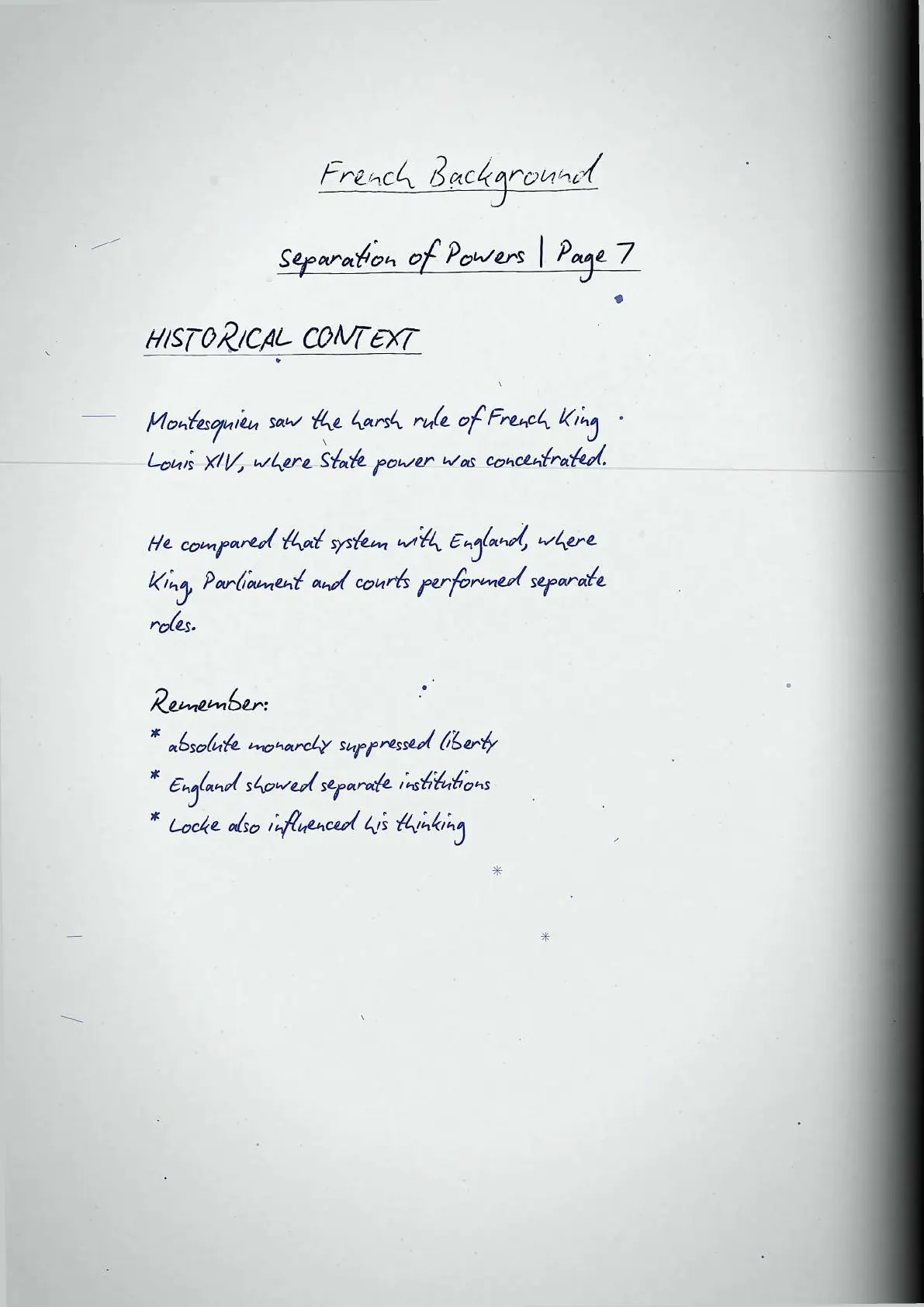
| Tyranny warning | All powers in the same hands threaten liberty. | Connect it with Madison or absolute monarchy. |
Benefits and Defects of the Doctrine
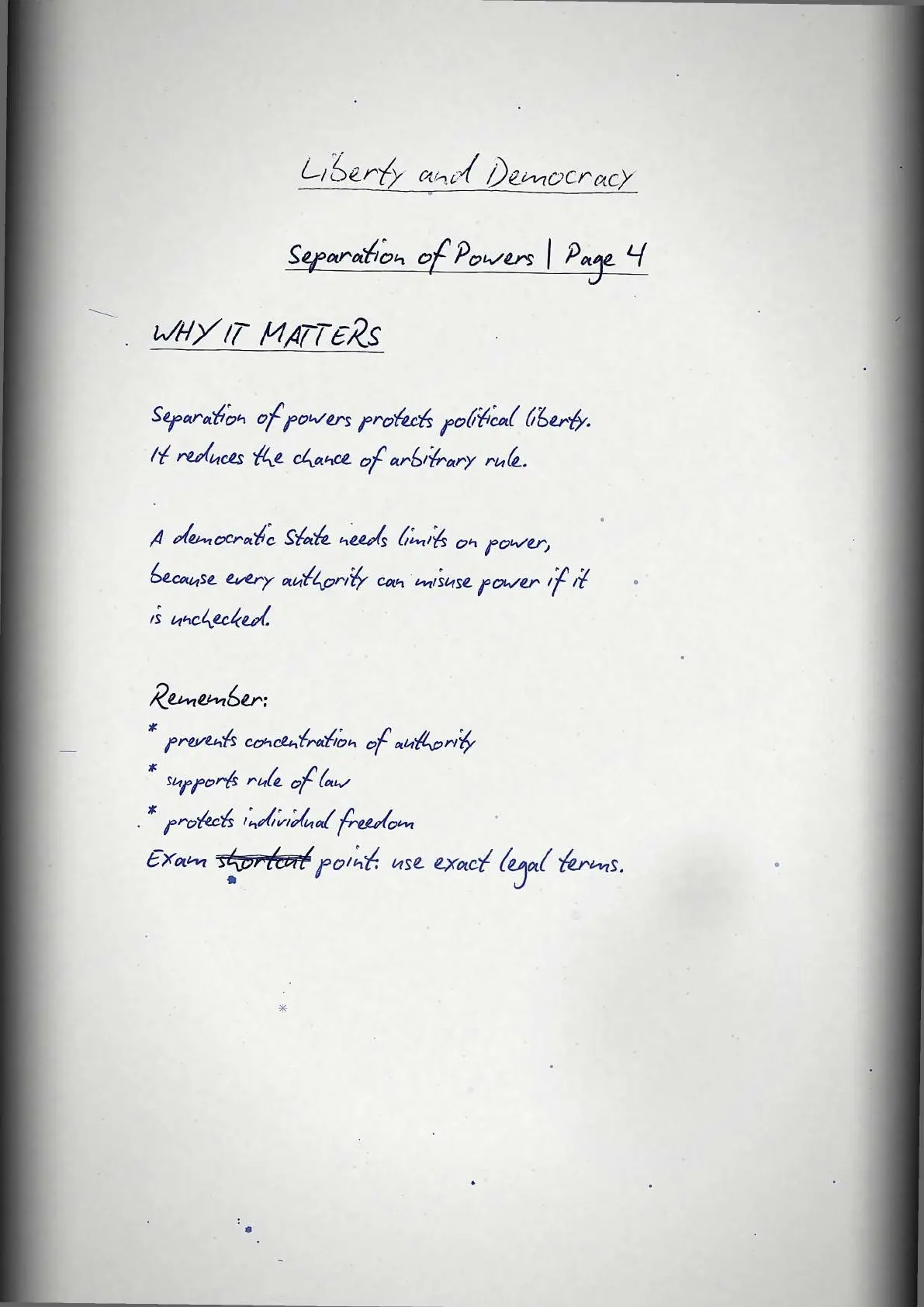
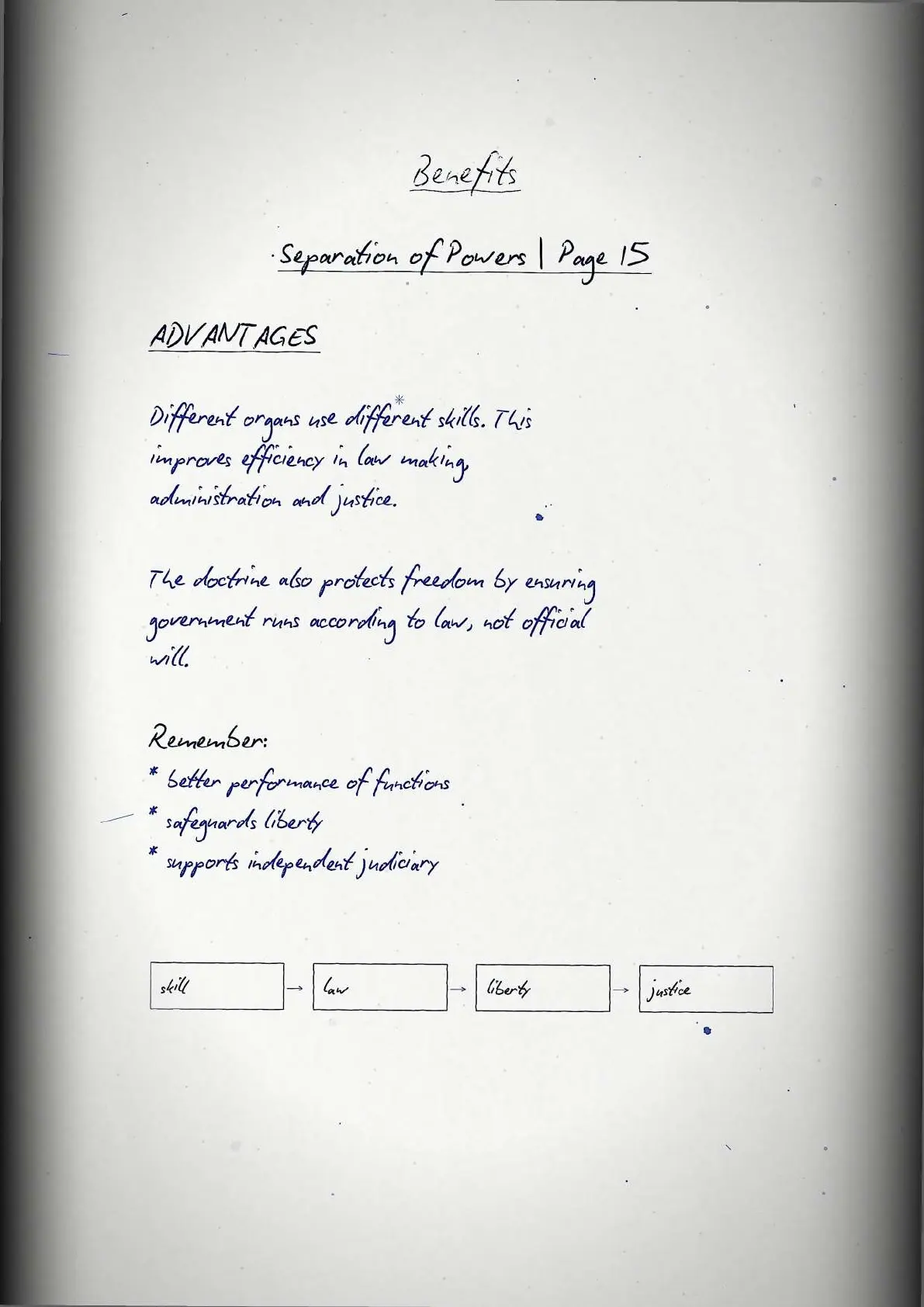
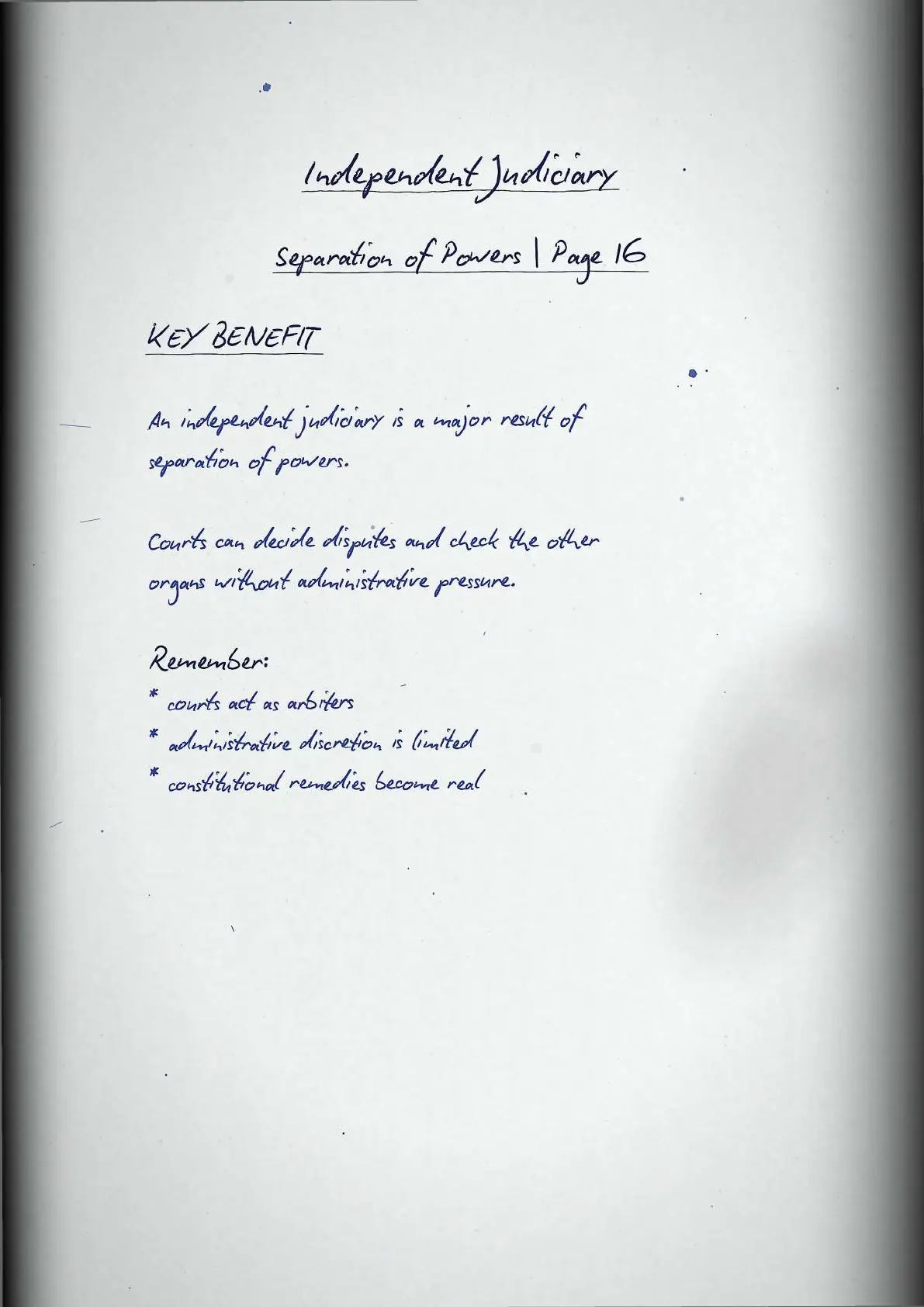
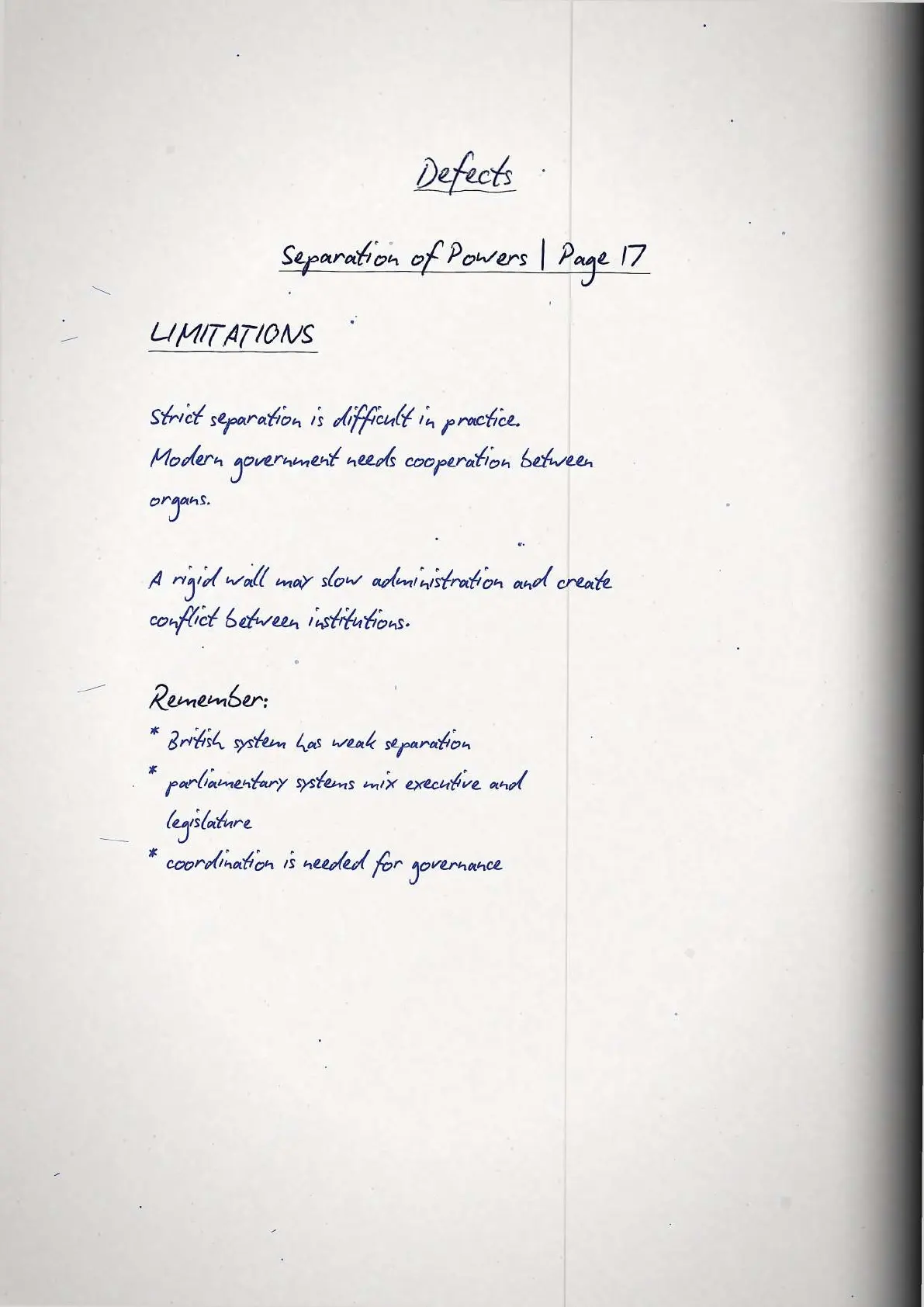
The doctrine protects liberty, improves efficiency and supports an independent judiciary. Its main defect is that strict separation is hard in modern government because organs must cooperate.
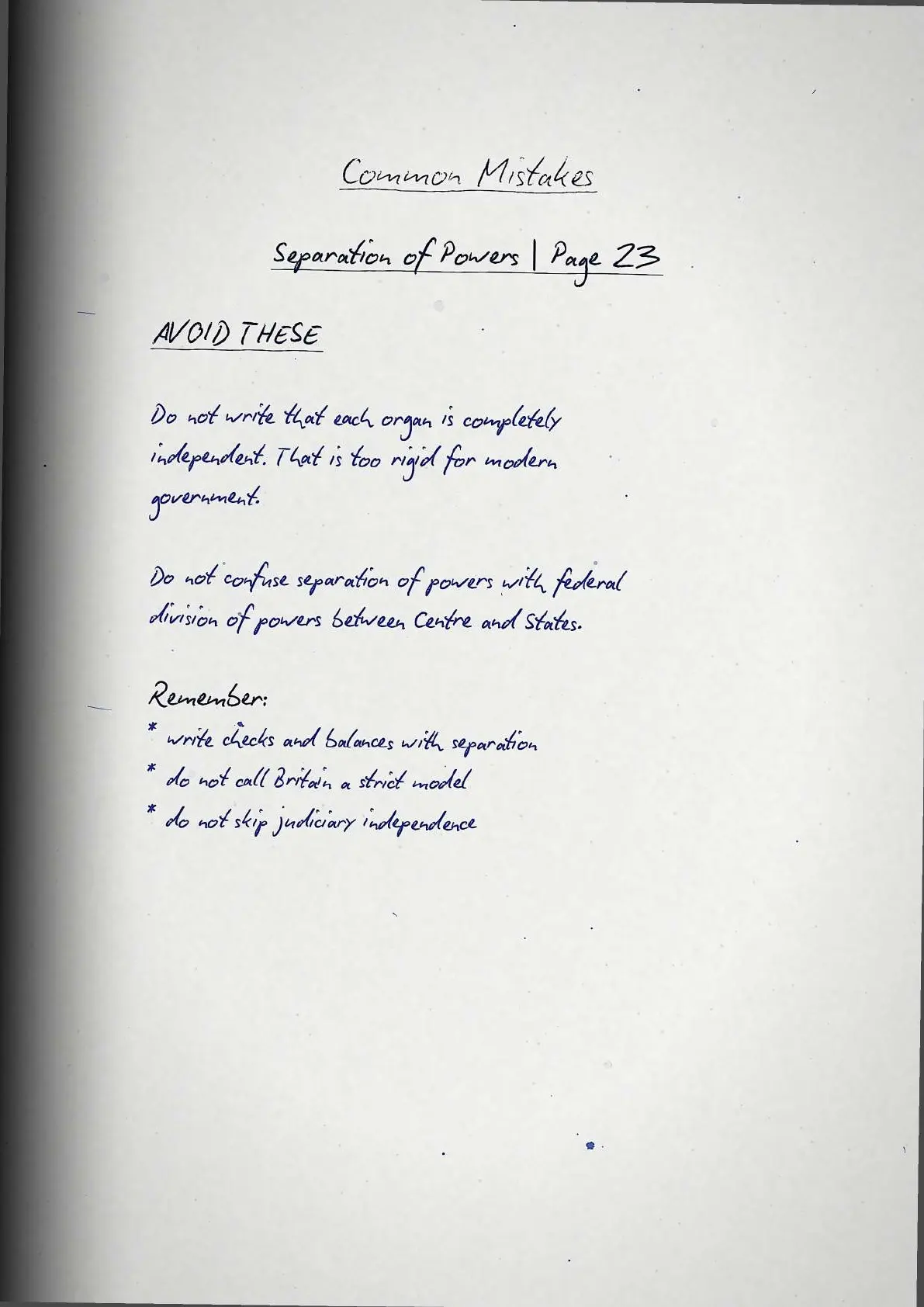
Write that modern constitutions use separation with checks, not complete isolation.
| Benefit or defect | What to write | Example cue |
|---|---|---|
| Benefit | Different organs perform different functions better. | Law making, administration and adjudication need different skills. |
| Benefit | Liberty is safer when power is limited. | Rule of law replaces official will. |
| Benefit | Independent judiciary can check misuse. | Judicial review protects the Constitution. |
| Defect | Rigid separation is impractical. | Parliamentary systems mix executive and legislature. |
Separation of Powers in India, Britain and USA
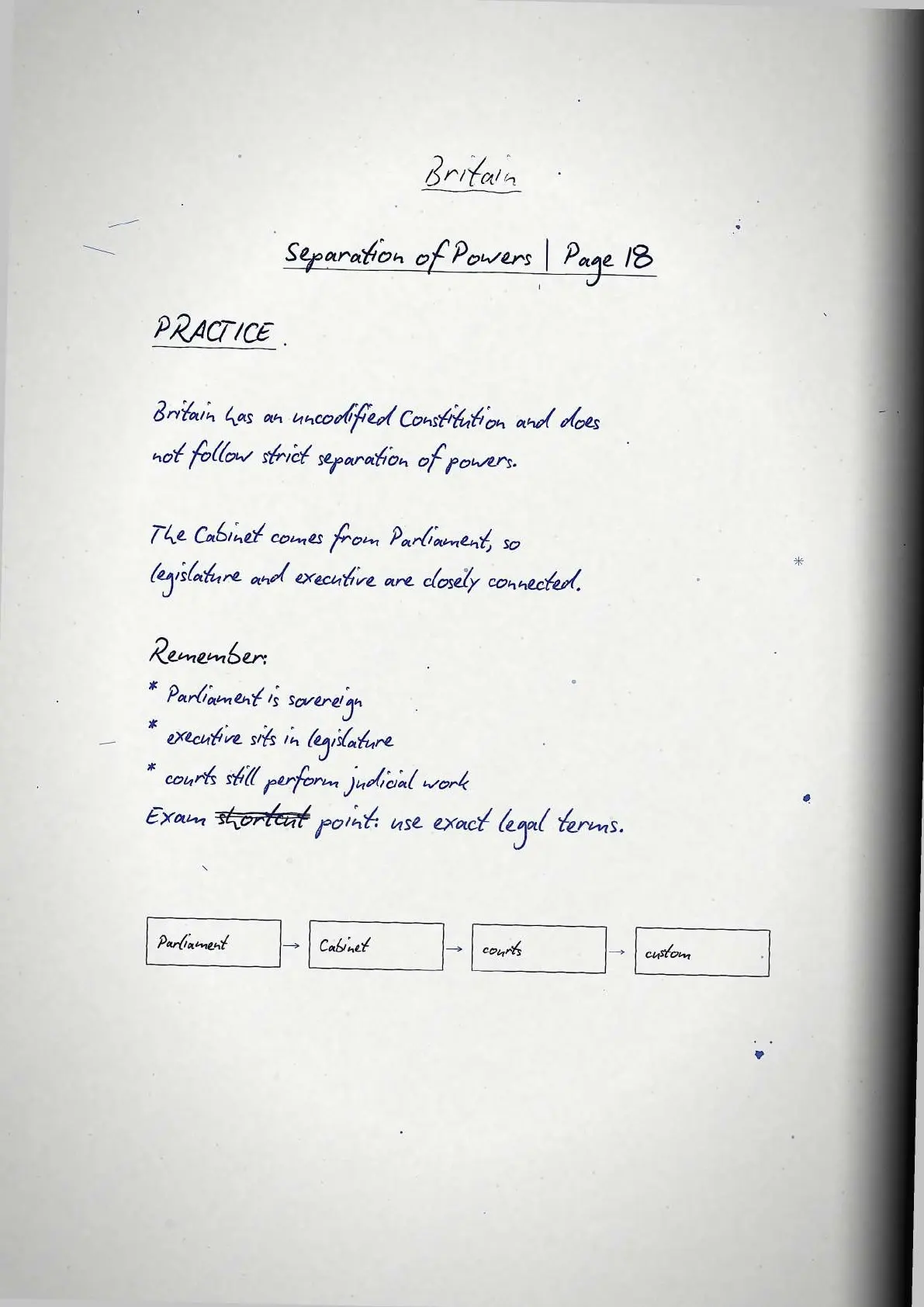
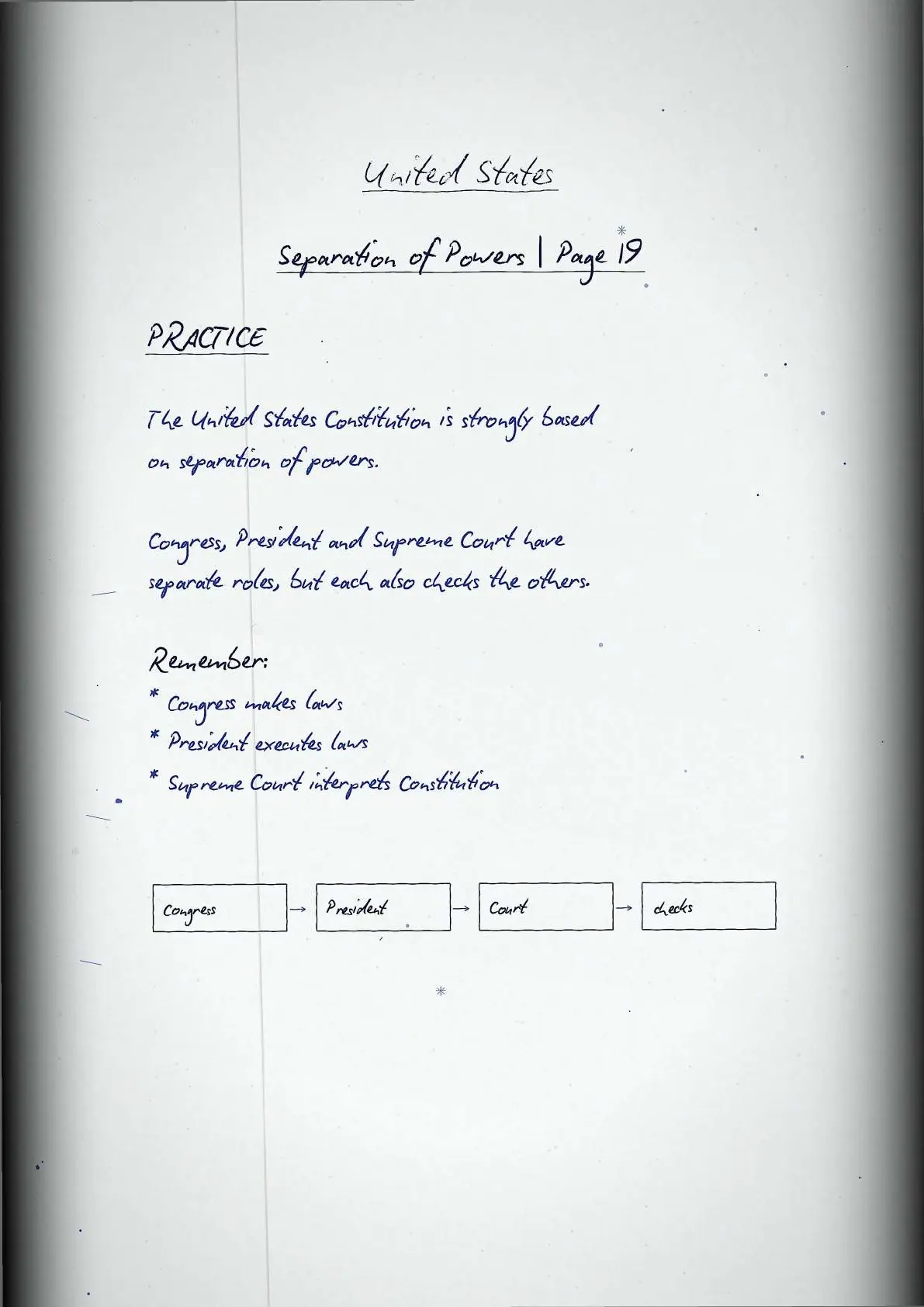
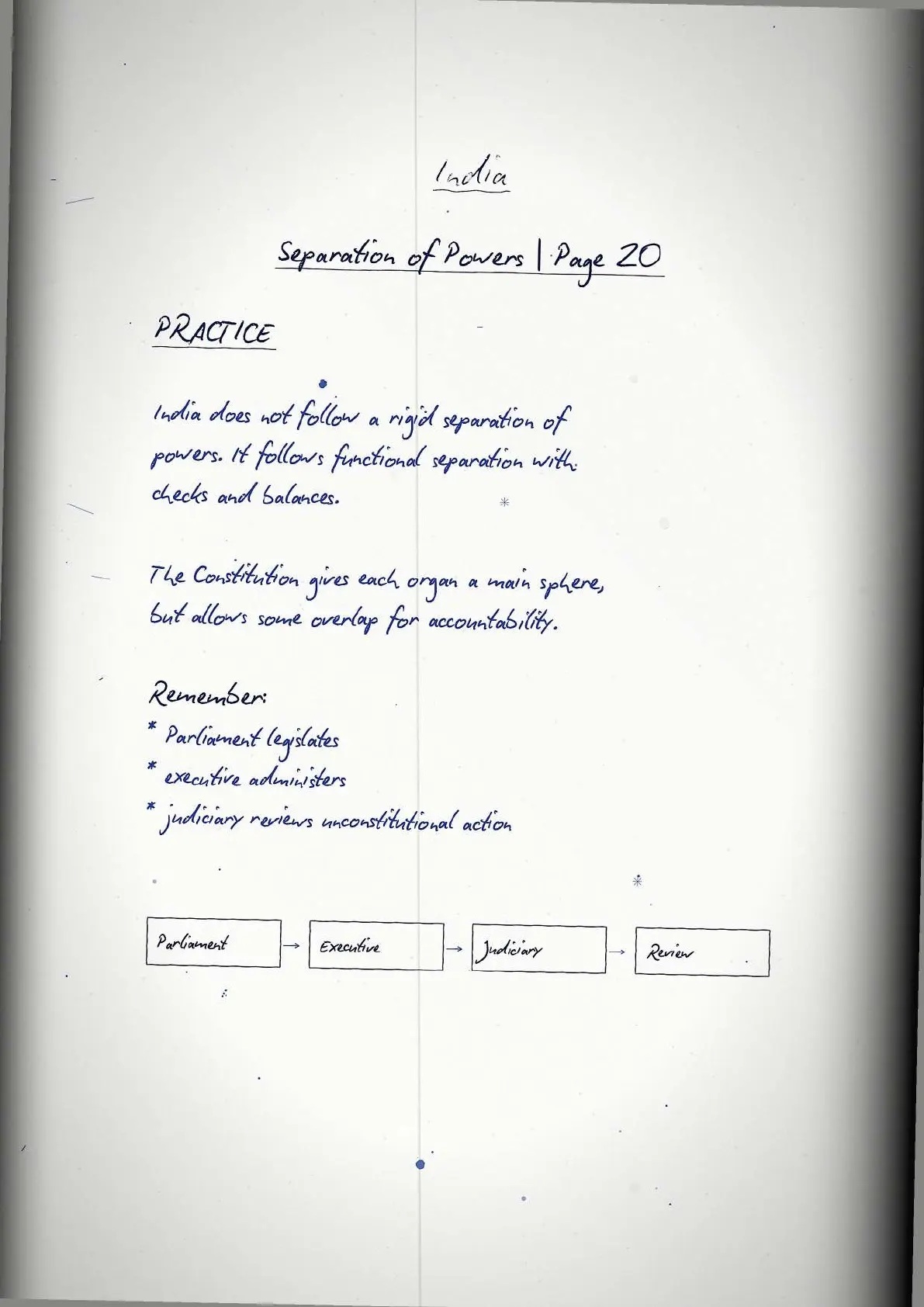
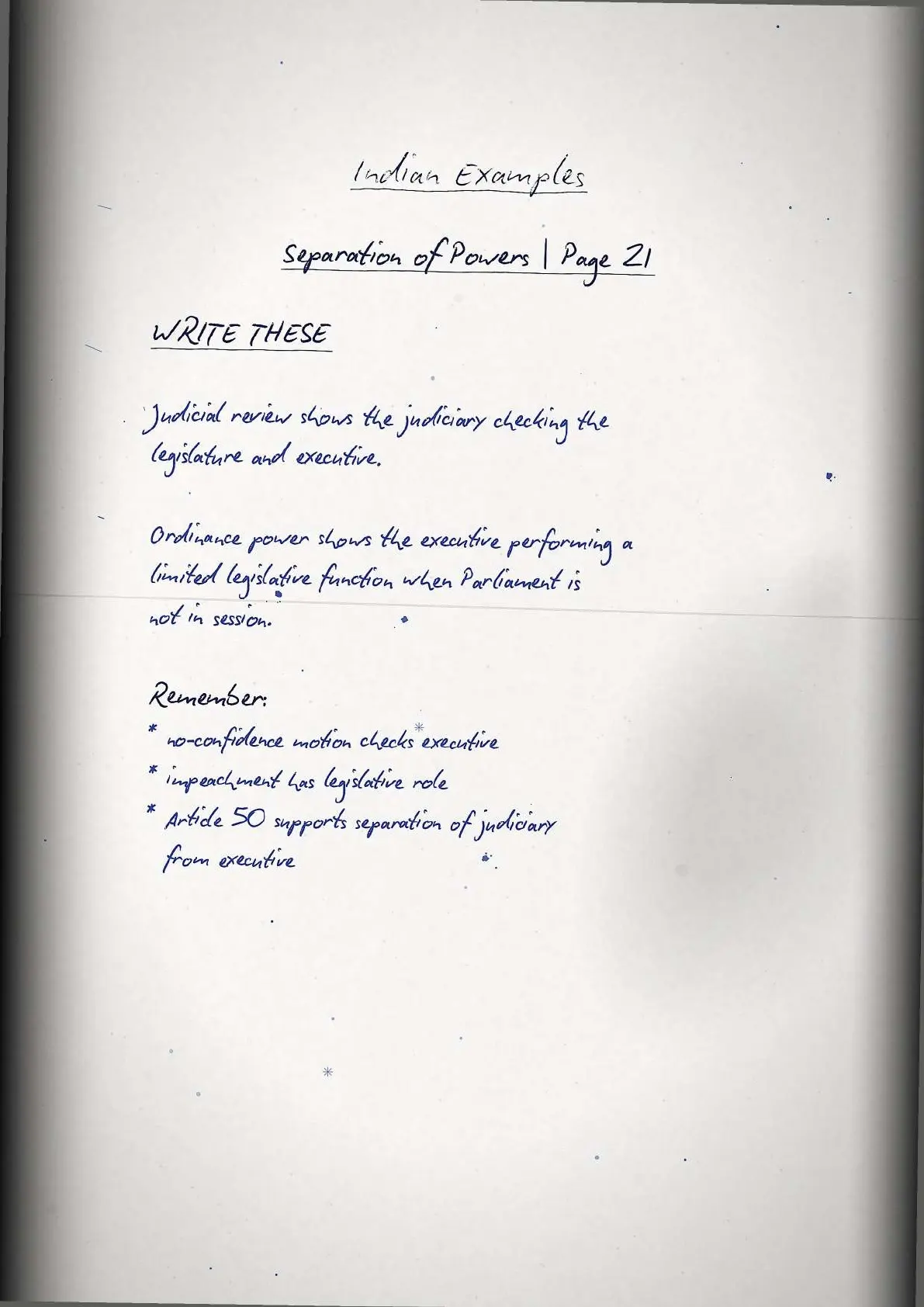
Britain has a weak and flexible separation. The United States follows a stronger constitutional separation. India follows functional separation with checks and balances.
| Country | Practice | Exam cue |
|---|---|---|
| Britain | Flexible separation under an uncodified Constitution. | Cabinet links executive and legislature. |
| United States | Strong separation with checks and balances. | Congress, President and Supreme Court check each other. |
| India | Functional separation with constitutional checks. | Judicial review, no-confidence and ordinance power are examples. |
Important Differences for Exam Revision
Most short questions from this chapter ask students to separate theory from practice. Write one clean basis of difference, then add one example.
- Separation vs checks: separation divides functions, while checks allow one organ to limit another.
- Rigid vs flexible separation: rigid separation keeps organs apart, while flexible separation allows overlap for accountability.
- USA vs India: USA follows stronger separation, while India follows functional separation with checks.
- Doctrine vs federalism: separation divides organs, while federalism divides power between Centre and States.
Related Class 11 Legal Studies Resources
| Resource | Use it for | Link |
|---|---|---|
| NCERT Solutions | Exercise answers for Separation of Powers. | Class 11 Legal Studies Separation of Powers Solutions |
| NCERT Book PDF | Original textbook reading and source examples. | Class 11 Legal Studies Separation of Powers Book PDF |
| Handwritten Notes | Quick one-shot revision before tests. | Class 11 Legal Studies Separation of Powers Handwritten Notes |
All Class 11 Legal Studies Handwritten Notes
| Chapter | Title | Handwritten Notes |
|---|---|---|
| Chapter 1 | Concept of State | Open handwritten notes |
| Chapter 2 | Forms and Organs of Government | Open handwritten notes |
| Chapter 3 | Separation of Powers | Open handwritten notes |
| Chapter 4 | Salient Features of the Constitution of India | Open handwritten notes |
| Chapter 5 | Administrative Law | Open handwritten notes |
| Chapter 6 | Jurisprudence, Nature and Meaning of Law | Open handwritten notes |
| Chapter 7 | Classification of Laws | Open handwritten notes |
| Chapter 8 | Sources of Laws | Open handwritten notes |
Class 11 Legal Studies Separation of Powers Handwritten Notes FAQs
Ques. What is covered in Class 11 Legal Studies Separation of Powers handwritten notes?
Ans. The PDF covers the meaning of separation of powers, Montesquieu, checks and balances, benefits, defects and practice in India, Britain and the United States.
Ques. What are the three organs in separation of powers?
Ans. The three organs are legislature, executive and judiciary. Legislature makes laws, executive enforces them and judiciary interprets them.
Ques. Why are checks and balances important?
Ans. Checks and balances allow one organ to limit another organ when power crosses its boundary. This protects liberty and prevents misuse of power.
Ques. Does India follow strict separation of powers?
Ans. India follows functional separation with checks and balances. The organs have main spheres, but some overlap exists for accountability.



Comments