




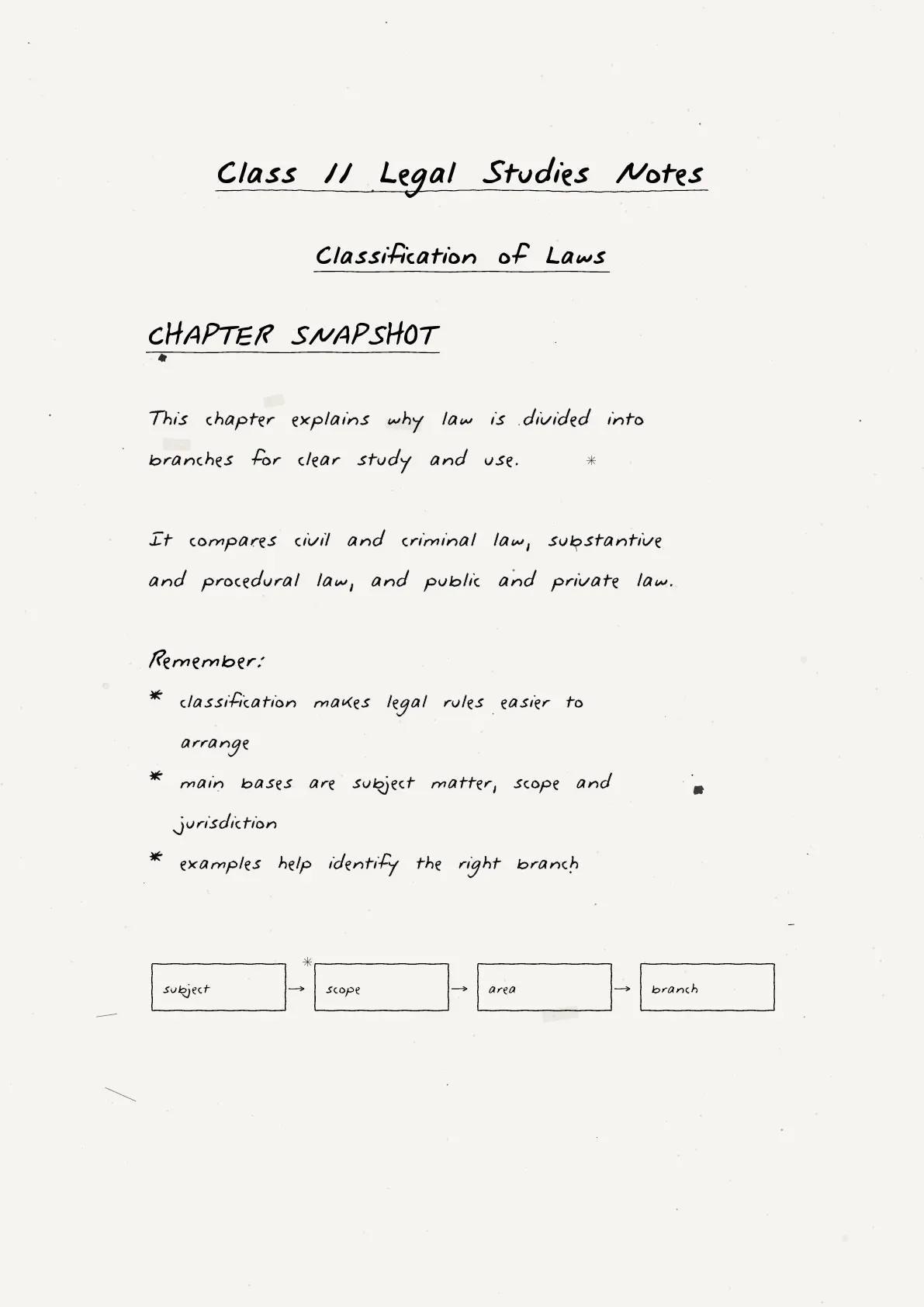
NCERT Handwritten Notes for Class 11 Legal Studies Chapter 7 Classification of Laws help students revise civil law, criminal law, substantive law, procedural law, international law and municipal law for the 2026-27 session.
- Resource: topper-style handwritten revision notes PDF for Legal Studies Classification of Laws.
- Chapter focus: law classification by subject matter, scope and jurisdiction, with public and private law branches.
- Revision use: quick comparison tables, branch-identification examples and common mistakes before tests.

Student Feedback: In a Collegedunia classroom survey of 12,460 students, 76% said the branch-identification table helped them revise legal classification faster.
Classification of Laws Handwritten Notes Overview
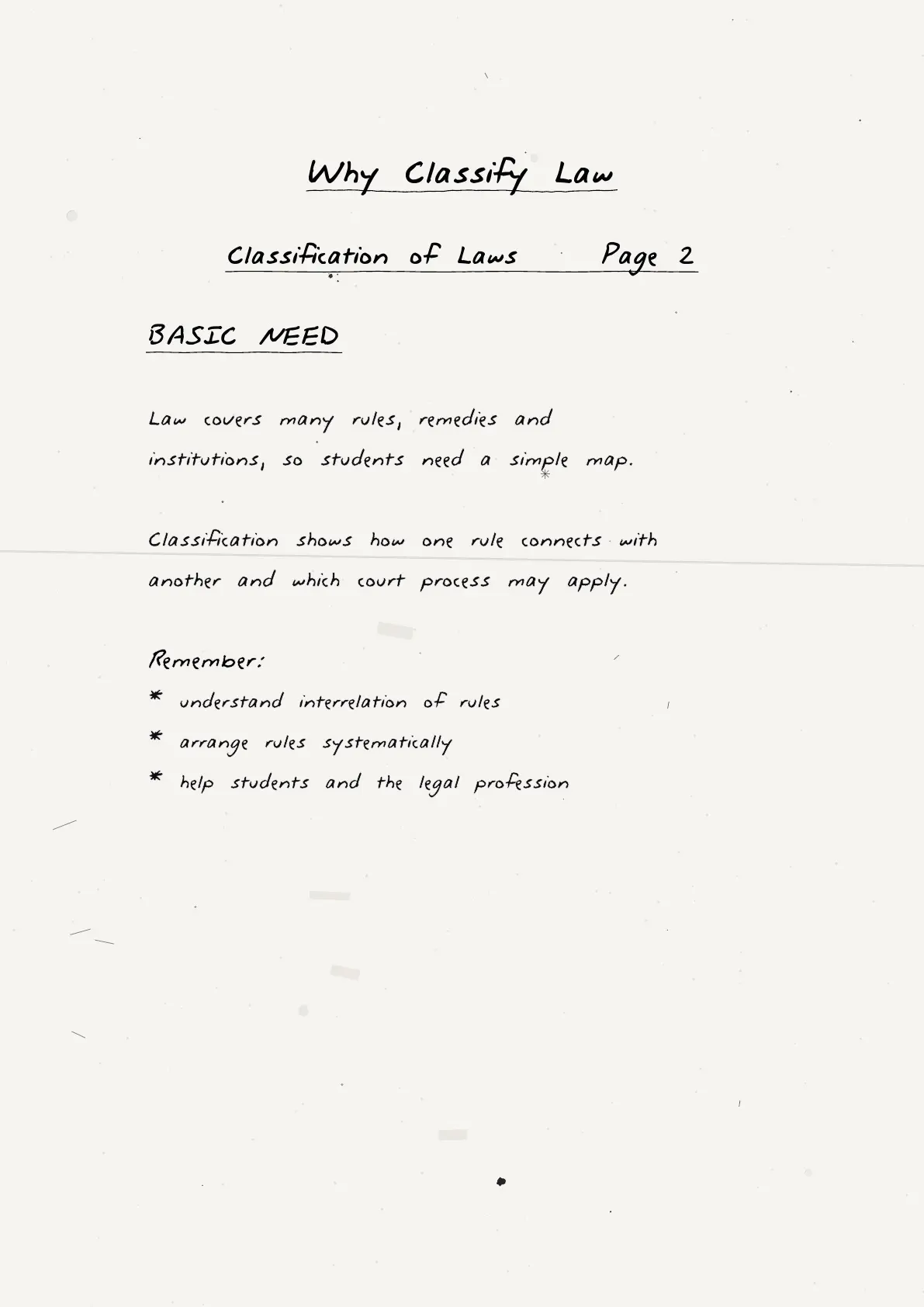
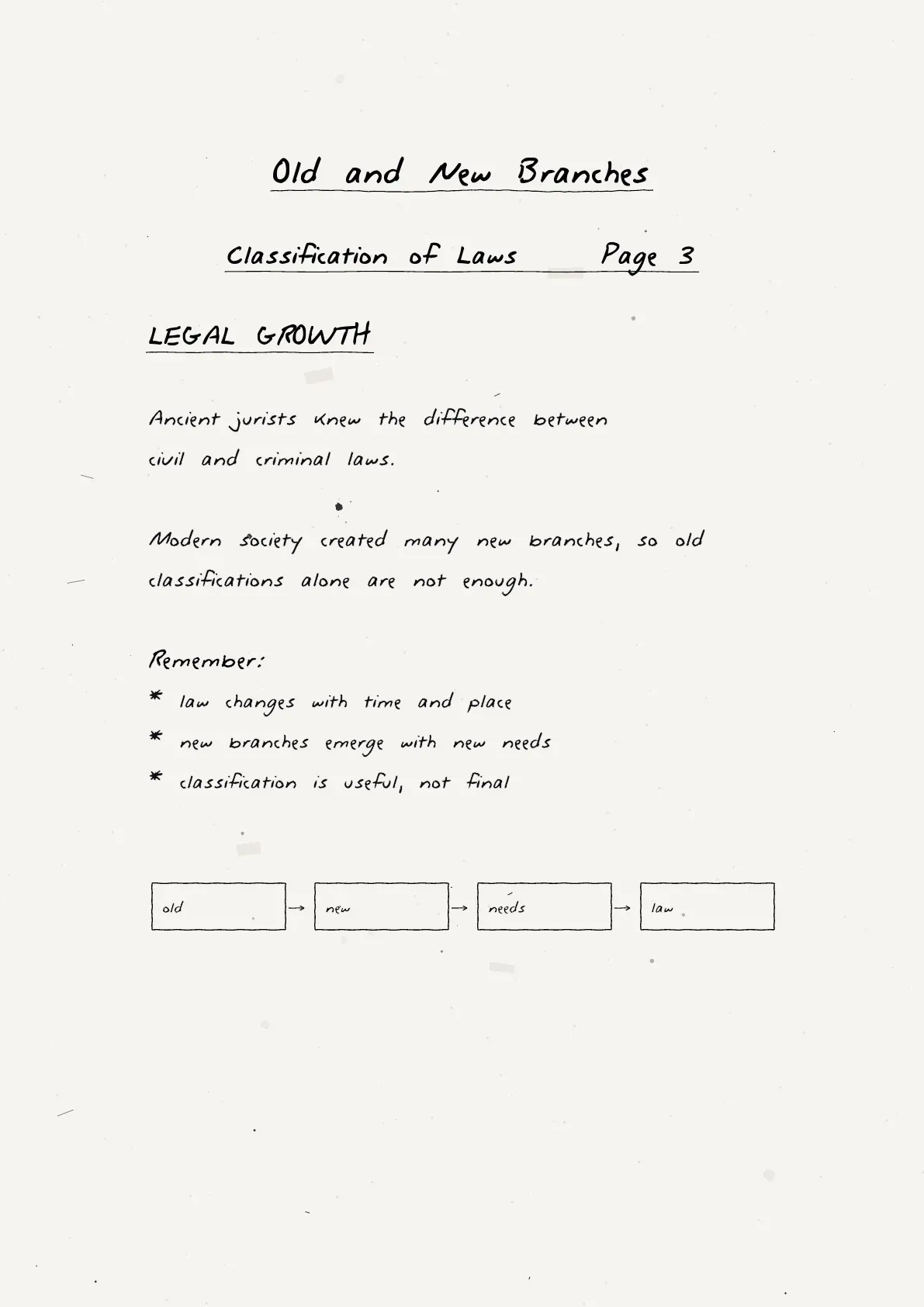
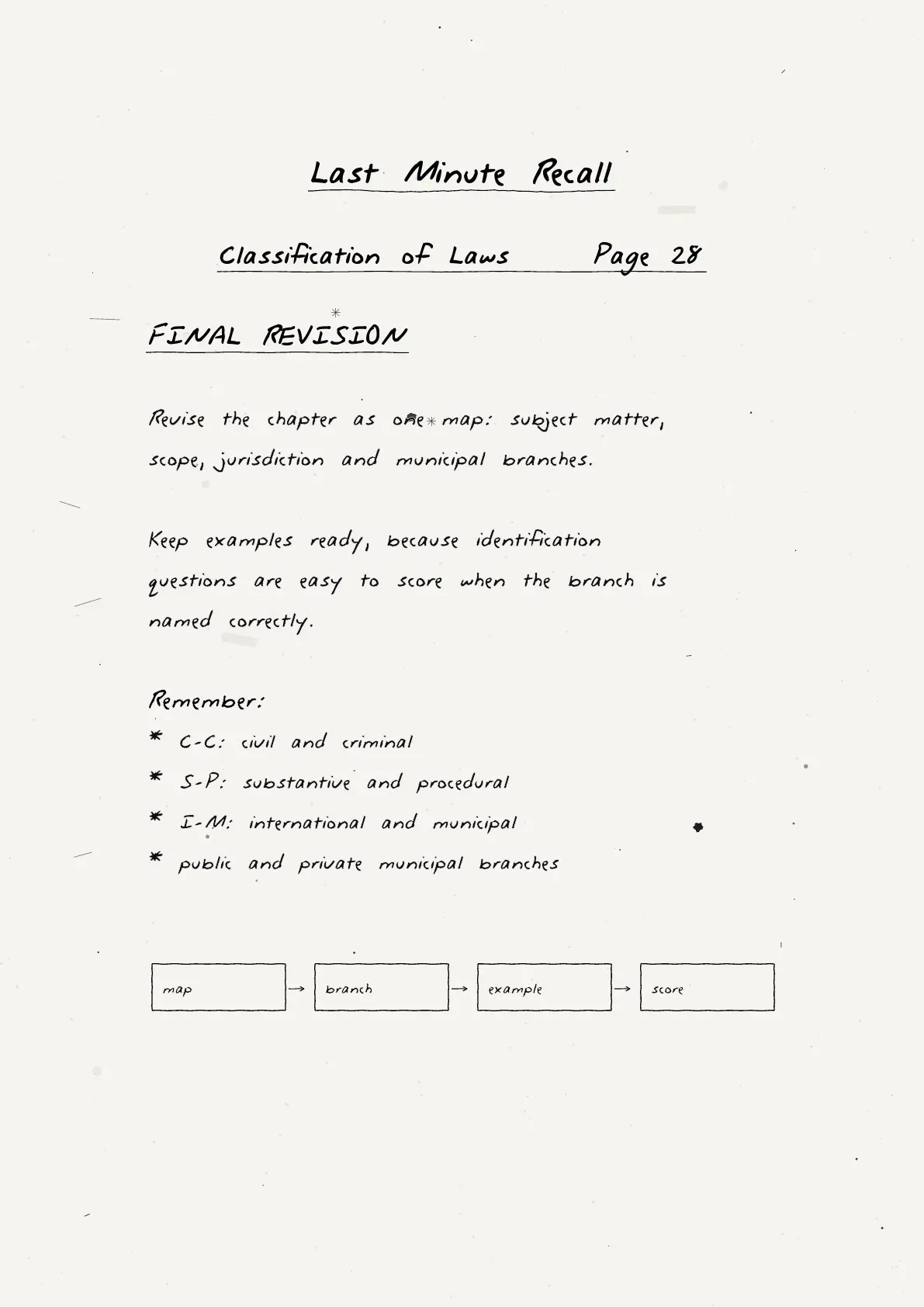
The Classification of Laws handwritten notes turn a branch-heavy chapter into a simple law map. Students can revise why classification is useful, then study civil, criminal, substantive, procedural, international, municipal, public and private law.
- Best starting point: remember the three bases: subject matter, scope and jurisdiction.
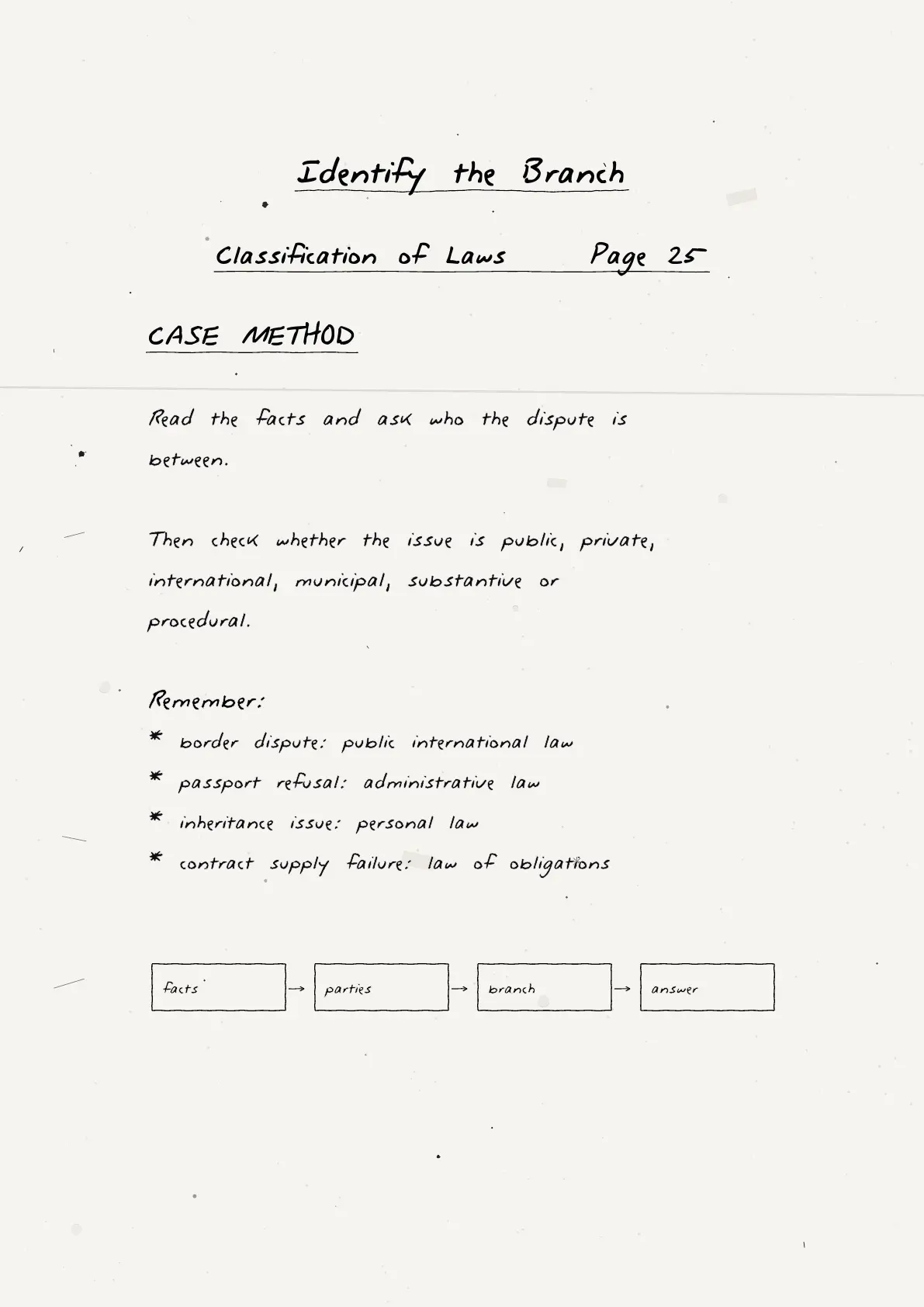
- Scoring area: examples that ask students to identify the branch of law.
- Long-answer route: define classification, write benefits, then compare branches with examples.
Civil Law and Criminal Law
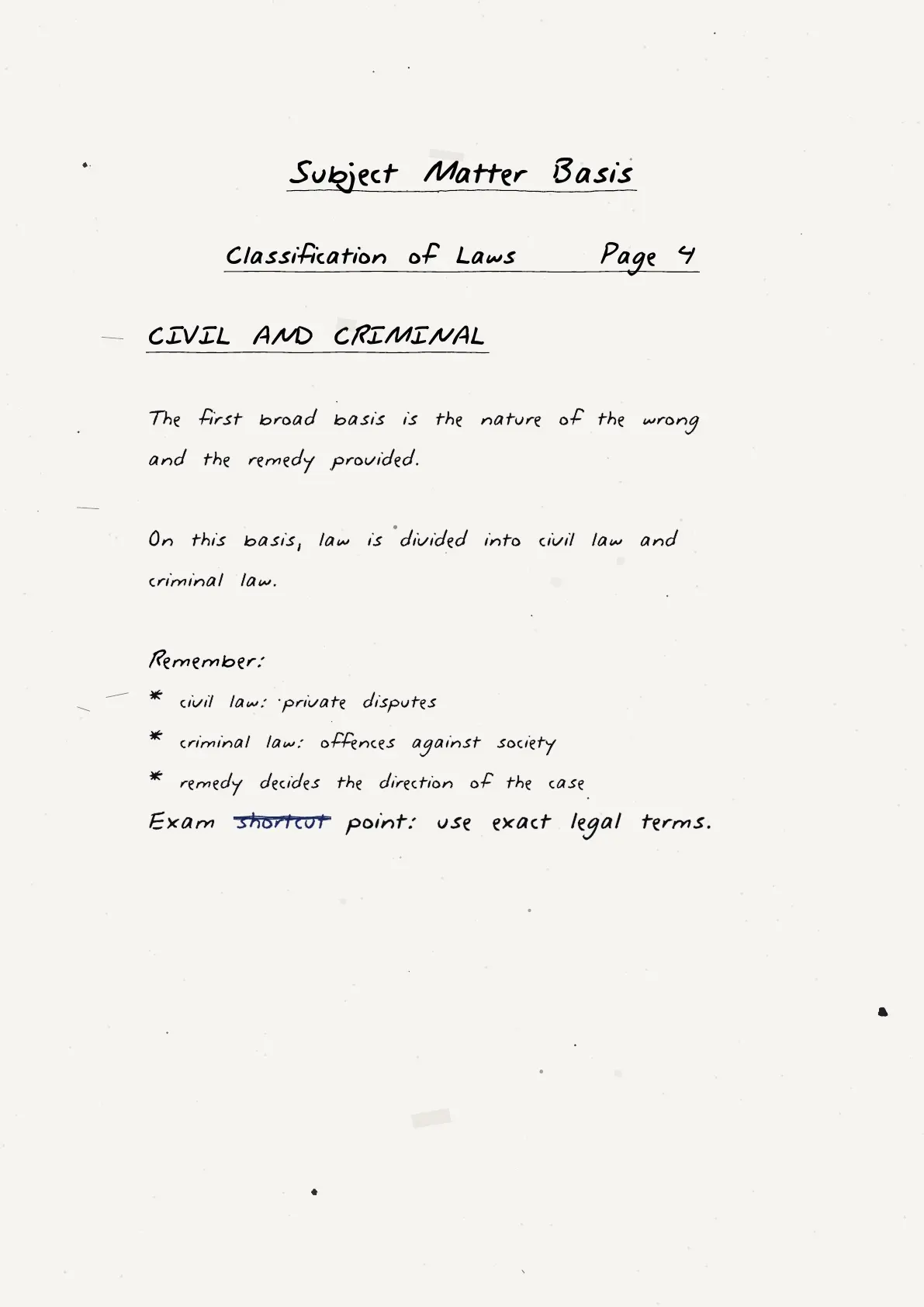
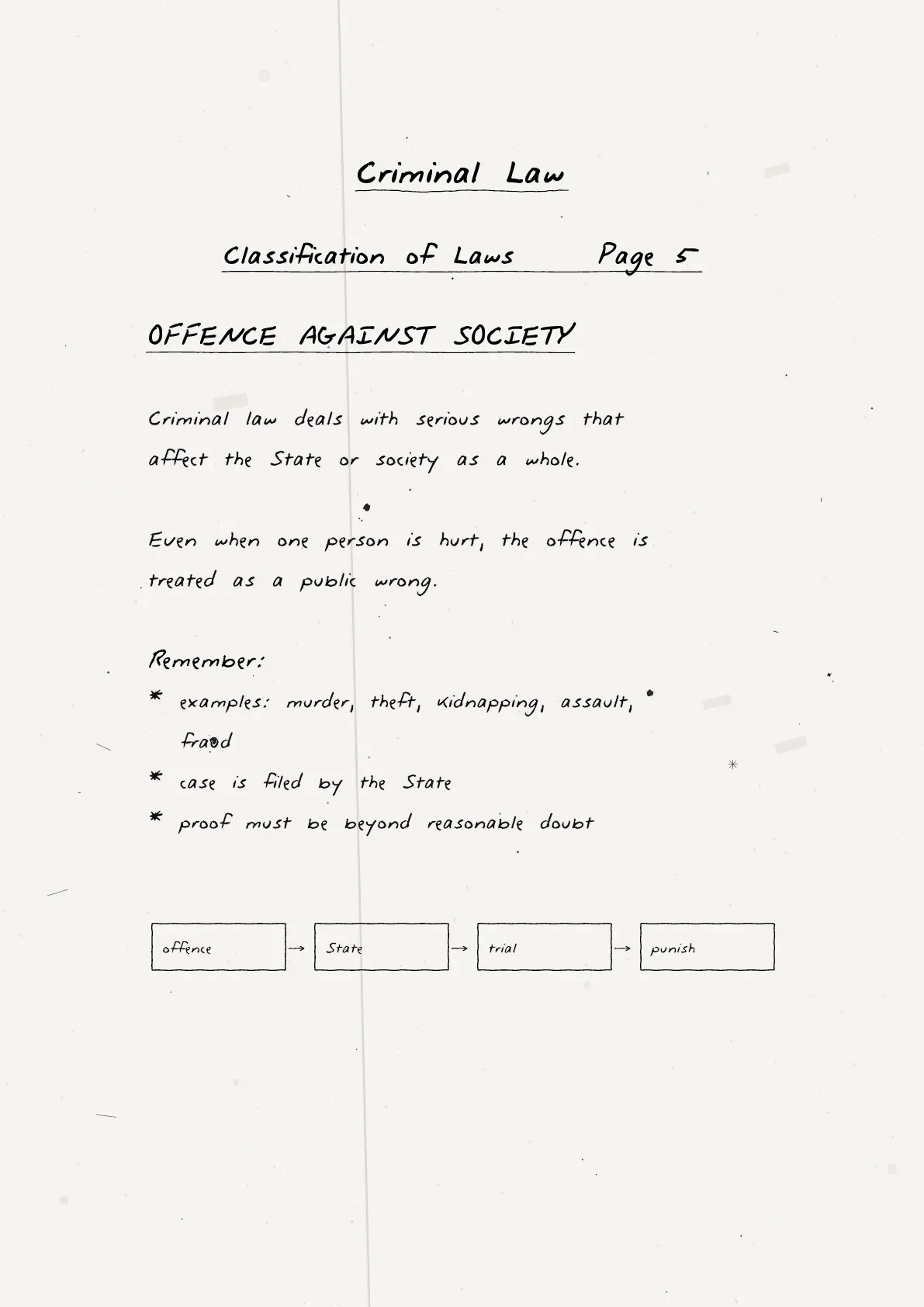
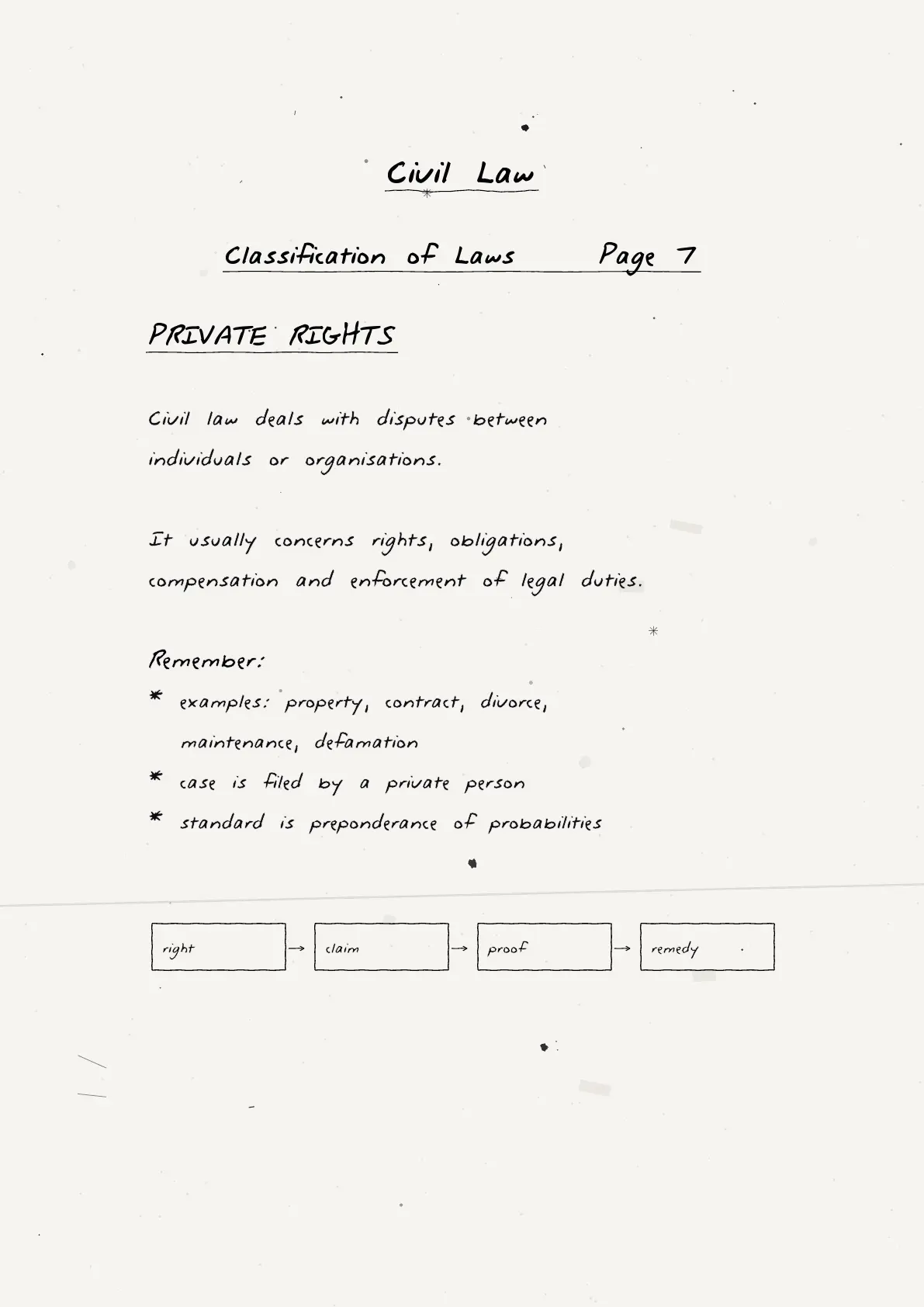
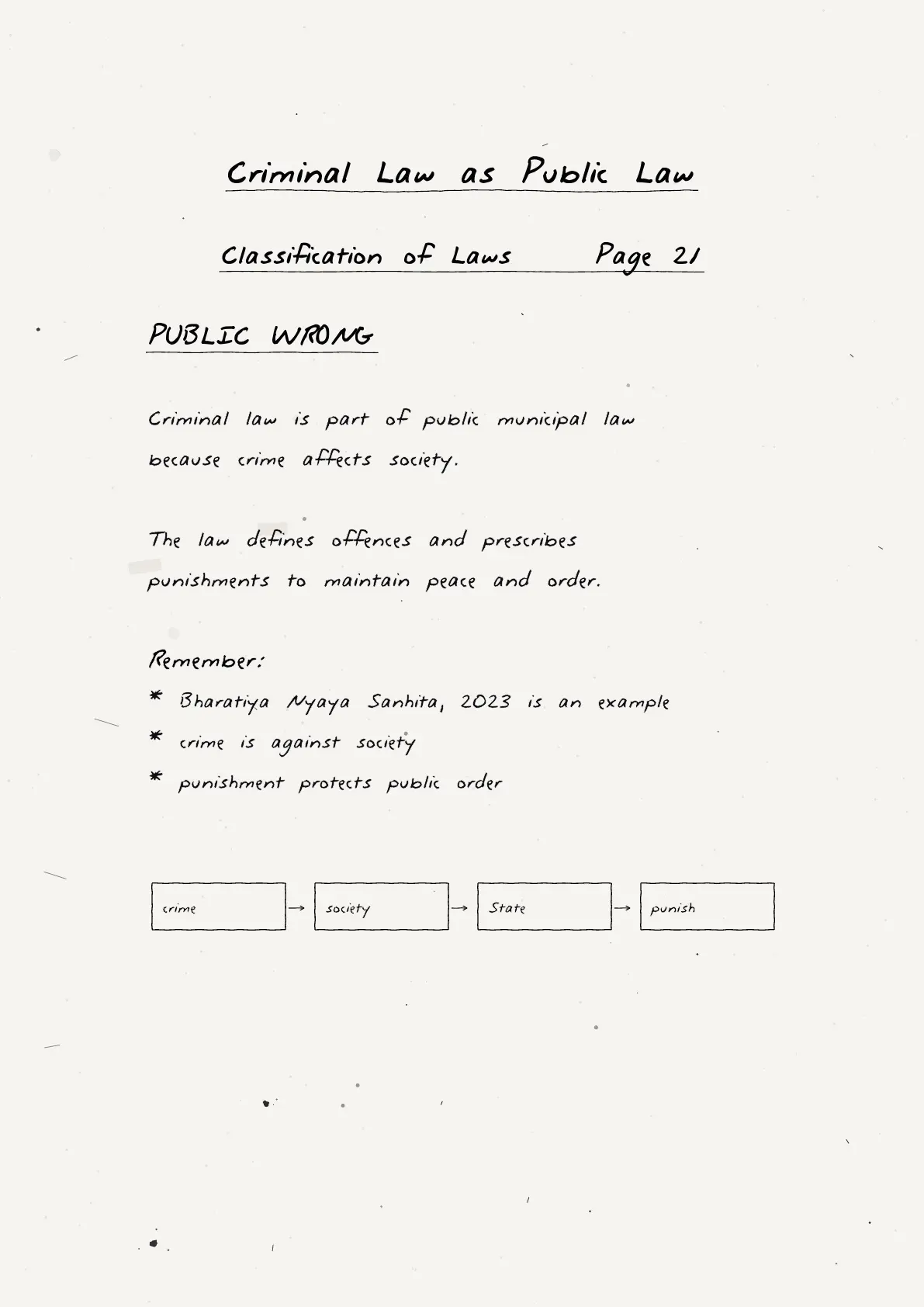
Civil law deals with disputes between individuals or organisations. Criminal law deals with offences against the State or society as a whole.
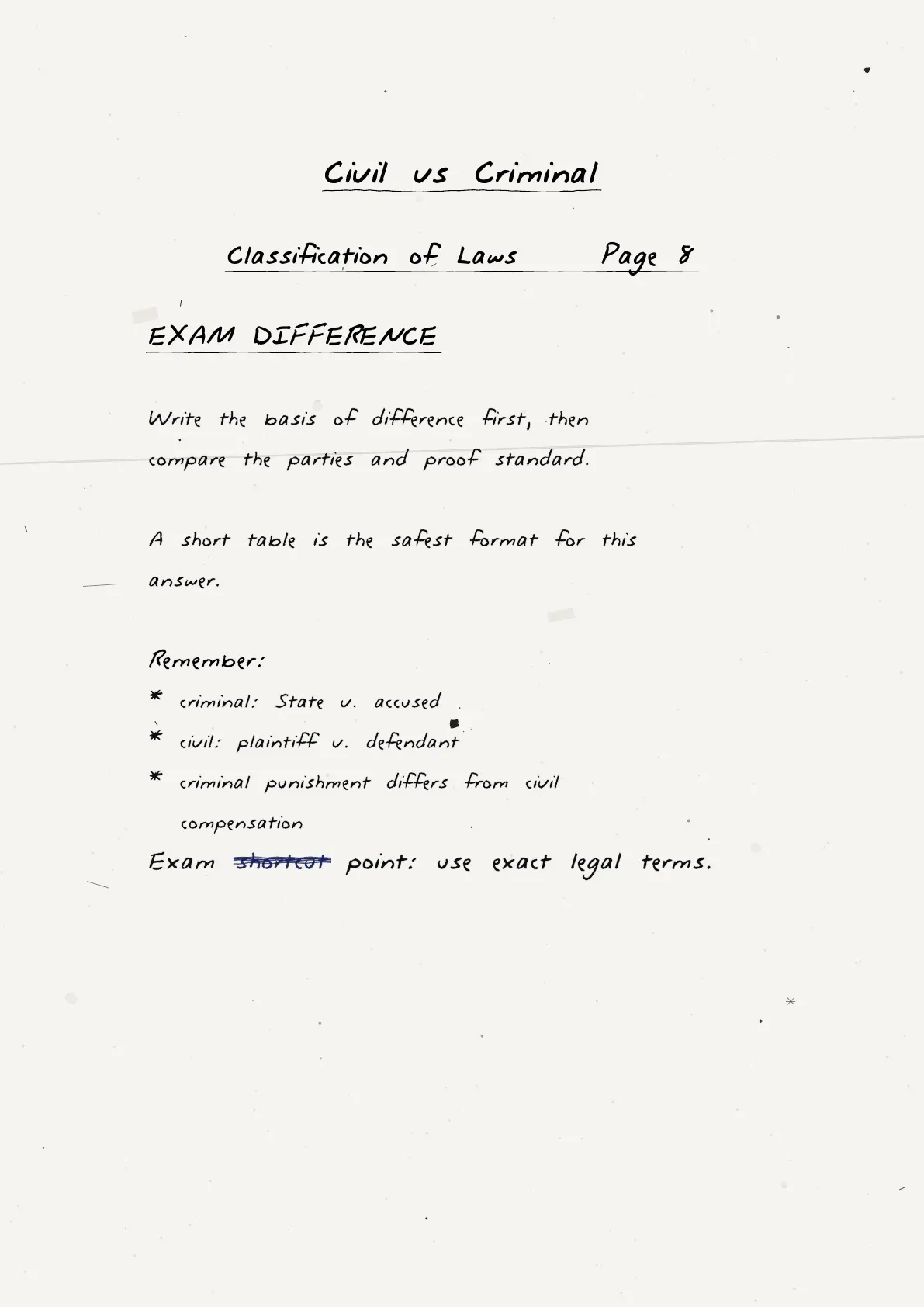
| Basis | Civil law | Criminal law |
|---|---|---|
| Nature of wrong | Private dispute about rights and duties. | Public wrong against society. |
| Who files case | Private person or organisation. | State or government. |
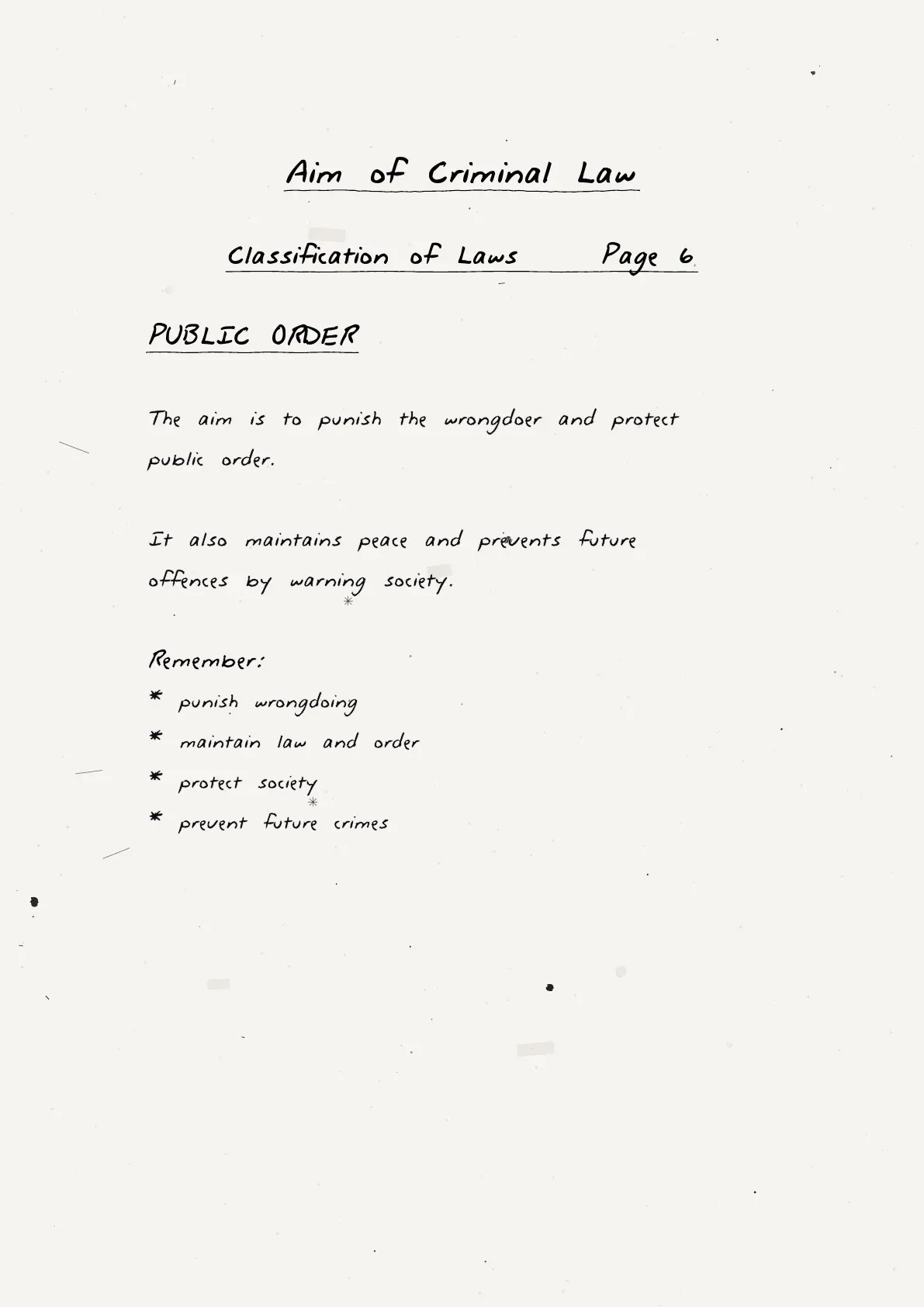
| Main aim | Compensation, enforcement or dispute resolution. | Punishment, public order and prevention. |
| Proof standard | Preponderance of probabilities. | Beyond reasonable doubt. |
Classification of Laws Video for Class 11 Legal Studies
Source: Magnet Brains on YouTube
Substantive Law and Procedural Law
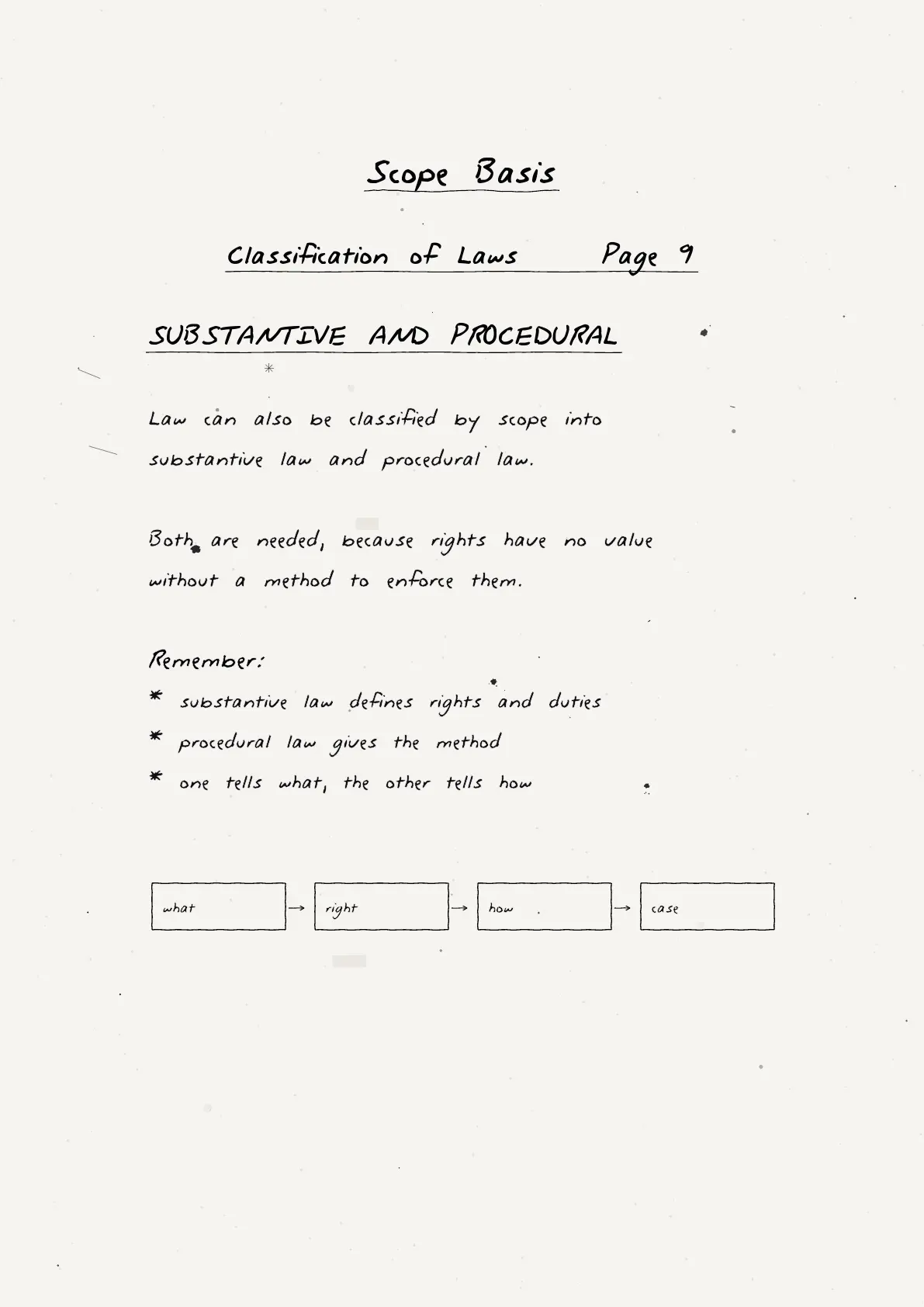
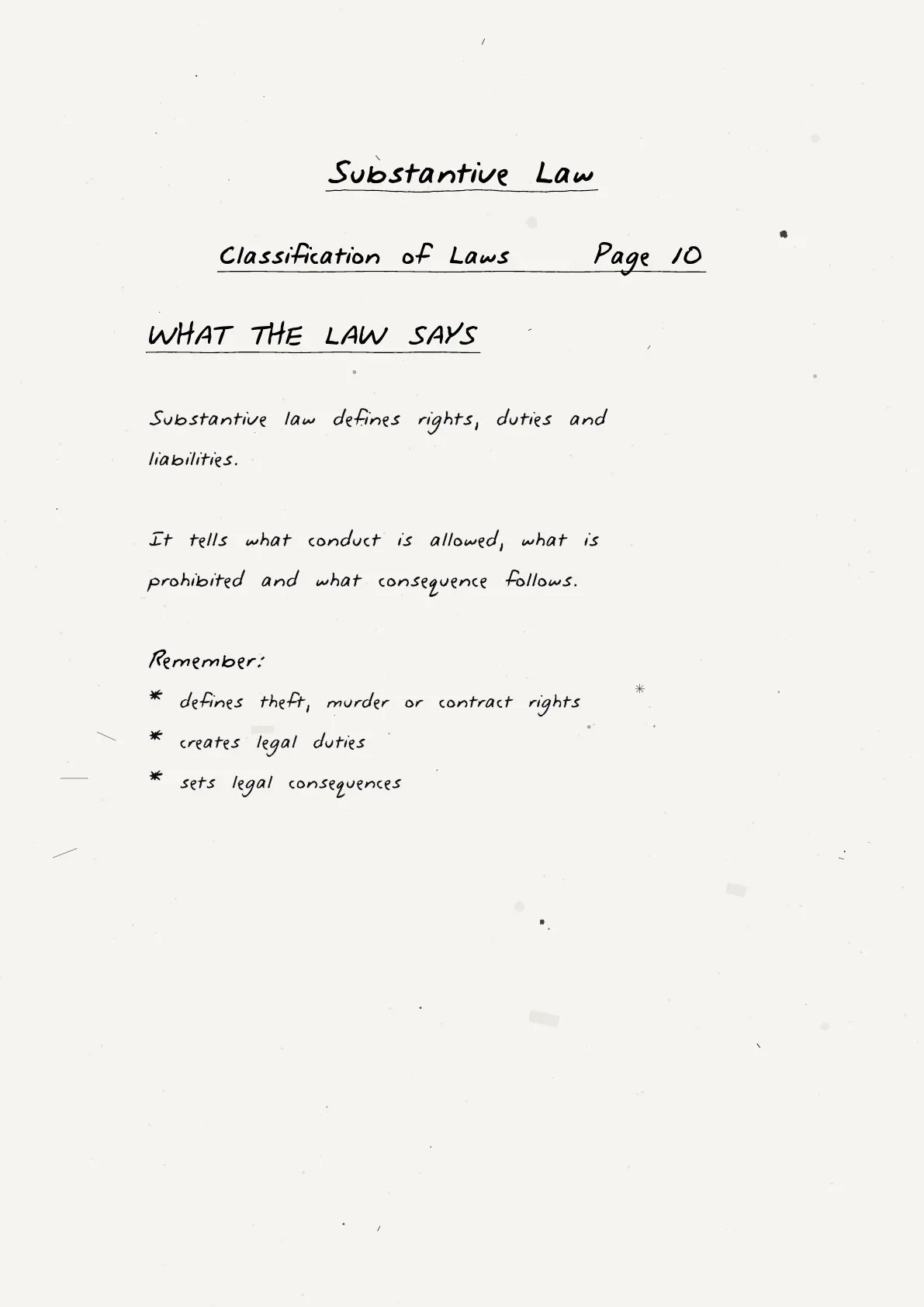
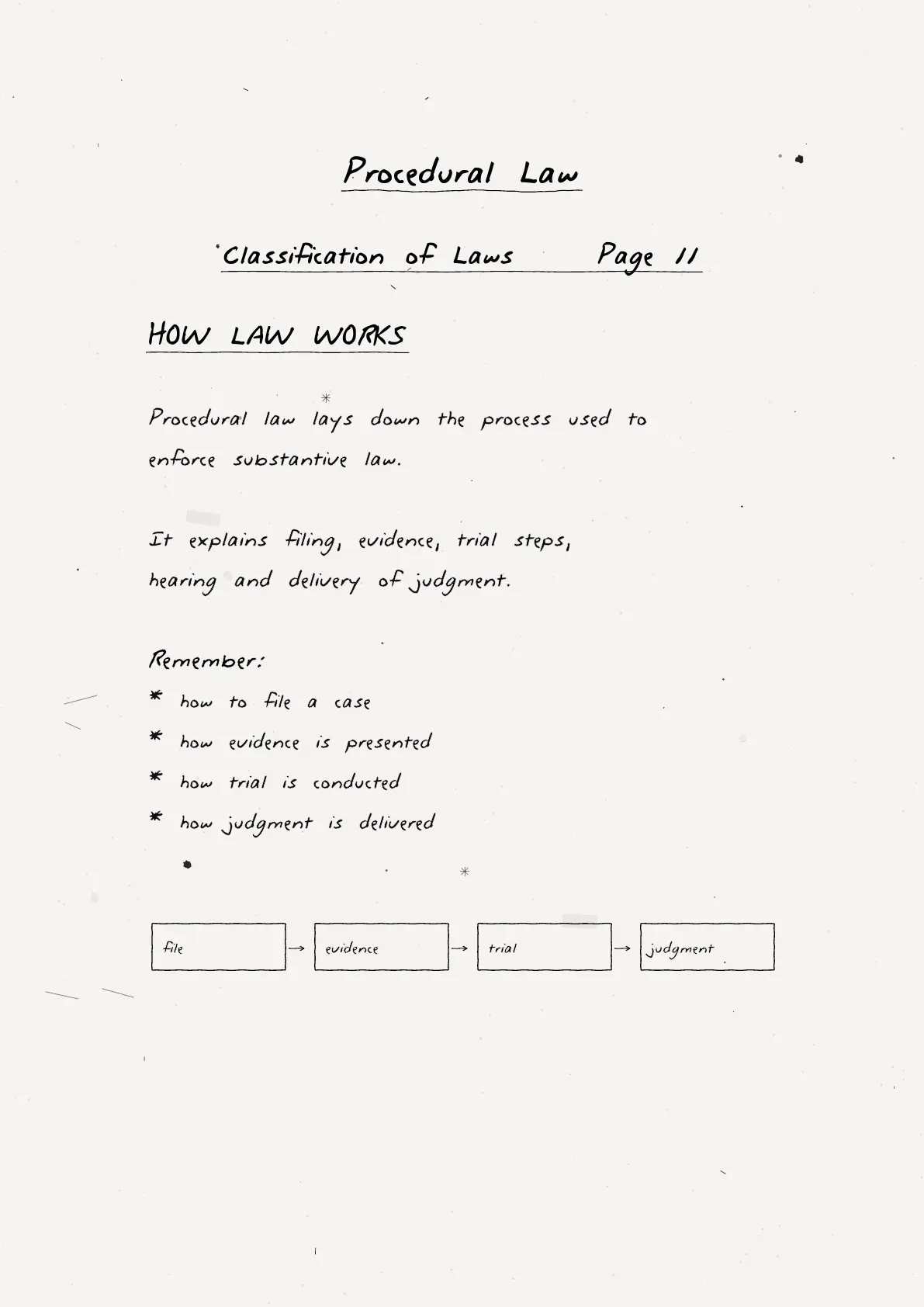
Substantive law defines rights, duties and liabilities. Procedural law gives the process through which those rights and duties are enforced.
| Law type | Plain meaning | Exam cue |
|---|---|---|
| Substantive law | Tells what the law says and what conduct is allowed or prohibited. | Defines offences, rights and liabilities. |
| Procedural law | Tells how a case moves through filing, evidence, trial and judgment. | Enforces substantive law. |
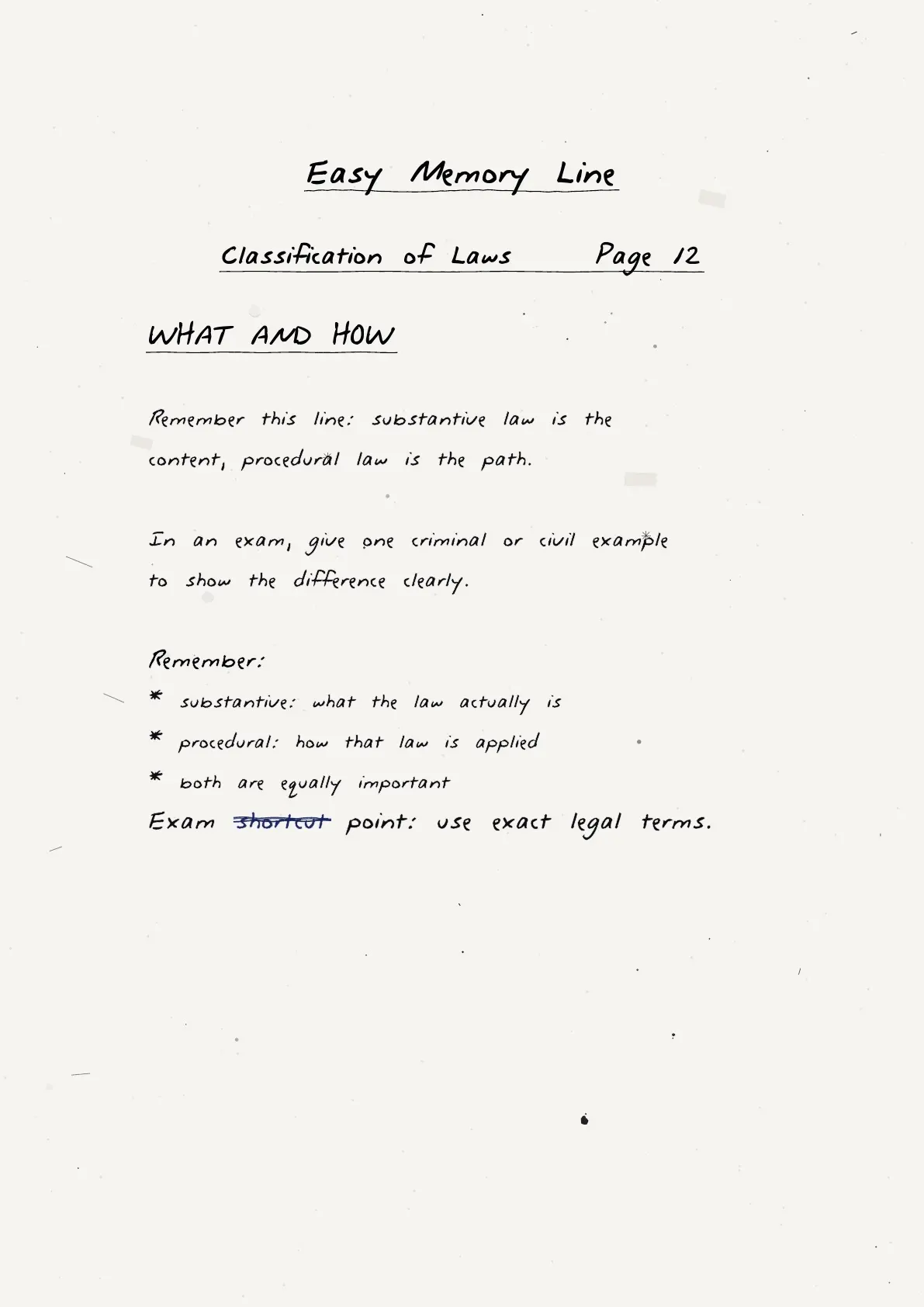
| Memory line | Substantive is the content. | Procedural is the path. |
International Law and Municipal Law
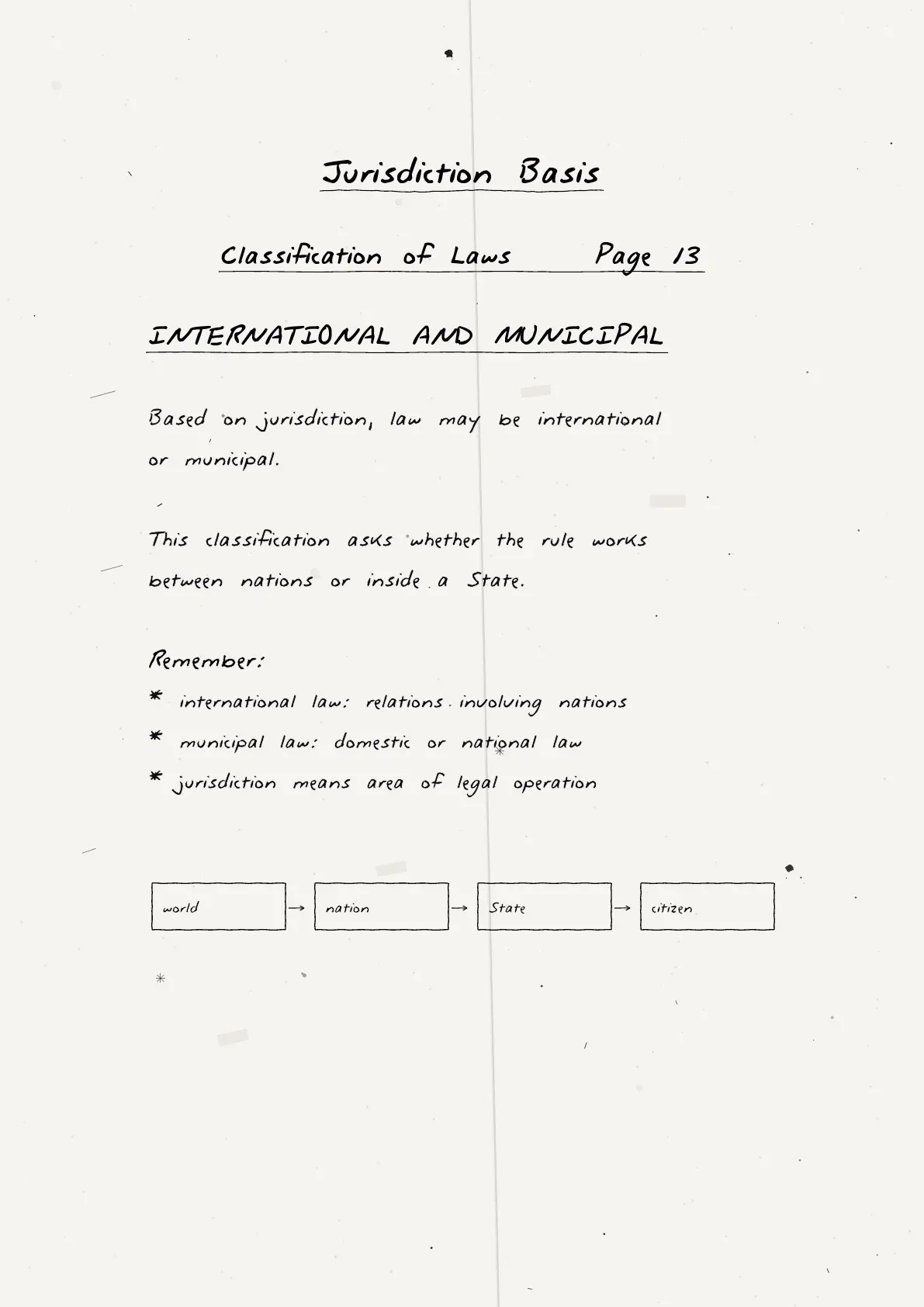
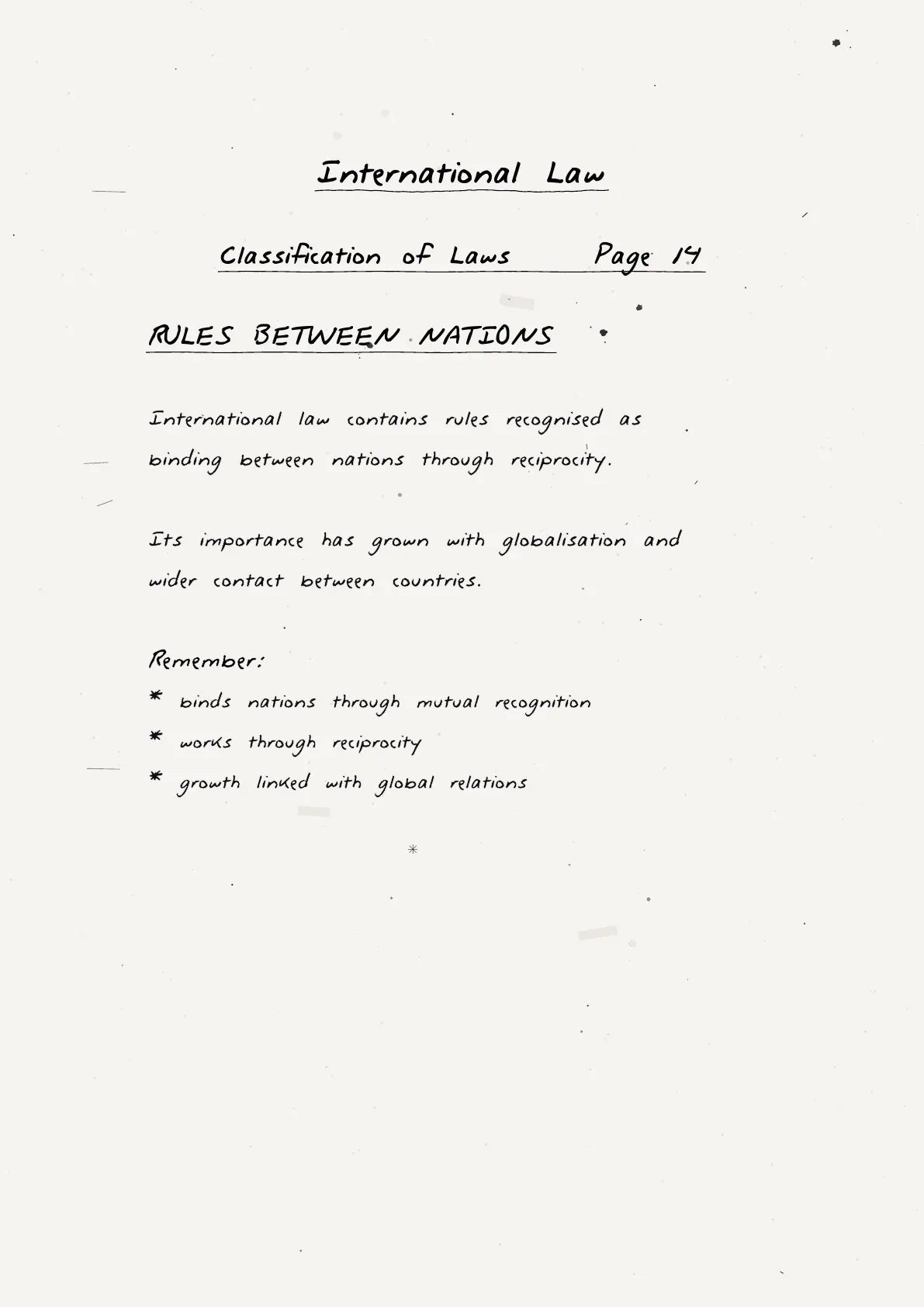
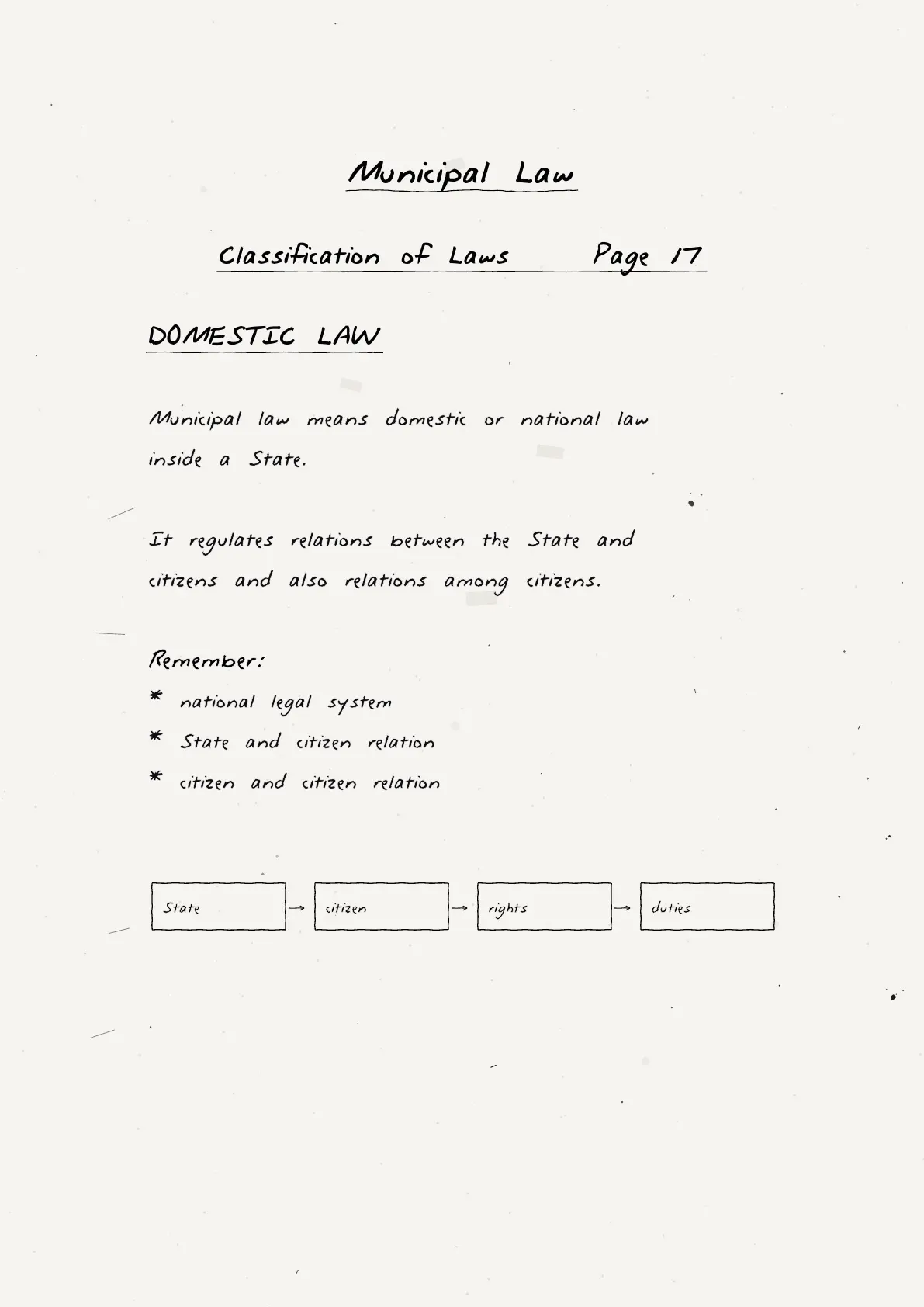
International law applies to rules recognised between nations. Municipal law is domestic law inside a State and regulates State-citizen and citizen-citizen relations.
| Branch | Meaning | Sub-types or examples |
|---|---|---|
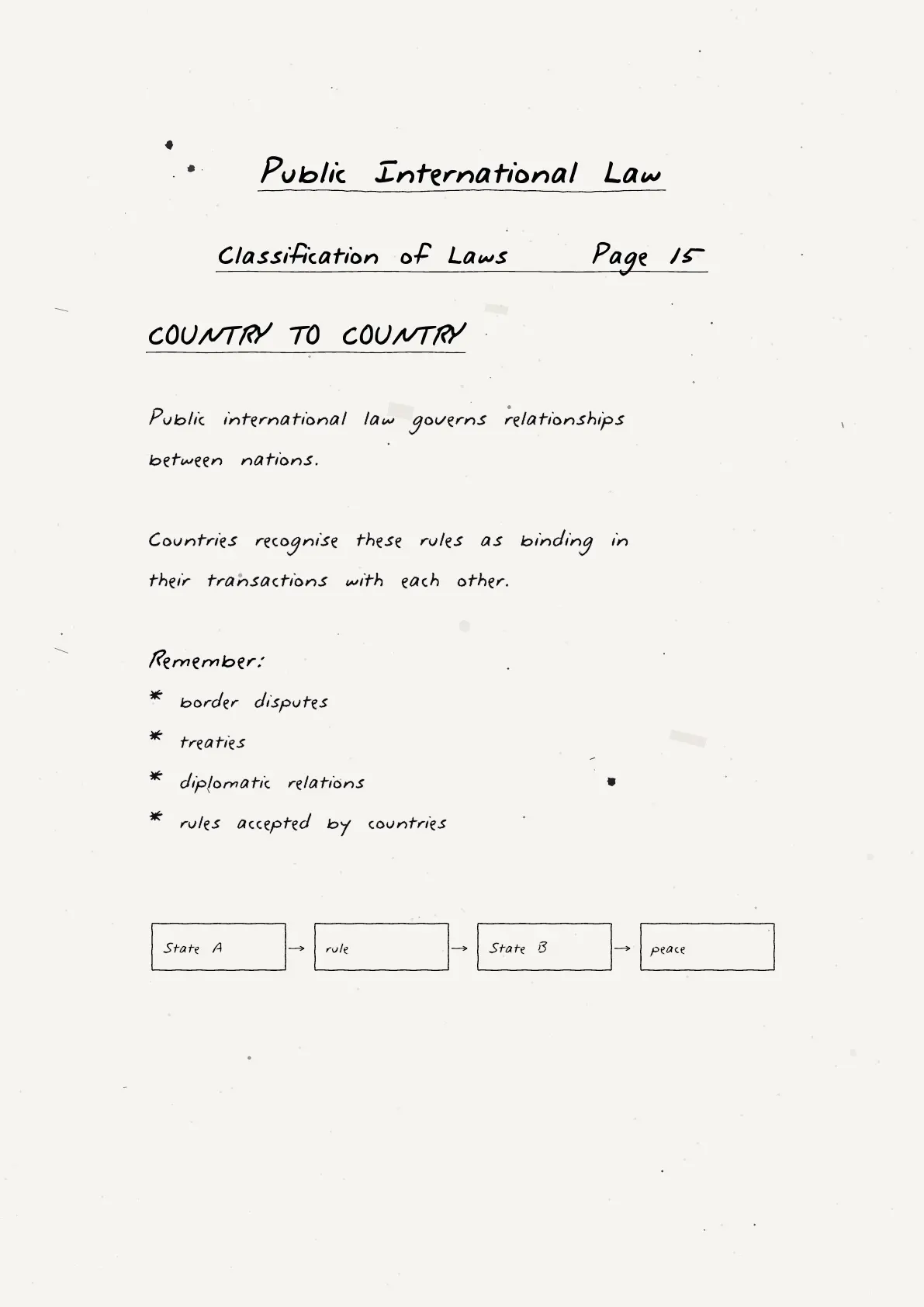
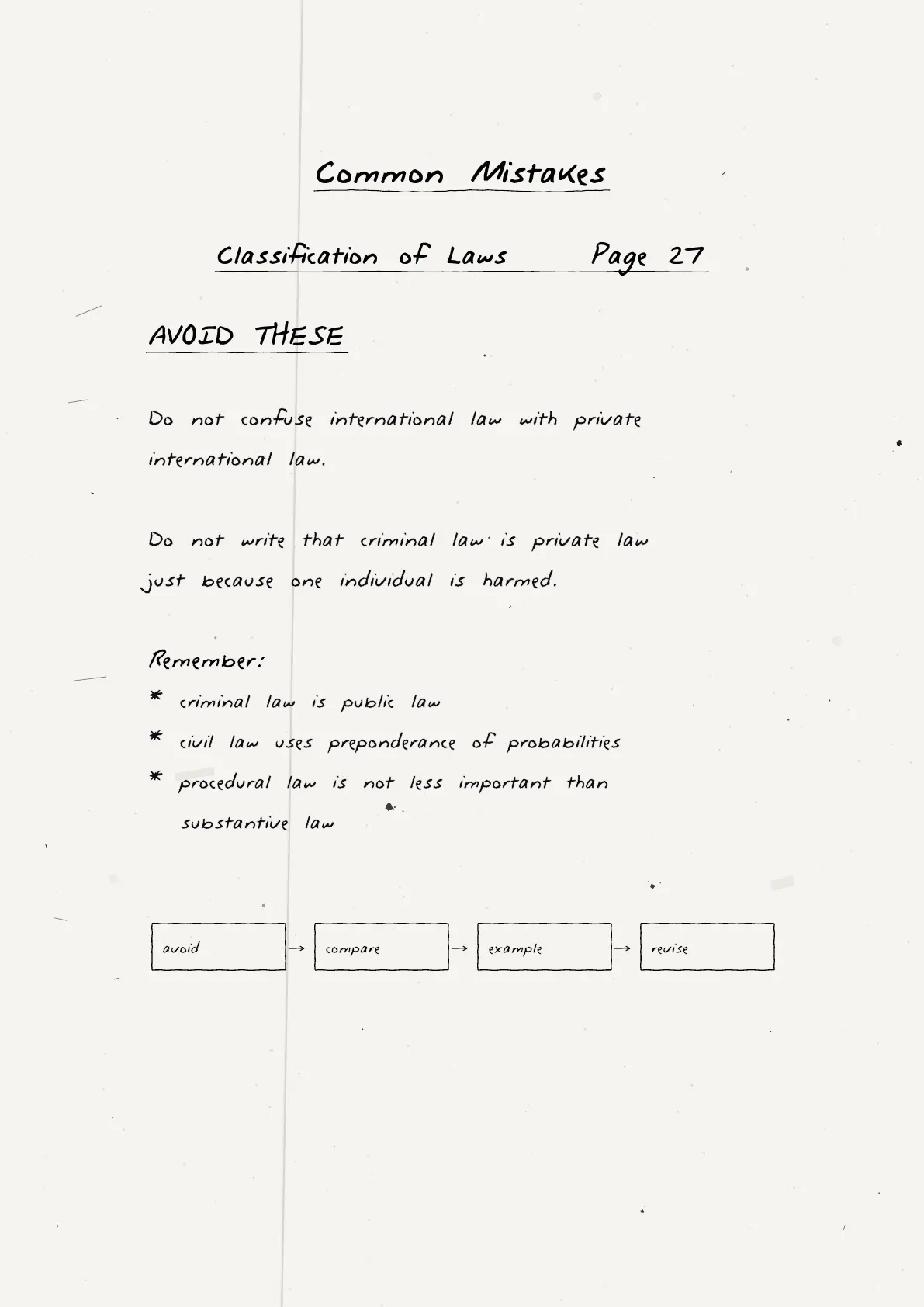
| Public international law | Rules governing relations between nations. | Border disputes, treaties and diplomatic rules. |
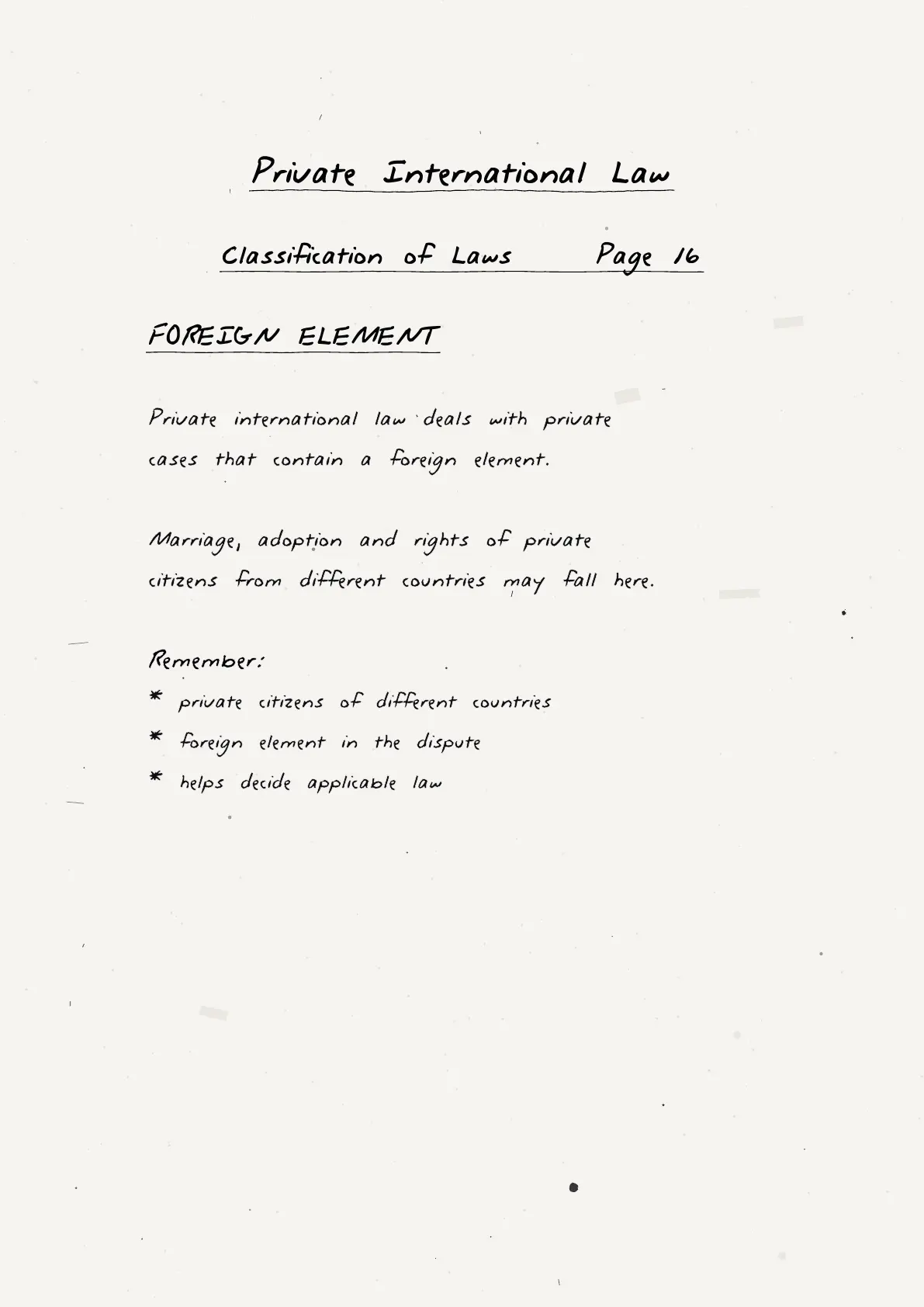
| Private international law | Private cases that contain a foreign element. | Marriage or adoption involving different countries. |
| Municipal law | Domestic or national law. | Public municipal law and private municipal law. |
Public and Private Municipal Law Branches
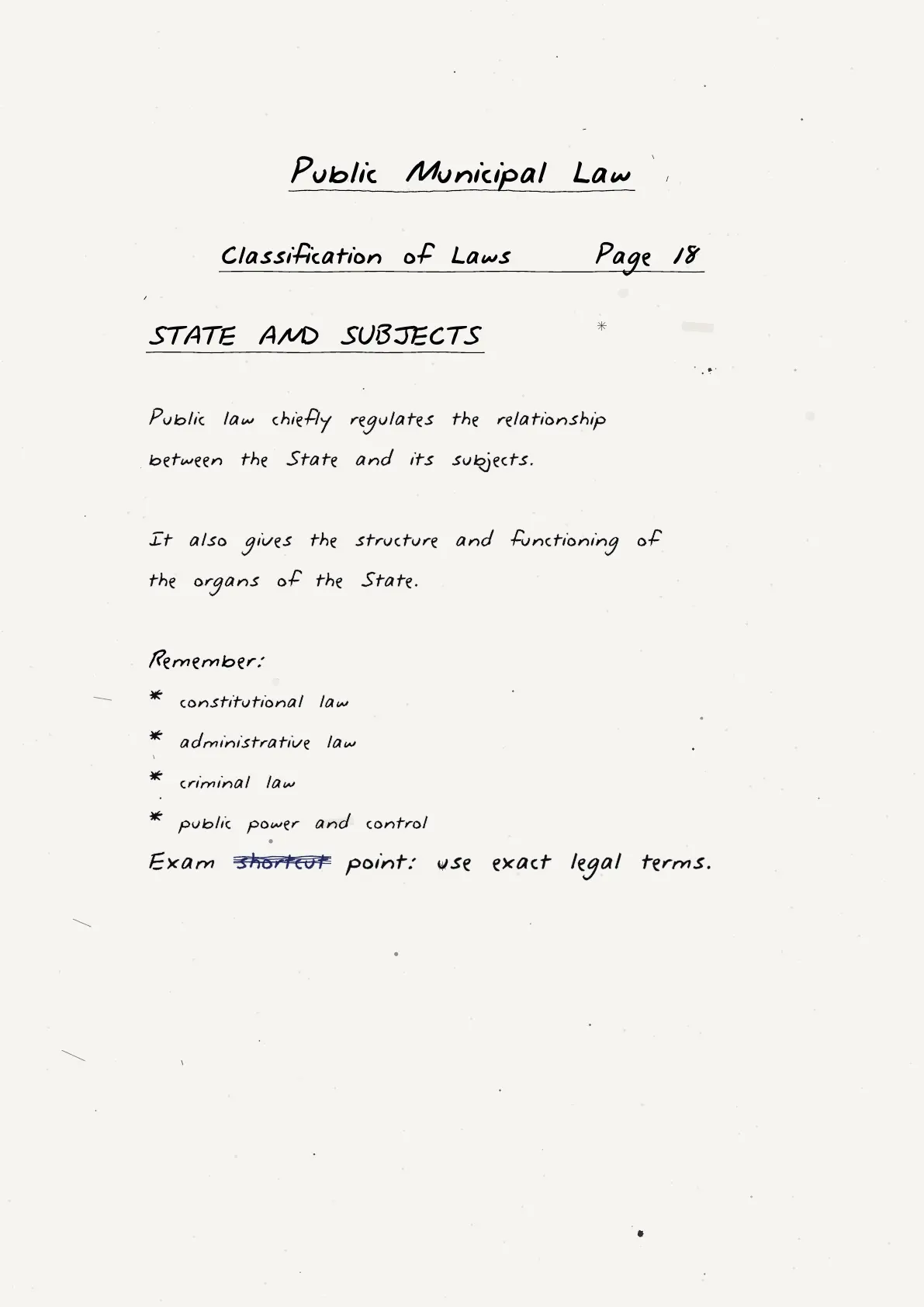
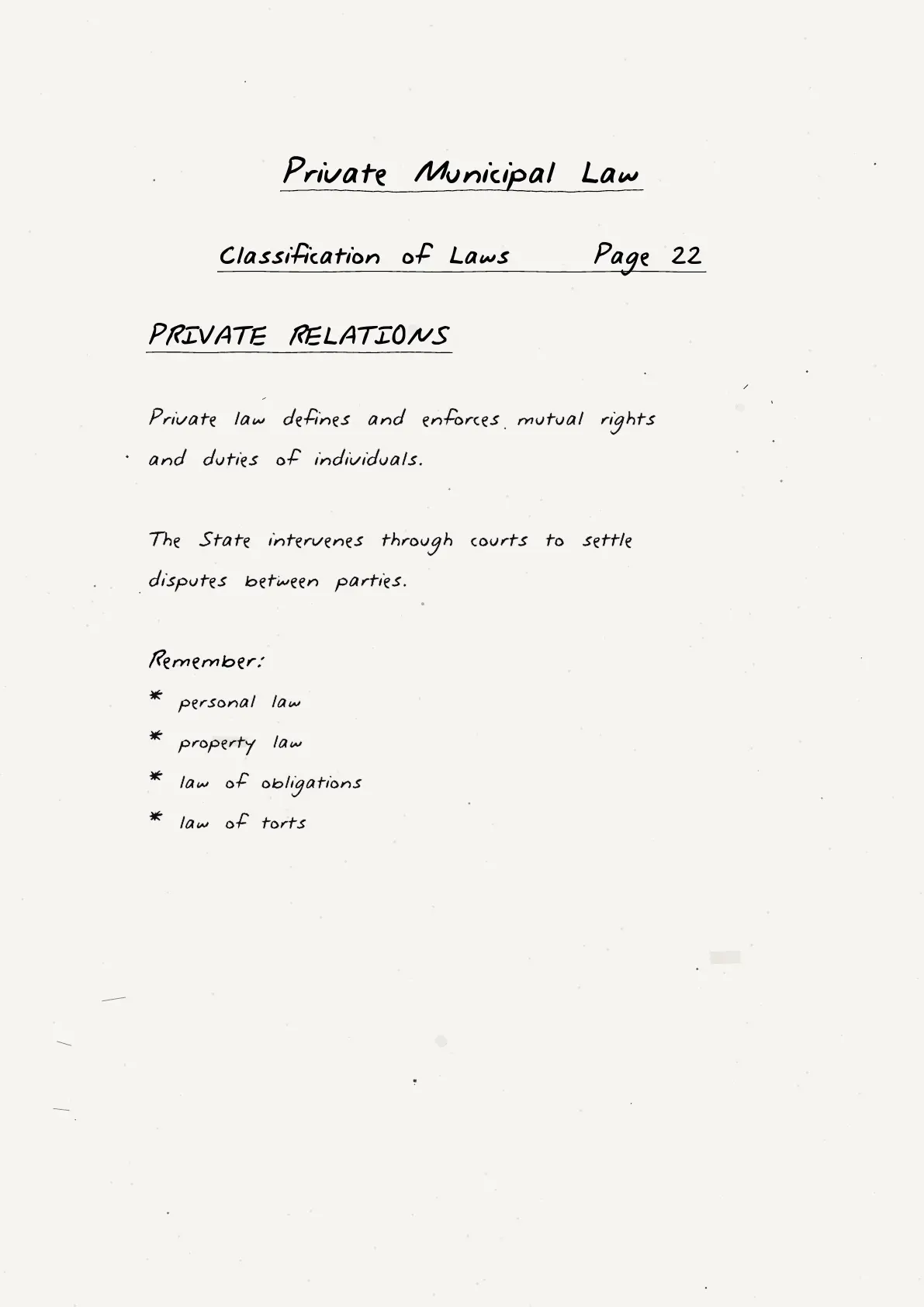
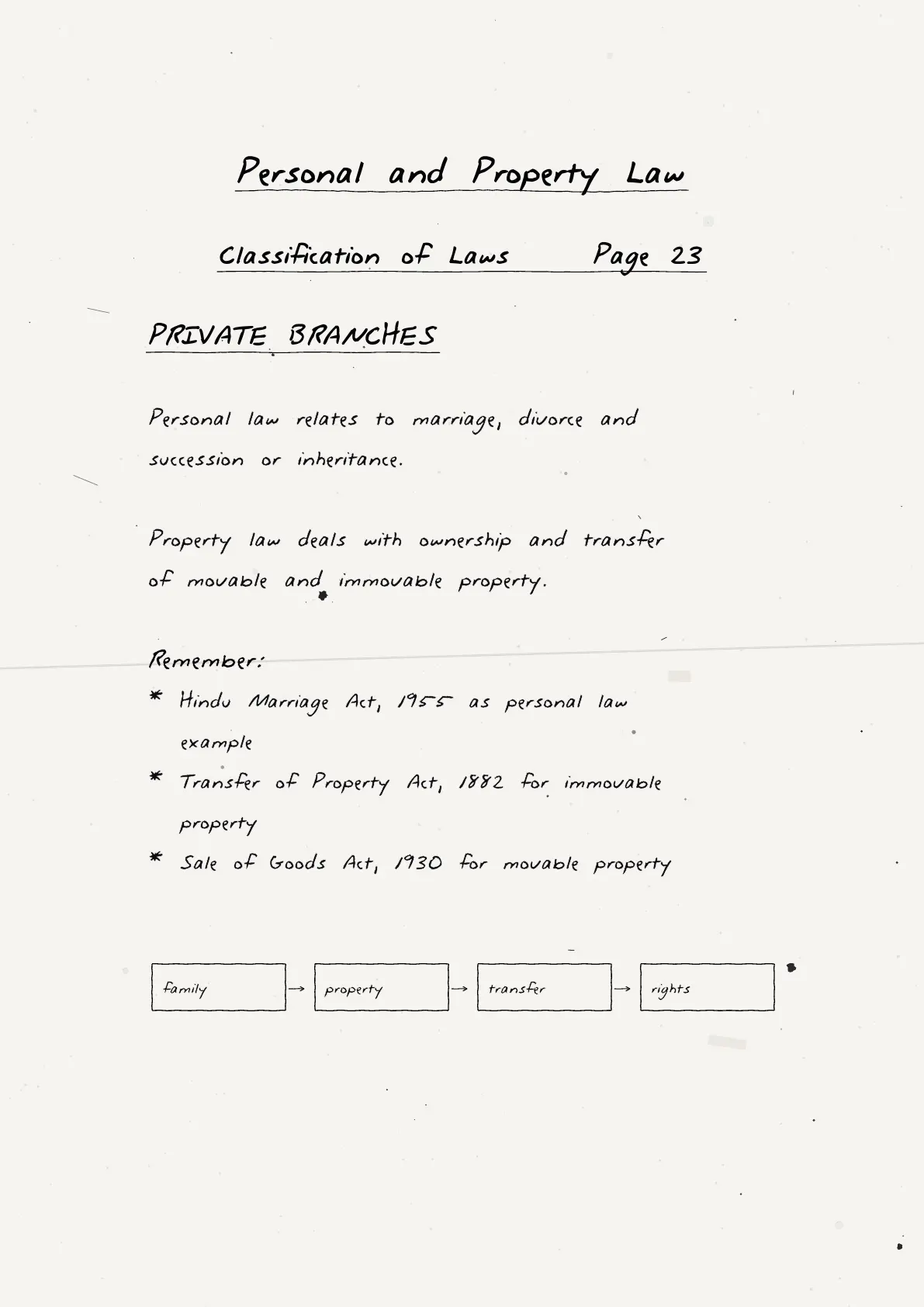
Public municipal law mainly controls the relationship between the State and its subjects. Private municipal law deals with mutual rights and duties among individuals.
| Municipal law branch | What it covers | Example cue |
|---|---|---|
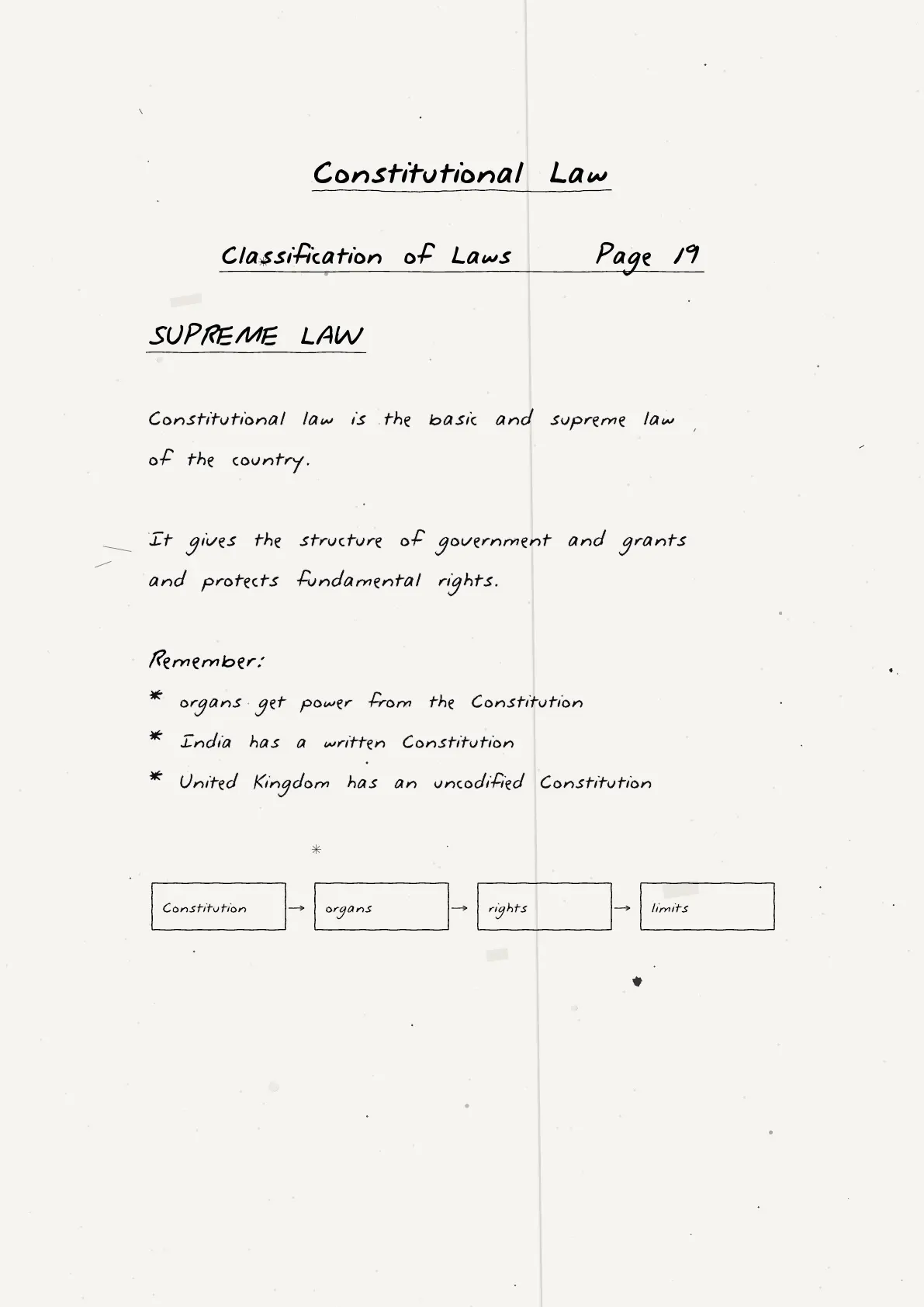
| Constitutional law | Structure of government and fundamental rights. | Supreme law of the country. |
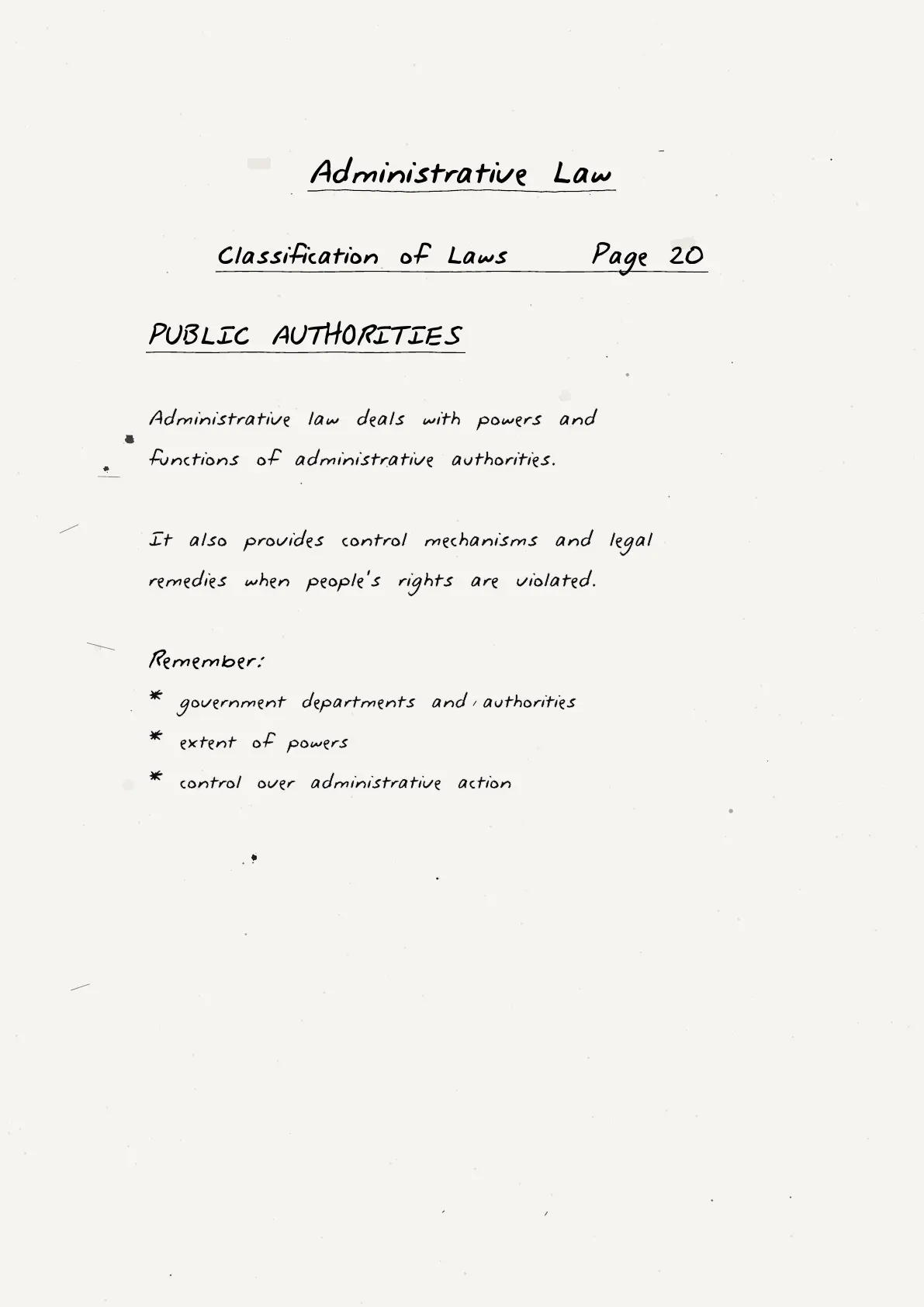
| Administrative law | Powers and functions of public authorities. | Passport refusal without reason. |
| Personal law | Marriage, divorce and succession. | Inheritance after intestate death. |
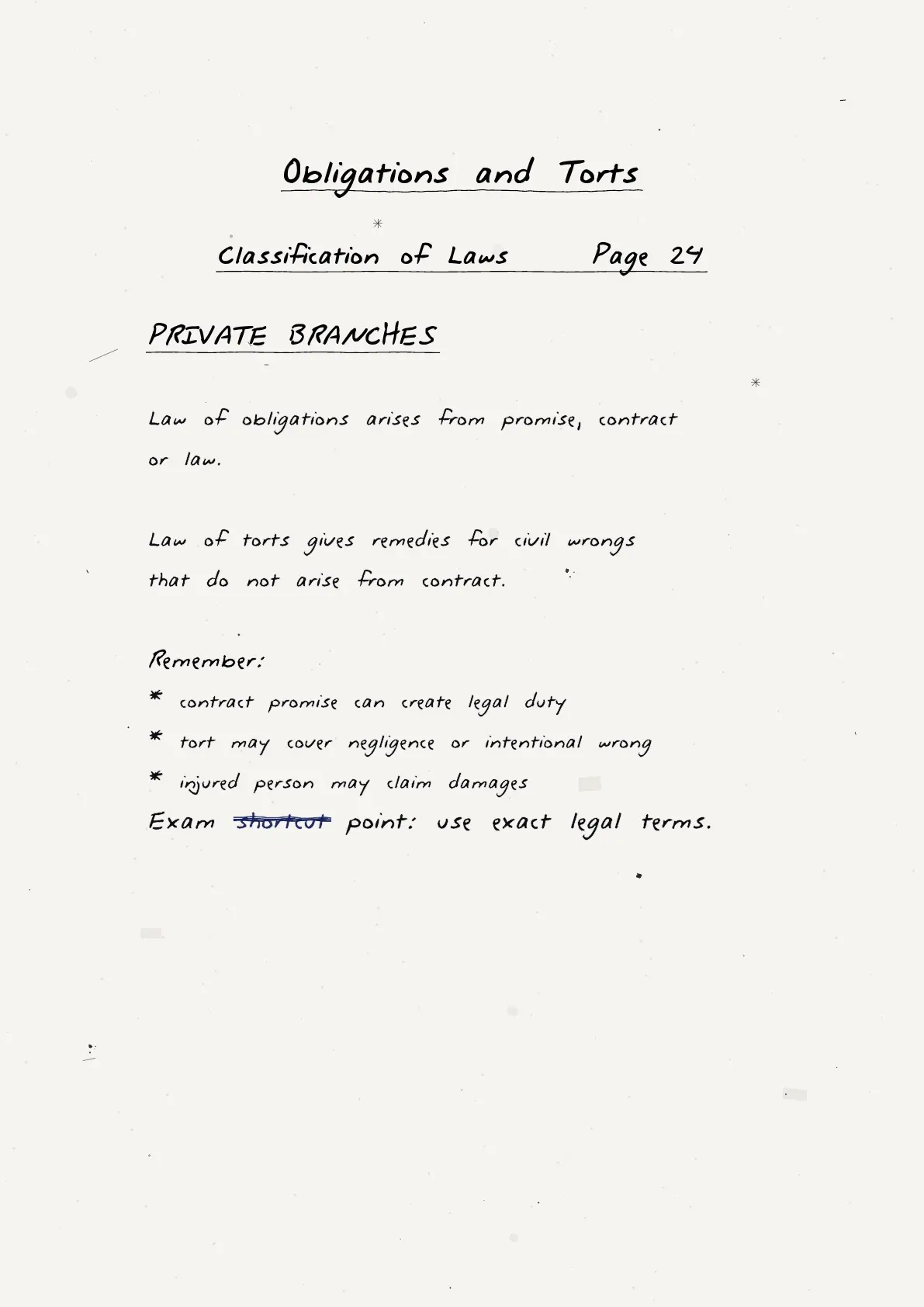
| Law of torts | Civil wrongs outside contract. | Injury caused by negligence. |
Important Differences for Exam Revision
Most short questions from this chapter test clean classification. Students should identify the branch first and then add one reason from the facts.
- Civil vs criminal: civil law protects private rights, while criminal law protects society from offences.
- Substantive vs procedural: substantive law states rights and duties, while procedural law explains how they are enforced.
- Public vs private international law: public international law is country-to-country, while private international law involves private citizens with a foreign element.
- Public vs private municipal law: public law involves State power, while private law covers relations among individuals.
Related Class 11 Legal Studies Resources
| Resource | Use it for | Link |
|---|---|---|
| Previous Chapter Handwritten Notes | Revise jurisprudence before classification. | Class 11 Legal Studies Jurisprudence Handwritten Notes |
| NCERT Solutions | Exercise answers for Classification of Laws. | Class 11 Legal Studies Classification of Laws Solutions will be added after the solutions page is live. |
| Handwritten Notes | Quick one-shot revision before tests. | Class 11 Legal Studies Classification of Laws Handwritten Notes |
All Class 11 Legal Studies Handwritten Notes
| Chapter | Title | Handwritten Notes |
|---|---|---|
| Chapter 1 | Concept of State | Open handwritten notes |
| Chapter 2 | Forms and Organs of Government | Open handwritten notes |
| Chapter 3 | Separation of Powers | Open handwritten notes |
| Chapter 4 | Salient Features of the Constitution of India | Open handwritten notes |
| Chapter 5 | Administrative Law | Open handwritten notes |
| Chapter 6 | Jurisprudence, Nature and Meaning of Law | Open handwritten notes |
| Chapter 7 | Classification of Laws | Open handwritten notes |
| Chapter 8 | Sources of Laws | Coming soon |
Class 11 Legal Studies Classification of Laws Handwritten Notes FAQs
Ques. What is covered in Class 11 Legal Studies Classification of Laws handwritten notes?
Ans. The PDF covers civil law, criminal law, substantive law, procedural law, international law, municipal law, public law and private law.
Ques. Why is classification of law important?
Ans. Classification helps students understand the interrelation of rules, arrange rules systematically and identify the correct branch of law in examples.
Ques. What is the difference between substantive and procedural law?
Ans. Substantive law defines rights, duties and liabilities. Procedural law explains the process used to enforce those rights and duties.
Ques. Is criminal law public or private law?
Ans. Criminal law is public law because a crime is treated as a wrong against society, even when one individual is directly harmed.



Comments