



NCERT Handwritten Notes for Class 11 Legal Studies Chapter 6 Jurisprudence, Nature and Meaning of Law help students revise the meaning of law, jurisprudence, natural justice, schools of law and functions of law for the 2026-27 session.
- Resource: topper-style handwritten revision notes PDF for Legal Studies Jurisprudence, Nature and Meaning of Law.
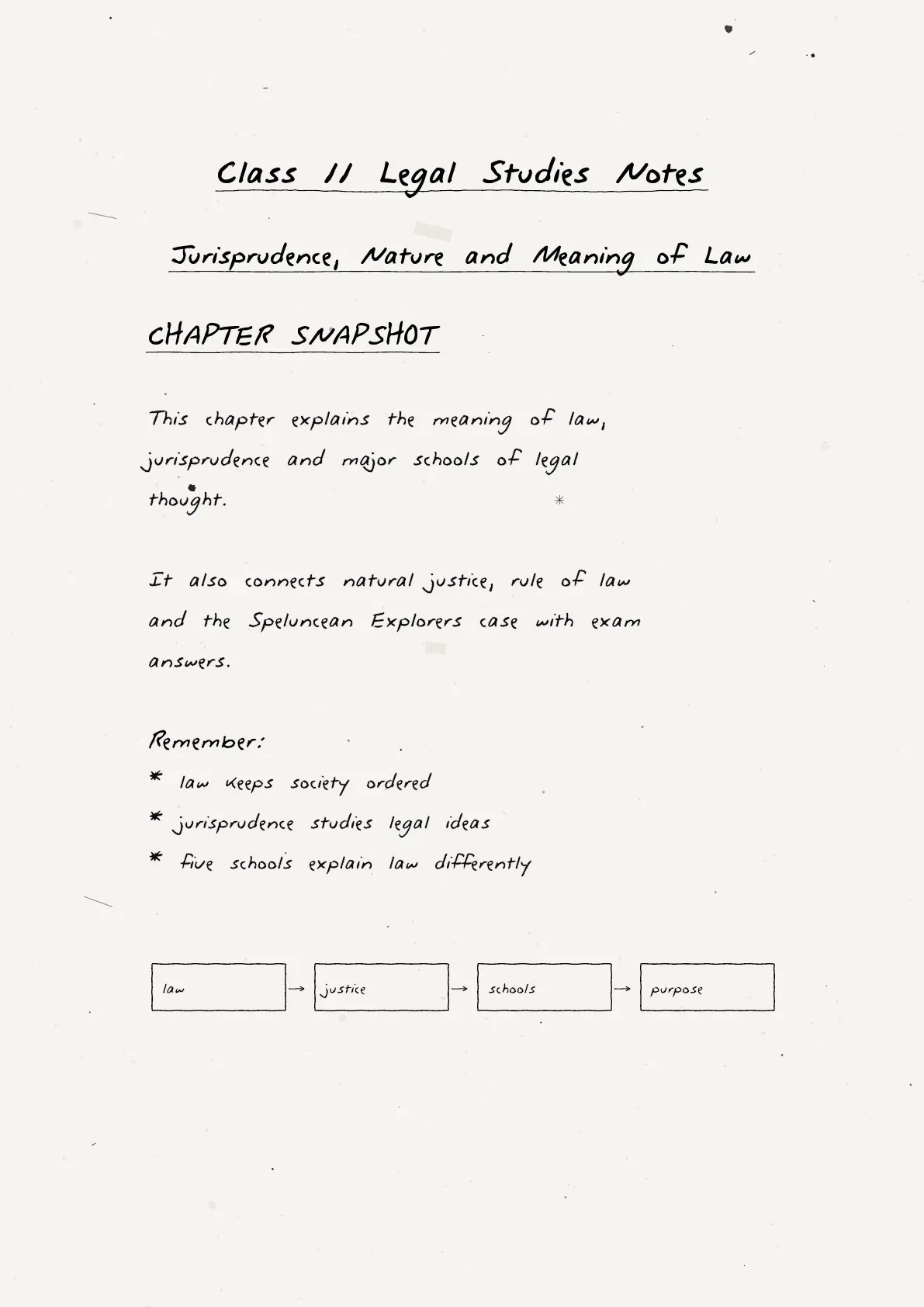
- Chapter focus: meaning of law, rule of law, natural justice, Speluncean Explorers and five schools of law.
- Revision use: quick school-wise comparison tables, answer frames and common mistakes before tests.
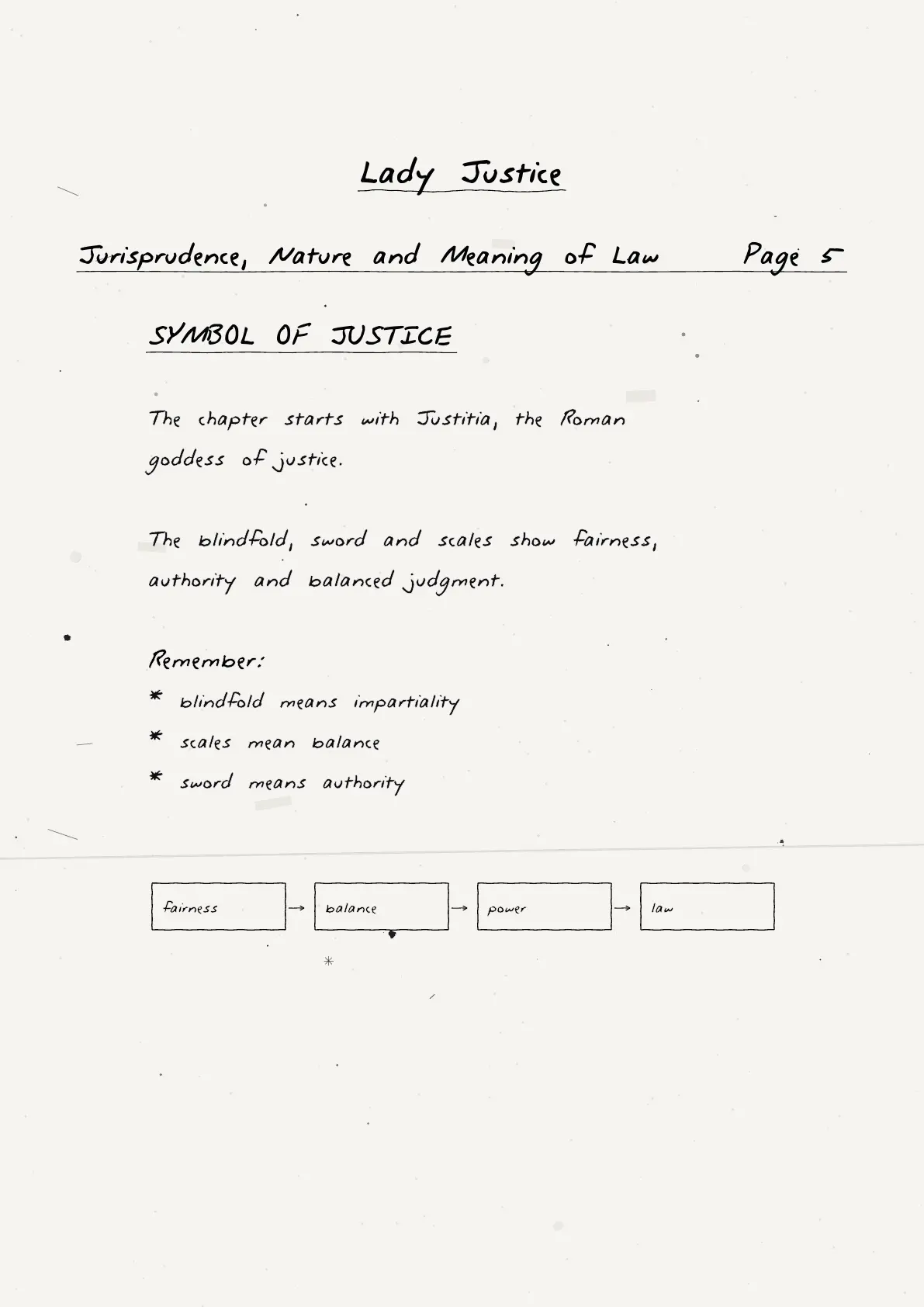
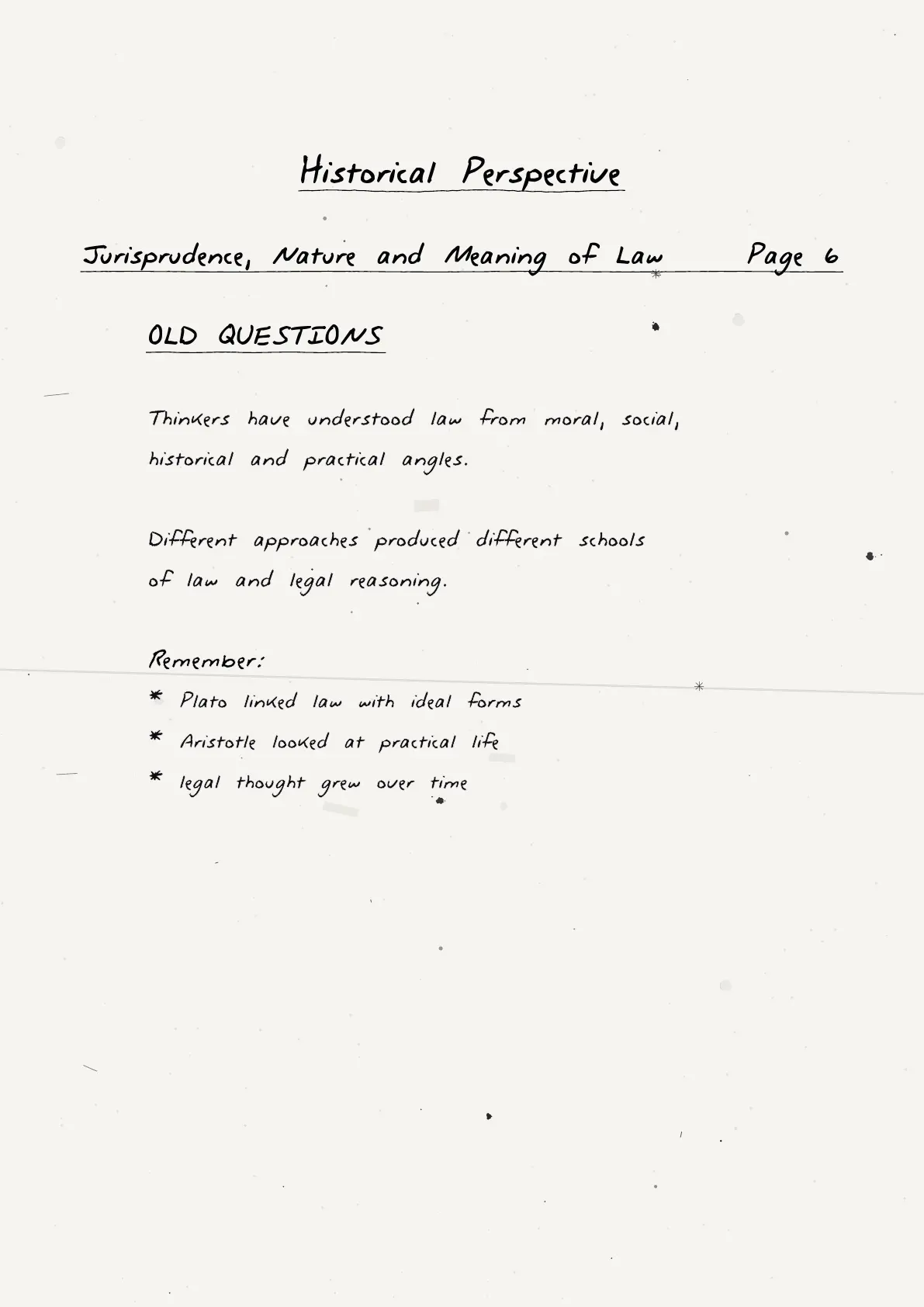
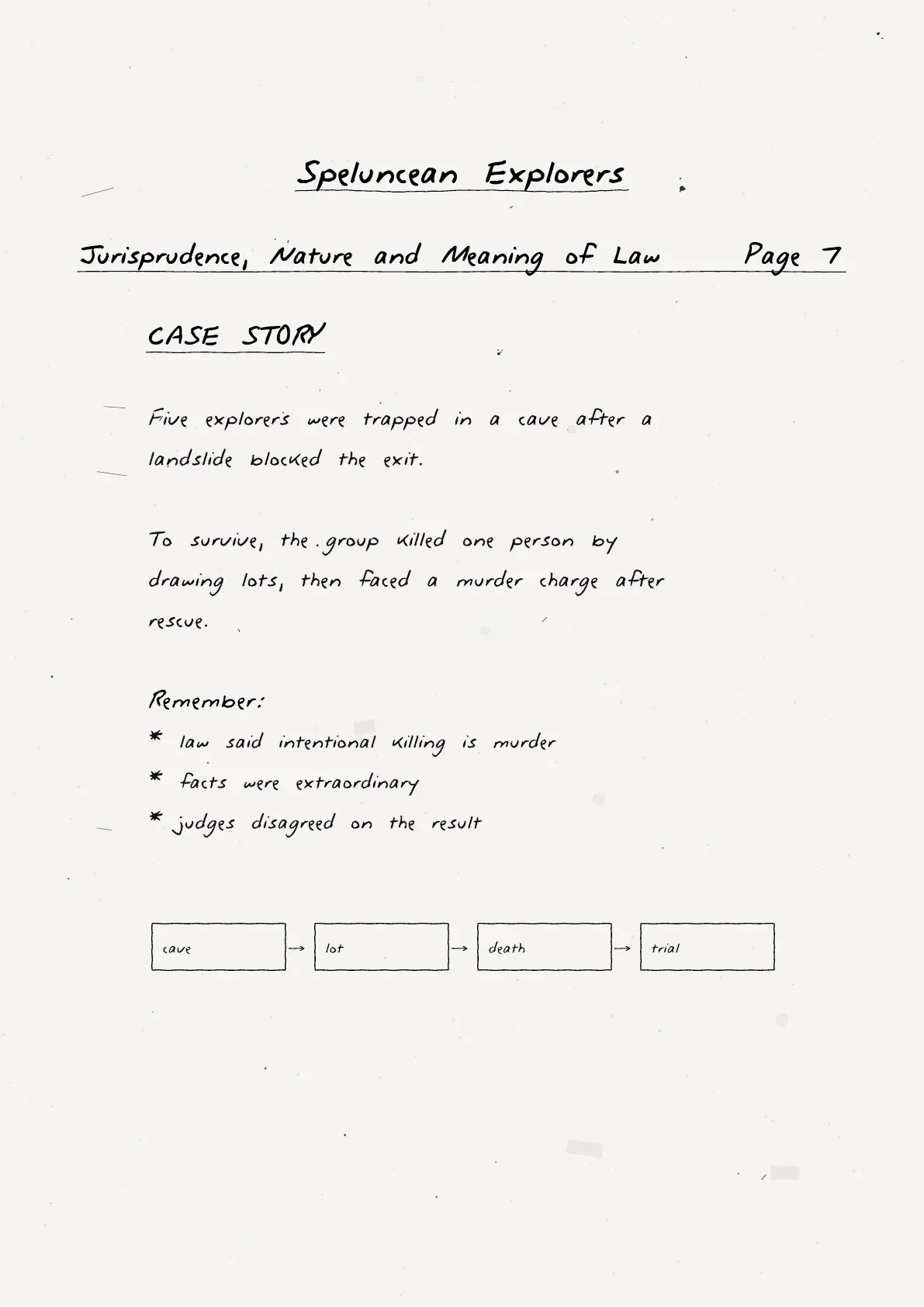
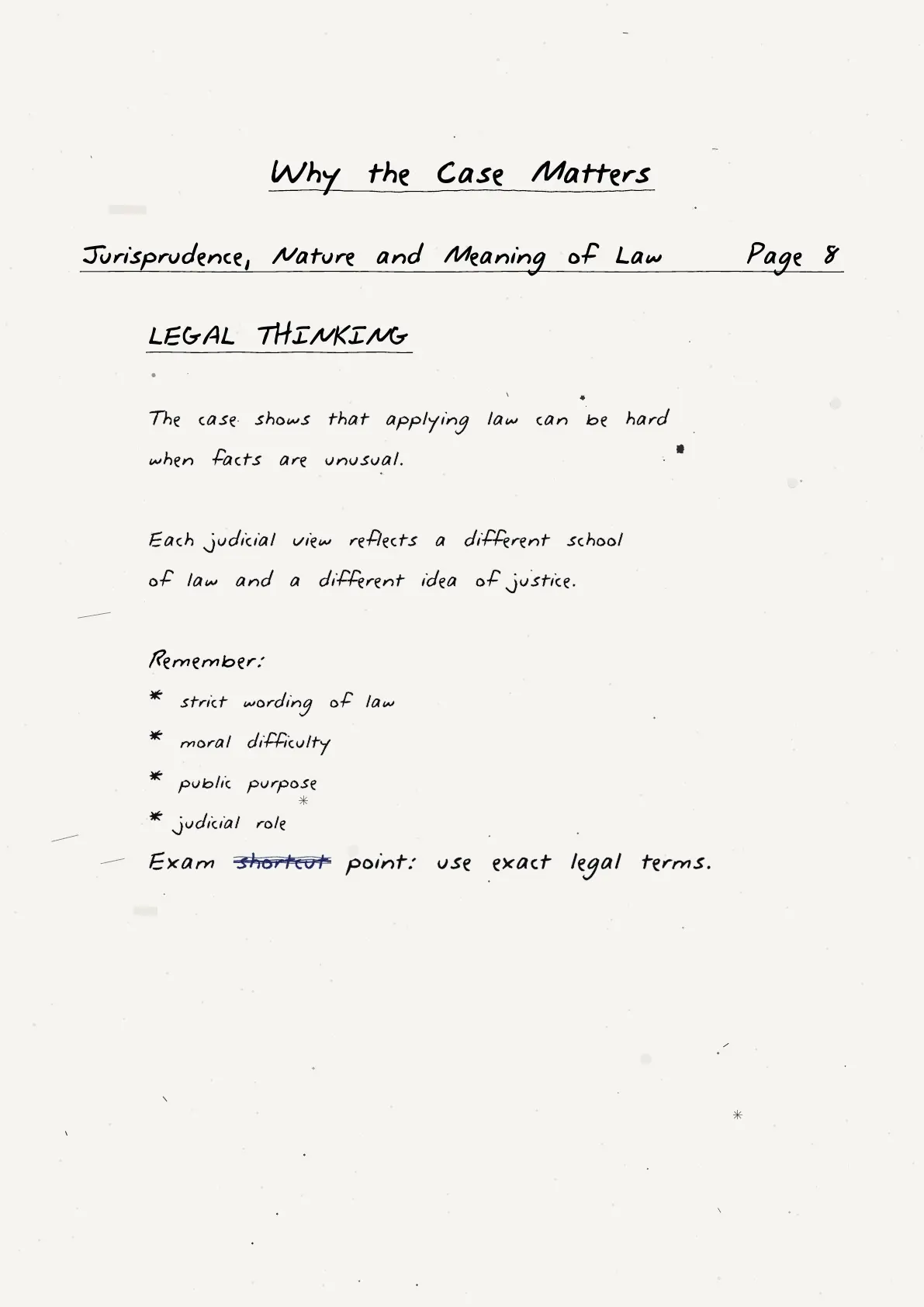


Student Feedback: In a Collegedunia classroom survey of 12,460 students, 75% said the five-school comparison table helped them revise jurisprudence faster.
Jurisprudence Handwritten Notes Overview
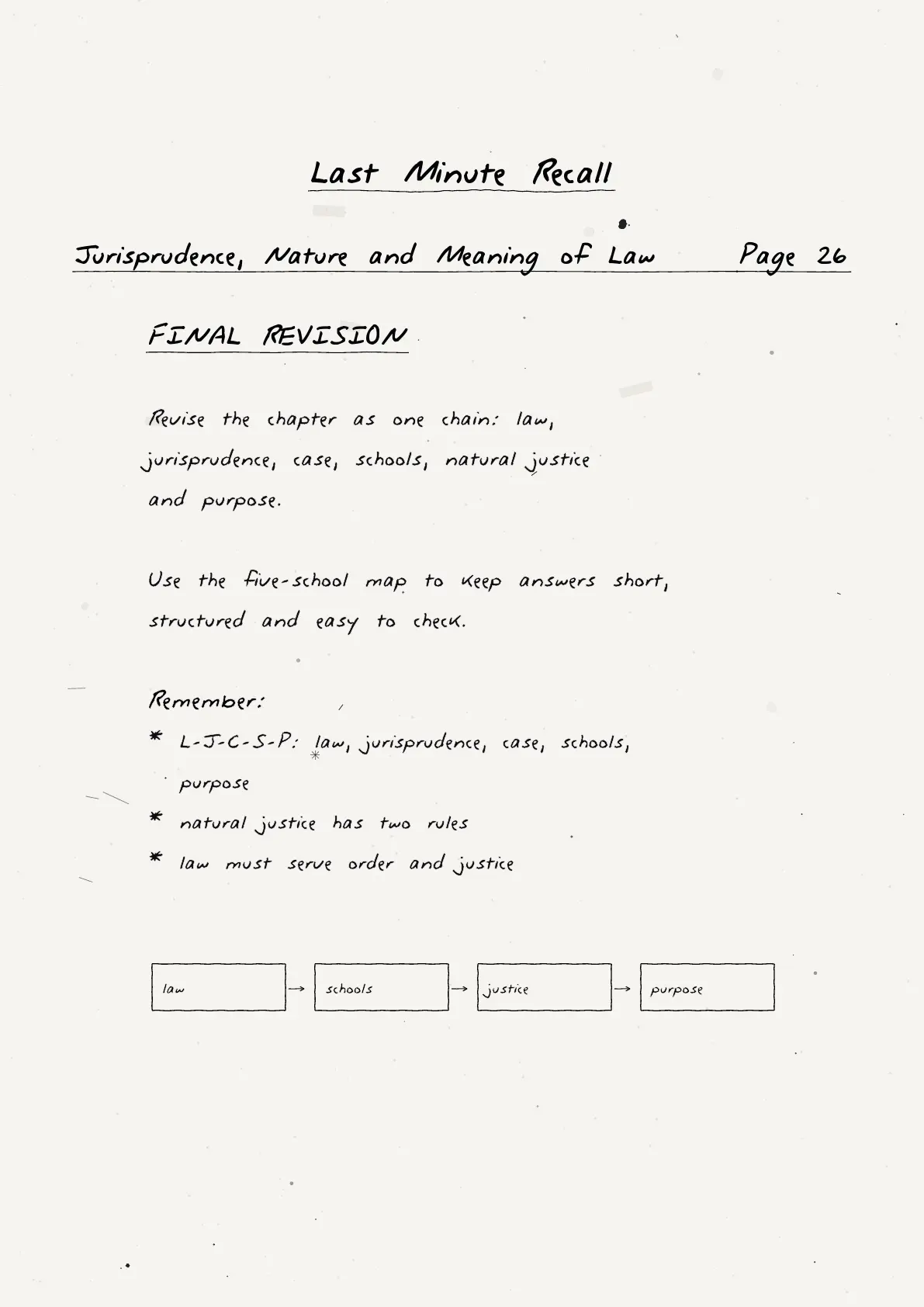
The Jurisprudence, Nature and Meaning of Law handwritten notes convert a theory-heavy chapter into short revision pages. Students can revise law first, then jurisprudence, the Speluncean Explorers case and the five schools of law.
- Best starting point: remember that law is a recognised system of enforceable rules.
- Scoring area: rule of law, natural justice, five schools of law and functions of law.
- Long-answer route: define law, explain jurisprudence, compare schools and add one case link.
Meaning of Law and Jurisprudence
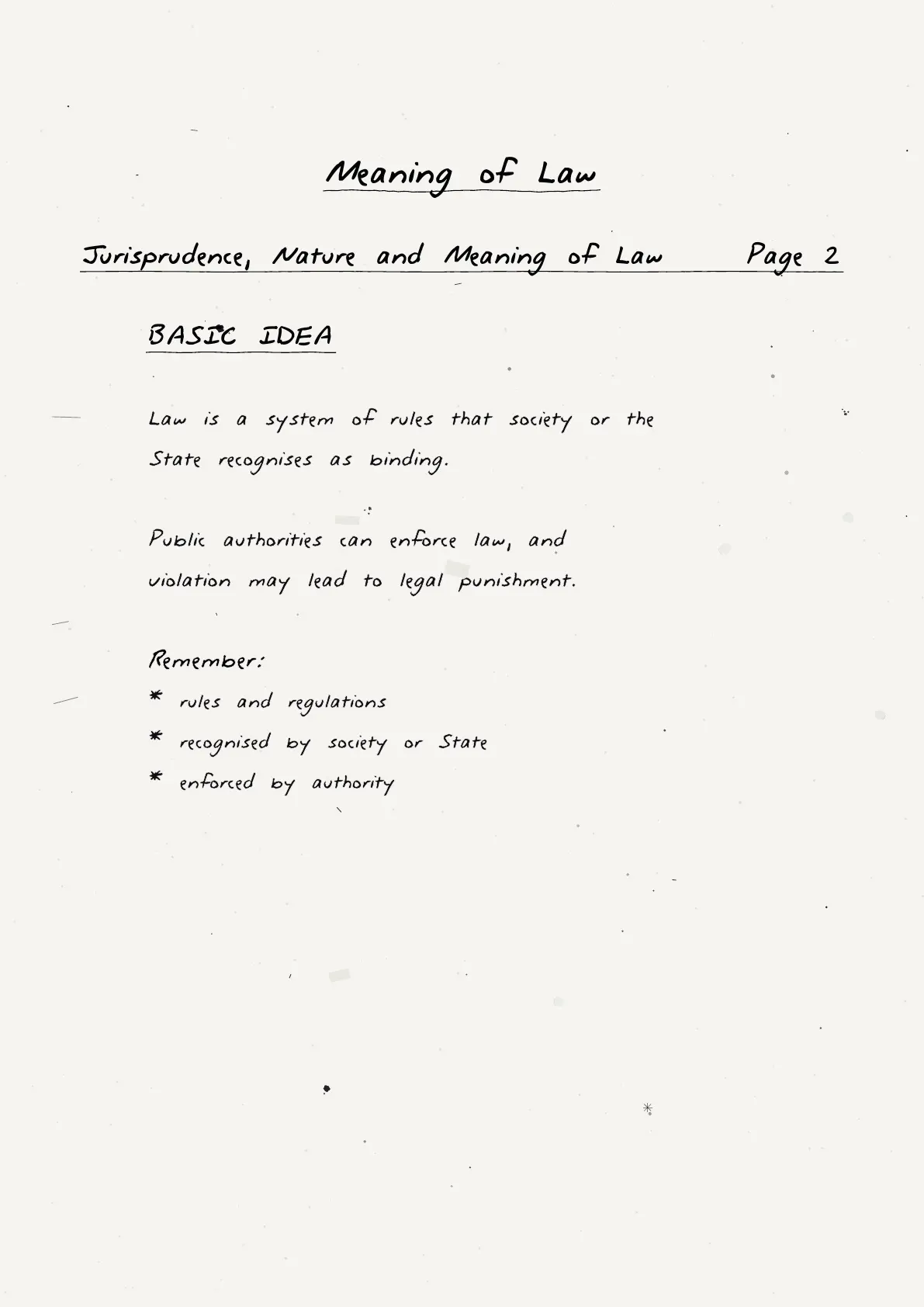
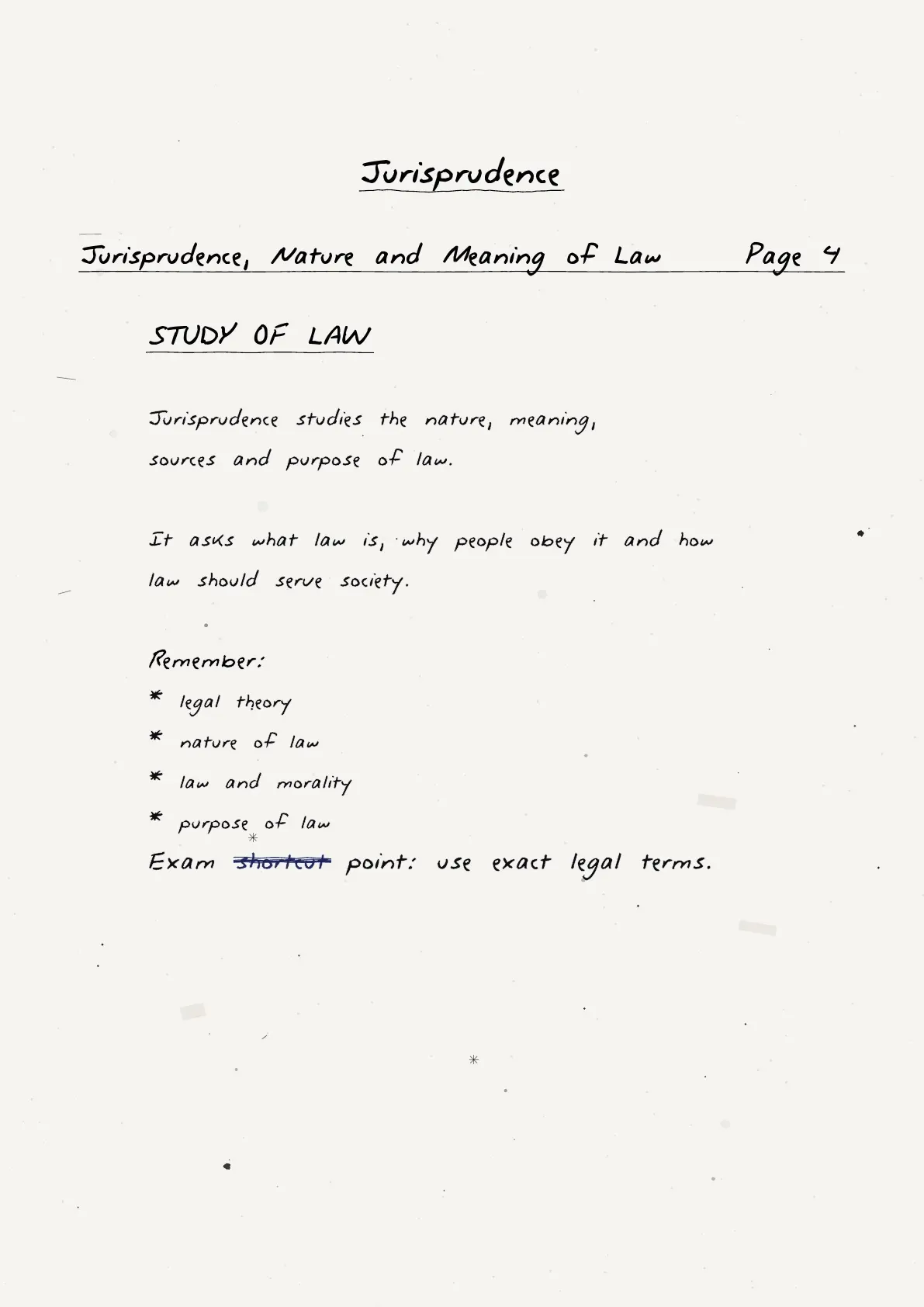
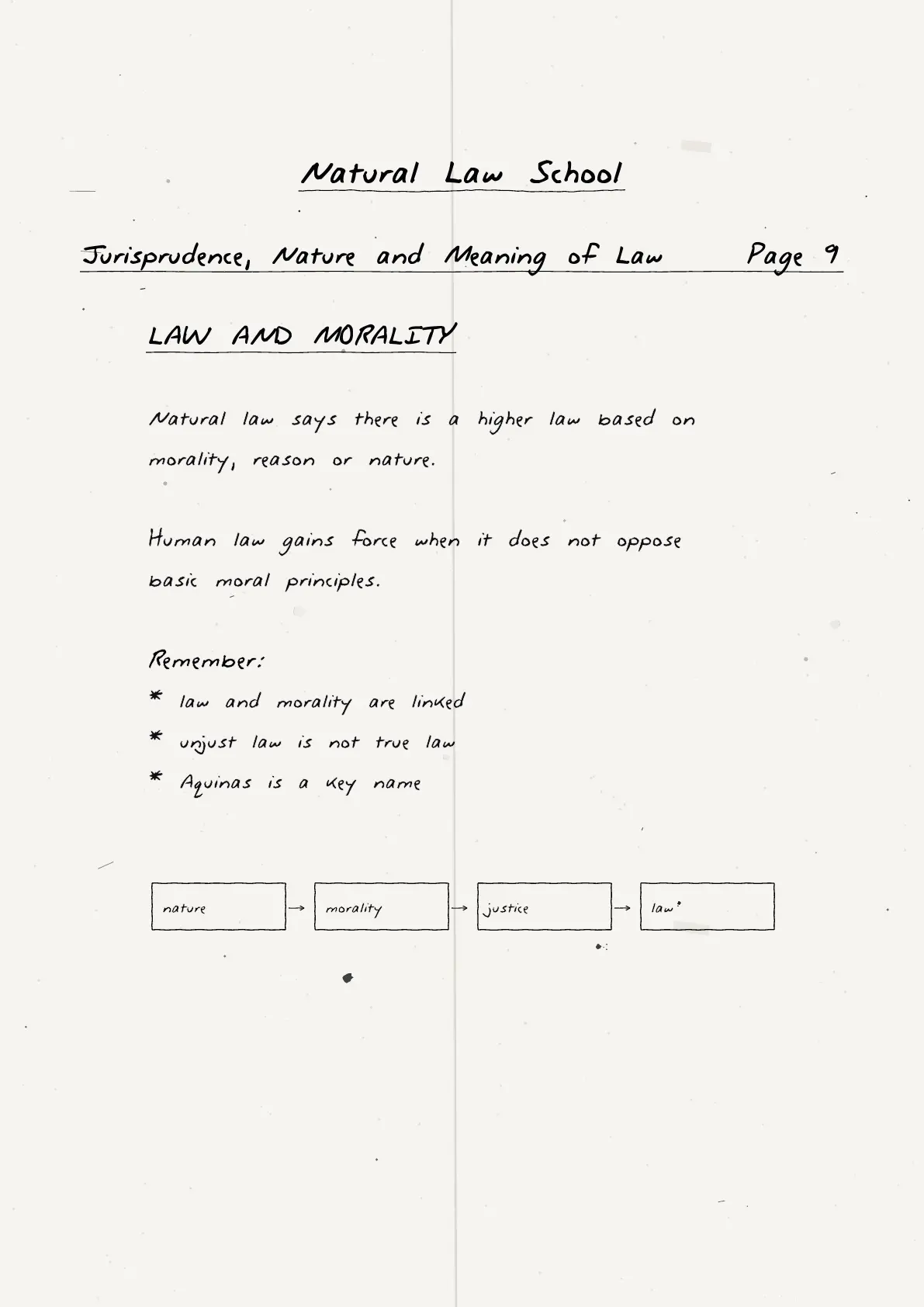
Law means rules and regulations recognised by society or the State as binding. Jurisprudence studies the meaning, nature, source and purpose of law.
| Term | Plain meaning | Exam cue |
|---|---|---|
| Law | Recognised and enforceable rules for society. | Mention binding rules and punishment for violation. |
| Jurisprudence | Study of legal theory and the nature of law. | Use it before schools of law. |
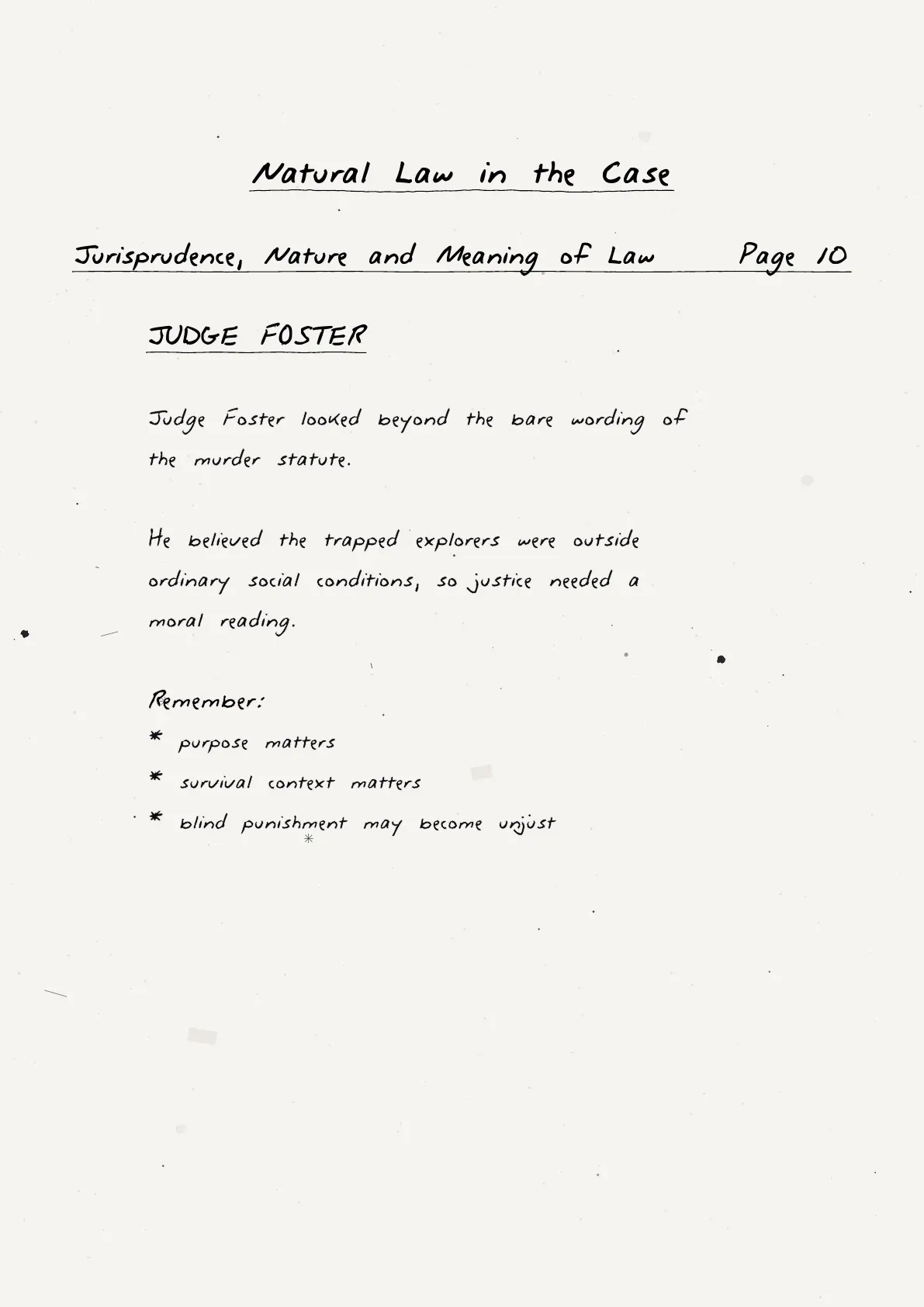
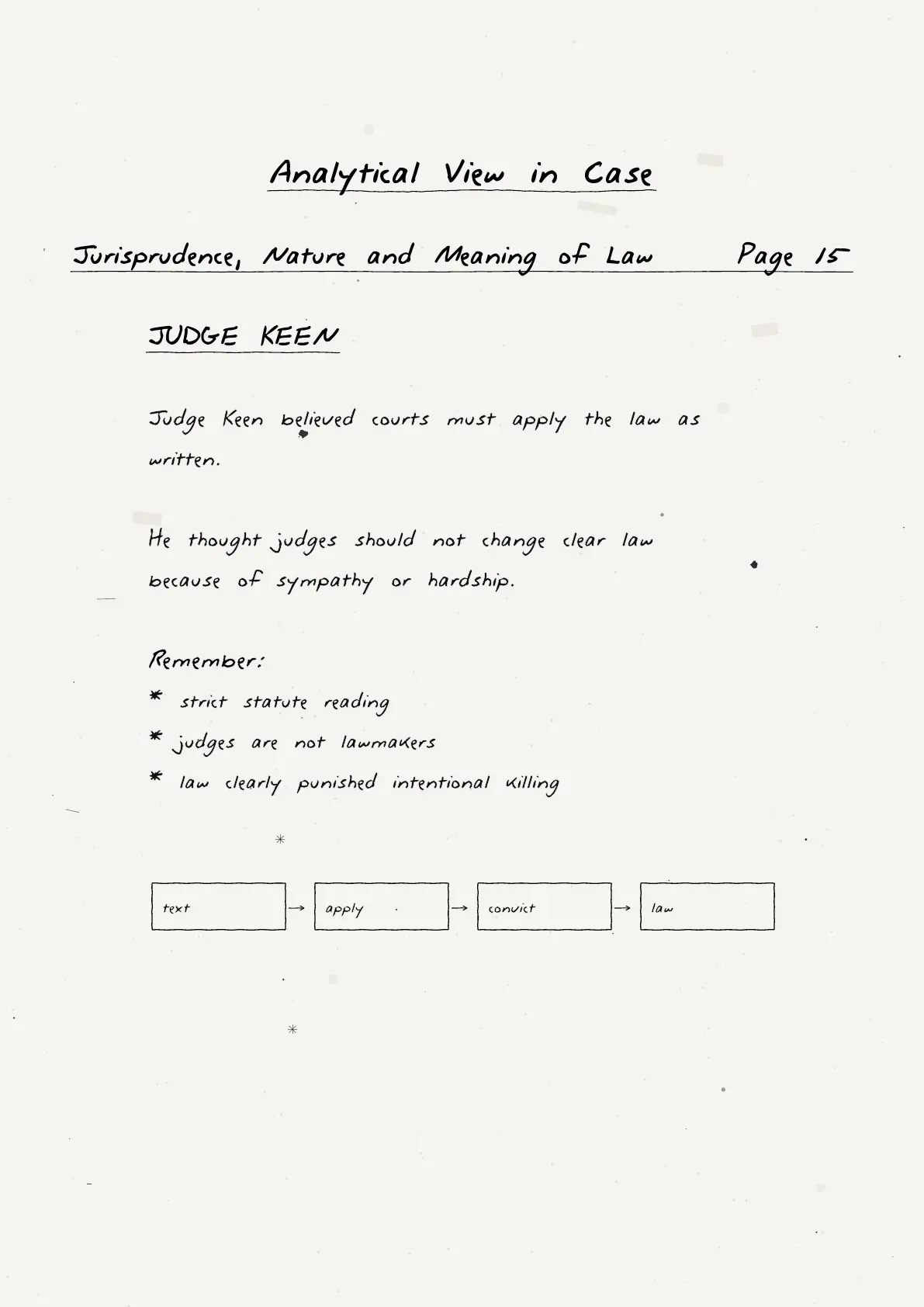
| Speluncean Explorers | Case used to show different legal viewpoints. | Connect judges with schools of law. |
Nature and Meaning of Law Video for Class 11 Legal Studies
Source: Magnet Brains on YouTube
Rule of Law and Natural Justice
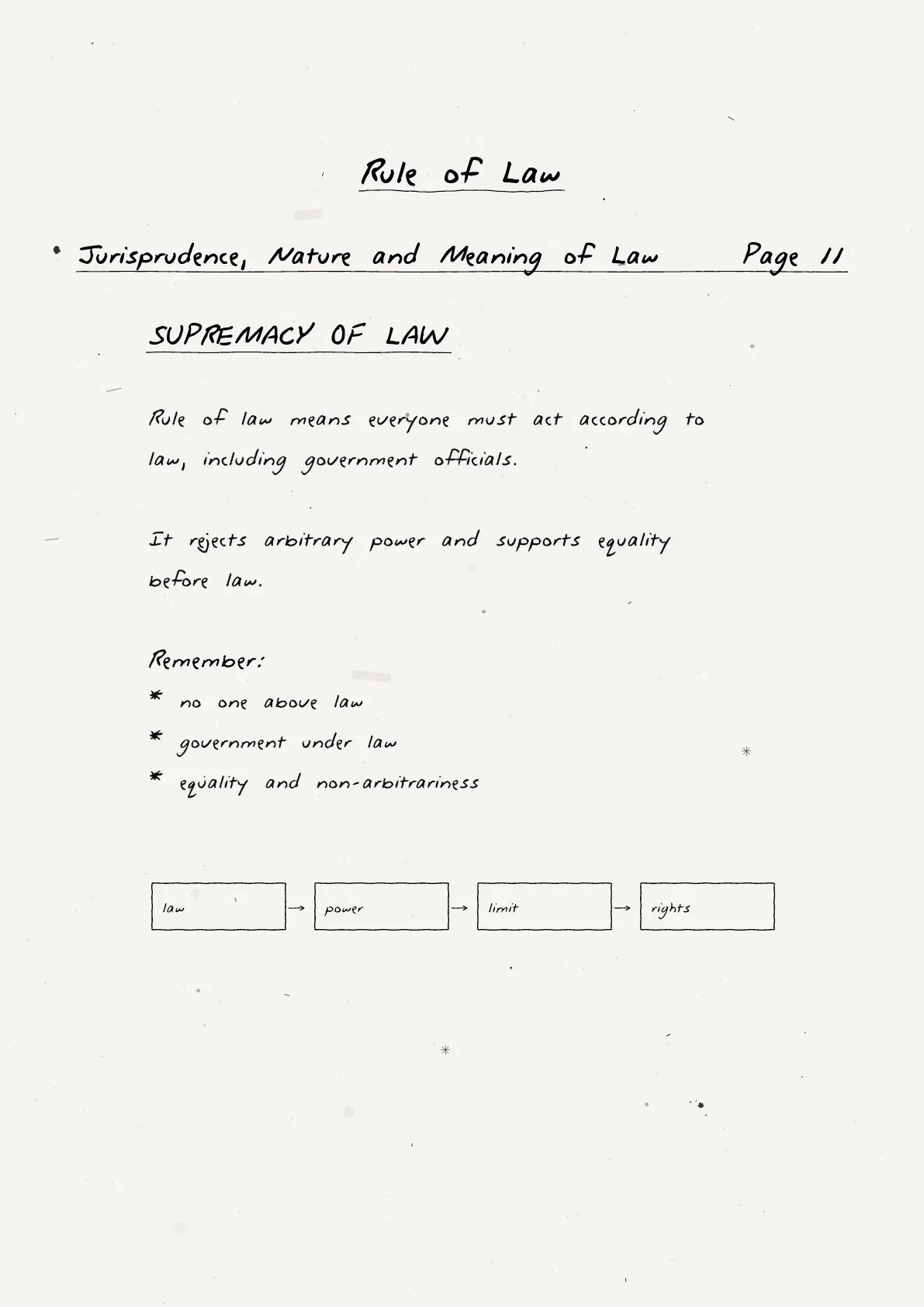
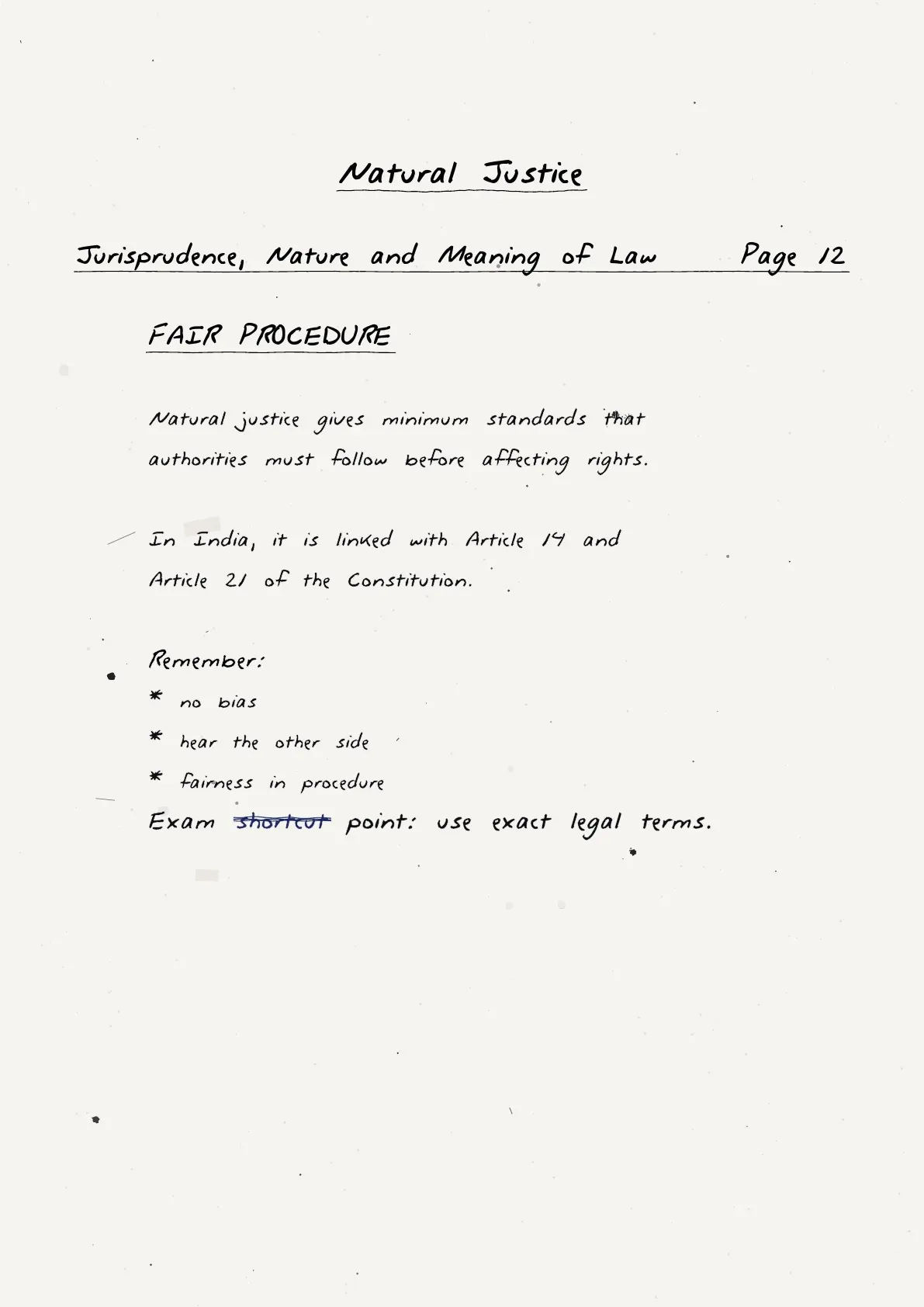
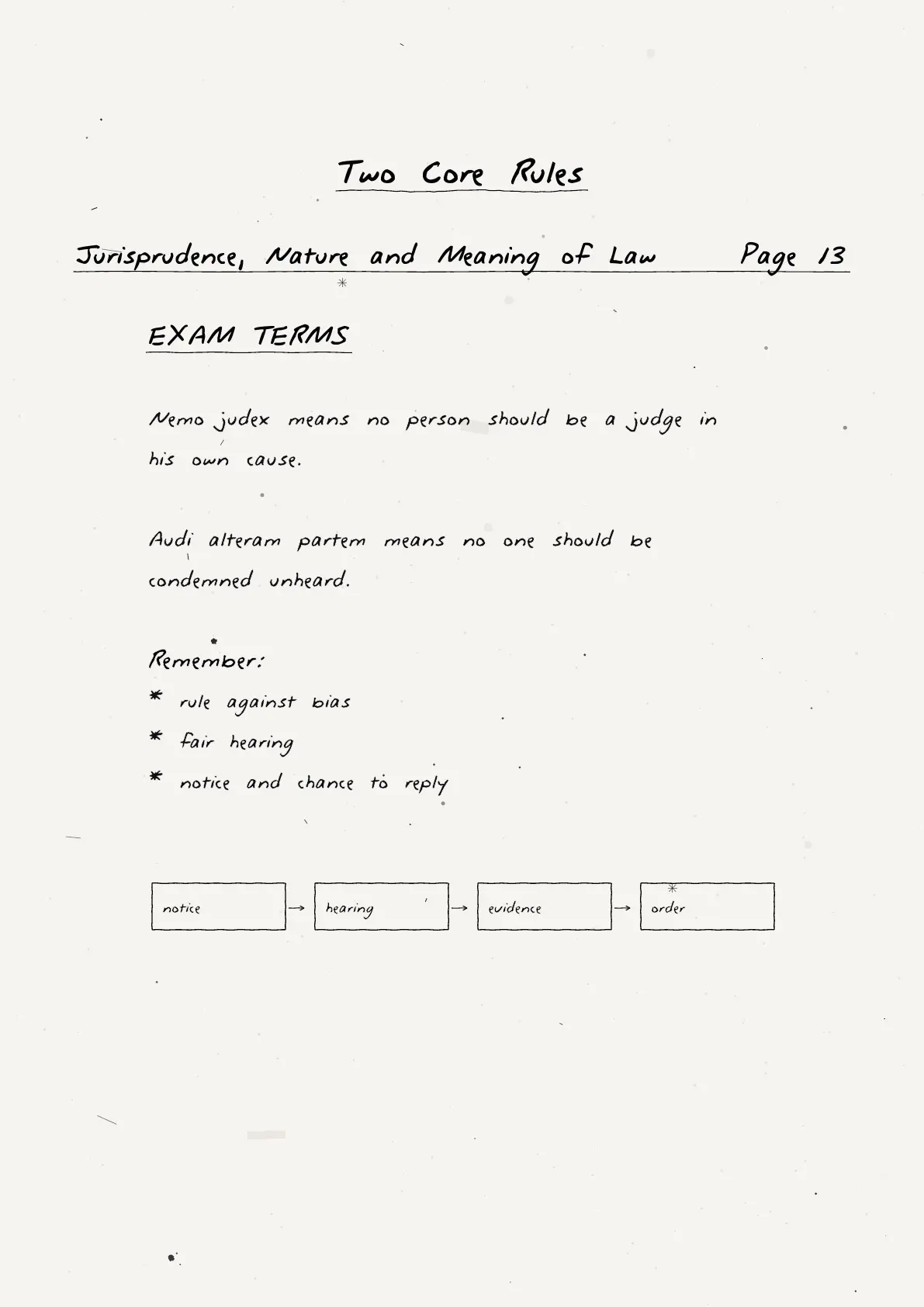
Rule of law means law is supreme and everyone must act according to law. Natural justice gives minimum fairness rules for administrative decisions that affect rights or interests.
| Idea | Meaning | Revision line |
|---|---|---|
| Rule of law | Government and citizens are bound by law. | No person is above law. |
| Article 14 link | Equality rejects arbitrary action. | Natural justice violation can become arbitrariness. |
| Article 21 link | Fair procedure is part of life and liberty. | Due process supports fairness. |
| Two rules | No bias and fair hearing. | Nemo judex and audi alteram partem. |
Five Schools of Law in Chapter 6
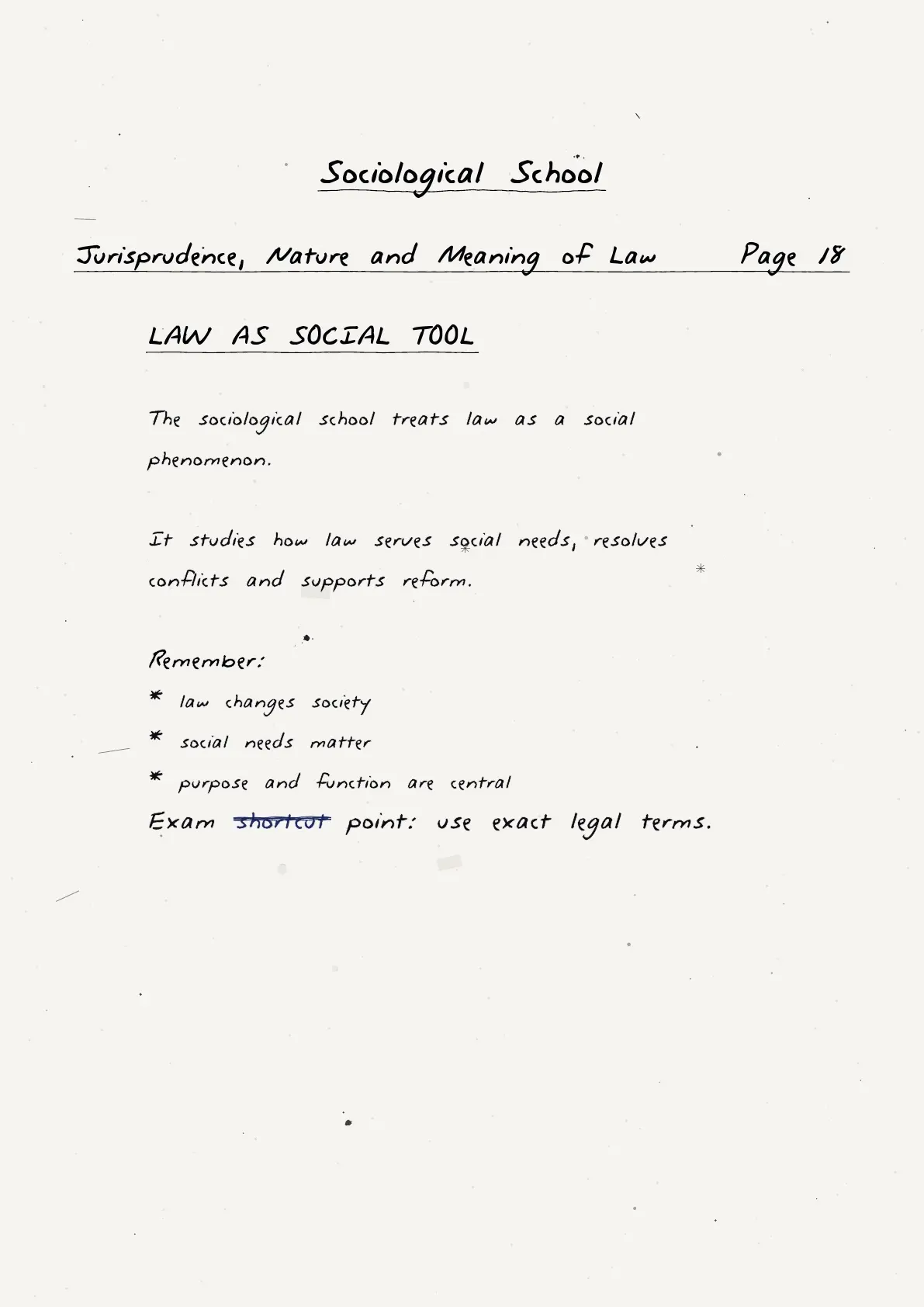
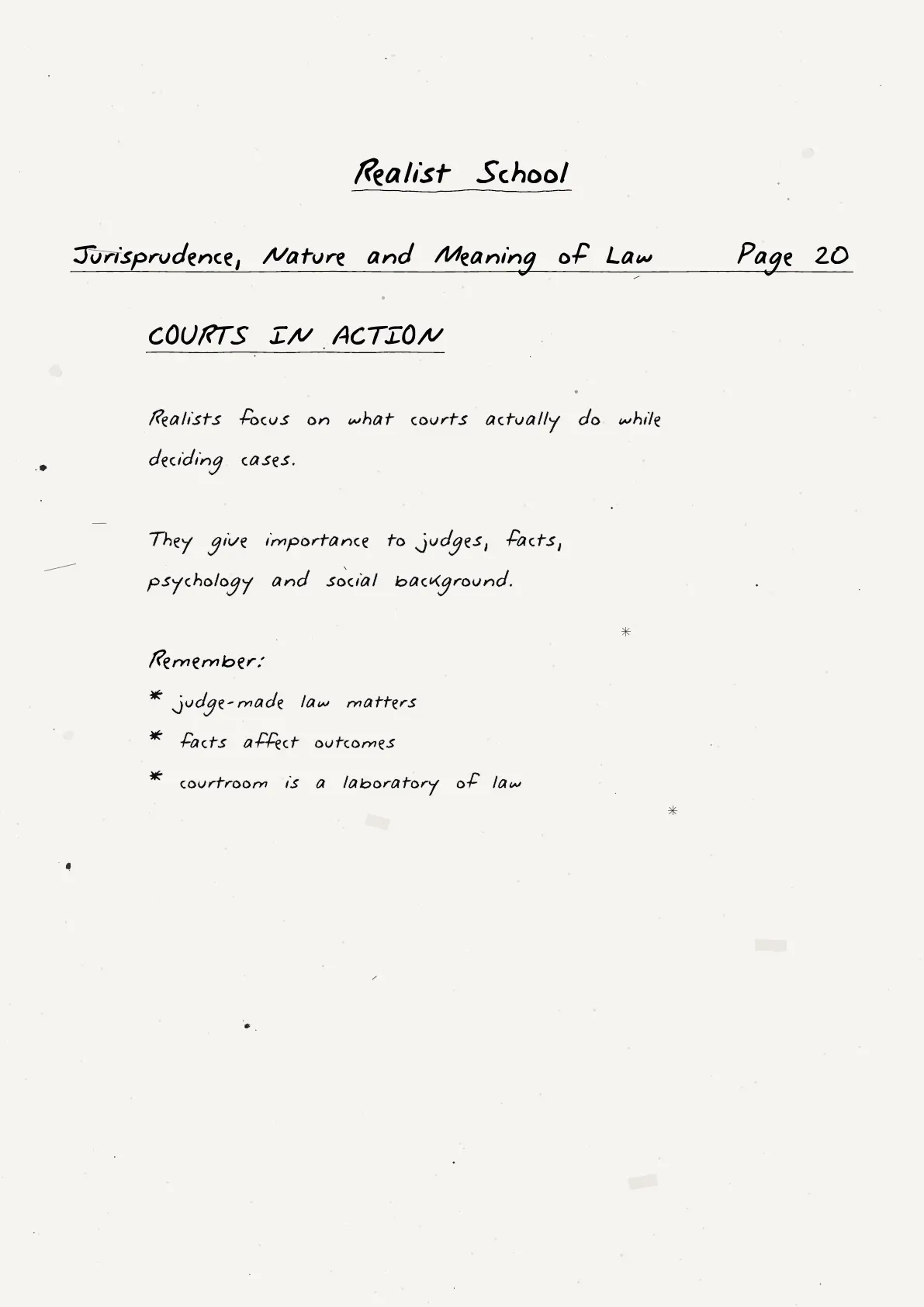
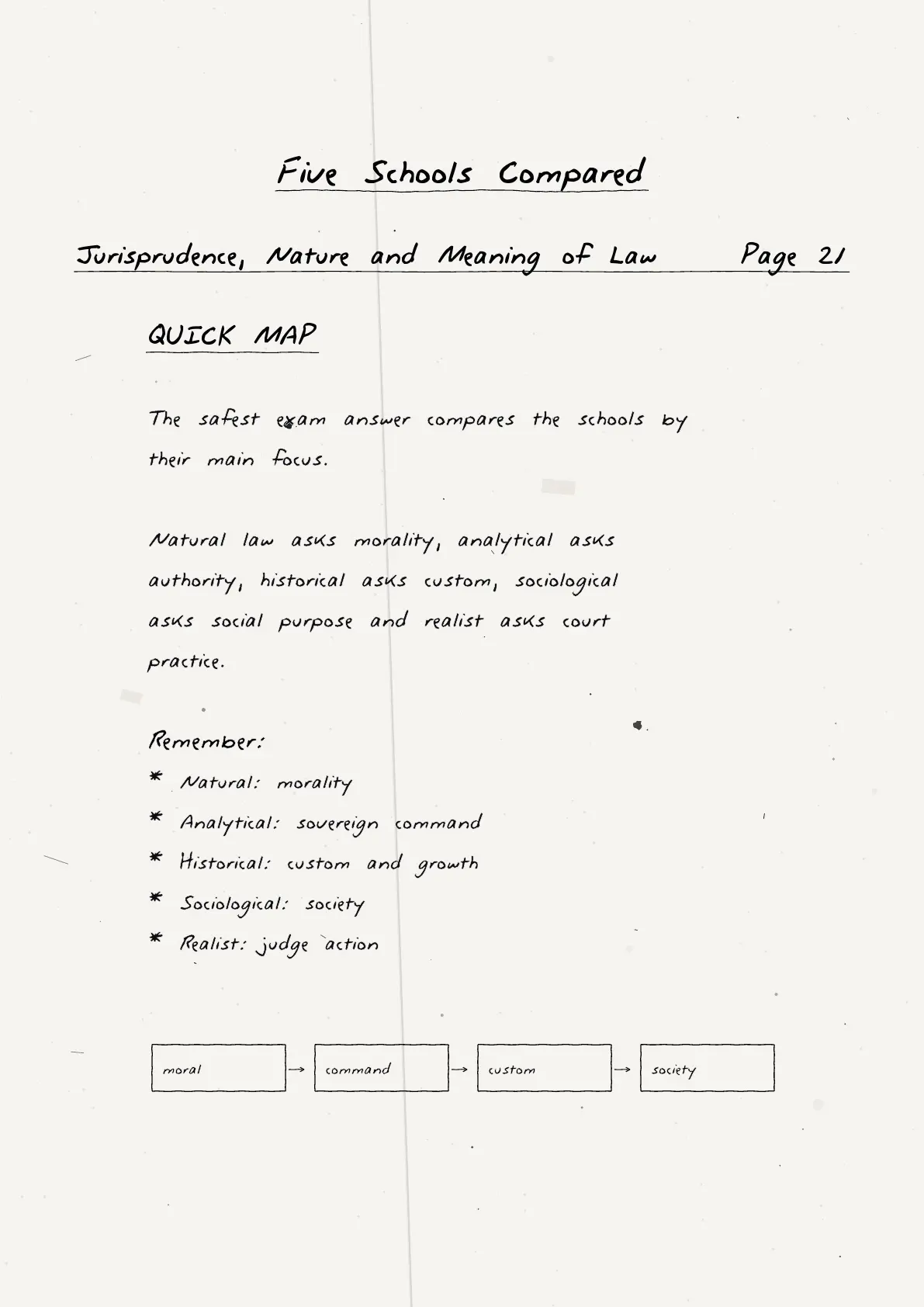
The chapter compares five schools of law. Each school explains law from a different starting point, so students should not merge their definitions.
| School | Main focus | Useful keyword |
|---|---|---|
| Natural law | Law must connect with morality and higher justice. | Unjust law is not true law. |
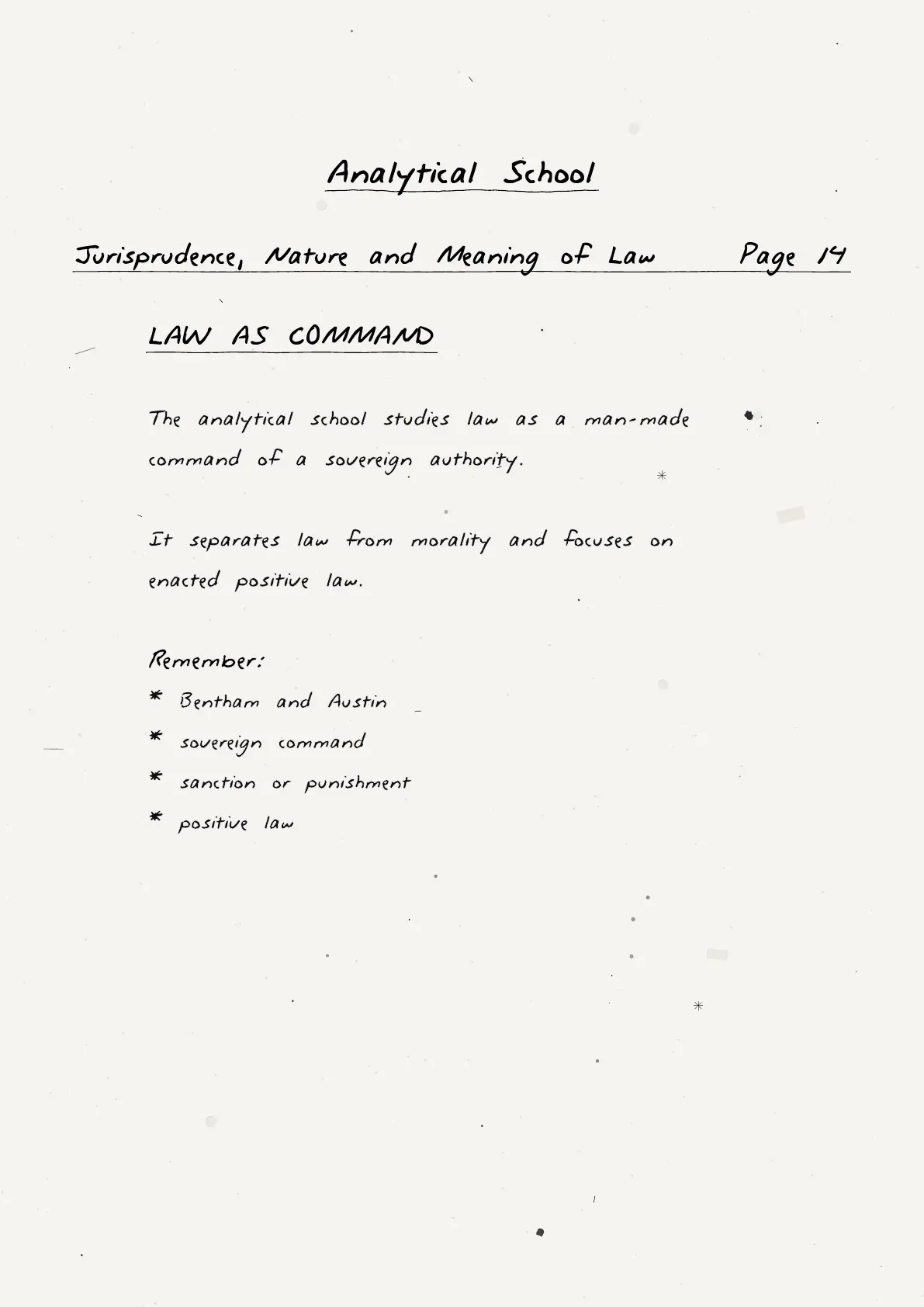
| Analytical school | Law is positive law made by a sovereign authority. | Austin and command. |
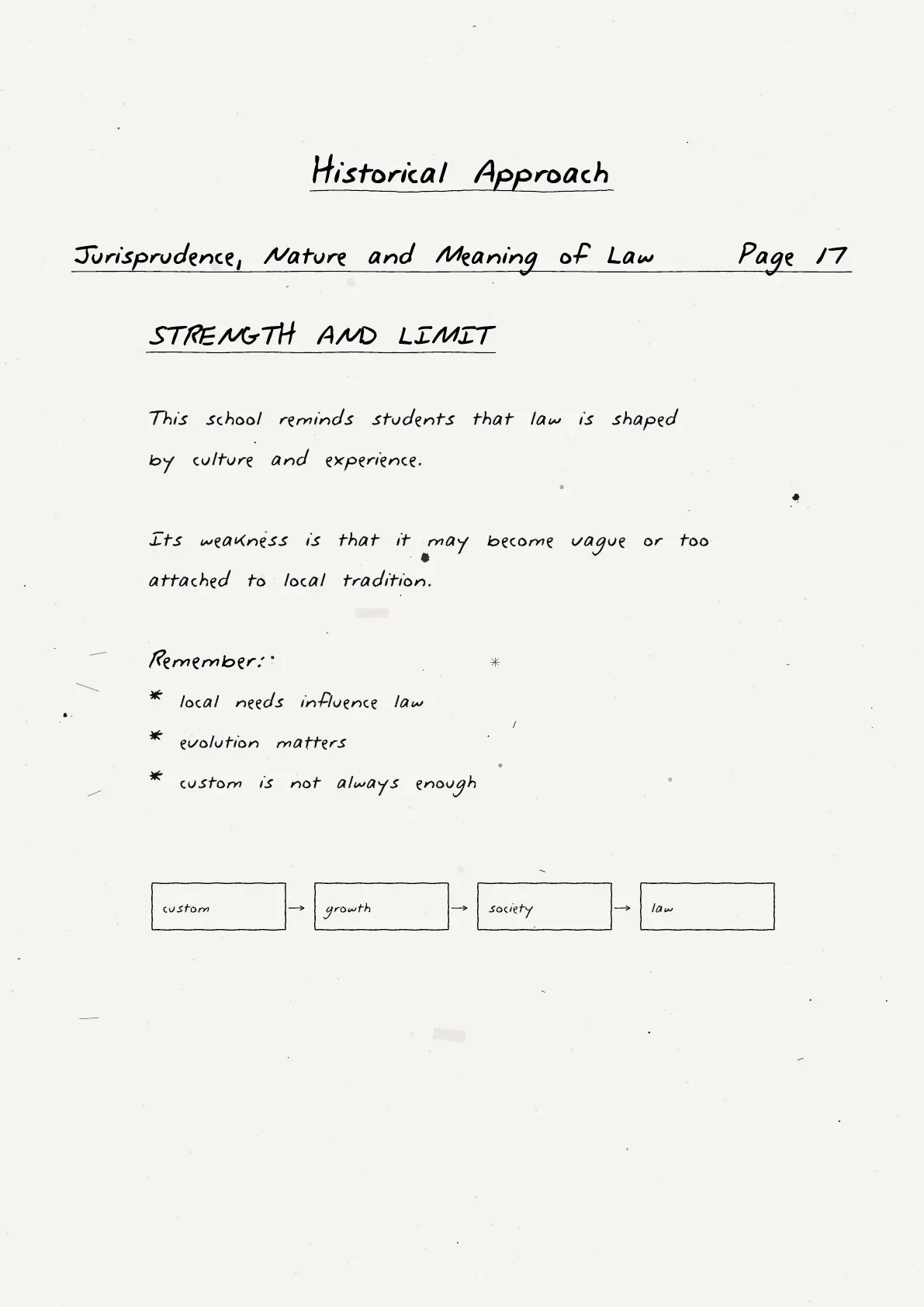
| Historical school | Law grows from customs and social history. | Savigny and social growth. |
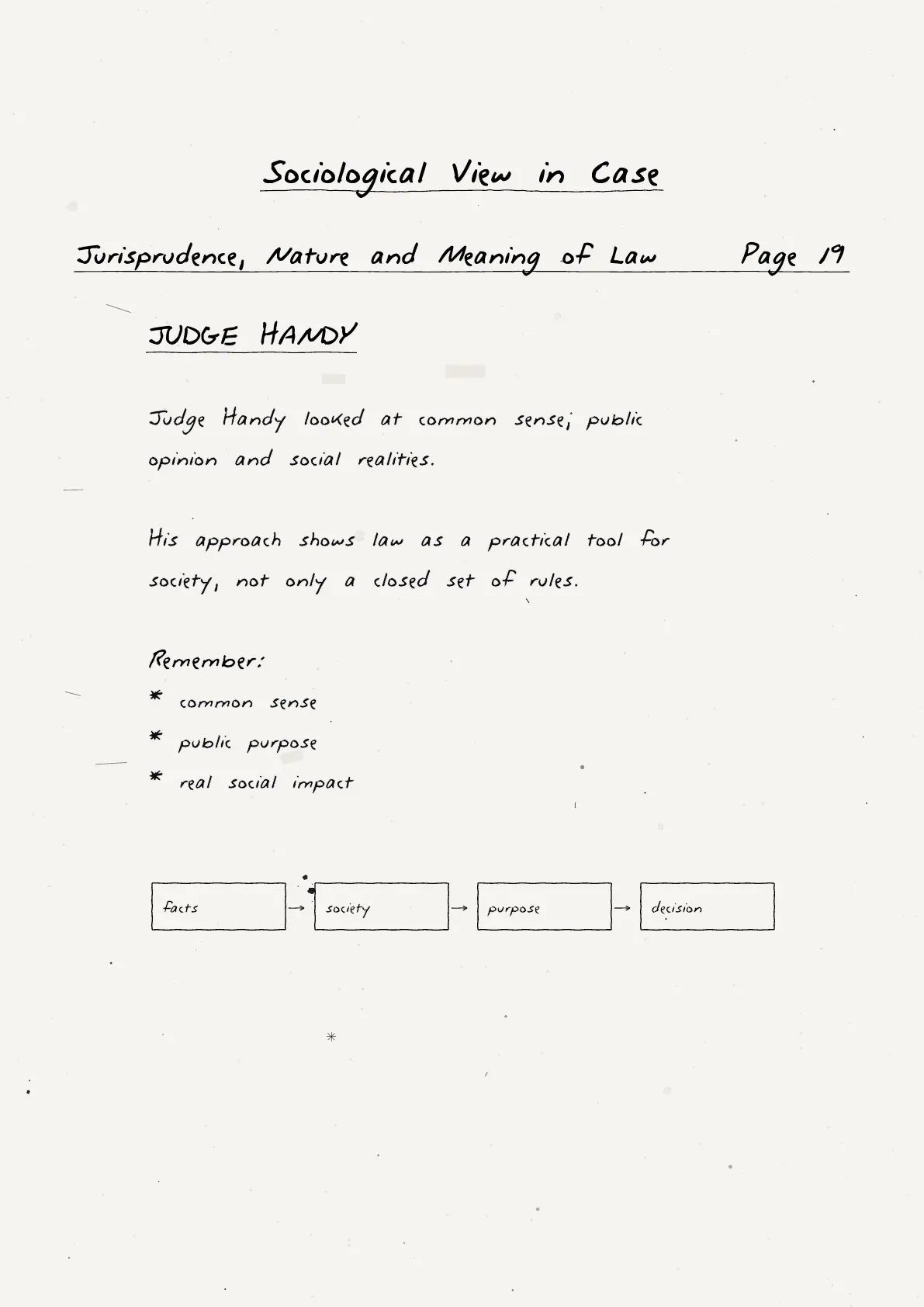
| Sociological school | Law serves society and supports social change. | Purpose and social needs. |
| Realist school | Real law is seen in how courts decide cases. | Judges and facts. |
Functions and Purpose of Law
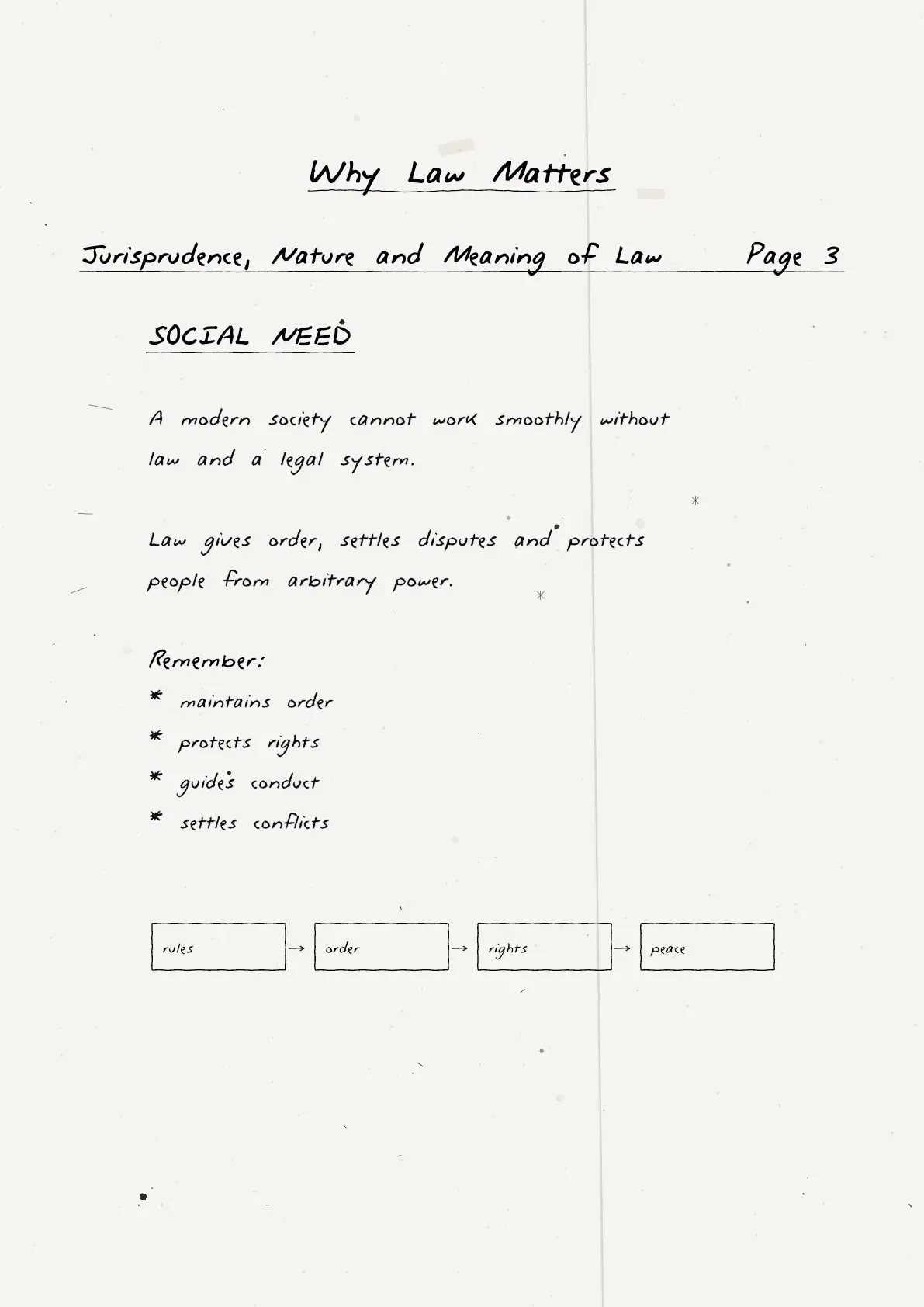
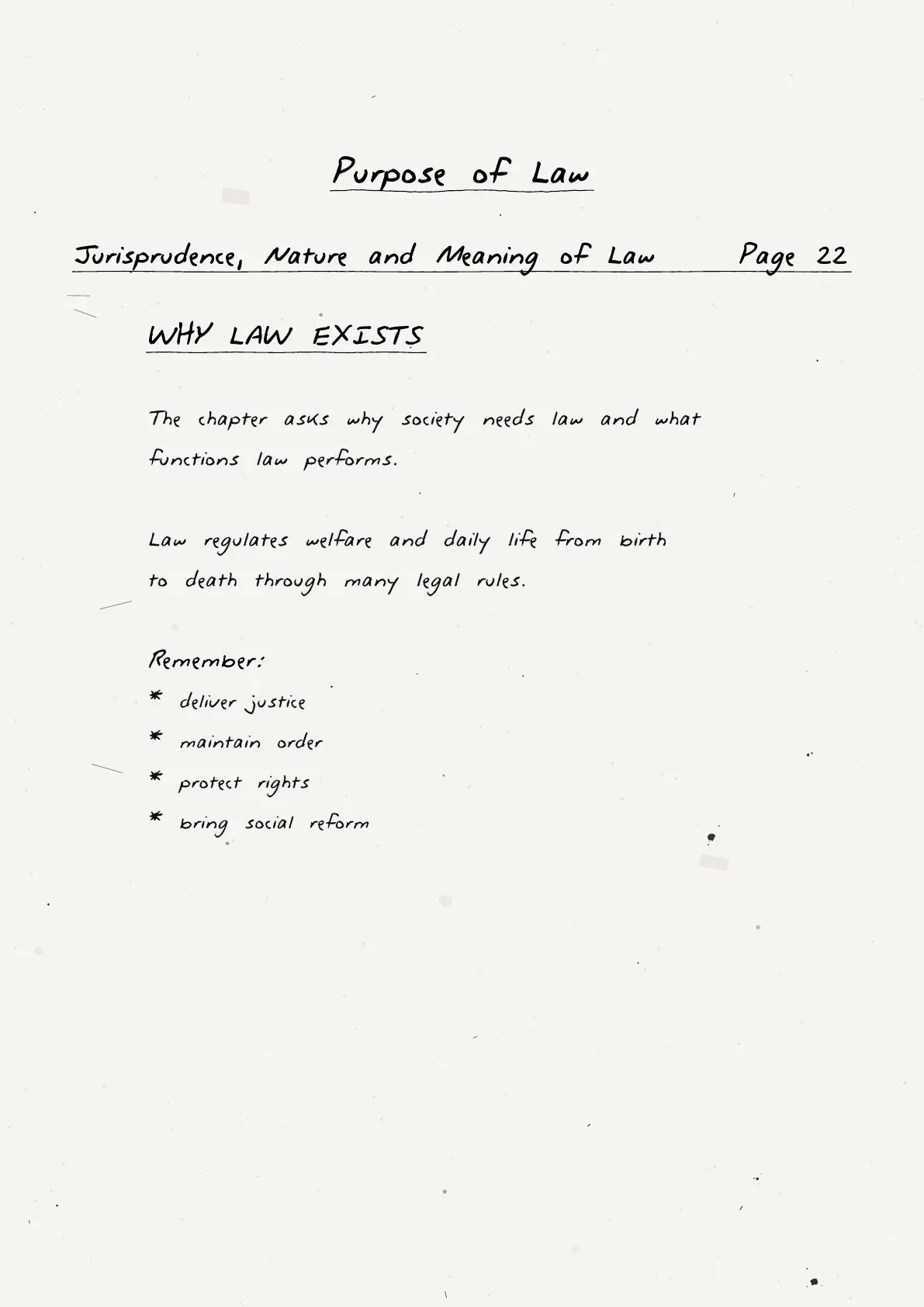
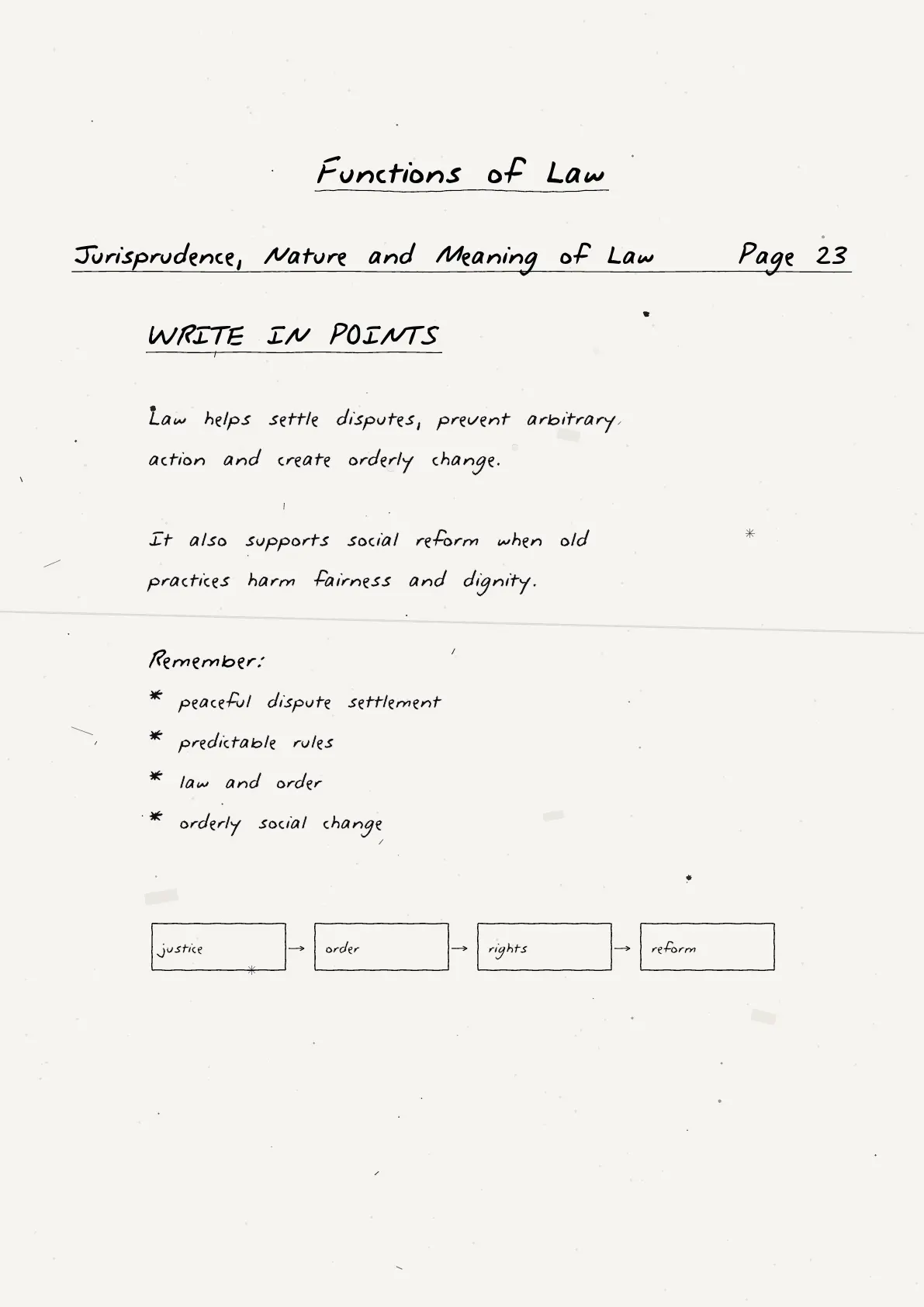
Law exists to deliver justice, maintain order, protect rights and bring orderly social reform. These functions change with time and place, but society needs law for stable public life.
| Function | Meaning | Example cue |
|---|---|---|
| Justice | Law gives a peaceful method to settle disputes. | Courts and fair hearings. |
| Order | Law prevents disorder and arbitrary action. | Punishment for violation. |
| Rights | Law protects people against misuse of power. | Rule of law and Article 14. |
| Reform | Law helps society change in an orderly way. | Social reform laws. |
Important Differences for Exam Revision
Most short questions from this chapter ask for one clean difference. Students should write the basis of difference first, then put each side in simple words.
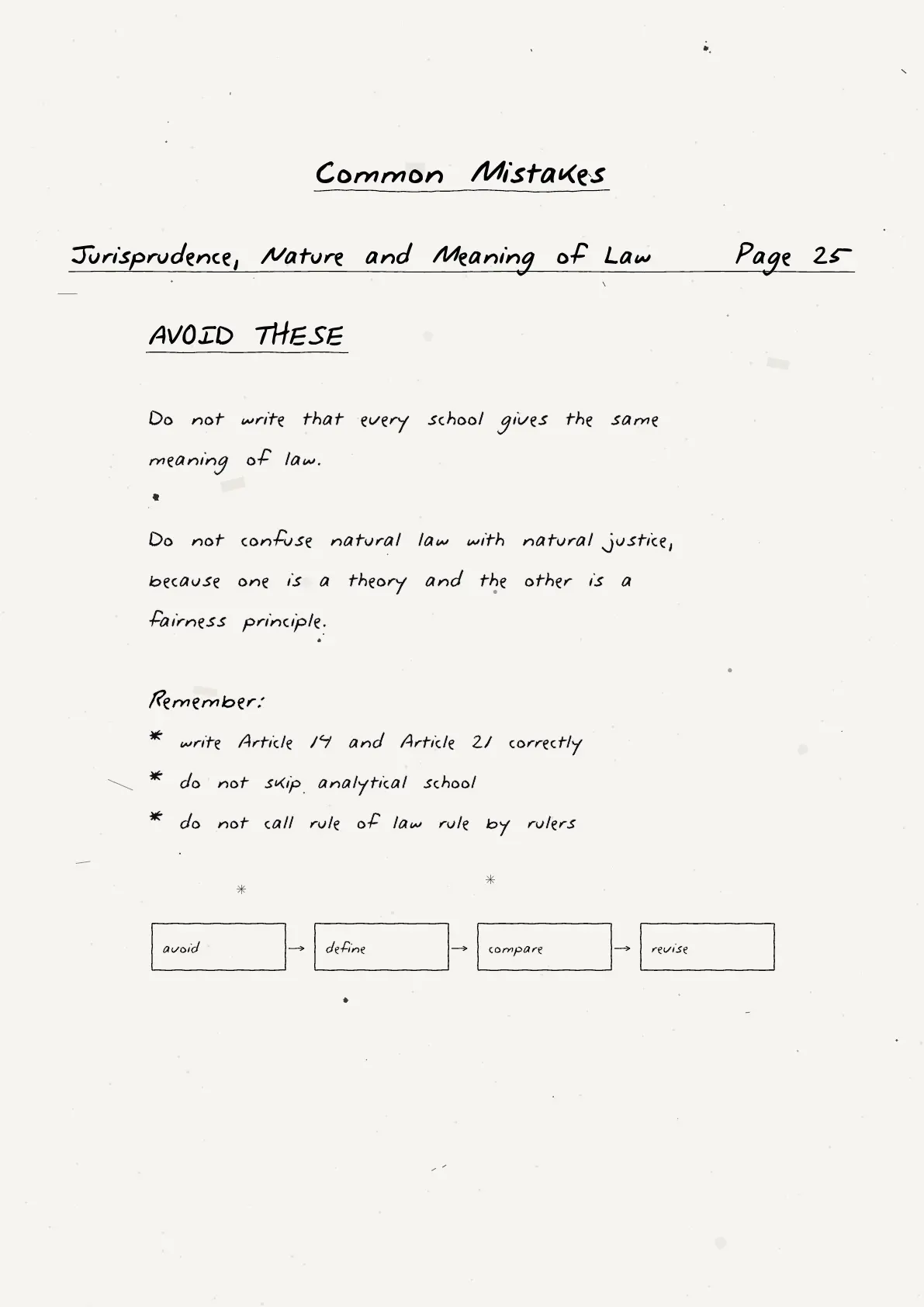
- Natural vs analytical: natural law connects law with morality, while analytical school separates law from morality.
- Historical vs sociological: historical school studies custom and growth, while sociological school studies social purpose.
- Rule of law vs natural justice: rule of law limits public power, while natural justice gives fair procedure.
- Nemo judex vs audi alteram partem: one prevents bias, while the other gives a fair hearing.
Related Class 11 Legal Studies Resources
| Resource | Use it for | Link |
|---|---|---|
| NCERT Solutions | Exercise answers for Jurisprudence, Nature and Meaning of Law. | Class 11 Legal Studies Jurisprudence Solutions |
| NCERT Book PDF | Original textbook reading and source case example. | Class 11 Legal Studies Jurisprudence Book PDF |
| Handwritten Notes | Quick one-shot revision before tests. | Class 11 Legal Studies Jurisprudence Handwritten Notes |
All Class 11 Legal Studies Handwritten Notes
| Chapter | Title | Handwritten Notes |
|---|---|---|
| Chapter 1 | Concept of State | Open handwritten notes |
| Chapter 2 | Forms and Organs of Government | Open handwritten notes |
| Chapter 3 | Separation of Powers | Open handwritten notes |
| Chapter 4 | Salient Features of the Constitution of India | Open handwritten notes |
| Chapter 5 | Administrative Law | Open handwritten notes |
| Chapter 6 | Jurisprudence, Nature and Meaning of Law | Open handwritten notes |
| Chapter 7 | Classification of Laws | Open handwritten notes |
| Chapter 8 | Sources of Laws | Open handwritten notes |
Class 11 Legal Studies Jurisprudence Handwritten Notes FAQs
Ques. What is covered in Class 11 Legal Studies Jurisprudence, Nature and Meaning of Law handwritten notes?
Ans. The PDF covers meaning of law, jurisprudence, rule of law, natural justice, Speluncean Explorers, schools of law and functions of law.
Ques. What are the five schools of law in this chapter?
Ans. The five schools are natural law, analytical, historical, sociological and realist schools of law.
Ques. What are the two important rules of natural justice?
Ans. The two rules are no person should be a judge in his own cause and the other side must be heard.
Ques. Why is the Speluncean Explorers case important?
Ans. It shows how the same facts can lead to different legal opinions based on different schools of law.



Comments