



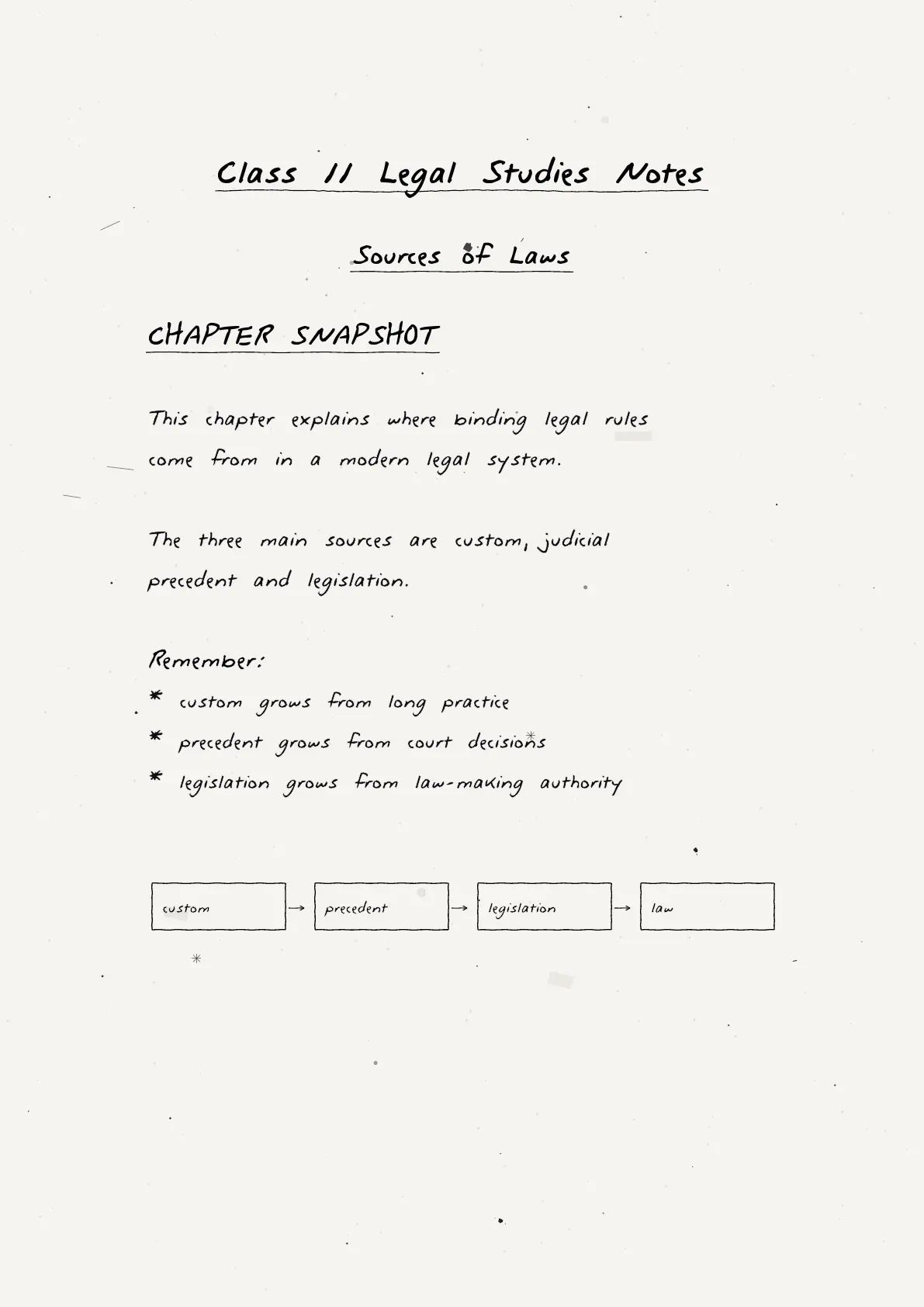
NCERT Handwritten Notes for Class 11 Legal Studies Chapter 8 Sources of Laws help students revise custom, judicial precedent and legislation for the 2026-27 session.
- Resource: topper-style handwritten revision notes PDF for Legal Studies Sources of Laws.
- Chapter focus: custom, valid custom tests, ratio decidendi, obiter dicta, precedent hierarchy and legislation types.
- Revision use: quick comparison tables, examples and answer frames before tests.

Student Feedback: In a Collegedunia classroom survey of 12,460 students, 78% said the custom, precedent and legislation map helped them revise the chapter faster.
Sources of Laws Handwritten Notes Overview
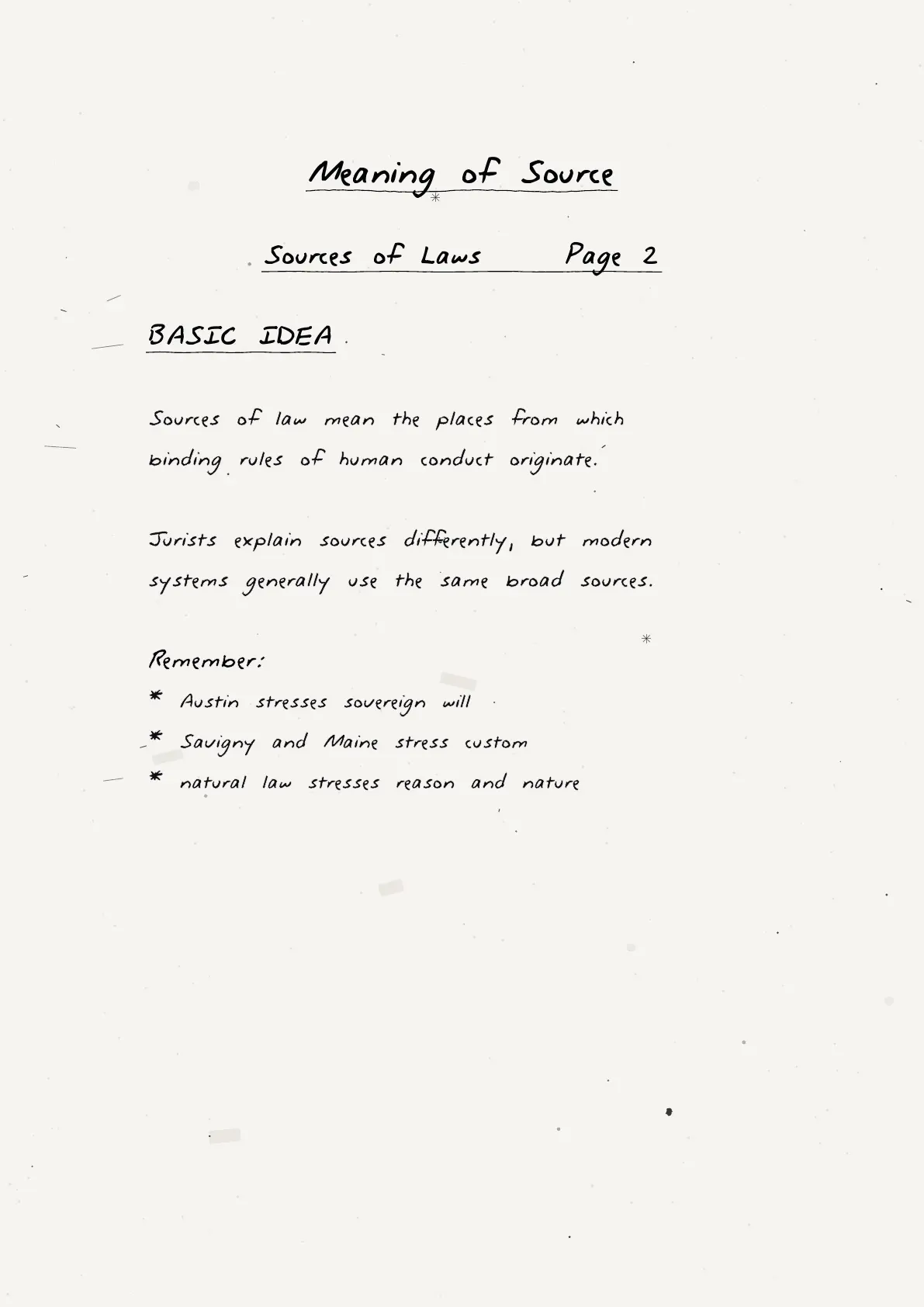
The Sources of Laws handwritten notes explain how legal rules originate and become binding. Students can revise the three major sources first, then move to valid custom tests, precedent rules and legislation types.
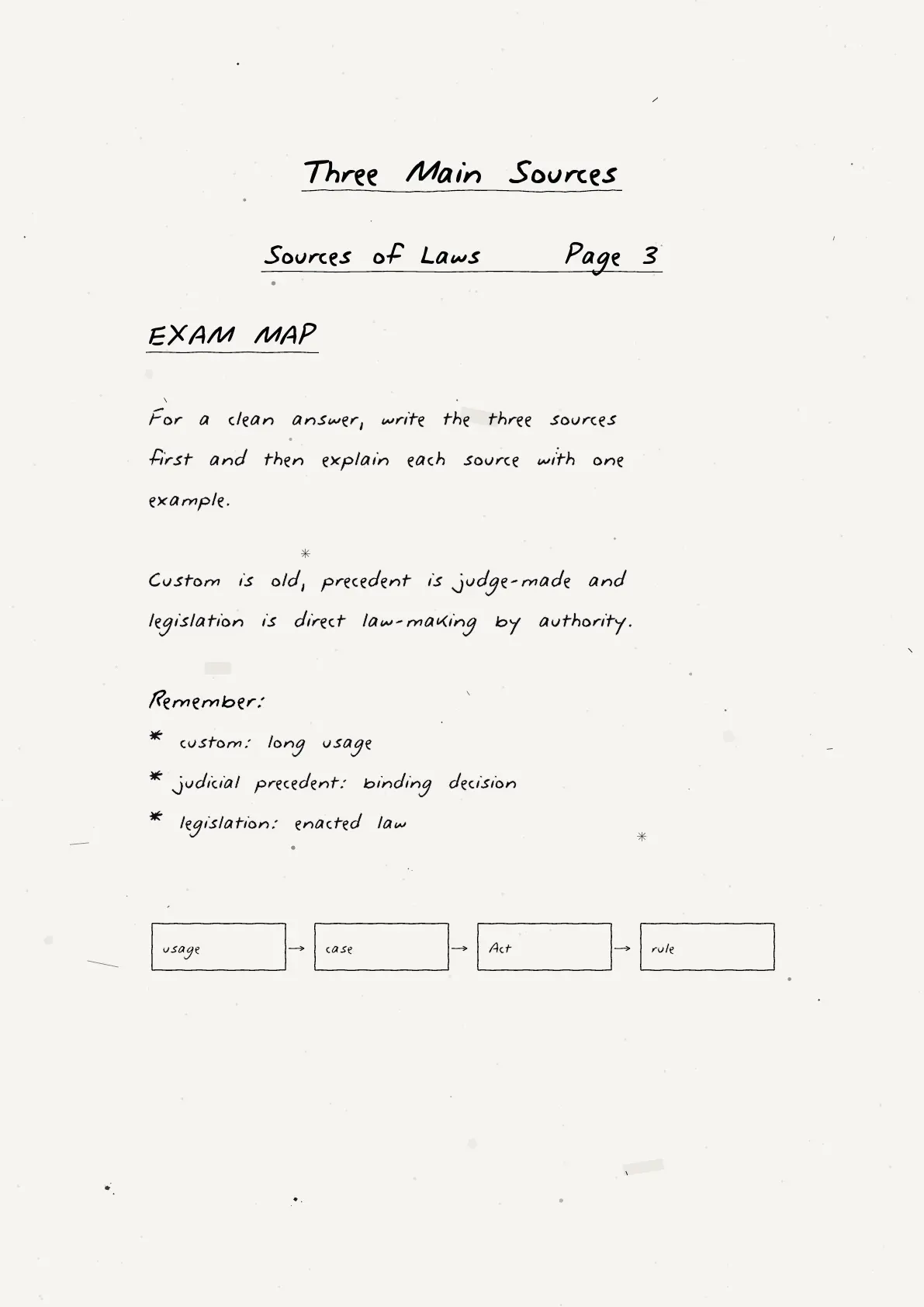
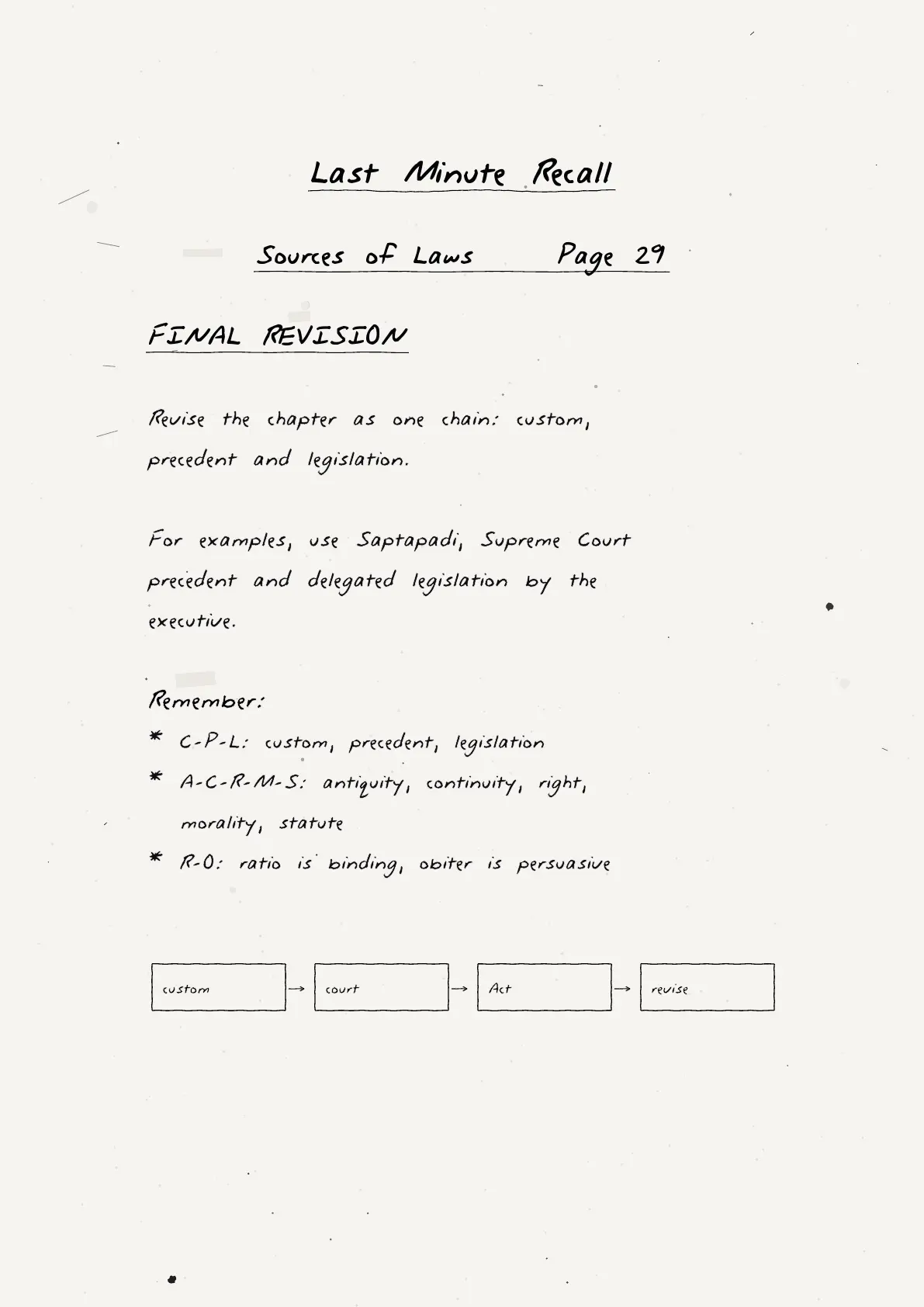
- Best starting point: remember custom, judicial precedent and legislation.
- Scoring area: difference questions on ratio and obiter, custom and legislation, supreme and subordinate legislation.
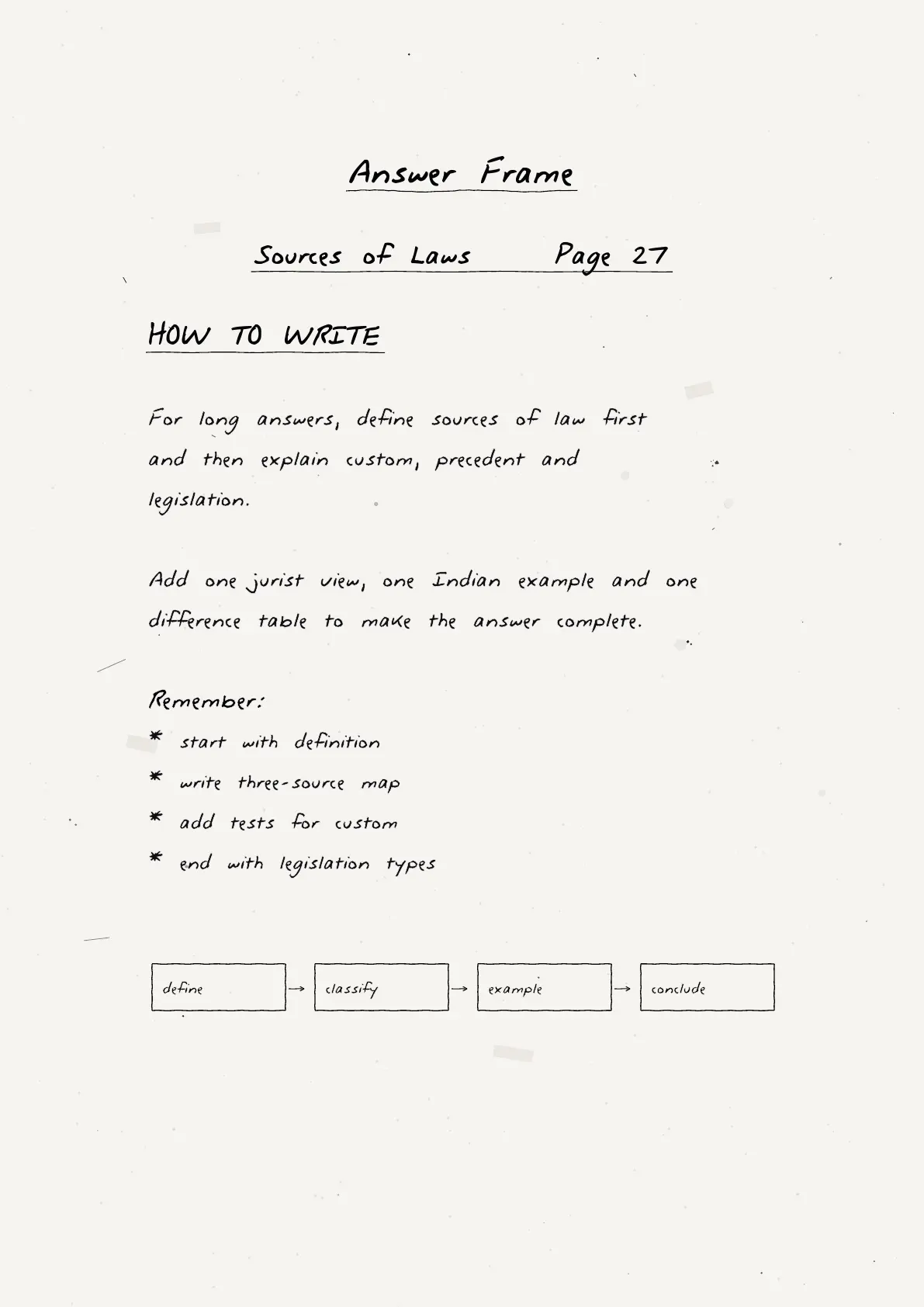
- Long-answer route: define the source, explain features, then add one Indian example.
Custom as a Source of Law
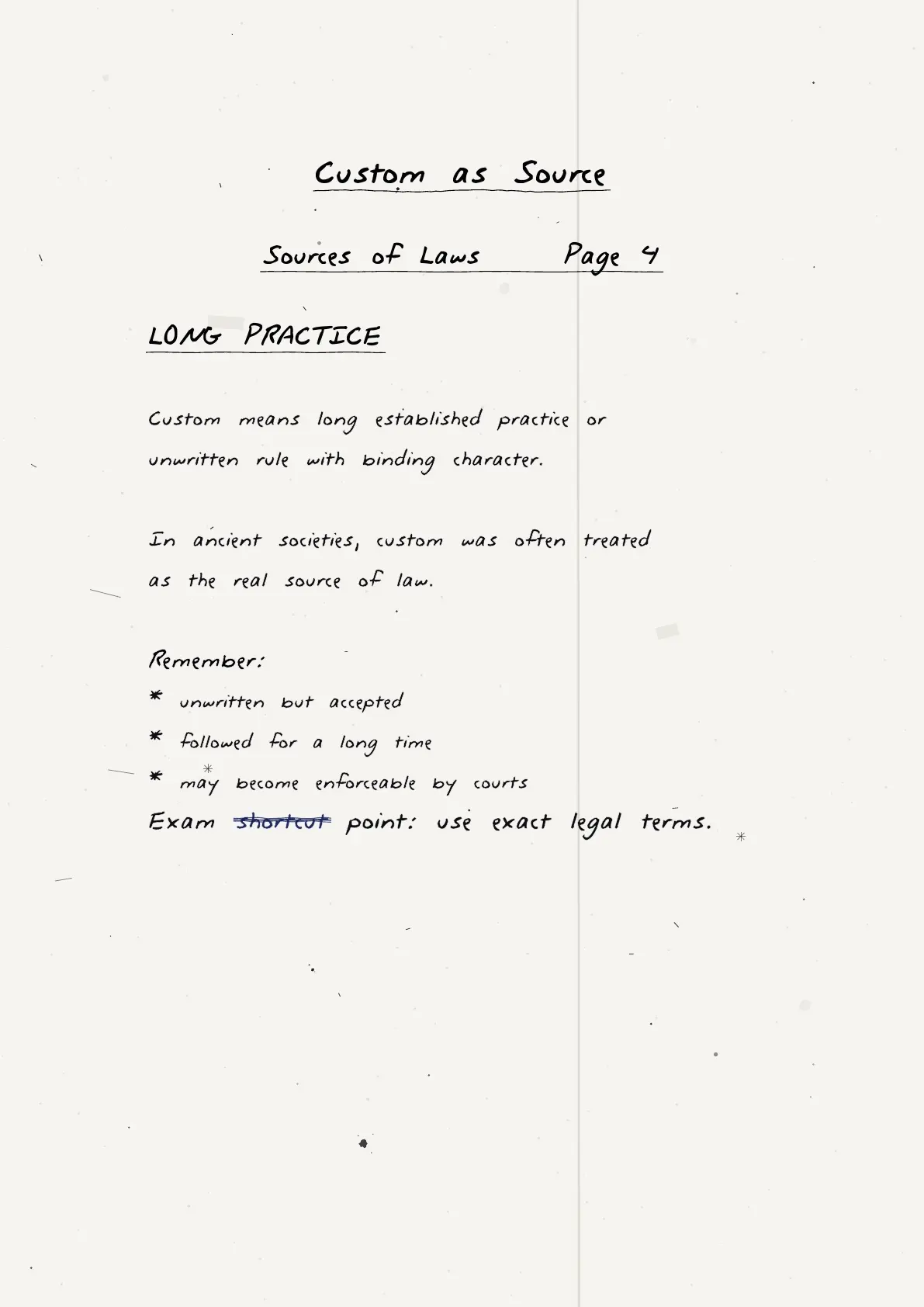
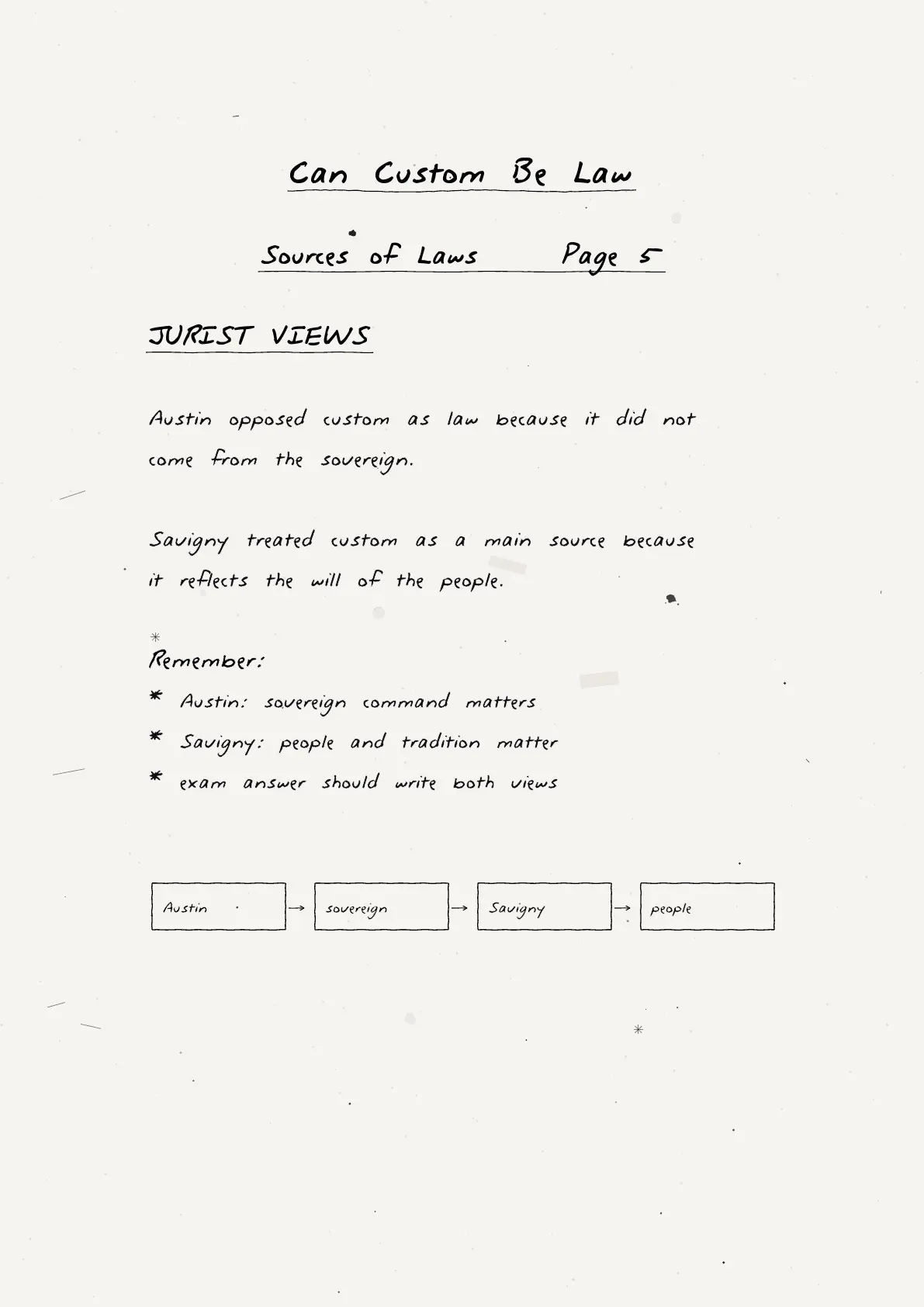
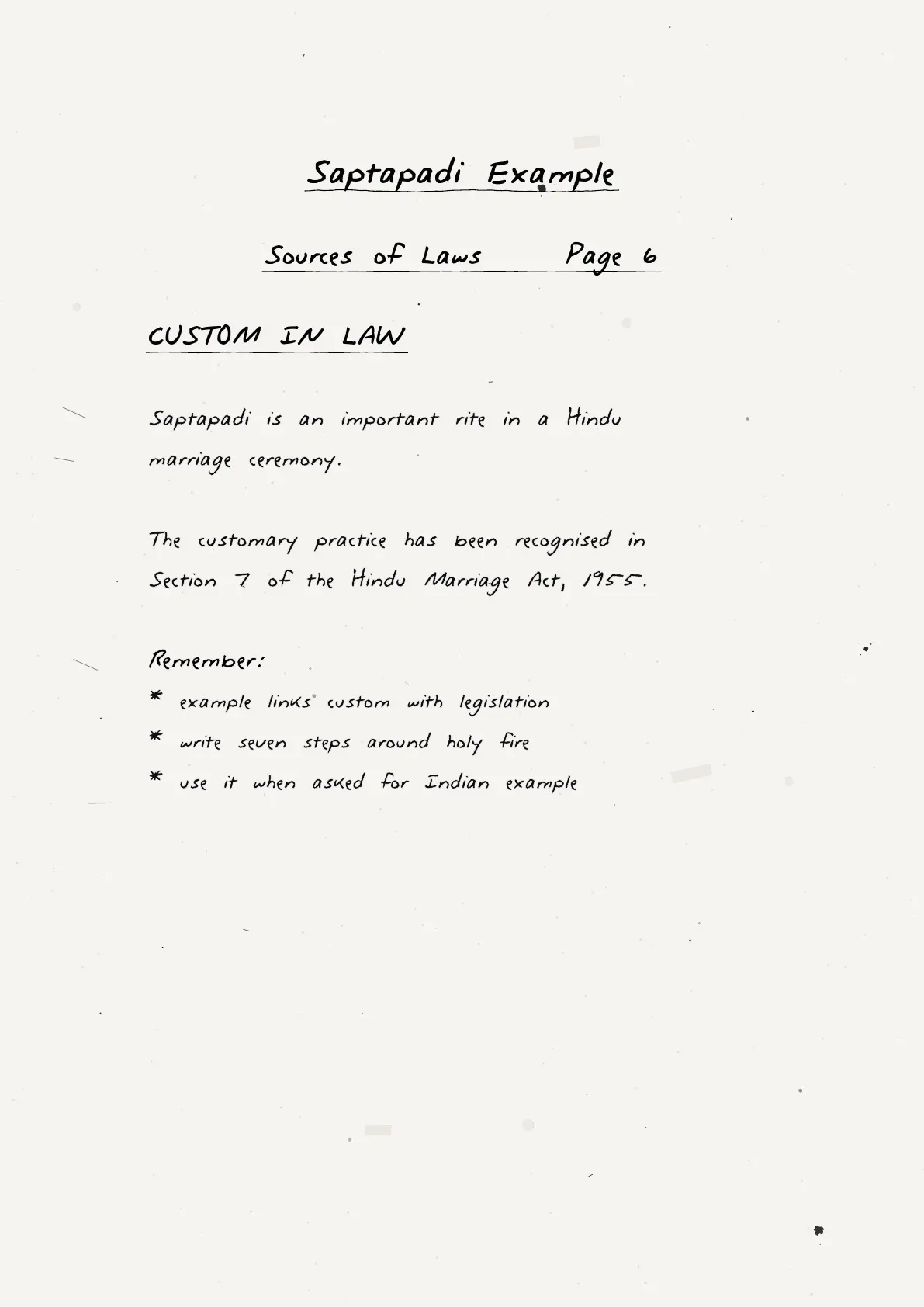
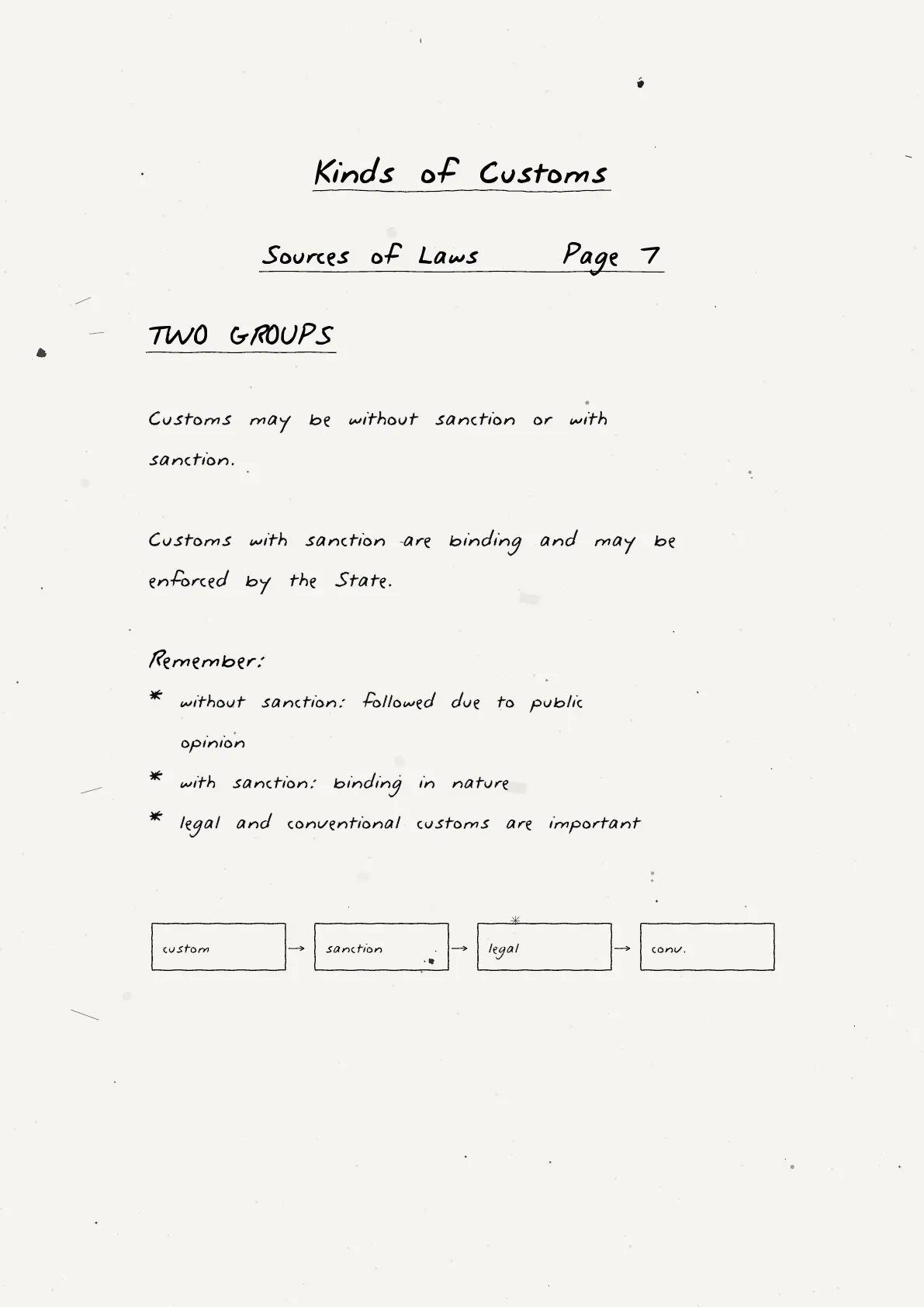
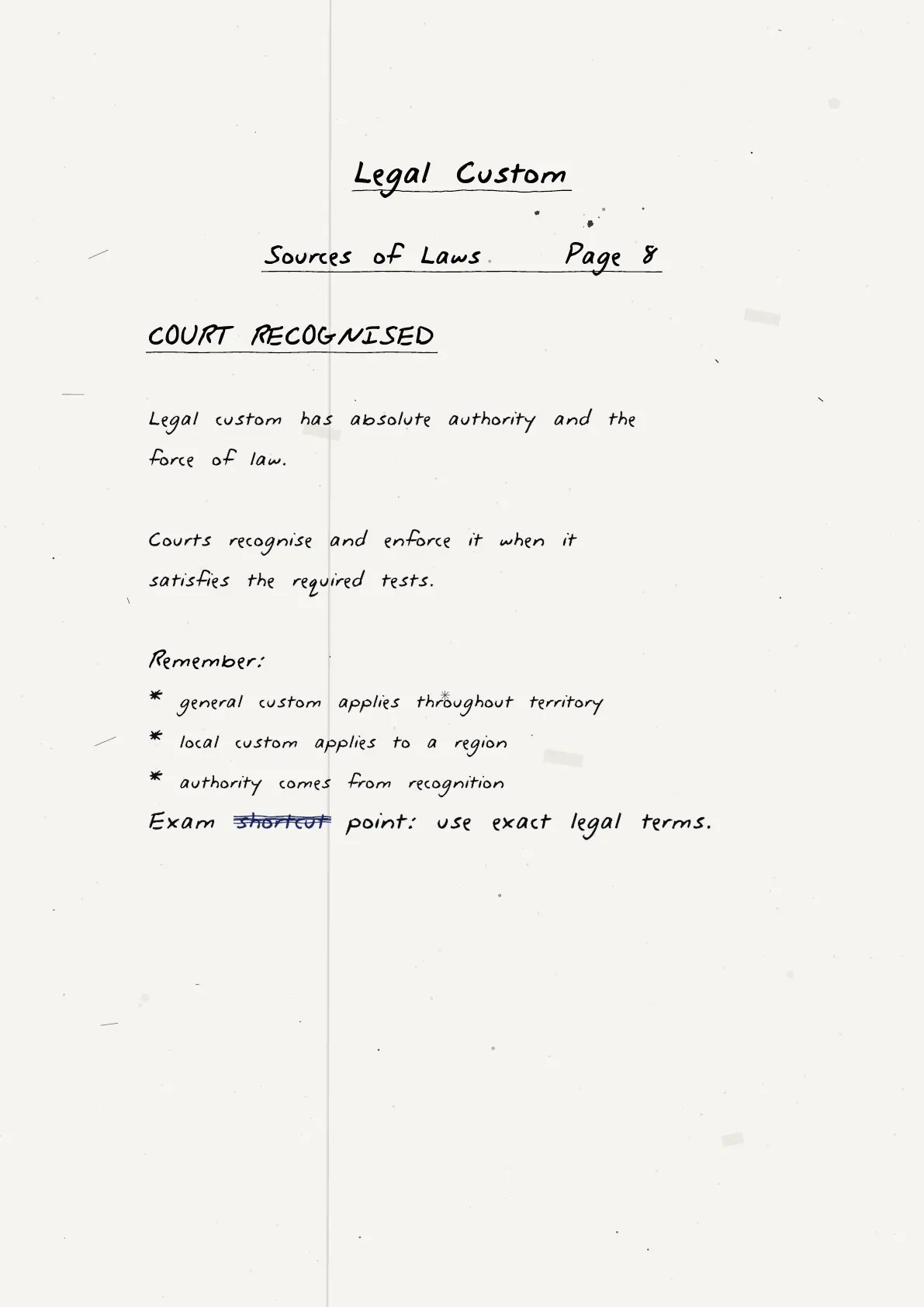
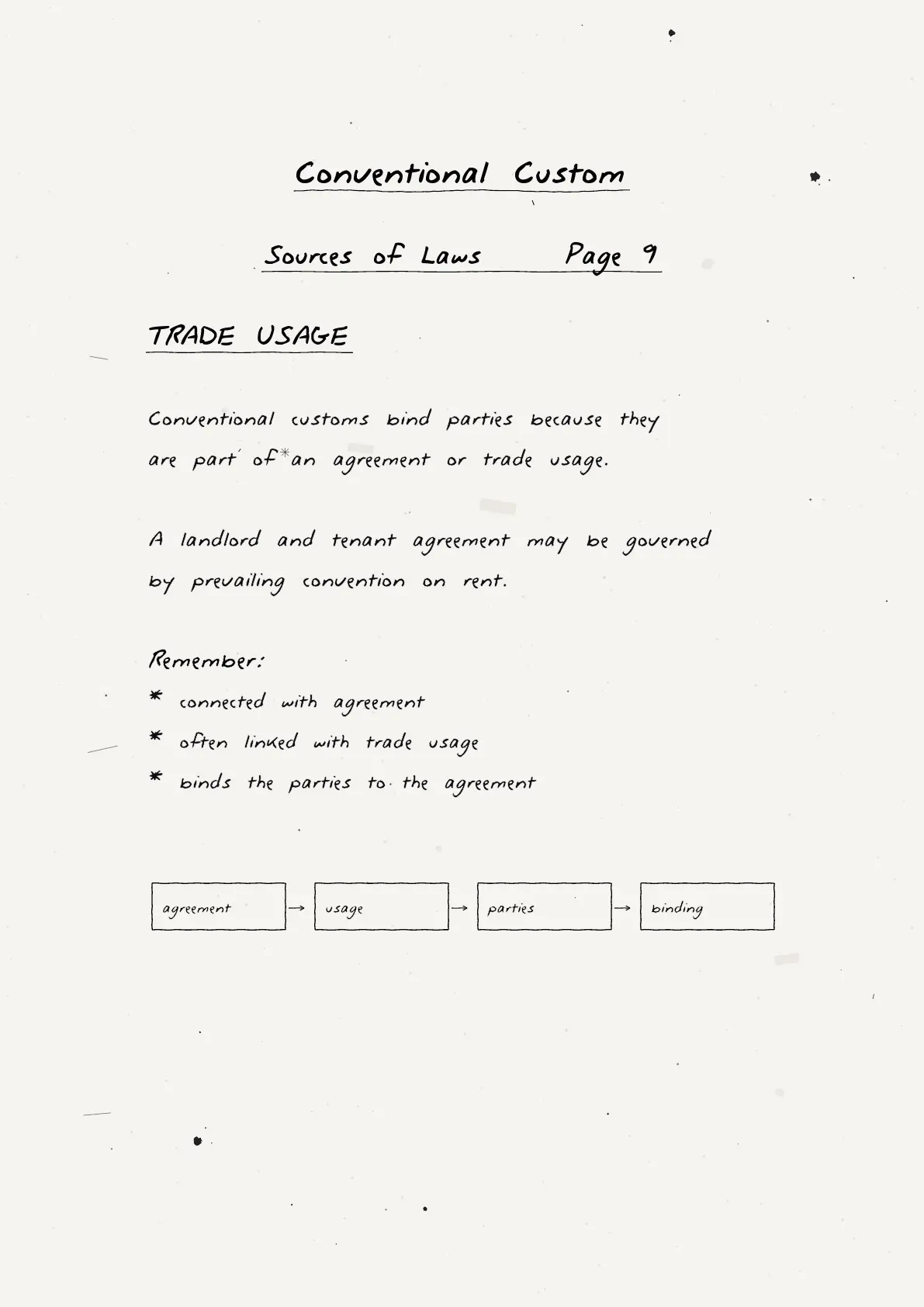
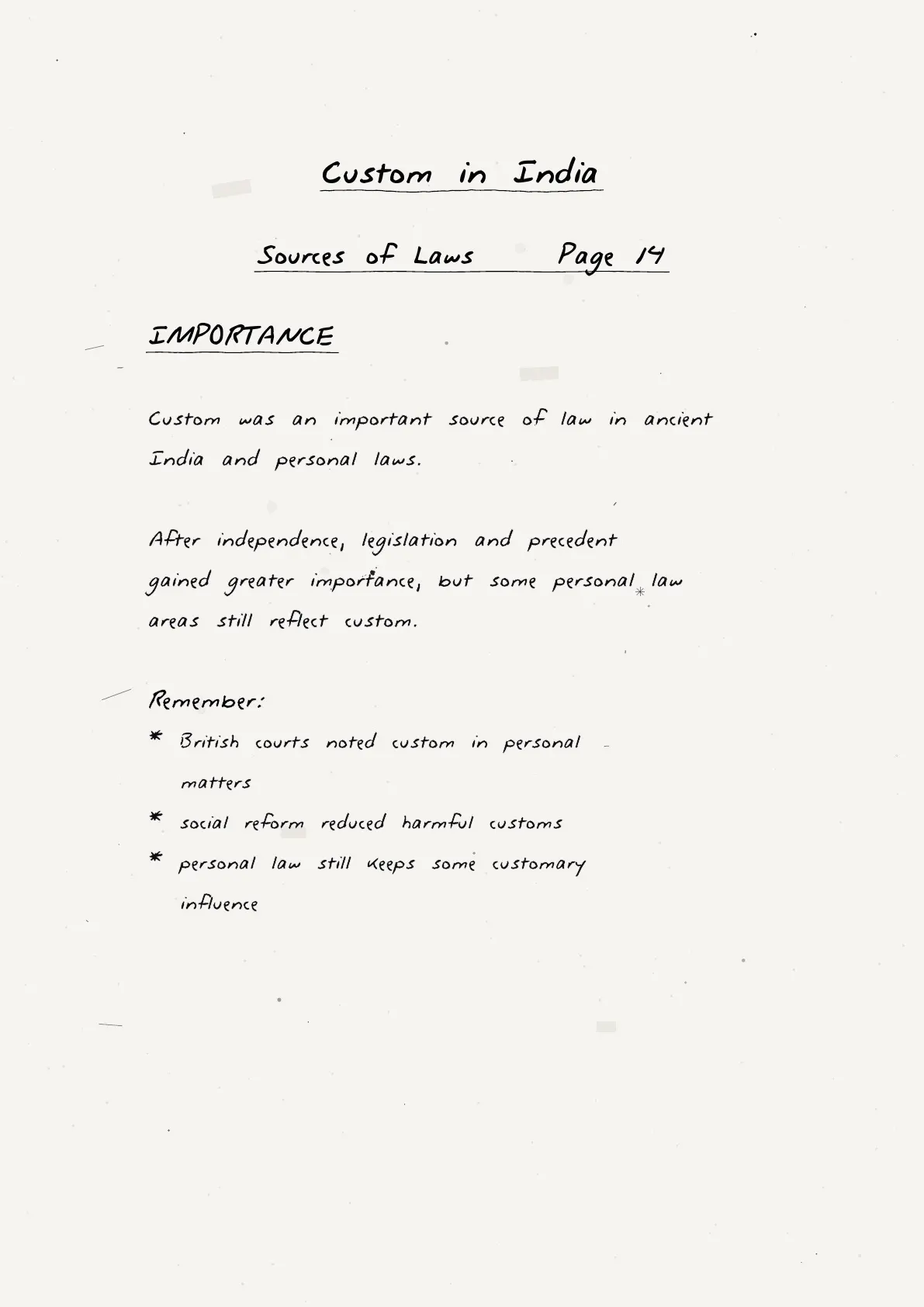
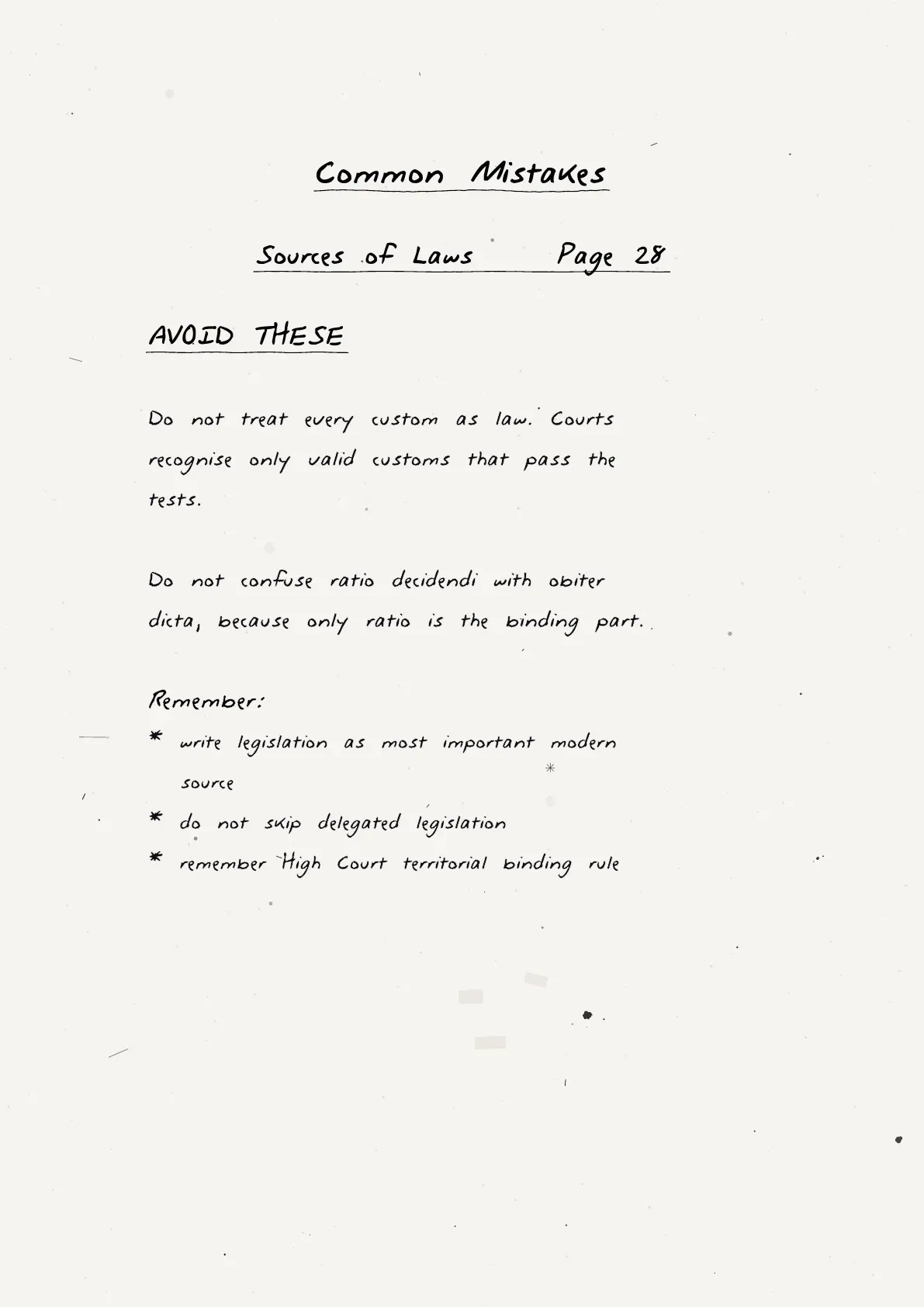
Custom means a long established practice or unwritten rule that has acquired binding character. Courts recognise only valid customs, so students must revise the tests carefully.
| Test for valid custom | Plain meaning | Exam cue |
|---|---|---|
| Antiquity | The custom should be old and practised from time immemorial. | India has no fixed year like England. |
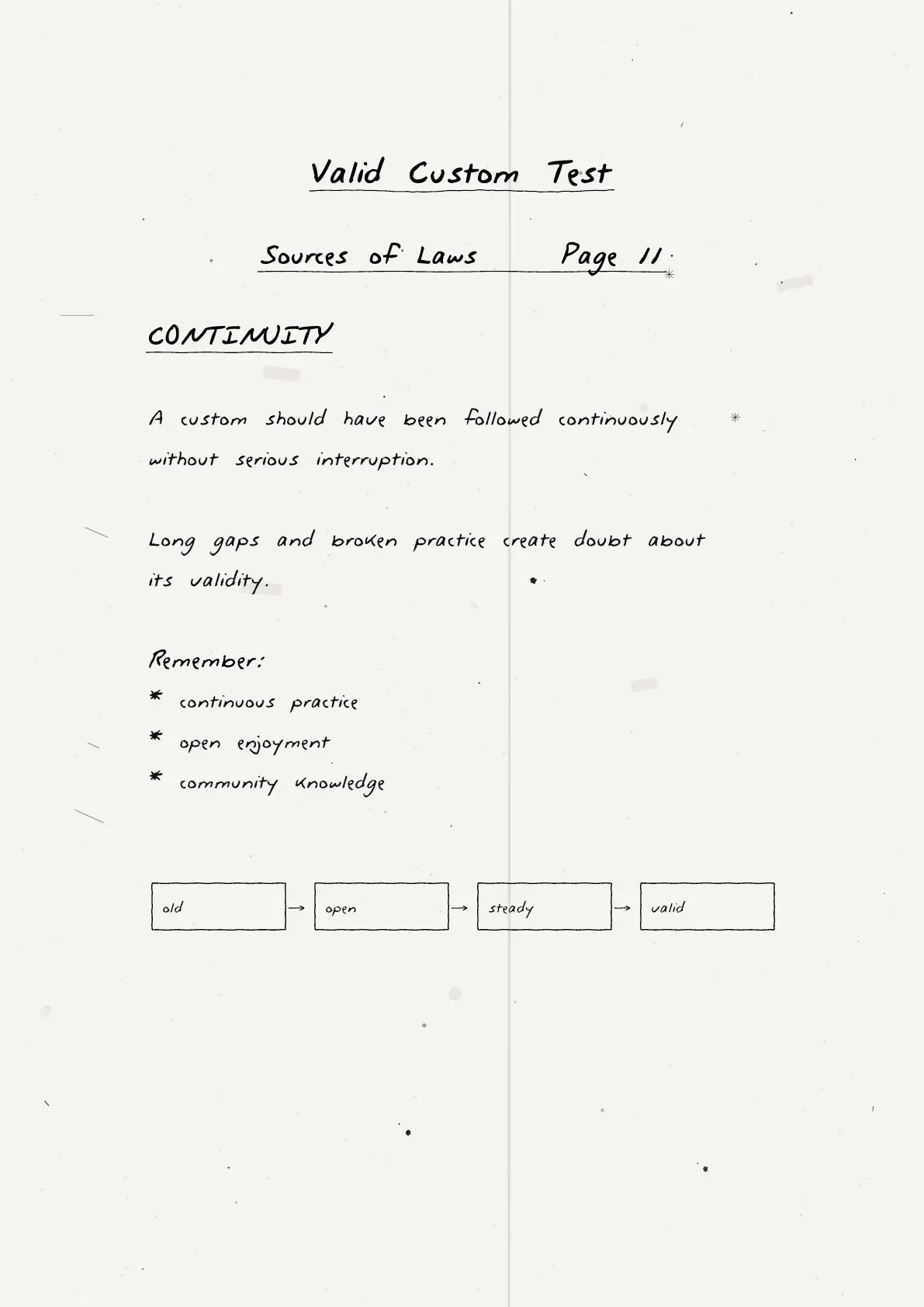
| Continuity | The custom should be followed without serious interruption. | Broken practice weakens validity. |
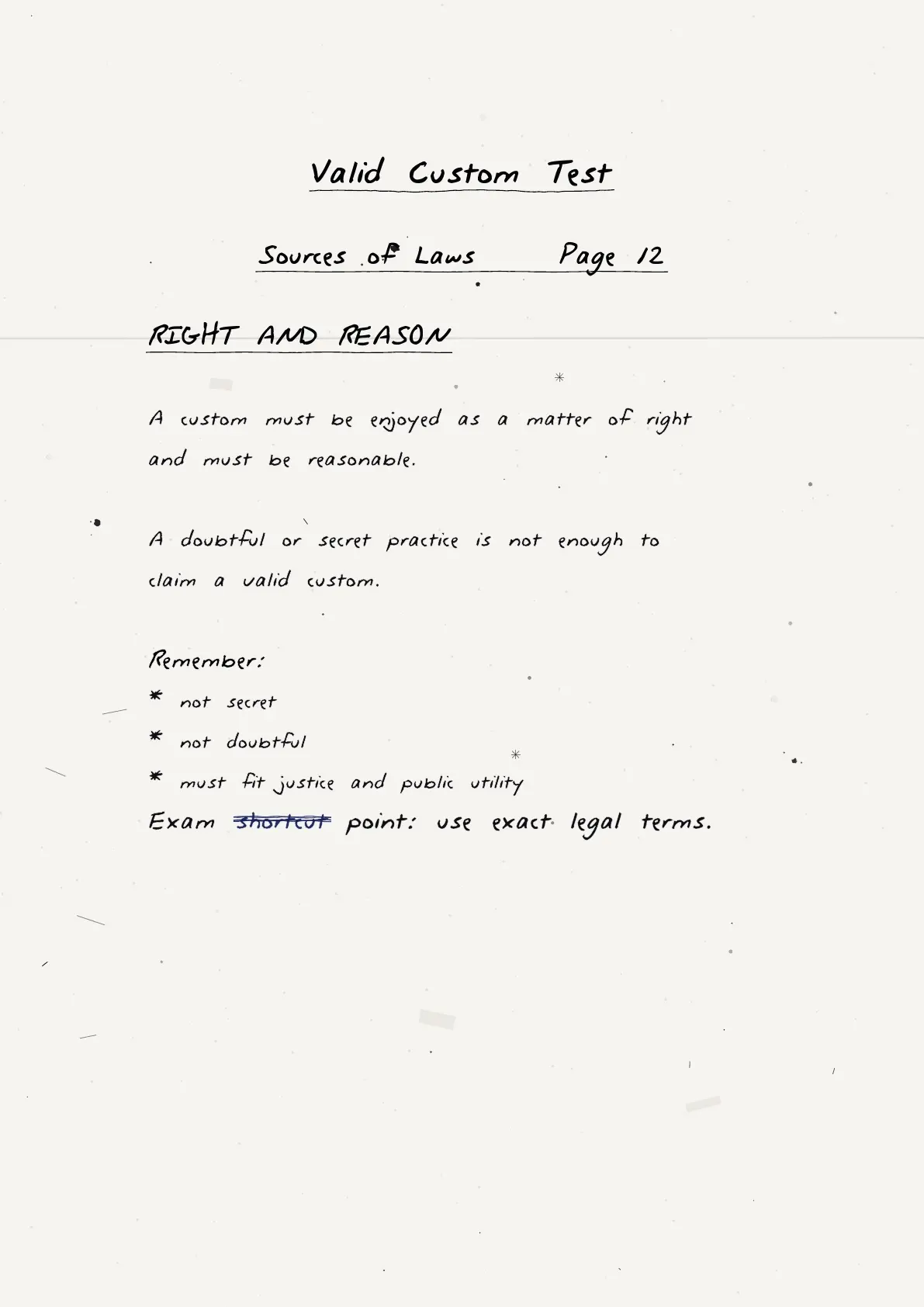
| Right and reason | The custom should be open, reasonable and enjoyed as a right. | Secret or doubtful practice is not enough. |
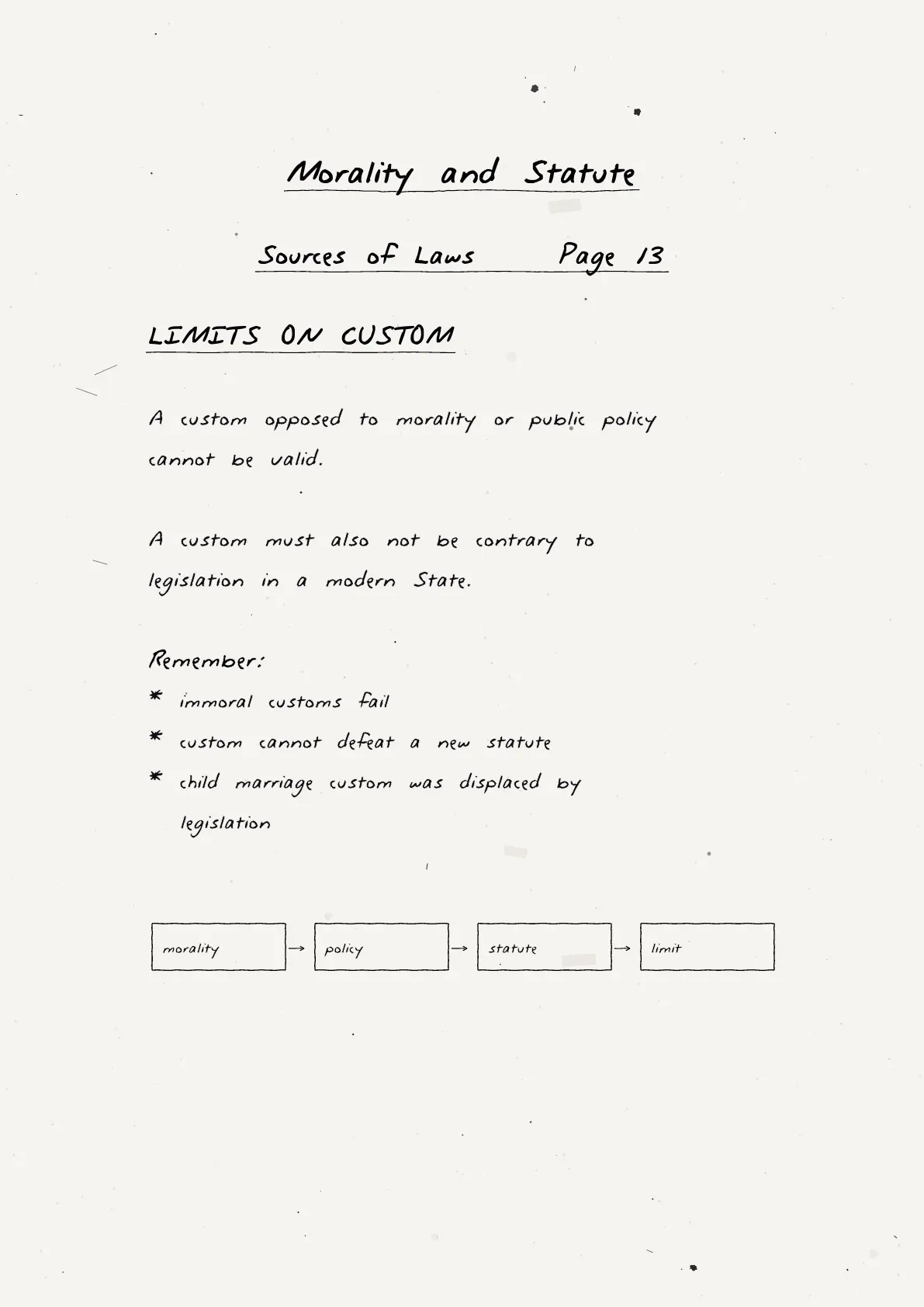
| Morality and statute | The custom must not oppose public policy or legislation. | A new statute is preferred in a modern State. |
Sources of Laws Video for Class 11 Legal Studies
Source: Magnet Brains on YouTube
Judicial Precedent as a Source of Law
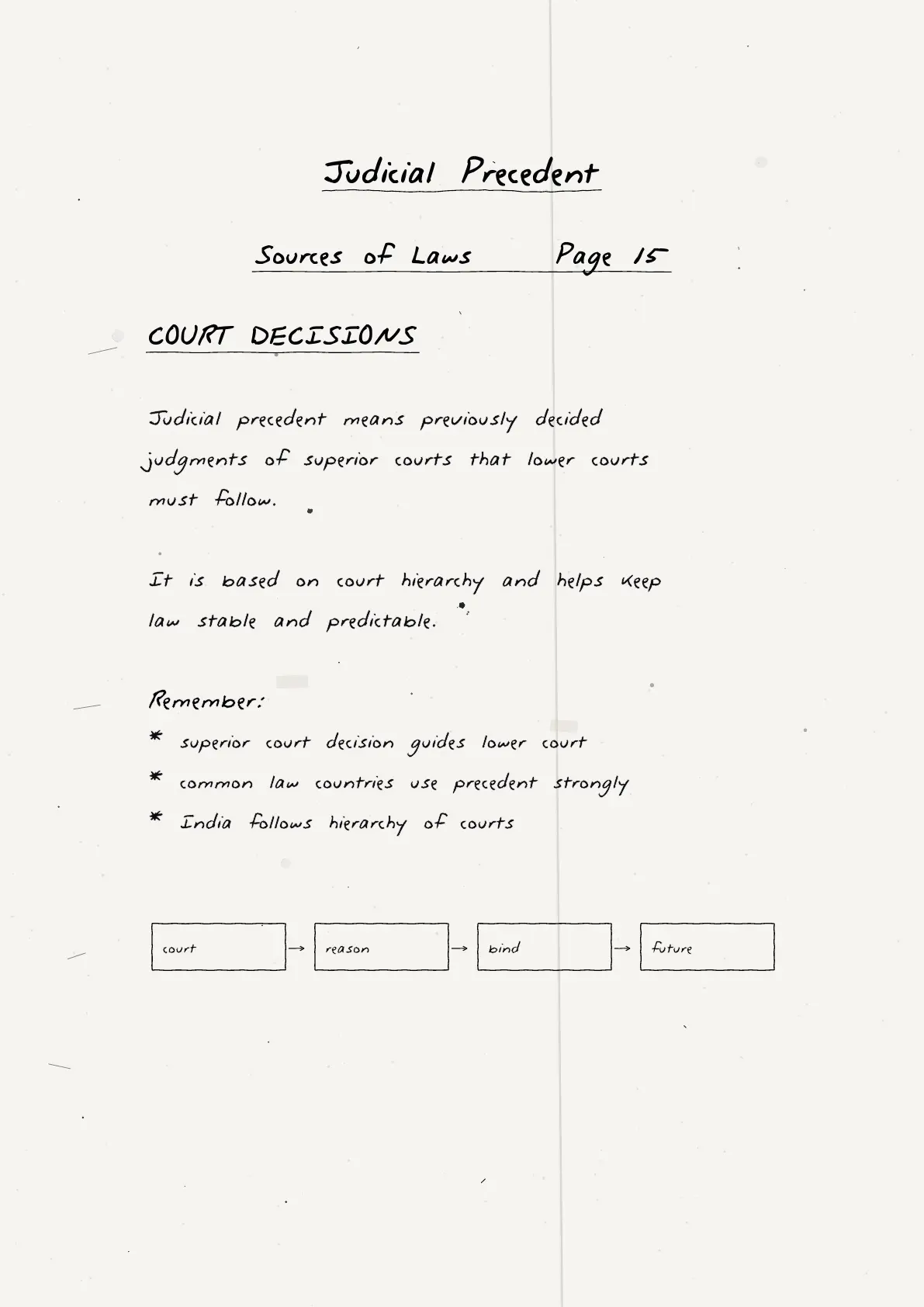
Judicial precedent means earlier decisions of superior courts that lower courts must follow. In India, the doctrine works through the hierarchy of courts.
| Court level | Binding effect | Revision cue |
|---|---|---|
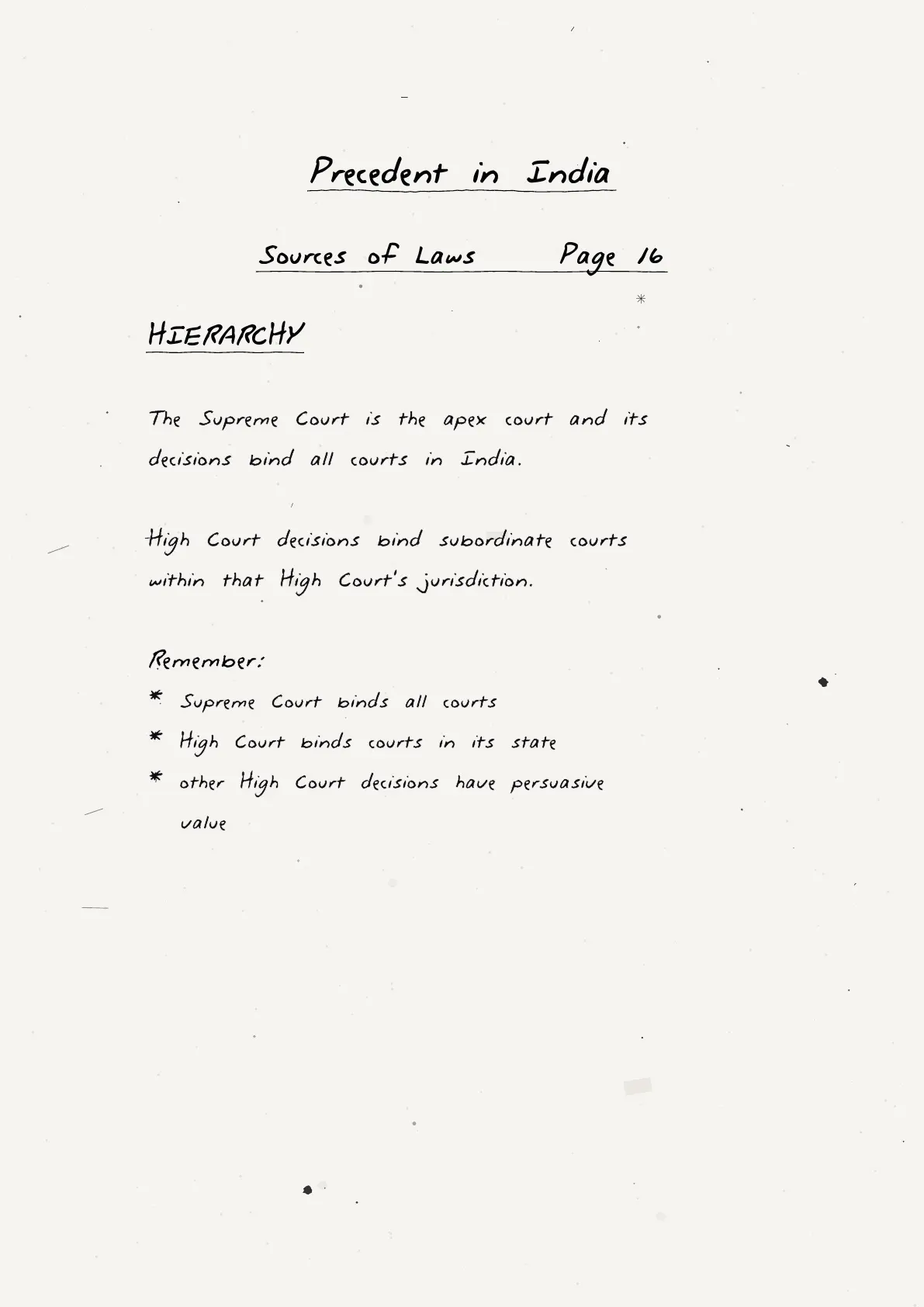
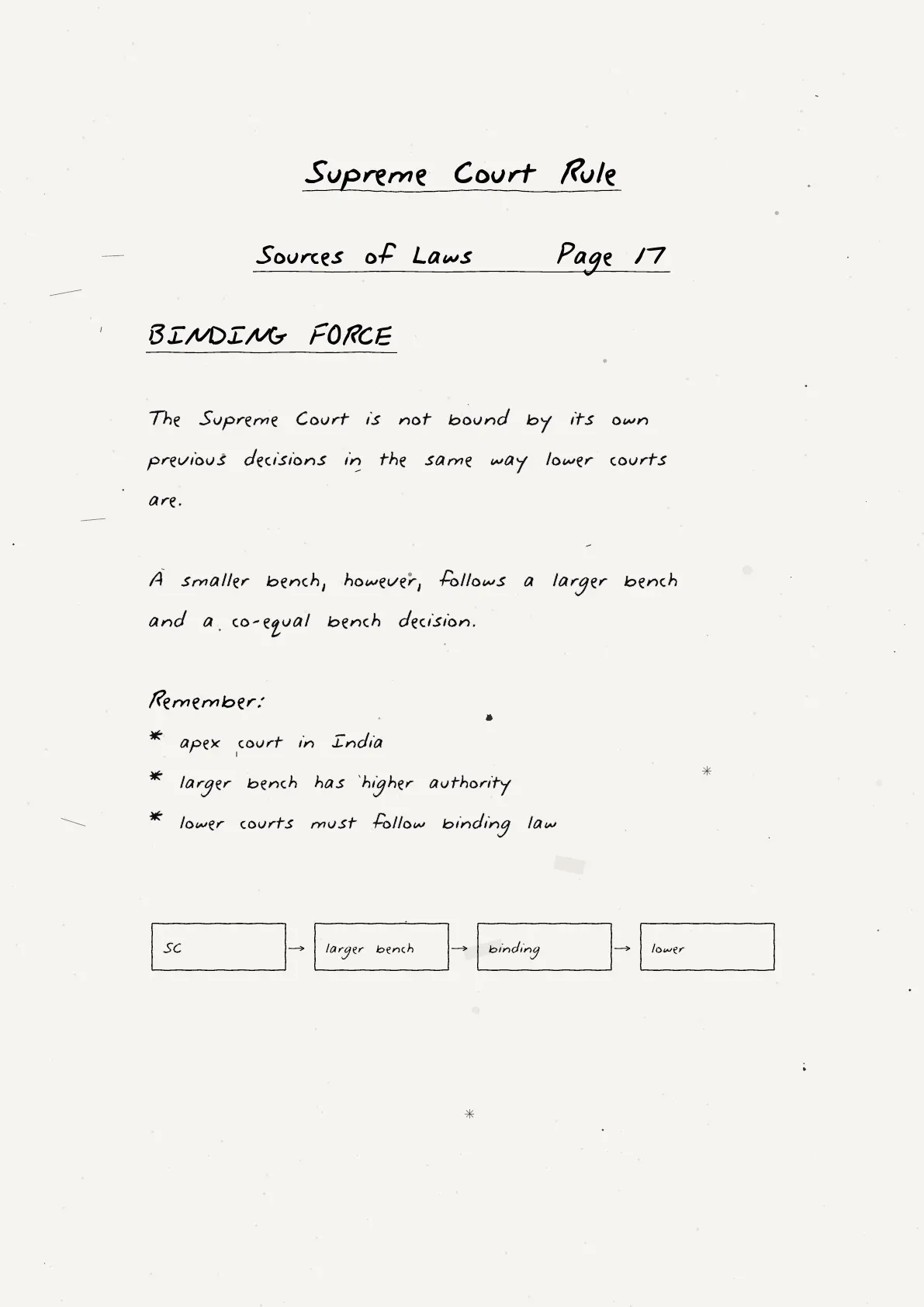
| Supreme Court | Binding on all courts in India. | Apex court of the judicial hierarchy. |
| High Court | Binding on subordinate courts within its jurisdiction. | Other High Courts get persuasive value. |
| Lower Courts | Bound by higher courts in the same state. | Follow their own High Court first. |
Ratio Decidendi and Obiter Dicta
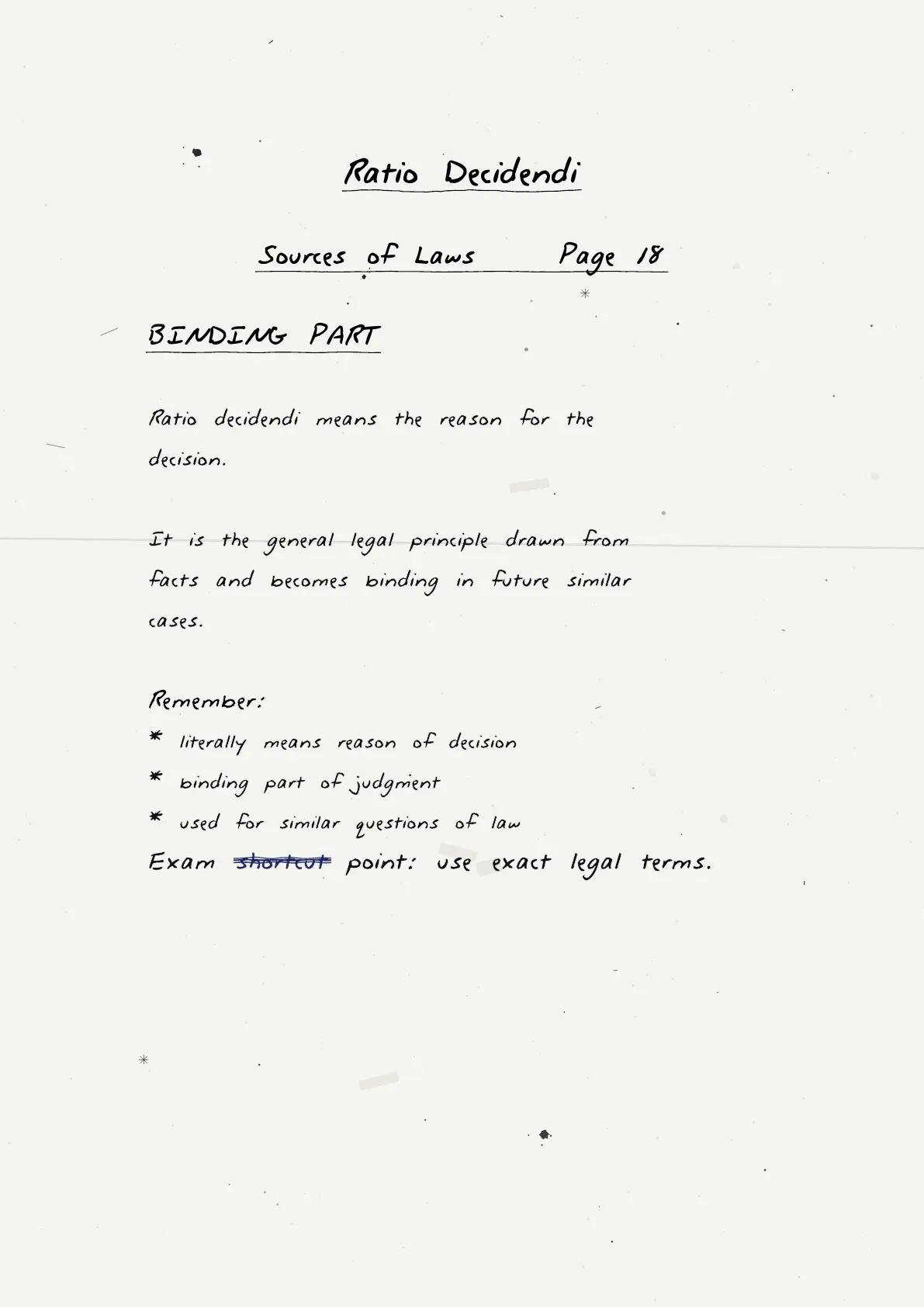
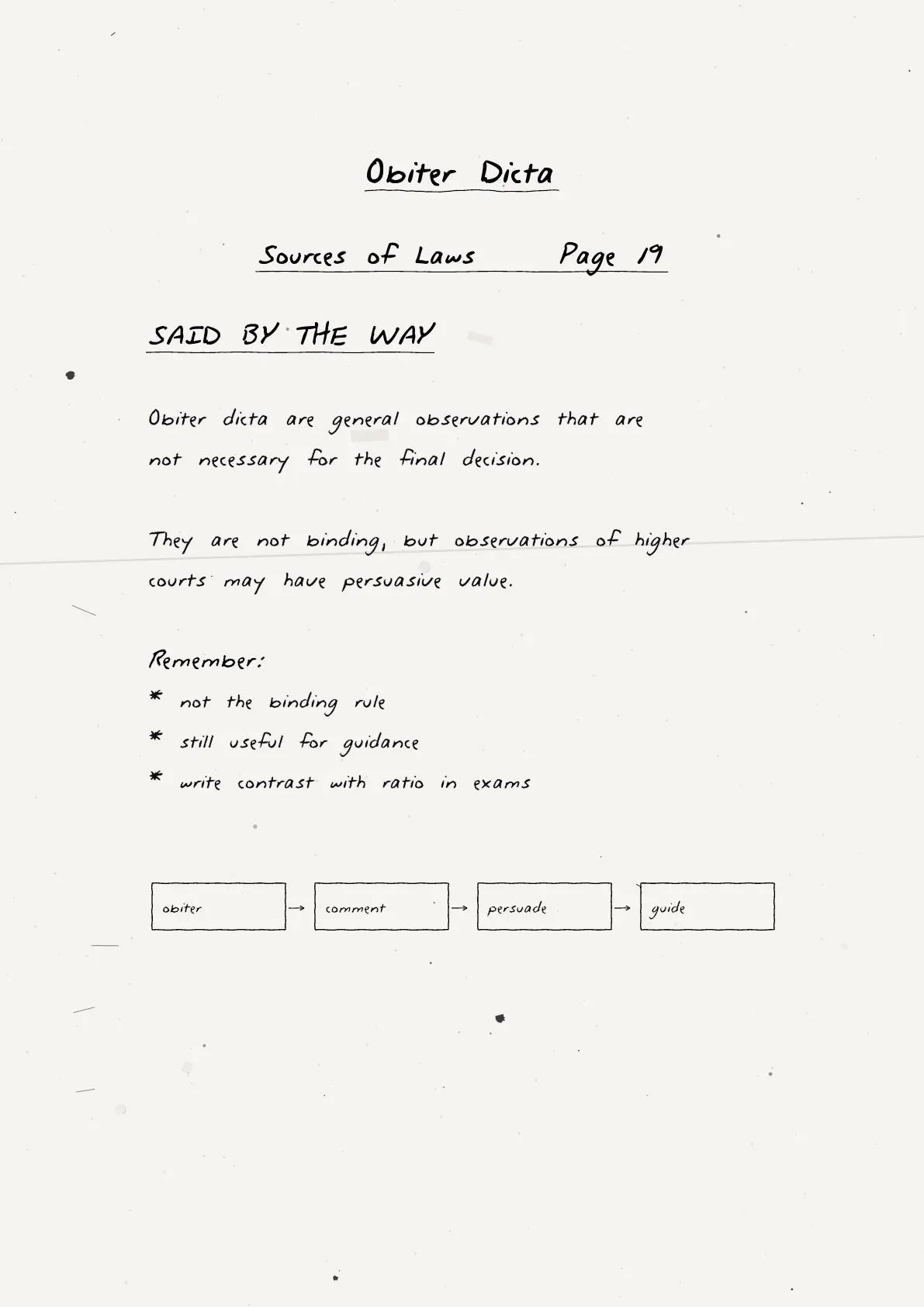
Ratio decidendi is the binding reason for the decision. Obiter dicta are general observations said by the way and usually carry persuasive value.
| Term | Meaning | Binding value |
|---|---|---|
| Ratio decidendi | Reason for the decision drawn from facts and law. | Binding in later similar cases. |
| Obiter dicta | General observation not necessary for the decision. | Persuasive, especially from higher courts. |
| Precedent | Earlier decision used as authority. | Depends on court hierarchy. |
Legislation as a Source of Law
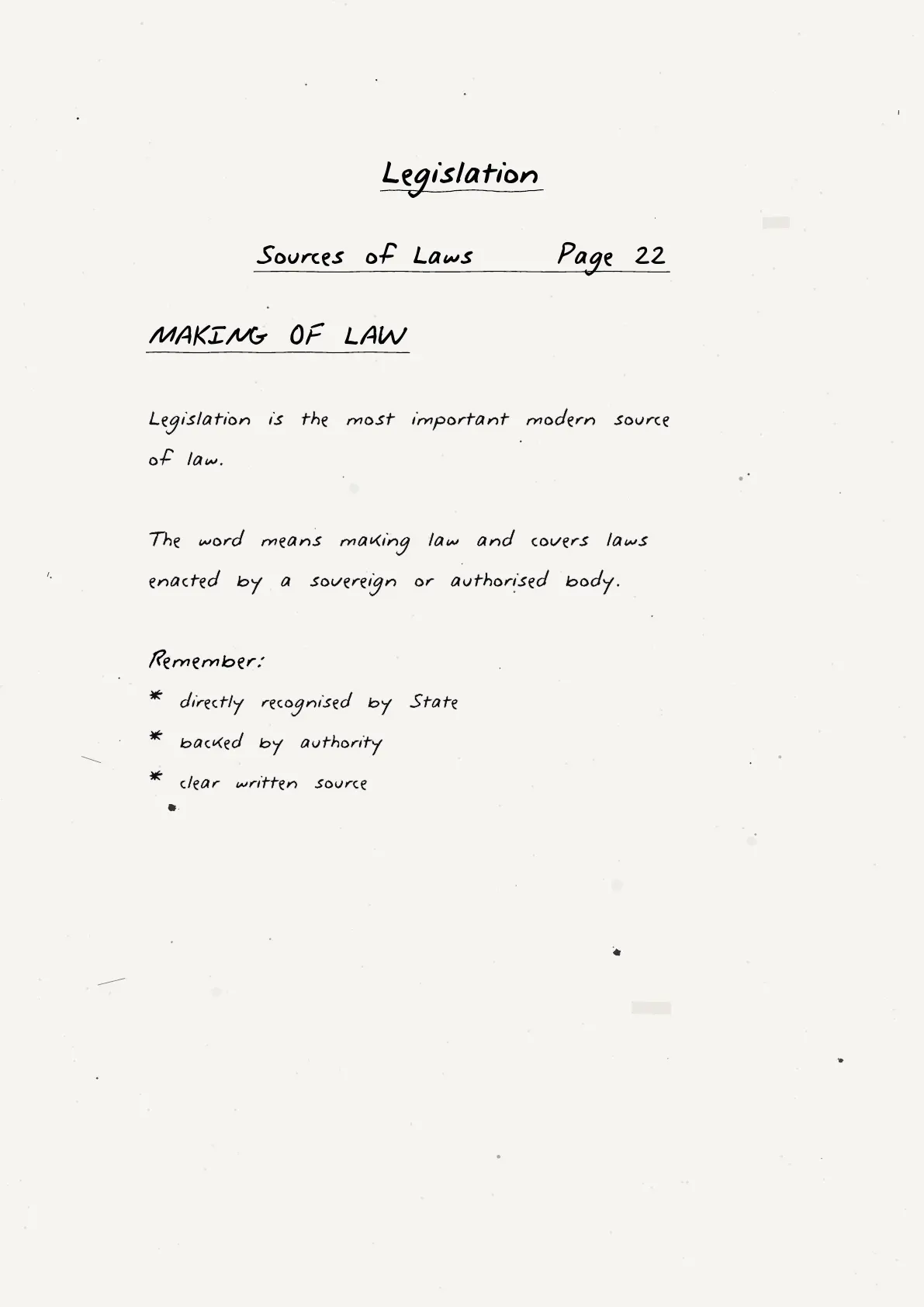
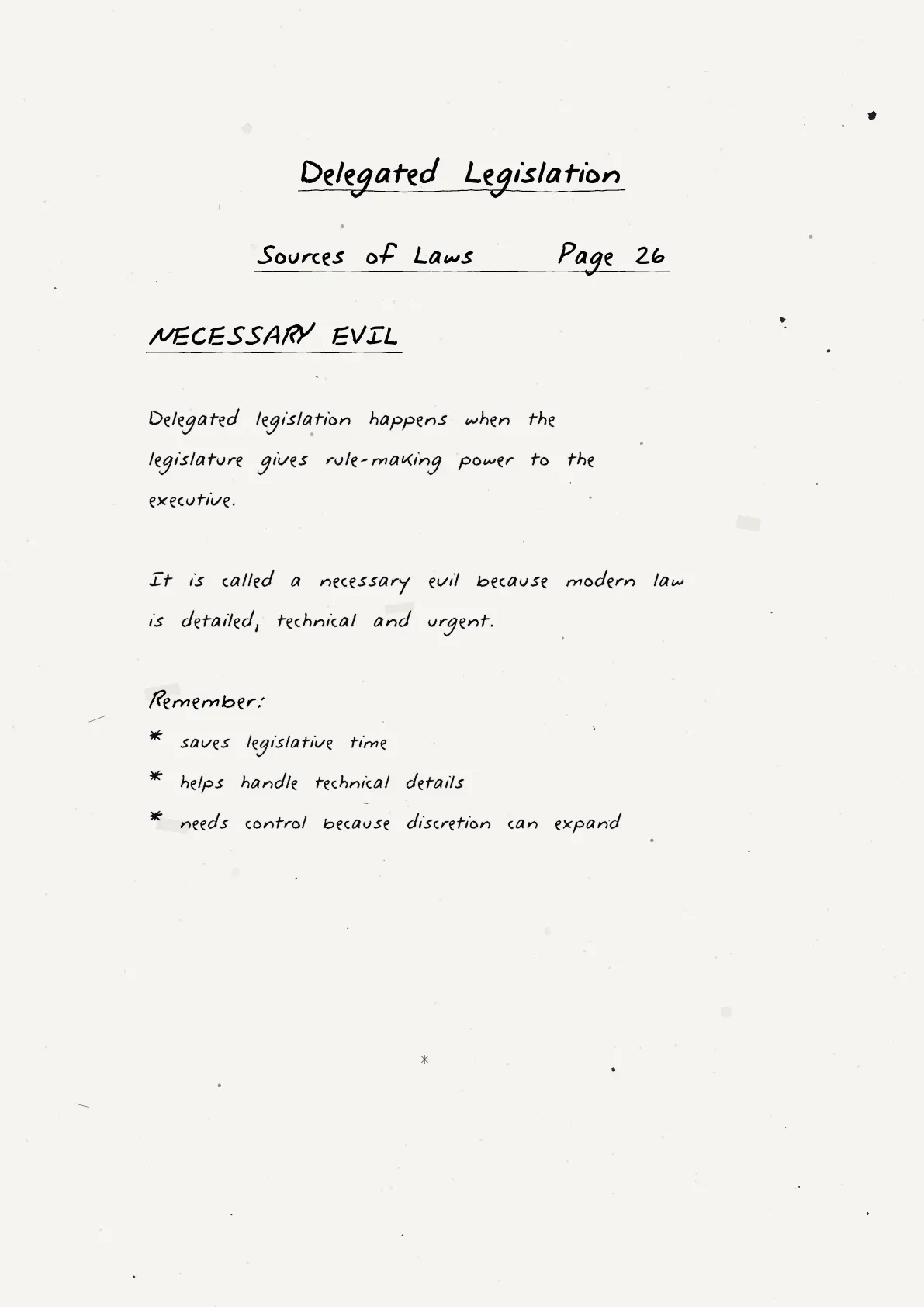
Legislation is the making of law. It is the most important modern source because it is directly enacted and recognised by the State.
| Type | Meaning | Example cue |
|---|---|---|
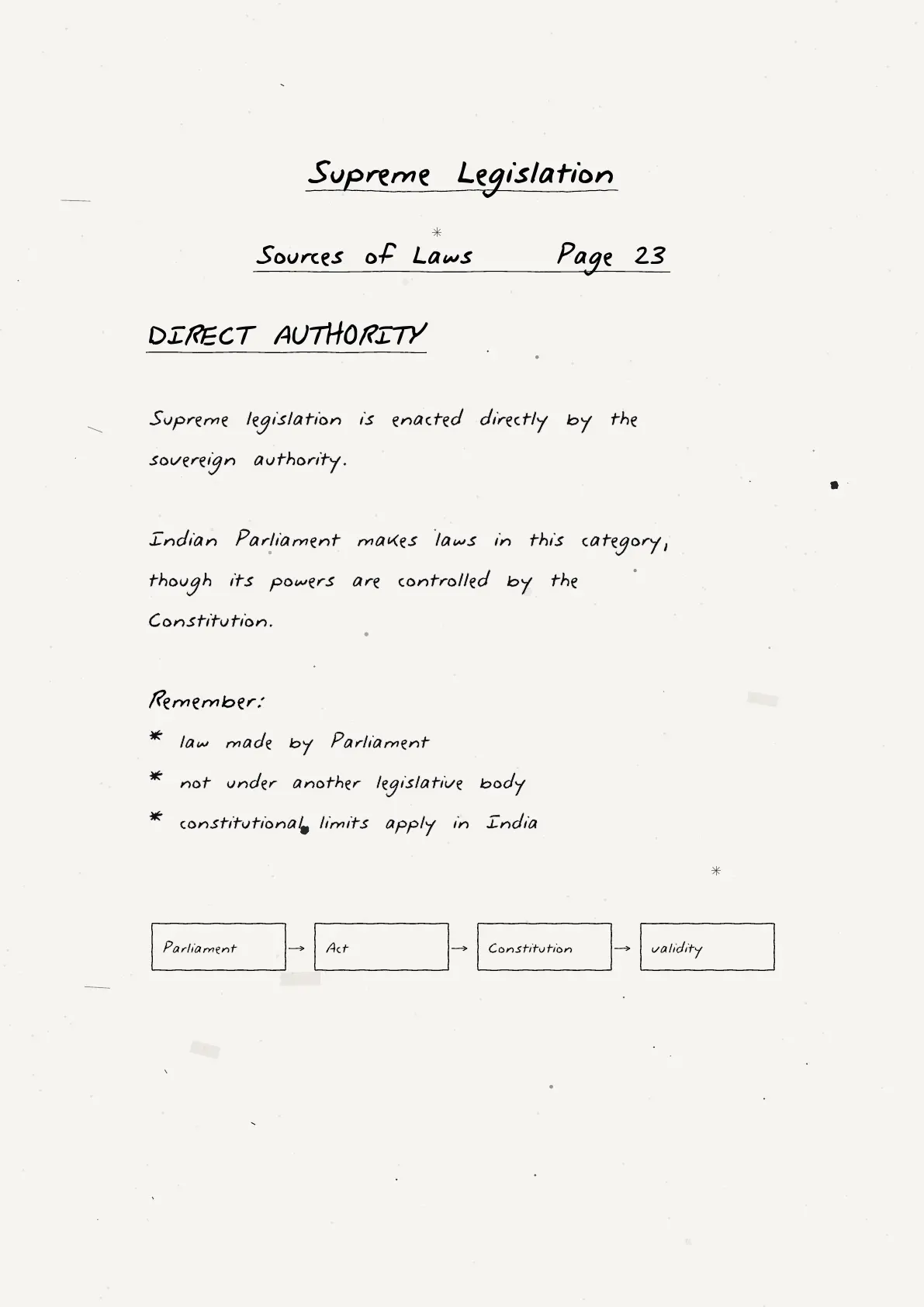
| Supreme legislation | Law directly enacted by the sovereign authority. | Laws passed by Indian Parliament. |
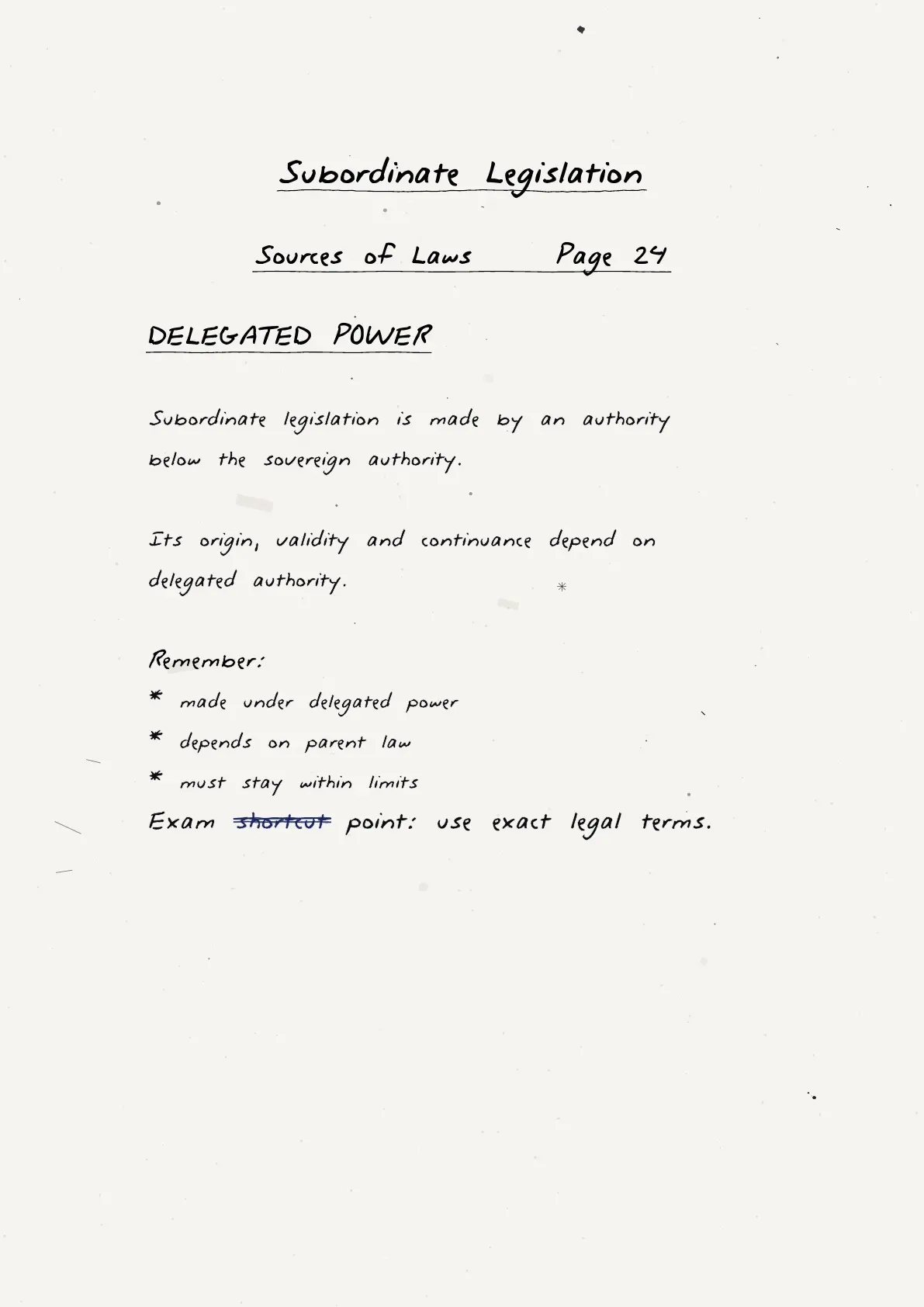
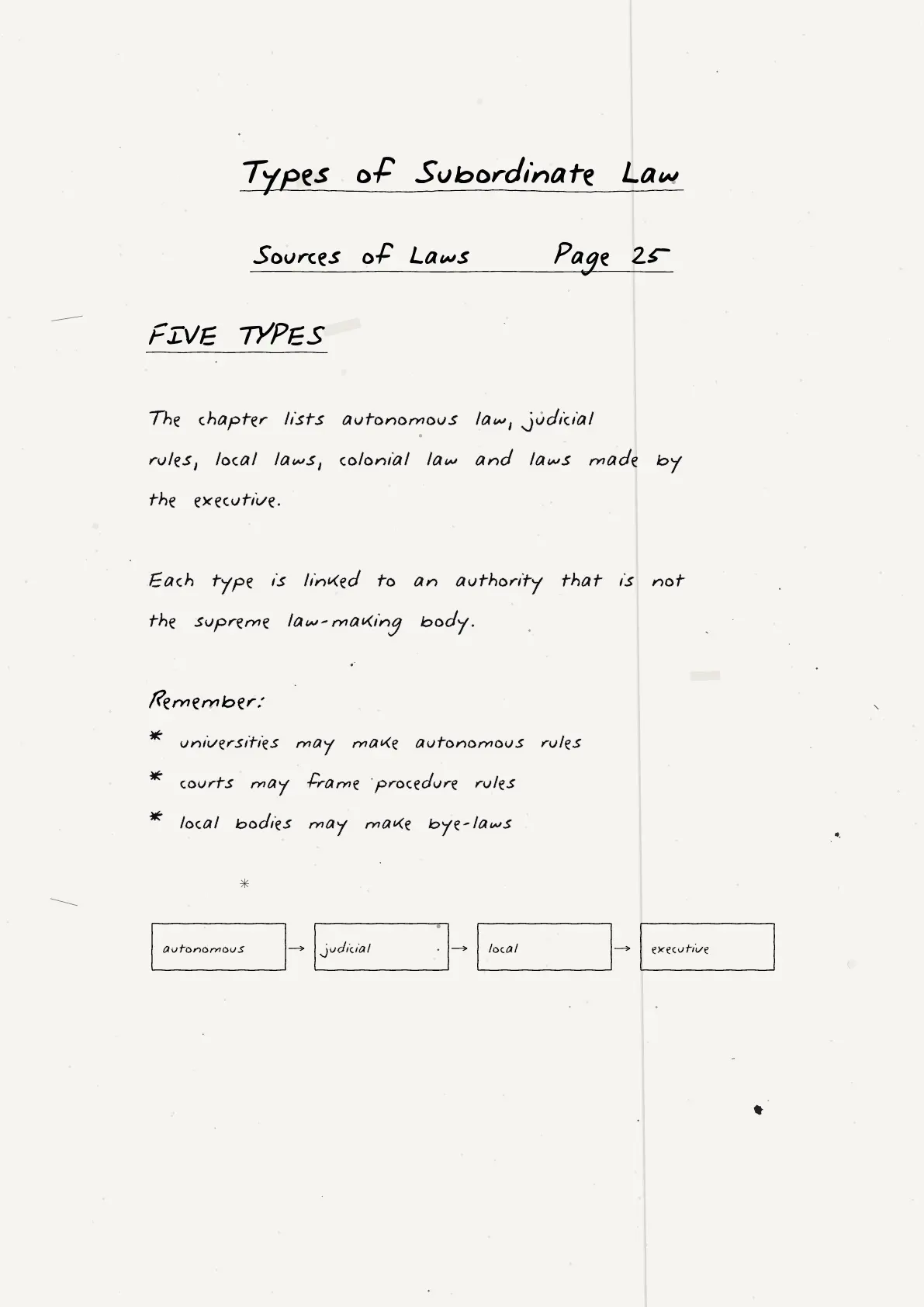
| Subordinate legislation | Law made by an authority below the sovereign. | Rules, bye-laws and delegated legislation. |
| Delegated legislation | Rule-making power given to executive organs. | Necessary evil due to time, technicality and emergency. |
Important Differences for Exam Revision
Most exercise questions ask students to compare source terms. Write the basis of difference first, then add one example.
- Custom vs legislation: custom grows from long social practice, while legislation is enacted by an authorised law-making body.
- Ratio vs obiter: ratio is the binding reason of decision, while obiter is a persuasive observation.
- Supreme vs subordinate legislation: supreme legislation is made directly by sovereign authority, while subordinate legislation depends on delegated authority.
- Supreme Court vs High Court judgment: Supreme Court decisions bind all Indian courts, while High Court decisions bind courts within that jurisdiction.
Related Class 11 Legal Studies Resources
| Resource | Use it for | Link |
|---|---|---|
| NCERT Solutions | Exercise answers for Sources of Laws. | Class 11 Legal Studies Sources of Laws Solutions |
| Previous Chapter Handwritten Notes | Revise Classification of Laws before Sources of Laws. | Class 11 Legal Studies Classification of Laws Handwritten Notes |
| Handwritten Notes | Quick one-shot revision before tests. | Class 11 Legal Studies Sources of Laws Handwritten Notes |
All Class 11 Legal Studies Handwritten Notes
| Chapter | Title | Handwritten Notes |
|---|---|---|
| Chapter 1 | Concept of State | Open handwritten notes |
| Chapter 2 | Forms and Organs of Government | Open handwritten notes |
| Chapter 3 | Separation of Powers | Open handwritten notes |
| Chapter 4 | Salient Features of the Constitution of India | Open handwritten notes |
| Chapter 5 | Administrative Law | Open handwritten notes |
| Chapter 6 | Jurisprudence, Nature and Meaning of Law | Open handwritten notes |
| Chapter 7 | Classification of Laws | Open handwritten notes |
| Chapter 8 | Sources of Laws | Open handwritten notes |
Class 11 Legal Studies Sources of Laws Handwritten Notes FAQs
Ques. What is covered in Class 11 Legal Studies Sources of Laws handwritten notes?
Ans. The PDF covers custom, judicial precedent, ratio decidendi, obiter dicta, legislation, supreme legislation and subordinate legislation.
Ques. What are the three main sources of law?
Ans. The three main sources are custom, judicial precedent and legislation.
Ques. What is ratio decidendi?
Ans. Ratio decidendi is the binding reason for a court decision. Lower courts follow it in future similar cases.
Ques. Why is delegated legislation called a necessary evil?
Ans. It is useful because modern law is technical and urgent, but it needs control because wide executive discretion may be risky.



Comments