




The handwritten notes on Class 12 Fine Arts Chapter 6 Modern Indian Art are prepared for quick revision from the 2026-27 NCERT chapter in An Introduction to Indian Art Part 2.
- Best for revision: use the timeline to connect institutions, artist groups and changing media.
- Artwork focus: revise Santhal Family, Mother Teresa, Haldi Grinder, Whirlpool, Devi, Of Walls and Vanshri.
- Exam focus: write artist, movement, medium and social meaning in one compact answer.
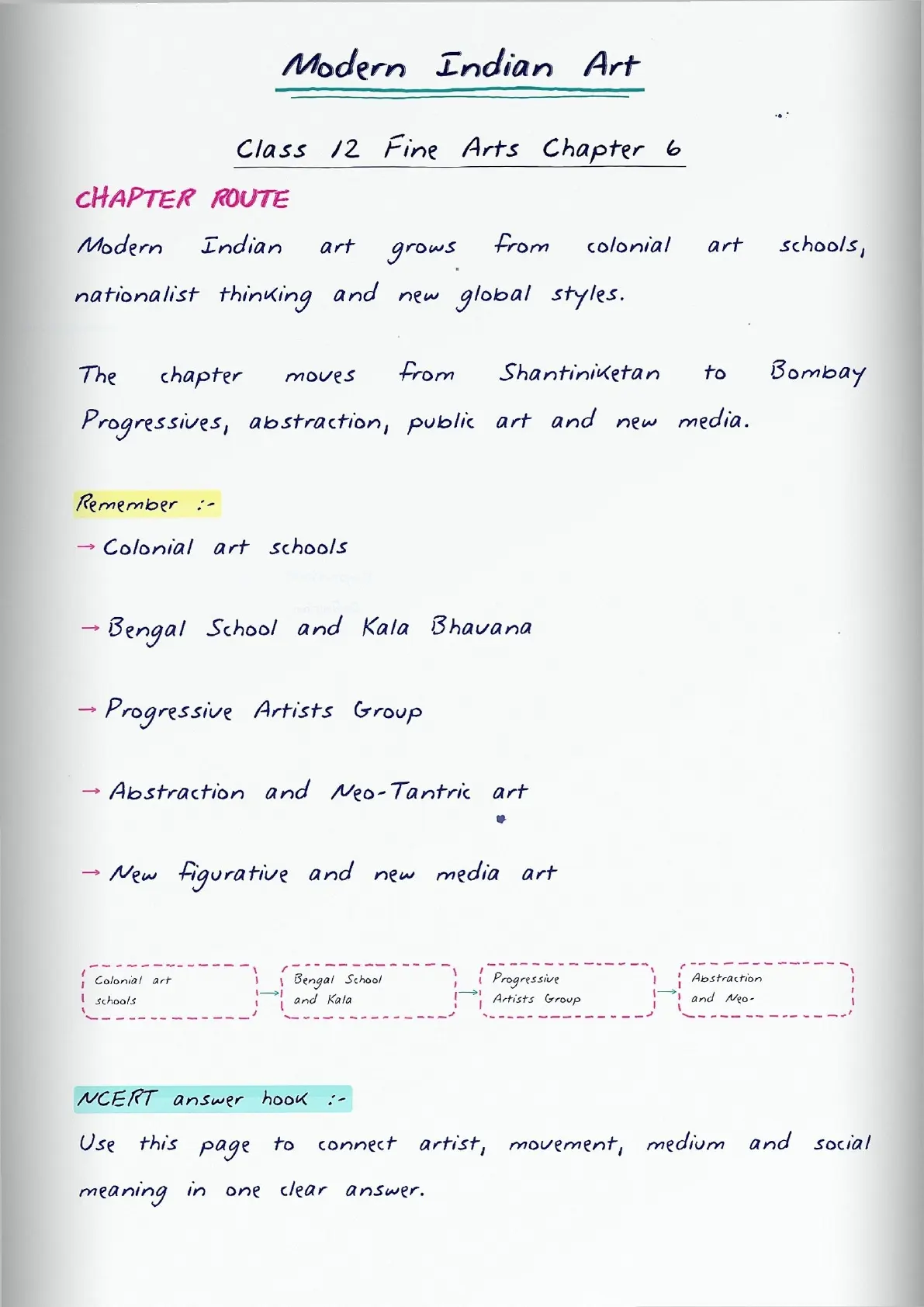
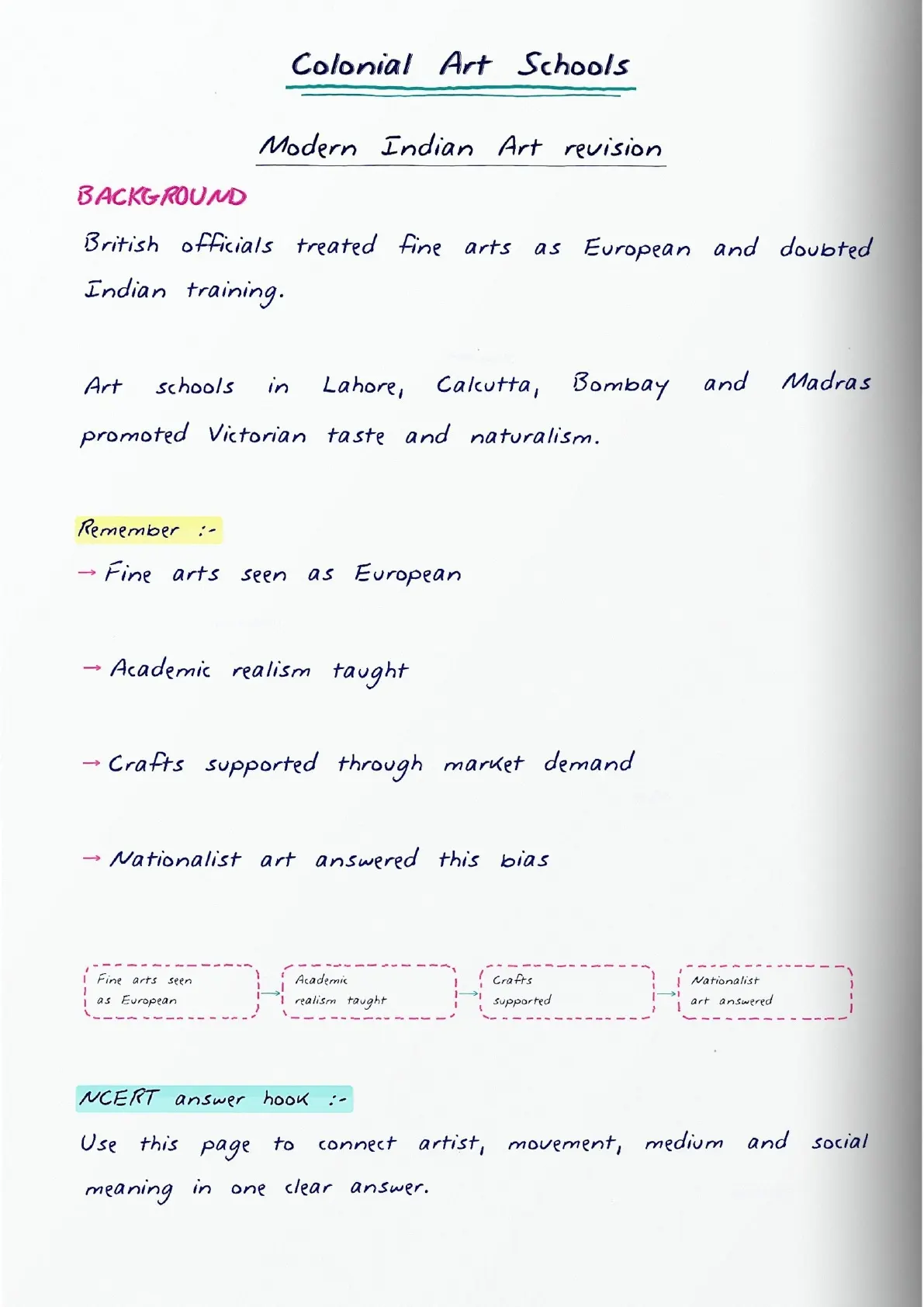
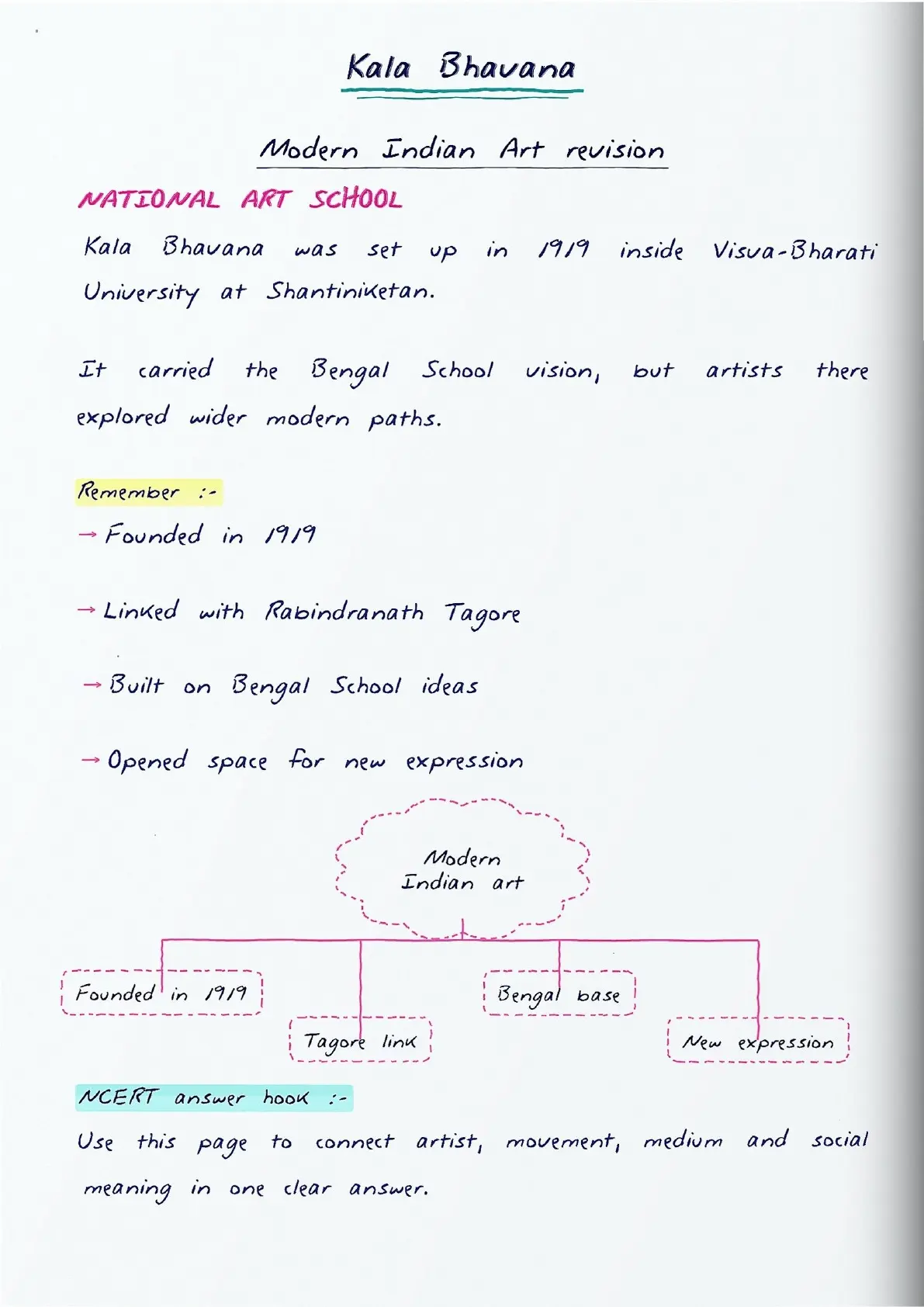
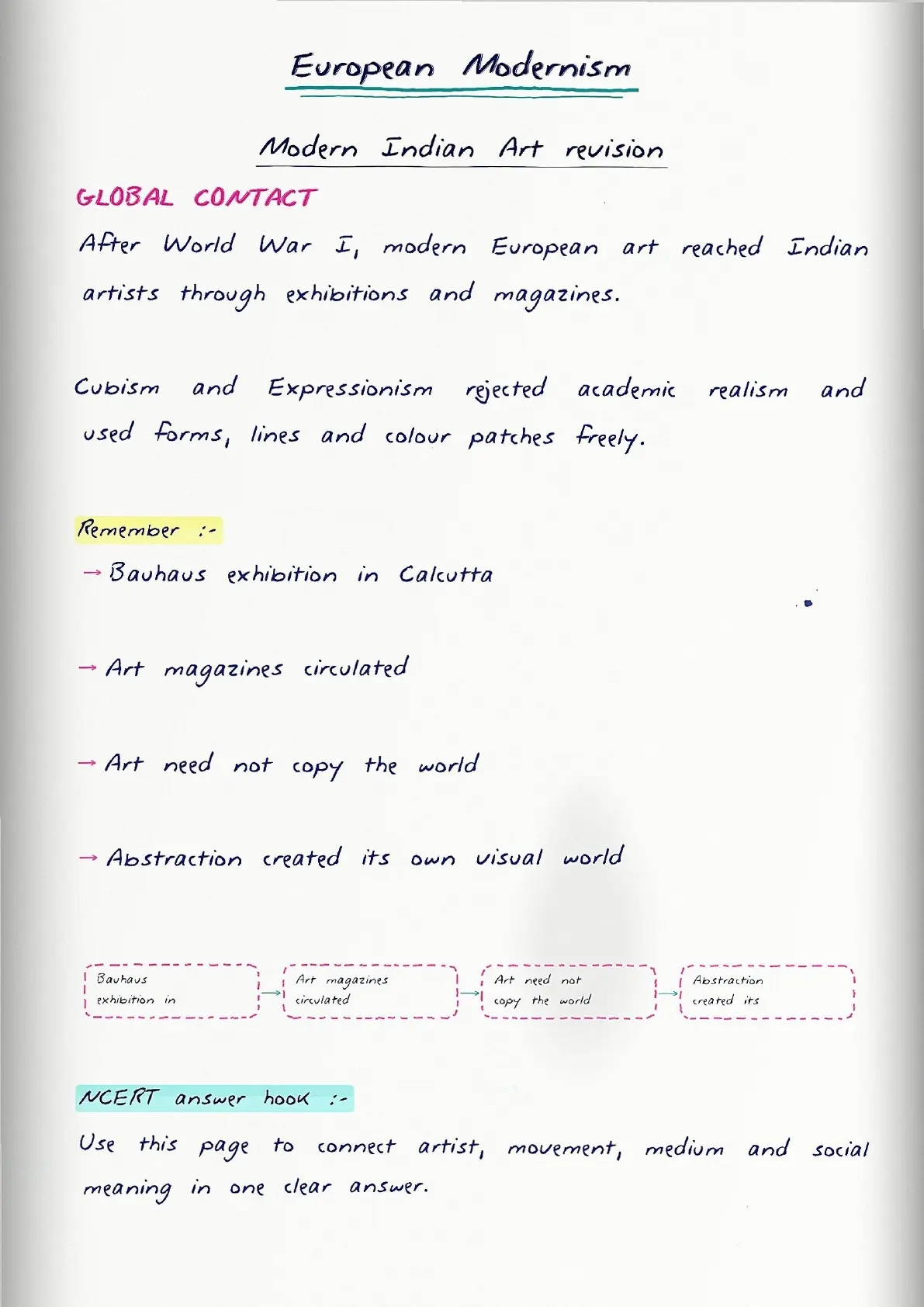
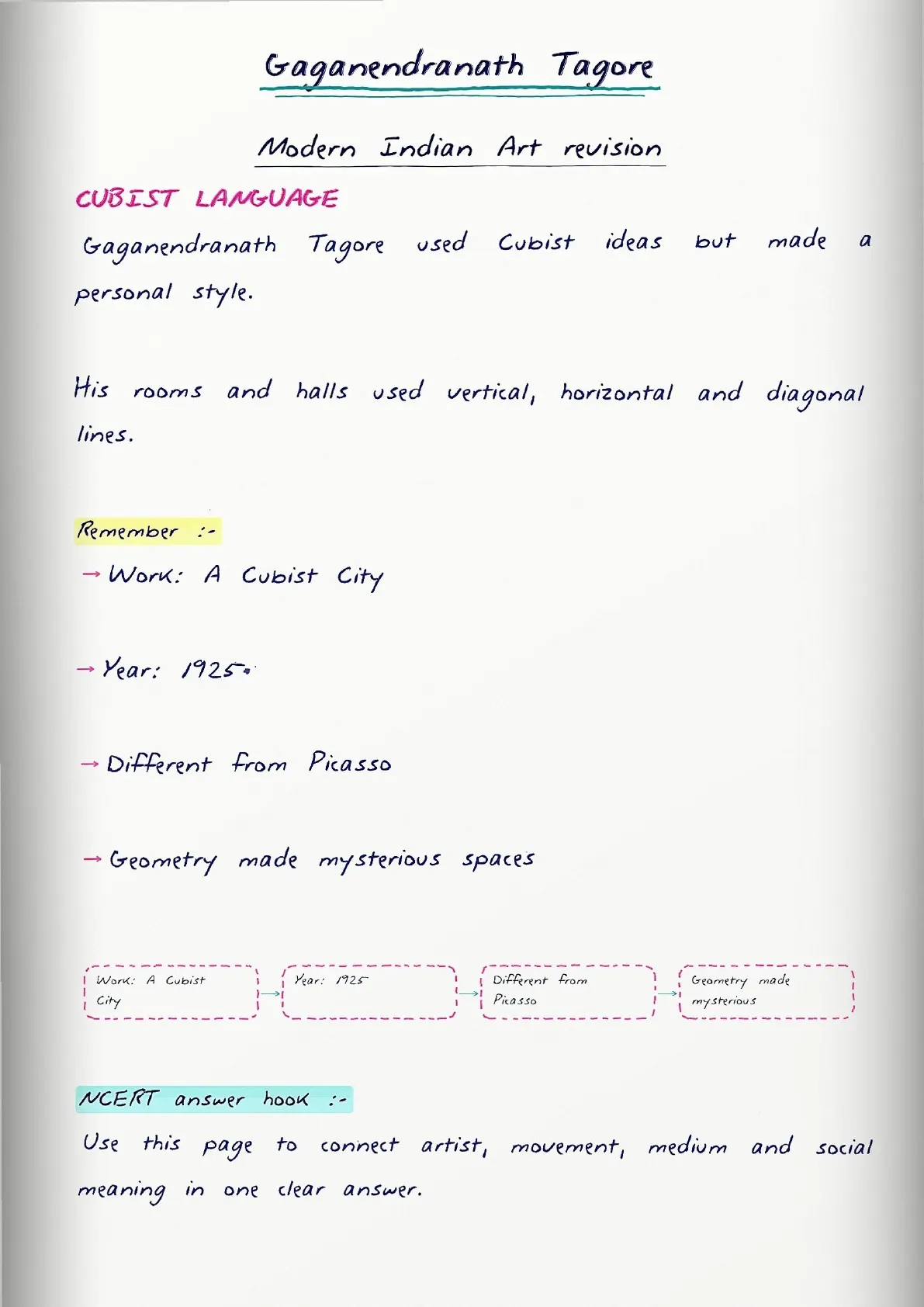
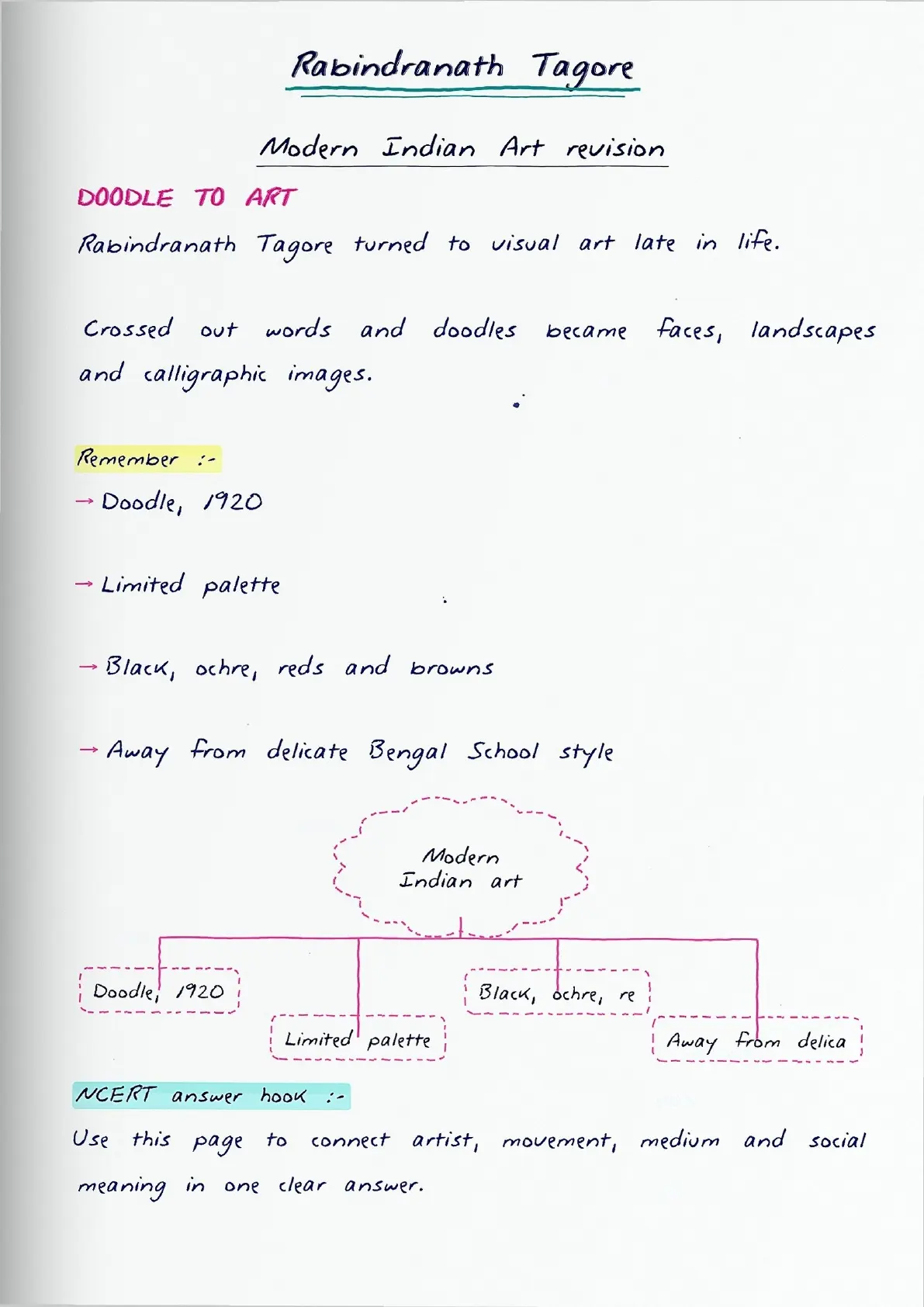
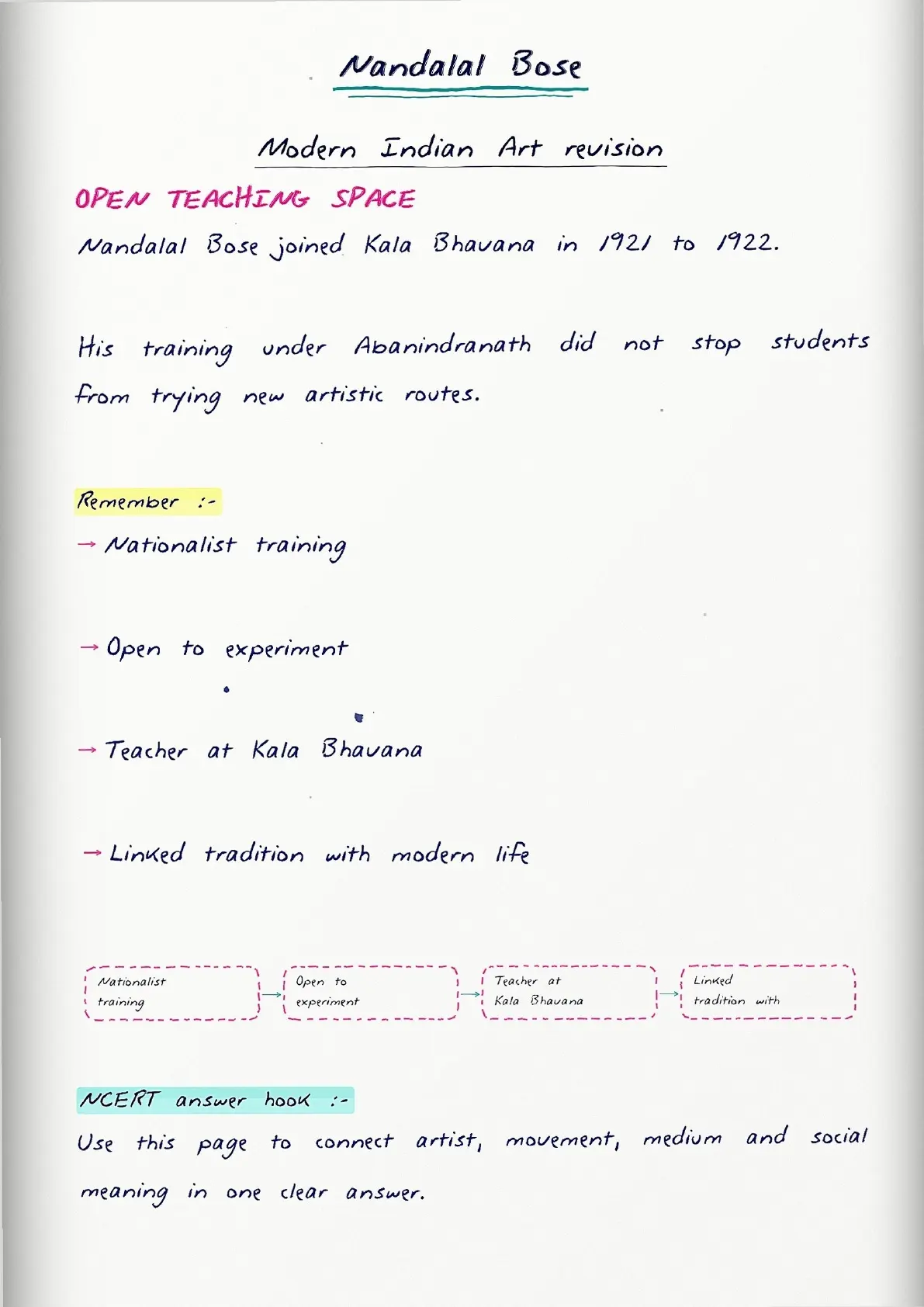
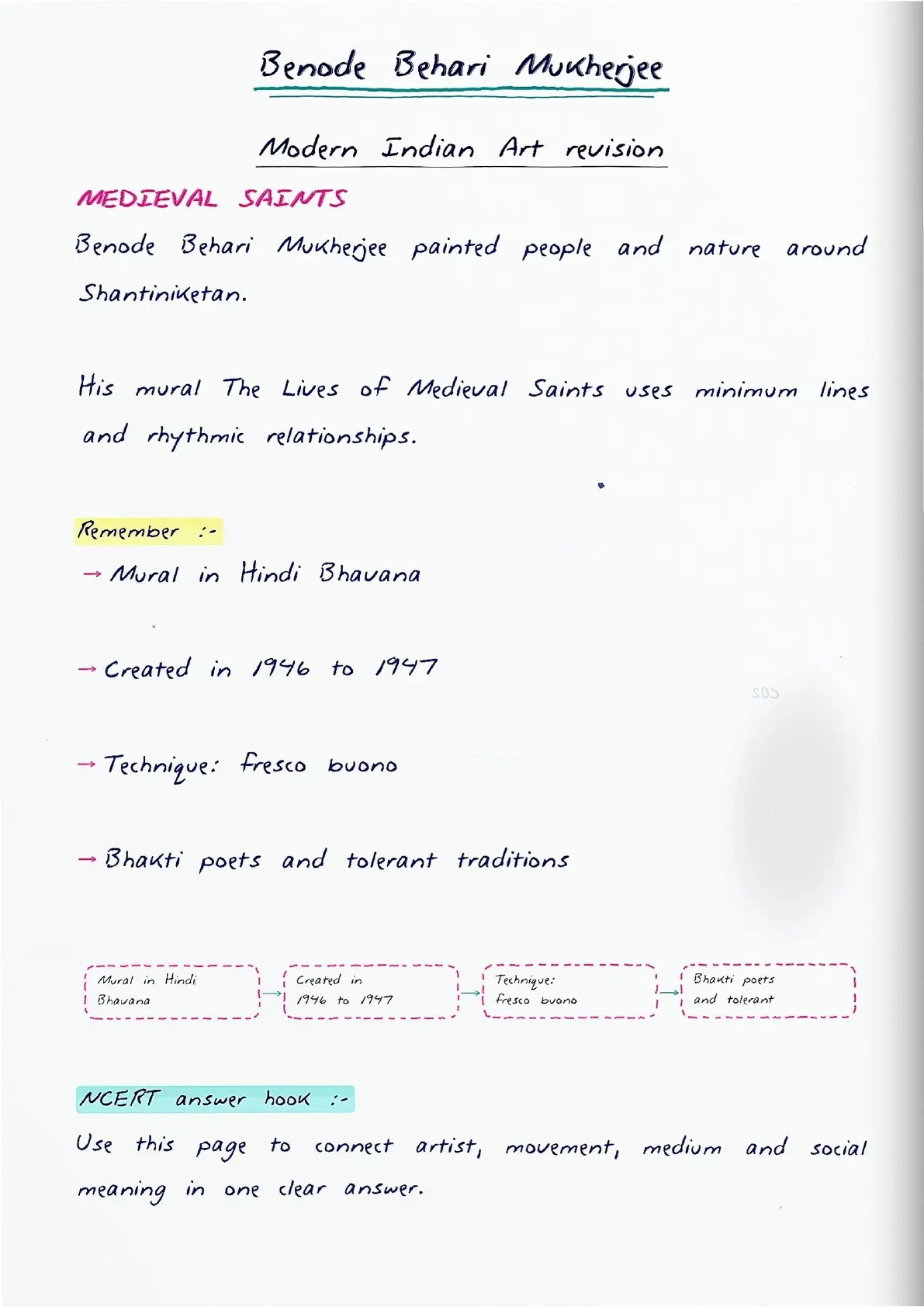
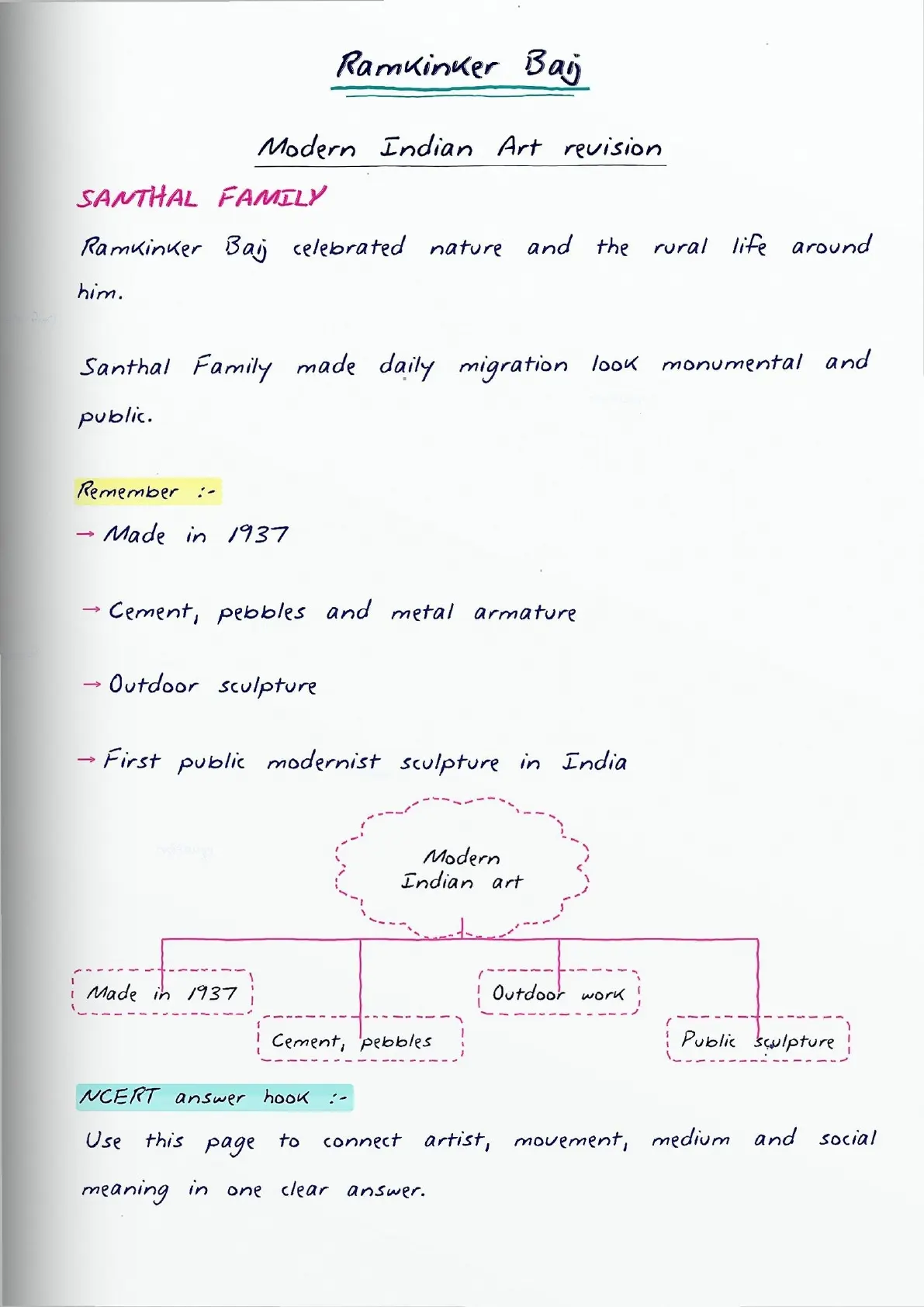
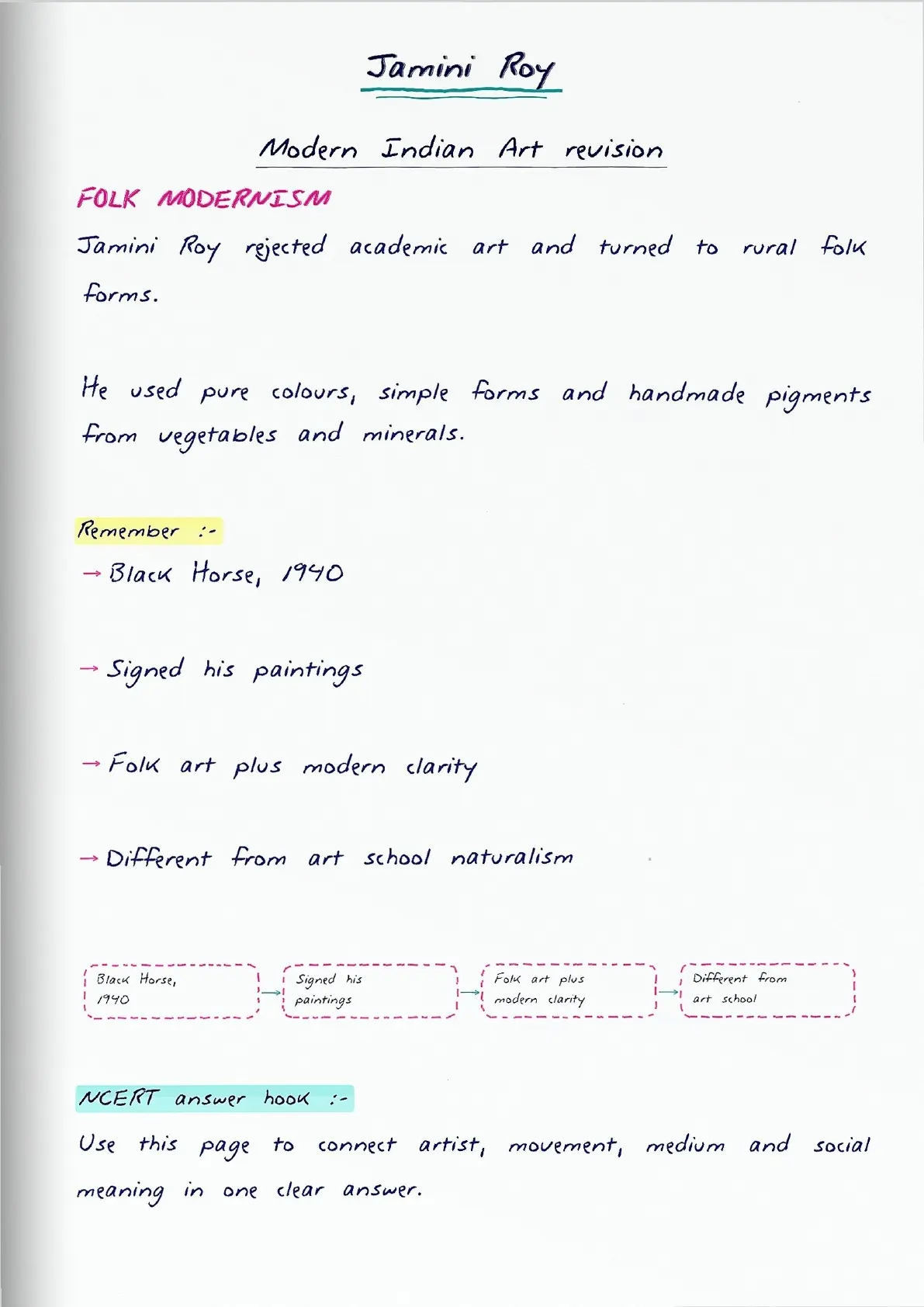
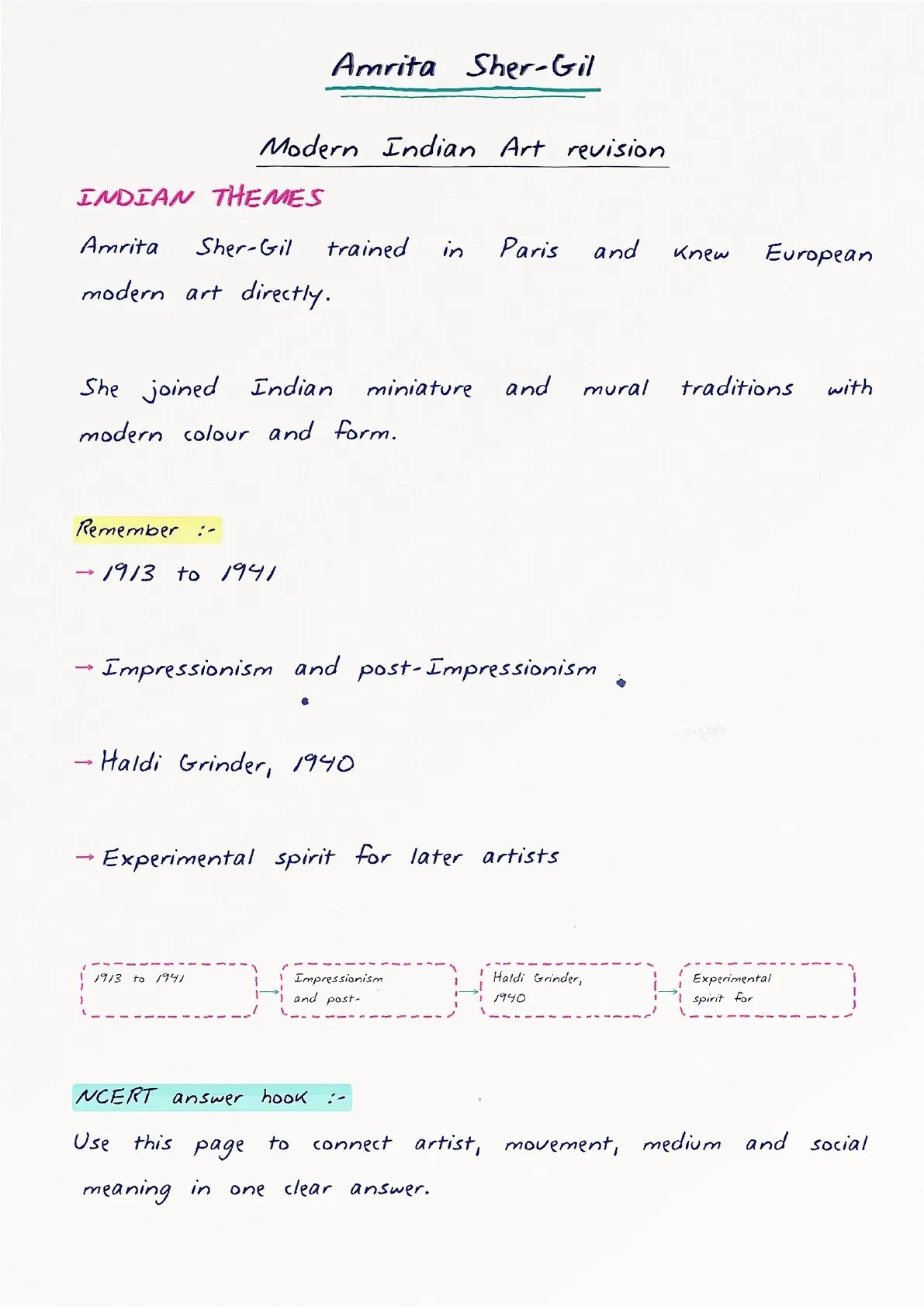
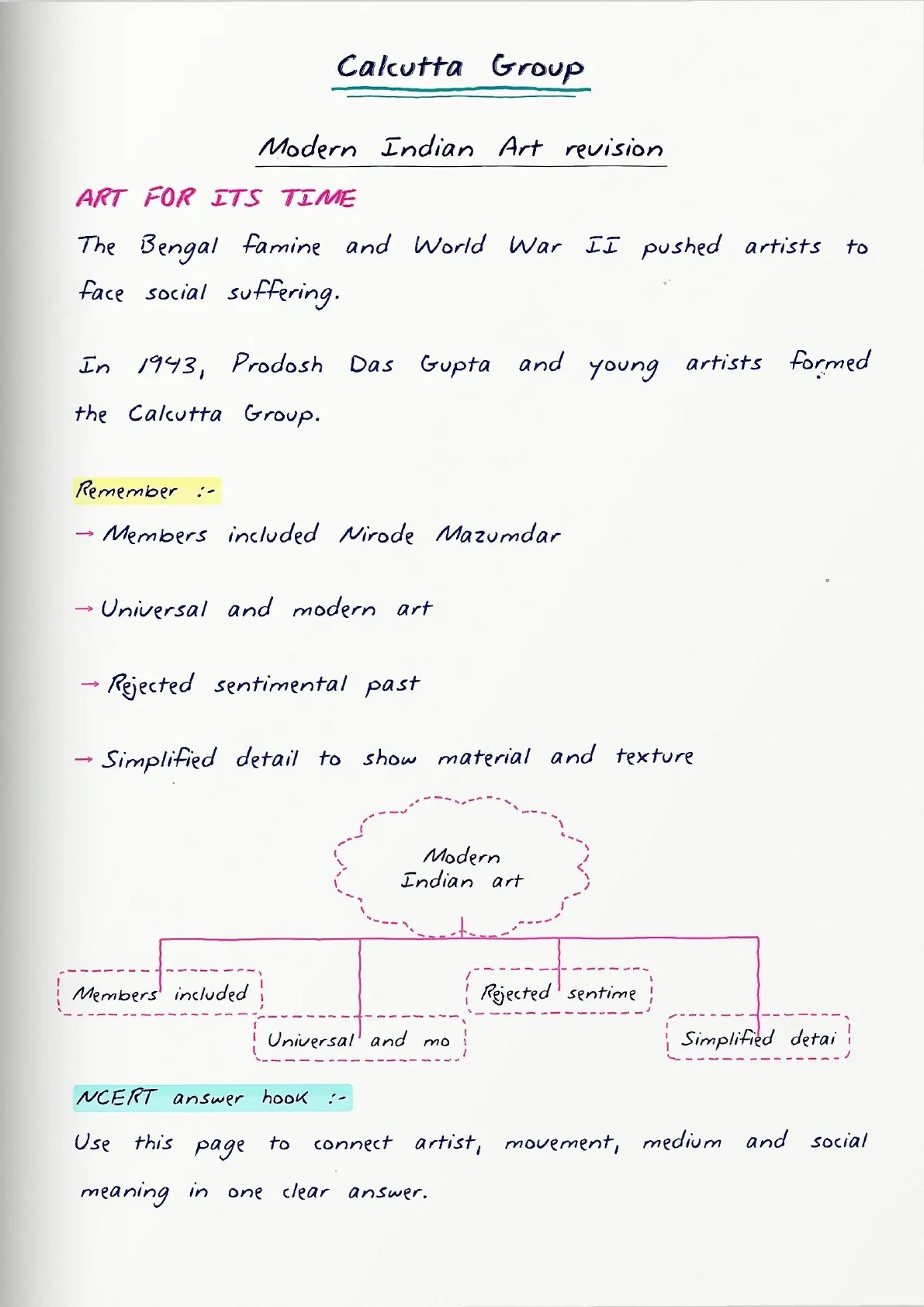
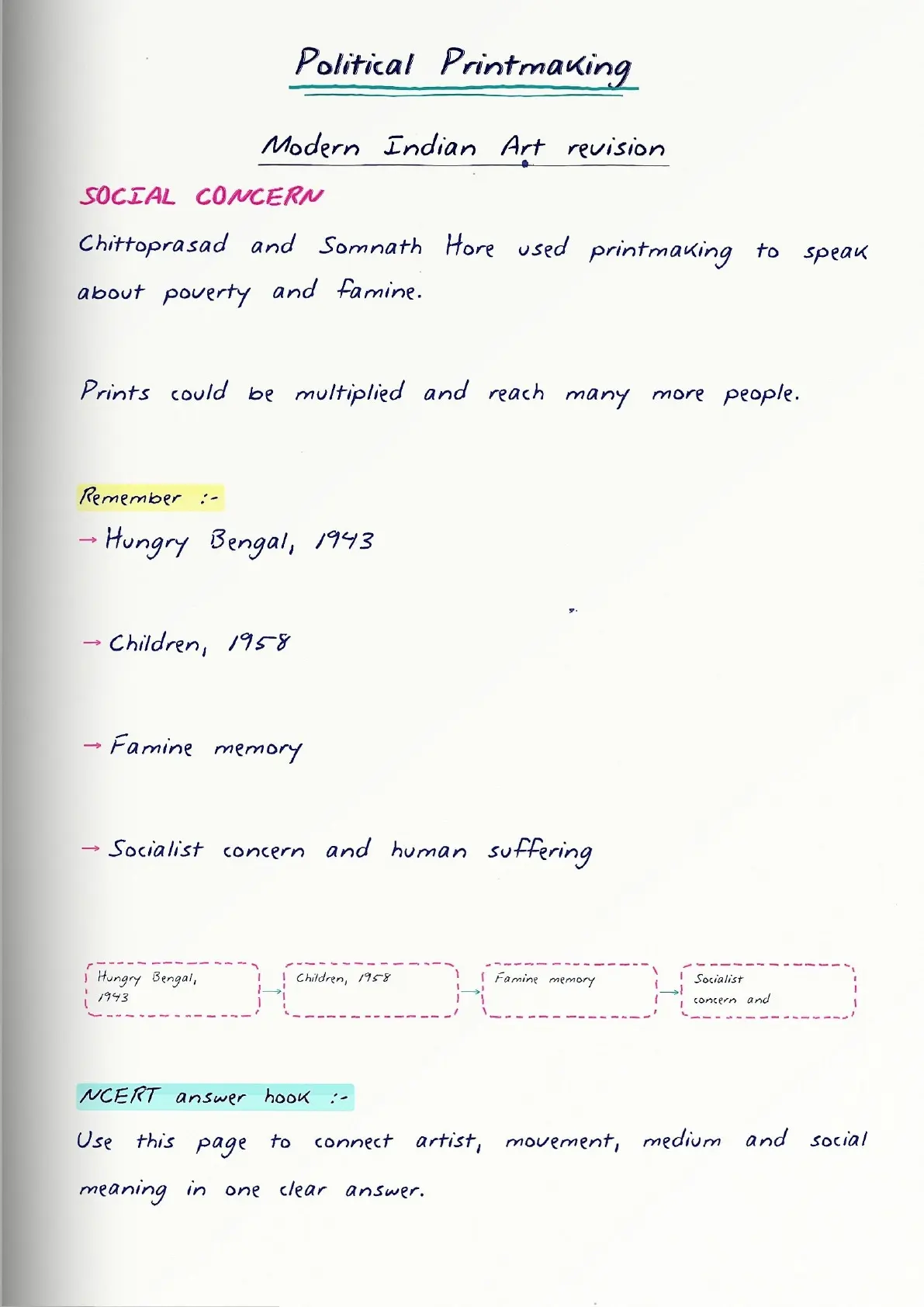
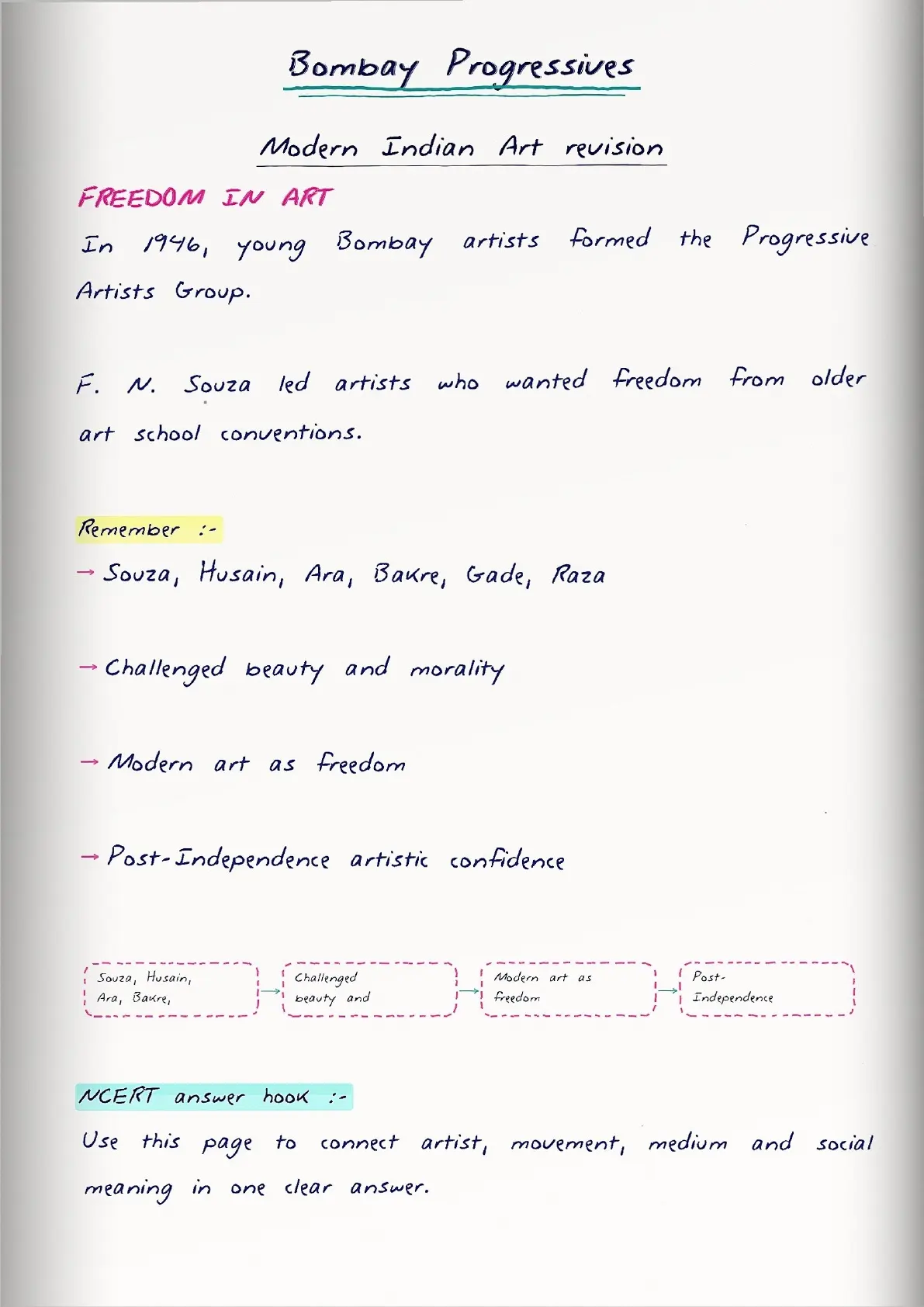
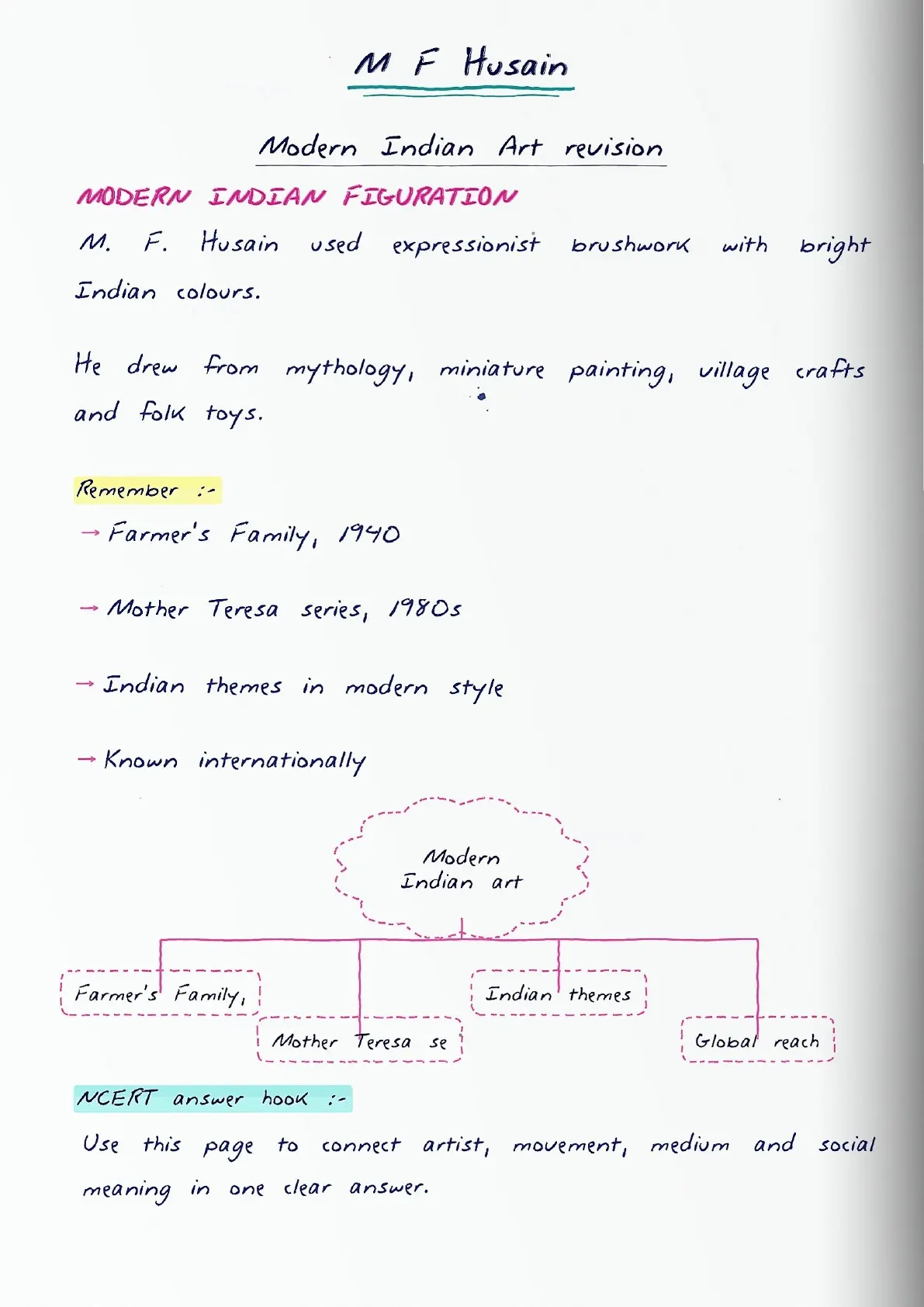
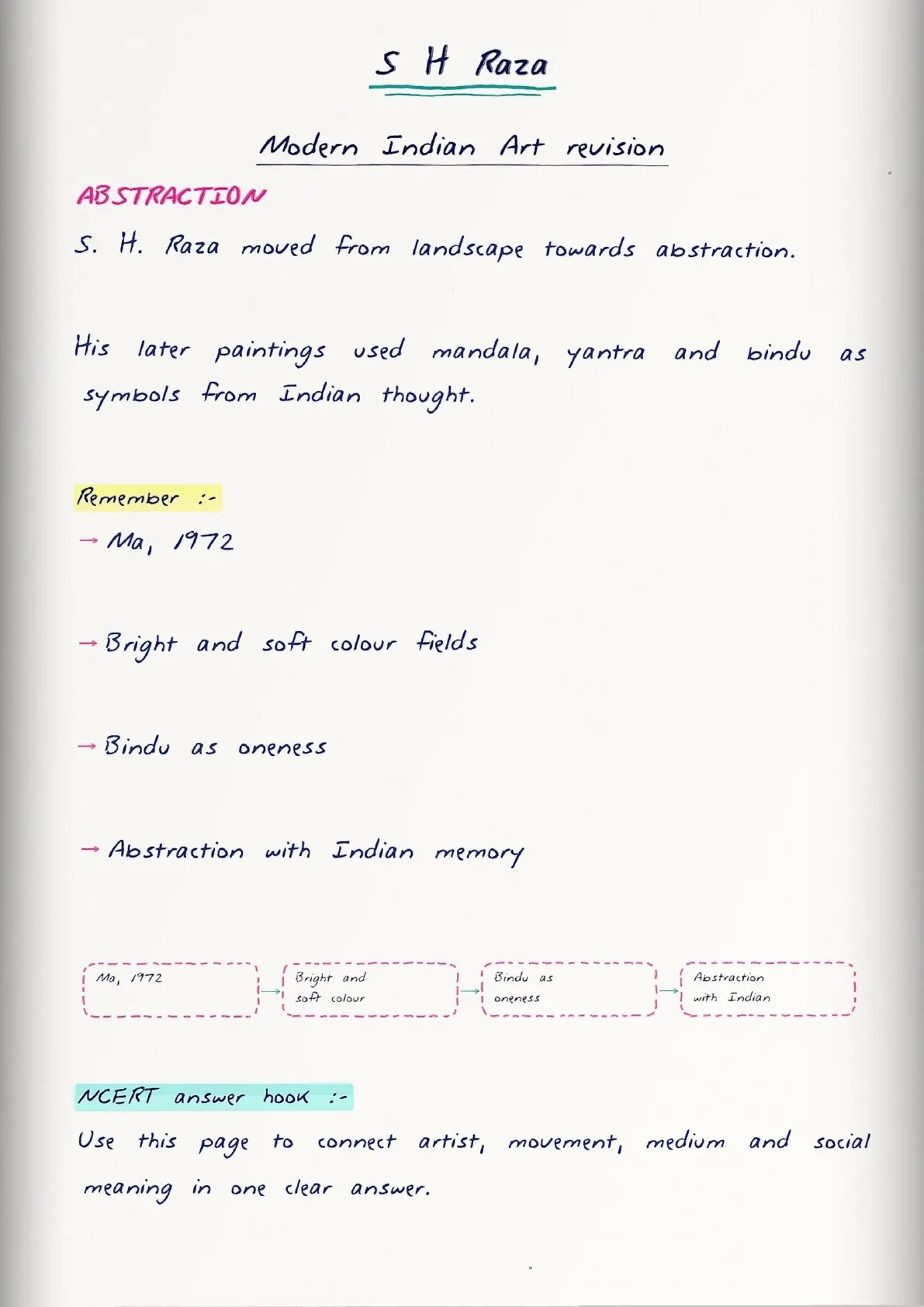
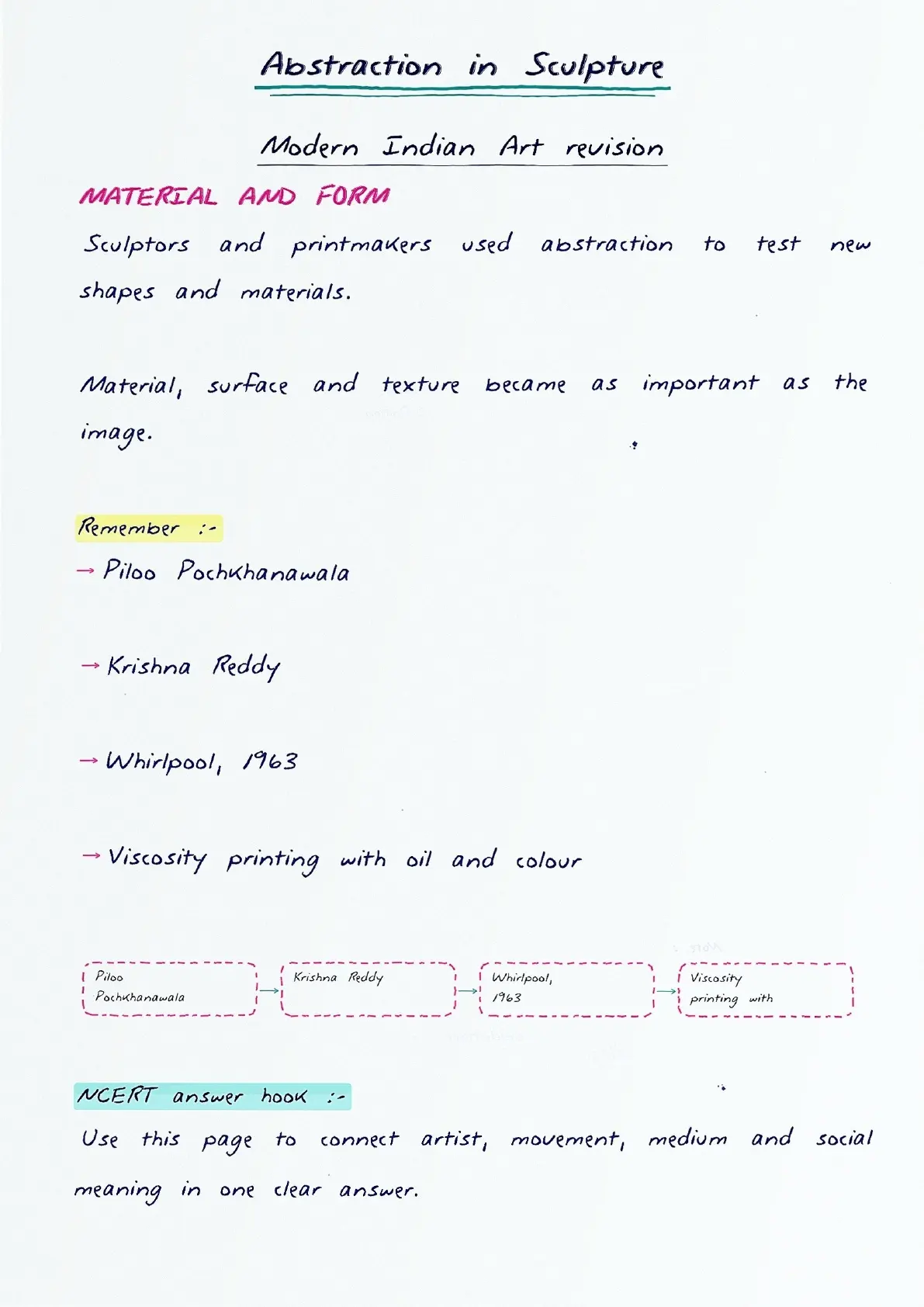
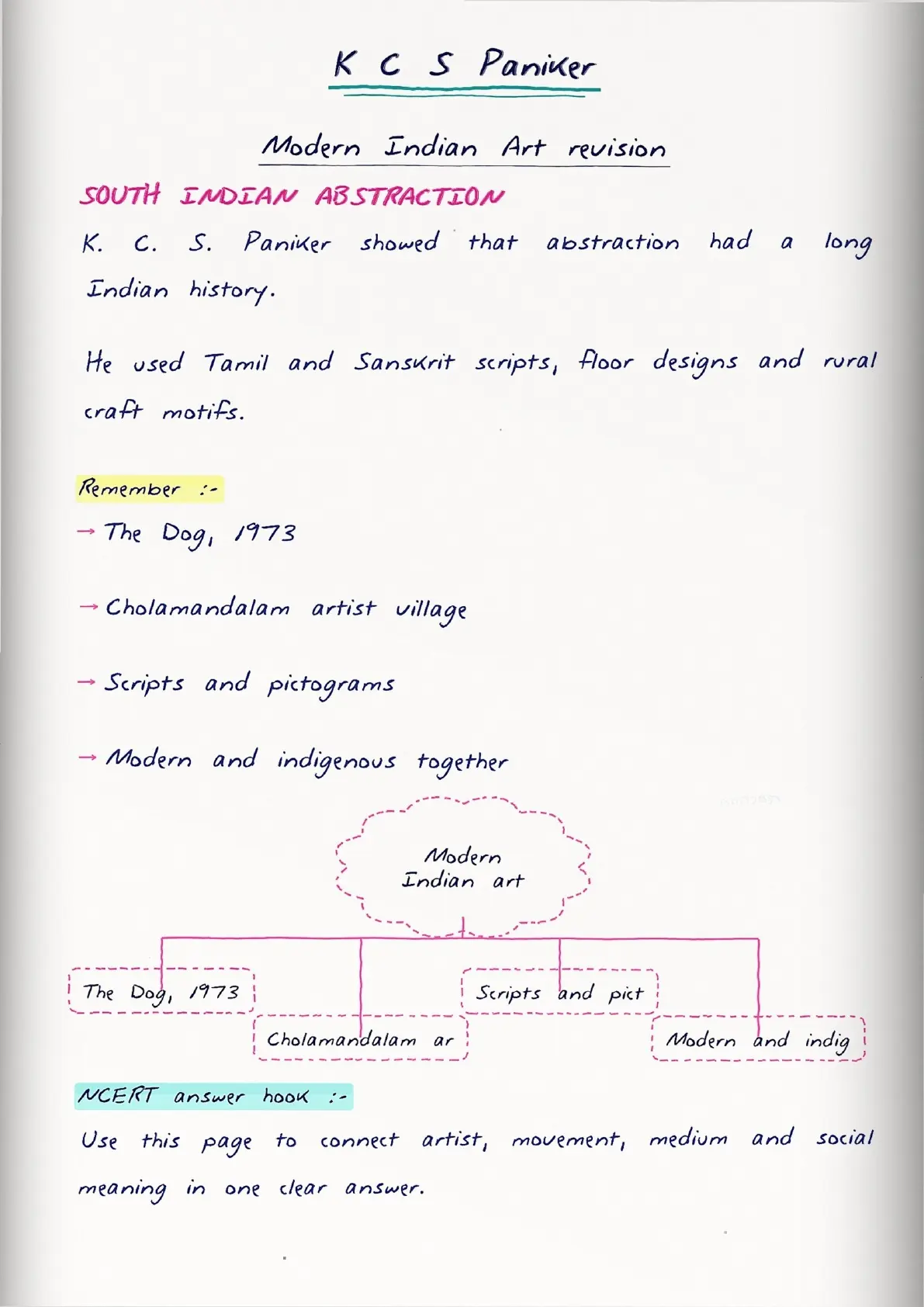
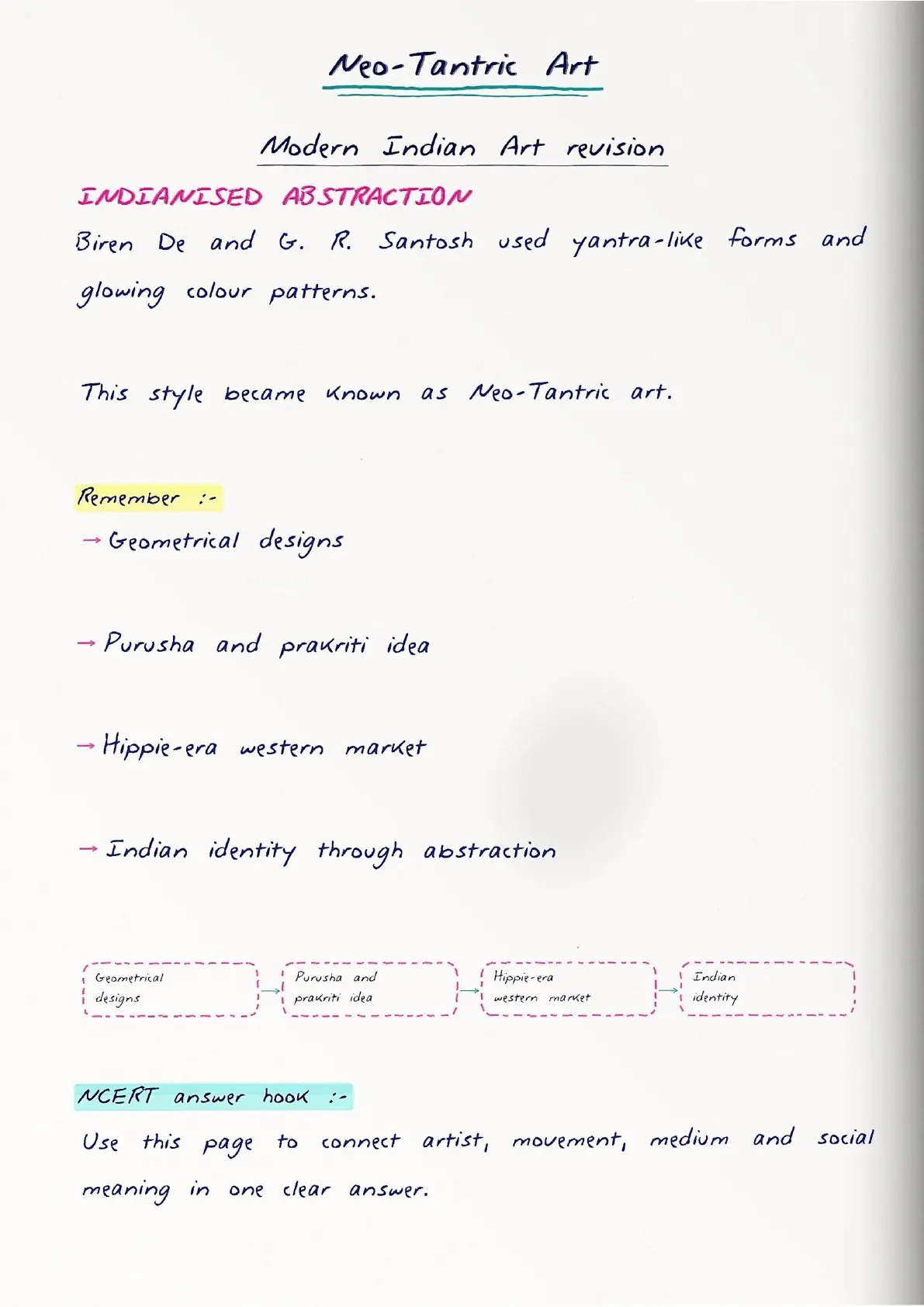
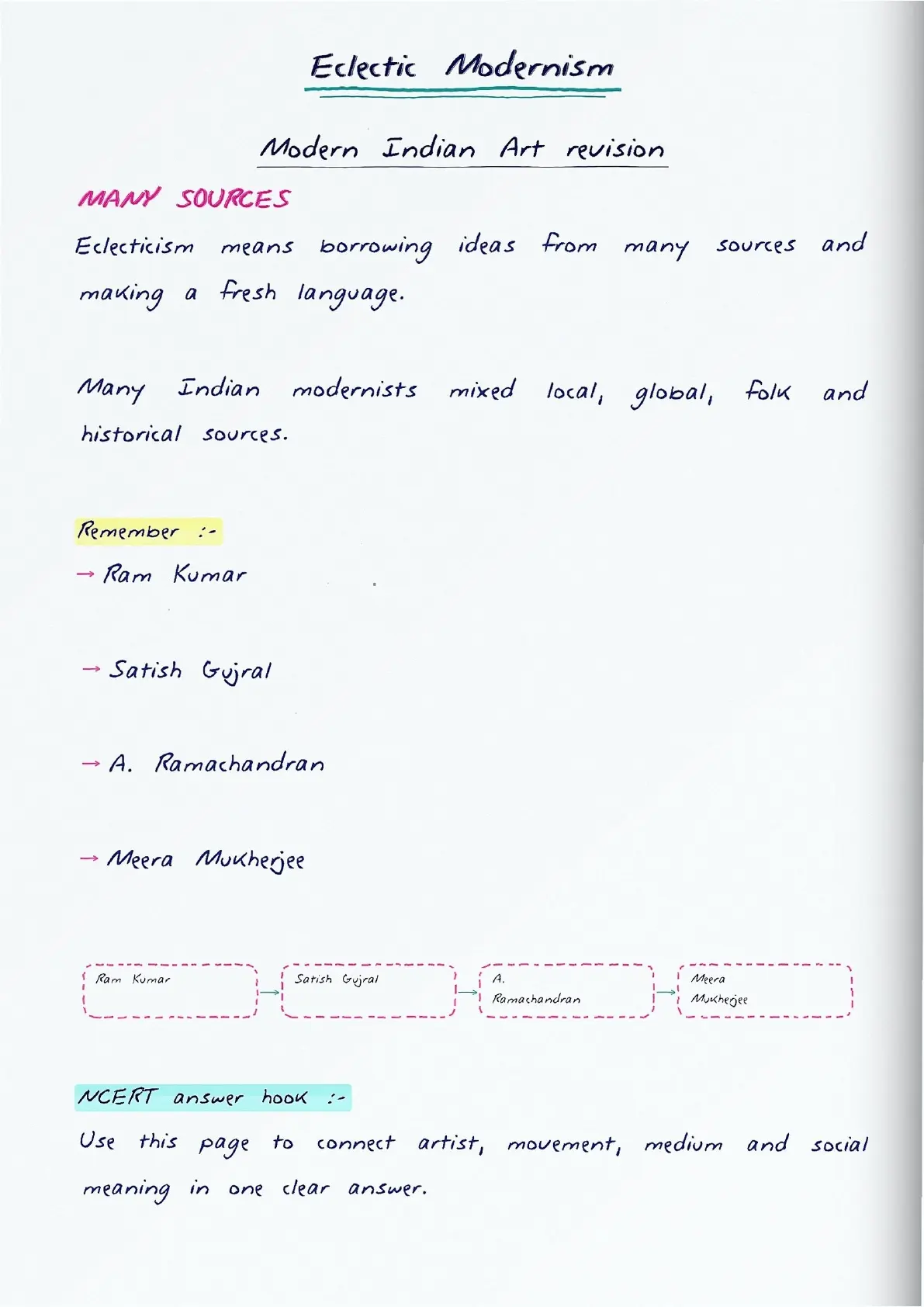
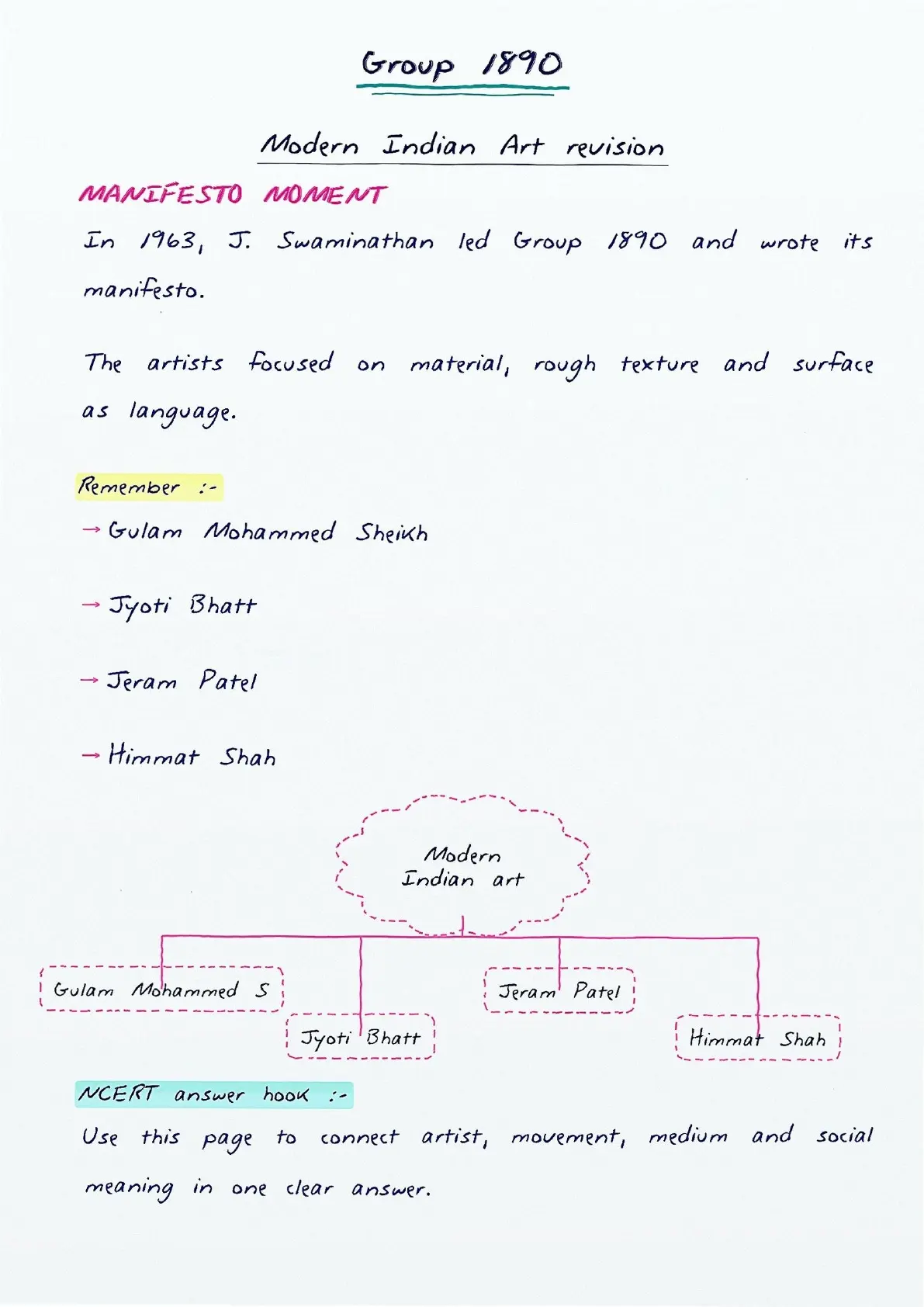
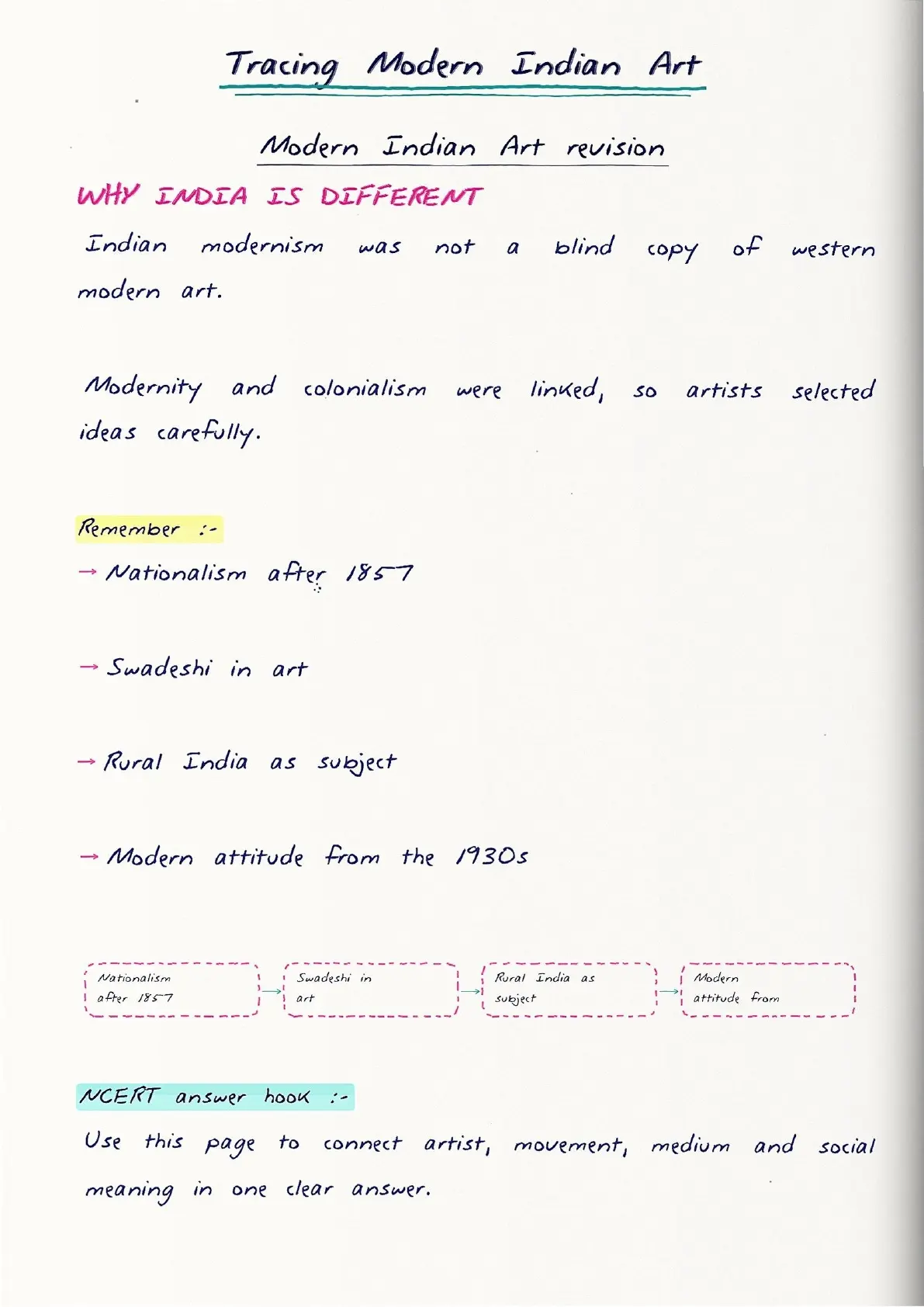
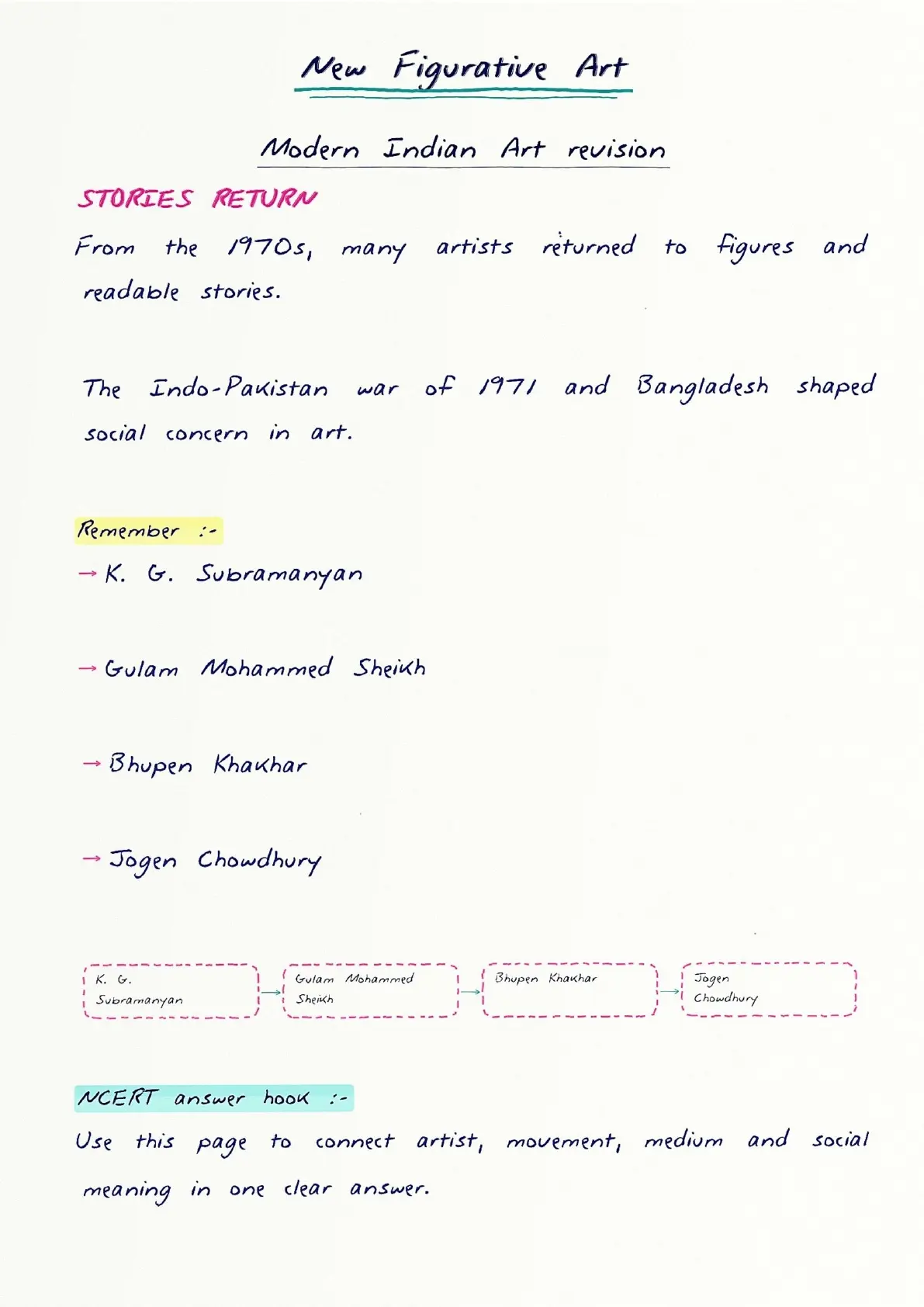
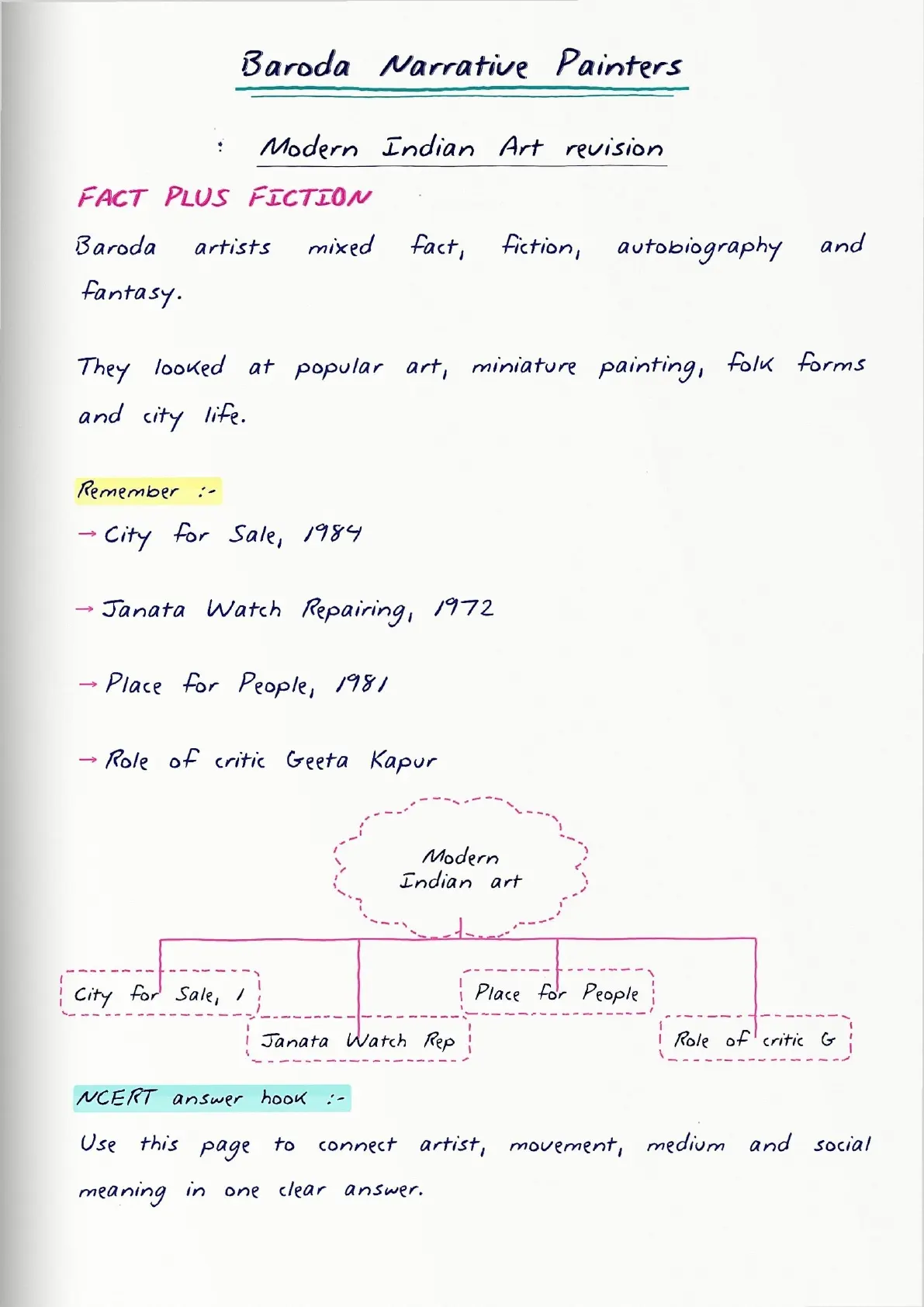
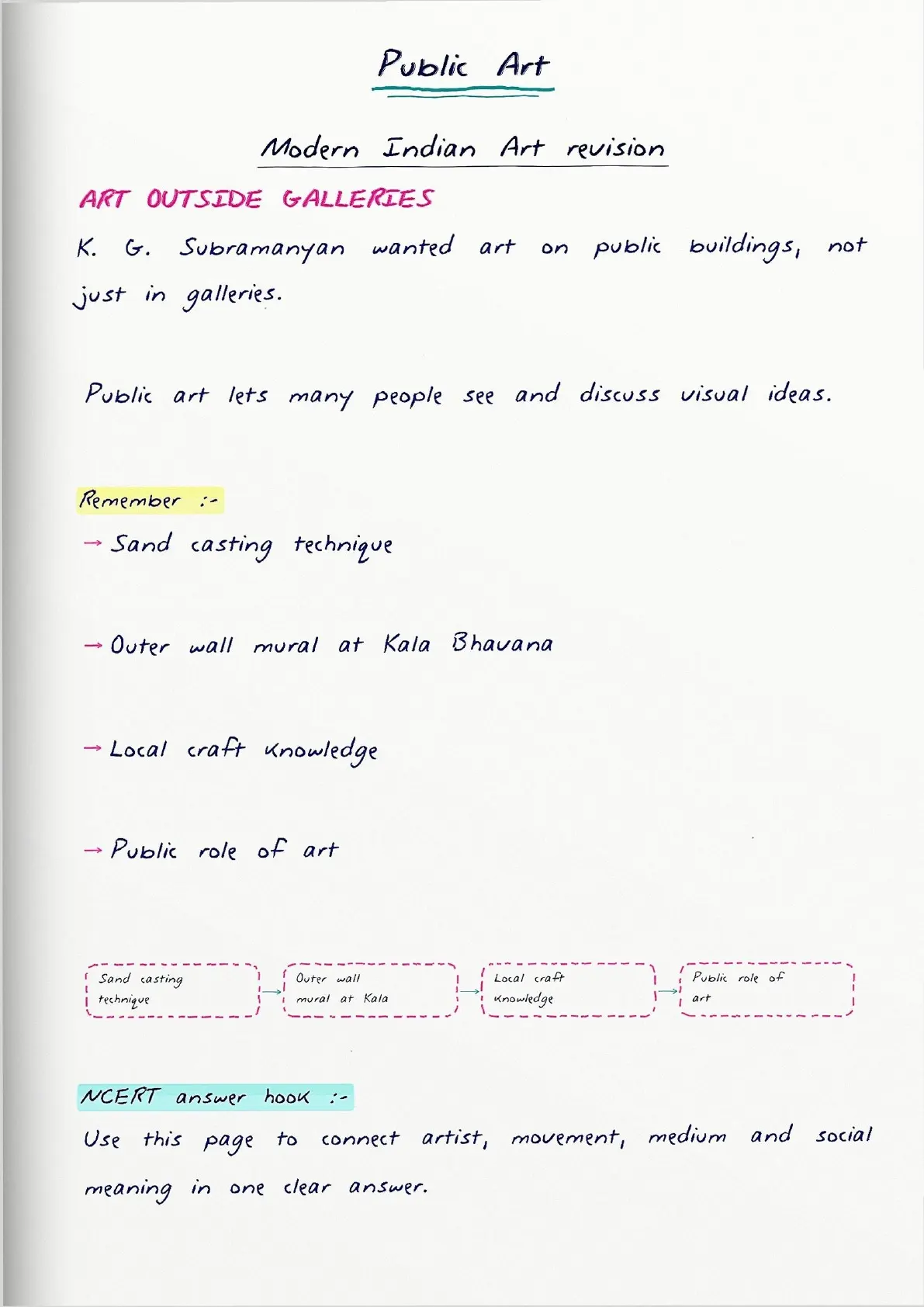
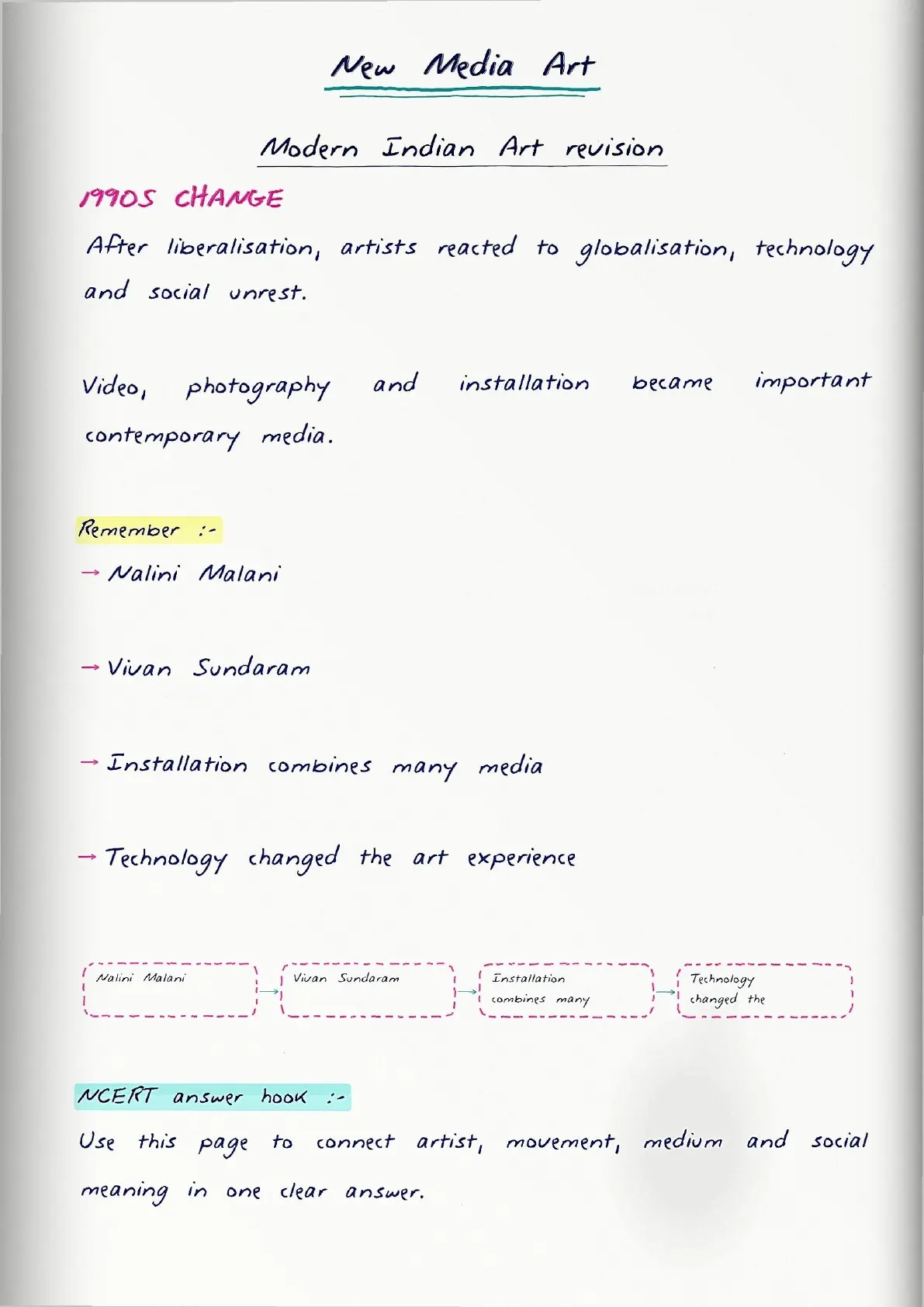
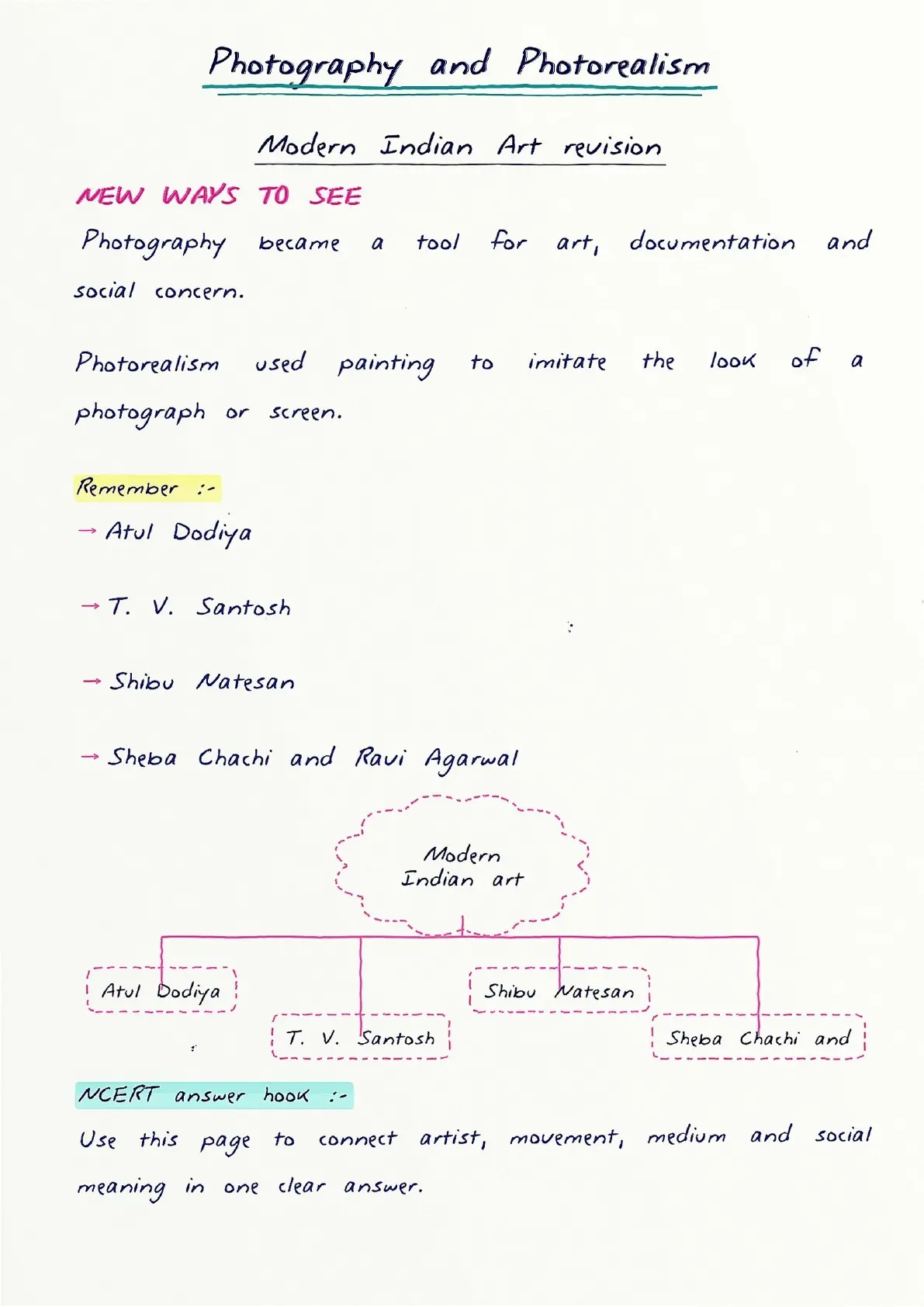
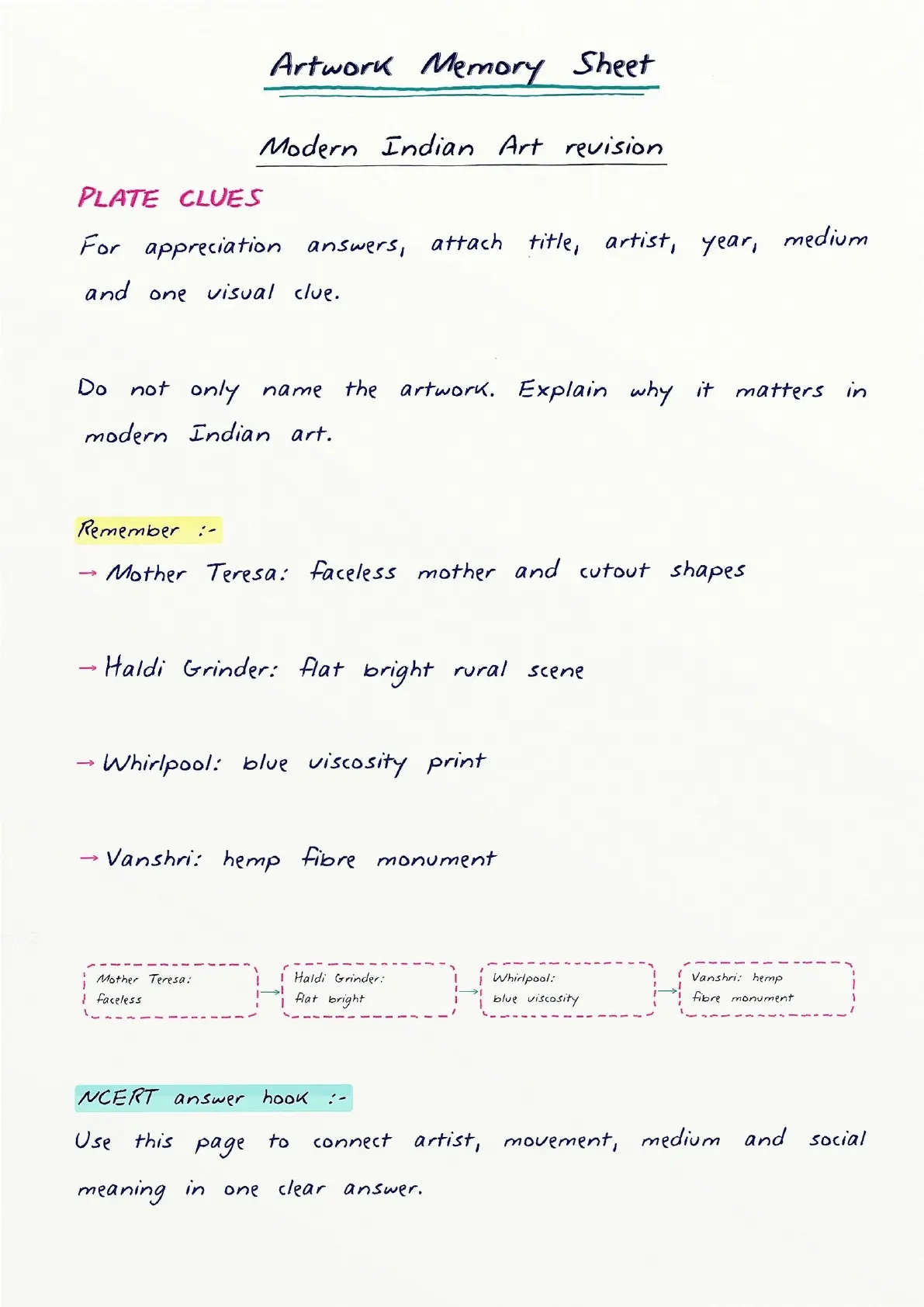
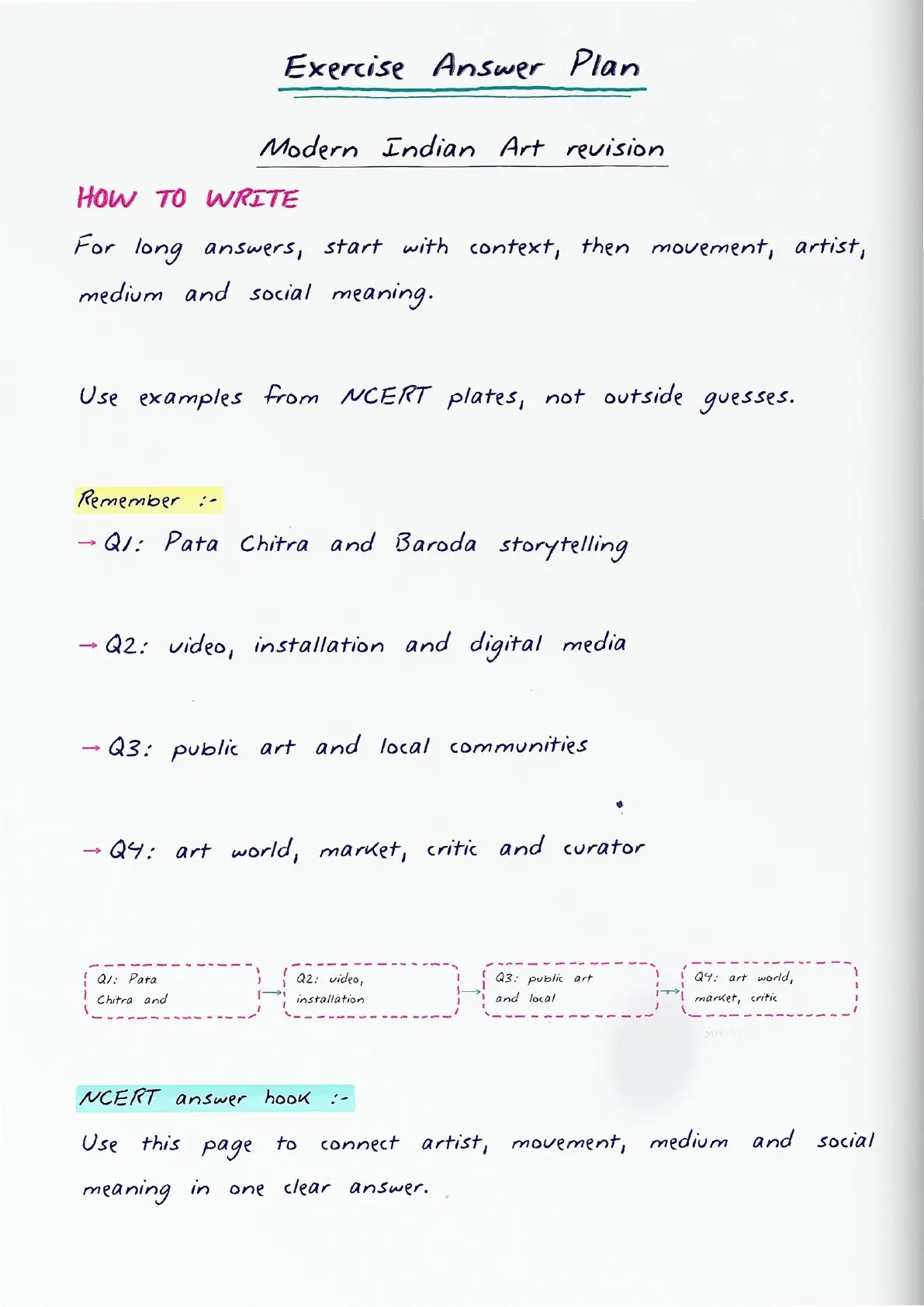
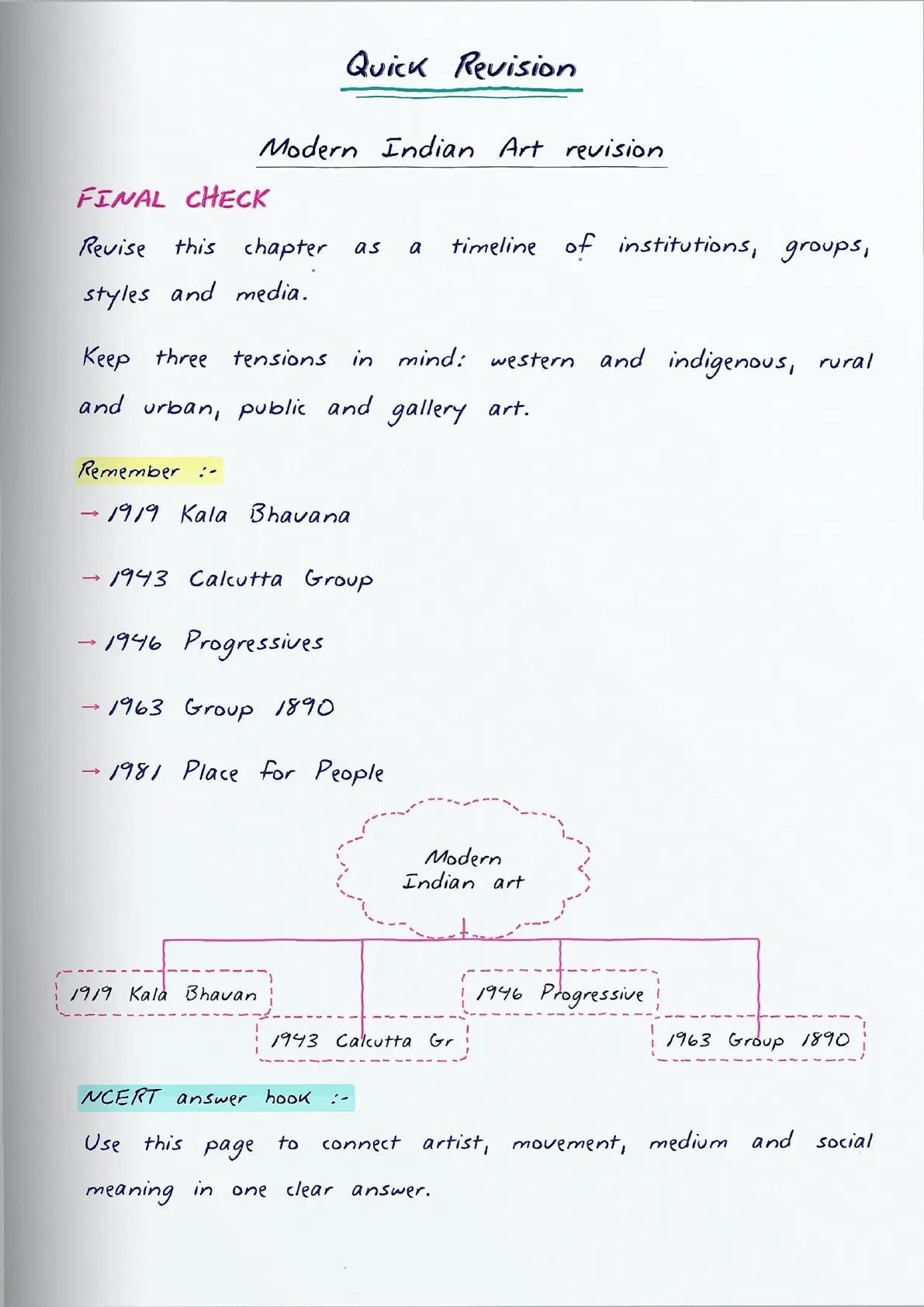
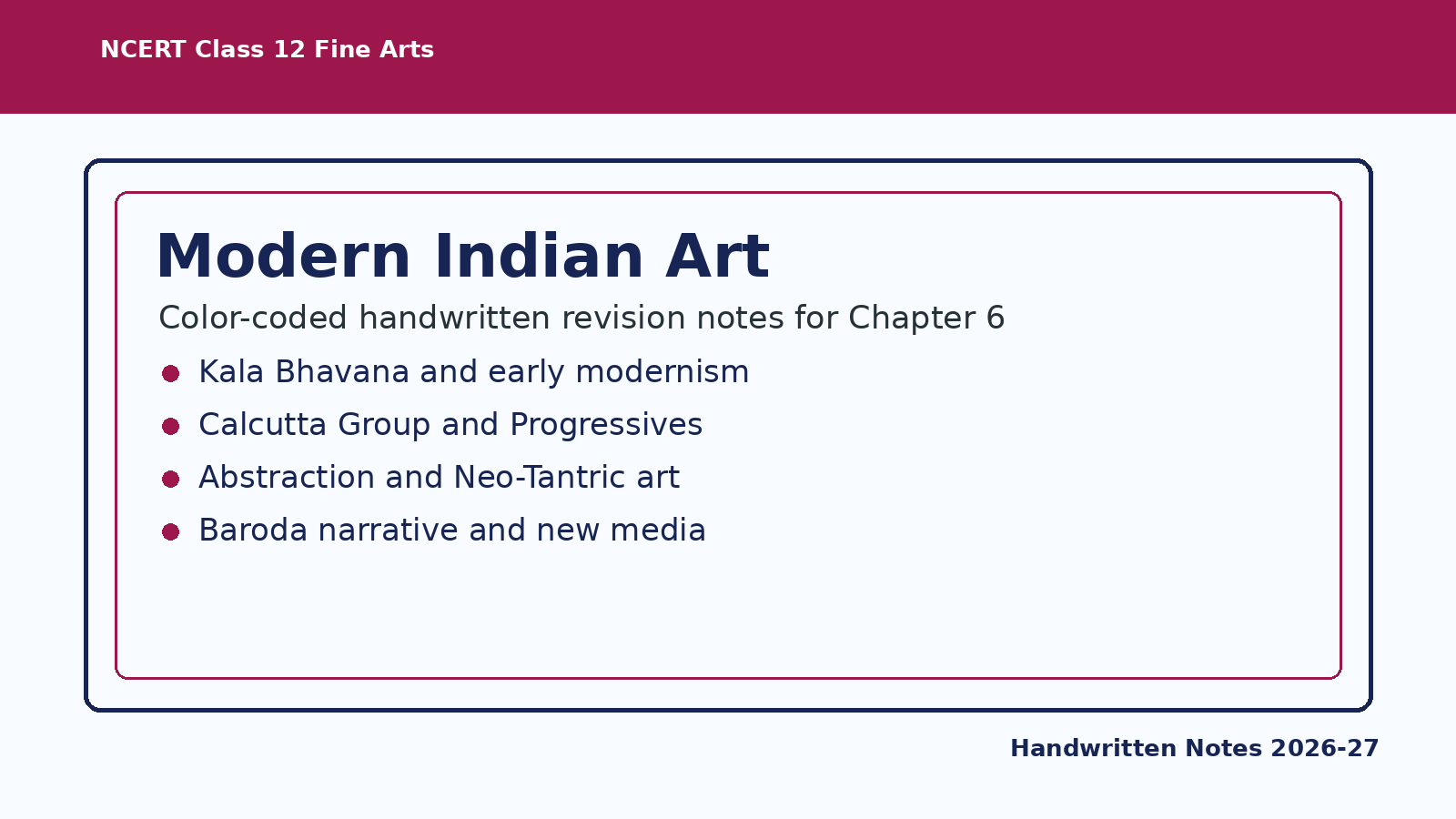
These Modern Indian Art handwritten notes follow the official 2026-27 NCERT chapter and keep the revision order close to the CBSE Fine Arts theory answer pattern.
Student Pulse: In a Collegedunia Fine Arts revision poll of 12,940 students, students found this chapter easier when artists were grouped by institution, movement and medium.
- 84% wanted a single timeline from Kala Bhavana to new media art.
- 77% mixed up Calcutta Group, Progressives and Group 1890.
- 71% wanted artwork examples linked with one visible clue.
Modern Indian Art Quick Revision Map for Class 12 Fine Arts
Modern Indian Art explains how Indian artists selected from western modernism, Indian traditions, rural experience, public art and new technology. The handwritten notes start with colonial art schools and Kala Bhavana, then move through Calcutta Group, Bombay Progressives, abstraction, Baroda narrative art and new media.
- Early modernism: Gaganendranath Tagore, Rabindranath Tagore, Benode Behari Mukherjee and Ramkinker Baij changed the idea of Indian modern art.
- Political art: Chittoprasad and Somnath Hore used printmaking to address famine, poverty and social suffering.
- Progressives: Souza, Husain and Raza connected artistic freedom with a new post-Independence confidence.
- New media: video, photography and installation changed the experience of contemporary art.
Modern Indian Art Timeline for Class 12 Fine Arts
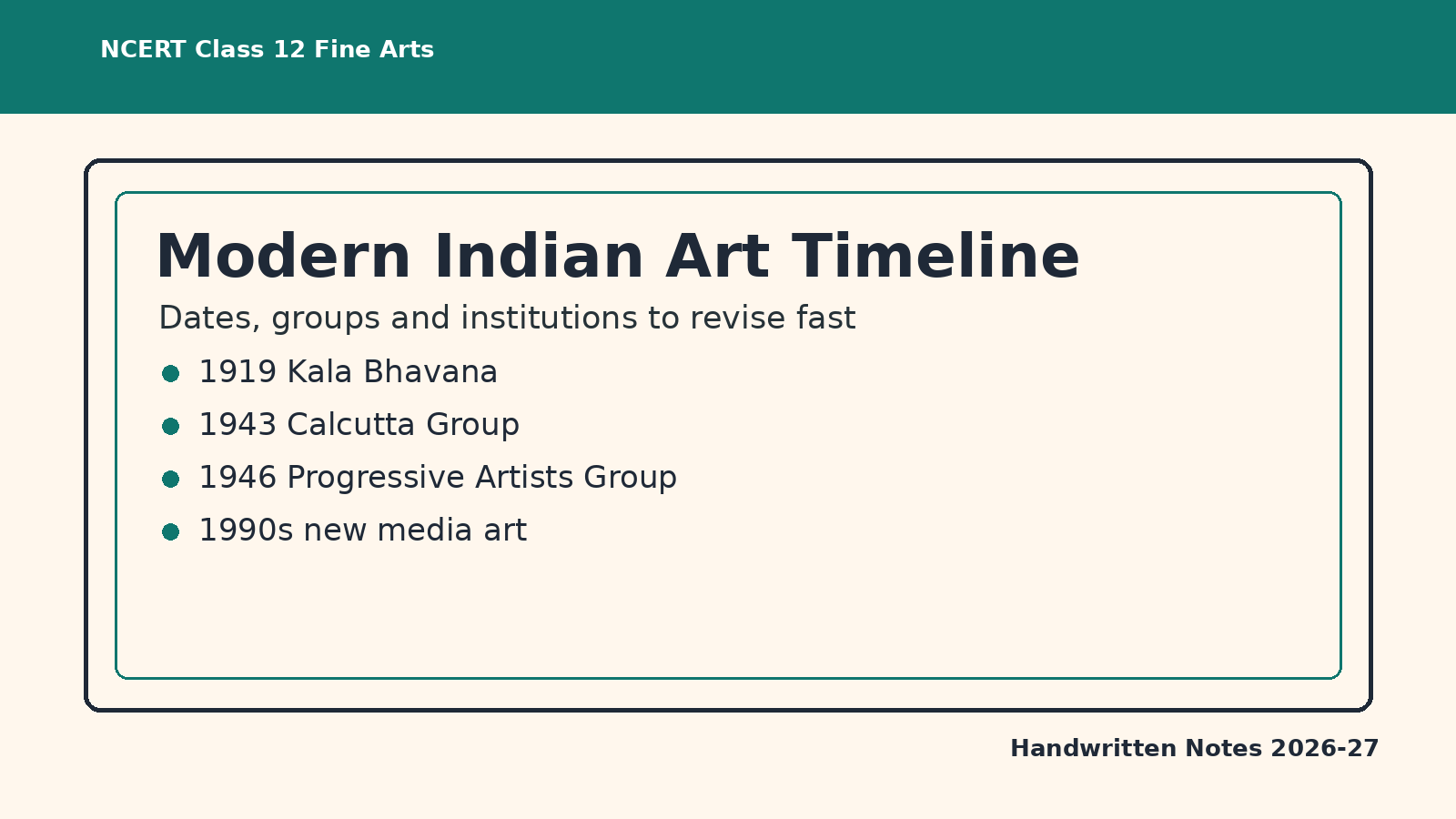
The timeline is useful because this chapter has many artists and groups. Put the date, movement and one artwork together before writing long answers.
| Year | What to remember | Name to attach |
|---|---|---|
| 1919 | Kala Bhavana begins at Shantiniketan. | Rabindranath Tagore and Nandalal Bose |
| 1937 | Santhal Family gives public modern sculpture a rural subject. | Ramkinker Baij |
| 1943 | Famine and World War II push political art and Calcutta Group. | Chittoprasad, Somnath Hore and Prodosh Das Gupta |
| 1946 | Progressive Artists Group forms in Bombay. | F. N. Souza, M. F. Husain and S. H. Raza |
| 1963 | Group 1890 writes a manifesto for new surface and texture. | J. Swaminathan |
| 1981 | Place for People highlights narrative and public-facing art. | Bhupen Khakhar and G. M. Sheikh |
| 1990s | Video, photography and installation become major contemporary media. | Nalini Malani and Vivan Sundaram |
Modern Indian Art Movements and Artists Compared
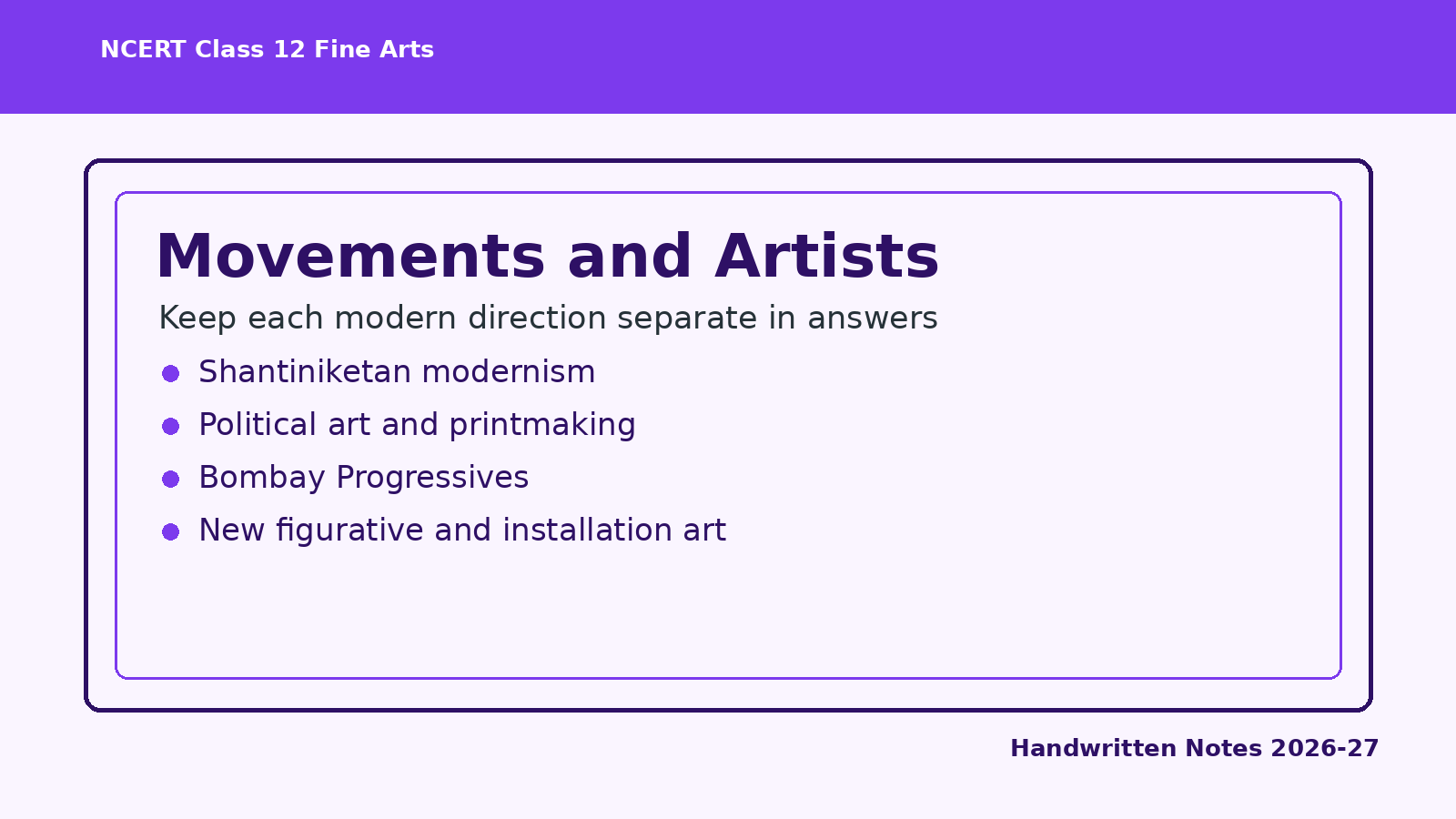
Students should avoid treating modern Indian art as one single style. The chapter is clearer when each movement is tied to one concern.
| Direction | Main concern | Exam clue |
|---|---|---|
| Shantiniketan modernism | Indian traditions, rural life and public art. | Benode Behari Mukherjee and Ramkinker Baij. |
| Calcutta Group and political art | Famine, poverty and the artist's social role. | Chittoprasad's Hungry Bengal and Somnath Hore's Children. |
| Bombay Progressives | Freedom from old beauty rules and art school conventions. | Souza, Husain, Raza and post-Independence modernism. |
| Neo-Tantric abstraction | Indian abstraction through yantra-like designs and colour. | Biren De, G. R. Santosh and K. C. S. Paniker. |
| New figurative and new media art | Stories, public concerns, technology and installation. | Baroda artists, Nalini Malani and Vivan Sundaram. |
Important Modern Indian Artworks for Board Revision
For appreciation questions, use the artwork title with artist, year, medium and one visible feature. This table keeps the safest NCERT examples ready.
| Artwork | Artist | One exam-ready clue |
|---|---|---|
| Santhal Family | Ramkinker Baij | Outdoor cement and pebble sculpture of a migrating Santhal family. |
| Mother Teresa | M. F. Husain | Faceless mother figures, cutout-like flat shapes and healing theme. |
| Haldi Grinder | Amrita Sher-Gil | Flat bright rural scene with saturated colour patches. |
| Whirlpool | Krishna Reddy | Blue viscosity print based on oil and water behaviour. |
| Devi | Jyoti Bhatt | Folk motifs, central icon and Tantric visual memory. |
| Of Walls | Anupam Sud | Lonely woman, hollow face and social sadness. |
| Vanshri | Mrinalini Mukherjee | Hemp-fibre monumental form called Goddess of the Woods. |
Modern Indian Art Video Recap for Class 12 Fine Arts
This video gives a quick visual recap before students revise the handwritten notes.
Source: YouTube
Related Class 12 Fine Arts Resources for Modern Indian Art
Use these resources with the handwritten notes when you want the official chapter text or a typed revision version.
| Resource | Use It For | Link |
|---|---|---|
| NCERT Book PDF | Read the official chapter text and artwork captions. | Modern Indian Art Book PDF |
| Class 12 Fine Arts Notes | Revise the same chapter in typed notes format. | Modern Indian Art Notes |
| Previous Chapter | Compare Modern Indian Art with the Bengal School chapter. | Bengal School Handwritten Notes |
All Class 12 Fine Arts Handwritten Notes
The table below keeps the same resource type together, so students can move chapter by chapter through Class 12 Fine Arts handwritten notes.
| Chapter | NCERT chapter title | Handwritten notes link |
|---|---|---|
| Chapter 1 | The Mughal School of Miniature Painting | Open handwritten notes |
| Chapter 2 | The Deccan Schools of Painting | Open handwritten notes |
| Chapter 3 | The Rajasthani Schools of Painting | Open handwritten notes |
| Chapter 4 | The Pahari Schools of Painting | Open handwritten notes |
| Chapter 5 | The Bengal School and Cultural Nationalism | Open handwritten notes |
| Chapter 6 | Modern Indian Art | Current handwritten notes |
| Chapter 7 | The Company School | Open handwritten notes |
| Chapter 8 | Living Art Traditions of India | Open handwritten notes |
Class 12 Fine Arts Modern Indian Art Handwritten Notes FAQs
Ques. What is covered in Class 12 Fine Arts Modern Indian Art handwritten notes?
Ans. The handwritten notes cover Kala Bhavana, Rabindranath Tagore, Ramkinker Baij, Jamini Roy, Amrita Sher-Gil, Calcutta Group, Progressives, abstraction, Baroda art and new media.
Ques. Which artist groups are important in Modern Indian Art?
Ans. Calcutta Group, Progressive Artists Group, Group 1890, Baroda narrative painters and new media artists are the key group references for this chapter.
Ques. Why is Santhal Family important?
Ans. Santhal Family by Ramkinker Baij is important because it is regarded as the first public modernist sculpture in India and uses cement, pebbles and metal armature.
Ques. Why should students use handwritten notes for Modern Indian Art?
Ans. These handwritten revision notes help students recall dates, movements, artwork examples and artist clues quickly before a Fine Arts theory test.



Comments