




These Class 12 Geography Chapter 4 Primary Activities handwritten notes are a topper's genuine handwritten revision pages, written out by hand for quick last-mile revision in line with the 2026-27 CBSE syllabus. The pages cover all major activities in the chapter: hunting and gathering, pastoral nomadism, commercial livestock rearing, all types of agriculture, and mining. Use the PDF in the 24 hours before the board paper.
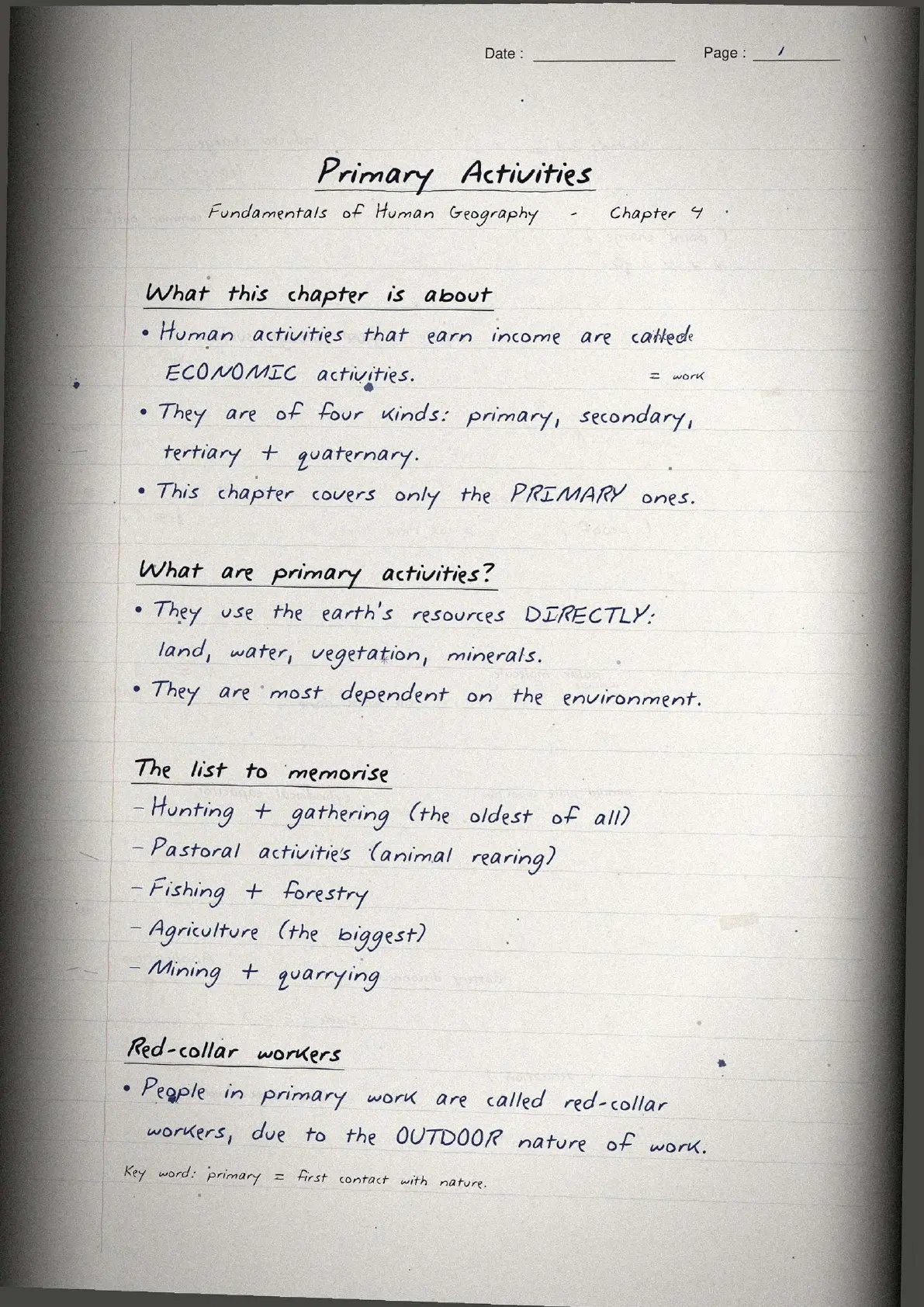
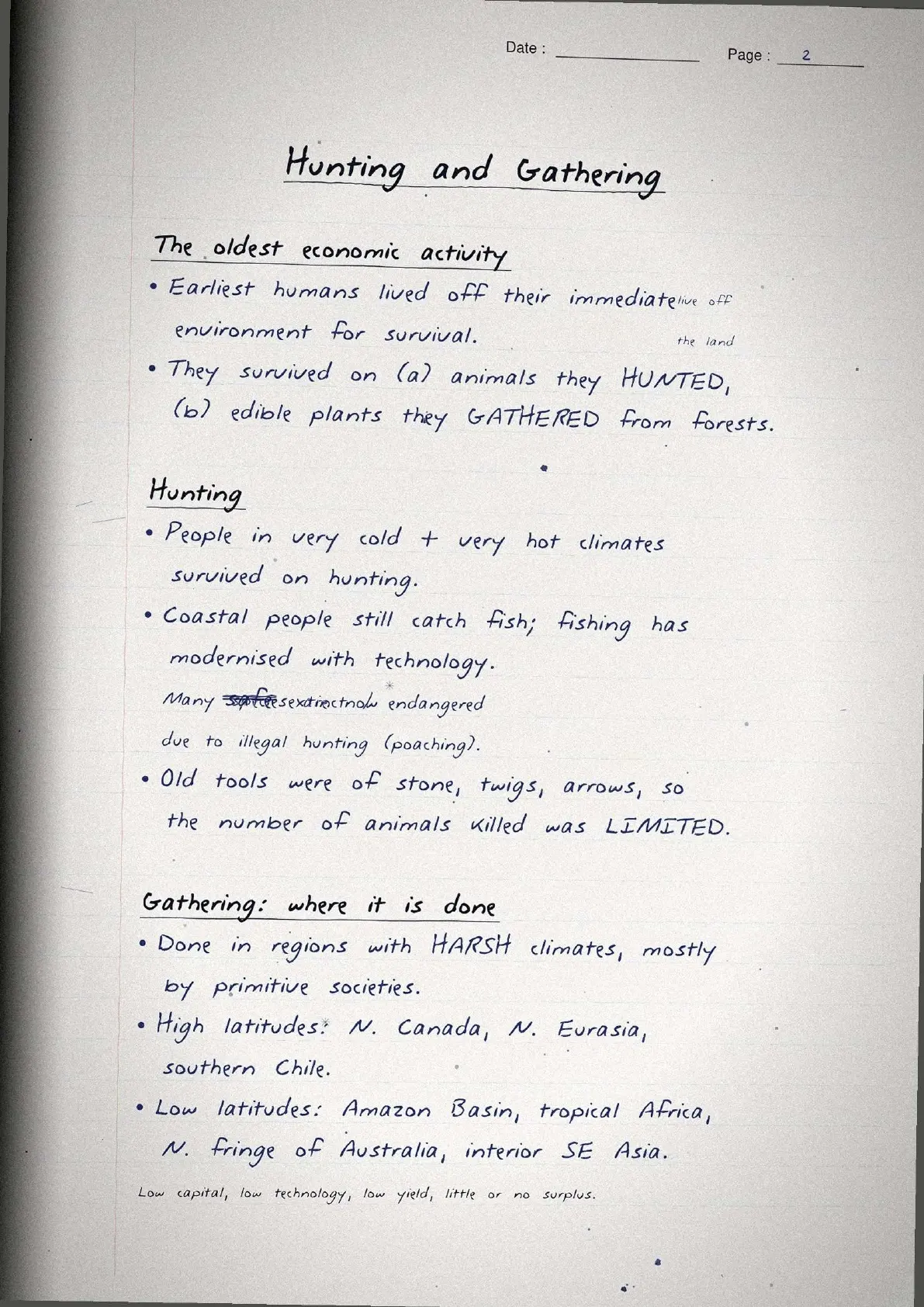
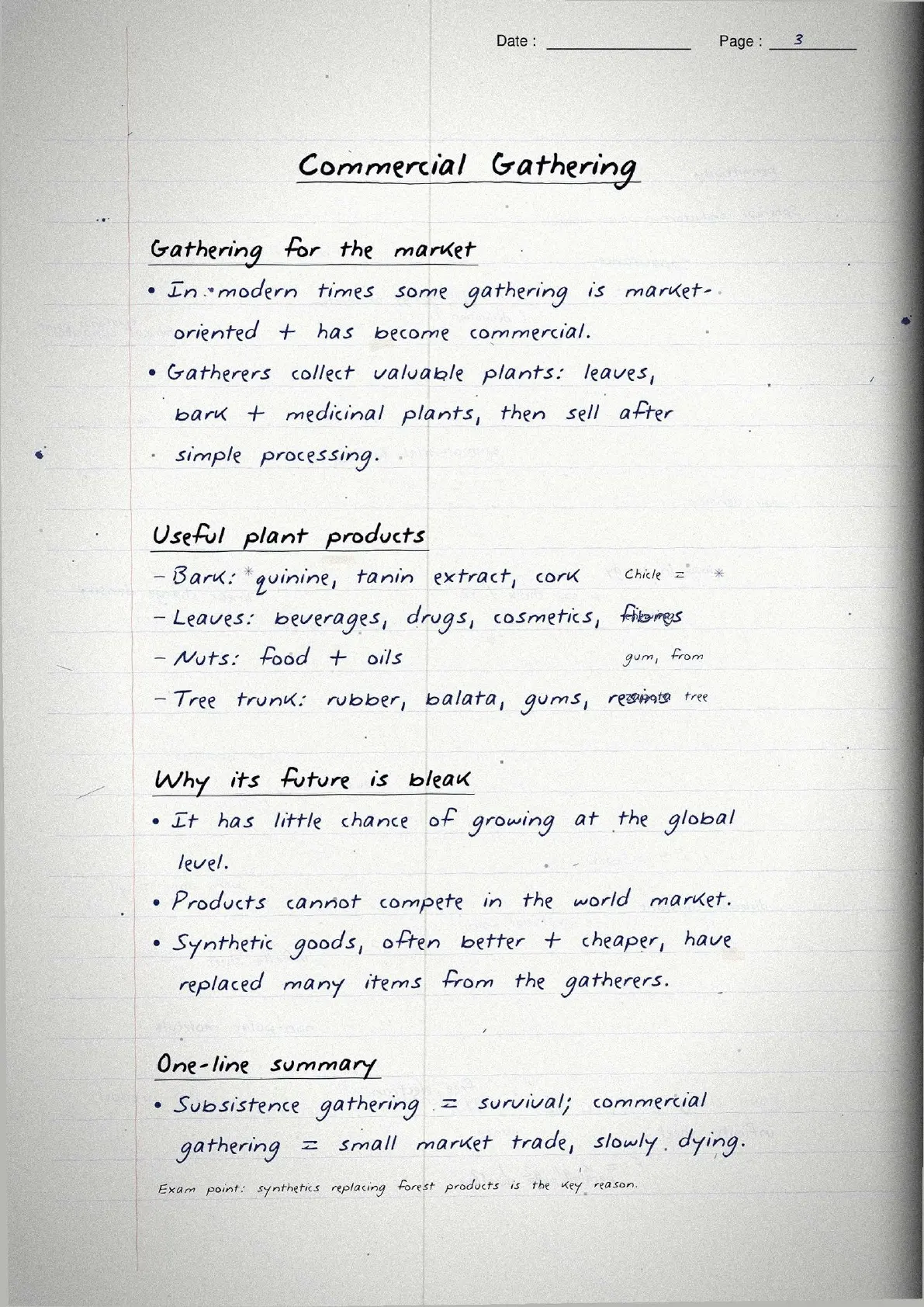
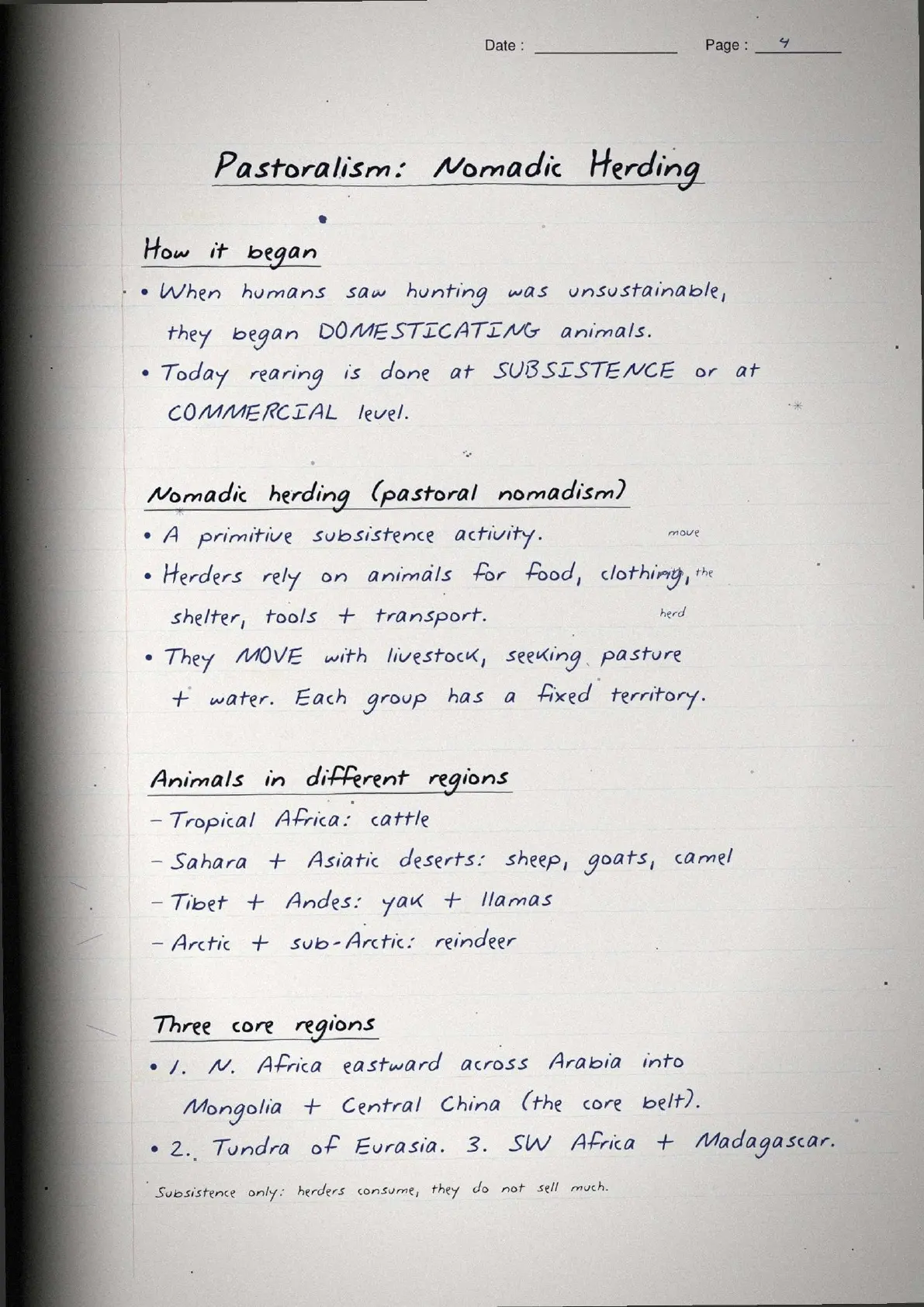
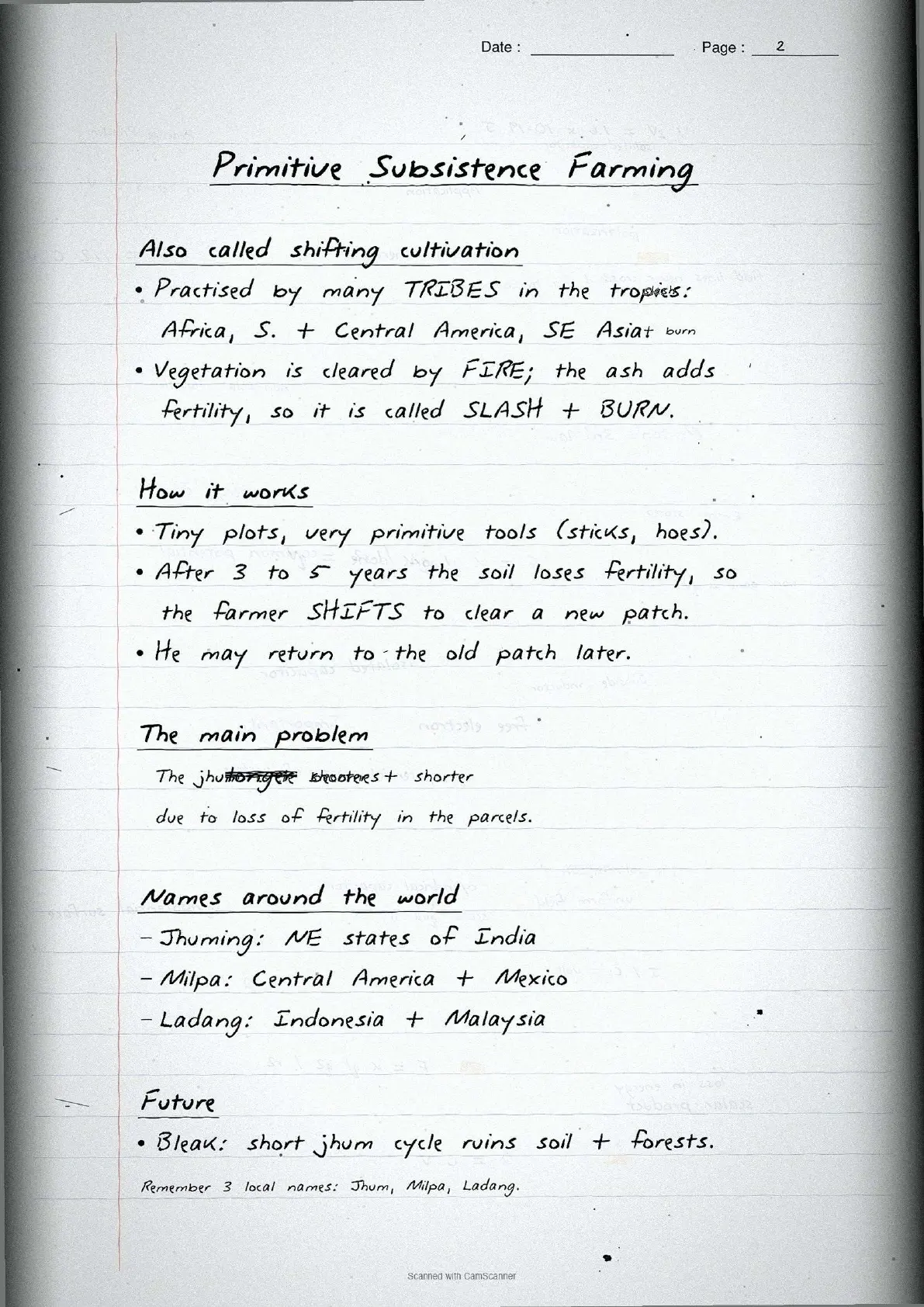
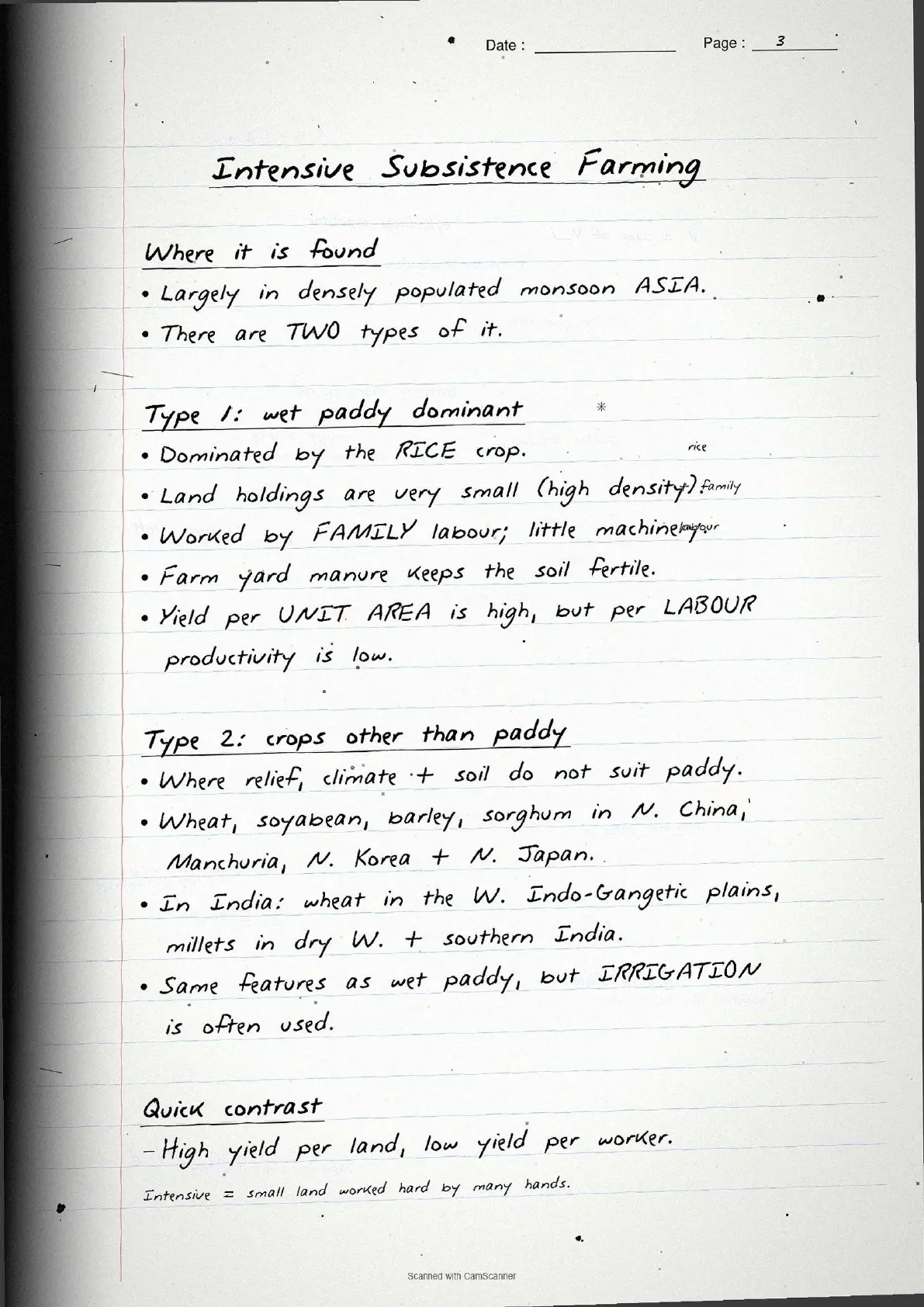
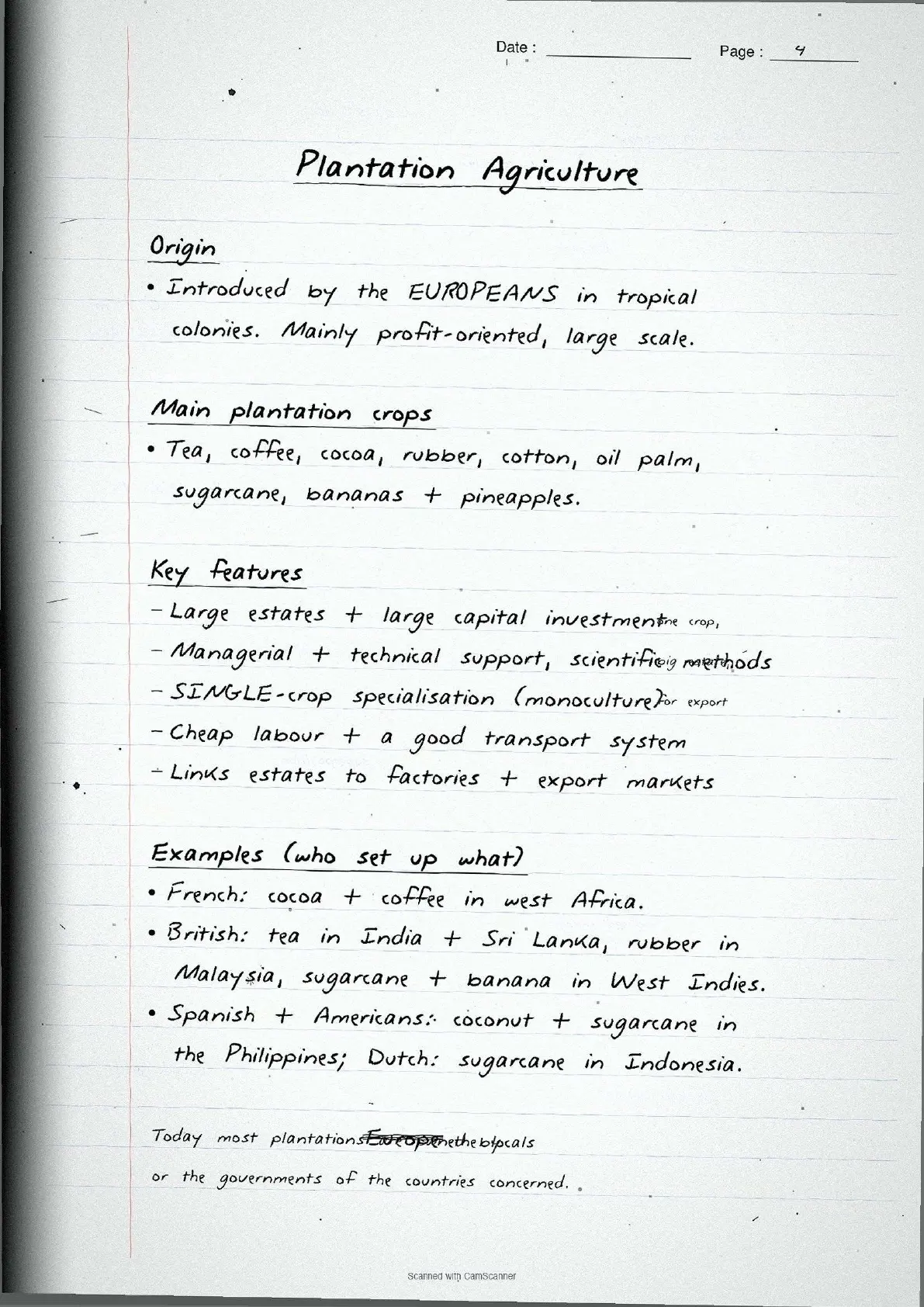
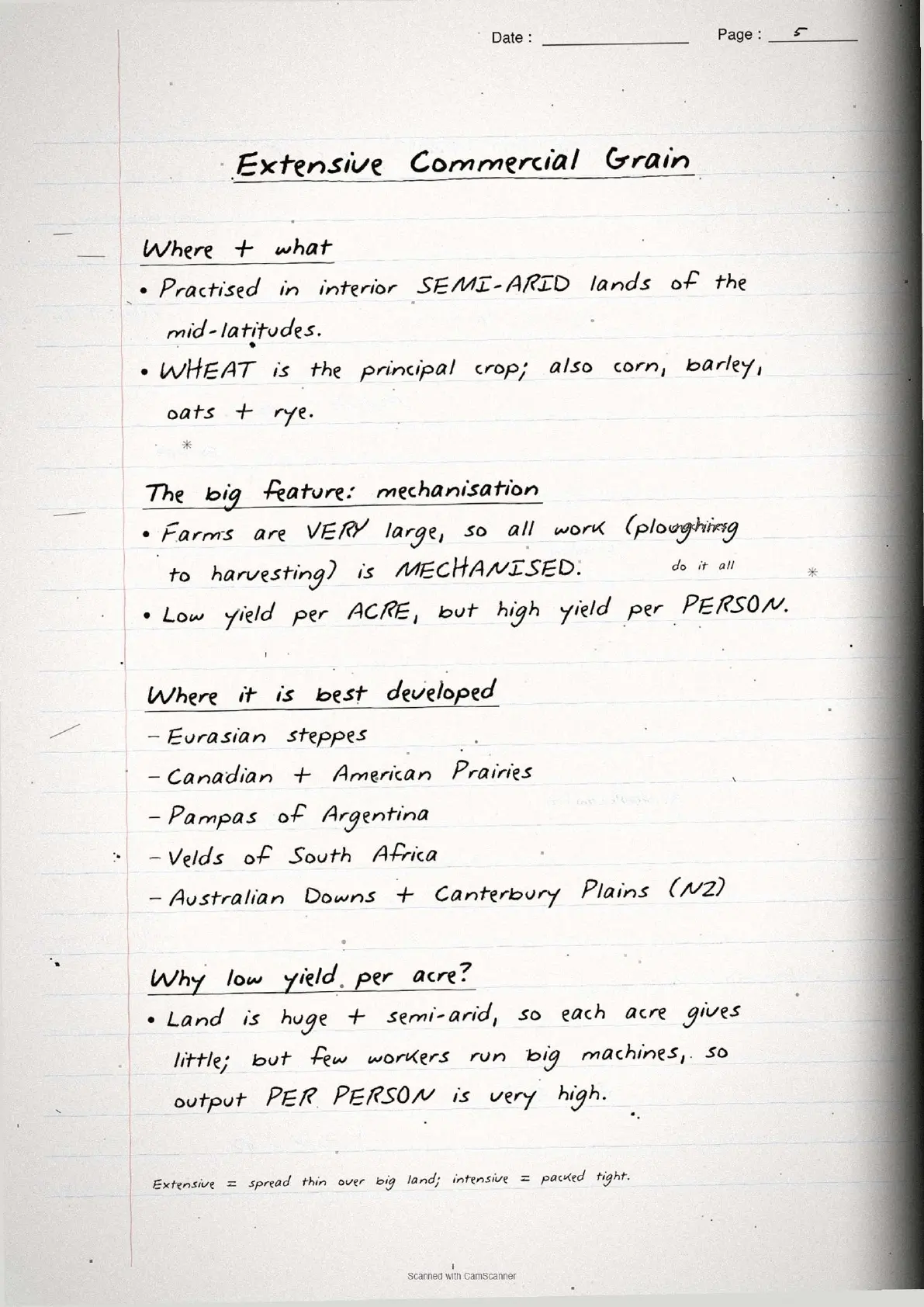
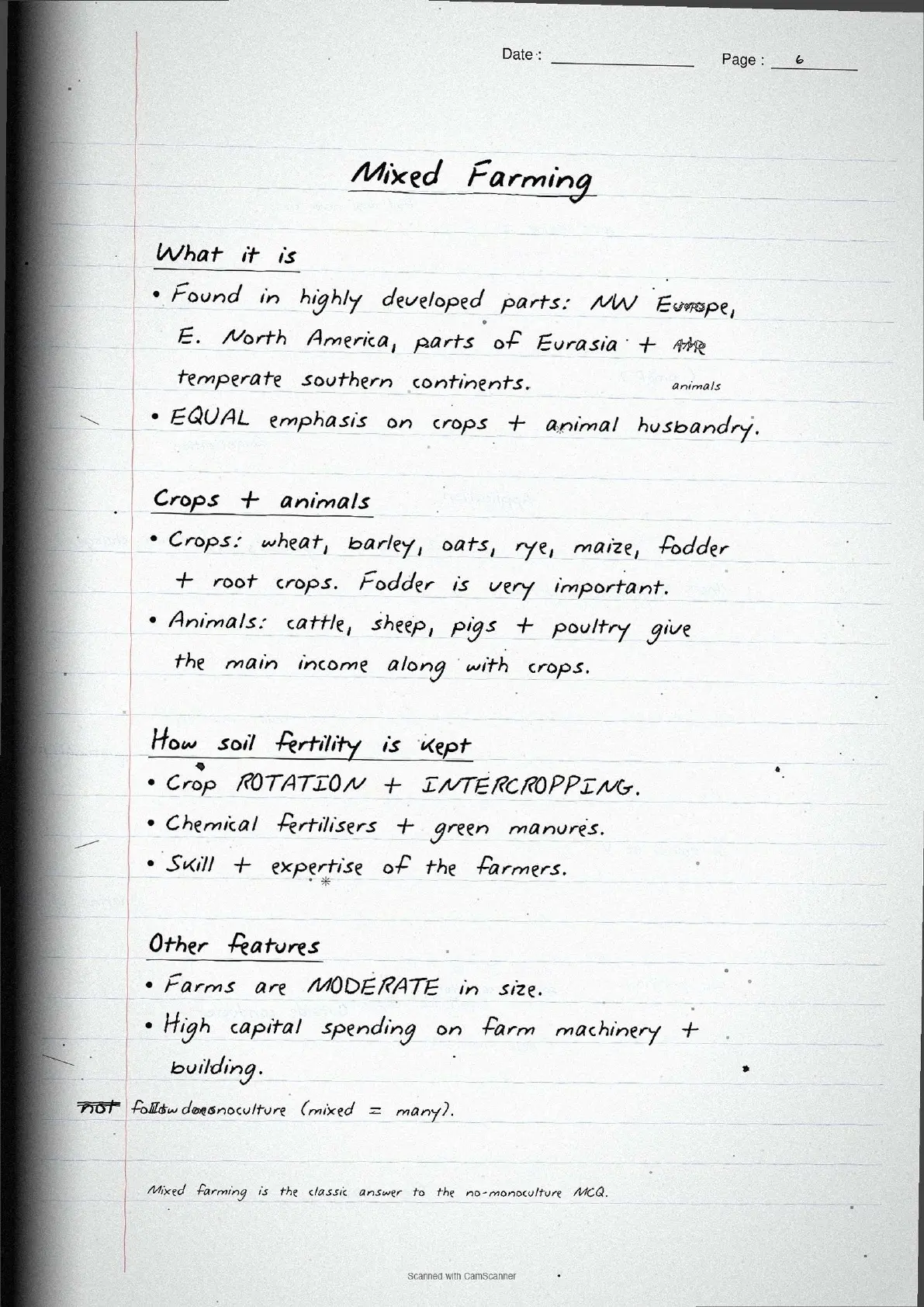
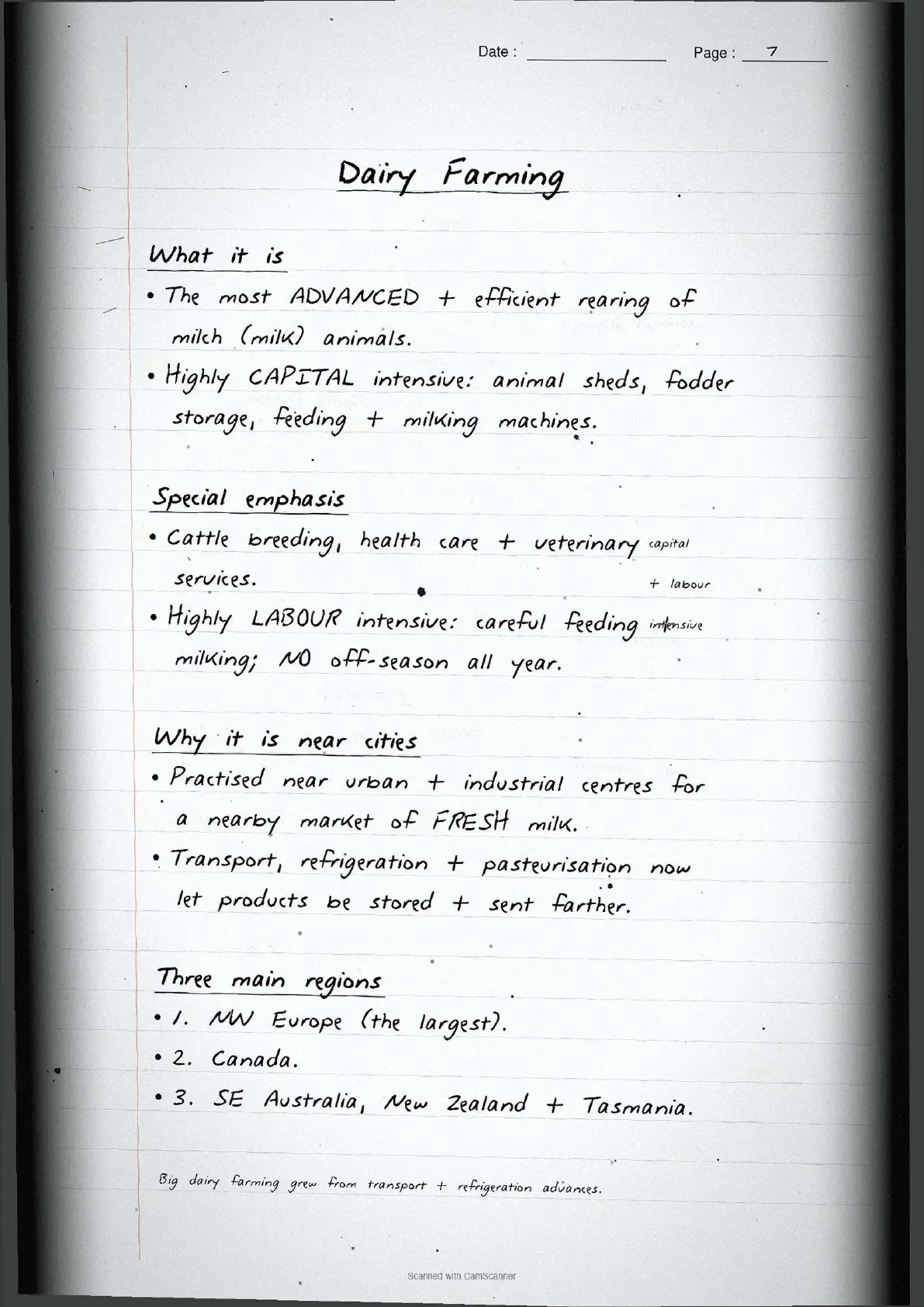
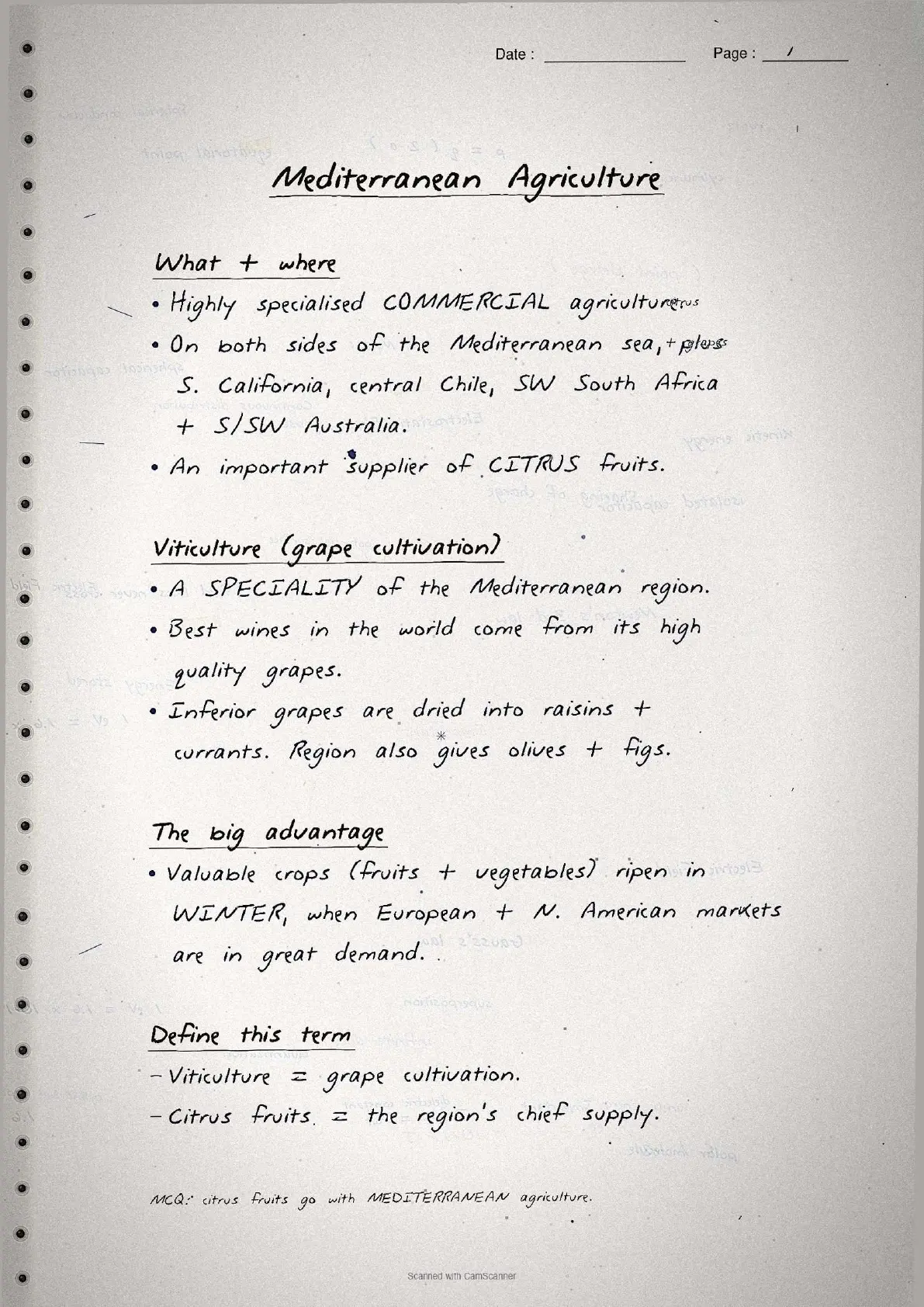
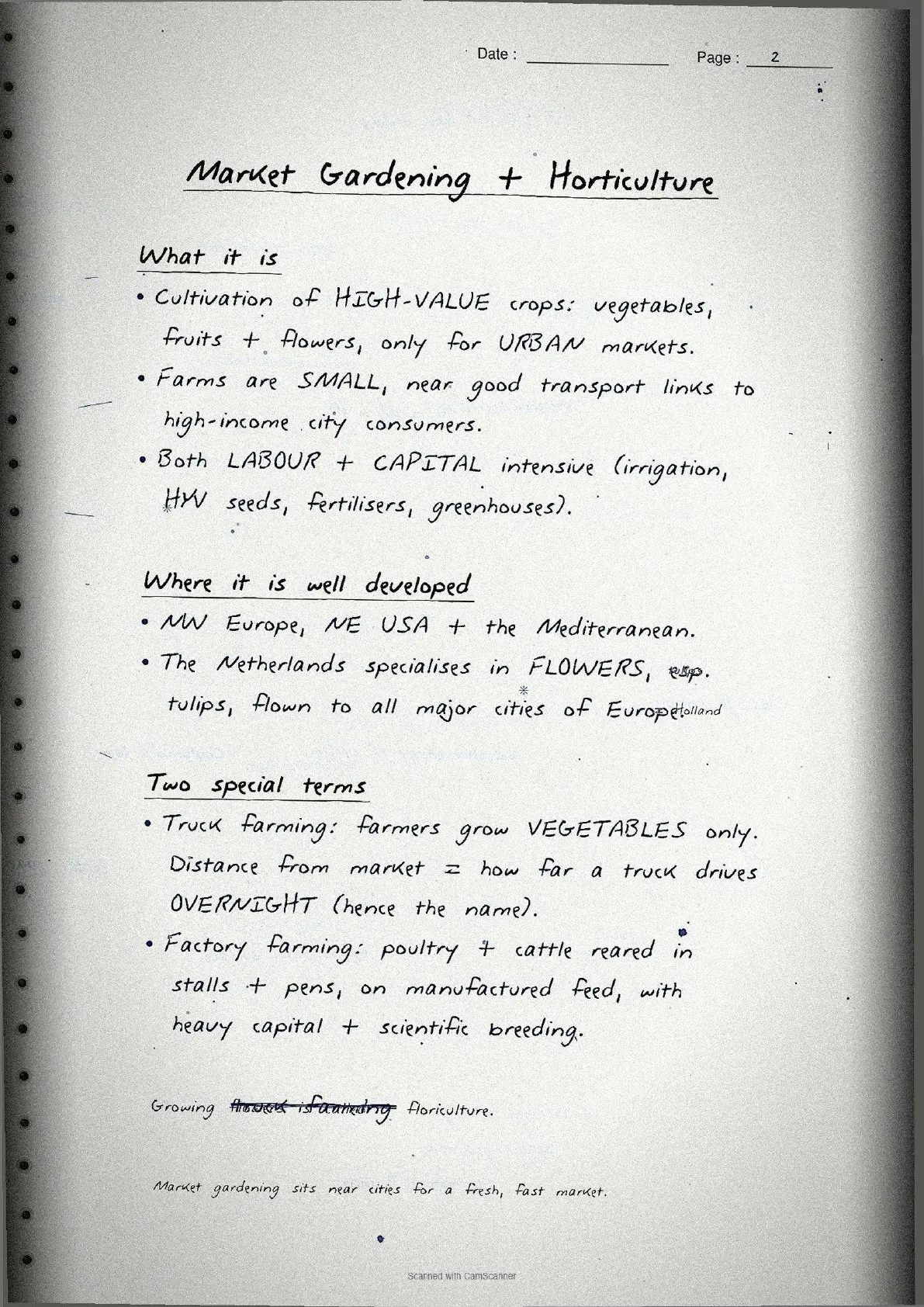
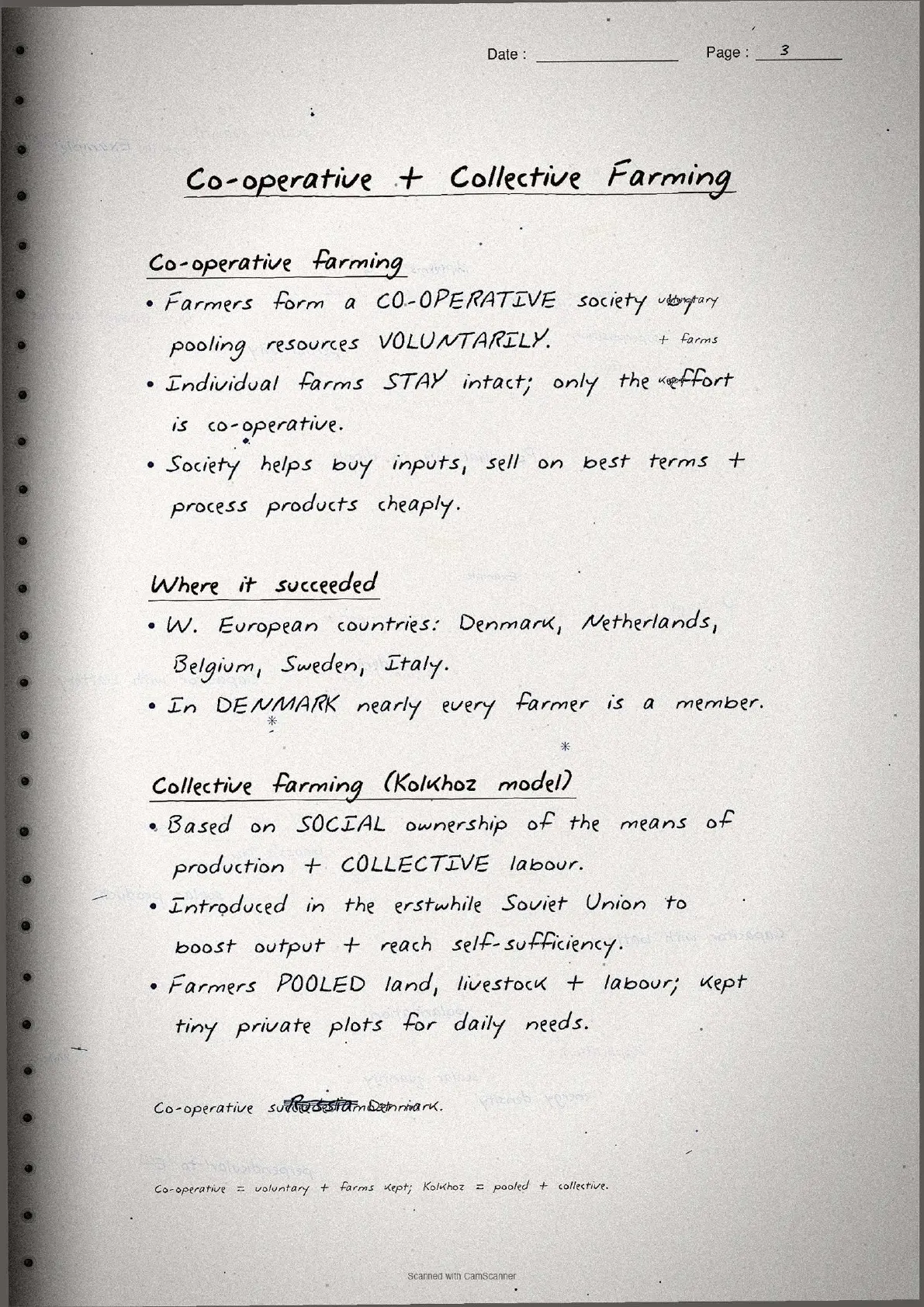
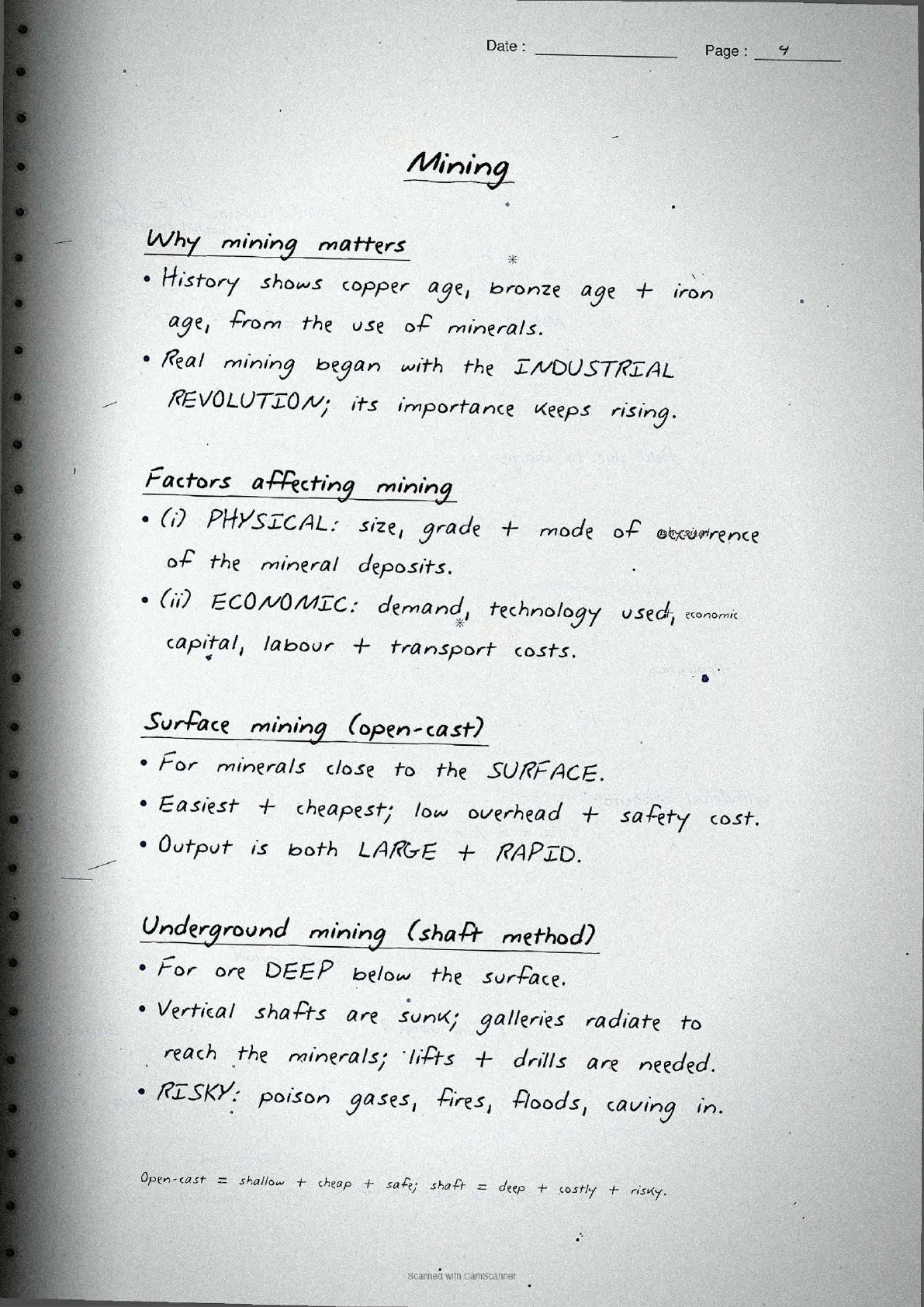
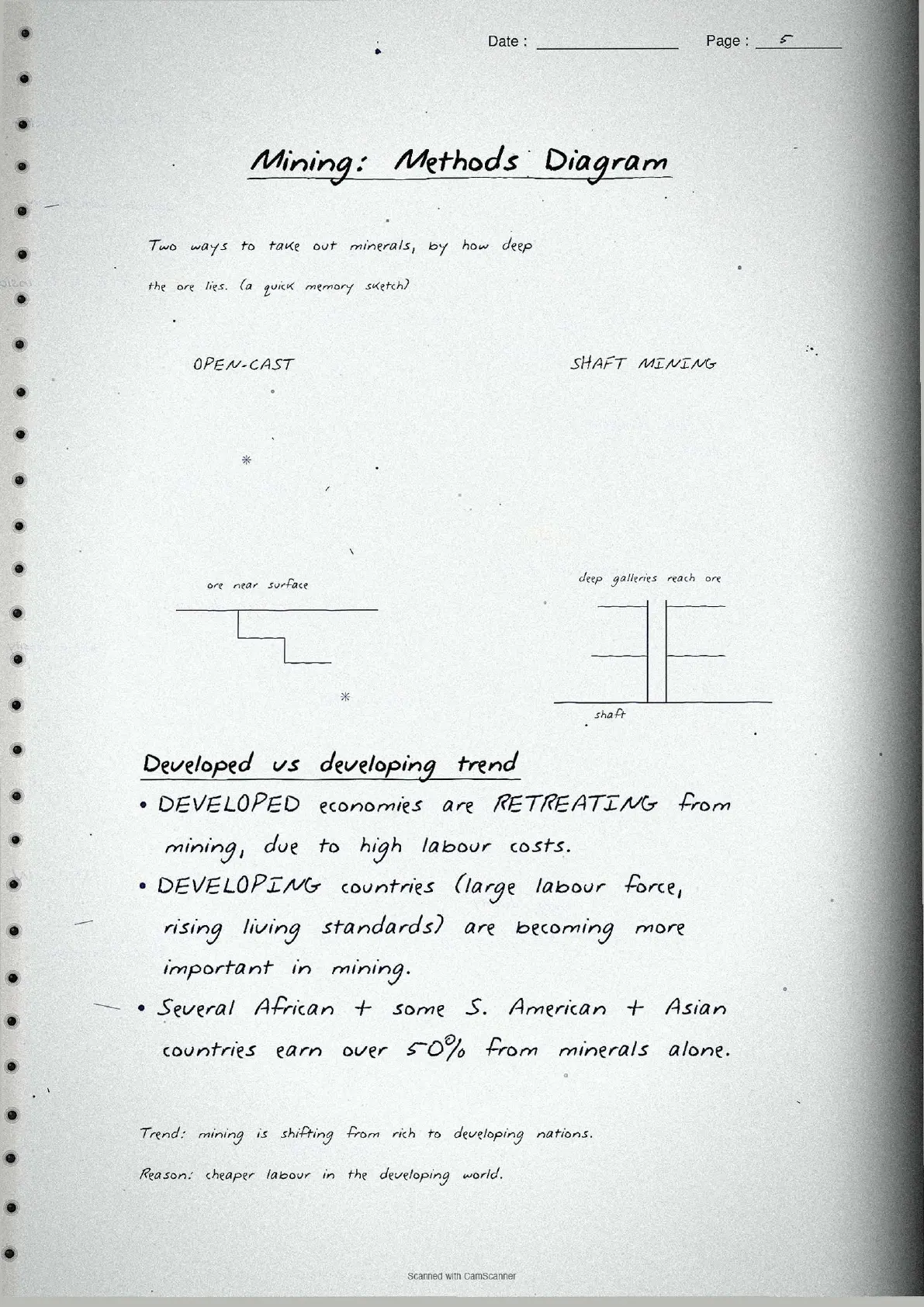
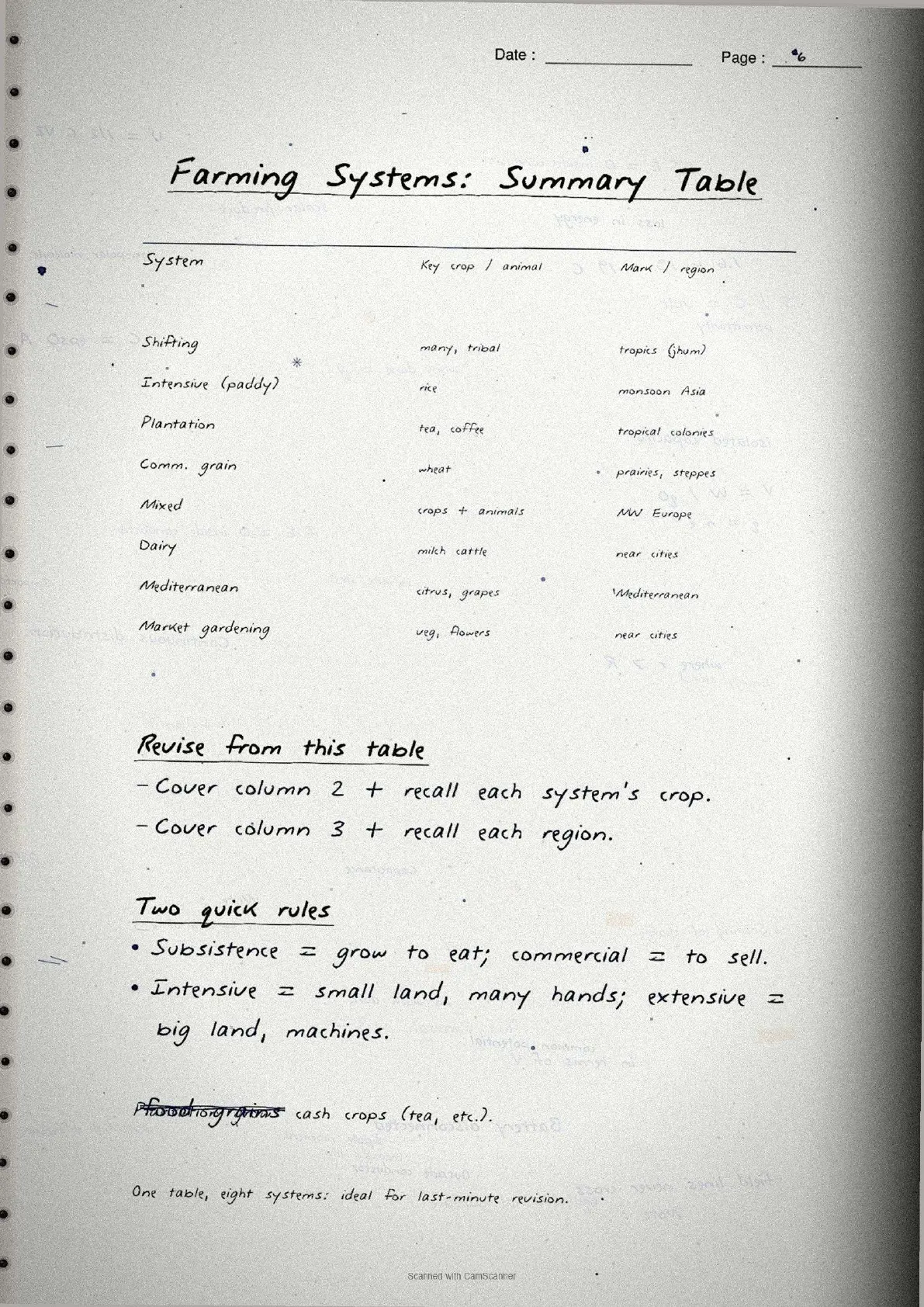
- Topper's handwritten revision notes covering all of CBSE Class 12 Geography Fundamentals of Human Geography Chapter 4.
- 5-6 marks weightage in the Class 12 Geography board paper, with the full spectrum from subsistence gathering to commercial farming shown in a hand-drawn comparison diagram.
- Pairs with the NCERT Solutions, typed Notes and the official NCERT Book PDF for the same chapter.
Mapped to the 2026-27 NCERT Fundamentals of Human Geography textbook and cross-checked against the last five years of CBSE Class 12 board papers.
Student Feedback
69% of Class 12 students said handwritten notes feel faster to revise from than typed PDFs in the final 48 hours before the exam, and 4 out of 5 said the hand-drawn concept boxes stick in memory better. The average student finished one full pass in about 20 minutes.
Source: 2026-27 Class 12 Geography student poll, 10,240 CBSE students.
What These Handwritten Notes Include
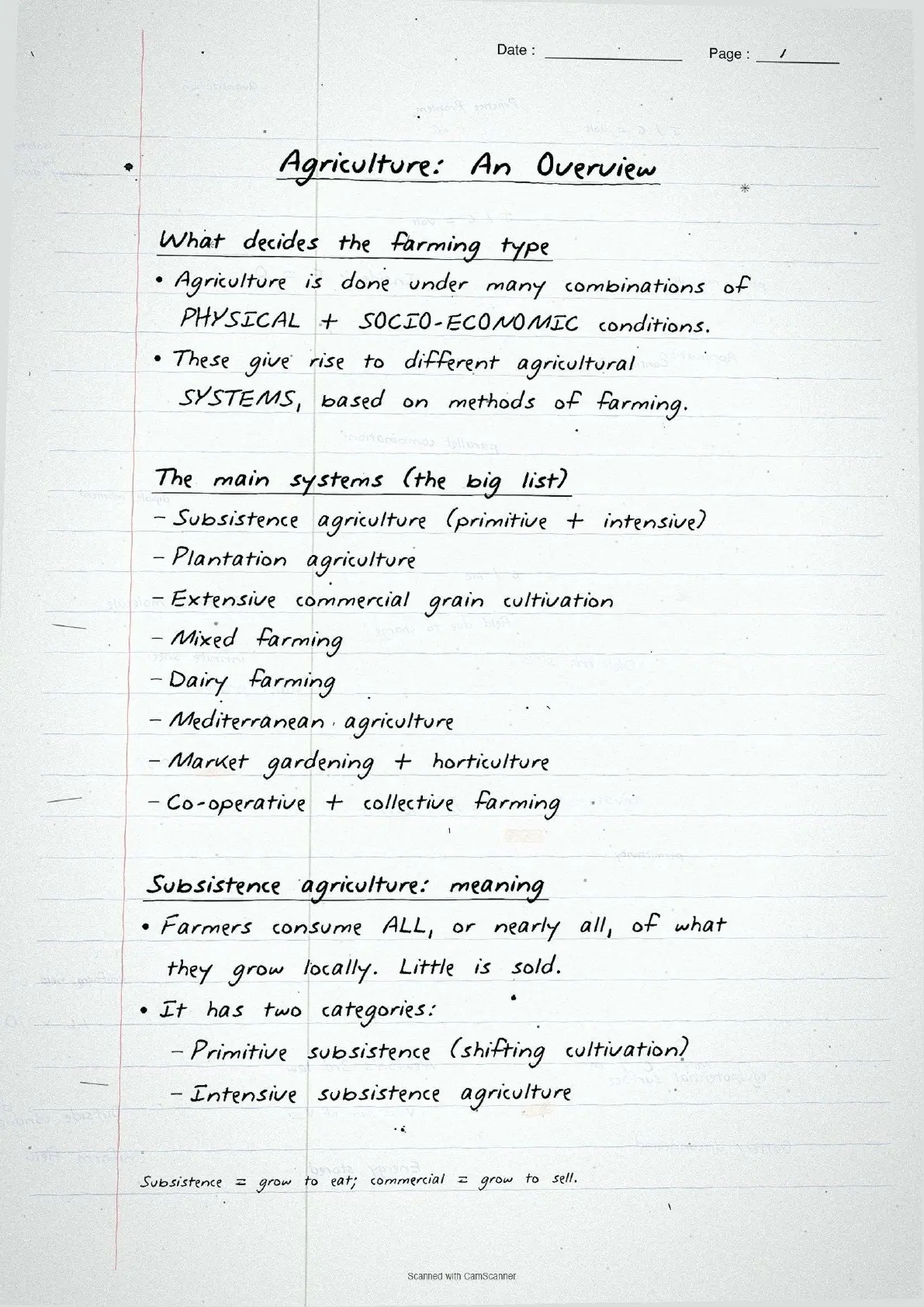
The primary activities class 12 handwritten notes PDF is a 4 to 5 page revision file with hand-drawn boxes around key definitions and arrow-tagged comparison diagrams of agriculture types. The file is built for last-mile revision, not first-time concept building. It captures every concept tested in Chapter 4: hunting and gathering, nomadic herding vs commercial livestock rearing, the full spectrum of agricultural systems (primitive and intensive subsistence, plantation, commercial grain, mixed, Mediterranean, dairy, co-operative, collective), and mining including physical and economic factors plus open-cast vs shaft methods.
| Page | What the page covers | Approx revision time |
|---|---|---|
| Page 1 | Hunting and gathering, red-collar workers definition, regions of gathering, primitive and subsistence activities. | 5 minutes |
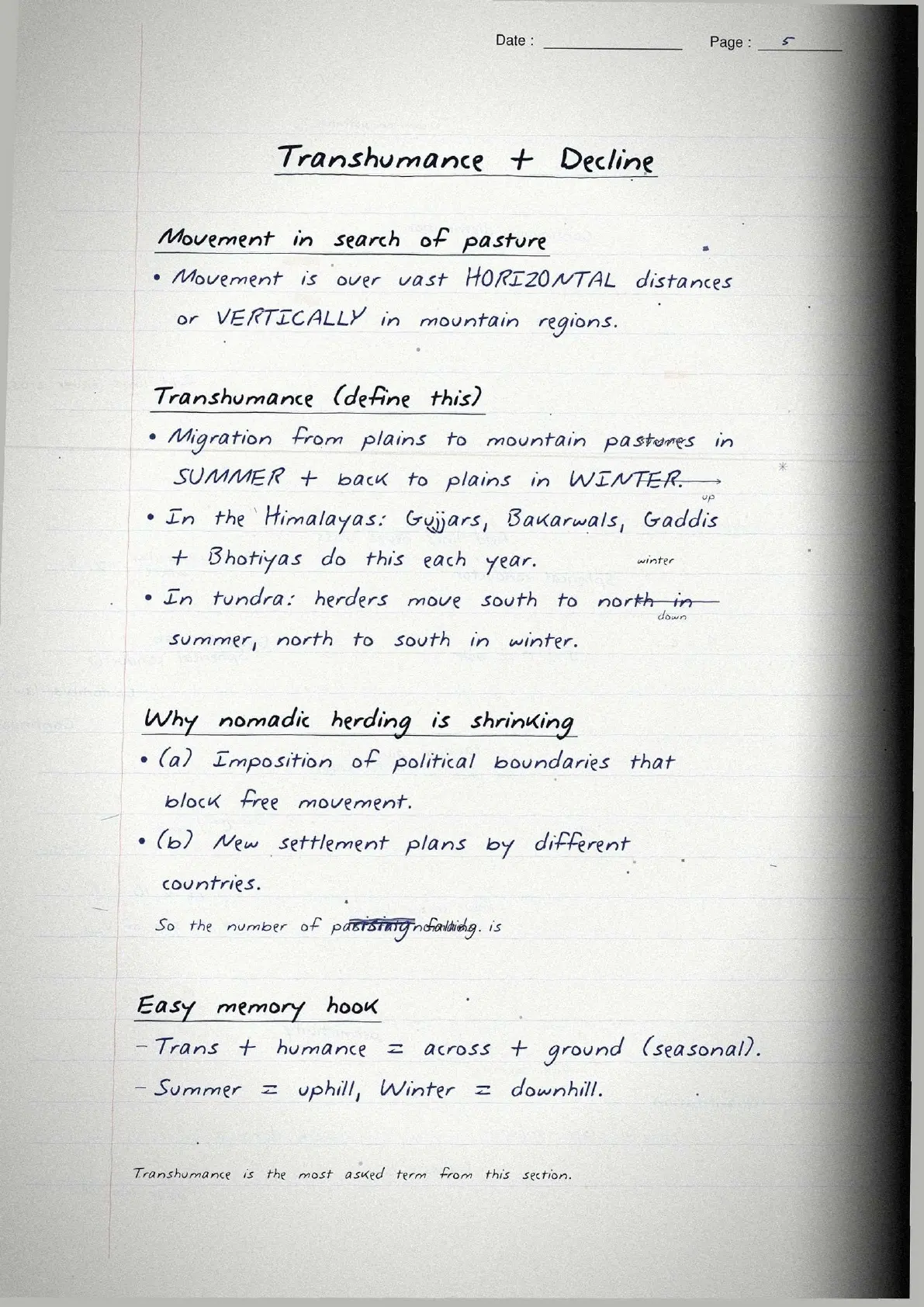
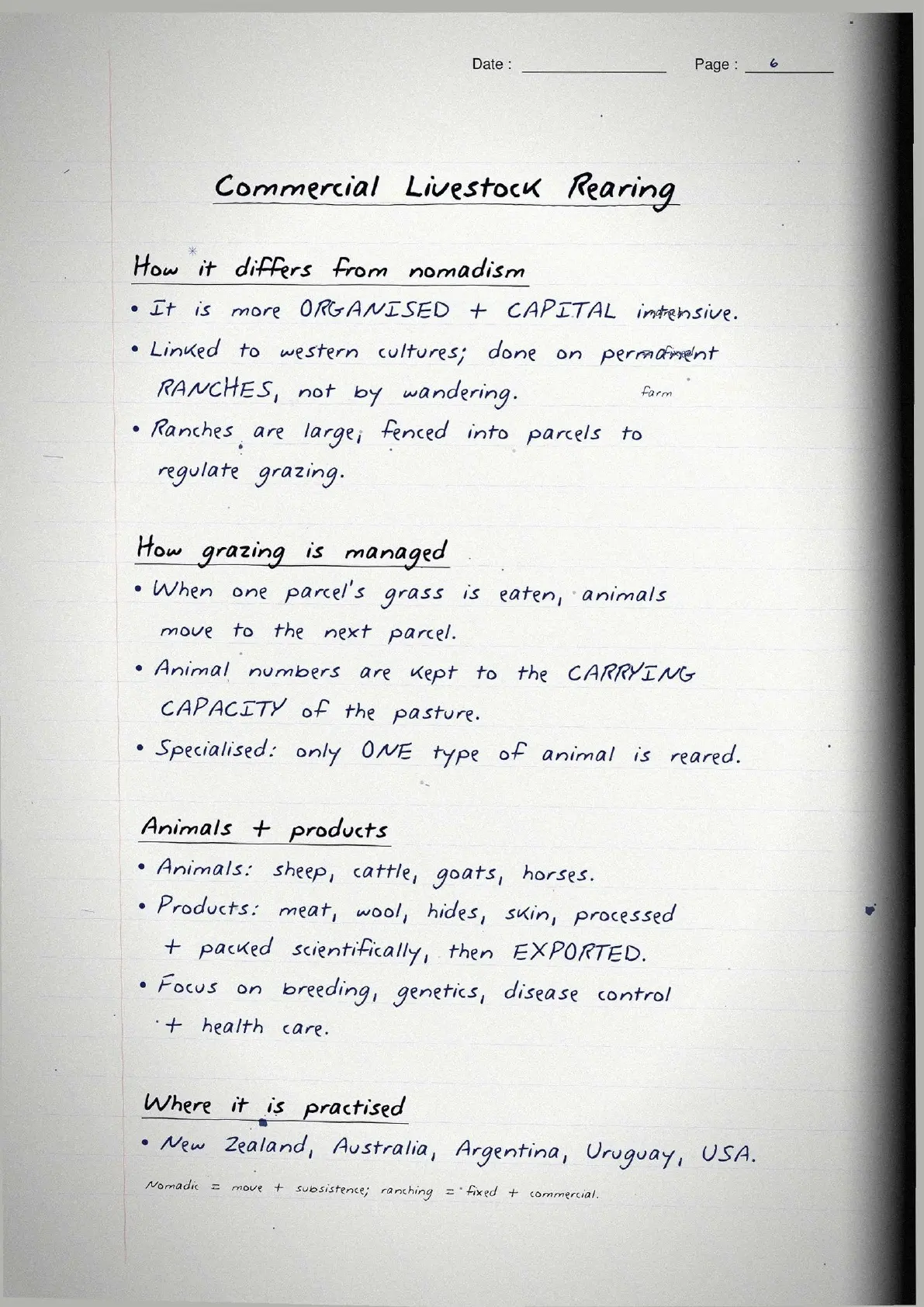
| Page 2 | Nomadic herding and commercial livestock rearing, transhumance, key regions (Africa, Central Asia, New Zealand, Argentina). | 5 minutes |
| Page 3 | Subsistence agriculture (primitive slash-and-burn, intensive wet-paddy vs non-paddy) with world region maps in margin. | 6 minutes |
| Page 4 | Plantation, commercial grain, mixed farming, Mediterranean, dairy, market gardening and collective or co-operative farming in a comparison grid. | 6 minutes |
| Page 5 | Mining: factors, open-cast vs shaft method, global trends and exam-ready one-liners. | 4 minutes |
Source: Magnet Brains on YouTube
Key Concepts in Handwritten Style
The concept sheet is the highest-leverage block in the file. The table below lists every definition and key idea students need for the board paper, in the order they appear. Each definition sits inside a hand-drawn box for visual recall.
| Concept | Handwritten definition (as drawn) | NCERT exercise Q |
|---|---|---|
| Primary Activities | Activities directly dependent on environment: land, water, vegetation, minerals | Q1 |
| Red-collar workers | People in primary activities; named for outdoor, earthy nature of work | Q2(i) |
| Gathering regions | High latitudes (N. Canada, N. Eurasia, S. Chile) + Low latitudes (Amazon, tropical Africa) | Q2(ii) |
| Nomadic Herding | Herders move with livestock following pastures and water; animals = food, clothing, shelter | Q3(i) |
| Transhumance | Seasonal migration: plains to mountains in summer, mountains to plains in winter | Q3(i) |
| Commercial Livestock Rearing | Organised, capital-intensive; single-animal specialisation; scientific breeding on ranches | Q3(i) |
| Slash and Burn Agriculture | Vegetation cleared by fire; ashes add fertility; shifting cultivation; 3-5 year cycle | Q1(vii) |
| Plantation Agriculture | Introduced by Europeans in tropics; large estates, single-crop, cheap labour, export-oriented | Q3(ii) |
| Extensive Commercial Grain | Semi-arid mid-latitudes; wheat dominant; fully mechanised; low yield per acre, high per person | Q2 |
| Mixed Farming | Crop cultivation + animal husbandry equally emphasised; fodder crops, crop rotation | Q1(viii) |
| Open-cast Mining | Surface mining; cheapest; for minerals close to surface; large and rapid output | Q2 |
| Shaft Mining | Underground; vertical shafts + galleries; risky; for deep-seated ores | Q2 |
Tip: Each concept sits in a hand-drawn box with a corner arrow to its world-region example (the slash-and-burn box points to "Jhum = NE India; Milpa = Mexico; Ladang = Indonesia"). Revising from visual blocks helps students recall the regional examples faster.
Types of Agriculture at a Glance
Agriculture is the most content-heavy section of Chapter 4, captured as a structured comparison on Pages 3 and 4. Every CBSE paper since 2021 has asked at least one long-answer question from here.
Subsistence Agriculture (primitive and intensive)
Primitive subsistence (shifting cultivation) is practised in the tropics of Africa, South and Central America and South East Asia. Vegetation is cleared by fire (hence "slash and burn"), the ash adds fertility, and after 3 to 5 years the farmer shifts. Local names: Jhuming (NE India), Milpa (Mexico), Ladang (Indonesia). Intensive subsistence is found in densely populated monsoon Asia, split into wet-paddy dominant (high yield per area, low per labour) and non-paddy crops like wheat, soyabean and barley in northern China, Manchuria and North Korea.
Plantation Agriculture
Introduced by European colonists, plantation agriculture uses large estates, heavy capital, single-crop specialisation and cheap labour. Crops include tea (India, Sri Lanka), rubber (Malaysia), coffee (Brazil), sugarcane (West Indies) and cocoa (West Africa). Today most plantations are owned by governments or nationals of the country.
Commercial Grain, Mixed Farming and Mediterranean Agriculture
Extensive commercial grain cultivation covers semi-arid mid-latitude interiors: Eurasian steppes, the Prairies, the Pampas, the Velds, Australian Downs and Canterbury Plains. It is fully mechanised, giving low yield per acre but high yield per person. Mixed farming (North-west Europe, eastern North America) gives equal weight to crops and animal husbandry with crop rotation. Mediterranean agriculture centres on viticulture, citrus, olives and figs.
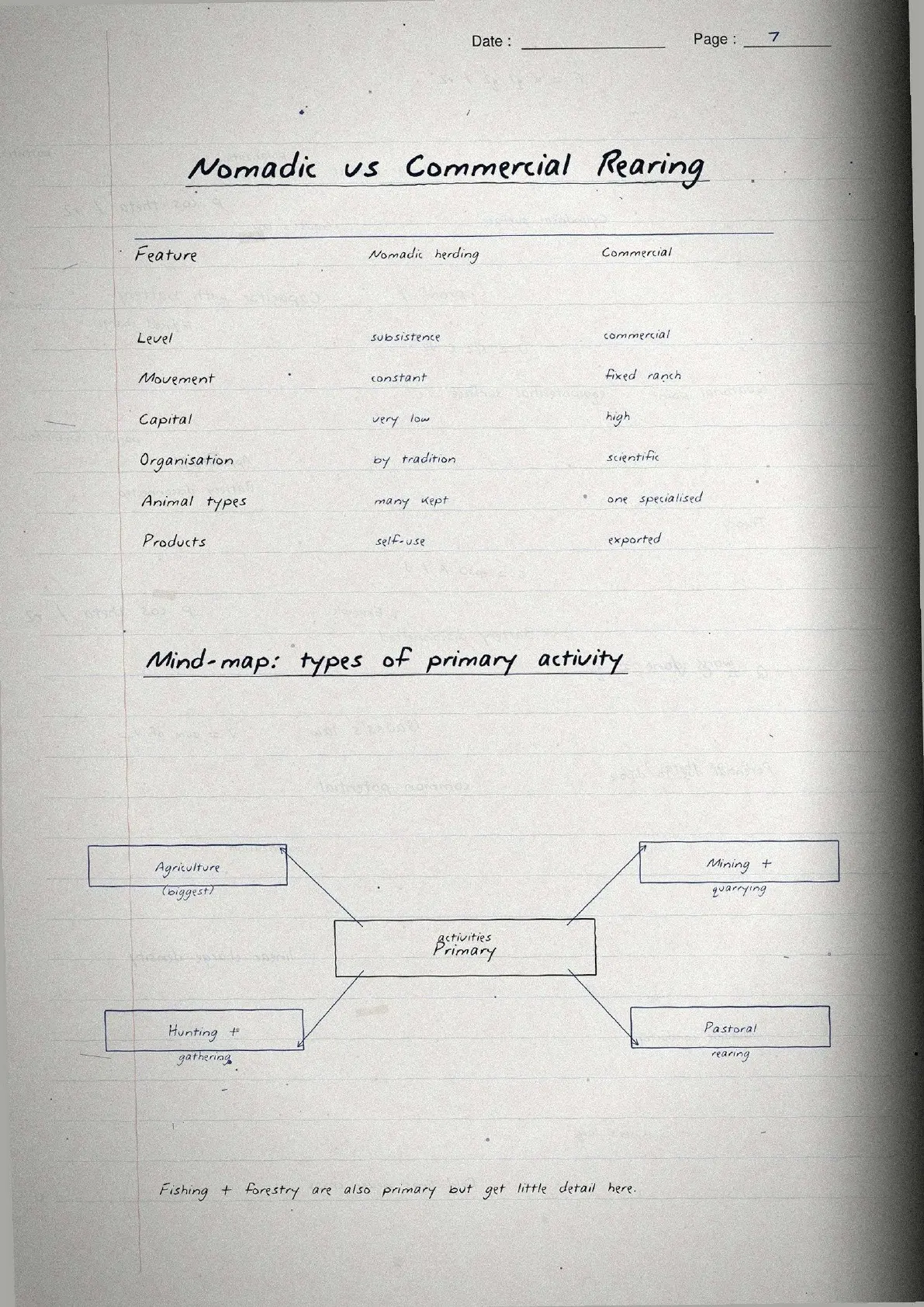
Important: For the "distinguish between" question, the key contrast between nomadic herding and commercial livestock rearing is: nomadic herding is primitive and subsistence-based, animals serve the herder's own needs; commercial livestock rearing is organised, capital-intensive, market-oriented and practised on large scientific ranches. Always state both sides of the contrast to earn full marks.
Pastoralism and Mining: What the Notes Cover
Pastoralism and mining are the two non-agricultural primary activities that appear consistently in CBSE papers, covered on Page 2 and Page 5.
| Activity | Key feature | World regions |
|---|---|---|
| Nomadic Herding | Primitive subsistence; animals = food, clothing, shelter, tools, transport; transhumance | N. Africa to Central China; tundra of Eurasia; SW Africa |
| Commercial Livestock | Capital-intensive; single-animal; scientific breeding; export of meat, wool, hides | New Zealand, Australia, Argentina, Uruguay, USA |
| Open-cast Mining | Surface extraction; cheapest; large rapid output; low overhead | Iron ore, bauxite, coal (shallow seams) |
| Shaft Mining | Vertical shafts + underground galleries; risky (gas, floods, cave-ins); deep ore bodies | Deep coal, gold, diamond mines |
Mining profitability splits into two columns: physical factors (size, grade and mode of occurrence of deposits) and economic factors (demand, technology, capital, labour and transport costs). Developed economies are retreating from mining due to high labour costs, while developing countries with large labour forces are becoming important producers. Several African, South American and Asian countries earn over 50 per cent of export income from minerals alone.
Common Mistakes Highlighted in the Notes
The six repeat-offender mistakes CBSE examiners flag each year on primary activities class 12 answers. Each appears as a margin callout in the notes.
- Mixing up nomadic herding and commercial livestock rearing. Herders move with their animals; commercial ranching is fixed on large fenced ranches. Confusing them loses the comparison marks.
- Forgetting the local names for shifting cultivation. Jhuming (NE India), Milpa (Mexico), Ladang (Indonesia). Missing all three costs a mark.
- Saying plantation agriculture is subsistence. It is commercial, export-oriented and capital-intensive, introduced by European colonists for profit.
- Confusing intensive subsistence types. Wet-paddy is South, East and South East Asia; non-paddy grows wheat, soyabean and barley in northern China, Manchuria and North Korea.
- Stating only one factor for mining profitability. NCERT lists both physical and economic factors; naming only physical factors scores half marks.
- Calling open-cast mining "quarrying" without explanation. NCERT calls it open-cast or strip mining; quarrying is a subset term.
Each mistake carries a one-line "remember this" note; the plantation hook is "Plantation = Europeans + export + single crop".
Previous Year Question Trends
Chapter 4 has carried a stable 8 to 10 marks over five years: one or two long-answer questions (5 marks each) plus one short-answer question (2 to 3 marks).
| Year | Question asked | Marks | Notes page to revise |
|---|---|---|---|
| 2025 | Distinguish between nomadic herding and commercial livestock rearing with examples | 5 | Page 2 |
| 2024 | Describe the characteristic features of plantation agriculture. Name important crops and countries. | 5 | Page 4 |
| 2023 | Why is shifting cultivation called slash and burn? Discuss its future. | 3 | Page 3 |
| 2022 | Explain the factors affecting mining activity. Differentiate between open-cast and shaft mining. | 5 | Page 5 |
| 2021 | Describe the main features of intensive subsistence agriculture with examples. | 5 | Page 3 |
Across these years, long-answer questions have focused on distinguishing between two types of primary activity rather than describing one in isolation, so each page uses a comparison layout.
Other Resources for Class 12 Geography Chapter 4 Primary Activities
Pair these handwritten notes with the matching NCERT Solutions, typed Notes and the official NCERT Book for this chapter.
| Resource | What it covers | Open |
|---|---|---|
| Handwritten Notes | Topper's handwritten revision pages for last-mile board exam prep. | You are here |
| NCERT Solutions | Step-by-step answers to all exercise questions with key distinctions and expert analysis. | Class 12 Geography Chapter 4 NCERT Solutions |
| Notes | Concept-first typed revision notes with definitions, world regions, exam angles and common mistakes. | Class 12 Geography Chapter 4 Notes |
| NCERT Book PDF | Official NCERT Fundamentals of Human Geography Chapter 4 textbook in PDF form. | Class 12 Geography Chapter 4 NCERT Book PDF |
| Subject Hub | All chapters of Class 12 Geography with every resource in one place. | Class 12 Geography Subject Hub |
All Chapters Handwritten Notes for Class 12 Geography Fundamentals of Human Geography
Related Links: Use the table below for the handwritten notes of the other chapters of Class 12 Fundamentals of Human Geography. Every chapter ships with the same concept boxes and margin-callout common mistakes.
| Chapter | Topic | Handwritten Notes link |
|---|---|---|
| Chapter 1 | Human Geography Nature and Scope | Class 12 Geography Chapter 1 Handwritten Notes |
| Chapter 2 | The World Population: Distribution, Density and Growth | Class 12 Geography Chapter 2 Handwritten Notes |
| Chapter 3 | Human Development | Coming soon |
| Chapter 4 | Primary Activities | You are here |
| Chapter 5 | Secondary Activities | Coming soon |
| Chapter 6 | Tertiary and Quaternary Activities | Coming soon |
| Chapter 7 | Transport and Communication | Coming soon |
| Chapter 8 | International Trade | Coming soon |
Primary Activities Class 12 Handwritten Notes FAQs
Ques. What are these primary activities class 12 handwritten notes meant to be used for?
Ans. The primary activities class 12 handwritten notes are a topper's handwritten revision file: they compress the full NCERT Chapter 4 into 4 to 5 pages of concept boxes, activity comparison diagrams and margin-callout common mistakes. Students use the file for last-mile revision in the 24 hours before the board paper, paired with the typed Notes PDF for concept building and the NCERT Solutions PDF for long-answer practice.
Ques. How are these handwritten notes different from the typed primary activities class 12 notes?
Ans. The typed primary activities class 12 notes carry deeper prose around each activity (definitions, world regions, advantages, limitations) and run 6 to 8 pages long. The handwritten notes compress that prose down to concept boxes alone, sit at 4 to 5 pages, and lean on visual recall (hand-drawn boxes and arrow-tagged comparisons) rather than typed explanations. The two files are designed to be used together, not as substitutes. Read the typed Notes first, then collapse to the handwritten file for the second and third revision passes.
Ques. What is shifting cultivation and why is its future bleak?
Ans. Shifting cultivation, also called slash and burn agriculture, is a primitive subsistence method where farmers clear forest by fire, cultivate the patch for 3 to 5 years until soil fertility drops, then shift to a new patch. It is called Jhuming in North Eastern India, Milpa in Mexico and Central America, and Ladang in Indonesia and Malaysia. Its future is bleak because the cycle of shifting (jhum cycle) gets shorter as forests shrink, soil exhaustion sets in faster, and synthetic substitutes now replace many forest products at lower prices. The handwritten notebook captures these three reasons in a three-point margin box on Page 3.
Ques. What is the difference between nomadic herding and commercial livestock rearing?
Ans. Nomadic herding is a primitive subsistence activity where herders move from place to place with their livestock, relying on animals for food, clothing, shelter, tools and transport. Herds include cattle in tropical Africa, sheep and goats in Saharan and Asiatic deserts, yak and llamas in the Himalayas and Andes, and reindeer in the Arctic. Commercial livestock rearing is organised, capital-intensive and market-oriented: animals are reared on large fenced ranches, breeding is scientifically managed, and products (meat, wool, hides) are processed and exported. New Zealand, Australia, Argentina, Uruguay and the USA are the main countries for commercial livestock rearing. The core contrast for CBSE: one is subsistence and mobile; the other is commercial and fixed.
Ques. Which plantation crops are most important and in which countries?
Ans. The major plantation crops and their countries according to the NCERT Class 12 Geography textbook are: tea in India and Sri Lanka (British-established), rubber in Malaysia (British), sugarcane and banana in West Indies (British), cocoa and coffee in West Africa (French), and coconut and sugarcane in the Philippines (Spanish and American investment). Coffee fazendas in Brazil, some still managed by European descendants, are another example. Today most plantations have passed into government or national ownership. The handwritten notebook draws a country-crop pairing grid on Page 4 for rapid recall during the board paper.
Ques. What factors affect the profitability of mining?
Ans. The NCERT textbook divides the factors affecting mining profitability into two categories. Physical factors include the size, grade and mode of occurrence of the deposits: a large, high-grade deposit close to the surface is cheapest to mine. Economic factors include demand for the mineral, technology available, capital to develop infrastructure, labour costs and transport costs. The handwritten notebook draws these as a two-column layout on Page 5, with an arrow from each physical factor to its economic consequence (low-grade ore means high processing cost, for example). This two-column structure directly mirrors the format CBSE expects in a 5-mark answer.
Ques. Are these primary activities class 12 handwritten notes enough for the CBSE board exam?
Ans. The handwritten notes are sufficient for the concept-recall component (roughly 6 to 8 marks of the 8 to 10 marks the chapter typically carries), but the long-answer practice in this file is limited to the concept boxes themselves, not step-by-step model answers. Students aiming for 90-plus in CBSE Class 12 Geography should pair the handwritten file with the matching NCERT Solutions PDF (all exercise questions worked end-to-end) and one set of CUET or previous-year CBSE questions for additional practice. All resources are linked in the cross-resource table on this page.
Ques. How long does it take to revise these primary activities handwritten notes?
Ans. The full handwritten notes file is designed for a 20-minute first revision pass, a 12-minute targeted pass and a 7-minute final pass right before the exam. Students who already have the chapter under their belt finish the full file in under 18 minutes. Page 3 (agriculture types) and Page 5 (mining factors) together take 10 minutes to revise and cover roughly 7 of the 8 to 10 marks the chapter typically carries in the CBSE Class 12 Geography board paper.
Ques. Can these handwritten notes be printed and pasted in a physical revision notebook?
Ans. Yes, and that is the recommended use pattern. The PDF is sized for A4 printing, with each page sitting cleanly inside a standard ruled notebook page. Toppers in the 2026 Class 12 Geography student poll reported that printing the pages and pasting them inside their physical revision notebook added 2 marks on average on the 5-mark long-answer question, because the pen-on-paper layout matches the muscle memory of writing the answer in the answer script.
Ques. Is the Class 12 Geography syllabus for primary activities changing in 2026-27?
Ans. No major reductions in 2026-27. The Fundamentals of Human Geography textbook chapter structure is unchanged for the current cycle, and the CBSE marking scheme continues to reward comparison-format answers (distinguish between, differentiate, give reasons) for this chapter. These primary activities class 12 handwritten notes for the 2026-27 cycle are aligned to the unchanged textbook and the latest CBSE sample paper released for the 2026 boards.
Ques. What are primary activities according to NCERT Class 12 Geography?
Ans. According to NCERT Class 12 Geography, primary activities are economic activities that are directly dependent on the environment, involving the utilisation of earth's resources such as land, water, vegetation, building materials and minerals. They include hunting and gathering, pastoral activities, fishing, forestry, agriculture, and mining and quarrying. People engaged in primary activities are called red-collar workers because of the outdoor, earthy nature of their work. Primary activities are the first link in the economic chain: they extract raw materials that secondary (manufacturing) and tertiary (service) activities then process and distribute.
Ques. What is transhumance and where is it practised?
Ans. Transhumance is the seasonal migration of pastoral nomads and their livestock from plain areas to mountain pastures in summer and back from mountain pastures to plains in winter. In the Himalayas, communities like Gujjars, Bakarwals, Gaddis and Bhotiyas practise transhumance. In the tundra regions, nomadic herders move from south to north in summers and back to the south in winters as the snow line retreats and advances. The handwritten notebook draws a simple up-down seasonal arrow next to the transhumance definition on Page 2, which students use as a memory hook for the direction of movement in each season.



Comments