




These Class 12 Geography Chapter 4 Primary Activities notes cover every NCERT definition plus hunting and gathering, pastoralism, all agricultural systems, and mining, mapped to the 2026-27 syllabus for a quick night-before revision.
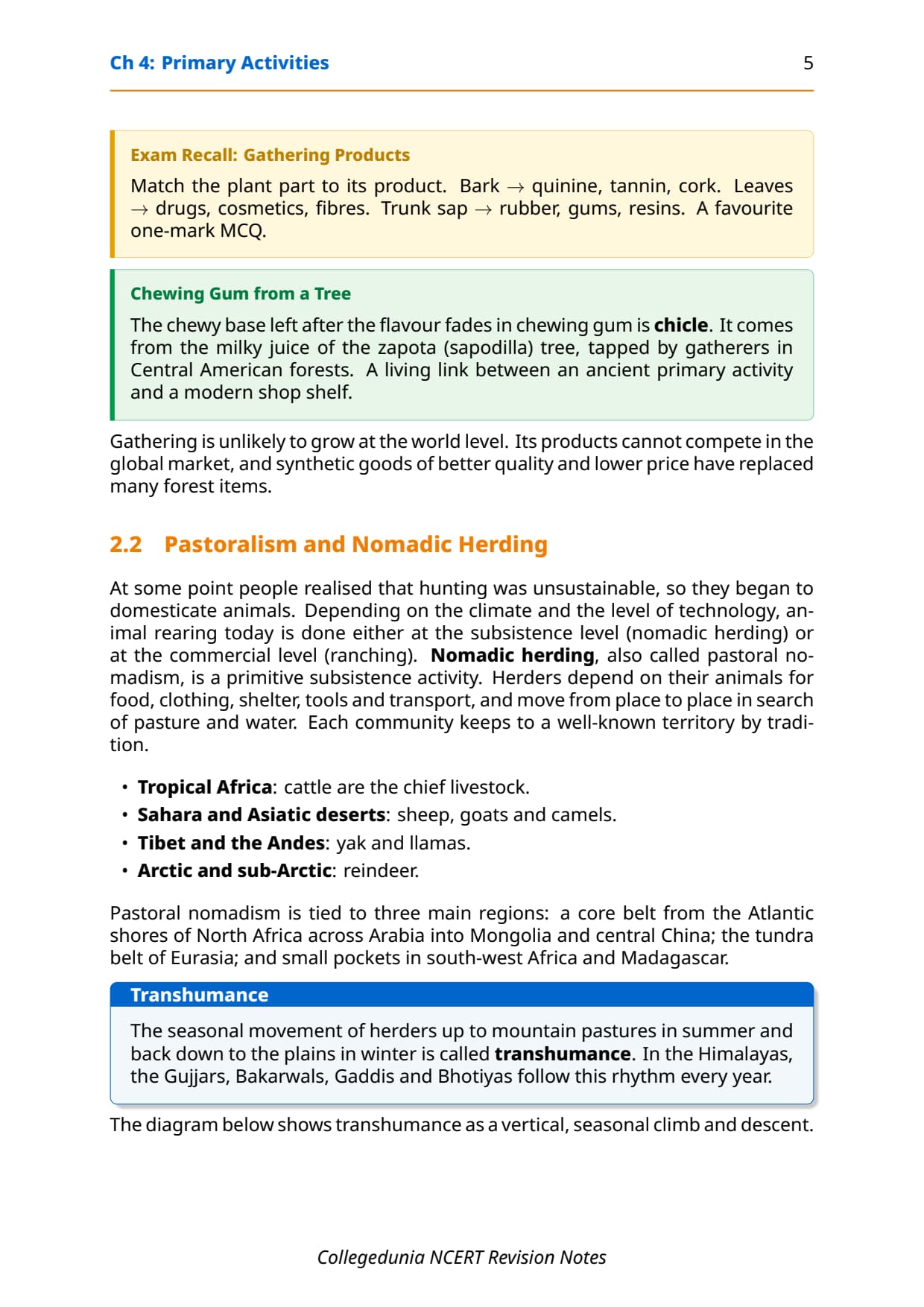
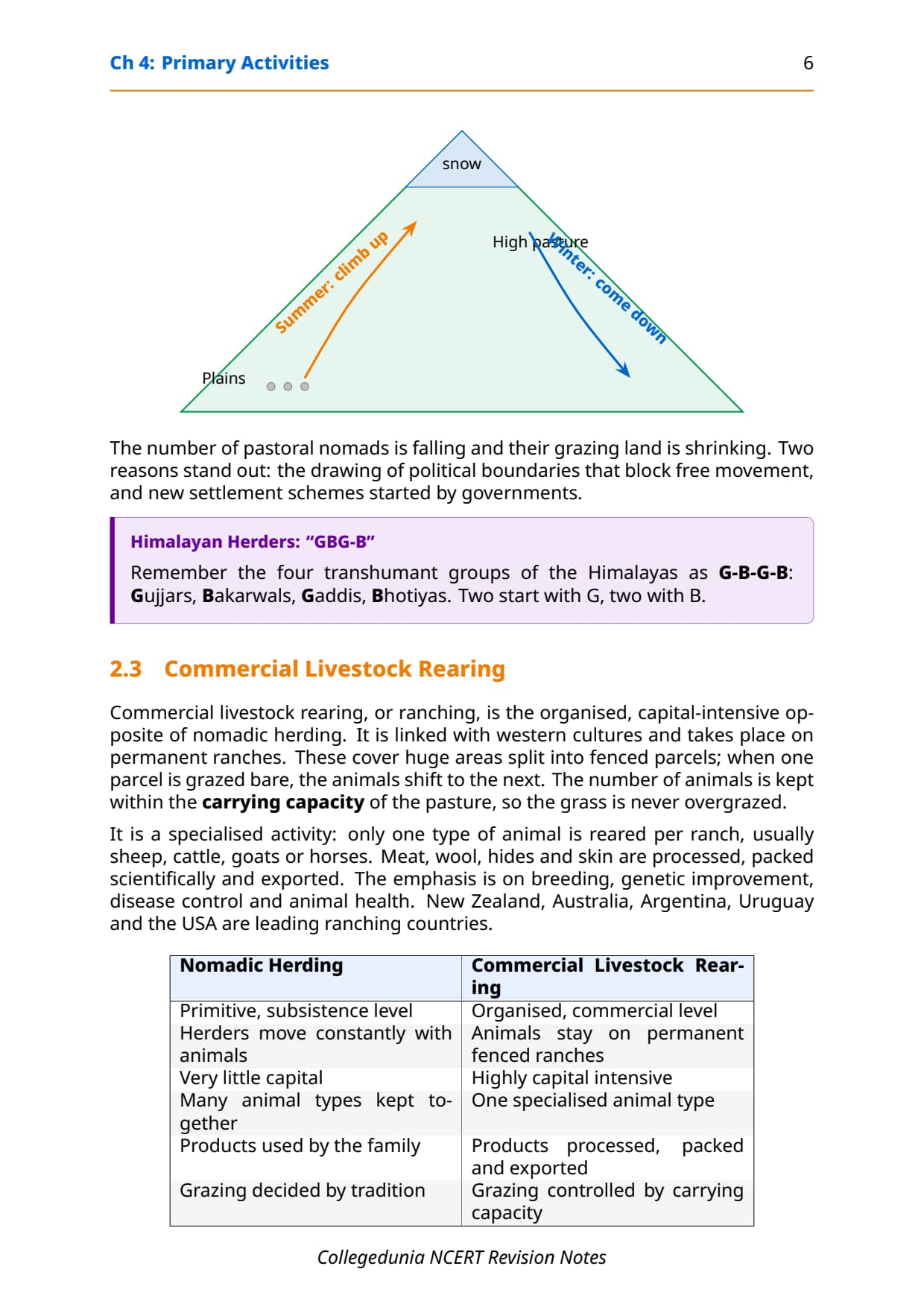
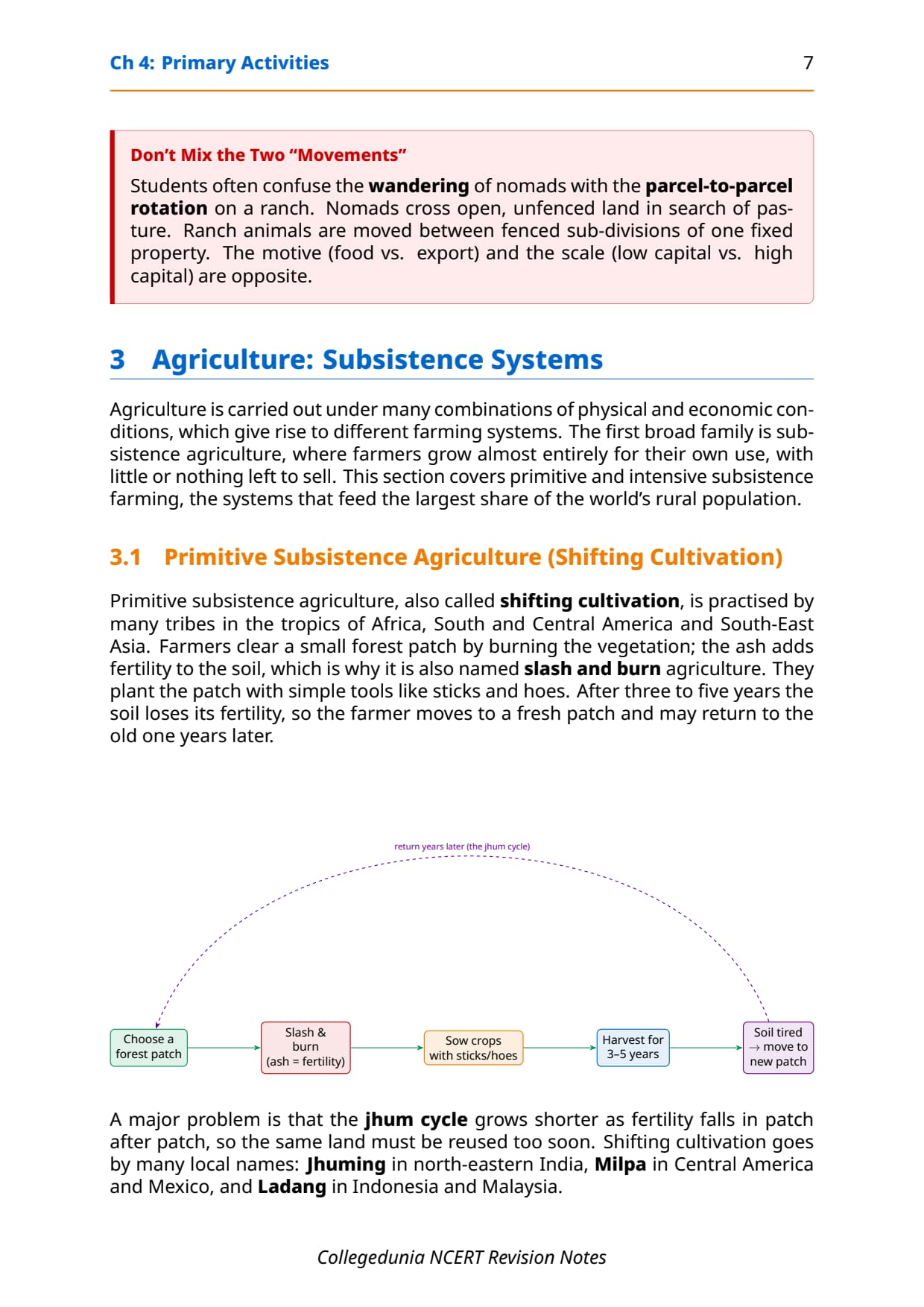
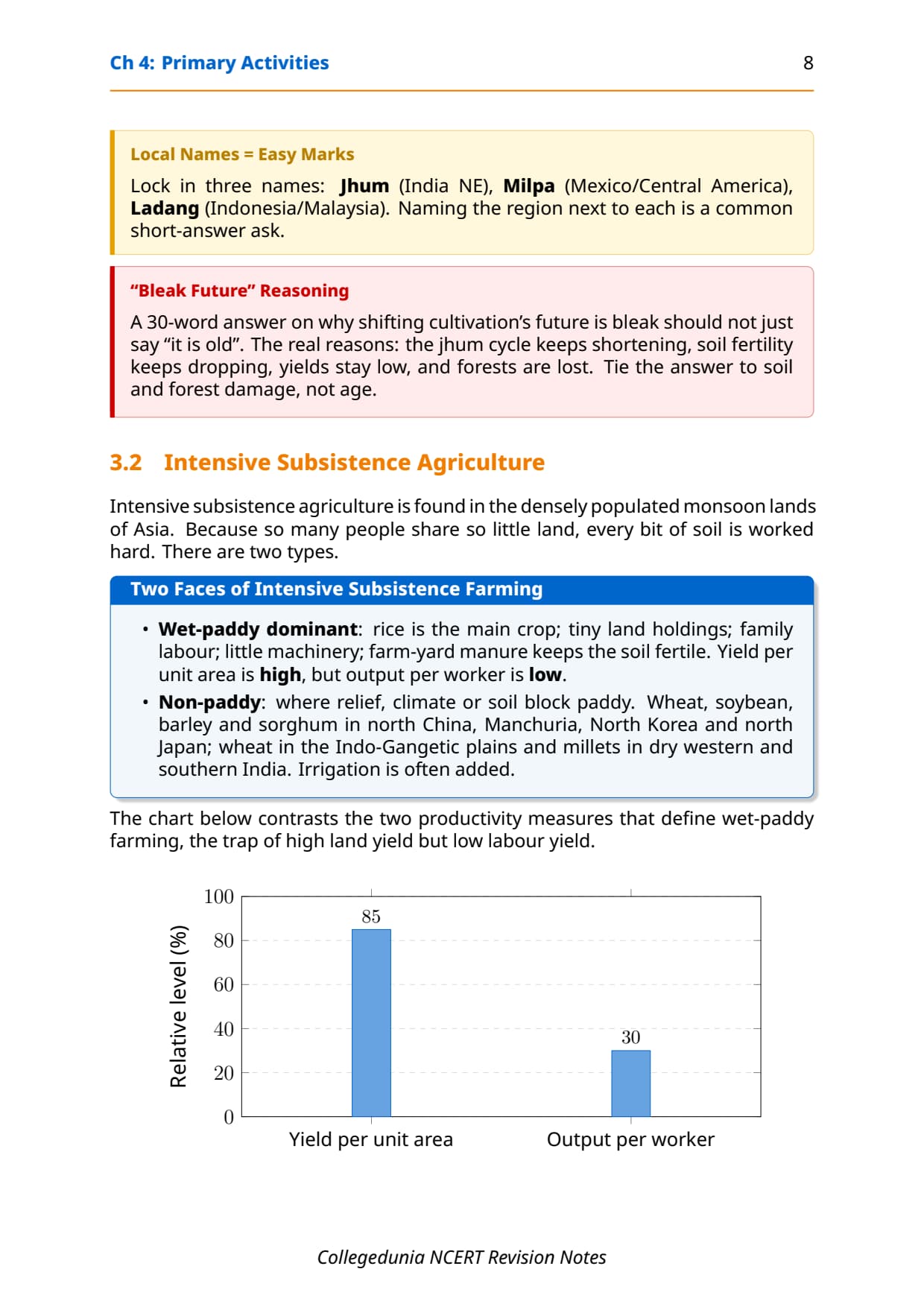
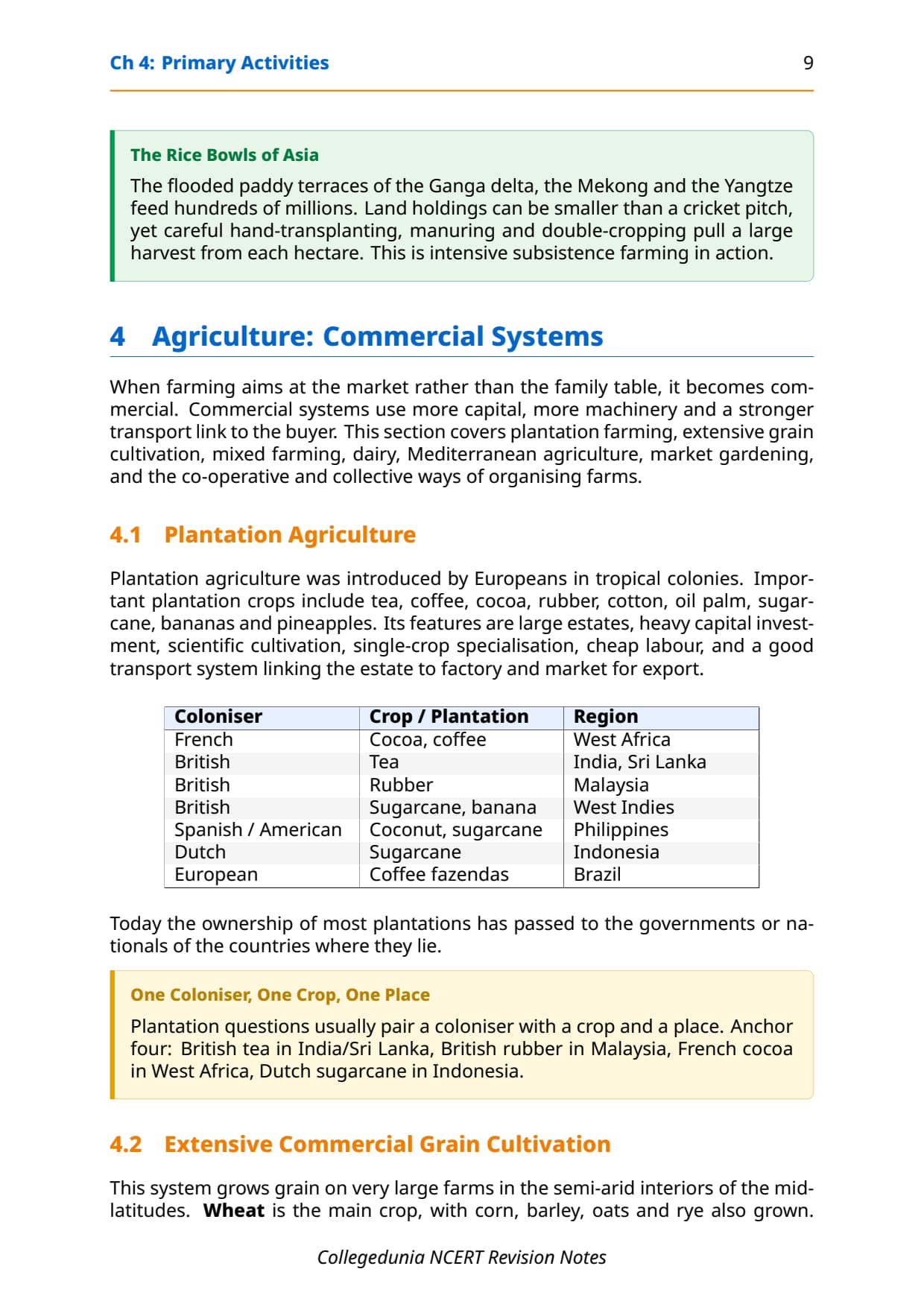
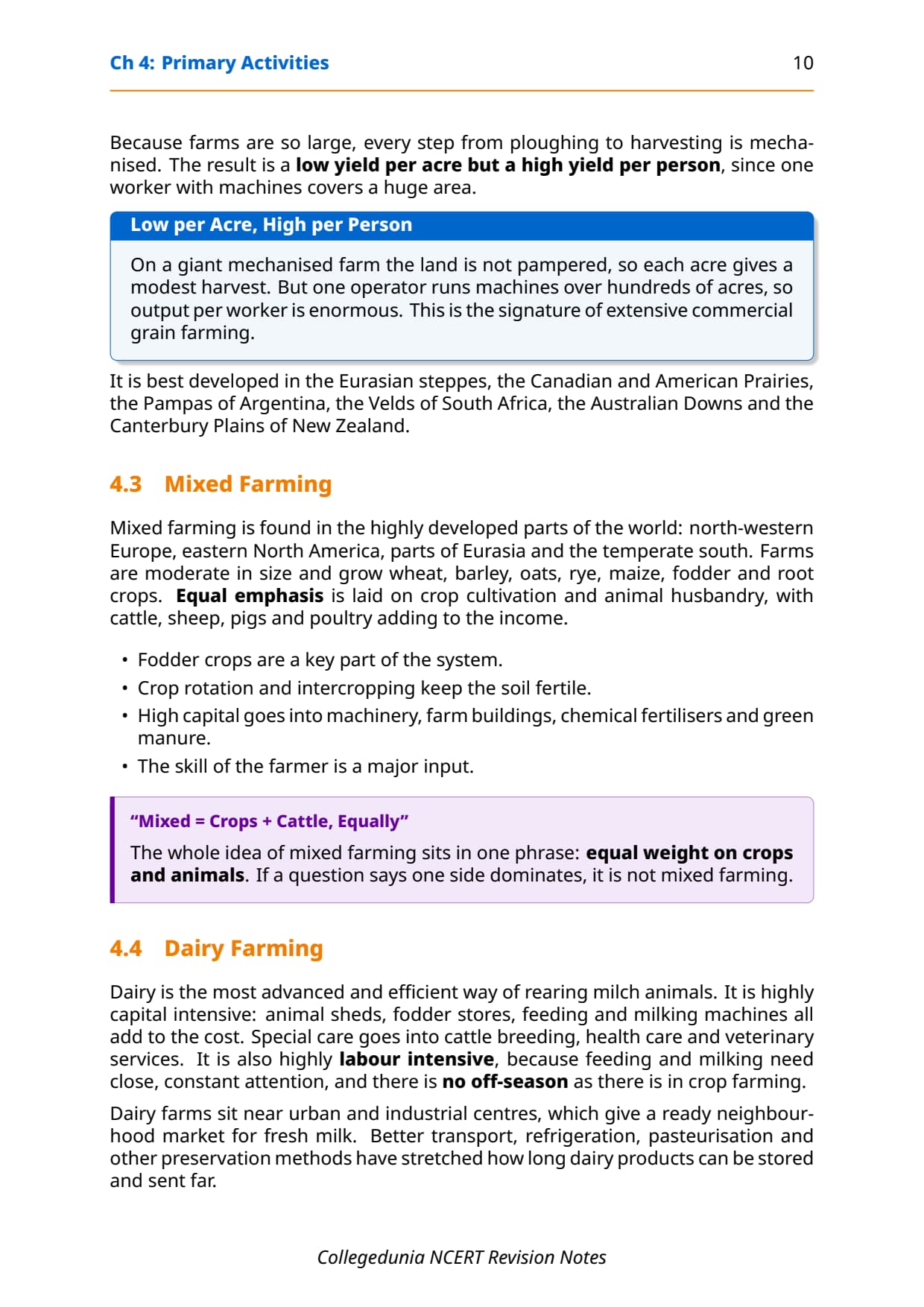
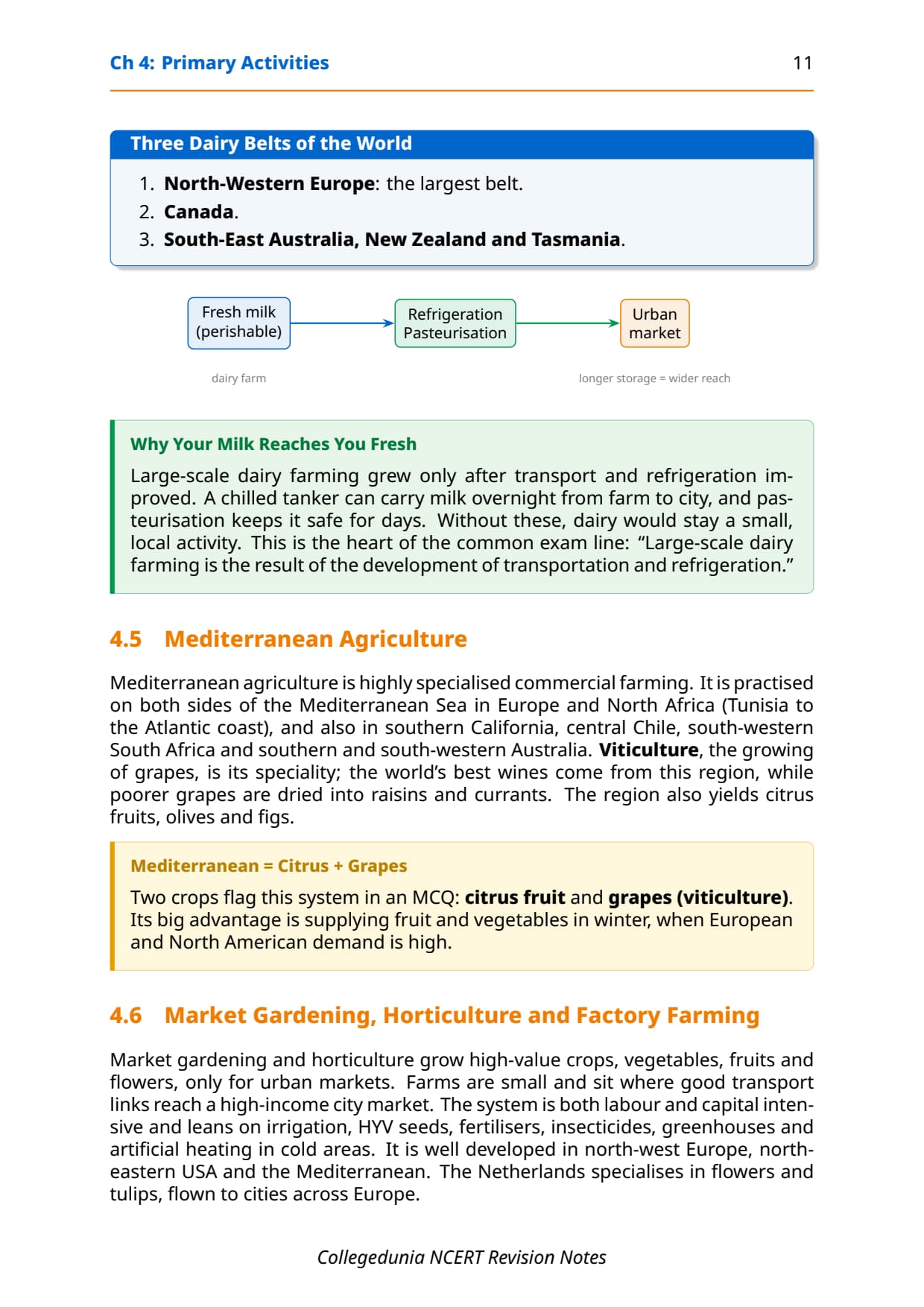
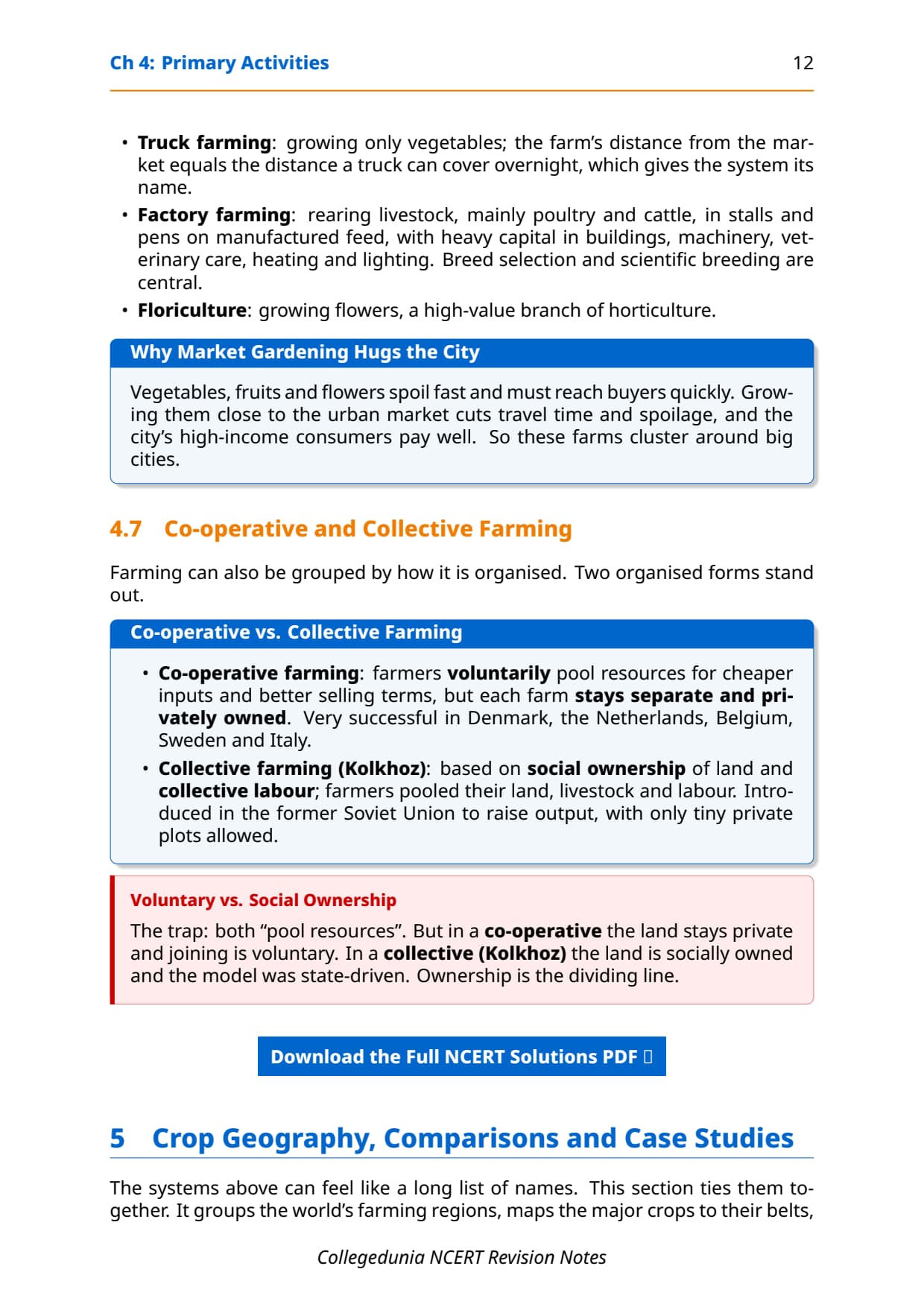
- Concept-first revision: red-collar workers, nomadic herding vs commercial livestock rearing, every agriculture type, and mining.
- CBSE-ready one-line definitions, a subsistence vs commercial comparison table, PYQ trends and common mistake alerts.

Written by Collegedunia Geography experts, mapped to the 2026-27 NCERT textbook and checked against five years of CBSE, CUET and UPSC Prelims Geography question trends.
Student Feedback: What 10,240 students told us about revising this chapter
69% of Class 12 Geography students found the many agriculture types the most confusing part of this chapter, and toppers said pairing these notes with the Solutions PDF added 2 to 3 marks per descriptive question in mock tests.
Source: 2026-27 Class 12 Geography student poll, 10,240 students across 14 states.
Quick Concept Recap: Primary Activities at a Glance
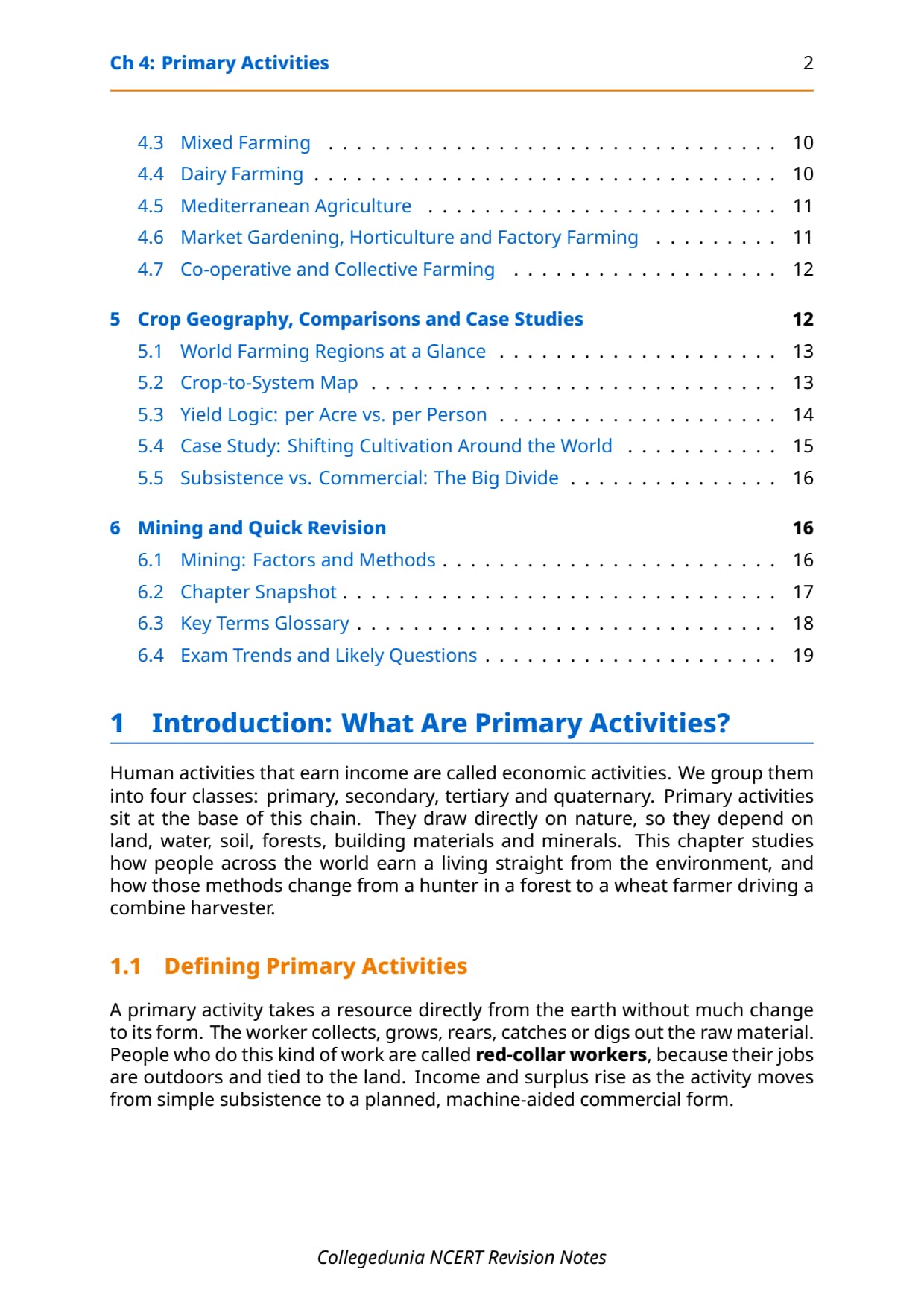
Chapter 4 covers activities directly dependent on the environment: land, water, vegetation, minerals and building materials. Its workers are called red-collar workers.
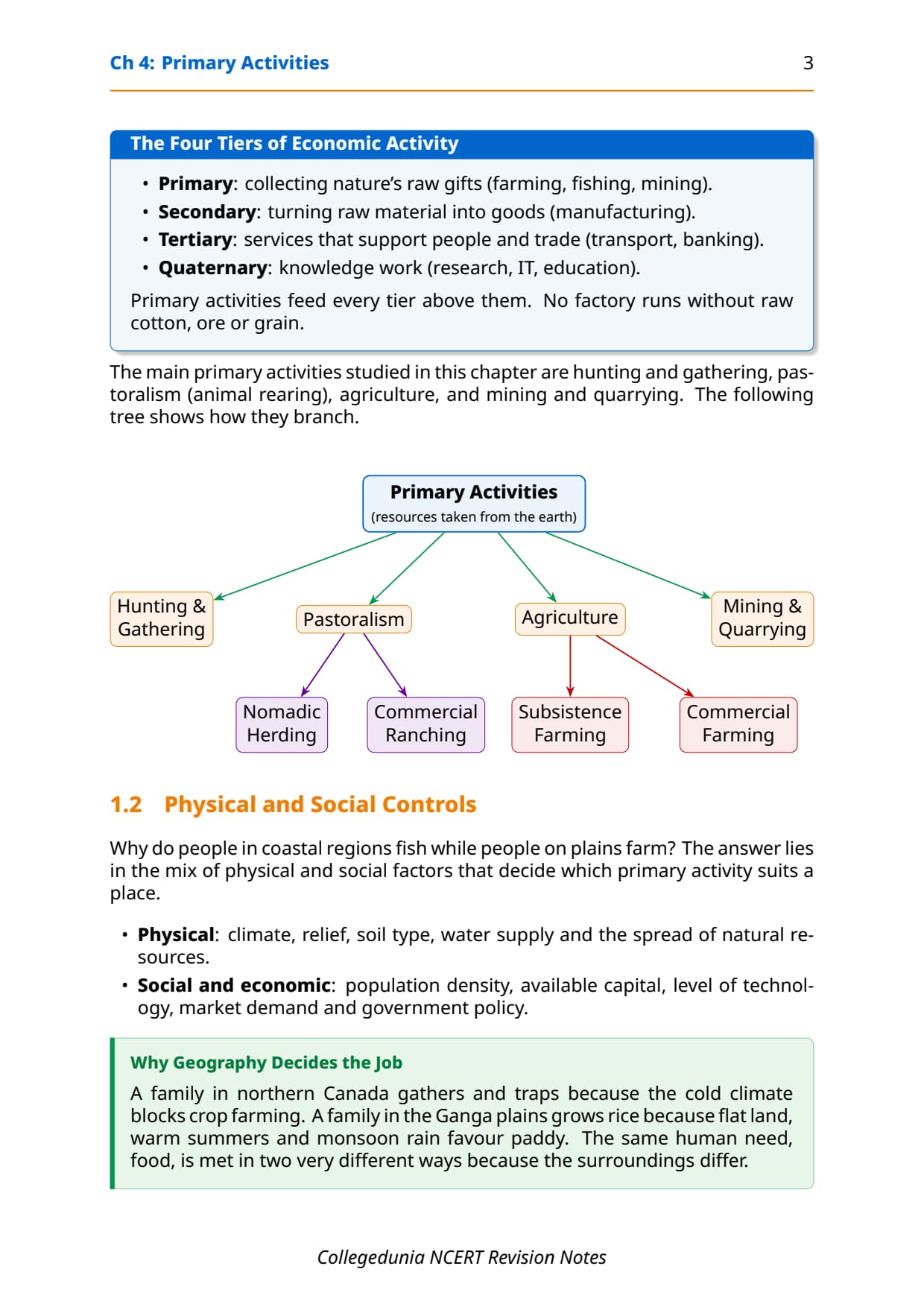
- Six primary activities: hunting and gathering, pastoral activities, fishing, forestry, agriculture, and mining and quarrying.
- Agriculture types: subsistence (primitive and intensive), plantation, extensive commercial grain, mixed, dairy, Mediterranean, market gardening, collective and co-operative farming.
- Transhumance: seasonal migration of herders between plains and mountains, practised by Gujjars, Bakarwals, Gaddis and Bhotiyas in the Himalayas.
- Mining factors: physical (size, grade, occurrence of deposit) and economic (demand, technology, capital, labour, transport costs).
Read these notes first, then drop into the matching NCERT Solutions for Class 12 Geography Chapter 4 for the exercise drill.
Source: Magnet Brains on YouTube
Key Definitions for Primary Activities Class 12 Notes
Every MCQ and short-answer question on this chapter starts with a definition. These are written in the exact one-line form CBSE markers expect.
| Term | One-line definition | NCERT section |
|---|---|---|
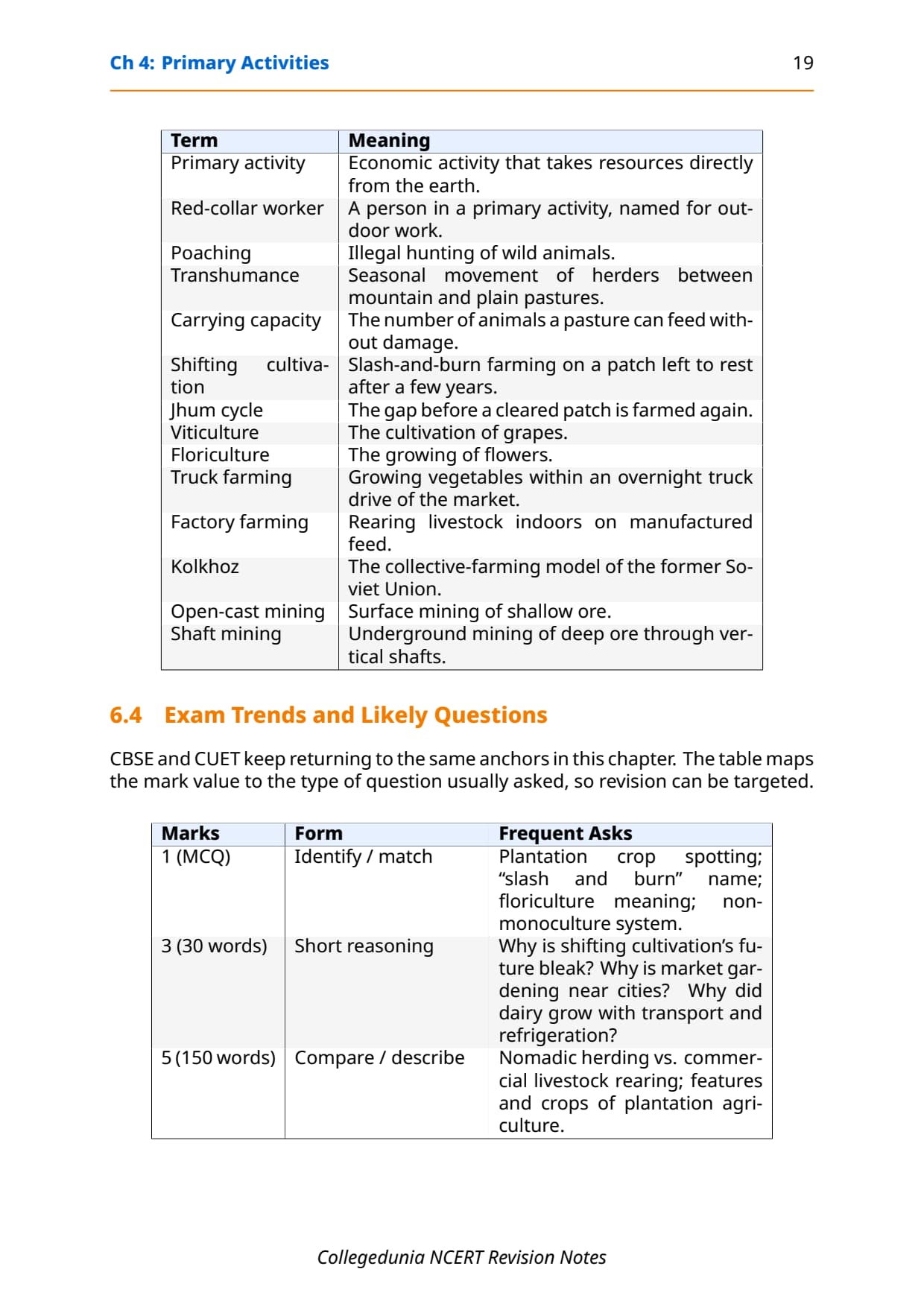
| Primary Activities | Economic activities directly dependent on the environment that involve using earth's resources such as land, water, vegetation, minerals and building materials; the base of all other sectors. | Intro |
| Red-collar Workers | People engaged in primary activities; called red-collar due to the outdoor, physically demanding nature of their work in fields, forests and mines. | Intro |
| Gathering | The practice of collecting edible plants, leaves, bark, roots and fruits from the natural environment; the oldest economic activity known; produces little or no surplus. | Section 4.1 |
| Transhumance | The seasonal migration of pastoralists from plain areas to mountain pastures in summer and back to the plains in winter, or from south to north in tundra regions. | Section 4.2 |
| Nomadic Herding | A primitive subsistence activity in which herders rely on animals for food, clothing, shelter, tools and transport, moving from place to place with their livestock. | Section 4.2 |
| Commercial Livestock Rearing | An organised, capital-intensive activity on permanent ranches where a single type of animal is reared scientifically; products are processed and exported to world markets. | Section 4.2 |
| Shifting Cultivation | Also called slash and burn agriculture; a primitive subsistence method where vegetation is cleared by fire and the plot is used for 3 to 5 years before moving to a fresh patch. | Section 4.3 |
| Plantation Agriculture | A large-scale, single-crop farming system introduced by Europeans in tropical colonies; characterised by large capital investment, cheap labour, scientific methods and export orientation. | Section 4.3 |
| Extensive Commercial Grain Cultivation | Mechanised single-crop (mainly wheat) farming on very large farms in semi-arid mid-latitude interiors; low yield per acre but high yield per person. | Section 4.3 |
| Mixed Farming | A farming system that gives equal emphasis to crop cultivation and animal husbandry; uses crop rotation, intercropping and high capital inputs; found in highly developed parts of the world. | Section 4.3 |
| Mediterranean Agriculture | Highly specialised commercial agriculture around the Mediterranean Sea and similar climatic zones; famous for viticulture, citrus fruits, olives and figs. | Section 4.3 |
| Market Gardening (Horticulture) | Cultivation of high-value crops such as vegetables, fruits and flowers on small farms near urban centres; both labour and capital intensive. | Section 4.3 |
| Collective Farming (Kolkhoz) | A Soviet model of farming based on social ownership and collective labour; farmers pool land, livestock and labour but retain small plots for personal use. | Section 4.3 |
| Co-operative Farming | Farmers voluntarily pool resources to procure inputs, sell products and process goods at favourable terms while individual farms remain intact. | Section 4.3 |
| Mining | The extraction of minerals from the earth; a primary activity whose profitability depends on the size, grade and mode of occurrence of the deposit, and on economic factors such as demand, technology, capital and labour costs. | Section 4.4 |
These definitions cover roughly 9 of the 10 theory questions CBSE has asked on this chapter since 2021. Prioritise the agriculture-type definitions and the transhumance/nomadic herding pair.
Gathering, Hunting and Pastoralism
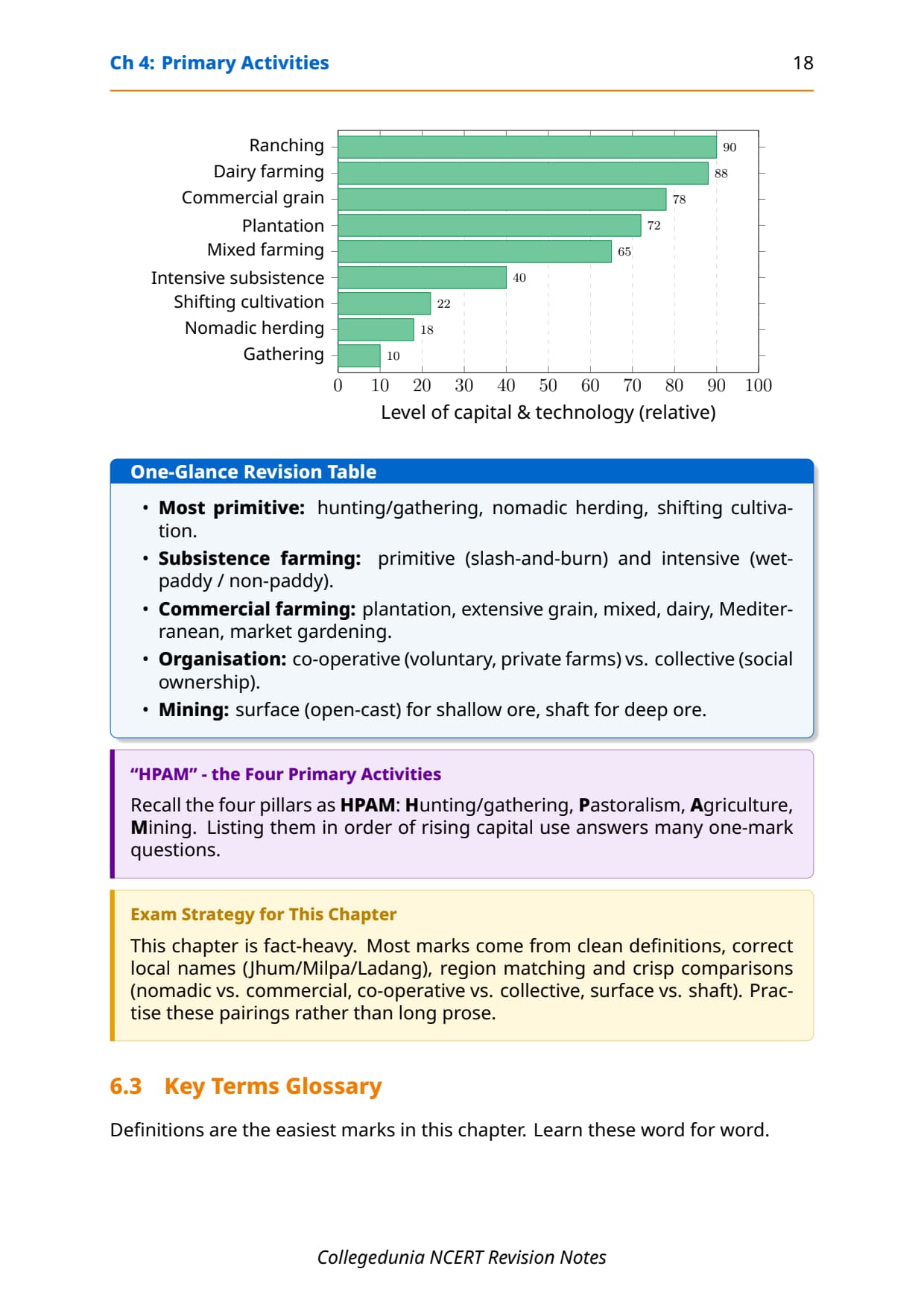
Gathering and hunting sustained early societies before agriculture. Both need little capital and produce little surplus, so gathering stays marginal today.
Gathering: Regions and Products
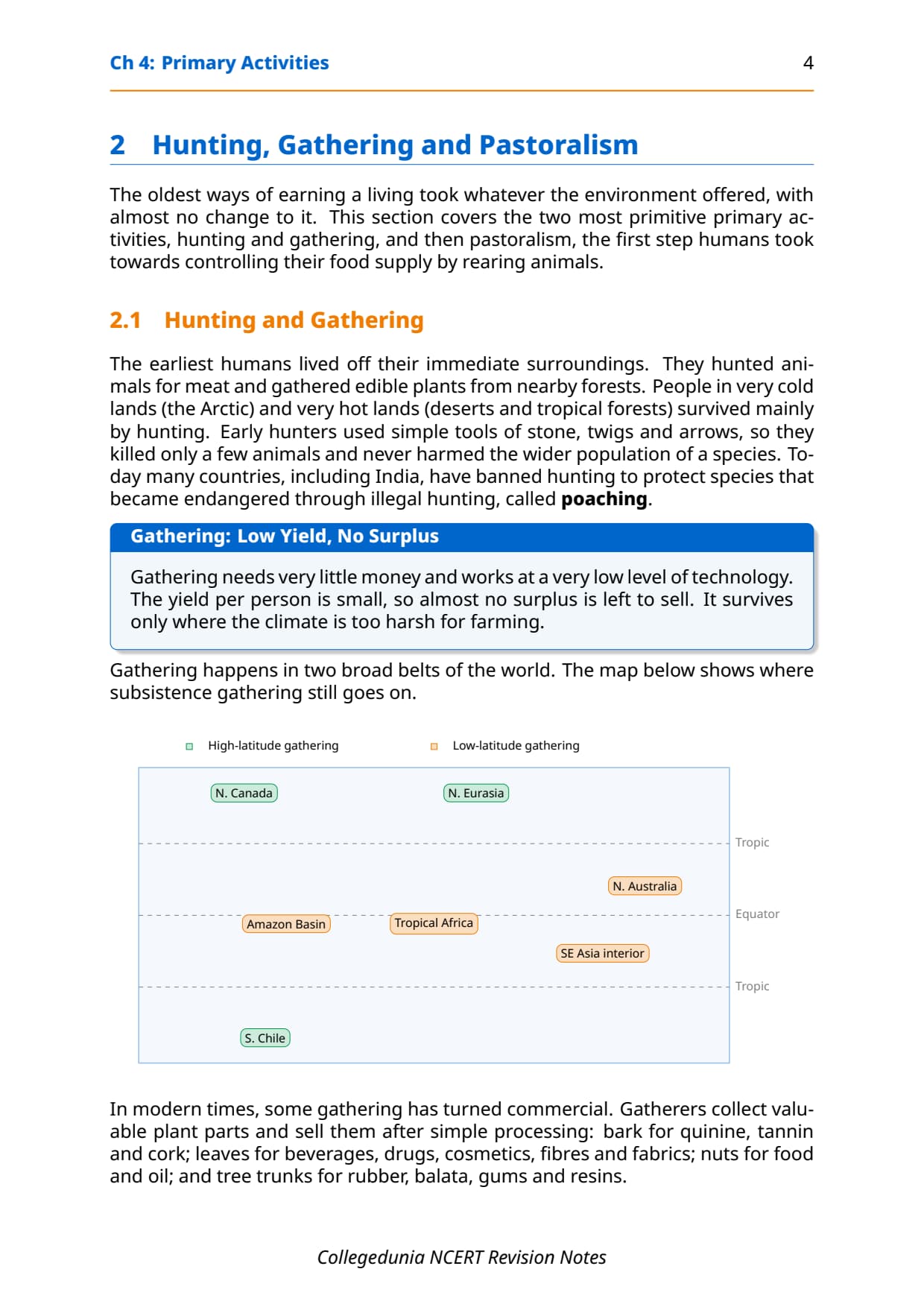
Regions: high-latitude (northern Canada, northern Eurasia, southern Chile) and low-latitude (Amazon Basin, tropical Africa, northern Australia, interior Southeast Asia). Gatherers sell bark, leaves, nuts and tree trunks (rubber, gums, resins), but synthetic substitutes have replaced many gathered items, limiting its importance.
Nomadic Herding vs Commercial Livestock Rearing
These two forms of pastoralism are a classic CBSE distinction question.
| Feature | Nomadic Herding | Commercial Livestock Rearing |
|---|---|---|
| Nature | Primitive subsistence; herders move with animals | Organised and capital intensive; permanent ranches |
| Animals reared | Cattle (Africa), sheep/goats/camels (Sahara), yaks/llamas (Tibet/Andes), reindeer (Arctic) | One type only: sheep, cattle, goats or horses |
| Regions | North Africa across Arabian Peninsula to Mongolia; tundra of Eurasia; SW Africa and Madagascar | New Zealand, Australia, Argentina, Uruguay, USA |
| Movement | Horizontal (vast distances) or vertical (transhumance between plains and mountains) | Animals rotated between fenced parcels on the ranch |
| Products | For personal use: food, clothing, shelter, tools, transport | Meat, wool, hides and skin; processed and exported |
| Technology | Low technology, traditional tools | Scientific breeding, genetic improvement, disease control |
| Trend | Declining due to political boundaries and new settlement plans | Expanding; developed economies shifting to processing stages |
Tip: CBSE has asked this 5-mark distinction twice in five years; add one example region per row for full marks.
Types of Agriculture: Subsistence to Commercial
Agriculture carries the most marks in this chapter. Know the subsistence-vs-commercial split and the heartland region of each type.
Primitive Subsistence Agriculture (Shifting Cultivation)
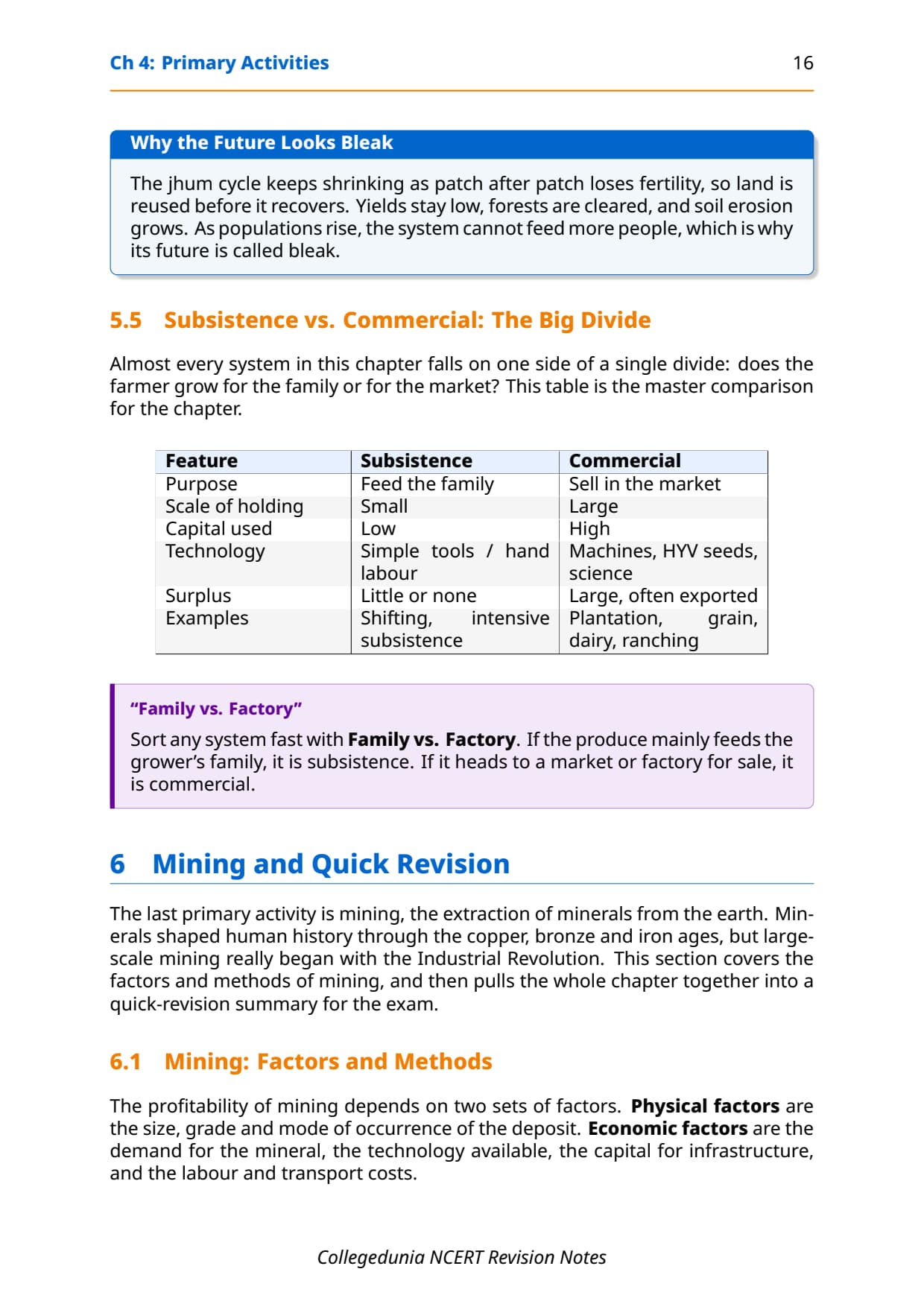
Also called slash and burn agriculture: vegetation is cleared by fire, the ash used as fertiliser, and the plot cultivated for 3 to 5 years before the farmer moves on.
- Regions: tropical Africa, South and Central America, Southeast Asia.
- Regional names: Jhuming (North-eastern India), Milpa (Central America and Mexico), Ladang (Indonesia and Malaysia).
- Problem: the Jhum cycle keeps getting shorter as soil takes longer to recover.
Intensive Subsistence Agriculture
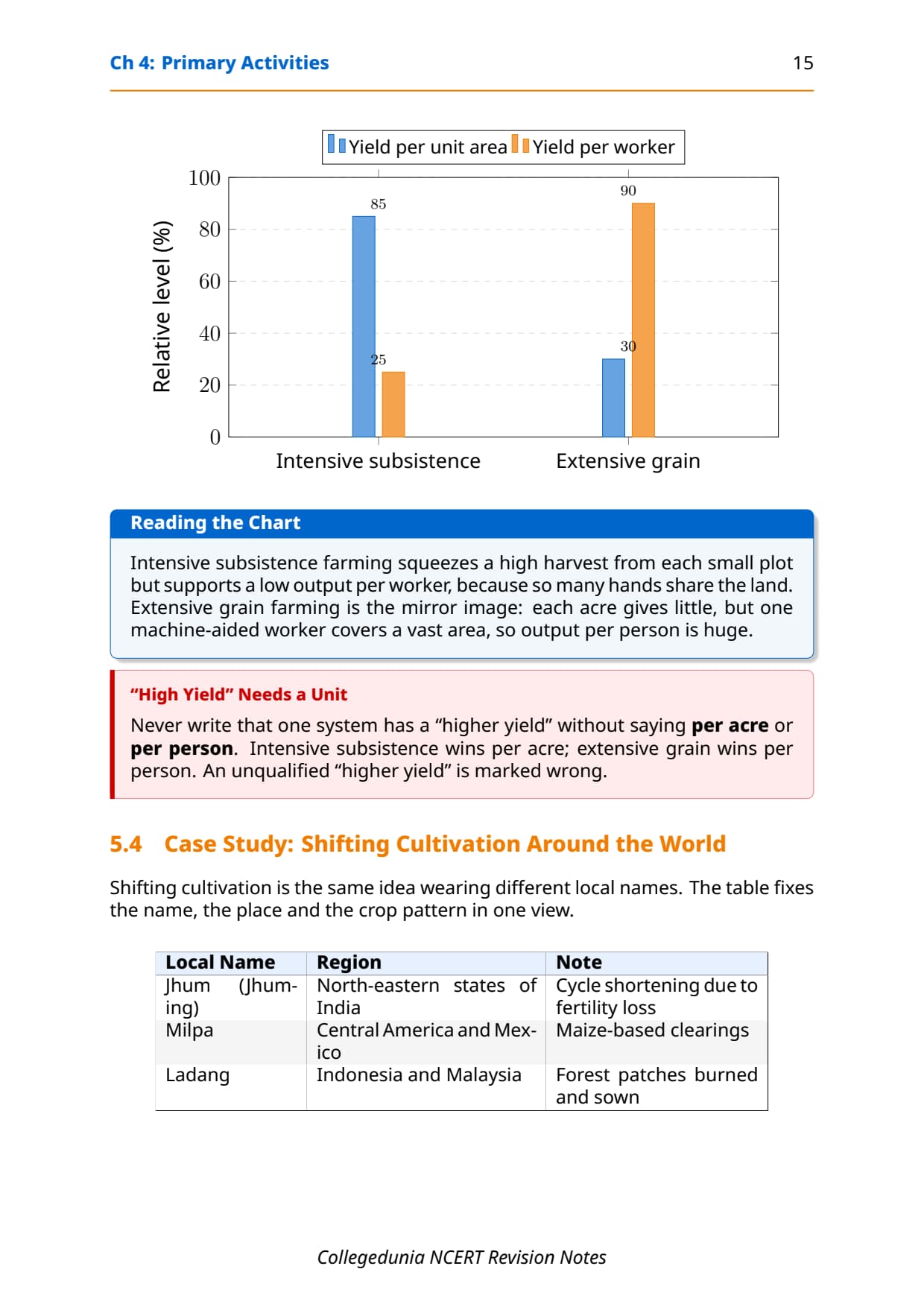
Found in densely populated monsoon Asia; high yield per unit area, low labour productivity. Type 1 (wet paddy): tiny holdings, family labour; South and Southeast Asian deltas. Type 2 (non-paddy): wheat, soybean, barley and sorghum in China, Korea, Japan and across India.
Plantation Agriculture
Introduced by Europeans in tropical colonies, profit-oriented from the start.
- Features: large estates, high capital, cheap labour, scientific monoculture.
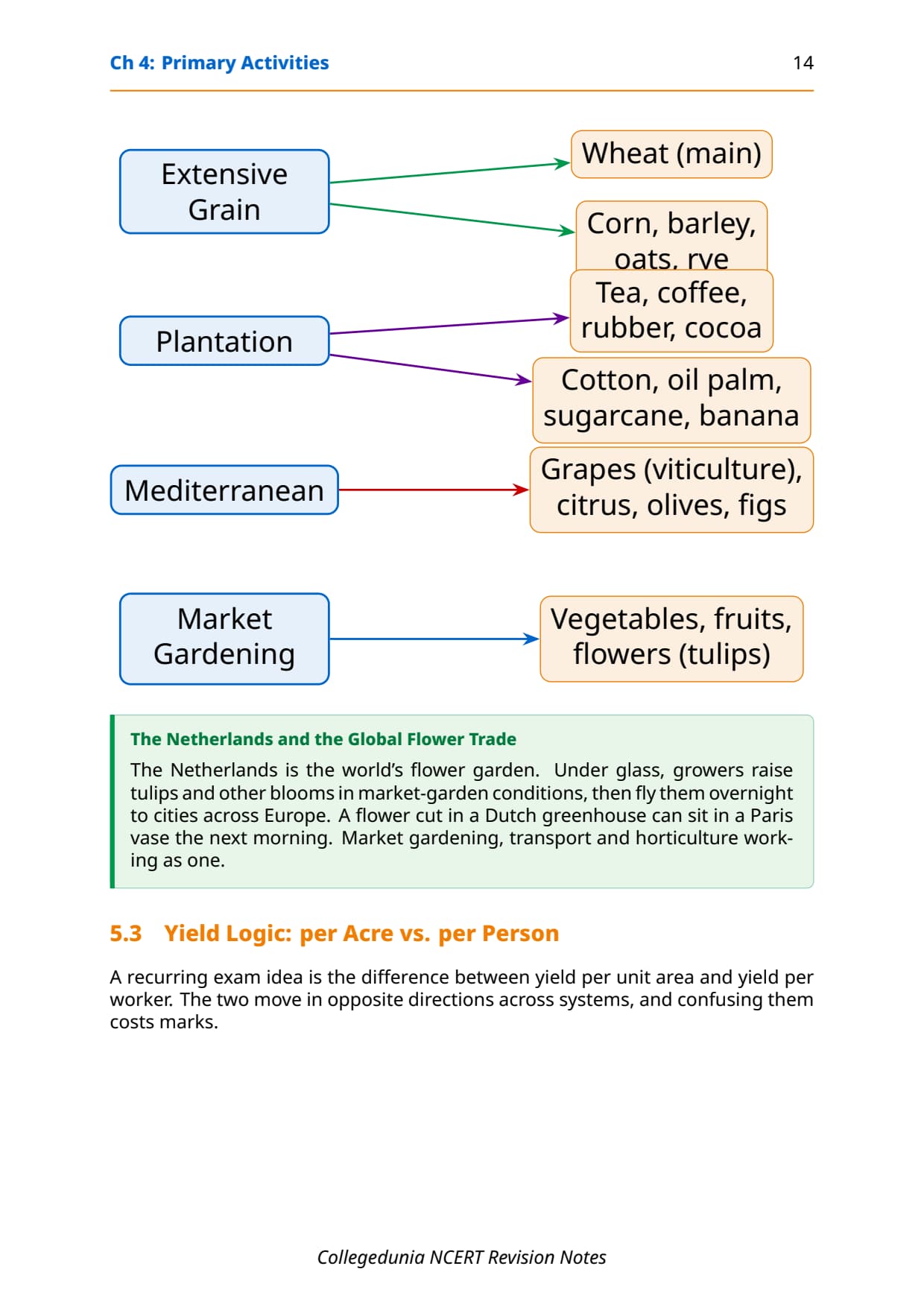
- Crops: tea, coffee, cocoa, rubber, cotton, oil palm, sugarcane, bananas, pineapples.
- Examples: tea in India/Sri Lanka, rubber in Malaysia (British); cocoa and coffee in West Africa (French).
Most plantations are now owned by national governments, not European colonists.
Plantation, Mixed, Dairy and Mediterranean Agriculture
Extensive Commercial Grain Cultivation
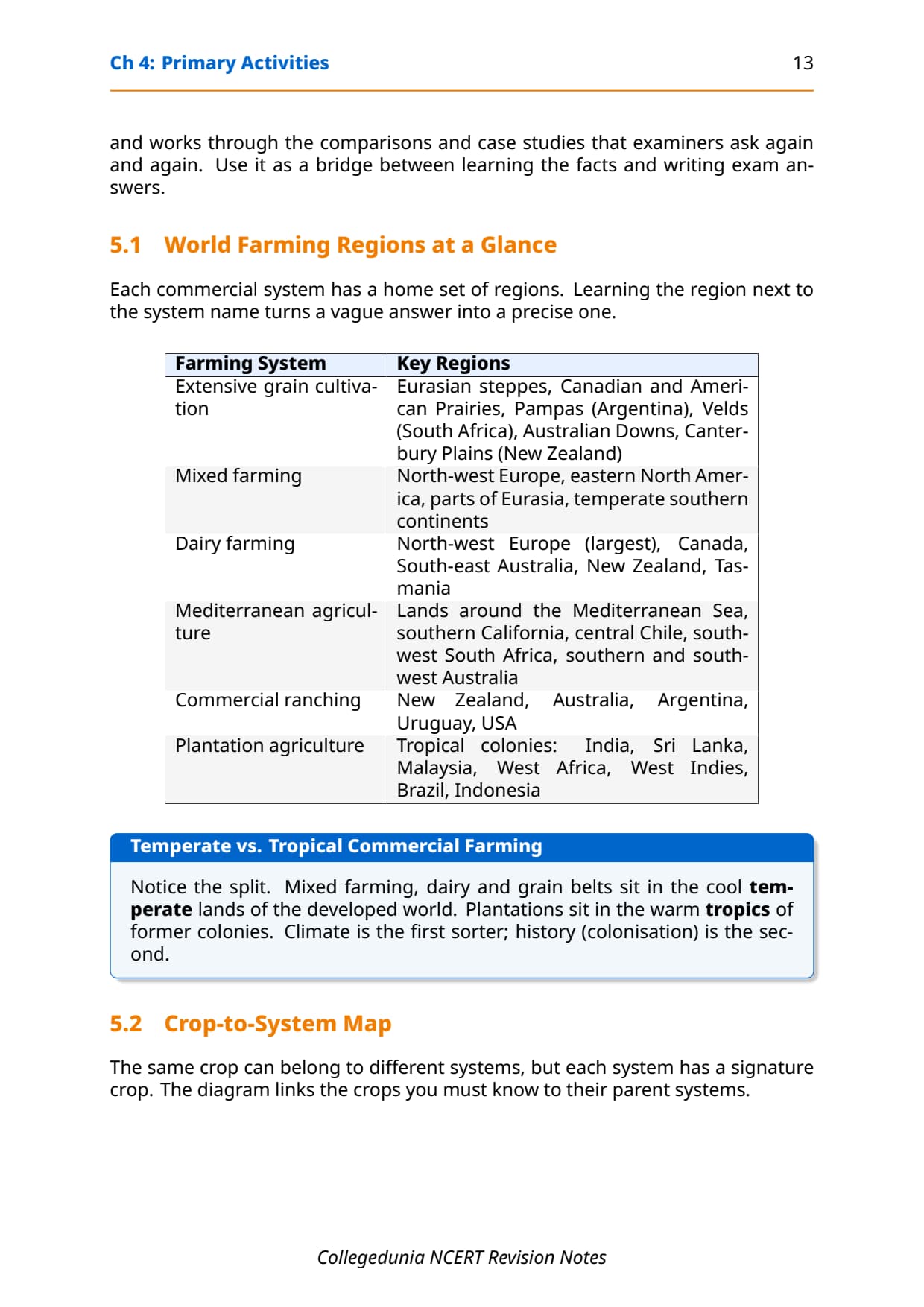
Very large, fully mechanised farms in semi-arid mid-latitude interiors: low yield per acre but high yield per person. Wheat is the principal crop. Regions: Eurasian Steppes, Canadian/American Prairies, Pampas (Argentina), Velds (South Africa), Australian Downs, Canterbury Plains (New Zealand).
Memory hook: six "P-regions": Prairies, Pampas, Plains of Eurasia, Plateau of South Africa, Plains of Australia, Plains of New Zealand. CBSE MCQs test which region is NOT included.
Mixed Farming
Equal weight to crops and animal husbandry, high capital spend on machinery and fertilisers. Regions: North-western Europe, Eastern North America, temperate Southern continents.
Dairy Farming
The most advanced, capital and labour intensive milch rearing (no off-season), near urban centres for a fresh-milk market. Regions: North-western Europe (largest), Canada, South-eastern Australia and New Zealand.
Mediterranean Agriculture
A specialised system around the Mediterranean Sea and similar climates (southern California, central Chile, South Africa, Australia).
- Viticulture: the world's best wines; inferior grapes become raisins and currants.
- Citrus and figs: world's top supplier of citrus, olives and figs.
- Winter advantage: fruits and vegetables grow here exactly when Europe and North America demand them.
Market Gardening, Collective and Co-operative Farming
Market Gardening and Horticulture
High-value crops (vegetables, fruits, flowers) on small farms near cities. Truck farming is vegetables only (market radius = an overnight truck drive); factory farming rears poultry and cattle in stalls; the Netherlands specialises in tulips.
Collective Farming (Kolkhoz) and Co-operative Farming
Collective farming (Soviet Union) pooled land, livestock and labour under social ownership; it largely disappeared with the USSR. Co-operative farming is voluntary and keeps individual farms intact, most successful in Denmark.
Key distinction: collective farming transfers land ownership; co-operative farming keeps individual ownership and pools only market activities.
Mining: Factors, Methods and Regions
Mining is the extraction of minerals from the earth. Profitability depends on the factors below.
Factors Affecting Mining Activity
| Factor type | Specific factors | Effect on profitability |
|---|---|---|
| Physical factors | Size of deposit, grade (quality/concentration) of ore, and mode of occurrence (surface vs deep) | Larger, higher-grade, near-surface deposits cost less to extract and yield more value per tonne. |
| Economic factors | Demand for the mineral; technology available; capital to develop infrastructure; labour costs; transport costs | High demand + low cost technology + cheap labour + good transport = more profitable mining operation. |
Surface Mining vs Underground Mining
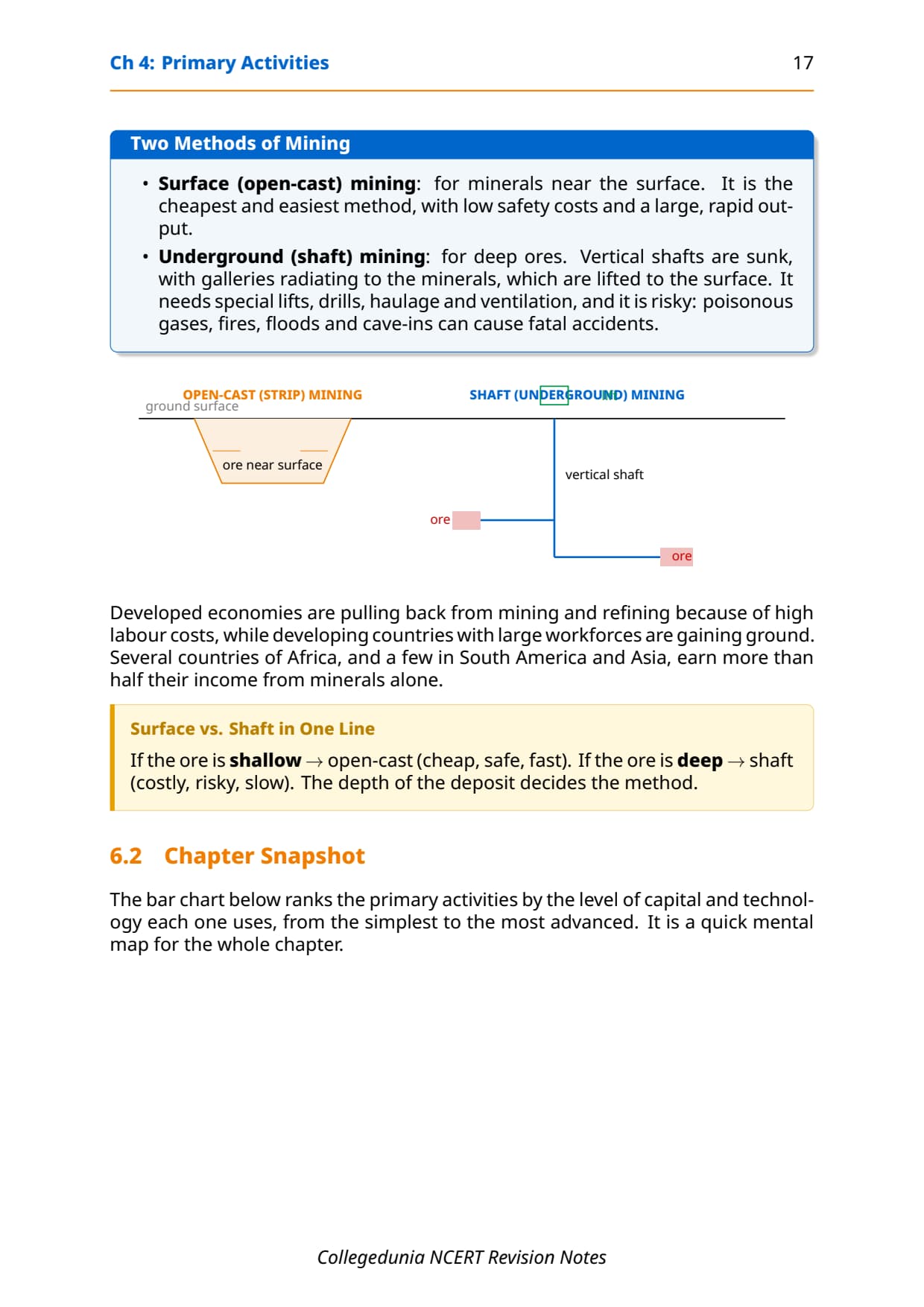
Surface (open cast): ore near the surface, low cost, rapid output. Underground (shaft): ore lies deep, needs shafts and ventilation, and is riskier (gases, fires, floods, cave-ins).
Developed economies are retreating from mining due to high labour costs, while developing countries with large labour forces are becoming key mining nations.
Common Mistakes Students Make in Primary Activities
Repeat-offender mistakes CBSE examiners flag each year:
- Collective vs co-operative farming: only collective farming transfers land ownership.
- Wrong extensive-grain regions: Amazon Basin is NOT one, it is tropical forest.
- Transhumance vs nomadic herding: transhumance is seasonal; nomadic herding is year-round.
- Shifting cultivation names: Jhuming (India), Milpa (Central America/Mexico), Ladang (Indonesia/Malaysia).
- Dairy has no off-season: year-round care.
- Wheat is NOT a plantation crop: it is a grain crop.
Previous Year Question Trends from Primary Activities Class 12
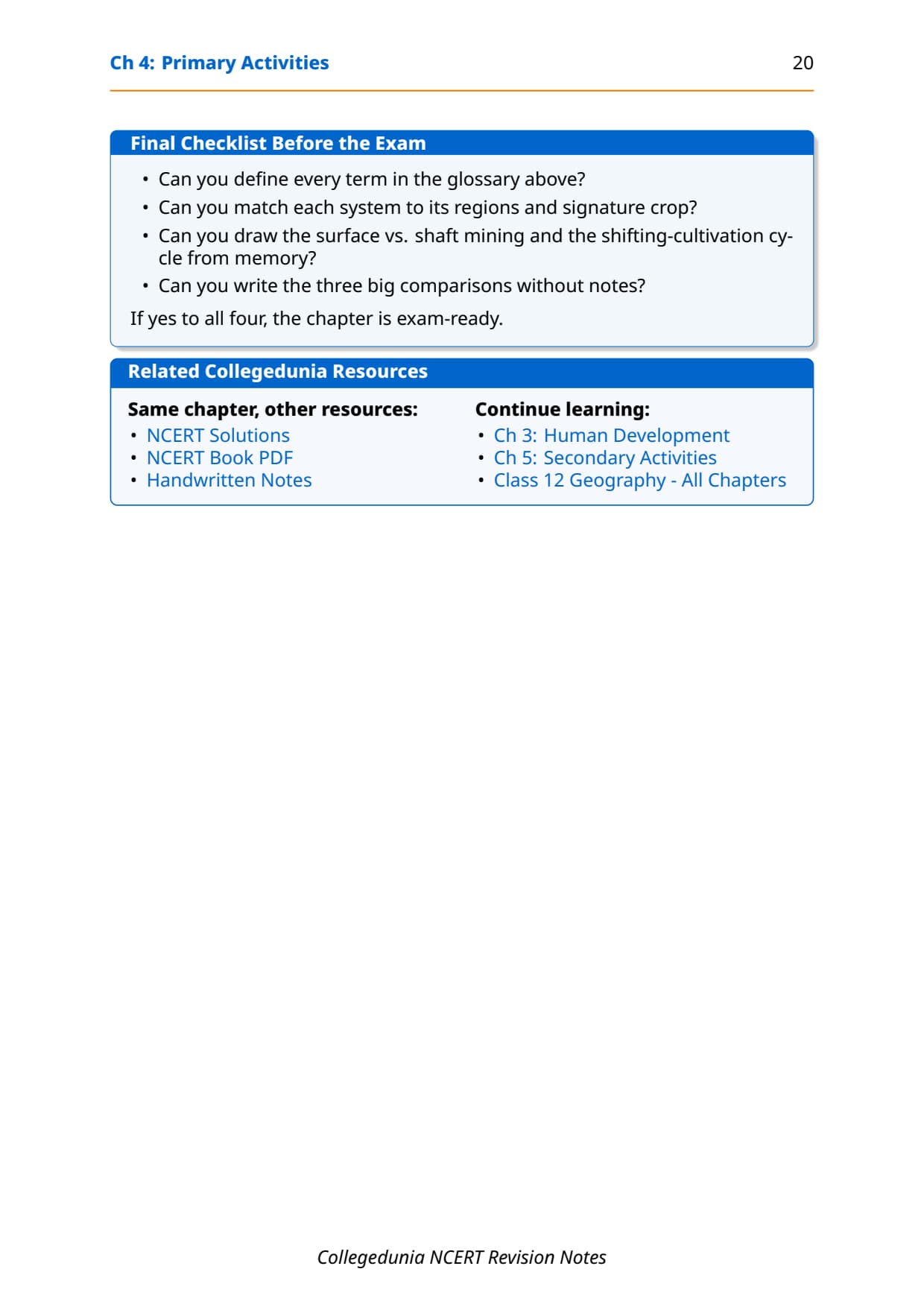
CBSE typically asks 1-2 MCQs and 1-2 descriptive questions each year.
| Year | Question type asked | Marks | Notes section to revise |
|---|---|---|---|
| 2025 | Describe features of plantation agriculture + MCQ on non-plantation crop (wheat) | 5 + 1 | Plantation Agriculture + Key Definitions |
| 2024 | Differentiate nomadic herding and commercial livestock rearing + identify regional name of shifting cultivation | 5 + 2 | Pastoralism comparison table + Primitive subsistence section |
| 2023 | Explain extensive commercial grain cultivation + name regions where it is practised | 4 + 2 | Extensive Commercial Grain section |
| 2022 | Distinguish collective farming from co-operative farming + explain market gardening | 4 + 3 | Collective and Co-operative Farming section |
| 2021 | Explain the factors affecting mining profitability + MCQ on region not practising commercial grain farming | 4 + 1 | Mining section + Extensive Commercial Grain section |
The chapter carries roughly 7 to 10 marks per year across MCQ, short-answer and descriptive questions.
Other Resources for Class 12 Geography Chapter 4 Primary Activities
Pair these notes with the NCERT Solutions, Handwritten Notes and NCERT Book PDF below.
| Resource | What it covers | Open |
|---|---|---|
| Notes | Concept-first revision notes covering definitions, all agriculture types, pastoralism, mining factors and common mistakes. | You are here |
| NCERT Solutions | Step-by-step answers to all exercise questions (MCQs, 30-word and 150-word answers) with Expert's Solution for every descriptive question. | Class 12 Geography Chapter 4 NCERT Solutions |
| Handwritten Notes | Topper's handwritten revision pages for last-minute board exam practice. | Class 12 Geography Chapter 4 Handwritten Notes |
| NCERT Book PDF | Official NCERT Fundamentals of Human Geography Chapter 4 textbook in PDF form. | Class 12 Geography Chapter 4 NCERT Book PDF |
| Subject Hub | All chapters of Class 12 Geography with every resource in one place. | Class 12 Geography Subject Hub |
All Chapters Notes for Class 12 Geography Fundamentals of Human Geography
Related Links: Notes for the other chapters of Class 12 Geography Fundamentals of Human Geography.
| Chapter | Topic | Notes link |
|---|---|---|
| Chapter 1 | Human Geography: Nature and Scope | Class 12 Geography Chapter 1 Notes |
| Chapter 2 | The World Population: Distribution, Density and Growth | Class 12 Geography Chapter 2 Notes |
| Chapter 3 | Human Development | Class 12 Geography Chapter 3 Notes |
| Chapter 4 | Primary Activities | You are here |
| Chapter 5 | Secondary Activities | Class 12 Geography Chapter 5 Notes |
| Chapter 6 | Tertiary and Quaternary Activities | Coming soon |
| Chapter 7 | Transport and Communication | Coming soon |
| Chapter 8 | International Trade | Coming soon |
NCERT Notes Class 12 Geography Chapter 4 Primary Activities FAQs
Ques. What are primary activities in Class 12 Geography Chapter 4?
Ans. Primary activities are economic activities directly dependent on the natural environment. They involve using earth's resources such as land, water, vegetation, building materials and minerals. The six main primary activities covered in Class 12 Geography Chapter 4 are hunting and gathering, pastoral activities, fishing, forestry, agriculture and mining and quarrying. People engaged in primary activities are called red-collar workers because of the outdoor nature of their work. Primary activities form the base of all other economic sectors since they supply raw materials to secondary (manufacturing) and tertiary (service) sectors.
Ques. What is transhumance in primary activities class 12 notes?
Ans. Transhumance is the seasonal migration of pastoralists from plain areas to mountain pastures during summer and back to the plains during winter, or from south to north in tundra regions during summer and back in winter. In the Himalayan region, communities such as Gujjars, Bakarwals, Gaddis and Bhotiyas practise transhumance. The term is specific to vertical or directional seasonal movement; it should not be confused with general nomadic herding, which involves movement across vast horizontal distances in search of pastures throughout the year.
Ques. What is the difference between nomadic herding and commercial livestock rearing?
Ans. Nomadic herding is a primitive subsistence activity where herders move continuously with their animals (cattle, sheep, goats, camels, reindeer or yaks depending on the region) to find pastures and water. It is practised across North Africa, the Arabian Peninsula, Mongolia, the tundra of Eurasia and a few southern hemisphere areas. Commercial livestock rearing, on the other hand, is an organised, capital-intensive activity on permanent fenced ranches where a single animal type is reared scientifically. Products like meat, wool, hides and skin are processed and exported. It is practised in New Zealand, Australia, Argentina, Uruguay and the USA. The key distinction is subsistence movement vs commercially organised ranch-based production.
Ques. What are the features of plantation agriculture in Class 12 Geography?
Ans. Plantation agriculture was introduced by European colonists in tropical colonies and is characterised by large estates, high capital investment, managerial and technical support, scientific cultivation methods, monoculture (single crop specialisation), cheap labour, and a good transport network linking estates to factories and export markets. Important plantation crops include tea, coffee, cocoa, rubber, cotton, oil palm, sugarcane, bananas and pineapples. The British set up tea gardens in India and Sri Lanka, rubber plantations in Malaysia; the French established cocoa and coffee plantations in West Africa. Today, most plantations are owned by national governments or local nationals rather than European companies.
Ques. What is the difference between collective farming and co-operative farming?
Ans. Collective farming (Kolkhoz) was a Soviet model based on social ownership of all means of production. Farmers pooled their land, livestock and labour; individual farms ceased to exist as private property. Farmers were allowed only tiny private plots for personal use. Co-operative farming, on the other hand, is a voluntary arrangement where individual farmers pool only their market and input-procurement activities while individual farm ownership remains fully intact. Co-operative societies help farmers buy inputs at lower cost and sell produce at better prices. The co-operative movement has been most successful in Denmark, where nearly every farmer is a member. The fundamental difference is ownership: collective farming abolishes individual ownership; co-operative farming preserves it.
Ques. What is extensive commercial grain cultivation and where is it practised?
Ans. Extensive commercial grain cultivation is a large-scale mechanised farming system practised in the semi-arid interior regions of mid-latitude continents. Wheat is the principal crop, though corn, barley, oats and rye are also grown. Farm sizes are very large and all operations from ploughing to harvesting are mechanised. This gives low yield per acre but very high yield per person, since few labourers are needed. The main regions are the Canadian and American Prairies, Eurasian Steppes, Pampas of Argentina, Velds of South Africa, Australian Downs and the Canterbury Plains of New Zealand. The Amazon Basin is NOT part of this system; a common MCQ trap in CBSE papers tests exactly this exclusion.
Ques. What are the factors affecting mining activity in Class 12 Geography?
Ans. Mining profitability depends on two sets of factors. Physical factors include the size of the mineral deposit, the grade (quality and concentration) of the ore, and the mode of occurrence (surface or deep). Larger, higher-grade, near-surface deposits are more economical to extract. Economic factors include the demand for the mineral, the technology available, the capital needed to build infrastructure, and the labour and transport costs. When demand is high, technology is advanced, and labour and transport are cheap, mining becomes highly profitable. Developed economies are retreating from mining due to high labour costs, while developing countries with large labour forces are becoming more important mining nations.
Ques. What is shifting cultivation and what are its regional names?
Ans. Shifting cultivation, also called slash and burn agriculture, is a primitive subsistence farming method where a patch of forest is cleared by cutting and burning the vegetation. The ash adds fertility to the soil. Crops are grown for 3 to 5 years until soil fertility is exhausted, then the farmer moves to a new patch. The cycle of return to the earlier patch keeps getting longer because soil takes more time to recover. The practice is widespread in the tropics with different regional names: Jhuming in the North-eastern states of India, Milpa in Central America and Mexico, and Ladang in Indonesia and Malaysia. CBSE tests these regional names in both MCQ and short-answer formats.
Ques. Why is market gardening practised near urban areas in Class 12 Geography?
Ans. Market gardening specialises in high-value perishable crops such as vegetables, fruits and flowers that must reach consumers quickly and in fresh condition. Proximity to cities reduces transport time and cost, keeps produce fresh, and gives farmers direct access to high-income urban consumers who can pay premium prices. Farms are small and depend on good road or transport links to urban centres. The distance for truck farming is literally determined by how far a truck can drive overnight. Where refrigeration and fast transport are available, the radius can extend, but the basic logic of freshness and high value still ties market gardening closely to cities.
Ques. What is Mediterranean agriculture and which crops are grown?
Ans. Mediterranean agriculture is a highly specialised commercial farming system practised in countries around the Mediterranean Sea (both European and North African shores), as well as in regions with similar climates: southern California, central Chile, south-western South Africa, and south and south-western Australia. The region is an important supplier of citrus fruits. Viticulture, or grape cultivation, is the defining speciality; the best-quality wines in the world are produced here. Inferior grapes are dried into raisins and currants. Other key crops include olives and figs. A major advantage is that high-value fruits and vegetables grow in Mediterranean winters, exactly when European and North American markets need them most.
Ques. Is the Class 12 Geography syllabus for Chapter 4 changing in 2026-27?
Ans. No major changes in 2026-27. Chapter 4 Primary Activities in the Fundamentals of Human Geography textbook retains the same content on gathering, hunting, pastoral activities, all agriculture types, collective and co-operative farming, and mining. These primary activities class 12 notes for the 2026-27 cycle are aligned to the unchanged textbook and the latest CBSE sample paper released for the 2026 boards. Students preparing for CUET Geography and UPSC Prelims Geography should also note that agriculture types and mining factors from this chapter appear in both these competitive examinations.
Ques. How long does it take to revise these primary activities class 12 notes?
Ans. The full notes file is designed for a 25 to 35 minute first-pass revision and a 15-minute night-before pass. Students who already have the chapter under their belt finish the file in 22 minutes; first-time revisers take closer to 40 minutes. The Key Definitions table, the nomadic herding vs commercial livestock rearing comparison and the Common Mistakes block together take 10 to 12 minutes to revise and cover roughly 8 of the 10 marks the chapter typically carries in the board paper, including the MCQs.



Comments