



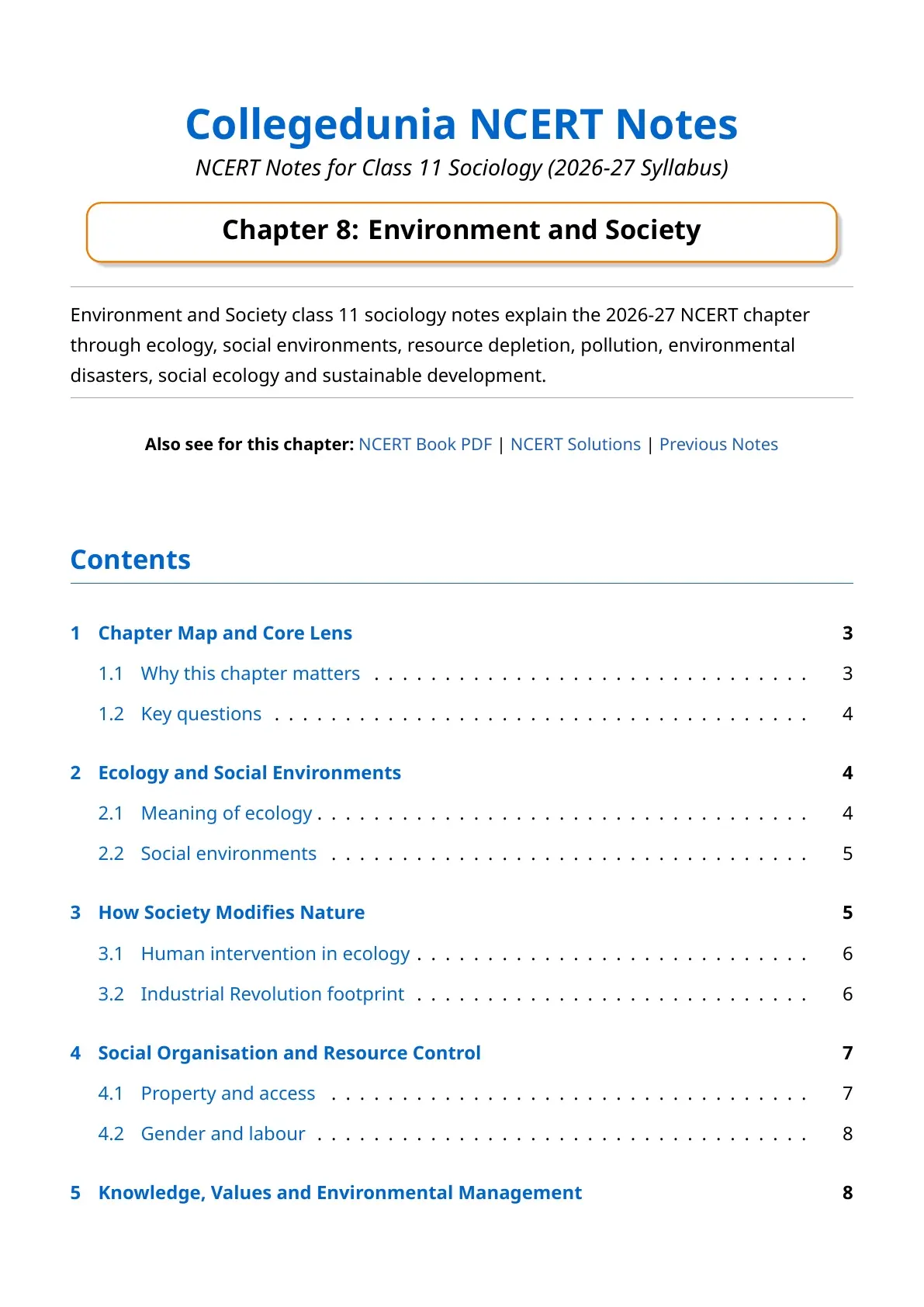
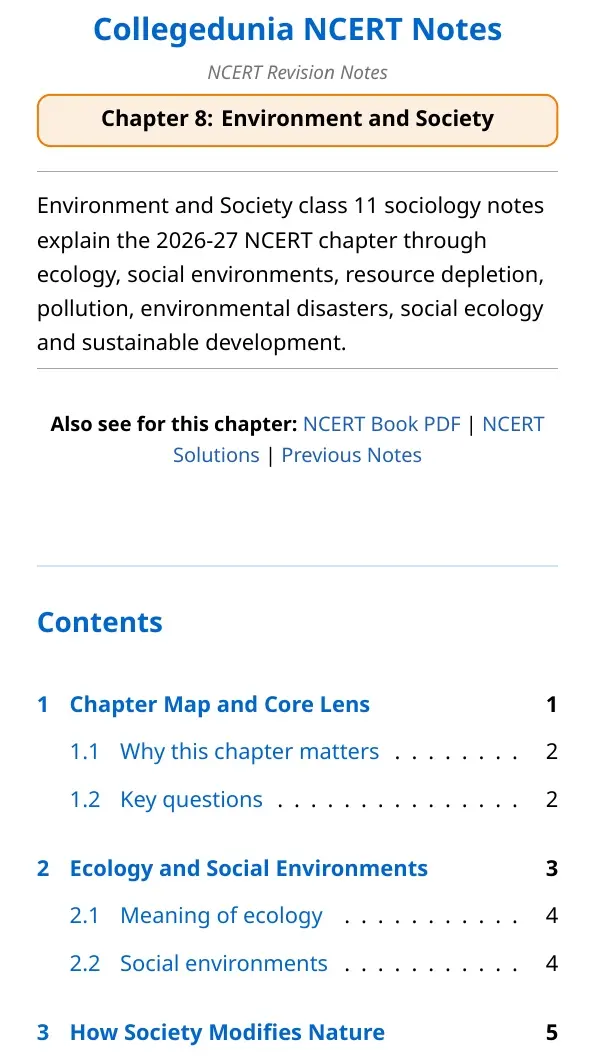
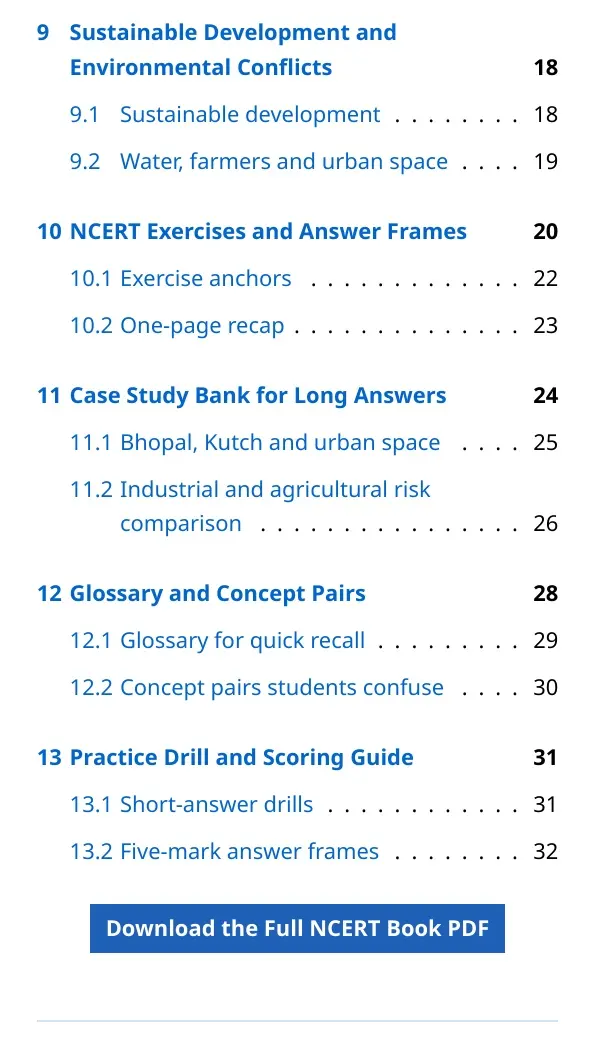
The NCERT Class 11 Sociology Chapter 8 Environment and Society Notes help students revise the 2026-27 NCERT chapter on ecology, social environments, resource depletion, pollution, environmental disasters, social ecology and sustainable development. The PDF explains each topic with tables, examples and answer frames.
- Best for: Class 11 Sociology tests, NCERT revision and short-answer practice.
- PDF focus: ecology, society, social organisation, Bhopal, pollution, inequality and sustainability.
- Chapter value: this chapter shows why environmental problems are also social problems.

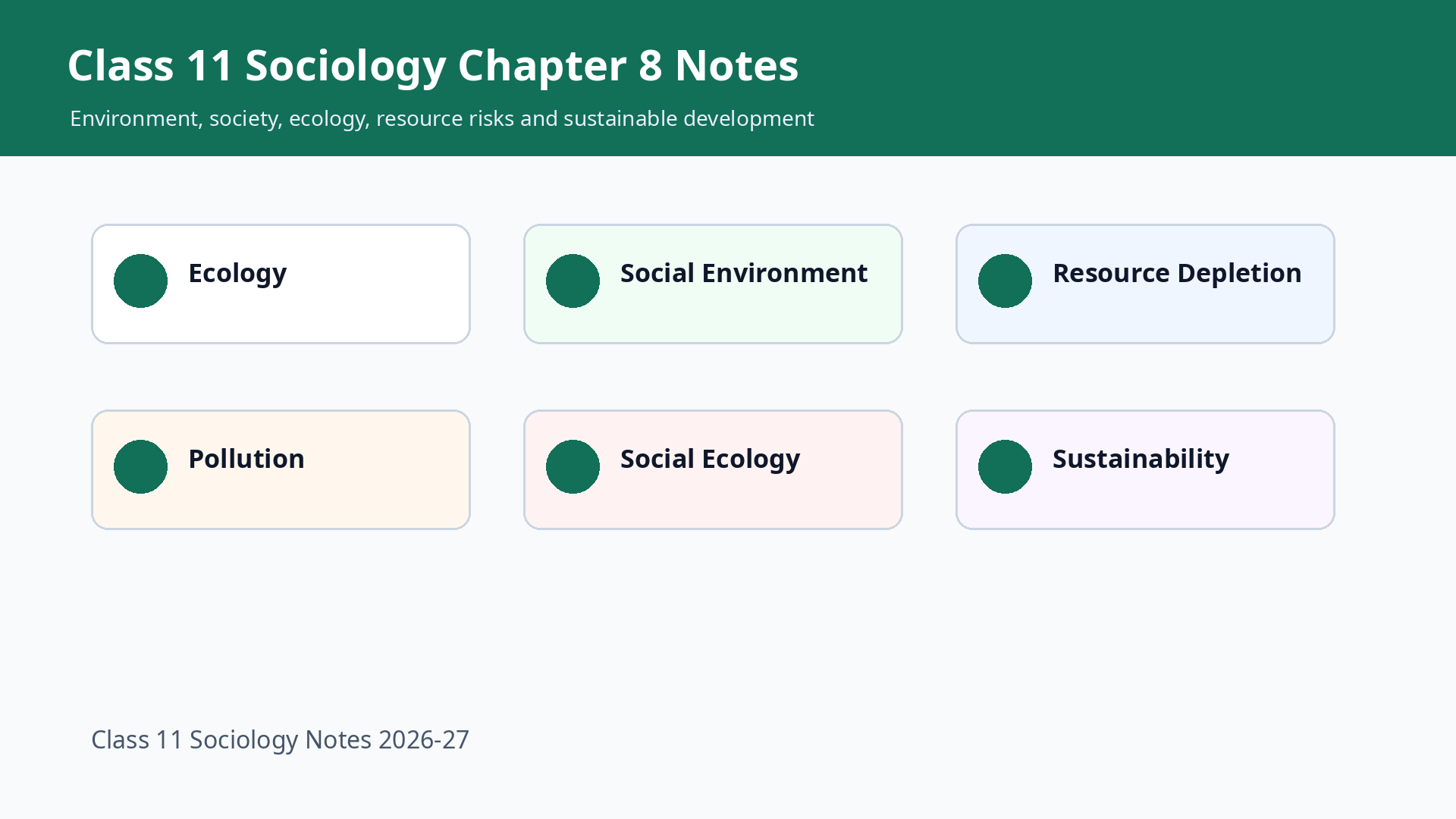
Revision Note: Start with ecology and social environment, then connect every environmental issue to inequality, property, power and sustainability.
Source: Collegedunia editorial review of the NCERT 2026-27 chapter structure.
What the Chapter 8 Sociology Notes Cover
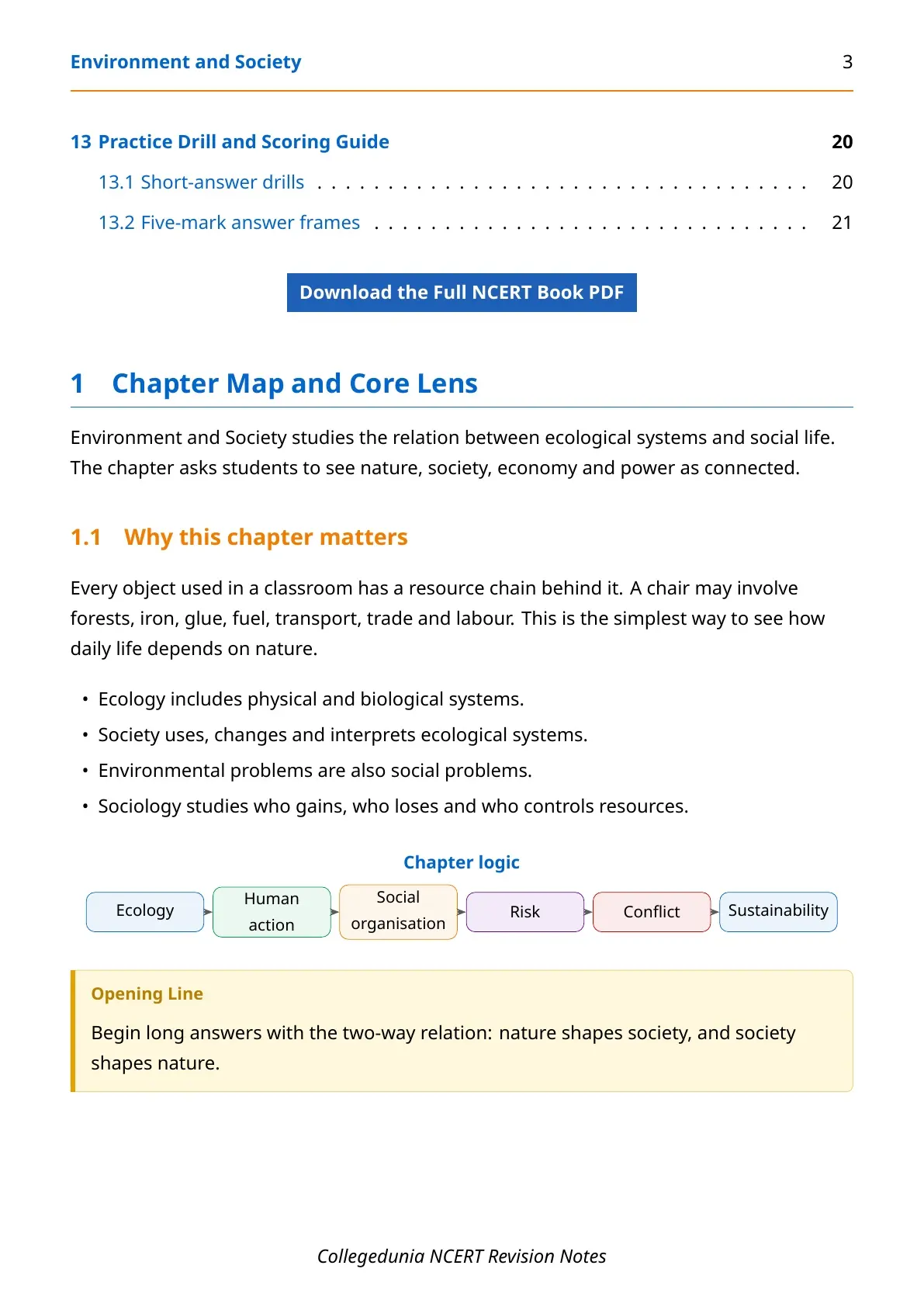
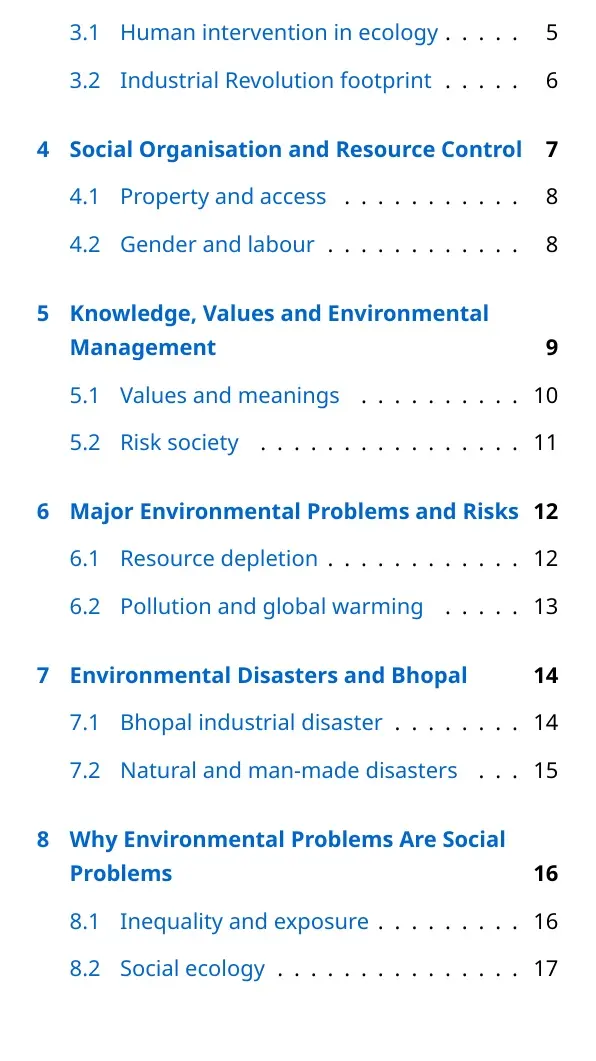
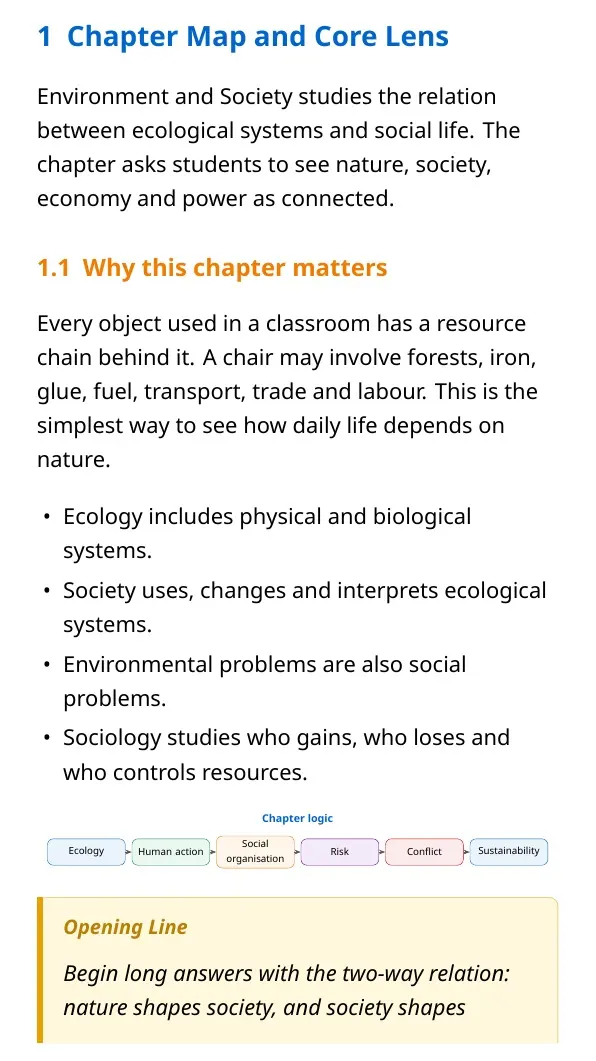
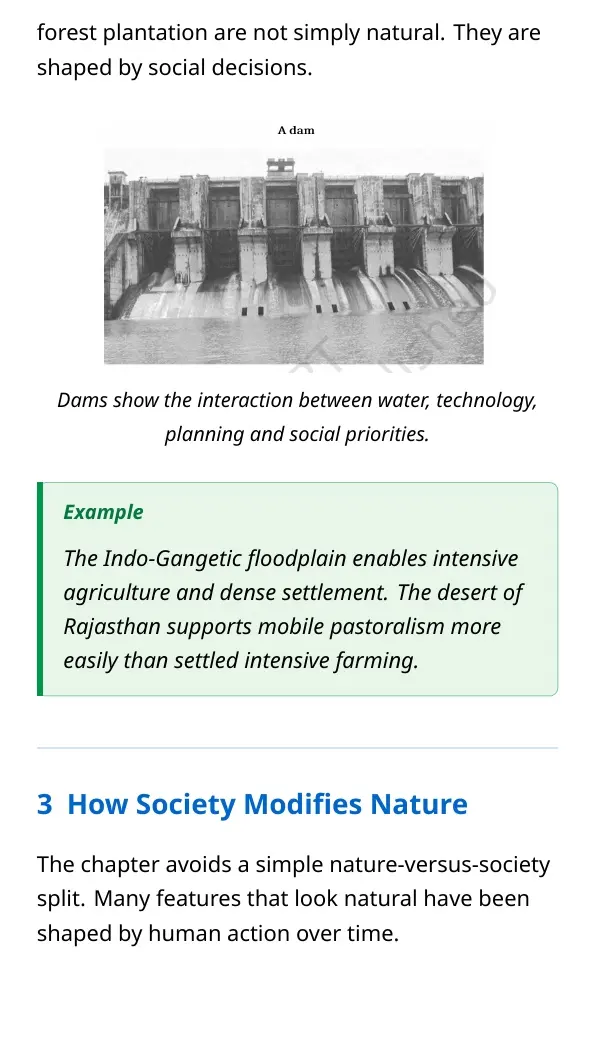
Chapter 8 explains the two-way relation between ecology and society. Nature shapes human life, but human action also modifies nature through agriculture, cities, industries, dams, roads and markets.
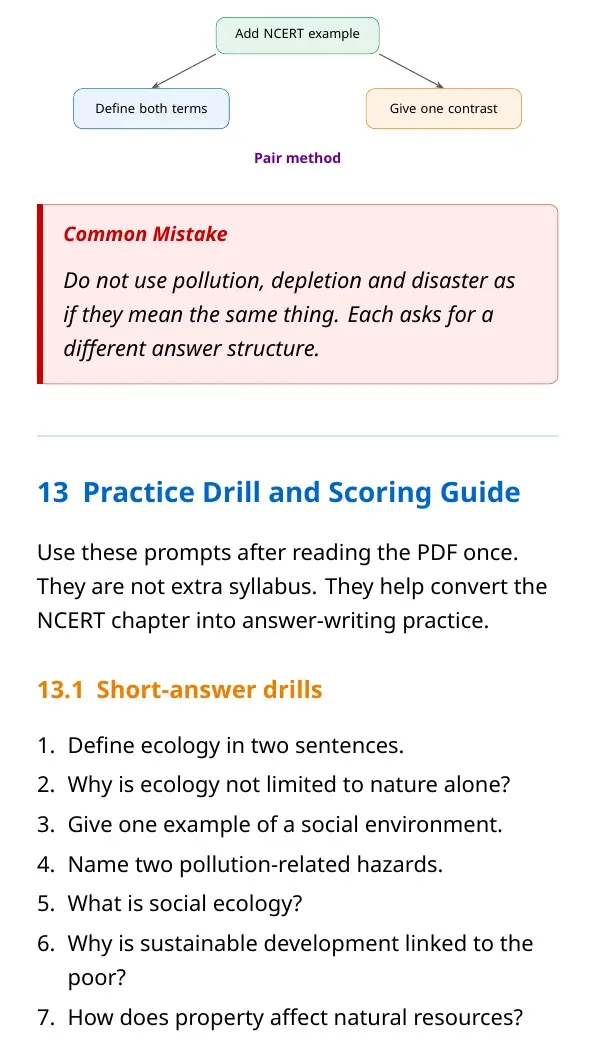
| PDF section | What students revise |
|---|---|
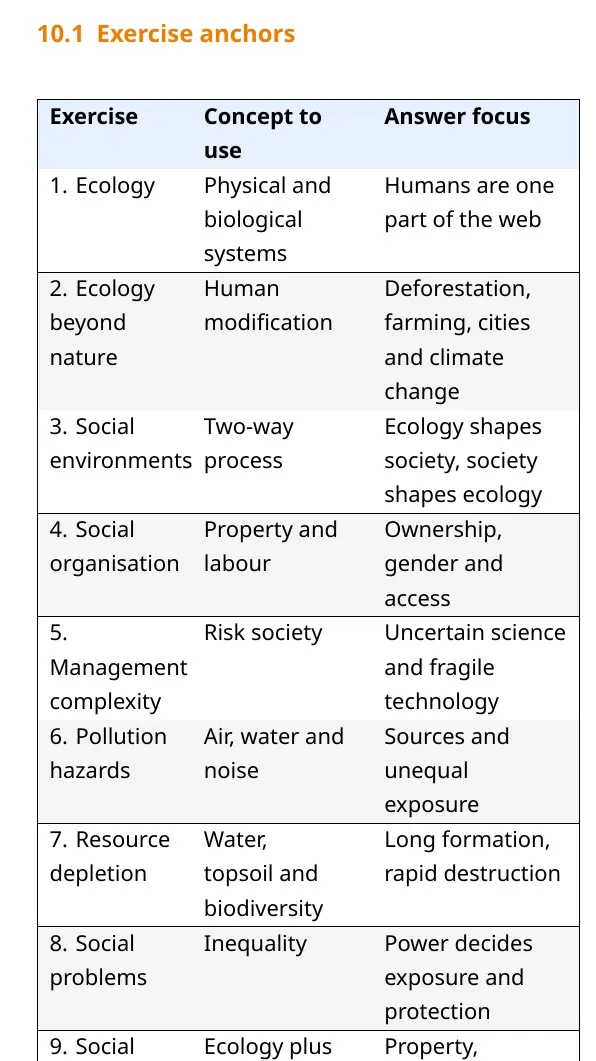
| Ecology | Physical and biological systems, including humans as one element. |
| Social environment | Interaction between biophysical ecology and human intervention. |
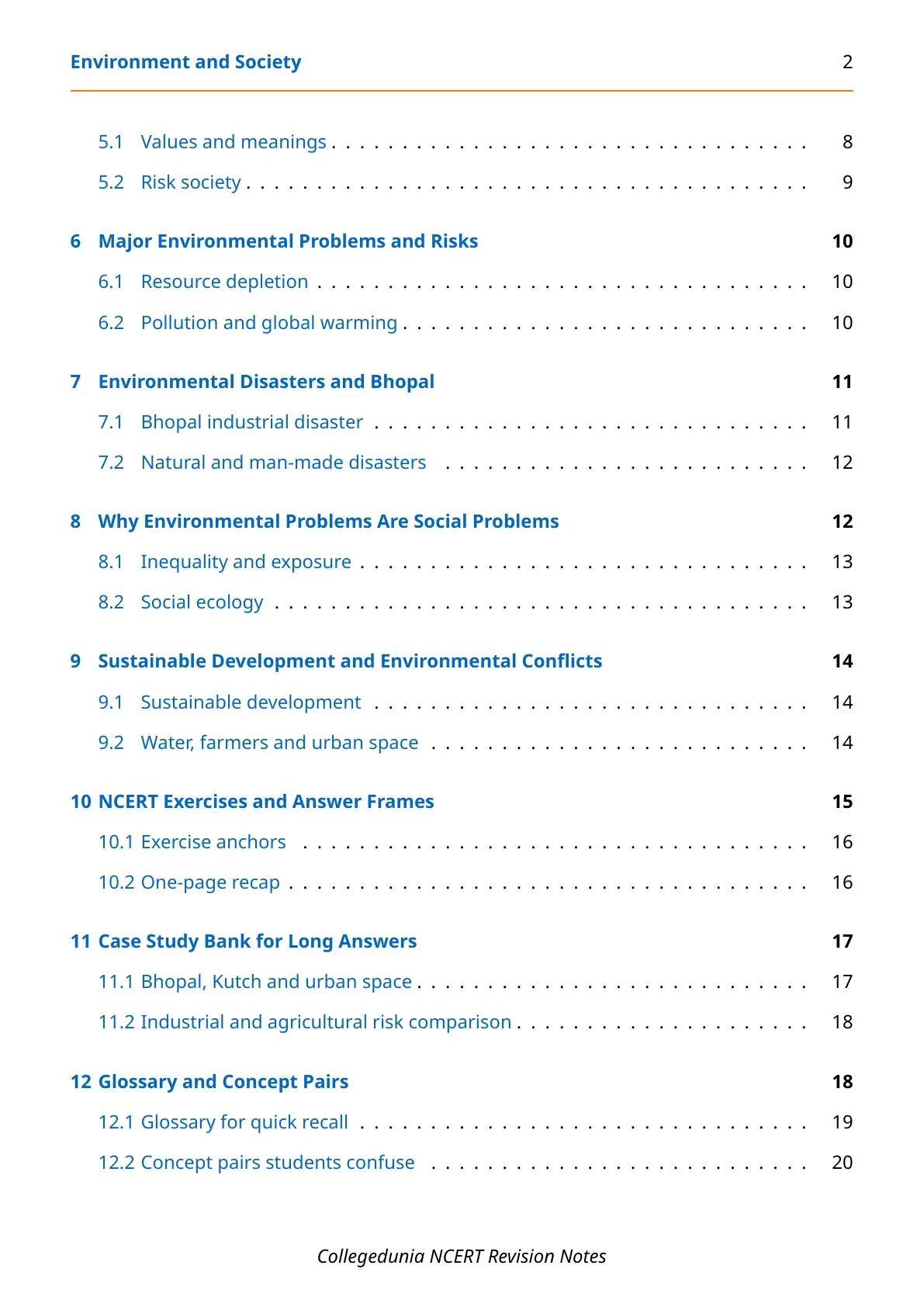
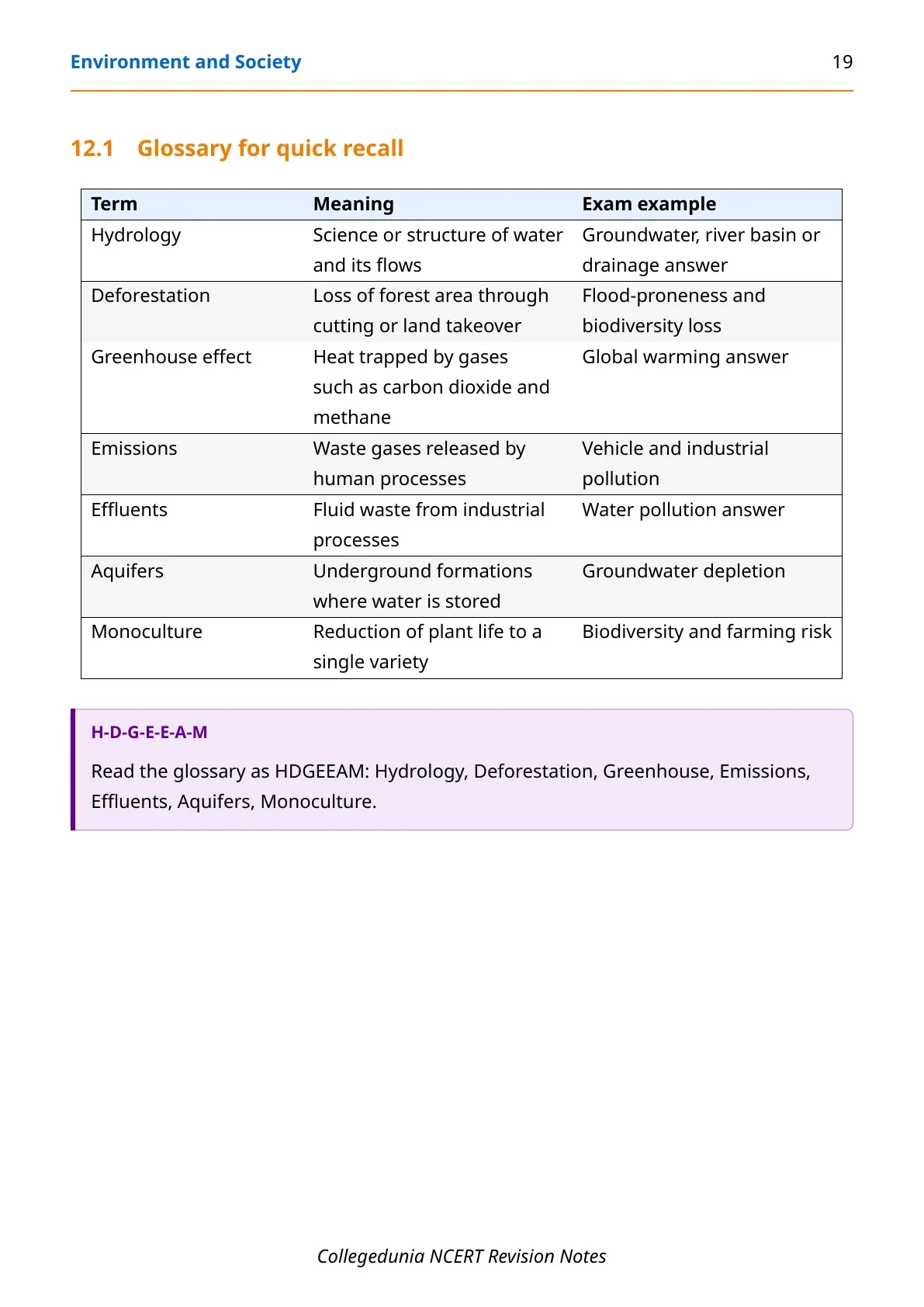
| Resource risks | Groundwater, topsoil, biodiversity, forests and pollution. |
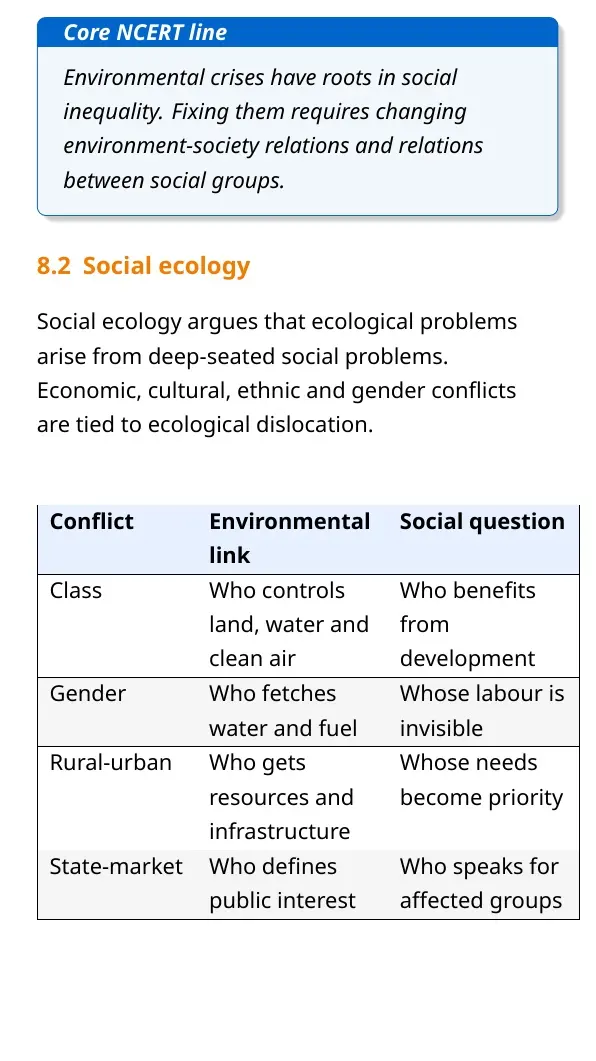
| Social ecology | How inequality, property and production shape environmental crises. |
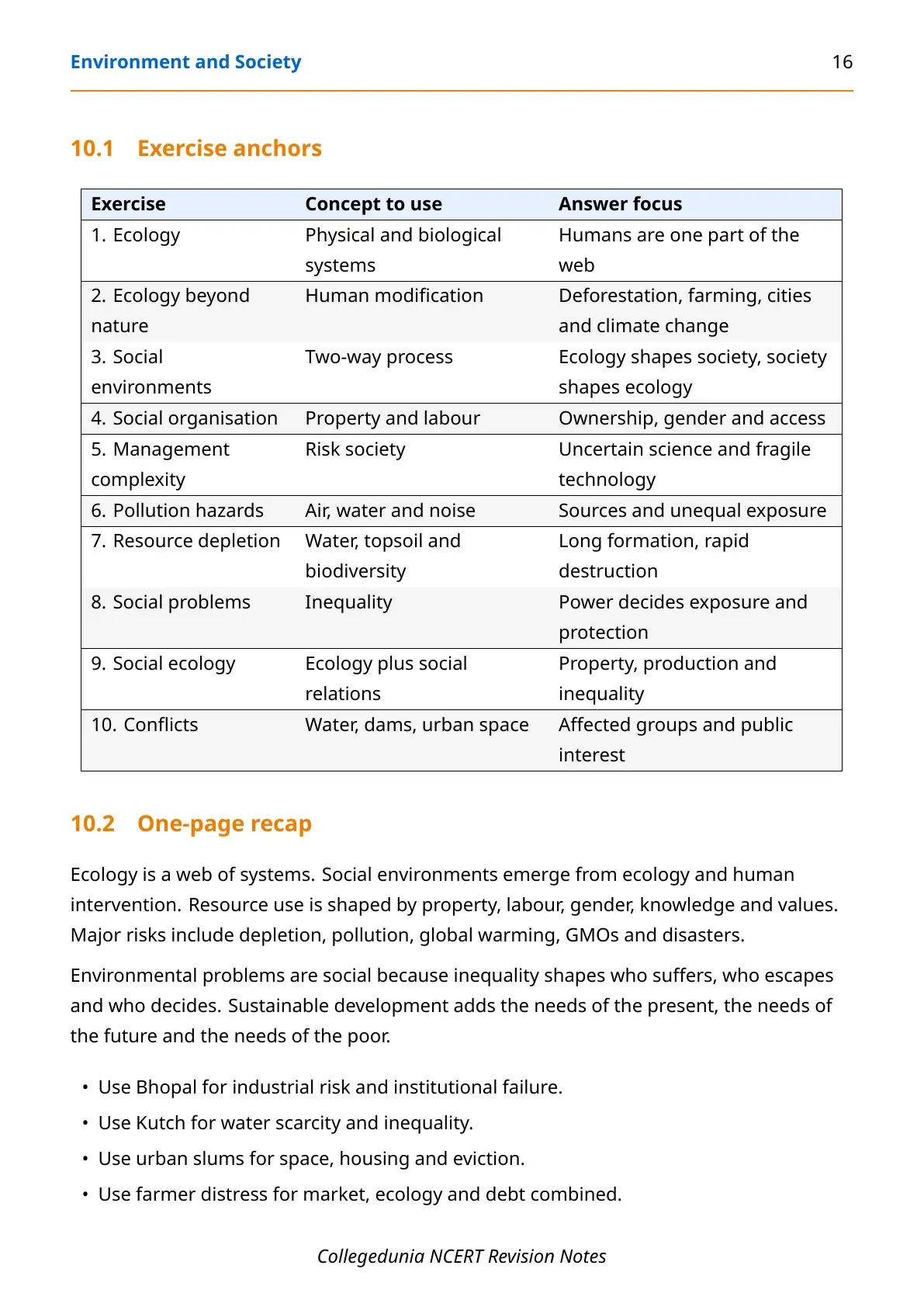
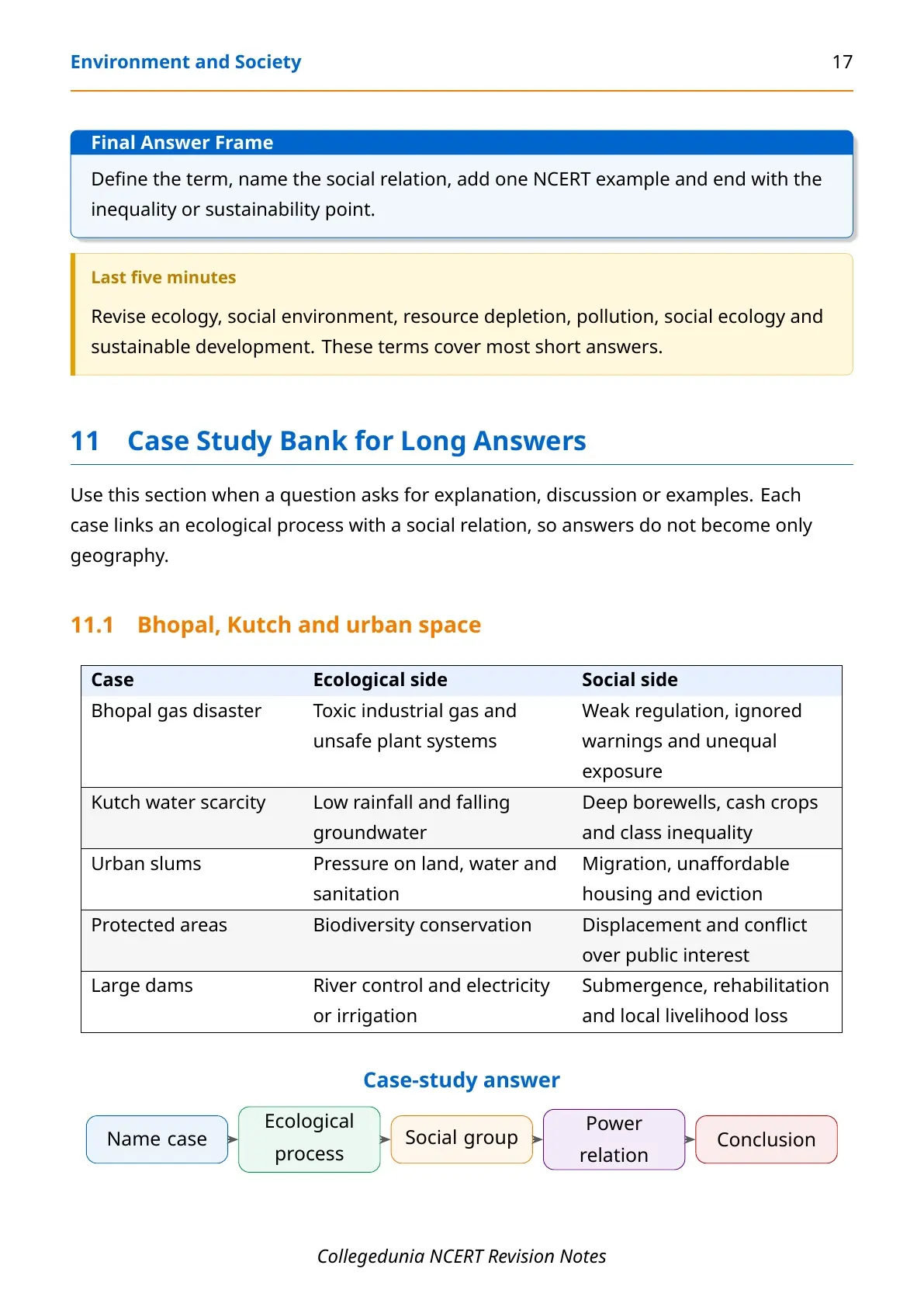
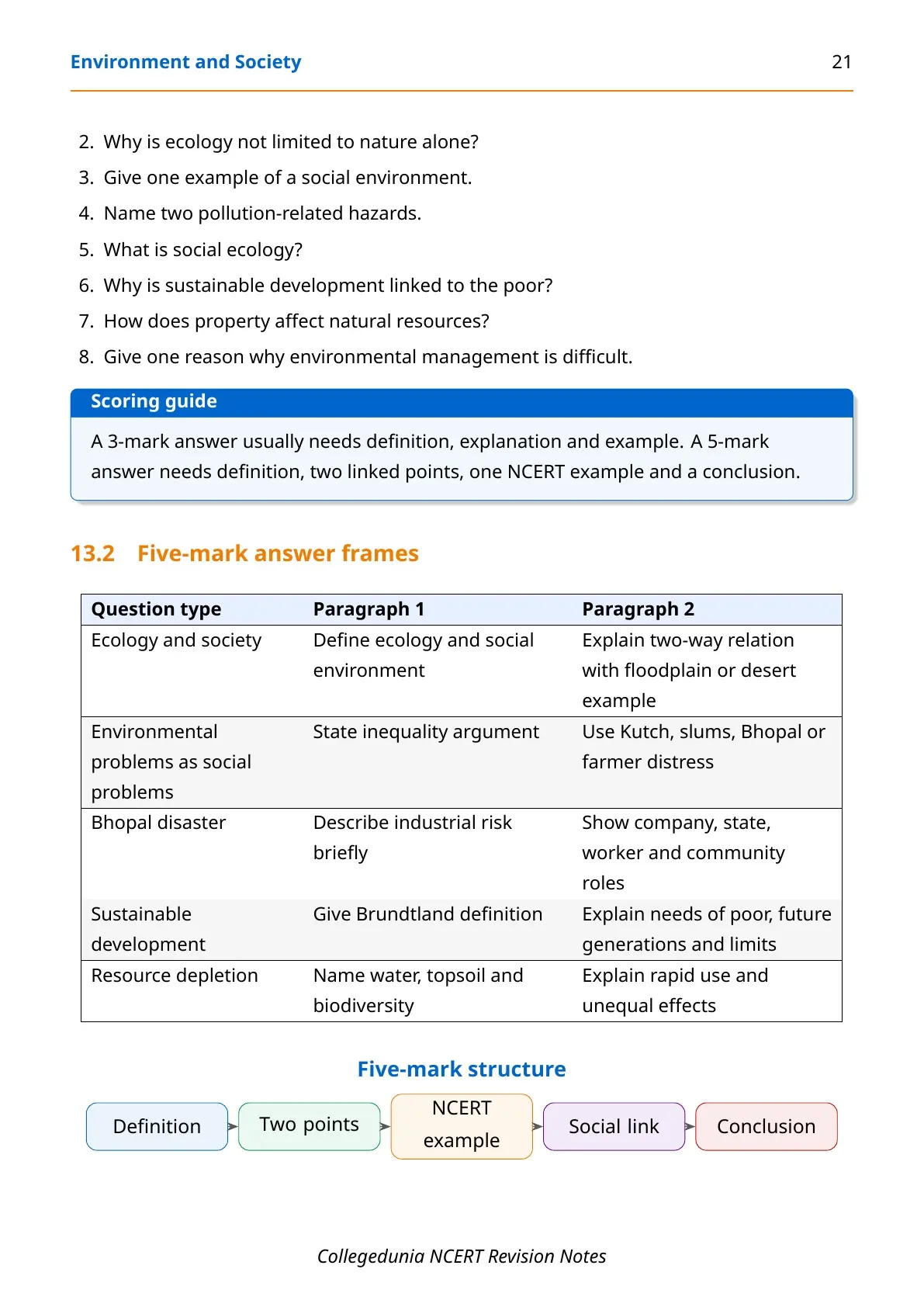
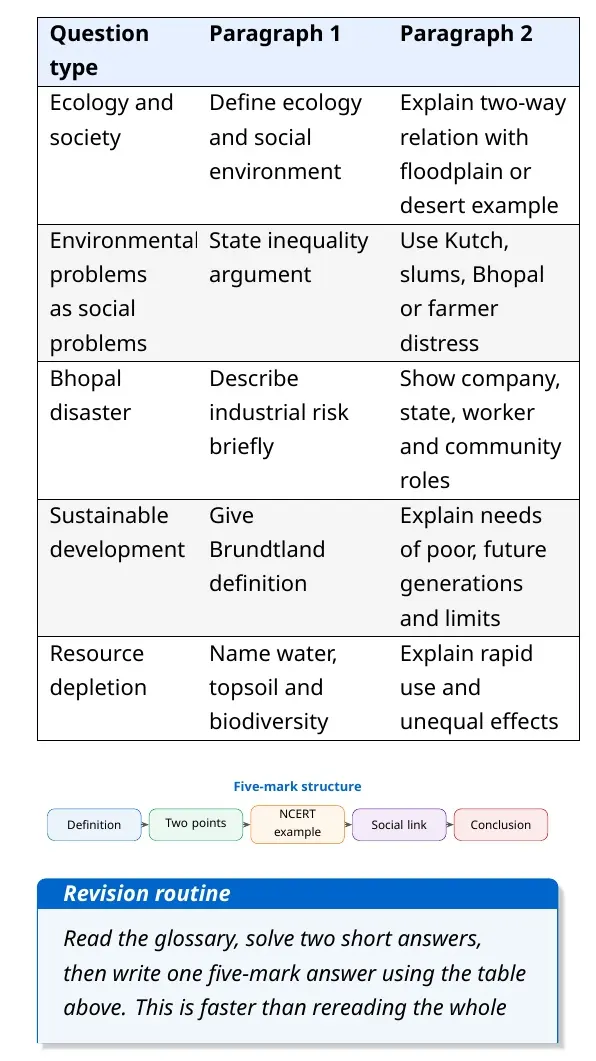
For exams, connect every definition with a clear NCERT example such as Bhopal, Kutch water scarcity, urban slums, farmer distress or sustainable development.
Environment and Society Class 11 Sociology Video
Source: Magnet Brains on YouTube
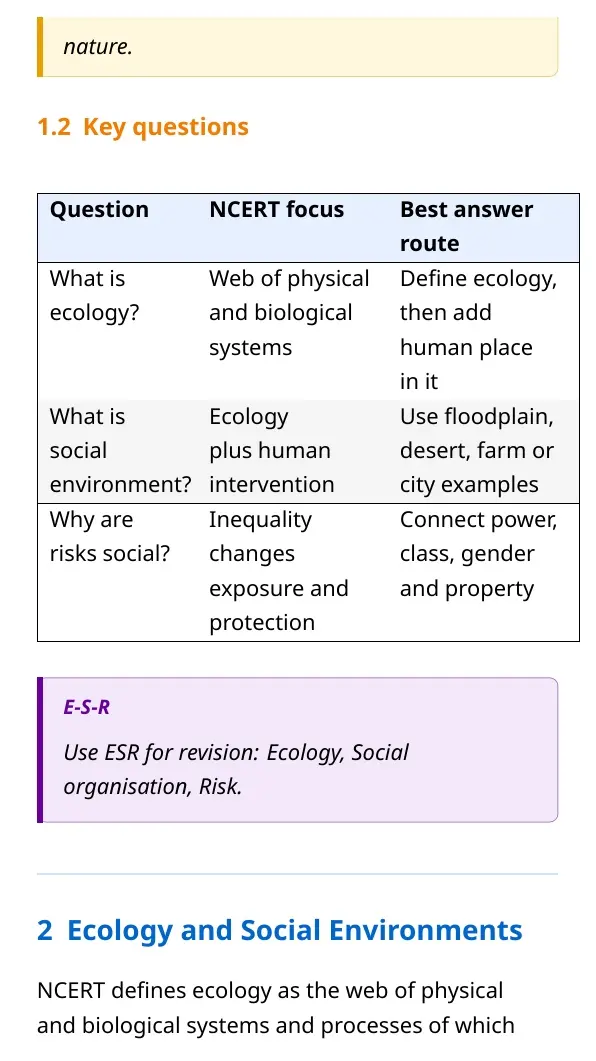
Ecology and Social Environment
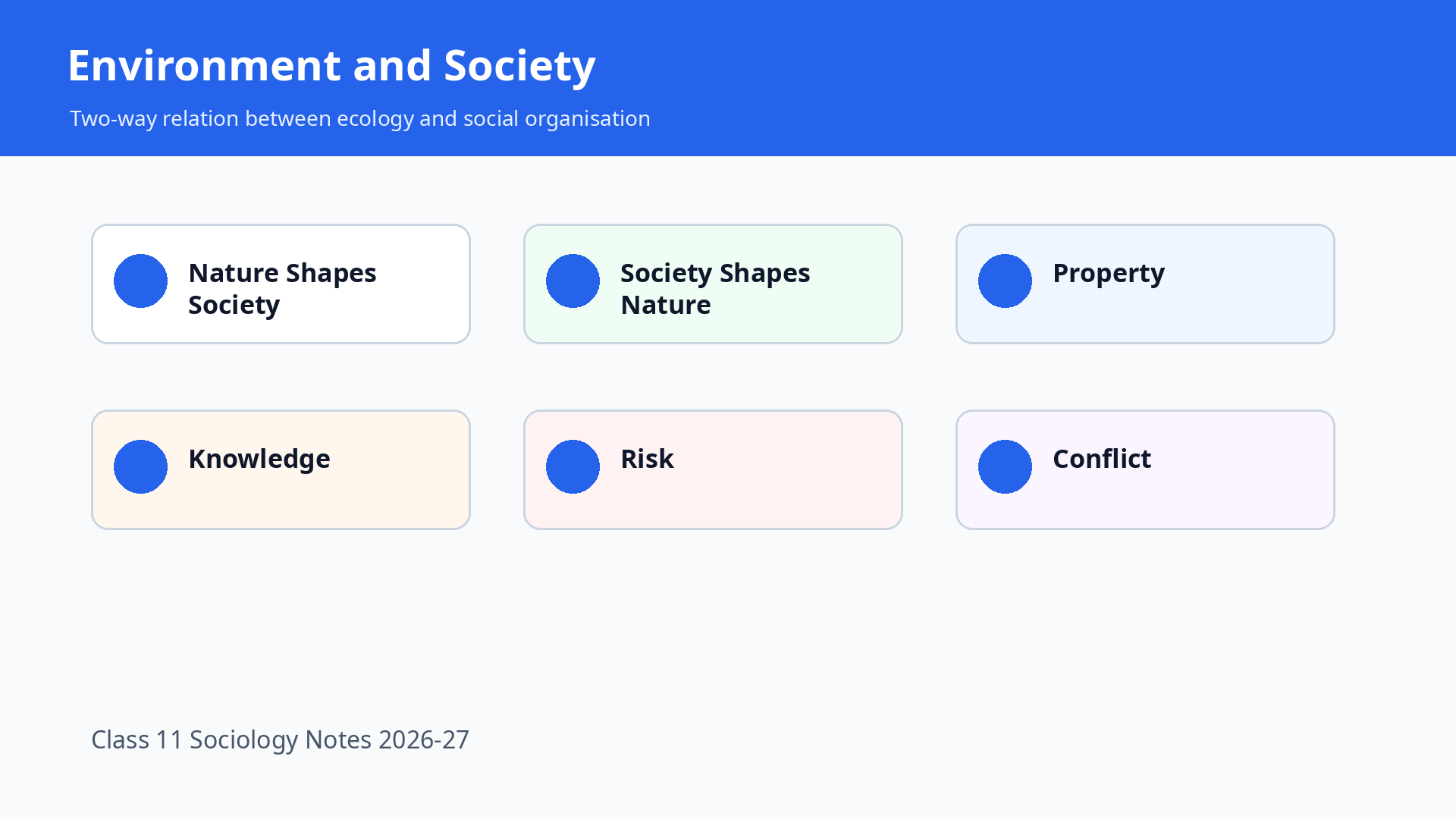
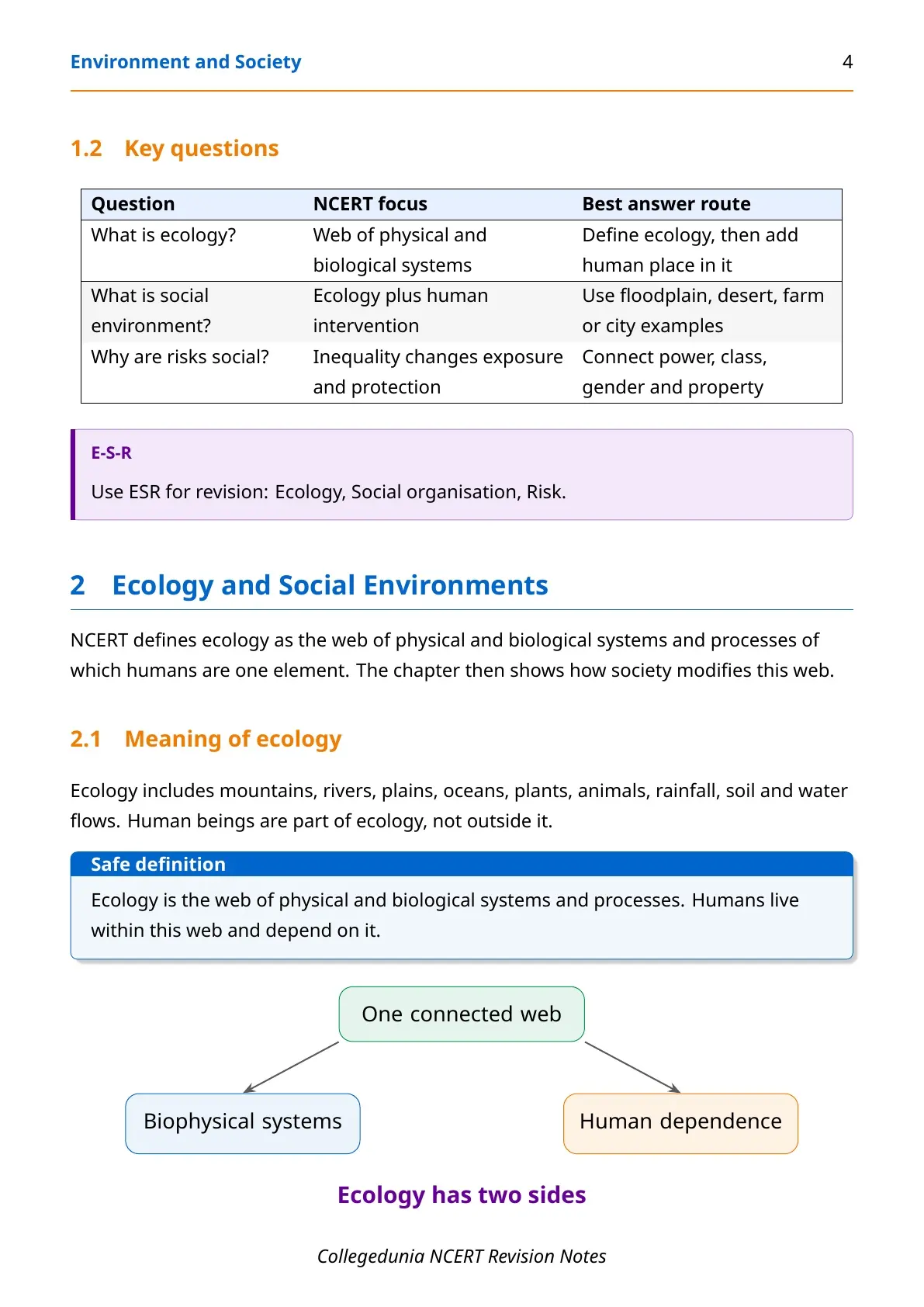
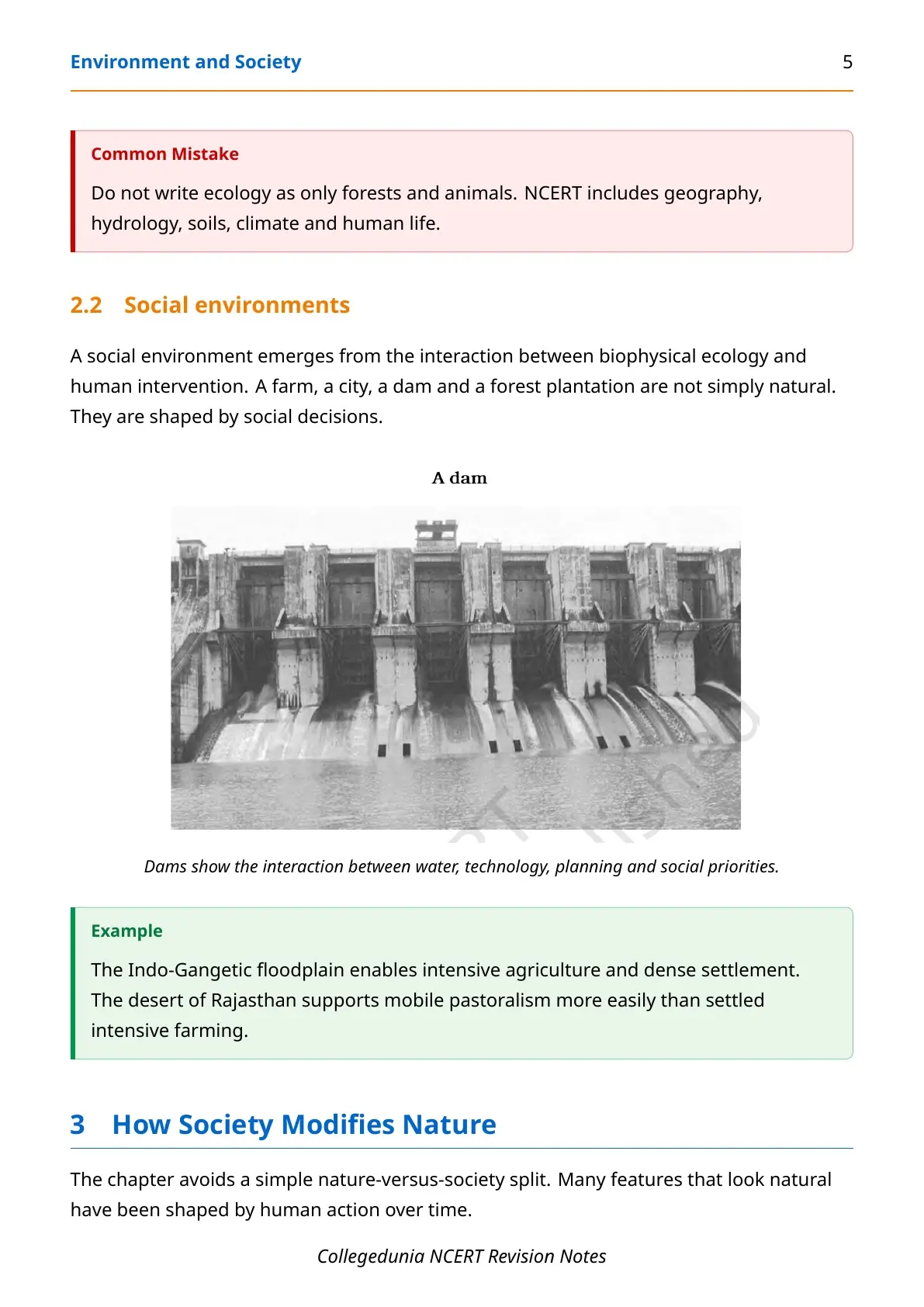
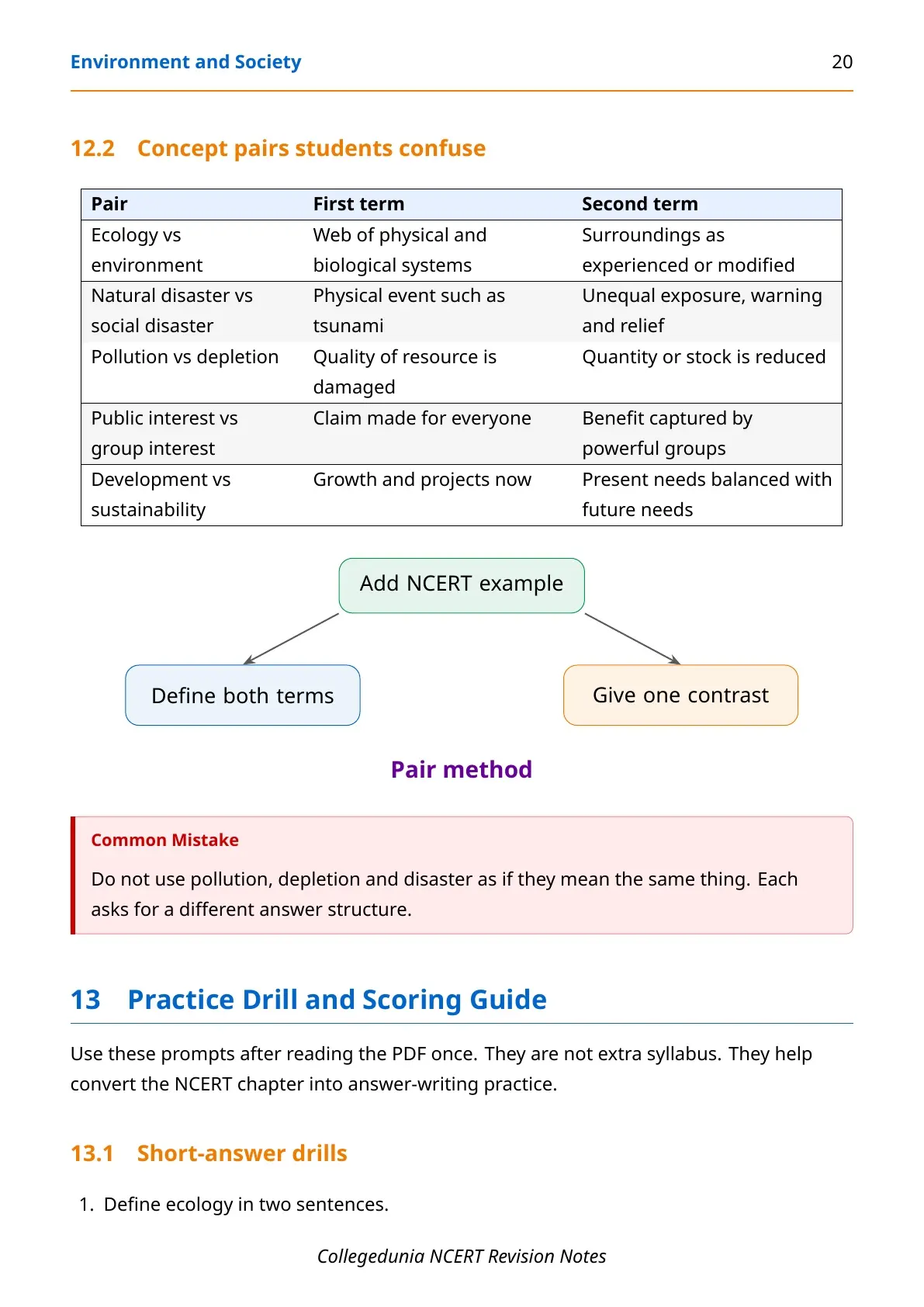
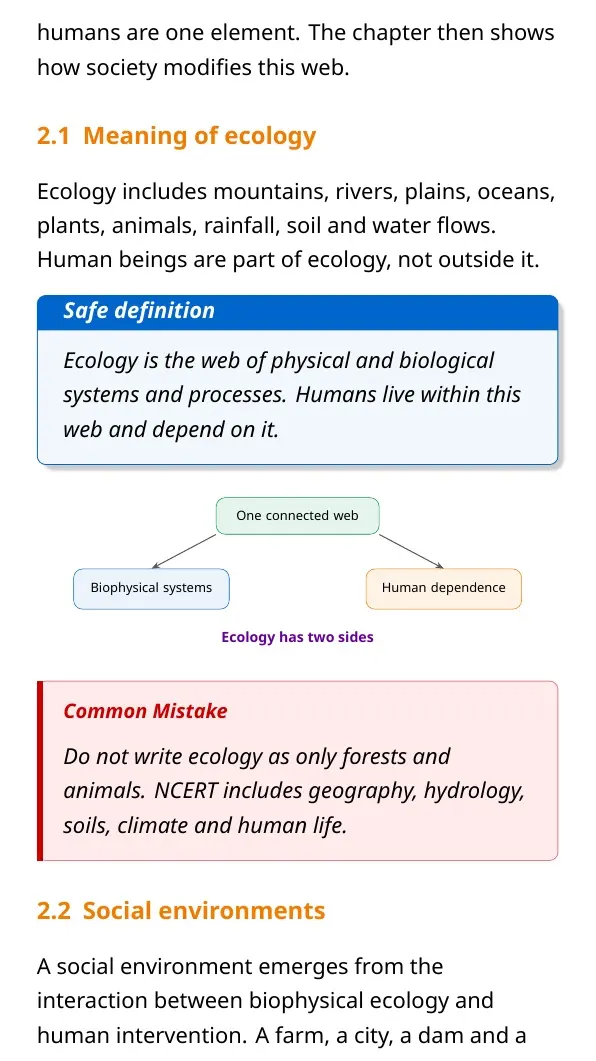
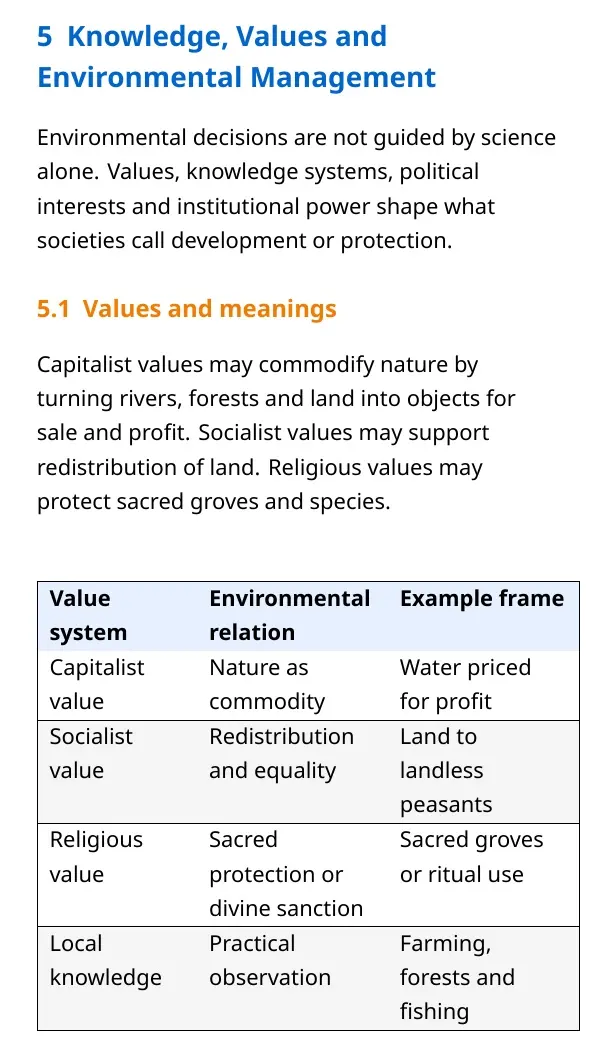
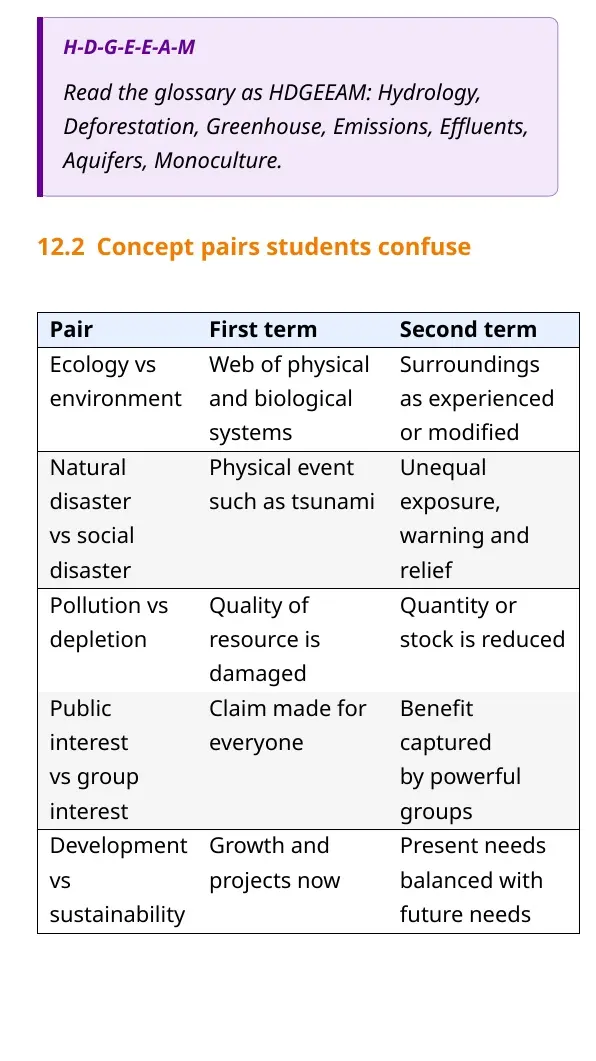
Ecology is the web of physical and biological systems. A social environment emerges when ecology interacts with human action. Farms, cities, dams and industrial regions are all examples of environments shaped by society.
- Ecology: mountains, rivers, plains, oceans, plants, animals, soils and water flows.
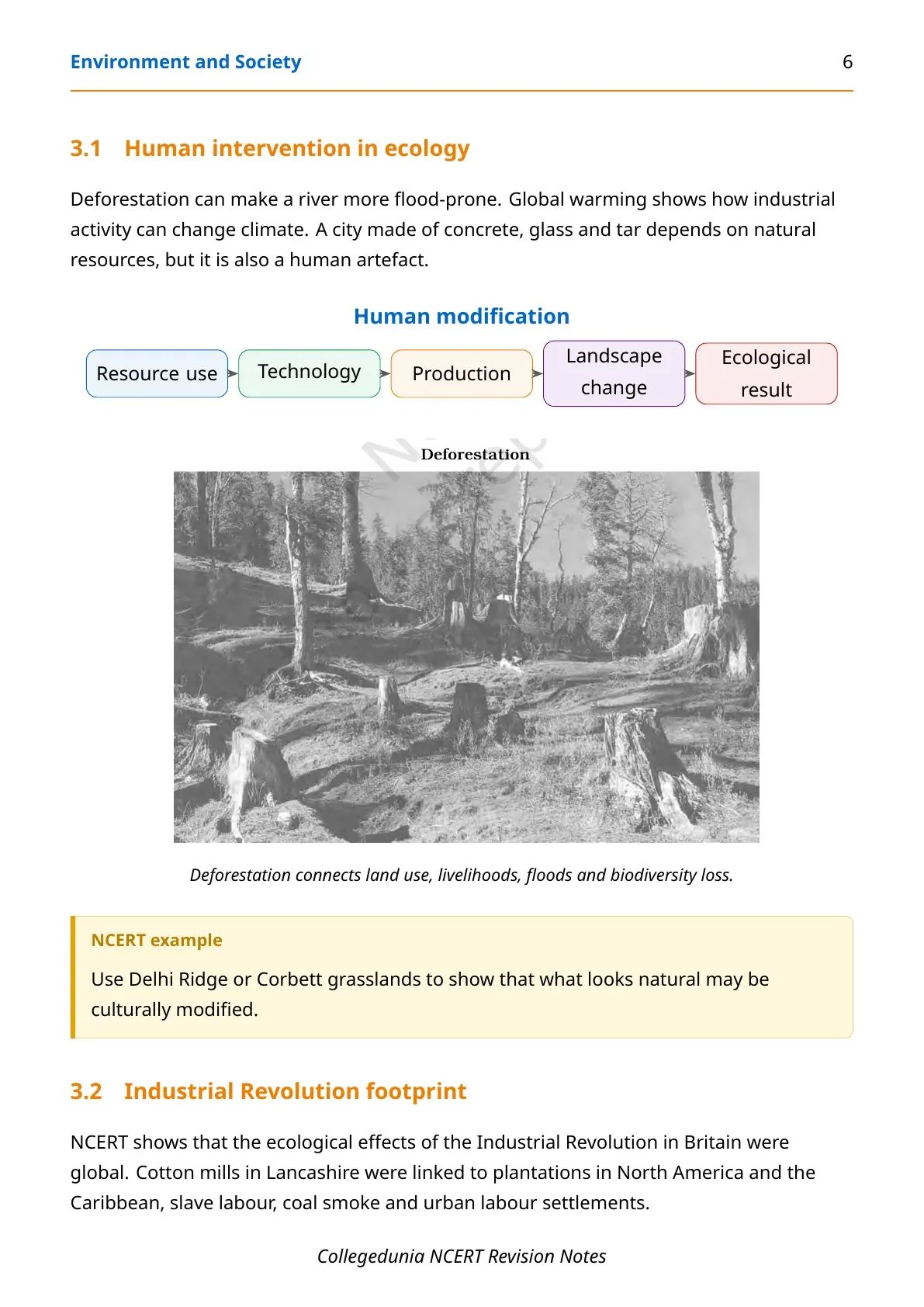
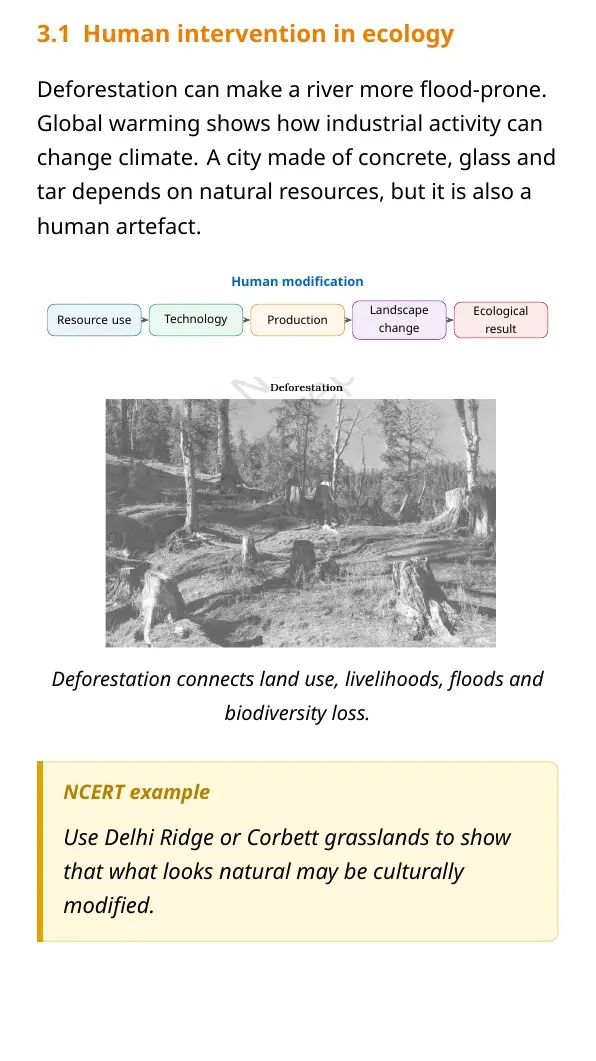
- Human action: deforestation, farming, industry, urbanisation and global warming.
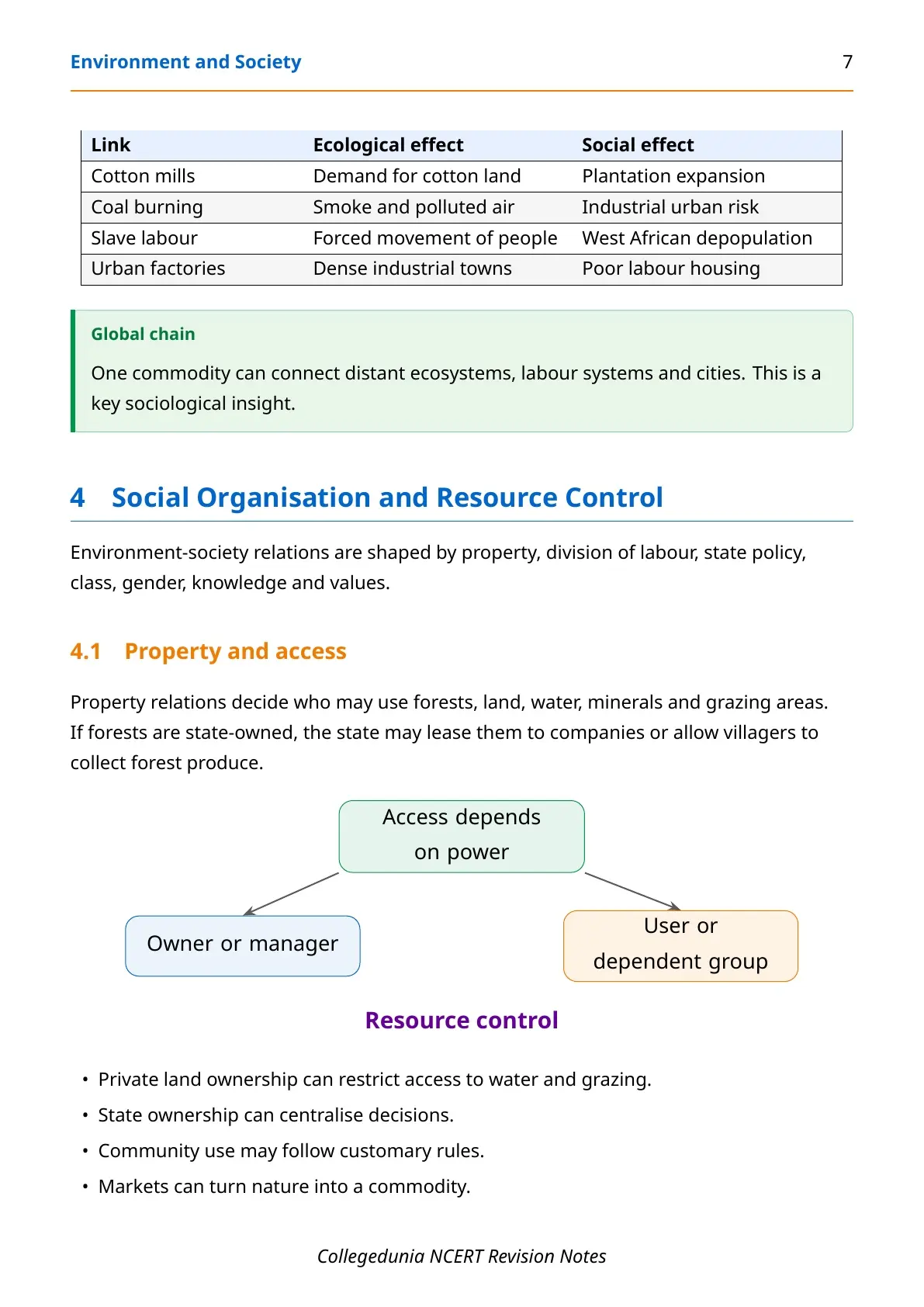
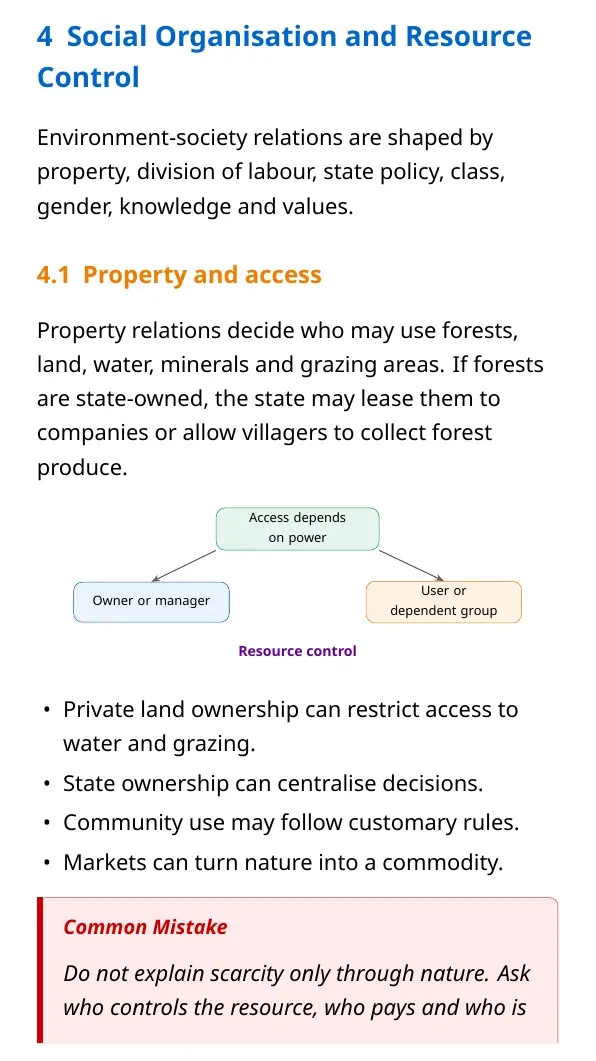
- Social organisation: property, labour, gender, class, state power and markets.
- Exam cue: write nature shapes society and society shapes nature.
Major Environmental Problems in Chapter 8
NCERT lists resource depletion, pollution, global warming, genetically modified organisms and environmental disasters as major environmental problems. Each problem has both ecological and social causes.
| Problem | NCERT focus | Social angle |
|---|---|---|
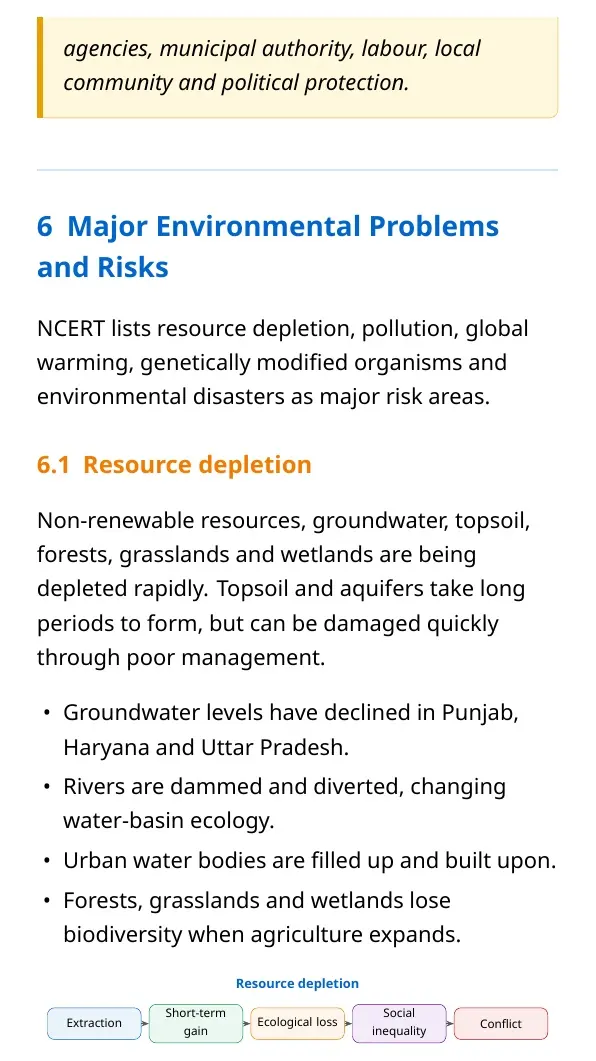
| Resource depletion | Groundwater, topsoil, forests and biodiversity. | Use and control are unequal. |
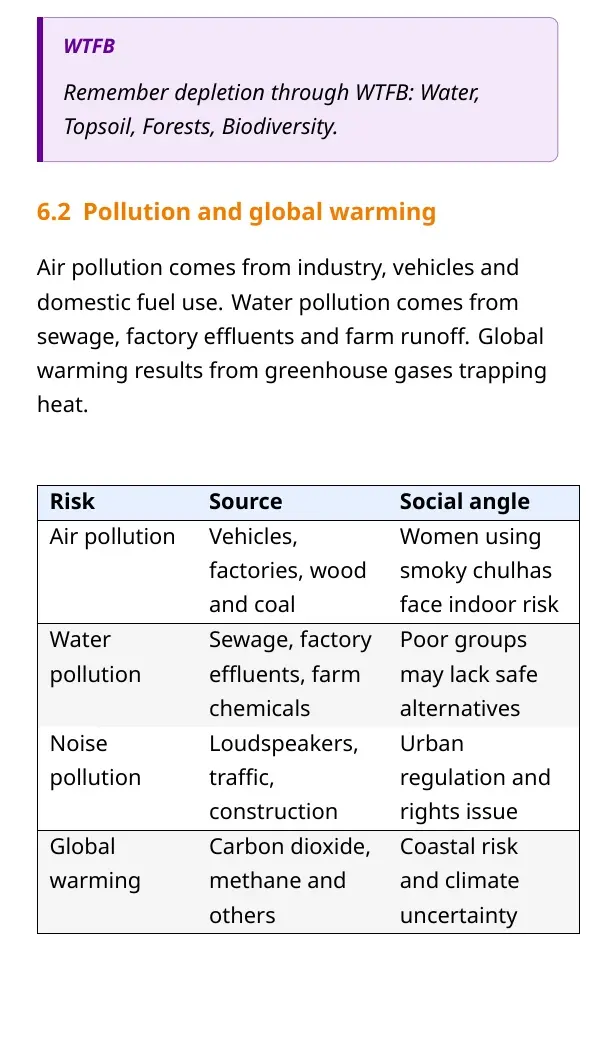
| Pollution | Air, water and noise pollution. | Poor groups often face higher exposure. |
| Global warming | Greenhouse gases and climate uncertainty. | Coastal and vulnerable groups face risk. |
| Disasters | Bhopal gas leak and tsunami examples. | Safety, warnings and rescue depend on institutions. |
Why Environmental Problems Are Social Problems
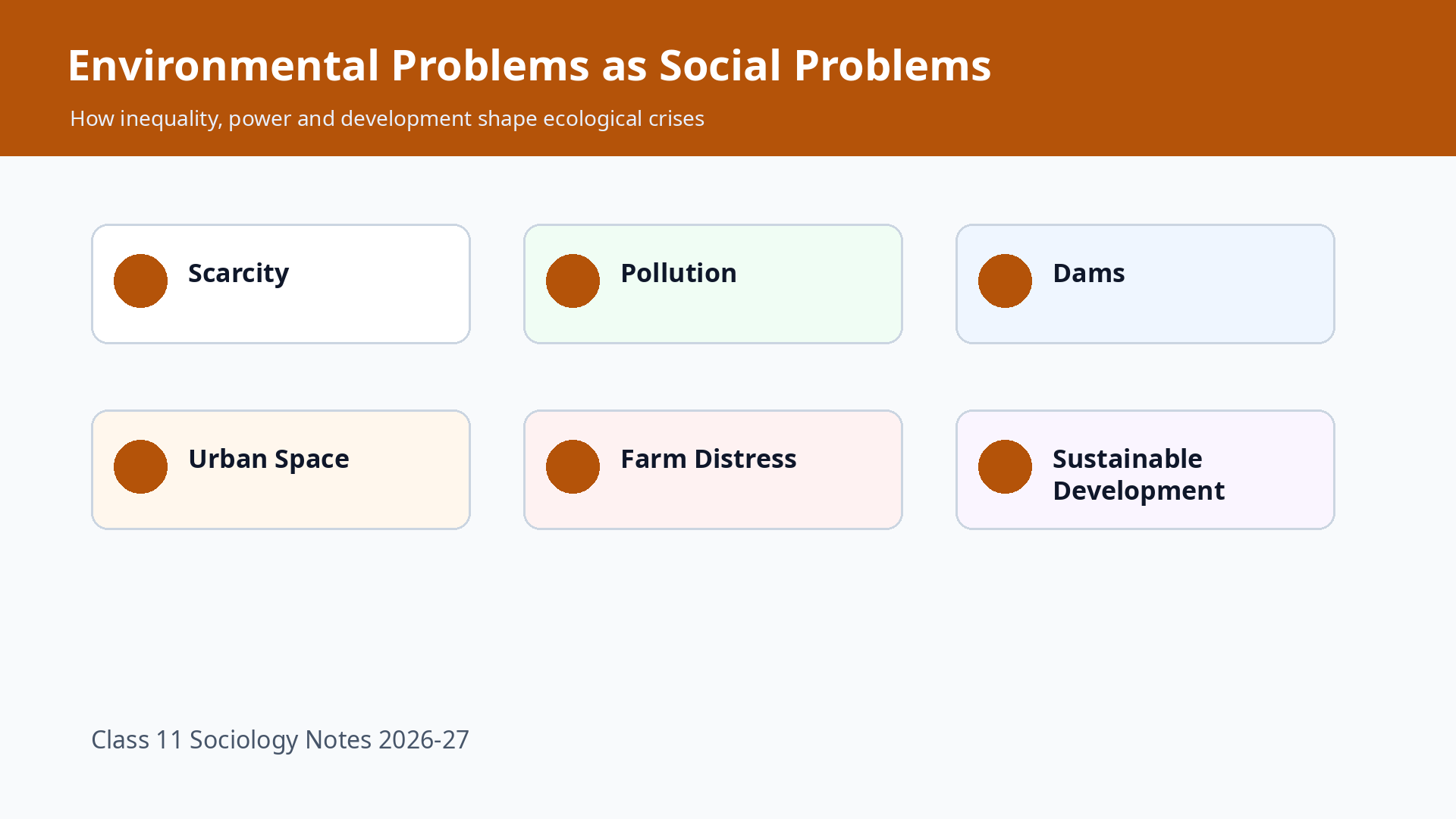
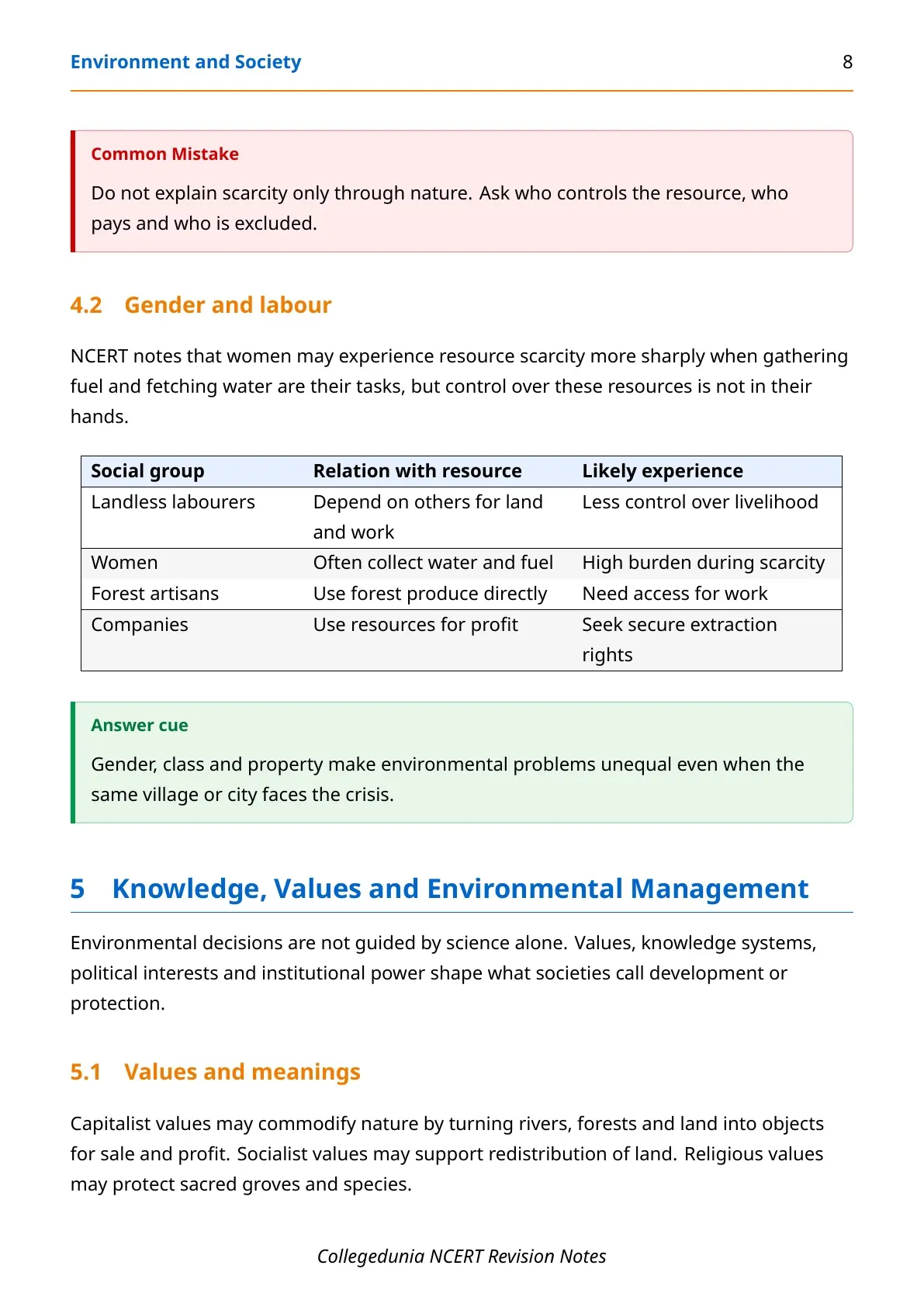
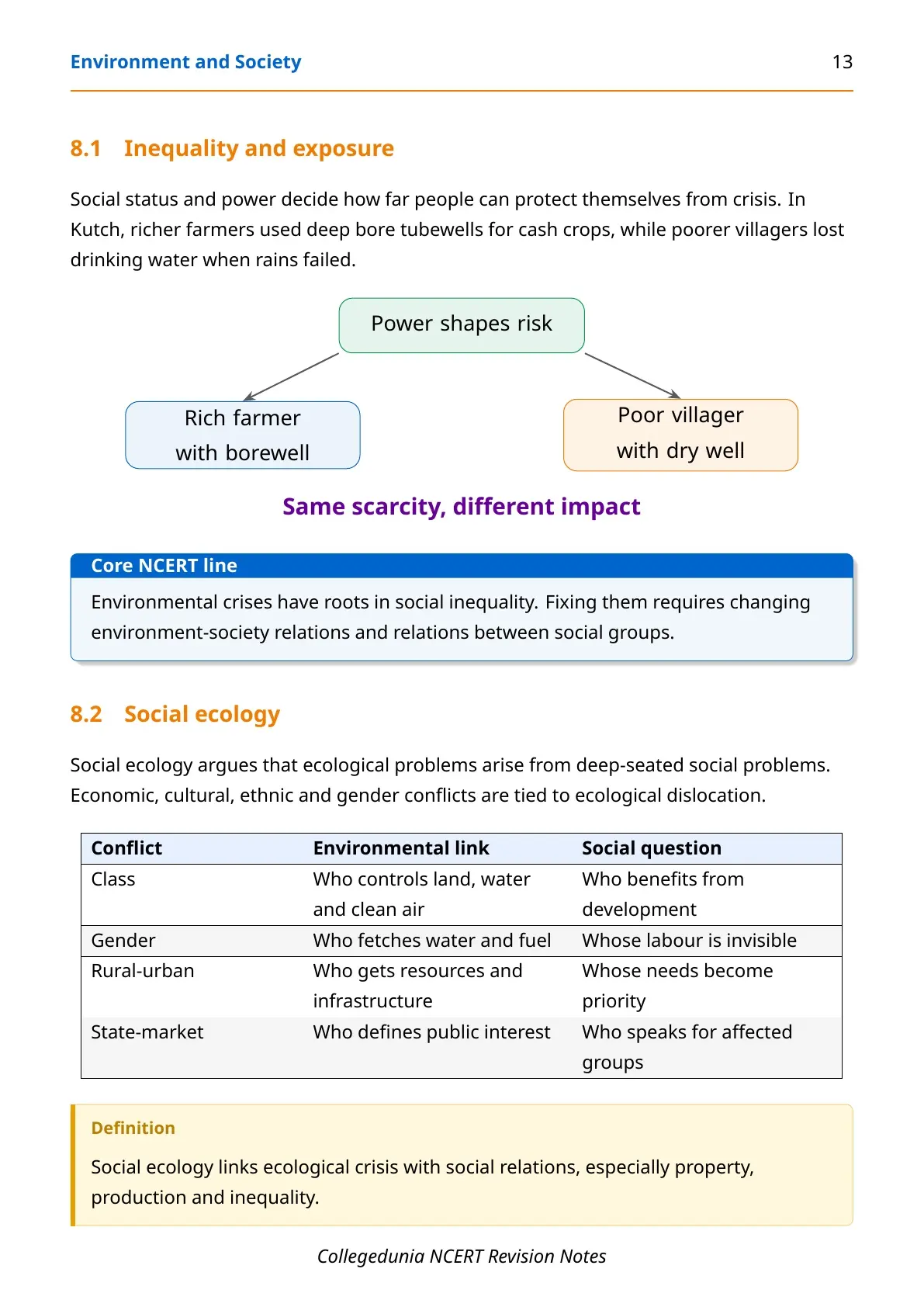
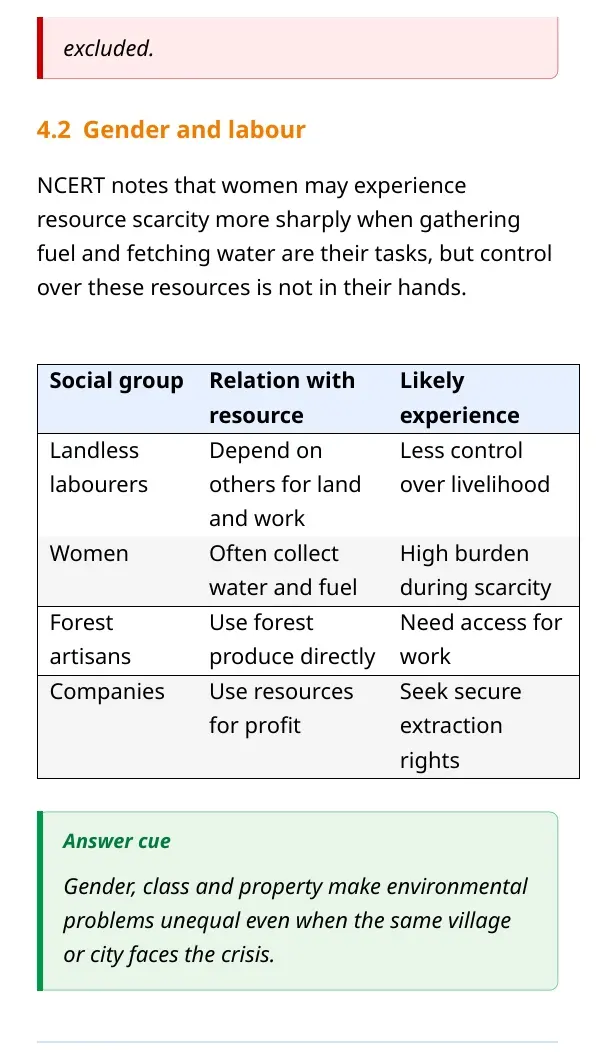
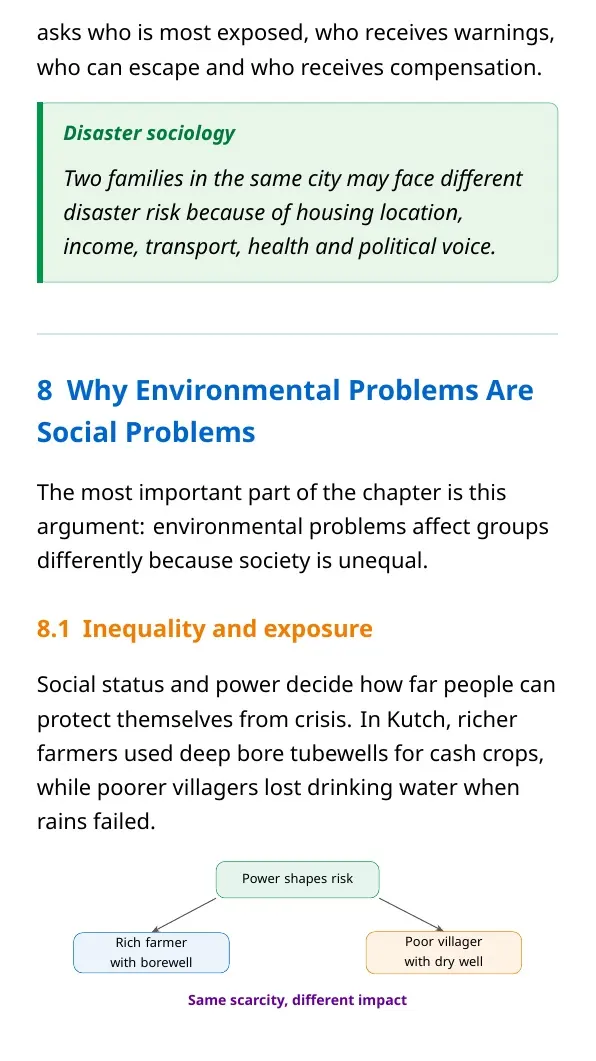
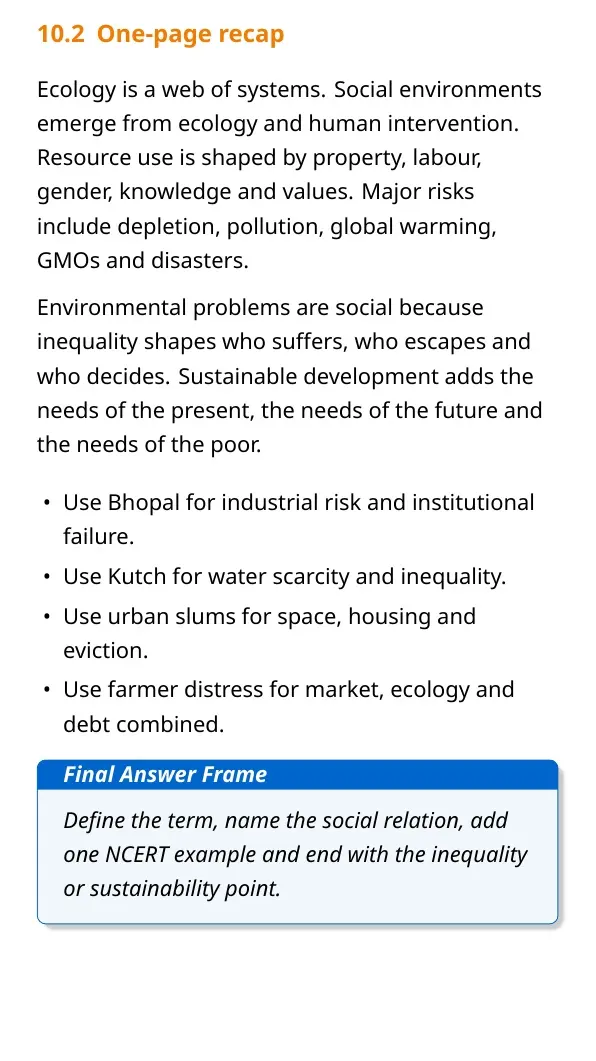
Environmental problems affect groups differently because society is unequal. Social status and power decide whether people can avoid polluted areas, buy water, move away from danger or influence policy.
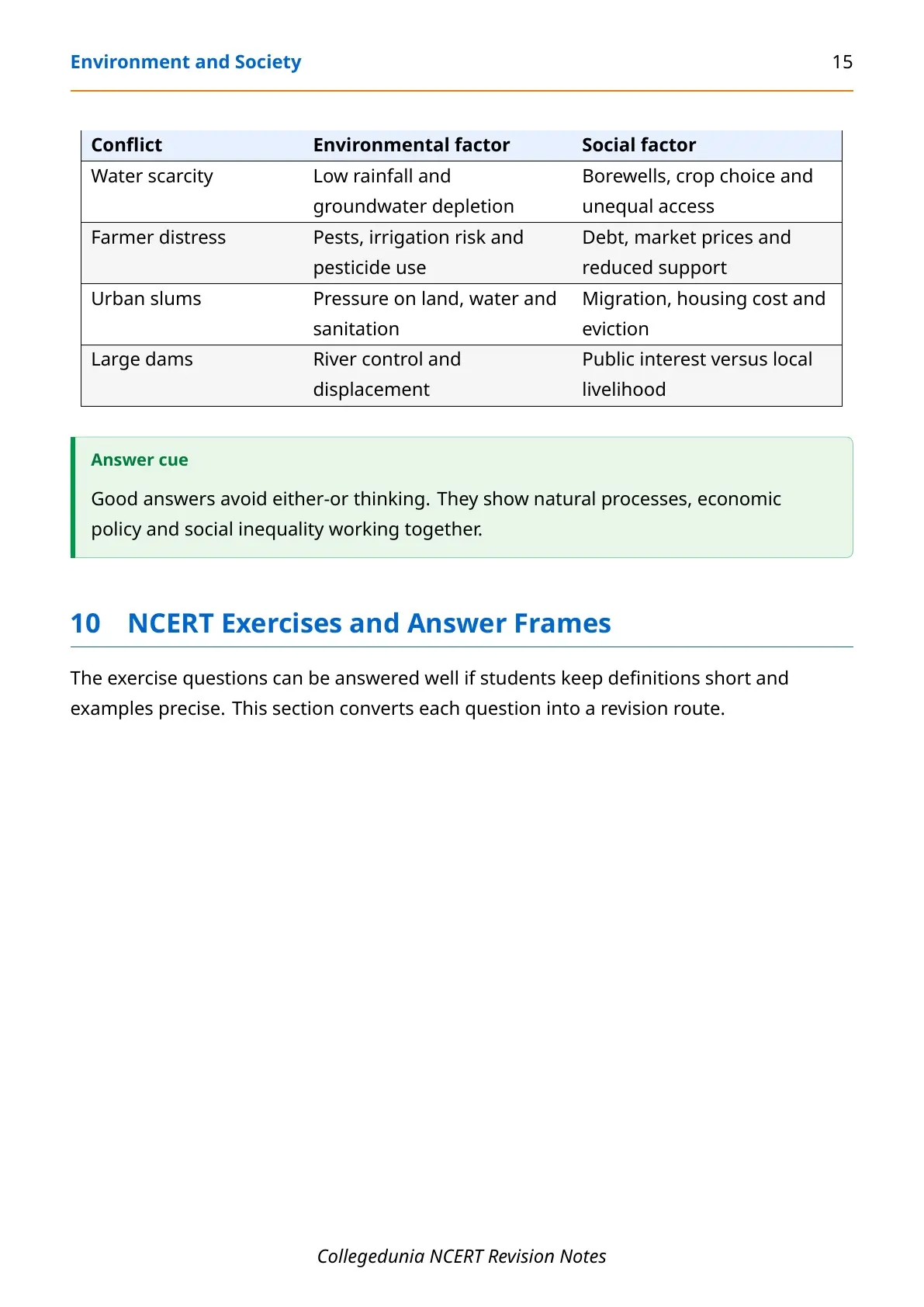
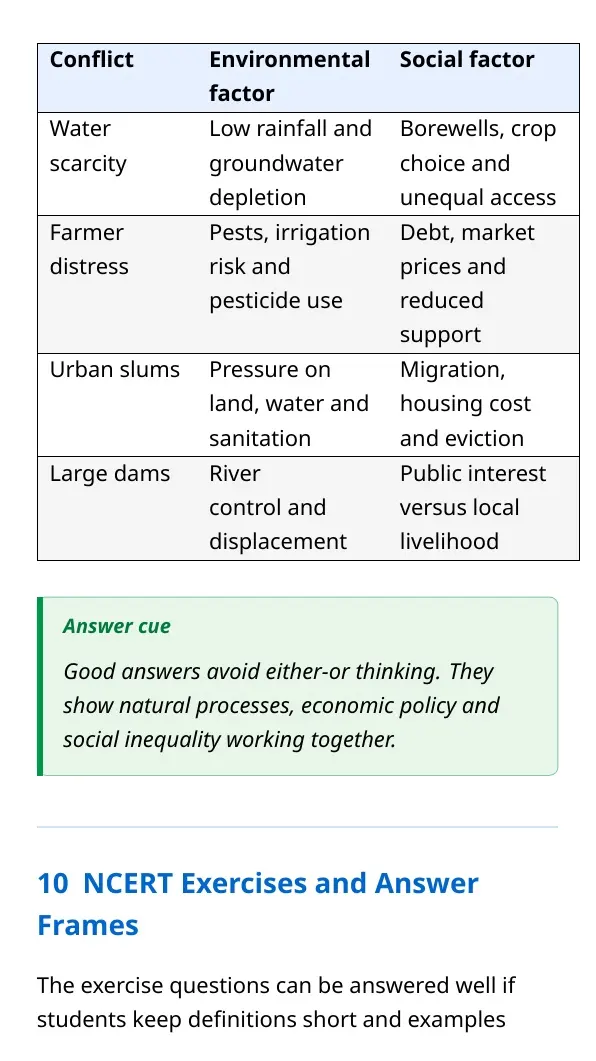
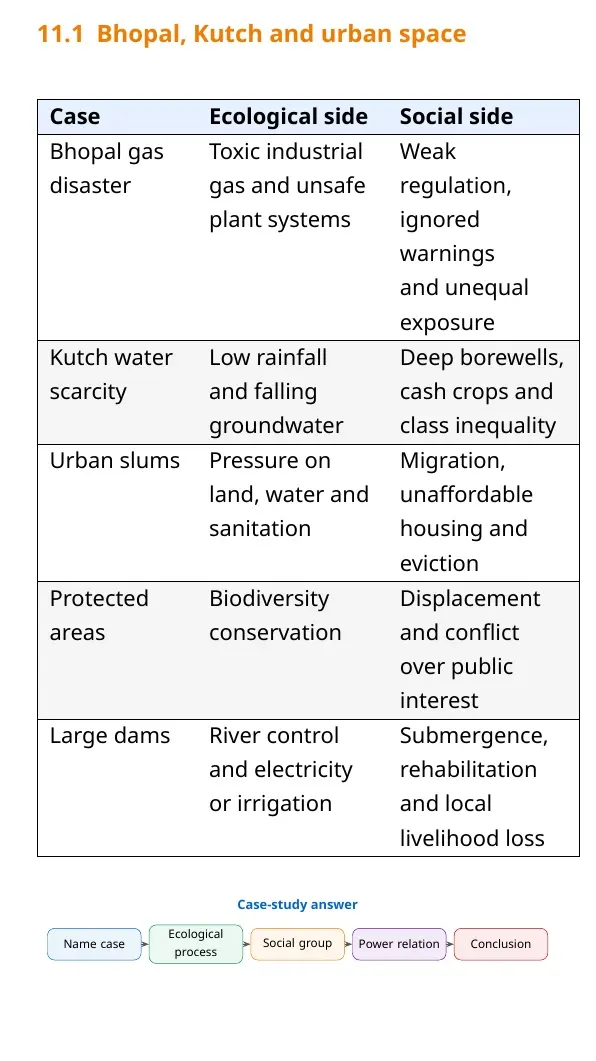
- Kutch water scarcity: richer farmers use deep borewells while poor villagers lose drinking water.
- Urban slums: poor workers need housing but land is claimed for infrastructure and affluent spaces.
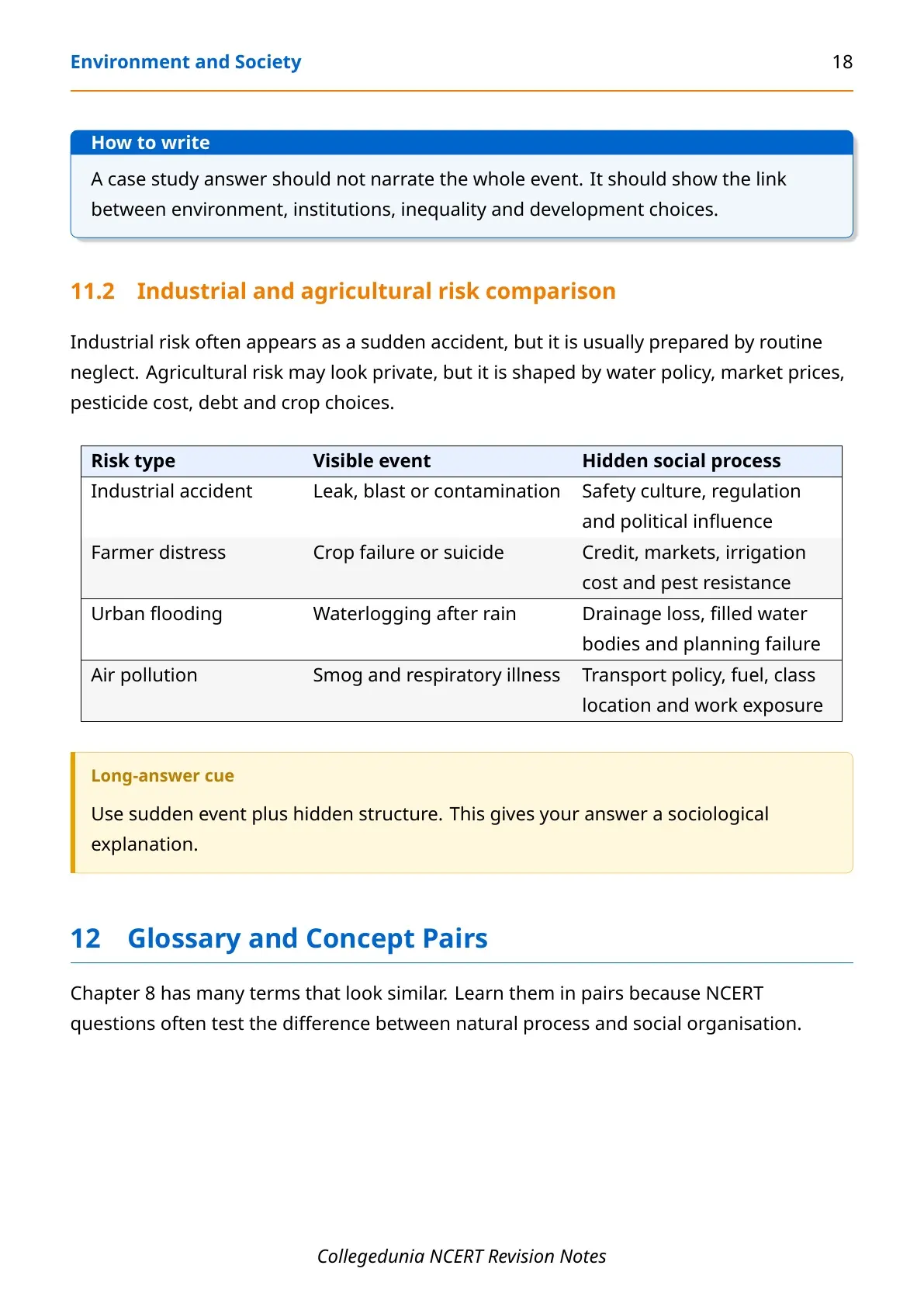
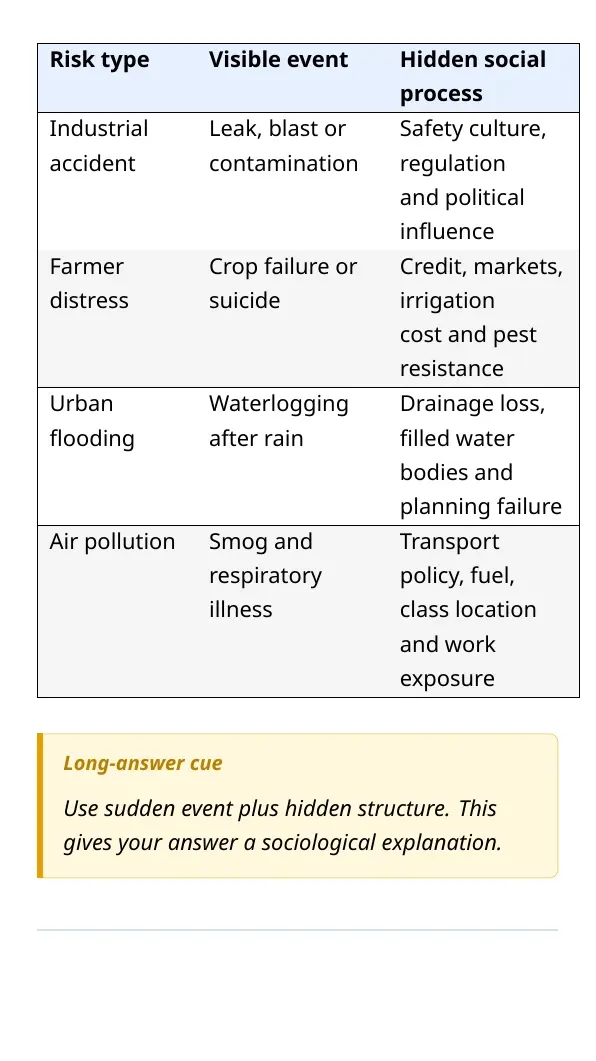
- Farmer distress: ecological risk combines with debt, market prices and reduced support.
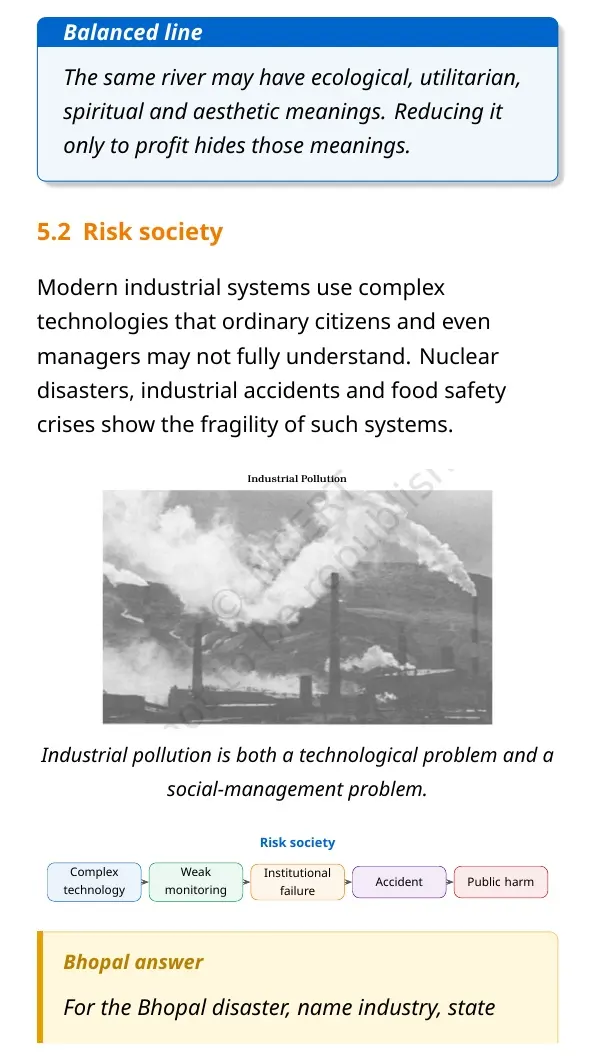
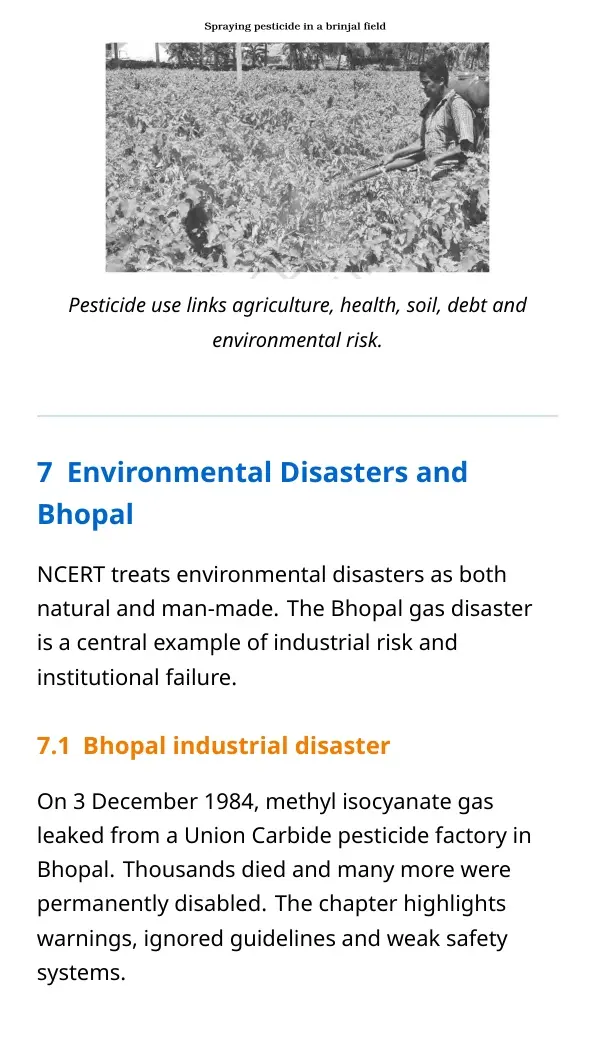
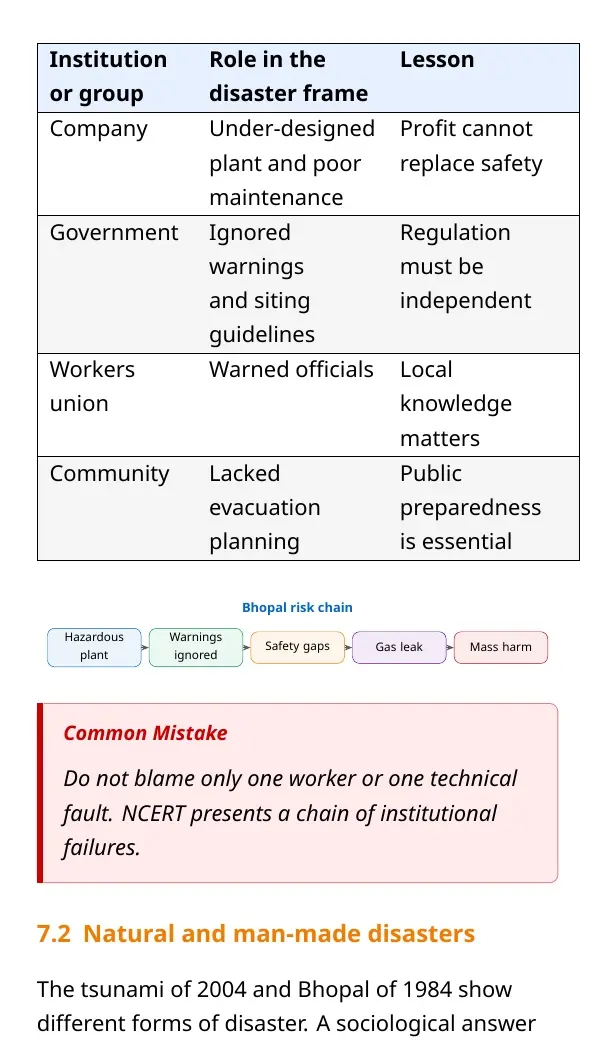
- Bhopal: industrial risk became a disaster through weak safety and ignored warnings.
Sustainable Development and Environment-Society Conflicts
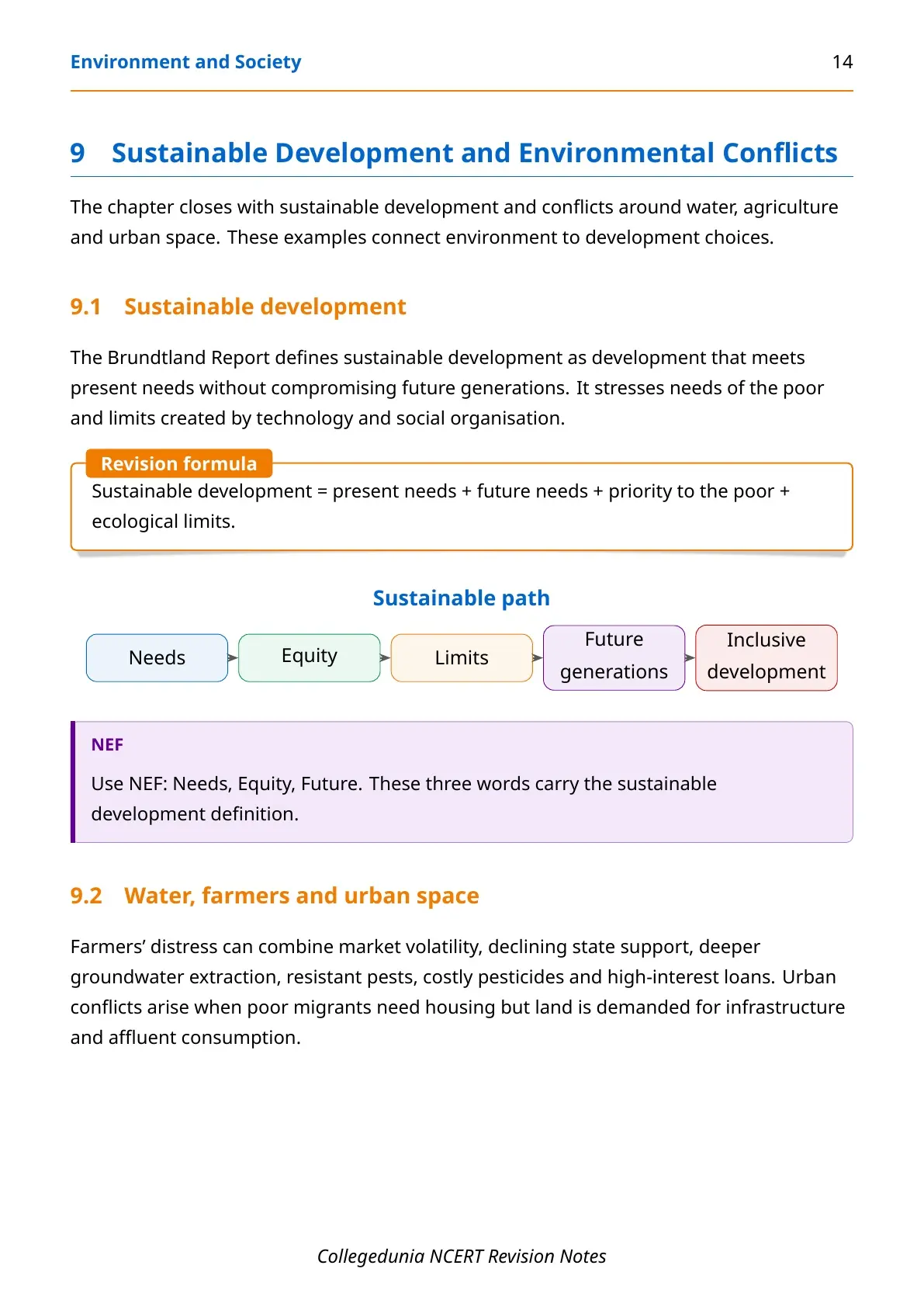
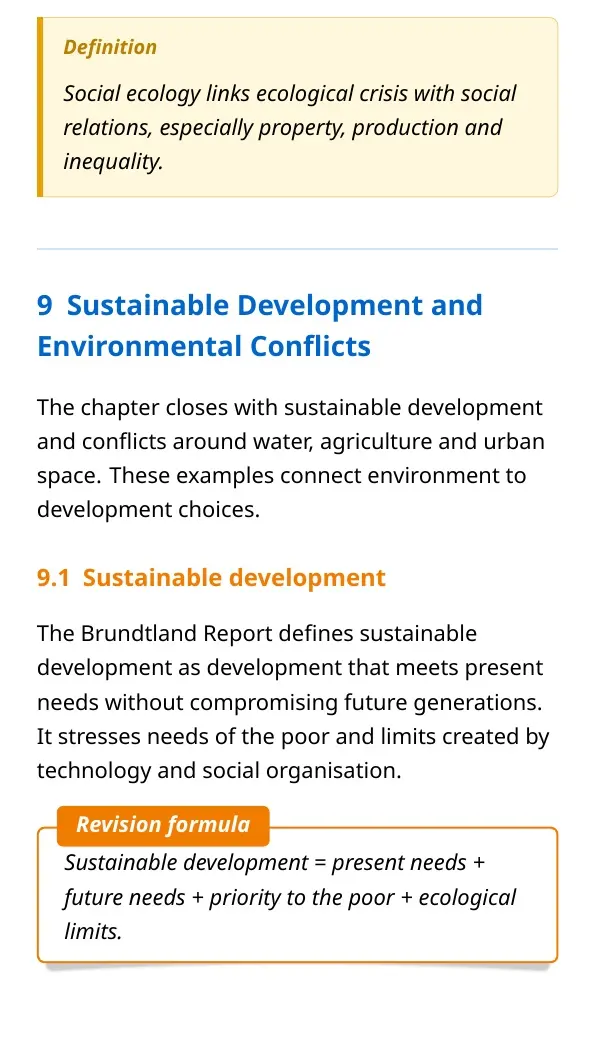
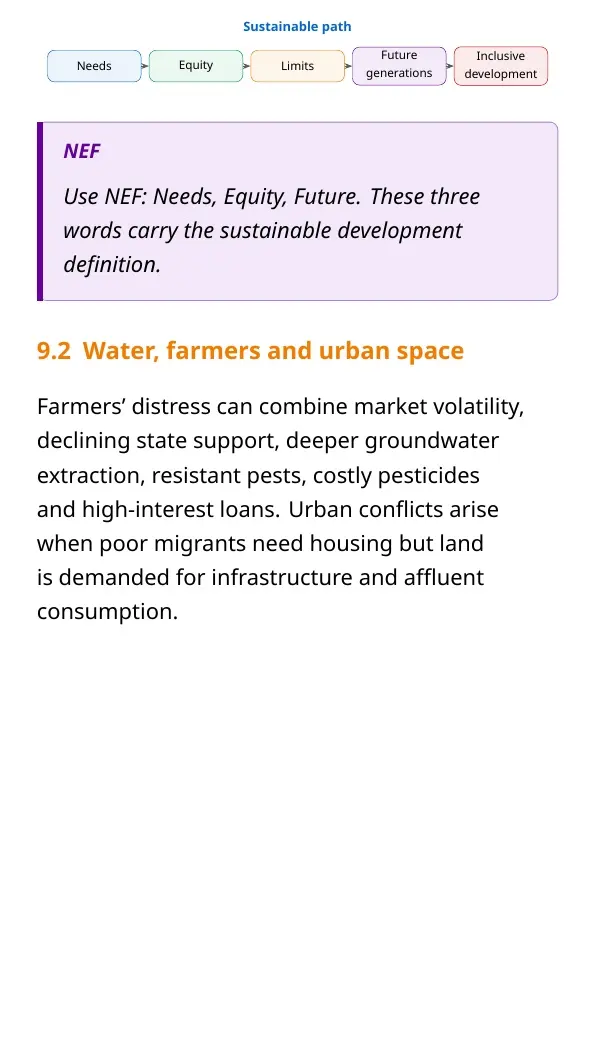
Sustainable development means meeting present needs without compromising the ability of future generations to meet their own needs. NCERT also stresses the needs of the poor and the limits created by technology and social organisation.
- Needs: development must address present human needs.
- Equity: the needs of the poor deserve priority.
- Limits: nature, technology and social organisation set boundaries.
- Future: development should not exhaust resources for later generations.
Related NCERT Resources for Environment and Society
| Resource | Use it for |
|---|---|
| Class 11 Sociology Chapter 8 NCERT Book PDF | Official textbook reading and examples. |
| Class 11 Sociology Chapter 7 Notes | Revise social change and social order before environment-society conflicts. |
| Class 11 Sociology Chapter 7 Notes | Revise social order before environment-society conflicts. |
All Class 11 Sociology Notes Chapters
| Chapter | NCERT Notes link |
|---|---|
| Chapter 1 | Sociology and Society Notes |
| Chapter 2 | Terms, Concepts and Their Use in Sociology Notes |
| Chapter 3 | Understanding Social Institutions Notes |
| Chapter 4 | Culture and Socialisation Notes |
| Chapter 5 | Doing Sociology Research Methods Notes |
| Chapter 6 | Social Structure, Stratification and Social Processes in Society Notes |
| Chapter 7 | Social Change and Social Order Notes |
| Chapter 8 | Environment and Society Notes |
Environment and Society Class 11 Notes FAQs
Ques. What is covered in Class 11 Sociology Chapter 8 Notes?
Ans. The notes cover ecology, social environment, resource depletion, pollution, global warming, Bhopal disaster, social ecology and sustainable development.
Ques. What is ecology in this chapter?
Ans. Ecology is the web of physical and biological systems and processes of which humans are one element.
Ques. Why are environmental problems social problems?
Ans. They are social problems because inequality, power and property decide who suffers more and who controls solutions.
Ques. What is sustainable development?
Ans. Sustainable development meets present needs without compromising future generations, while giving priority to the needs of the poor.



Comments