




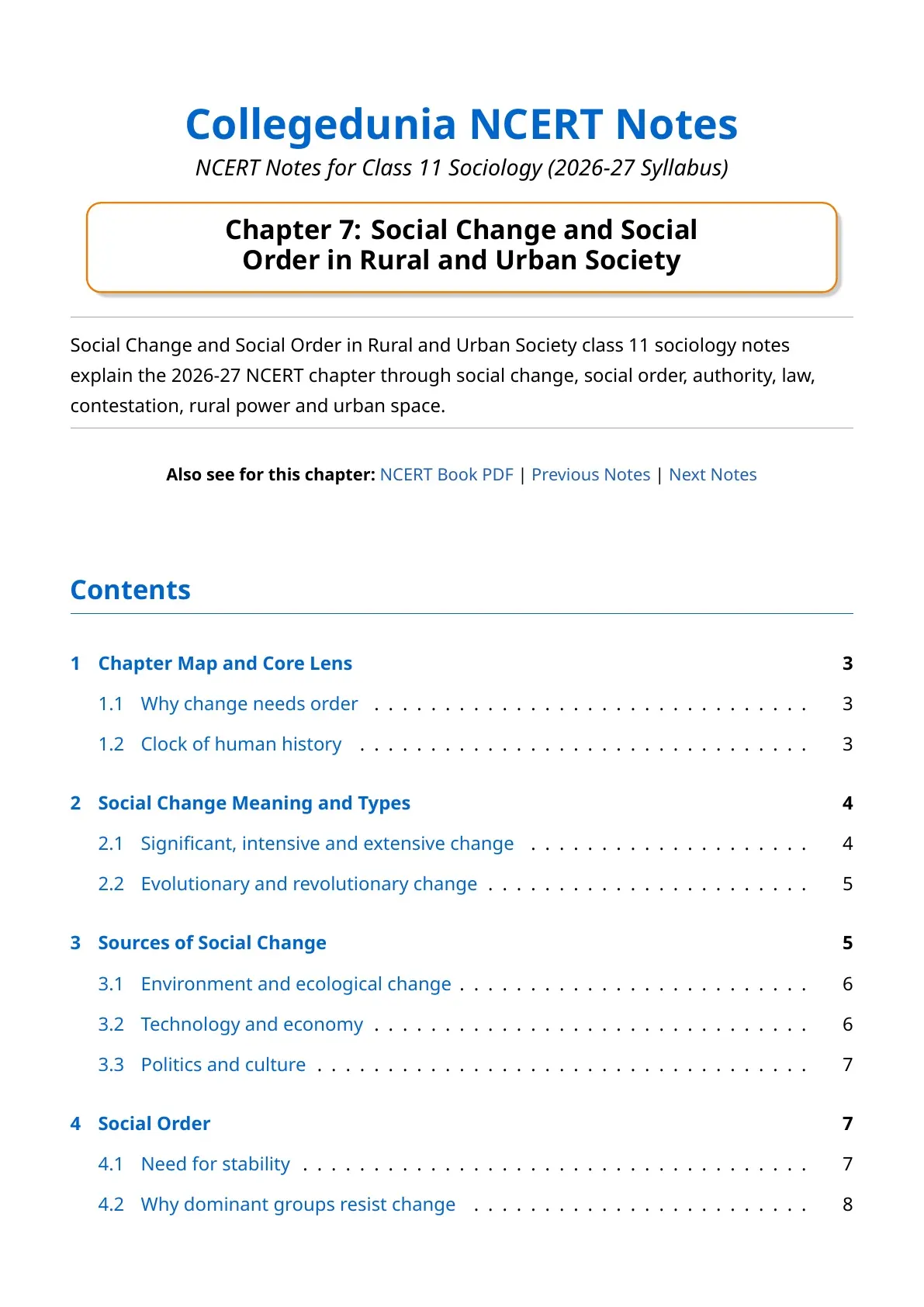
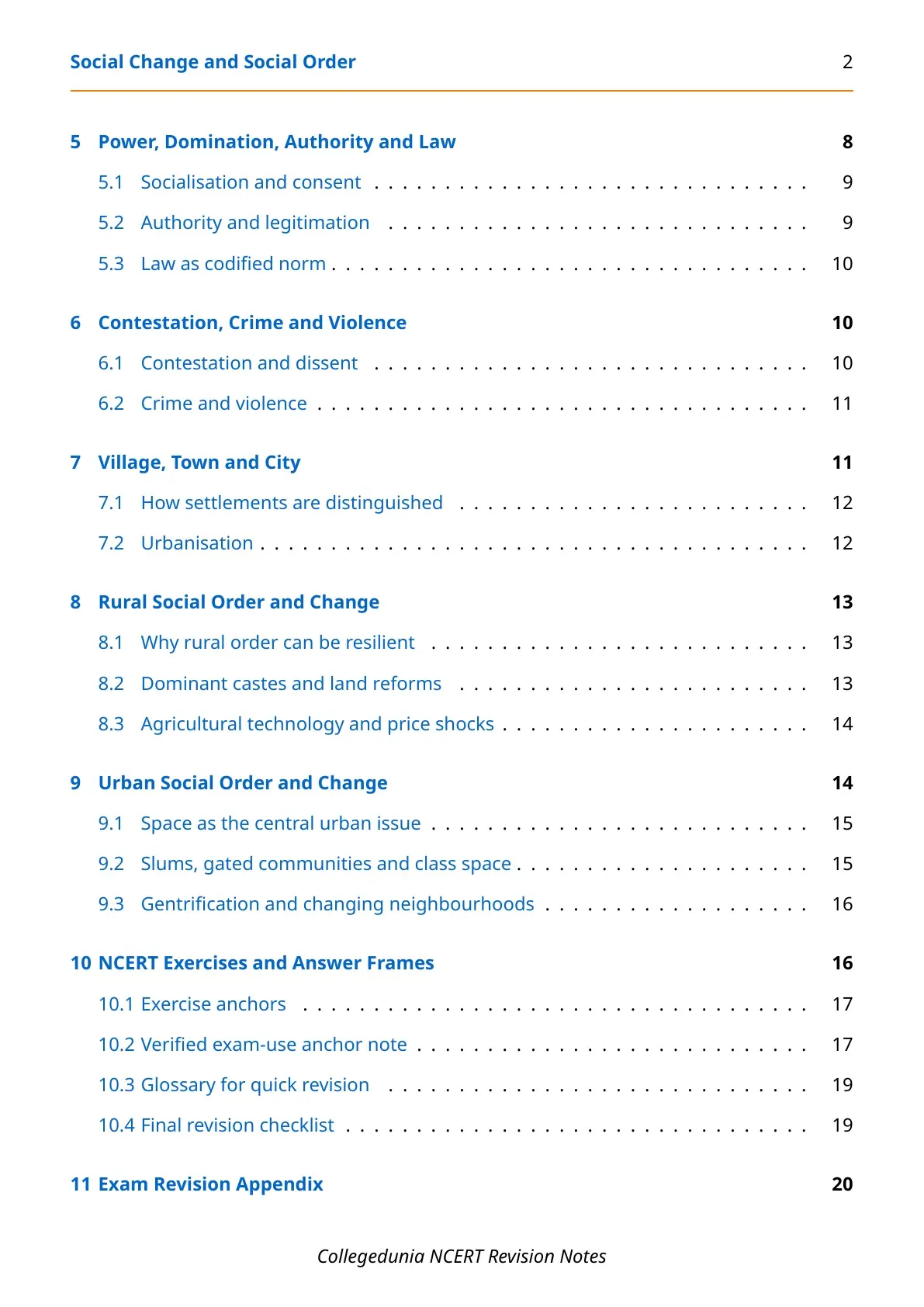
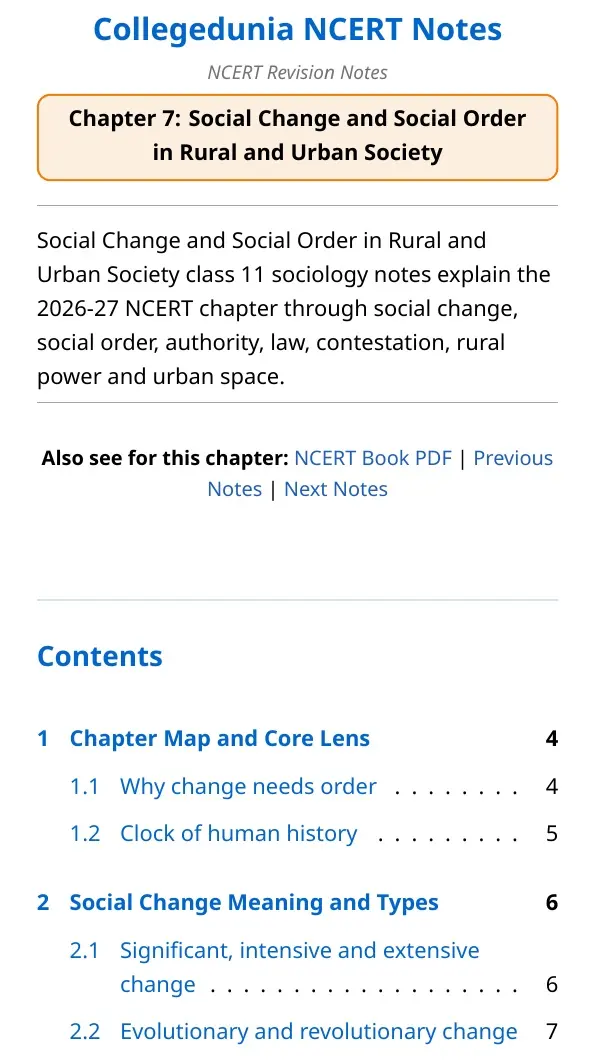
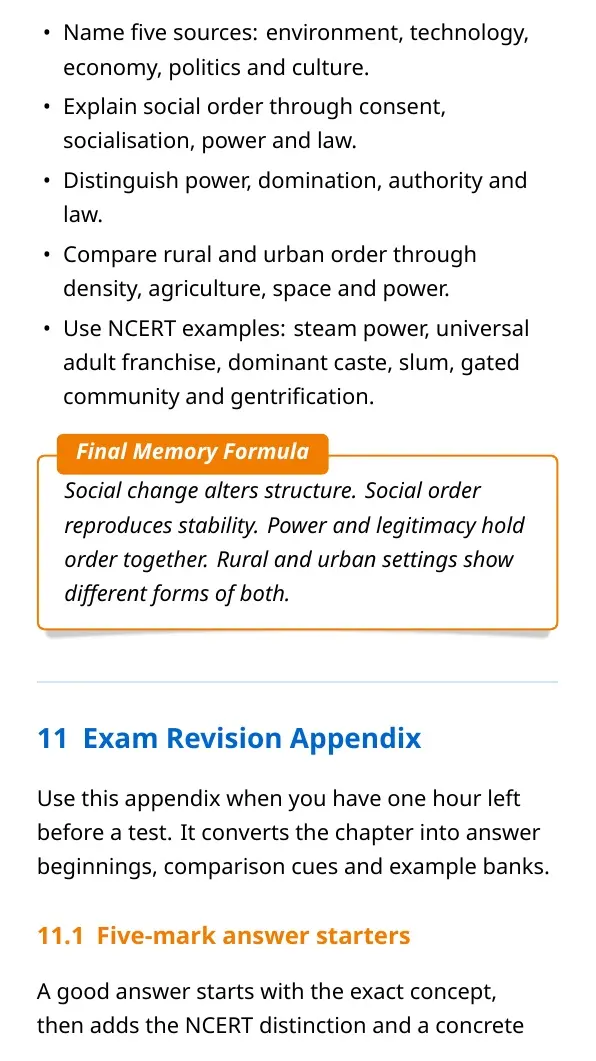
The NCERT Class 11 Sociology Chapter 7 Social Change and Social Order in Rural and Urban Society Notes help students revise the 2026-27 NCERT chapter on change, order, power, law, contestation, rural society and urban society. The PDF explains each concept with tables, source-based examples and exam answer frames.
- Best for: Class 11 Sociology tests, NCERT revision and quick answer writing.
- PDF focus: social change, social order, domination, authority, law, village, town and city.
- Chapter value: this chapter connects rapid change with the need for stable social rules.

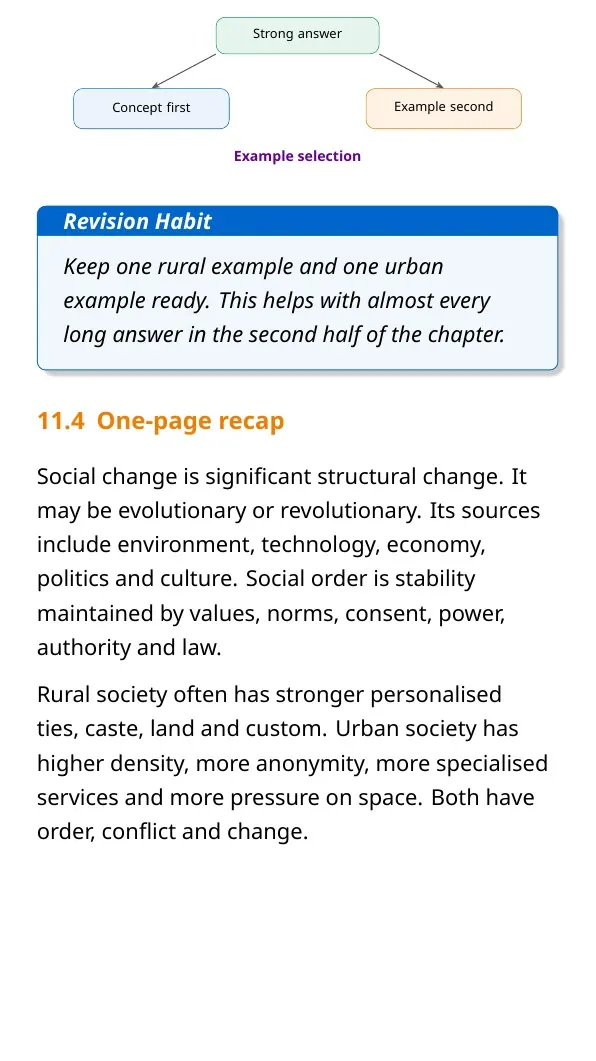
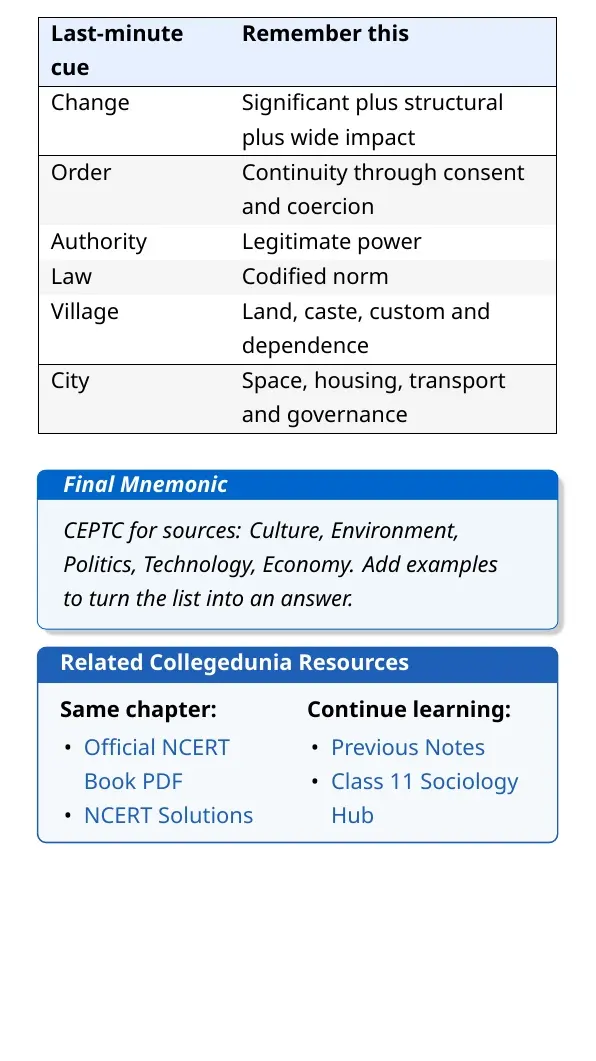
Revision Note: Start this chapter by separating social change from social order, then connect each idea to one rural example and one urban example.
Source: Collegedunia editorial review of the NCERT 2026-27 chapter structure.
What the Chapter 7 Sociology Notes Cover
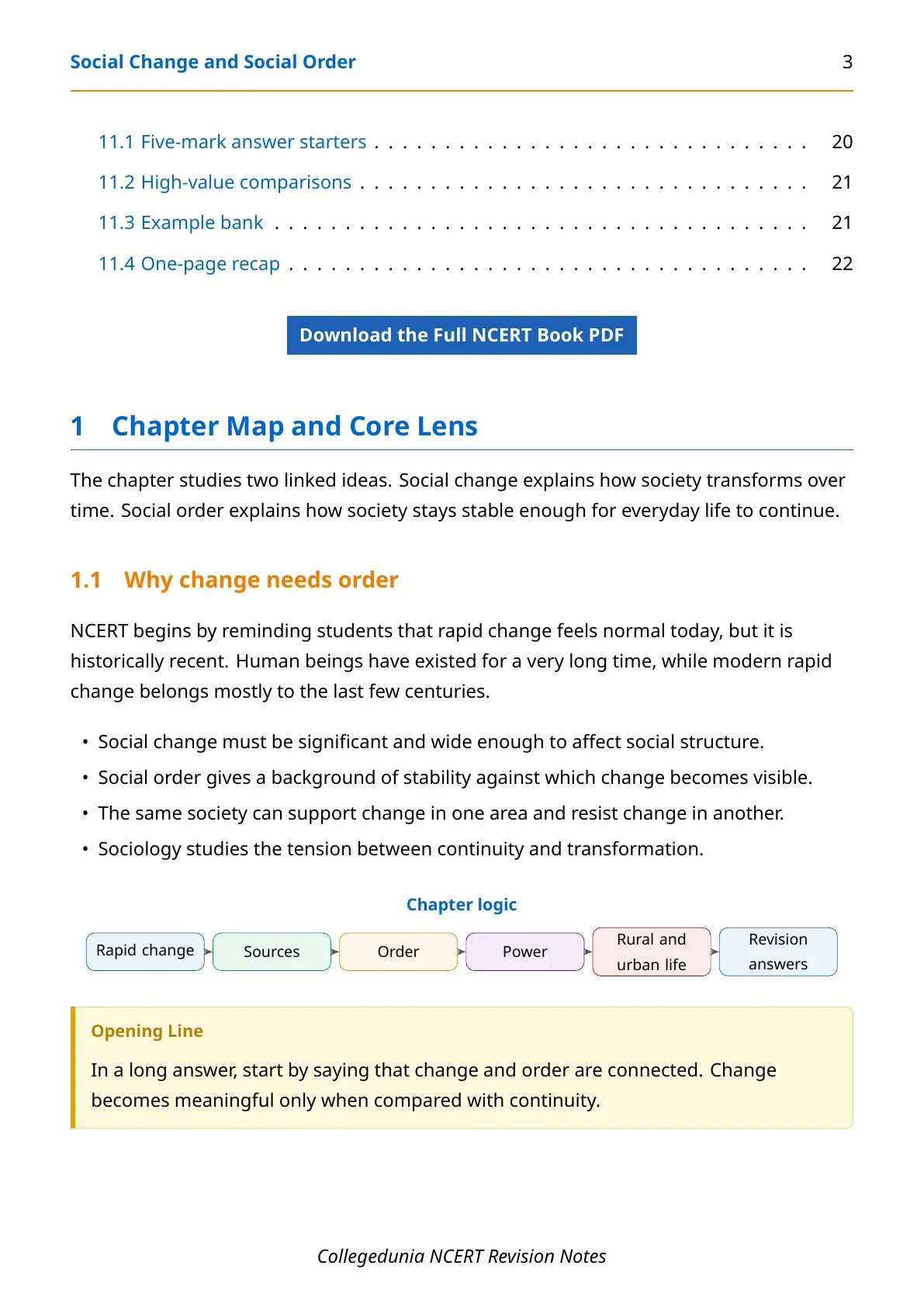
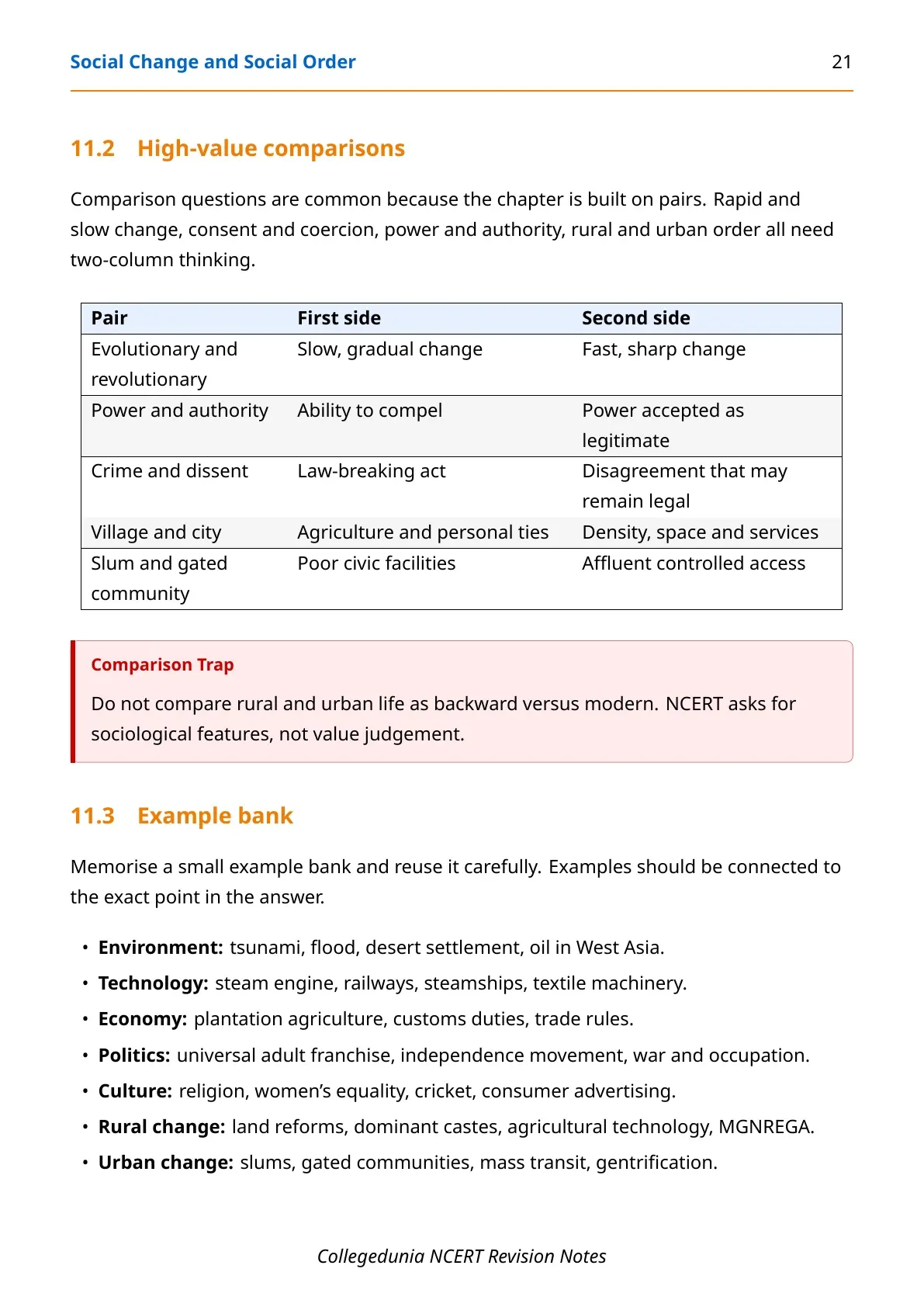
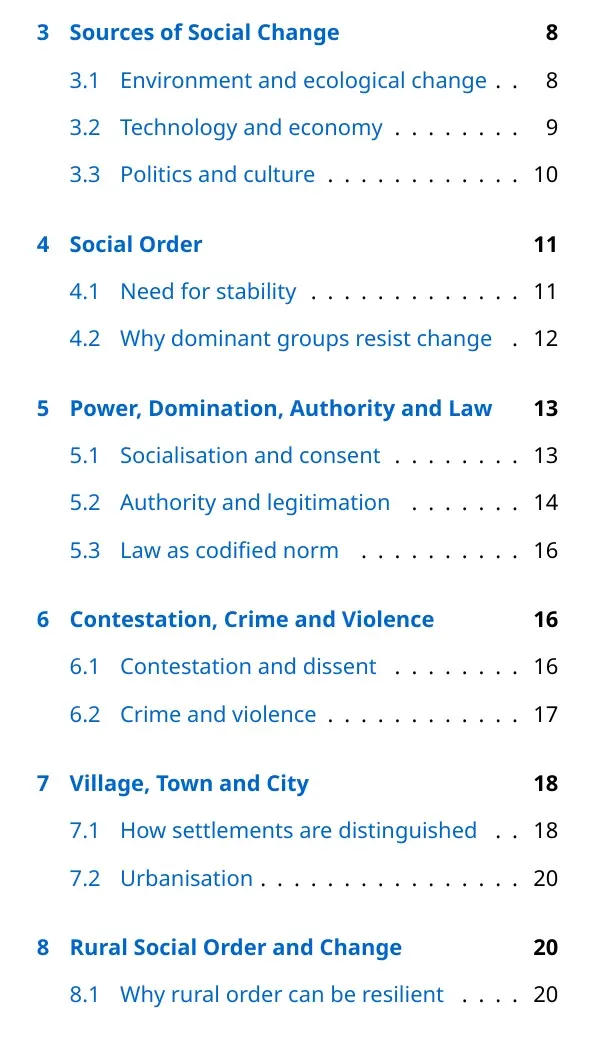
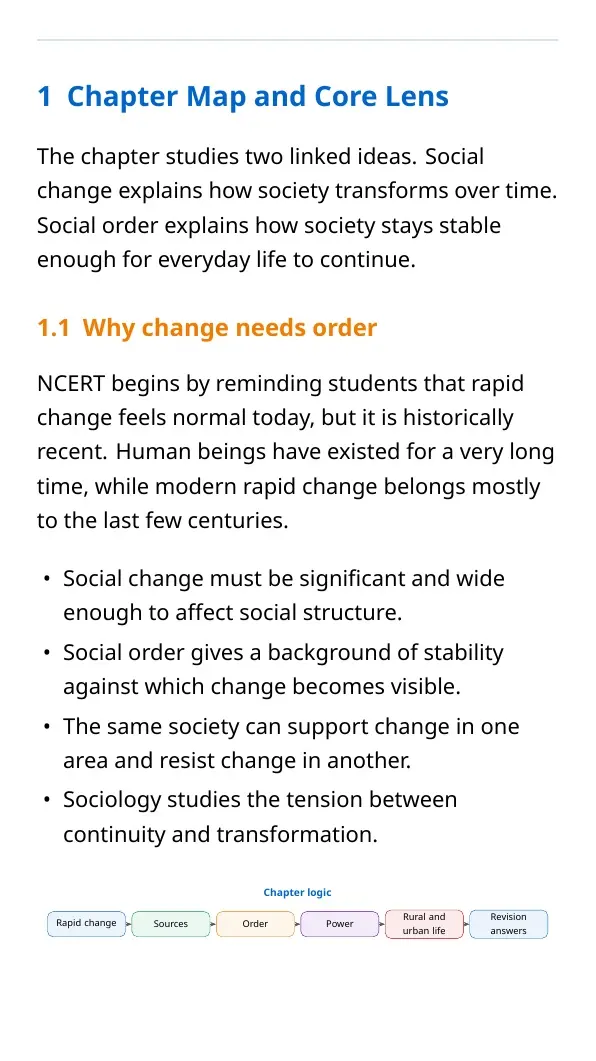
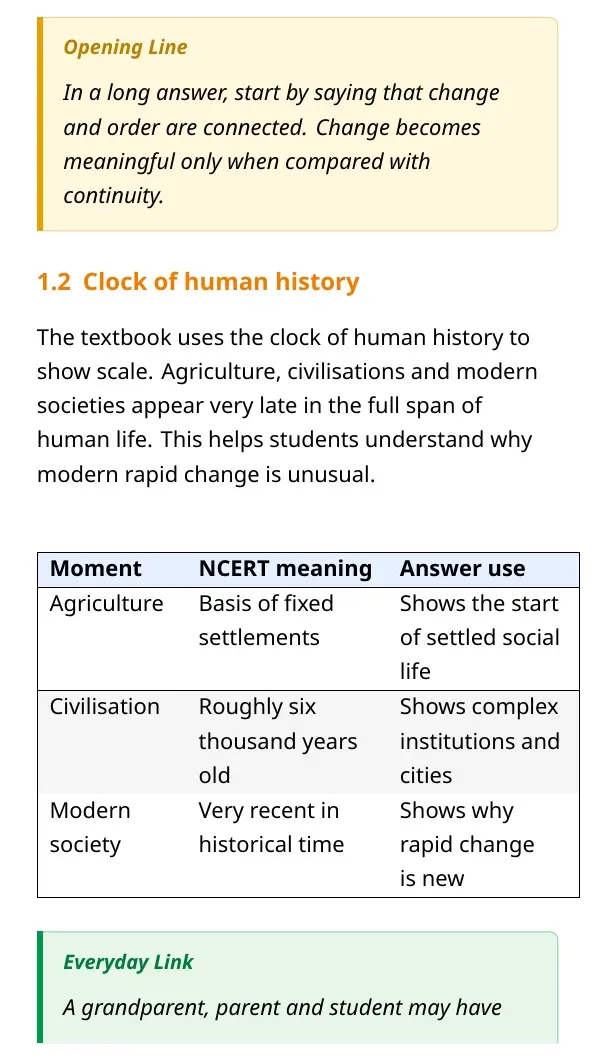
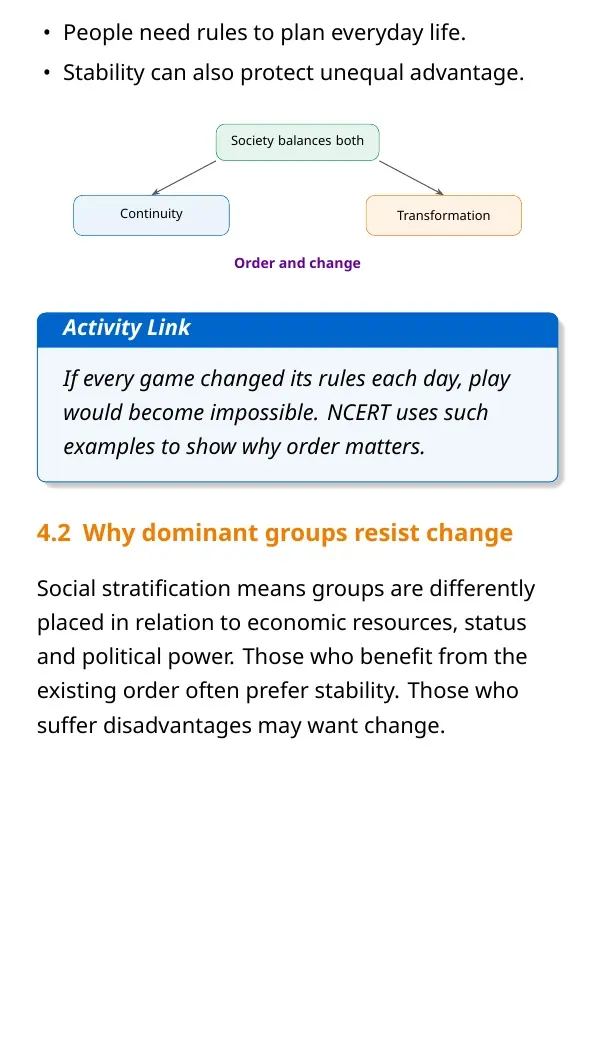
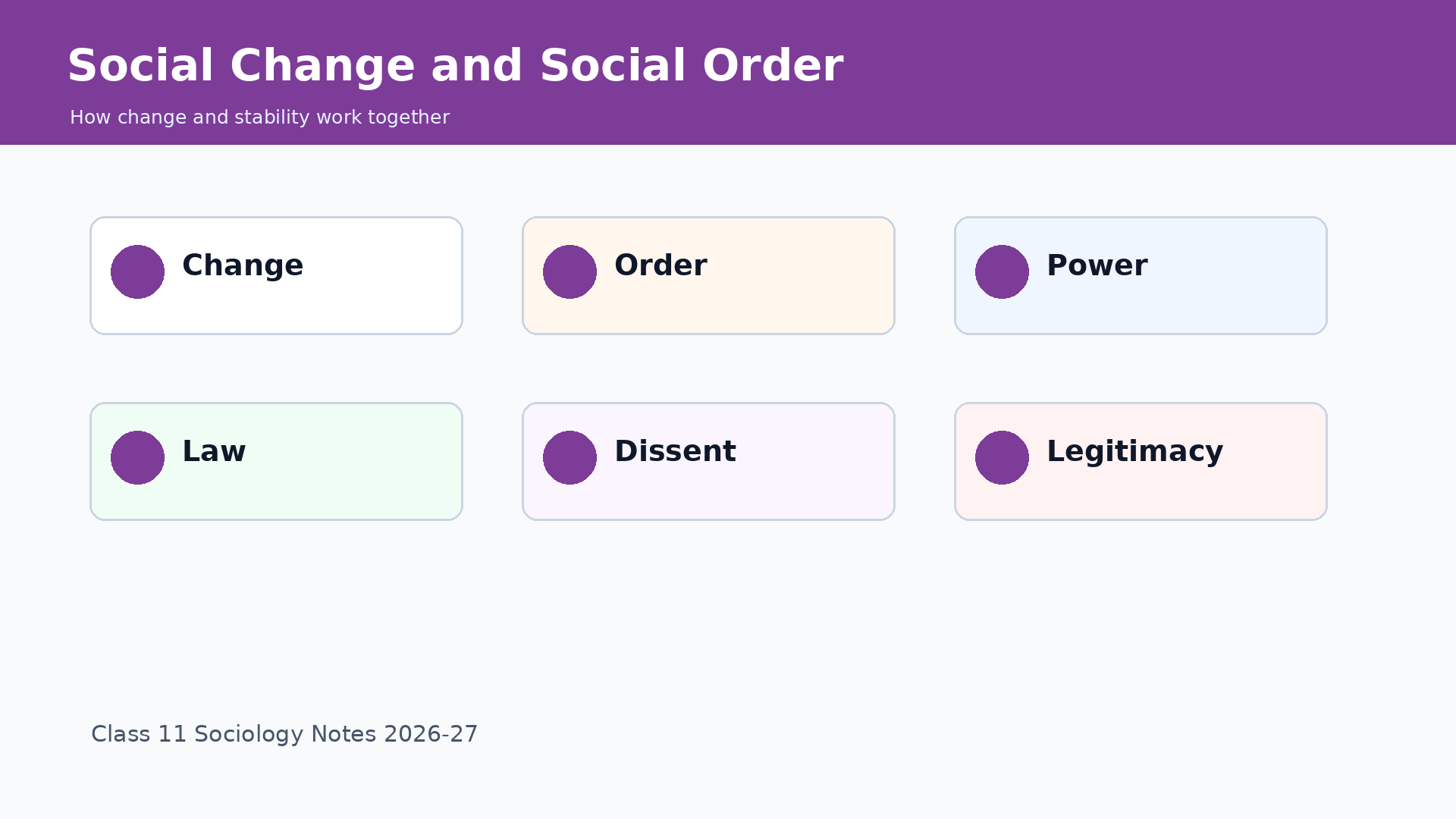
Chapter 7 explains why rapid social change is historically recent and why every society also needs order. Social change studies transformation, while social order studies stability, rules and the regulation of change.
| PDF section | What students revise |
|---|---|
| Social change | Significant, intensive and extensive changes in social structure. |
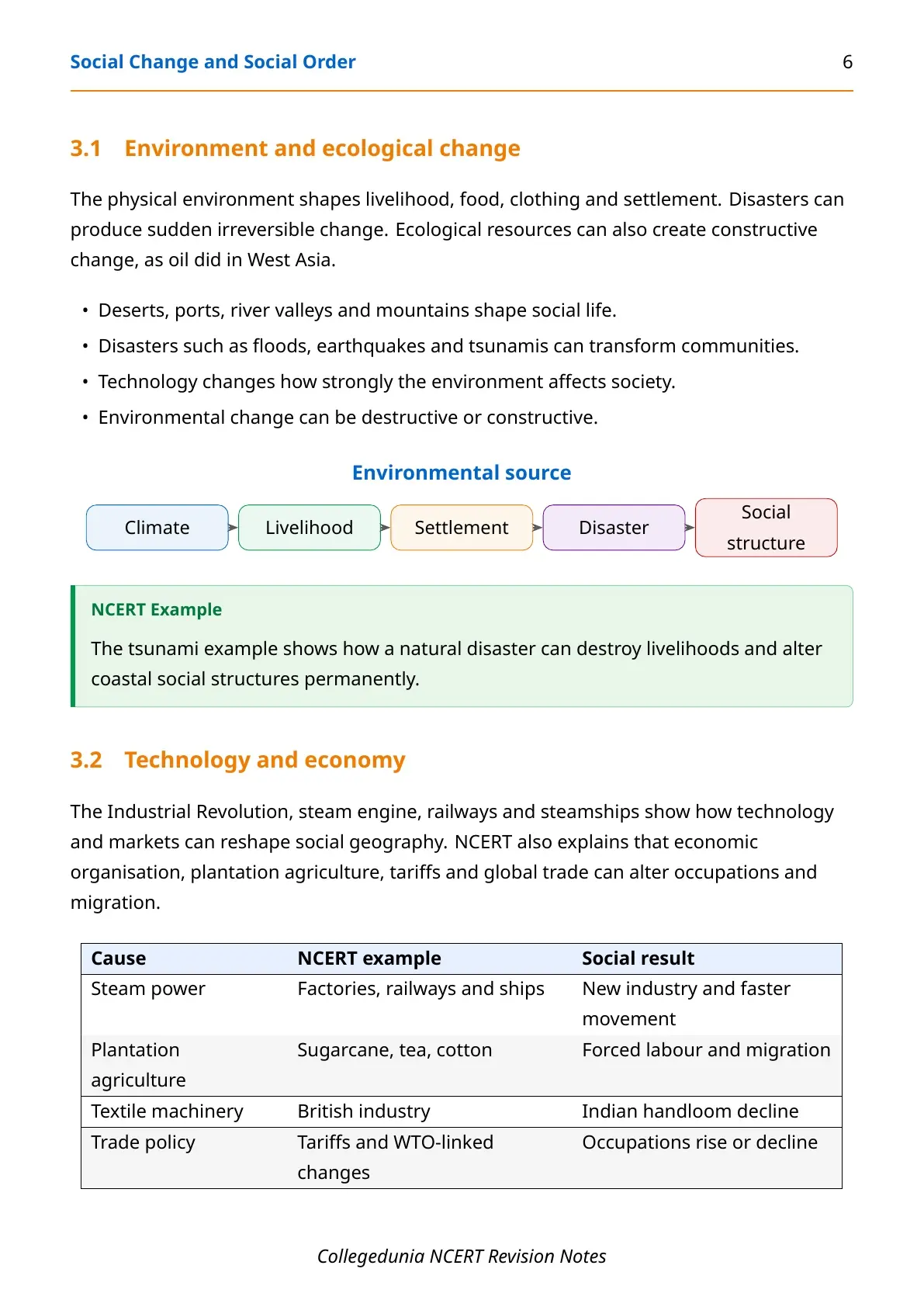
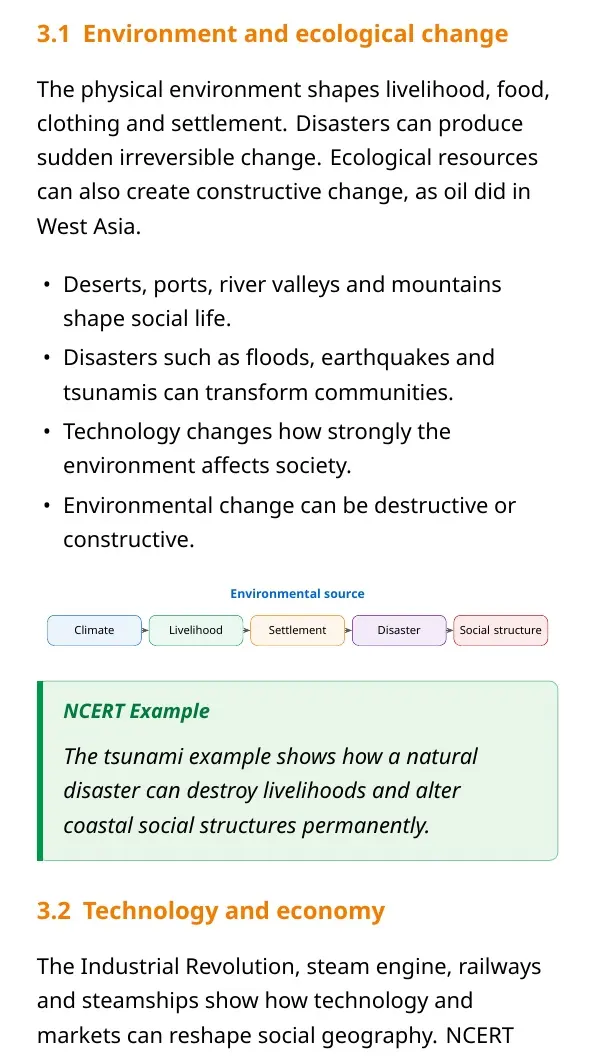
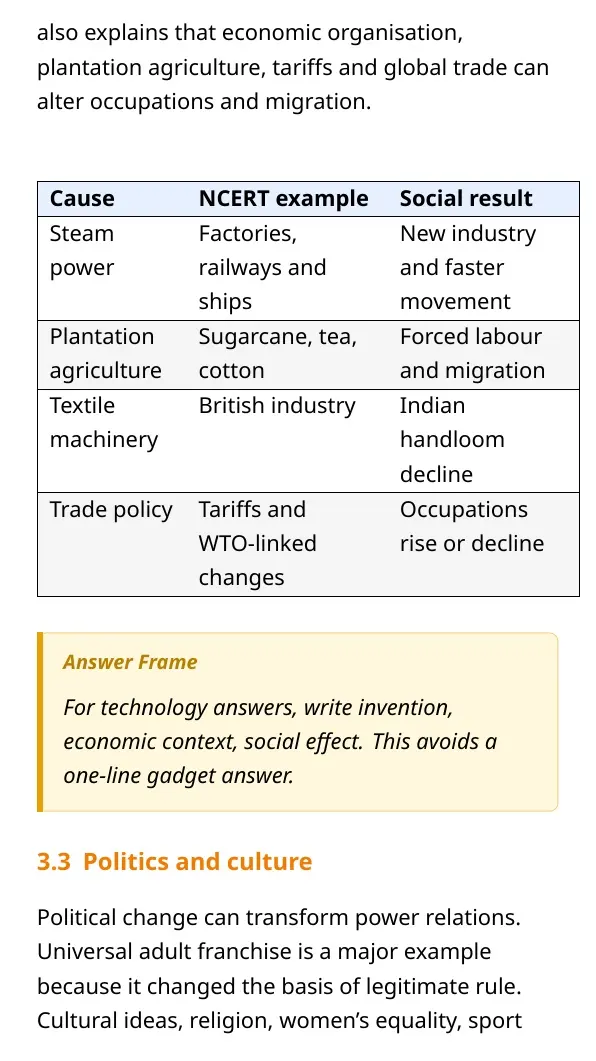
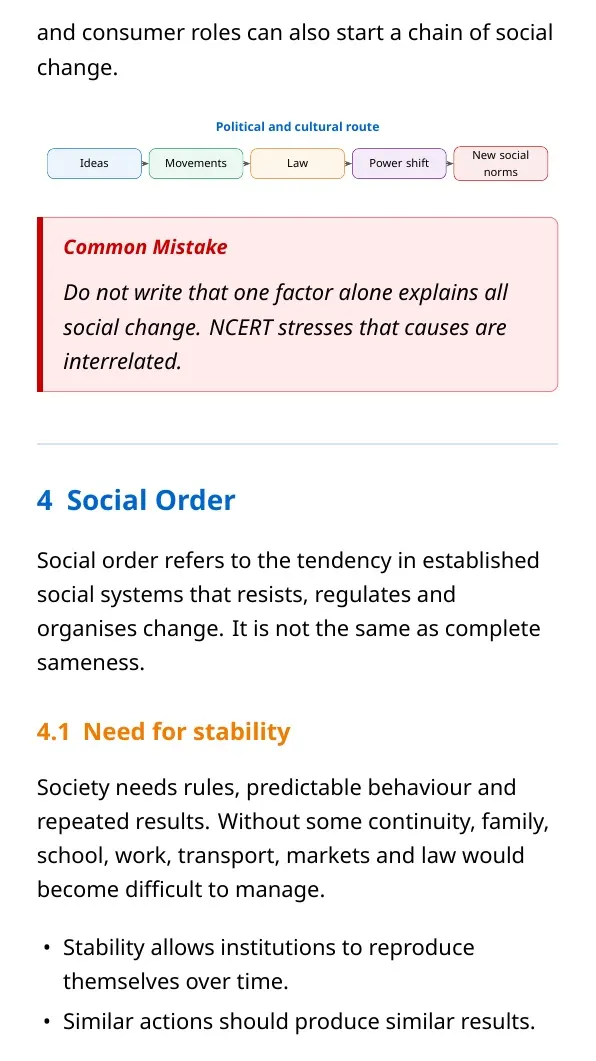
| Sources of change | Environment, technology, economy, politics and culture. |
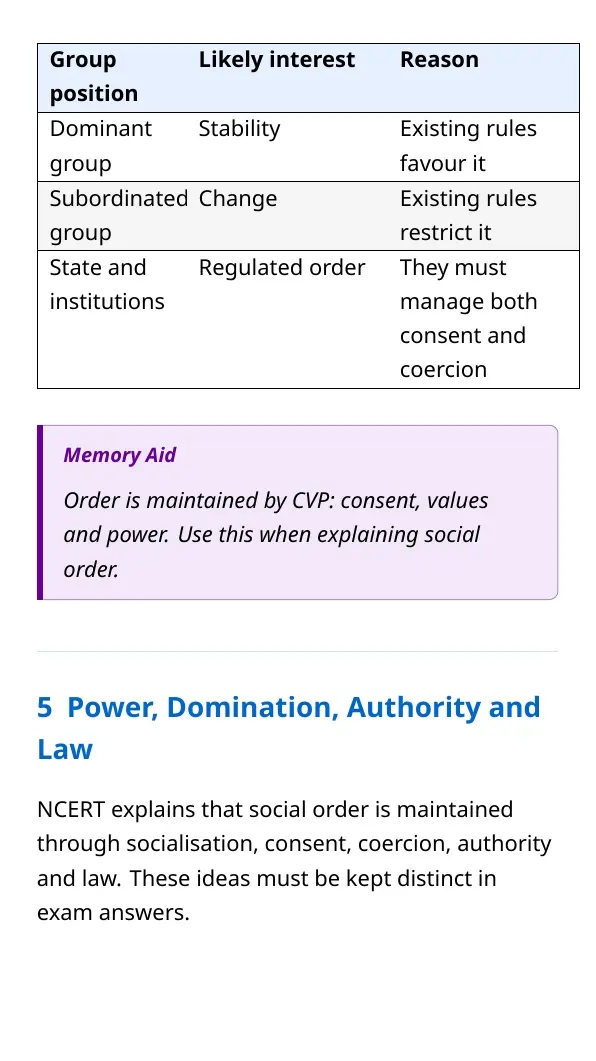
| Social order | Consent, socialisation, power, domination, authority and law. |
| Rural and urban society | Village, town, city, land, density, space, slums, transport and gentrification. |
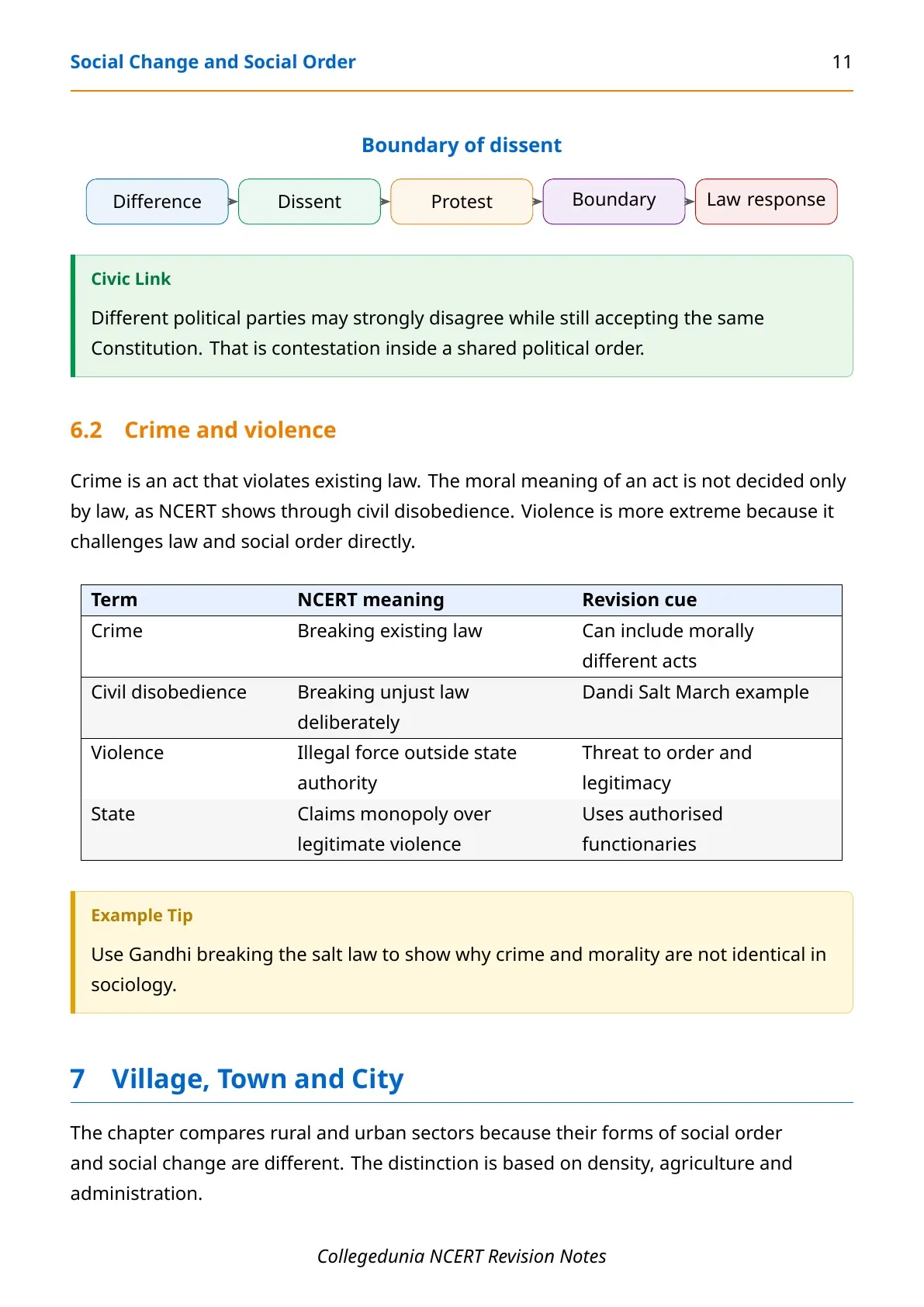
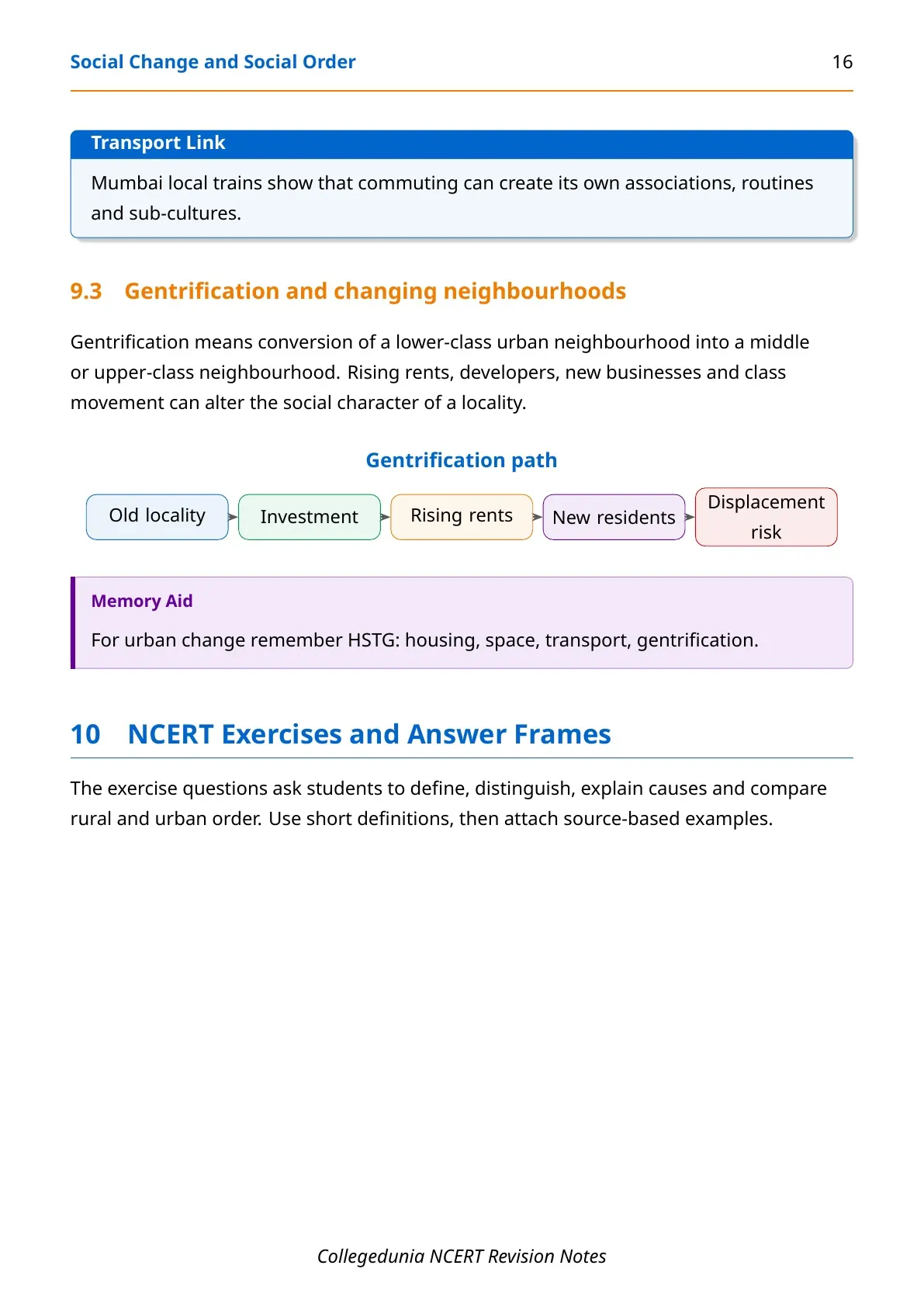
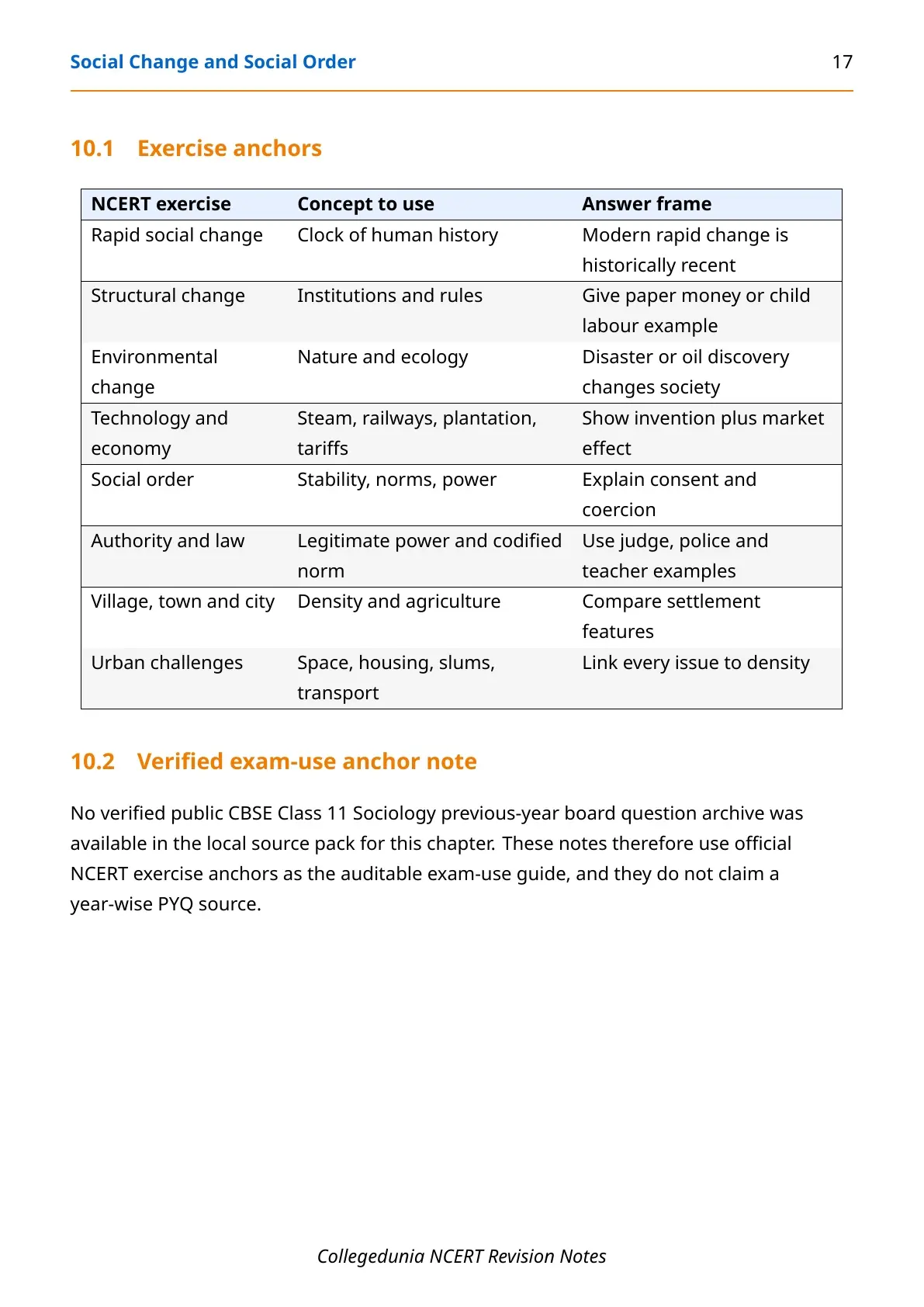
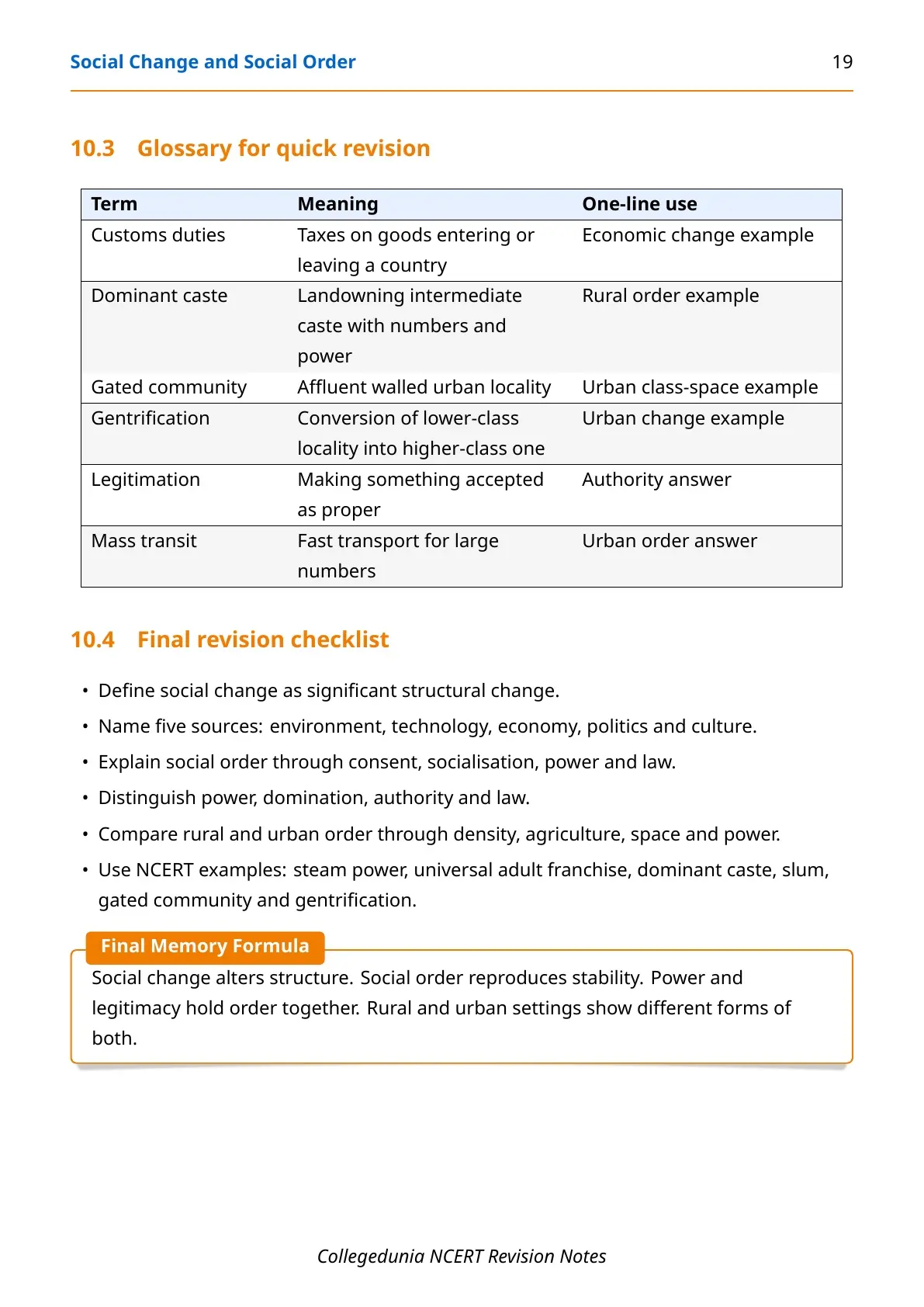
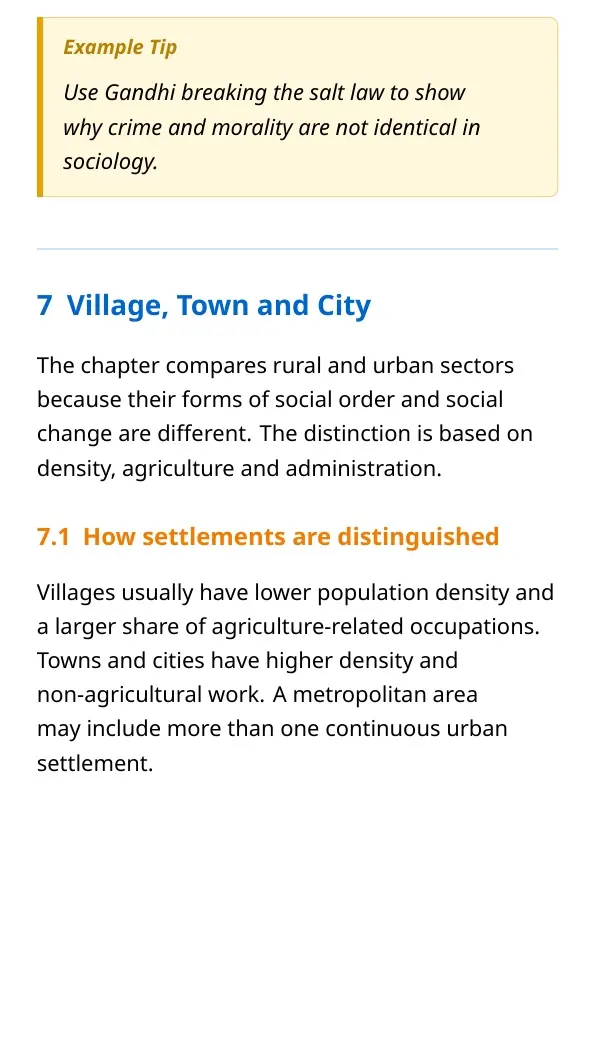
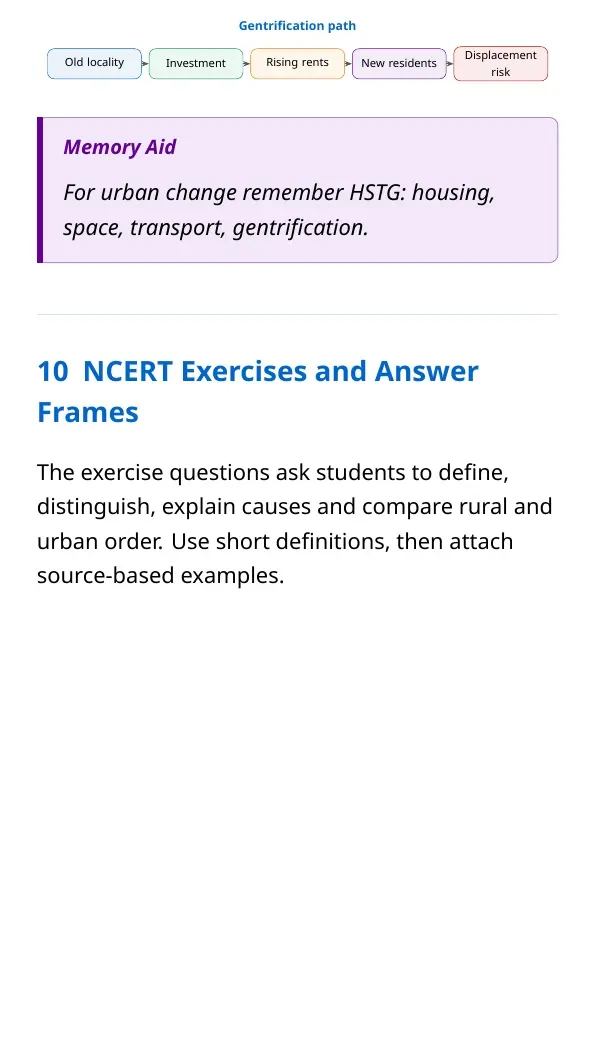
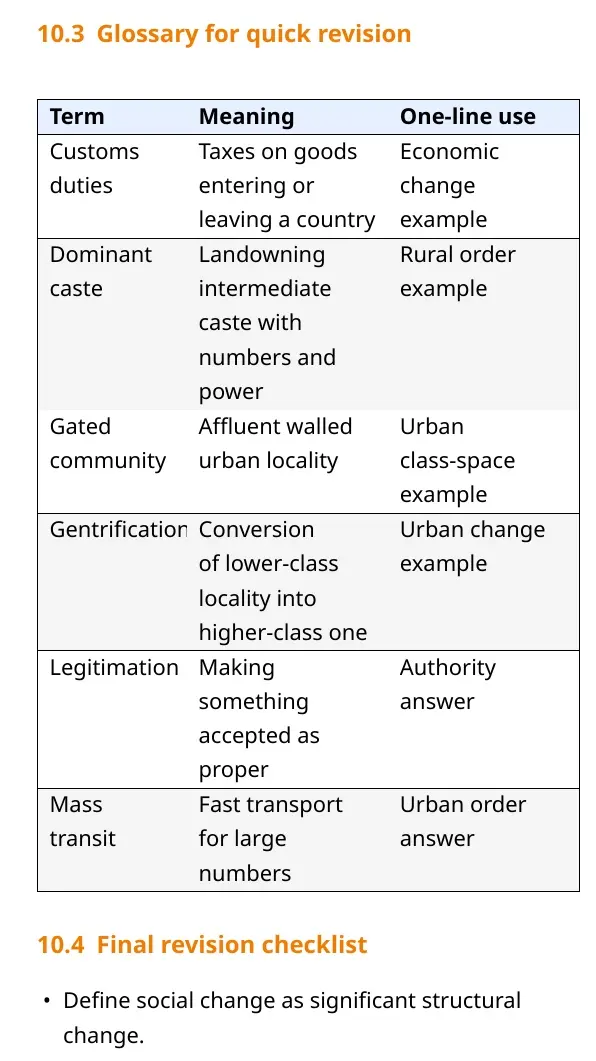
For exams, connect definitions with NCERT examples such as steam power, universal adult franchise, dominant caste, gated communities and gentrification.
Social Change and Social Order Class 11 Sociology Video
Source: Magnet Brains on YouTube
Social Change Meaning and Sources
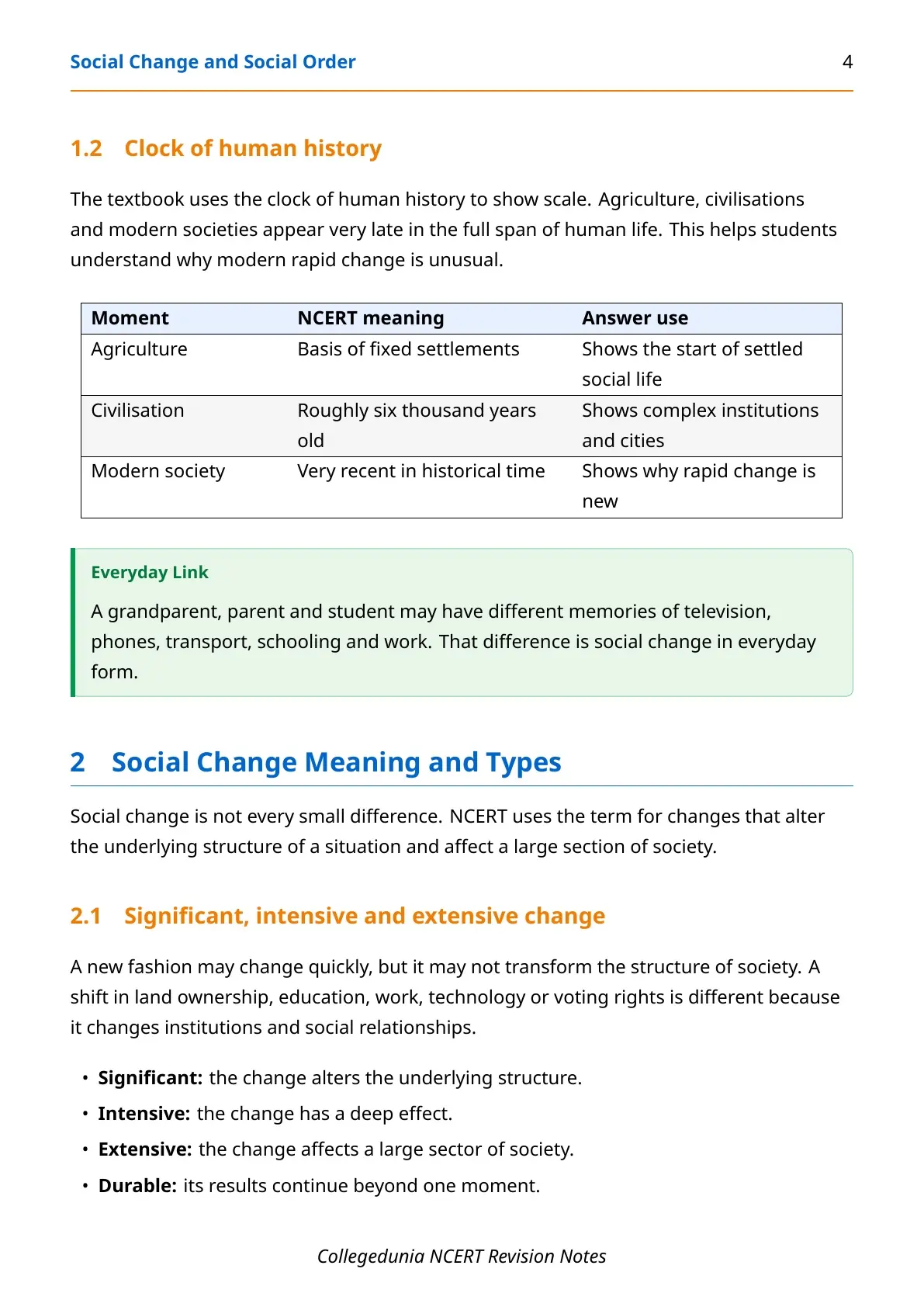
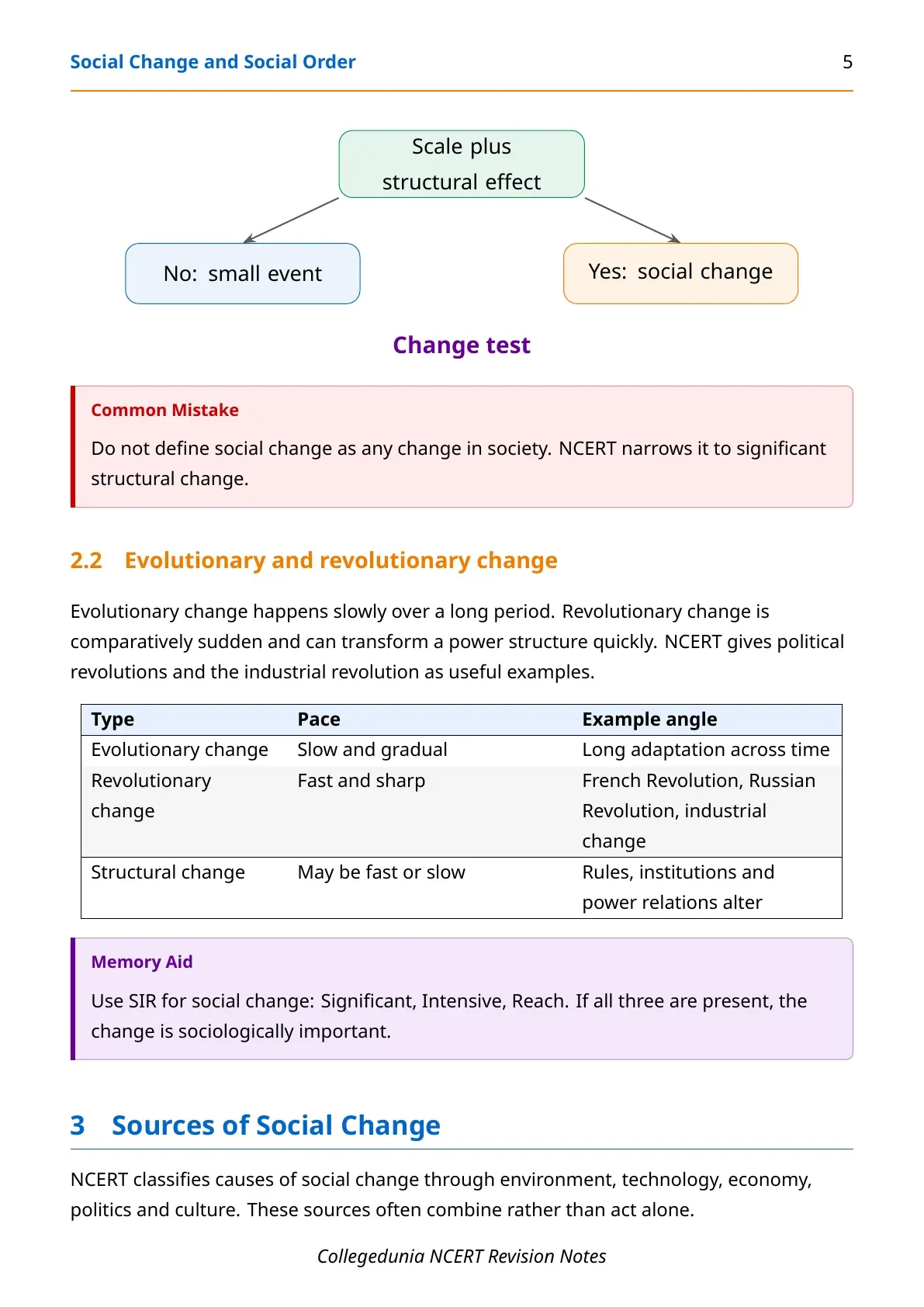
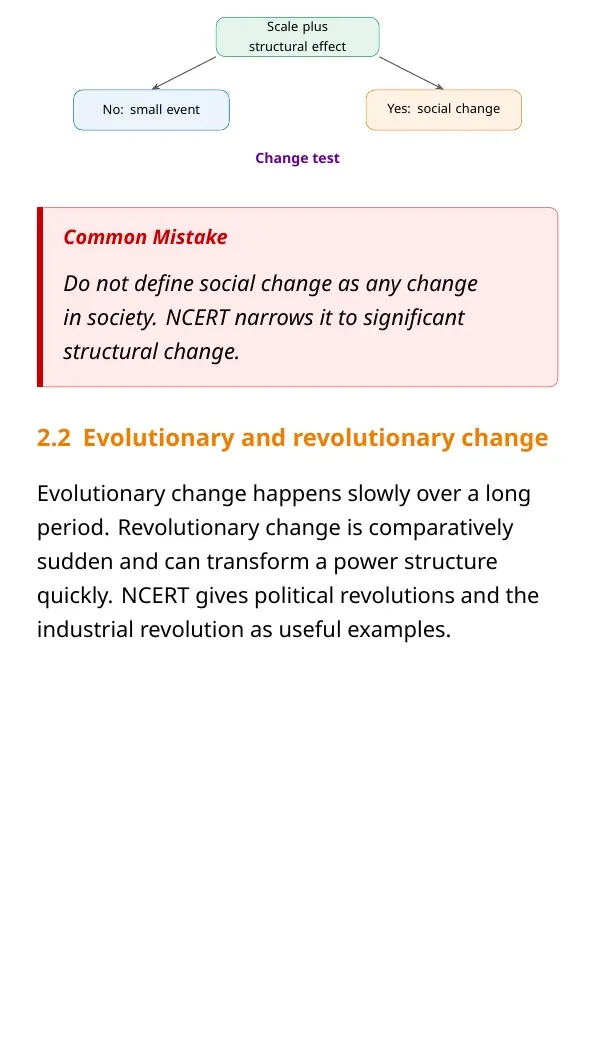
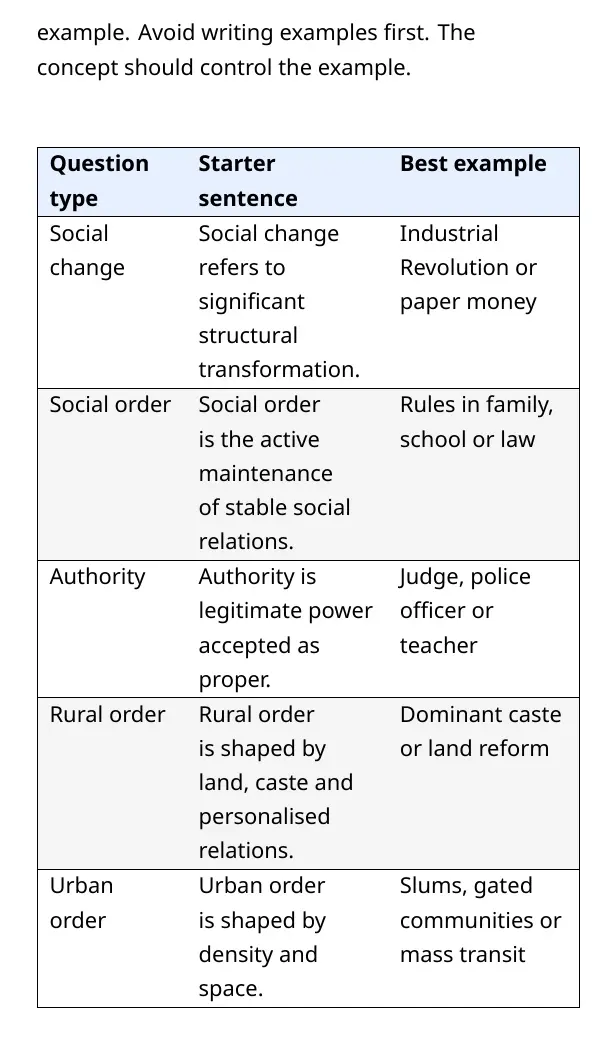
NCERT uses social change for changes that alter the underlying structure of an object or situation over time. Small changes matter only when they become significant enough to transform relationships, institutions or rules.
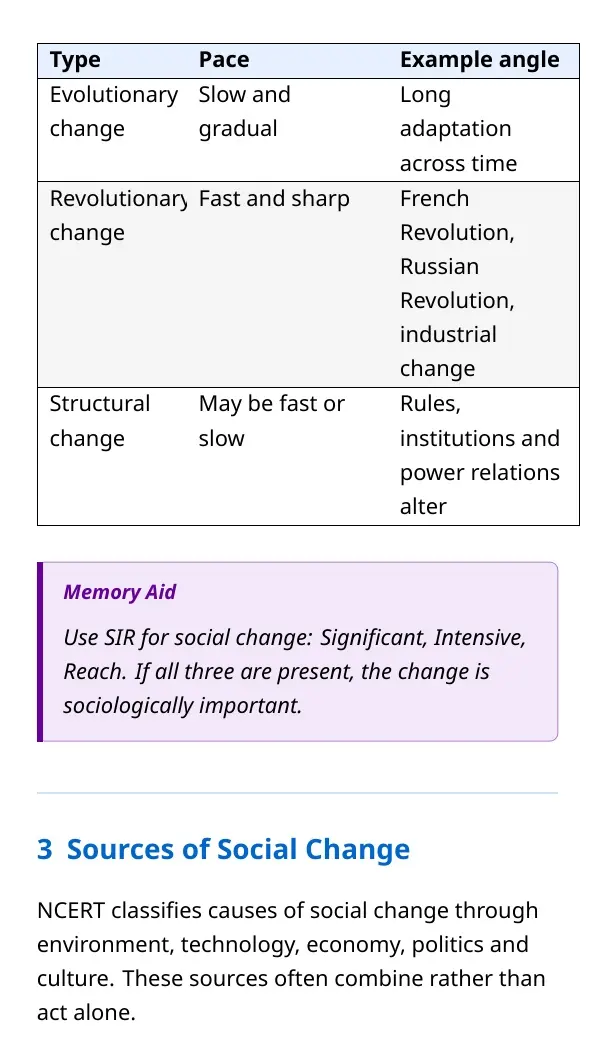
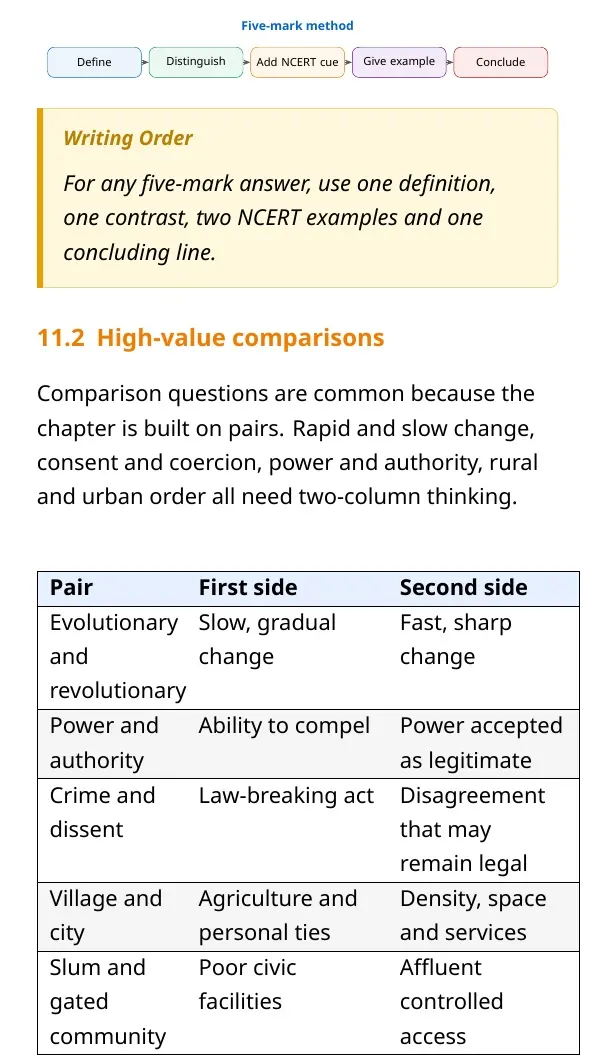
- Evolutionary change: slow change across a long period.
- Revolutionary change: rapid and sharp change in power or structure.
- Structural change: transformation in institutions or rules.
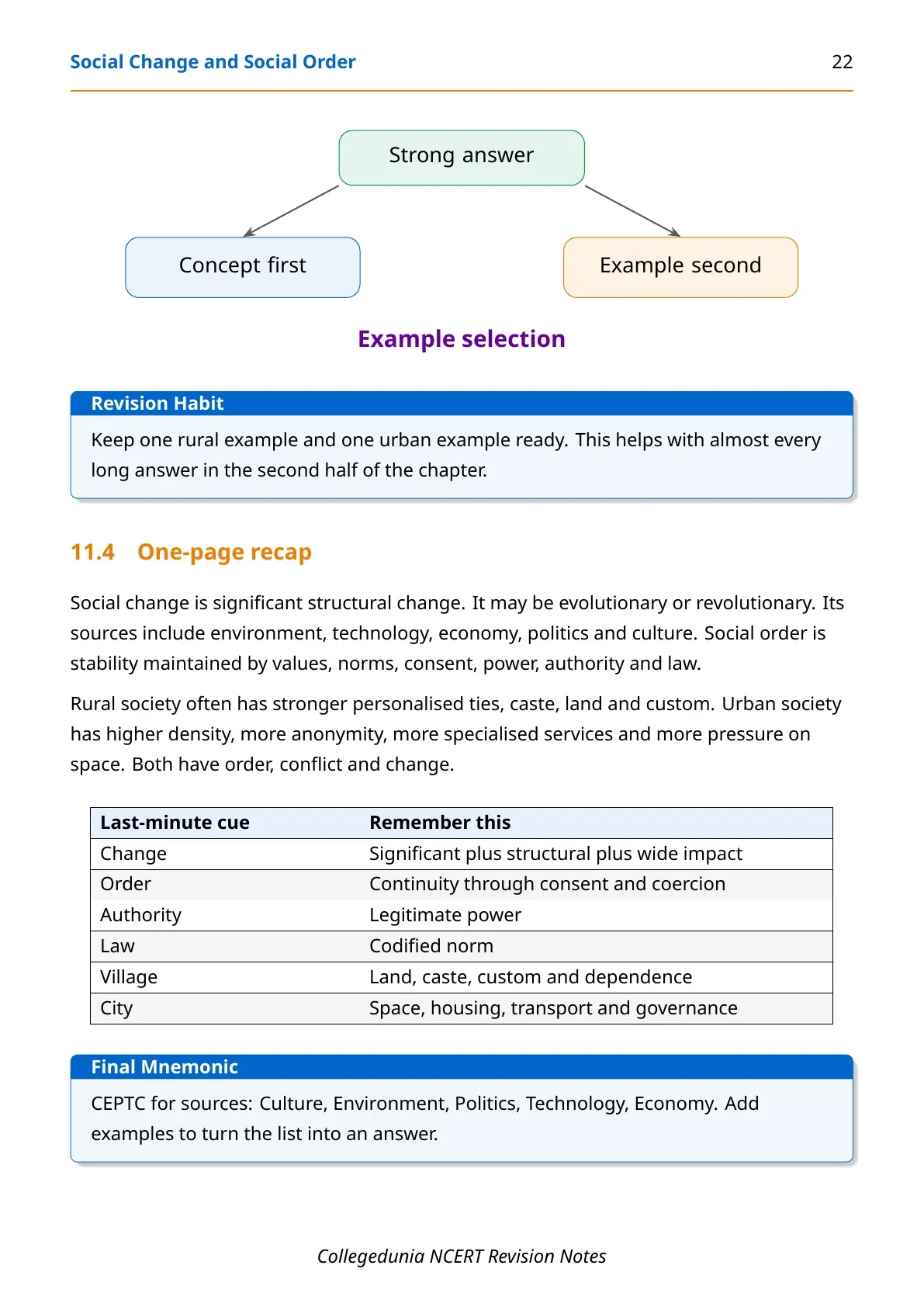
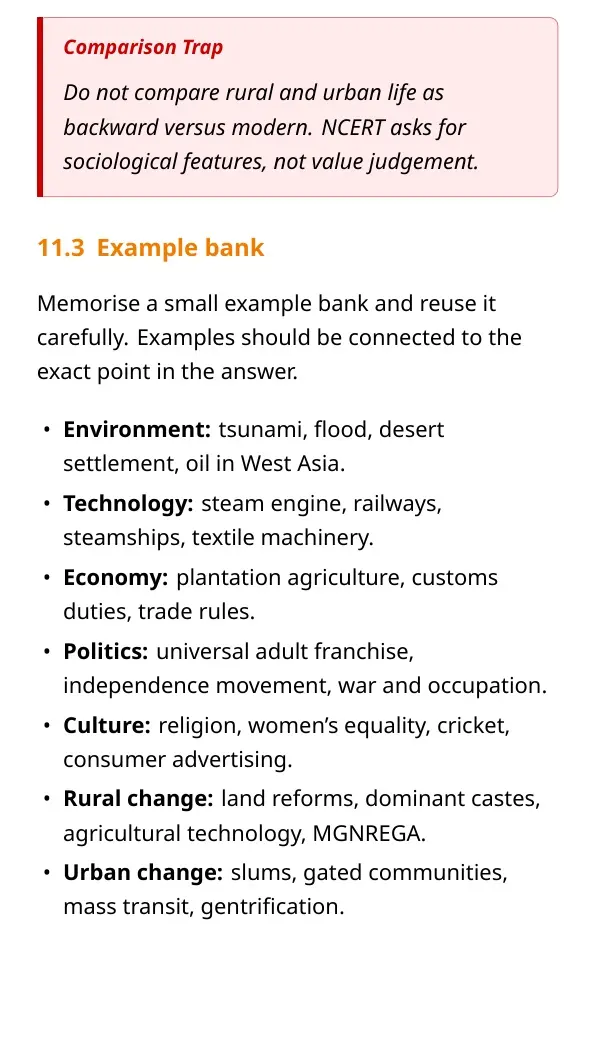
- Sources: environment, technology, economy, politics and culture.
Social Order, Power, Authority and Law
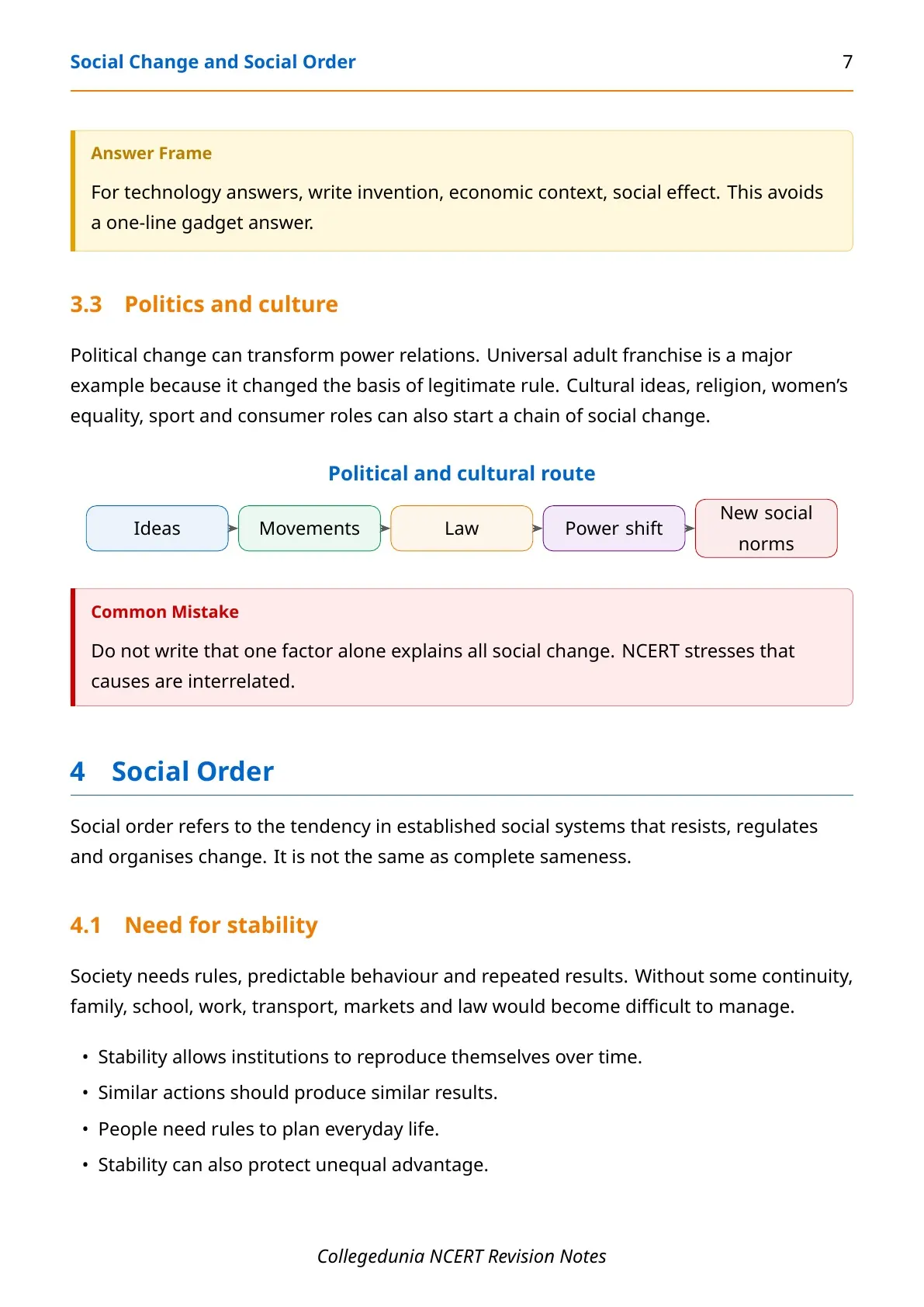
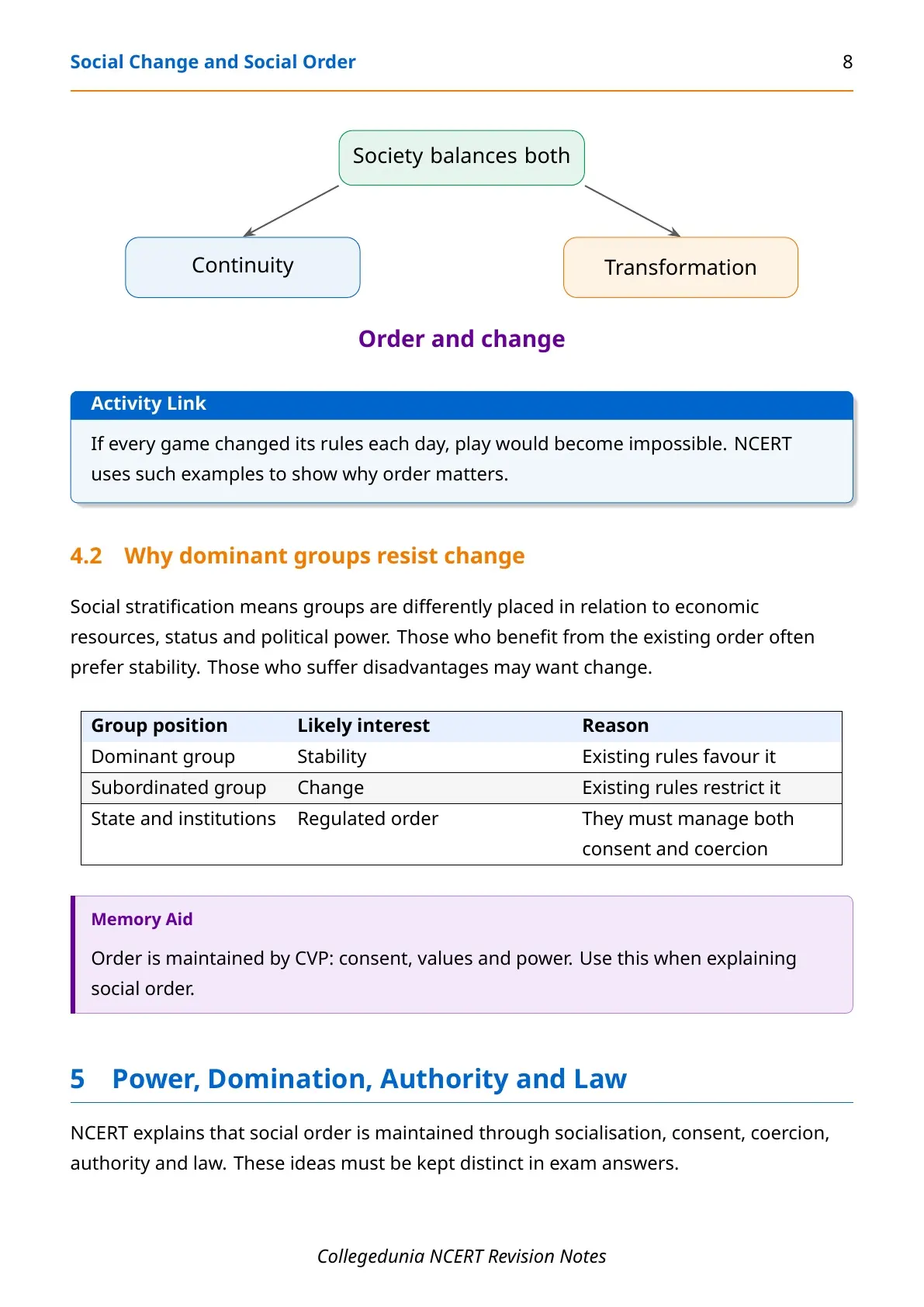
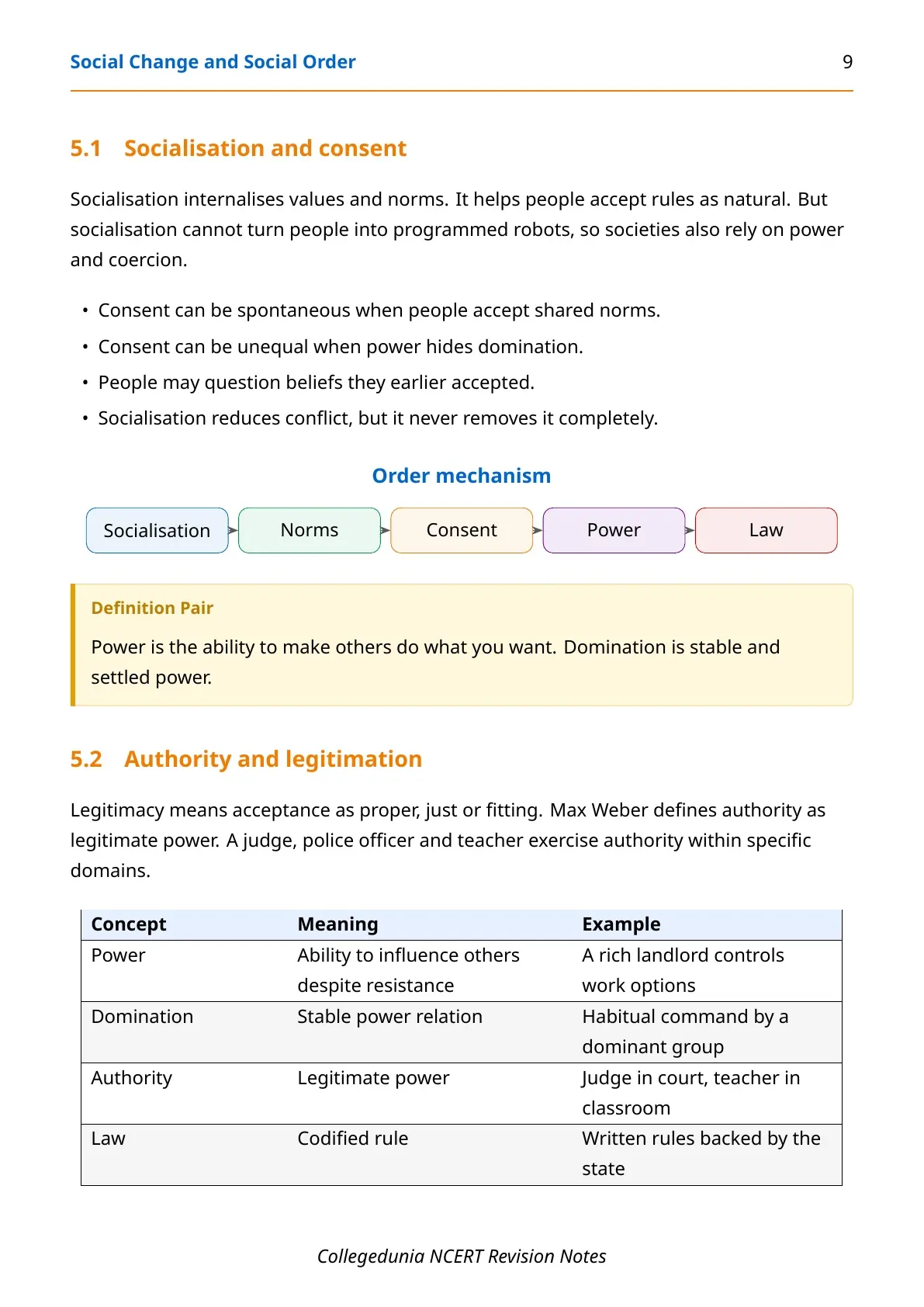
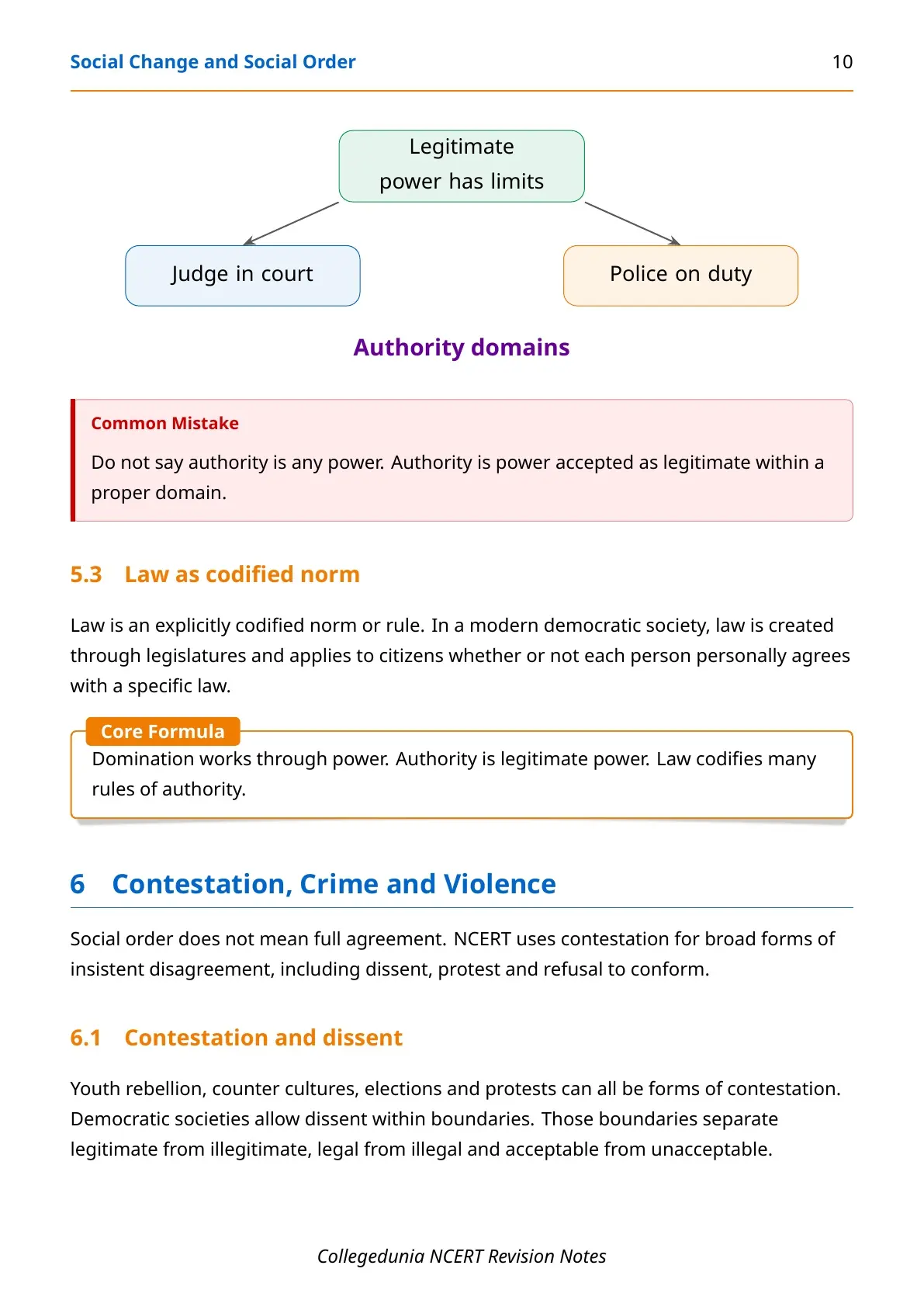
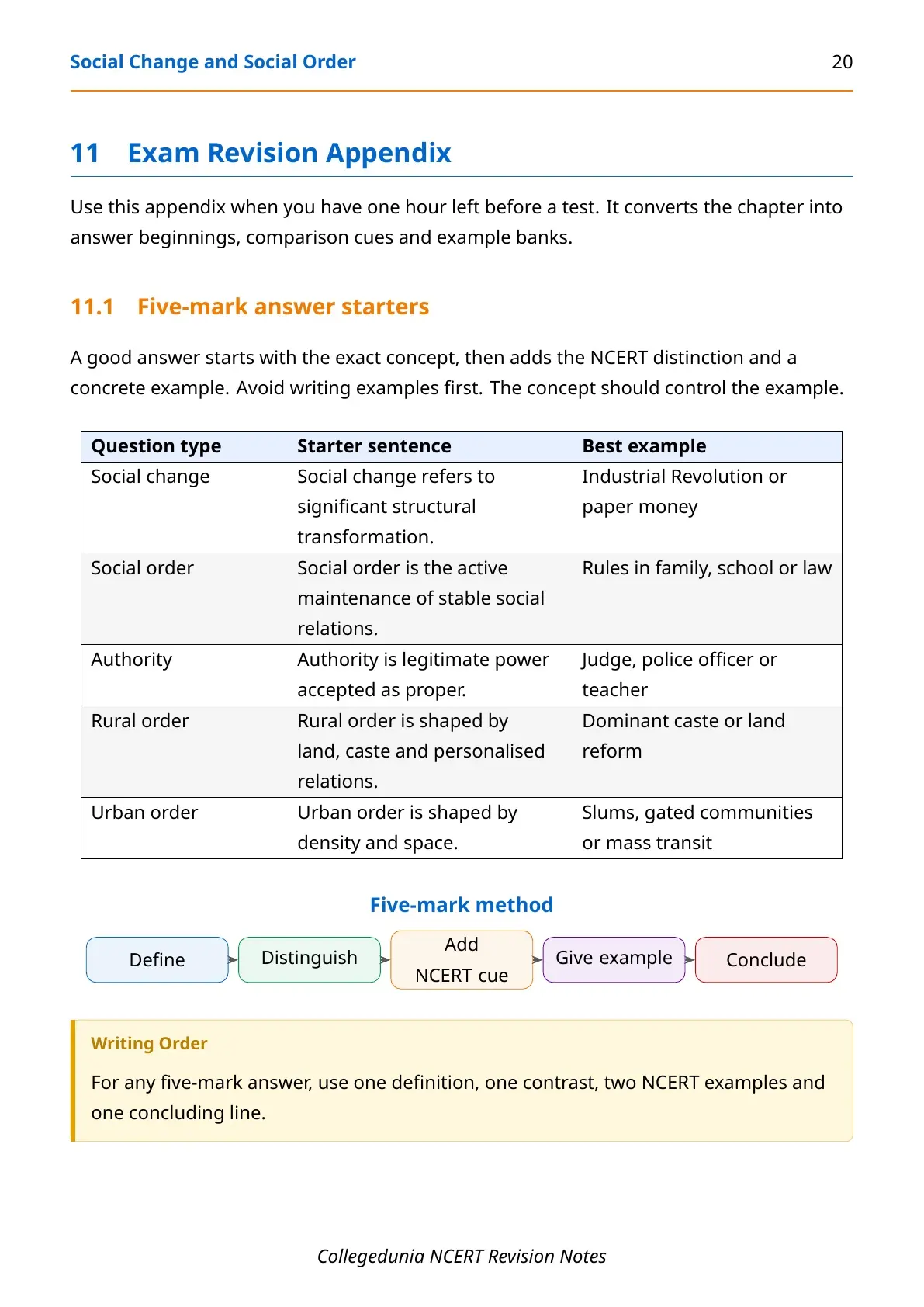
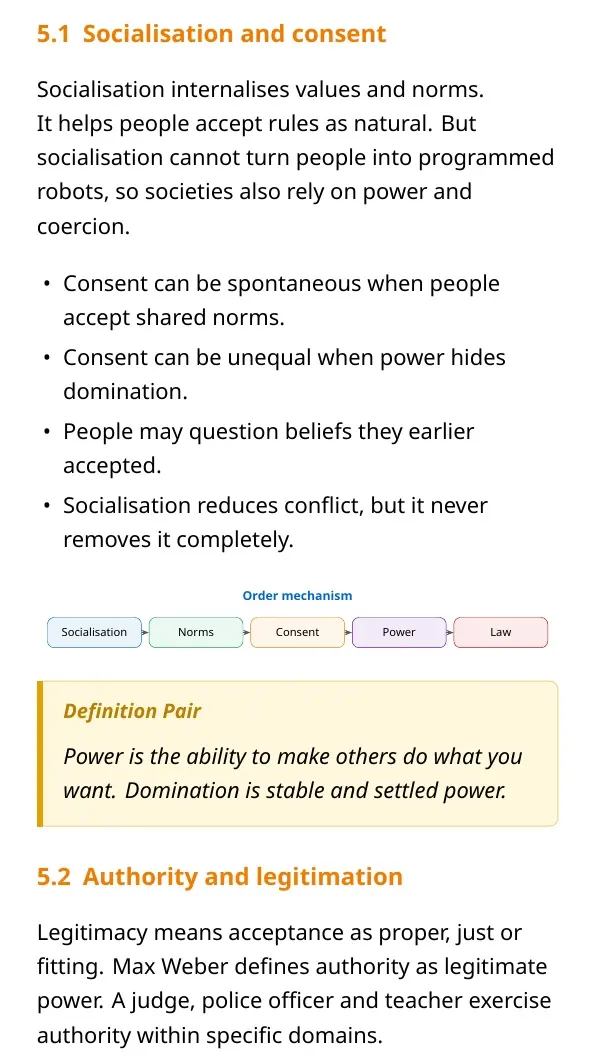
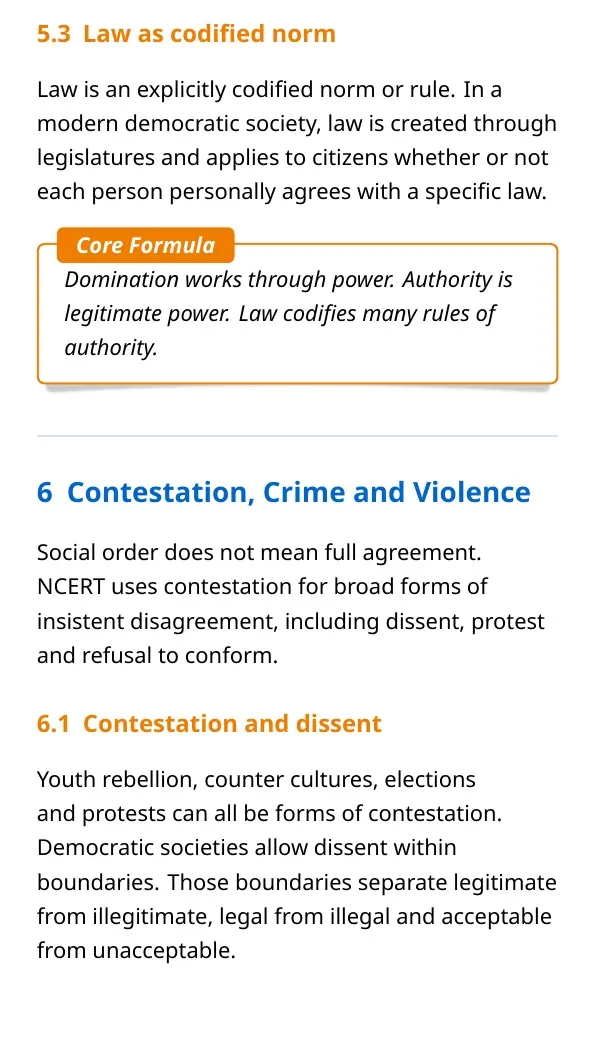
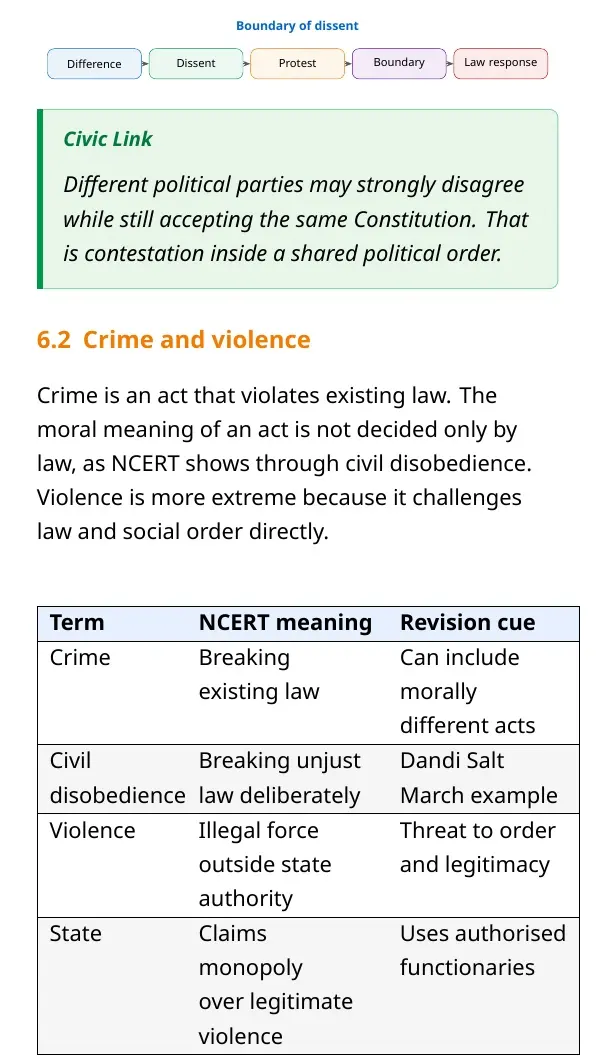
Social order gives continuity to society. It is maintained through shared values, socialisation, consent, coercion, power and law. NCERT also shows that order may protect unequal advantage, so subordinated groups often seek change.
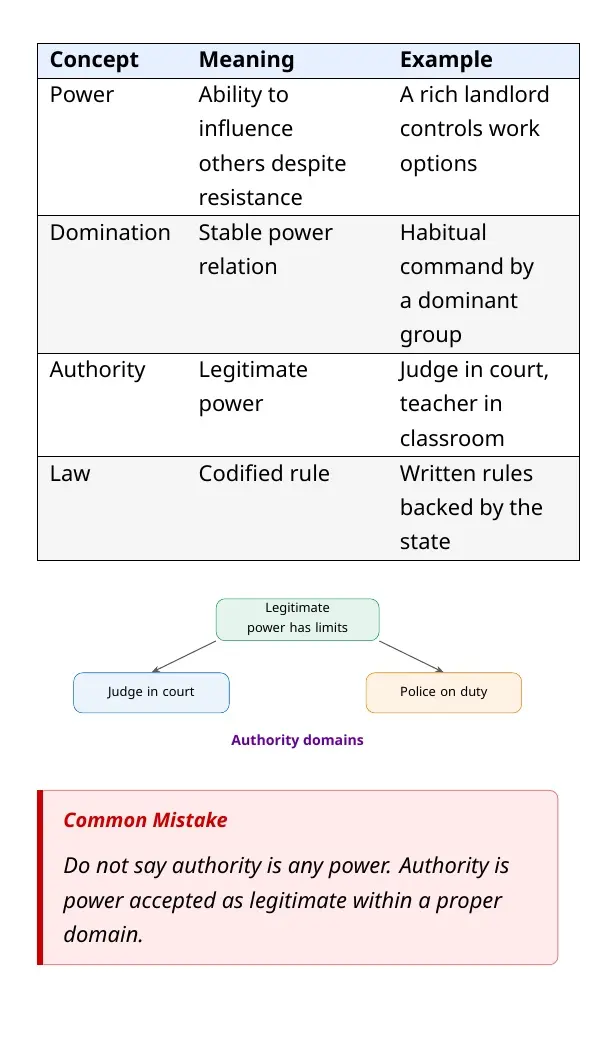
| Term | Meaning | Example |
|---|---|---|
| Power | Ability to make others do what you want. | Control over jobs, land or office. |
| Domination | Stable and settled power relation. | Dominant groups influencing everyday life. |
| Authority | Legitimate power accepted as proper. | Judge in court, teacher in classroom. |
| Law | Explicitly codified rule. | Rules made through elected representatives. |
Rural and Urban Society Comparison
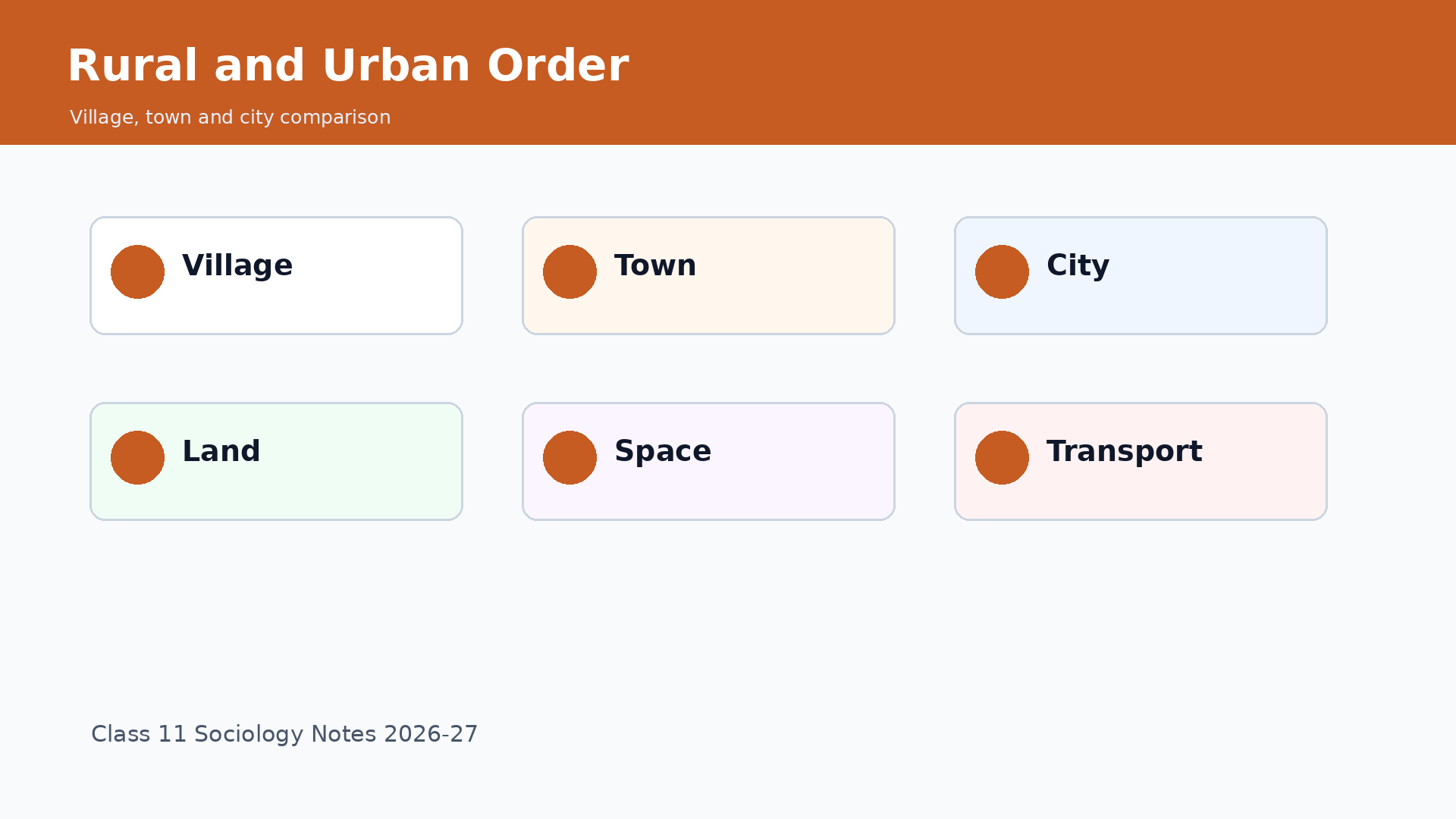
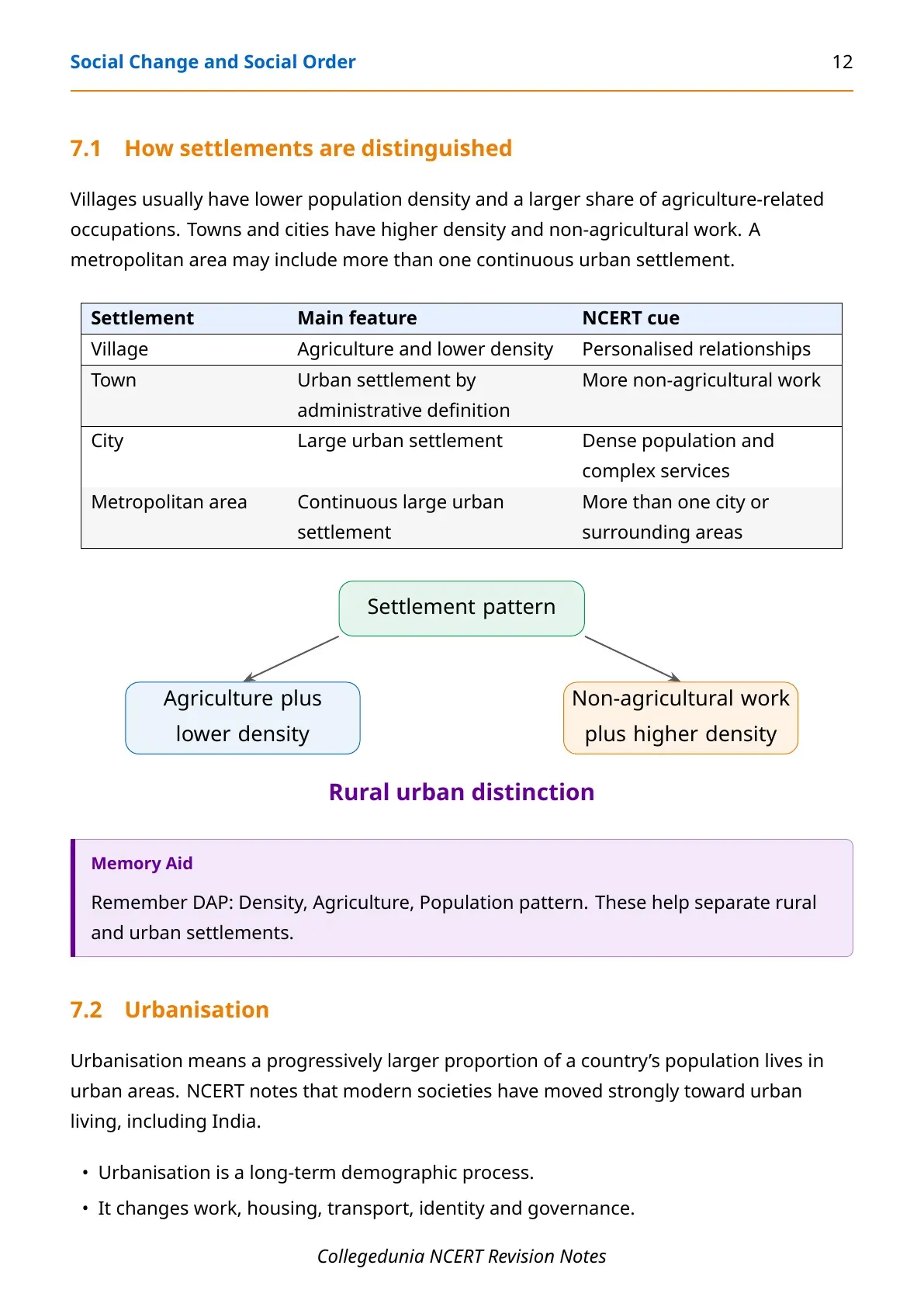
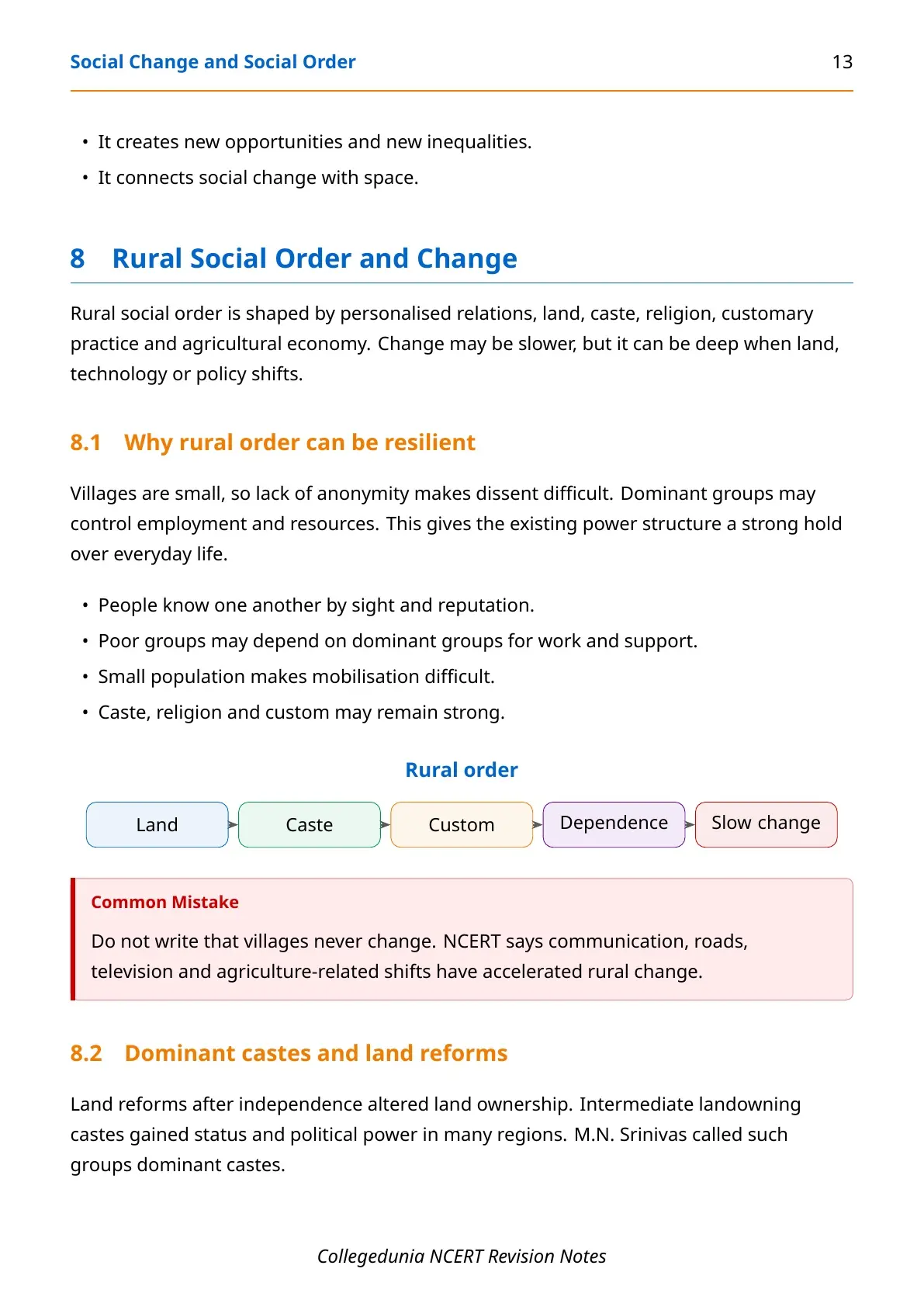
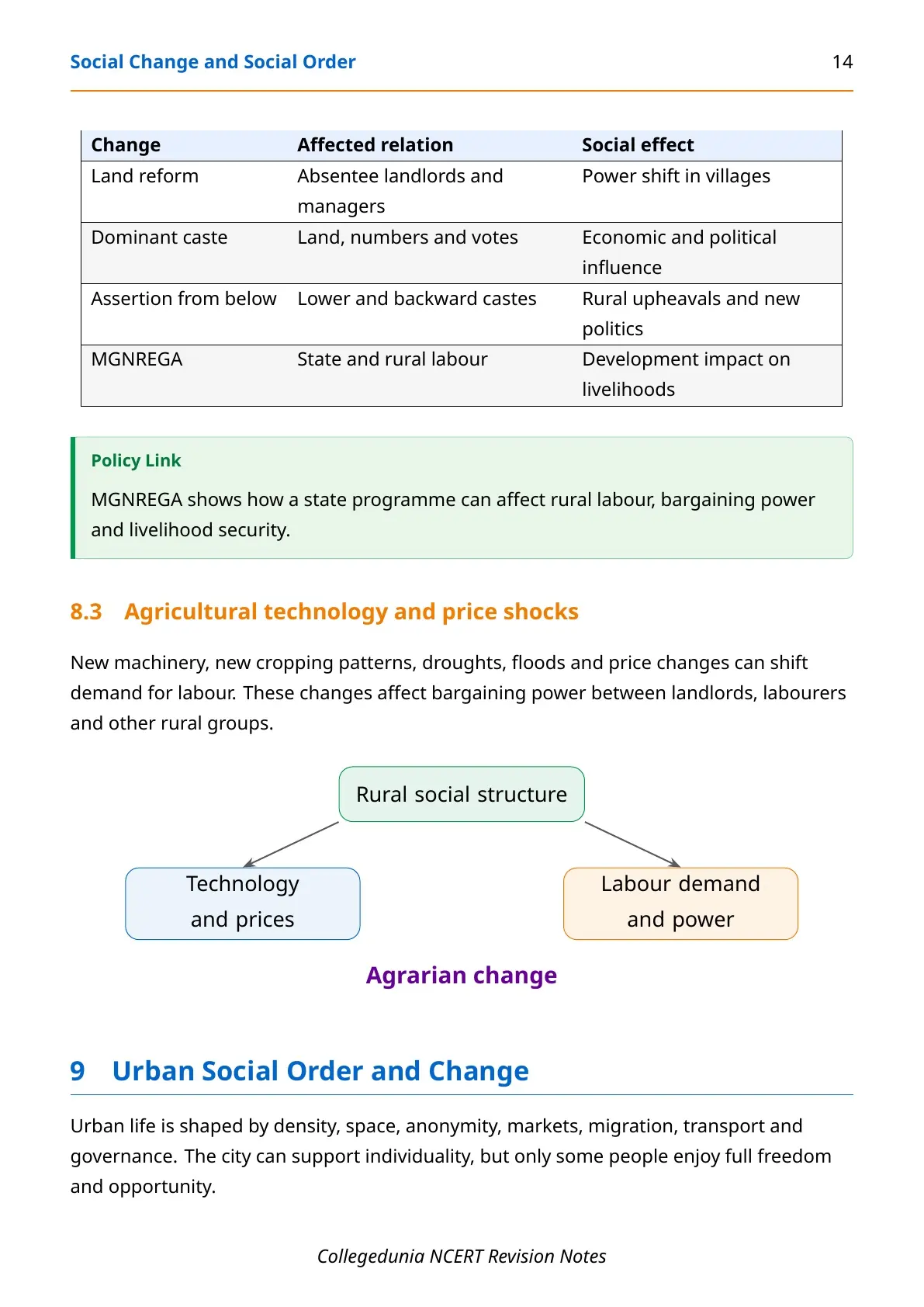
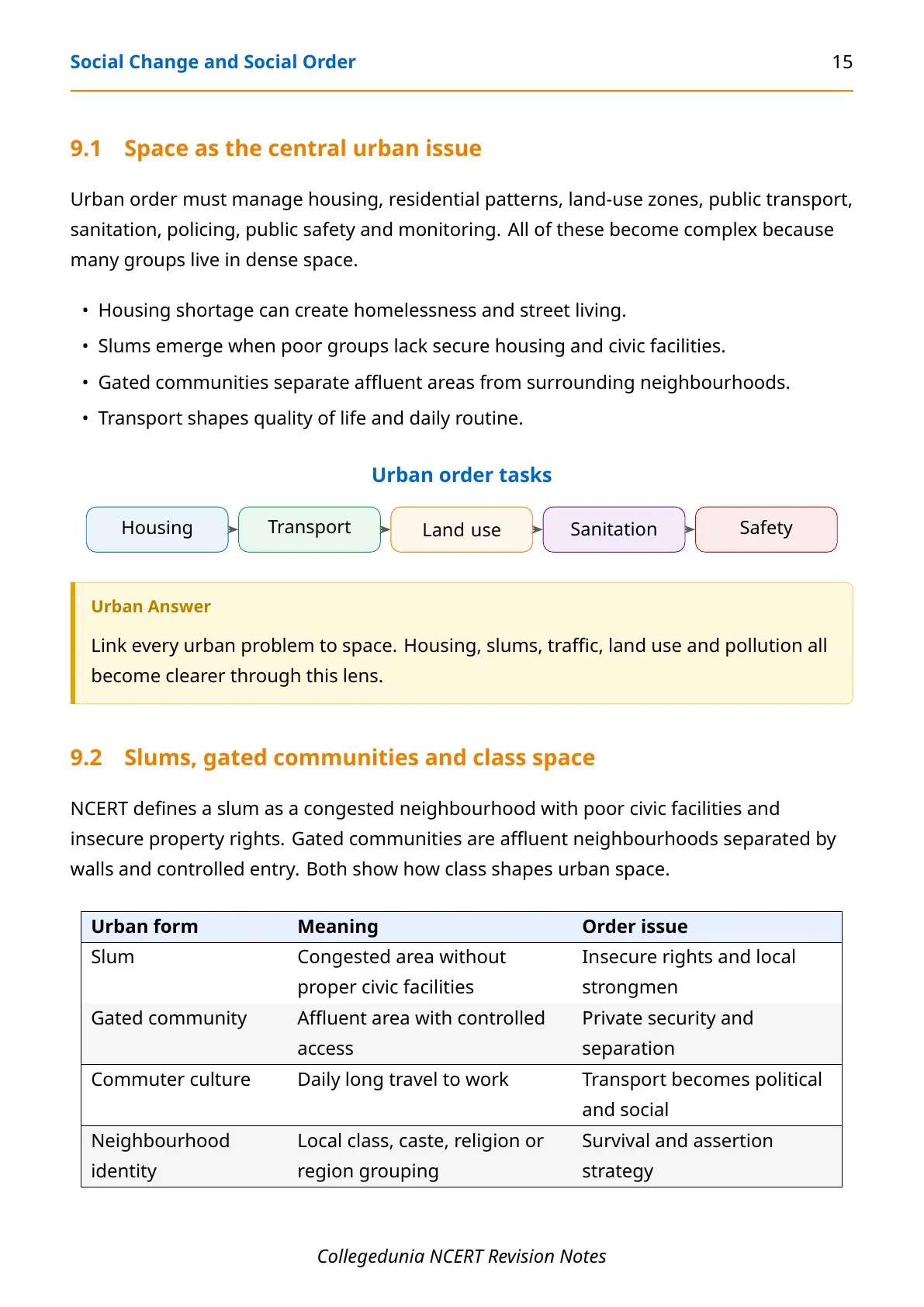
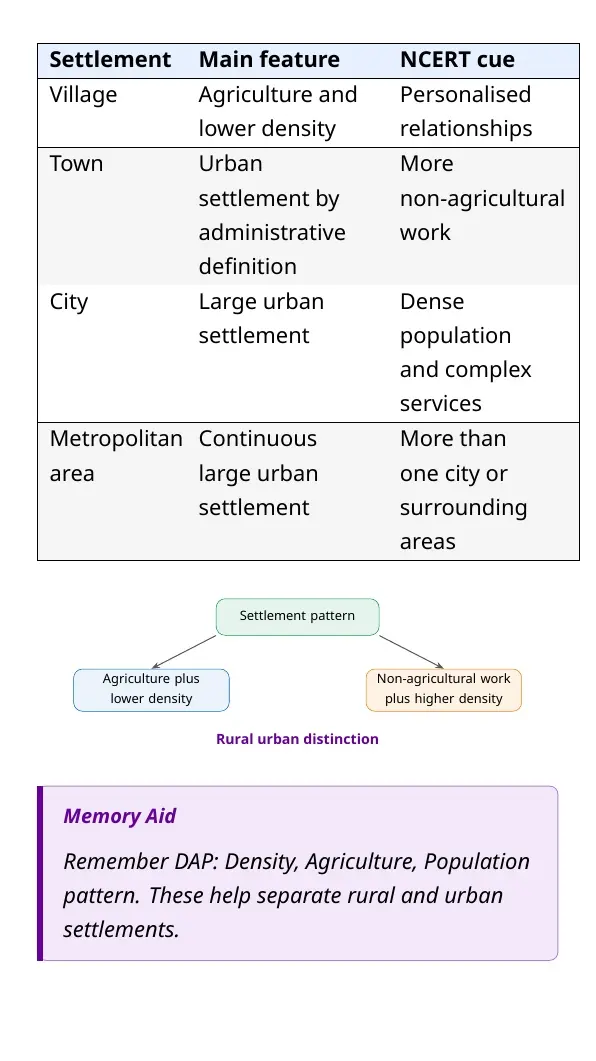
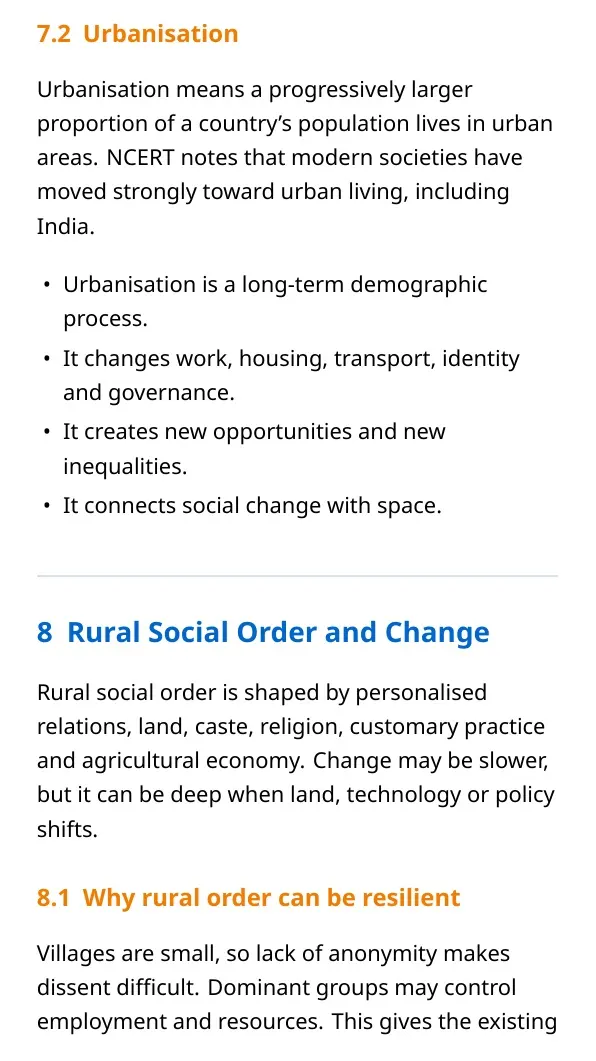
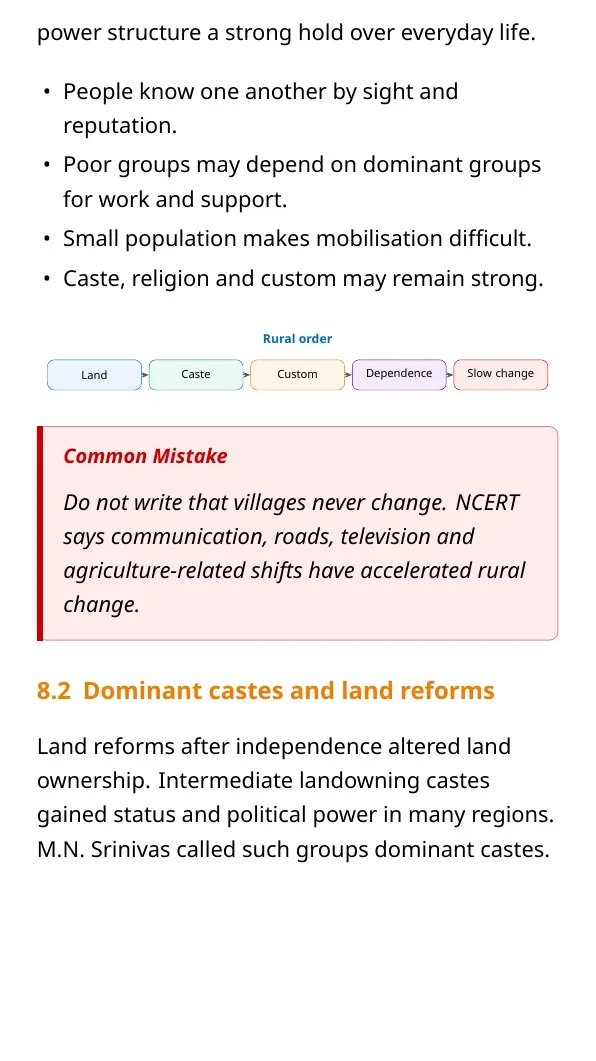
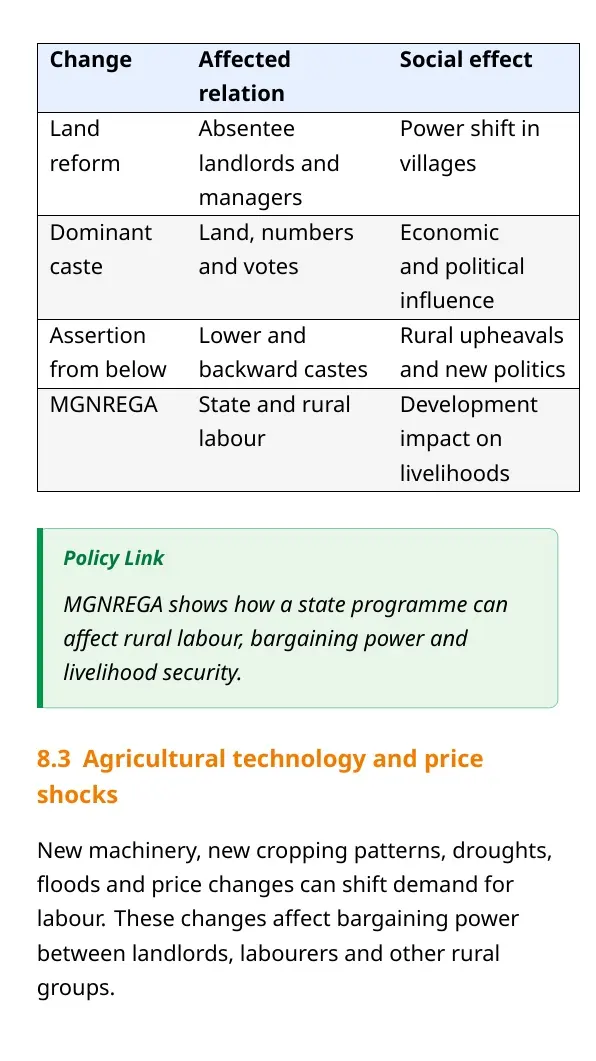
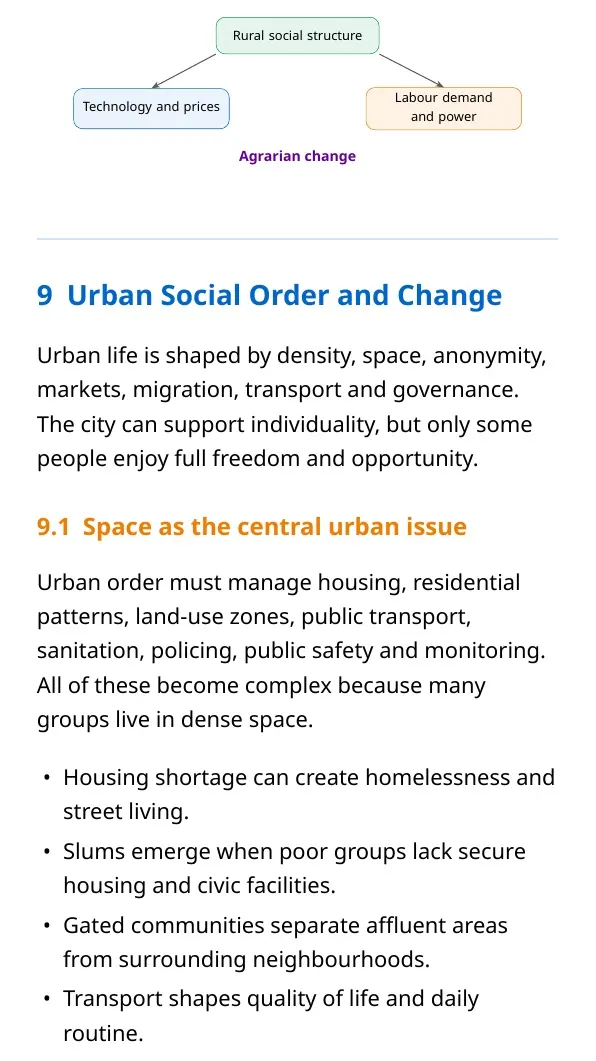
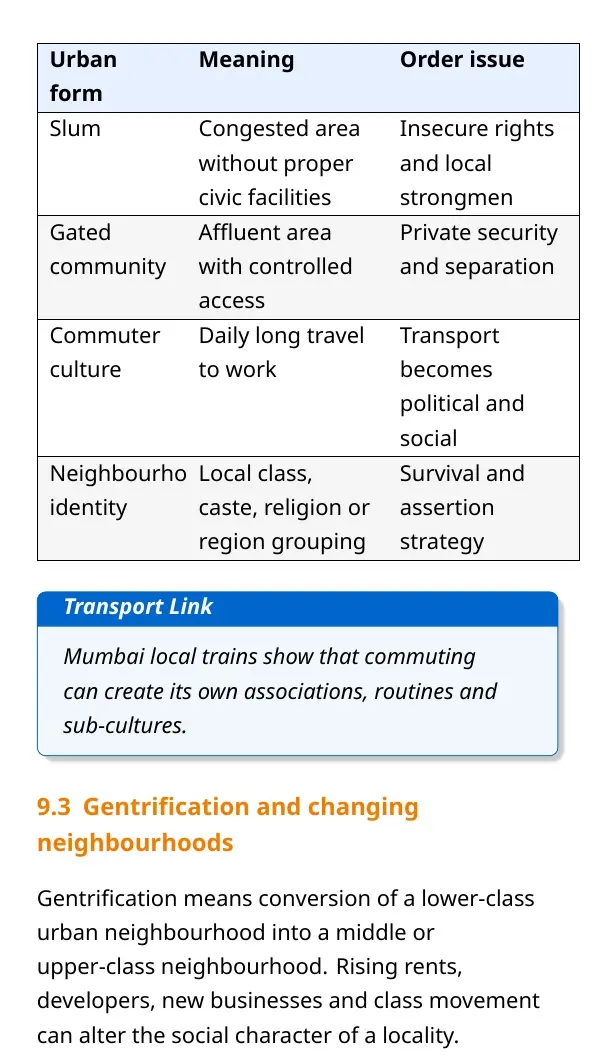
Rural social order is often shaped by land, caste, personalised relations and agriculture. Urban order is shaped by density, space, housing, transport, class, migration, slums and gated communities.
| Point | Rural society | Urban society |
|---|---|---|
| Density | Lower density and more spread-out settlement. | Higher density and pressure on space. |
| Economy | Agriculture and land remain central. | Non-agricultural work and services dominate. |
| Order | Caste, custom and dominant castes can be strong. | Law, planning, transport and housing shape order. |
| Change | Land reform, technology, roads and rural schemes matter. | Migration, gentrification, slums and mass transit matter. |
How to Use These Chapter 7 Sociology Notes
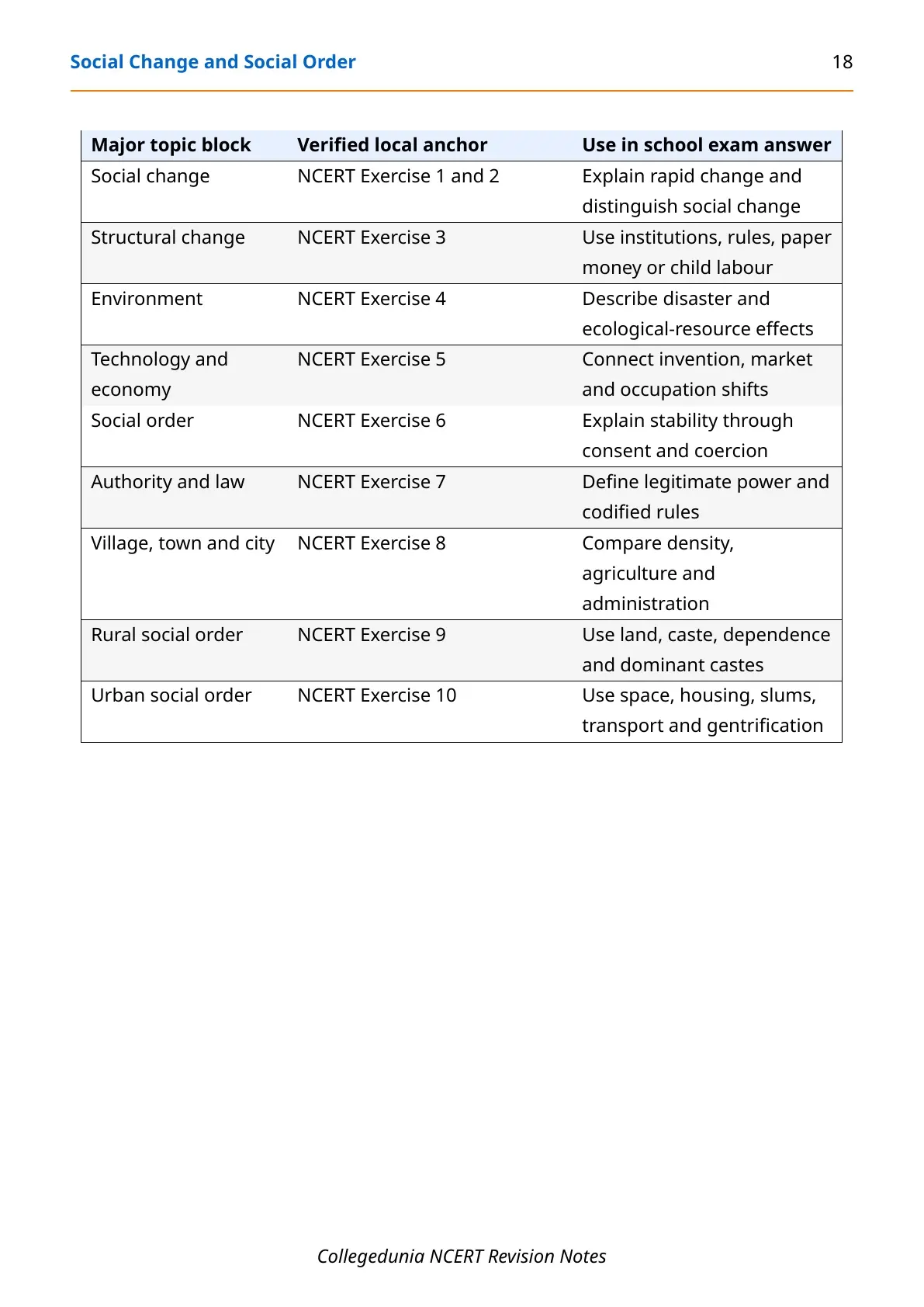
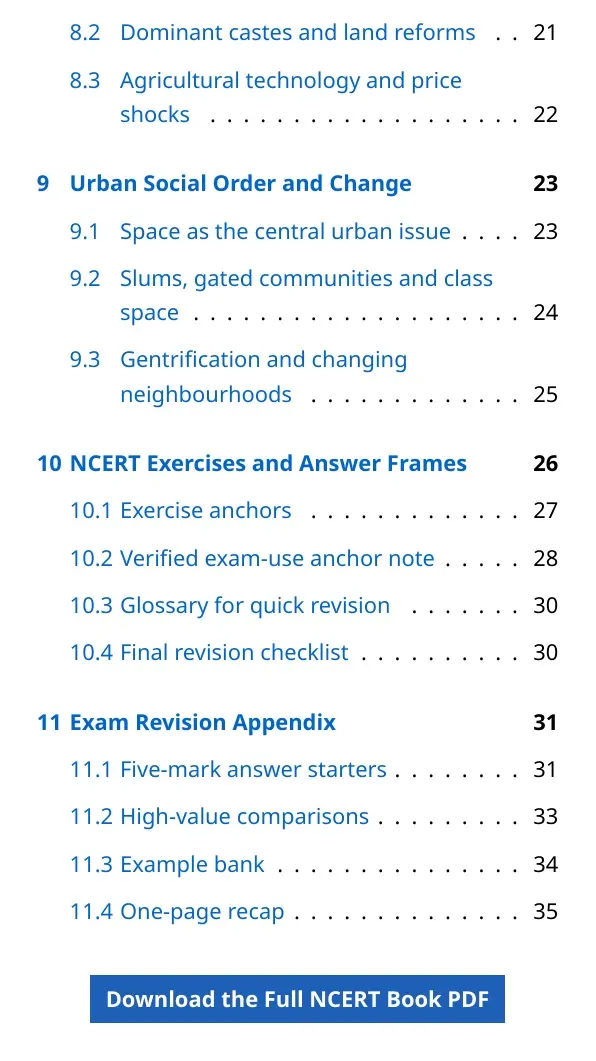
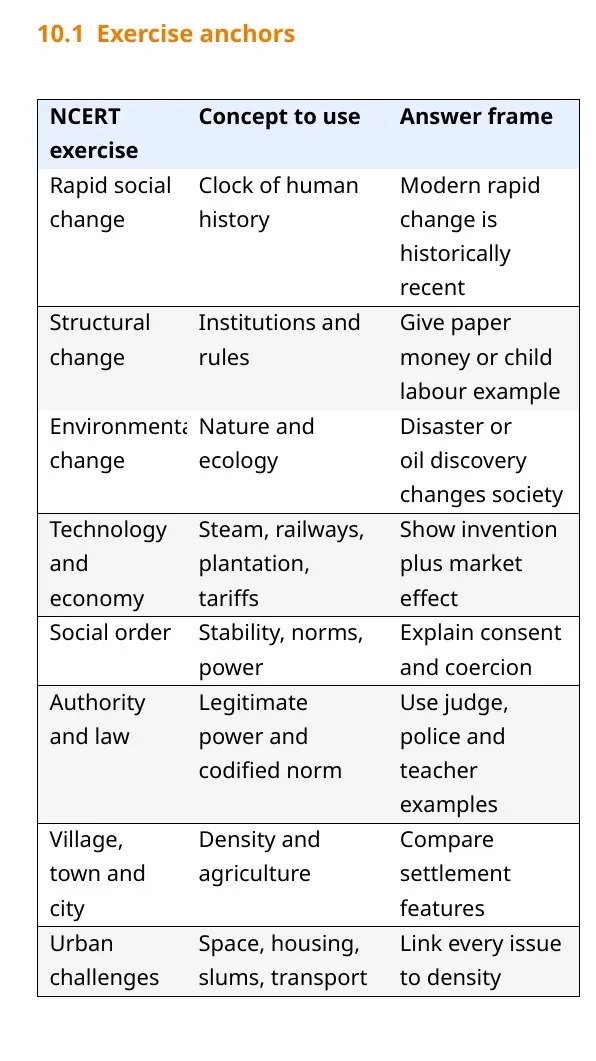
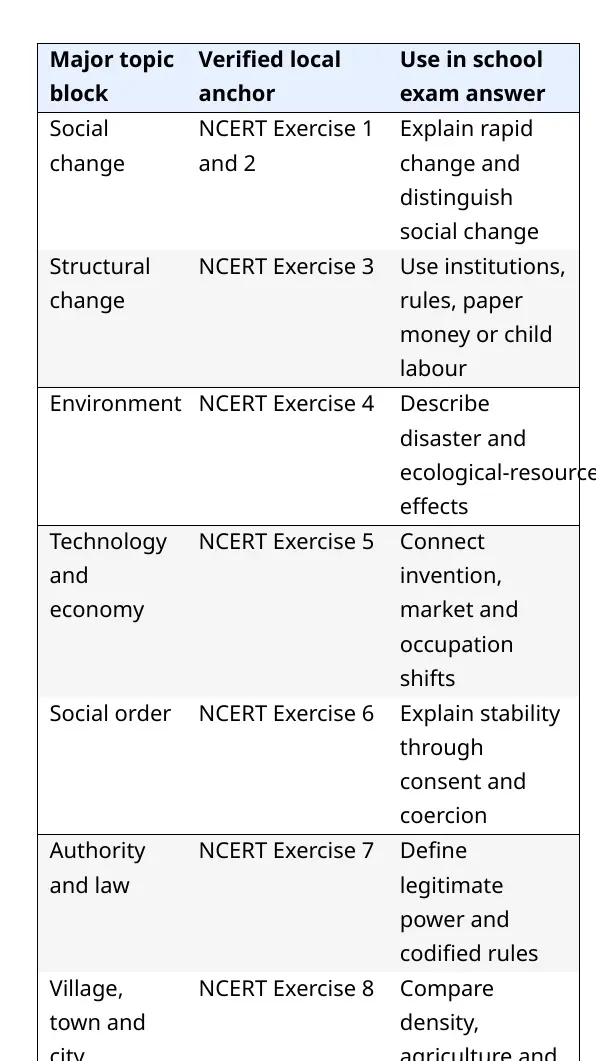
Read the PDF after one textbook reading. First revise definitions, then use the rural-urban comparison table. End with exercise anchors because this chapter is answer-friendly when students attach examples to each concept.
- Memorise social change, social order, domination, authority, law and contestation.
- Use environment, technology, economy, politics and culture for source-based answers.
- Compare village, town and city by density, agriculture and administration.
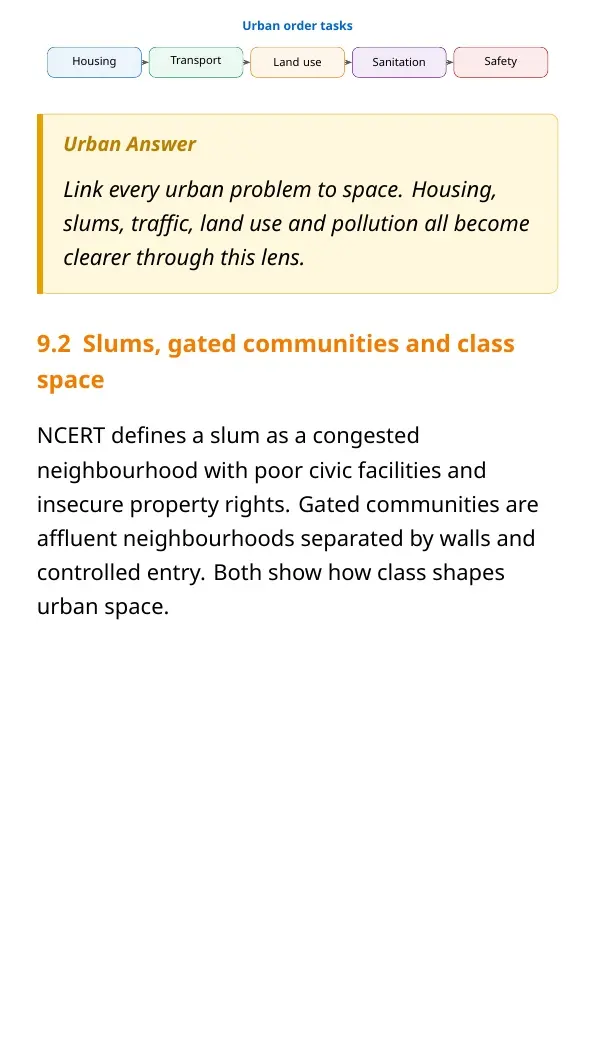
- Use space, housing, slums, gated communities and transport for urban answers.
Related NCERT Resources for Social Change and Social Order
| Resource | Use it for |
|---|---|
| Class 11 Sociology Chapter 7 NCERT Solutions | Exercise answers and answer-writing format. |
| Class 11 Sociology Chapter 7 NCERT Book PDF | Official textbook reading and examples. |
| Class 11 Sociology Chapter 6 Notes | Revise structure, stratification and social processes before this chapter. |
All Class 11 Sociology Notes Chapters
| Chapter | NCERT Notes link |
|---|---|
| Chapter 1 | Sociology and Society Notes |
| Chapter 2 | Terms, Concepts and Their Use in Sociology Notes |
| Chapter 3 | Understanding Social Institutions Notes |
| Chapter 4 | Culture and Socialisation Notes |
| Chapter 5 | Doing Sociology Research Methods Notes |
| Chapter 6 | Social Structure, Stratification and Social Processes in Society Notes |
| Chapter 7 | Social Change and Social Order in Rural and Urban Society Notes |
Social Change and Social Order Class 11 Notes FAQs
Ques. What is covered in Class 11 Sociology Chapter 7 Notes?
Ans. The notes cover social change, sources of change, social order, authority, law, contestation, rural social order and urban social order.
Ques. What is social change in this chapter?
Ans. Social change means a significant change that alters the underlying structure of society or affects a large section of society.
Ques. What is authority in sociology?
Ans. Authority is legitimate power, meaning power that people accept as proper or justified within a defined domain.
Ques. How should students revise rural and urban society?
Ans. Students should compare village, town and city by density, agriculture, space, housing, transport, land, caste and urban governance.



Comments