



NCERT Notes for Class 12 Biology Chapter 1 Sexual Reproduction in Flowering Plants give you the full chapter as mindmaps, flowcharts, and mnemonics, covering pre-fertilisation, double fertilisation, and post-fertilisation events. This page also hosts the free notes PDF you can download below.

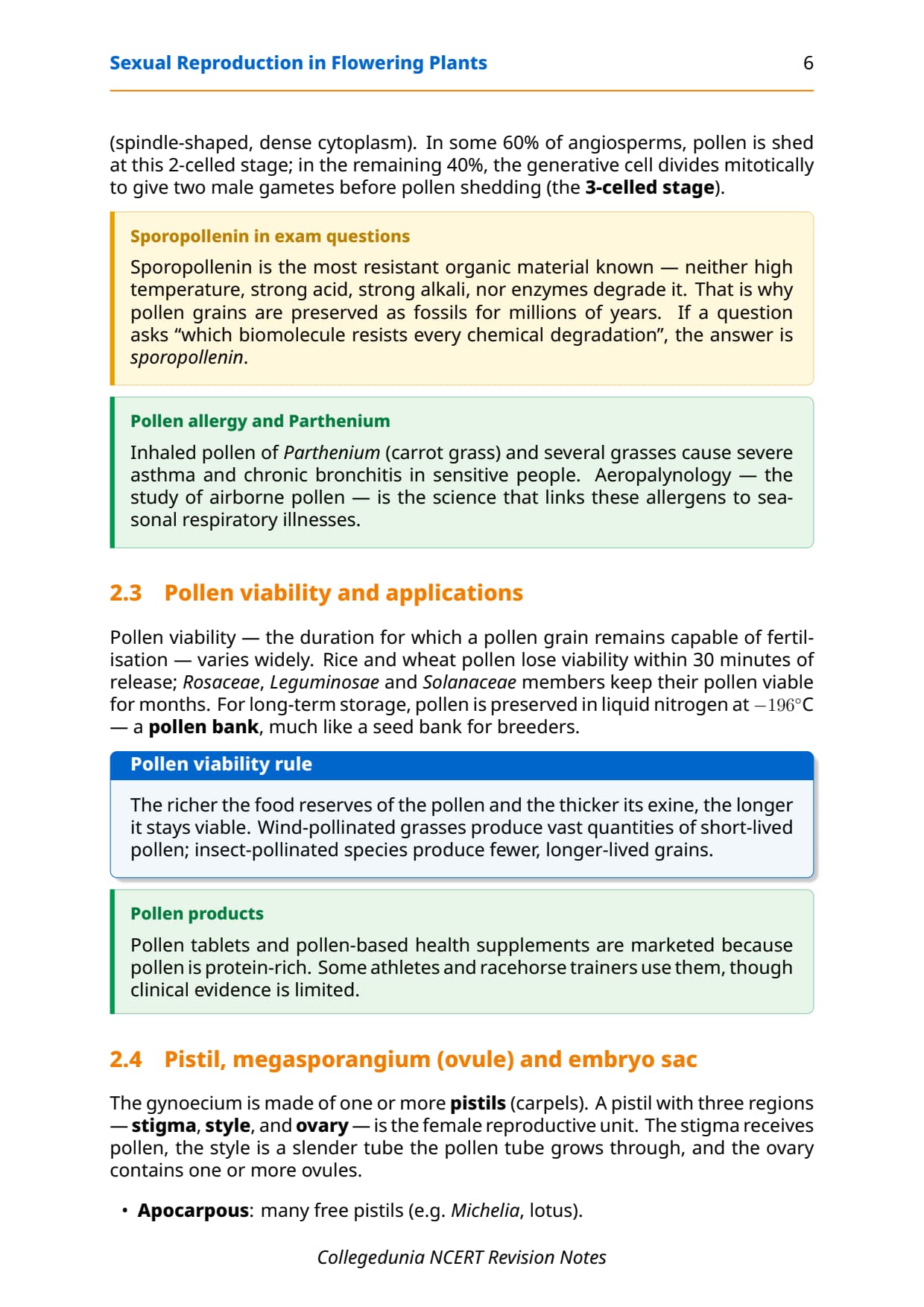

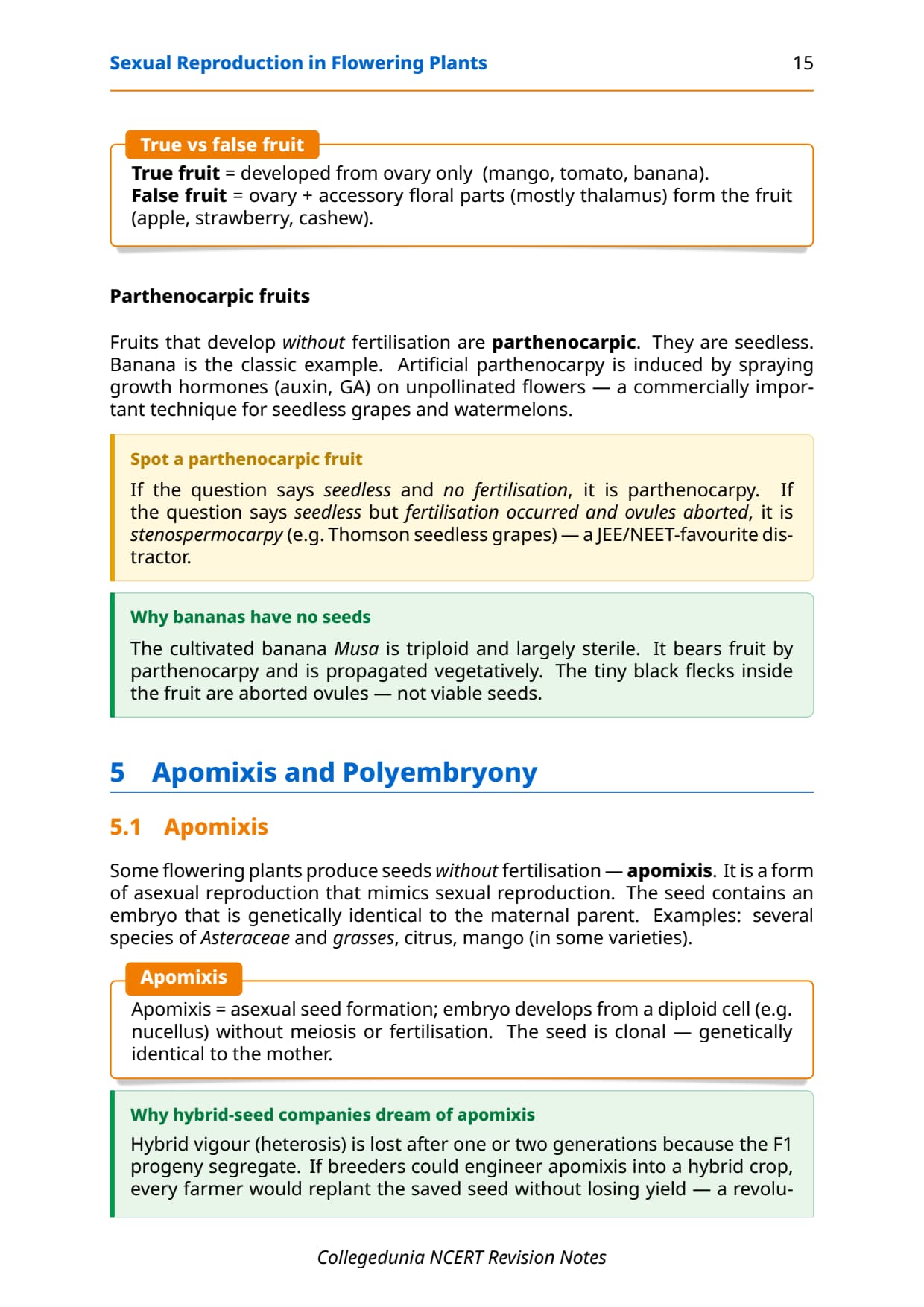
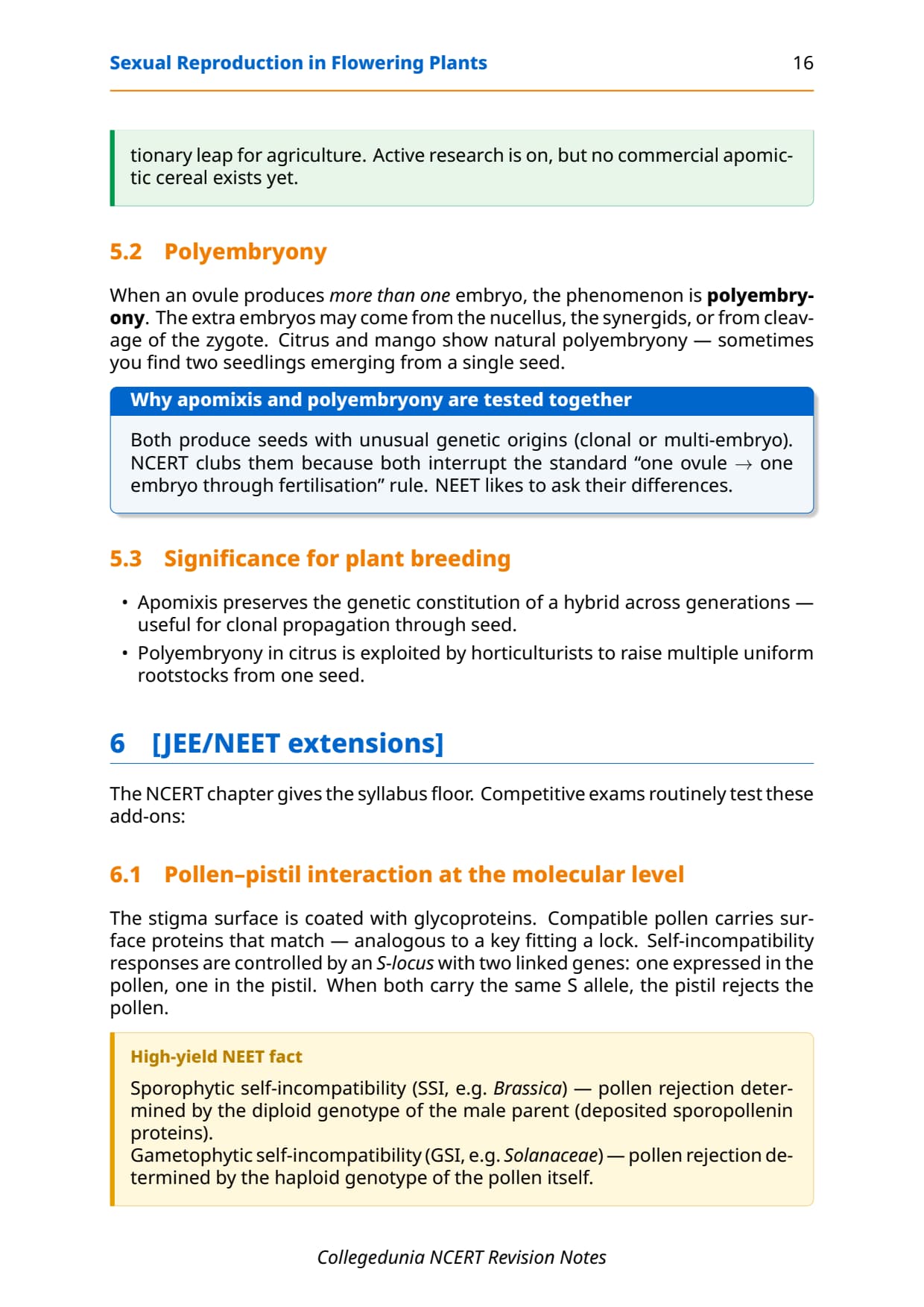
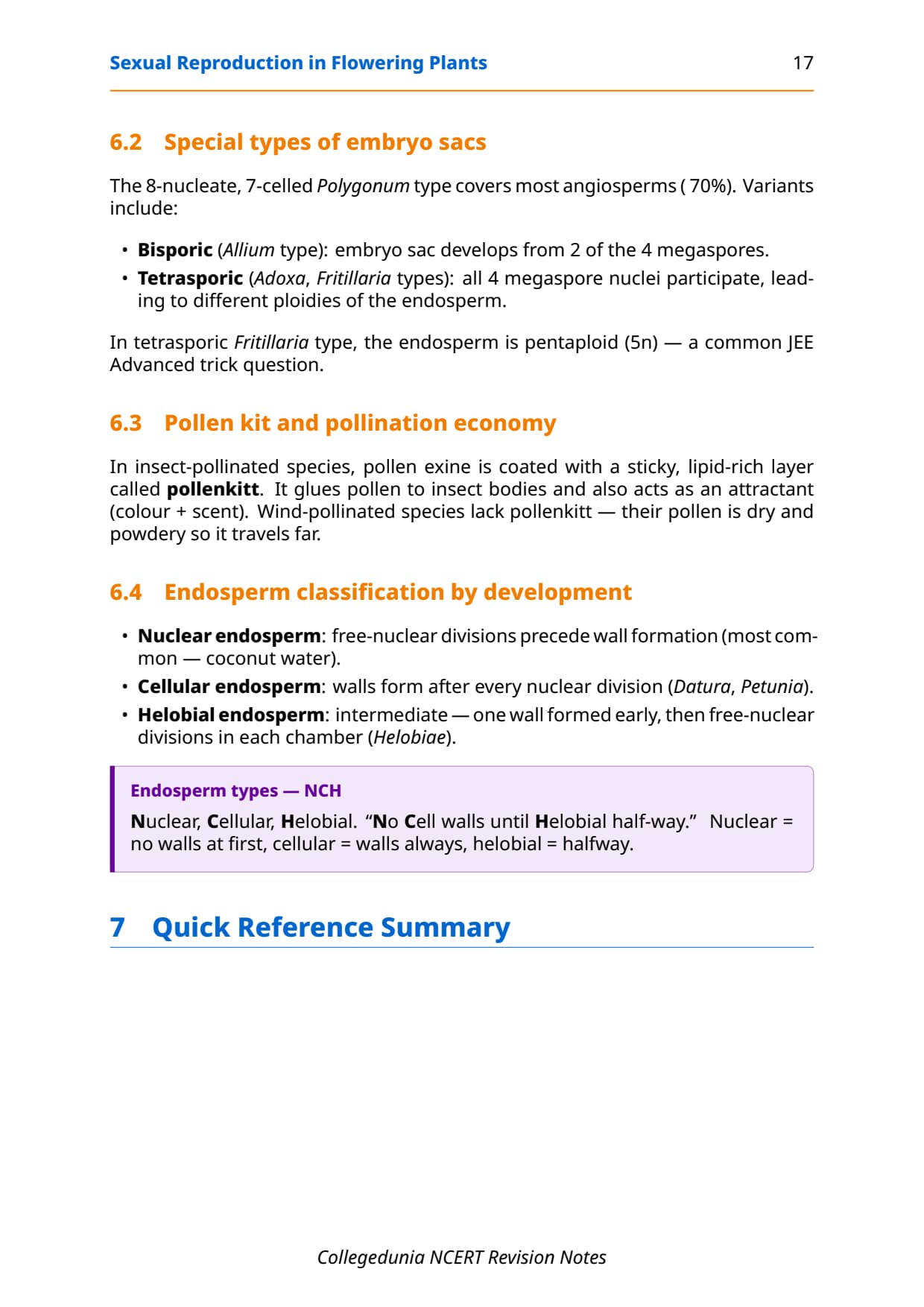
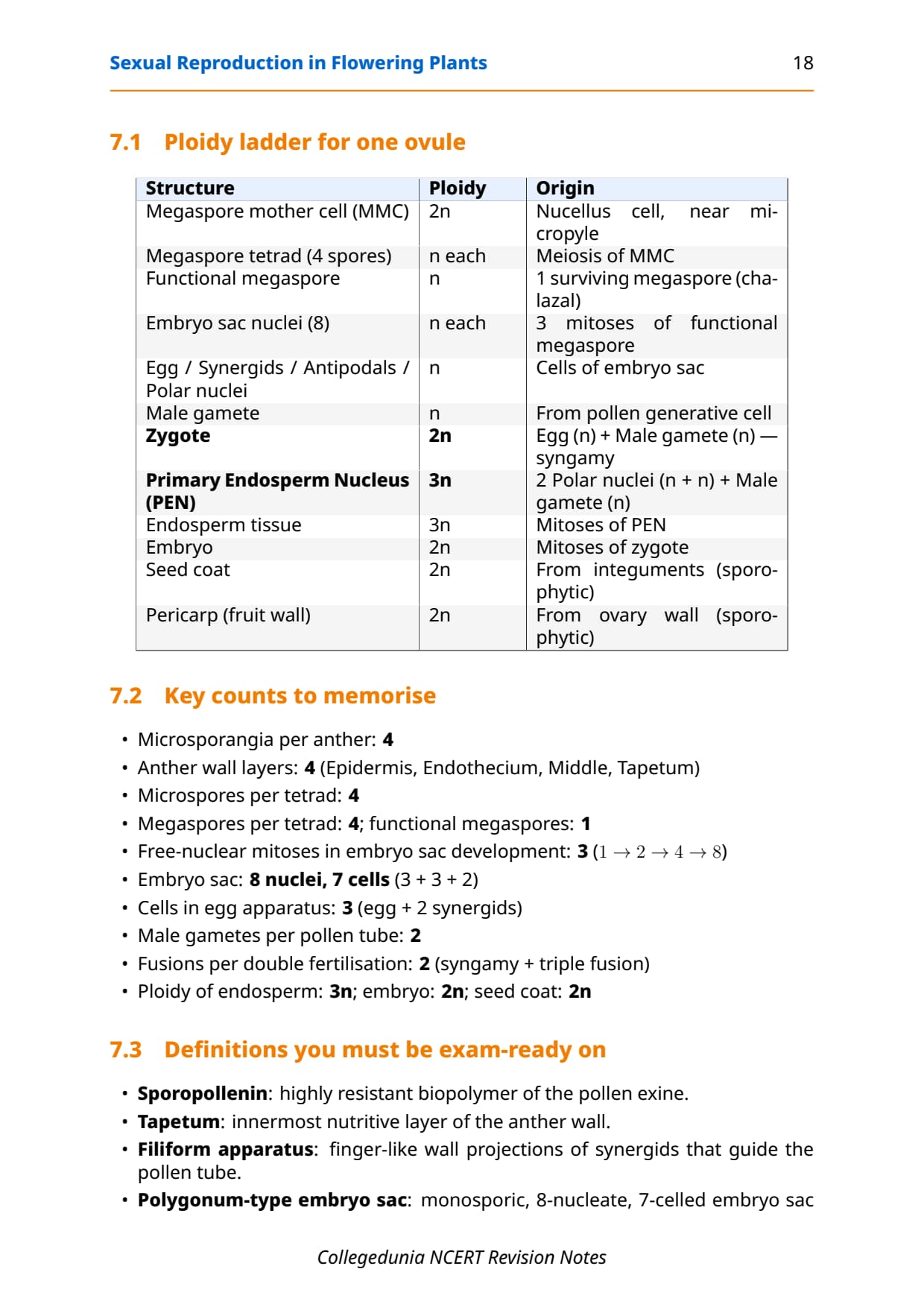
These sexual reproduction in flowering plants class 12 notes pull the whole chapter into one revision PDF, with a focus on high-yield topics like microsporogenesis and double fertilisation.
- CBSE Weightage: 6 to 7 marks (Unit VI, Reproduction)
- NEET Weightage: 3 to 4 questions per year
- JEE Main Weightage: Not applicable (Biology is outside the JEE Main syllabus)
These Collegedunia notes are made by Biology subject experts, mapped to the 2026-27 NCERT, and checked against the last five years of CBSE and NEET papers.
Why Sexual Reproduction in Flowering Plants Is a NEET Botany Anchor Chapter
This chapter sets the vocabulary every later Botany chapter borrows. Pollen development, embryo-sac structure, and double fertilisation return in Human Reproduction, Inheritance, and Plant Breeding. About 3 to 4 NEET questions come from it every year.
Sexual Reproduction in Flowering Plants Video Lecture for Class 12 Biology
Source: Magnet Brains on YouTube
Sexual Reproduction in Flowering Plants Glossary for Class 12 Biology
Term overlap (synergid vs antipodal, microspore vs pollen grain) is where MCQs catch students out. This glossary pins each term to one meaning.
| Term | Meaning |
|---|---|
| Microsporogenesis | Meiotic formation of haploid microspores from the microspore mother cell. |
| Megasporogenesis | Meiotic formation of megaspores from the megaspore mother cell. |
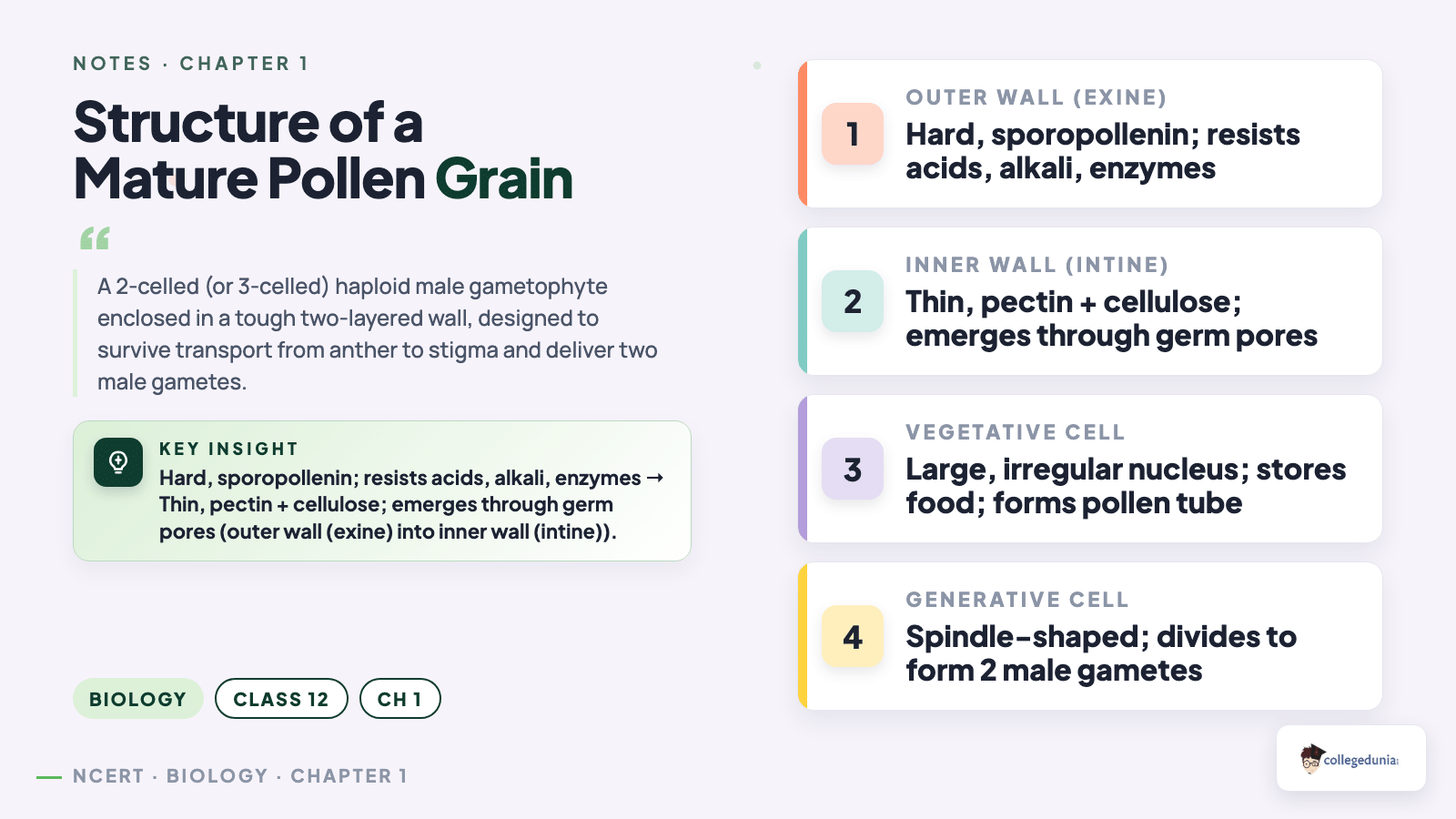
| Pollen grain | Male gametophyte; exine (sporopollenin) + intine (cellulose). |
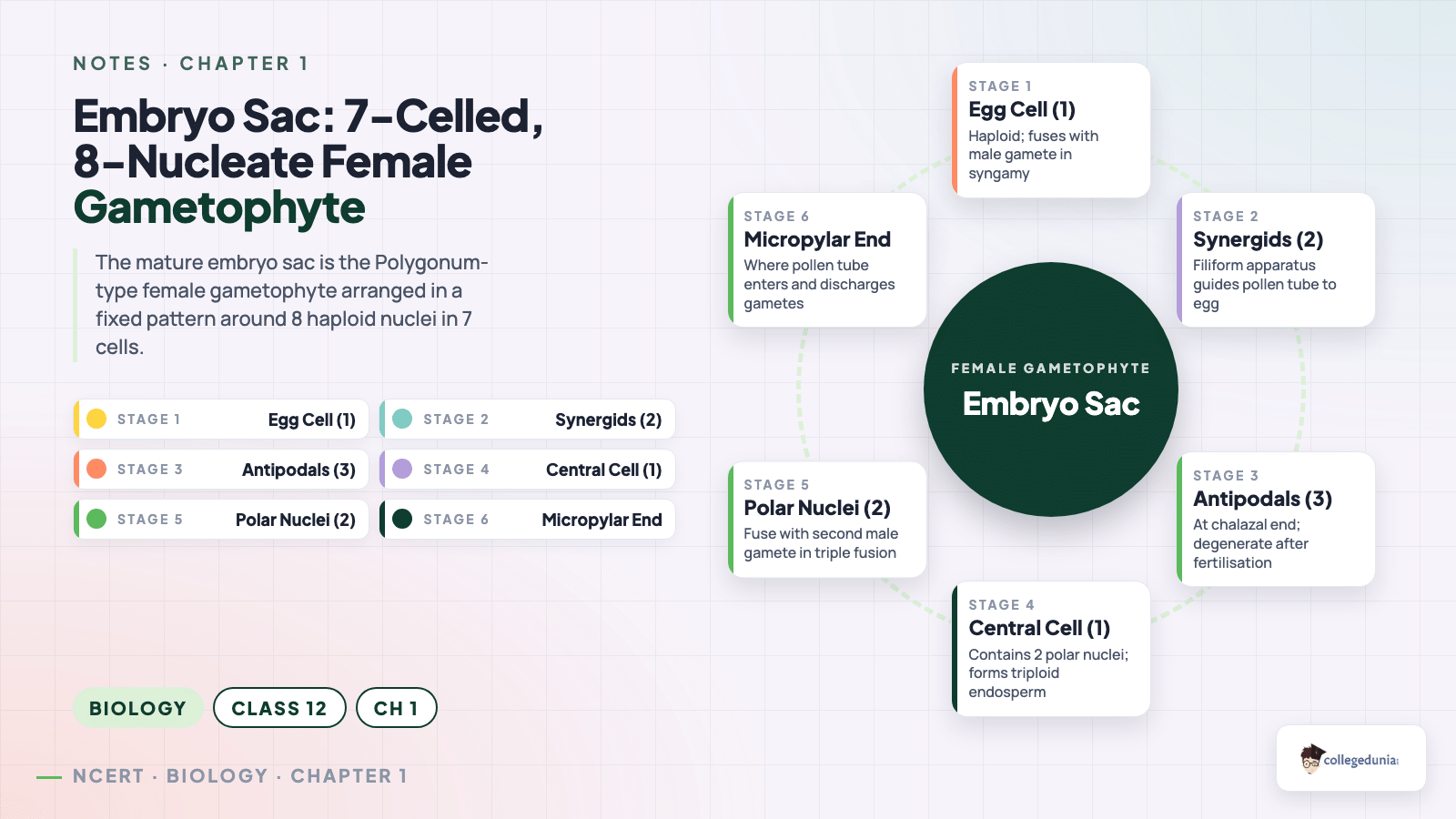
| Embryo sac | Female gametophyte; 7-celled, 8-nucleate (Polygonum type). |
| Synergids | Two cells flanking the egg; carry the filiform apparatus that guides the pollen tube. |
| Double fertilisation | Syngamy + triple fusion in one embryo sac; unique to angiosperms. |
| Endosperm | Nutritive triploid tissue formed after triple fusion. |
Sexual Reproduction in Flowering Plants Topic-by-Topic Notes for Class 12 Biology
Pre-Fertilisation: Anther, Pistil, Ovule
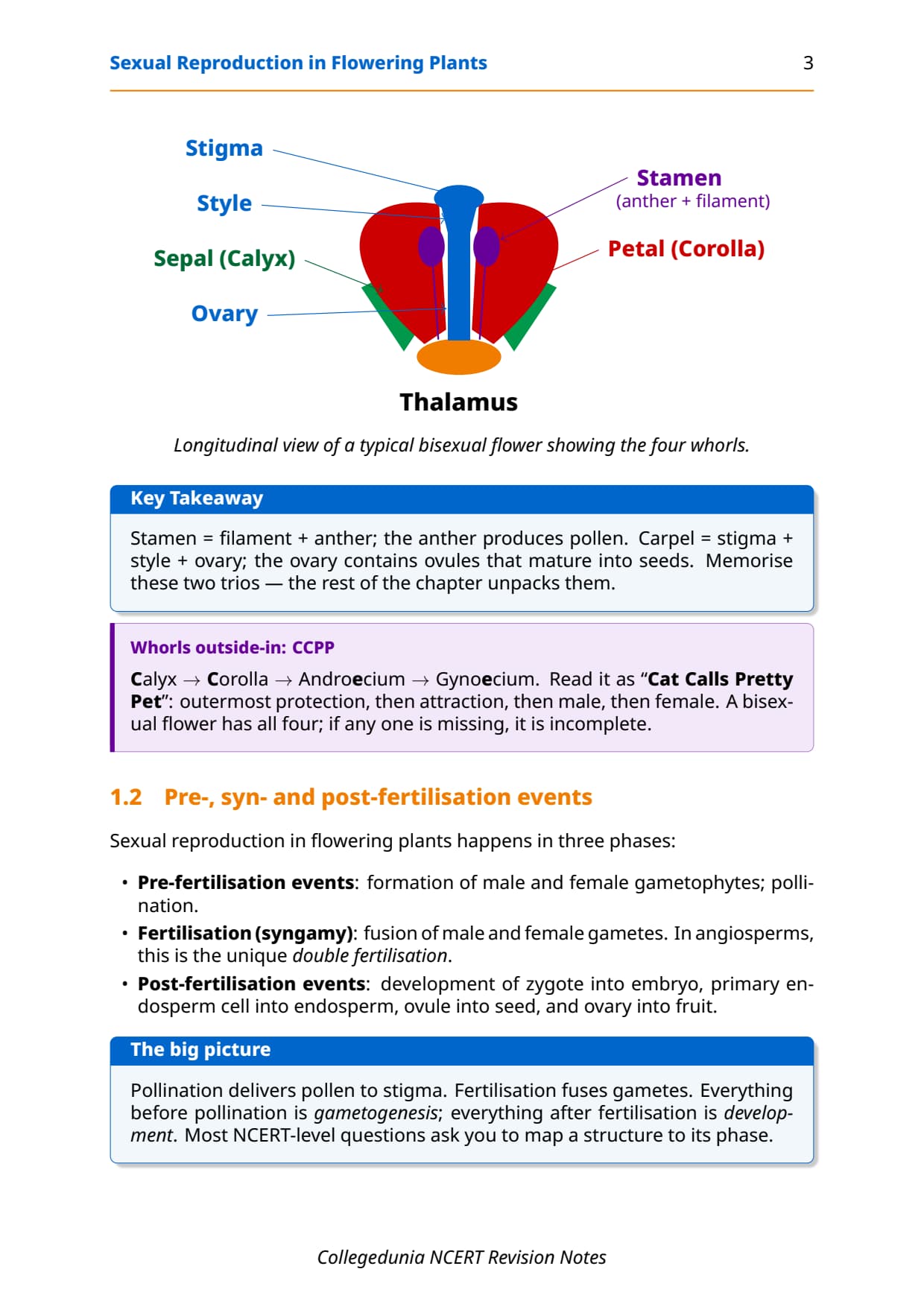
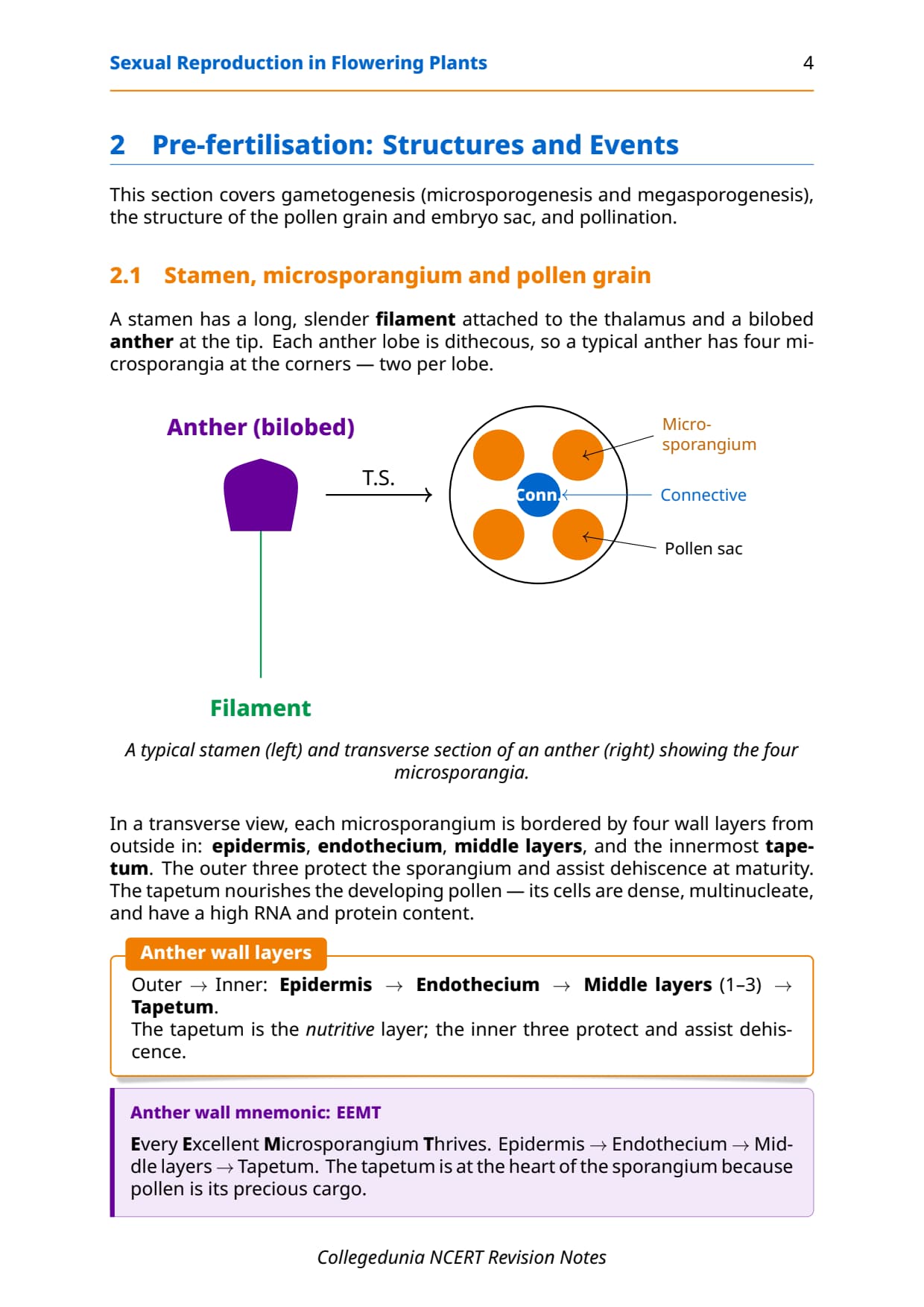
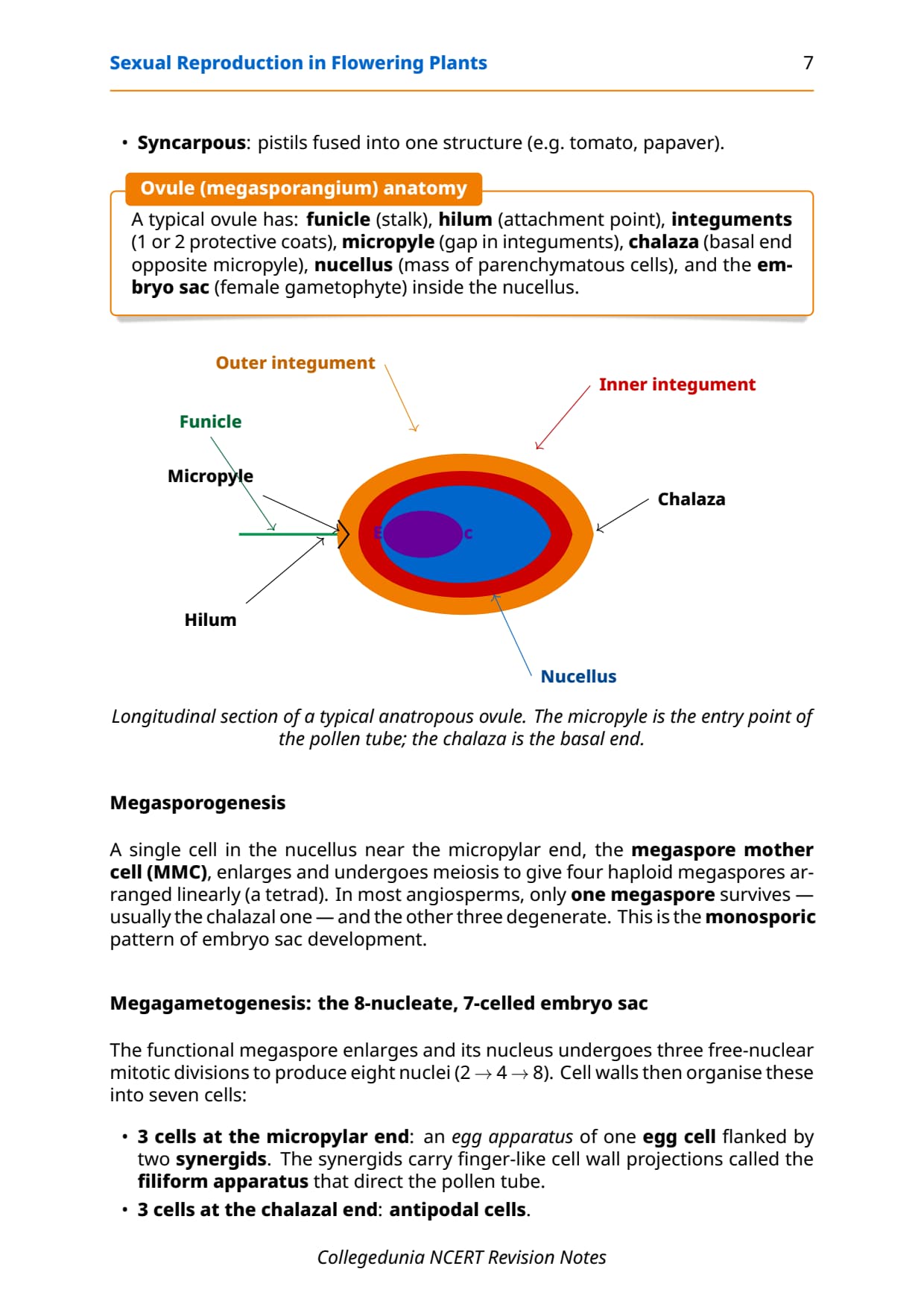
The stamen has a bilobed anther; each lobe holds two microsporangia wrapped by four wall layers from outside in: epidermis, endothecium, middle layers, tapetum (the tapetum feeds the developing pollen). The pistil has stigma, style, and ovary. An ovule carries integuments, a micropyle, a funicle, and the nucellus that houses the megaspore mother cell.
Microsporogenesis and Pollen Grain Structure
Microspore mother cells divide by meiosis into four haploid microspores that mature into pollen grains. A pollen grain has an outer exine of sporopollenin (the most resistant biological material known) and an inner intine of cellulose. Inside sit a large vegetative cell and a small generative cell. About 60% of angiosperms shed 2-celled pollen; the rest shed 3-celled pollen.
Megasporogenesis and Embryo Sac Development
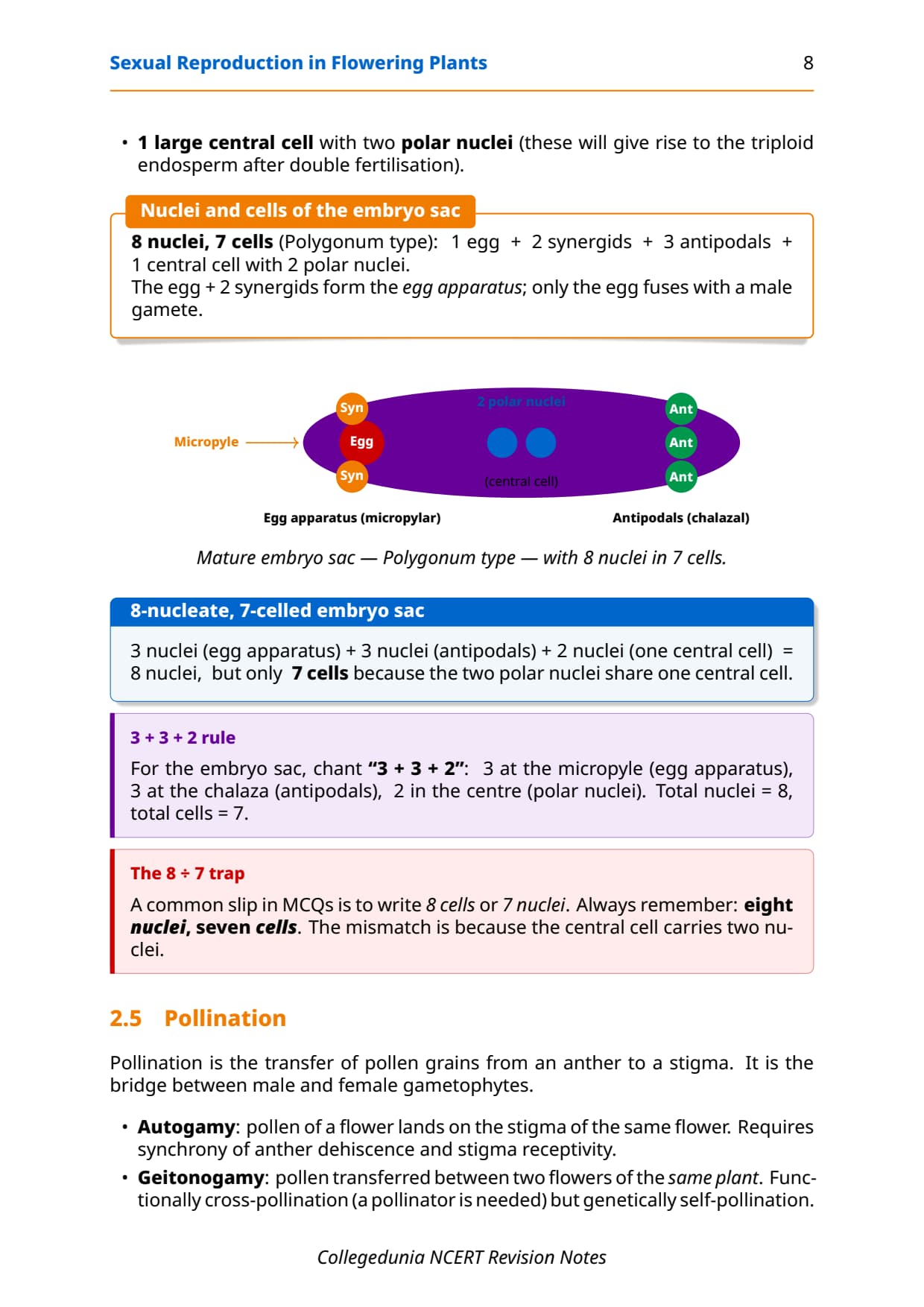
The diploid megaspore mother cell divides by meiosis into four megaspores; only the chalazal megaspore stays functional (monosporic Polygonum type). It undergoes three free-nuclear mitoses to form an 8-nucleate, 7-celled embryo sac: an egg apparatus (egg + two synergids), three antipodals, and one central cell with two polar nuclei. The synergids carry the filiform apparatus that guides the pollen tube.
Pollination, Outbreeding Devices, and Pollen-Pistil Interaction
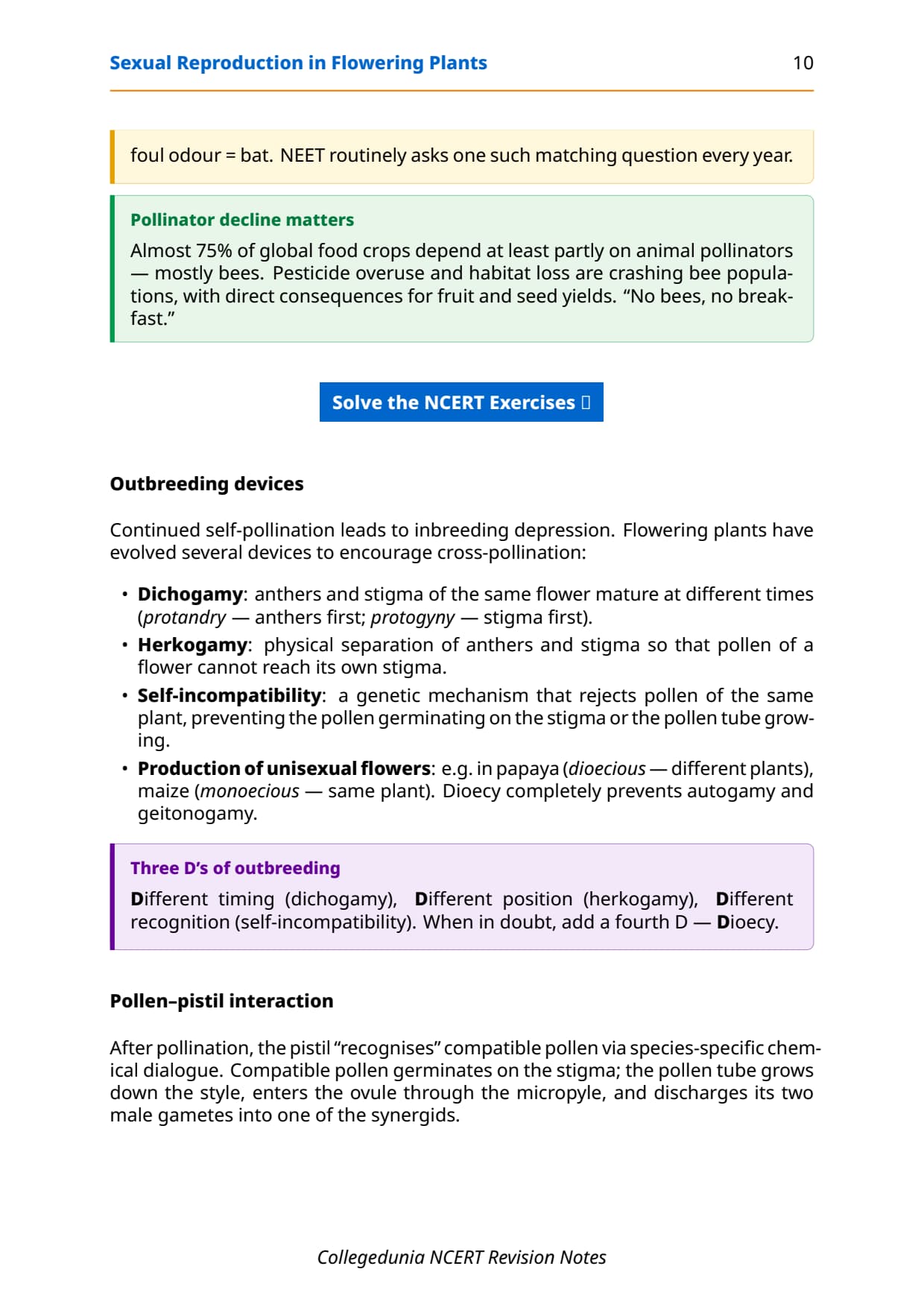
Pollination moves pollen from anther to stigma. The three types are autogamy (same flower; cleistogamy in Viola), geitonogamy (two flowers of one plant), and xenogamy (different plants, the only true cross-pollination). Outbreeding devices include dichogamy, herkogamy, self-incompatibility, and unisexuality. After a compatible grain lands, the pollen tube grows through the style and releases two male gametes through one synergid.
Double Fertilisation
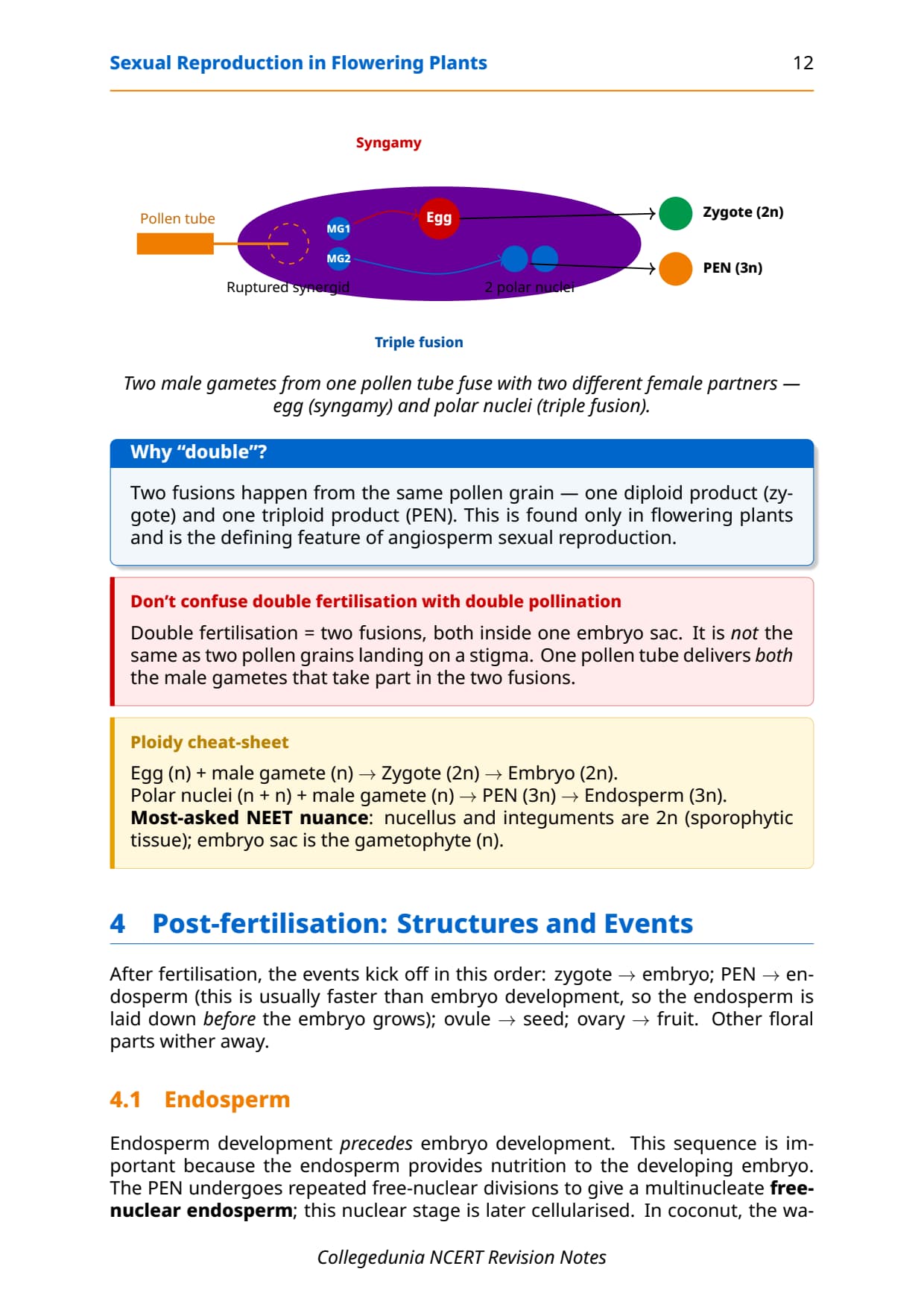
Inside the embryo sac, two fusions happen almost together: syngamy (male gamete + egg = diploid zygote, 2n) and triple fusion (second male gamete + two polar nuclei = triploid primary endosperm nucleus, 3n). Because two fusions occur in one embryo sac, the event is called double fertilisation and is unique to angiosperms. The PEN then divides to form the triploid endosperm.
Post-Fertilisation: Endosperm, Embryo, Seed, Fruit
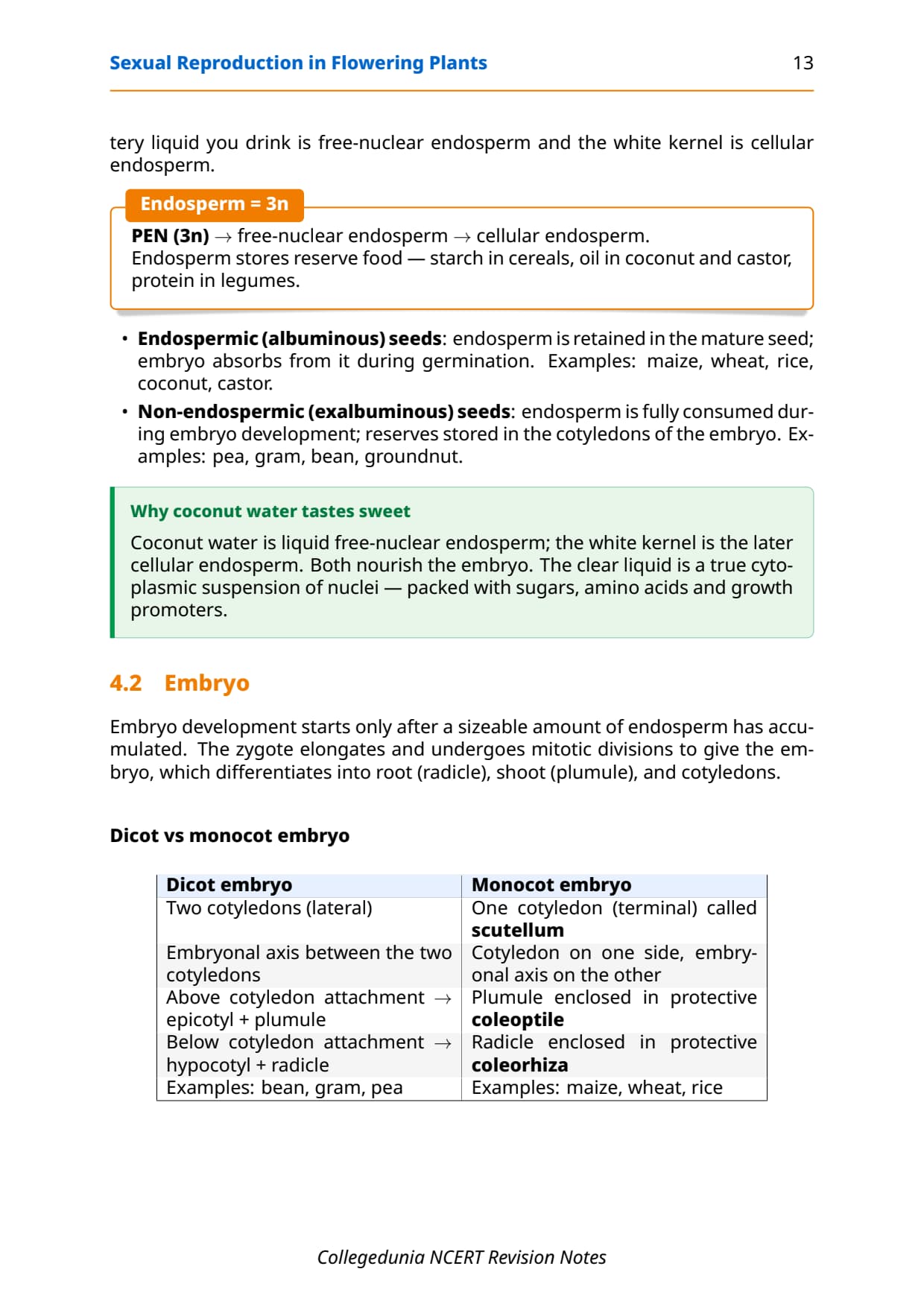
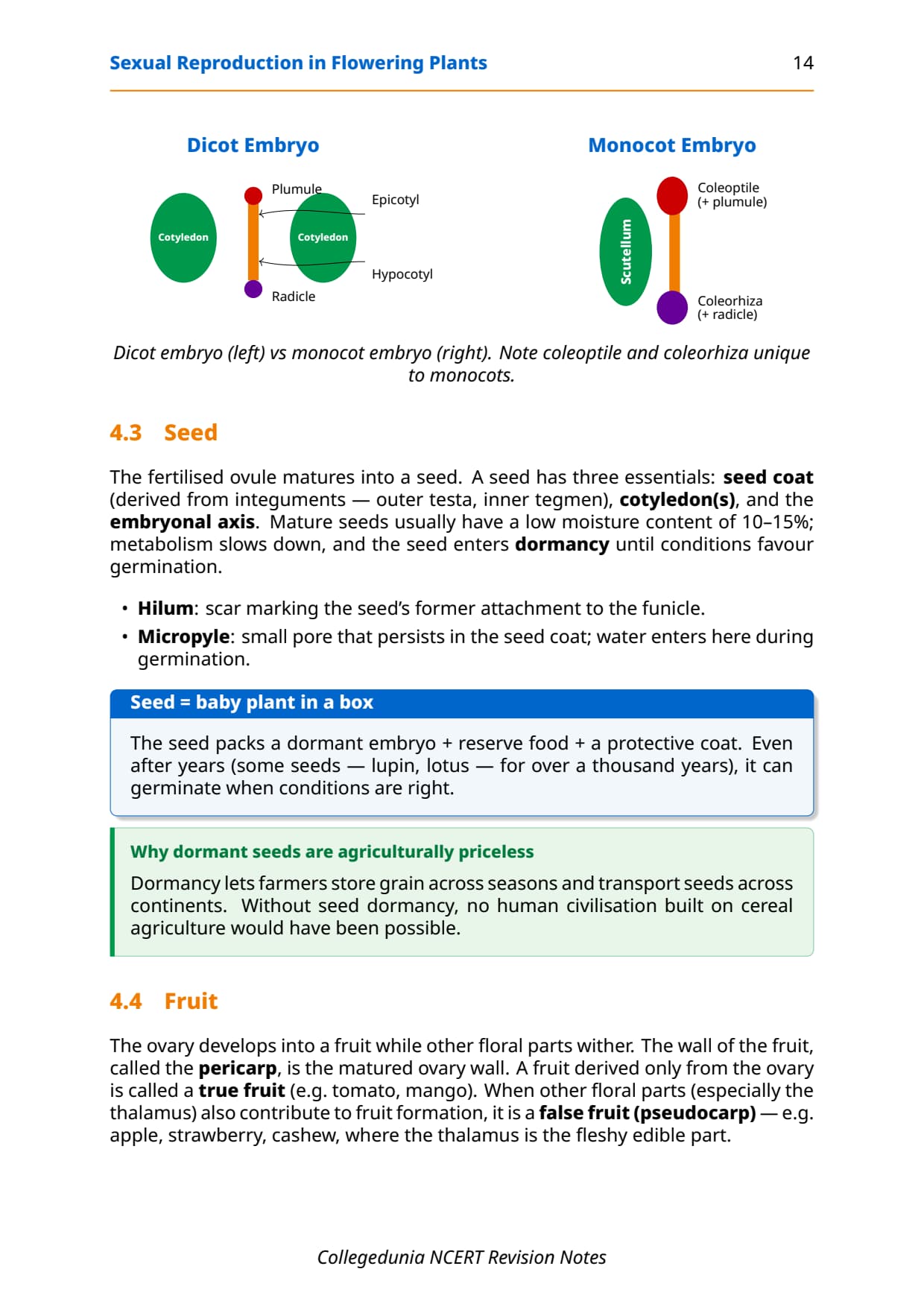
The endosperm forms first to feed the embryo. Its growth is nuclear (coconut), cellular (Datura), or helobial. A dicot embryo has two cotyledons; a monocot embryo has one (scutellum). The ovule becomes the seed and the ovary wall becomes the pericarp. Seeds are albuminous (wheat, castor) or non-albuminous (pea, gram). True fruits form from the ovary alone; false fruits (apple) include other floral parts.
Apomixis, Polyembryony, and Parthenocarpy
Apomixis is seed formation without fertilisation, valued because it locks in hybrid vigour. Polyembryony is more than one embryo per seed (citrus, mango). Parthenocarpy is fruit formation without fertilisation, giving seedless fruit (banana, grapes).
Sexual Reproduction in Flowering Plants Important Diagrams for Class 12 Boards
Practise each labelled diagram until you can draw and label it from memory:
- T.S. mature anther (epidermis, endothecium, middle layers, tapetum).
- Mature pollen grain (exine, germ pore, intine, vegetative + generative cells).
- L.S. anatropous ovule (integuments, micropyle, nucellus, embryo sac, funicle).
- Mature embryo sac (egg apparatus, polar nuclei, antipodals, filiform apparatus).
- Double fertilisation (pollen tube through synergid, both fusions).
- Dicot vs monocot seed (gram vs maize).
Sexual Reproduction in Flowering Plants Topic-wise Weightage for CBSE Class 12 Biology
Not every sub-topic carries equal exam weight. The split below uses the last five years of CBSE and NEET papers.
| Sub-topic | Weightage | Frequency |
|---|---|---|
| Double fertilisation and embryo-sac development | High | Almost every NEET; CBSE 4 of last 5 |
| Pre-fertilisation events (micro- + megasporogenesis) | High | Almost every year |
| Pollen grain structure and anther T.S. | High | NEET 4 of last 5 |
| Pollination types and outbreeding devices | Medium | CBSE 3 of last 5 |
| Post-fertilisation (endosperm, embryo, seed) | Medium | NEET 3 of last 5 |
| Apomixis, polyembryony, parthenocarpy | Medium | 2 of last 5 |
Most Repeated Sexual Reproduction in Flowering Plants Questions (CBSE Class 12, 2021 to 2025)
Your last-day revision target:
- CBSE 2025 (3-mark): autogamy vs geitonogamy vs xenogamy with examples.
- CBSE 2024 (5-mark): describe double fertilisation and its significance.
- CBSE 2023 (3-mark): labelled embryo sac; functions of synergids and antipodals.
- CBSE 2022 (5-mark): four outbreeding devices with examples.
Full year-wise PYQ map: Sexual Reproduction in Flowering Plants Class 12 NCERT Solutions with year-tagged PYQs
Common Misconceptions in Sexual Reproduction in Flowering Plants
Five wrong beliefs examiners exploit. Fix each before the exam:
- "Endosperm is diploid." Wrong. It is triploid (3n), from triple fusion.
- "Pollen grain is the male gamete." Wrong. It is the male gametophyte.
- "All angiosperms shed 3-celled pollen." Wrong. About 60% shed 2-celled pollen.
- "Parthenocarpy = apomixis." Wrong. Parthenocarpy gives seedless fruit; apomixis gives seed.
- "Filiform apparatus is in the egg." Wrong. It is in the synergids.
NEET-Only Extensions Beyond the Class 12 NCERT
Points NEET asks but the textbook covers thinly:
- Types of ovules: orthotropous, anatropous (most common), campylotropous, amphitropous, circinotropous.
- Pollen viability: 30 min in rice and wheat; months in Rosaceae and Leguminosae.
- Placentation: marginal (pea), axile (china rose), parietal (mustard), free-central (Dianthus), basal (sunflower).
- Wind vs insect flowers: stigma shape, pollen weight, and flower colour.
- Bagging and emasculation: the plant-breeding procedure.
Student Feedback on Sexual Reproduction in Flowering Plants Class 12 Biology Notes
Student Feedback
In a recent survey of 12,400 Class 12 Biology students:
- 73% rated the double-fertilisation diagram as the hardest sub-topic, even though it carries the highest single-question marks.
- 61% lost marks on the microsporogenesis vs megasporogenesis comparison.
Other Resources for Sexual Reproduction in Flowering Plants Class 12 Biology
Other resources for this chapter:
| Resource | Link |
|---|---|
| NCERT Notes (this page) | Sexual Reproduction in Flowering Plants Notes |
| NCERT Solutions | Sexual Reproduction in Flowering Plants NCERT Solutions |
| Handwritten Notes | Sexual Reproduction in Flowering Plants Handwritten Notes |
| Formula Sheet | Sexual Reproduction in Flowering Plants Formula Sheet |
| NCERT Book PDF | Sexual Reproduction in Flowering Plants NCERT Book PDF |
| Exemplar Solutions | Sexual Reproduction in Flowering Plants Exemplar Solutions |
| Exemplar Book PDF | Sexual Reproduction in Flowering Plants Exemplar Book PDF |
NCERT Notes for Class 12 Biology: All Chapters
Quick links to the rest of the Class 12 Biology notes:
| Chapter No. | Chapter Notes |
|---|---|
| Chapter 1 | Sexual Reproduction in Flowering Plants Notes |
| Chapter 2 | Human Reproduction Notes |
| Chapter 3 | Reproductive Health Notes |
| Chapter 4 | Principles of Inheritance and Variation Notes |
| Chapter 5 | Molecular Basis of Inheritance Notes |
| Chapter 6 | Evolution Notes |
| Chapter 7 | Human Health and Disease Notes |
| Chapter 8 | Microbes in Human Welfare Notes |
| Chapter 9 | Biotechnology - Principles and Processes Notes |
| Chapter 10 | Biotechnology and Its Applications Notes |
| Chapter 11 | Organisms and Populations Notes |
| Chapter 12 | Ecosystem Notes |
| Chapter 13 | Biodiversity and Conservation Notes |
Sexual Reproduction in Flowering Plants Class 12 Biology FAQ Section
Sexual Reproduction in Flowering Plants Class 12 Biology Notes FAQs
Ques. Where can I download the Sexual Reproduction in Flowering Plants Class 12 Biology Notes PDF?
Ans. You can download the Sexual Reproduction in Flowering Plants Class 12 Biology Notes PDF directly from this page. Both Normal and HD versions are free.
Ques. Are these Sexual Reproduction in Flowering Plants notes aligned with the 2026-27 NCERT?
Ans. Yes. These notes reflect the current 2026-27 NCERT for Class 12 Biology Chapter 1 Sexual Reproduction in Flowering Plants. Pre-fertilisation events, double fertilisation, post-fertilisation changes, and apomixis are all retained in the new edition.
Ques. How many pages is the Class 12th Biology Sexual Reproduction in Flowering Plants Notes PDF?
Ans. The Notes PDF runs about 30 pages and covers pre-fertilisation structures, microsporogenesis and megasporogenesis, pollen-pistil interaction, double fertilisation, endosperm and embryo development, apomixis and polyembryony, plus a quick-reference summary block.
Ques. What is double fertilisation in flowering plants?
Ans. Double fertilisation is the two-fusion event unique to angiosperms. After the pollen tube enters the embryo sac through a synergid, one male gamete fuses with the egg to form a diploid zygote (syngamy), and the second male gamete fuses with the two polar nuclei in the central cell to form the triploid primary endosperm nucleus (triple fusion). Both fusions happen almost simultaneously inside the same embryo sac, which is why the process is called "double".
Ques. What is the difference between microsporogenesis and megasporogenesis?
Ans. Microsporogenesis is the formation of haploid microspores (which become pollen grains) from the diploid microspore mother cell by meiosis inside the anther's microsporangium. Megasporogenesis is the formation of megaspores from the megaspore mother cell by meiosis inside the ovule's nucellus. Both are meiotic, both produce four haploid cells, but micro happens in the male part (anther) and mega in the female part (ovule), with only one megaspore staying functional in most plants.
Ques. What is apomixis and why is it agriculturally important?
Ans. Apomixis is the formation of seeds without fertilisation. The embryo develops from a diploid cell (egg or nucellus) without male gamete fusion, so the offspring is genetically identical to the mother plant. It is agriculturally valuable because apomictic hybrid seeds maintain hybrid vigour generation after generation; farmers do not have to buy fresh F1 hybrid seed every season.
Ques. Are these notes enough for NEET preparation in Sexual Reproduction in Flowering Plants?
Ans. Yes. The notes cover the full NCERT plus the NEET-only extensions (types of ovules, types of placentation, pollen viability time-table, wind-versus-insect-flower contrast, bagging and emasculation, sporopollenin biochemistry). Combined with the chapter glossary and the high-frequency diagram list, the notes match the depth NEET tests on this chapter.
Ques. Why is the embryo sac called 7-celled but 8-nucleate?
Ans. The mature embryo sac has seven distinct cells but eight haploid nuclei. The central cell contains two polar nuclei (which is why the central cell counts as one cell but holds two nuclei), the egg apparatus has three cells (one egg and two synergids), and the chalazal end has three antipodal cells. One central + three egg-apparatus + three antipodal = seven cells; two polar + one egg + two synergids + three antipodal = eight nuclei.



Comments