



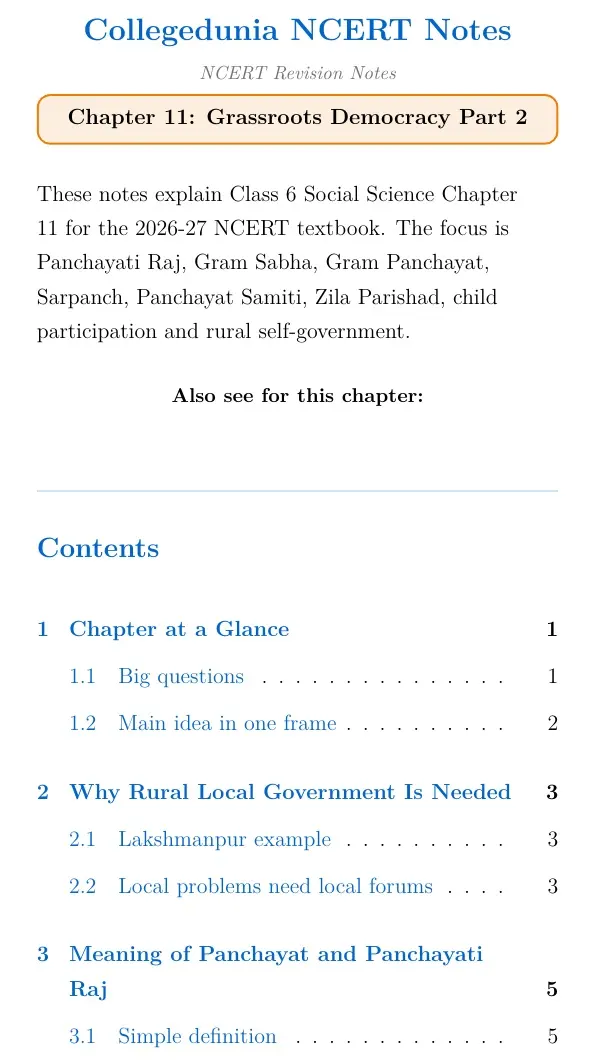
The NCERT Class 6 Social Science Chapter 11 notes for Grassroots Democracy Part 2 Local Government in Rural Areas explain Panchayati Raj, Gram Sabha, Gram Panchayat, Sarpanch, Panchayat Samiti and Zila Parishad. These notes follow the 2026-27 NCERT textbook and include a free PDF for quick revision.
- Best for revision: three-tier Panchayati Raj, Gram Sabha, Sarpanch and child-friendly Panchayats.
- Use with the PDF: revise the comparison tables first, then practise textbook questions.
- 2026-27 focus: follows Exploring Society: India and Beyond, Chapter 11.



Student Feedback: In a quick class poll, 73% of students found this chapter easier after linking each Panchayati Raj level with one village example.
|
Table of Contents |
Local Government in Rural Areas Overview
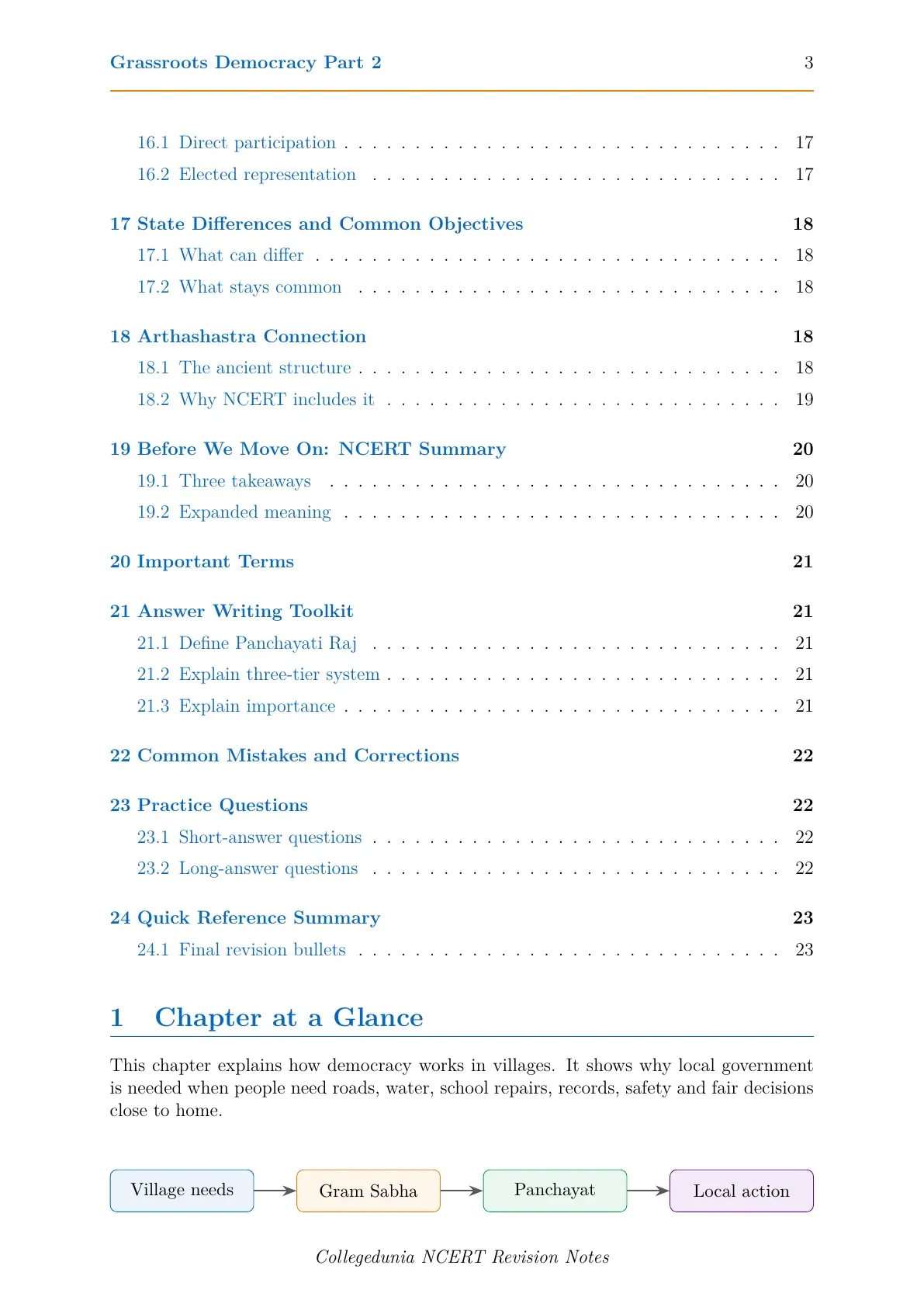
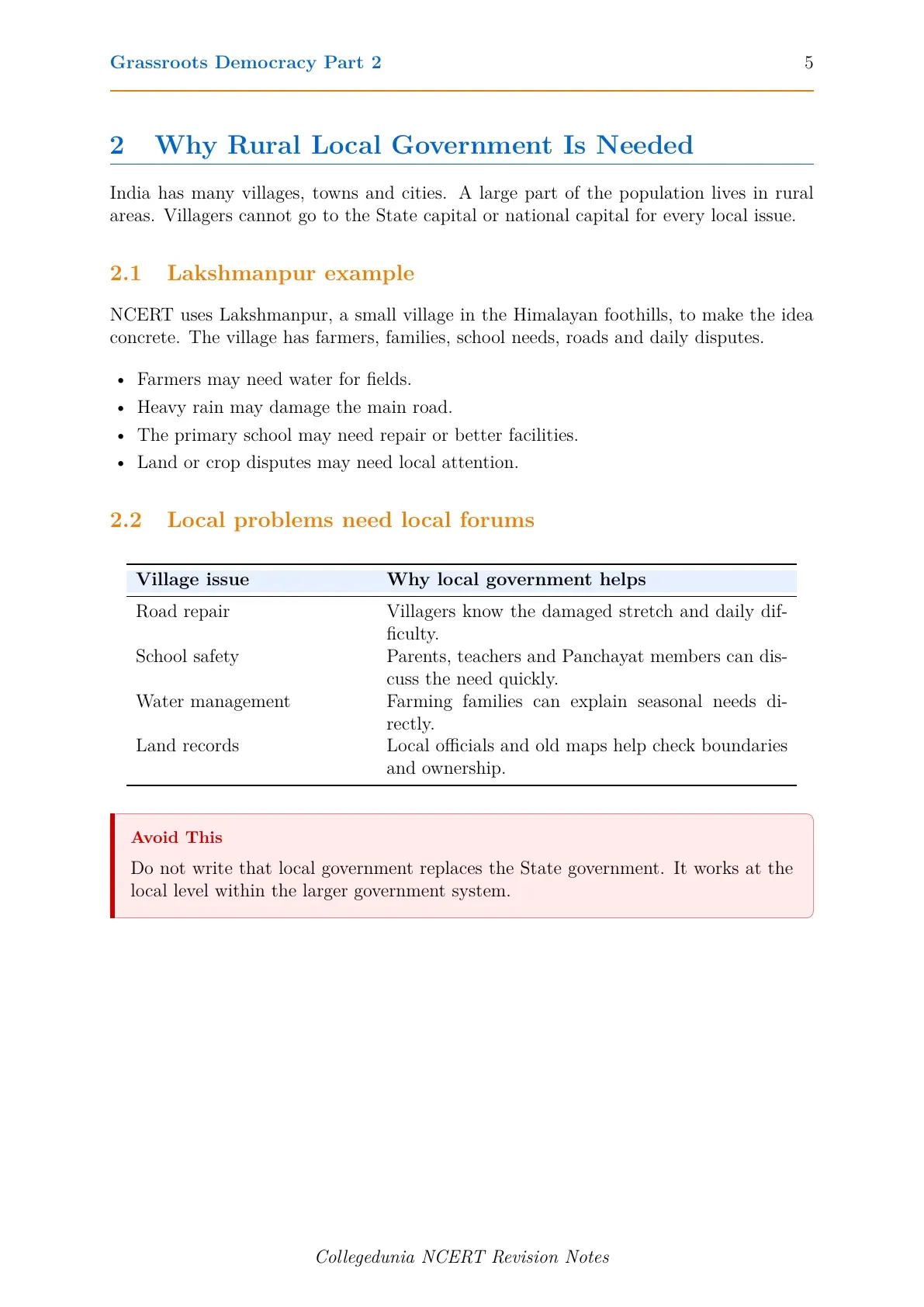
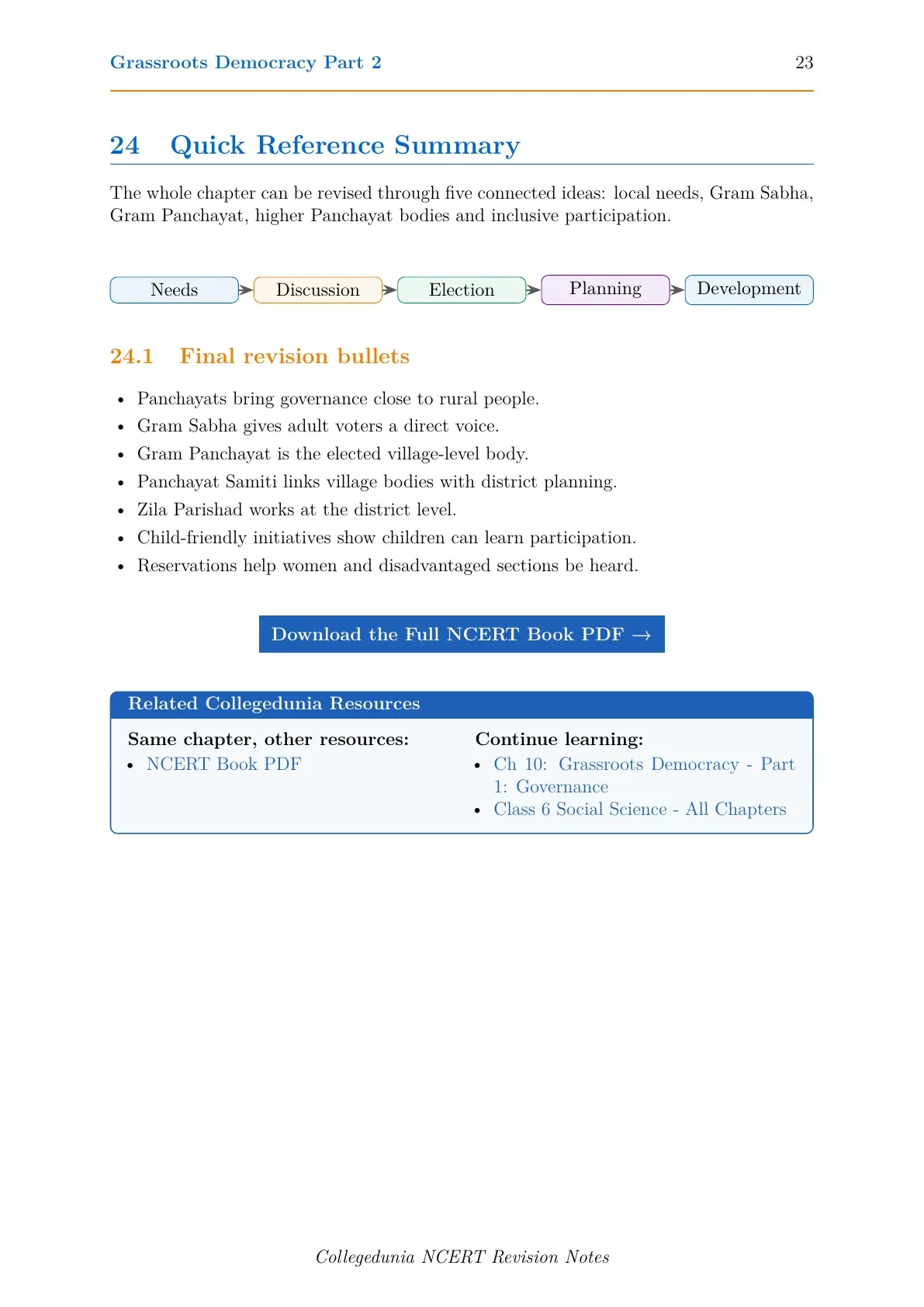
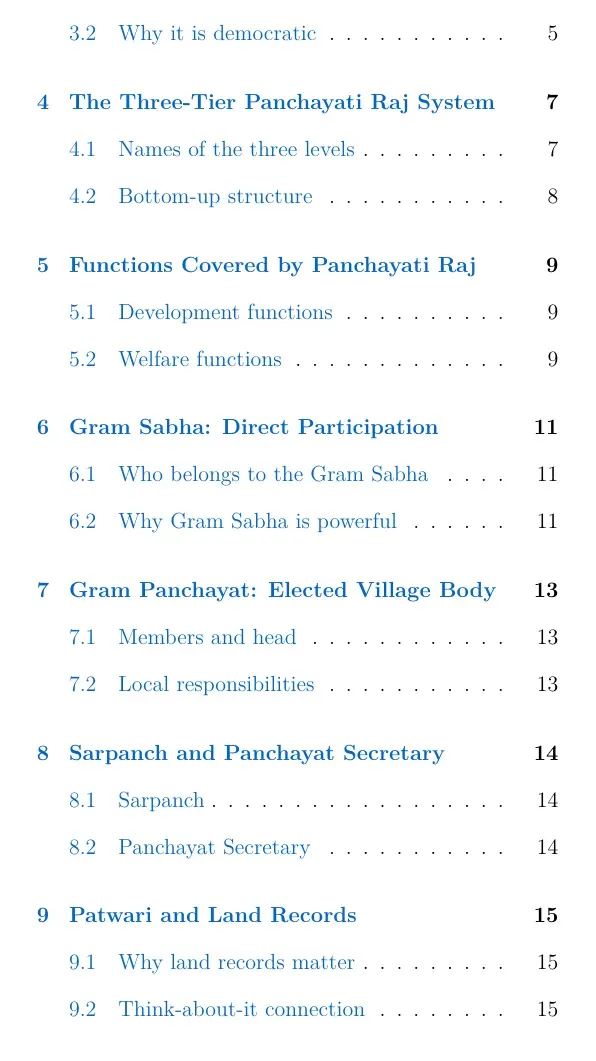
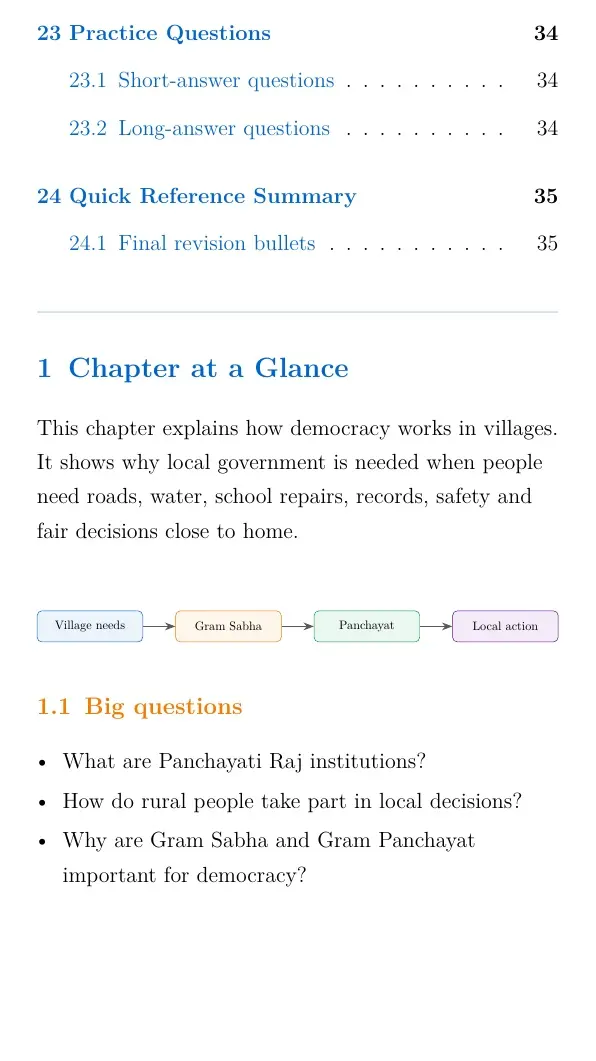
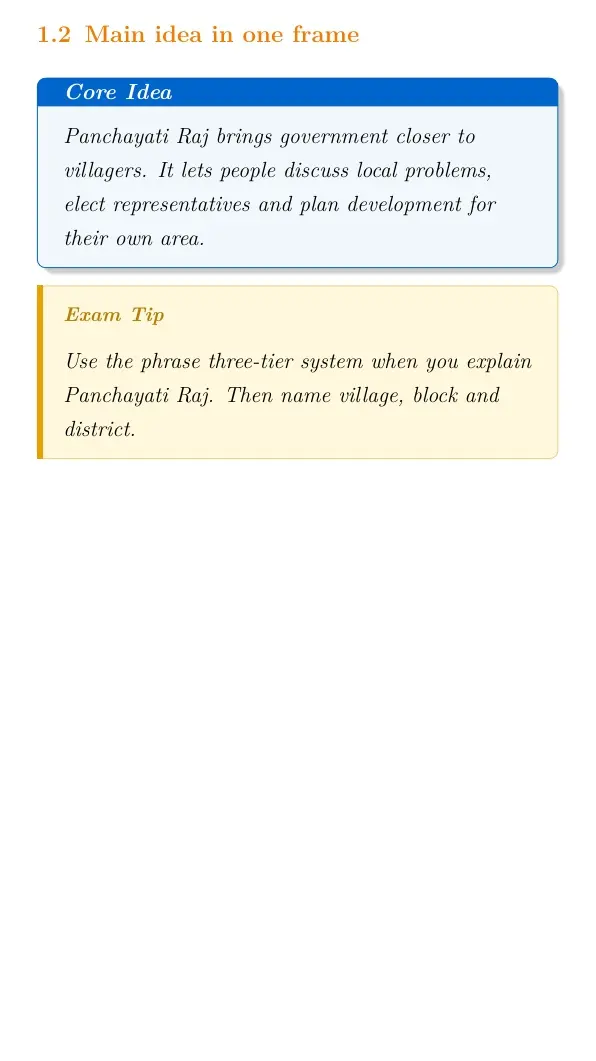
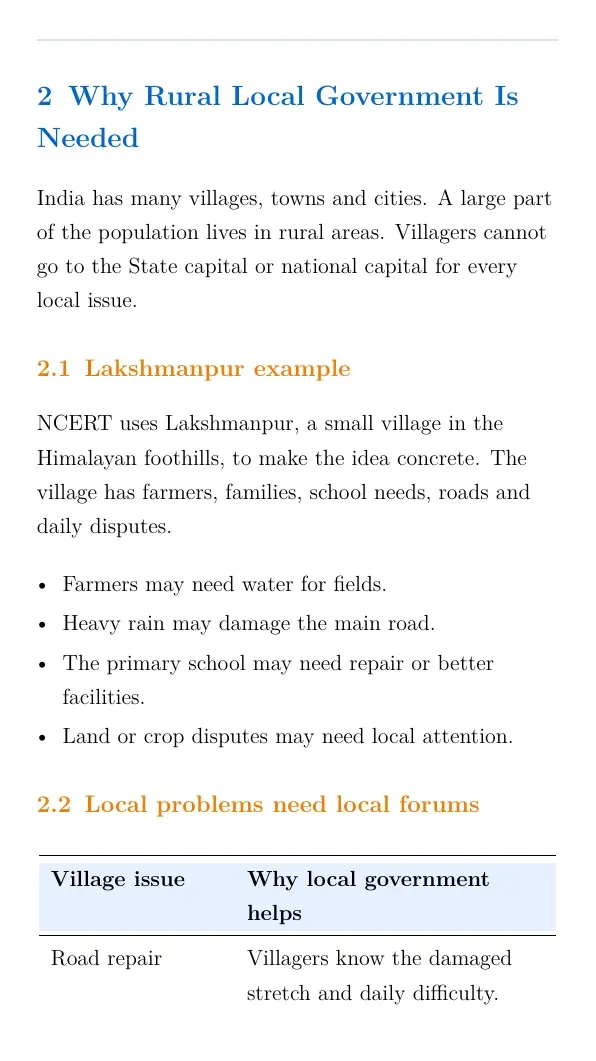
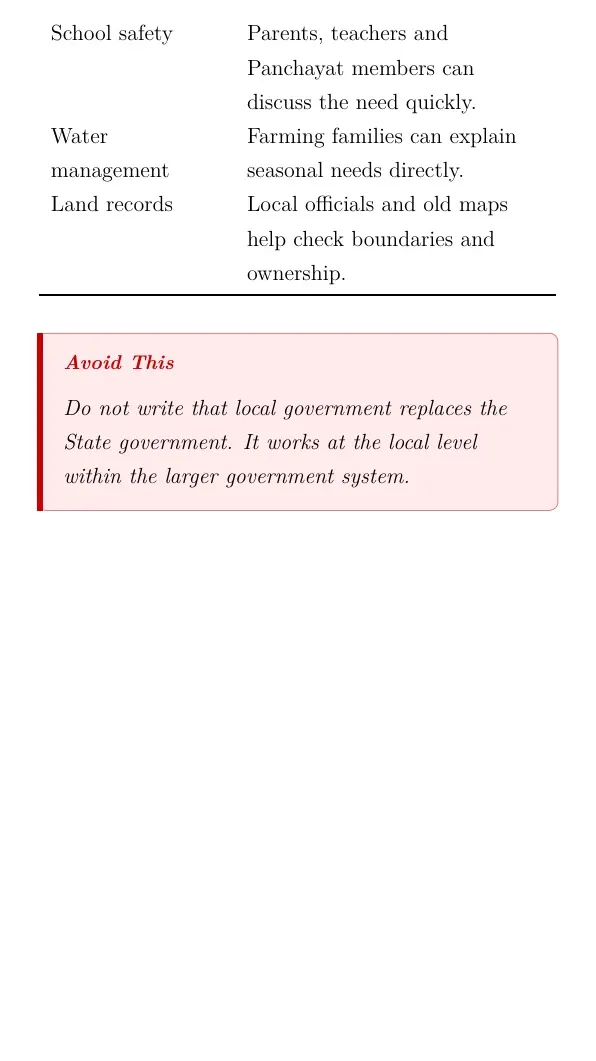
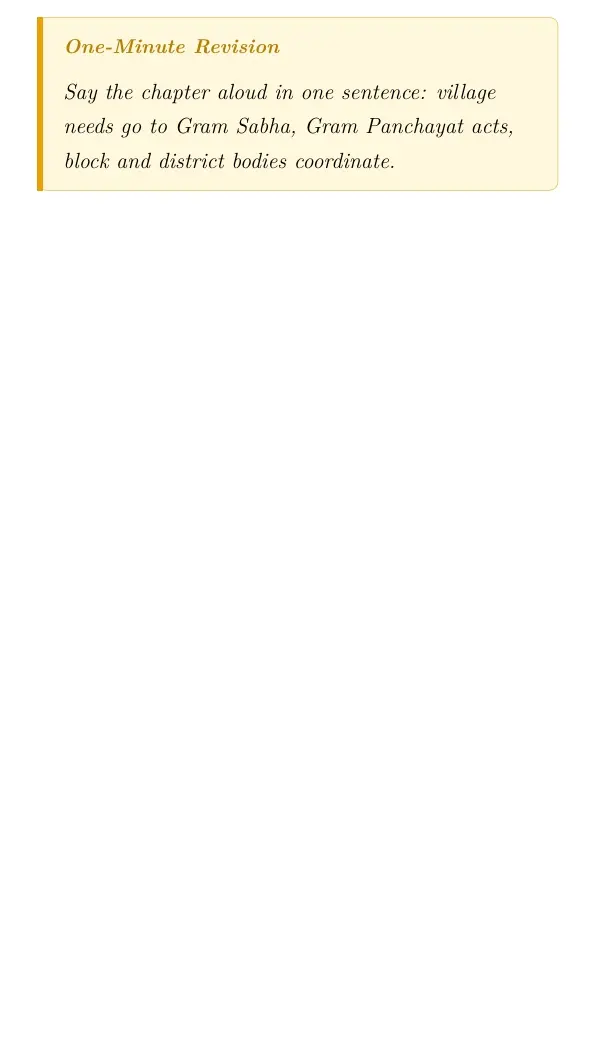
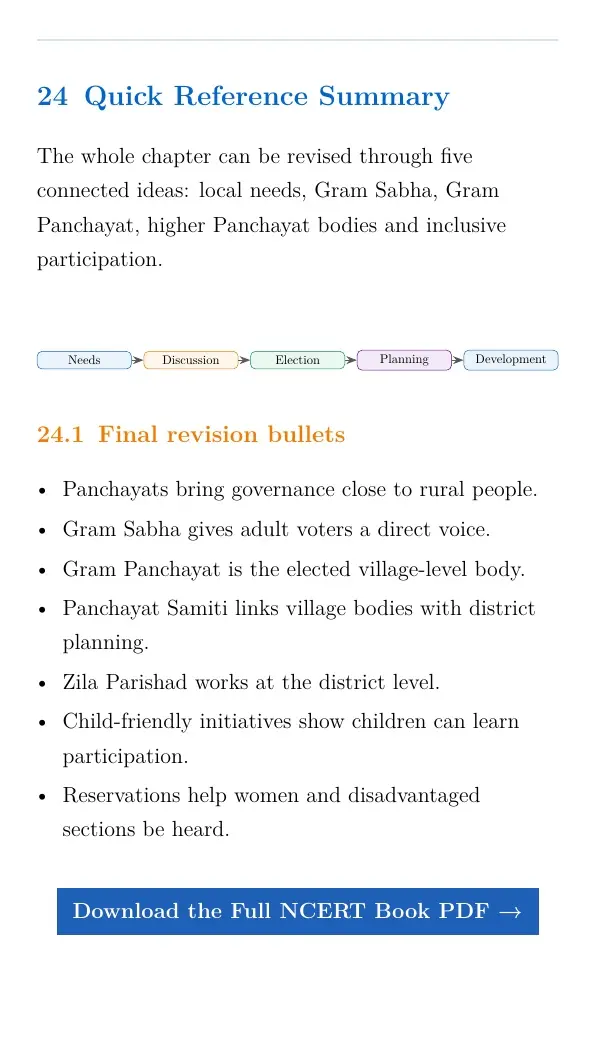
Chapter 11 explains how rural democracy works close to people's daily life. The chapter begins with village needs such as roads, water, school safety and land records. It then explains how local bodies help villagers discuss and manage such concerns.
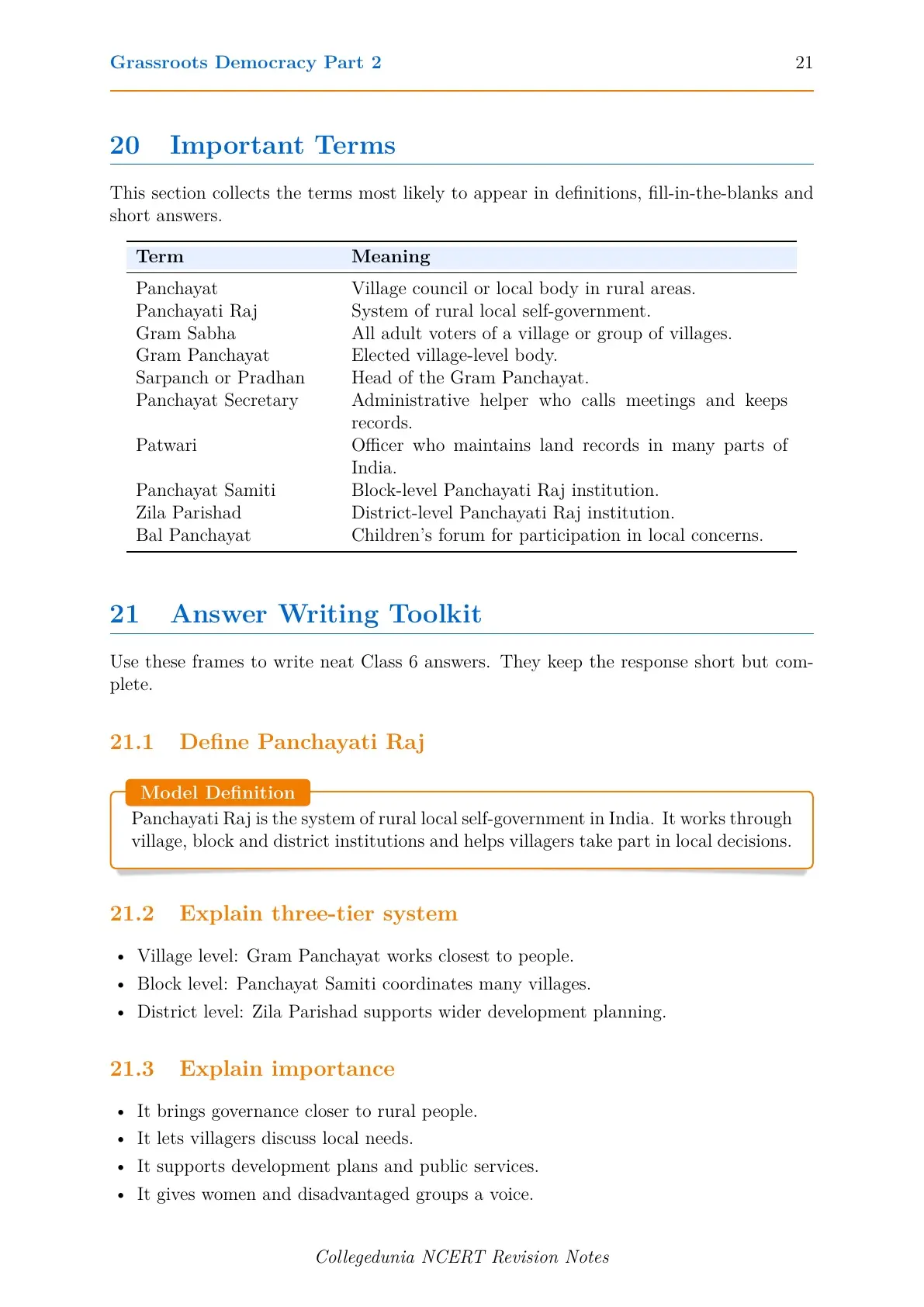
| Revision area | Key idea | Example cue |
|---|---|---|
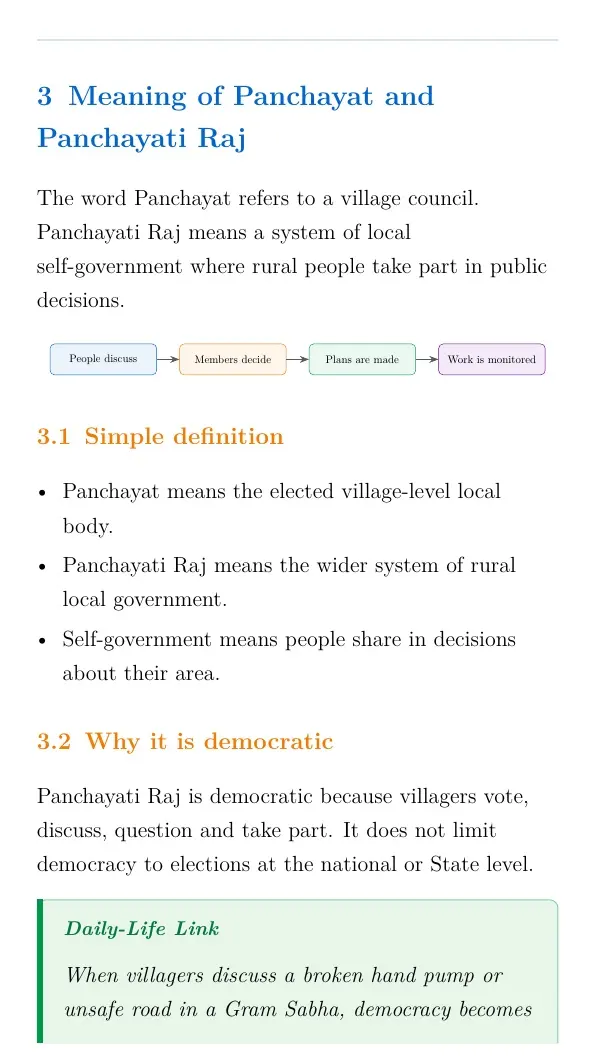
| Panchayati Raj | Rural local self-government | Village council and local decisions |
| Gram Sabha | Adult voters of a village or group of villages | Meeting to discuss local needs |
| Gram Panchayat | Elected village-level body | Works on roads, water, school and welfare |
| Sarpanch or Pradhan | Head of the Gram Panchayat | Leads elected local body |
| Panchayat Samiti and Zila Parishad | Block and district bodies | Coordinate wider development plans |
Panchayati Raj Three-Tier System
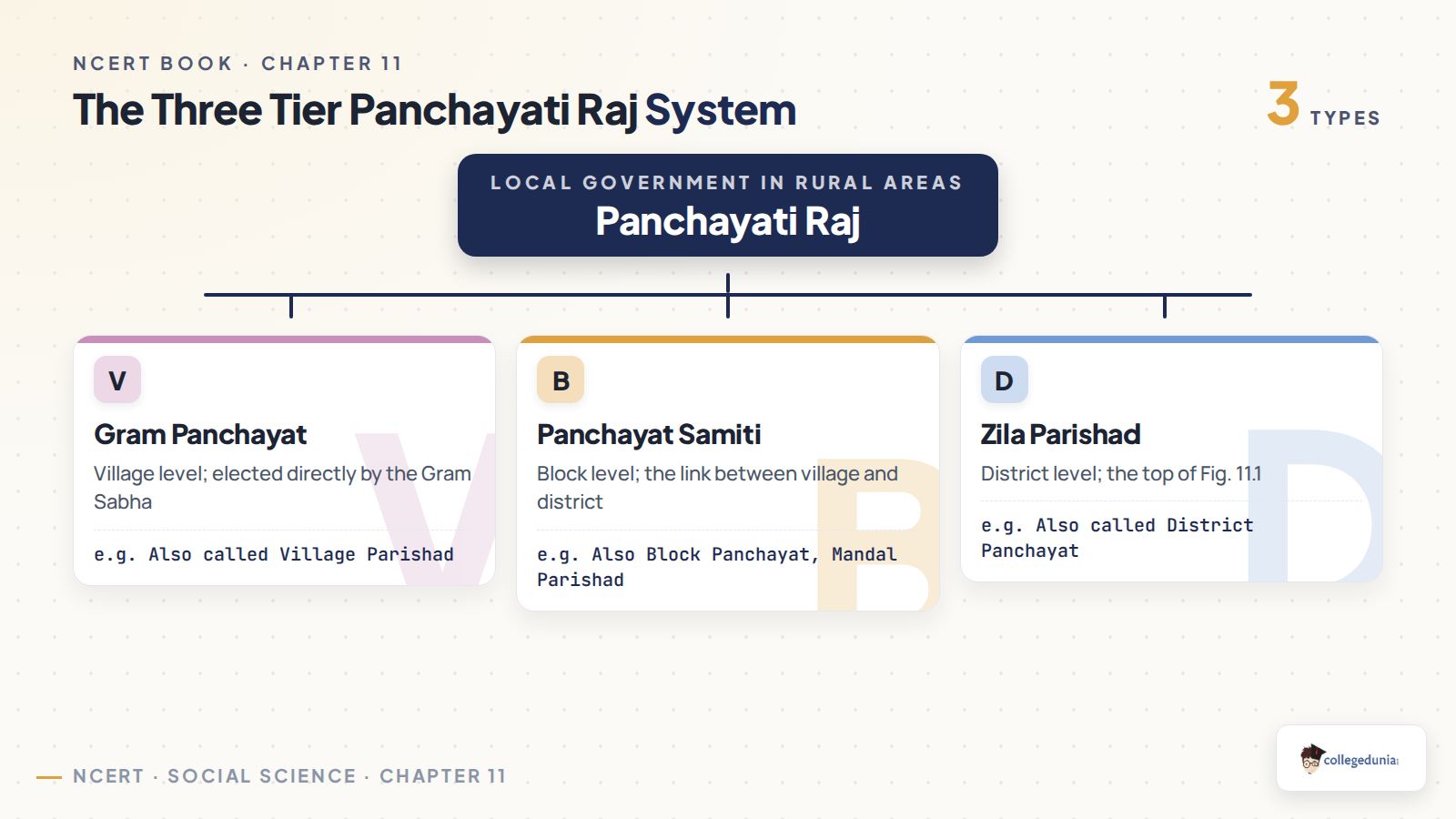
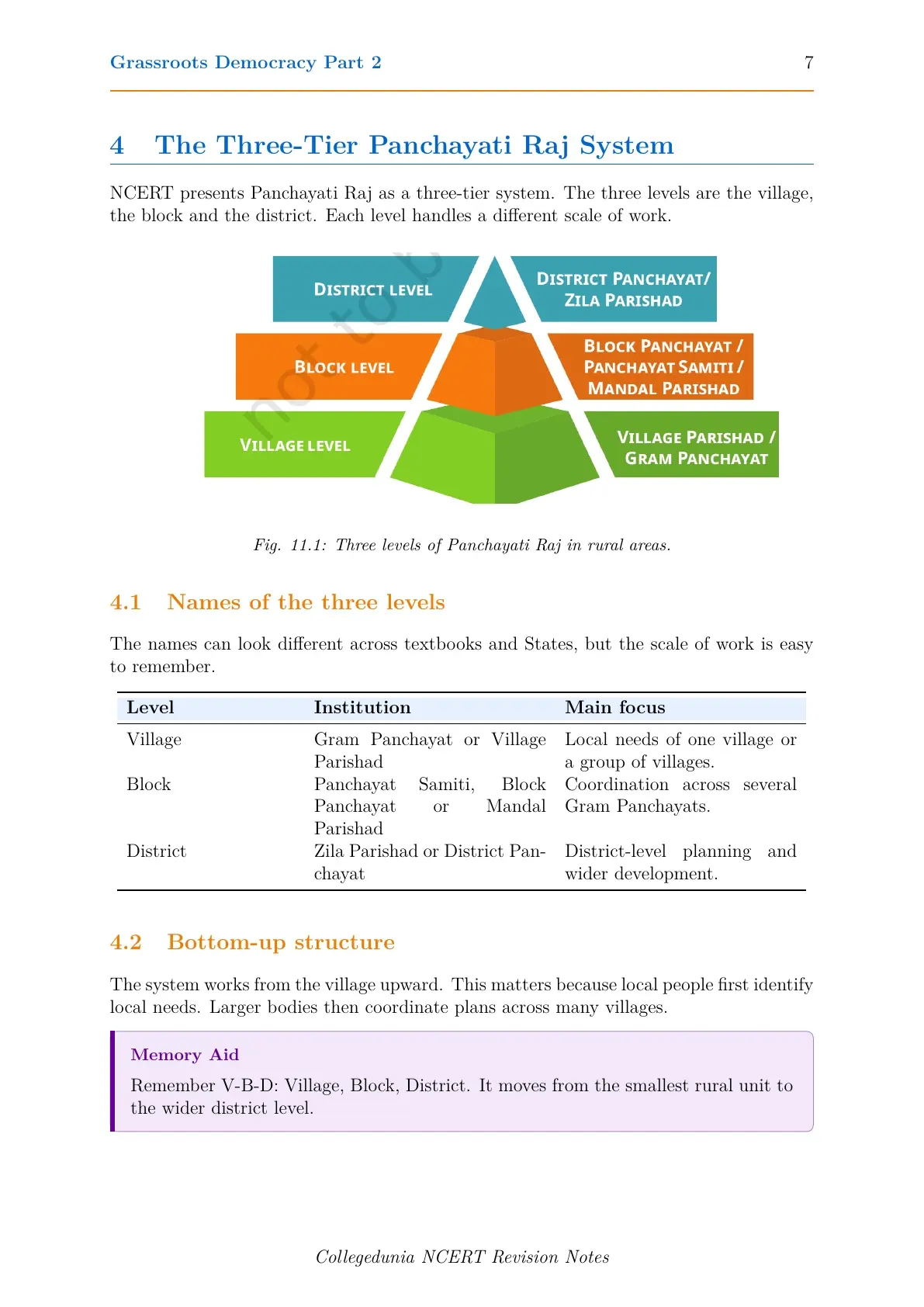
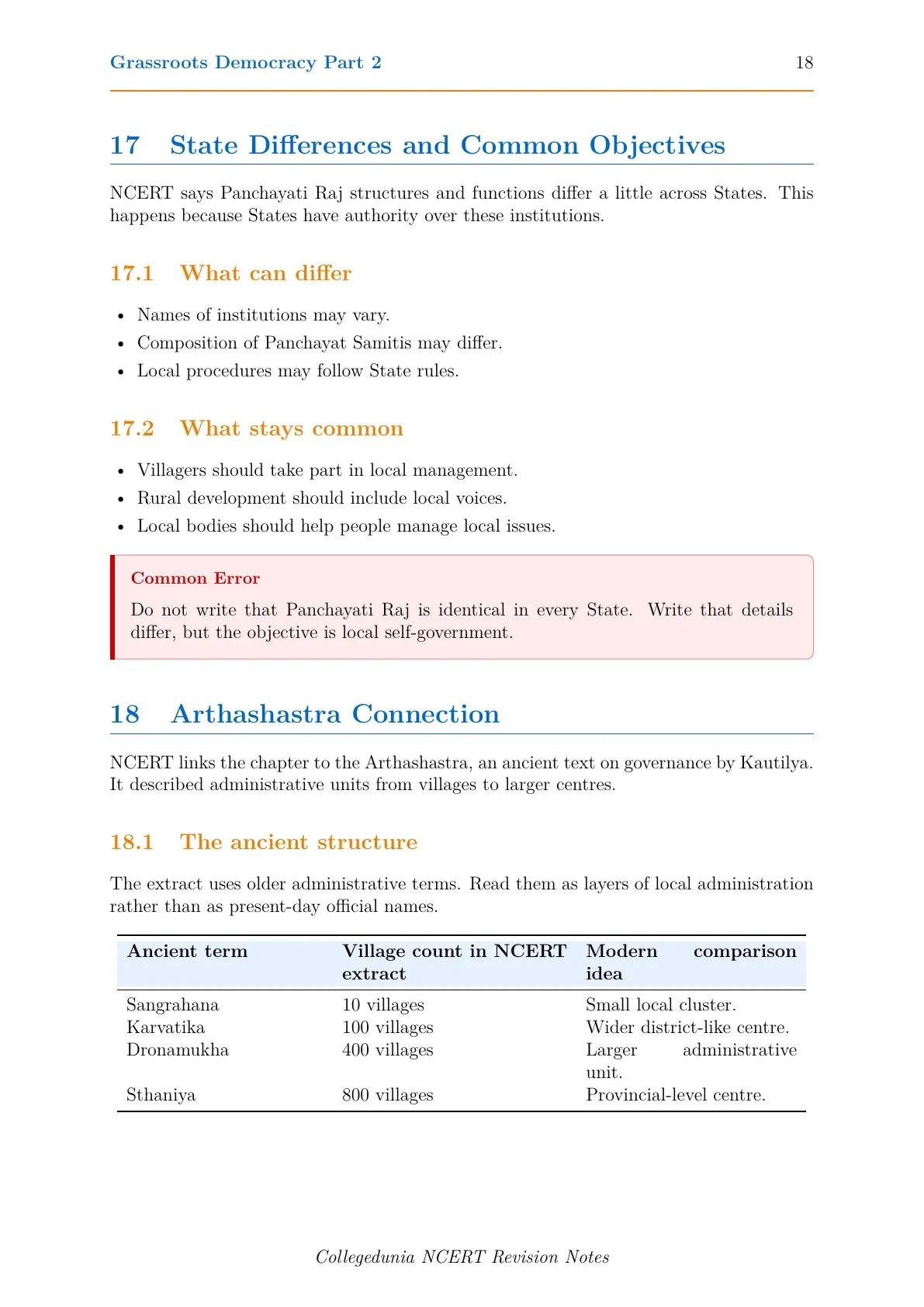
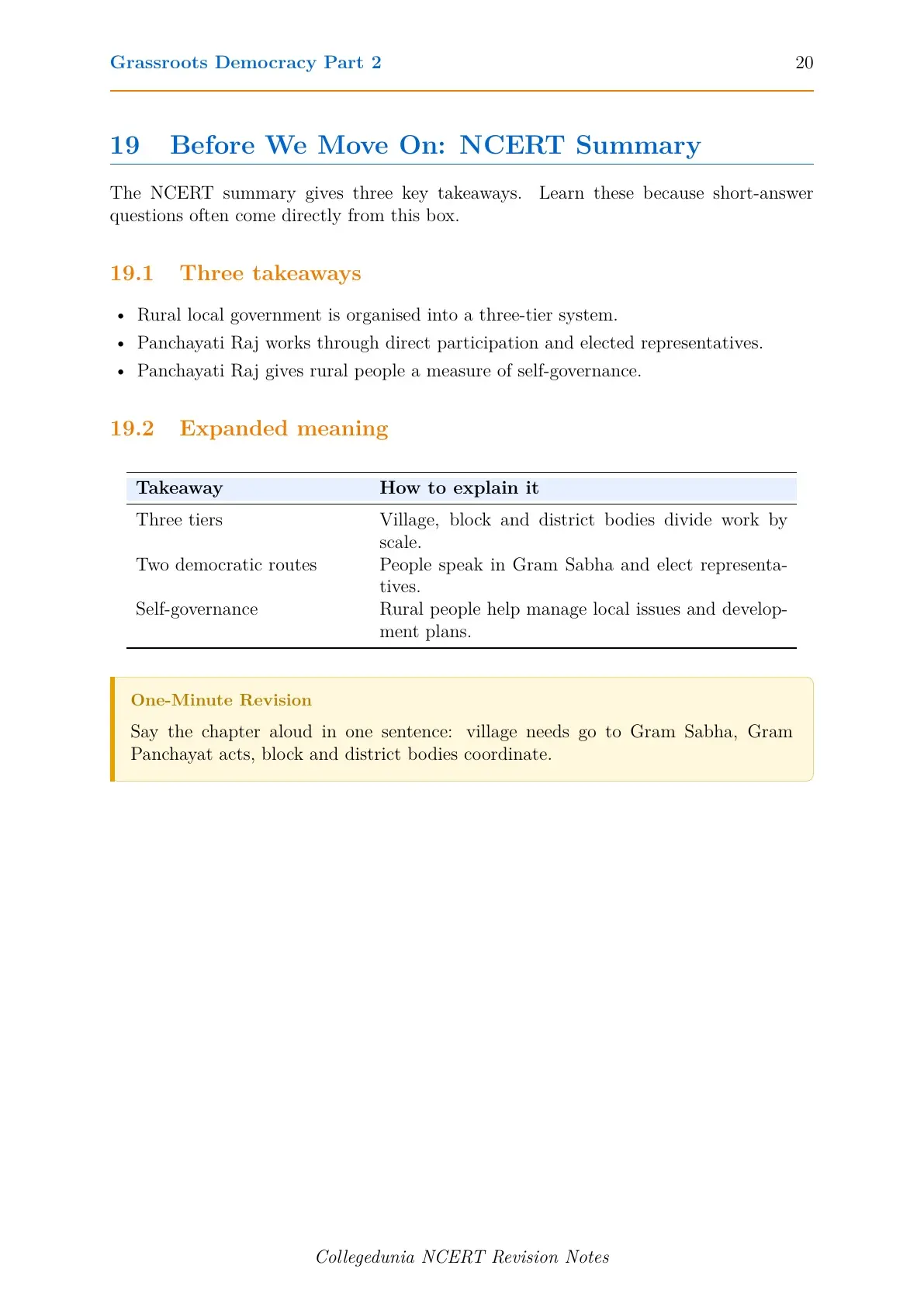
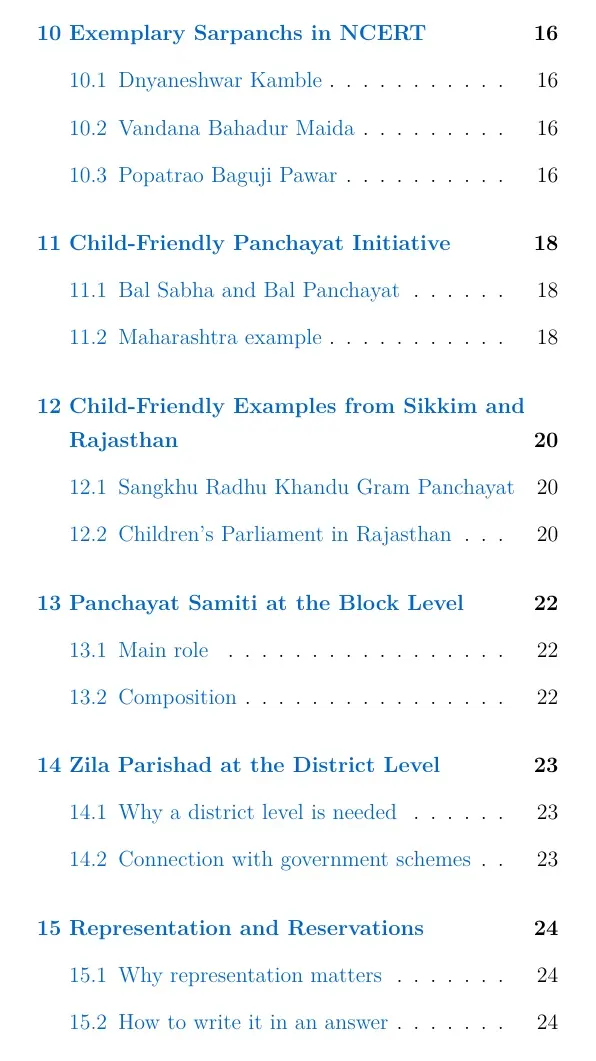
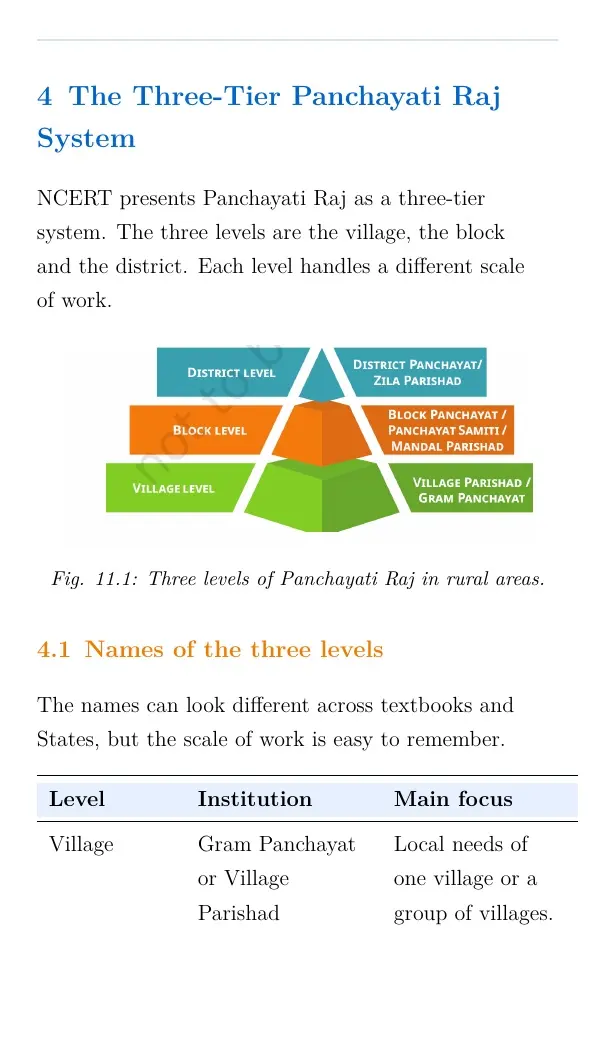
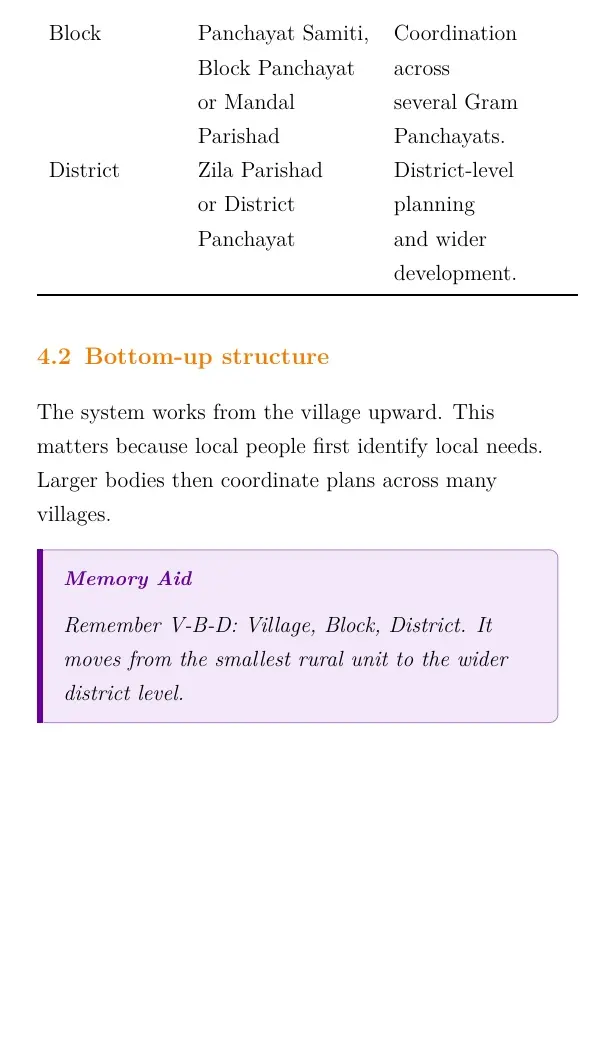
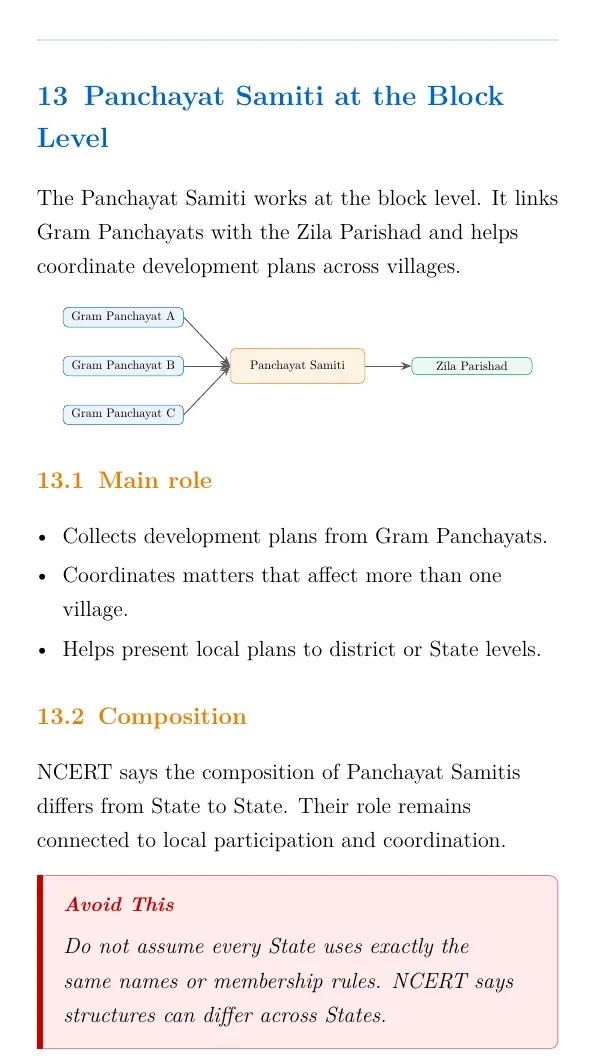
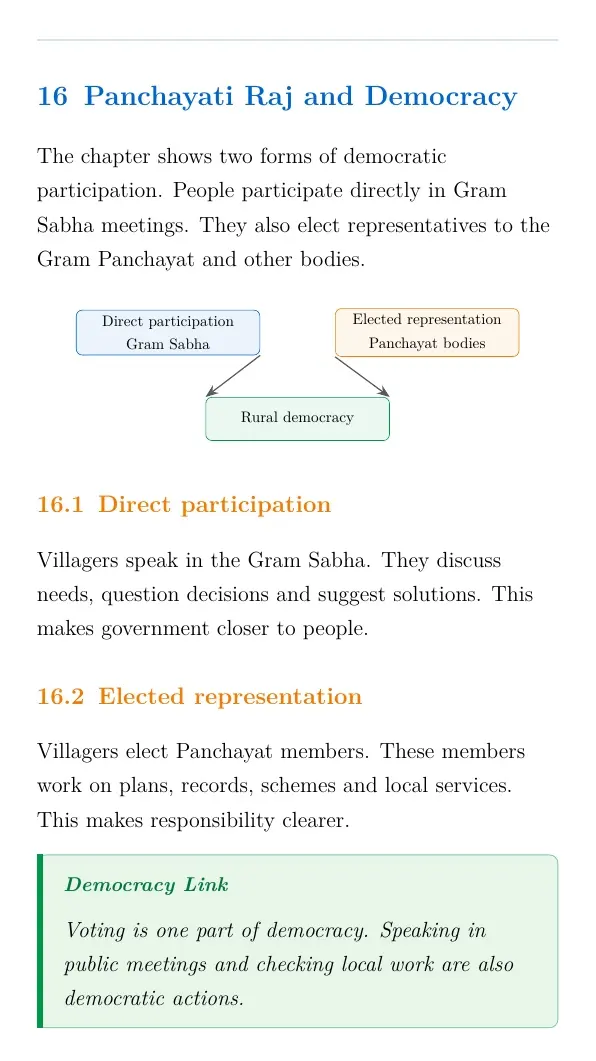
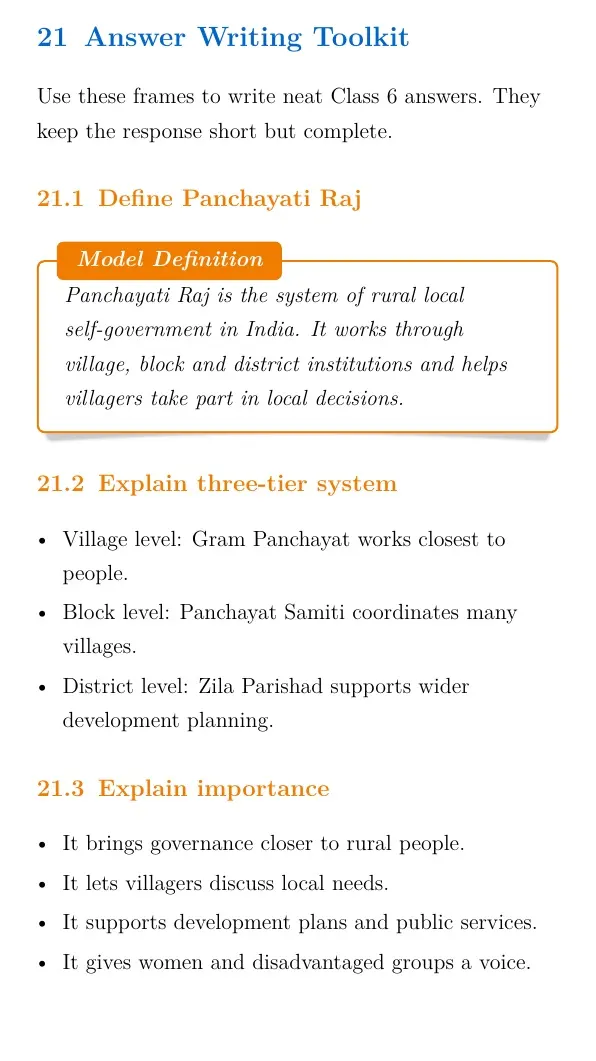
The Panchayati Raj system works at three levels: village, block and district. NCERT calls this a three-tier system because each level has a different scale of work. The village level is closest to people, while the block and district levels coordinate larger plans.
- Village level: Gram Panchayat or Village Parishad handles local needs.
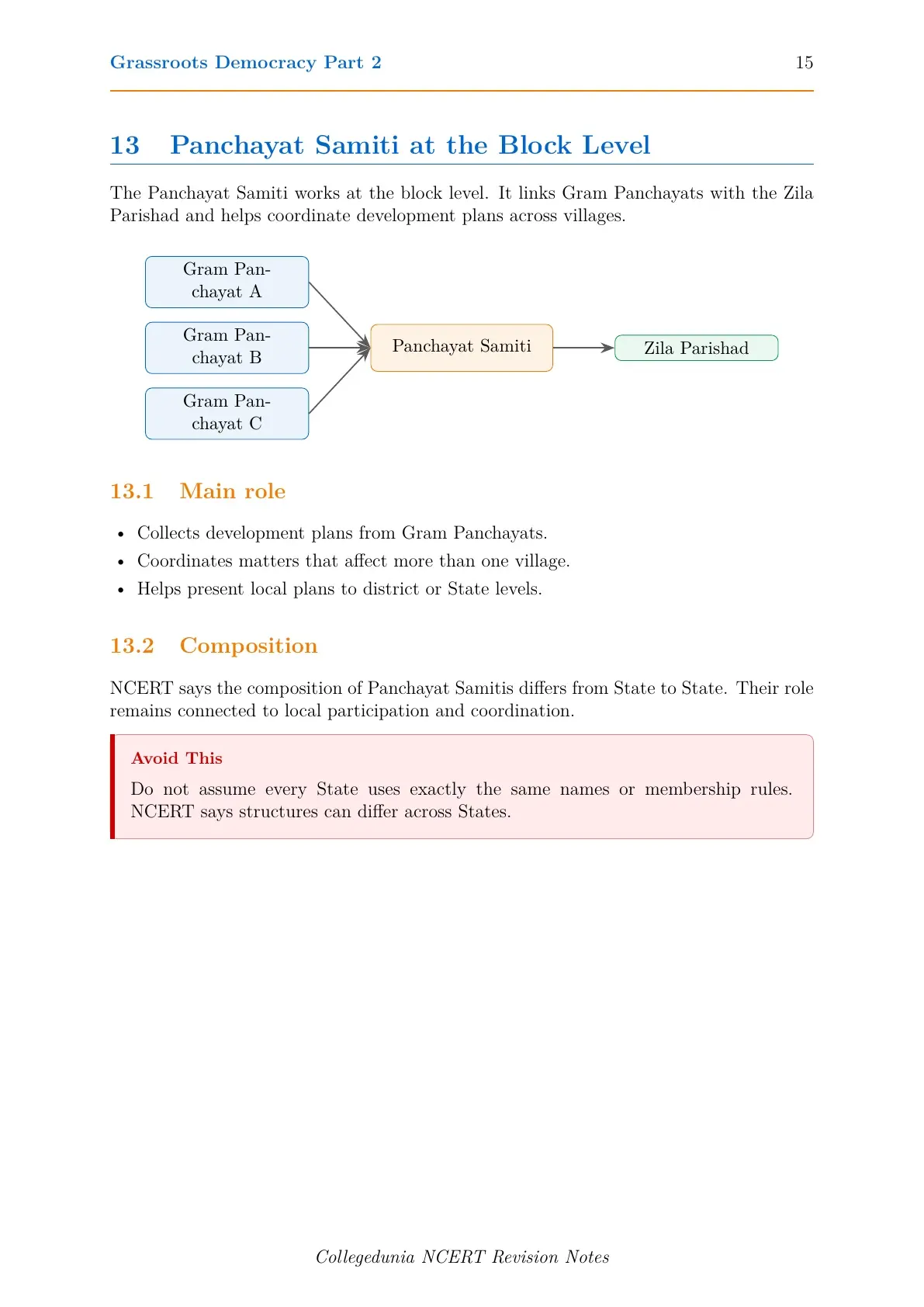
- Block level: Panchayat Samiti coordinates plans across Gram Panchayats.
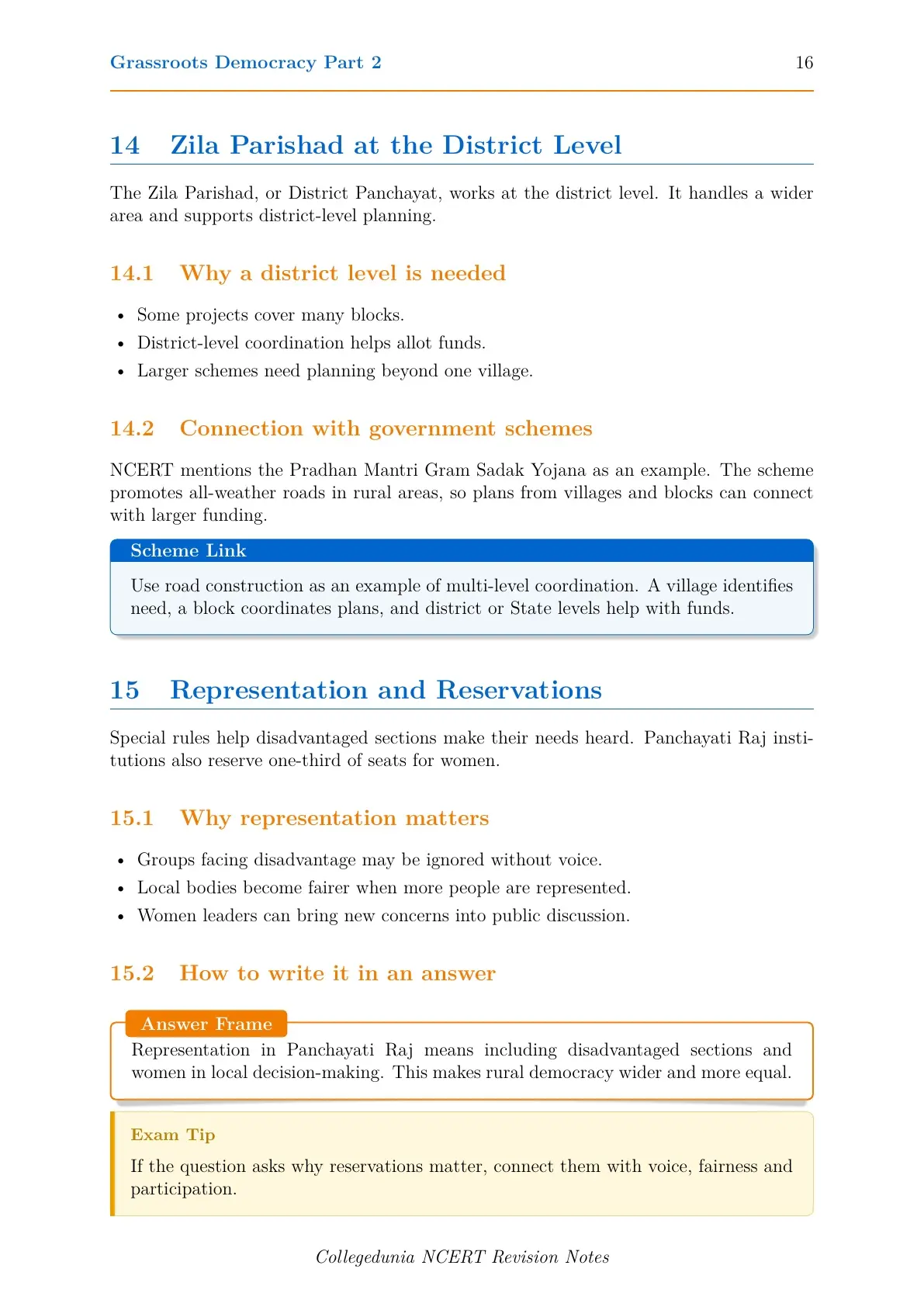
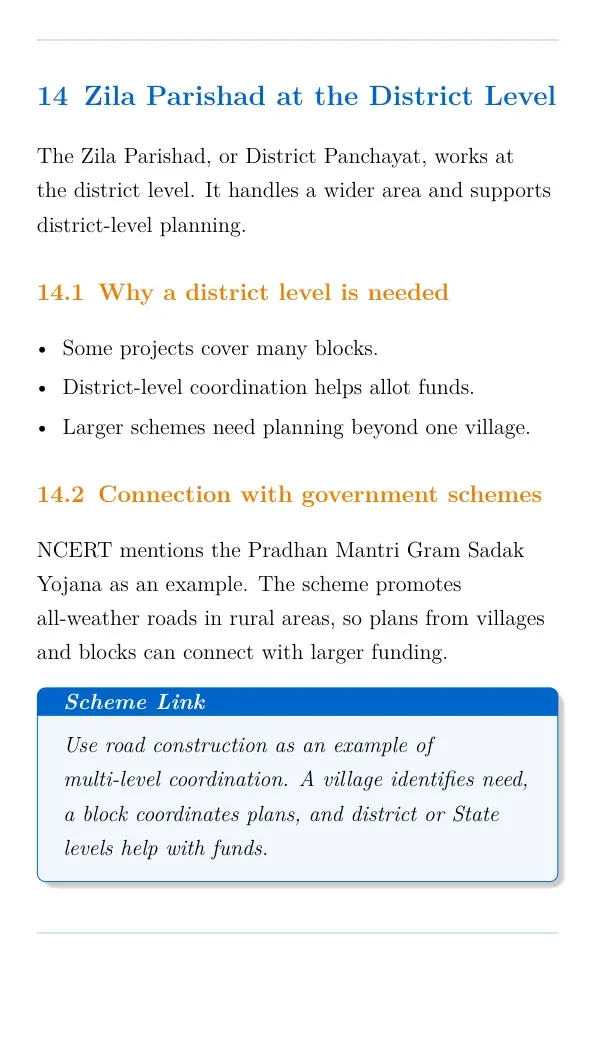
- District level: Zila Parishad supports district-level development planning.
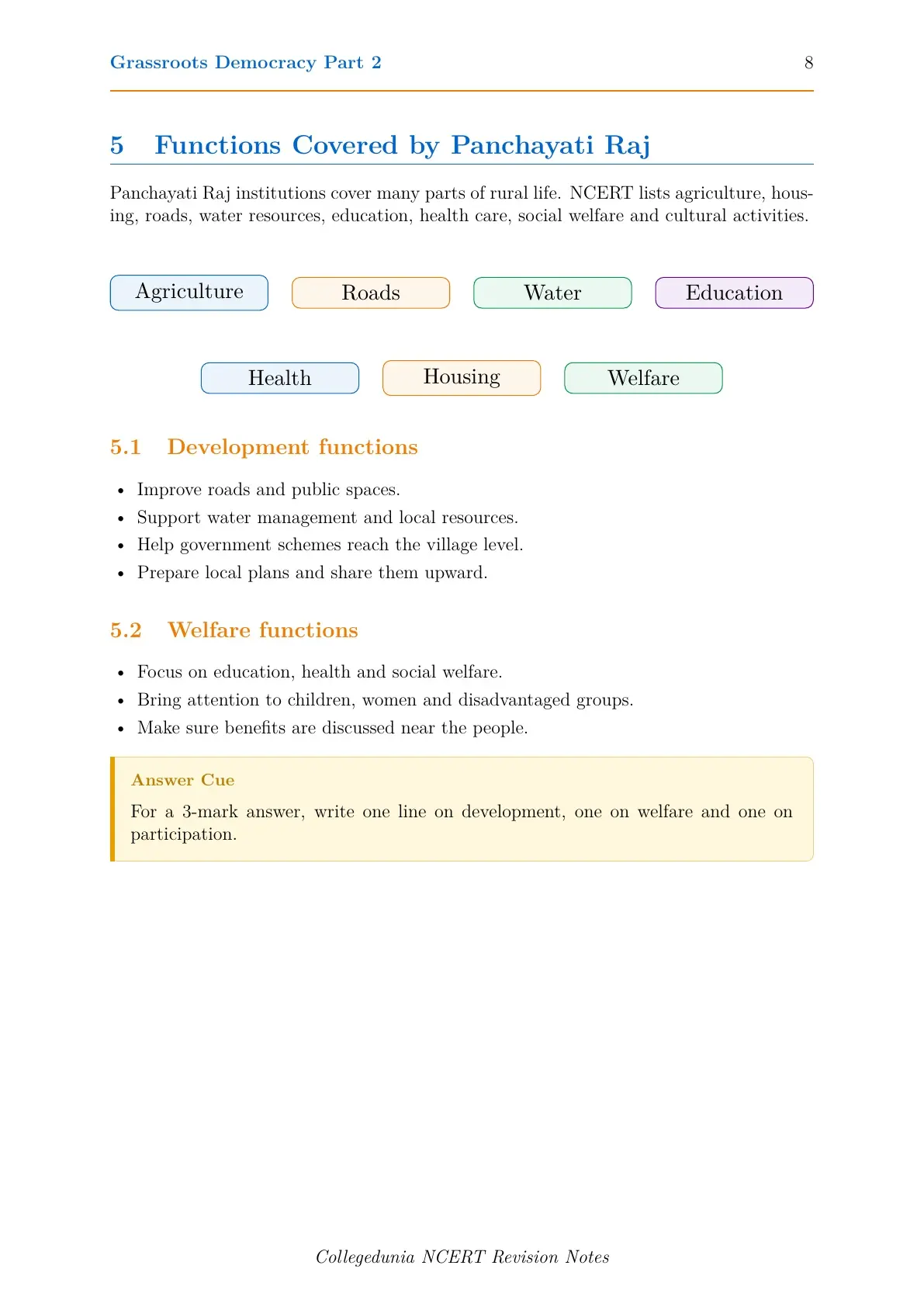
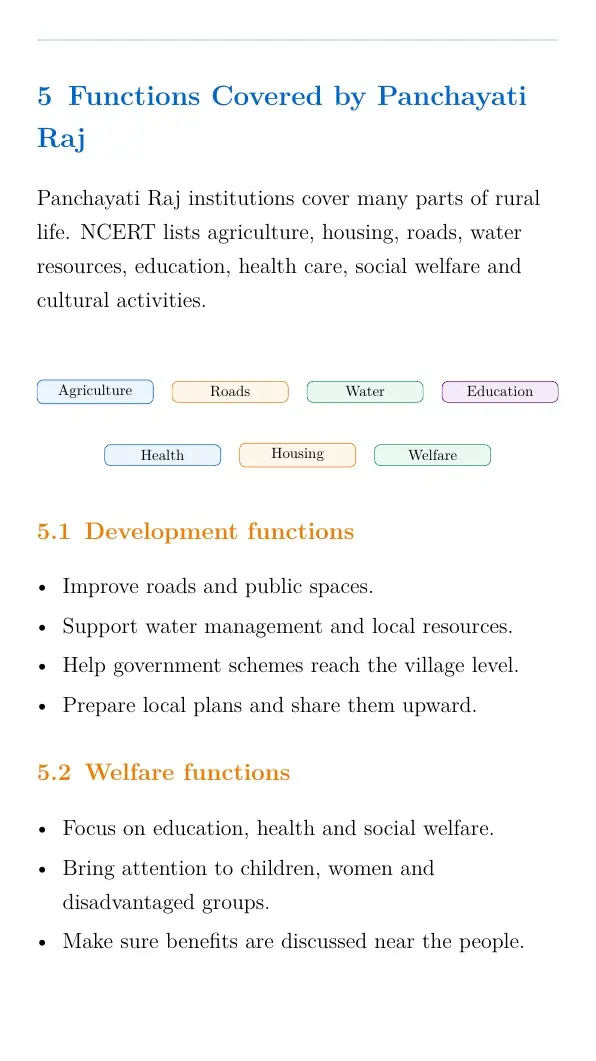
- Development areas: agriculture, roads, water, education, health care and welfare.
Grassroots Democracy Part 2 Revision Video
Source: PW Class 6 on YouTube
Gram Sabha, Gram Panchayat and Sarpanch
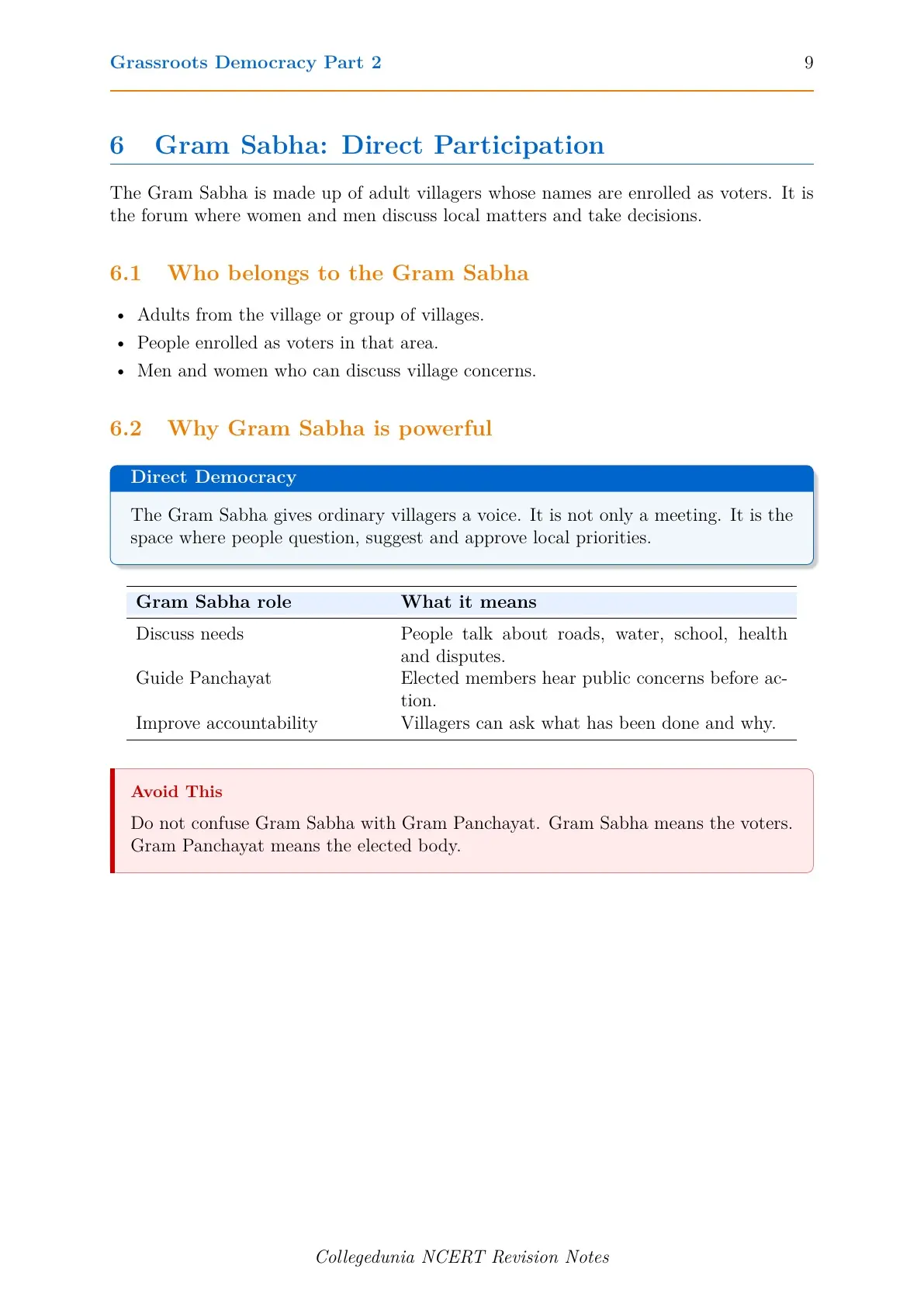
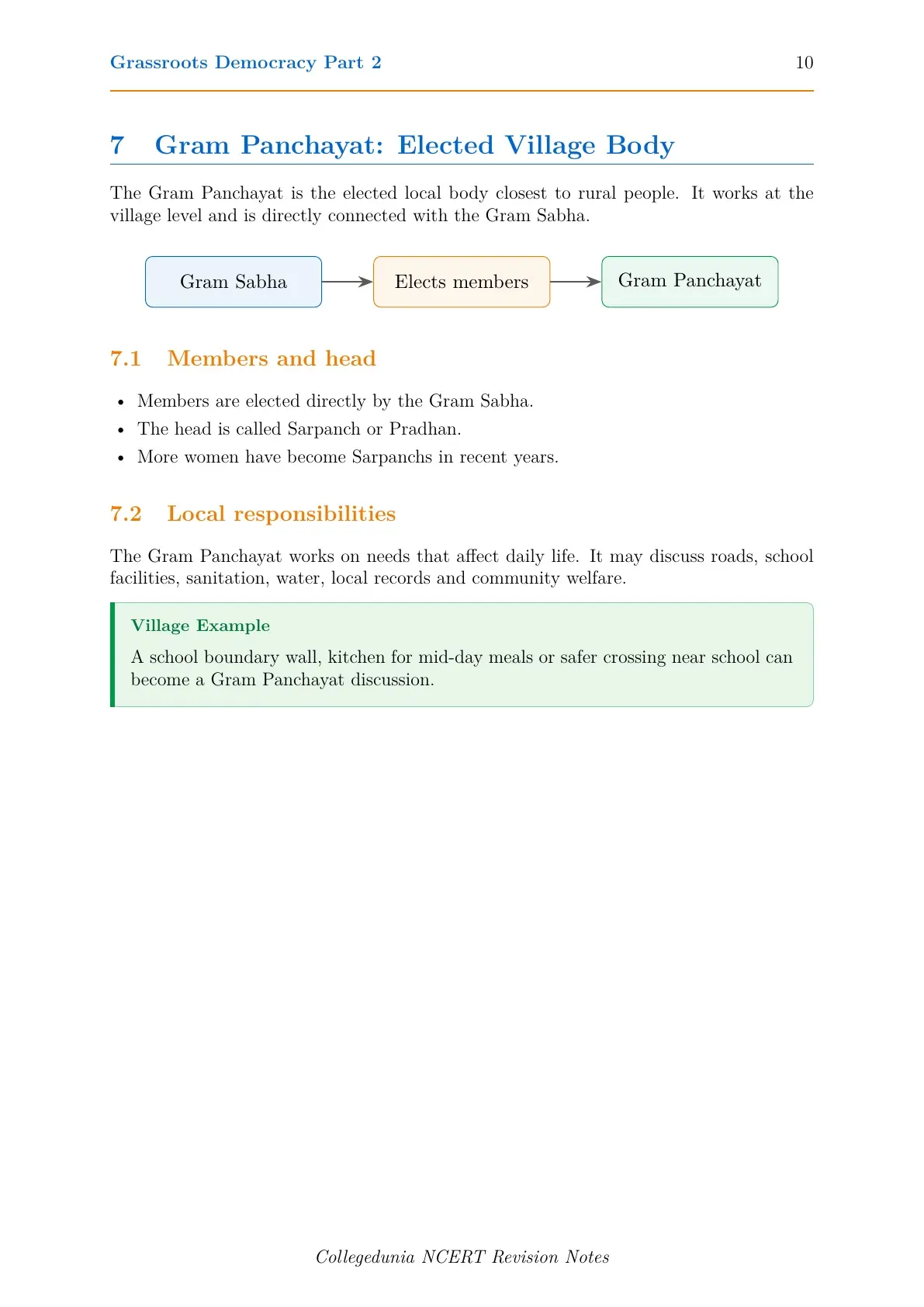
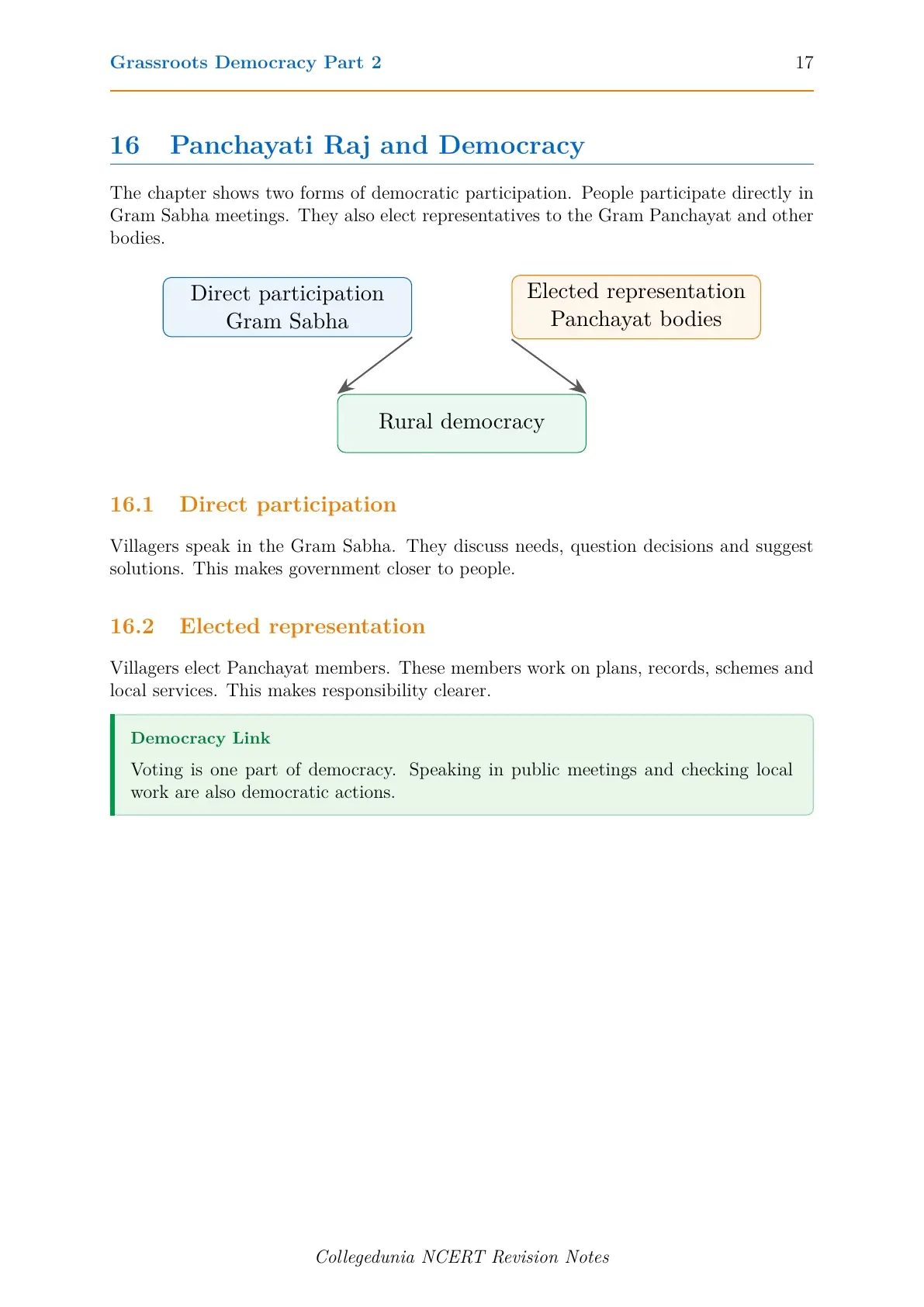
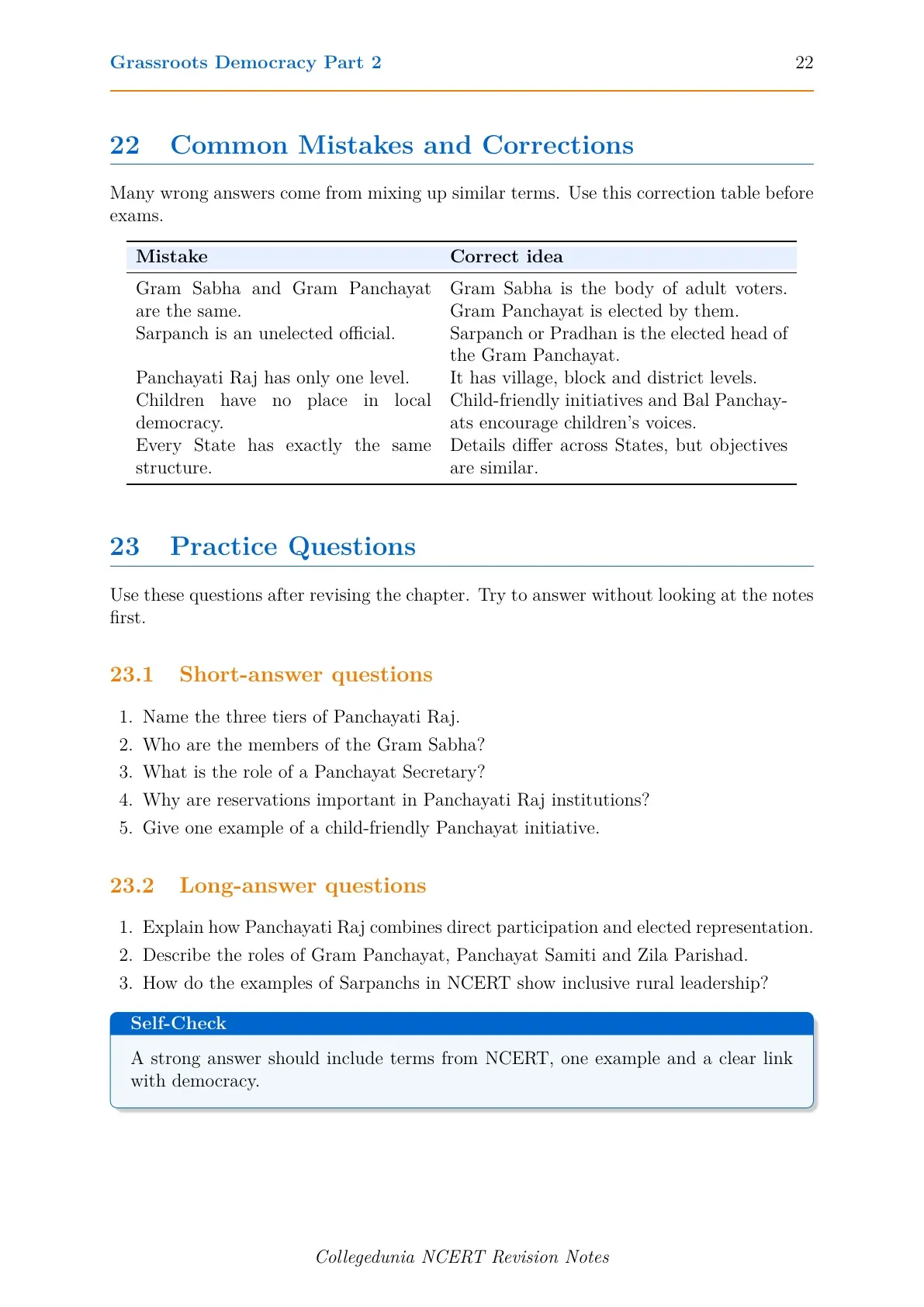
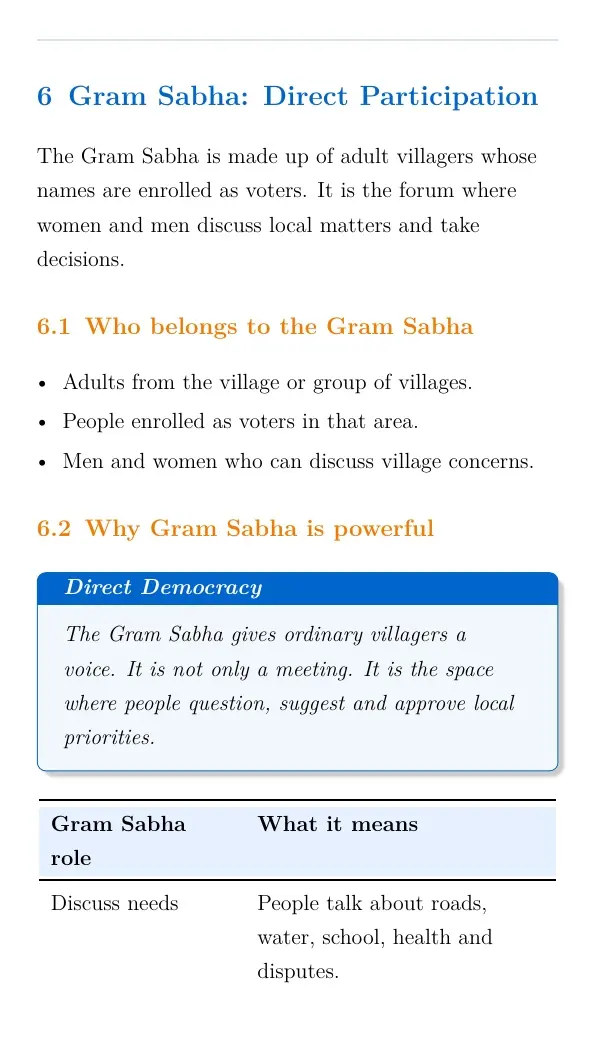
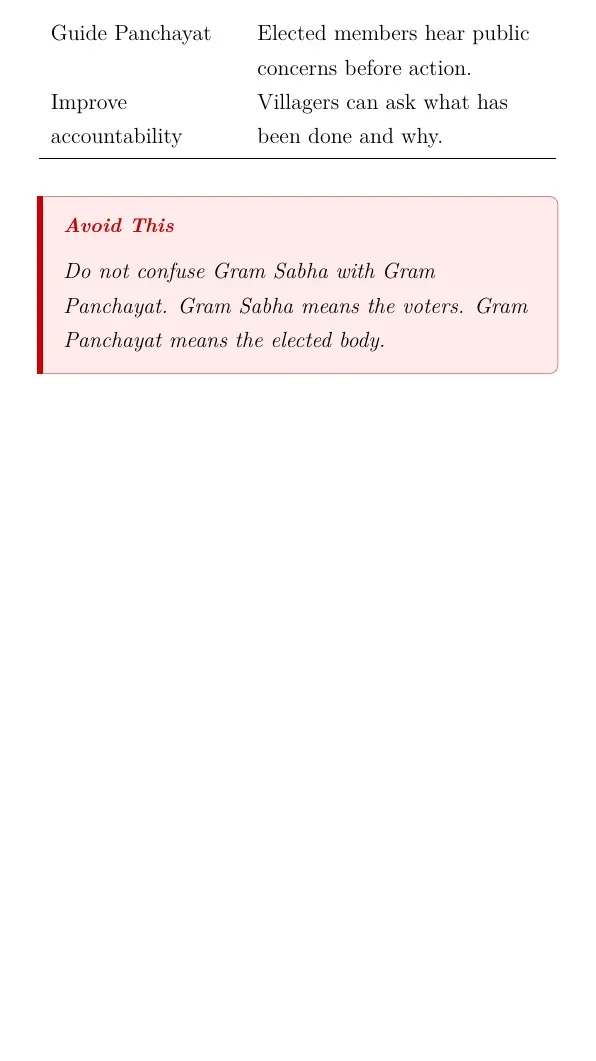
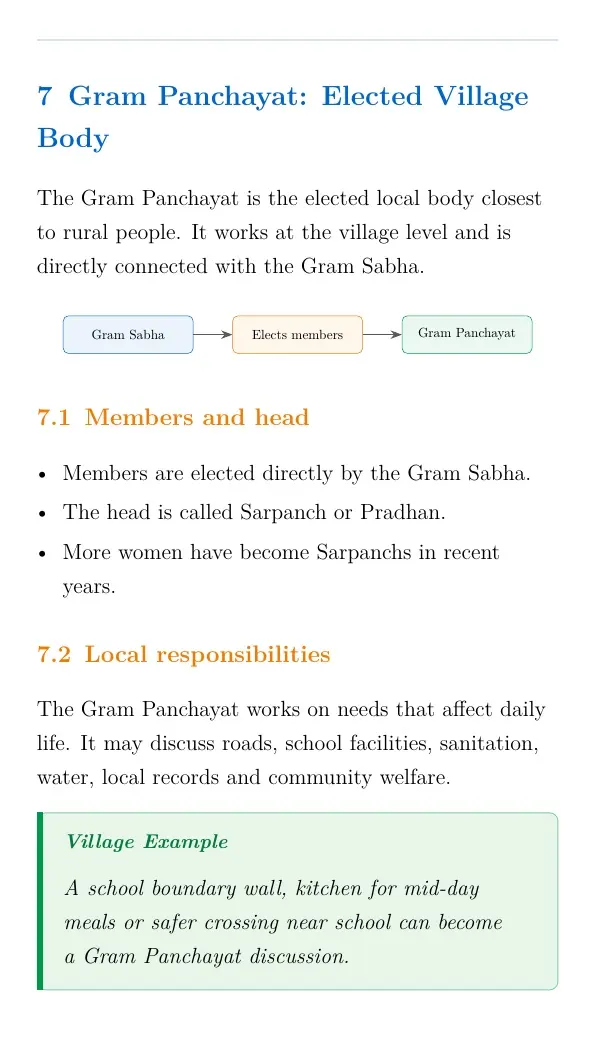
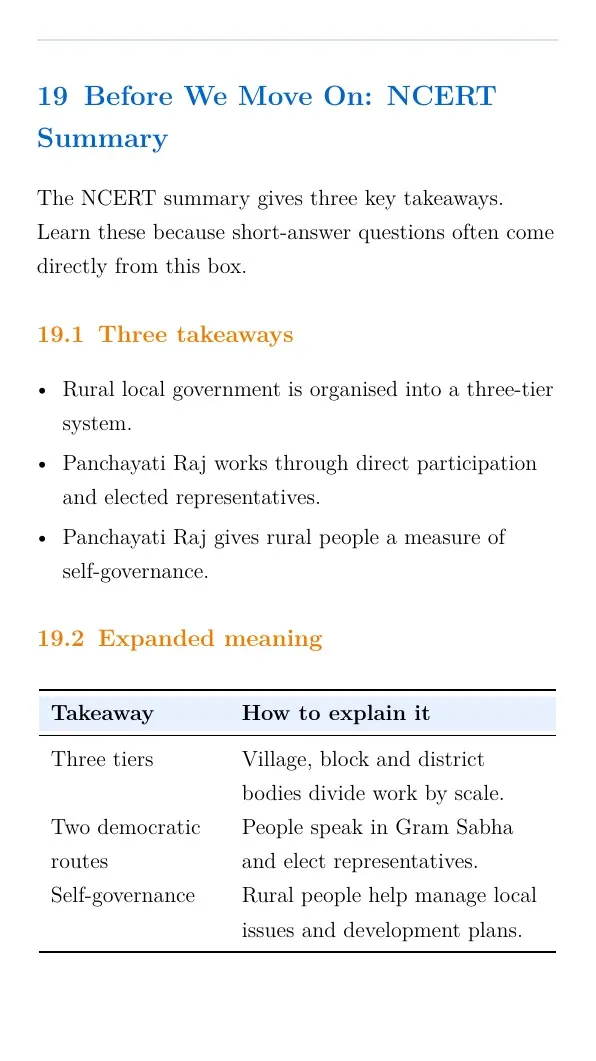
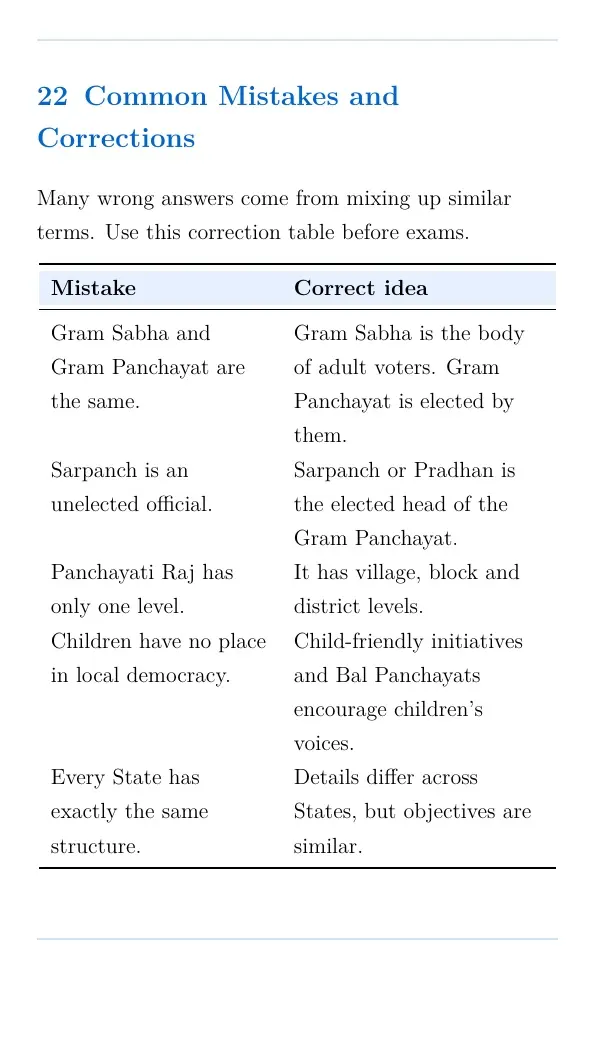
The Gram Sabha includes adult voters from a village or group of villages. These voters elect Gram Panchayat members. The head of the Gram Panchayat is called the Sarpanch or Pradhan.
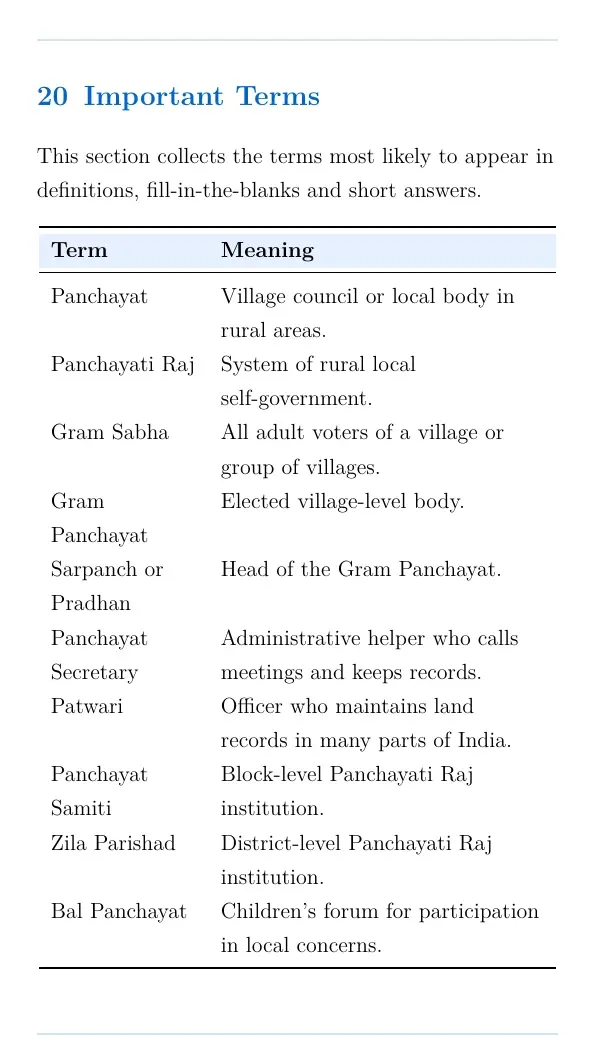
| Term | Meaning | Quick example |
|---|---|---|
| Gram Sabha | Adult voters who discuss village matters | Meeting about road repair or school safety |
| Gram Panchayat | Elected village body | Plans local work and follows up on needs |
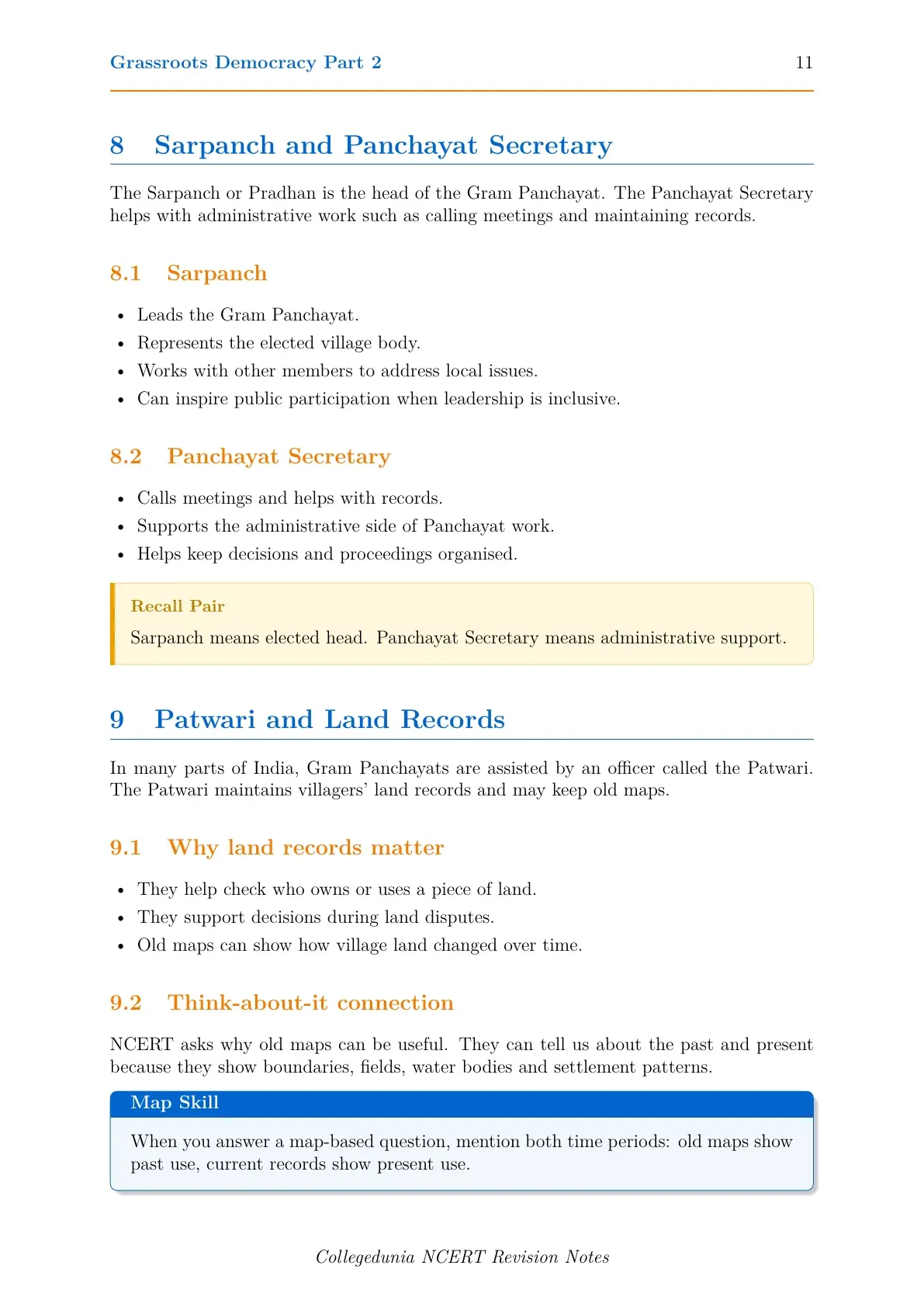
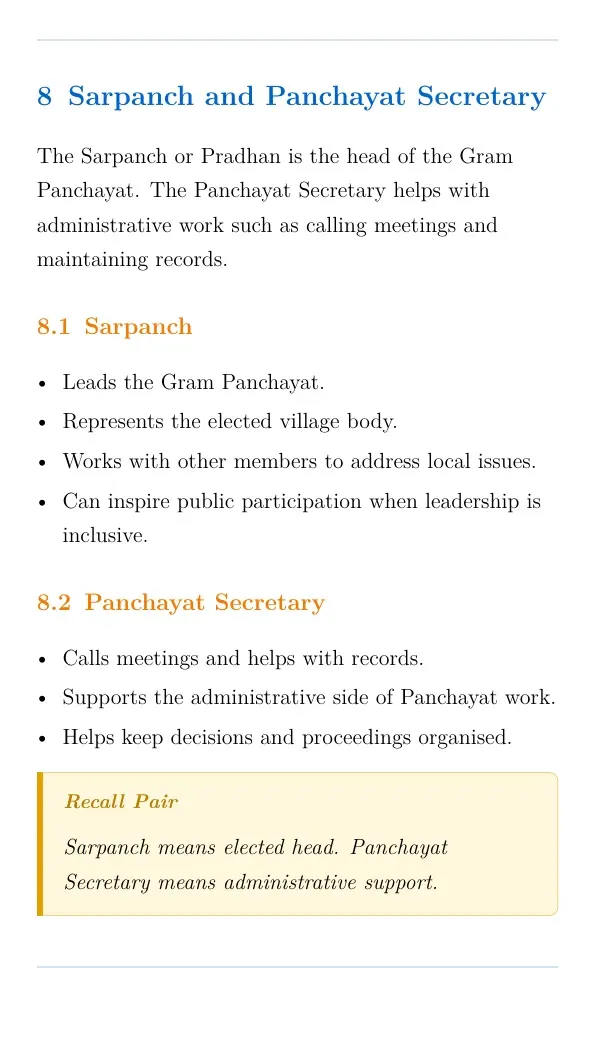
| Sarpanch or Pradhan | Head of the Gram Panchayat | Leads the elected village body |
| Panchayat Secretary | Administrative support | Calls meetings and keeps records |
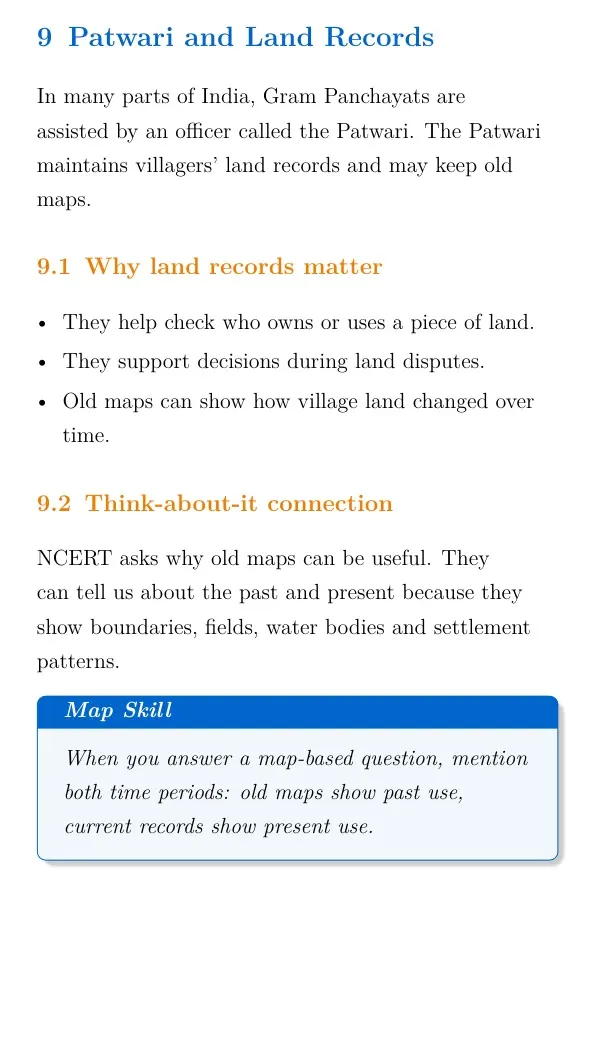
| Patwari | Land-record officer in many areas | Maintains maps and land records |
Child-Friendly Panchayats and Representation
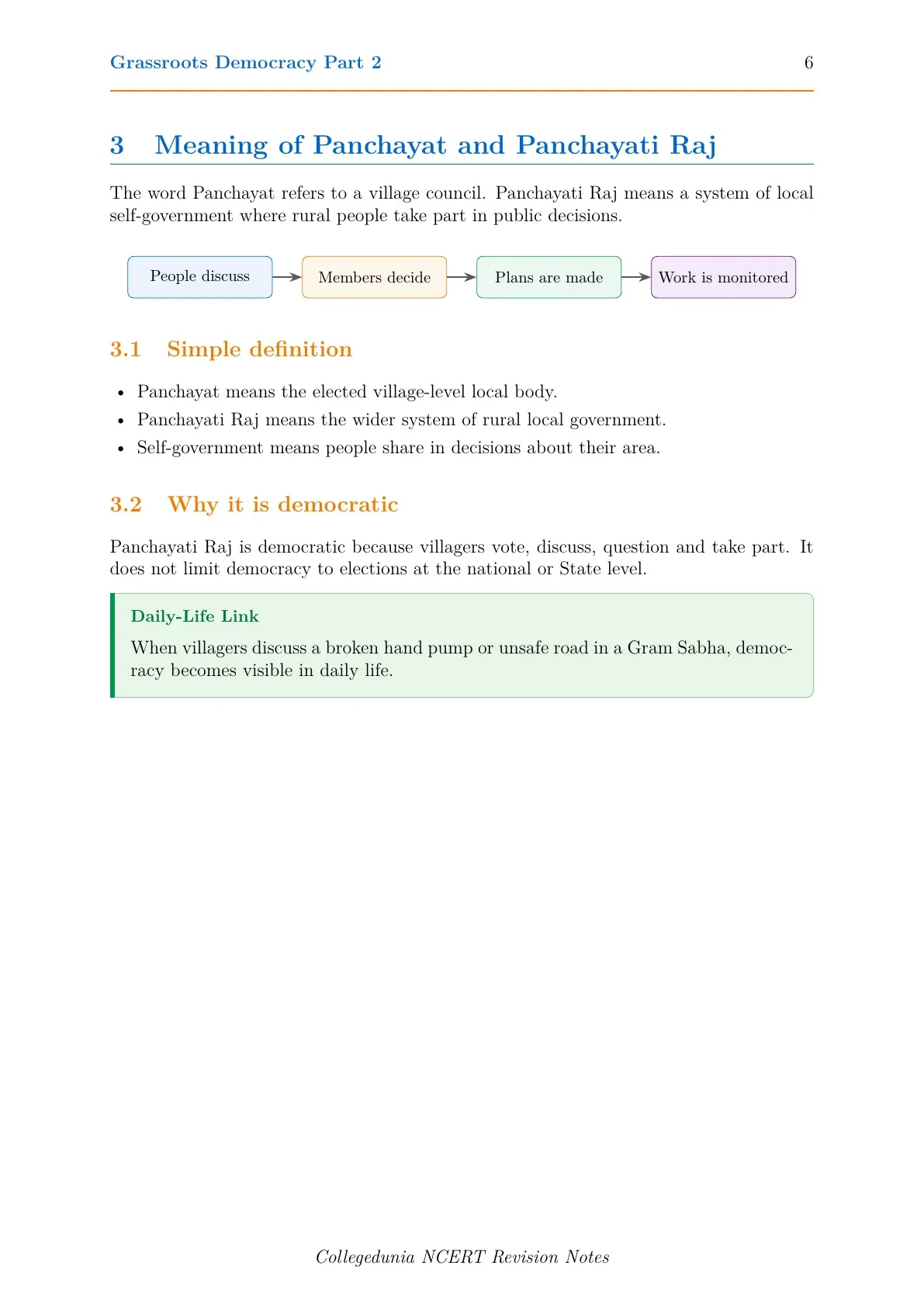
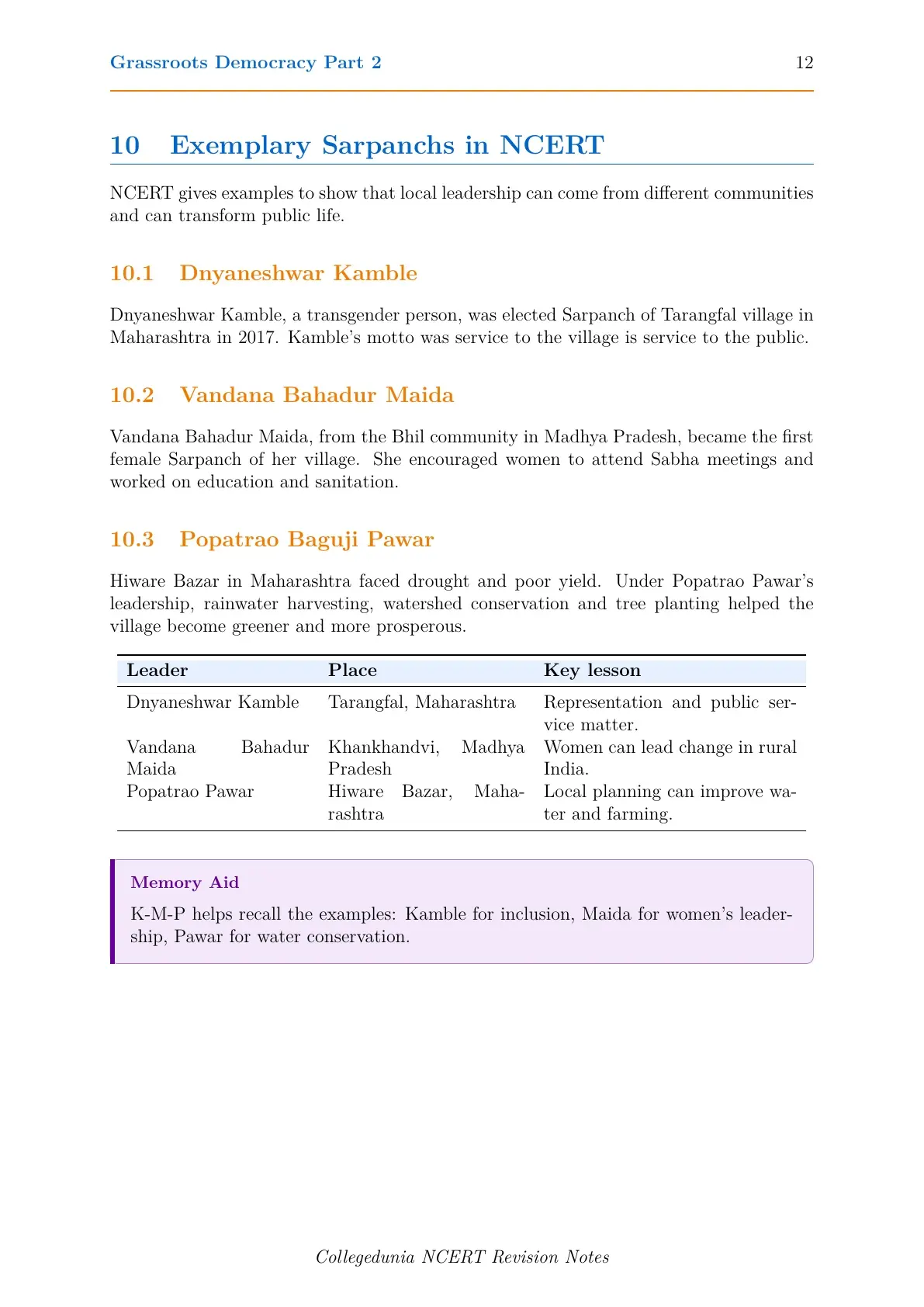
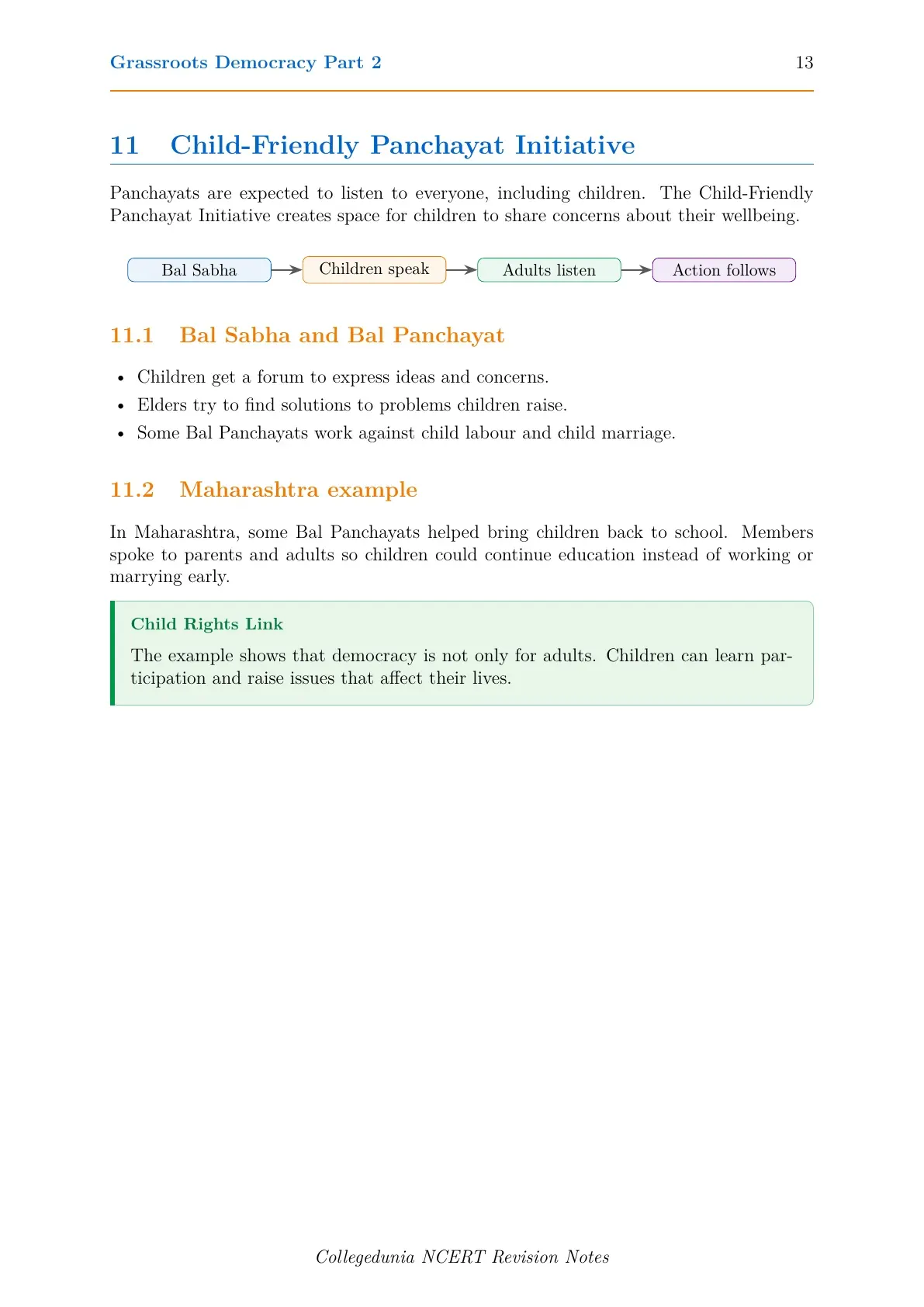
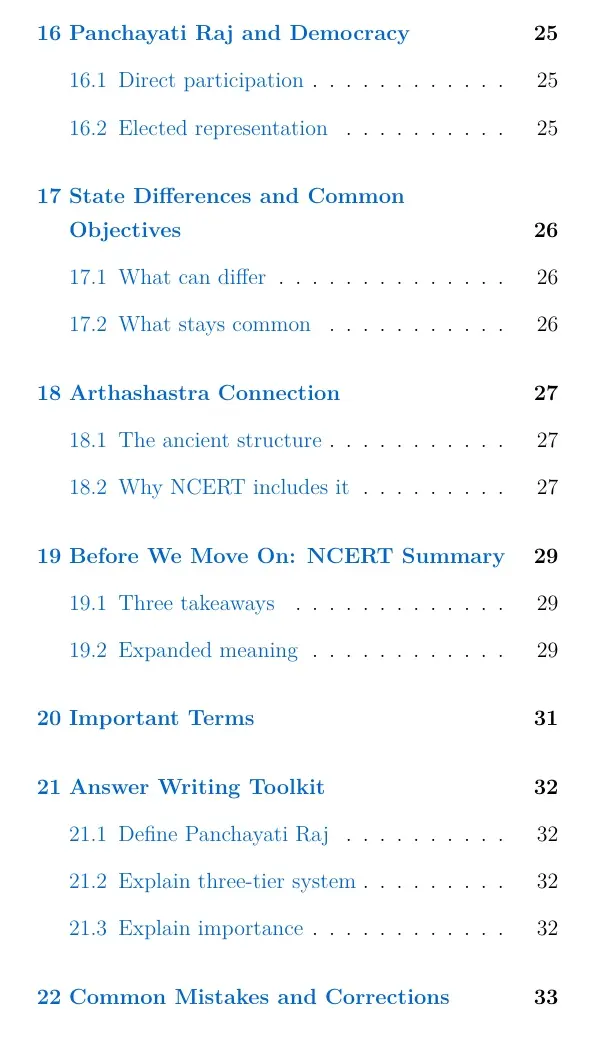
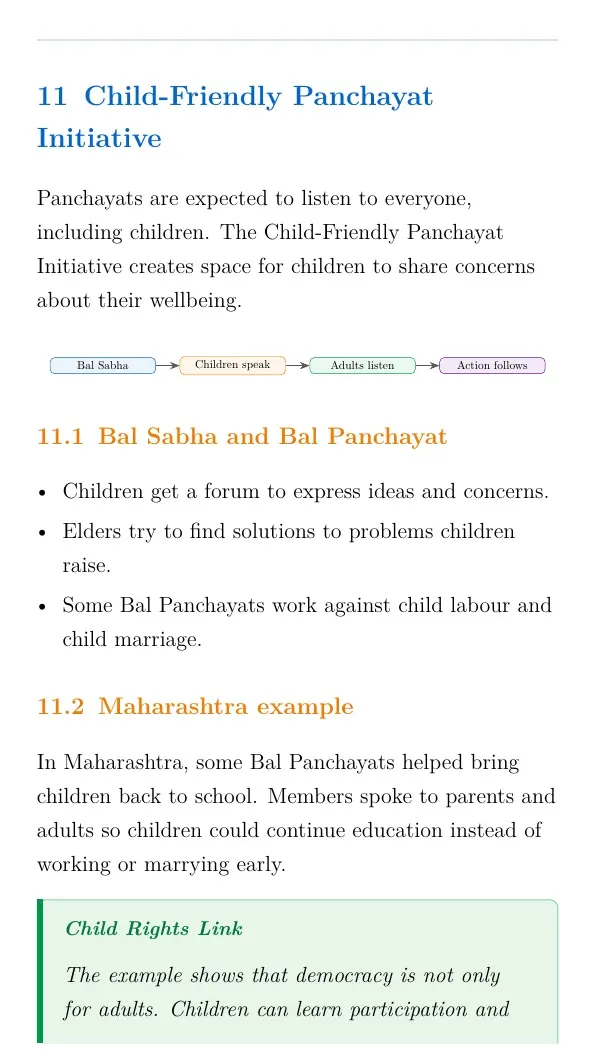
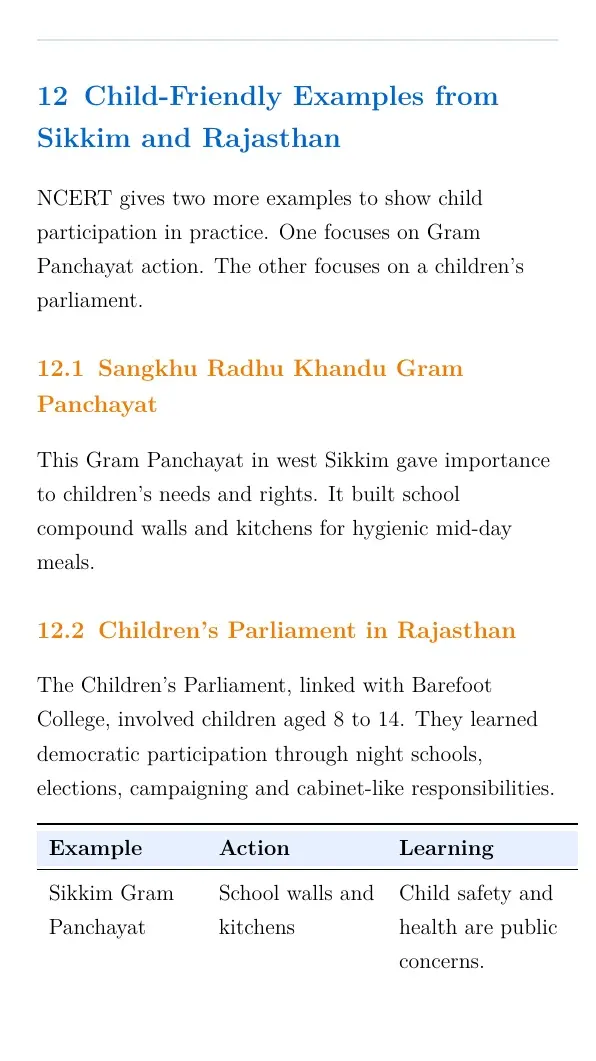
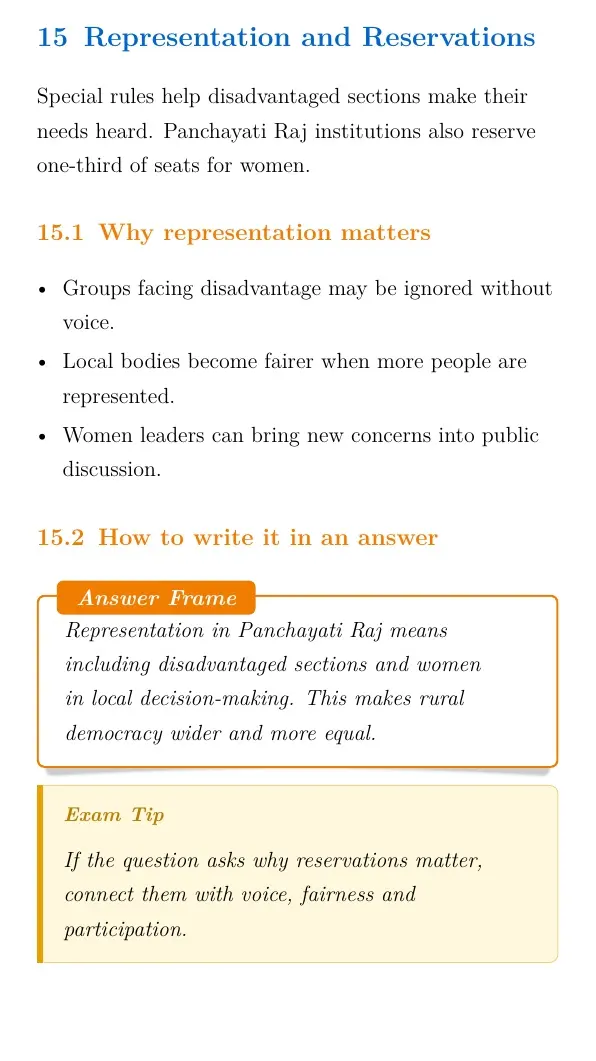
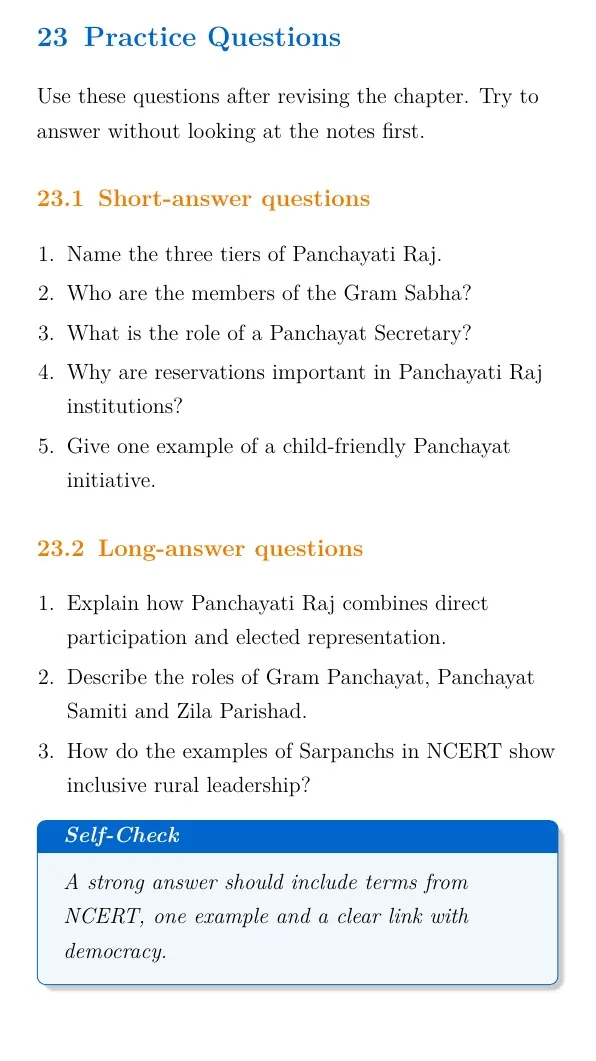
NCERT shows that Panchayati Raj should listen to everyone, including women, disadvantaged groups and children. Child-friendly Panchayats, Bal Sabhas and Bal Panchayats give children a chance to raise concerns about school, safety, child labour and child marriage.
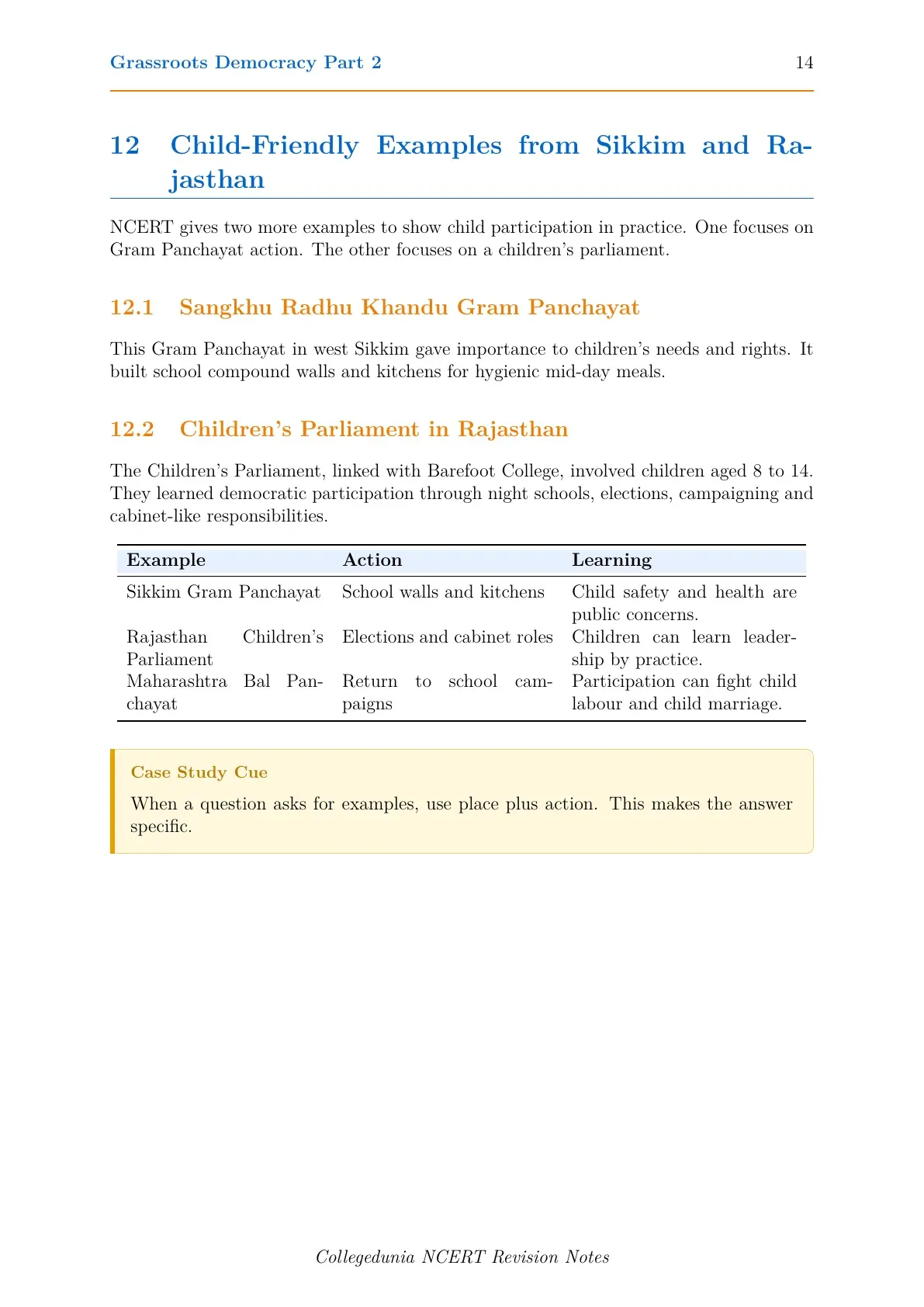
- Maharashtra example: Bal Panchayats helped bring children back to school.
- Sikkim example: a Gram Panchayat built school walls and kitchens for mid-day meals.
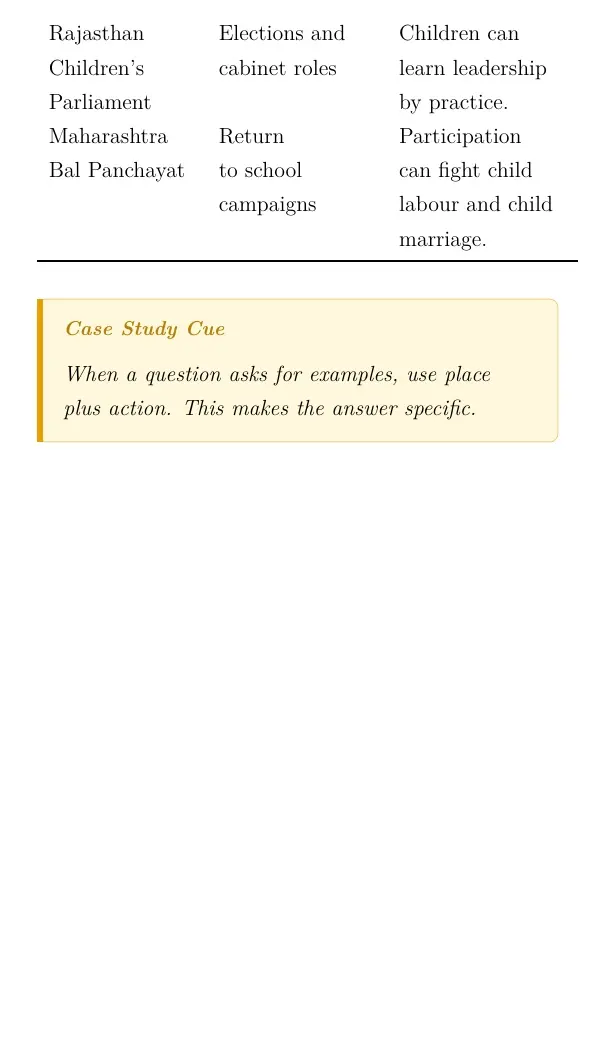
- Rajasthan example: a Children's Parliament taught children elections and leadership.
- Representation: one-third of Panchayat seats are reserved for women.
Grassroots Democracy Part 2 Related Resources
| Resource | Best use | Link |
|---|---|---|
| NCERT Notes | Topic-wise revision with tables | Current page |
| NCERT Solutions | Practise textbook questions | Open NCERT Solutions |
| NCERT Book PDF | Read the official chapter | Open Book PDF |
| Handwritten Notes | Quick one-sitting revision | Open Handwritten Notes |
Social Science Notes for All Chapters
| Chapter | NCERT chapter title | Notes link |
|---|---|---|
| Chapter 1 | Locating Places on the Earth | Open Notes |
| Chapter 2 | Oceans and Continents | Open Notes |
| Chapter 3 | Landforms and Life | Open Notes |
| Chapter 4 | Timeline and Sources of History | Open Notes |
| Chapter 5 | India, That Is Bharat | Open Notes |
| Chapter 6 | The Beginnings of Indian Civilisation | Open Notes |
| Chapter 7 | India's Cultural Roots | Open Notes |
| Chapter 8 | Unity in Diversity, or Many in the One | Open Notes |
| Chapter 9 | Family and Community | Open Notes |
| Chapter 10 | Grassroots Democracy Part 1 Governance | Open Notes |
| Chapter 11 | Grassroots Democracy Part 2 Local Government in Rural Areas | Current notes |
| Chapter 12 | Grassroots Democracy Part 3 Local Government in Urban Areas | Open Notes |
| Chapter 13 | The Value of Work | Open Notes |
| Chapter 14 | Economic Activities Around Us | Open Notes |
Grassroots Democracy Part 2 Local Government in Rural Areas Class 6 Notes FAQs
Ques. What is Panchayati Raj in Class 6 Social Science Chapter 11?
Ans. Panchayati Raj is the system of rural local self-government. It lets villagers discuss, elect representatives and plan local development.
Ques. What are the three tiers of Panchayati Raj?
Ans. The three tiers are Gram Panchayat at village level, Panchayat Samiti at block level and Zila Parishad at district level.
Ques. What is the difference between Gram Sabha and Gram Panchayat?
Ans. Gram Sabha means adult voters of a village. Gram Panchayat is the elected village body chosen by those voters.
Ques. Who is a Sarpanch?
Ans. The Sarpanch, also called Pradhan in some places, is the elected head of the Gram Panchayat.
Ques. Why are child-friendly Panchayats important?
Ans. Child-friendly Panchayats let children raise concerns about education, safety, child labour and child marriage in local forums.



Comments