




The NCERT Class 11 Economics Chapter 12 Human Capital Formation in India Book PDF gives students the official Indian Economic Development chapter for the 2026-27 syllabus. Use it to study how education, health, training, migration and information turn people into productive human capital.
- Book section: official NCERT chapter text, tables, activity boxes and exercise questions.
- Best use: read the PDF before making a source-wise chart of human capital.
- Revision cue: connect education, health and skill formation with economic growth.
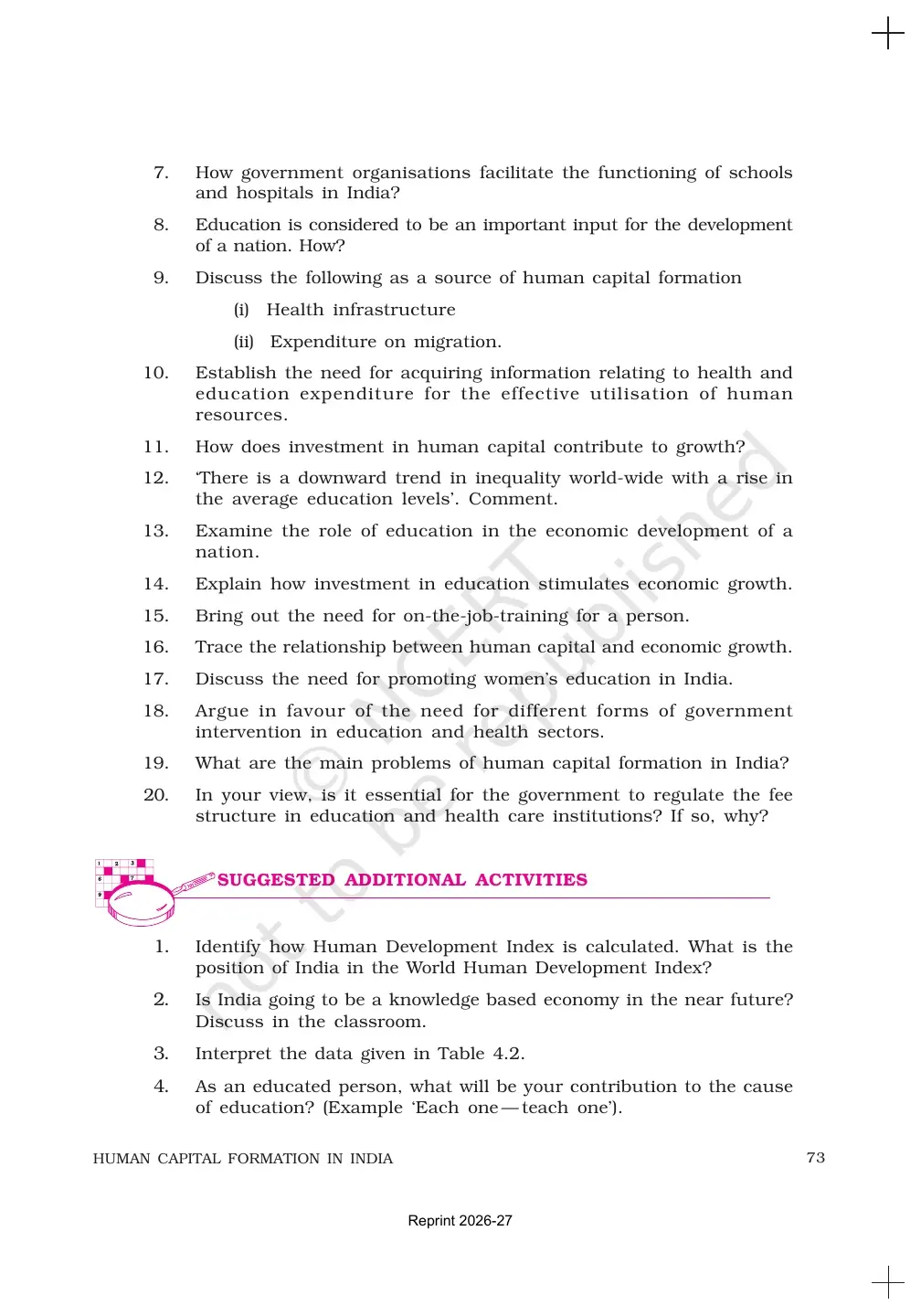
Student Feedback: In a Collegedunia check of 11,640 Class 11 Economics students, many students said this chapter became easier after they separated education, health and training in one table.
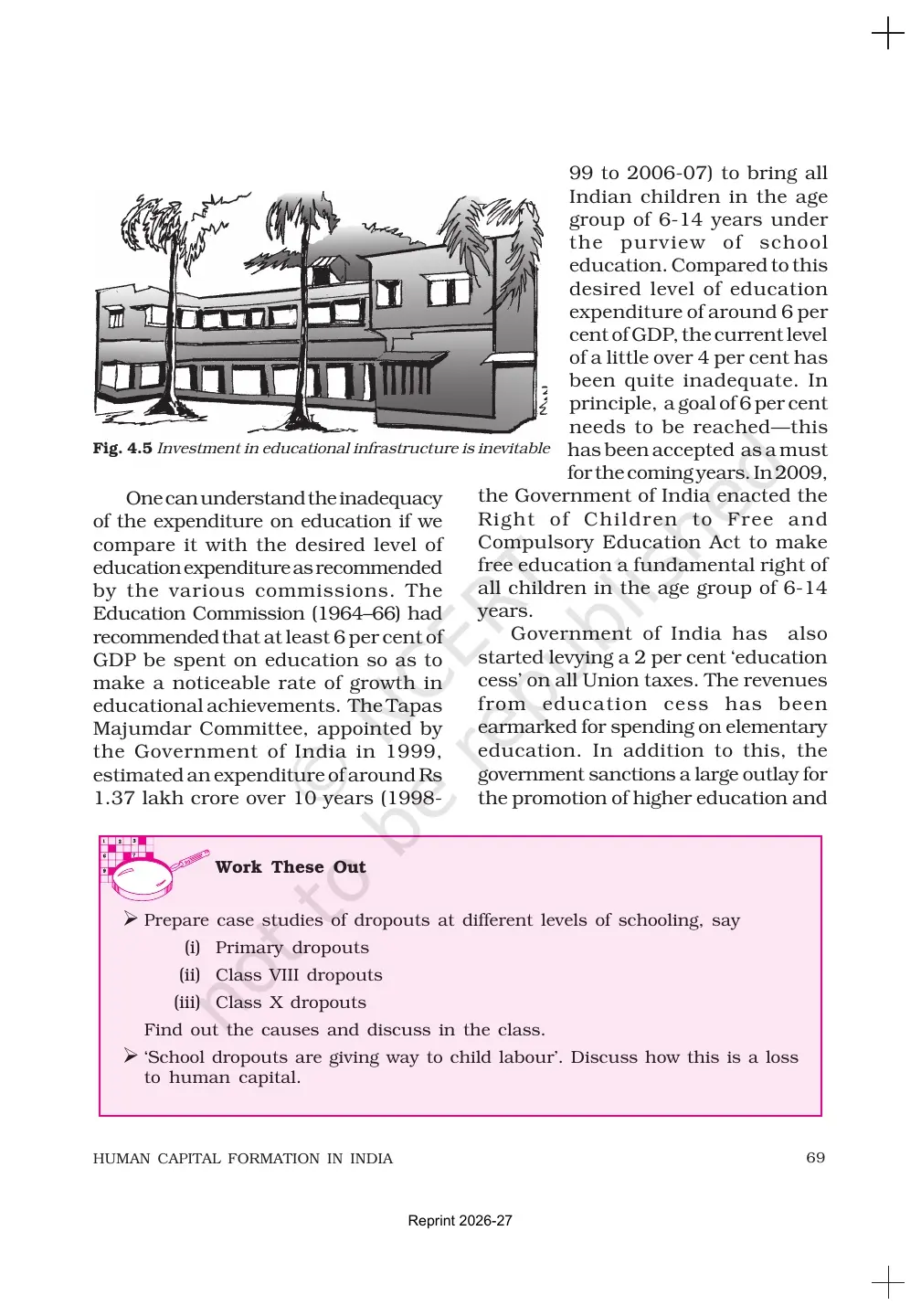
Human Capital Formation in India Class 11 NCERT Book PDF: What It Covers
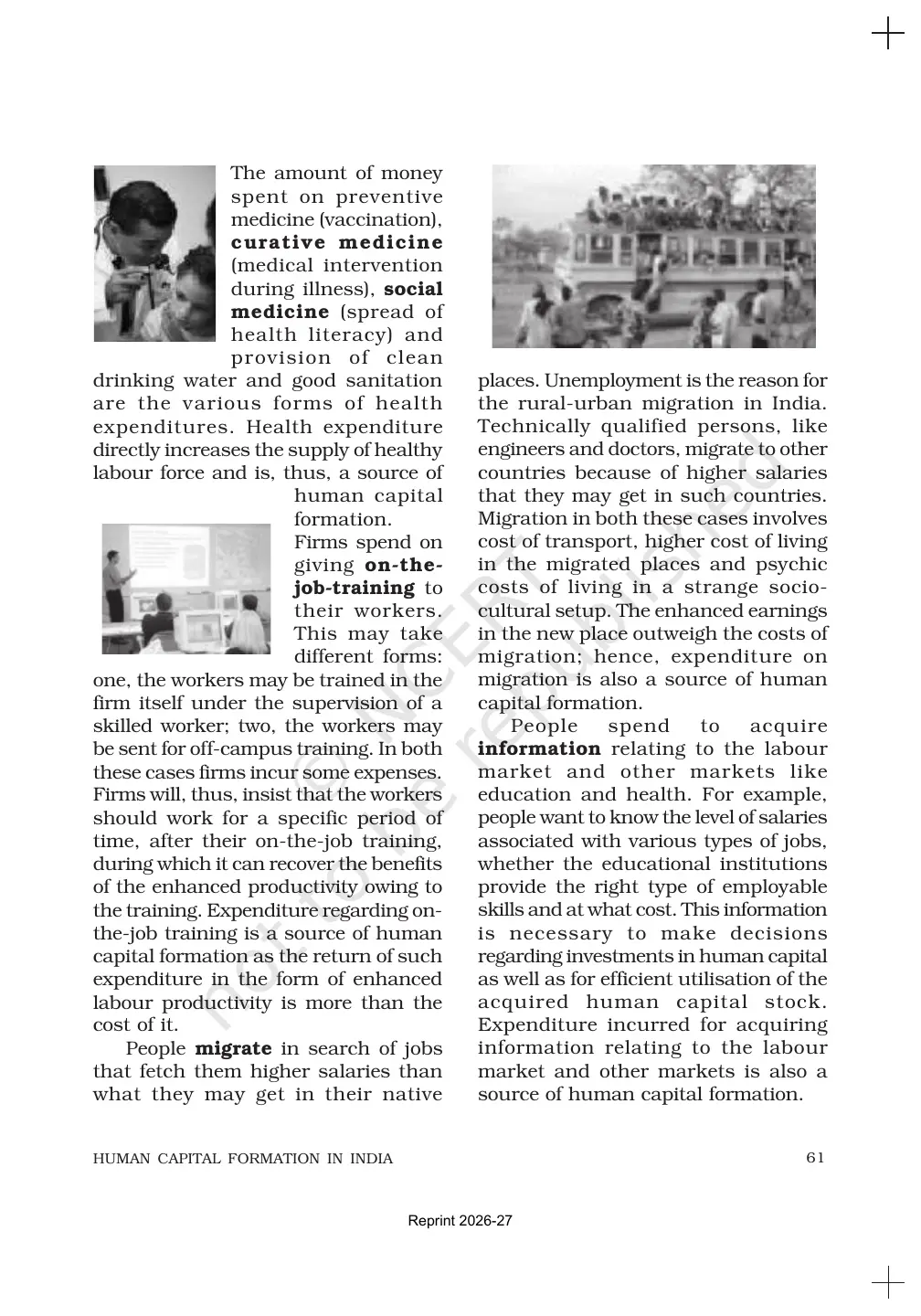
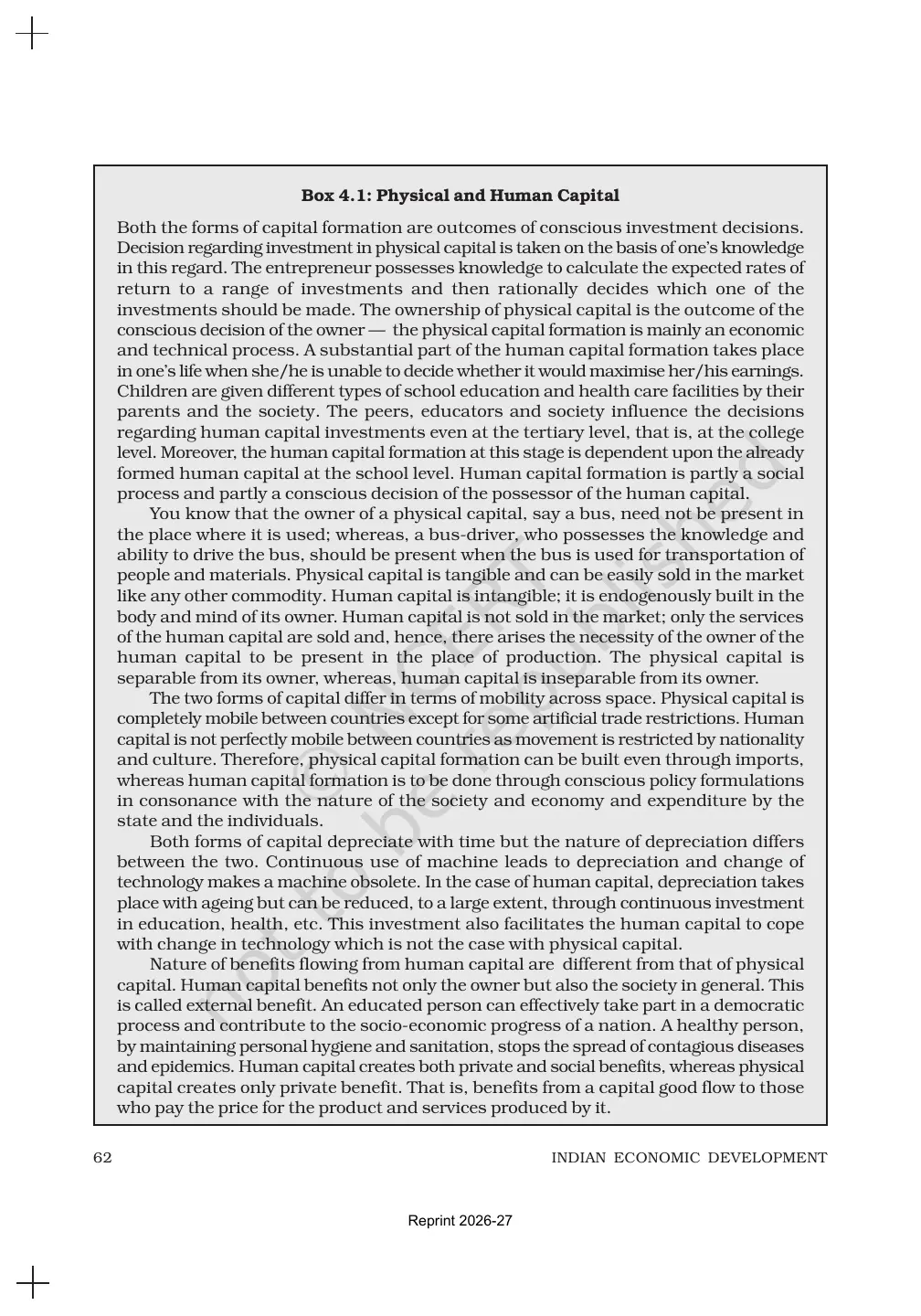
The PDF explains why people are called a form of capital. NCERT first explains human capital, then compares it with physical capital and human development.
The official chapter is the best first source for school answers. It gives the exact NCERT wording students need for definitions, short answers and long answers.
| NCERT area | What students should notice | Answer cue |
|---|---|---|
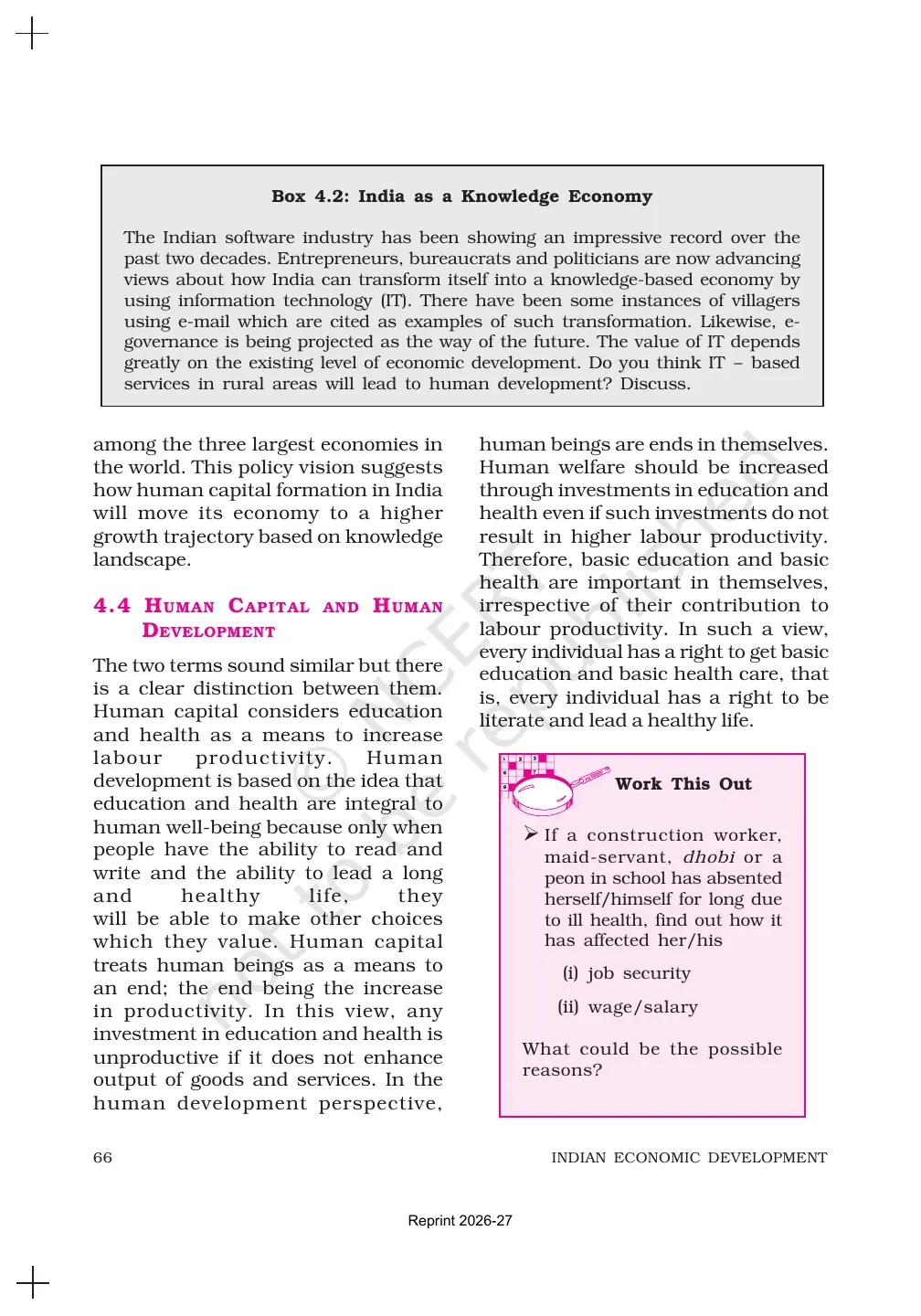
| Human capital | Education, health and skills improve the productive power of people. | Use it as the main definition. |
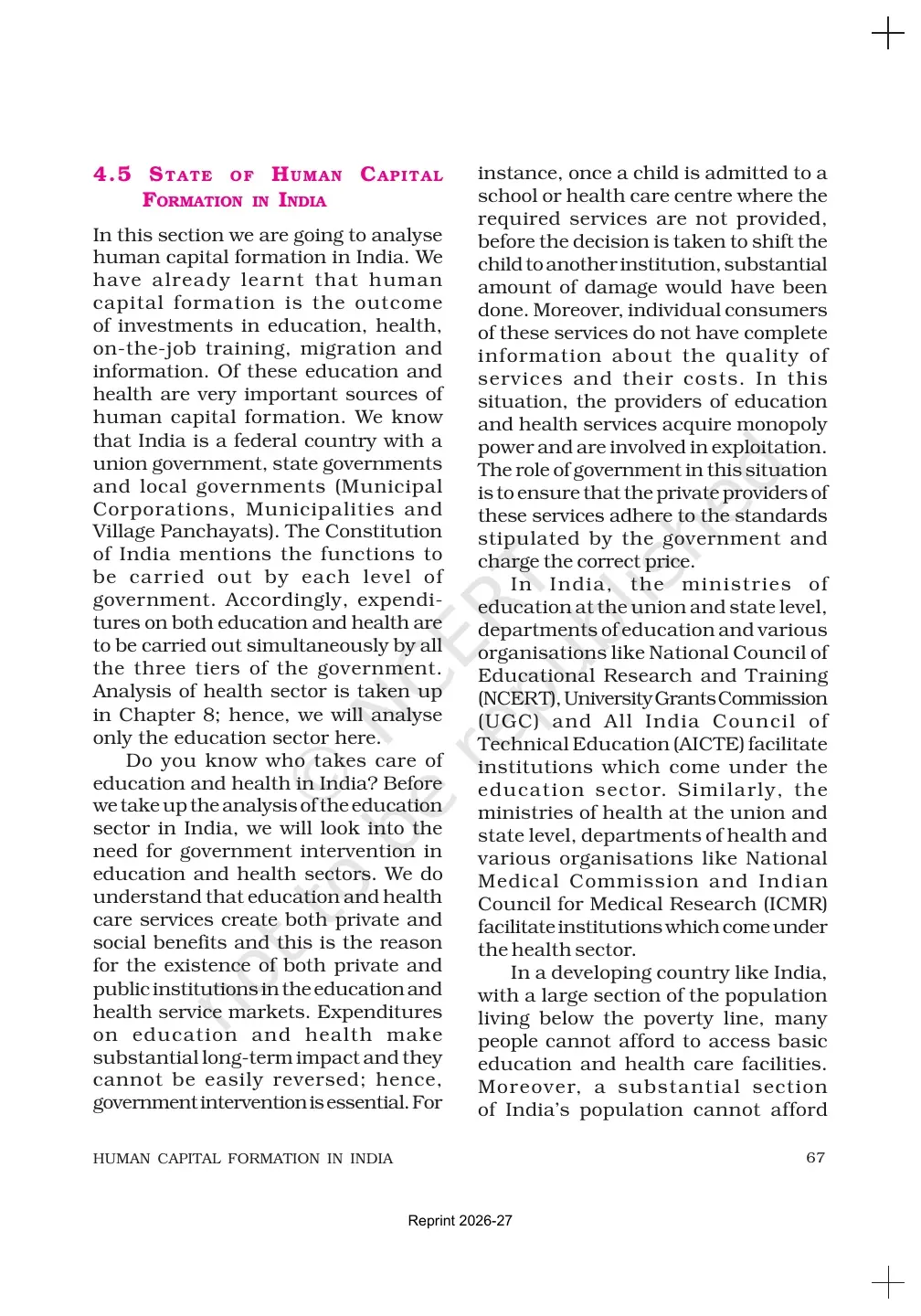
| Sources | Education, health, training, migration and information are treated as sources. | Write examples for each source. |
| Capital comparison | Human capital is linked with people, while physical capital is linked with machines. | Use a two-column answer. |
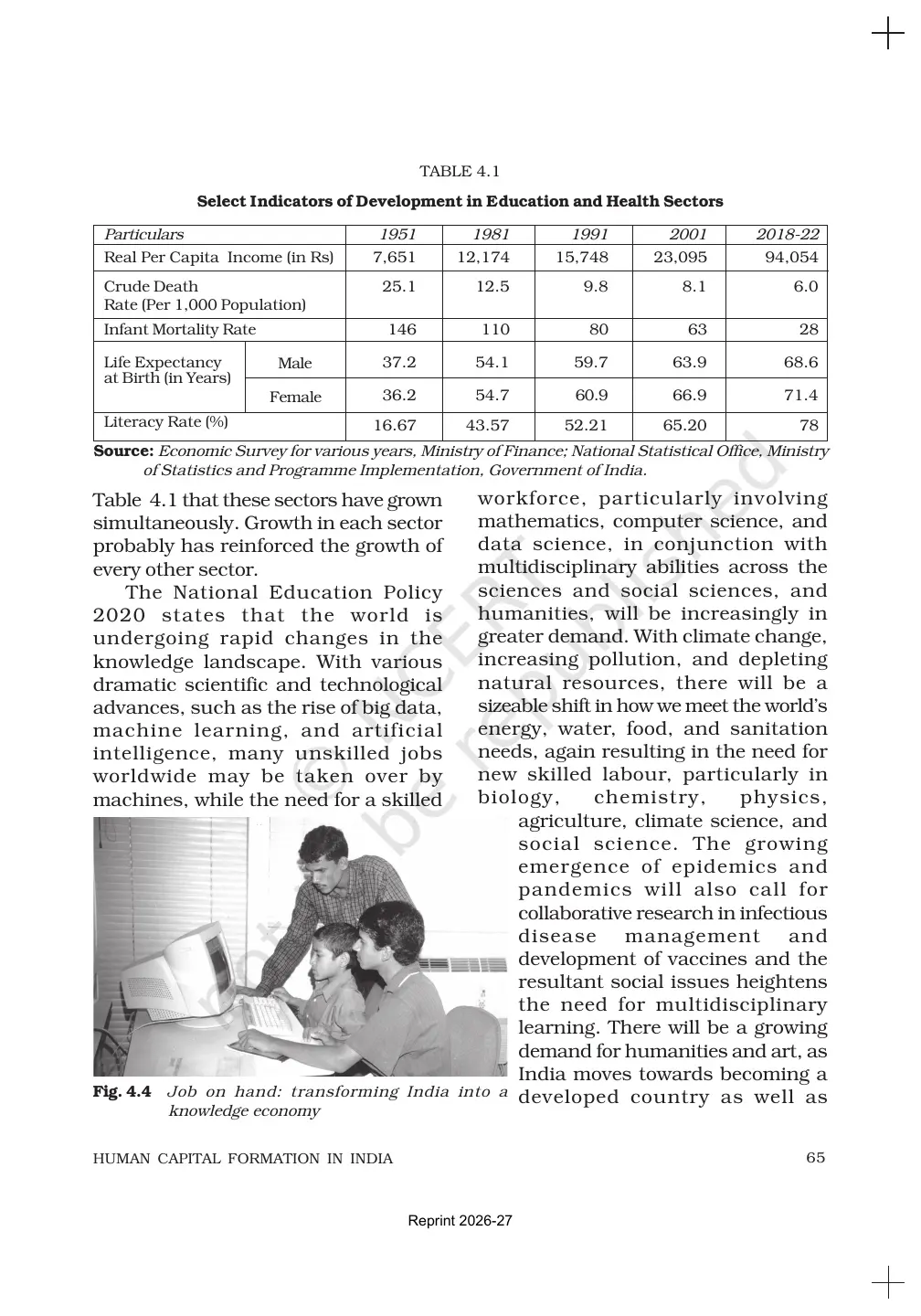
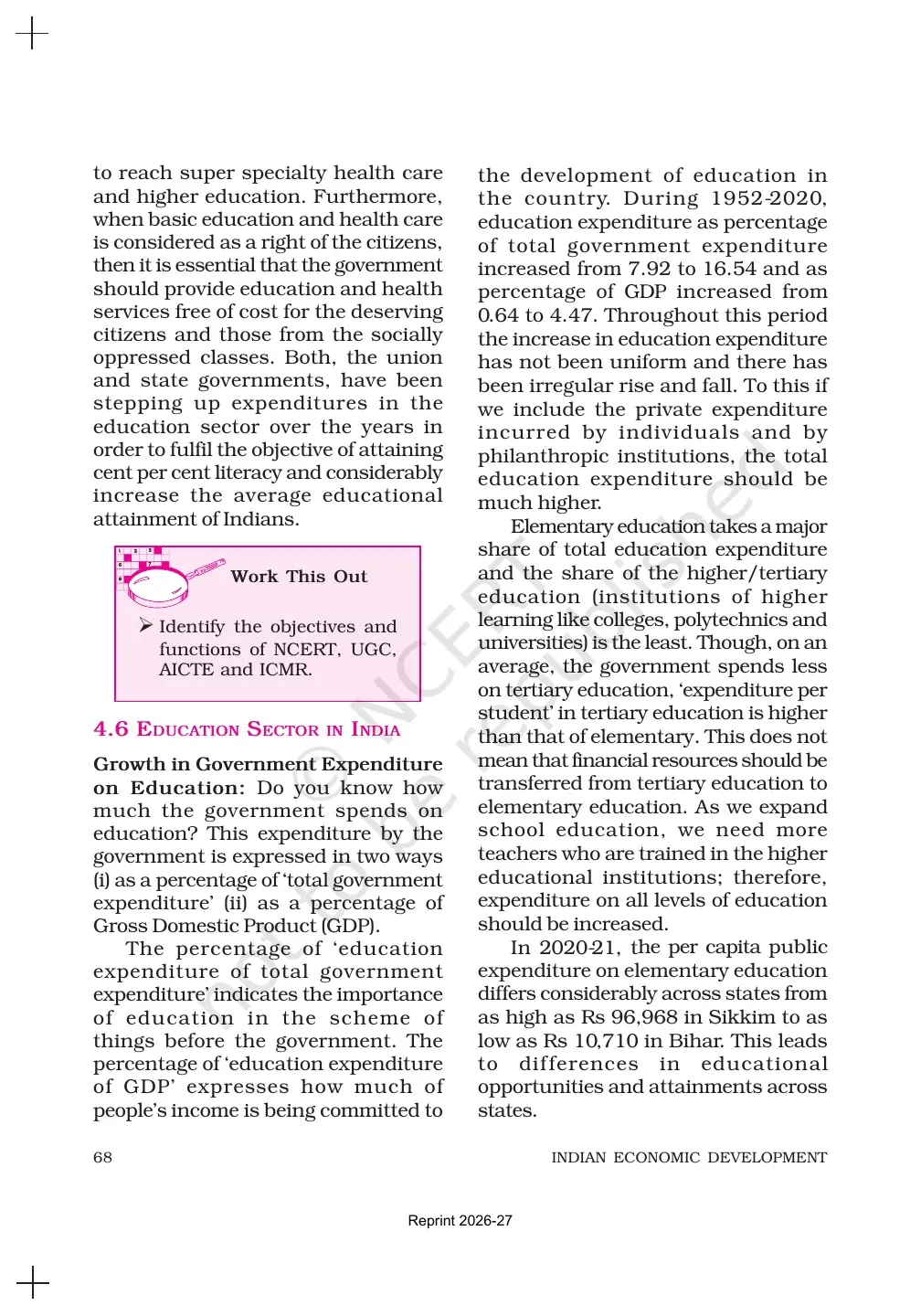
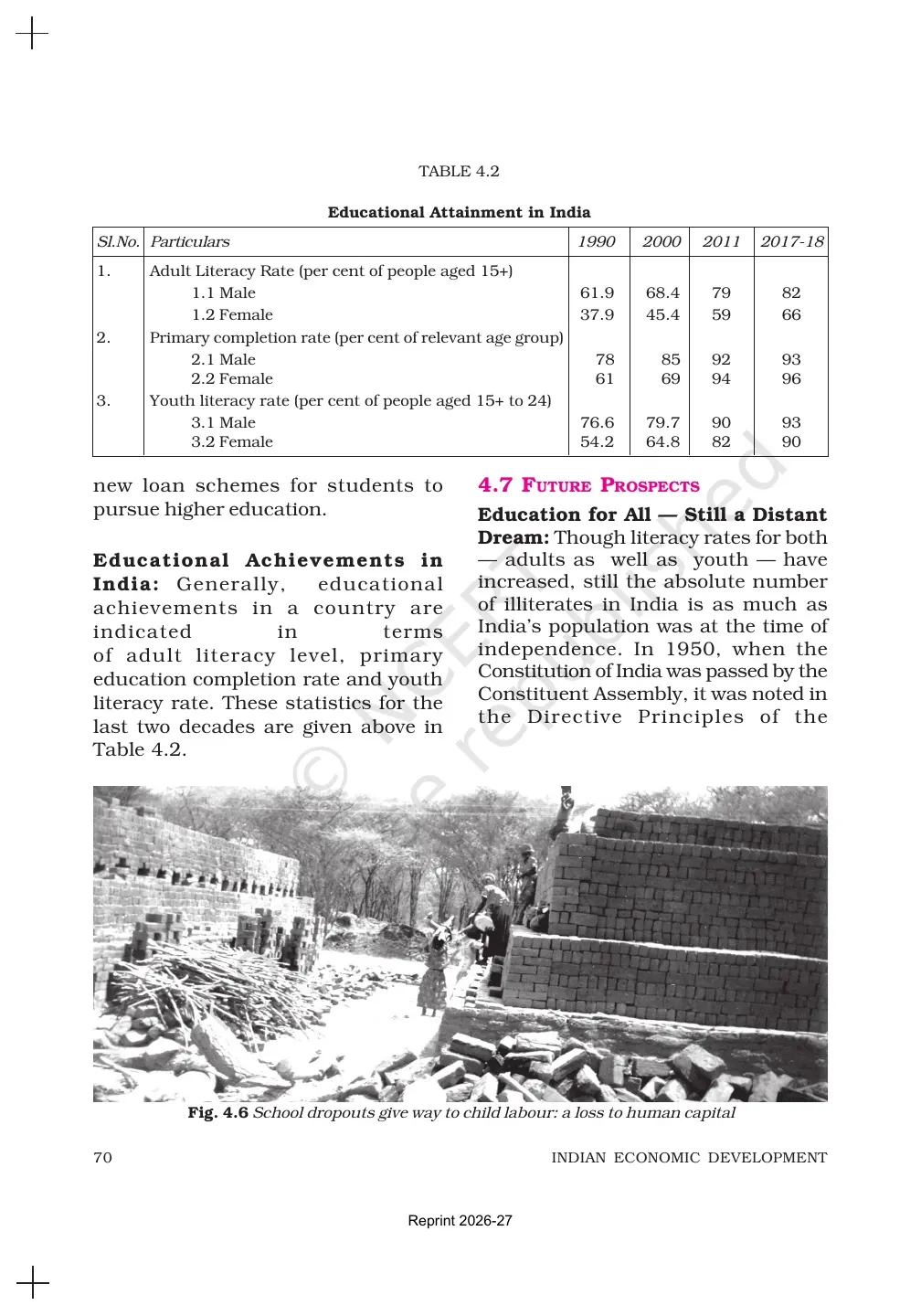
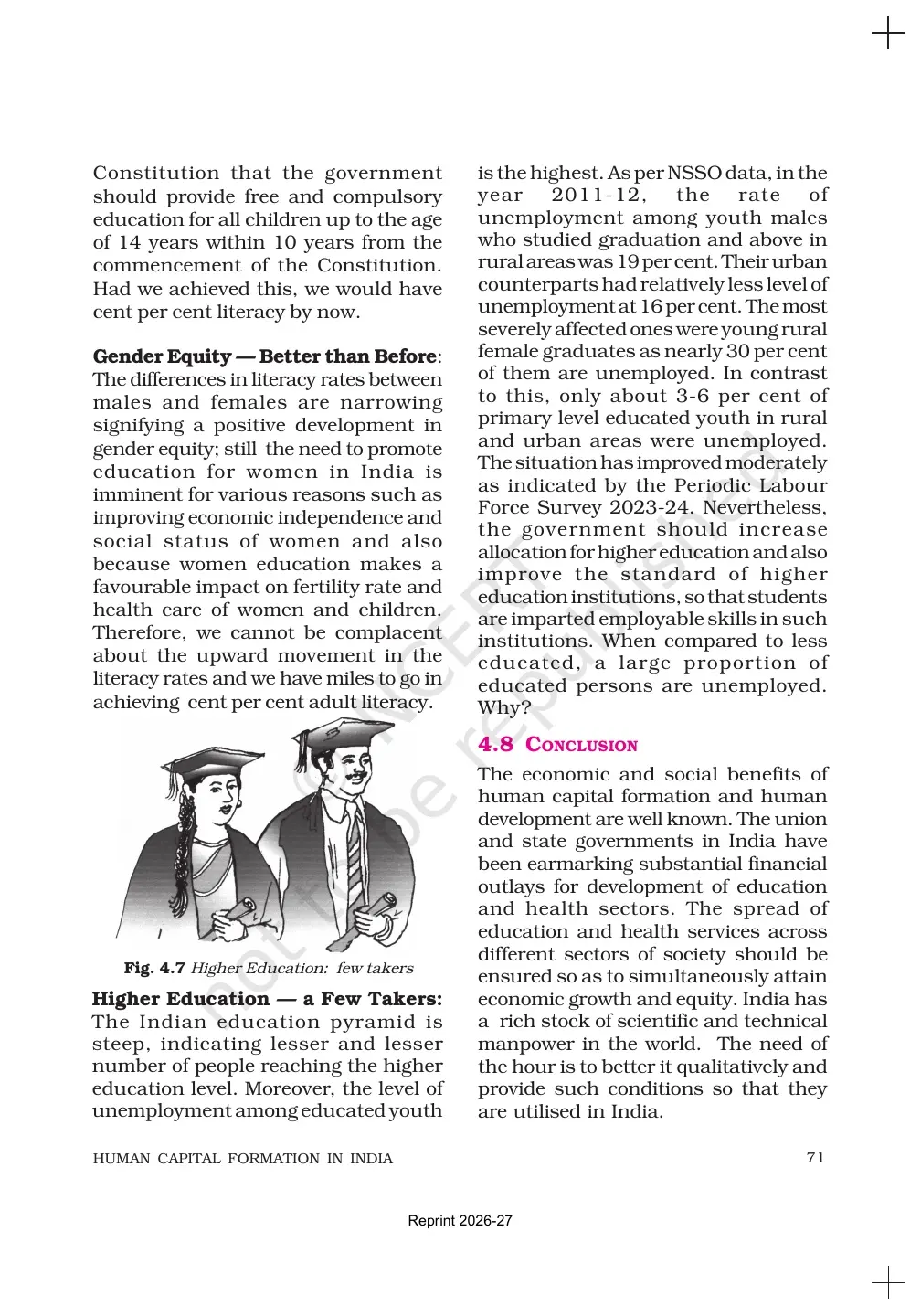
| India's challenges | NCERT discusses education spending, literacy, higher education and health. | Balance progress with gaps. |
Human Capital Formation in India Video Recap
Source: PW OnlyIAS Prarambh on YouTube
Sources of Human Capital Formation in India
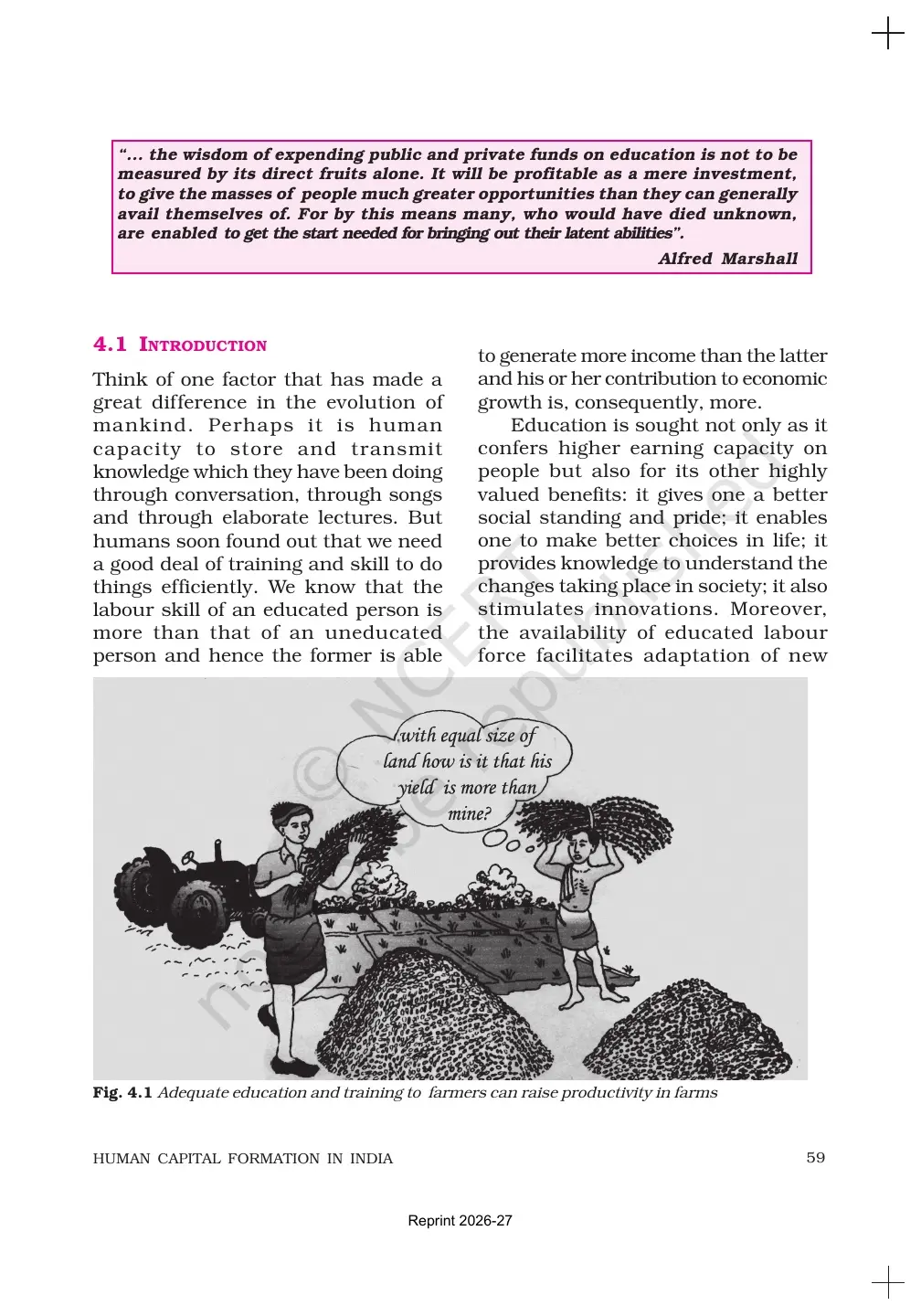
NCERT shows that human capital is built over time. Education and health are the two most important sources, but they are not the only sources.
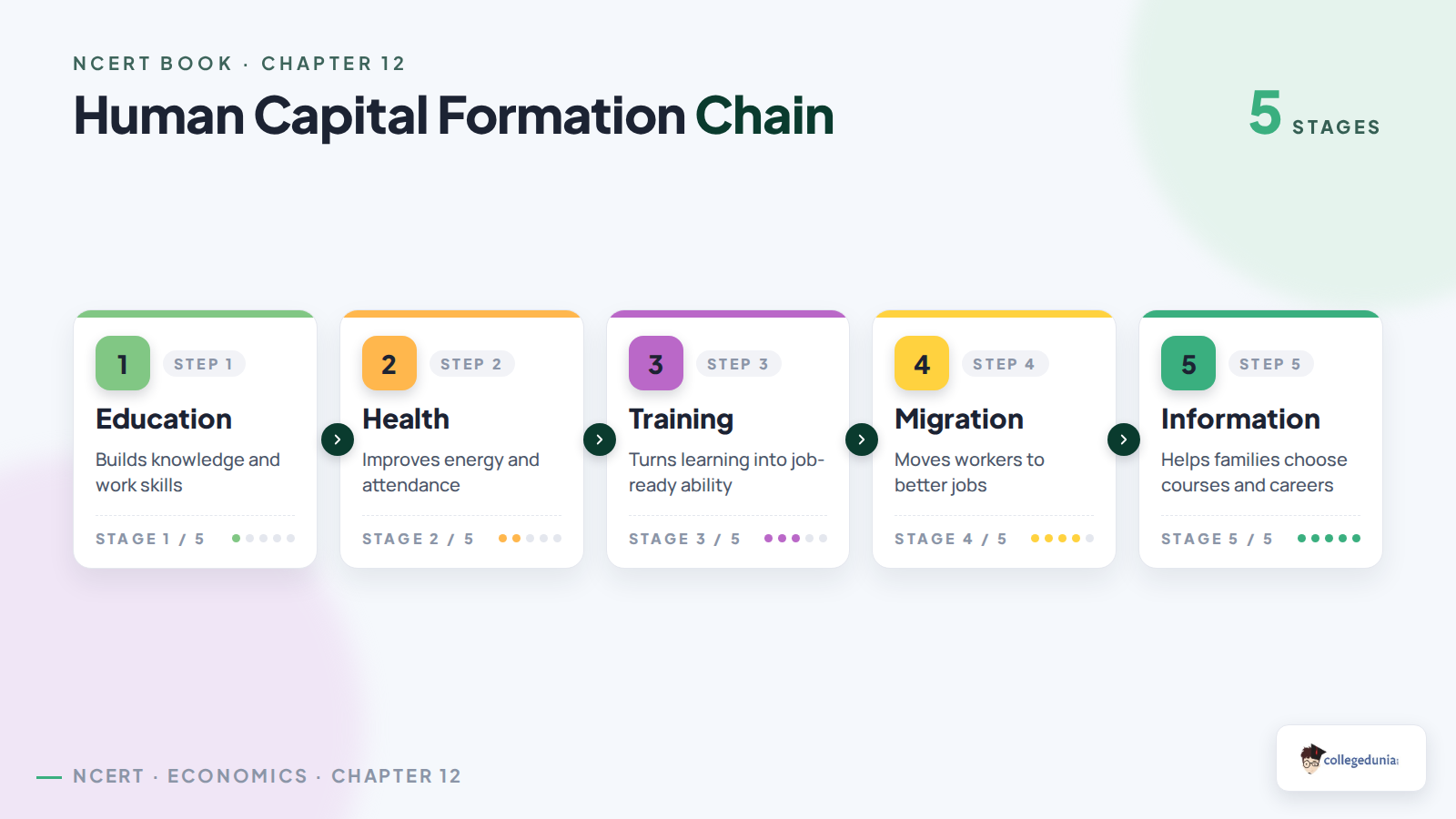
- Education: improves knowledge, work ability and earning power.
- Health: keeps workers active, regular and productive.
- Training: turns classroom learning into practical work skill.
- Migration: helps workers move to places with better jobs.
- Information: helps families choose courses, jobs and health services.
Human Capital and Physical Capital in NCERT Economics
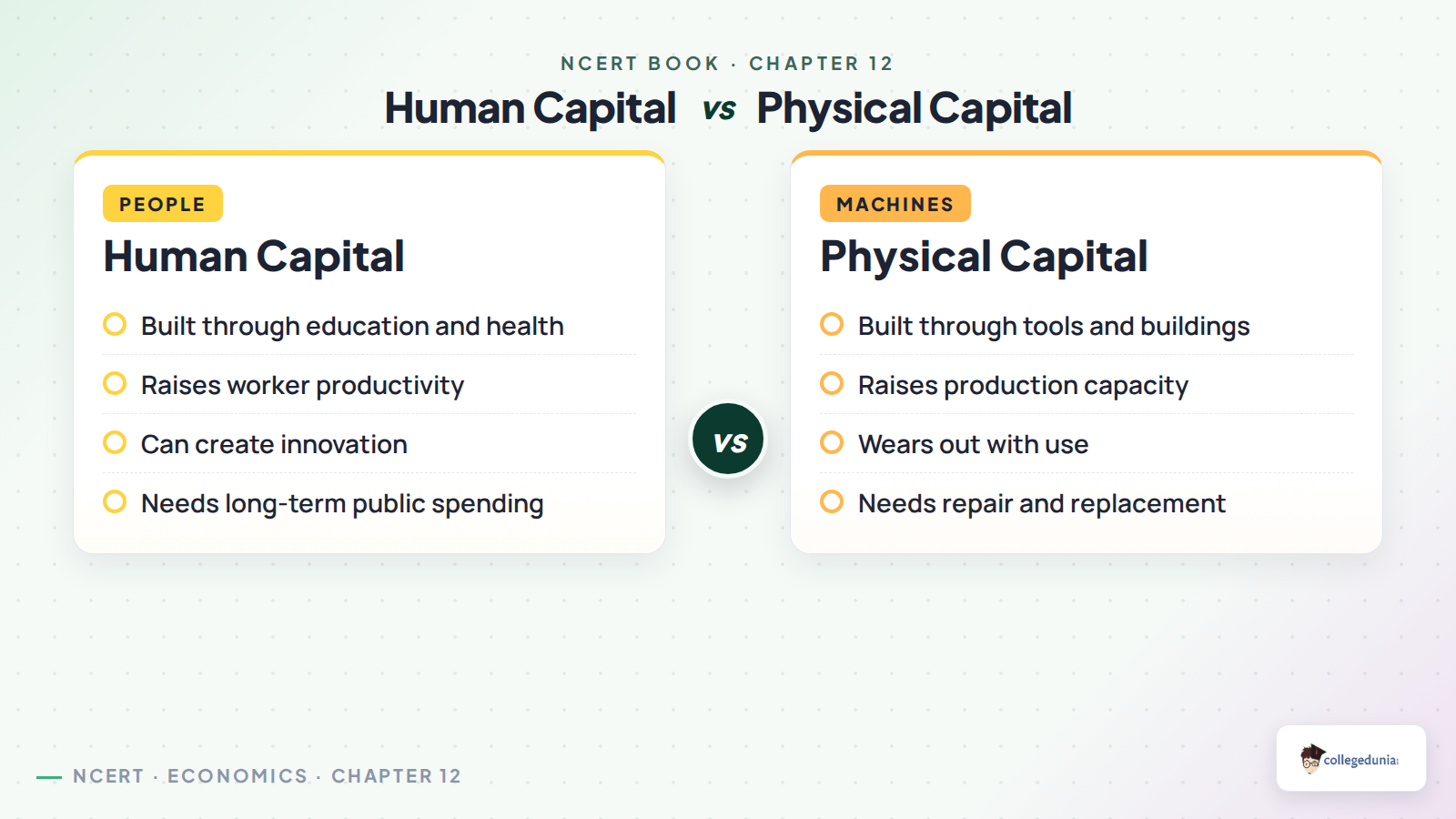
This comparison appears often in school answers. Human capital is tied to people and cannot be separated from them. Physical capital is tied to tools, machines and buildings.
| Point | Human capital | Physical capital |
|---|---|---|
| Meaning | Skills, knowledge and health of people. | Machines, tools, buildings and equipment. |
| Creation | Built through education, health care and training. | Built through investment in goods and infrastructure. |
| Ownership | It stays with the person. | It can be sold or transferred. |
| Growth effect | It raises productivity and supports innovation. | It raises production capacity. |
Human Capital and Economic Growth in India
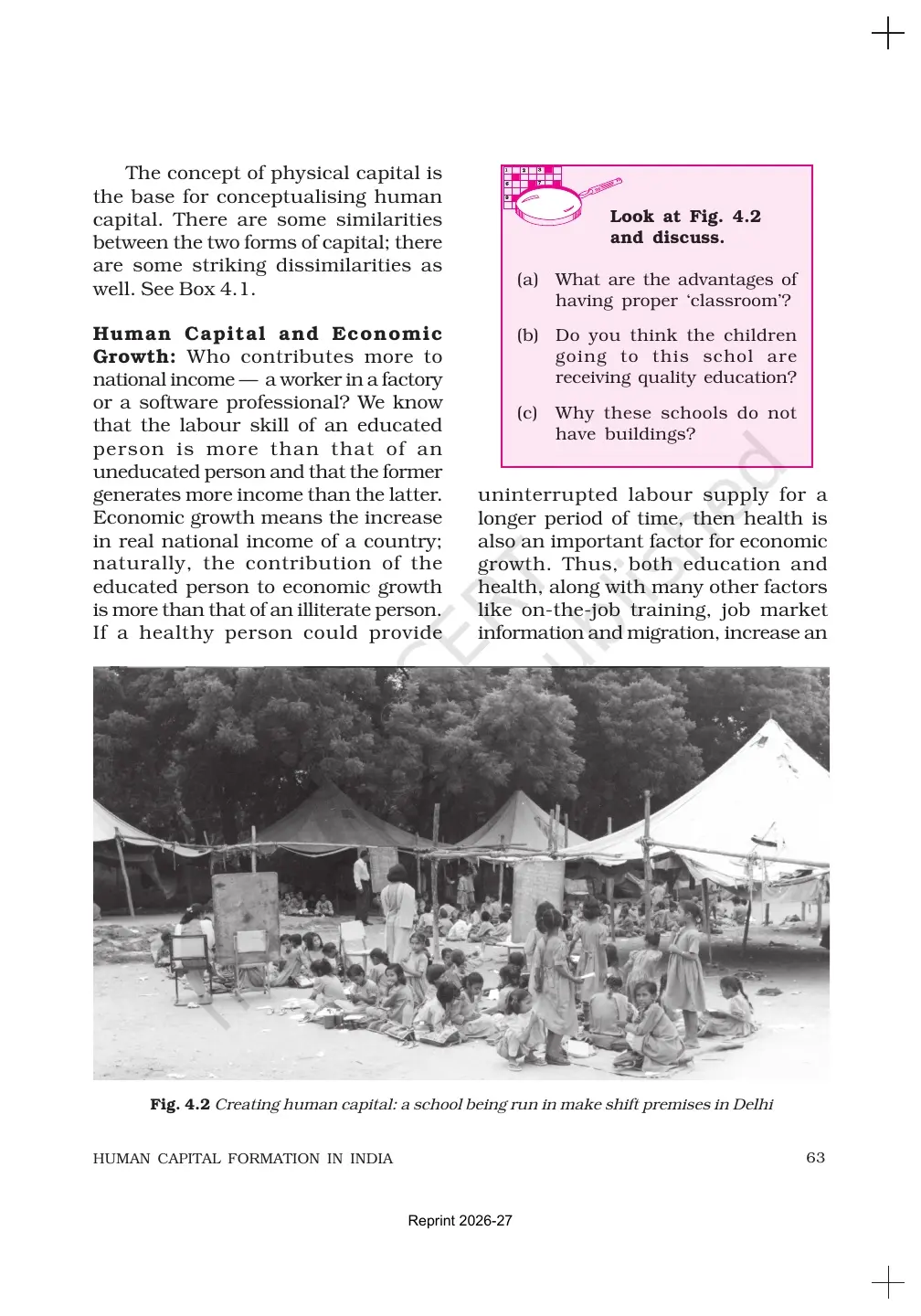
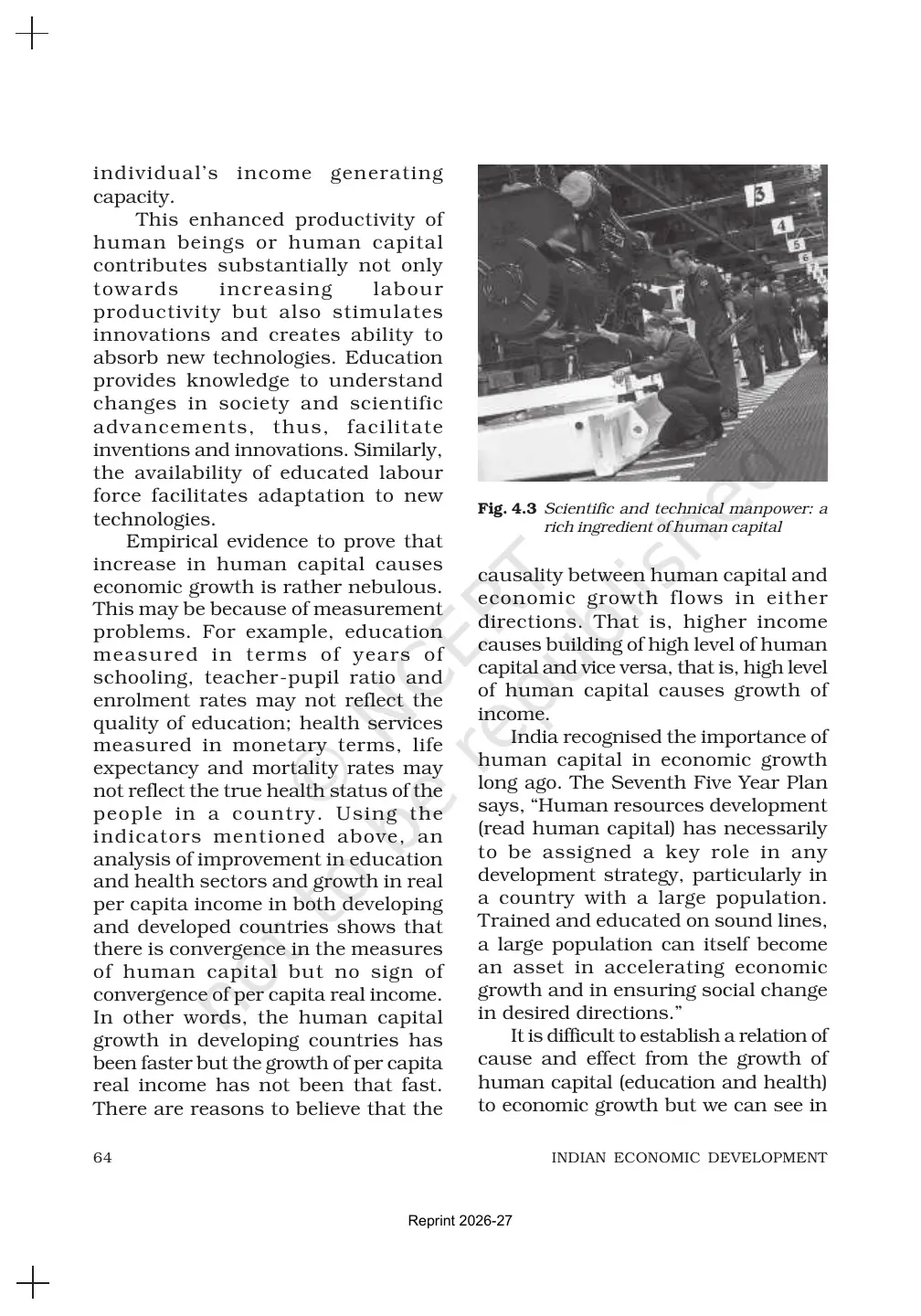
The chapter links human capital with economic growth in a direct way. Better education and health make workers more productive. This raises output and helps the economy grow over time.
NCERT also explains why public spending matters. Poor families may not spend enough on education and health by themselves. Government support helps more children reach school, training and health services.
- For education answers: mention literacy, higher education and skill formation.
- For health answers: mention productivity, life expectancy and regular work.
- For growth answers: connect human capital with income, innovation and social change.
- For India-based answers: include regional, gender and rural-urban gaps.
How to Use the Human Capital Formation in India NCERT Book PDF
Read this PDF in three passes. First, mark every source of human capital. Second, compare human capital with physical capital. Third, revise India's education and health challenges together.
- For short answers: define the term and add one source.
- For long answers: divide the answer into meaning, sources, growth link and problems.
- For revision: make a table for education, health, training, migration and information.
- For examples: use school education, hospitals, job training and labour migration carefully.
Related Class 11 Economics Resources for Human Capital Formation
Also Check: use the official book PDF with notes and practice resources for the same chapter.
| Resource | Best use | Link |
|---|---|---|
| NCERT Notes | Revise sources, education, health and human development quickly. | Human Capital Formation in India Notes |
| Handwritten Notes | Use for one-shot revision before a class test. | Human Capital Formation in India Handwritten Notes |
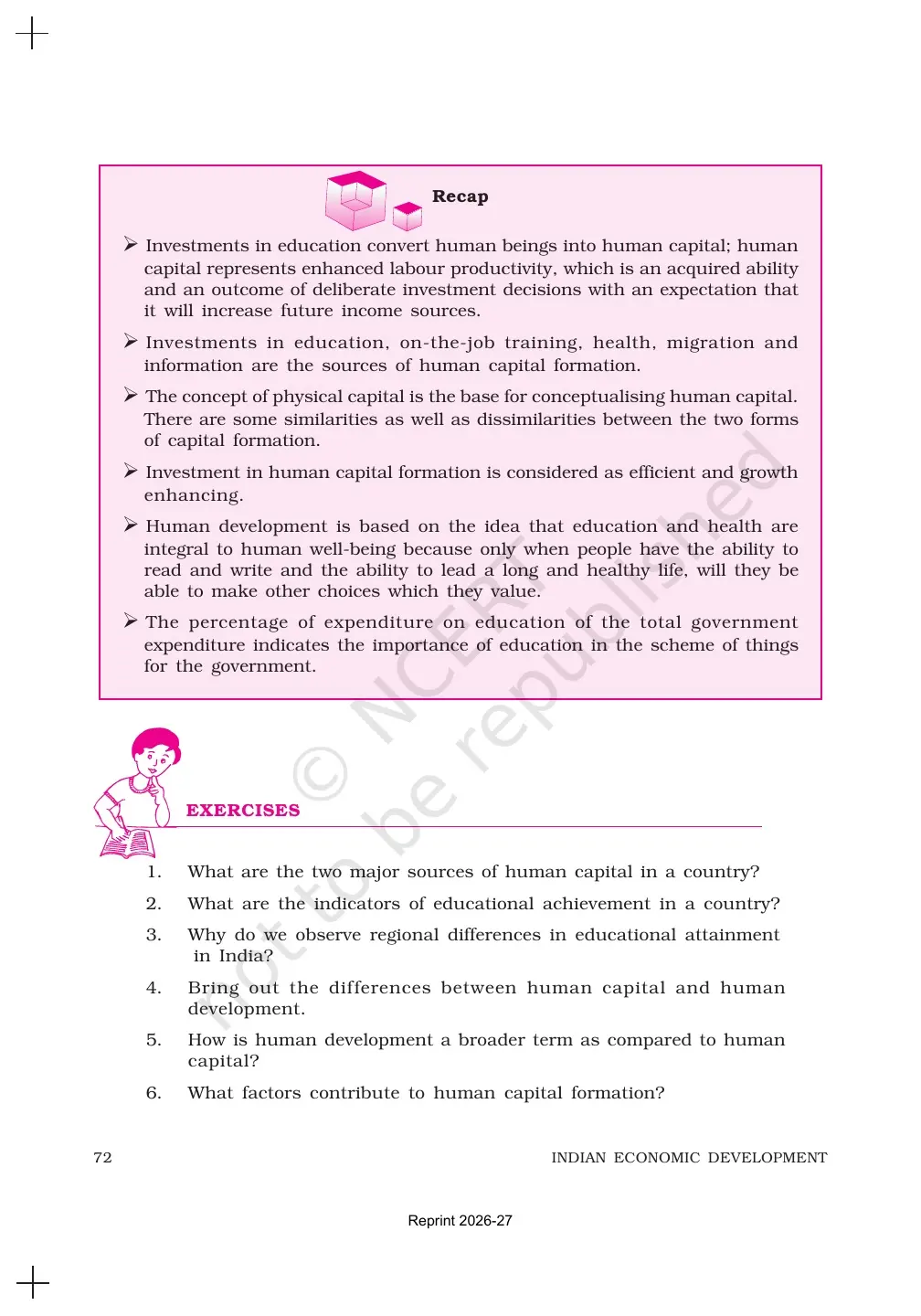
| NCERT Solutions | Practise textbook questions after reading the official PDF. | Human Capital Formation in India NCERT Solutions |
Class 11 Economics NCERT Book PDFs for All Chapters
The table below keeps the Class 11 Economics NCERT Book PDF chapters in one place. Chapters 1 to 8 come from Statistics for Economics, and Chapter 9 onward covers Indian Economic Development.
| Chapter | Title | NCERT Book PDF |
|---|---|---|
| Chapter 1 | Introduction | NCERT Book PDF |
| Chapter 2 | Collection of Data | NCERT Book PDF |
| Chapter 3 | Organisation of Data | NCERT Book PDF |
| Chapter 4 | Presentation of Data | NCERT Book PDF |
| Chapter 5 | Measures of Central Tendency | NCERT Book PDF |
| Chapter 6 | Correlation | NCERT Book PDF |
| Chapter 7 | Index Numbers | NCERT Book PDF |
| Chapter 8 | Use of Statistical Tools | NCERT Book PDF |
| Chapter 9 | Indian Economy on the Eve of Independence | NCERT Book PDF |
| Chapter 10 | Indian Economy 1950-1990 | NCERT Book PDF |
| Chapter 11 | Liberalisation, Privatisation and Globalisation: An Appraisal | NCERT Book PDF |
| Chapter 12 | Human Capital Formation in India | Current NCERT Book PDF |
Human Capital Formation in India Class 11 Economics NCERT Book PDF FAQs
Ques. What does the Class 11 Economics Chapter 12 NCERT Book PDF include?
Ans. It includes the official NCERT chapter on Human Capital Formation in India, with sources of human capital, education, health and growth links.
Ques. Is this NCERT Book PDF useful for the 2026-27 syllabus?
Ans. Yes. The PDF follows the official NCERT chapter used for the 2026-27 Class 11 Economics syllabus.
Ques. Which NCERT book contains Human Capital Formation in India?
Ans. It belongs to the Indian Economic Development part of Class 11 Economics. It is Chapter 4 in that NCERT book and Chapter 12 in this combined schedule.
Ques. How should students revise this chapter?
Ans. Students should revise it source wise: education, health, training, migration and information. This makes long answers easier to organise.



Comments