




The 2026-27 NCERT keeps Chapter 10 Biomolecules as the closing unit of Class 12 Chemistry. It covers the four classes of biomolecules - carbohydrates, proteins, nucleic acids, and vitamins - tested in CBSE, JEE Main, and NEET. This page hosts the latest NCERT Book PDF with a full reading map.
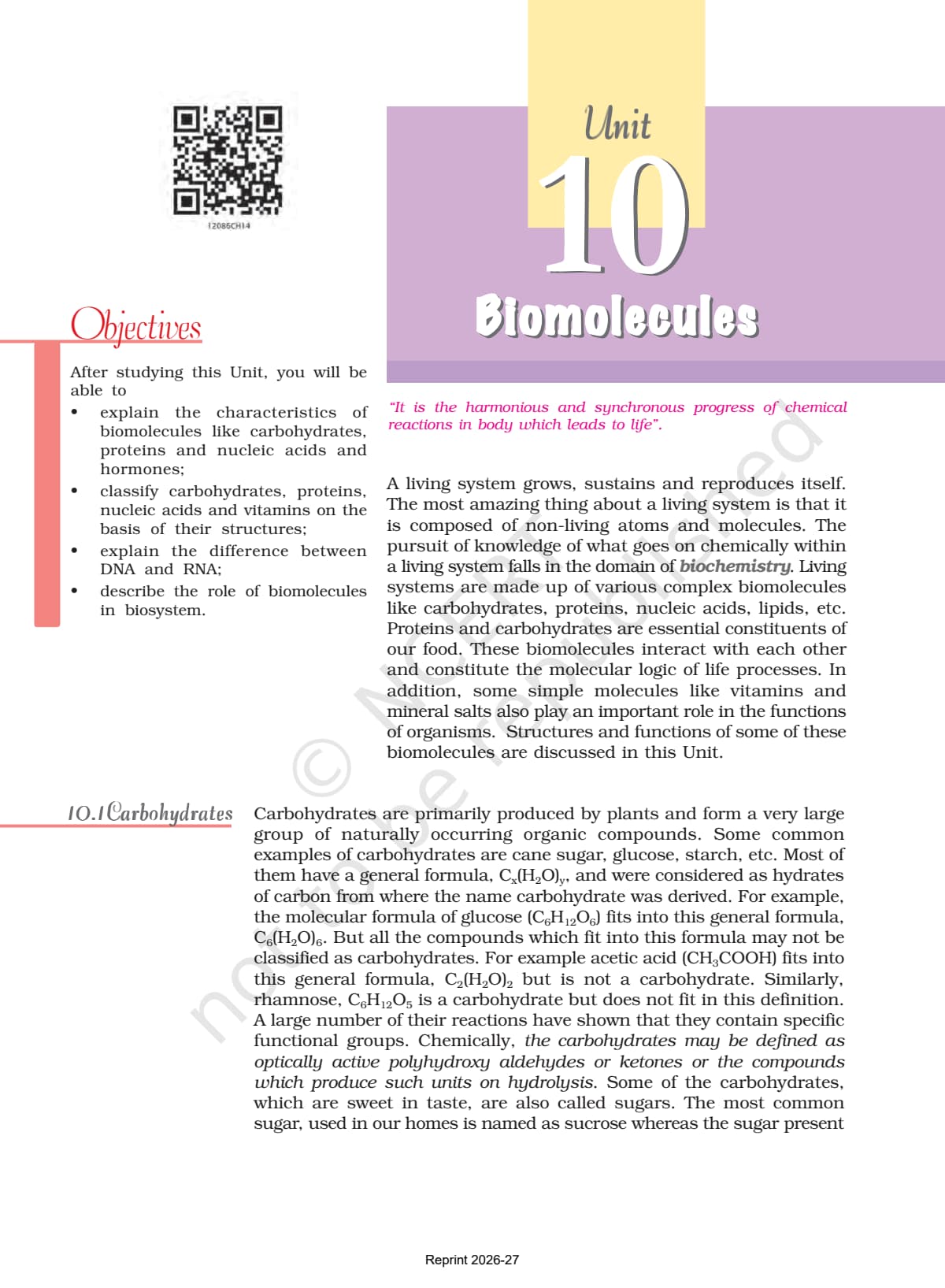

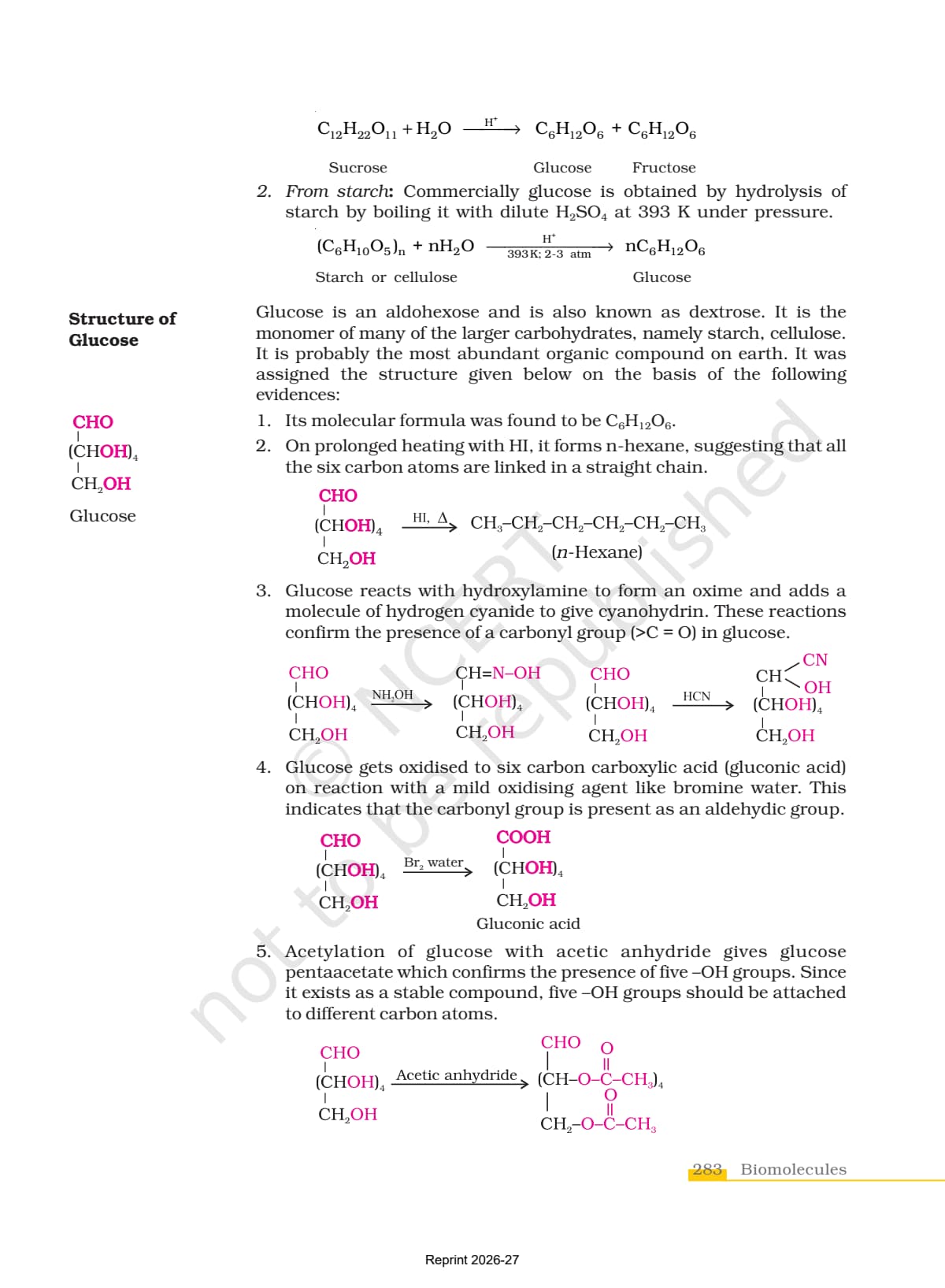
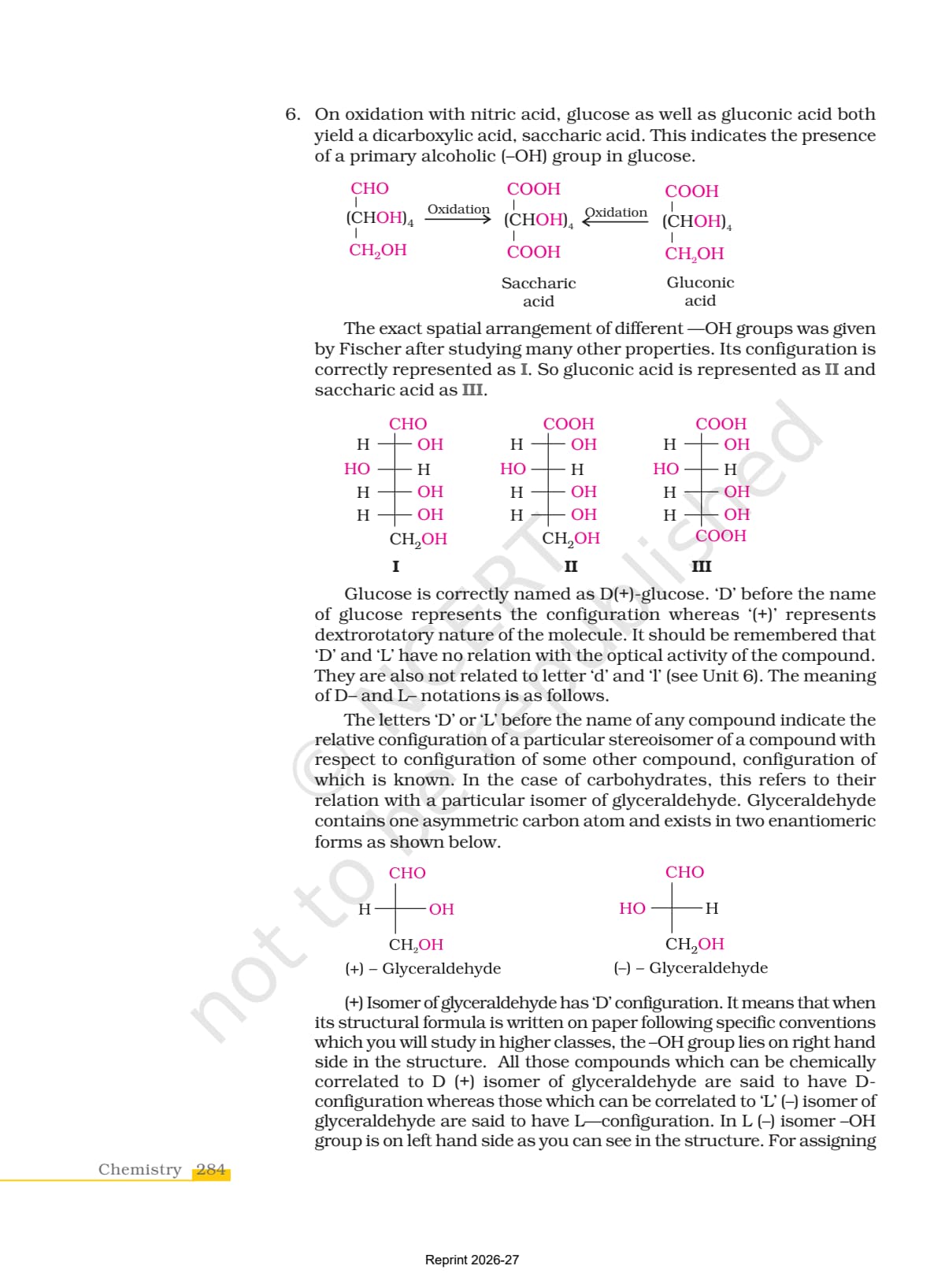
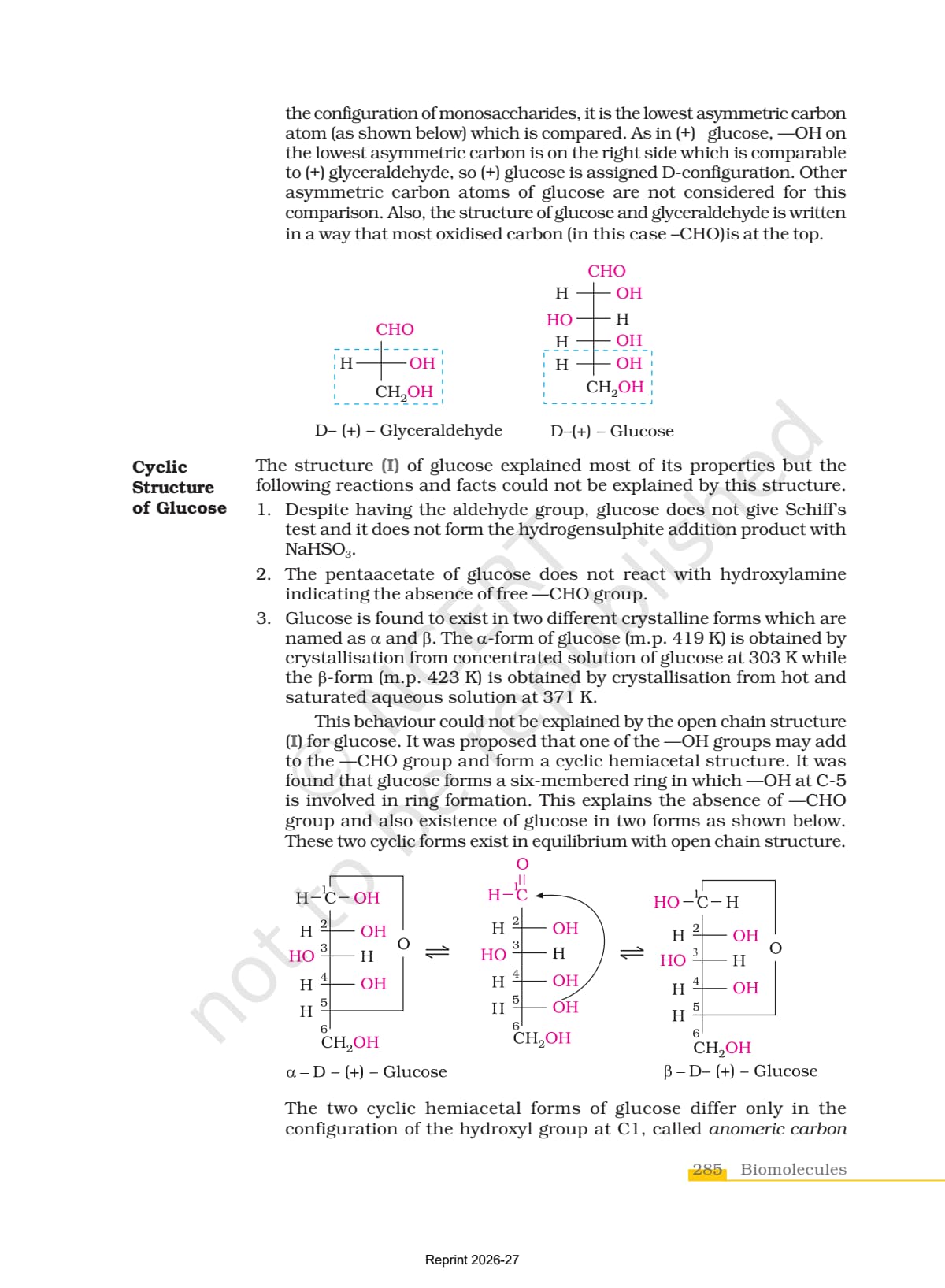
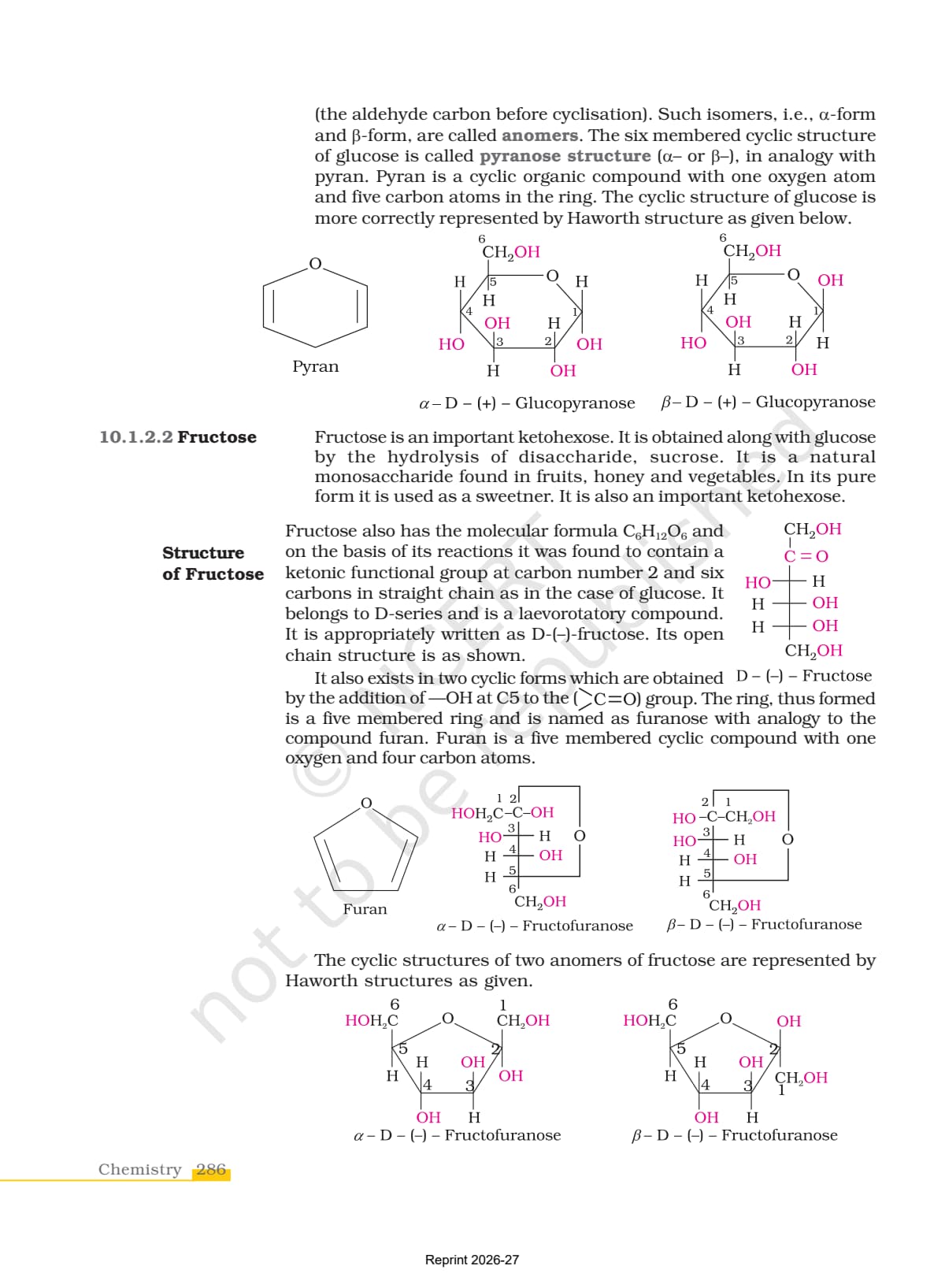
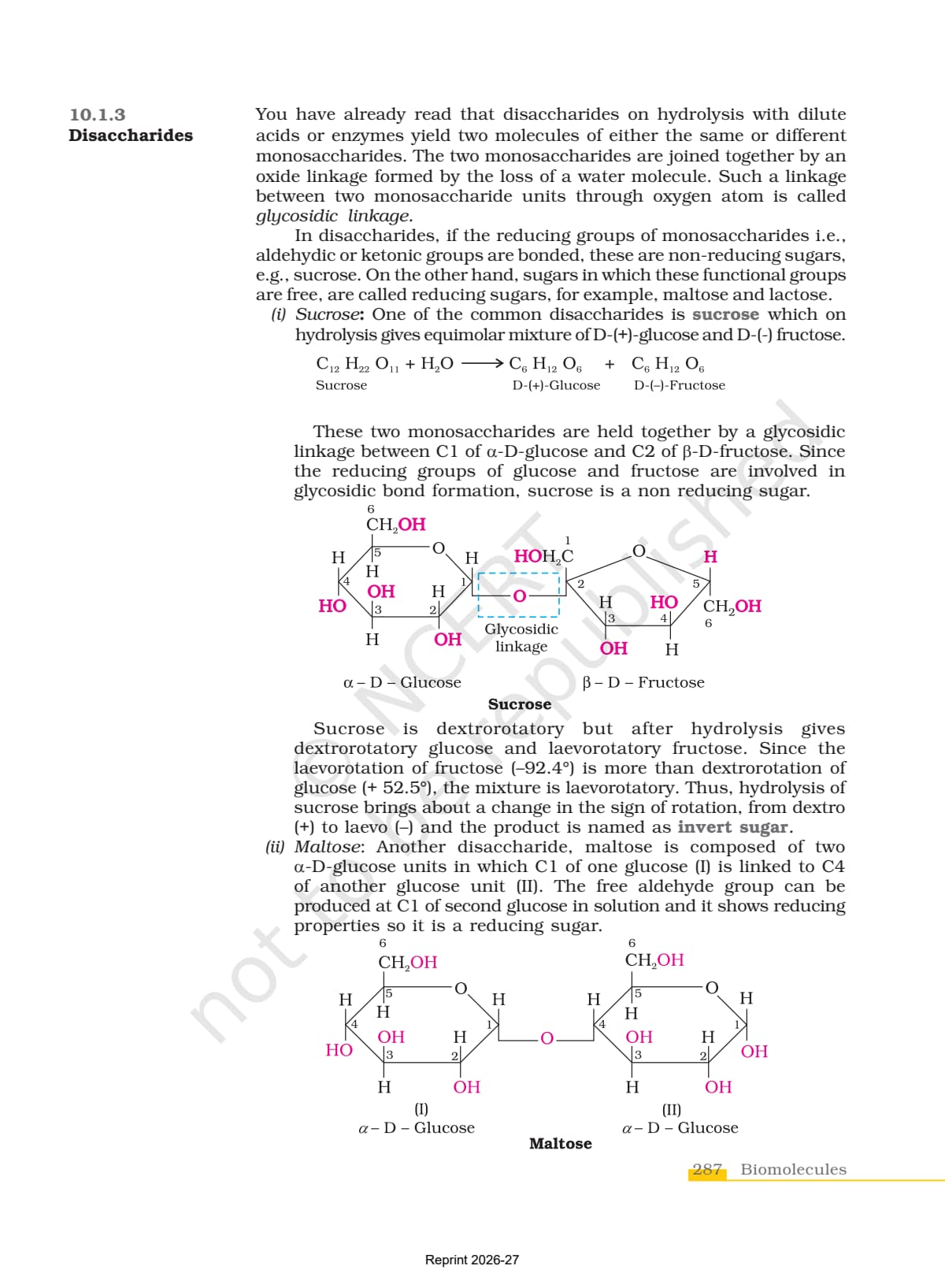
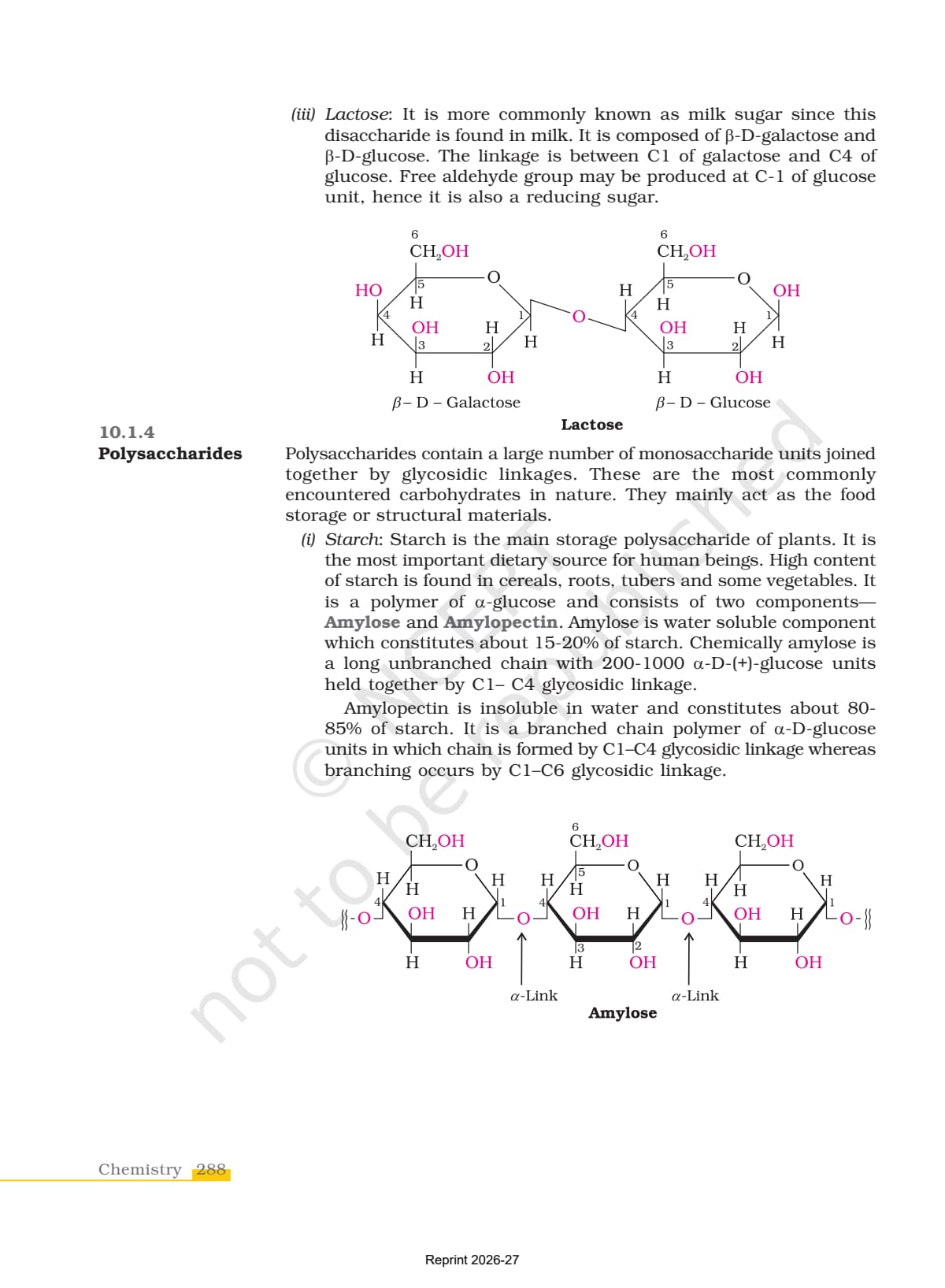
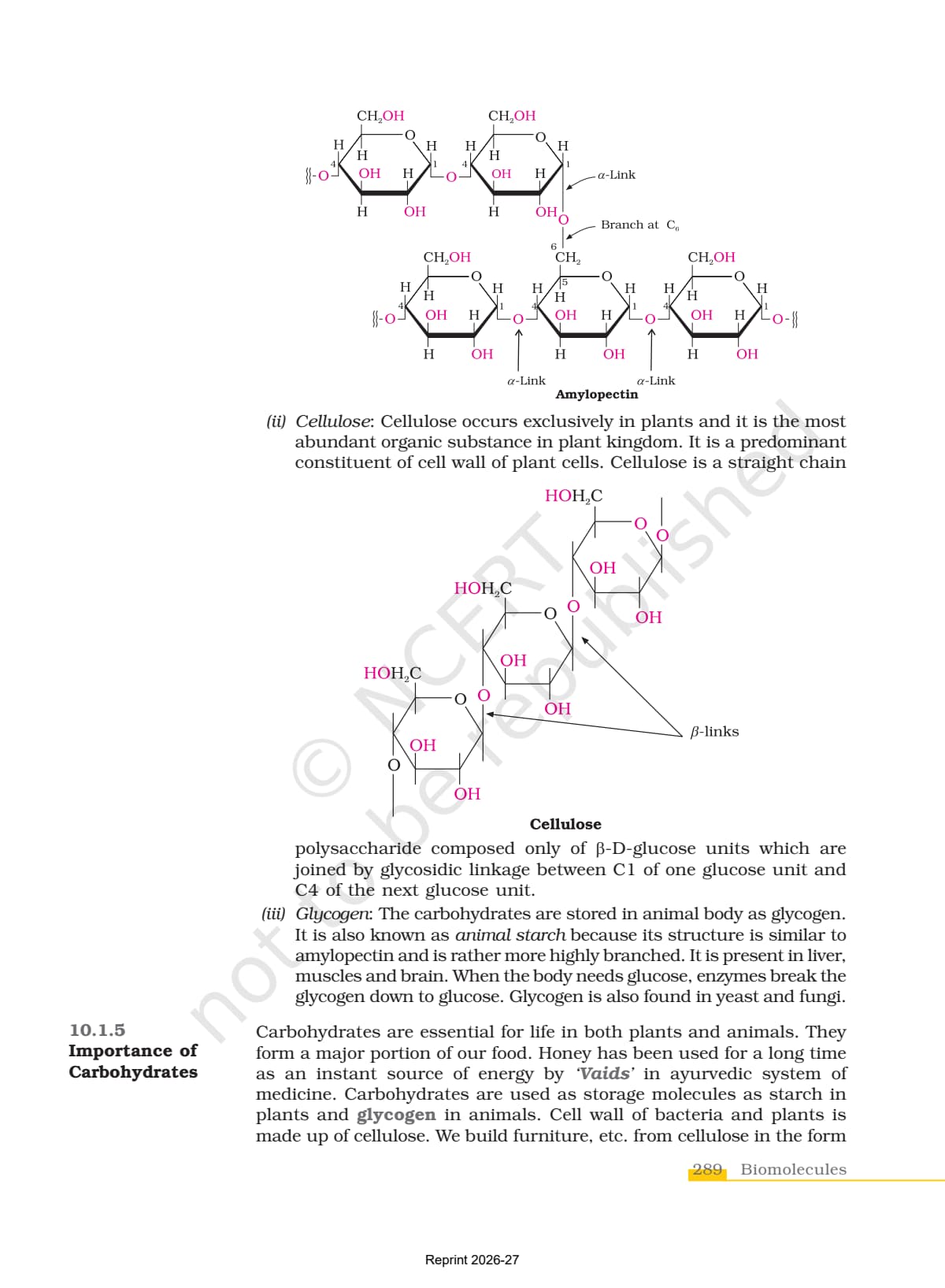
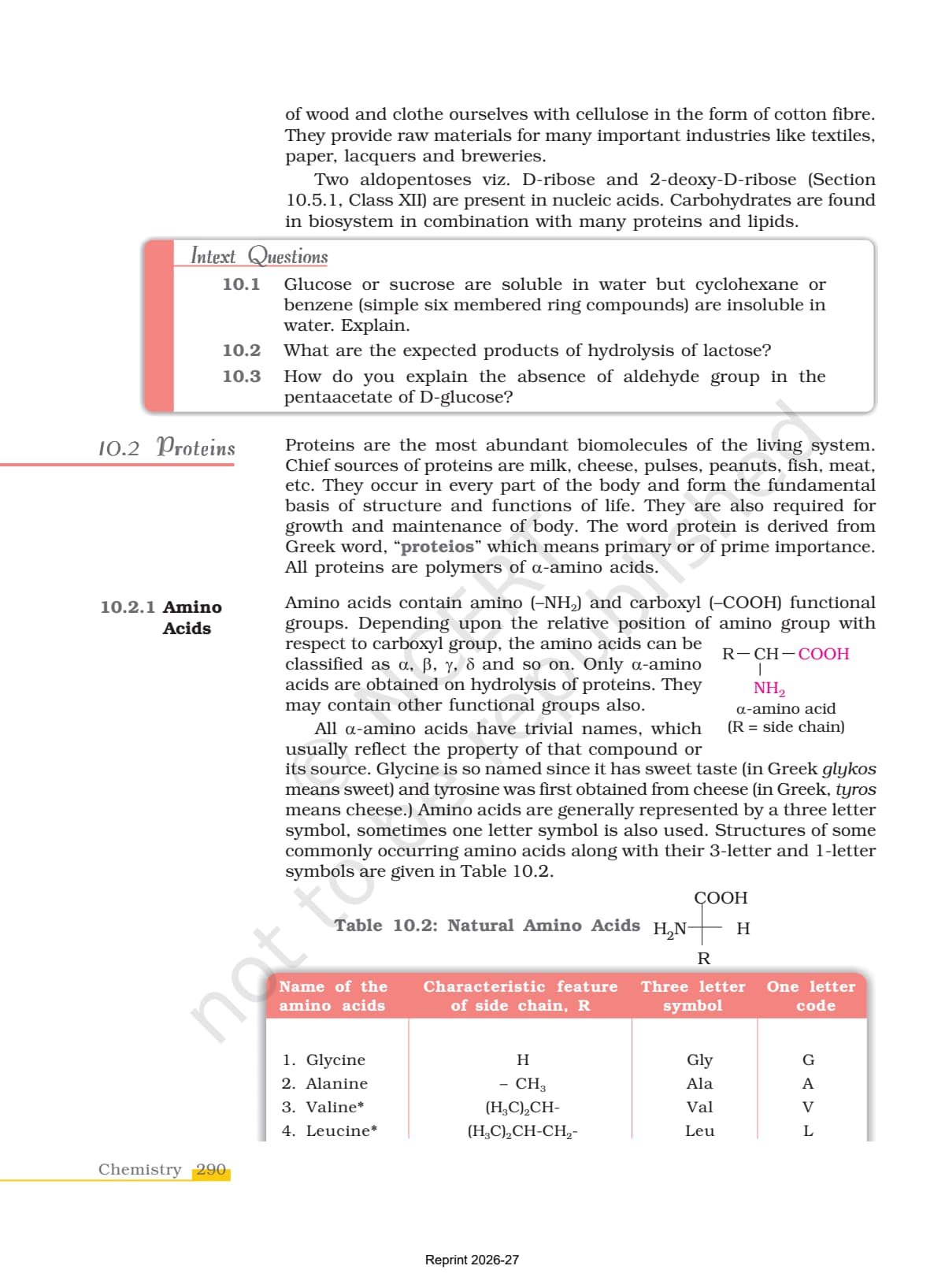
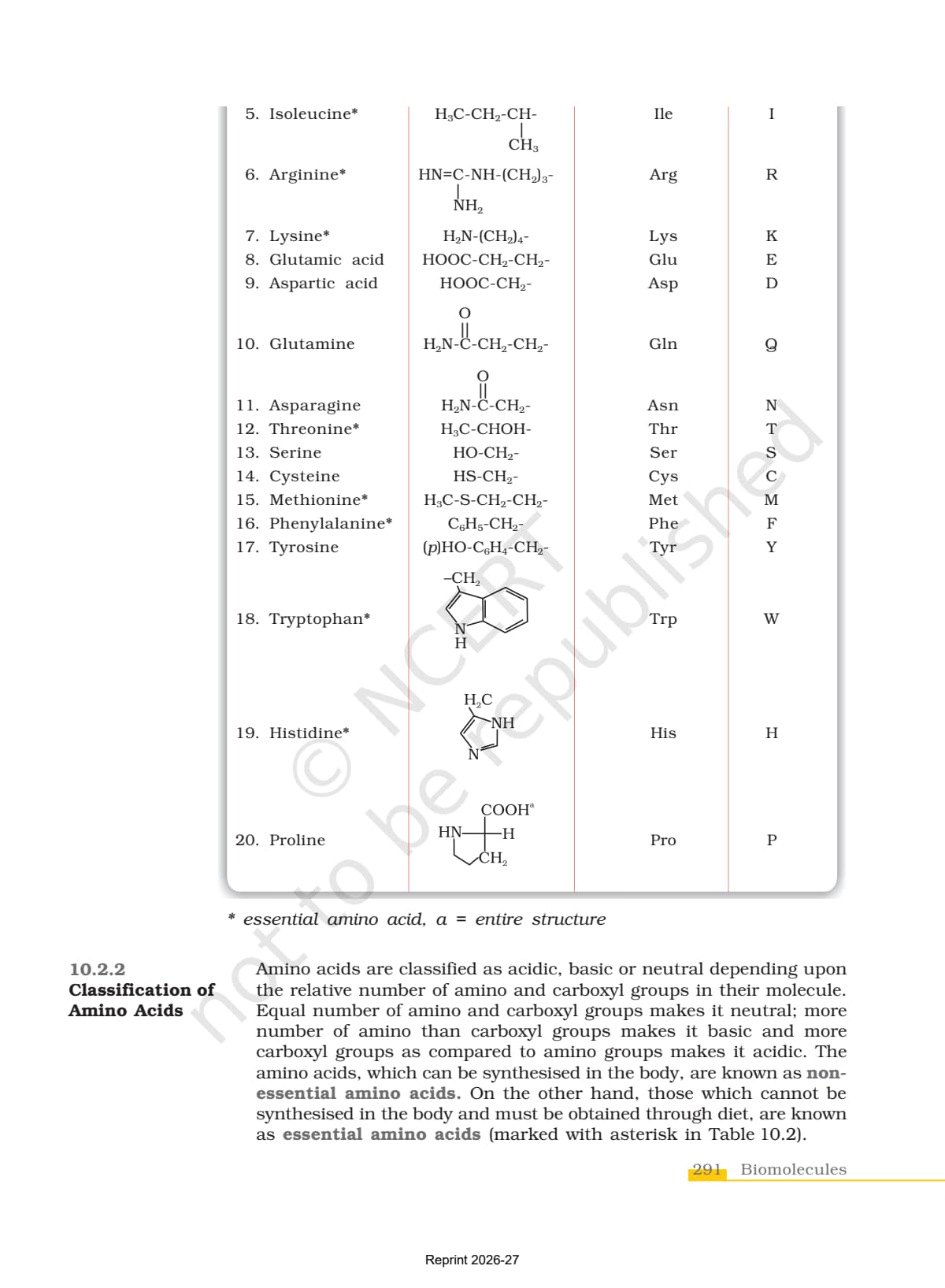
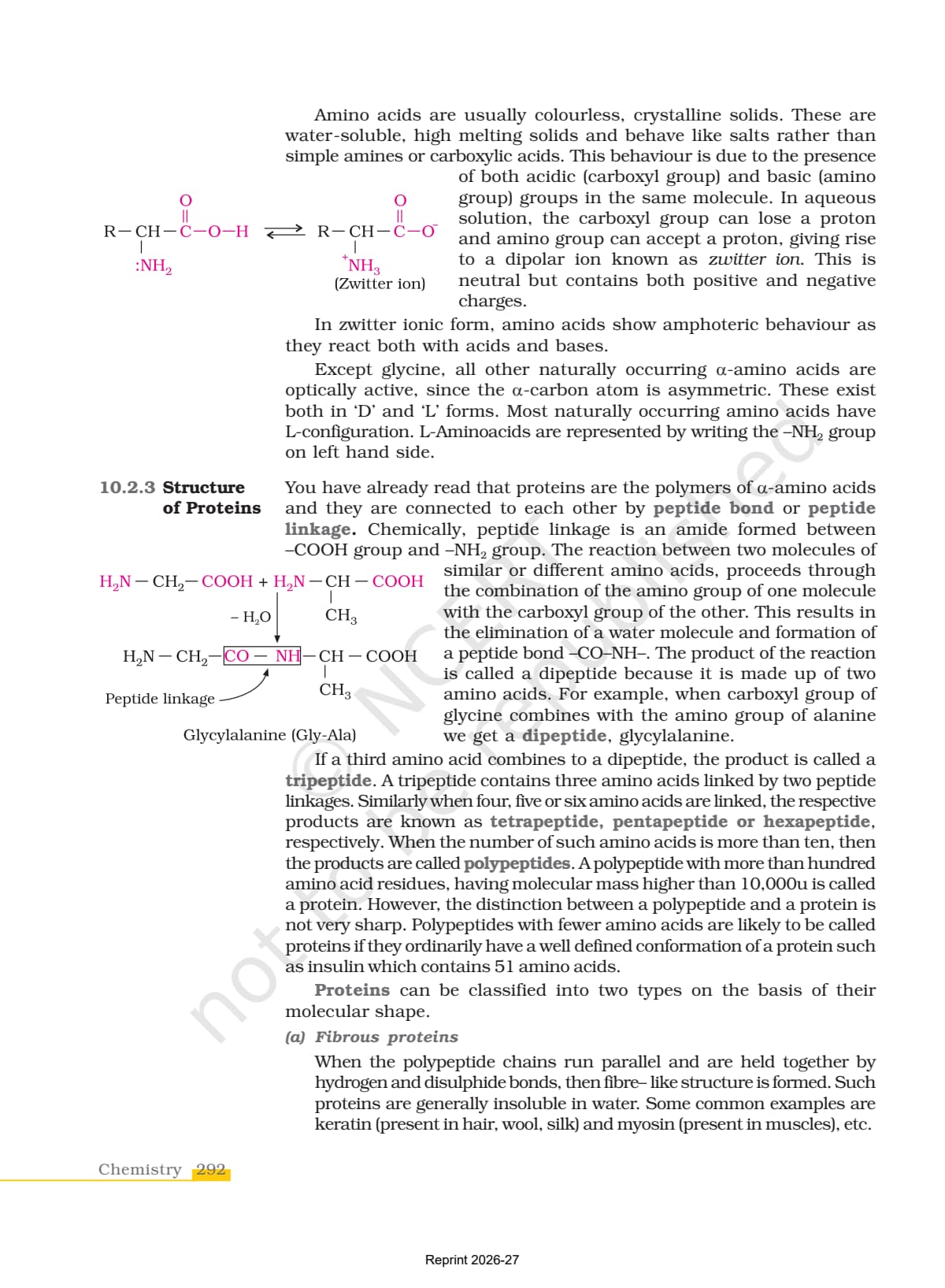
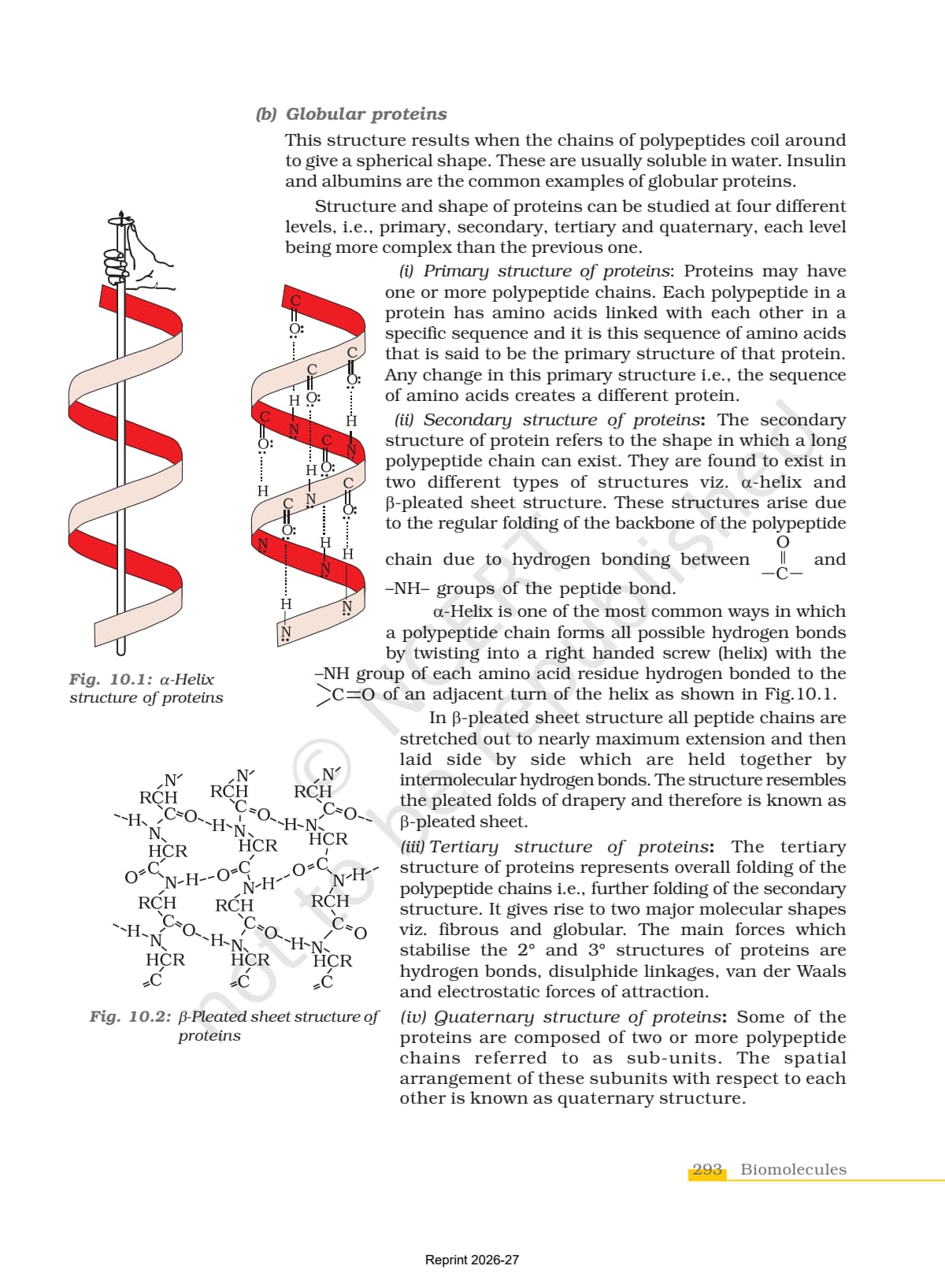
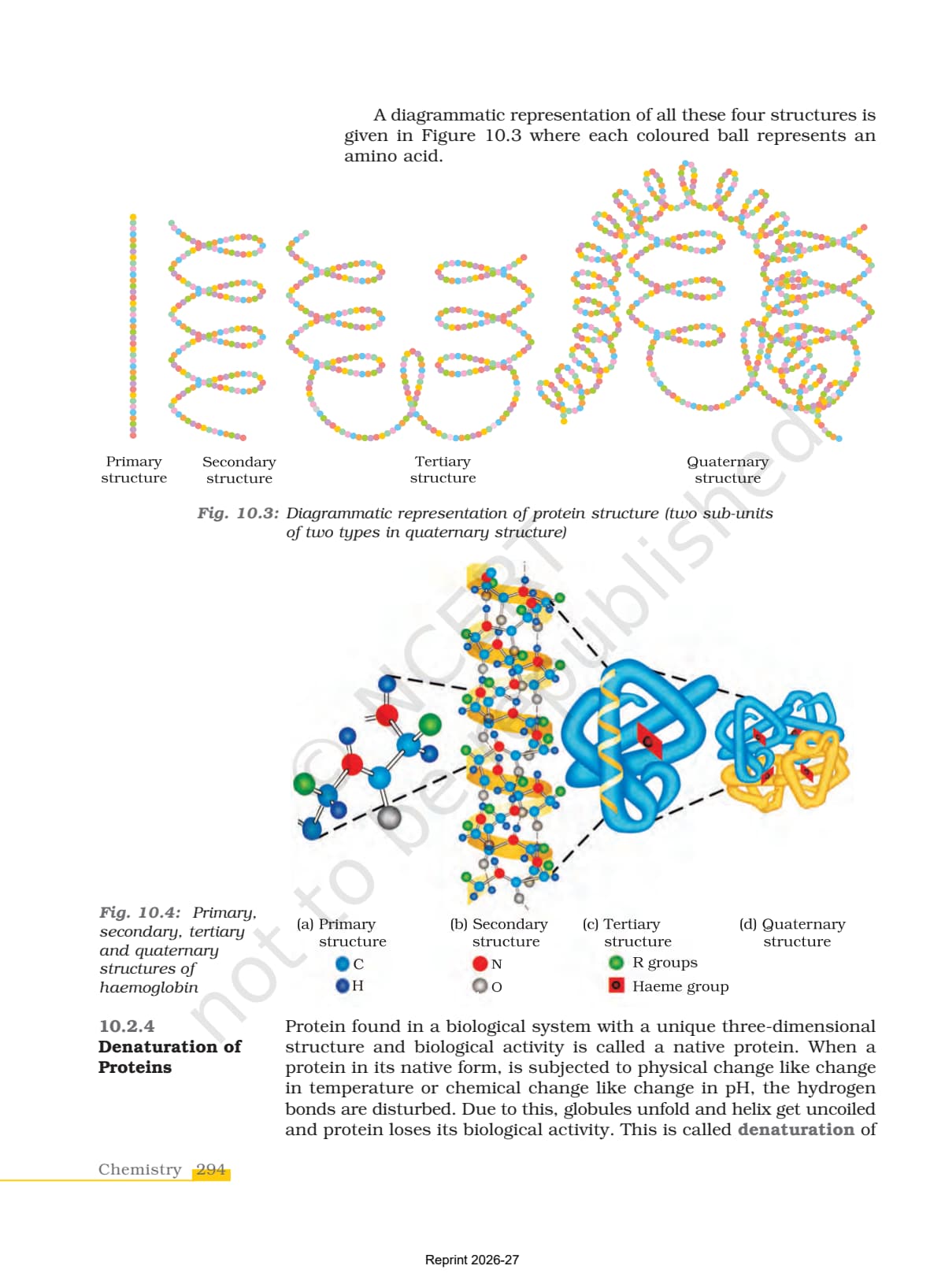
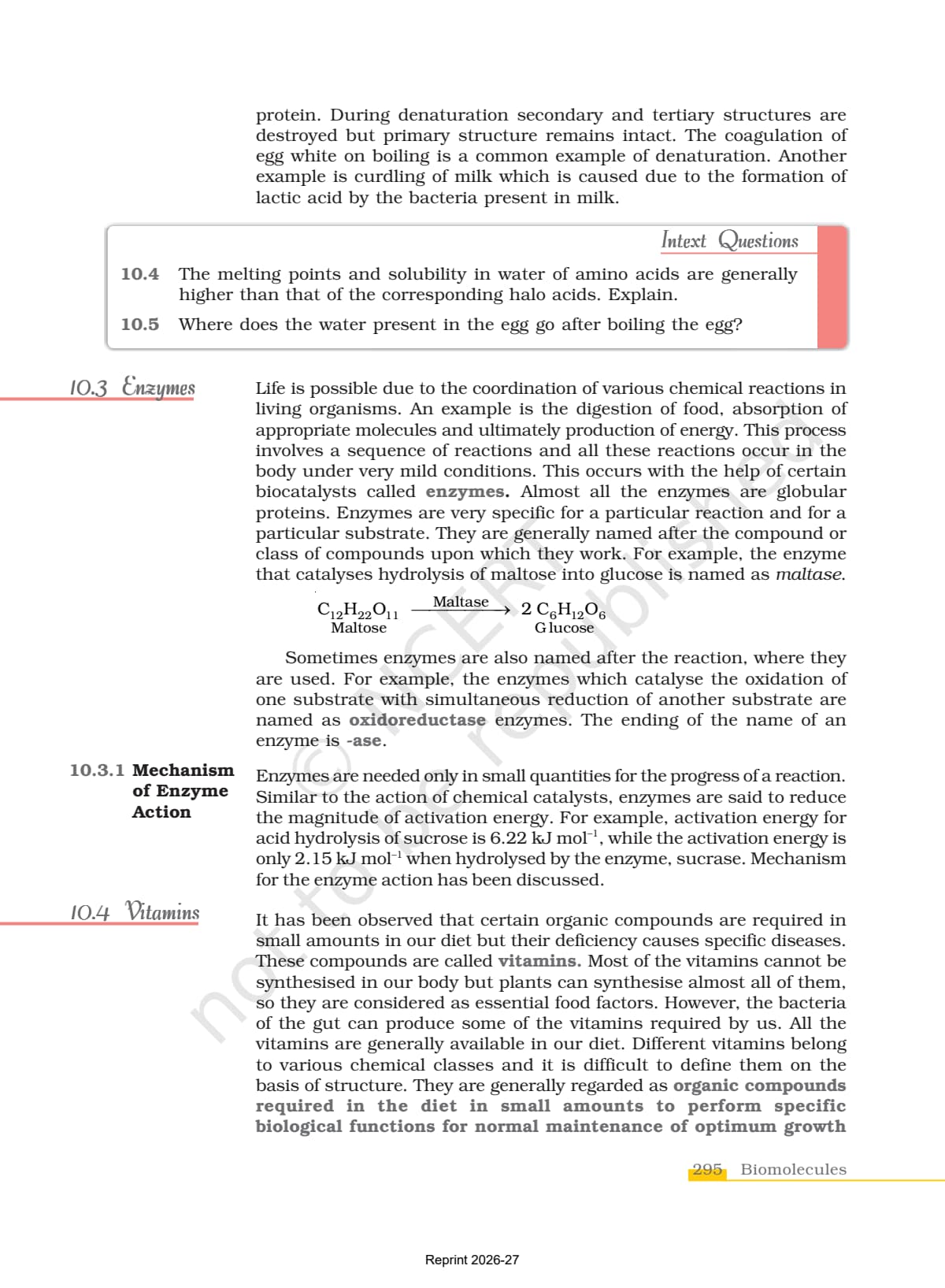
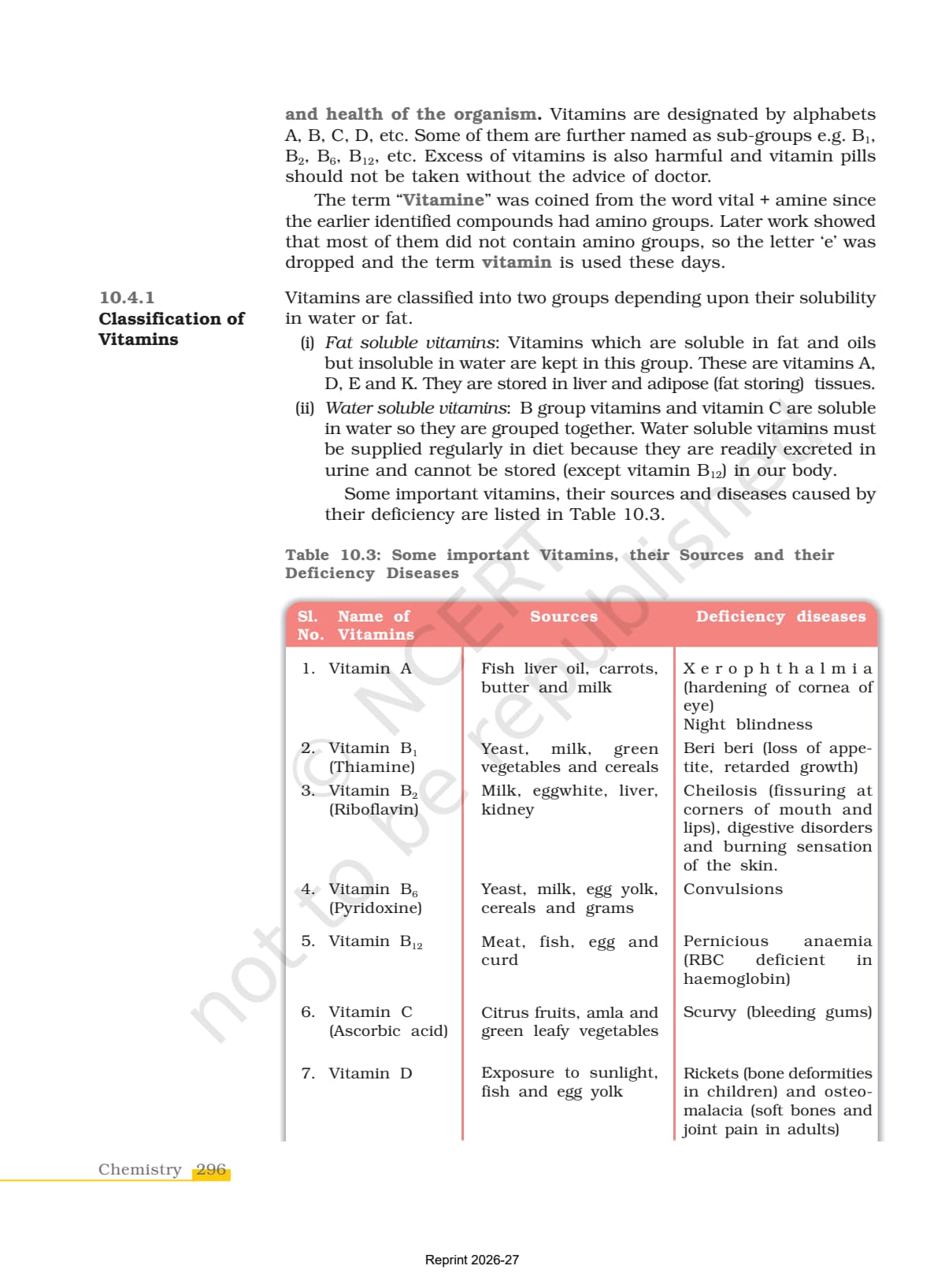
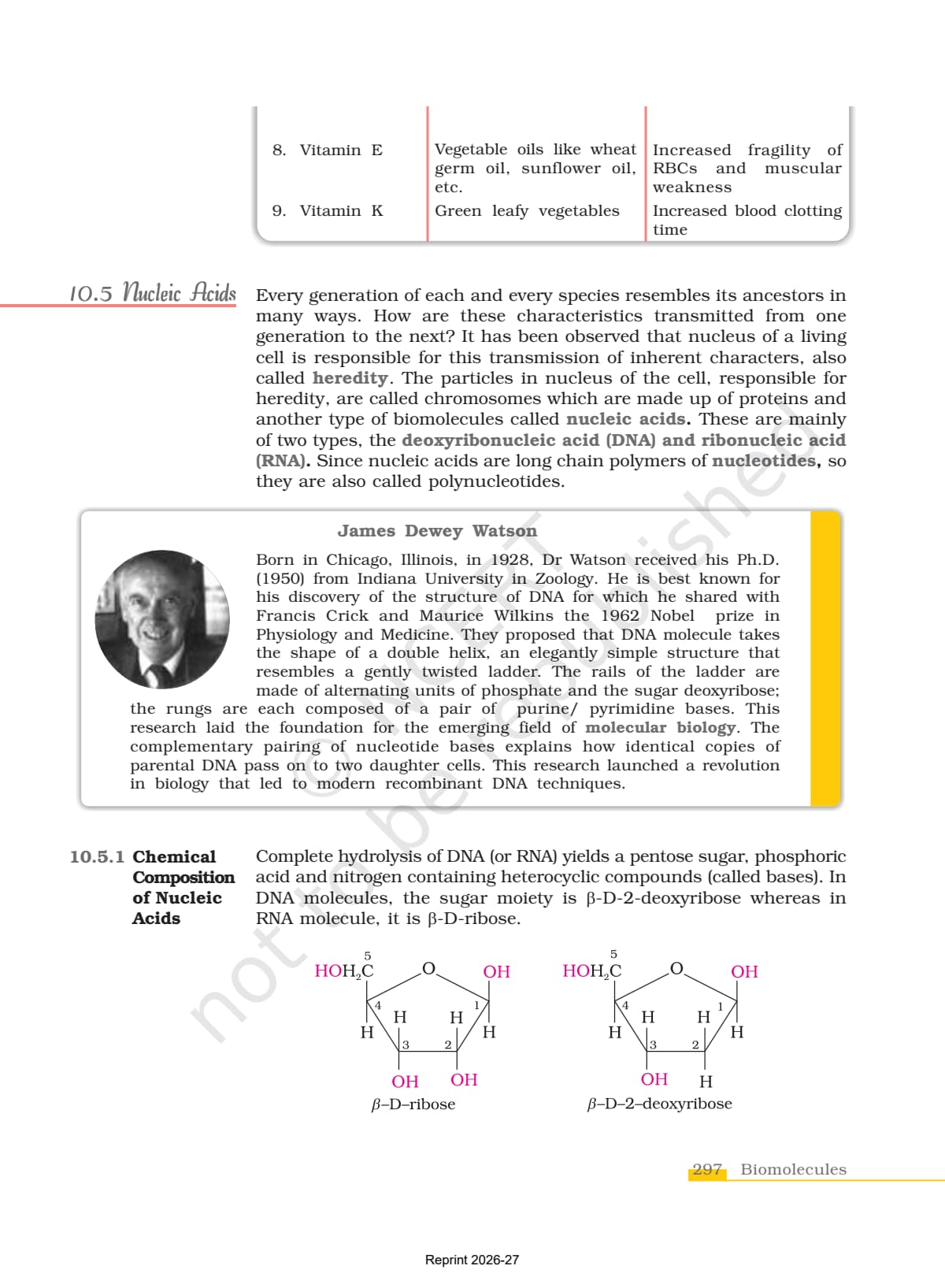
- CBSE Weightage: 4 to 5 marks (usually one 2-mark short-answer plus one 3-mark structure or classification question)
- JEE Main Weightage: 1 to 2% (1 to 2 questions per shift, mainly on carbohydrate classification and protein structure)
- NEET Weightage: 2 to 3 questions per year (highest among Class 12 Chemistry chapters for NEET)
The PDF above is the official NCERT print for Chapter 10 of the Class 12 Chemistry Part-II book. The reading map and rationalisation notes below show what to read deeply and what to skim.
Sourced from the official NCERT 2026-27 edition and cross-verified against the CBSE Class 12 Chemistry syllabus document for the 2026 Board exam.
Also Check:
- Class 12 Chemistry Chapter 9 Amines NCERT Book PDF
- Class 12 Chemistry NCERT Book PDF (All Chapters)
- CBSE Class 12 Chemistry Syllabus 2026-27
Biomolecules NCERT Intext Examples and Their Sub-Topics
The 2026-27 print carries 4 solved intext examples, each drilling one skill that recurs in CBSE and NEET papers.
| Example | Sub-topic | Skill tested |
|---|---|---|
| 10.1 | Classification of carbohydrates (mono/di/polysaccharides, reducing vs non-reducing) | Apply the hydrolysis test and Tollens'/Fehling's test logic |
| 10.2 | Open-chain to cyclic (pyranose / furanose) structure conversion of glucose | Identify the hemiacetal carbon (C-1) and draw α and β anomers |
| 10.3 | Identification of amino acid as acidic, basic, or neutral from side chain | Inspect the R group for extra -COOH or -NH2 |
| 10.4 | Difference between DNA and RNA on the basis of sugar and bases | List deoxyribose vs ribose and thymine vs uracil |
Biomolecules Class 12 Chemistry Explained
Source: Magnet Brains on YouTube
Biomolecules NCERT Book: Section-by-Section Breakdown with Page Numbers
The chapter has five sections plus summary and exercises. Sections 10.1 (carbohydrates) and 10.2 (proteins) carry most CBSE and NEET marks.
| Section | Title | Pages | What it covers |
|---|---|---|---|
| 10.1 | Carbohydrates | 299-308 | Classification, glucose and fructose structures, anomers, mutarotation, glycosidic linkage, sucrose, maltose, lactose, starch, cellulose, glycogen |
| 10.2 | Proteins | 308-313 | α-amino acids, zwitterion, peptide bond, primary to quaternary structure, denaturation, enzymes as biocatalysts |
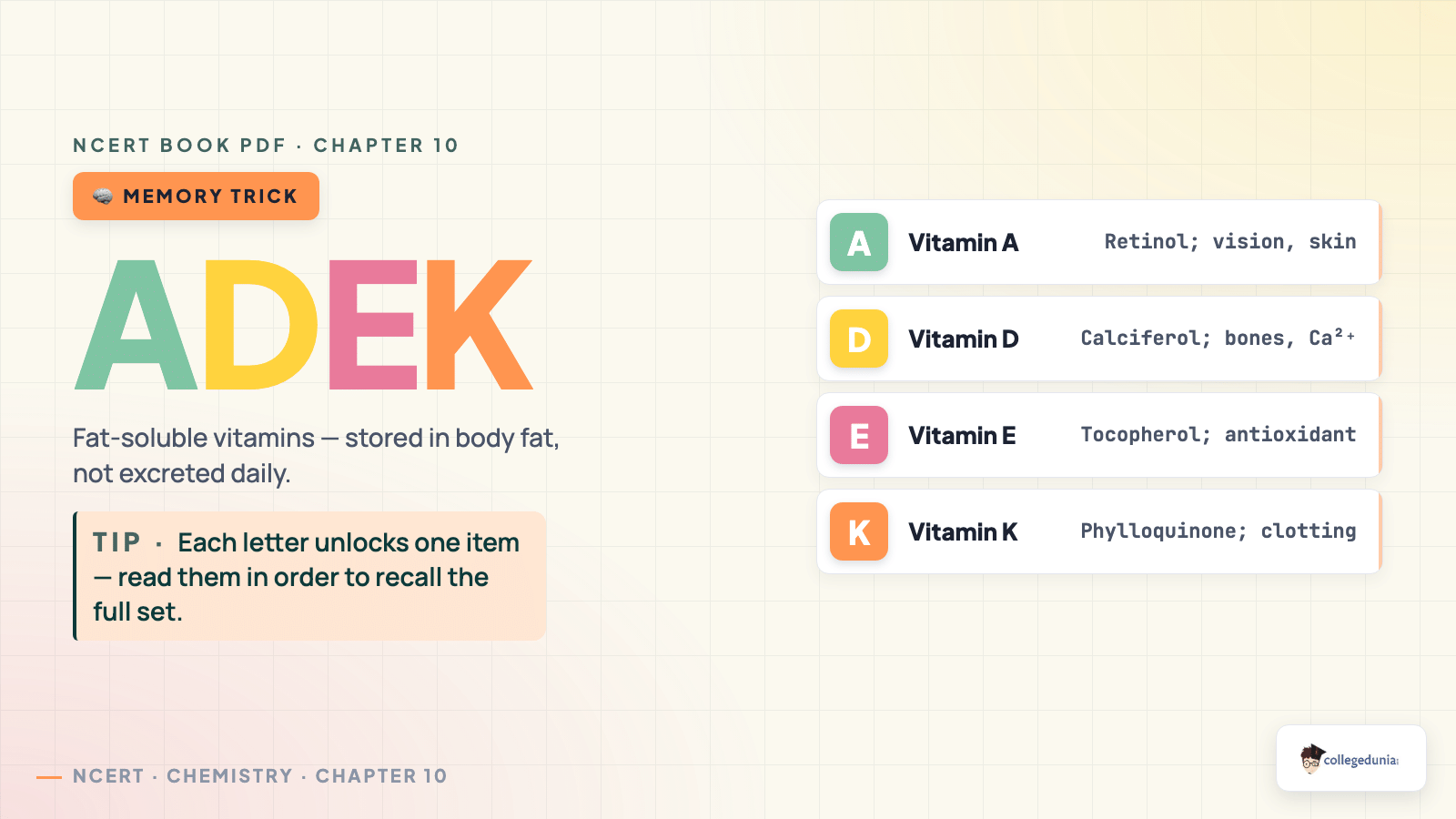
| 10.3 | Vitamins | 313-314 | Fat-soluble (A, D, E, K) and water-soluble (B, C) types; deficiency diseases like scurvy, beri-beri, rickets |
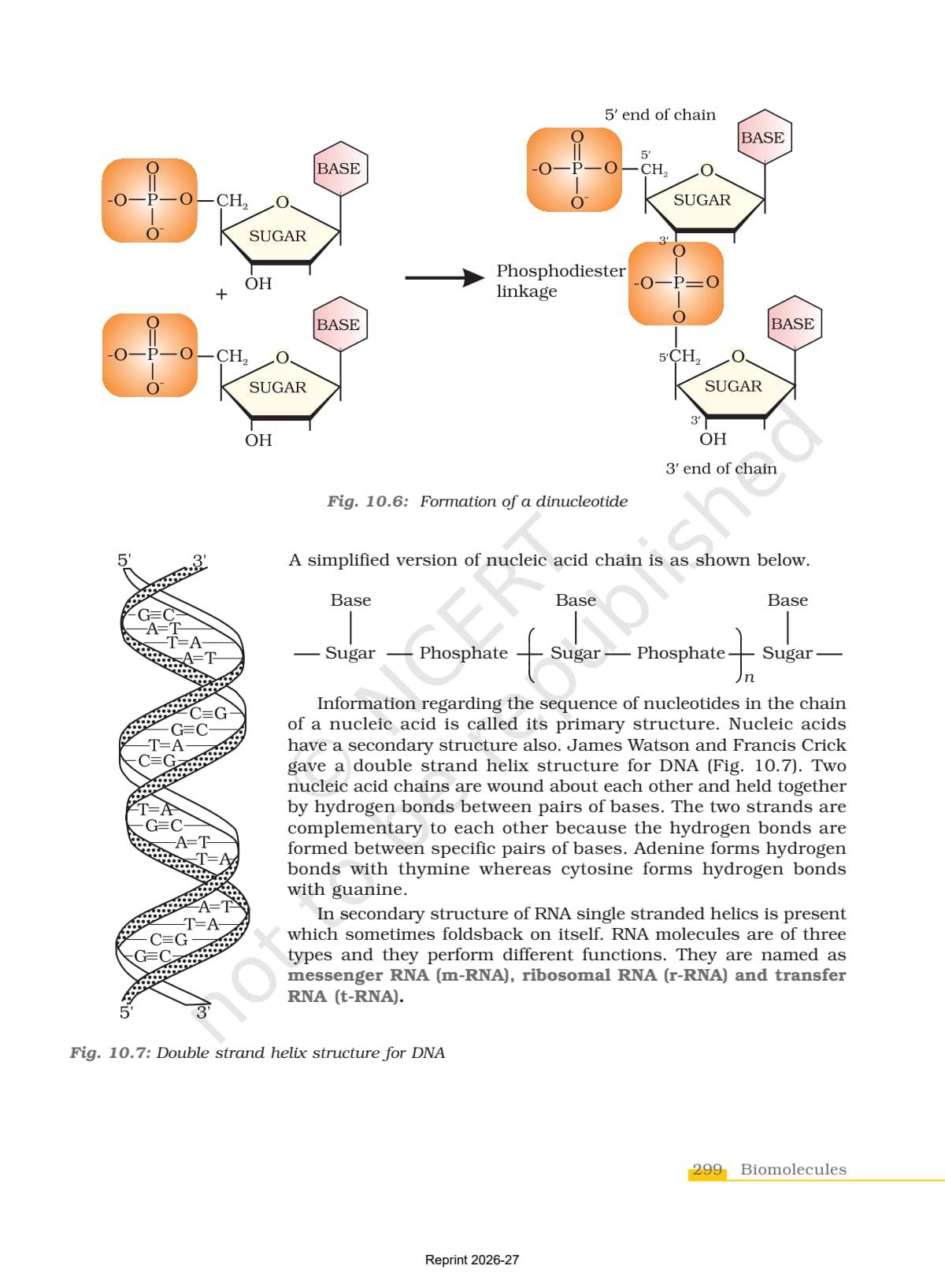
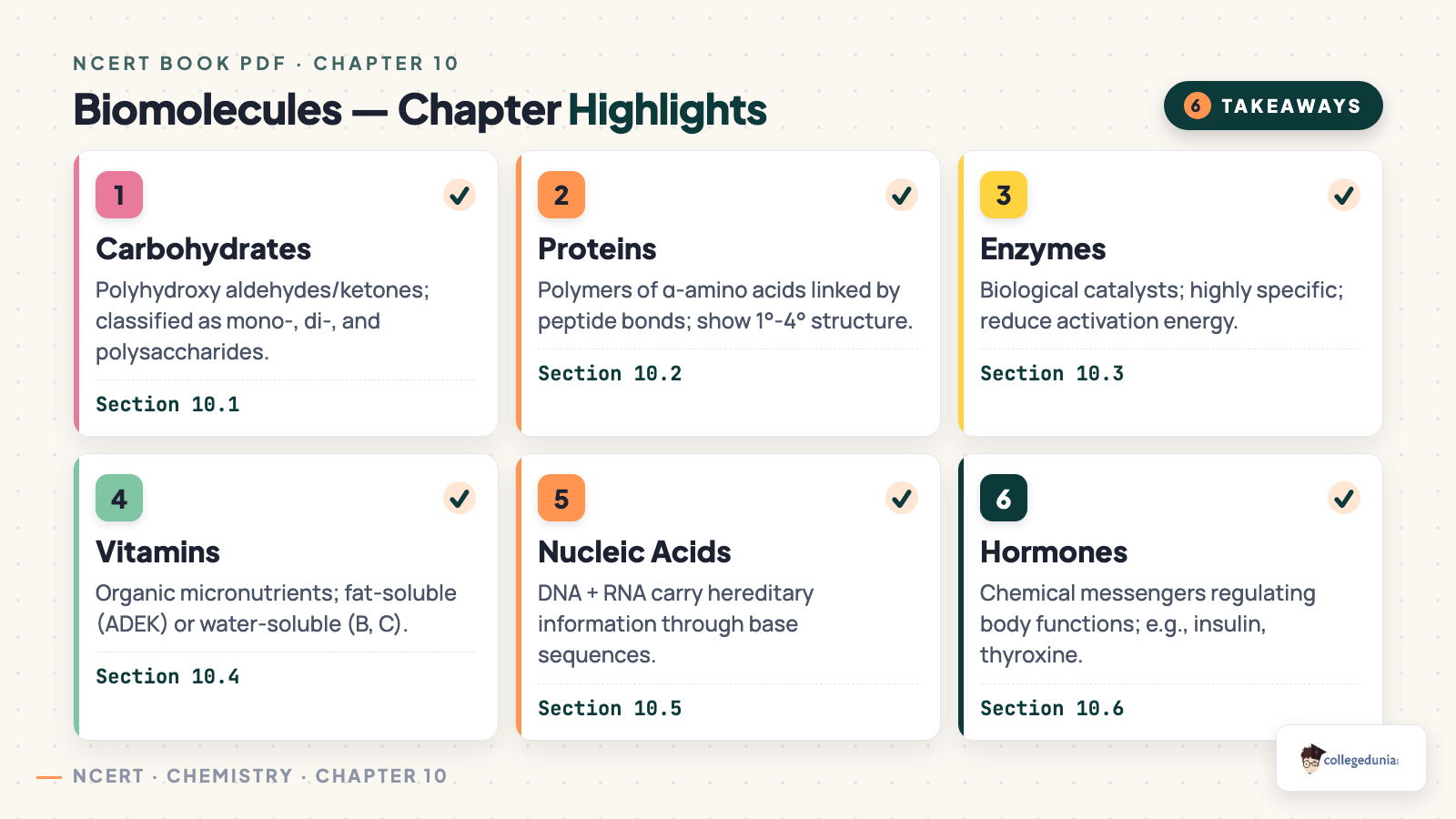
| 10.4 | Nucleic Acids | 314-318 | Composition (sugar, base, phosphate), nucleotide and nucleoside, DNA double helix, replication and protein synthesis |
| 10.5 | Hormones | 318 | Brief note on insulin, adrenaline, thyroxine, sex hormones (this micro-section is in some printings; verify against your copy) |
| - | Summary, Exercises (18 Qs) | 319-322 | End-of-chapter problems for board-level practice |
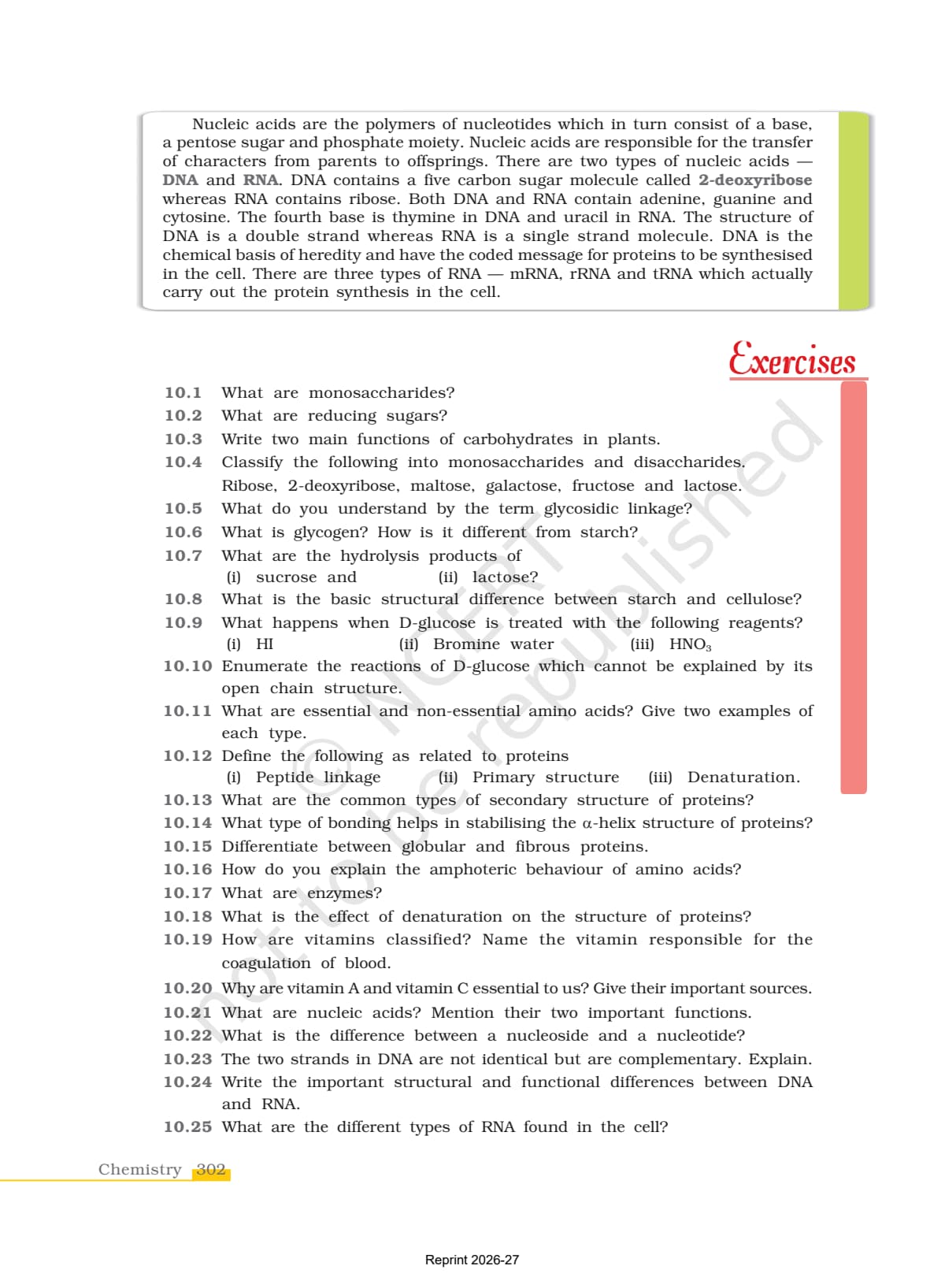
The 18 exercises split into 7 carbohydrate, 5 protein, 2 vitamin, and 4 nucleic-acid items. The carbohydrate block and DNA-vs-RNA item repeat most.
Class 12th Chemistry Biomolecules Reading Sequence and Multi-Day Plan
The structural-drawing load (cyclic glucose, zwitterion, peptide bond, DNA double helix) makes a three-day plan work better than one long sitting.
| Day | What to read | What to practise | Time |
|---|---|---|---|
| Day 1 | Section 10.1 in full (carbohydrates - classification, glucose and fructose structure, disaccharides and polysaccharides) | Intext examples 10.1 and 10.2 plus exercises 10.1 to 10.7 | 3 hours |
| Day 2 | Section 10.2 (proteins) and Section 10.3 (vitamins) | Intext example 10.3 plus exercises 10.8 to 10.14 | 2.5 hours |
| Day 3 | Section 10.4 (nucleic acids) and Section 10.5 (hormones, if printed), then full chapter revision | Intext example 10.4 plus exercises 10.15 to 10.18 | 2 hours |
What Changed in Biomolecules for 2026-27 NCERT (Rationalisation Note)
The 2026-27 syllabus keeps this unit but renumbers it from legacy Chapter 14 to Chapter 10, and trims a few sub-topics.
| Sub-topic | Status in 2026-27 | Notes |
|---|---|---|
| Carbohydrates - classification, glucose and fructose structures, disaccharides, polysaccharides | Kept | Core section, unchanged including anomers and mutarotation |
| Proteins - amino acids, zwitterion, peptide bond, 1° to 4° structure, denaturation | Kept | Core section, all four structural levels retained |
| Vitamins - classification, deficiency diseases | Kept | Fat-soluble vs water-soluble retained verbatim |
| Nucleic acids - DNA, RNA, double helix, biological functions | Kept | Replication and protein synthesis retained at qualitative level |
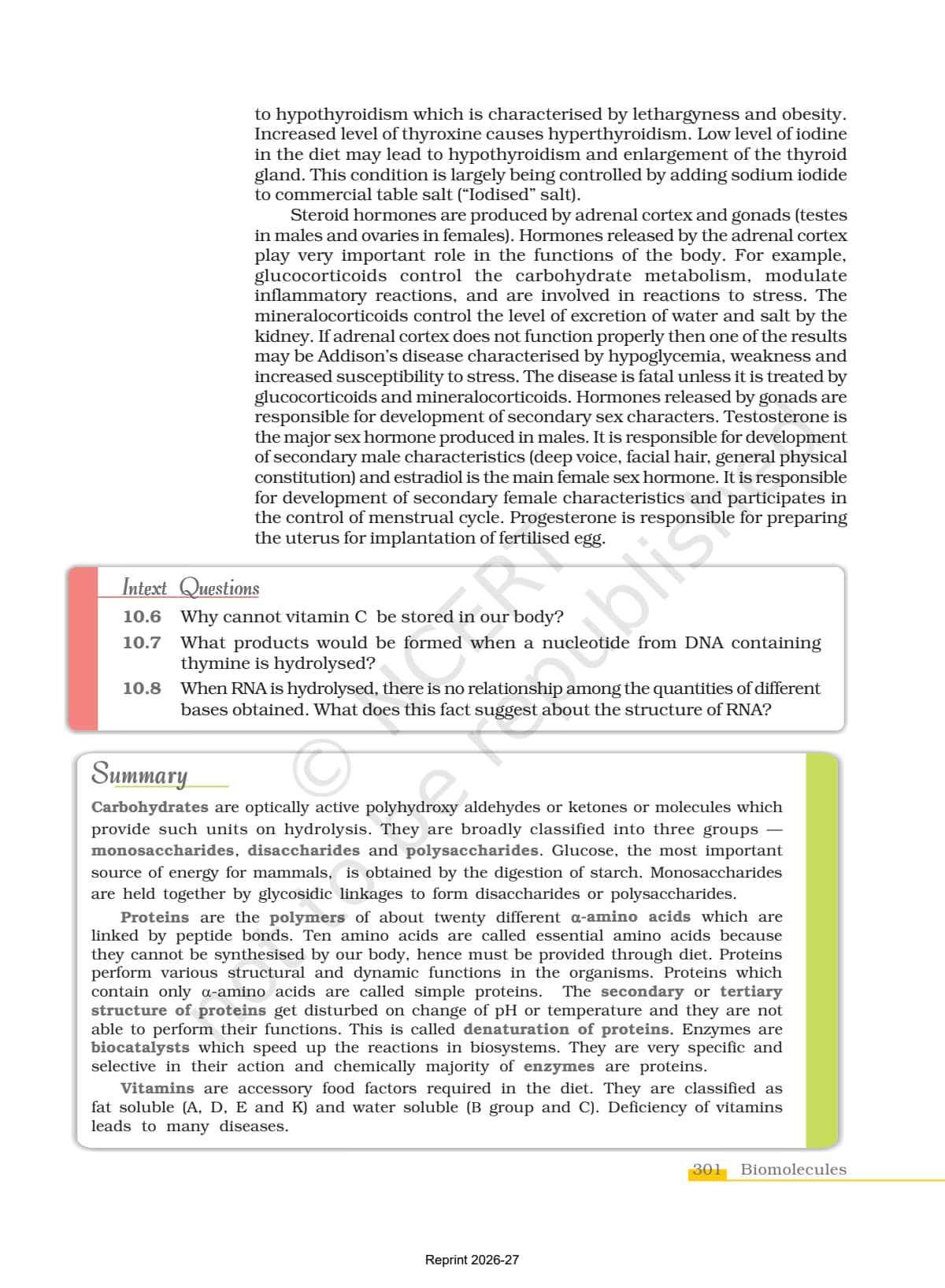
| Hormones (Section 10.5 in legacy print) | Trimmed | Reduced to brief mention only; insulin, adrenaline, thyroxine retained as one-line facts |
| Mechanism of enzyme action and enzyme inhibition | Trimmed | Detailed lock-and-key / induced-fit discussion dropped; the chapter now only states that enzymes are biocatalysts and are highly specific |
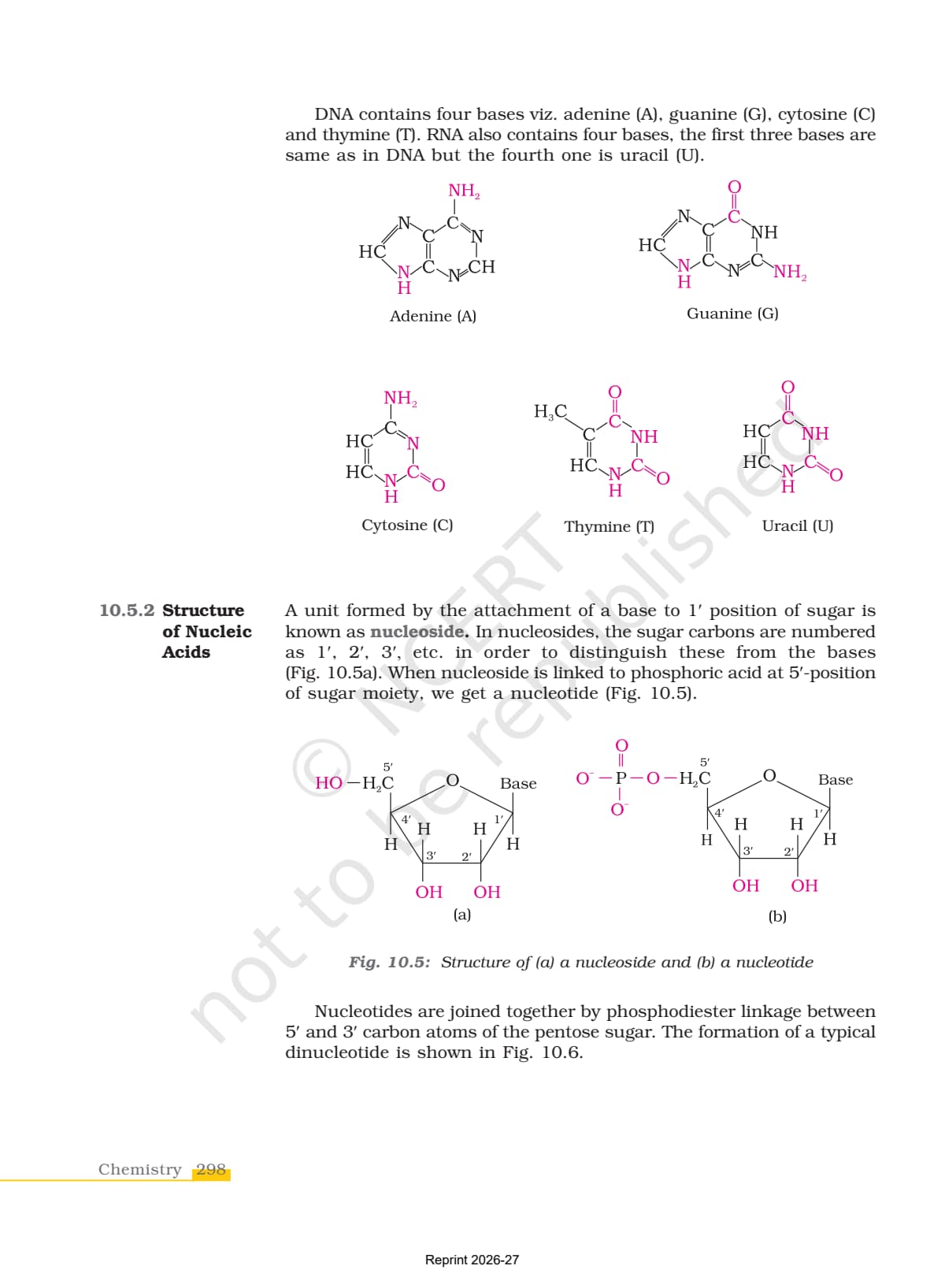
| Detailed structure of nucleotides with chemical formulae of each base | Removed | Bases shown by name only in the new print; full structural formulae of adenine, guanine, cytosine, thymine, uracil are no longer required for CBSE Boards |
Students on a 2022 copy are reading 4 to 5 extra pages of trimmed content that no longer appears in the Board paper.
Biomolecules PYQ Trend in CBSE, JEE Main and NEET (2026 to 2021)
The three most repeated types are sugar classification, a structural question (zwitterion or peptide bond), and a DNA-vs-RNA comparison. The table below maps the topic asked each year.
| Year | CBSE Board | JEE Main | NEET |
|---|---|---|---|
| 2026 | DNA vs RNA structural difference (2 marks) | Reducing vs non-reducing sugar (1 question) | Pending (exam rescheduled) |
| 2025 | Define zwitterion and isoelectric point (3 marks) | Classification of vitamin as fat / water soluble (1 question) | Peptide bond and primary protein structure (2 questions) |
| 2024 | Anomers of glucose and mutarotation (3 marks) | Polysaccharide-monosaccharide hydrolysis (1 question) | Reducing nature of sucrose vs maltose (1 question) |
| 2023 | Define essential vs non-essential amino acid (2 marks) | Sugar in DNA vs RNA (1 question) | Vitamin deficiency diseases (2 questions) |
| 2022 | Open-chain structure of glucose and aldehyde test (3 marks) | Glycosidic linkage in sucrose (1 question) | Base pairing in DNA double helix (1 question) |
| 2021 | - | - | - |
Full year-wise PYQ map: Biomolecules Class 12 Chemistry NCERT Solutions
Biomolecules Weightage Compared Across Class 12 Chemistry Chapters
The bars below show typical CBSE Board marks across all 10 chapters, averaged over five papers. Biomolecules sits low for CBSE but is the top NEET chapter, with 2 to 3 questions yearly.
Student Feedback
In a Collegedunia poll of 900 Class 12 students, 78% said the carbohydrate and DNA-vs-RNA sections of Biomolecules gave them the fastest marks per hour of study.
Author, Edition and Publisher Information for the Biomolecules NCERT PDF
The PDF on this page is from the official publication, not a third-party reprint. Always study from the latest print.
- Book: Chemistry Part-II, Class 12 (Textbook for Class XII)
- Chapter: 10 - Biomolecules (legacy Chapter 14)
- Publisher: National Council of Educational Research and Training (NCERT)
- Edition: 2026-27 reprint
- Pages: 22
- Languages: English, Hindi (Rasayan Vigyan Bhag-II)
Related Links:
- Class 12 Chemistry NCERT Book PDF (All Chapters)
- CBSE Class 12 Chemistry Sample Papers 2026
- CBSE Class 12 Chemistry Previous Year Question Papers
Other Resources for Biomolecules Class 12 Chemistry
- Biomolecules Class 12 Chemistry NCERT Book PDF
- Biomolecules Class 12 Chemistry NCERT Solutions
- Biomolecules Class 12 Chemistry Notes
- Biomolecules Class 12 Chemistry Formula Sheet
- Biomolecules Class 12 Chemistry NCERT Exemplar Book PDF
- Biomolecules Class 12 Chemistry NCERT Exemplar Solutions
- Biomolecules Class 12 Chemistry Handwritten Notes
NCERT Book PDF for Class 12 Chemistry: All Chapters
The table lists every chapter of the Class 12 Chemistry 2026-27 NCERT, each linking to its dedicated Collegedunia NCERT Book PDF page.
| Chapter | Resource |
|---|---|
| Chapter 1 | Solutions NCERT Book PDF |
| Chapter 2 | Electrochemistry NCERT Book PDF |
| Chapter 3 | Chemical Kinetics NCERT Book PDF |
| Chapter 4 | The d- and f-Block Elements NCERT Book PDF |
| Chapter 5 | Coordination Compounds NCERT Book PDF |
| Chapter 6 | Haloalkanes and Haloarenes NCERT Book PDF |
| Chapter 7 | Alcohols, Phenols and Ethers NCERT Book PDF |
| Chapter 8 | Aldehydes, Ketones and Carboxylic Acids NCERT Book PDF |
| Chapter 9 | Amines NCERT Book PDF |
Biomolecules Class 12 Chemistry NCERT Book PDF FAQs
Ques. Where can I download the Class 12 Chemistry Chapter 10 Biomolecules NCERT Book PDF?
Ans. You can download the Biomolecules Class 12 Chemistry NCERT Book PDF directly from this page. Both the Normal and HD versions are available and both are free, with no registration required.
Ques. Is the Biomolecules chapter aligned with the 2026-27 NCERT?
Ans. Yes. The PDF reflects the current 2026-27 syllabus for Class 12 Chemistry. The chapter retains all four core sections on carbohydrates, proteins, vitamins, and nucleic acids; the detailed enzyme-mechanism discussion, the full structural formulae of nucleobases, and the hormone chemistry section were trimmed in the new edition.
Ques. How many pages is the Class 12th Chemistry Biomolecules NCERT Book PDF?
Ans. The chapter runs roughly 22 pages including the 5 numbered sections, 4 intext examples, the summary, and the 18 end-of-chapter exercises.
Ques. How many marks does Biomolecules carry in the CBSE Class 12 Chemistry Board exam?
Ans. Biomolecules typically carries 4 to 5 marks in the Class 12 Chemistry Board exam, usually split as one 2-mark short-answer and one 3-mark structural or classification question. The chapter is in the lower CBSE weightage band, but it is the highest-yield Class 12 Chemistry chapter for NEET, contributing 2 to 3 questions per year.
Ques. Why was the chapter renumbered from 14 to 10?
Ans. The 2026-27 NCERT reduced the Class 12 Chemistry book from 16 chapters (across Parts I and II) to 10 chapters. Biomolecules moved from old Chapter 14 to current Chapter 10 in this consolidation. The core content on carbohydrates, proteins, vitamins, and nucleic acids is retained; only the chapter number changed.
Ques. Which intext examples in Biomolecules are most important for Boards and NEET?
Ans. Examples 10.1 (reducing vs non-reducing sugar classification) and 10.4 (DNA vs RNA on sugar and base) are the highest-yield. NEET has lifted reducing-vs-non-reducing logic from Example 10.1 in four of the last five papers; the DNA-vs-RNA difference has been asked at least once a year in both CBSE Boards and NEET.
Ques. Has any topic been removed from Biomolecules in the latest NCERT edition?
Ans. The detailed enzyme-mechanism discussion (lock-and-key and induced-fit) and the full structural formulae of the five nucleobases were removed in the 2026-27 print. The hormone sub-section was trimmed to brief mentions. All four core sections - carbohydrates, proteins, vitamins, nucleic acids - and the four levels of protein structure remain intact.
Ques. How long should I take to complete the Biomolecules NCERT chapter?
Ans. A three-day plan of about 7 to 8 hours total is realistic: one day for carbohydrates (the largest section), one for proteins plus vitamins, and one for nucleic acids plus a full revision. The Collegedunia multi-day study plan further up on this page breaks the hours down section by section.



Comments