




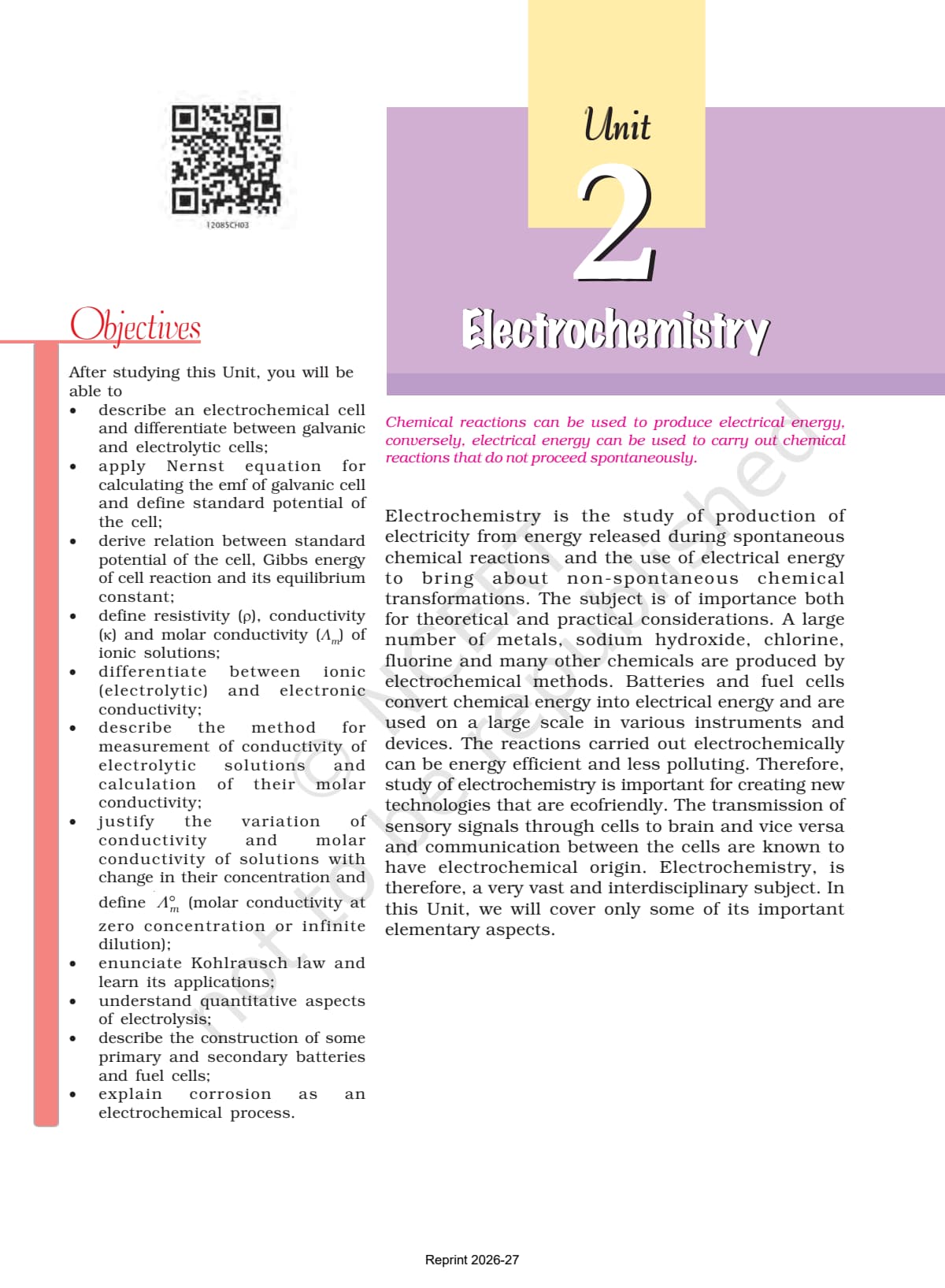
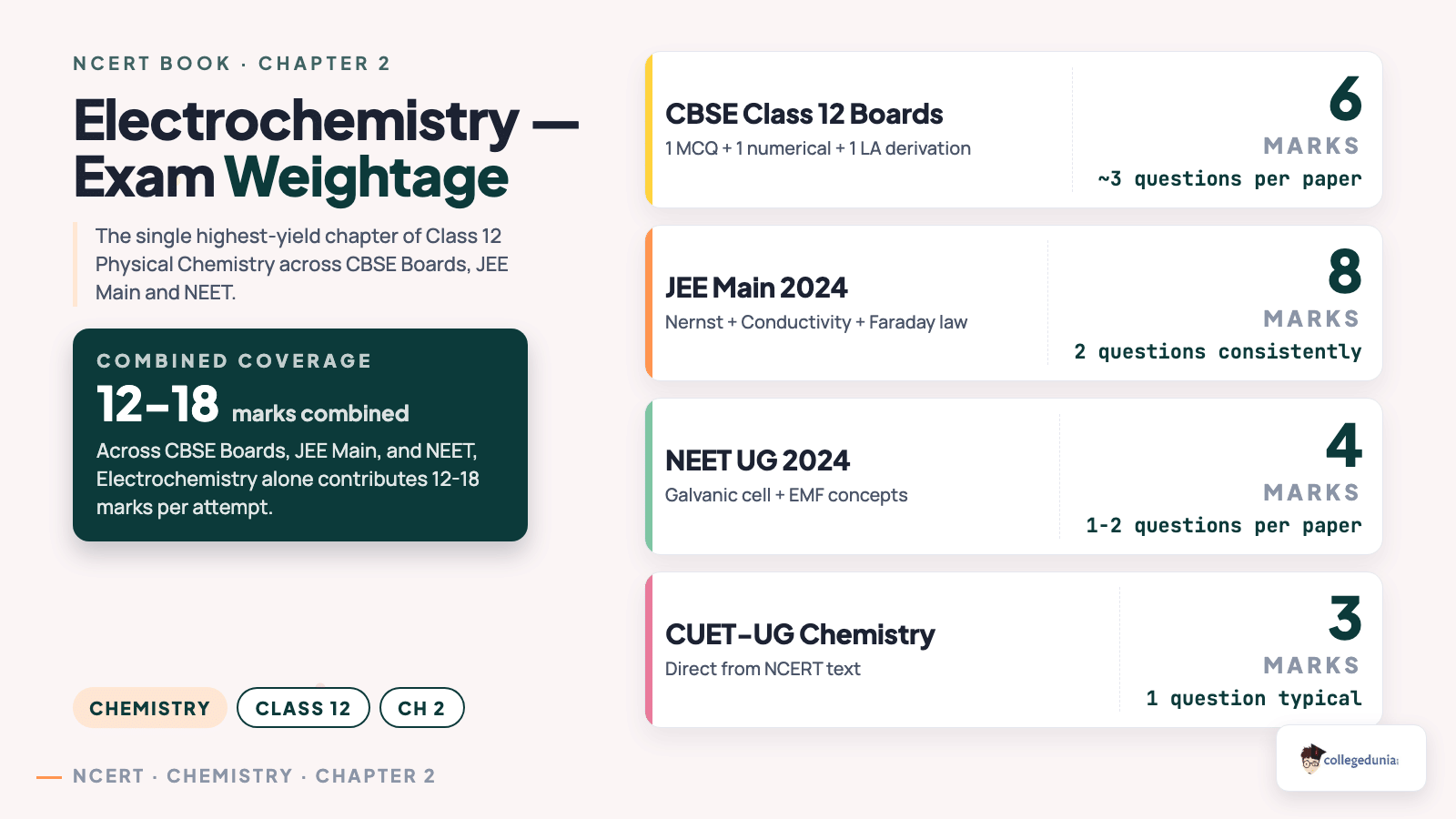
Class 12 Chemistry Chapter 2 Electrochemistry carries 5 to 7 marks in CBSE Boards and 3 to 4 questions per shift across JEE Main and NEET. This page hosts the official 2026-27 NCERT chapter PDF with section, example, and rationalisation maps.
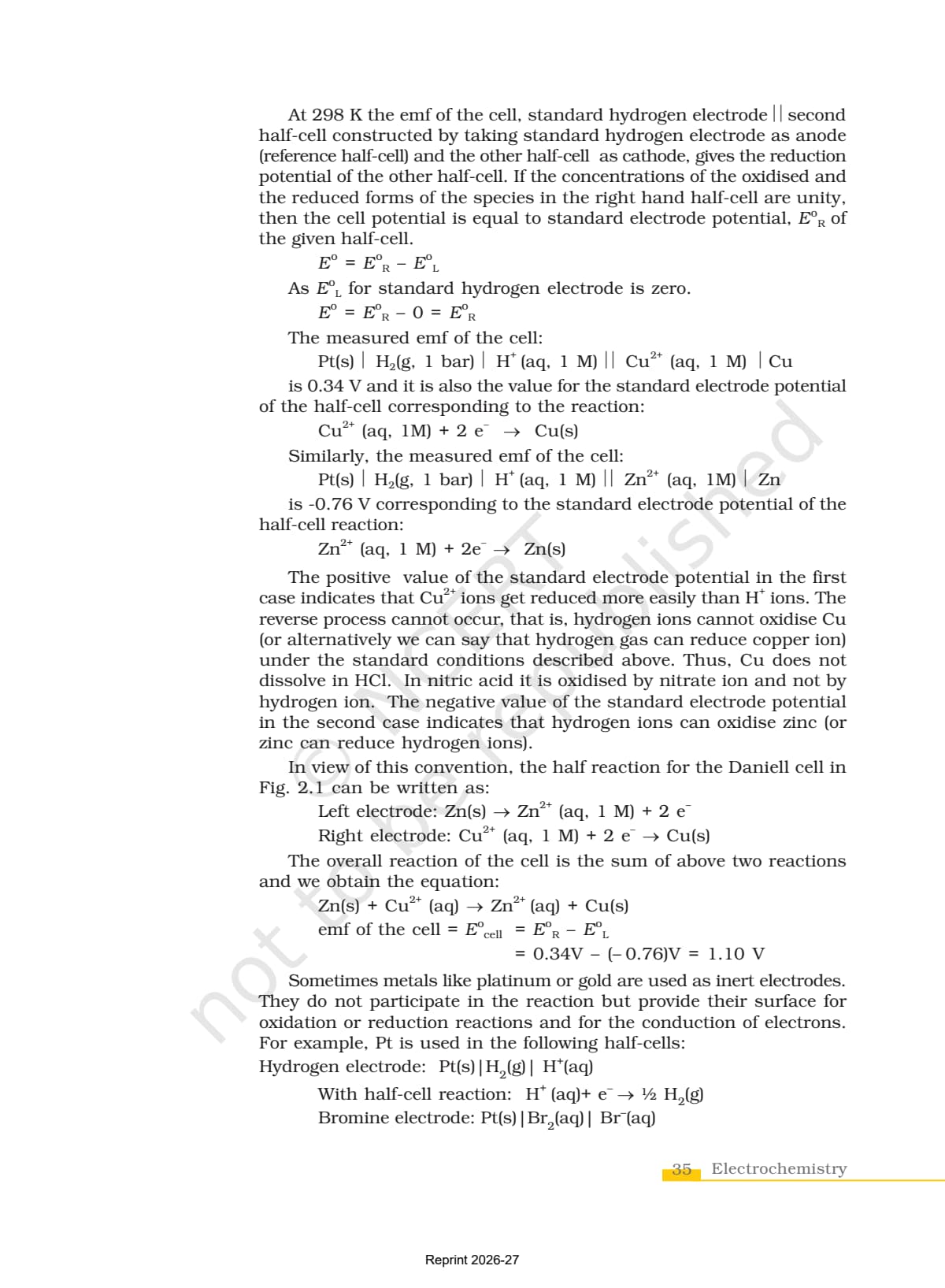
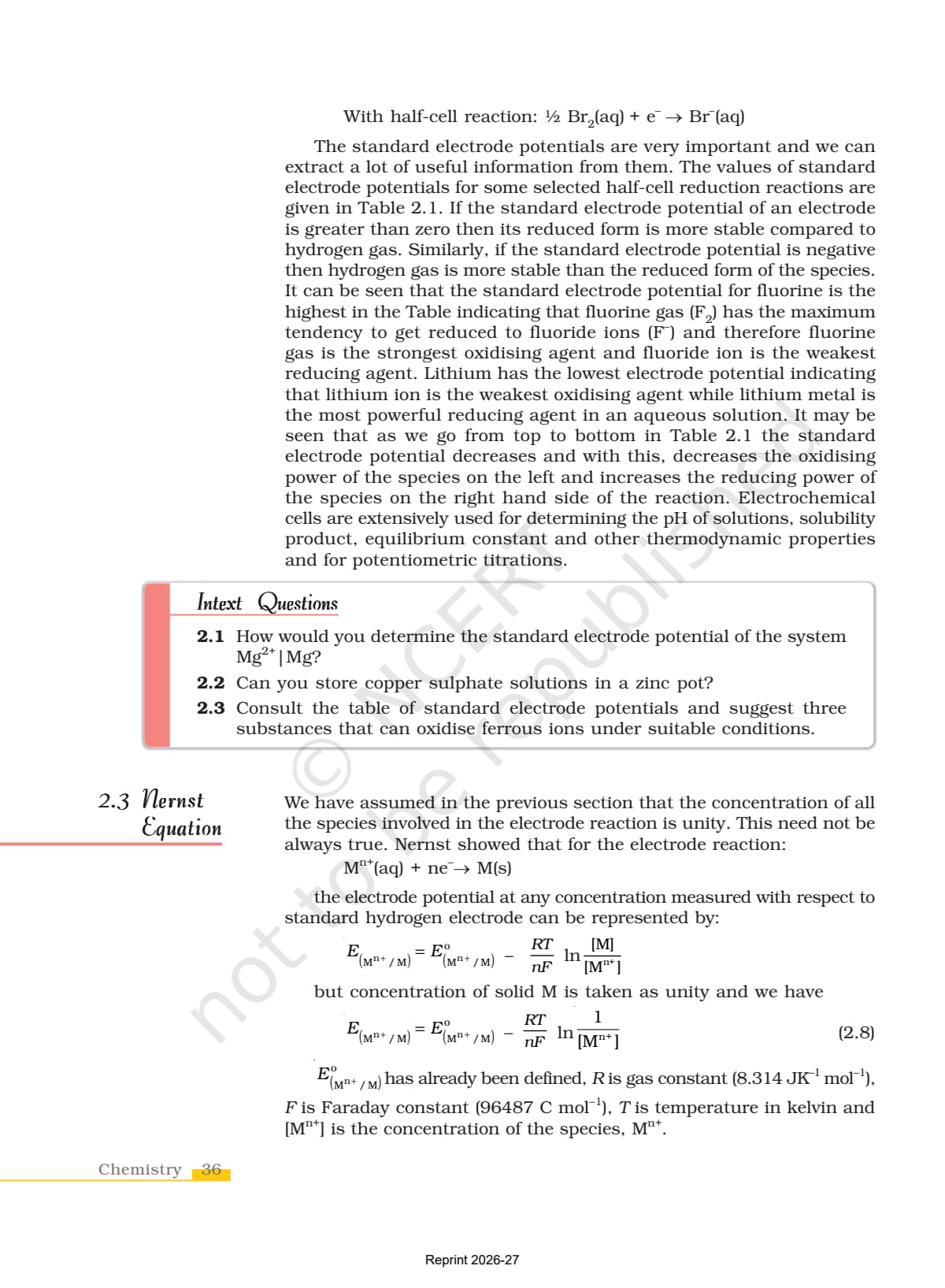
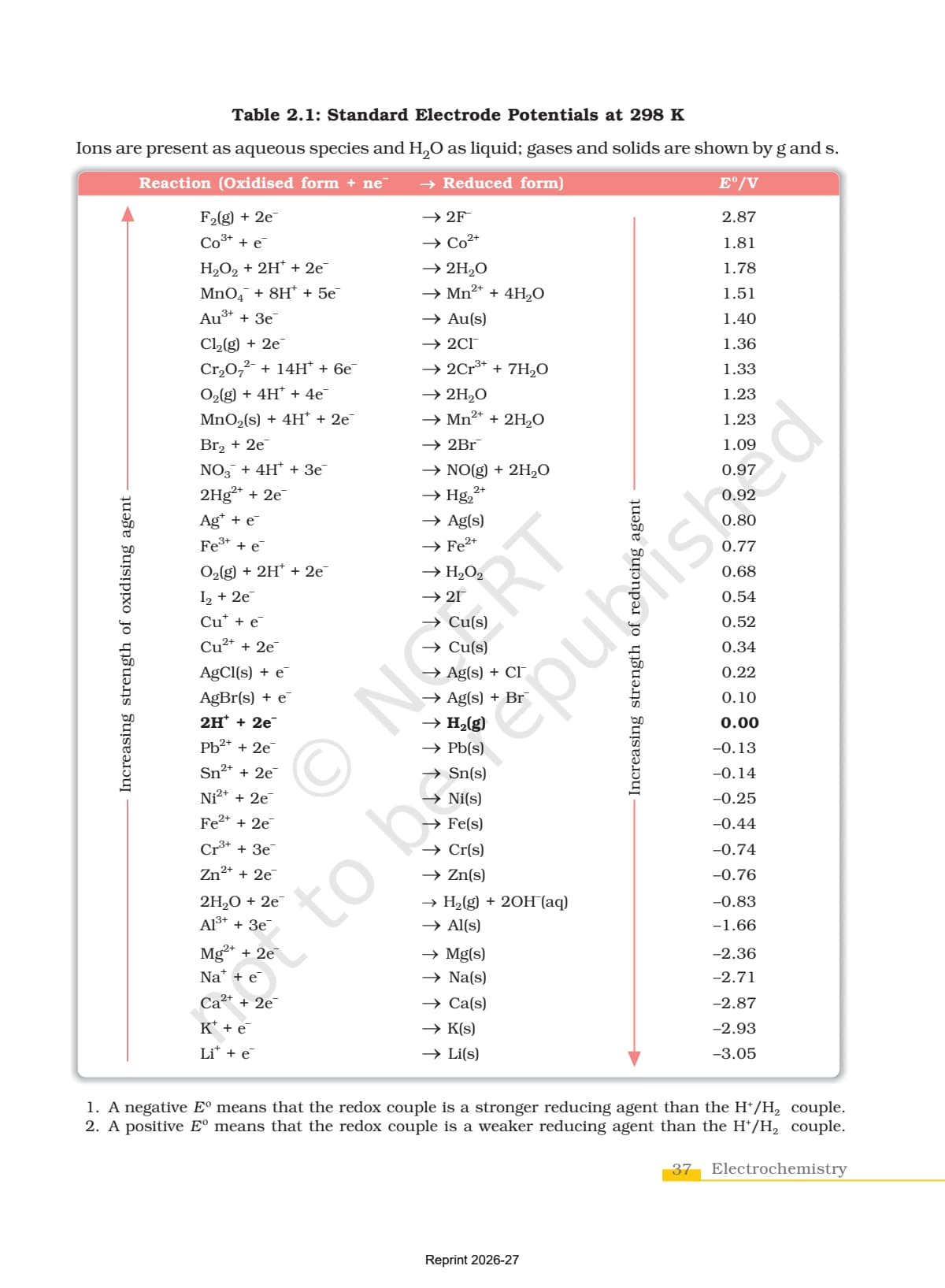
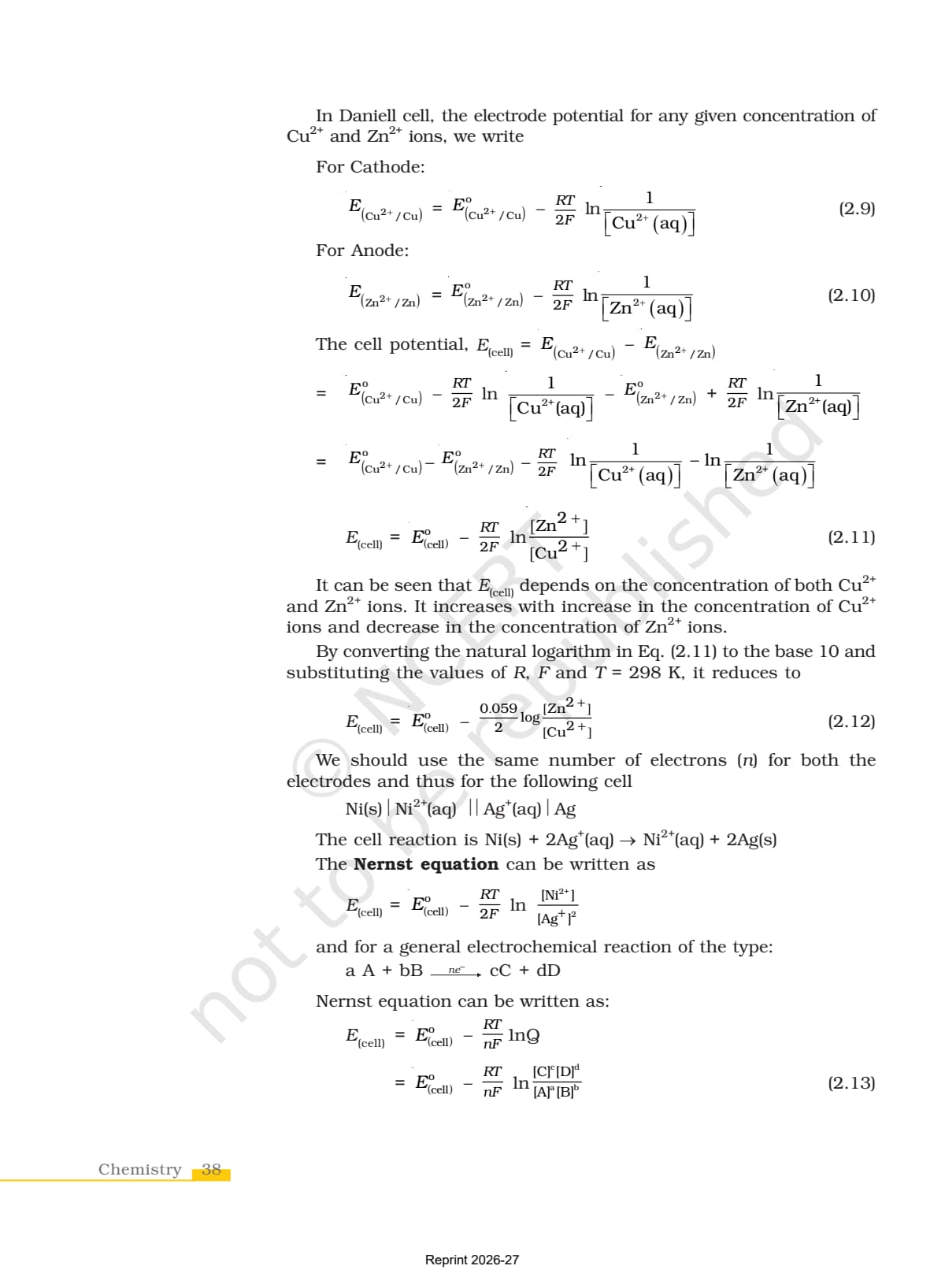
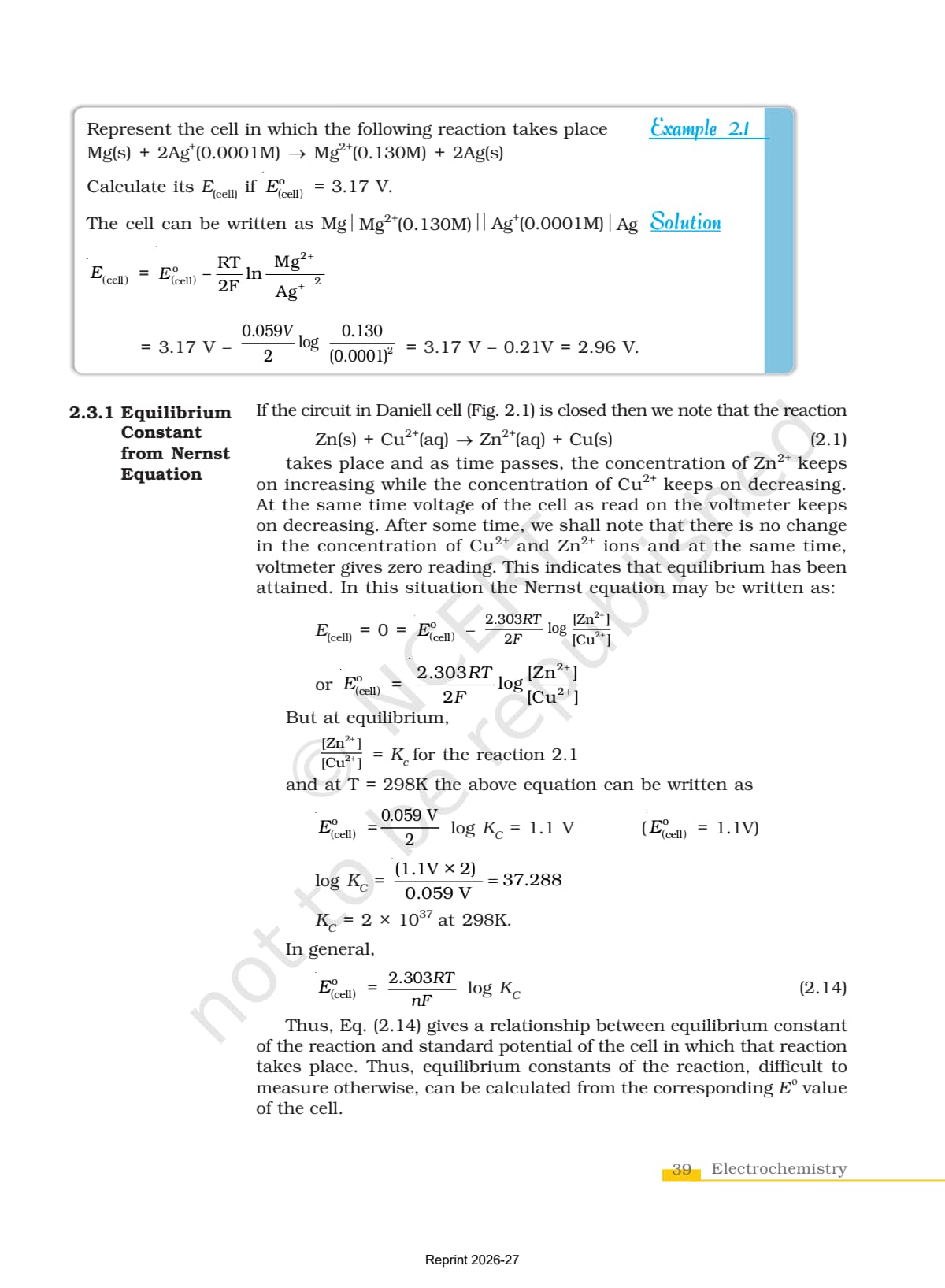
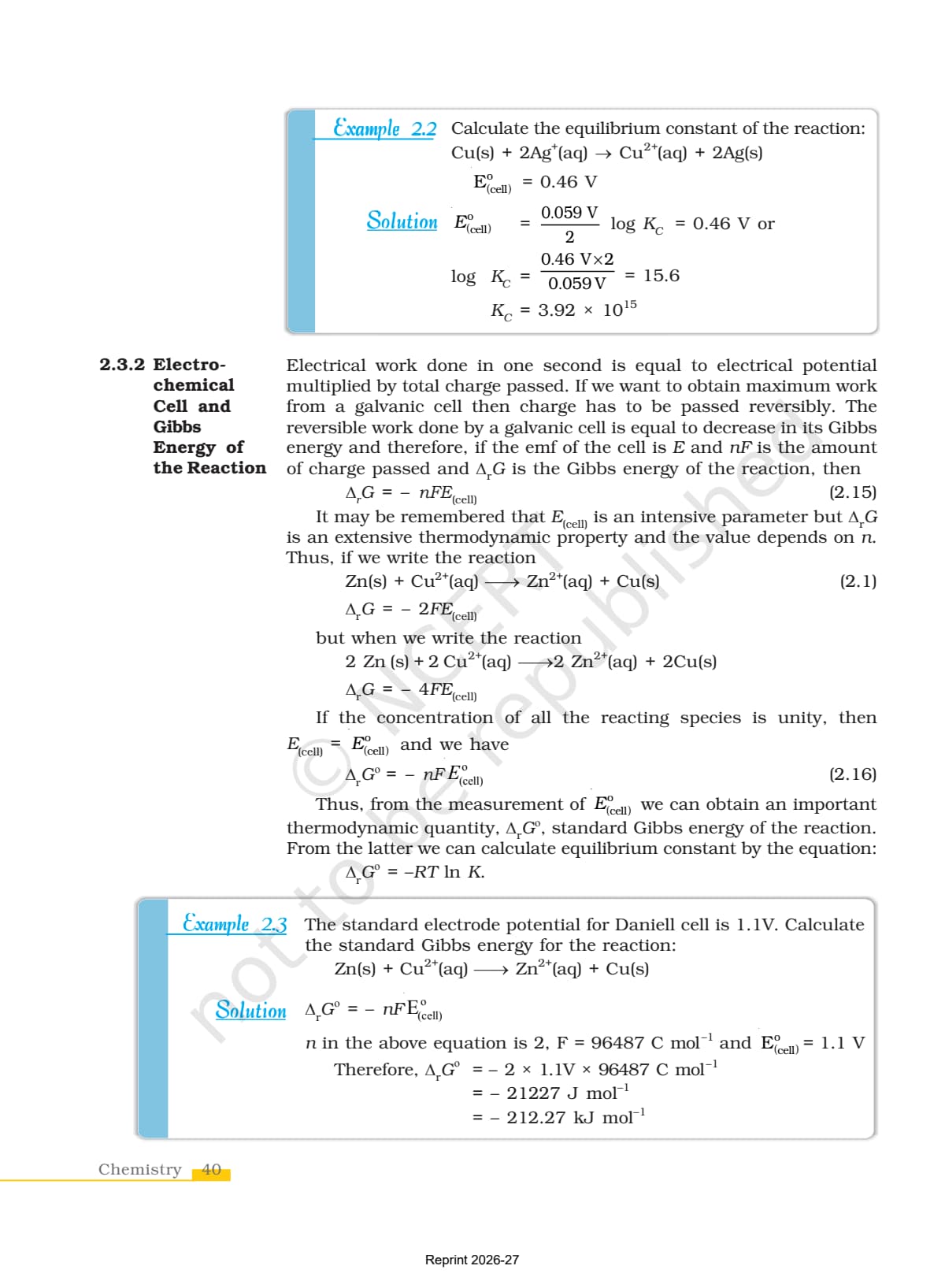
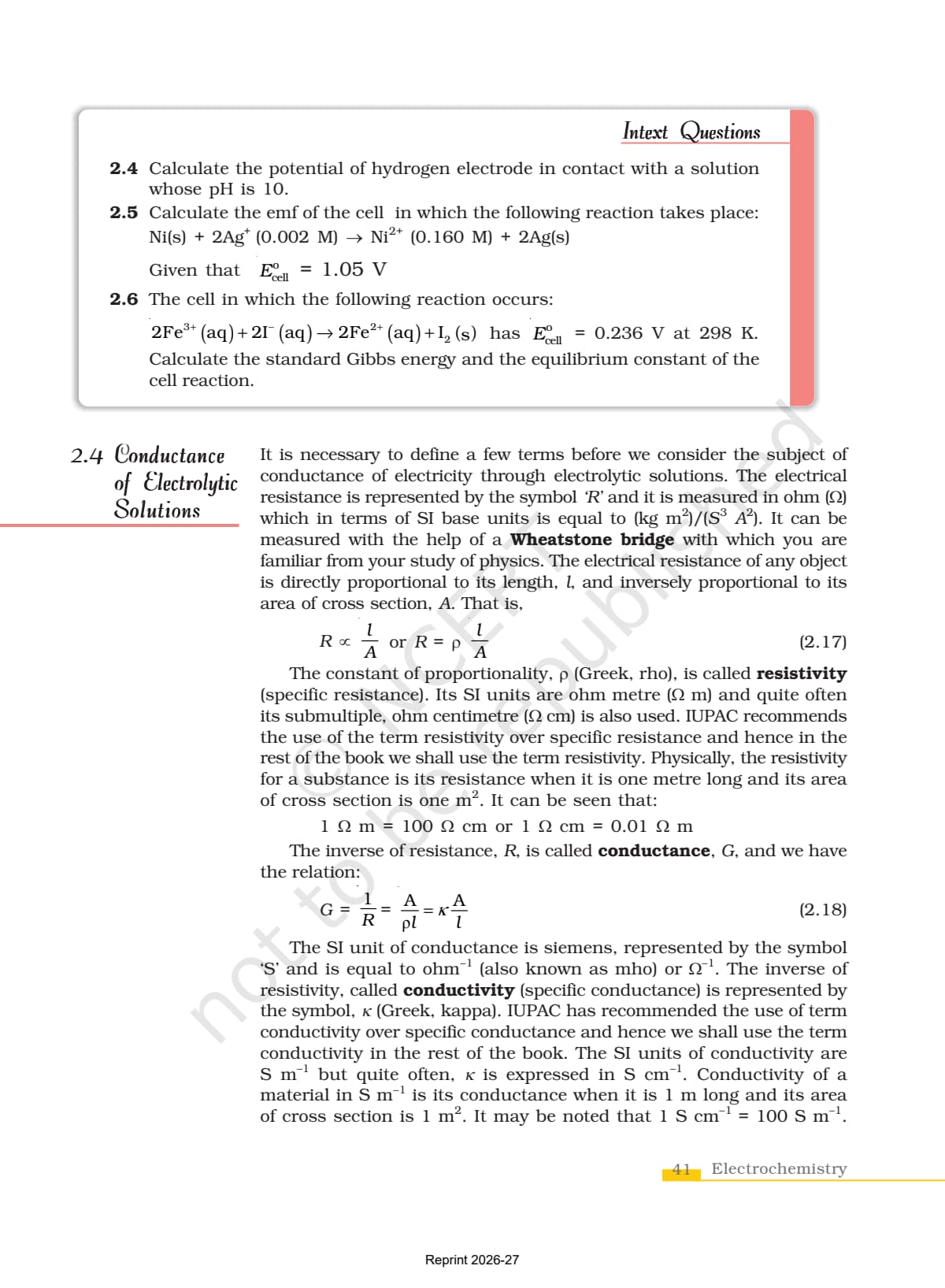
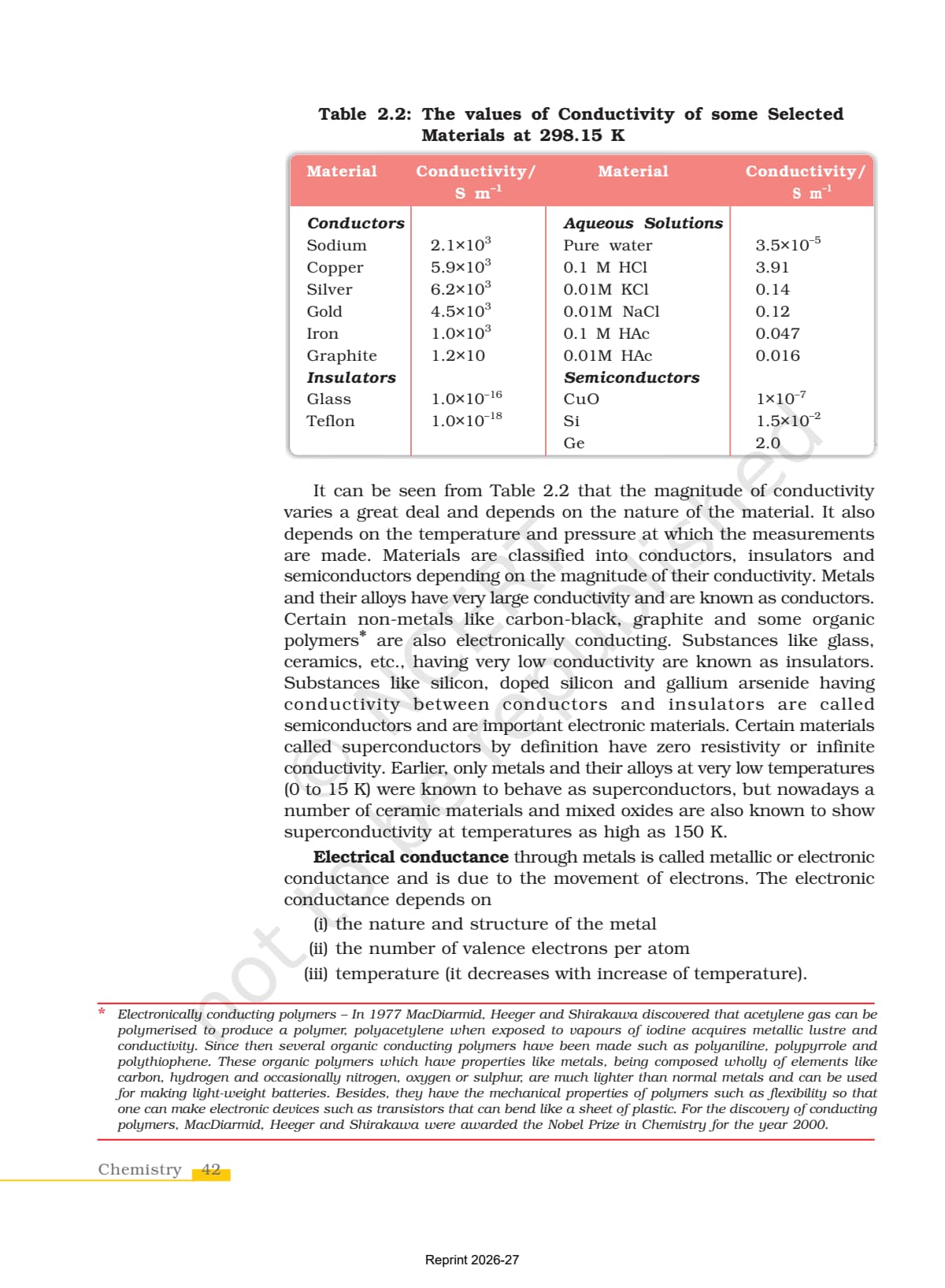
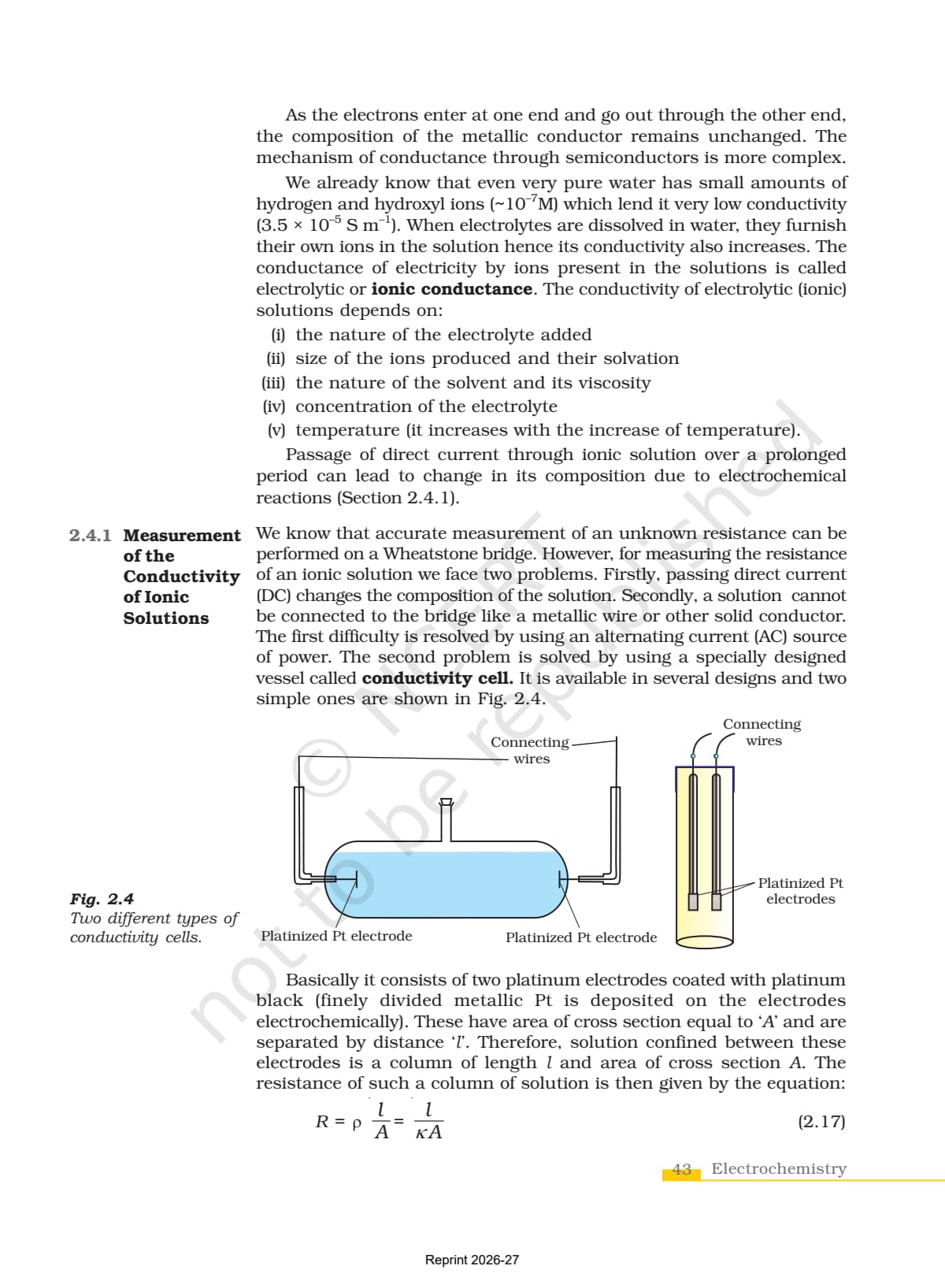
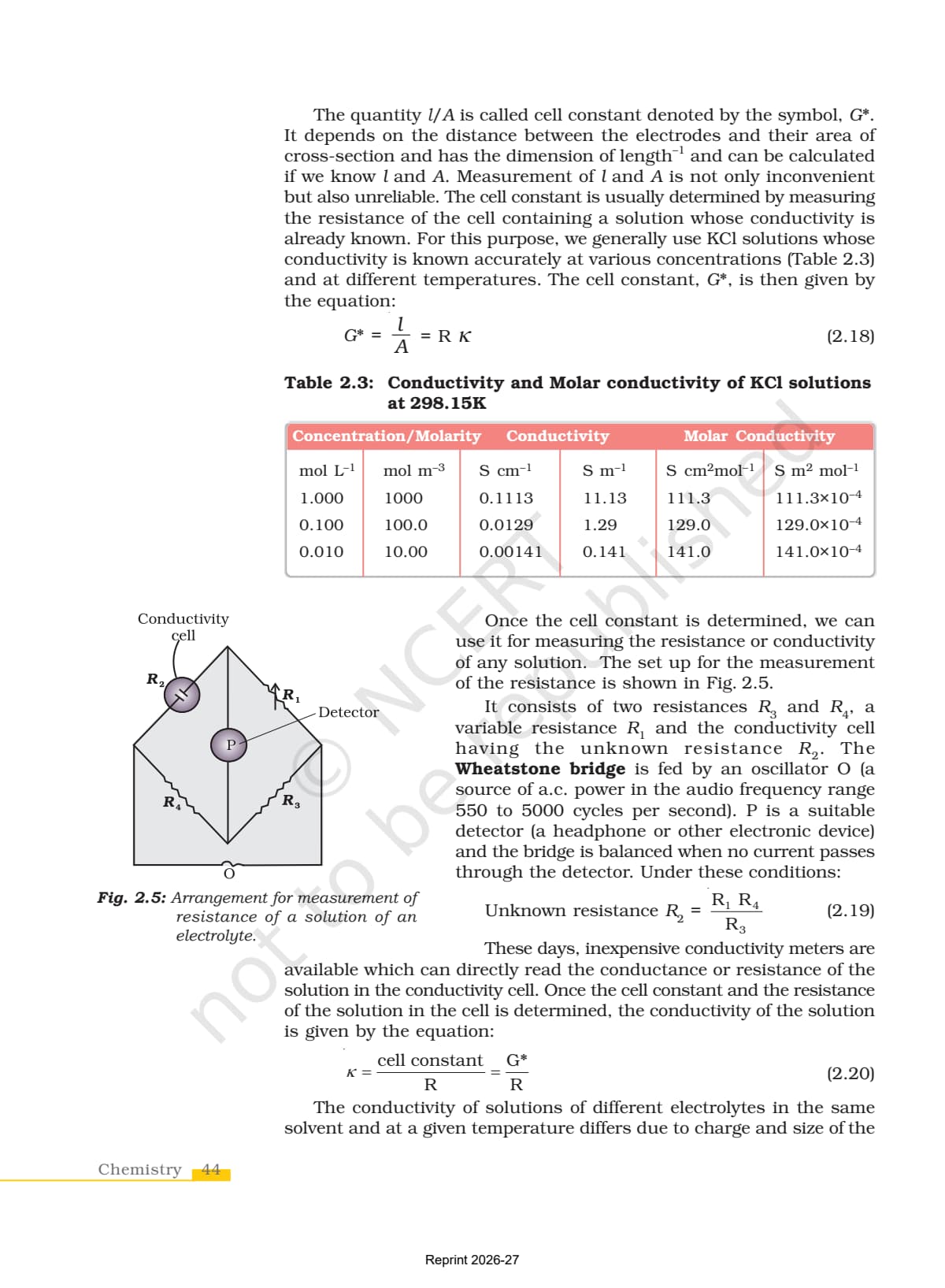
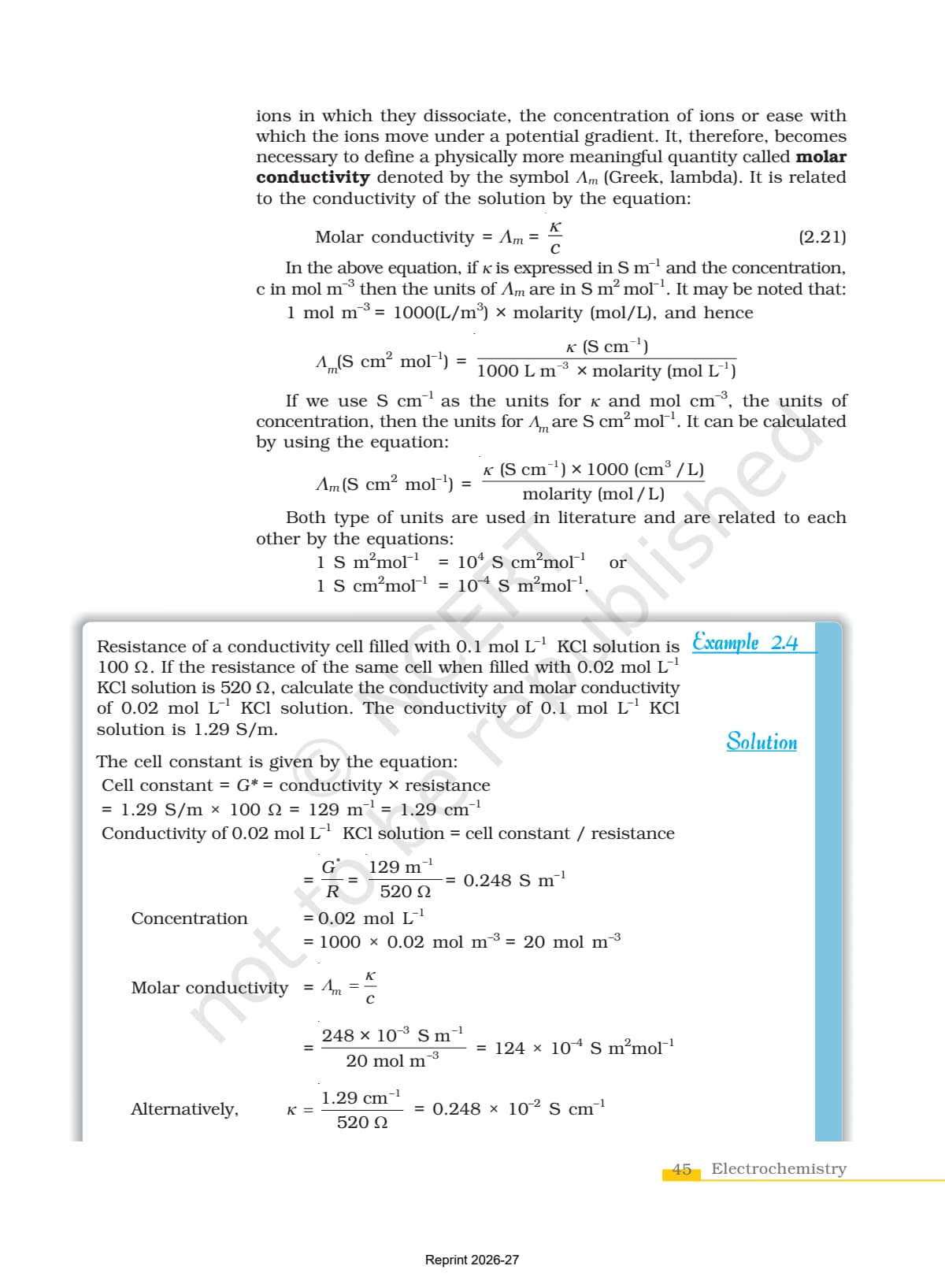
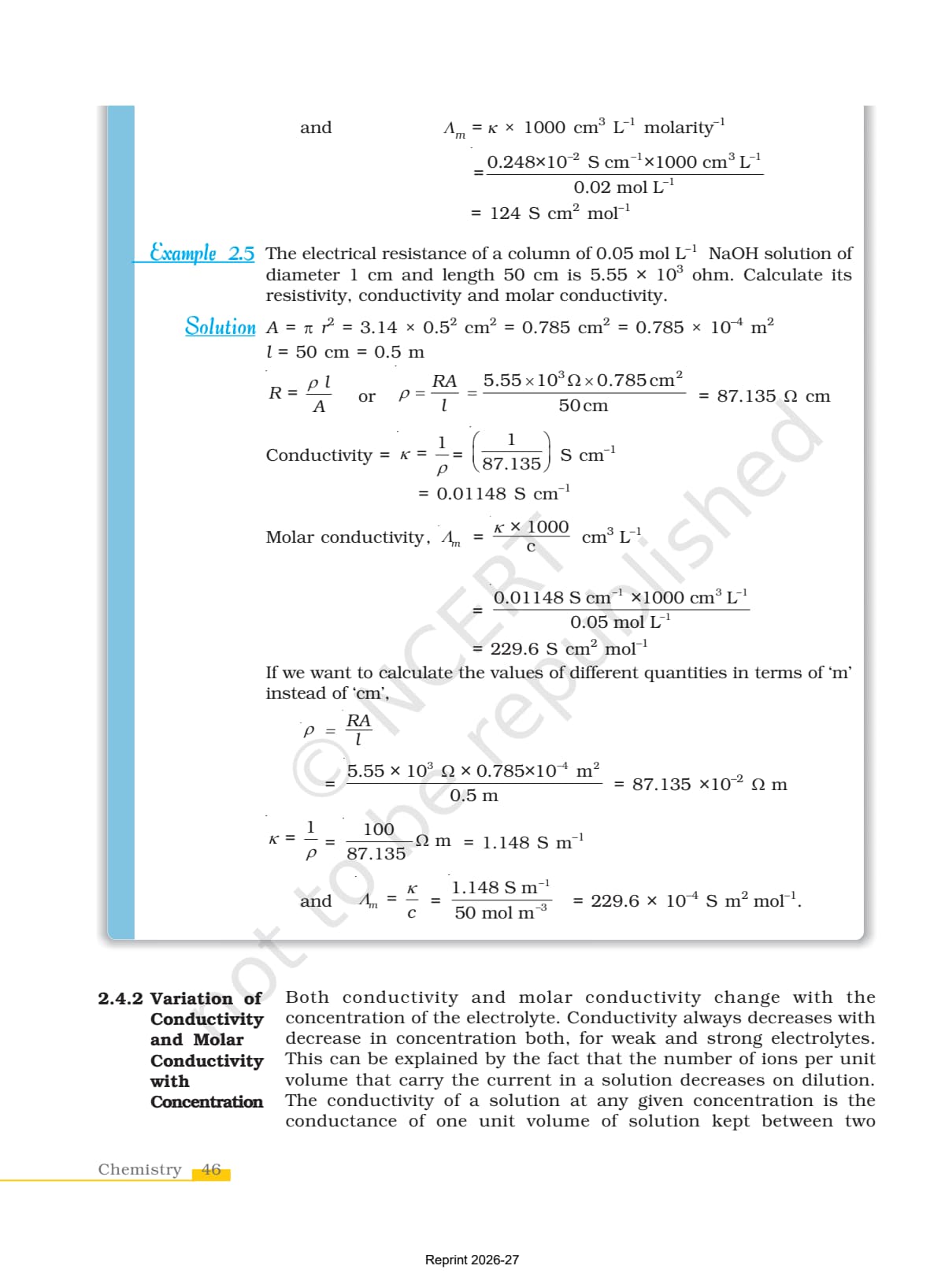
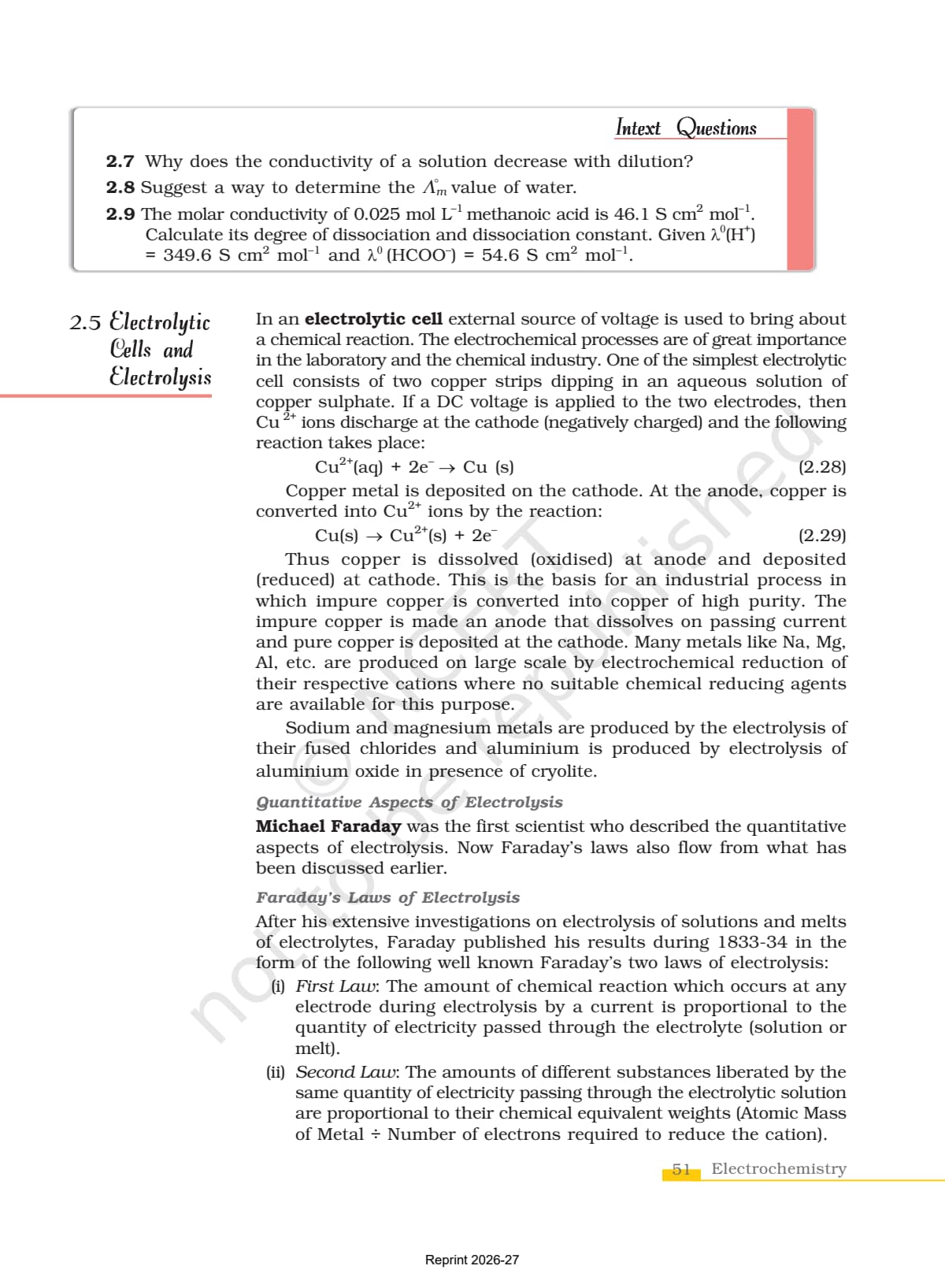
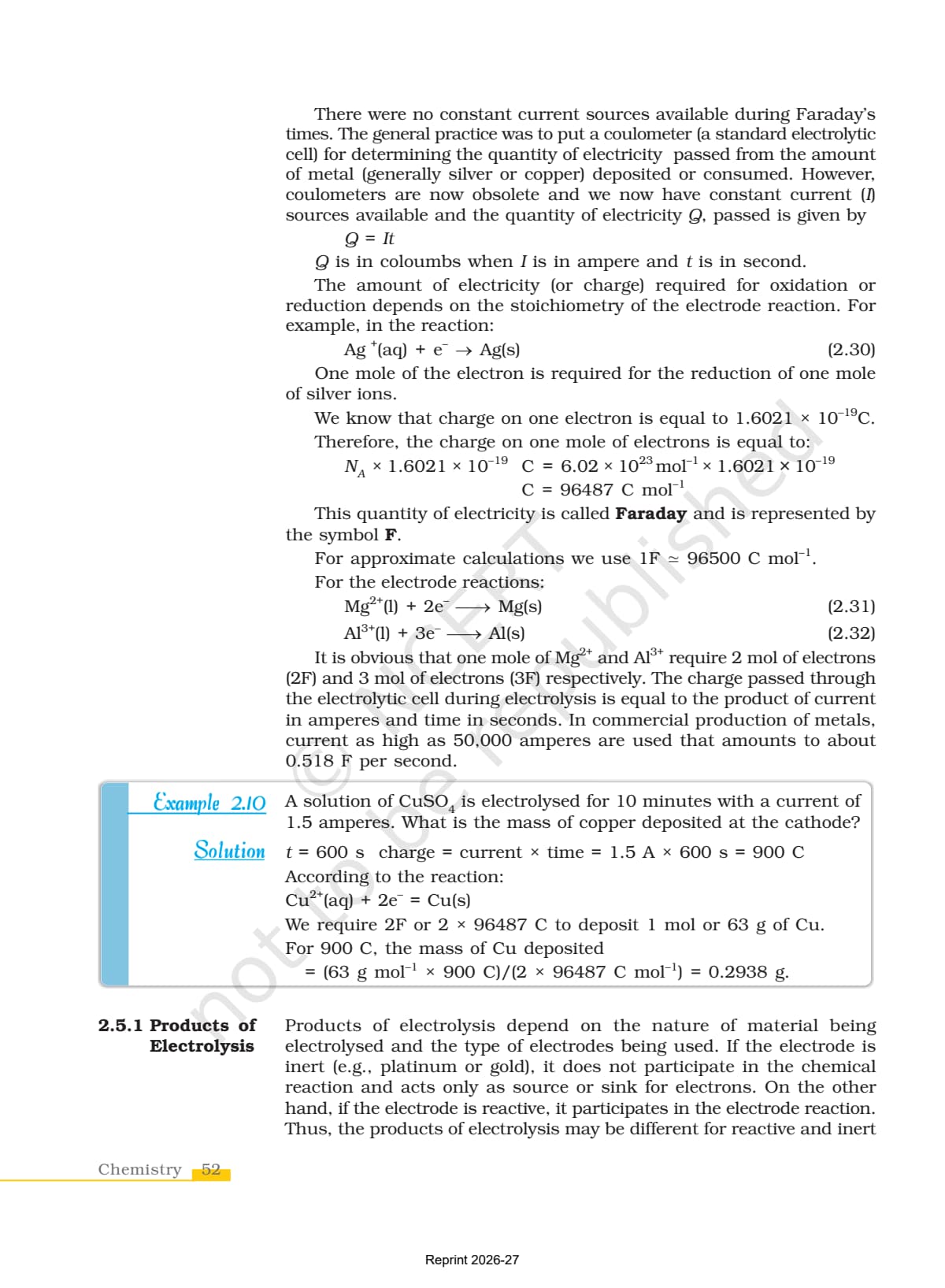
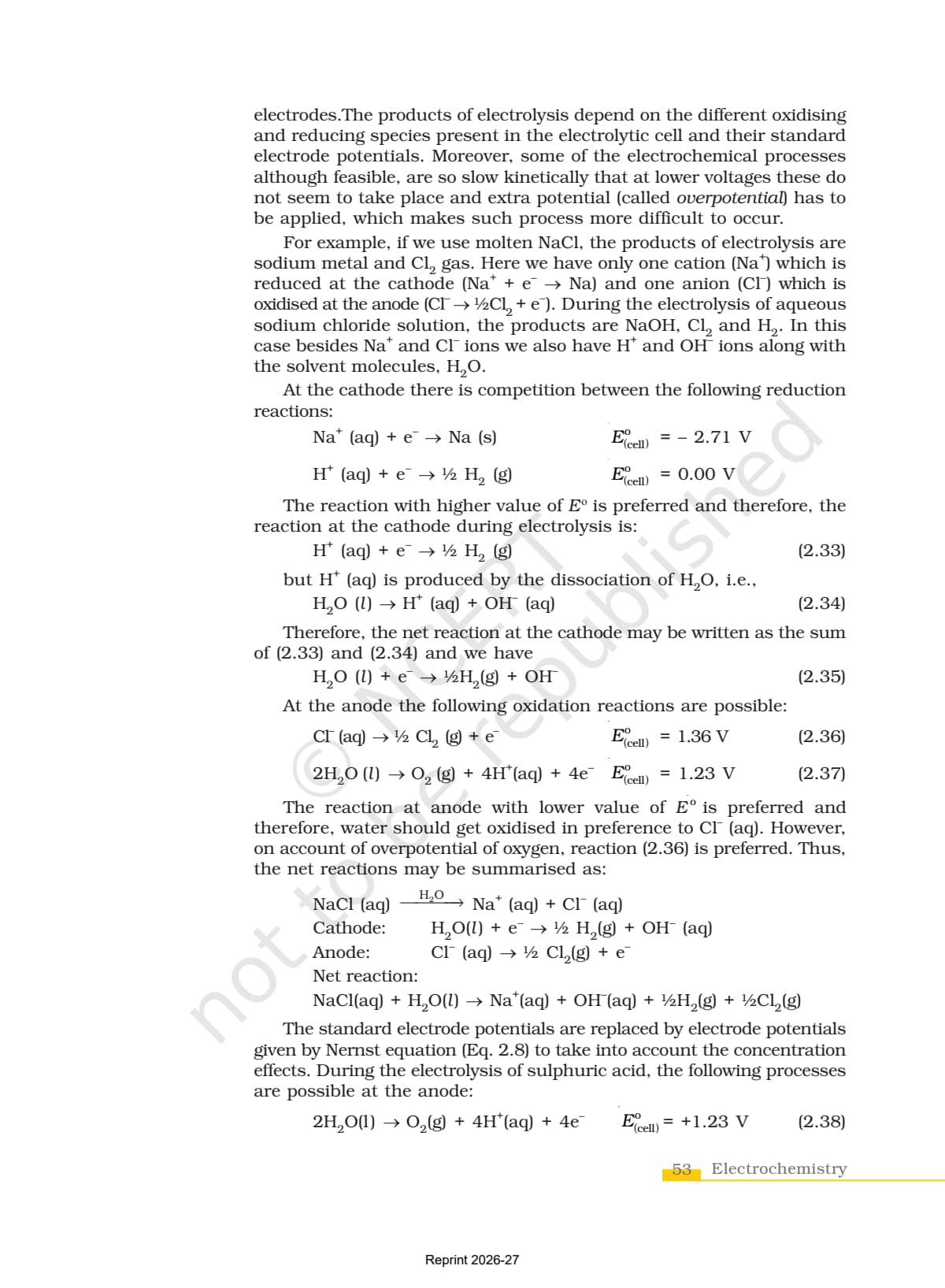
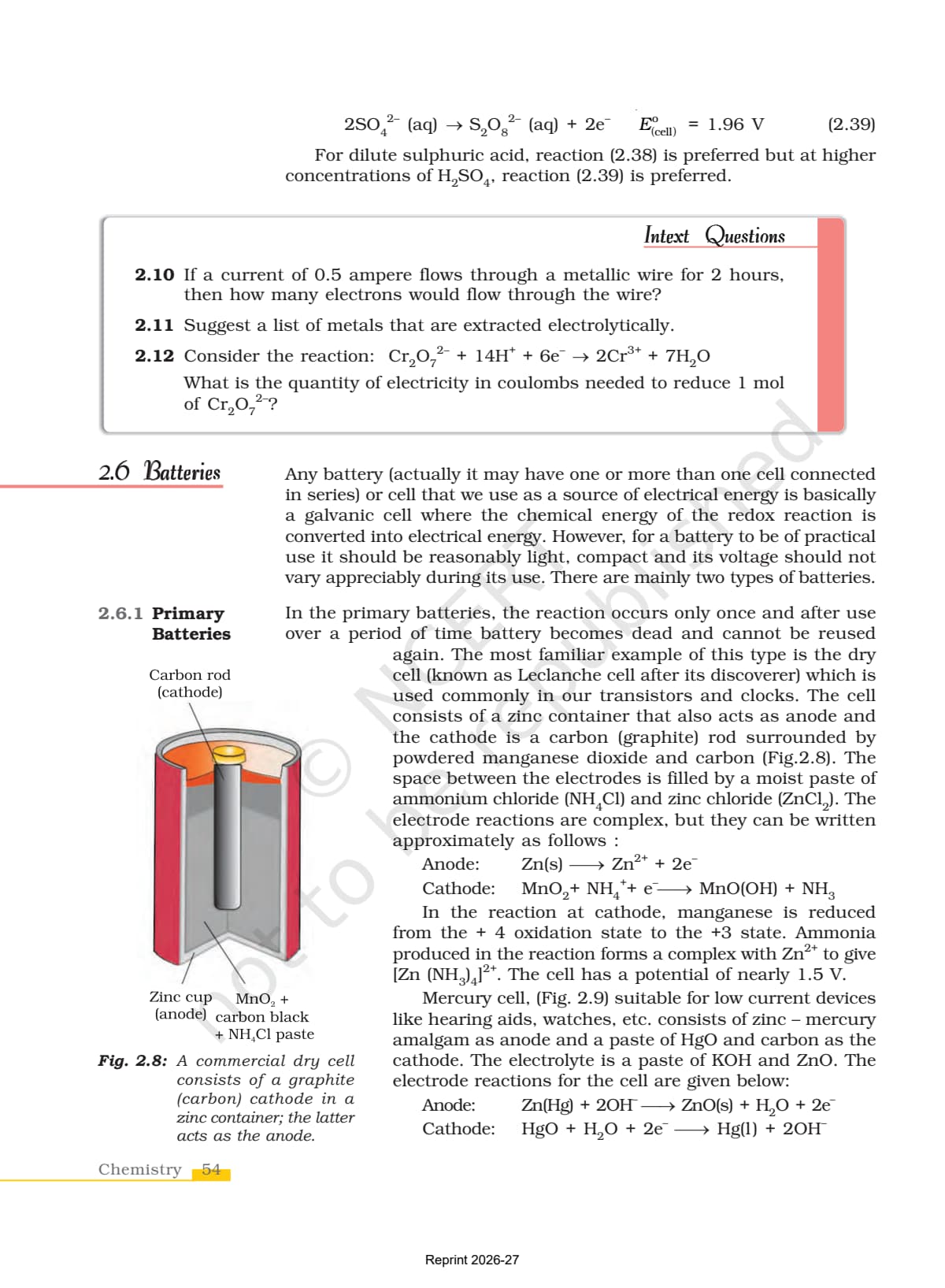
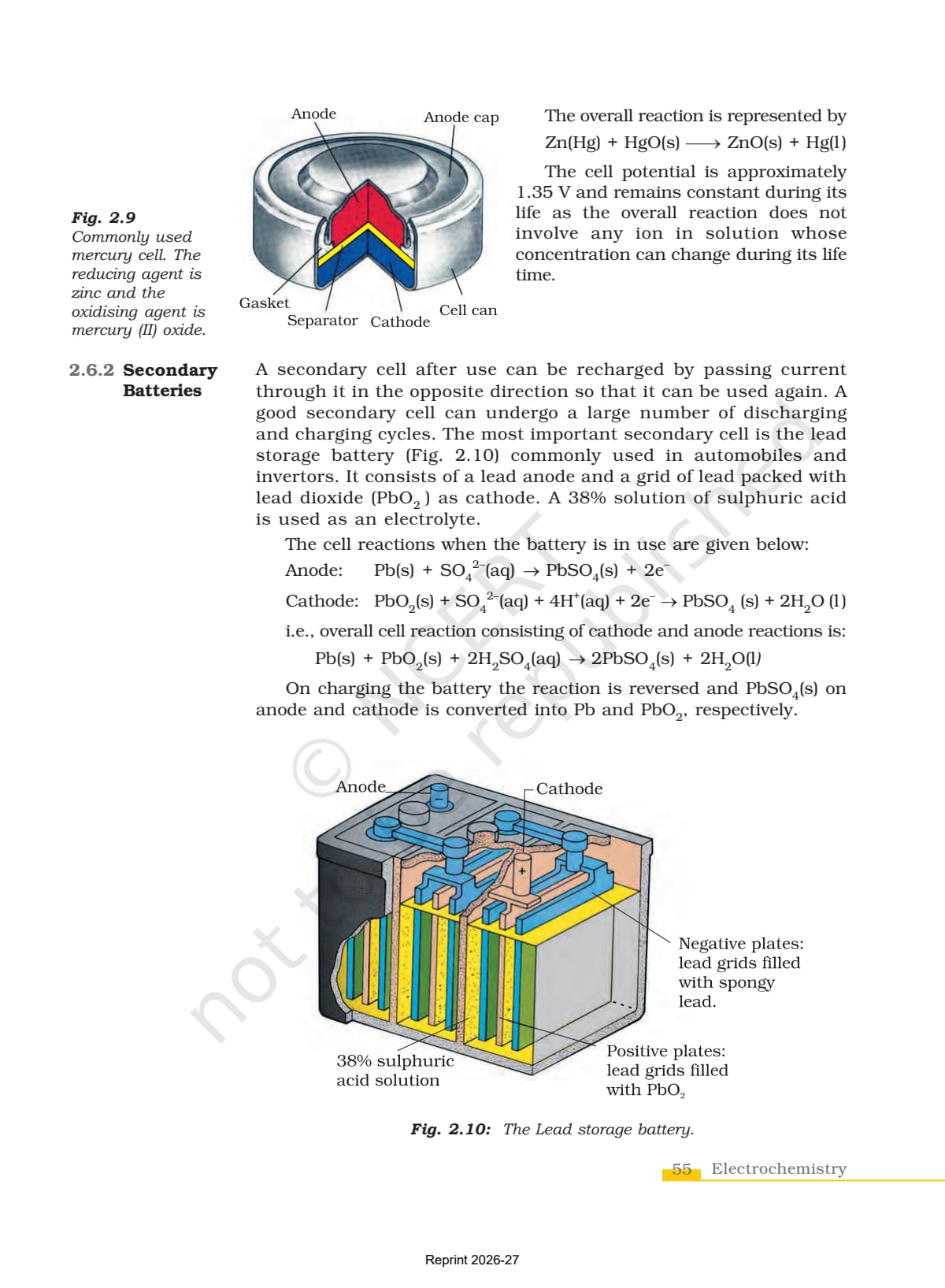
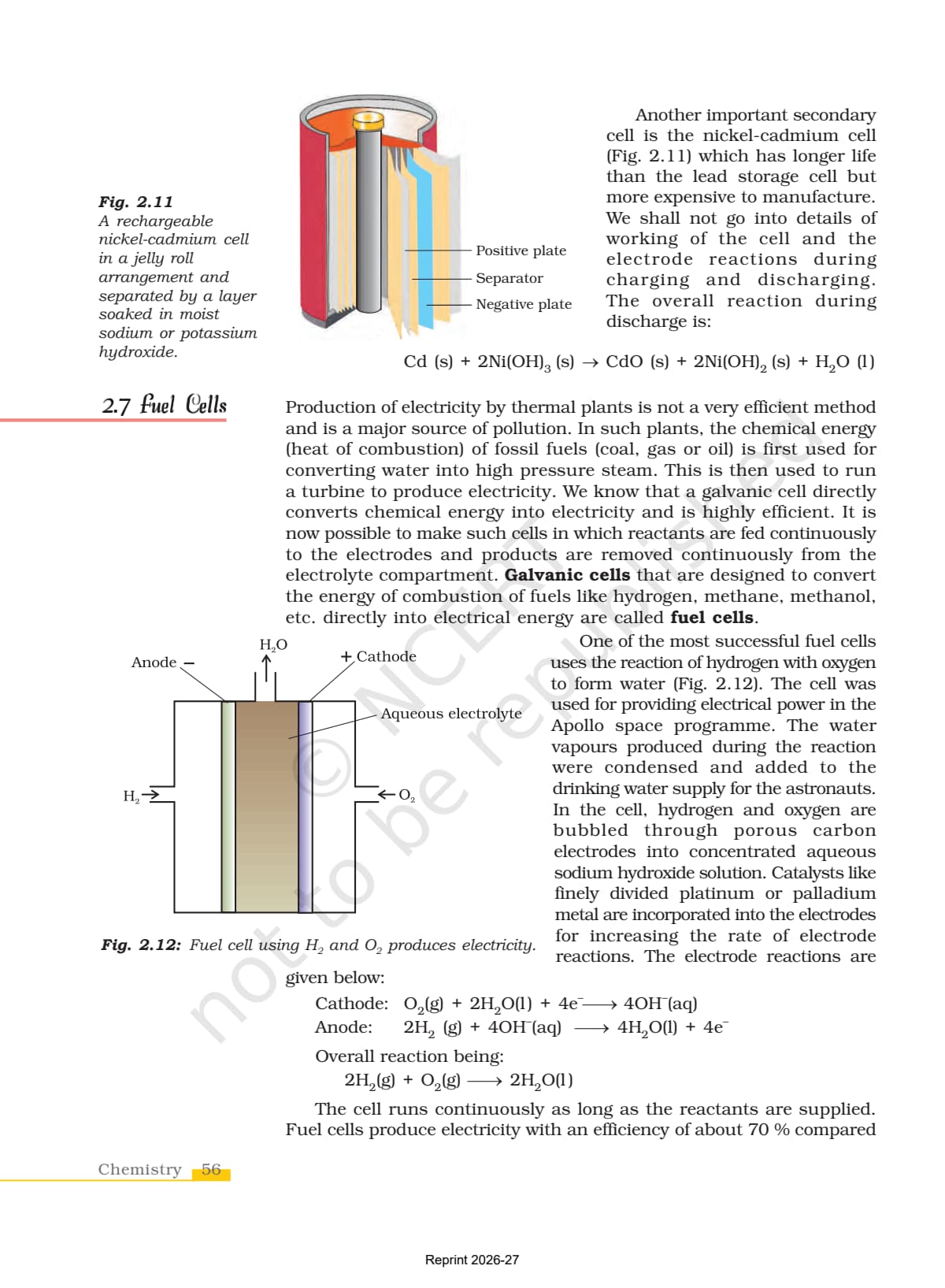
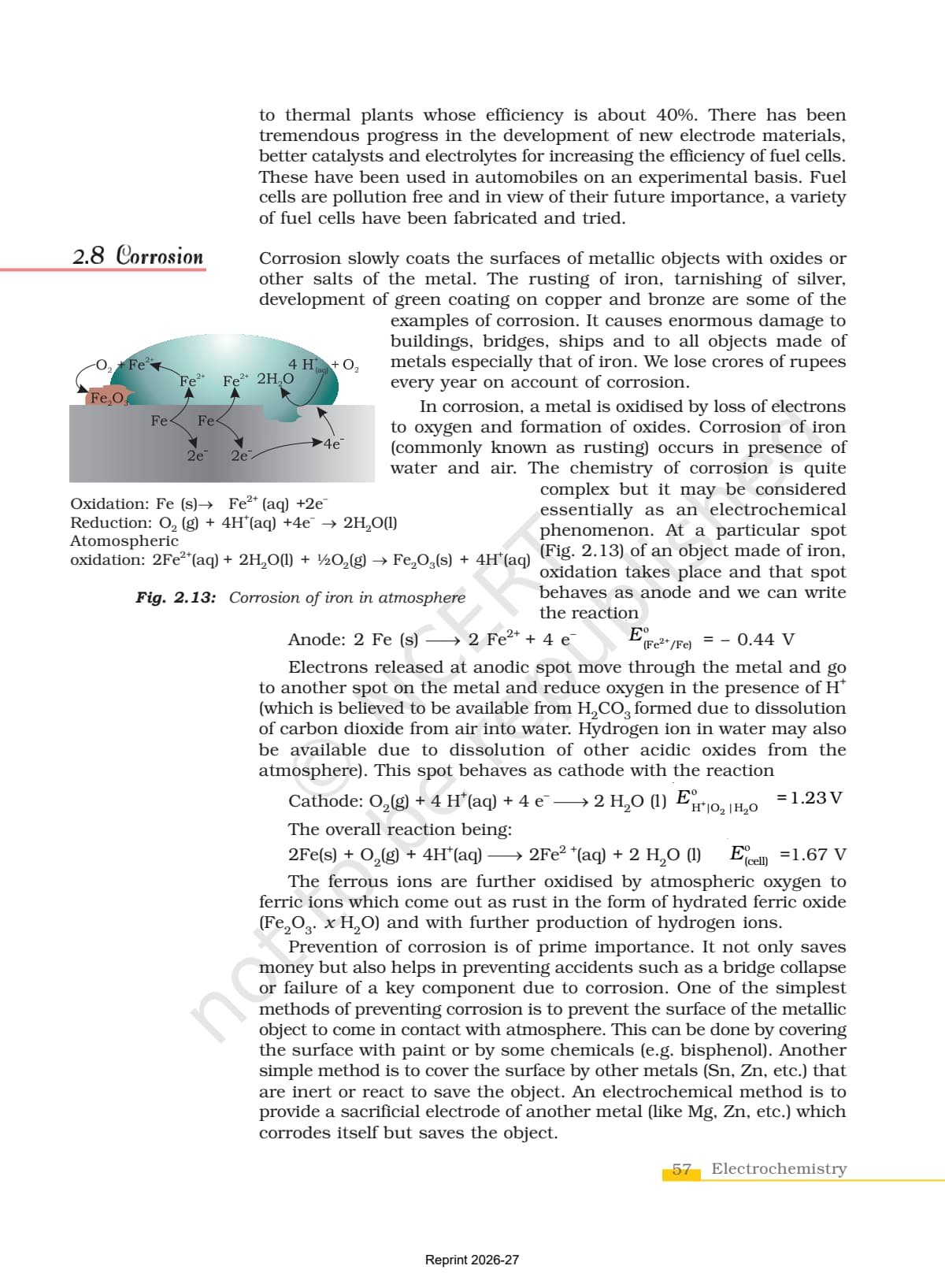
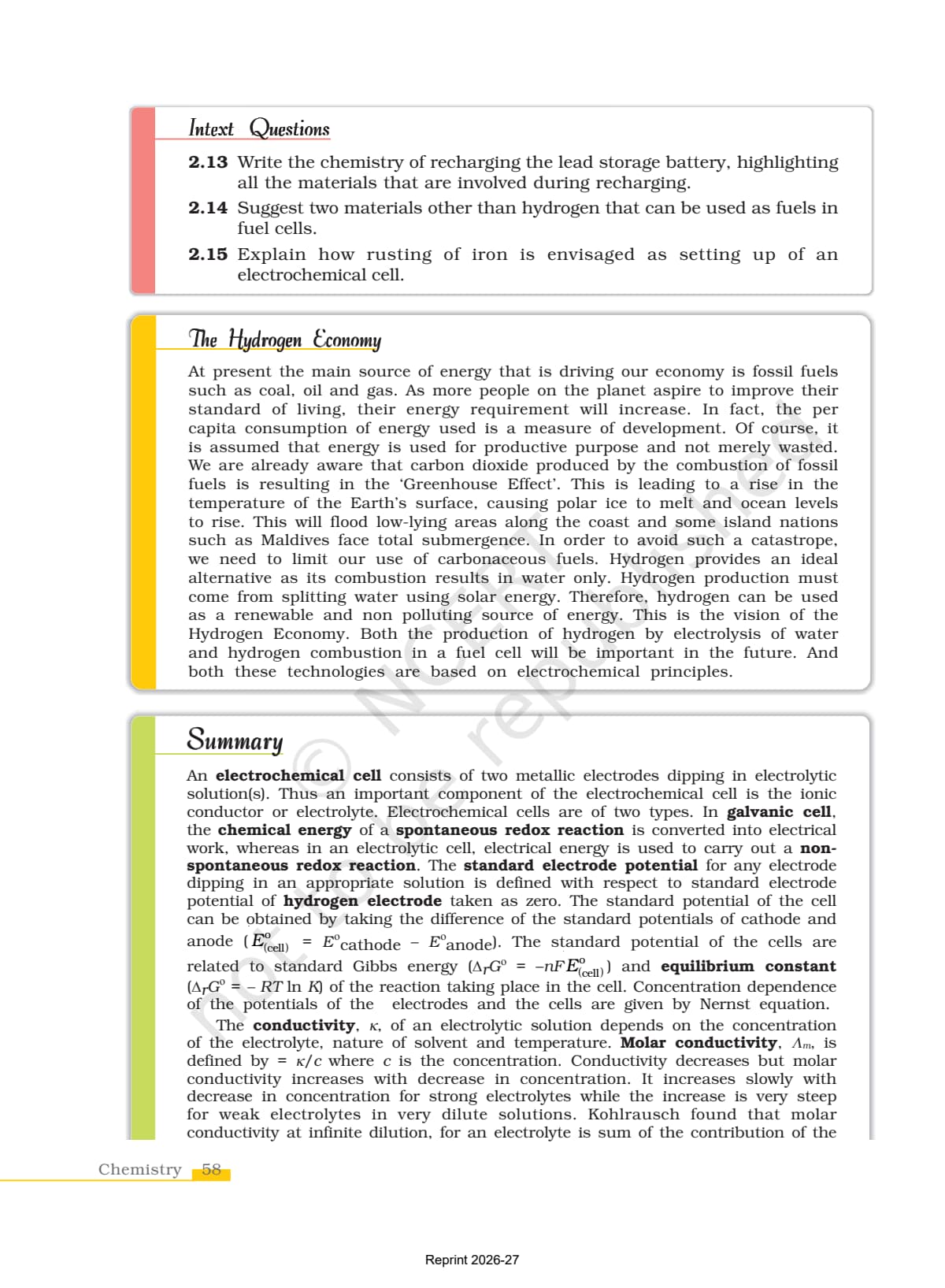
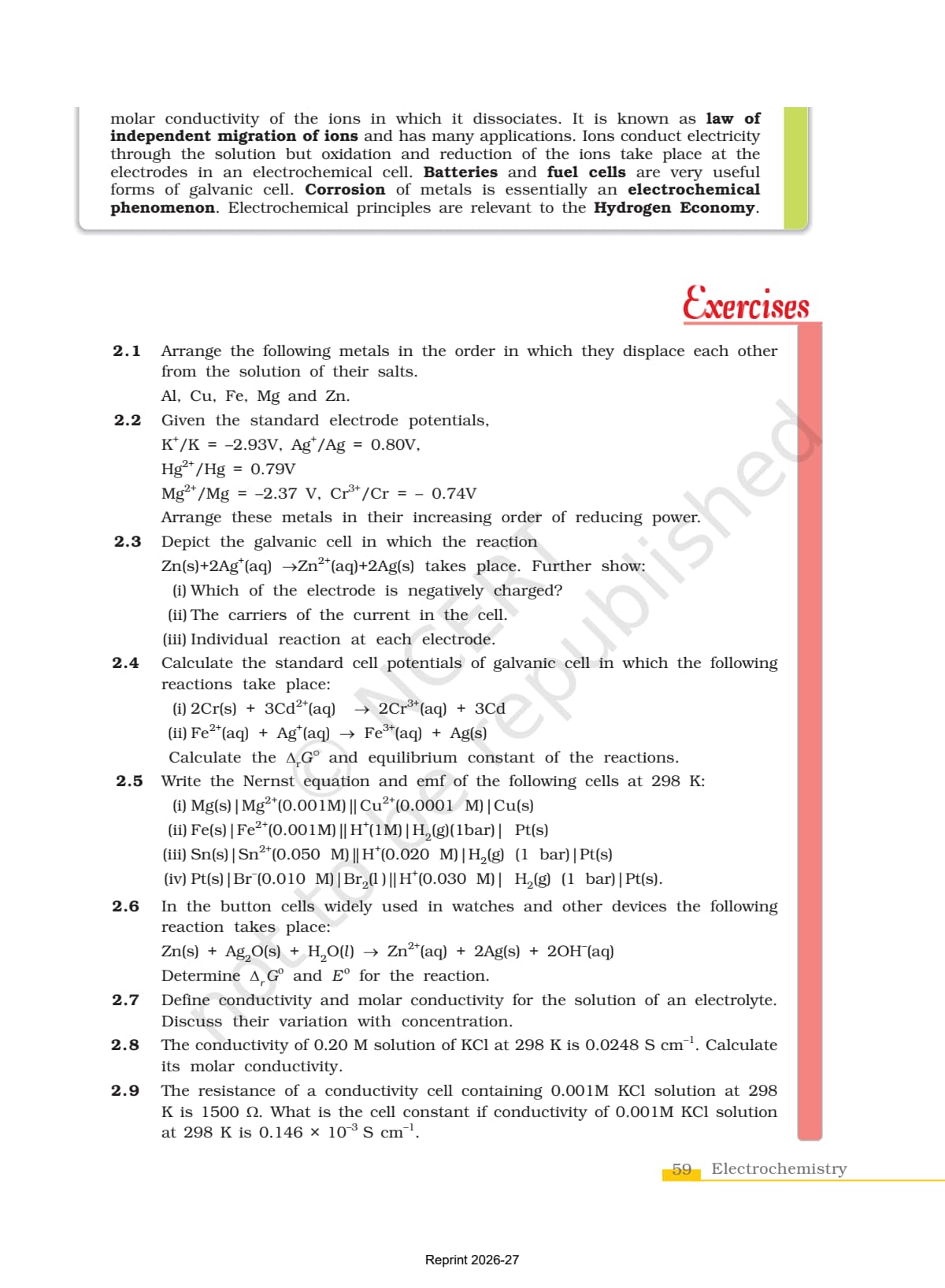
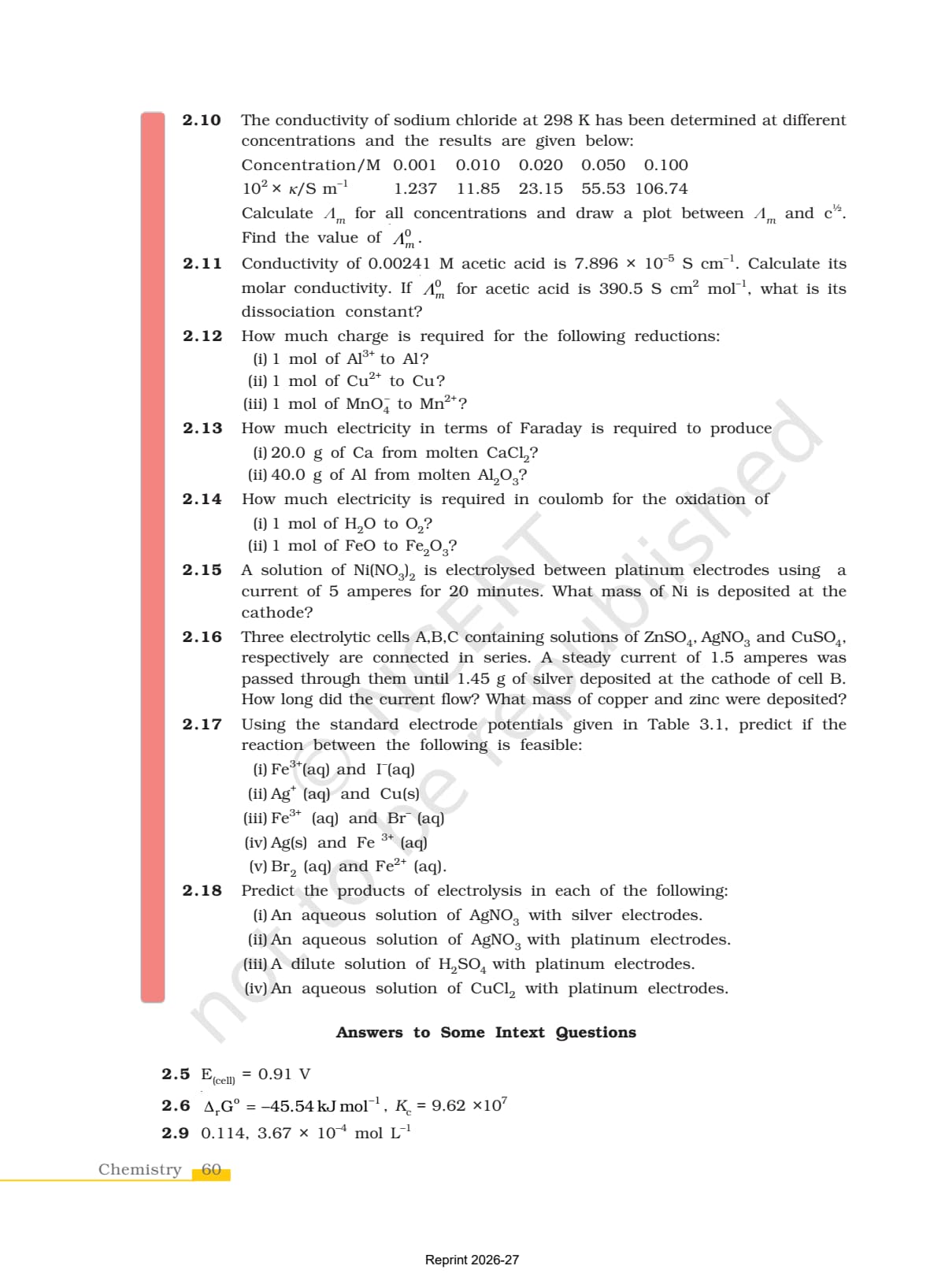
- CBSE Class 12 Weightage: 5–7 marks (Physical Chemistry block, 16 marks combined with Ch 1 and Ch 3)
- JEE Main Weightage: 3–4% (1–2 questions per shift)
- NEET Weightage: 2–3 questions per year
Curated by Collegedunia subject experts and mapped to the 2026-27 NCERT print of Class 12 Chemistry.
Also Check:
- Electrochemistry Class 12 Chemistry NCERT Solutions
- Electrochemistry Class 12 Chemistry Notes
- Electrochemistry Class 12 Chemistry Formula Sheet
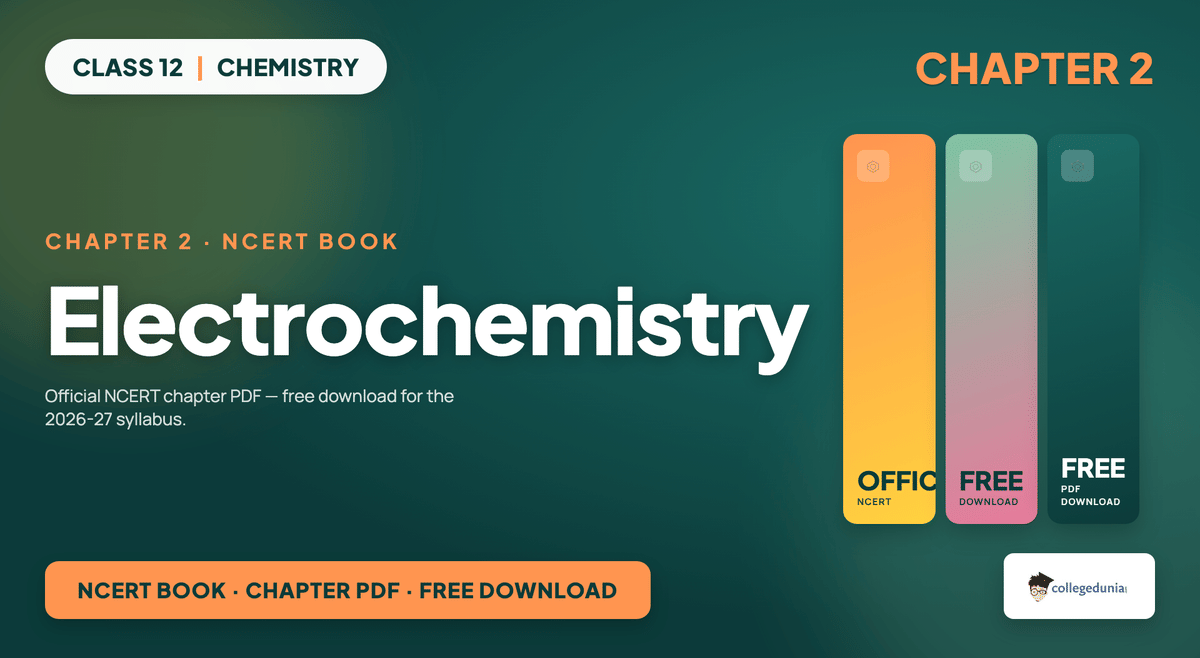
Electrochemistry NCERT Question and Sub-Topic Distribution for Class 12 Chemistry
The 13 Examples and 16 Exercises map onto eight sub-topics. Galvanic-cell EMF, Nernst numericals, and molar conductivity dominate.
| Sub-topic | Examples | Exercises | Typical question type |
|---|---|---|---|
| Galvanic cells and EMF | 2.1, 2.2 | 2.1–2.3 | Cell notation, electrode potential |
| Nernst equation and Gibbs energy | 2.3–2.5 | 2.4–2.7 | Ecell at non-standard concentration |
| Conductance and molar conductivity | 2.6–2.8 | 2.8–2.10 | Λm0 via Kohlrausch's law |
| Electrolysis and products at electrodes | 2.9, 2.10 | 2.11, 2.12 | Faraday's first and second law |
| Batteries and fuel cells | 2.11 | 2.13, 2.14 | Primary vs secondary MCQ |
| Corrosion | 2.12, 2.13 | 2.15, 2.16 | One-mark concept |
Examples 2.3–2.5 and 2.6–2.8 model roughly 60% of CBSE 3-mark and 5-mark questions on this chapter.
Electrochemistry Class 12 Chemistry Explained
Source: Magnet Brains on YouTube
Electrochemistry NCERT Book Section-by-Section Breakdown with Page Numbers
The chapter runs pages 35 to 60 across eight numbered sections. Use the table as a reading checklist.
| Section | Title | Approx. Page Range | Core Idea |
|---|---|---|---|
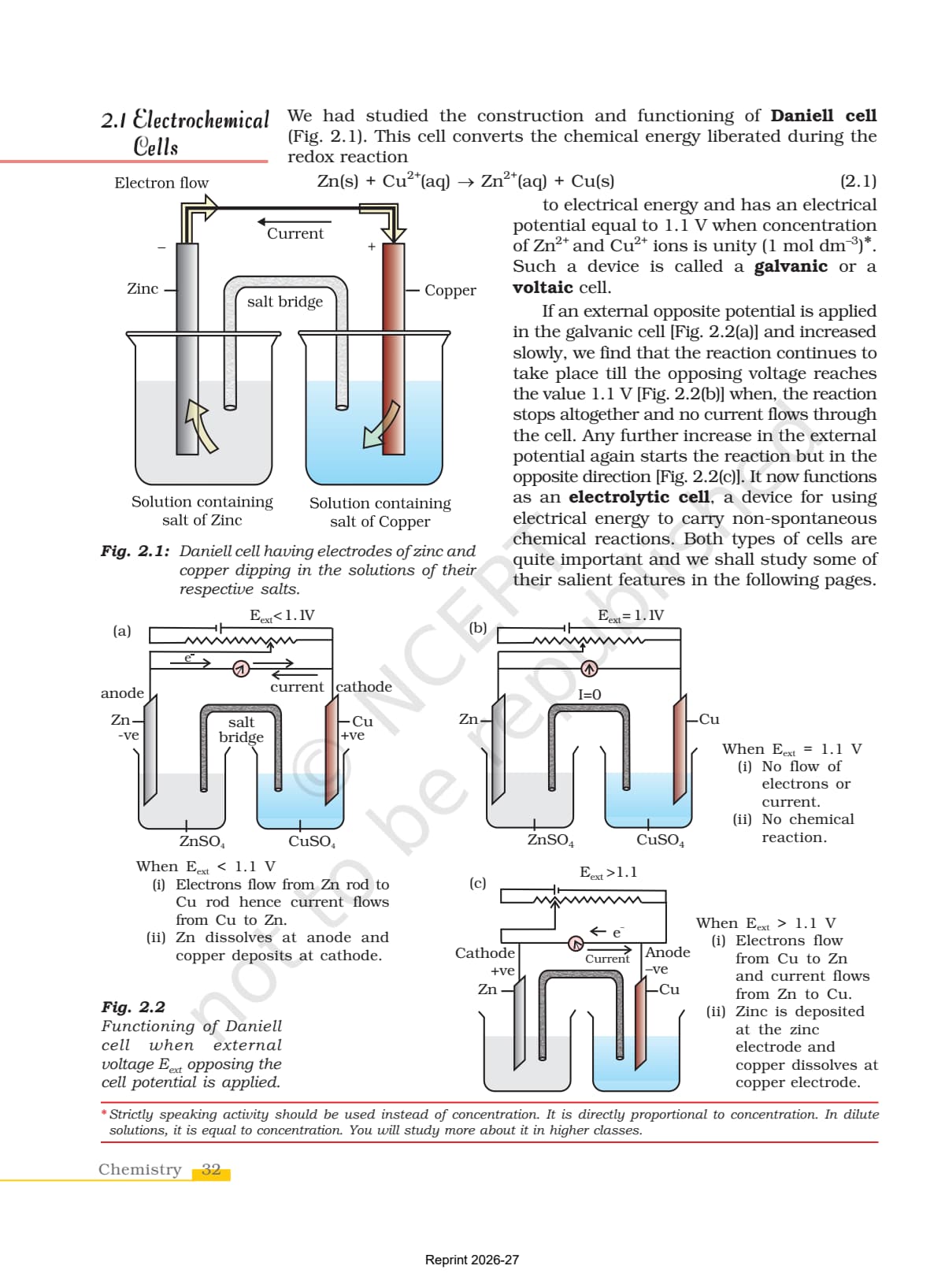
| 2.1 | Electrochemical Cells | 35–37 | Galvanic vs electrolytic cells |
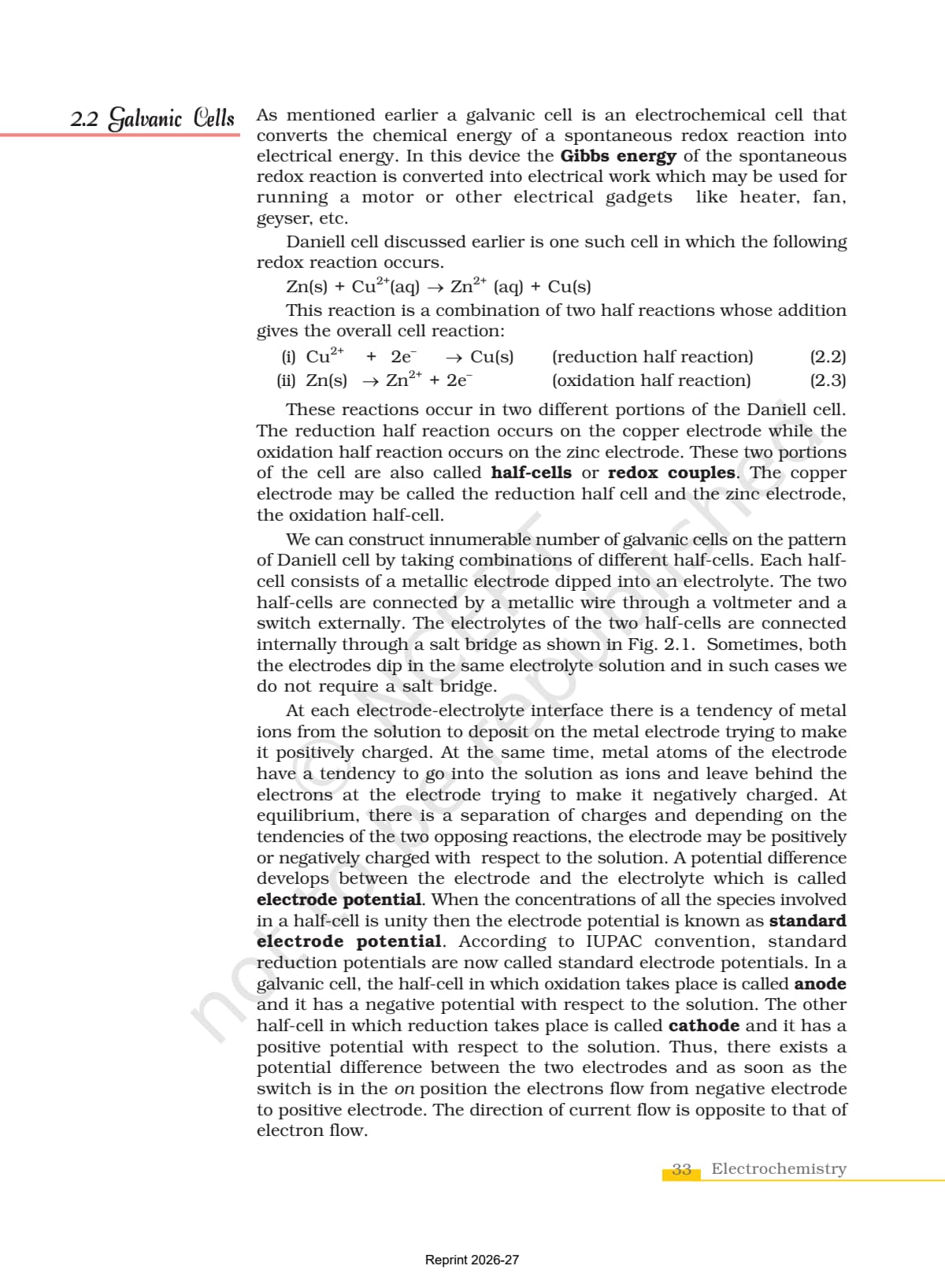
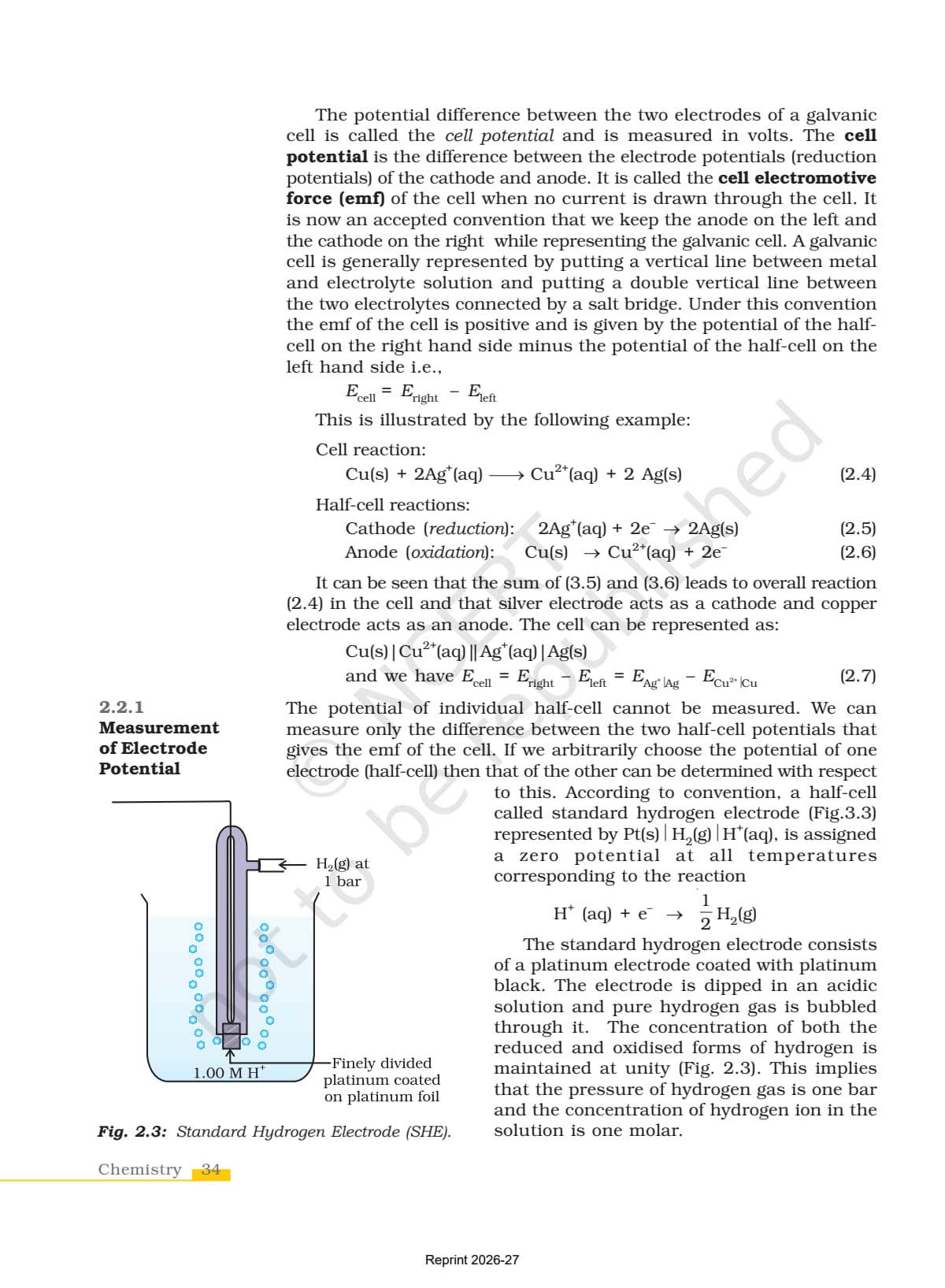
| 2.2 | Galvanic Cells | 37–41 | Daniell cell, electrode potential, SHE |
| 2.3 | Nernst Equation | 41–46 | E = E° − (RT/nF) ln Q; K link |
| 2.4 | Conductance of Electrolytic Solutions | 46–51 | κ, Λm, Kohlrausch's law |
| 2.5 | Electrolytic Cells and Electrolysis | 51–54 | Faraday's laws, electrode products |
| 2.6 | Batteries | 54–55 | Primary and secondary types |
| 2.7 | Fuel Cells | 55–56 | H2–O2 cell, efficiency |
| 2.8 | Corrosion | 56–58 | Rusting mechanism and prevention |
| Summary | Points to Ponder + Exercises 2.1–2.16 | 58–60 | Recap and problem set |
Sections 2.3 and 2.4 carry roughly 60% of the chapter's CBSE marks. Budget twice the time there.
How will Collegedunia's NCERT Book PDF Help You with Electrochemistry Class 12 Chemistry?
The official NCERT chapter anchors every CBSE marking scheme, JEE Main, and NEET. This page adds the navigation the bare PDF lacks.
- 2026-27 Edition Download: Normal and HD PDFs of the new NCERT print.
- Section and Example Maps: Locate any of the eight sub-topics or 13 examples without flipping 26 pages.
- Kept-Trimmed Summary: Spot which legacy topics survived the new edition and which got pruned.
- Multi-Pass Reading Plan: A three-day plan tells you what to skim, derive, and where the high-mark numericals live.
Electrochemistry NCERT Intext Examples and Their Sub-Topics
The chapter carries 13 worked Examples (2.1 to 2.13). The inventory below tags each by sub-topic and skill.
| Example | Sub-Topic | Skill Tested |
|---|---|---|
| 2.1 | Standard cell representation | Cell notation |
| 2.2 | Standard EMF of Daniell cell | E°cell = E°cathode − E°anode |
| 2.3 | Cell EMF at non-standard concentration | Nernst equation |
| 2.4 | Equilibrium constant from E° | E°, ΔG°, K link |
| 2.5 | Spontaneity check | Sign of ΔG vs Ecell |
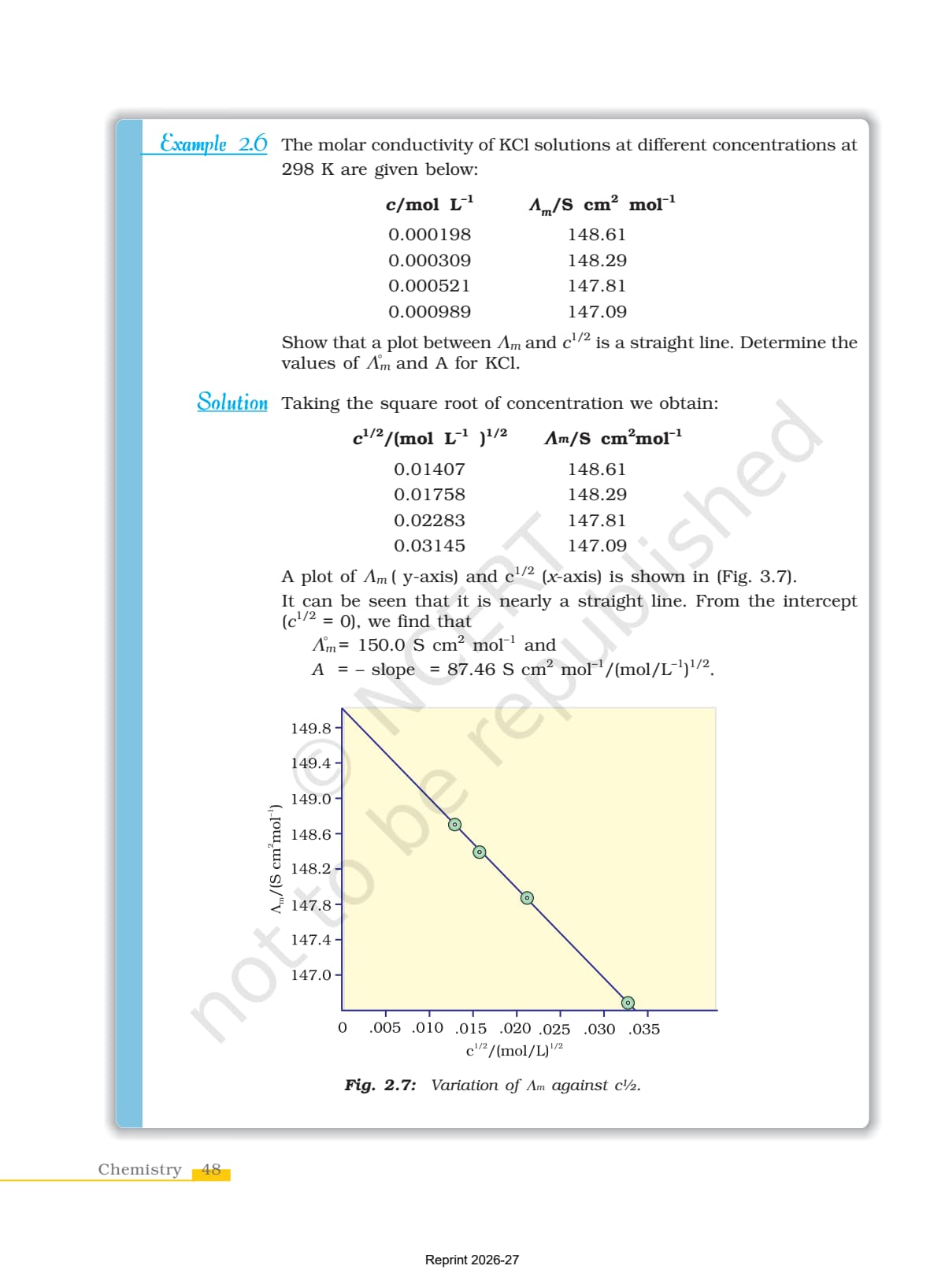
| 2.6 | Molar conductivity | Λm = κ × 1000 / c |
| 2.7 | Resistance and cell constant | R = ρ(ℓ/A); G* = ℓ/A |
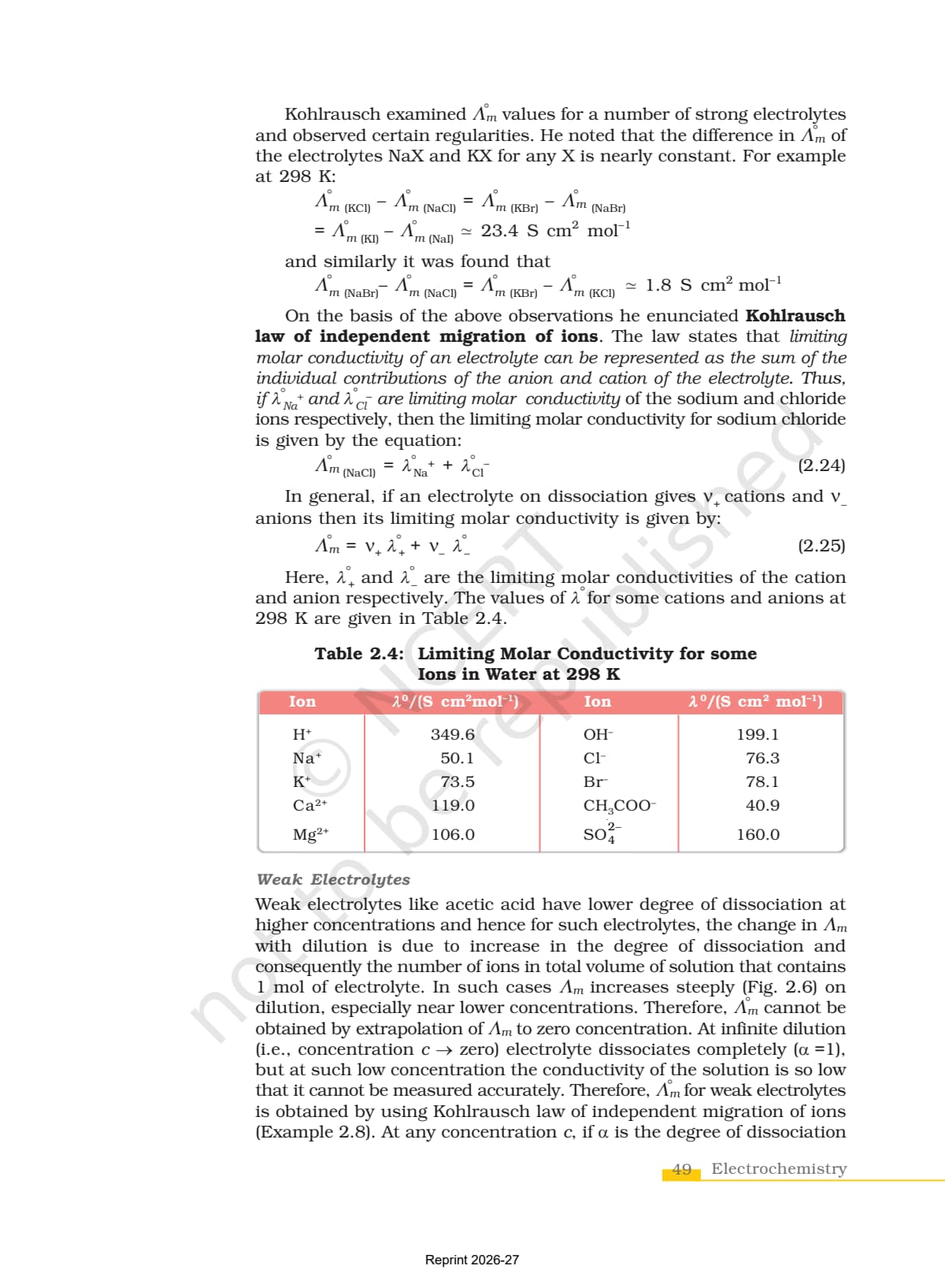
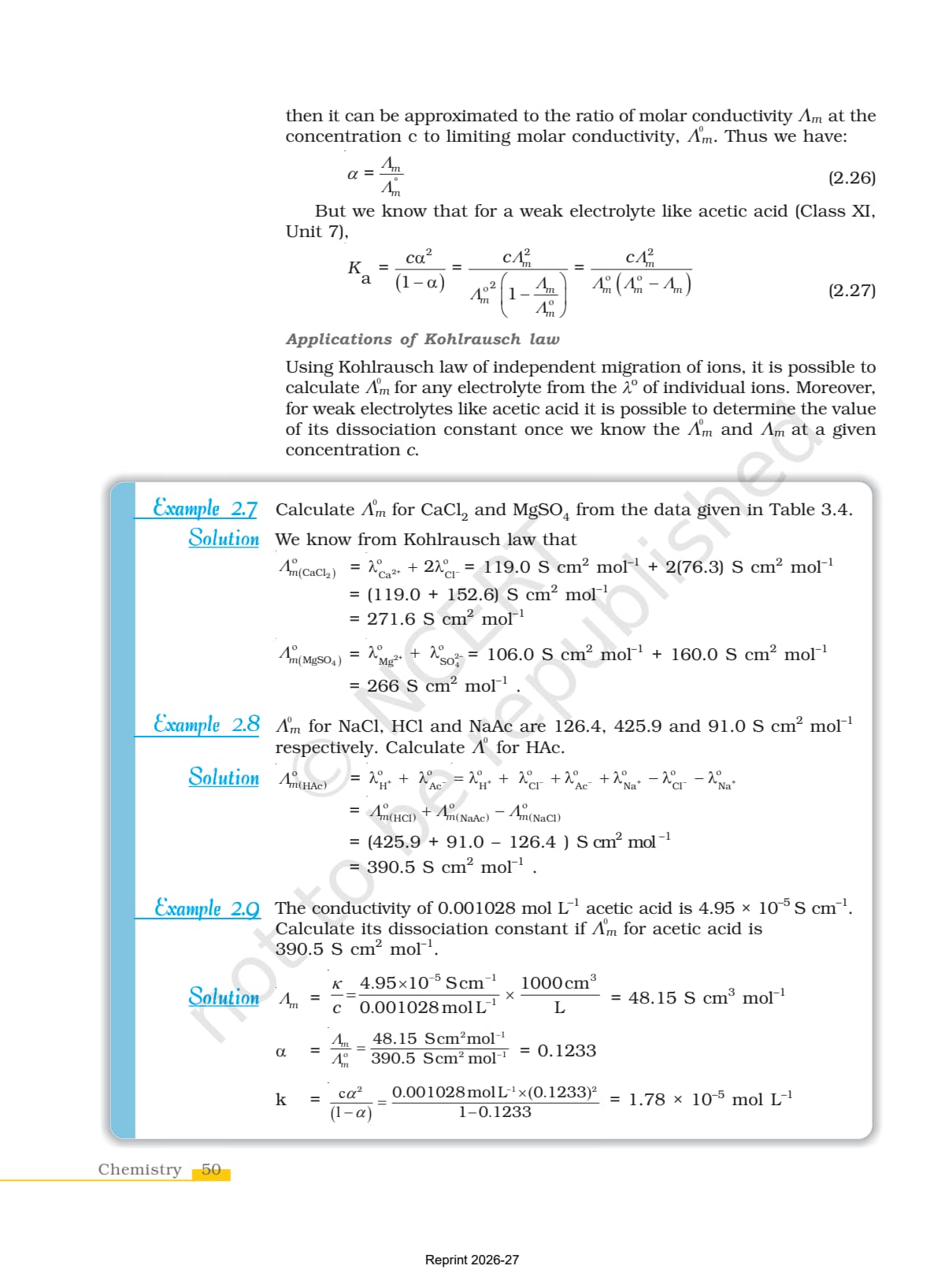
| 2.8 | Λm0 for weak electrolyte | Kohlrausch's law |
| 2.9 | Electrolysis numerical | Faraday's first law: m = ZIt |
| 2.10 | Products at electrodes | Reduction-potential comparison |
| 2.11 | Fuel cell efficiency | ΔG vs ΔH framing |
| 2.12 | Lead storage battery | Discharge–recharge equations |
| 2.13 | Corrosion mechanism | Anodic and cathodic regions on iron |
What Changed in Electrochemistry for 2026-27 NCERT (Rationalisation Note)
The new NCERT merged the two-volume textbook into a single Part-I book. Electrochemistry stays Chapter 2 but is trimmed versus the pre-2023 edition.
| Topic | Status in 2026-27 NCERT | Note |
|---|---|---|
| Galvanic cells, EMF, Daniell cell | Kept | Core derivation |
| SHE and electrode-potential series (Table 2.1) | Kept | Full table retained |
| Nernst equation; link to ΔG, K | Kept | Most-asked derivation |
| Conductance, Λm, Kohlrausch's law | Kept | 5-mark numerical |
| Faraday's laws of electrolysis | Kept | Full content, trimmed wording |
| Batteries (primary, secondary) and fuel cells | Kept | Conceptual MCQ source |
| Corrosion and prevention | Kept | 1-mark concept |
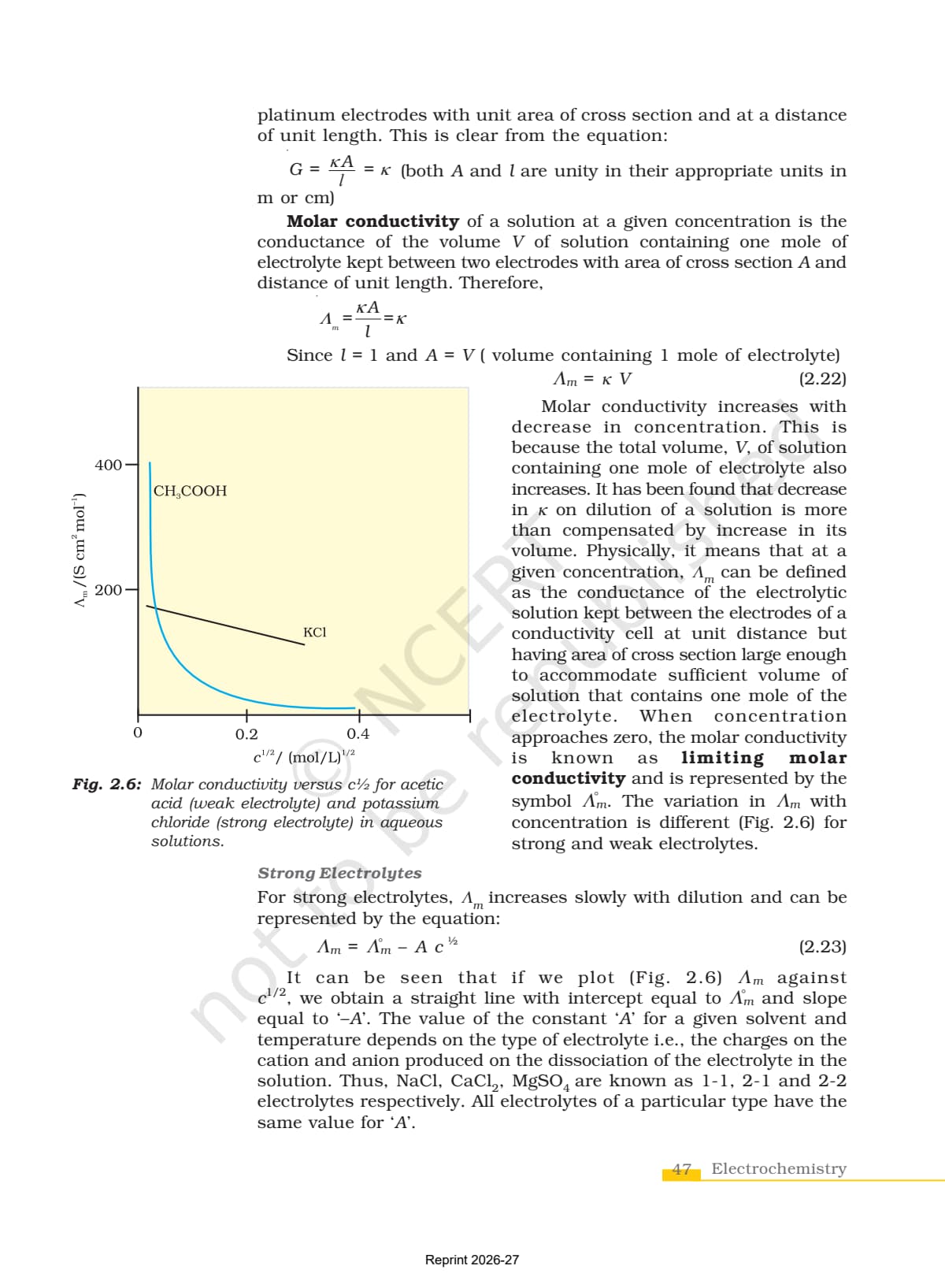
| Conductivity-vs-concentration detailed plots | Trimmed | Diagram retained, discussion shortened |
| Mercury and dry cell internals | Trimmed | One paragraph each, not full pages |
How to Read Class 12th Chemistry Chapter 2 Electrochemistry PDF
The 26 pages look short, but Sections 2.3 and 2.4 are derivation-dense. The four-pass sequence below works for both Boards and entrance prep.
- Pass 1, Skim (40 min): Read 2.1 and 2.2 fully; scan 2.3 to 2.8 for boxed formulas and Table 2.1.
- Pass 2, Detailed (3 h): Work every section. Pause at 2.3 (Nernst) and 2.4 (Kohlrausch's law) to re-derive on paper.
- Pass 3, Examples and Exercises (4 h): Solve all 13 Examples without peeking, then attempt Exercises 2.1 to 2.16.
- Pass 4, Targeted Revision (1 h): Re-read sub-topics tied to wrong exercises plus the summary on page 58.
Total budget: roughly eight to nine hours for first-time coverage, plus two hours of revision the week before Boards.
Electrochemistry Multi-Day Study Plan for the NCERT PDF
The chapter splits across three working days. The schedule assumes Chapter 1 is already revised.
| Day | Sections | Examples | Output |
|---|---|---|---|
| Day 1 (3h) | 2.1–2.3 (Galvanic cells, Nernst) | 2.1–2.5 | Nernst derivation page, Table 2.1 memorised |
| Day 2 (3h) | 2.4–2.5 (Conductance, Electrolysis) | 2.6–2.10 | Formula card for Λm, Faraday's two laws |
| Day 3 (3h) | 2.6–2.8 (Batteries, fuel cells, corrosion) | 2.11–2.13 + Exercises 2.1–2.16 | Lead storage and rusting concept sheet |
Reserve Day 3 evening for the Nernst derivation; that single result powers every 5-mark numerical in the chapter.
Electrochemistry Weightage Compared Across Class 12 Chemistry Chapters
The chart below maps CBSE Board marks across all 10 chapters, averaged over five board papers. Electrochemistry sits in the upper band, just behind Aldehydes, Ketones and Carboxylic Acids.
3 Most Asked Topics from Electrochemistry in CBSE, JEE and NEET
Across five years of board, JEE Main, and NEET papers, three sub-topics dominate.
- Nernst equation numericals: at least one form in every CBSE Class 12 Chemistry paper since 2021; recurring JEE Main MCQ on Ecell at non-standard concentration.
- Kohlrausch's law and Λm0: consistent 3-mark CBSE question, frequent JEE Main numerical, occasional NEET assertion-reason.
- Faraday's laws of electrolysis: regular CBSE 2 to 3-mark question; JEE Main and NEET both pick at least one MCQ per shift.
Full year-wise PYQ map: Electrochemistry Class 12 Chemistry NCERT Solutions
Related Links:
- Electrochemistry Class 12 Chemistry Handwritten Notes
- Electrochemistry Class 12 Chemistry NCERT Exemplar Book PDF
- Electrochemistry Class 12 Chemistry NCERT Exemplar Solutions
Student Feedback
In a Collegedunia poll of 900 Class 12 students, 78% said the Nernst equation and Kohlrausch's law were the hardest parts of Electrochemistry to master.
Other Resources for Electrochemistry Class 12 Chemistry
- Electrochemistry Class 12 Chemistry NCERT Book PDF
- Electrochemistry Class 12 Chemistry NCERT Solutions
- Electrochemistry Class 12 Chemistry Notes
- Electrochemistry Class 12 Chemistry Formula Sheet
- Electrochemistry Class 12 Chemistry NCERT Exemplar Book PDF
- Electrochemistry Class 12 Chemistry NCERT Exemplar Solutions
- Electrochemistry Class 12 Chemistry Handwritten Notes
NCERT Book PDF for Class 12 Chemistry: All Chapters
Use the table below to jump to the official NCERT chapter PDF for any other Class 12 Chemistry chapter.
| Chapter | Resource |
|---|---|
| Chapter 1 | Solutions NCERT Book PDF |
| Chapter 3 | Chemical Kinetics NCERT Book PDF |
| Chapter 4 | The d- and f-Block Elements NCERT Book PDF |
| Chapter 5 | Coordination Compounds NCERT Book PDF |
| Chapter 6 | Haloalkanes and Haloarenes NCERT Book PDF |
| Chapter 7 | Alcohols, Phenols and Ethers NCERT Book PDF |
| Chapter 8 | Aldehydes, Ketones and Carboxylic Acids NCERT Book PDF |
| Chapter 9 | Amines NCERT Book PDF |
| Chapter 10 | Biomolecules NCERT Book PDF |
Electrochemistry Class 12 Chemistry NCERT Book PDF FAQs
Ques. Where can I download Electrochemistry Class 12 Chemistry NCERT Book PDF?
Ans. You can download the Electrochemistry Class 12 Chemistry NCERT Book PDF directly from this page. Both the Normal and HD versions are available, and both are free.
Ques. Is this NCERT Book PDF aligned with the 2026-27 syllabus?
Ans. Yes. The PDF on this page is the current 2026-27 NCERT print for Class 12 Chemistry. The new edition keeps every major derivation including Nernst equation, Kohlrausch's law, and Faraday's laws of electrolysis. Only the extended discussion of conductivity-versus-concentration plots and detailed cell-internals were shortened.
Ques. How many pages is the Class 12th Chemistry Electrochemistry NCERT chapter?
Ans. The Electrochemistry NCERT chapter runs approximately 26 pages (pp. 35 to 60 of the Class 12 Chemistry Part-I textbook) and covers eight numbered sections from galvanic cells through to corrosion, with 13 solved Examples and 16 end-of-chapter Exercises.
Ques. How many sections are in Electrochemistry NCERT Class 12 Chemistry?
Ans. The chapter has eight numbered sections: Electrochemical Cells, Galvanic Cells, Nernst Equation, Conductance of Electrolytic Solutions, Electrolytic Cells and Electrolysis, Batteries, Fuel Cells, and Corrosion. Sections 2.3 and 2.4 carry the heaviest derivation and numerical load.
Ques. What was removed from Electrochemistry in 2026-27 NCERT rationalisation?
Ans. The new NCERT edition trimmed the extended treatment of conductivity-versus-concentration plots and shortened the detailed internal-construction discussion of mercury cells and dry cells. Every formula, every derivation, and every Faraday-law numerical pattern remains intact, so question patterns in CBSE Board, JEE Main, and NEET have not changed.
Ques. How long does it take to read the Electrochemistry NCERT chapter?
Ans. A first-time complete read with examples and exercises takes roughly eight to nine hours of focused study, split across three working days. The multi-day plan above breaks the 26 pages into Day 1 (galvanic cells + Nernst), Day 2 (conductance + electrolysis), and Day 3 (batteries, fuel cells, corrosion + full exercise set).
Ques. Is Electrochemistry a high-scoring chapter for CBSE Class 12 Boards?
Ans. Yes. Electrochemistry carries 5 to 7 marks in the CBSE Class 12 Chemistry Board exam, typically split as one long numerical (5 marks on Nernst or conductivity) and one short concept question (2 marks on batteries, fuel cells, or corrosion). Combined with Solutions and Chemical Kinetics, the Physical Chemistry block contributes about 16 marks of the 70-mark paper.
Ques. Is the NCERT Electrochemistry chapter sufficient for JEE Main and NEET?
Ans. For NEET and JEE Main the NCERT chapter is sufficient when paired with the Exemplar problems and the last five years of previous-year questions. For JEE Advanced, supplement the chapter with a short reference on concentration cells with transference and salt-bridge potentials, which are outside the NCERT textbook scope.



Comments