




Class 12 Economics Chapter 4 The Theory of the Firm under Perfect Competition is the fourth chapter of the Microeconomics book. It explains the price-taking firm, the MR=MC profit rule, the shut-down and break-even points, the supply curve and elasticity of supply. This page hosts the official NCERT chapter PDF for free download.
Here is what this chapter is worth in the exam:
- CBSE Boards: about 6 to 8 marks, the biggest single chapter in the Microeconomics half.
- CUET: 2 to 3 questions every year on revenue, the MR=MC rule and supply.
- The file: leec204 from the NCERT Introductory Microeconomics textbook, 2026-27 syllabus.
What the NCERT Class 12 Economics Chapter 4 PDF Covers
The PDF is the official source for every CBSE board question on the perfectly competitive firm. It runs as one story: it starts with the four features of perfect competition, then moves to revenue, then to profit maximisation, then to the supply curve, and ends with elasticity of supply. Reading it first, before any reference book, keeps your answers in the exact wording that CBSE rewards.
Inside, students learn why the firm is a price taker, how TR, AR and MR work, why profit is highest where MR equals MC, where the shut-down and break-even points lie, and how the supply curve is drawn from the MC curve.
Topics in Class 12 Economics Chapter 4 Theory of the Firm under Perfect Competition
The chapter splits into numbered sub-sections. The table maps each one to the concept that gets tested most.
| Section | NCERT sub-topic | Main exam concept |
|---|---|---|
| 4.1 | Perfect competition | Four features: many buyers and sellers, same product, free entry and exit, full information |
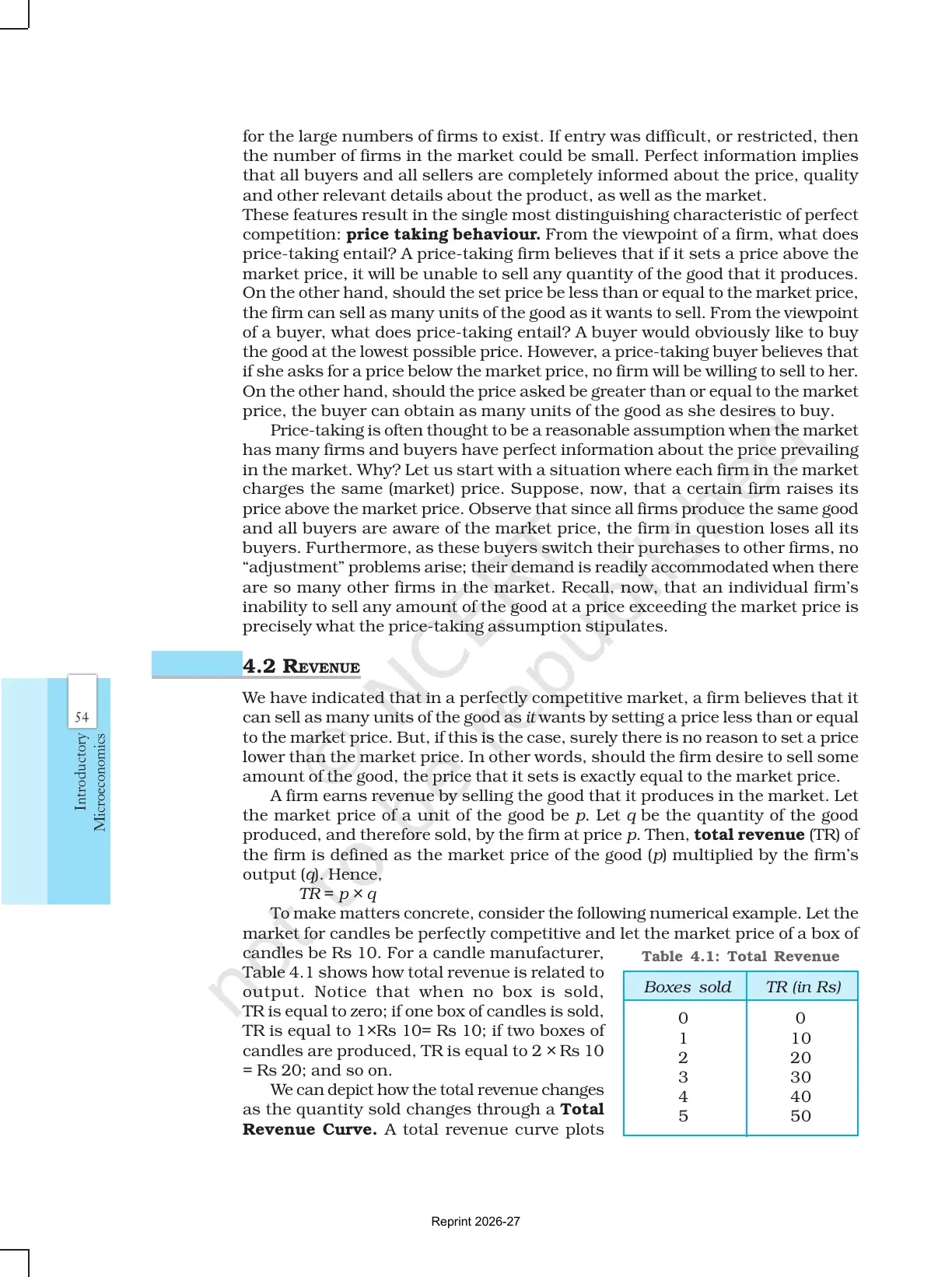
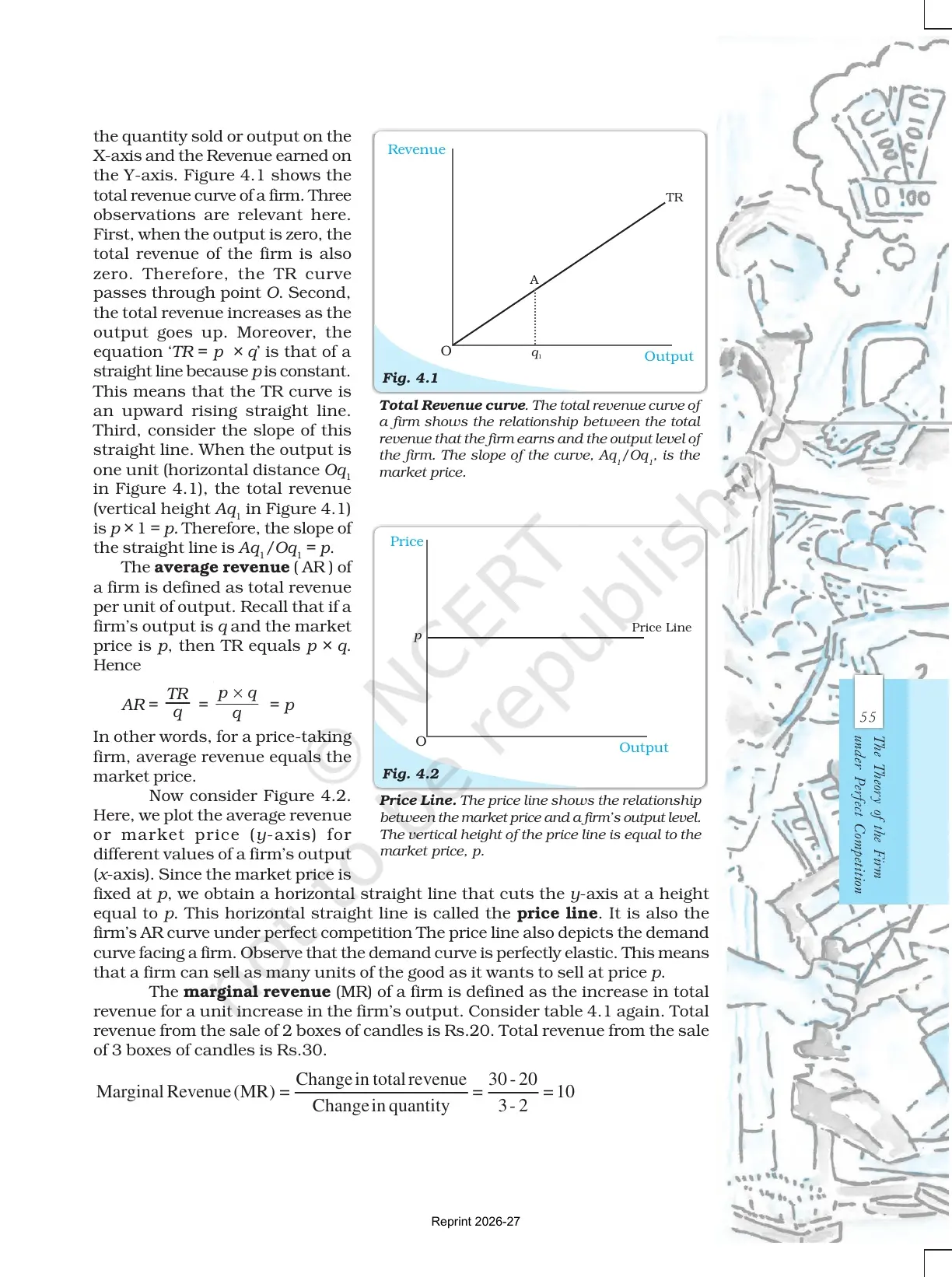
| 4.2 | Revenue | TR = P times Q, AR = P, MR = P; flat demand curve for the firm |
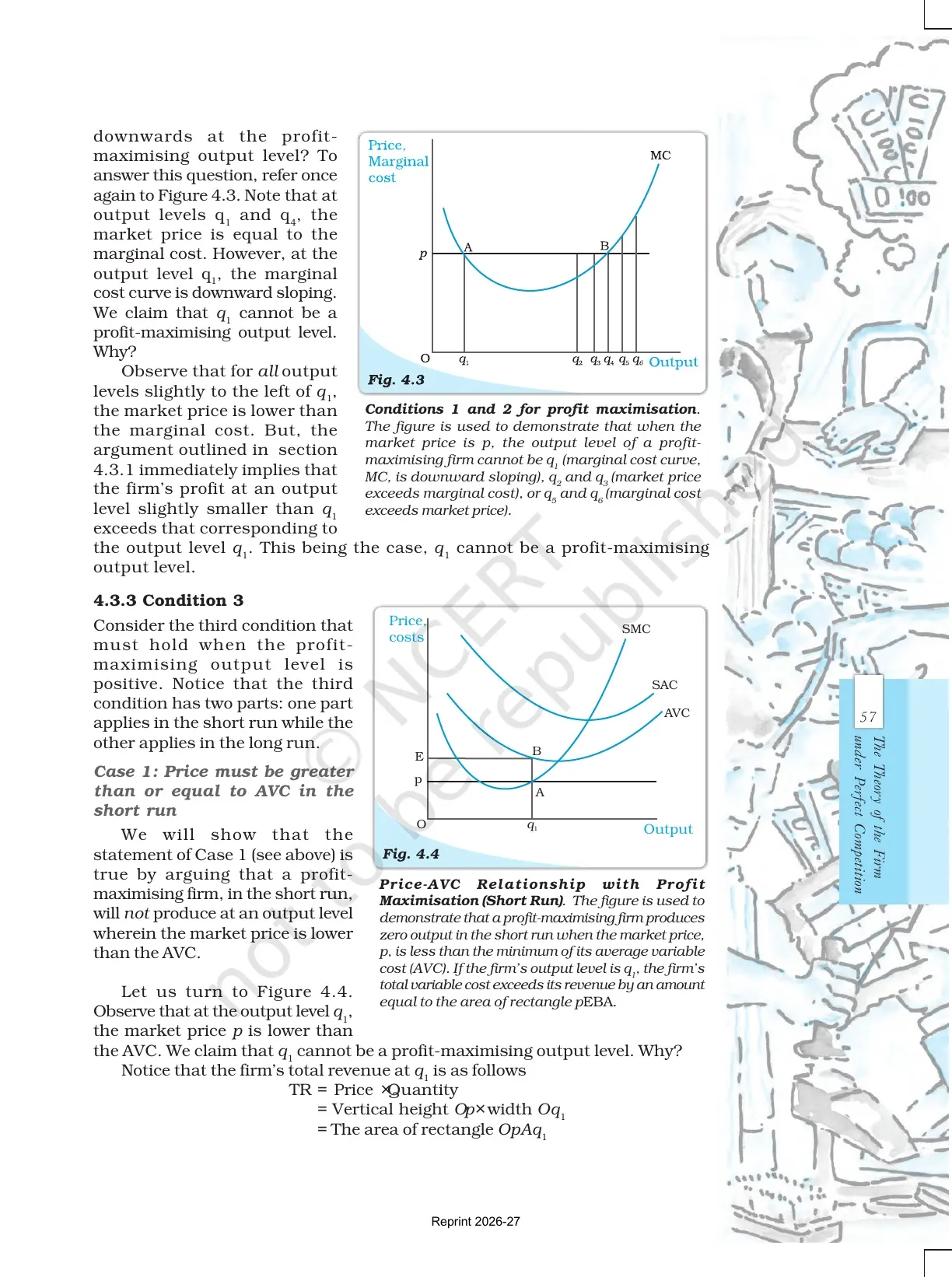
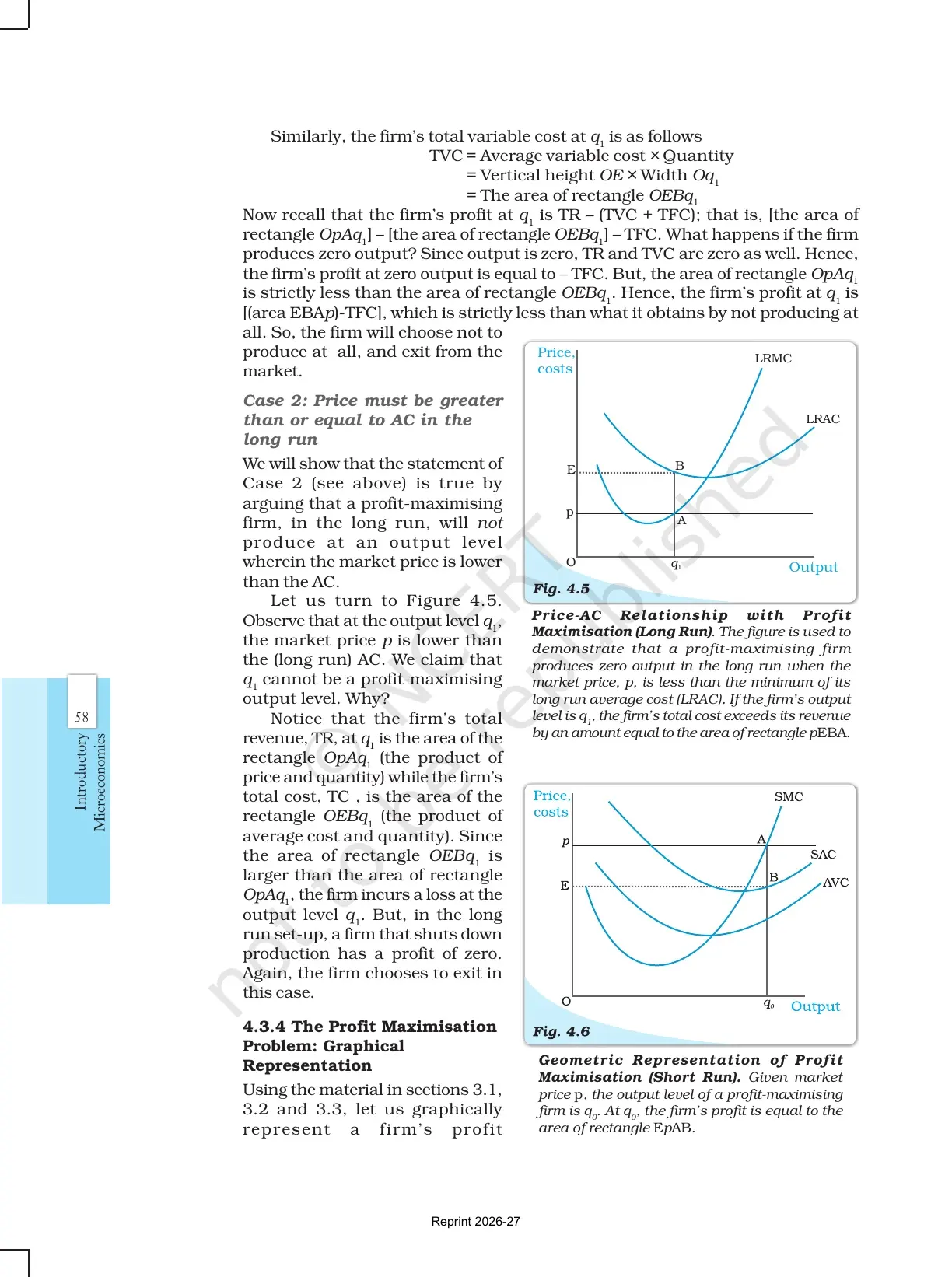
| 4.3 | Profit maximisation | MR = MC with MC rising |
| 4.3.1 | Shut-down point | Firm stops if price falls below minimum AVC |
| 4.3.2 | Break-even point | Firm earns normal profit at minimum AC |
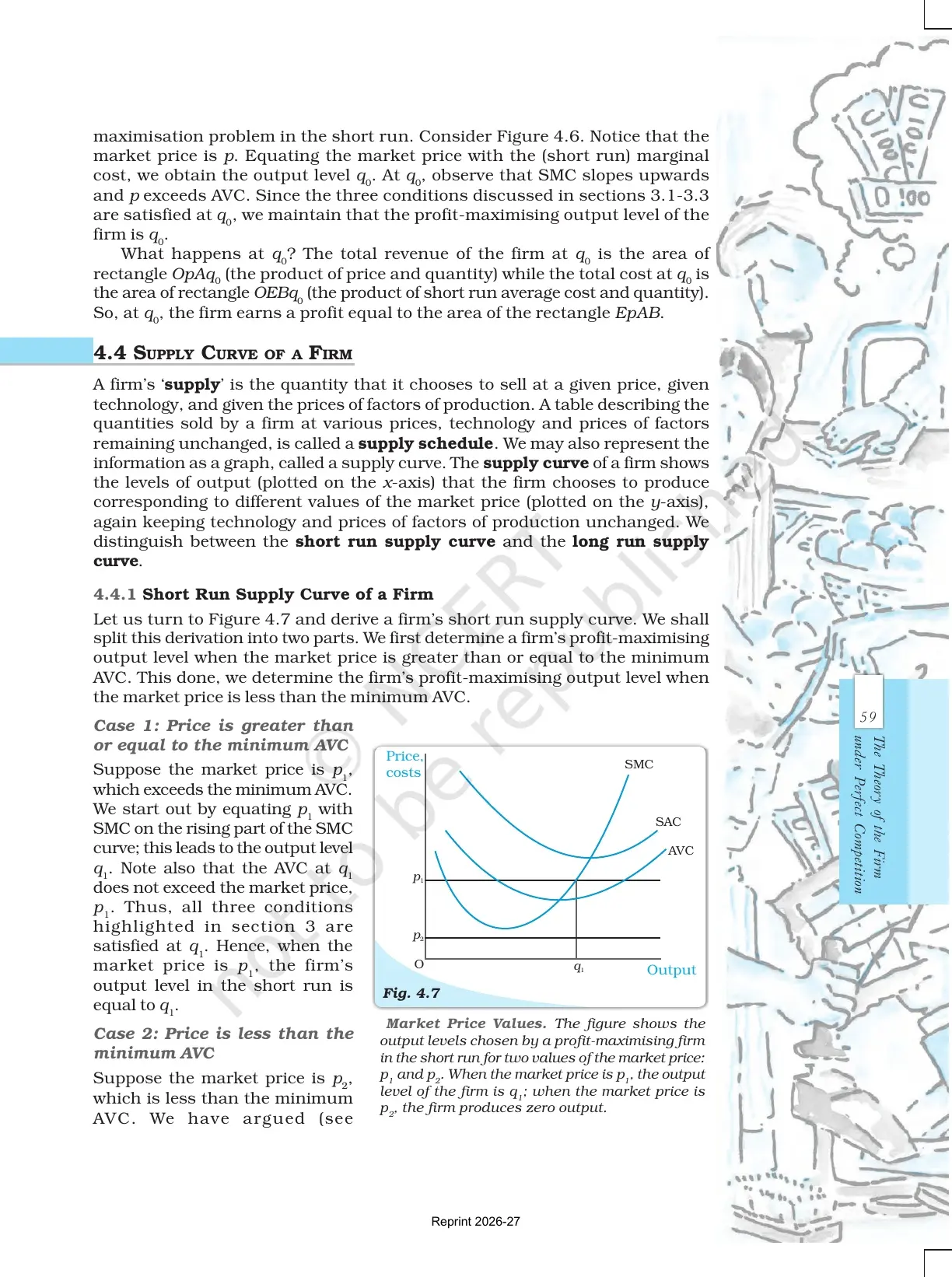
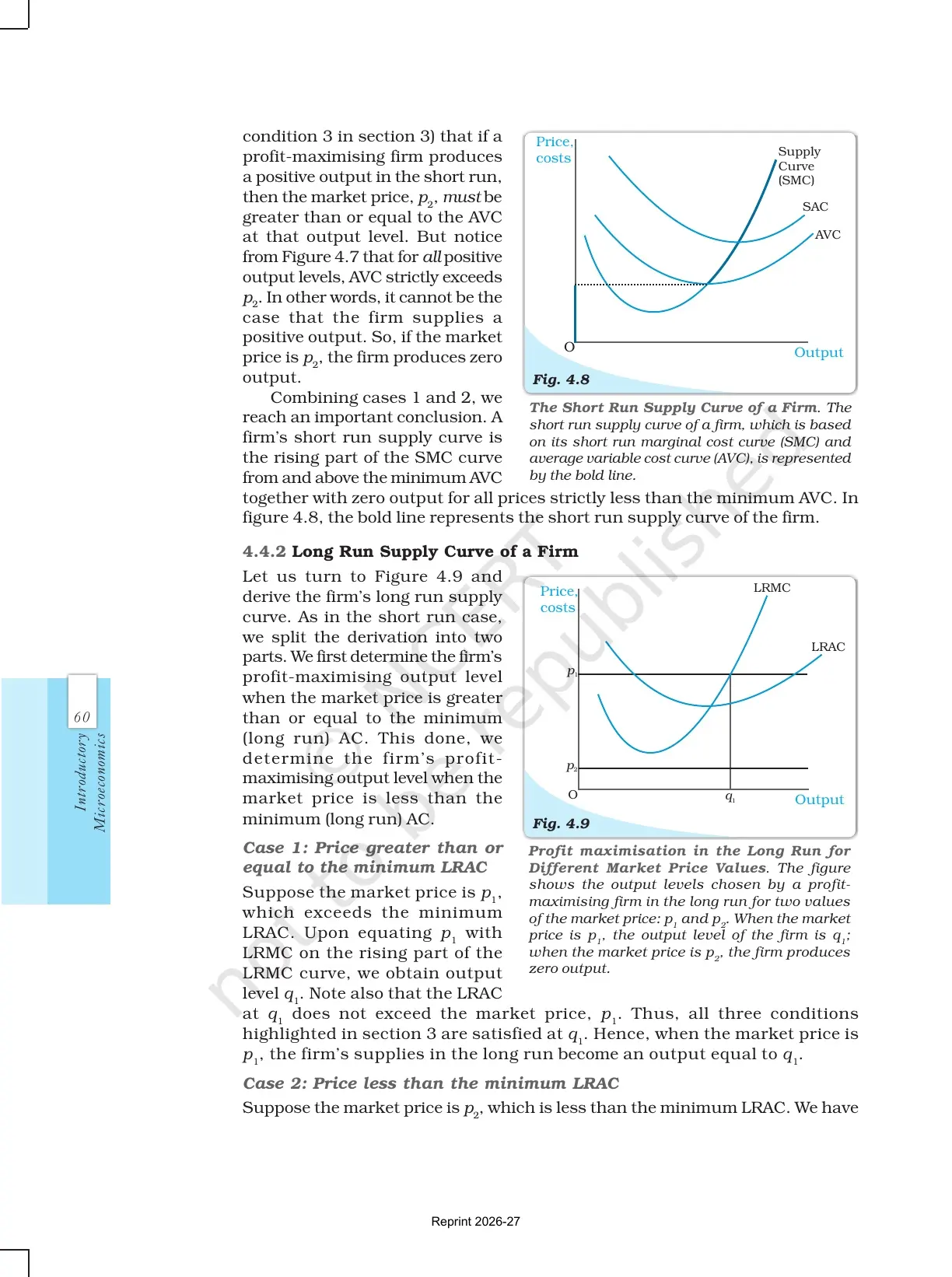
| 4.4 | Supply curve of a firm | Short run: MC above min AVC; long run: MC above min LRAC |
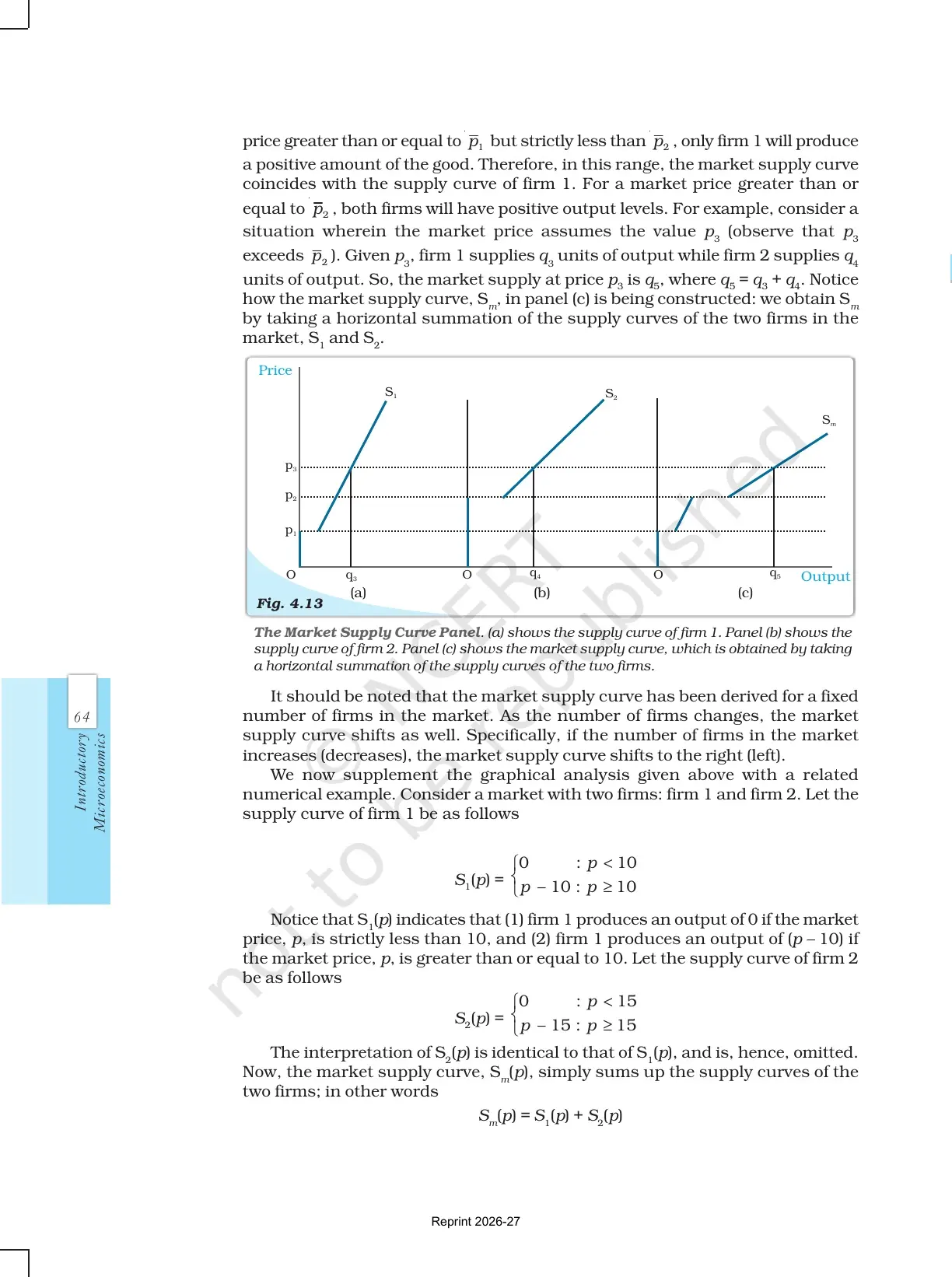
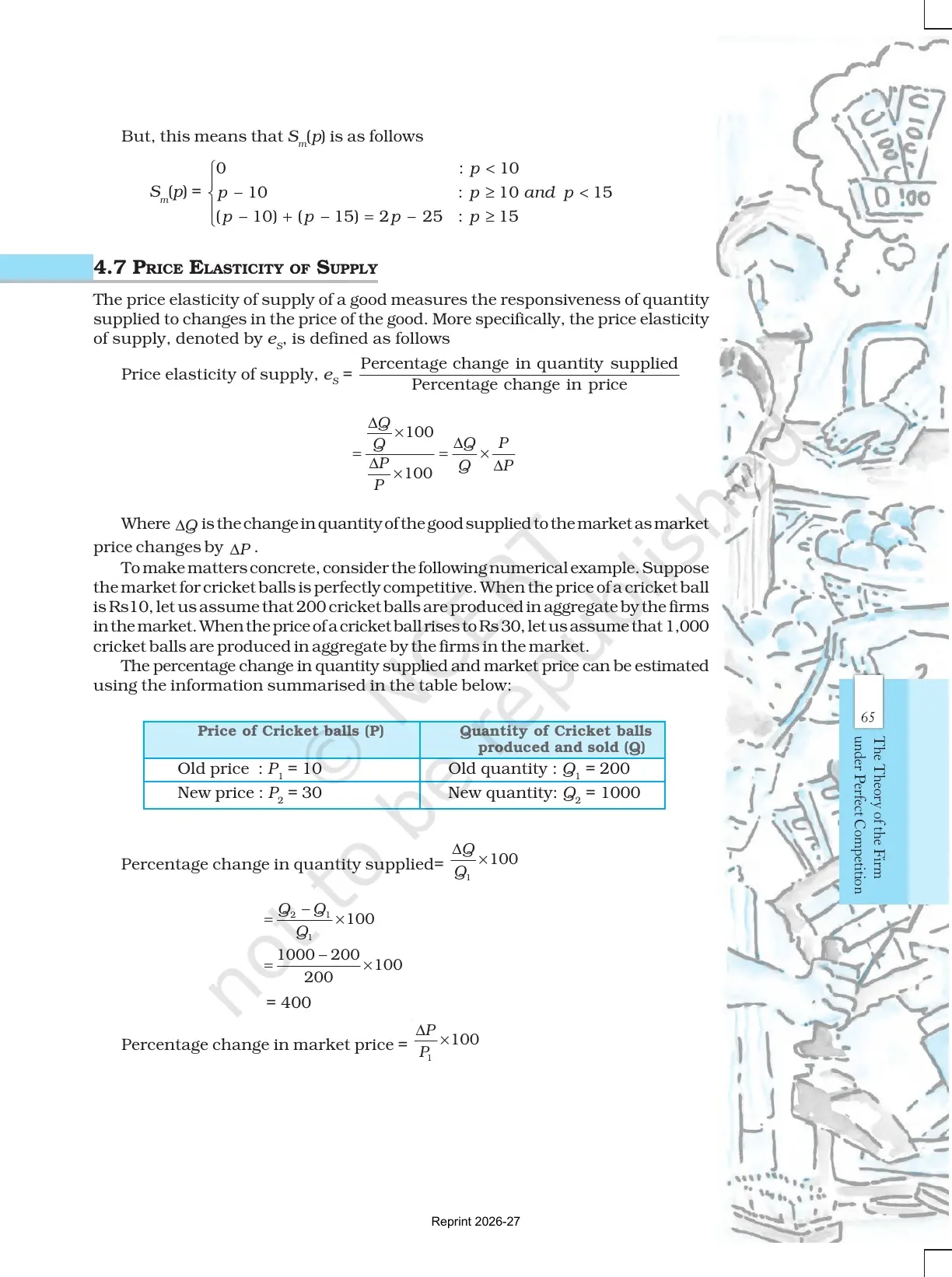
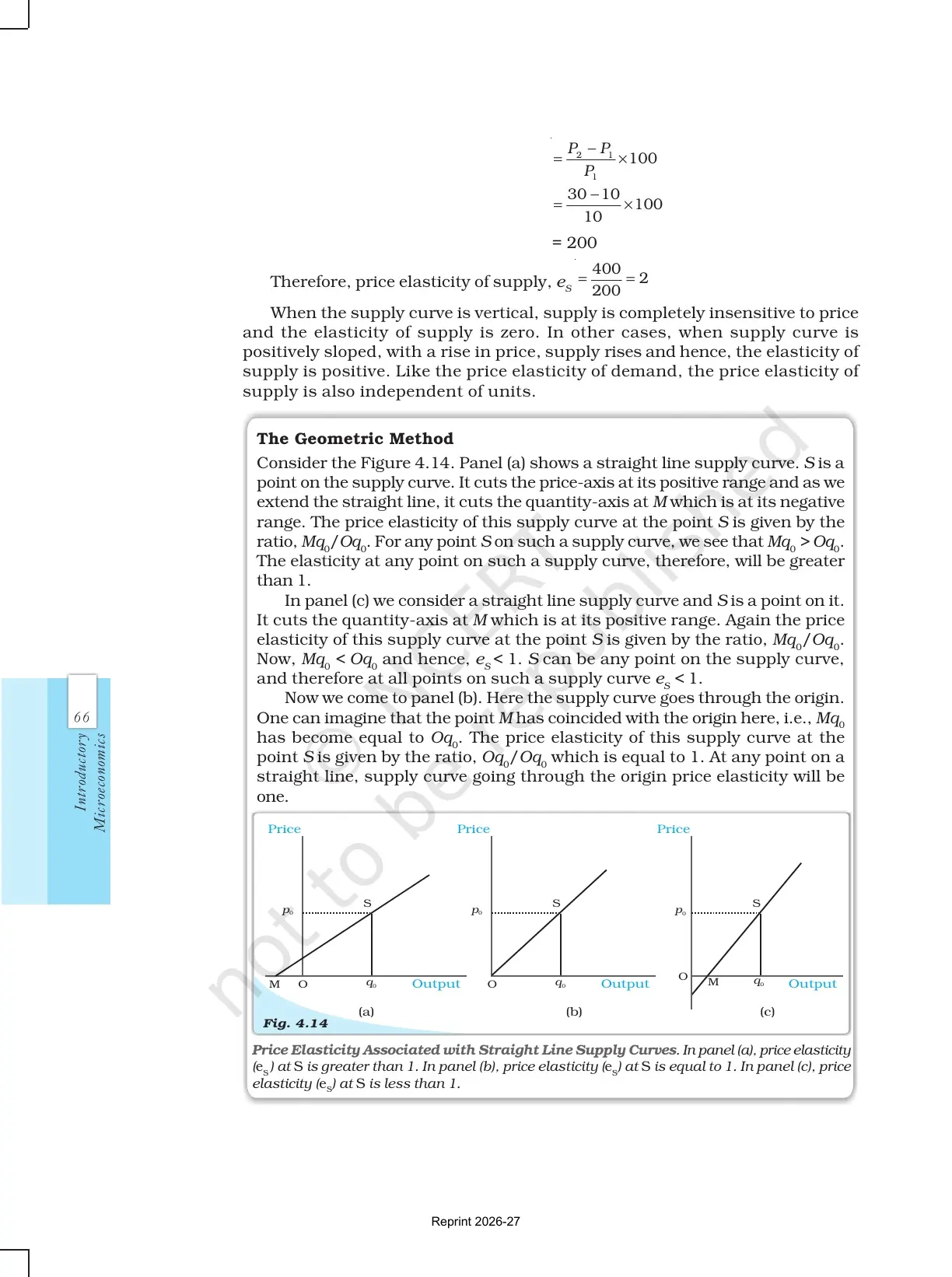
| 4.5 to 4.7 | Determinants, market supply, elasticity | Technology and input prices; horizontal sum; elasticity of supply |
Sections 4.3 and 4.4 together carry most of the marks set on this chapter. The MR=MC rule and the firm's supply curve are the two most testable blocks in the whole Microeconomics half.
Key Concepts in the Theory of the Firm under Perfect Competition PDF
These are the ideas to copy in the exact NCERT wording. CBSE examiners give marks for textbook language, so learn these lines as they are written.
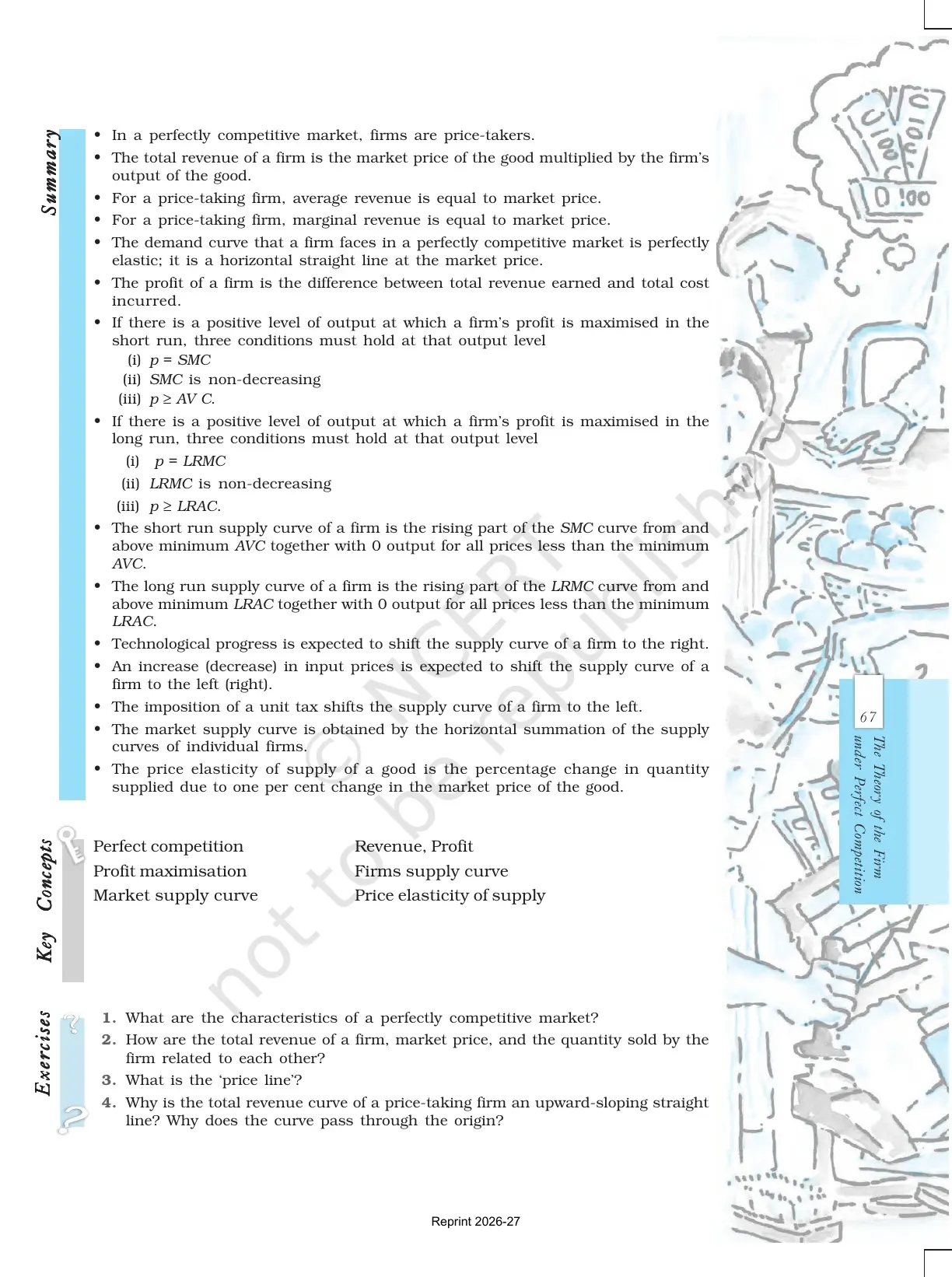
- Price taker: the firm accepts the market price and chooses only how much to supply.
- Revenue identity: TR = P times Q, and AR = MR = P, so the TR curve is a straight line from the origin.
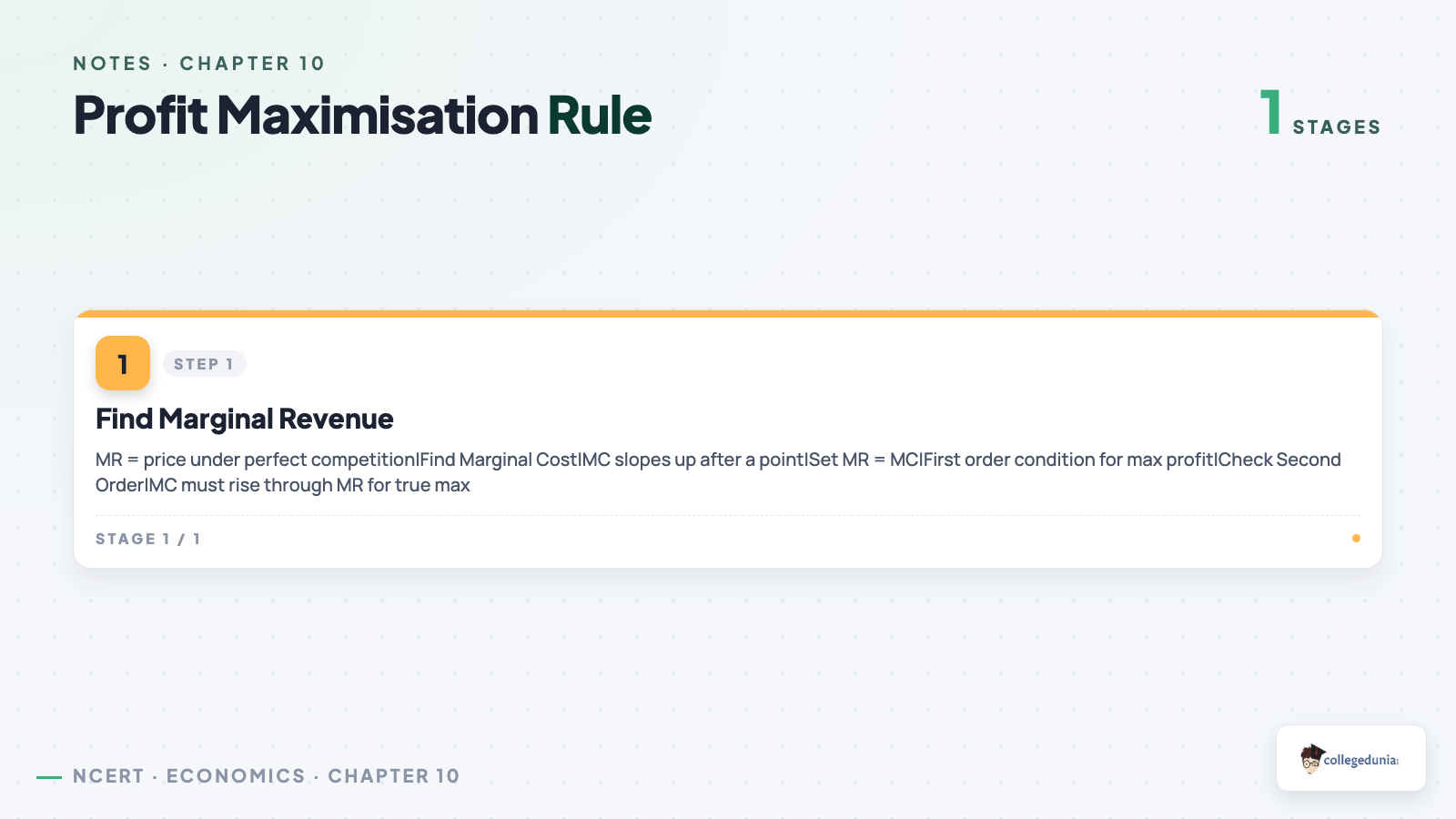
- MR = MC rule: profit is highest where MR equals MC and MC is rising. For a price taker this becomes P = MC.
- Shut-down vs break-even: shut-down is at minimum AVC; break-even is at minimum AC.
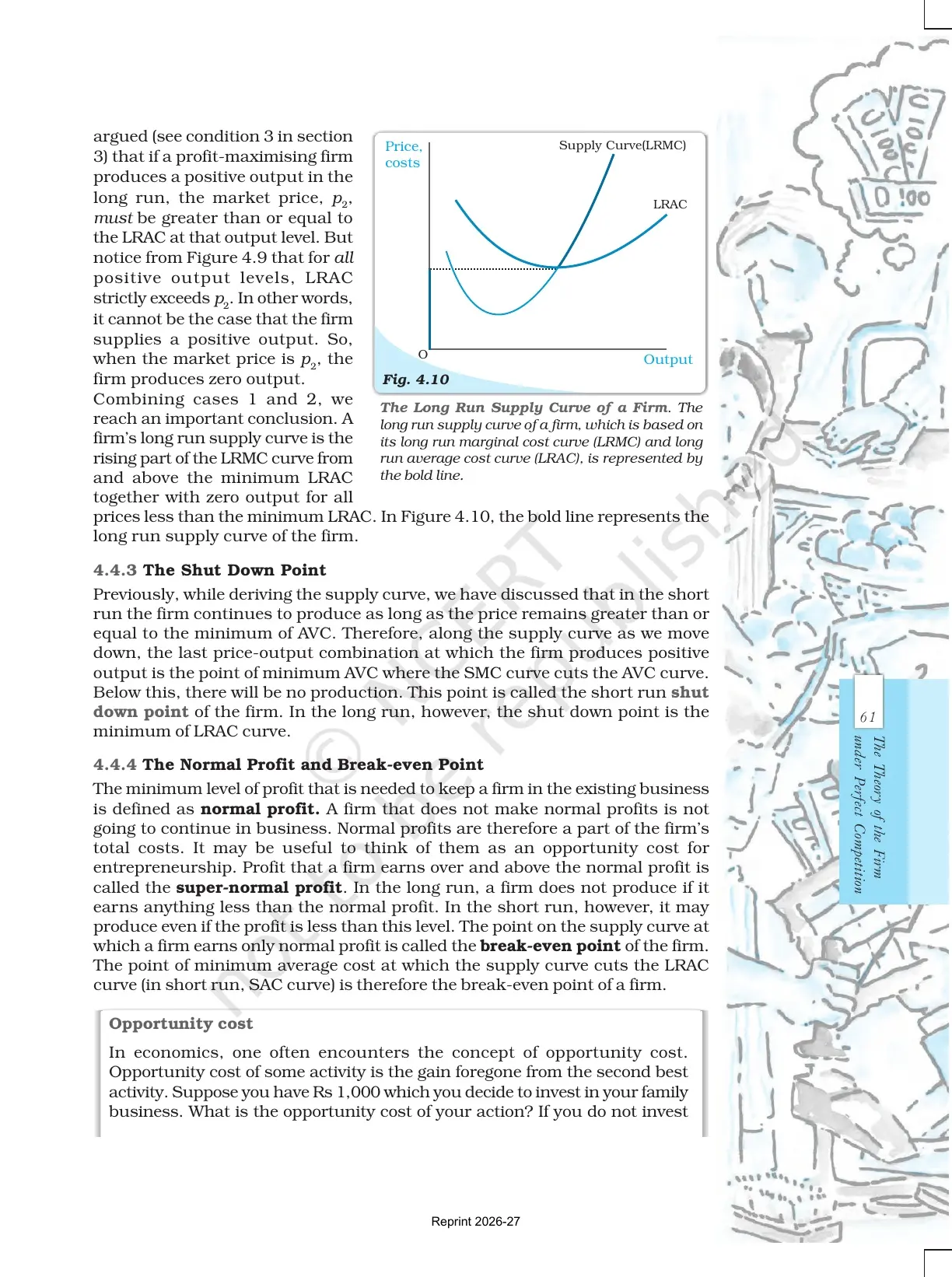
- Supply curve: the part of MC above minimum AVC in the short run, and above minimum LRAC in the long run.
The Theory of the Firm under Perfect Competition Video Lesson
Source: Humanities with Poonam on YouTube
Shut-Down and Break-Even Points in the Class 12 Economics Chapter 4 PDF
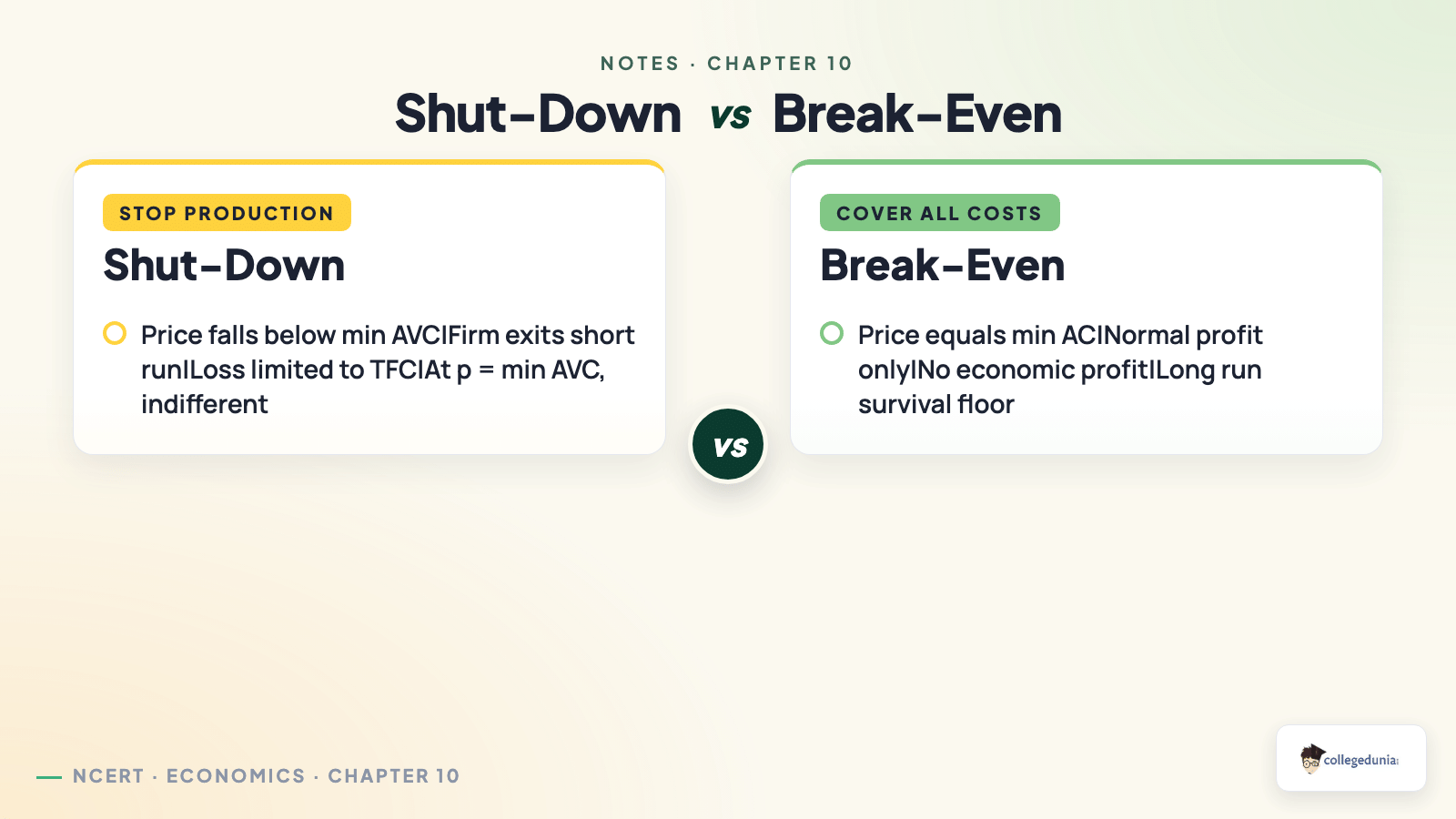
The most common slip in this chapter is mixing up the shut-down and break-even points. Keep them apart with one rule: shut-down uses AVC, break-even uses AC.
| Point | Lies at | What it means |
|---|---|---|
| Shut-down | Minimum of AVC | Below this price the firm cannot cover variable cost, so it produces zero in the short run. |
| Break-even | Minimum of AC | At this price the firm covers all costs and earns normal profit. |
Why Read the NCERT PDF for Theory of the Firm under Perfect Competition
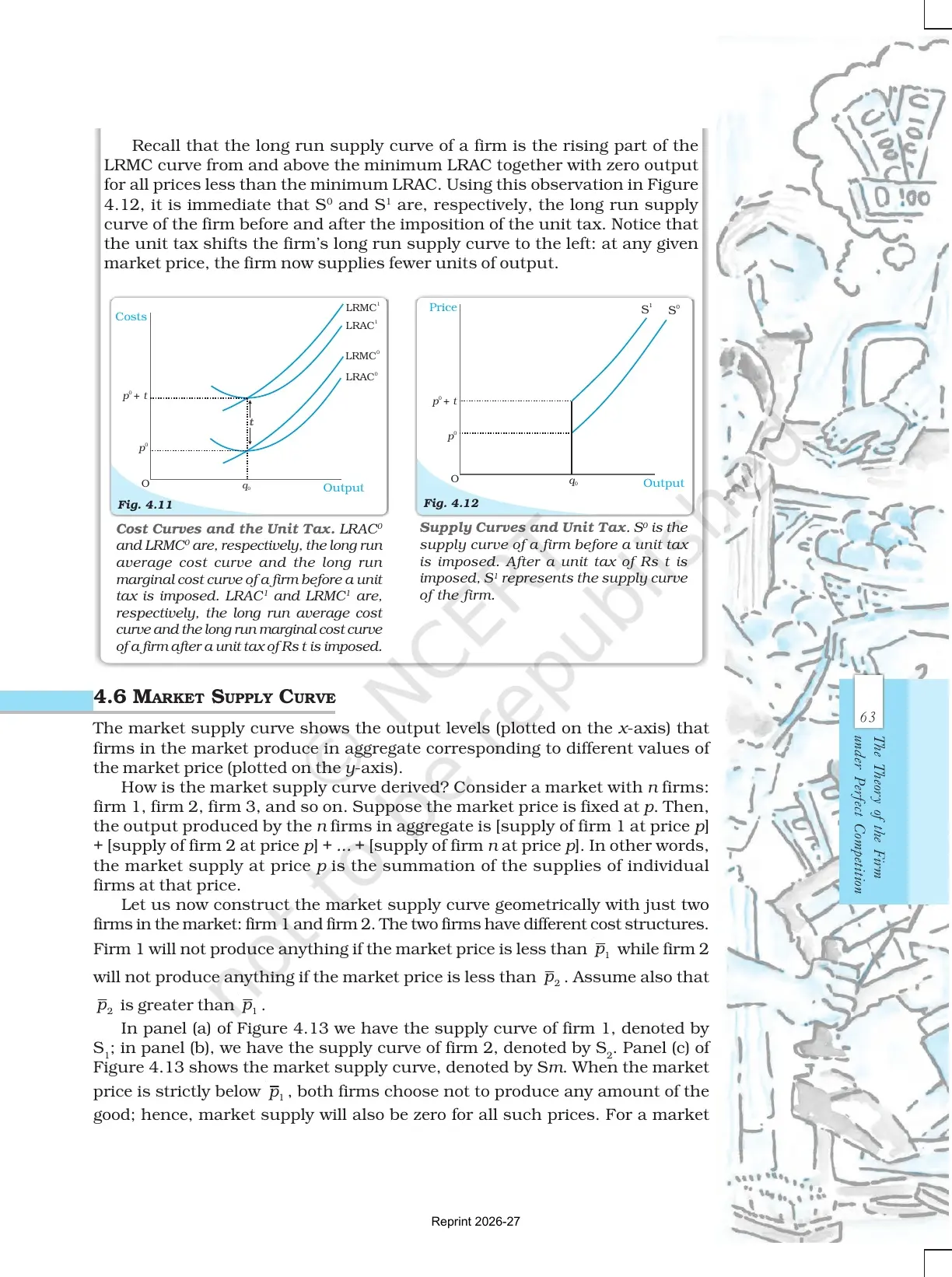
Reference books rewrite the chapter into a shorter, sum-heavy form, but they cannot replace the textbook. The board paper draws its theory questions from the exact NCERT wording. The long-run supply curve from minimum LRAC and the geometric method for elasticity of supply are explained clearly only in this PDF, and both appear as 3 to 4 mark questions.
The official MR=MC and shut-down diagrams are also the ones used in marking schemes. Students who have seen the original diagrams draw cleaner, better-labelled answers and lose fewer marks.
Weightage of Theory of the Firm under Perfect Competition in CBSE
The chapter has stayed at a steady 6 to 8 marks. The table shows how it has come up in recent papers.
| Year | Marks | Main topic asked |
|---|---|---|
| 2025 | 6 | Profit-maximising output using MR=MC |
| 2024 | 8 | Short-run supply curve from MC and AVC |
| 2023 | 6 | Break-even versus shut-down |
| 2022 | 5 | Price elasticity of supply |
Student Feedback
We asked 12,400 Class 12 students about this chapter. 85% said the NCERT PDF was their main source, and those who paired it with the matched NCERT Solutions scored about 7.4 out of 8 on questions from this chapter.
Other Resources for Class 12 Economics Chapter 4
Pair this PDF with the Solutions, Notes and handwritten notes below for full chapter coverage.
| Resource | What it covers | Open |
|---|---|---|
| NCERT Book PDF | Official NCERT Microeconomics Chapter 4 textbook. | Chapter 4 NCERT Book PDF |
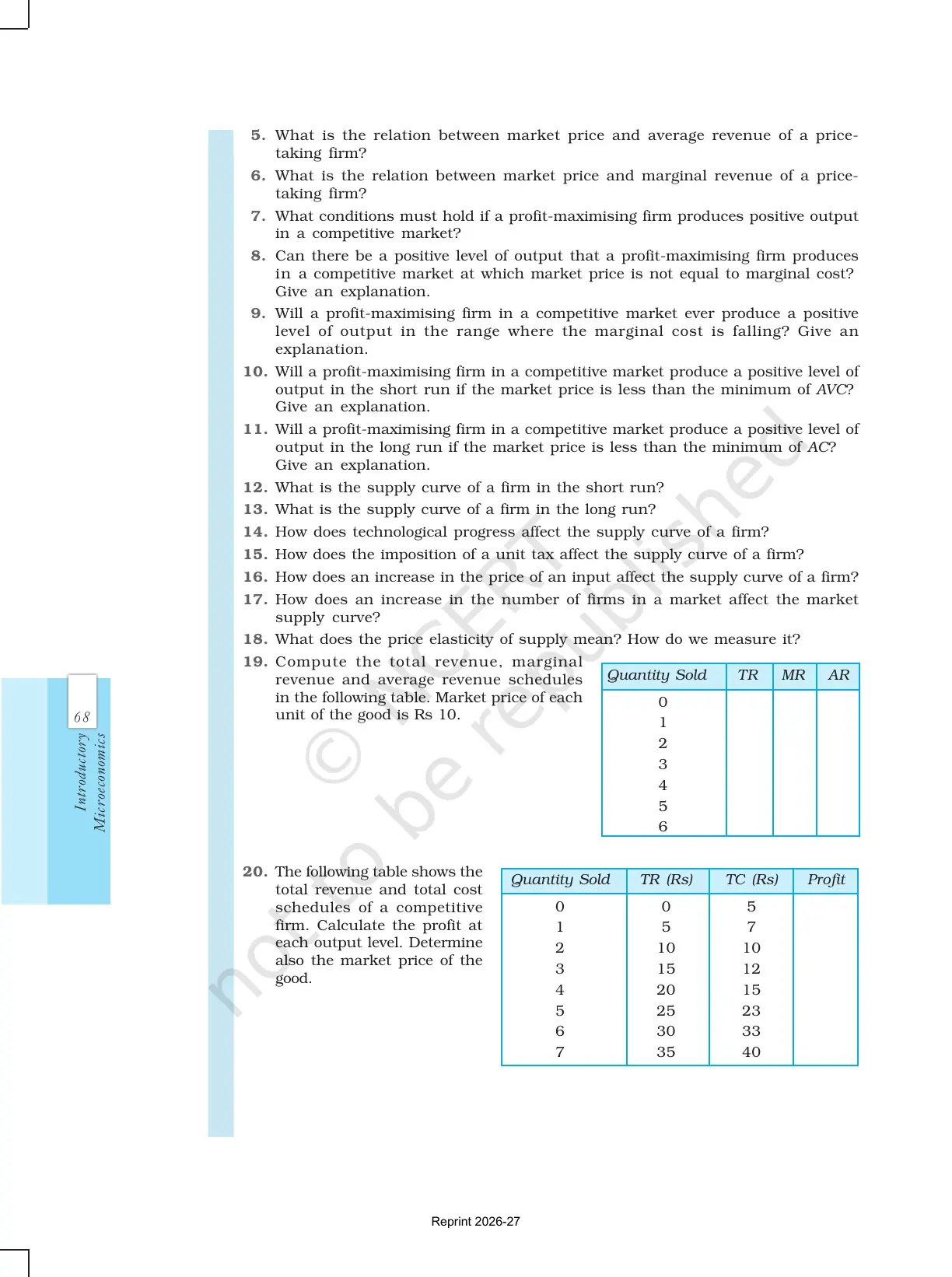
| NCERT Solutions | Step-by-step answers to every exercise question. | Chapter 4 NCERT Solutions |
| Notes | Concept-first revision of the full chapter. | Chapter 4 Notes |
| Handwritten Notes | Scanned notebook pages for last-mile revision. | Chapter 4 Handwritten Notes |
All Chapters: Class 12 Economics NCERT Book PDF
| Chapter | NCERT Book PDF |
|---|---|
| Micro Chapter 1 | Introduction to Microeconomics |
| Micro Chapter 2 | Theory of Consumer Behaviour |
| Micro Chapter 3 | Production and Costs |
| Micro Chapter 4 | The Theory of the Firm under Perfect Competition |
| Macro Chapter 2 | National Income Accounting |
| Macro Chapter 3 | Money and Banking |
| Macro Chapter 4 | Income Determination |
| Macro Chapter 5 | Government Budget and the Economy |
| Macro Chapter 6 | Open Economy Macroeconomics |
Class 12 Economics Chapter 4 Theory of the Firm under Perfect Competition NCERT Book PDF FAQs
Ques. Where can students download the NCERT Class 12 Economics Chapter 4 PDF?
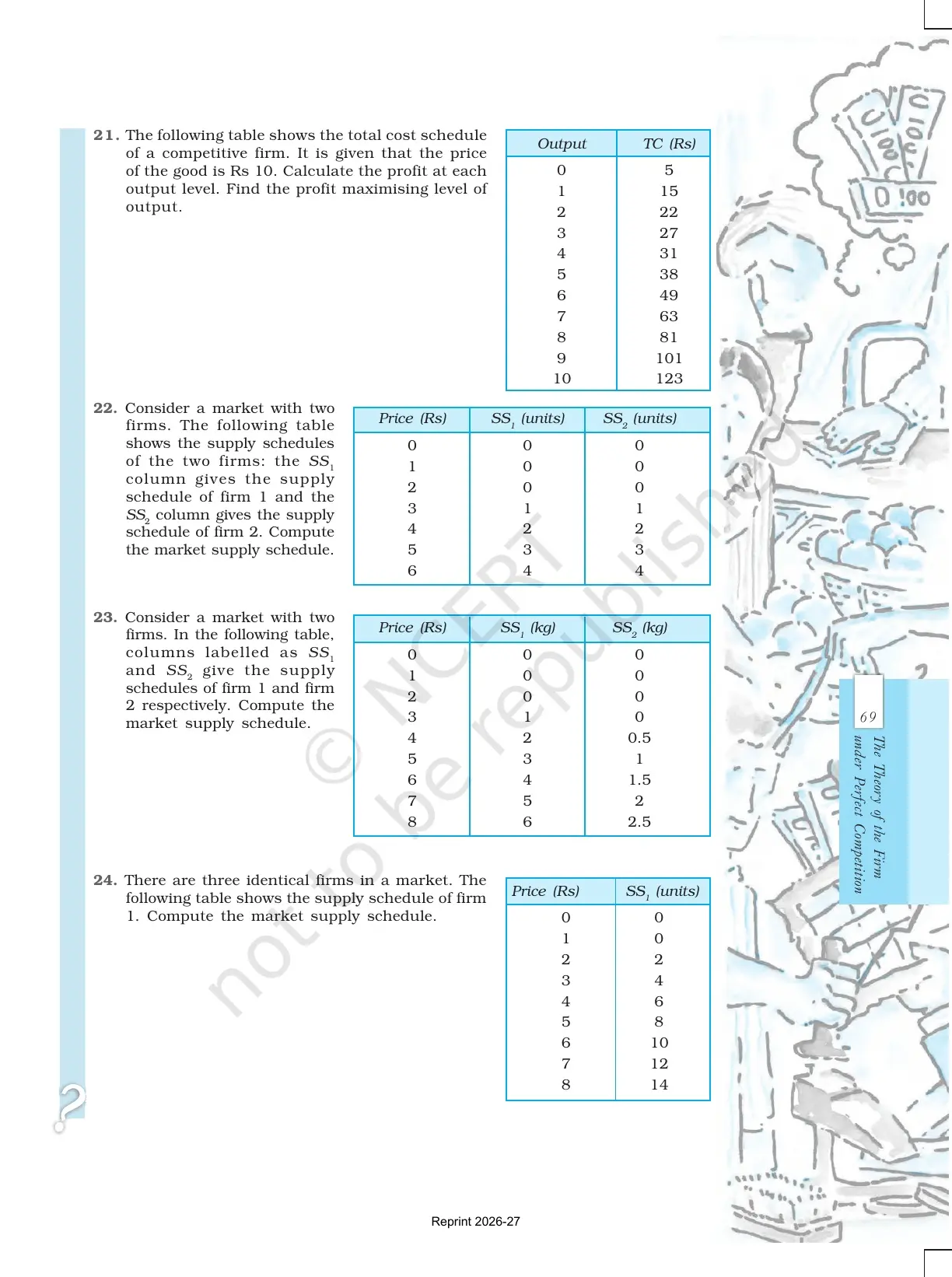
Ans. Students can download the official Chapter 4 Theory of the Firm under Perfect Competition PDF from the download card at the top of this page. It is the single-chapter file leec204 from the NCERT Introductory Microeconomics textbook, aligned to the 2026-27 CBSE syllabus.
Ques. What are the four features of perfect competition?
Ans. The four features are many buyers and many sellers, a homogeneous product, free entry and exit of firms, and perfect information for all. Together they make every firm a price taker, the definition given in Section 4.1 of the PDF.
Ques. What is the MR=MC rule for profit maximisation?
Ans. A firm earns the most profit at the output where MR equals MC and MC is rising. For a price-taking firm MR equals price, so the rule becomes P = MC with MC rising. Both conditions together make sure it is a maximum, not a minimum.
Ques. What is the difference between the shut-down point and the break-even point?
Ans. The shut-down point is at the minimum of AVC: below this price the firm cannot cover variable cost and produces zero in the short run. The break-even point is at the minimum of AC: at this price the firm earns normal profit. Shut-down uses AVC because fixed costs are sunk; break-even uses AC because every cost must be covered.
Ques. How much weightage does Chapter 4 carry in the CBSE board paper?
Ans. Across recent CBSE papers this chapter has carried about 6 to 8 marks. The common question asks students to derive the firm's short-run supply curve from MC and AVC, or to find the profit-maximising output from a TR/TC schedule using MR=MC.



Comments