




The Class 9 Science NCERT Book PDF Chapter 11 Reproduction How Life Continues is the official chapter from the 2026-27 Exploration textbook. This 20-page chapter explains how living beings produce new individuals of their own kind, from budding in yeast to sexual reproduction in flowering plants and humans. Download the free PDF below and read it before you start the Solutions or Notes.
- What is inside: the full official chapter on asexual reproduction, sexual reproduction, meiosis, flowers and pollination, human reproduction and the Revise, Reflect, Refine exercise.
- Why download it: the source book is the exact text your Class 9 Science annual exam is set from, so every answer traces back to these pages.
Student Feedback
In a Collegedunia poll of 12,840 Class 9 students taken before their 2026-27 annual exams, 71% said reading the original NCERT chapter first made the reproduction diagrams and terms far easier to remember. Students who kept the source PDF open beside the Solutions reported fewer errors on the flower parts and menstrual cycle questions.
Source: 2026-27 Class 9 Science student poll. Sample of 12,840 students from CBSE schools across 15 states.
What Class 9 Science Chapter 11 Reproduction How Life Continues Covers
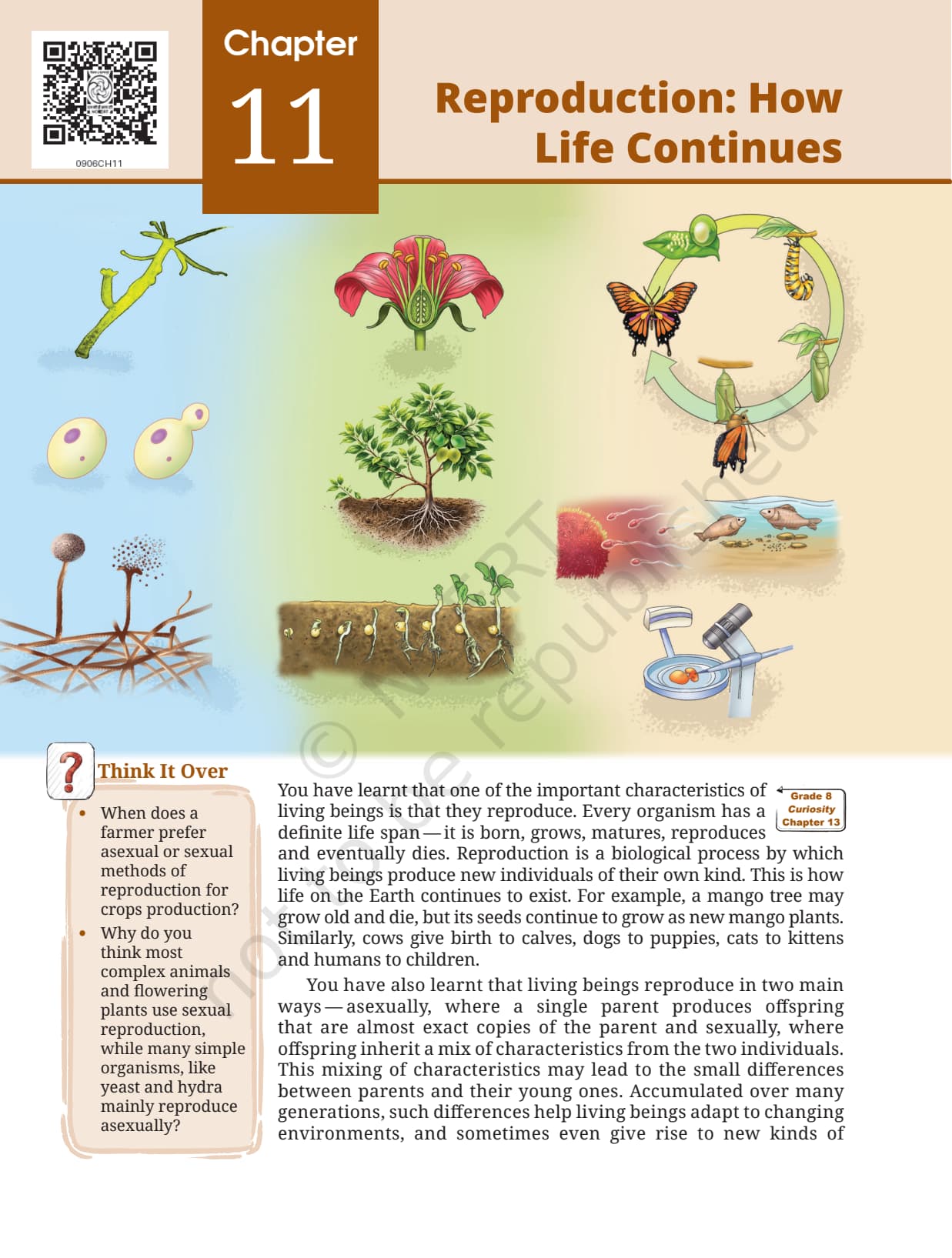
The Class 9 Science NCERT Book PDF Chapter 11 Reproduction How Life Continues starts with a simple idea. Every organism is born, grows, matures, reproduces and finally dies, so reproduction is the way life on Earth keeps going. A mango tree may die, but its seeds grow into new mango plants. The chapter then studies how this happens in plants, simple organisms and humans.
The chapter builds on one big split it returns to again and again: reproduction is either asexual, with one parent and identical offspring, or sexual, with two parents and offspring that mix both sets of traits. Once you hold on to this split, the topics fall into place. The main topics are:
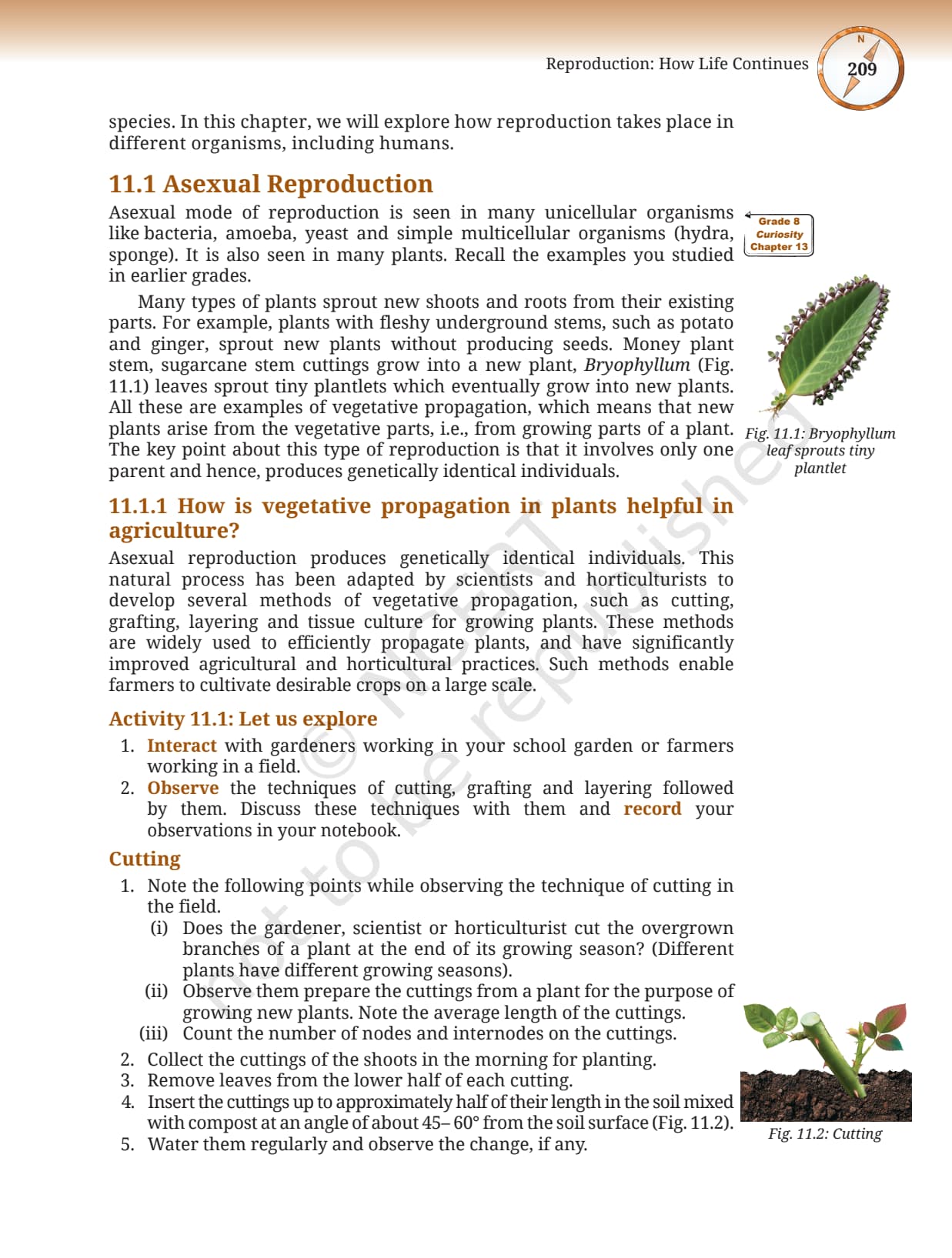
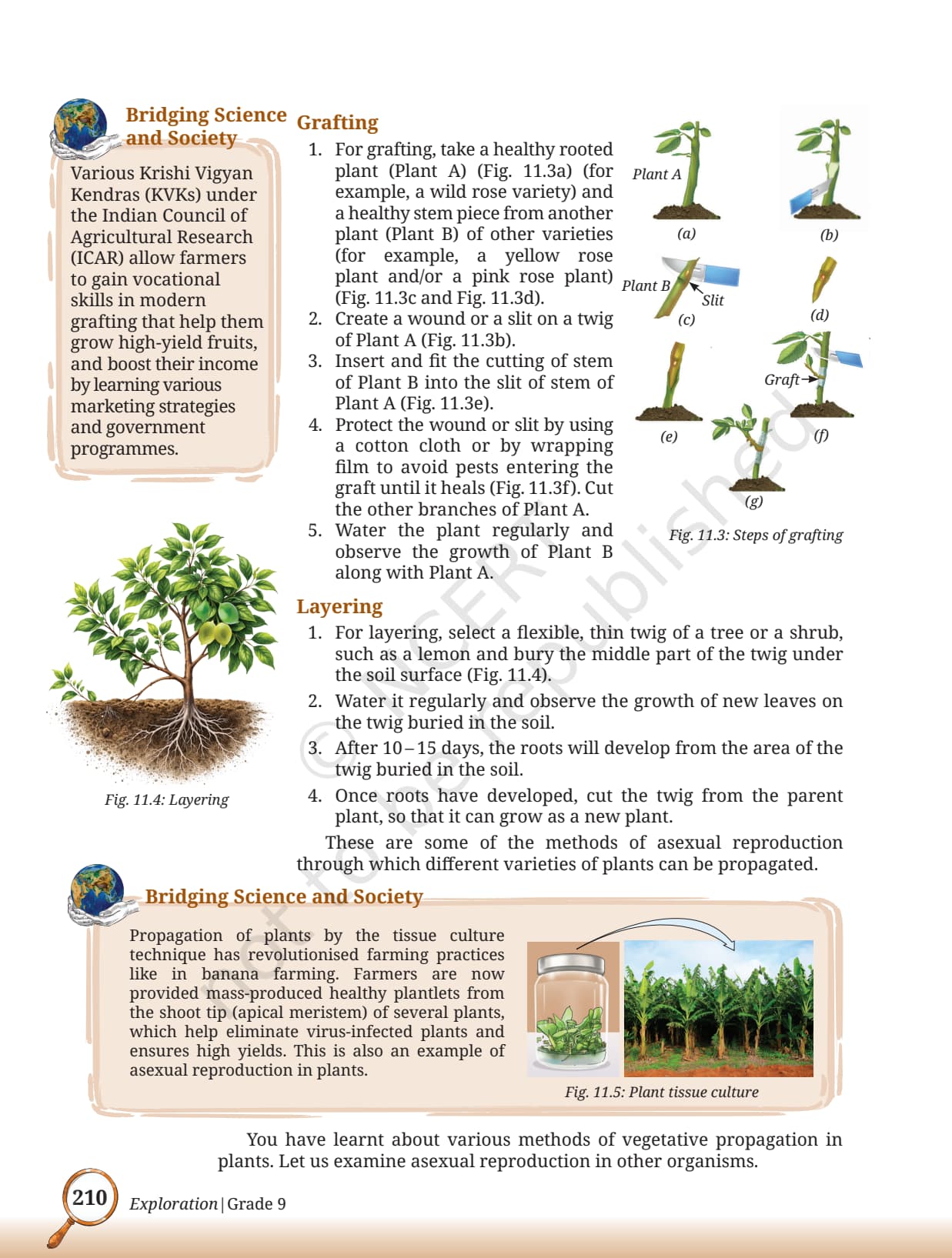
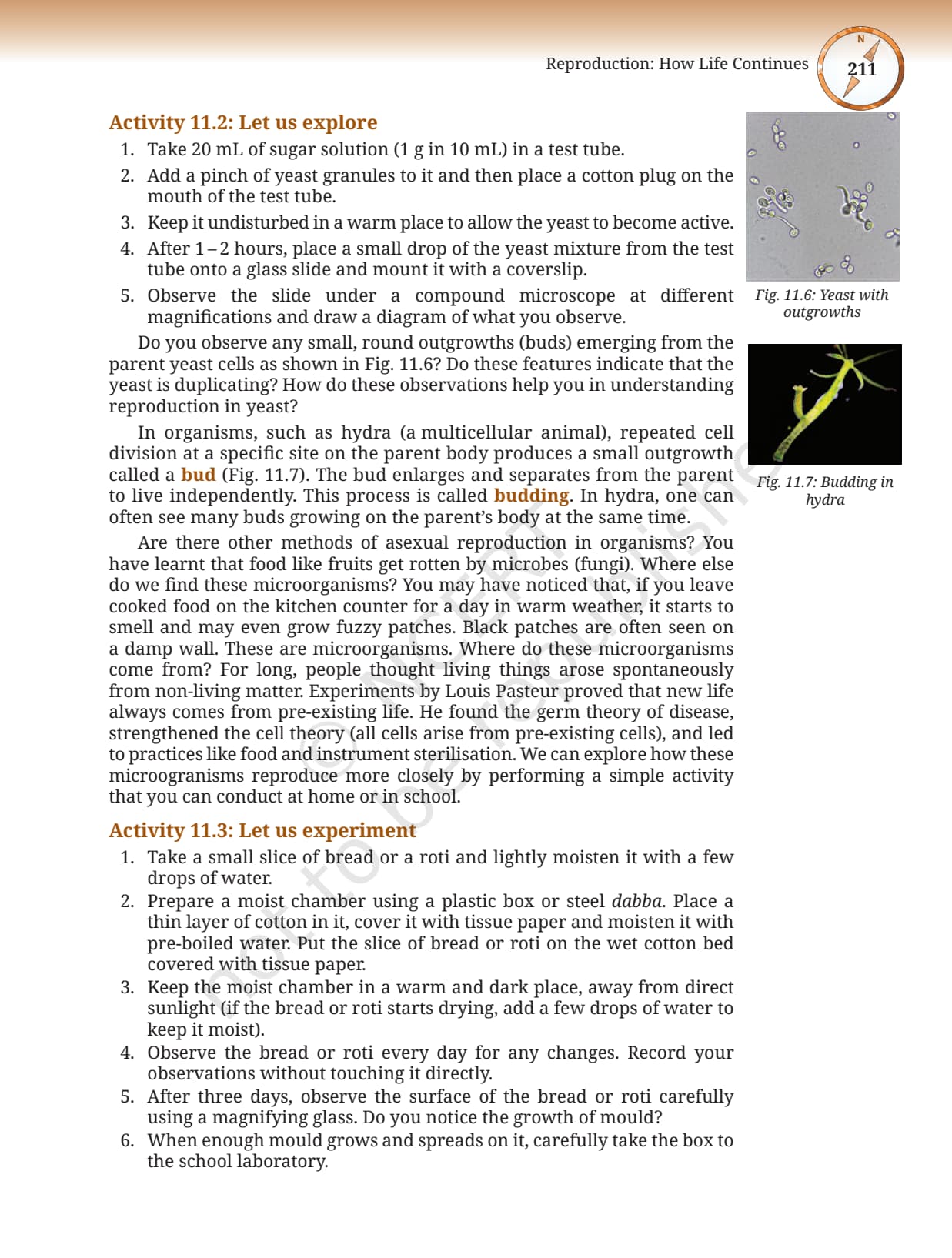
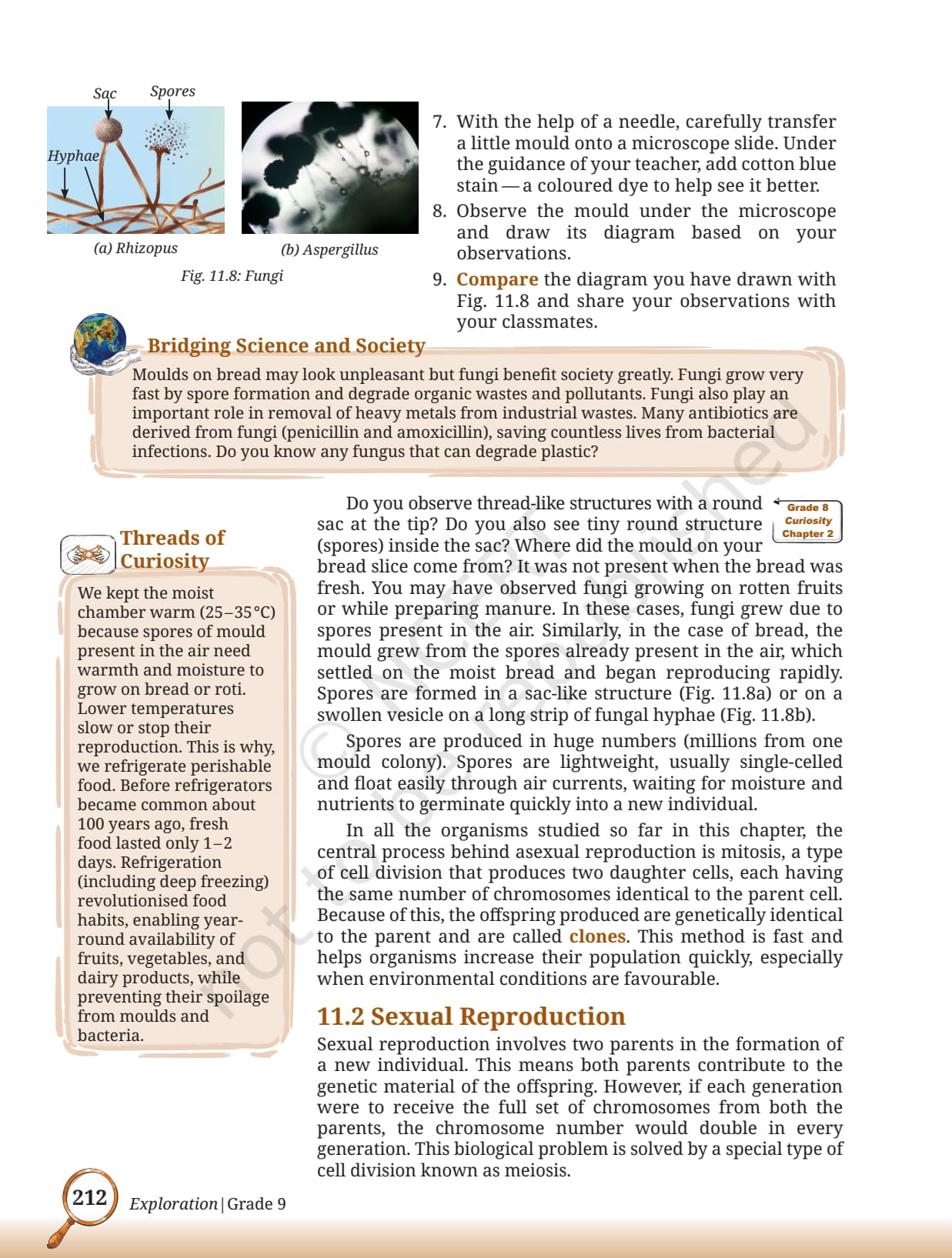
- Asexual reproduction: vegetative propagation, cutting, grafting, layering, tissue culture, budding in yeast and hydra, and spore formation in moulds.
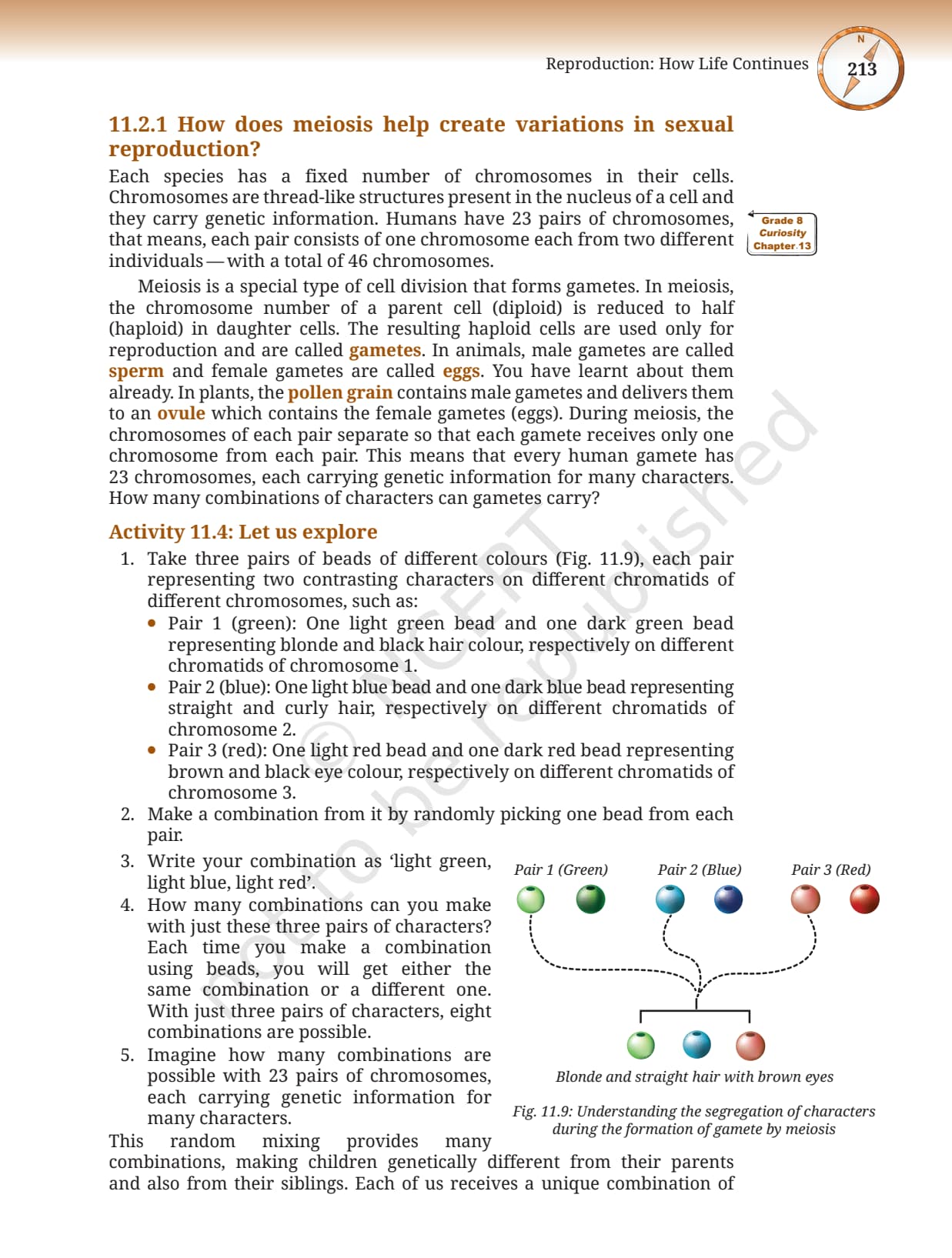
- Sexual reproduction and meiosis: how gametes form, why the chromosome number halves, and how this creates variation.
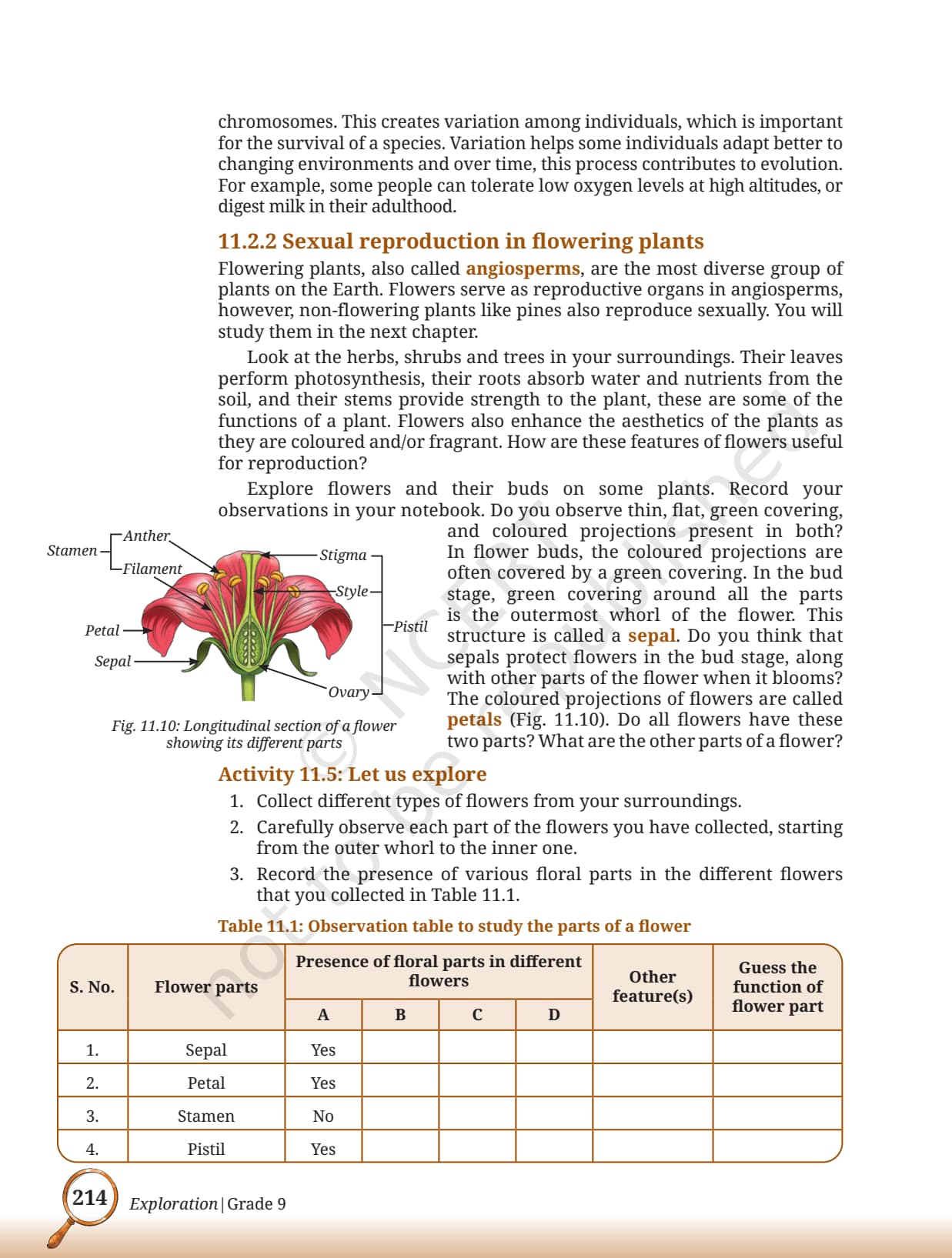
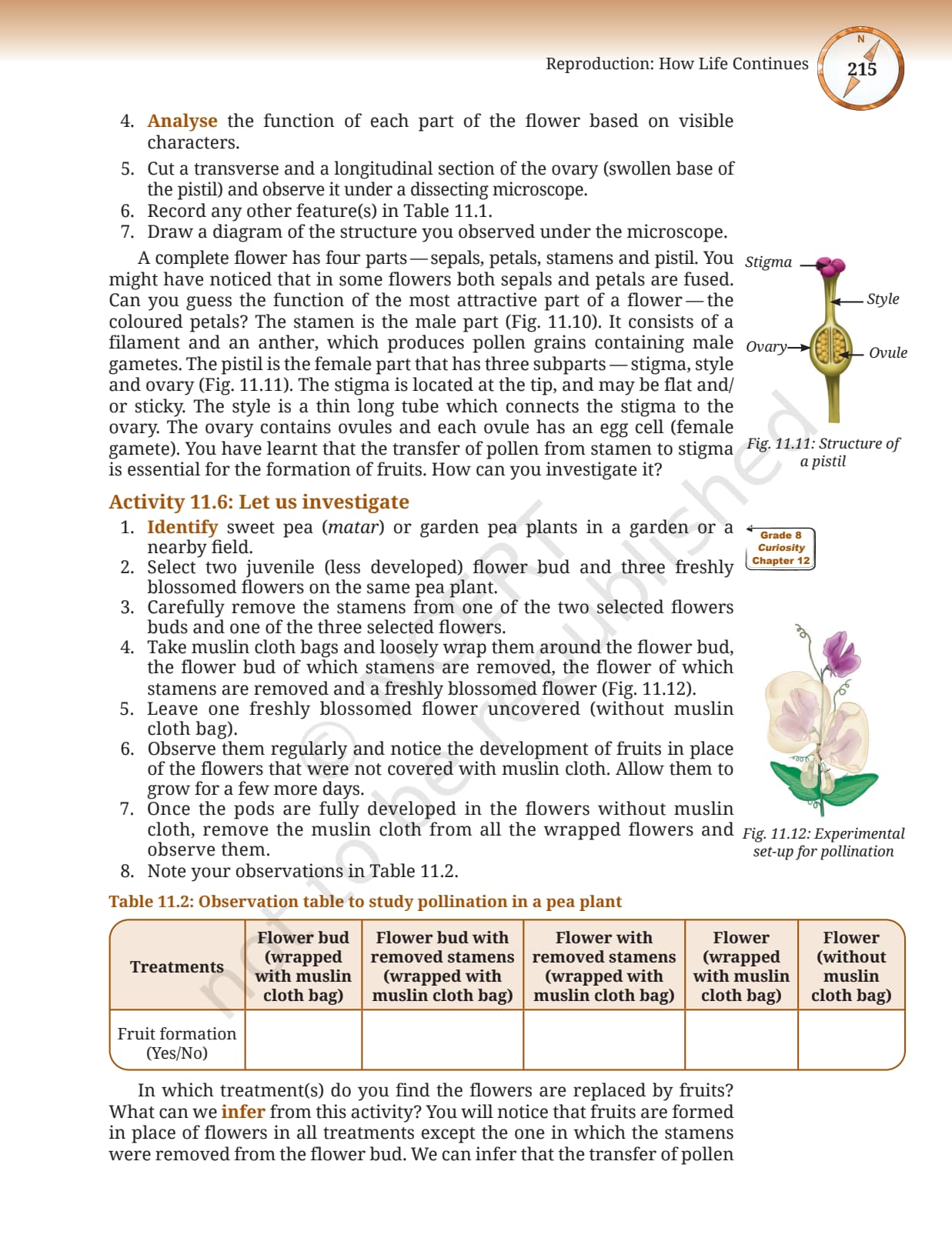
- Sexual reproduction in flowering plants: flower parts, self-pollination and cross-pollination, and pollination by wind, water and insects.
- Reproduction in human beings: puberty, the male and female reproductive systems, the menstrual cycle, pregnancy and adolescence.
Reproduction How Life Continues Explained for Class 9 Science Boards
Source: Magnet Brains on YouTube
How to Download the Class 9 Science Chapter 11 Reproduction How Life Continues NCERT Book PDF
You can download the chapter straight from the PDF card near the top of this page. Both a Normal and an HD version are free, and each one matches the 2026-27 Exploration book page for page. Save it to your phone or laptop so you can revise offline.
- Open the card: tap the download button in the PDF card above to get the full chapter file.
- Pick a version: use the HD copy for clear diagrams of the flower and reproductive systems, or the Normal copy for a smaller file size.
- Study offline: the saved PDF works without internet, which helps during last-day revision.
Asexual and Sexual Reproduction in the Chapter
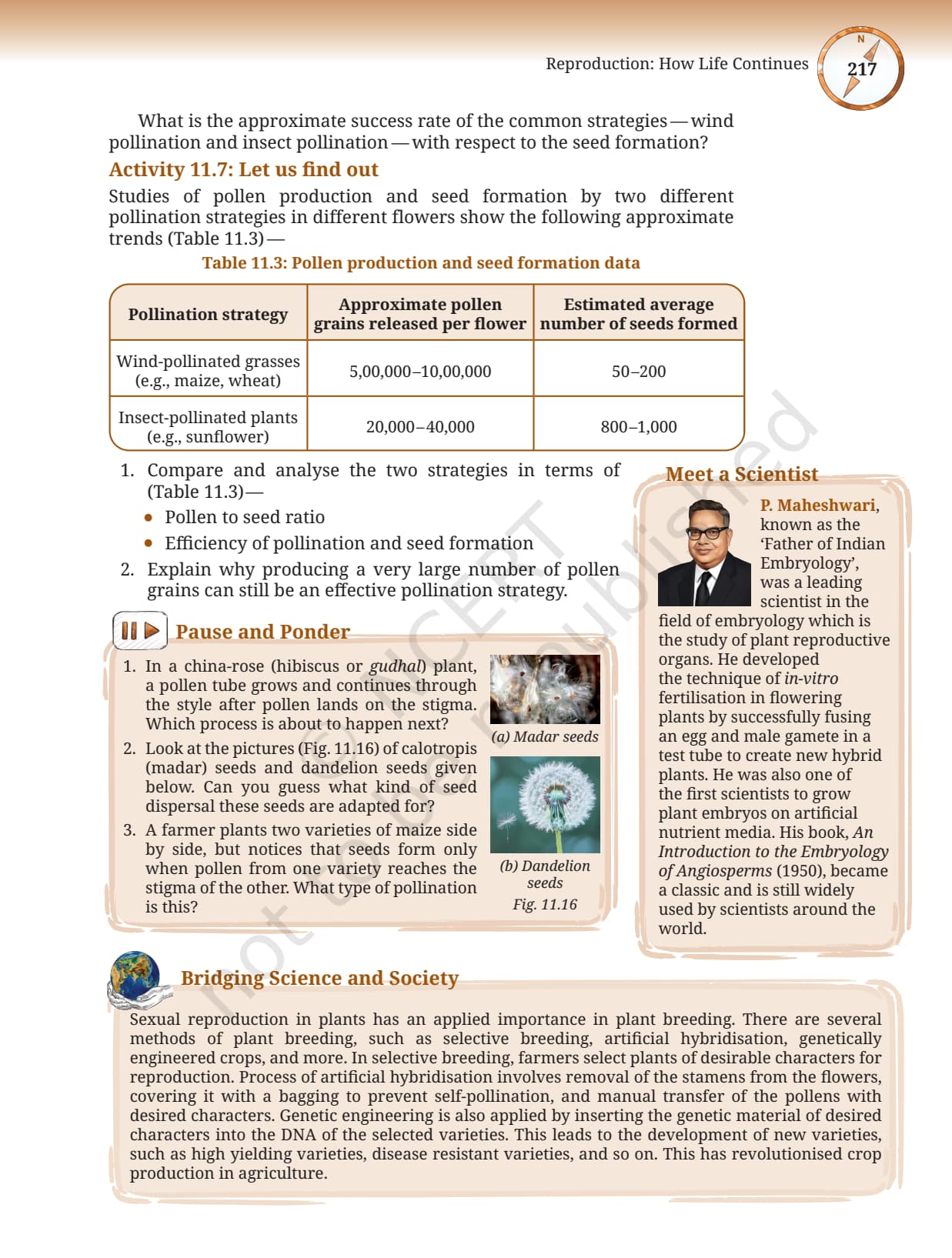
A large part of the chapter compares the two ways living beings reproduce. In asexual reproduction a single parent makes offspring that are almost exact copies of itself, which is fast and common in yeast, hydra and many plants. In sexual reproduction two parents each pass on half their traits, so the young ones are a little different from both. The image below sums up this split from the chapter.
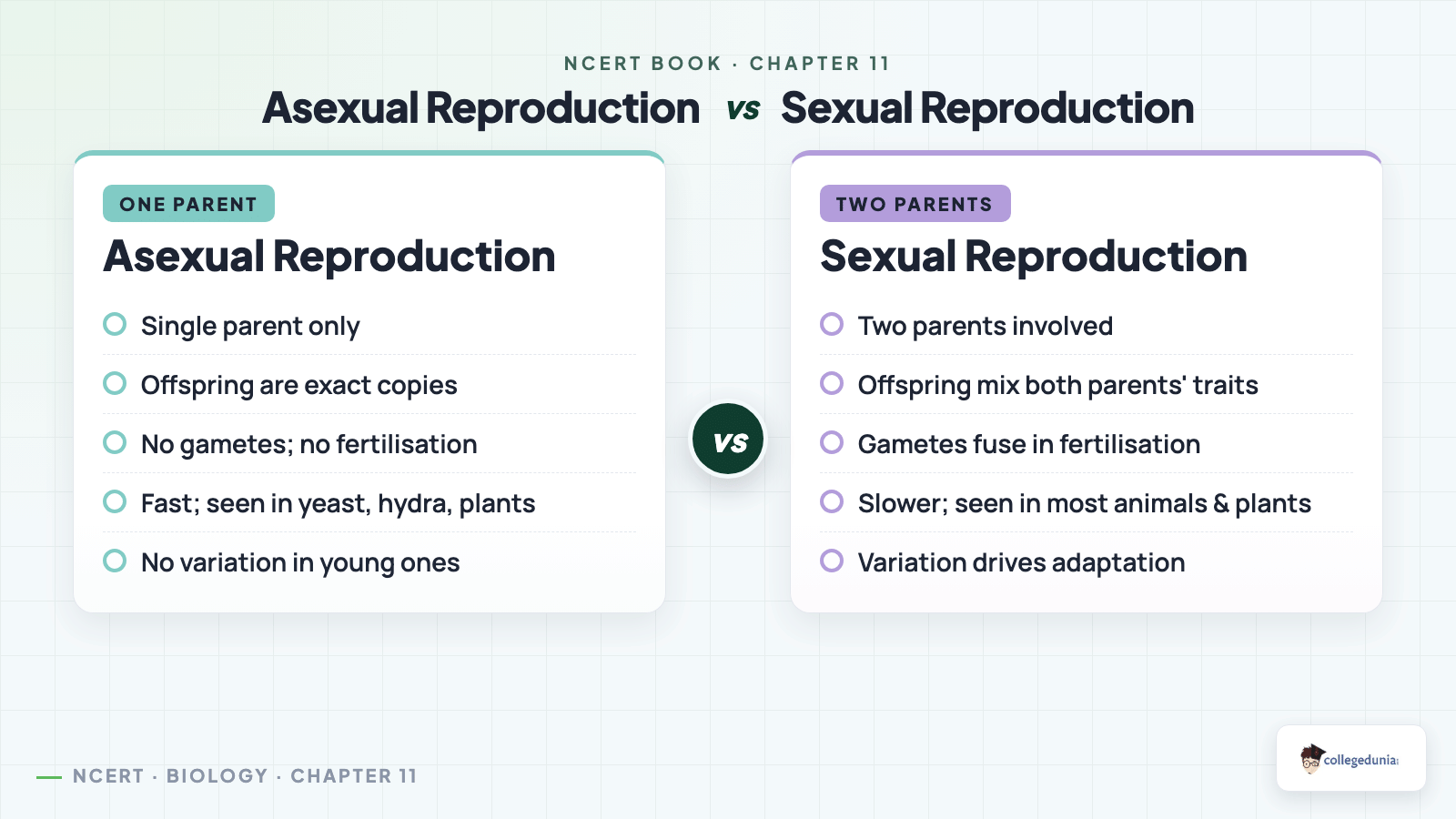
Asexual reproduction includes vegetative propagation, where new plants grow from roots, stems or leaves like the potato, ginger and Bryophyllum. It also covers budding, where a small outgrowth on yeast or hydra breaks off as a new individual, and spore formation, where a mould releases millions of light spores into the air. Sexual reproduction, on the other hand, needs gametes that fuse during fertilisation, and the small differences it creates help a species adapt over many generations.
Sexual Reproduction in Flowering Plants and Pollination
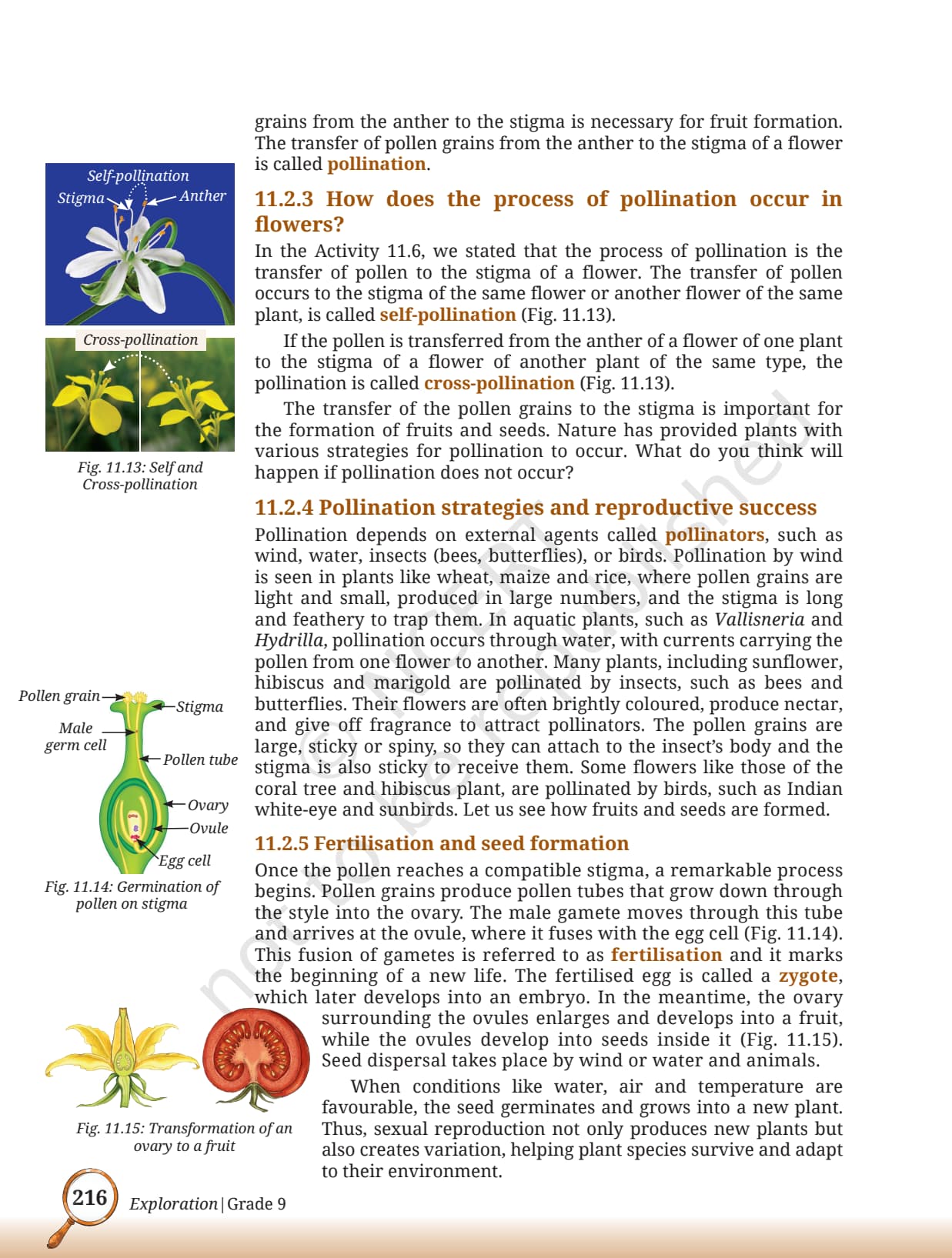
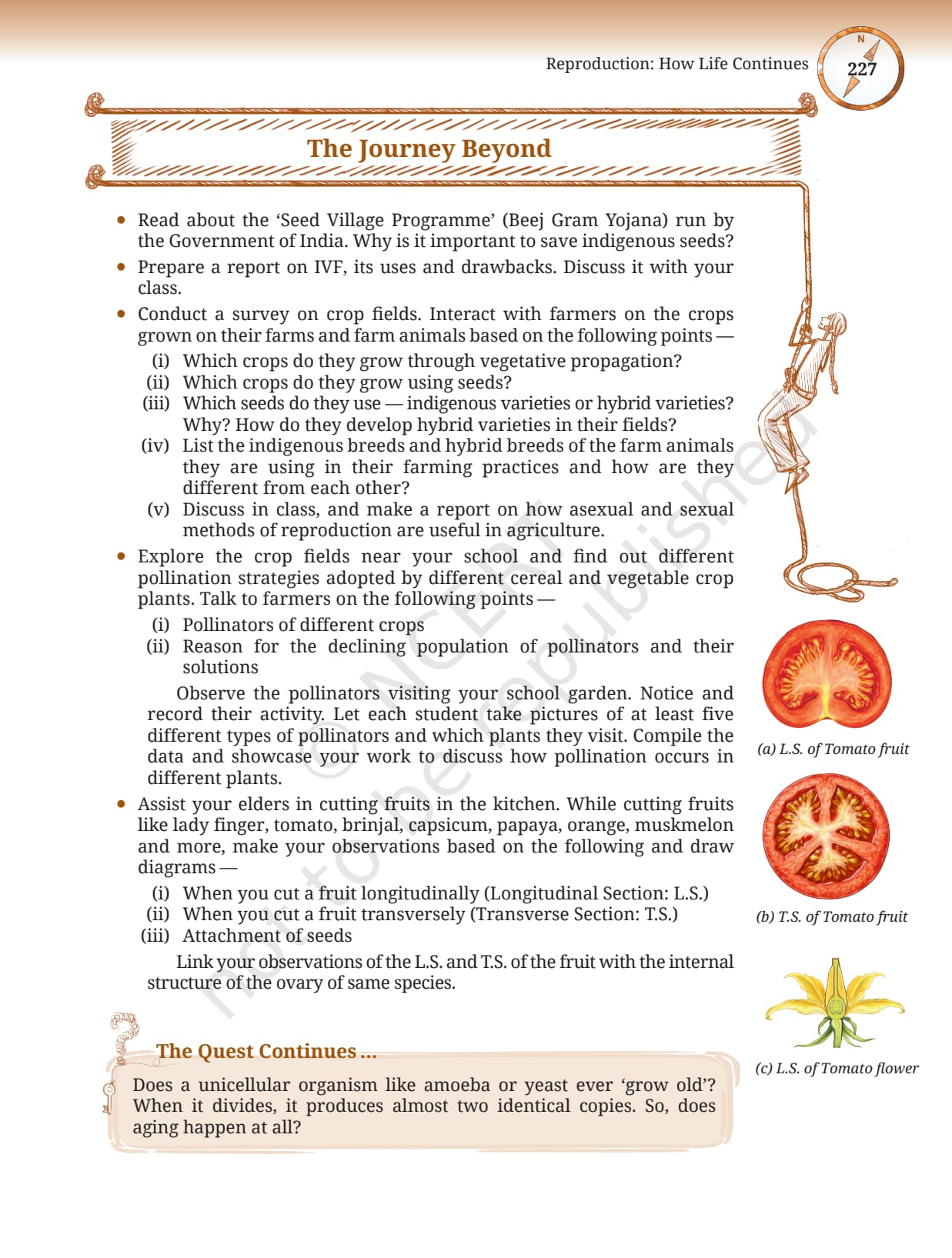
The chapter looks closely at flowering plants, called angiosperms, because the flower is their reproductive organ. A complete flower has four parts: sepals, petals, the stamen and the pistil. The stamen is the male part, with an anther that makes pollen grains. The pistil is the female part, with a stigma, style and ovary that holds the ovules and egg cells.
Pollination is the transfer of pollen from the anther to the stigma, and it must happen before fruits and seeds can form. When pollen lands on the stigma of the same flower or plant it is self-pollination, and when it moves to a different plant of the same kind it is cross-pollination. Nature uses different pollinators to move the pollen, as the table shows.
| Pollinator | How Pollen Moves | Example Plants |
|---|---|---|
| Wind | Light pollen carried by air; feathery stigma traps it | Wheat, maize, rice |
| Water | Pollen floats on water currents to the stigma | Vallisneria, Hydrilla |
| Insects | Bees and butterflies carry pollen between flowers | Sunflower and most garden flowers |
Reproduction in Human Beings and the Menstrual Cycle
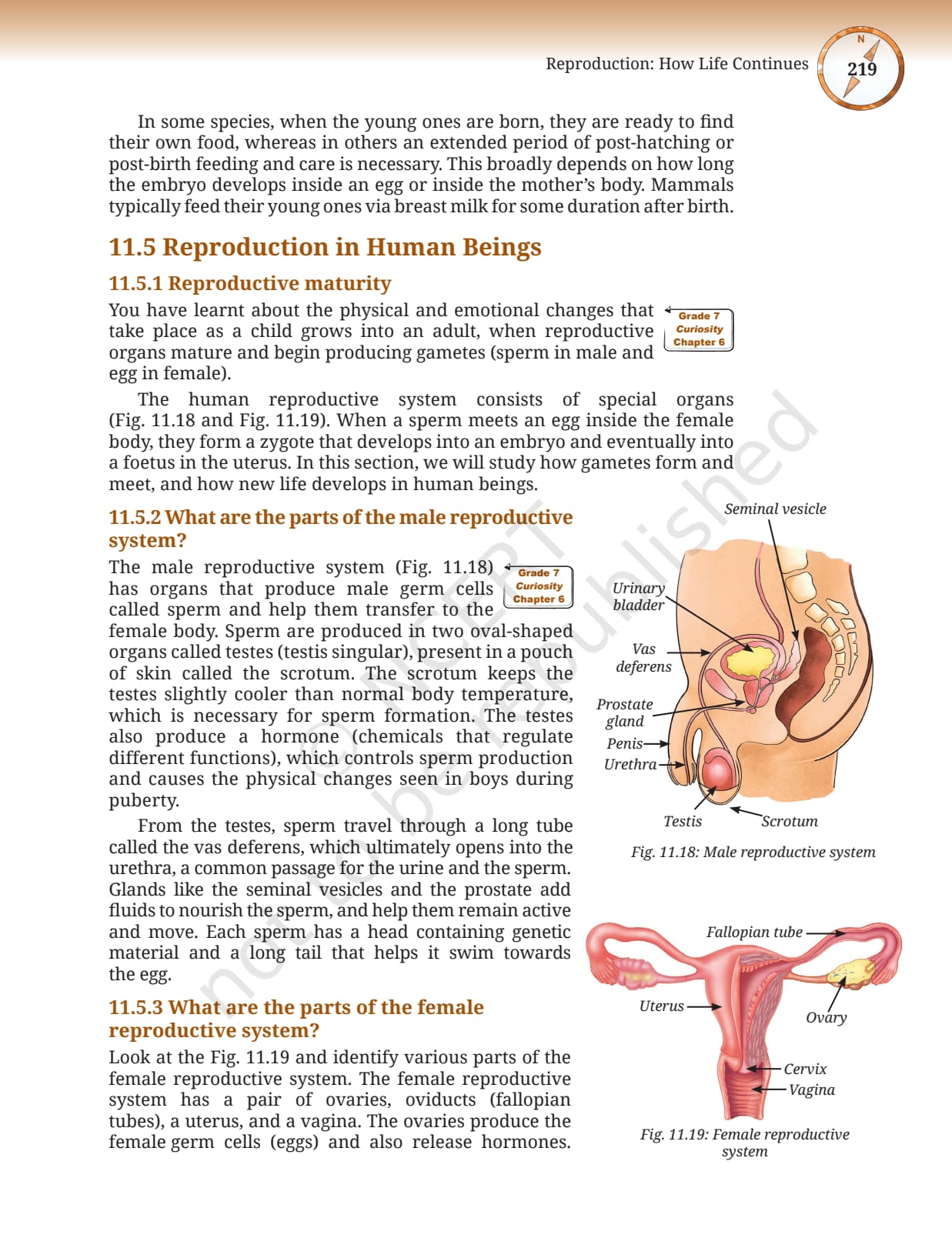
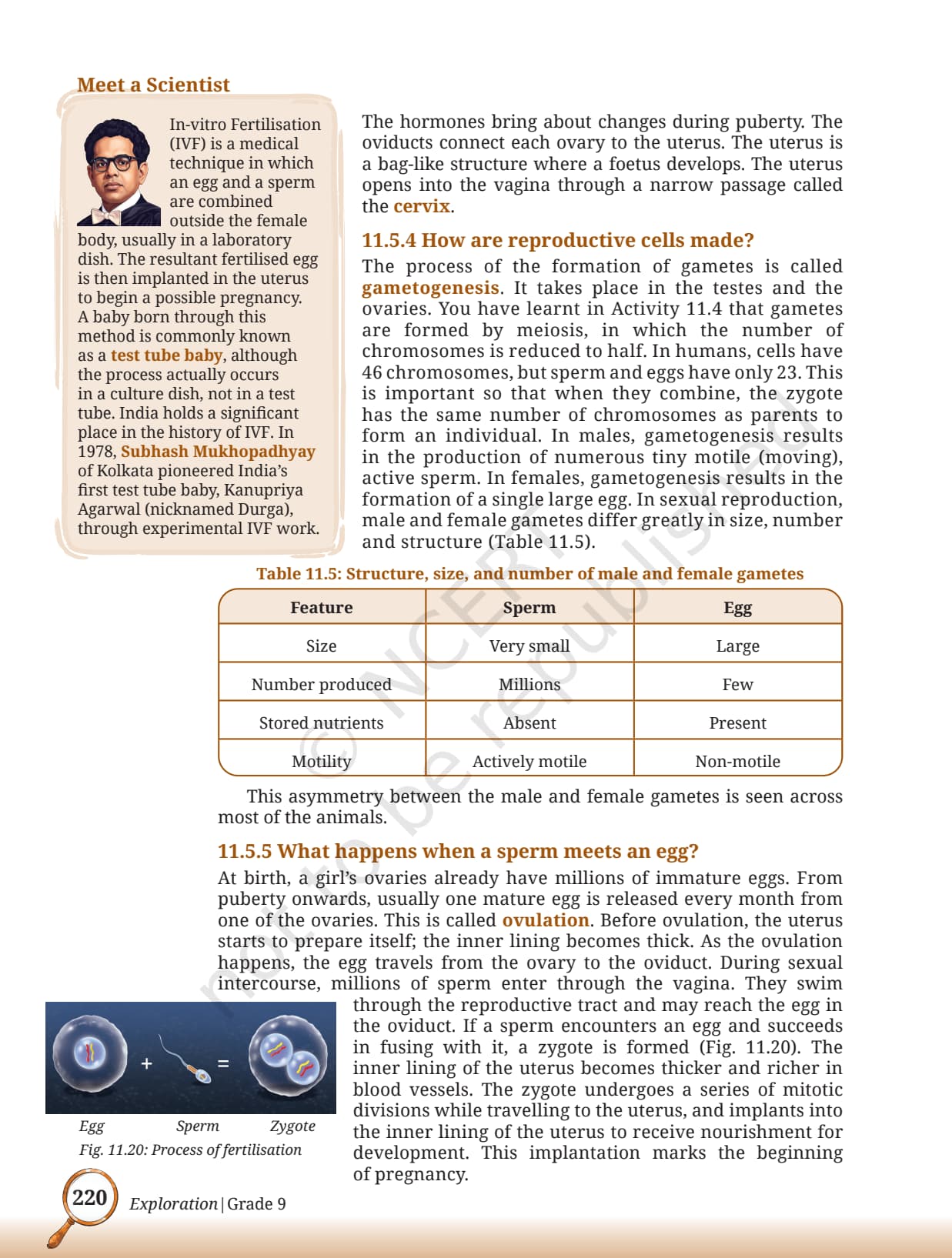
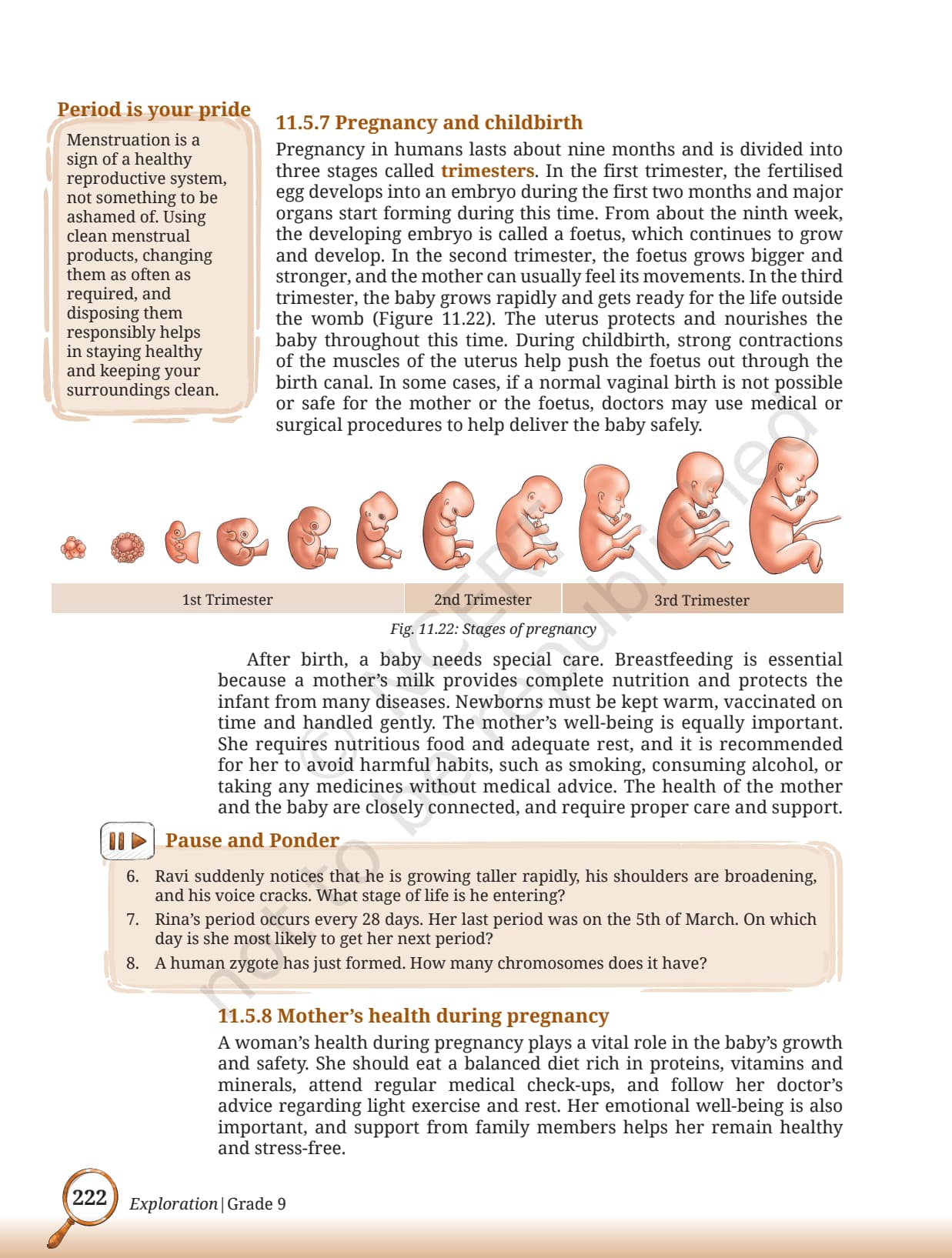
The chapter then studies reproduction in humans, starting with puberty, when the reproductive organs mature and begin making gametes. Sperm are made in the testes and a single large egg is released by the ovary. When a sperm meets an egg, they form a zygote that grows into an embryo and then a foetus inside the uterus. Human pregnancy lasts about nine months and is divided into three trimesters.
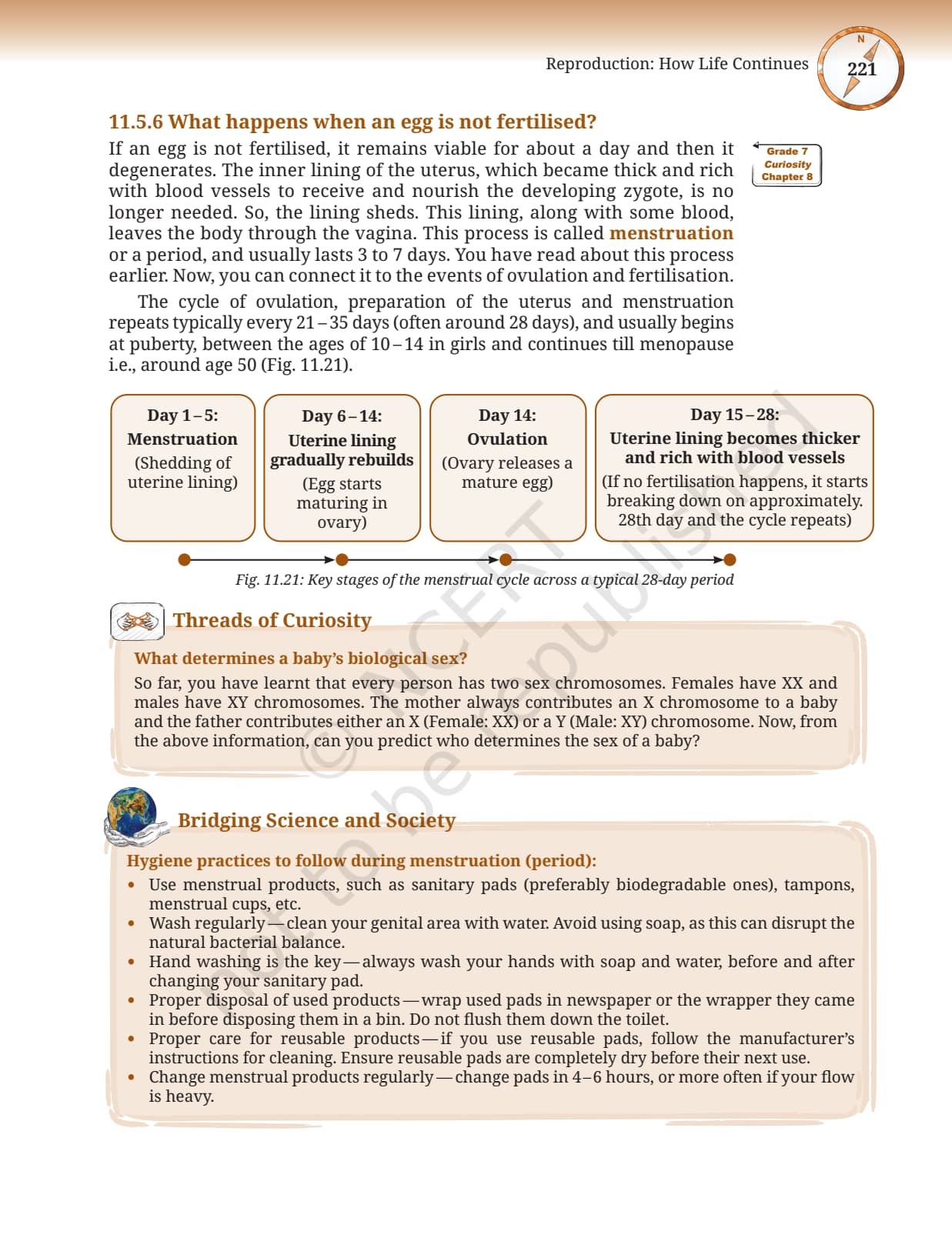
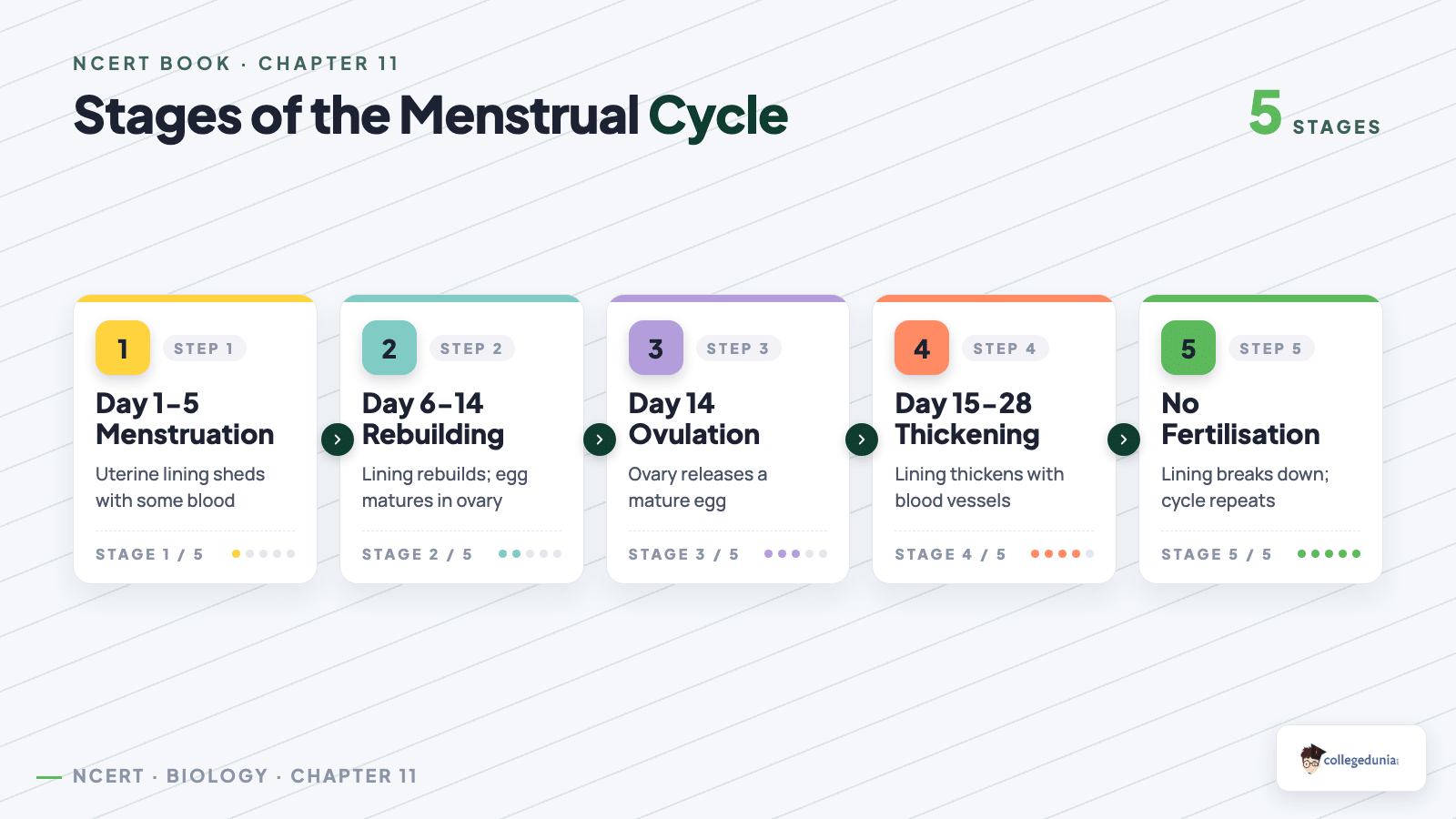
If the egg is not fertilised, the thick uterine lining is no longer needed and sheds along with some blood. This is called menstruation, and the full cycle of ovulation, lining build-up and menstruation repeats about every 28 days. The flow below follows the same order the chapter uses.
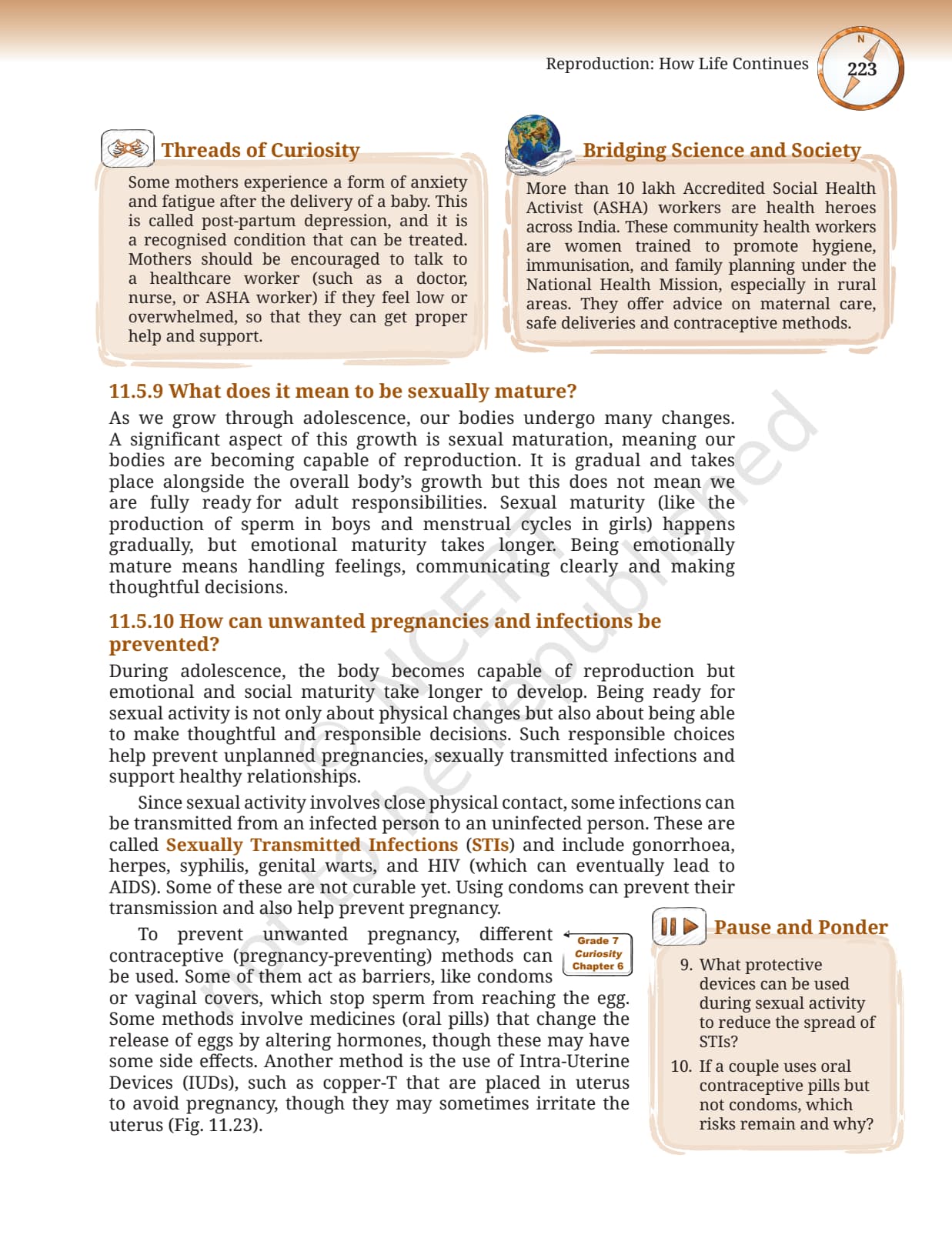
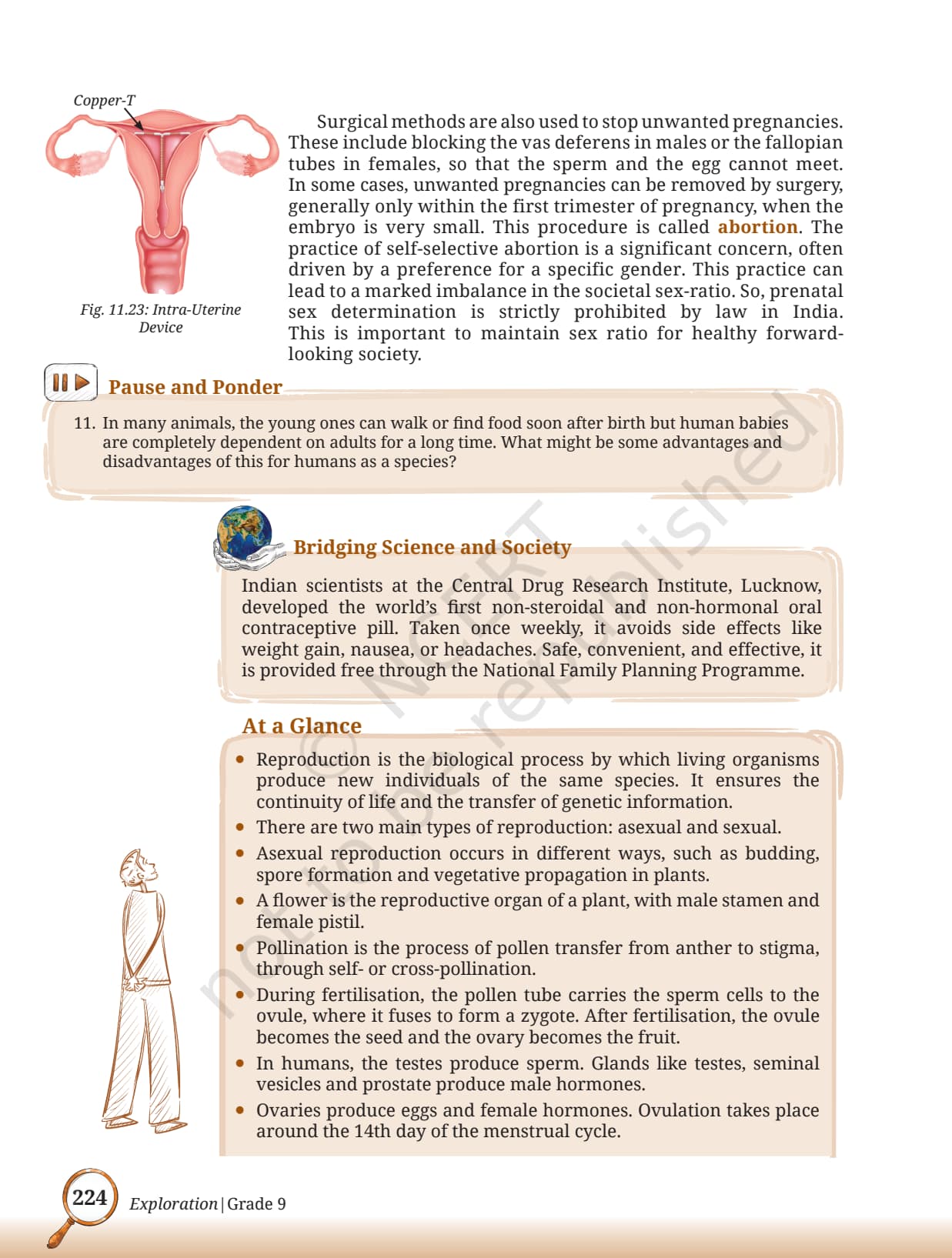
The chapter also explains adolescence as a time when the body becomes capable of reproduction but emotional maturity is still growing. It ends with a short, factual look at birth control methods, safe motherhood, the work of ASHA health workers, and the law in India that bans prenatal sex determination to protect the sex ratio.
How Meiosis and Variation Connect in the Chapter
Reproduction How Life Continues links one small event, cell division, to a big idea, evolution. Gametes are made by a special division called meiosis, which halves the chromosome number so that each human gamete carries 23 chromosomes instead of 46. When a sperm and egg join, the full set of 46 is restored in the zygote.
Because the chromosome pairs separate at random during meiosis, and because two parents contribute, each child carries a fresh mix of traits. This variation is why brothers and sisters are not identical. Over many generations, useful variations help a species adapt, such as people who tolerate low oxygen at high altitudes. The chapter uses this idea to show why sexual reproduction matters for survival.
Revise, Reflect, Refine: The End-of-Chapter Exercise
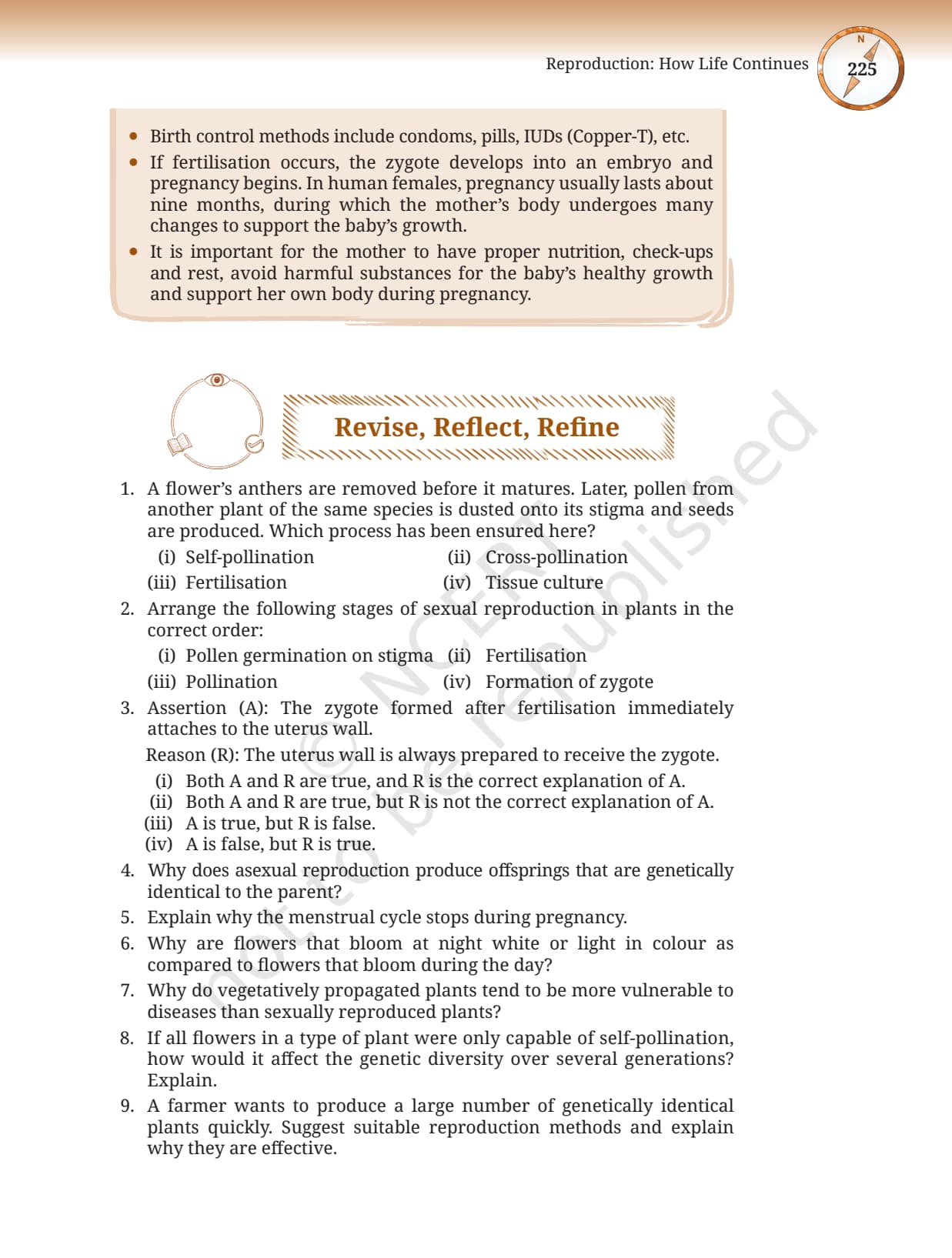
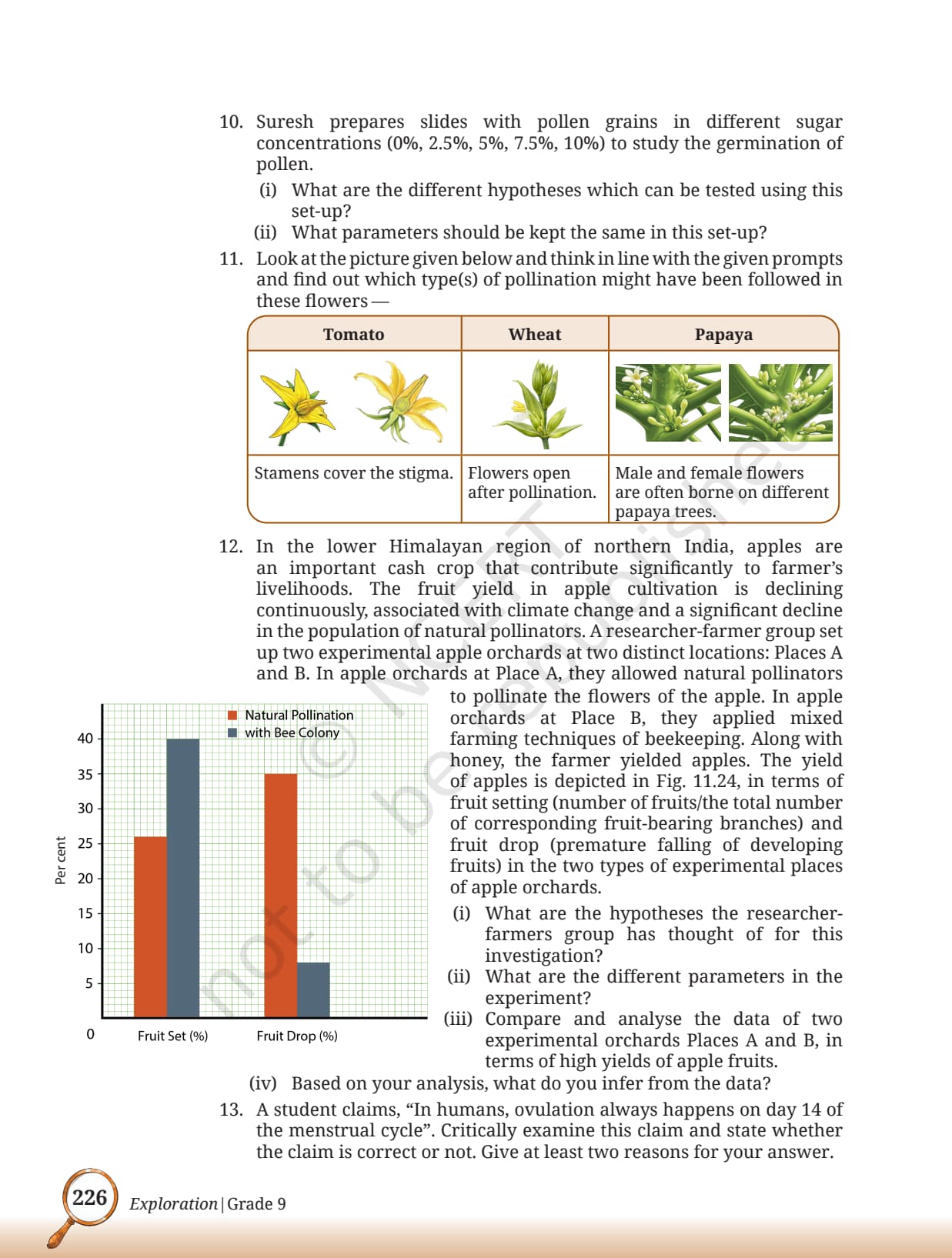
Every chapter of the new Exploration book ends with a section called Revise, Reflect, Refine instead of the old plain exercise list. For Reproduction How Life Continues, these questions check whether you can order the steps of plant reproduction, tell self-pollination from cross-pollination, and read simple data on pollen and seed formation.
The chapter also has in-text prompts like Pause and Ponder, Think It Over and What if... that push you to apply the idea, not just memorise it. Read these while you go through the PDF, then attempt the Revise, Reflect, Refine questions before checking the Collegedunia Solutions.
Why Read the NCERT Book PDF Before Solutions and Notes
The Class 9 Science NCERT Book PDF Chapter 11 Reproduction How Life Continues is the source that every Solution, Note and question paper is built from. Reading it first gives you the full picture in the exact words and order the exam follows. Notes and Solutions are helpful, but they are shorter versions of this original text.
- Exact wording: board answers are marked against the book's own terms, so the source text keeps your answers accurate.
- Full diagrams: the chapter's labelled figures of the flower, the reproductive systems and the menstrual cycle are best seen in the original PDF.
- Strong base: a clear read of this chapter sets up Class 10 biology and the early NEET foundation years.
How to Use the Reproduction How Life Continues PDF for Exam Prep
Do not just read the chapter once. Use the PDF in a simple, repeatable way so the terms and cycles stick. Students who follow a short plan report faster recall during revision.
- First read: go through the whole chapter once for the story, without stopping to memorise.
- Draw and label: sketch the flower, the reproductive systems and the menstrual cycle, and write one line beside each part.
- Solve: attempt the Revise, Reflect, Refine questions, then match your answers with the NCERT Solutions.
- Revise: before the exam, reread only your labelled diagrams and the tables in this article.
Common Mistakes Students Make in Reproduction How Life Continues
Most errors in this chapter come from mixing up close pairs of terms. Knowing the traps early saves marks in the annual exam.
- Self vs cross-pollination: self-pollination stays on the same plant, while cross-pollination moves pollen to a different plant of the same kind.
- Asexual vs sexual reproduction: asexual needs one parent and gives identical copies, while sexual needs two parents and creates variation.
- Stamen vs pistil: the stamen is the male part that makes pollen, while the pistil is the female part with the stigma, style and ovary.
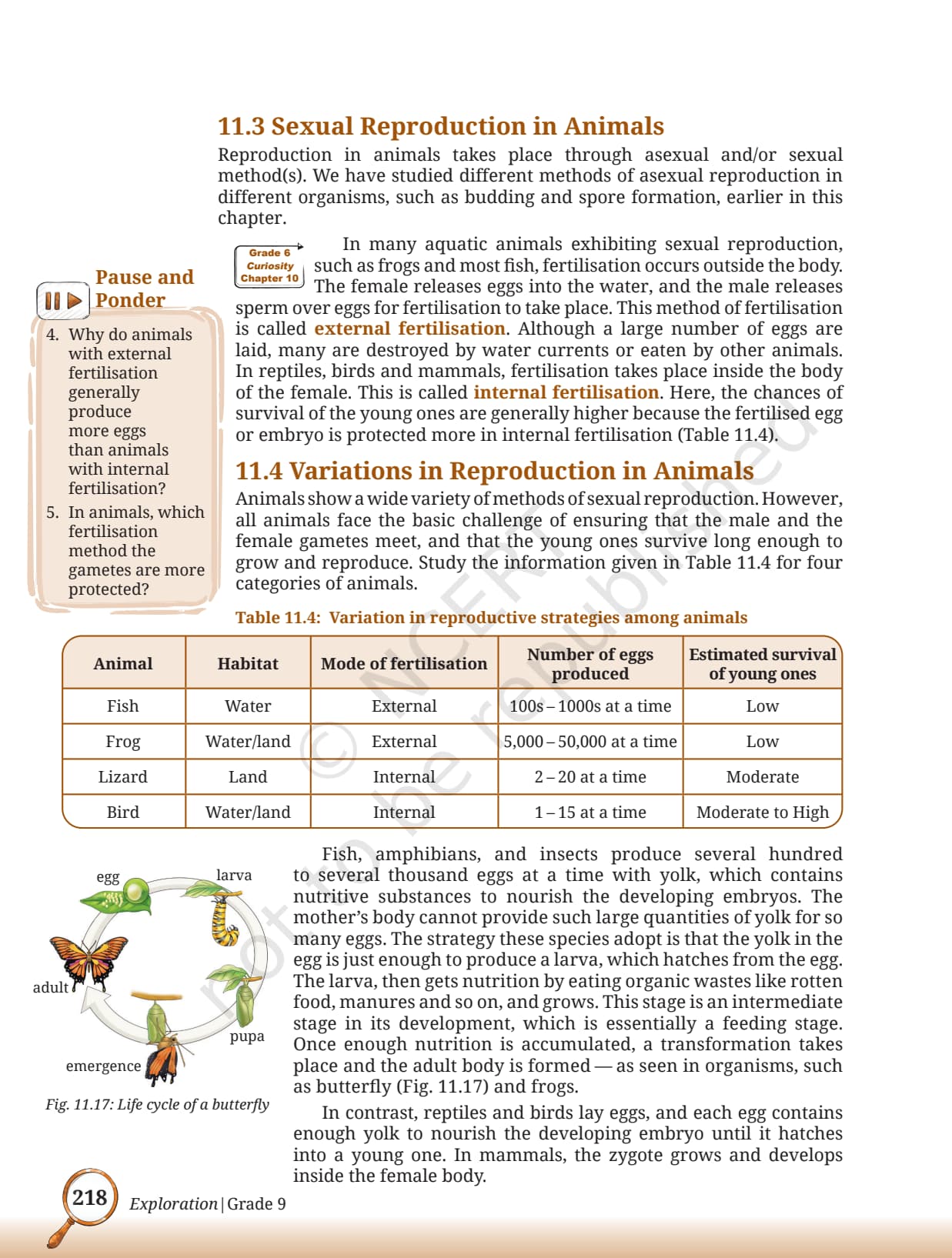
- External vs internal fertilisation: frogs and fish fertilise eggs outside the body, while reptiles, birds and mammals fertilise inside the body.
More Reproduction How Life Continues Class 9 Science Resources
Use the other Collegedunia resources for this chapter alongside the NCERT Book PDF.
| Resource | Open |
|---|---|
| NCERT Book PDF | Reproduction How Life Continues Class 9 NCERT Book PDF |
| NCERT Solutions | Reproduction How Life Continues Class 9 NCERT Solutions |
| Revision Notes | Reproduction How Life Continues Class 9 Notes |
| Handwritten Notes | Reproduction How Life Continues Class 9 Handwritten Notes |
NCERT Book PDF for Class 9 Science: All Chapters
Download the official NCERT Book PDF for any other chapter of the new Class 9 Science Exploration book.
| Chapter | NCERT Book PDF |
|---|---|
| Chapter 2 | Cell: The Building Block of Life PDF |
| Chapter 3 | Tissues in Action PDF |
| Chapter 10 | Sound Waves PDF |
| Chapter 11 | Reproduction: How Life Continues PDF |
| Chapter 12 | Patterns in Life PDF |
| Chapter 13 | Earth as a System PDF |
Reproduction How Life Continues Class 9 Science NCERT Book PDF FAQs
Ques. Where can I download the Class 9 Science Chapter 11 Reproduction How Life Continues NCERT Book PDF?
Ans. You can download the Reproduction How Life Continues NCERT Book PDF directly from the download card on this page. Both the Normal and HD versions are free and match the 2026-27 Exploration book.
Ques. How many pages is the Class 9 Science Reproduction How Life Continues chapter?
Ans. The official Reproduction How Life Continues chapter runs to about 20 pages. It covers asexual reproduction, sexual reproduction, meiosis, flowers and pollination, human reproduction and the Revise, Reflect, Refine exercise.
Ques. What is the difference between asexual and sexual reproduction in Class 9 Science Chapter 11?
Ans. Asexual reproduction needs only one parent and gives offspring that are exact copies, as in yeast and hydra. Sexual reproduction needs two parents, uses gametes that fuse during fertilisation, and creates variation among the young ones.
Ques. What are the four parts of a flower in the Reproduction How Life Continues chapter?
Ans. A complete flower has sepals, petals, the stamen and the pistil. The stamen is the male part that makes pollen, and the pistil is the female part with a stigma, style and ovary that holds the egg cells.
Ques. Should I read the NCERT Book PDF before the Solutions?
Ans. Yes. Reading the original chapter first gives you the full concept in the exact words the exam uses. The NCERT Solutions and Notes are shorter helpers built on top of this source text.
Ques. Is the Reproduction How Life Continues chapter part of the 2026-27 syllabus?
Ans. Yes. Reproduction How Life Continues is Chapter 11 of the new Class 9 Science Exploration book for the 2026-27 syllabus, so it is fully part of the current annual exam course.



Comments