




The Class 9 Science NCERT Book PDF Chapter 4 Describing Motion Around Us is the exact chapter from the new Exploration textbook for the 2026-27 syllabus. This page lets students download the full chapter PDF free and shows what is inside it, from motion in a straight line to uniform circular motion. Read the summary first, then open the book PDF to study every section, figure and exercise in the original NCERT wording.
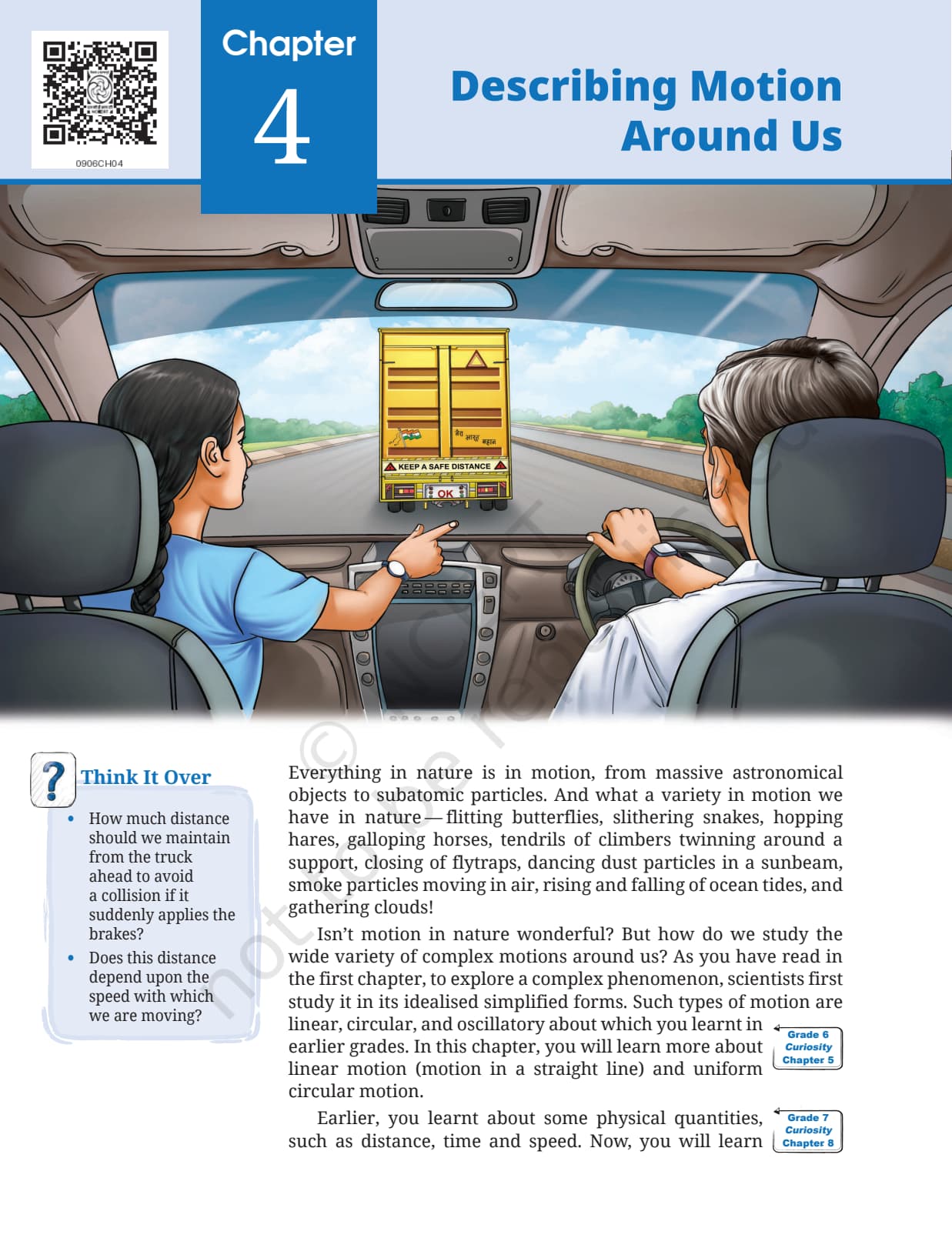
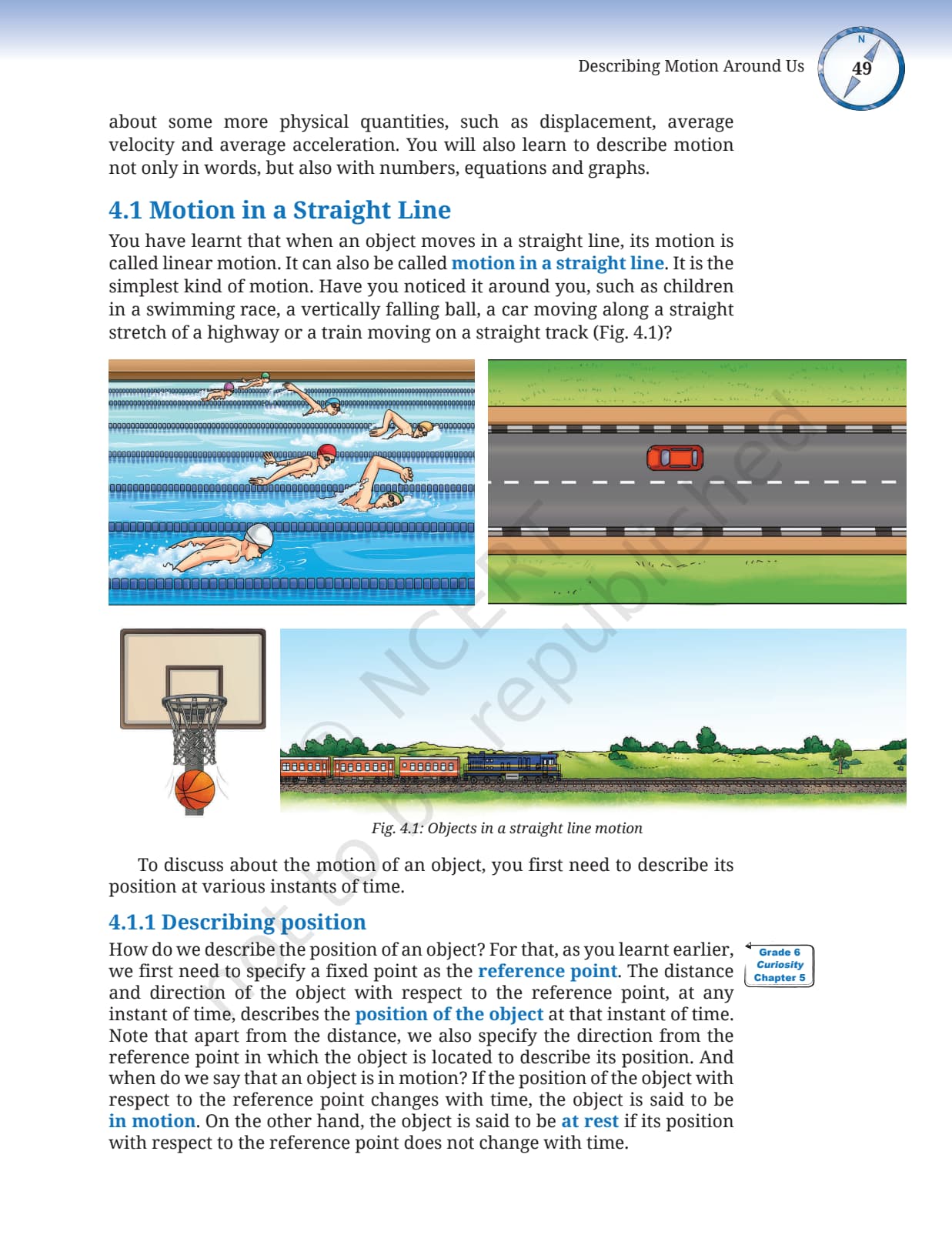
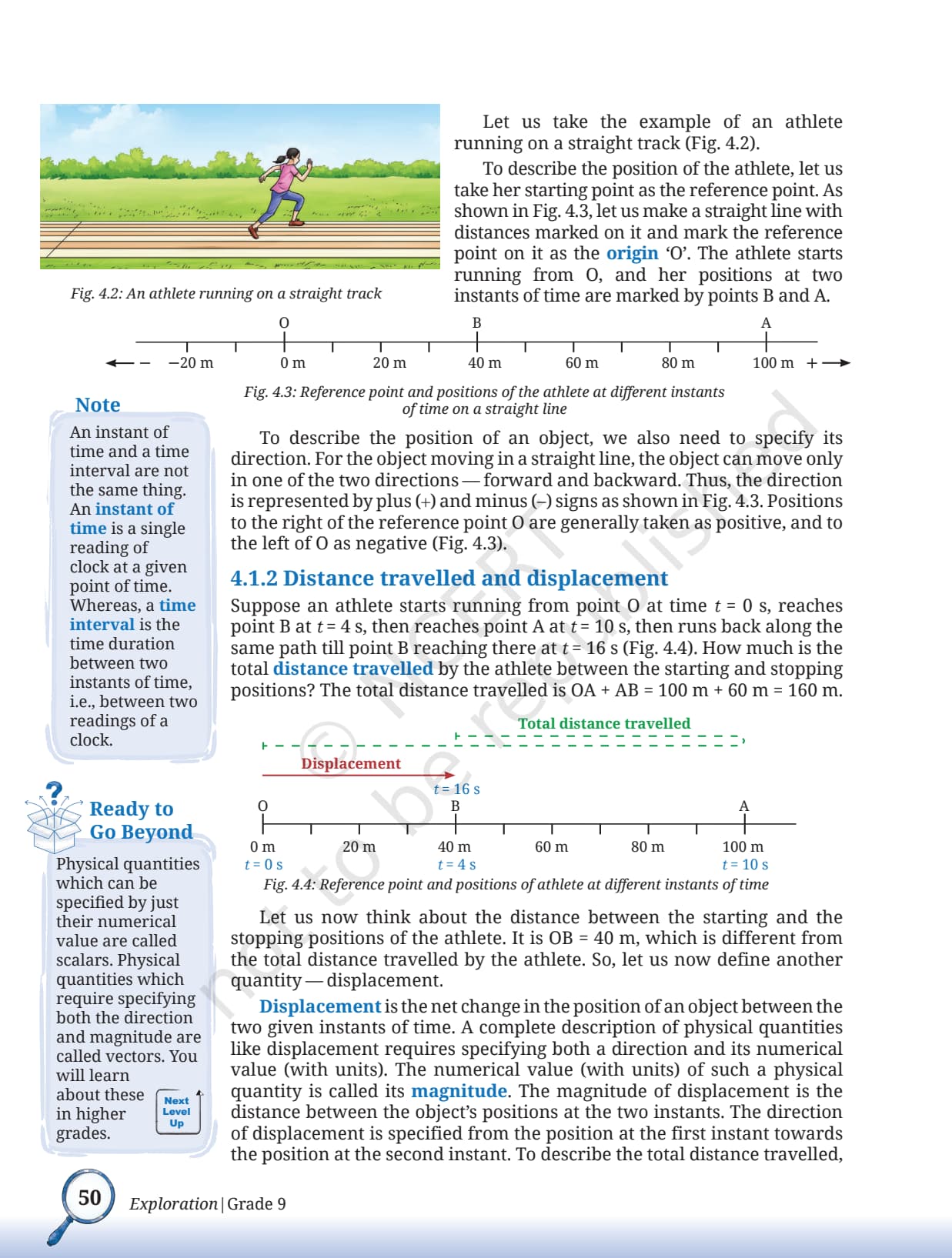
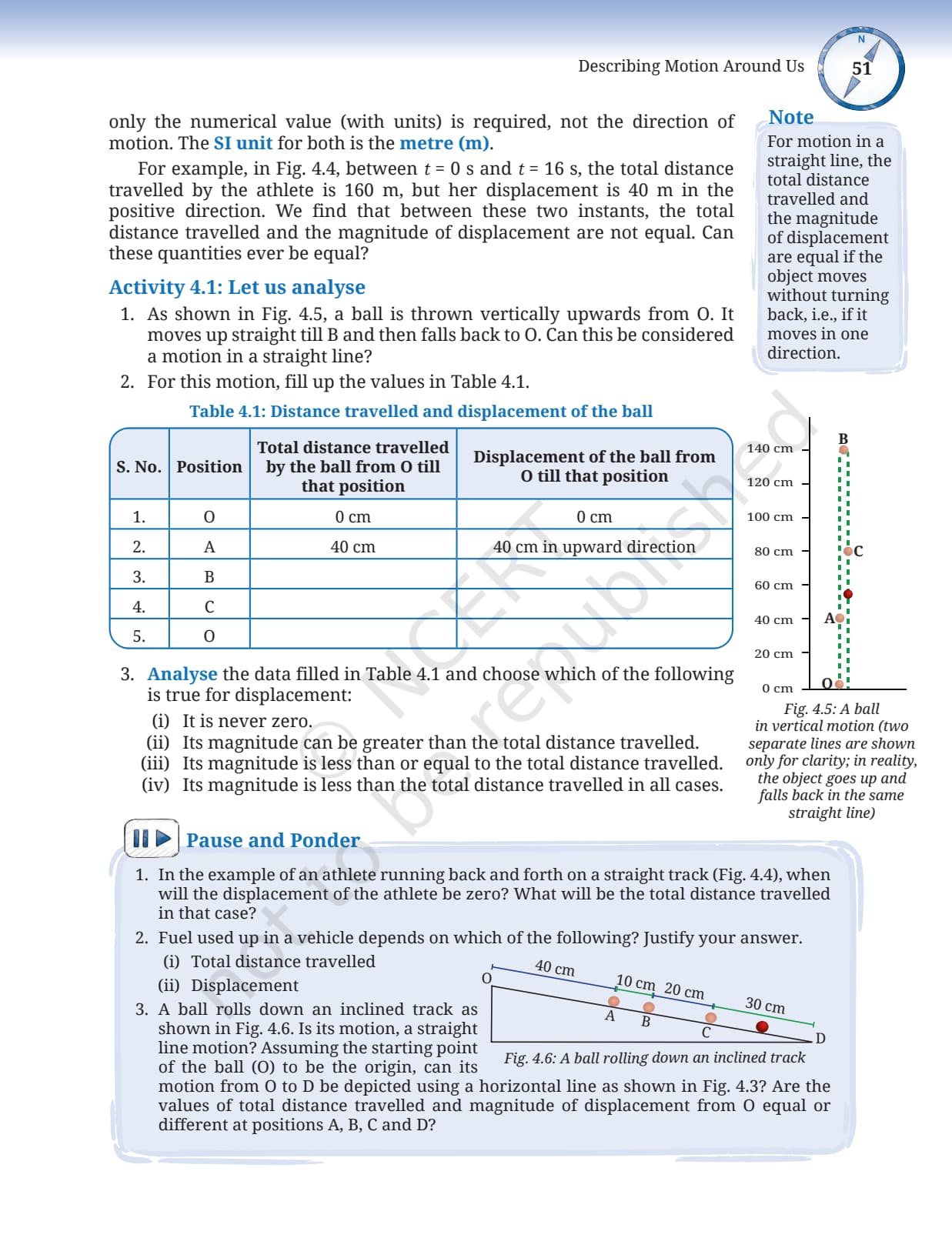
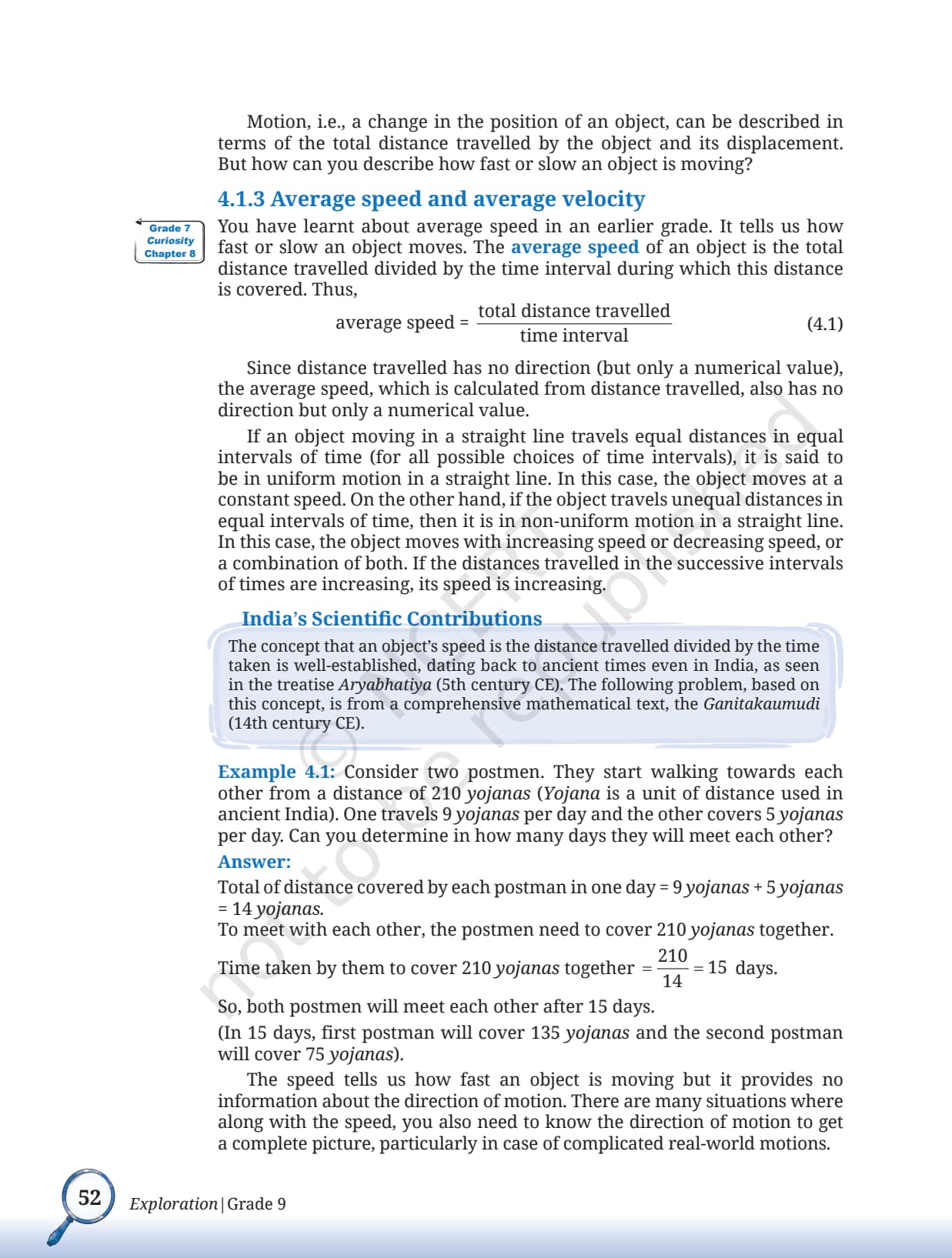
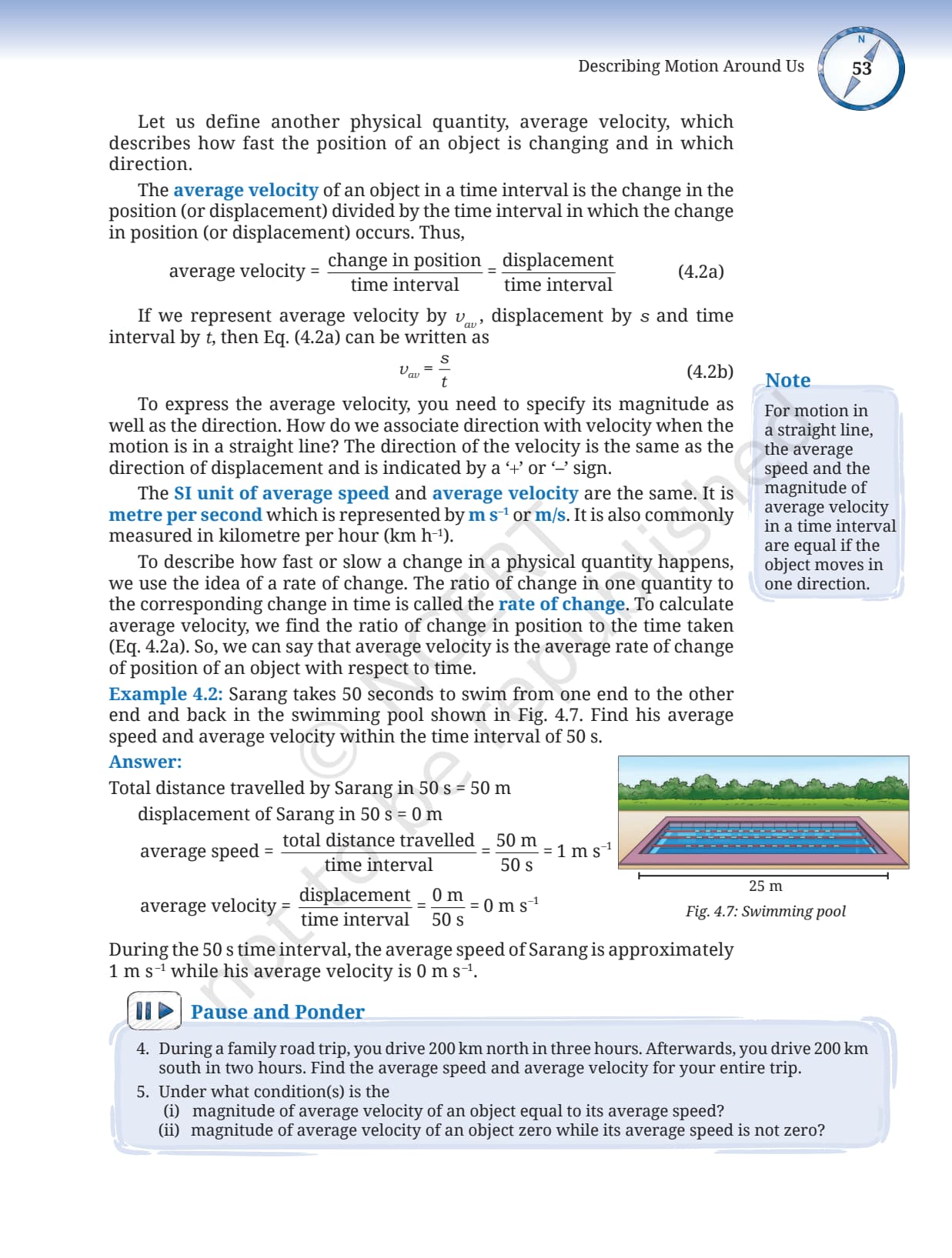
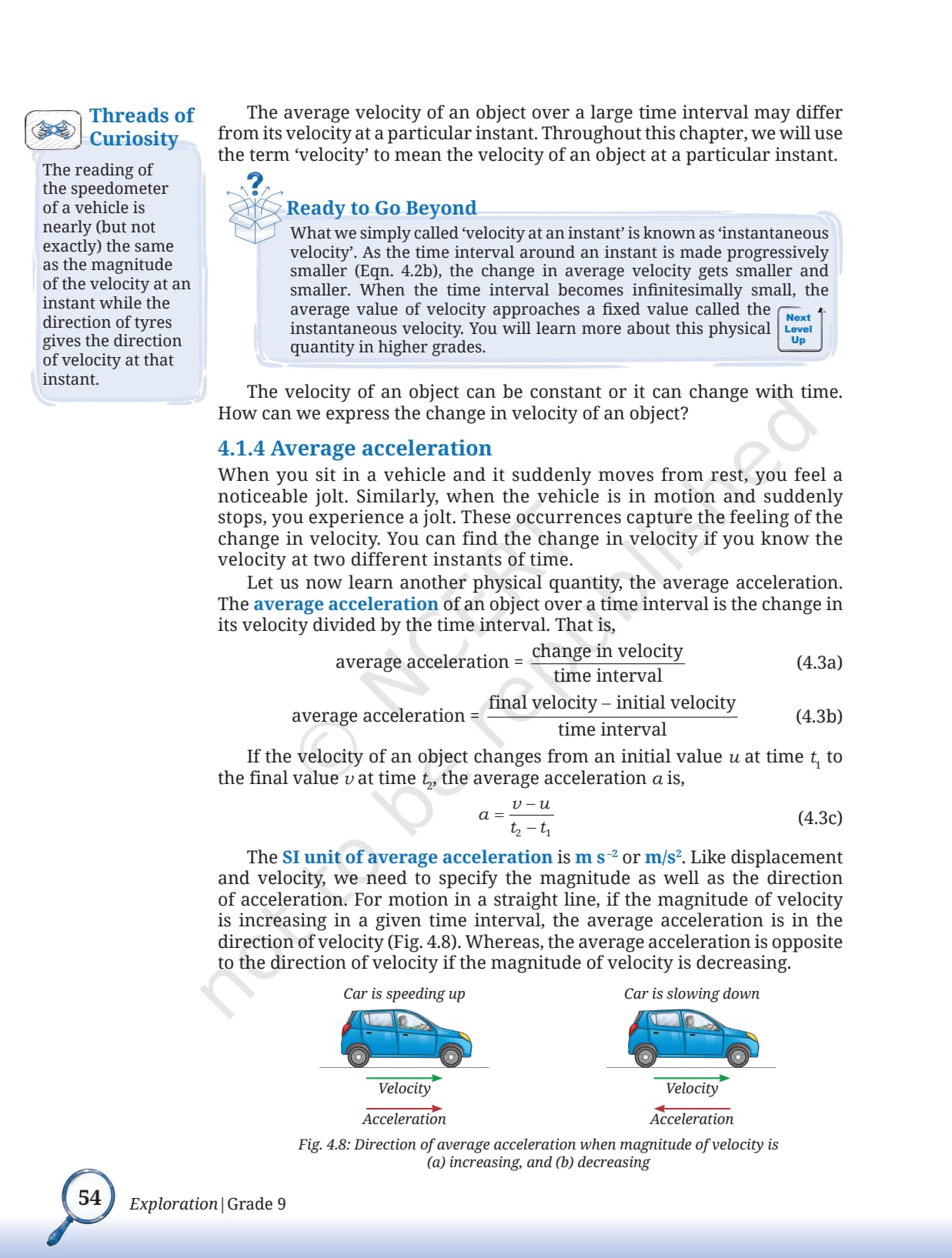
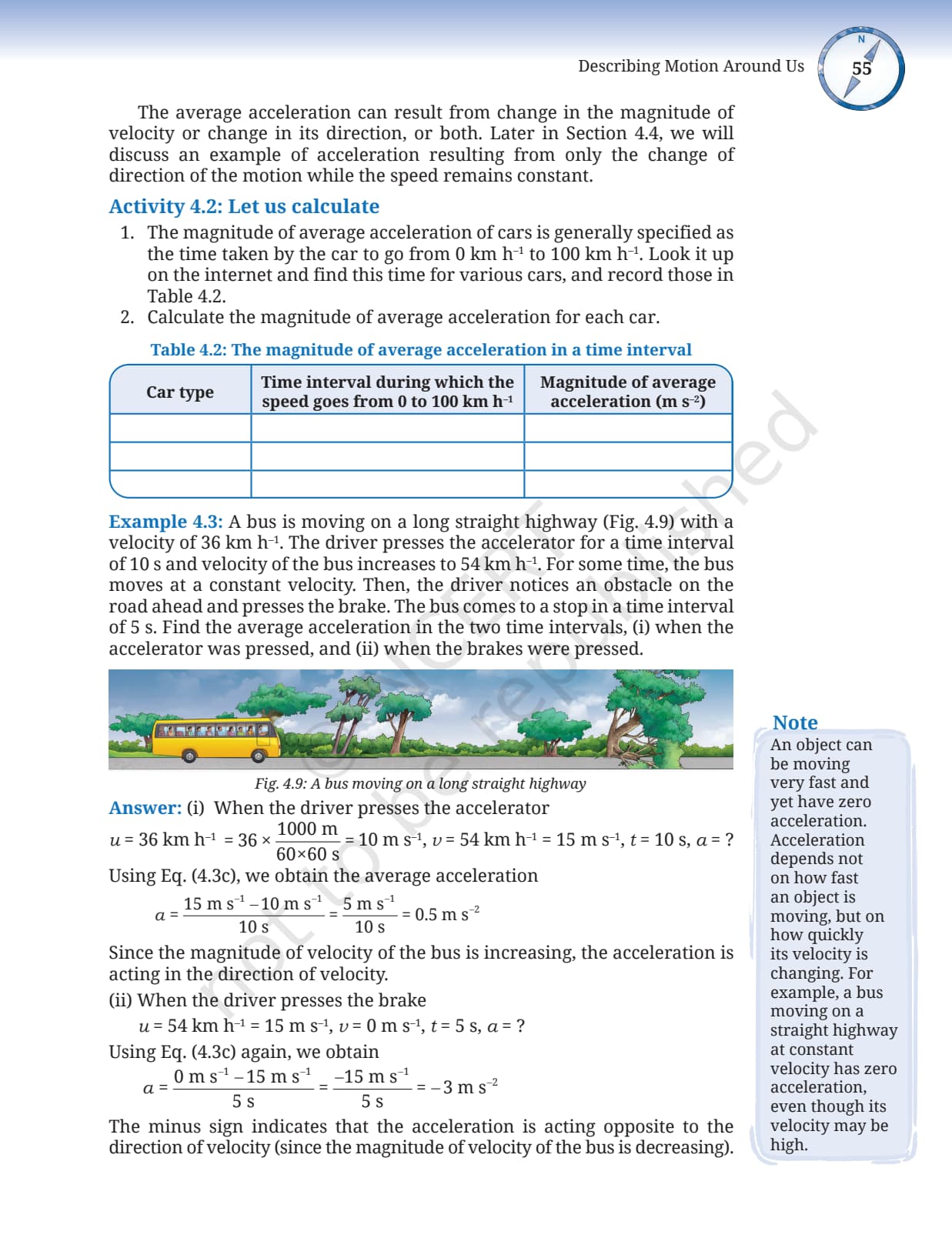
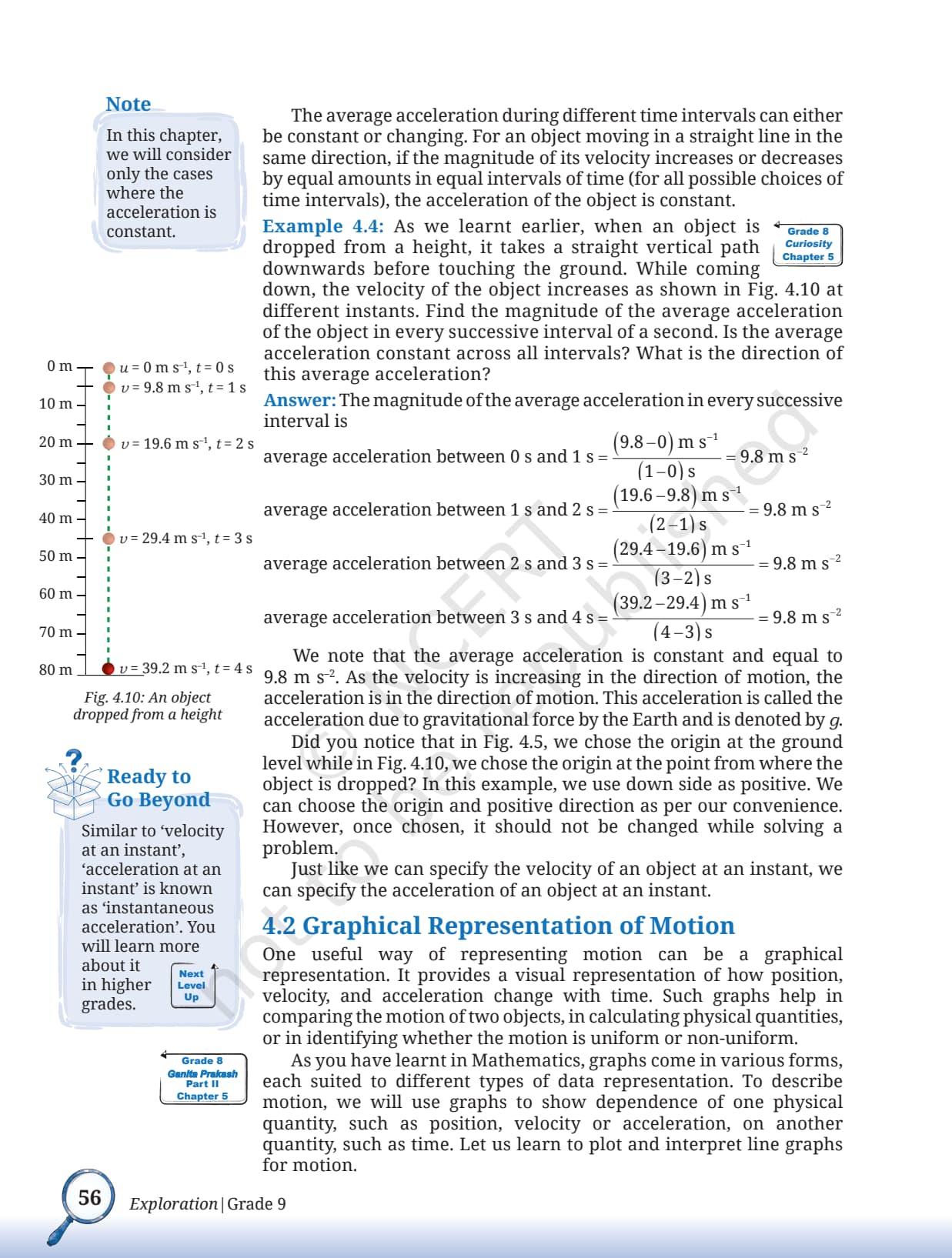
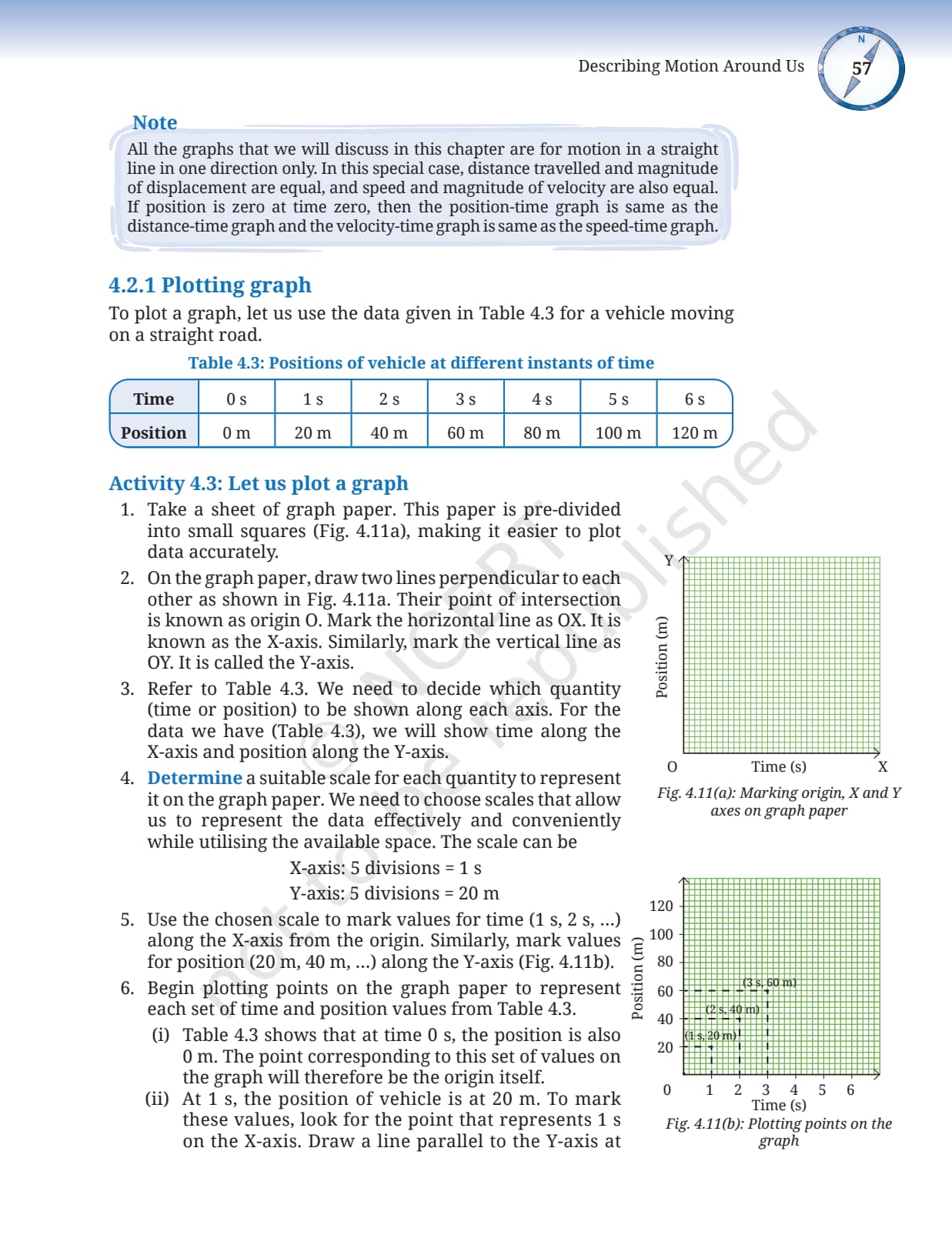
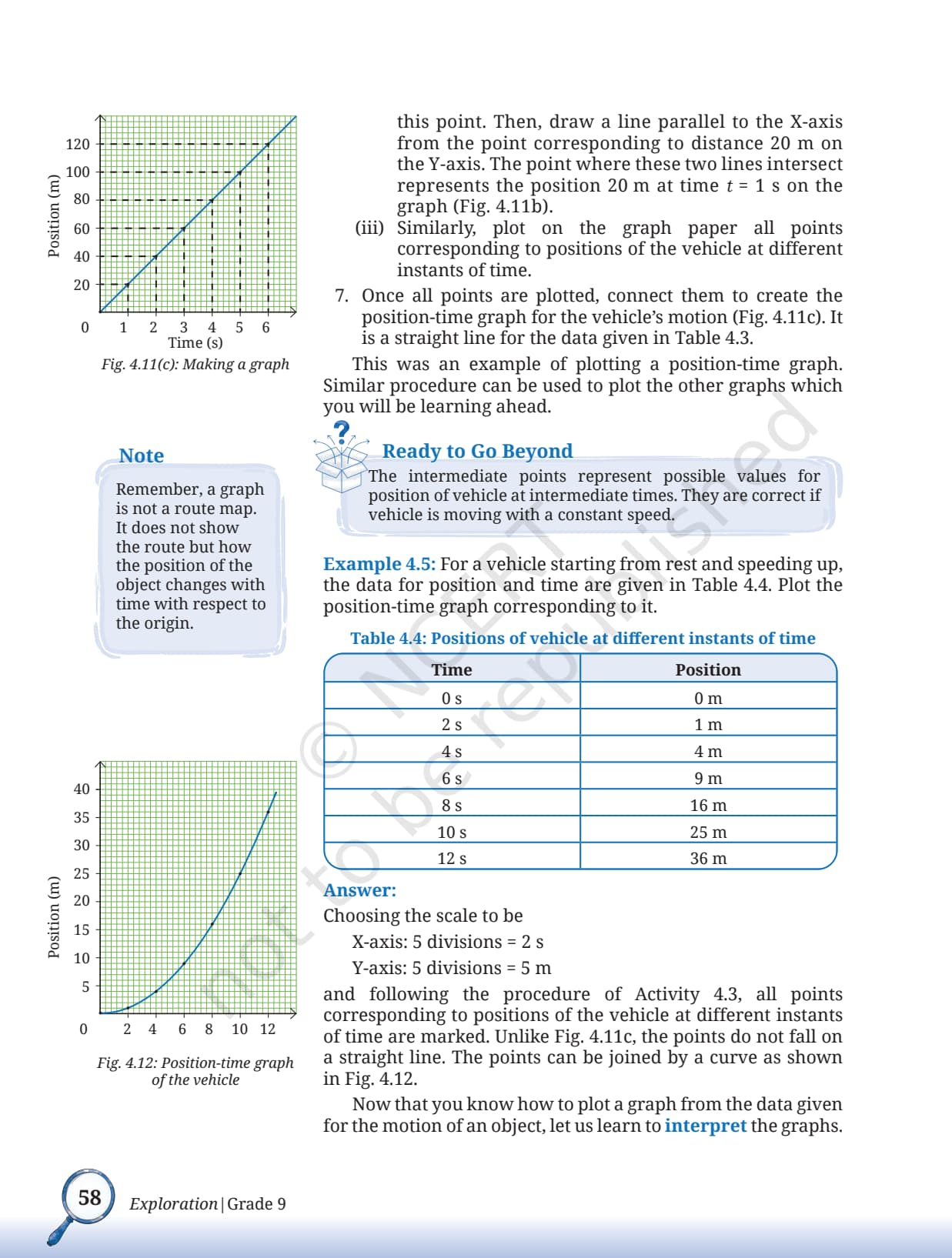
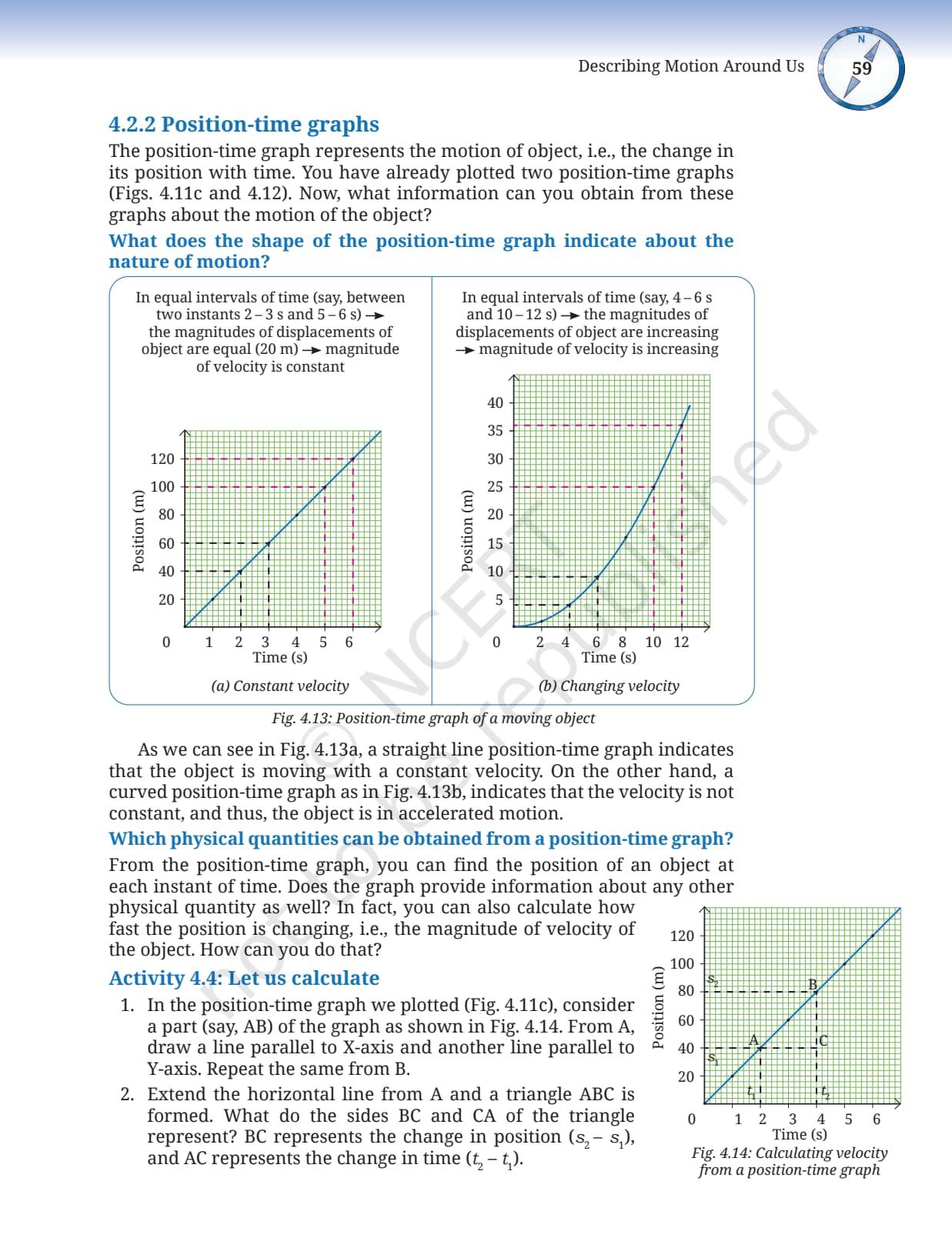
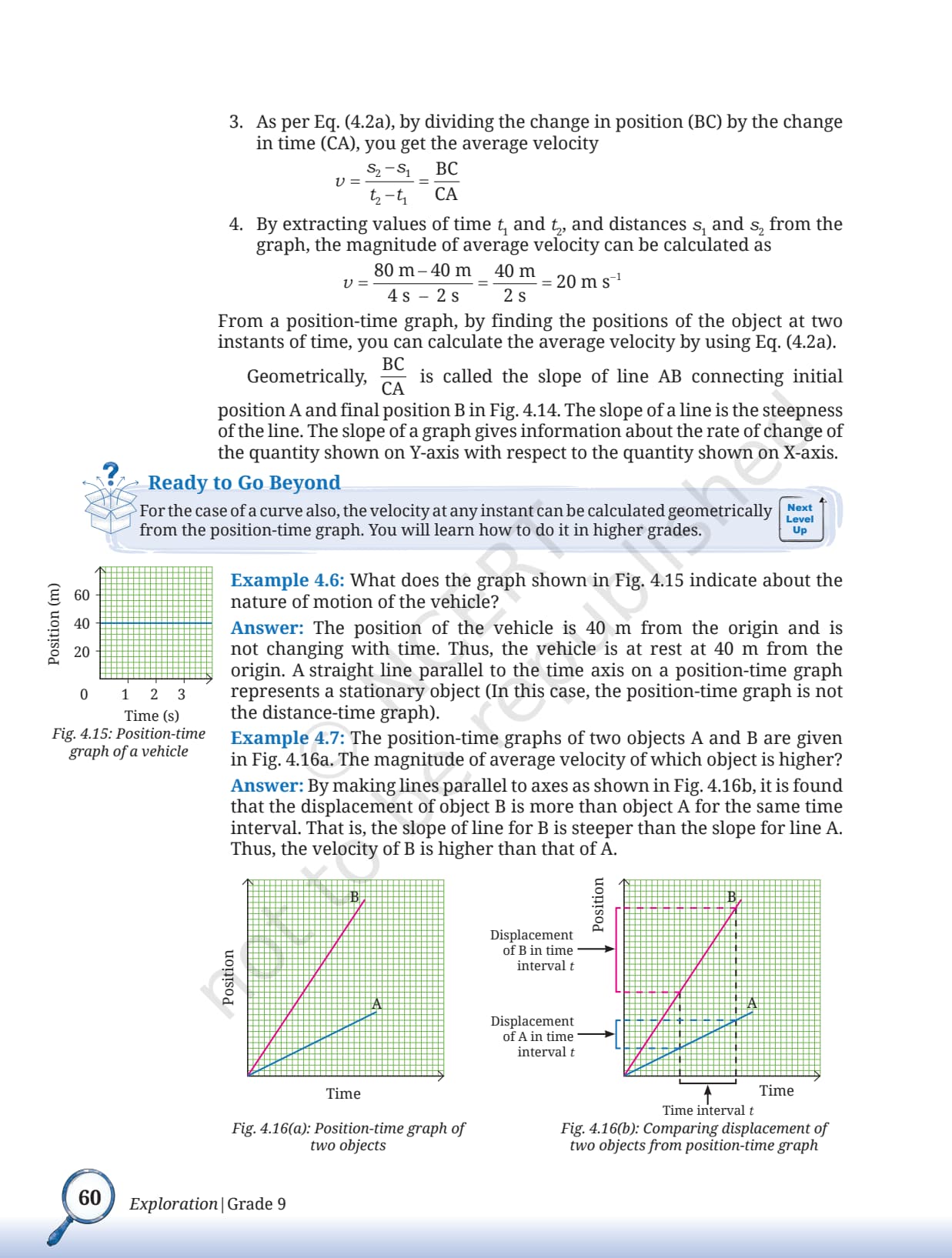
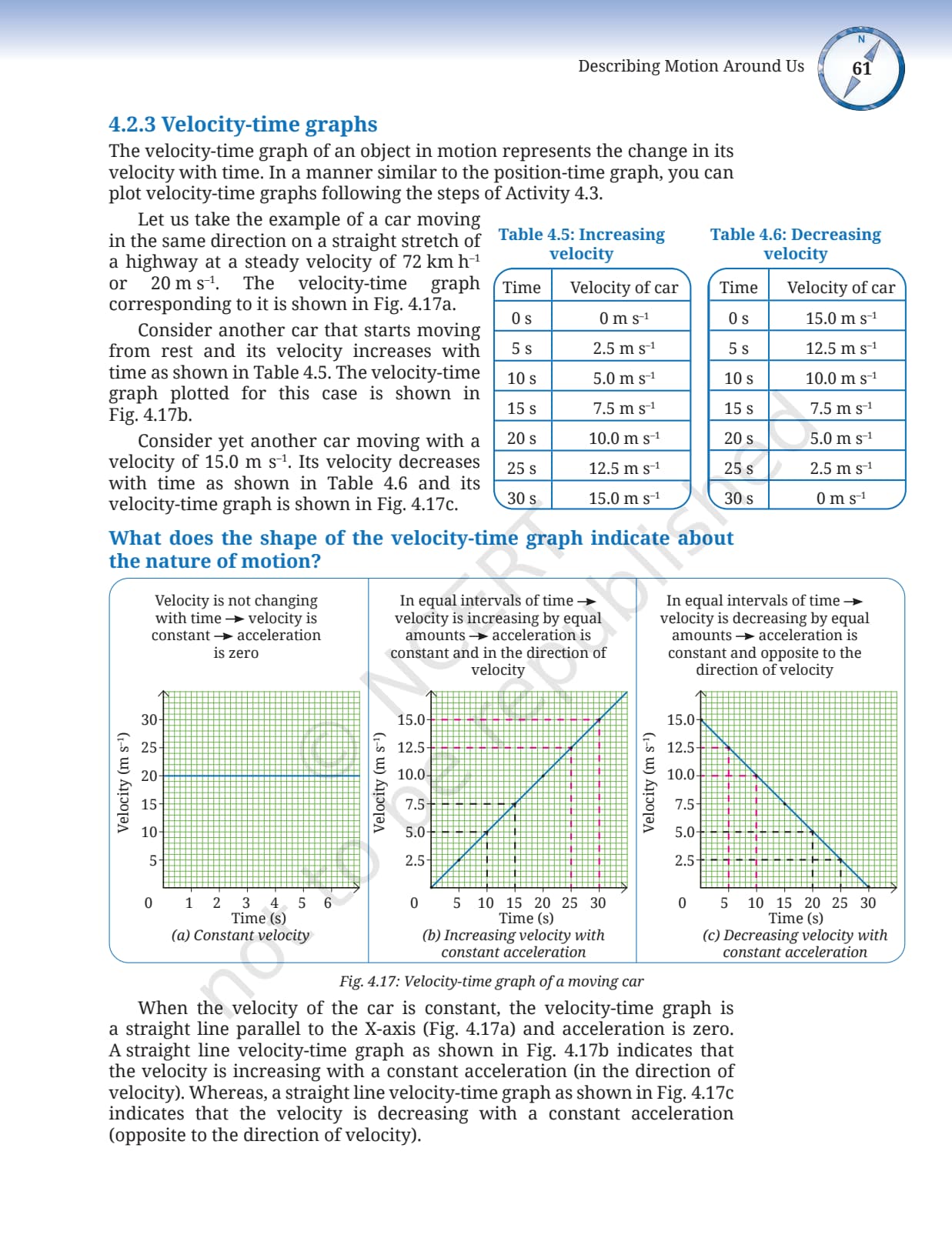
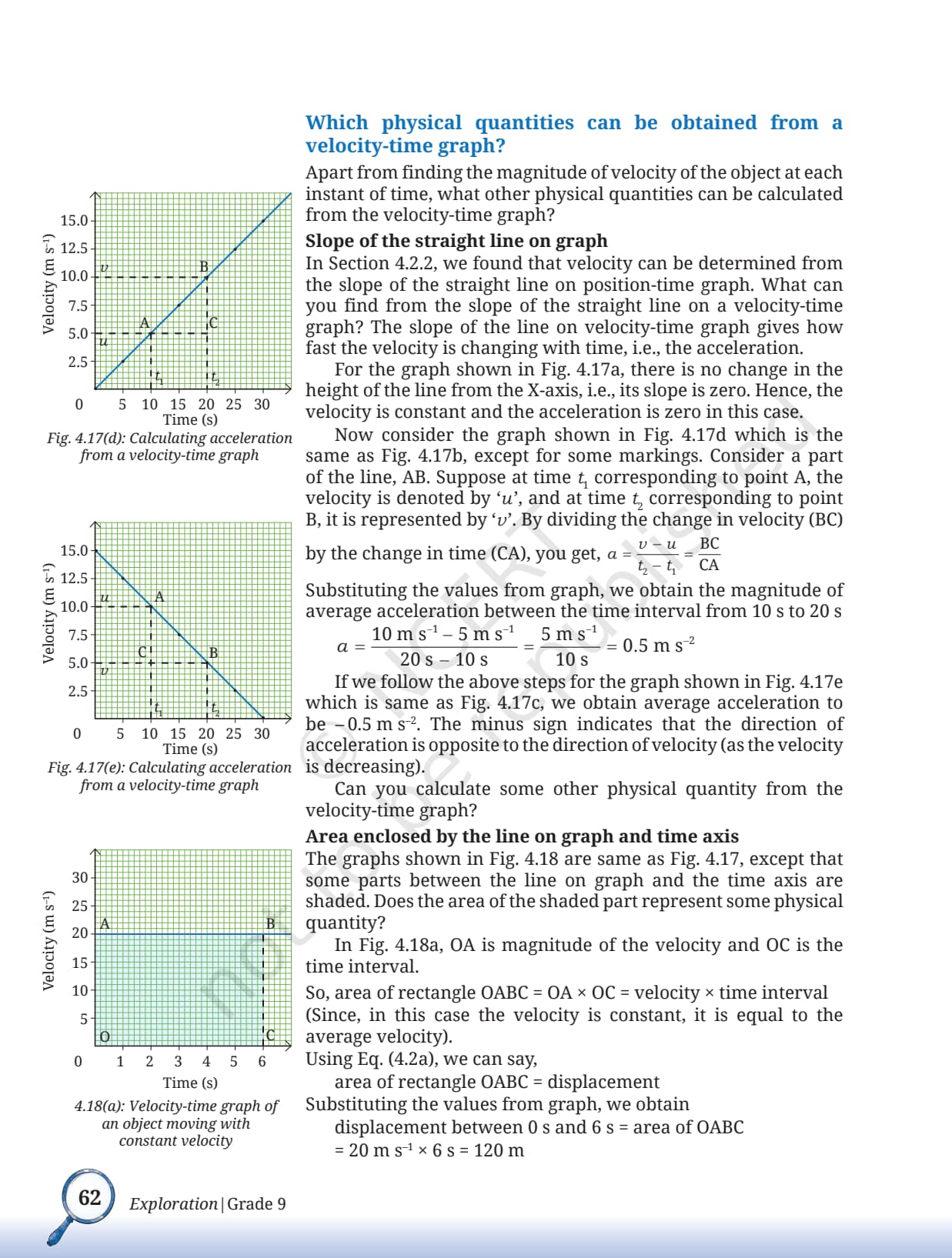
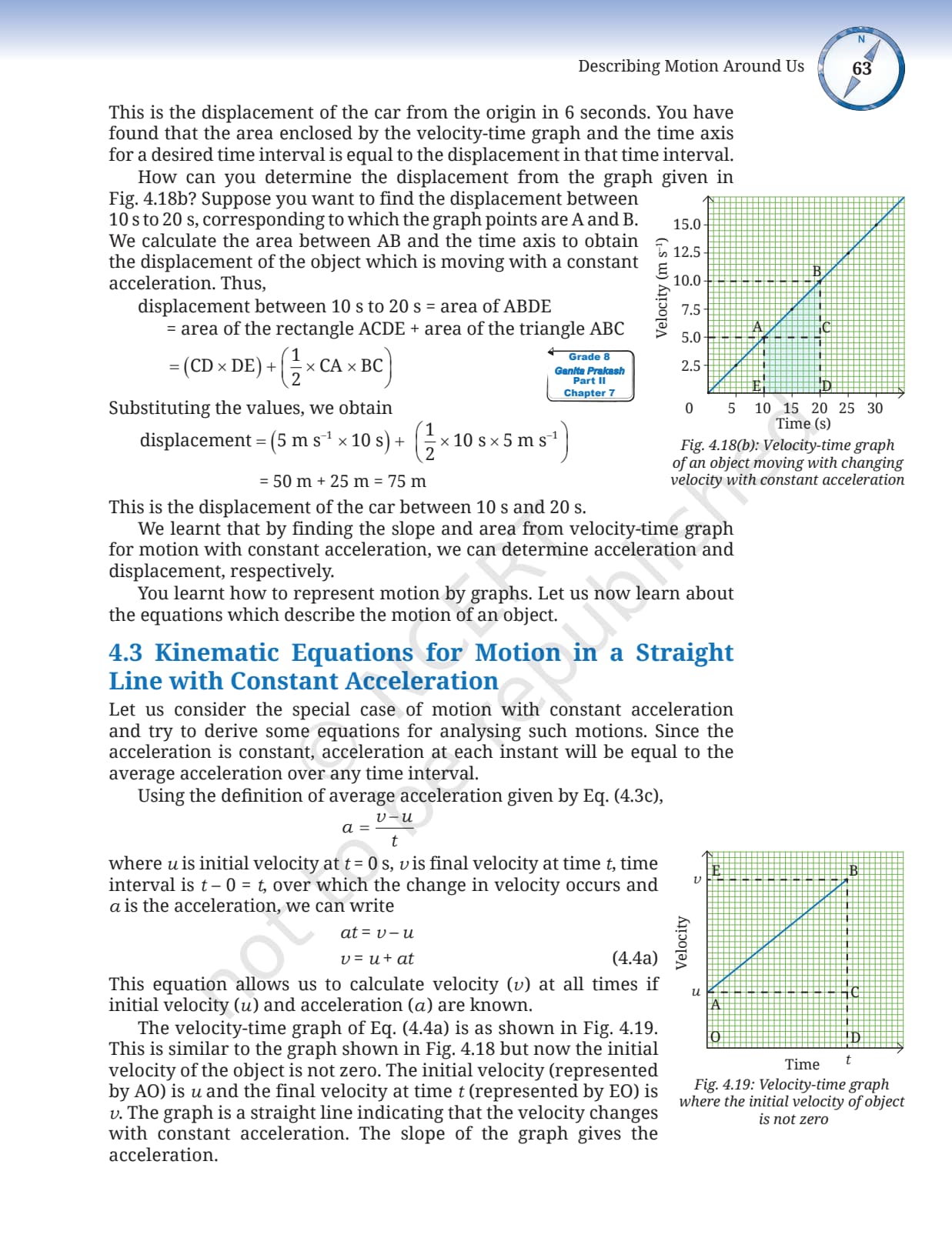
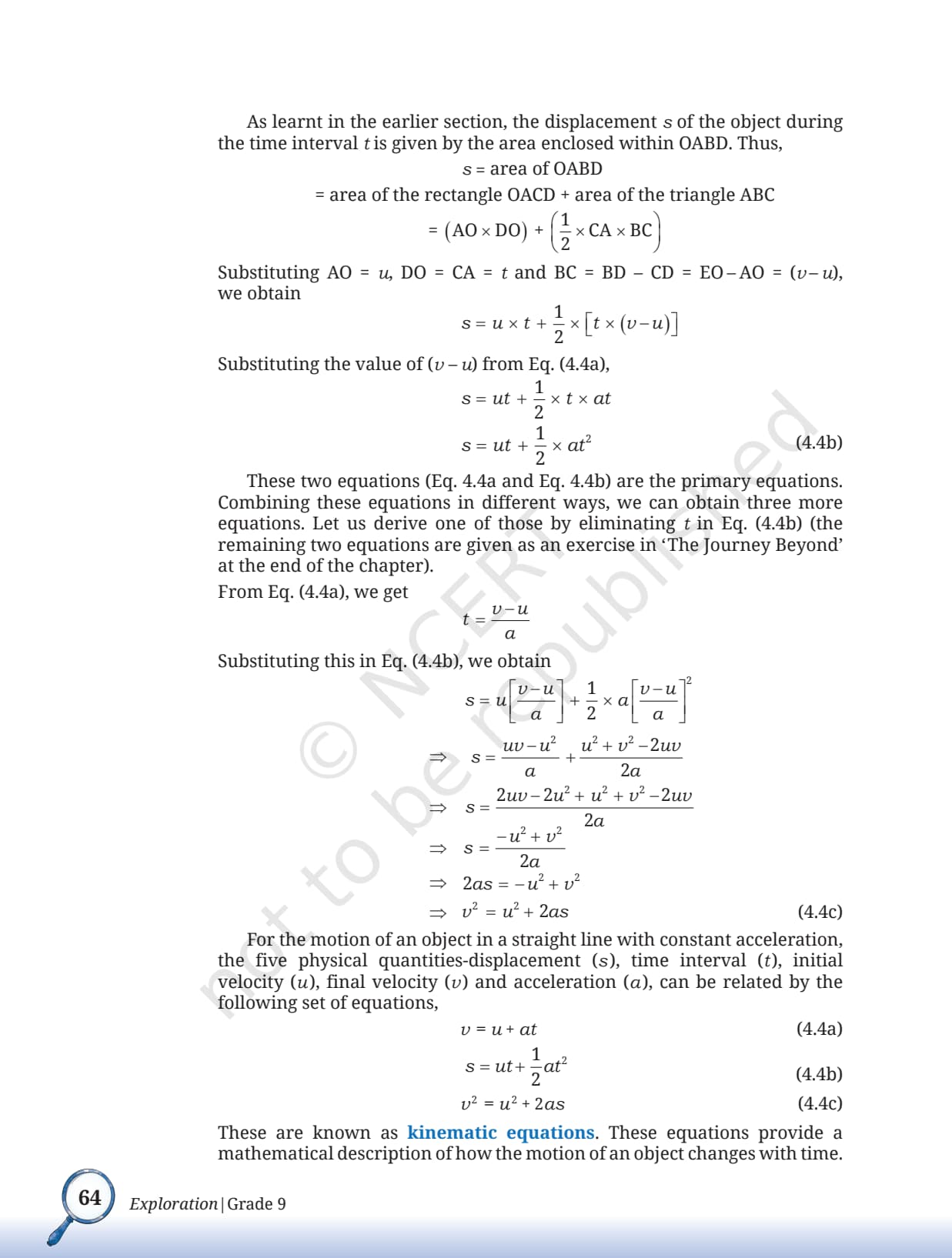
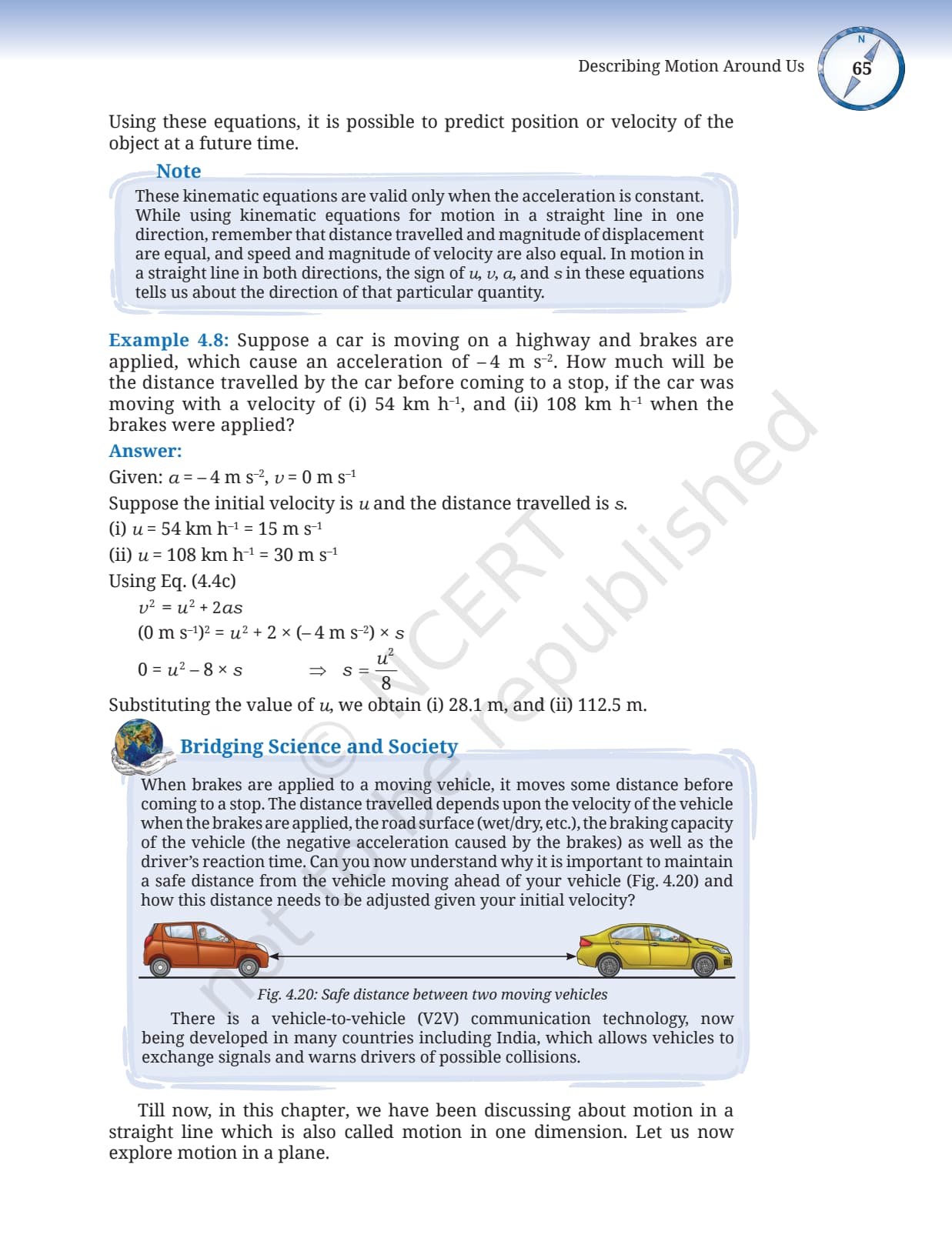
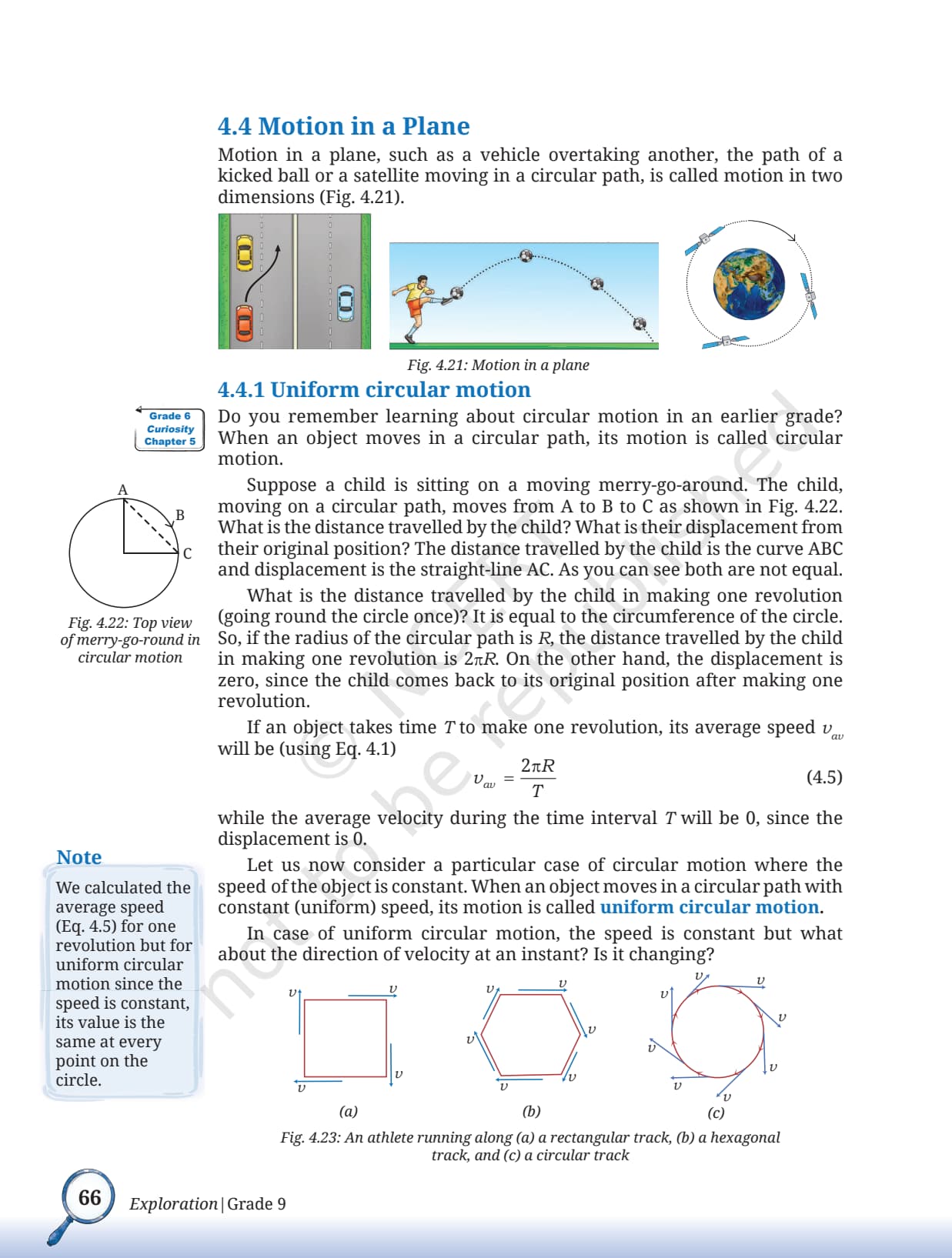
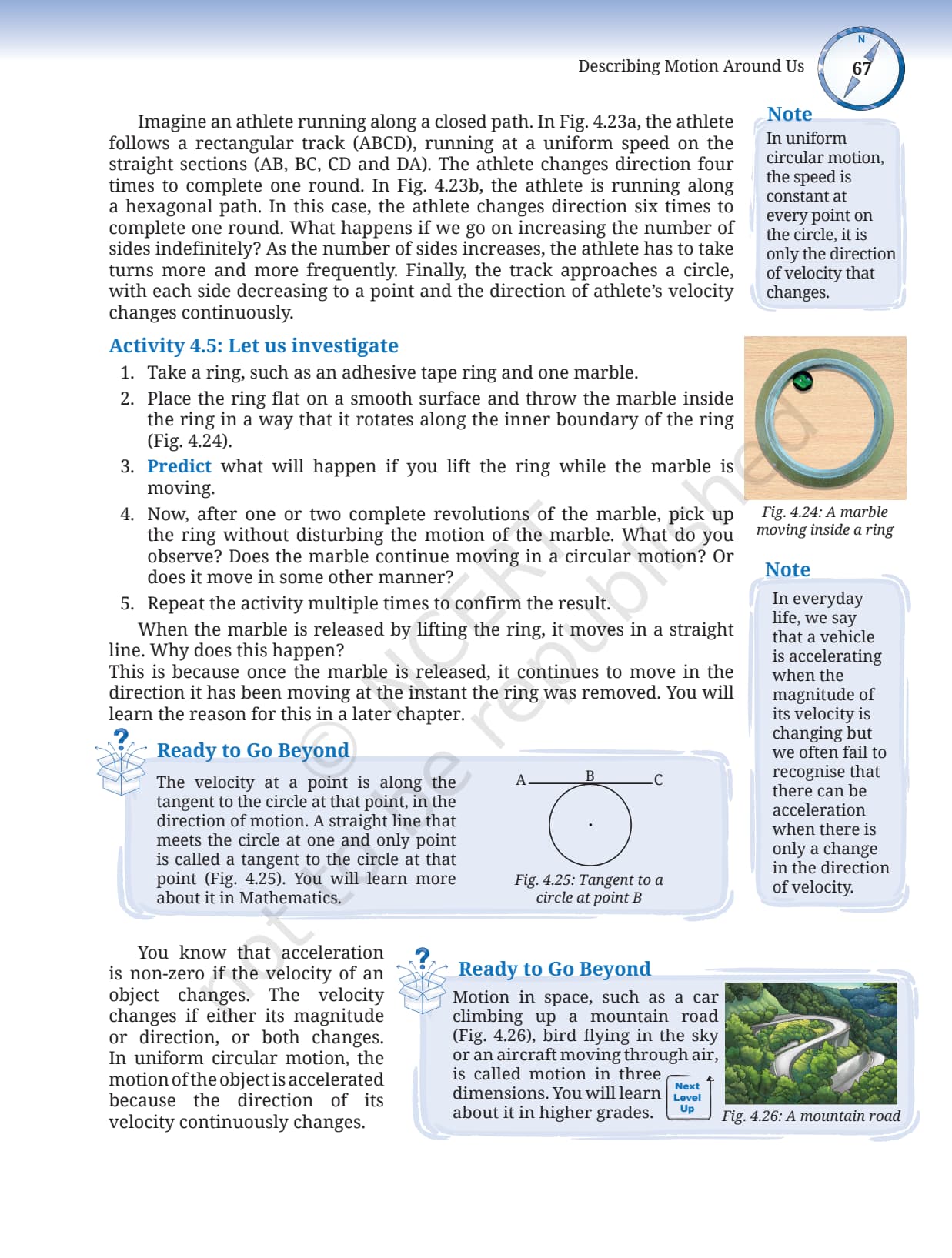
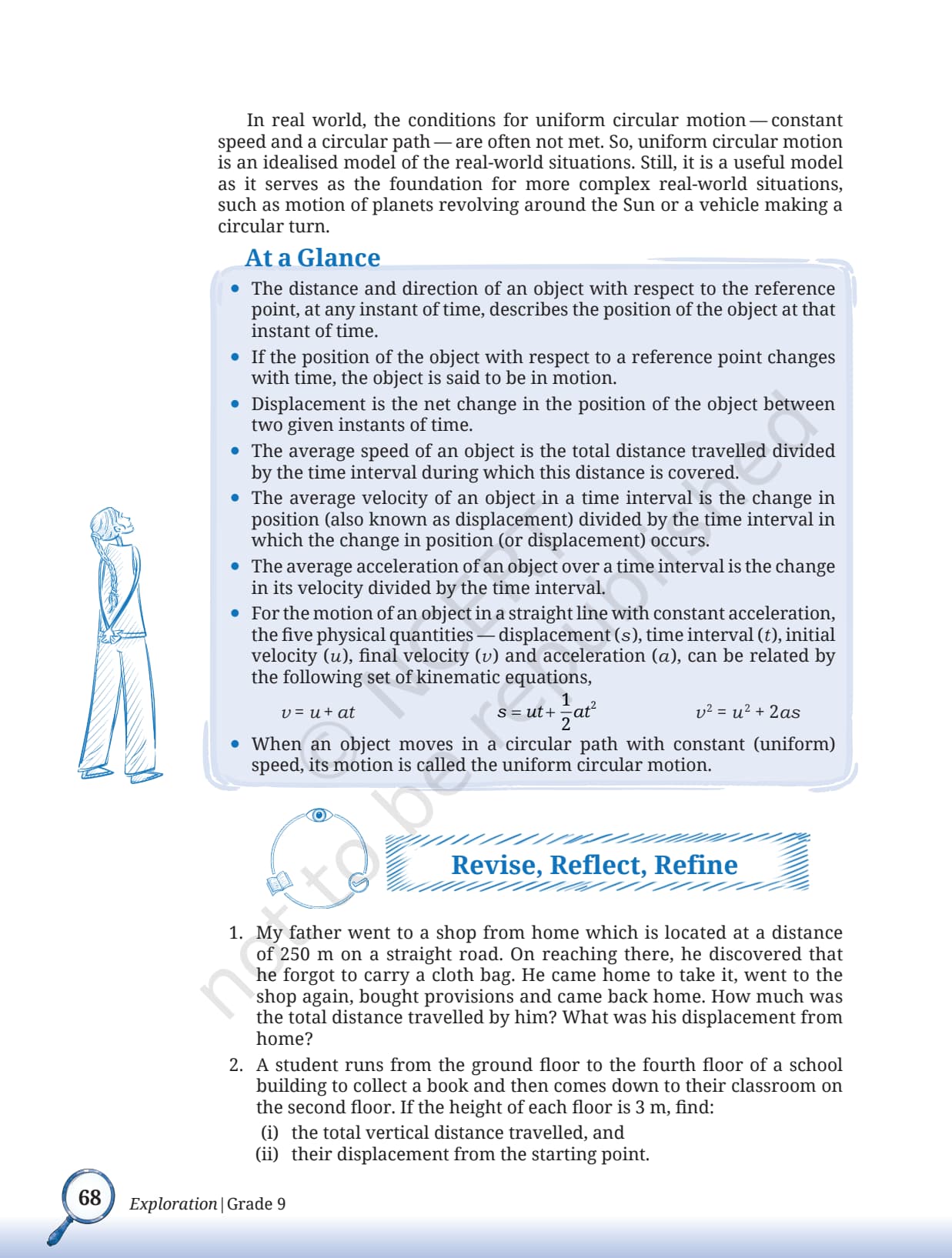
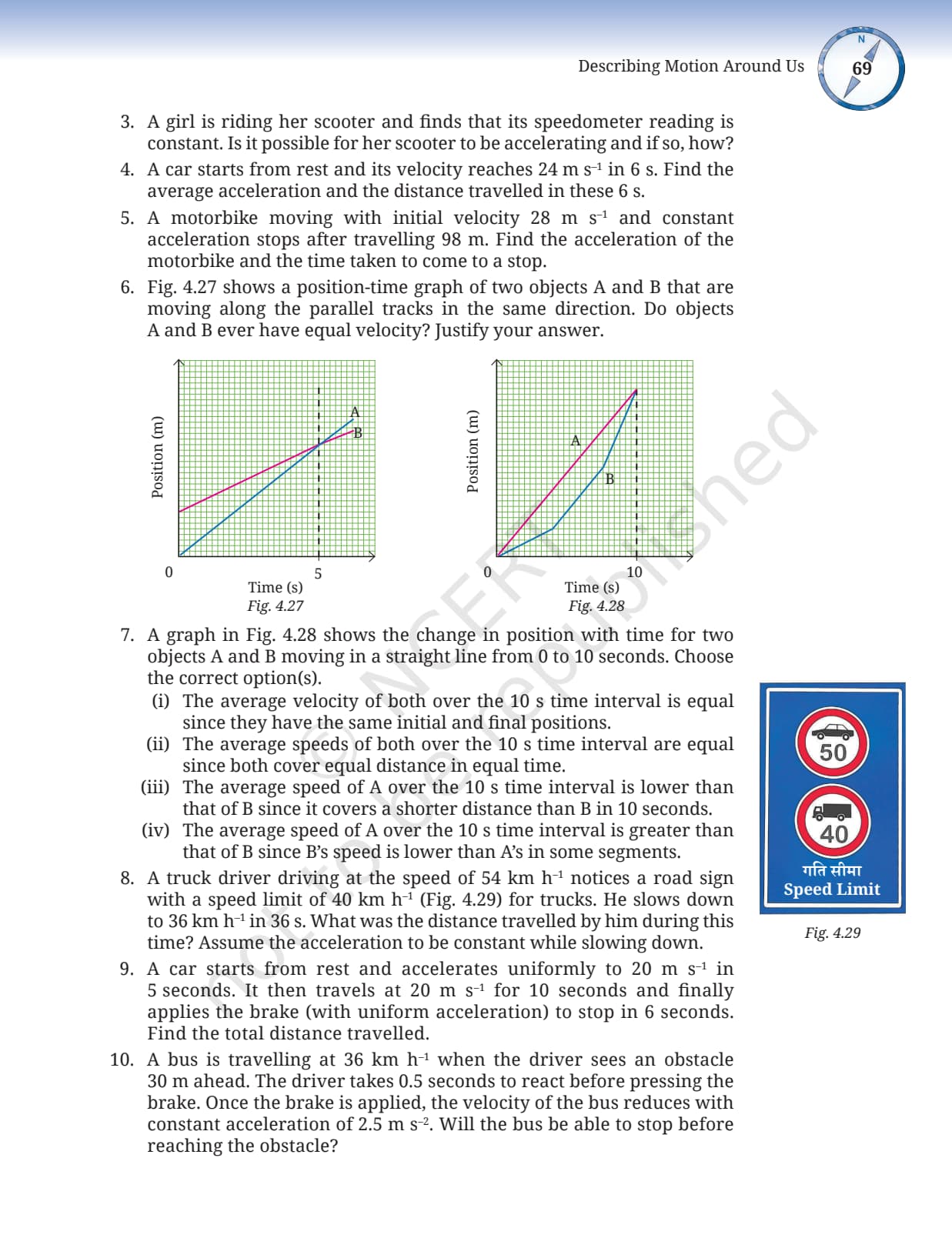
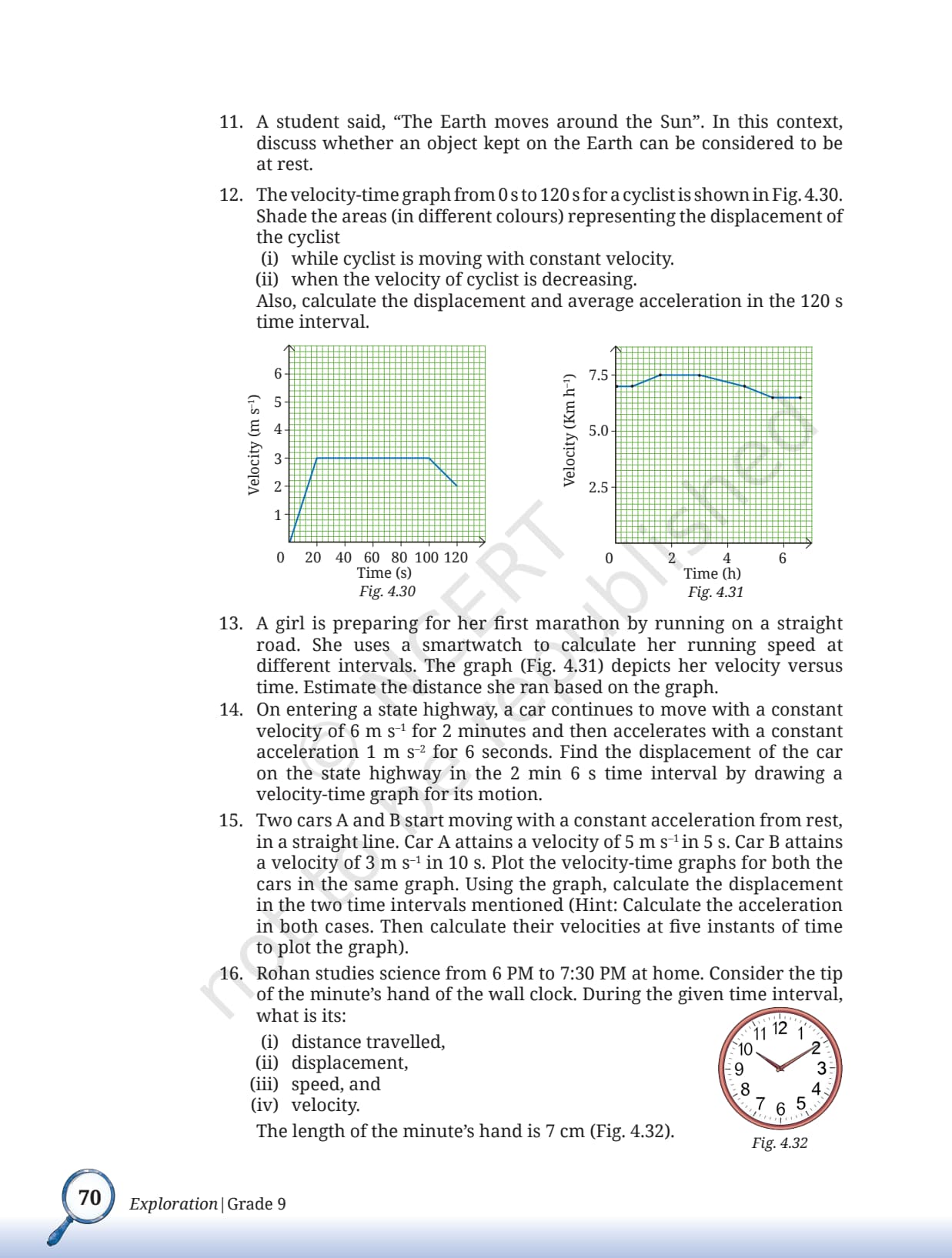
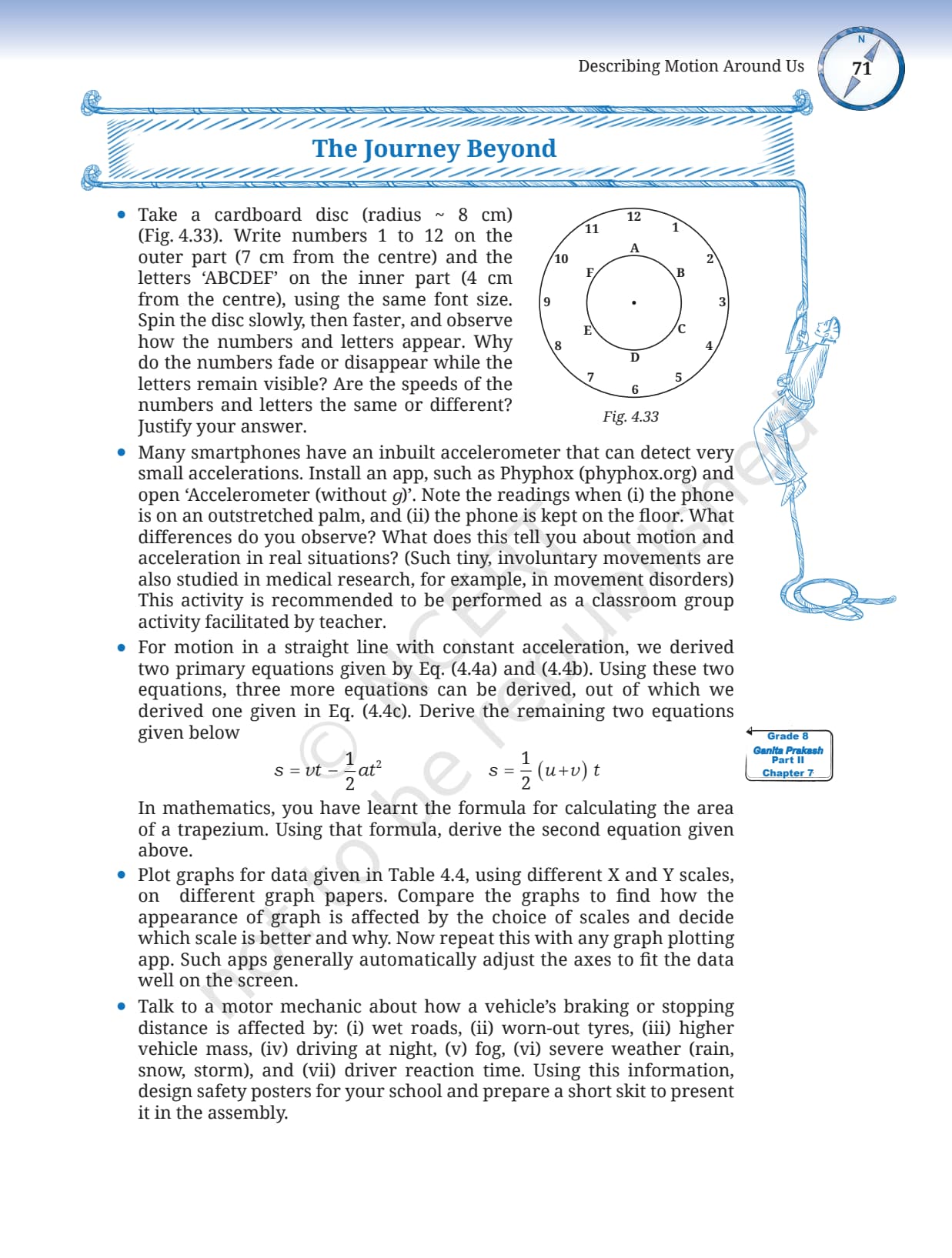
- What you get: the complete 24-page Chapter 4 PDF with all four sections, labelled figures, worked examples and the Revise, Reflect, Refine exercise.
- Topics inside: distance, displacement, speed, velocity, acceleration, motion graphs, the three equations of motion and uniform circular motion.
- Exam link: a base Physics chapter that supports Forces, Work and Energy, and later CBSE, JEE and NEET motion questions.
Student Feedback
In a Collegedunia survey of 11,540 Class 9 students taken before the 2026 boards, 79% said they preferred studying from the original NCERT Book PDF alongside short notes rather than notes alone. About 4 out of 5 rated the labelled motion-graph figures in Chapter 4 the most useful part of the book, and many said reading the exact textbook wording helped them answer definition questions in the exam.
Describing Motion Around Us Class 9 Explained in a Short Video
Source: Magnet Brains on YouTube
What the Describing Motion Around Us Class 9 NCERT Book PDF Covers
Everything in nature moves, from a flitting butterfly to a rising ocean tide. Chapter 4 of the new Exploration textbook teaches students to describe that motion in a simple, measurable way. The Class 9 Science NCERT Book PDF Chapter 4 Describing Motion Around Us begins with motion along a straight line, then moves to graphs, the equations of motion and finally motion in a plane, ending with uniform circular motion.
- Motion in a straight line: rest and motion, reference point, distance, displacement, speed, velocity and acceleration.
- Graphical representation: reading position-time and velocity-time graphs to picture how an object moves.
- Kinematic equations: the three equations that connect initial velocity, final velocity, acceleration, displacement and time.
- Motion in a plane: uniform circular motion, where the speed is steady but the direction keeps changing.
This chapter carries steady weight in Class 9 Science exams because it mixes definitions, graph reading and numericals. Motion is one of the most-tested Physics chapters in Class 9. Studying it from the original book PDF helps students learn the exact wording examiners look for.
Section-by-Section Inside the Class 9 Science Chapter 4 PDF
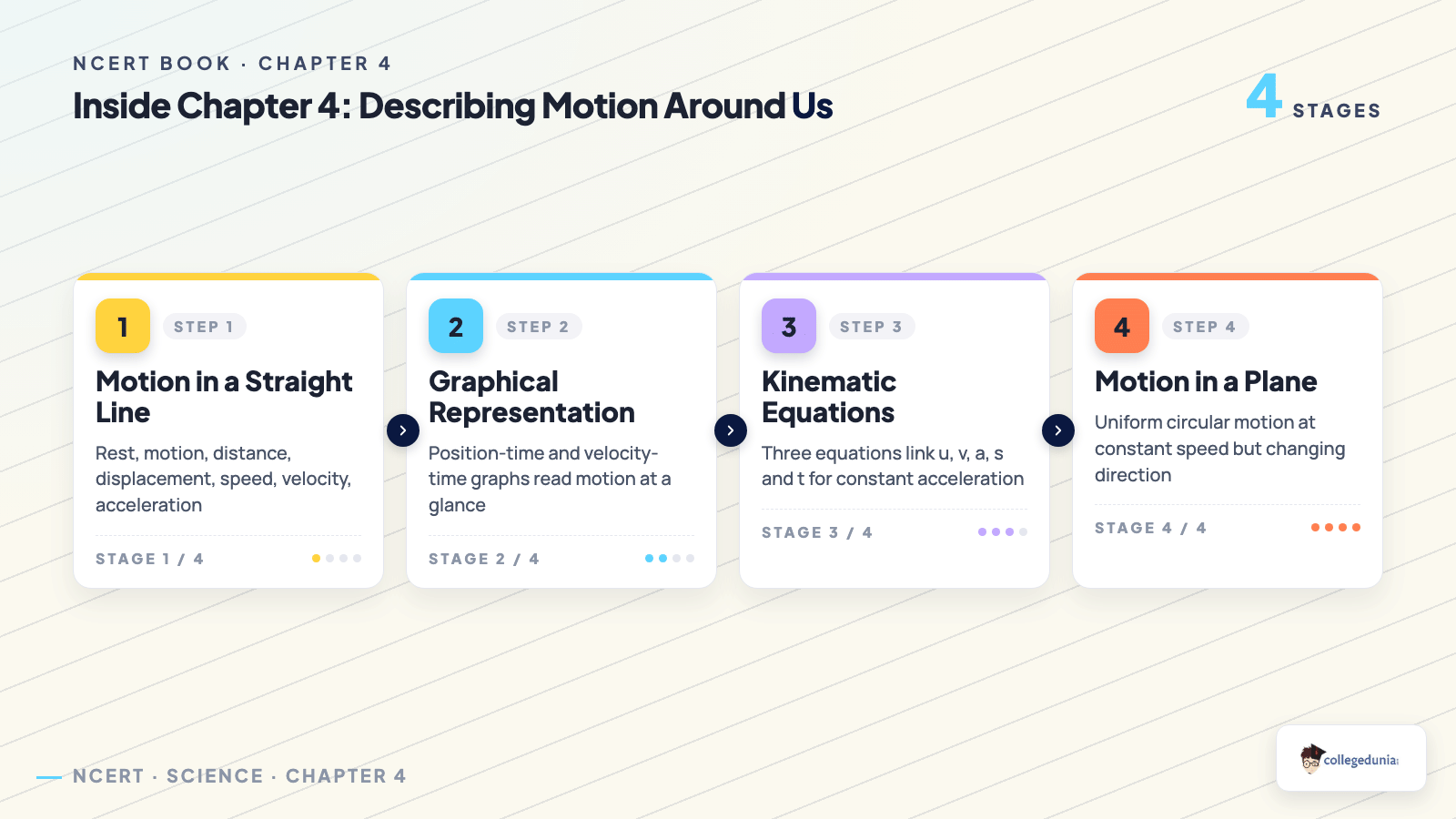
The book PDF is organised into four numbered sections, each building on the one before. The roadmap below shows the order in which the chapter develops, so students know what to expect as they scroll through the download.
| Section | Title | What it teaches |
|---|---|---|
| 4.1 | Motion in a Straight Line | Rest, reference point, distance, displacement, speed, velocity and acceleration. |
| 4.2 | Graphical Representation of Motion | Reading position-time and velocity-time graphs and finding slope and area. |
| 4.3 | Kinematic Equations for Motion | Deriving and using the three equations of motion for constant acceleration. |
| 4.4 | Motion in a Plane | Uniform circular motion at constant speed with continuously changing direction. |
Each section in the PDF carries labelled figures and one or two solved examples, so students can follow the method straight from the textbook. The magnitude of displacement is always less than or equal to the distance, never more. Small facts like this appear right where the book introduces them, which makes the PDF easy to revise from.
Key Terms and Equations in the Describing Motion Around Us Chapter
The heart of Chapter 4 is a small set of quantities and three equations of motion. The book PDF defines each term clearly and then shows how the equations link them for straight-line motion with constant acceleration.
- Scalars: distance, speed and time need only a number with a unit.
- Vectors: displacement, velocity and acceleration need a number and a direction.
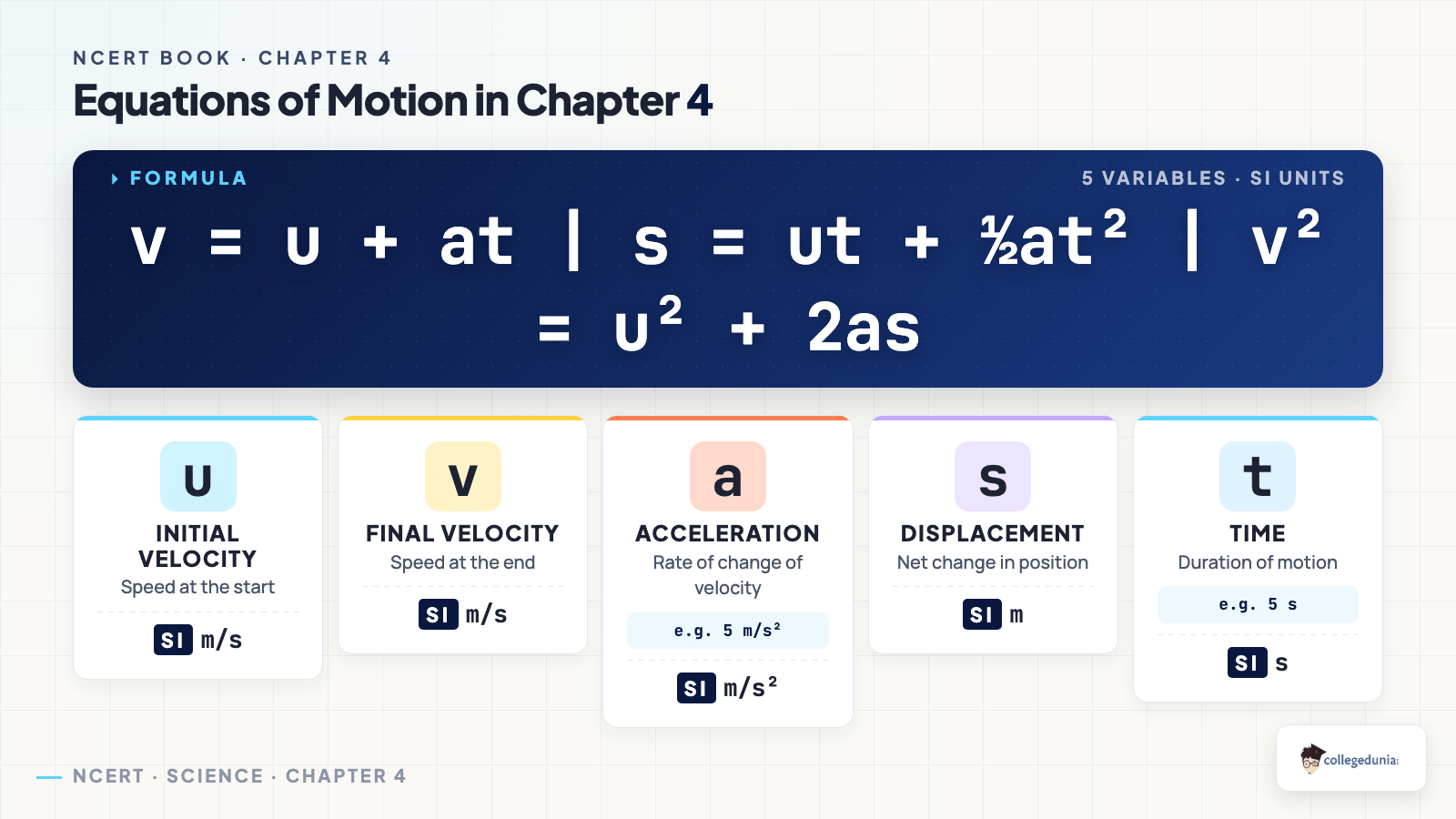
- Equations of motion: v = u + at, s = ut + ½at² and v² = u² + 2as, where u is initial velocity, v is final velocity, a is acceleration, s is displacement and t is time.
Each equation leaves out one quantity, so students pick the one that skips the value they do not know. If time is missing, use v² = u² + 2as. For a freely falling body, replace a with the acceleration due to gravity, g = 9.8 m/s². The book shows how all three equations come from a single velocity-time graph.
In-Text Features and Exercises in the Class 9 Science Chapter 4 Book
The Exploration textbook does more than state facts. Chapter 4 is built around short prompts that make students stop and think, plus a full end-of-chapter exercise. Downloading the book PDF gives students access to all of these in the original layout.
- Think It Over: real questions, such as how much distance to keep from a truck that may brake suddenly.
- Pause and Ponder: quick checks that ask students to reason about a graph or a definition before moving on.
- Activities: hands-on tasks, like spinning a marked disc or using a phone accelerometer, that link the theory to real motion.
- Revise, Reflect, Refine: the end-of-chapter exercise with definitions, reasoning questions, graphs and numericals.
Students who work through the Revise, Reflect, Refine questions from the PDF cover the exact style of questions the exam uses. For fully worked answers to these, pair the book with the NCERT Solutions linked lower on this page.
Why Download the Describing Motion Around Us Class 9 NCERT Book PDF
Notes and solutions are quick, but the original textbook is still the source every exam is set from. Keeping the Class 9 Science Chapter 4 NCERT Book PDF on your device gives students the complete, correct chapter to study offline.
- Exact wording: definitions of distance, displacement and acceleration in the words the exam expects.
- All figures: the labelled motion graphs and circular-motion diagrams that summary notes often leave out.
- Offline study: read the whole chapter without internet, on a phone, tablet or printout.
- 2026-27 ready: the current first-edition Exploration chapter, matched to what schools teach this session.
Because the PDF is the real chapter, students can highlight, print and annotate it just like the printed book. This makes it the best single file to revise from before a class test or the final exam.
How to Use the Describing Motion Around Us NCERT Book PDF with Notes and Solutions
The book PDF works best as one part of a set. Students revise fastest when they read the chapter, learn from short notes, drill the questions and recap from a formula sheet, each resource doing its own job.
- Read the book PDF first to meet every concept, figure and example in the original NCERT order.
- Move to the NCERT Notes for short, exam-ready explanations of distance, velocity, graphs and the equations of motion.
- Practise with the NCERT Solutions to solve every Revise, Reflect, Refine question with full steps.
- Recap with the Formula Sheet for a one-page list of speed, velocity, acceleration and the three kinematic equations.
Together these four resources cover Chapter 4 for the 2026-27 session. The book explains in full, the notes condense, the solutions drill, and the formula sheet gives the final quick revision.
More Describing Motion Around Us Class 9 Science Resources
| Resource | Open |
|---|---|
| NCERT Book PDF | Describing Motion Around Us Class 9 NCERT Book PDF |
| NCERT Solutions | Describing Motion Around Us Class 9 NCERT Solutions |
| Revision Notes | Describing Motion Around Us Class 9 Notes |
| Handwritten Notes | Describing Motion Around Us Class 9 Handwritten Notes |
| Formula Sheet | Describing Motion Around Us Class 9 Formula Sheet |
NCERT Book PDF for Class 9 Science: All Chapters
Use the table below to download the NCERT Book PDF for any other chapter of the new Class 9 Science Exploration textbook.
| Chapter | NCERT Book PDF |
|---|---|
| Chapter 1 | Exploration Entering the World of Secondary Science |
| Chapter 2 | Cell The Building Block of Life |
| Chapter 3 | Tissues in Action |
| Chapter 4 | Describing Motion Around Us |
| Chapter 5 | Exploring Mixtures and their Separation |
| Chapter 6 | How Forces Affect Motion |
| Chapter 7 | Work, Energy, and Simple Machines |
| Chapter 8 | Journey Inside the Atom |
| Chapter 9 | Atomic Foundations of Matter |
| Chapter 10 | Sound Waves Characteristics and Applications |
| Chapter 11 | Reproduction How Life Continues |
| Chapter 12 | Patterns in Life Diversity and Classification |
| Chapter 13 | Earth as a System Energy, Matter, and Life |
Describing Motion Around Us Class 9 Science NCERT Book PDF FAQs
Ques. Where can I download the Class 9 Science NCERT Book PDF Chapter 4 Describing Motion Around Us?
Ans. You can download the Describing Motion Around Us Class 9 NCERT Book PDF free from this page. It is the complete Chapter 4 from the 2026-27 Exploration textbook, with all sections, figures and the Revise, Reflect, Refine exercise.
Ques. What topics are covered in Class 9 Science Chapter 4?
Ans. Chapter 4 covers motion in a straight line, graphical representation of motion, the three kinematic equations, and motion in a plane including uniform circular motion. It defines distance, displacement, speed, velocity and acceleration.
Ques. Which book is Chapter 4 Describing Motion Around Us from?
Ans. It is Chapter 4 of the new Exploration textbook of Science for Grade 9, the first-edition book for the 2026-27 syllabus. It replaces the older Class 9 Science book and uses the Revise, Reflect, Refine exercise format.
Ques. What are the three equations of motion in Chapter 4?
Ans. The three equations for constant acceleration are v = u + at, s = ut + ½at², and v² = u² + 2as. Here u is initial velocity, v is final velocity, a is acceleration, s is displacement and t is time.
Ques. Is the Describing Motion Around Us PDF enough to prepare the chapter?
Ans. The book PDF gives the full chapter and is the main source. For fast revision and full answers, pair it with the Class 9 Science Chapter 4 Notes, NCERT Solutions and Formula Sheet linked on this page.
Ques. How many pages is the Class 9 Science Chapter 4 NCERT Book PDF?
Ans. The Describing Motion Around Us chapter runs about 24 pages in the Exploration textbook. It includes labelled figures, solved examples, in-text prompts and the full end-of-chapter exercise.



Comments