




The Class 9 Social Science NCERT Book Chapter 5 State and Society up to 1000 CE is the full chapter from the new Understanding Society textbook for the 2026-27 syllabus. This page lets students download the complete chapter PDF free and shows what is inside, from kin-based clans to the great empires and self-ruling villages.
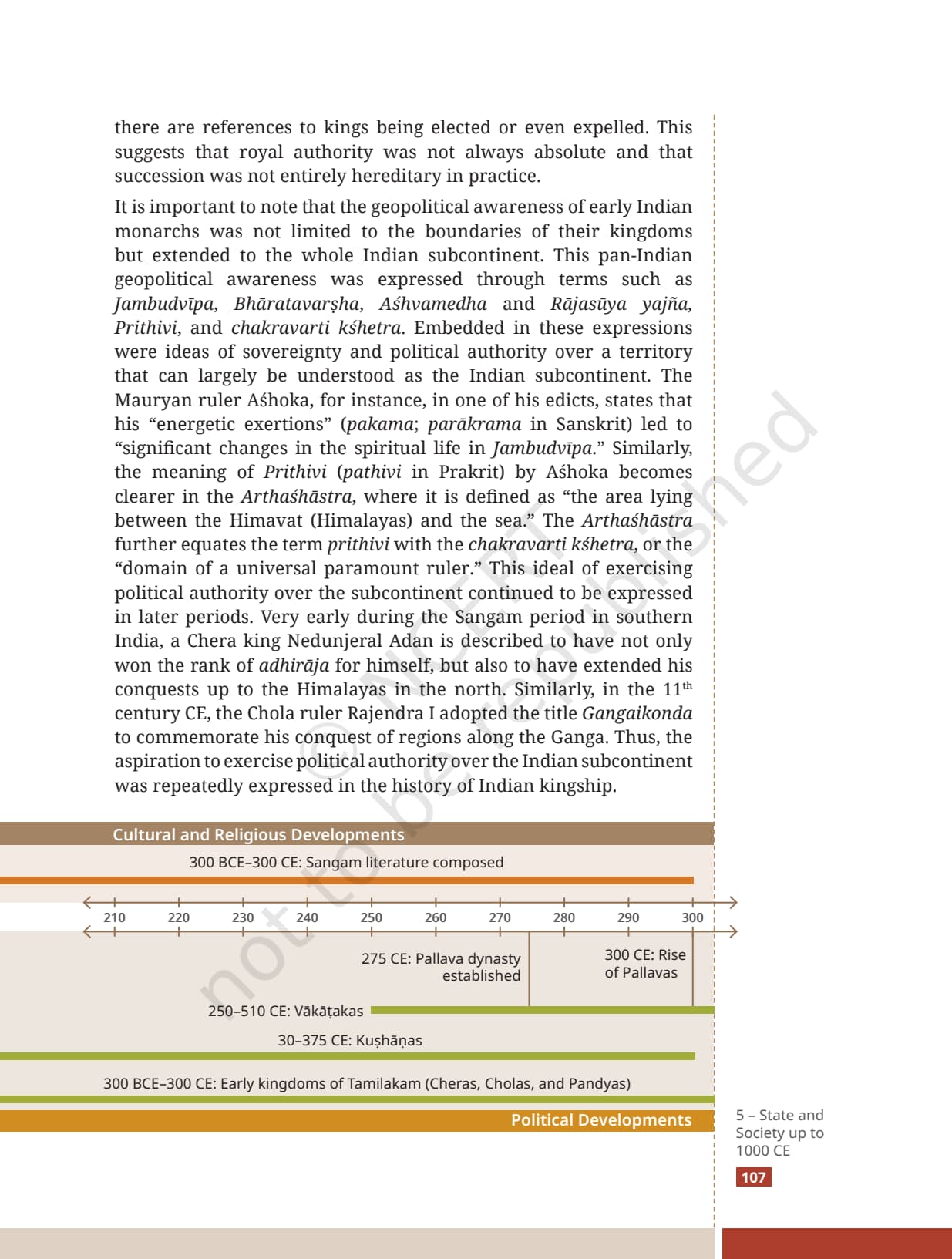
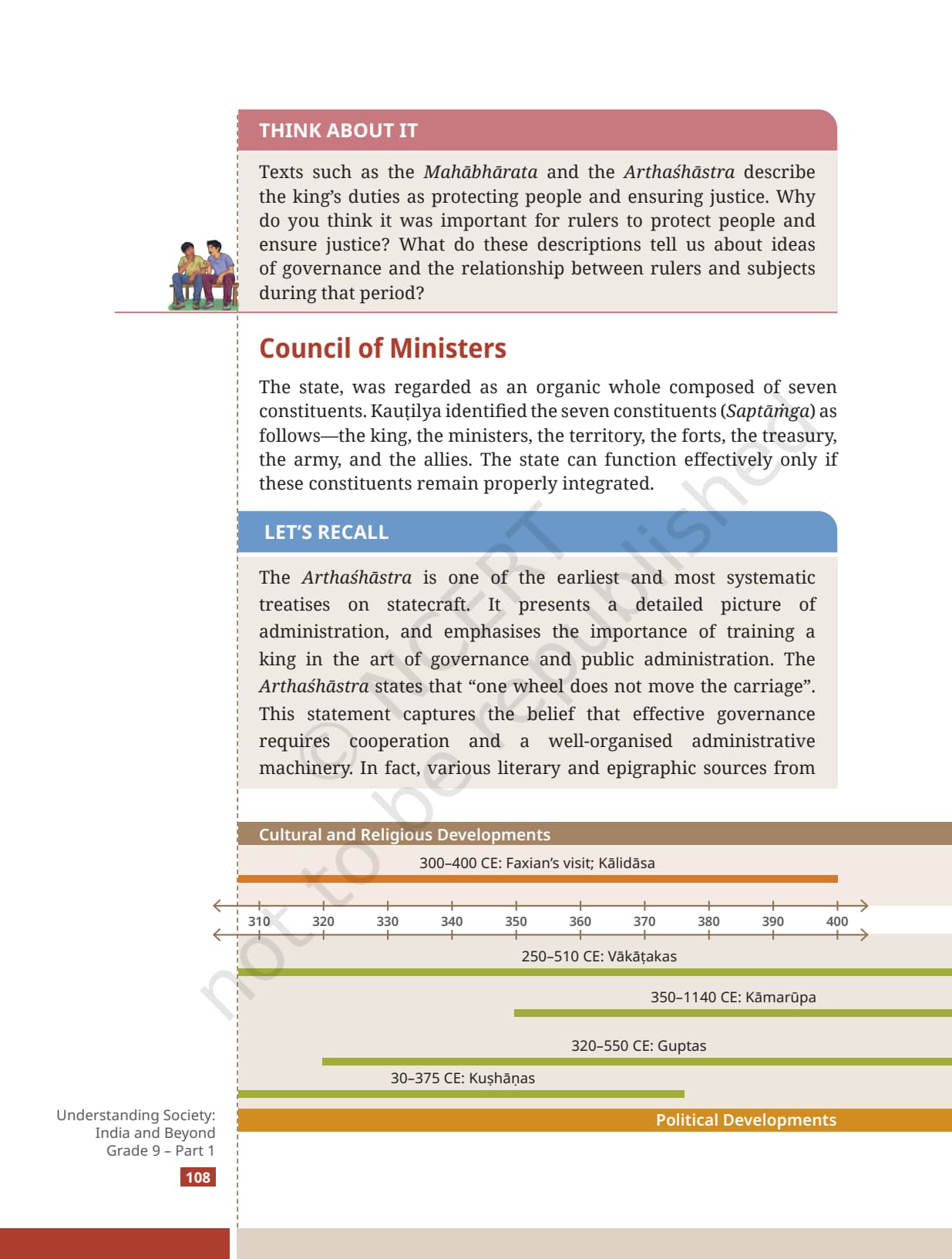
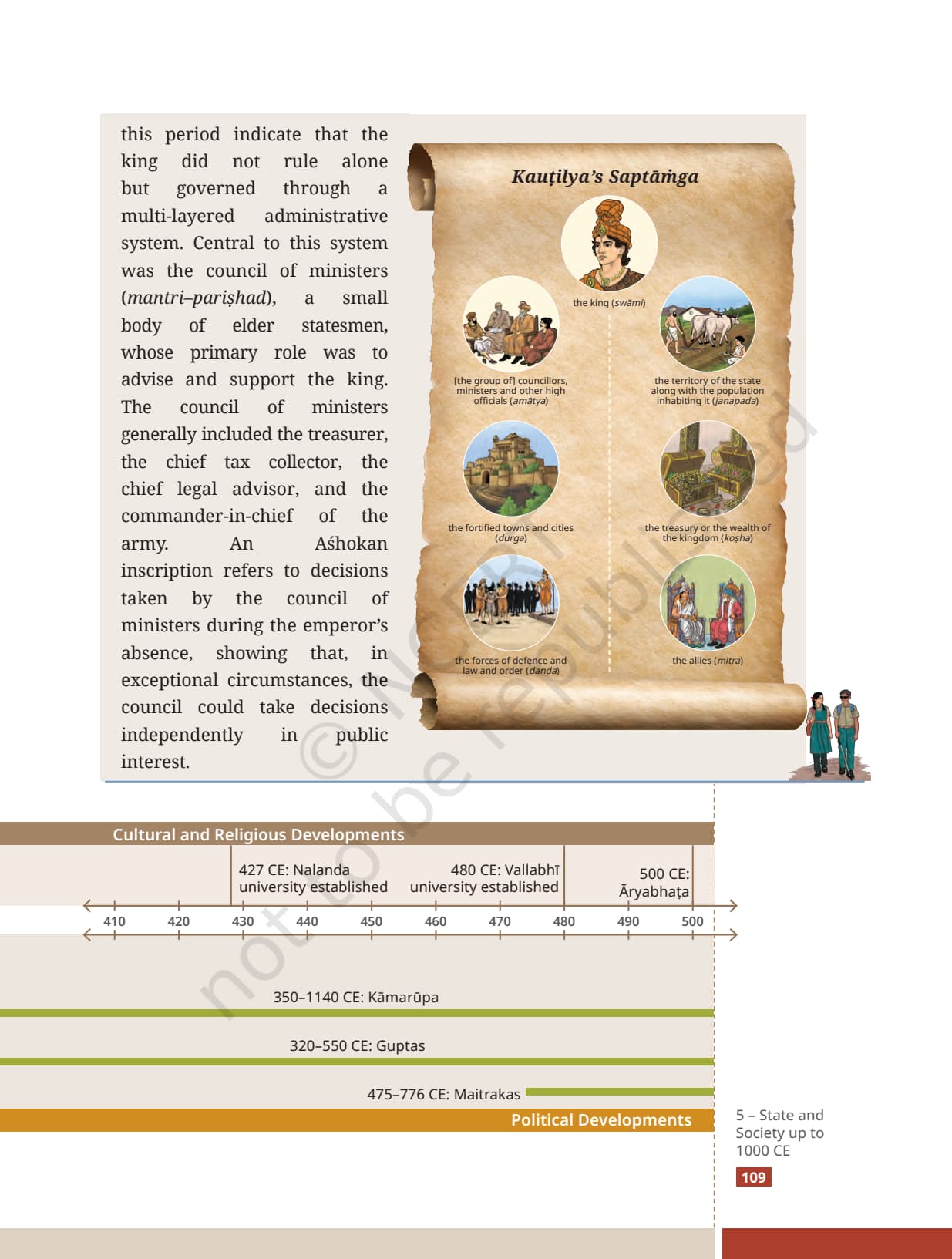
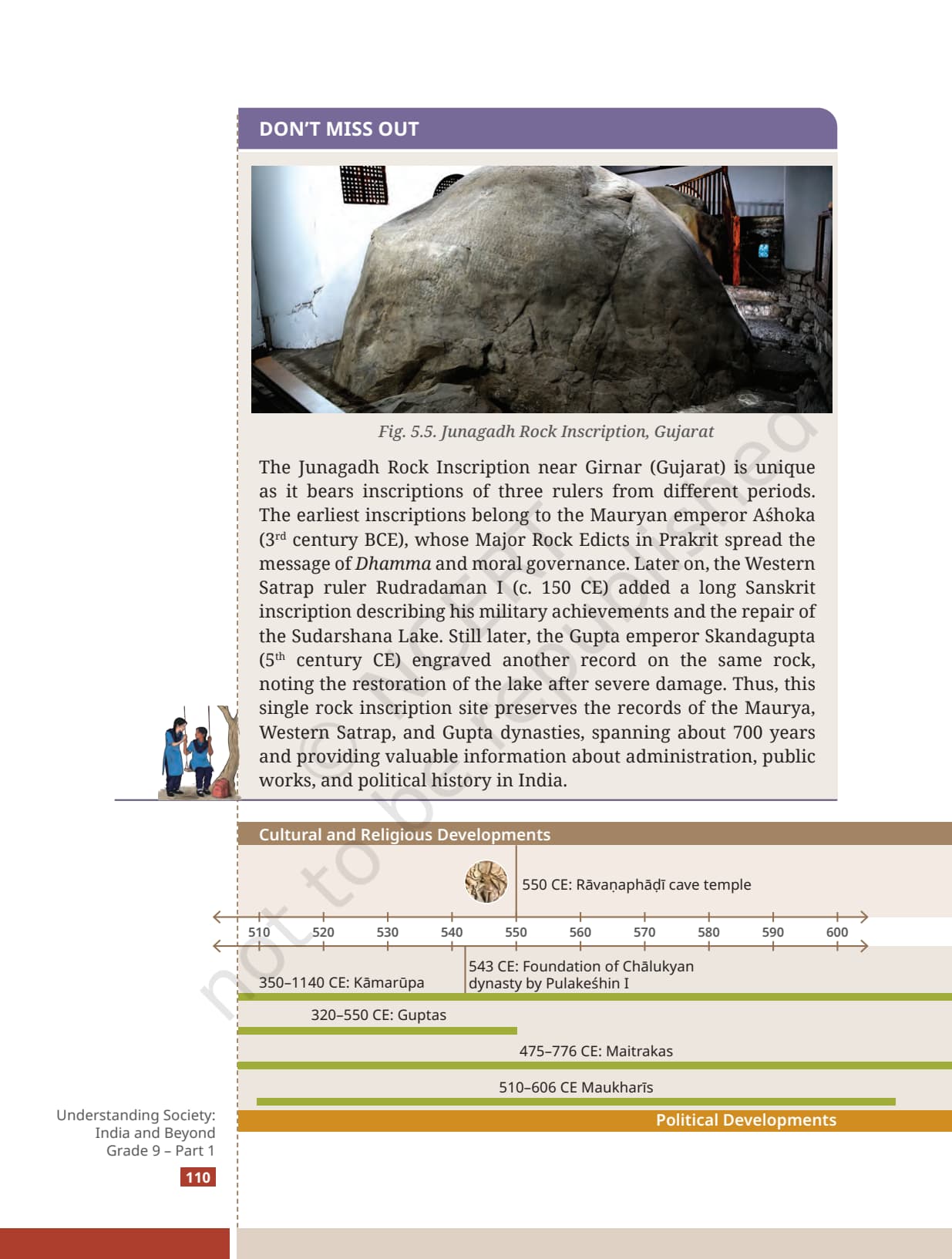
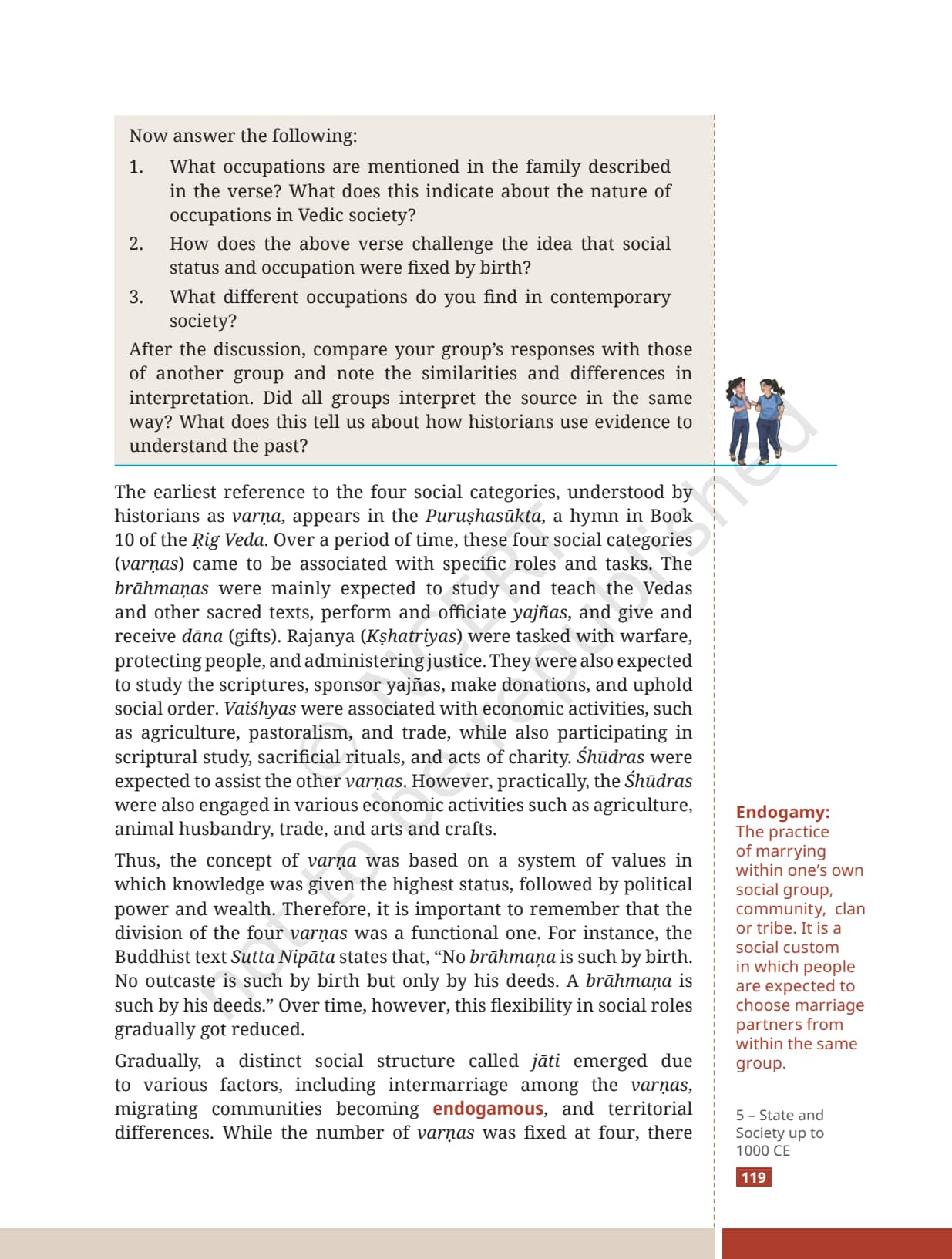
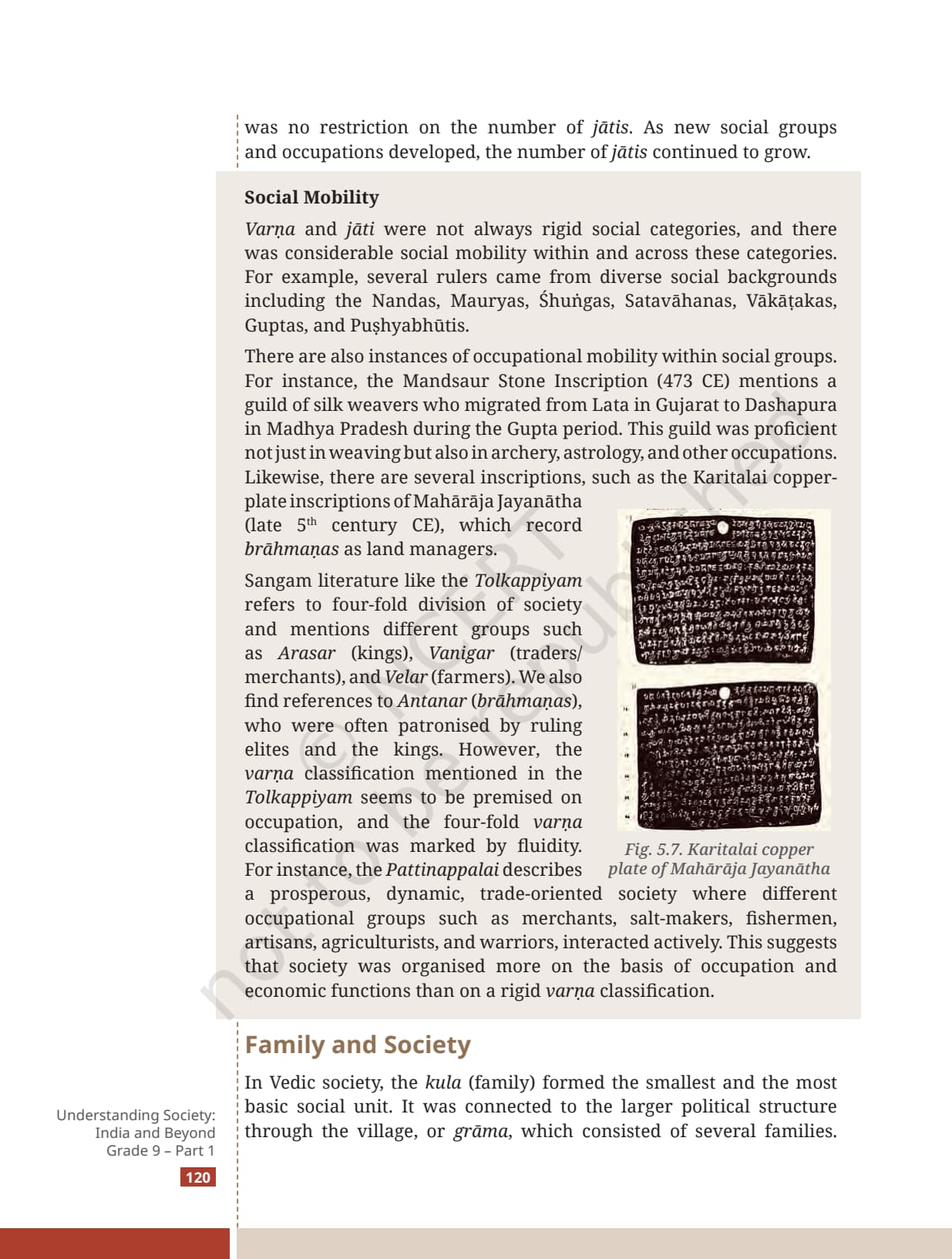
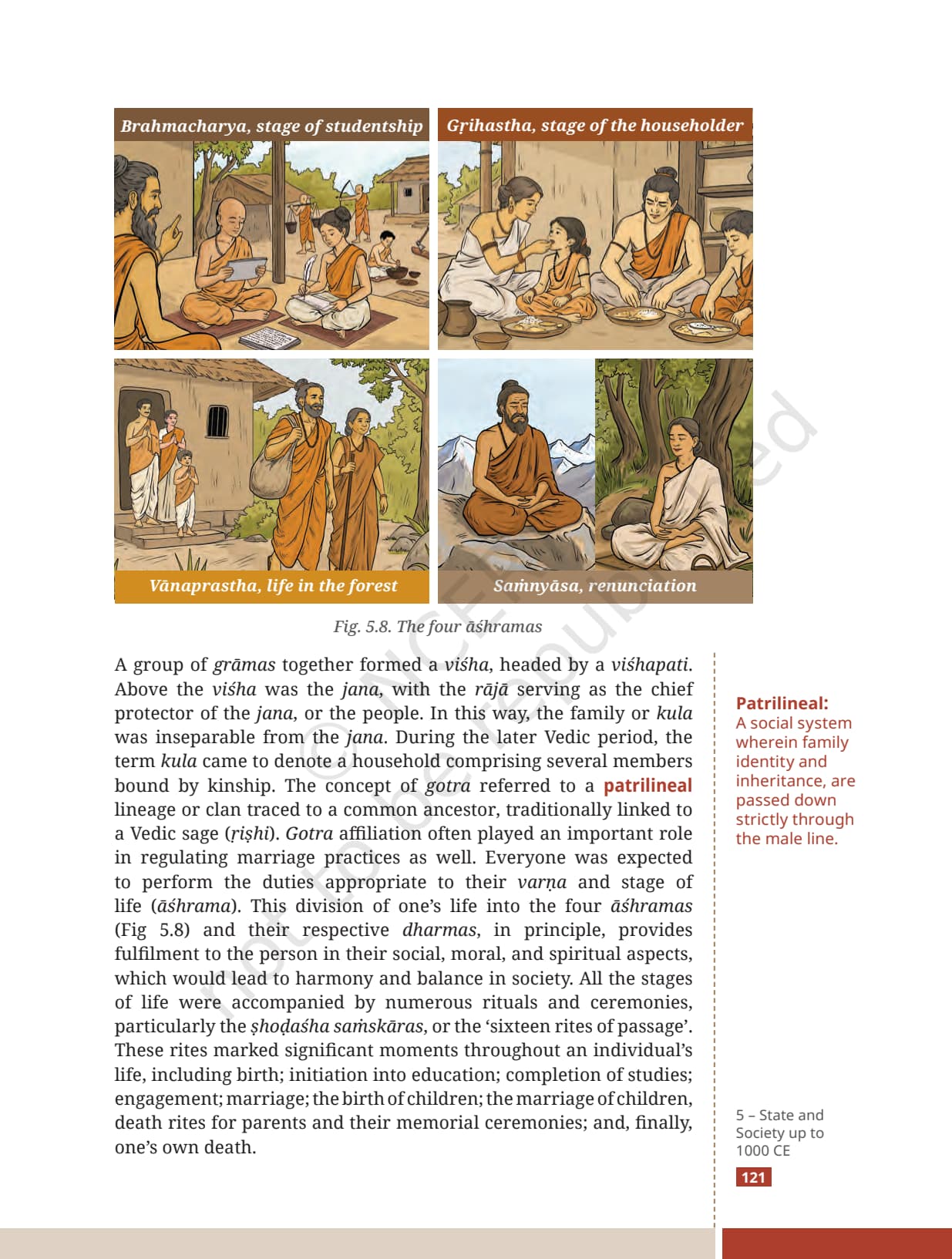
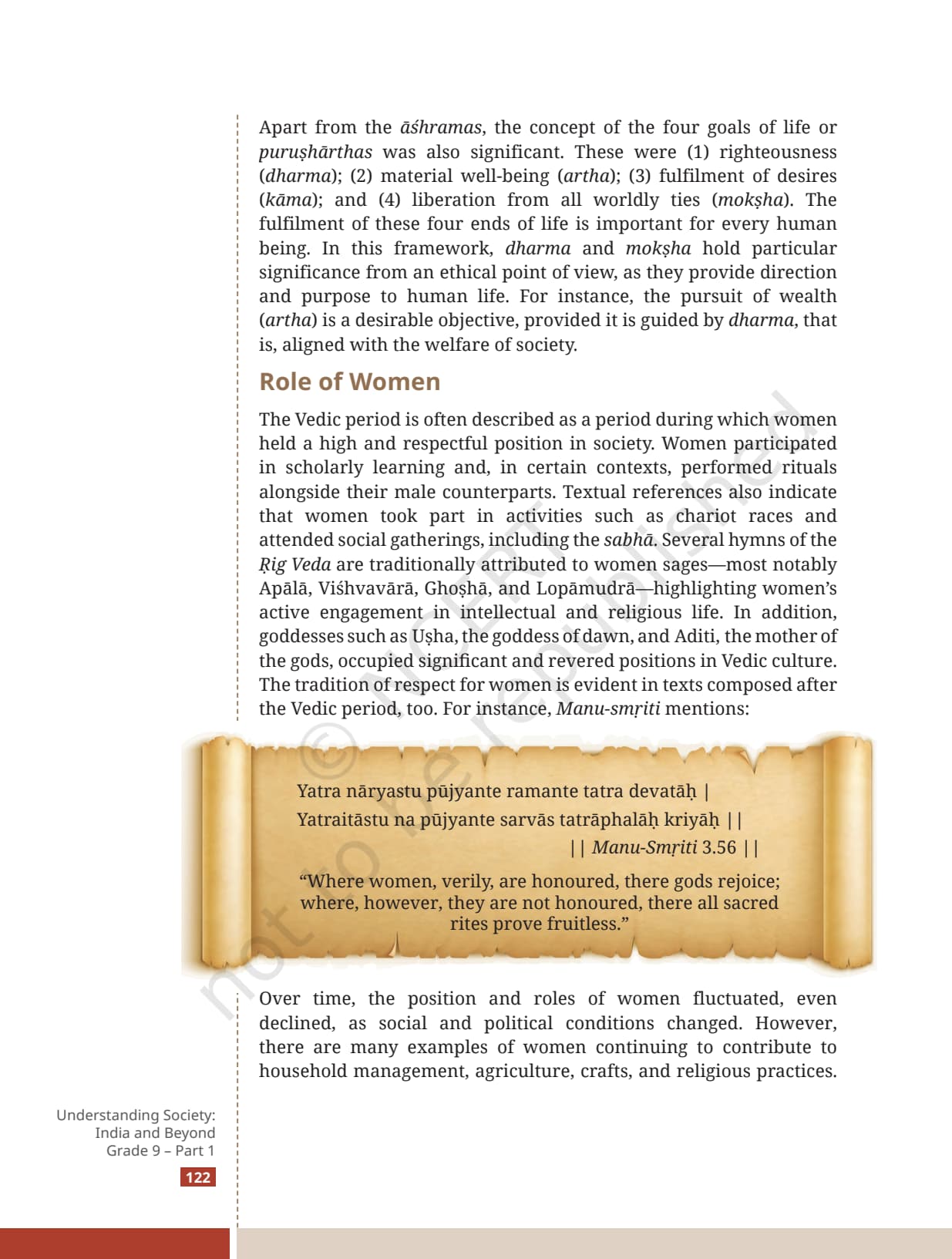
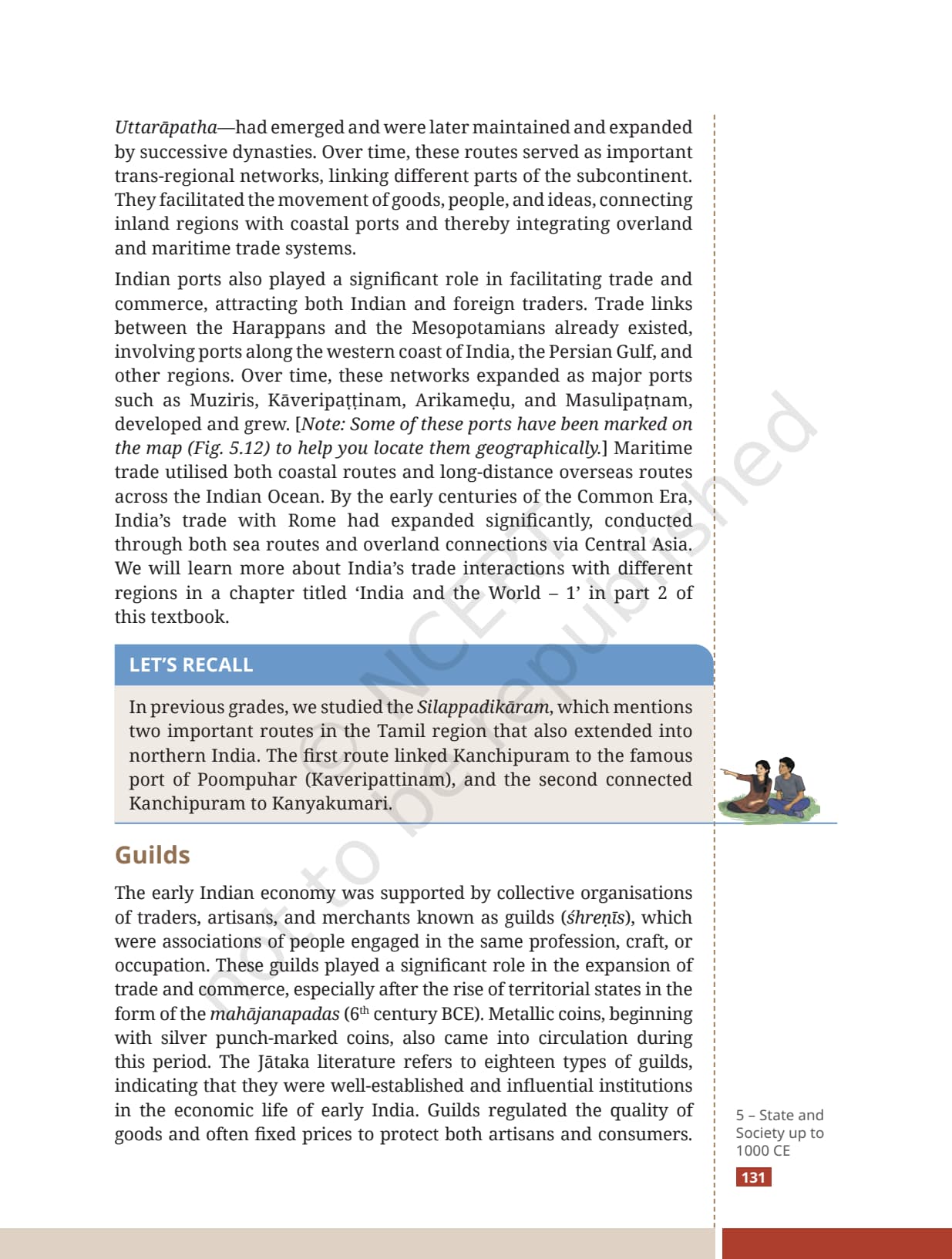
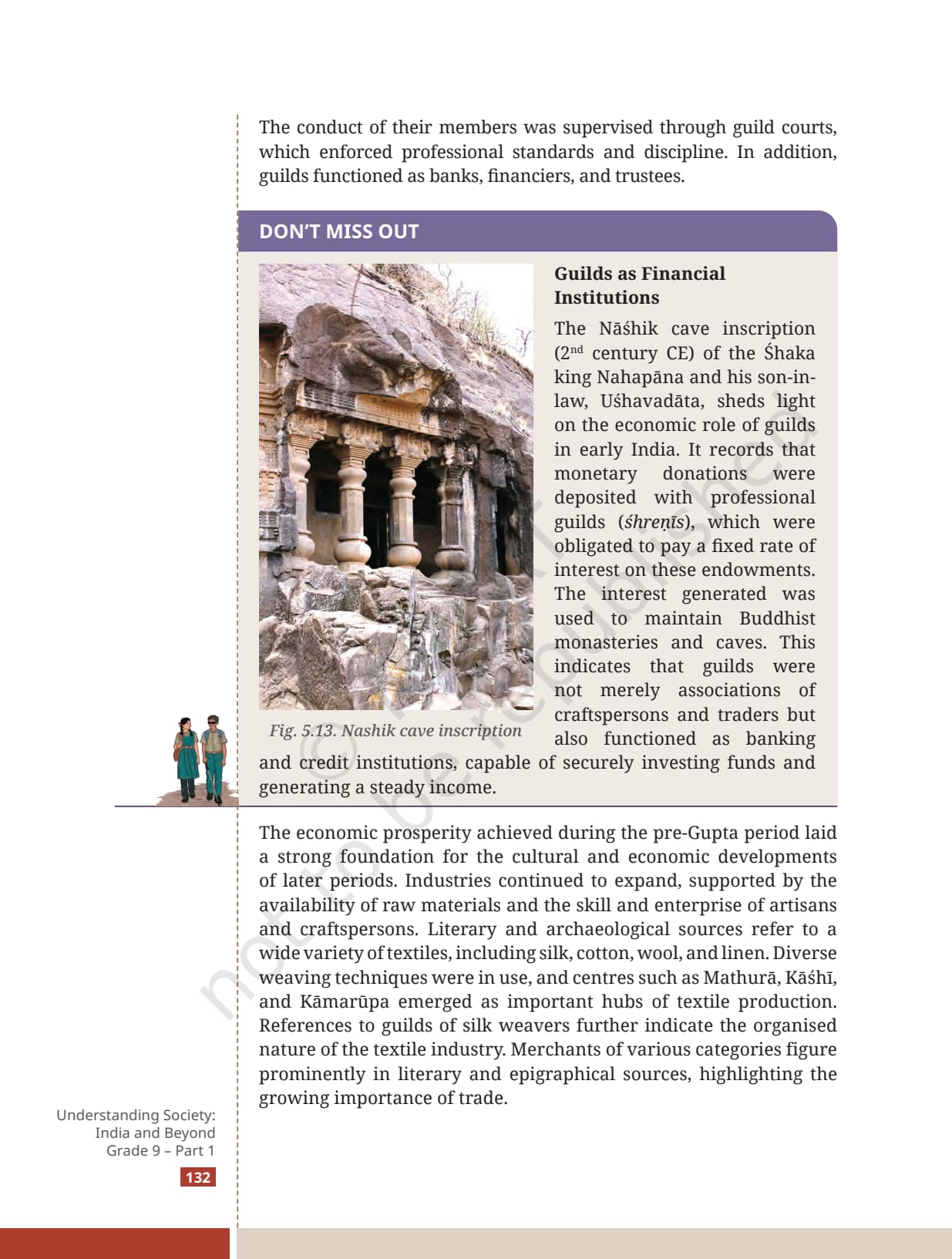
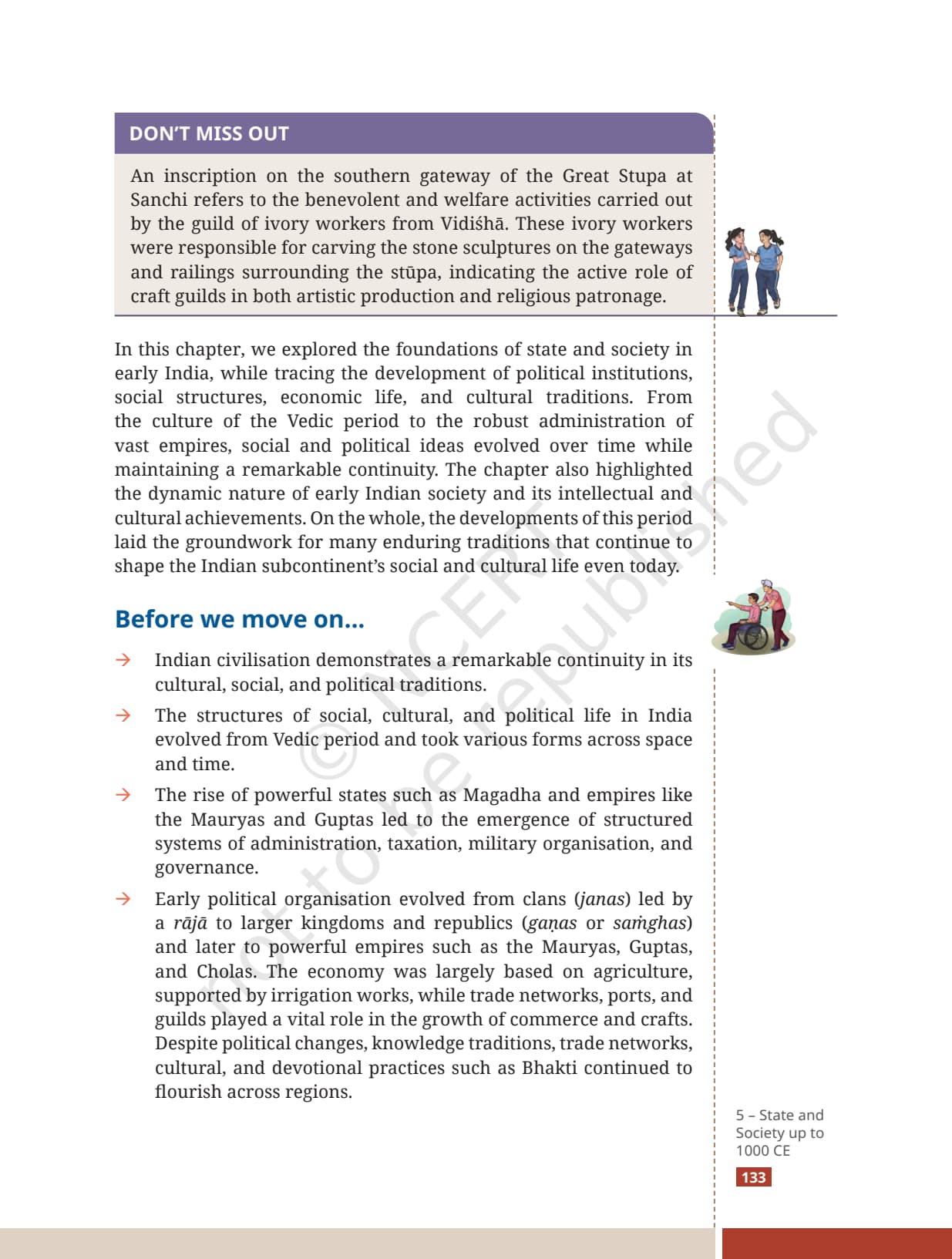
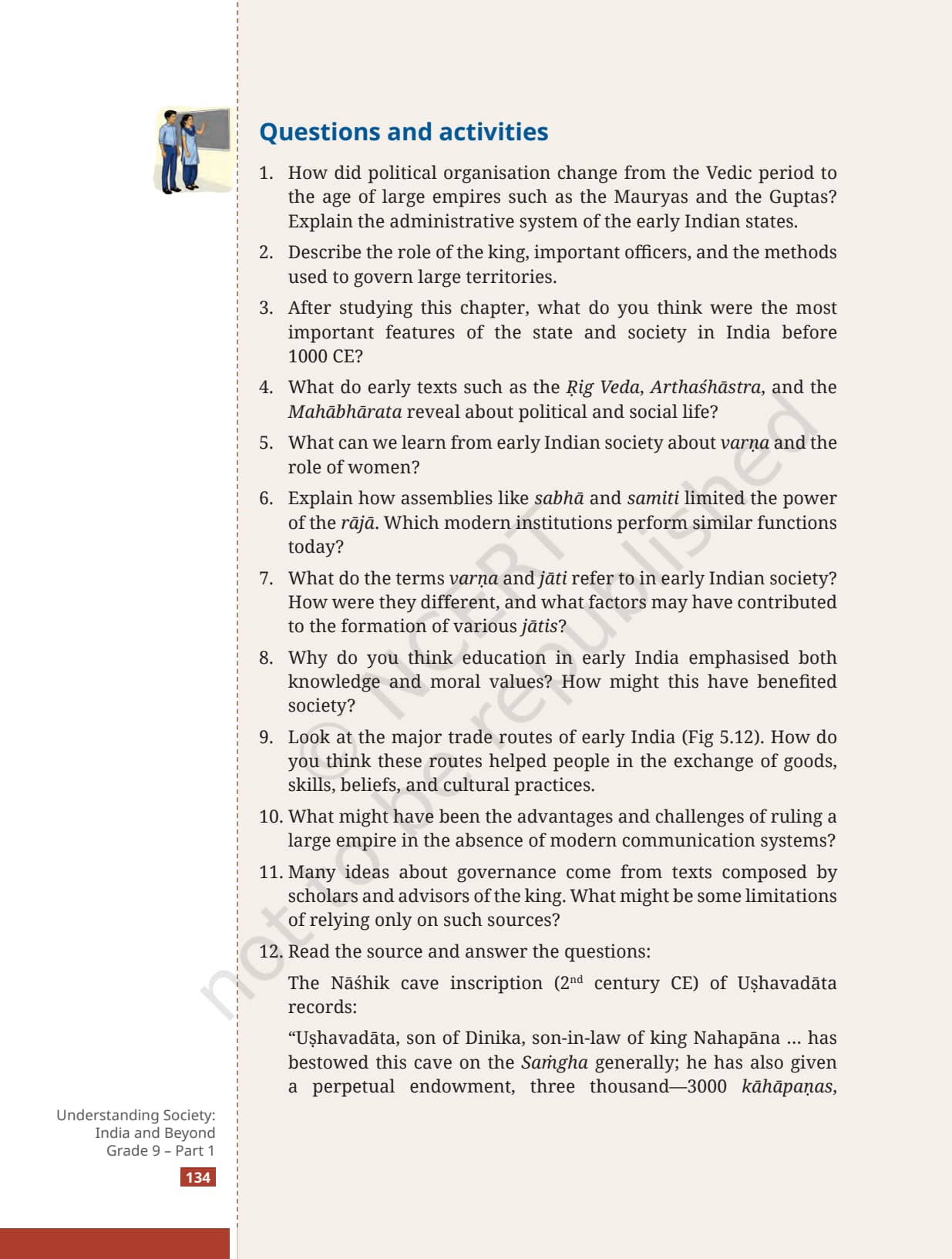
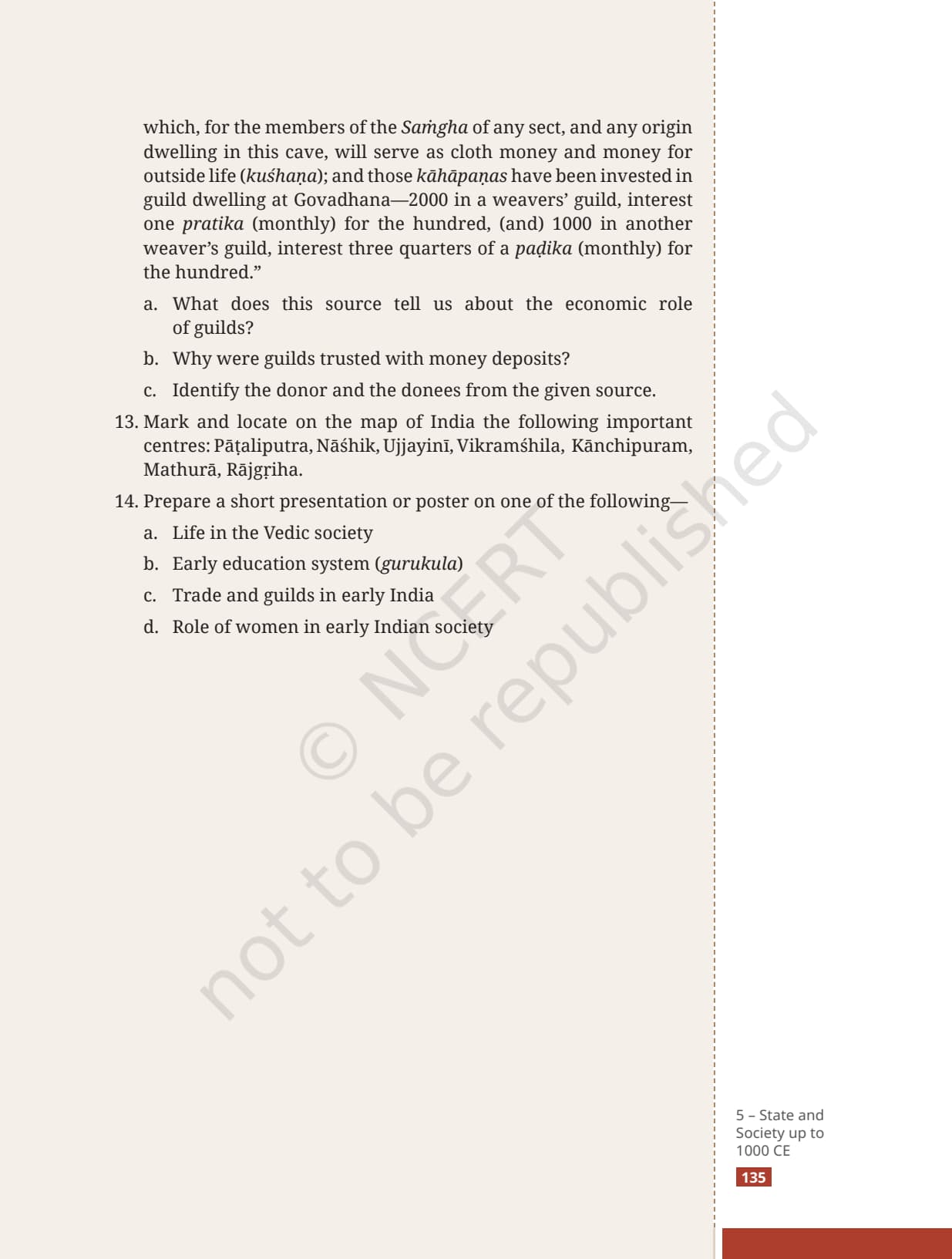
Also Check: the PDF here matches the exact NCERT wording used by CBSE and state boards for the 2026-27 session.
- What you get: the complete Chapter 5 PDF with all six sections, timelines, maps and the end-of-chapter questions.
- Topics inside: society and State, janapadas to empires, kingship and dharma, administration, varna and jati, trade and guilds.
- Exam link: a core History chapter of Class 9 Social Science that builds the base for later units on the Indian state.
Student Feedback
In a Collegedunia survey of 9,240 Class 9 students taken before the 2026 exams, 78% said they preferred reading this chapter from the original NCERT Book PDF alongside short notes. About 4 out of 5 found the timelines and maps in the book the most useful part for revision.
What the State and Society up to 1000 CE Class 9 NCERT Book PDF Covers
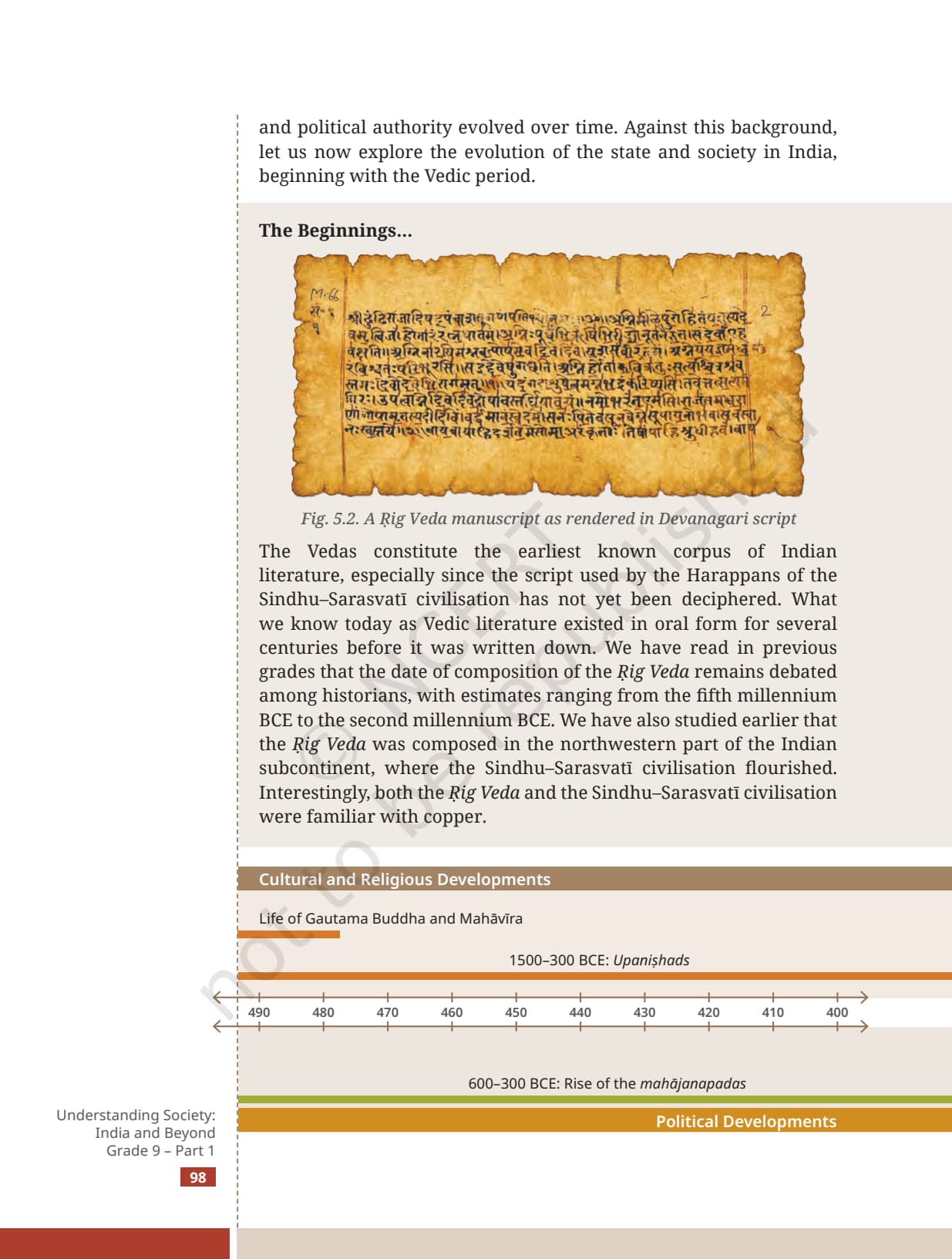
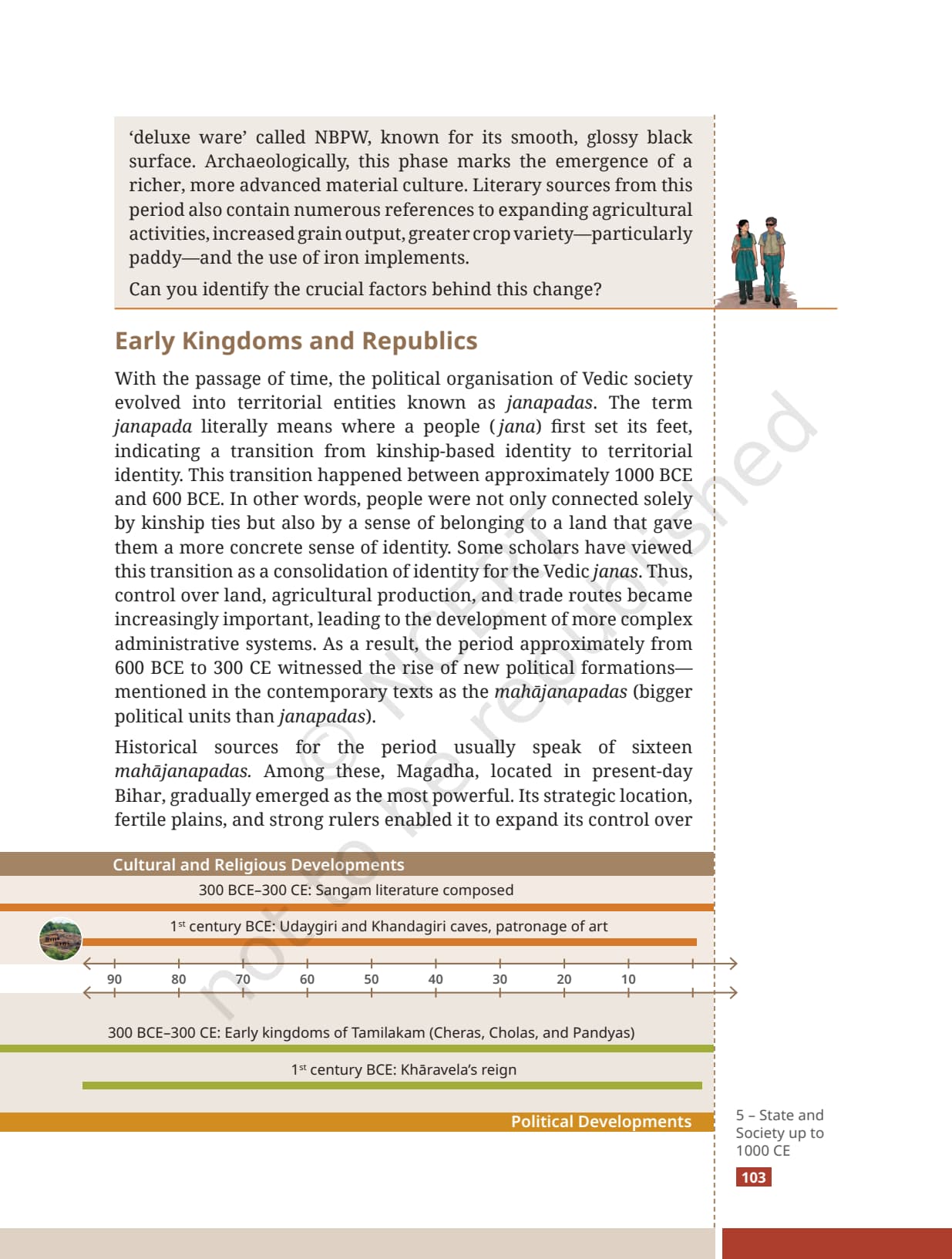
The chapter studies the Indian subcontinent from about 2000 BCE to 1000 CE. It watches small clans grow into kingdoms and large empires. The Class 9 Social Science NCERT Book Chapter 5 State and Society up to 1000 CE uses written sources like the Rig Veda together with archaeology, so the picture of politics, society and culture becomes rich and clear.
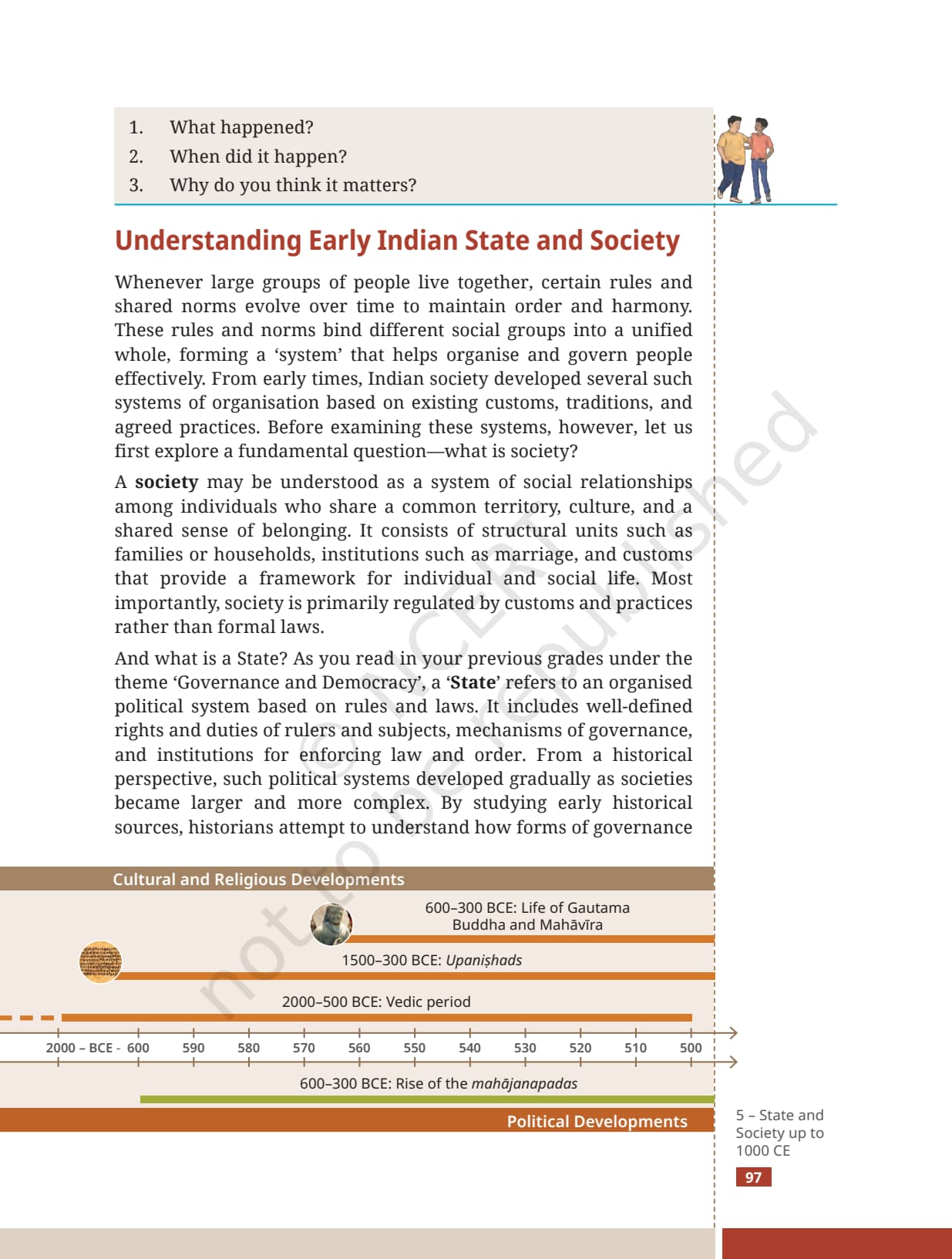
- Society and State: a society runs on shared custom, while a State runs on formal rules, laws and officials.
- Clans to empires: the shift from jana to janapada to sixteen mahajanapadas and then the Mauryan, Gupta and Chola states.
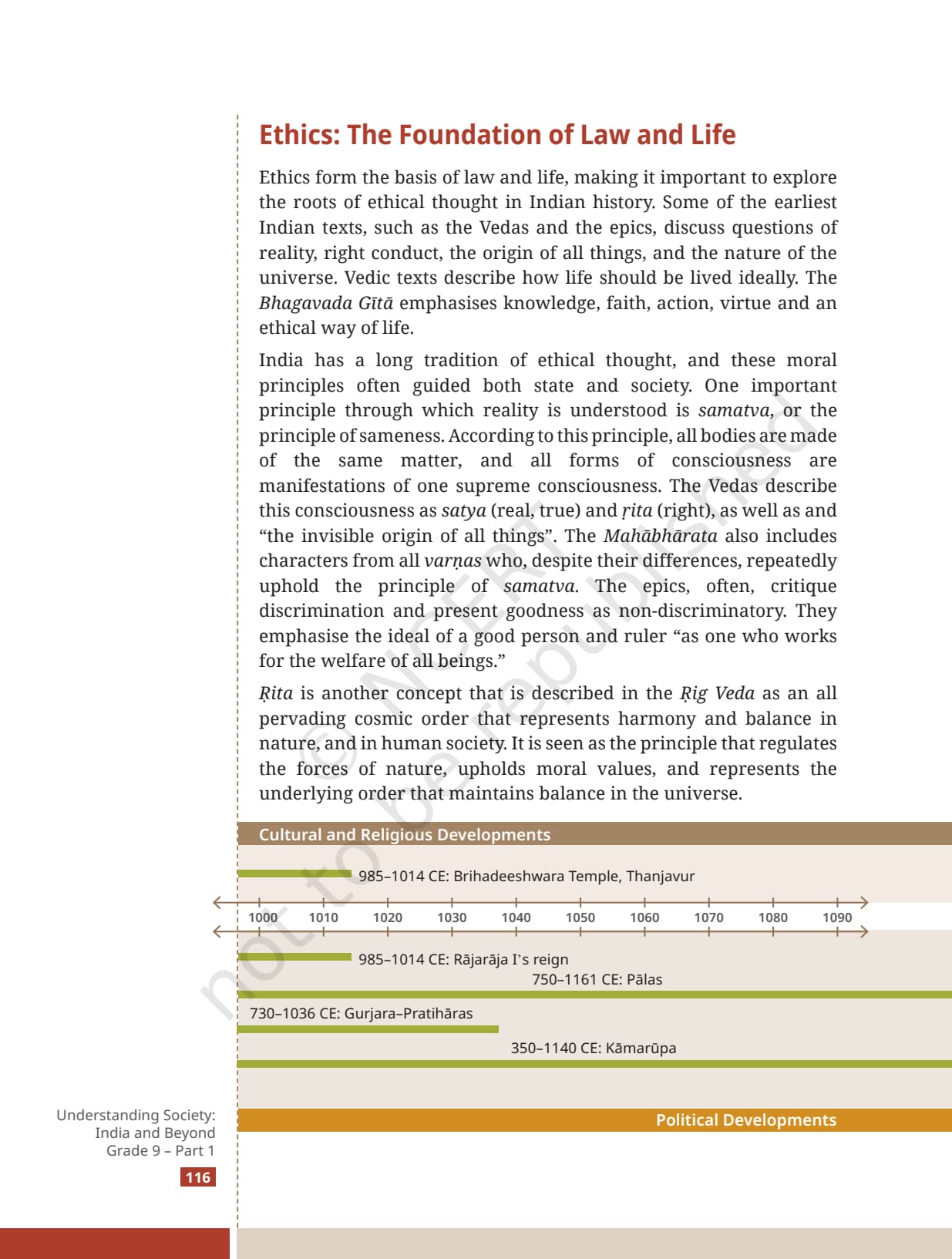
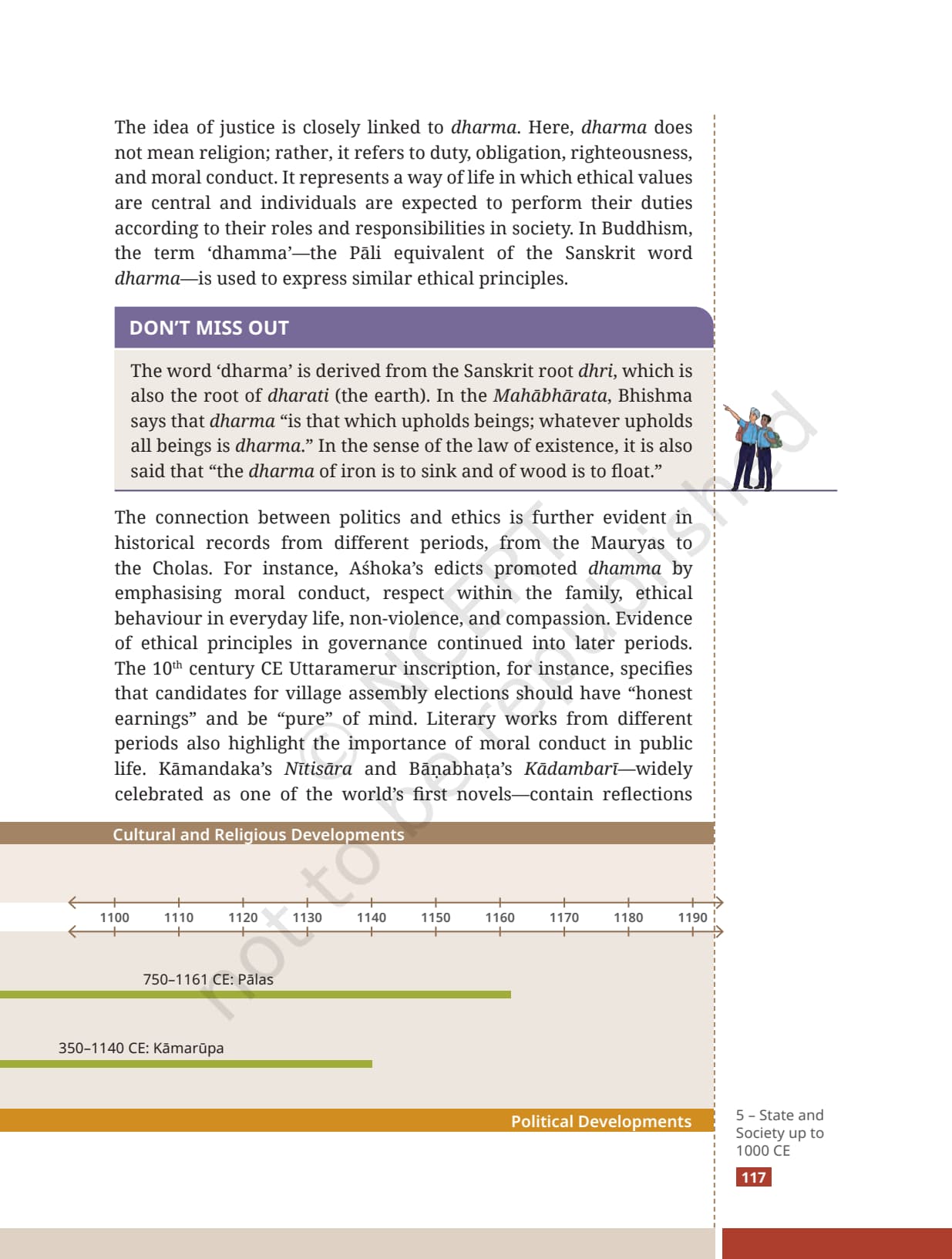
- Kingship and dharma: the duties of the king, the chakravarti ideal and dharma as duty, not religion.
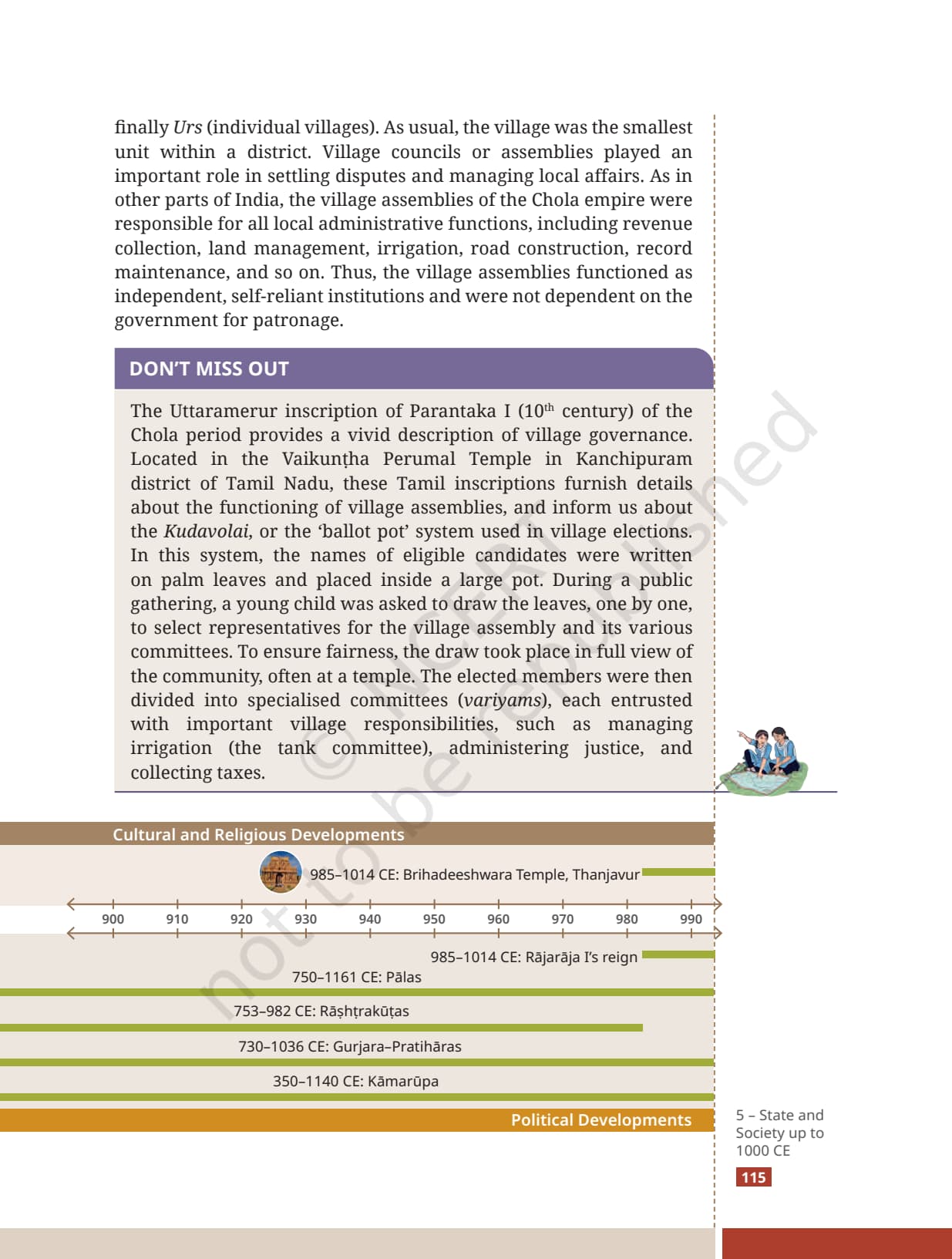
- Administration: the Saptanga theory, the ladder from province to village, and Chola village self-rule.
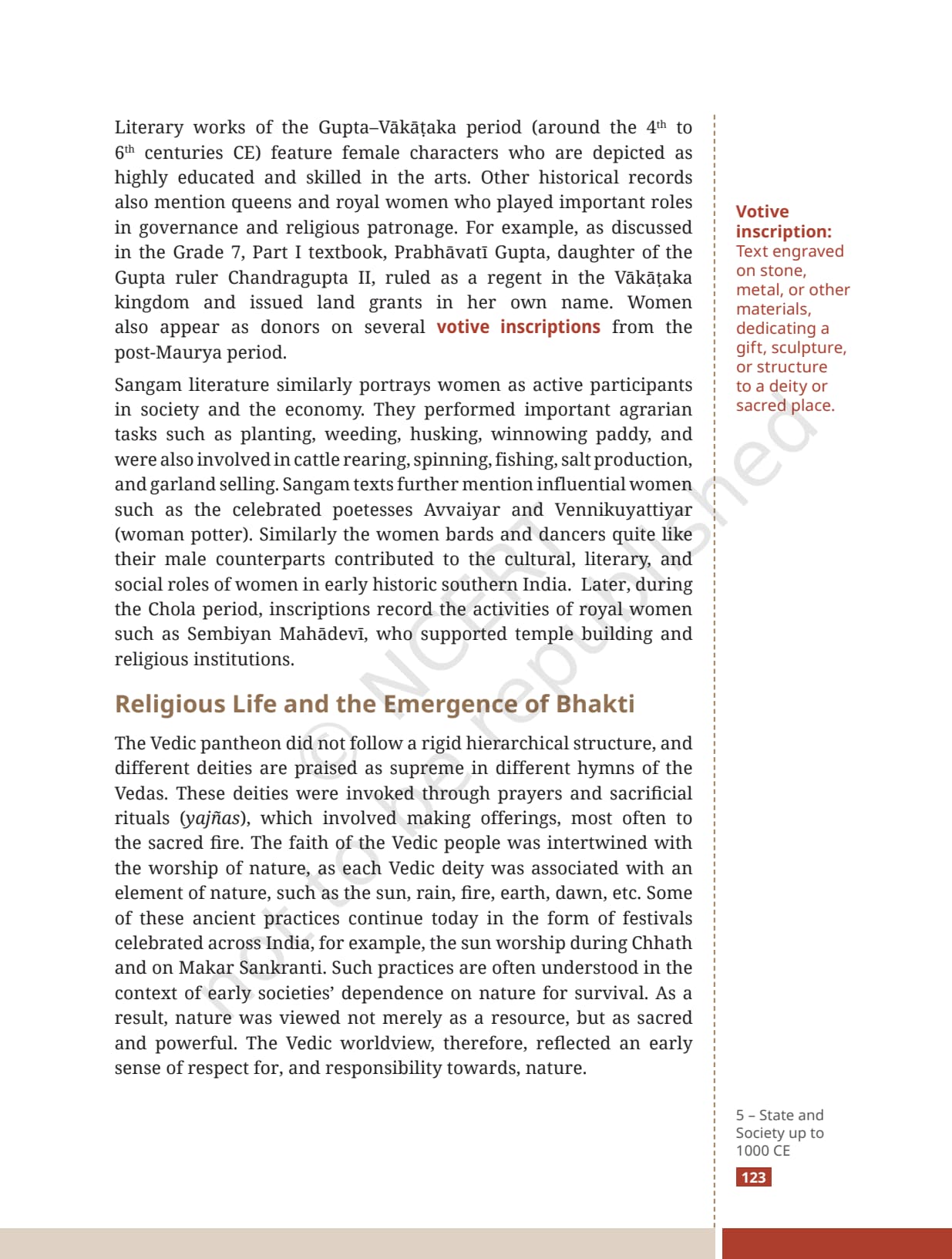
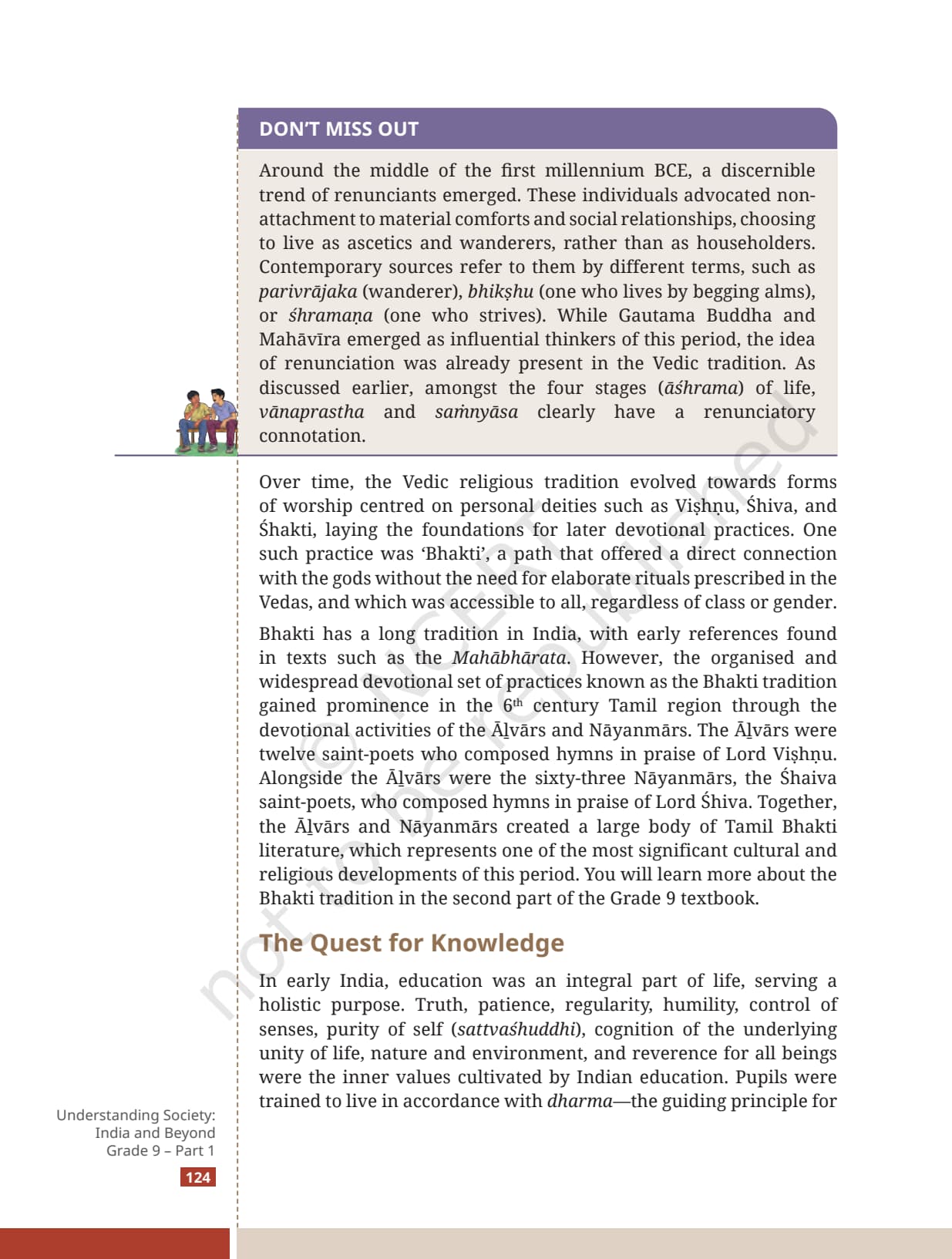
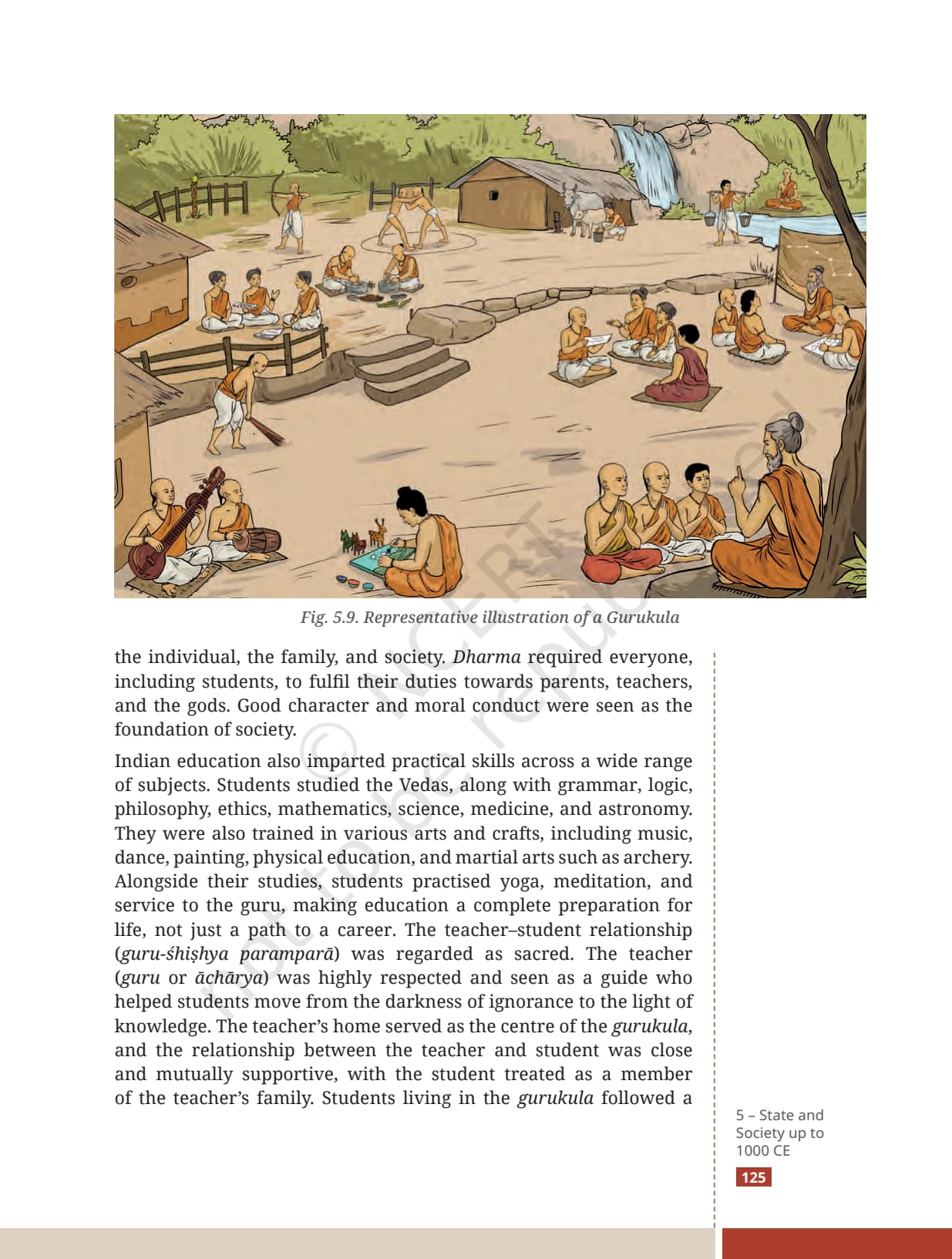
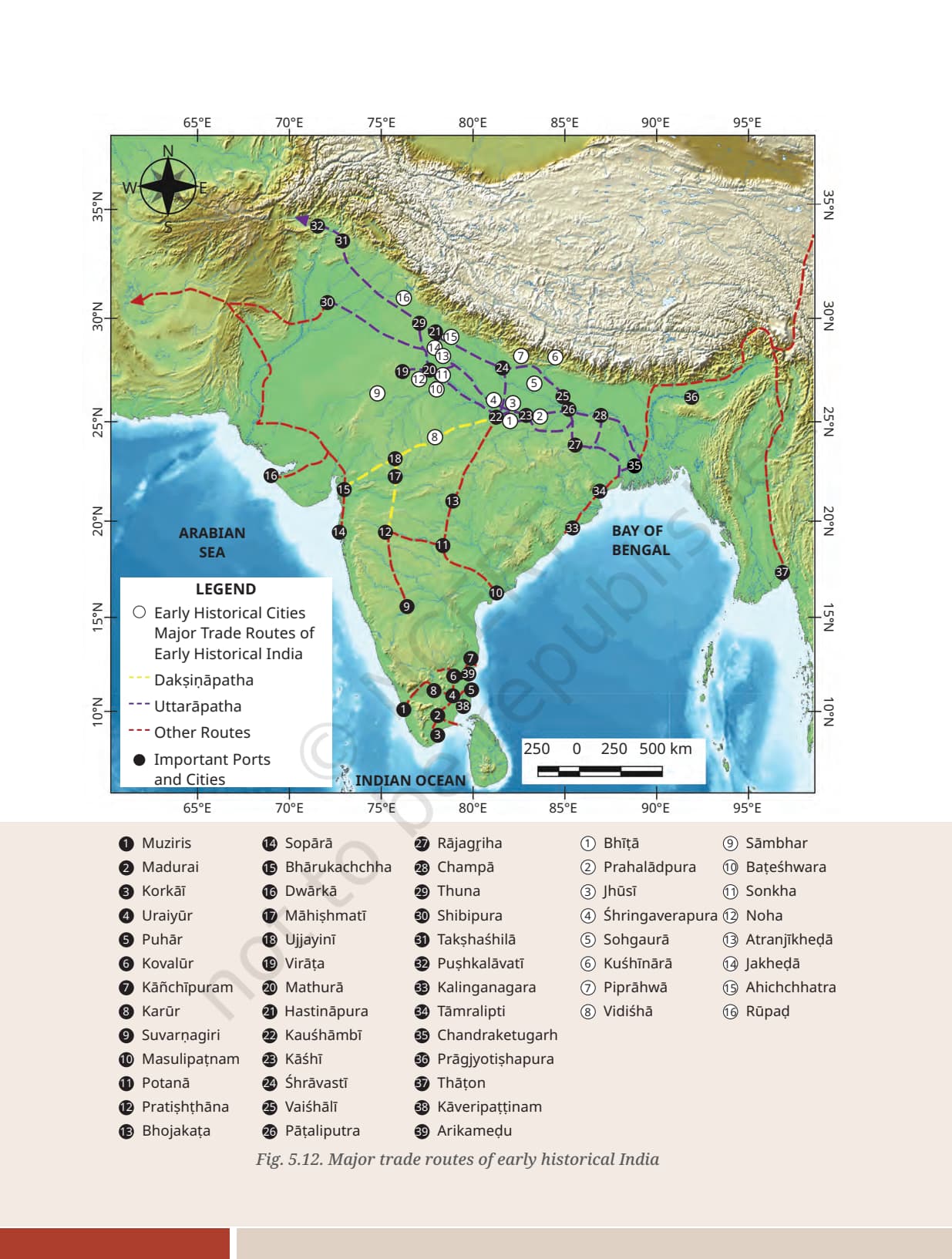
- Society and economy: varna and jati, family, women, education, religion, trade routes and guilds.
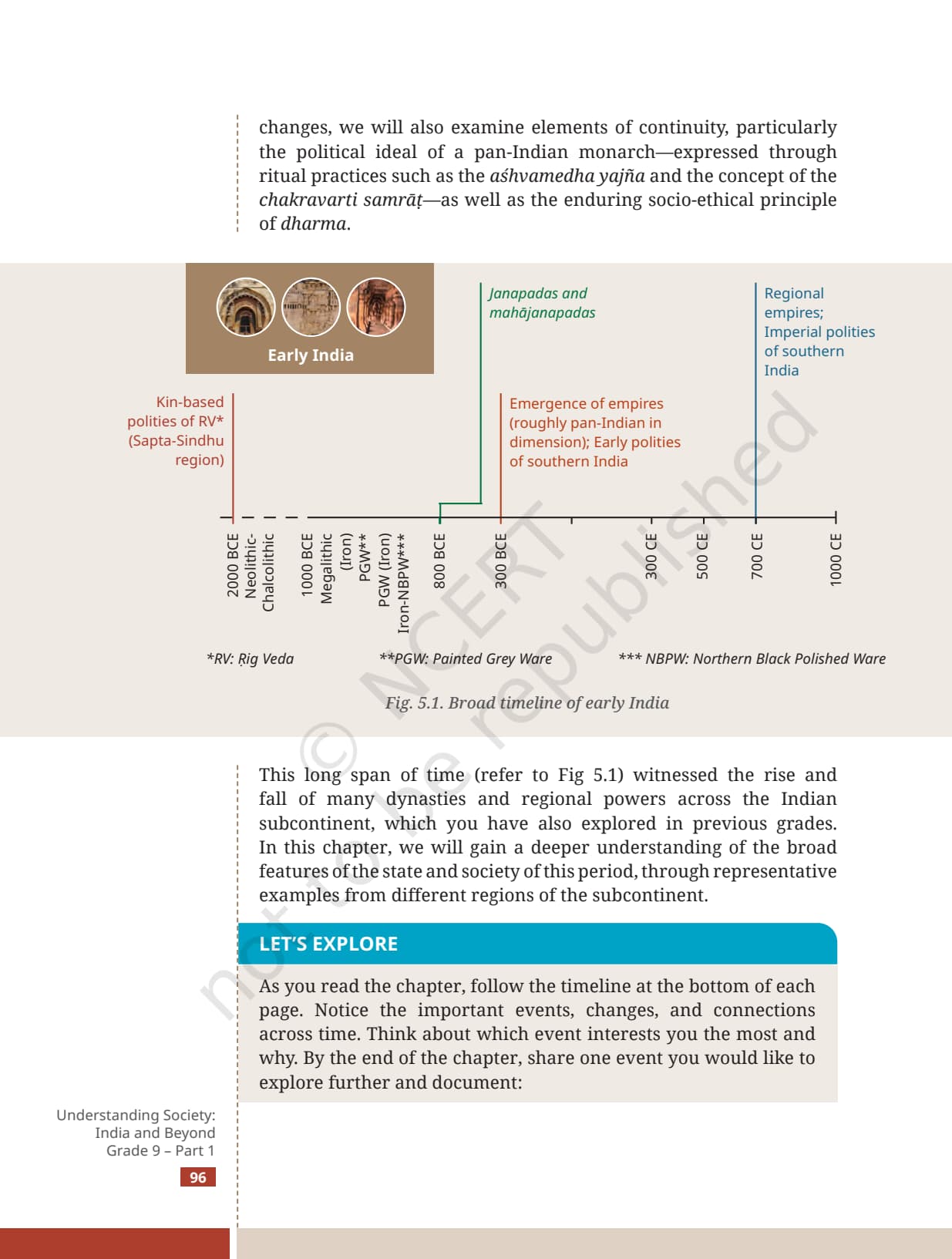
This chapter carries steady weight in Class 9 Social Science exams because it mixes definitions, timelines and source-based reasoning. Society came first and rests on custom; the State is the later formal structure of rulers and laws. Reading it from the book PDF helps students learn the exact wording examiners look for.
Section-by-Section Topics Inside the Class 9 Social Science Chapter 5 PDF
The book PDF is arranged in six sections that follow the historical order, so students see how each stage led to the next. The table below lists the main topics in the chapter.
| Section | What it teaches |
|---|---|
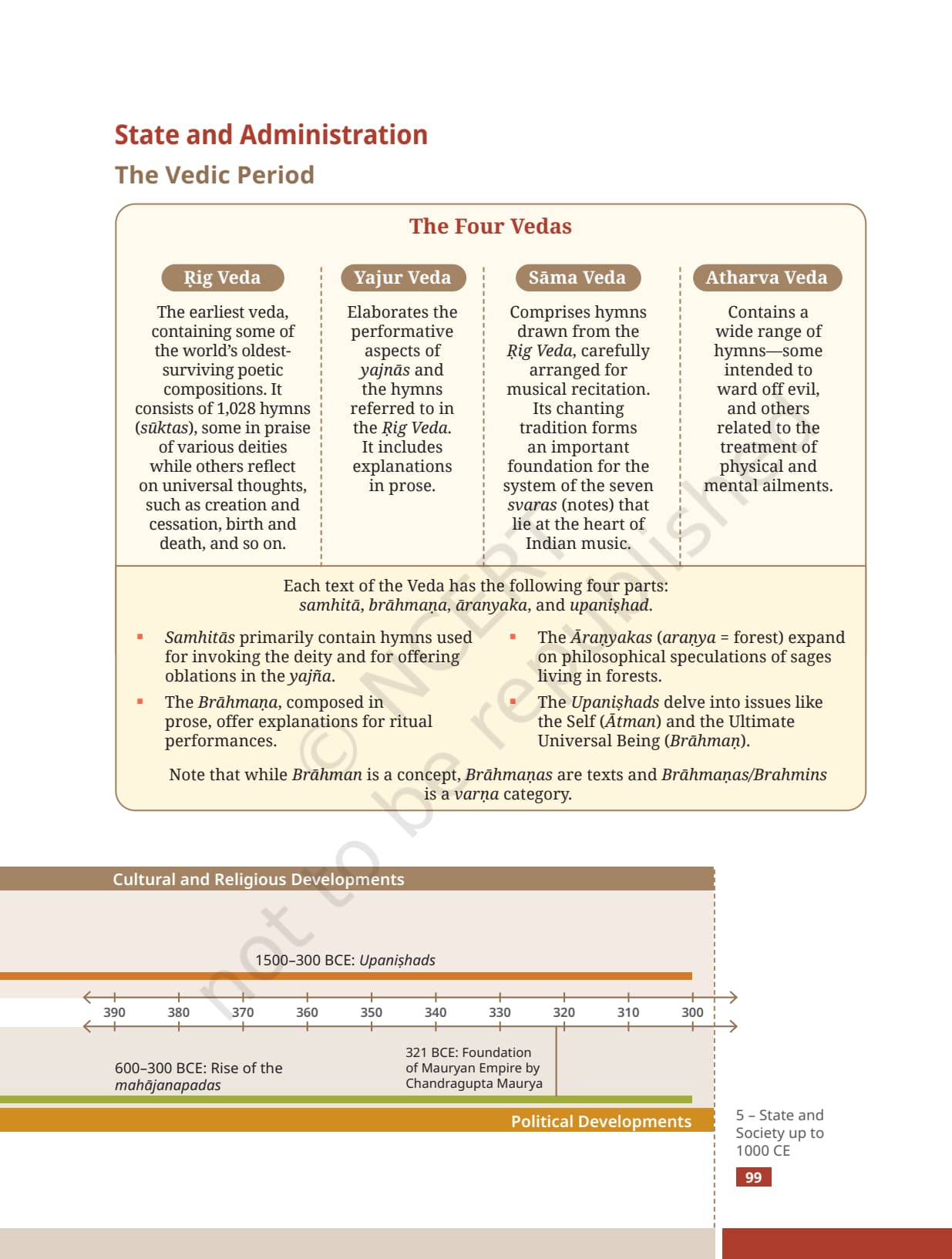
| Understanding State and Society | The difference between society and State, the long timeline of change and the Vedic beginnings with the four Vedas. |
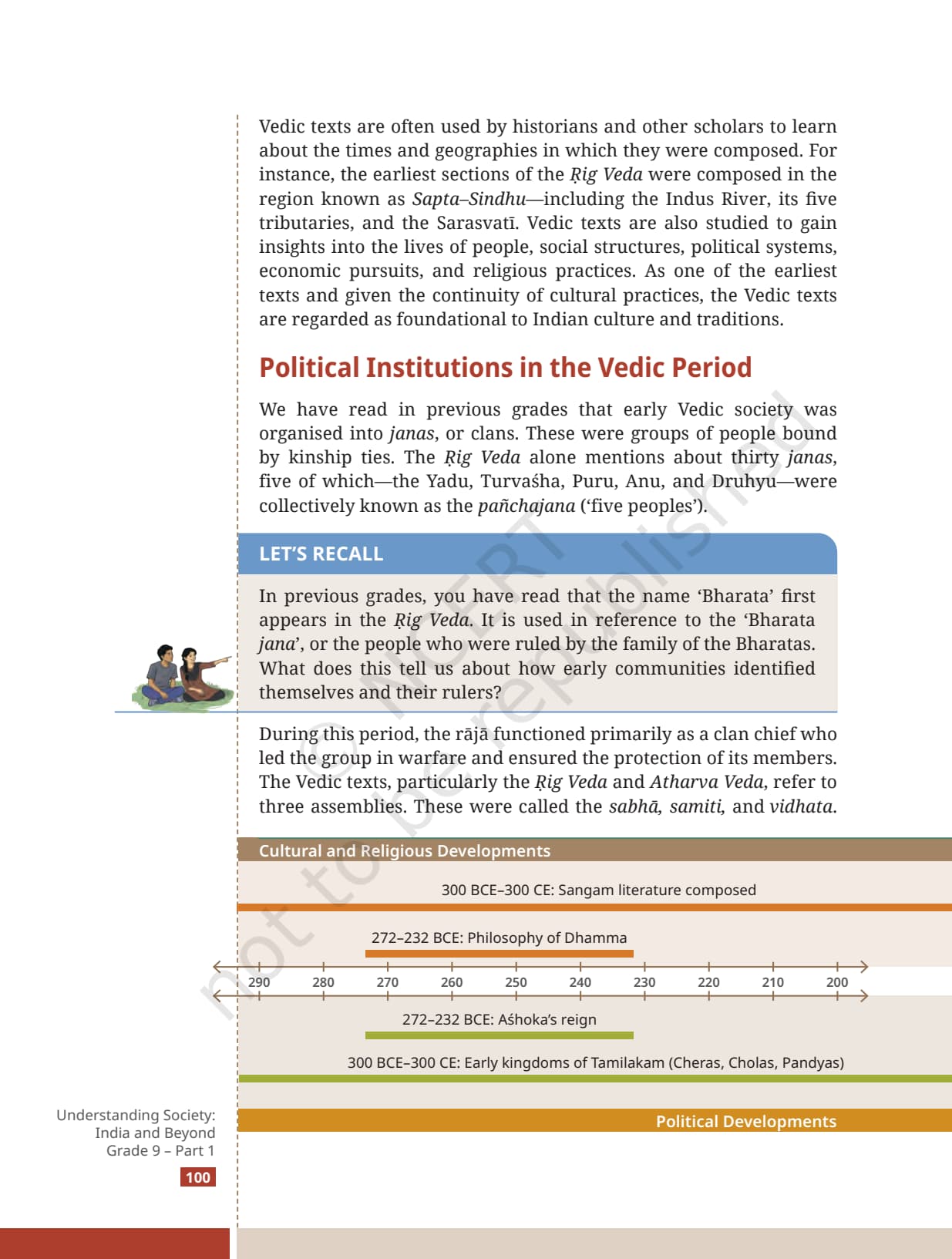
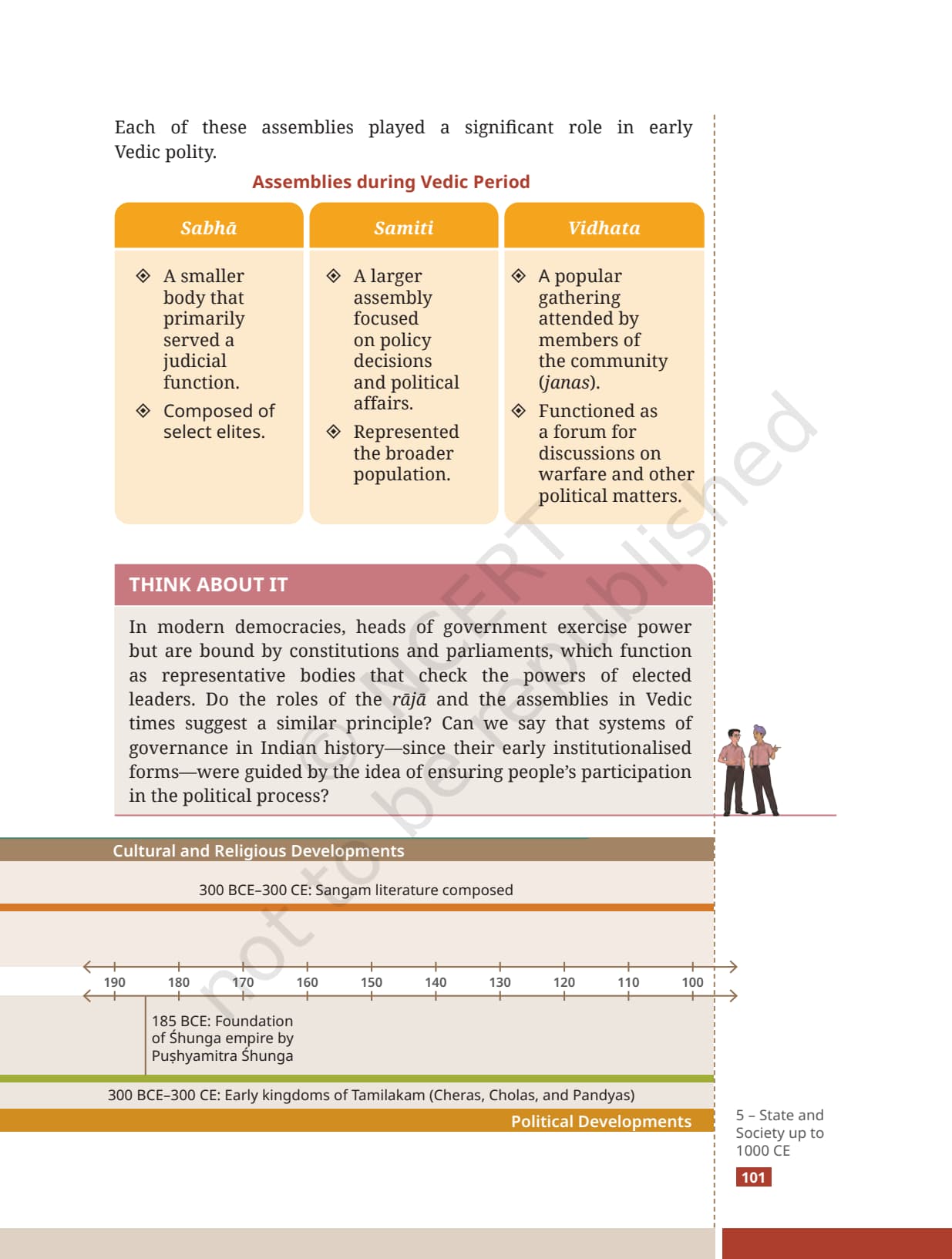
| From Clans to Empires | Janas and early assemblies, the shift to janapadas and mahajanapadas, and the early southern kingdoms. |
| Kingship, Dharma and Chakravarti | The duties of the king, the pan-Indian chakravarti ideal and dharma as the ethical base of rule. |
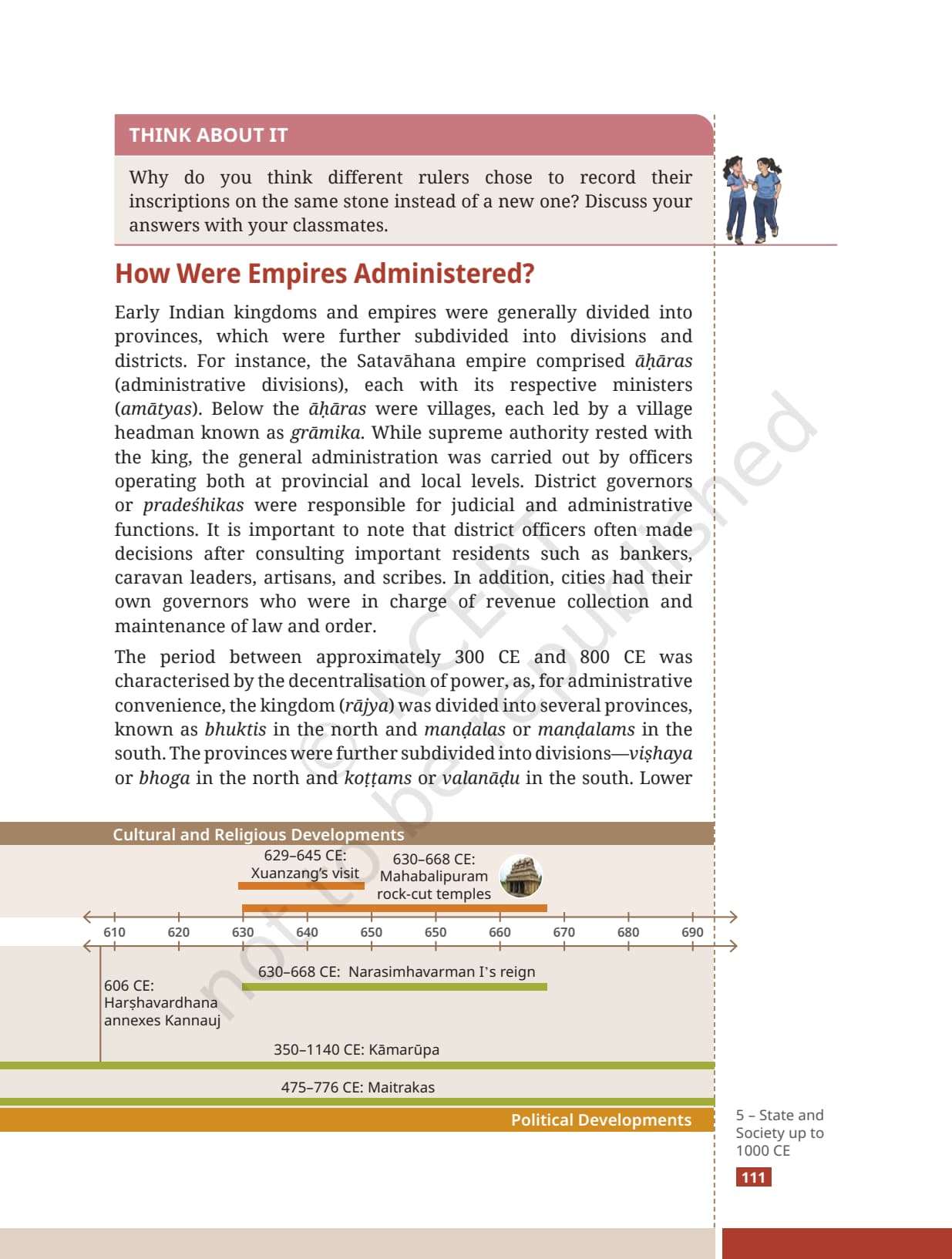
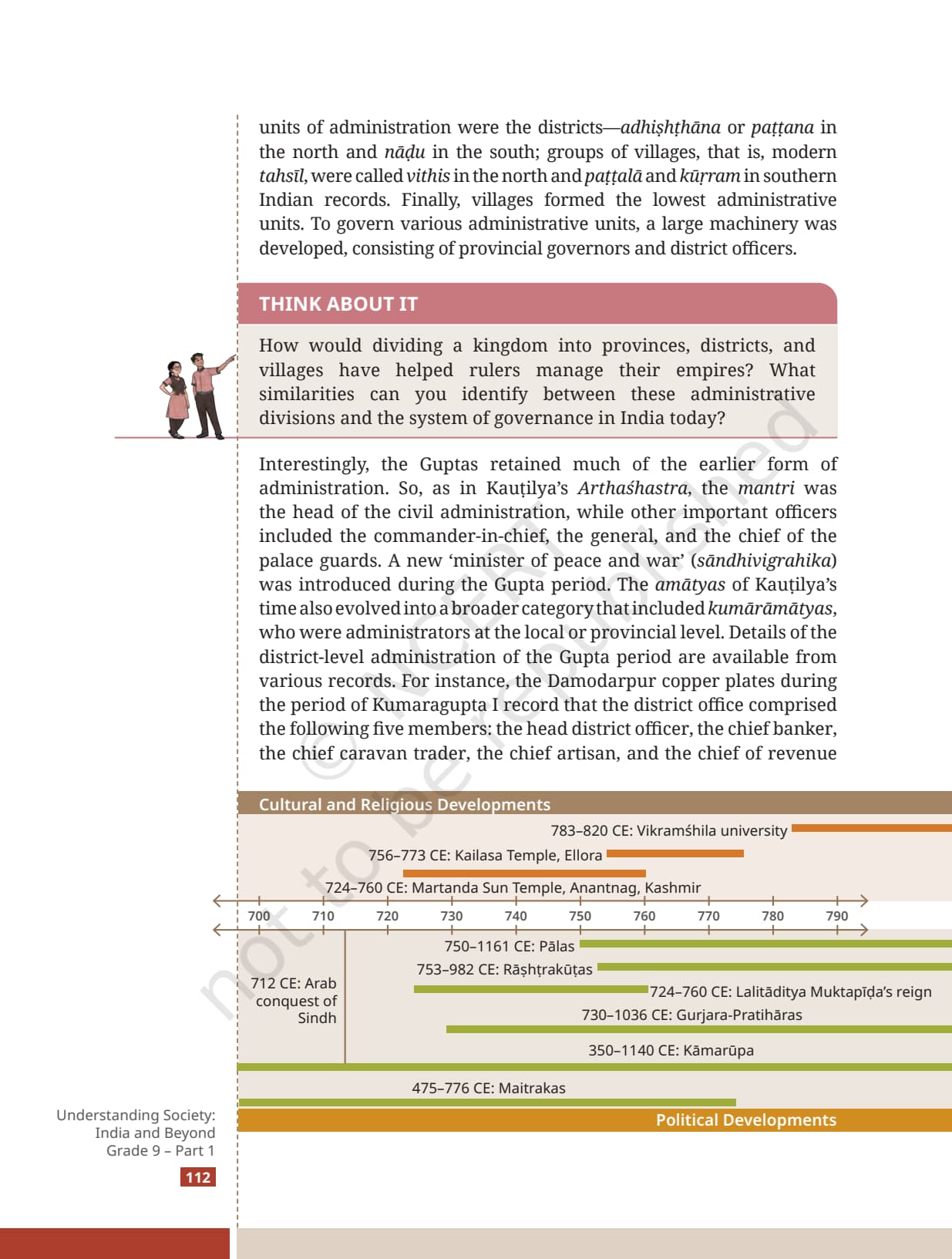
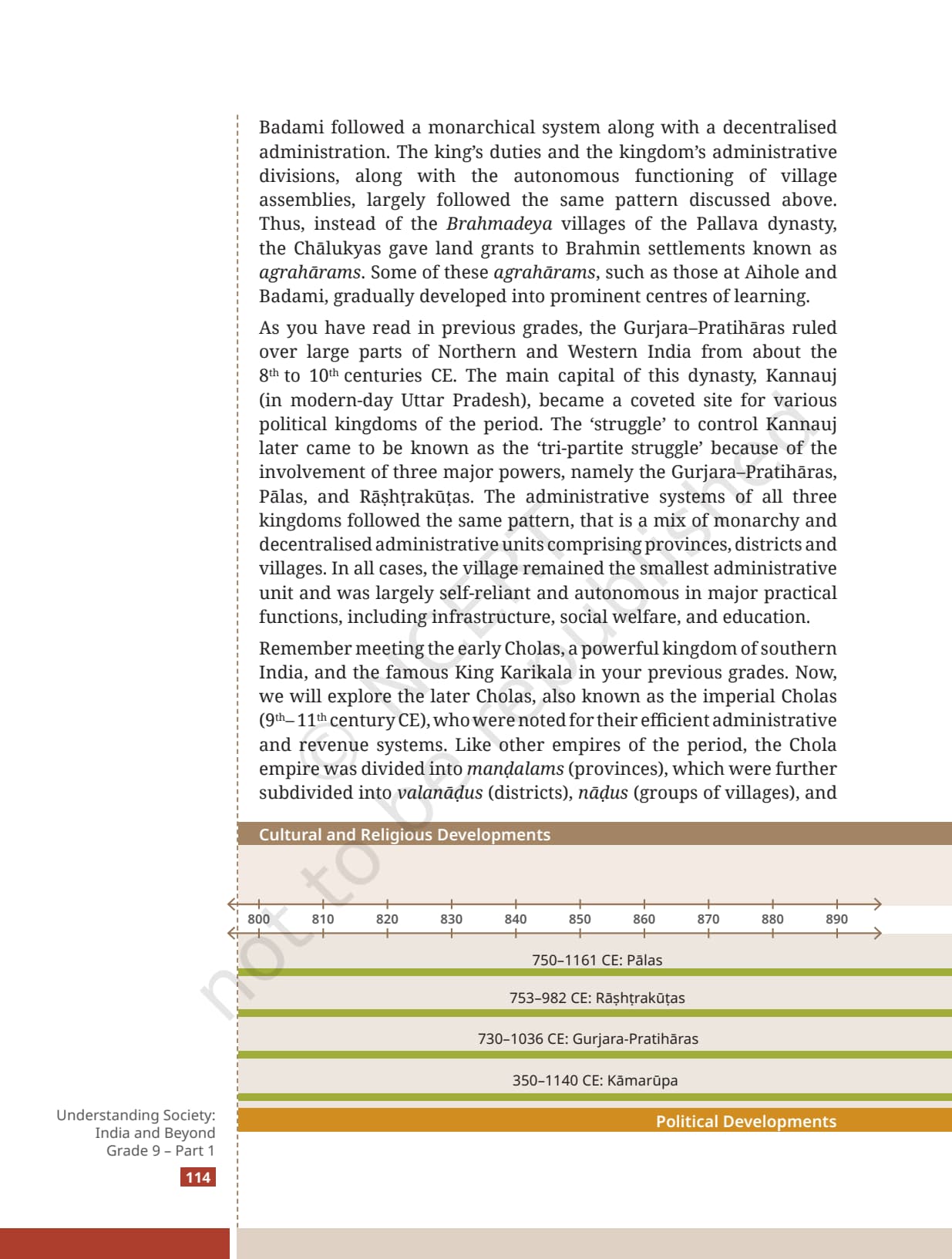
| How Empires Were Administered | The Saptanga seven limbs, the ladder from province to village and Chola village democracy. |
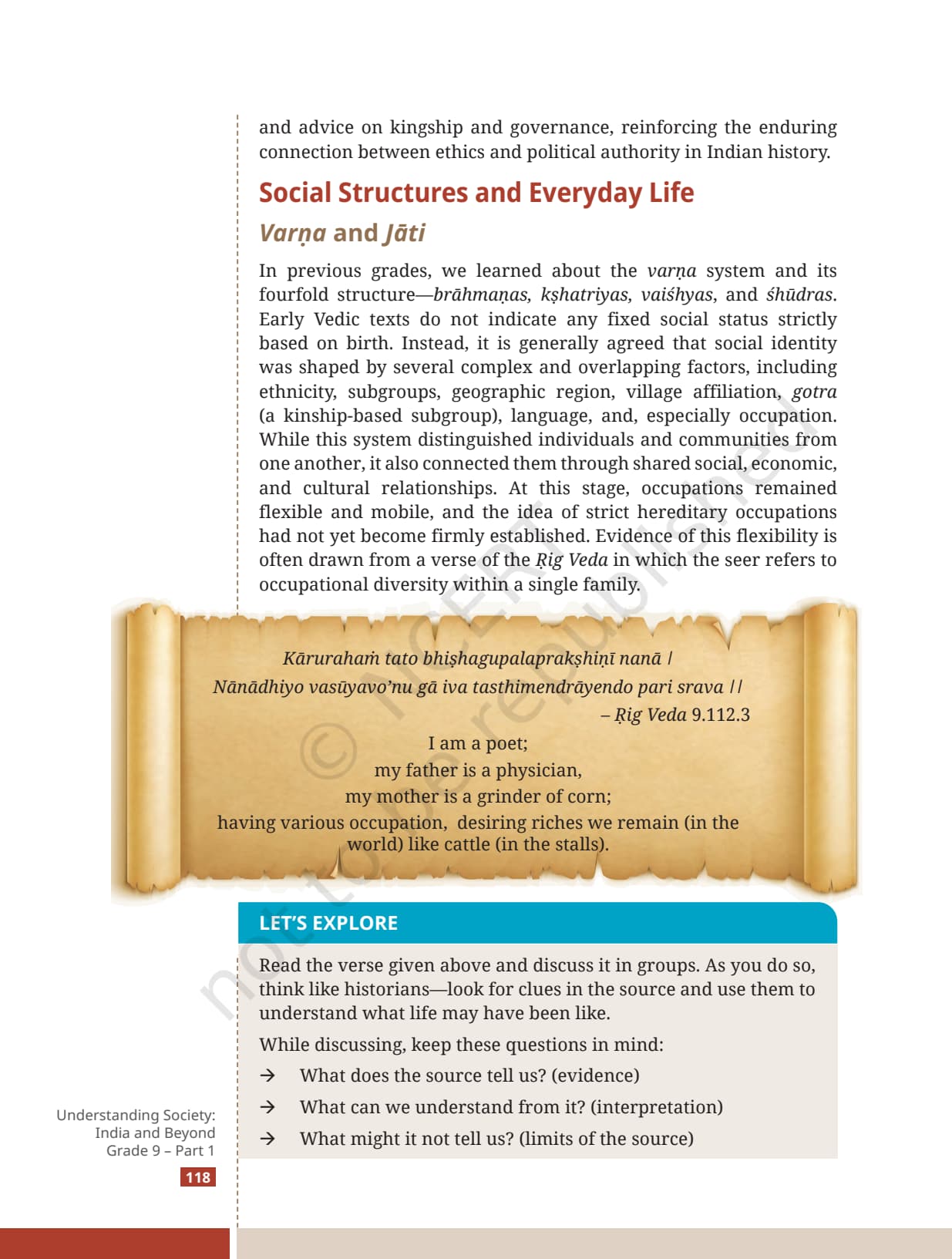
| Social Structures and Daily Life | Varna and jati, social mobility, the family, ashramas, the role of women and the rise of Bhakti. |
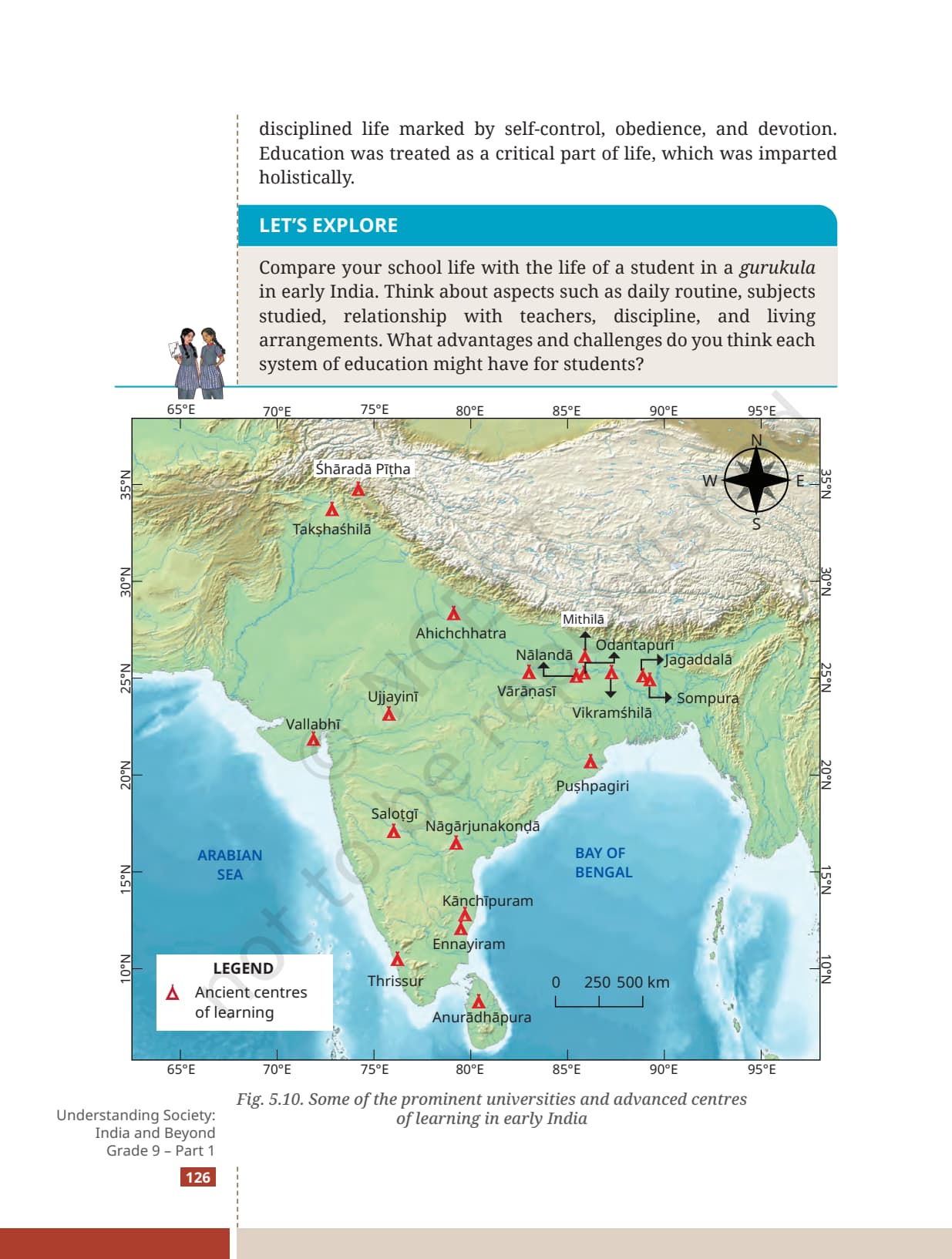
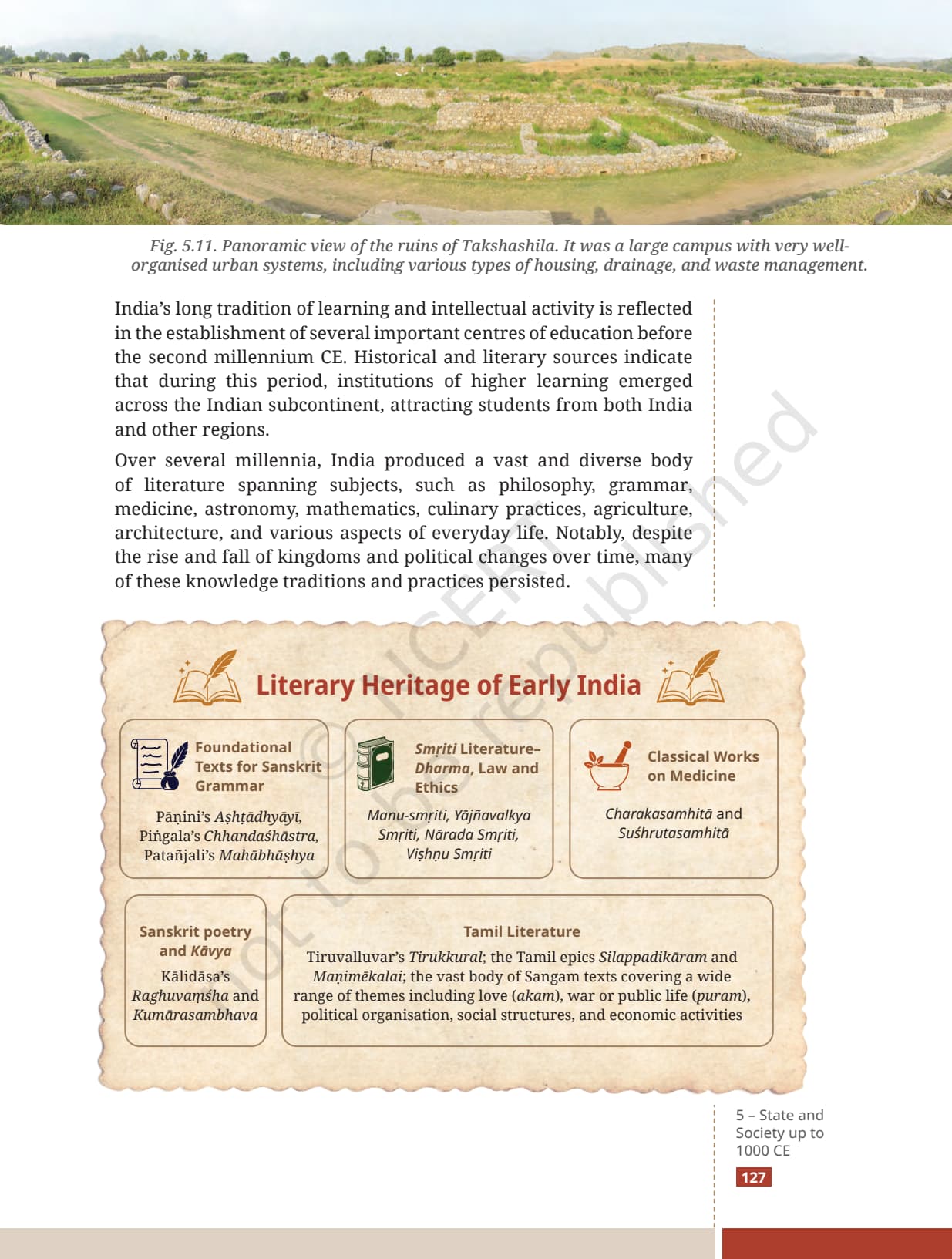
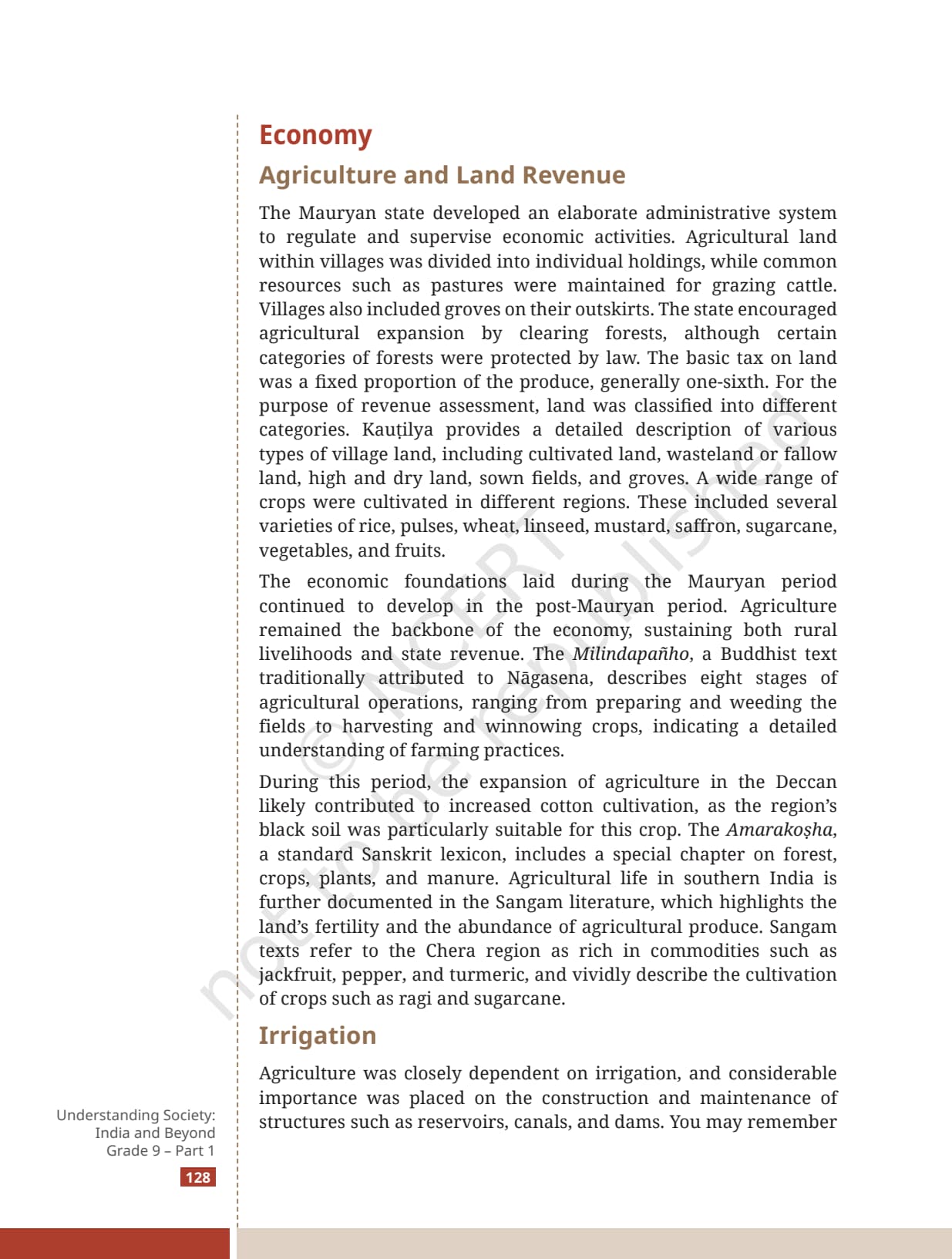
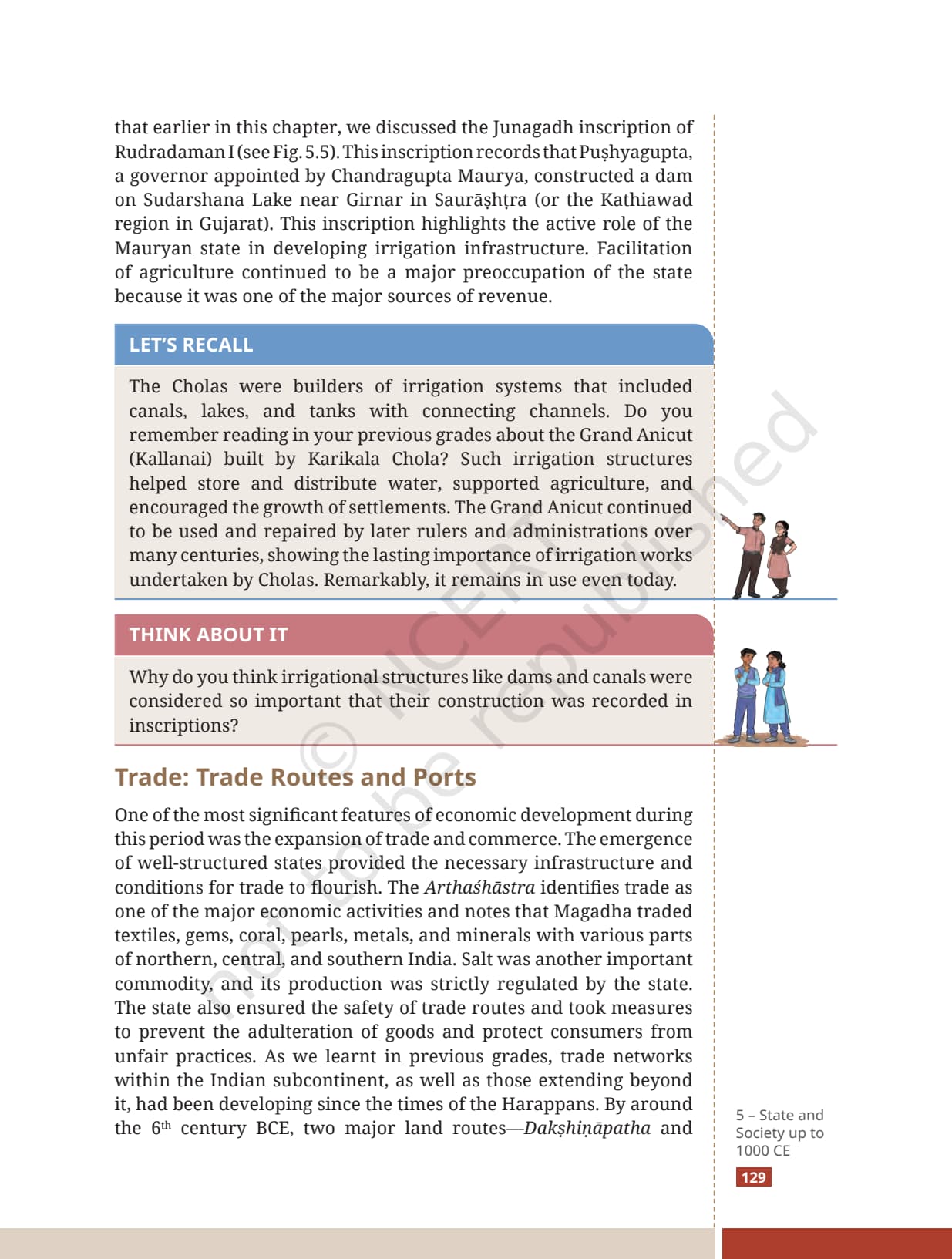
| Knowledge, Economy and Trade | Education centres like Nalanda, agriculture and land revenue, trade routes, ports and guilds. |
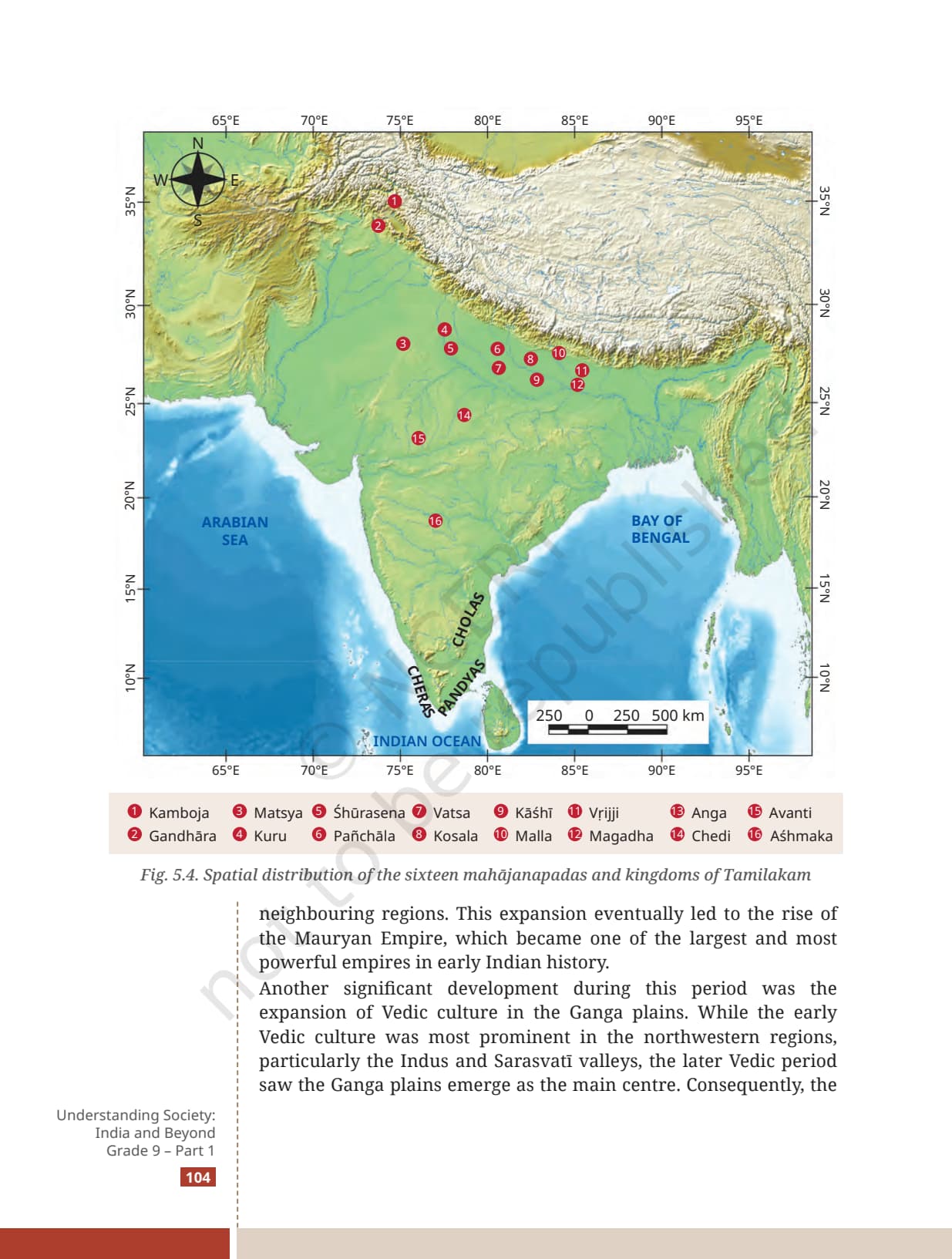
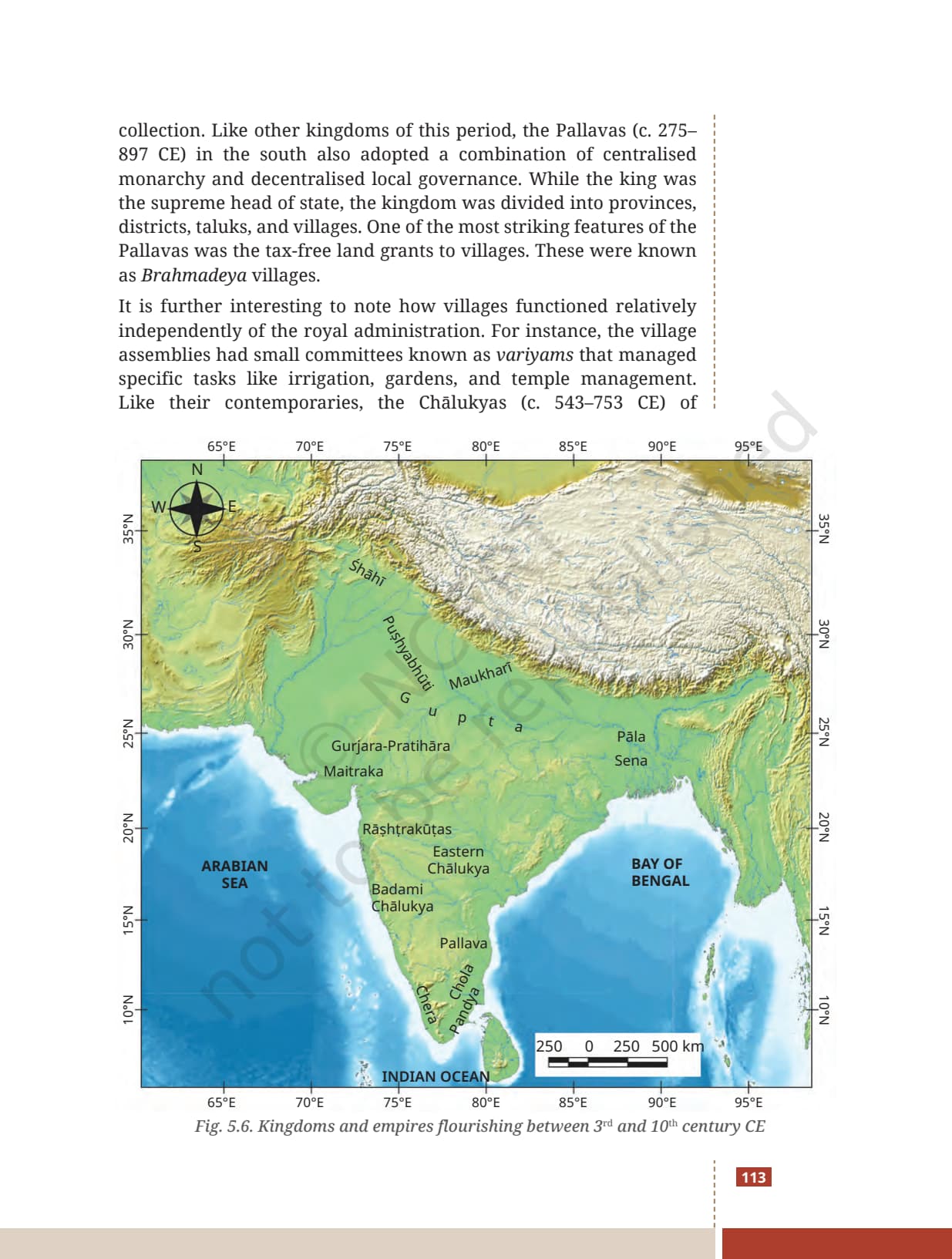
Each section carries labelled maps, timelines and source boxes, so students can follow the story straight from the textbook. Magadha in present-day Bihar became the strongest mahajanapada and led on to the Mauryan Empire. Facts like this appear right where the book explains the growth of large states.
Key Terms in the State and Society up to 1000 CE Chapter
The heart of Chapter 5 is a small set of terms that describe early Indian politics and society. The book PDF defines each one clearly and then shows how they connect across the whole period.
| Term | Meaning |
|---|---|
| Jana | Kin-based clan of the early Vedic period, bound together by kinship. |
| Janapada | Land-based political unit; the place where a people first set foot. |
| Mahajanapada | Larger State; the sources usually list sixteen of them. |
| Chakravarti samrat | The ideal of a universal, paramount ruler of the whole subcontinent. |
| Saptanga | The seven limbs of the State described in Kautilya's Arthashastra. |
| Varna and jati | The fourfold functional order, and the open-ended set of many social groups. |
| Shreni | A guild of traders, artisans or merchants in the same craft. |
The book uses these terms to build the story from clans to empires. Dharma here means duty and moral conduct, not religion. Learning each definition from the original chapter makes source-based and short-answer questions much easier in the exam.
Why Download the State and Society up to 1000 CE Class 9 NCERT Book PDF
Notes and solutions are quick, but the original textbook is still the source every exam is set from. Keeping the Class 9 Social Science NCERT Book Chapter 5 State and Society up to 1000 CE on your device gives students the full, correct chapter to study offline.
- Exact wording: definitions of society, State, janapada, dharma and the Saptanga in the words the exam expects.
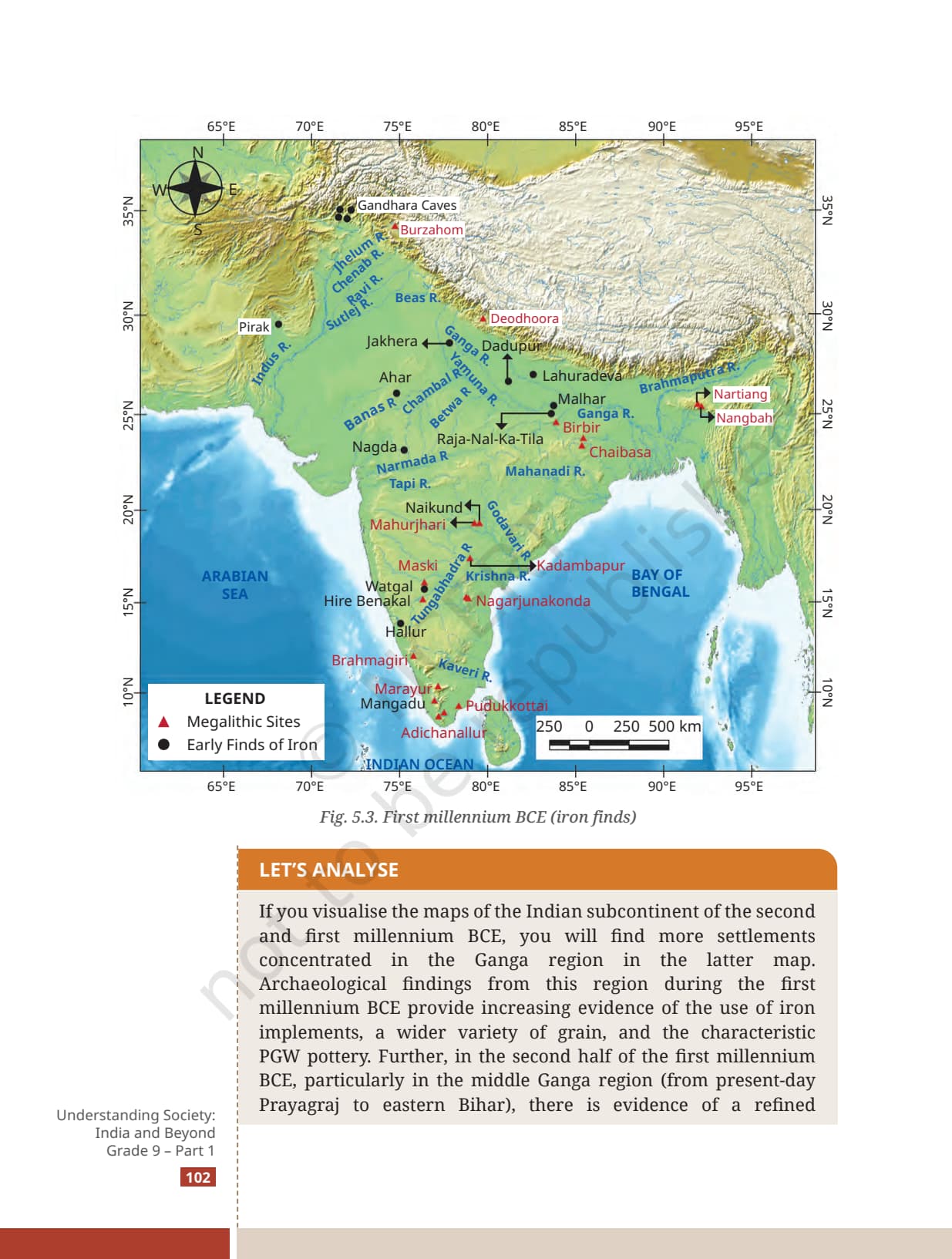
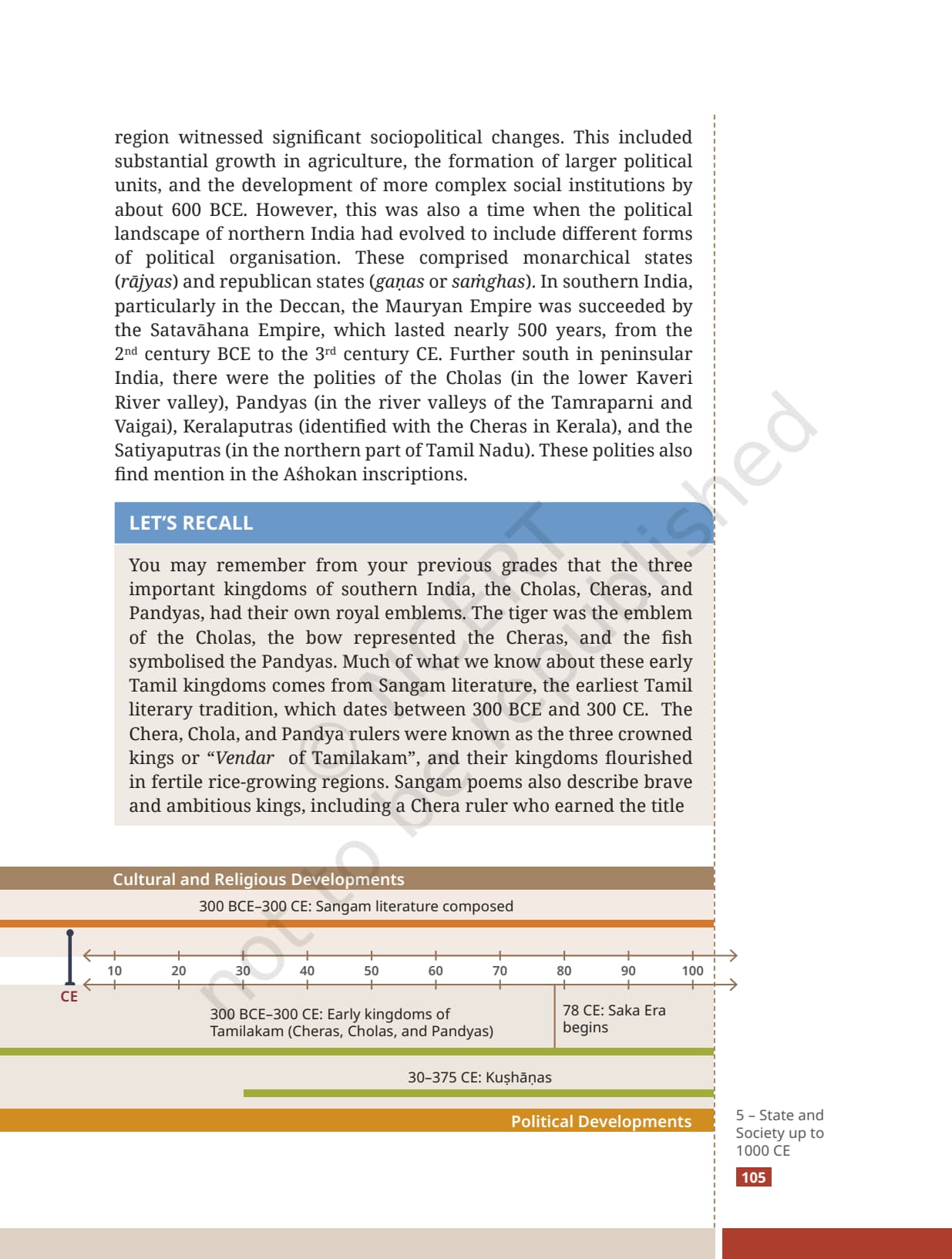
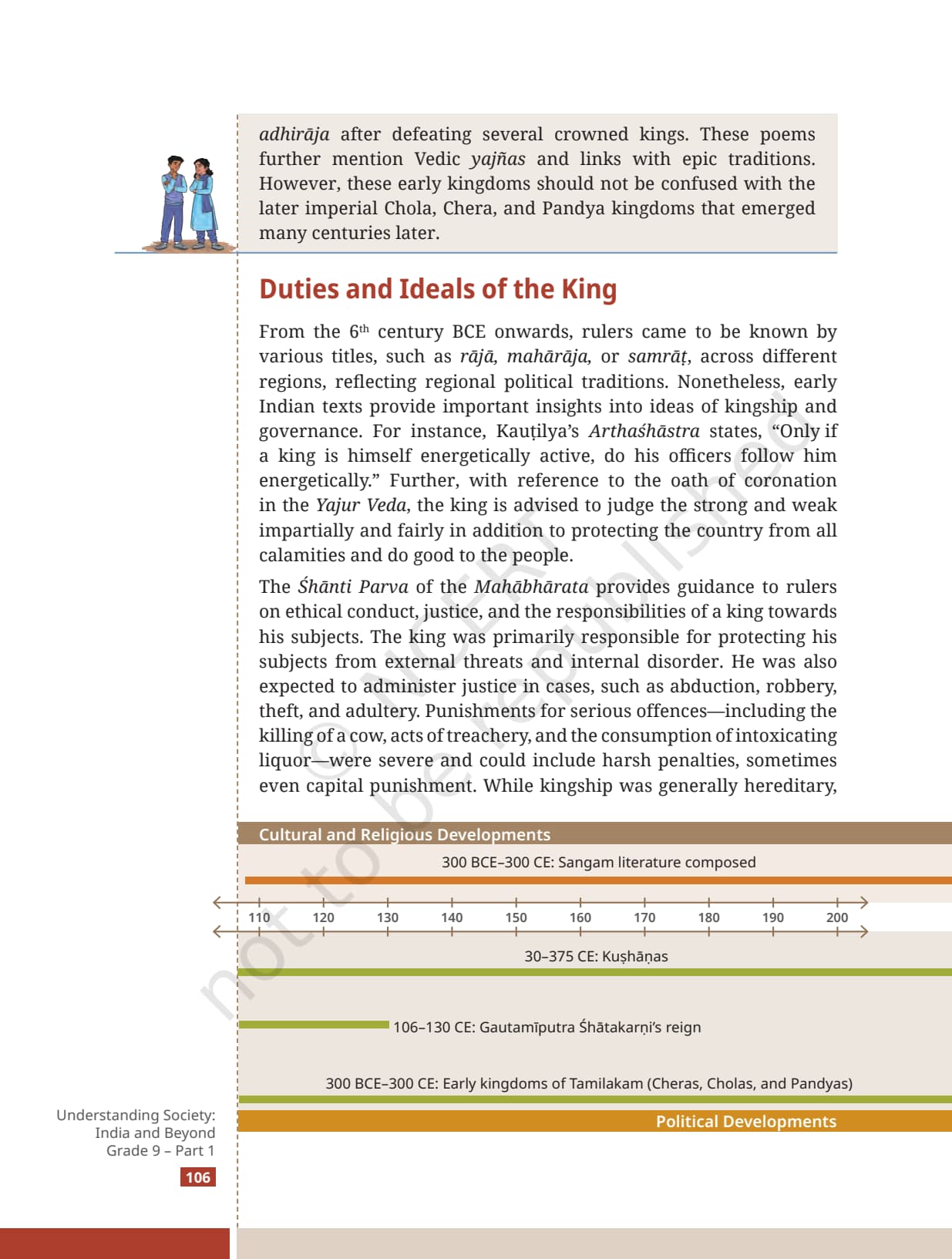
- All maps and timelines: the mahajanapada map, the political timeline and the administration ladder that short notes often leave out.
- Offline study: read the whole chapter without internet, on a phone, tablet or printout.
- 2026-27 ready: the current first-edition Understanding Society chapter, matched to what schools teach this session.
Because the PDF is the real chapter, students can highlight, print and annotate it just like the printed book. This makes it the best single file to revise from before a class test or the final exam.
How to Use the Chapter 5 NCERT Book PDF with Notes and Solutions
The book PDF works best as one part of a set. Students revise fastest when they read the chapter, learn from short notes and then drill the questions, each resource doing its own job. Collegedunia links all of them together on this page.
- Read the book PDF first to meet every stage, ruler and term in the original NCERT order.
- Move to the NCERT Notes for short, exam-ready summaries of society, administration and social life.
- Practise with the NCERT Solutions to answer every end-of-chapter question with full steps.
- Recap with the Handwritten Notes for a quick, colour-coded revision the night before the exam.
Together these resources cover the Class 9 Social Science NCERT Book Chapter 5 State and Society up to 1000 CE for the 2026-27 session. The book explains in full, the notes condense, and the solutions drill each question type.
More State and Society up to 1000 CE Class 9 Social Science Resources
Use the table below to open the other Collegedunia resources for this chapter.
| Resource | Open |
|---|---|
| NCERT Book PDF | State and Society up to 1000 CE Class 9 NCERT Book PDF |
| NCERT Solutions | State and Society up to 1000 CE Class 9 NCERT Solutions |
| Revision Notes | State and Society up to 1000 CE Class 9 Notes |
| Handwritten Notes | State and Society up to 1000 CE Class 9 Handwritten Notes |
NCERT Book PDF for Class 9 Social Science: All Chapters
Use the table below to download the NCERT Book PDF for any other chapter of the new Class 9 Social Science Understanding Society textbook.
| Chapter | NCERT Book PDF |
|---|---|
| Chapter 1 | Understanding Social Science |
| Chapter 2 | Shaping of the Earth's Surface |
| Chapter 3 | Atmosphere and Climate |
| Chapter 4 | Early Humans and Beginning of Civilisation |
| Chapter 5 | State and Society up to 1000 CE |
| Chapter 6 | Democracy |
| Chapter 7 | Elections |
| Chapter 8 | Building Blocks in Economics: The Problem of Choice |
| Chapter 9 | The Price Puzzle: What Drives the Market |
State and Society up to 1000 CE Class 9 Social Science NCERT Book PDF FAQs
Ques. Where can I download the Class 9 Social Science NCERT Book Chapter 5 State and Society up to 1000 CE?
Ans. You can download the State and Society up to 1000 CE Class 9 NCERT Book PDF free from this page. It is the complete Chapter 5 from the 2026-27 Understanding Society textbook, with all sections, maps, timelines and the end-of-chapter questions.
Ques. What topics are covered in Class 9 Social Science Chapter 5?
Ans. Chapter 5 covers society and the State, the growth from clans to janapadas, mahajanapadas and empires, kingship and dharma, the Saptanga administration, varna and jati, the role of women, education, religion, trade routes and guilds up to 1000 CE.
Ques. Which book is Chapter 5 State and Society up to 1000 CE from?
Ans. It is Chapter 5 of the new Understanding Society textbook for Class 9 Social Science, the first-edition integrated book for the 2026-27 syllabus. It blends history, geography, political science and economics in one book.
Ques. What is the difference between society and State in Chapter 5?
Ans. A society is a group of people who share a territory and culture and are held together mainly by custom. A State is an organised political system based on formal rules, laws, officials and machinery to keep law and order.



Comments