




The NCERT Solutions Class 9 Social Science Chapter 5 State and Society up to 1000 CE answer all 14 questions from the Questions and Activities exercise of the 2026-27 Understanding Society textbook. Every answer is written in clear exam language, covering Vedic assemblies, the Mauryan and Gupta empires, dharma, the varna and jati order, trade guilds, and early education.
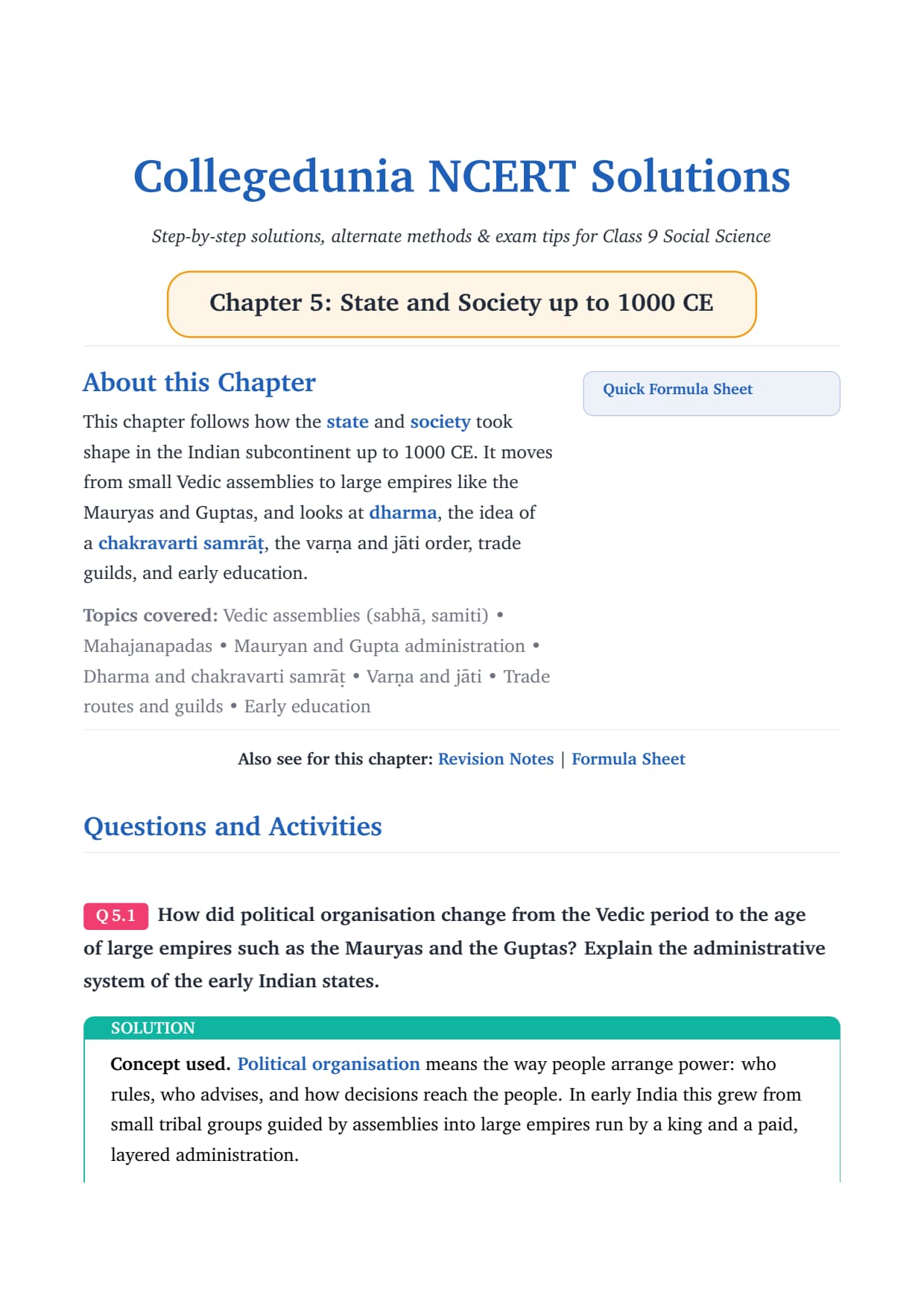
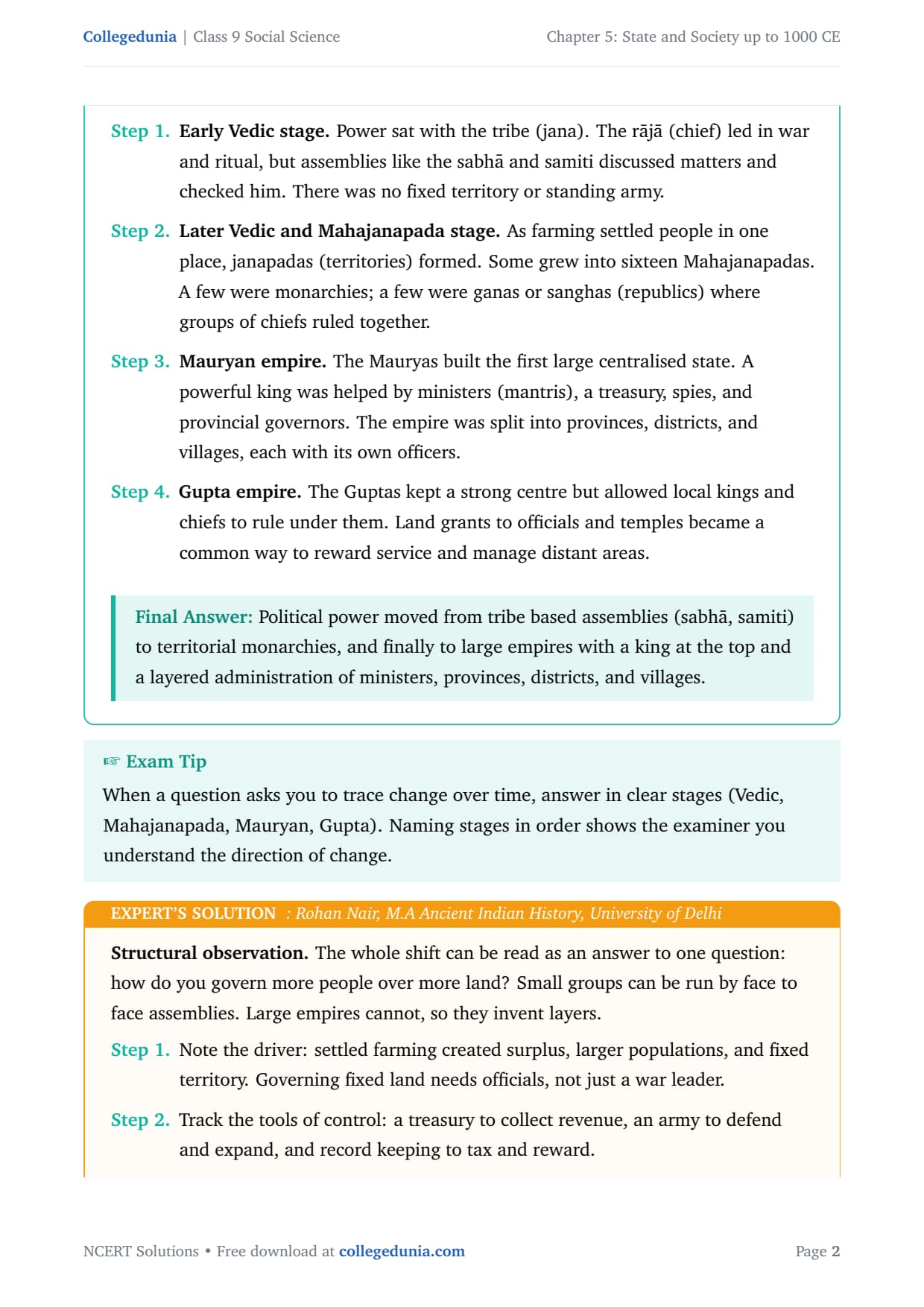
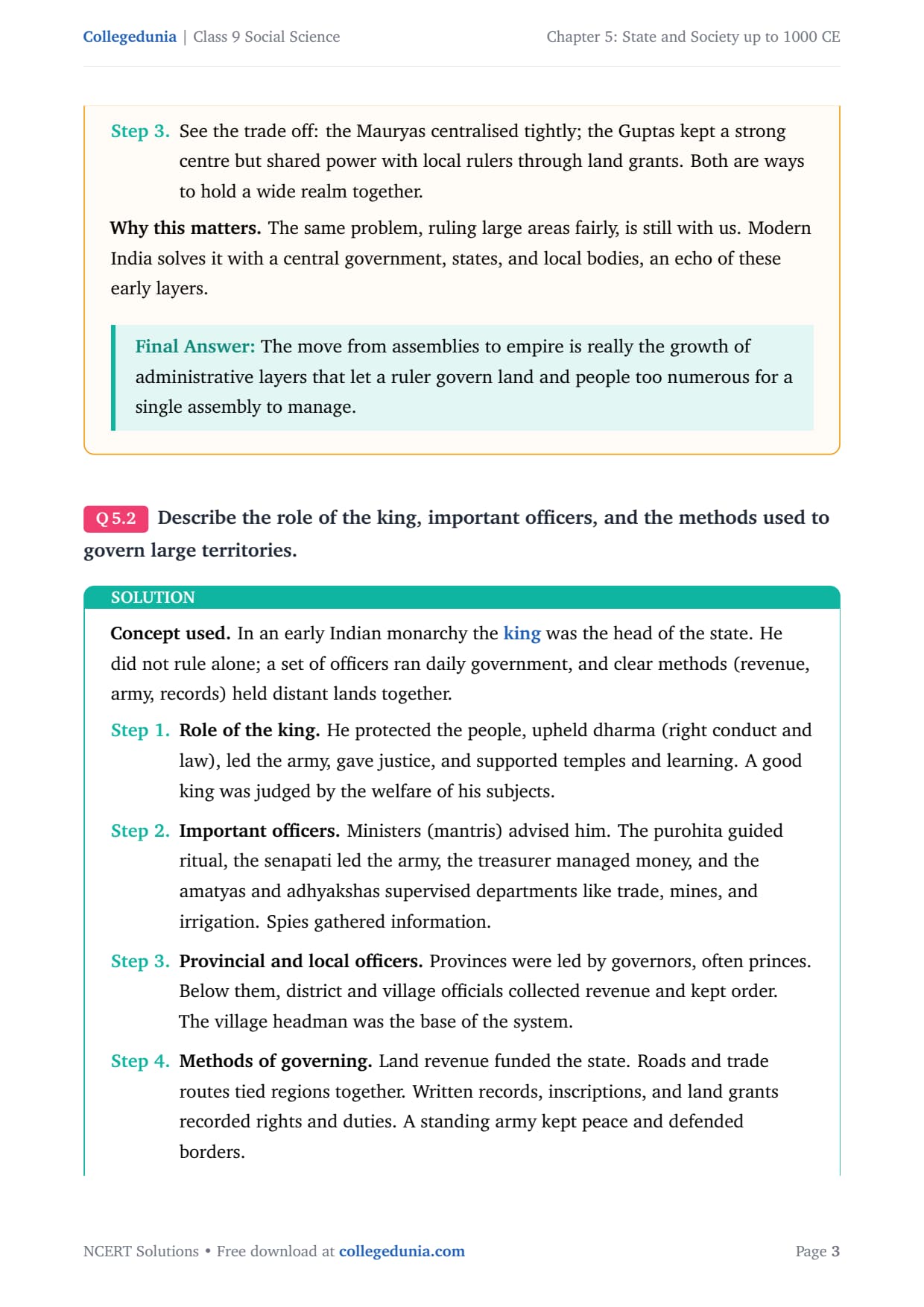
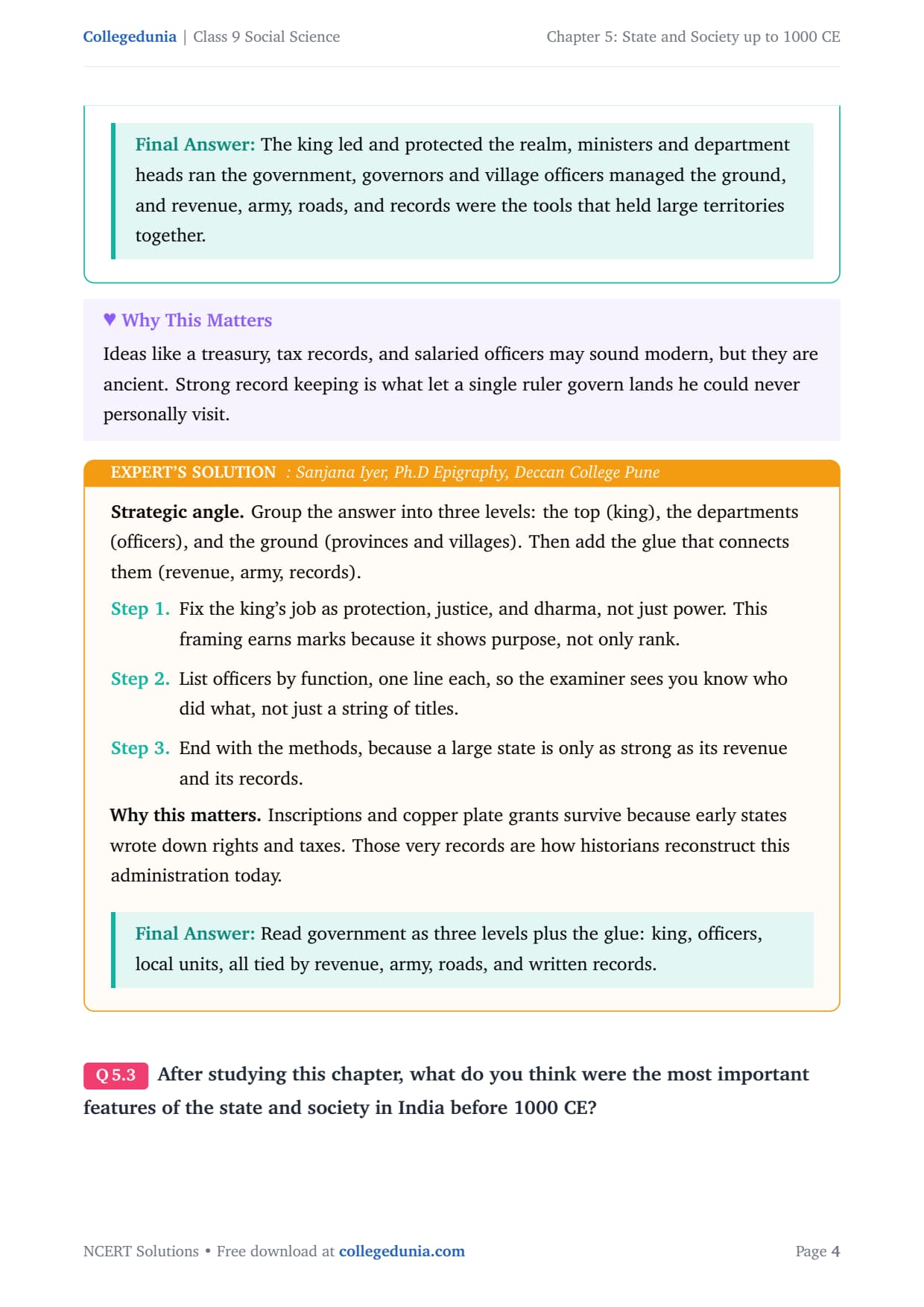
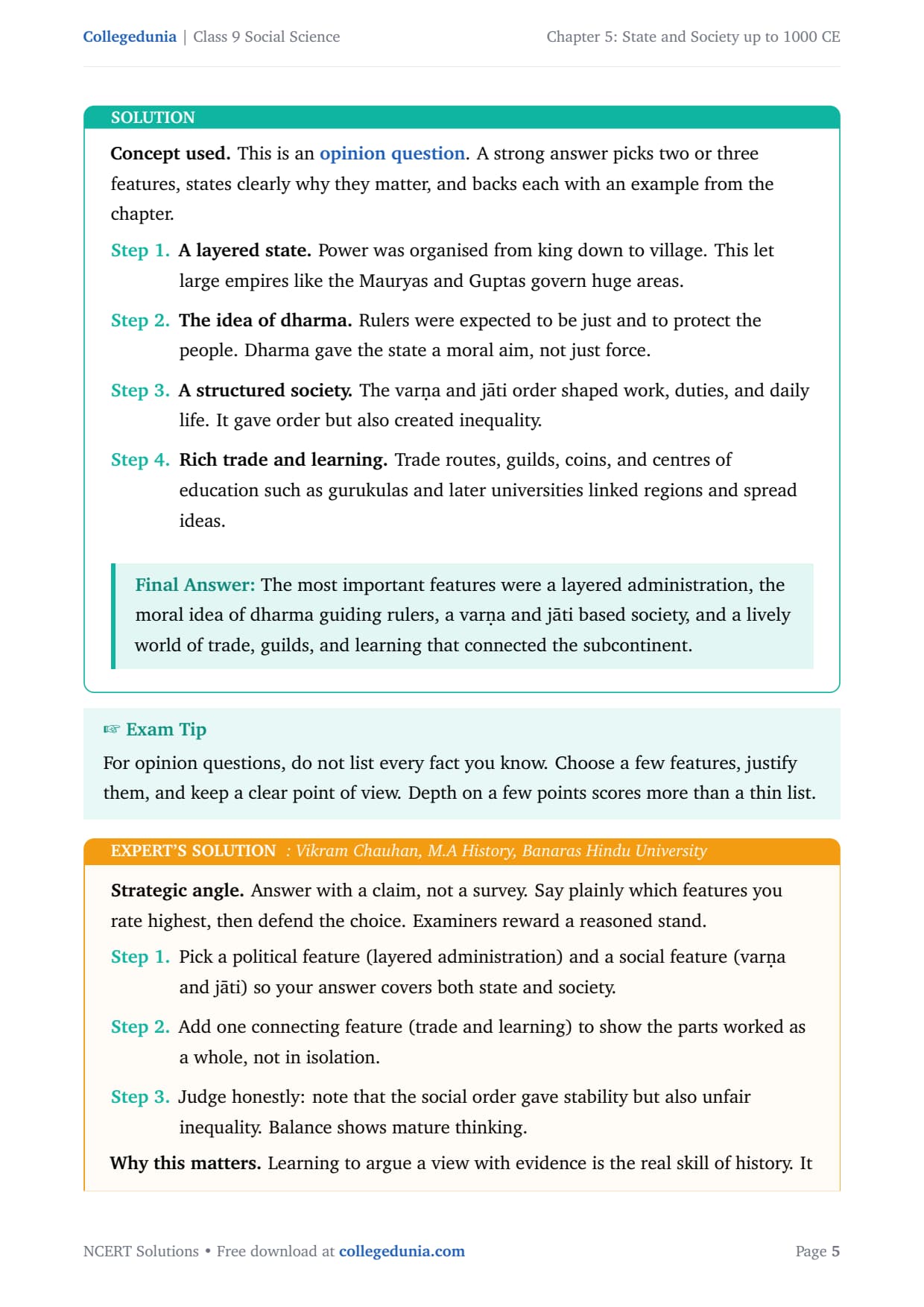
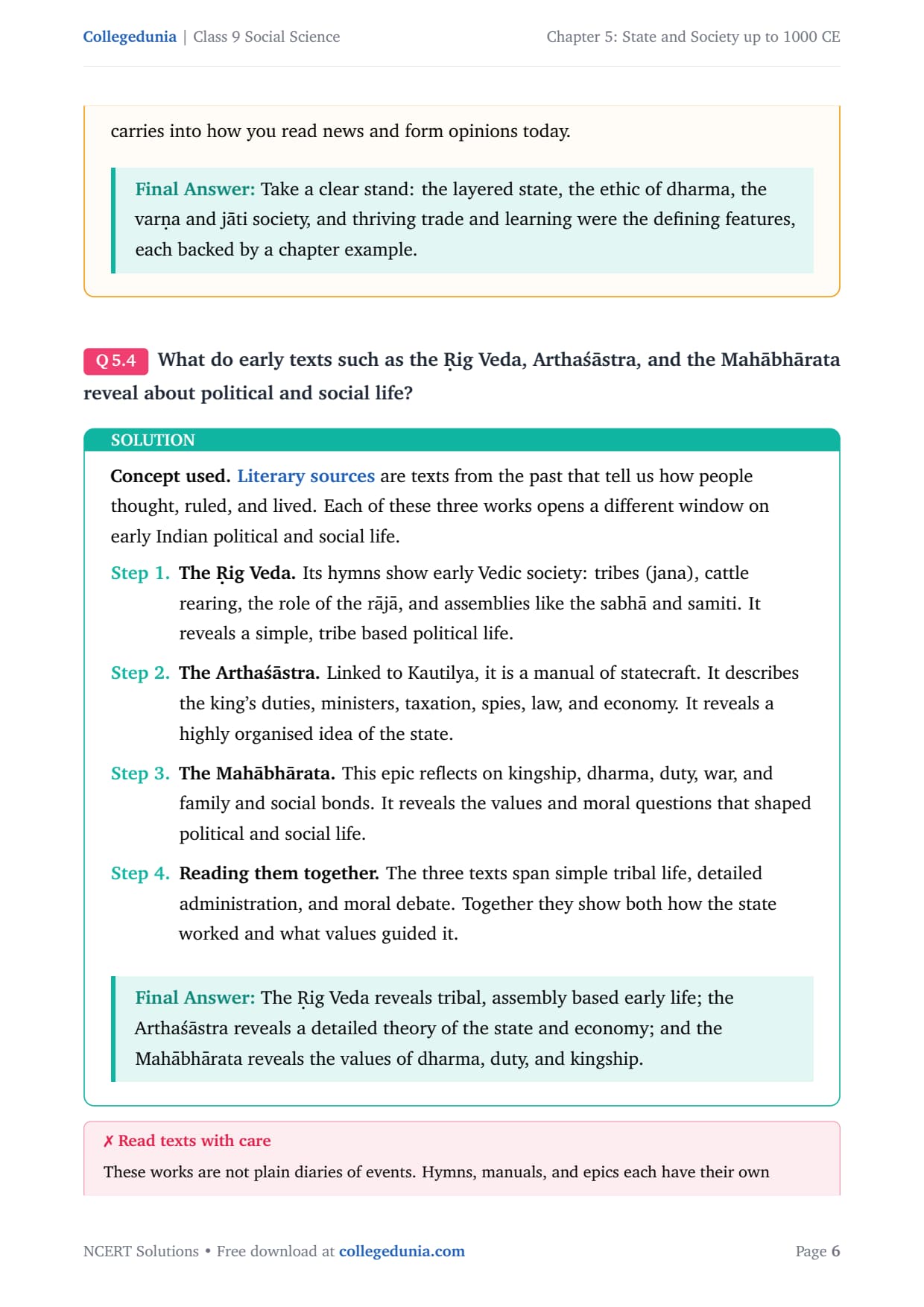
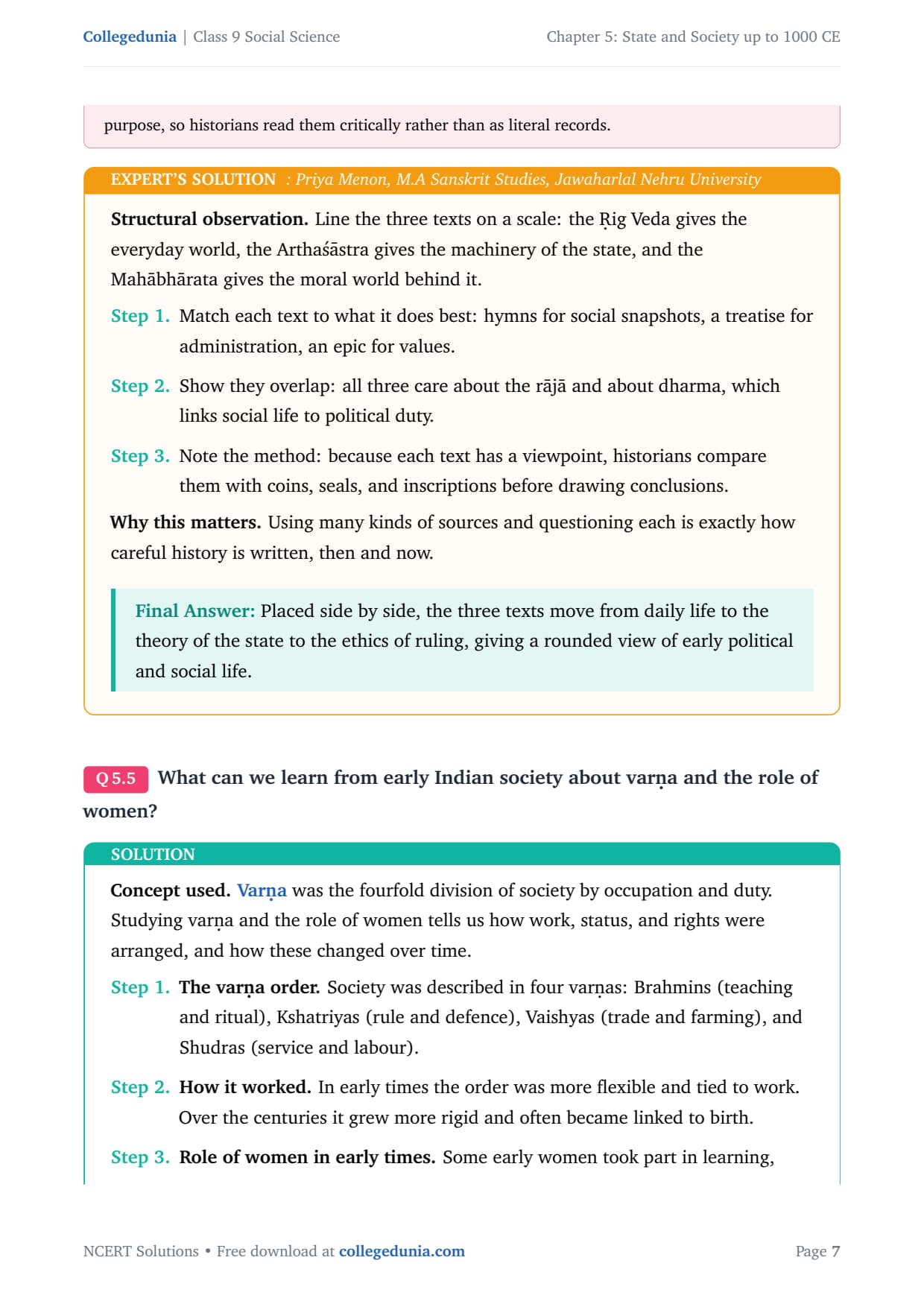
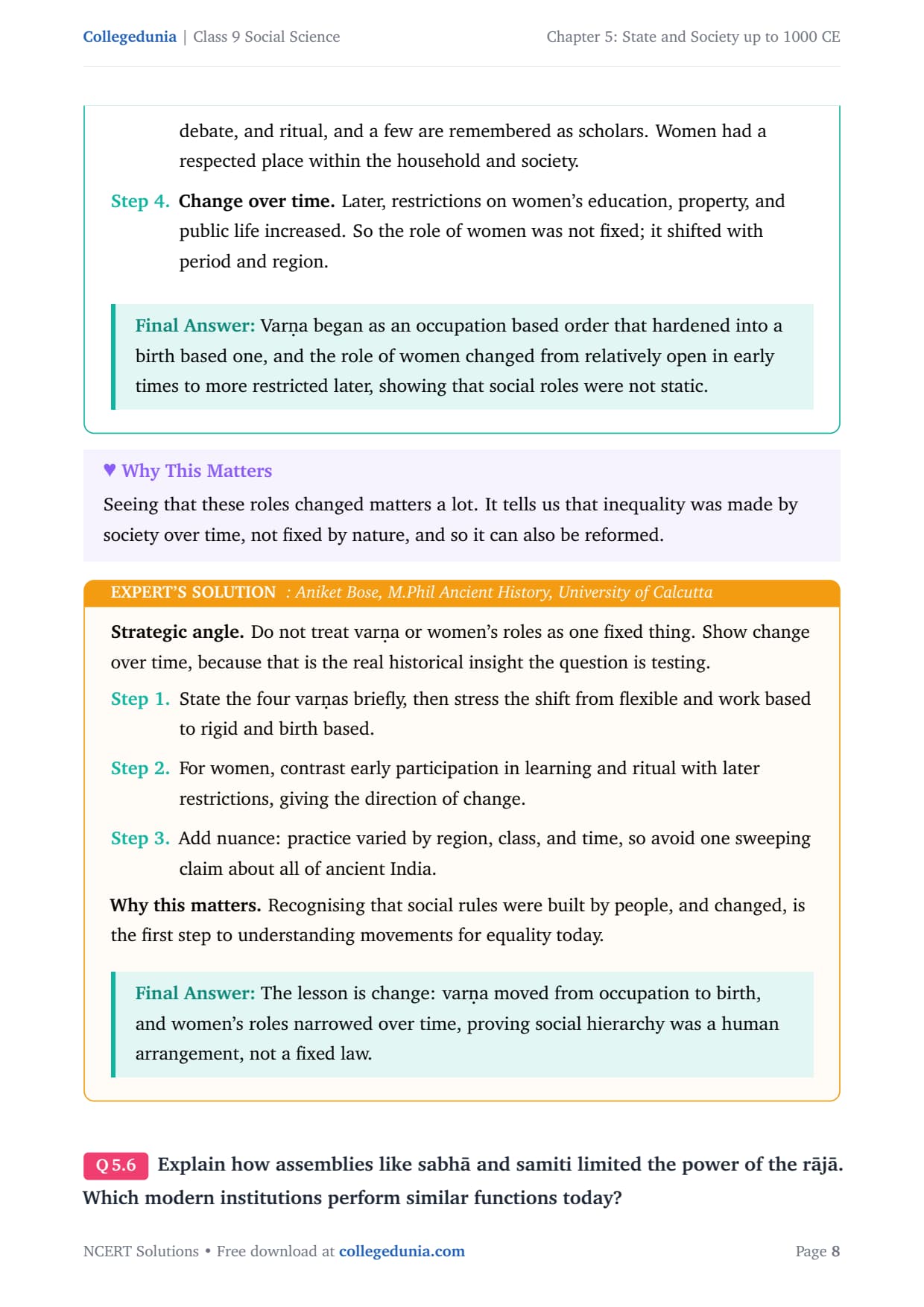
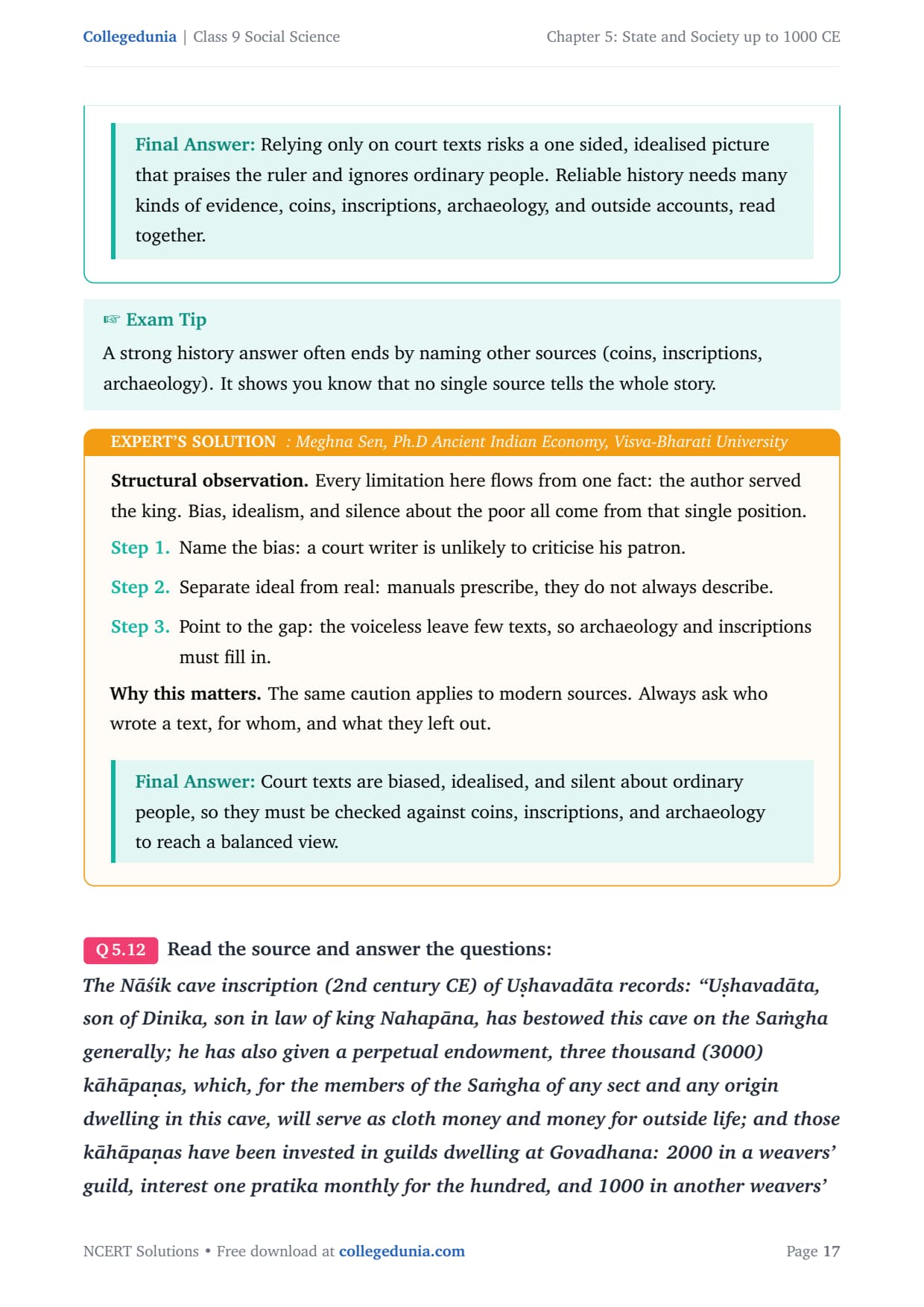
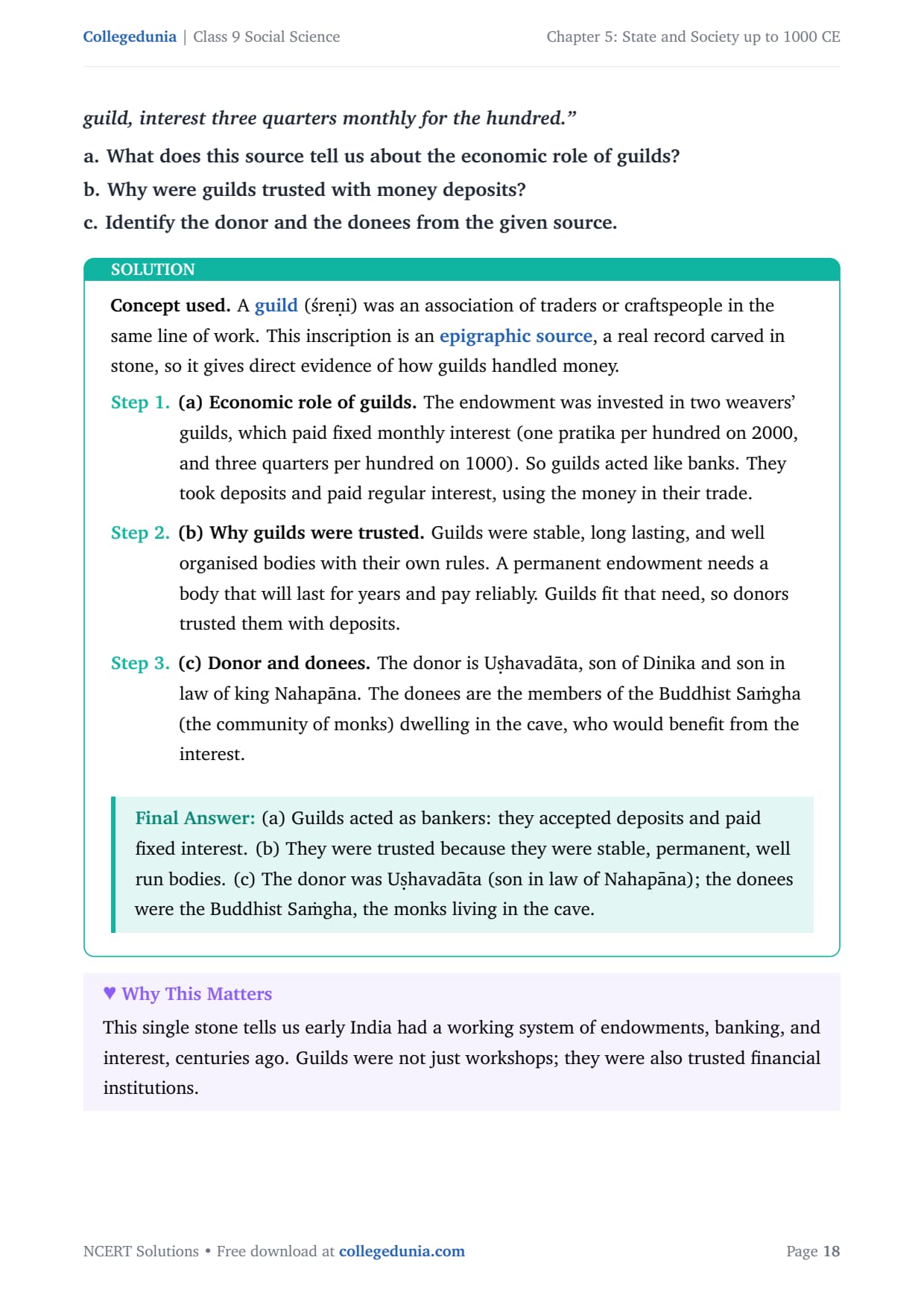
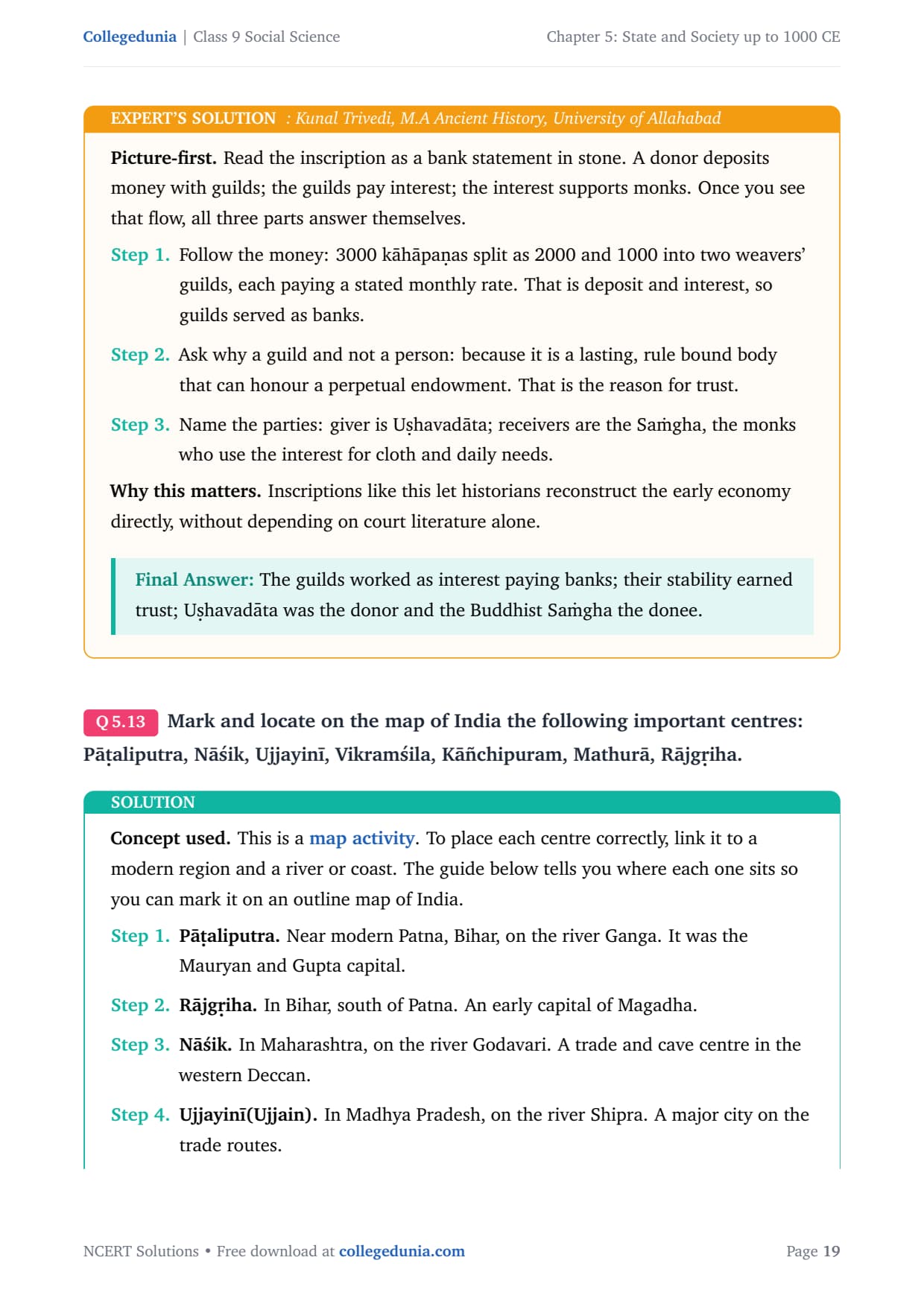
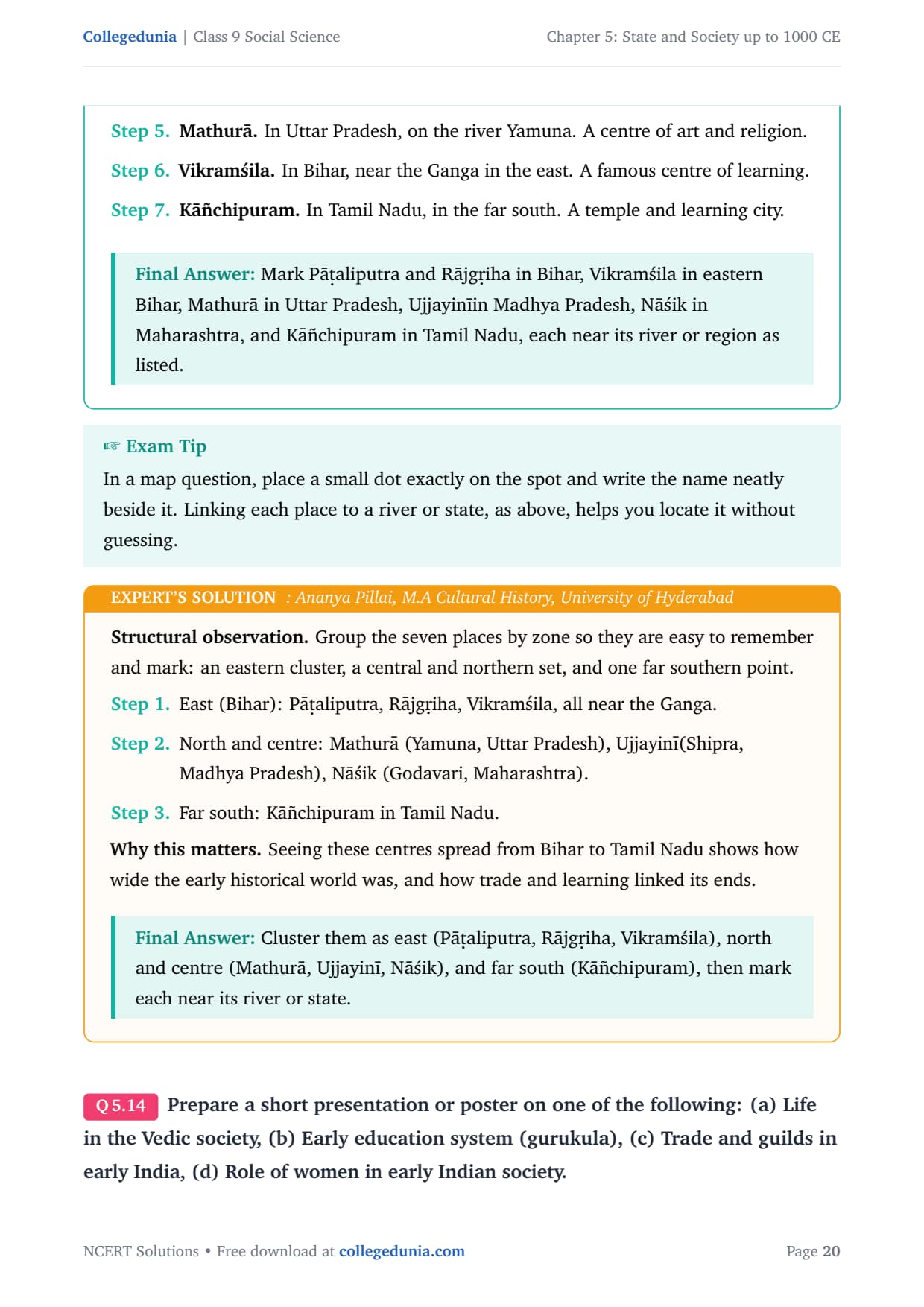
Each solution for Class 9 Social Science Chapter 5 State and Society up to 1000 CE is written by Collegedunia subject experts, matched to the 2026-27 Understanding Society textbook, and kept in simple exam language.
- 14 solved questions: full answers for every Questions and Activities item, plus an expert version for each one.
- Core ideas: sabha and samiti, Mahajanapadas, Mauryan and Gupta administration, dharma, varna and jati, trade routes, and guilds.
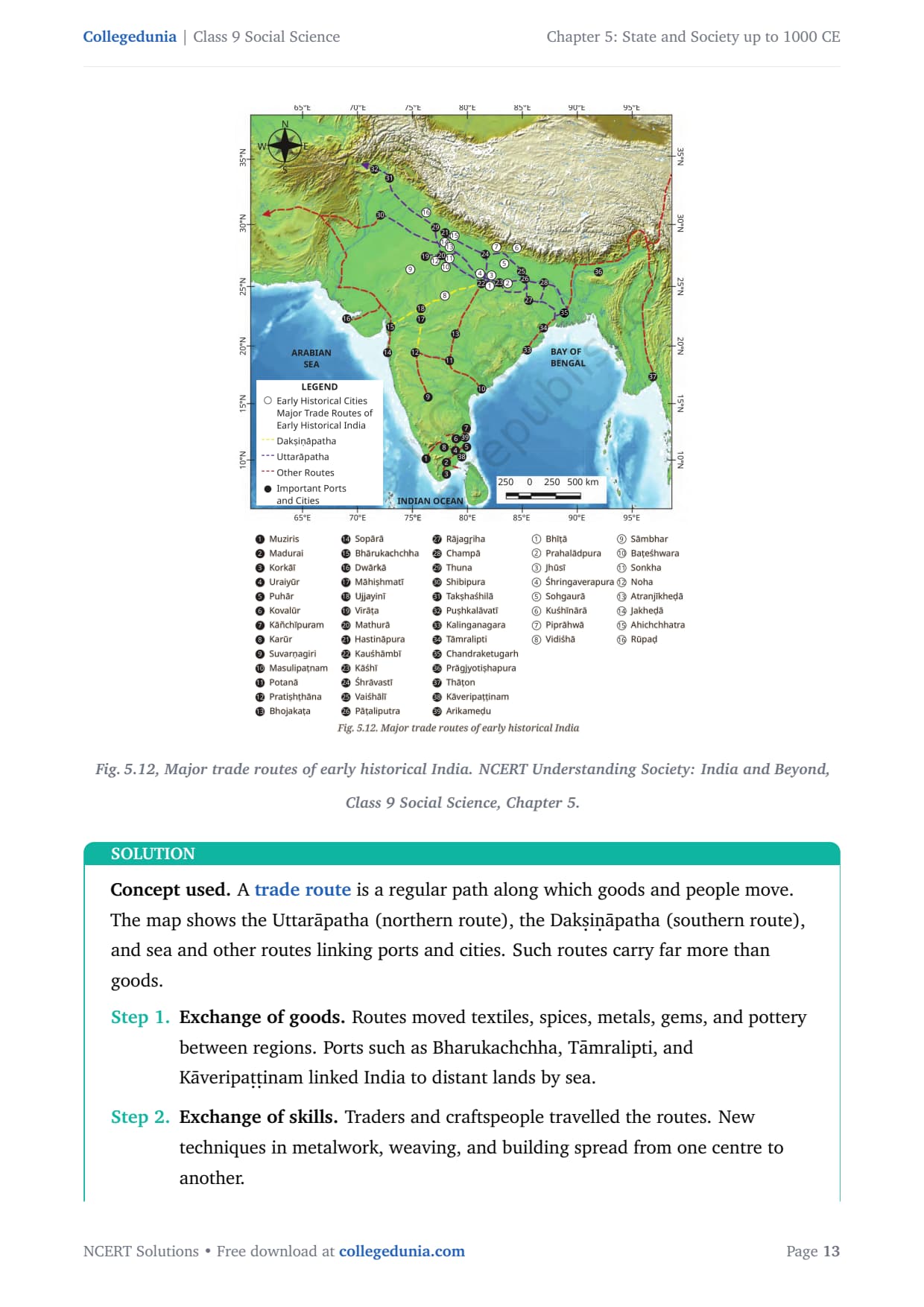
- Source and map practice: the Nashik cave inscription and the map of early trade routes and historical centres.
Student Feedback
In a Collegedunia poll of 8,600 Class 9 students before the 2026 exams, 58% said they mixed up varna and jati in the answer. The next most common slip was confusing the sabha with the samiti. Students who practised the 14 solved answers here said the source and map questions felt much clearer the second time.
Source: 2026-27 Class 9 Social Science student poll. Sample of 8,600 students from CBSE schools across 11 states.
Exercise Coverage in the State and Society up to 1000 CE Class 9 Solutions
The Questions and Activities exercise has 14 items. The NCERT Solutions Class 9 Social Science Chapter 5 State and Society up to 1000 CE group them by type, so you know which to write first and which to do as an activity. The table below shows the split.
| Question type | Questions | What it tests |
|---|---|---|
| Short and long answers | 10 | Growth of the state, the king and his officers, dharma, varna and jati, sabha and samiti, and source criticism |
| Source and map based | 2 | Reading the Nashik cave inscription and interpreting the map of early trade routes |
| Activity and project based | 2 | Marking historical centres on an India map and making a poster on early society |
Start with the short and long answers, then attempt the source and map questions. The activity items are best done as classroom projects once you know the theory.
State and Society up to 1000 CE Weightage for Class 9 Social Science Exams
This is a core history chapter in the new integrated Class 9 book. It builds on the story of early humans and sets the base for the later chapters on democracy. Here is where it sits among the history-side chapters of the 2026-27 Understanding Society book.
| Chapter | Topic | Typical exam focus |
|---|---|---|
| Chapter 4 | Early Humans and Beginning of Civilisation | Stone Age, farming, and the first cities |
| Chapter 5 | State and Society up to 1000 CE | Empires, dharma, varna and jati, trade and guilds |
This chapter carries steady marks because it mixes short reasoning answers with one source and one map question. Learn the stages of the state once and the marks come back in every test.
How to Answer State and Society up to 1000 CE Questions Step by Step
Most marks here come from clear reasoning and correct terms. The NCERT Solutions Class 9 Social Science Chapter 5 State and Society up to 1000 CE use the same method for almost every answer. Follow these steps and you will rarely lose an easy mark.
- Answer in stages. For change over time, move in order: Vedic, Mahajanapada, Mauryan, then Gupta. Naming stages shows the direction of change.
- Keep varna and jati apart. Varna is the broad fourfold order in texts. Jati is the many real birth based groups. Never use one word for the other.
- Use the source. For the inscription question, quote small parts and read the interest and the parties before you explain the role of guilds.
- Add a real example. Name a place, a text, or a ruler, such as Pataliputra, the Arthashastra, or the Guptas, so the answer feels complete.
- Link to today when asked. For the sabha and samiti, name a modern body like Parliament or the Gram Sabha and say what they share.
For map work, always add a title, a small dot on the exact spot, and a neat name beside it. These simple habits turn a rough sketch into a full-mark map.
Common Mistakes Students Make in State and Society up to 1000 CE
Most lost marks in this chapter are simple slips, not gaps in understanding. Watch for the four below when you write your answer.
Mistake 1: Treating varna and jati as the same thing. Varna is the four broad divisions in texts. Jati is the many smaller birth based groups.
Mistake 2: Mixing up the sabha and the samiti. The sabha was a smaller council of elders. The samiti was a larger gathering of people.
Mistake 3: Trusting court texts as full truth. Works by a king's scholars are one sided, so add coins, inscriptions, and archaeology.
Mistake 4: Writing that dharma meant only religion. Here dharma means right conduct and just rule, the moral duty of a king.
Also Check: the full answer for every one of these traps is in the solved questions lower on this page.
State and Society up to 1000 CE Important Questions and Exam Trends
Exams from this chapter follow a clear pattern. One reasoning question plus a source or map question is the usual mix. The list below shows the types you should be ready for.
- Growth of the state: how power moved from Vedic tribes and assemblies to the large Mauryan and Gupta empires.
- King and administration: the role of the king, his officers, and the tools used to govern large lands.
- Varna and jati: the difference between the two and the factors behind the formation of jatis.
- Source based question: reading the Nashik cave inscription to explain the economic role of guilds.
- Map and activity work: marking Pataliputra, Nashik, Ujjayini, and other centres, and making a short poster.
The NCERT Solutions Class 9 Social Science Chapter 5 State and Society up to 1000 CE cover every one of these types in full, so practising the 14 solved questions on this page is enough for the exam.
Other State and Society up to 1000 CE Class 9 Social Science Resources
Pair these solutions with the notes and the book PDF for the same chapter to revise faster.
| Resource | Link |
|---|---|
| Notes | State and Society up to 1000 CE Class 9 Notes |
| Handwritten Notes | State and Society up to 1000 CE Handwritten Notes |
| NCERT Book PDF | State and Society up to 1000 CE Book PDF |
Questions
NCERT Solutions for Class 9 Social Science: All Chapters
Jump to the NCERT Solutions for any other Class 9 Social Science chapter below. Collegedunia keeps a solved page for every chapter of the new book.
| Chapter | NCERT Solutions |
|---|---|
| Chapter 1 | Understanding Social Science |
| Chapter 2 | Shaping of the Earth's Surface |
| Chapter 3 | Atmosphere and Climate |
| Chapter 4 | Early Humans and Beginning of Civilisation |
| Chapter 6 | Democracy |
| Chapter 7 | Elections |
| Chapter 8 | Building Blocks in Economics The Problem of Choice |
| Chapter 9 | The Price Puzzle What Drives the Market |
State and Society up to 1000 CE Class 9 Solutions FAQs
How many questions are solved in NCERT Solutions for Class 9 Social Science Chapter 5?
All 14 questions from the Questions and Activities exercise are solved. Each one has a step-by-step answer and an expert version written in simple exam language.
What is the difference between varna and jati in this chapter?
Varna is the broad fourfold order described in texts. Jati refers to the many smaller birth based groups people actually lived in. The solutions explain both with clear examples.
Which source question is important in Class 9 Social Science Chapter 5?
The Nashik cave inscription is the key source question. The solutions show how to read it to explain that guilds acted as banks and to name the donor and the donees.
Are these Class 9 Social Science solutions based on the new 2026-27 book?
Yes. Every answer matches the new integrated Understanding Society textbook for 2026-27. Collegedunia updates the solutions whenever the NCERT content changes.



Comments