




The State and Society up to 1000 CE Class 9 Social Science Handwritten Notes are a topper's own neat revision of Chapter 5 from the new Understanding Society textbook. These class 9 social science handwritten notes chapter 5 State and Society up to 1000 CE trace clans to empires, dharma, and trade, all in clear handwriting.
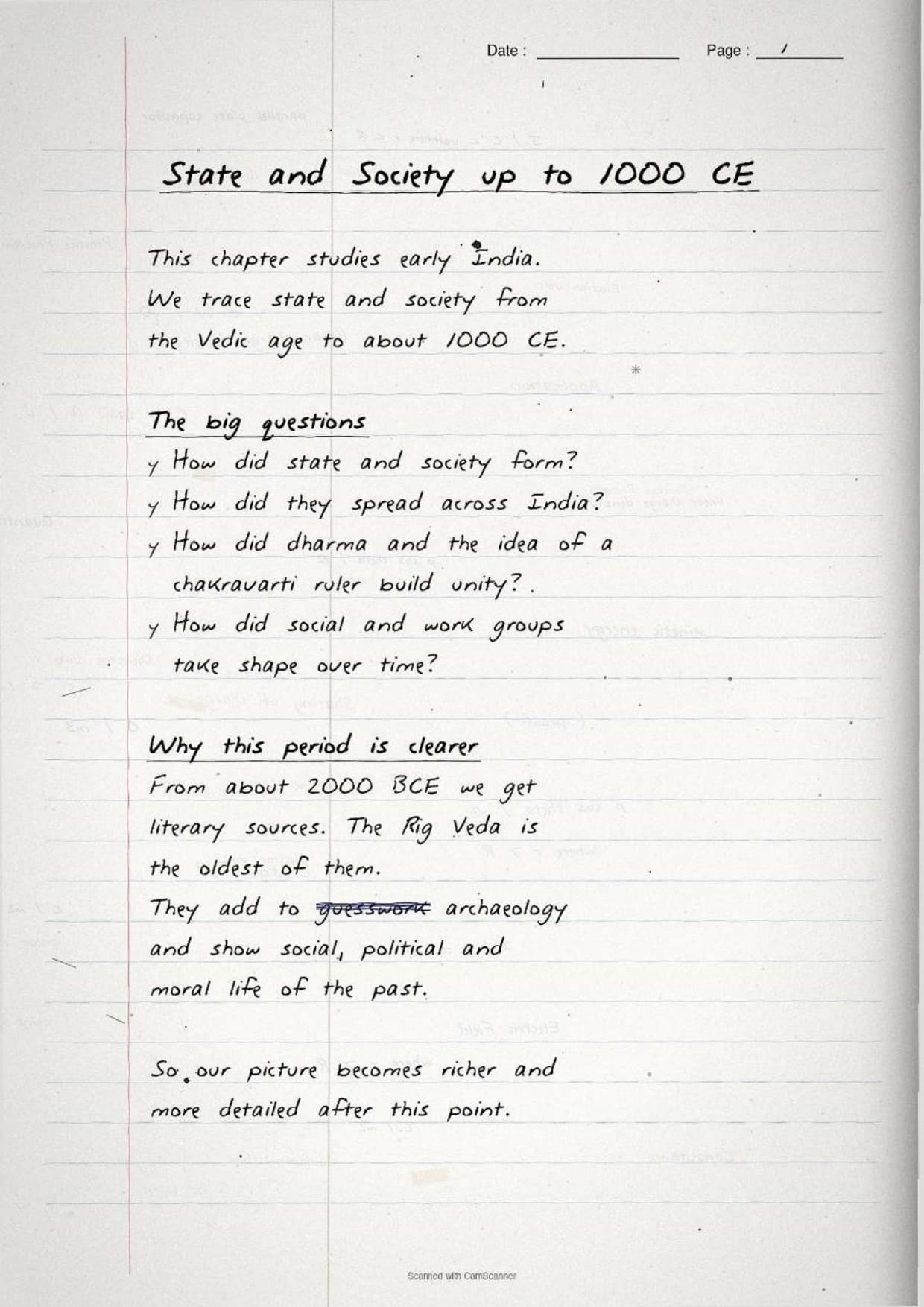
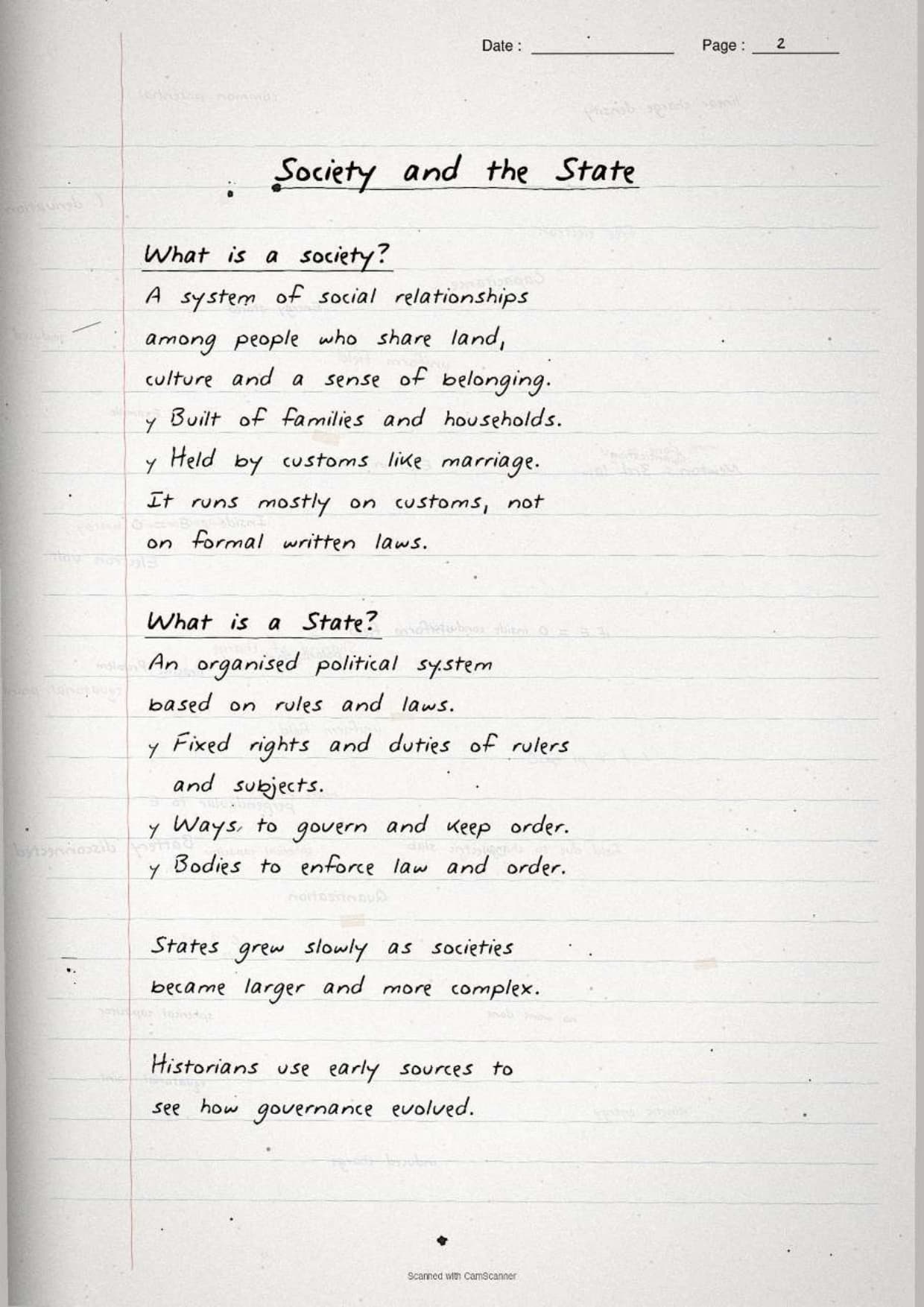
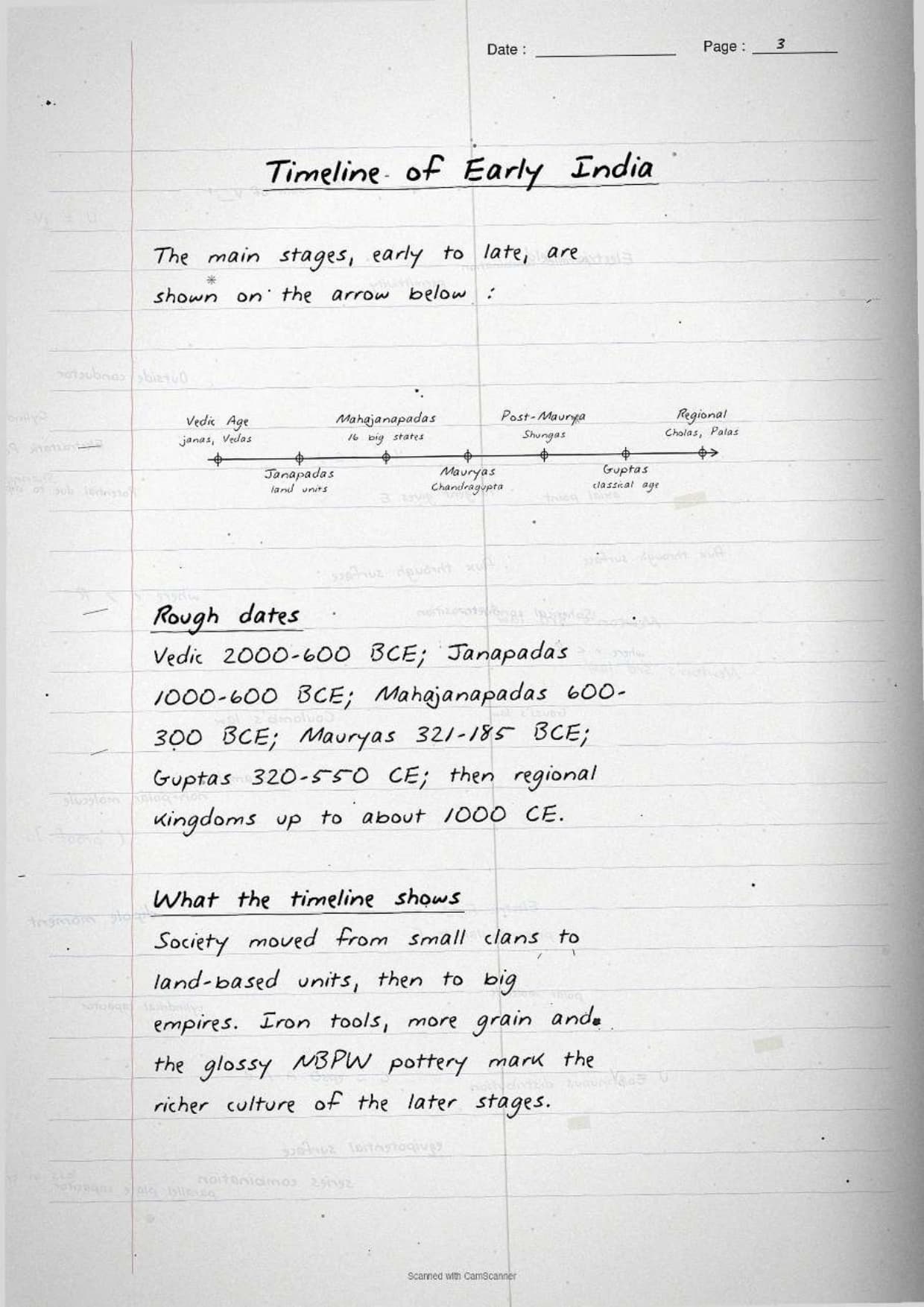
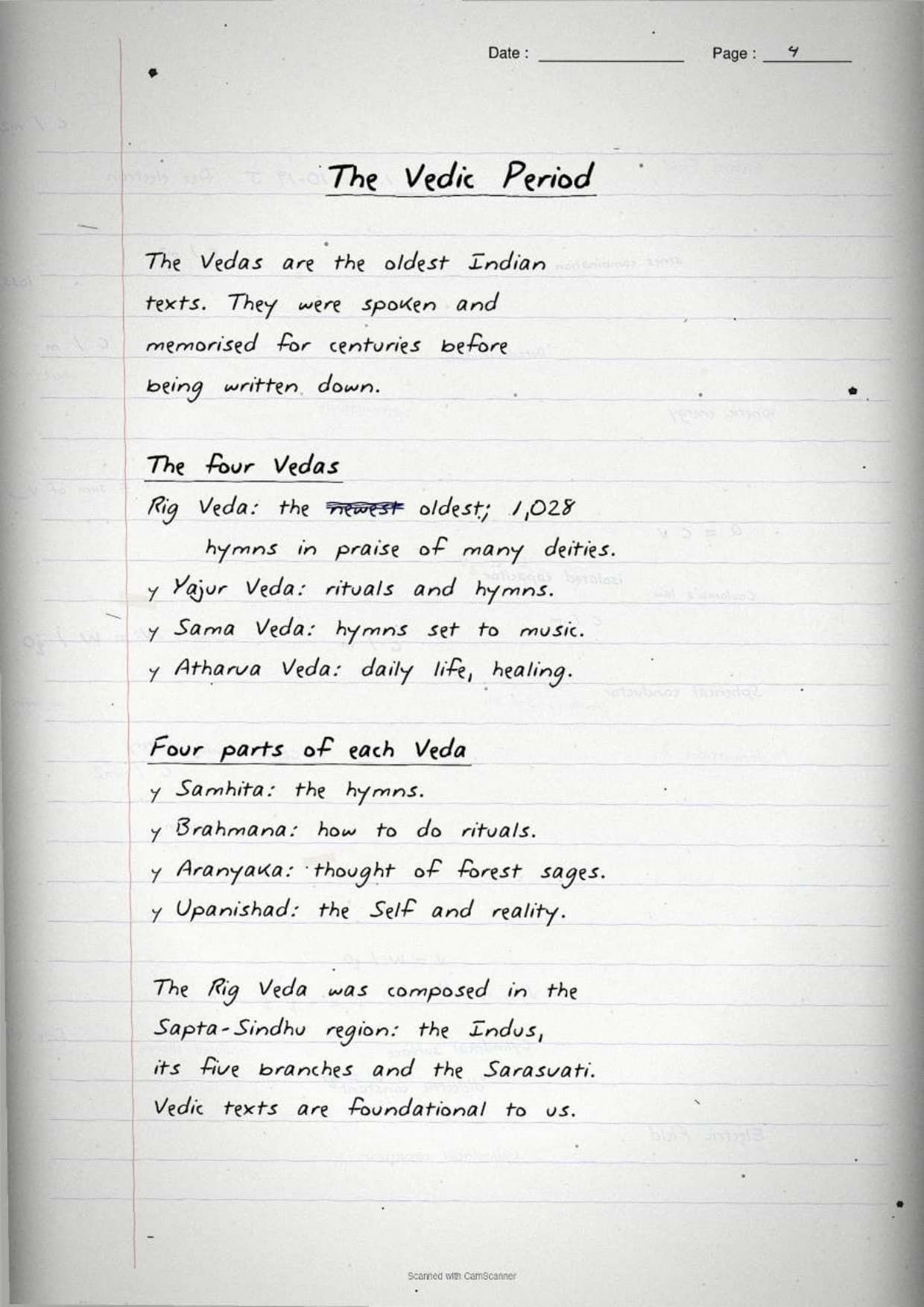
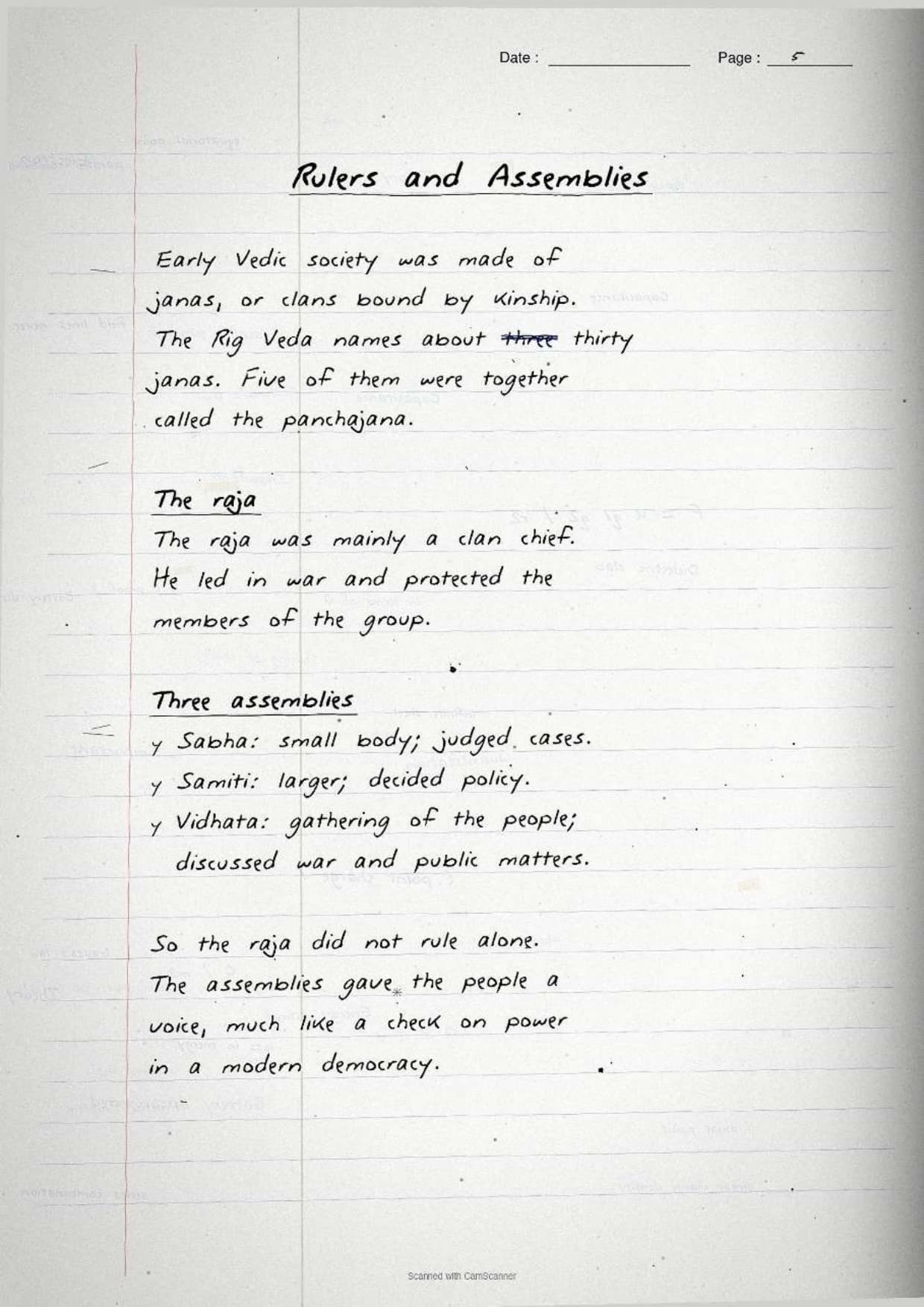
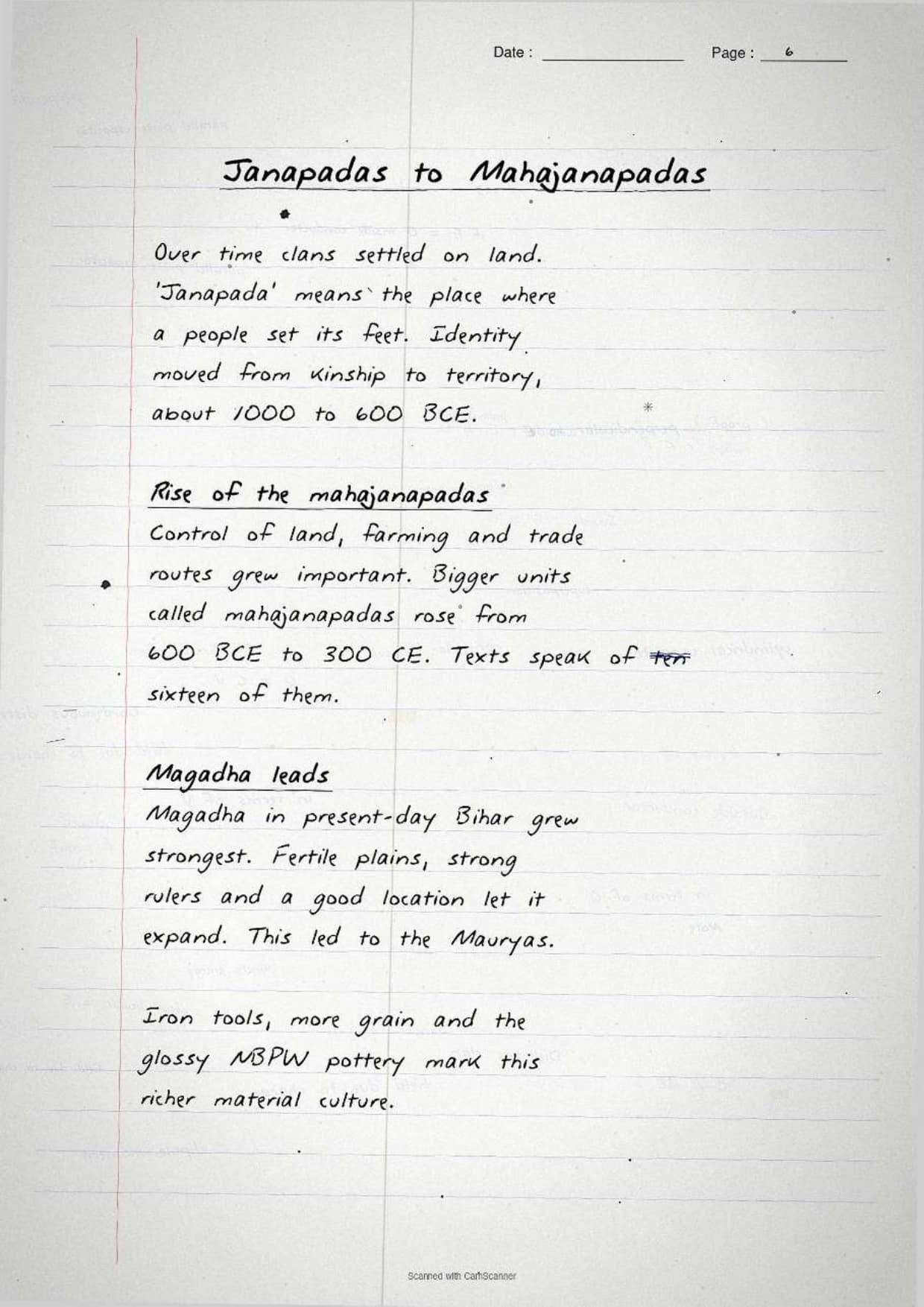
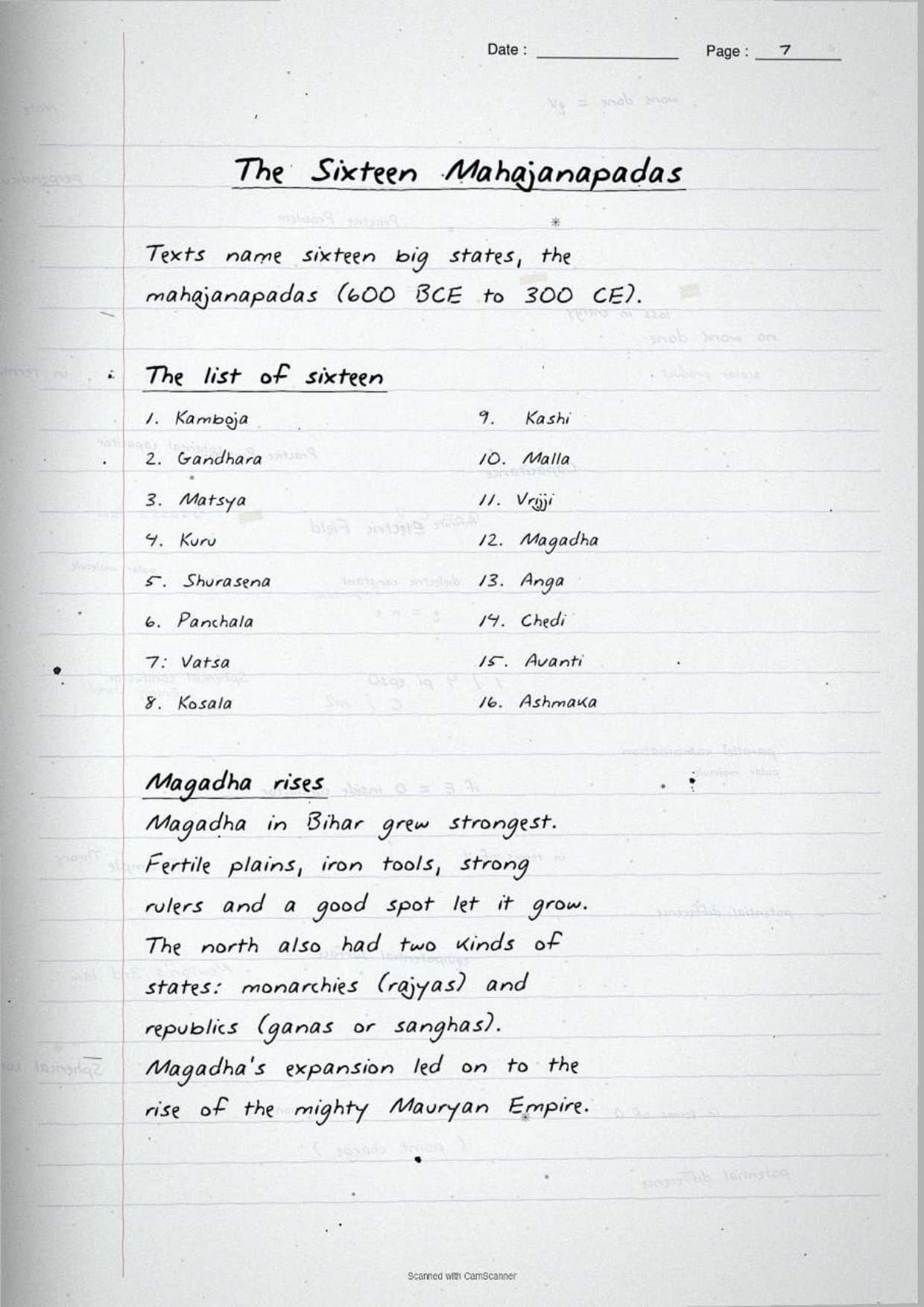
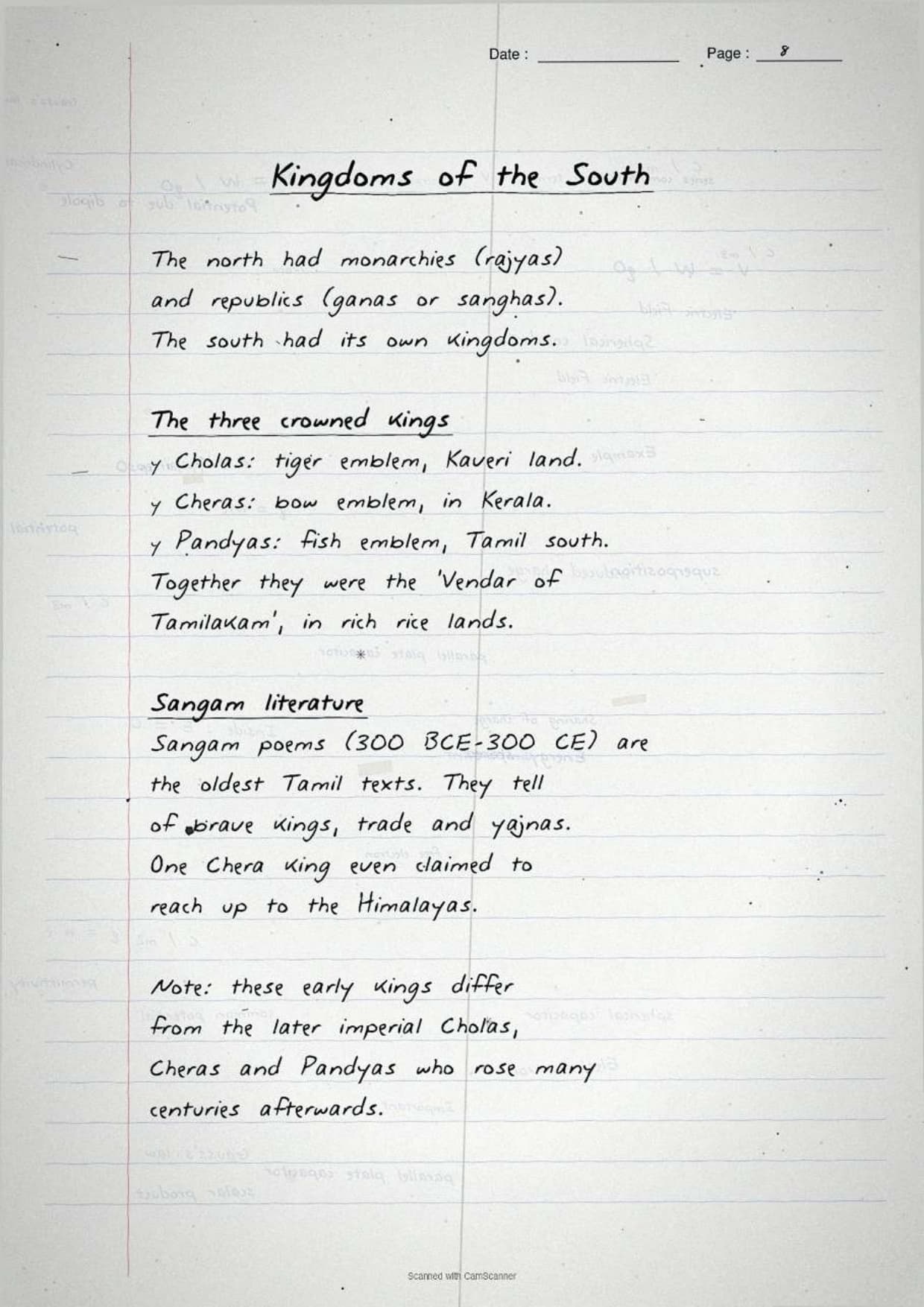
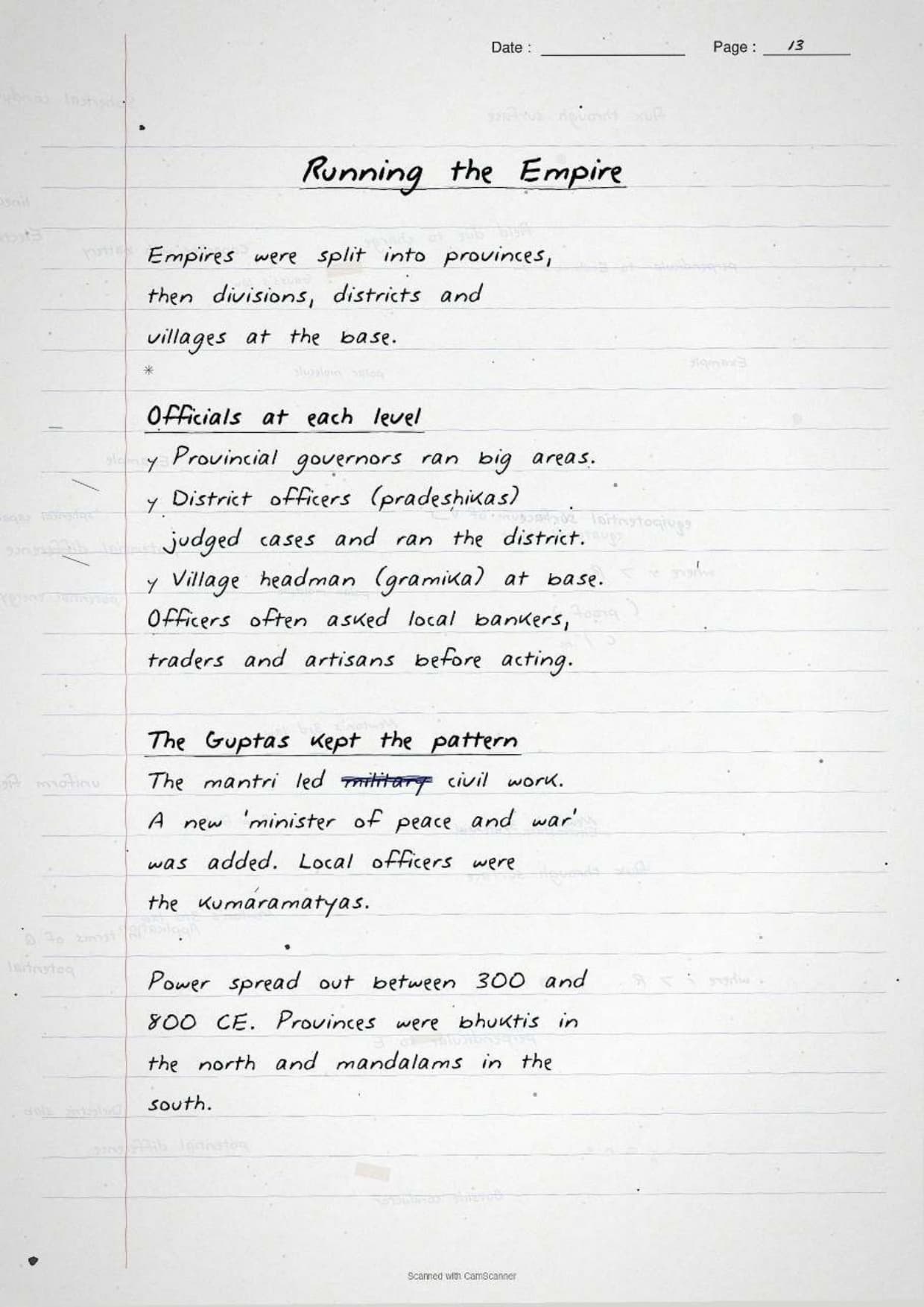
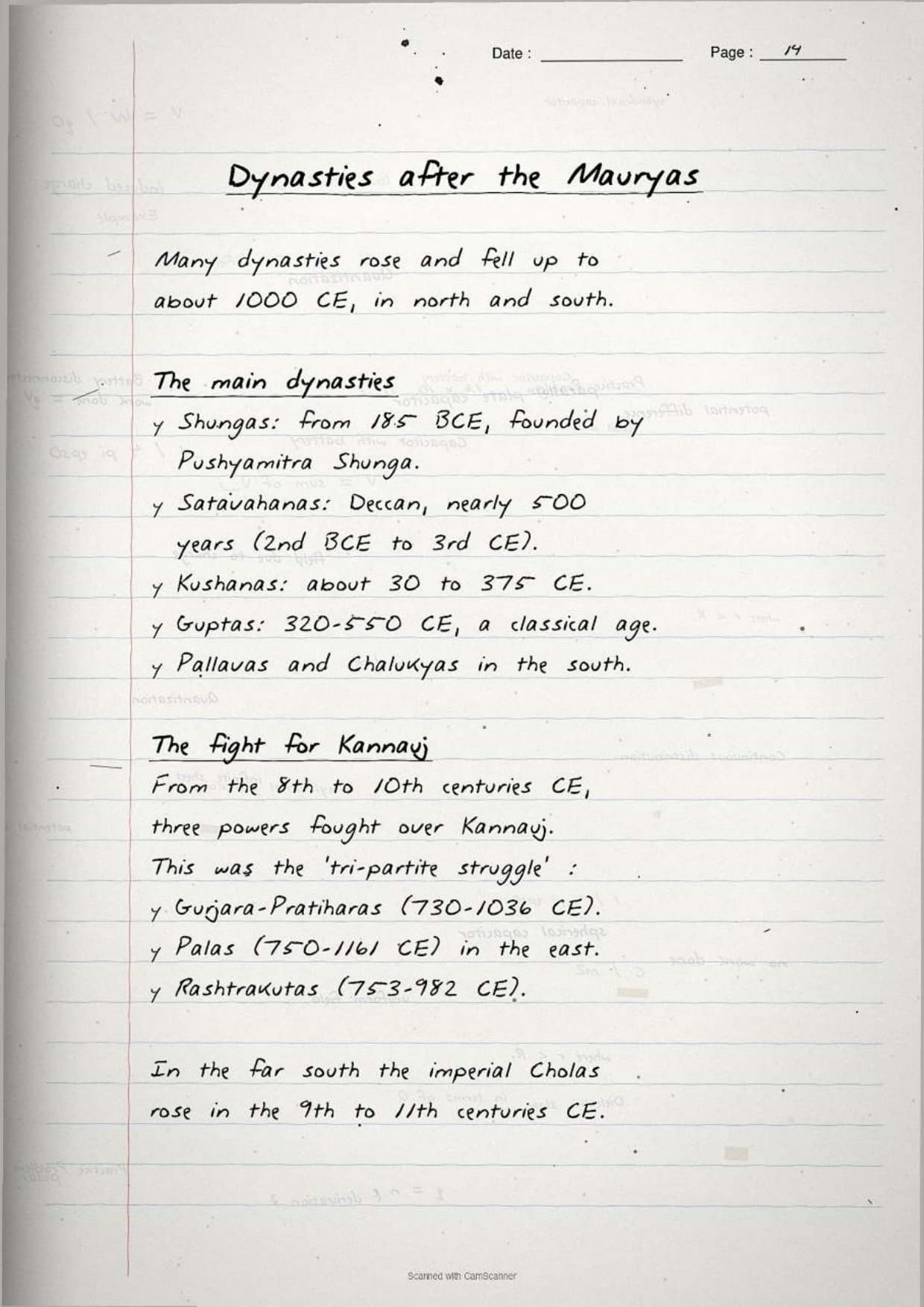
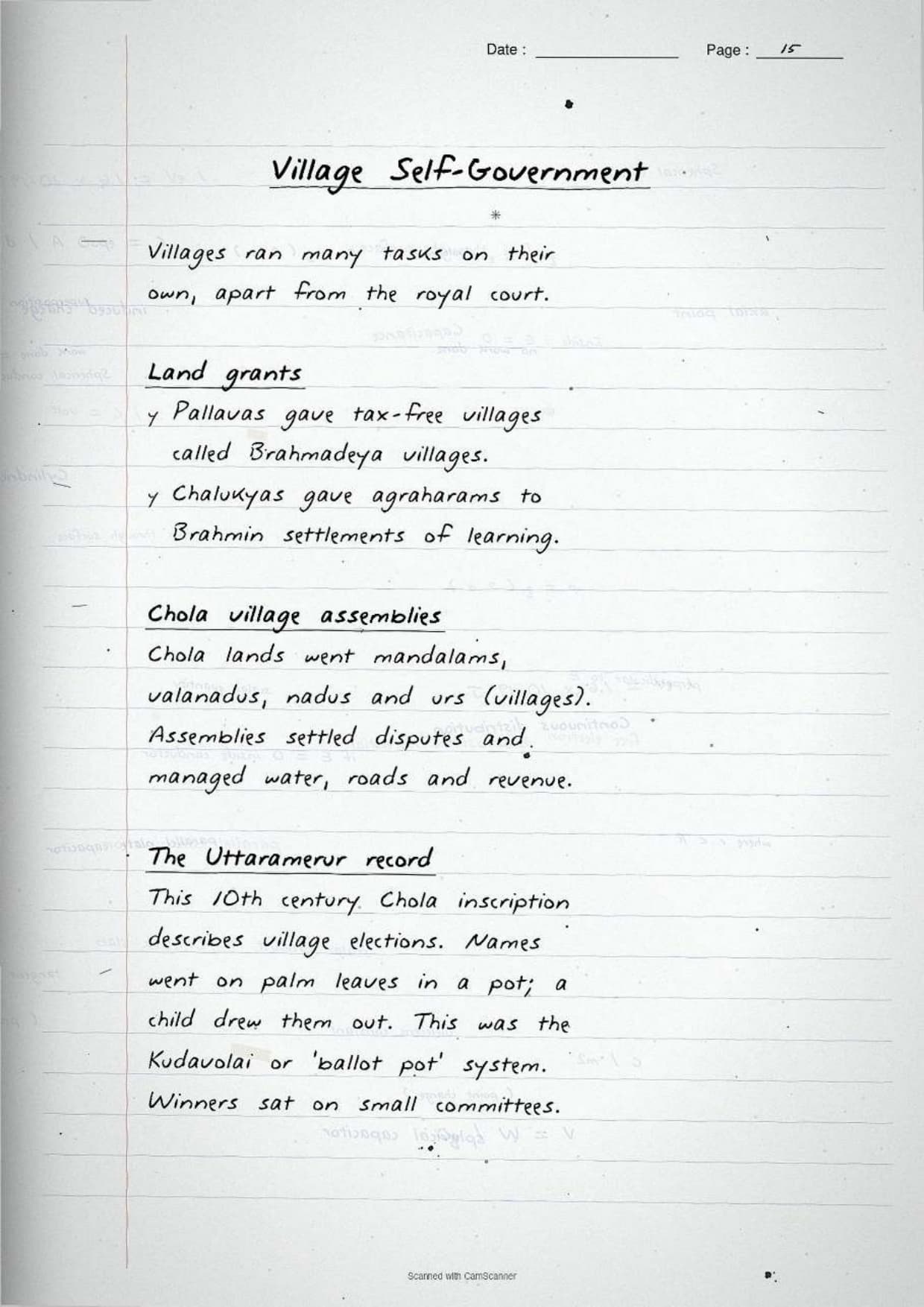
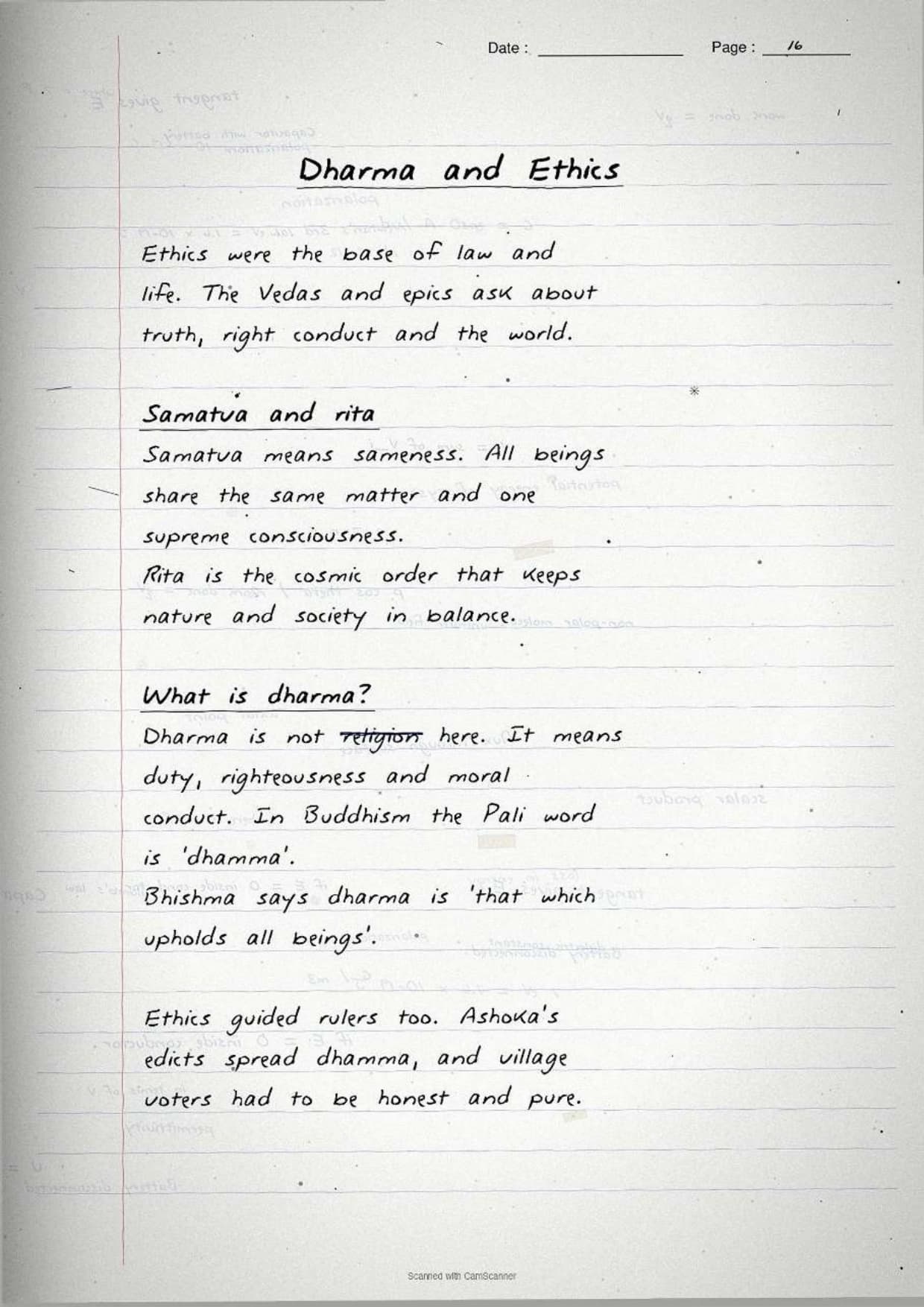
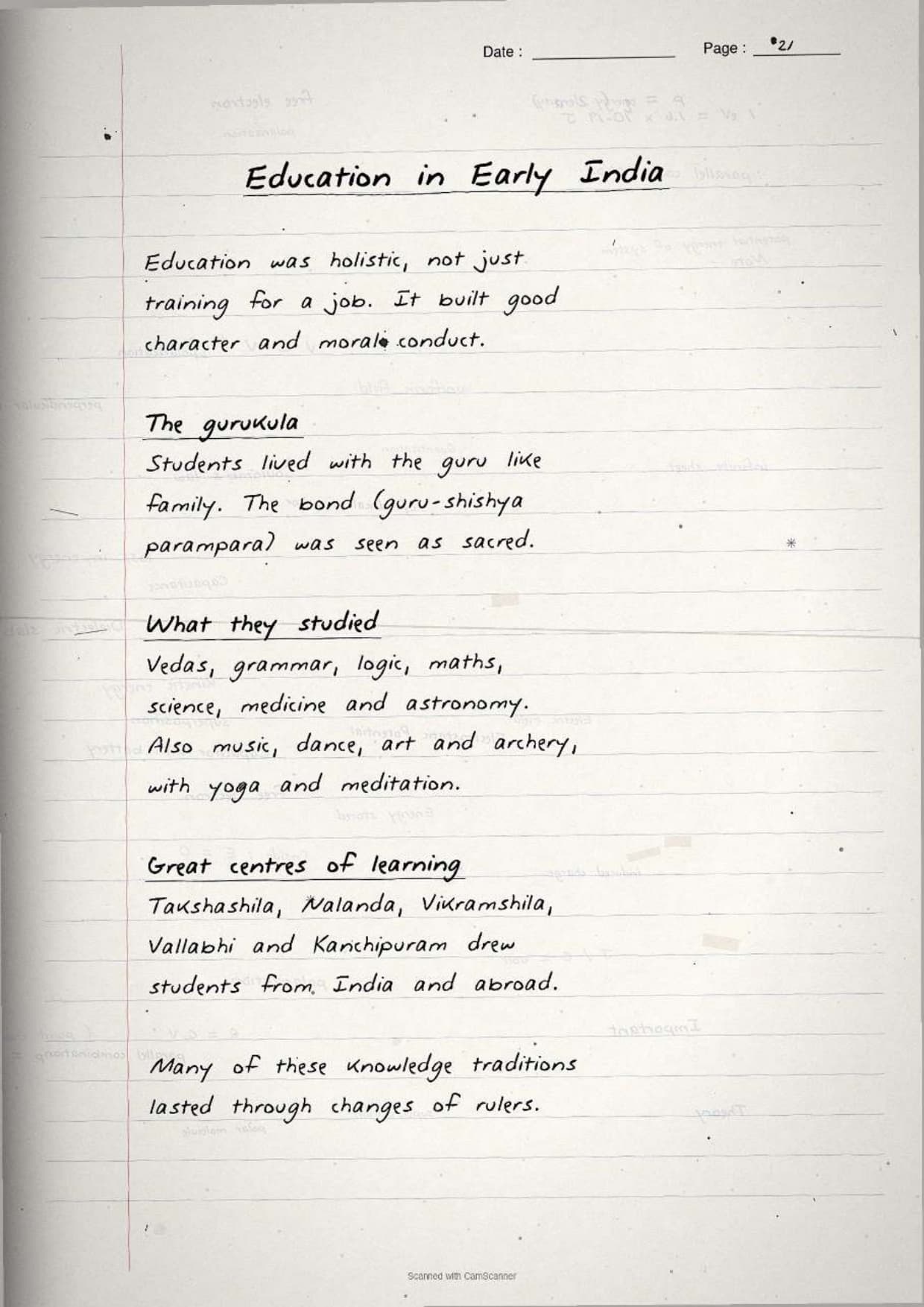
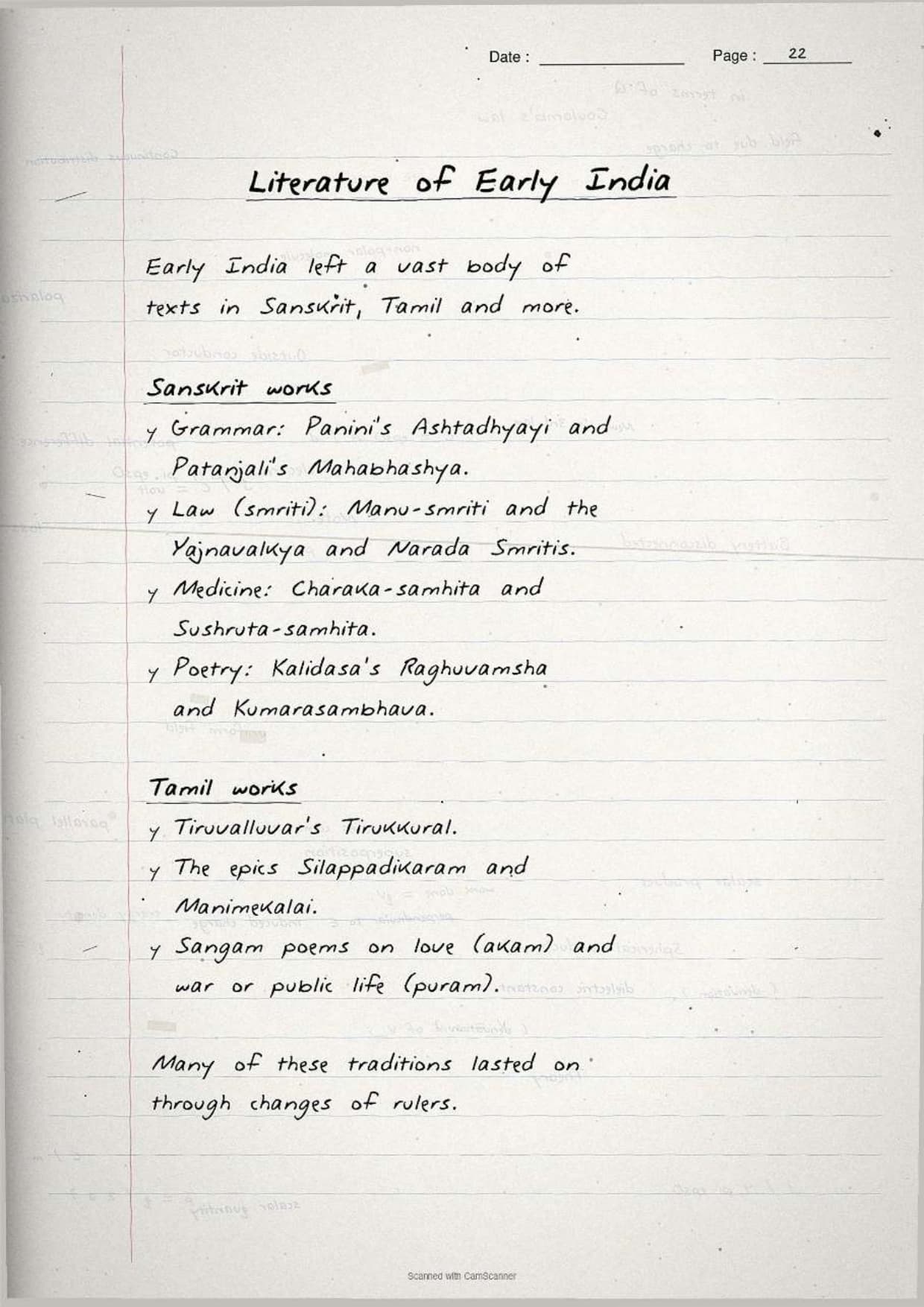
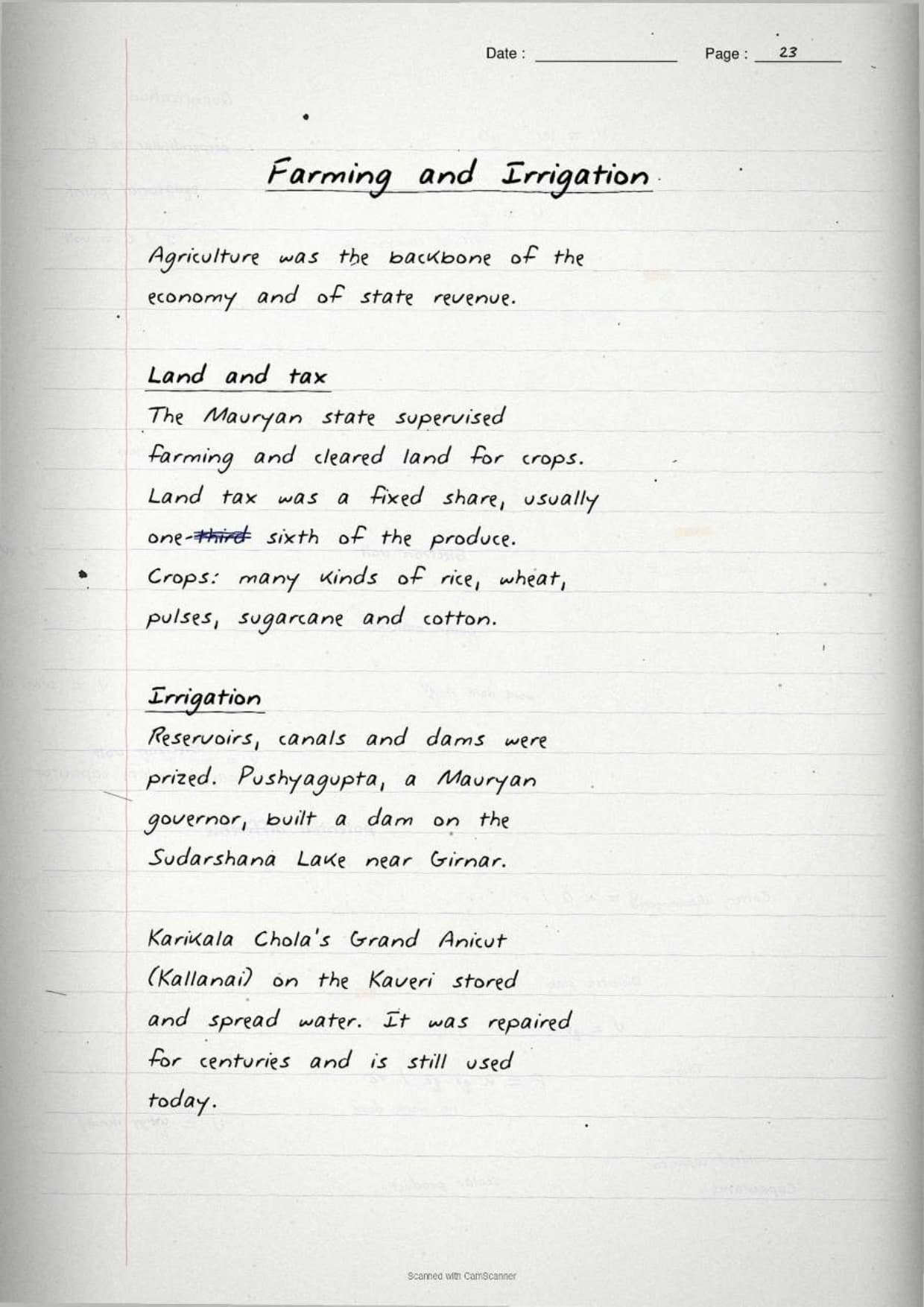
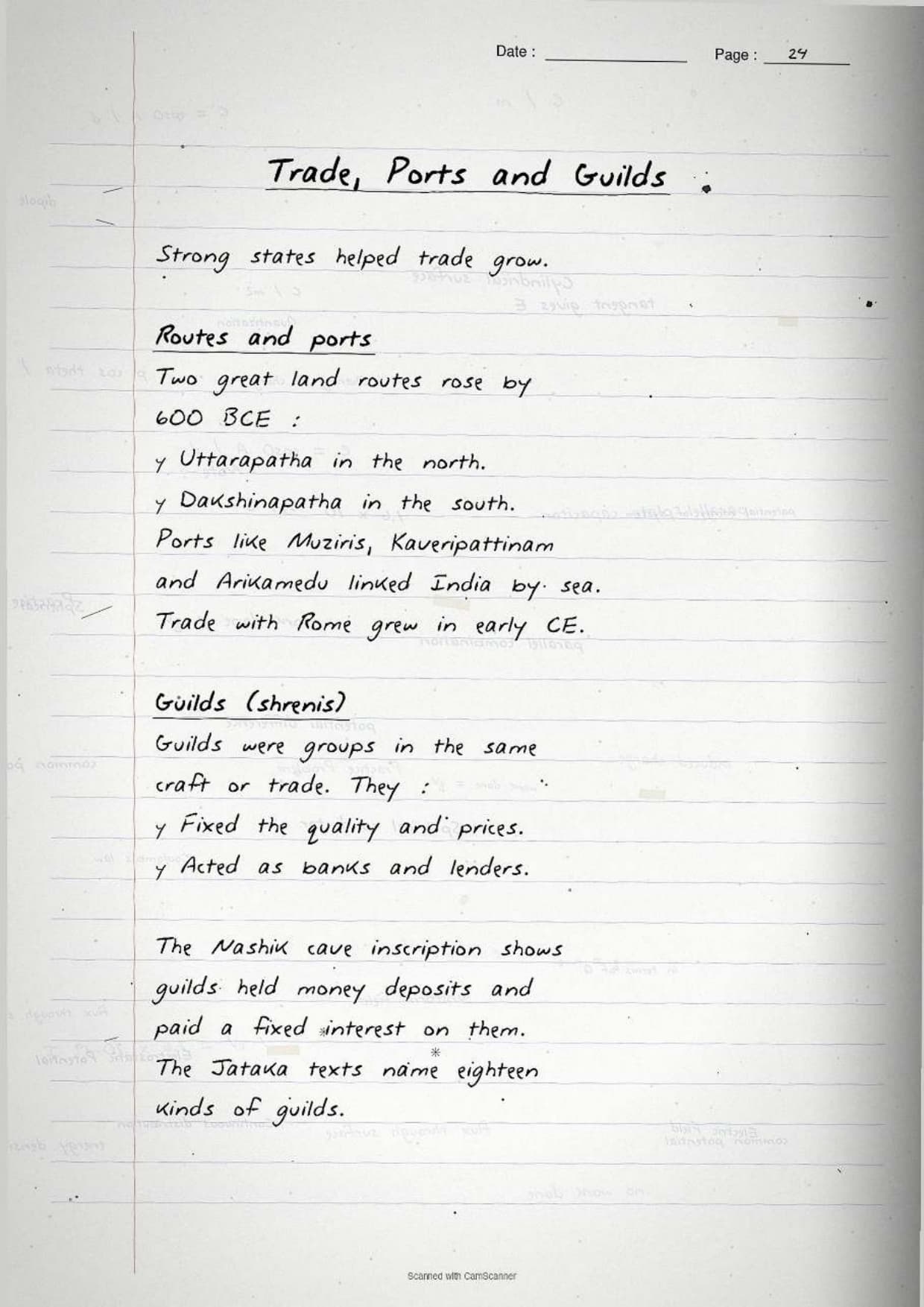
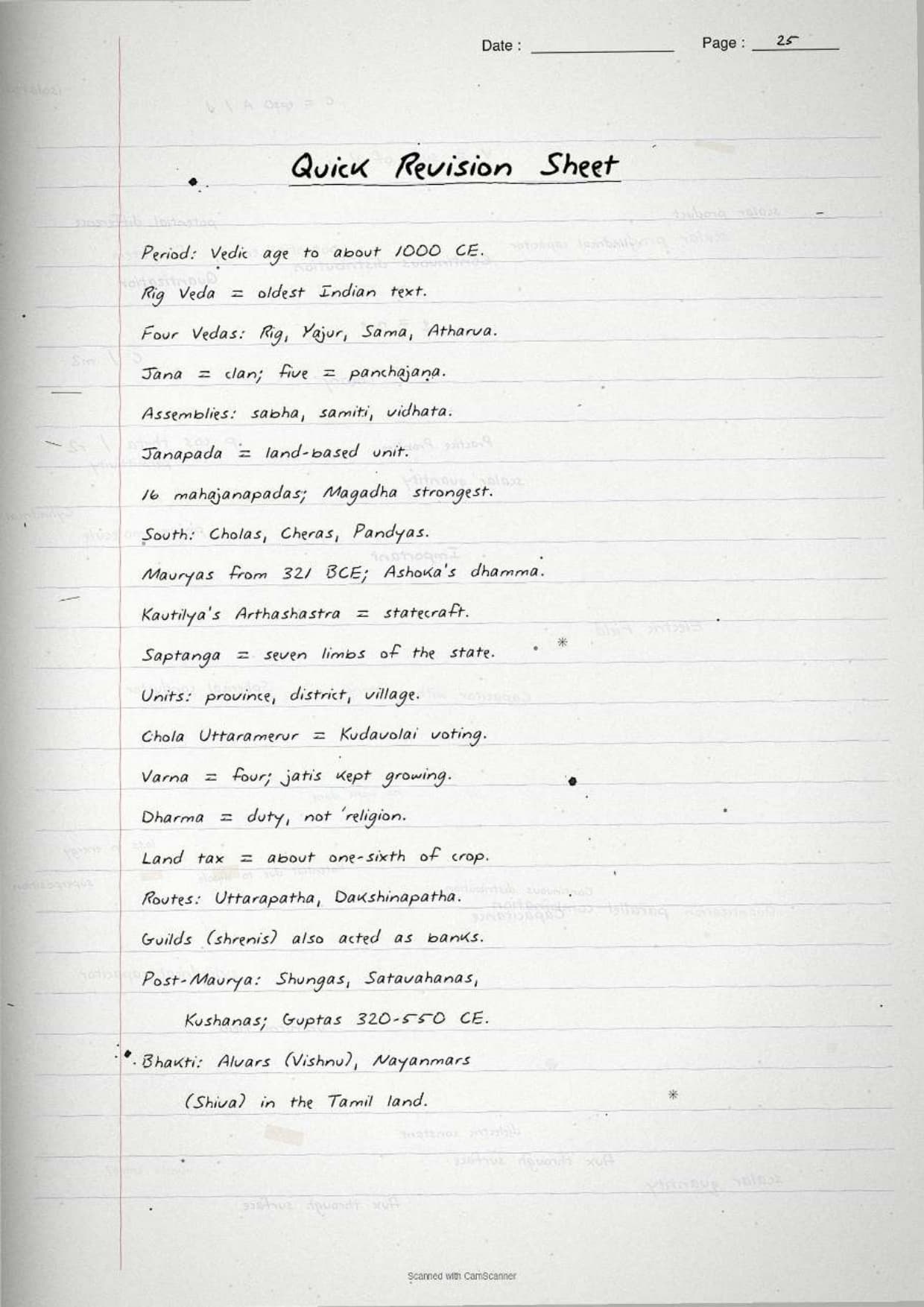
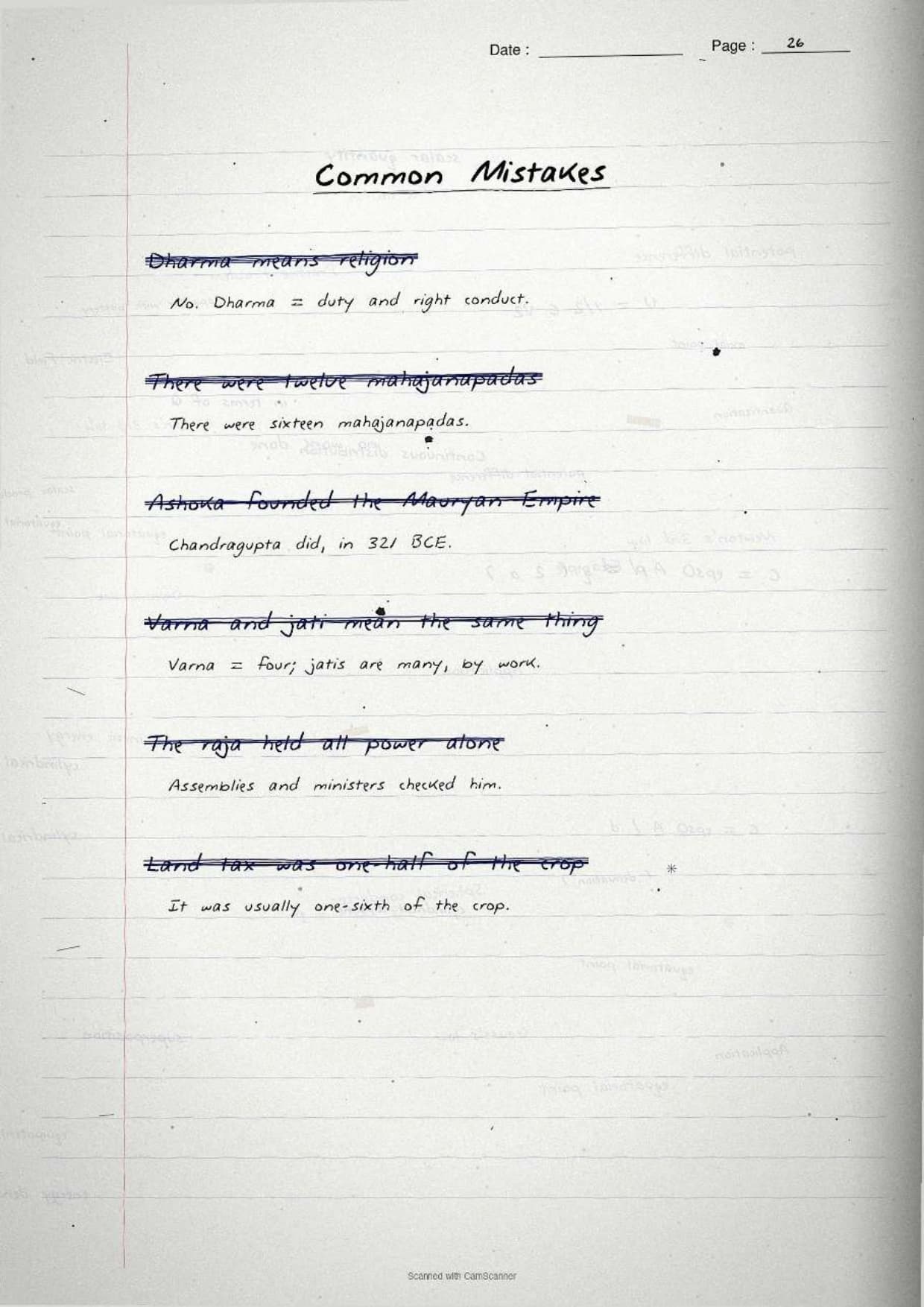
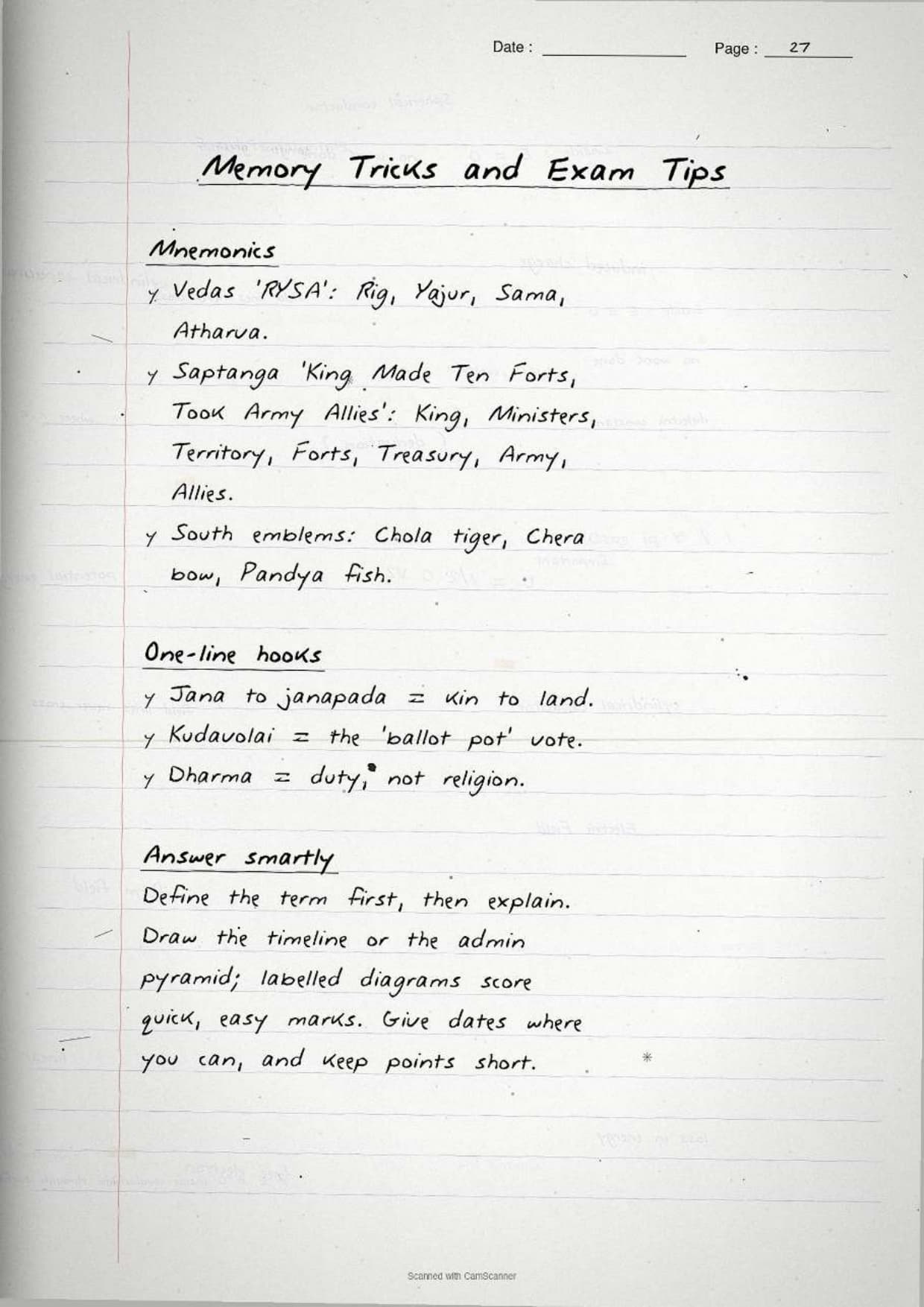
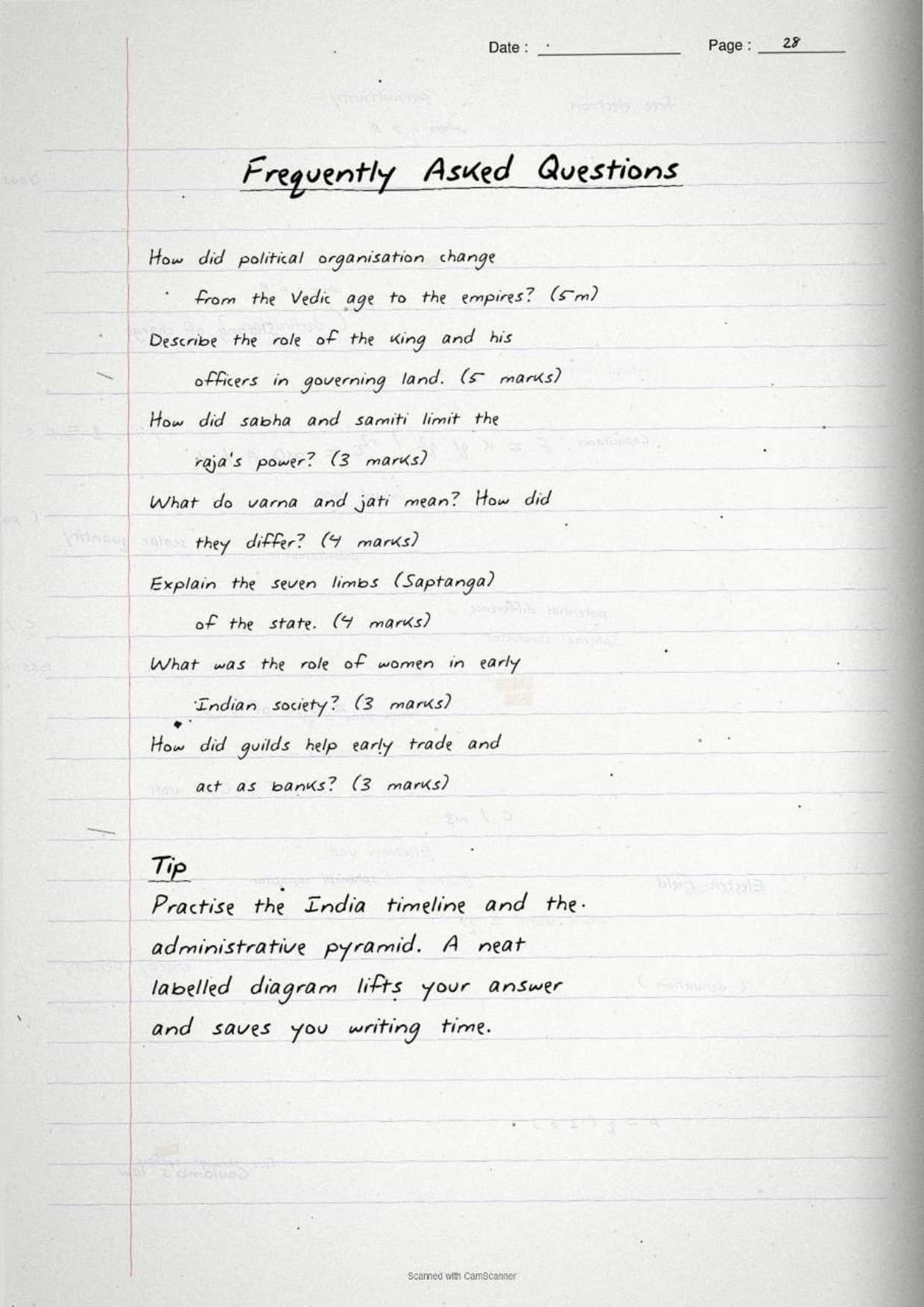
- What you get: clans to empires, kingship and dharma, the Saptanga, varna and jati, village bodies, and trade guilds, all in clear handwriting.
- Colour-coded: new sub-topics in red, each key term and definition in a hand-drawn box, and every timeline and map sketched by hand.
- Why by hand: writing out each stage and date yourself helps you recall the long sequence fast in the exam.
Student Feedback
In a Collegedunia study of 1,180 Class 9 students, 81% said hand-written timelines were easier to recall than typed notes. About 4 out of 5 rated the boxed key terms and red-marked mistakes the most useful part before a test.
Why Use Handwritten Notes for Class 9 Social Science Chapter 5 State and Society up to 1000 CE
This chapter covers a long stretch, from about 2000 BCE to 1000 CE, with many dynasties, terms, and dates. A clean hand-written page keeps one idea per line. The class 9 social science handwritten notes chapter 5 State and Society up to 1000 CE let you revise the whole chapter in one sitting.
- Every key term, like janapada or Saptanga, sits in its own box.
- A quick timeline or map is drawn next to the idea it explains.
- Red sub-headings split the chapter into short, easy parts.
What Is Inside the State and Society up to 1000 CE Handwritten Notes PDF
The PDF runs to over 20 pages of neat, hand-written revision. It covers society and State, clans and empires, kingship and dharma, administration, social life, and trade.
- Red: new sub-topic headings, such as Saptanga or Varna and Jati.
- Boxes: each key term and its short definition, drawn by hand.
- Sketches: timelines, the mahajanapada map, and the province-to-village ladder.
From Clans to Empires Traced in the State and Society Handwritten Notes
The notes box a simple contrast first. A society is a group that shares land, culture, and custom. A State is a formal political system of rules, laws, and officials. Society came first; the State took shape later.
| Stage | Basis | Example |
|---|---|---|
| Jana | Kinship (clan) | Bharata jana of the Rig Veda |
| Janapada | Territory, where a people set foot | Early land-based units, c. 1000 BCE |
| Mahajanapada | Large State | Magadha, Kosala, Avanti (sixteen listed) |
| Empire | Pan-Indian rule | Mauryas, Guptas, Cholas |
The notes flag the core change in red: identity moved from who your kin were to which land you belonged to. In the south, the Sangam-age Cholas, Cheras, and Pandyas each had an emblem: the tiger, bow, and fish. A red note warns not to confuse these early Cholas with the later imperial Cholas.
Kingship, Dharma, and the Chakravarti Ideal in Your Own Handwriting
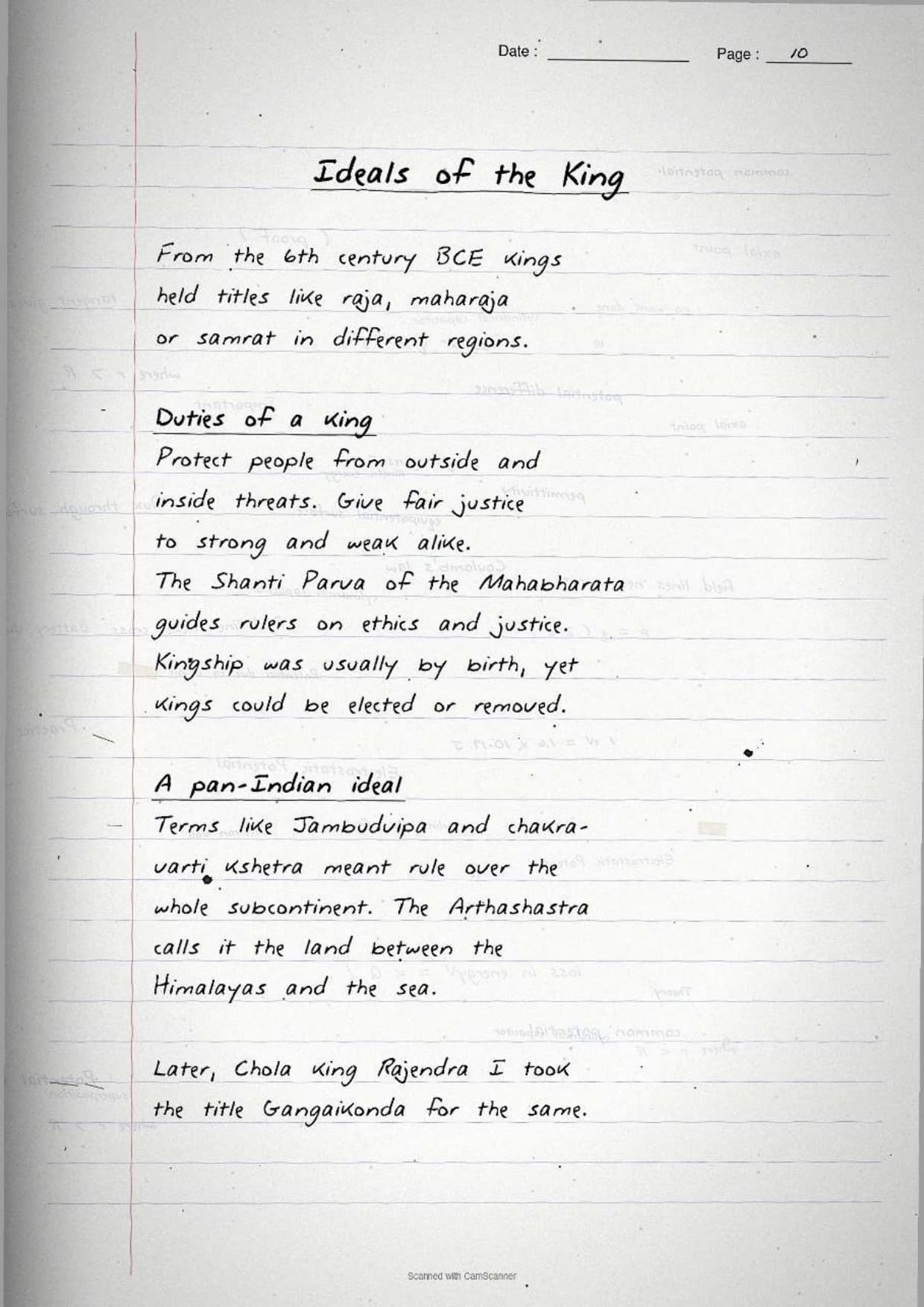
Kings took titles like raja, maharaja, or samrat, but shared ideals ran through the period. The notes list the king's duties as boxed lines: protect the people, give justice, and work for all's welfare. Kingship was usually hereditary, yet some kings were elected or expelled, so power was not always absolute.
- Chakravarti samrat: the dream of ruling the whole subcontinent.
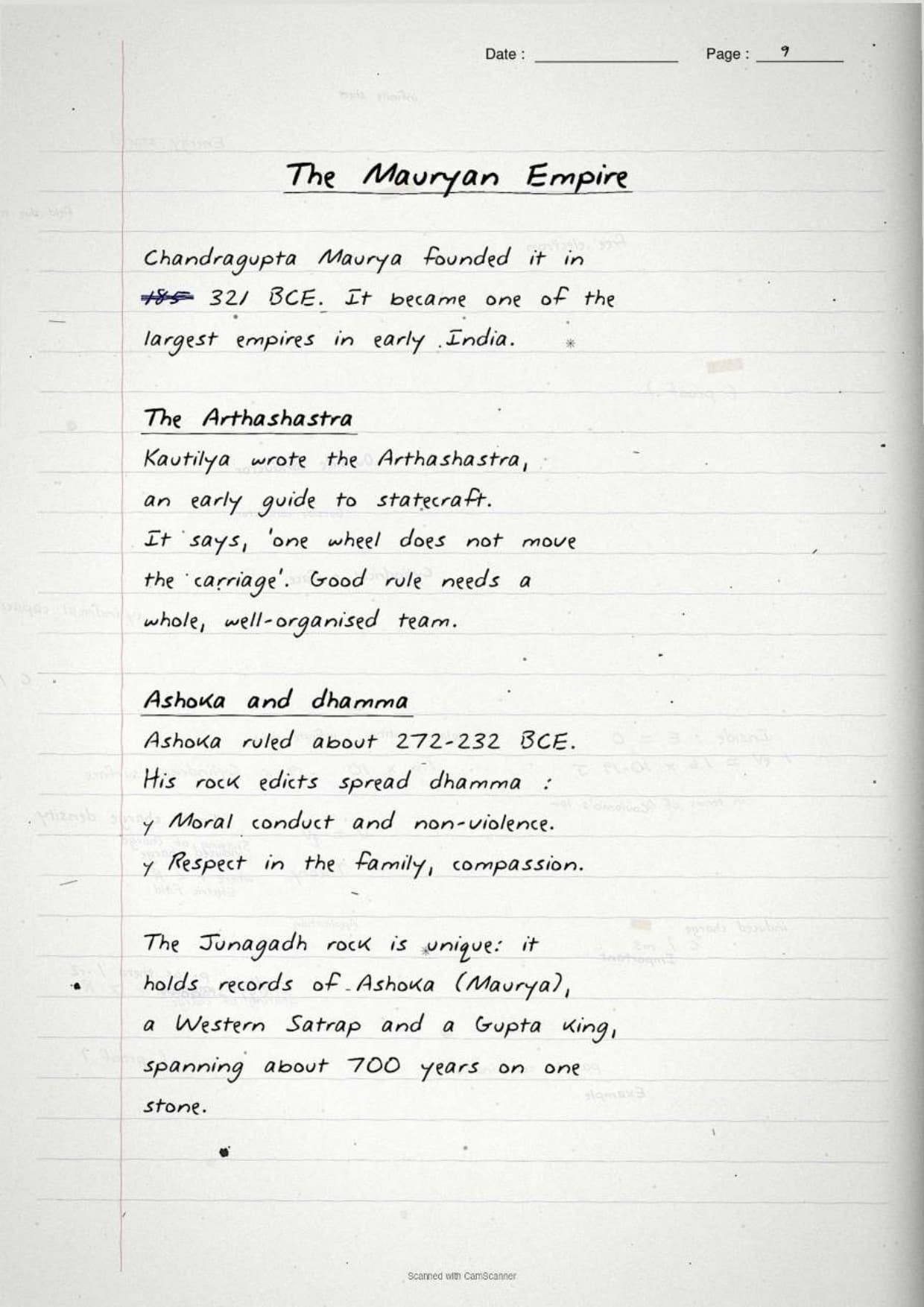
- Dharma: duty and moral conduct, not religion; it ties ruler, subject, and society together.
- Junagadh rock: one site with records of three powers, the Mauryas, the Western Satraps, and the Guptas.
The class 9 social science handwritten notes chapter 5 State and Society up to 1000 CE box the meaning of dharma in red, because students often read it as worship. Ashoka's edicts spread dhamma as respect and non-violence.
How Empires Were Administered in the State and Society up to 1000 CE Notes
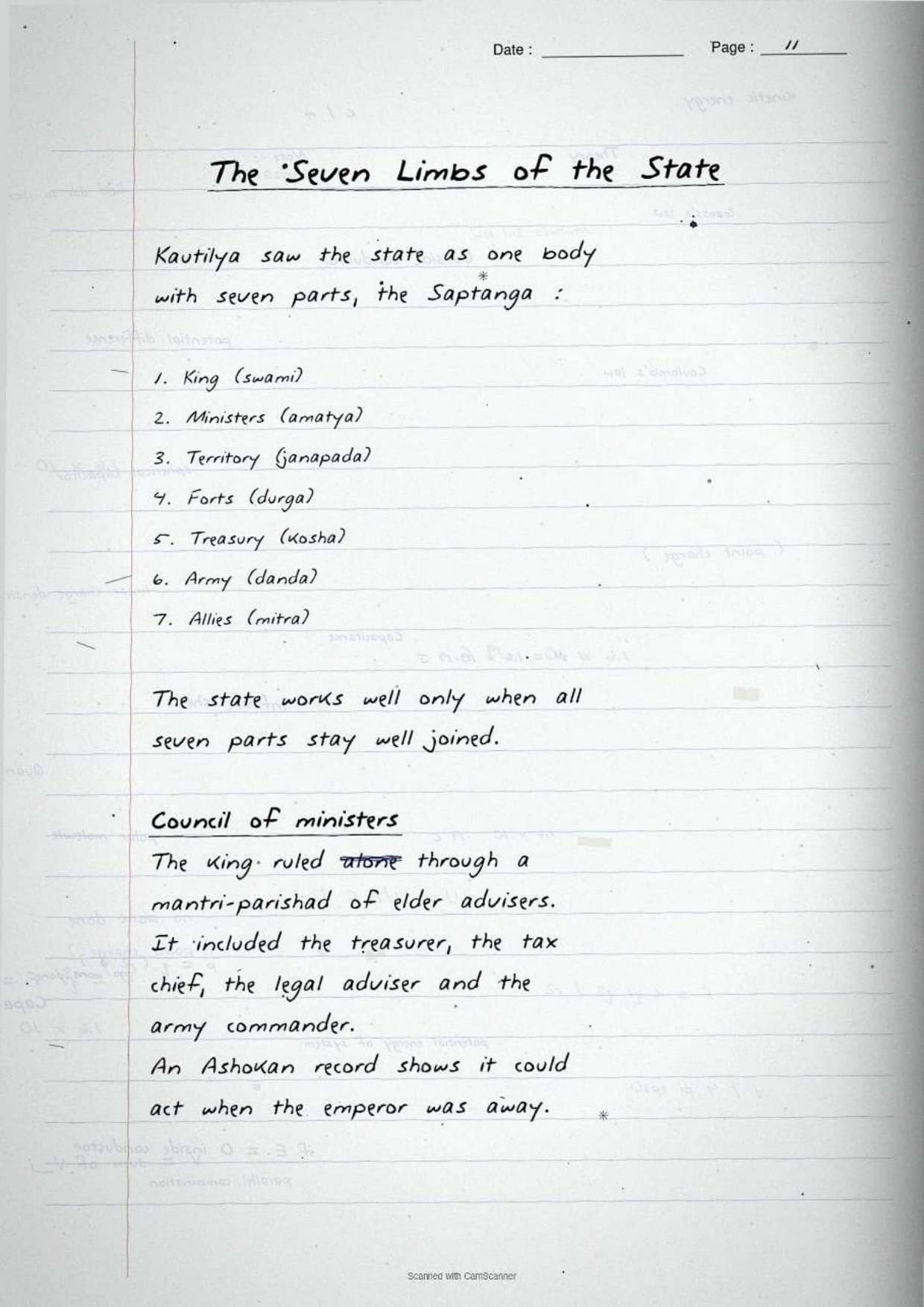
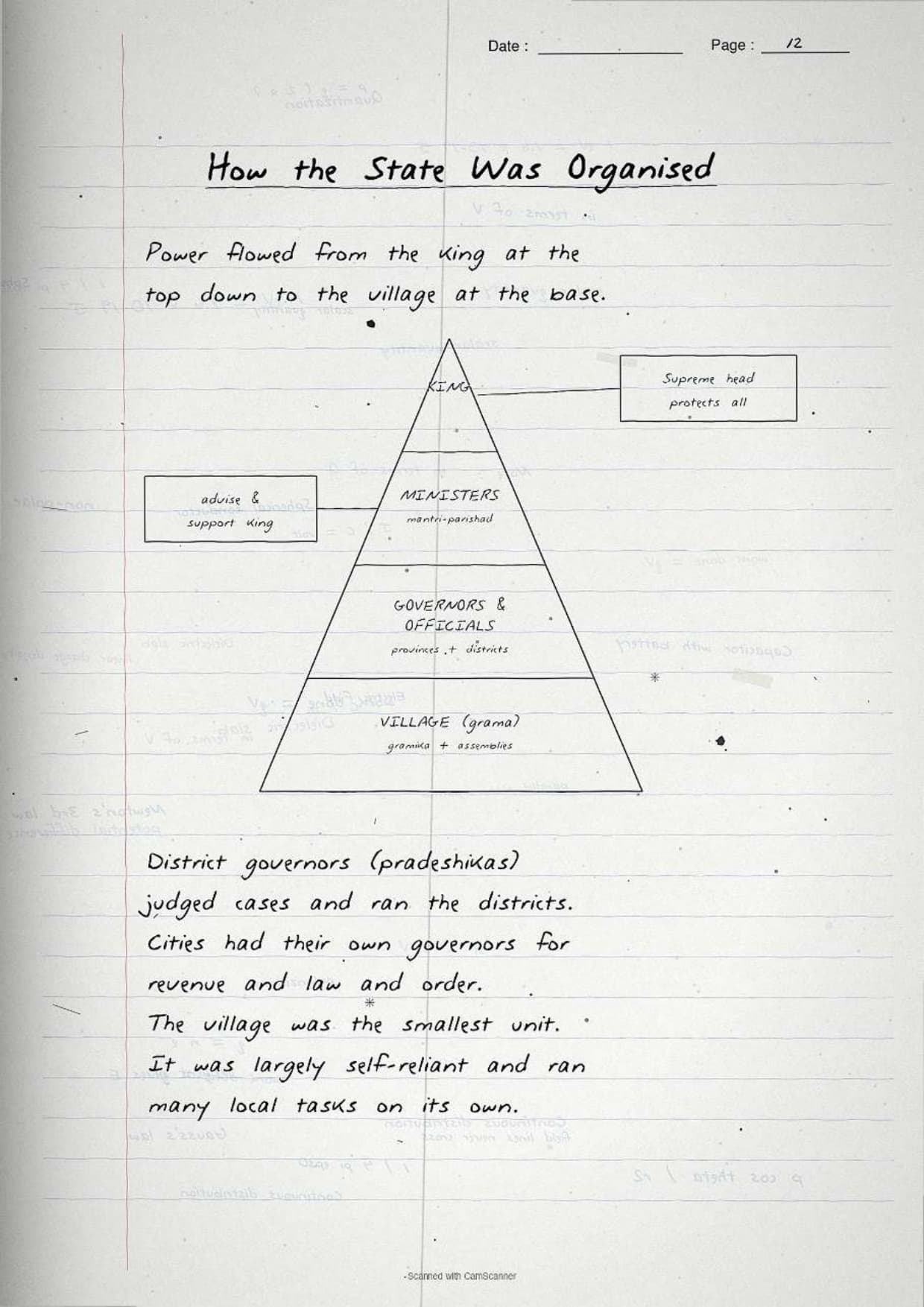
The notes draw Kautilya's Saptanga, the seven limbs of the State, as a labelled wheel, with the province-to-village ladder beside it.
| Seven limbs (Saptanga) | Meaning |
|---|---|
| Swami | The king, the head of the State |
| Amatya | Ministers and officials |
| Janapada | Territory and people |
| Durga | Forts |
| Kosha | Treasury |
| Danda | Army and force |
| Mitra | Allies |
The notes trace the ladder from kingdom, to province, division, group of villages, and single village. The king held supreme power, yet villages ran their own affairs. The imperial Cholas are famous for this local self-rule, seen in the Uttaramerur inscription, where names on palm leaves were drawn from a pot to pick members.
Society, Varna, Jati, and Women in the State and Society Handwritten Notes
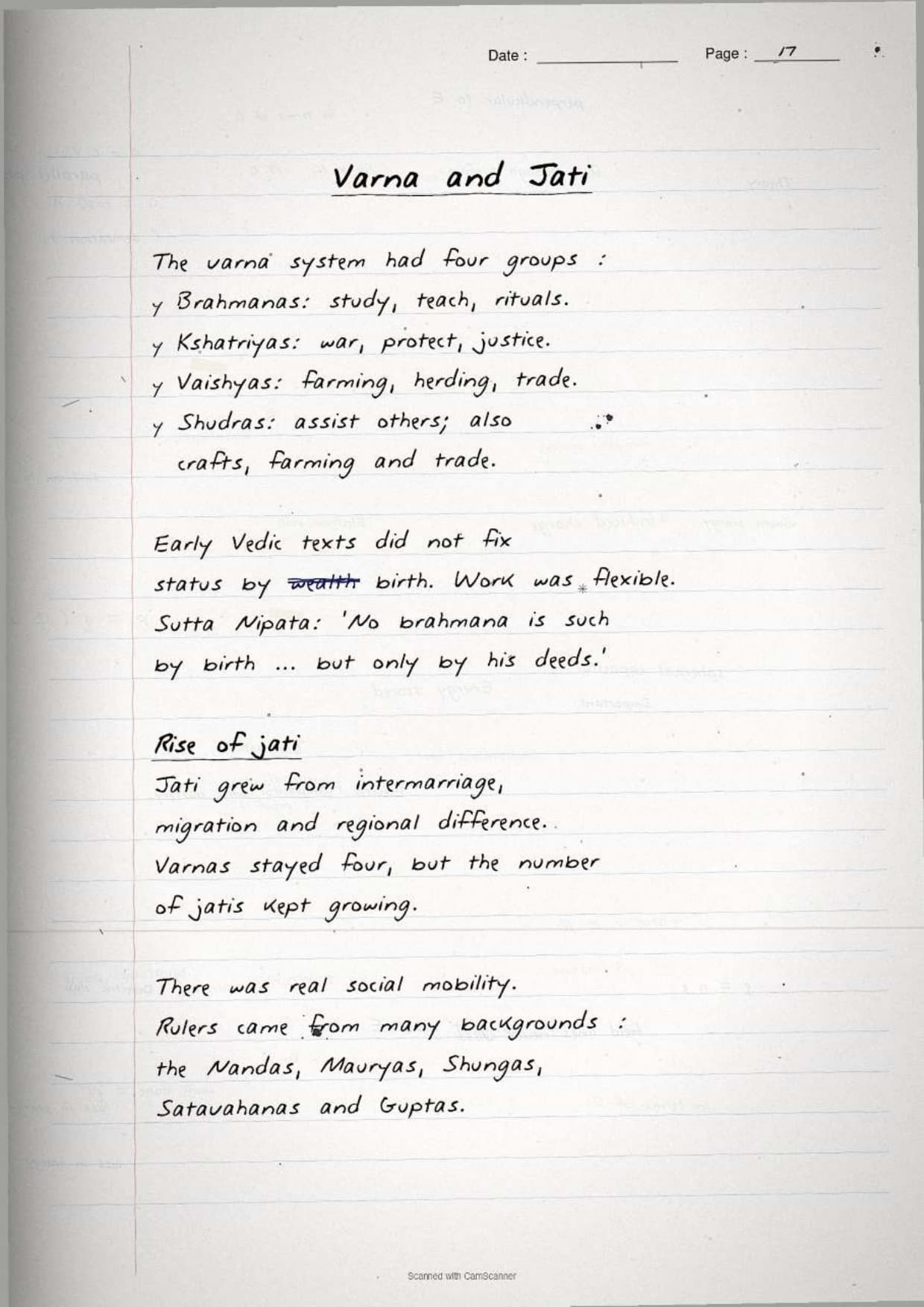
Society was ordered but not frozen. The fourfold varna order held brahmanas, kshatriyas, vaishyas, and shudras. Jati grew later as an open-ended set of many social groups.
- Early occupations were flexible; the Sutta Nipata says a person is a brahmana by deeds, not birth.
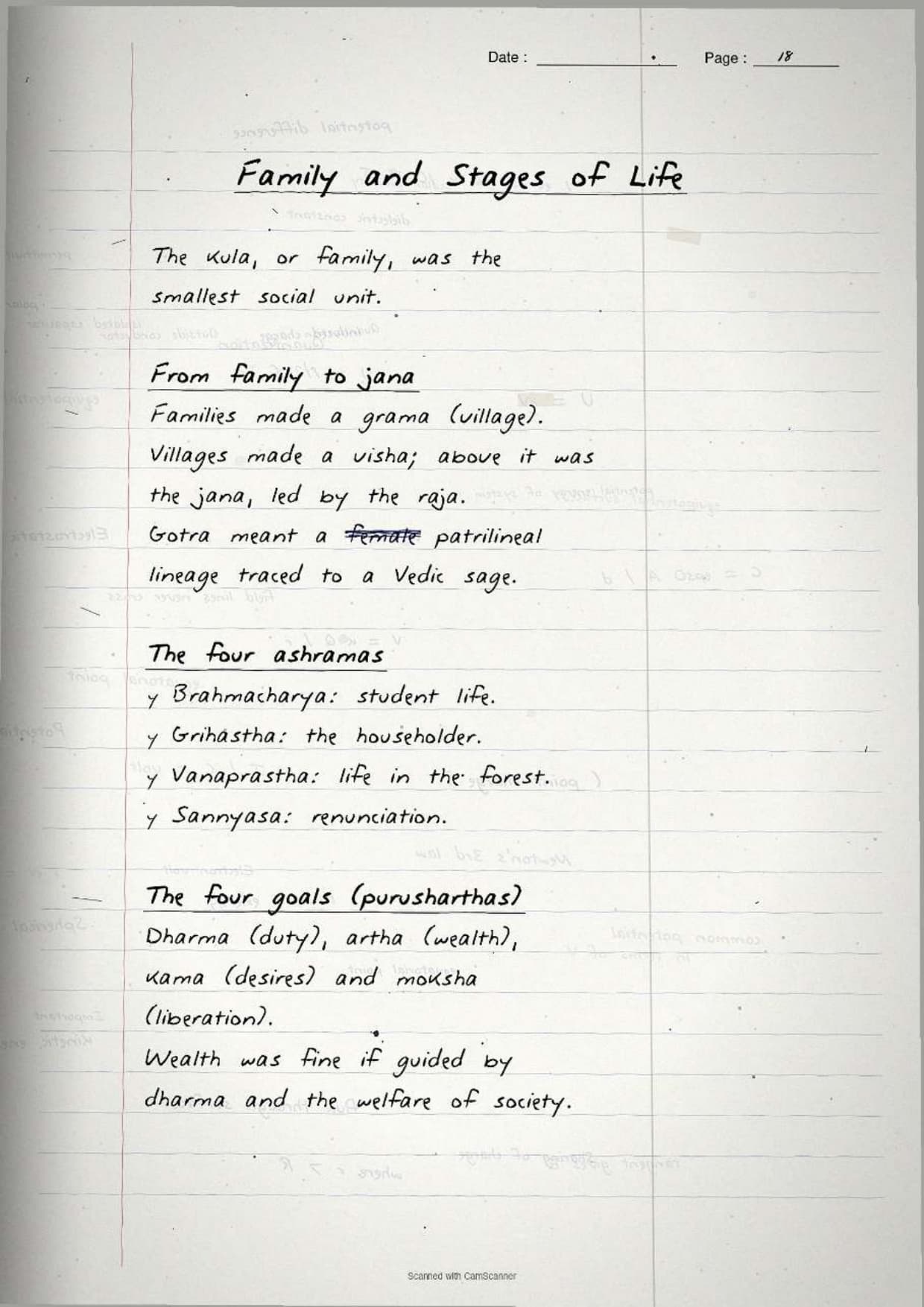
- Life had four stages, the ashramas, and four goals, the purusharthas: dharma, artha, kama, and moksha.
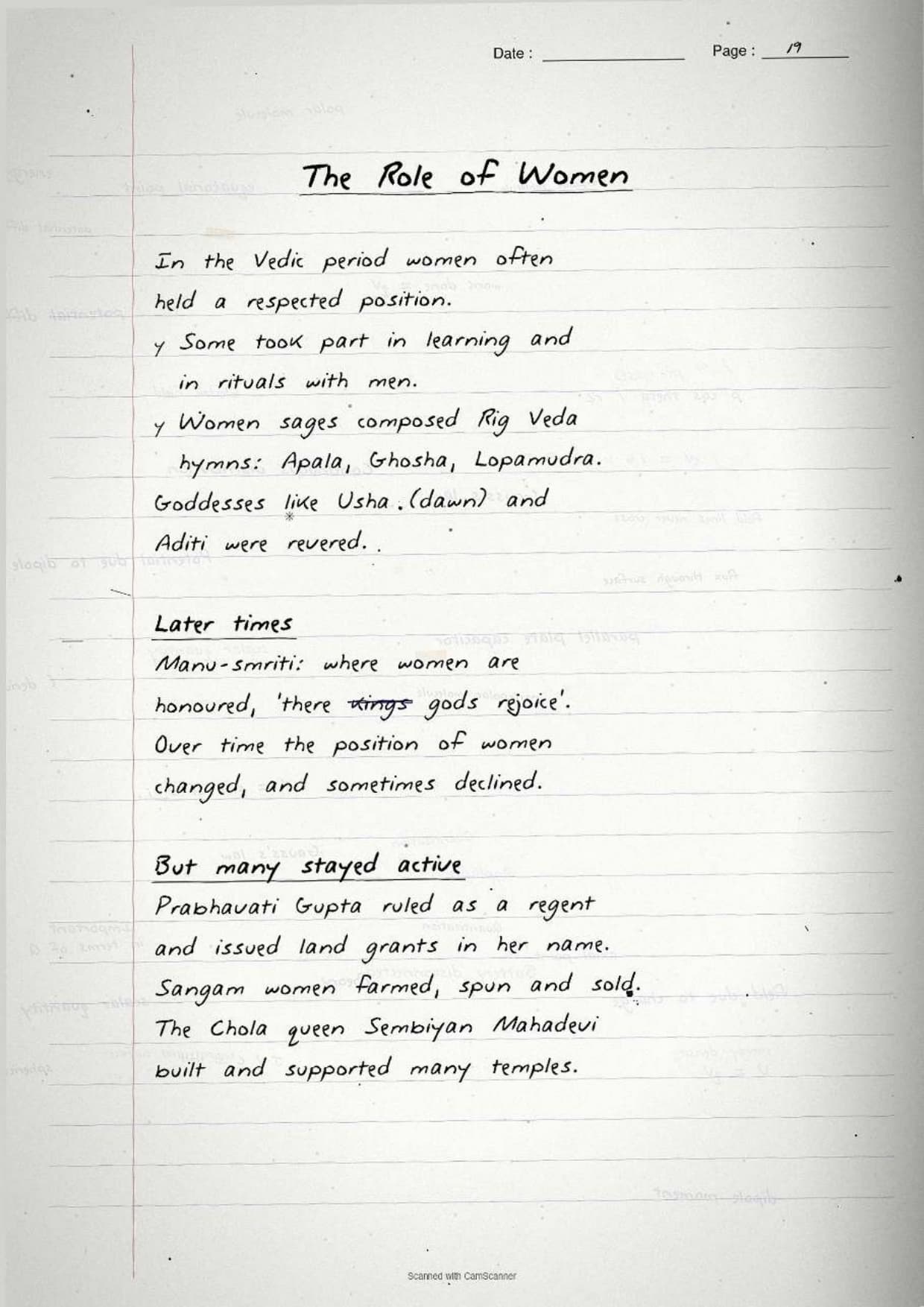
- Women like Prabhavati Gupta ruled as regents; Chola queens supported temple building.
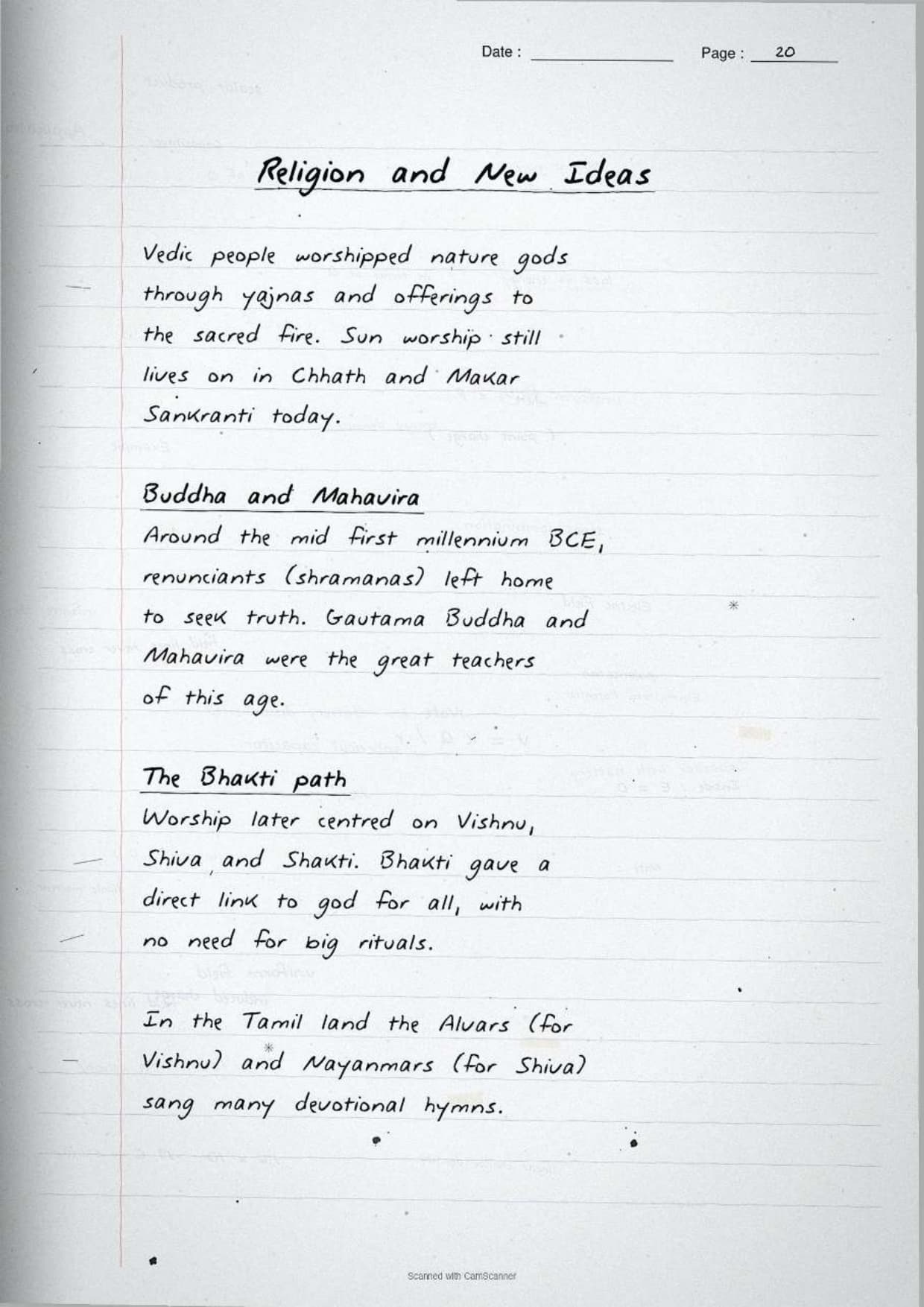
The notes add a red warning not to flatten women's history. Their status was often high in Vedic and Sangam times but shifted later, so show change. The religion section boxes the rise of Bhakti, open to all.
Trade, Guilds, and Last-Minute Revision with These Handwritten Notes
Trade grew as strong States gave safety and roads. The notes name two land routes, the Uttarapatha in the north and Dakshinapatha in the south, and mark ports like Muziris and Kaveripattinam that linked India to Rome. Guilds, called shrenis, made goods, fixed prices, and worked as banks. The night before the exam, the class 9 social science handwritten notes chapter 5 State and Society up to 1000 CE work as a quick skim.
- Define society and State, and tell them apart.
- Order jana, janapada, mahajanapada, and empire from memory.
- List the Saptanga, the seven limbs of the State.
- Explain the chakravarti ideal and the real meaning of dharma.
More State and Society up to 1000 CE Class 9 Social Science Resources
Open the other resources for this chapter of the new Class 9 Social Science Understanding Society book below.
| Resource | Open |
|---|---|
| Handwritten Notes | State and Society up to 1000 CE Class 9 Social Science Handwritten Notes |
| NCERT Solutions | State and Society up to 1000 CE Class 9 Social Science NCERT Solutions |
| Revision Notes | State and Society up to 1000 CE Class 9 Social Science Notes |
| NCERT Book PDF | State and Society up to 1000 CE Class 9 Social Science NCERT Book PDF |
NCERT Handwritten Notes for Class 9 Social Science: All Chapters
Open the handwritten notes for any other chapter of the new Class 9 Social Science Understanding Society book below.
| Chapter | Handwritten Notes |
|---|---|
| Chapter 1 | Understanding Social Science |
| Chapter 2 | Shaping of the Earth's Surface |
| Chapter 3 | Atmosphere and Climate |
| Chapter 4 | Early Humans and Beginning of Civilisation |
| Chapter 5 | State and Society up to 1000 CE |
| Chapter 6 | Democracy |
| Chapter 7 | Elections |
| Chapter 8 | Building Blocks in Economics: The Problem of Choice |
| Chapter 9 | The Price Puzzle: What Drives the Market |
State and Society up to 1000 CE Class 9 Social Science Handwritten Notes FAQs
How many pages are the State and Society up to 1000 CE handwritten notes?
The handwritten notes run to more than 20 pages. They cover the full chapter, from society and State, to clans and empires, kingship and dharma, administration, social life, and the economy of trade and guilds.
Are these real handwritten notes?
Yes. They are a topper's own clear handwritten revision notes, with each key term boxed, timelines and maps drawn by hand, and sub-headings colour-coded in red for fast recall.
What is the Saptanga in the Chapter 5 notes?
The Saptanga is Kautilya's theory that the State has seven limbs: Swami (king), Amatya (ministers), Janapada (territory), Durga (forts), Kosha (treasury), Danda (army), and Mitra (allies). The notes draw it as a labelled wheel.
Is State and Society up to 1000 CE part of the new Class 9 Social Science book?
Yes. It is Chapter 5 of the new integrated Understanding Society textbook for the 2026-27 syllabus. It traces India from kin-based clans to the imperial Cholas.



Comments