




The Class 9 Social Science NCERT Book Chapter 7 Elections is the full chapter from the new Understanding Society textbook for the 2026-27 syllabus. This page lets students download the class 9 social science ncert book chapter 7 Elections free and shows what is inside, from why elections matter to how India keeps the vote free and fair.
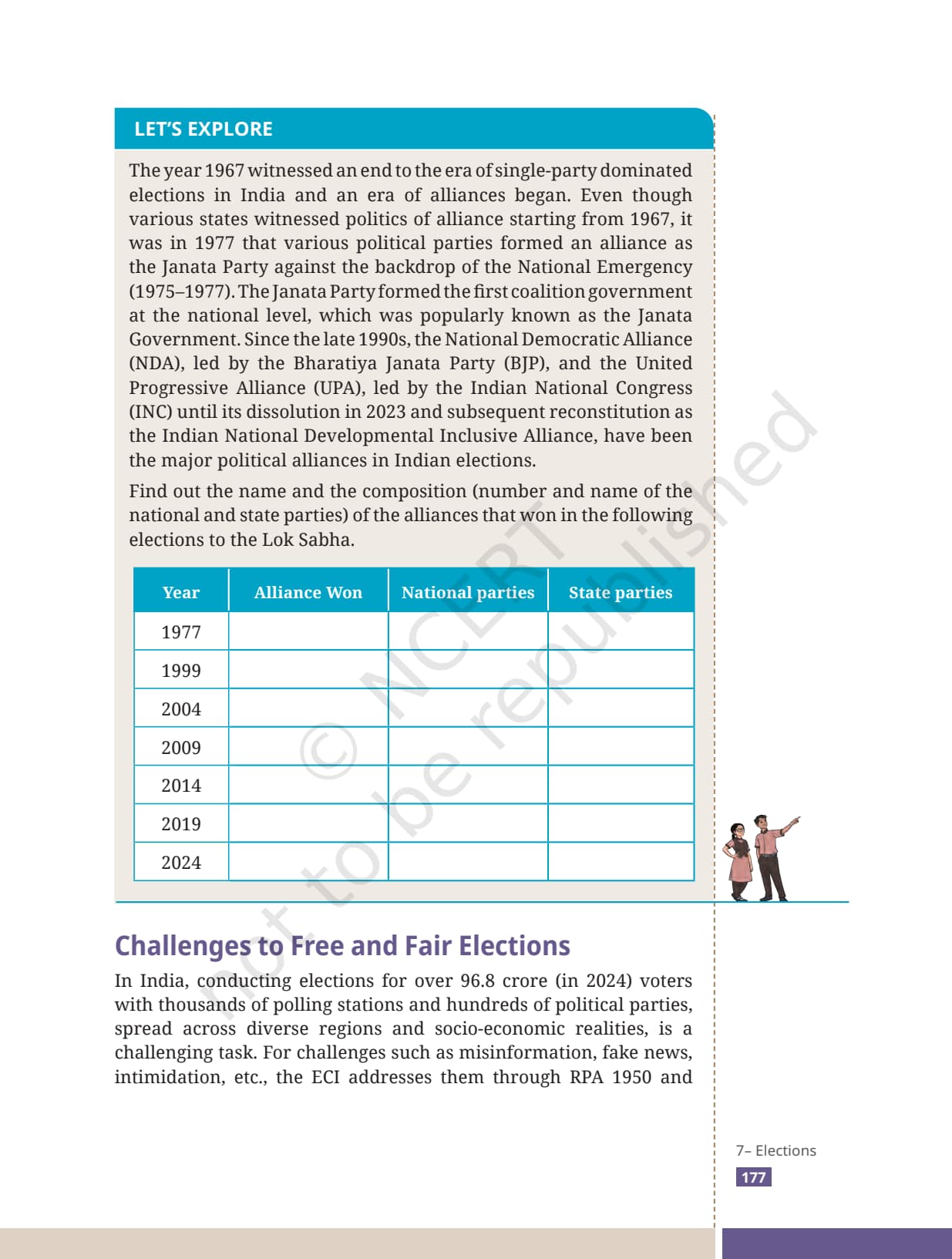
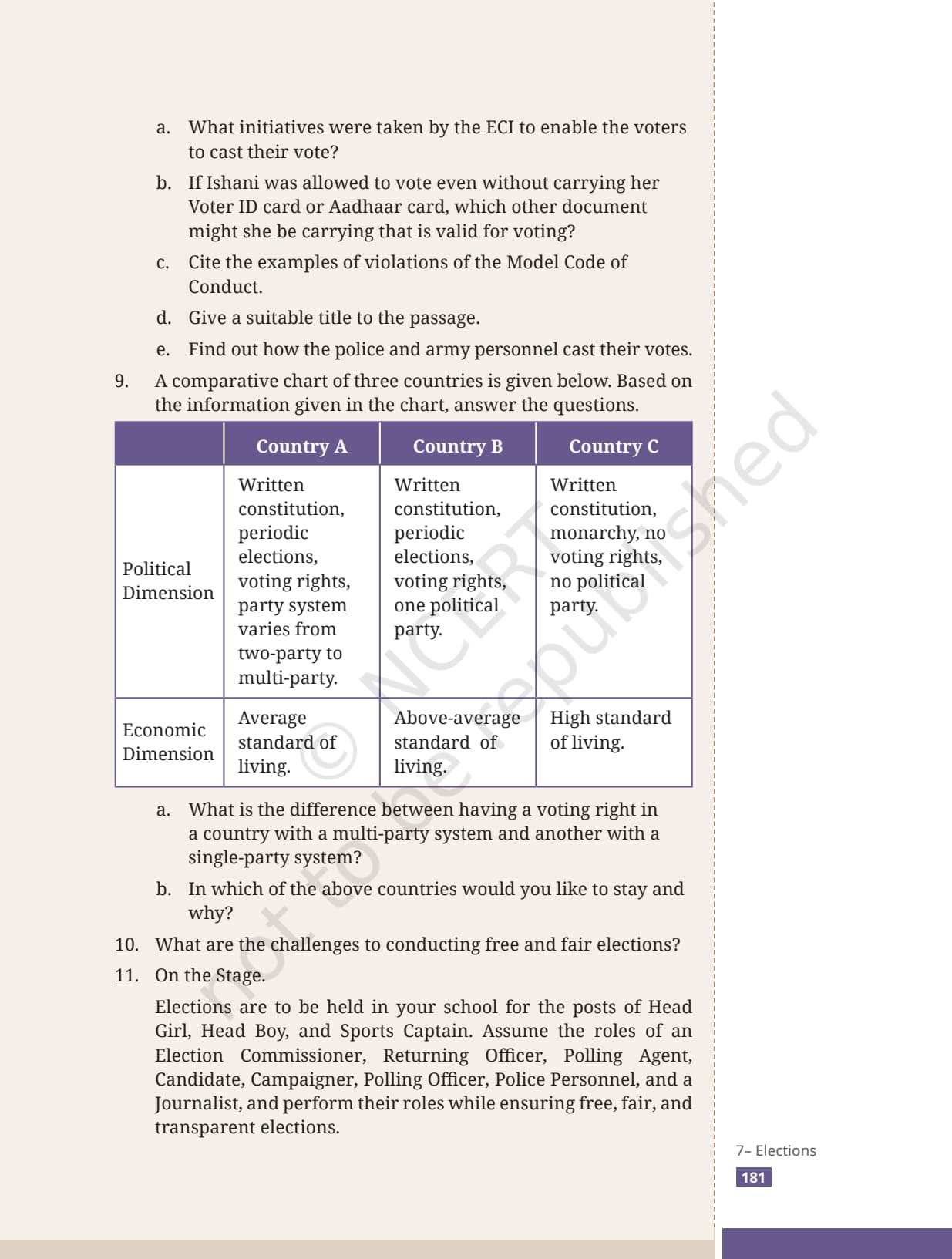
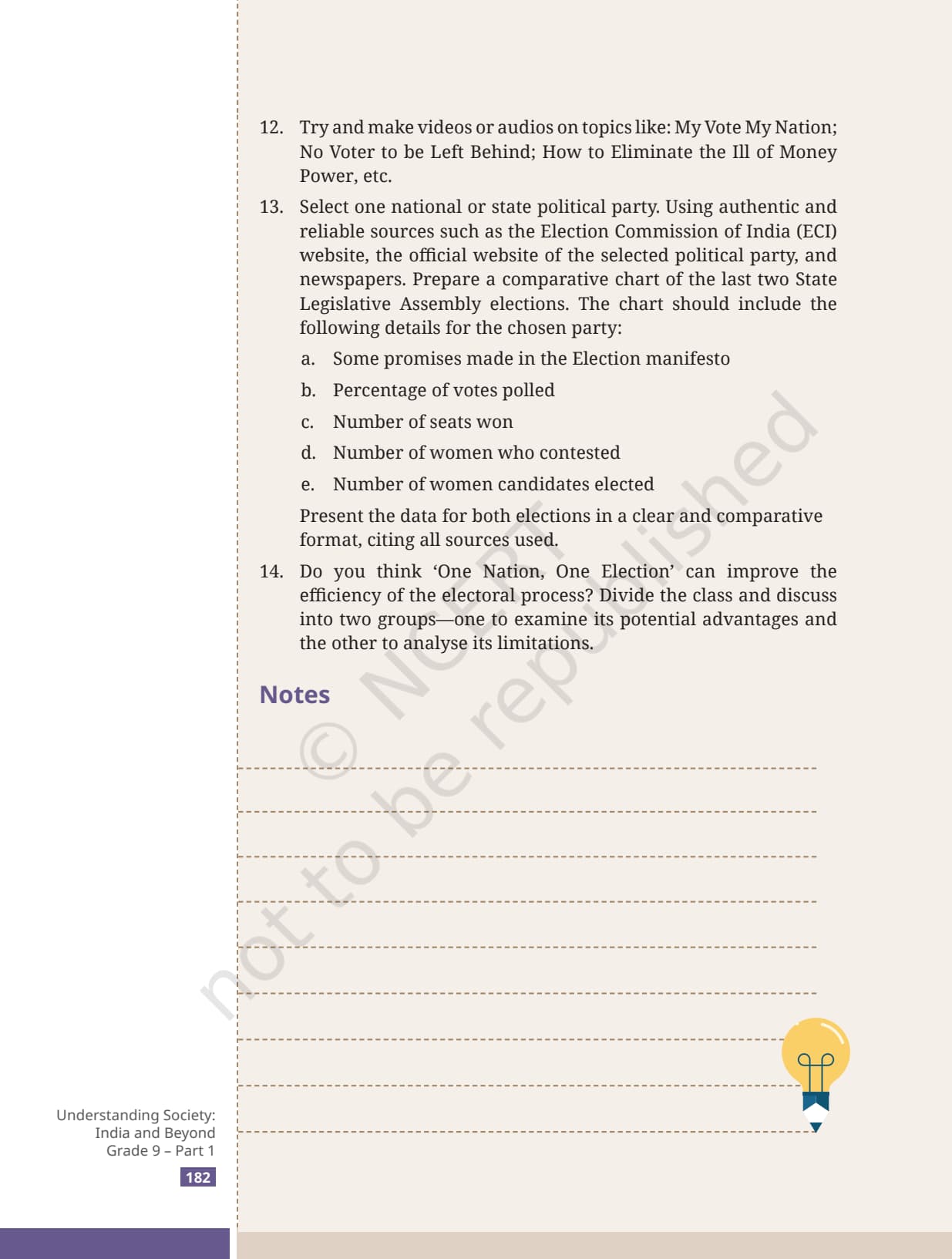
Prepared by Collegedunia's Social Science team from the official NCERT Understanding Society textbook.
- What you get: the complete Chapter 7 PDF with all five sections, labelled figures, key terms and the end-of-chapter exercise.
- Topics inside: why elections matter, the FPTP system, election laws, delimitation, the Election Commission, political parties and free, fair polls.
- Exam link: a high-scoring Political Science chapter that supports later work on democracy and government in Class 9 and Class 10.
Student Feedback
In a Collegedunia survey of 9,240 Class 9 students taken before the 2026 exams, 79% said they preferred studying elections from the original NCERT Book PDF along with short notes rather than notes alone. About 4 out of 5 rated the labelled figures on the Election Commission and voting the most useful part, saying the exact textbook wording helped them answer definition and reasoning questions.
What the Class 9 Social Science Chapter 7 Elections NCERT Book PDF Covers
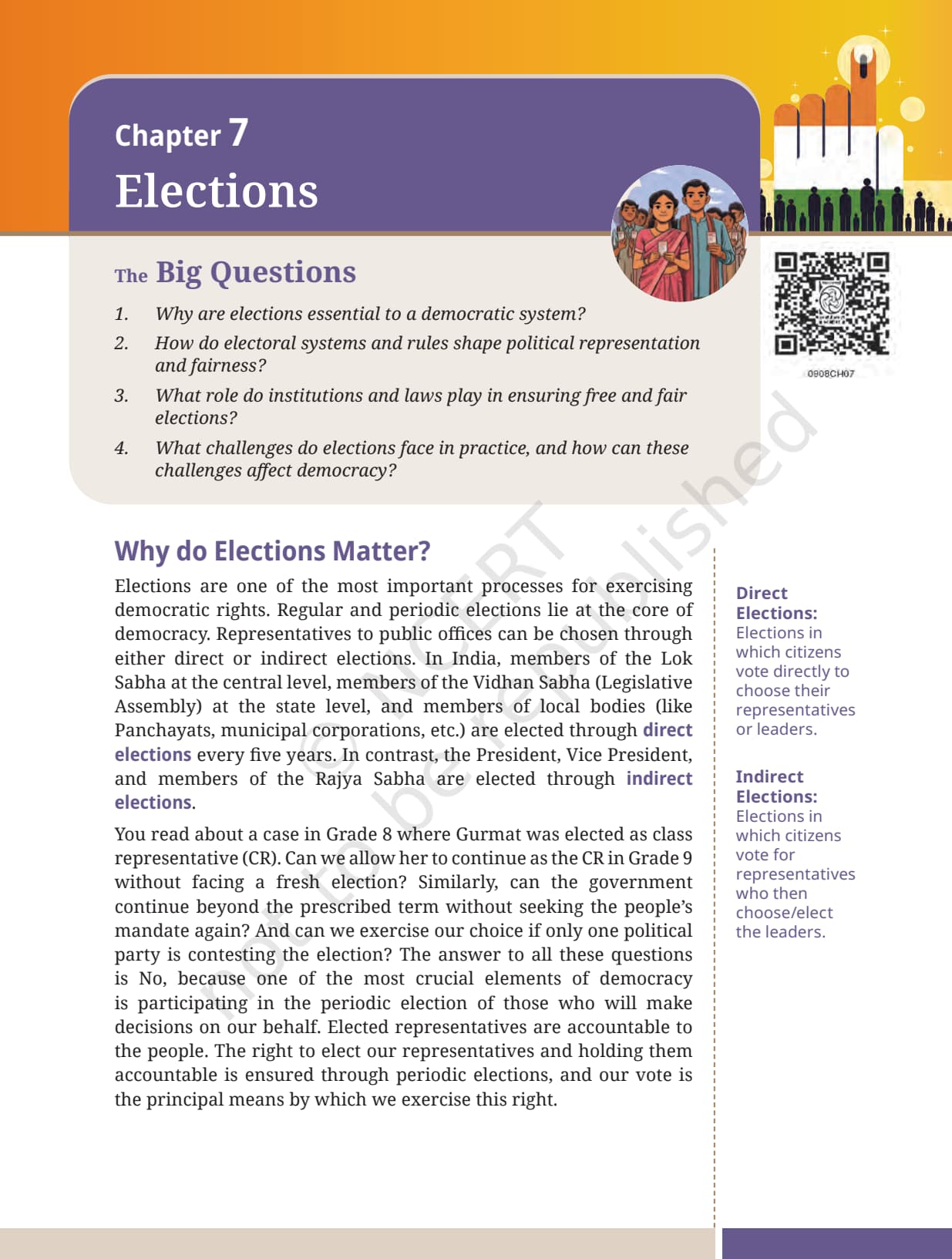
In a democracy, people rule through representatives they choose in an election. Chapter 7 of the new Understanding Society textbook explains how India runs this choice for nearly 97 crore voters. The class 9 social science ncert book chapter 7 Elections starts with why elections matter, then moves through the electoral system, the laws and the Election Commission, political parties, and how the poll is kept free and fair.
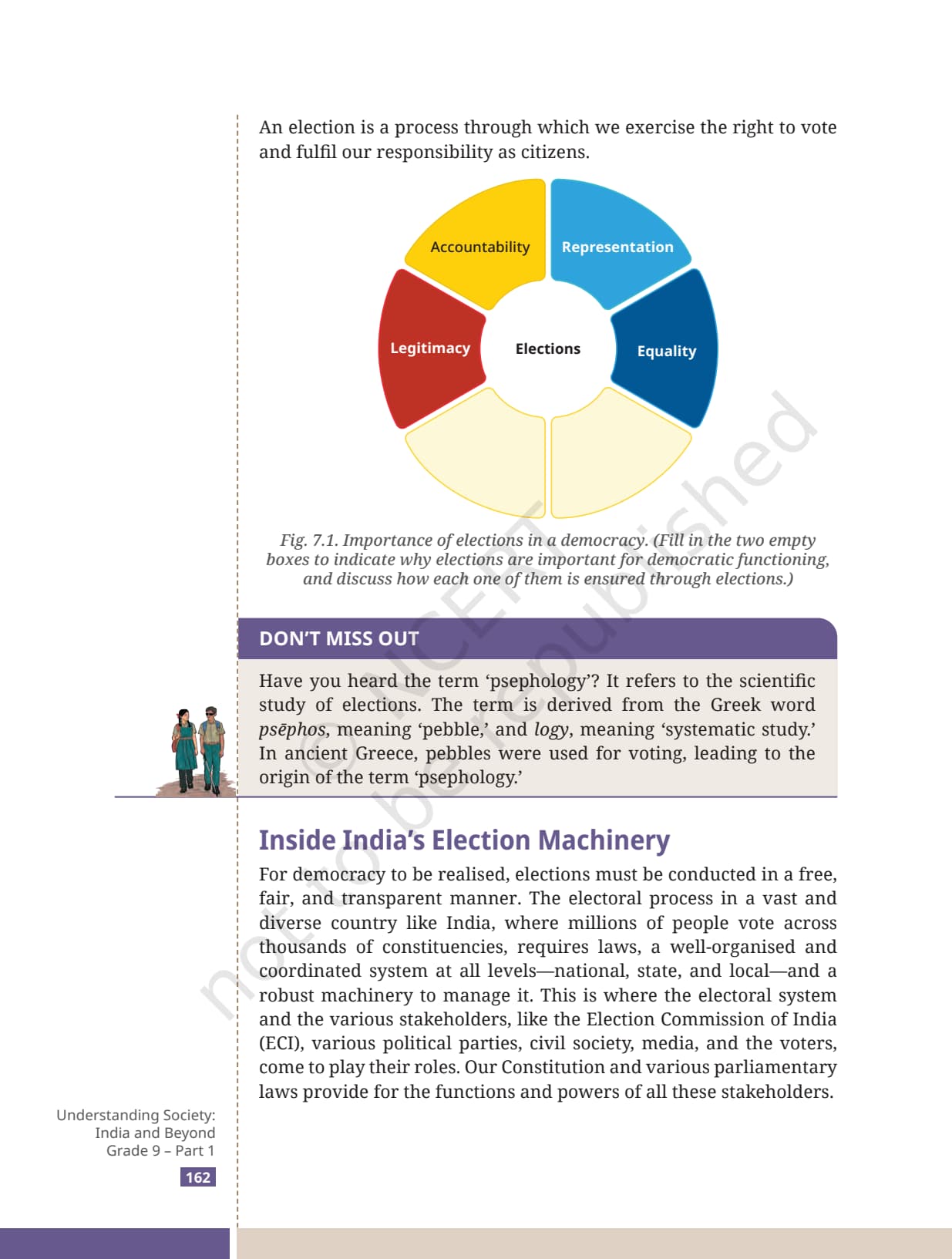
- Why elections matter: accountability, representation, legitimacy and equality, plus direct and indirect elections.
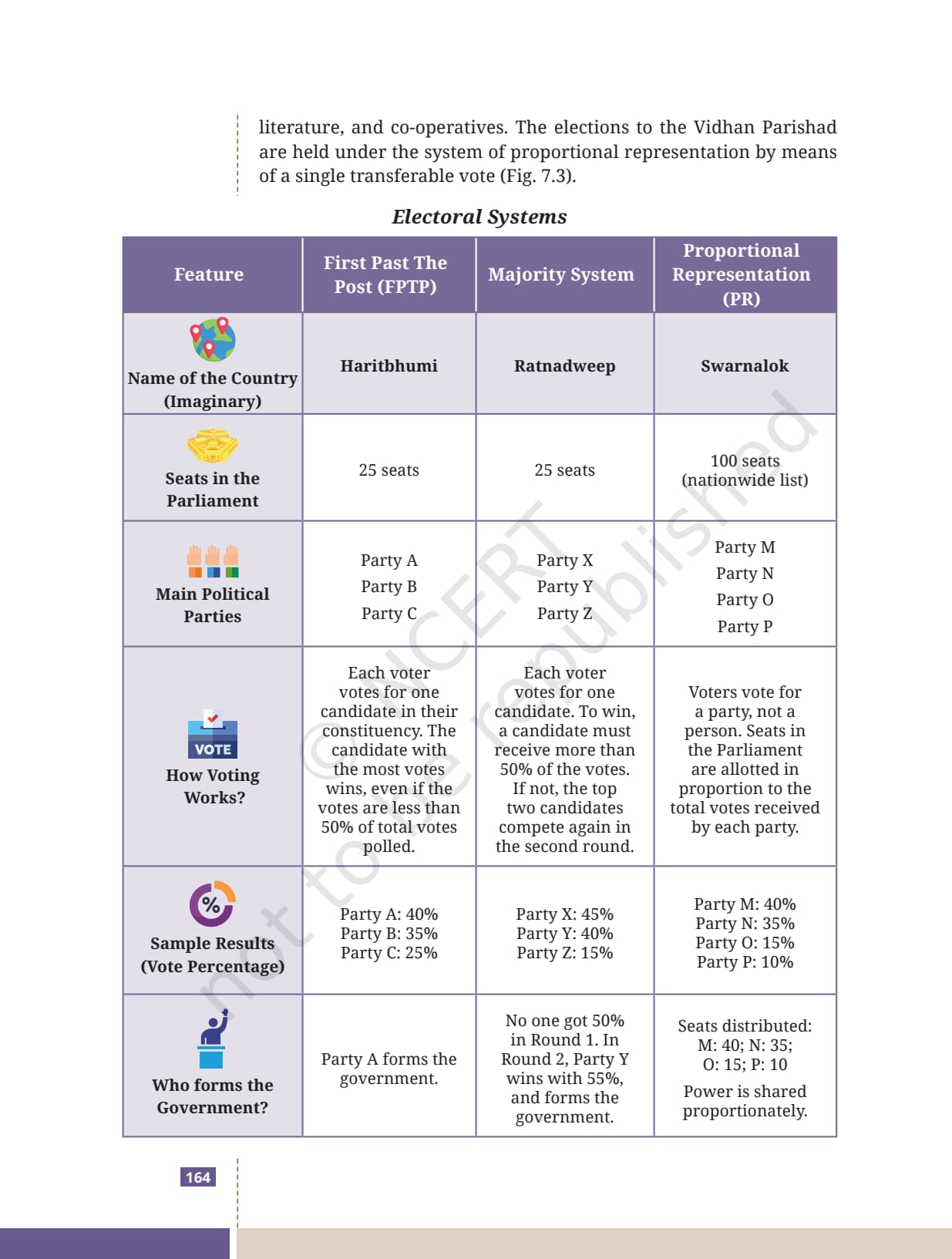
- Electoral system: the First-Past-The-Post (FPTP) system and proportional representation for different houses.
- Laws and bodies: the RPA 1950 and 1951, delimitation of constituencies and the Election Commission of India.
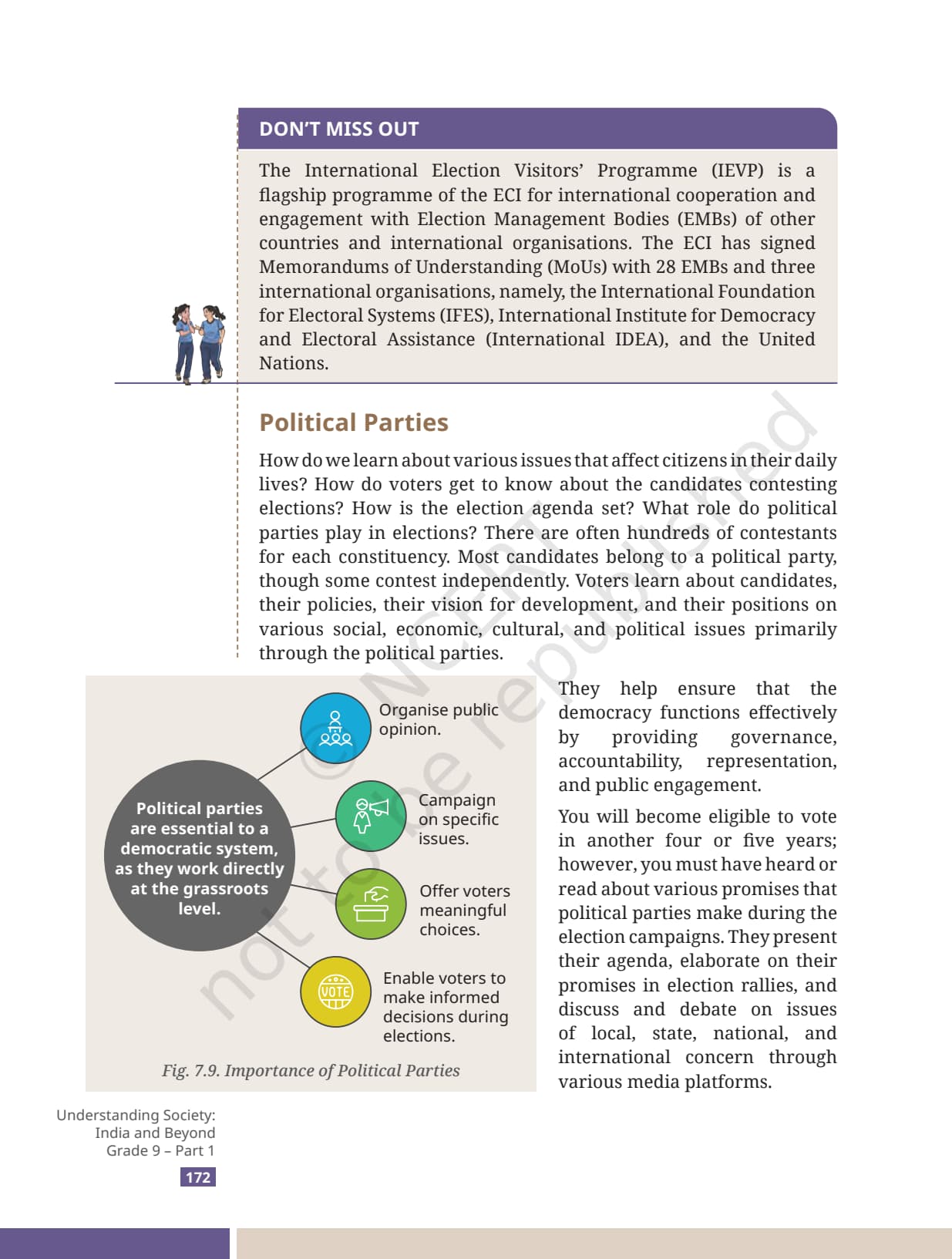
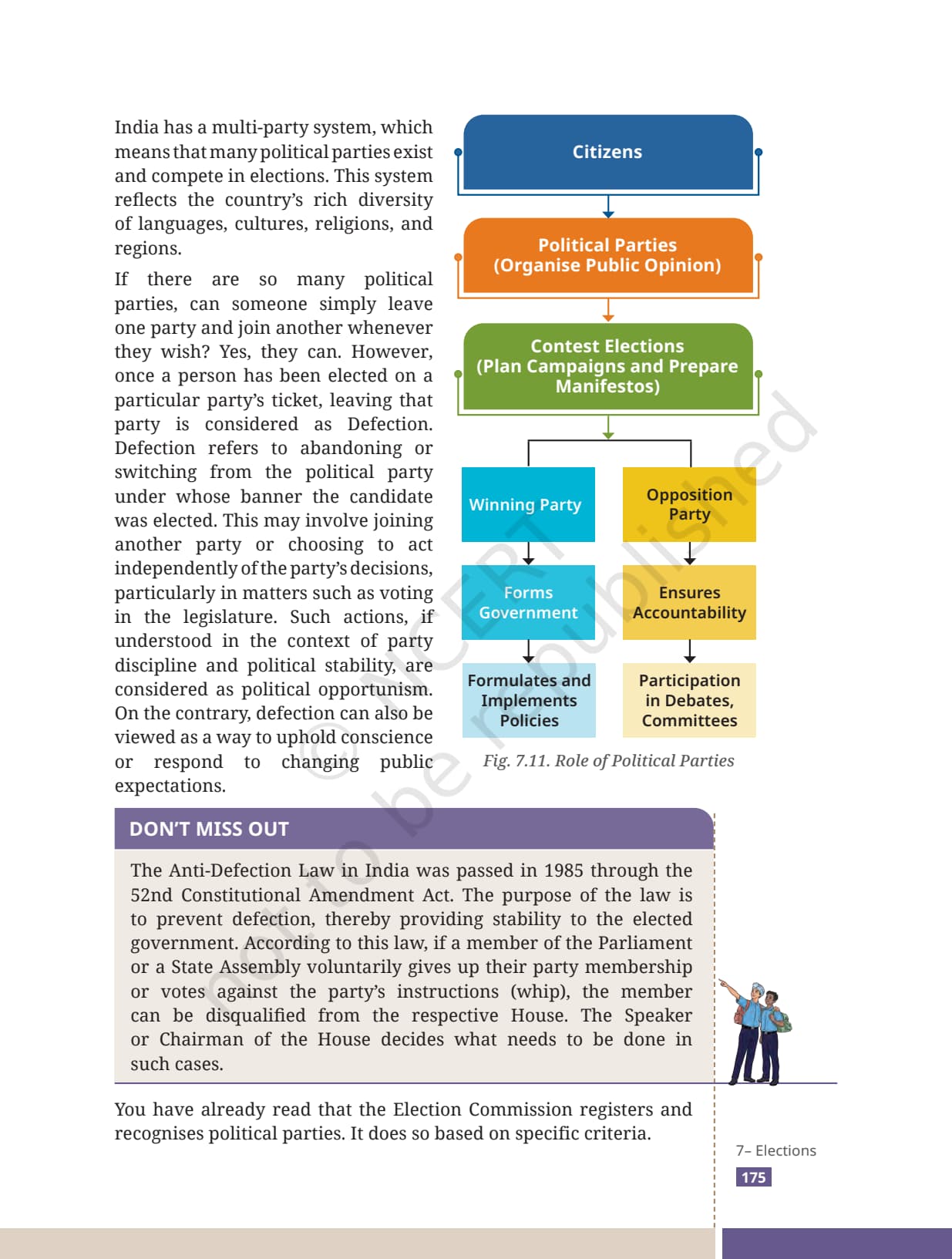
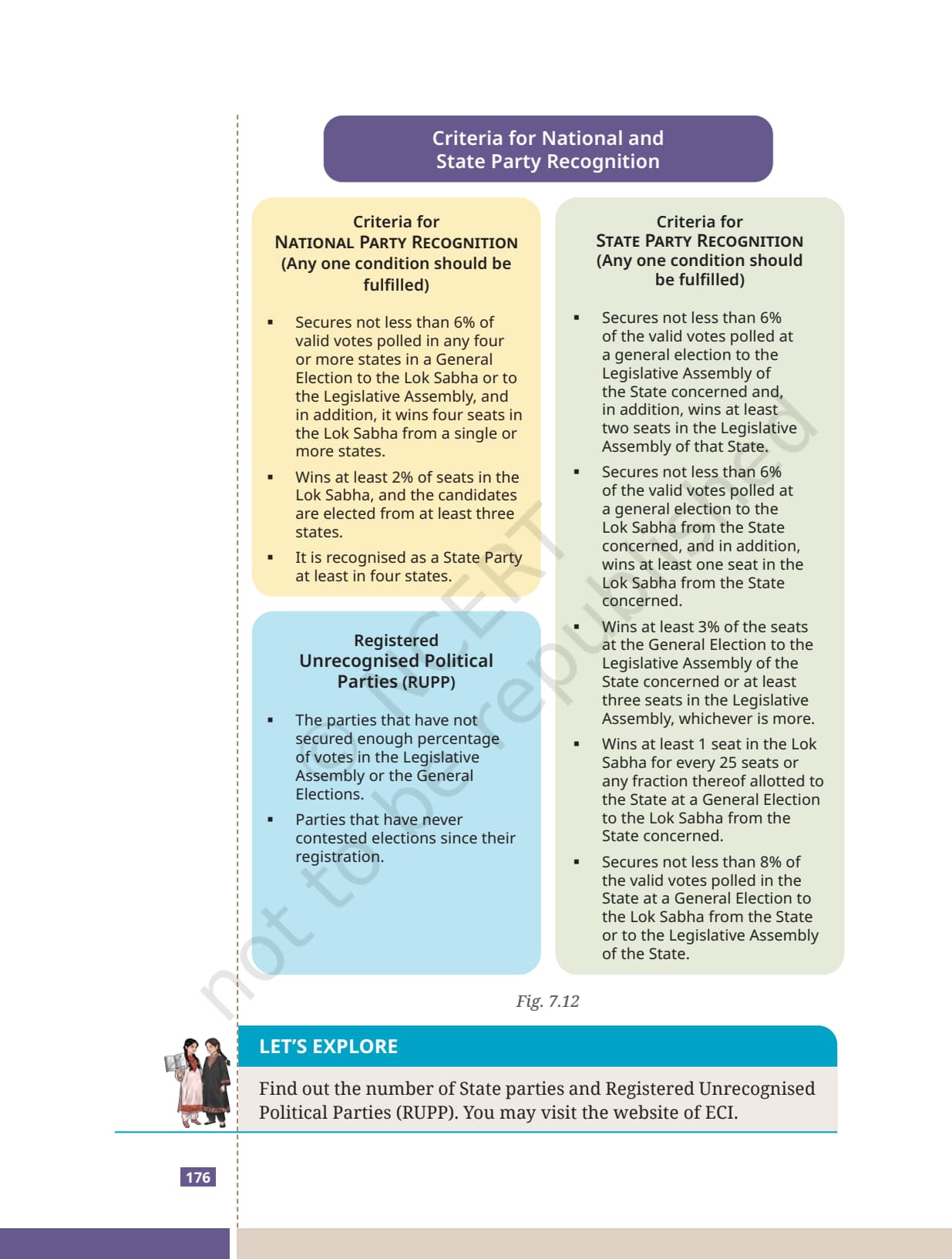
- Political parties: what parties do, defection and how a party is recognised as national or state.
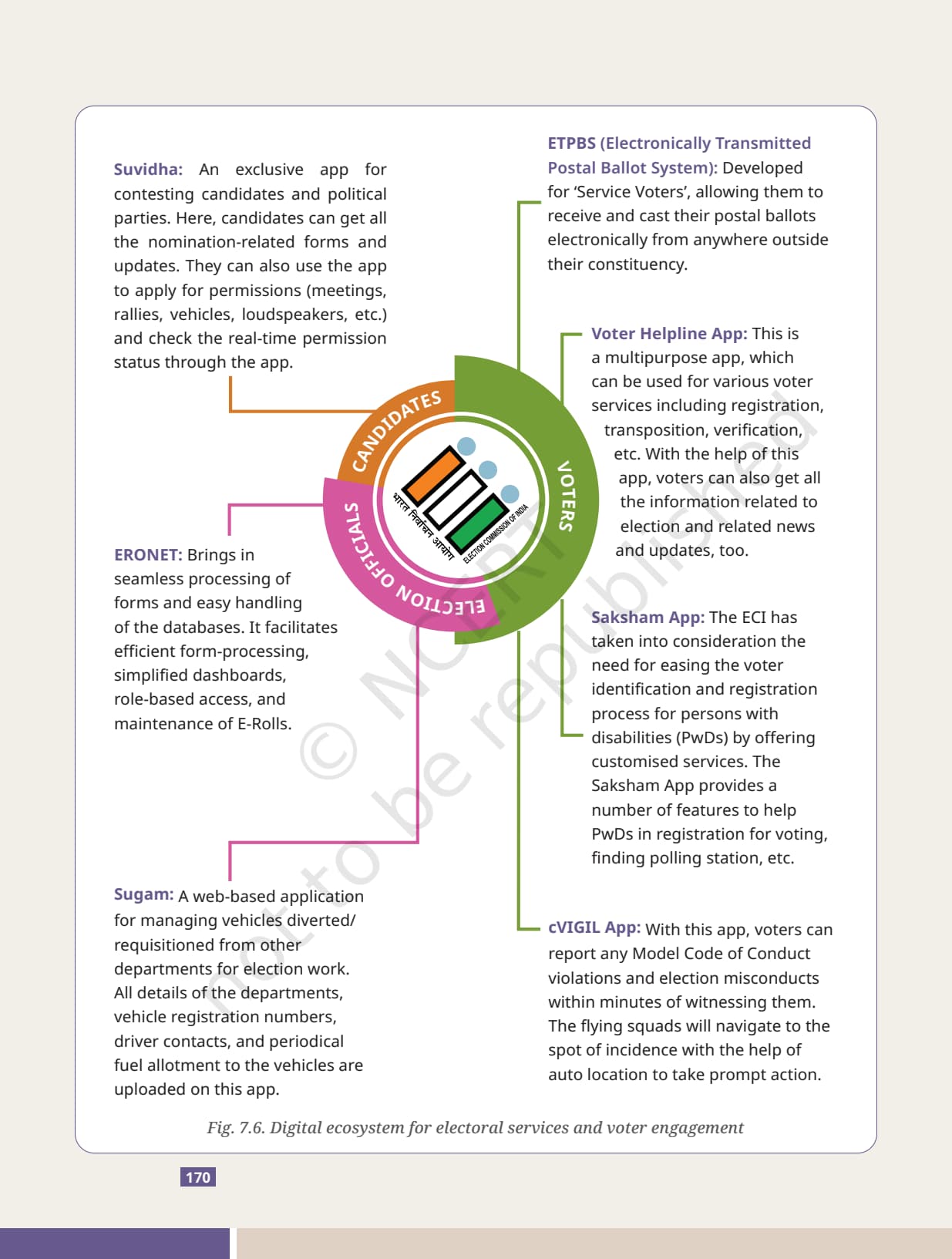
- Free and fair polls: inclusion of every voter, digital tools and the challenges that remain.
This chapter carries steady weight in Class 9 exams because it mixes definitions, reasoning and simple facts. Regular and periodic elections lie at the very core of a democracy. Studying it from the original book PDF helps students learn the exact wording examiners look for.
Topics Inside the Class 9 Social Science Chapter 7 Elections Book
The book PDF is organised into five sections that build from the idea of an election to the tools that make it fair. The table below lists what each section teaches.
| Section | What it teaches |
|---|---|
| Why Elections Matter | What an election is, direct and indirect elections, and the four values elections protect. |
| India's Electoral System | How votes become seats under FPTP, the majority system and proportional representation. |
| Laws, Delimitation and the ECI | The RPA 1950 and 1951, redrawing constituency boundaries and the powers of the Election Commission. |
| Political Parties | The role of parties, the multi-party system, defection and national or state recognition. |
| Free, Fair and Inclusive Elections | Reaching every voter, the ECI digital tools and the challenges to fair polls. |
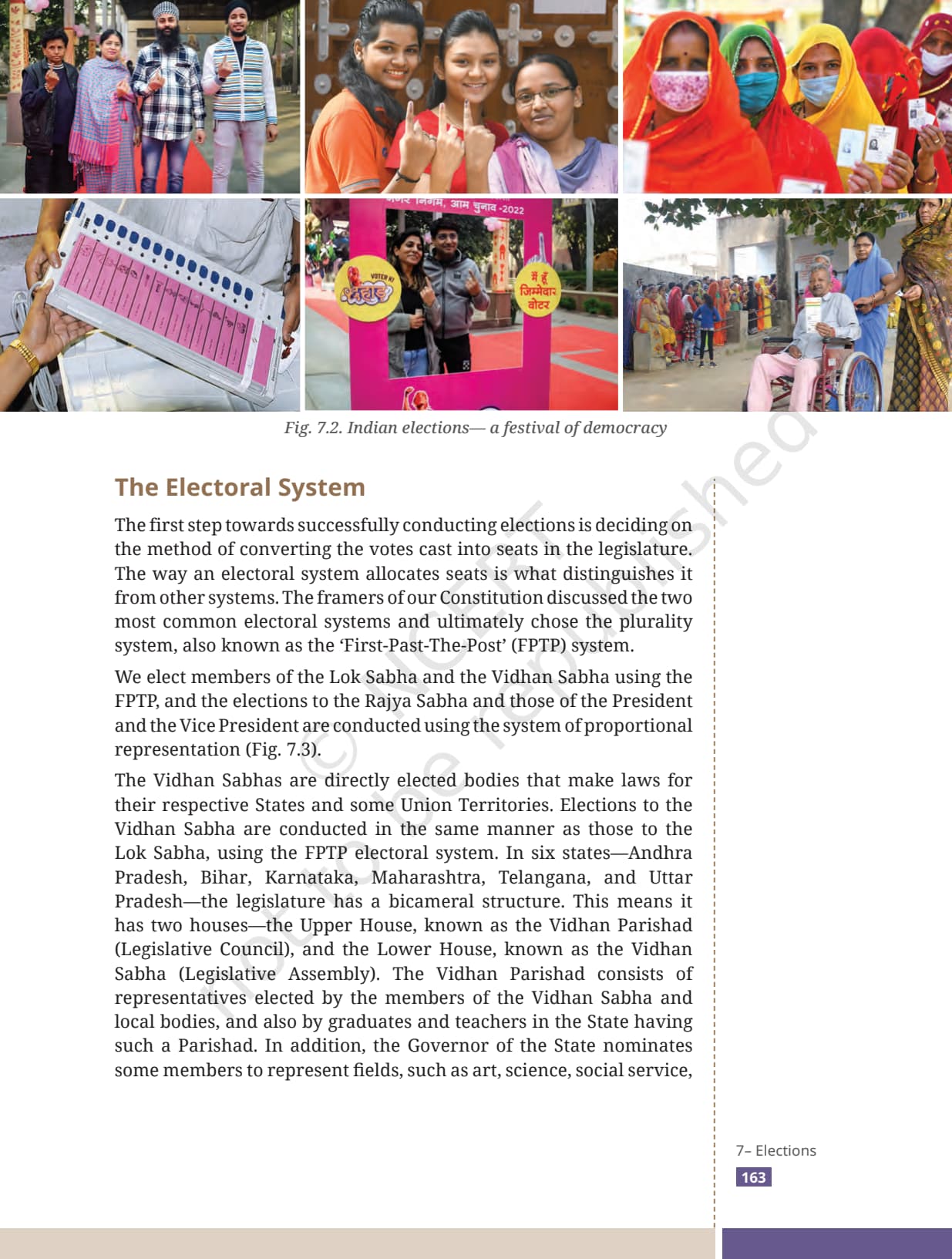
Each section carries clear definitions, labelled figures and quick concept boxes, so students can follow the whole story straight from the textbook. In 2024 India held the world's largest election, with over 96.8 crore eligible voters. Facts like this sit right where the book explains inclusion, which makes the PDF easy to revise from.
Key Terms in the Elections Class 9 Social Science Chapter
The heart of Chapter 7 is a small set of terms that describe how India votes. The book PDF defines each one clearly before showing how they fit together.
- Election: the process by which citizens vote to choose their representatives.
- Direct election: citizens vote directly for a leader; indirect election: elected members then vote for the leader.
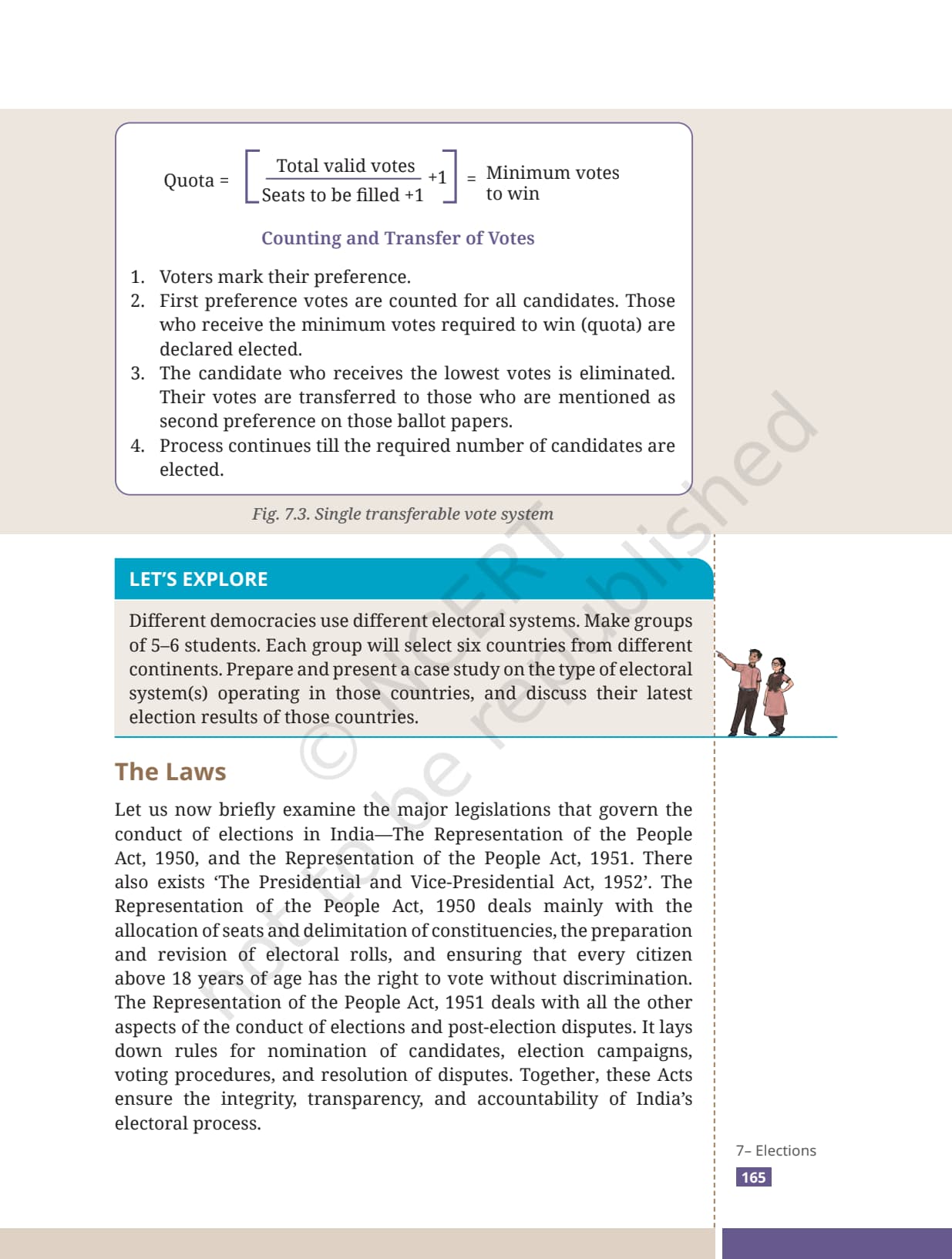
- FPTP: the candidate with the most votes wins, even below half of all votes.
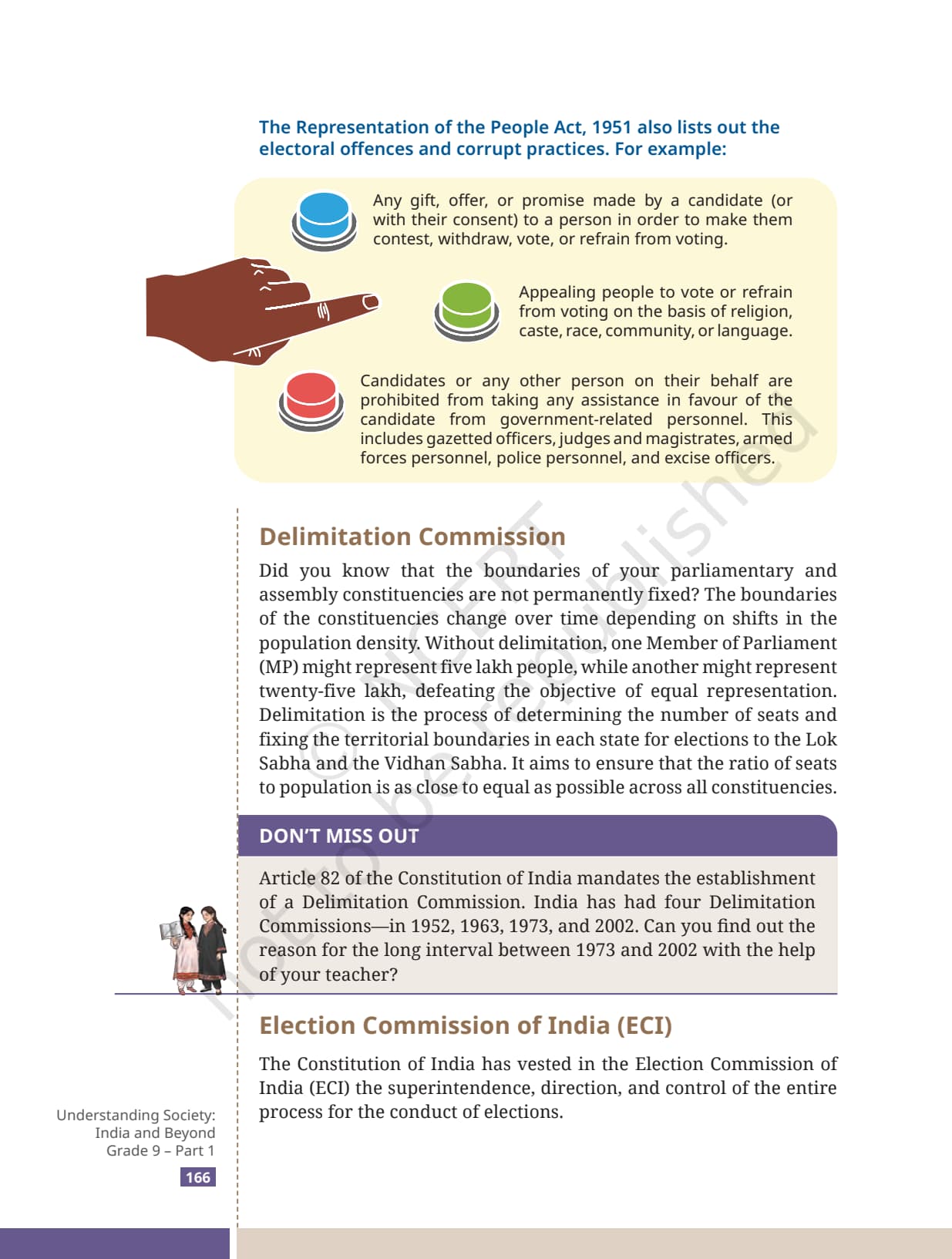
- Delimitation: fixing the number and boundaries of constituencies so seats stay fair.
- Defection: leaving the party on whose ticket a member was elected.
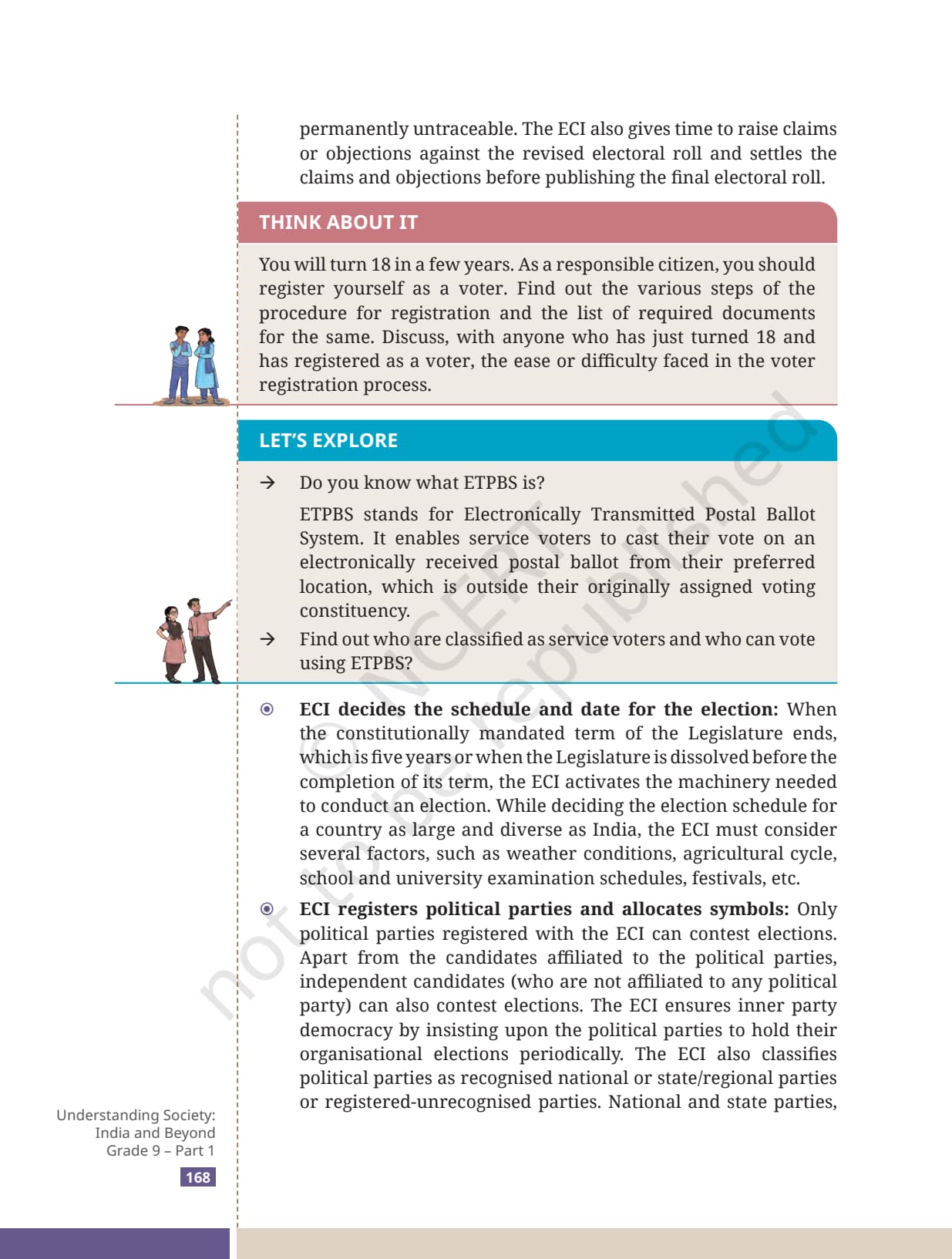
The book also explains the Election Commission of India, set up on 25 January 1950 under Articles 324 to 329, which runs the whole poll. An FPTP winner needs only the largest share of votes, not more than half. Learning these terms from the class 9 social science ncert book chapter 7 Elections helps students avoid the mistakes examiners test.
In-Text Features and Exercises in the Chapter 7 Elections Book
The Understanding Society textbook does more than state facts. Chapter 7 uses short prompts and figures that make students stop and think, plus a full end-of-chapter exercise. Downloading the book PDF gives students all of these in the original layout.
- Concept boxes: short, exact definitions of election, FPTP, delimitation, defection and the ECI.
- Real-world examples: everyday cases such as a class representative or voting from home that explain a rule.
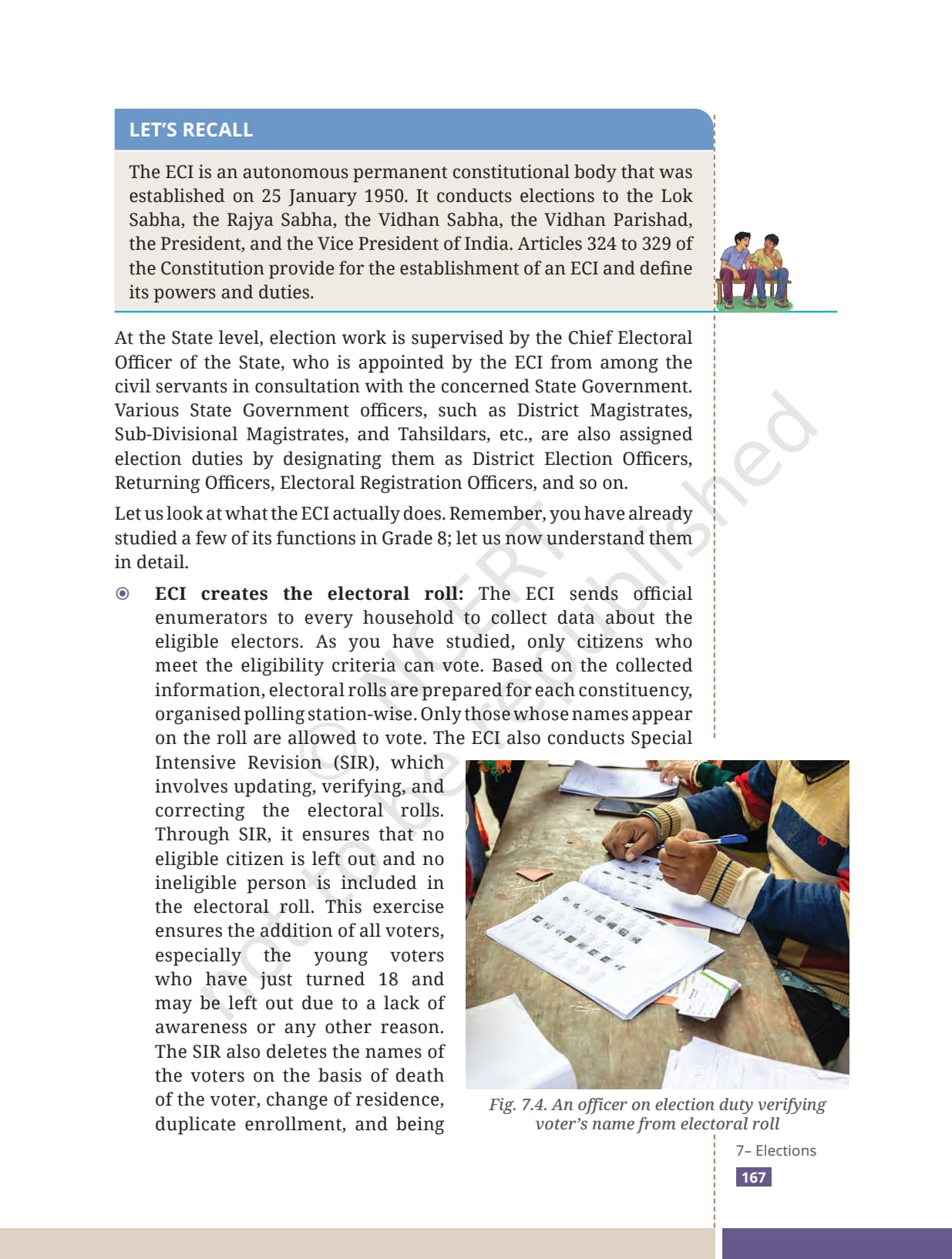
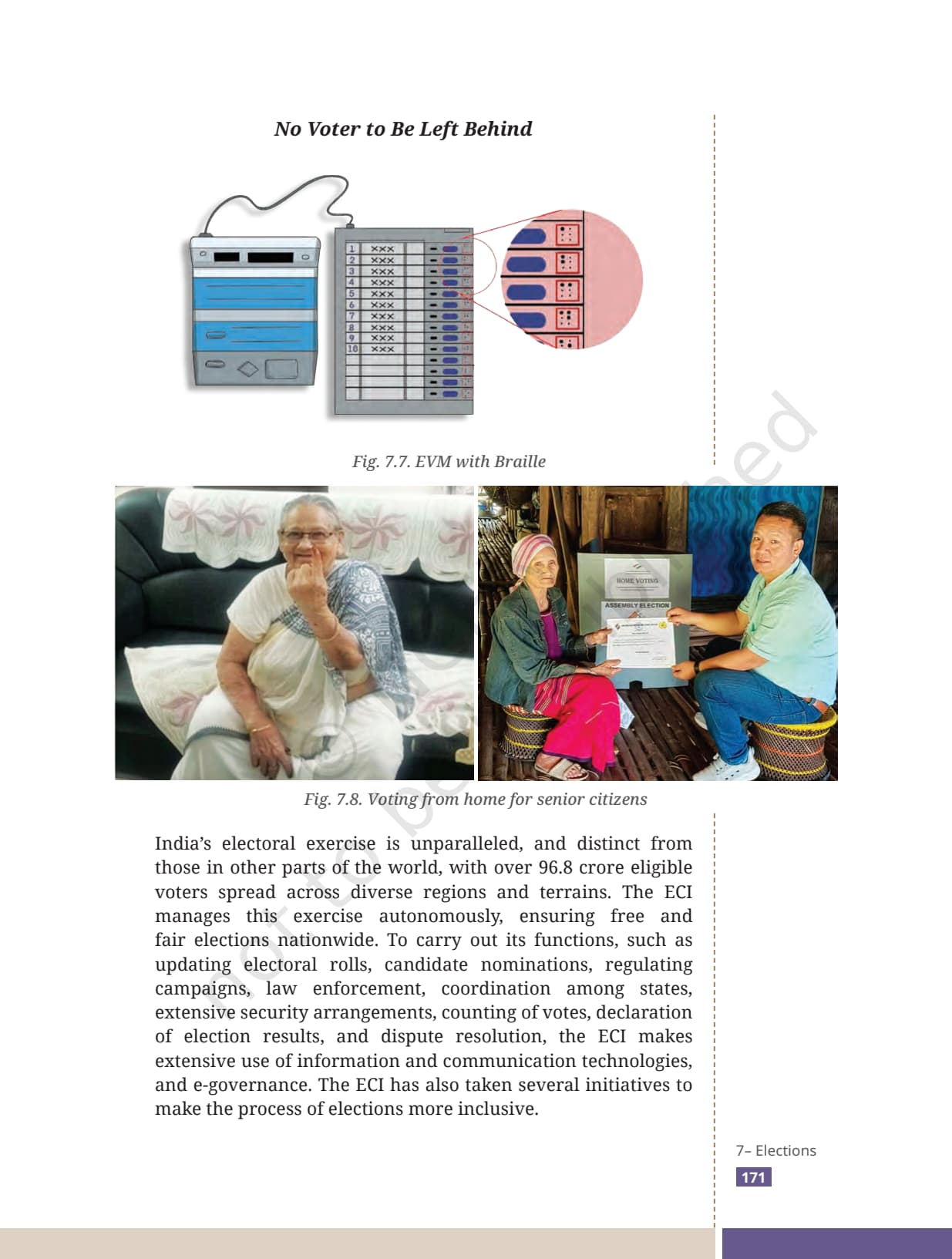
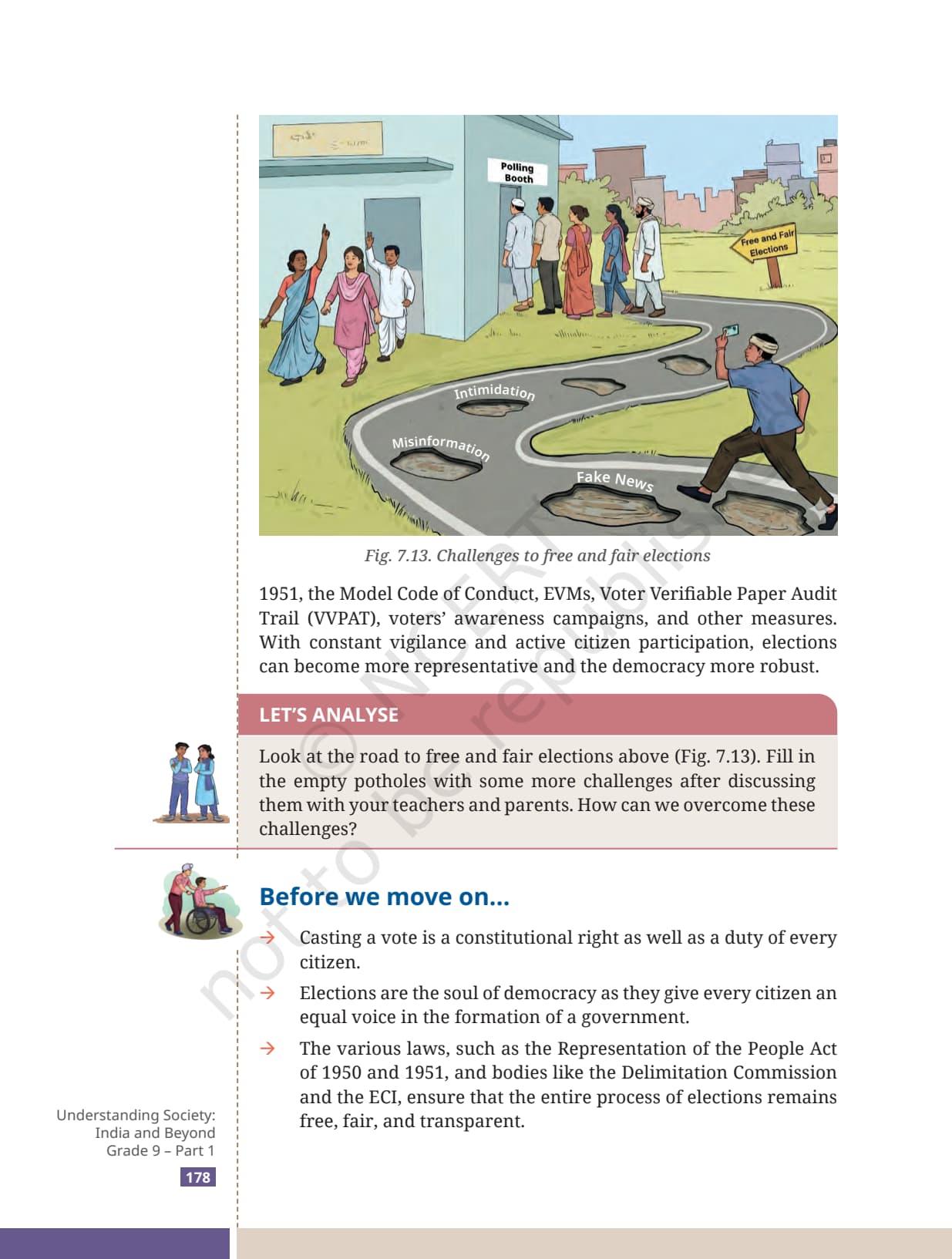
- Labelled figures: an officer checking the electoral roll, a Braille-fitted EVM and the road to fair elections.
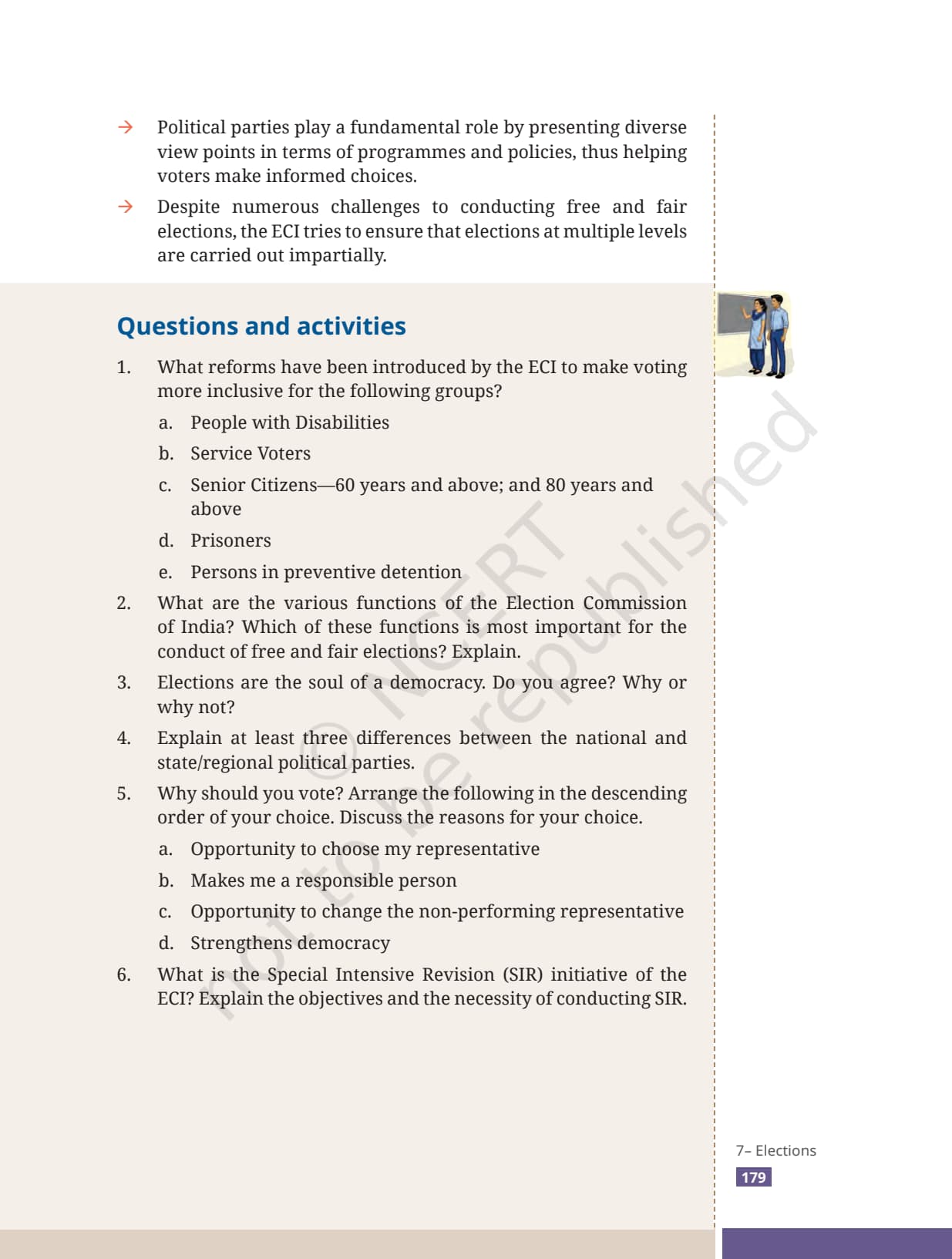
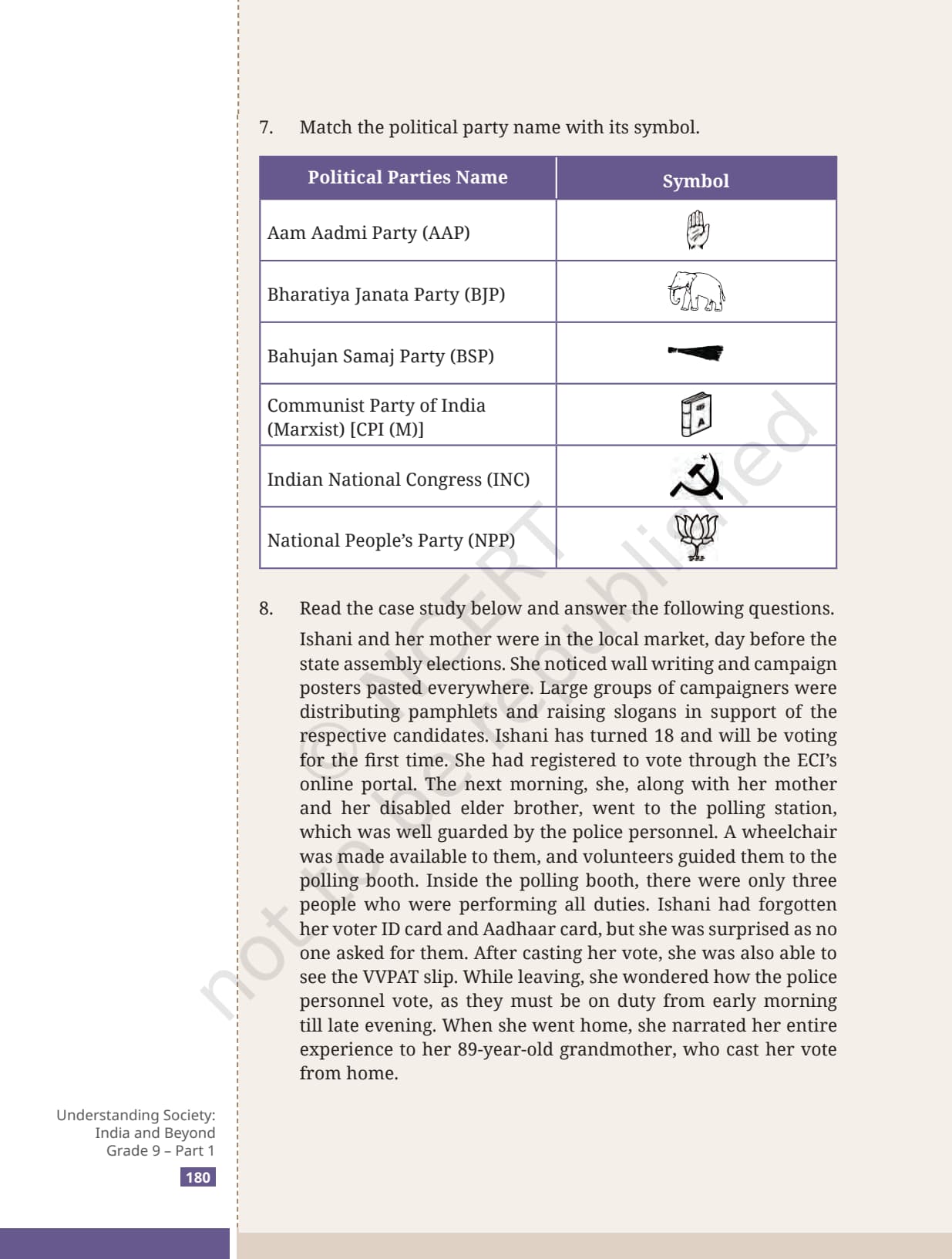
- End-of-chapter exercise: questions on election types, the ECI, parties and safeguards in the exam style.
Students who work through the exercise from the PDF cover the exact style of questions the exam uses. For fully solved answers to these, pair the book with the NCERT Solutions linked lower on this page.
Why Download the Class 9 Social Science Chapter 7 Elections NCERT Book PDF
Notes and solutions are quick, but the original textbook is the source every exam is set from. Keeping the class 9 social science ncert book chapter 7 Elections on your device gives students the complete, correct chapter to study offline.
- Exact wording: definitions of election, FPTP, delimitation and the ECI in the words the exam expects.
- All figures: the labelled poll-officer, Braille EVM and voting-from-home images that summary notes often leave out.
- Offline study: read the whole chapter without internet, on a phone, tablet or printout.
- 2026-27 ready: the current first-edition Understanding Society chapter, matched to what schools teach this session.
Because the PDF is the real chapter, students can highlight, print and annotate it just like the printed book. This makes it the best single file to revise from before a class test or the final exam.
How to Use the Elections Book PDF with Notes and Solutions
The book PDF works best as one part of a set. Students revise fastest when they read the chapter, learn from short notes and drill the questions, with each resource doing its own job.
- Read the book PDF first to meet every term, law and example in the original NCERT order.
- Move to the NCERT Notes for short, exam-ready explanations of FPTP, the ECI and political parties.
- Practise with the NCERT Solutions to solve every exercise question with full steps.
- Revise from the Handwritten Notes for a quick last-minute recap of key terms and diagrams.
Together these resources cover Chapter 7 for the 2026-27 session. The book explains in full, the notes condense, and the solutions drill, so Collegedunia gives students one clear path from reading to revision.
Other Elections Class 9 Social Science Resources
Use the table below to open the other Collegedunia resources for this chapter.
| Resource | Open |
|---|---|
| NCERT Book PDF | Elections Class 9 NCERT Book PDF |
| NCERT Solutions | Elections Class 9 NCERT Solutions |
| Revision Notes | Elections Class 9 Notes |
| Handwritten Notes | Elections Class 9 Handwritten Notes |
NCERT Book PDF for Class 9 Social Science: All Chapters
Use the table below to download the NCERT Book PDF for any other chapter of the new Class 9 Social Science Understanding Society textbook.
| Chapter | NCERT Book PDF |
|---|---|
| Chapter 1 | Understanding Social Science |
| Chapter 2 | Shaping of the Earth's Surface |
| Chapter 3 | Atmosphere and Climate |
| Chapter 4 | Early Humans and Beginning of Civilisation |
| Chapter 5 | State and Society up to 1000 CE |
| Chapter 6 | Democracy |
| Chapter 7 | Elections |
| Chapter 8 | Building Blocks in Economics: The Problem of Choice |
| Chapter 9 | The Price Puzzle: What Drives the Market |
Elections Class 9 Social Science NCERT Book PDF FAQs
Where can I download the Class 9 Social Science NCERT Book Chapter 7 Elections PDF?
Ans. You can download the Elections Class 9 NCERT Book PDF free from this page. It is the complete Chapter 7 from the 2026-27 Understanding Society textbook, with all sections, figures and the end-of-chapter exercise.
What topics are covered in Class 9 Social Science Chapter 7?
Ans. Chapter 7 covers why elections matter, direct and indirect elections, the FPTP electoral system, the RPA 1950 and 1951, delimitation, the Election Commission of India, political parties, defection and free, fair and inclusive polls.
What is the FPTP system in Class 9 Social Science Chapter 7?
Ans. First-Past-The-Post (FPTP) is the system where each voter votes for one candidate, and the candidate with the most votes wins, even if that total is less than half of all votes cast. India uses it for the Lok Sabha and Vidhan Sabha.
Is the Elections book PDF enough to prepare the chapter?
Ans. The book PDF gives the full chapter and is the main source. For fast revision and full answers, pair it with the Class 9 Social Science Chapter 7 Notes, NCERT Solutions and Handwritten Notes linked on this page.



Comments