




The Class 9 Social Science Handwritten Notes Chapter 7 Elections are a topper's own neat revision of the Elections chapter from the new Understanding Society book. Every idea, from why elections matter to the FPTP system, the election laws, the Election Commission, and free and fair voting, is written by hand with each rule boxed.
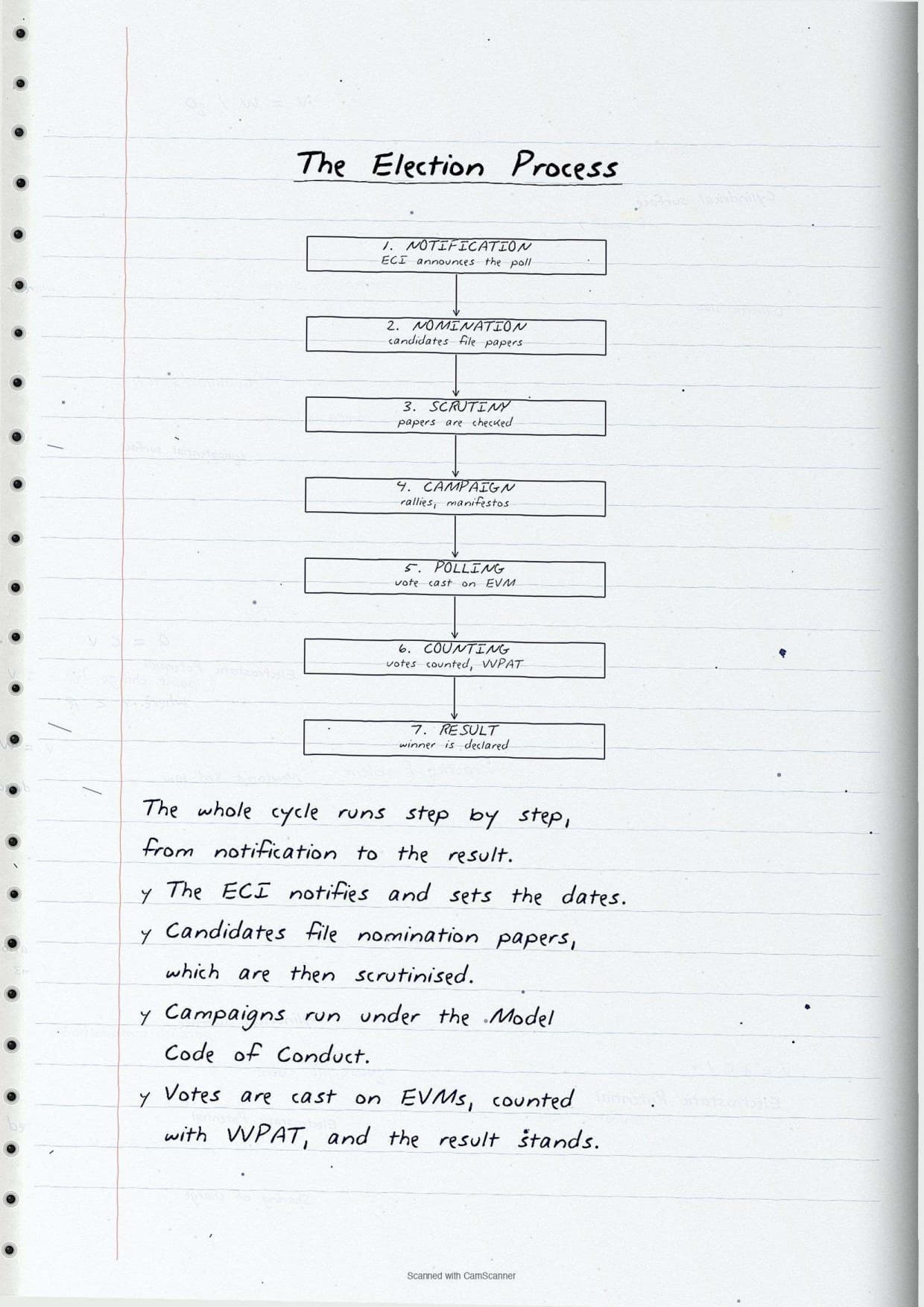
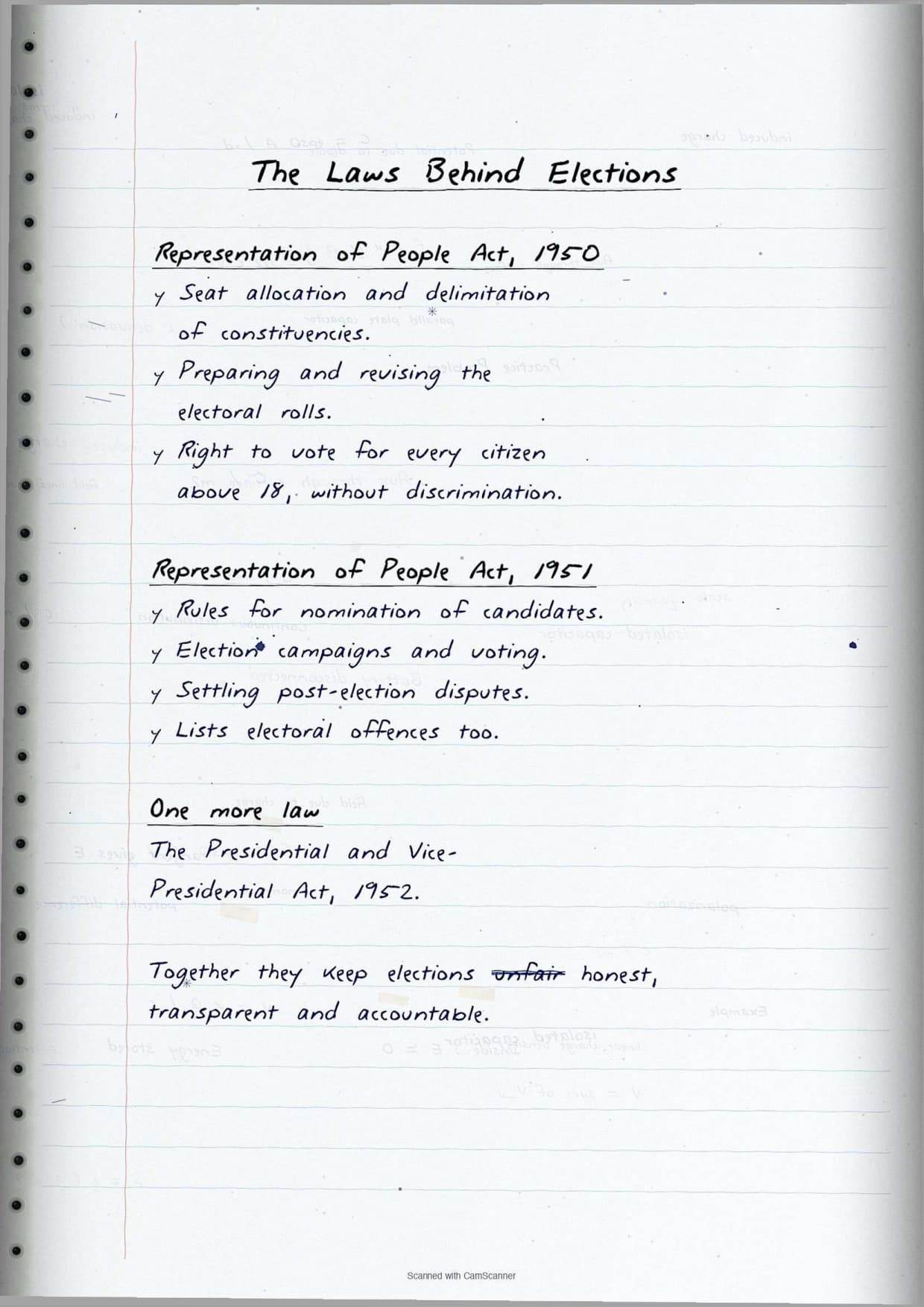
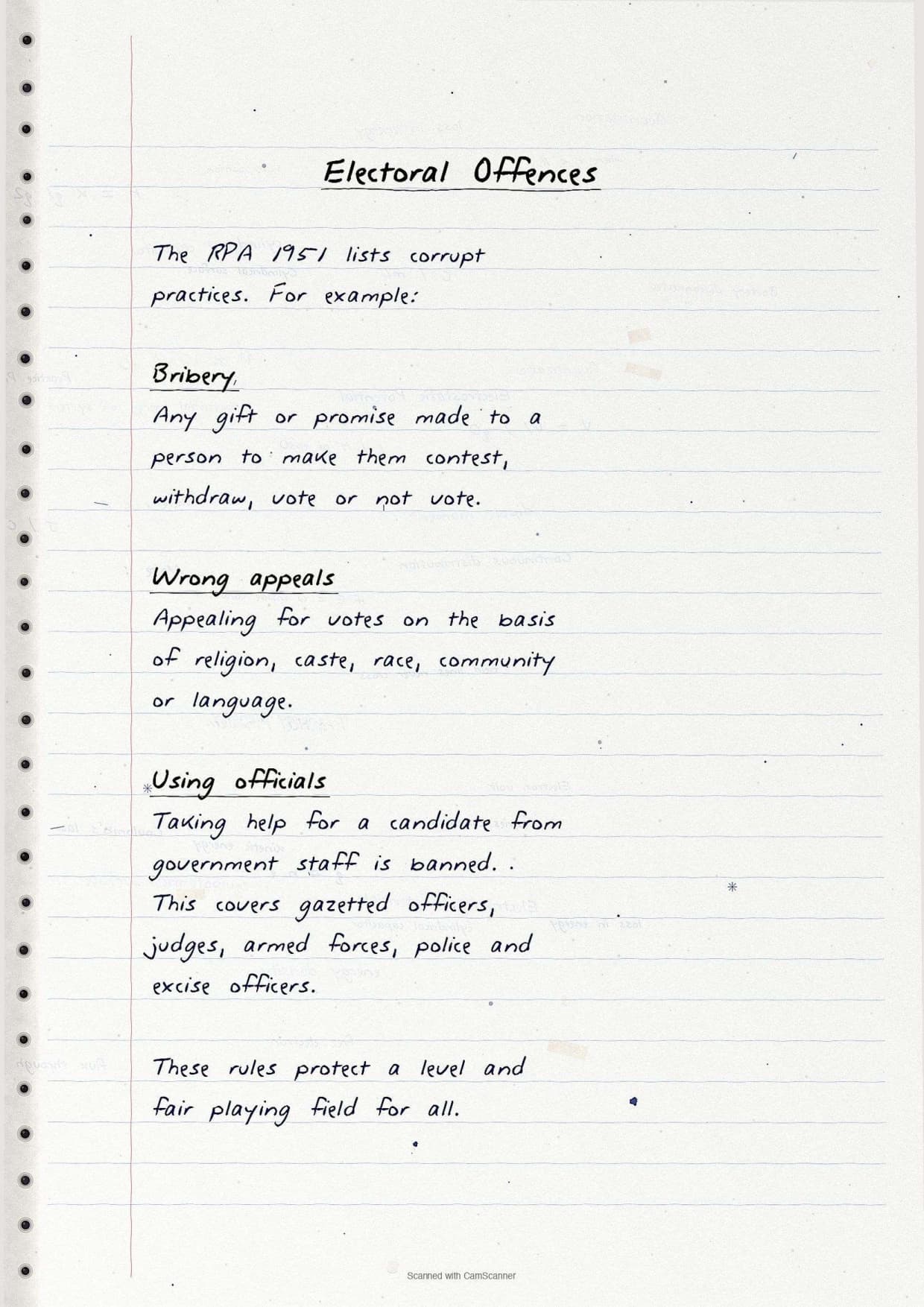
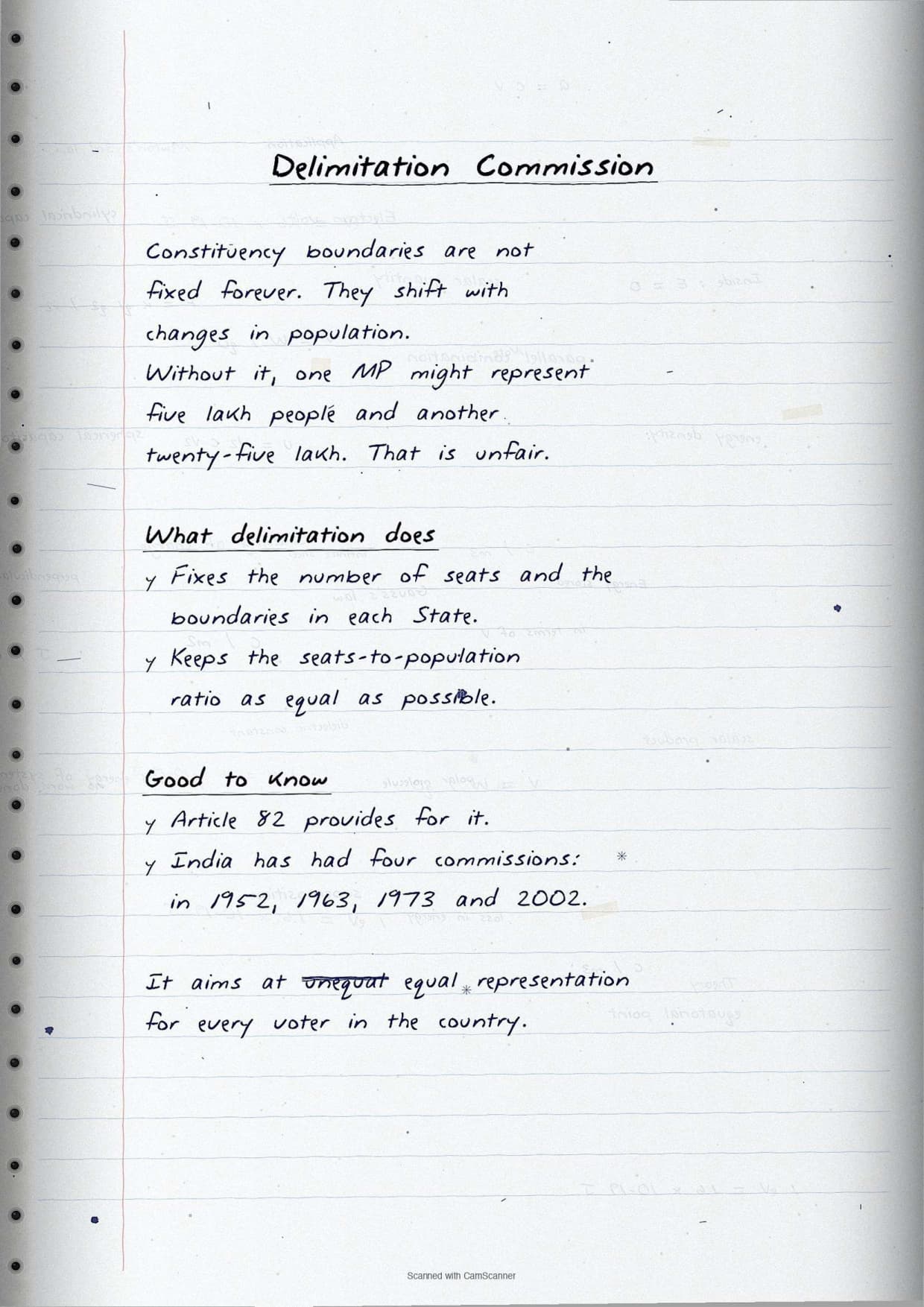
Verified by the Collegedunia study team against the 2026-27 NCERT syllabus.
- What you get: why elections matter, direct and indirect voting, FPTP, the election laws, the Election Commission, political parties, and free and fair polls.
- Colour-coded: new sub-topics in red, each rule and definition boxed, and diagrams in blue.
- Why by hand: writing each term and flow chart by hand helps you recall the chapter fast in the exam.
Student Feedback
In a Collegedunia study of 1,180 Class 9 students, 81% said hand-written pages of the FPTP idea and the Election Commission functions were easier to recall than typed notes. About 4 out of 5 rated the boxed definitions and the red-marked mistakes as the most useful part before a test.
Why Use the Class 9 Social Science Handwritten Notes Chapter 7 Elections
Chapter 7 mixes short definitions with facts, dates, and Acts, so a clean, hand-written page saves real time. The Class 9 Social Science Handwritten Notes Chapter 7 Elections keep one idea per line, with a small flow chart beside it, so you revise the whole chapter fast.
- Each rule, like the meaning of a direct and an indirect election, sits in its own hand-drawn box.
- A quick flow chart is sketched next to the idea it explains, like how votes become seats.
- Red sub-headings split the chapter into short, easy parts, with plain wording.
What Is Inside the Elections Handwritten Notes PDF
The PDF runs to 21 pages of neat revision, moving from why elections matter to the electoral system, the laws, the Election Commission, parties, and free and fair polls. The colour code below tells you what every mark means.
- Red: new sub-topic headings, such as Delimitation, Defection, or Special Intensive Revision.
- Boxes: each definition and each Act, like RPA 1950 and RPA 1951, drawn by hand.
- Blue: flow charts and small diagrams that show how the process works.
Why Elections Matter, Written by Hand in Chapter 7
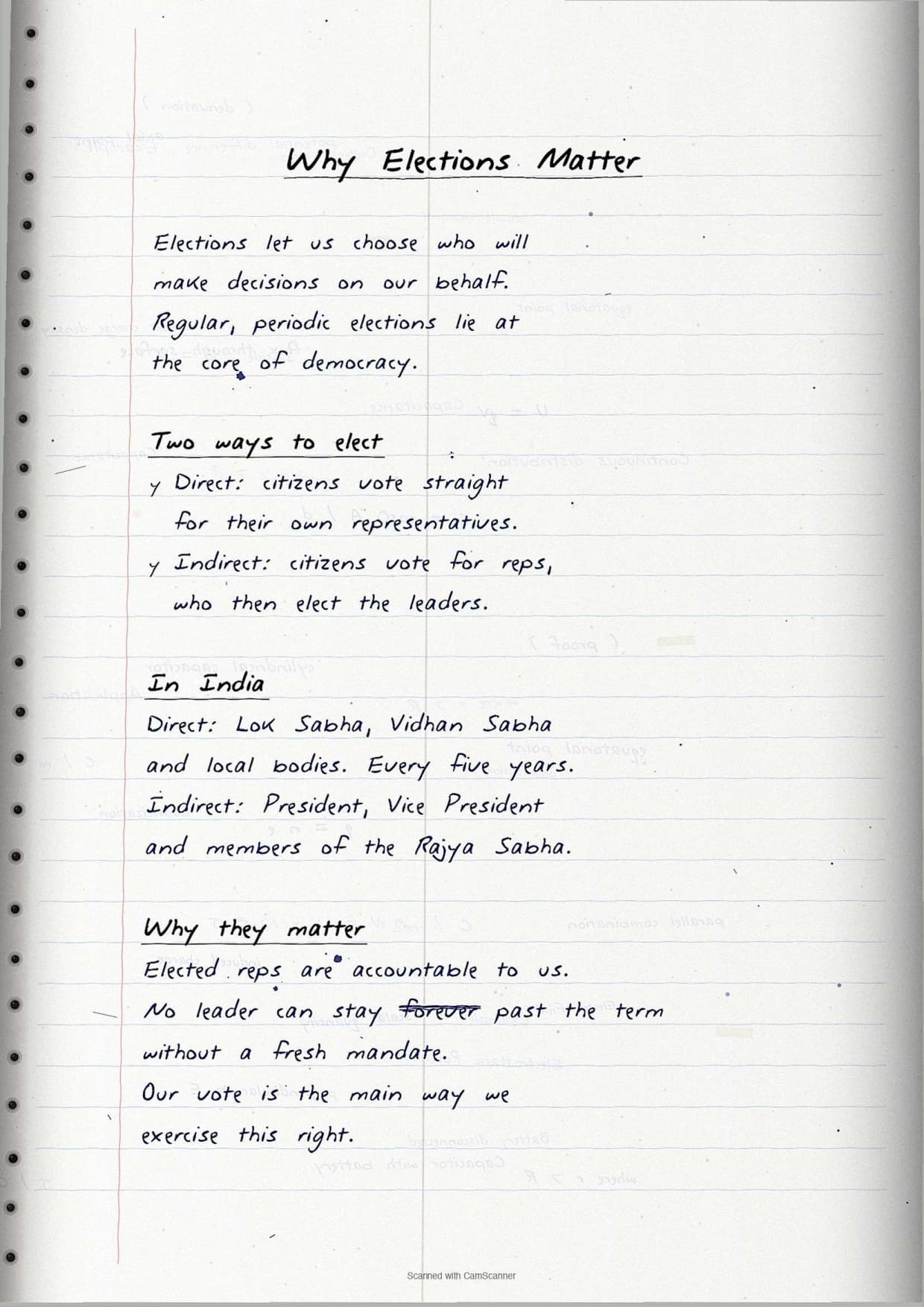
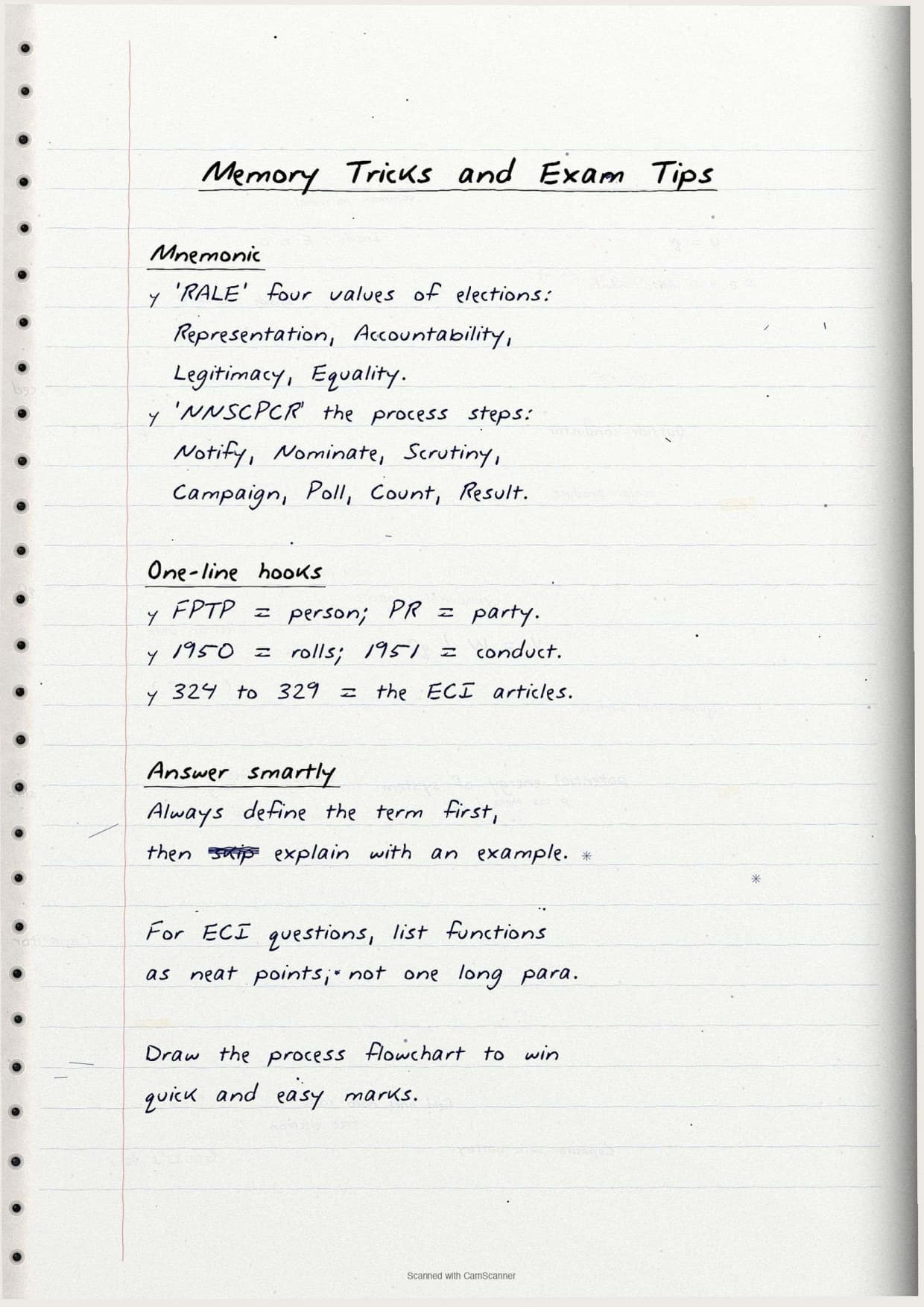
The chapter opens with a simple idea, that in a democracy the people rule through representatives they choose. An election is the process by which citizens use the right to vote and pick those representatives. The notes box its meaning before the two ways we vote.
- In a direct election, citizens vote directly to choose their leader. The Lok Sabha, Vidhan Sabha, and local bodies are elected this way.
- In an indirect election, citizens first elect representatives, who then choose the leader. The President, Vice President, and Rajya Sabha are chosen this way.
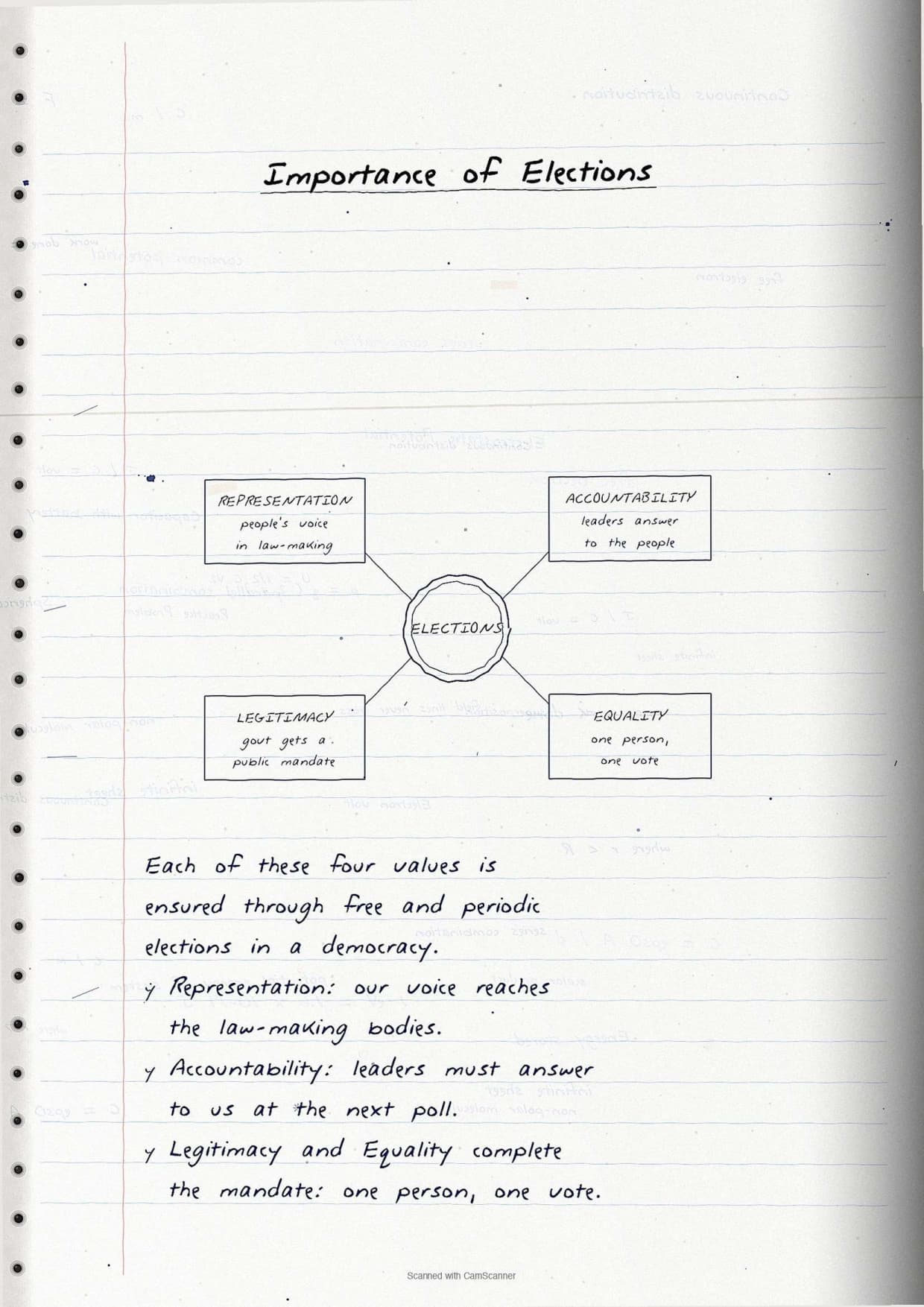
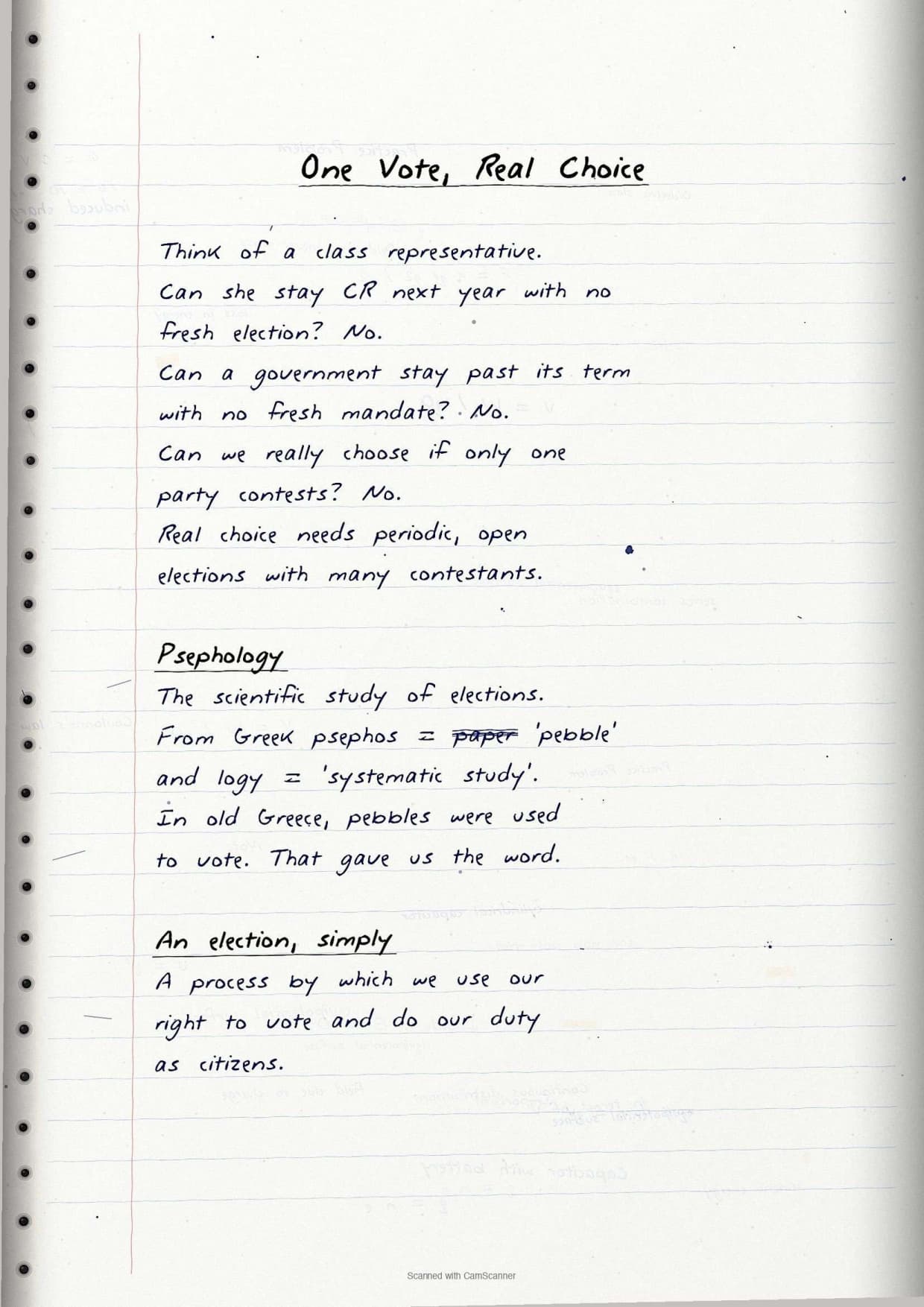
The notes then draw a small chart of the four reasons elections matter: accountability, representation, legitimacy, and equality. A red side-note adds that the study of elections is psephology.
Electoral System and FPTP in Your Own Handwriting
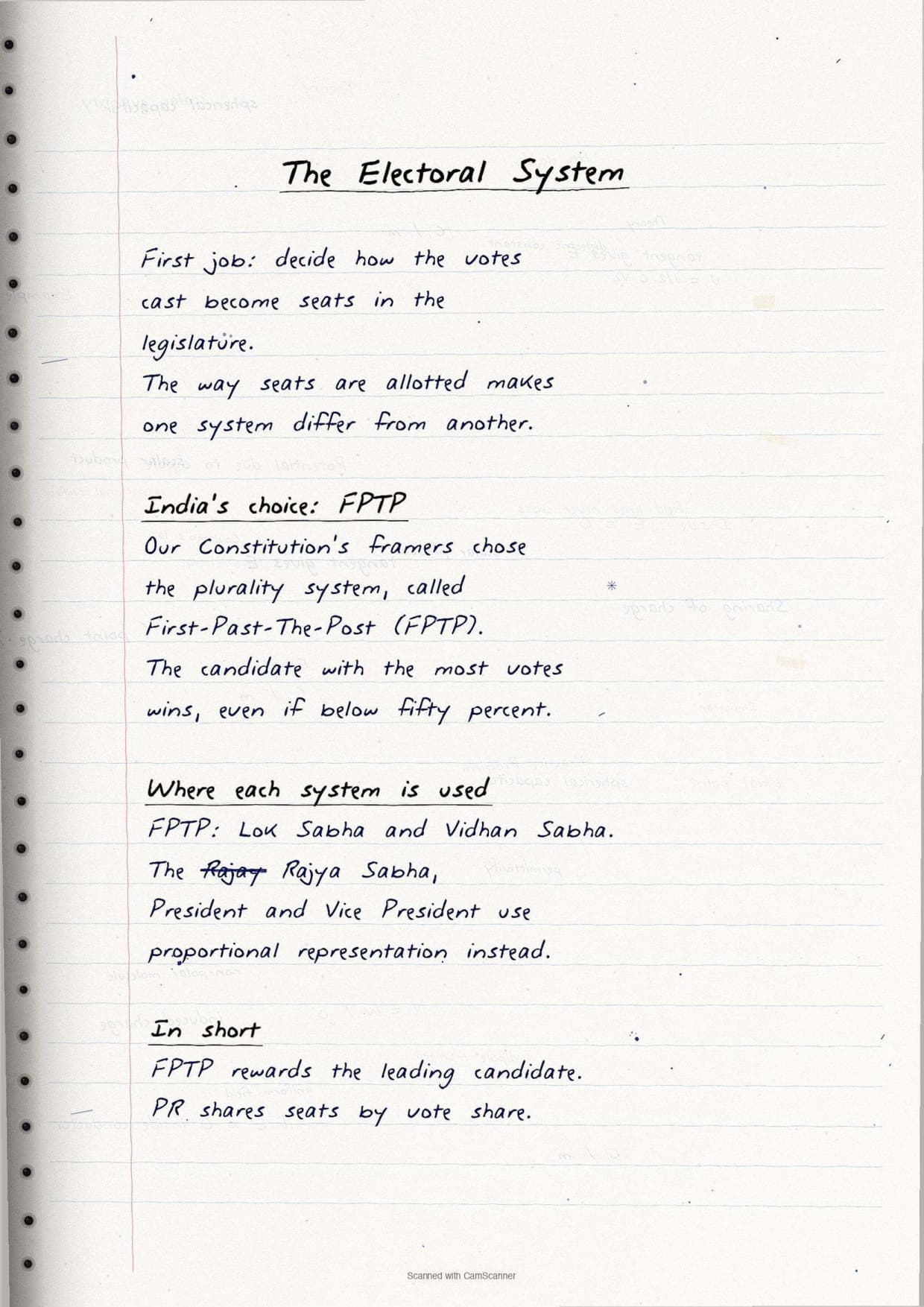
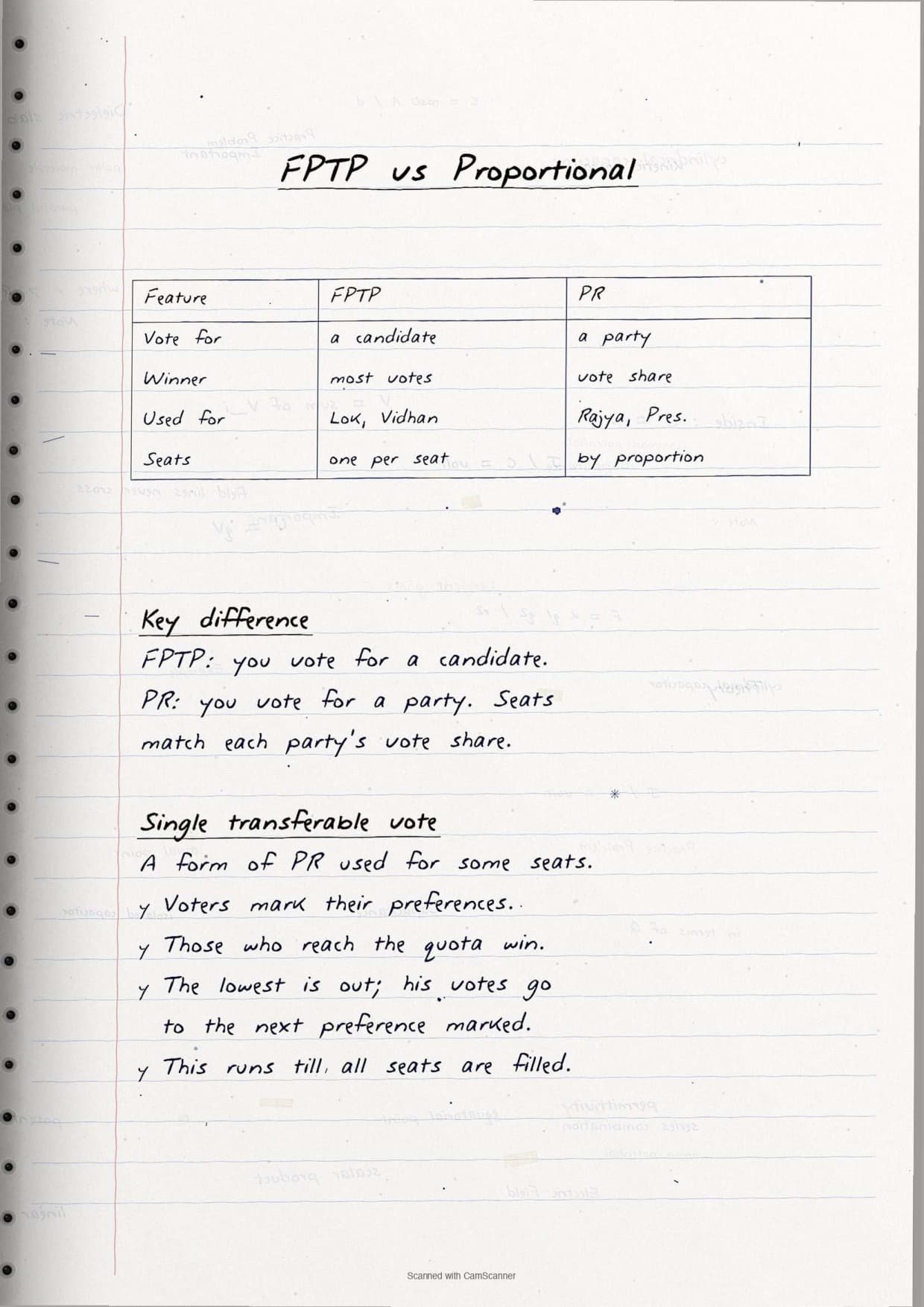
This is a favourite exam topic, so the notes draw the three systems side by side in a hand-made table. The framers chose the plurality system for the two main houses.
| System | How it works | Used for |
|---|---|---|
| First-Past-The-Post (FPTP) | Vote for one candidate; the most votes wins, even below half. | Lok Sabha, Vidhan Sabha |
| Majority system | Winner must cross 50%; if not, the top two go to a second round. | Compared in the textbook |
| Proportional Representation | Vote for a party; seats match each party's vote share. | Rajya Sabha, President, Vice President |
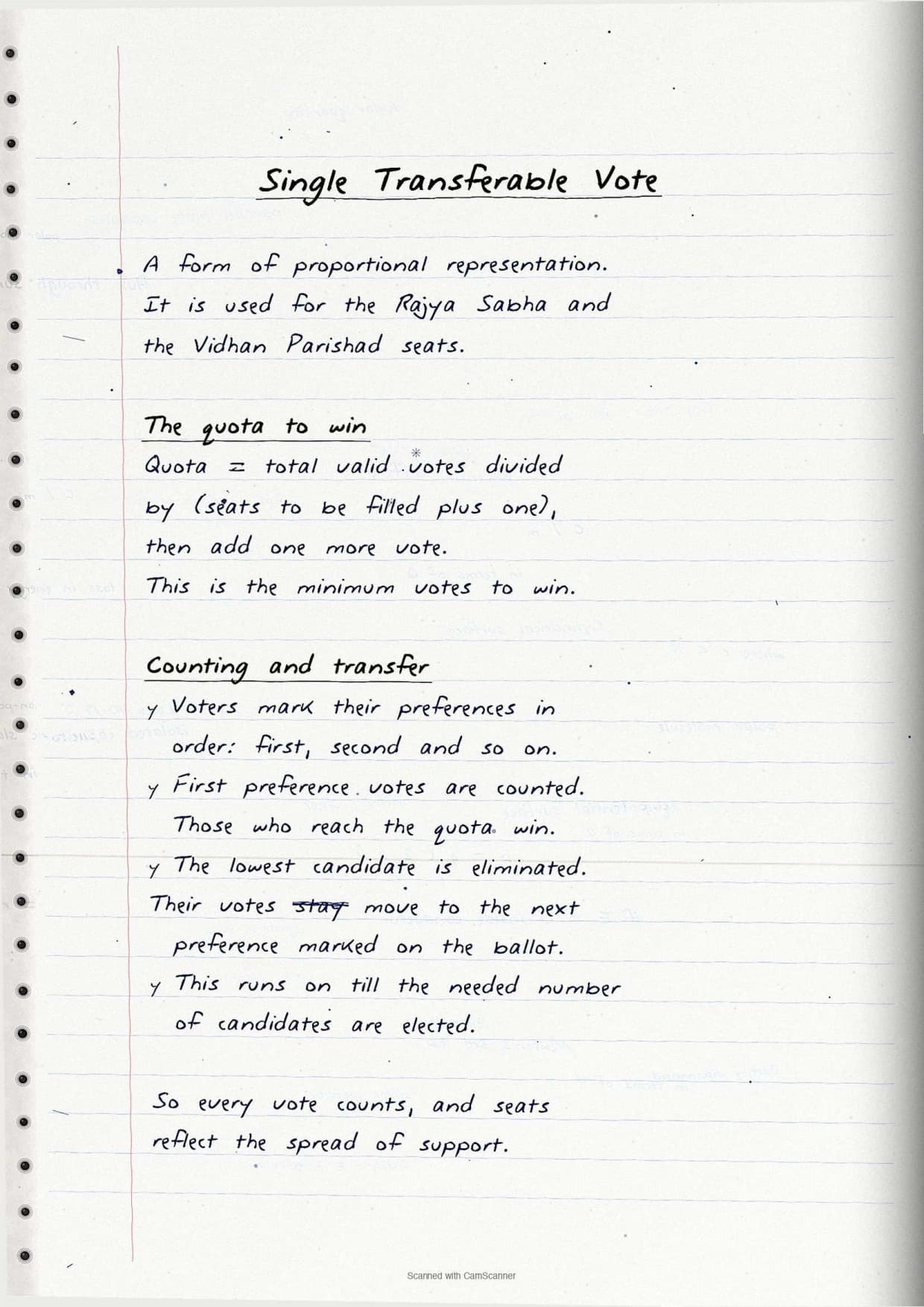
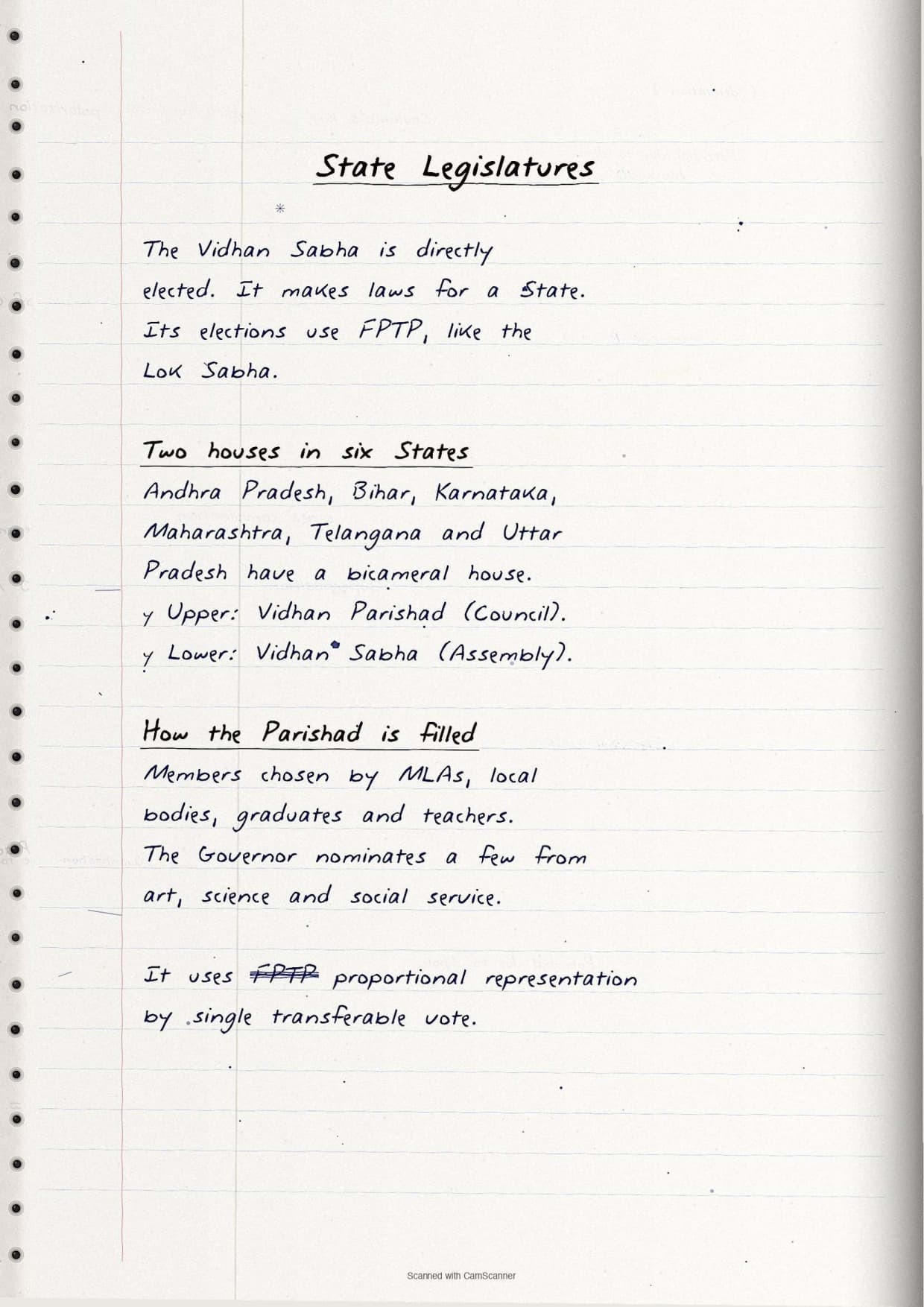
The notes flag one trap in red: an FPTP winner needs only the largest share, not more than half the votes. They add that six states have two houses, with the Vidhan Parishad filled by proportional representation.
Election Laws, Delimitation, and the ECI Boxed by Hand
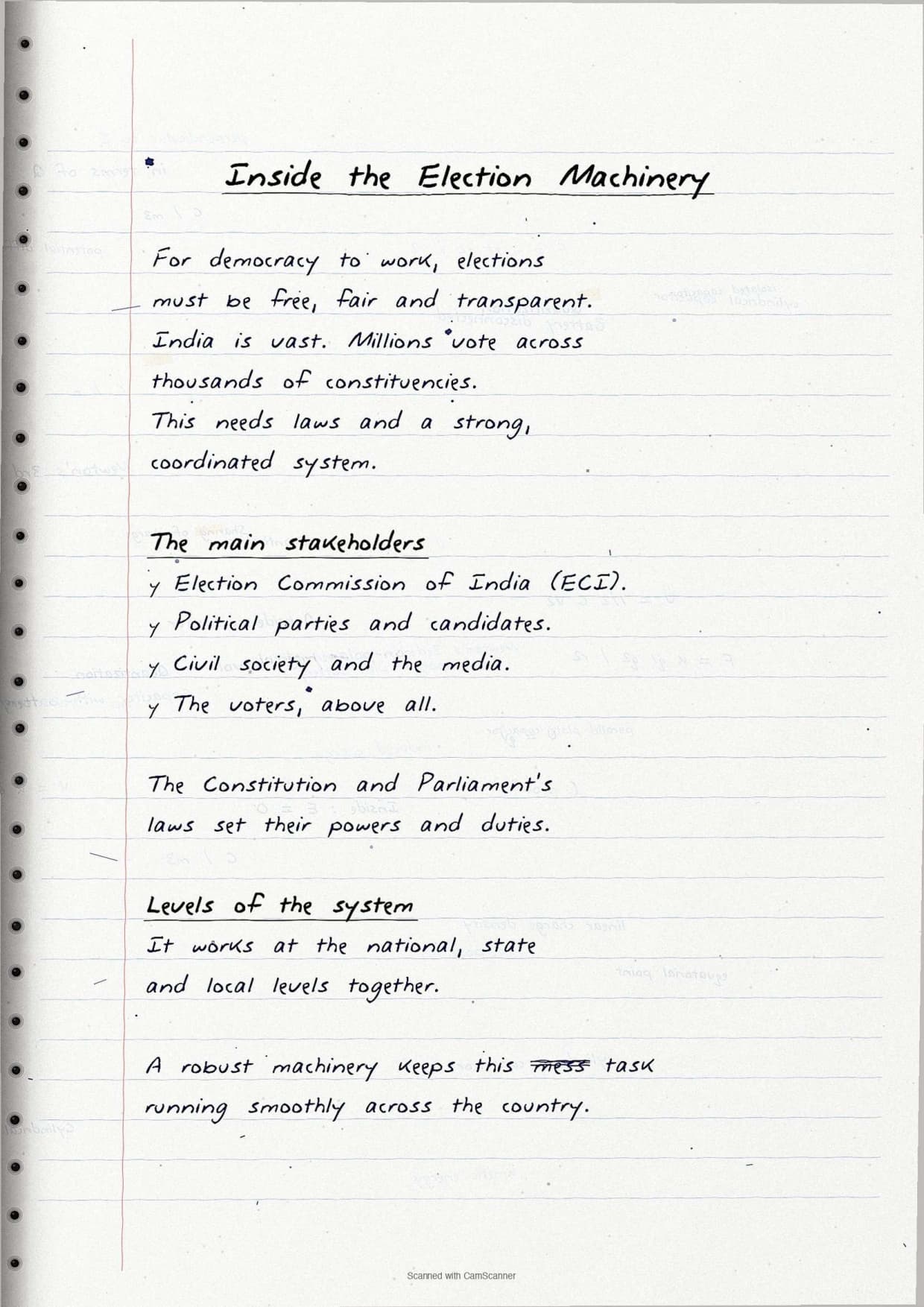
A vote across a country as large as India needs firm rules and a strong body to run it. The notes box the three main laws, giving each Act its own line so you never mix them up.
| Law or body | What it does |
|---|---|
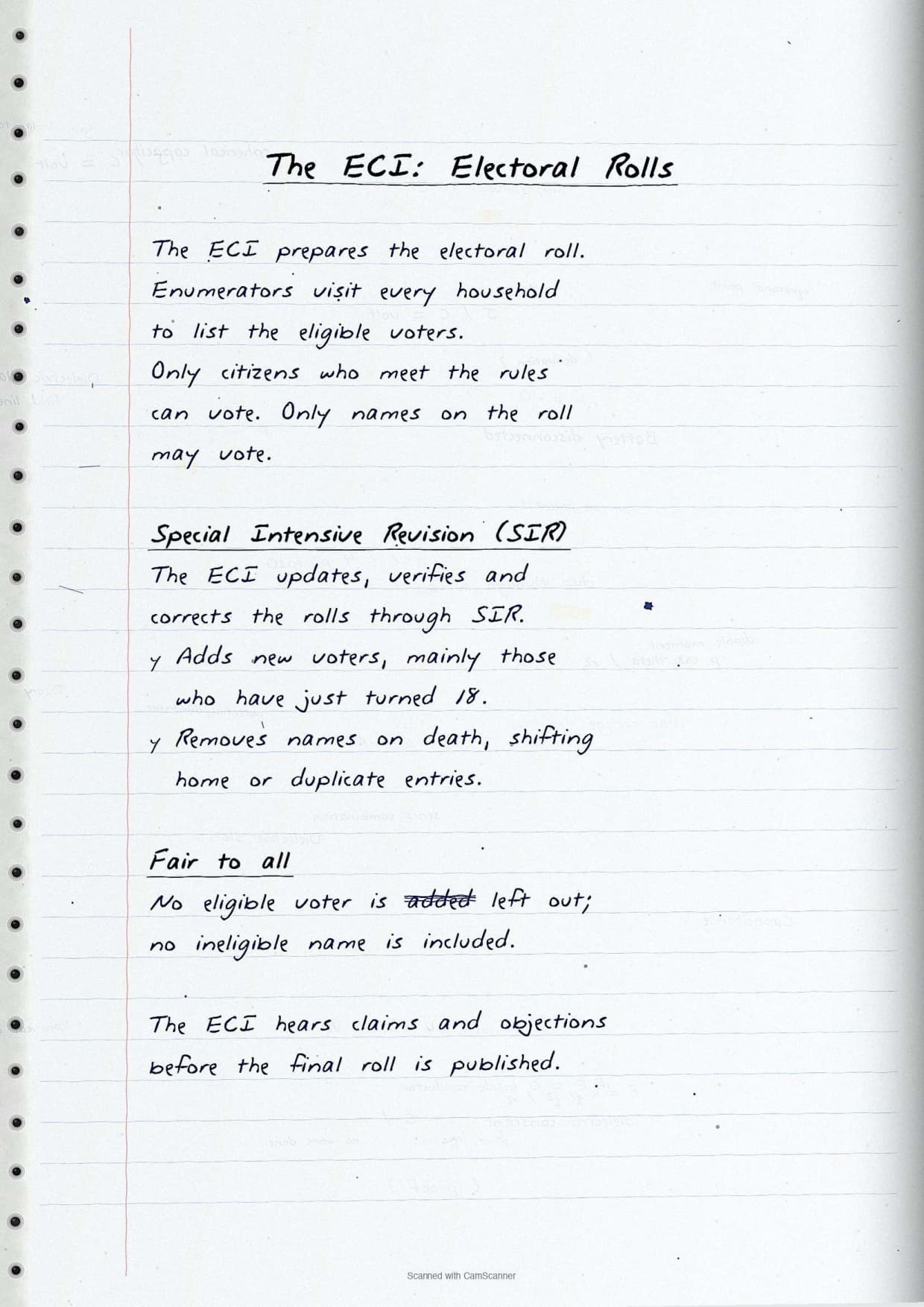
| RPA, 1950 | Seat allocation, delimitation, electoral rolls, and the right to vote at 18. |
| RPA, 1951 | The actual conduct of the poll, offences, and post-poll disputes. |
| Delimitation Commission | Article 82; fixes the number and boundaries of constituencies. India has had four, in 1952, 1963, 1973, and 2002. |
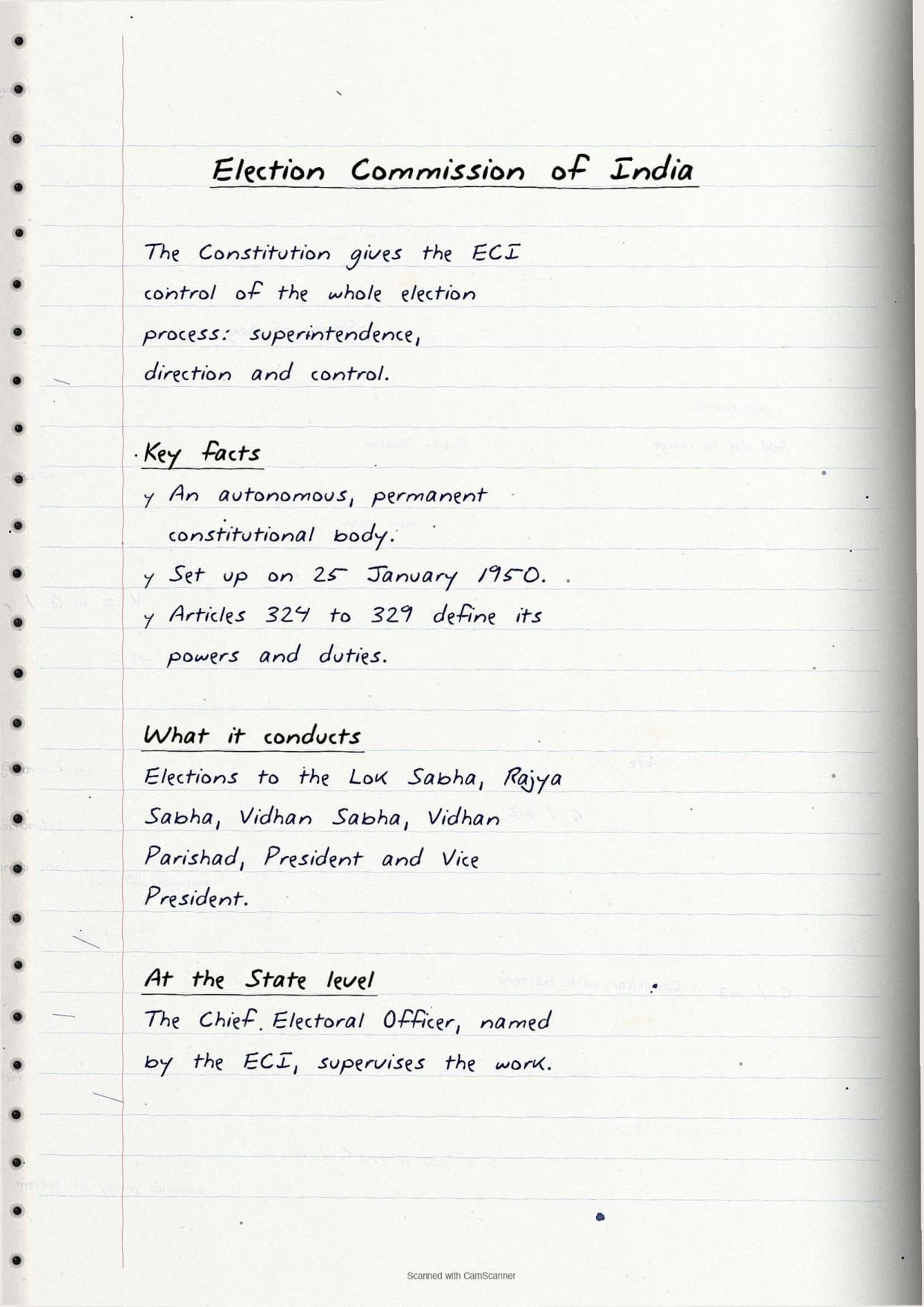
| Election Commission of India | Set up on 25 January 1950; Articles 324 to 329; runs all major elections. |
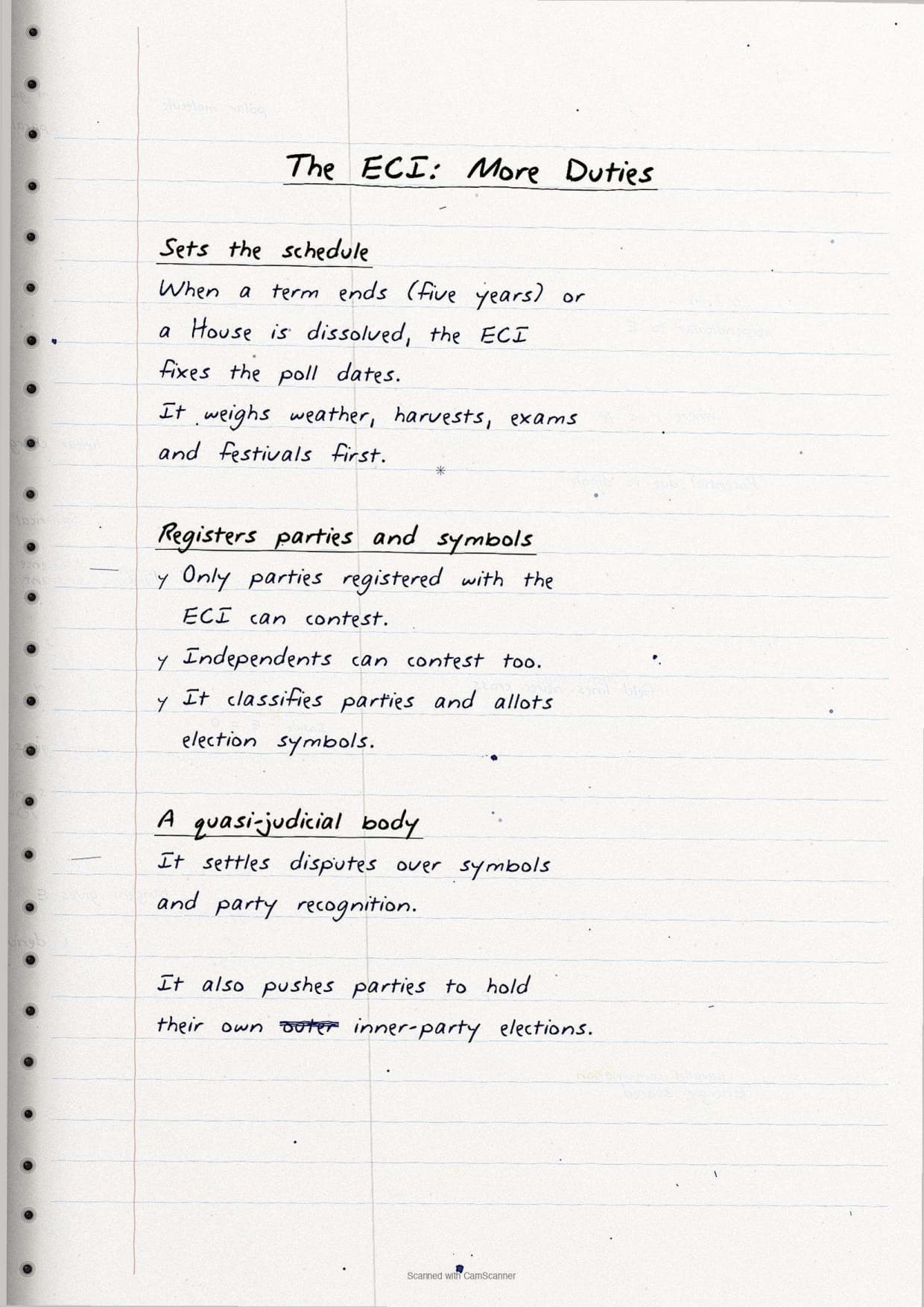
The notes list the ECI's core jobs in blue: it prepares the electoral roll, fixes the poll schedule, registers parties and their symbols, and keeps the vote free and fair. A red box adds Special Intensive Revision (SIR), the updating of the rolls.
Political Parties and Defection Marked in Red
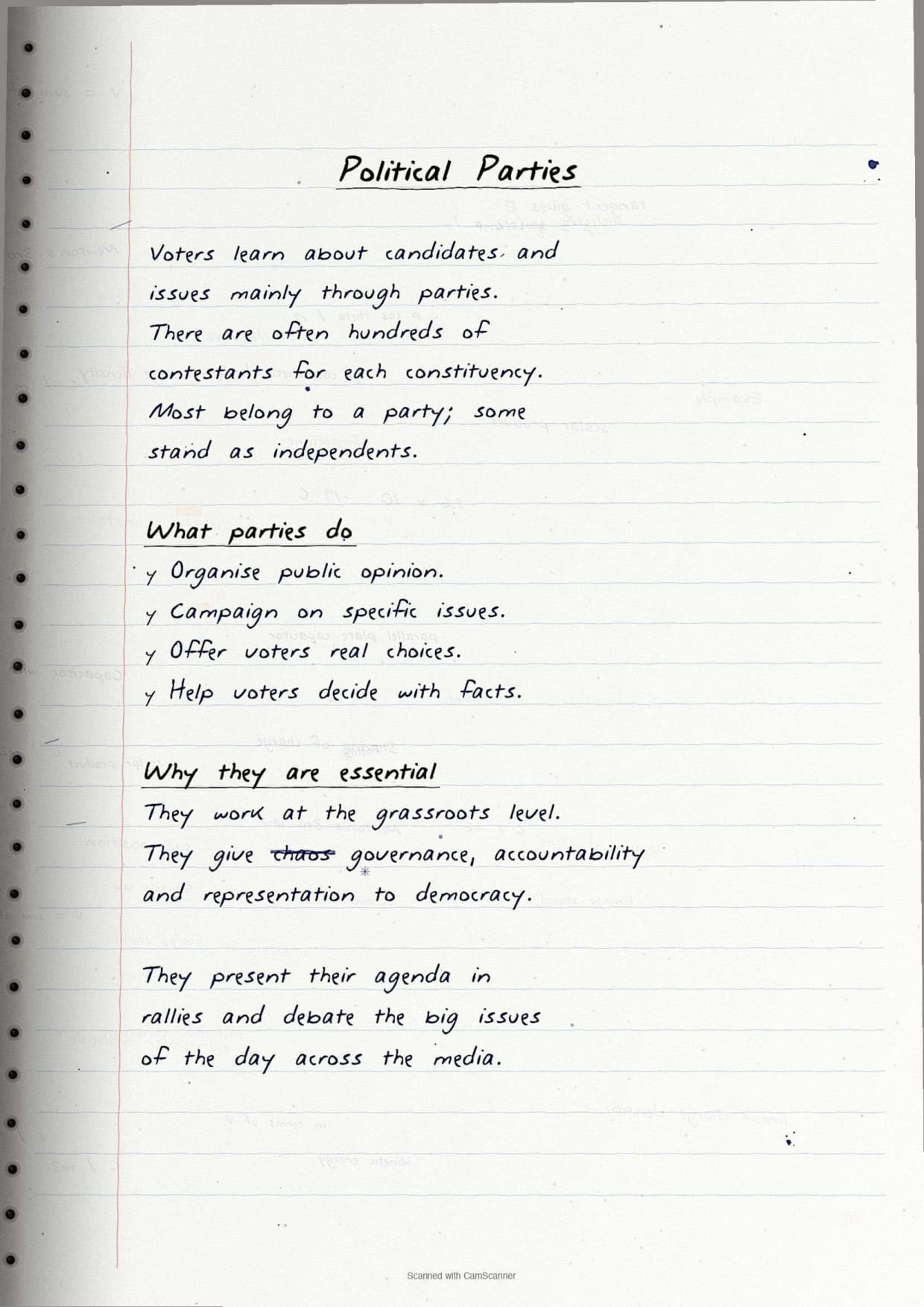
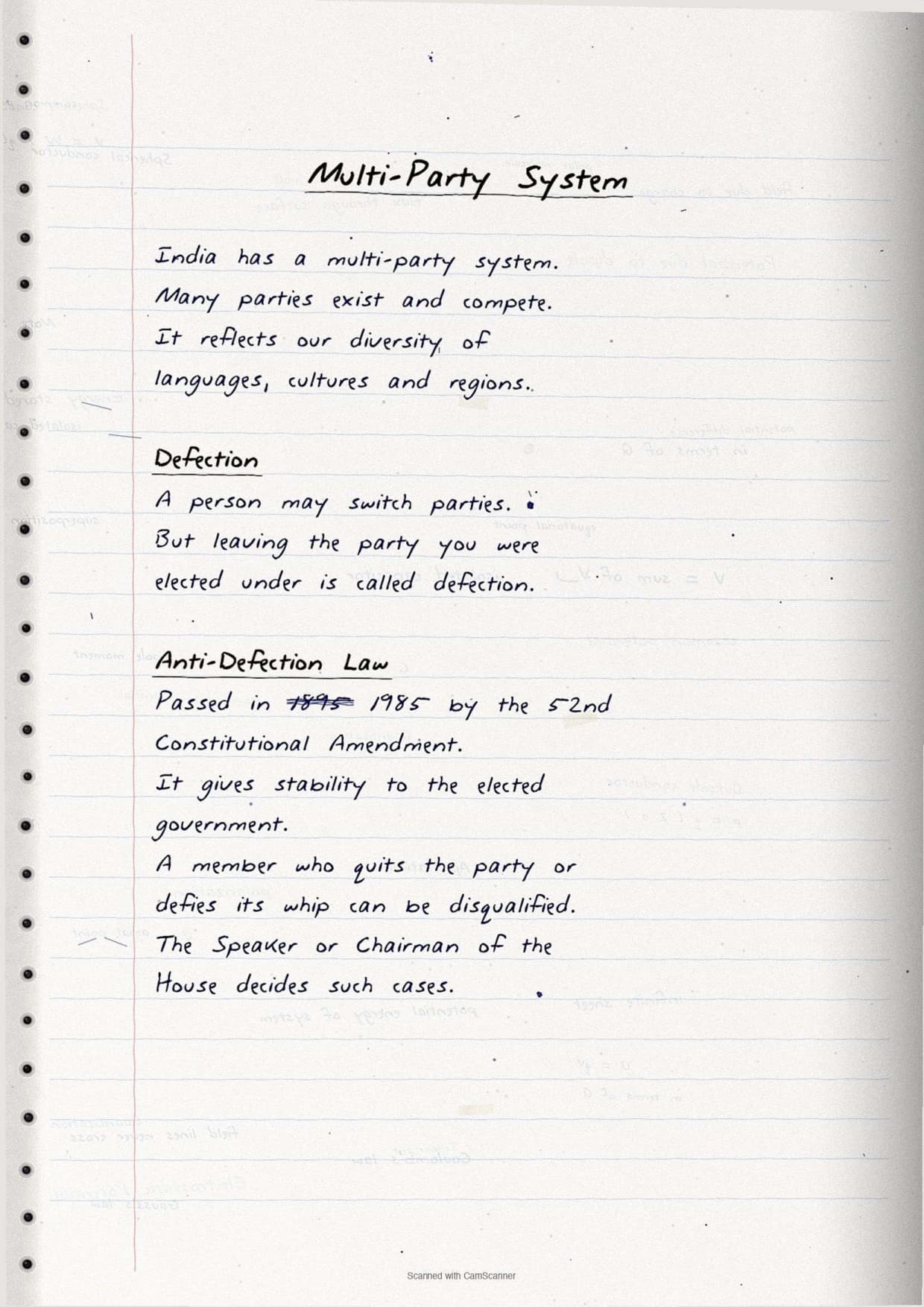
Voters cannot know every candidate on their own, so parties bridge the gap. India has a multi-party system that reflects its many languages and regions. The notes box the two terms tested most.
- Defection means leaving the party on whose ticket a member was elected, or voting against its whip in the House.
- The Anti-Defection Law, passed in 1985 through the 52nd Amendment, can disqualify a member who defects. The Speaker or Chairman decides.
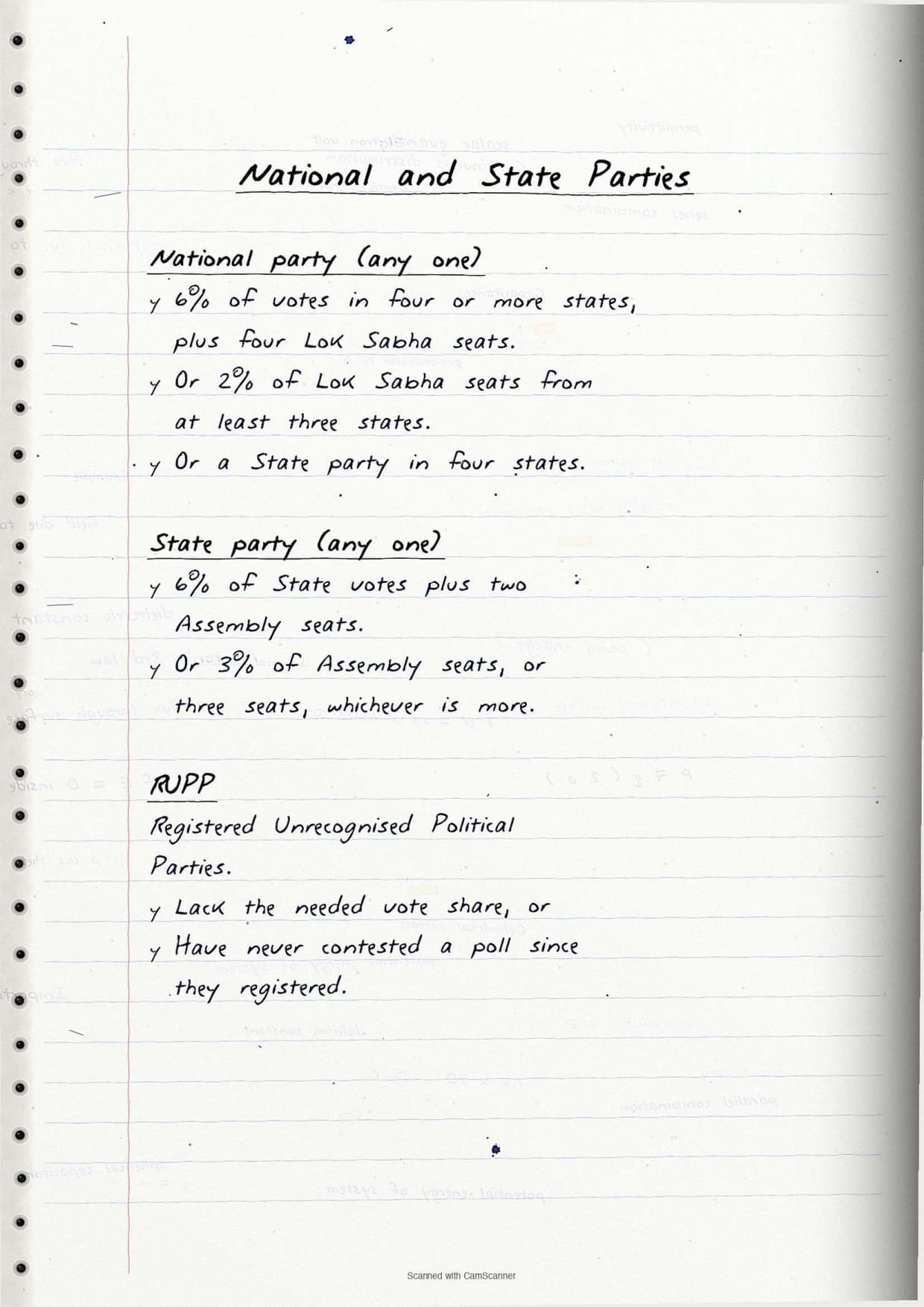
A red side-note explains recognition: a national party must show strength across several states, while a state party needs it within one state. Parties that fall short stay registered but unrecognised.
Free, Fair, and Inclusive Elections in the Class 9 Social Science Handwritten Notes Chapter 7 Elections
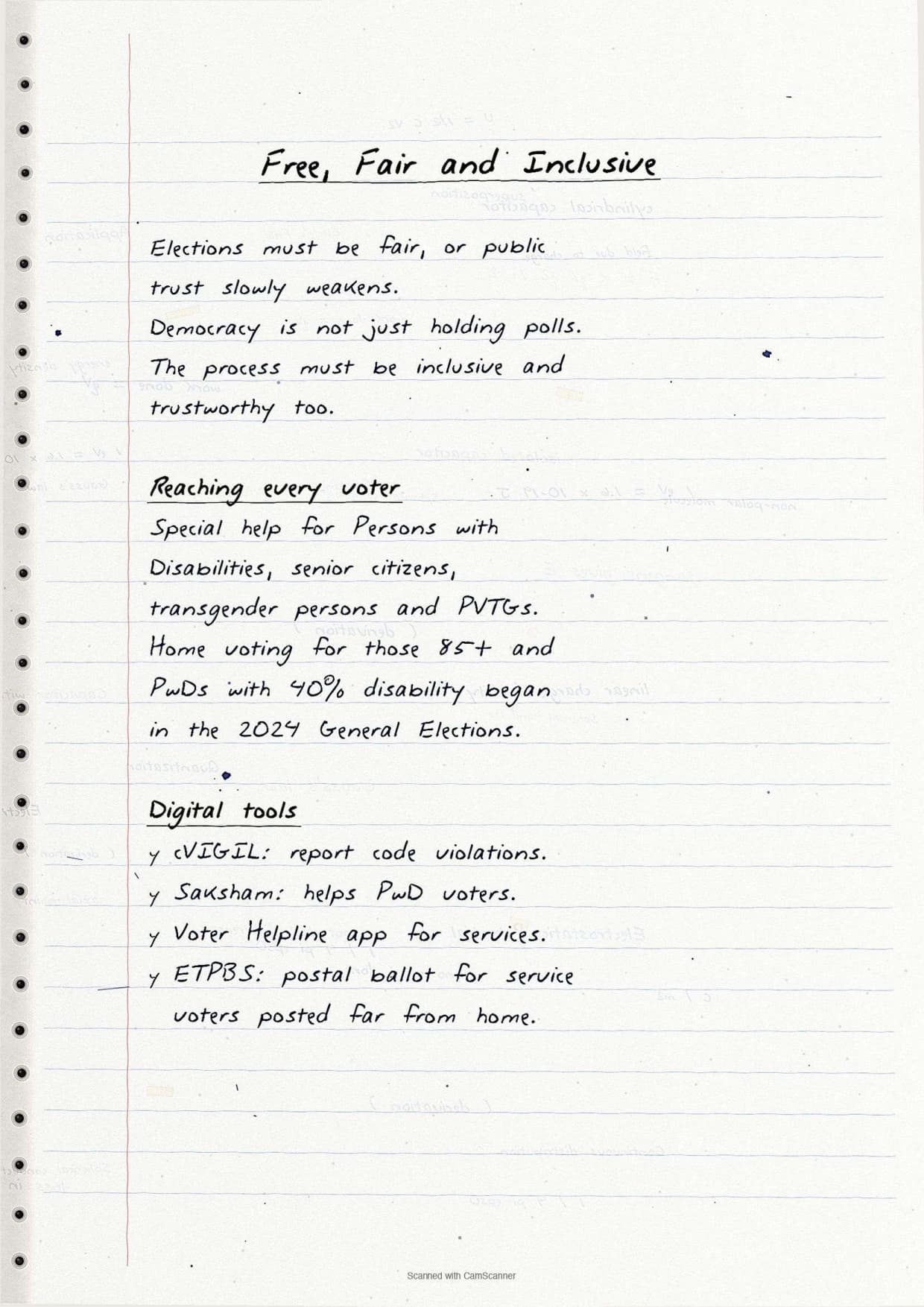
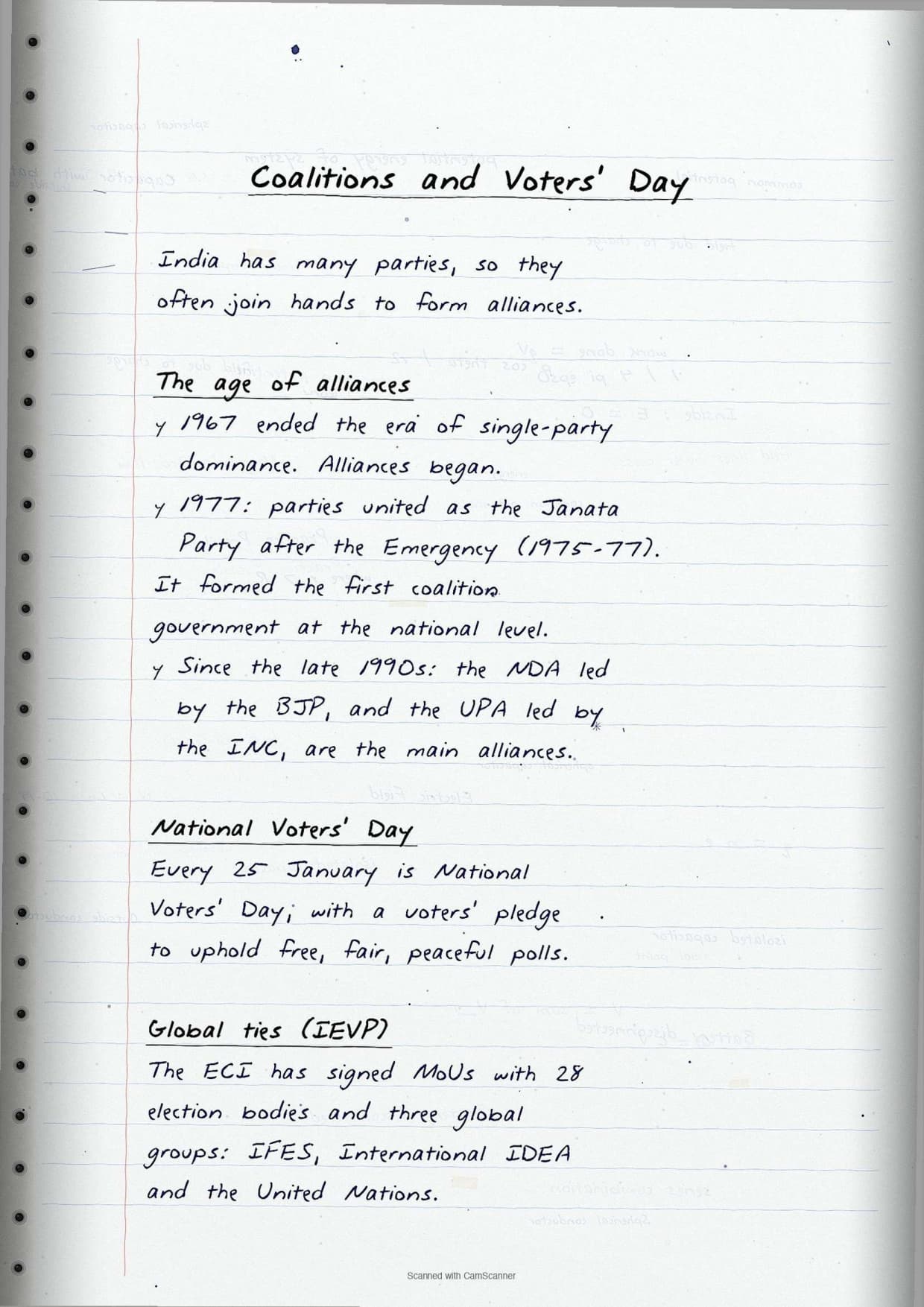
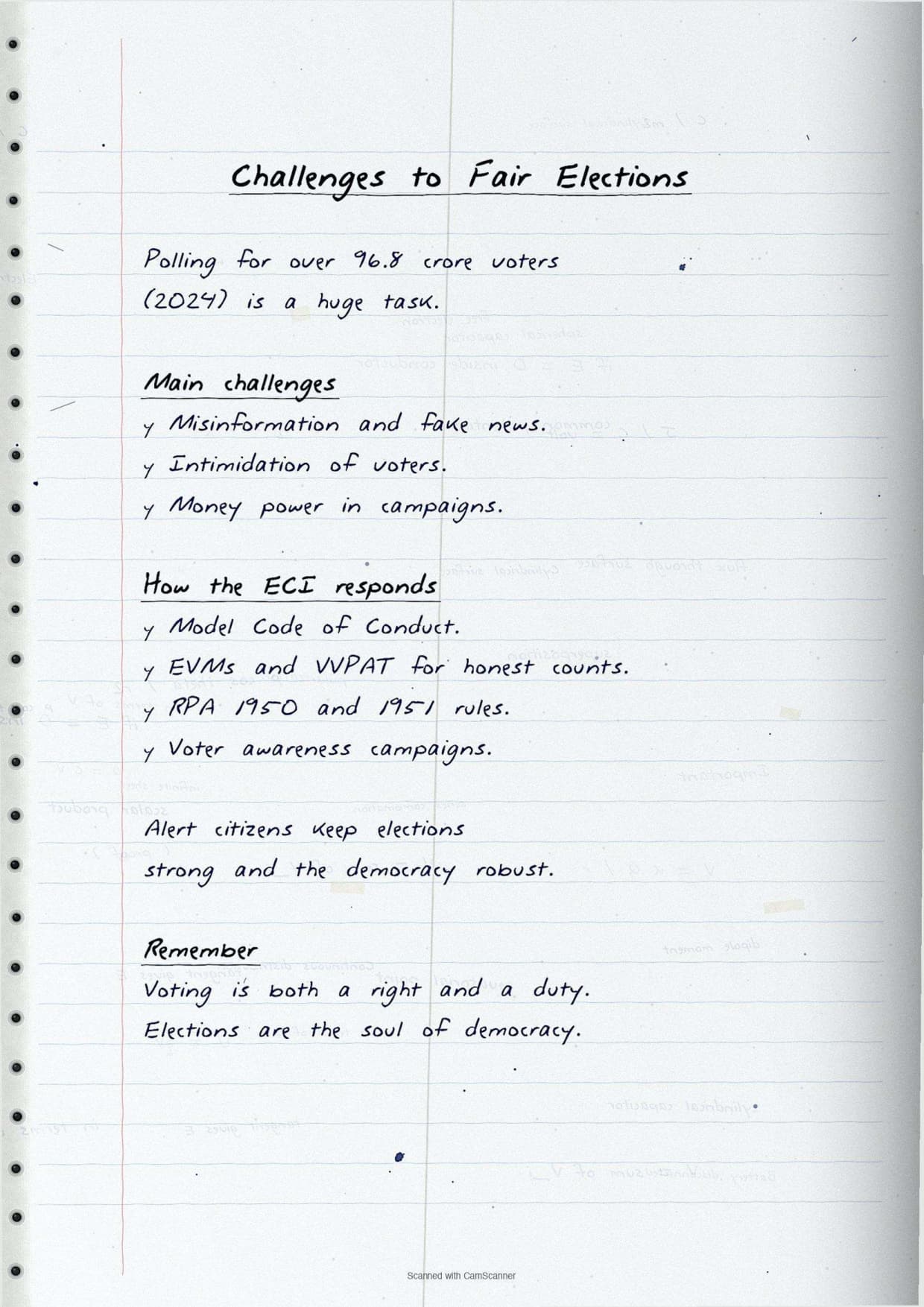
Holding an election is not enough; it must reach every voter. The notes end with the steps that keep India's poll, the world's largest with over 96.8 crore voters in 2024, open to all.
- Voting from home was extended in 2024 for senior citizens above 85 and persons with a benchmark disability of 40 percent.
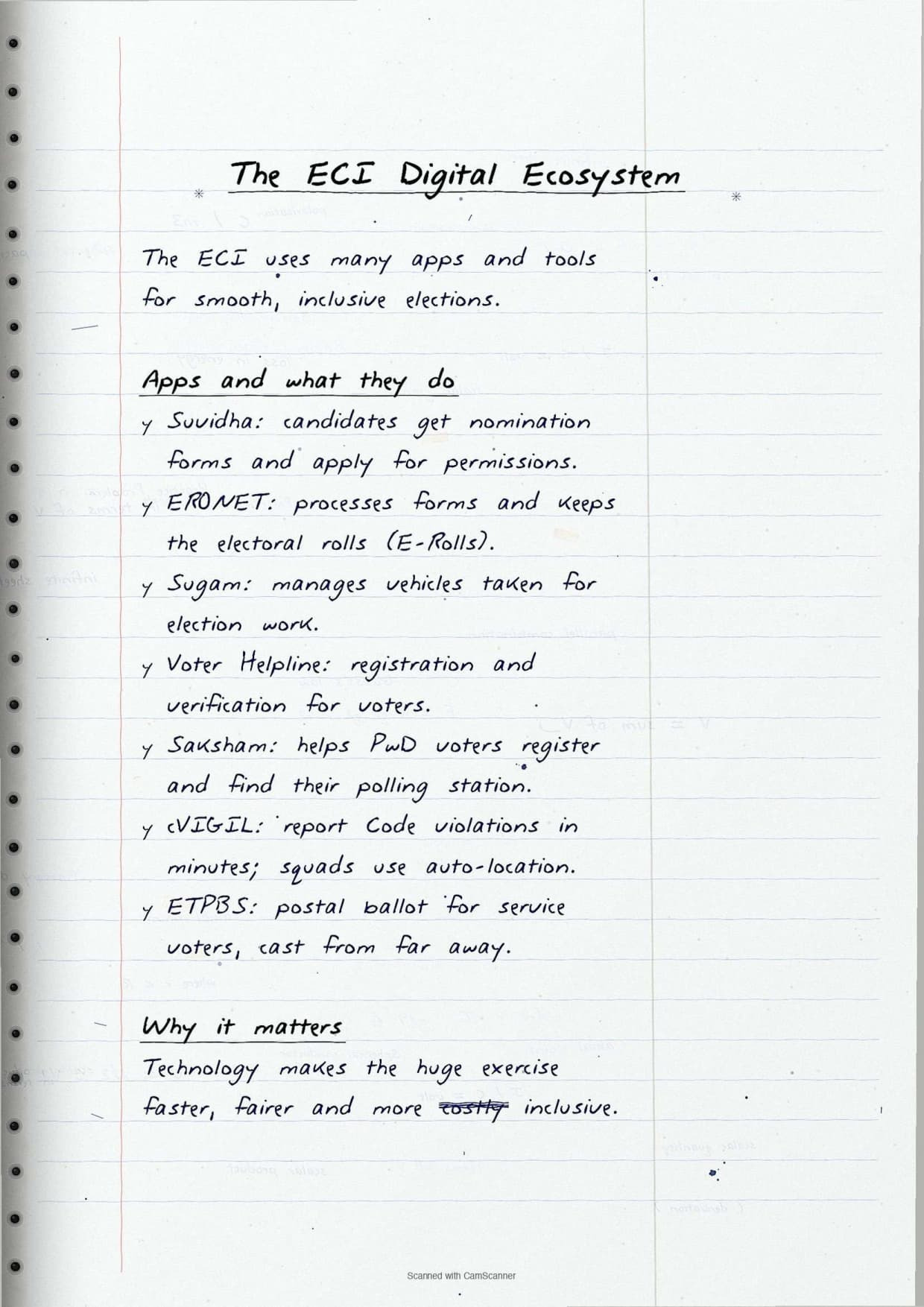
- Digital tools like cVIGIL let any voter report a Model Code of Conduct violation, and ETPBS sends postal ballots to service voters.
- The VVPAT prints a slip so a voter can check the vote was recorded.
A red box lists the challenges, misinformation and intimidation, then the safeguards: the two RPA Acts, the Model Code of Conduct, EVMs, VVPAT, and voter-awareness drives.
Common Mistakes and Last-Minute Revision with These Handwritten Notes
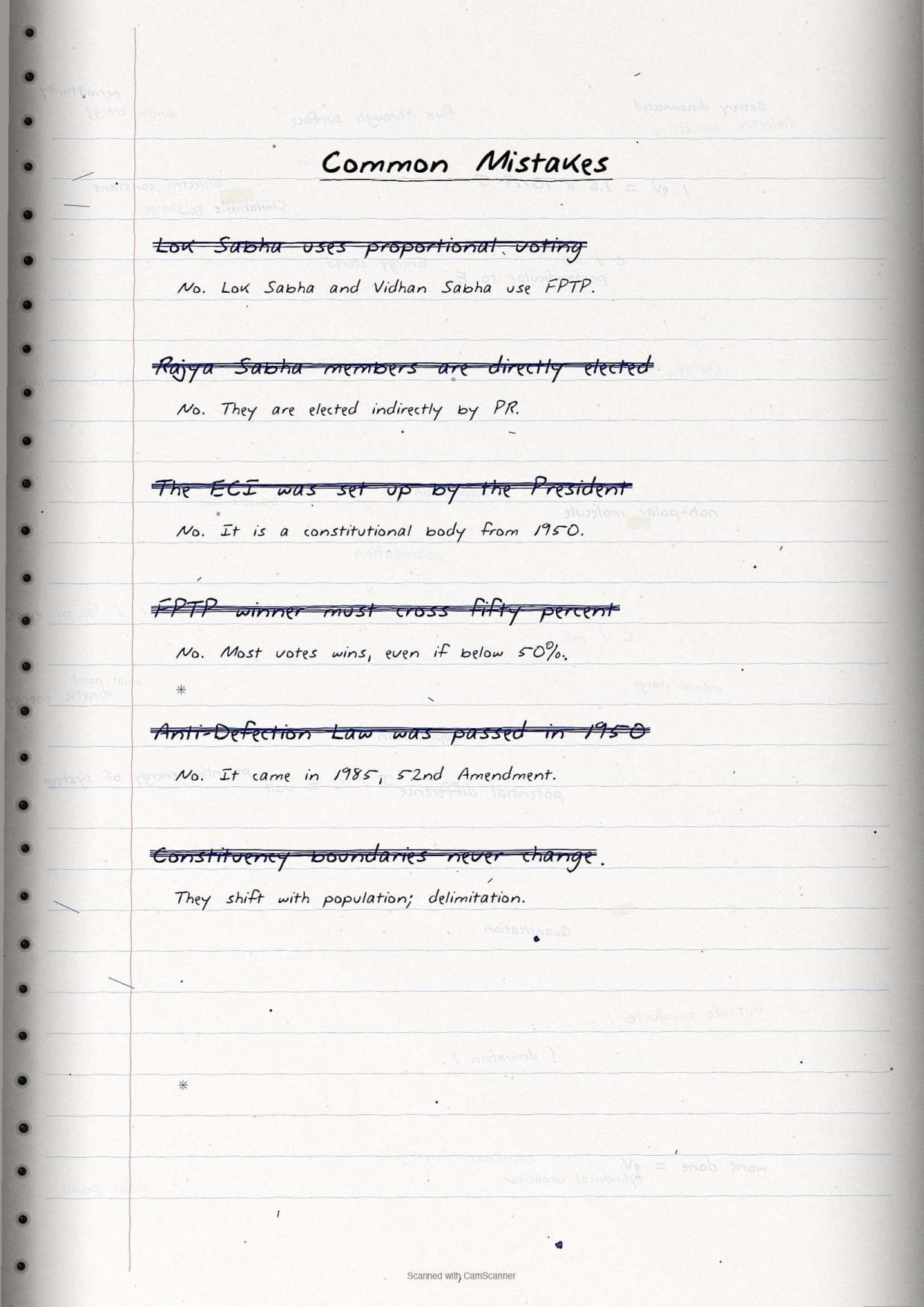
Most lost marks in the Class 9 Social Science Handwritten Notes Chapter 7 Elections come from small slips, not hard ideas. The notes circle these in red so you fix them.
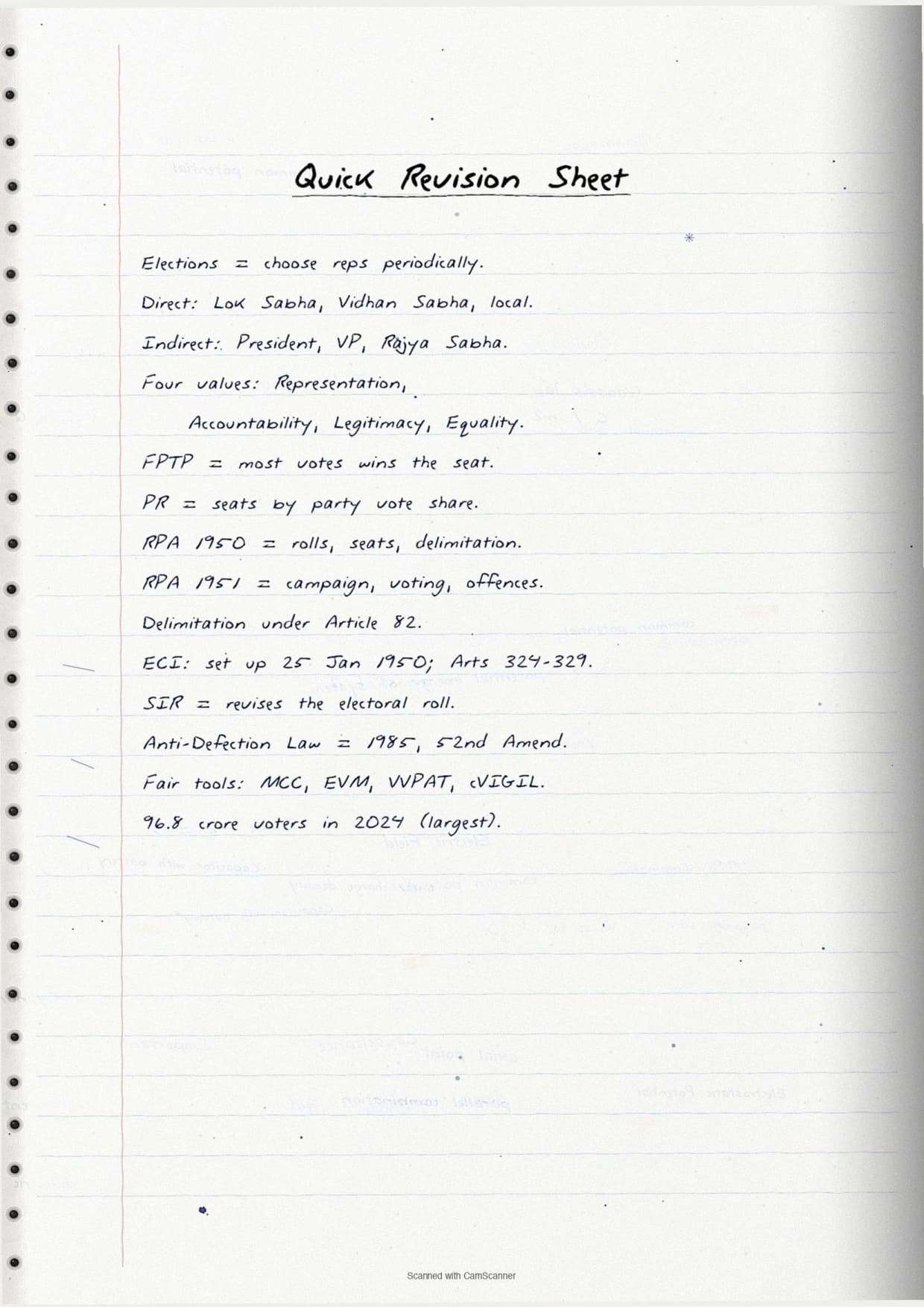
The night before your exam, the Class 9 Social Science Handwritten Notes Chapter 7 Elections work as a quick skim, with every boxed rule and red heading a checkpoint.
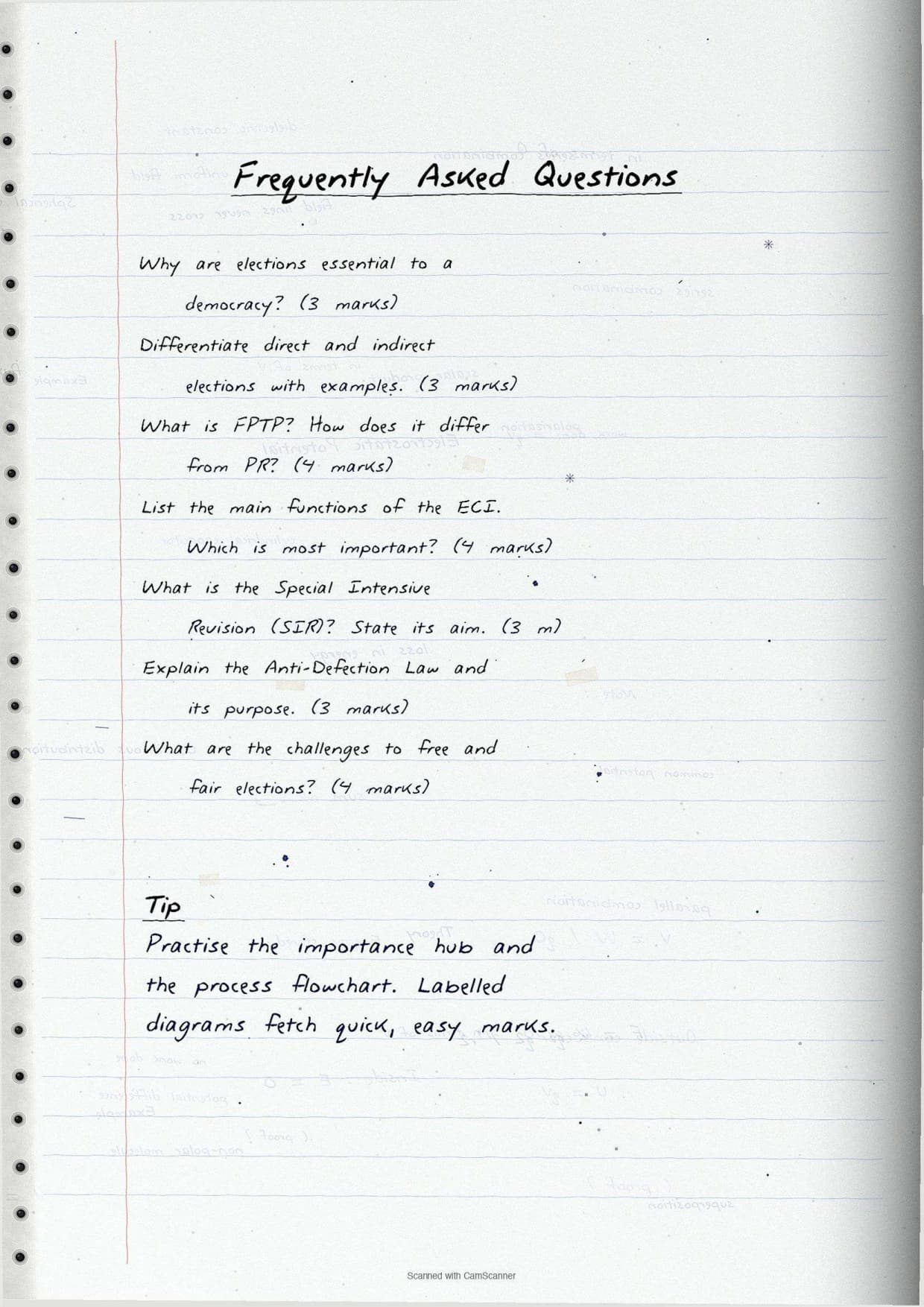
- Define an election and tell a direct one from an indirect one.
- List the four reasons elections matter and FPTP's houses.
- Match RPA 1950 and RPA 1951 to what each covers.
- State the ECI set-up date and three functions, including SIR.
- Explain defection and the year of the Anti-Defection Law.
More Elections Class 9 Social Science Resources
Use the table below to open the other resources for this chapter.
| Resource | Open |
|---|---|
| Handwritten Notes | Elections Class 9 Social Science Handwritten Notes |
| NCERT Solutions | Elections Class 9 Social Science NCERT Solutions |
| Revision Notes | Elections Class 9 Social Science Notes |
| NCERT Book PDF | Elections Class 9 Social Science NCERT Book PDF |
NCERT Handwritten Notes for Class 9 Social Science: All Chapters
Use the table below to open the handwritten notes for any other chapter of this book.
| Chapter | Handwritten Notes |
|---|---|
| Chapter 1 | Understanding Social Science |
| Chapter 2 | Shaping of the Earth's Surface |
| Chapter 3 | Atmosphere and Climate |
| Chapter 4 | Early Humans and Beginning of Civilisation |
| Chapter 5 | State and Society up to 1000 CE |
| Chapter 6 | Democracy |
| Chapter 7 | Elections |
| Chapter 8 | Building Blocks in Economics: The Problem of Choice |
| Chapter 9 | The Price Puzzle: What Drives the Market |
Elections Class 9 Social Science Handwritten Notes FAQs
Ques. How many pages are the Class 9 Social Science Chapter 7 Elections handwritten notes?
Ans. The handwritten notes run to 21 pages. They cover the full chapter, from why elections matter and the FPTP system to the election laws, the Election Commission, political parties, and free and fair elections, with a small flow chart for each idea.
Ques. Are these real handwritten notes?
Ans. Yes. They are a topper's own clear handwritten revision notes, with each definition boxed, flow charts drawn by hand, and sub-headings colour-coded in red.
Ques. What is the difference between RPA 1950 and RPA 1951 in the notes?
Ans. RPA 1950 covers seat allocation, delimitation, and the electoral rolls, and the right to vote at 18. RPA 1951 covers the actual conduct of the poll, electoral offences, and disputes after the vote.
Ques. Is Elections part of the new Class 9 Social Science book?
Ans. Yes. Elections is Chapter 7 of the new Understanding Society textbook for the 2026-27 syllabus. It builds on the Democracy chapter and explains how India runs the world's largest election.



Comments