




The NCERT Solutions Class 9 Social Science Chapter 7 Elections answer all 14 questions from the Questions and Activities exercise of the 2026-27 Understanding Society textbook. Every answer explains why elections sit at the heart of a democracy, covering the electoral system, election laws, the Election Commission of India, and free and fair polls.
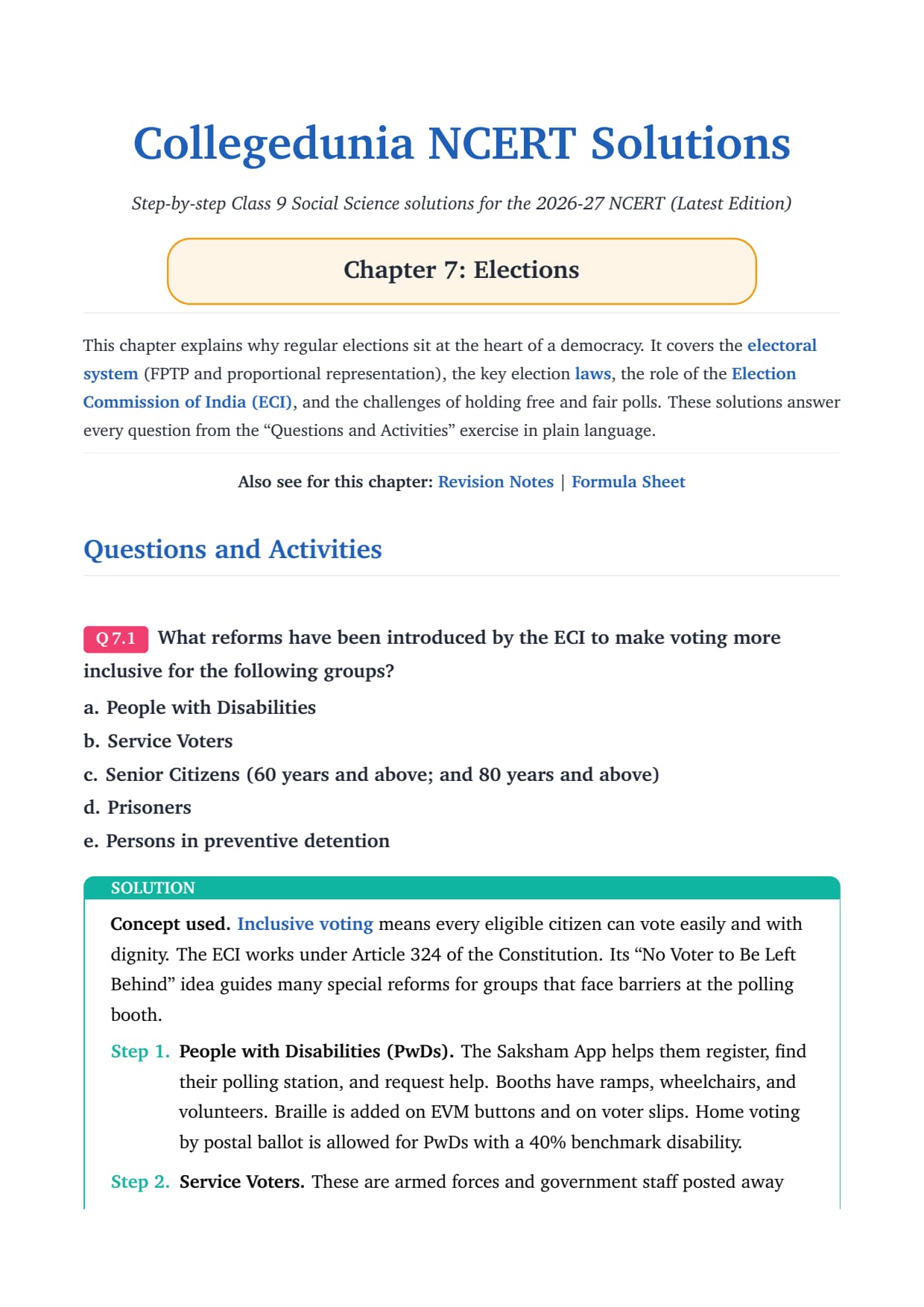
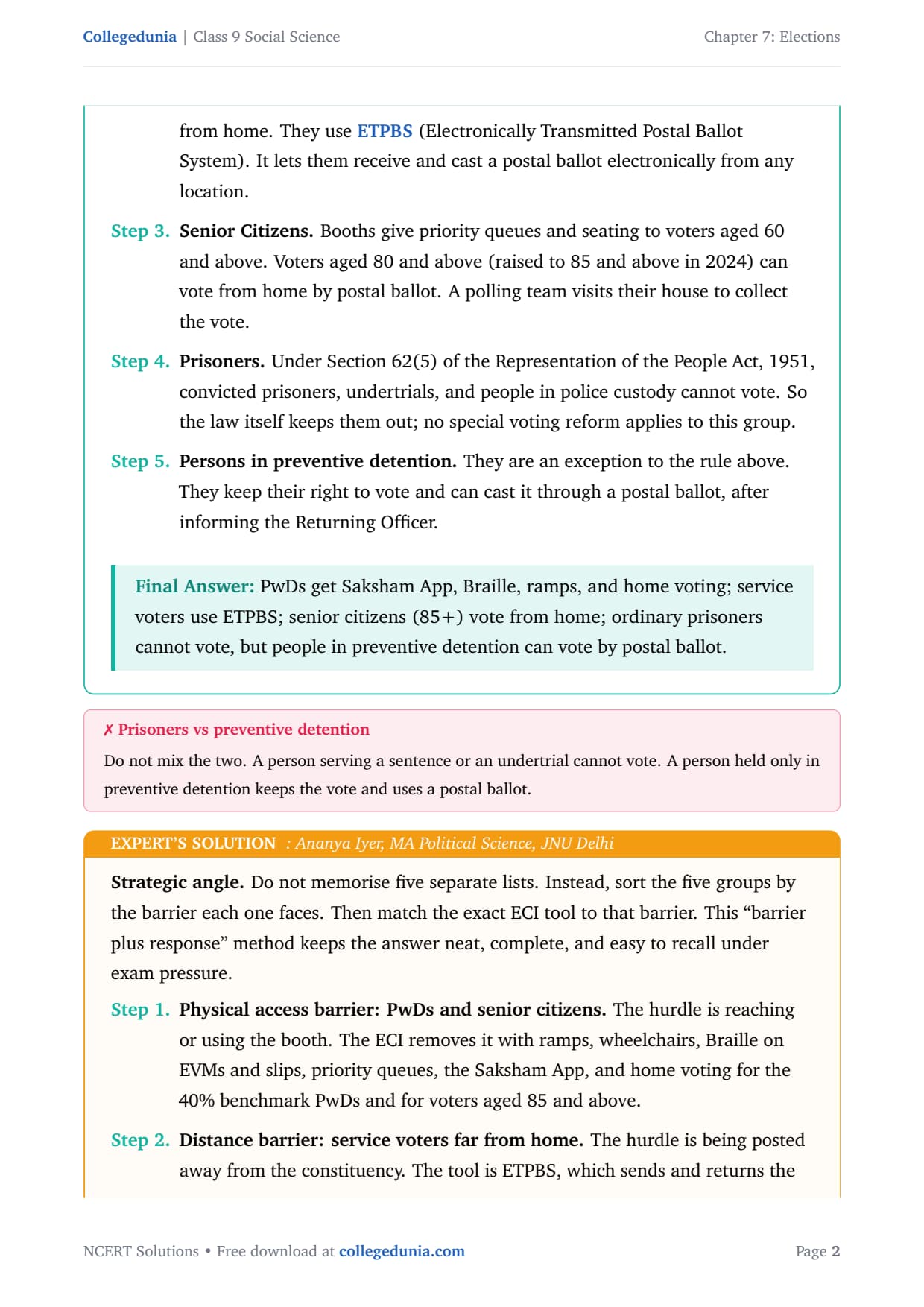
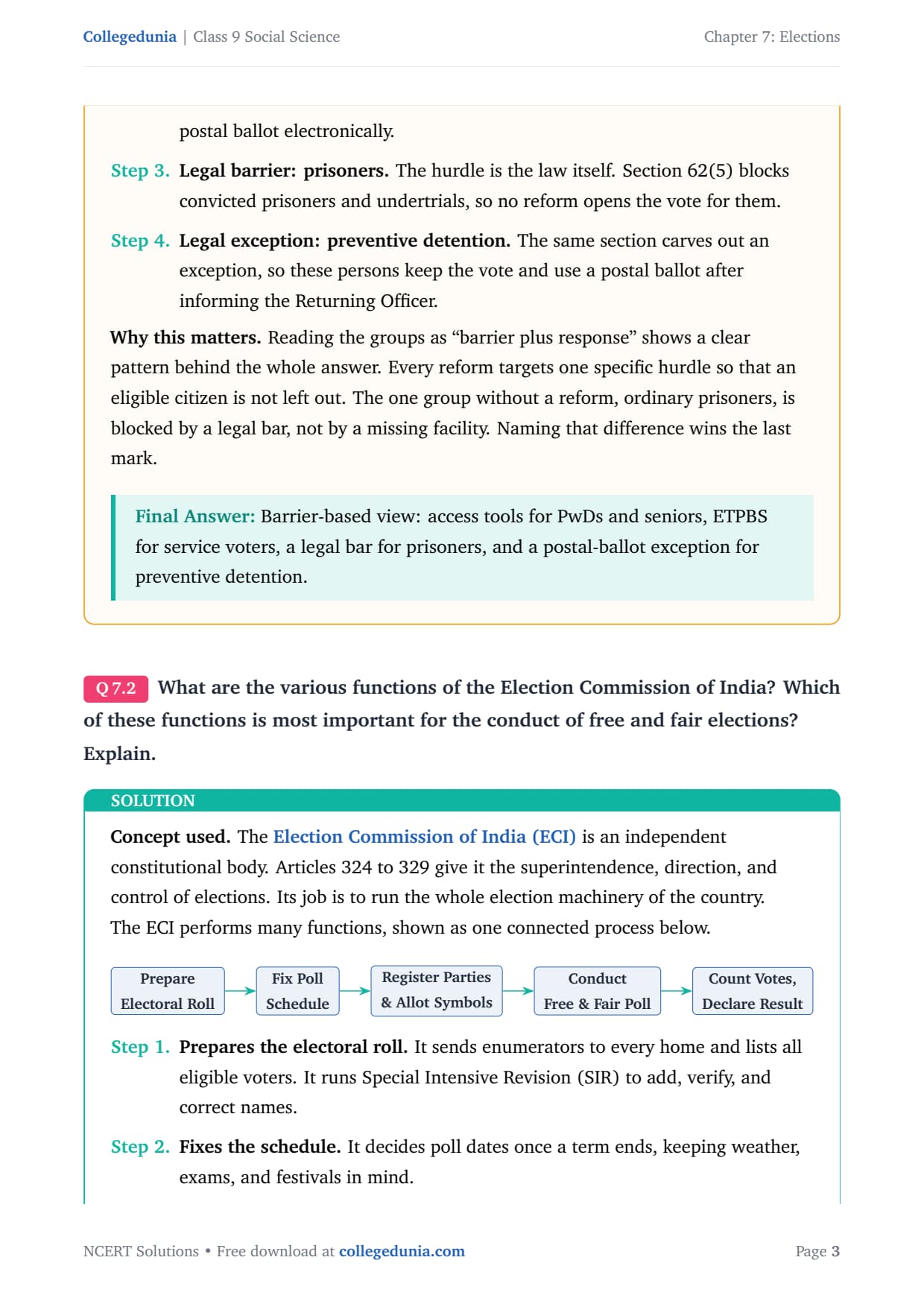
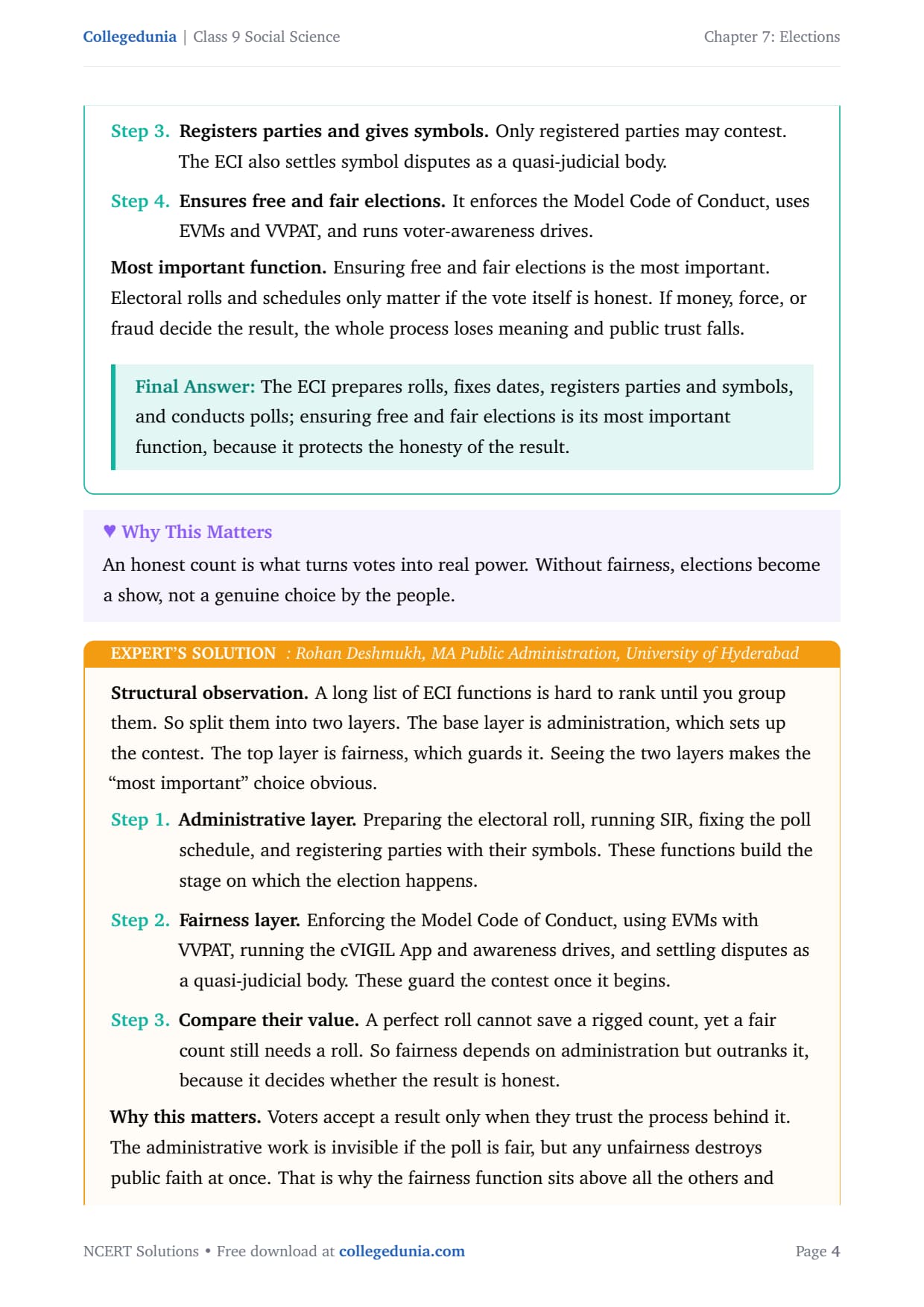
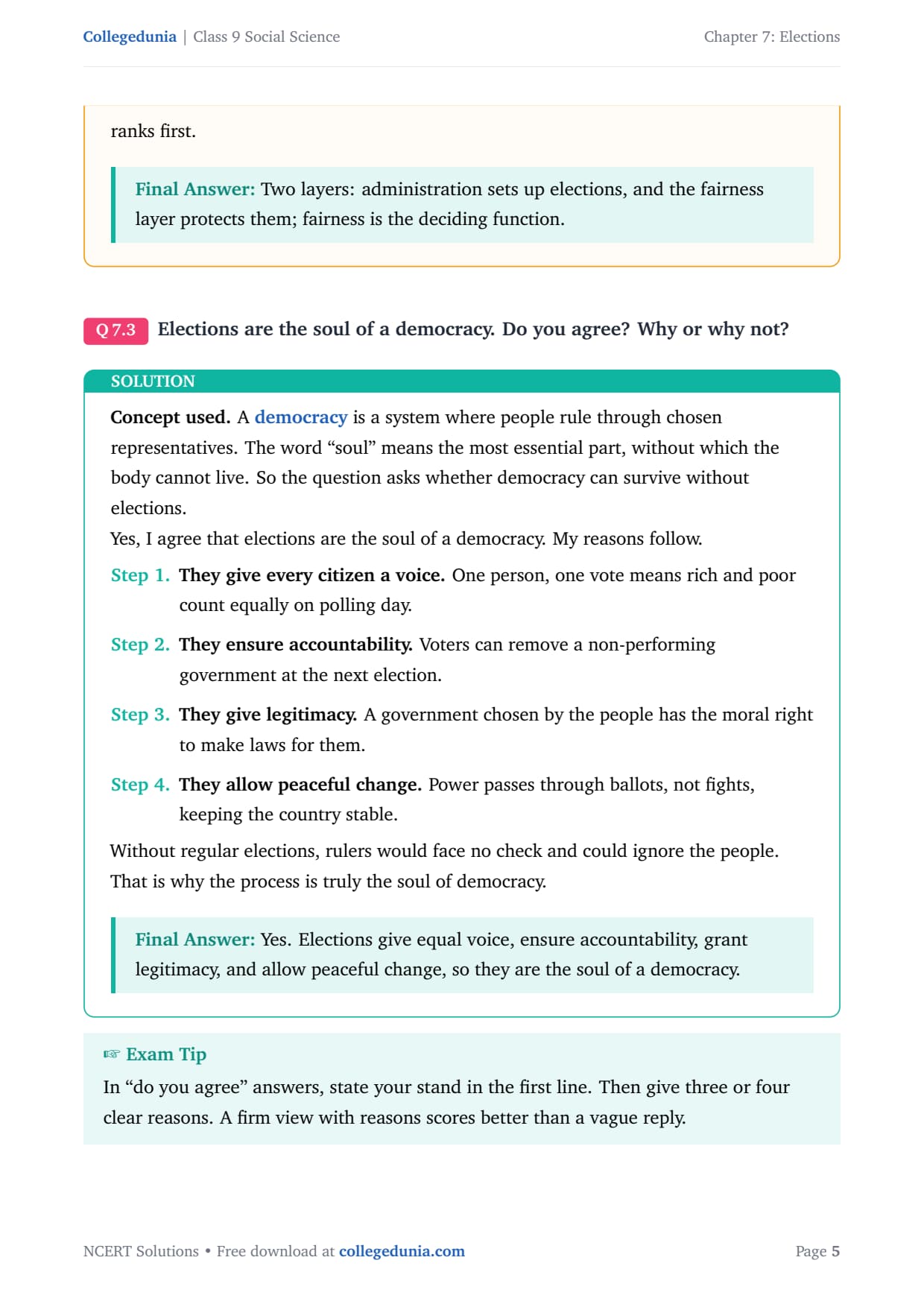
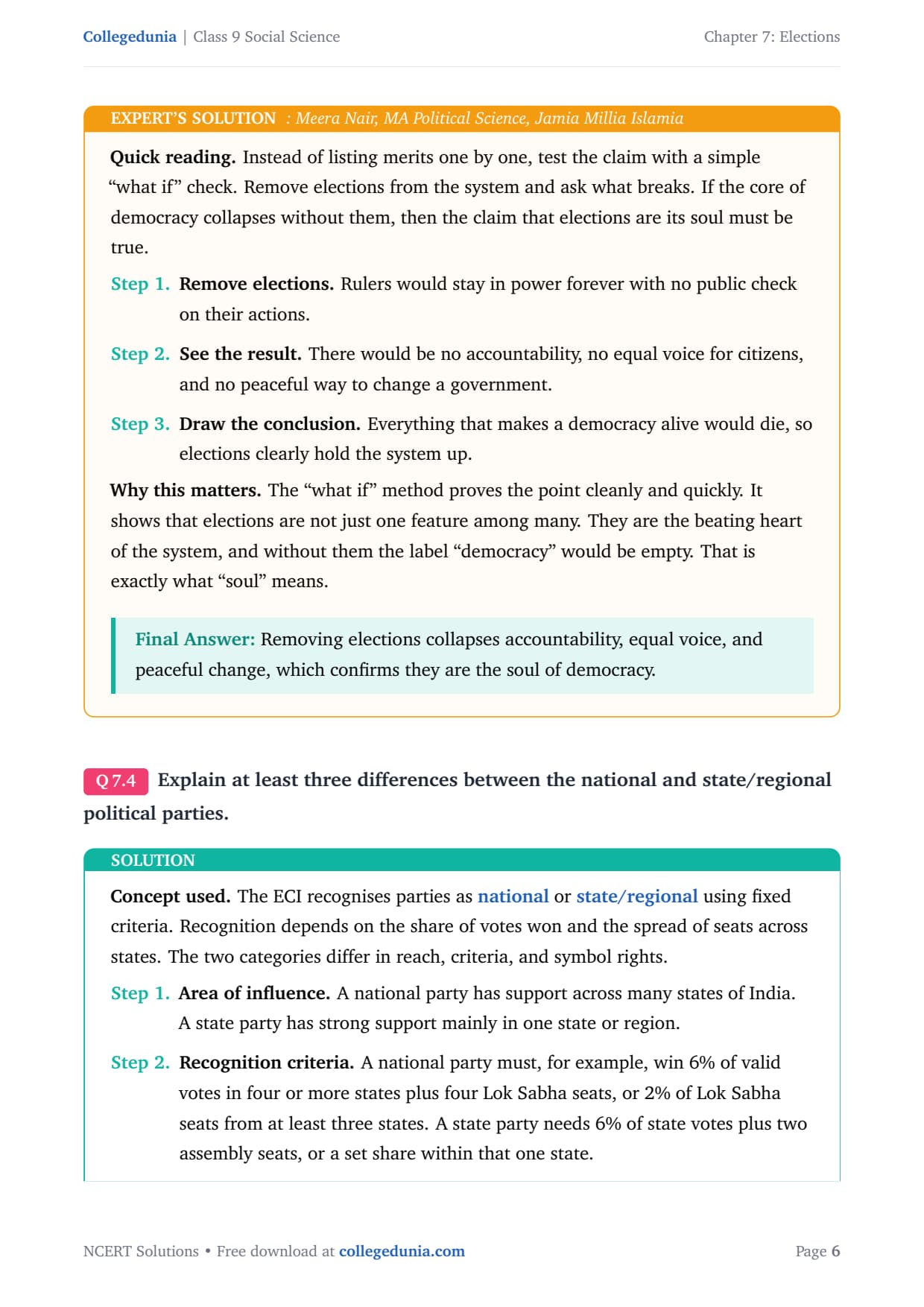
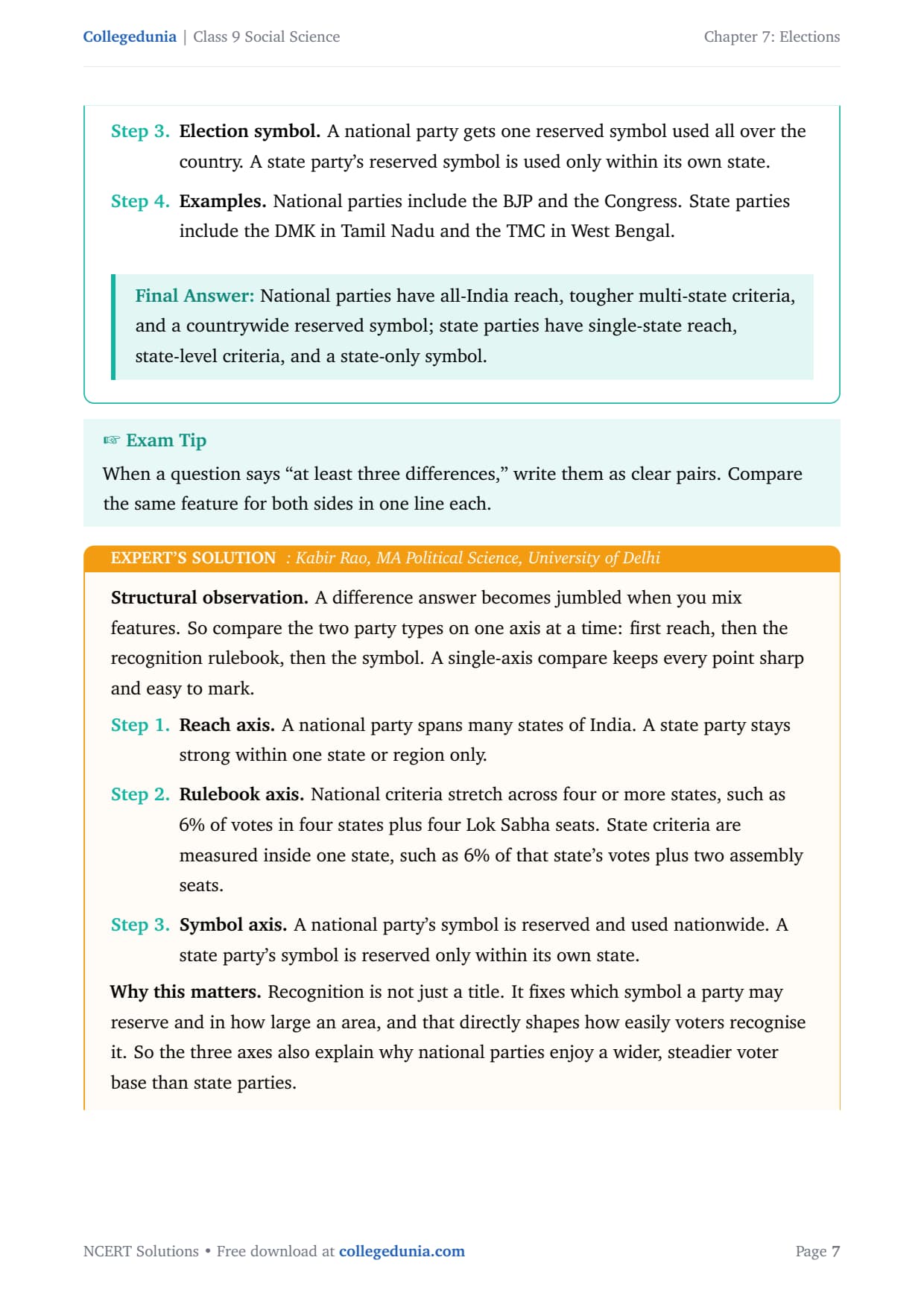
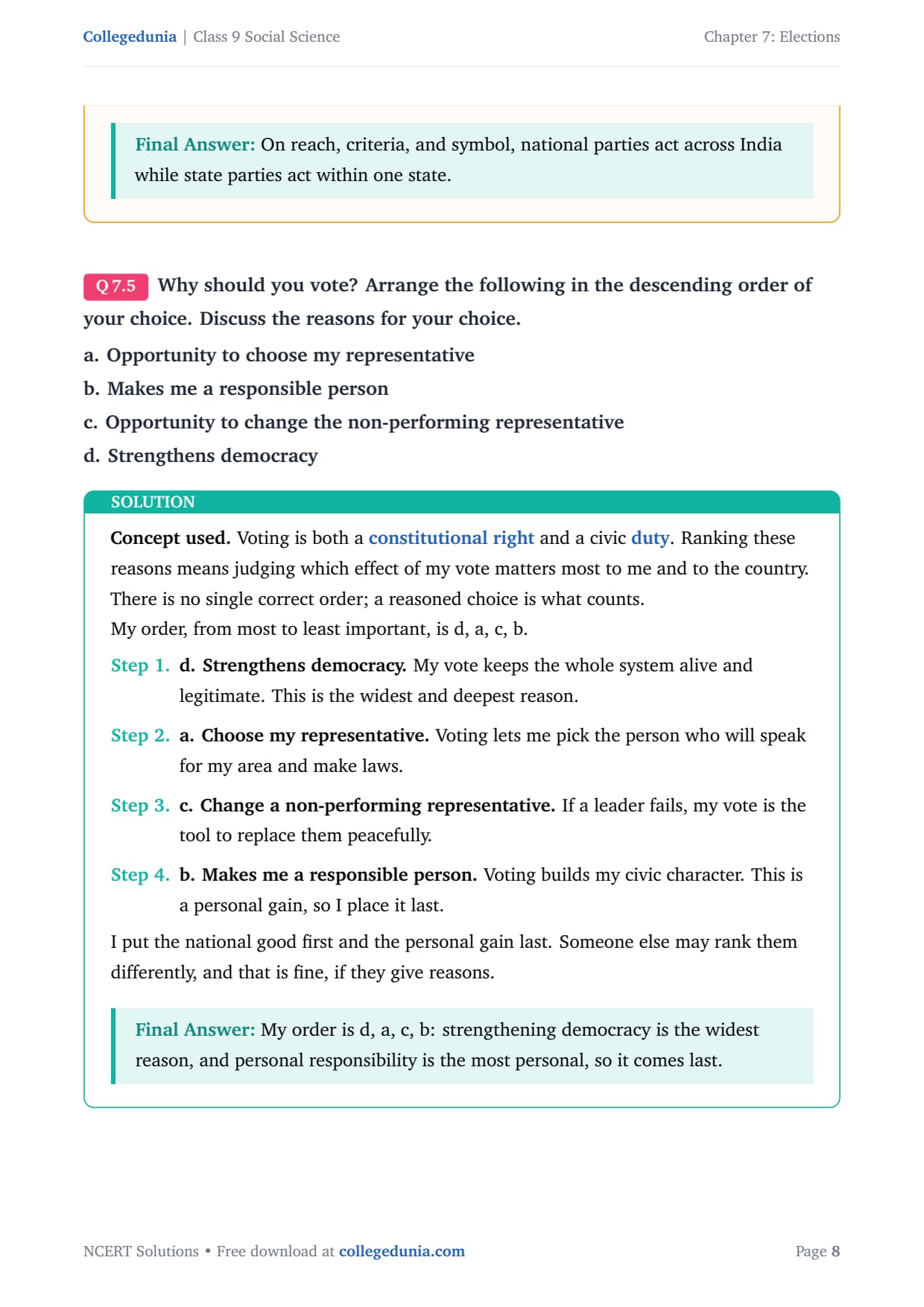
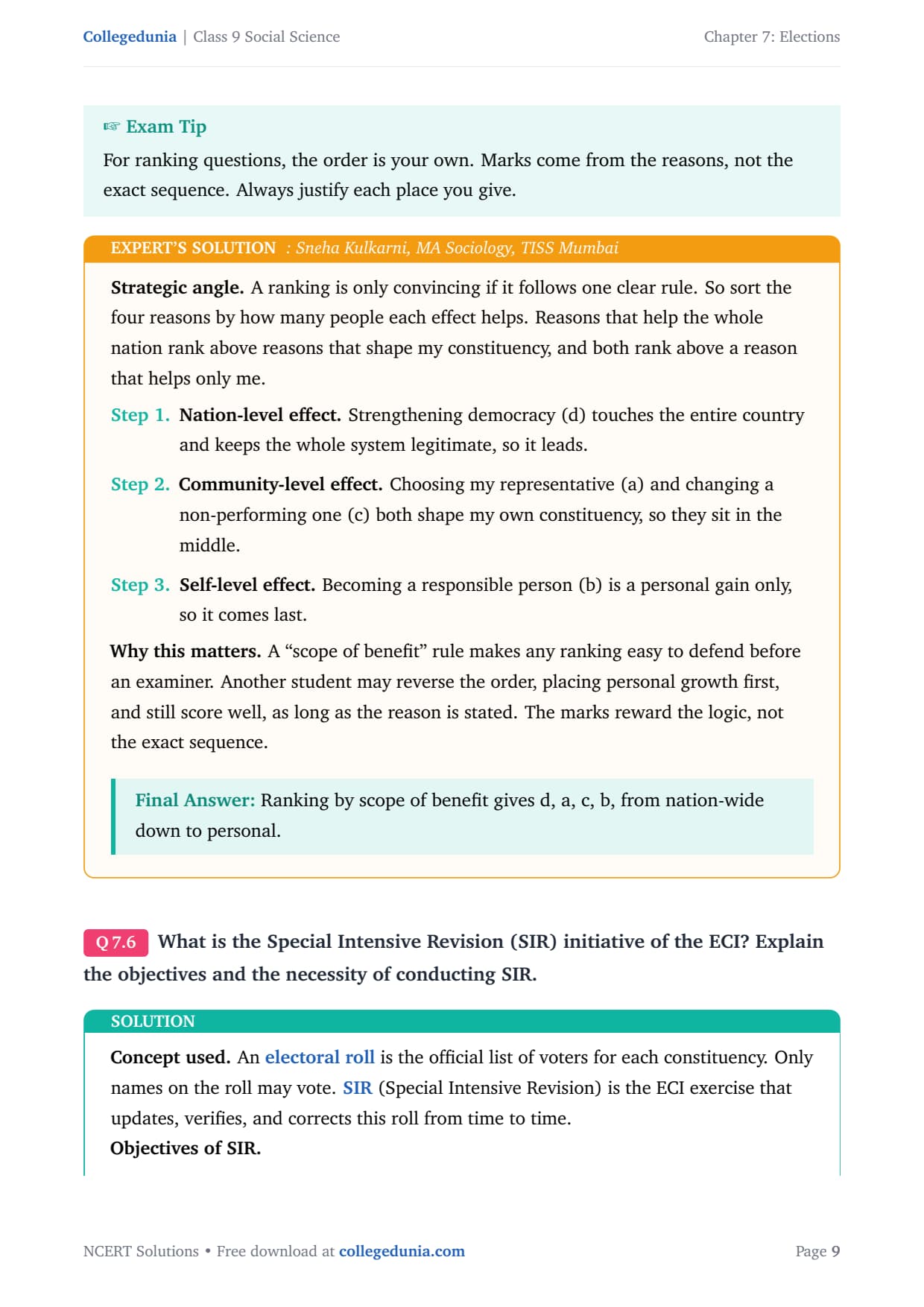
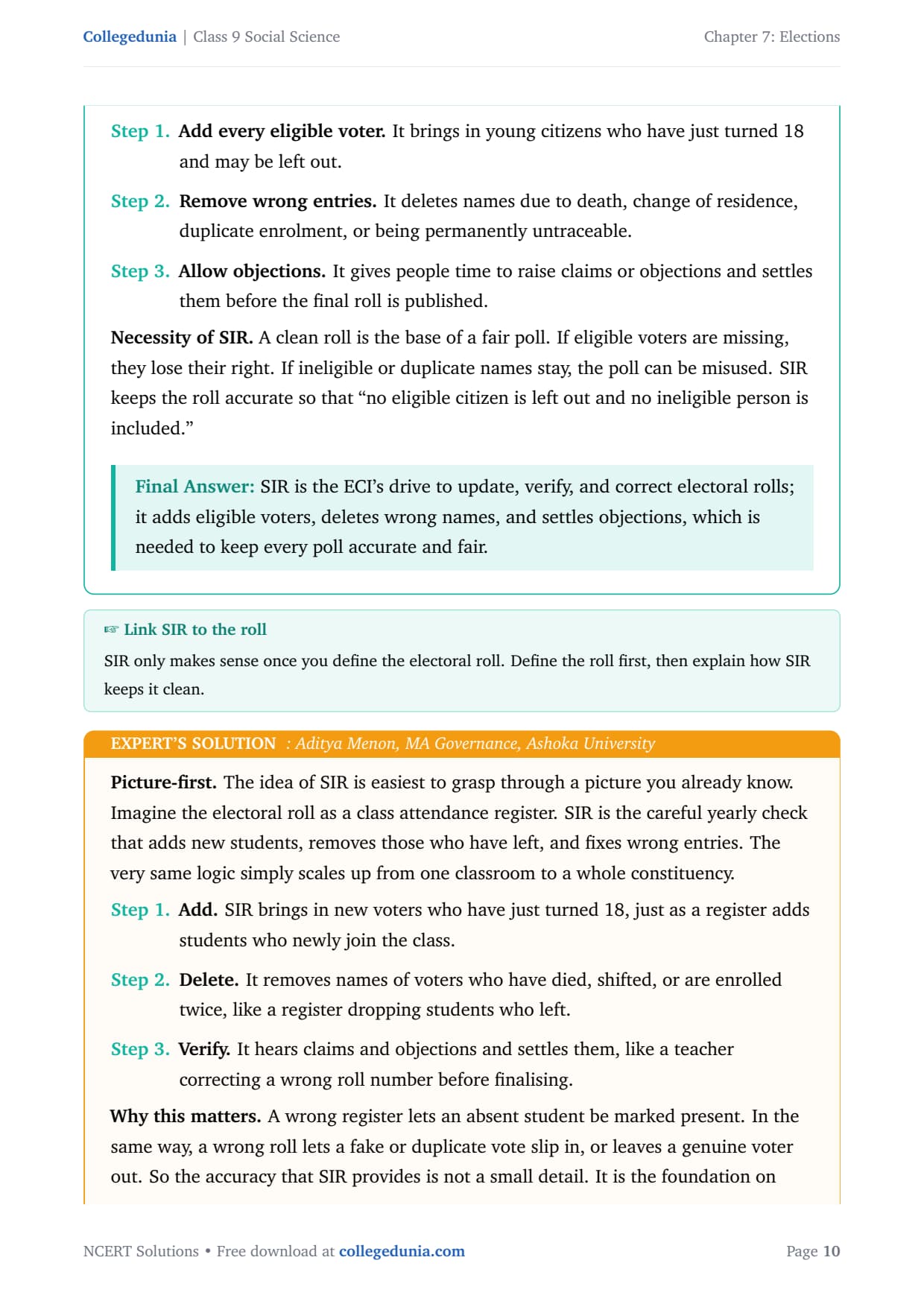
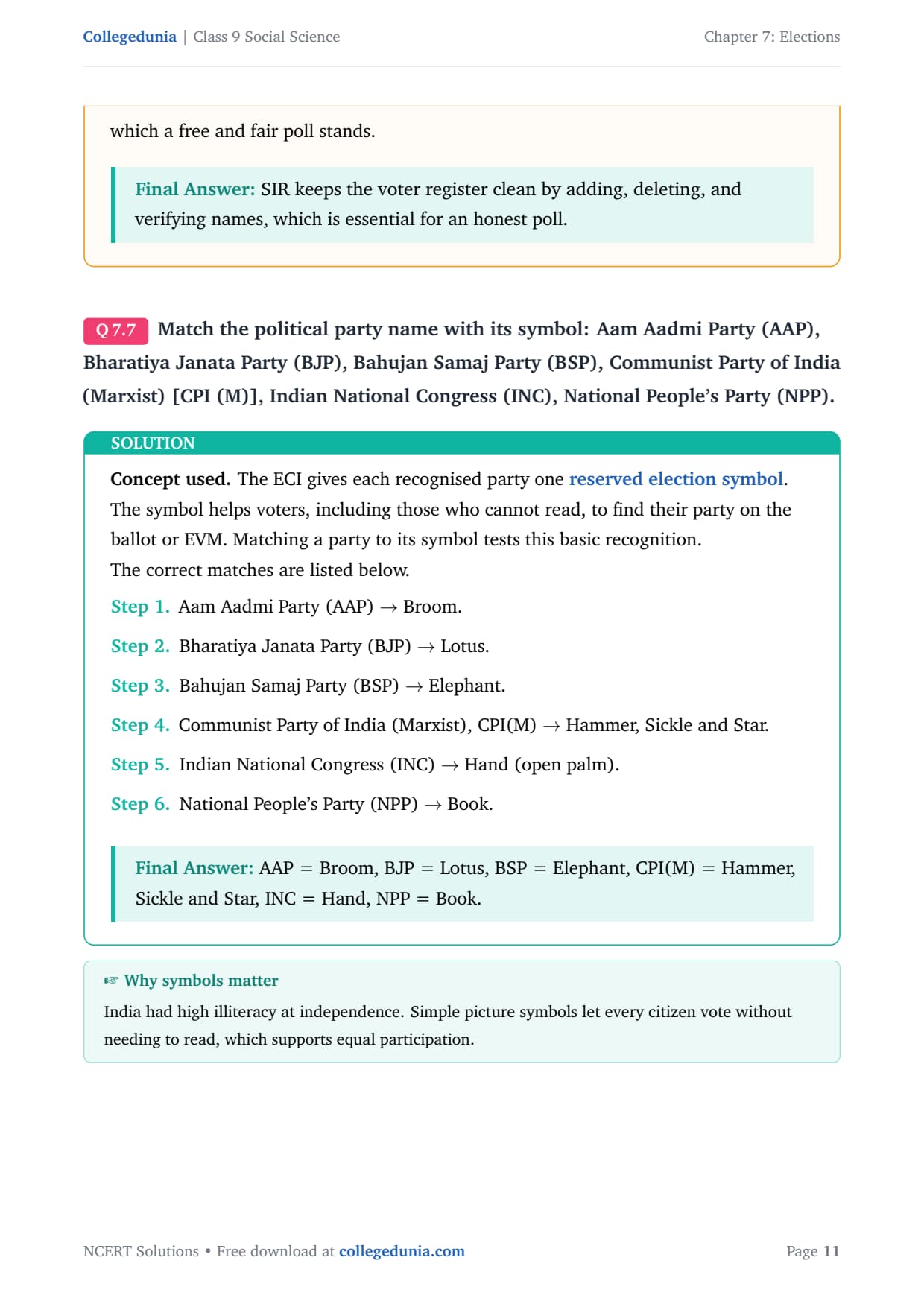
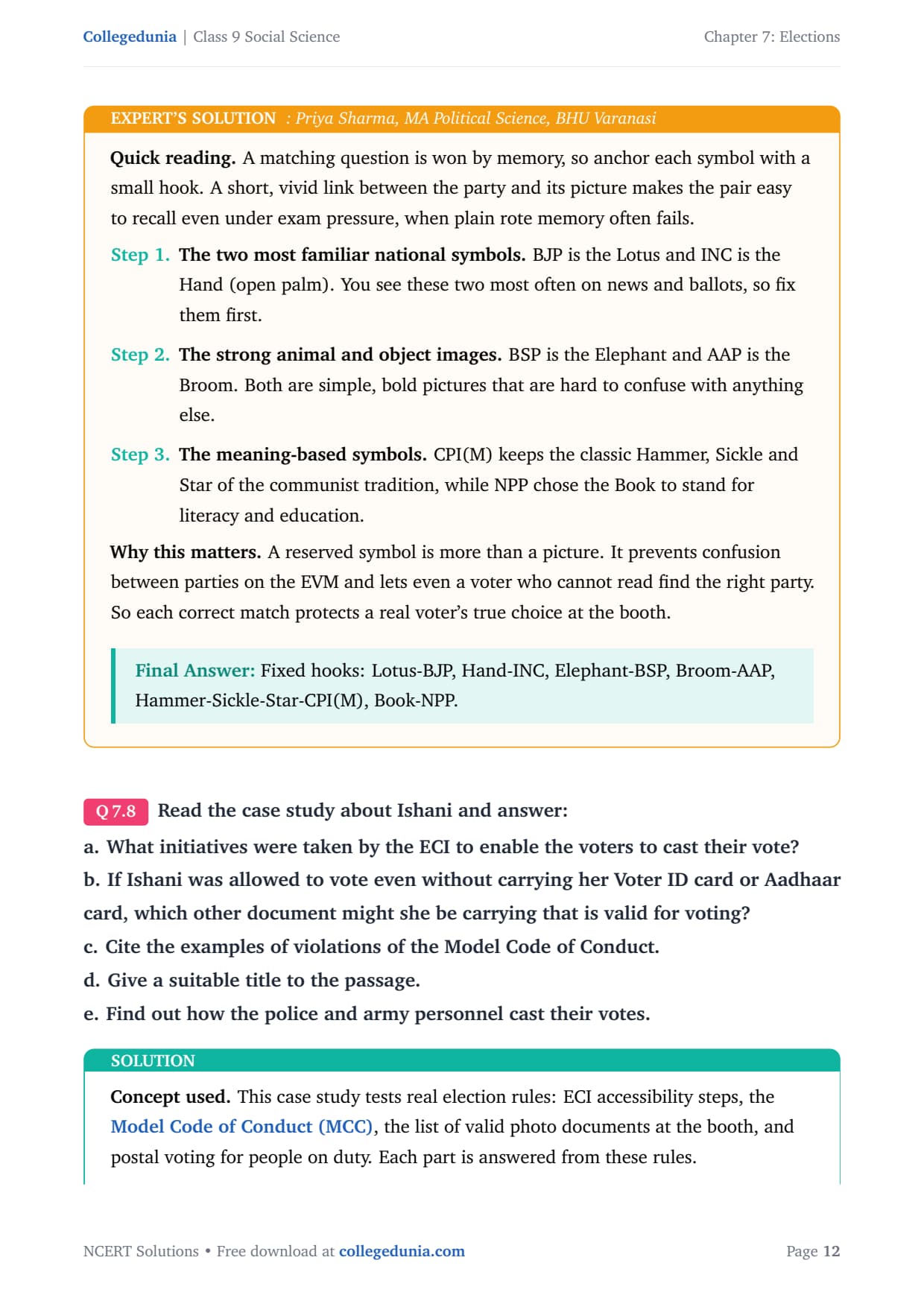
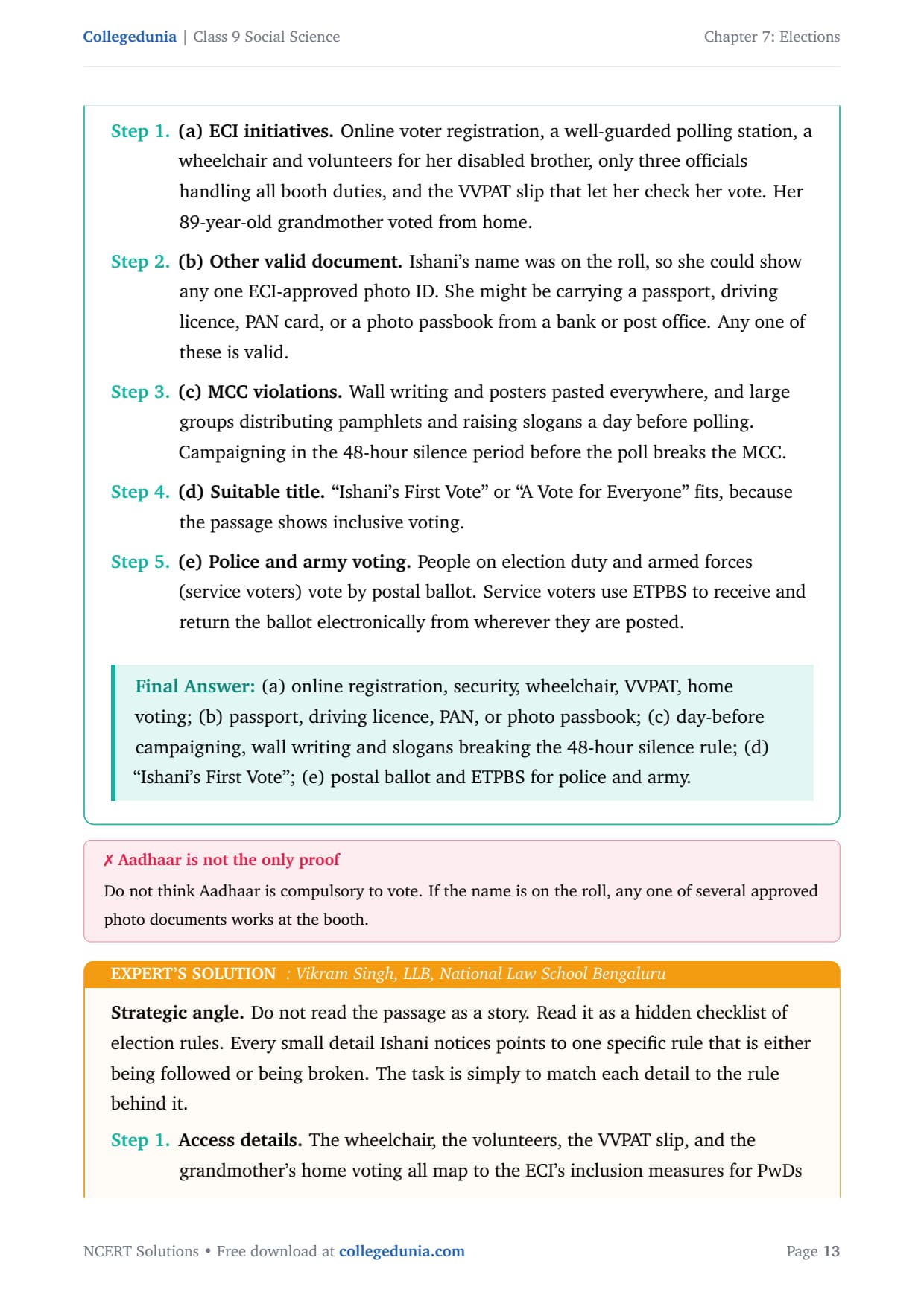
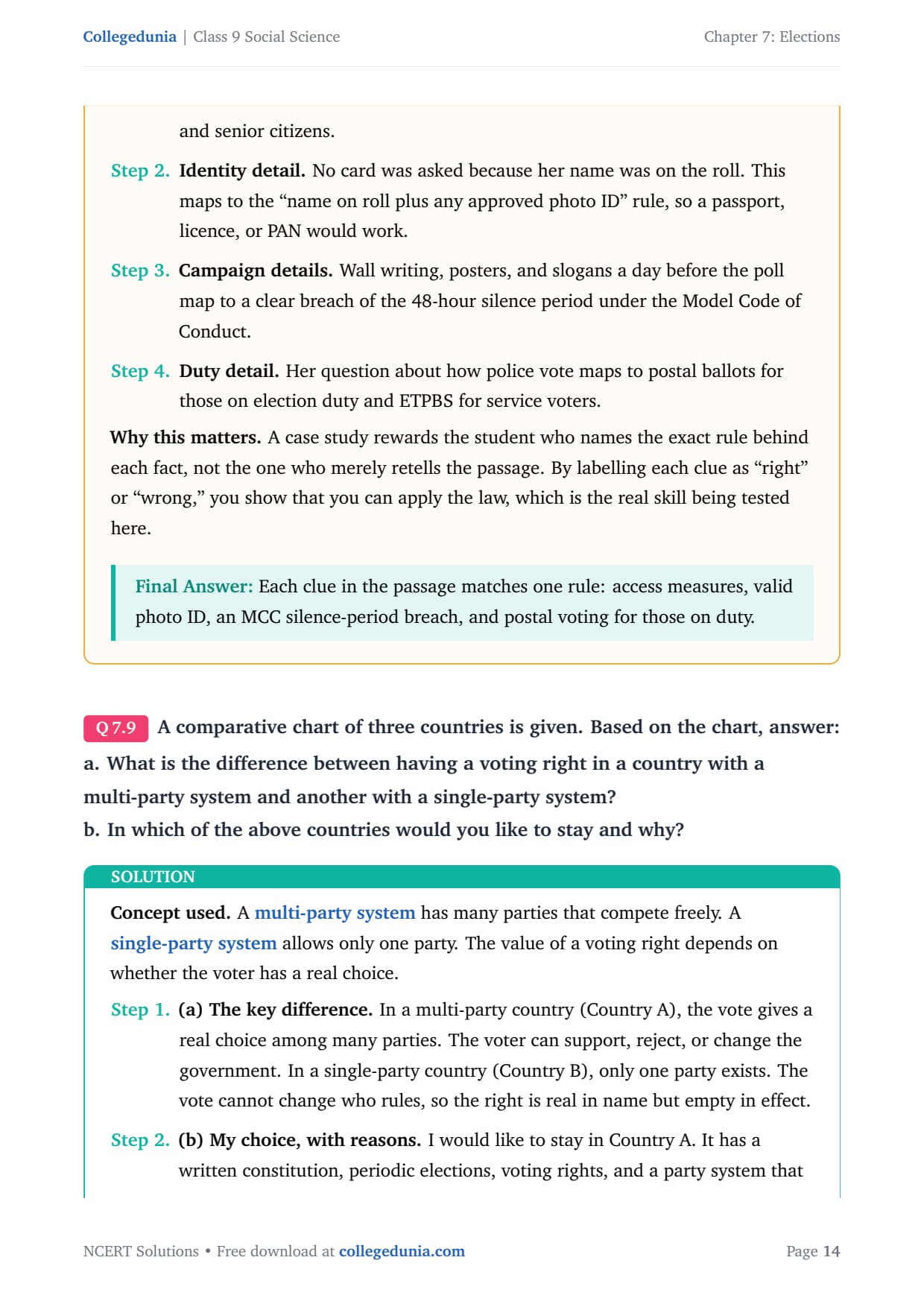
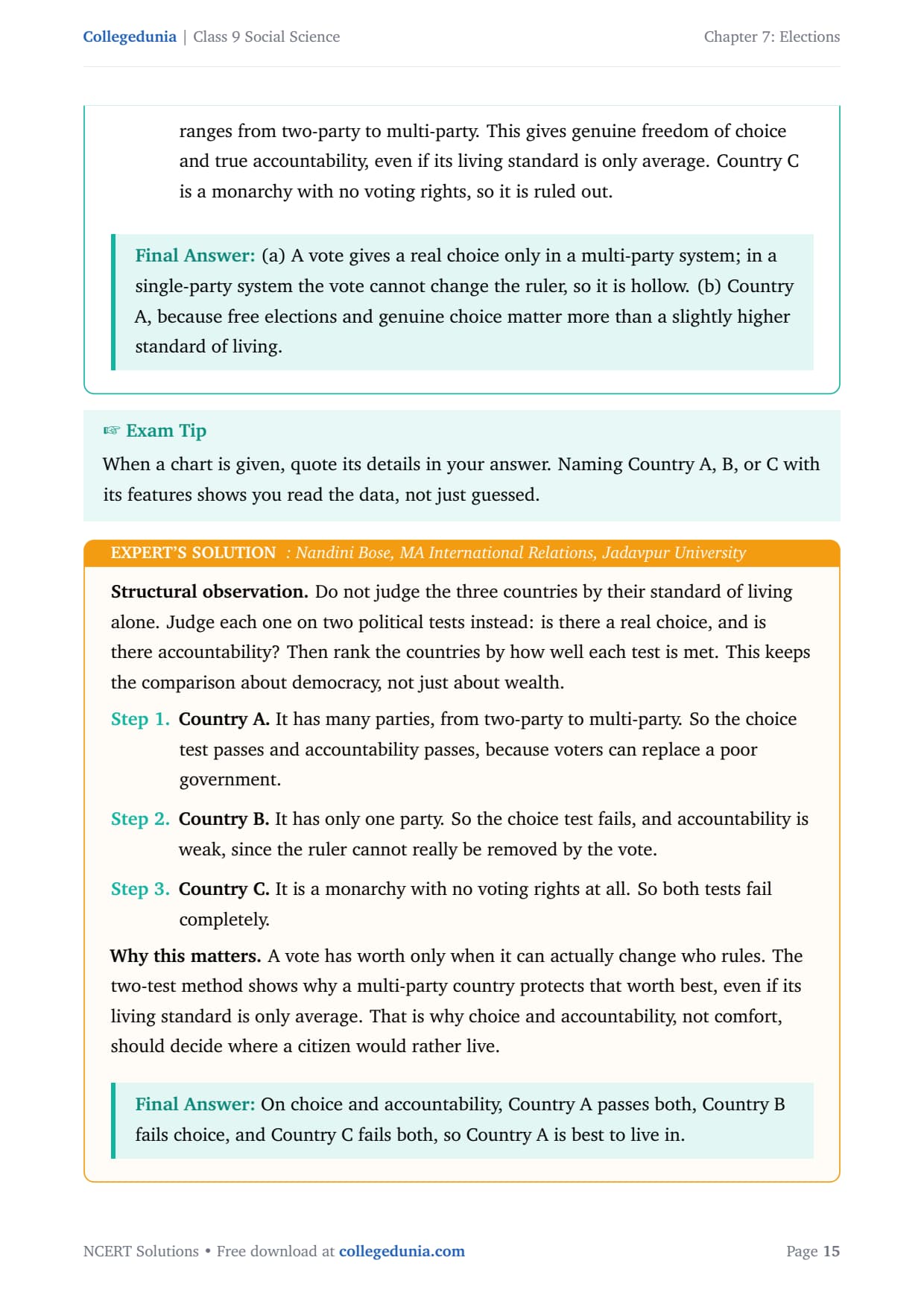
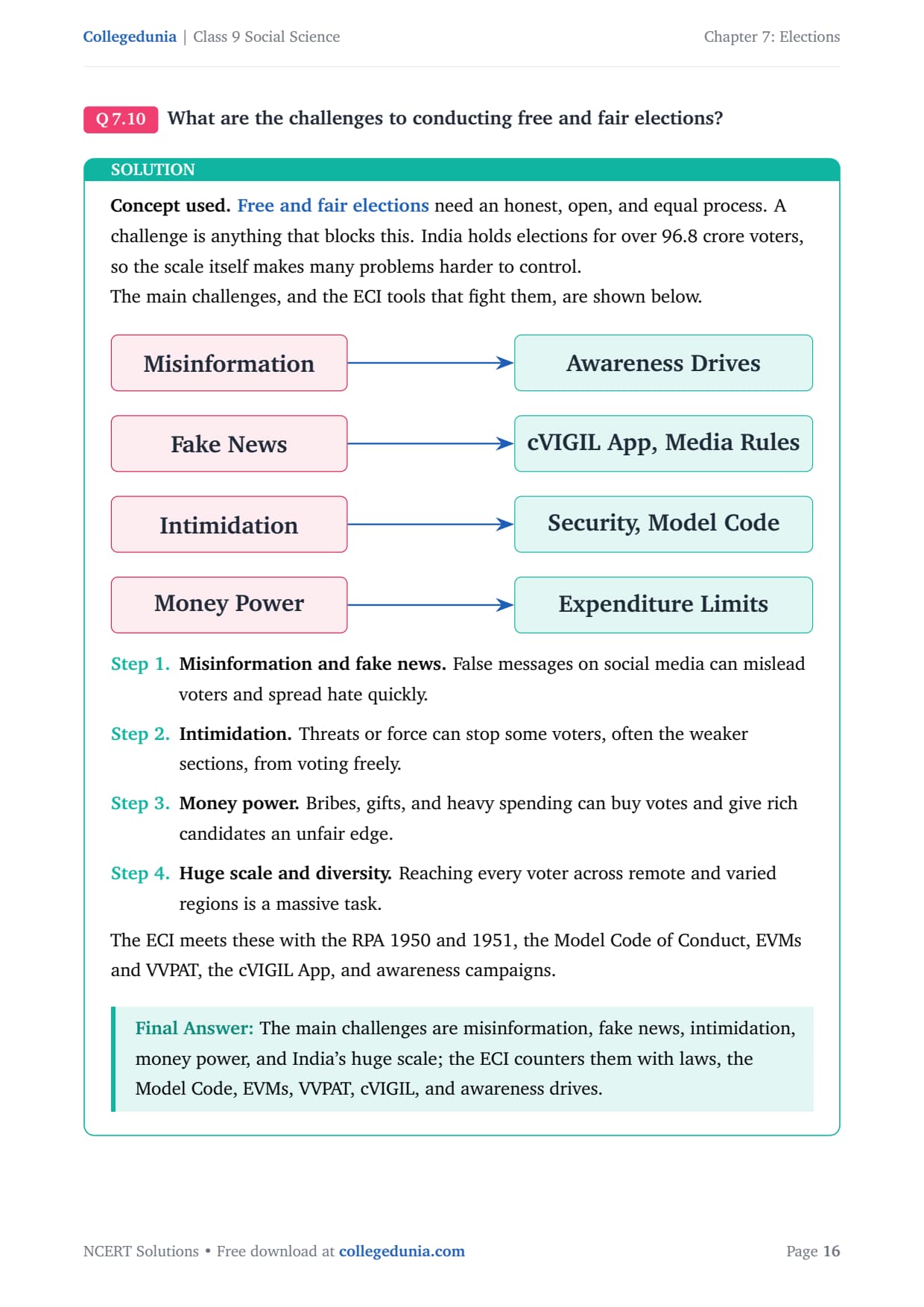
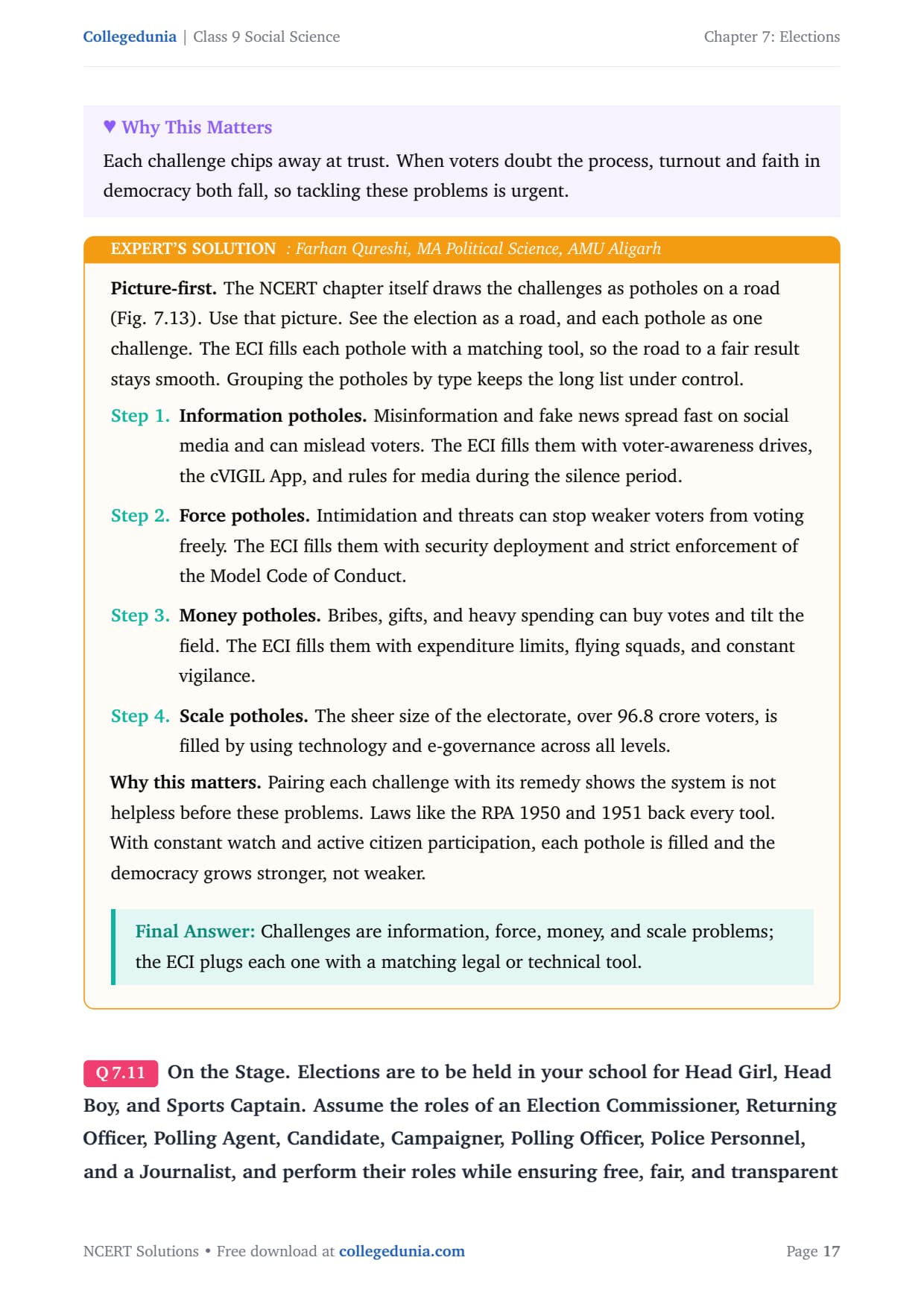
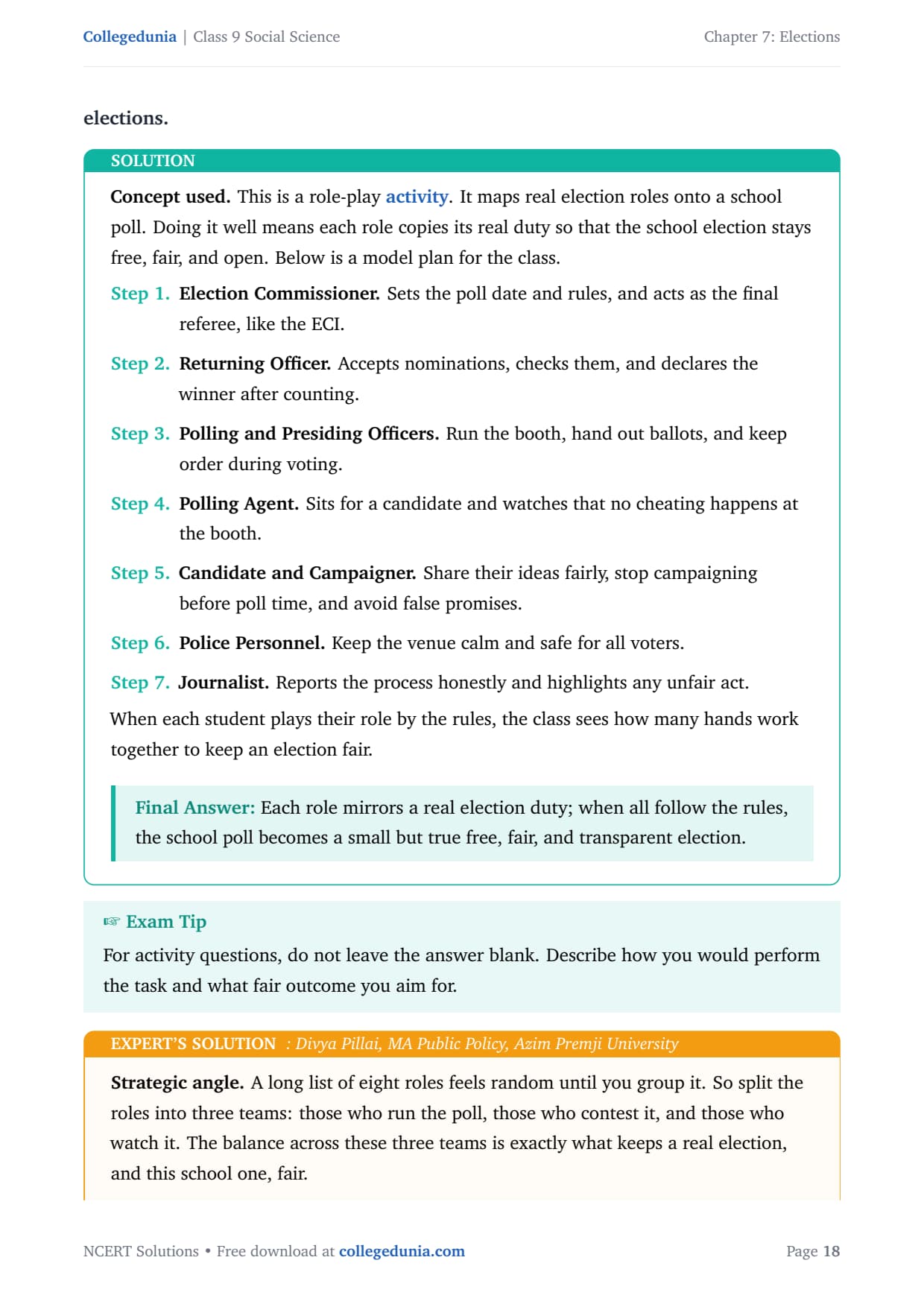
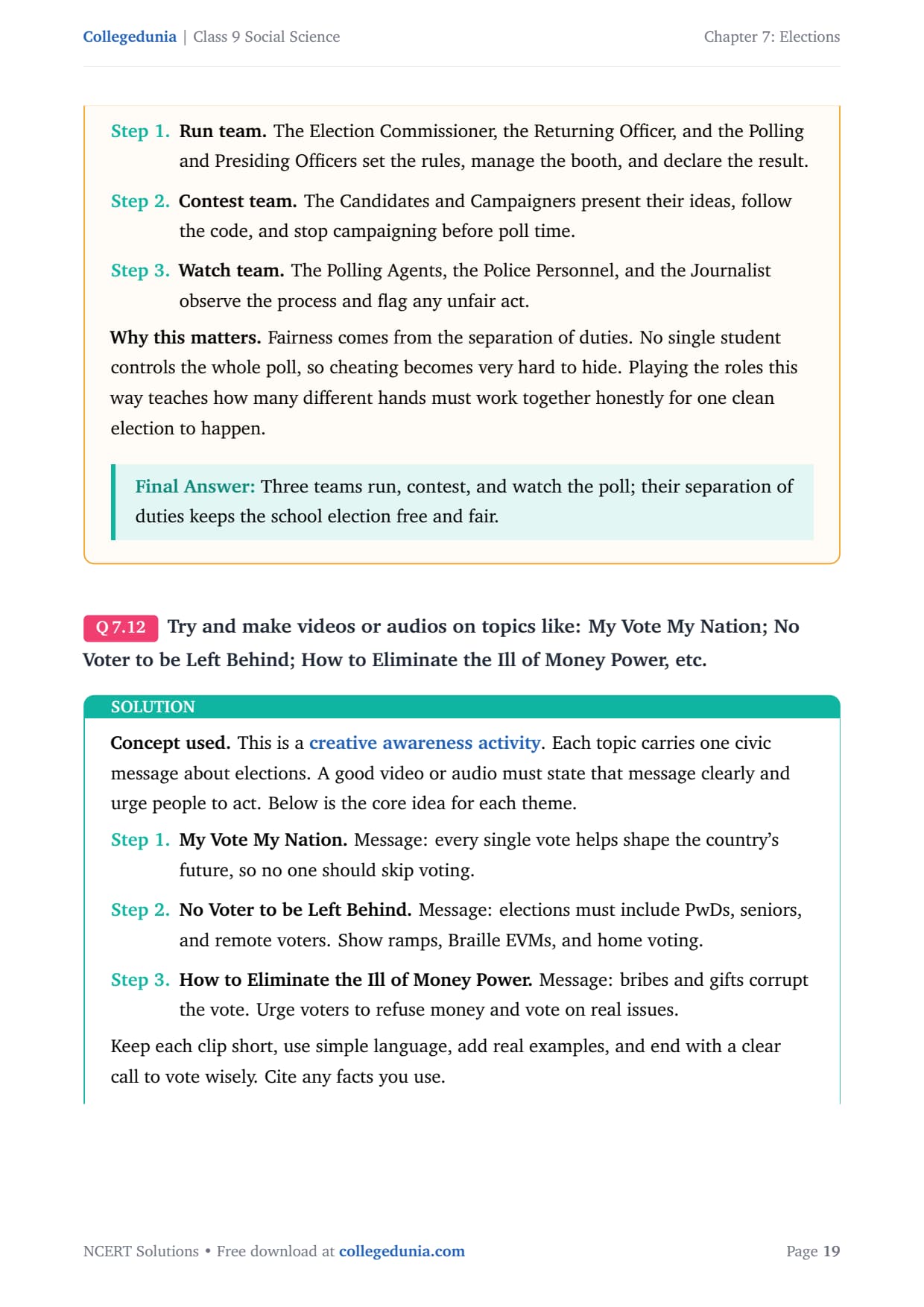
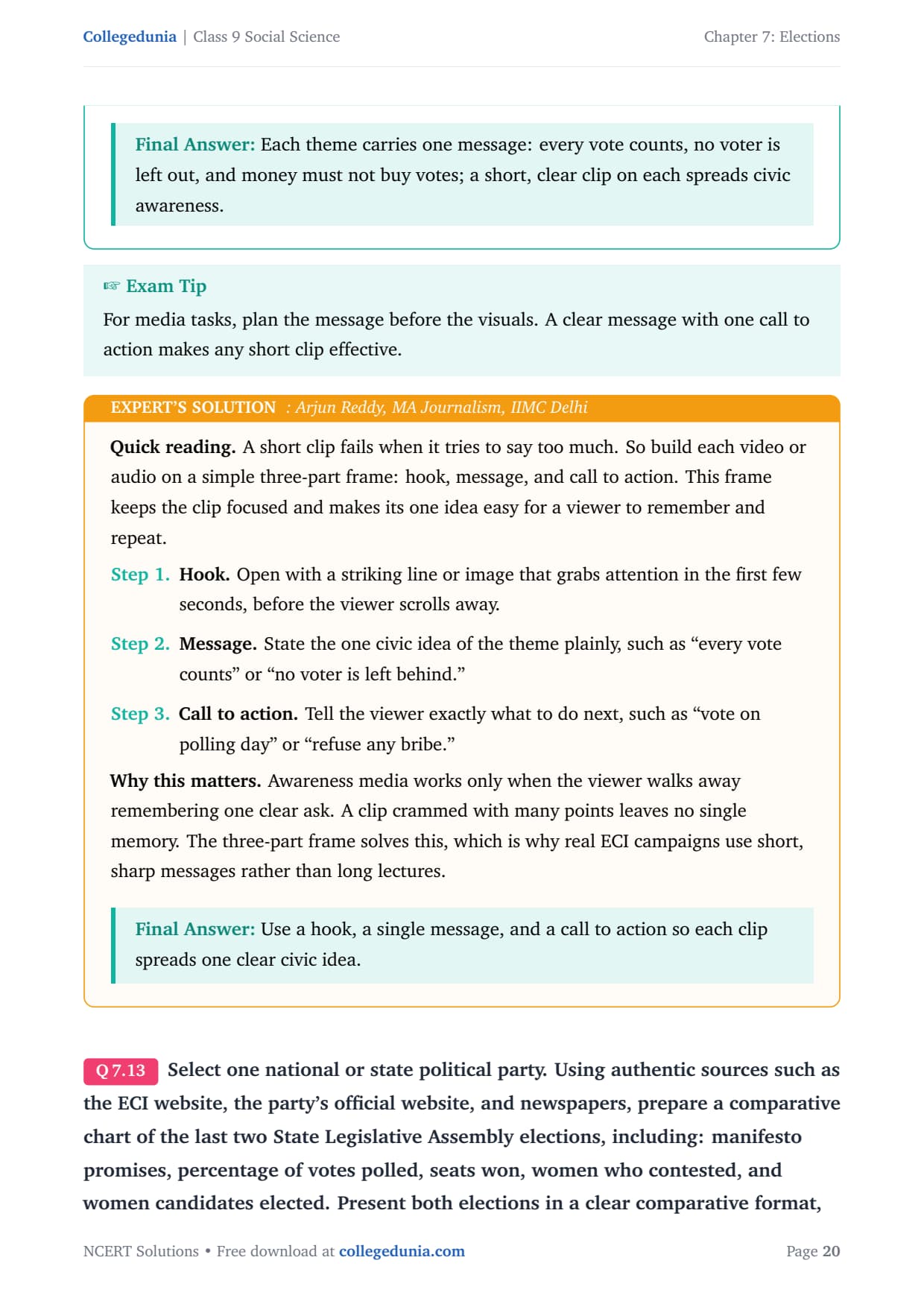
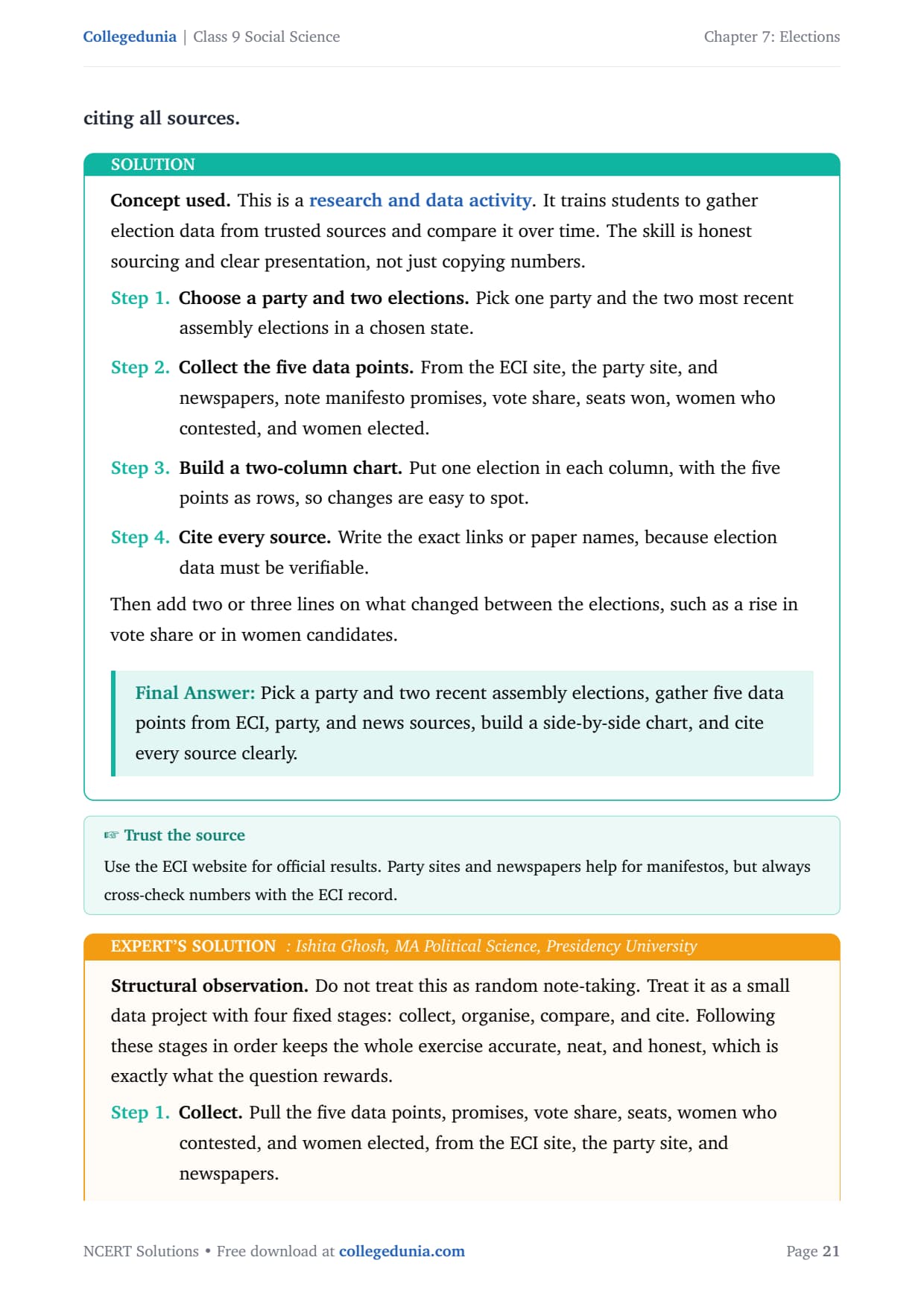
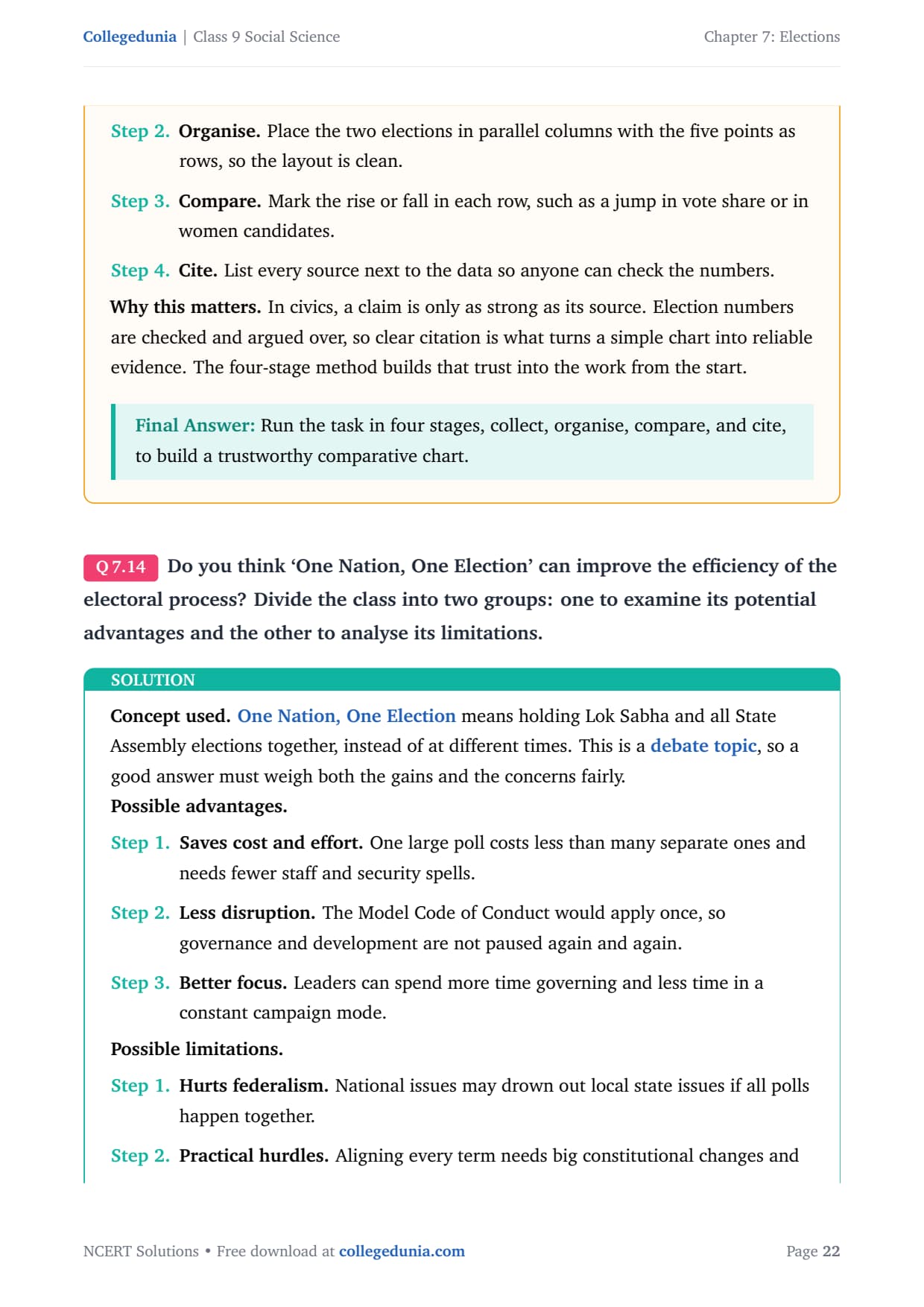
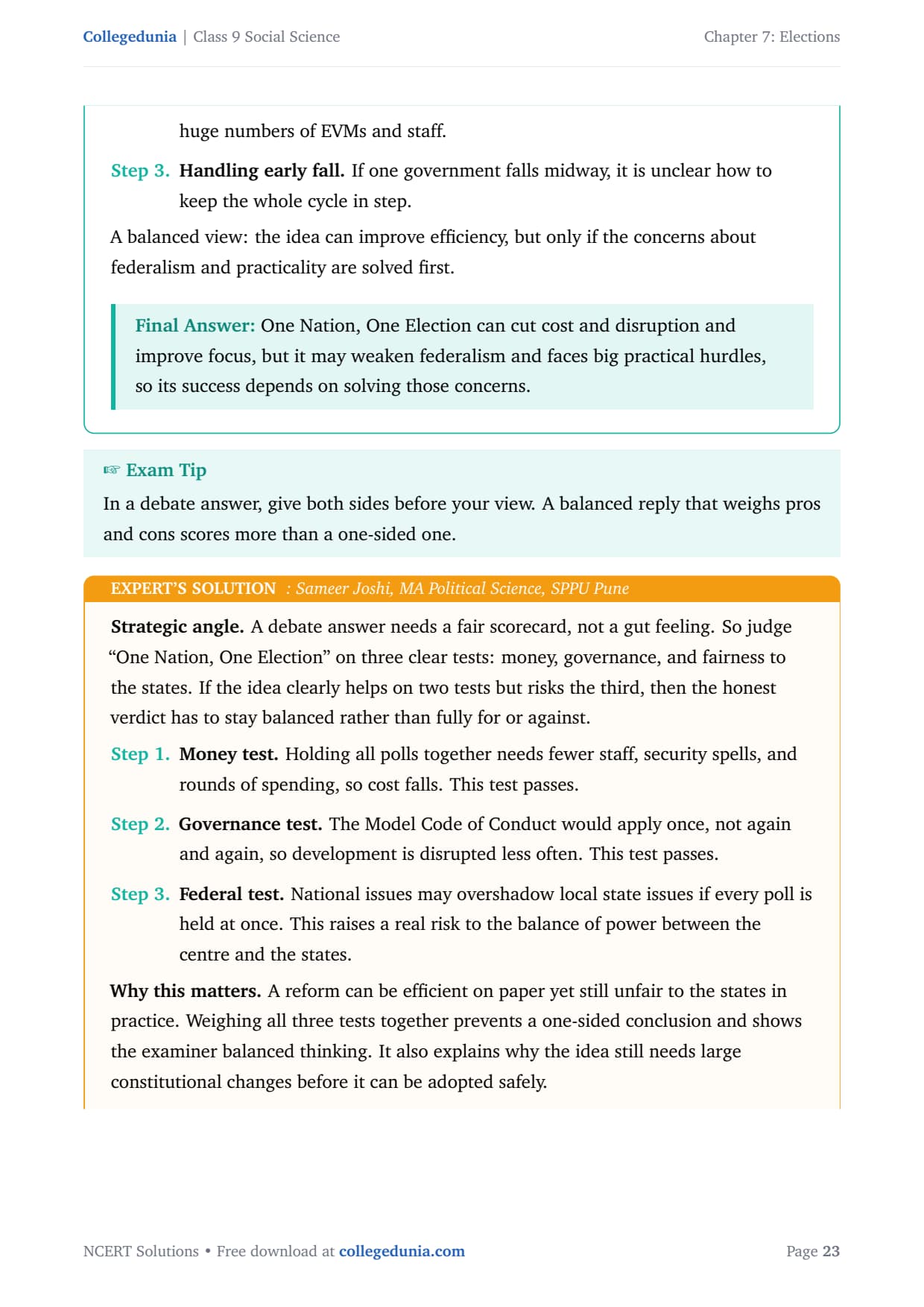
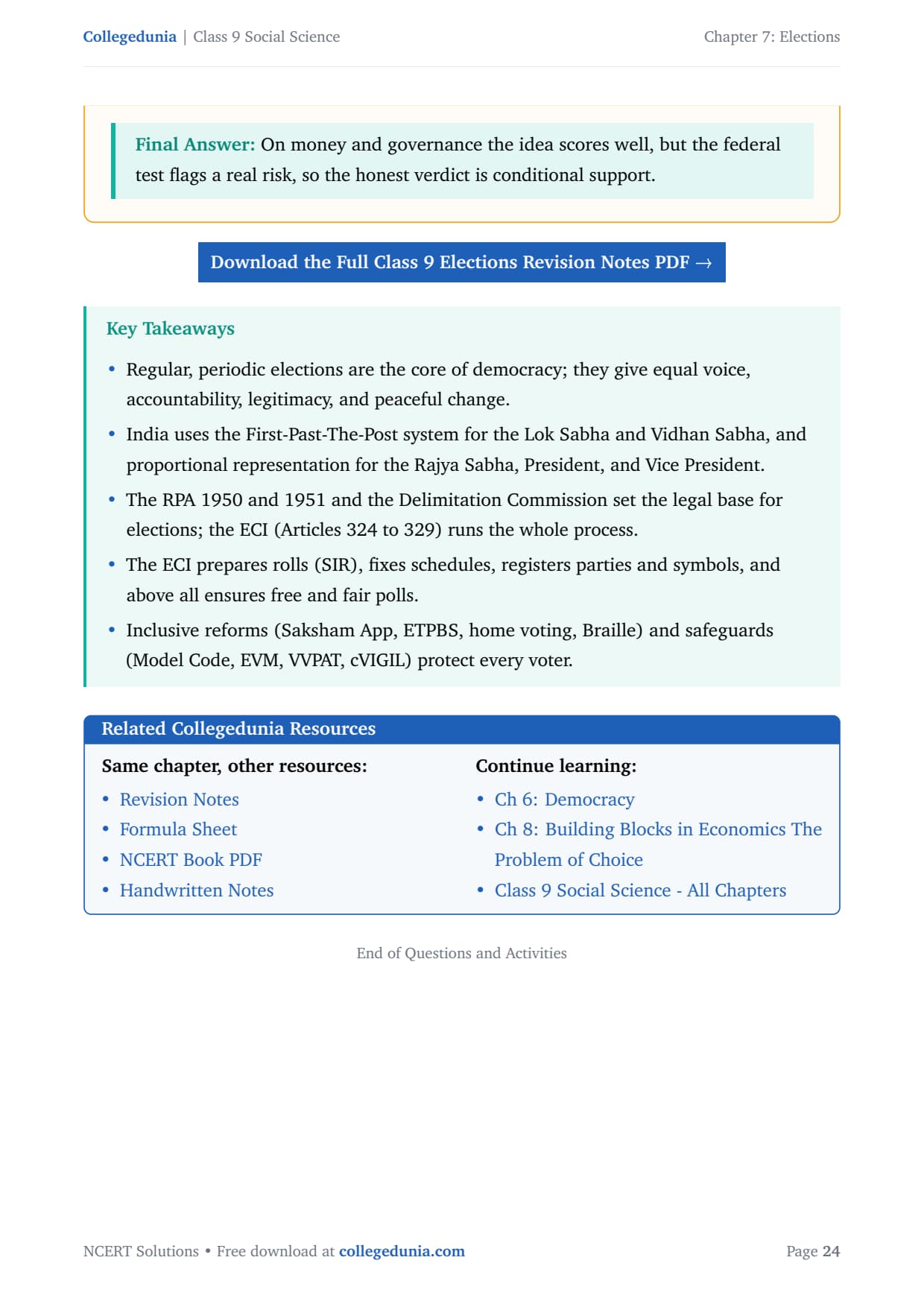
Each solution for Class 9 Social Science Chapter 7 Elections is written by Collegedunia subject experts, matched to the 2026-27 Understanding Society textbook, and kept in simple exam language.
- 14 solved questions: full answers for every Questions and Activities item, plus an expert version for each one.
- Core ideas: the electoral system, election laws, the Election Commission of India, and the fight for free and fair polls.
- Exam-ready focus: ECI functions, voter inclusion reforms, national versus state parties, and challenges to fair elections.
Student Feedback
In a Collegedunia poll of 8,700 Class 9 students before the 2026 exams, 58% said they mixed up prisoners and persons in preventive detention while answering the voting-rights question. The next common slip was forgetting to name the most important function of the ECI. Students who practised the 14 solved answers here said the case-study questions felt far easier the second time.
Source: 2026-27 Class 9 Social Science student poll. Sample of 8,700 students from CBSE schools across 11 states.
Exercise Coverage in the Elections Class 9 Solutions
The Questions and Activities exercise has 14 items. The NCERT Solutions Class 9 Social Science Chapter 7 Elections group them by type, so you know which to write in the exam and which to do as a project. The table below shows the split.
| Question type | Questions | What it tests |
|---|---|---|
| Short and long answers | 5 | ECI functions, voter inclusion reforms, national versus state parties, SIR, and challenges to fair polls |
| Case study, matching, and chart based | 3 | The Ishani case study, matching parties to symbols, and comparing three country systems |
| Opinion, debate, and activity based | 6 | Elections as the soul of democracy, ranking reasons to vote, role-play, media tasks, and One Nation One Election |
Start with the short and long answers, since they carry the most marks. Then practise the case study and matching questions. The activity items are best done as classroom projects after you know the theory.
Elections Weightage for Class 9 Social Science Exams
This is a core civics chapter in the new integrated Class 9 book. It builds directly on the Democracy chapter and links to daily news about voting. Here is where it sits among the nearby chapters of the 2026-27 Understanding Society book.
| Chapter | Topic | Typical exam focus |
|---|---|---|
| Chapter 6 | Democracy | Meaning and features of democracy |
| Chapter 7 | Elections | ECI functions, voter reforms, free and fair polls |
This chapter carries steady marks because it mixes short reasoning answers with one or two case studies. Learn the ECI functions and the voter reforms once, and the marks come back in every test.
How to Answer Elections Questions Step by Step
Most marks here come from clear points and a firm stand. The NCERT Solutions Class 9 Social Science Chapter 7 Elections use the same method for almost every answer. Follow these steps and you will rarely lose an easy mark.
- Define the key term first. Open with a one-line meaning of the ECI, SIR, or the Model Code of Conduct before you explain the point.
- State your stand early. In a "do you agree" or debate answer, give your view in the first line, then add three or four reasons.
- Compare feature by feature. For difference questions, write clear pairs. Compare the same point for both sides in one line each.
- Match each clue to a rule. In a case study, link every detail to one election rule that is being followed or broken.
- Never leave activities blank. Describe how you would do the task and the fair outcome you aim for.
For ranking questions, the order is your own. Marks come from the reasons you give, not the exact sequence, so justify every place.
Common Mistakes Students Make in Elections
Most lost marks in this chapter are simple slips, not gaps in understanding. Watch for the four below when you write your answer.
Mistake 1: Treating prisoners and preventive detention as the same. Convicted prisoners and undertrials cannot vote. People in preventive detention can vote by postal ballot.
Mistake 2: Mixing national and state party criteria. National recognition spans four or more states. State recognition is measured inside one state.
Mistake 3: Forgetting to name the most important ECI function. When asked, say that ensuring free and fair elections ranks first, and give the reason.
Mistake 4: Giving a vague reply in opinion answers. State a clear stand in the first line, then back it with reasons.
Also Check: the full answer for every one of these traps is in the solved questions lower on this page.
Elections Important Questions and Exam Trends
Exams from this chapter follow a clear pattern. One reasoning question plus a case study or debate is the usual mix. The list below shows the types you should be ready for.
- Functions of the ECI: list the main functions and name the most important one for free and fair elections.
- Voter inclusion reforms: steps for PwDs, senior citizens, service voters, and prisoners.
- National versus state parties: at least three differences in reach, criteria, and symbol.
- Special Intensive Revision: the objectives of SIR and why a clean electoral roll matters.
- Challenges and opinions: threats to fair polls, and debate topics like One Nation One Election.
The NCERT Solutions Class 9 Social Science Chapter 7 Elections cover every one of these types in full, so practising the 14 solved questions on this page is enough for the exam.
Other Elections Class 9 Social Science Resources
Pair these solutions with the notes and the book PDF for the same chapter to revise faster.
| Resource | Link |
|---|---|
| Notes | Elections Class 9 Notes |
| Handwritten Notes | Elections Handwritten Notes |
| NCERT Book PDF | Elections Book PDF |
Questions
NCERT Solutions for Elections Class 9 Social Science: All Chapters
Use the table below to open the Collegedunia solutions for the other chapters of the 2026-27 Understanding Society book.
| Chapter | NCERT Solutions |
|---|---|
| Chapter 1 | Understanding Social Science |
| Chapter 2 | Shaping of the Earth's Surface |
| Chapter 3 | Atmosphere and Climate |
| Chapter 4 | Early Humans and Beginning of Civilisation |
| Chapter 5 | State and Society up to 1000 CE |
| Chapter 6 | Democracy |
| Chapter 8 | Building Blocks in Economics: The Problem of Choice |
| Chapter 9 | The Price Puzzle: What Drives the Market |
Elections Class 9 Social Science Solutions FAQs
How many questions are solved in the NCERT Solutions Class 9 Social Science Chapter 7 Elections?
All 14 questions from the Questions and Activities exercise are solved. Each one comes with a clear step-by-step answer and an expert version, matched to the 2026-27 Understanding Society textbook.
What is the most important function of the Election Commission of India?
Ensuring free and fair elections is the most important function. Preparing rolls and fixing dates only matter if the vote itself is honest. If money or force decides the result, public trust falls.
Can prisoners vote in elections in India?
Convicted prisoners and undertrials cannot vote under Section 62(5) of the Representation of the People Act, 1951. However, a person held only in preventive detention keeps the vote and can cast it by postal ballot.
Are these Class 9 Social Science Chapter 7 solutions based on the 2026-27 syllabus?
Yes. Every answer follows the latest 2026-27 Understanding Society textbook. The Collegedunia experts keep the language simple and the points exam-ready for the Class 9 board and school tests.



Comments