



Study Abroad Expert | Updated On - Aug 3, 2026
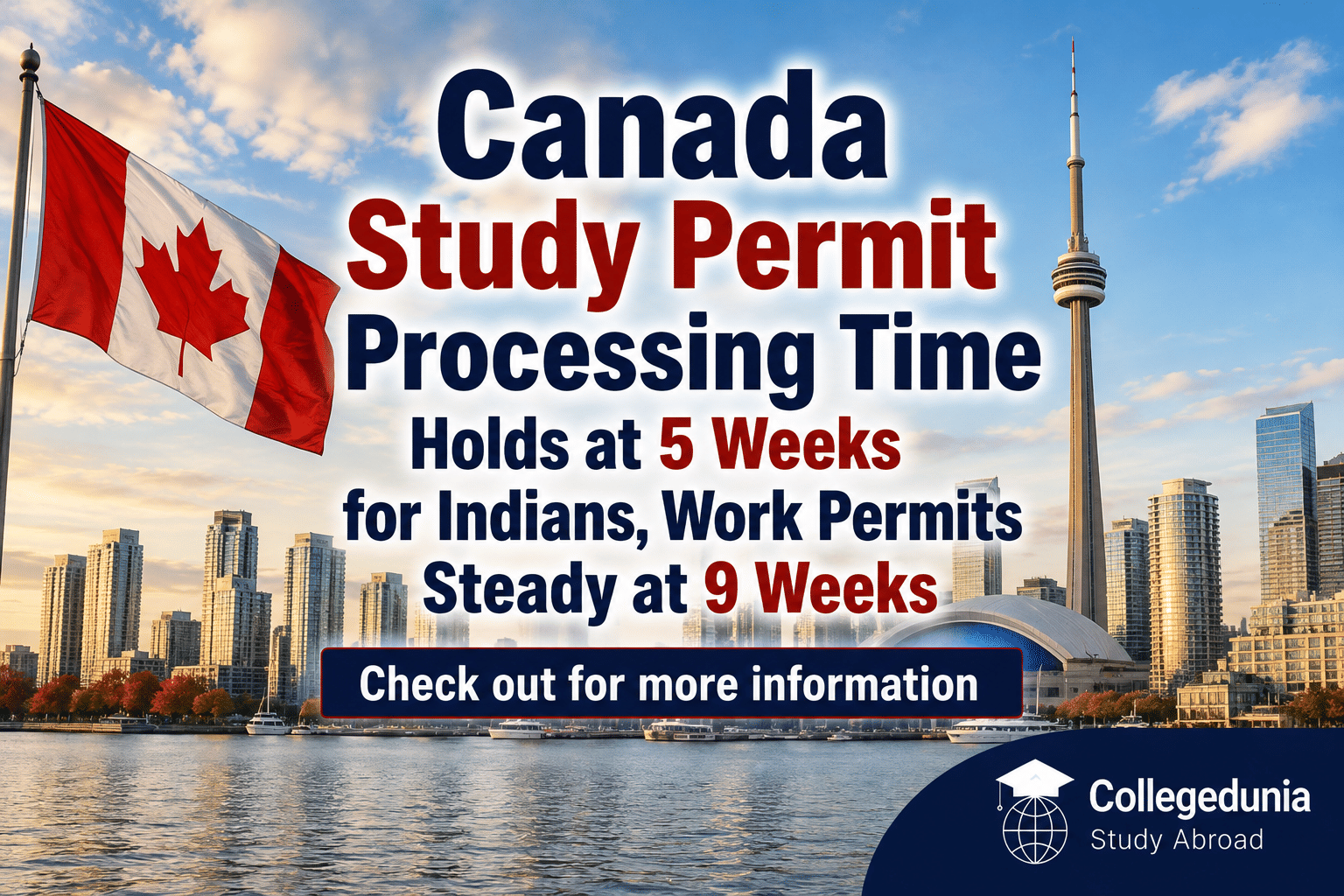
IRCC has held Canada’s study permit wait at 5 weeks for Indian applicants. The work permit wait stayed at 9 weeks in the same weekly release. Immigration, Refugees and Citizenship Canada issued the update around 1 August 2026. Visitor visa and super visa waits for India rose again, ending months of steady falls.
- Indian nationals remain Canada’s single largest source country for study permit filings, so a 5-week hold gives Fall 2026 admits a stable planning window.
- The 9-week work permit figure covers Indians on employer-sponsored permits, open spouse permits, and post-graduation work permit renewals.
- Super visa waits for Indian parents and grandparents had crashed from roughly 210 days at the start of 2026 to about 50 days at their low point, and are now edging back up.
IRCC’s weekly release is the live signal to plan around. A single wait figure can swing multiple weeks between updates, and India-specific numbers move faster than the global average. The pause matters most for the peak Fall intake window still filing biometrics this month.
Also Read,
- Canada Student Visa Processing Time 2026
- Canada Student Arrivals Fall 40% in 2026: IRCC
- Canada Tightens Study Permit Financial Checks July 2026
What IRCC Held Steady for Indian Applicants
The freeze covers the two categories that carry almost every Indian student and worker file into Canada. Study permit processing for Indian applicants stayed at 5 weeks, matching the figure IRCC posted in its 2 July 2026 release. Work permit processing held at 9 weeks across the same window.
| Application (Indian applicants) | 2 July 2026 update | Early August 2026 update | Change |
|---|---|---|---|
| Study permit | 5 weeks | 5 weeks | Unchanged |
| Work permit | 9 weeks | 9 weeks | Unchanged |
| Visitor visa | 21 days | Increased | Up |
| Super visa | 50 days | Increased | Up |
The study permit hold matters because Indian filings dominate global inflow. Steady processing lets Fall admits book flights and rentals against a firm timeline. The Canada Student Visa route runs through the standard stream, since IRCC discontinued the Student Direct Stream on 8 November 2024.
Key Insight: An unchanged 5-week figure is a quiet win, not status-quo boredom. IRCC’s peak-season backlog usually pushes Indian study permit waits up 2 to 4 weeks in the June to August window. Holding flat during peak filing means the queue is actually clearing faster than the visible number suggests.
Also Read,
- Biometric for Canada Study Visa
- Canada Student Visa Guide for Indian Students
- Canada Super Visa 2026: Cost, Eligibility and Insurance
- Canada Work Permit: Check Eligibility and Application Process
Why Visitor and Super Visa Waits Rose for India
The rise reverses one of the fastest wait-time drops IRCC recorded this year. Super visa processing for Indian parents and grandparents sat at roughly 210 days in January 2026. IRCC’s June and July releases pulled that down to about 50 days, cutting nearly five months of waiting. Visitor visa processing for India had settled to 21 days in the 2 July update, down from 22 days the week before. Both figures moved up in the early August release, though IRCC has not published a single before-and-after number for the rise.
The uptick tracks with the standard summer bulge in family-visit filings. Indian parents applying to attend a child’s convocation or Fall intake move-in add pressure to the same queue that PGWP graduates draw on. Refer to the Super Visa for parents and grandparents page for eligibility.
How Should Fall 2026 Applicants Time Their File?
A 5-week official figure is only the start-to-decision clock. Biometrics collection can add up to 30 days. Medical exams, additional document requests, and security screening extend that further for individual files. Aggregate real-world timelines for Indian applicants have run 10 to 14 weeks during peak months, per Canada Student Visa Fees.
Key Caveat: IRCC’s headline weekly figure is the median for files with no follow-up requests. If a visa officer asks for a proof-of-funds top-up, an updated GIC letter, or a fresh medical, your clock restarts on that step. Build a 4-week buffer above the published number when planning arrival.
Work-route applicants face a different clock. The Canada Work Permit at 9 weeks is the outside-Canada figure; in-Canada extensions can move faster. PGWP holders switching employers should track the PGWP Canada conditions before filing.
The India Volume Behind These Numbers
India remains the largest single source of Canadian study permit filings. The volume matters because IRCC allocates weekly processing capacity by inflow, and Indian applications carry the queue’s median. A hold at 5 weeks during August, when Fall filings peak, signals that visa offices in Delhi and Chandigarh have absorbed the seasonal load.
The super visa reversal is the softer signal. Family-visit demand from India climbs every summer around graduation and Fall move-in. The 50-day low was always going to face upward pressure once the volume returned. The question is whether IRCC holds it under the earlier 210-day ceiling.
Indian applicants targeting the January 2027 intake now have a clean planning window. Study and work permit waits are frozen at the numbers above heading into the next IRCC revision on or around 5 August 2026. Visitor and super visa filings should build a wider buffer, since the falling trend has broken. The next few weekly releases will show whether the rise is a one-week blip or a summer trend.
Action Plan for the Next 30 Days
- File Fall 2026 study permit applications this week if biometrics are already given, to lock in the 5-week clock before any drift.
- Book biometrics inside 7 days of submission; the up-to-30-day biometrics window sits on top of the 5-week figure.
- Work-permit applicants outside Canada should file at least 10 weeks before intended start date to cushion the 9-week processing baseline.
- Super visa filers should plan for a wait wider than 50 days; assume 10 to 12 weeks for arrival planning during the August peak.
- Check IRCC’s processing-time page each Monday, since India-specific figures update weekly and shift ahead of the global averages.
Keep an Eye On: The next IRCC weekly processing-time release drops on or around 5 August 2026 and will confirm whether Indian visitor and super visa waits stabilise or keep climbing through the Fall intake peak.
Also Read,
- Study in Canada: Universities, Courses and Admission
- Canada Student Visa Guide for Indian Students
- Admission in Canada: Eligibility & Admission Process
- Intakes in Canada for International Students

1791978705.png?tr=w-305,h-145,c-force?h=40&w=40&mode=stretch)



Comments