



Content Curator
Artificial respiration is a way to initialize or restore a person’s breath by using a mechanical method or manual method. It is a way to push air in the lungs when a person’s natural breathing has stopped or faltered. The breathing techniques help to keep a person alive and restart breathing. Primary step in resuscitation using artificial respiration is to develop and retain a proper passage for inhalation. It includes pharynx, throat, and mouth which belong to the upper part of the respiratory tract. It is essential to start the process as a primary measure and with immediate effect to keep the patient alive.
Read Also: Breathing in Other Animals
| Table of Content |
Key Terms: respiration, inhalation, exhalation, Schaffer’s method, Sylvester’s method, Holger-Neilson method, ventilator, CPR
Artificial Respiration
[Click Here for Sample Questions]
As the name suggests, artificial respiration, is something which is man-made. It is a simulated way of breathing which is also known as artificial ventilation. It is a mechanism that stimulates breathing in case of unsteady or weak natural respiration. Artificial respiration can be performed either manually or mechanically. Ventilators are the machines that are used in the case of mechanical artificial respiration. The machine helps in exchange of gases inside out the lungs.
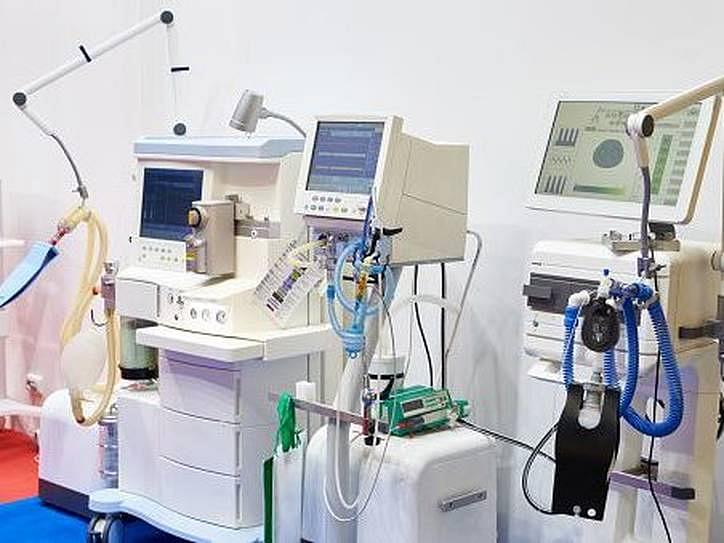
Ventilator and Artificial Respiratory Machine
Artificial respiration is a method used to save a person’s life who is having difficulty breathing naturally. The method is helpful when a person is suffocating, choking, or drowning. Apart from this, it is a technique to make a person respire who is not capable of breathing. Consider an example, a patient undergoing surgery, or is in coma. In such cases, doctors use mechanical ventilation which helps to push air inside the lungs. Electric shock, strangulation, or inhalation of poisonous gases, critical accidents are some of the other situations where artificial respiration is helpful.
Check Important Difference between Respiration and Combustion
Types of Artificial Respiration
[Click Here for Sample Questions]
Artificial respiration can be mainly classified into two categories, i.e., manual and mechanical. Manual methods of artificial respiration include Schaffer’s method, Sylvester’s method, Holger-Neilson method, and mouth to mouth respiration method. Mechanical methods of artificial respiration include use of machines instead of human operators. Health experts including doctors and nurses are trained to use this type of machinery.
Schaffer’s Method
Schaffer’s method is an outdated method of artificial respiration. In this method, the patient is made to sleep facing down, i.e., in prone position. The patient is then asked to bend hands at the elbow and place it next to the lower area of the chest. The head is kept in an outward position so that the patient can breathe through mouth and nose. The therapist kneels down near the patient and slowly presses on the loins of the patient by putting his body weight. As a result, pressure is created in the abdomen which pushes up the diaphragm and air is thrown out from the lungs. The process in which air is drawn from the lungs is also known as exhalation or expiration.
After this, the therapist releases pressure and gets back to his initial position. This also releases the pressure on the abdomen, the diaphragm goes down and air is inhaled. This process is termed as inhalation or inspiration. The steps are repeated for 12 times in a minute or as per the usual respiration rate. In Schaffer’s method exhalation is for three seconds and inhalation continues for two seconds (approximately).

Schaffer’s Method of Artificial Respiration
Advantages
- Schaffer’s method is non-tiring procedure, which can be repeated easily and the patient can take this therapy as long as possible.
- As the patient is laid on abdomen, mucus or saliva cannot block his airways.
- Schaffer’s method allows treatment of back and thorax in case of injuries.
- Due to prone position, obstructing material (mucus or saliva) present in the airway directly comes out. This clears the air passage and allows the patient to inhale and exhale properly.
Disadvantages
- This method cannot be used for the patients having abdominal injury.
- Passive inhalation – In this method, the process of inhalation occurs passively whereas exhalation occurs actively. But both of the processes are not physiological.
Also Read:
Sylvester’s Method
In this method, the patient is laid on a surface facing upwards. The therapist stands near the head of the patient in order to hold the wrist. The first step is to pull the arms in upward direction, or towards the head. As a result, the process of inhalation takes place.
After that, the therapist puts a heavy pressure on the patient’s chest by folding hands over the chest. This action compresses the chest wall and results in the process of exhalation. In Sylvester’s method of artificial breathing, inhalation should take place for three seconds and exhalation should take place for two seconds.

Sylvester's Method of Artificial Respiration
Advantages
- This method is helpful in cases of accidents or in operation theatre.
- Sylvester’s method of artificial breathing offers excellent ventilation.
- Both the processes, inspiration and expiration, are active in this method.
Disadvantages
- This method cannot be used in drowning cases as water cannot be drawn out of lungs because of supine position.
- Sylvester’s method cannot be used for patients suffering from thorax or rib fracture.
- This method is exhausting in nature which may require assistance during the therapy.
Check Also: Aerobic Respiration
Holger Nielsen Method
This method is also called the arm liftback pressure method. In Holger-Nielson's method of artificial respiration the patient is laid on stomach facing downwards.The headrests on the hands. The therapist places his hands on both sides of the back. Spreading the fingers apart the therapist puts pressure on the back of patient. This pressure assists in exhalation. For inhalation the patient’s arms are moved forward. The entire process is repeated roughly around ten to twelve times in a minute.

Holger Neilson Method of Artificial Respiration
Read More: Mechanism of Breathing
Mouth to Mouth Respiration Method
This method is one of the finest methods of artificial respiration. In mouth-to-mouth respiration, the therapist kneels near the patient’s head. A pillow is given to place below the shoulder of the patient, it helps in extension of the neck. The therapist closes nostrils of the patient with his left hand. They place a handkerchief on the mouth of the patient, to blow air inside. This causes inhalation and the thorax and lungs are inflated. Taking off the mouth causes exhalation.

Mouth to Mouth Respiration Method
Cardio Pulmonary Resuscitation
In CPR,
C – Cardio or heart related
P – Pulmonary or related to lungs
R – Resuscitation which means the procedure to revive someone from coma or apparent death.
CPR is also known as a life-saving method in emergency cases like cardiac arrest or heart attack. In CPR, a combination of mouth-to-mouth respiration and chest compression method is used.

Cardio Pulmonary Resuscitation
Read More: Class 7 Science Chapter 10 Respiration in Organisms
Mechanical Methods of Artificial Respiration
This method is also known as the instrumental method which uses machines to help patients to breathe.
A ventilator is a machine that is used to push air into the lungs of the patient having difficulty in breathing. Ventilators also help in maintaining oxygen level in bloodstream. But it is essential to have access to the lungs of the patient. To gain access to the lungs a tube is inserted into the nose or mouth of the patient. Sometimes, doctors use tracheostomy in which a tear is made near the opening of the windpipe to insert a tube.
Devices Used for Artificial Respiration
[Click Here for Sample Questions]
Artificial breathing devices play a crucial role in artificial respiration. There are different kinds devices used to cure different types of respiratory disorders. The following is the list of devices used for artificial breathing:
- CPR devices
- Continuous Positive Airway Pressure (CPAP)
- CPR pocket mask
- Nebulizers
- Chest compression system
- Oxygen delivery devices
Also Check:
Things to Remember
[Click Here for Sample Questions]
- Artificial respiration refers to the restoration of breathing when a person is faltering or stopped breathing. These techniques may be helpful in cases of poisoning (inhalation of poisonous gases), suffocation, drowning, electric shock, or choking.
- Artificial breathing is essential when a person is suffering from acute breathing issues. But artificial breathing methods are temporary and are not given permanently to a person.
- Schaffer’s Method, Sylvester’s method, Holger Nielsen Method, mouth-to-mouth respiration, CPR are some of the manual techniques of artificial respiration.
- Machines are used to push air into the lungs, and the process is known as mechanical ventilation. Ventilators, CPR masks, chest compression systems are some of the devices used in artificial breathing.
- Tracheal intubation is one of the mechanical methods used for ventilation. In this process, a small tube is inserted from the nose or mouth and inserted into the trachea.
Read Further: Test for Protein Test for Fats
Sample Questions
Ques. Define artificial respiration. (1 Mark)
Ans. Artificial breathing is a mechanism in which air is blown into the lungs of the person having difficulty in breathing. It is performed either manually or using machines. Artificial breathing is helpful when a person is choking, suffocating, injured in accident or electric shock.
Ques. When a person needs artificial respiration? Explain. (2 Marks)
Ans. Artificial breathing is required when a person is having problems breathing or cannot breathe naturally, say on their own. The temporary arrangement to respire can revive a person’s life and provide relief to the patient. Patients who are in coma or cannot breathe themselves require permanent artificial respiration.
Ques. What are the methods of artificial respiration? (2 Marks)
Ans. Artificial breathing can be offered by two ways - manually and via machines. In manually offered artificial breathing an operator or therapist performs some steps to assist a person in respiration. Schaffer’s method, Sylvester’s method, Holger-Neilson method, and mouth to mouth respiration method are some of the methods used in artificial breathing. On the other hand, machines like ventilators are used to offer artificial breathing to patients.
Ques. What are artificial breathing devices? (2 Marks)
Ans. The machines that assist a patient ventilate or breathe while undergoing a surgery or who are not capable of breathing are known as artificial breathing devices. Examples of artificial breathing devices are CPR devices, CPAP, CPR pocket masks, nebulizers, oxygen fittings, etc.
Ques. What is CPR? When can we perform CPR? (2 Marks)
Ans. Cardiac arrest is a deadly condition which may take life of a person. CPR is a technique of artificial respiration which is used when a person is suffering from cardiac arrest or heart attack. CPR can be performed as a primary measure after a heart attack. It helps in maintaining respiration and blood circulation. CPR can be given to the patient within six minutes immediately after the heart stops beating. It may help in keeping the person alive until admission in a hospital.
Ques. What is the role of ABC in CPR? (3 Marks)
Ans. In Cardiopulmonary Resuscitation (CPR),
A: Airways, a blocked airway may affect the ability of a person to breathe.
B: Breathing, it is the main source of getting oxygen in the body. Breathing boosts oxygen in the blood. Thus, it is essential to check whether a person is breathing or not.
C: Circulation, proper circulation of blood is very important. If a person is unable to breathe, chest compression can help to restore breathing and eventually blood circulation.
Ques. Describe mouth to mouth respiration. (2 Marks)
Ans. Mouth to mouth respiration is given to a person when he stops breathing, but the heart is beating. In this method of artificial breathing, the patient is laid on the back facing upwards. A pillow is kept under the shoulders. The doctor holds nostrils of the patient with left hand and blows air into his mouth. While blowing air, a handkerchief is kept on the patient’s mouth. Mouth to mouth respiration helps in restoring breath of the patient.
Ques. Define Respiration. What are the types of respiration? (5 Marks)
Ans. Respiration is a process of breathing. It mainly consists of two actions: inhalation and exhalation. While inhaling air passes through the respiratory tract to the lungs, where oxygen is separated. In the process of exhalation, carbon dioxide is released from the body.
There are two types of respiration:
- Aerobic: It is a type of respiration in which oxygen is present. During aerobic respiration, glucose or food is processed in the form of water and carbon dioxide. The energy released in the process of aerobic respiration is stored by means of ATP (adenosine triphosphate).
- Anaerobic: Oxygen is absent in this type of respiration. In Anaerobic respiration, glucose is processed into carbon dioxide and ethanol. In this process of respiration energy is released and lactic acid is produced in muscle cells.
Ques. What is another term for anaerobic respiration? What is the quantity of energy required for this process? (3 Marks)
Ans. Anaerobic respiration is also known as fermentation. The term fermentation is coined for anaerobic breathing in microorganisms. This process takes place without oxygen, and occurs more quickly than aerobic respiration. But the amount of energy released is less in anaerobic respiration. The process requires around 5% of the energy present in the food.
Ques. Anaerobic respiration results in less energy as that of aerobic respiration. Why? (3 Marks)
Ans. Anaerobic respiration results in less energy as that of aerobic respiration because the process does not use molecular oxygen. Here, food or glucose is not broken down completely into carbon dioxide and waste. Thus higher amount of energy is preserved with food. As a result, less energy is generated in anaerobic respiration.
Read More



Comments