



Education Journalist | Study Abroad Lead
The pharynx, larynx are both considered important structures which are naturally present in the region of the neck of every vertebrate. The pharynx helps in the functioning of both the digestive system and the respiratory system. Whereas, Larynx helps in the functioning of both the vocal system and the digestive system. The pharynx is a part of the alimentary canal in our body while the larynx is a part of the trachea. In this article, we will have a look at the pharynx and the larynx, their functions, types, and the differences between the two.
Read more: Mechanism of Breathing
| Table of Content |
Key Terms: nasal cavities, pharynx, digestive system, respiratory system, skull, larynx, epiglottis, esophagus.
What is Pharynx?
[Click Here for Previous Year Questions]
The pharynx is usually defined as a fibromuscular tube that is present at the base of the skull and at the esophagus which is a food pipe. In terms of its location, the pharynx is almost located in the posterior cavity stretching to the oral and then in the nasal cavities. It helps in the functioning of both the digestive system and the respiratory system. Therefore, it is considered a common passage or a channel for swallowing as well as for respiration.
Types of Pharynx:-
The pharynx is usually divided into three parts depending upon its location which varies due to its character of stretching from one location to another. Three types of pharynxes are mentioned below:
- Nasopharynx: This is present in the posterior part of the nasal cavity.
- Oropharynx: This merges with epiglottis.
- Laryngopharynx: Laryngopharynx usually extends from the epiglottis and merges with the esophagus at the end.
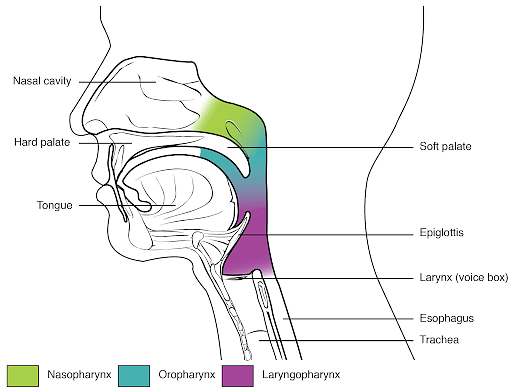
Types of pharynx
Functions of the Pharynx:-
The pharynx is an essential organ of the human body that serves the two most important functions as mentioned below.
- First of all, it acts as a passage for both the food to pass and for air to facilitate breathing. Therefore, the pharynx regulates this channel for the proper conduct of operations.
- Another function is in terms of its characteristic of performing both the respiratory operations and the digestive functions.
Also Read:
What is Larynx?
[Click Here for Previous Year Questions]
The larynx is almost like an apparatus that is made up of the materials like that of cartilages, muscles, mucous membrane and ligaments. These elements have the capacity of guarding and securing the entrance to the lower respiratory passages such as bronchi, trachea, and lungs. The larynx is also known for one of its most significant features consisting of the vocal cords. In terms of its location, the larynx is almost located just below the pharynx because it functions while connecting the pharynx with that of the trachea. It helps in the functioning of both the vocal system and the digestive system. Therefore, it is considered a common passage or channel for swallowing and vocalization.
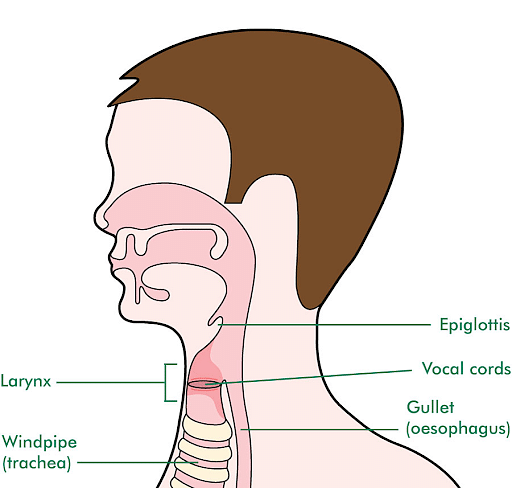
The larynx
Types of Larynx:-
The larynx is usually divided into three parts depending upon its location which varies due to its character of connecting the pharynx with the trachea. Three types of larynxes are mentioned below.
- Supraglottis: It is located just above the vocal cord which consists of the epiglottis cartilage.
- Subglottis: It is located beneath the vocal cord which consists of the cricoid cartilage.
- Glottis: It is located in the area of the vocal cord.
Functions of the Larynx:-
The larynx is an essential organ of the human body that serves the two most important functions as mentioned below.
- First of all, it acts as a safeguard while lowering the airways during phonatory and respiratory functions.
- Another function is in terms of its characteristic of performing both the respiratory operations and the phonatory functions.

Function of the Larynx
Read more: Difference Between Right Lung And Left Lung
Difference Between Pharynx and Larynx
[Click Here for Previous Year Questions]
| Pharynx | Larynx |
|---|---|
| The pharynx is almost located in the posterior cavity stretching to the oral and then in the nasal cavities. | The larynx is almost located just below the pharynx because it functions while connecting the pharynx with that of the trachea. |
| It acts as a passage for both food and air for breathing and also regulates this channel. | It acts as a safeguard while lowering the airways during phonatory and respiratory functions and it also regulates this channel. |
| The pharynx refers to a region. | The larynx is an organ. |
| The pharynx constitutes the three different regions as, oropharynx, nasopharynx, and laryngopharynx. | The larynx has important cartilages such as cricoid cartilage, thyroid cartilage, corniculate cartilage, and arytenoid cartilage. |
| It conducts digestive functions. | It conducts respiratory and phonatory operations. |
| They have muscular walls. | They have walls that are formed of cartilages. |
| The pharynx opens into the food pipe and the larynx. | While the larynx opens into the trachea. |
| There’s no vocal cord in the pharynx. | Vocal cords are present in the larynx. |
Things to Remember
[Click Here for Previous Year Questions]
- The pharynx is a type of membrane which is more likely a membrane-lined cavity. Its location is behind the nose and the mouth. It functions while connecting the nose and the mouth to the larynx and the esophagus respectively for their specific actions.
- While the larynx is more or less like a muscular organ that has a specific function of working as an air passage for respiratory operations and for facilitating the functions of the vocal cord.
- The larynx is made up of four types of important cartilages such as cricoid cartilage, thyroid cartilage, corniculate cartilage, and arytenoid cartilage.
- While the pharynx constitutes the three different regions as, oropharynx, nasopharynx, and laryngopharynx.
- The pharynx is an element that constitutes both the oral and the nasal cavities which ultimately opens in it.
- And further, the pharynx itself opens into the food pipe and the larynx. While the larynx opens into the trachea. This forms a complete structure of the pharynx and larynx in accordance with the oral and nasal cavities.
Previous Year Questions
- When CO2 concentration in blood increases, breathing becomes….[MET 2007]
- A large proportion of oxygen is left unused in the human blood even after its uptakes by the body tissues. This O2….[NEET 2011]
- When CO2 concentration in blood increases breathing becomes...[NEET 2004]
- Although much CO2 is carried in blood, yet blood does not become acidic, because….[NEET 1995]
- Asthma may be attributed to...[NEET 2016]
- Due to increasing air-borne allergens and pollutants, many people in urban areas are suffering from respiratory disorder causing wheezing due to….[NEET 2019]
- The haemoglobin of a human foetus….[NEET 1980]
- Haemoglobin is a type of….[NEET 1999]
- Identify the wrong statement with reference to transport of oxygen….[NEET 2020]
- Intercostal muscles occur in….[NEET 1988]
- Lungs are enclosed in….[NEET 1996]
- Lungs are made up of air-filled sacs, the alveoli. They do not collapse even after forceful expiration, because of...[NEET 2017]
- Lungs do not collapse between breaths and some air always remains in the lungs which can never be expelled because….[NEET 2016]
- What is vital capacity of our lungs?….[NEET 1988]
- When 1500 ml air is in the lungs, it is called….[NEET 1996]
- Which one of the following is the correct statement for respiration in humans?...[NEET 2012]
- Which of the following is an occupational respiratory disorder?….[NEET 2018]
- When CO2 concentration in blood increases breathing becomes….[NEET 2004]
- Which one of the following is the correct statement for respiration in humans?...[NEET 2012]
- Which of the following is an occupational respiratory disorder?....[NEET 2018]
Sample Questions
Ques. What is the pharynx? Explain with functions. (3 marks)
Ans. The pharynx could be said as a fibromuscular tube that is present at the base of the skull and at the esophagus which is a food pipe. The pharynx is almost located in the posterior cavity stretching to the oral and then in the nasal cavities. It helps in the functioning of both the digestive system and the respiratory system.
The pharynx serves the two most important functions as mentioned below.
- First of all, it acts as a passage for both food and air for breathing.
- Another function is that it performs both respiratory operations and digestive functions.
Ques. What is the larynx? How is it different from the pharynx? (3 marks)
Ans. The larynx is more or less like a muscular organ that has a specific function of working as an air passage for respiratory operations and the for facilitating the functions of the vocal cord.
While the pharynx is a type of membrane which is more likely a membrane-lined cavity. Its location is behind the nose and the mouth. It functions while connecting the nose and the mouth to the larynx and the esophagus respectively for their specific actions.
The larynx is made up of four types of important cartilages such as cricoid cartilage, thyroid cartilage, corniculate cartilage, and arytenoid cartilage. While the pharynx constitutes the three different regions as the oropharynx, nasopharynx, and laryngopharynx.
Ques. Explain the difference between the functions of the larynx and pharynx. (3 marks)
Ans. The larynx is an essential organ of the human body that serves the two most important functions which are mentioned below.
- First of all, it acts as a safeguard while lowering the airways during phonatory and respiratory functions.
- It performs both respiratory operations and phonatory functions.
On the other hand, the pharynx serves the two most important functions which are mentioned below.
- First of all, it acts as a passage for both food and air for breathing.
- It performs both respiratory operations and digestive functions.
Ques. Mention the names of the muscles present in both the larynx and pharynx. (3 marks)
Ans. There are four different layers of muscles that are present in the pharynx. Such as:
- Mucous membrane
- A fibrous coat
- A muscular coat
- A fascial coat
While on the other hand, there lies a set of extrinsic muscles which perform the function of elevating and depressing the larynx from time to time. Such muscles are:
- Stylopharyngeus muscles
- Palatopharyngeus muscles
- Infrahyoid muscles
Ques. Explain the larynx and its functions. (2 marks)
Ans. The larynx is like an apparatus that is made up of materials like cartilages, muscles, mucous membrane, and ligaments. These elements have the capacity of guarding and securing the entrance to the lower respiratory passages such as bronchi, trachea, and lungs. The larynx is also known for one of its most significant features consisting of the vocal cords.
Ques. Illustrate the meaning and the type of the pharynx. (4 marks)
Ans. The pharynx could be considered as a fibromuscular tube that is present at the base of the skull and at the esophagus which is a food pipe. In other words, the pharynx has the property of stretching from the base of the skull to that of the food pipe in the neck. In terms of its location, the pharynx is almost located in the posterior cavity stretching to the oral and then in the nasal cavities. It helps in the functioning of both the digestive system and the respiratory system. Therefore, it is considered a common passage or channel for swallowing and respiration. The pharynx is usually divided into three parts depending upon its location which varies due to its character of stretching from one location to another. Three types of pharynxes are mentioned below.
- Nasopharynx – This is present in the posterior part of the nasal cavity.
- Oropharynx - This merges with epiglottis.
- Laryngopharynx - Laryngopharynx usually extends from the epiglottis and merges with the esophagus at the end.
Ques. What are the different types of Larynx? (3 marks)
Ans. The larynx is usually divided into three parts depending upon its location which varies due to its character of connecting the pharynx with the trachea. Three types of larynxes are mentioned below.
- Supraglottis - It is located just above the vocal cord which consists of the epiglottis cartilage.
- Subglottis - It is located beneath the vocal cord which consists of the cricoid cartilage.
- Glottis - It is located in the area of the vocal cord.



Comments