



Content Curator
Selling price is the price that a buyer or a consumer pays while purchasing a product or commodity to the shopkeeper. Selling price is above the cost price results in profit-making to the shopkeeper. If the selling price is less than the cost price, the loss will occur. Cost price is when the shopkeeper purchases the product from the factories. The marked price at the commodity or labelled at the product is the selling price that the shopkeeper decides to profit by selling that particular product.
Read Also: Class 8 Mathematics Chapter 8 Comparing Quantities
| Table of Content |
What is the selling price?
[Click Here for Sample Questions]
Selling price plays a major role in deciding the profit or loss for the shopkeeper. If the selling price is too less than the cost price, then the loss will take place. If the shopkeeper has to make a significant profit, he must keep a high selling price.
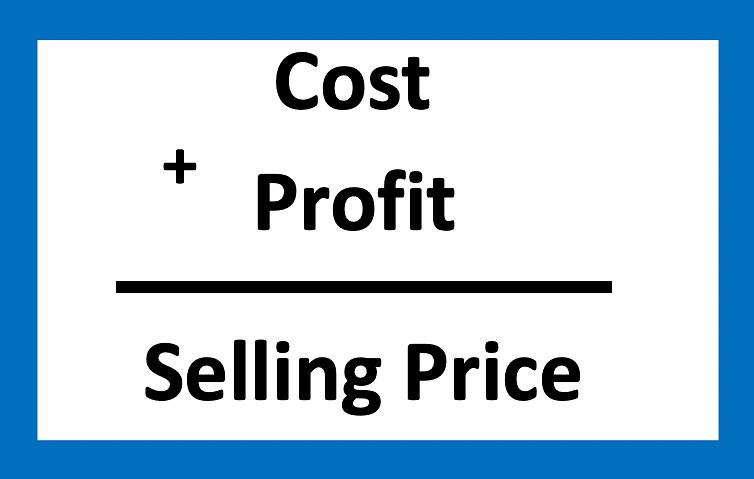
Selling Price
A fixed-price shop does not bargain with customers. Therefore, these shops focus on more profit than having any loss. Selling price is very important in today's life when a businessman has to make huge profits.
Significance of Selling Price
[Click Here for Sample Questions]
Selling price plays a crucial role to determine the profit ratio. The list price or the market price is when the seller will sell the products to the customers. Therefore, to make money and earn huge profits, he must determine the selling price. However, the selling price should not be so high that the customers hesitate to purchase the new products. Keeping a considerable amount is a must that everyone can afford, and at the same time, a shopkeeper also earns a profit.
Also Read:
Why is selling price an important factor?
[Click Here for Sample Questions]
Selling price is more important than cost price. This is because the selling price determines how much profit a businessman will make. Sometimes, the seller might use an average selling price to determine how much they should charge for their commodity. The shopkeepers also need to determine a competitive selling price so that the customers buy from their shops if the same product is available in different shops. This way, the shopkeeper does not lose customers and earns a profit.
Average Selling Price
[Click Here for Sample Questions]
The number of products sold by different channels at an average price is known as the average selling price. The average selling price is used as a barometer for different companies and businesses. Average selling price helps determine a selling price that different channels must follow to sell the particular commodity. For example, if you have two shops in the same city and want to sell a lamp. Then you have to decide on an average selling price for the lamp to make a profit. This average selling price will depend on market conditions, the number of buyers and other factors.
Check NCERT Solutions for Class 8 Mathematics Chapter 8
Important Selling Price Formula
[Click Here for Sample Questions]
Here is the list of some important selling price formulas that you must learn and practice.
- Selling price = Cost price + profit
- Selling price = Market/List price – Discount
- Selling price = [(100 + Profit) / 100] x Cost price
- Selling price = [(100 – Loss) / 100] x Cost price
- Cost price = Selling price – Profit
- Profit = Selling price – Cost price
- Loss = Cost price – Selling price
- % Profit = Profit / Cost price x 100
- % Loss = Loss / Cost Price x 100
Also Check:
Things to Remember
[Click Here for Sample Questions]
- Selling price is the price at which the shopkeeper sells a product.
- The selling price must be higher than the cost price to make a profit.
- If the selling price is lower than the cost price, the loss will occur.
- Average selling price is important when you have different channels of selling a product.
- It is necessary to determine the selling price beforehand to make significant profits.
Solved Questions
Ques 1: What is the book's selling price if the cost price is Rs 20 and the profit made by the bookseller is Rs 5? (1 mark)
Solution: We know, selling price = cost price + profit
Therefore, the book's selling price will be Rs 20 + Rs 5 = Rs 25.
Ques 2: Rahul marks all his goods 20% above the cost price and offers a discount of 10% on the list price. He is sure that he will earn a profit of 5%. What is the profit percentage he earns? (2 marks)
Solution: Let the cost price be 100.
Therefore, the list price will be = 100 + 20% of the cost price.
= 100 + 20
= 120
Now, the selling price = list price – discount
= 120 – 10% of 120 = 120 – 12
= 108
Hence, the profit = Selling price – Cost price
= 108 – 100 = 8
Thus, the percentage of profit is 8% and not 5%.
Ques 3: A carpenter decides to sell a wooden table at Rs 60 discount. What is the selling price if the market price is Rs 13000 and the listed price is Rs 125? (1 mark)
Solution: We know, Selling price = Market/List price – Discount
Therefore, selling price = 130 / 125 – 60 = Rs 44.
Ques 4: Find the profit that a goldsmith makes if he sells jewellery at Rs 6000 after buying it for Rs 2000. (1 mark)
Solution: We know, Selling price = [(100 + Profit) / 100] x Cost price
6000 = [(100 + Profit) / 100] x 2000
Therefore, 3 = 100 + Profit / 100
Profit = Rs 200.
Ques 5: What is the cost price if the loss of Rs 60 was made by selling a piece of cloth at Rs 120? (1 mark)
Solution: We know, Selling price = [(100 – Loss) / 100] x Cost price
120 = [(100 – 60) / 100] x cost price
Therefore, cost price = Rs 300.
Ques 6: A seller sells a microwave oven at a cost price of Rs 1500 with a profit of 20%. Calculate the price at which the consumer will purchase it. And also, find profit earned by the shopkeeper. (2 marks)
Solution: C.P = Rs 1500
Profit % = 20%
Profit = C.P x profit %
Profit = 1500 X 20/100
Profit = Rs 300
Selling price = Profit + C.P
= Rs 300 + Rs 1500 = Rs 1800
So, the amount payable by the customer to the seller = Rs 1800.
Ques 7: What is the cost price of a marker if the profit percentage is 50% and the profit earned is Rs 30? (1 mark)
Solution: We know, % Profit = Profit / Cost price x 100
Therefore, 50 = 30 / C.P x 100
Cost price = Rs 60.
Ques 8: What is the loss percentage faced by the businessman if the cost price is Rs 450 and the loss of Rs 100 was made? (1 mark)
Solution: We know, % Loss = Loss / Cost Price x 100
Therefore, % loss = 100 / 450 x 100 = 22.22%.
Ques 9: A shopkeeper sells a bike for Rs 125000 with a loss of Rs 15000. Find the price at which he had bought it from the dealer. Also, calculate the loss percent. (2 marks)
Solution: The selling price of the bike = Rs 125000
The loss suffered by the shopkeeper = Rs 15000
Cost price =?
We know that, Selling price = Cost Price – Loss
So, Cost Price = Selling Price + Loss
Cost Price = Rs 125000 + Rs 15000
= Rs 140000
Loss percent = Loss / C.P. x 100 %
= 15000 / 140000 x 100%
= 10.715%
Ques 10: A carpenter sells a sofa set at the cost price of Rs 150000 with a profit of 20%. Find the price at which the customer has purchased it. Also, find profit gained by the carpenter. (2 marks)
Solution: Cost price = Rs 150000
Profit percent = 20%
Profit = cost price x profit percent
Profit = 150000 / 20 × 1 / 100
Profit = Rs 30000
Selling price = cost price + profit
= Rs 150000 + Rs 30000
= Rs 180000
So, the amount paid by the customer to the shopkeeper = Rs 180000.
Mathematics Related Links:



Comments