




Patterns of Social Inequality and Exclusion looks at how caste, tribe and disability produce unequal access to resources, and how some groups face outright exclusion from participation even when the economic barrier is no longer there. This PYQ set brings together 22 CBSE board questions from 2017 to 2024 on the chapter, and every one comes with a full step-by-step solution, so you can check your own answer against a complete worked explanation.
- 22 questions, CBSE 2017-2024: 9 MCQs (1 mark each), 6 short answers (2 marks each), and 7 long answers (4 marks each).
- Full solutions included: every question has a worked, step-by-step answer, not just the bare question paper.
- Topics covered: the caste system and its features, the dominant caste, tribes and their traits, Bourdieu's forms of capital, sanskritisation, and the changing understanding of disability.
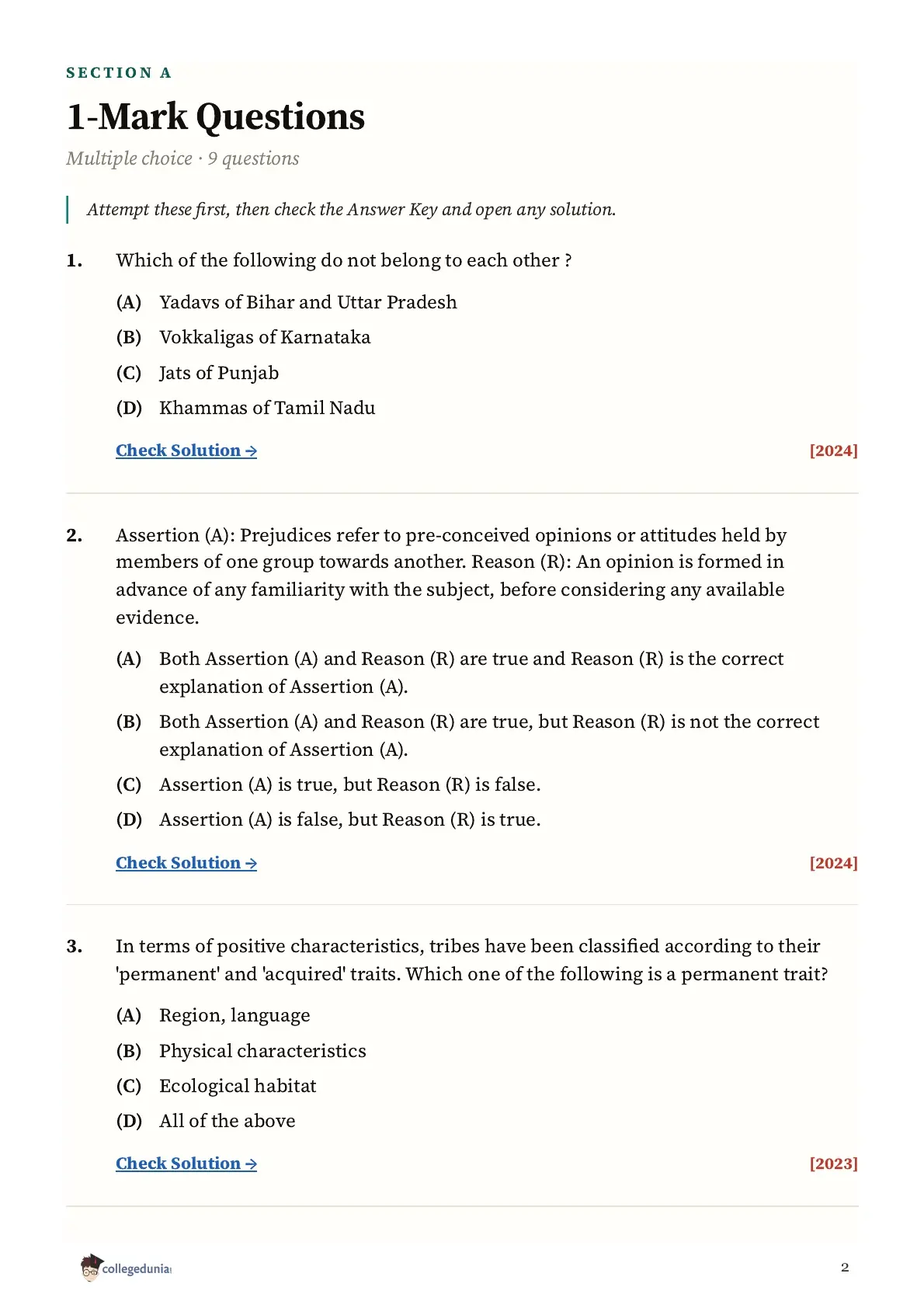
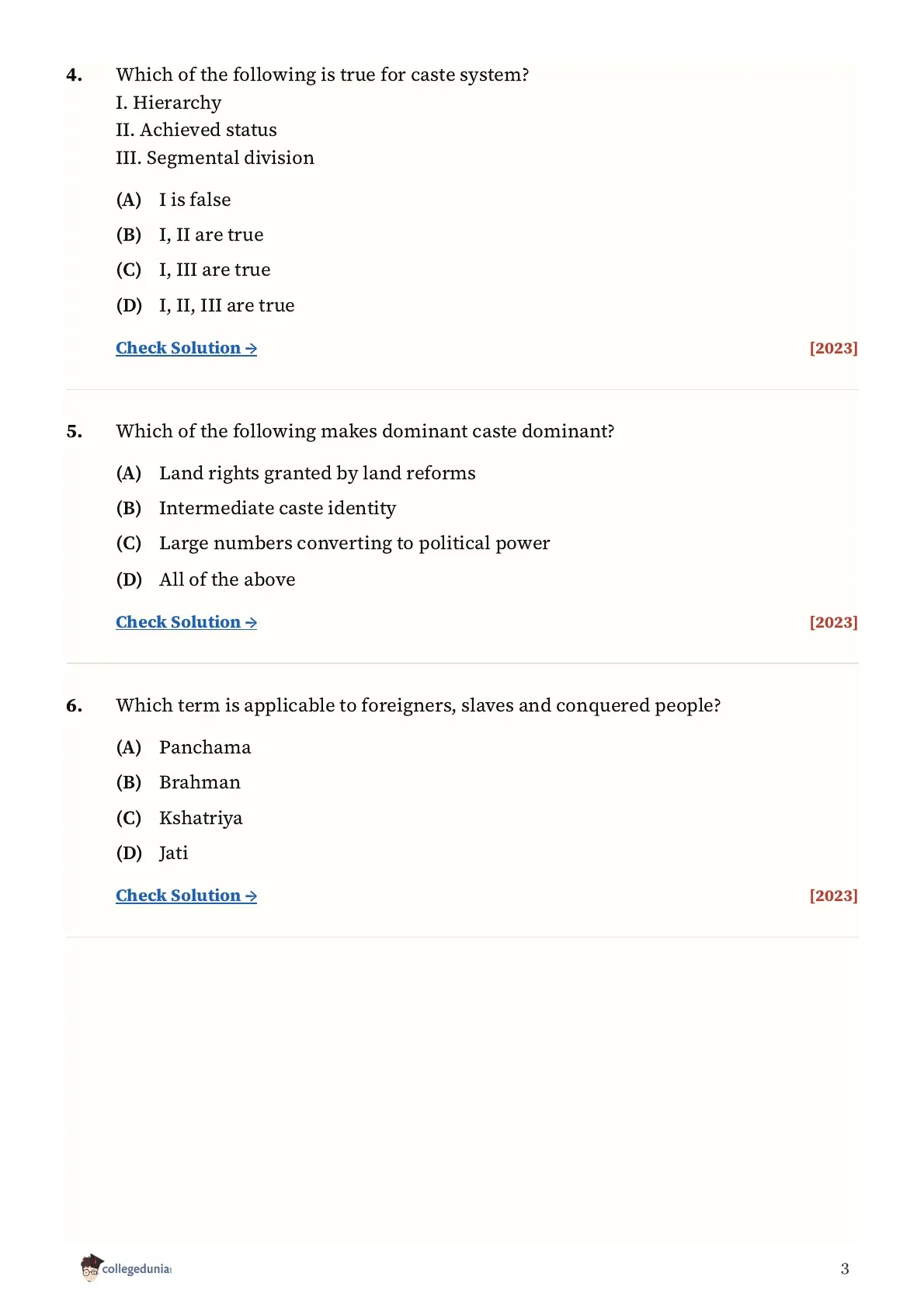
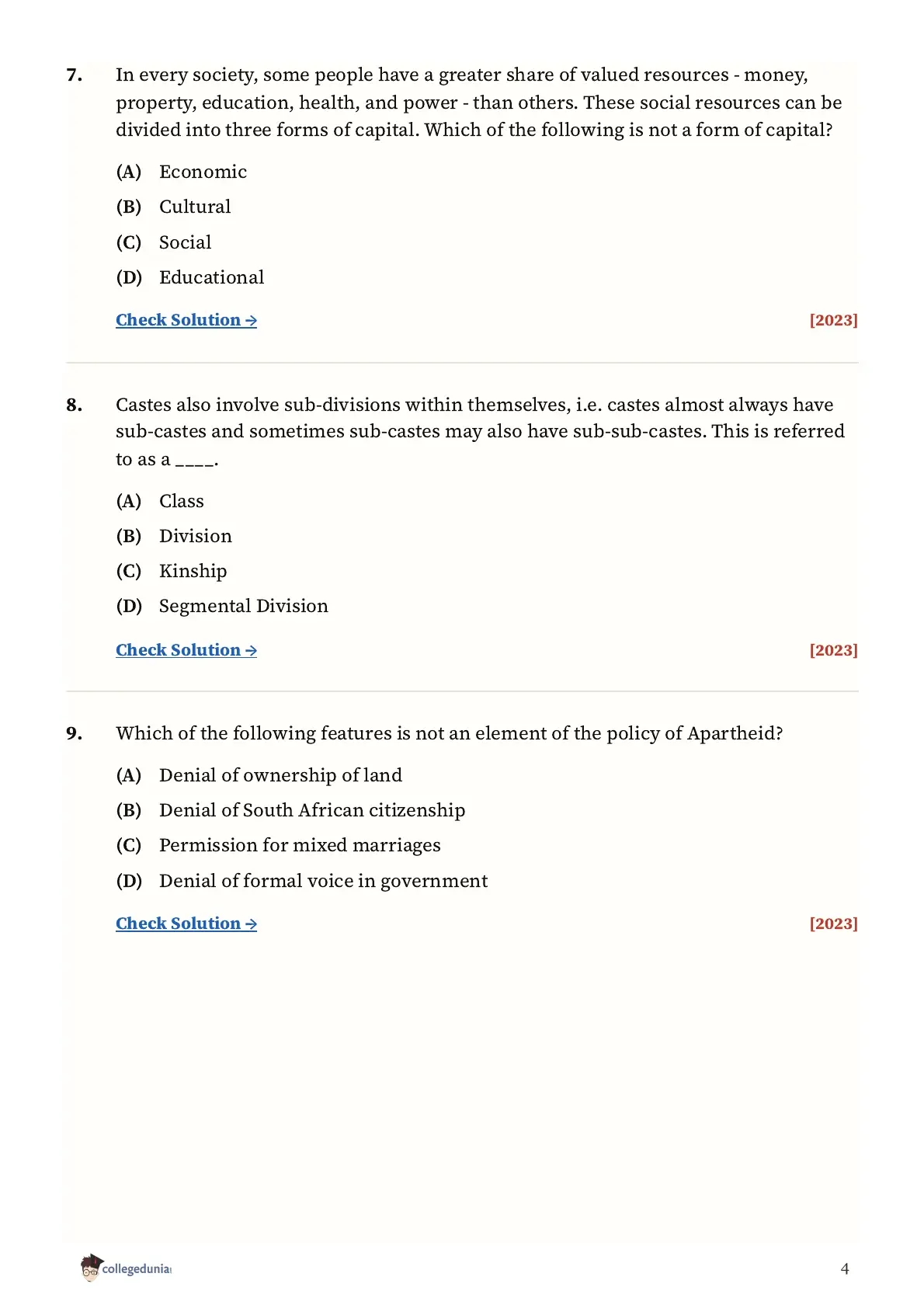
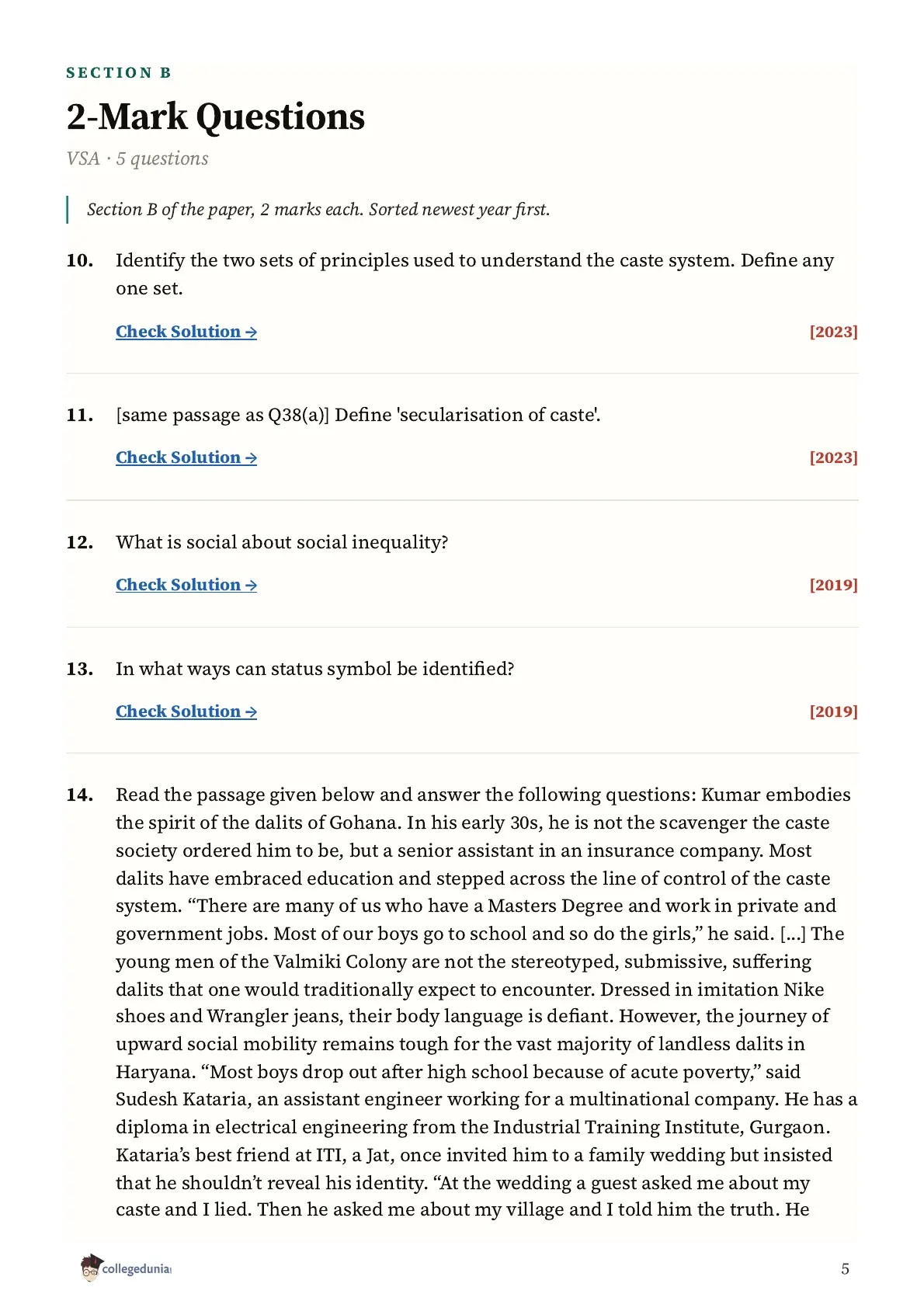
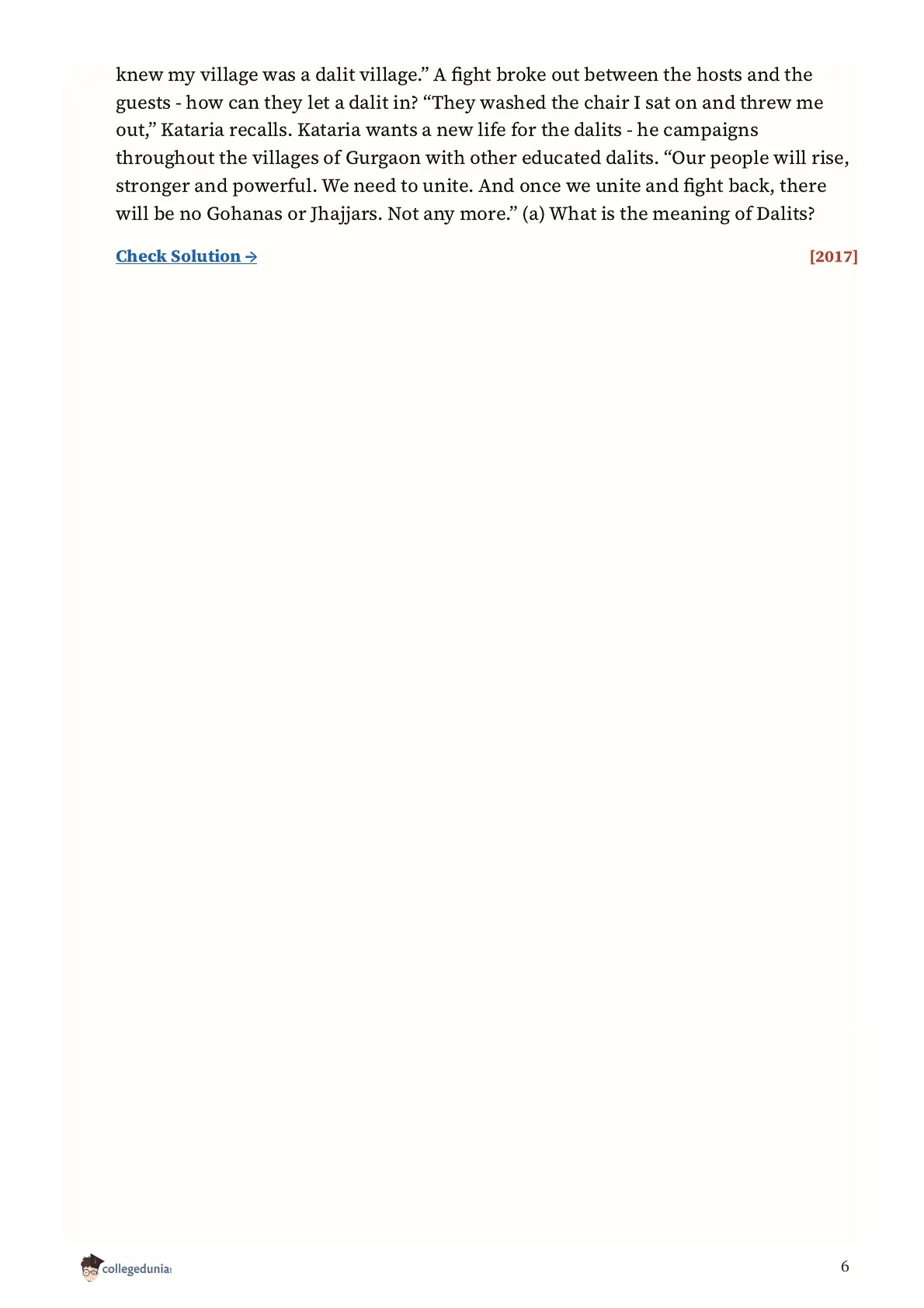
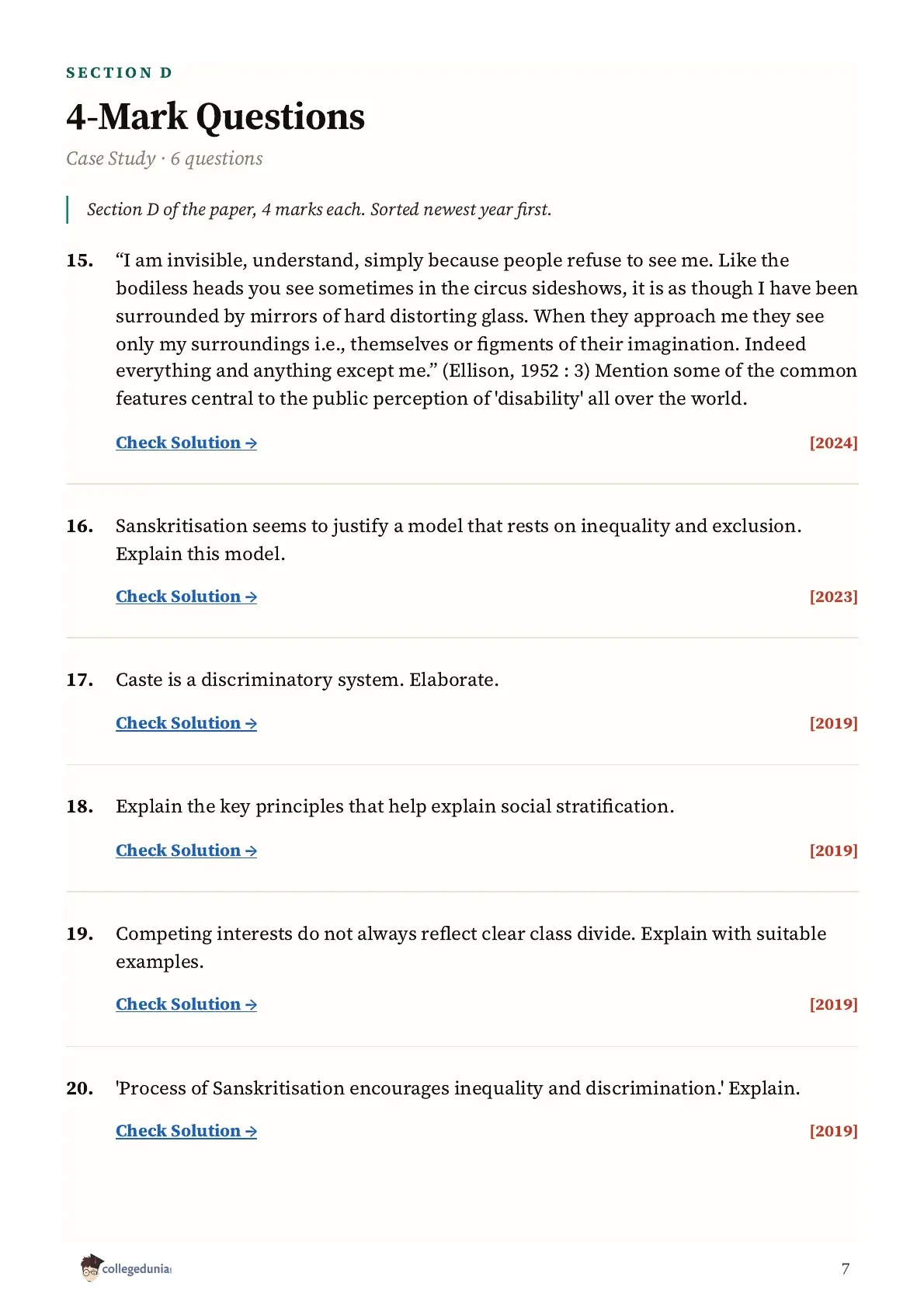
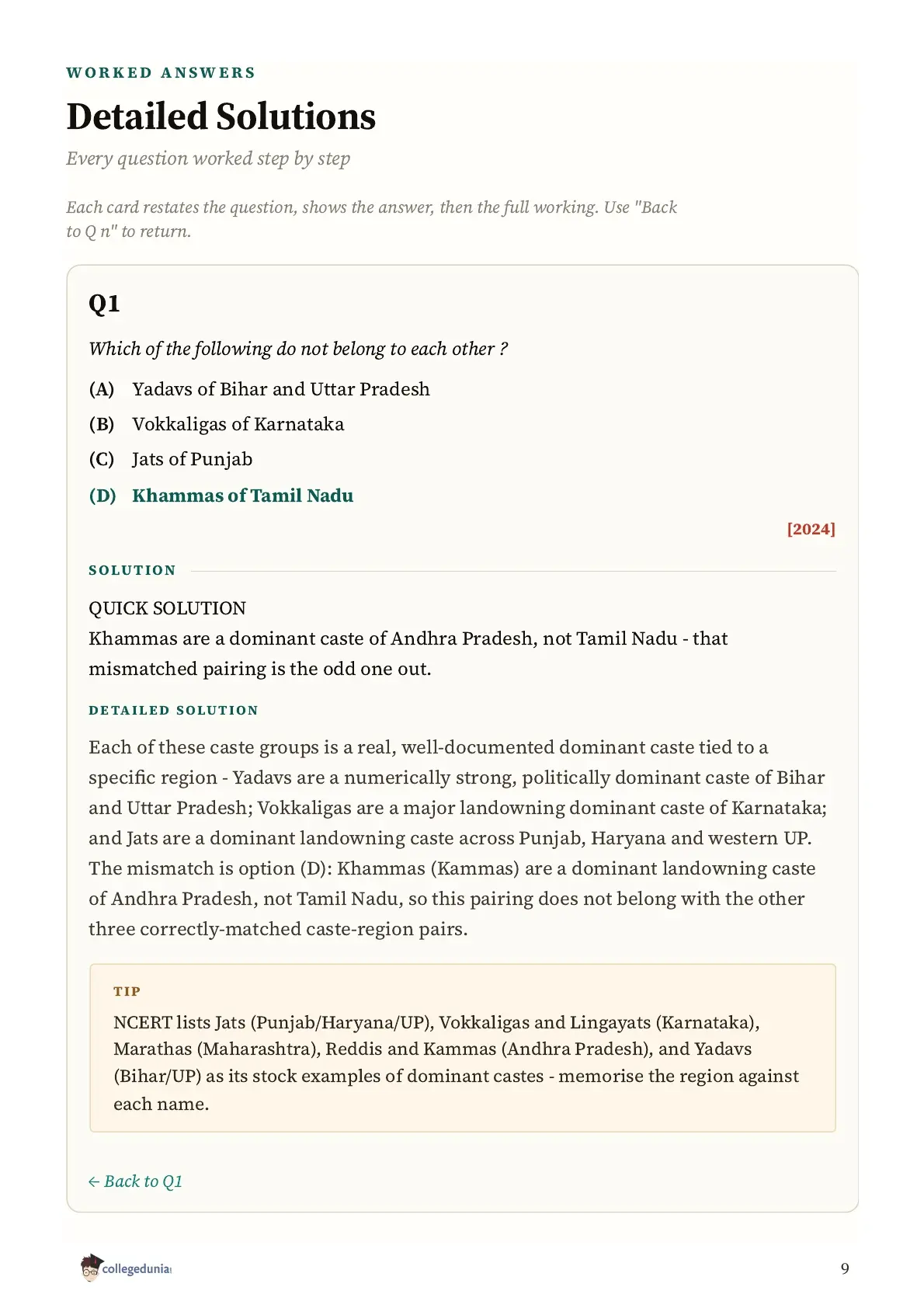
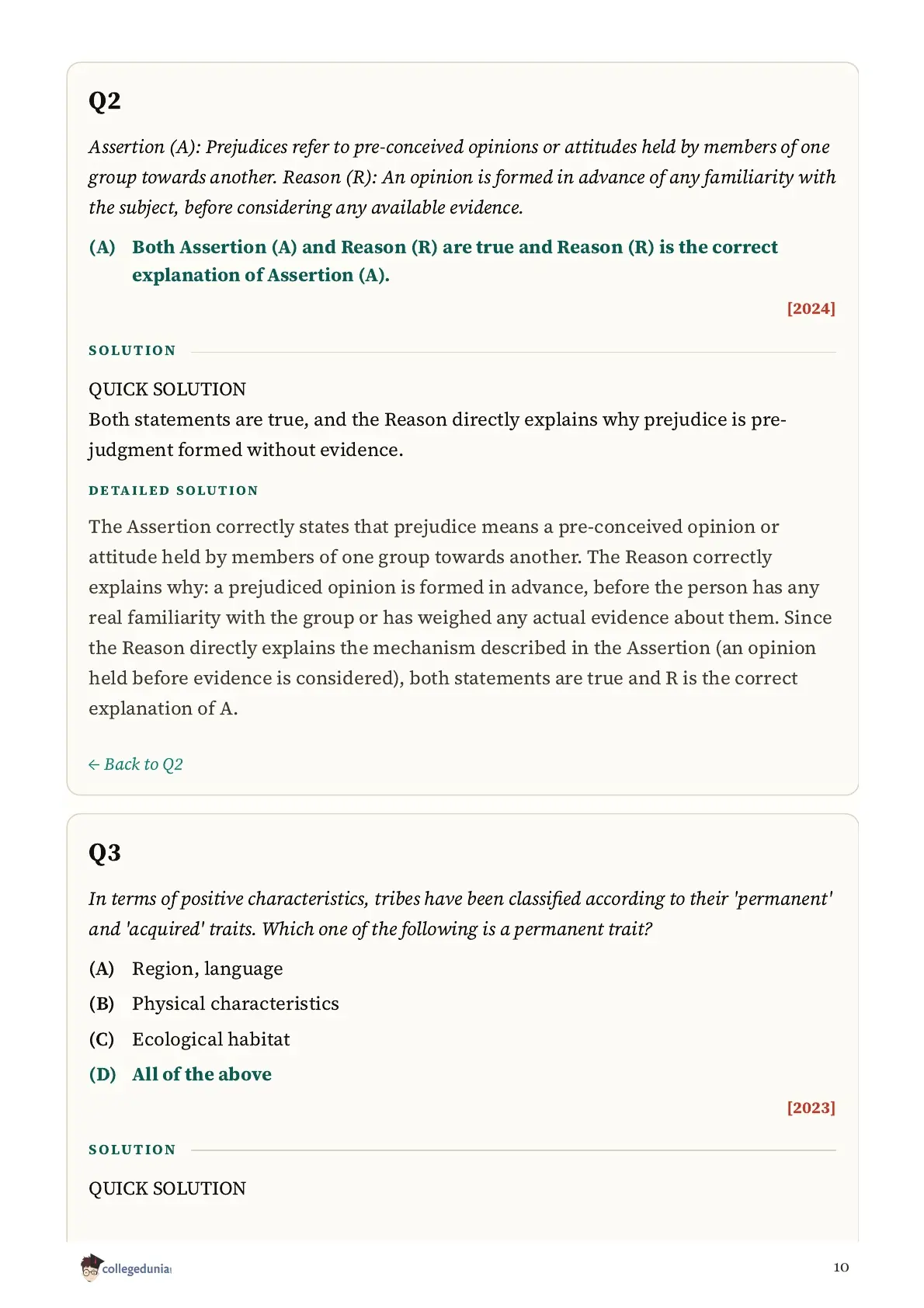
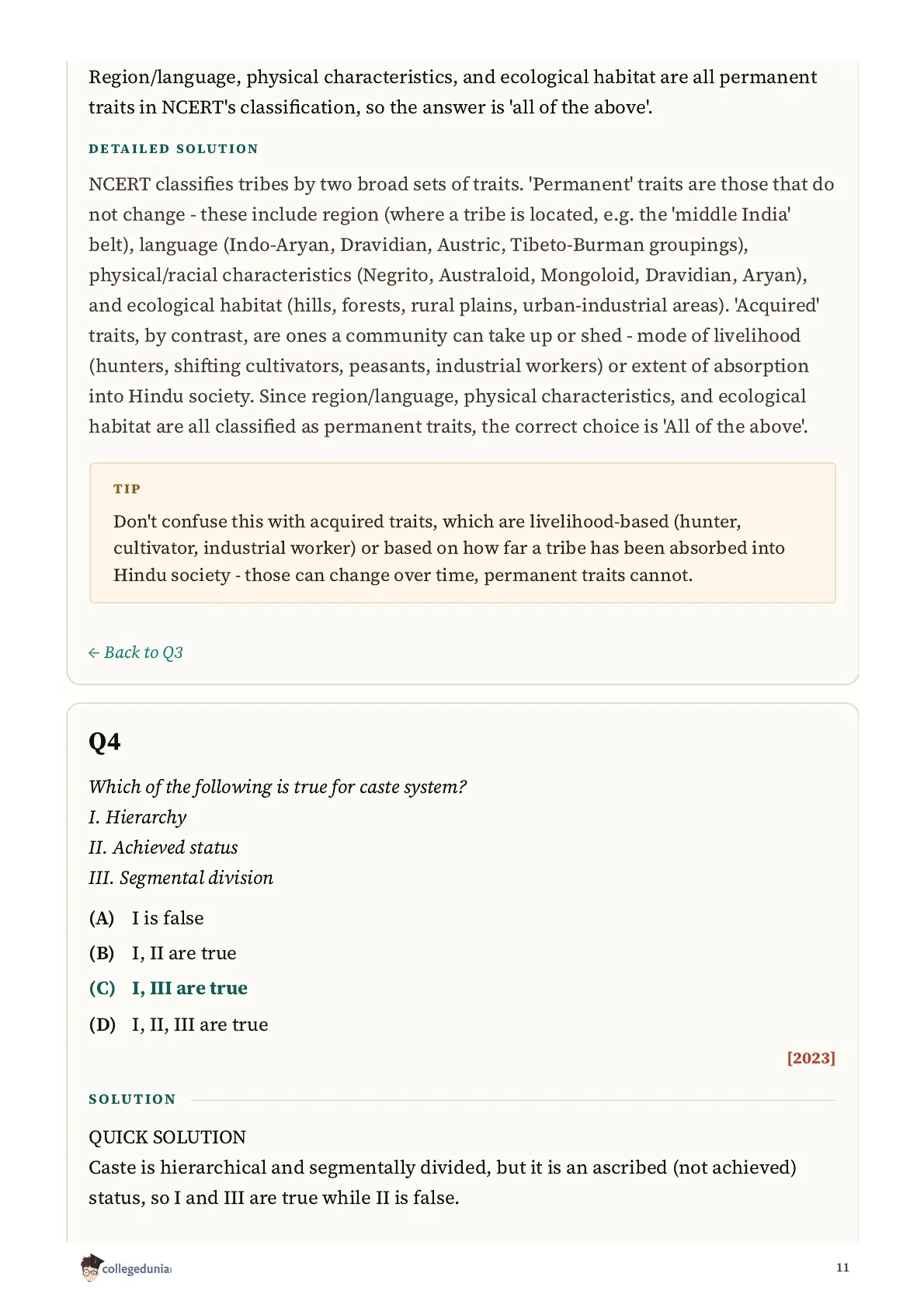
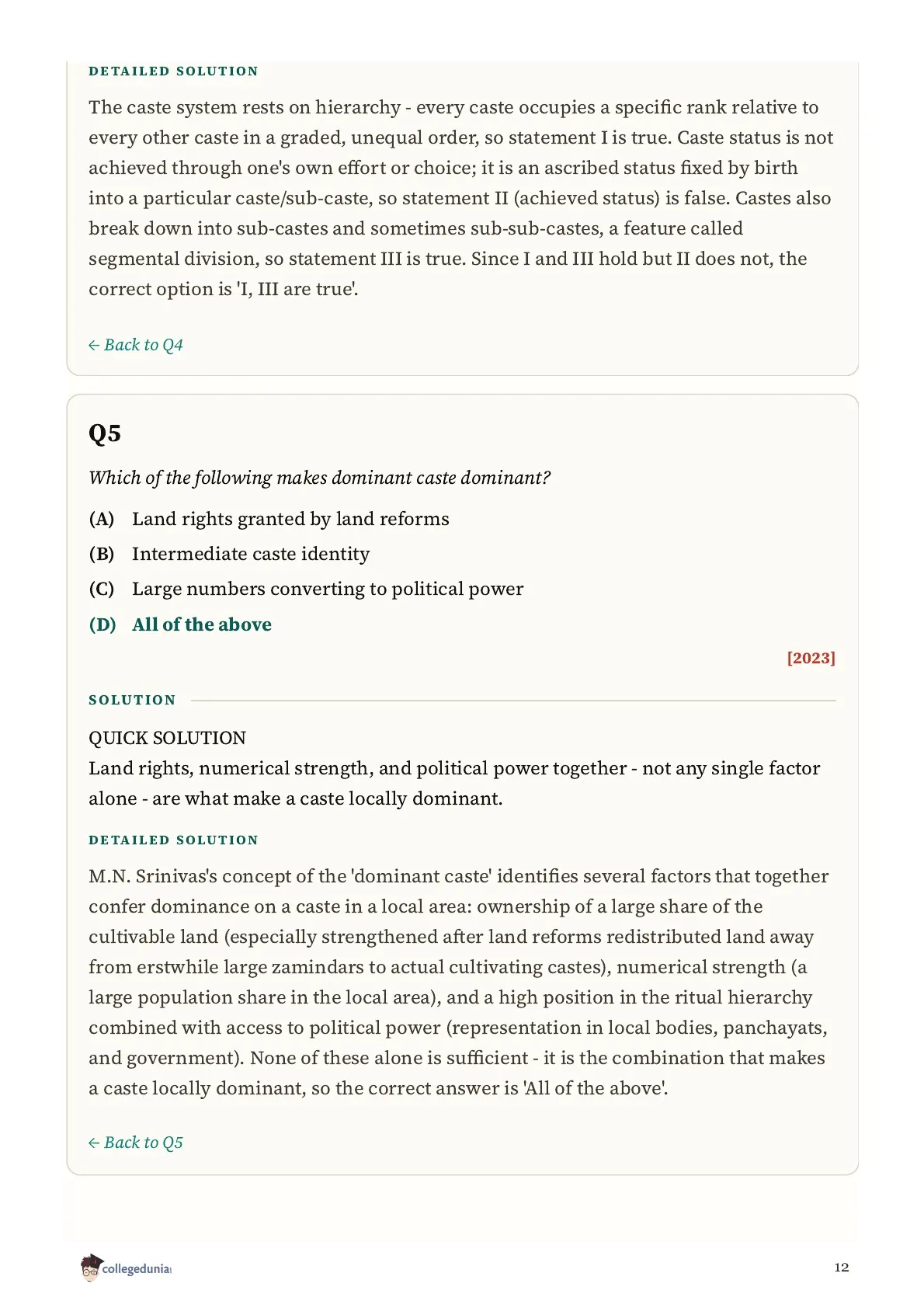
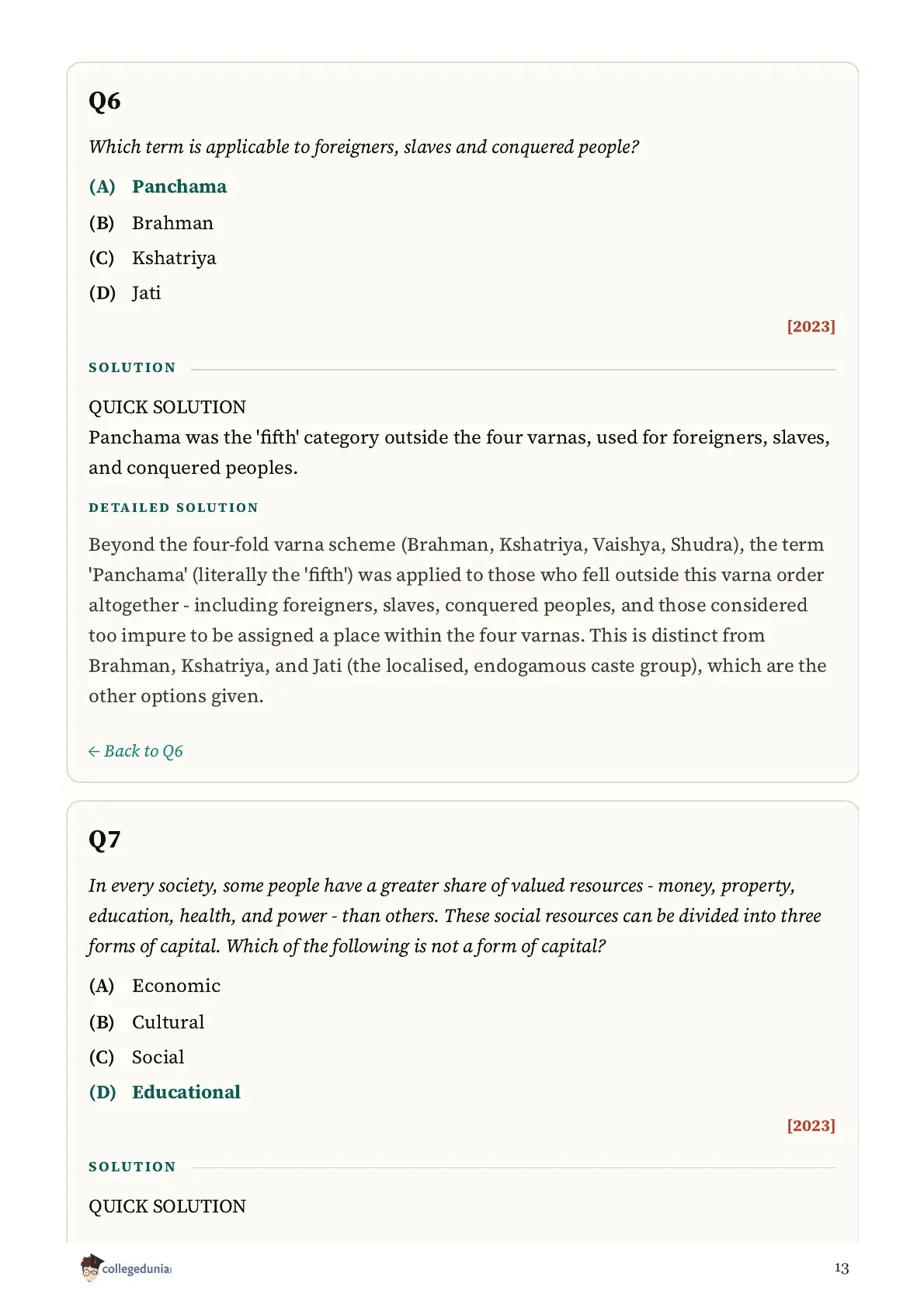
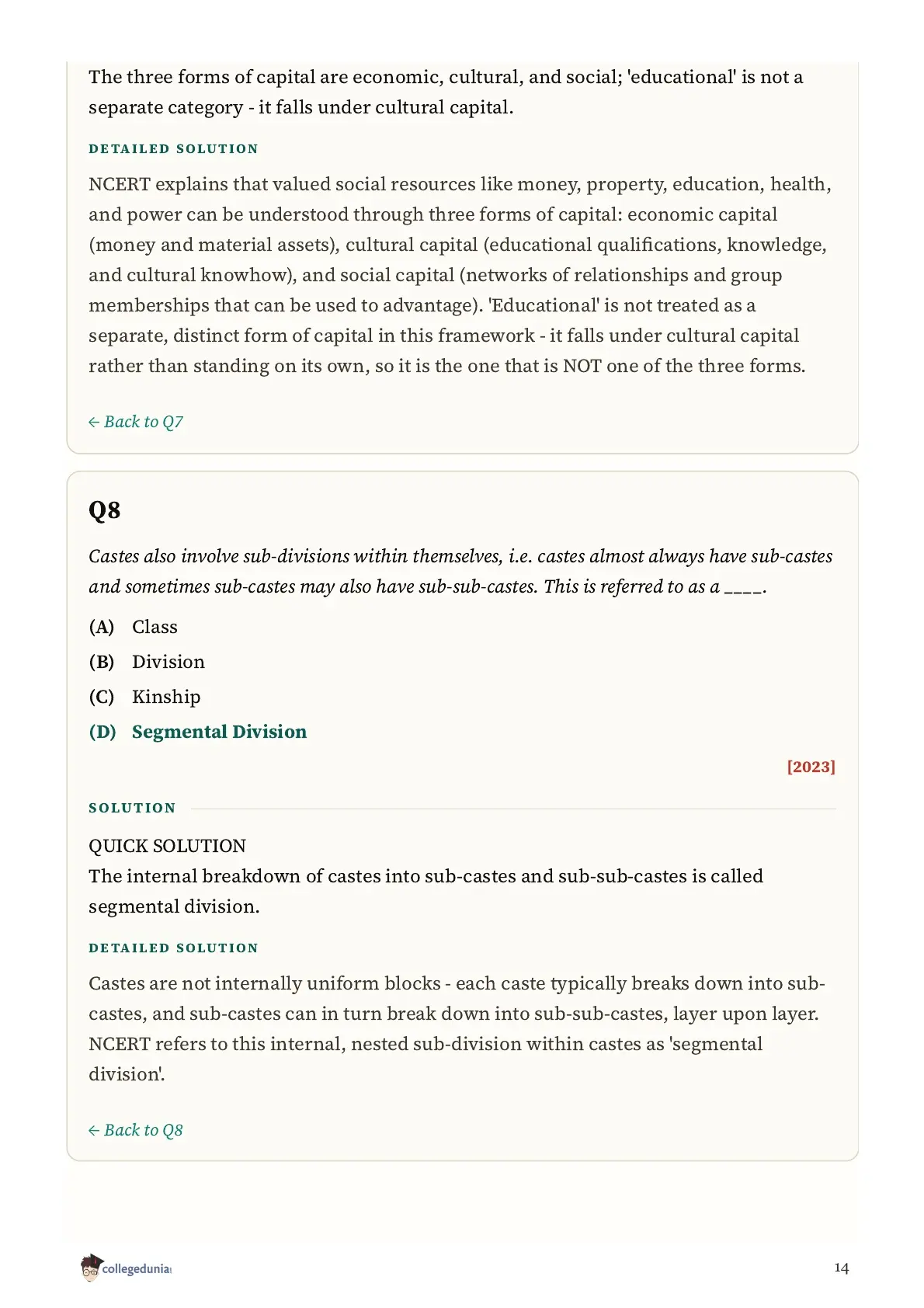
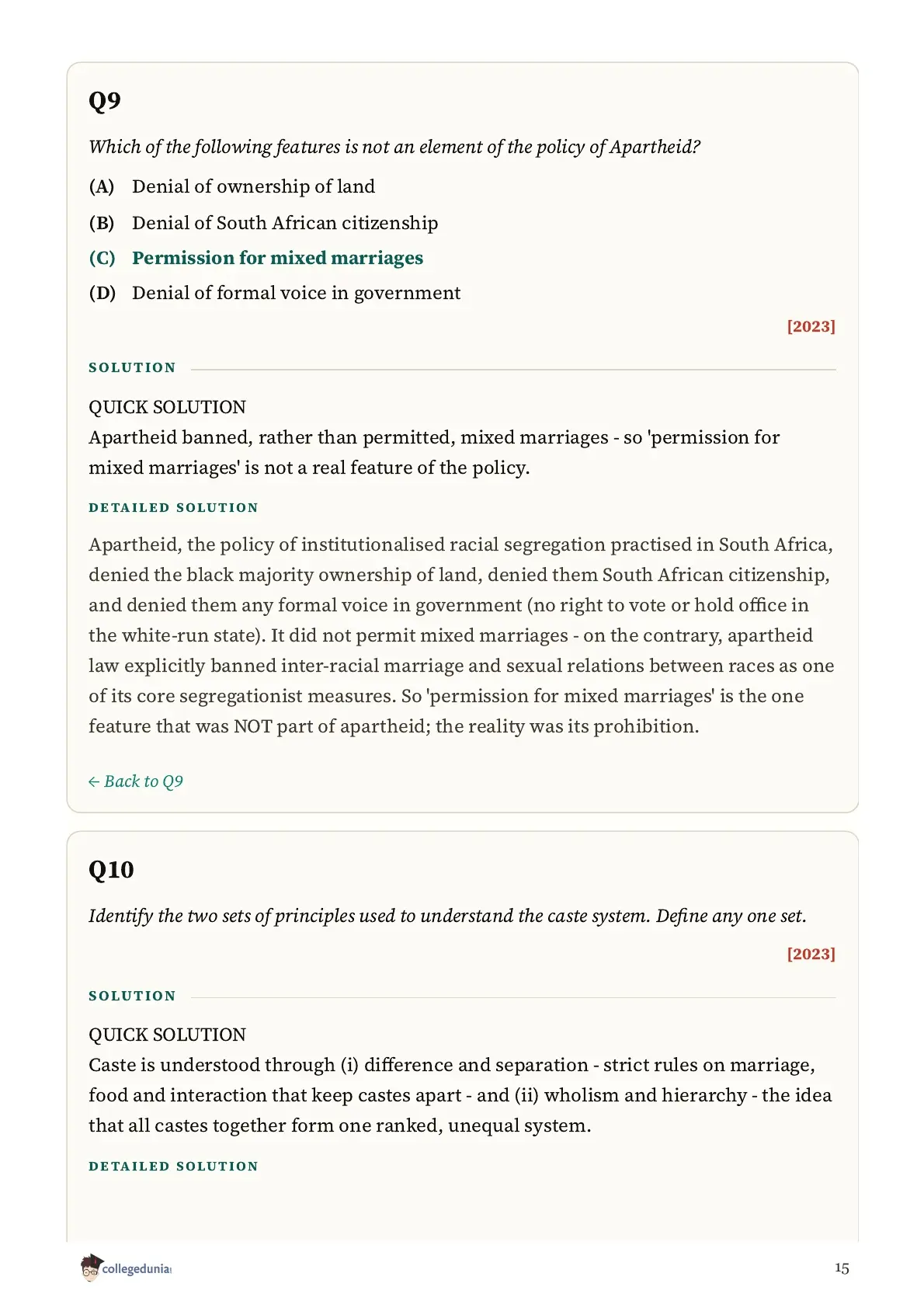
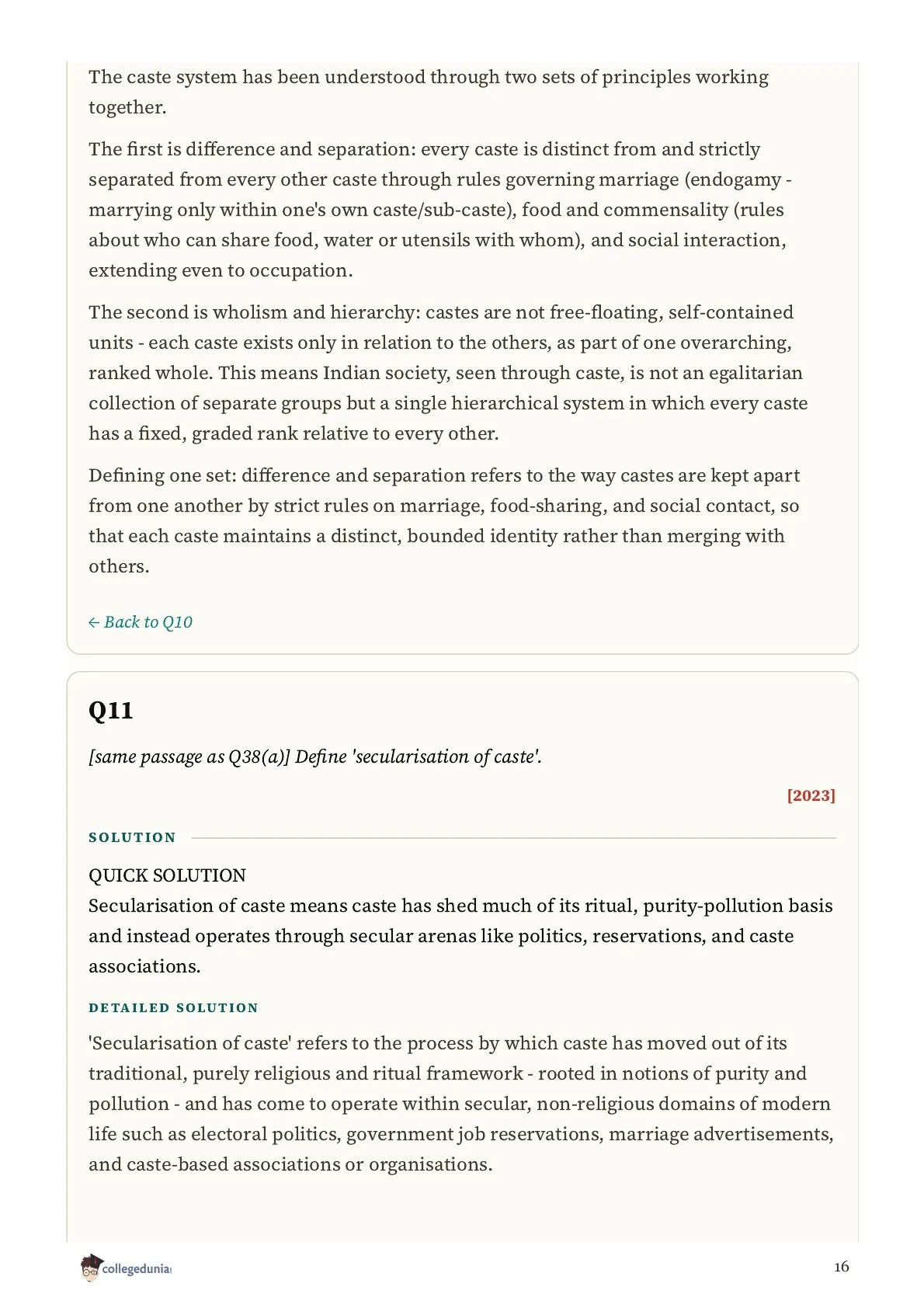
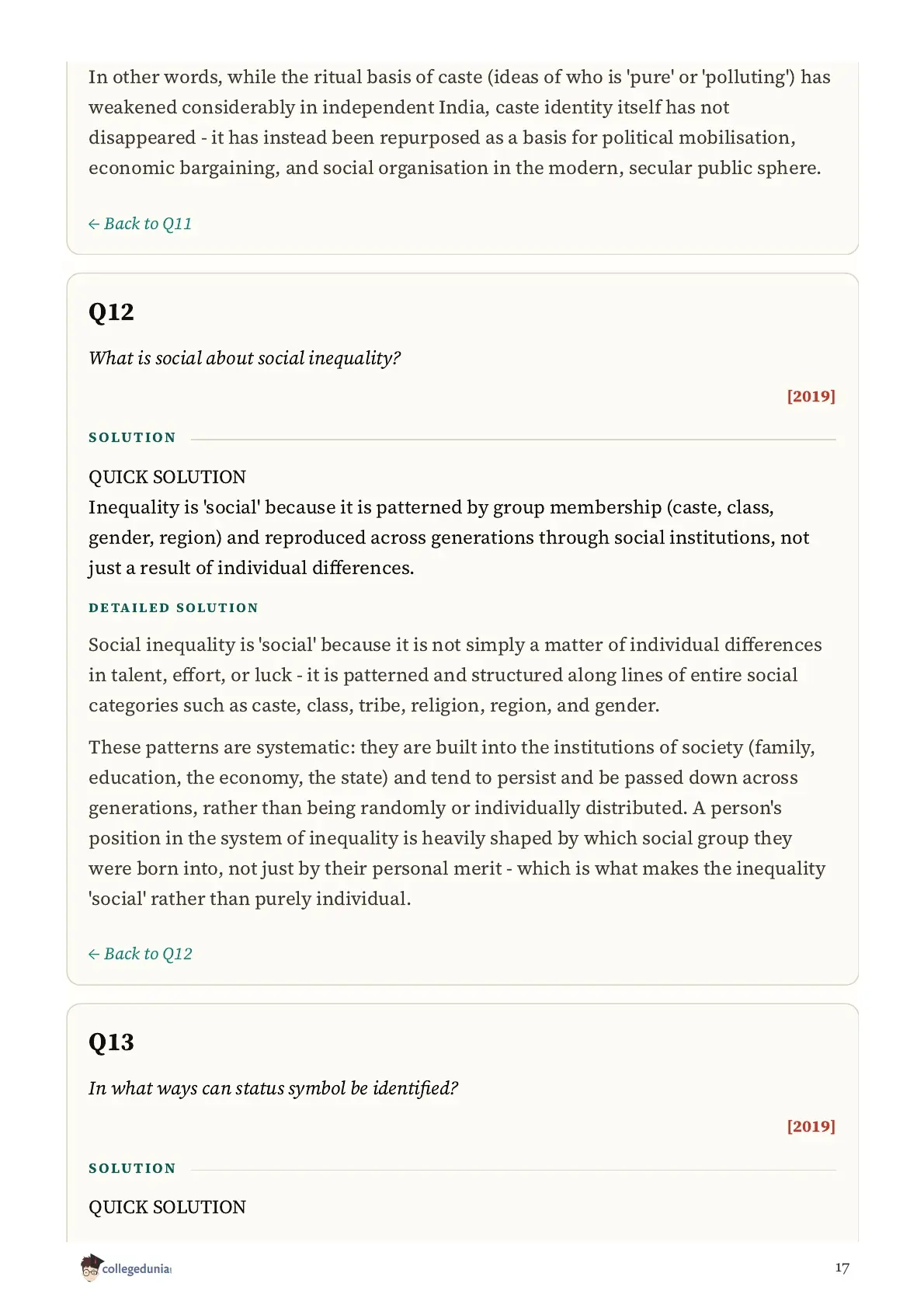
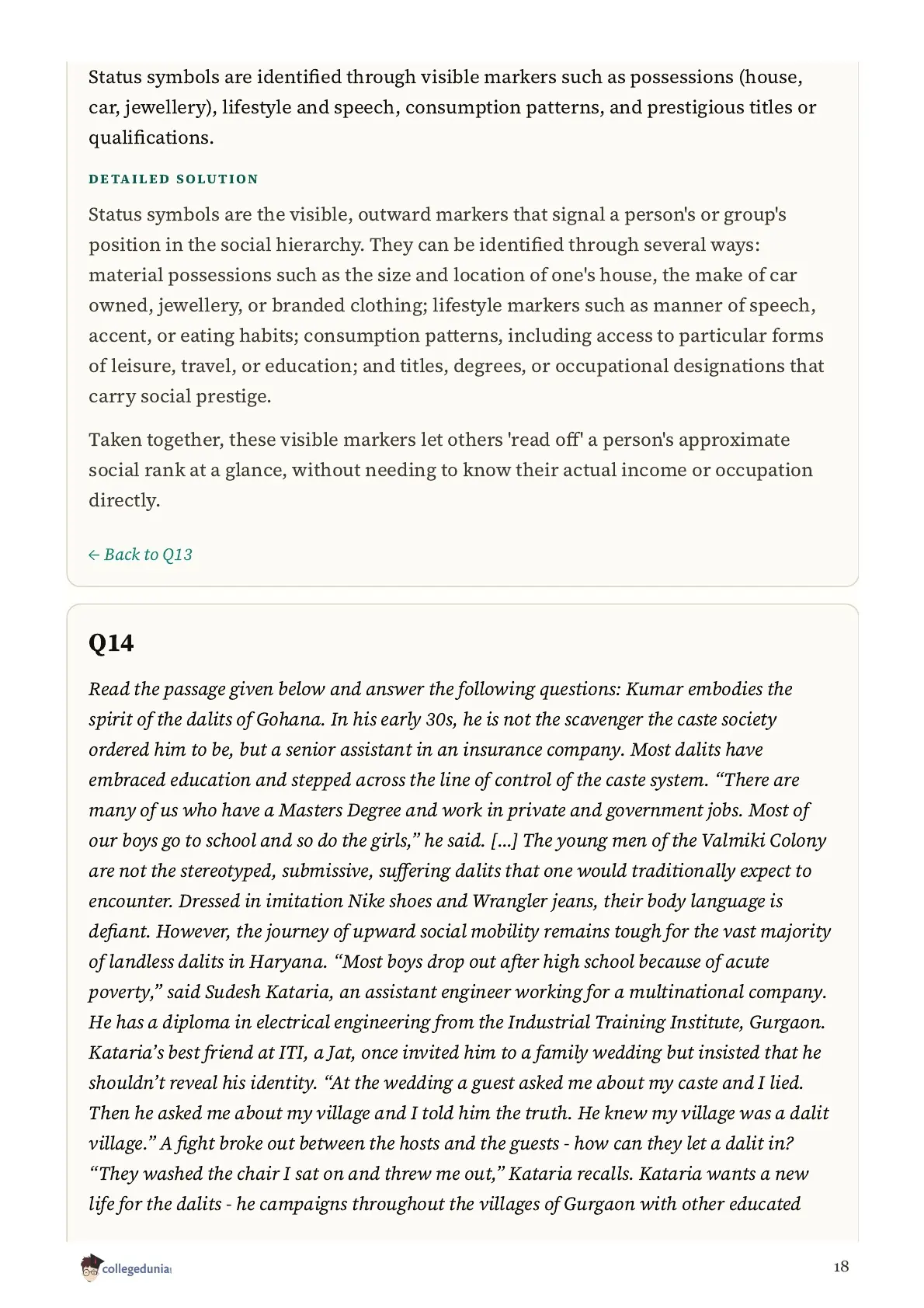
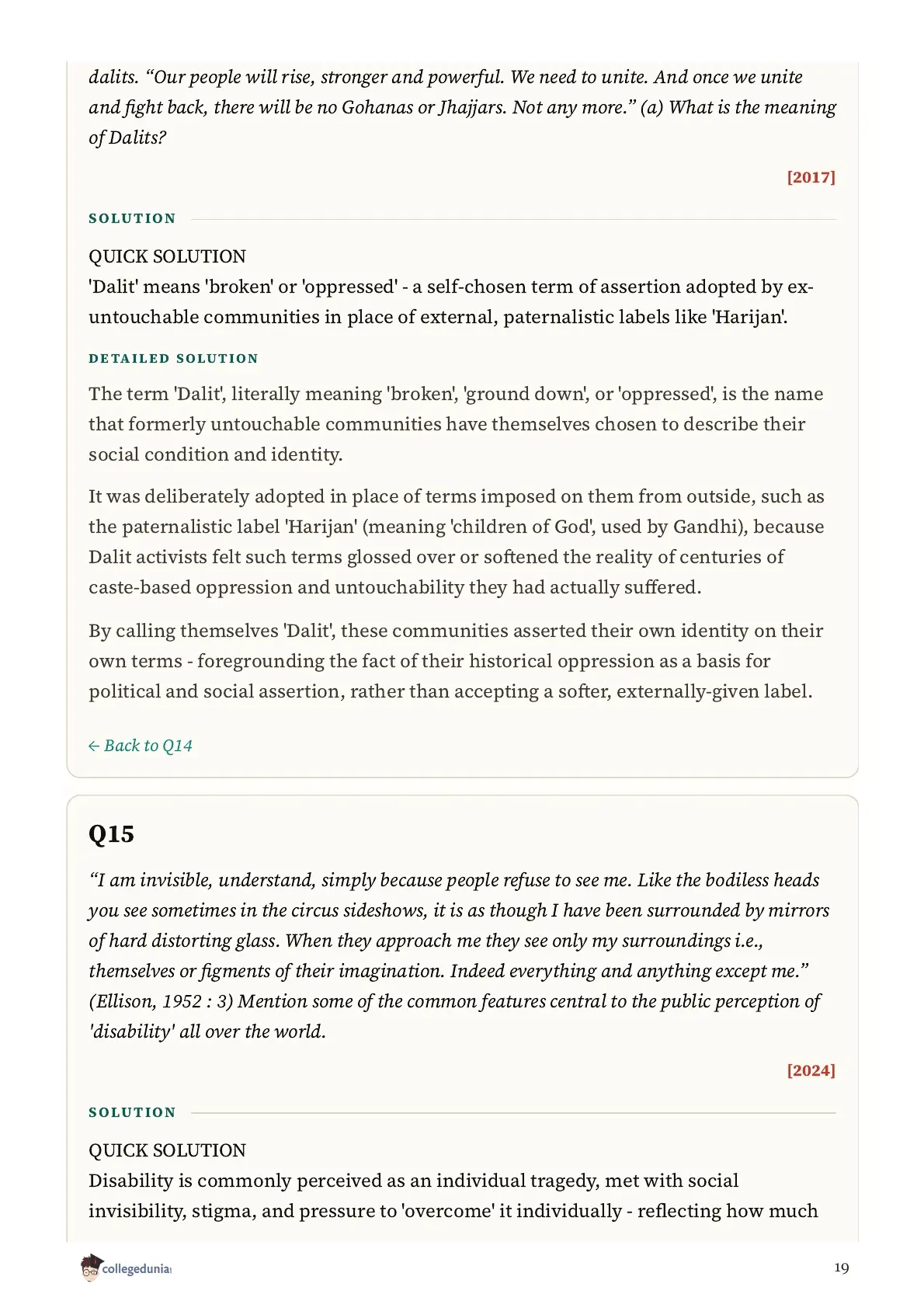
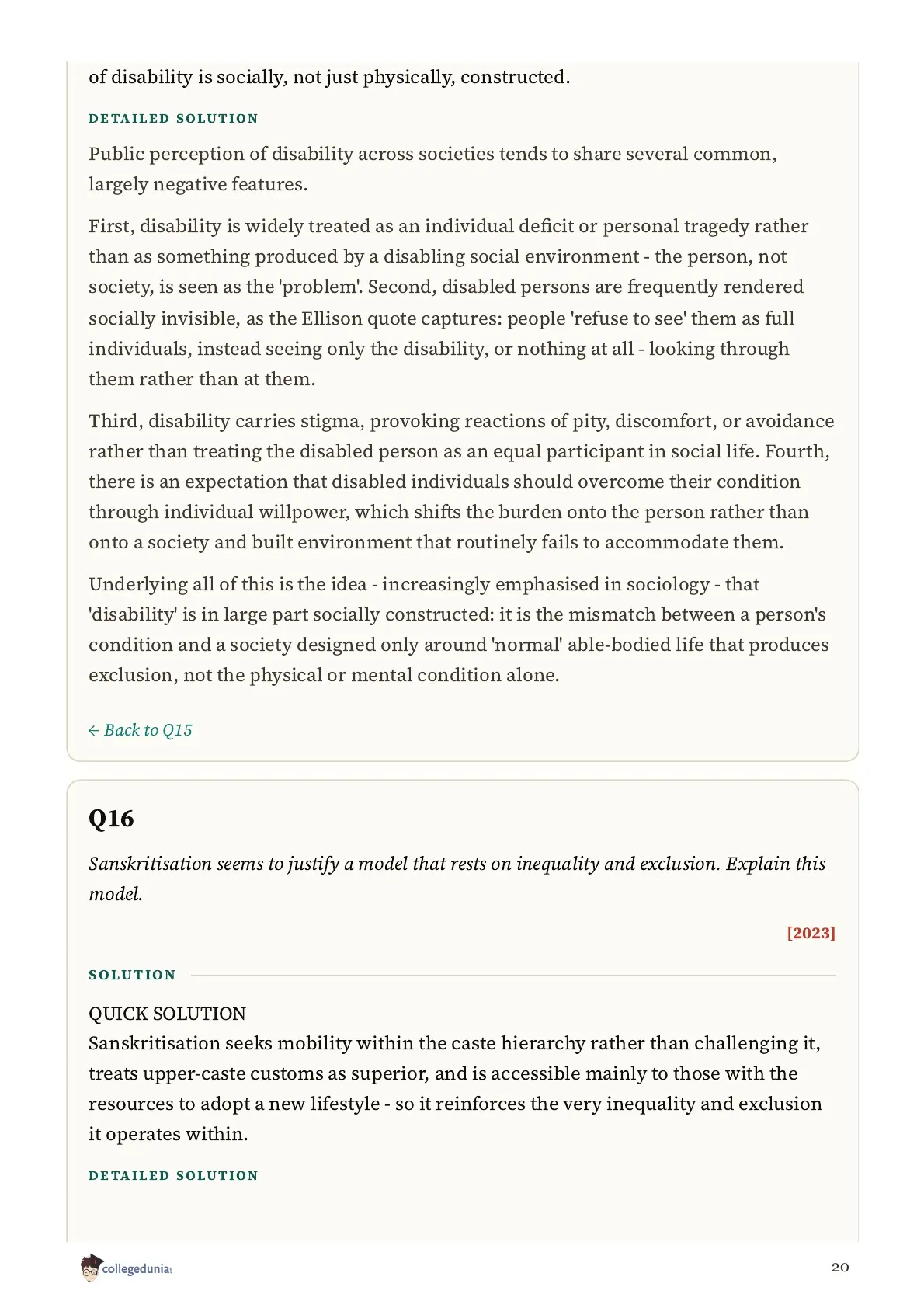
Every question in this Class 12 Sociology Chapter 5 PYQ set is lifted from an actual CBSE board paper (2017-2024) and answered in full by Collegedunia's Sociology experts, according to the 2026-27 NCERT syllabus.
|
Table of Contents |
What Class 12 Sociology Chapter 5 PYQs Test: Caste, Tribes and Social Exclusion
Patterns of Social Inequality and Exclusion is where CBSE checks whether you can tell inequality apart from exclusion, and whether you understand how caste, tribe and disability produce each one differently. Board papers pull questions from the features of the caste system, the idea of a dominant caste, the meaning of Dalits and Tribals, Bourdieu's three forms of capital, and the shifting public understanding of disability.
- Caste system: its features, the panchama and varna classification, the segmental division of caste, and the different sets of principles used to study caste (hierarchy versus difference-and-separation).
- Dominant caste: M.N. Srinivas's concept, built on numerical strength, land ownership and political power together, not any one factor on its own.
- Tribes: the meaning of Tribals, their permanent and acquired traits, and the colonial-era label of "criminal tribes" (later reclassified as denotified tribes).
- Forms of capital: Bourdieu's economic, cultural and social capital, used to explain forms of advantage that go beyond money.
- Disability and sanskritisation: how public perception of disability is changing from a medical view to a social one, and how sanskritisation connects to patterns of inequality and exclusion.
Marks-wise Distribution of Patterns of Social Inequality PYQs
The 22 questions are spread across three CBSE mark bands. Section A carries the most questions (9 MCQs), but the 4-mark long answers carry the most weight overall.
| Marks Each | Question Type | Number of Questions |
|---|---|---|
| 1 mark | MCQ | 9 |
| 2 marks | Short Answer | 6 |
| 4 marks | Long Answer | 7 |
The 1-mark MCQs test whether you can identify a concept from its definition, the meaning of a Dalit, a varna, an element of the Apartheid policy. The 4-mark questions test whether you can explain a full framework, such as Bourdieu's three forms of capital or what makes a caste dominant, with every part of the answer in place.
Year-wise Spread of Patterns of Social Inequality PYQs: 2017 to 2024
The bank covers four CBSE board papers between 2017 and 2024. 2023 alone contributed the most questions (10), while 2017, 2019 and 2024 fill out the rest of the set.
| Year | Number of Questions |
|---|---|
| 2017 | 3 |
| 2019 | 6 |
| 2023 | 10 |
| 2024 | 3 |
Practising all four years together shows how CBSE has kept coming back to the same core definitions, caste, tribe, dominant caste, while rotating the application-style questions built around them from one paper to the next.
Which Topics Repeat Most in Patterns of Social Inequality PYQs
This is the largest chapter in the Class 12 Sociology PYQ series, so its 22 questions spread across a wide range of sub-topics. A few concepts come back across MCQs as well as the longer answers, while others show up only occasionally.
- Most frequent: caste as a system of discrimination, the dominant caste, Bourdieu's forms of capital, and sanskritisation and the model of inequality/exclusion.
- Frequent: features of the caste system, the meaning of Tribals, the meaning of Dalits, State initiatives to abolish caste discrimination, and elements of the Apartheid policy.
- Occasional: class divide and competing interests, panchama and varna classification, permanent and acquired traits of tribes, prejudice, principles of social stratification, public perception of disability, secularisation of caste, segmental division of caste, sets of principles to understand the caste system, social basis of inequality and exclusion, and status symbols and lifestyle.
How to Attempt Patterns of Social Inequality PYQs
This chapter rewards precision over general knowledge. CBSE examiners are checking whether you use the right sociological term, not whether you understand the broad idea.
- Always distinguish inequality from exclusion explicitly in the opening line of an answer. Inequality is differential access to resources and rewards; exclusion is an active, often forcible, denial of access or participation regardless of resources.
- Name Bourdieu's three forms of capital precisely, economic, cultural and social, instead of describing them loosely in your own words.
- For a "dominant caste" answer, state all three conditions together. Numerical strength, landholding and political power must appear as a combination; naming only one factor is treated as an incomplete answer.
- Keep a tribe's permanent traits separate from acquired or administrative labels. Geographical isolation, a distinct language and shared cultural practices are permanent traits; a colonial-era "criminal tribe" classification is an acquired, administrative one.
Sample Question and Answer Approach for Patterns of Social Inequality
Here is how to structure two typical question types from this chapter's PYQs. The pattern below is the same one the PDF's step-by-step solutions follow.
| Question Type | How to Structure the Answer |
|---|---|
| 1-mark MCQ (e.g. identifying which of the given options is one of Bourdieu's forms of capital) | Match each option to a precise definition, economic (money and property), cultural (education, taste, credentials) or social (networks and connections), and eliminate any option that does not fit one of the three. |
| 4-mark long answer (e.g. explain what makes a caste "dominant" in a village) | Define dominant caste in the first line, then list the three conditions, numerical strength, land ownership and political power, giving one concrete example for each before closing with a one-line conclusion. |
Define the term first, then list every condition it depends on. That habit alone separates a partial 2-mark answer from a complete 4-mark one in this chapter.
Common Mistakes Students Make in Patterns of Social Inequality Questions
Watch out for these recurring errors:
- Treating "inequality" and "exclusion" as synonyms. Exclusion specifically means an active denial of participation, such as untouchability faced by an economically successful Dalit, even when the resource barrier is no longer there.
- Confusing "Tribals" and "Dalits" as the same category. They are distinct groups with separate histories of marginalisation, tribal communities through land alienation and colonial labelling, Dalits through caste-based untouchability.
- Forgetting that a caste is "dominant" through numbers, land and political power together. Naming only one of these three conditions is marked as an incomplete answer.
- Describing Bourdieu's capital in vague terms such as "money and status" instead of naming economic, cultural and social capital precisely, with an example of each.
Student Feedback: Patterns of Social Inequality Difficulty Rating
What 9,870 students told us about this chapter's PYQs
In a Collegedunia poll of 9,870 Class 12 Sociology students conducted before the 2027 boards, 71% rated the inequality-versus-exclusion distinction and Bourdieu's forms of capital as the hardest part of this chapter, mainly because both concepts sound close enough to blur together under exam pressure. Students who worked through all four years of PYQs together reported fewer mix-ups on the actual paper.
Source: 2026-27 Class 12 Sociology student poll. Sample of 9,870 students from CBSE schools across 12 states.
How These PYQs Pair with Other Class 12 Sociology Chapter 5 Resources
This PYQ set works best alongside the other Chapter 5 resources already live on Collegedunia. Read the notes first, revise from the handwritten notes, solve these PYQs, then cross-check tricky answers against the full NCERT solutions.
| Resource | Link |
|---|---|
| NCERT Notes | Patterns of Social Inequality and Exclusion Class 12 Notes |
| Handwritten Notes | Patterns of Social Inequality and Exclusion Class 12 Handwritten Notes |
| NCERT Solutions | Patterns of Social Inequality and Exclusion Class 12 NCERT Solutions |
| NCERT Book PDF | Patterns of Social Inequality and Exclusion Class 12 NCERT Book PDF |
| PYQ (this page) | Patterns of Social Inequality and Exclusion Class 12 PYQ |
Five other Class 12 Sociology chapters from this same PYQ series are already live: Structural Change, Cultural Change, Social Institutions: Continuity and Change, The Market as a Social Institution, and The Story of Indian Democracy.
How to Use the Patterns of Social Inequality PYQ PDF Effectively
Don't jump to the solution on the first read. Try to define the concept and sketch an answer yourself, then check it against the step-by-step solution in the PDF.
- First pass: attempt all 22 questions without looking at the solutions, mark band by mark band.
- Second pass: compare each answer against the solution and mark where a precise term (like "social capital" or "dominant caste") was missing or vague.
- Third pass: redo only the questions you got wrong, a day or two later, from memory.
Downloading and Using the PYQ PDF
The PDF is 25 pages and free to download. It opens with the question paper sorted by mark band, closes with a self-check answer key, and links every question to its full solution.
Patterns of Social Inequality and Exclusion Class 12 Sociology PYQ FAQs
Ques. How many questions are in the Patterns of Social Inequality and Exclusion Class 12 PYQ PDF?
Ans. The PDF has 22 questions from CBSE board papers between 2017 and 2024: 9 one-mark MCQs, 6 two-mark short answers and 7 four-mark long answers.
Ques. Does this PYQ PDF include solutions, or only the questions?
Ans. It includes full solutions. Every one of the 22 questions has a step-by-step answer written out in the PDF, so you can check your own attempt against a worked solution rather than just an answer key.
Ques. Which years of CBSE board papers does this PYQ set cover?
Ans. It covers four years: 2017, 2019, 2023 and 2024. 2023 has the most questions (10), followed by 2019 (6), and 2017 and 2024 (3 each).
Ques. Where can I download the Patterns of Social Inequality and Exclusion PYQ PDF?
Ans. You can download it directly from this page. It is free and runs to 25 pages, with the questions sorted by mark band and every question linked to its solution.
Ques. Is this PYQ set aligned with the 2026-27 CBSE syllabus?
Ans. Yes. The chapter content and question pattern match the current 2026-27 NCERT Sociology syllabus for Class 12.
Ques. What is the difference between inequality and exclusion?
Ans. Inequality means differential access to resources and rewards, some people or groups have more, others have less. Exclusion means an active, often forcible, denial of access or participation, regardless of whether the excluded person or group actually has the resources. Untouchability faced by an economically successful Dalit is a classic example of exclusion persisting even after the resource gap has closed.
Ques. What makes a caste "dominant" according to M.N. Srinivas?
Ans. A caste becomes dominant when it holds numerical strength, land ownership and political power together in a local area, not through any one of these factors alone. A caste with a large population but no land or political influence, for instance, would not count as dominant in Srinivas's framework.



Comments