




These Patterns of Social Inequality and Exclusion handwritten notes turn the whole chapter into clean, handwritten pages for fast last-minute revision. They follow the 2026-27 CBSE syllabus and Chapter 5 of Indian Society. Students get social inequality, stratification, prejudice and discrimination, social exclusion, untouchability, the OBCs, adivasis, the women's movement and disability in a pen-on-paper format that is easy to skim before a test.
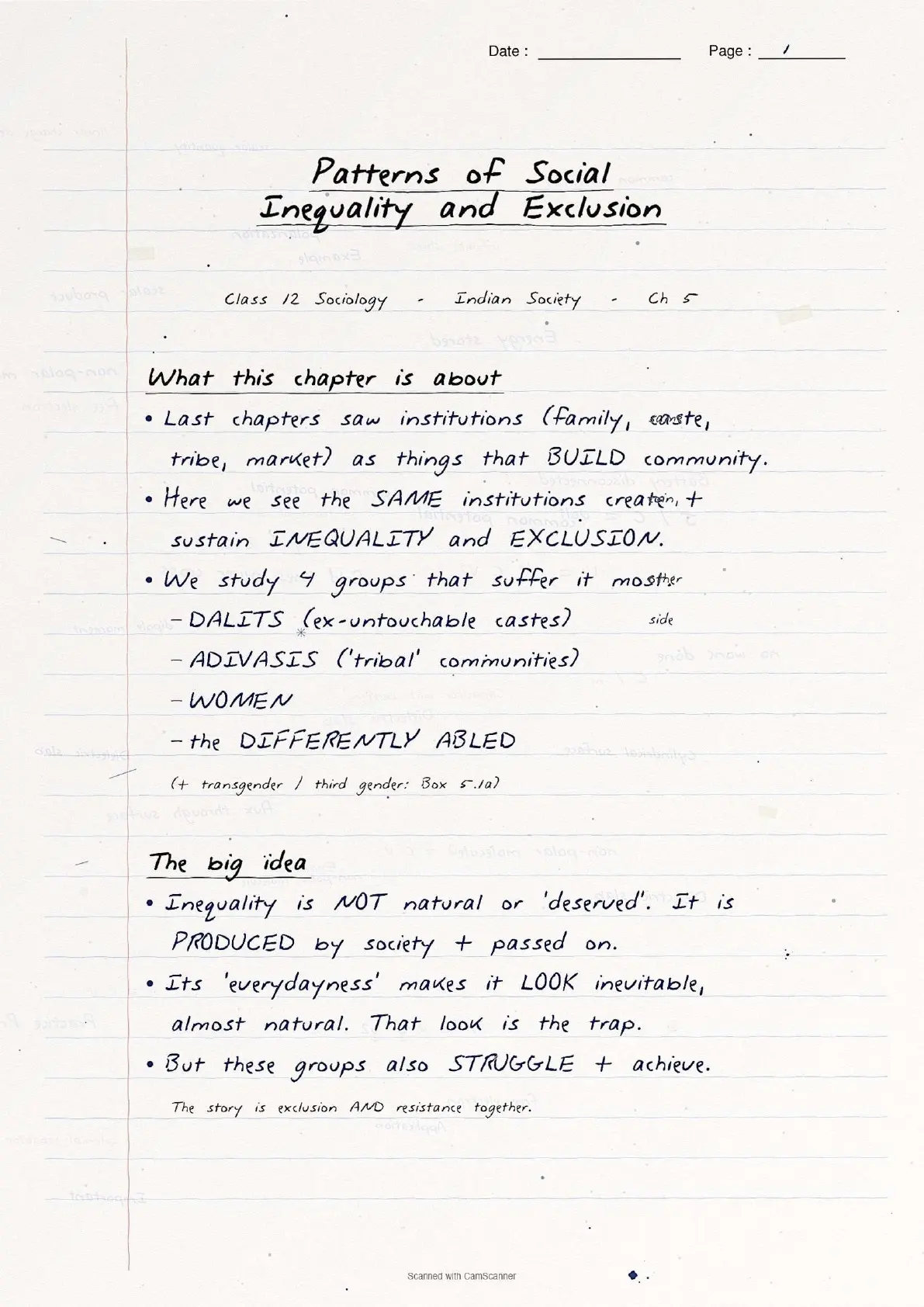
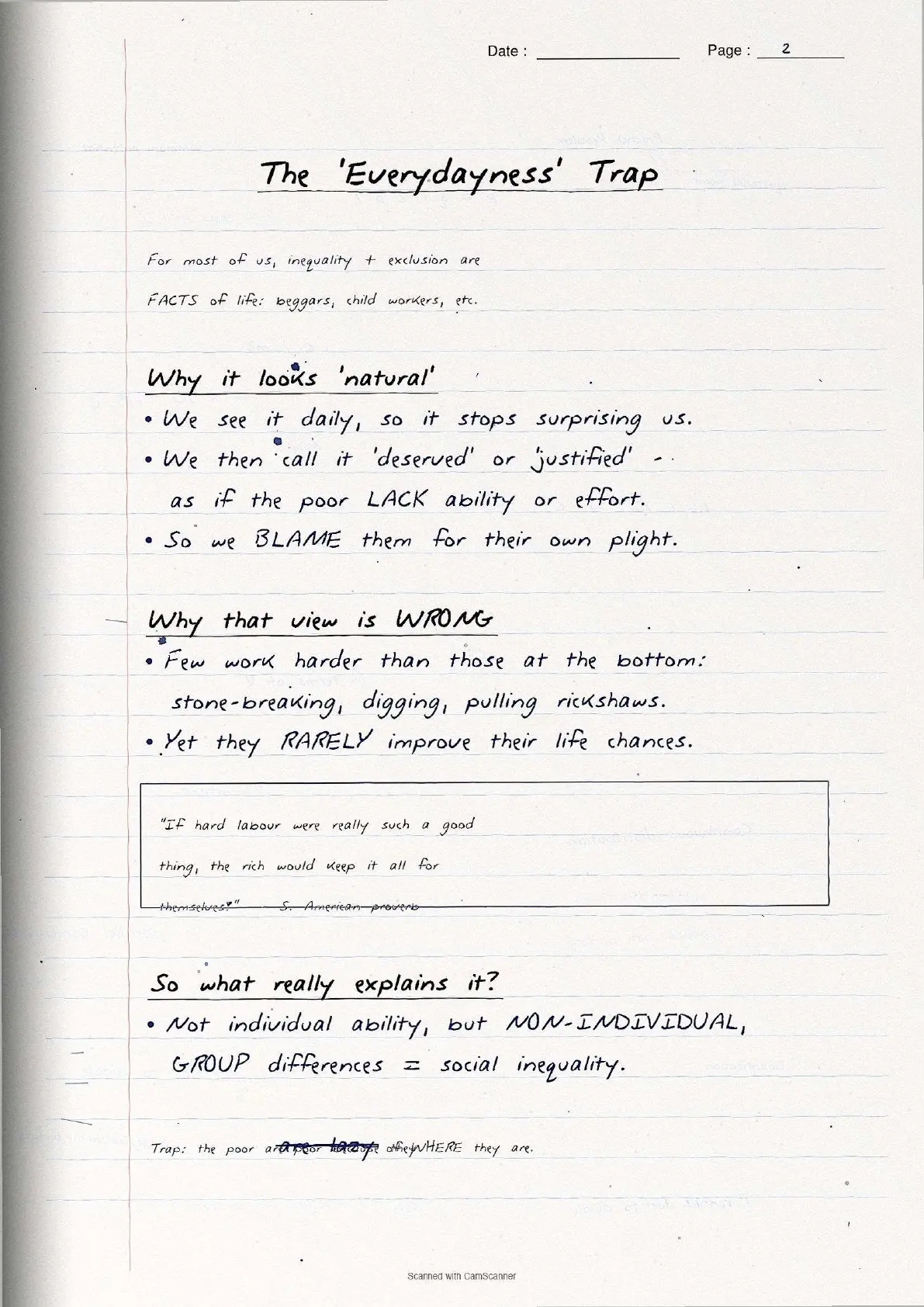
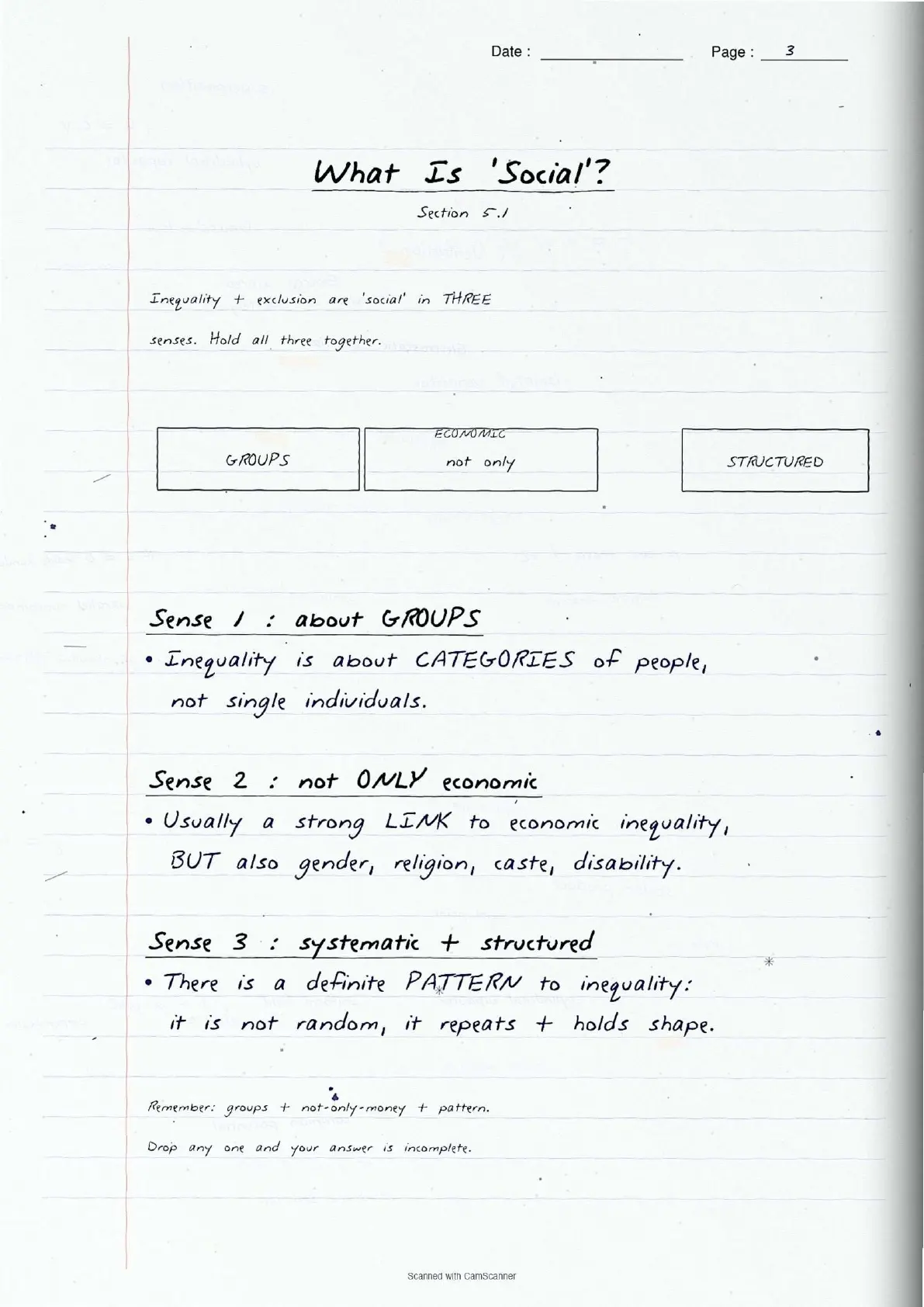
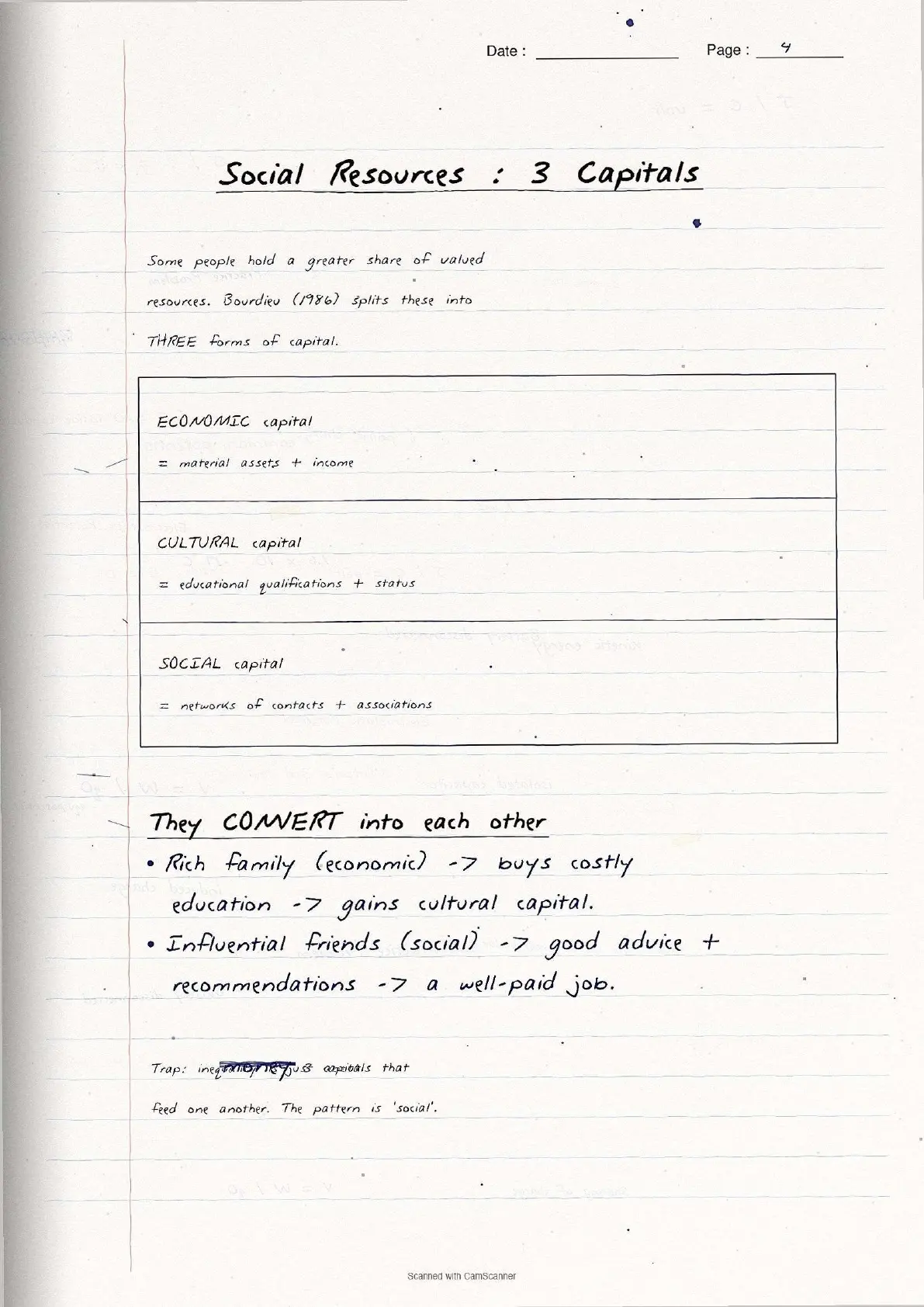
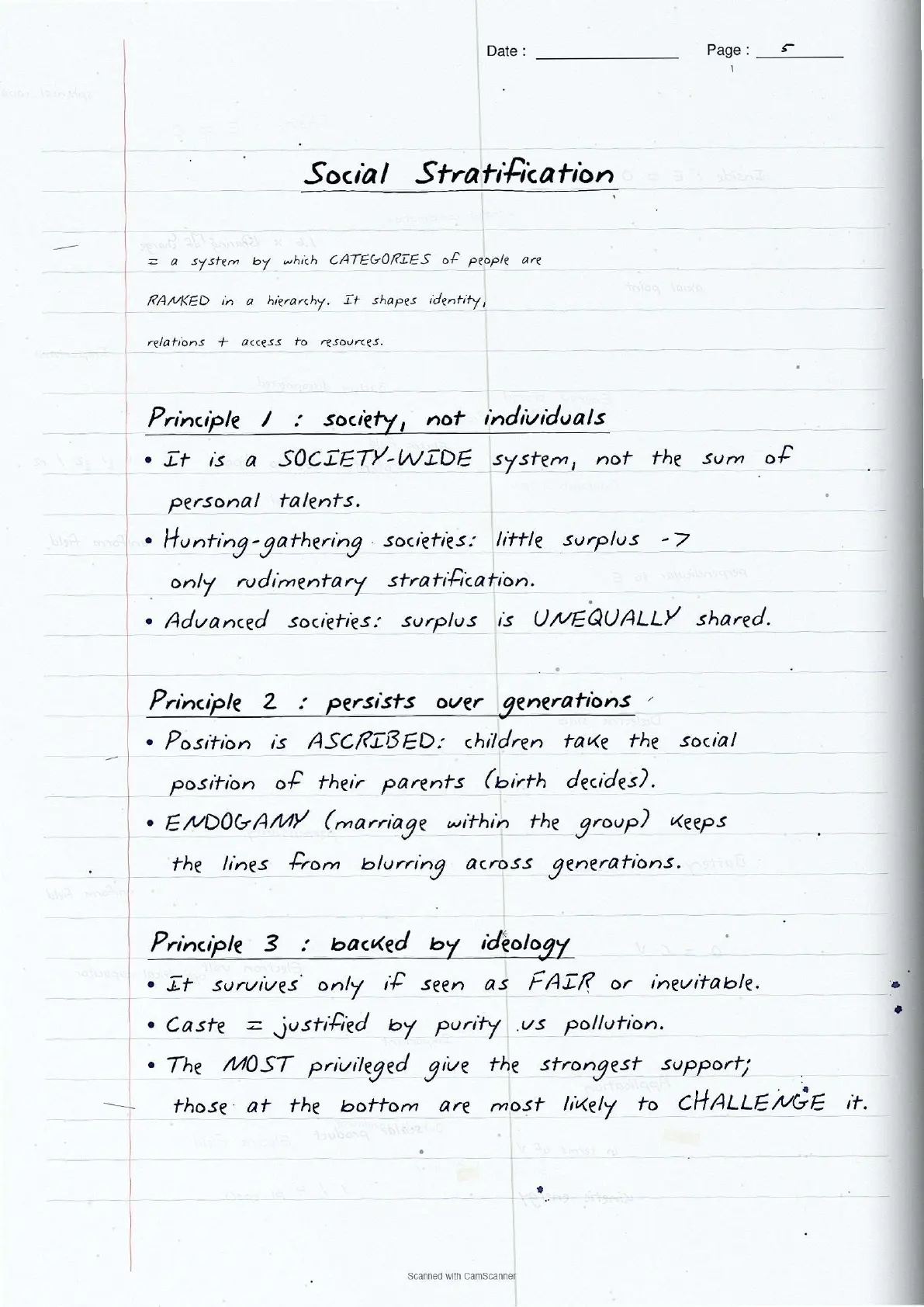
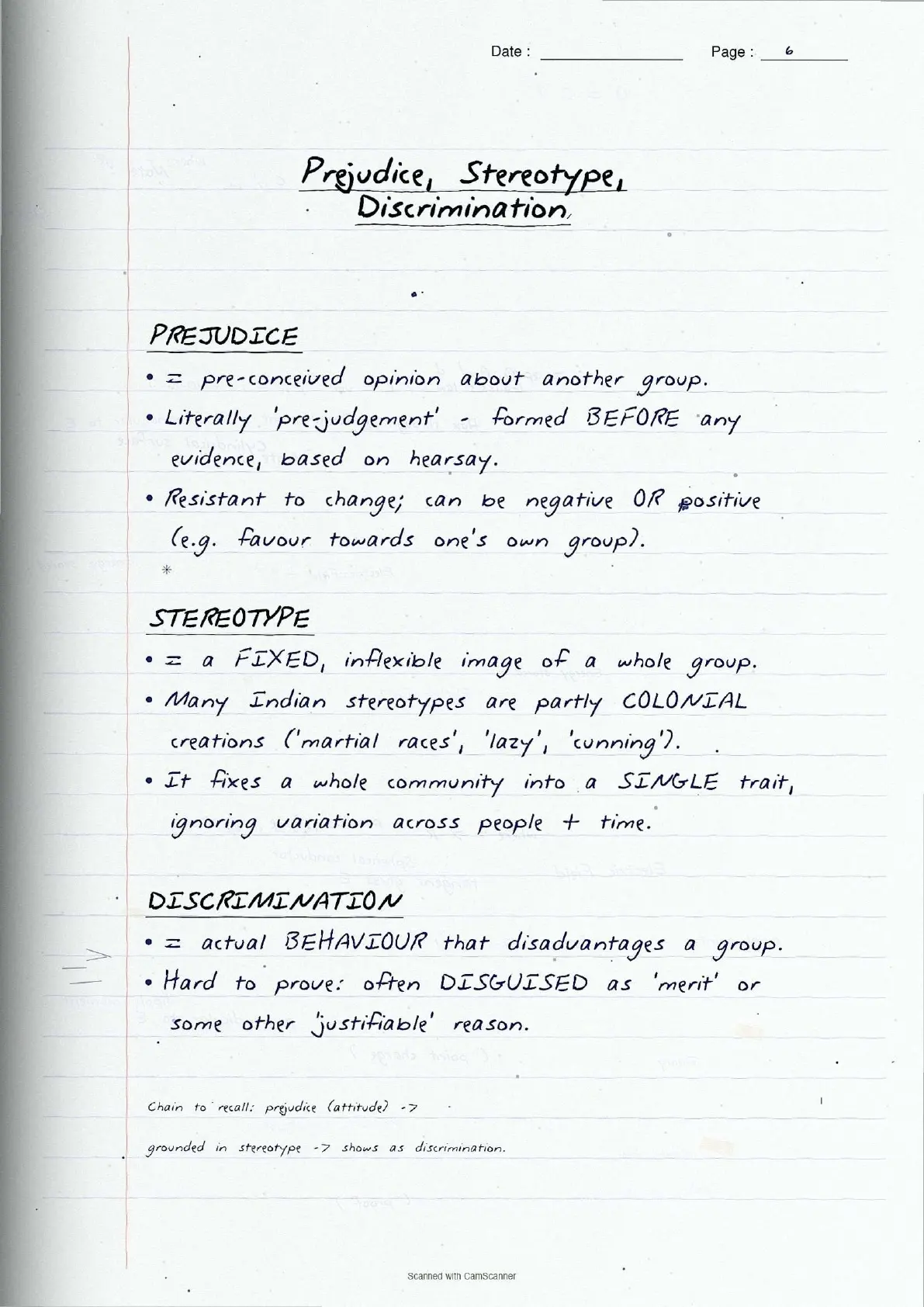
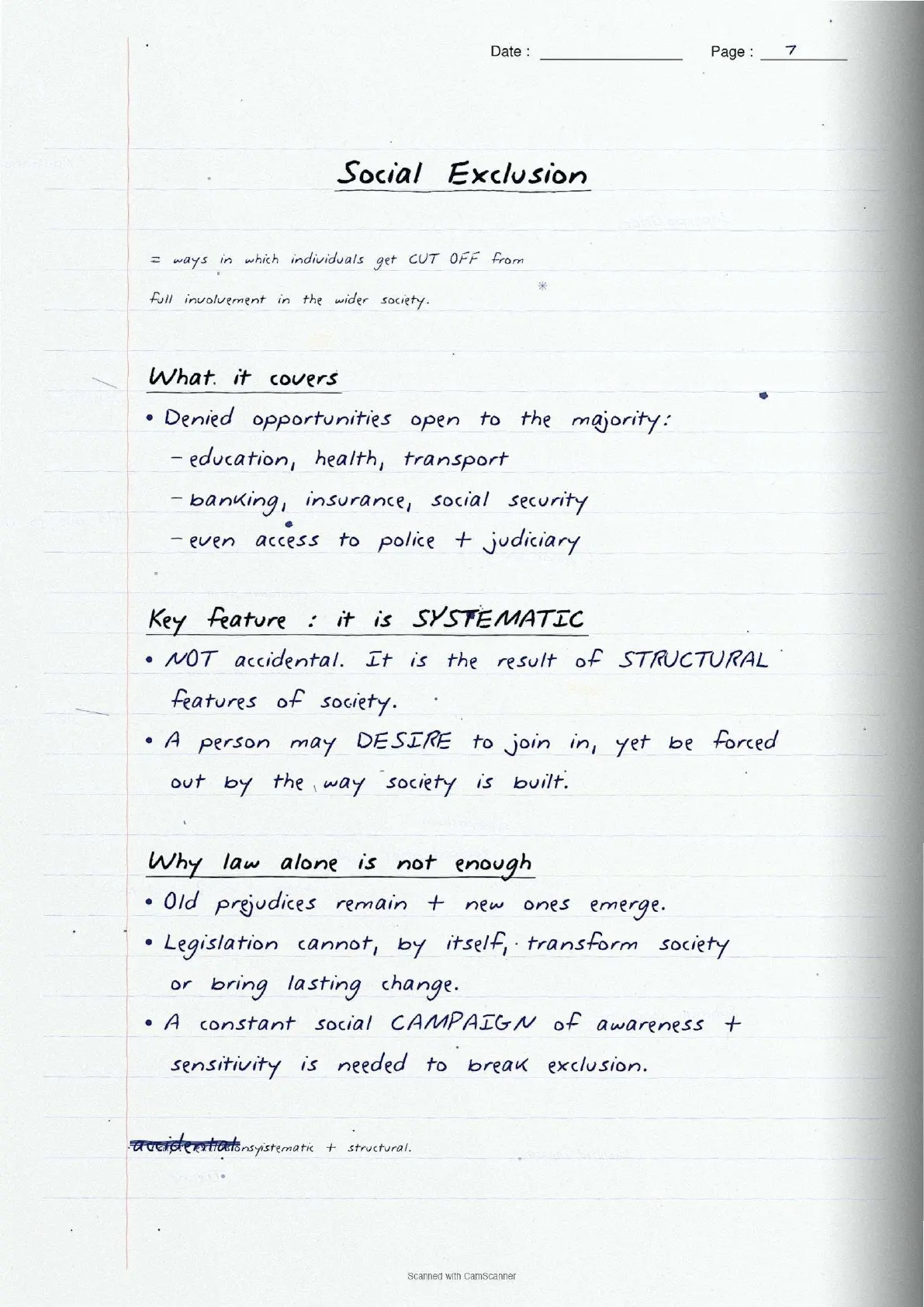
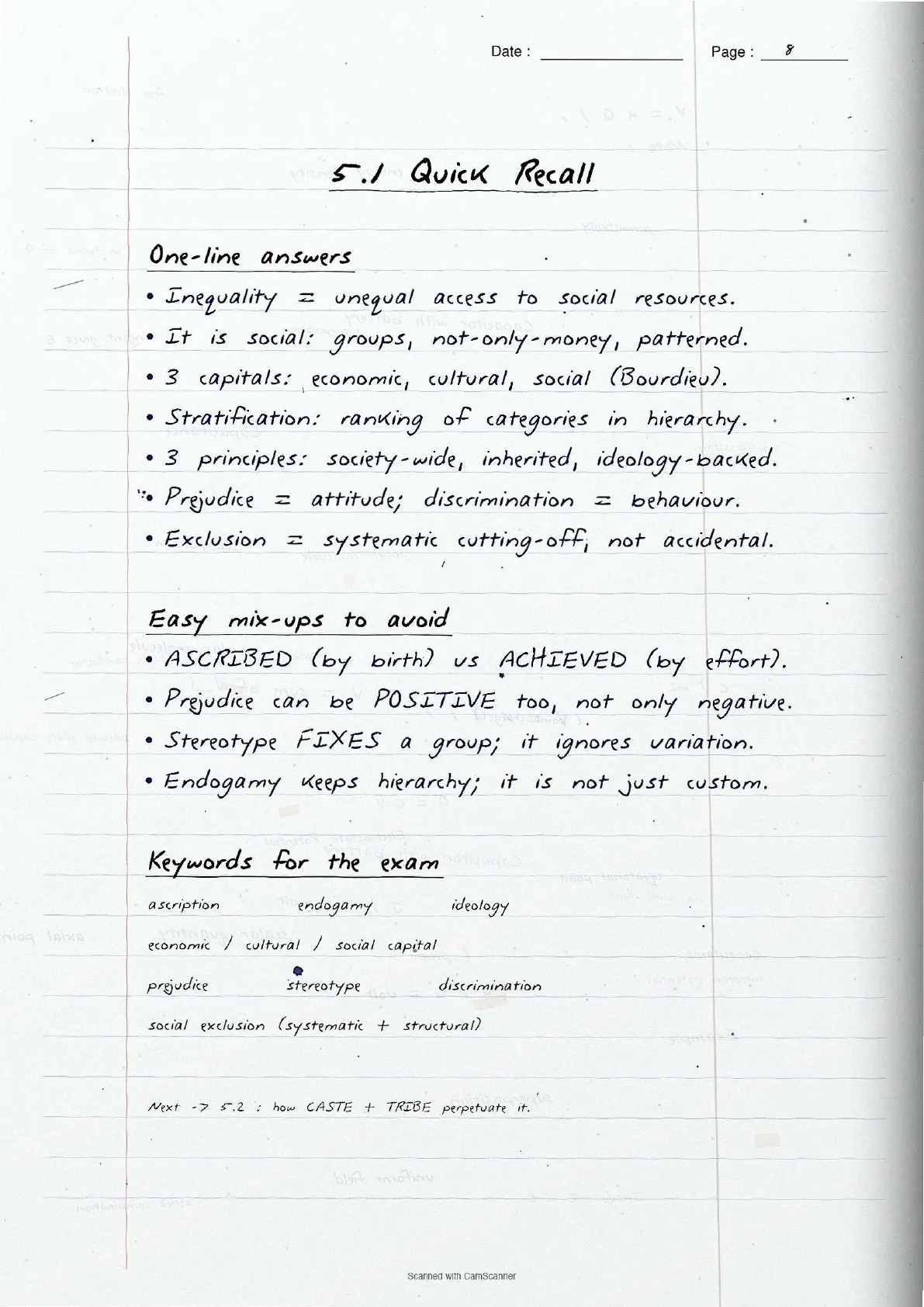
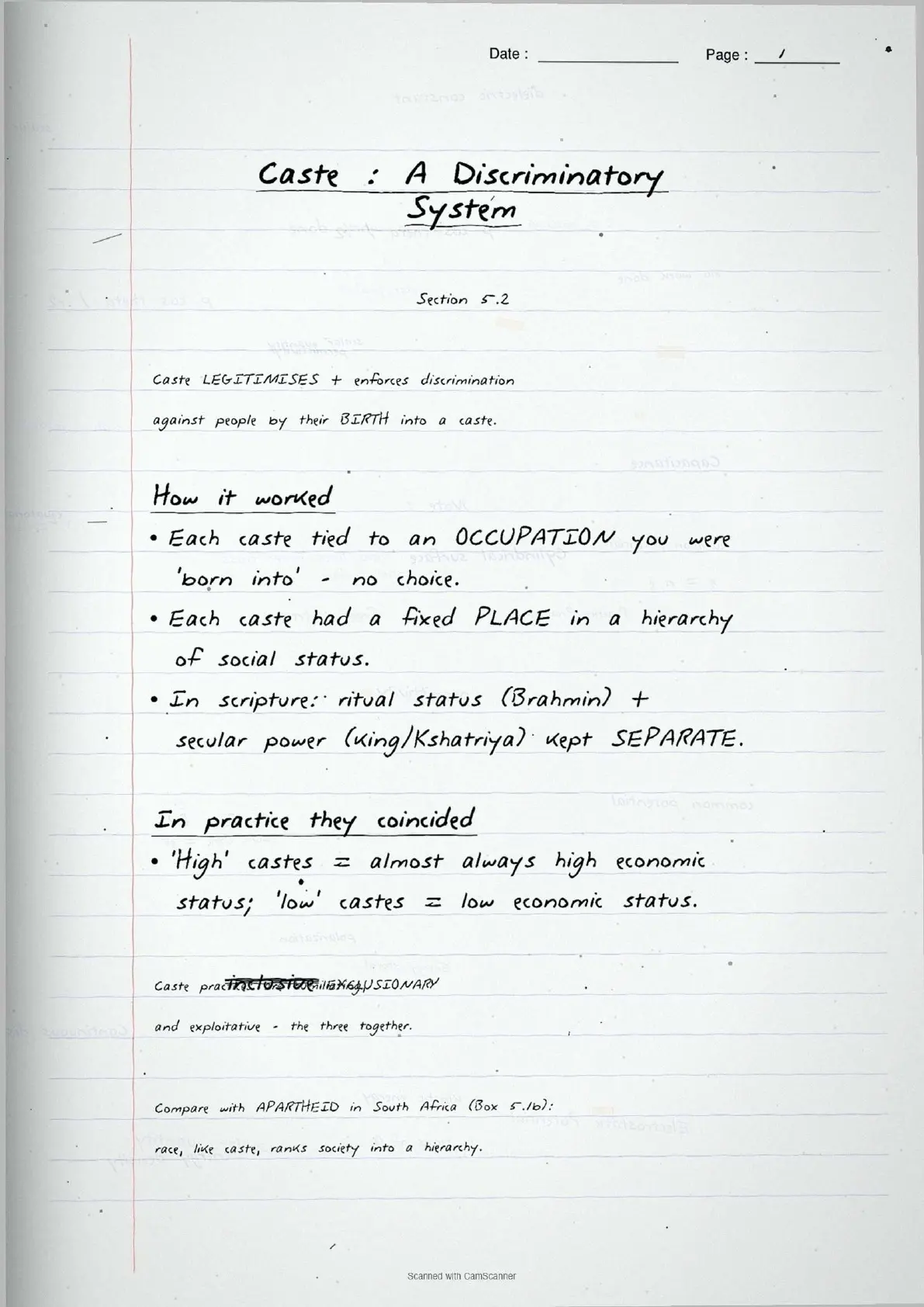
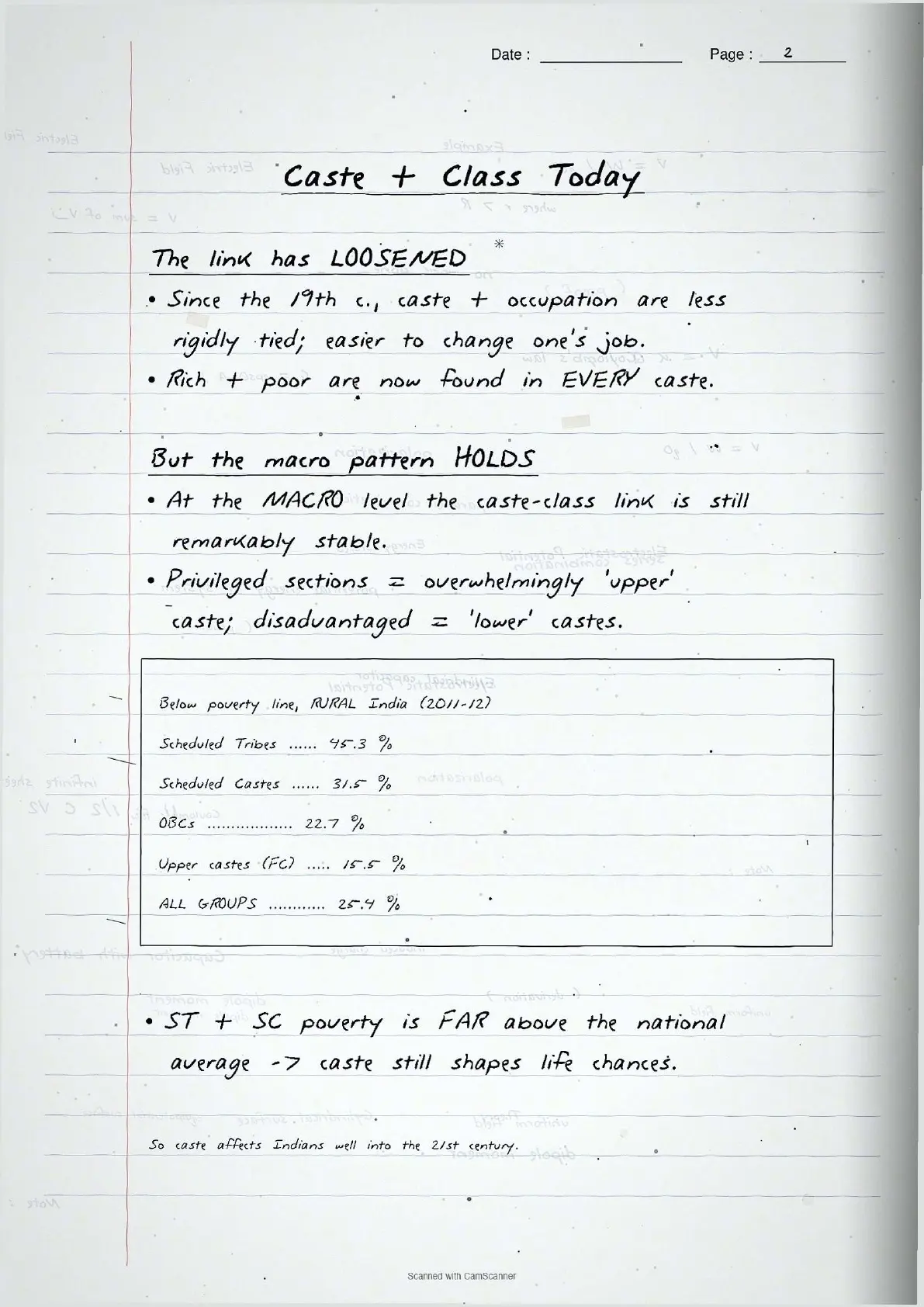
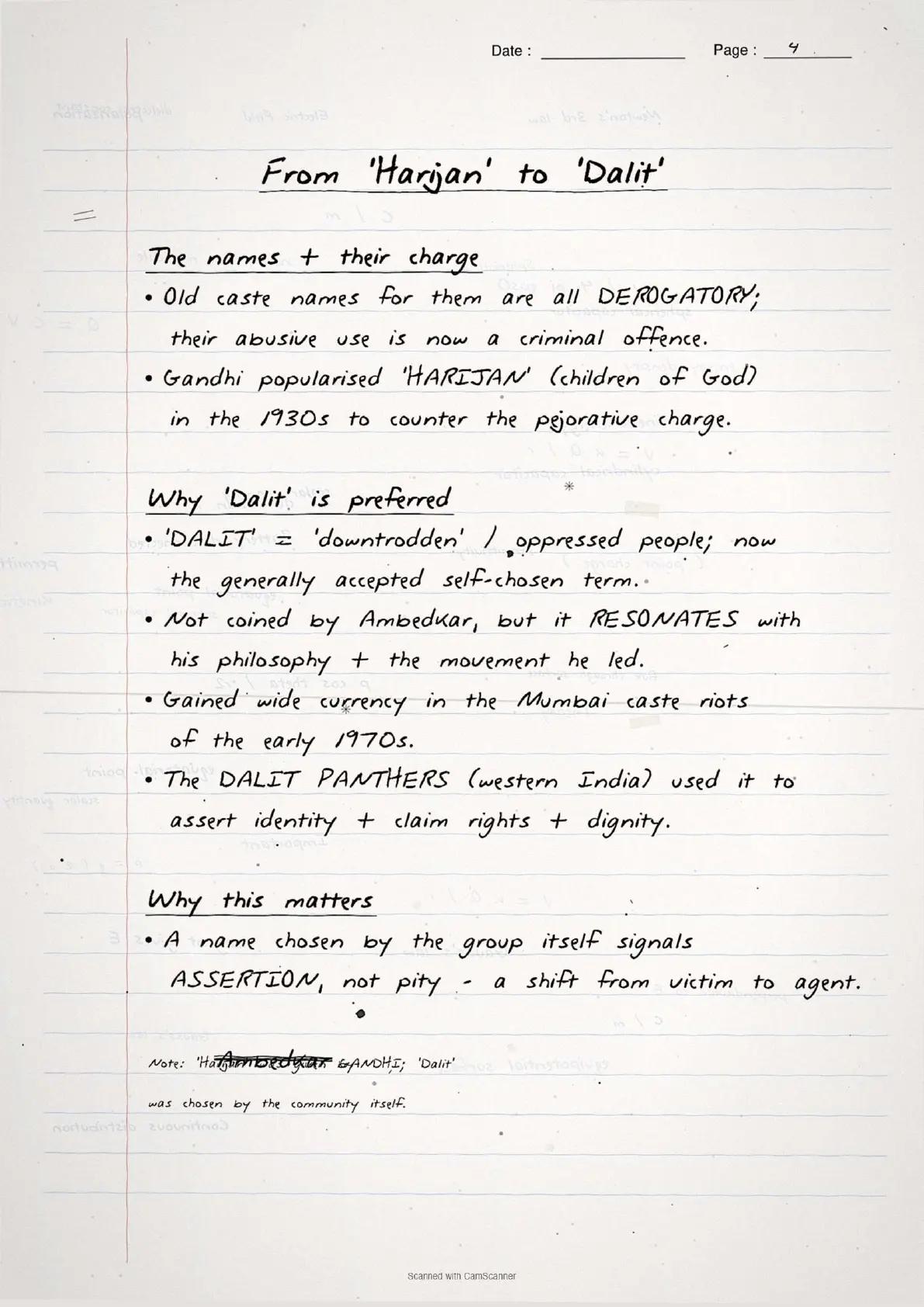
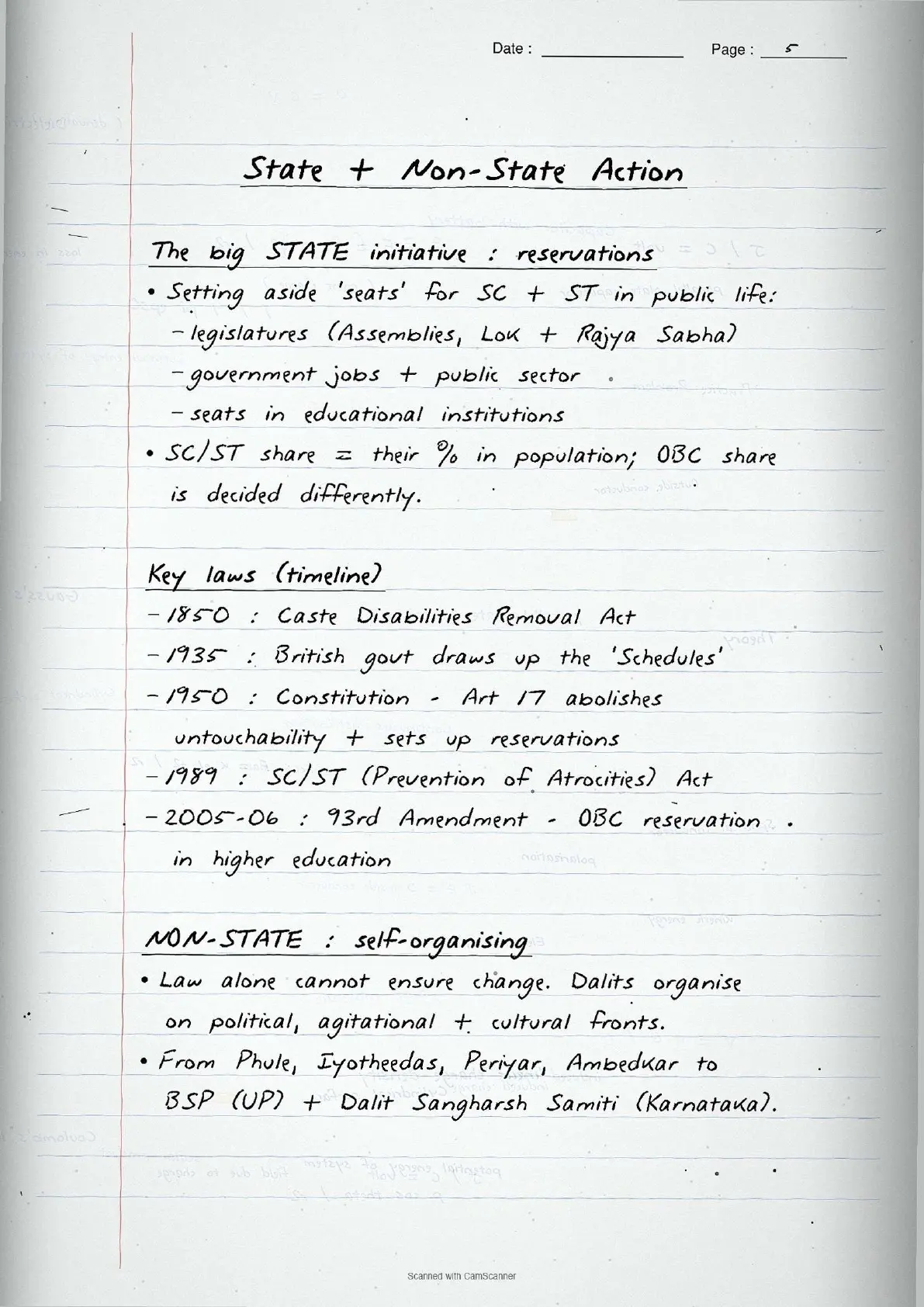
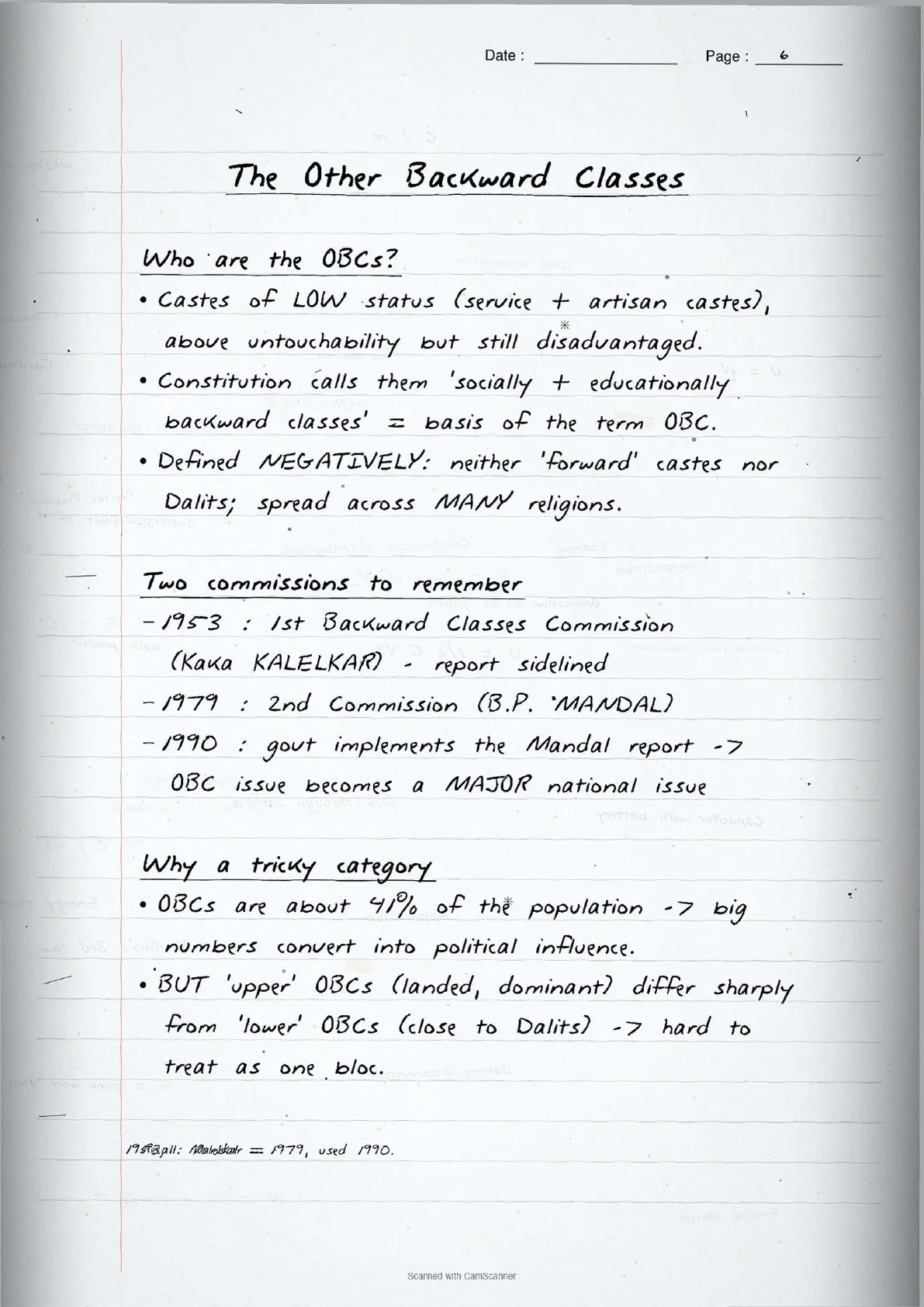
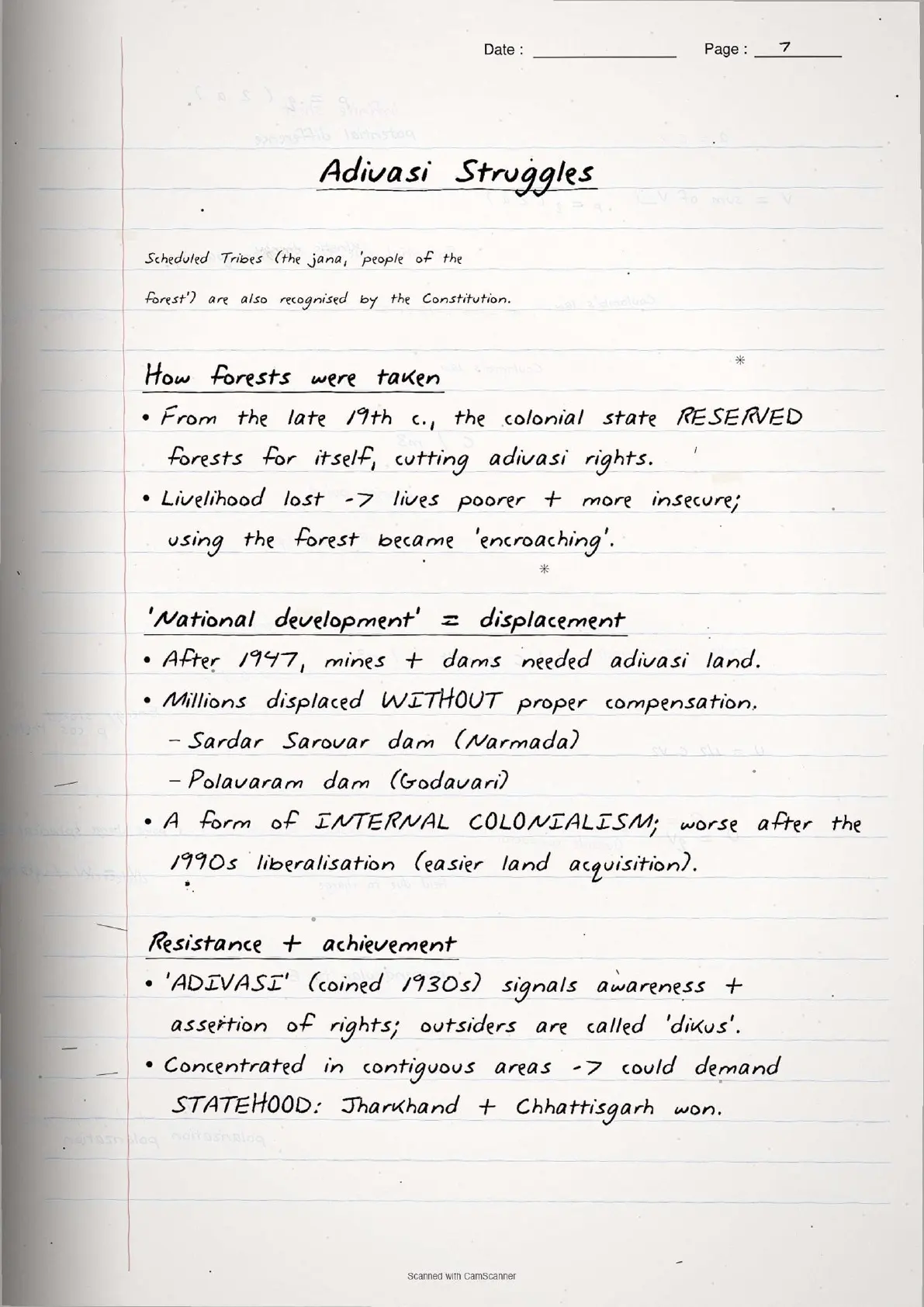
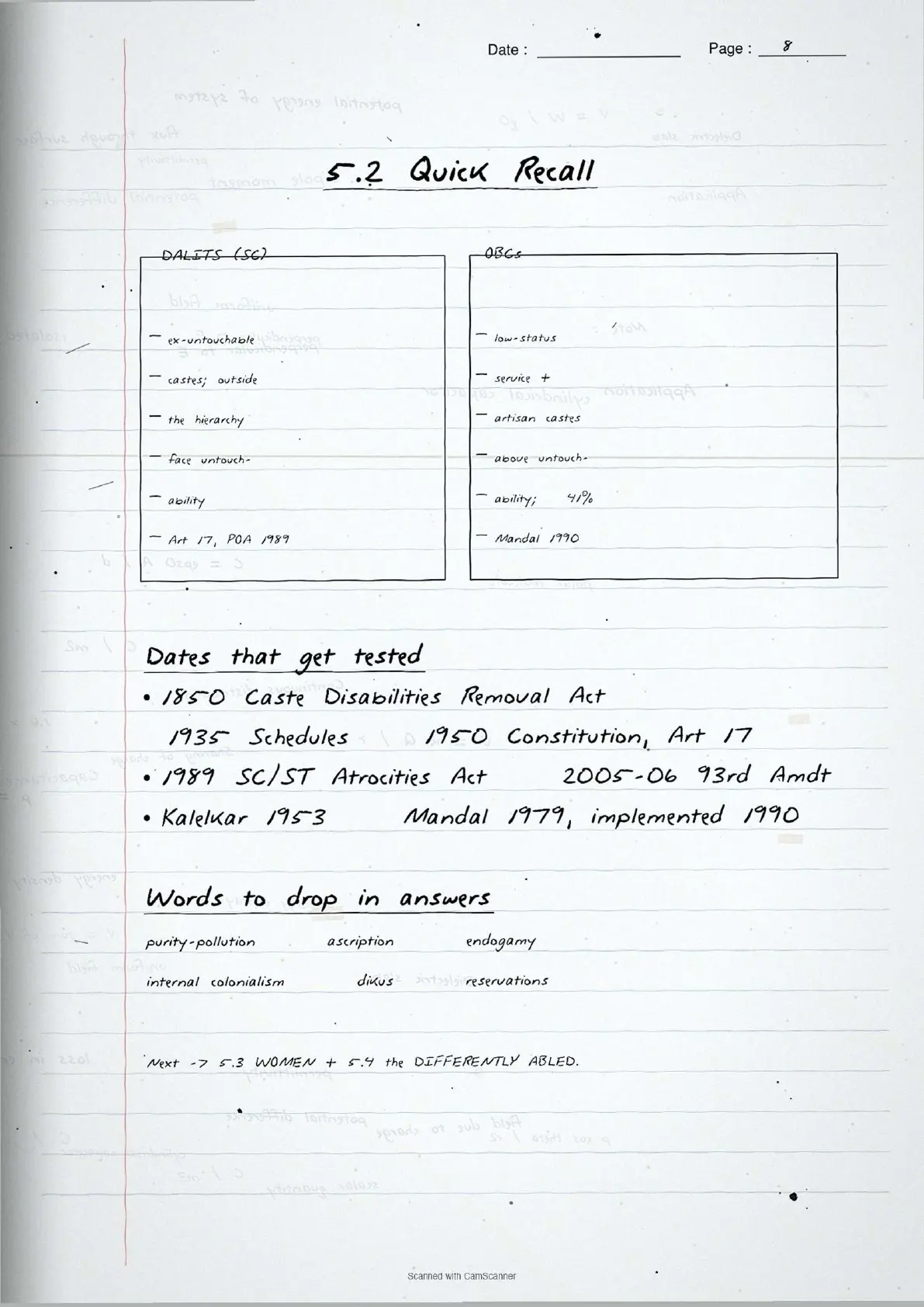
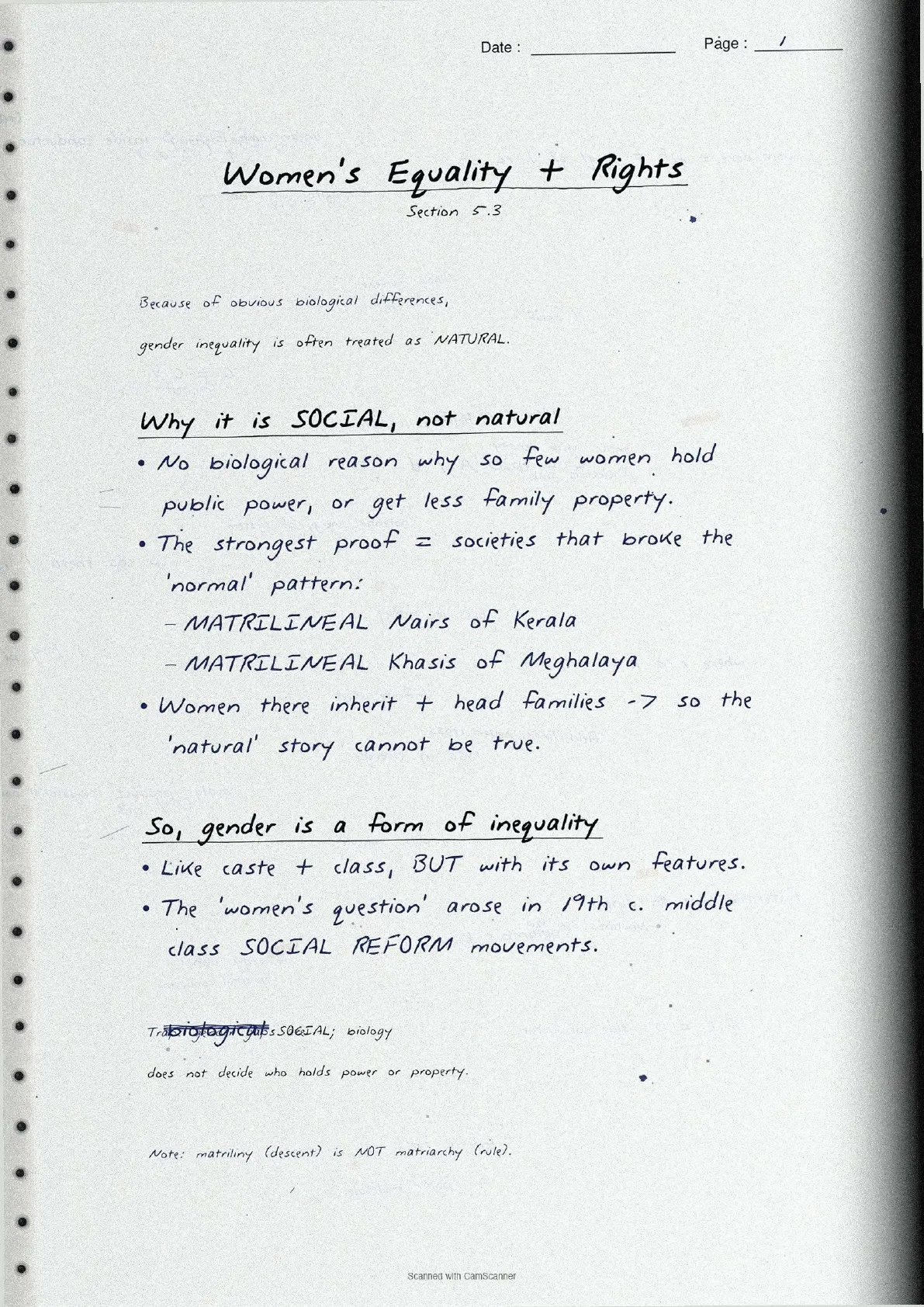
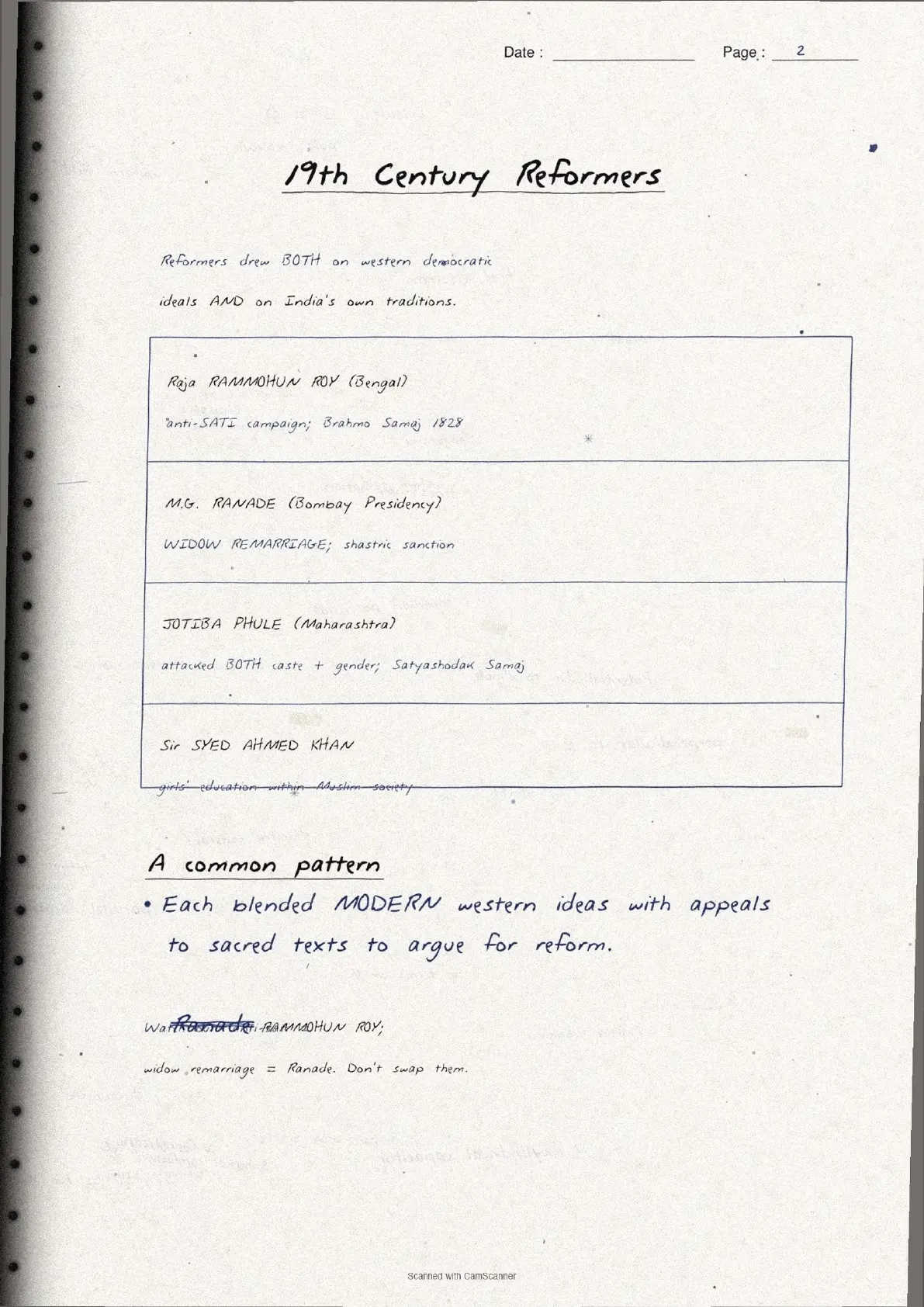
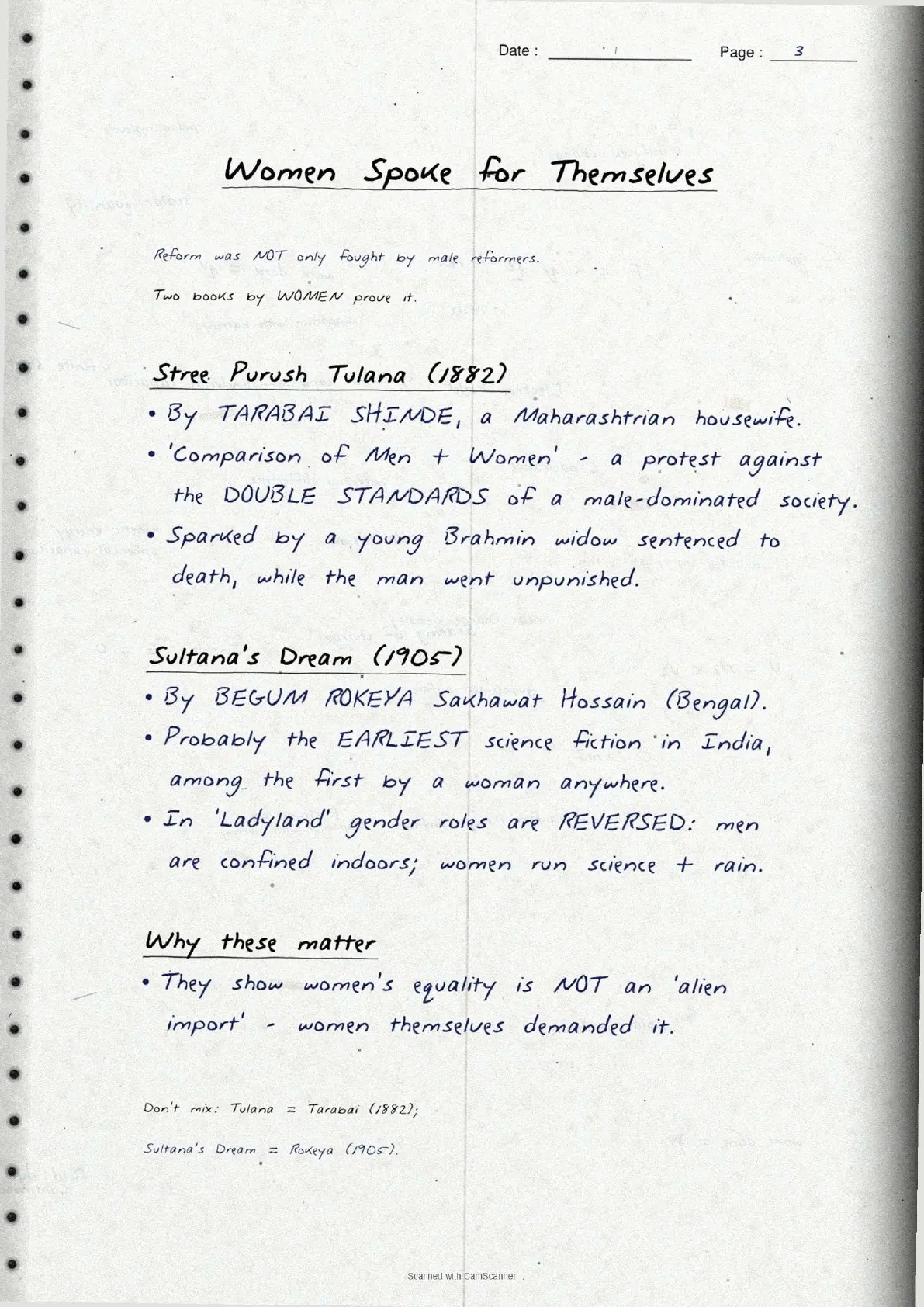
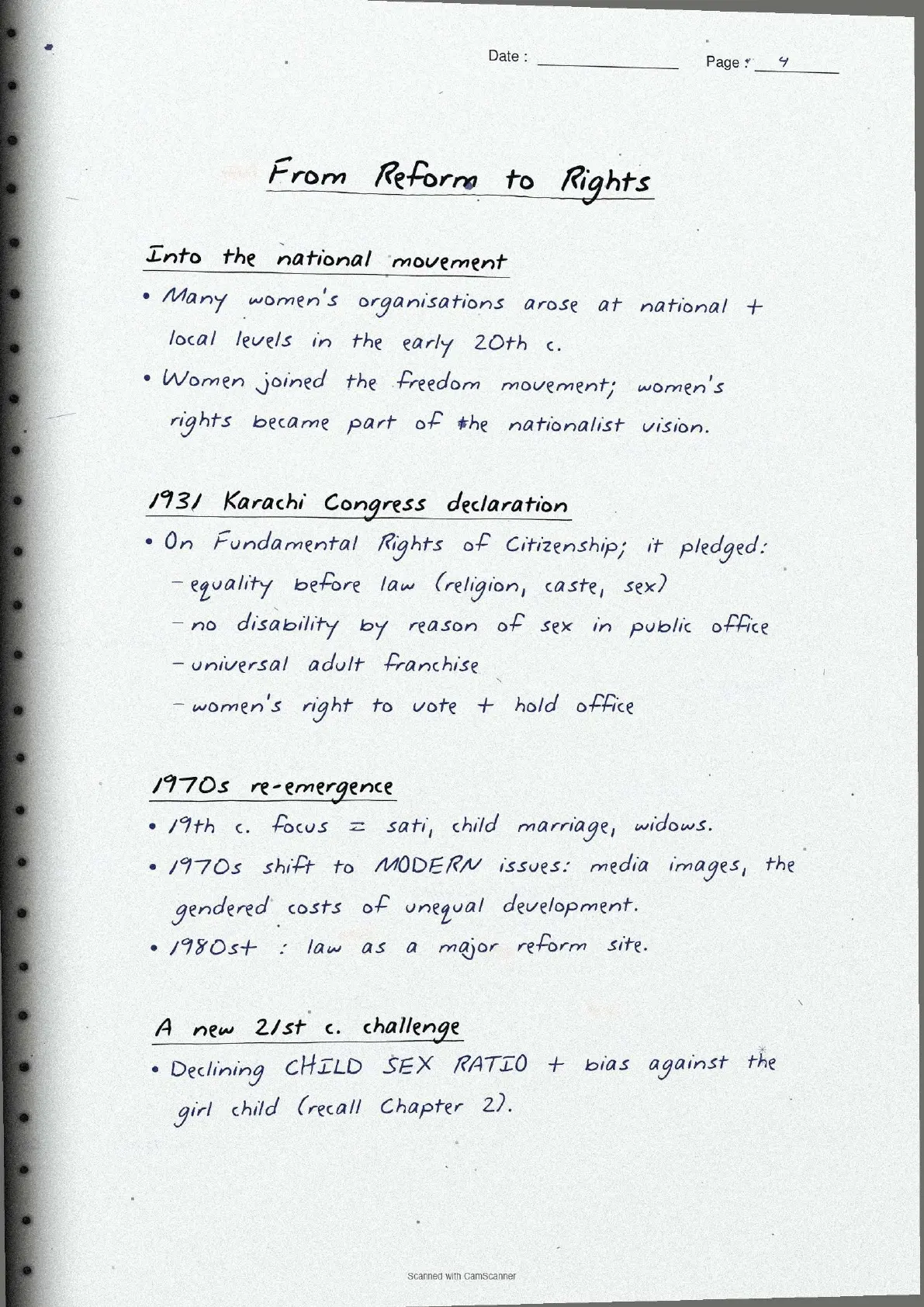
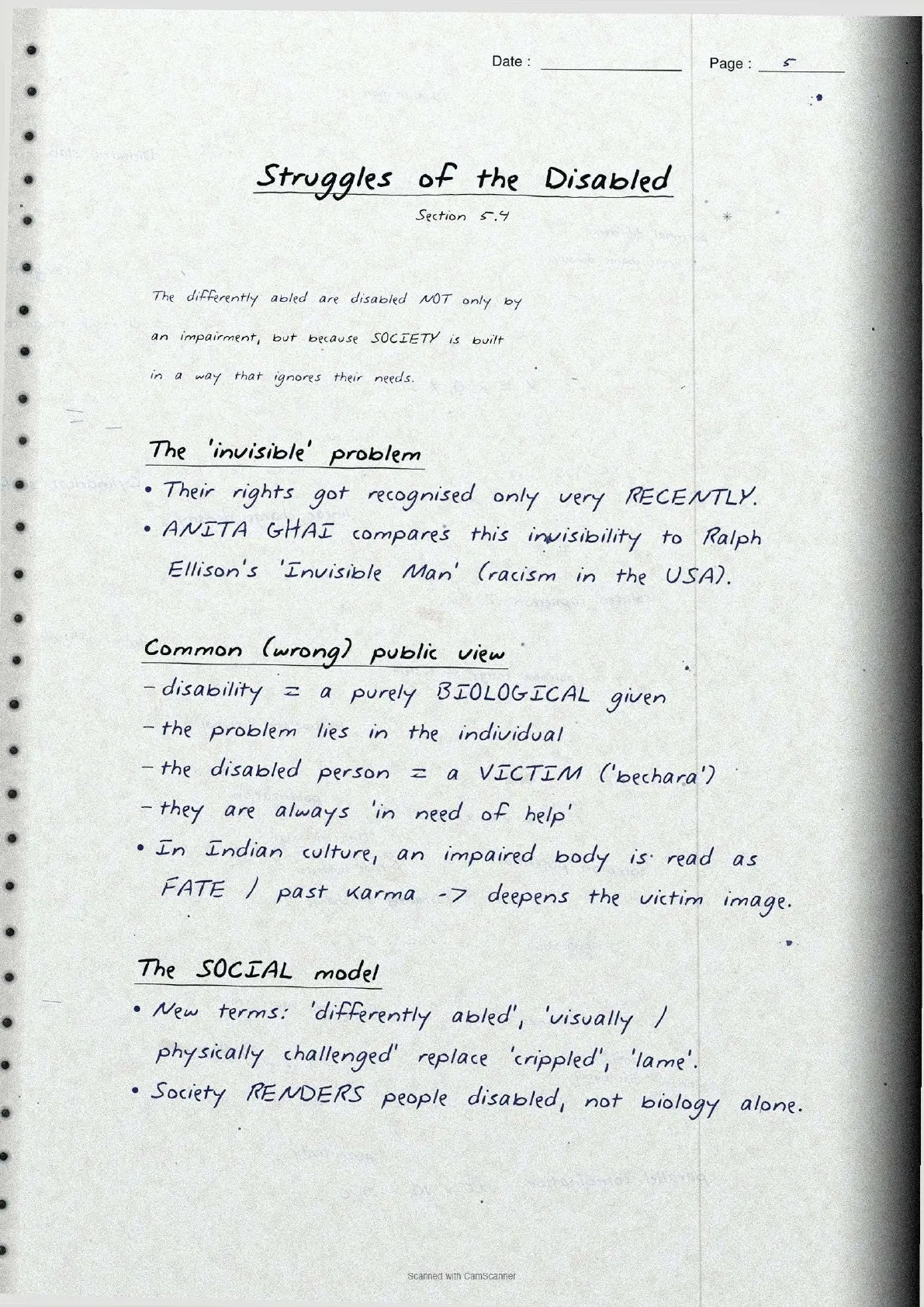
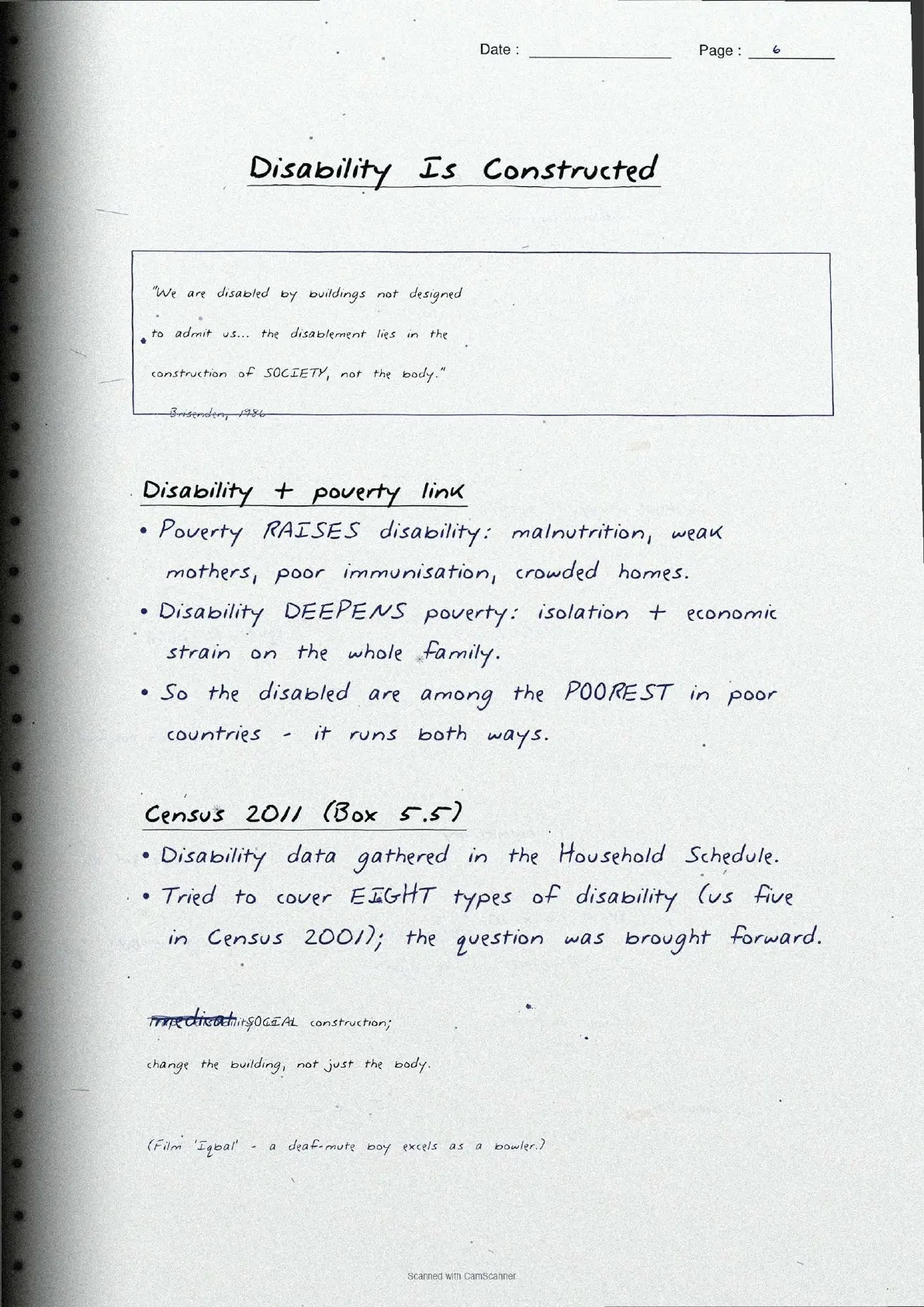
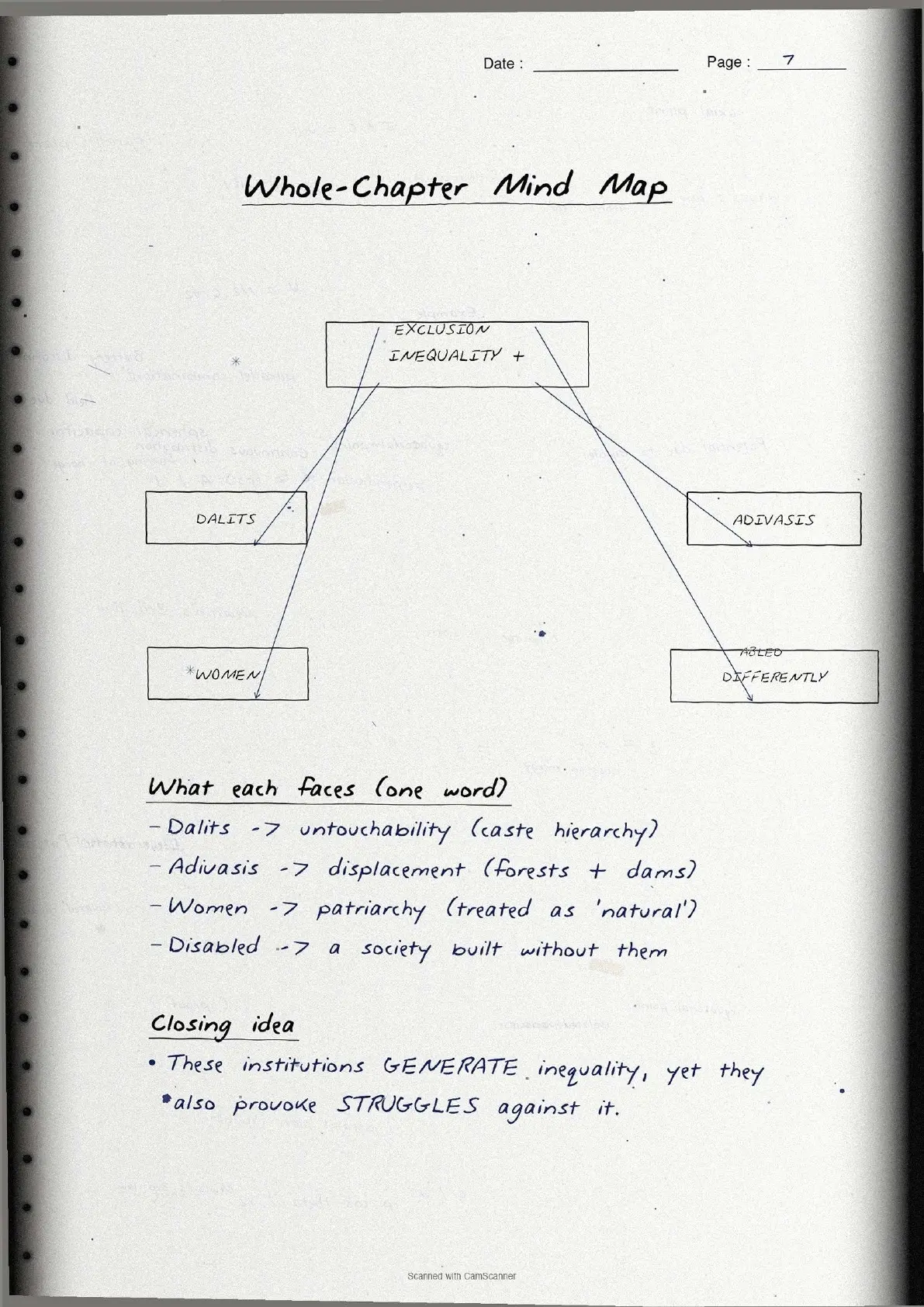
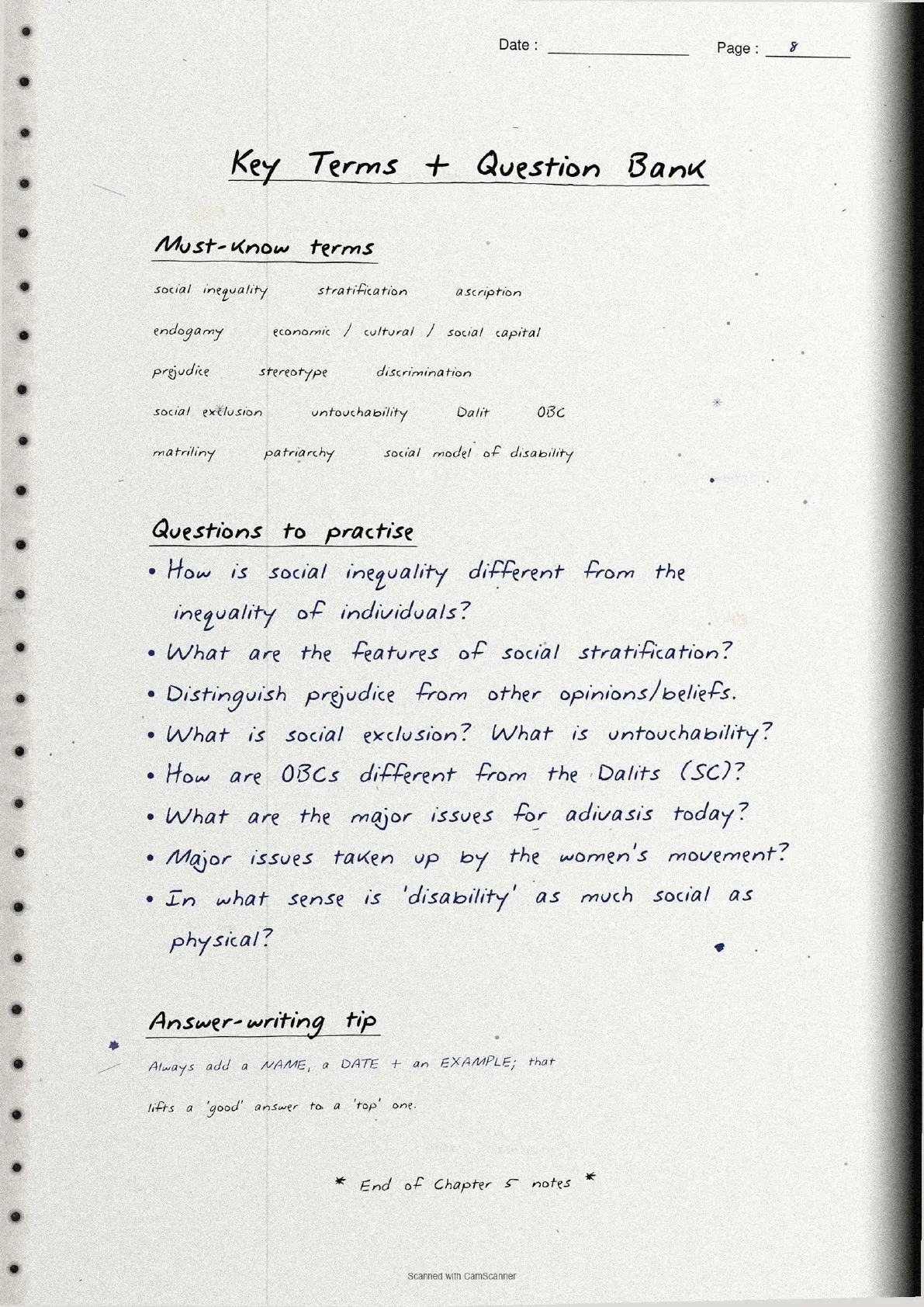
- Handwritten pages with boxed key terms and a labelled caste-policy timeline.
- This Class 12 Sociology chapter usually carries 6 to 8 marks in the board paper.
- Pairs with the NCERT Solutions, Notes and Book PDF linked lower on this page.
These Patterns of Social Inequality and Exclusion handwritten notes are prepared from the official NCERT Indian Society textbook and checked against the last five years of CBSE board papers.
Student Feedback: In a Collegedunia poll of 8,140 Class 12 Sociology students, 72% of students said handwritten pages helped them recall the four excluded groups faster than typed notes. Most students skimmed these the morning of the exam.
Source: 2026-27 Class 12 Sociology student poll. Sample of 8,140 students from CBSE schools across 13 states.
What Is Inside These Patterns of Inequality Handwritten Notes
These notes cover the full chapter in a notebook hand, so students can revise without reading dense paragraphs. The aim is one-shot recall: every key term boxed, every excluded group on its own page.
- Concept pages: social inequality versus individual inequality, stratification, prejudice, stereotype, discrimination and exclusion.
- Group pages: Dalits and untouchability, the OBCs, adivasis, women and persons with disability.
- Policy page: a hand-drawn timeline from the 1850 Removal Act to the 93rd Amendment of 2005.
The notes keep the same three-thread plan as the rest of the chapter resources: concept, excluded group and response. That makes them easy to read alongside the typed Notes and the Solutions.
Topic-by-Topic Map of the Notes
The notebook moves through the chapter in the order students will answer it in the exam. Each topic gets a short, boxed summary so nothing is buried in long prose.
| Page | What it captures |
|---|---|
| Concepts | Inequality is social and group-made; stratification is society-wide, inherited and ideological. |
| Prejudice and discrimination | Prejudice is an attitude, discrimination is the action that follows. |
| Social exclusion | Systematic, structural, wider than poverty, and forced not chosen. |
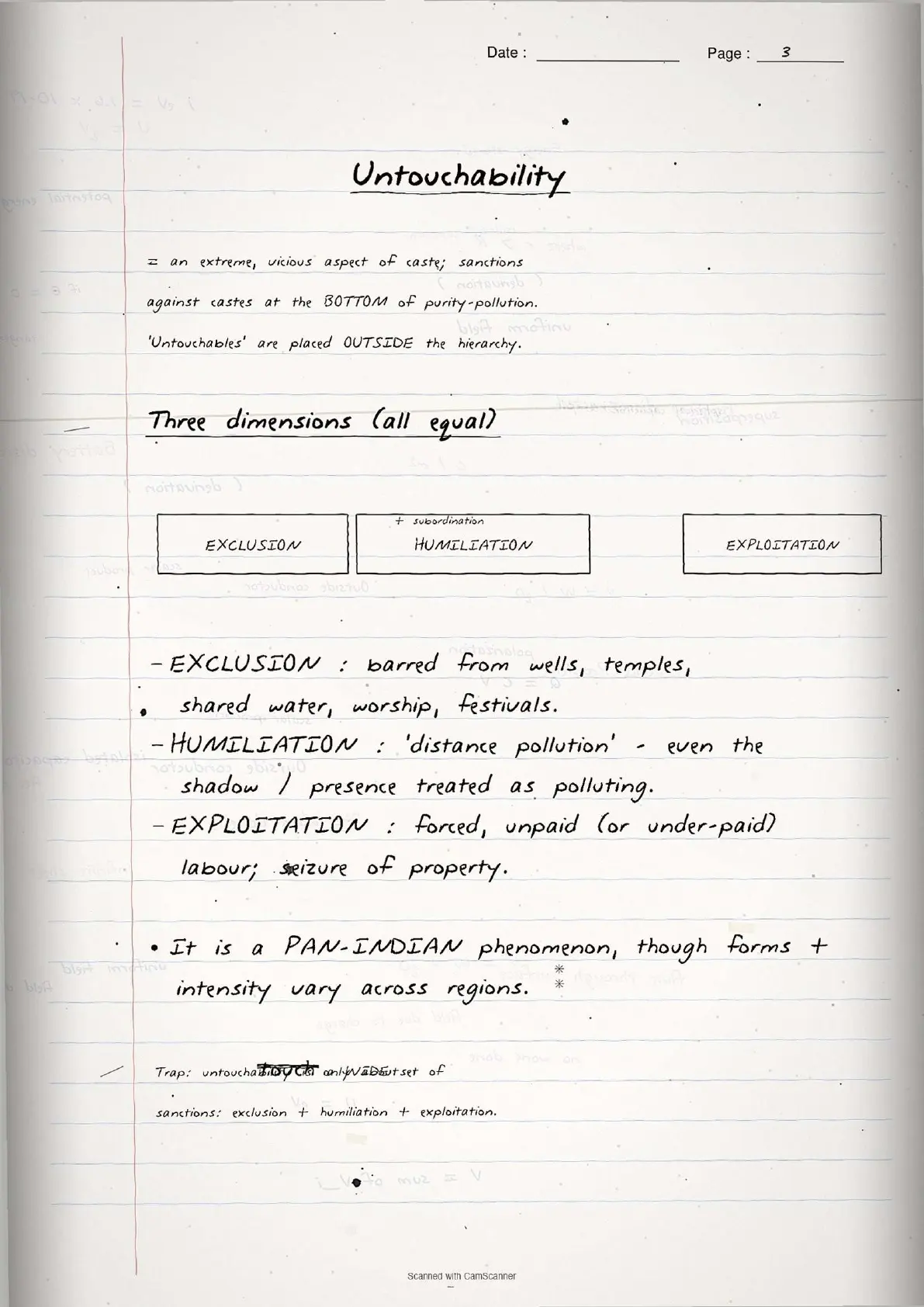
| Caste and untouchability | Three dimensions: exclusion, humiliation-subordination and exploitation. |
| Movements | Dalit, adivasi and women's movements carry the change that law alone cannot. |
The boxed format means a student can flip to one page, read three points, and have a full short answer ready. That is the whole purpose of the patterns of social inequality and exclusion handwritten notes.
The Untouchability Page Explained
Untouchability is the most-asked long answer in this chapter, so it gets its own clearly drawn page. The notes anchor it on the three dimensions the text treats as equally important.
- Exclusion: barred from common water sources, worship, ceremonies and festivals, an exclusion unique to Dalits.
- Humiliation and subordination: a forced lower position and degradation beyond what other low castes face.
- Exploitation: almost always tied to forced, unpaid or under-paid labour.
The page ends with the reminder that untouchability is a pan-Indian practice whose forms and intensity vary by region. Naming the three dimensions, with one example each, is what turns a vague paragraph into a full-mark answer.
How to Use These Handwritten Notes for Revision
These notes work best as a final-pass tool, not a first read. A simple routine gets the most out of them in the days before the exam.
- First pass: read each page once, top to bottom, to refresh the whole chapter in about twenty minutes.
- Second pass: cover the boxes and recall the three dimensions of untouchability and the features of stratification from memory.
- Final pass: on exam morning, skim only the boxed terms and the policy timeline for last-minute recall.
Used this way, the notes pair naturally with the NCERT Solutions: revise here first, then write the answers, then check them. The handwriting itself helps memory, because the eye remembers where a point sat on the page.
Common Mistakes These Notes Help You Avoid
The notebook flags the errors that cost marks every year, so students fix them before the exam rather than in it.
- Calling inequality natural - it is social and society-made.
- Treating prejudice as only negative - it can be positive and resists evidence.
- Mixing prejudice with discrimination - attitude versus action.
- Dropping a dimension of untouchability - keep all three.
- Saying OBCs faced untouchability - they faced discrimination short of it.
Fixing these five slips is the fastest route from average to high marks, because the exam rewards answers that tie every disadvantage to a social cause.
How These Handwritten Notes Pair with the Solutions and Book PDF
These handwritten notes are for quick recall. To revise fully and practise answers, students should use them alongside the other resources for the same chapter, all linked in the table below.
| Resource | Best used for |
|---|---|
| Patterns of Social Inequality and Exclusion Class 12 NCERT Solutions | Step-by-step answers to all 11 back-exercise questions |
| Patterns of Social Inequality and Exclusion Class 12 Notes | A fuller typed summary with all terms, groups and policies |
| Patterns of Social Inequality and Exclusion NCERT Book PDF | Reading the original NCERT chapter text, boxes and case studies |
Tip: skim these notes first for the big picture, then read the typed Notes for detail, and use the Solutions to practise writing. The three together cover recall, depth and practice.
All Handwritten Notes for Class 12 Sociology
The table links the Handwritten Notes for every chapter in both Class 12 Sociology books, so students can move across the course in one click. Patterns of Social Inequality and Exclusion is highlighted.
| Chapter | Handwritten Notes |
|---|---|
| Indian Society | |
| Chapter 1 | Introducing Indian Society |
| Chapter 2 | The Demographic Structure of the Indian Society |
| Chapter 3 | Social Institutions - Continuity and Change |
| Chapter 4 | The Market as a Social Institution |
| Chapter 5 | Patterns of Social Inequality and Exclusion |
| Chapter 6 | The Challenges of Cultural Diversity |
| Social Change and Development in India | |
| Chapter 1 | Structural Change |
| Chapter 2 | Cultural Change |
| Chapter 3 | The Constitution and Social Change |
| Chapter 4 | Change and Development in Rural Society |
| Chapter 5 | Change and Development in Industrial Society |
| Chapter 6 | Globalisation and Social Change |
| Chapter 7 | Mass Media and Communications |
| Chapter 8 | Social Movements |
FAQs on Patterns of Social Inequality and Exclusion Handwritten Notes
Patterns of Social Inequality and Exclusion Class 12 Handwritten Notes Common Questions
Ques. Where can I download the class 12 sociology chapter 5 handwritten notes PDF?
Ans. You can download the Patterns of Social Inequality and Exclusion handwritten notes PDF free from this page. They follow the 2026-27 NCERT and present the whole chapter as handwritten pages for quick revision.
Ques. Are handwritten notes good for last-minute revision?
Ans. Yes. Handwritten pages with boxed terms and a policy timeline are quick to skim, so students can refresh the whole chapter in one sitting before a test. They work best as a final pass after the typed Notes.
Ques. What are the three dimensions of untouchability?
Ans. Exclusion, such as being barred from common wells and worship; humiliation and subordination, a forced lower position; and exploitation, usually through forced or under-paid labour. The notes give one example of each on a single page.
Ques. Do these notes cover the whole chapter?
Ans. Yes. They cover social inequality and stratification, prejudice and discrimination, social exclusion, caste and untouchability, the OBCs, adivasis, the women's movement and disability, all in a handwritten format.
Ques. Should I use these instead of the NCERT Solutions?
Ans. Use both. The handwritten notes are for fast recall, while the NCERT Solutions give full step-by-step answers to the 11 exercise questions. Revise from the notes, then practise writing with the solutions.



Comments