




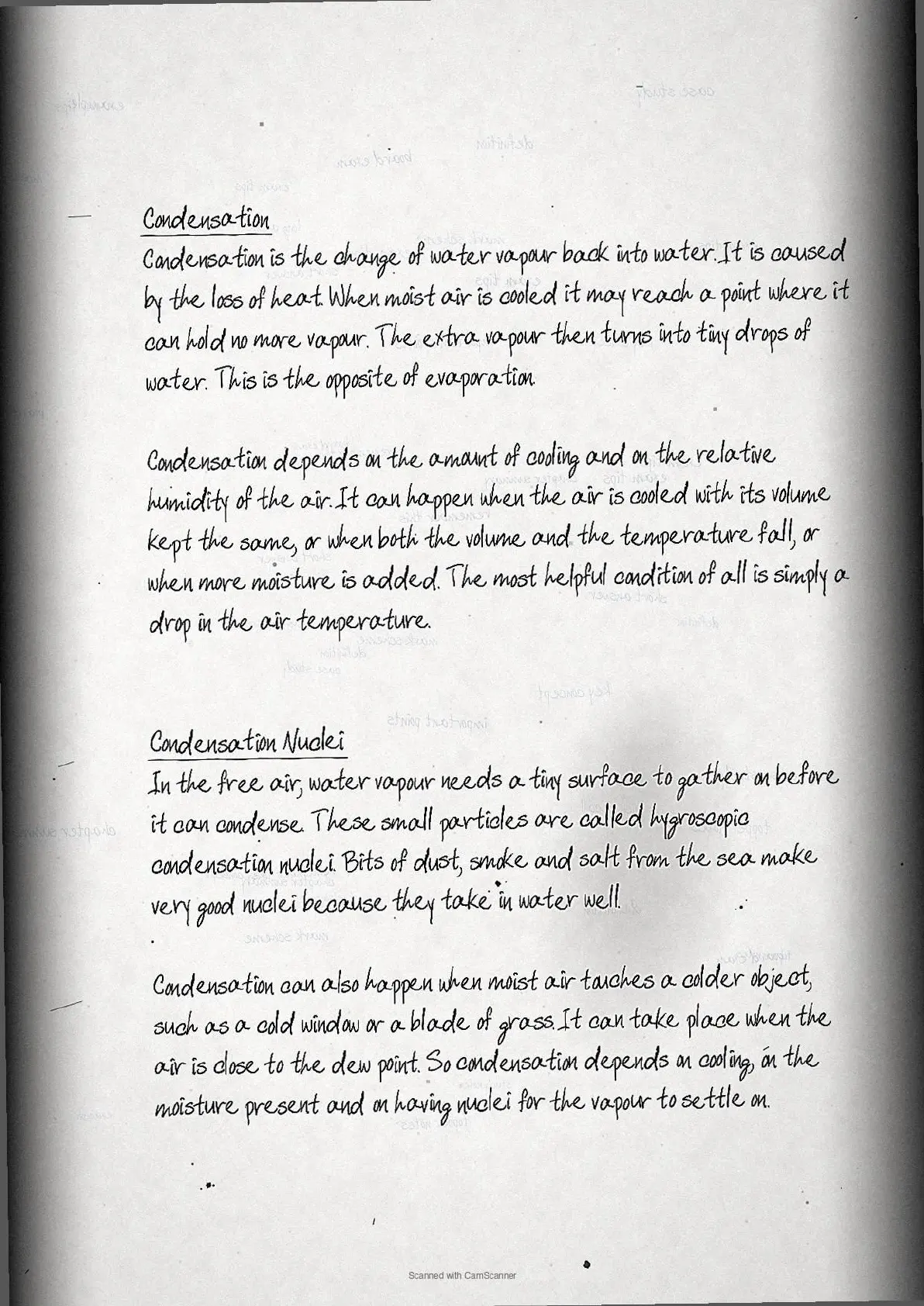
Water changes form through evaporation and condensation to give humidity, clouds and rain. Class 11 Geography Chapter 10 Water in the Atmosphere builds this idea step by step. These class 11 geography handwritten notes chapter 10 Water in the Atmosphere follow the 2026-27 NCERT and cover humidity: absolute, relative and dew point, evaporation and the factors that affect.
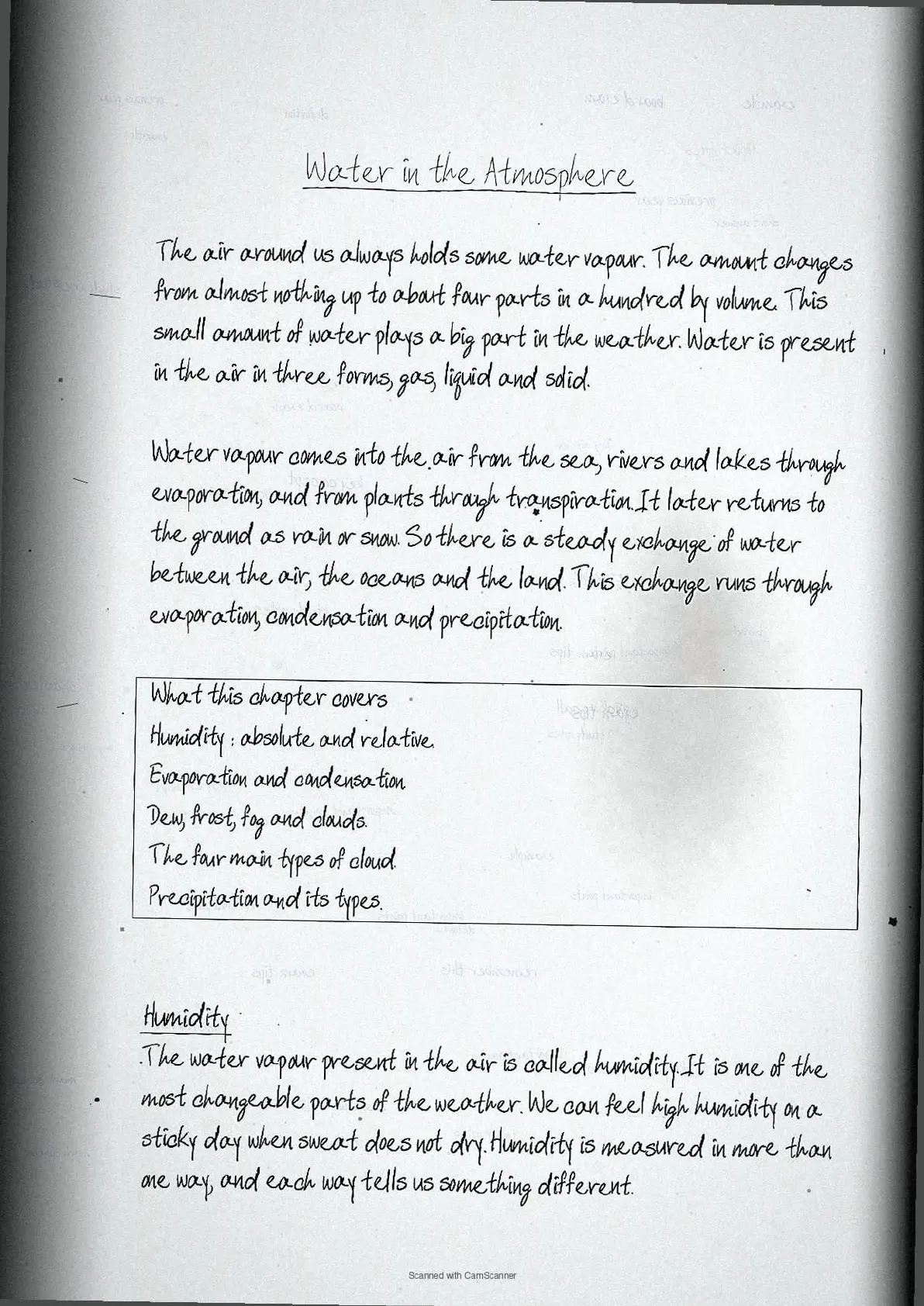
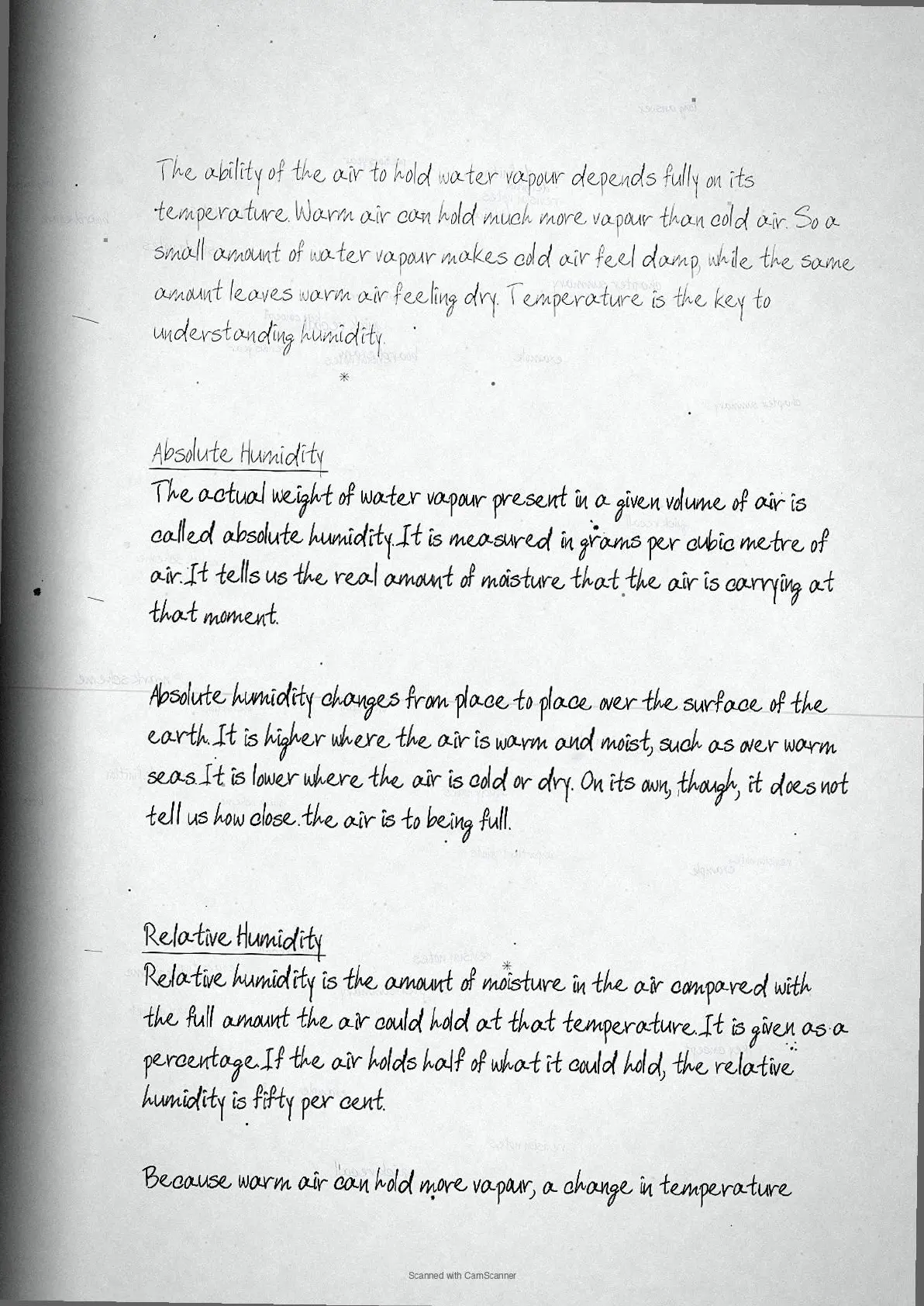
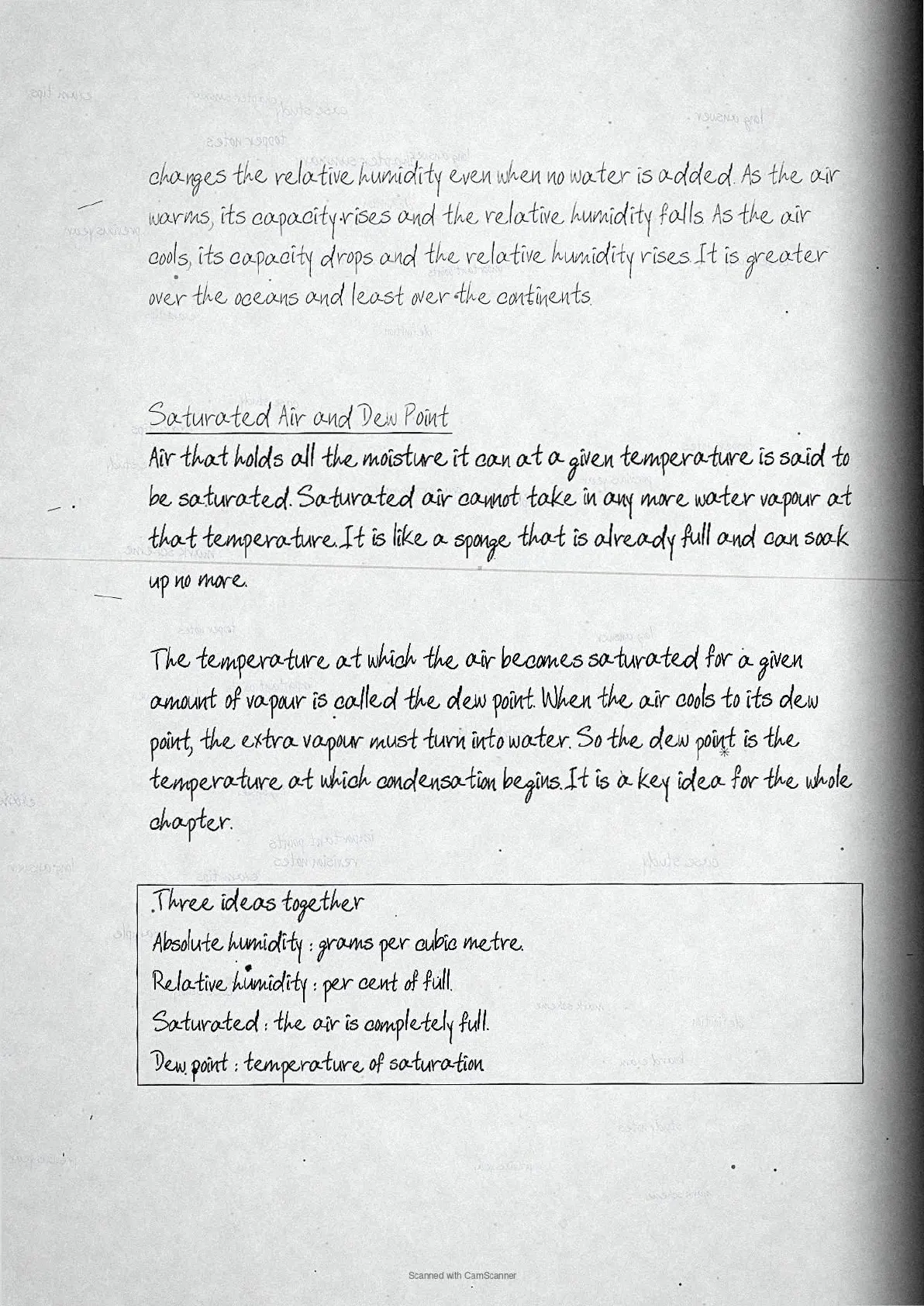
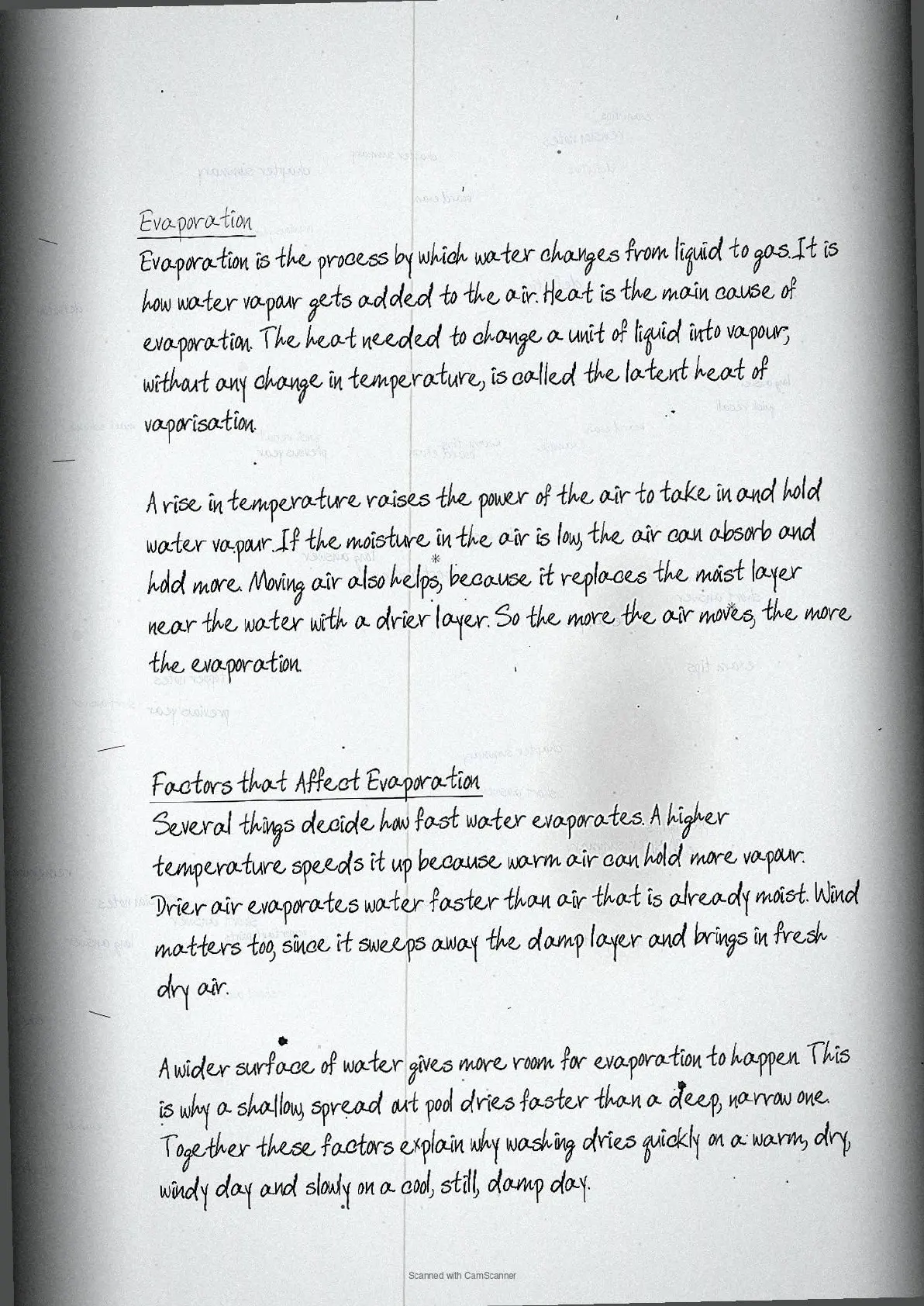
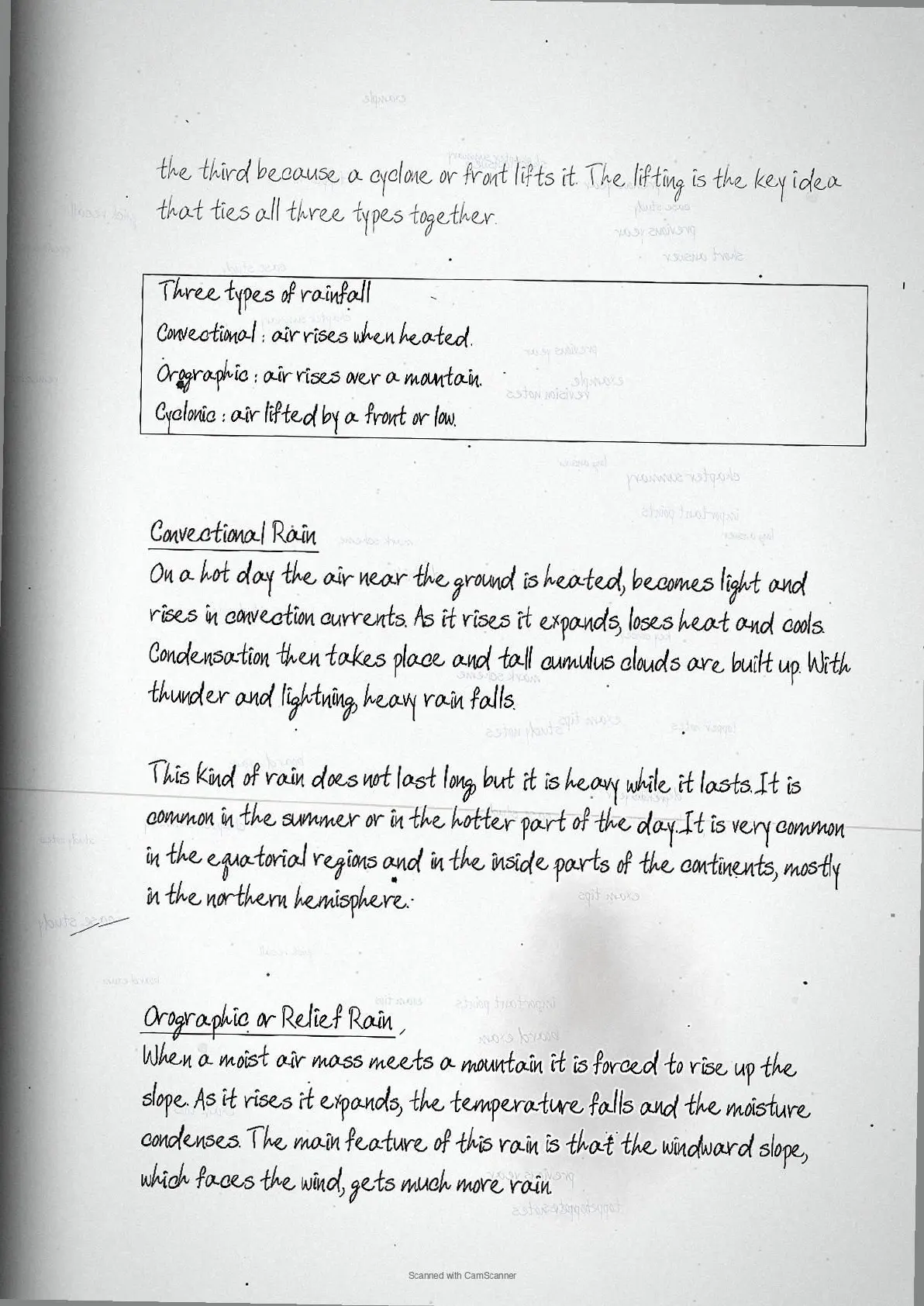
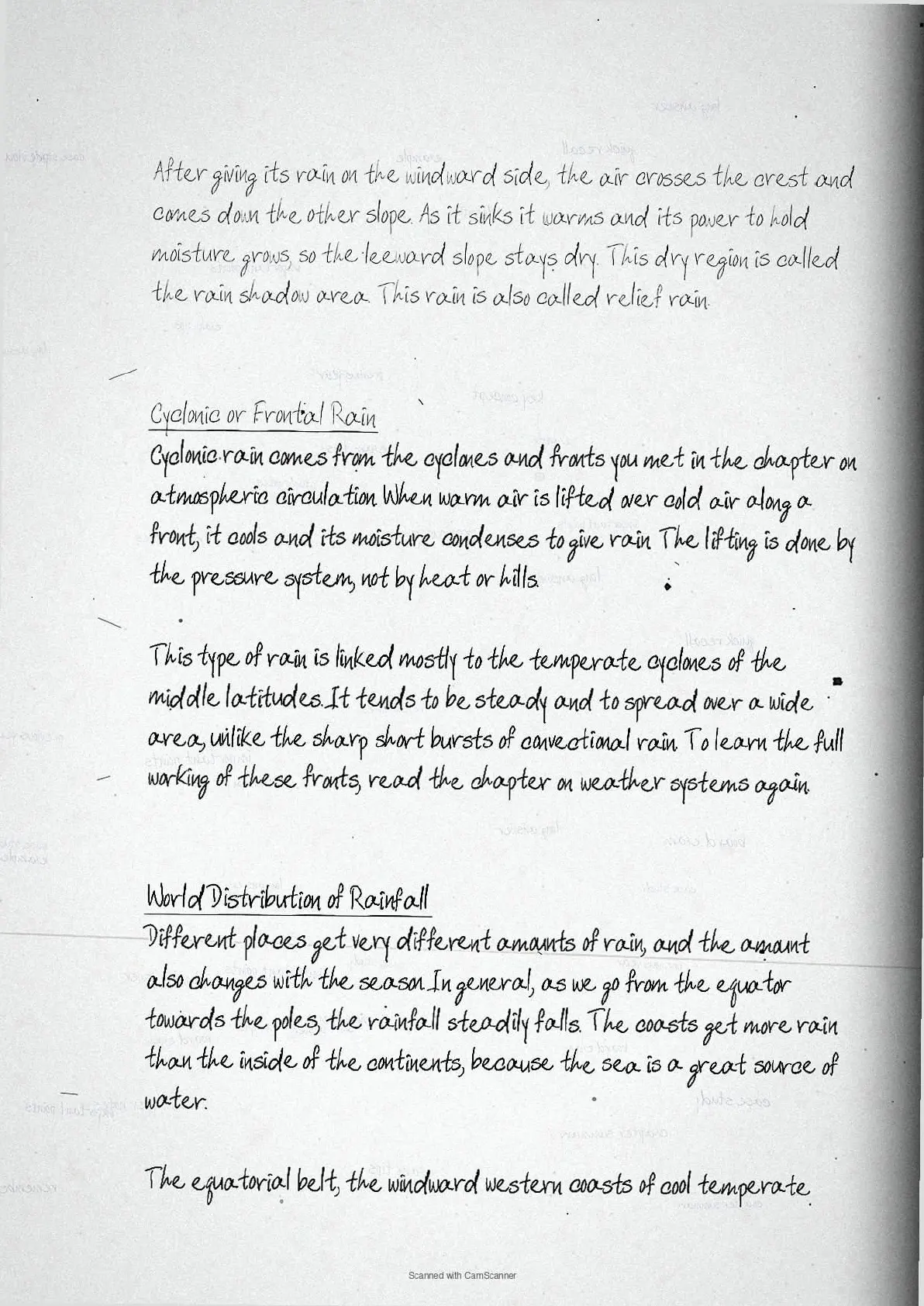
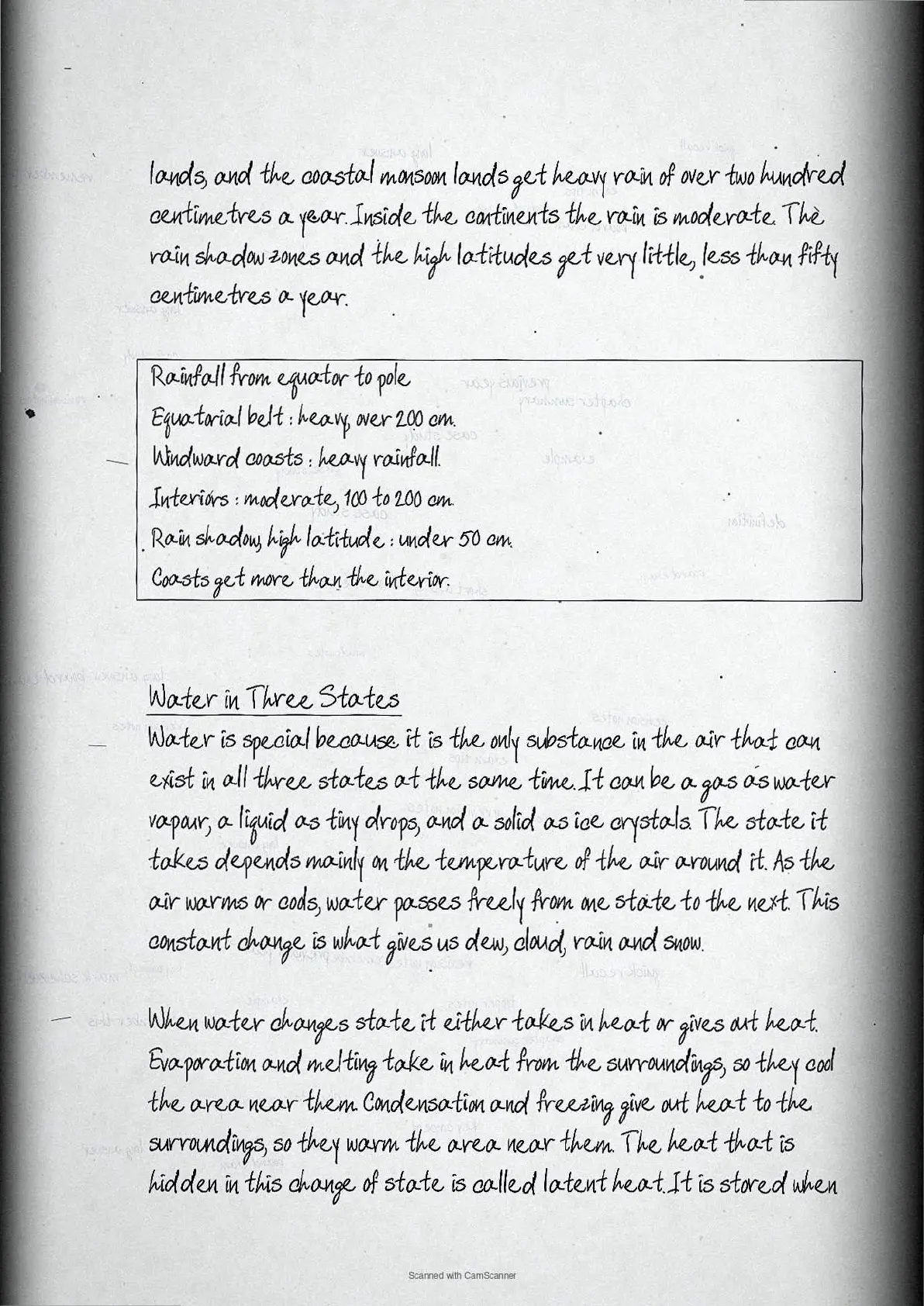
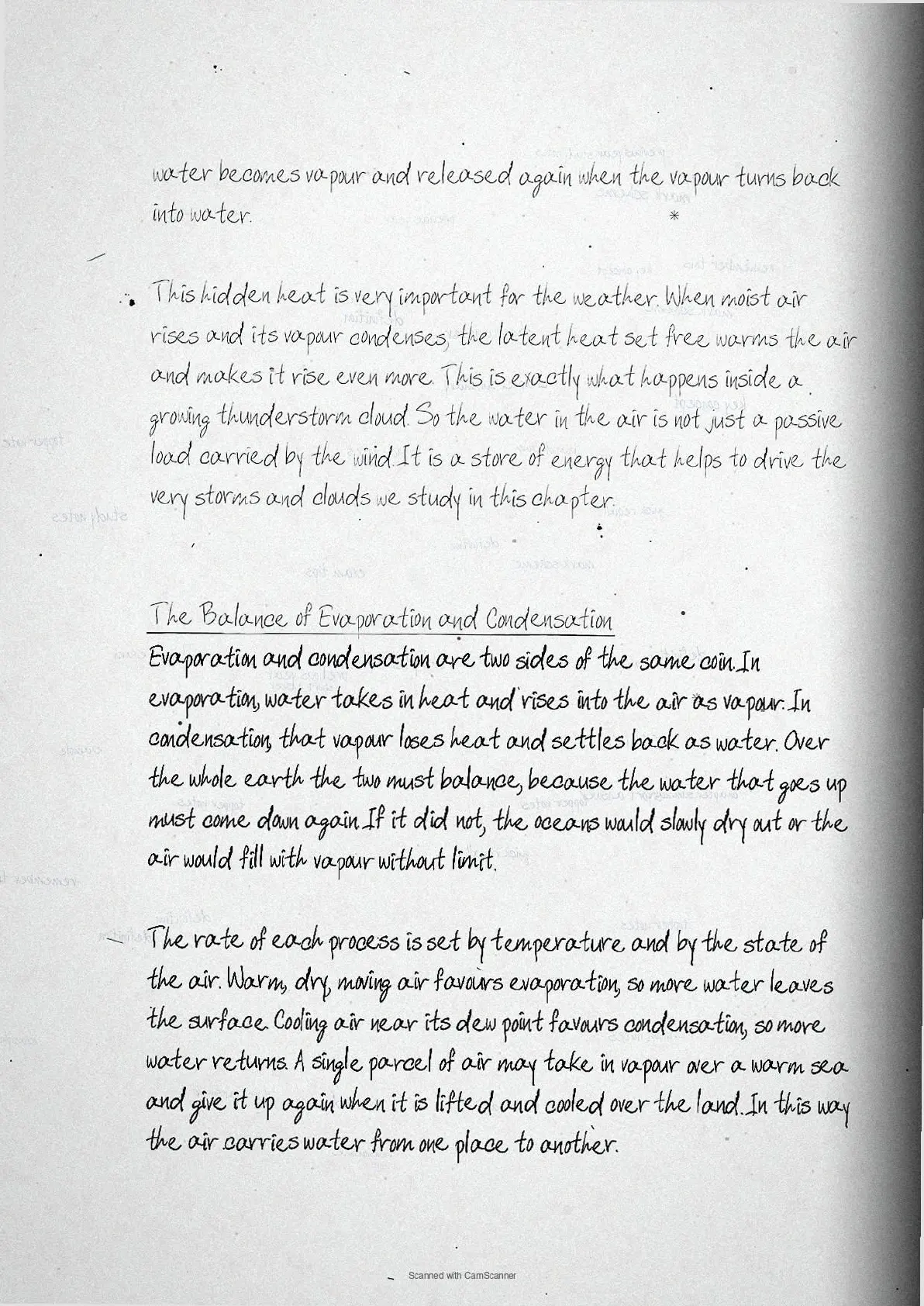
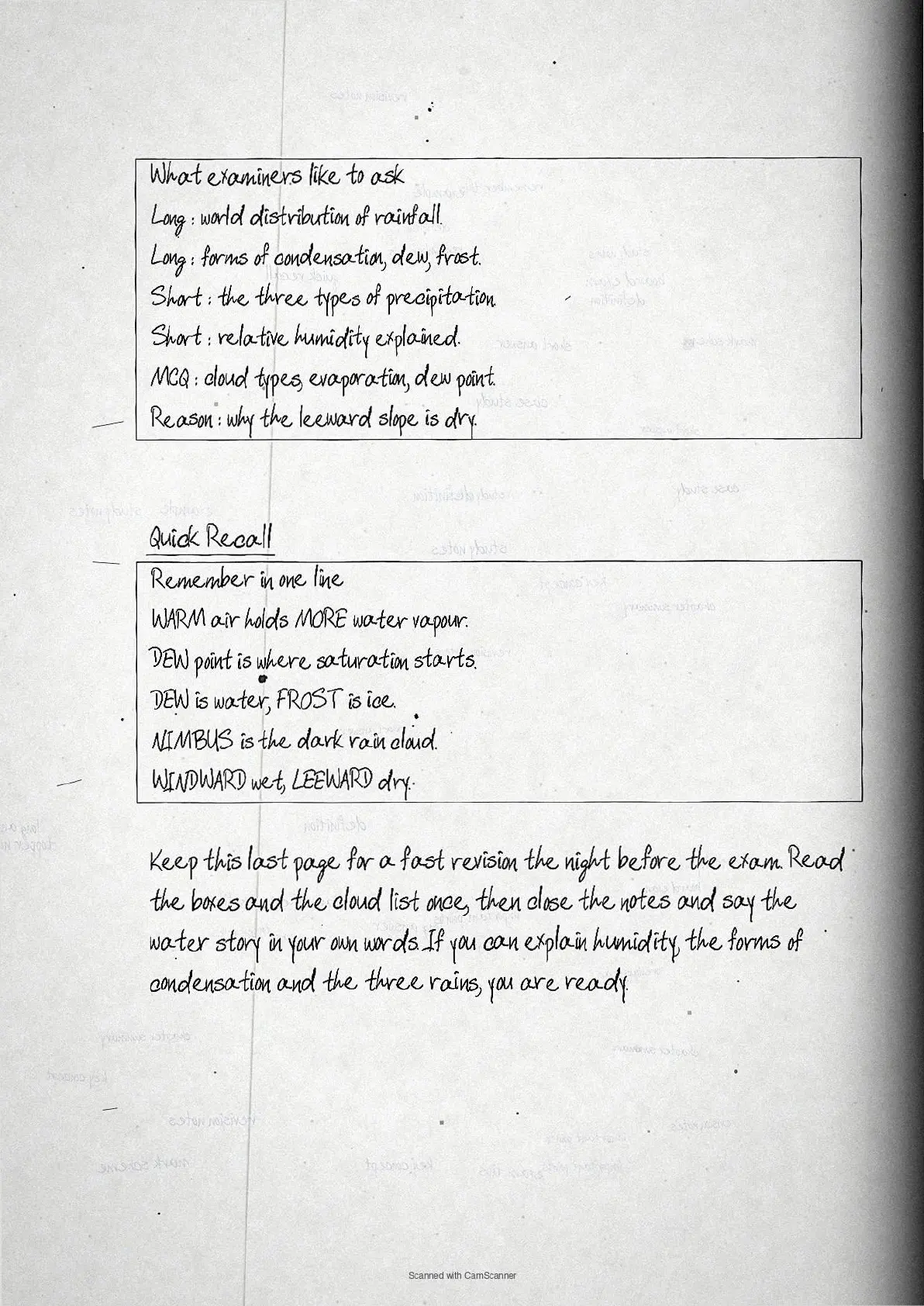
- CBSE Class 11 Weightage: a scoring chapter in the Geography paper, asked in short and long answers.
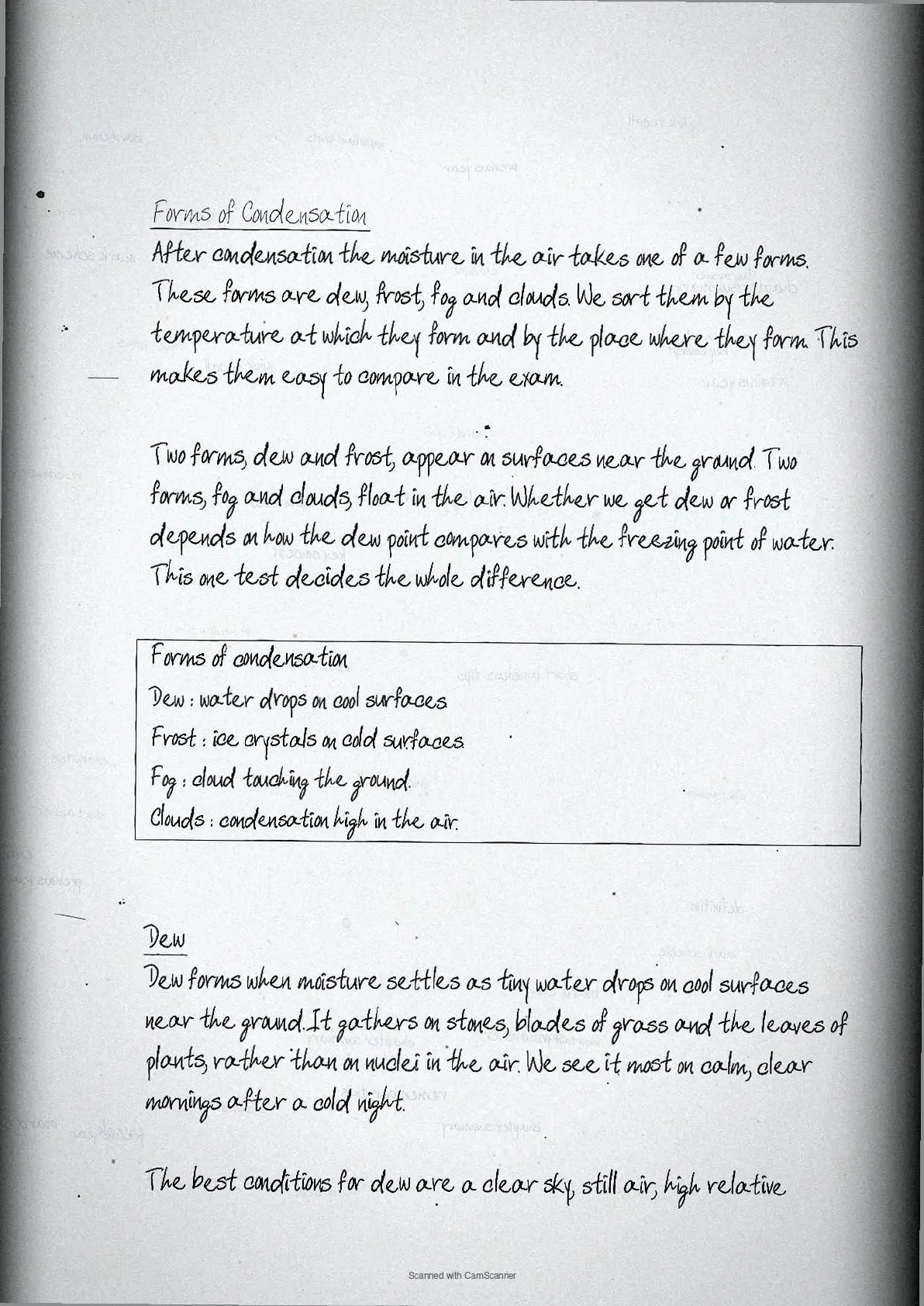
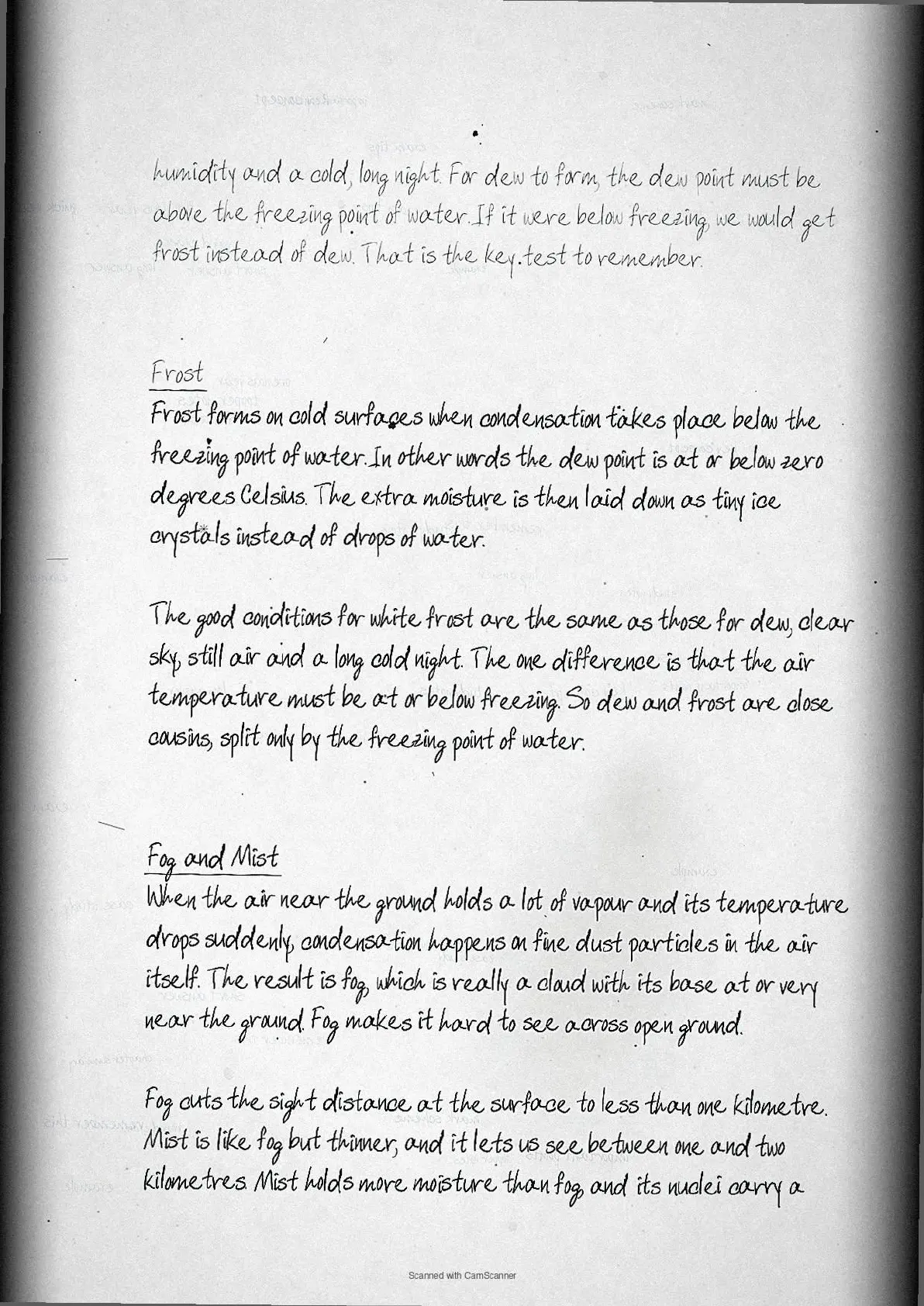
- What the notes cover: humidity: absolute, relative and dew point, evaporation and the factors that affect it, condensation and its nuclei, forms of condensation: dew, frost, fog.
- Best for: quick revision before Class 11 exams and a base for CUET later.
You can read the complete class 11 geography handwritten notes for Water in the Atmosphere, with key terms, boxed definitions, and quick revision points, in the PDF below.
These handwritten notes are written by subject teachers, mapped to the 2026-27 NCERT, and checked against the last five years of CBSE Class 11 Geography papers.
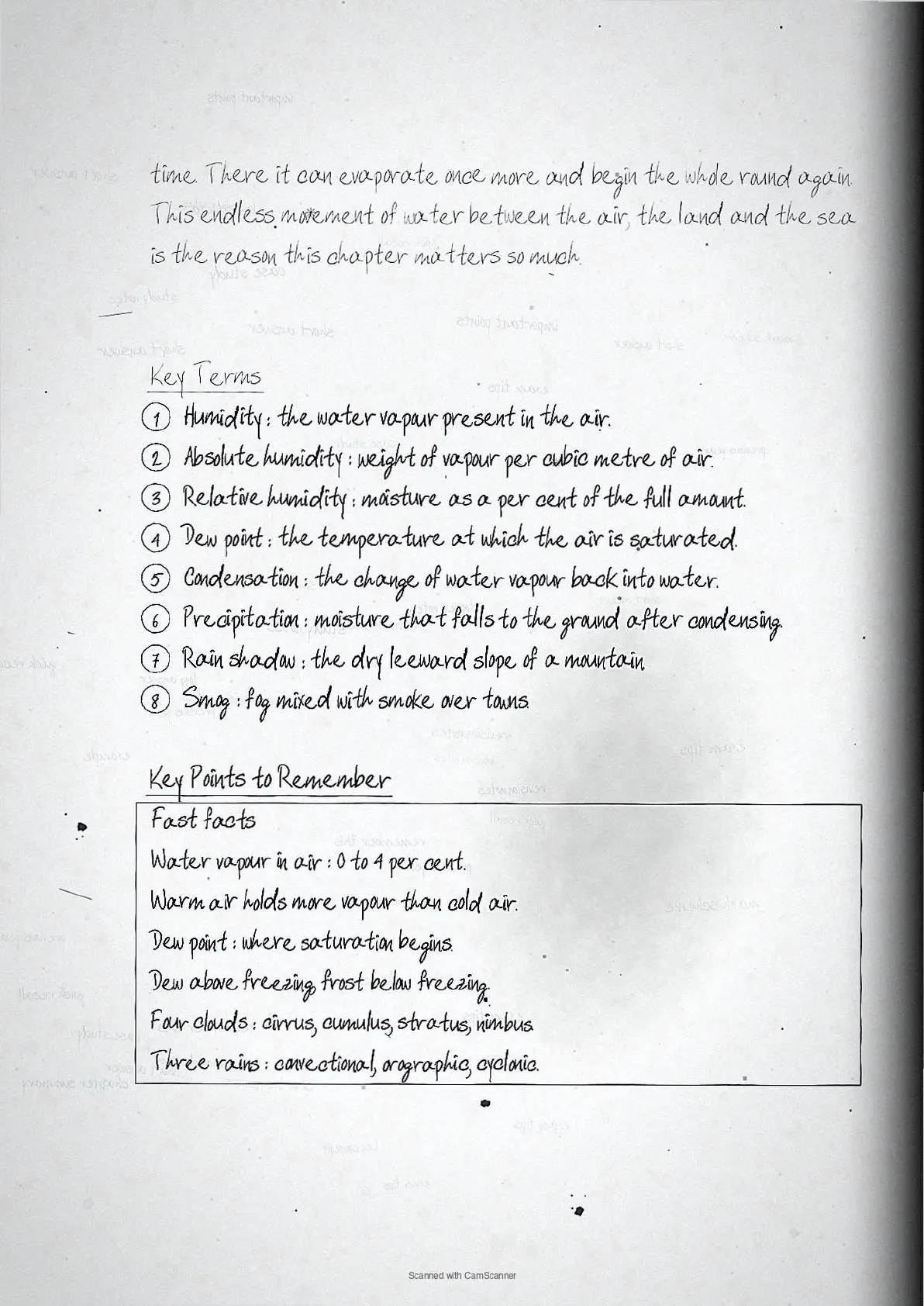
Key Terms and Ideas in Water in the Atmosphere
These are the terms and ideas the exam asks about most. Learn each one so you can define it and use it in your answers.
| Term / Idea | What it means |
|---|---|
| Humidity | the water vapour present in the air |
| Absolute humidity | weight of vapour per cubic metre of air |
| Relative humidity | moisture as a per cent of the full amount |
| Dew point | the temperature at which the air becomes saturated |
| Condensation | the change of water vapour back into water |
| Precipitation | moisture that falls to the ground after condensing |
| Rain shadow | the dry leeward slope of a mountain |
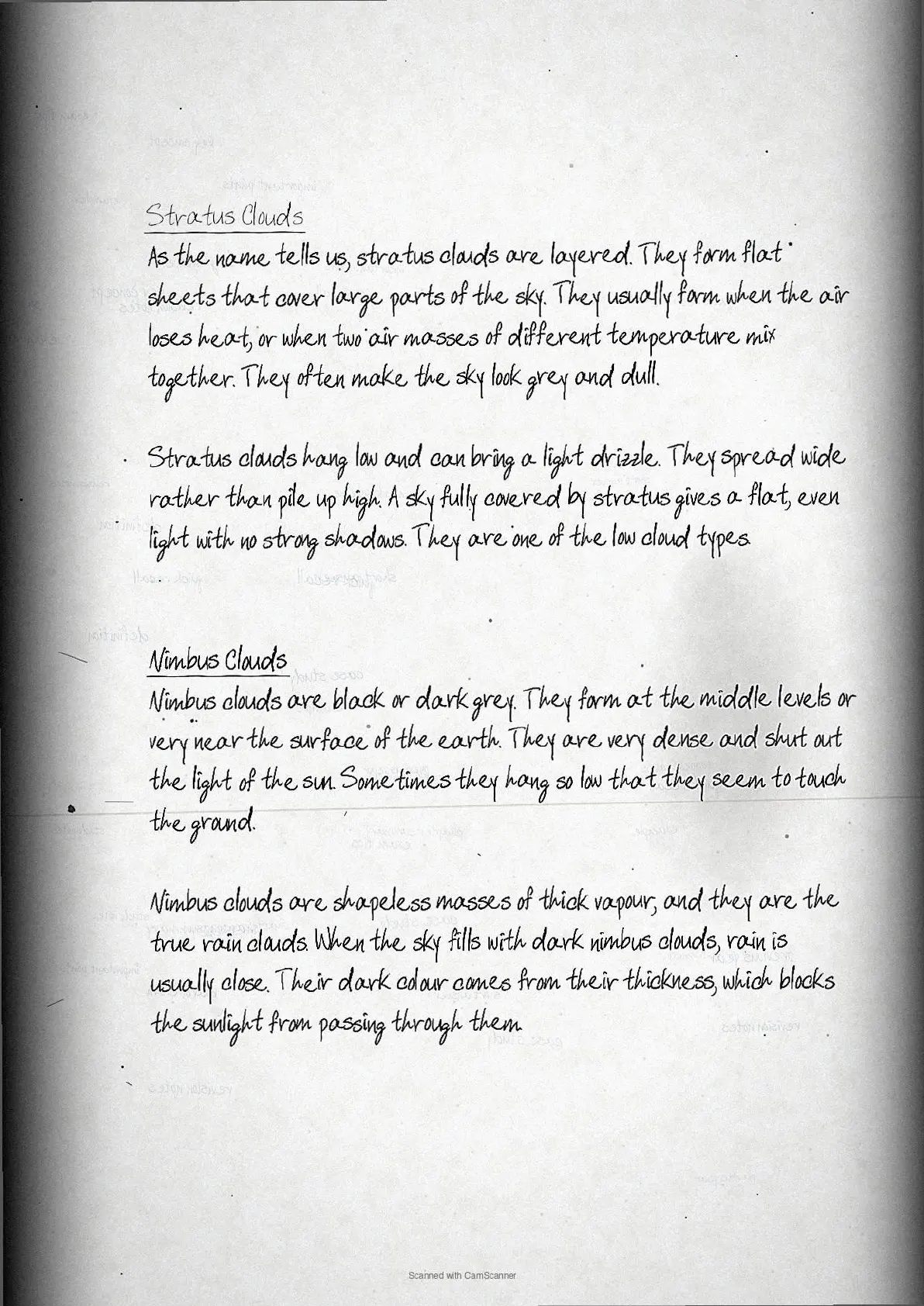
| Nimbus | the dark, dense cloud that brings rain |
What the Water in the Atmosphere Handwritten Notes Cover
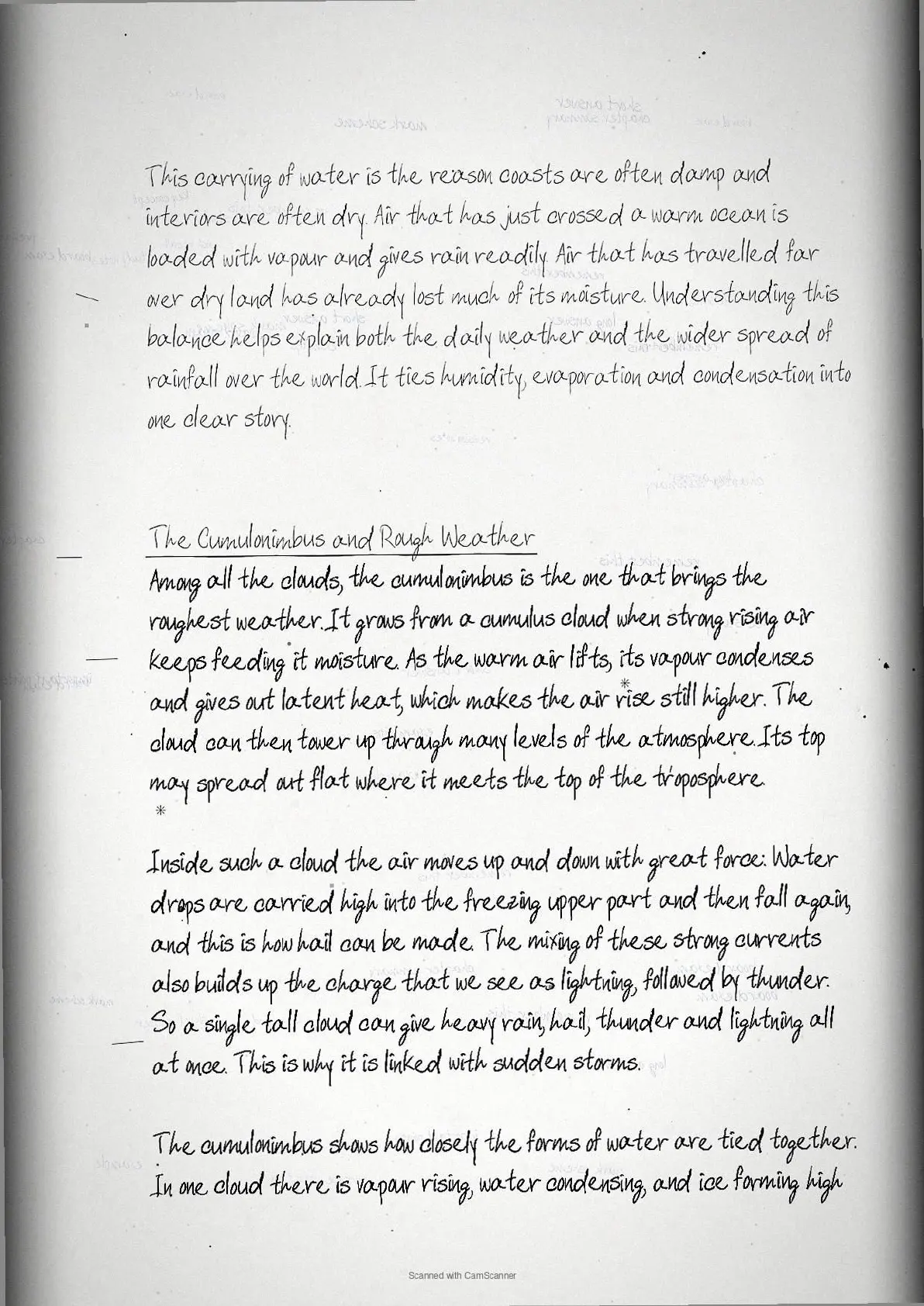
The air always holds some water vapour, and its amount shapes the weather. Water moves between the air, the oceans and the land through evaporation, condensation and precipitation. This chapter explains humidity, the forms of condensation, clouds and the types of rainfall.
- Humidity: absolute, relative and dew point
- Evaporation and the factors that affect it
- Condensation and its nuclei
- Forms of condensation: dew, frost, fog
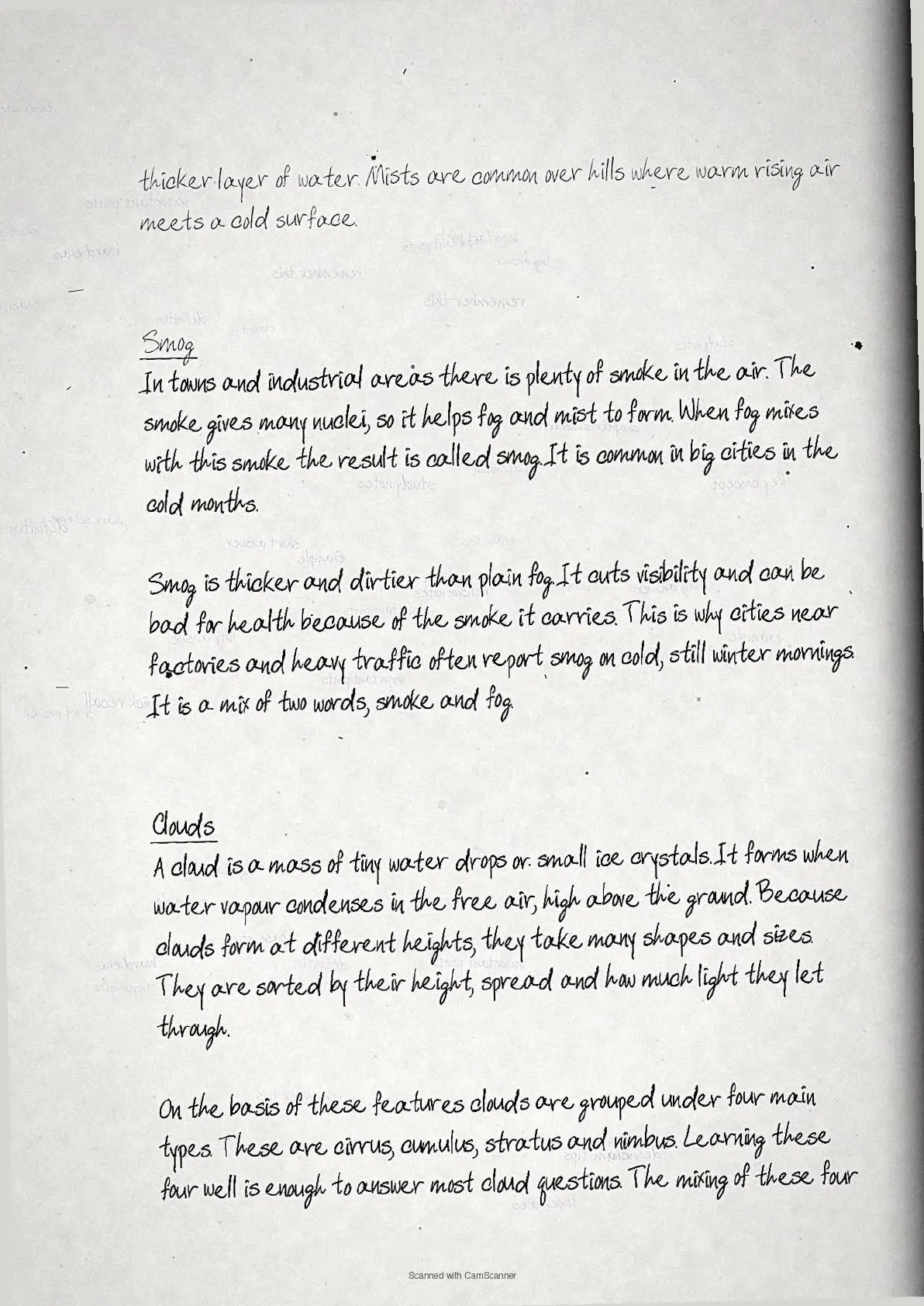
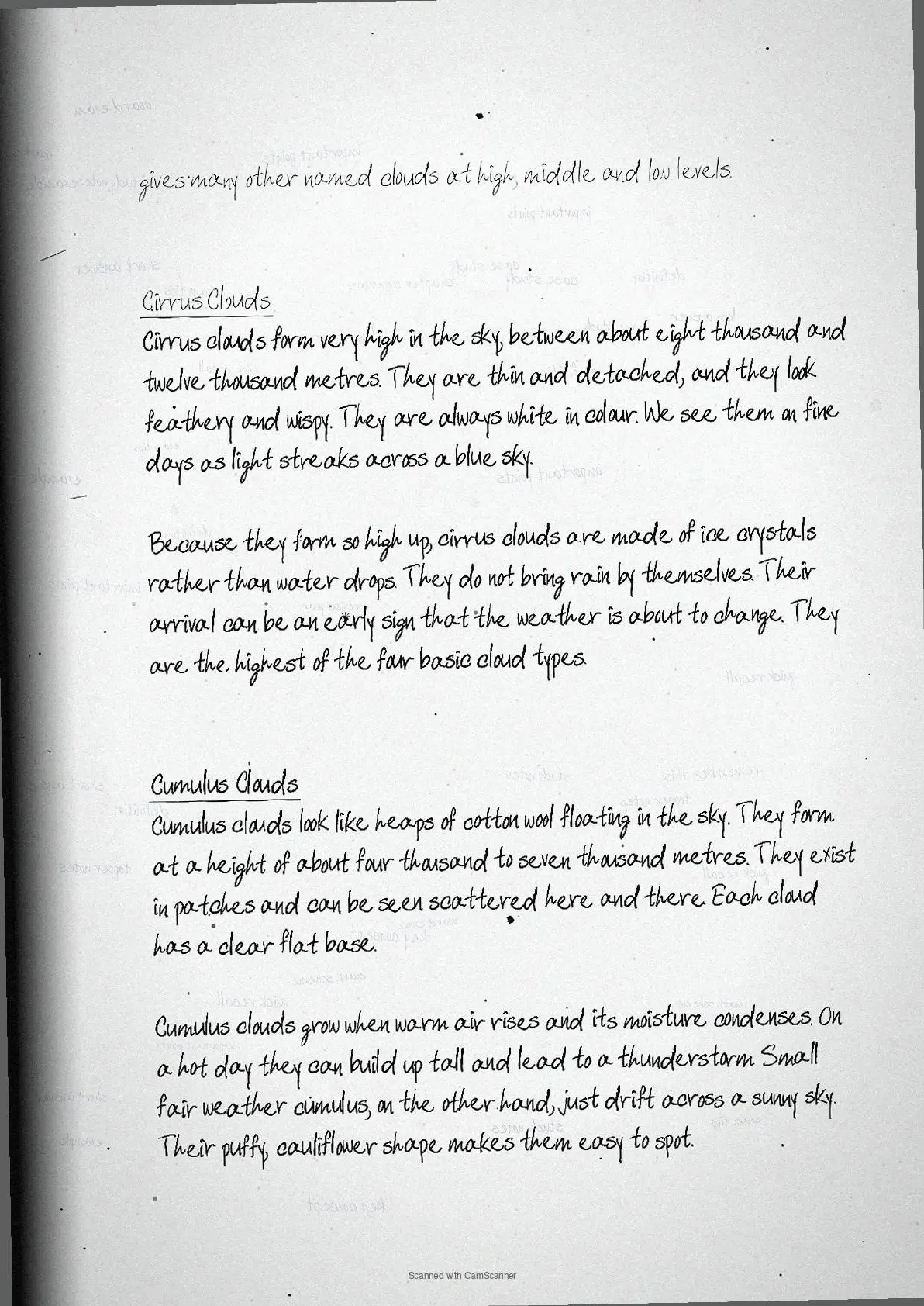
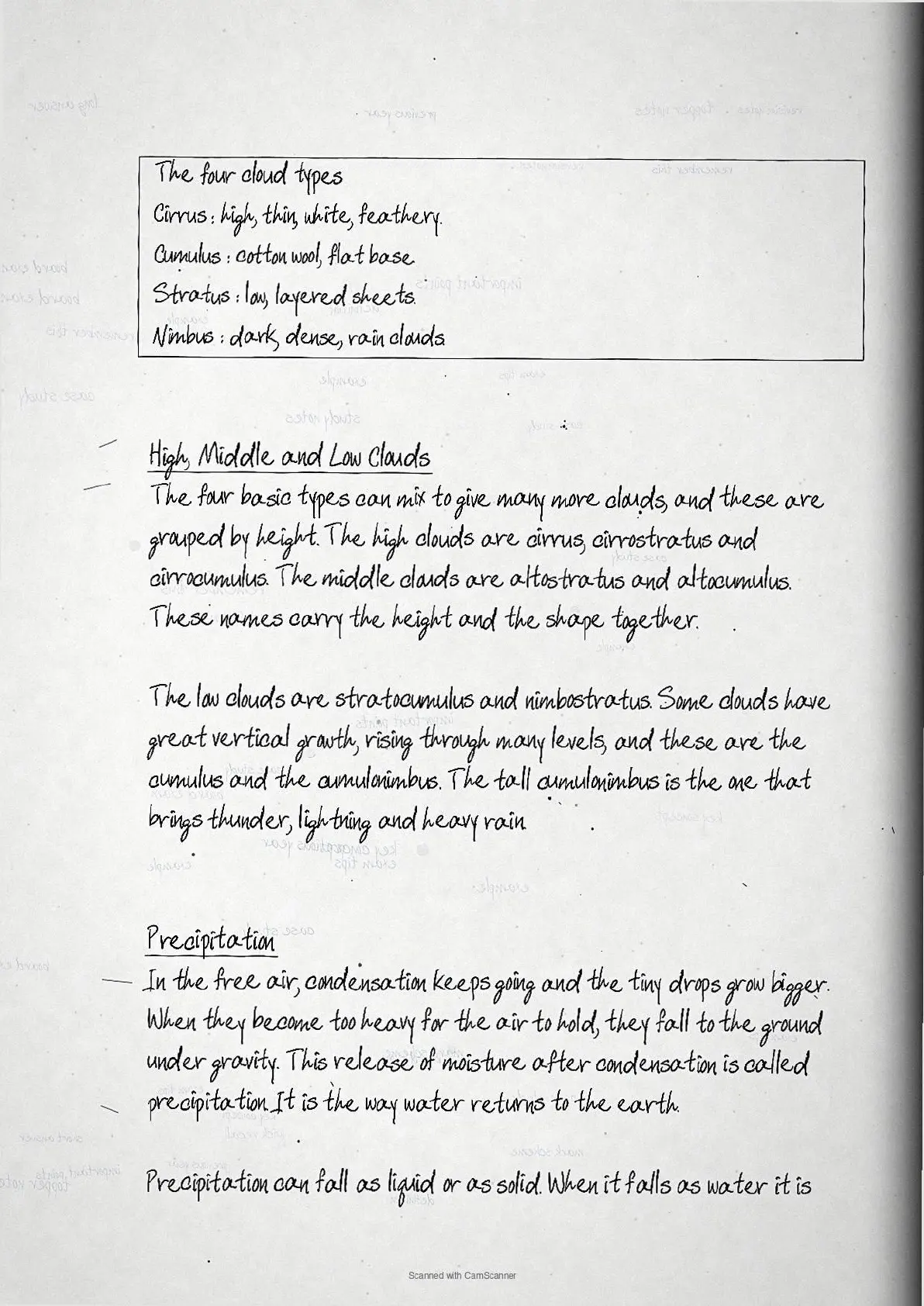
- The four main cloud types
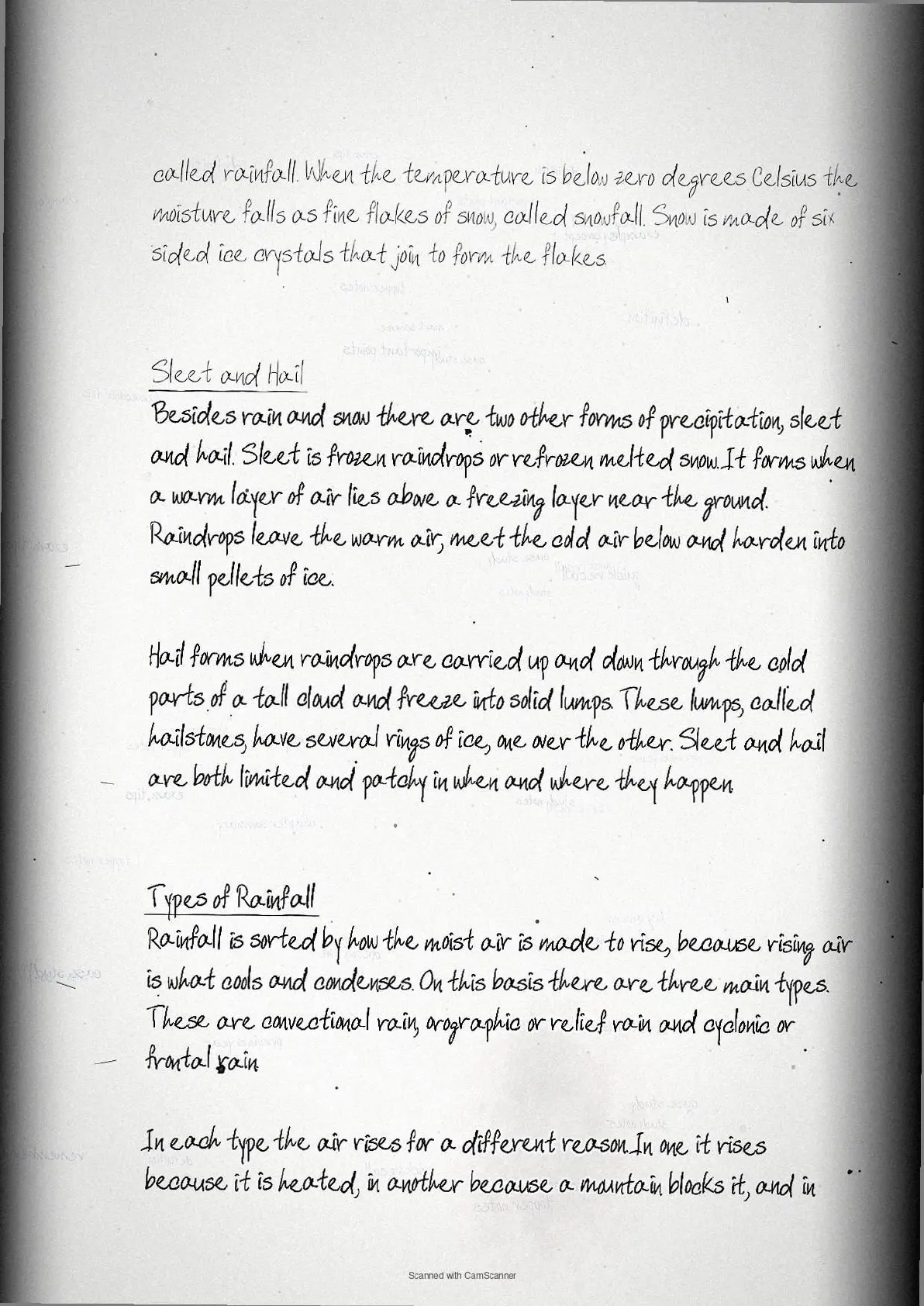
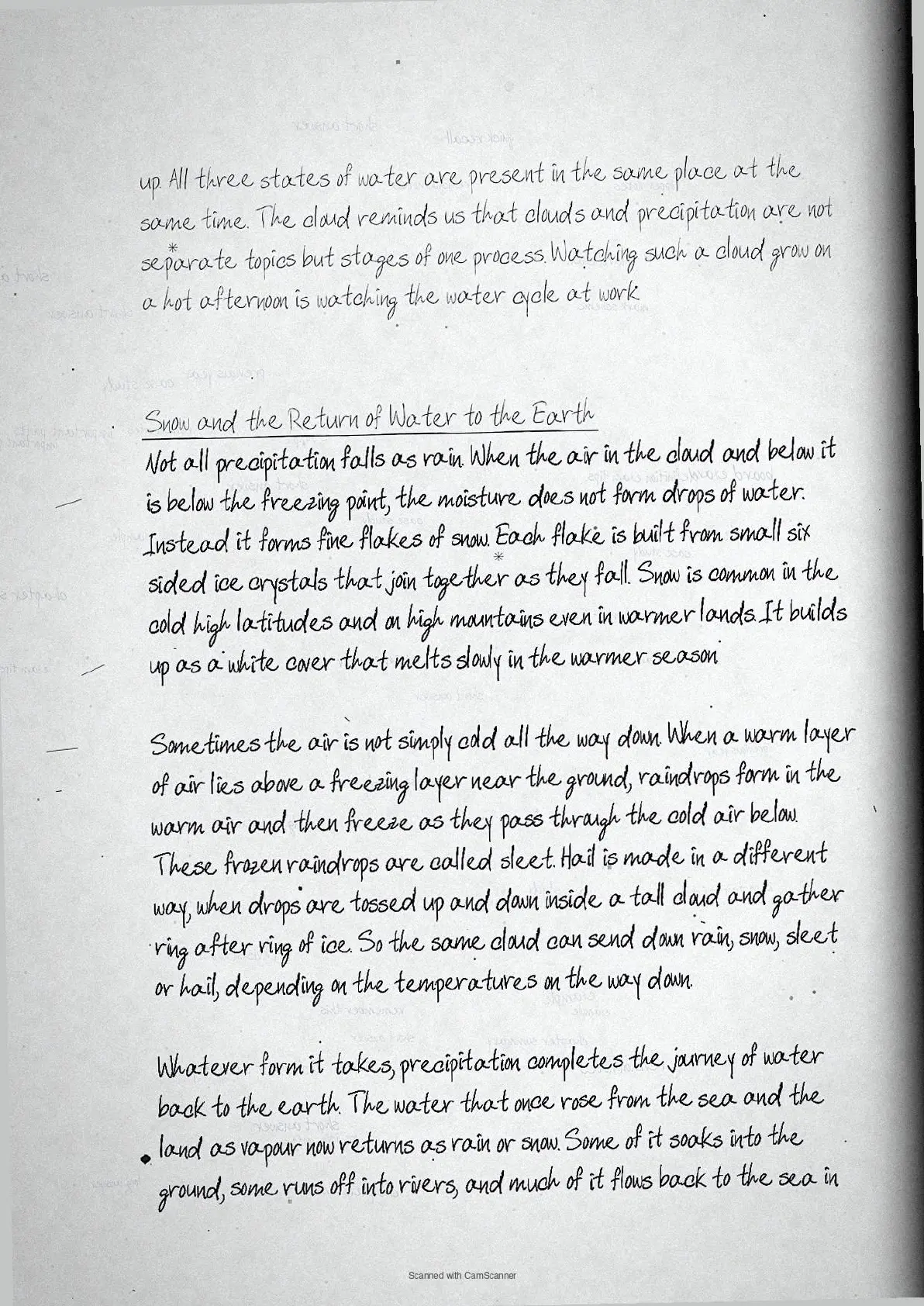
- Precipitation, sleet, snow and hail
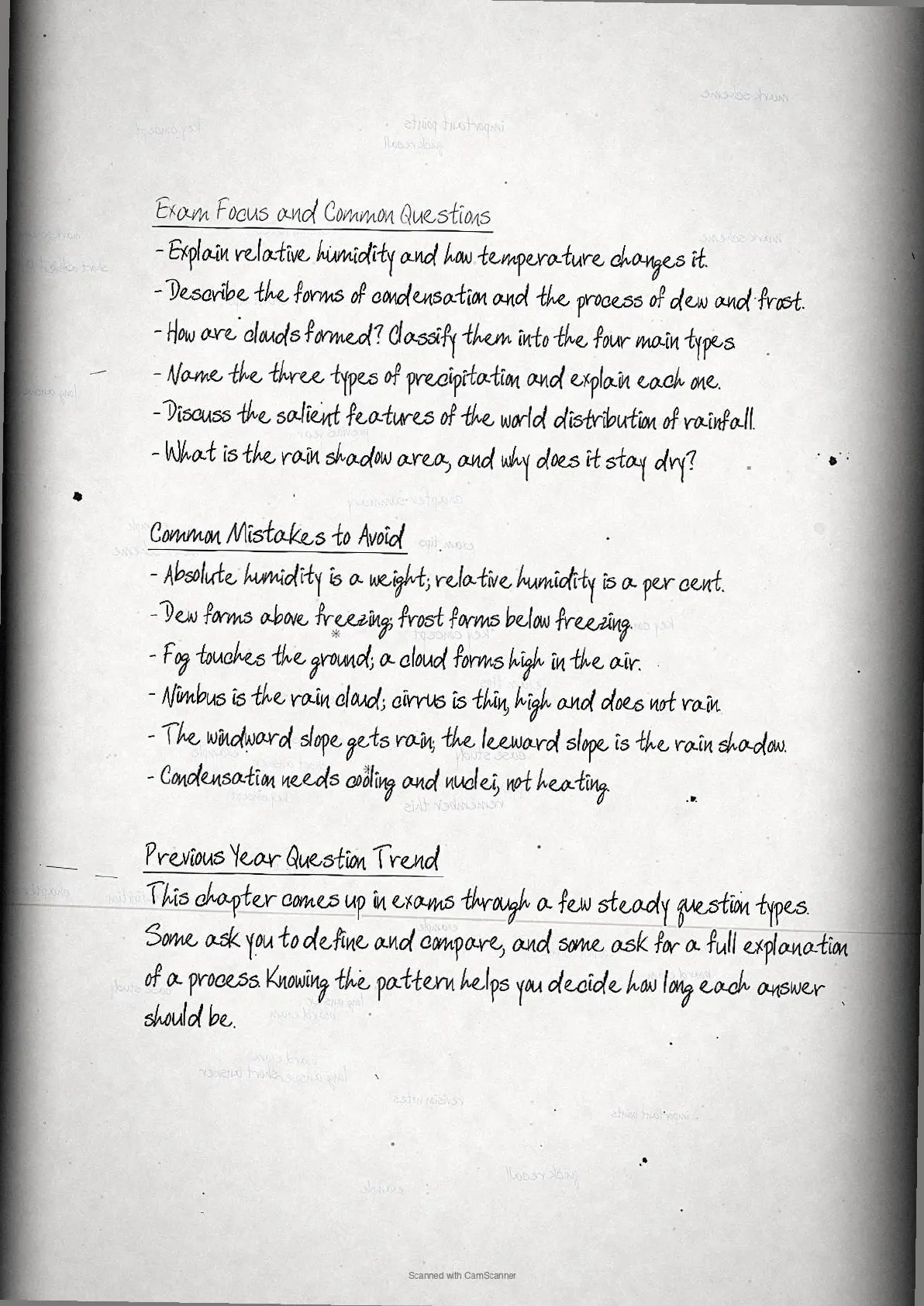
- Types of rainfall and world distribution
Water in the Atmosphere Topic-wise Weightage for CBSE Class 11 Geography
Some parts of this chapter are asked more often than others. The table below shows which sub-topics to revise first, based on recent CBSE Class 11 question trends.
| Sub-topic | Weightage | CBSE Frequency |
|---|---|---|
| Forms of condensation: dew, frost, fog | High | asked most years |
| World distribution of rainfall | High | asked most years |
| Types of rainfall: convectional, orographic, cyclonic | Medium | asked often |
| Humidity and relative humidity | Medium | asked often |
| Cloud types and precipitation forms | Low | asked sometimes |
How Collegedunia's Handwritten Notes Help You Revise Water in the Atmosphere
These notes are made for the night before the exam. They keep the facts short and easy to scan. Collegedunia maps every point to the 2026-27 NCERT.
- Clear handwriting: each topic is written in neat, easy-to-read handwriting.
- Boxed key terms: the main terms and definitions are boxed by hand for fast recall.
- Diagrams and tables: simple hand-drawn tables and charts make ideas clear.
- Colour-coded headings: new sub-topics stand out, so you find any section in seconds.
Water in the Atmosphere Self-Assessment Quiz
Try these quick questions after you read the notes. Tap each question to check your answer. They cover the points CBSE asks most often.
Which one of the following is the most important constituent of the atmosphere for human beings?
(a) water vapour (b) nitrogen (c) dust particle (d) oxygen
Answer: (d) oxygen correct - human beings need oxygen to breathe and live
Which process is responsible for transforming liquid into vapour?
(a) condensation (b) transpiration (c) evaporation (d) precipitation
Answer: (c) evaporation correct - evaporation changes water from liquid to gas using heat
The air that contains moisture to its full capacity is:
(a) relative humidity (b) specific humidity (c) absolute humidity (d) saturated air
Answer: (d) saturated air correct - saturated air holds all the vapour it can at that temperature
Which one of the following is the highest cloud in the sky?
(a) cirrus (b) stratus (c) nimbus (d) cumulus
Answer: (a) cirrus correct - cirrus clouds form highest, between about 8000 and 12000 metres
The dry leeward slope of a mountain that gets little rain is called the:
(a) windward side (b) rain shadow area (c) convection zone (d) dew point
Answer: (b) rain shadow area correct - the air sinks and warms on the leeward side, so it stays dry
How to Use These Handwritten Notes for Class 11 Geography Revision
Use these class 11 geography handwritten notes in two passes. Read them slowly once for the full chapter. Then, near the exam, read only the boxes and key terms for a fast recall.
- Read the notes once with the NCERT chapter open beside you.
- Say each key term and idea in your own words.
- Practise one long-answer question from a past paper.
- On the last day, revise only the key terms and the boxes.
Class 11 Geography Handwritten Notes for All Chapters
The table below links the class 11 geography handwritten notes for every chapter. Use it to jump to any other chapter's notes.
Water in the Atmosphere Class 11 Geography Handwritten Notes FAQs
Ques. Where can I download Water in the Atmosphere Class 11 Geography Handwritten Notes PDF?
Ans. You can download the Water in the Atmosphere Class 11 Geography Handwritten Notes PDF directly from this page. Both the Normal and HD versions are free.
Ques. Are these handwritten notes aligned with the 2026-27 NCERT?
Ans. Yes. These notes follow the current 2026-27 syllabus for Class 11 Geography. Difference between dew and frost
Ques. How many pages is the Class 11 Geography Water in the Atmosphere Handwritten Notes PDF?
Ans. The notes run about 20 pages. They cover the full chapter with key terms, hand-drawn boxes, and a short self-assessment quiz.
Ques. What is the main idea of the 11th standard Geography chapter Water in the Atmosphere?
Ans. Both dew and frost form on calm, clear, cold nights when moisture settles on cool surfaces. Dew forms as water drops when the dew point is above freezing, while frost forms as ice crystals when the dew point is at or below freezing.
Ques. Are these Water in the Atmosphere notes enough for the CBSE Class 11 exam?
Ans. Yes, for revision. The Collegedunia handwritten notes cover every key point and exam term. Read them with the NCERT chapter and practise past questions.



Comments