




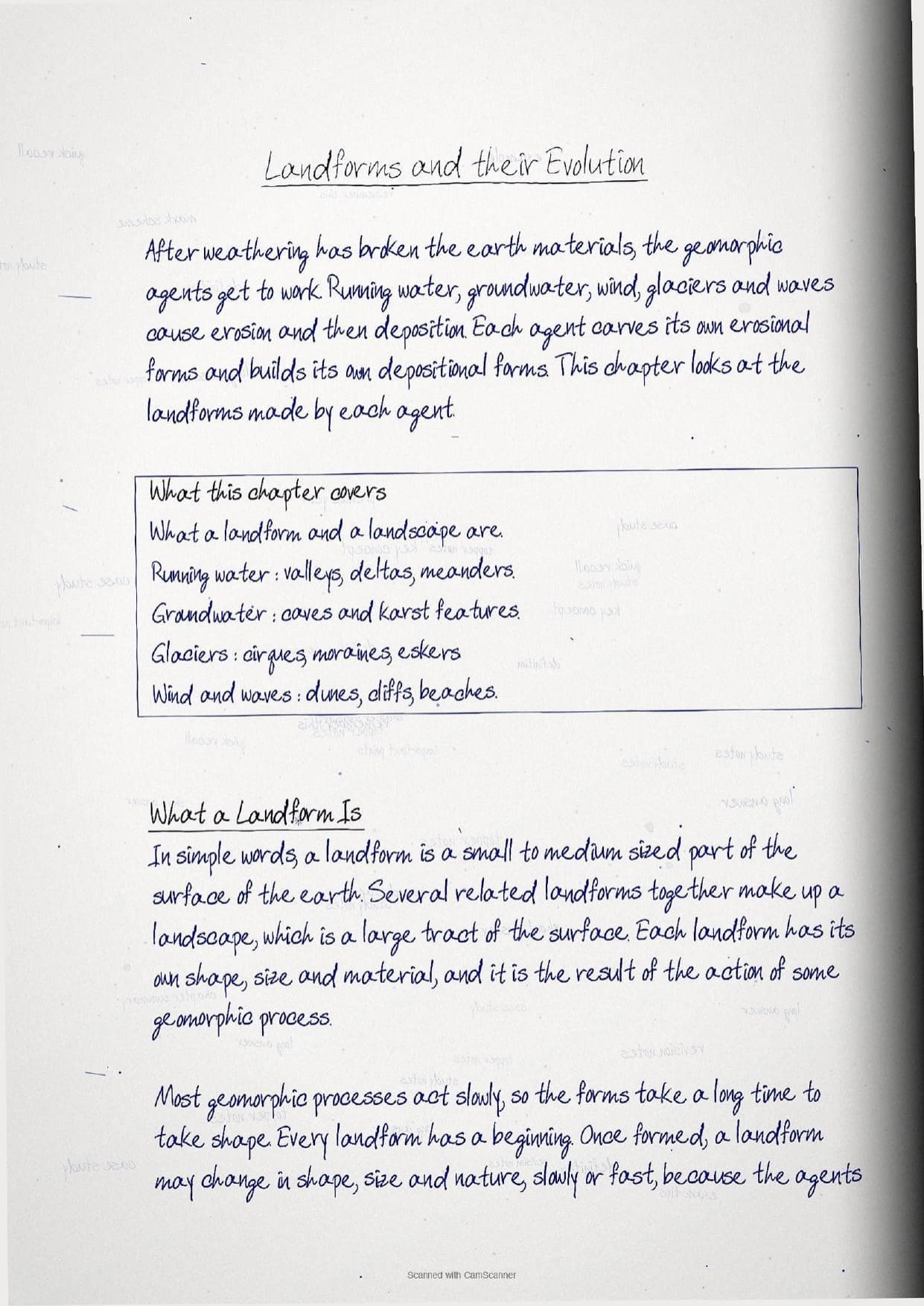
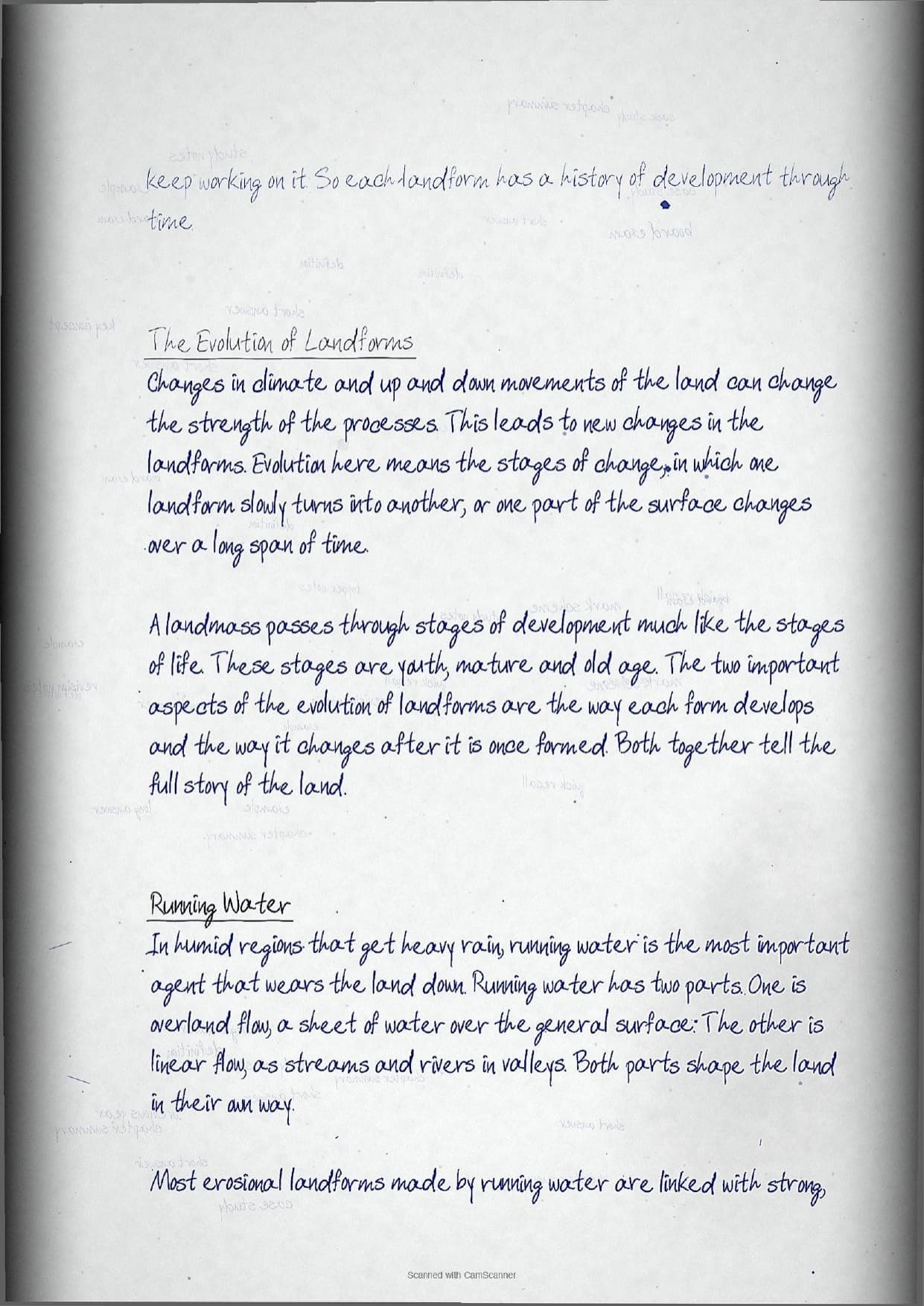
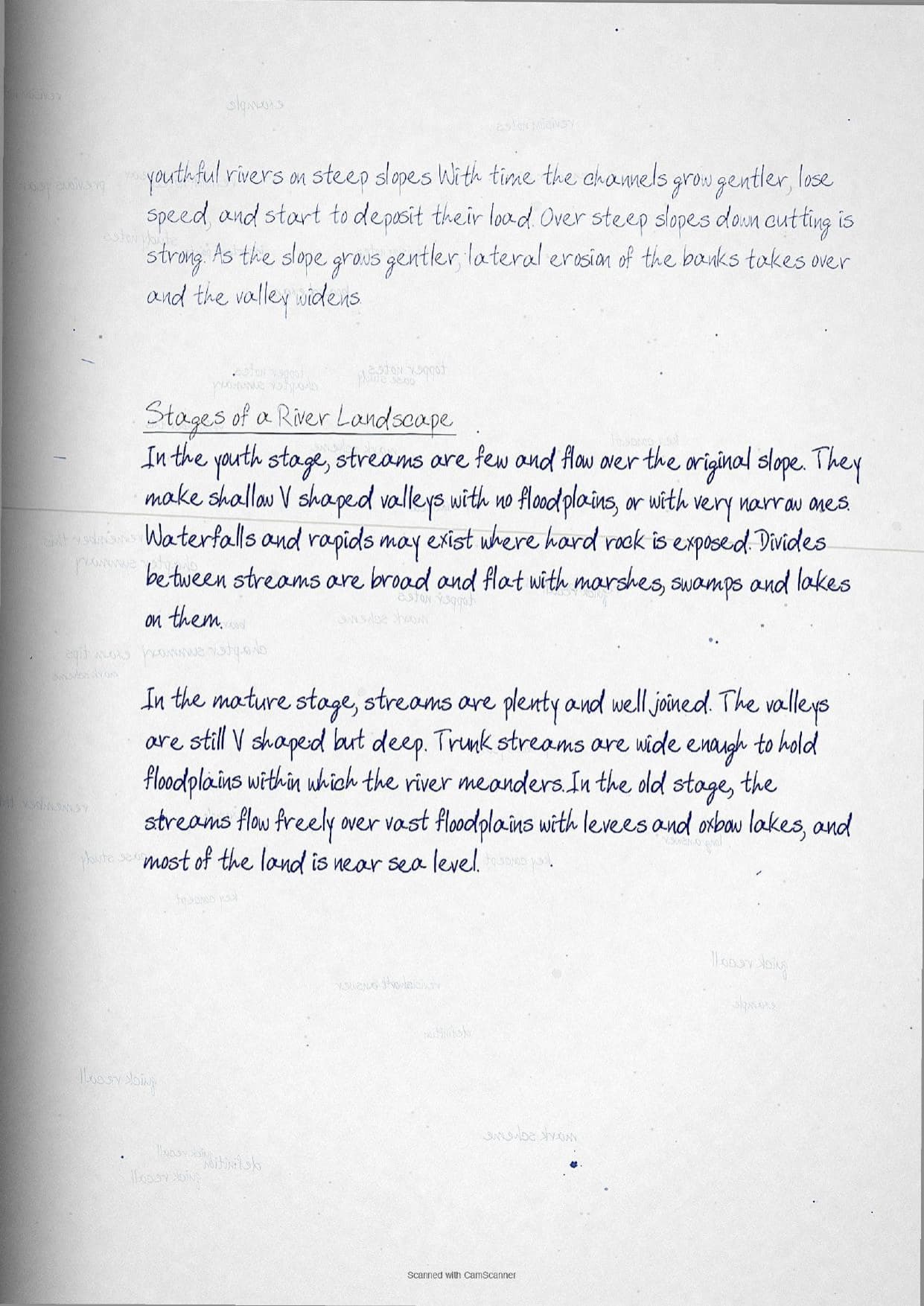
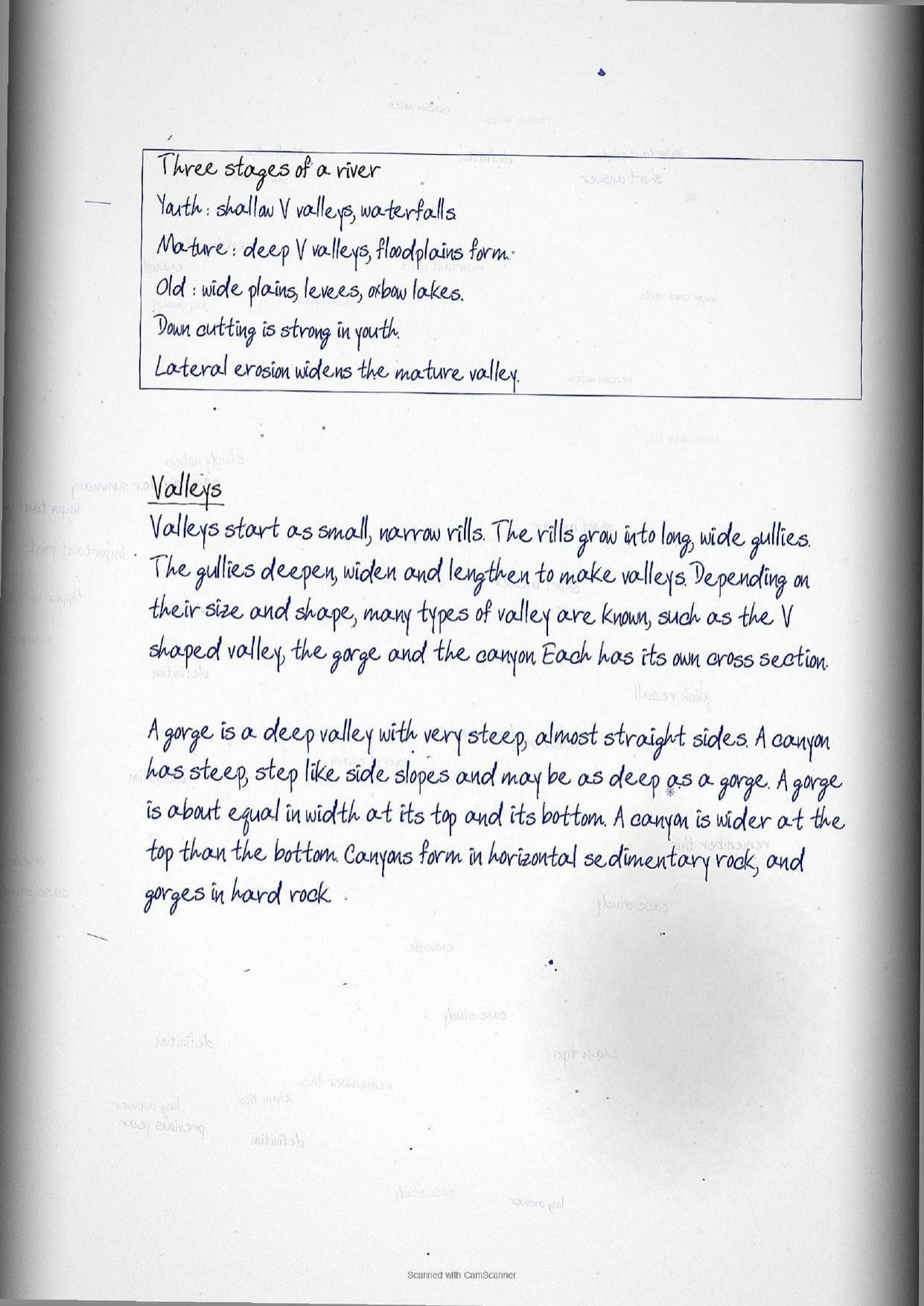
Each geomorphic agent erodes the land into its own forms and then deposits its load as new forms. Class 11 Geography Chapter 6 Landforms and their Evolution builds this idea step by step. These class 11 geography handwritten notes chapter 6 Landforms and their Evolution follow the 2026-27 NCERT and cover what a landform and a landscape are,.
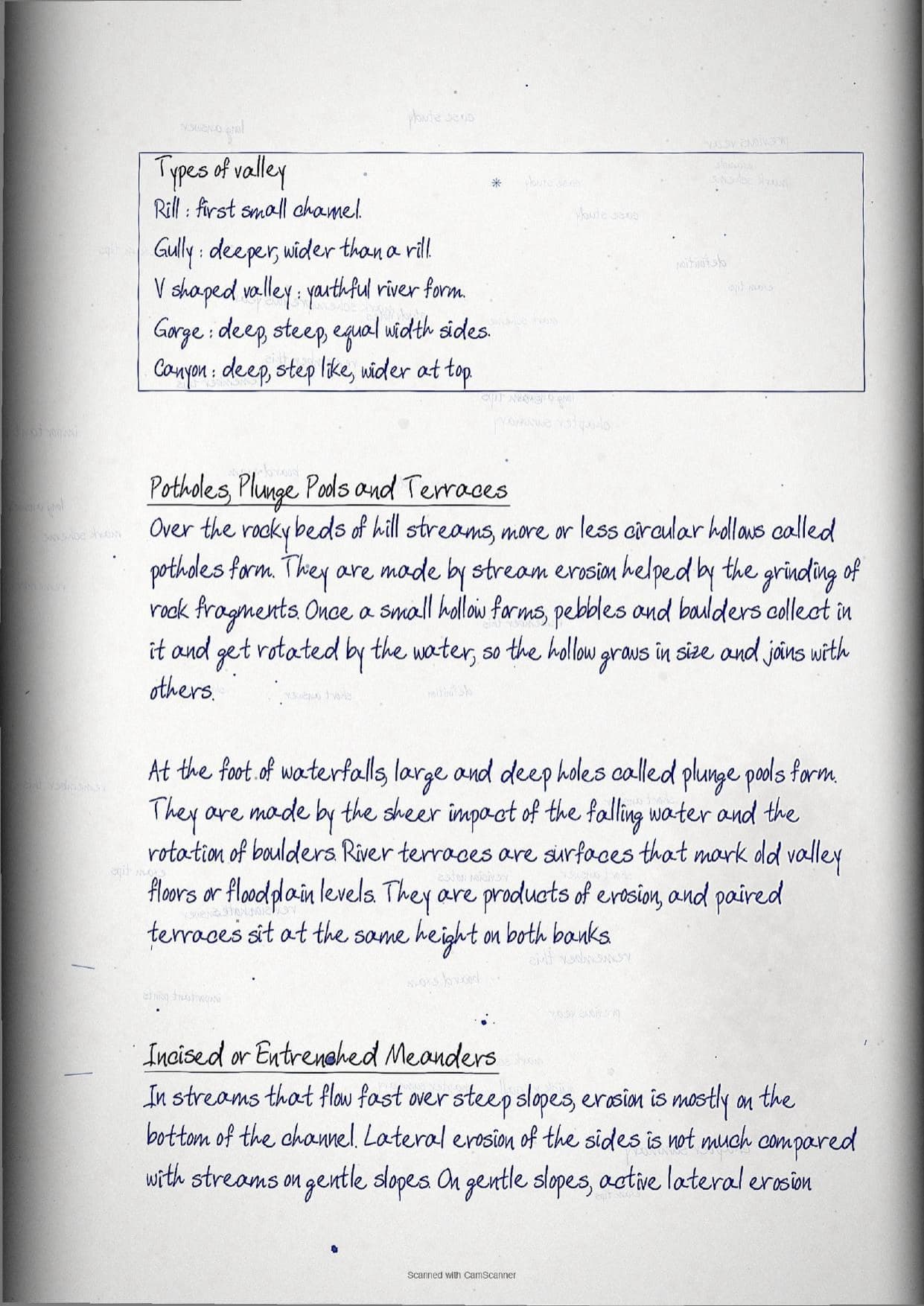
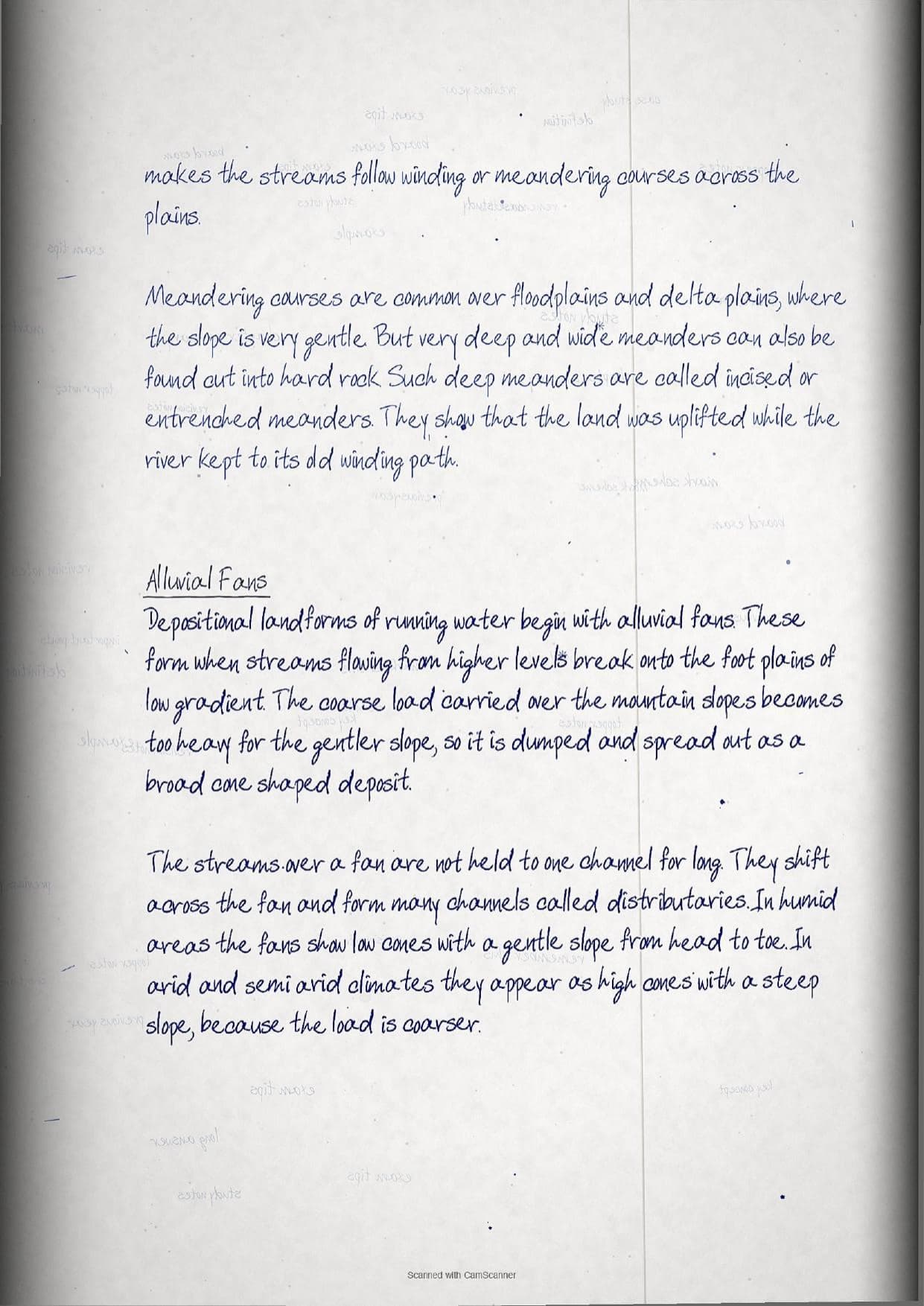
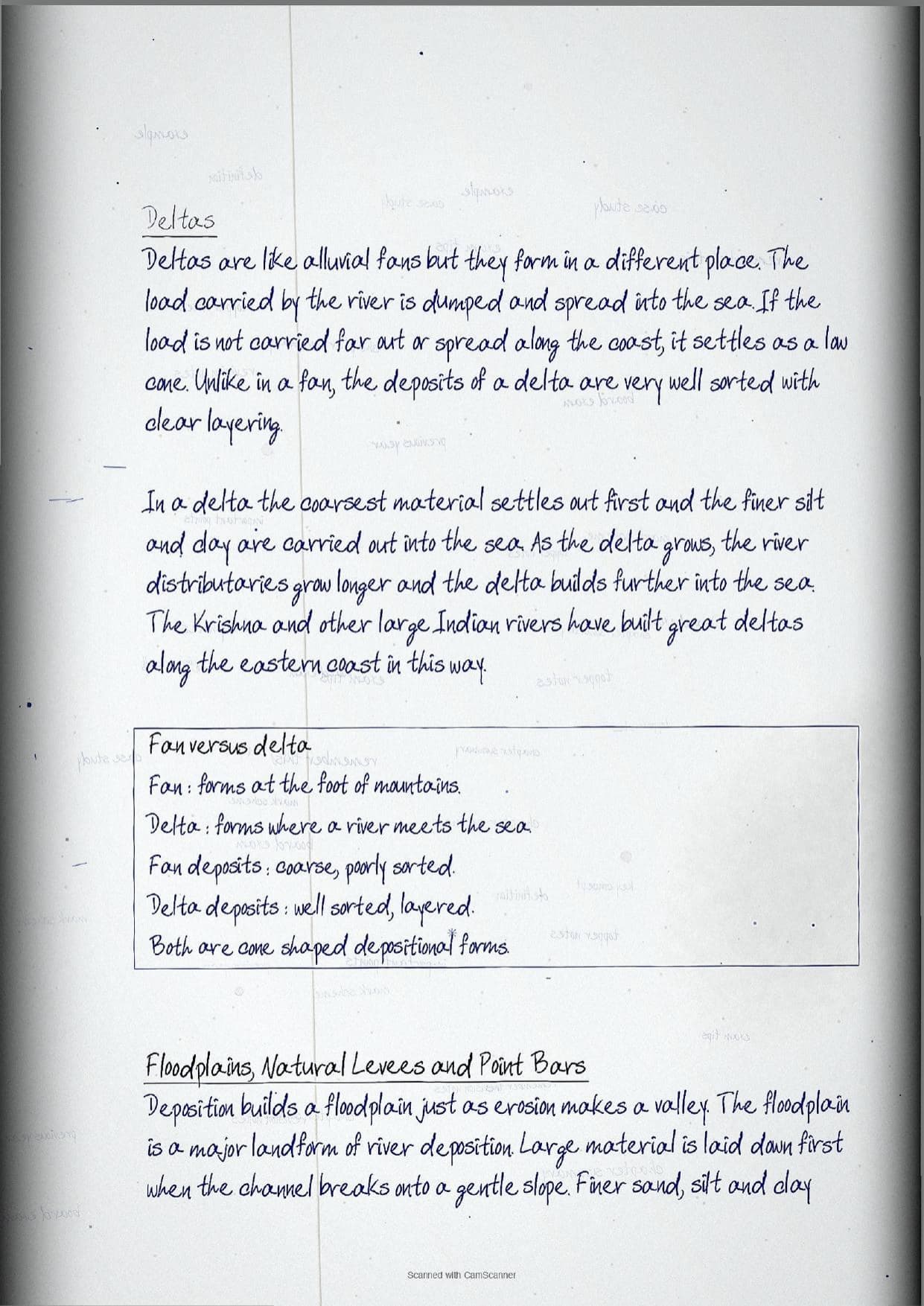
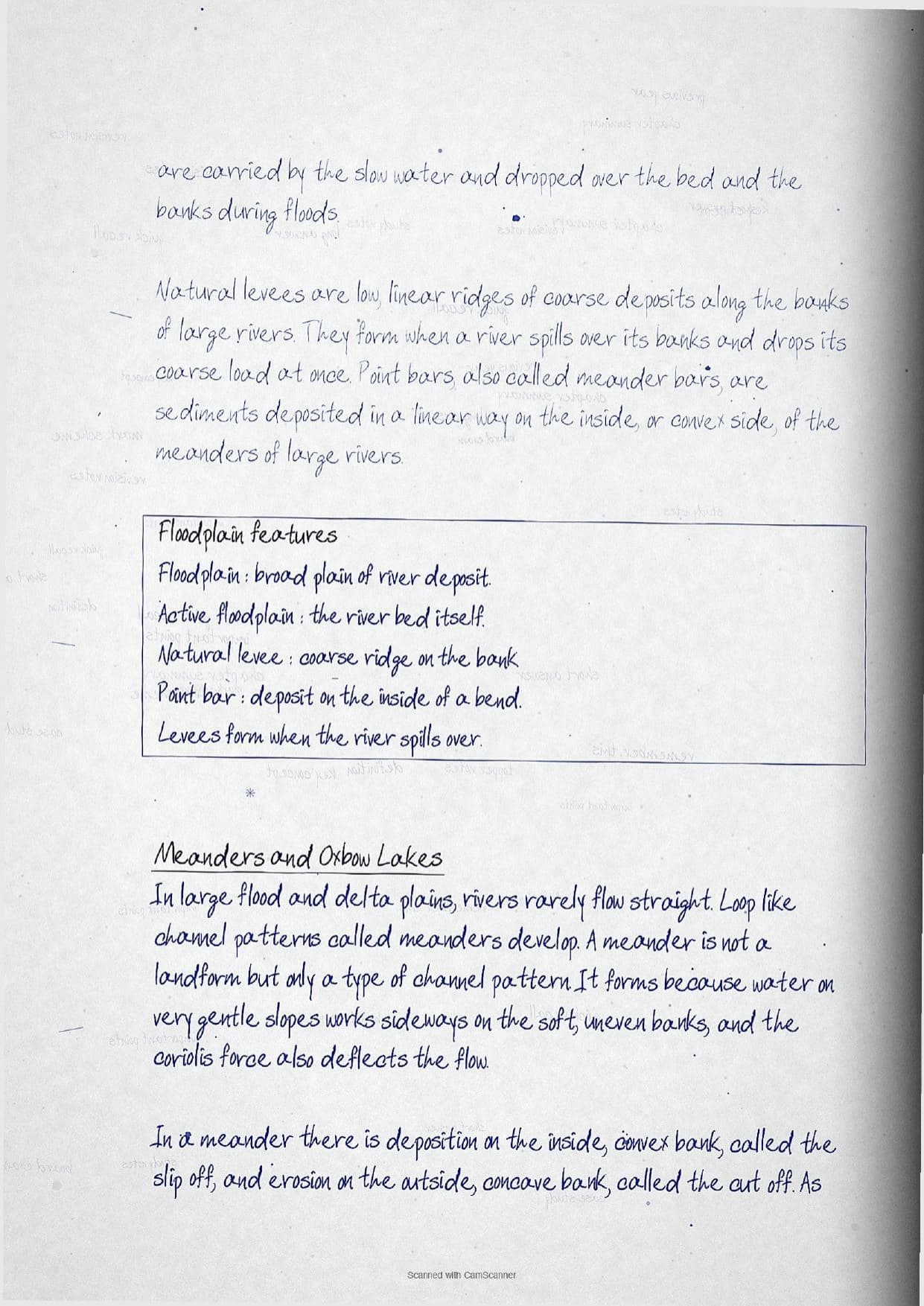
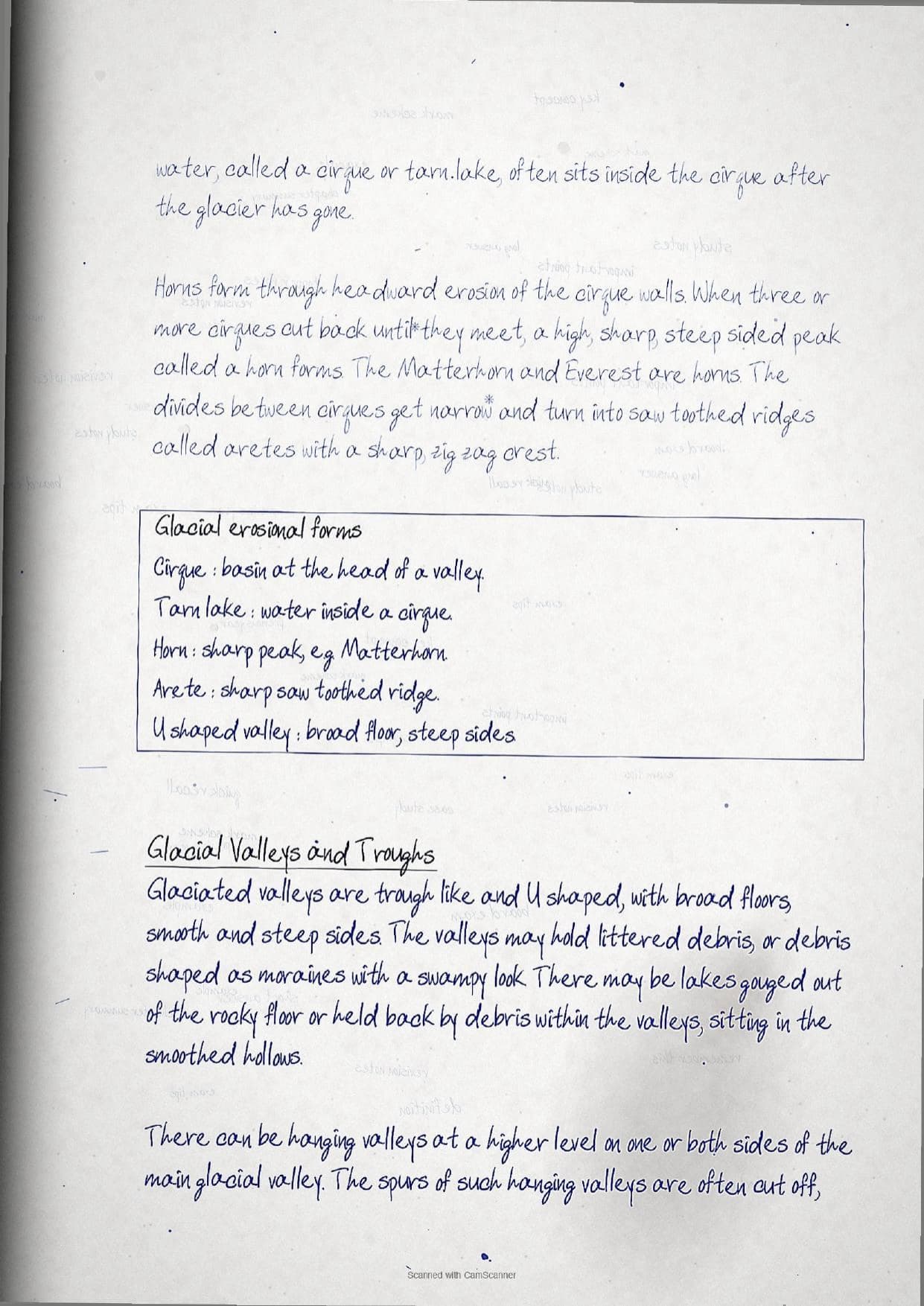
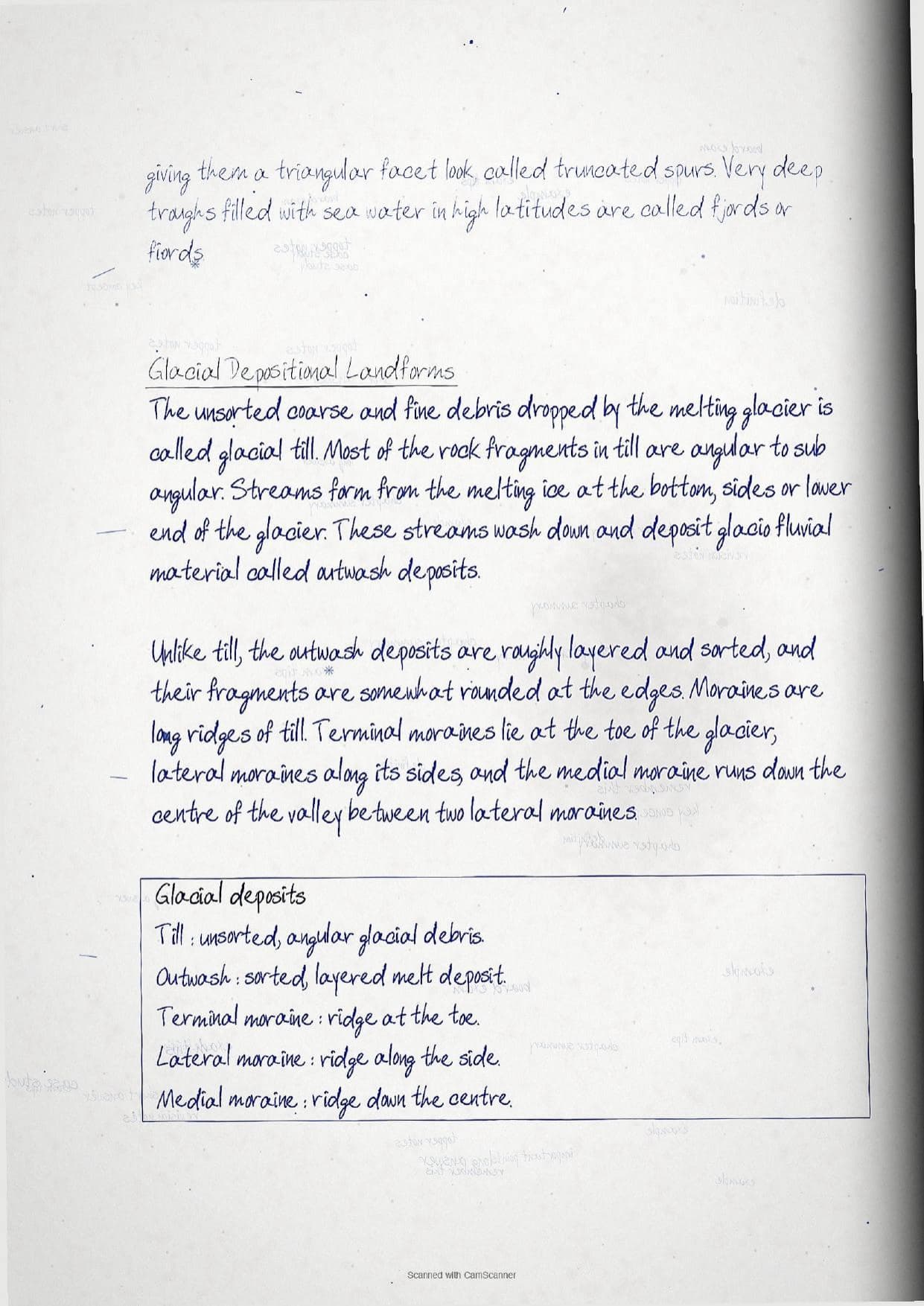
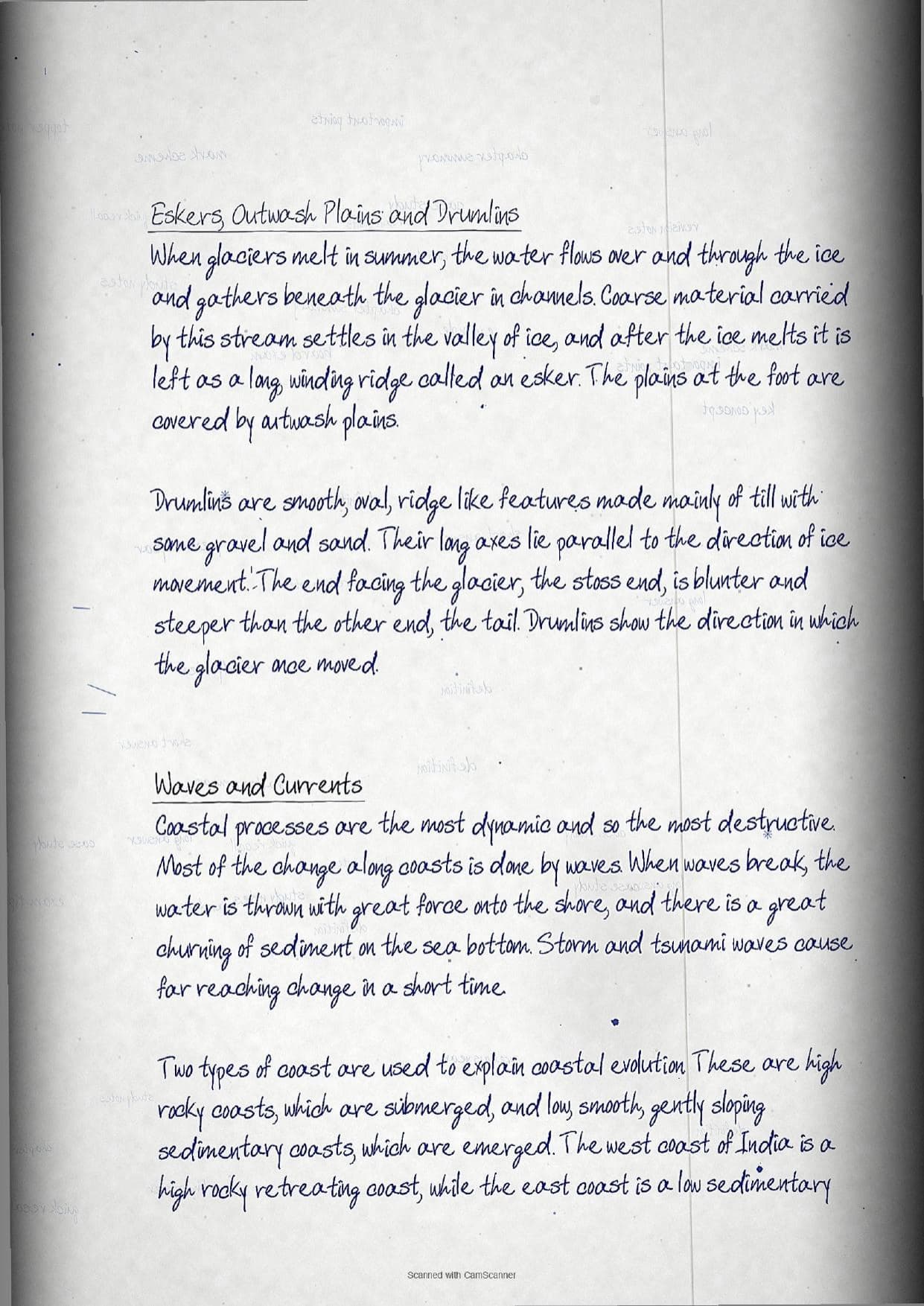
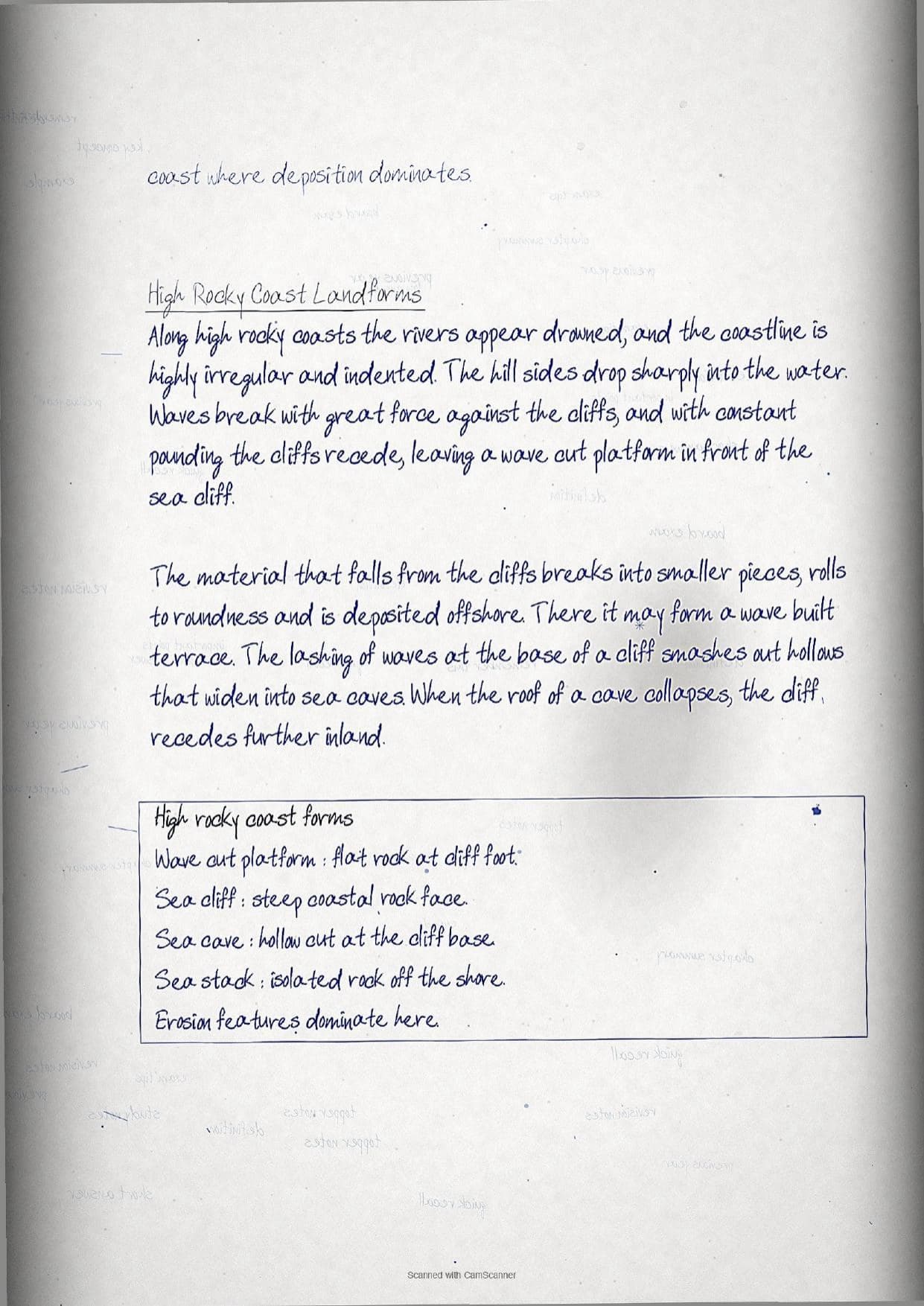

- CBSE Class 11 Weightage: a scoring chapter in the Geography paper, asked in short and long answers.
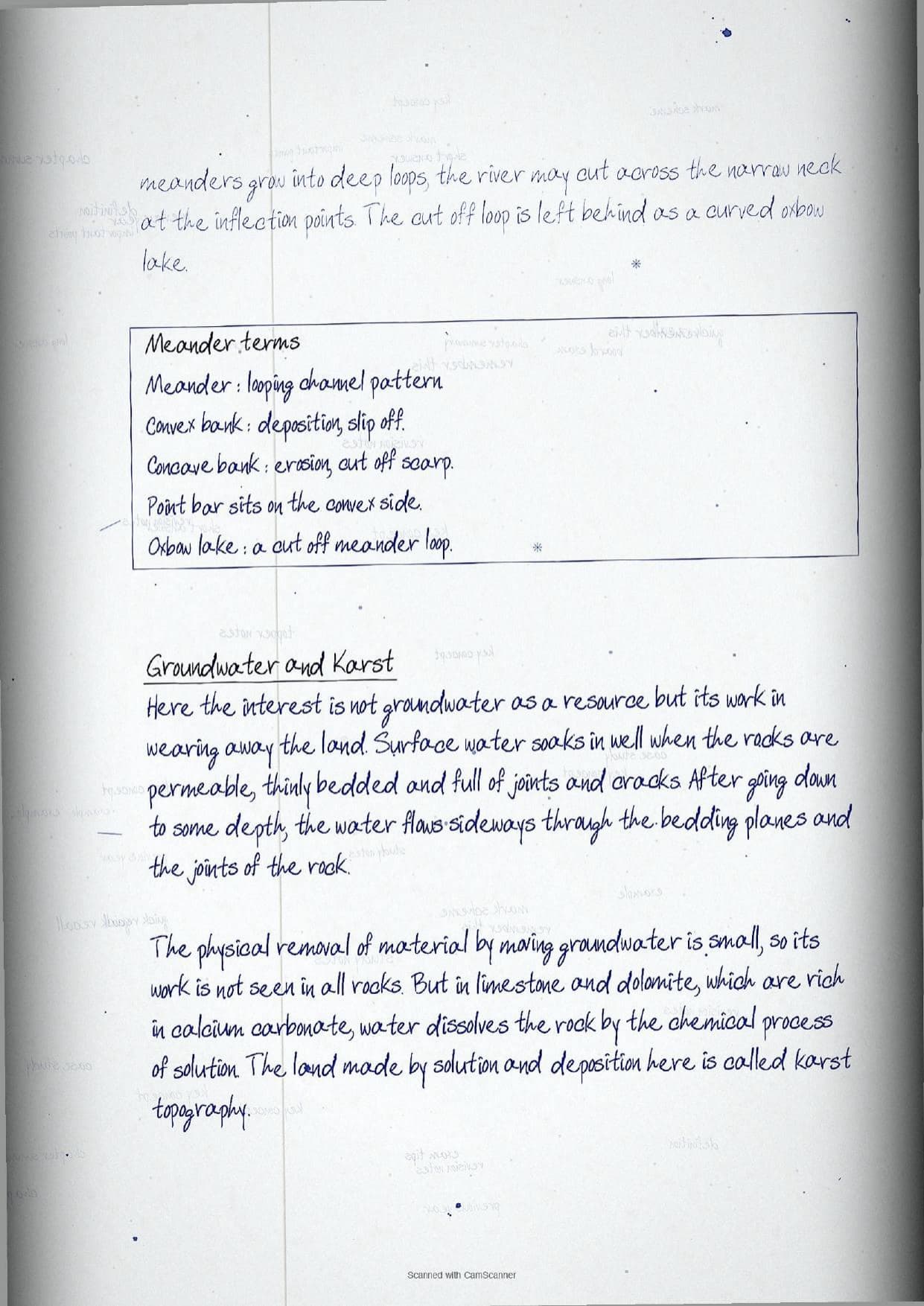
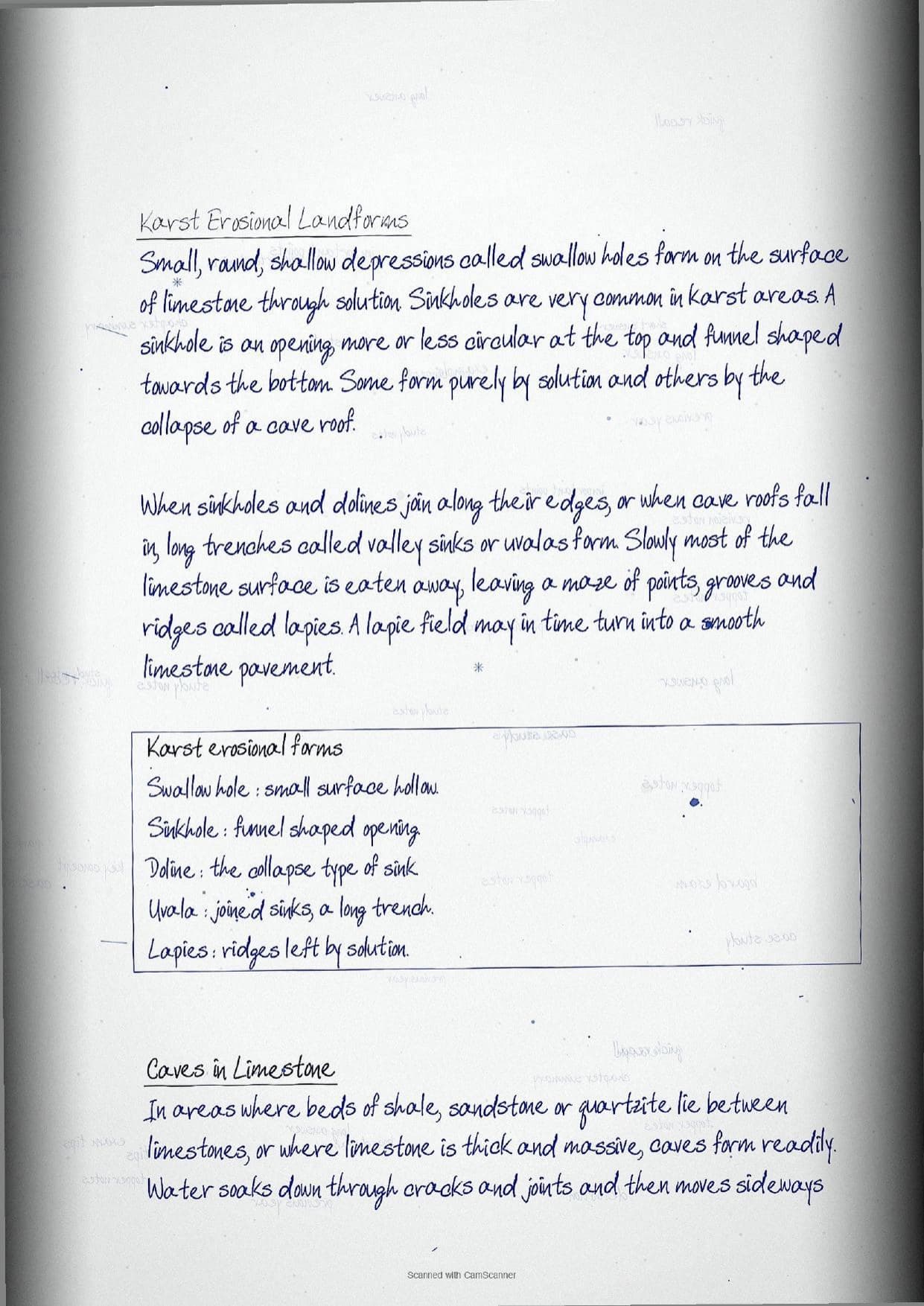
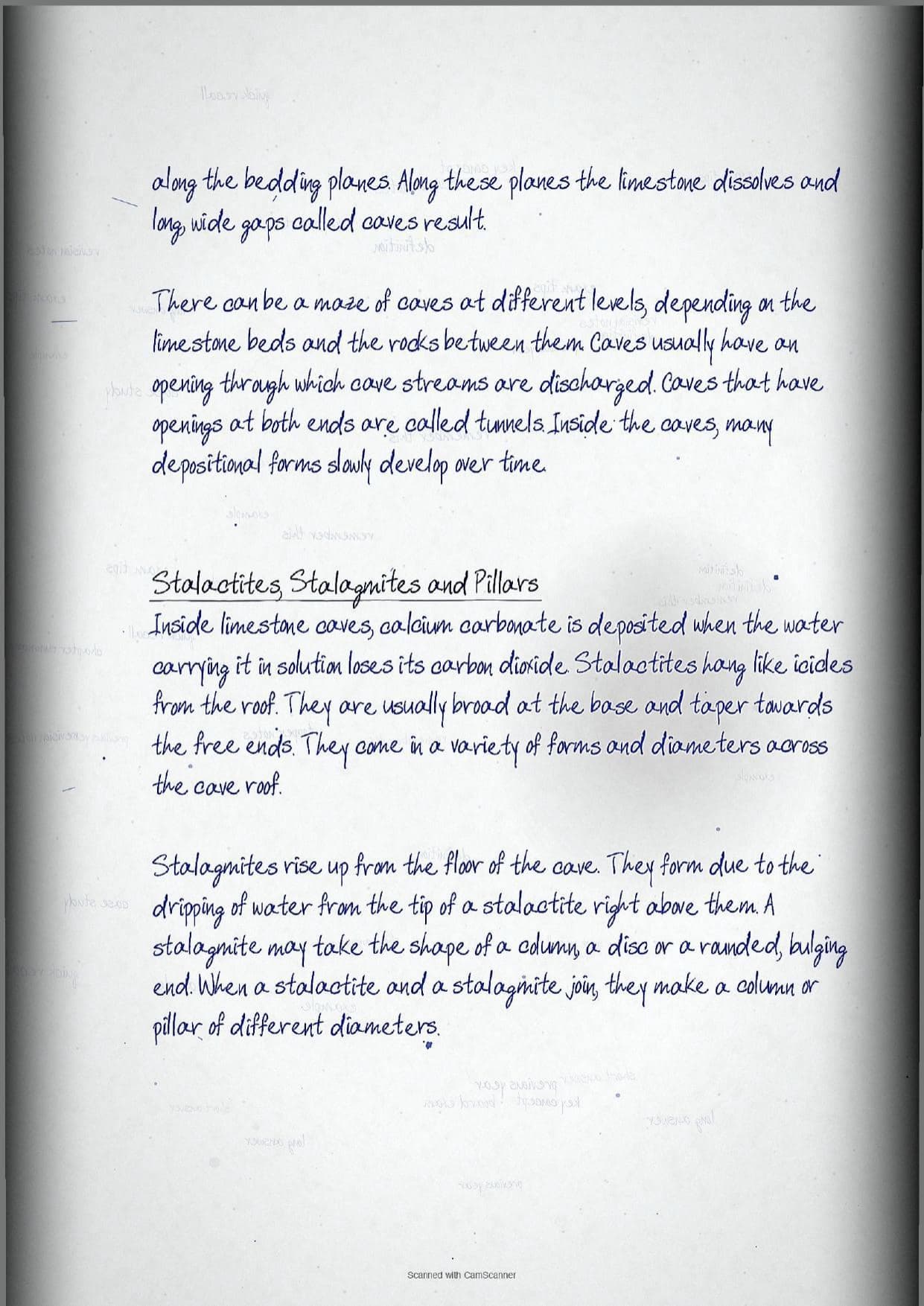
- What the notes cover: what a landform and a landscape are, running water: valleys, meanders, deltas, groundwater and karst topography, caves, stalactites and stalagmites.
- Best for: quick revision before Class 11 exams and a base for CUET later.
You can read the complete class 11 geography handwritten notes for Landforms and their Evolution, with key terms, boxed definitions, and quick revision points, in the PDF below.
These handwritten notes are written by subject teachers, mapped to the 2026-27 NCERT, and checked against the last five years of CBSE Class 11 Geography papers.
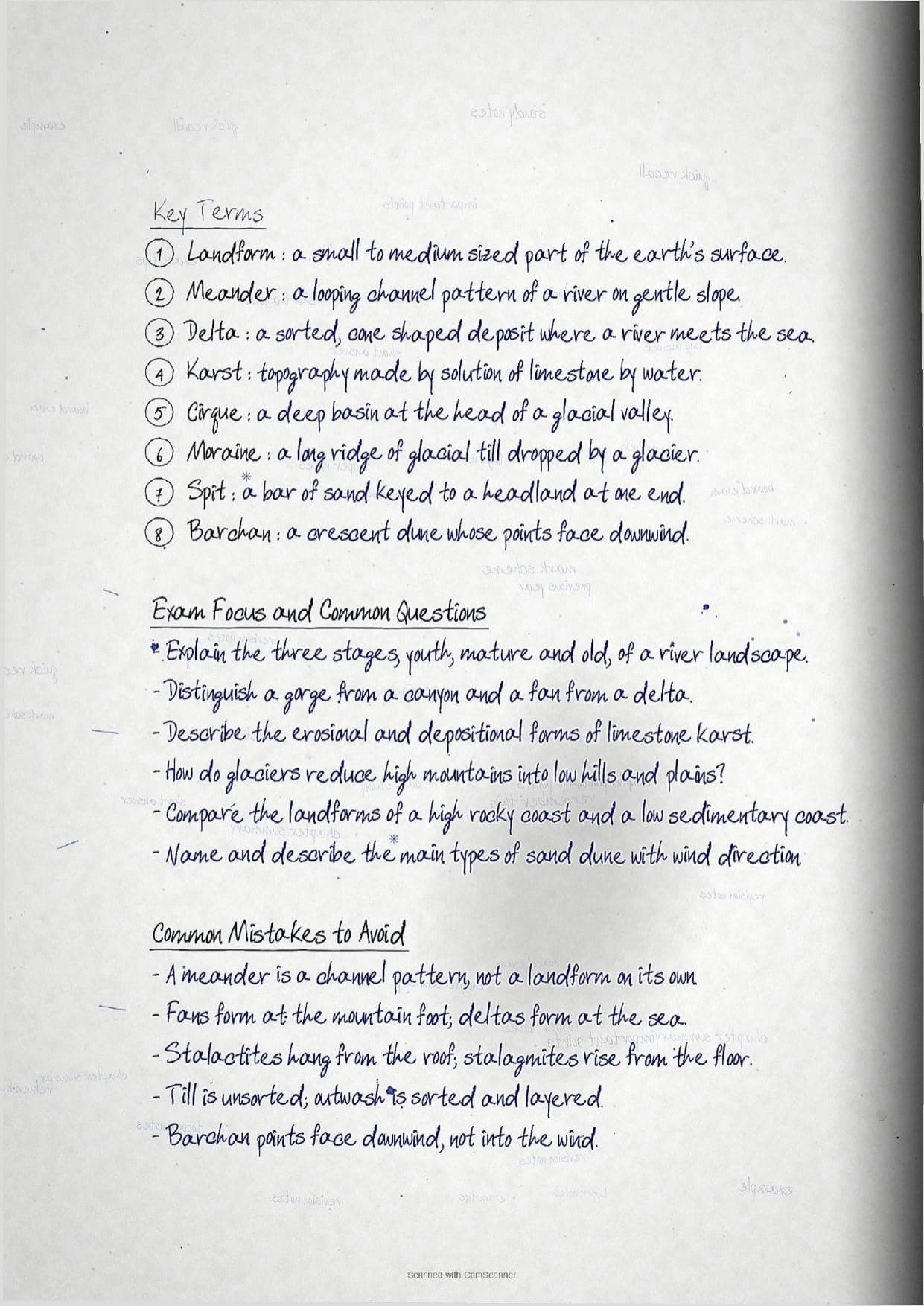
Key Terms and Ideas in Landforms and their Evolution
These are the terms and ideas the exam asks about most. Learn each one so you can define it and use it in your answers.
| Term / Idea | What it means |
|---|---|
| Landform | a small to medium sized part of the earth's surface |
| River stages | youth, mature and old age of a landscape |
| Meander | a looping channel pattern, not a landform itself |
| Delta | a well sorted cone of deposit where a river meets the sea |
| Karst | topography made by solution of limestone |
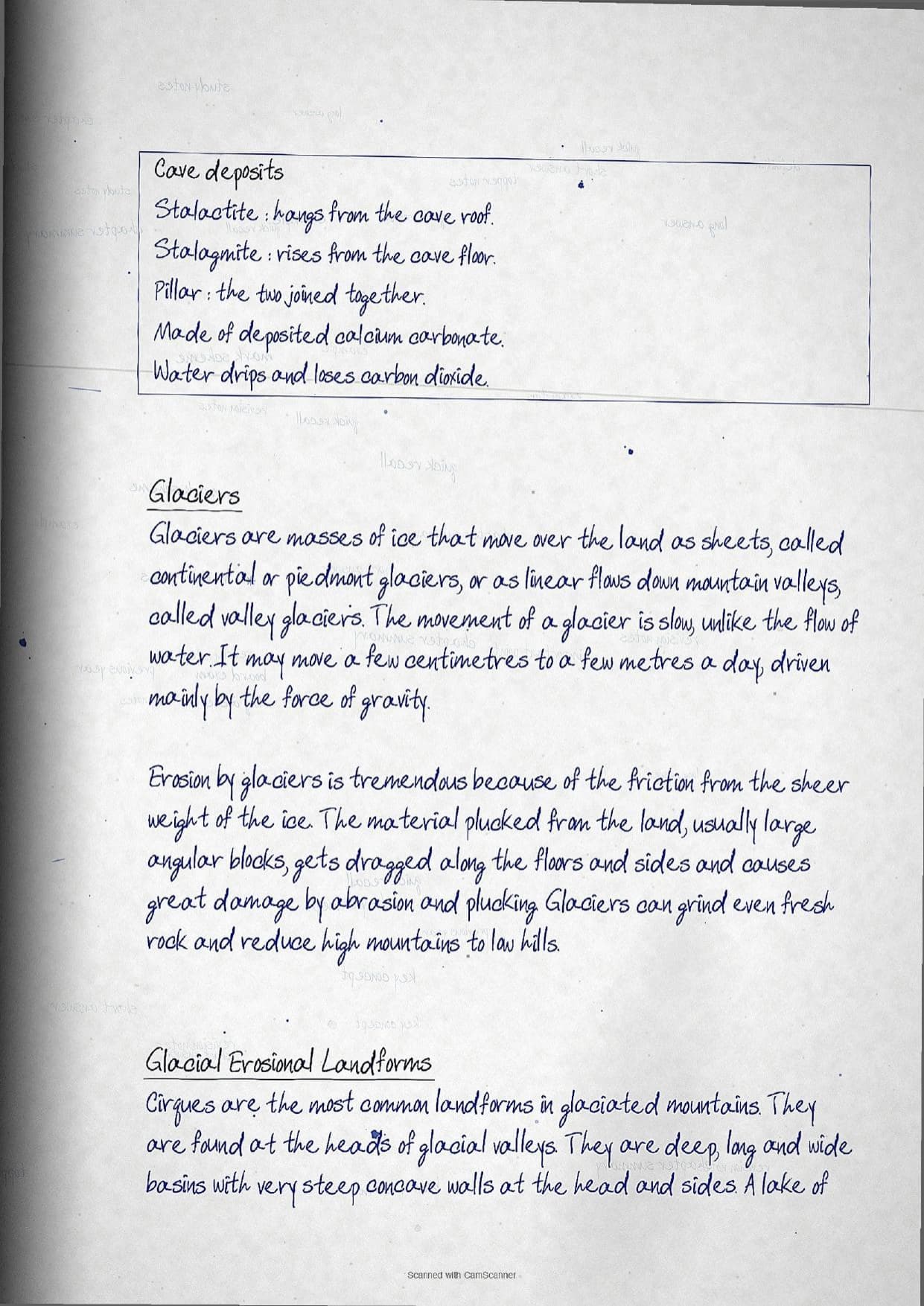
| Cirque | a deep basin at the head of a glacial valley |
| Moraine | a long ridge of unsorted glacial till |
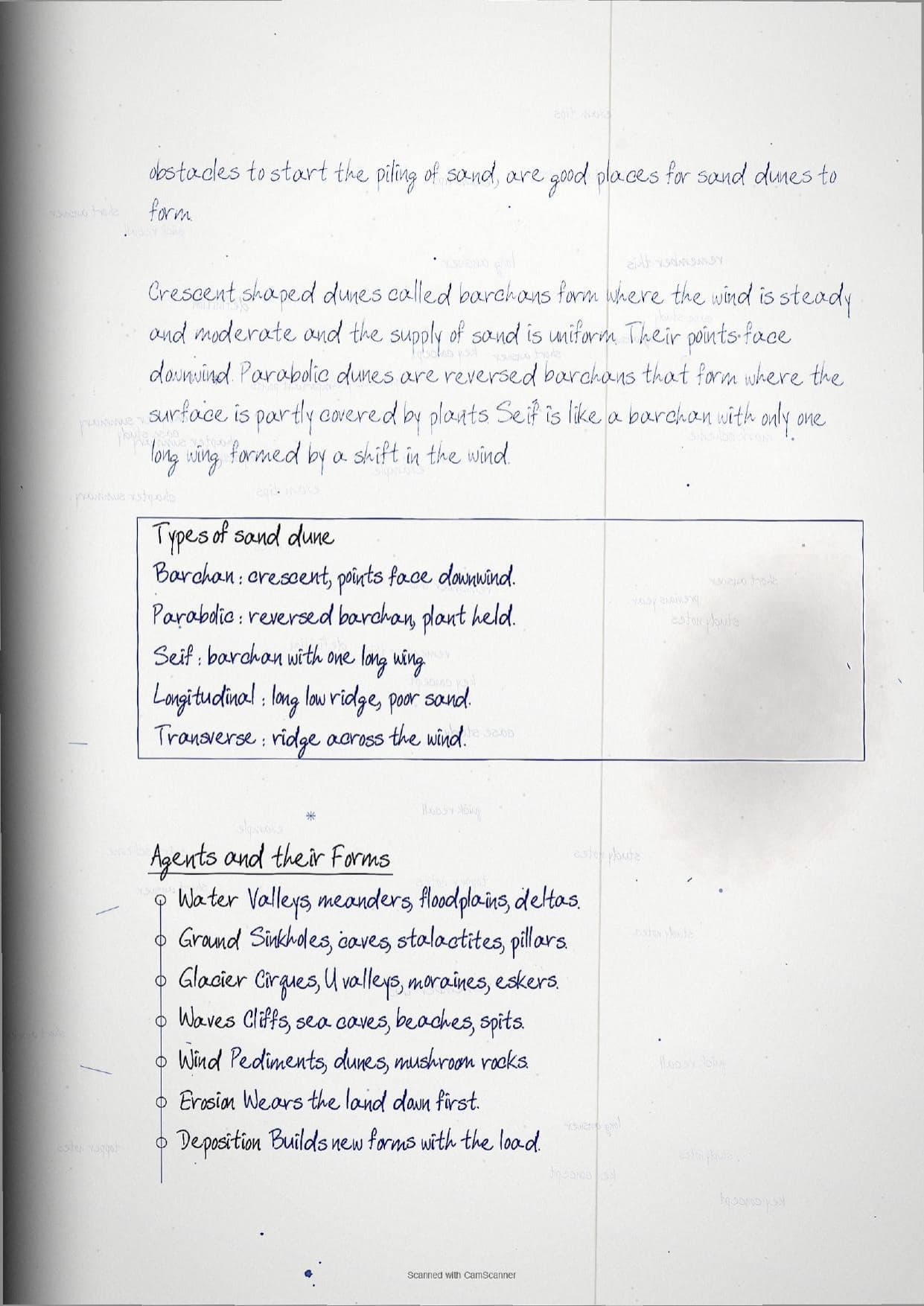
| Barchan | a crescent dune whose points face downwind |
What the Landforms and their Evolution Handwritten Notes Cover
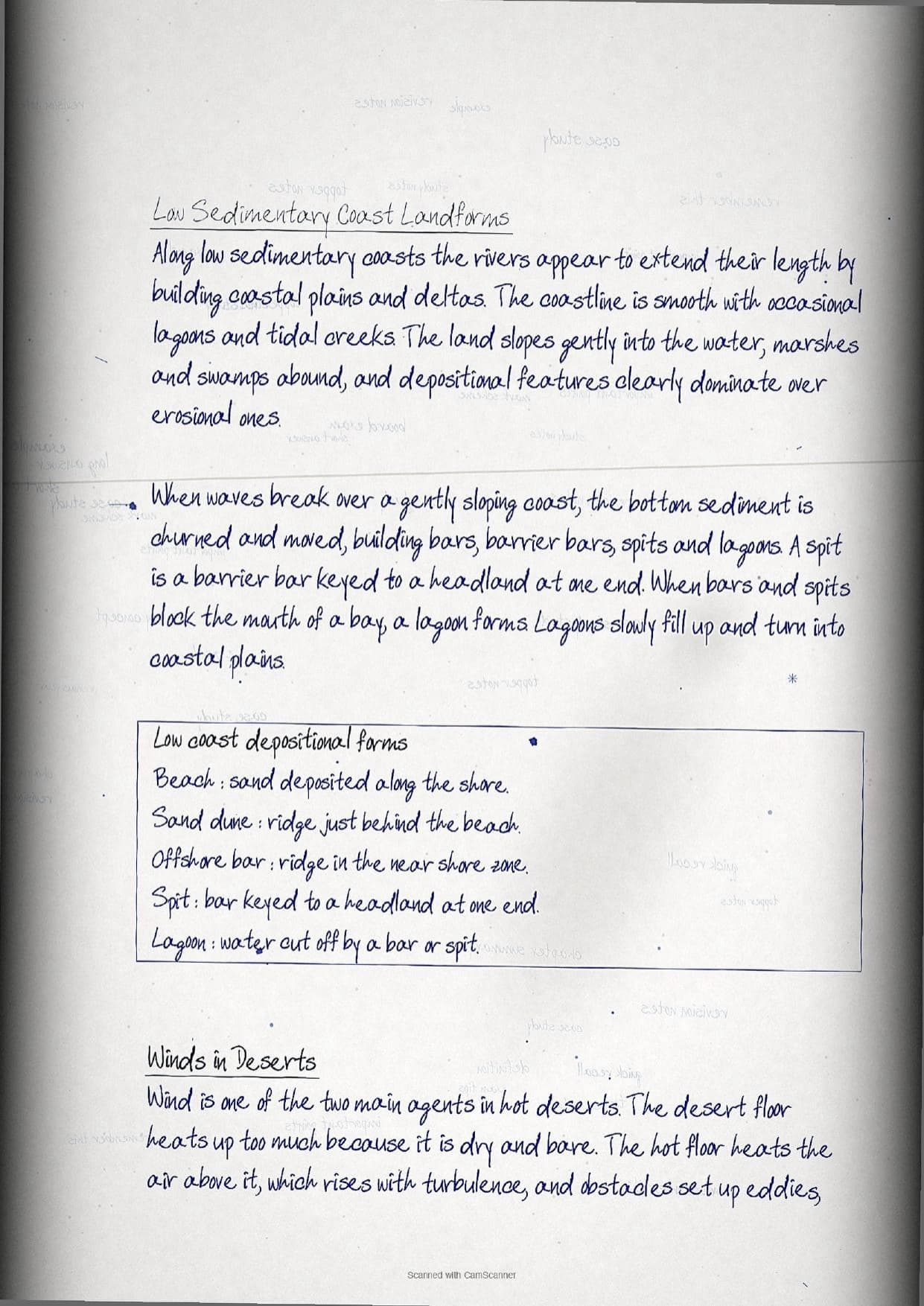
Once weathering has loosened the rock, the geomorphic agents shape the land. Running water, groundwater, glaciers, wind and waves each carve their own erosional forms and build their own depositional forms. This chapter pairs every agent with the landforms it makes.
- What a landform and a landscape are
- Running water: valleys, meanders, deltas
- Groundwater and karst topography
- Caves, stalactites and stalagmites
- Glaciers: cirques, moraines, eskers
- Waves: cliffs, beaches, spits, lagoons
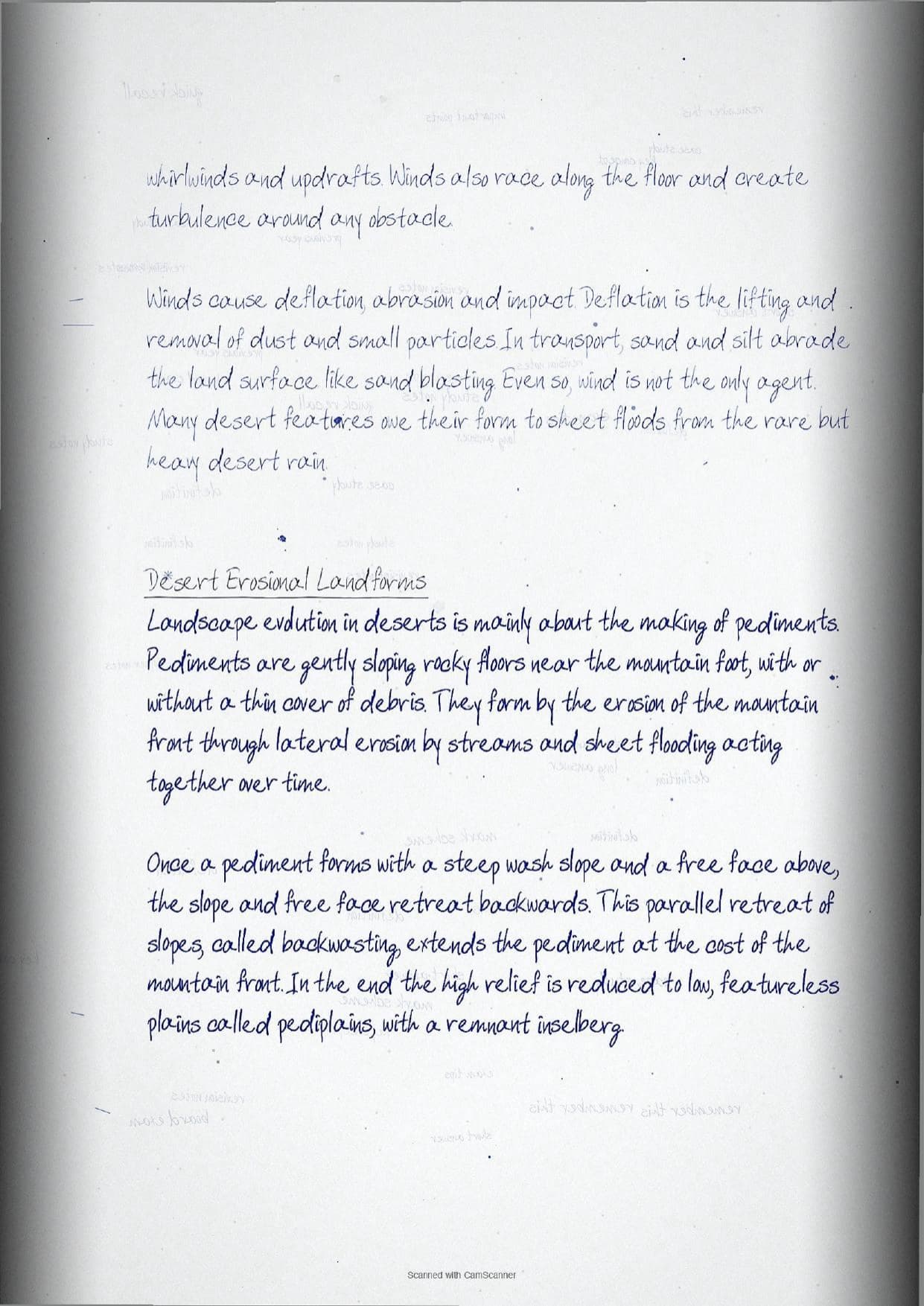
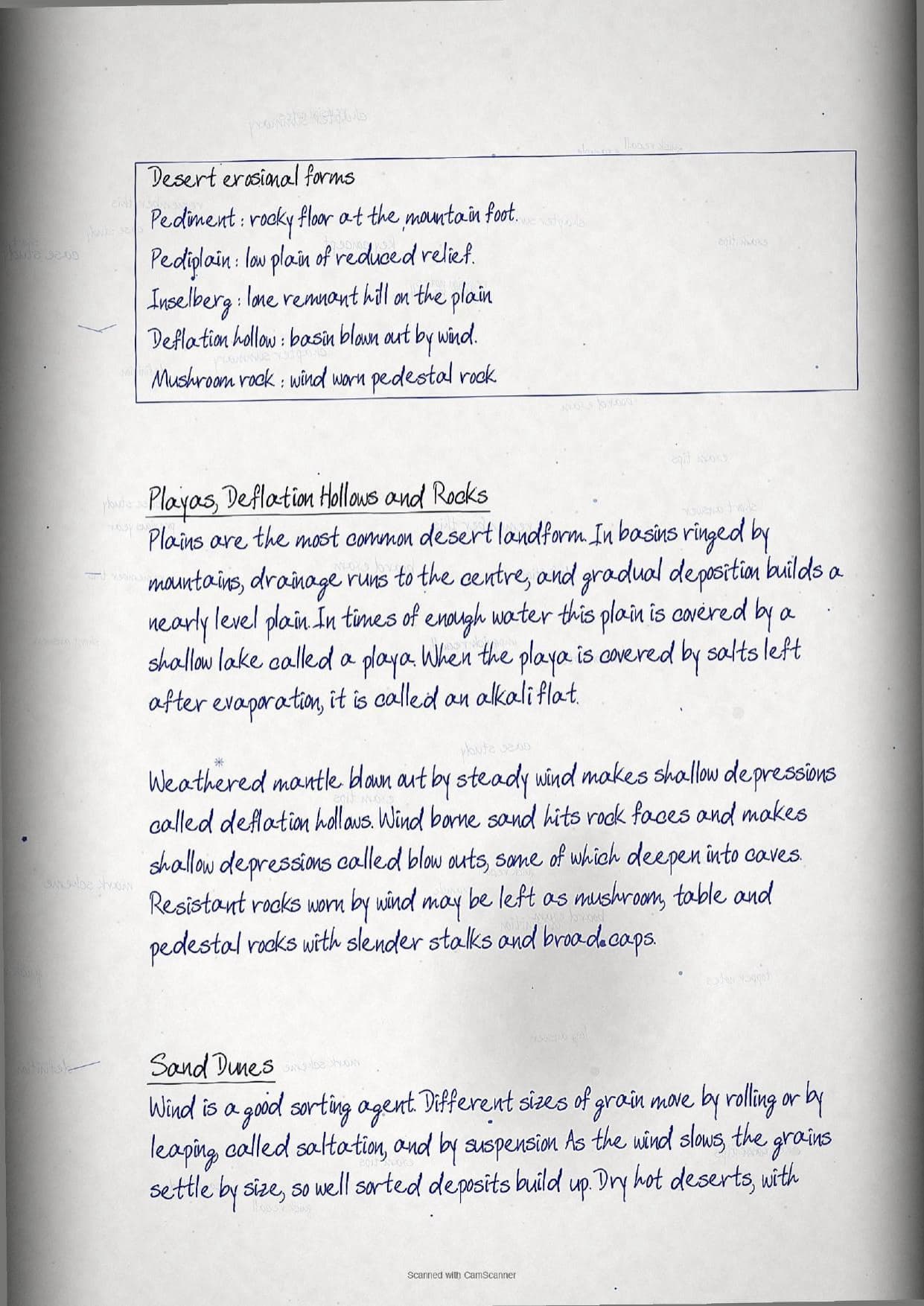
- Wind: pediments, dunes, mushroom rocks
Landforms and their Evolution Topic-wise Weightage for CBSE Class 11 Geography
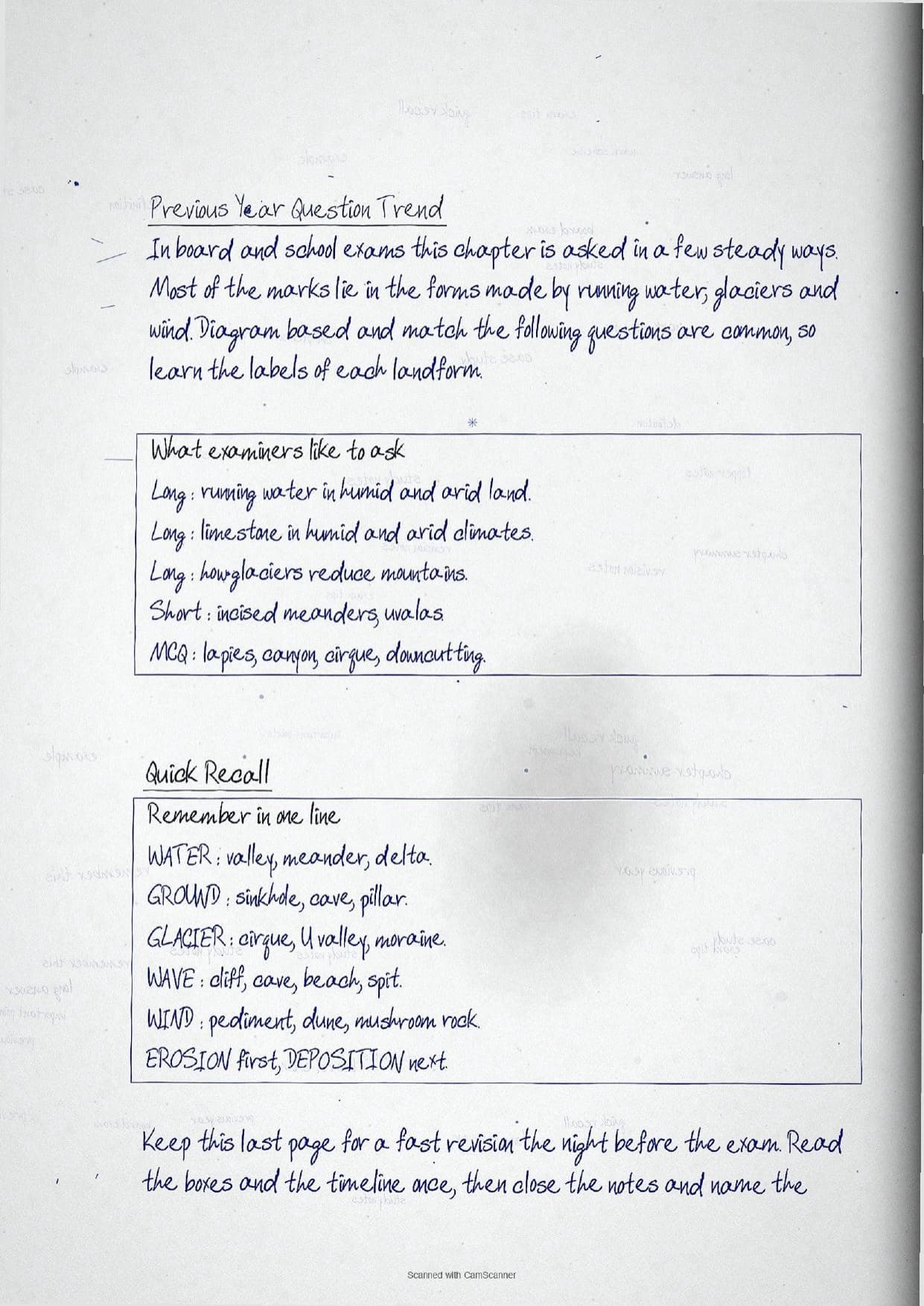
Some parts of this chapter are asked more often than others. The table below shows which sub-topics to revise first, based on recent CBSE Class 11 question trends.
| Sub-topic | Weightage | CBSE Frequency |
|---|---|---|
| Running water landforms | High | asked most years |
| Glacial landforms | High | frequent long answer |
| Karst and groundwater forms | Medium | common short answer |
| Coastal landforms | Medium | compare high and low coast |
| Wind and desert landforms | Low | occasional MCQ |
How Collegedunia's Handwritten Notes Help You Revise Landforms and their Evolution
These notes are made for the night before the exam. They keep the facts short and easy to scan. Collegedunia maps every point to the 2026-27 NCERT.
- Clear handwriting: each topic is written in neat, easy-to-read handwriting.
- Boxed key terms: the main terms and definitions are boxed by hand for fast recall.
- Diagrams and tables: simple hand-drawn tables and charts make ideas clear.
- Colour-coded headings: new sub-topics stand out, so you find any section in seconds.
Landforms and their Evolution Self-Assessment Quiz
Try these quick questions after you read the notes. Tap each question to check your answer. They cover the points CBSE asks most often.
In which stage of landform development is downward cutting dominant?
(a) Youth stage (b) Late mature stage (c) Early mature stage (d) Old stage
Answer: (a) Youth stage - young rivers cut down over steep slopes.
A deep valley with steep step-like side slopes is known as a:
(a) U-shaped valley (b) Gorge (c) Blind valley (d) Canyon
Answer: (d) Canyon - a canyon has step-like sides and is wider at the top.
In which region is chemical weathering more dominant than mechanical?
(a) Humid region (b) Limestone region (c) Arid region (d) Glacier region
Answer: (a) Humid region - warmth and water speed up chemical reactions.
Which sentence best defines the term 'lapies'?
(a) A shallow depression (b) A funnel shaped opening (c) A form from dripping water (d) An irregular surface with sharp pinnacles, grooves and ridges
Answer: (d) An irregular surface with sharp pinnacles, grooves and ridges left by solution.
A deep, wide trough with steep concave walls at its head is a:
(a) Cirque (b) Glacial valley (c) Lateral moraine (d) Esker
Answer: (a) Cirque - a basin at the head of a glacial valley.
How to Use These Handwritten Notes for Class 11 Geography Revision
Use these class 11 geography handwritten notes in two passes. Read them slowly once for the full chapter. Then, near the exam, read only the boxes and key terms for a fast recall.
- Read the notes once with the NCERT chapter open beside you.
- Say each key term and idea in your own words.
- Practise one long-answer question from a past paper.
- On the last day, revise only the key terms and the boxes.
Class 11 Geography Handwritten Notes for All Chapters
The table below links the class 11 geography handwritten notes for every chapter. Use it to jump to any other chapter's notes.
Landforms and their Evolution Class 11 Geography Handwritten Notes FAQs
Ques. Where can I download Landforms and their Evolution Class 11 Geography Handwritten Notes PDF?
Ans. You can download the Landforms and their Evolution Class 11 Geography Handwritten Notes PDF directly from this page. Both the Normal and HD versions are free.
Ques. Are these handwritten notes aligned with the 2026-27 NCERT?
Ans. Yes. These notes follow the current 2026-27 syllabus for Class 11 Geography. How do glaciers reduce high mountains into low hills and plains?
Ques. How many pages is the Class 11 Geography Landforms and their Evolution Handwritten Notes PDF?
Ans. The notes run about 24 pages. They cover the full chapter with key terms, hand-drawn boxes, and a short self-assessment quiz.
Ques. What is the main idea of the 11th standard Geography chapter Landforms and their Evolution?
Ans. Glaciers erode with great force because of the sheer weight of the moving ice, plucking and grinding even fresh rock as they move. Over long spans they lower the divides and wear the peaks down, leaving low hills and vast outwash plains along with moraines and other deposits.
Ques. Are these Landforms and their Evolution notes enough for the CBSE Class 11 exam?
Ans. Yes, for revision. The Collegedunia handwritten notes cover every key point and exam term. Read them with the NCERT chapter and practise past questions.



Comments