




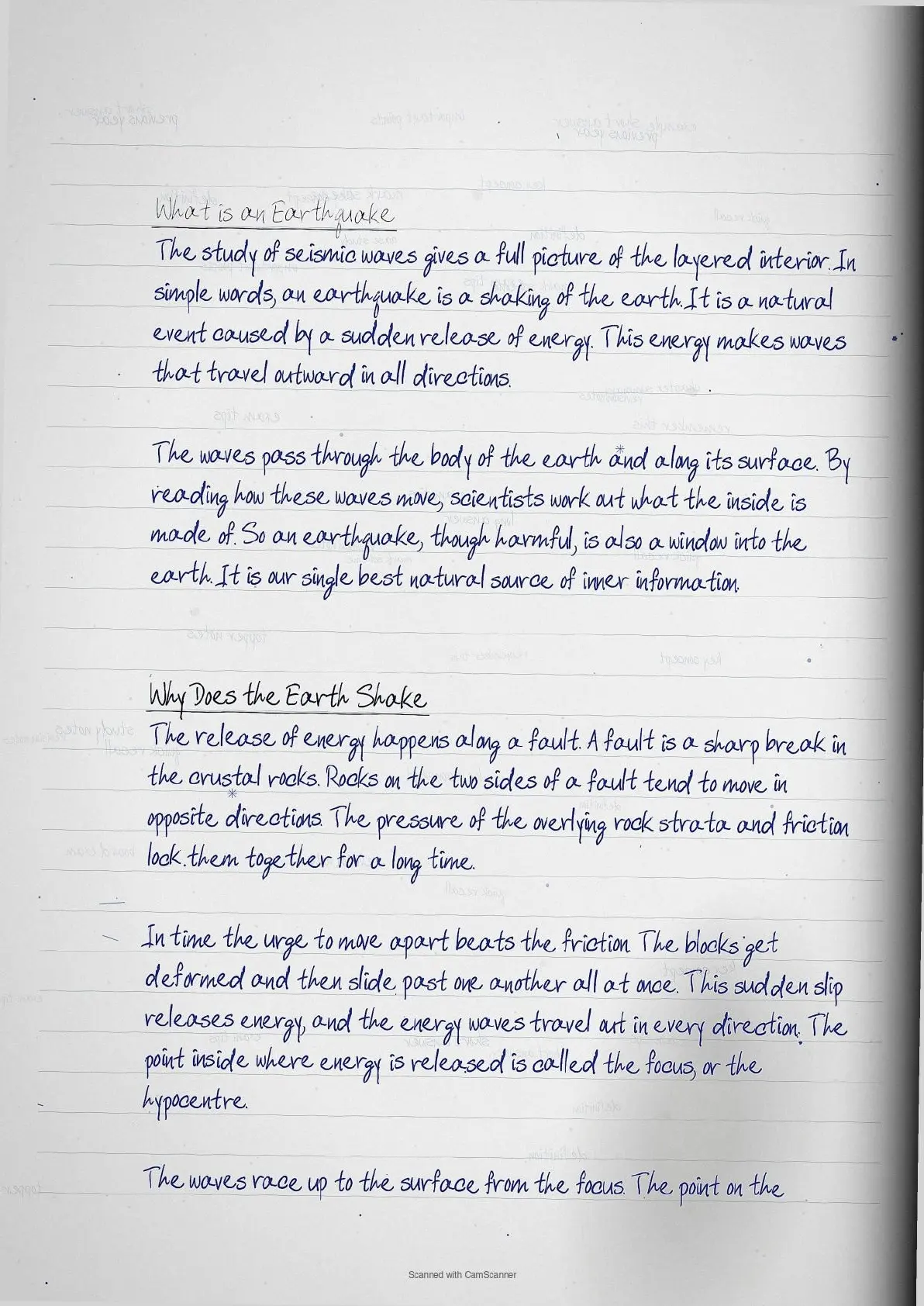
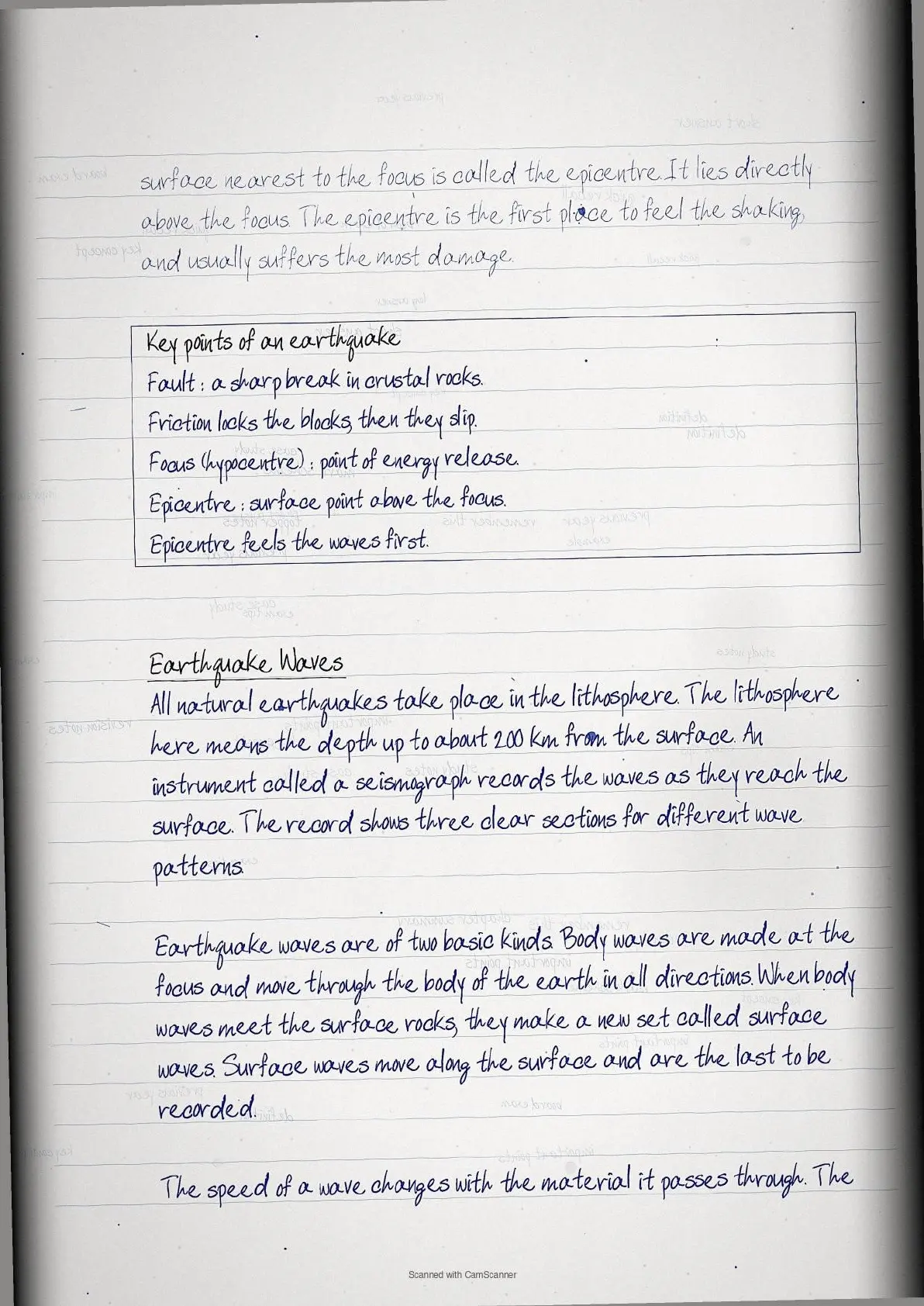
Questions from Class 11 Geography Chapter 3 Interior of the Earth come up often in the CBSE Class 11 exam. These class 11 geography handwritten notes chapter 3 Interior of the Earth follow the 2026-27 NCERT and cover direct and indirect sources of information, earthquakes: focus, epicentre and faults, body waves (p and s) and surface waves. This.
- CBSE Class 11 Weightage: a scoring chapter in the Geography paper, asked in short and long answers.
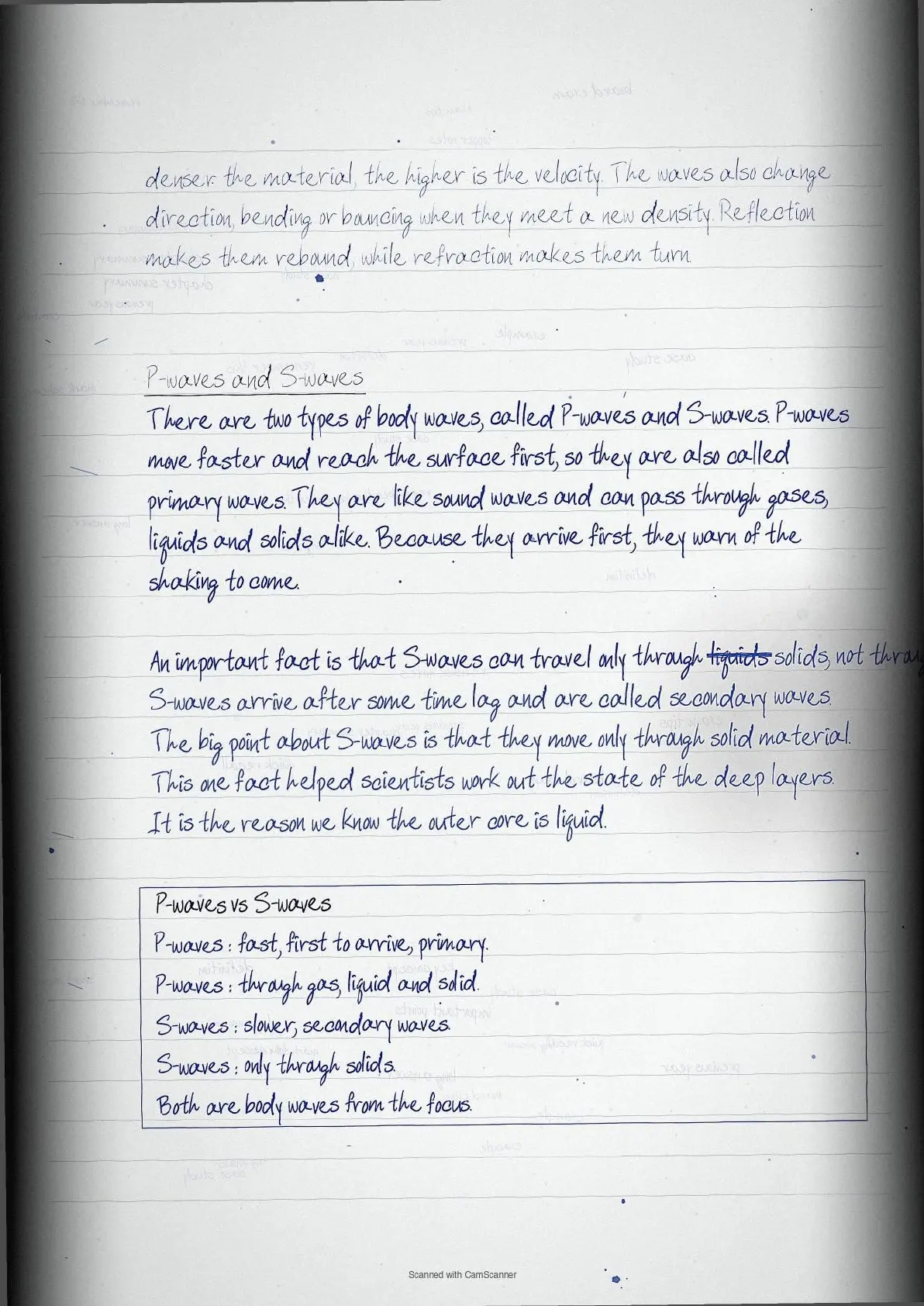
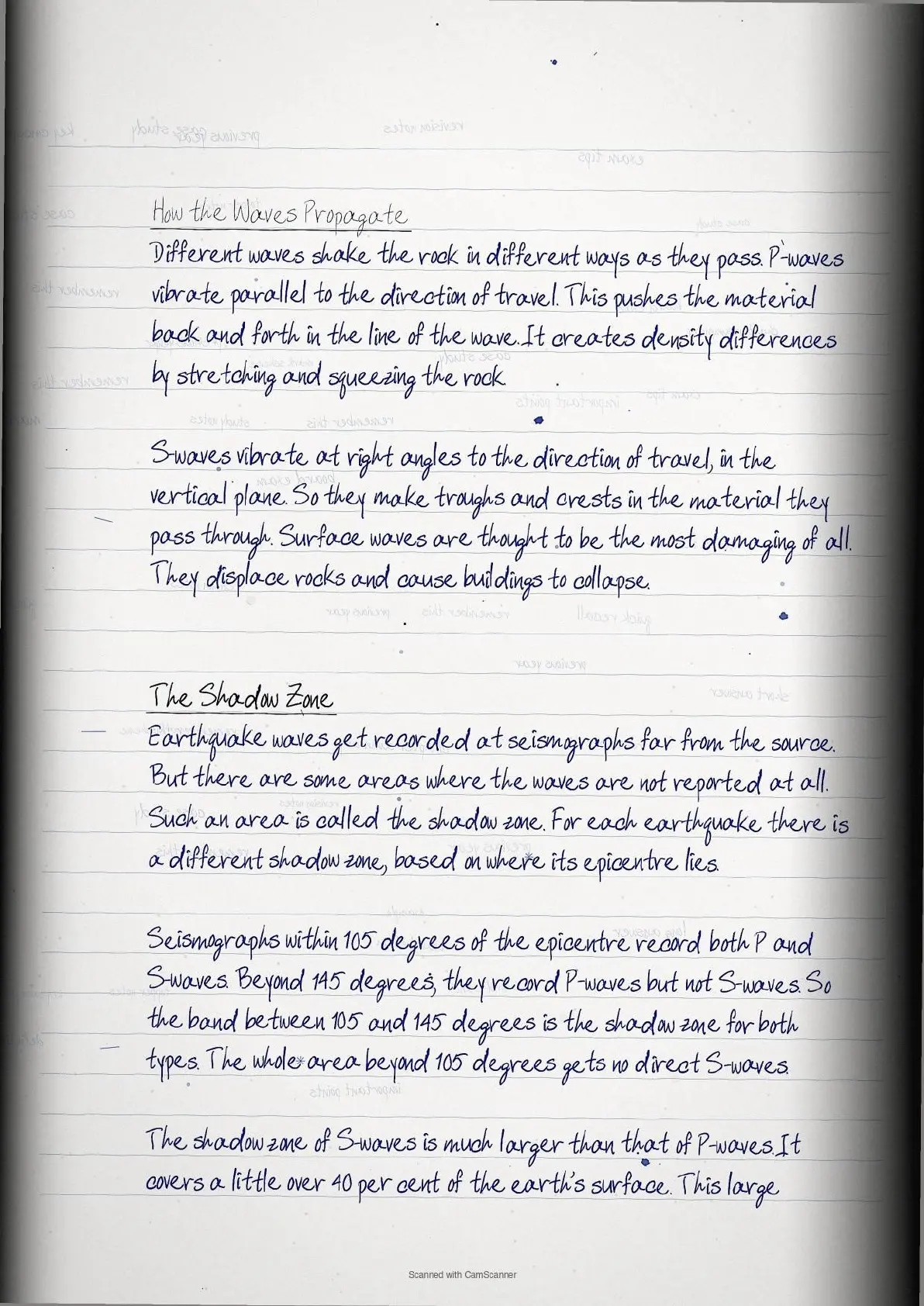
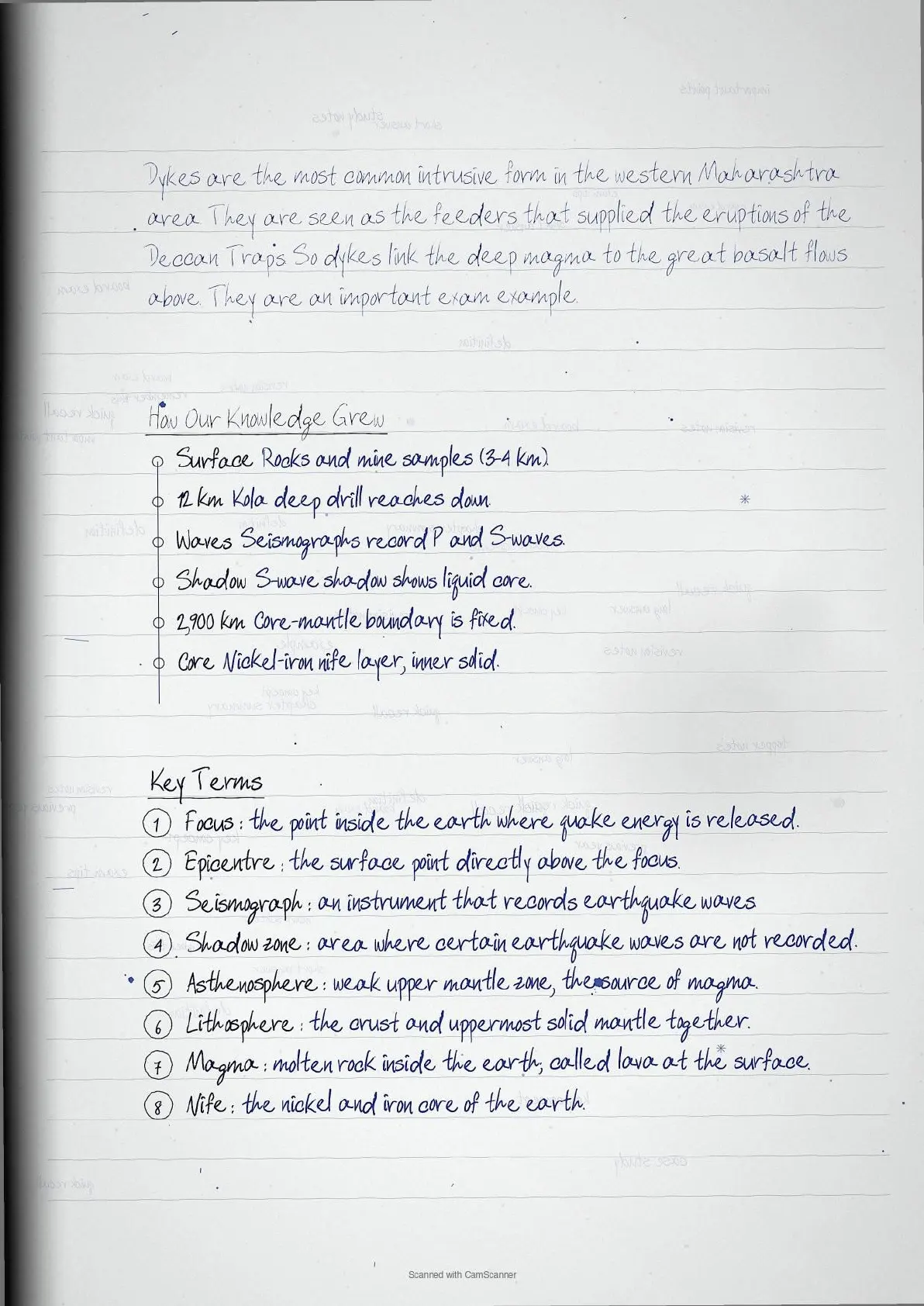
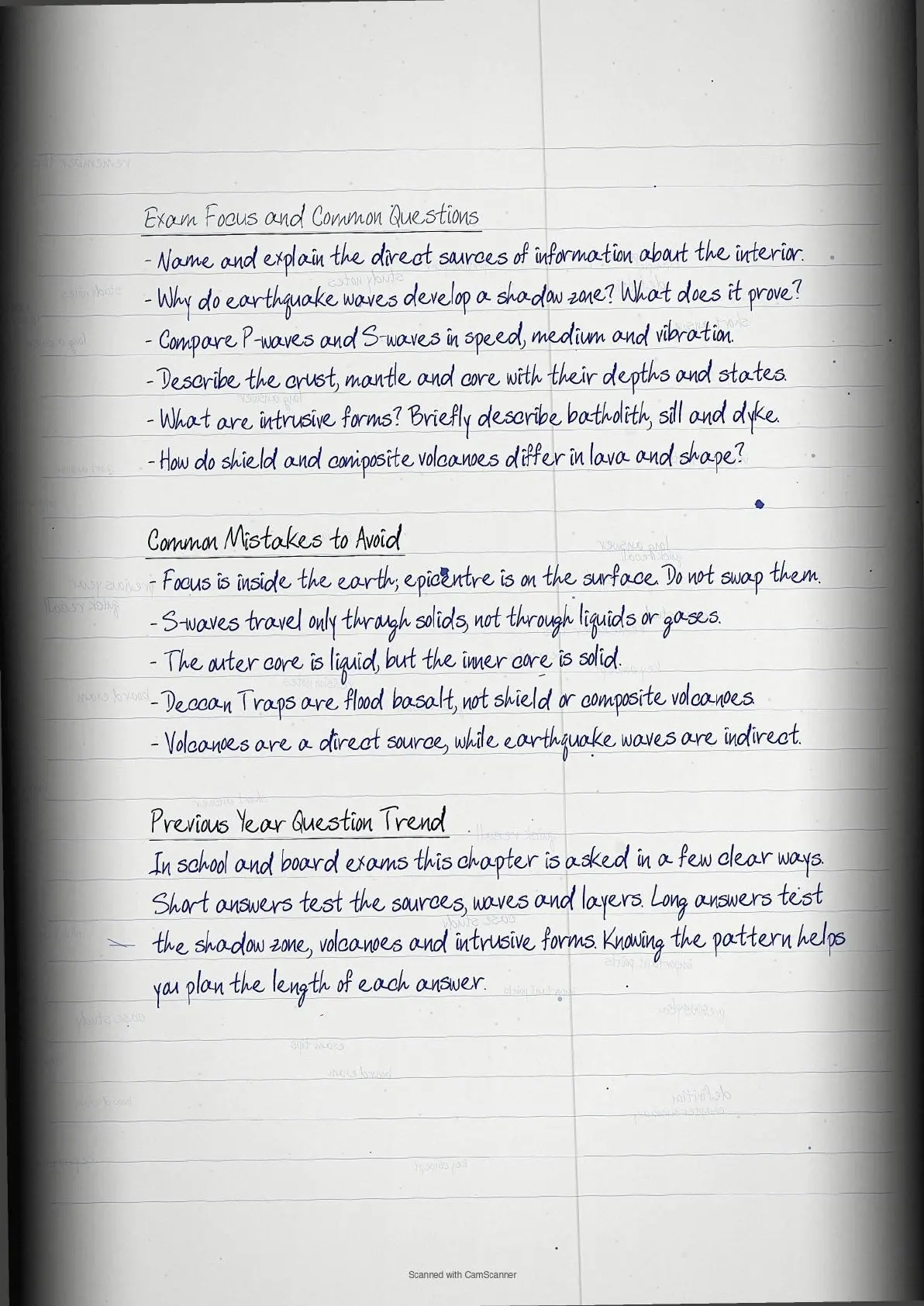
- What the notes cover: direct and indirect sources of information, earthquakes: focus, epicentre and faults, body waves (p and s) and surface waves, the shadow zone and what it proves.
- Best for: quick revision before Class 11 exams and a base for CUET later.
You can read the complete class 11 geography handwritten notes for Interior of the Earth, with key terms, boxed definitions, and quick revision points, in the PDF below.
These handwritten notes are written by subject teachers, mapped to the 2026-27 NCERT, and checked against the last five years of CBSE Class 11 Geography papers.
What the Interior of the Earth Handwritten Notes Cover
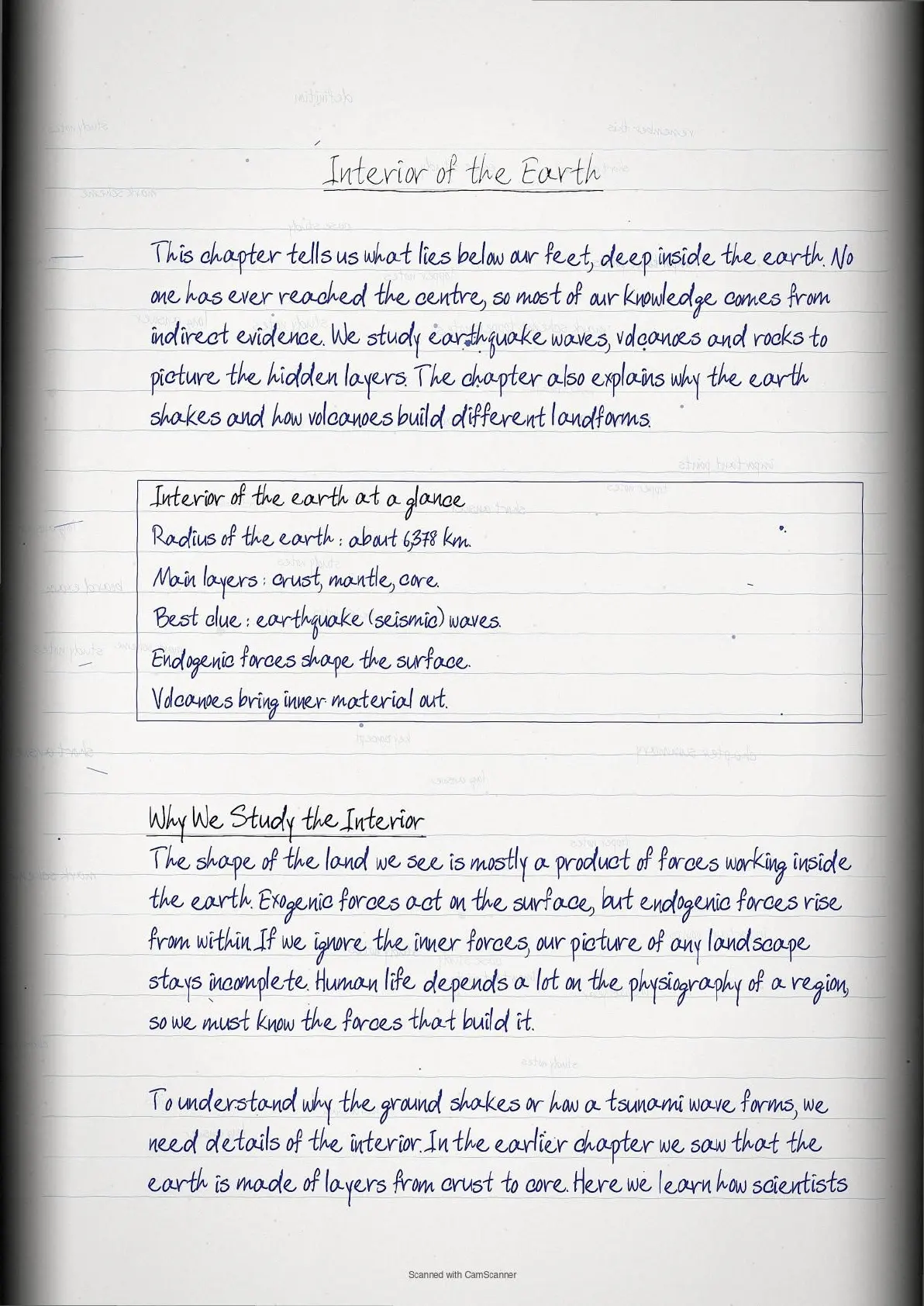
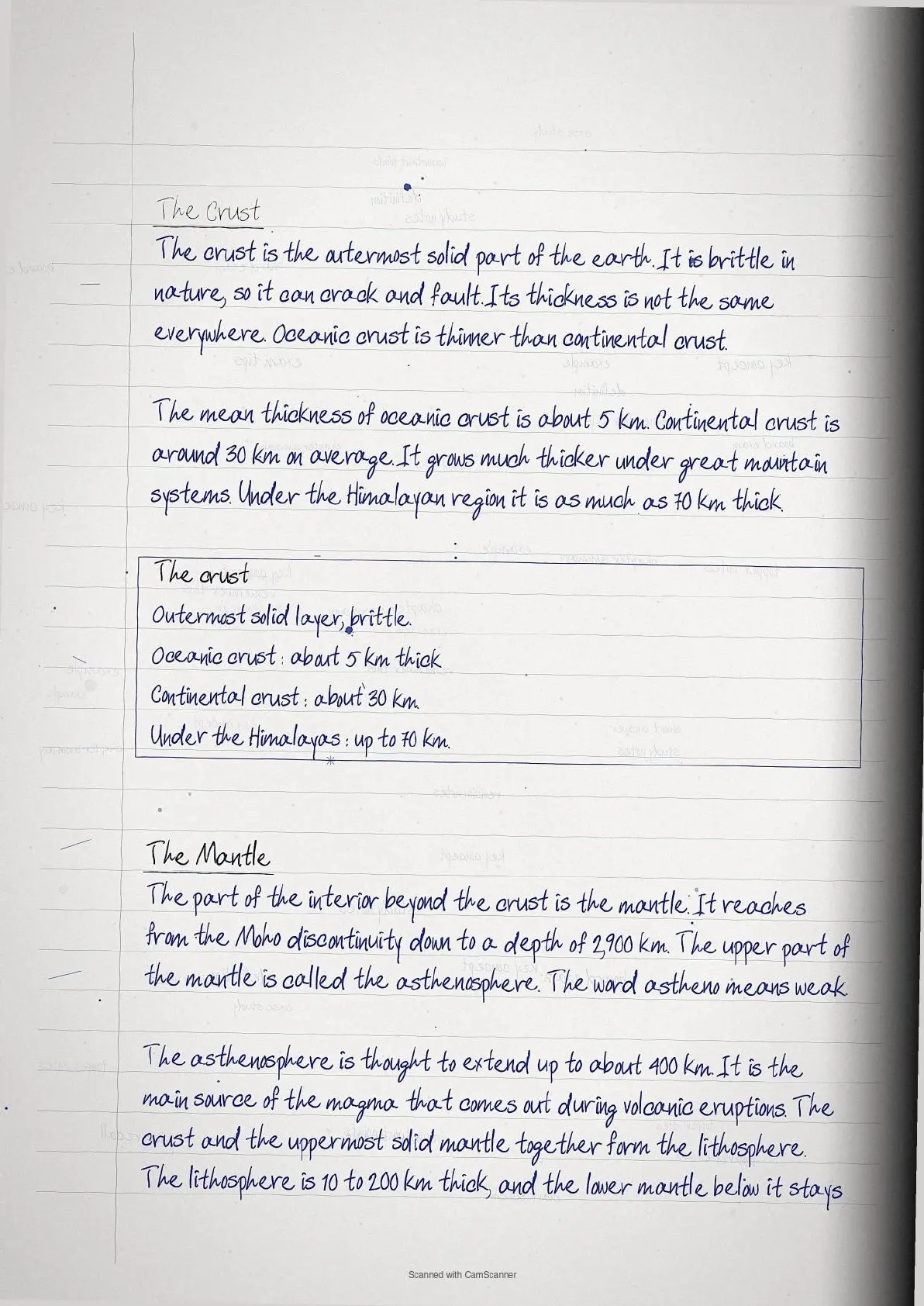
No one has ever reached the centre of the earth, so we study it through indirect clues. Earthquake waves, volcanoes and deep rocks reveal the crust, mantle and core. This chapter also explains why the ground shakes and how volcanoes build landforms.
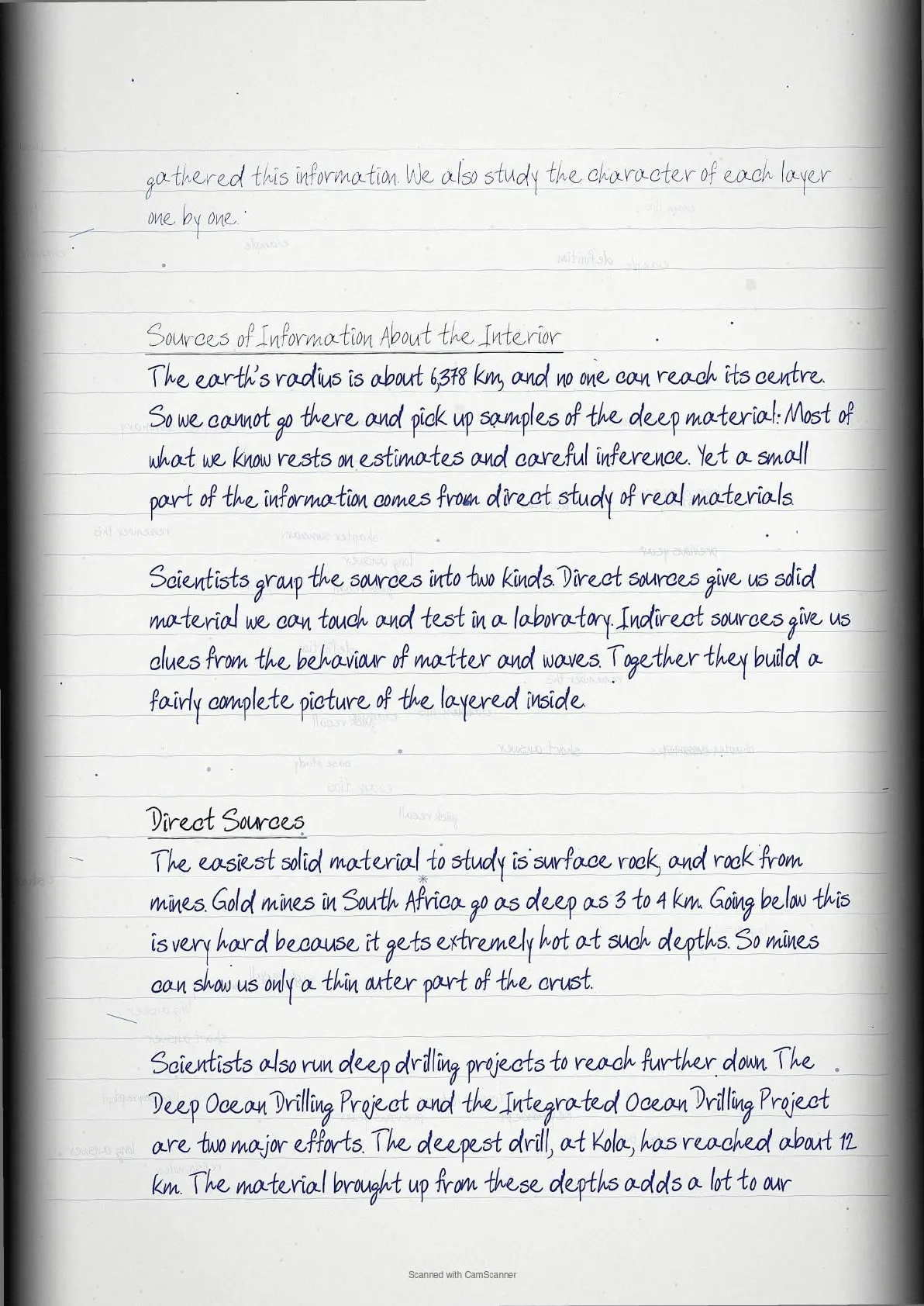
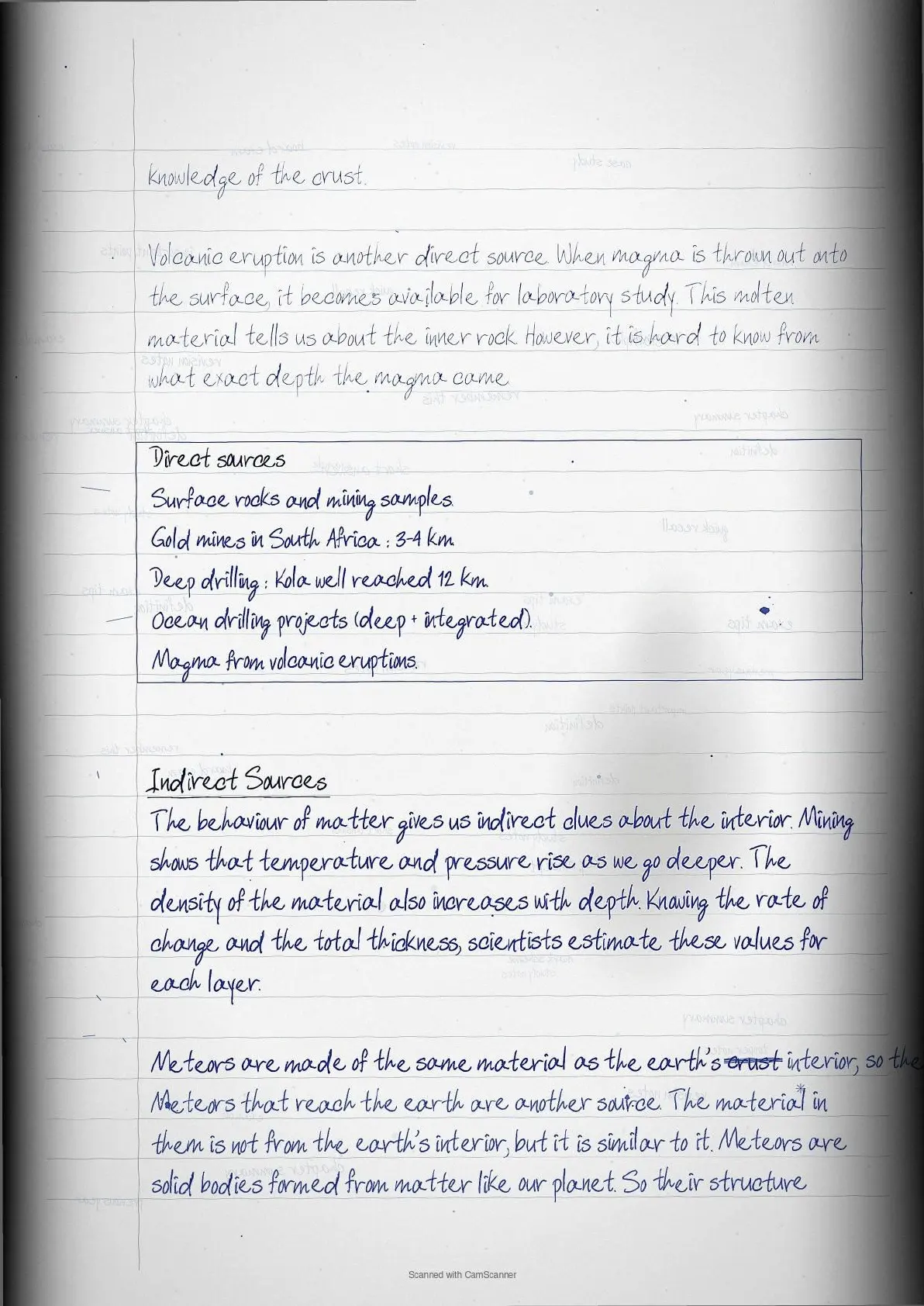
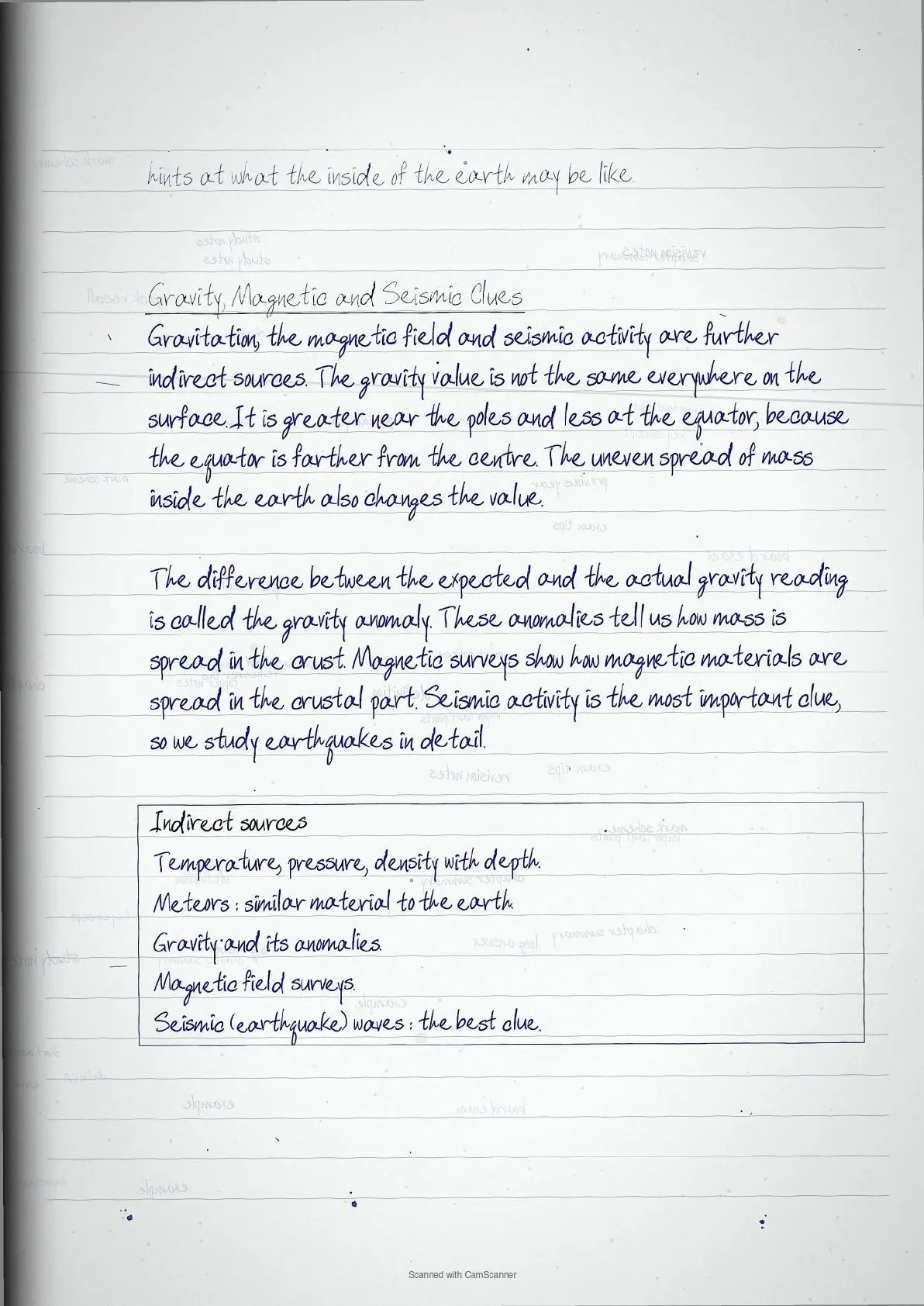
- Direct and indirect sources of information
- Earthquakes: focus, epicentre and faults
- Body waves (P and S) and surface waves
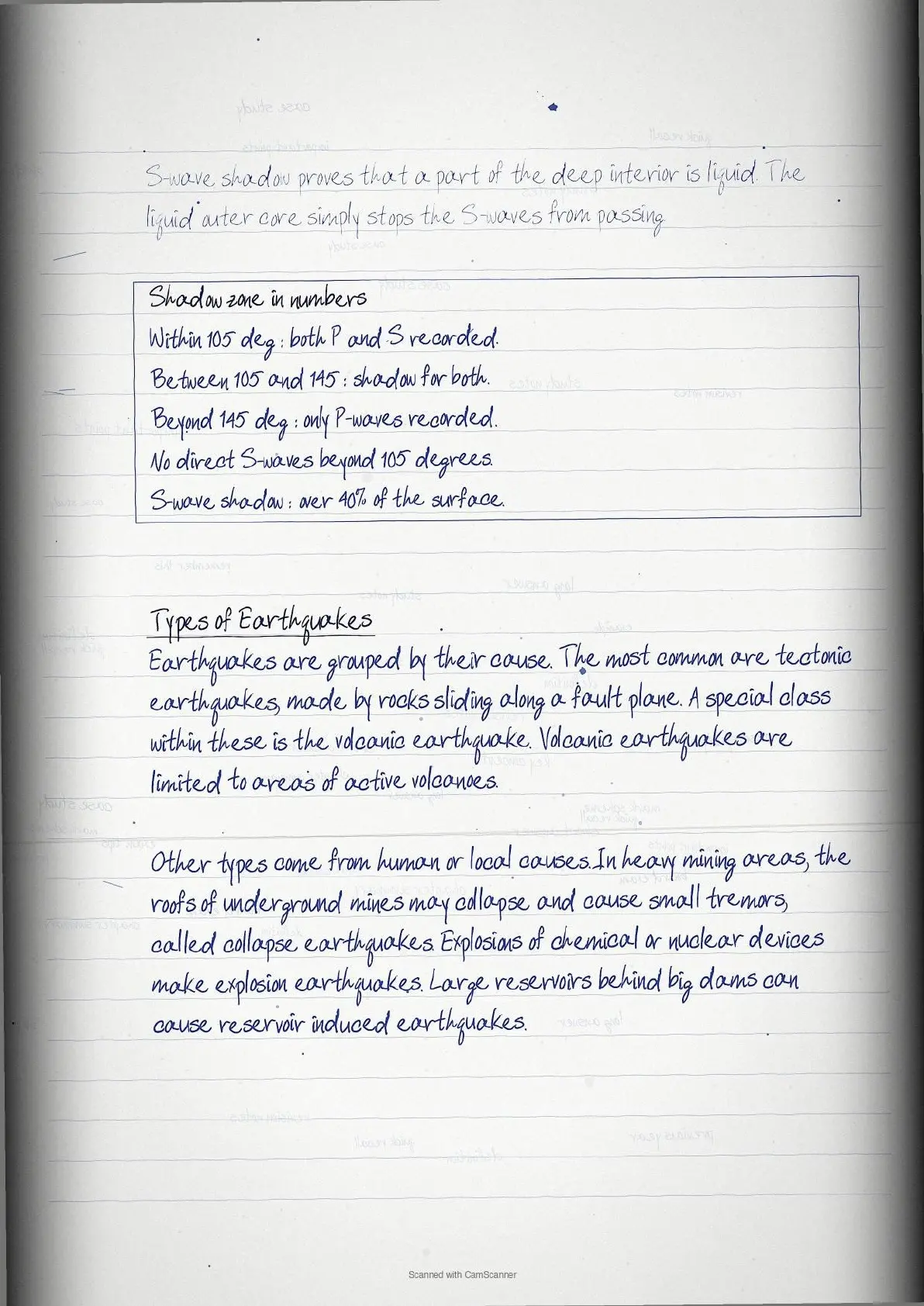
- The shadow zone and what it proves
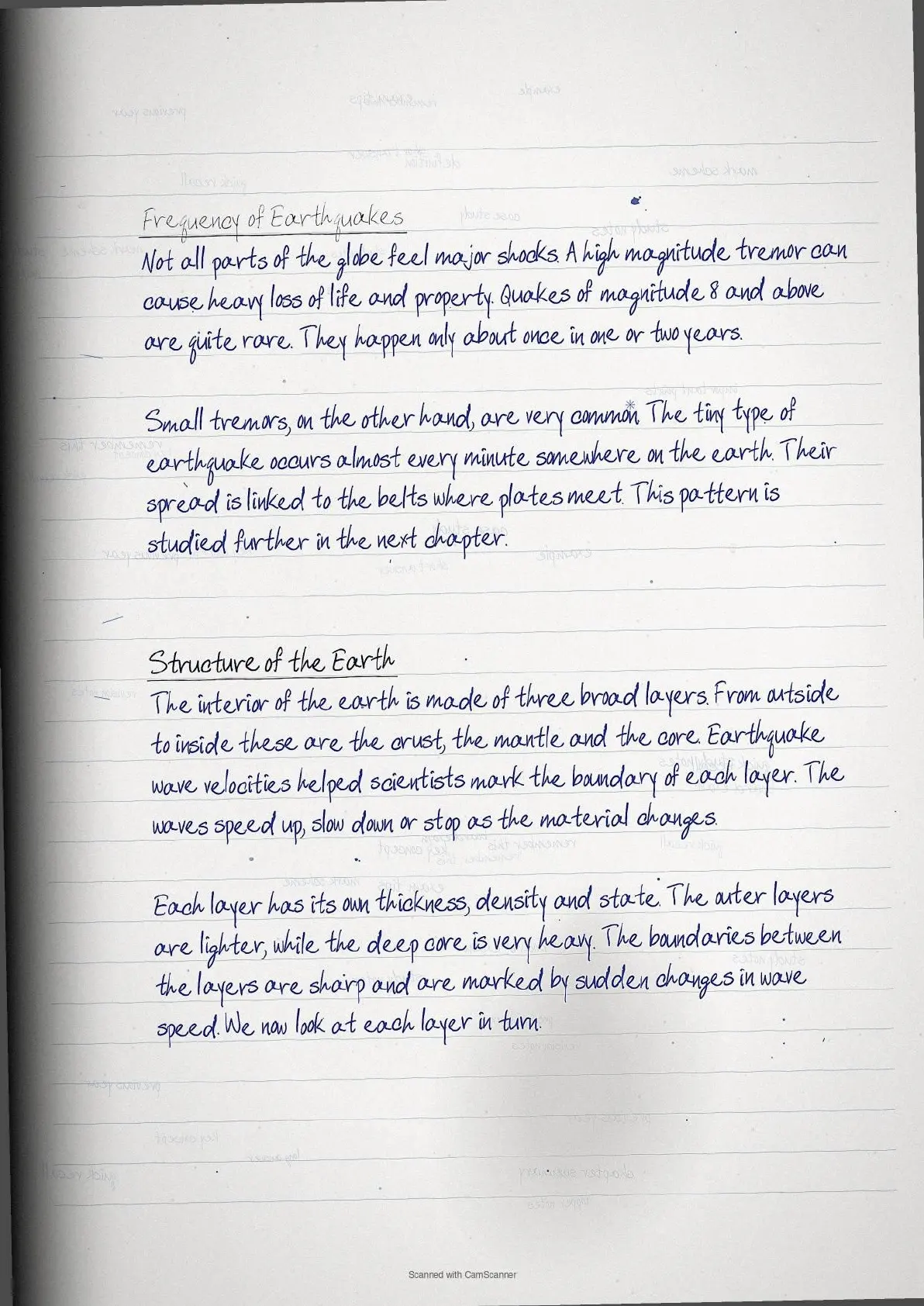
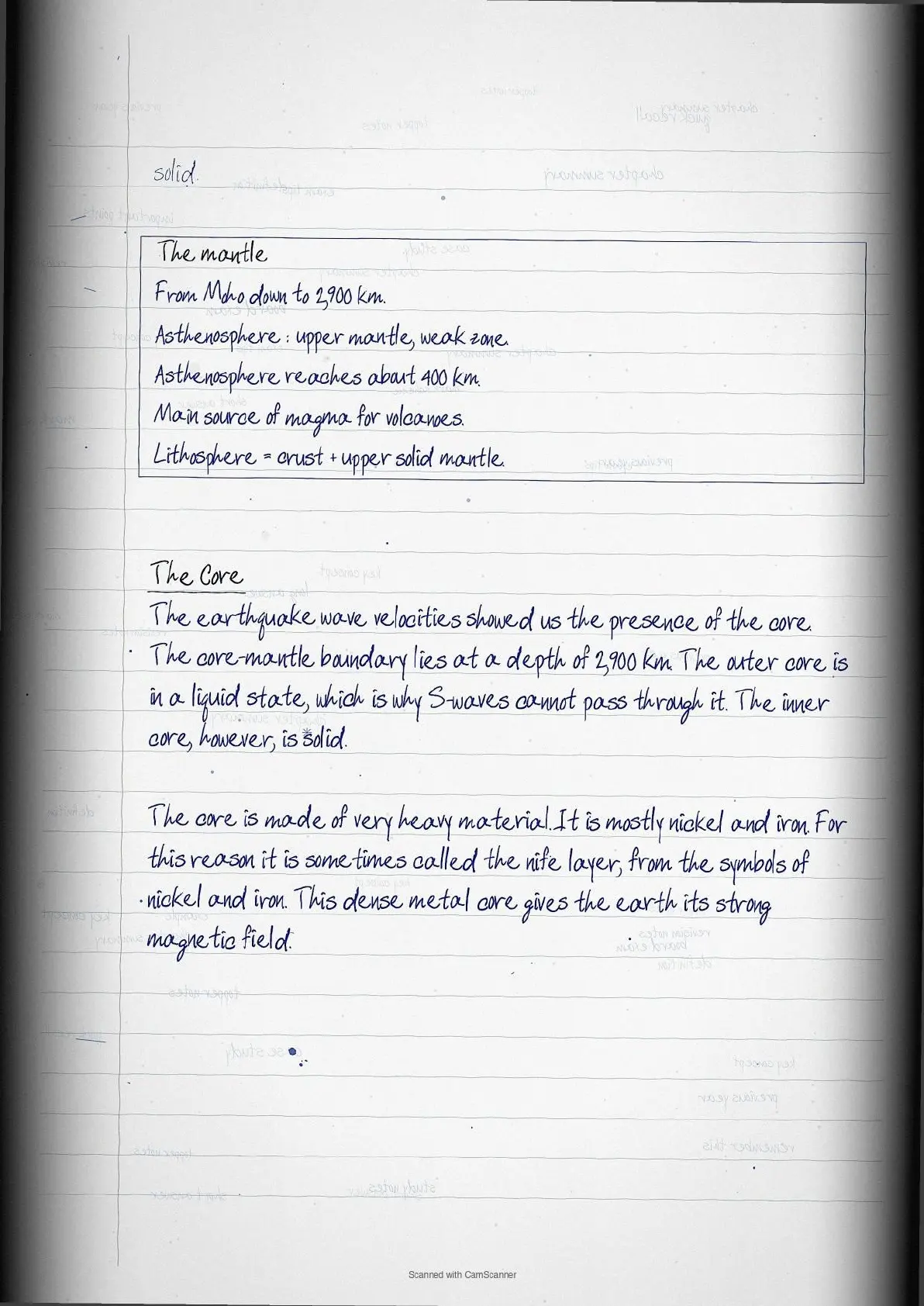
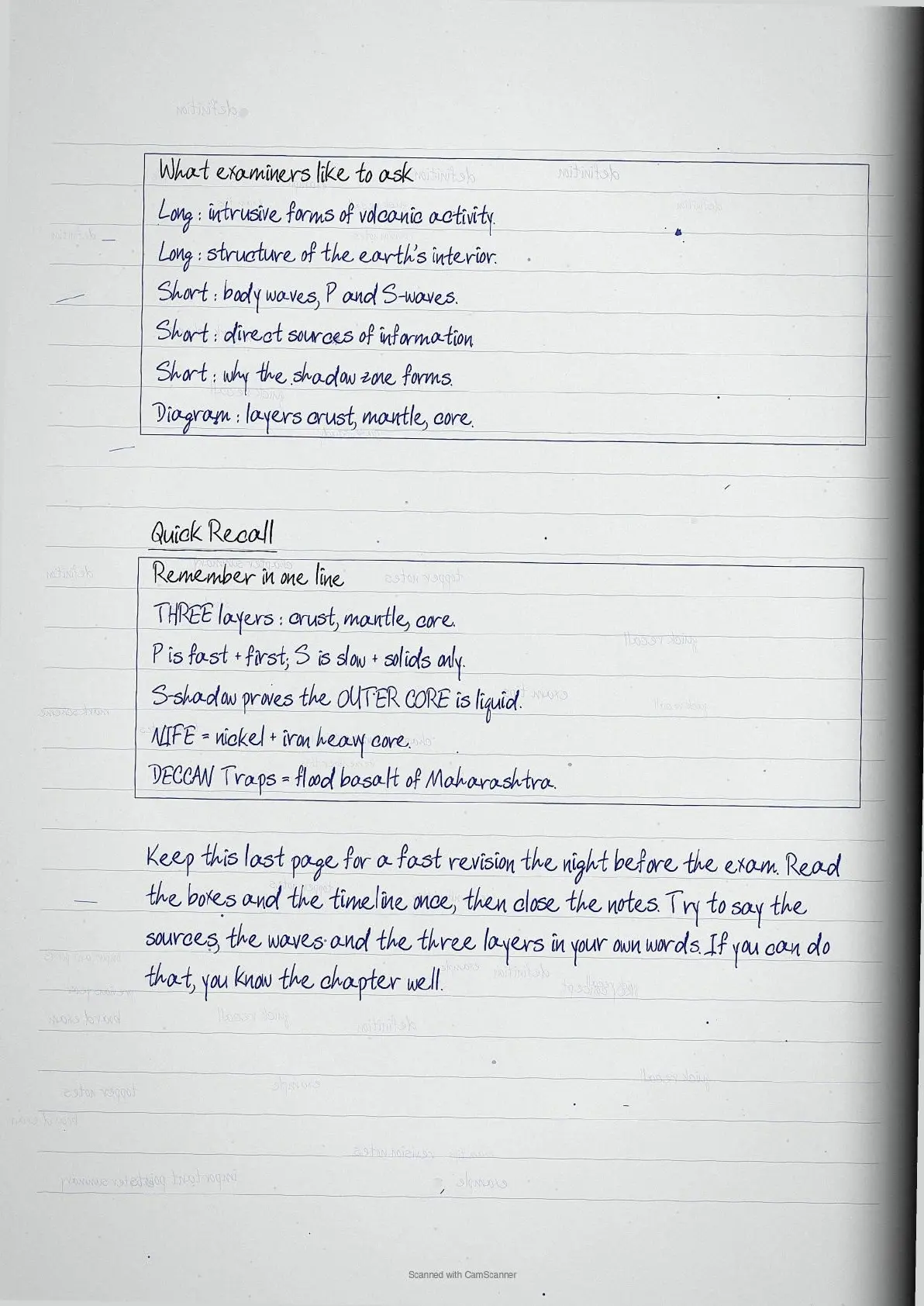
- Structure of the earth: crust, mantle, core
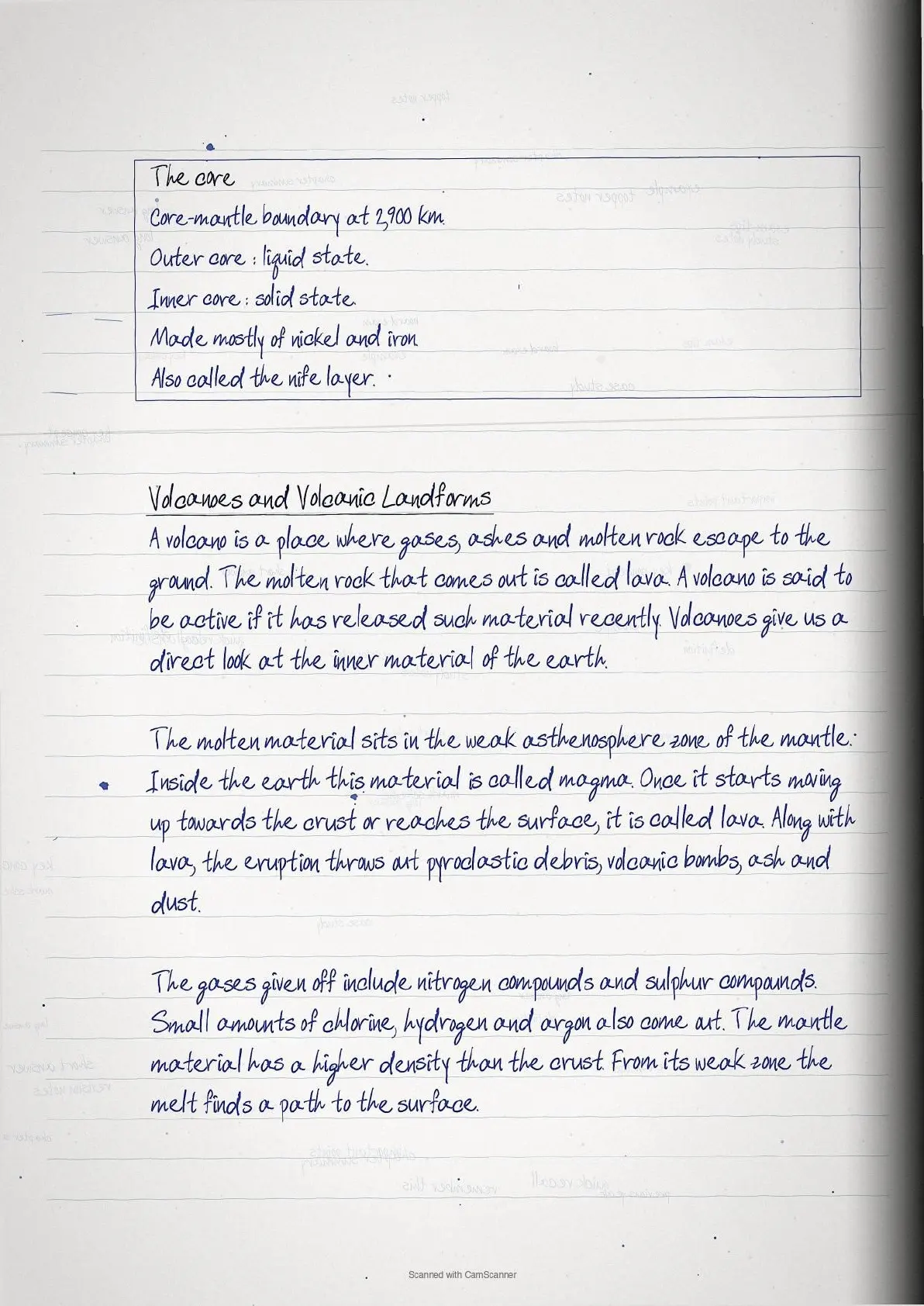
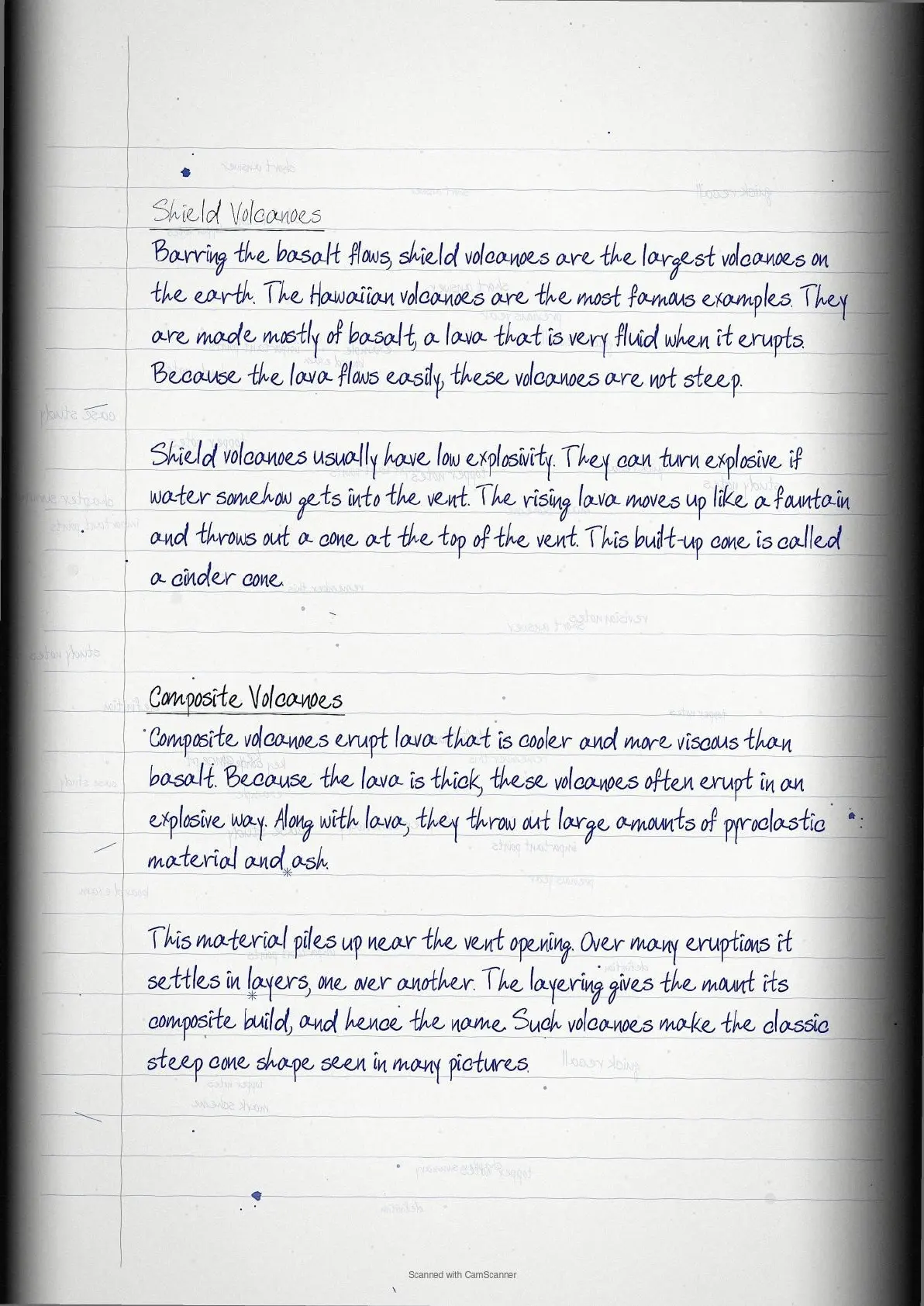
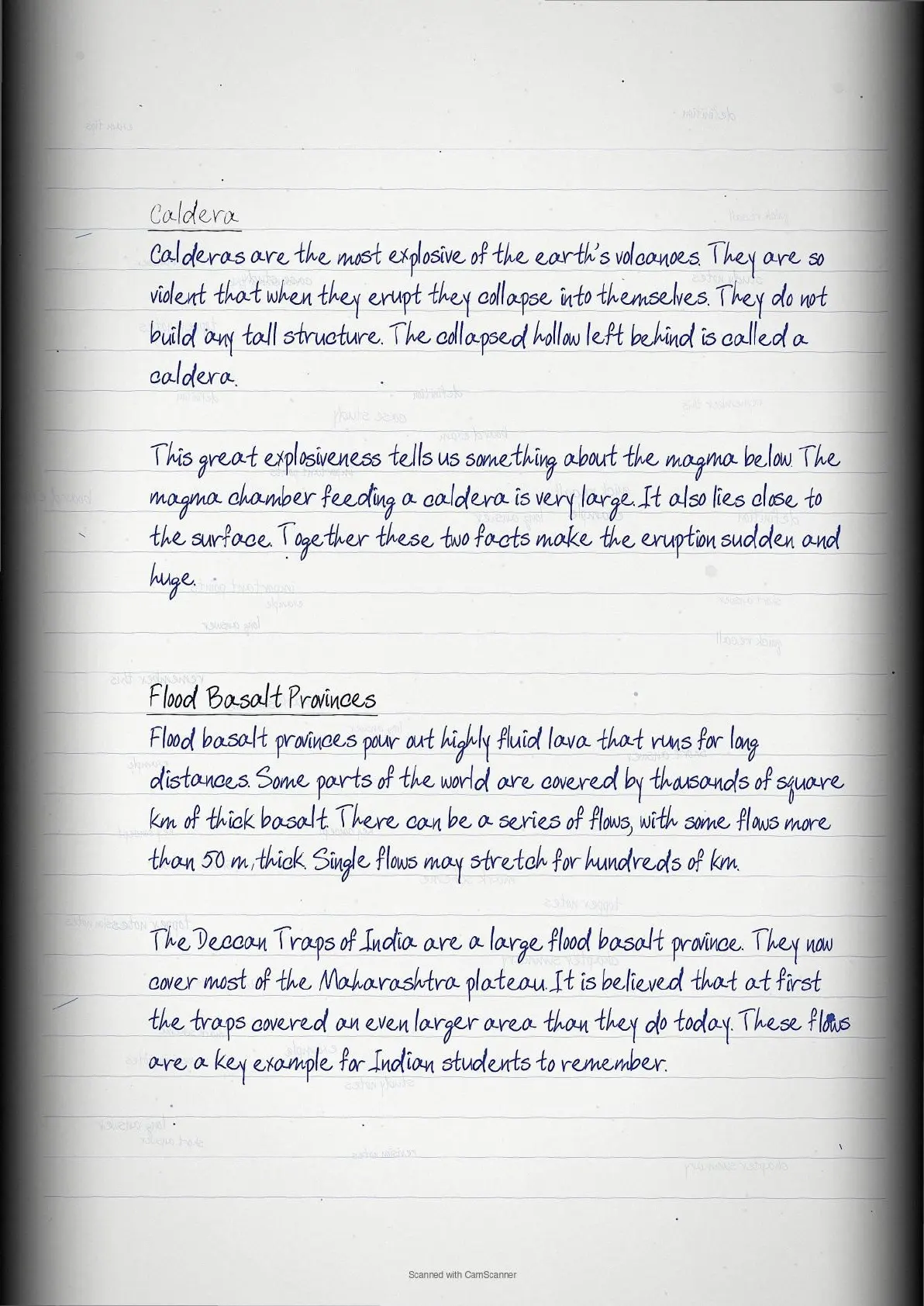
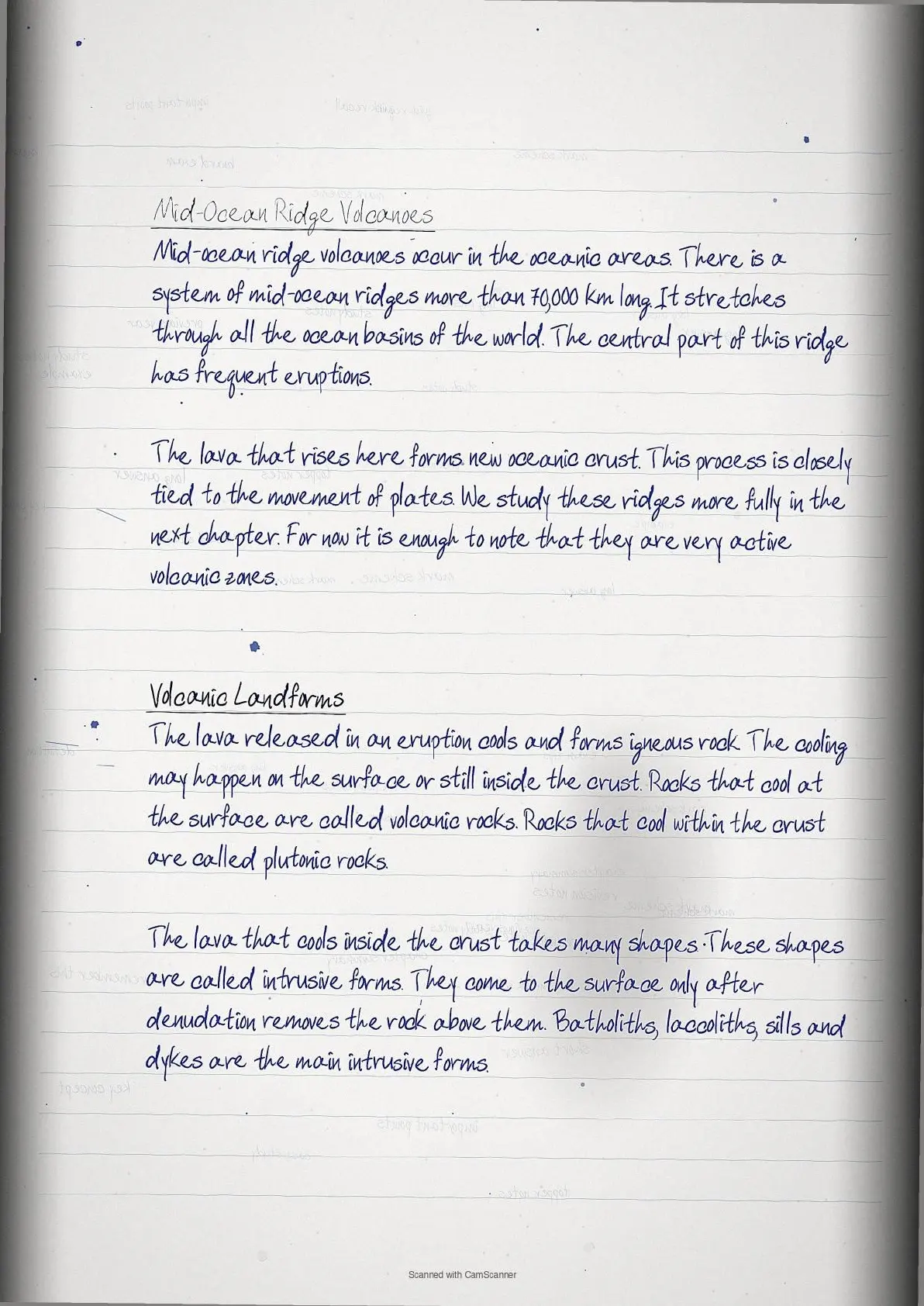
- Volcanoes: shield, composite, caldera, flood basalt
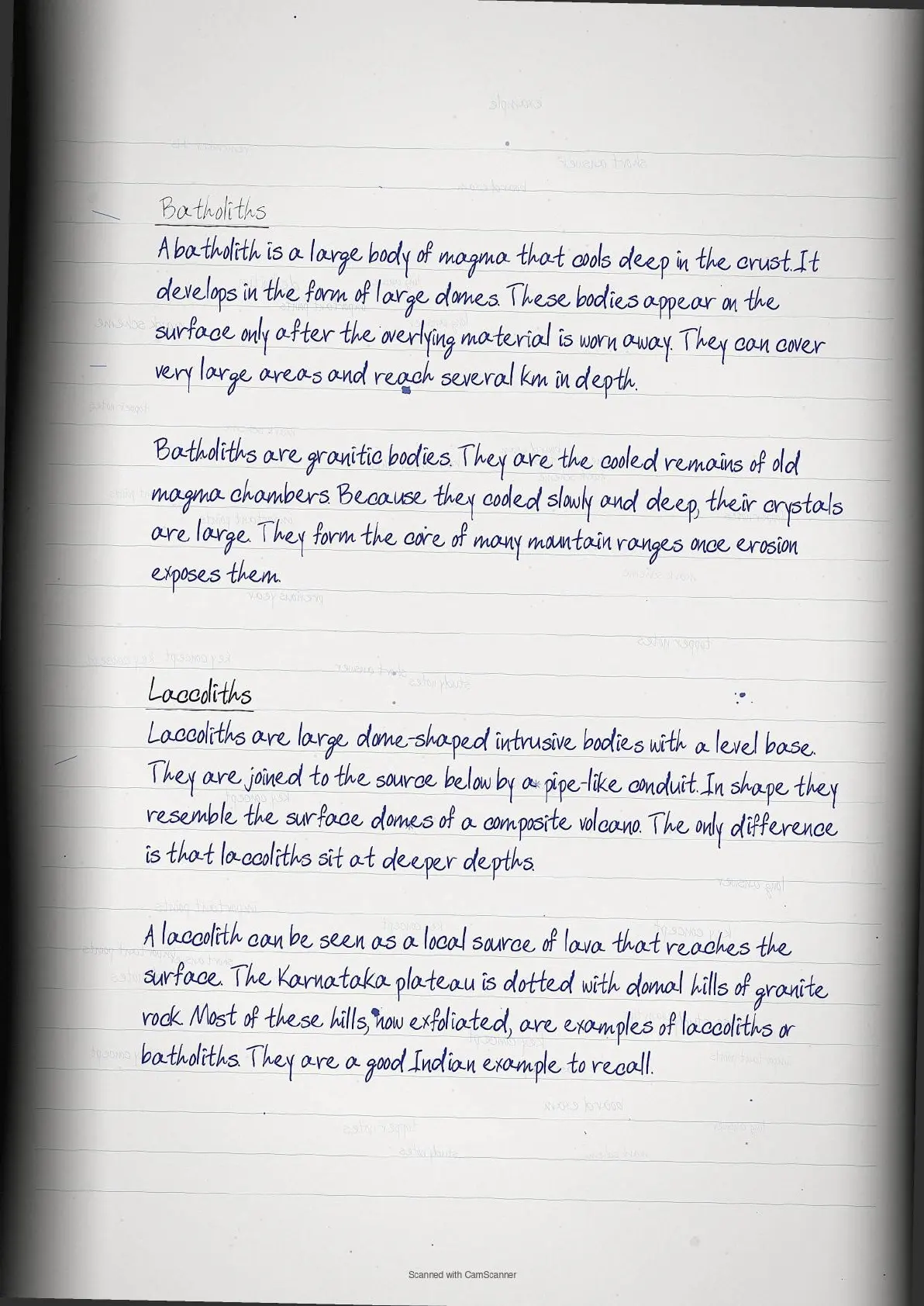
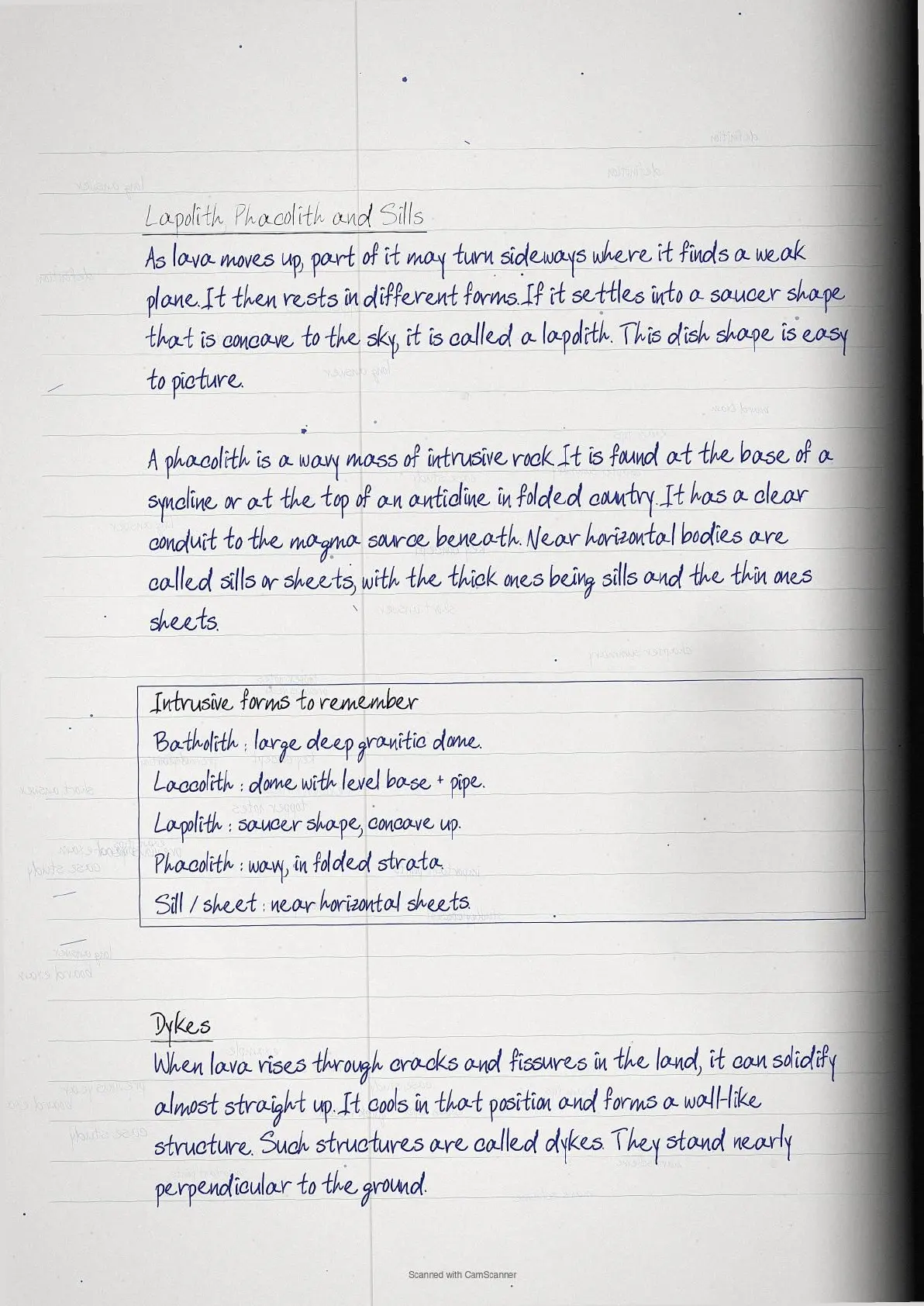
- Intrusive landforms: batholith, sill, dyke
Interior of the Earth Topic-wise Weightage for CBSE Class 11 Geography
Some parts of this chapter are asked more often than others. The table below shows which sub-topics to revise first, based on recent CBSE Class 11 question trends.
| Sub-topic | Weightage | CBSE Frequency |
|---|---|---|
| Earthquake waves and shadow zone | High | asked most years |
| Structure: crust, mantle, core | High | asked most years |
| Volcanic landforms (intrusive forms) | Medium | frequent long answer |
| Sources of information | Medium | short answer regular |
| Types and effects of earthquakes | Low | occasional short answer |
Key Terms and Ideas in Interior of the Earth
These are the terms and ideas the exam asks about most. Learn each one so you can define it and use it in your answers.
| Term / Idea | What it means |
|---|---|
| Focus | point inside the earth where quake energy is released |
| Epicentre | surface point directly above the focus |
| P-waves | fast primary waves that pass through solid, liquid and gas |
| S-waves | slower secondary waves that pass only through solids |
| Shadow zone | S-wave shadow over 40% of surface proves a liquid outer core |
| Lithosphere | crust plus uppermost solid mantle, 10 to 200 km thick |
| Nife core | heavy nickel-iron core, outer liquid and inner solid |
| Deccan Traps | flood basalt province covering the Maharashtra plateau |
How Collegedunia's Handwritten Notes Help You Revise Interior of the Earth
These notes are made for the night before the exam. They keep the facts short and easy to scan. Collegedunia maps every point to the 2026-27 NCERT.
- Clear handwriting: each topic is written in neat, easy-to-read handwriting.
- Boxed key terms: the main terms and definitions are boxed by hand for fast recall.
- Diagrams and tables: simple hand-drawn tables and charts make ideas clear.
- Colour-coded headings: new sub-topics stand out, so you find any section in seconds.
Interior of the Earth Self-Assessment Quiz
Try these quick questions after you read the notes. Tap each question to check your answer. They cover the points CBSE asks most often.
Which earthquake waves are the most destructive?
(a) P-waves (b) S-waves (c) Surface waves (d) None of these
Answer: (c) Surface waves - they cause displacement of rocks and collapse of structures.
Which one is a direct source of information about the interior?
(a) Earthquake waves (b) Volcanoes (c) Gravitation (d) Magnetism
Answer: (b) Volcanoes - erupted magma can be studied directly in a laboratory.
The lithosphere is best described as:
(a) upper and lower mantle (b) crust and upper mantle (c) crust and core (d) mantle and core
Answer: (b) crust and upper mantle - together they form the rigid lithosphere.
Deccan Trap formations were caused by which eruptions?
(a) Shield (b) Flood (c) Composite (d) Caldera
Answer: (b) Flood - highly fluid basalt lava that spread over vast areas.
S-waves fail to pass through the outer core because it is:
(a) solid (b) liquid (c) gaseous (d) empty
Answer: (b) liquid - S-waves travel only through solids, creating the S-wave shadow zone.
How to Use These Handwritten Notes for Class 11 Geography Revision
Use these class 11 geography handwritten notes in two passes. Read them slowly once for the full chapter. Then, near the exam, read only the boxes and key terms for a fast recall.
- Read the notes once with the NCERT chapter open beside you.
- Say each key term and idea in your own words.
- Practise one long-answer question from a past paper.
- On the last day, revise only the key terms and the boxes.
Class 11 Geography Handwritten Notes for All Chapters
The table below links the class 11 geography handwritten notes for every chapter. Use it to jump to any other chapter's notes.
Interior of the Earth Class 11 Geography Handwritten Notes FAQs
Ques. Where can I download Interior of the Earth Class 11 Geography Handwritten Notes PDF?
Ans. You can download the Interior of the Earth Class 11 Geography Handwritten Notes PDF directly from this page. Both the Normal and HD versions are free.
Ques. Are these handwritten notes aligned with the 2026-27 NCERT?
Ans. Yes. These notes follow the current 2026-27 syllabus for Class 11 Geography. Why can scientists study the interior without ever reaching it?
Ques. How many pages is the Class 11 Geography Interior of the Earth Handwritten Notes PDF?
Ans. The notes run about 20 pages. They cover the full chapter with key terms, hand-drawn boxes, and a short self-assessment quiz.
Ques. What is the main idea of the 11th standard Geography chapter Interior of the Earth?
Ans. Scientists rely on indirect evidence, mainly the behaviour of earthquake waves as they speed up, bend or stop in different layers. Direct samples from mines, deep drills and volcanic magma add support to this picture.
Ques. Are these Interior of the Earth notes enough for the CBSE Class 11 exam?
Ans. Yes, for revision. The Collegedunia handwritten notes cover every key point and exam term. Read them with the NCERT chapter and practise past questions.



Comments