




Class 11 Economics Chapter 15 Environment and Sustainable Development notes cover environment, carrying capacity, environmental crisis, India's environmental concerns and sustainable development strategies for the 2026-27 NCERT syllabus. The PDF helps students revise global warming, ozone depletion, land degradation, Pollution Control Boards, CNG, gobar gas, solar power, biopest control and organic farming in one place.
- Download the Chapter 15 Economics notes PDF for quick offline revision.
- Revise environment functions, carrying capacity and sustainable development definitions.
- Use the tables to write cleaner answers on India's environmental concerns.
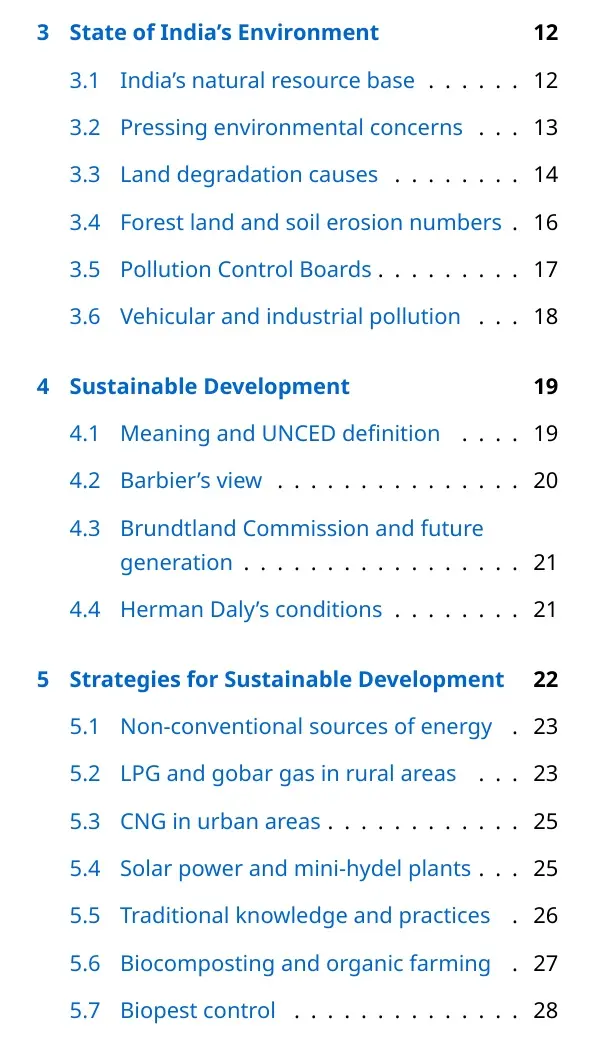
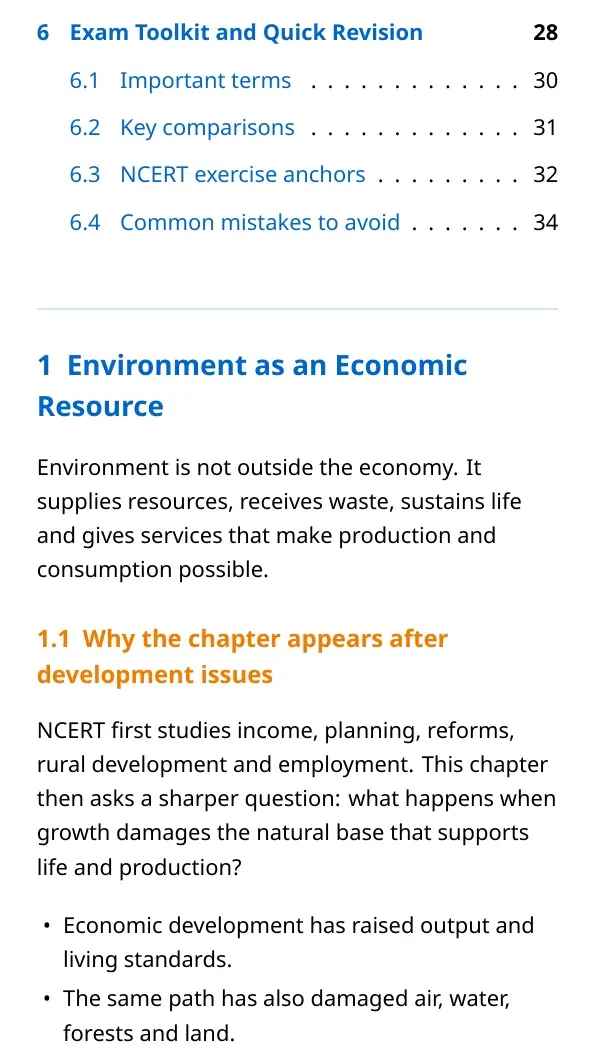
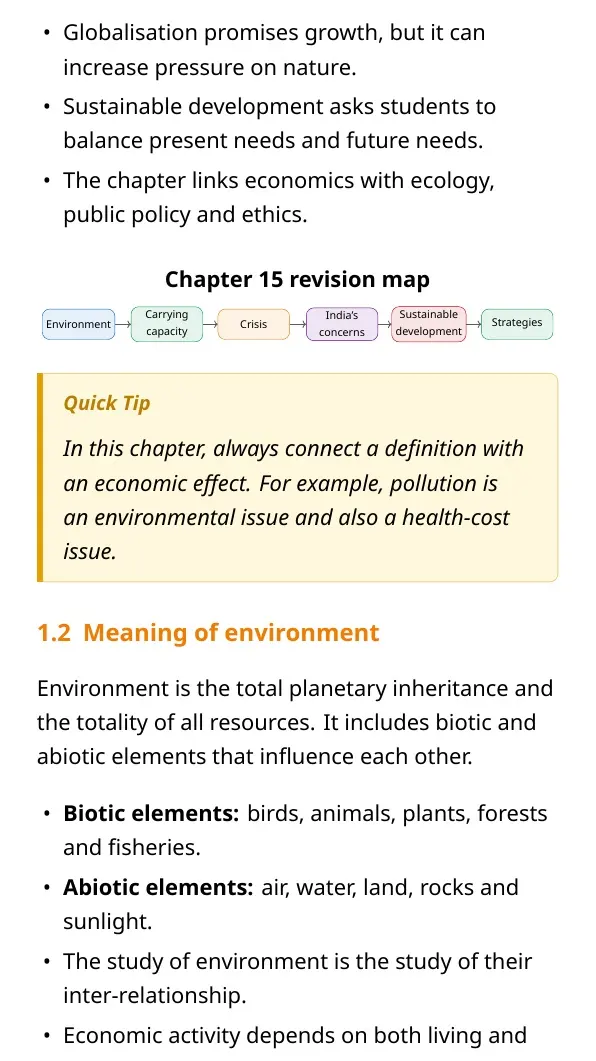
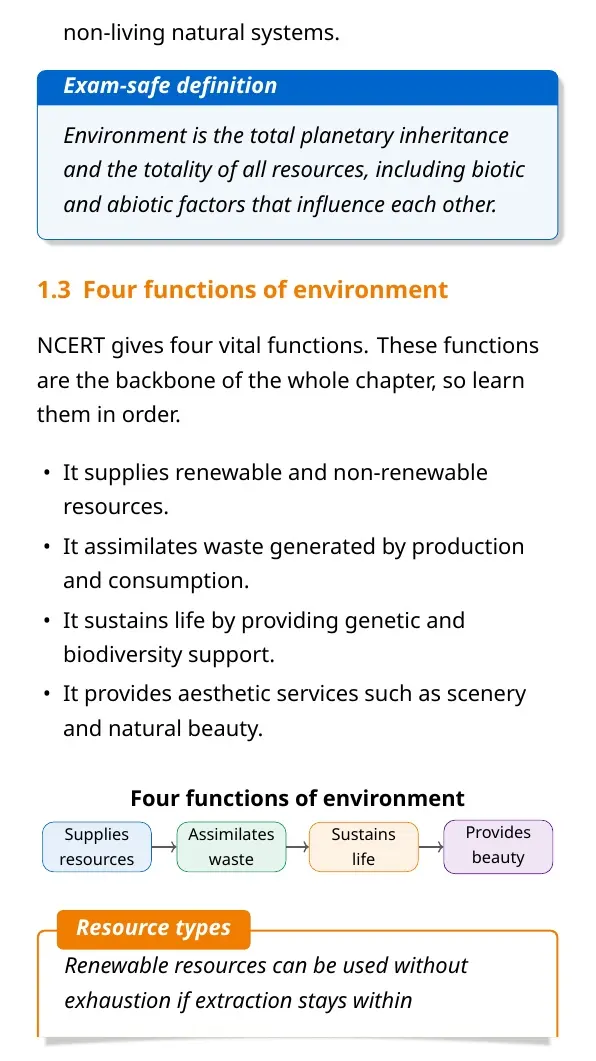
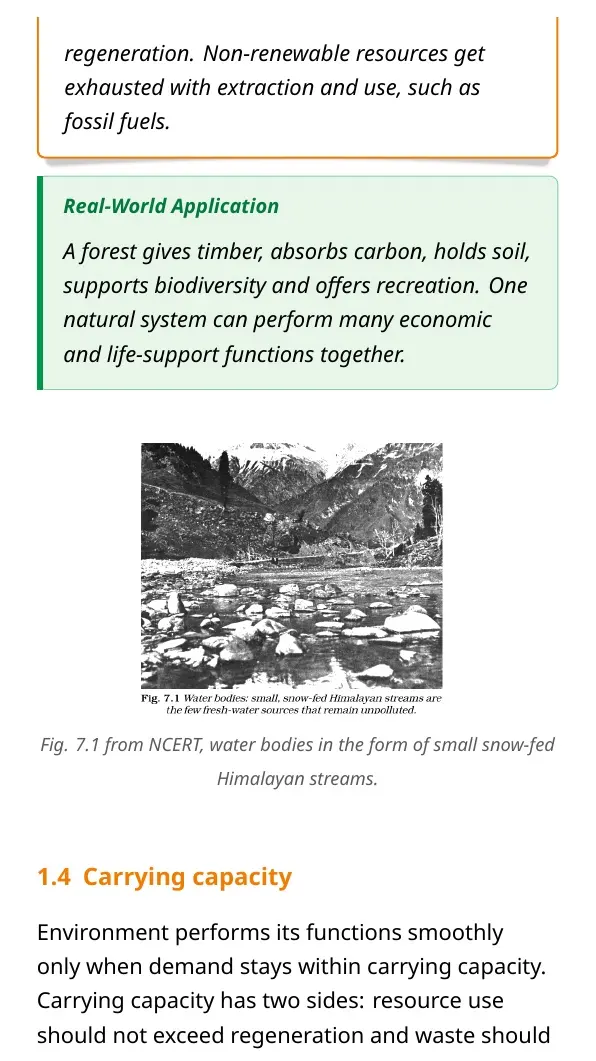

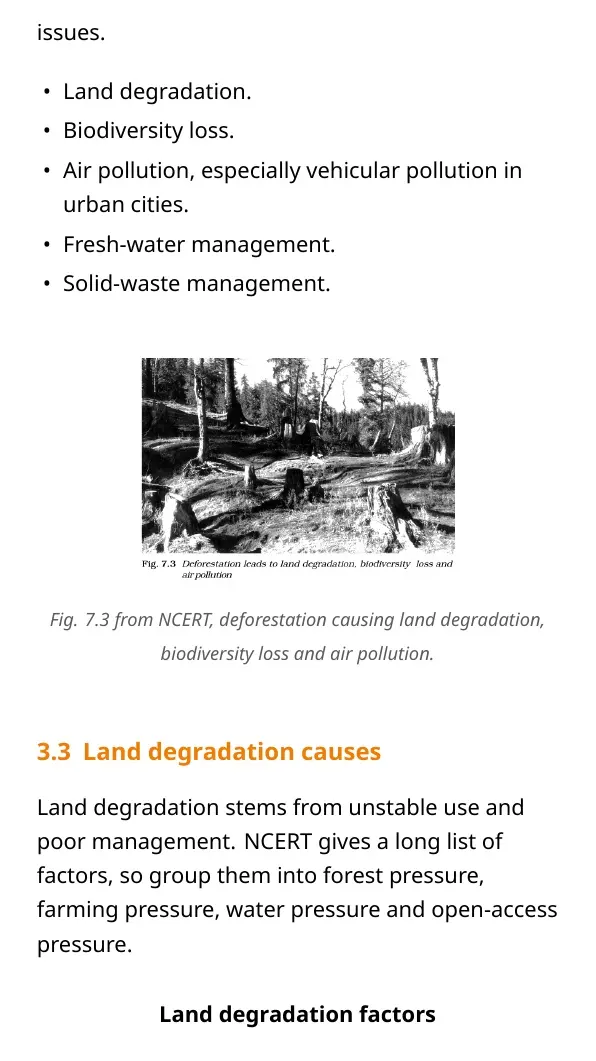
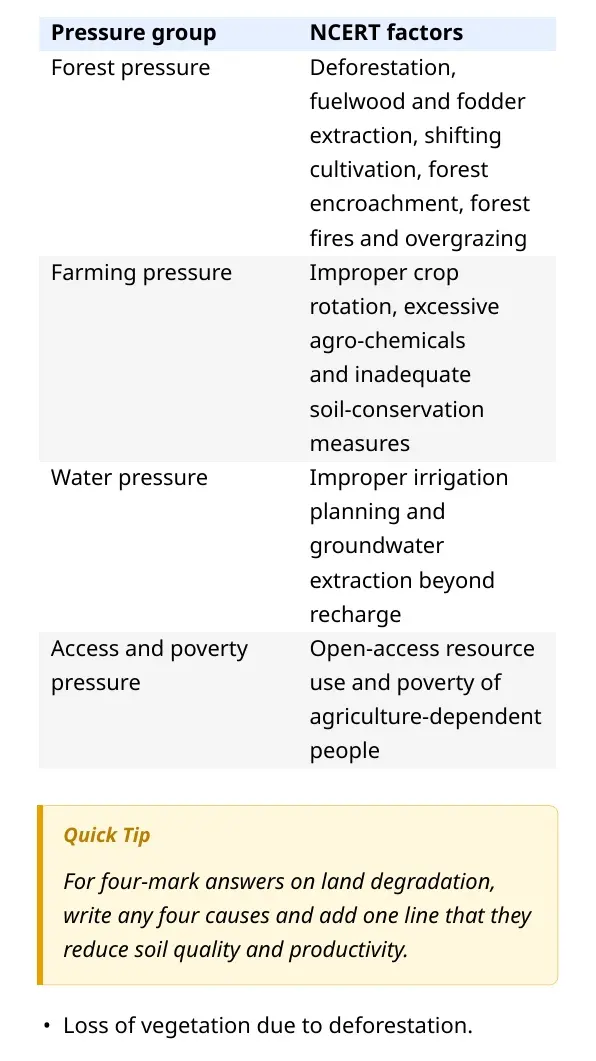
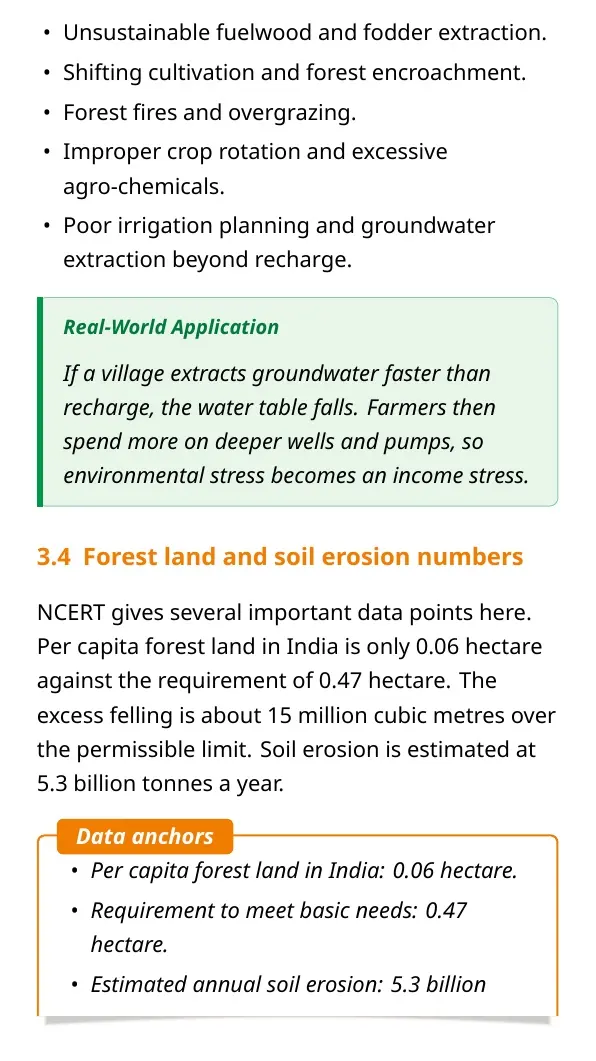
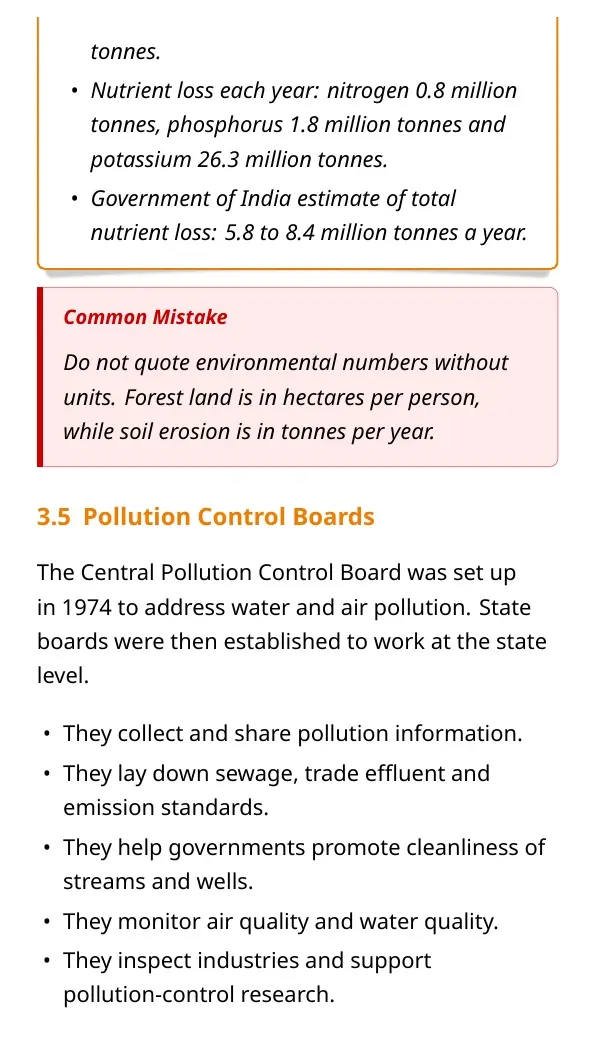


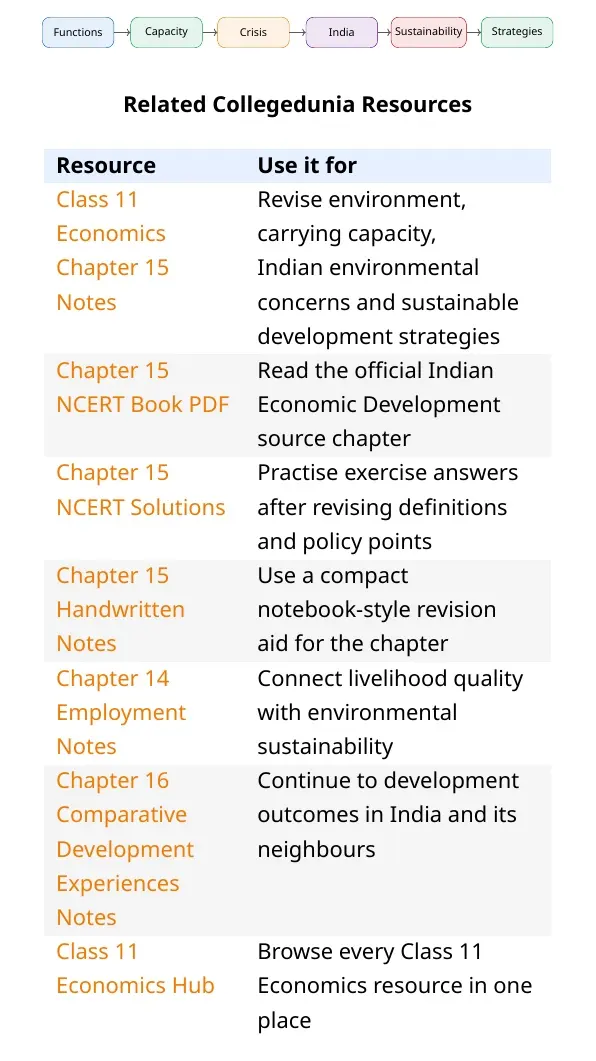
Student Feedback: More than 10,000 students use Collegedunia NCERT Economics resources for school tests and board-style revision. Students say this chapter is easier when environmental crisis, Indian concerns and sustainability strategies are studied as one policy chain.
What Environment and Sustainable Development Covers
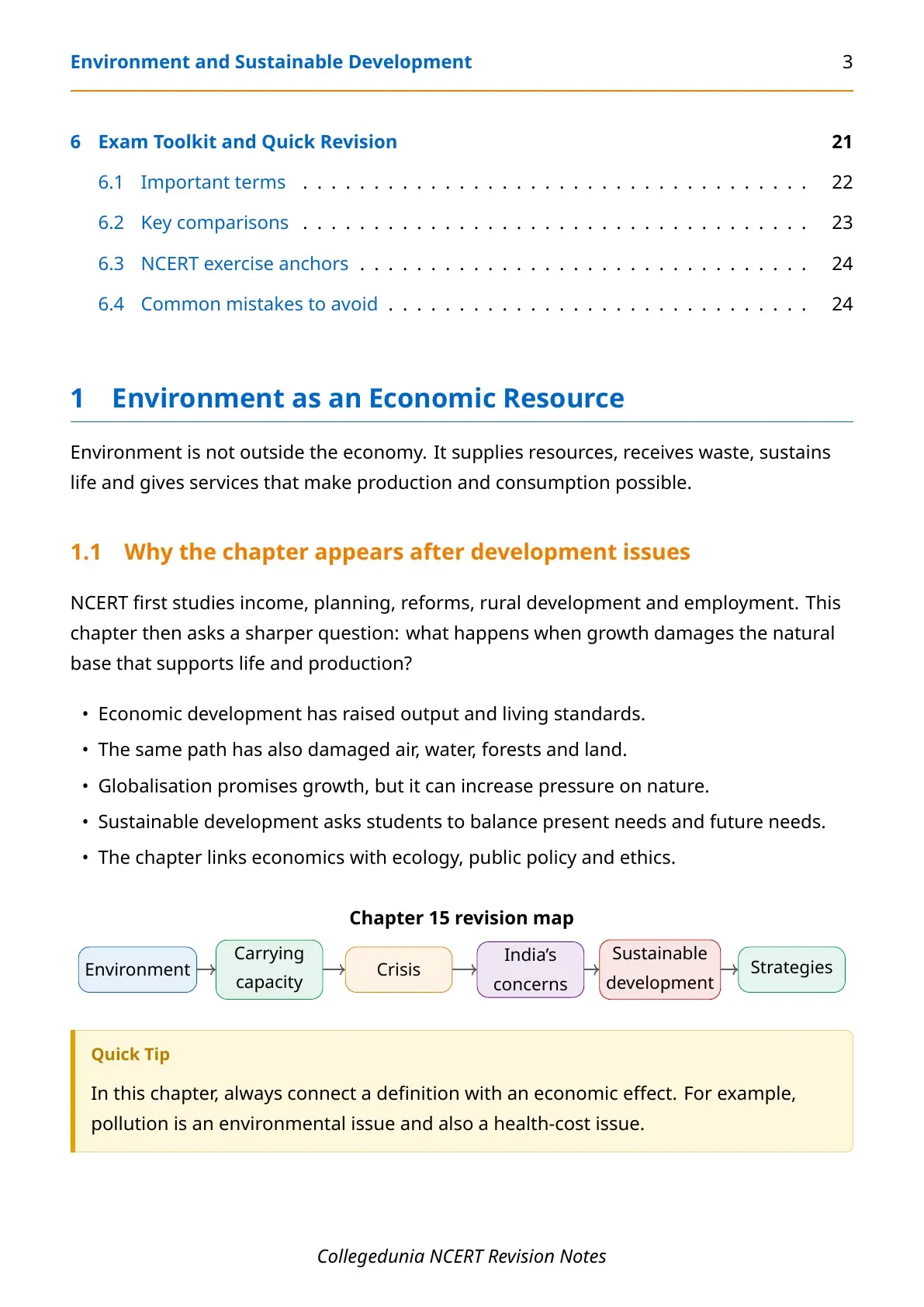
Environment and Sustainable Development explains why the economy depends on nature. The chapter first defines environment, then explains environmental crisis, India's environmental concerns and the meaning of sustainable development.
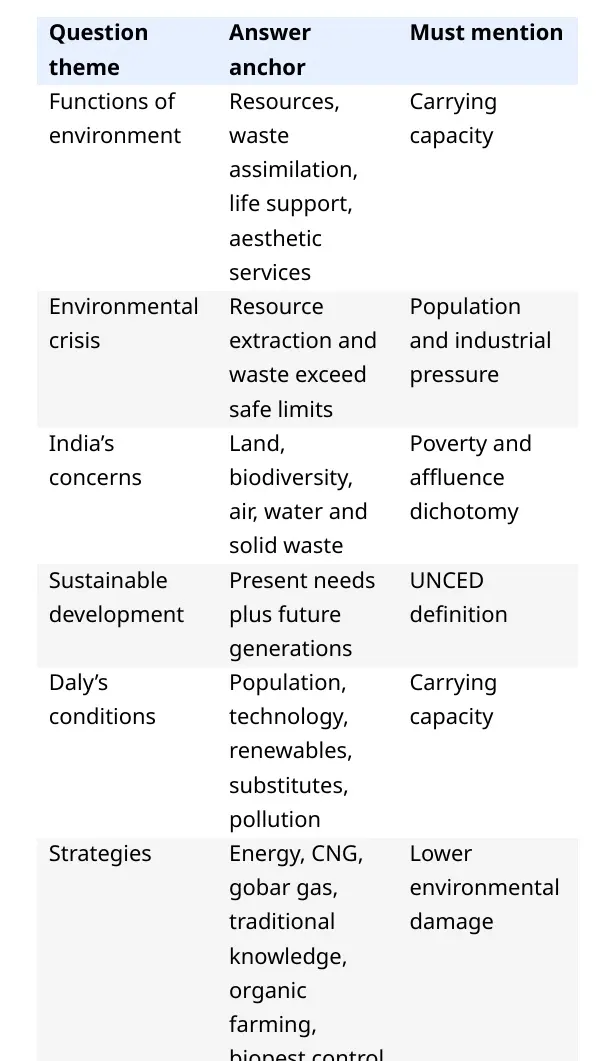
Students should focus on the four functions of environment and the idea of carrying capacity. Most long answers become easier when you connect resource use, waste load and future generations.
| Part of the chapter | NCERT focus | Revision clue |
|---|---|---|
| Environment | Biotic and abiotic factors | Define with examples |
| Functions | Resources, waste, life support and beauty | Write all four points |
| Crisis | Extraction and waste cross safe limits | Use carrying capacity |
| India's concerns | Land, biodiversity, air, water and waste | Use the five-point list |
| Sustainable development | Present needs and future needs | Mention UNCED definition |
Environment and Sustainable Development Quick Revision
Source: PW OnlyIAS Prarambh on YouTube
Environment Meaning and Four Functions
Environment is the total planetary inheritance and the totality of all resources. It includes biotic factors like plants, animals, forests and fisheries, and abiotic factors like air, water, land, rocks and sunlight.
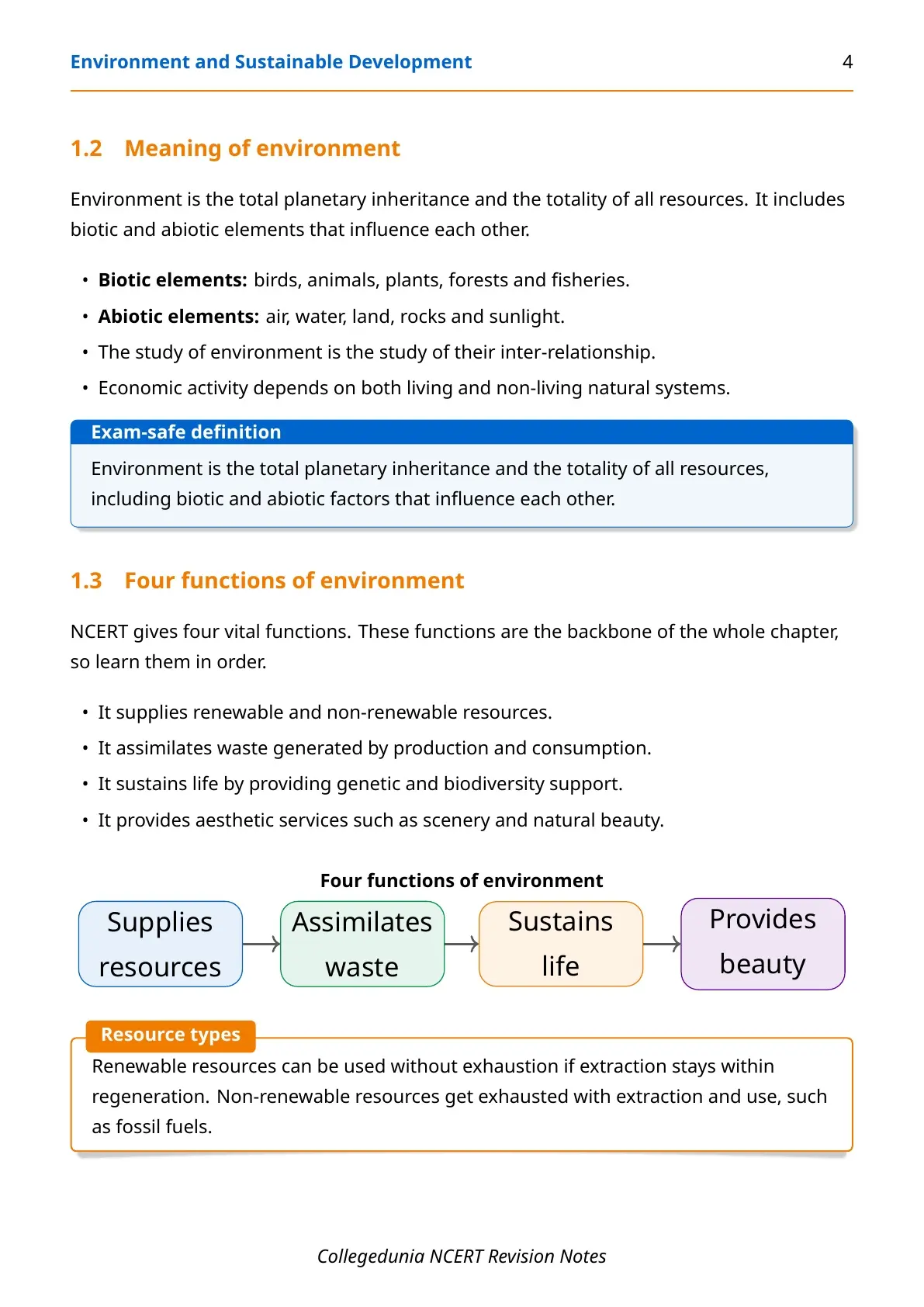
The environment performs four vital functions. These functions support production, consumption and life itself.
- It supplies renewable and non-renewable resources.
- It absorbs waste from production and consumption.
- It sustains life through genetic diversity and biodiversity.
- It provides aesthetic services such as scenery and natural beauty.
Exam tip: When asked about environment, write both meaning and functions. A definition alone is too short for a full answer.
Carrying Capacity and Environmental Crisis
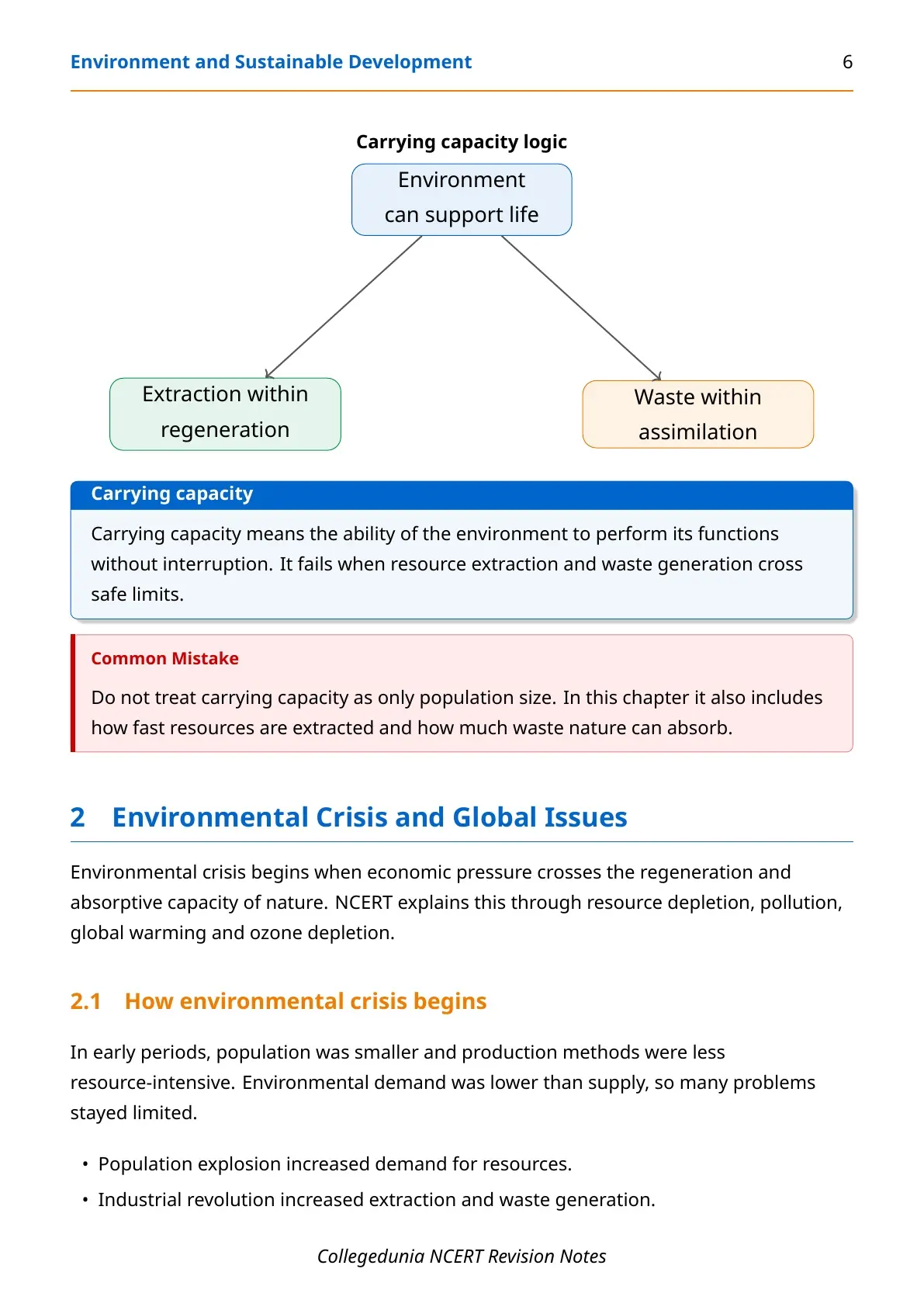
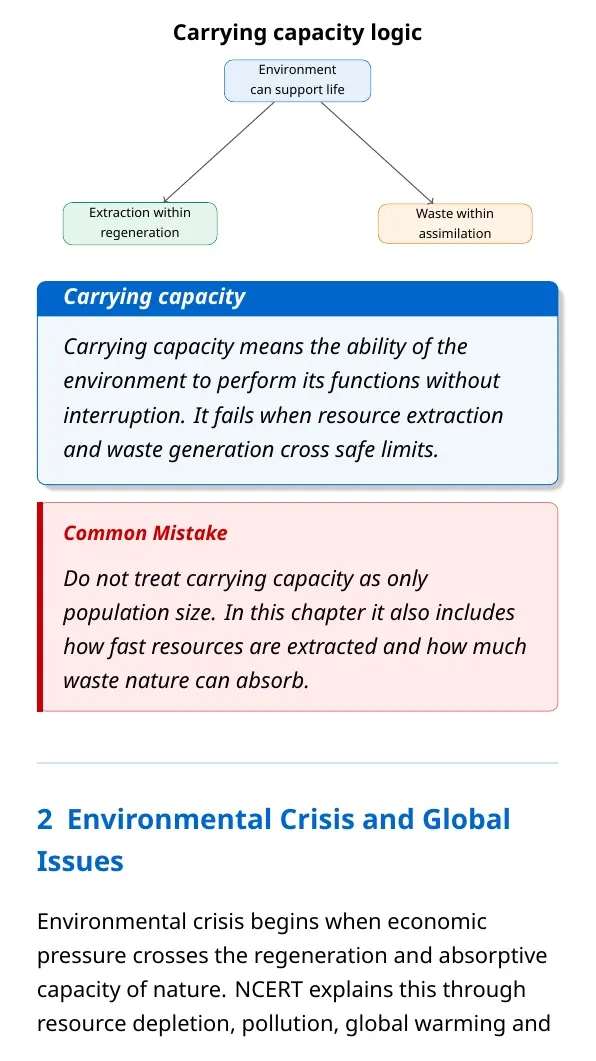
Carrying capacity means the ability of environment to perform its functions without interruption. It is crossed when resource extraction exceeds regeneration, or waste exceeds absorptive capacity.
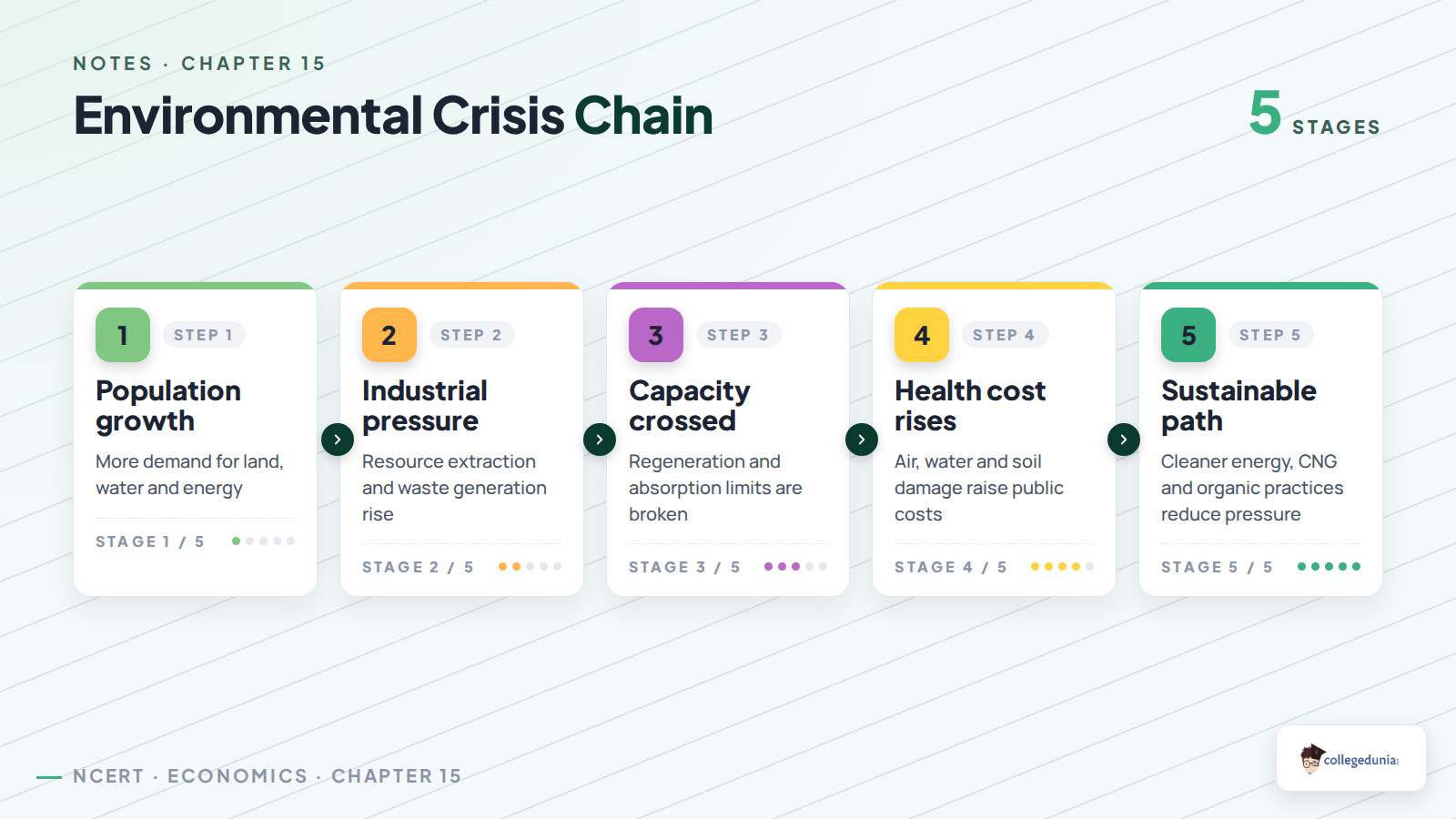
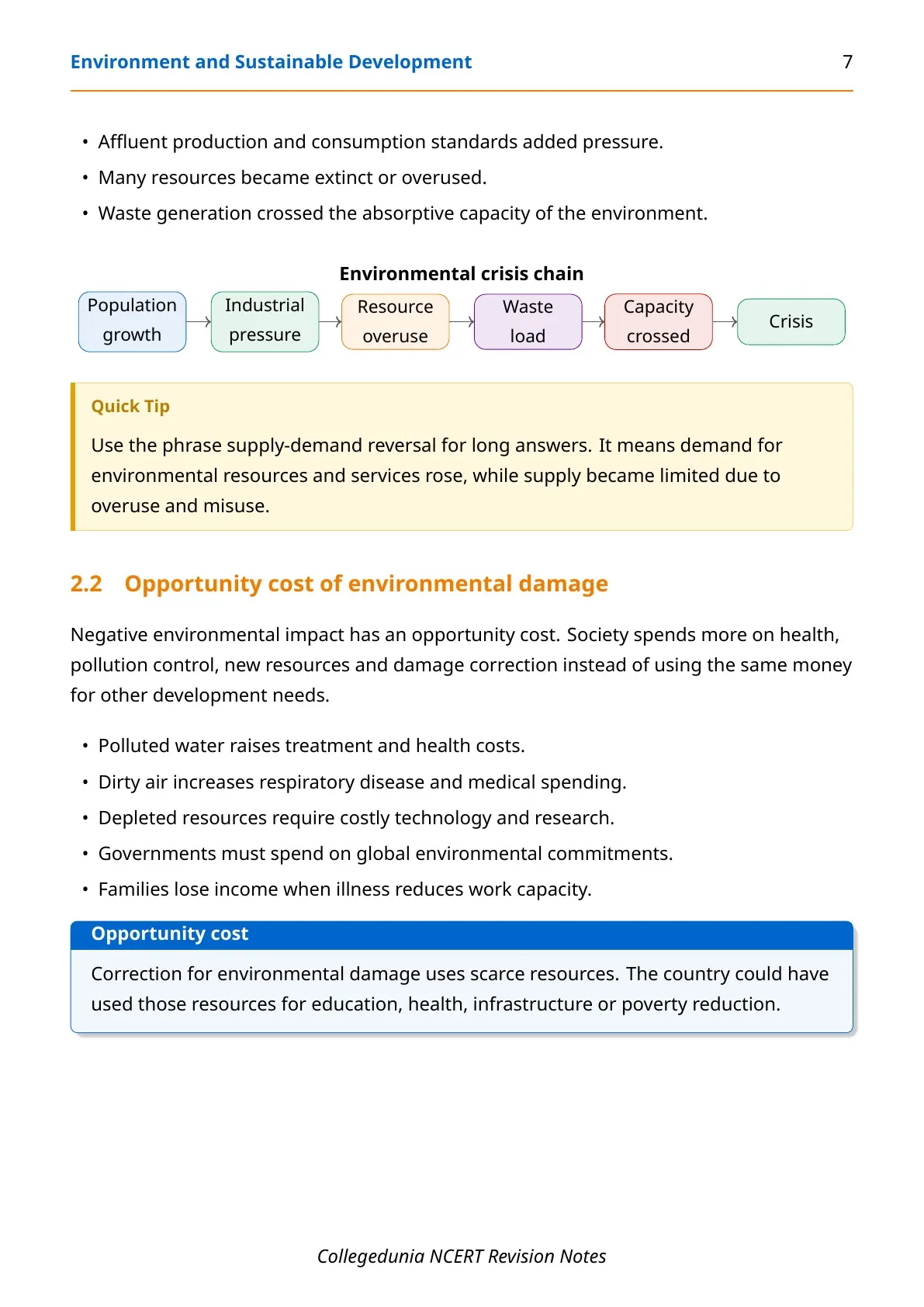
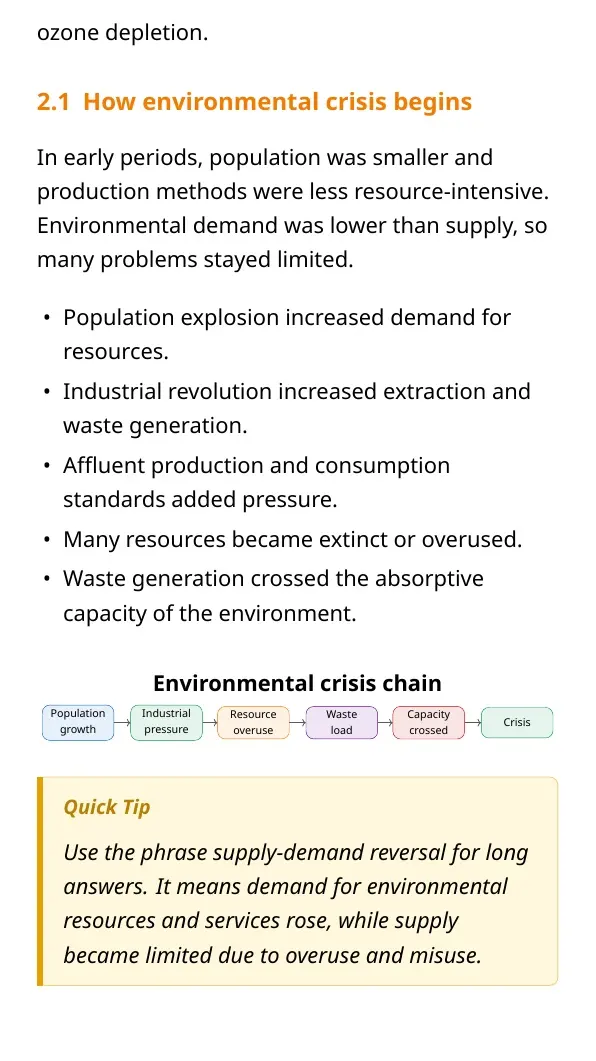
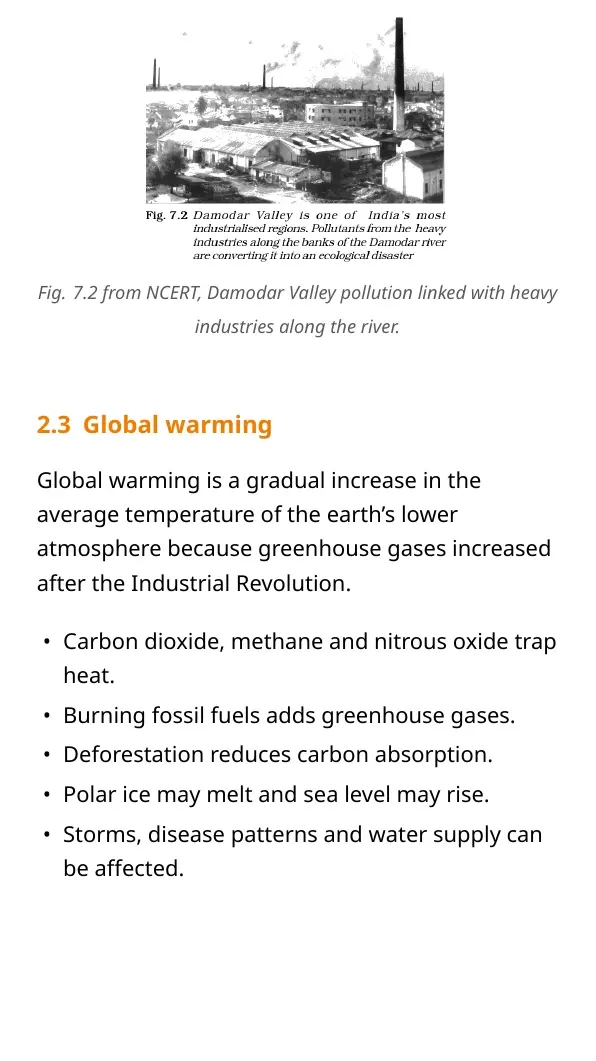
The chapter says environmental crisis grew after population explosion and industrial growth. Demand for resources rose, waste generation increased and the supply of environmental services became limited.
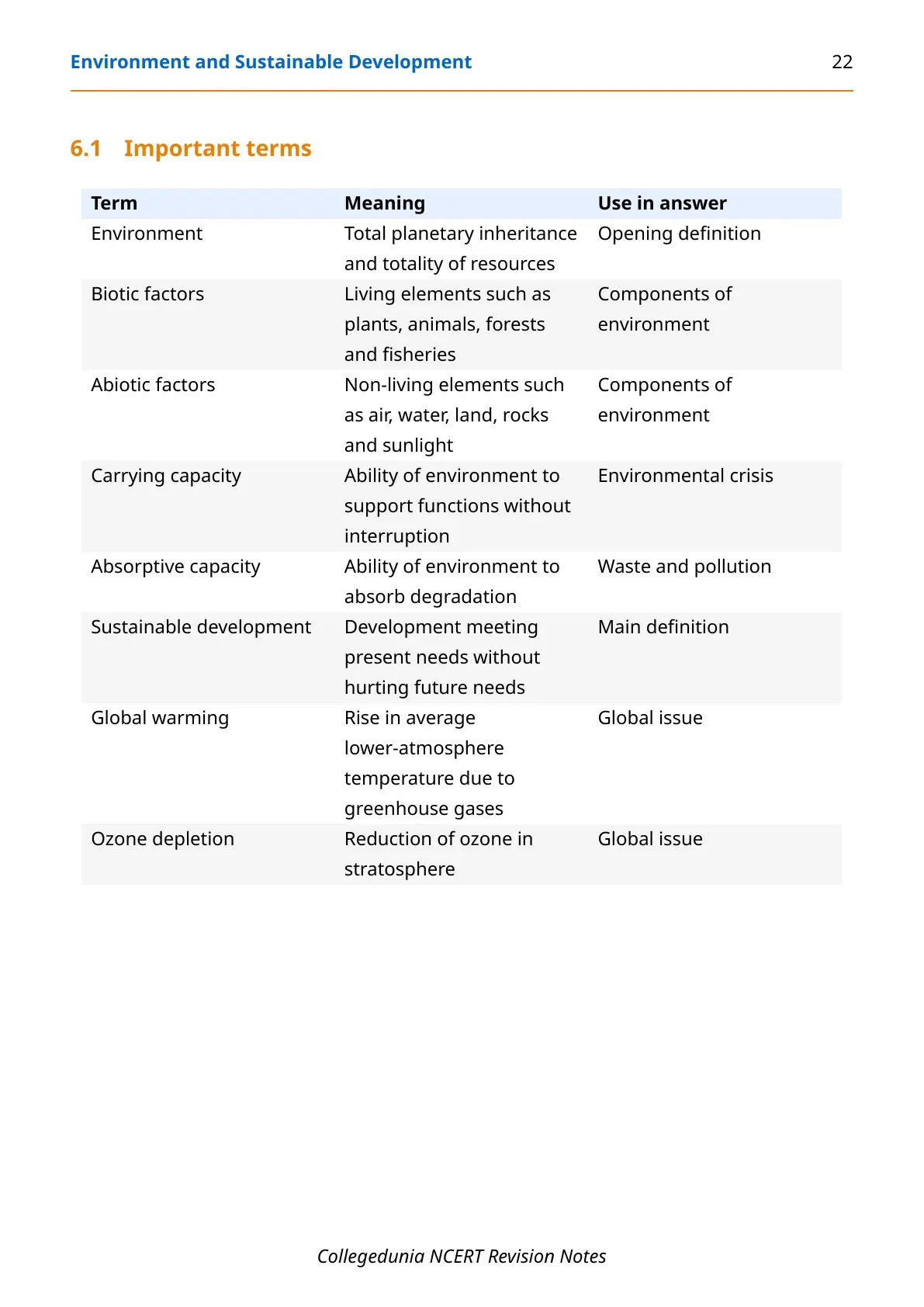
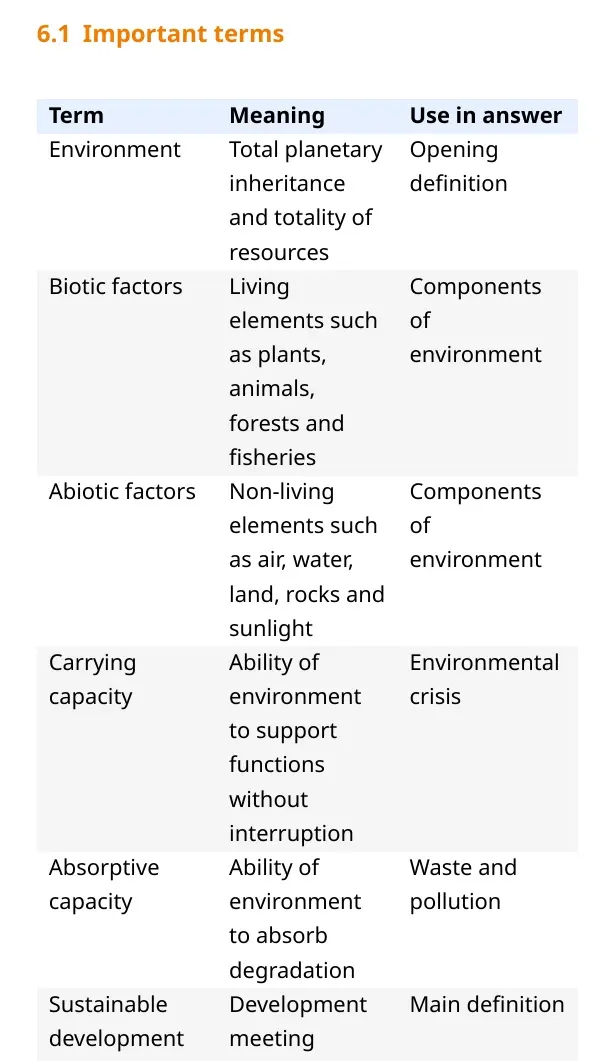
| Term | Meaning | Use in answer |
|---|---|---|
| Carrying capacity | Nature's ability to support its functions | Environmental crisis answers |
| Regeneration | Natural replacement of renewable resources | Resource-use answers |
| Absorptive capacity | Nature's ability to absorb degradation | Pollution answers |
| Opportunity cost | Money spent correcting damage | Health and policy answers |
Global Warming and Ozone Depletion
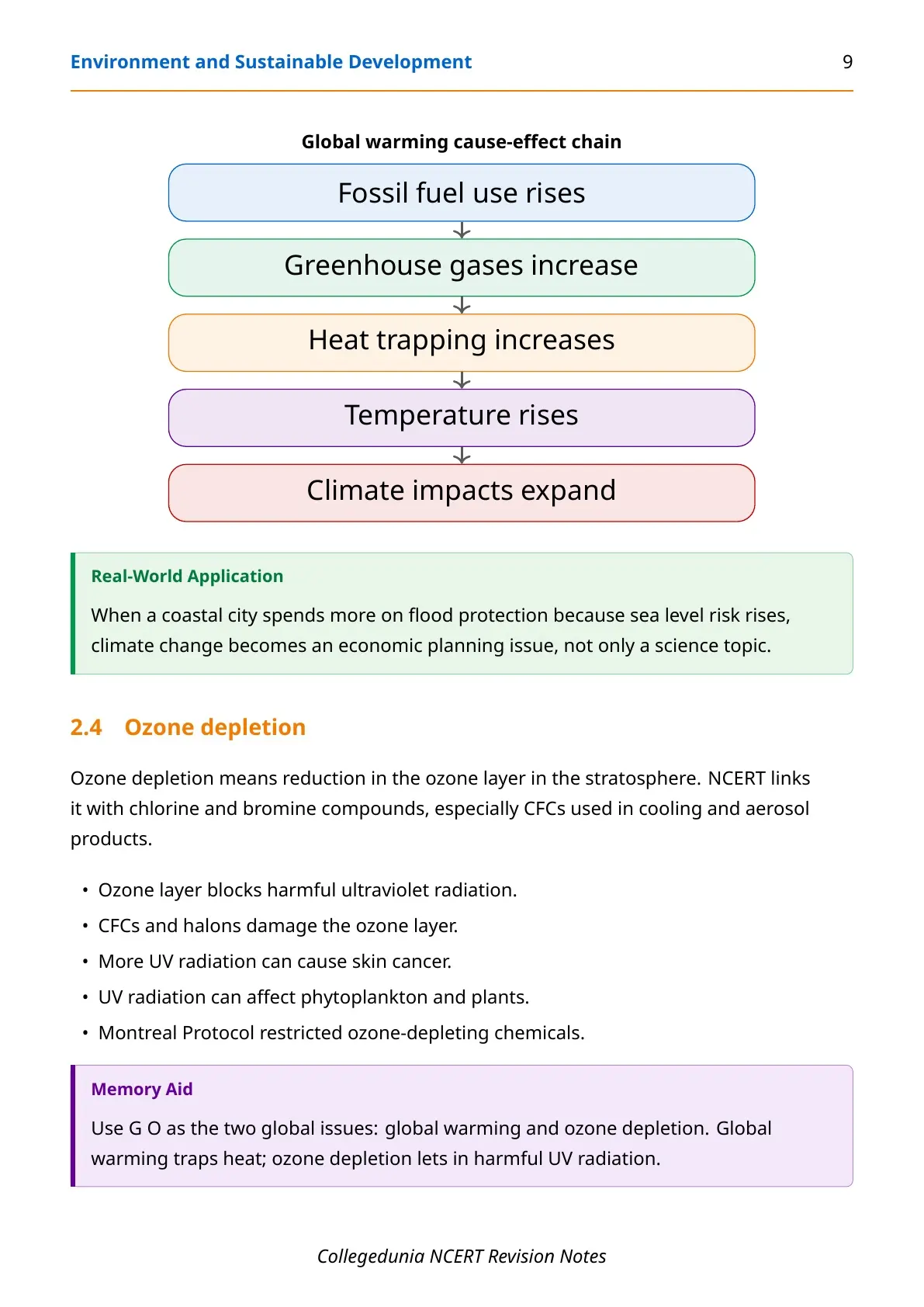
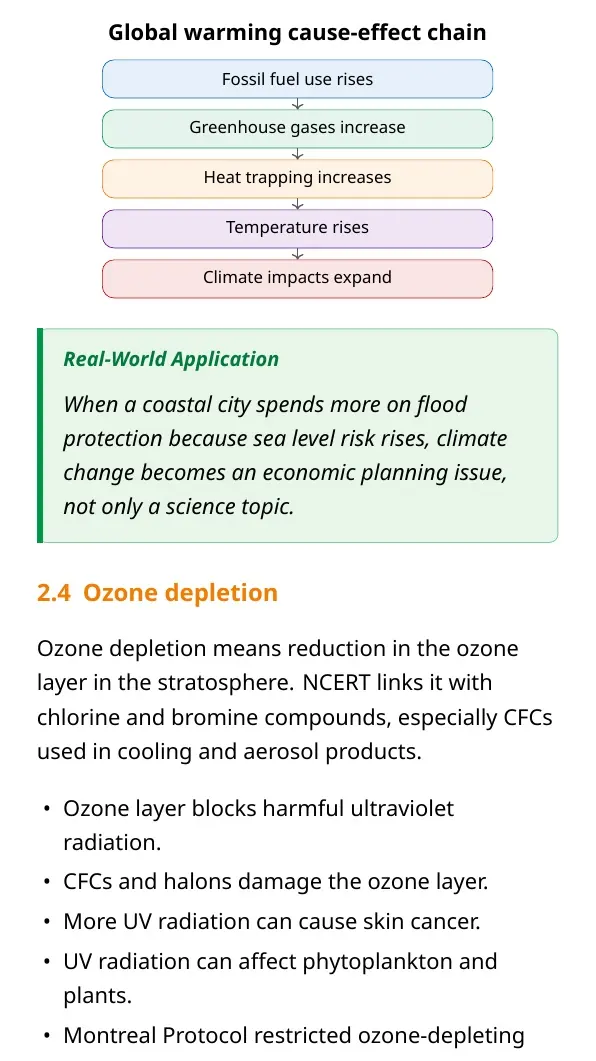
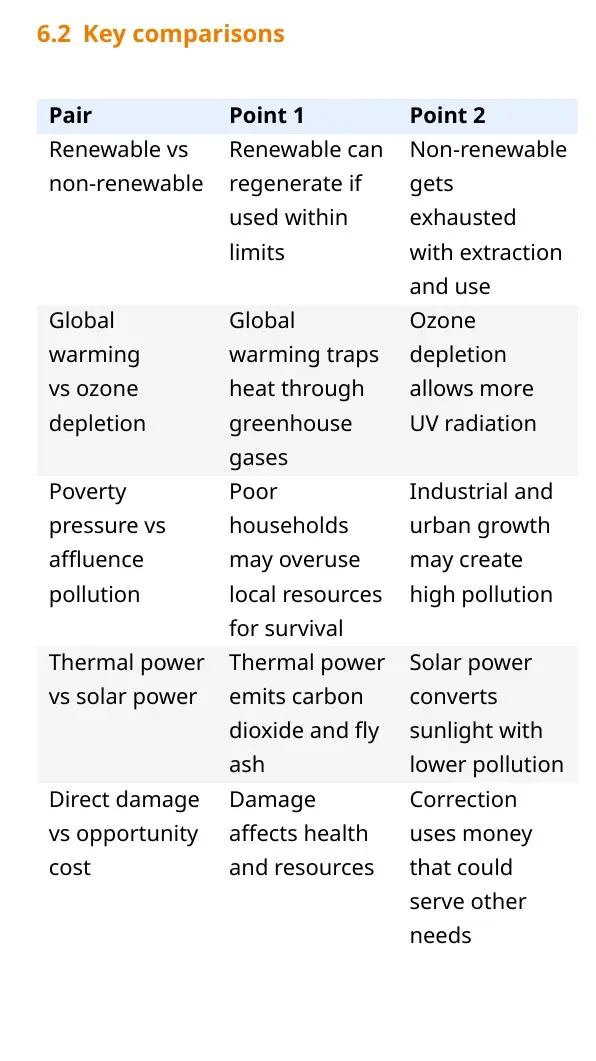
Global warming and ozone depletion are the two major global environmental issues in the chapter. They are different problems, so students should not mix their causes or effects.
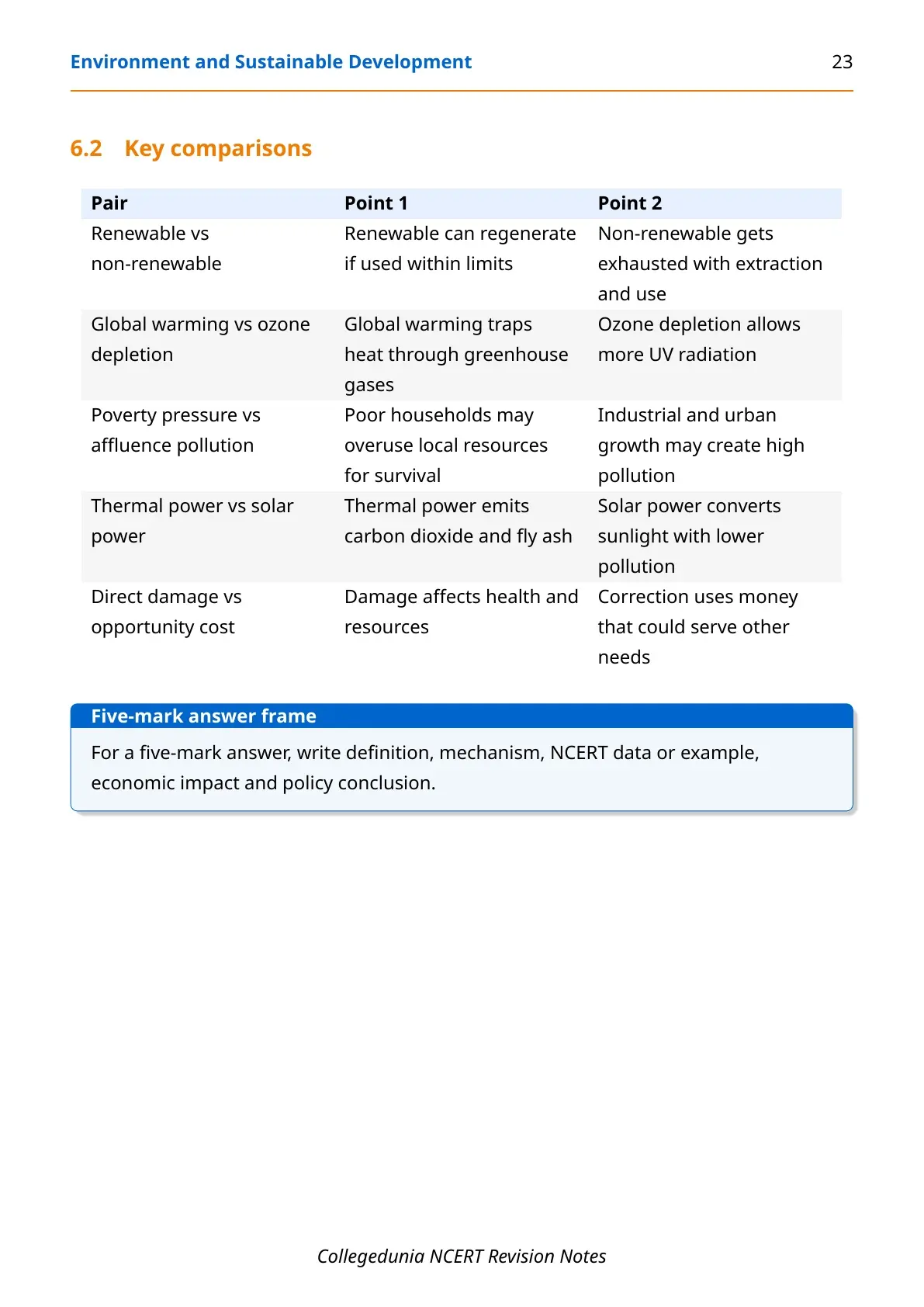
- Global warming: average temperature rises due to greenhouse gases.
- Ozone depletion: ozone layer falls due to chlorine and bromine compounds.
- Global warming effect: sea level rise, storms and disease risk may increase.
- Ozone effect: more UV radiation can harm humans, plants and aquatic life.
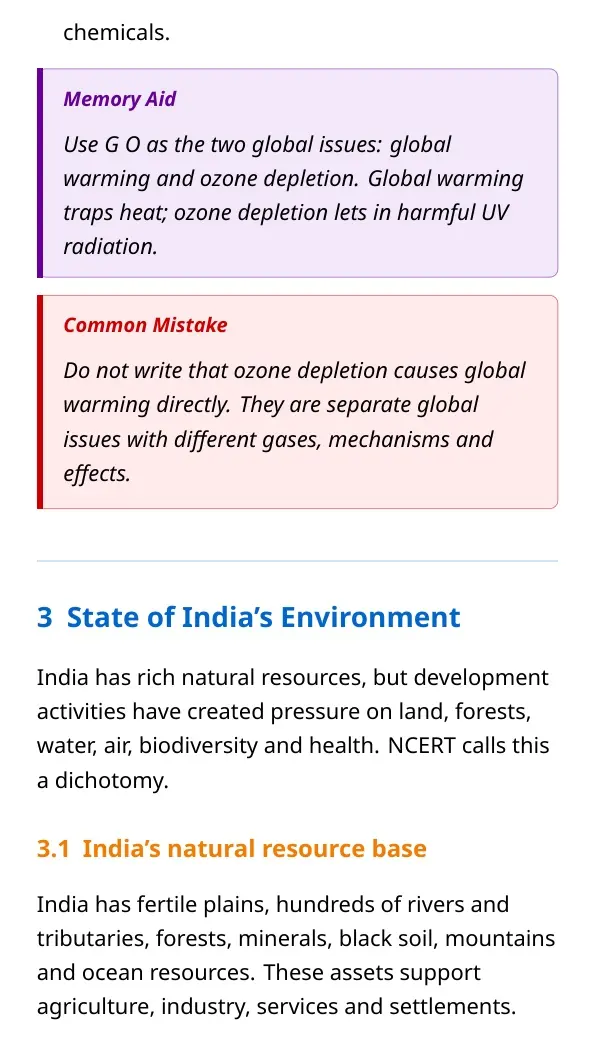
Remember the difference: global warming traps heat, while ozone depletion lets more harmful UV radiation reach Earth.
State of India's Environment in Class 11 Economics
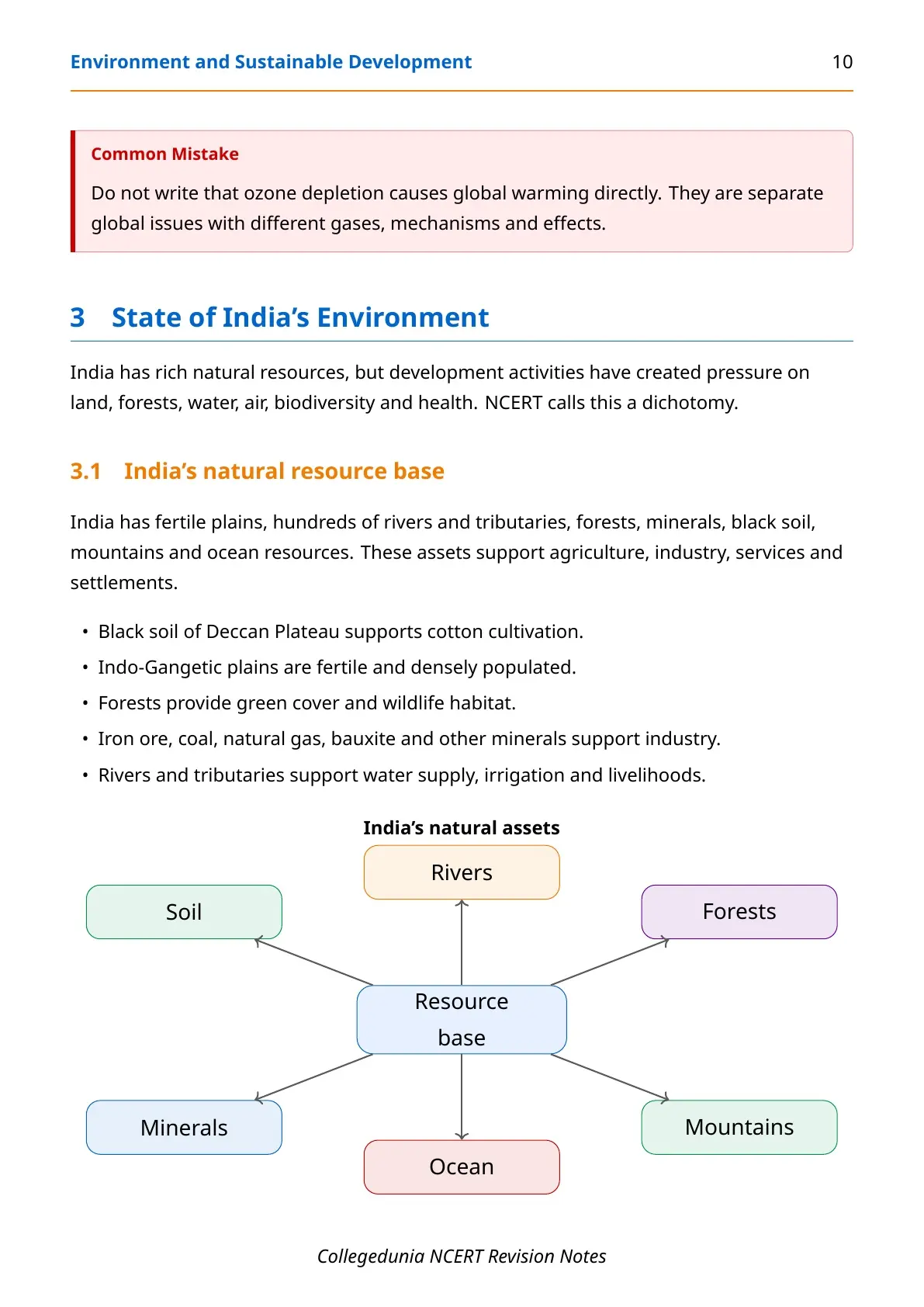
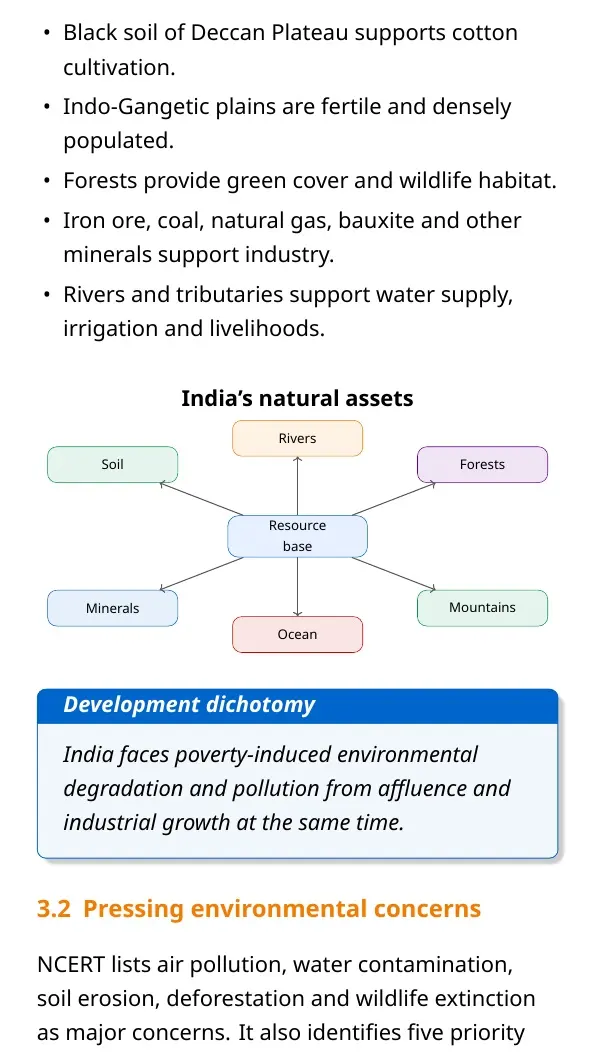
India has rich natural resources, but development has placed pressure on land, forests, water, air and biodiversity. NCERT calls this a dichotomy because India faces poverty-linked degradation and pollution from rising affluence at the same time.
| Concern | NCERT point | Answer clue |
|---|---|---|
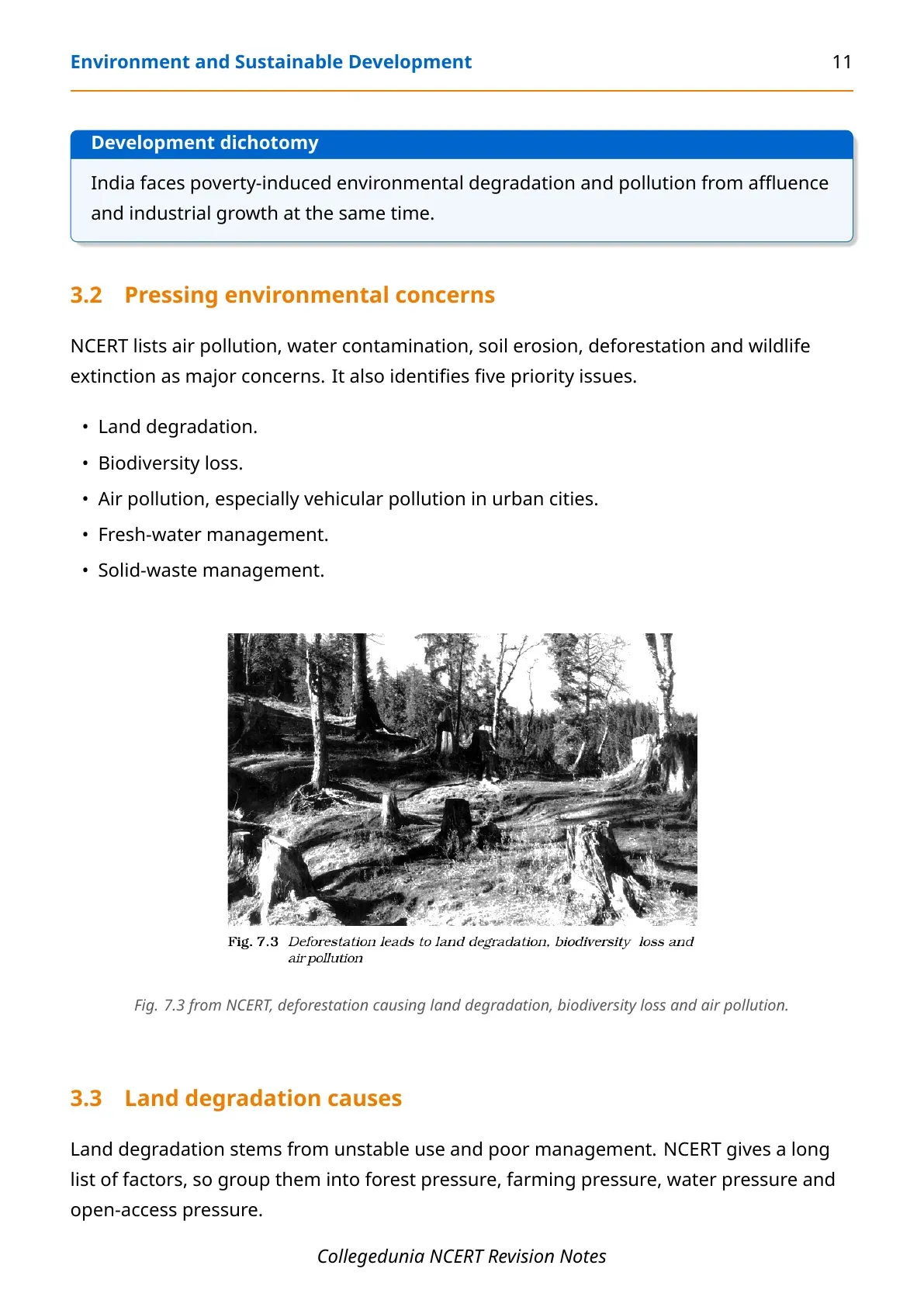
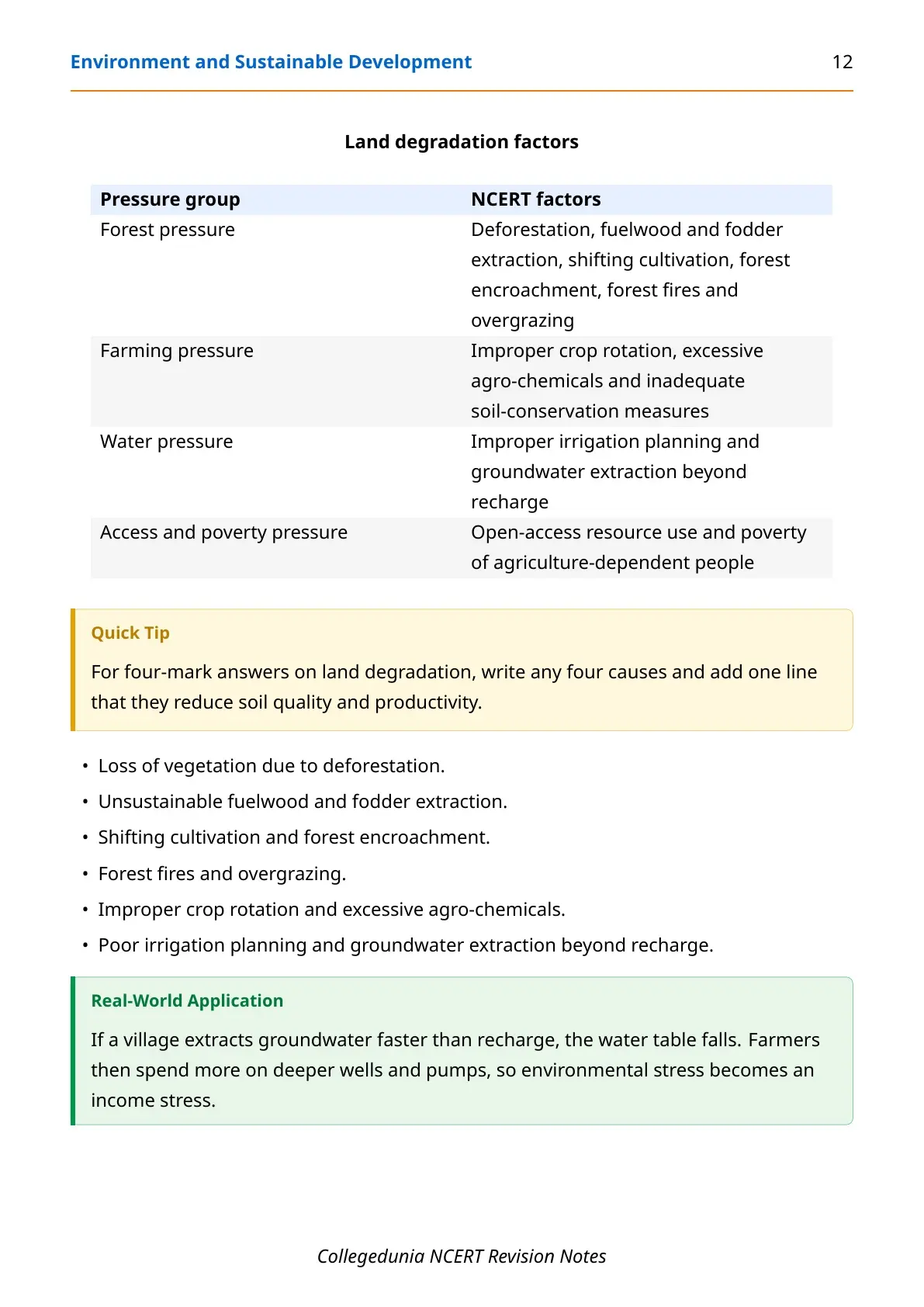
| Land degradation | Loss of vegetation, poor crop rotation and overgrazing | Group causes clearly |
| Biodiversity loss | Damage to forests and wildlife | Link with deforestation |
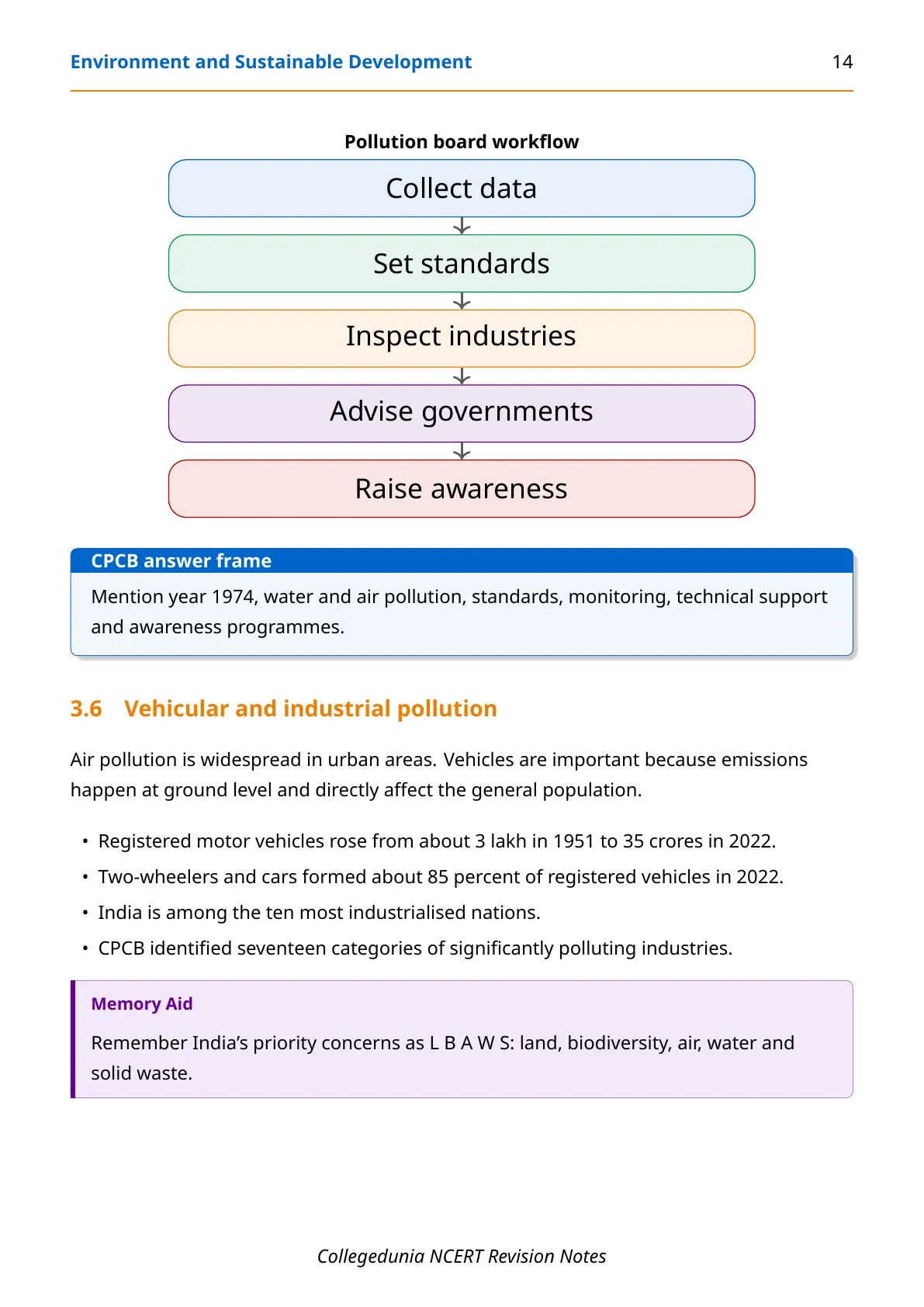
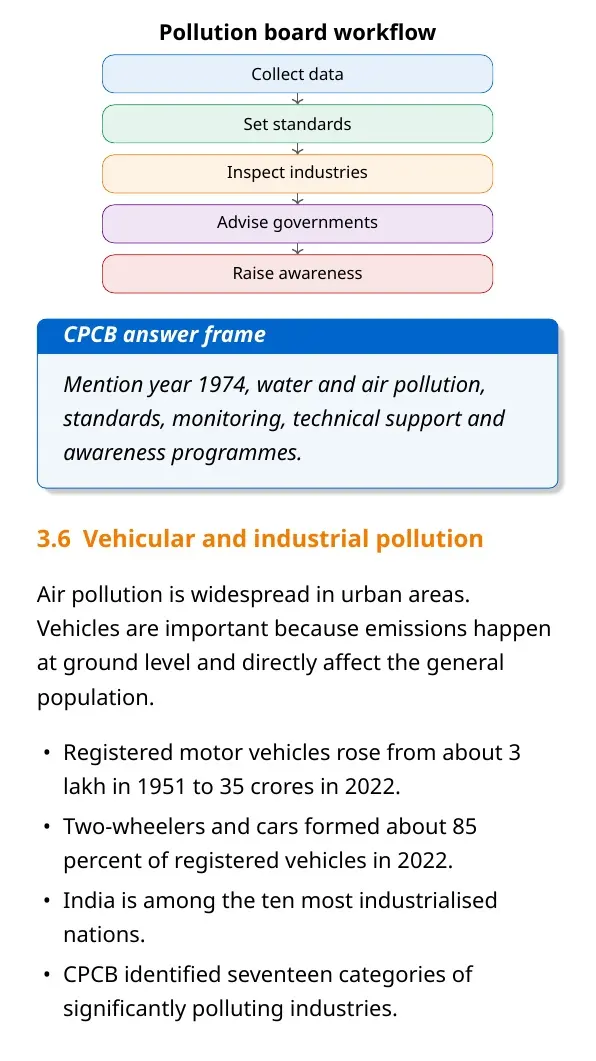
| Air pollution | Vehicular pollution is a major urban concern | Mention ground-level emissions |
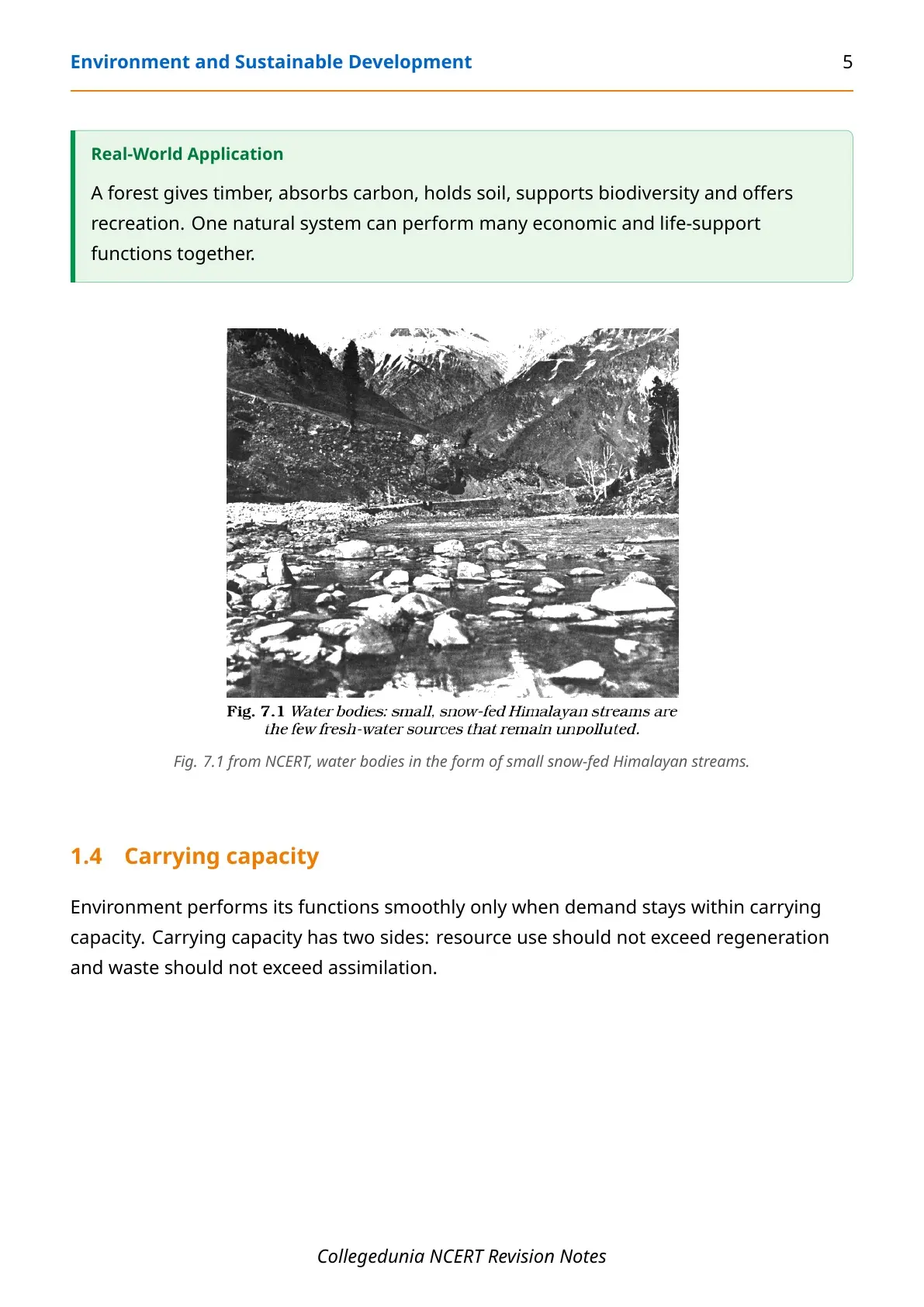
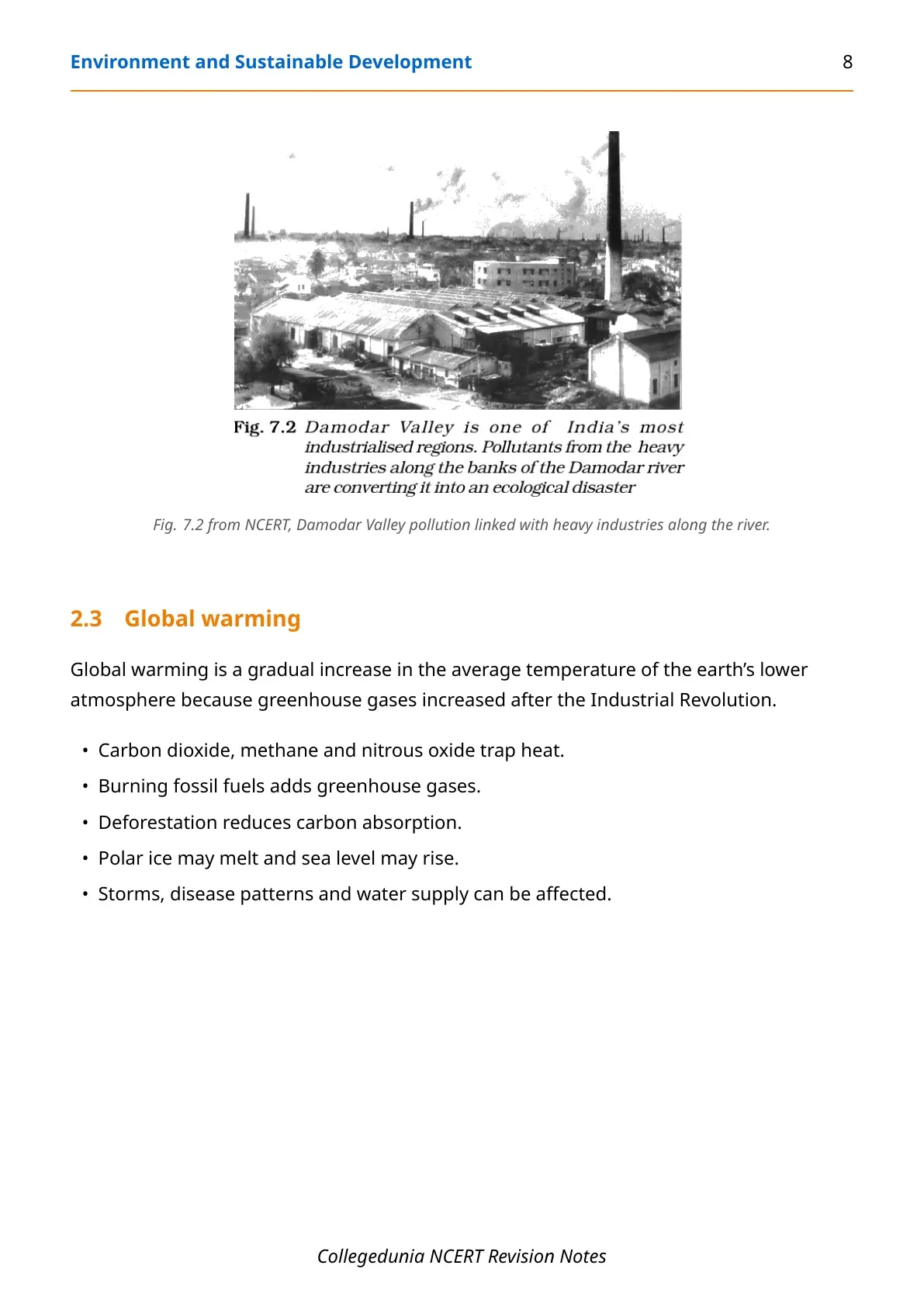
| Fresh water | Management of water resources is a priority | Use pollution and scarcity |
| Solid waste | Waste management is a priority issue | Connect with urbanisation |
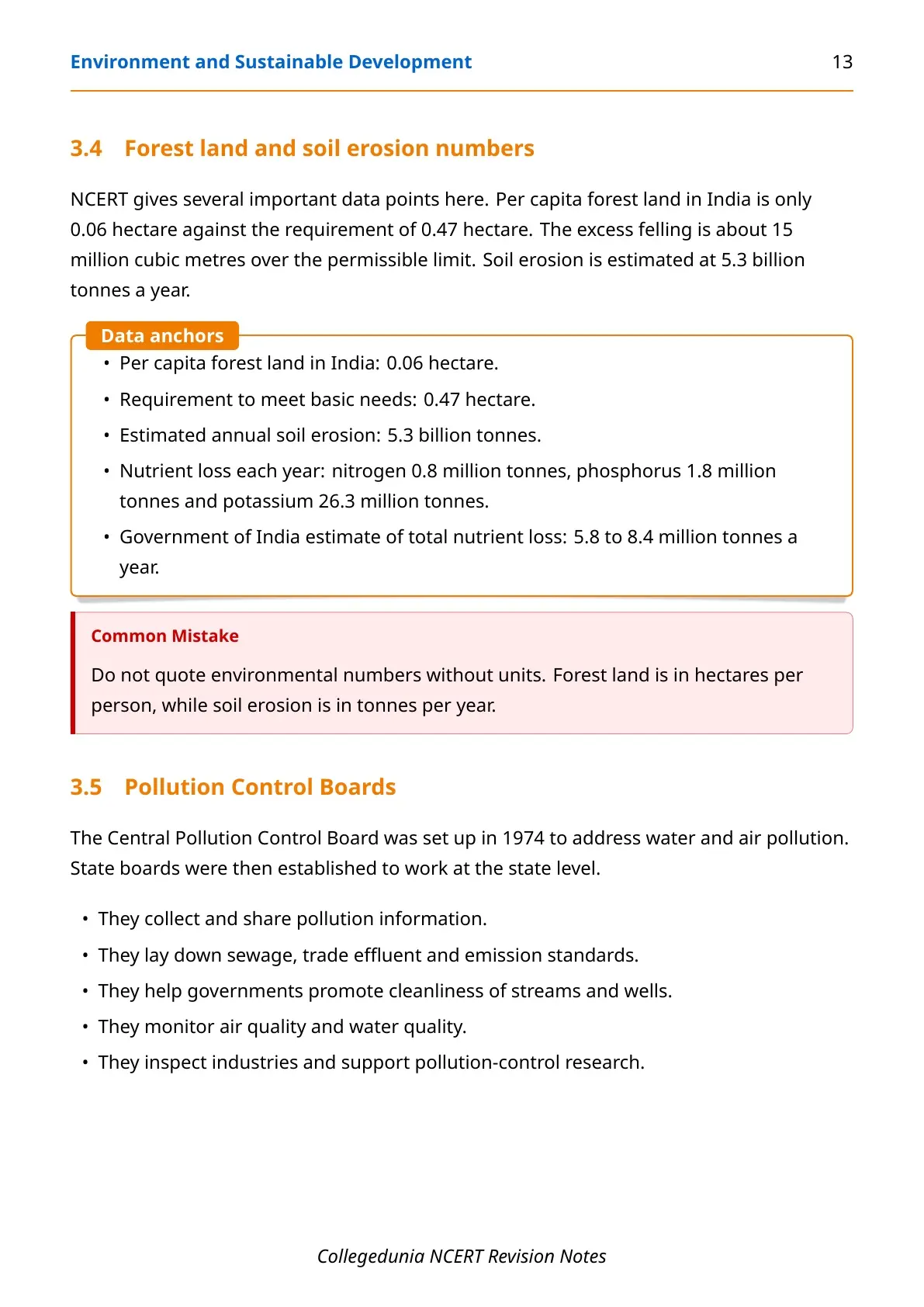
For data-based answers, remember that India's per capita forest land is only 0.06 hectare against the requirement of 0.47 hectare.
Sustainable Development Meaning and Daly Rules
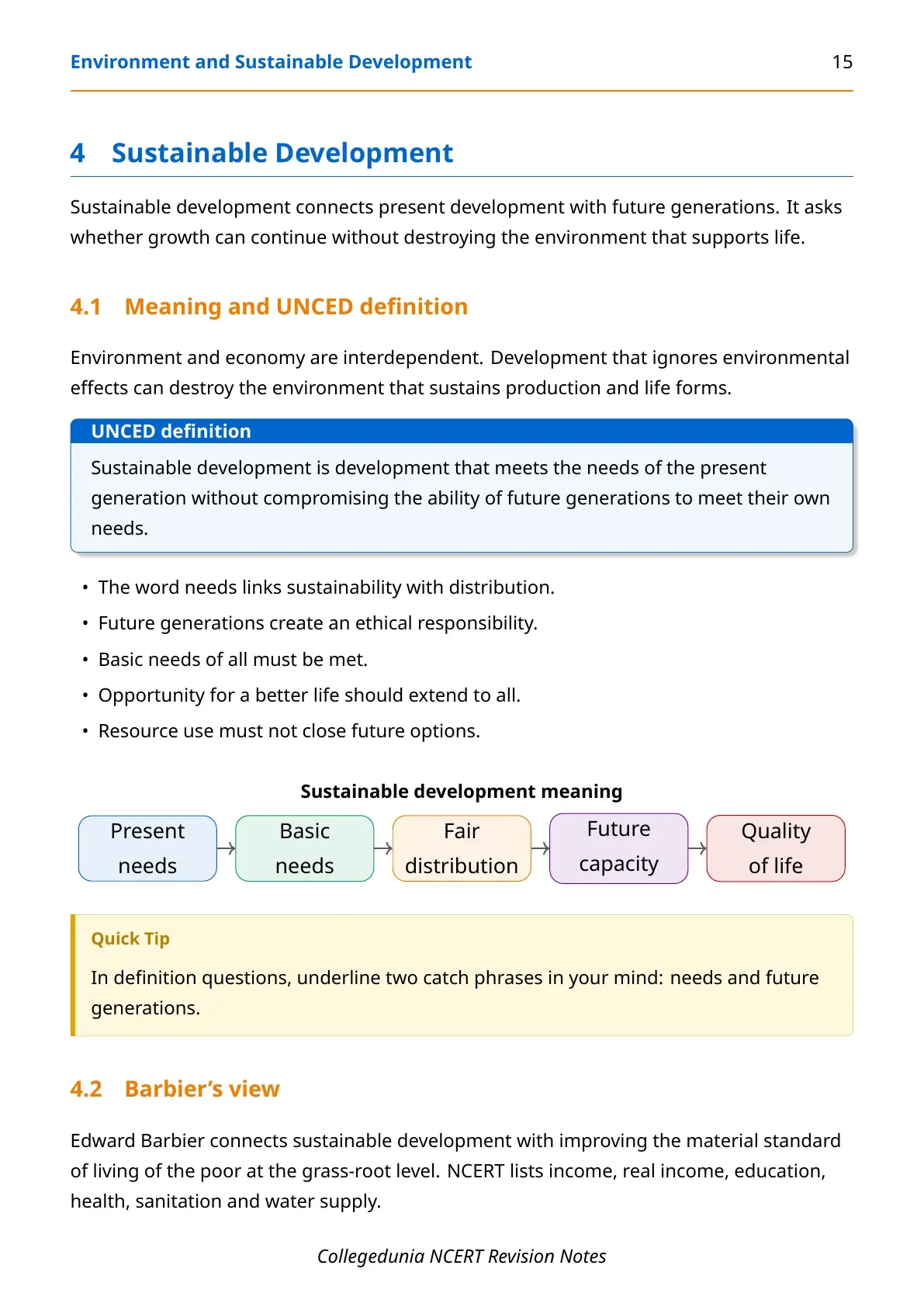
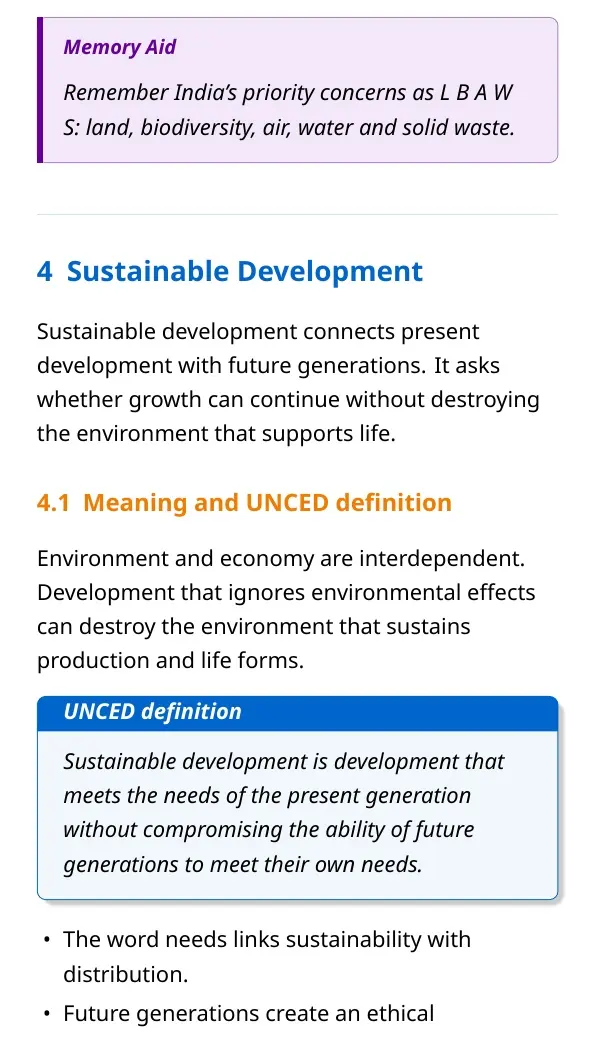
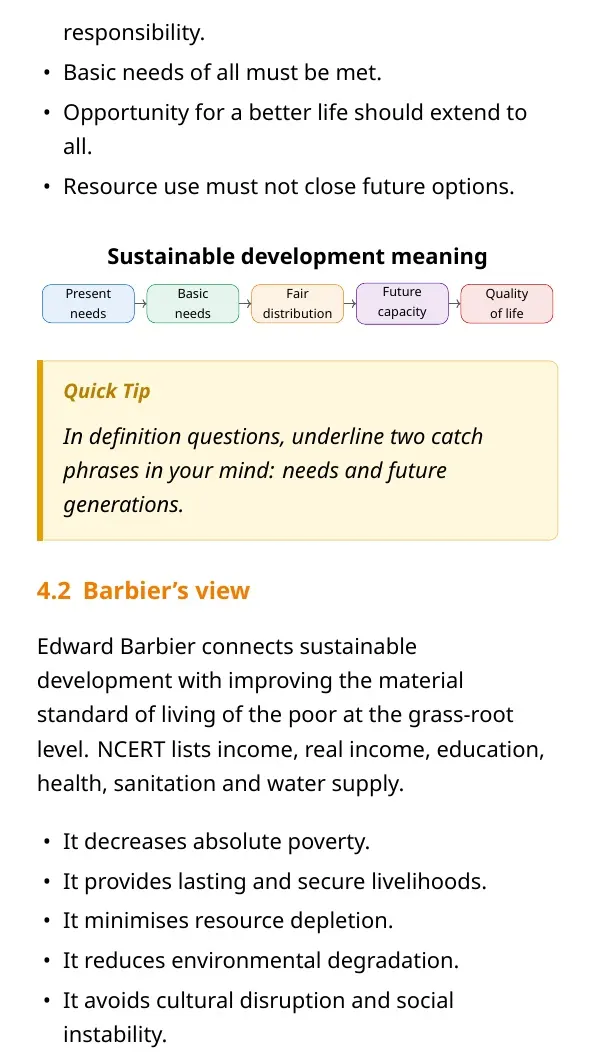
Sustainable development meets present needs without reducing the ability of future generations to meet their own needs. The definition focuses on two ideas: needs and future generations.
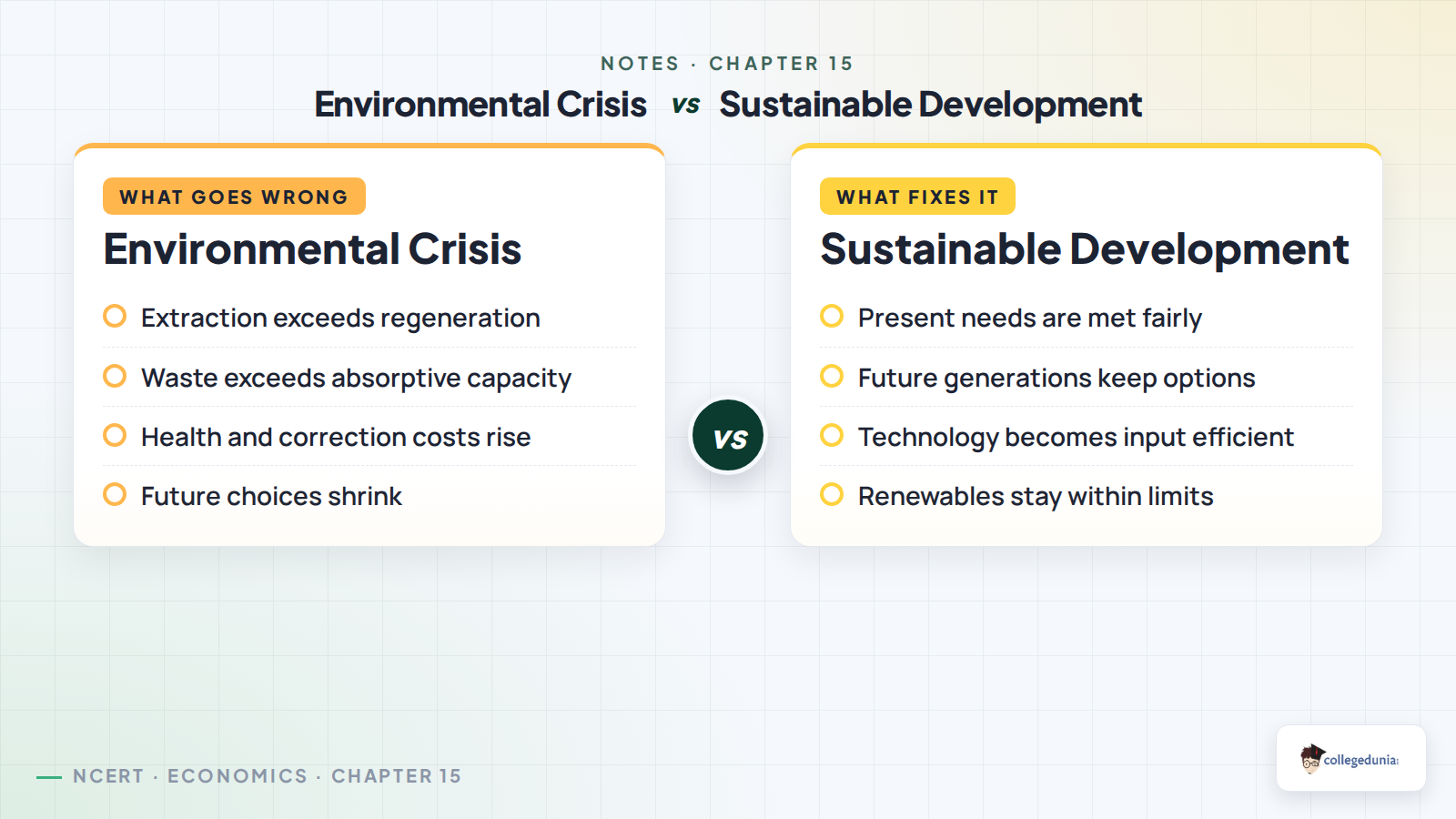
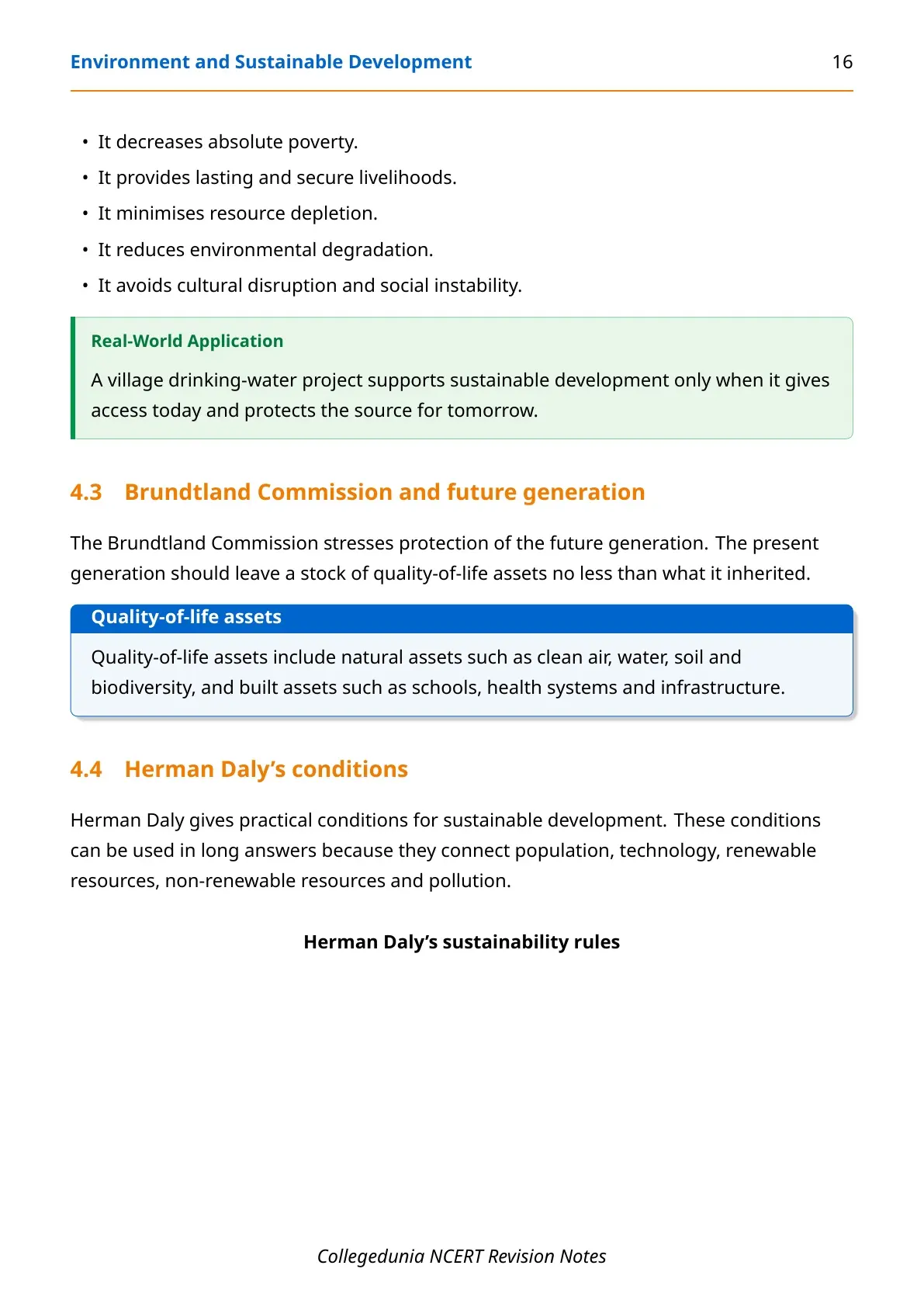
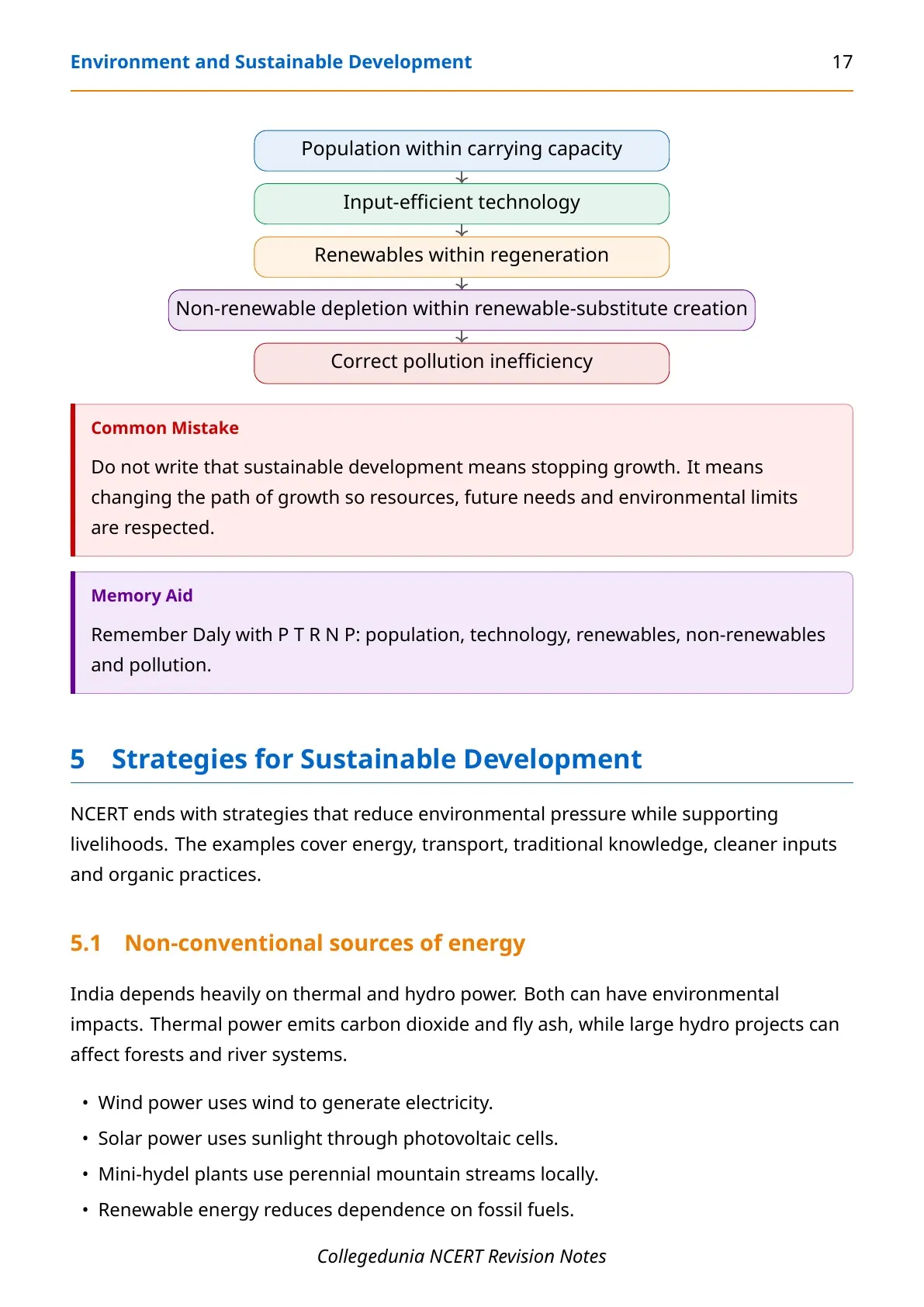
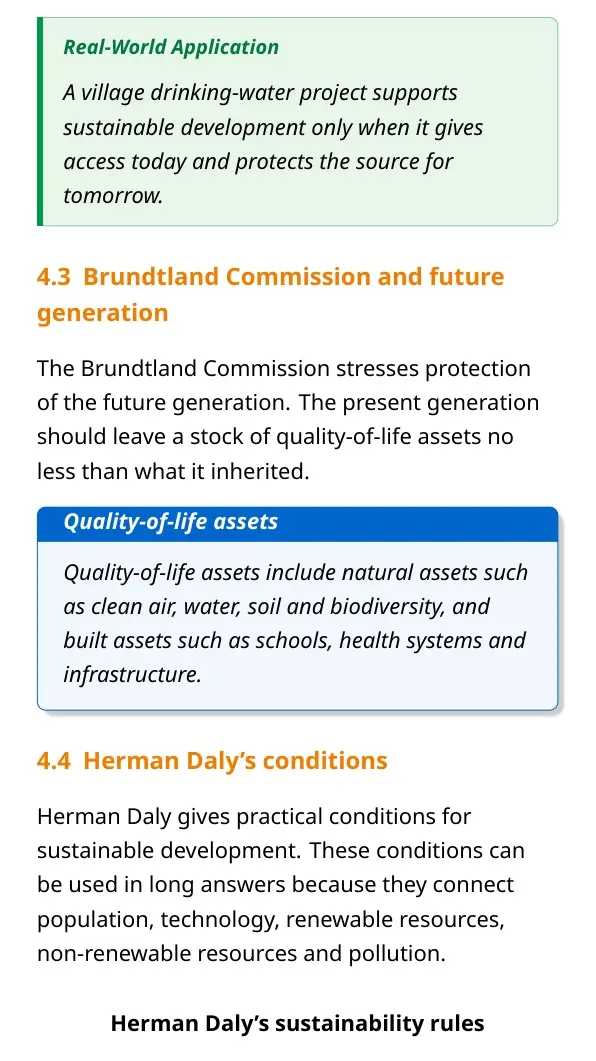
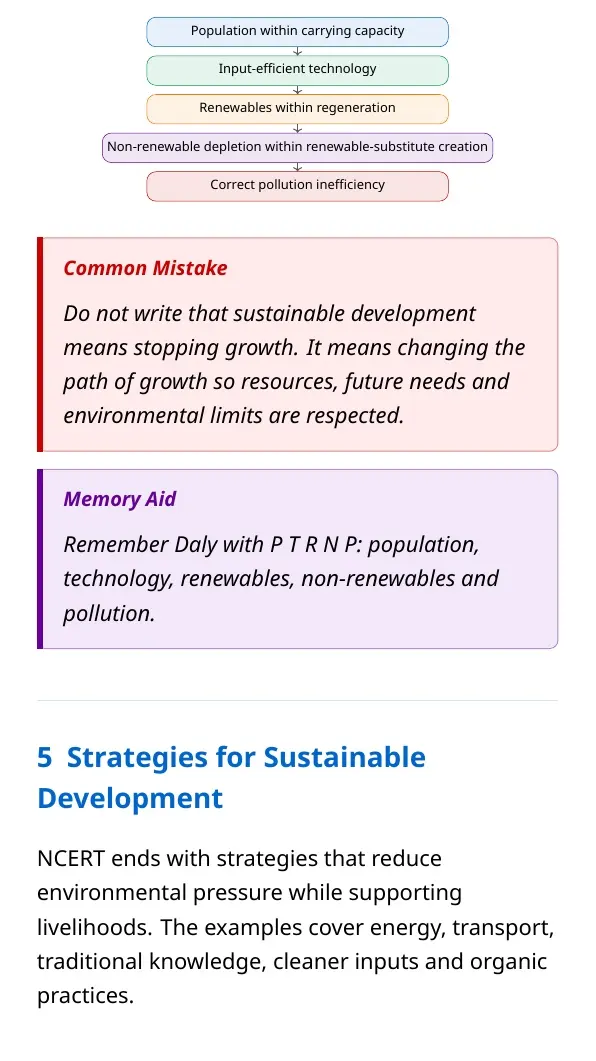
Herman Daly gives practical rules for sustainability. Use them when the question asks how development can stay within ecological limits.
- Keep population within carrying capacity.
- Use technology that is input efficient.
- Extract renewable resources within regeneration limits.
- Use substitutes for non-renewable resources.
- Correct inefficiencies caused by pollution.
Sustainable Development Strategies in NCERT
NCERT lists practical strategies for sustainable development. These strategies reduce environmental damage while still supporting energy, transport, farming and livelihood needs.
| Strategy | How it helps | Example |
|---|---|---|
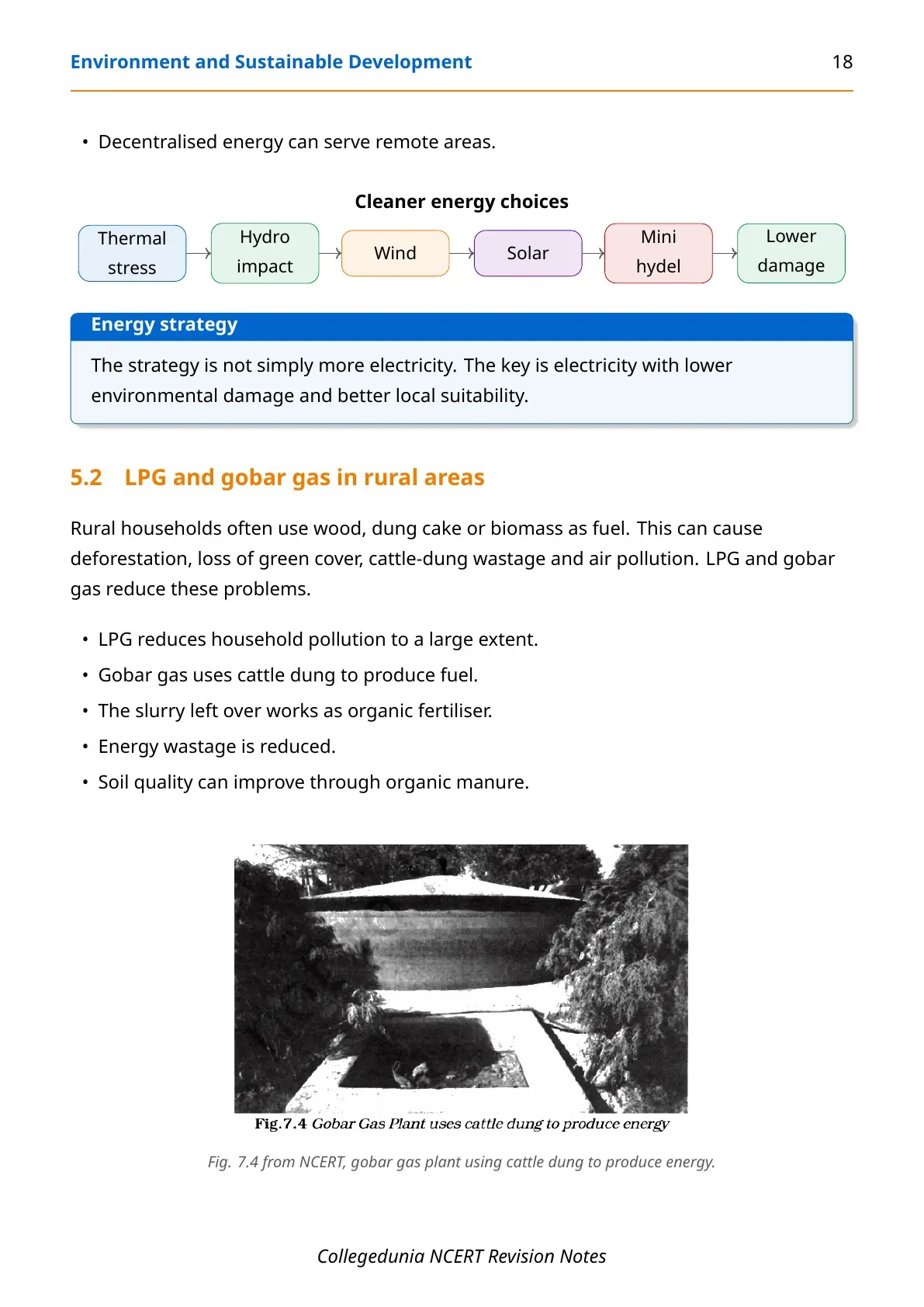
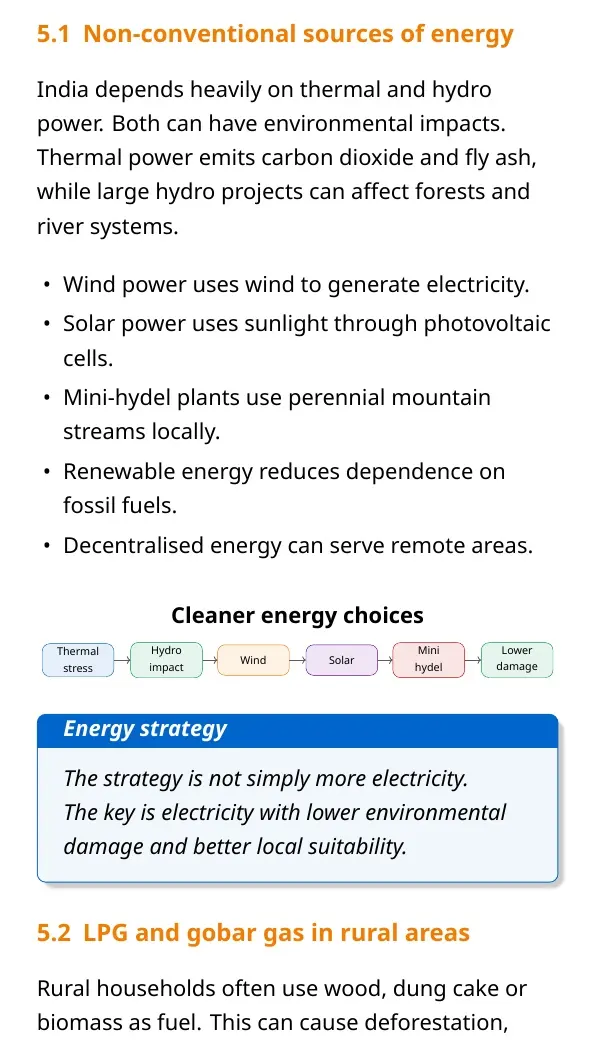
| Non-conventional energy | Reduces pressure from thermal and large hydro power | Wind and solar power |
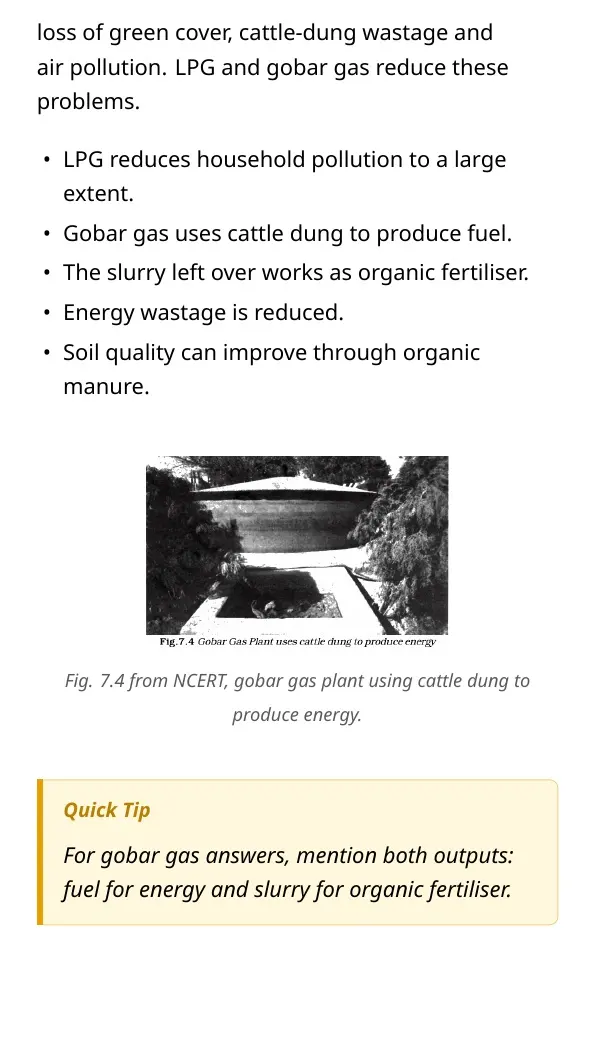
| LPG and gobar gas | Reduces wood use and household pollution | Rural clean fuel |
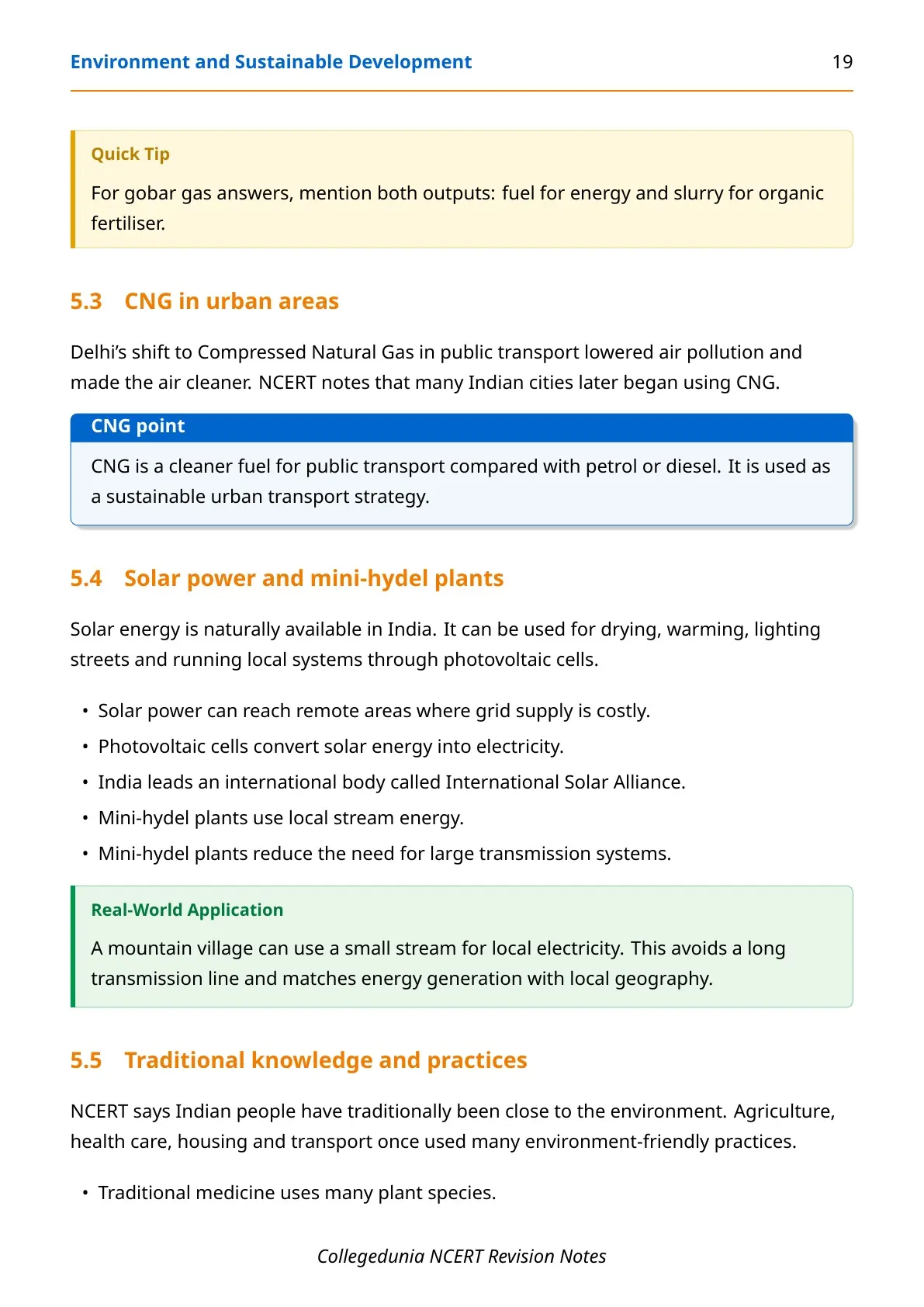
| CNG in urban areas | Lowers vehicle pollution | Delhi public transport |
| Mini-hydel plants | Uses local streams with less damage | Mountain regions |
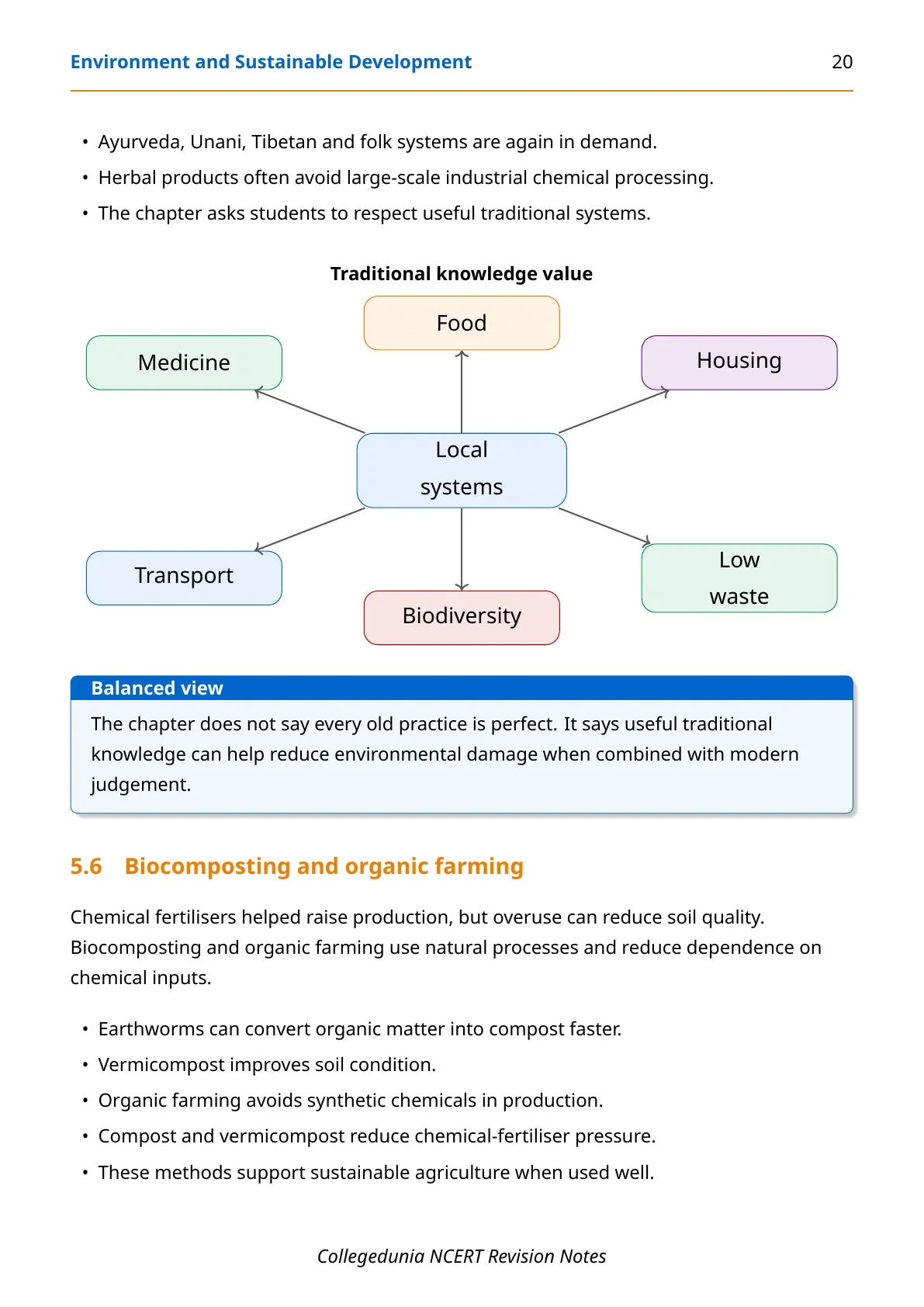
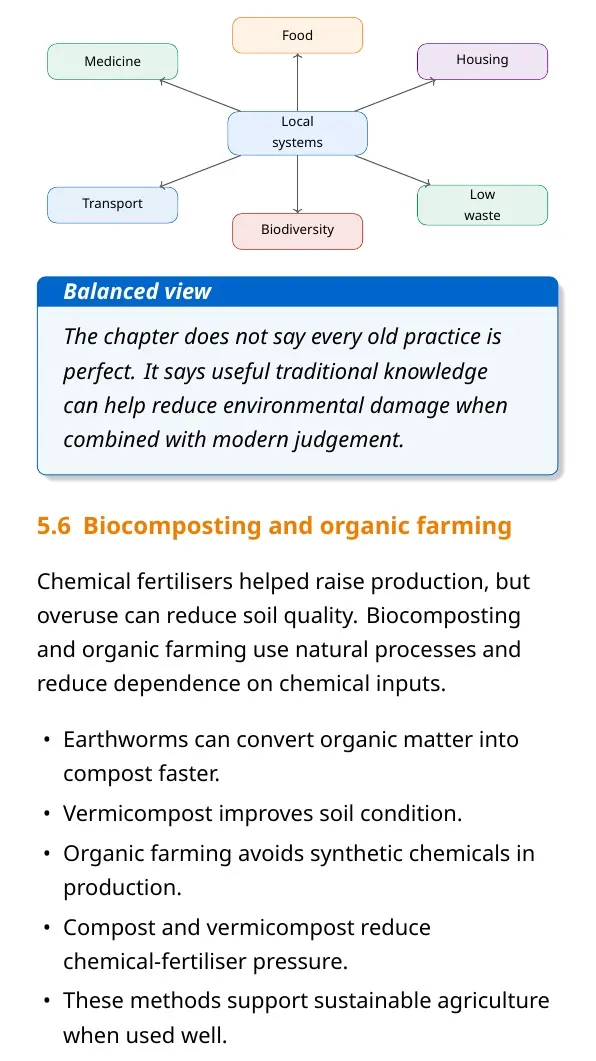
| Traditional knowledge | Uses environment-friendly practices | Plant-based health systems |
| Biocomposting | Turns organic waste into compost | Vermicompost |
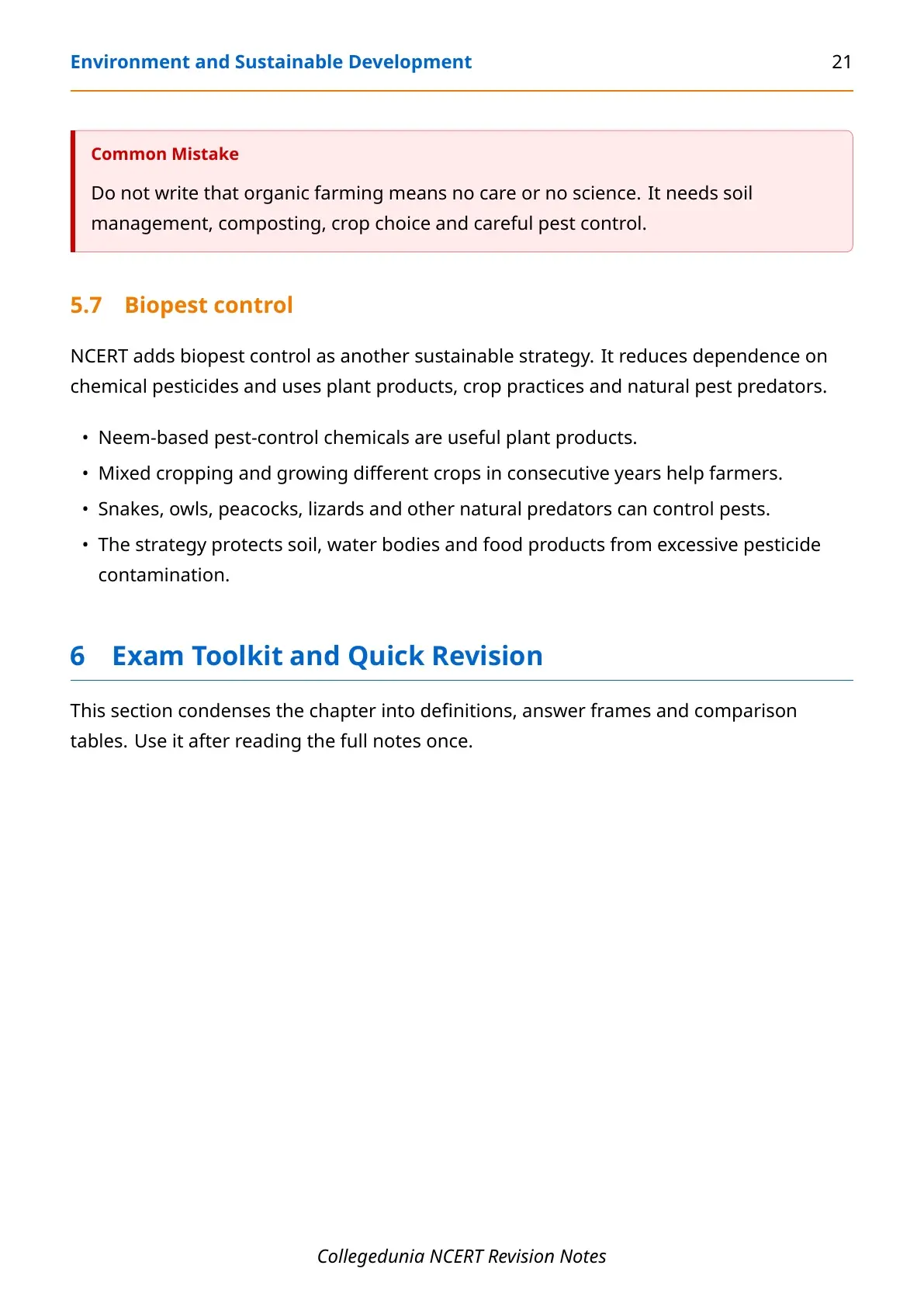
| Biopest control | Reduces chemical pesticide pressure | Neem products and mixed cropping |
| Organic farming | Reduces chemical input pressure | Compost and careful pest control |
How to Write Chapter 15 Economics Answers
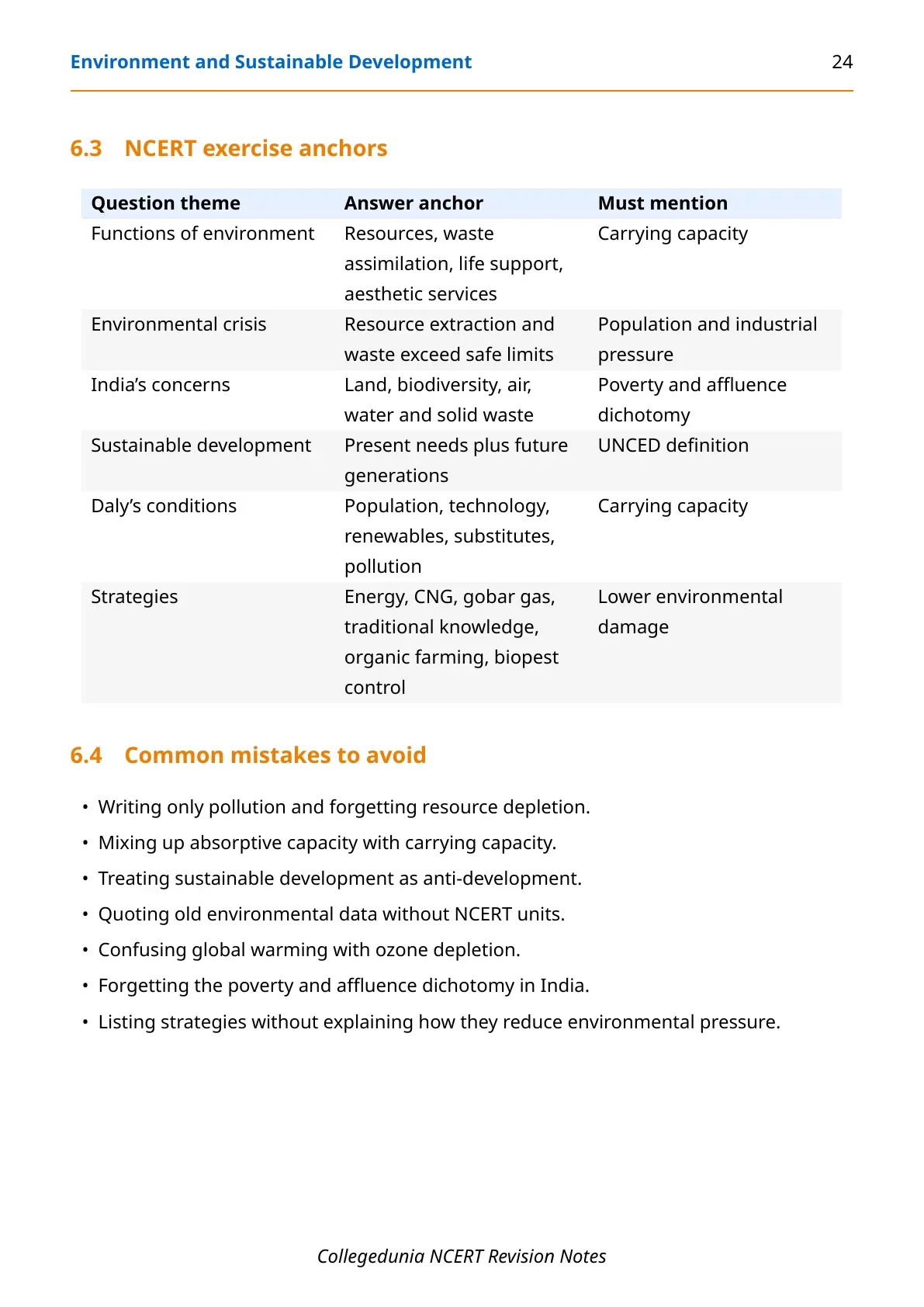
For short answers, define the term first and add one NCERT example. For long answers, start with the concept, explain the cause-effect chain and end with a policy point.
- Define environment, carrying capacity or sustainable development clearly.
- Add the NCERT cause, such as population pressure or industrial growth.
- Use one data point or example, such as 0.06 hectare forest land.
- End with a strategy, such as CNG, solar power, biocomposting or biopest control.
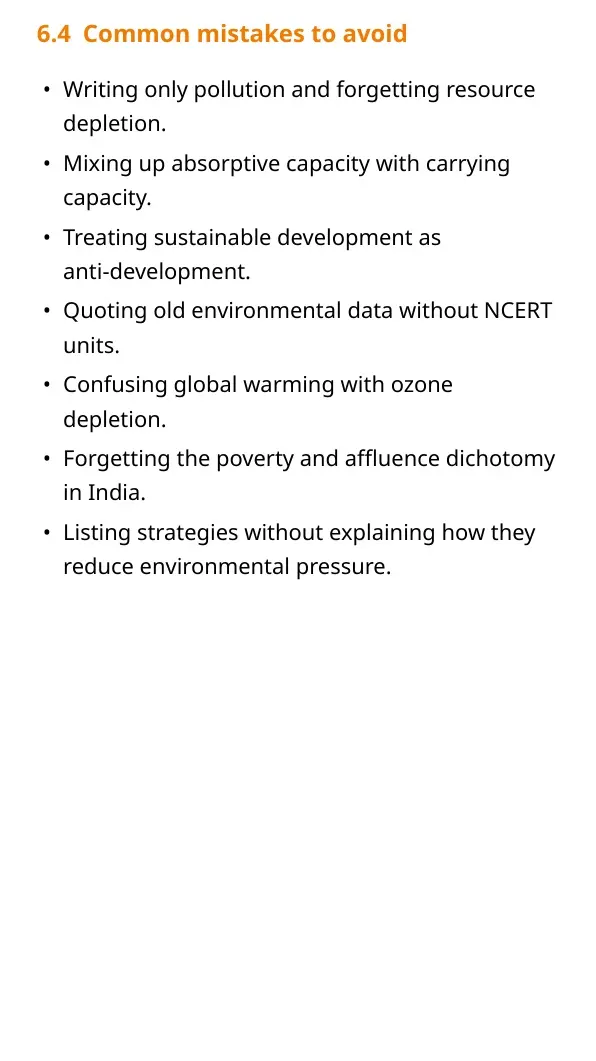
Do not write only slogans about saving nature. Economics answers need the link between resources, costs, health, future needs and policy.
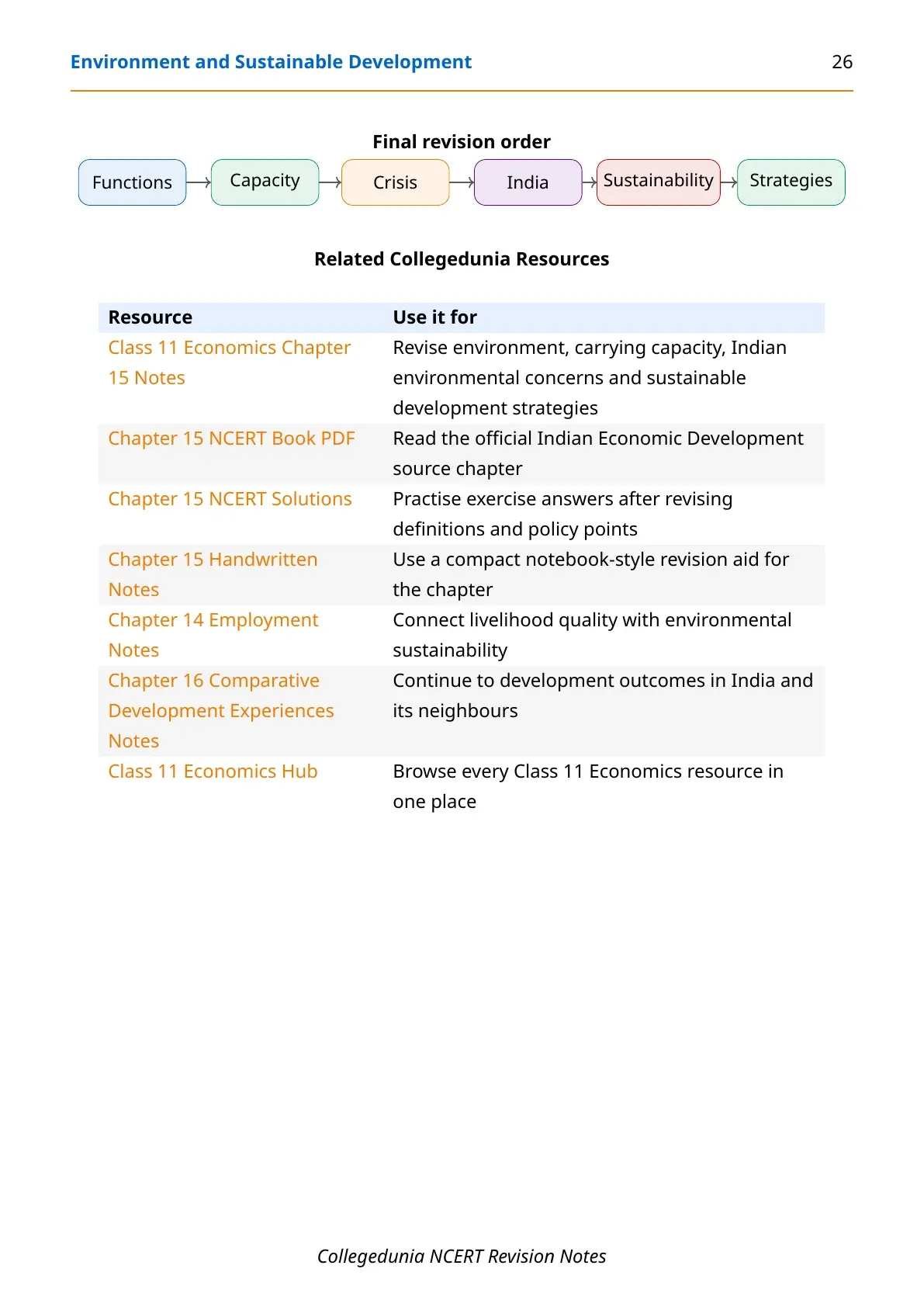
Related Resources for Environment and Sustainable Development
| Resource | Use it for | Link |
|---|---|---|
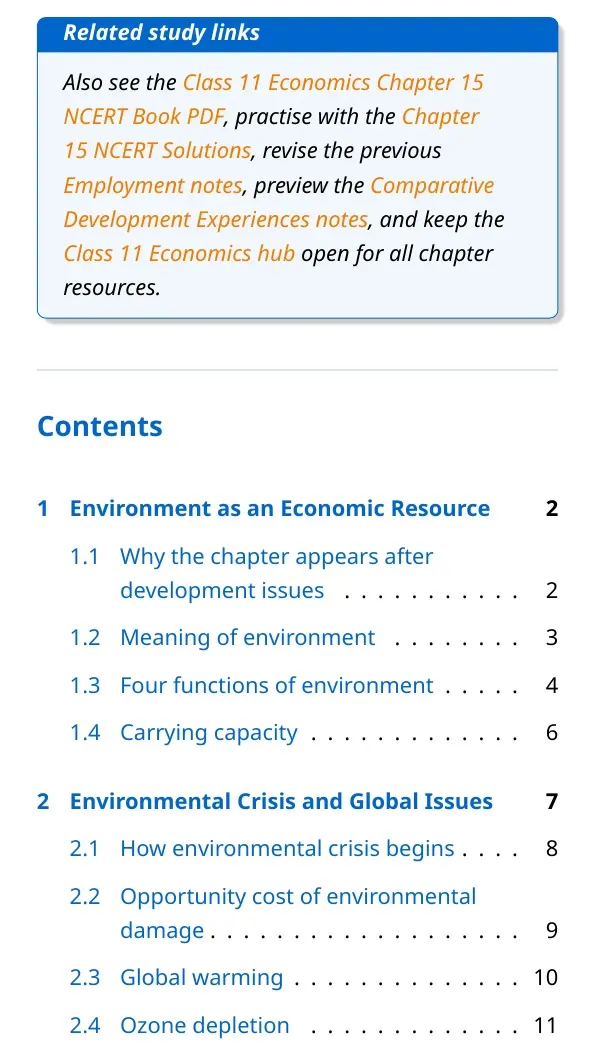
| NCERT Book PDF | Read the official source chapter | Class 11 Economics Chapter 15 NCERT Book PDF |
| NCERT Solutions | Practise exercise answers after revision | Class 11 Economics Chapter 15 NCERT Solutions |
| Handwritten Notes | Use compact notes before tests | Class 11 Economics Chapter 15 Handwritten Notes |
| Formula Sheet | Revise definitions and strategies quickly | Class 11 Economics Chapter 15 Formula Sheet |
Class 11 Economics Notes for All Chapters
| Chapter | NCERT Notes |
|---|---|
| Chapter 9 | Indian Economy on the Eve of Independence Notes |
| Chapter 10 | Indian Economy 1950-1990 Notes |
| Chapter 11 | Liberalisation Privatisation and Globalisation Notes |
| Chapter 12 | Human Capital Formation in India Notes |
| Chapter 13 | Rural Development Notes |
| Chapter 14 | Employment Growth Informalisation and Other Issues Notes |
| Chapter 15 | Environment and Sustainable Development Notes |
| Chapter 16 | Comparative Development Experiences Notes |
Environment and Sustainable Development Class 11 Economics Notes FAQs
Ques. What is meant by environment in Class 11 Economics?
Ans. Environment is the total planetary inheritance and the totality of all resources. It includes biotic factors like plants and animals, and abiotic factors like air, water and land.
Ques. What are the four functions of environment?
Ans. Environment supplies resources, absorbs waste, sustains life through biodiversity and gives aesthetic services such as scenery and natural beauty.
Ques. What is carrying capacity?
Ans. Carrying capacity is the ability of environment to perform its functions without interruption. It fails when extraction and waste cross safe natural limits.
Ques. What is sustainable development?
Ans. Sustainable development meets present needs without reducing the ability of future generations to meet their own needs. It links development with fairness and ecological limits.



Comments