




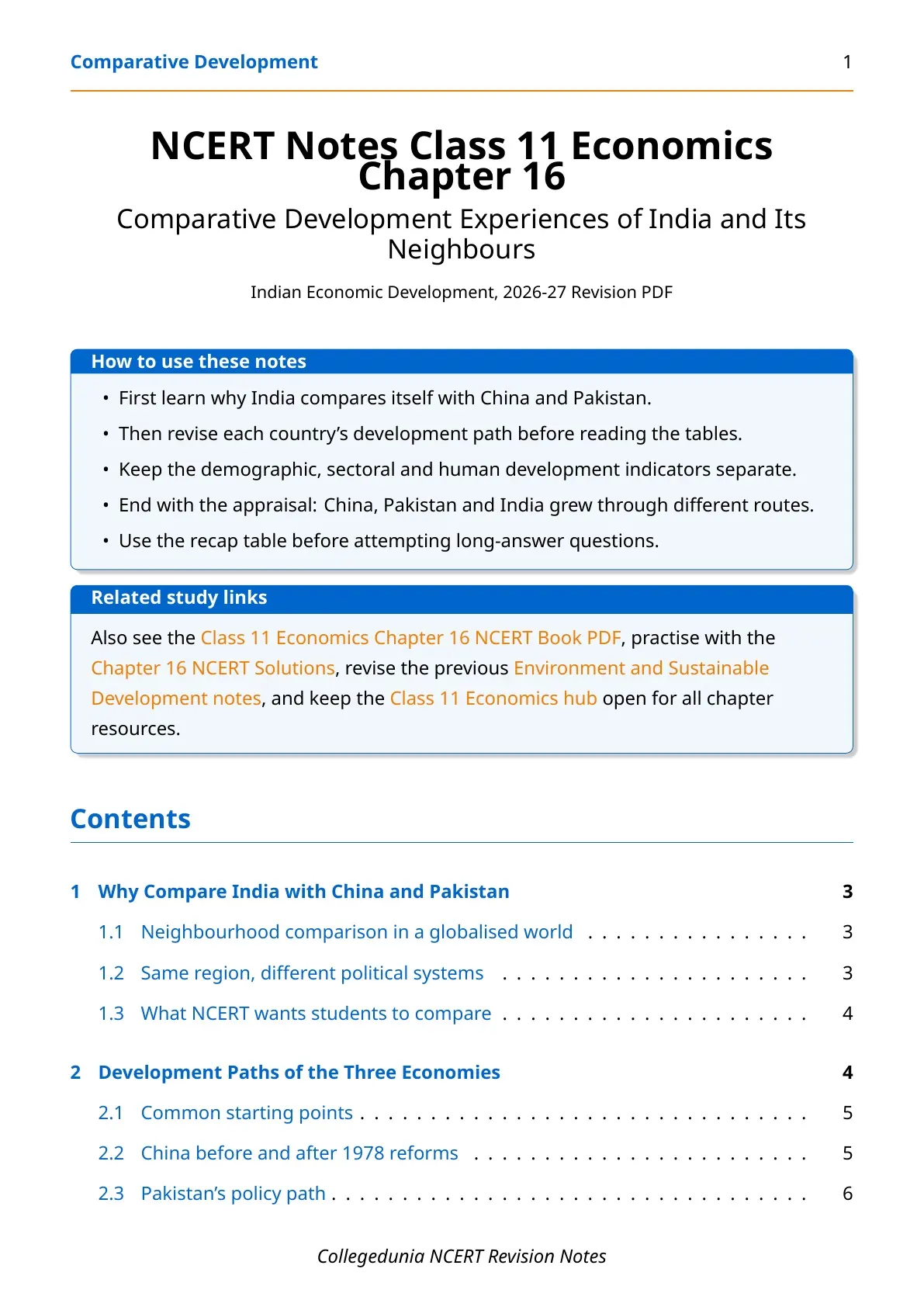
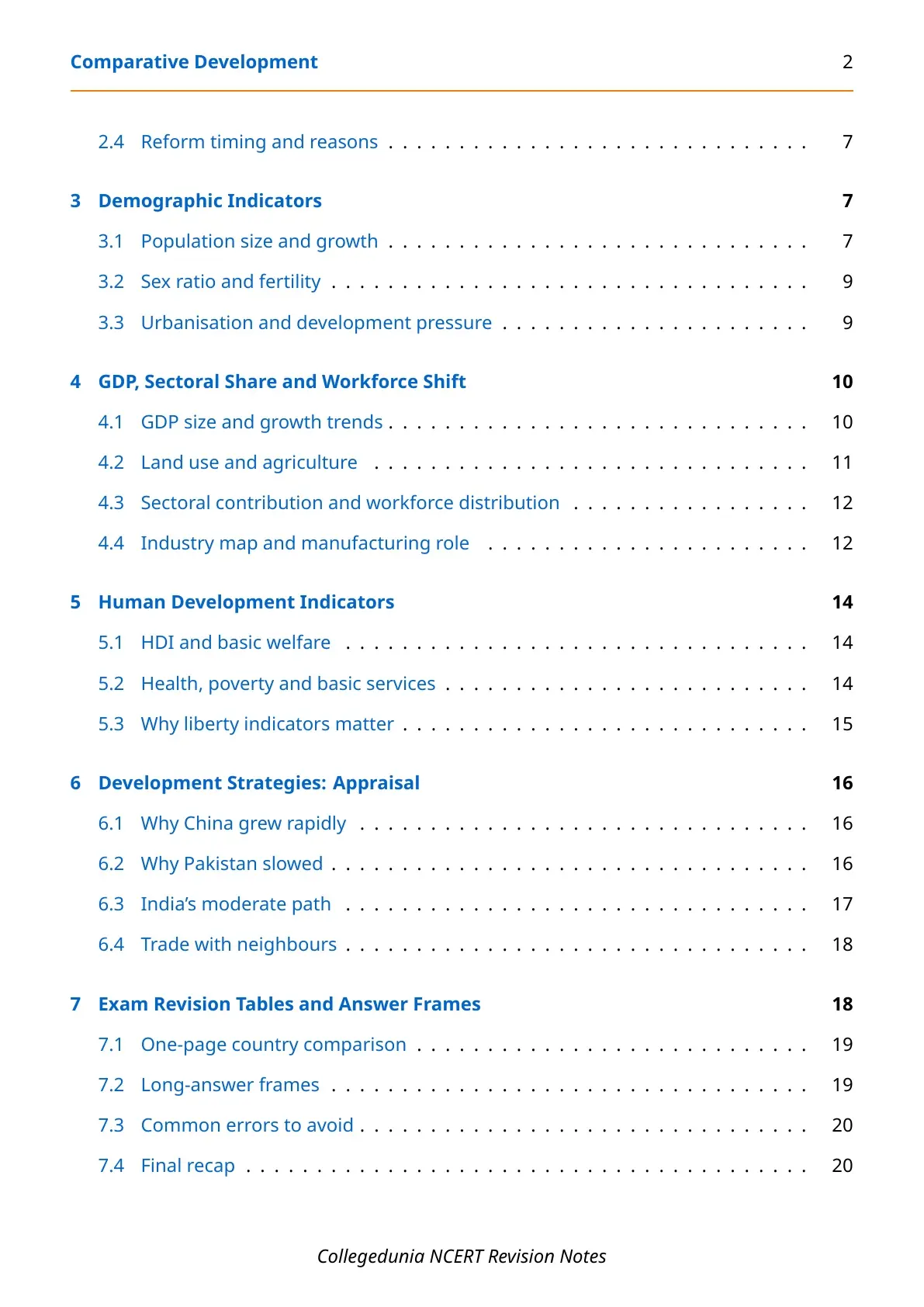
Class 11 Economics Chapter 16 Comparative Development Experiences of India and Its Neighbours notes explain how India, China and Pakistan followed similar planning beginnings but reached different development outcomes. These notes follow the 2026-27 NCERT syllabus and connect development paths, demography, GDP, sectoral change, human development indicators and the final appraisal in one revision flow.
- Download the Chapter 16 Economics notes PDF for offline revision.
- Revise India, China and Pakistan through NCERT tables, figures and comparison frames.
- Use the country-wise notes to answer long questions on reforms, GDP, HDI and liberty indicators.
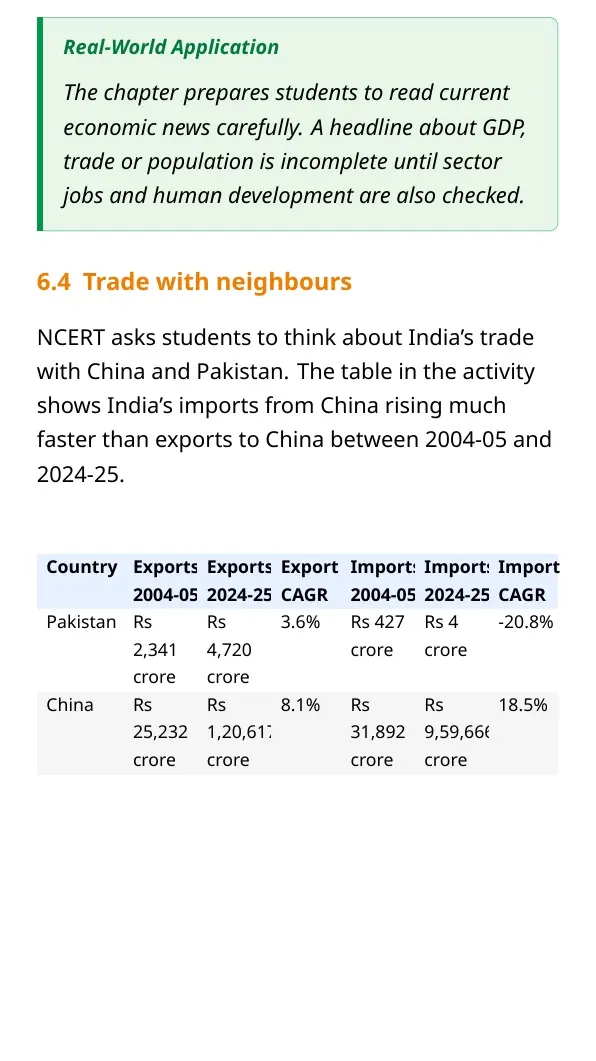
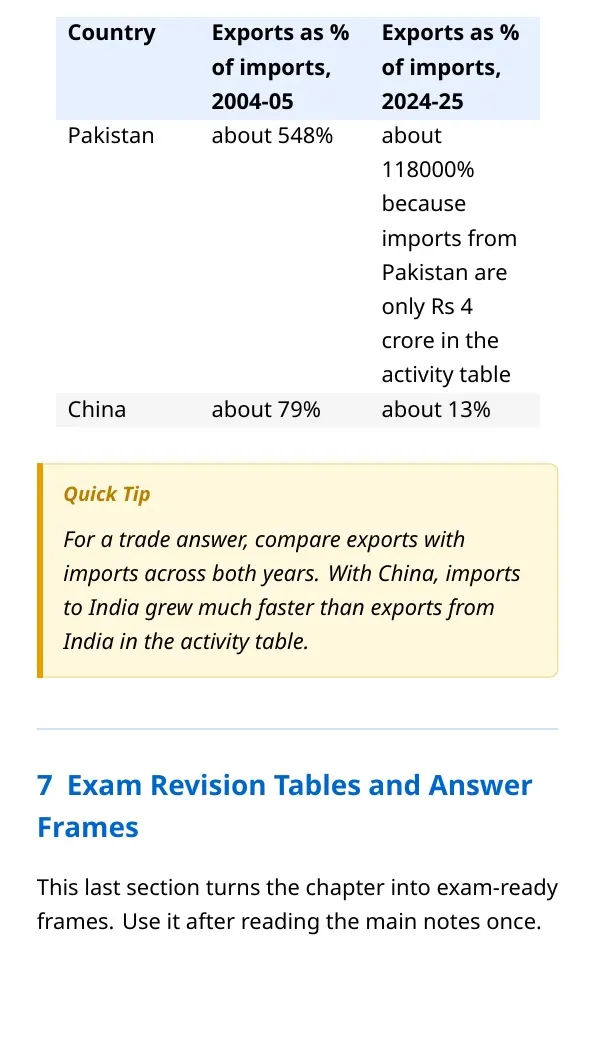
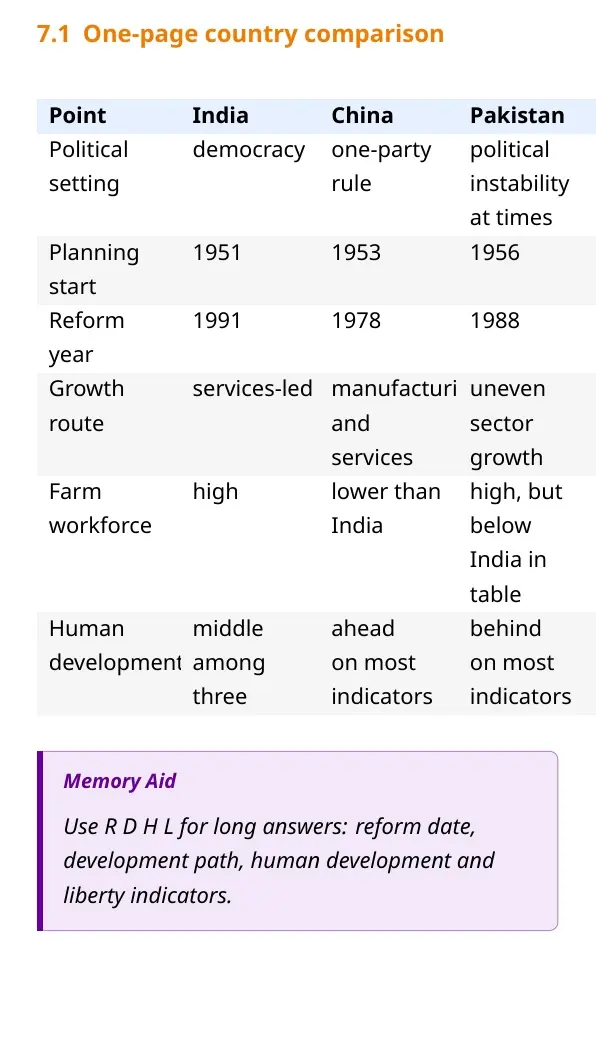
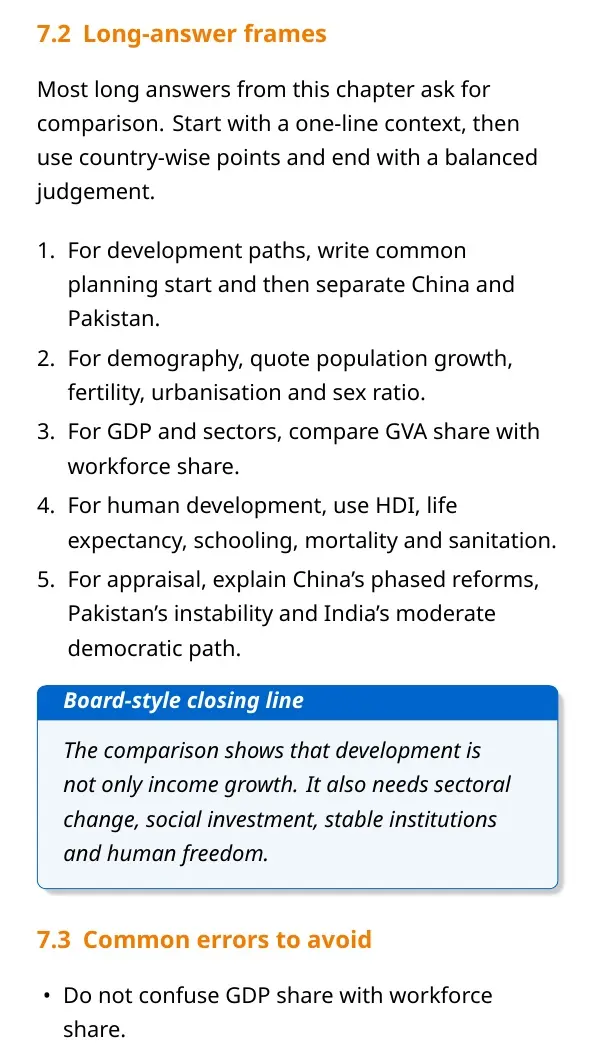
Each Comparative Development notes PDF is checked against the 2026-27 NCERT source chapter, rendered page by page, and audited for source fidelity before publishing.
Student Feedback: More than 10,000 students use Collegedunia NCERT Economics resources for school-test revision. Students usually find this chapter easier when the comparison is revised country-wise first and table-wise second.
In This Article
Why India, China and Pakistan Are Compared
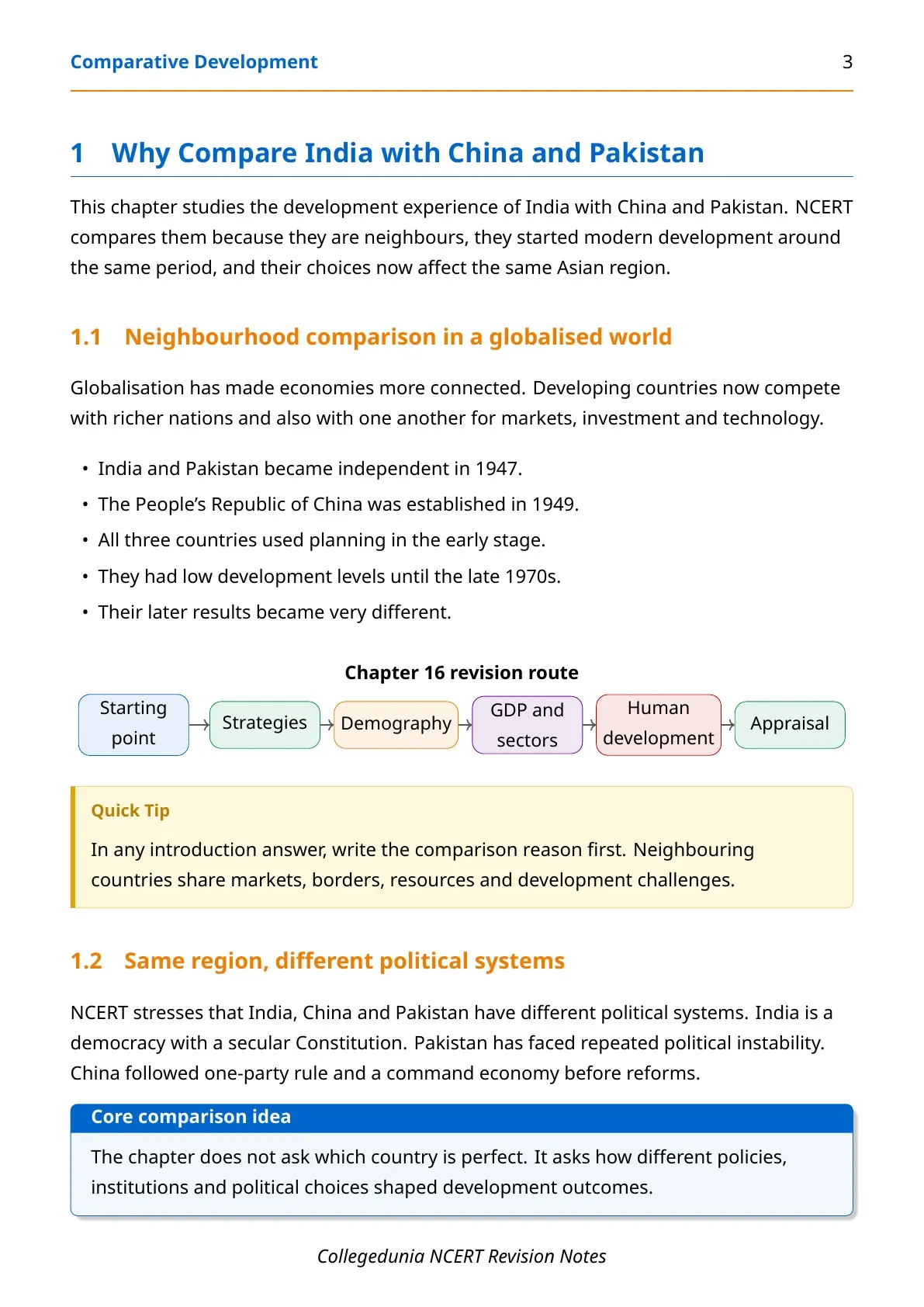
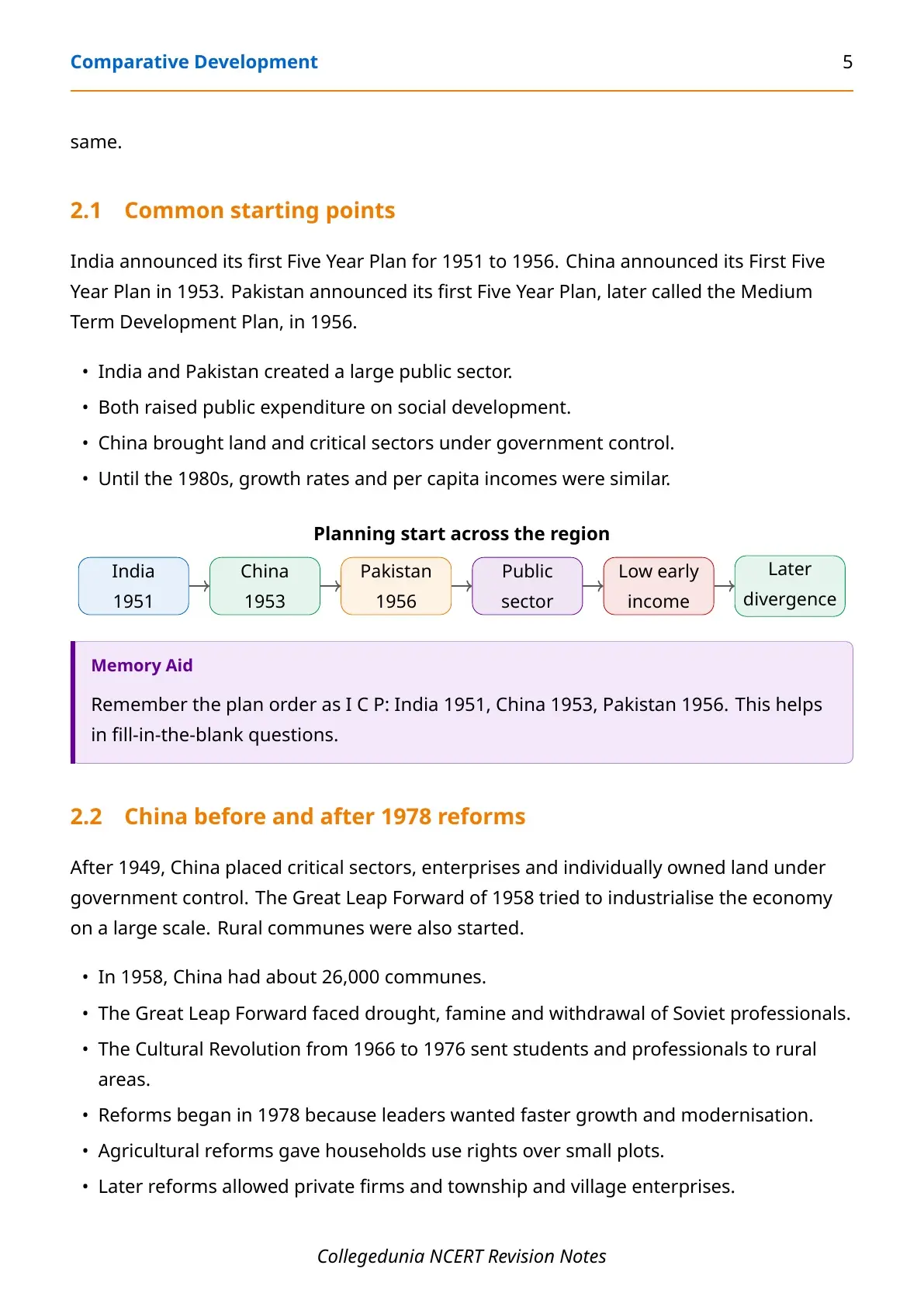
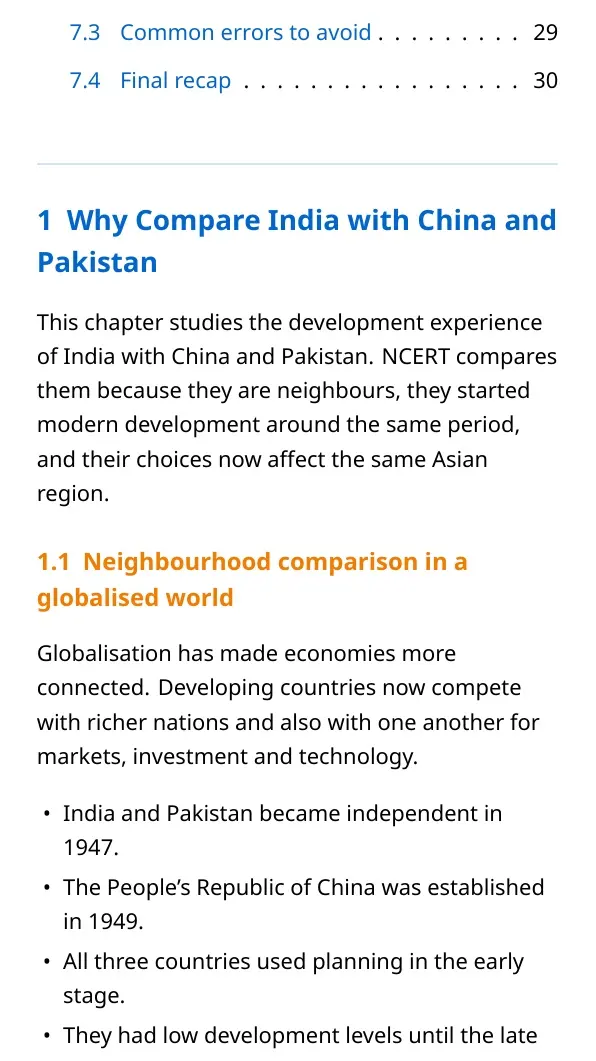
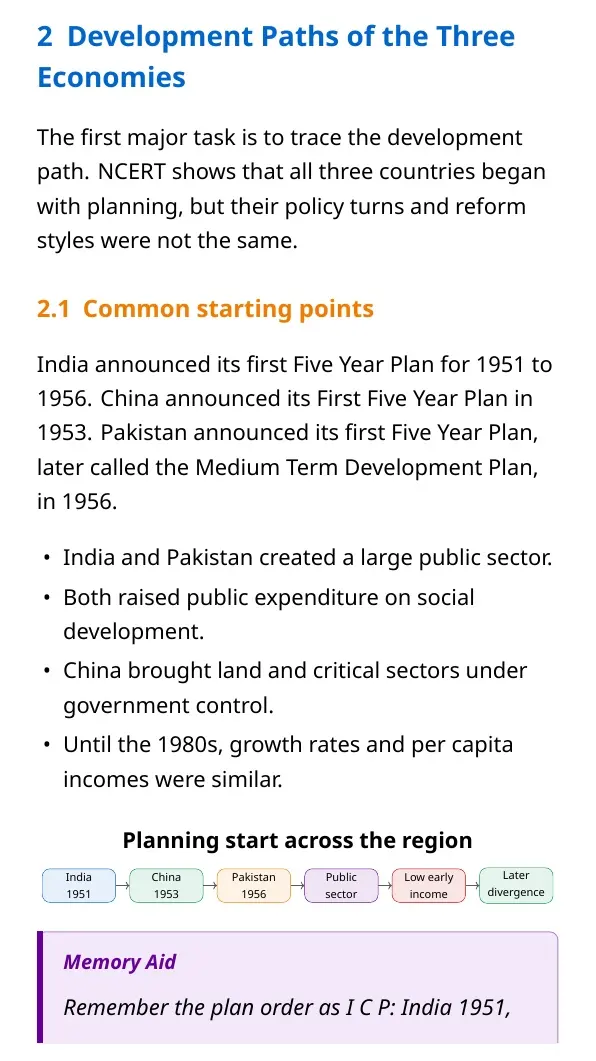
NCERT compares India with China and Pakistan because they are important neighbours with connected markets, shared regional challenges and different political systems. India and Pakistan became independent in 1947, while the People's Republic of China was established in 1949. All three began planned development around the same period, but the structure and outcomes of their policies became different.
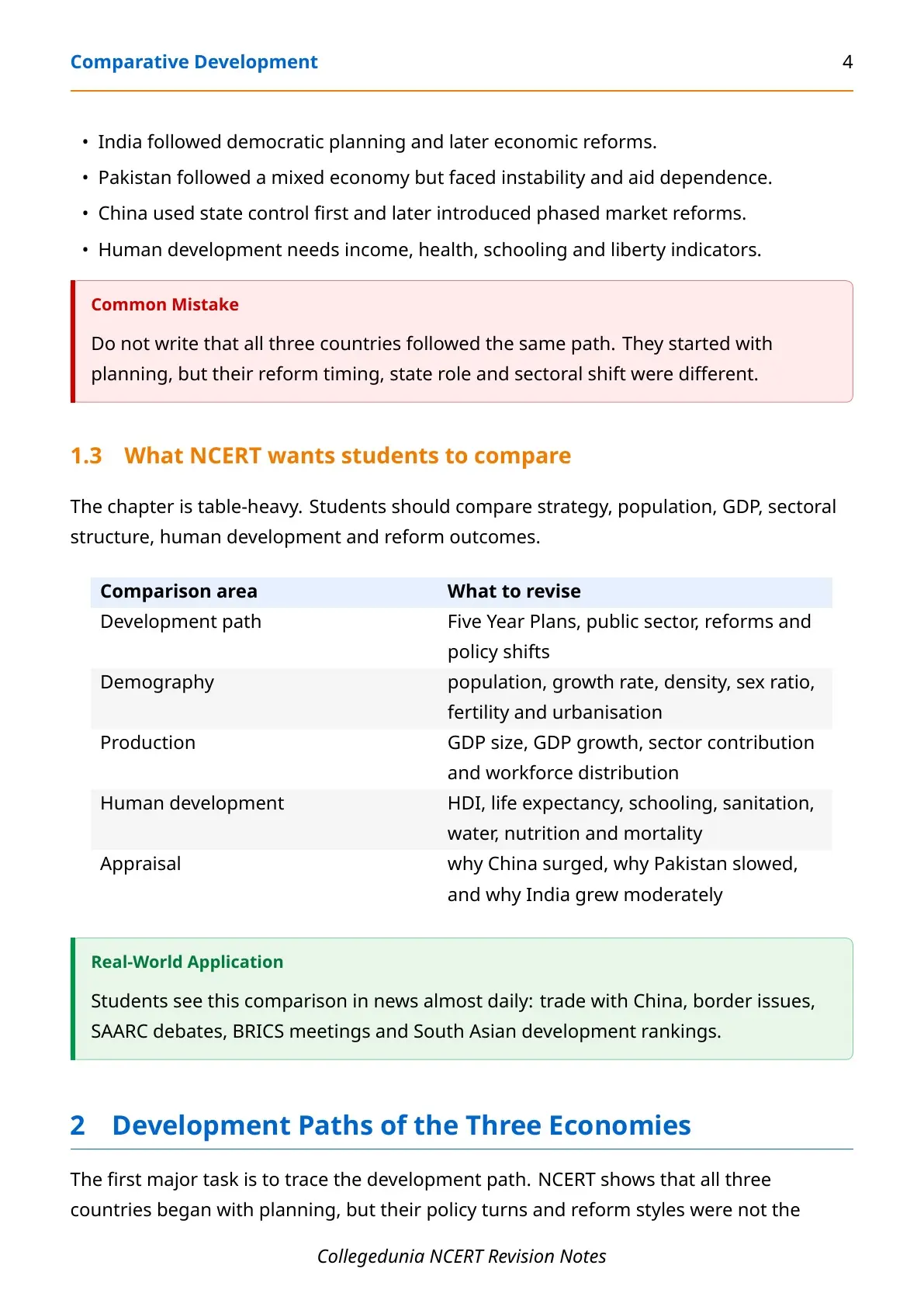
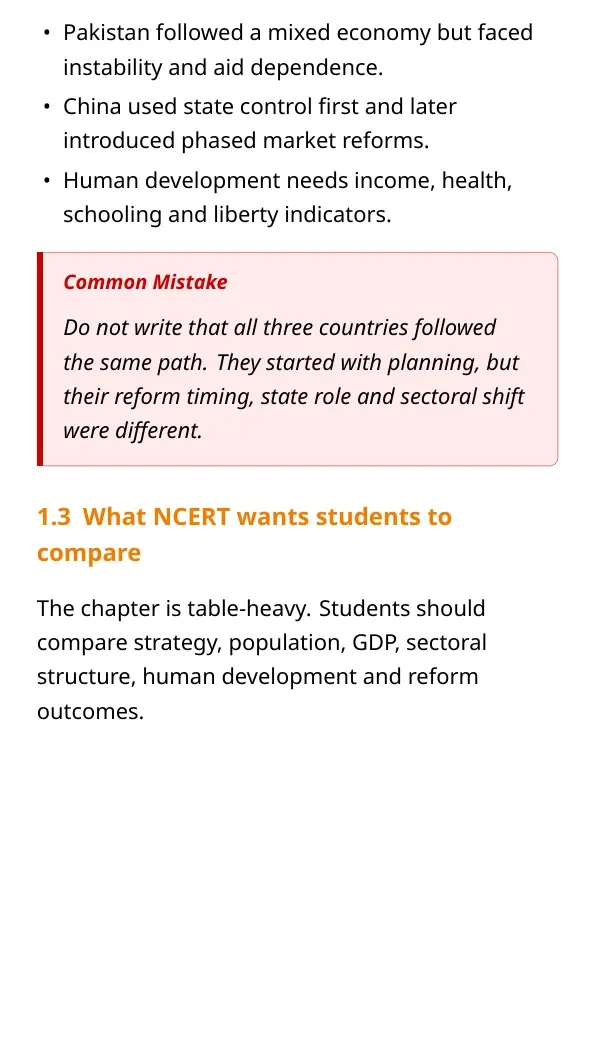
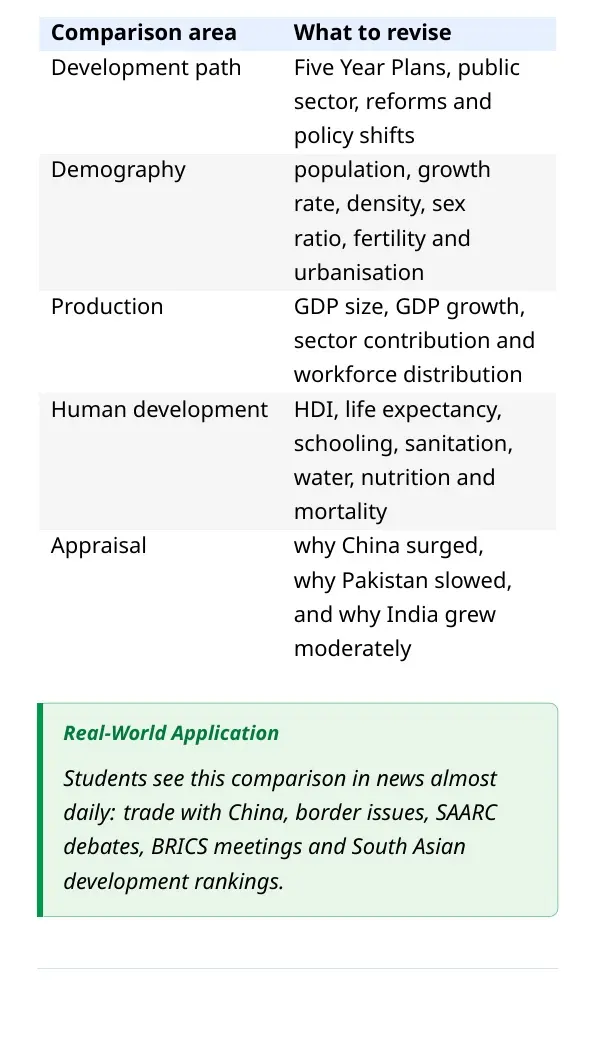
The chapter asks students to study development as a comparison of strategies and indicators. A strong answer should not only say that China grew faster or India is democratic. It should explain the policy path, the demographic pressure, the sectoral shift and the human development result together.
| Country | Starting point | Planning start | Core comparison clue |
|---|---|---|---|
| India | Independent in 1947 | First Five Year Plan, 1951-56 | Democratic institutions and service-led growth |
| China | People's Republic in 1949 | First Five Year Plan, 1953 | Strong state direction and manufacturing depth |
| Pakistan | Independent in 1947 | Medium Term Development Plan, 1956 | Mixed economy, instability and uneven recovery |
Comparative Development Chapter Video Revision
Source: Magnet Brains
Development Paths and Reform Years
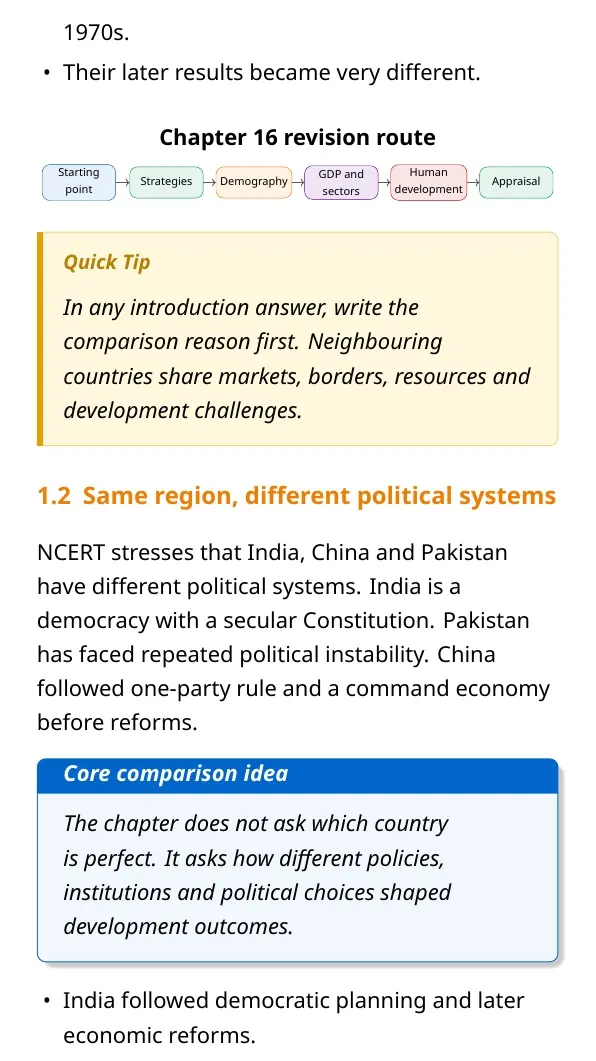
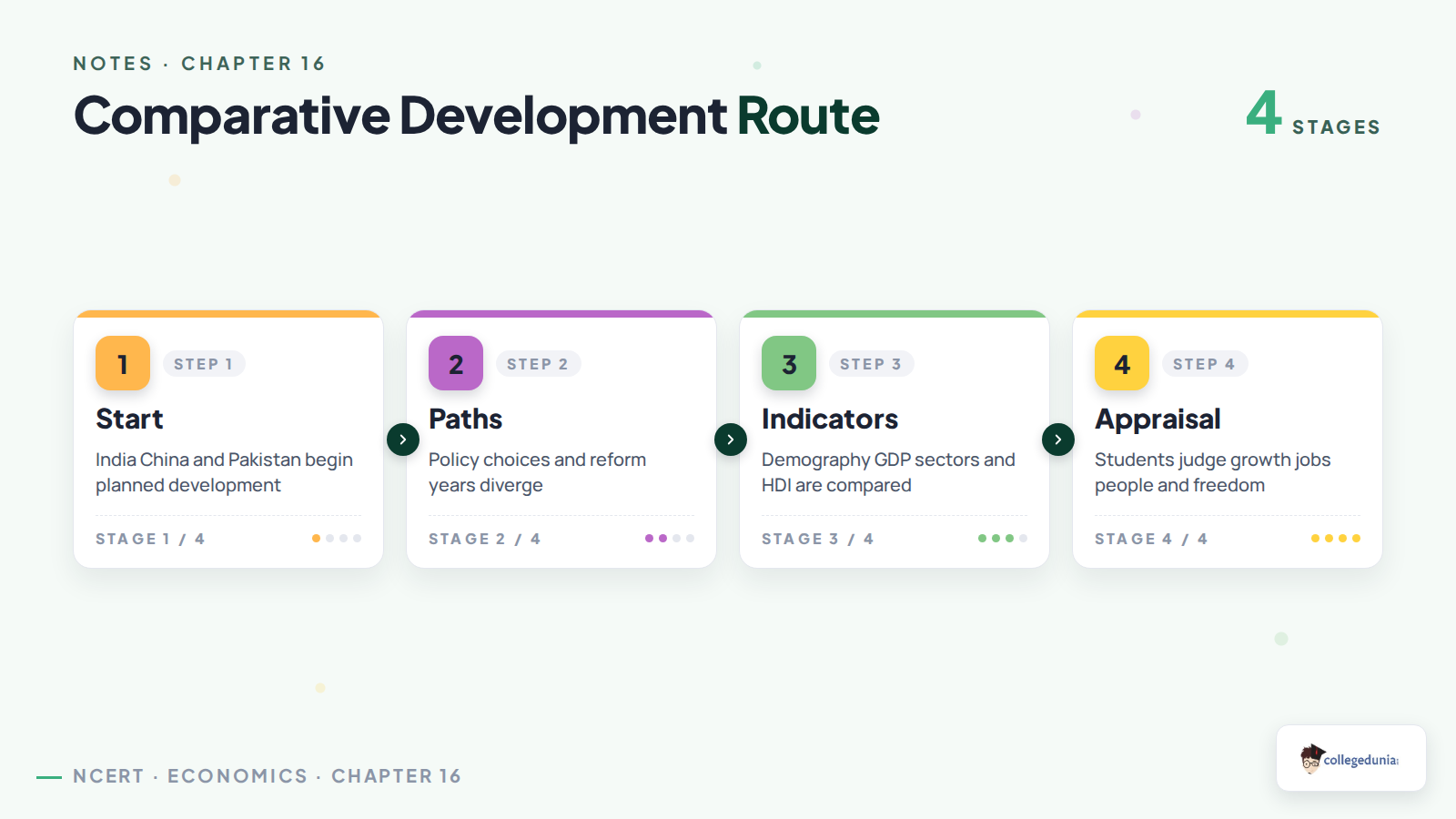
The development-path section is the base of the chapter. India, China and Pakistan began with planning, public sector emphasis and similar early levels of development. The difference came from how each economy changed after the late 1970s and early 1990s.
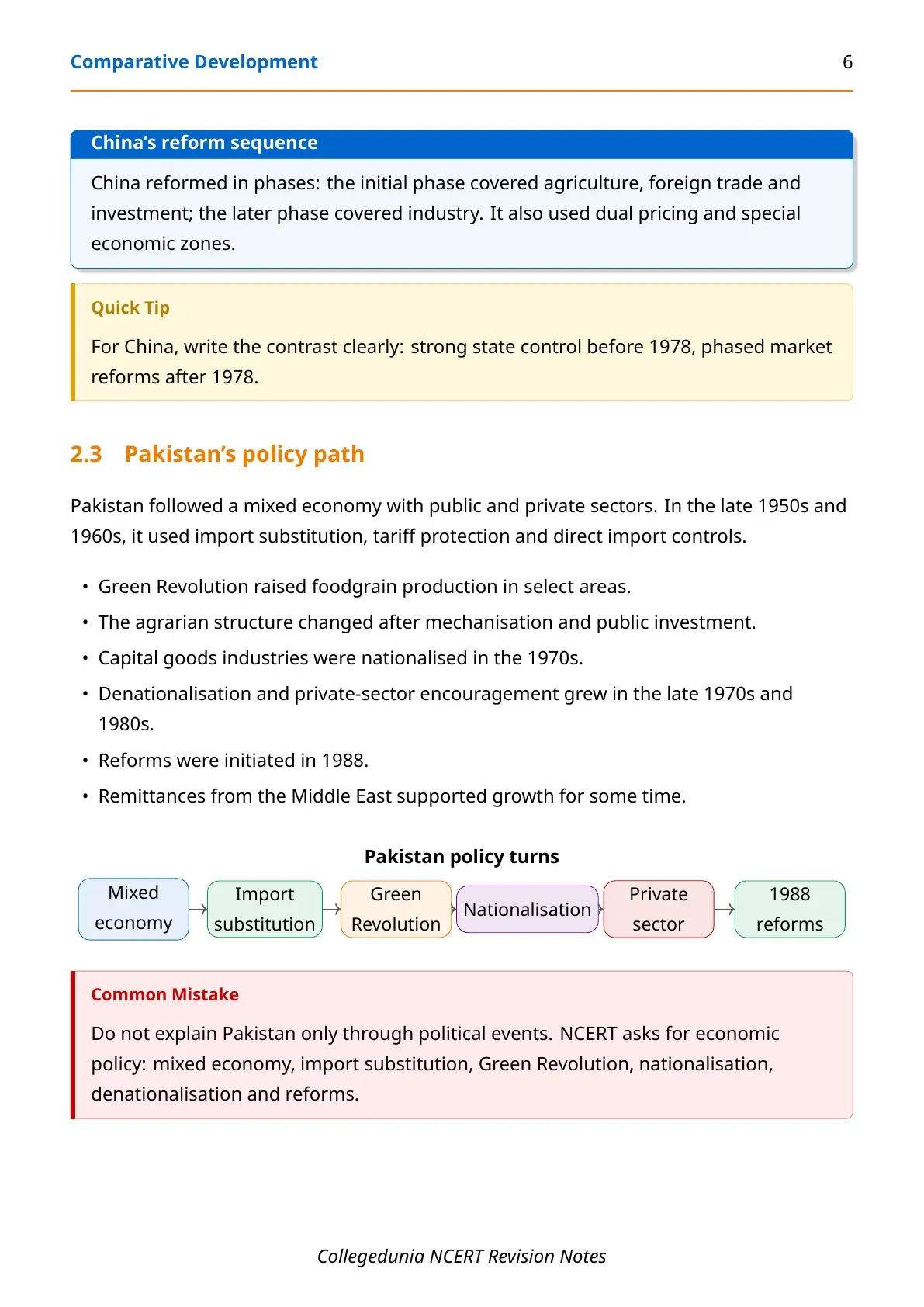
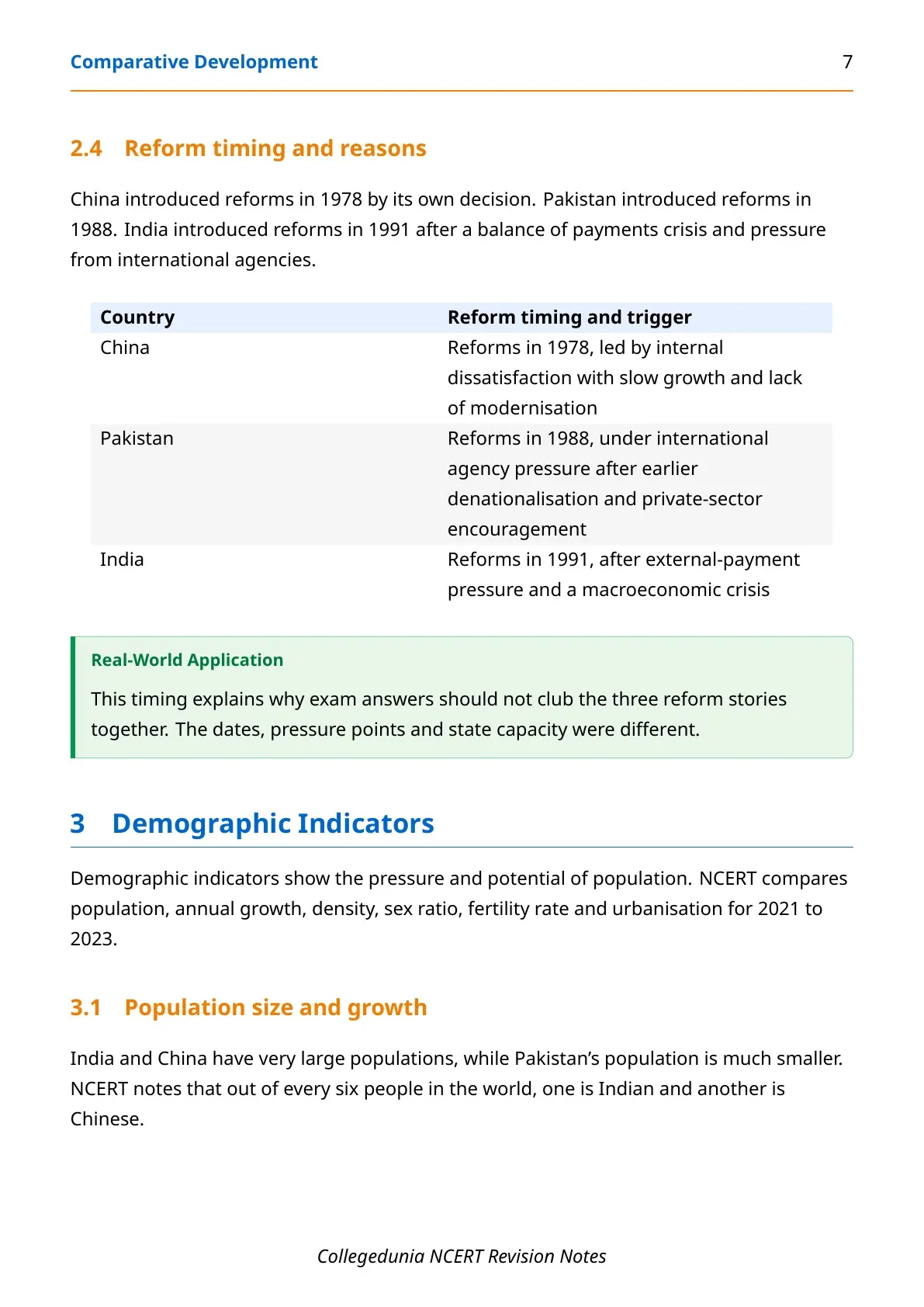
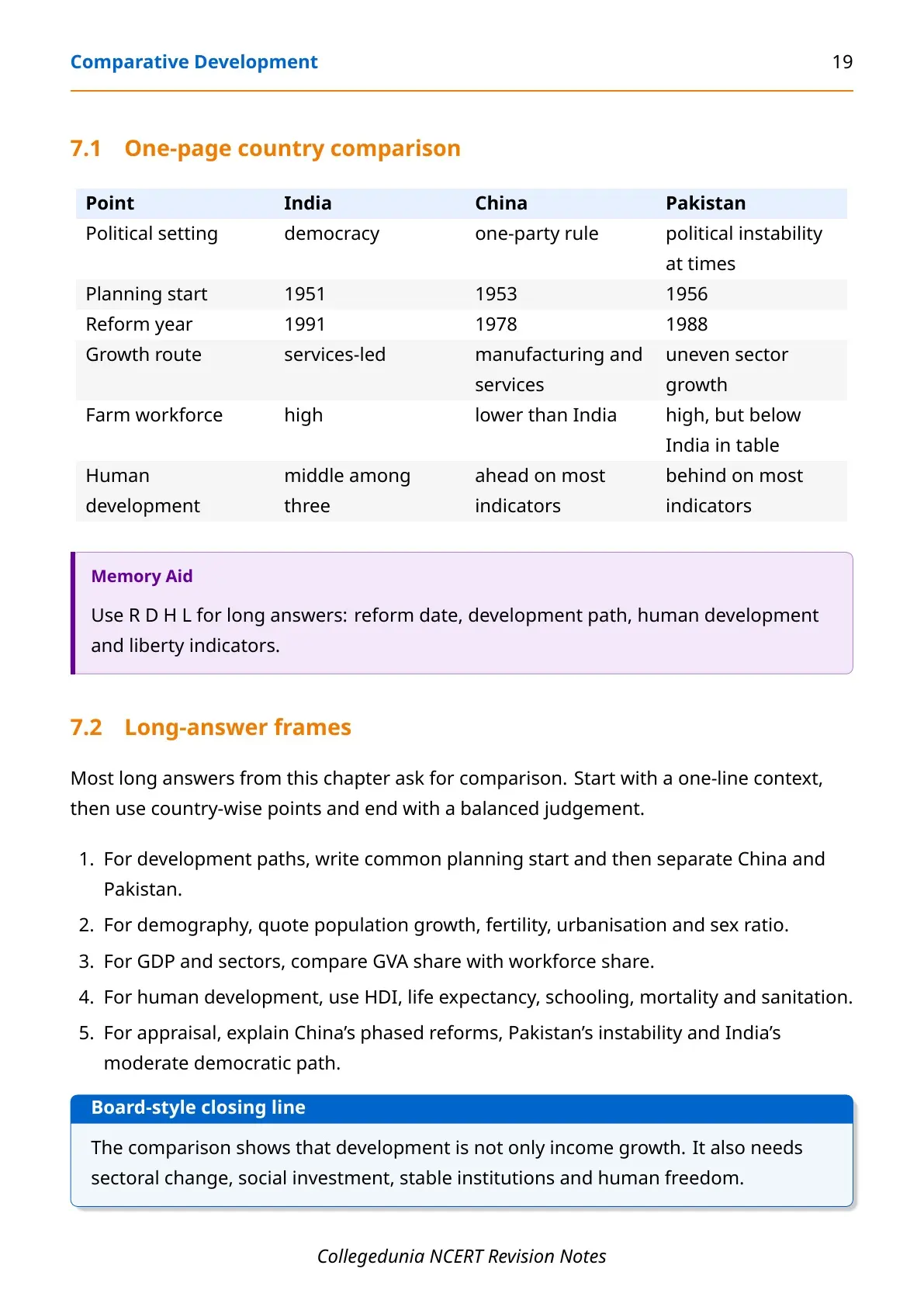
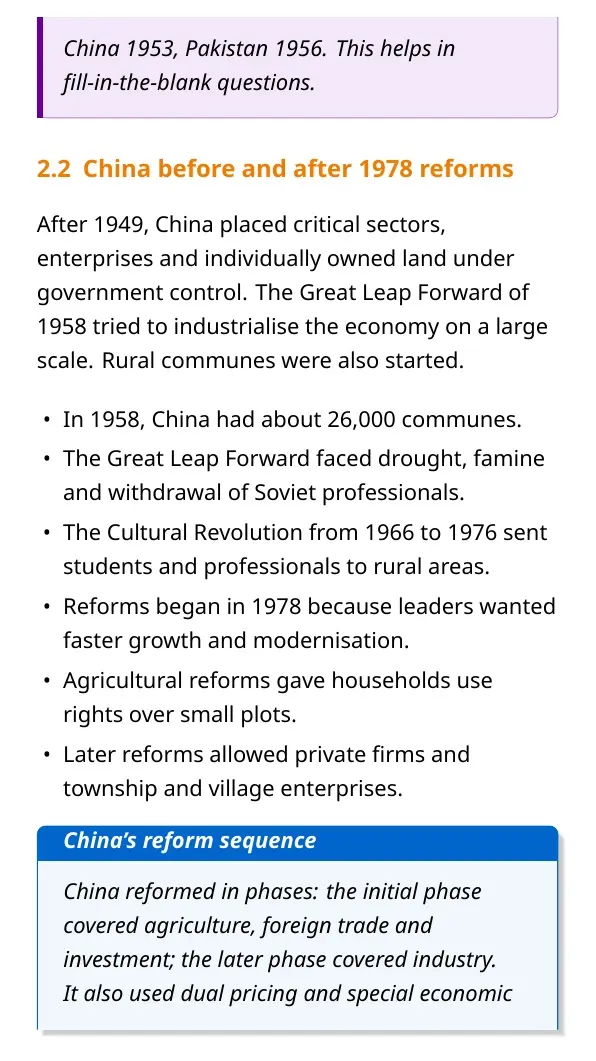
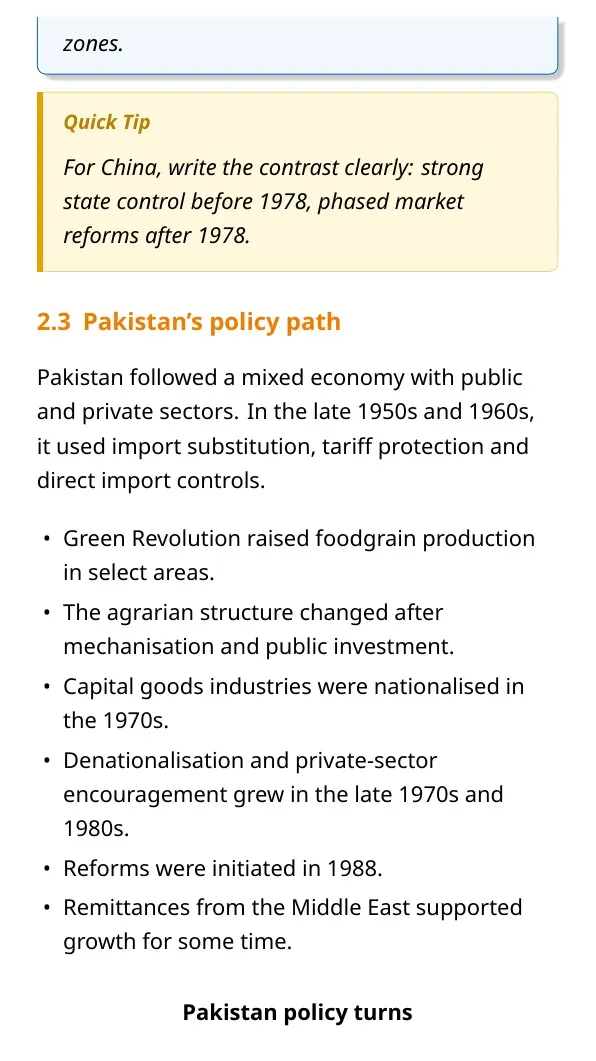
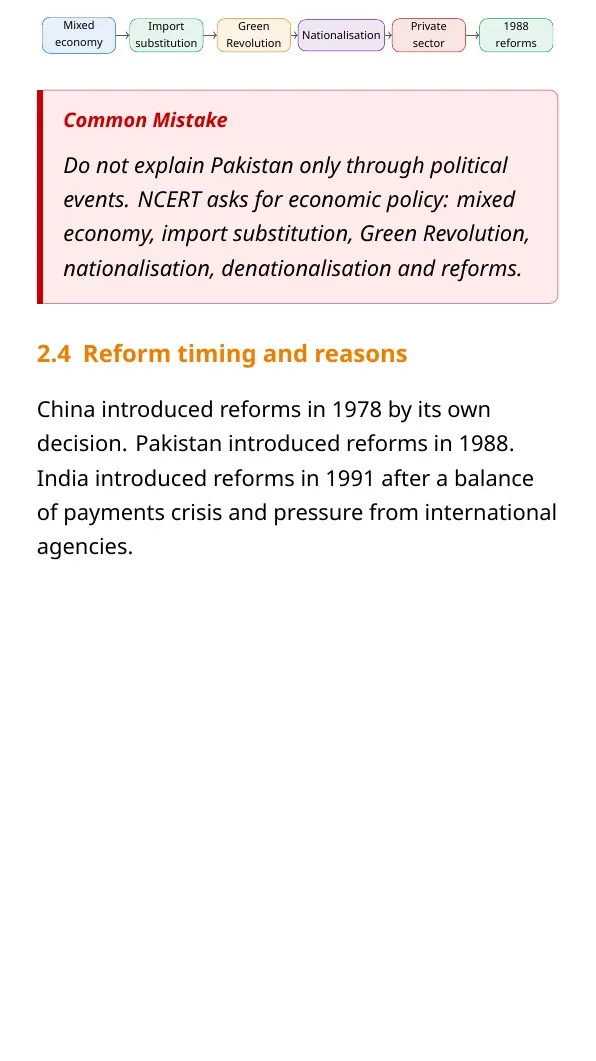
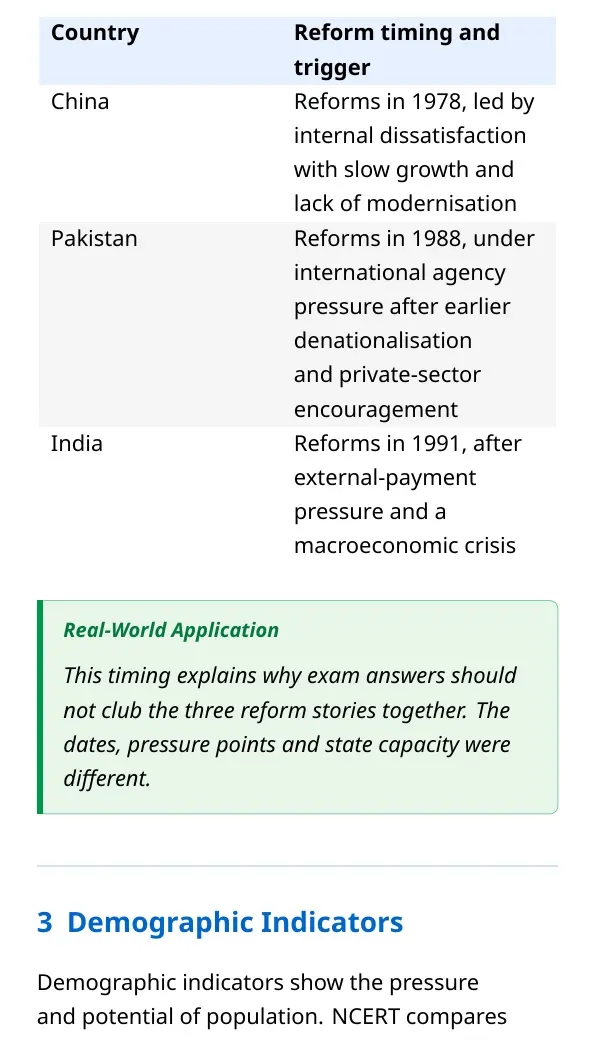
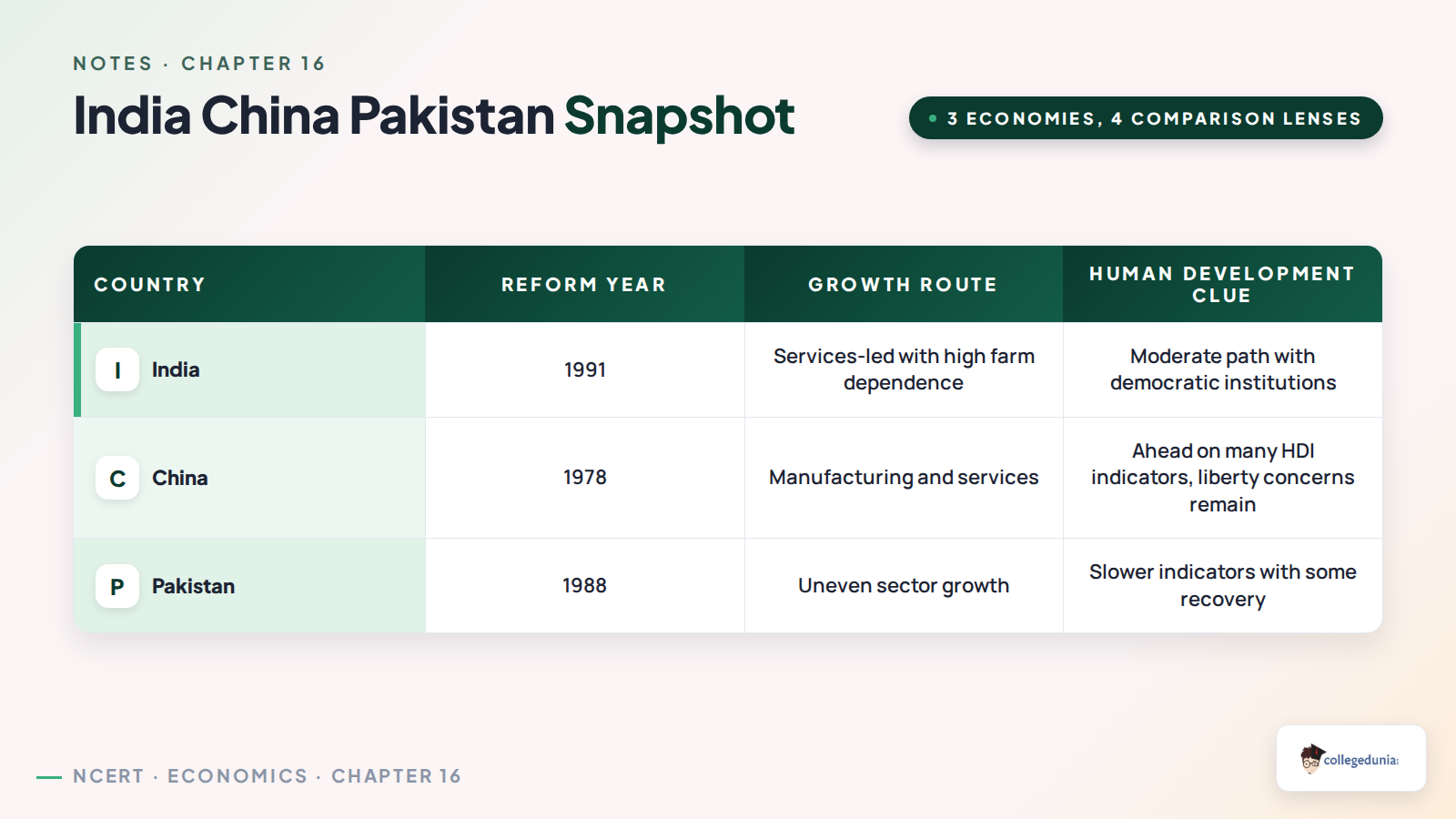
China introduced reforms in 1978. The initial reform phase covered agriculture, foreign trade and investment, while the later phase moved into industry. Pakistan initiated reforms in 1988 after earlier denationalisation, private-sector encouragement and international-agency pressure. India introduced reforms in 1991 after a balance of payments crisis and external-payment pressure.
- China: Great Leap Forward, communes, Cultural Revolution, 1978 reforms, dual pricing and special economic zones.
- Pakistan: mixed economy, import substitution, Green Revolution, nationalisation, denationalisation and 1988 reforms.
- India: planned development, public sector, later reforms and service-sector strength.
Demographic and GDP Indicators
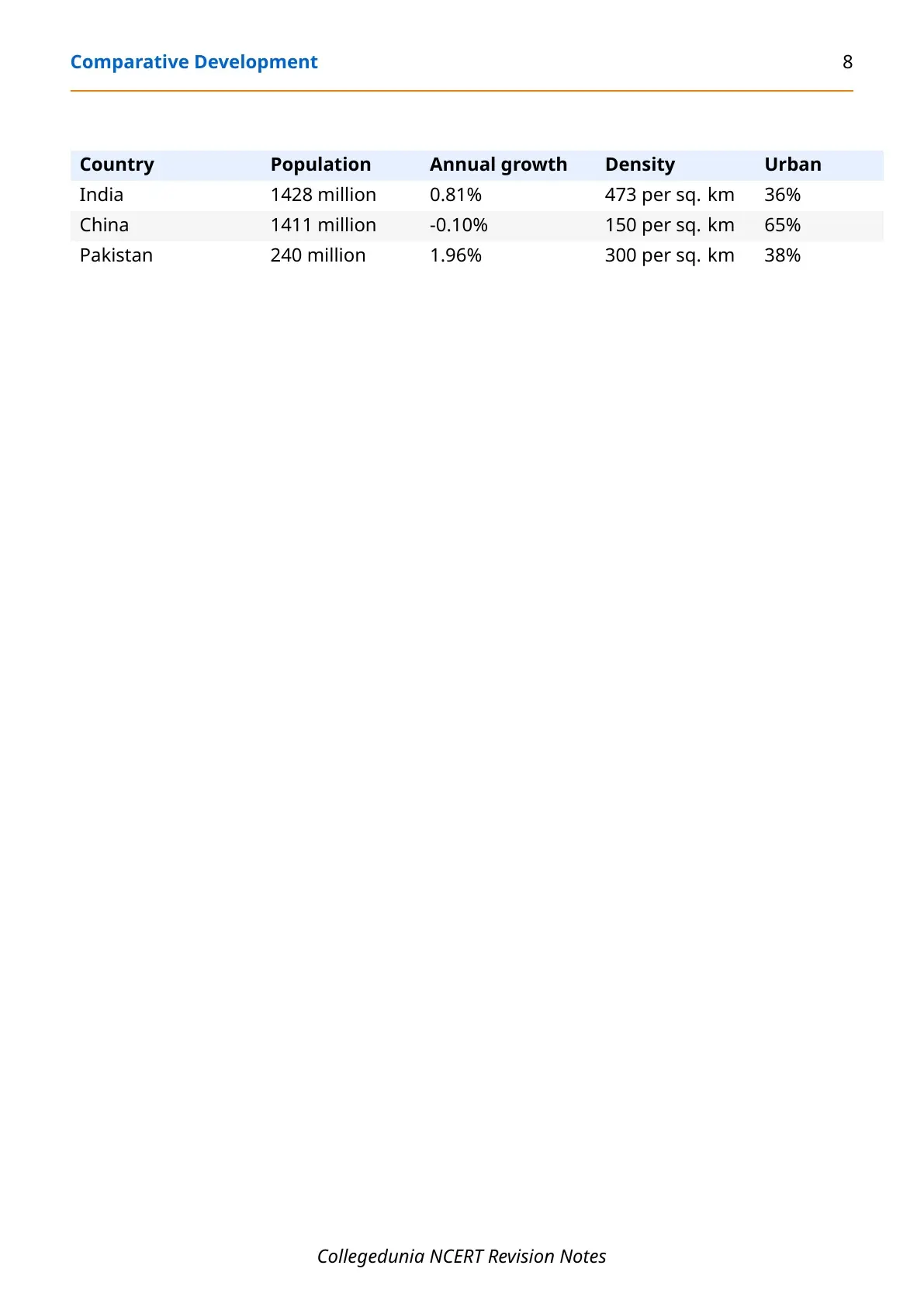
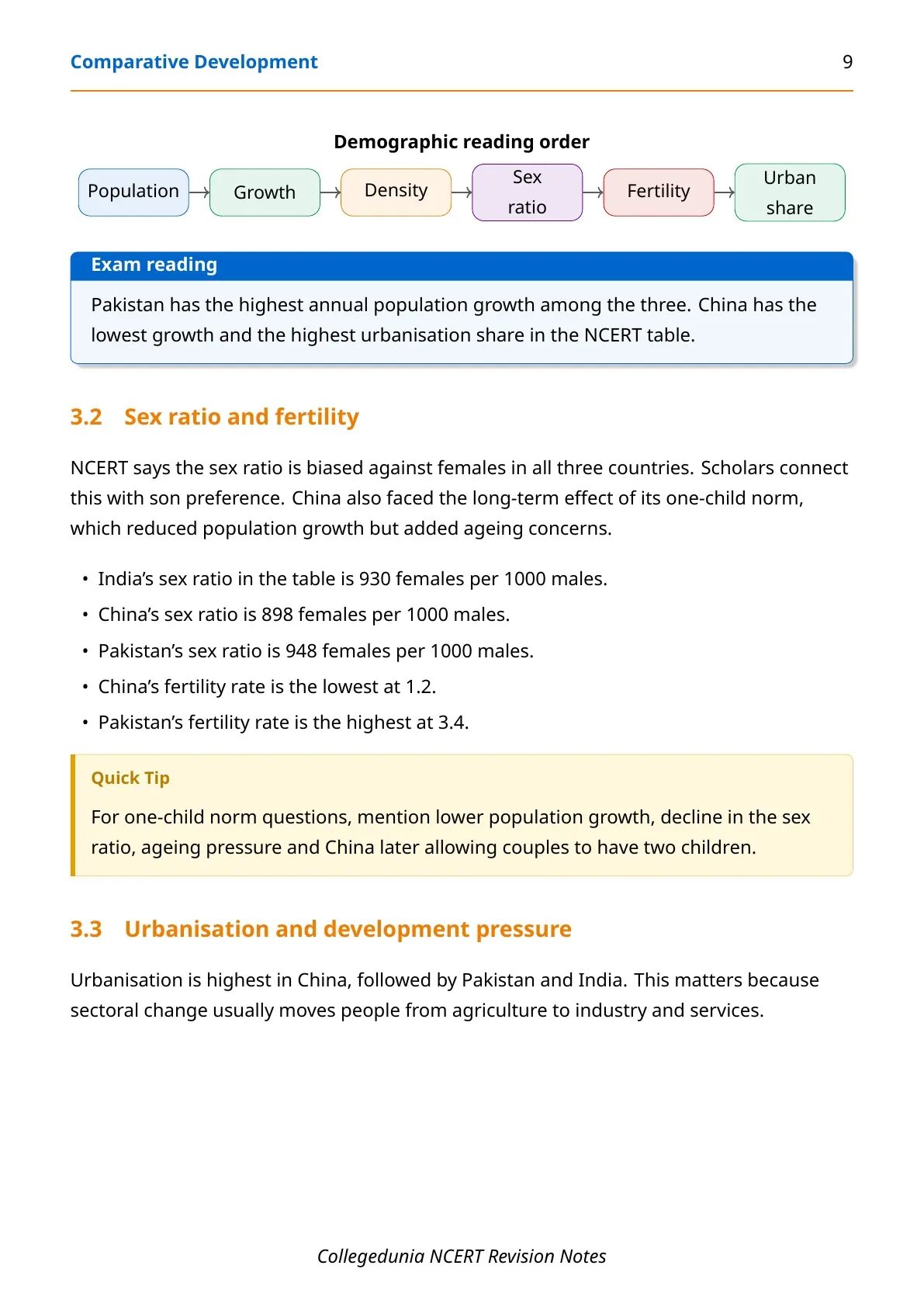
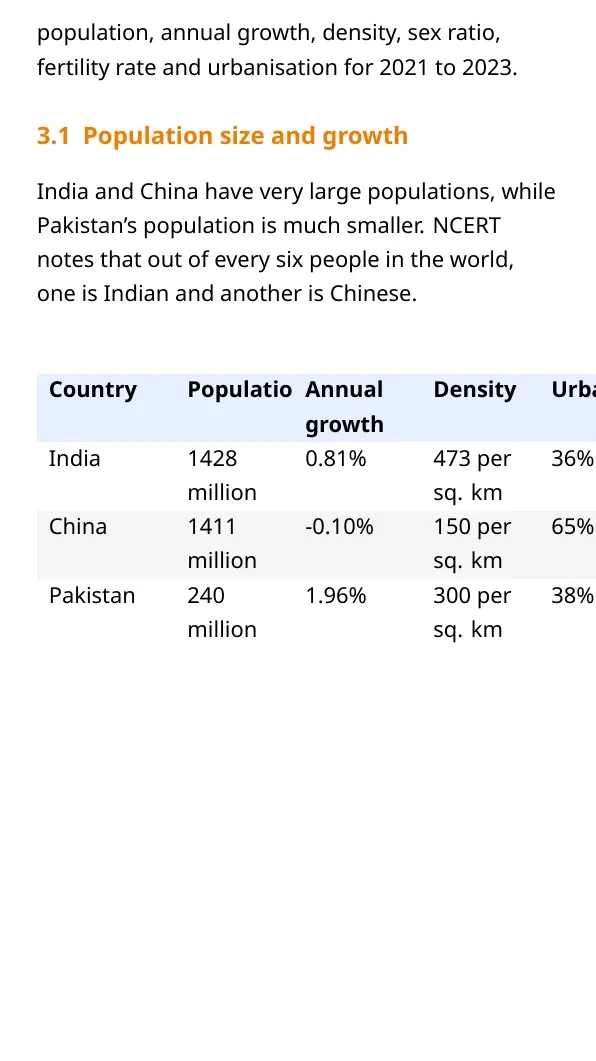
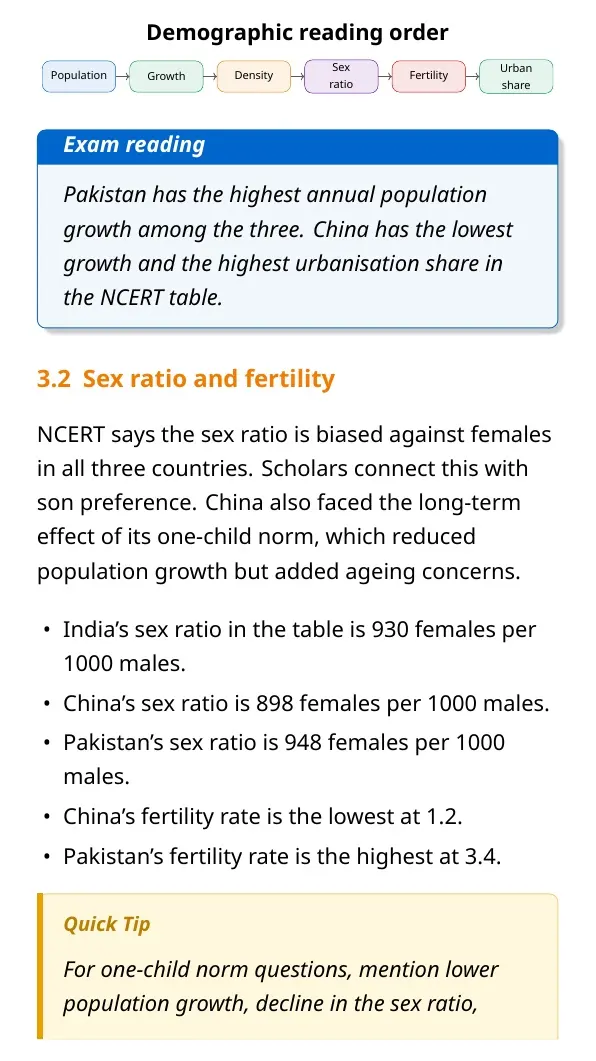
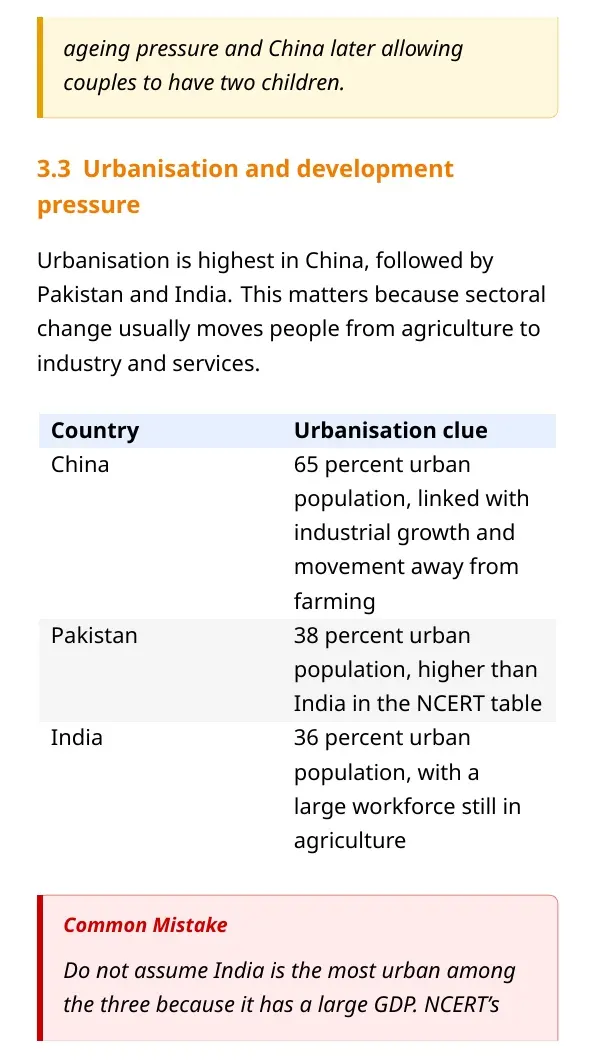
NCERT compares population, growth, density, sex ratio, fertility and urbanisation for 2021-23. Pakistan has the highest annual population growth, China has the lowest population growth and China has the highest urbanisation share in the table. The one-child norm in China reduced population growth, affected the sex ratio, created ageing pressure and later led China to allow couples to have two children.
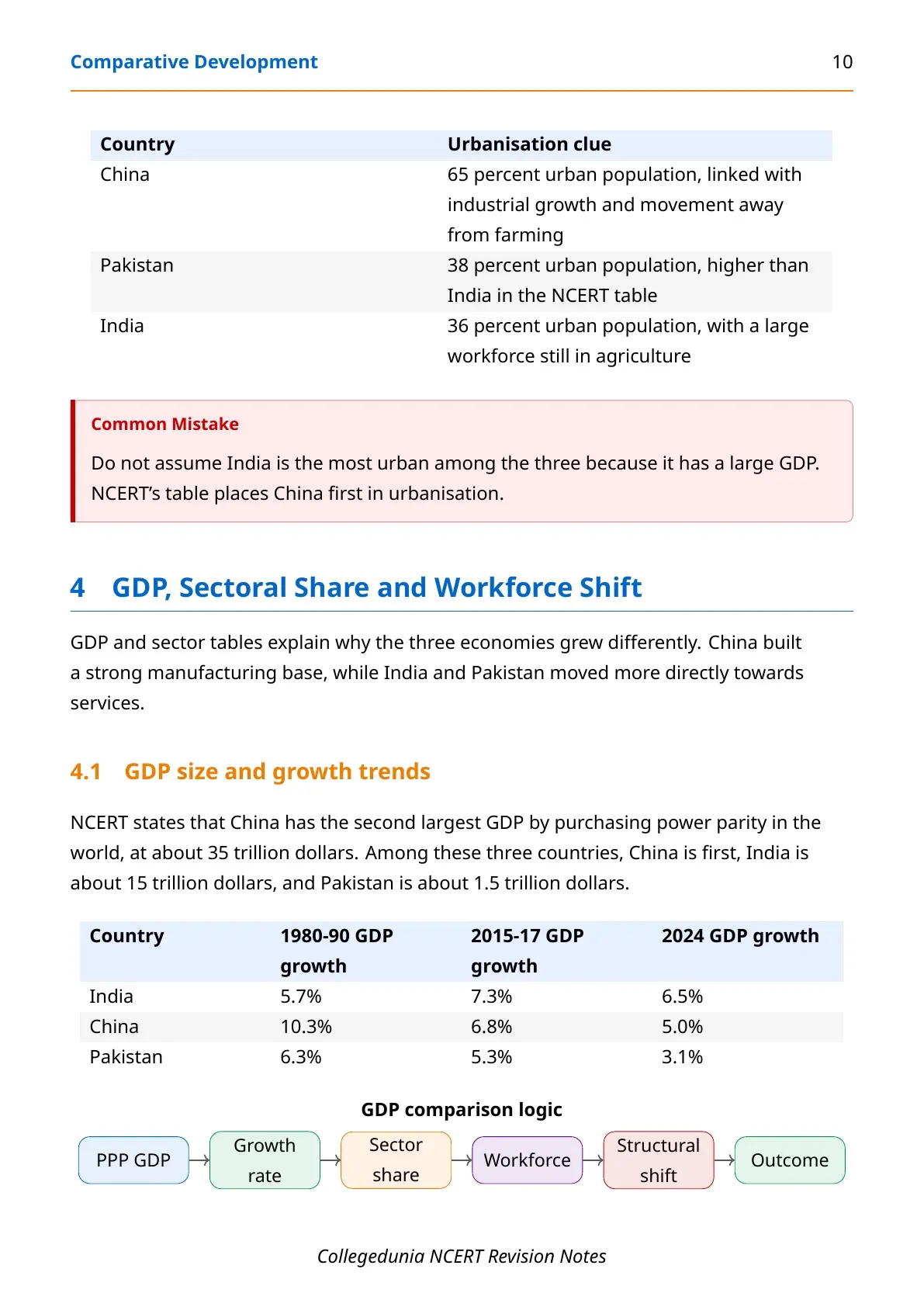
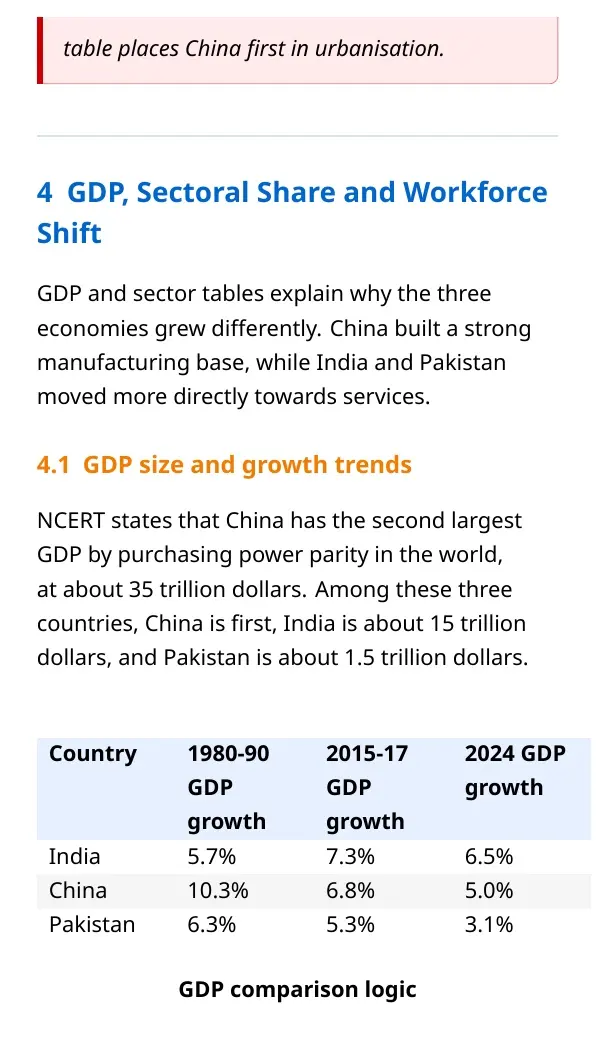
GDP and sector tables then show why the three economies grew differently. China has the second largest GDP by purchasing power parity in the world at about 35 trillion dollars. Among these three countries, China is first, India is about 15 trillion dollars, and Pakistan is about 1.5 trillion dollars.
| Indicator | India | China | Pakistan |
|---|---|---|---|
| Population | 1428 million | 1411 million | 240 million |
| Annual population growth | 0.81 percent | -0.10 percent | 1.96 percent |
| Urbanisation | 36 percent | 65 percent | 38 percent |
| 2024 GDP growth | 6.5 percent | 5.0 percent | 3.1 percent |
Sectoral Shift and Manufacturing Role
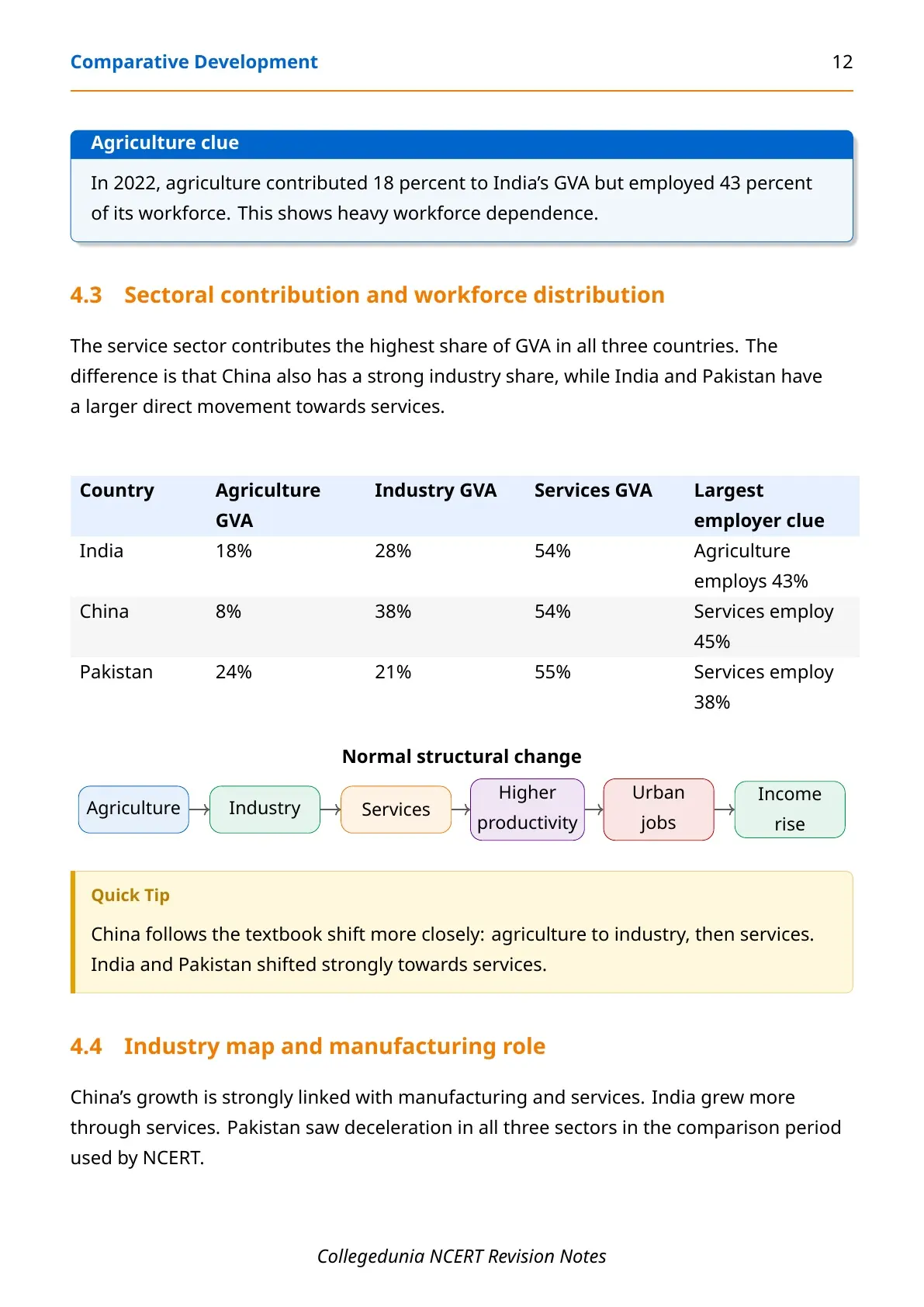
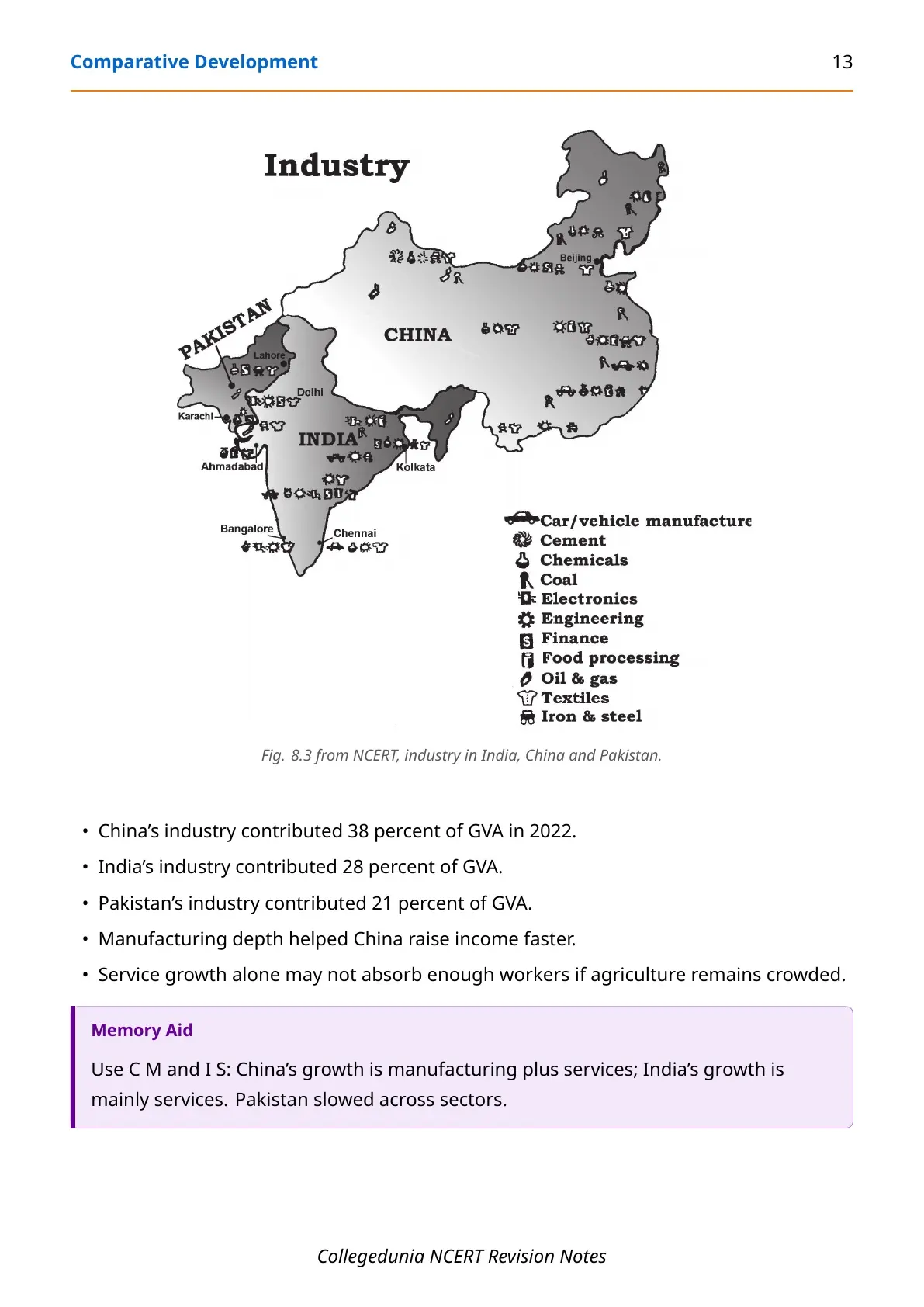
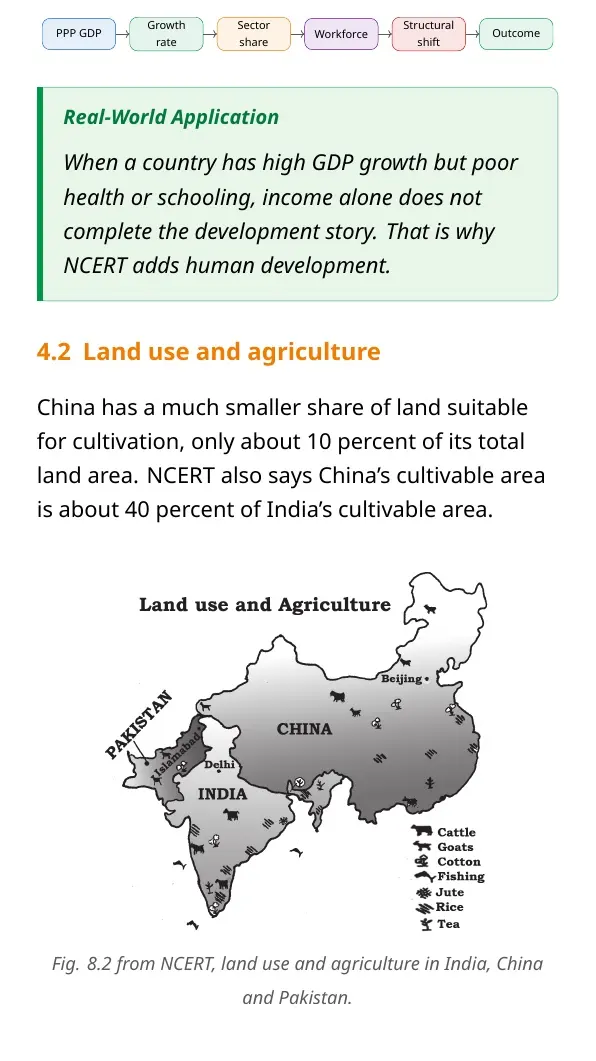
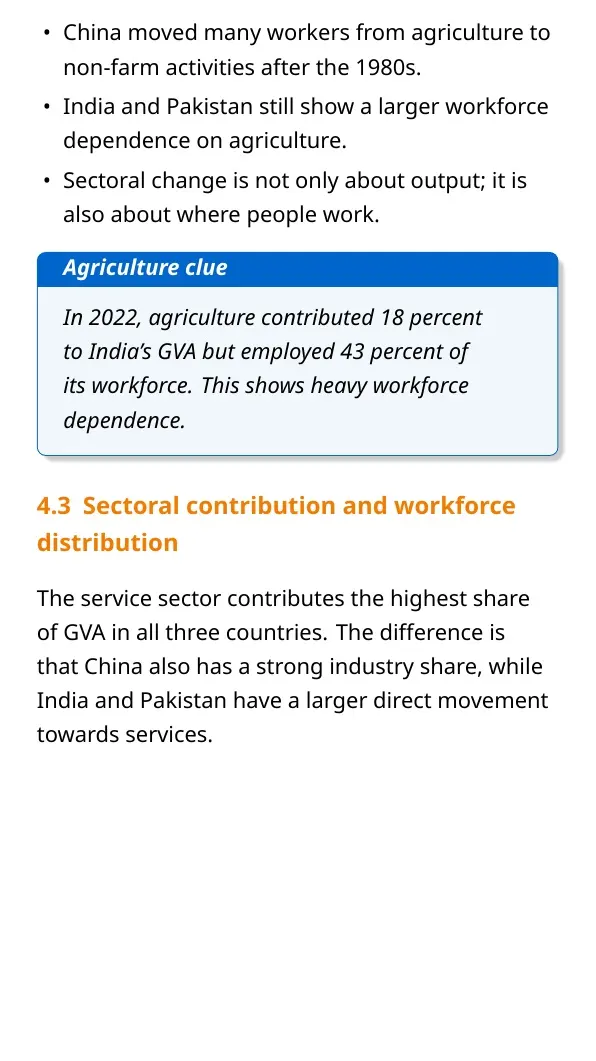
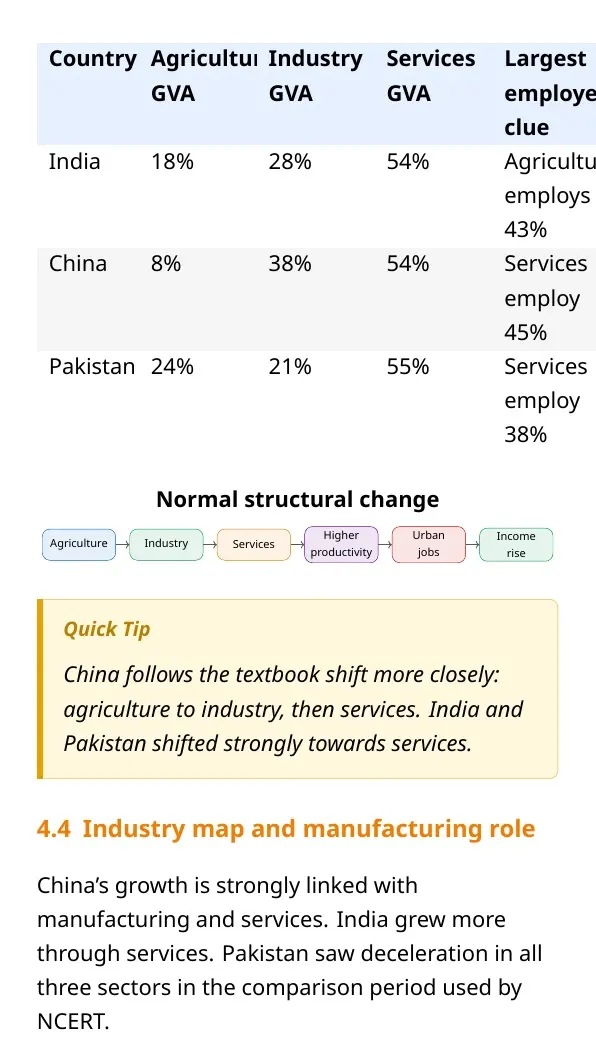
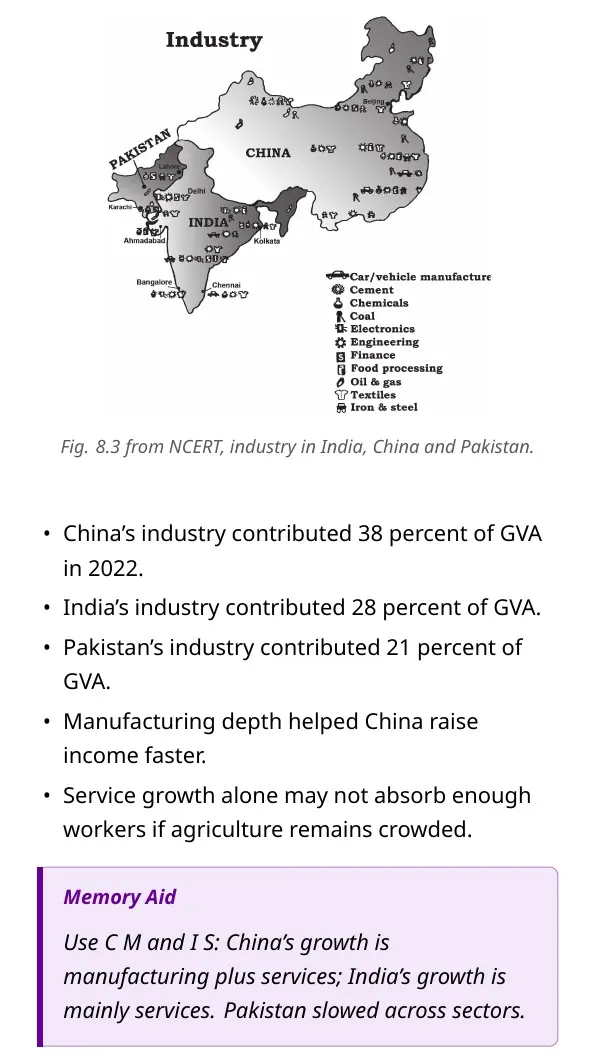
NCERT explains that normal development usually shifts output and employment from agriculture to industry and then to services. China follows this route more closely because its industry and manufacturing share are strong. India and Pakistan show a more direct shift towards services.
The service sector contributes the highest share of GVA in all three countries. But workforce distribution tells a deeper story. Agriculture still employs a large share of people, especially in India. This is why service growth alone may not absorb enough workers if agriculture remains crowded.
- Compare GVA share with workforce share, not GDP alone.
- Use China as the example of stronger manufacturing and industry.
- Use India and Pakistan to explain direct movement towards services.
- Write the employment angle whenever a question asks about sectoral change.
Human Development and Liberty Indicators
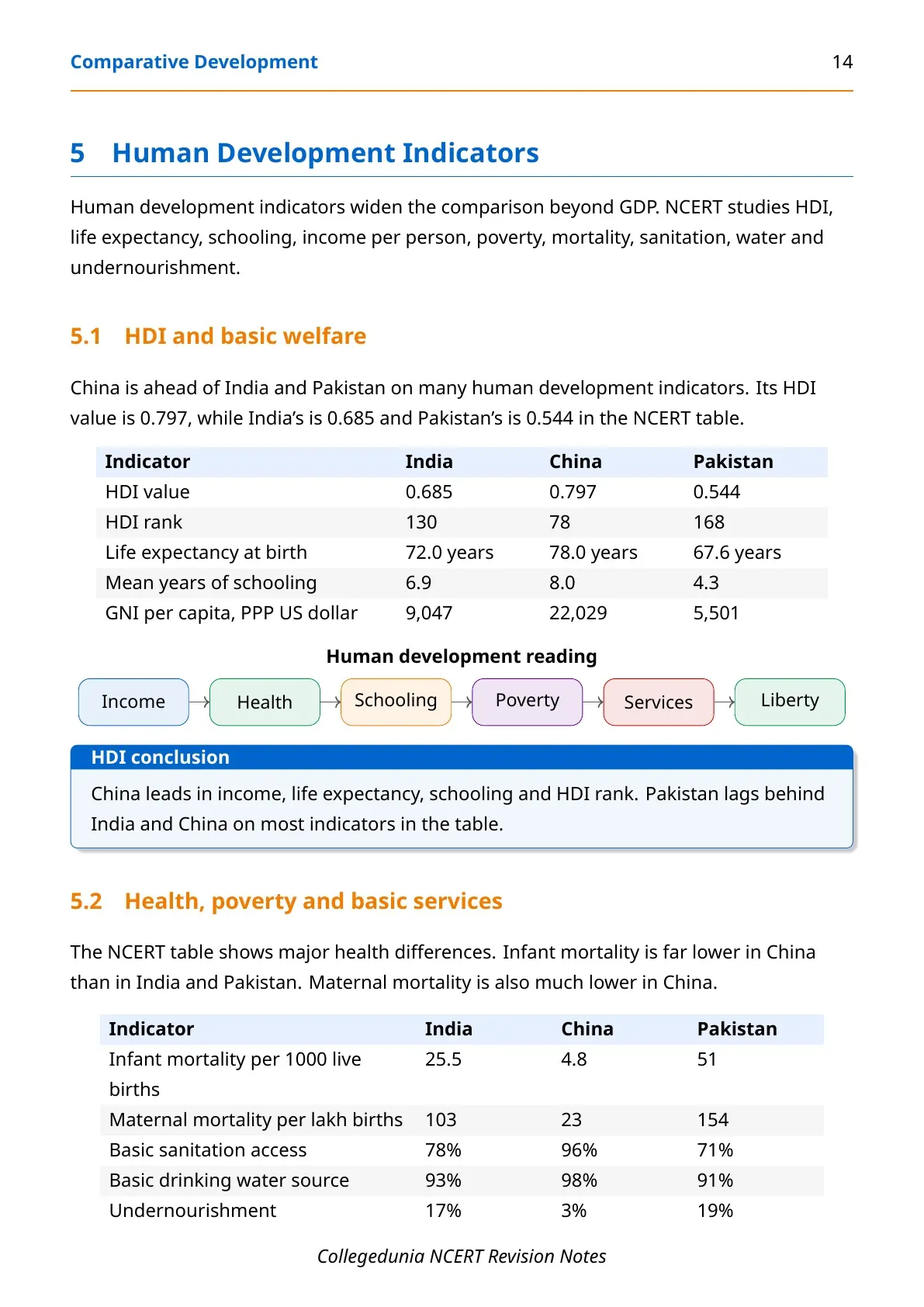
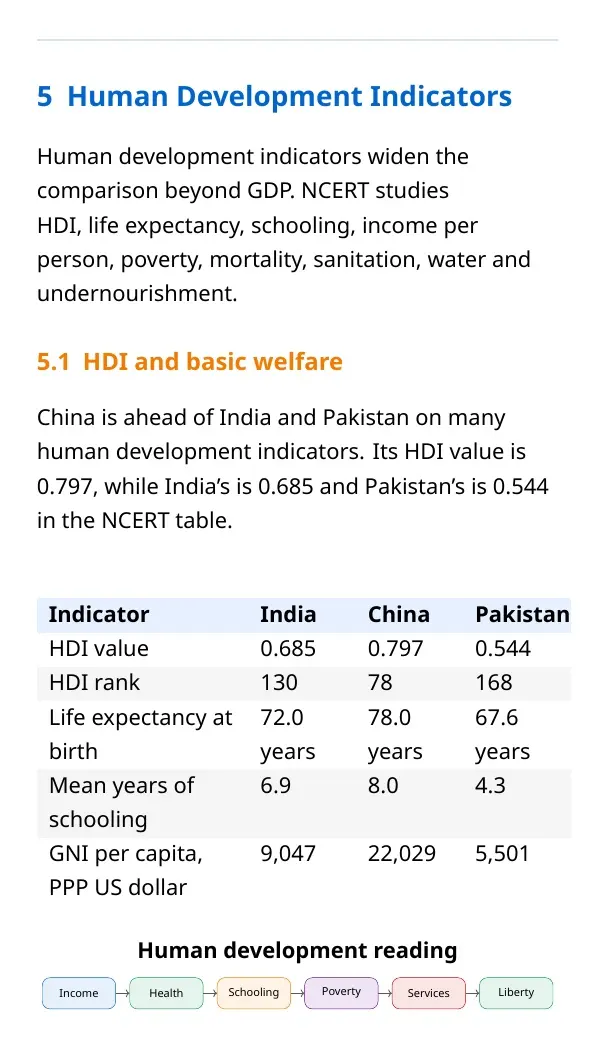
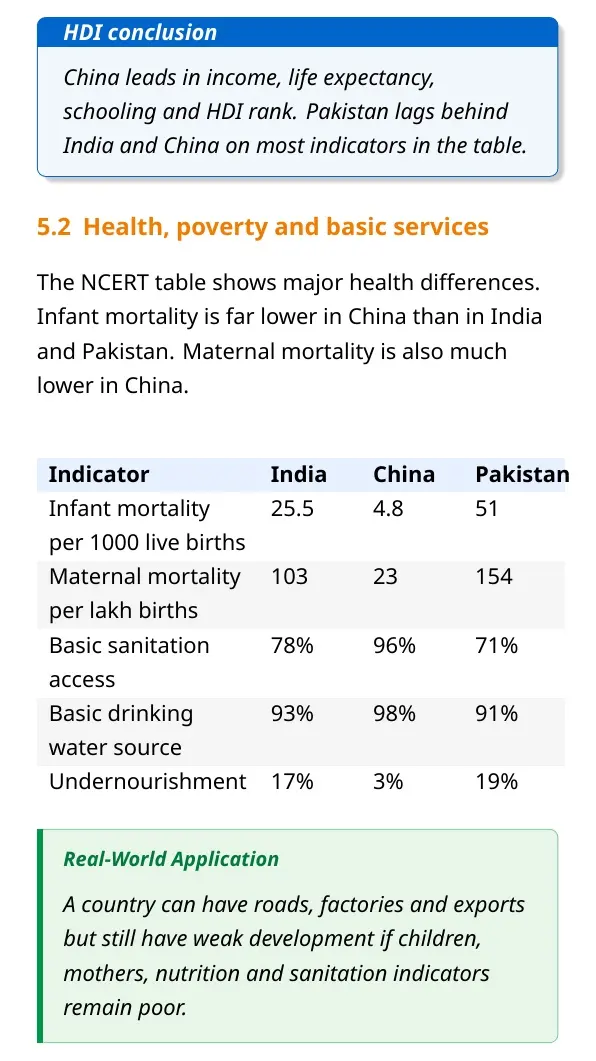
Human development indicators widen the comparison beyond GDP. NCERT uses HDI, life expectancy, schooling, GNI per capita, poverty, infant mortality, maternal mortality, sanitation, drinking water and undernourishment. China is ahead of India and Pakistan on many indicators in the table.
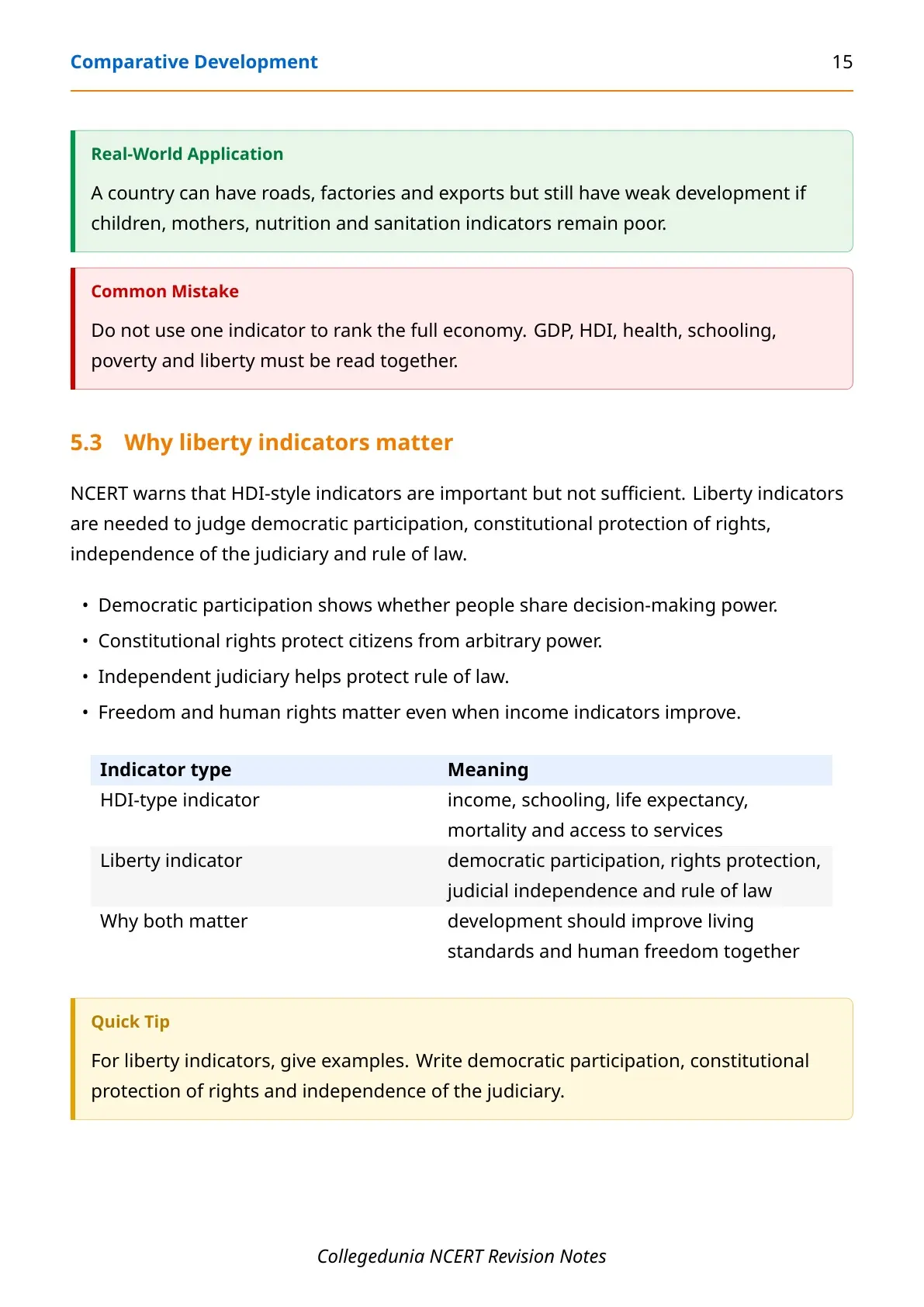
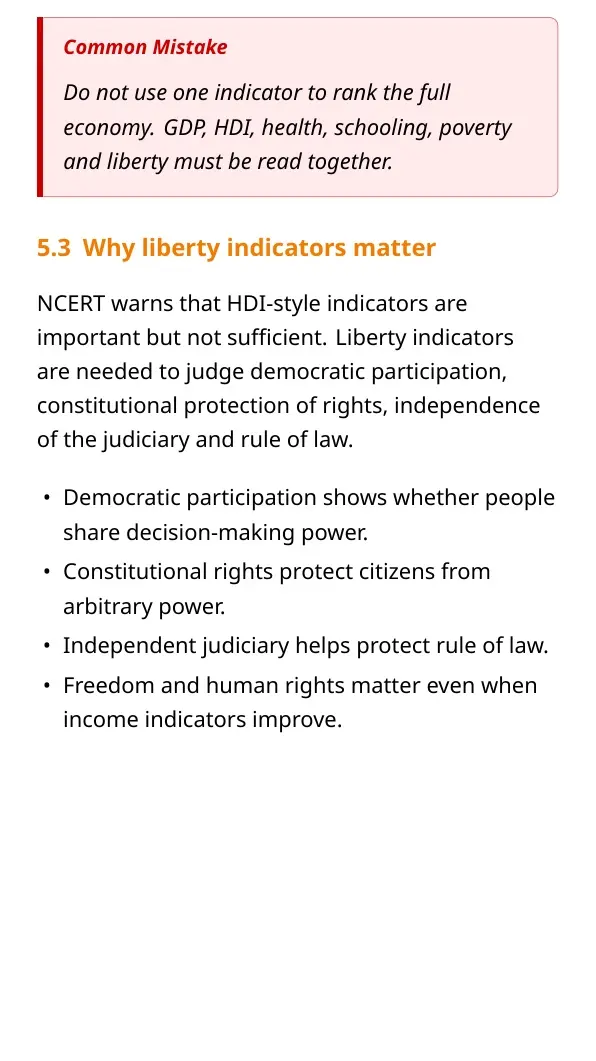
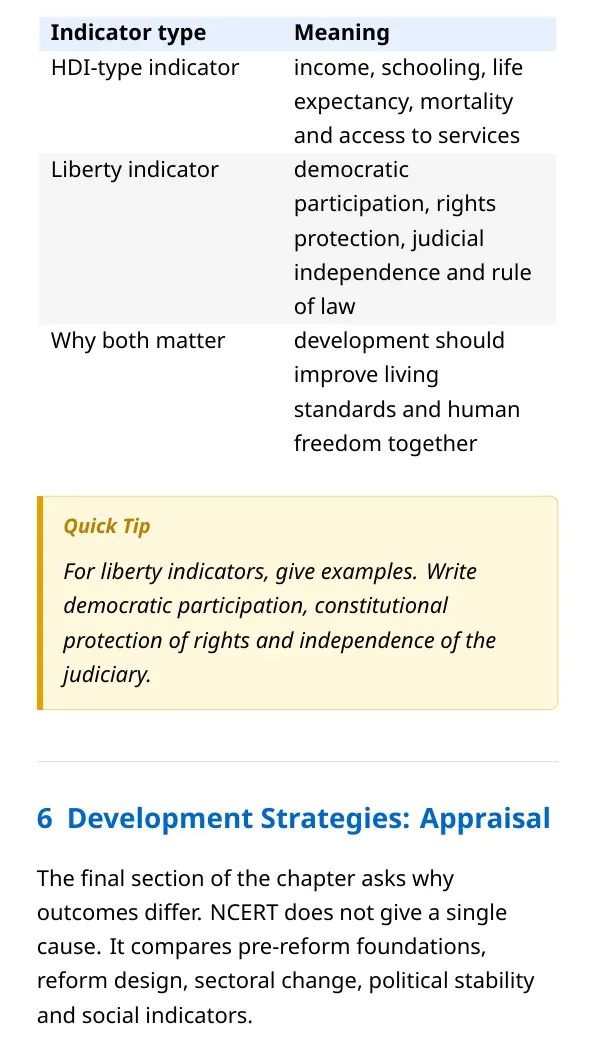
The chapter also warns that HDI-style indicators are important but not sufficient. Liberty indicators are needed to judge democratic participation, constitutional protection of rights, independence of the judiciary and rule of law. This is a common long-answer point because development should improve living standards and human freedom together.
| Indicator | India | China | Pakistan |
|---|---|---|---|
| HDI value | 0.685 | 0.797 | 0.544 |
| Life expectancy | 72.0 years | 78.0 years | 67.6 years |
| Mean years of schooling | 6.9 | 8.0 | 4.3 |
| Infant mortality | 25.5 | 4.8 | 51 |
Development Strategies Appraisal
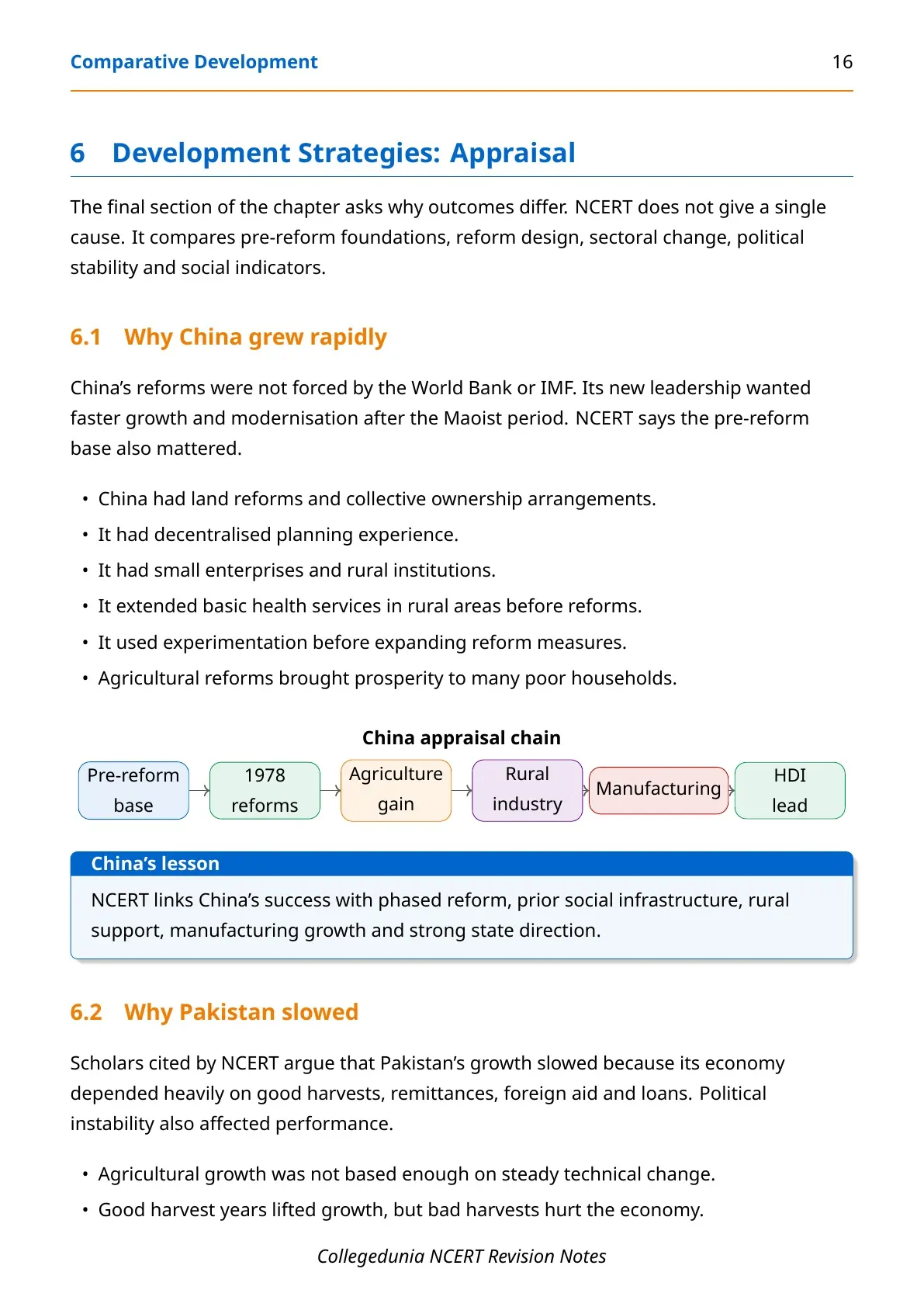
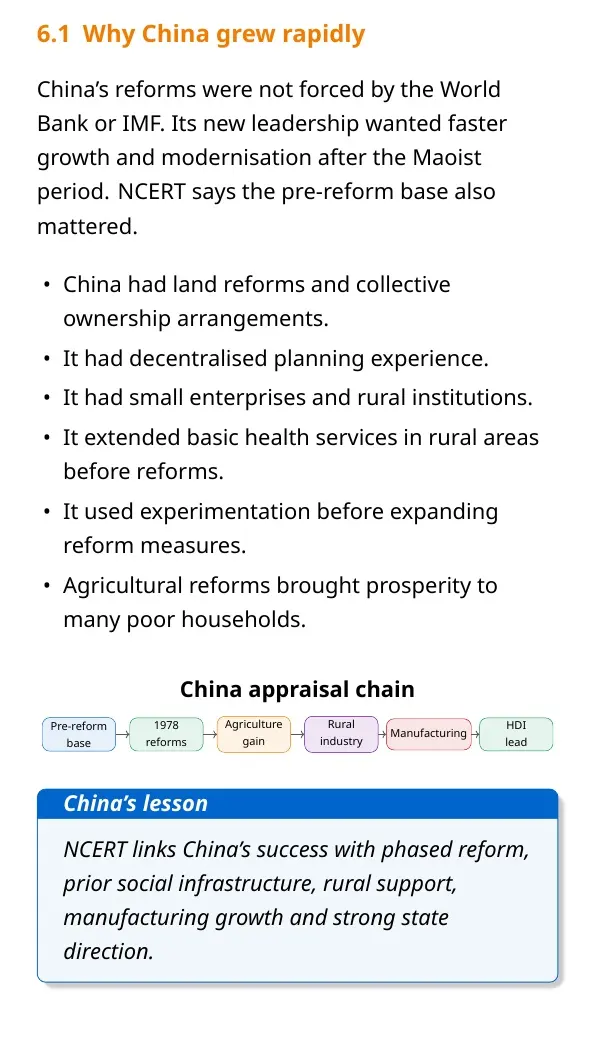
The final NCERT appraisal asks why outcomes differ. China was not forced by the World Bank or IMF to reform. Its leadership wanted faster growth and modernisation after the Maoist period, and its pre-reform base in land reforms, education, health, decentralised planning and small enterprises helped later reform outcomes.
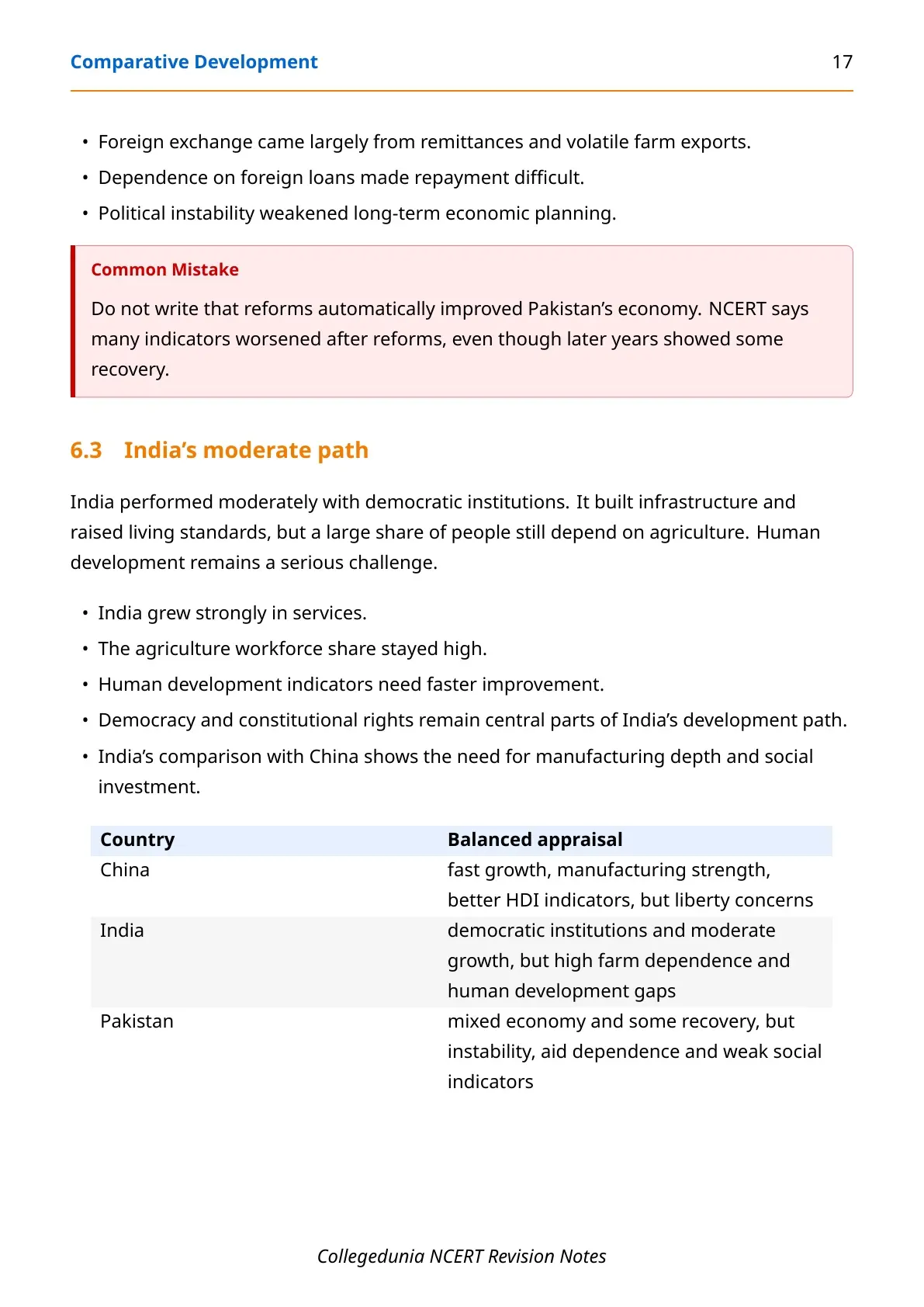
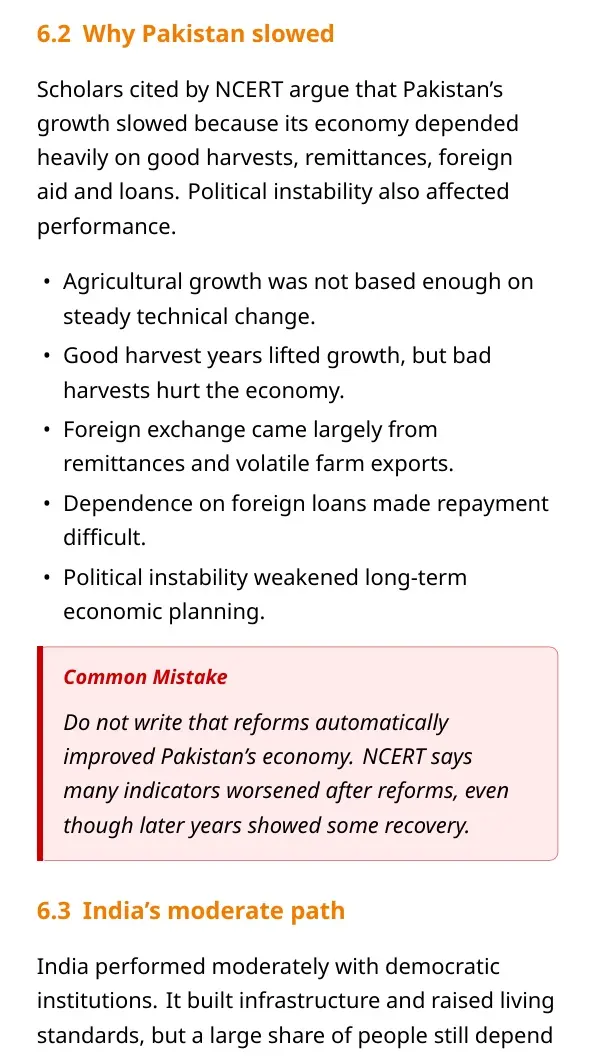
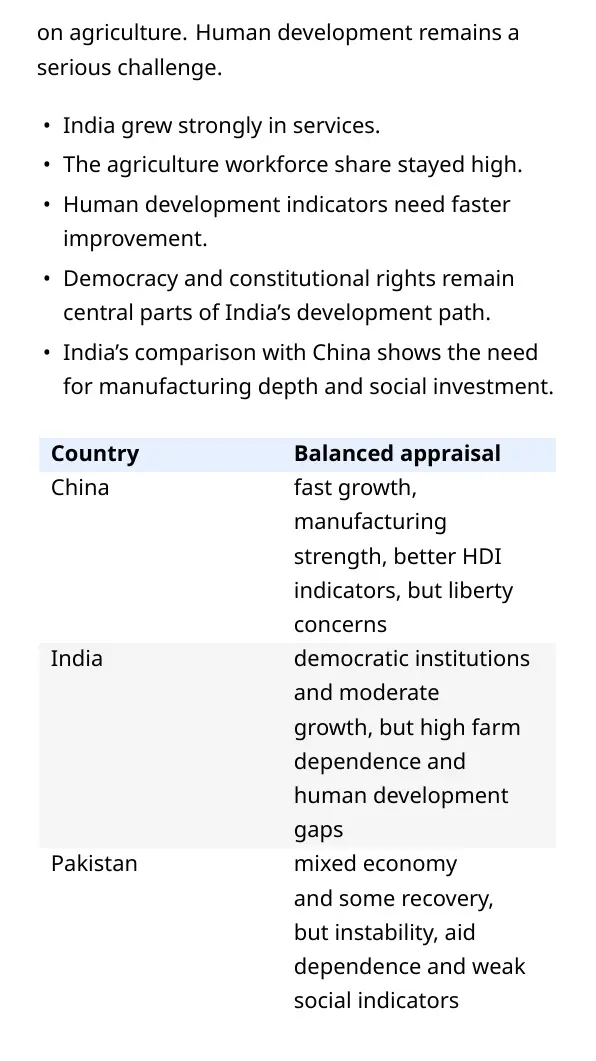
Pakistan's slowdown is linked with political instability, dependence on good harvests, remittances, foreign aid and loans, and volatile agricultural exports. India performed moderately with democratic institutions, infrastructure initiatives and service-sector growth, but a large workforce still depends on agriculture and human development needs faster improvement.
- China's rapid growth came from reform design, manufacturing depth and prior social infrastructure.
- Pakistan's weak points include instability, aid dependence and volatile agriculture.
- India's answer should mention democracy, moderate growth, services and high farm dependence.
- A balanced conclusion includes strategy, sectors, people and freedom.
Important Terms and Answer Frames
| Term | Meaning | Use in answer |
|---|---|---|
| Development path | The broad policy route followed by a country | Use before comparing reforms |
| One-child norm | China's population-control measure introduced in the late 1970s | Use with growth, sex ratio and ageing effects |
| Sectoral contribution | Share of agriculture, industry and services in GVA | Use with workforce distribution |
| Liberty indicators | Measures of democratic participation, rights, judiciary and rule of law | Use in HDI appraisal answers |
| Reform year | China 1978, Pakistan 1988, India 1991 | Use in every development-strategy answer |
Related Resources for Comparative Development
| Resource | Use it for | Link |
|---|---|---|
| NCERT Book PDF | Read the official source chapter | Class 11 Economics Chapter 16 NCERT Book PDF |
| NCERT Solutions | Practise exercise answers after revision | Class 11 Economics Chapter 16 NCERT Solutions |
| Handwritten Notes | Use compact visual revision before tests | Class 11 Economics Chapter 16 Handwritten Notes |
| Previous Chapter Notes | Revise sustainability before comparing development | Environment and Sustainable Development Notes |
| Subject Hub | Browse all Class 11 Economics resources | Class 11 Economics Hub |
Class 11 Economics Notes for All Chapters
| Chapter | NCERT Notes |
|---|---|
| Chapter 1 | Introduction Notes |
| Chapter 2 | Collection of Data Notes |
| Chapter 3 | Organisation of Data Notes |
| Chapter 4 | Presentation of Data Notes |
| Chapter 5 | Measures of Central Tendency Notes |
| Chapter 6 | Correlation Notes |
| Chapter 7 | Index Numbers Notes |
| Chapter 8 | Use of Statistical Tools Notes |
| Chapter 9 | Indian Economy on the Eve of Independence Notes |
| Chapter 10 | Indian Economy 1950-1990 Notes |
| Chapter 11 | Liberalisation Privatisation and Globalisation An Appraisal Notes |
| Chapter 12 | Human Capital Formation in India Notes |
| Chapter 13 | Rural Development Notes |
| Chapter 14 | Employment Growth Informalisation and Other Issues Notes |
| Chapter 15 | Environment and Sustainable Development Notes |
| Chapter 16 | Comparative Development Experiences of India and Its Neighbours Notes |
Comparative Development Experiences FAQs
Ques. What does Comparative Development Experiences of India and Its Neighbours cover?
Ans. It compares India, China and Pakistan through development paths, reform years, demographic indicators, GDP, sectoral contribution, human development indicators and final appraisal.
Ques. What are the reform years for India, China and Pakistan?
Ans. China introduced reforms in 1978, Pakistan in 1988 and India in 1991. These years are important for almost every development-strategy answer.
Ques. Why is China ahead on many indicators in the NCERT table?
Ans. NCERT links China's performance with prior social infrastructure, land reforms, decentralised planning, small enterprises, phased reforms and strong manufacturing growth.
Ques. What are liberty indicators in this chapter?
Ans. Liberty indicators include democratic participation, constitutional protection of rights, independence of the judiciary and rule of law. NCERT says HDI is incomplete without such indicators.



Comments