




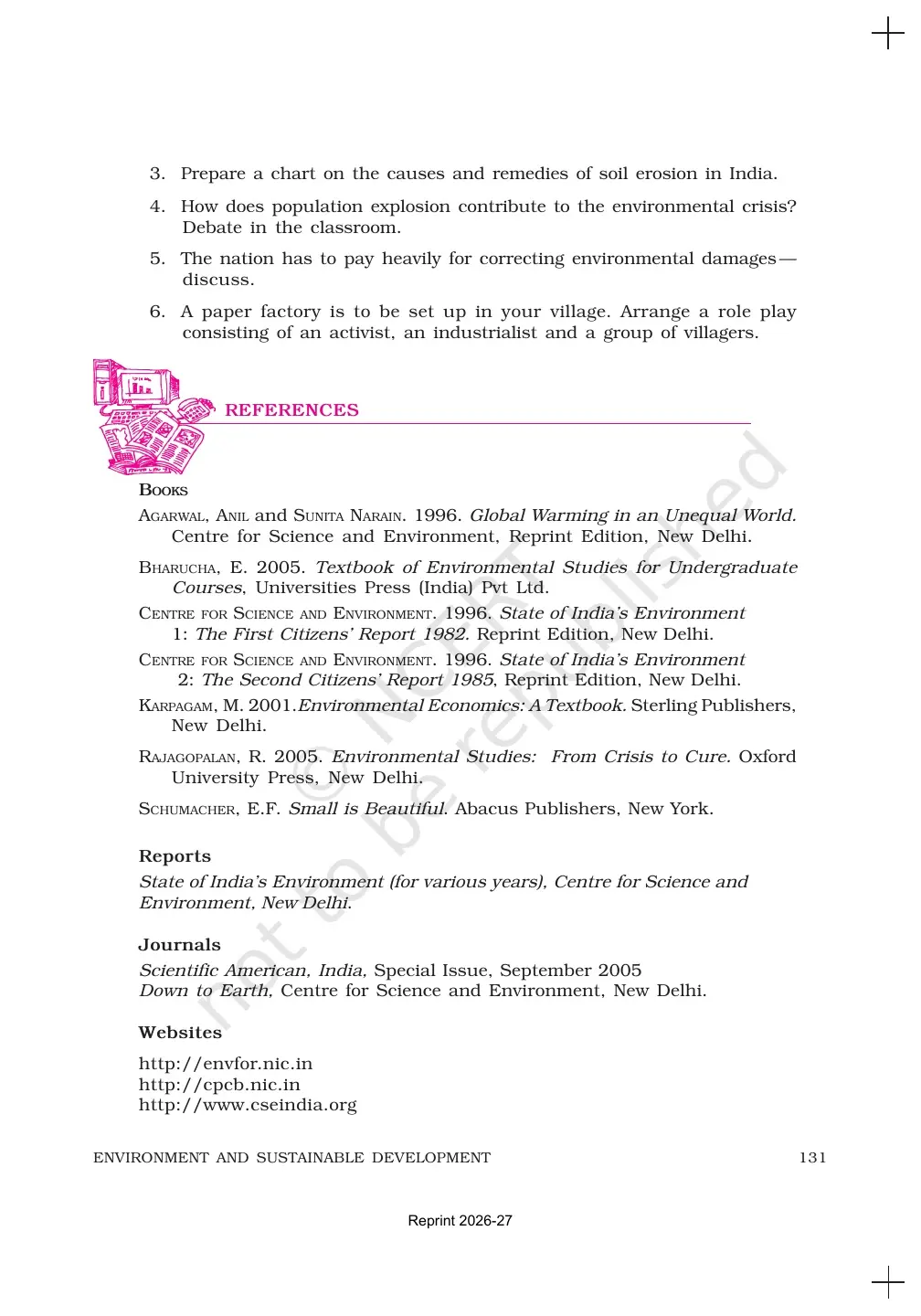
The NCERT Class 11 Economics Chapter 15 Environment and Sustainable Development Book PDF gives students the official Indian Economic Development chapter for the 2026-27 syllabus. Use it to study environmental functions, carrying capacity, pollution, global warming, ozone depletion and sustainable development strategies.
- Book section: official NCERT chapter text, activities, tables, examples and exercise questions.
- Best use: read the PDF before making environment and development revision notes.
- Revision cue: connect every strategy with present needs and future resource security.
Student Feedback: In a Collegedunia check of 11,260 Class 11 Economics students, many students said this chapter became easier after they made one table for environmental problems and one table for sustainable development strategies.
Environment and Sustainable Development Class 11 NCERT Book PDF: What It Covers
The PDF explains why development cannot be separated from the environment. NCERT begins with the meaning and functions of environment, then studies resource pressure, pollution, global environmental problems and sustainable development.
The official chapter is the best first source for exam answers. It gives the exact NCERT wording students need for definitions, short answers and long answers on sustainability.
| NCERT area | What students should notice | Answer cue |
|---|---|---|
| Environment functions | NCERT lists resource supply, waste absorption, life support and aesthetic service. | Use all four points. |
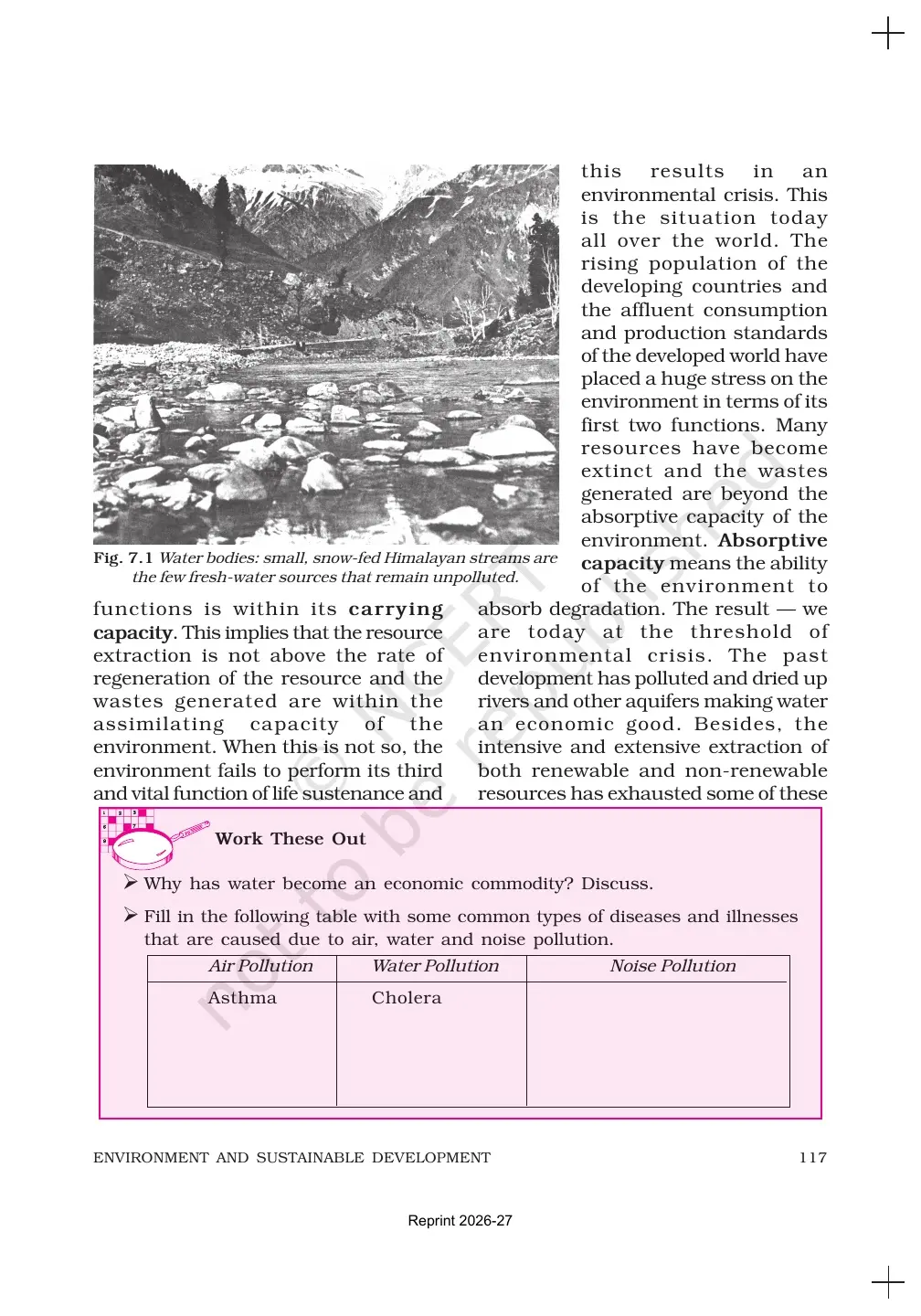
| Carrying capacity | The environment can absorb waste only up to a limit. | Link it with pollution. |
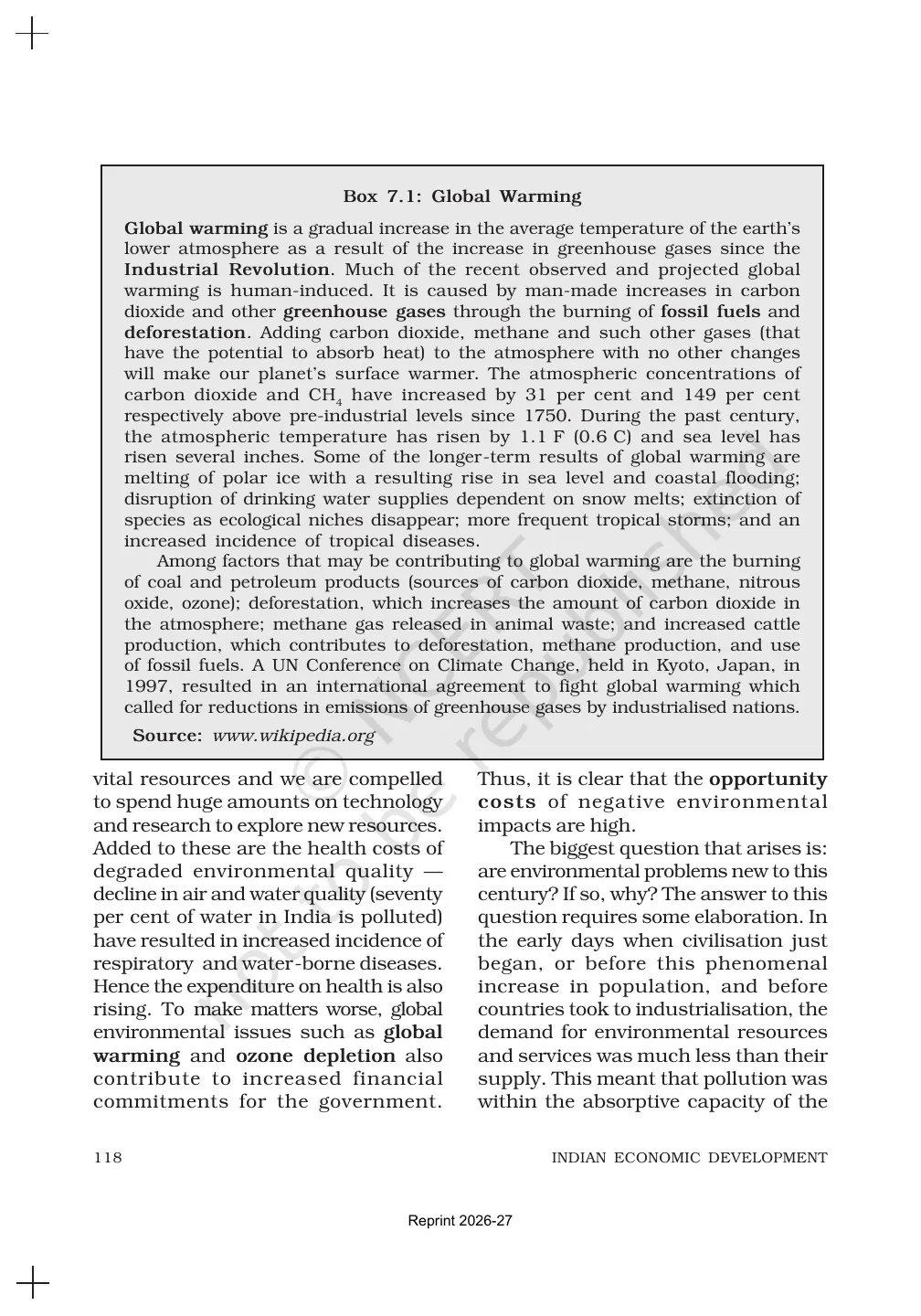
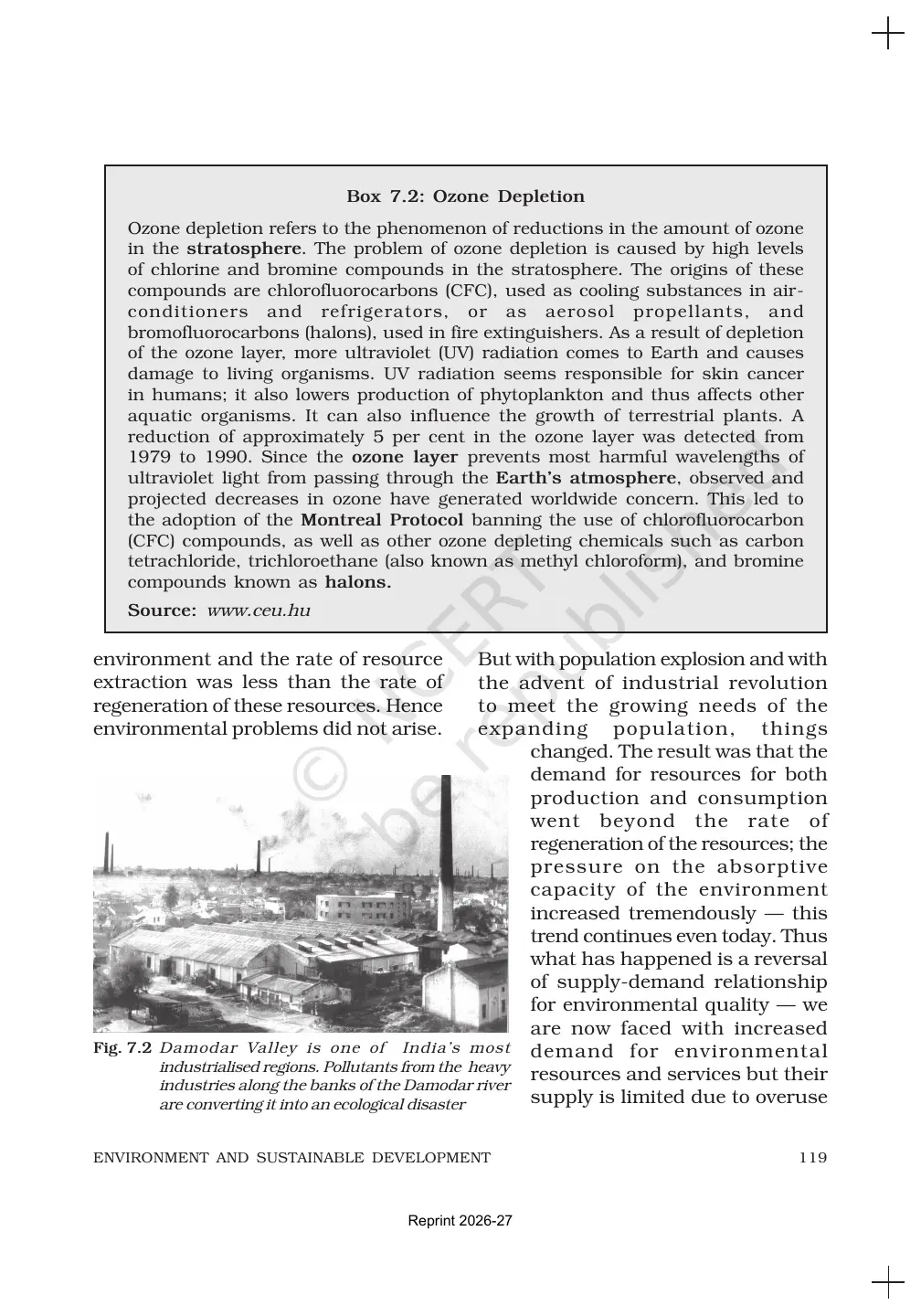
| Global issues | Global warming and ozone depletion show worldwide environmental pressure. | Add clear examples. |
| Sustainable development | Growth must protect choices for future generations. | Use the standard definition. |
Environment and Sustainable Development Video Recap
Source: Magnet Brains on YouTube
Environment and Its Functions in Class 11 Economics
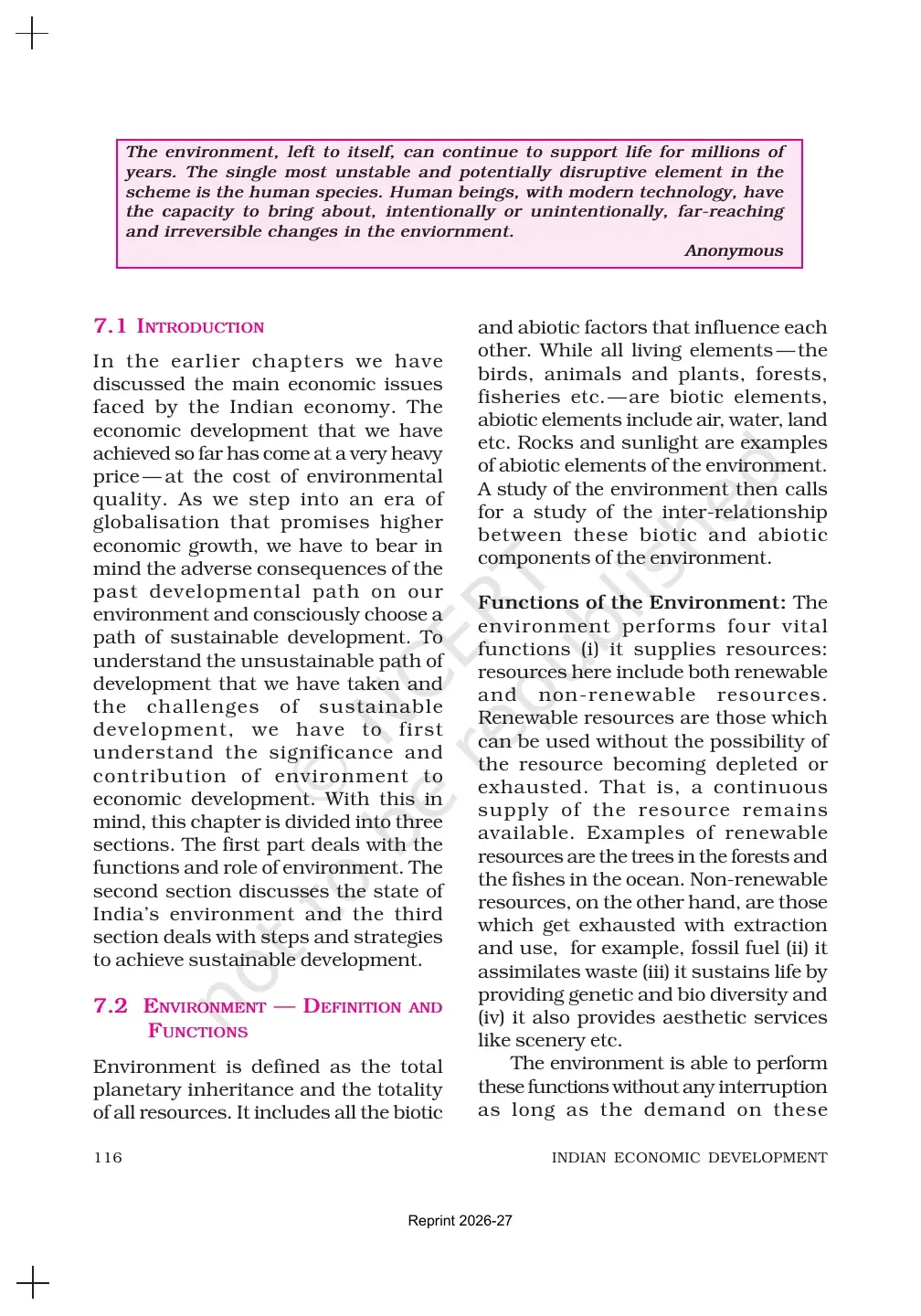
NCERT uses environment as an economic idea, not only as a science term. The environment supplies resources, absorbs waste, supports life and gives services such as natural beauty and biodiversity.
- Resource supply: air, water, forests, minerals and soil support production and living.
- Waste absorption: nature can absorb waste, but only within limits.
- Life support: climate, oxygen, water cycle and biodiversity keep life possible.
- Aesthetic service: forests, rivers and landscapes improve human well-being.
Environmental Crisis and Global Problems
The chapter explains that rapid growth can create an environmental crisis when demand for resources rises faster than nature can renew them. Pollution also rises when waste crosses the environment's absorption capacity.
Strong answers should mention both resource depletion and pollution. This keeps the answer balanced and matches the way NCERT explains the crisis.
| Problem | NCERT focus | How to write it |
|---|---|---|
| Global warming | Greenhouse gases raise the Earth's average temperature. | Connect it with fossil fuel use. |
| Ozone depletion | The ozone layer protects life from harmful ultraviolet rays. | Mention skin and ecosystem risk. |
| Air and water pollution | Industrial waste, vehicles and sewage damage health and productivity. | Use local examples carefully. |
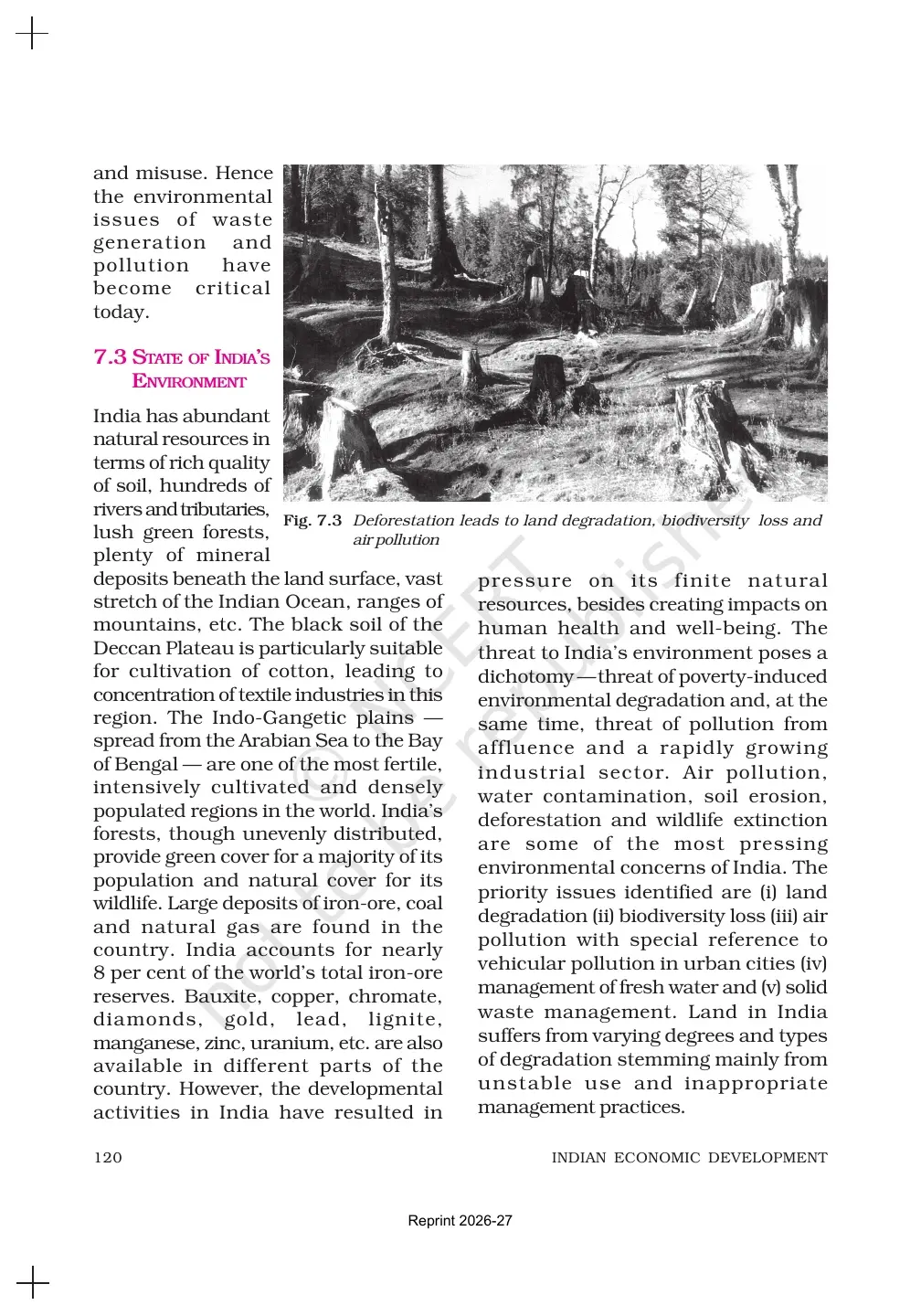
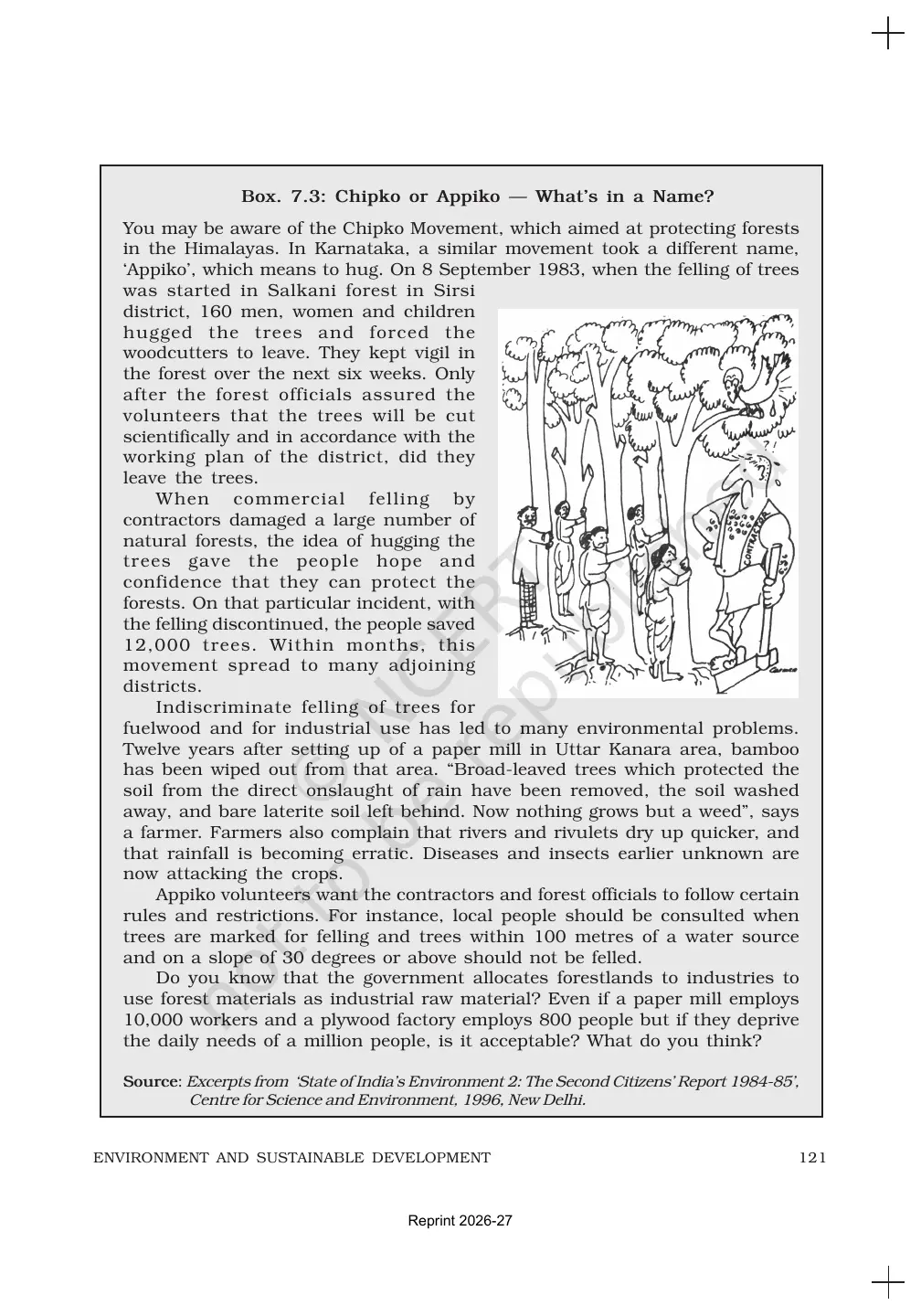
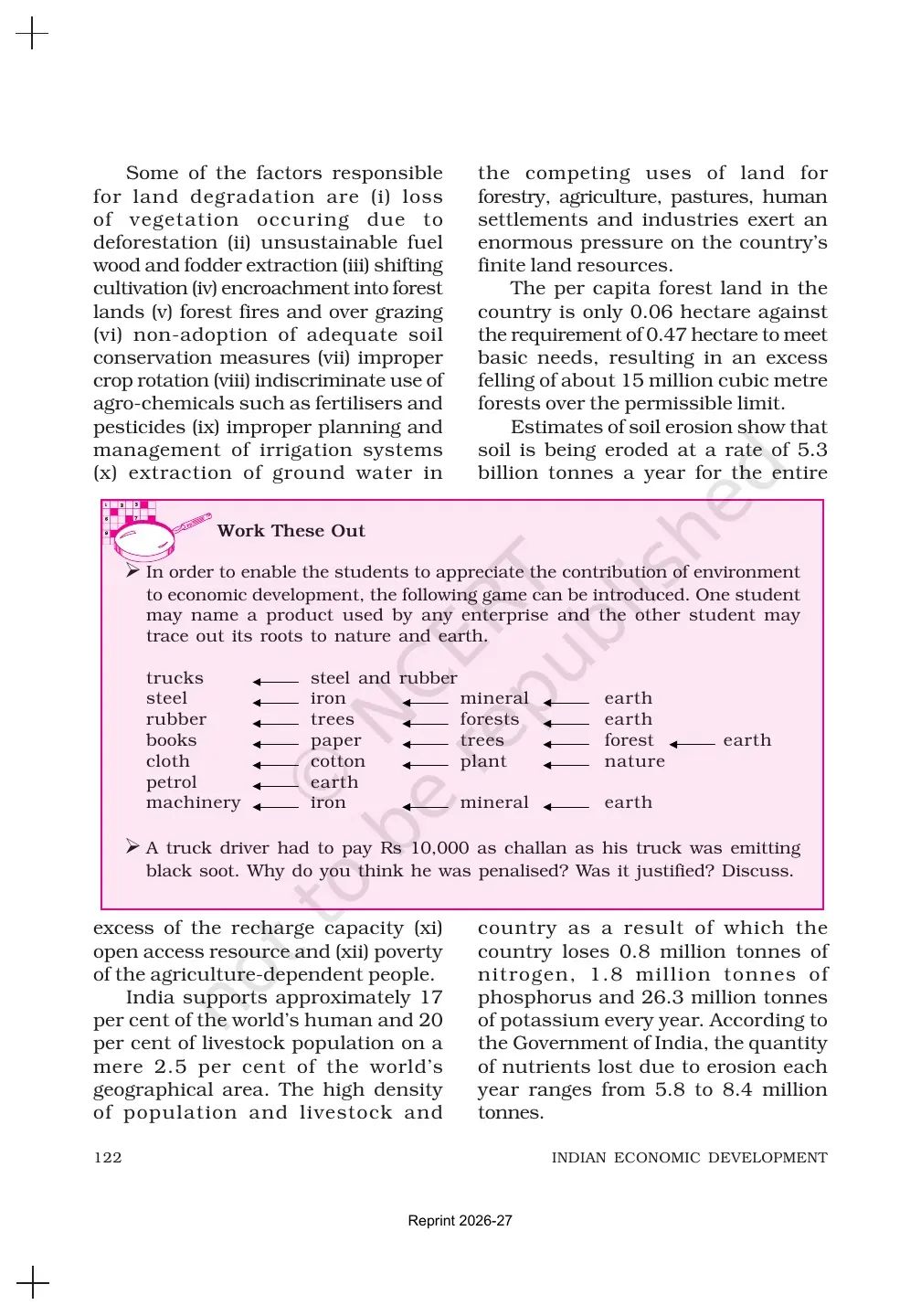
| Land degradation | Soil erosion, deforestation and overuse reduce land quality. | Link it with agriculture. |
Sustainable Development Strategies in the NCERT Chapter
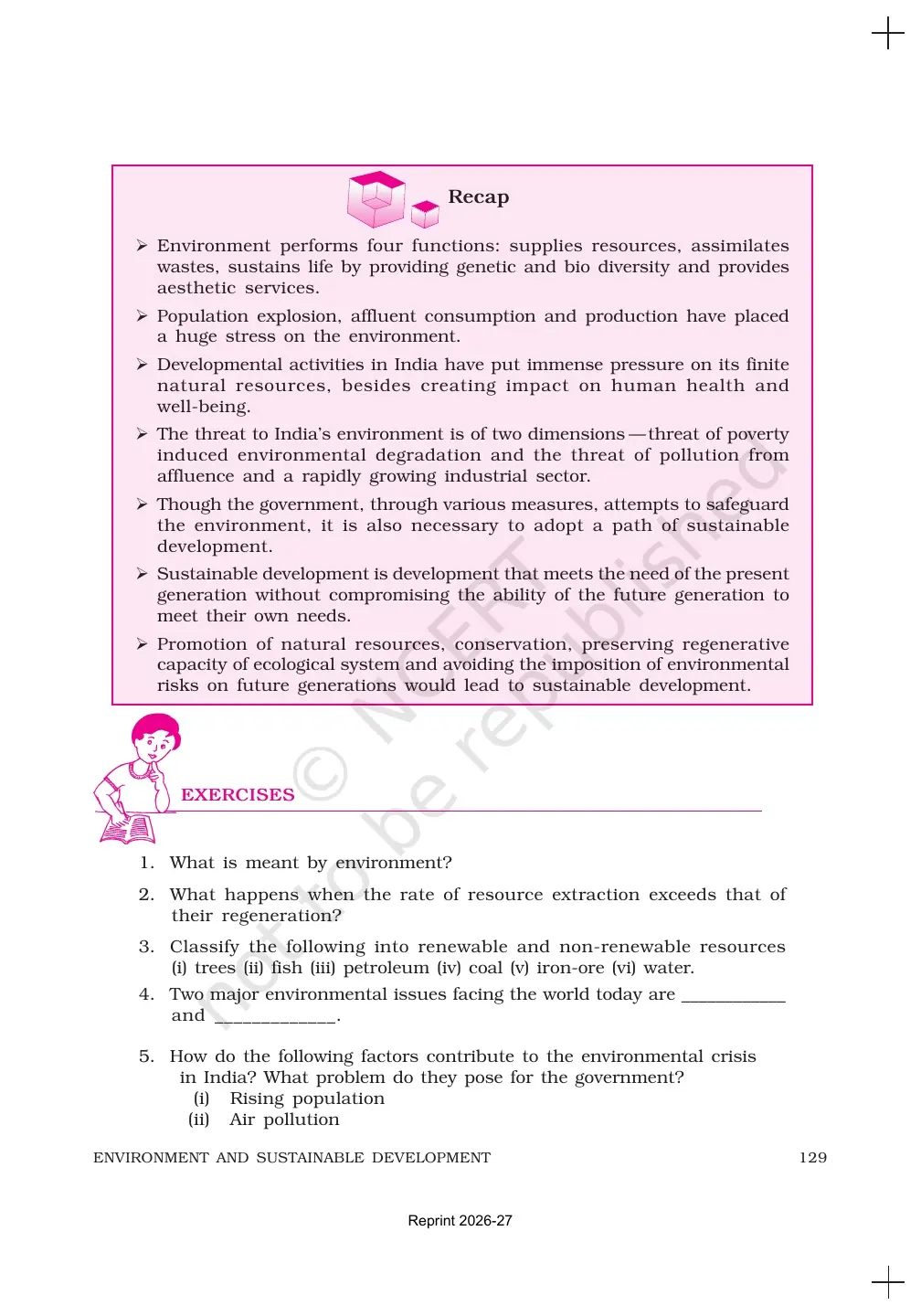
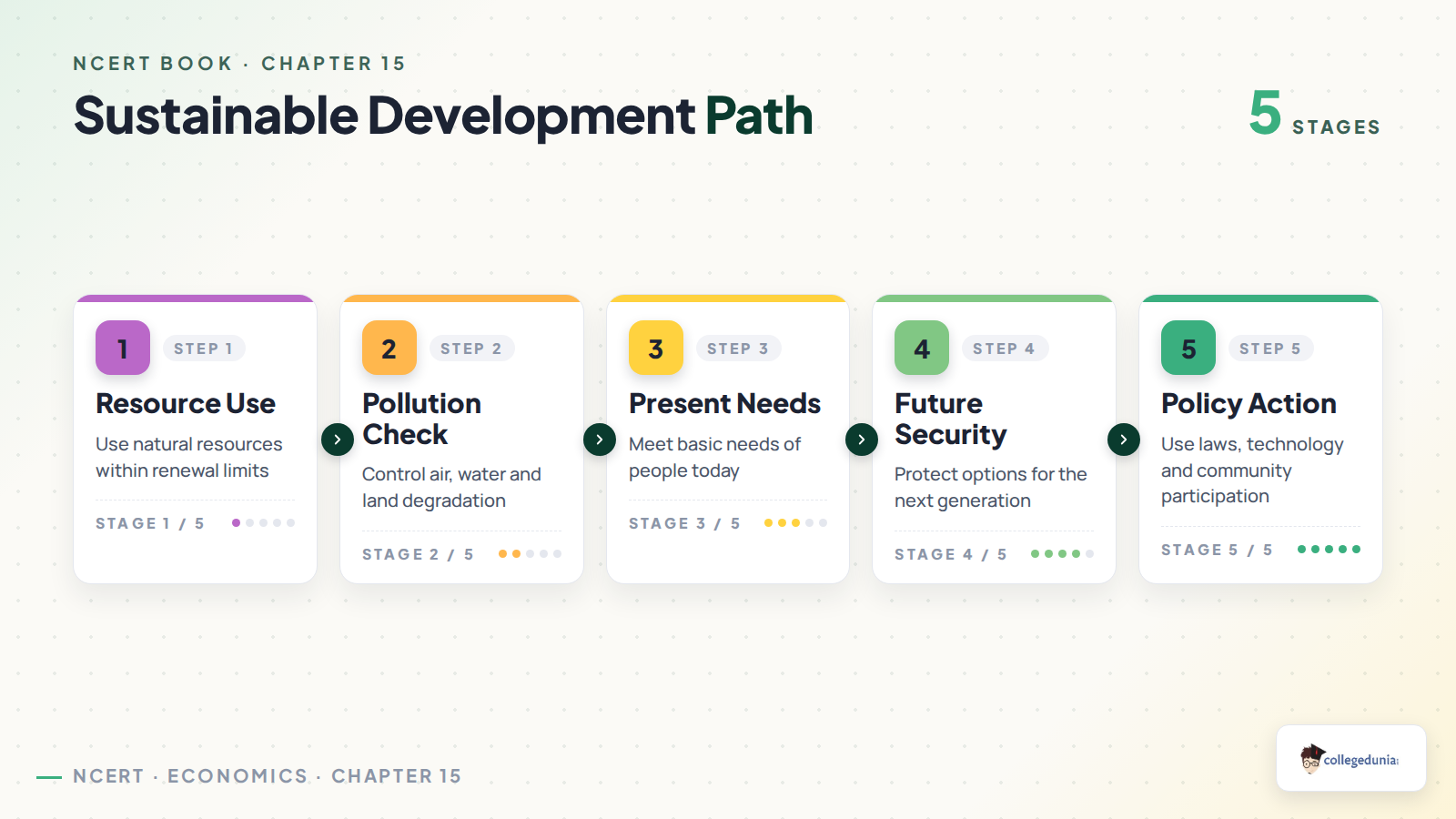
Sustainable development means meeting present needs without reducing the ability of future generations to meet their own needs. NCERT then gives practical strategies that reduce pressure on natural resources.
Sustainability is the main policy idea in the chapter. Students should not write it as anti-growth. The chapter argues for cleaner, fairer and resource-safe growth.
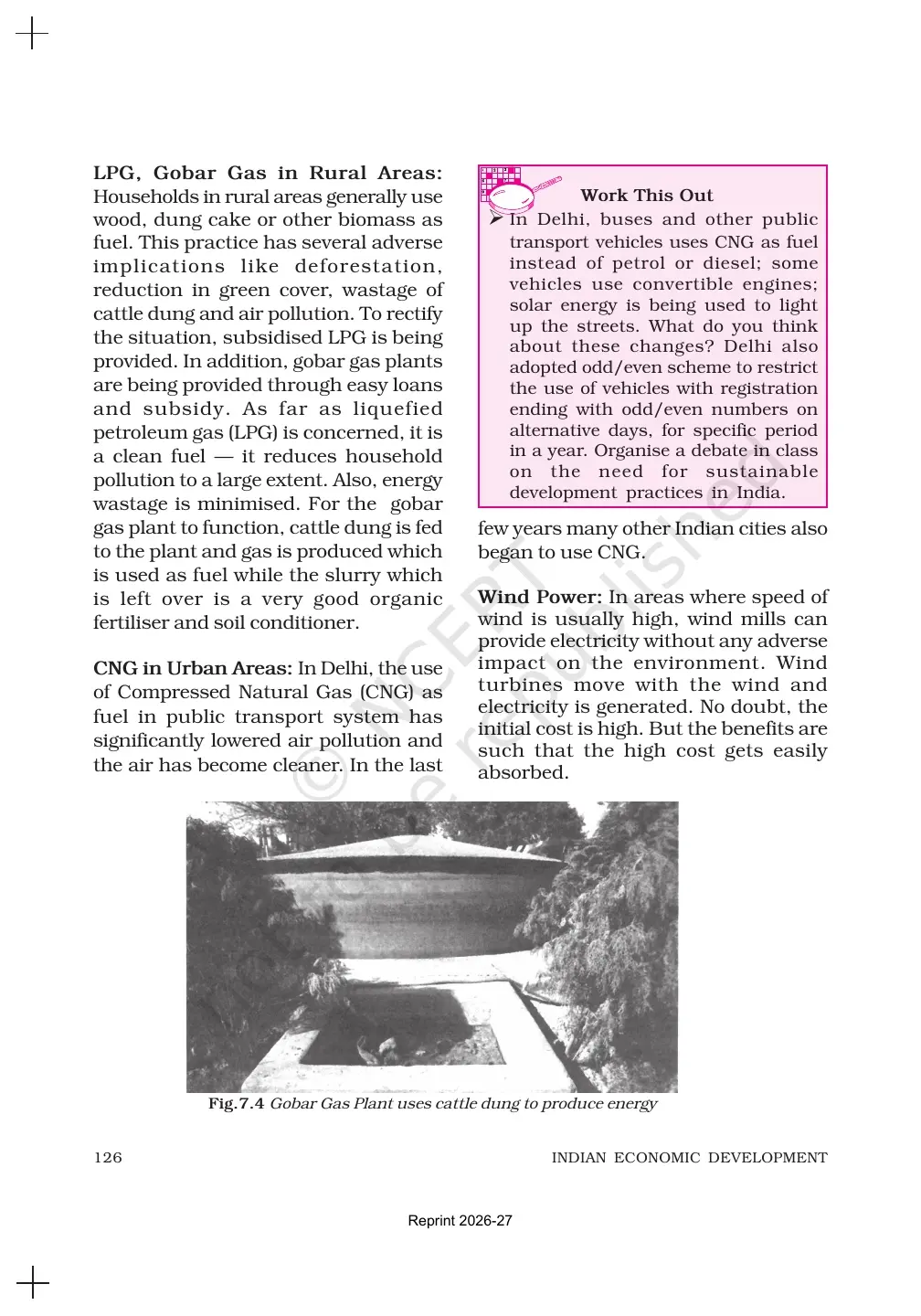
- Cleaner fuel: LPG, CNG and non-conventional energy reduce harmful emissions.
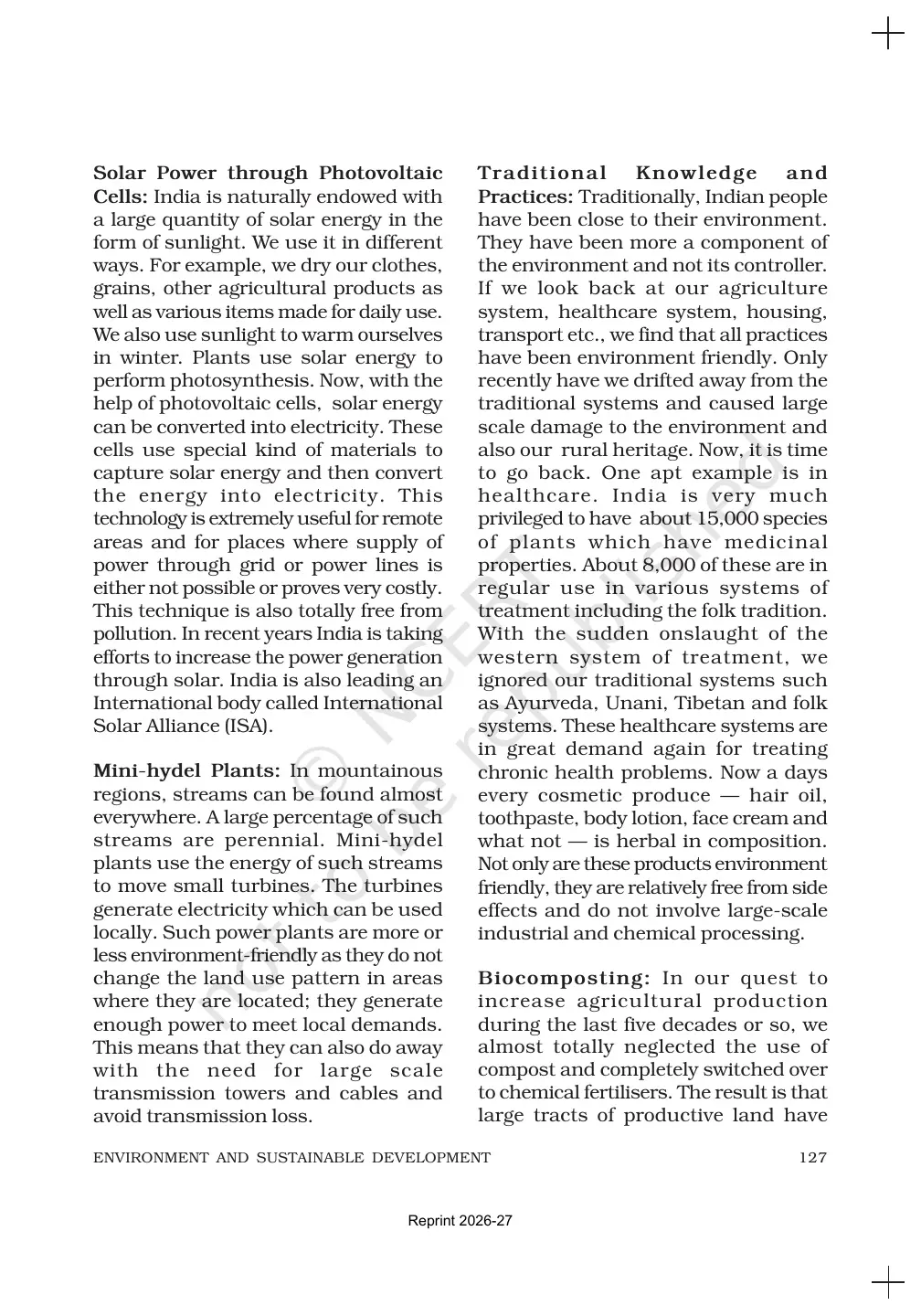
- Renewable energy: solar, wind and mini-hydel projects reduce fossil fuel dependence.
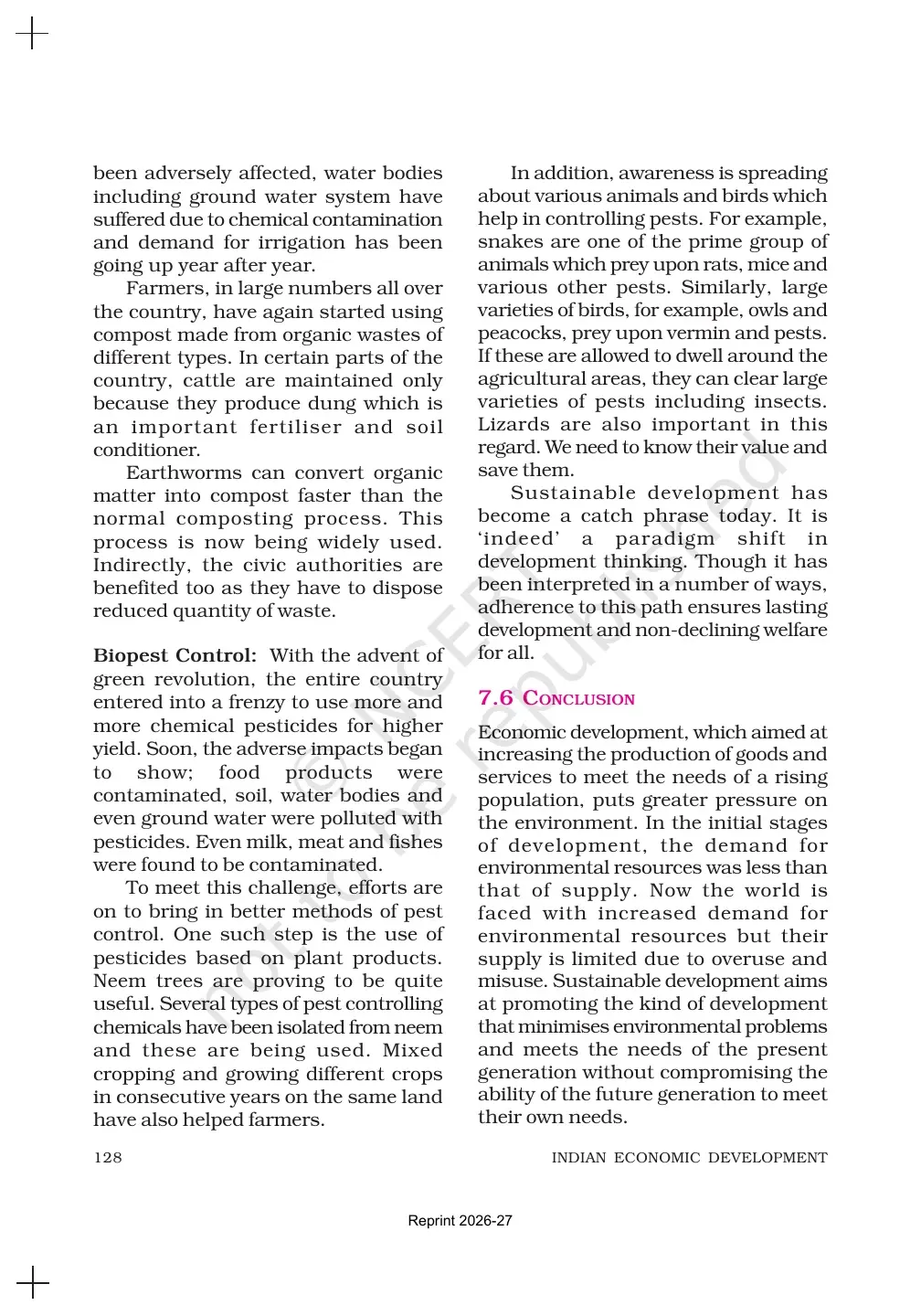
- Organic farming: biocomposting and natural inputs protect soil health.
- Public action: laws, local participation and awareness support environmental protection.
How to Use the Environment and Sustainable Development NCERT Book PDF
Read this PDF in three passes. First, mark all definitions. Second, make a problem-strategy table. Third, revise global warming, ozone depletion and sustainable development with one example each.
- For short answers: define the term and add one NCERT phrase.
- For long answers: divide the answer into cause, effect and strategy.
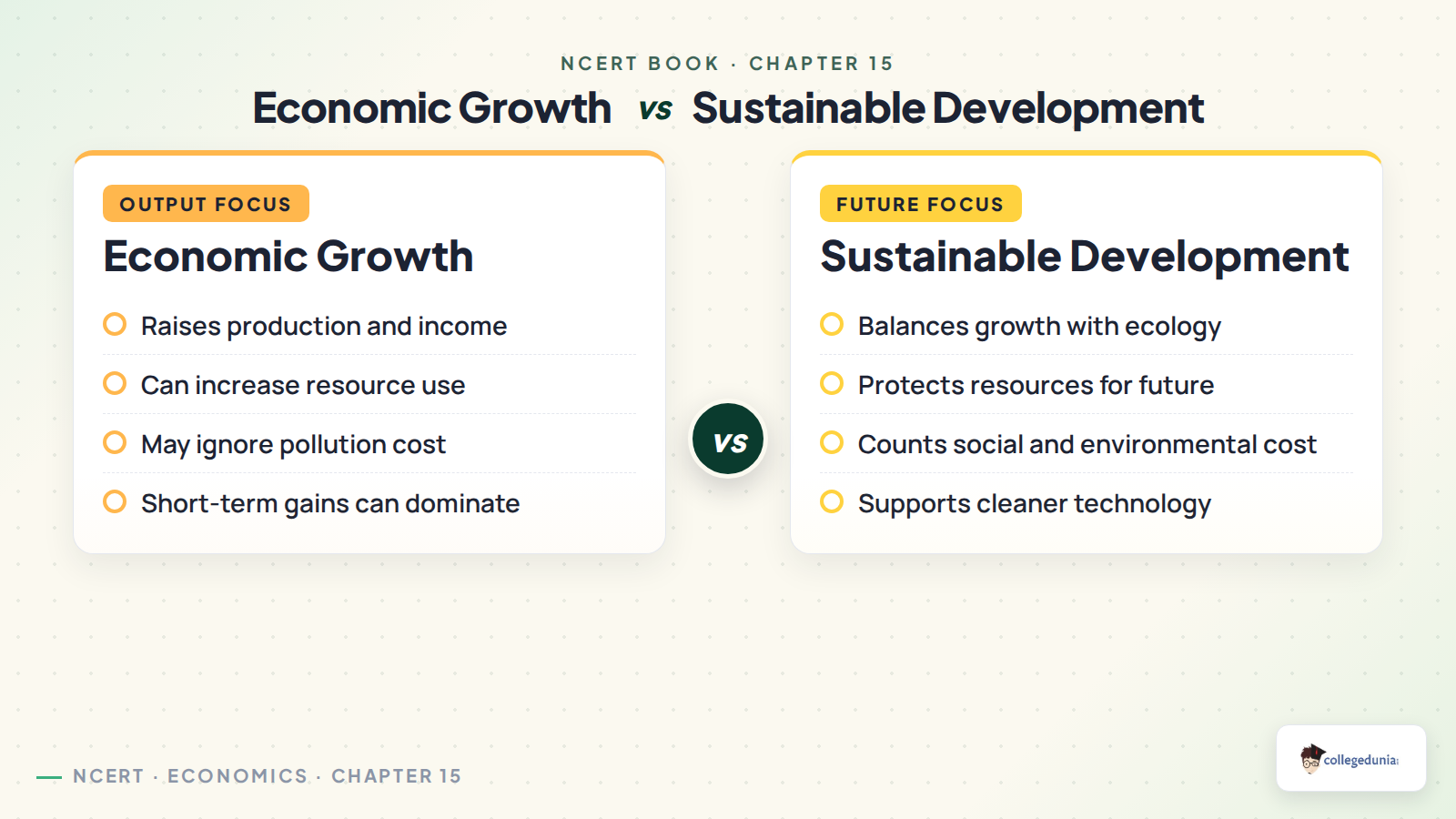
- For revision: compare economic growth and sustainable development in two columns.
- For examples: use CNG, LPG, solar energy, biocomposting and organic farming carefully.
Related Class 11 Economics Resources for Environment and Sustainable Development
Also Check: use the official book PDF with notes and practice resources for the same chapter.
| Resource | Best use | Link |
|---|---|---|
| NCERT Notes | Revise environment functions, pollution and sustainability quickly. | Environment and Sustainable Development Notes |
| Handwritten Notes | Use for one-shot revision before a class test. | Handwritten Notes scheduled. |
| NCERT Solutions | Practise textbook questions after reading the official PDF. | NCERT Solutions scheduled. |
Class 11 Economics NCERT Book PDFs for All Chapters
The table below keeps the Class 11 Economics NCERT Book PDF chapters in one place. Chapters 1 to 8 come from Statistics for Economics, and Chapter 9 onward covers Indian Economic Development.
| Chapter | Title | NCERT Book PDF |
|---|---|---|
| Chapter 1 | Introduction | NCERT Book PDF |
| Chapter 2 | Collection of Data | NCERT Book PDF |
| Chapter 3 | Organisation of Data | NCERT Book PDF |
| Chapter 4 | Presentation of Data | NCERT Book PDF |
| Chapter 5 | Measures of Central Tendency | NCERT Book PDF |
| Chapter 6 | Correlation | NCERT Book PDF |
| Chapter 7 | Index Numbers | NCERT Book PDF |
| Chapter 8 | Use of Statistical Tools | NCERT Book PDF |
| Chapter 9 | Indian Economy on the Eve of Independence | NCERT Book PDF |
| Chapter 10 | Indian Economy 1950-1990 | NCERT Book PDF |
| Chapter 11 | Liberalisation, Privatisation and Globalisation: An Appraisal | NCERT Book PDF |
| Chapter 12 | Human Capital Formation in India | NCERT Book PDF |
| Chapter 13 | Rural Development | NCERT Book PDF |
| Chapter 14 | Employment: Growth, Informalisation and Other Issues | NCERT Book PDF |
| Chapter 15 | Environment and Sustainable Development | Current NCERT Book PDF |
| Chapter 16 | Comparative Development Experiences of India and its Neighbours | Book PDF scheduled. |
Environment and Sustainable Development Class 11 Economics NCERT Book PDF FAQs
Ques. What does the Class 11 Economics Chapter 15 NCERT Book PDF include?
Ans. It includes the official NCERT chapter on environment, environmental crisis, global environmental issues, sustainable development and exercise questions.
Ques. Is this NCERT Book PDF useful for the 2026-27 syllabus?
Ans. Yes. The PDF follows the official NCERT chapter used for the 2026-27 Class 11 Economics syllabus.
Ques. Which NCERT book contains Environment and Sustainable Development?
Ans. It belongs to the Indian Economic Development part of Class 11 Economics. It is Chapter 7 in that NCERT book and Chapter 15 in this combined schedule.
Ques. How should students revise Environment and Sustainable Development?
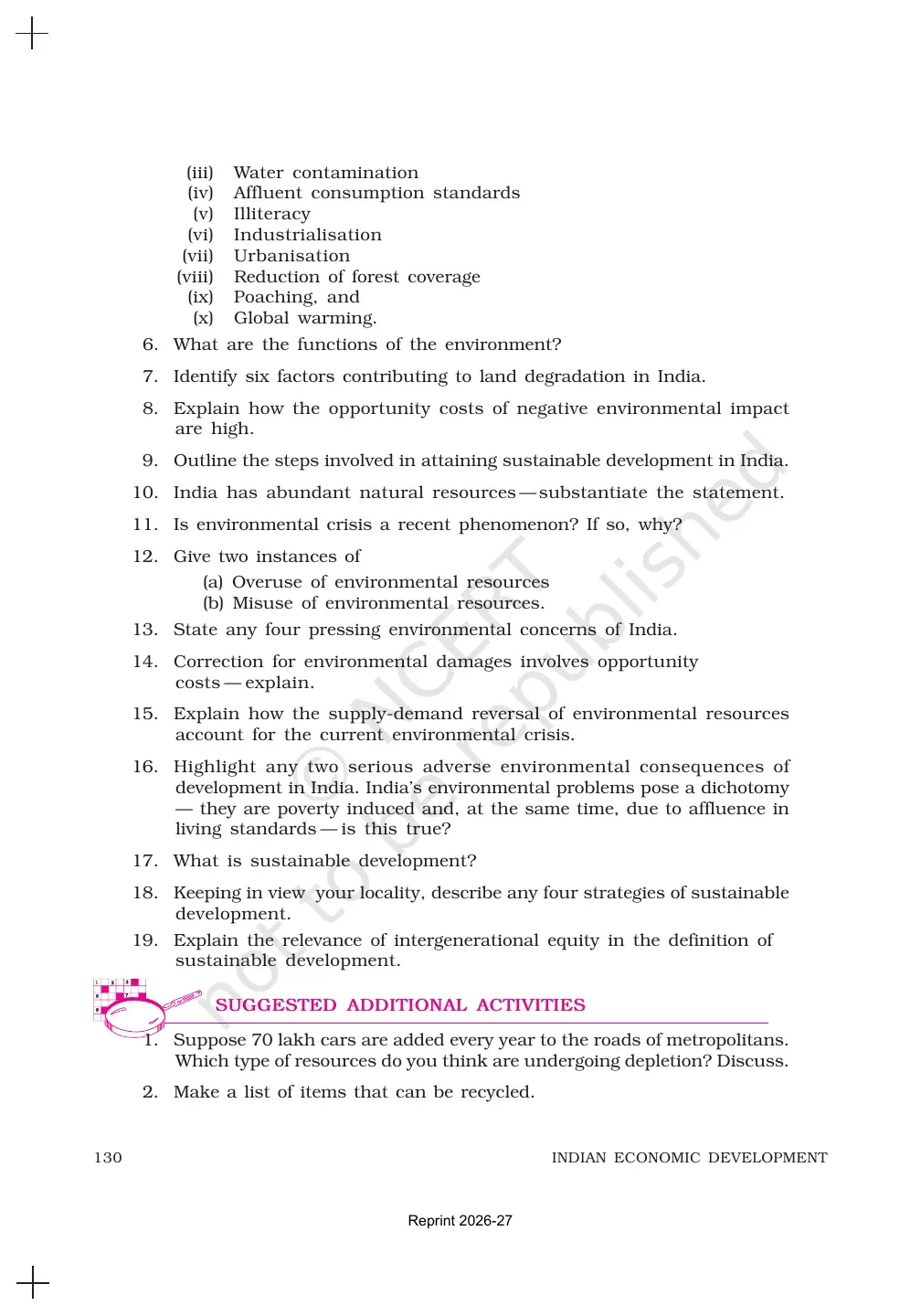
Ans. Students should revise it under four heads: environment functions, environmental crisis, global problems and sustainable development strategies.



Comments