




Class 11 Economics Chapter 13 Rural Development notes explain how villages can move beyond low farm productivity, weak credit access and poor marketing links. These notes follow the 2026-27 NCERT syllabus and connect rural credit, agricultural marketing, diversification, allied activities, organic farming and sustainable rural policy in one revision flow.
- Download the Chapter 13 Economics notes PDF for quick offline revision.
- Revise NABARD, SHGs, regulated markets, MSP, Operation Flood and organic farming from one source.
- Use the tables and examples to write balanced school-test and board-style answers.
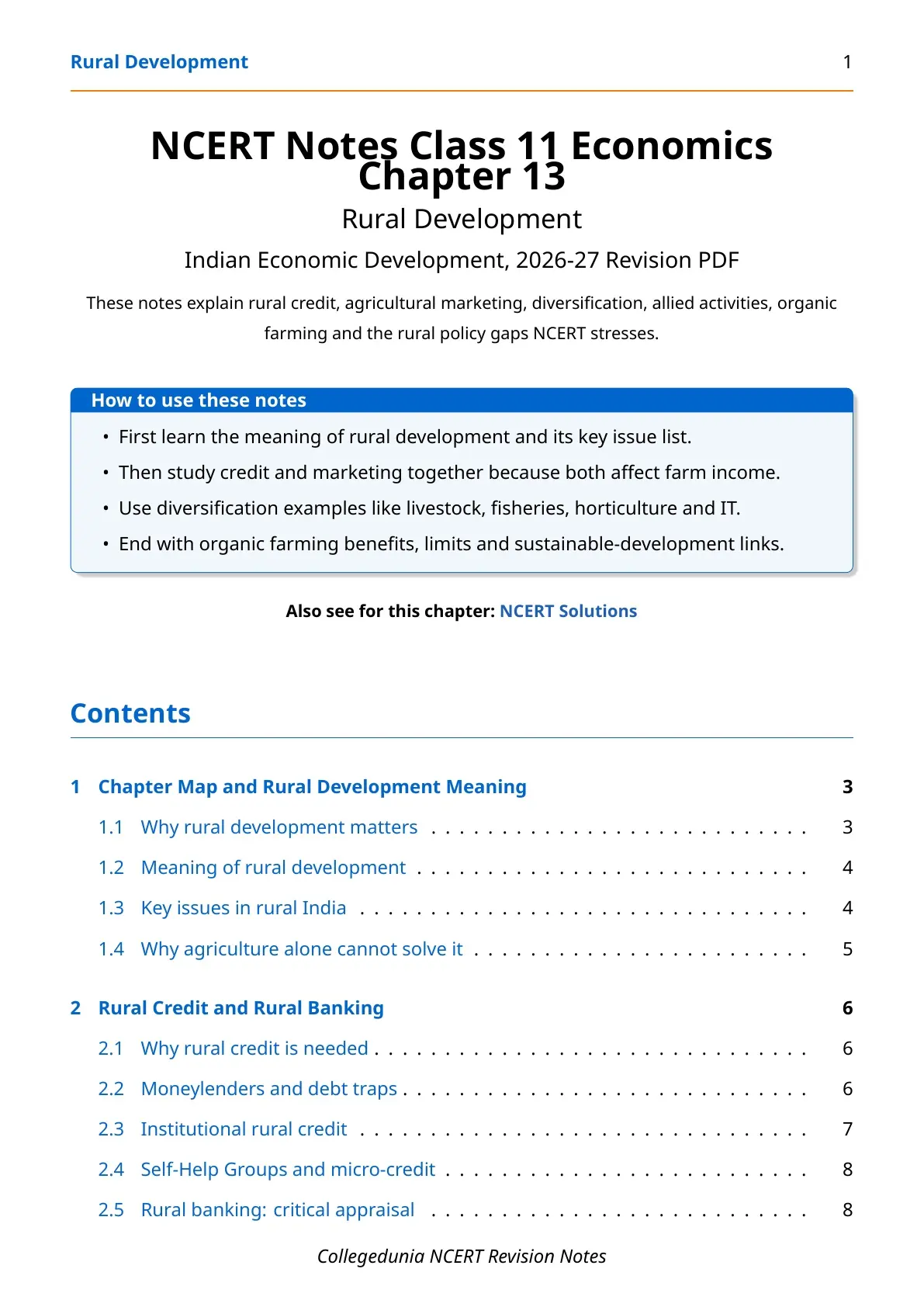
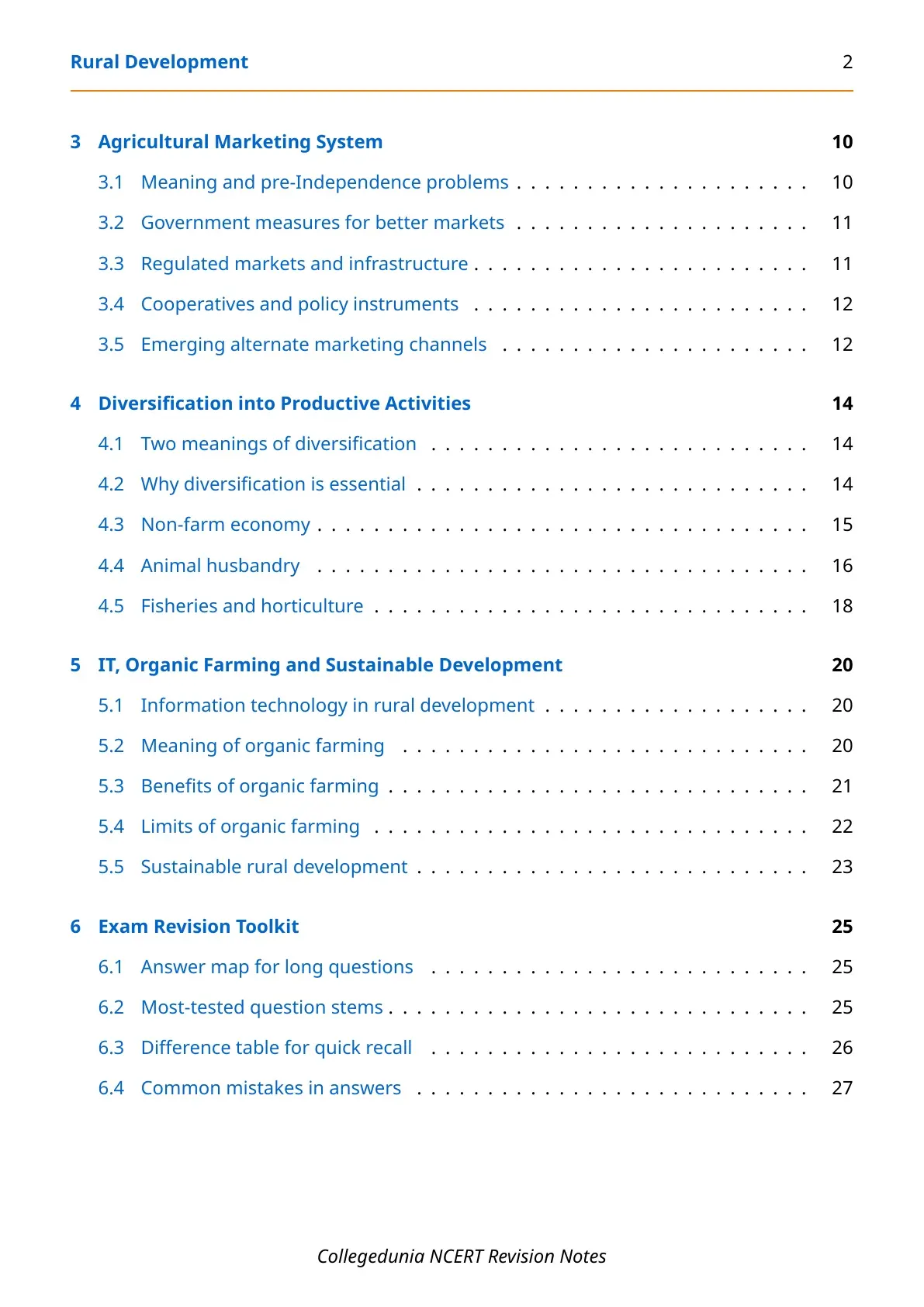
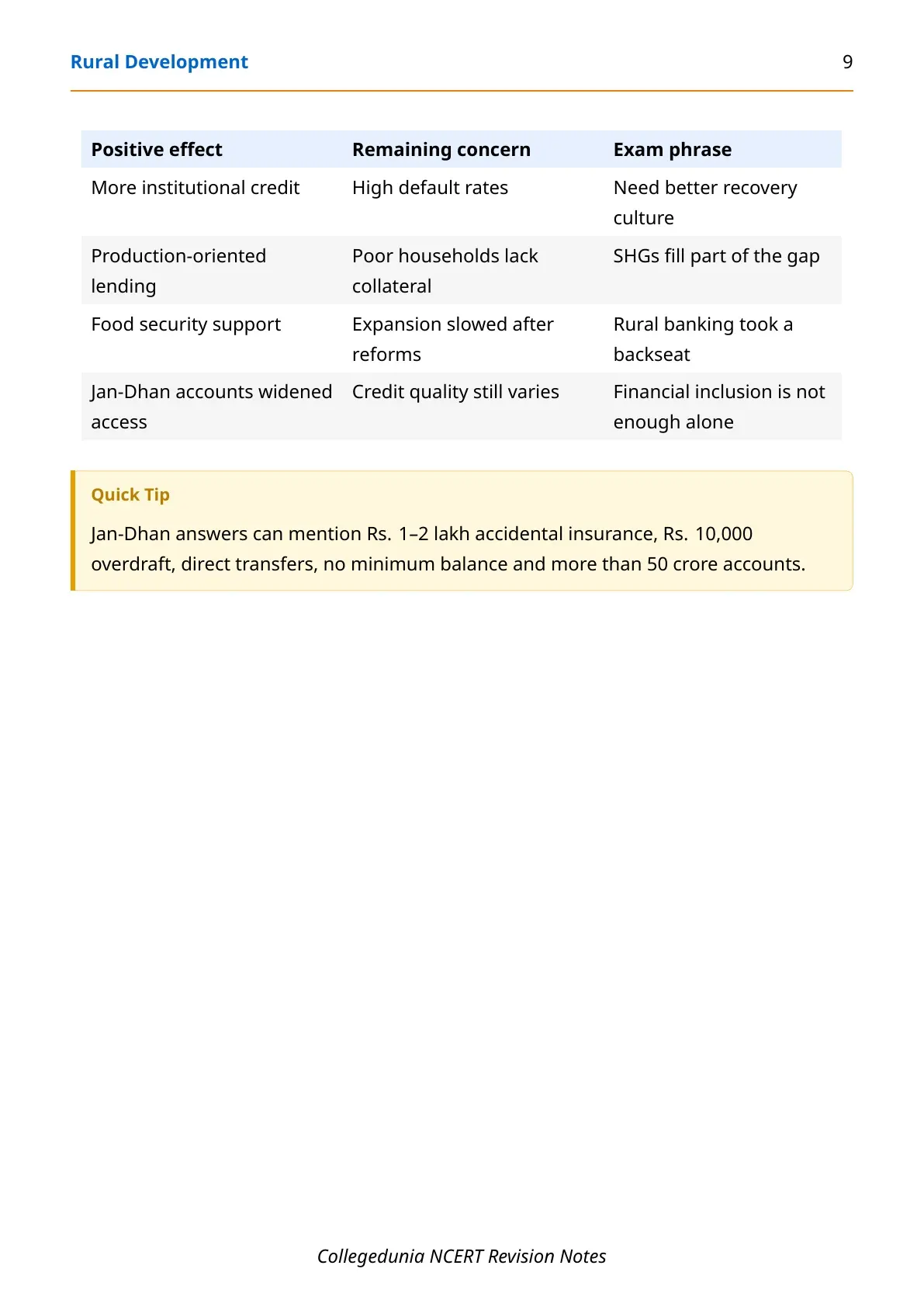
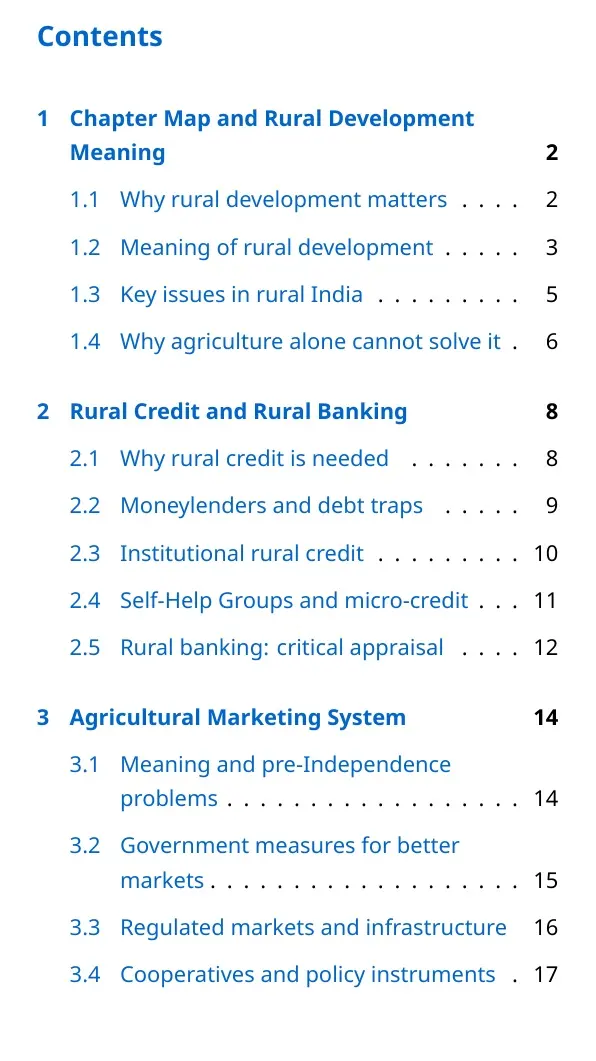
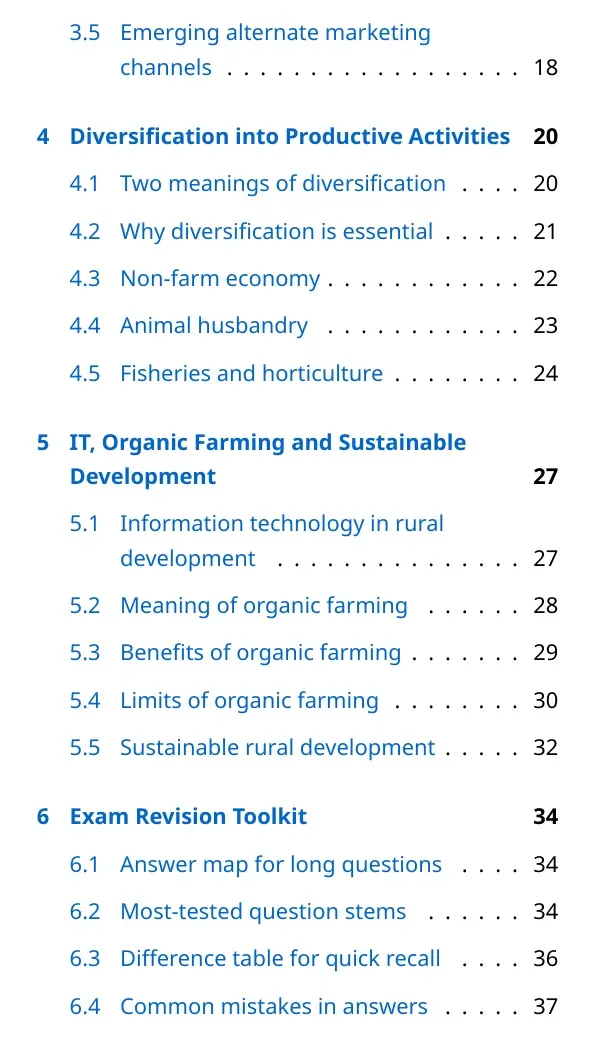



Each Rural Development notes PDF is based on the 2026-27 NCERT chapter and checked for source accuracy, syllabus level and clean revision structure.

Student Feedback: More than 10,000 students use Collegedunia NCERT Economics resources for school tests and board-style revision. Students usually find this chapter easier when rural credit, marketing and diversification are studied as one development chain rather than as separate definitions.
What Rural Development Covers
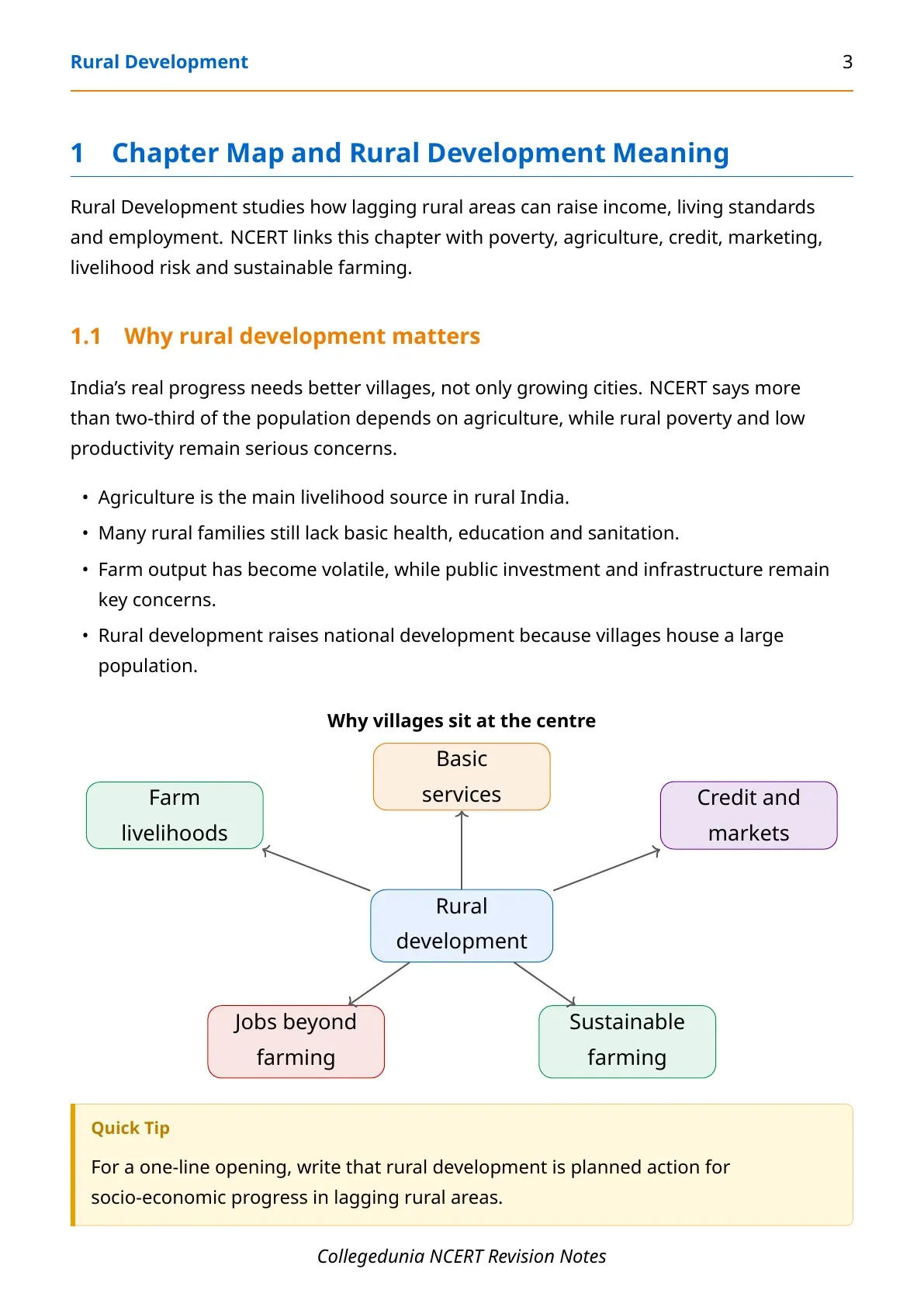
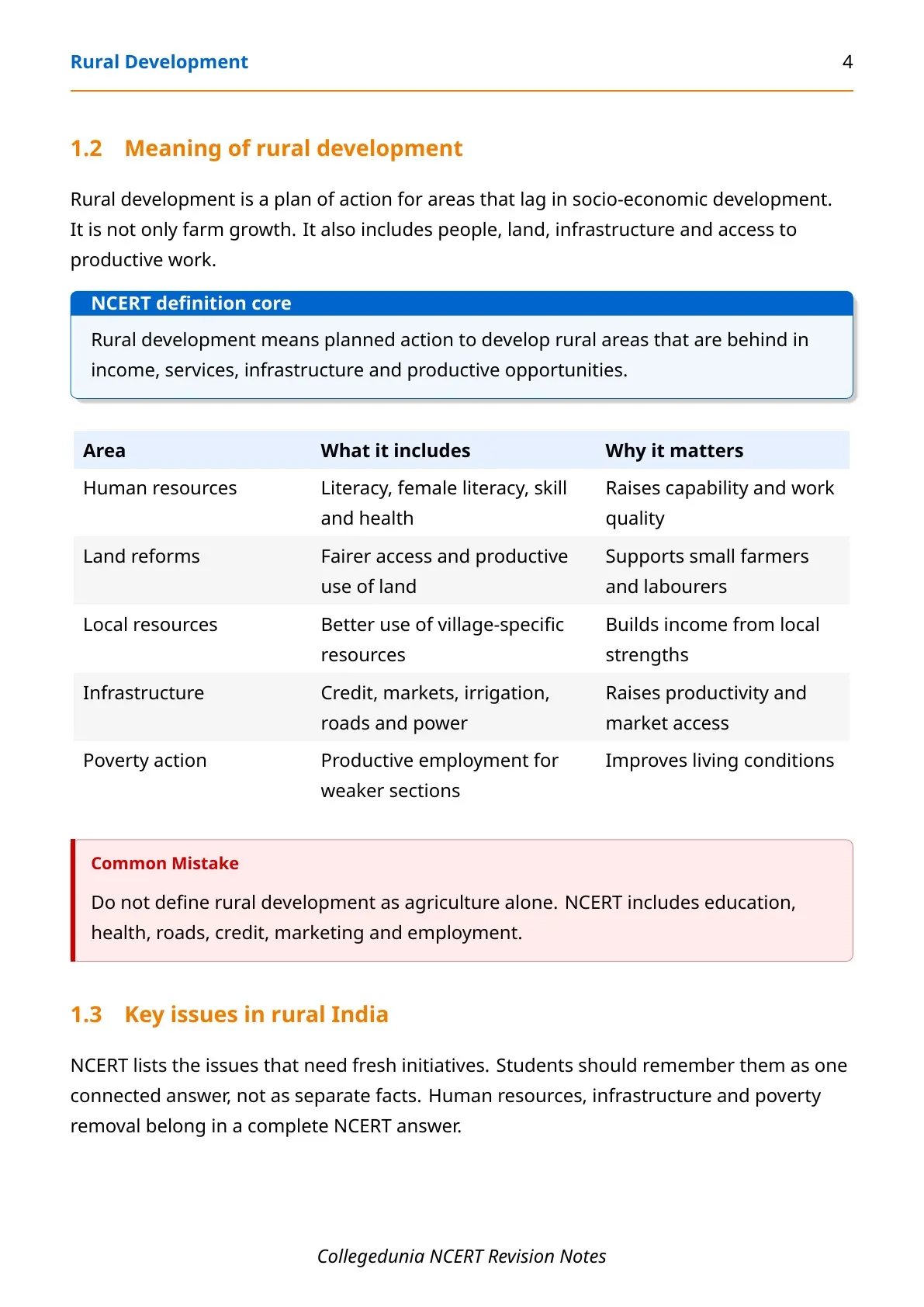
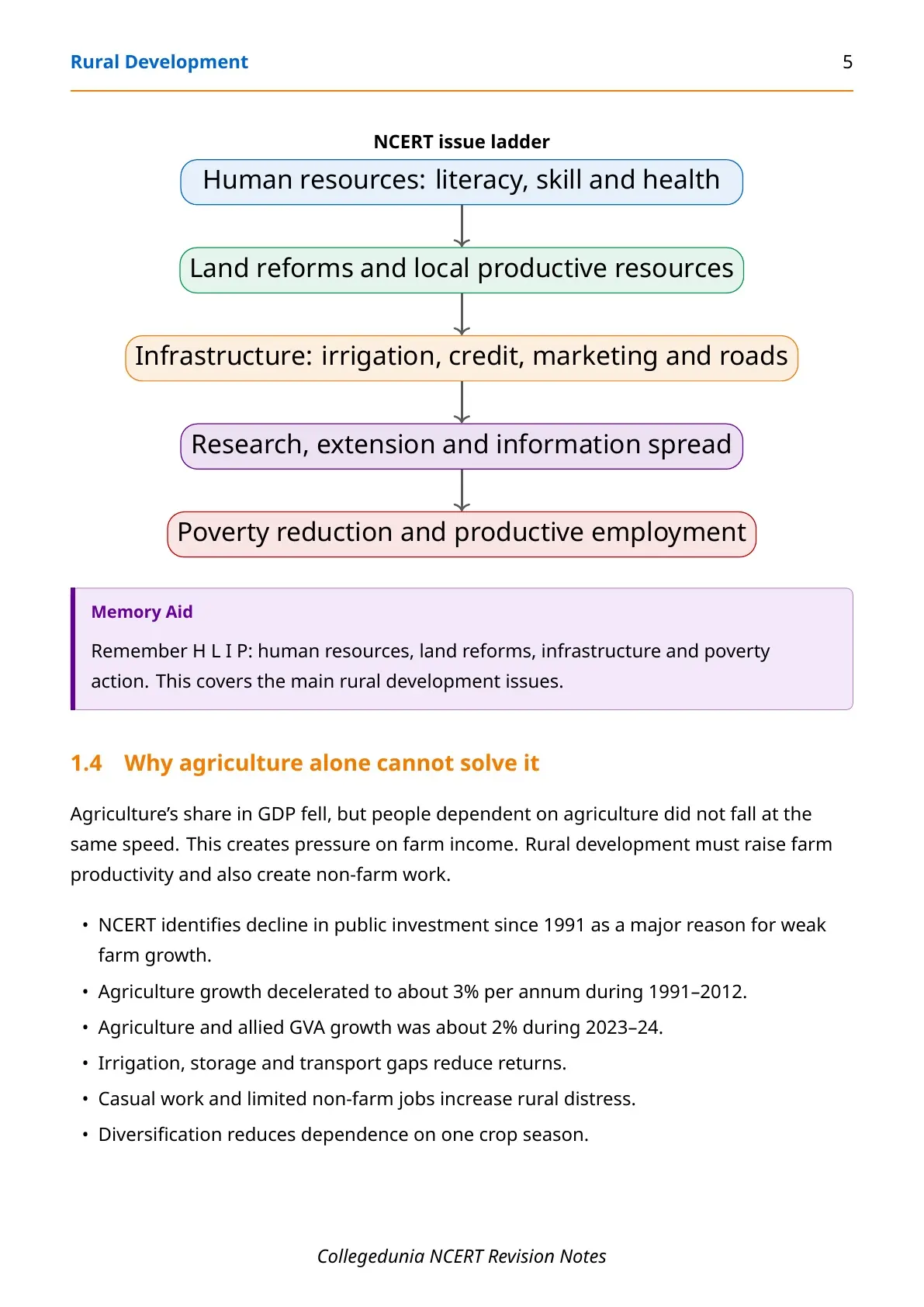
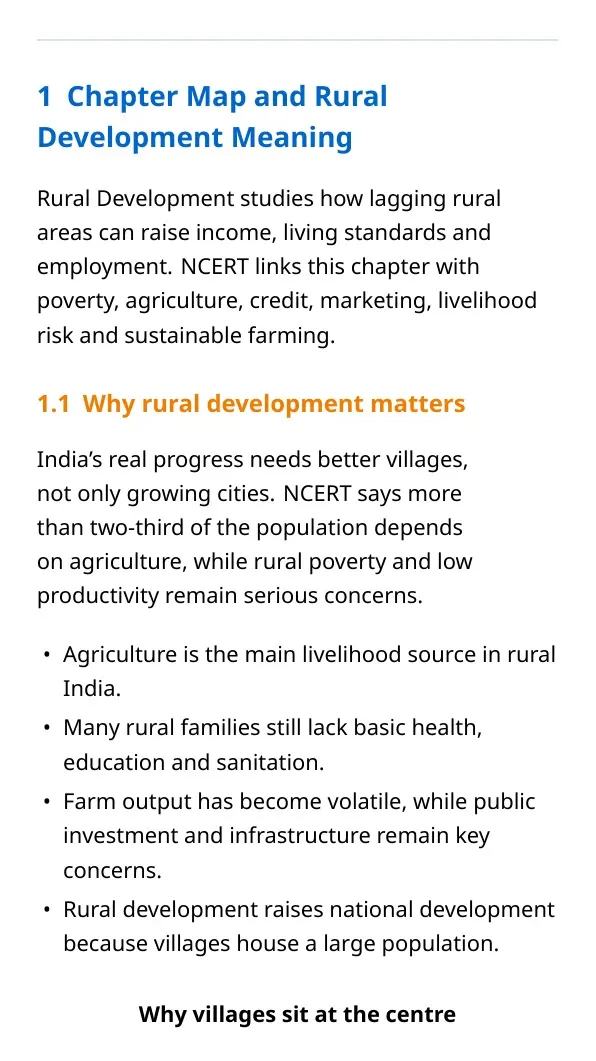
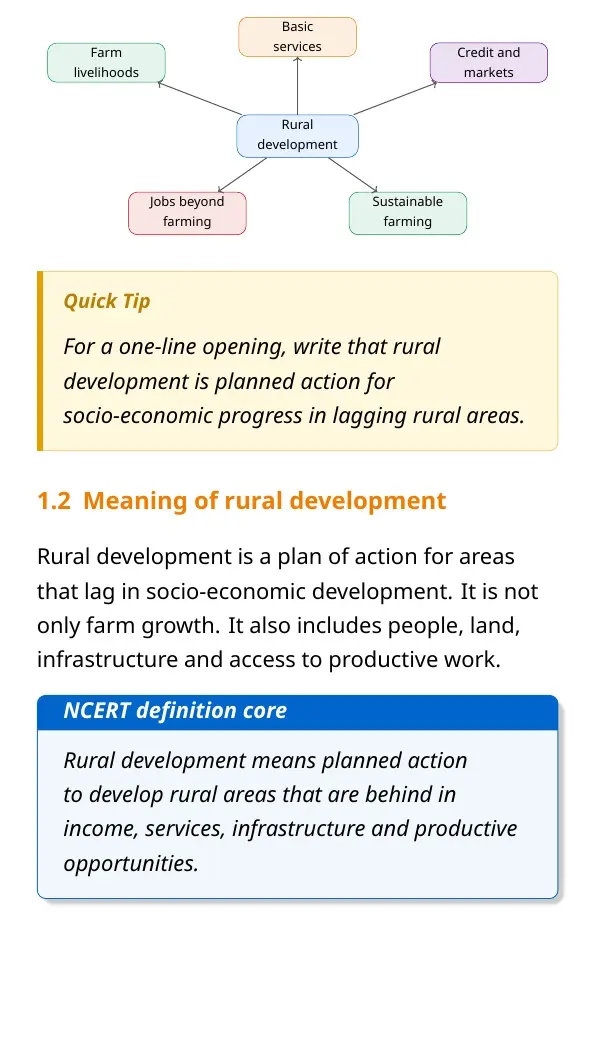
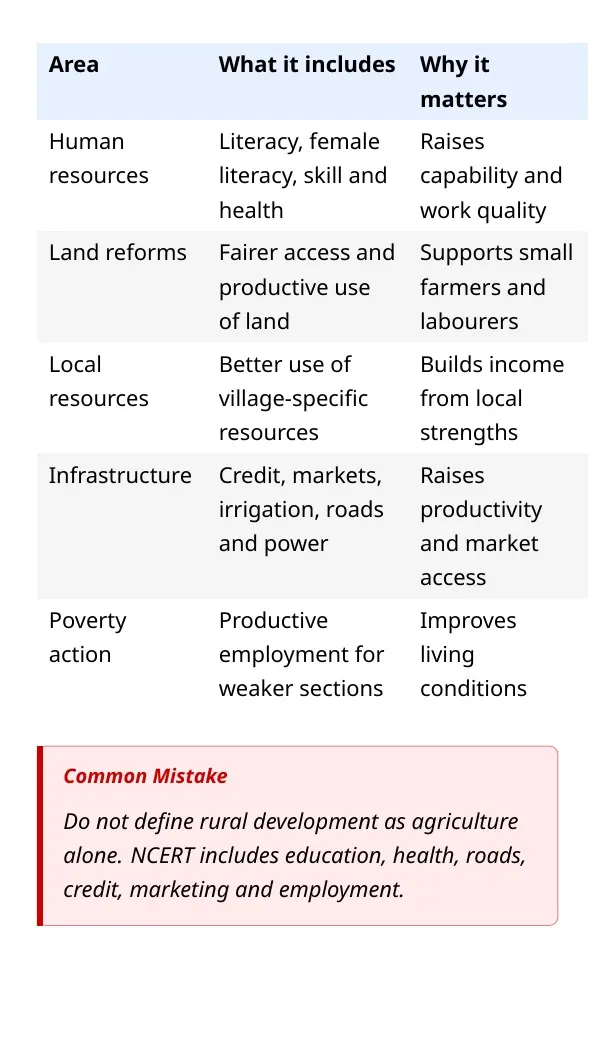
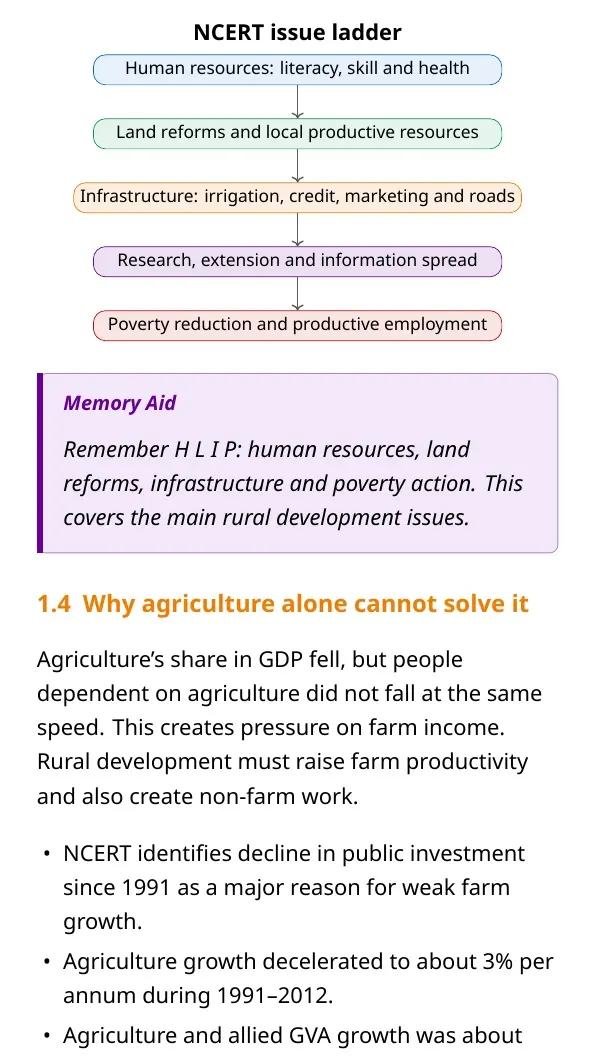
Rural Development is the process of improving the quality of life and economic well-being of people living in rural areas. NCERT focuses on the areas where rural India still needs organised policy support: credit, marketing, infrastructure, employment, human resources, land reforms and poverty removal.
The chapter is practical because it shows that agriculture alone cannot solve every rural problem. Farmers need timely credit before harvest, fair markets after harvest and non-farm income when agriculture is seasonal. The safest exam answer is balanced: rural development improves farm productivity and also creates livelihood options outside farming.
| Part of the chapter | NCERT focus | Revision clue |
|---|---|---|
| Meaning | Improving rural life, income and productive capacity | Begin answers with the development process |
| Rural credit | Timely, adequate and cheap credit through institutions | Use NABARD, SHGs and moneylender contrast |
| Agricultural marketing | Storage, transport, grading, regulated markets and MSP | Write the chain from farmer to buyer |
| Diversification | Livestock, fisheries, horticulture and non-farm work | Connect with stable income and jobs |
| Organic farming | Eco-friendly farming with local organic inputs | Write both benefits and limits |
Rural Development Revision Video
Source: PW OnlyIAS Prarambh on YouTube
Rural Credit and Rural Banking
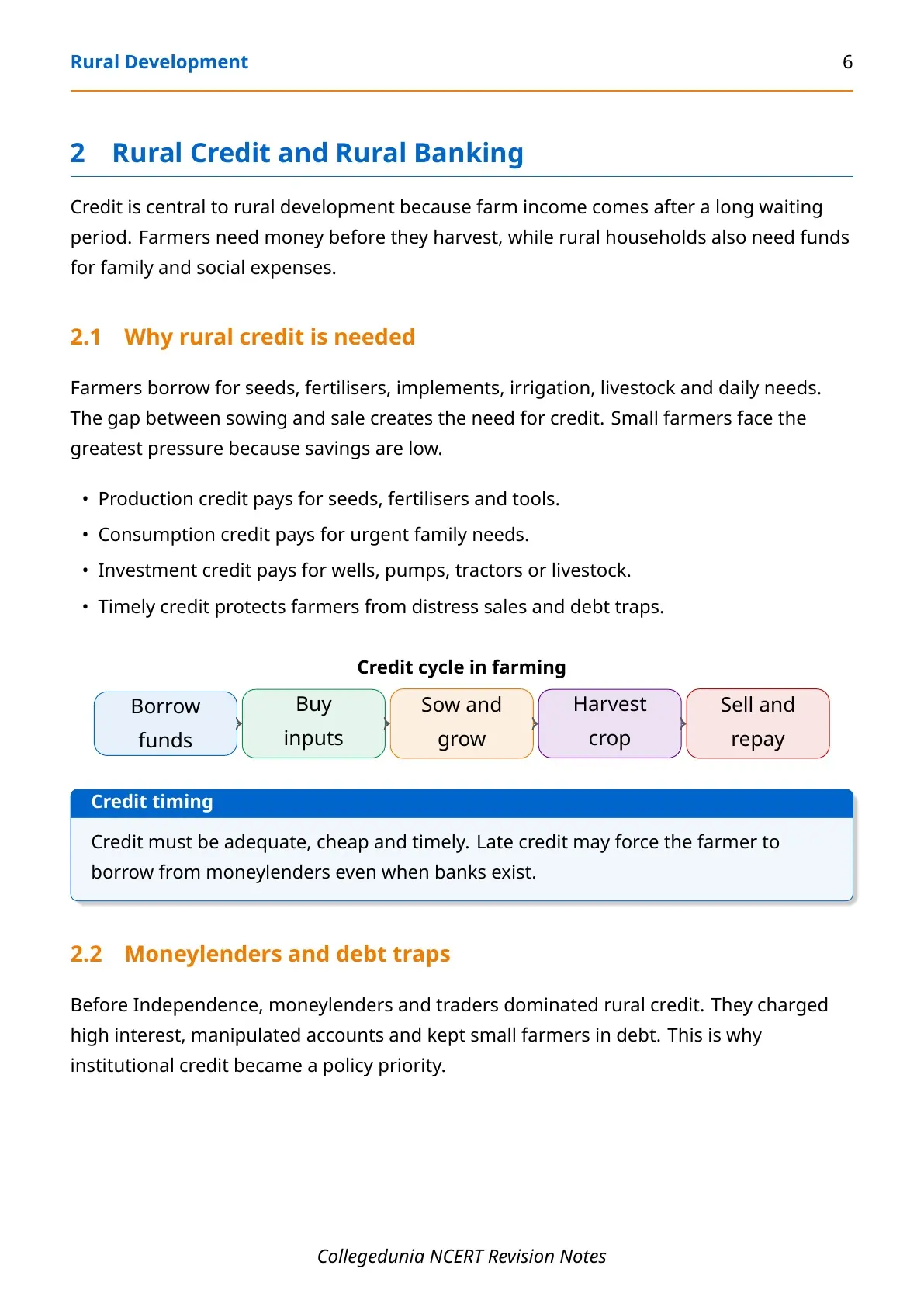
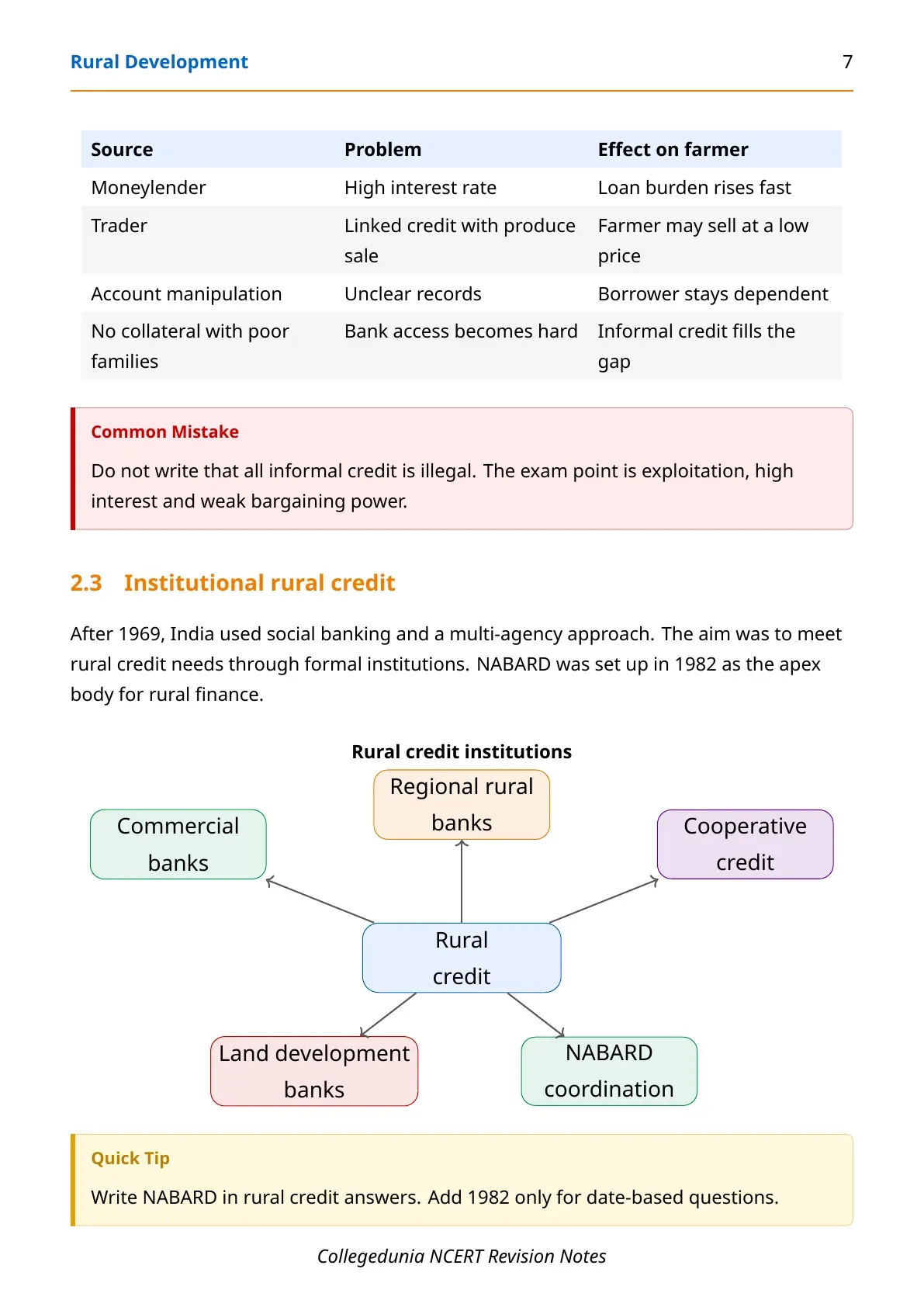
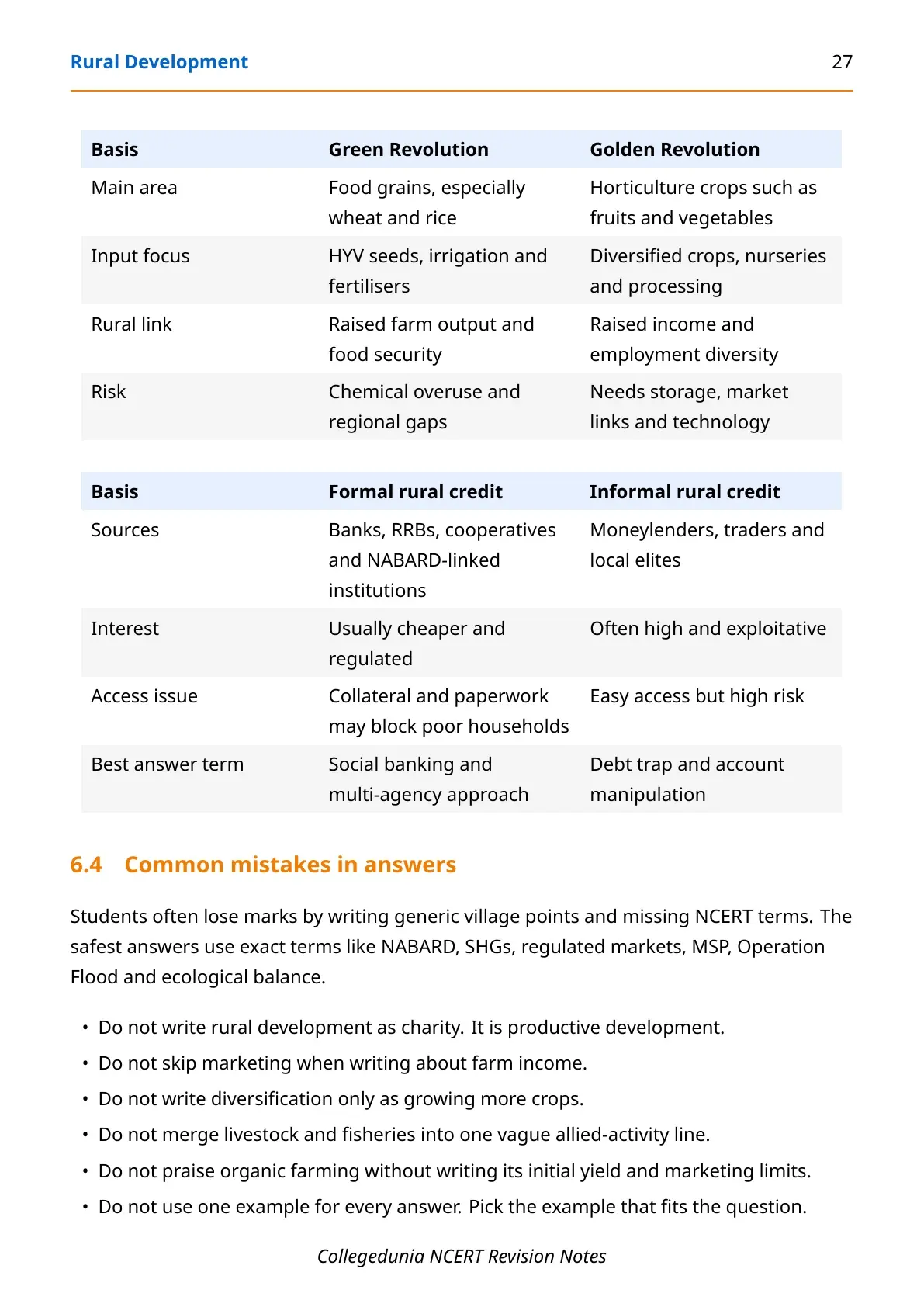
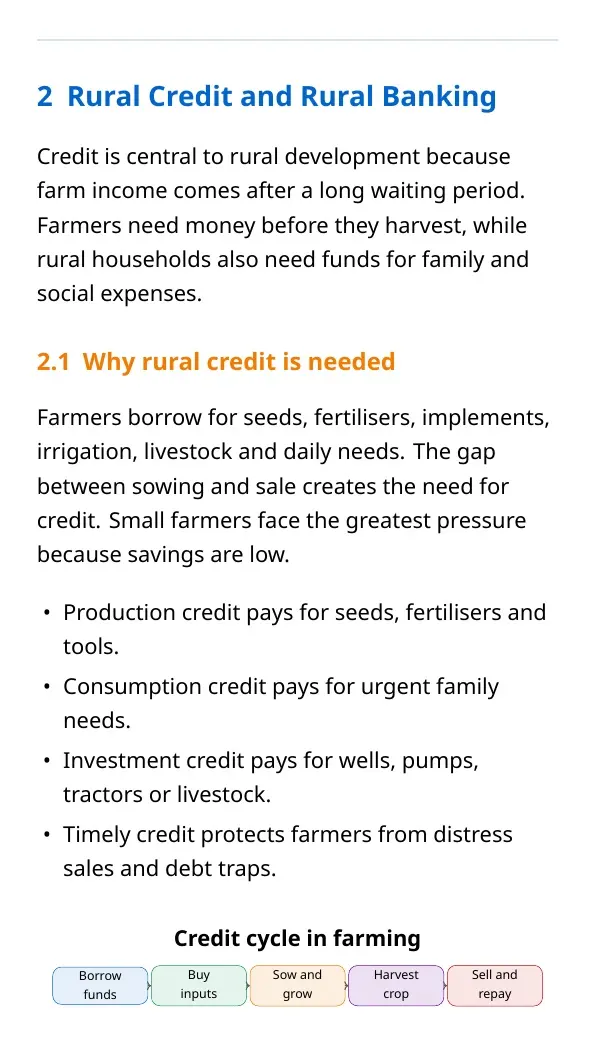
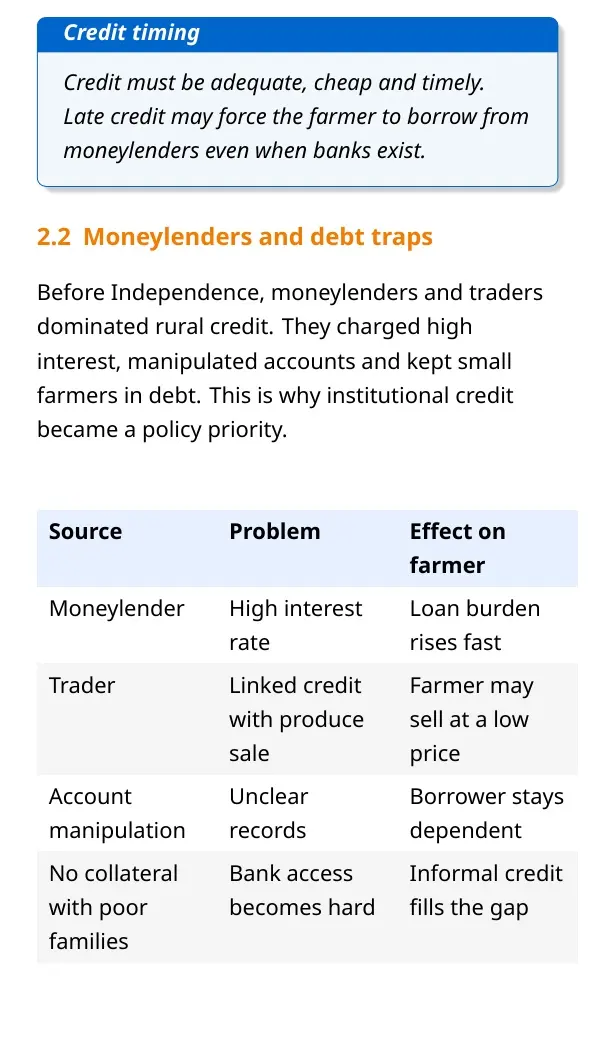
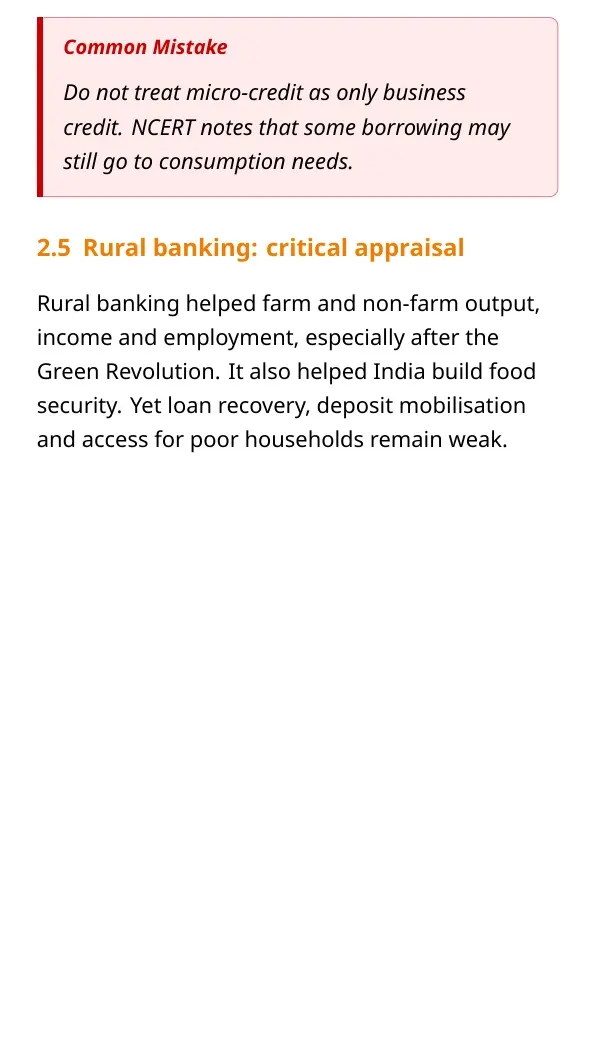
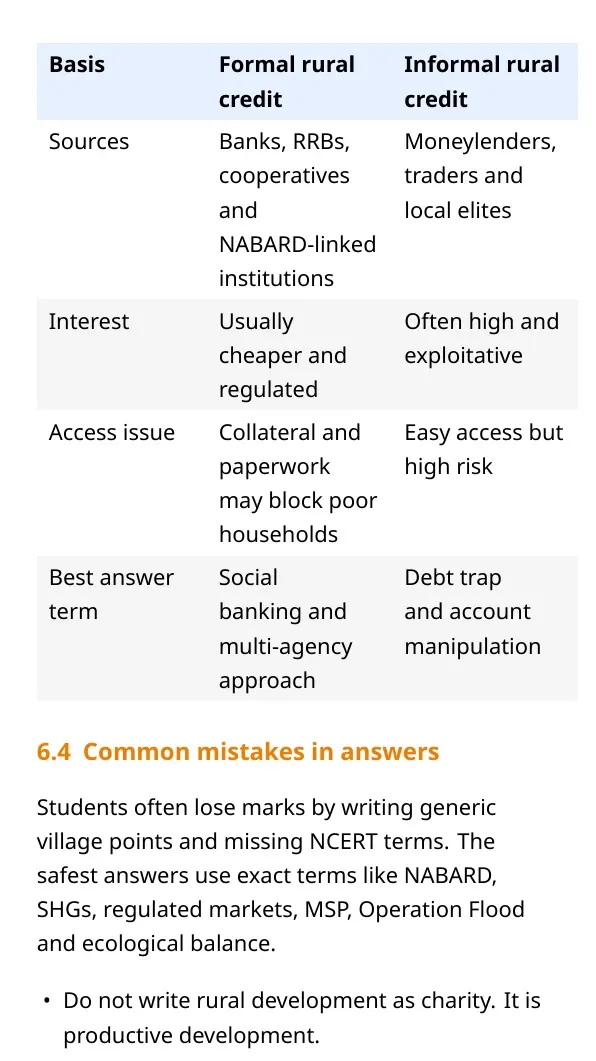
Credit is central to rural development because farm households spend before they earn. Seeds, fertilisers, implements, irrigation, livestock and household needs often require money before the crop is sold. If cheap institutional credit is missing, farmers may depend on moneylenders and traders at high interest rates.
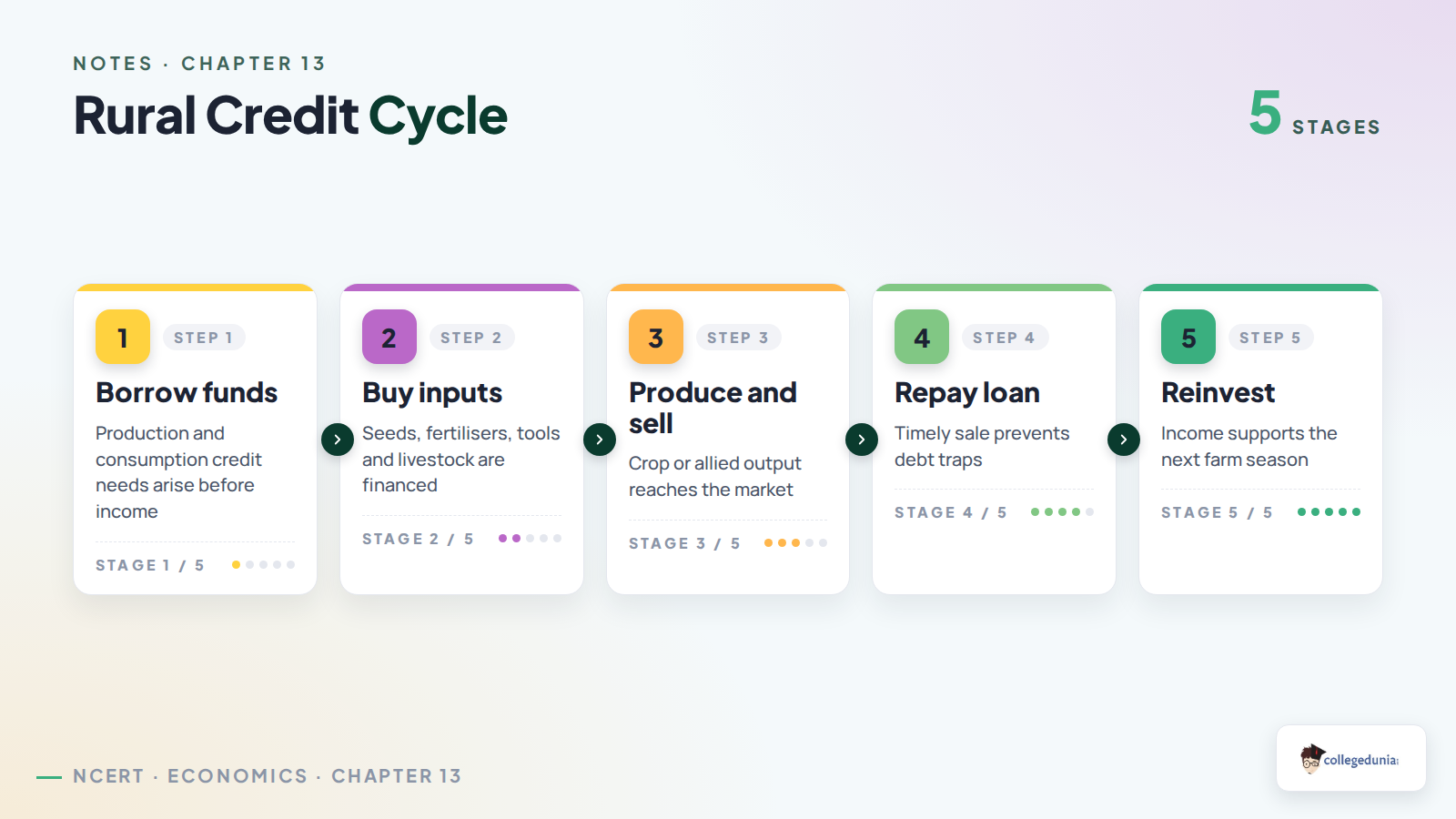
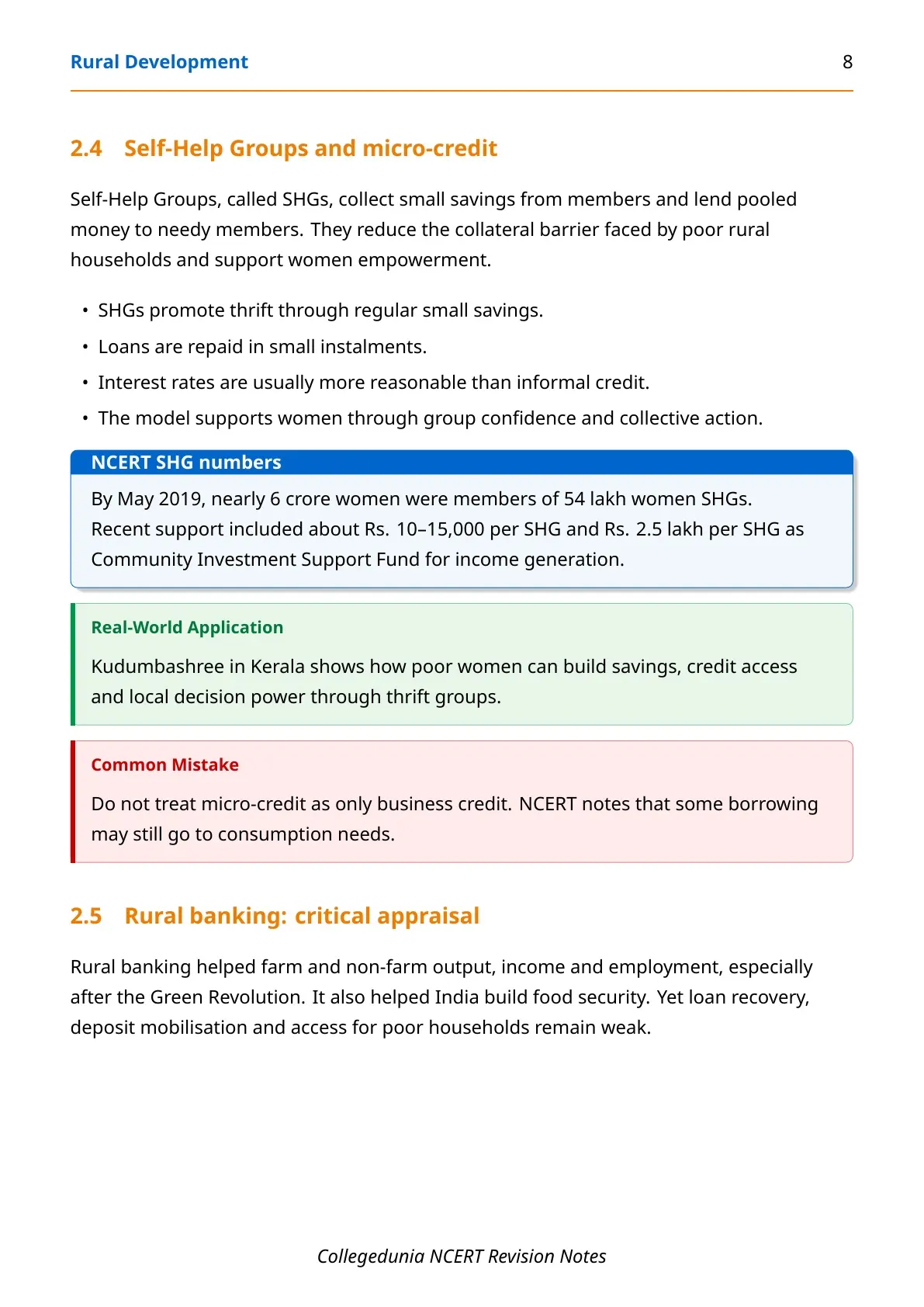
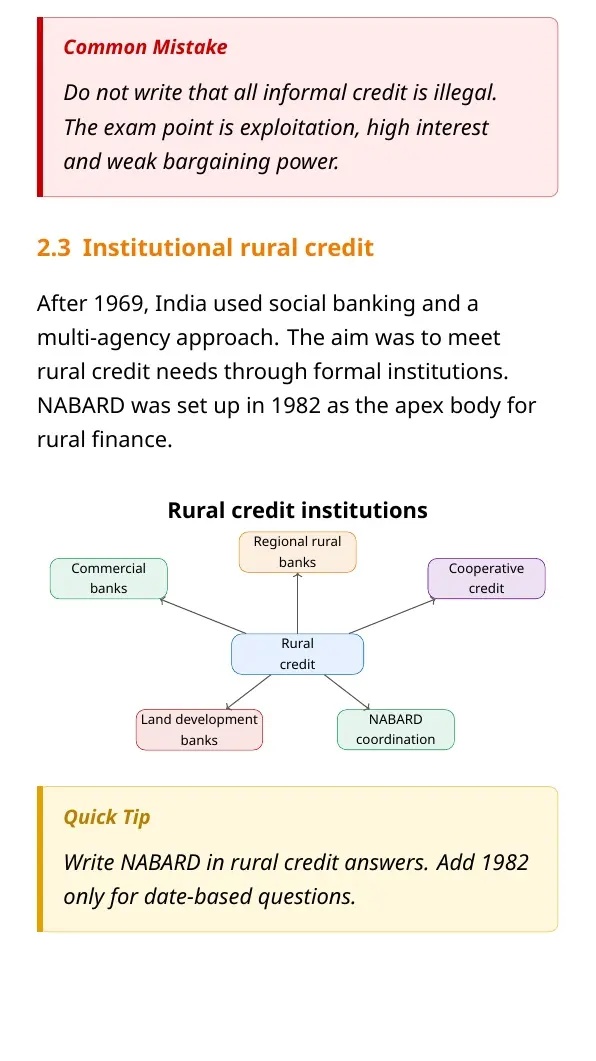
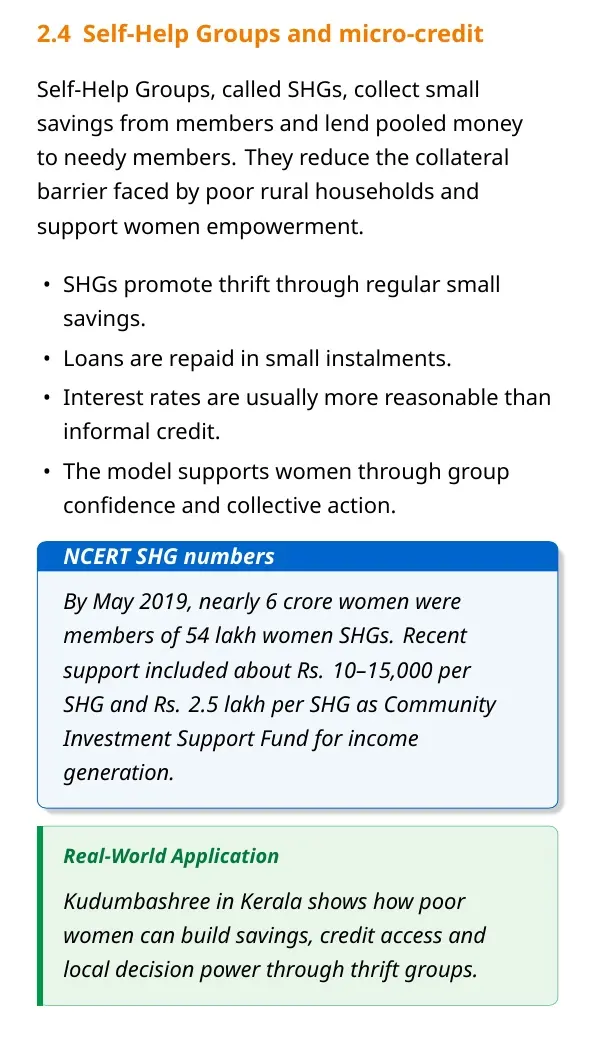
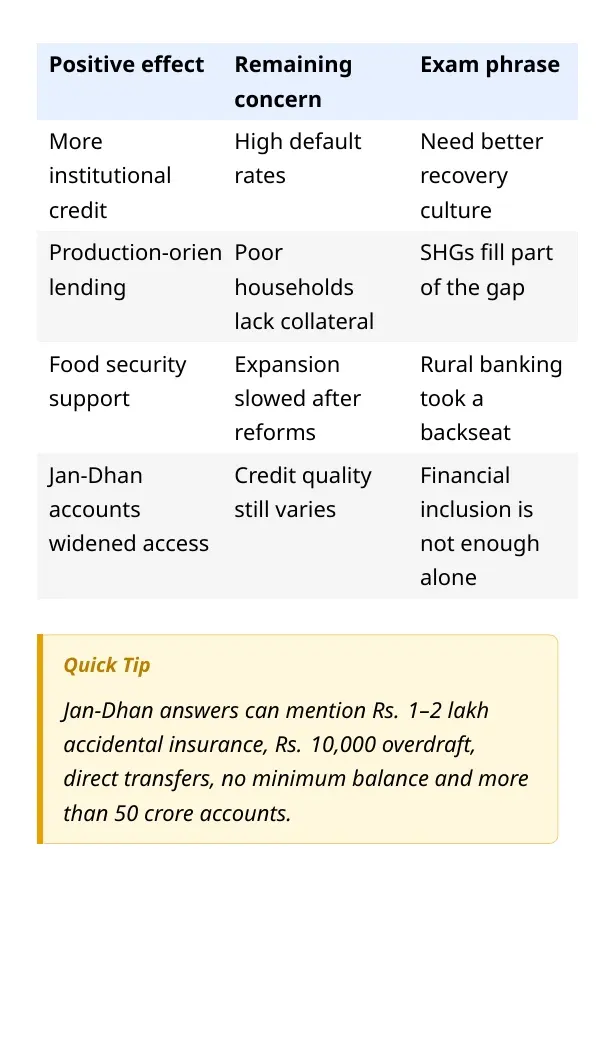
NCERT explains that the banking system expanded after 1969 through social banking and a multi-agency approach. NABARD, set up in 1982, became the apex body coordinating rural finance. The chapter also highlights Self-Help Groups, which collect small savings from members and lend pooled funds to needy households.
- Production credit: pays for farm inputs before output is sold.
- Consumption credit: supports urgent family and social needs.
- Investment credit: helps buy long-term assets such as wells, pumps, tractors or livestock.
- SHG micro-credit: reduces the collateral barrier and supports collective confidence.
Agricultural Marketing System
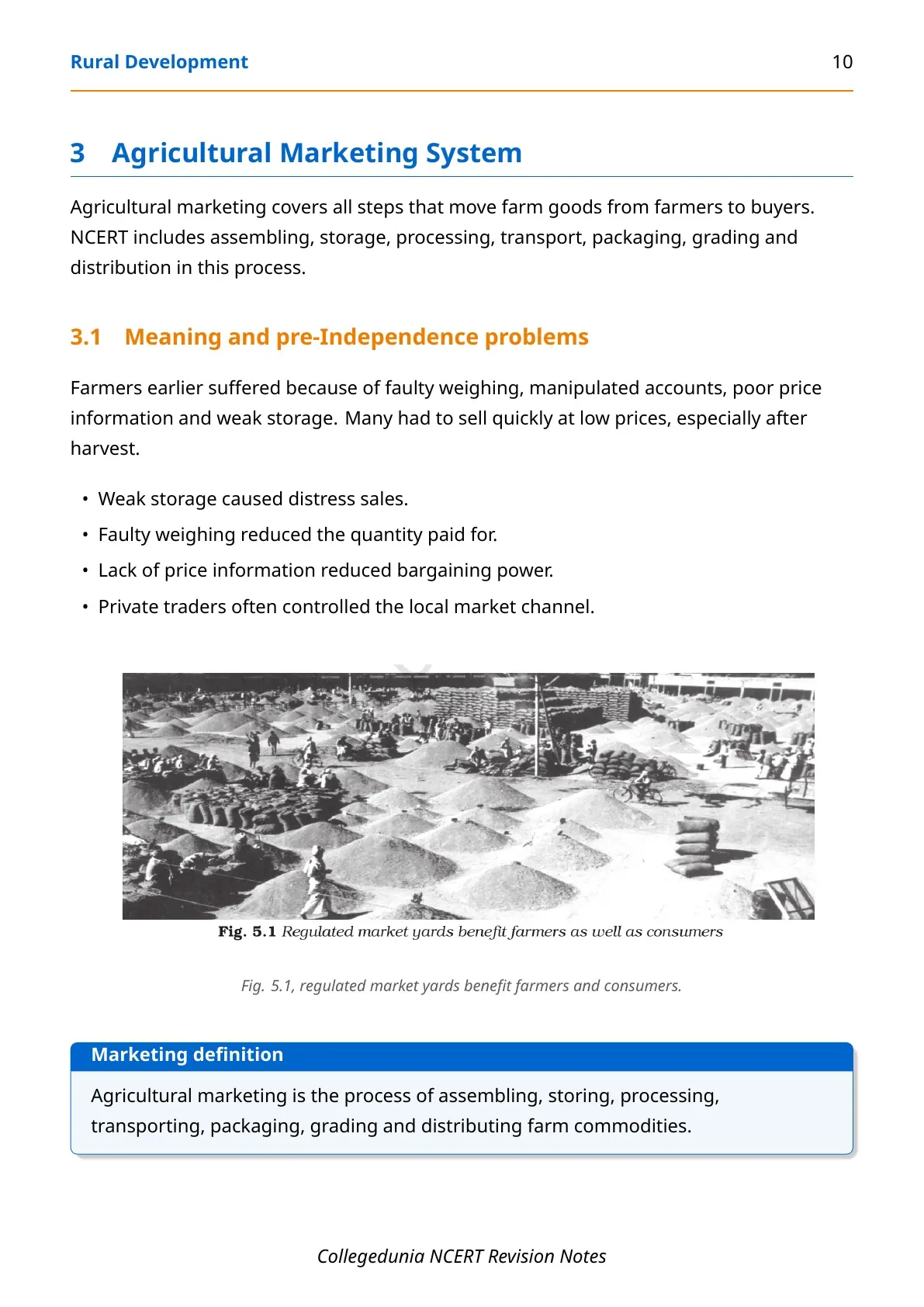
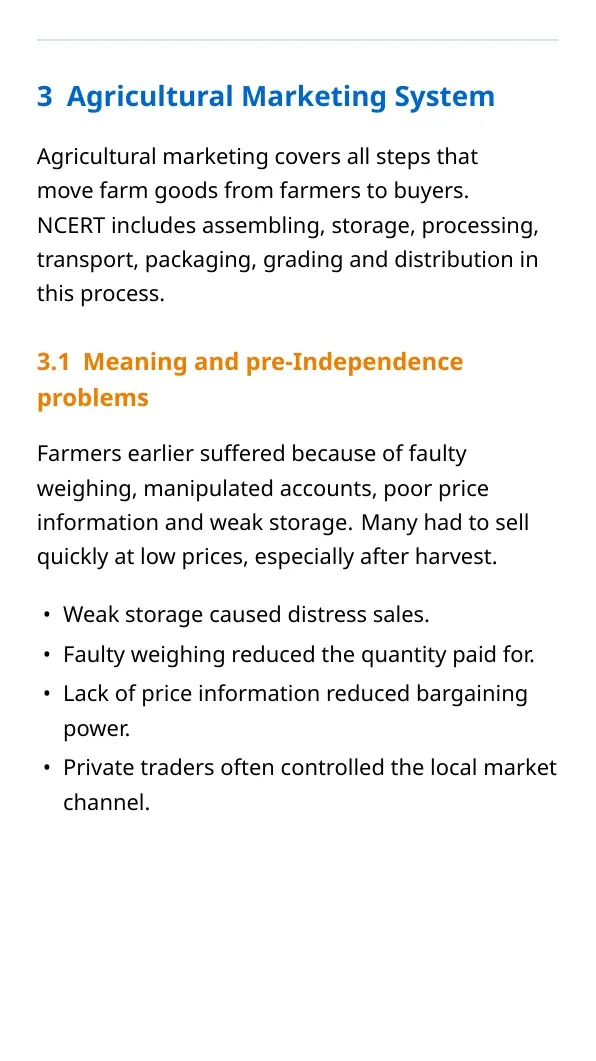
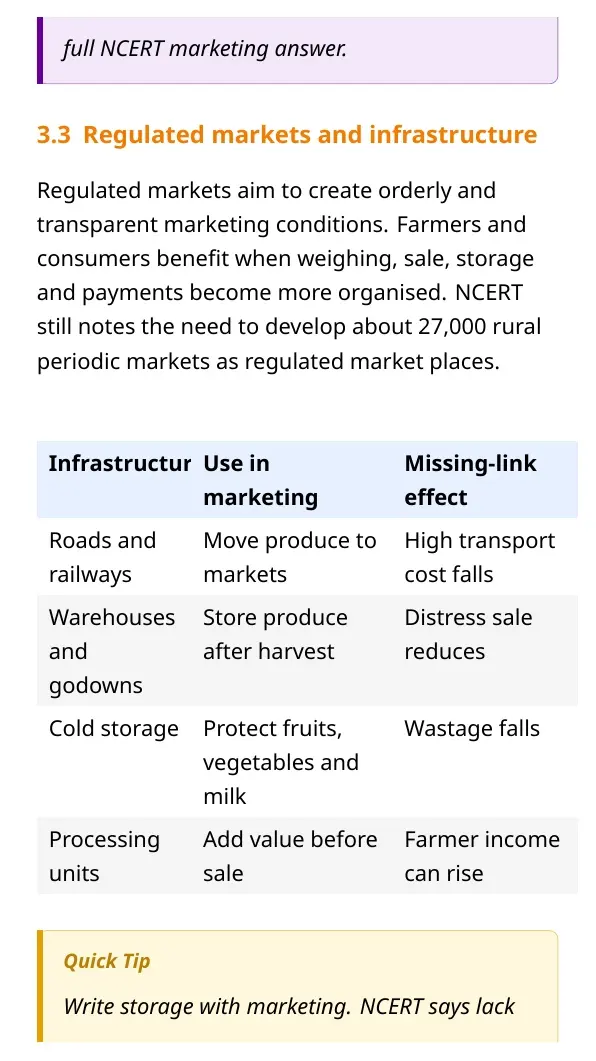
Agricultural marketing includes all activities that move farm goods from the farmer to the final buyer. NCERT lists assembling, storage, processing, transport, packaging, grading and distribution as parts of this system. Weak marketing hurts farmers because they may sell quickly, receive low prices or lose produce because storage and transport are poor.
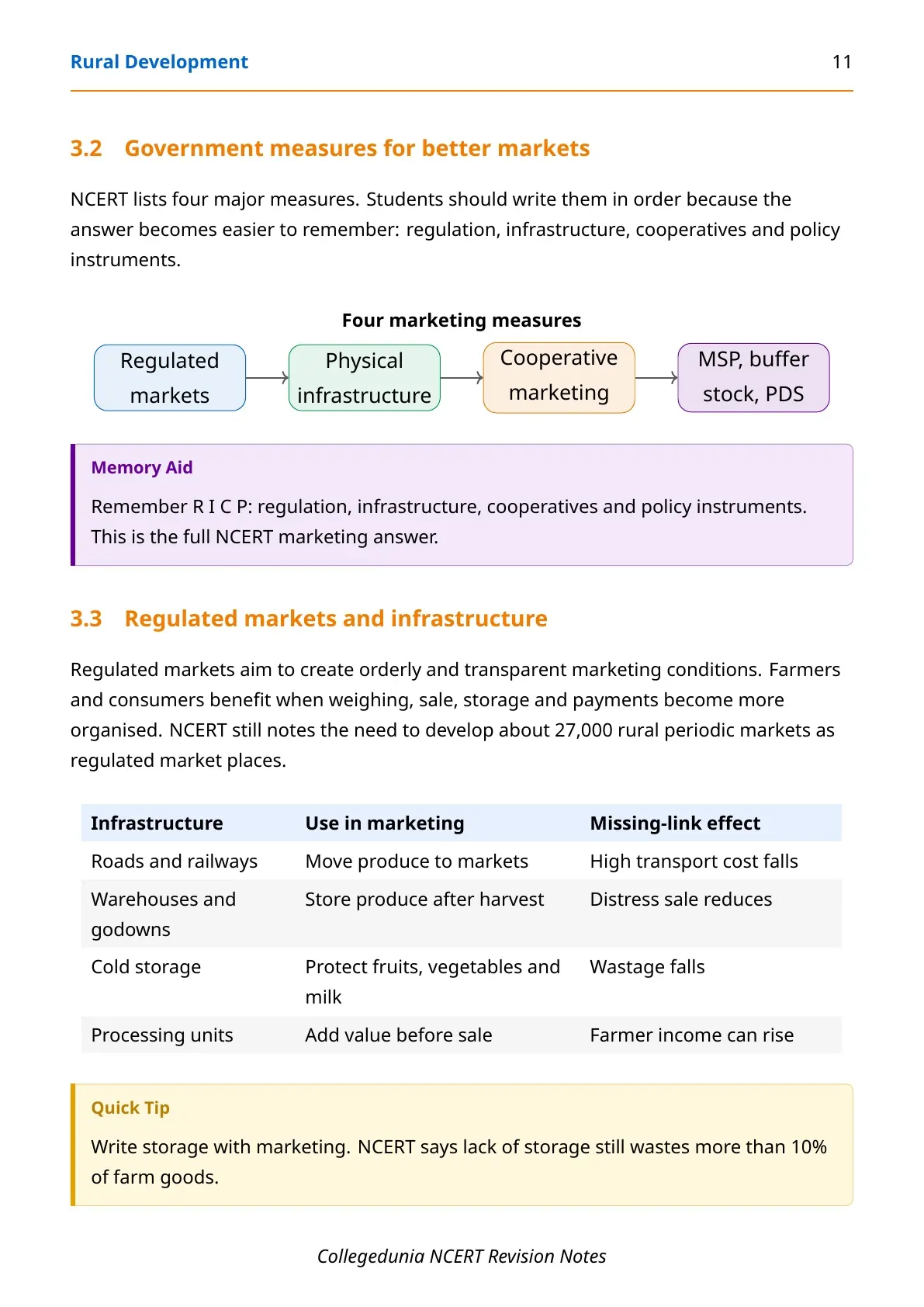
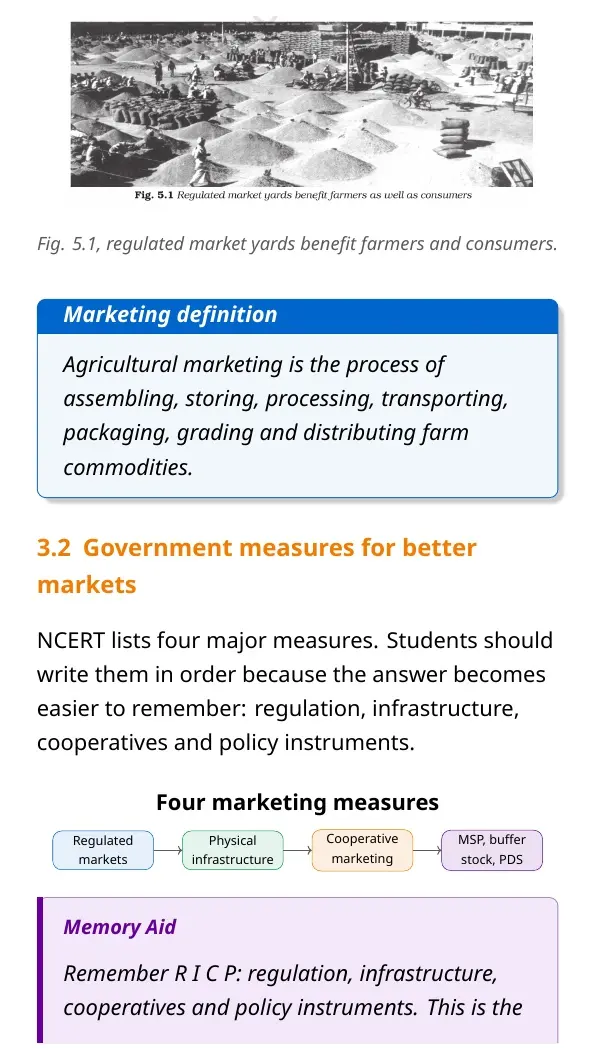
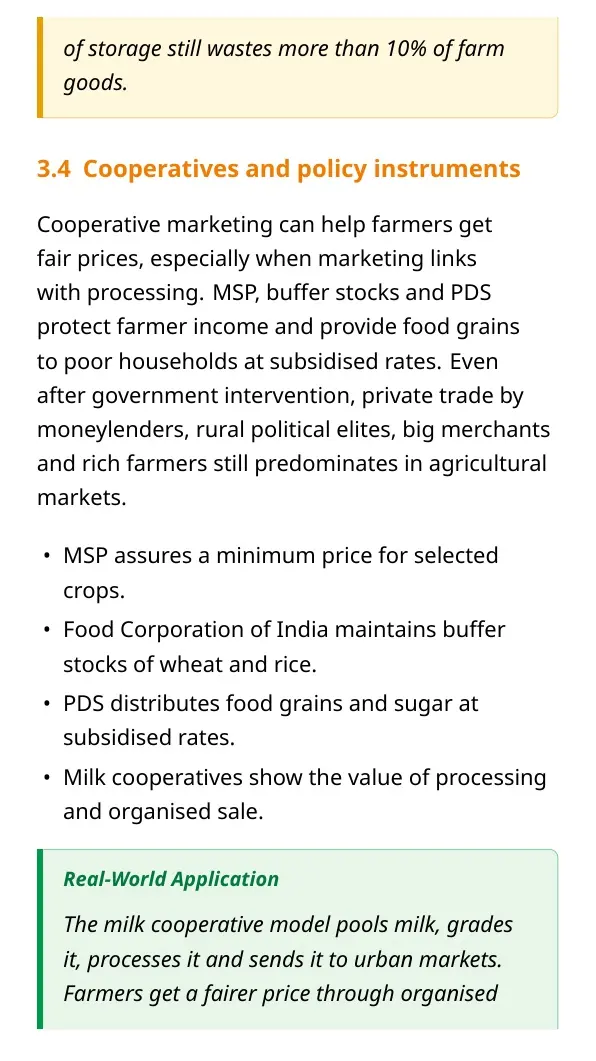
Regulated markets were created to protect farmers from faulty weighing, manipulated accounts and unfair trader practices. Policy instruments such as minimum support price, buffer stocks and the public distribution system also protect farmer income and food security. Cooperatives, such as milk cooperatives linked with Operation Flood, show how processing and organised sale can raise returns.
| Marketing need | Why it matters | NCERT example |
|---|---|---|
| Storage | Prevents distress sale after harvest | Warehouses, godowns and cold storage |
| Regulation | Improves transparency in weighing and payment | Regulated market yards |
| Price support | Protects farmers against very low prices | MSP, buffer stocks and PDS |
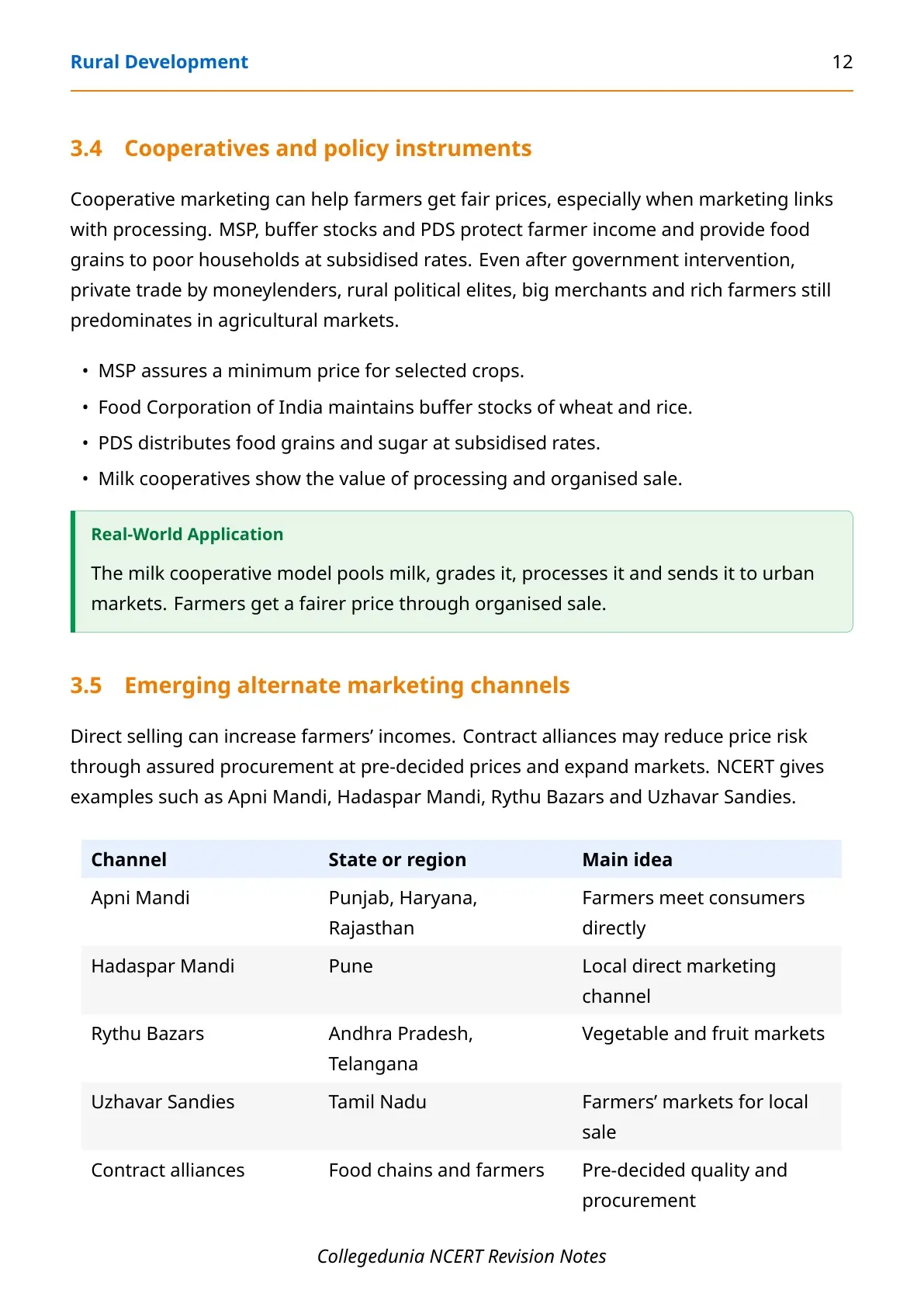
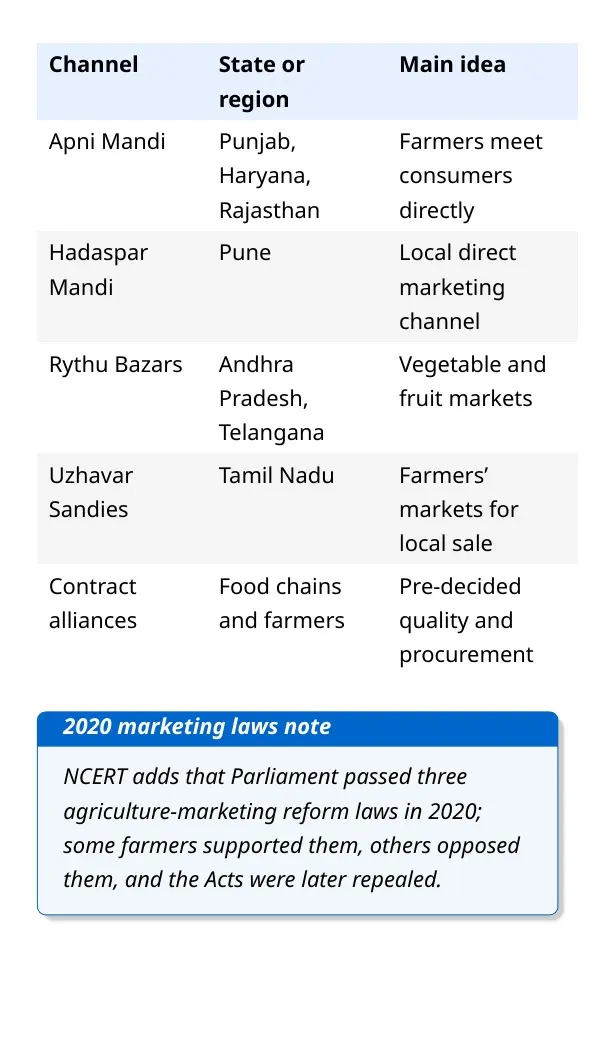
| Direct sale | Can reduce middlemen and improve bargaining | Apni Mandi, Rythu Bazars and Uzhavar Sandies |
Diversification into Productive Activities
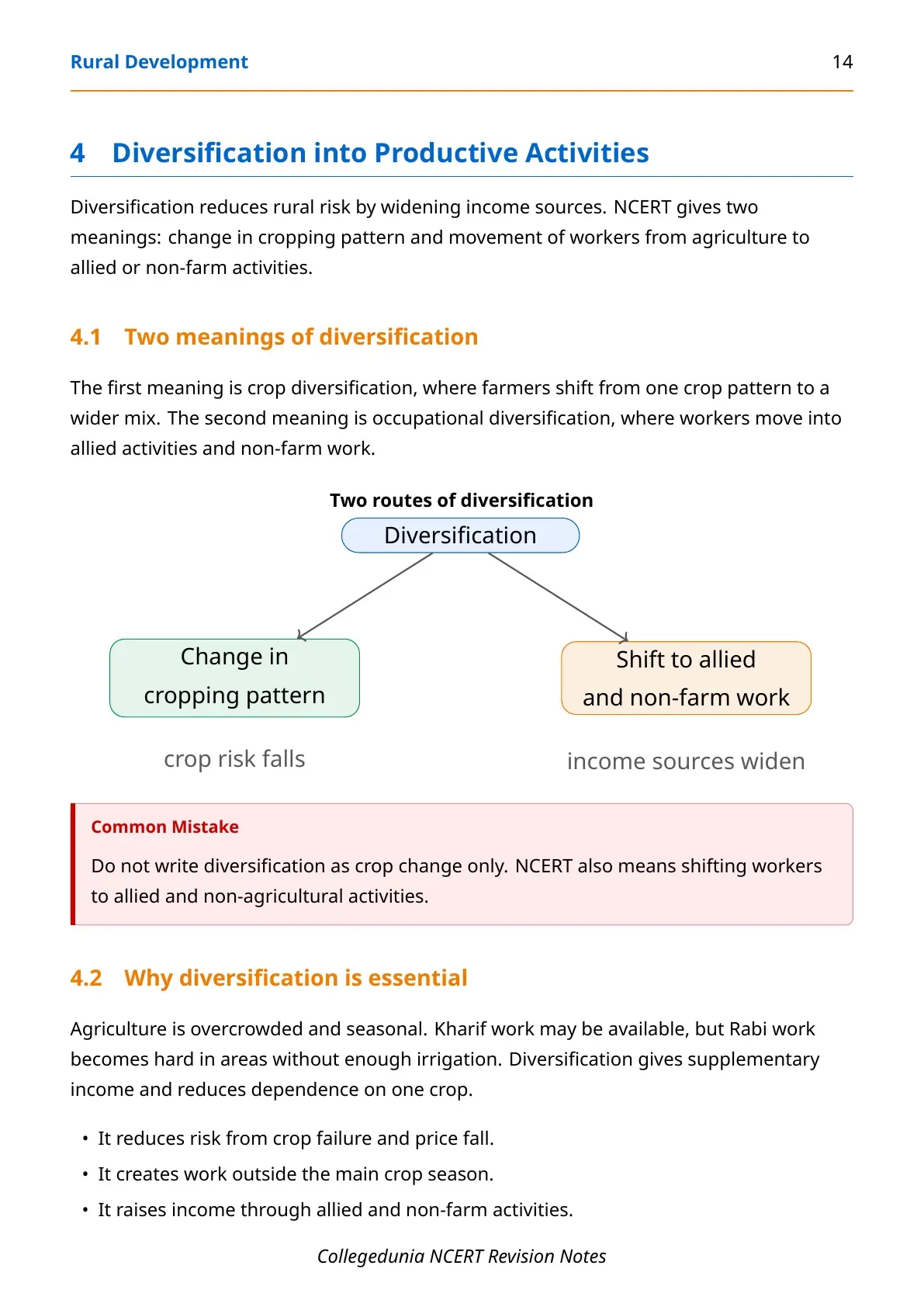
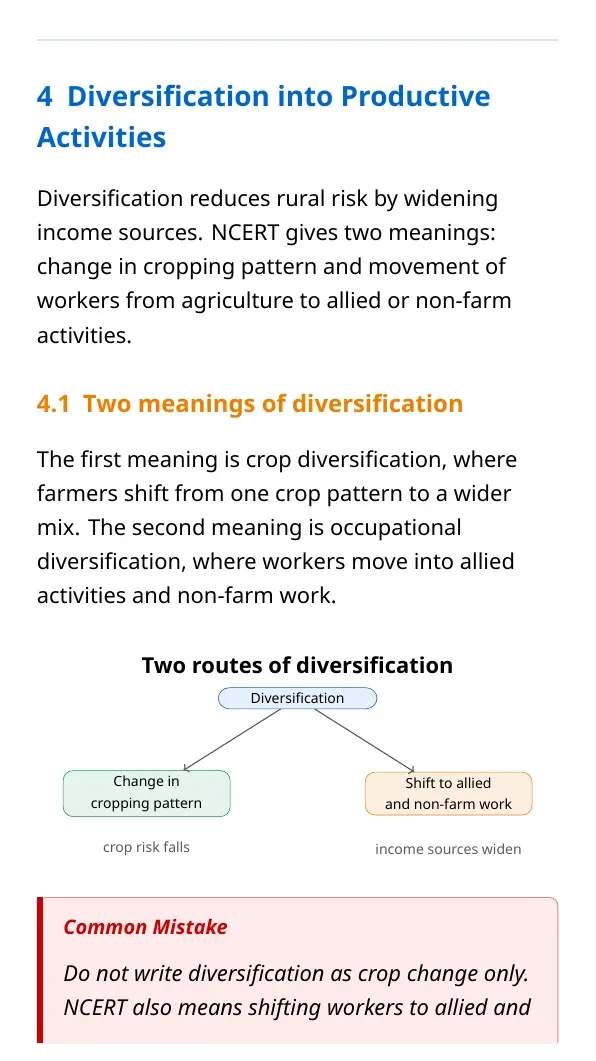
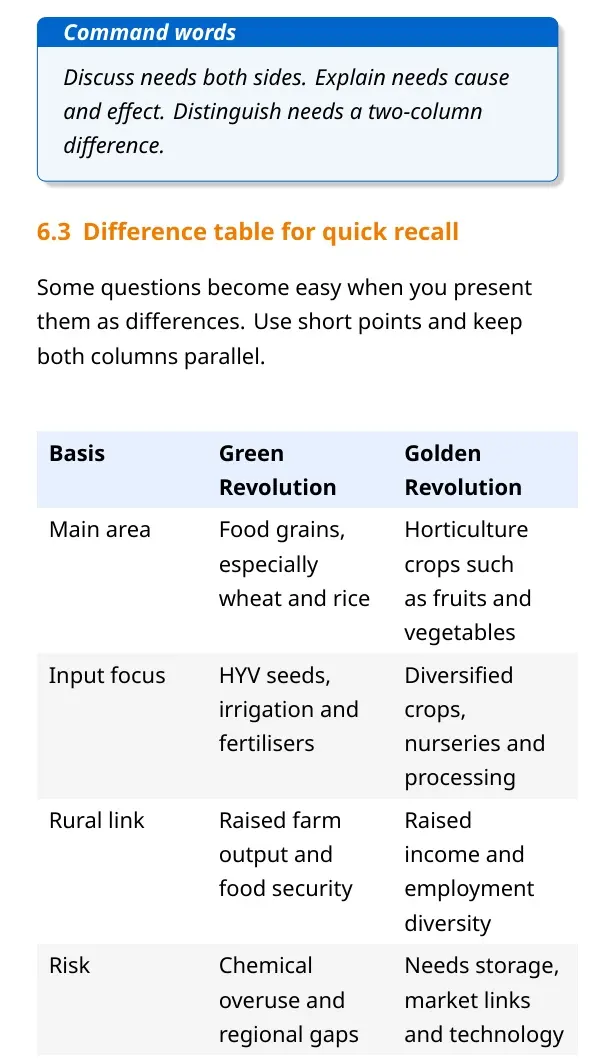
Diversification means expanding rural income beyond crop farming. NCERT divides it into two broad directions: change within agriculture through allied activities, and movement towards non-farm employment. This is important because crop farming is seasonal and many small farmers cannot earn enough from land alone.
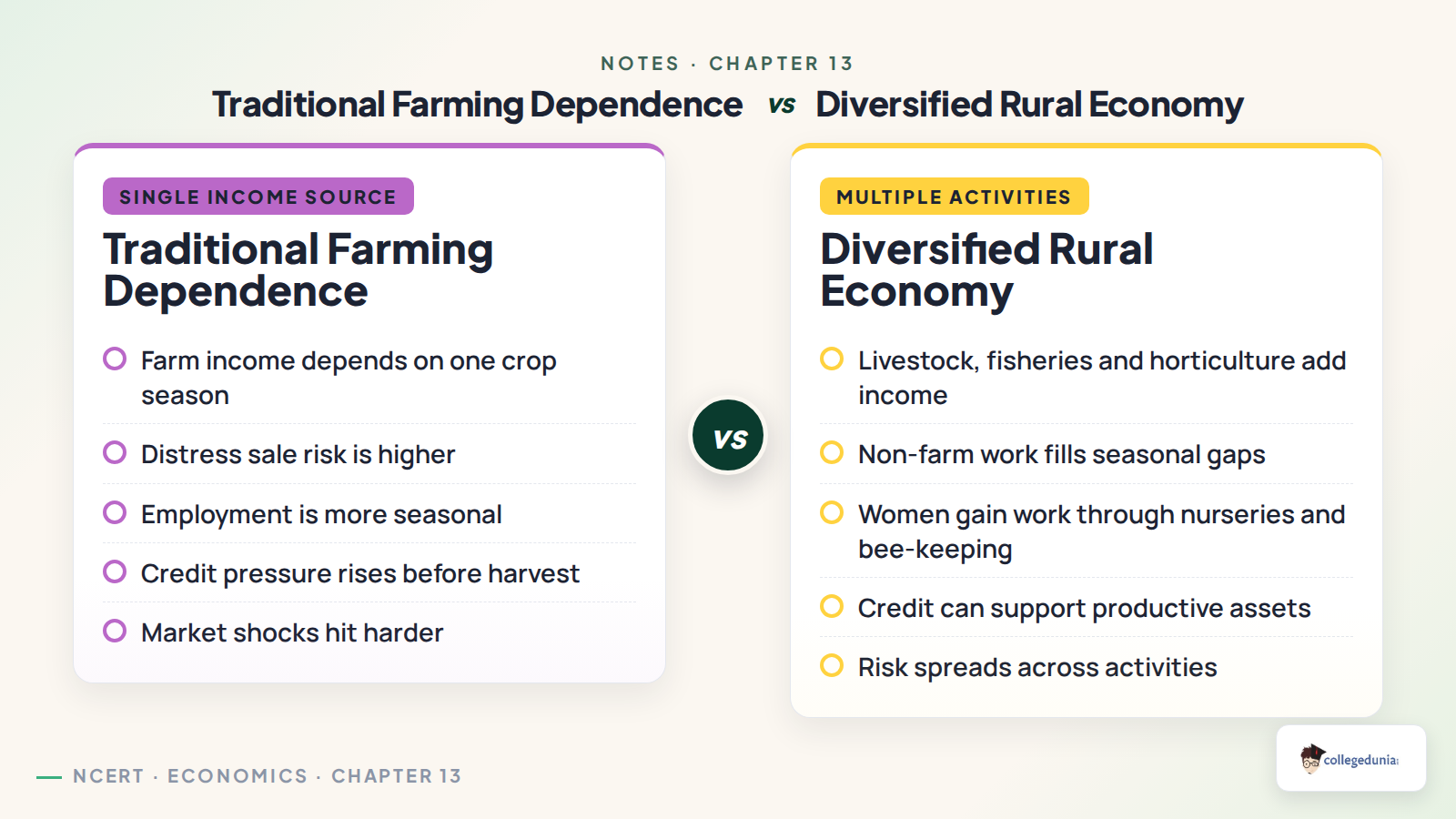
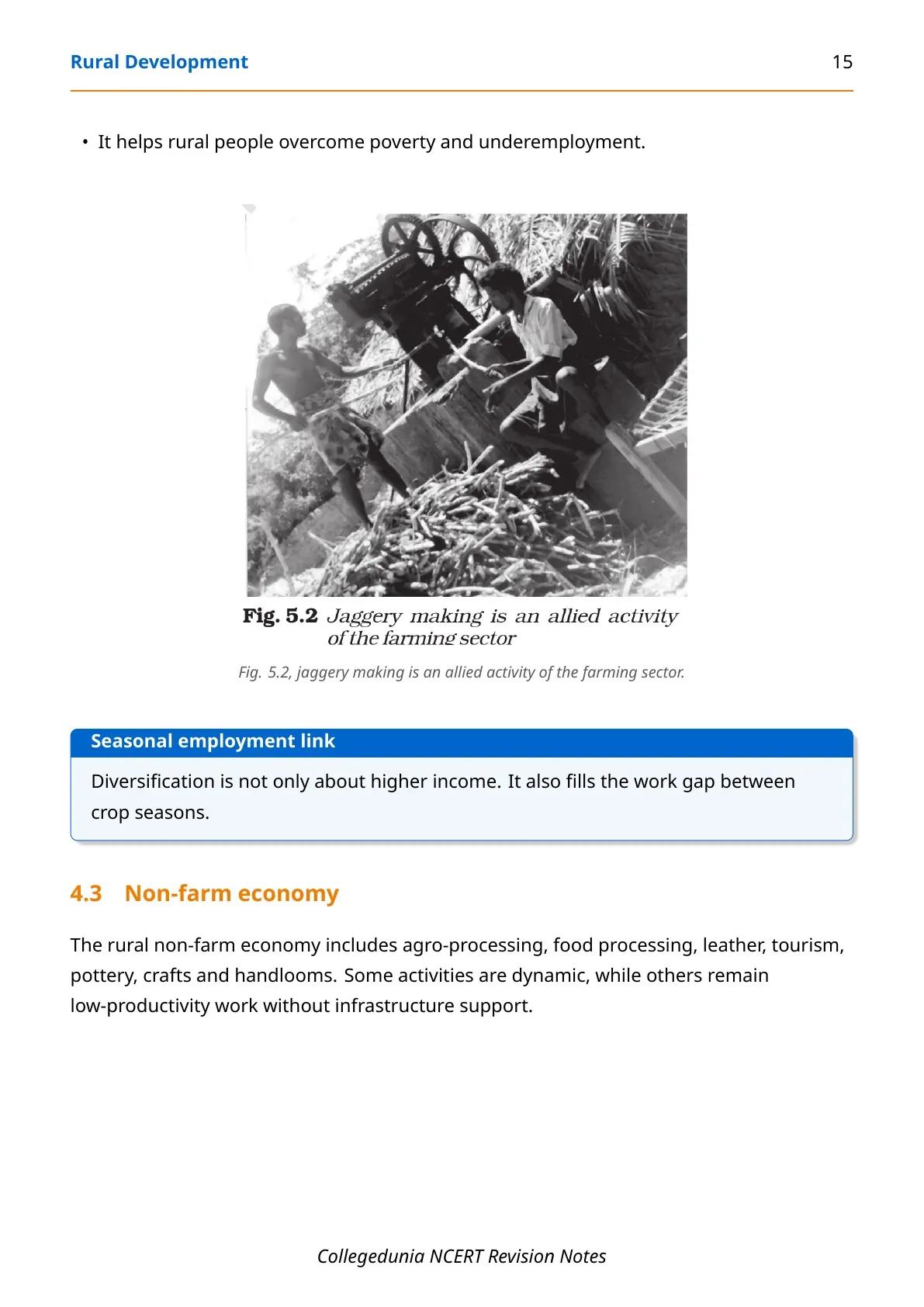
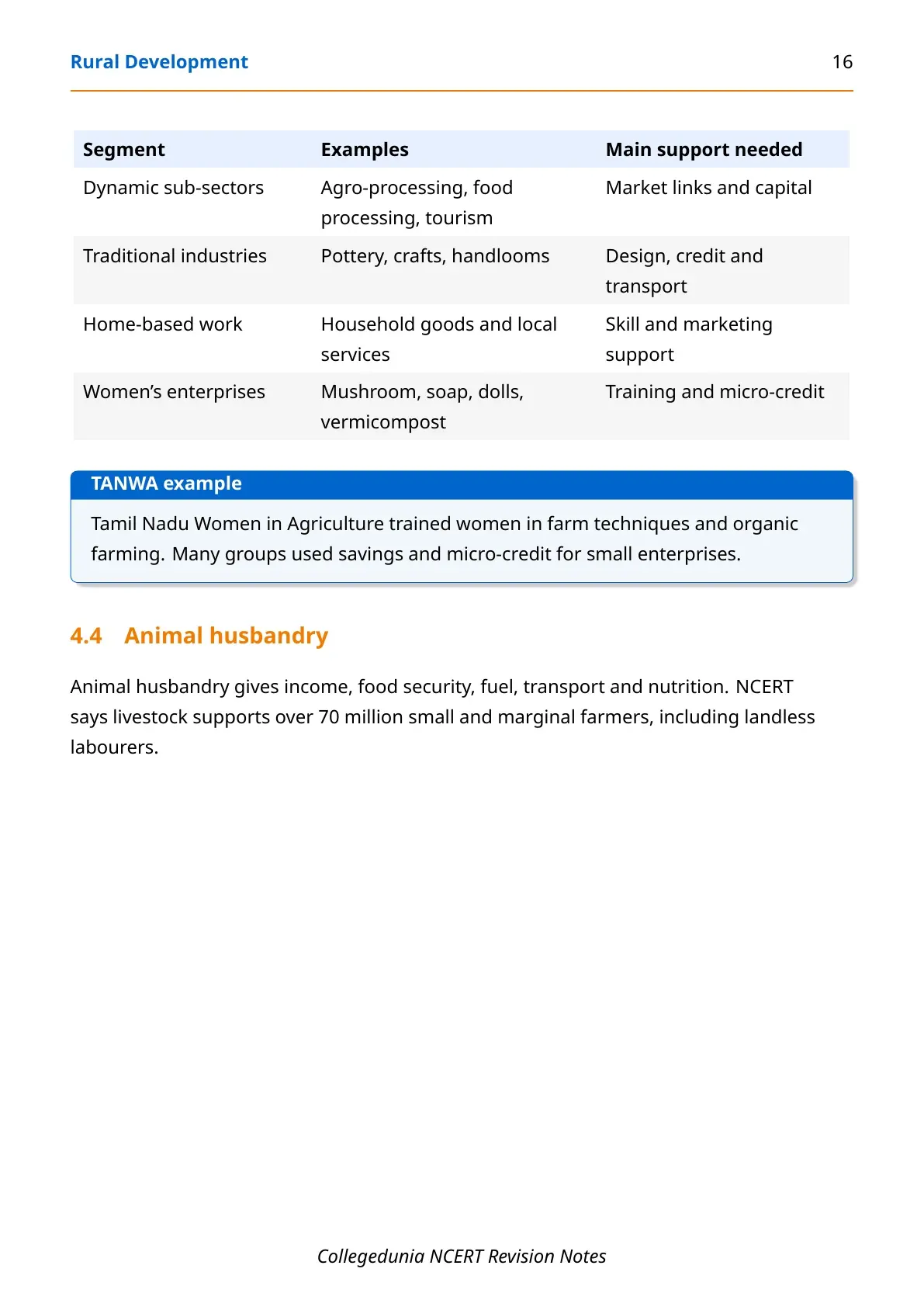
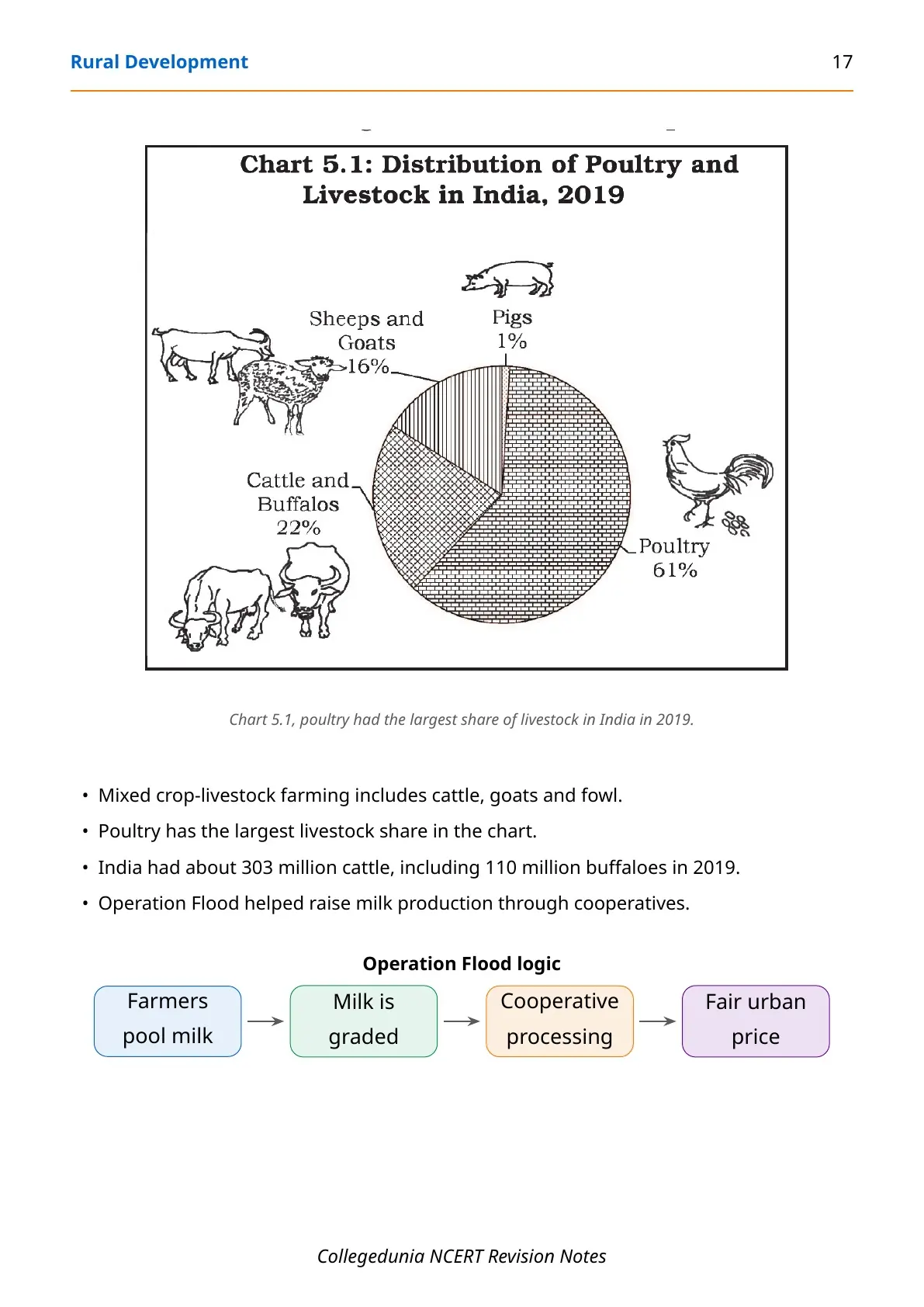
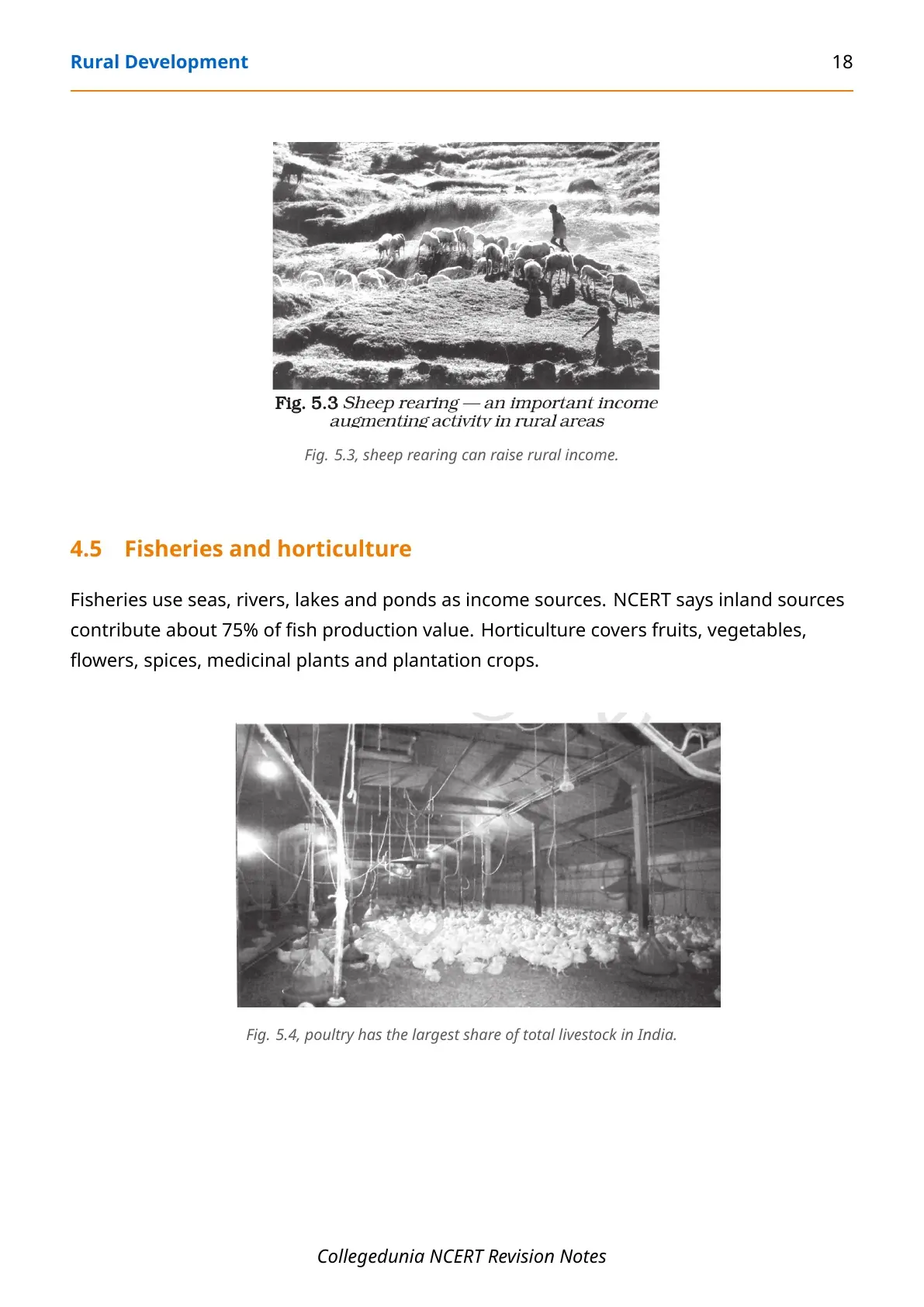
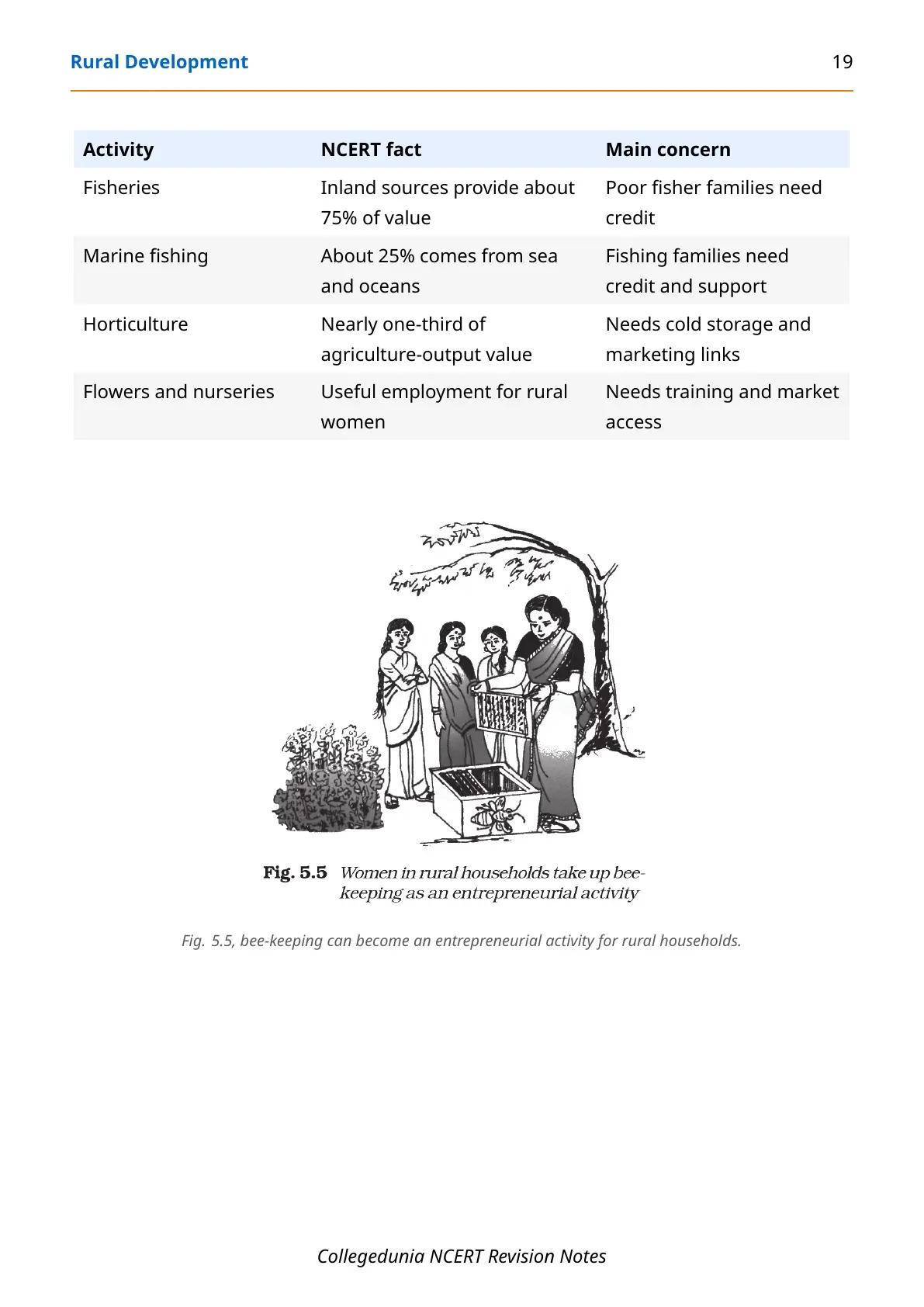
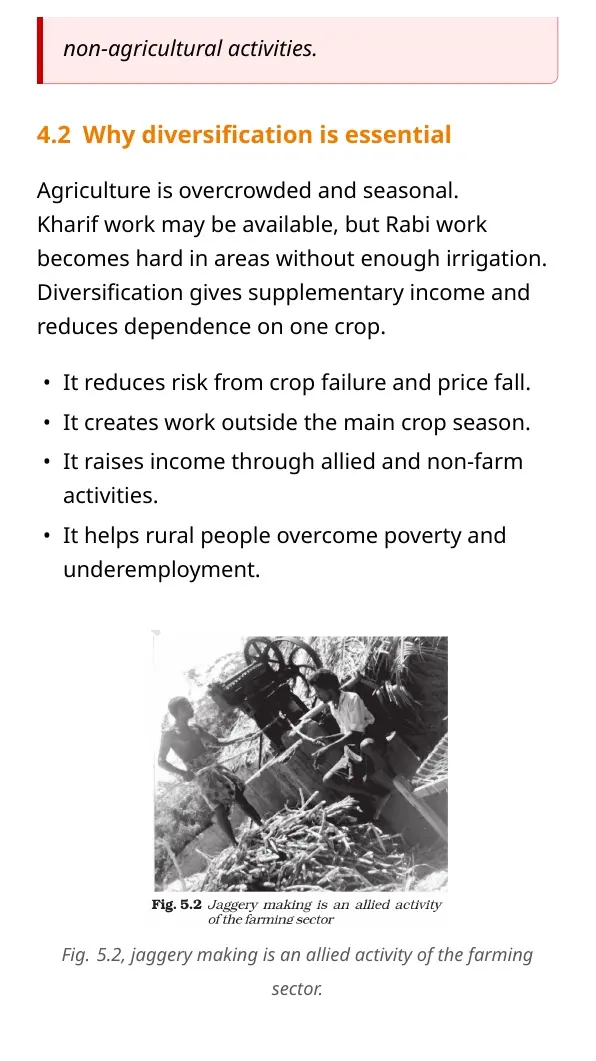
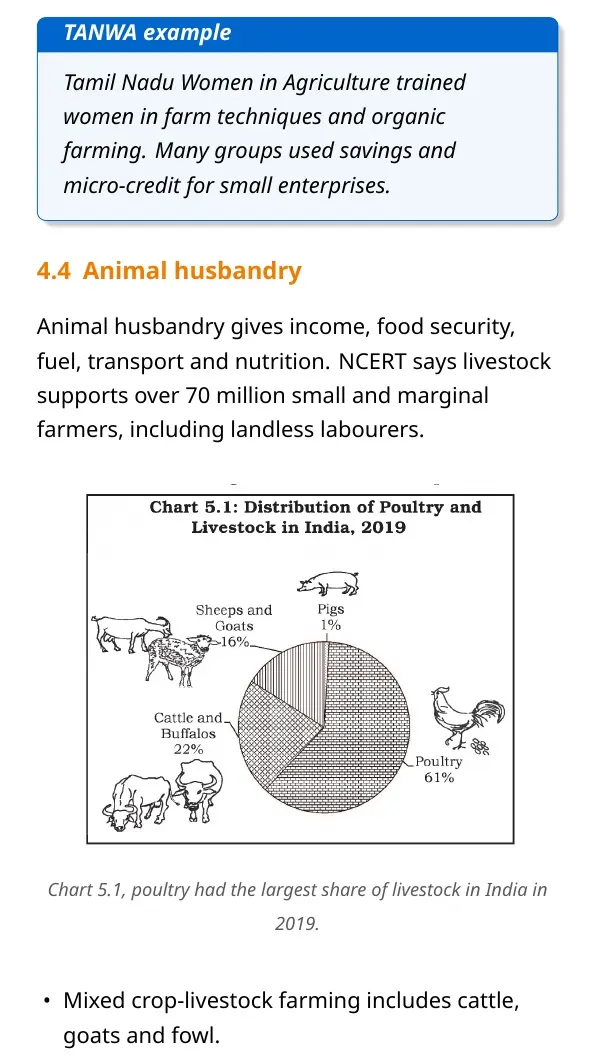
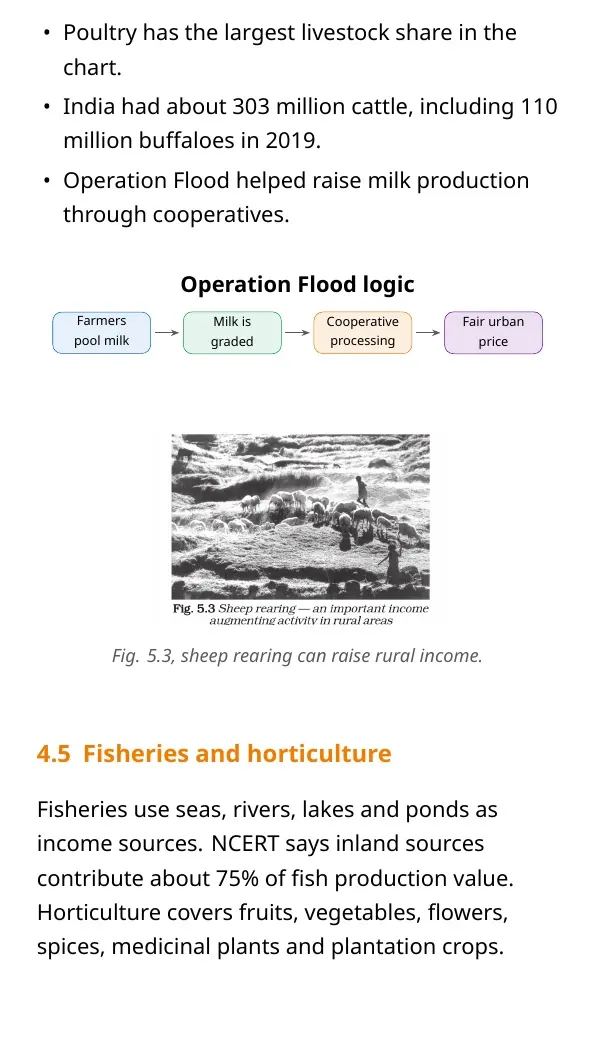
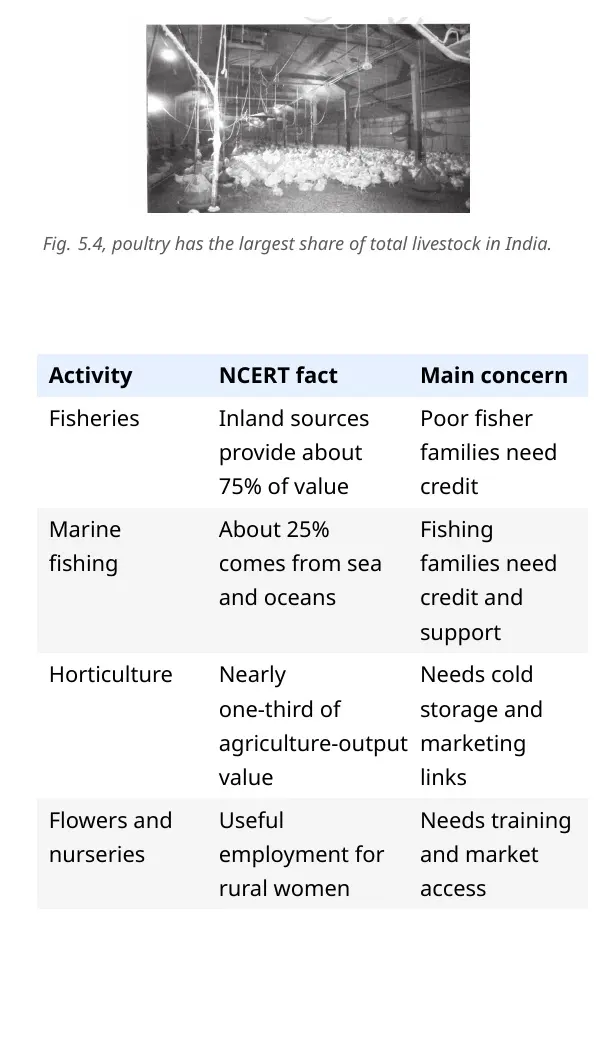
Livestock is a major source of stable income because it gives milk, eggs, meat, wool and manure. Fisheries provide income through marine and inland sources. Horticulture includes fruits, vegetables, flowers, spices, medicinal plants and plantation crops. Non-farm work includes agro-processing, food processing, handlooms, crafts, tourism, pottery and rural services.
- Diversification reduces dependence on one crop season.
- It creates employment between sowing and harvesting periods.
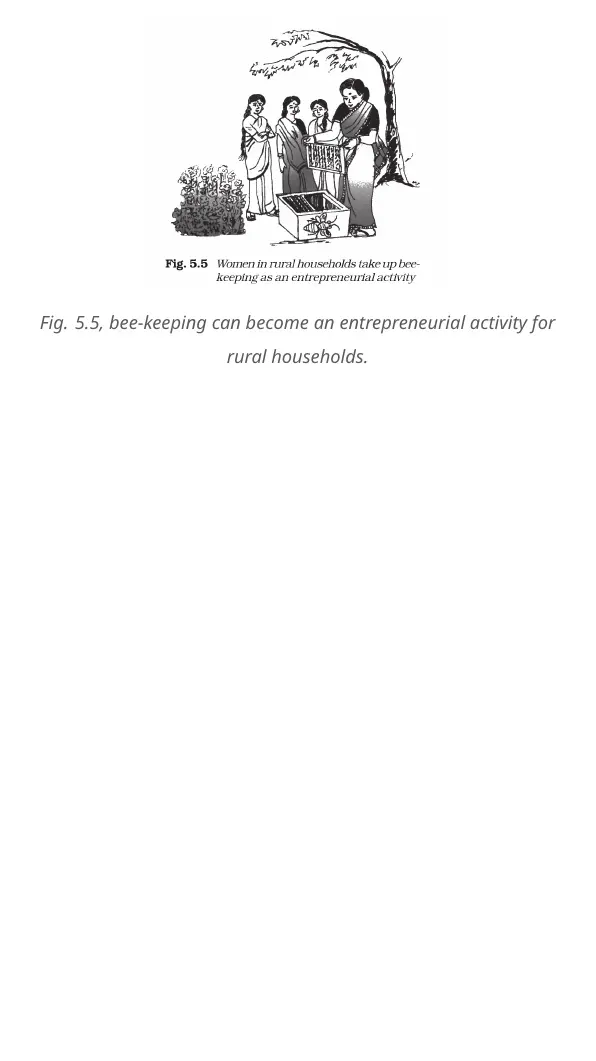
- It supports women through nurseries, horticulture and bee-keeping.
- It spreads risk across farming, allied and non-farm activities.
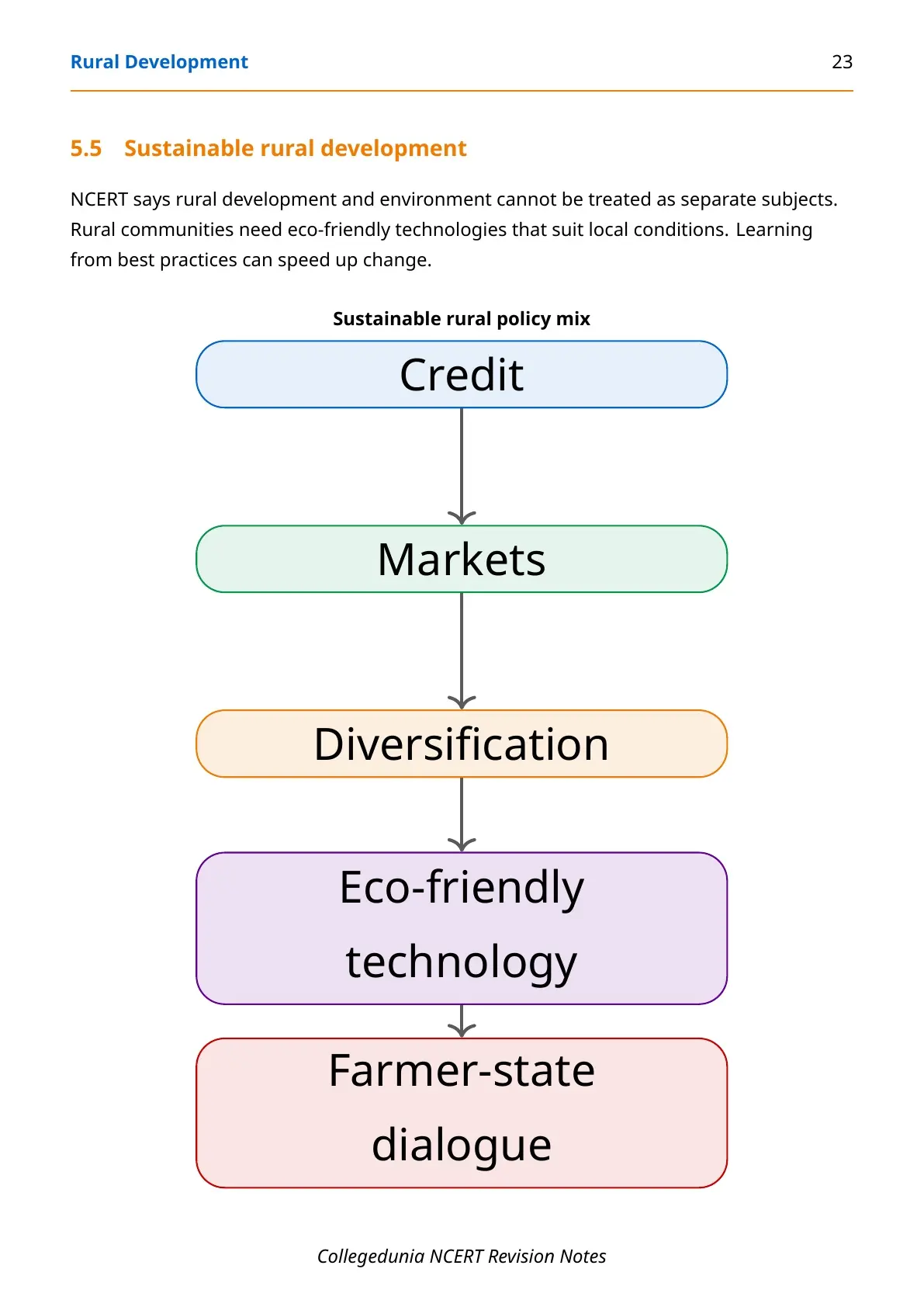
Organic Farming and Sustainable Rural Development
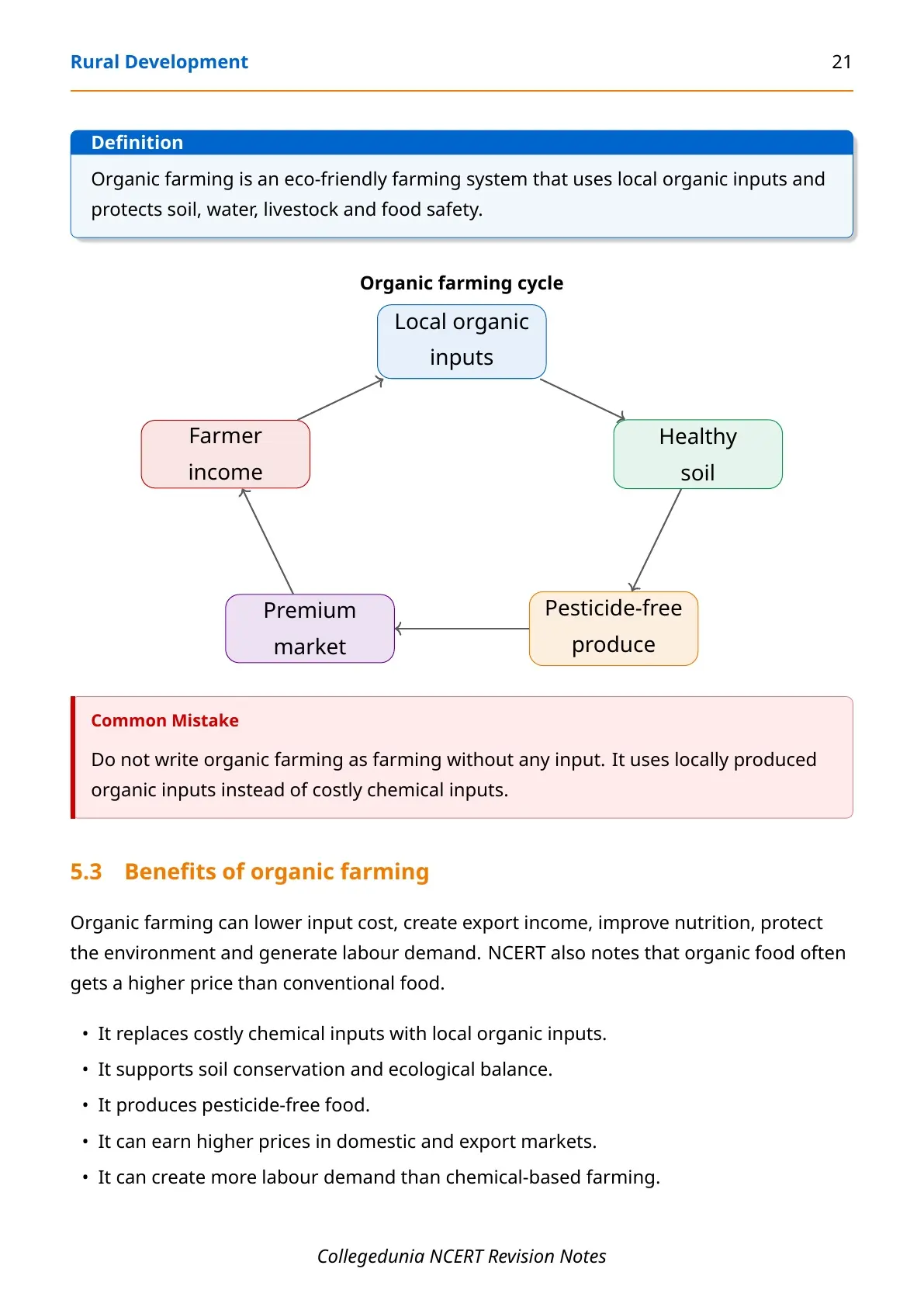
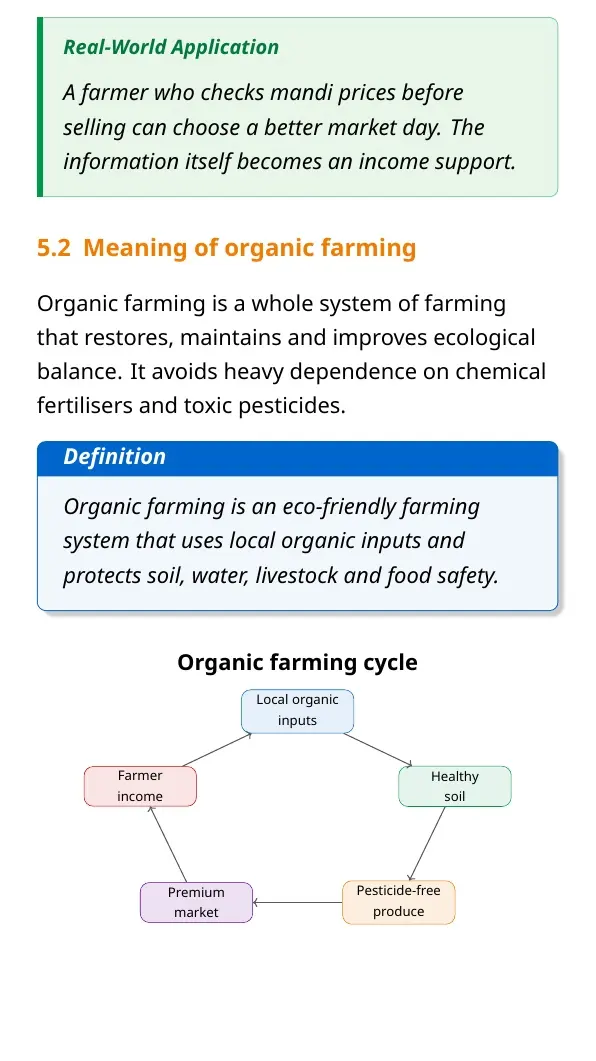
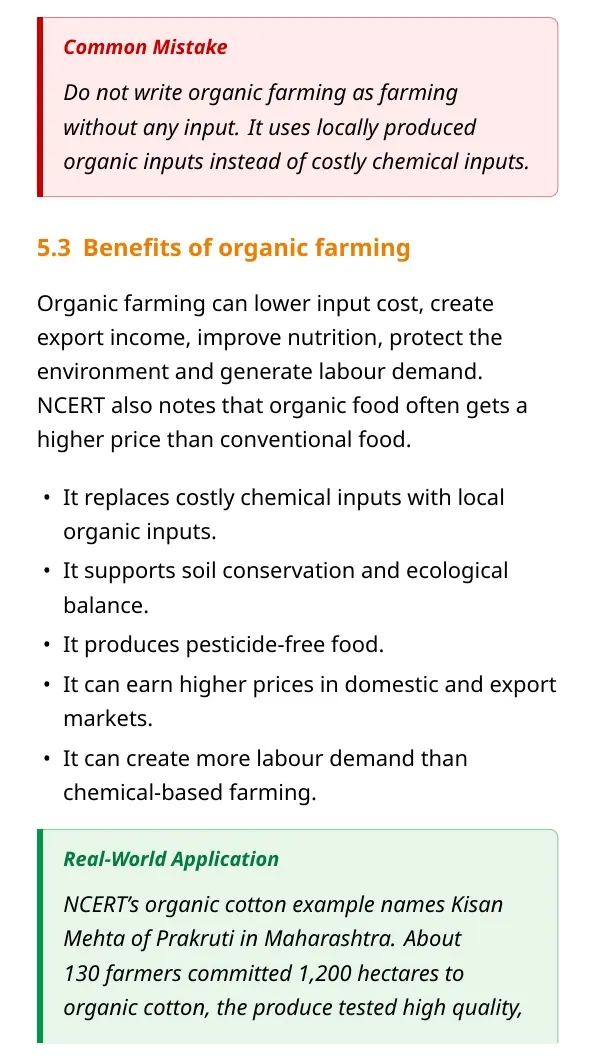
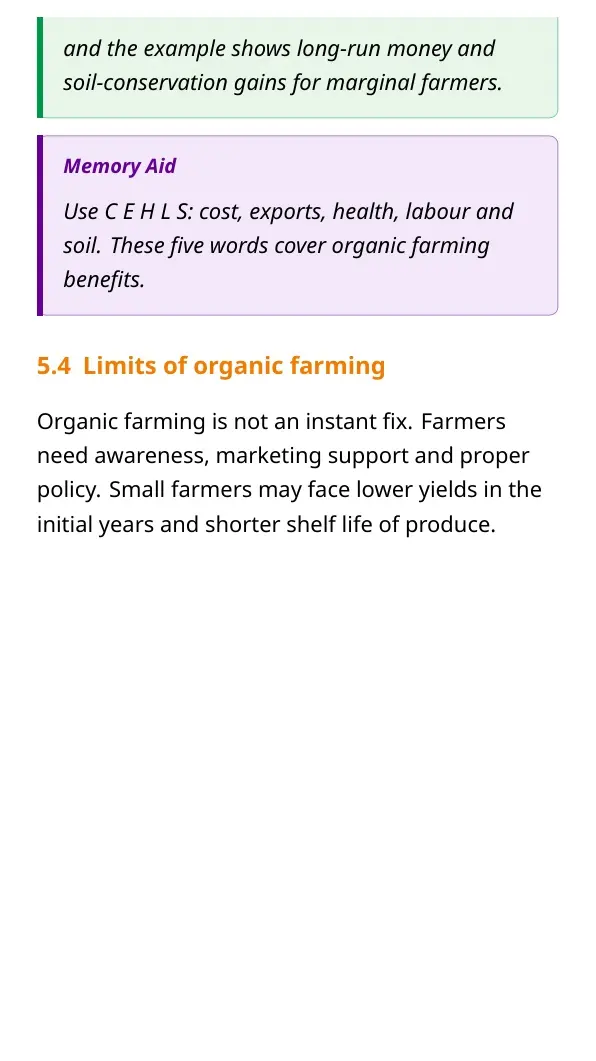
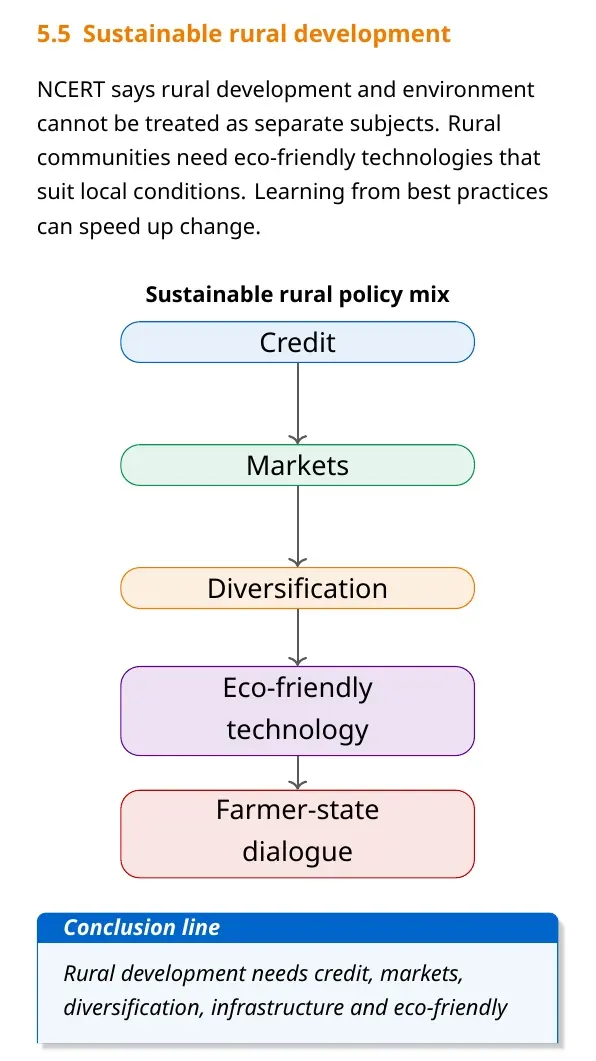
Organic farming uses local organic inputs and avoids costly chemical fertilisers and pesticides. NCERT presents it as a sustainable option because it can protect soil, water, livestock and food quality. It may also reduce input cost and help farmers earn better prices when organic produce finds a premium market.
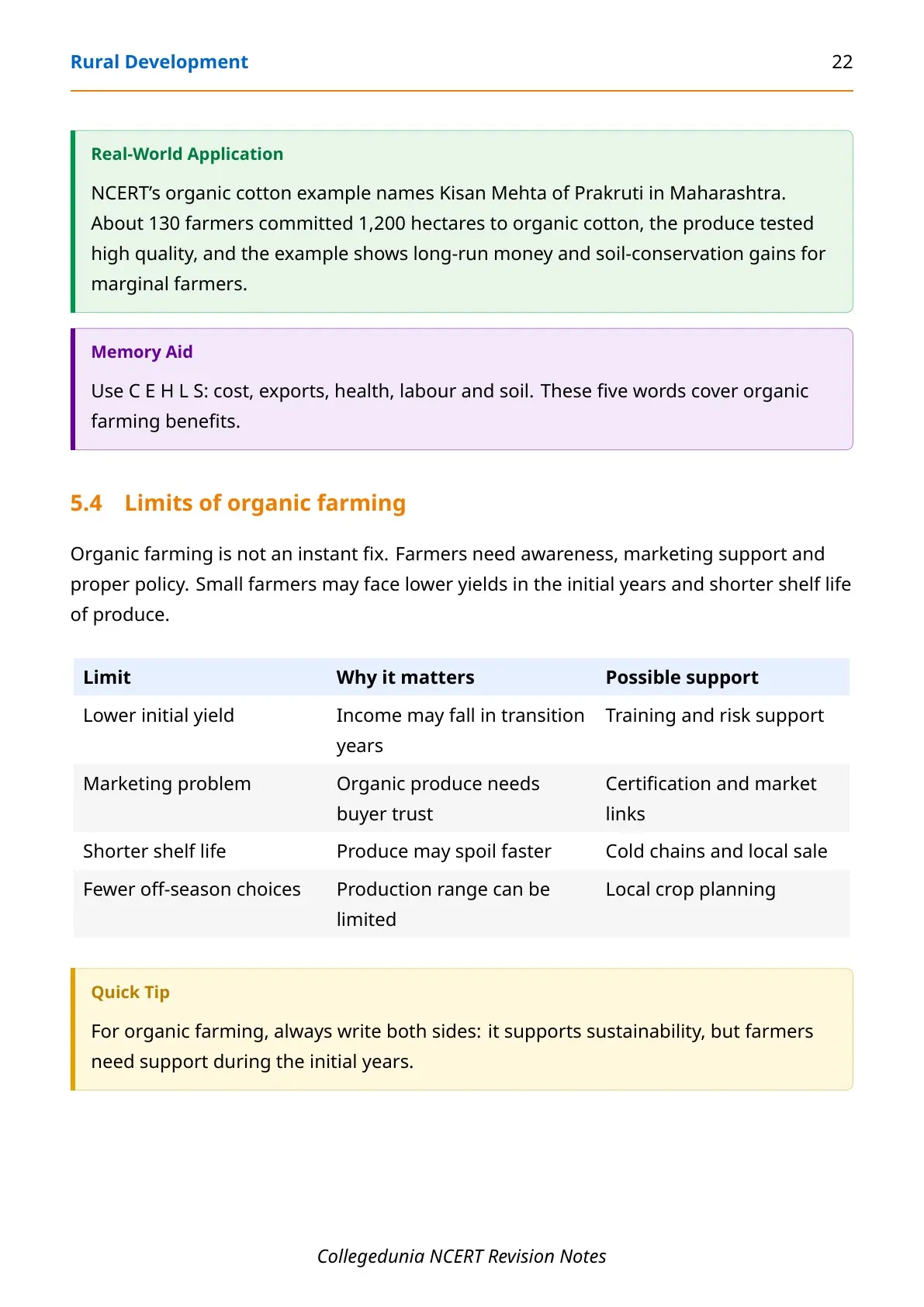
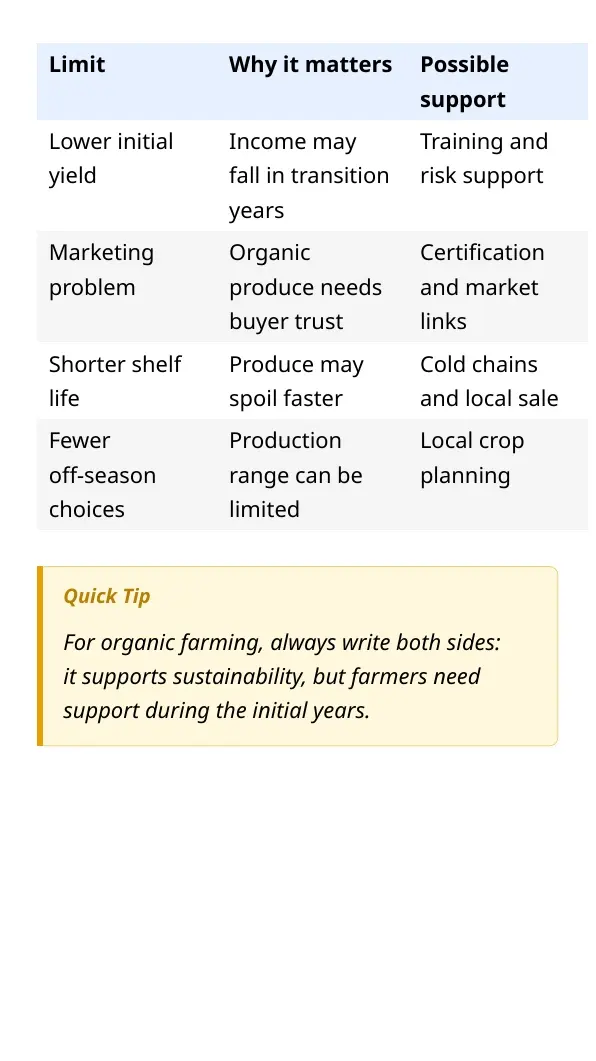
The chapter also asks students to notice the limits. Organic farming needs awareness, training, certification, market access and time for soil recovery. Yields may fall in the transition period, and small farmers need support before they can carry that risk. A complete answer should therefore write both the promise and the practical difficulties.
| Aspect | Benefit | Concern |
|---|---|---|
| Input cost | Uses local organic inputs | Training and composting systems are needed |
| Environment | Reduces chemical pollution | Soil recovery takes time |
| Market | Can receive premium prices | Certification and buyer access are difficult |
| Employment | Can create more labour demand | Farmers need reliable support during transition |
How to Write Exam Answers from Rural Development
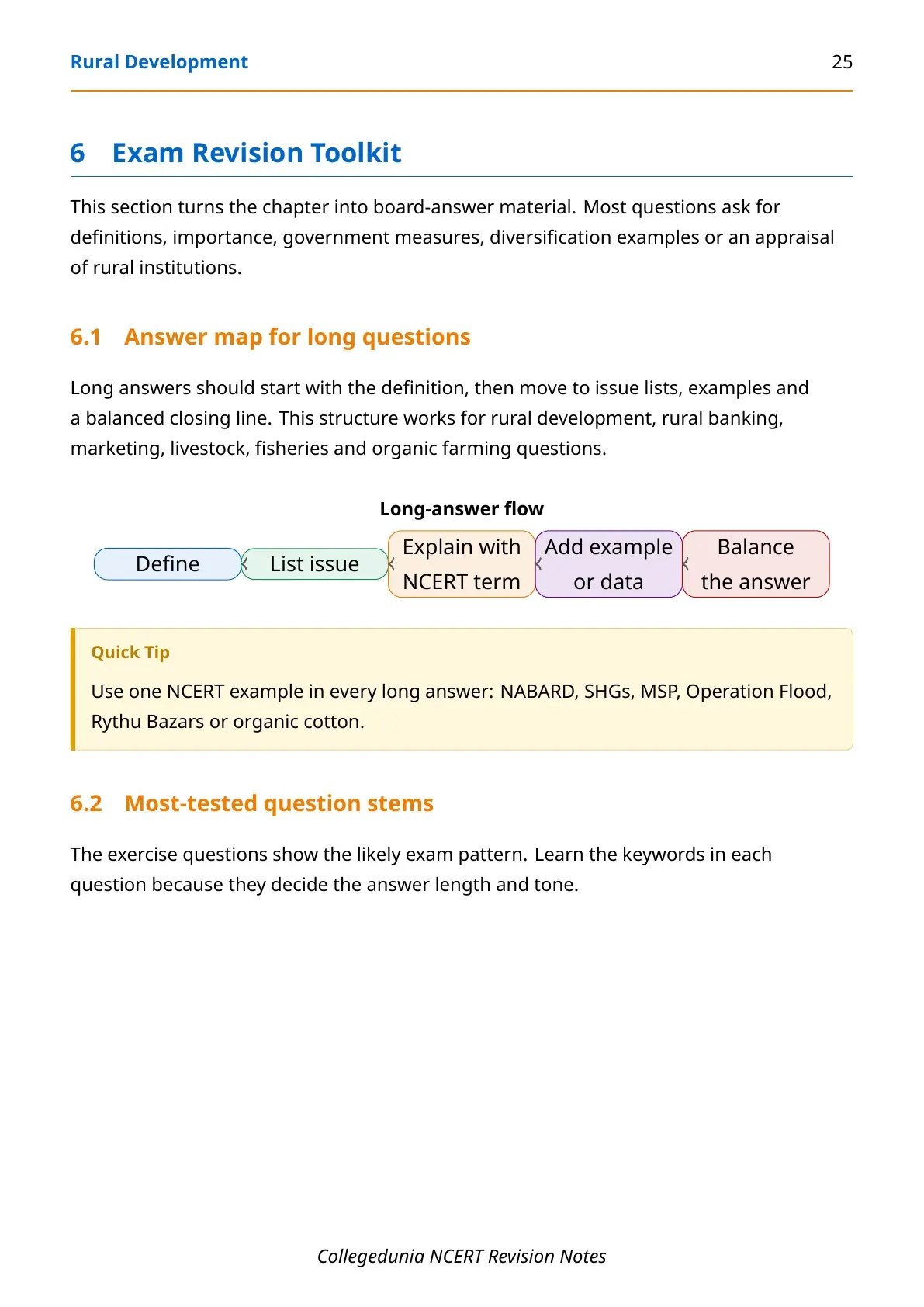
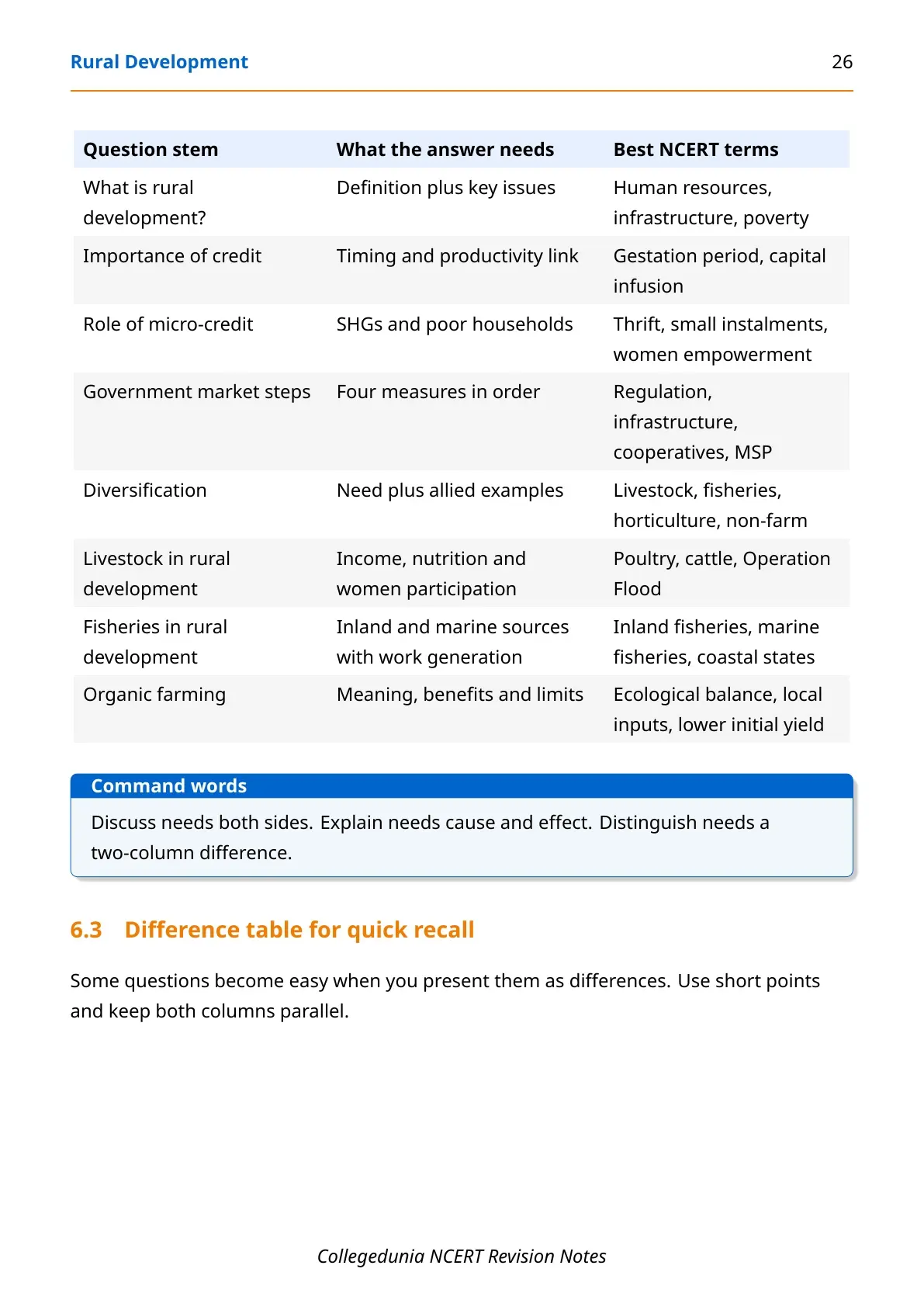
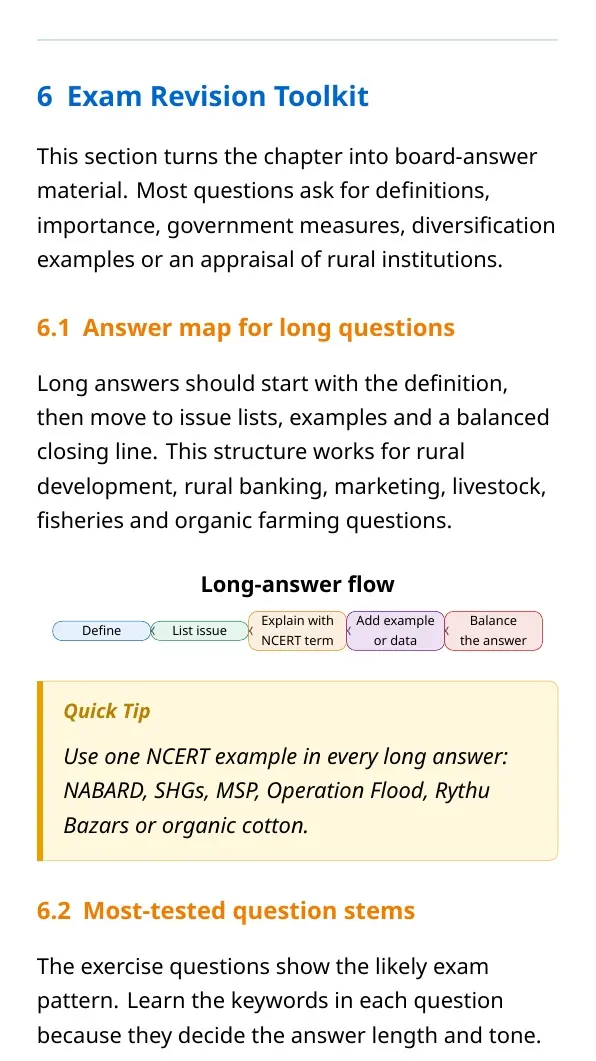
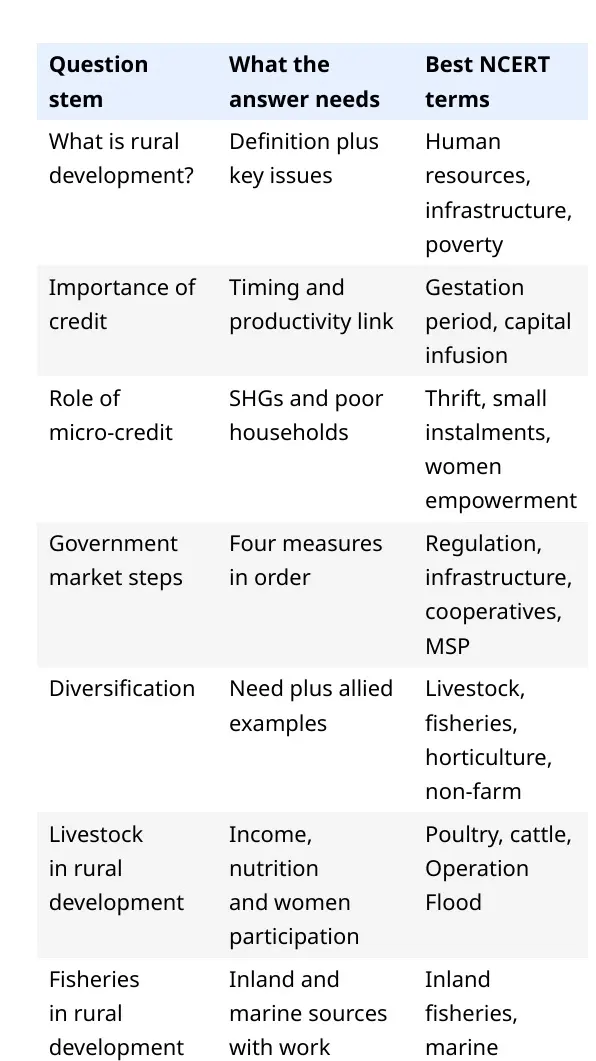
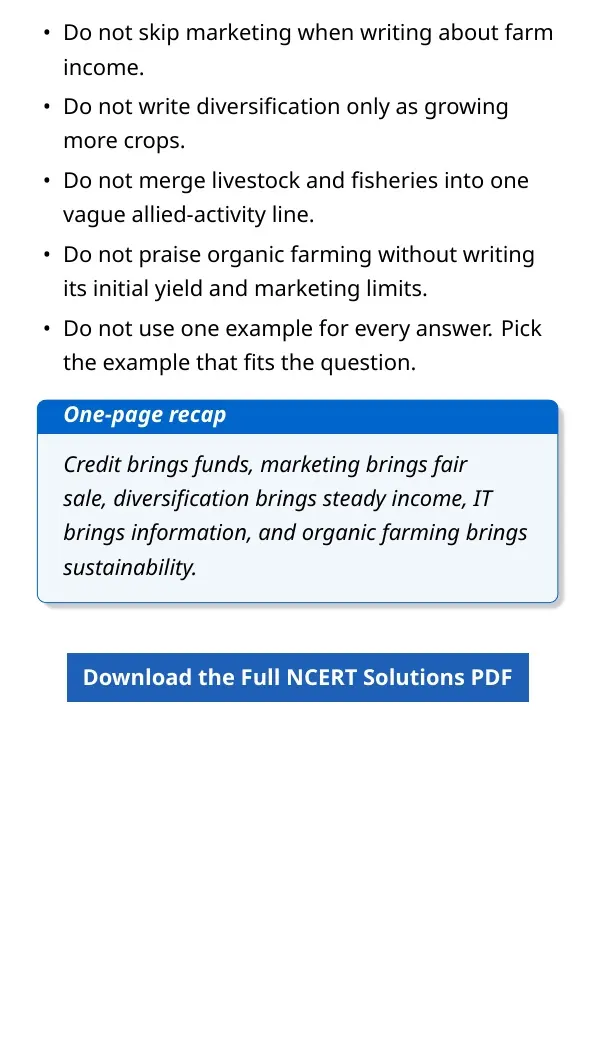
For a short answer, define the term and add one NCERT example. For a long answer, start with the problem, explain the policy instrument and end with a balanced result. The chapter rewards exact terms, so use words such as institutional credit, NABARD, SHGs, regulated markets, MSP, diversification, allied activities and organic farming.
A good answer should avoid generic village points. Instead of writing only that villages need development, explain why the credit gap, weak storage, poor marketing, seasonal employment and environmental stress reduce rural income. For an appraisal question, write both achievements and remaining problems.
- Use NABARD and SHGs for rural credit questions.
- Use regulated markets, MSP and PDS for agricultural marketing questions.
- Use livestock, fisheries, horticulture and non-farm work for diversification questions.
- Use benefits plus limits for organic farming questions.
Important Terms from Rural Development
| Term | Meaning | Where to use it |
|---|---|---|
| Rural development | Improvement in rural income, production and quality of life | Introductory definition |
| NABARD | Apex body coordinating rural finance | Institutional credit answers |
| Self-Help Group | Small savings and credit group for needy members | Micro-credit and women empowerment |
| Agricultural marketing | Assembling, storing, grading, transporting and selling farm goods | Marketing system answers |
| Diversification | Expansion into allied and non-farm rural activities | Employment and income stability |
| Organic farming | Eco-friendly farming using local organic inputs | Sustainable agriculture answers |
Related Resources for Rural Development
| Resource | Use it for | Link |
|---|---|---|
| NCERT Book PDF | Read the complete official source chapter | Class 11 Economics Chapter 13 NCERT Book PDF |
| NCERT Solutions | Practise exercise answers after revision | Class 11 Economics Chapter 13 NCERT Solutions |
| Handwritten Notes | Use compact visual notes before tests | Class 11 Economics Chapter 13 Handwritten Notes |
| Previous Chapter Notes | Revise the human capital link before rural policy | Human Capital Formation in India Notes |
| Next Chapter Notes | Continue into employment and informalisation | Employment Growth Informalisation and Other Issues Notes |
Class 11 Economics Notes for All Chapters
| Chapter | NCERT Notes |
|---|---|
| Chapter 1 | Introduction Notes |
| Chapter 2 | Collection of Data Notes |
| Chapter 3 | Organisation of Data Notes |
| Chapter 4 | Presentation of Data Notes |
| Chapter 5 | Measures of Central Tendency Notes |
| Chapter 6 | Correlation Notes |
| Chapter 7 | Index Numbers Notes |
| Chapter 8 | Use of Statistical Tools Notes |
| Chapter 9 | Indian Economy on the Eve of Independence Notes |
| Chapter 10 | Indian Economy 1950-1990 Notes |
| Chapter 11 | Liberalisation Privatisation and Globalisation An Appraisal Notes |
| Chapter 12 | Human Capital Formation in India Notes |
| Chapter 13 | Rural Development Notes |
| Chapter 14 | Employment Growth Informalisation and Other Issues Notes |
| Chapter 15 | Environment and Sustainable Development Notes |
| Chapter 16 | Comparative Development Experiences of India and Its Neighbours Notes |
Rural Development Class 11 FAQs
Ques. What is rural development in Class 11 Economics?
Ans. Rural development is the process of improving rural income, production, infrastructure, employment and quality of life. In NCERT, it focuses on credit, marketing, diversification, human resources and sustainable farming.
Ques. Why is rural credit important in Rural Development?
Ans. Rural credit is important because farmers need money before they earn from crop sale. Timely and cheap institutional credit protects them from moneylenders, distress sales and debt traps.
Ques. What is diversification in rural development?
Ans. Diversification means expanding rural income into allied and non-farm activities such as livestock, fisheries, horticulture, food processing, crafts and rural services.
Ques. How should students write an answer on organic farming?
Ans. Students should define organic farming as eco-friendly farming with local organic inputs, then write benefits such as lower chemical use and higher premium price, along with limits such as training, certification and transition risk.



Comments