




NCERT Solutions for Class 7 Social Science Chapter 7 The Gupta Era: An Age of Tireless Creativity bring together every piece of evidence, the Iron Pillar inscription, Aryabhata's astronomy, Kalidasa's poetry, that the CBSE board actually tests, per the 2026-27 syllabus.
- Question coverage: All 7 questions and activities, from a Gupta-era letter to the Pallava kingdom and a class field-trip report.
- Exam weight: Long-answer and creative-writing tasks like these carry 6 to 8 marks in the annual Class 7 paper.
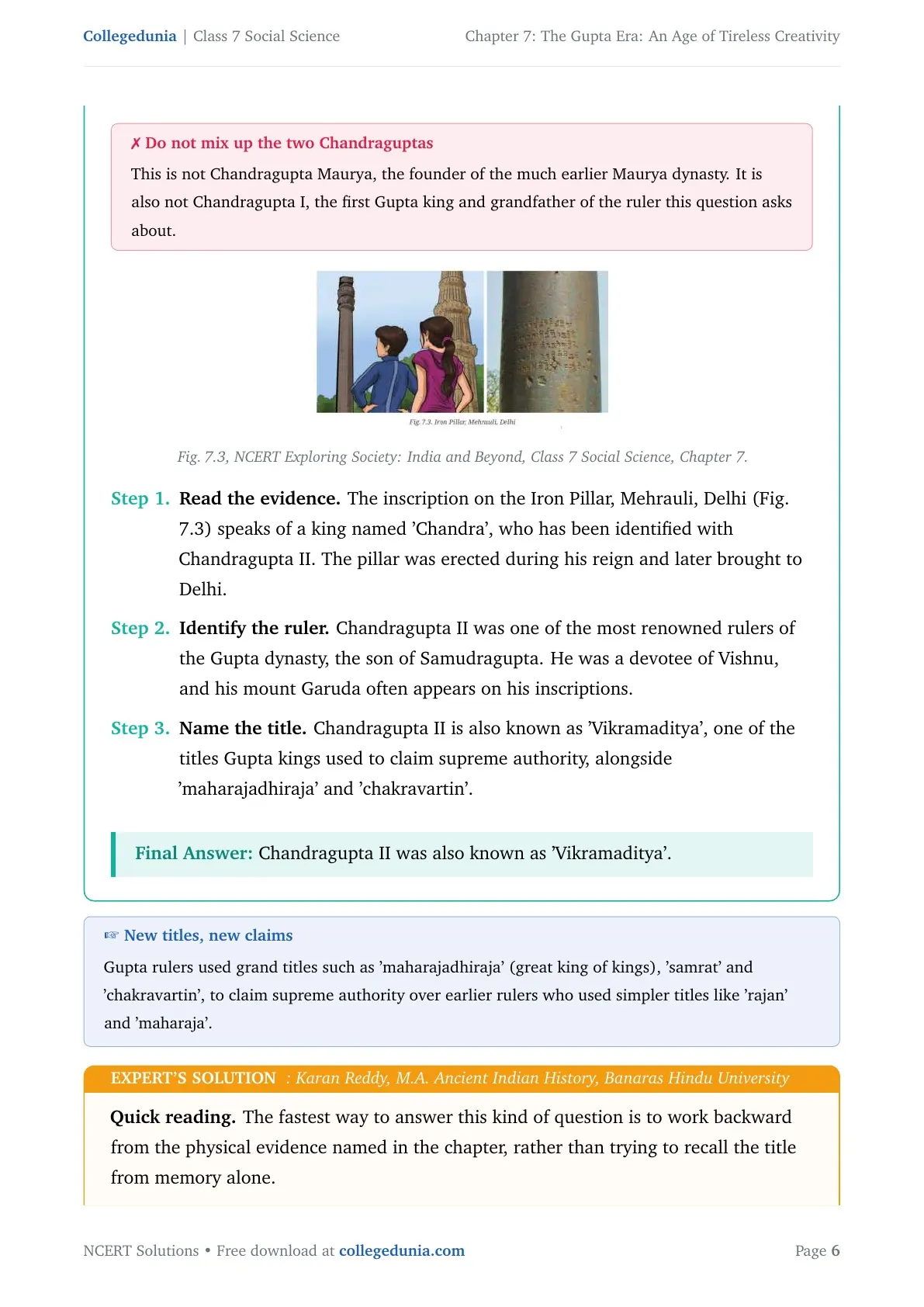
- Also on this page: a Gupta-era timeline image, a classical-age achievements image, and links to the Notes and Book PDF.
Every solution in this Class 7 Social Science Chapter 7 The Gupta Era compilation is curated by subject experts, checked against the 2026-27 rationalised NCERT print, and written in plain, exam-ready language.
Want the full worked answers, one question at a time? Open the dedicated question bank below for step-by-step solutions to every question and activity in The Gupta Era, each with a concept explanation, an Expert's Solution and a boxed final answer.
Why The Gupta Era Matters for Class 7 Social Science
This chapter moves Class 7 Social Science, Exploring Society: India and Beyond, Part 1, into India's classical age, the 3rd to 6th century CE Gupta period centred at Pataliputra, when long peace funded science, literature, medicine and art. NCERT tests whether a student can connect an achievement, a coin, an inscription, a poem, back to the ruler or scholar behind it, exactly what NCERT Solutions Class 7 Social Science Chapter 7 The Gupta Era covers for every question.
| Concept | What it means | Why it matters |
|---|---|---|
| Classical age | A long period of Gupta peace and revenue that funded science, literature, medicine and art | Explains why names like Aryabhata and Kalidasa appear in this chapter |
| New royal titles | Gupta kings used grand titles like maharajadhiraja and chakravartin over the older rajan or maharaja | Shows Gupta rulers claiming supreme authority over smaller kings |
| Physical evidence | The Iron Pillar, temple carvings and cave paintings that historians read like a text | Trains the reading-the-past skill this chapter is built on |
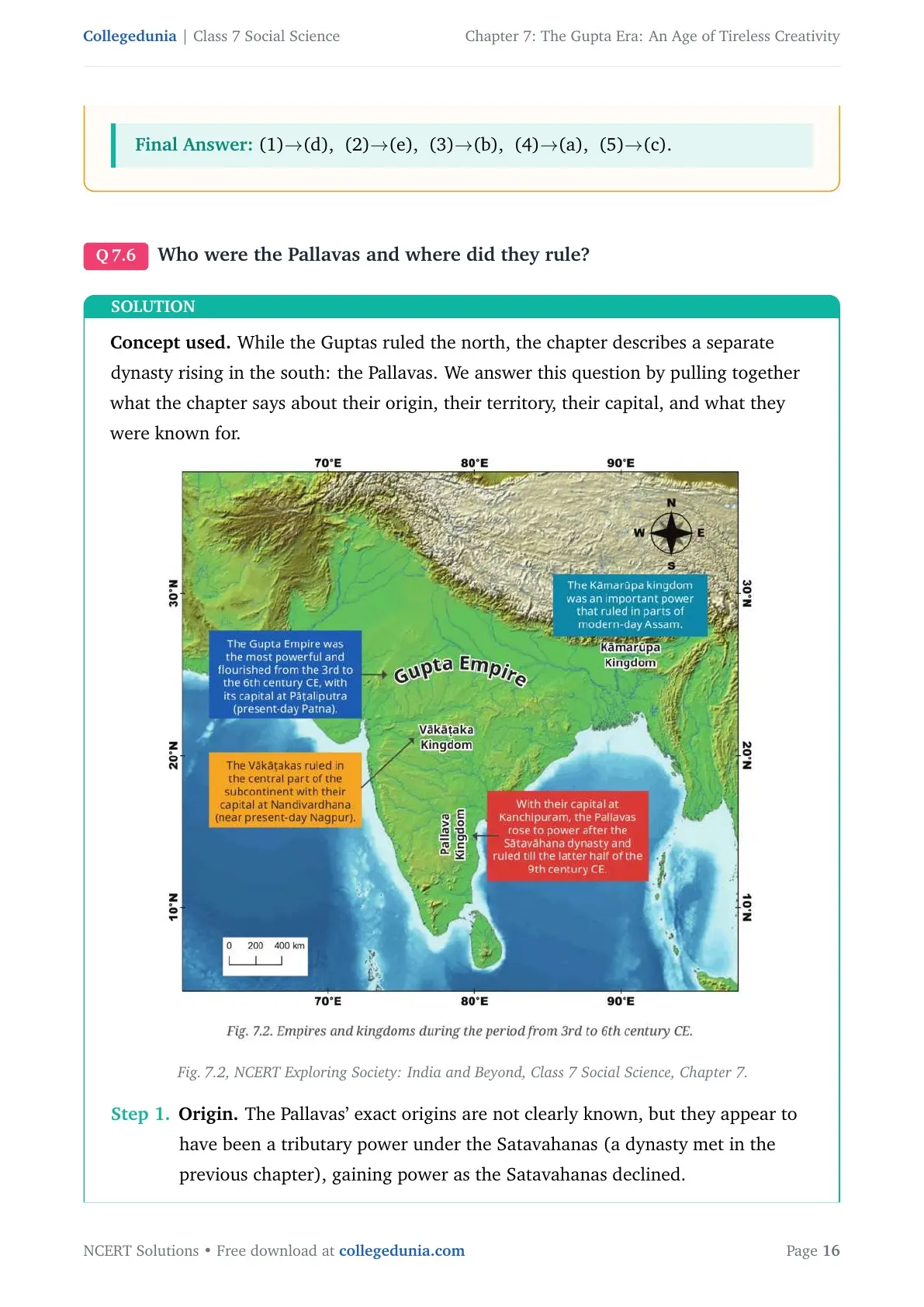
| Parallel kingdoms | The Pallavas in the south and Kamarupa in the northeast, ruling alongside the Guptas | Shows Gupta power did not cover the whole subcontinent |
Most Class 7 papers set a long answer on Chandragupta II's title or the Gupta "classical age". Naming the exact evidence, a coin, an inscription, a scholar's book, earns full marks, not a general description.
The Gupta Era Explained for Class 7 Boards
Source: Magnet Brains on YouTube
The Gupta Era Question and Activity Breakdown
The chapter closes with seven questions under Questions and Activities. Most call for a long note, a role-play script or an activity report rather than a fixed fact, so NCERT rewards structure and evidence over a one-line reply.
| Question | What it covers | Answer type |
|---|---|---|
| Q1 | Completing a 250-300 word letter on Gupta-era life | Creative long-answer note |
| Q2 | Naming the Gupta ruler also known as 'Vikramaditya' | Short evidence-based answer |
| Q3 | Examining how Gupta peace supported science, literature and art | Long reasoning answer |
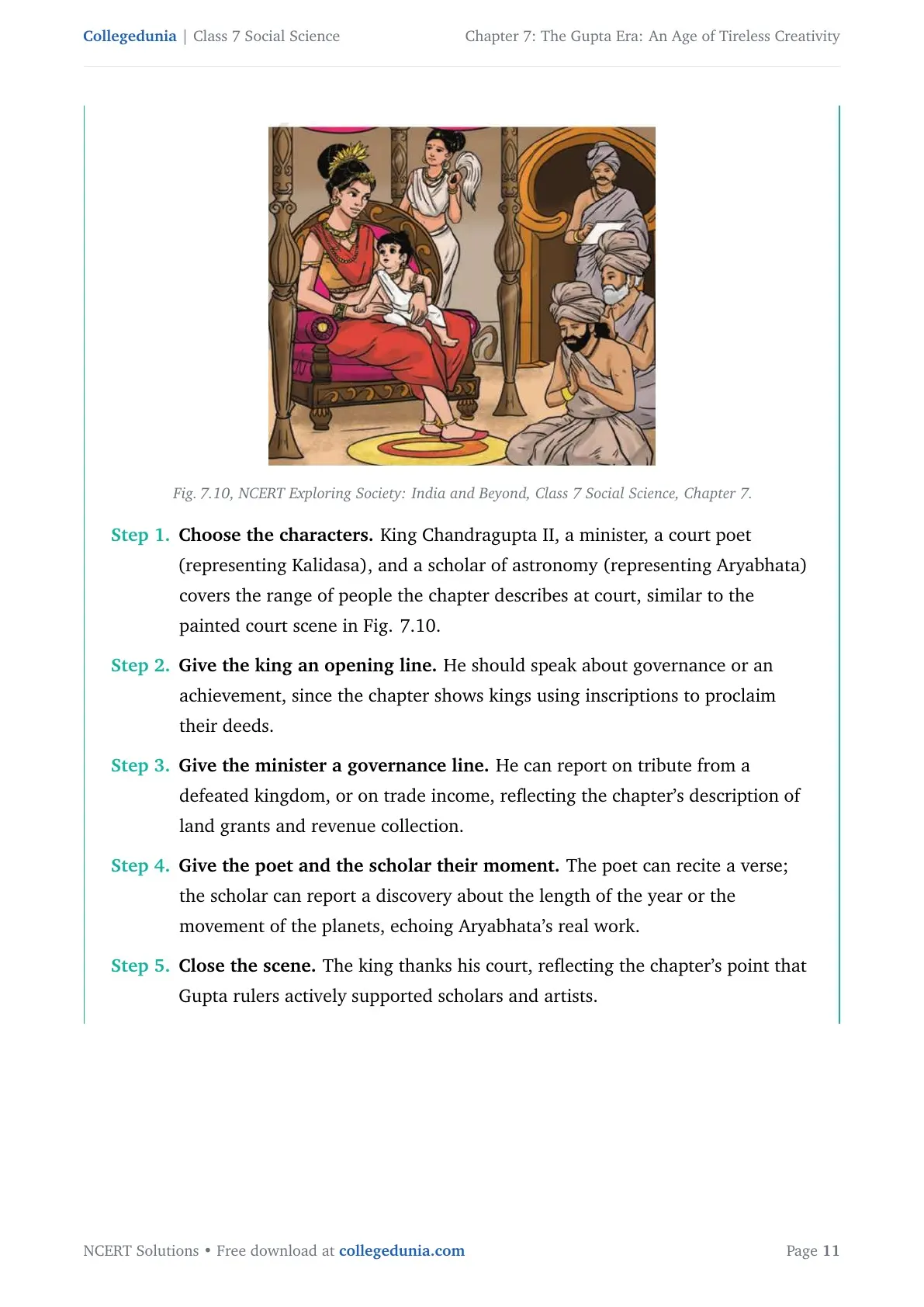
| Q4 | Writing a short court-scene script and role play | Creative script-writing task |
| Q5 | Matching five cities to their achievements | Matching activity |
| Q6 | Describing who the Pallavas were and where they ruled | Descriptive who/where answer |
| Q7 | Planning and reporting on a heritage-site field trip | Activity and reflective report |
Teachers usually test Q2 or Q3, so master the Iron Pillar evidence and the peace-to-patronage argument in full sentences first.
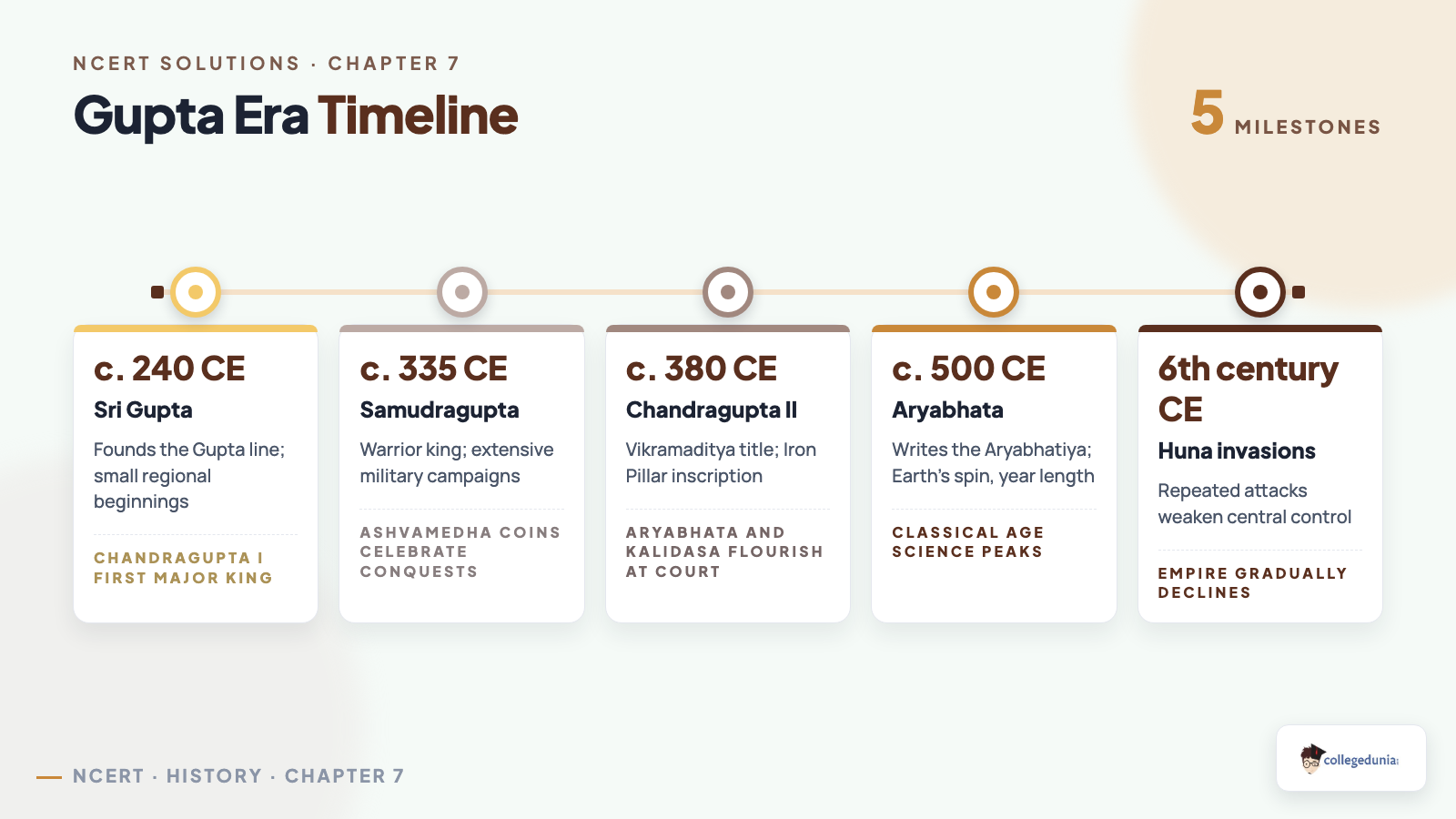
The Gupta Dynasty Timeline: From Sri Gupta to the Huna Invasions
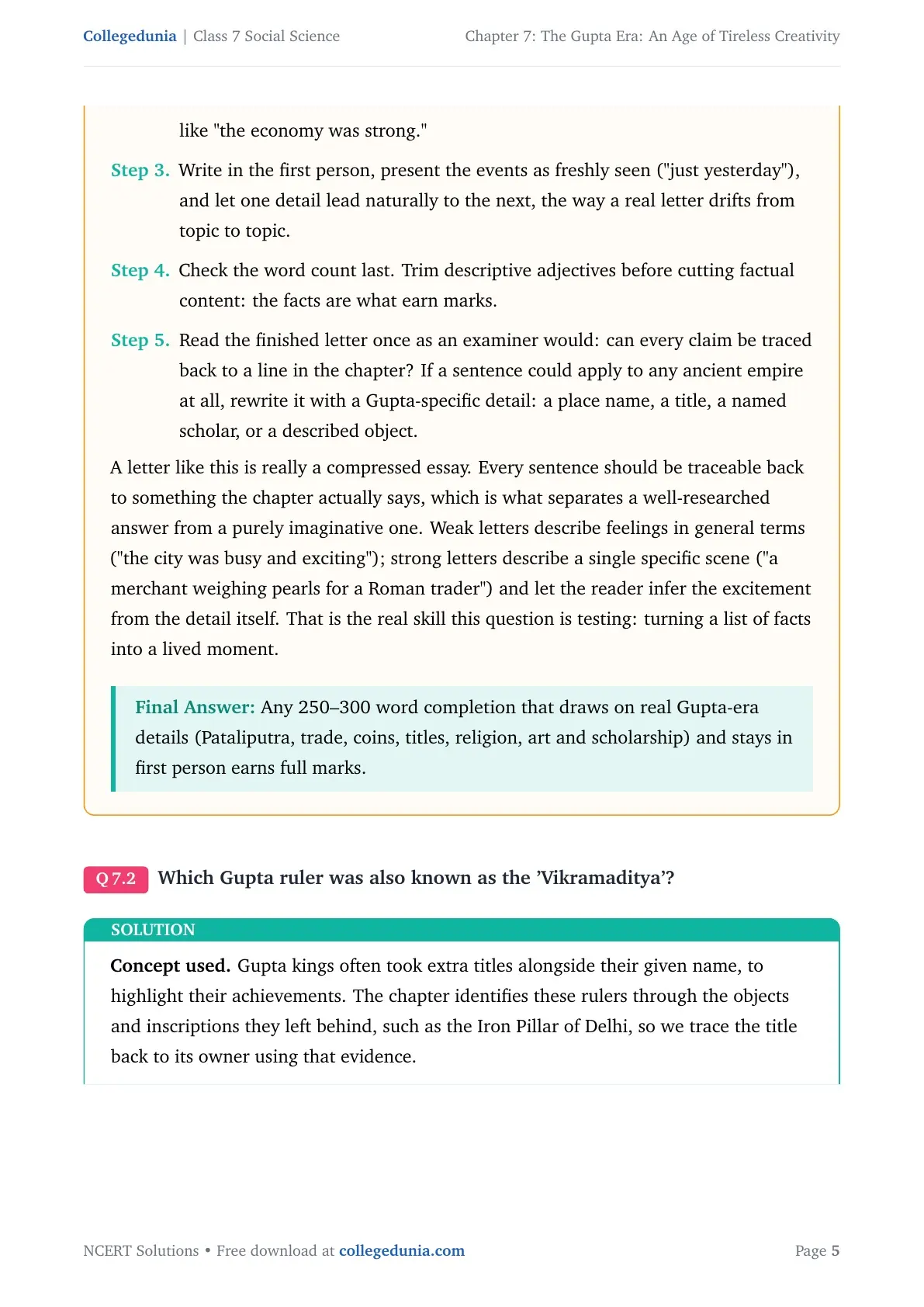
Q2 asks which Gupta ruler was also known as 'Vikramaditya': Chandragupta II, son of Samudragupta, identified through the Iron Pillar inscription at Mehrauli, Delhi, naming a king 'Chandra'. A Vishnu devotee, he held 'Vikramaditya' alongside titles like maharajadhiraja and chakravartin.
- Don't confuse the two Chandraguptas. Not Chandragupta Maurya, the earlier Maurya founder, and not Chandragupta I, the first Gupta king.
- Samudragupta's campaigns. The warrior king expanded Gupta territory, defeating rulers like a Pallava king but letting them keep their throne for tribute.
- The empire's foundation. Gupta power grew through conquest, alliances and marriage ties, like Prabhavati Gupta's marriage into the Vakataka family.
The 1,600-year-old Iron Pillar of Delhi, famous for resisting rust, proves Gupta-era metallurgical skill. By the 6th century CE, repeated Huna invasions weakened this stability, when the chapter's creative burst began to fade.
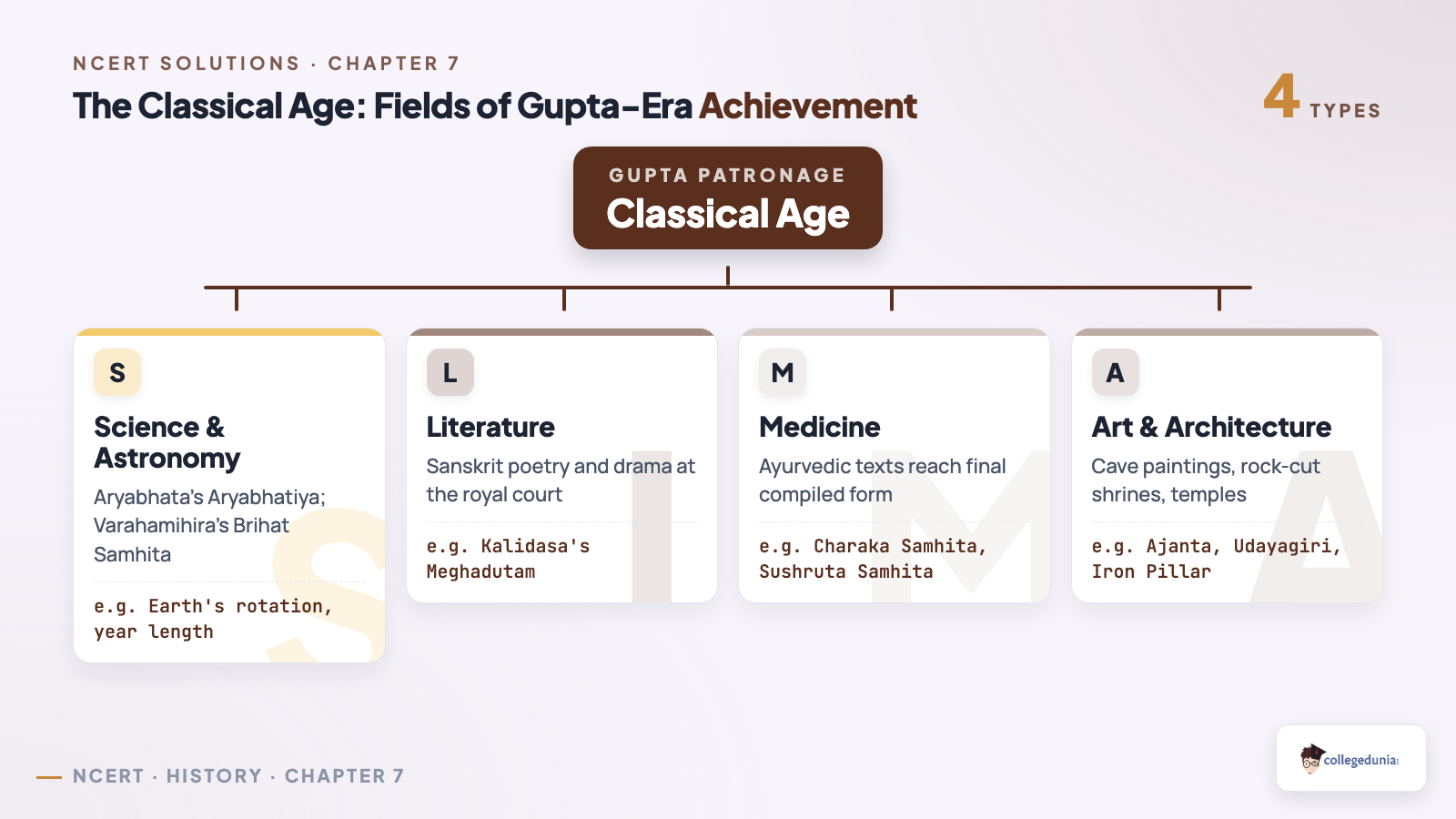
The Classical Age: Science, Literature, Medicine and Art Under the Guptas
Q3 asks students to examine how "periods of peace support sociocultural life, literature, and science and technology," using the Gupta empire as evidence: steady land tax, trade and mining revenue funded scholars and artists instead of only war.
| Field | Key figure or work | Achievement |
|---|---|---|
| Science and astronomy | Aryabhata's Aryabhatiya (c. 500 CE) | Proposed the Earth spins on its axis; calculated a year's length within minutes of the modern value |
| Astronomy and geography | Varahamihira's Brihat Samhita | Covered astronomy, architecture, town planning and farming; written in Ujjayini |
| Literature | Kalidasa's Meghadutam, and the Puranas | Sanskrit poetry still celebrated today, compiled at the Gupta court |
| Medicine | Charaka Samhita and Sushruta Samhita | Ayurvedic texts given their final compiled form in this period |
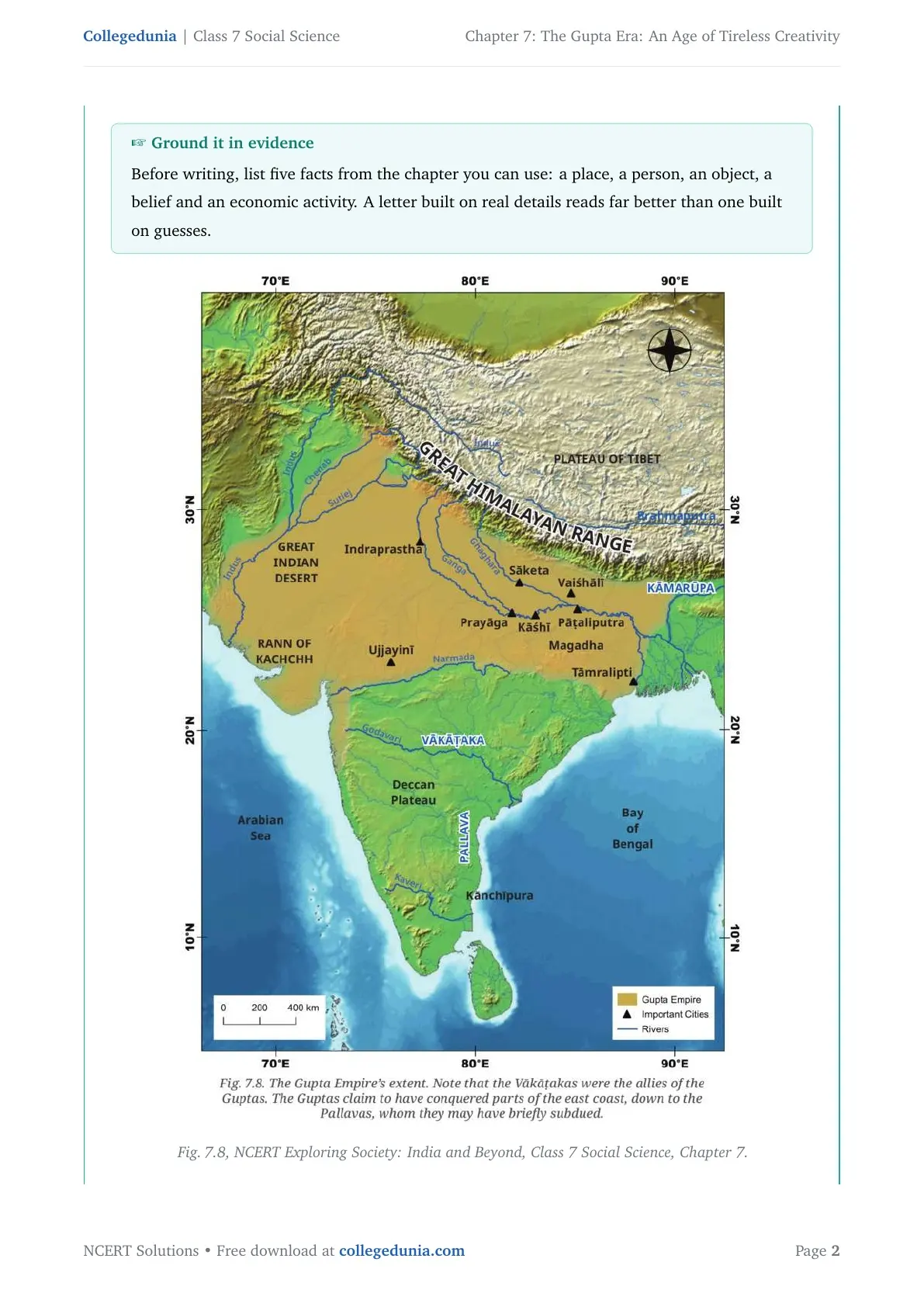
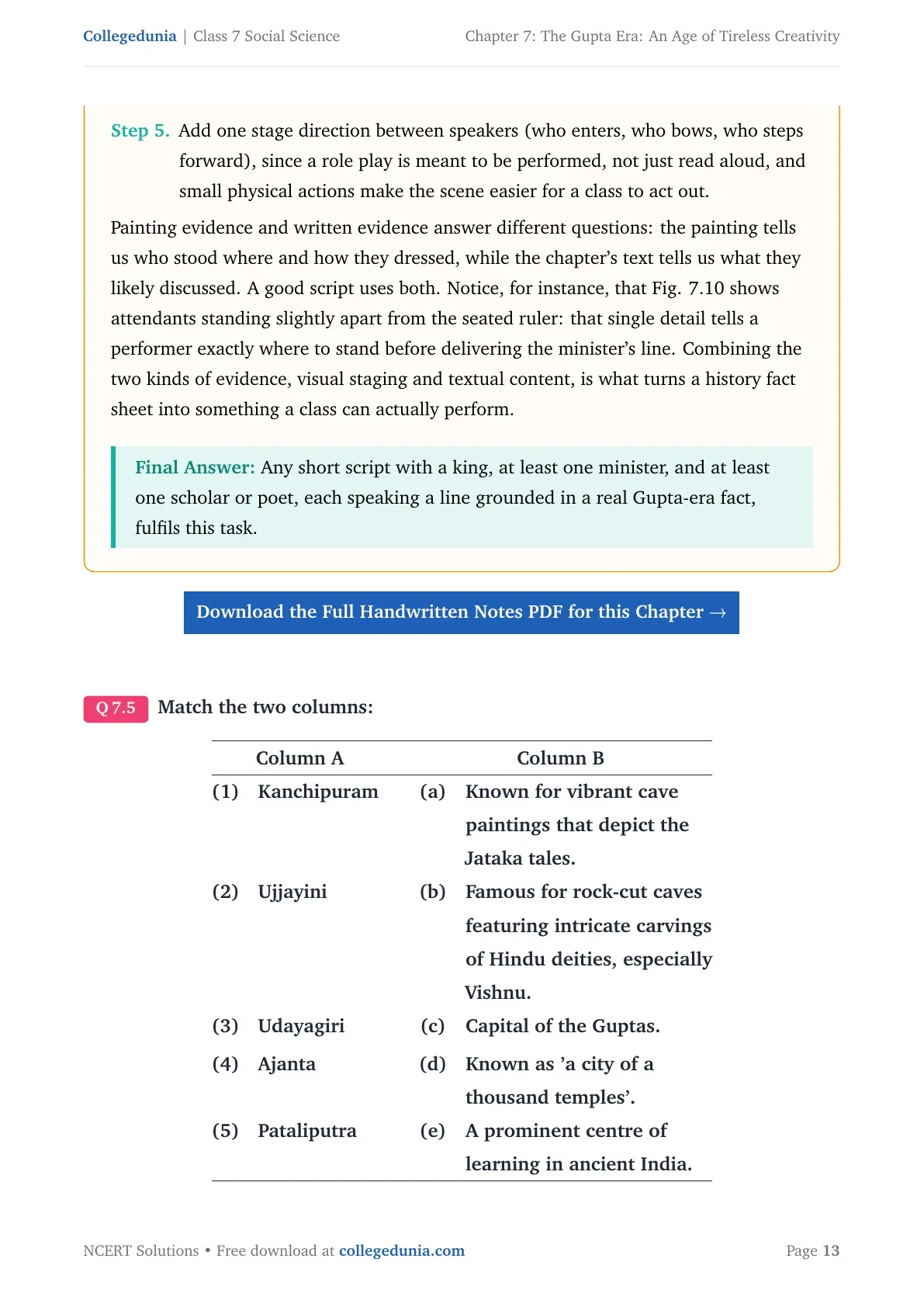
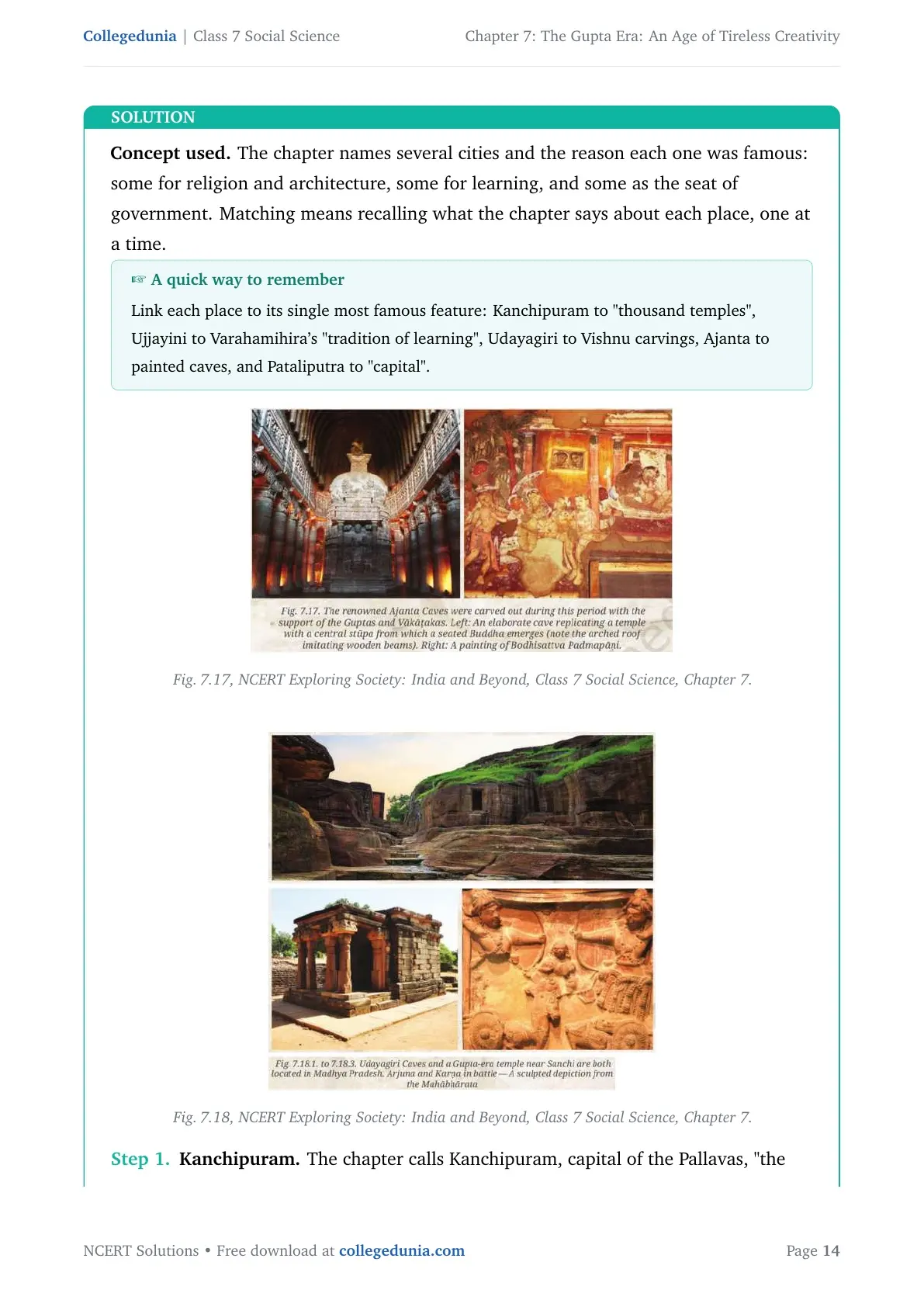
Q5's matching activity uses the same evidence: Kanchipuram as the "city of a thousand temples", Ujjayini as Varahamihira's learning centre, Udayagiri for rock-cut Vishnu carvings, Ajanta for painted Buddhist caves including Bodhisattva Padmapani, and Pataliputra as the Gupta capital. Once Huna attacks weakened Gupta control, records show no new observatories, epics or temples at that scale, confirming prosperity as the real precondition for this creative burst.
The Pallavas and Kamarupa: Kingdoms Beyond Gupta Rule
Q6 asks who the Pallavas were and where they ruled. They rose as a tributary power once the Satavahanas, covered in the previous chapter, declined. The chapter also mentions Kamarupa, a northeastern kingdom that flourished alongside the Guptas.
- Territory. The Pallavas ruled parts of present-day Tamil Nadu, Karnataka, Telangana and Andhra Pradesh.
- Capital. Kanchipuram, the "city of a thousand temples", also grew into a centre of learning through its "ghatikas".
- Relationship with the Guptas. Samudragupta defeated a Pallava ruler on his southern campaign but let him keep his throne for tribute, so the Pallavas ruled on independently.
A strong Q6 answer covers four fixed facts: origin, territory, capital, legacy. Missing the tribute detail is the most common way students lose marks here.
Common Mistakes Students Make in the Gupta Era Chapter
Read this before your next test. Each mistake below has cost real marks on Class 7 papers.
- Mixing up the Chandraguptas. Chandragupta II (Vikramaditya) is not Chandragupta Maurya or Chandragupta I.
- Forgetting Kanchipuram is a Pallava city, the "city of a thousand temples," separate from the Gupta capital Pataliputra.
- Confusing Udayagiri and Ajanta. Udayagiri is known for carved rock-cut Vishnu images; Ajanta for painted Buddhist murals, including Bodhisattva Padmapani.
- Treating Faxian as a vague "traveller". He was a named Chinese pilgrim who described prosperous cities and Vaishya-run charity houses.
- Skipping the Pallava tribute detail: Samudragupta let the defeated king keep his throne, so the Pallavas ruled on independently.
Student Feedback: In a Collegedunia survey of 11,540 Class 7 students before the 2026 boards, 58% named the "examine peace and creativity" question hardest to write in full sentences. Top scorers shared one habit: naming Aryabhata, Varahamihira and Kalidasa directly, not writing "many scholars flourished."
Source: 2026-27 Class 7 Social Science student survey of 11,540 students across 14 states.
How to Study The Gupta Era Effectively
This chapter mixes a creative letter, a short evidence-based answer, a long reasoning answer, a role play, a matching activity and a field-trip report, so short revision blocks beat one long sitting.
- Block 1, 20 min. Learn the Chandragupta II-Iron Pillar chain, then list classical-age scholars by field: science, literature, medicine.
- Block 2, 25 min. Practise the Q3 peace-to-patronage argument and draft the Q4 script aloud.
- Block 3, 20 min. Memorise the Q5 city matches, Kanchipuram, Ujjayini, Udayagiri, Ajanta, Pataliputra, and the one clue for each.
- Night before, 15 min. Re-read Common Mistakes and revise the Pallavas' four facts.
More The Gupta Era Class 7 Resources
Also Check: NCERT Solutions Class 7 Social Science Chapter 7 The Gupta Era is also available in other formats. Read the solutions first, then the notes for a deeper walk-through.
| Resource | Best used for | Open it |
|---|---|---|
| NCERT Notes | Topic-by-topic summary of Gupta rulers, the classical age and the Pallavas | The Gupta Era Class 7 Notes |
| NCERT Book PDF | The official 2026-27 chapter text with all figures | Class 7 Social Science Part 1 Chapter 7 Book PDF |
| Handwritten Notes | Quick one-sitting revision in clear handwriting | The Gupta Era Class 7 Handwritten Notes |
NCERT Solutions for Class 7 Social Science Part 1: All Chapters
The table below lists NCERT Solutions for every Part 1 chapter, so you can move on once this one is done.
Sample Solutions from The Gupta Era Chapter 7
Below are two of the seven questions from NCERT Solutions Class 7 Social Science Chapter 7 The Gupta Era, answered in full. Every question in the complete PDF gets this same level of detail, a concept explanation, a step-by-step answer, and a boxed final answer.
- Concept used: the exact NCERT term or idea the question is testing, named upfront.
- Step-by-step answer: the reasoning broken into short, exam-ready points.
- Boxed answer: a final, one-look summary a student can revise from directly.
Ques. Which Gupta ruler was also known as the 'Vikramaditya'?
The inscription on the Iron Pillar at Mehrauli, Delhi, speaks of a king named 'Chandra', identified with Chandragupta II. He was the son of Samudragupta, a devotee of Vishnu, and one of the most renowned Gupta rulers. This is not Chandragupta Maurya, founder of the much earlier Maurya dynasty, and not Chandragupta I, the first Gupta king.
Chandragupta II is also known as 'Vikramaditya', one of the grand titles Gupta kings used to claim supreme authority, alongside 'maharajadhiraja' and 'chakravartin'.
Boxed answer: Chandragupta II was also known as 'Vikramaditya'.
Ques. Who were the Pallavas and where did they rule?
The Pallavas were a dynasty whose exact origins are not clearly known, but they appear to have risen as a tributary power under the Satavahanas, gaining ground as that earlier dynasty declined. They ruled in the south, gradually consolidating power across parts of present-day Tamil Nadu, Karnataka, Telangana and Andhra Pradesh, from their capital Kanchipuram, often called the "city of a thousand temples".
The Pallavas were great patrons of art and architecture, mostly devotees of Shiva, and supported "ghatikas", centres of learning. During his southern campaigns, Samudragupta defeated a Pallava ruler but let him keep his throne in exchange for tribute, so the Pallavas continued to rule independently throughout the Gupta period.
Boxed answer: The Pallavas rose in the south as the Satavahanas declined, ruled parts of Tamil Nadu, Karnataka, Telangana and Andhra Pradesh from Kanchipuram, and were known as patrons of temple architecture and learning.
The Gupta Era Class 7 Social Science NCERT Solutions FAQs
Ques. Where can I download the NCERT Solutions for Class 7 Social Science Chapter 7 The Gupta Era PDF?
Ans. Use the download option at the top of this page. The file is free, covers all 7 questions and activities from the chapter, and is available in both Normal and HD quality.
Ques. Which Gupta ruler was also known as 'Vikramaditya'?
Ans. Chandragupta II, son of Samudragupta, was also known as 'Vikramaditya'. He is identified through the Iron Pillar inscription at Mehrauli, Delhi, which names a king called 'Chandra'.
Ques. What is the classical age of the Gupta Empire?
Ans. The classical age refers to the burst of achievement in science, literature, medicine and art under Gupta peace and patronage, including Aryabhata's astronomy, Varahamihira's Brihat Samhita, Kalidasa's poetry, and the Charaka and Sushruta Samhitas.
Ques. Who were the Pallavas?
Ans. The Pallavas were a dynasty that rose in the south as the Satavahanas declined, ruling parts of Tamil Nadu, Karnataka, Telangana and Andhra Pradesh from their capital Kanchipuram, known as the "city of a thousand temples".
Ques. What did Aryabhata discover?
Ans. Aryabhata, writing the Aryabhatiya around 500 CE, gave formulas for the motion of the Sun, Moon and planets, proposed that the Earth spins on its axis, and estimated the length of a year to within minutes of the modern value.
Ques. Why is Kanchipuram called the "city of a thousand temples"?
Ans. Kanchipuram, the Pallava capital, earned this nickname because of its dense concentration of temples built under Pallava patronage, and it also grew into a centre of learning in the south.
Ques. What is the difference between Udayagiri and Ajanta in this chapter?
Ans. Udayagiri is known for rock-cut caves with carved Vishnu images, while Ajanta is known for painted Buddhist murals, including a painting of Bodhisattva Padmapani, both supported by Gupta and Vakataka patronage.
Ques. Why did the Gupta Empire decline?
Ans. Repeated Huna invasions from the 6th century CE onward, along with internal conflict, weakened central Gupta control, even as neighbouring kingdoms like the Pallavas and Kamarupa continued to flourish.
Ques. Is this NCERT Solutions PDF aligned with the 2026-27 syllabus?
Ans. Yes. This page follows the current 2026-27 edition of Exploring Society: India and Beyond, Grade 7 Part 1, and every answer matches the chapter content and question order printed in that edition.
Ques. How many pages is the Class 7 Social Science Chapter 7 NCERT Solutions PDF?
Ans. The Solutions PDF runs to 21 pages and covers all 7 questions and activities from The Gupta Era, with a concept explanation, step-by-step reasoning and a boxed final answer for each one.
Ques. What is Faxian's account of the Gupta Empire?
Ans. Faxian, a Chinese pilgrim who travelled through the Gupta Empire, described its cities as rich and prosperous, and noted that wealthy Vaishya merchant families built houses of charity for the poor and the sick.
Ques. What titles did Gupta rulers use?
Ans. Gupta rulers used grand titles such as 'maharajadhiraja' (great king of kings), 'samrat' and 'chakravartin', to claim supreme authority over earlier rulers who used simpler titles like 'rajan' and 'maharaja'.



Comments