




VITEEE Maths Probability PYQ, free to download as a 19-page PDF. The bank carries 14 solved questions from the 2022 to 2026 papers and takes roughly half an hour to work through, so treat it as one short revision sitting.
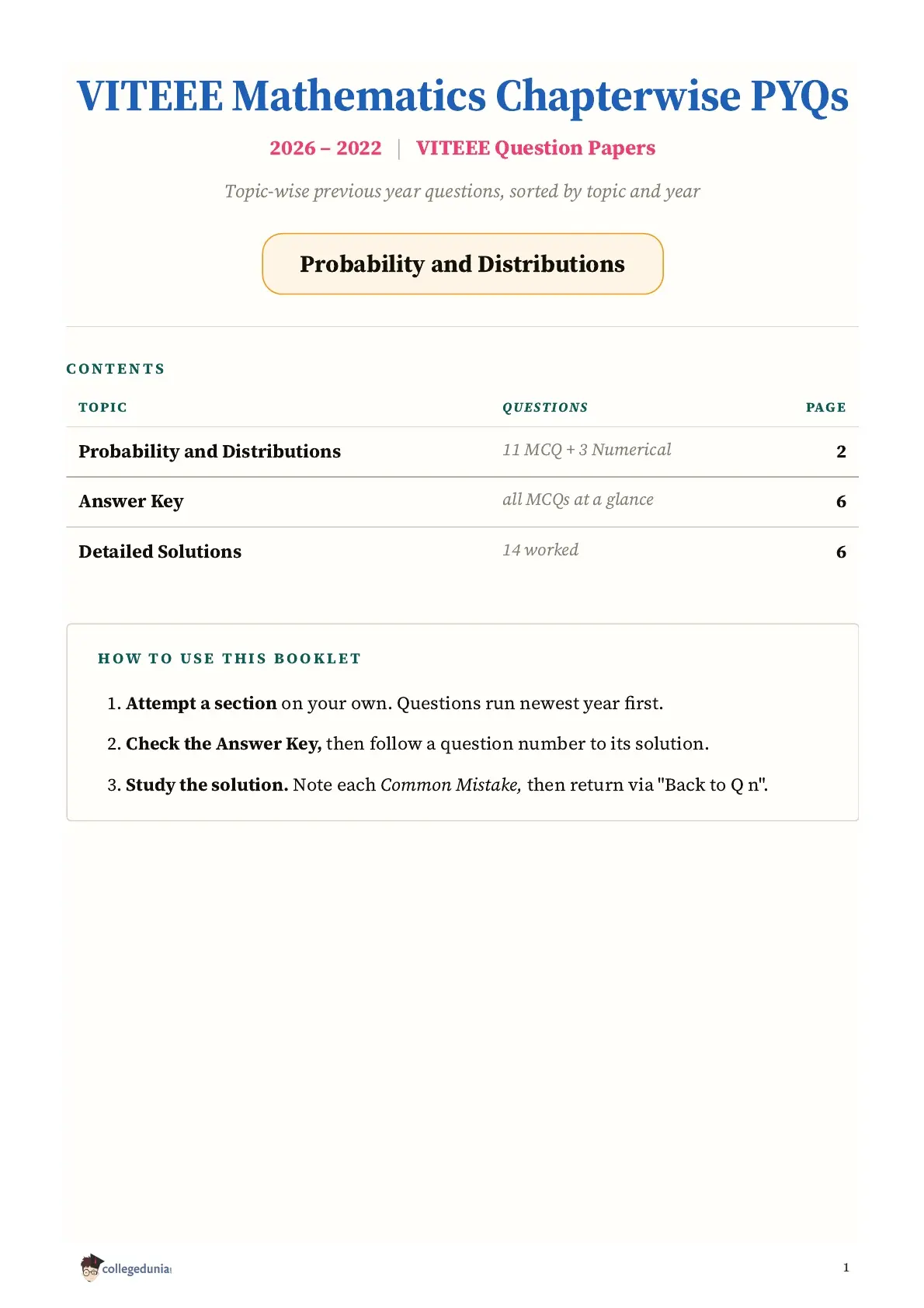
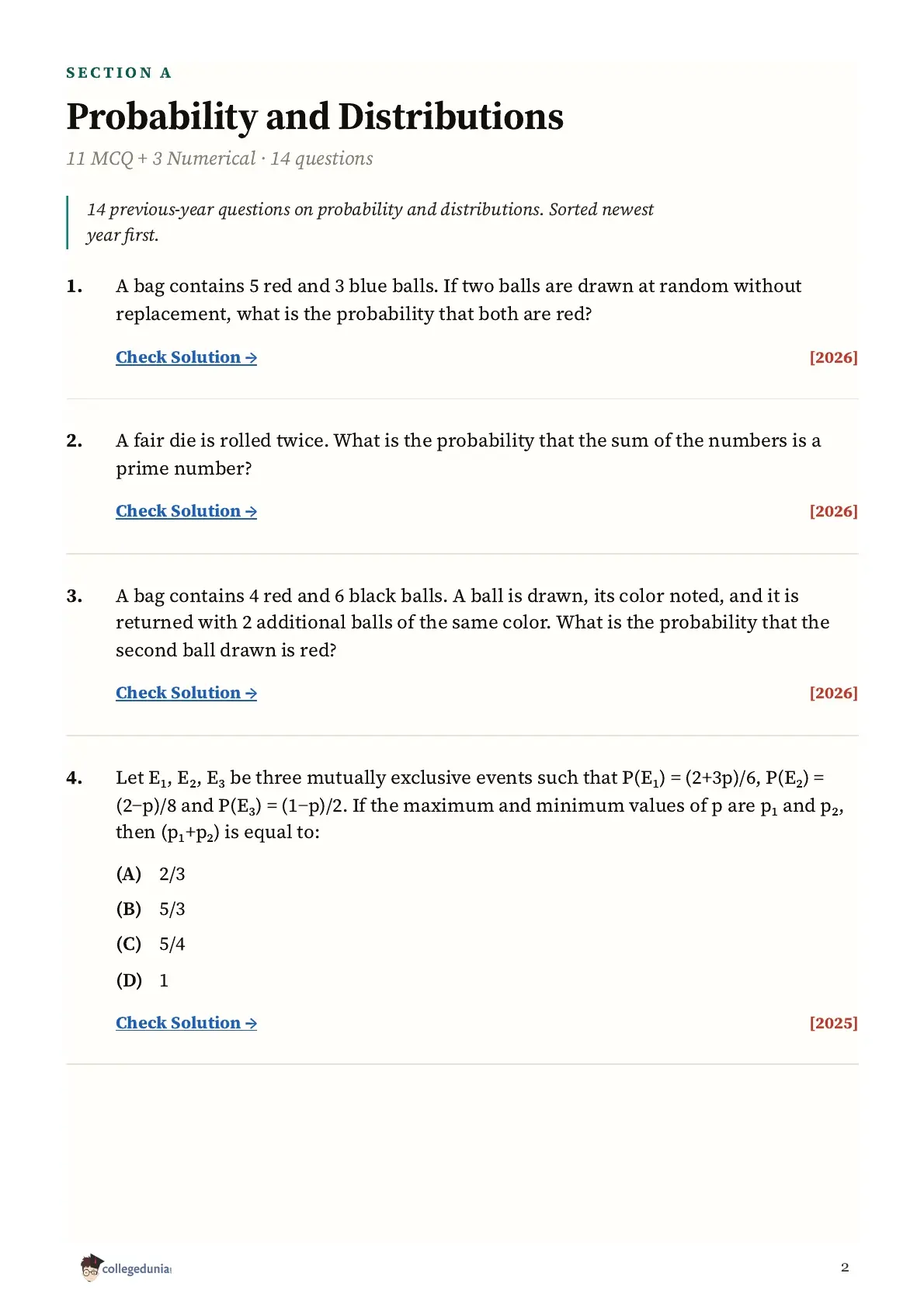
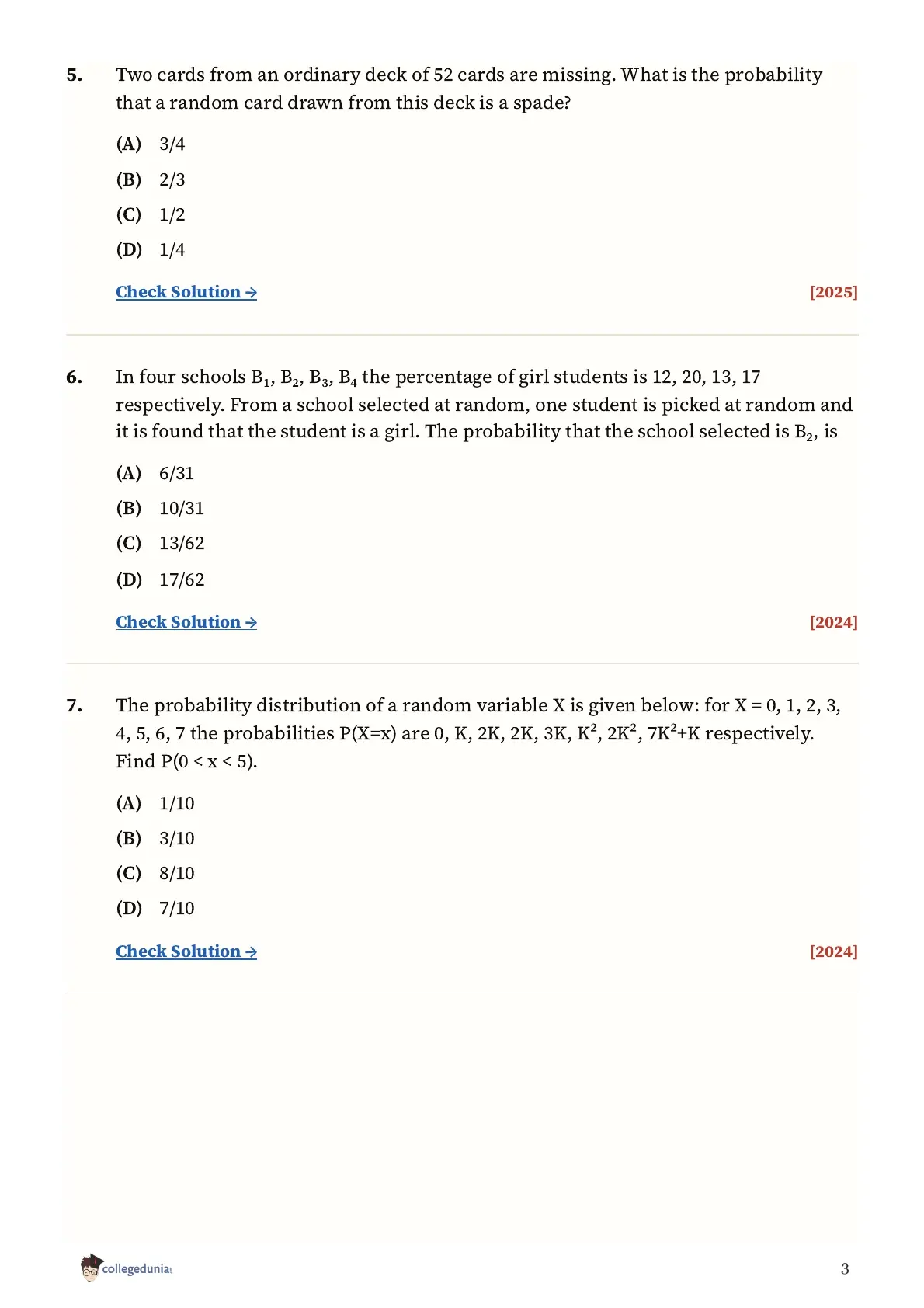
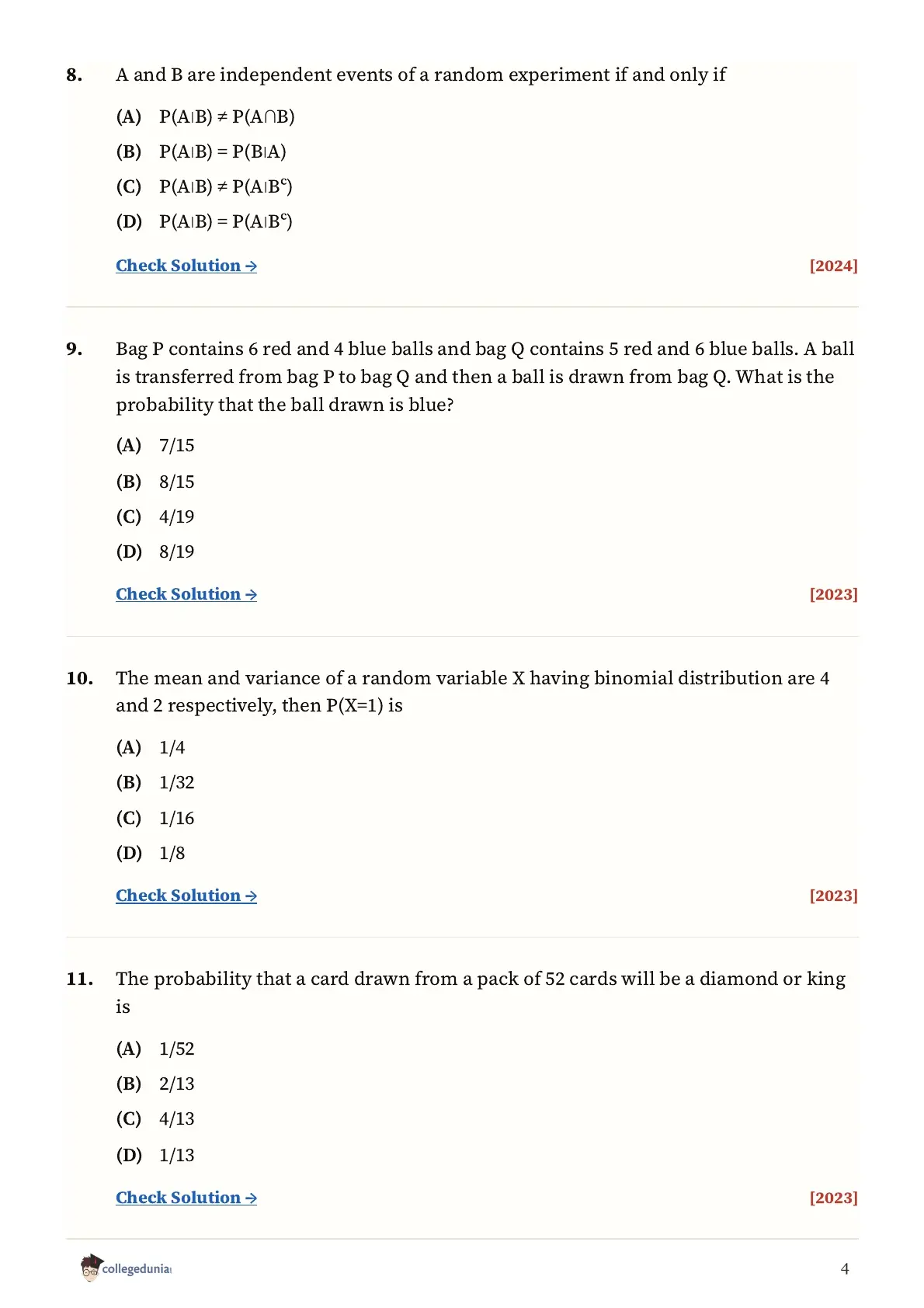
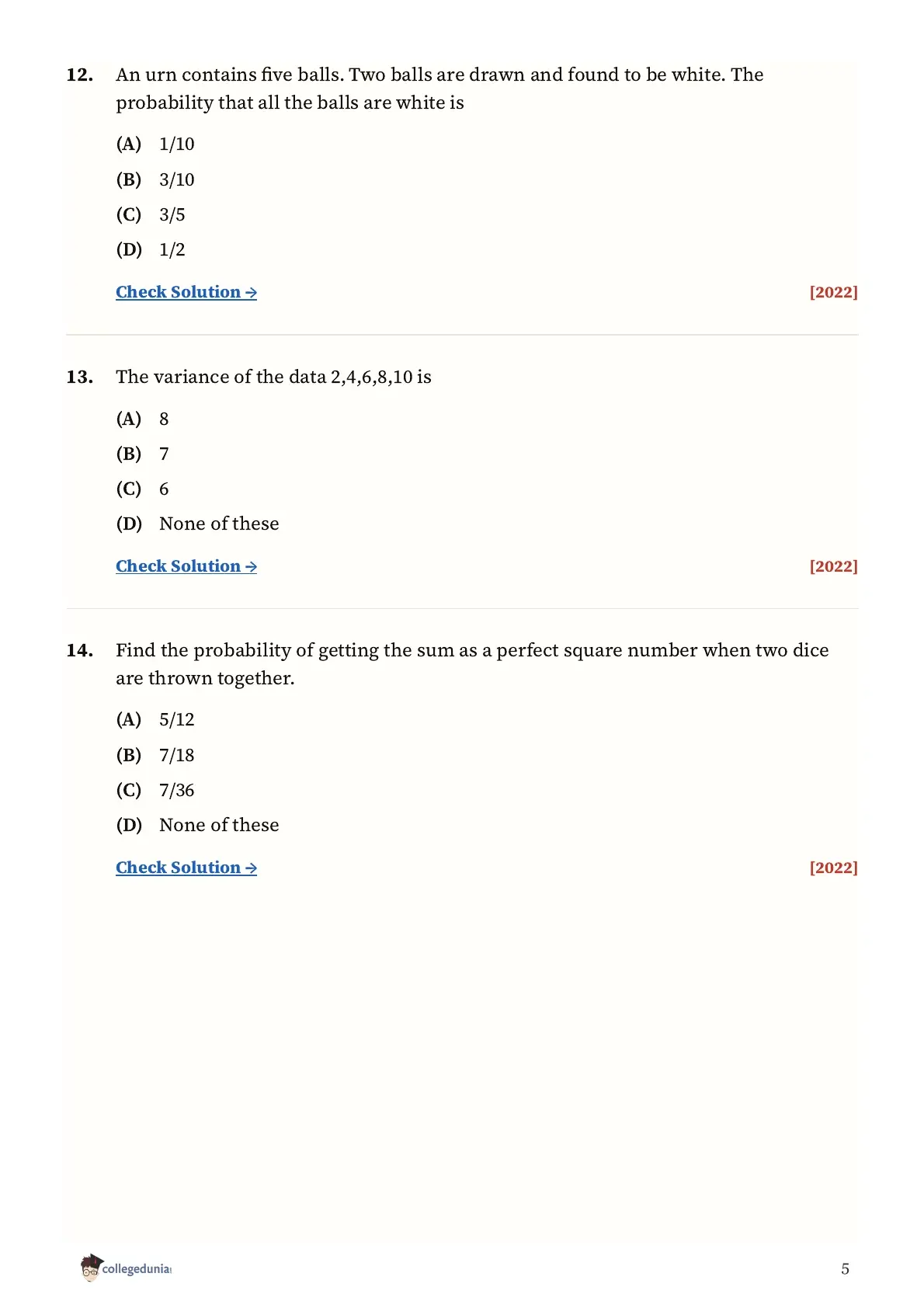
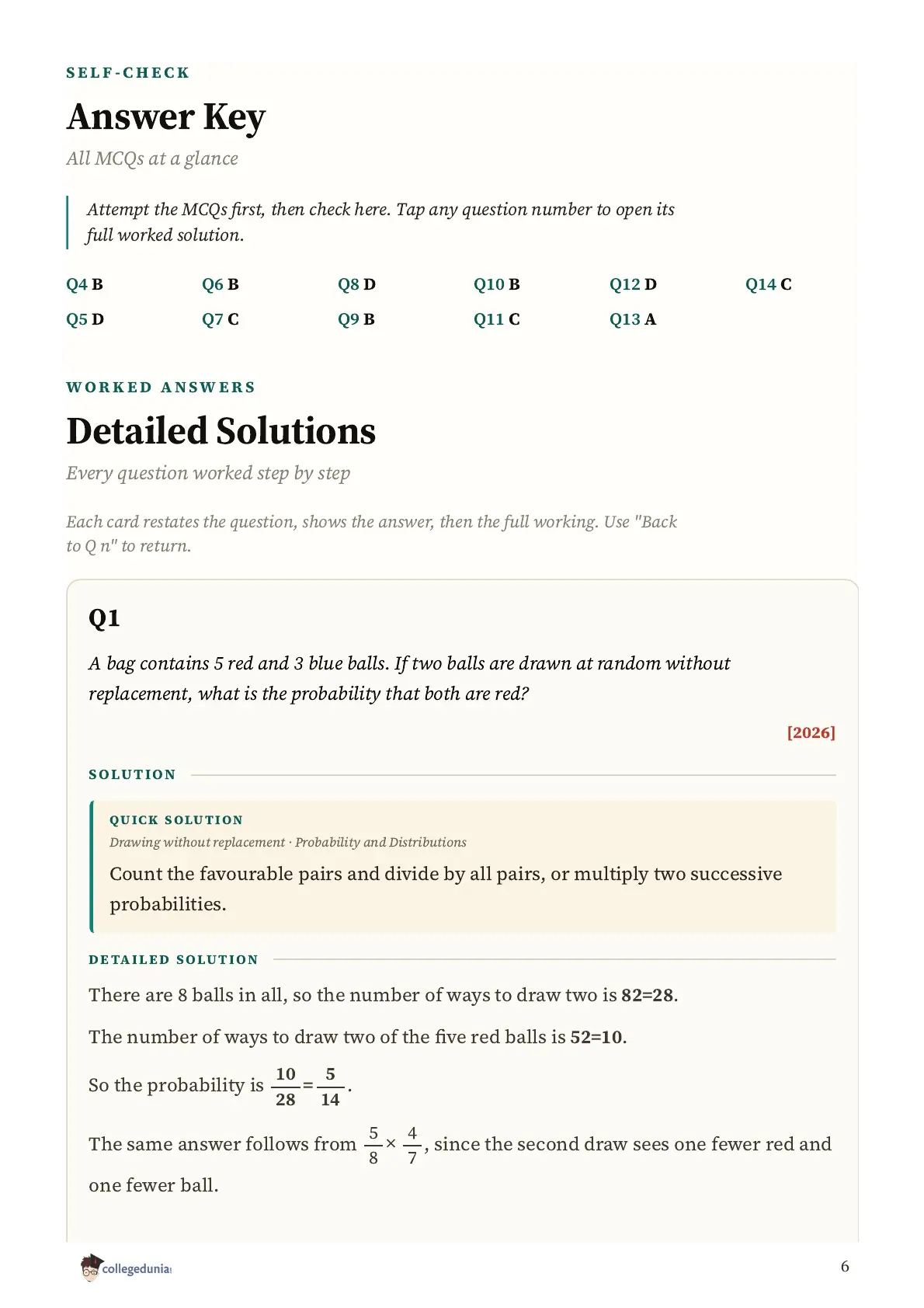
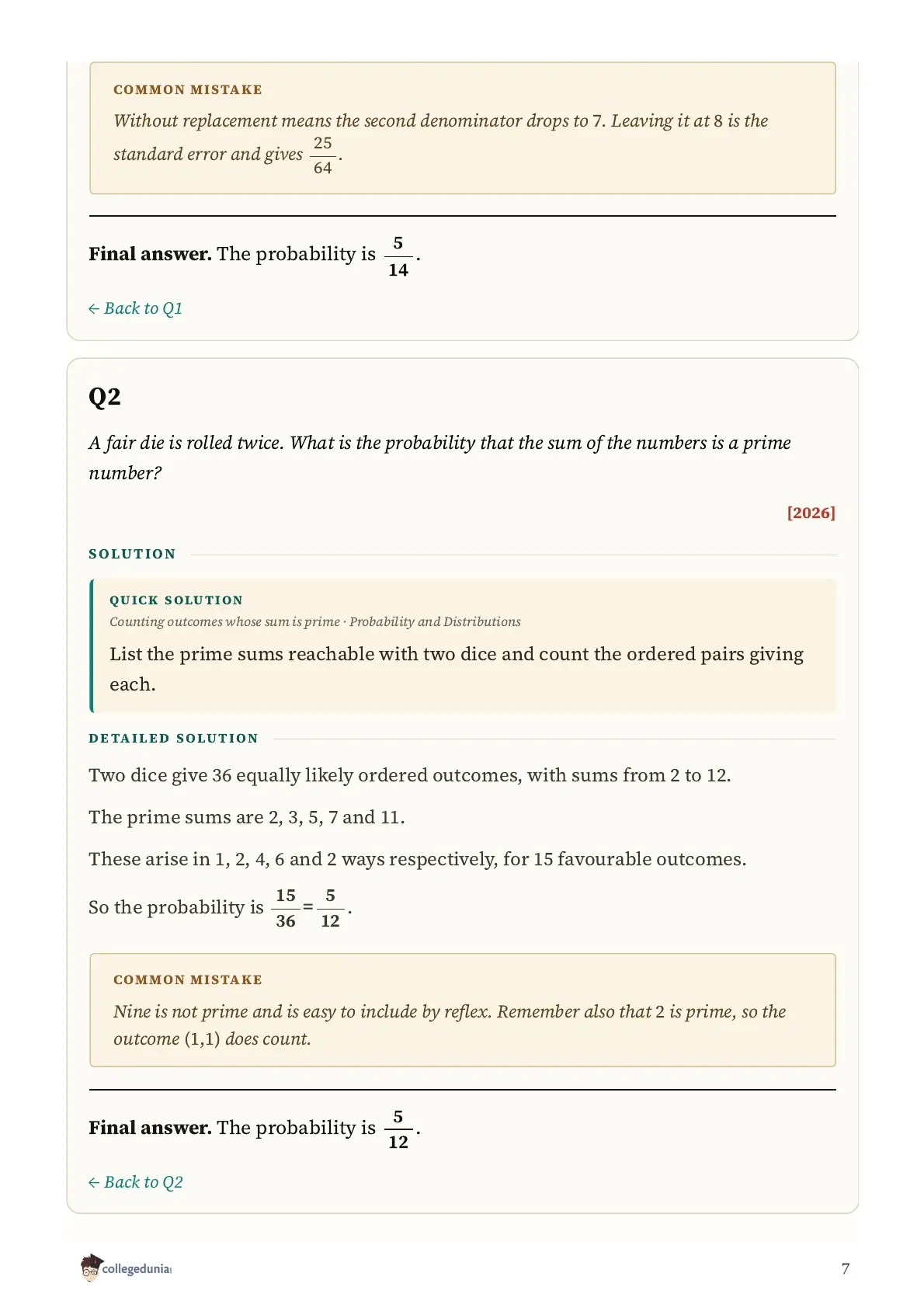
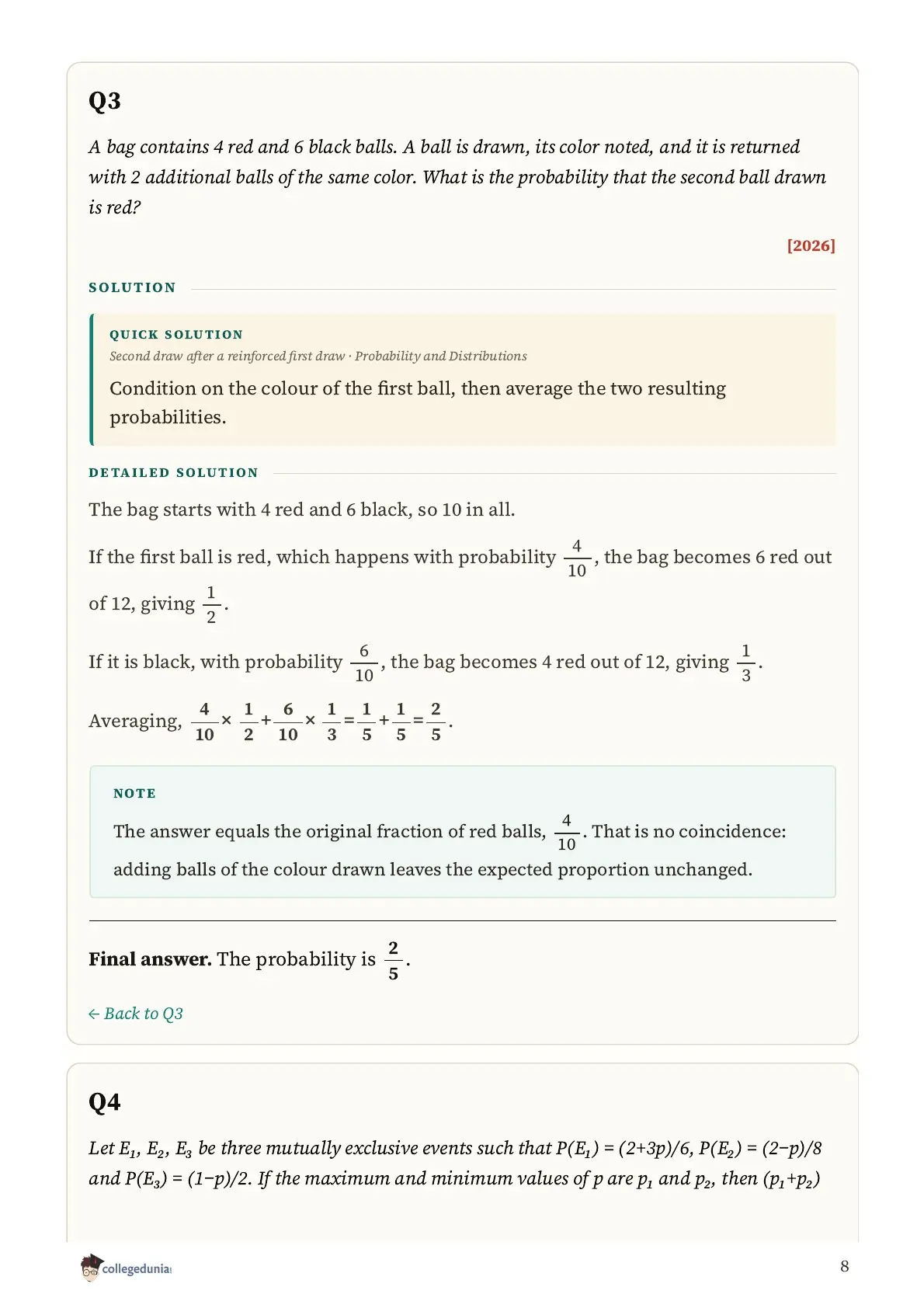
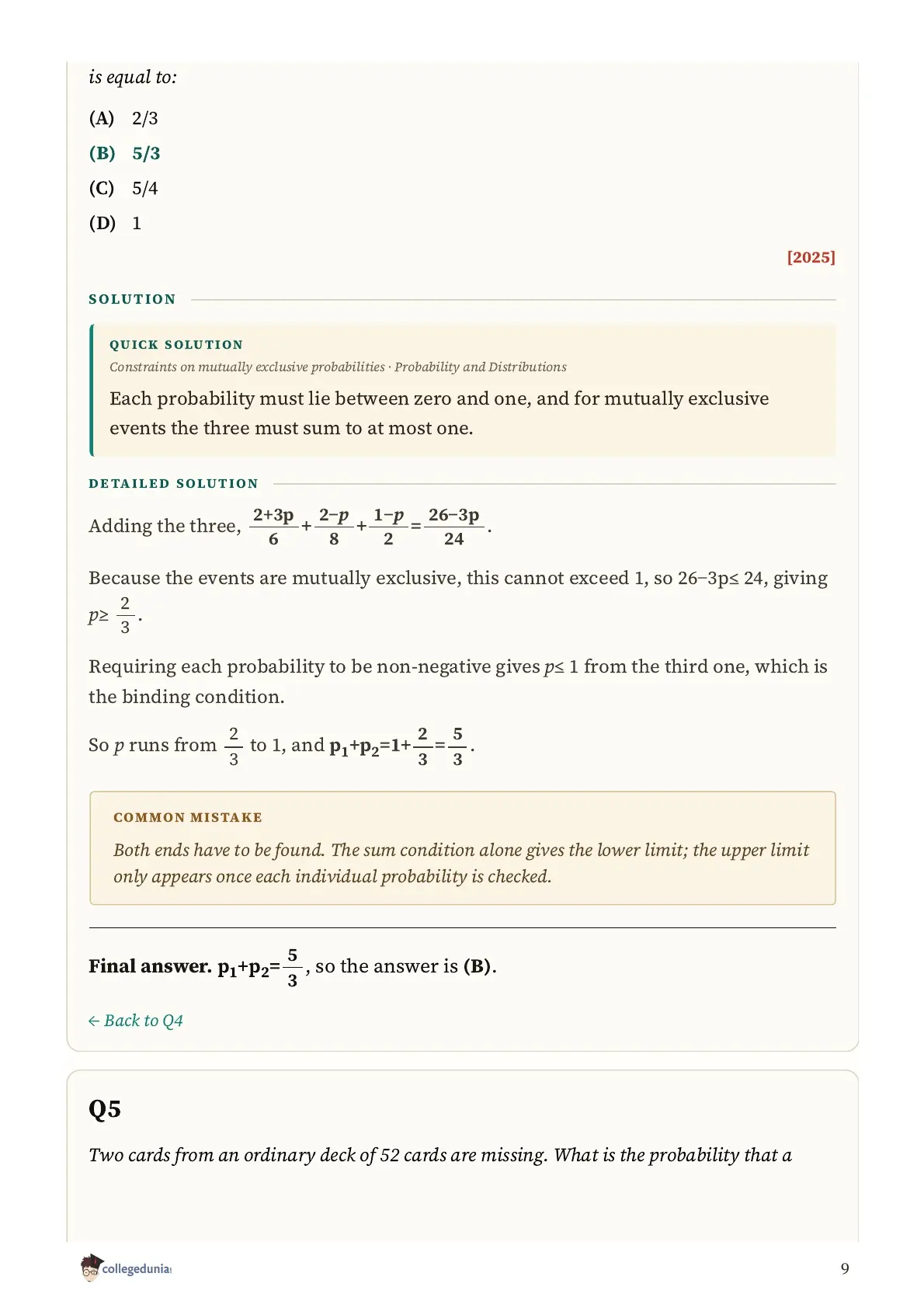
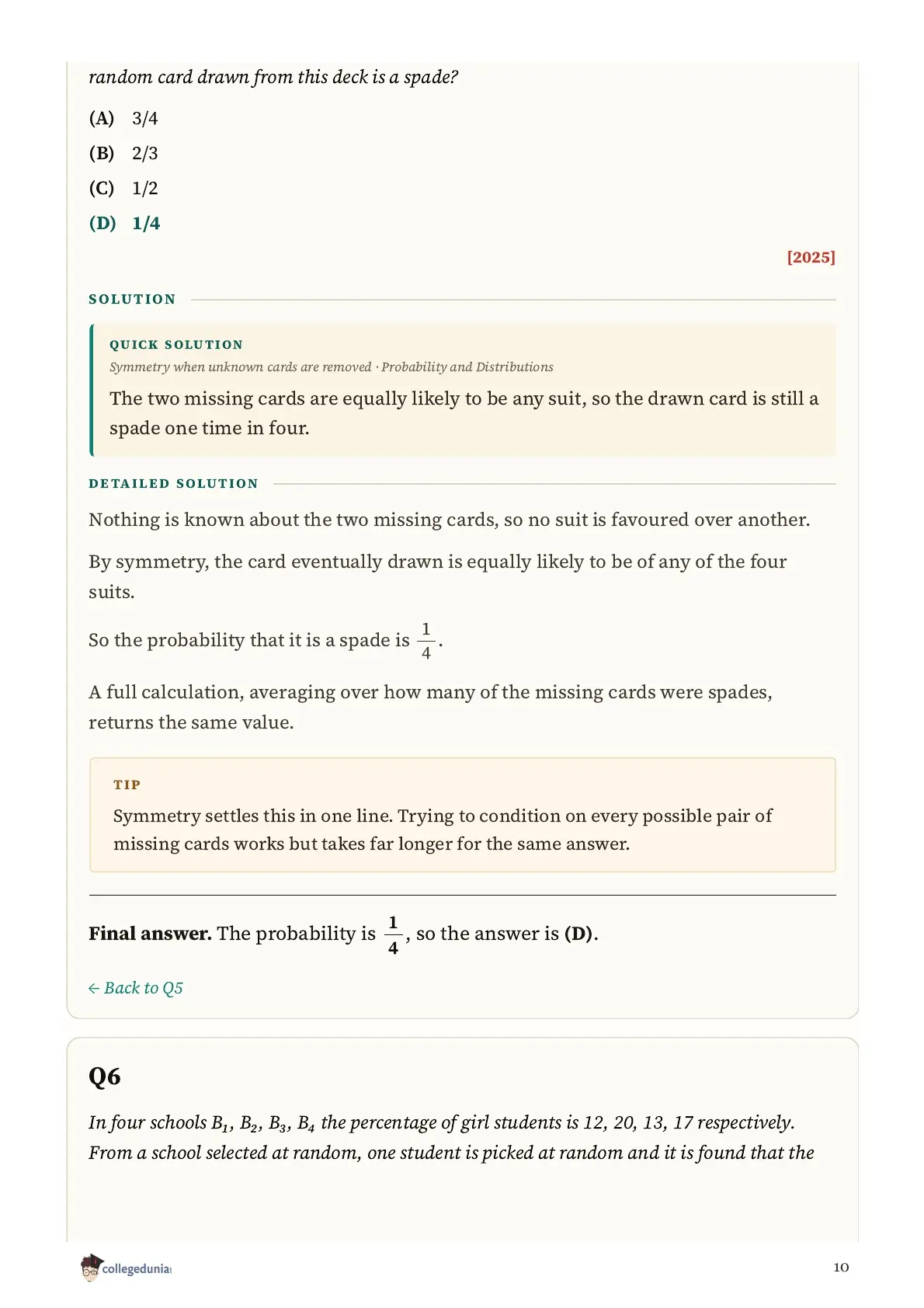
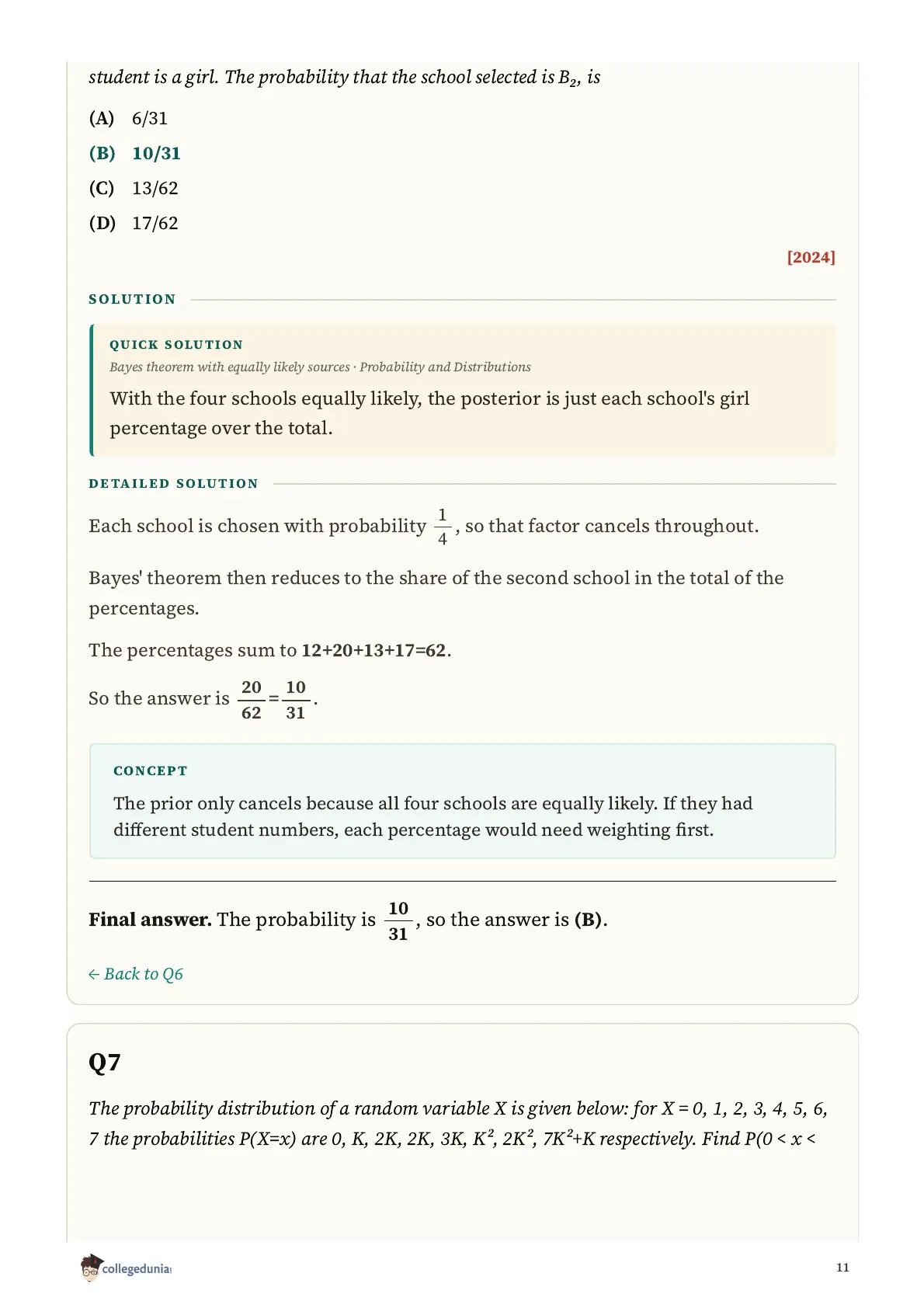
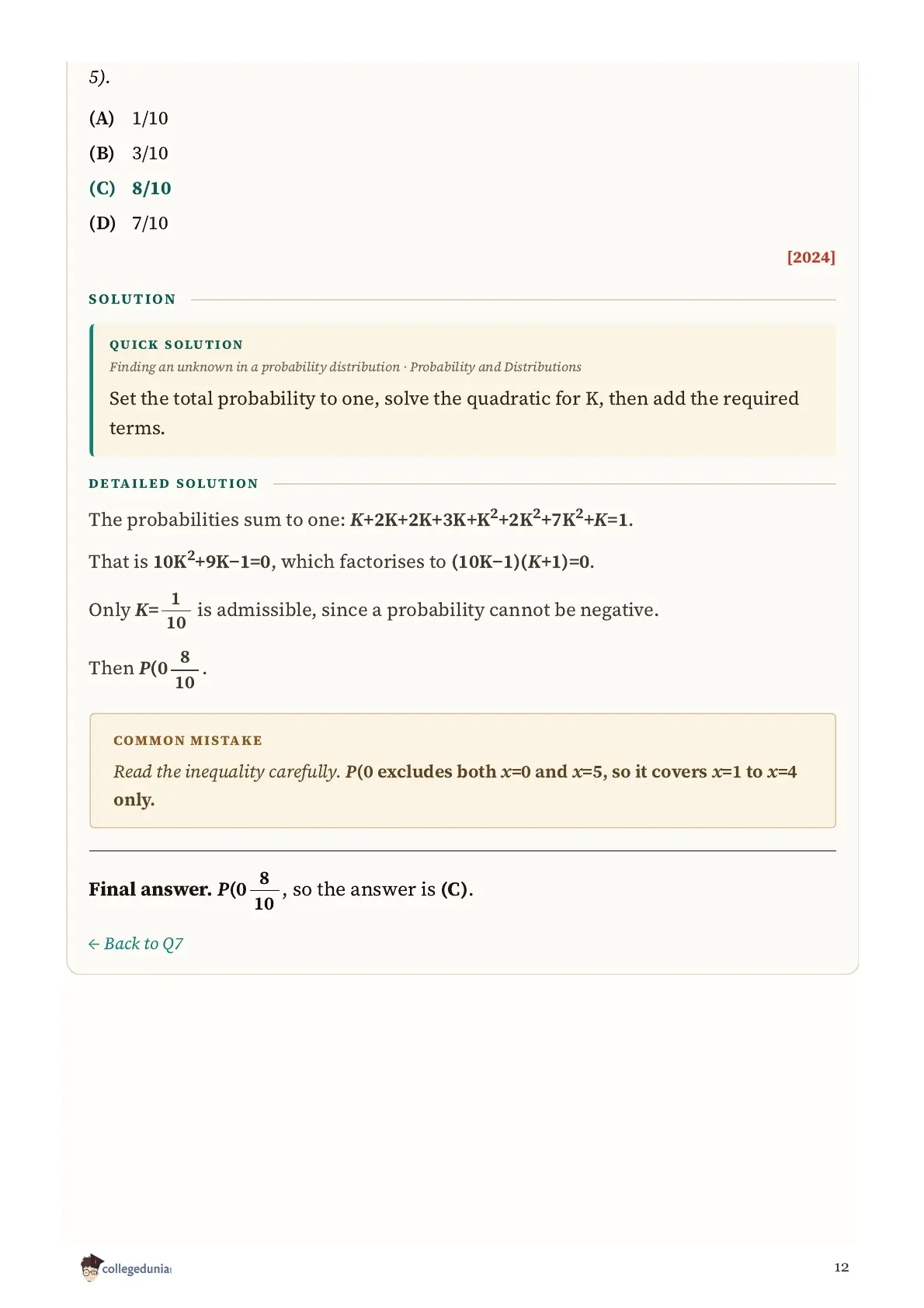
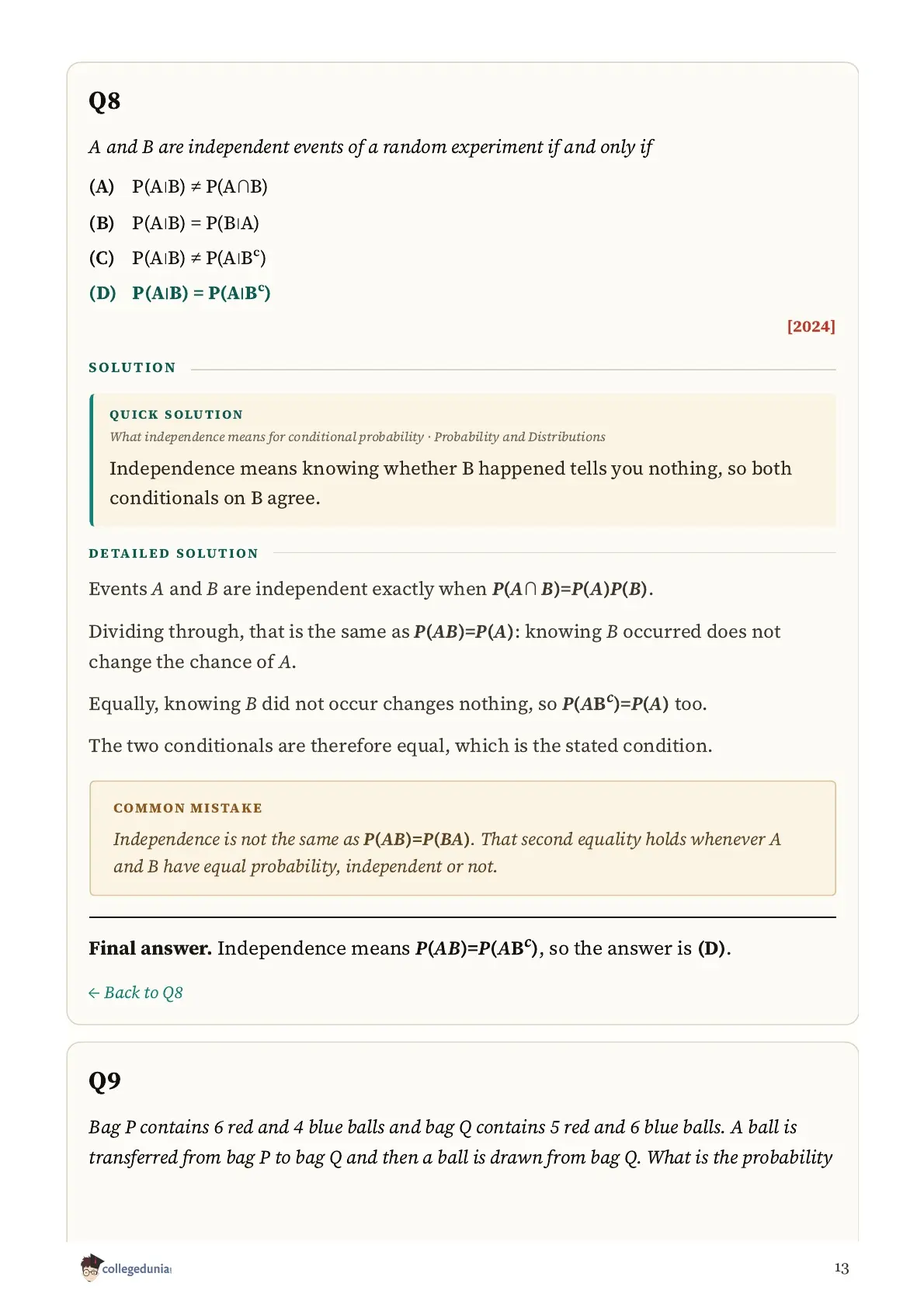
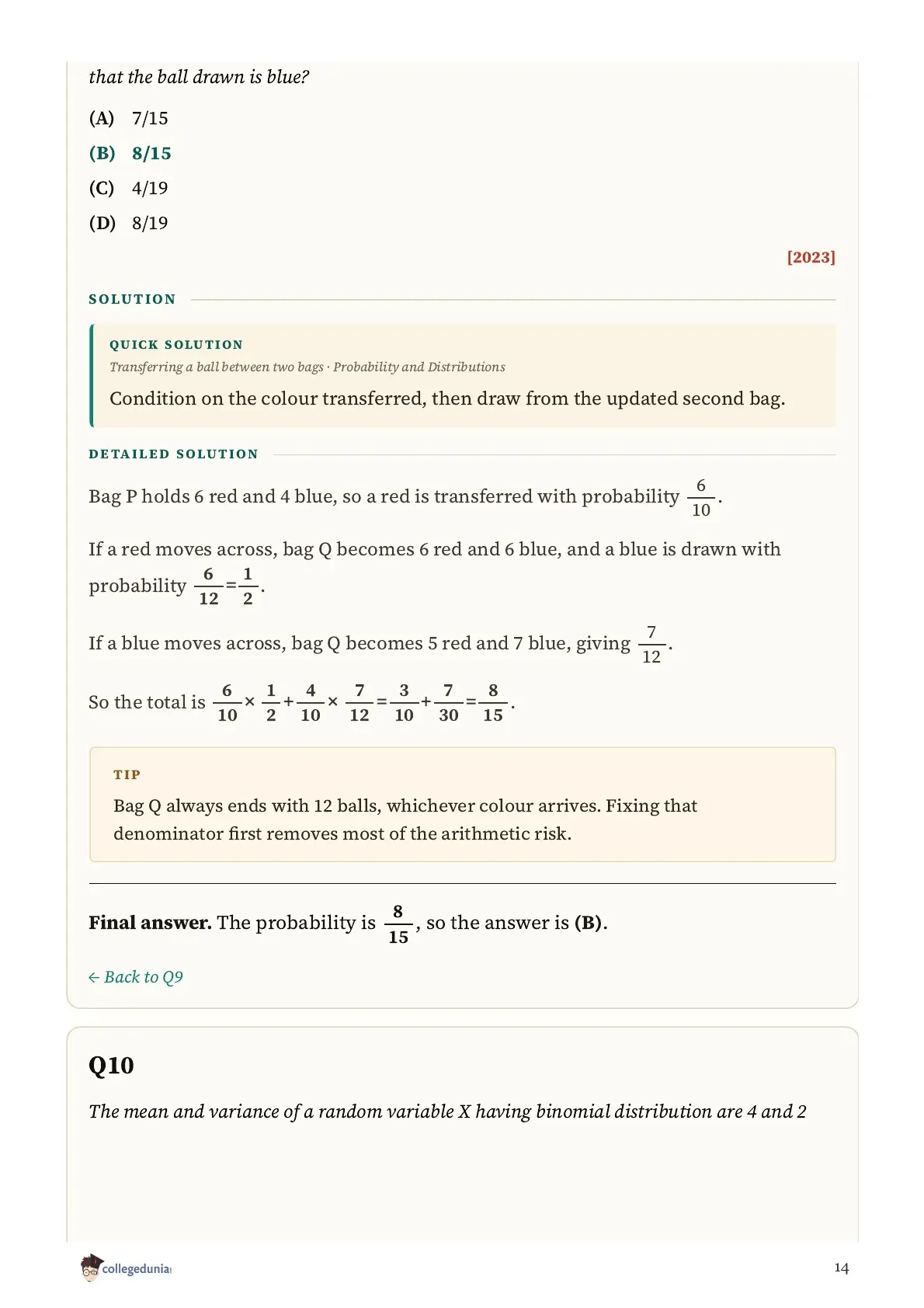
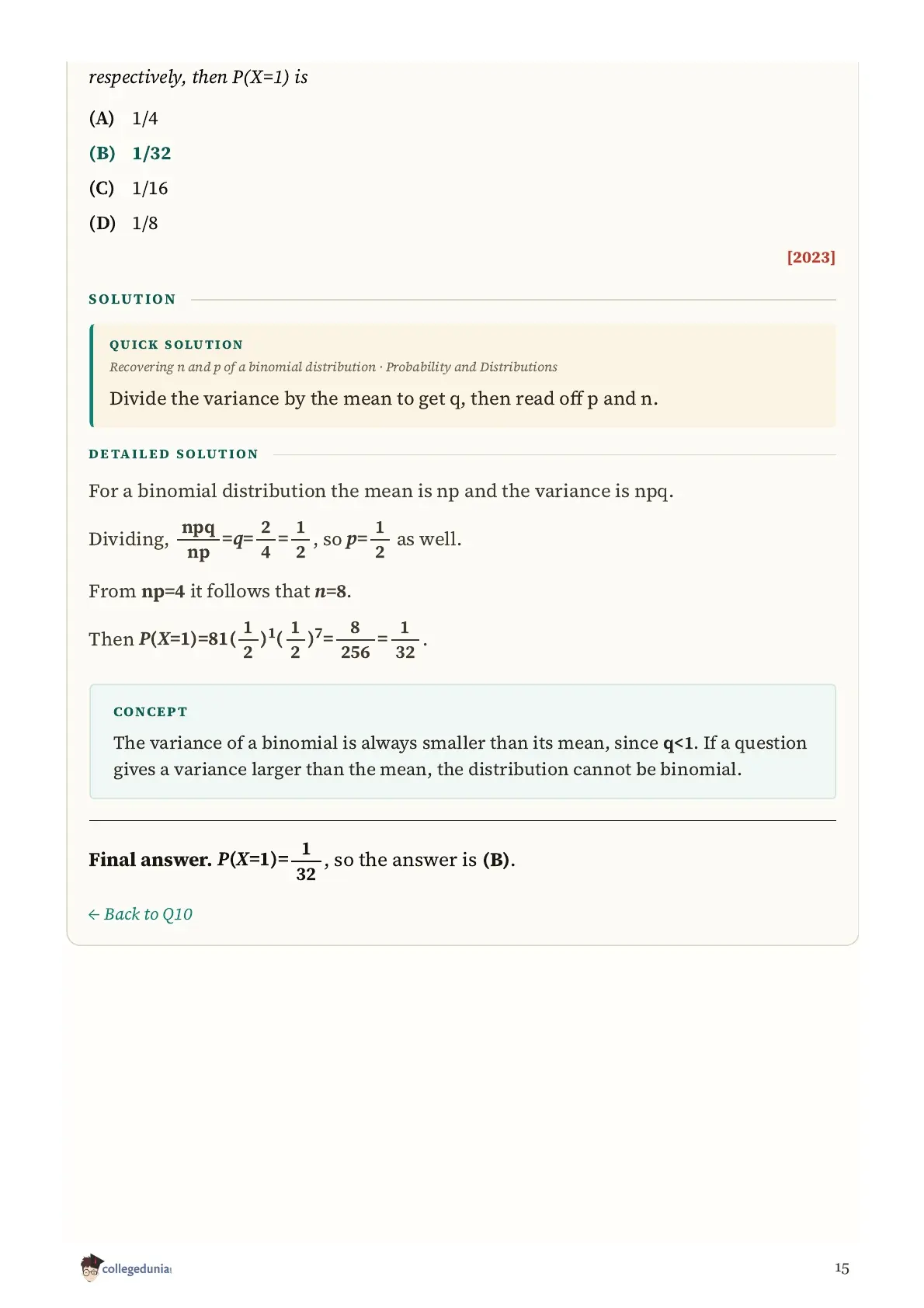
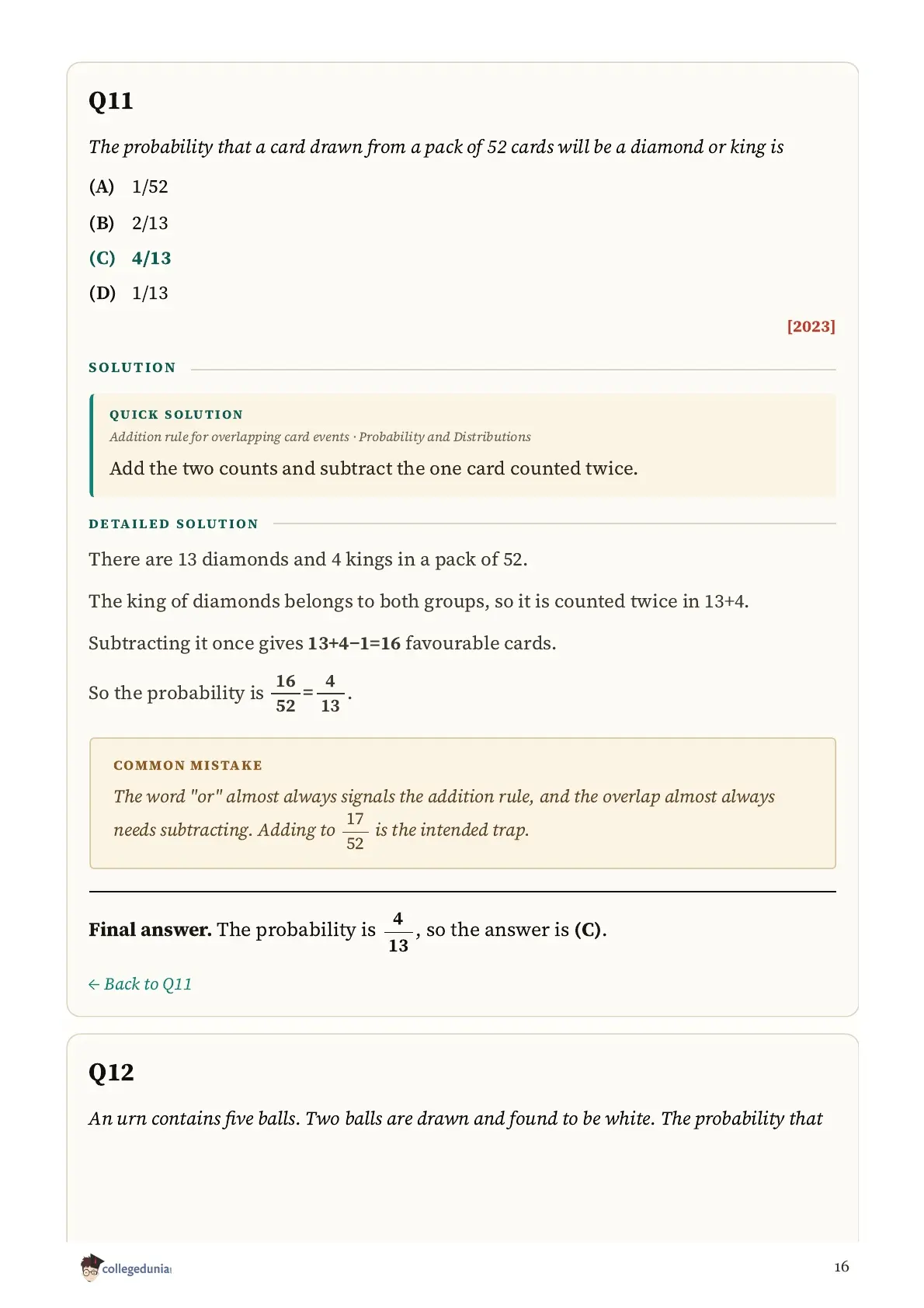
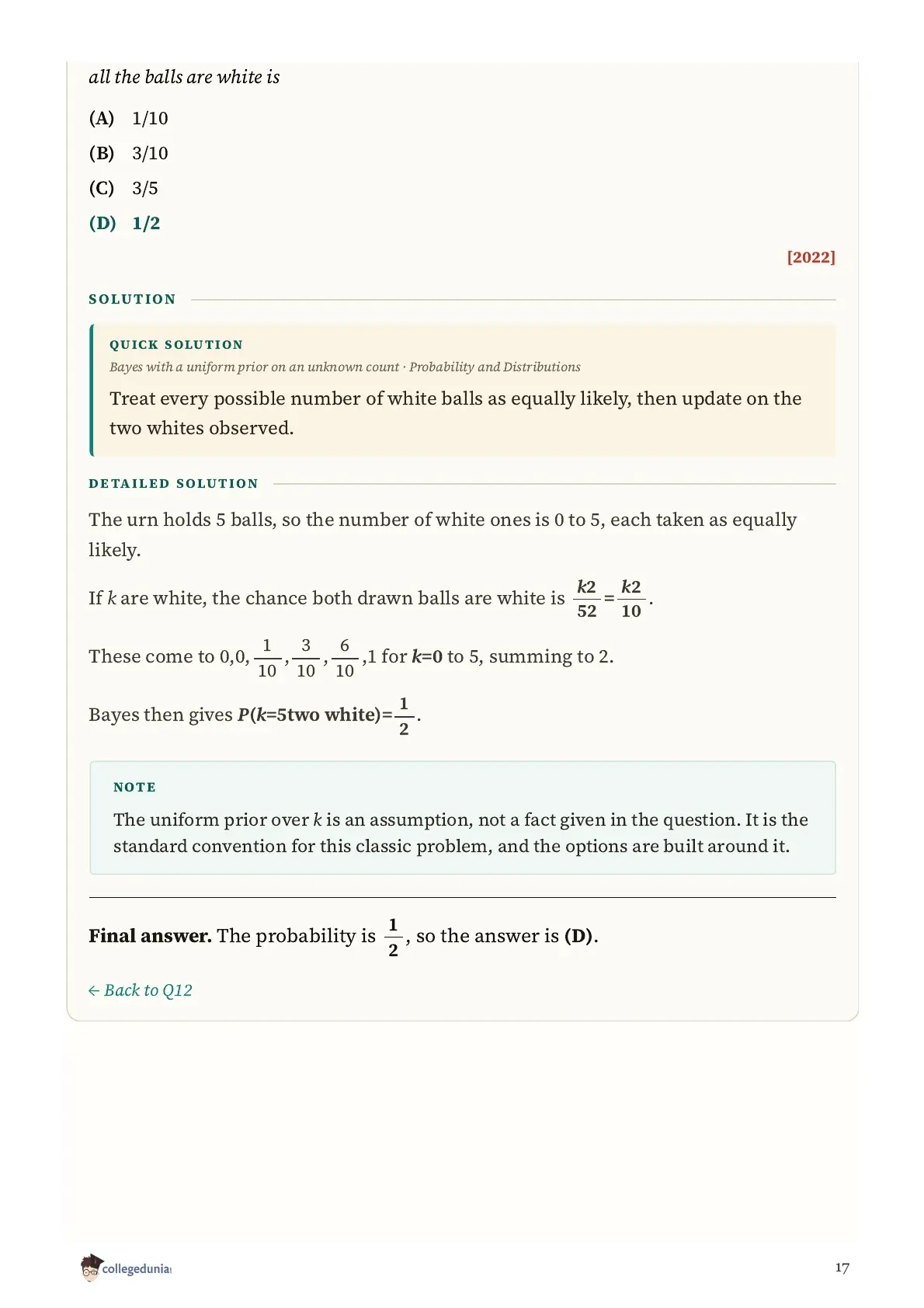
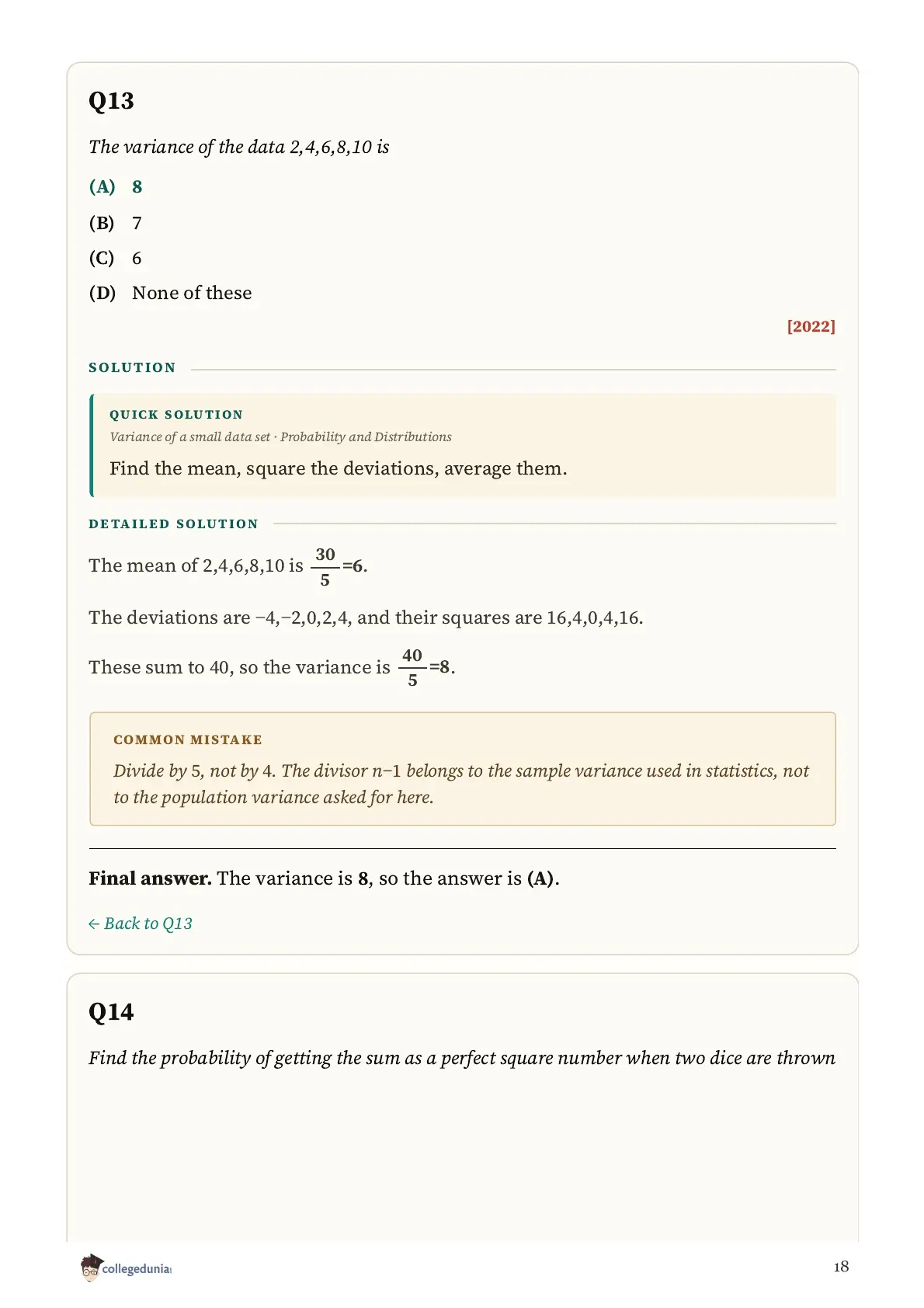
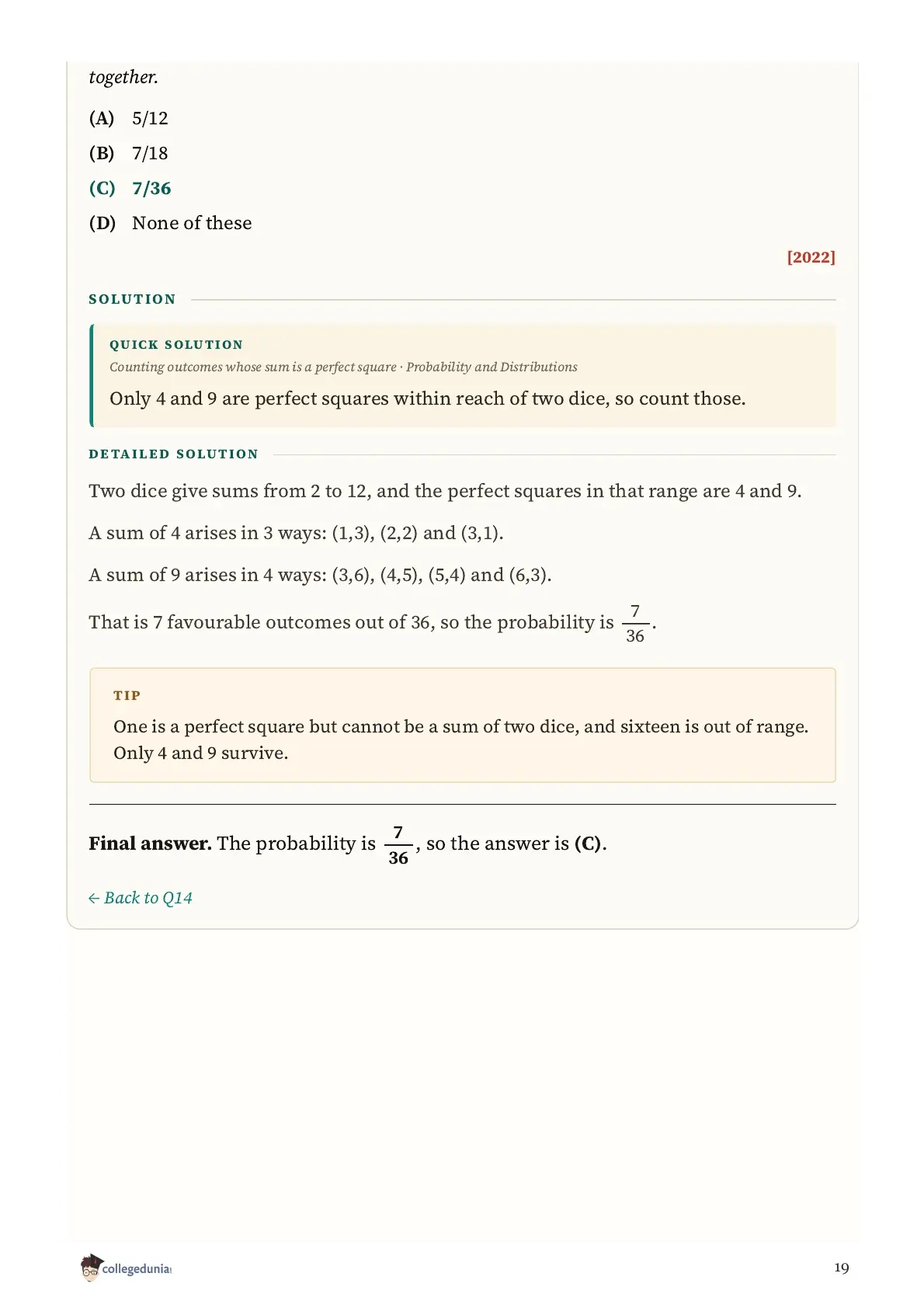
Questions run newest year first, with the options exactly as printed. The answer key follows, then a worked solution for each one.
VITEEE Probability Weightage
Probability is Unit 9 of the ten in VITEEE Mathematics, which is 40 of the 125 questions in the paper. It is a small unit that pays well: two or three questions a year, most of them solvable inside a minute once the right rule is spotted.
| Year | Questions in this bank |
|---|---|
| 2026 | 3 |
| 2025 | 2 |
| 2024 | 3 |
| 2023 | 3 |
| 2022 | 3 |
The spread is unusually even, so nothing here is a one-off. Papers up to 2025 gave one mark with no penalty; from 2026 the scheme is plus four and minus one, which makes guessing on a conditional-probability question expensive.
The three questions from 2026 ask for a value rather than a lettered option, because VIT does not release its papers.
Formulas Worth Memorising
- P(A or B) = P(A) + P(B) minus P(A and B)
- P(A given B) = P(A and B) over P(B)
- A and B are independent when P(A and B) = P(A) times P(B)
- Binomial: mean is np, variance is npq
- Population variance is the mean of the squared deviations, divided by n and not n minus one
How to Approach the Set
Any distribution carrying an unknown constant is solved the same way: the probabilities sum to one. That single equation fixes the constant, and everything the question asks follows from it.
Transfers and reinforcements look fiddly but are mechanical. Condition on the first draw, work out the probability in each of the two resulting situations, and weight them. In both such questions here the bag ends up the same size whichever colour moves, which fixes the denominator early.
And before starting any long calculation, ask whether symmetry settles it. The question about a deck with two unknown cards missing is a quarter, and no amount of casework improves on that.
Common Mistakes
- Leaving the denominator unchanged on a second draw made without replacement
- Forgetting that 2 is prime, or assuming 9 is, when counting dice sums
- Adding two overlapping card counts without subtracting the card common to both
- Dividing by n minus one when the question wants a population variance
- Reading a strict inequality as though it included its endpoints. P(0 < x < 5) covers four values, not six
Two to Solve First
The 2025 missing-cards question is the best example in the bank of symmetry doing all the work. Nothing is known about which two cards were removed, so no suit is favoured and the answer is a quarter. A full calculation over every possible pair returns the same number.
The 2026 reinforced urn is worth learning as a general fact. A ball is drawn and returned with two more of its colour, and the probability that the second ball is red comes out equal to the original fraction of red balls. That is true whatever the reinforcement.
Video Solutions
Source: Brain Blitz Audios
Using the Answer Key
Attempt all 14 before checking anything. Mark the key in one pass, right or wrong only, then go back. Each solution opens with a one-line quick solution, so you can read that much, stop, and retry before reading the full working.
VITEEE Maths Probability PYQ FAQs
Ques. How many probability questions come in VITEEE Maths?
Ans. Two or three most years. Mathematics is 40 of the 125 questions in VITEEE and probability is the ninth of its ten units, which makes it a reliable scorer for its size.
Ques. Which years does this PYQ bank cover?
Ans. 2022 to 2026, at two or three questions a year. The 2022 to 2025 questions are multiple choice; the three from 2026 ask for a numerical answer.
Ques. Which probability topics repeat most?
Ans. Conditional probability and Bayes' theorem, usually dressed as an urn or a transfer between two bags. Straight counting with dice or cards comes next, and one question on a random variable or the binomial distribution appears most years.
Ques. Does this unit include statistics?
Ans. Only the variance of a random variable, which VIT names explicitly. Mean deviation, standard deviation of grouped data and the rest of descriptive statistics appear nowhere in the VITEEE Mathematics syllabus.
Ques. Are the answers official?
Ans. No. VIT publishes neither the papers nor a key, so every answer here was worked out from the question itself.
Ques. Can the PDF be downloaded free?
Ans. Yes. All 19 pages can be read on this page and downloaded at no cost.



Comments