




VITEEE Current Electricity PYQ, free to download as a 29-page PDF. The bank carries 23 solved questions from the 2021 to 2026 papers and takes roughly one day to work through, so treat it as a single focused sitting.
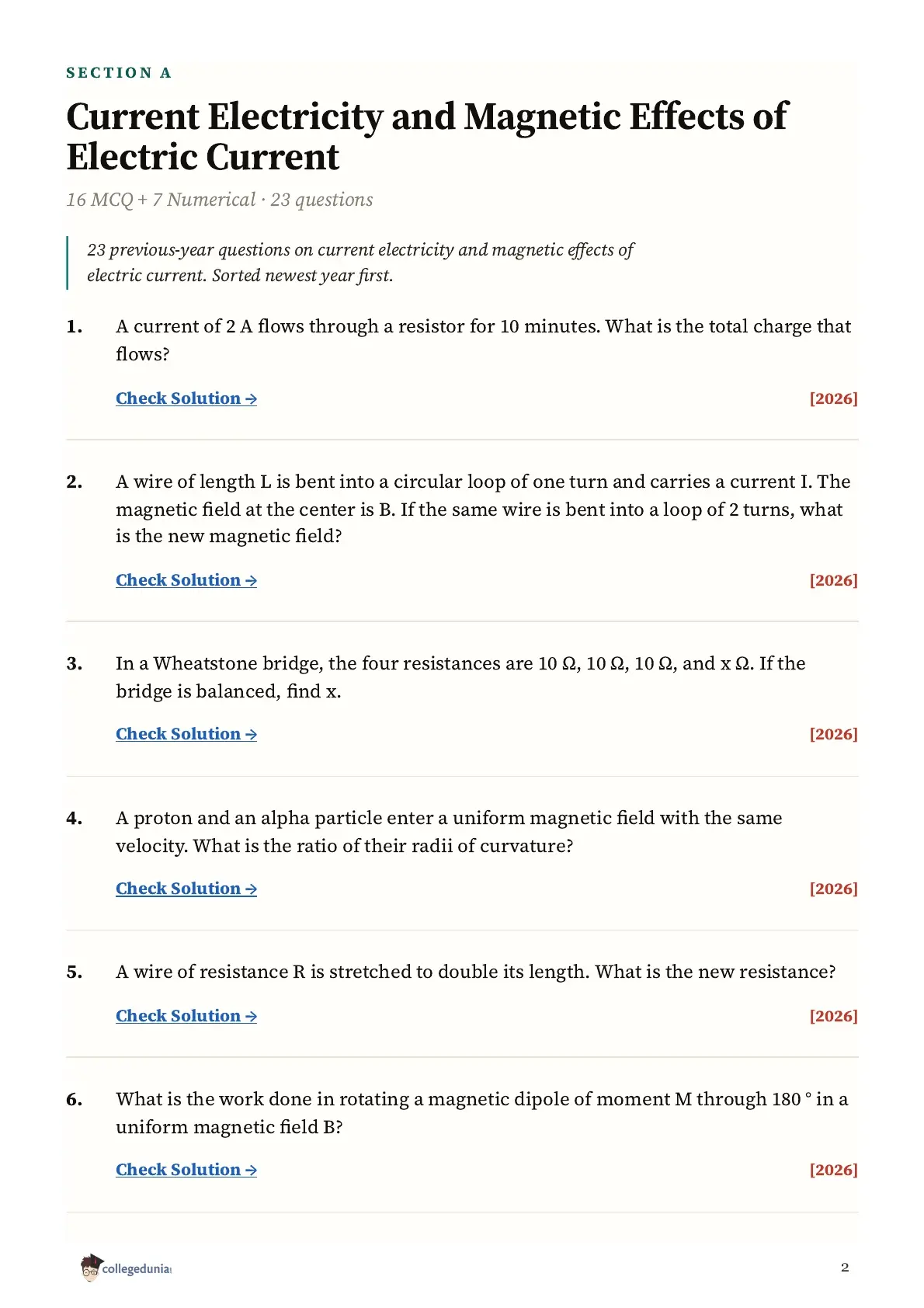
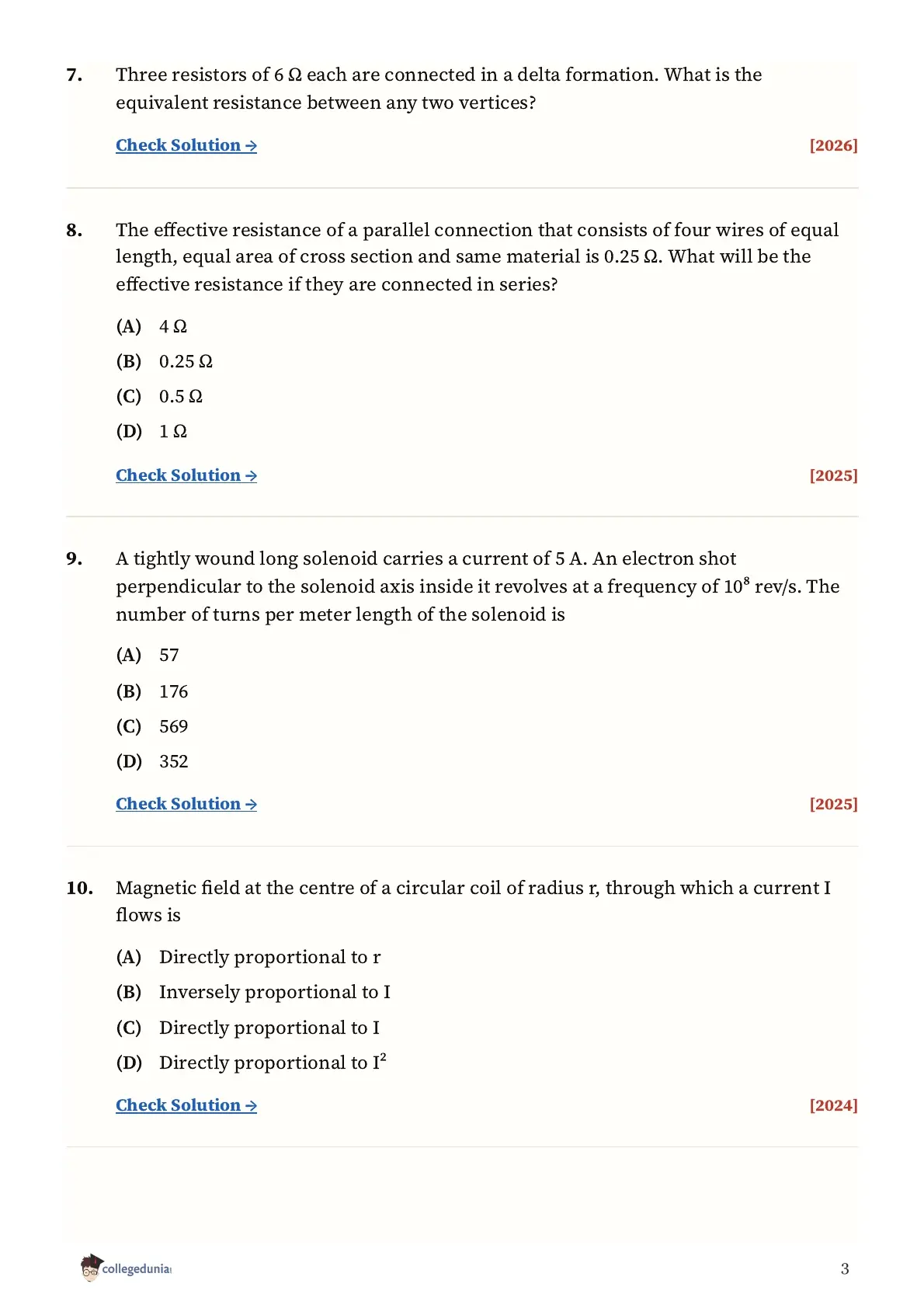
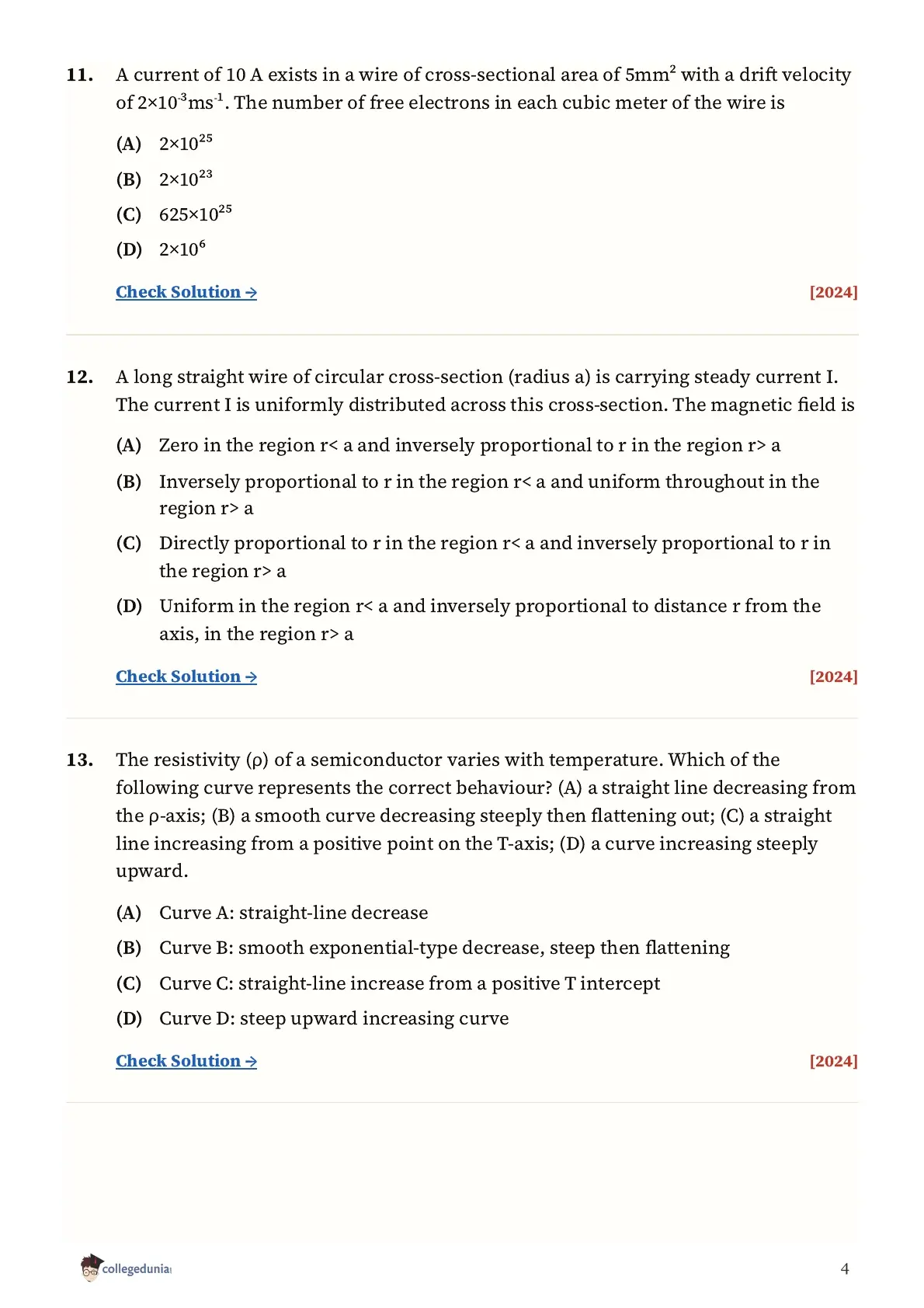
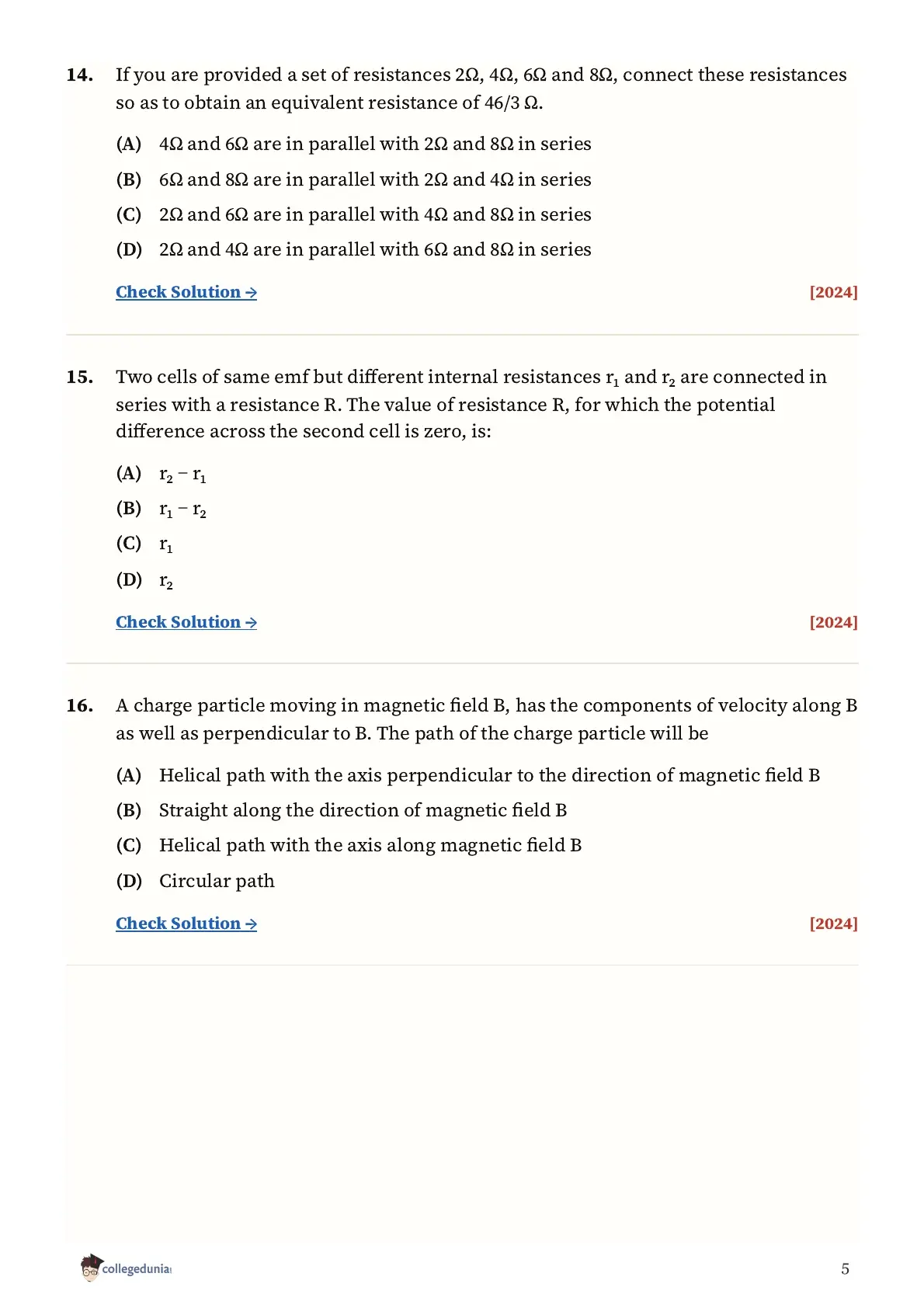
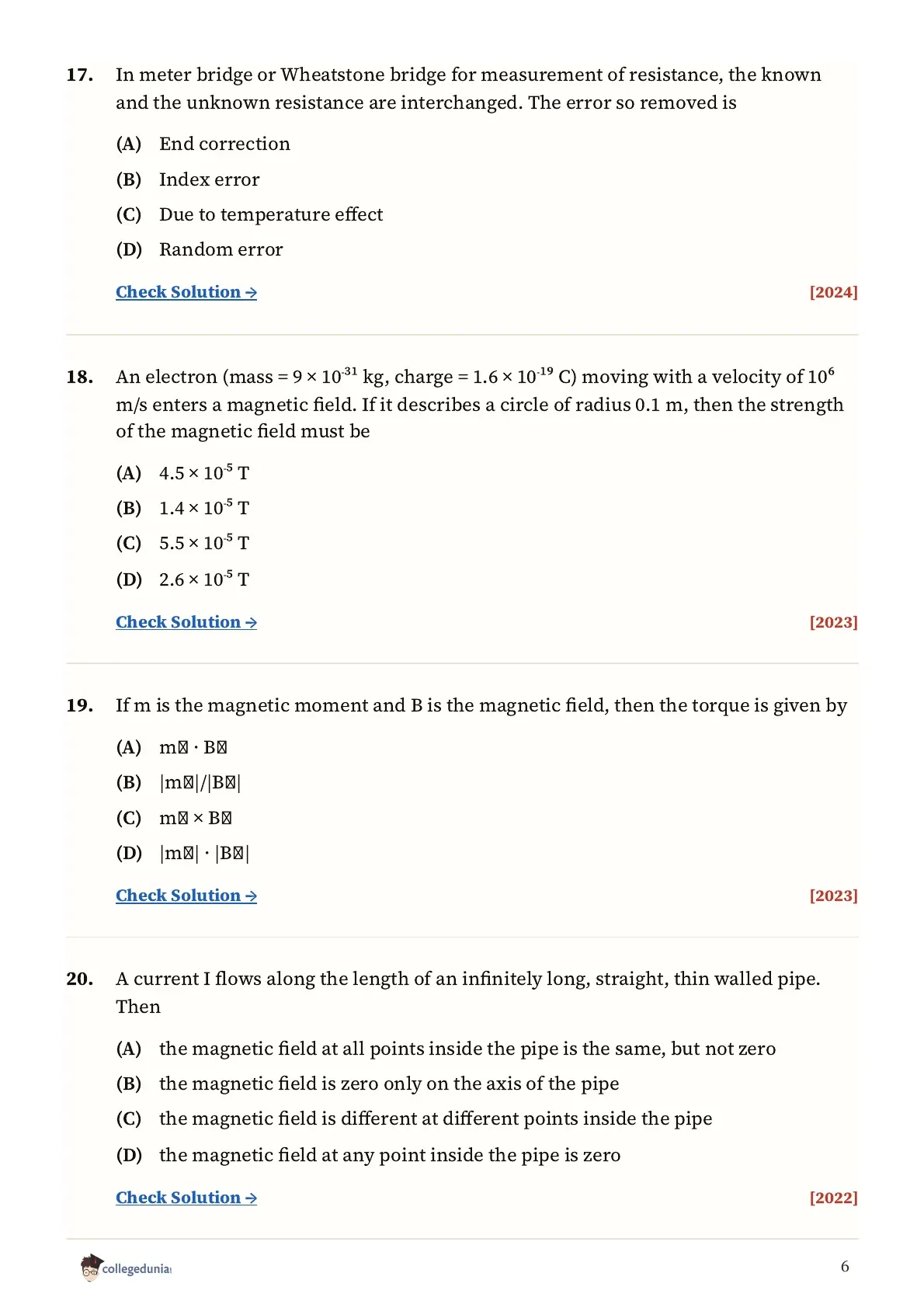
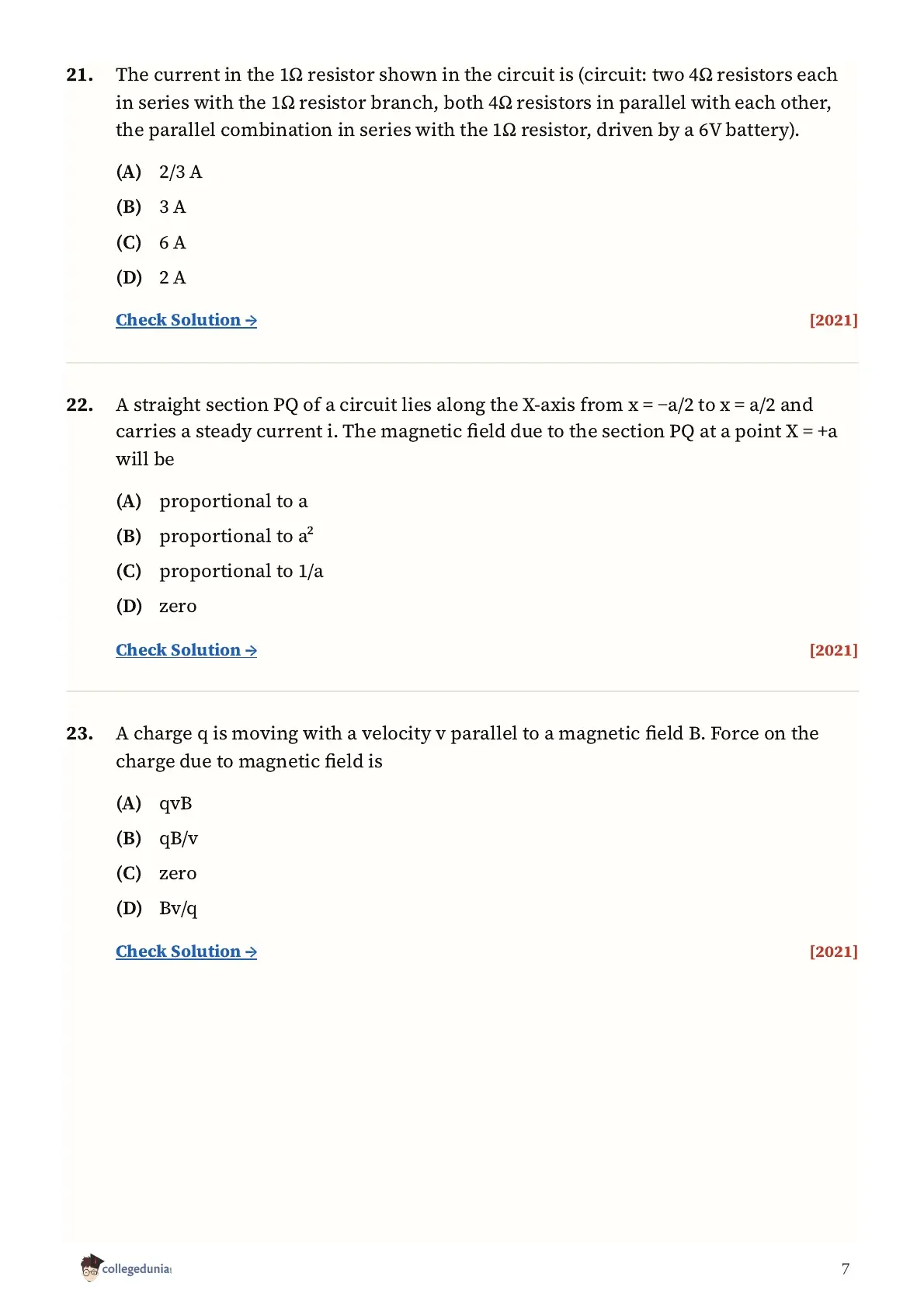
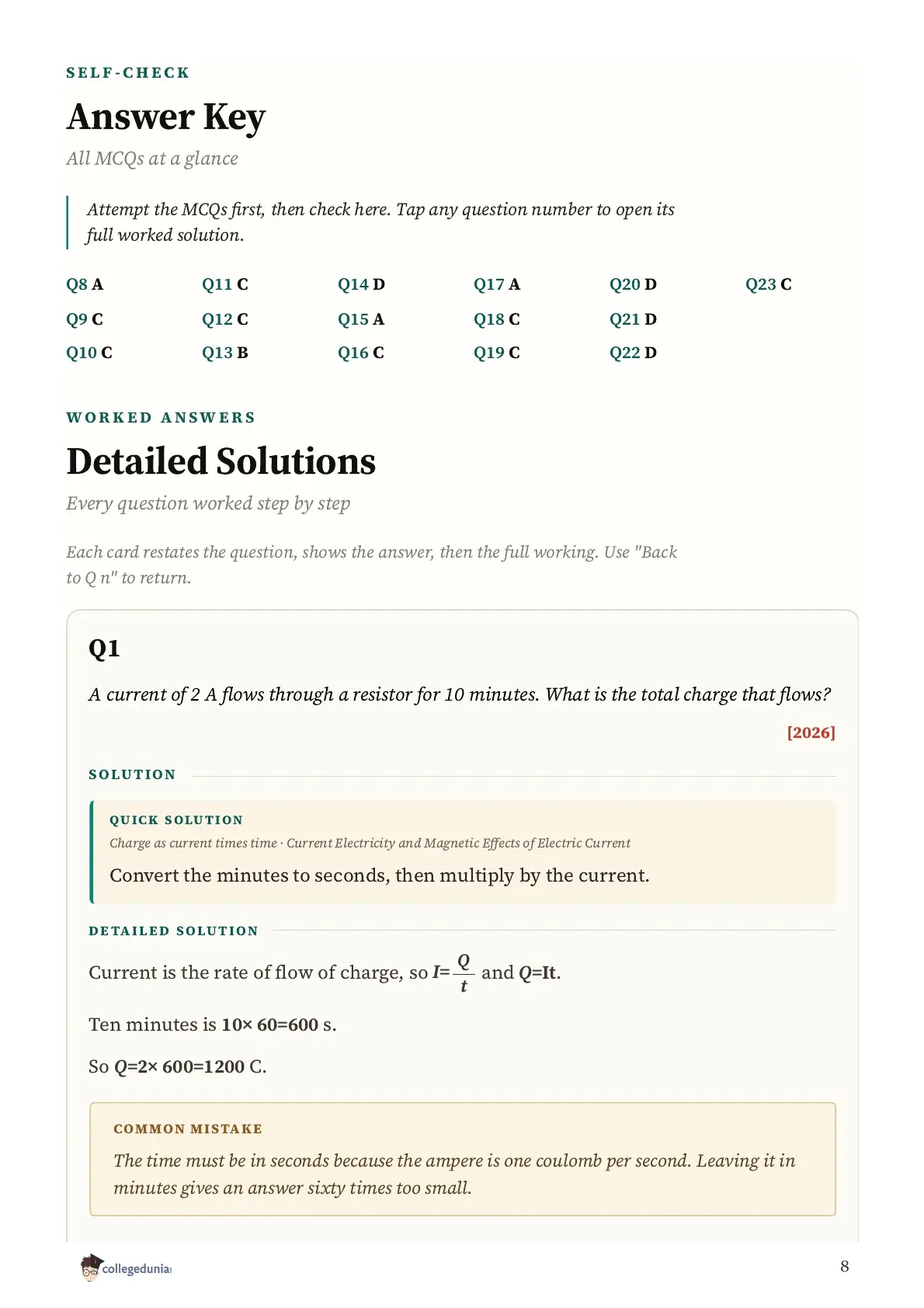
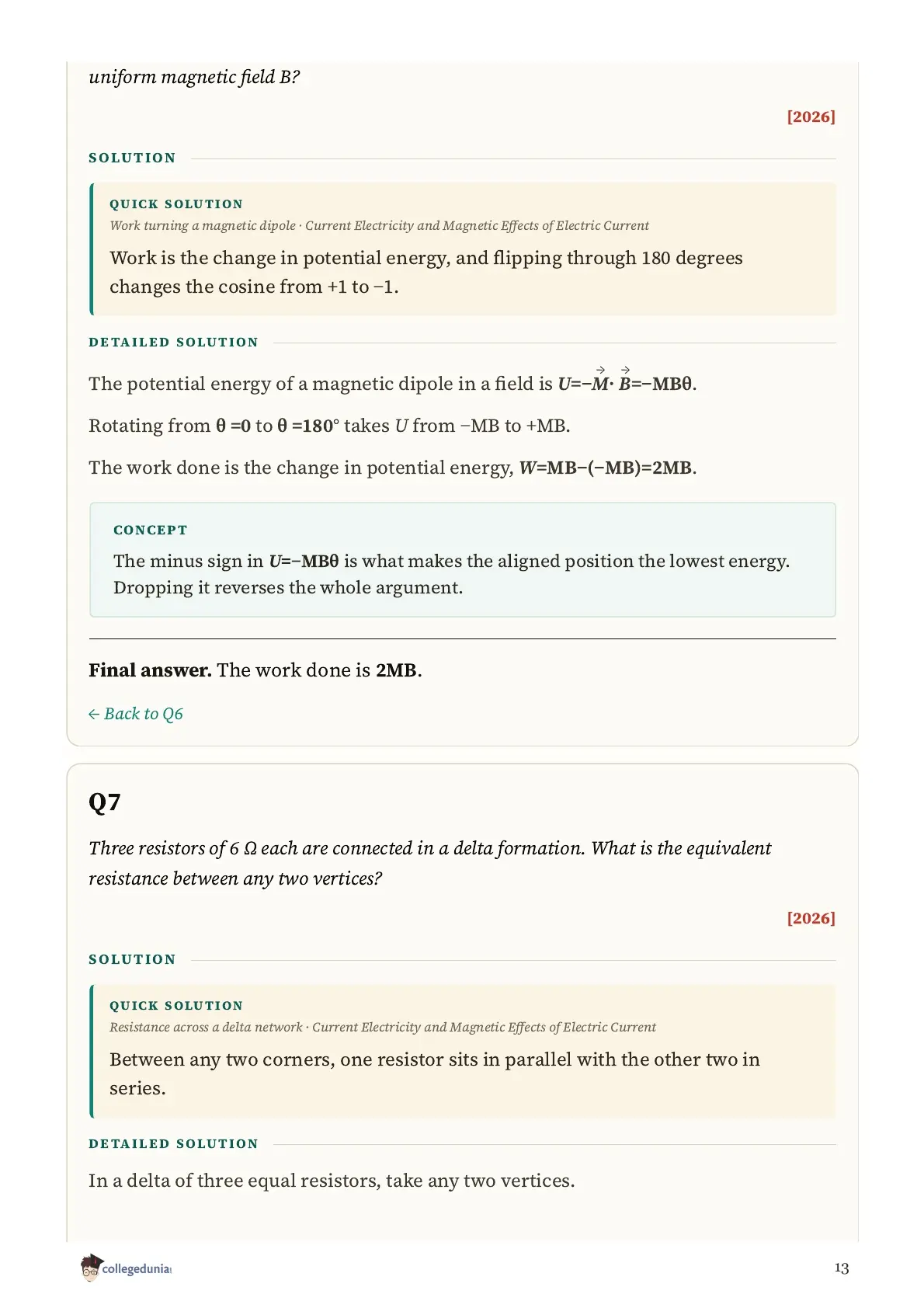
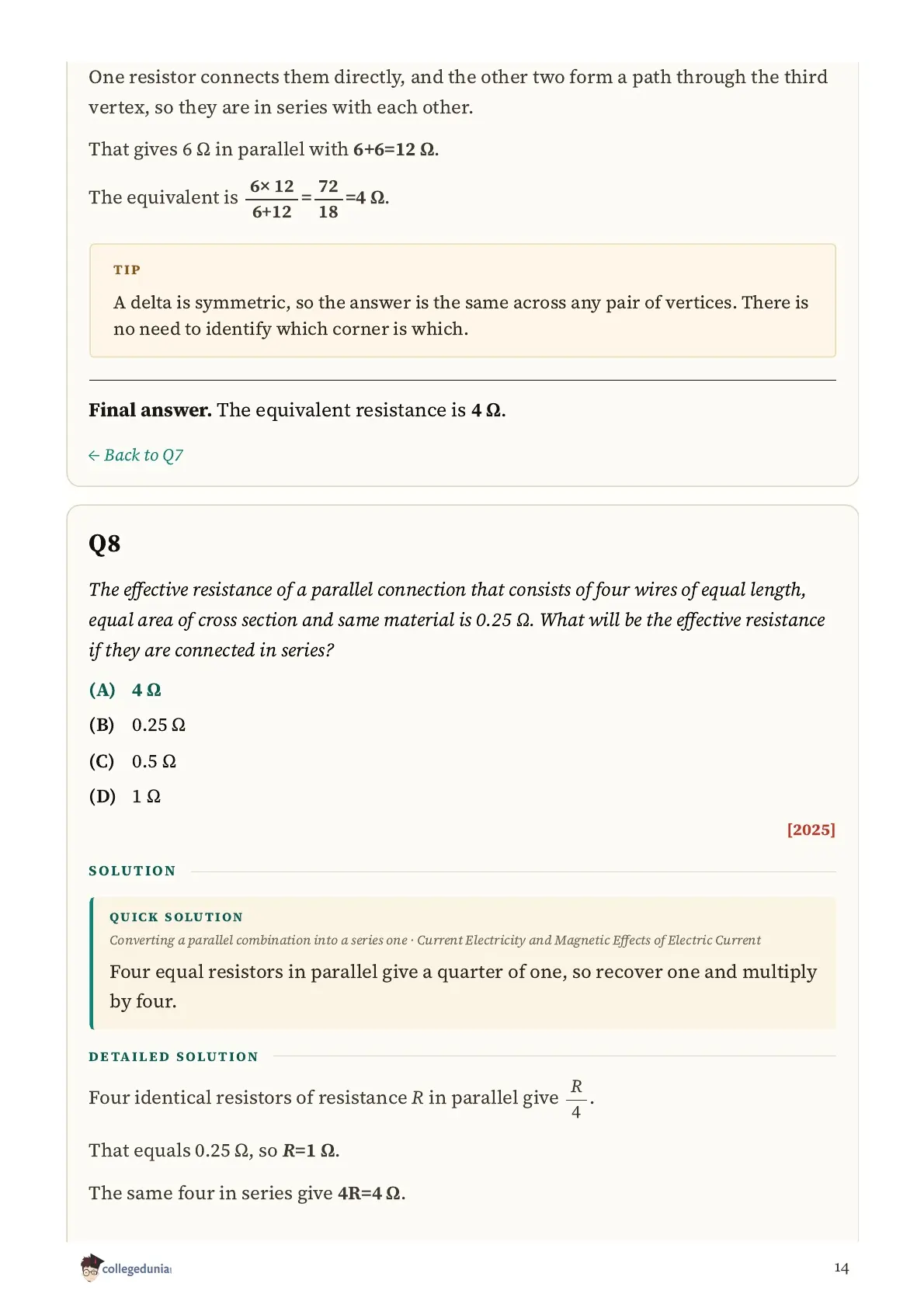
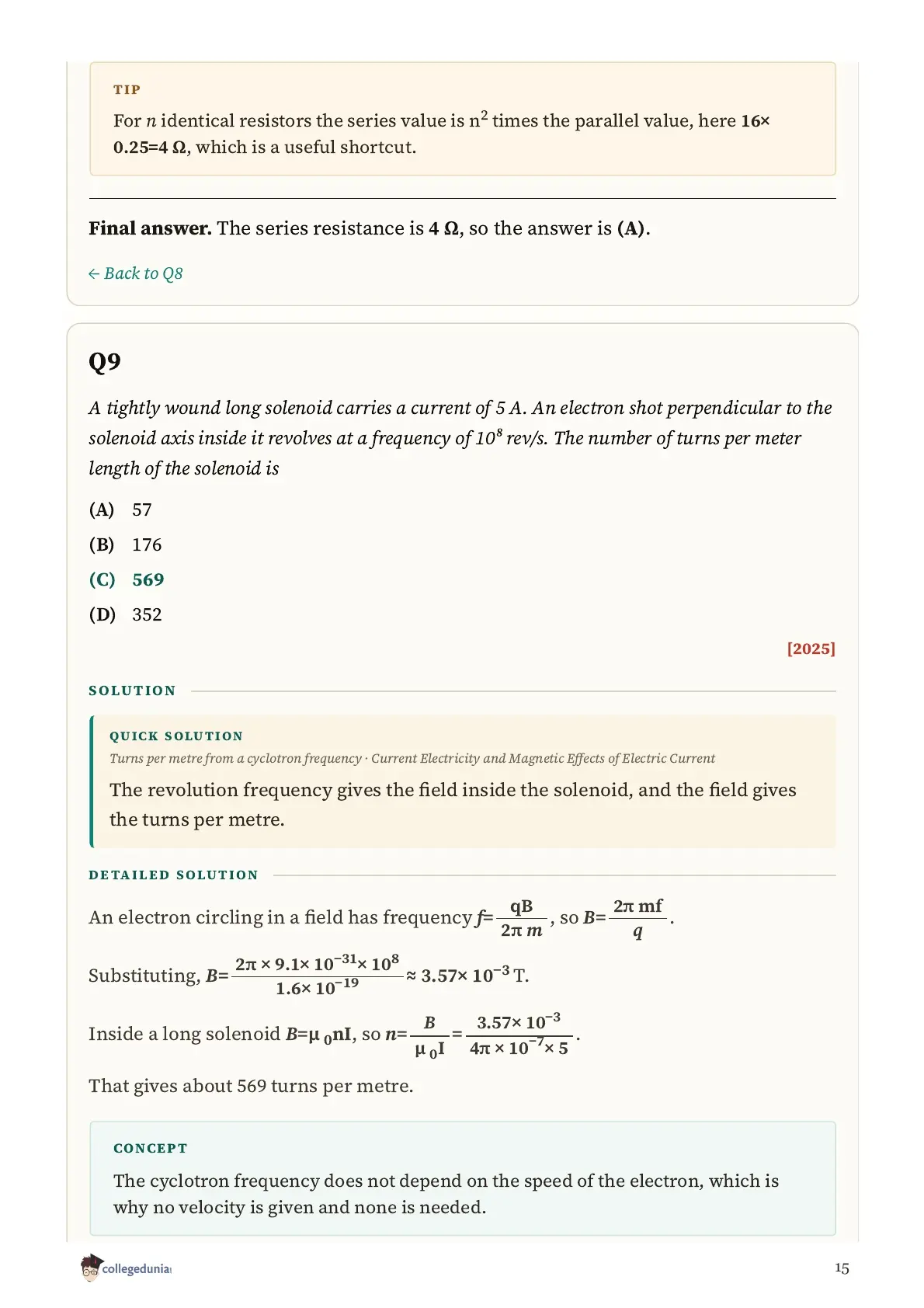
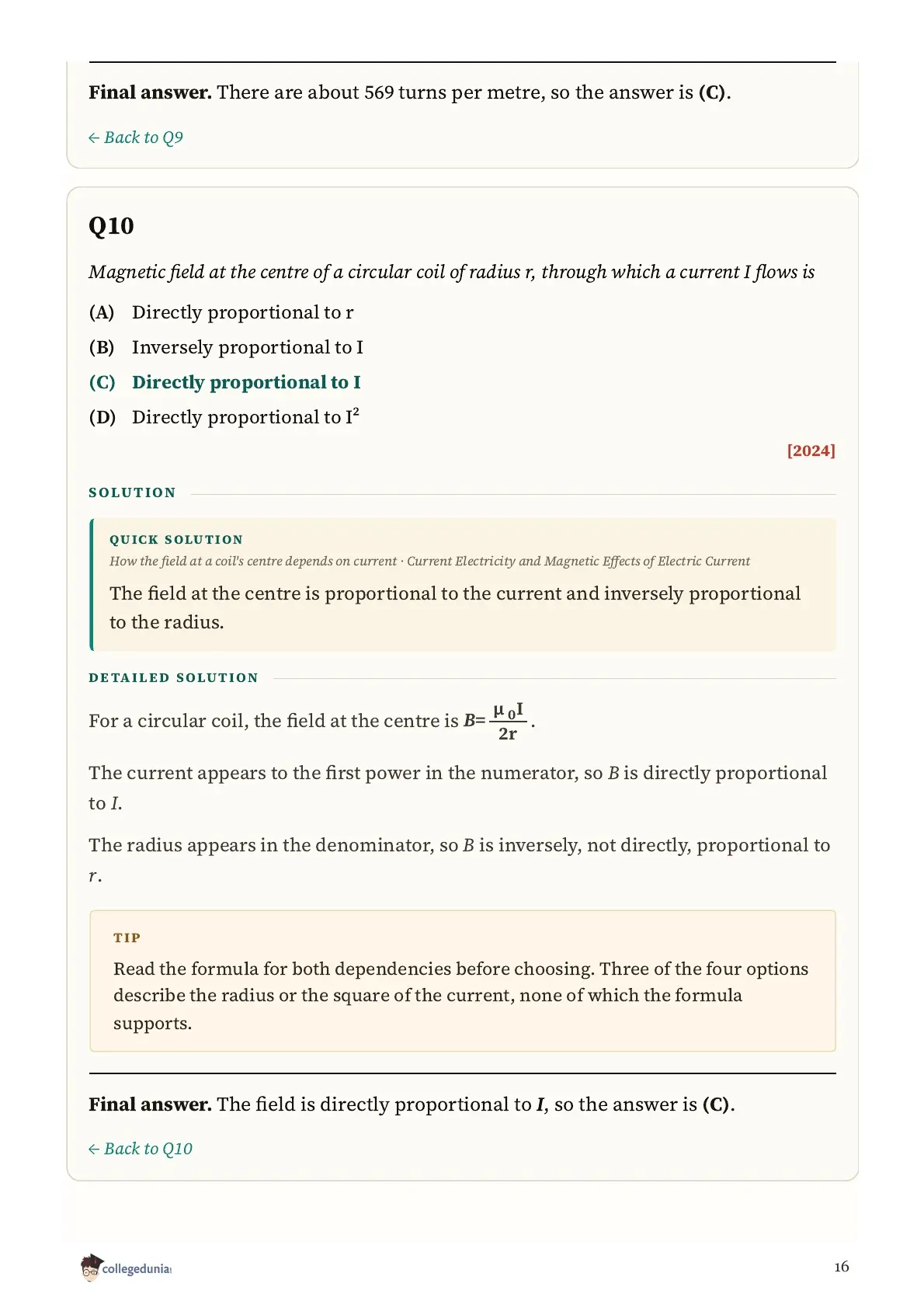
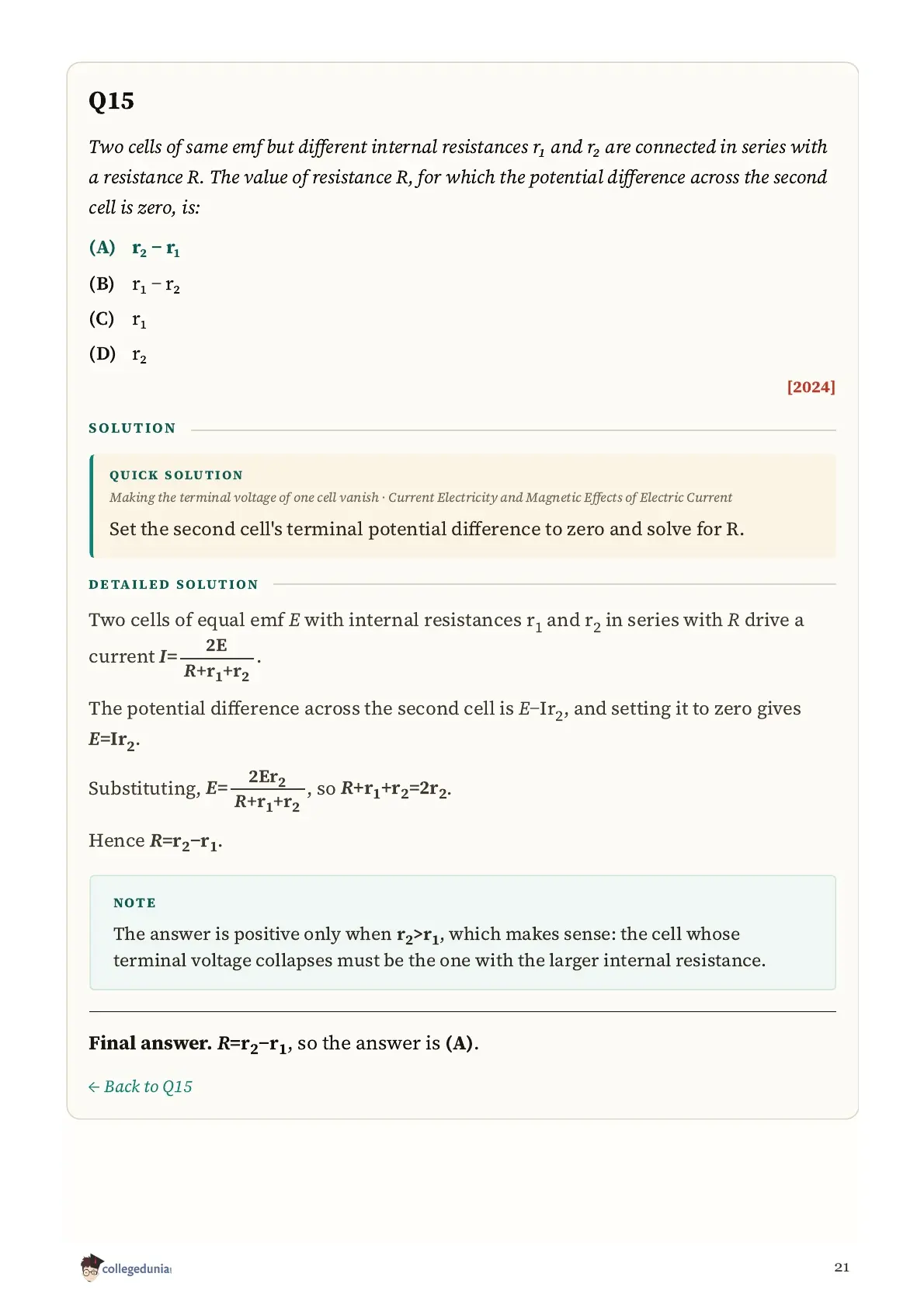
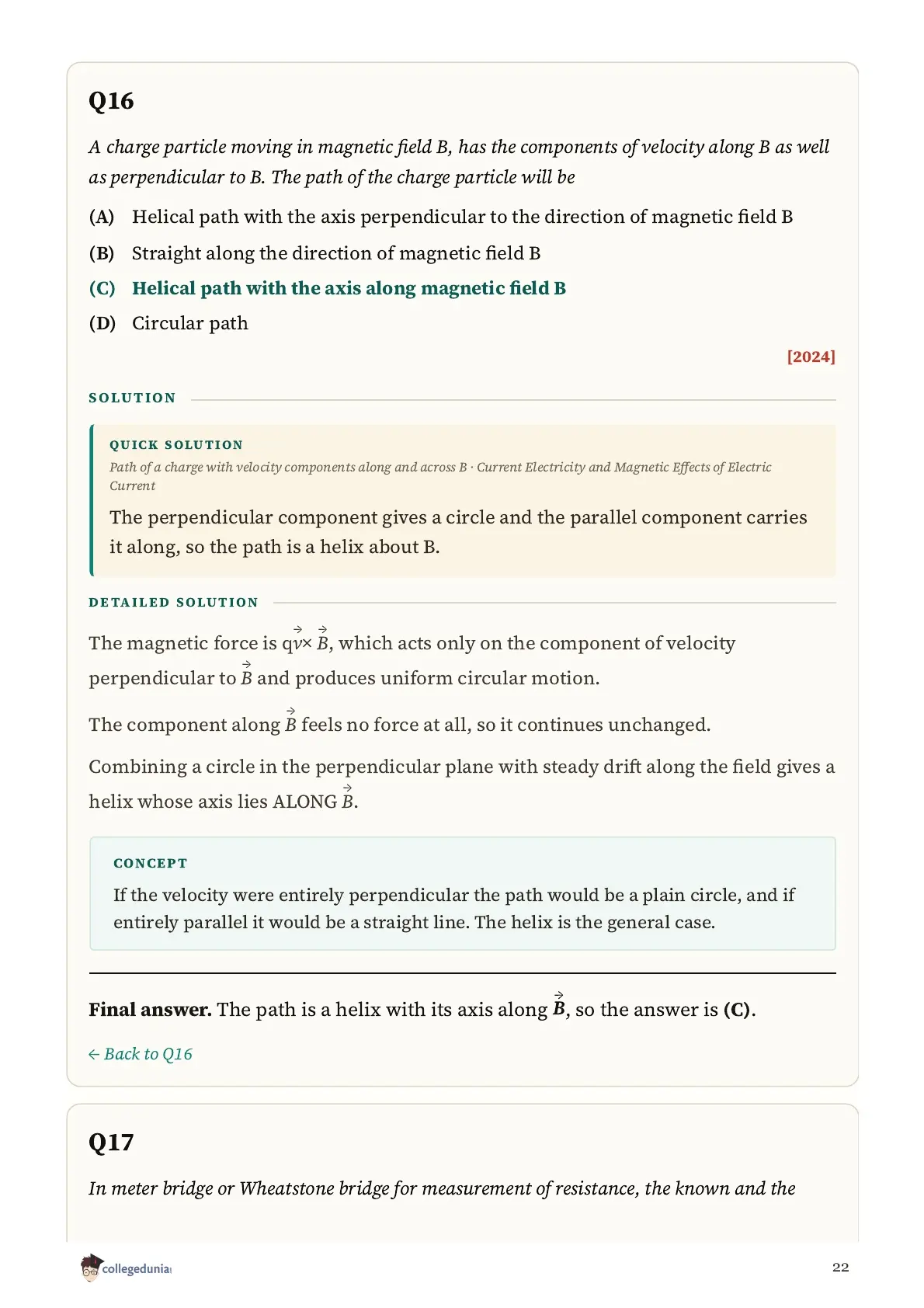
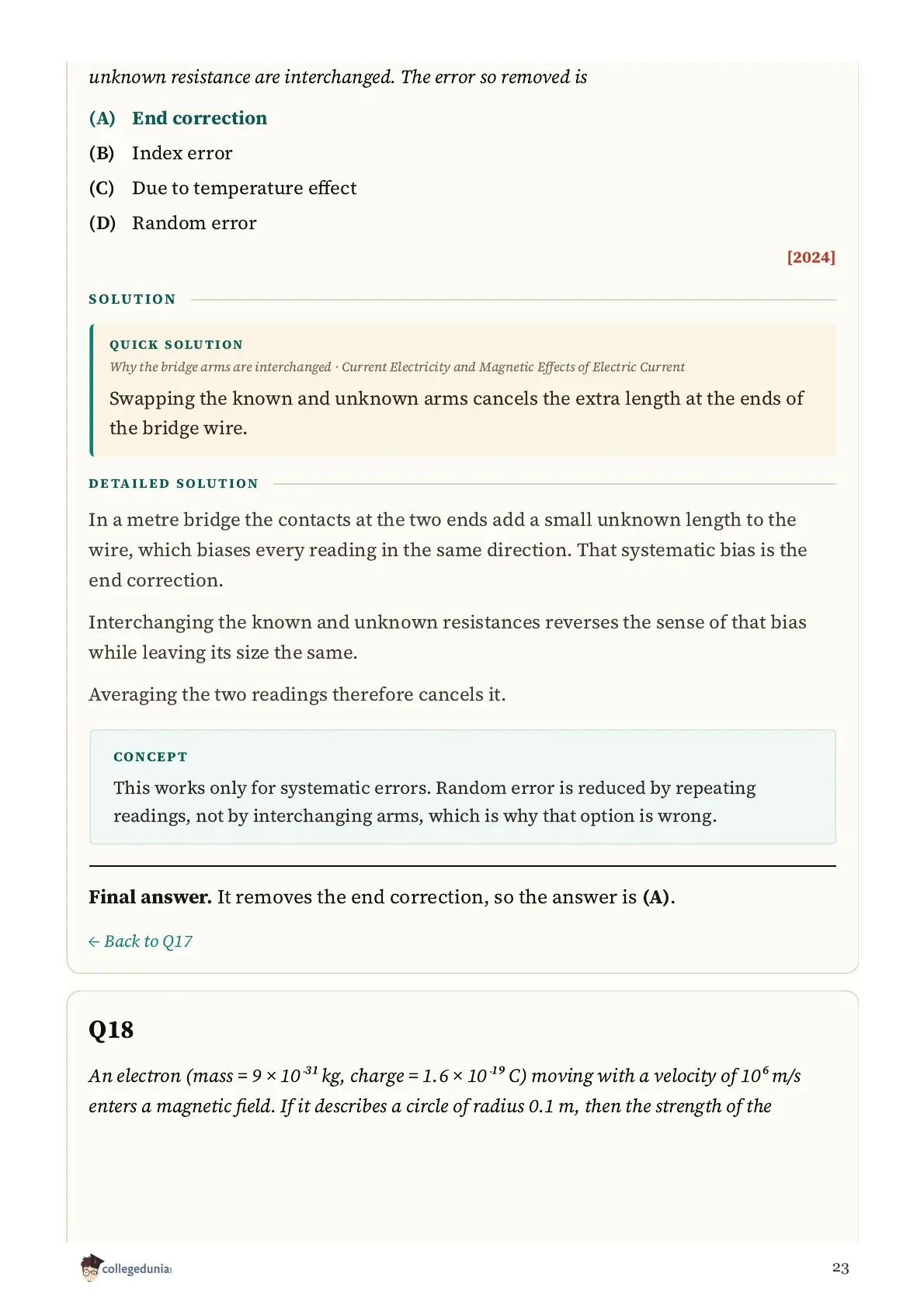
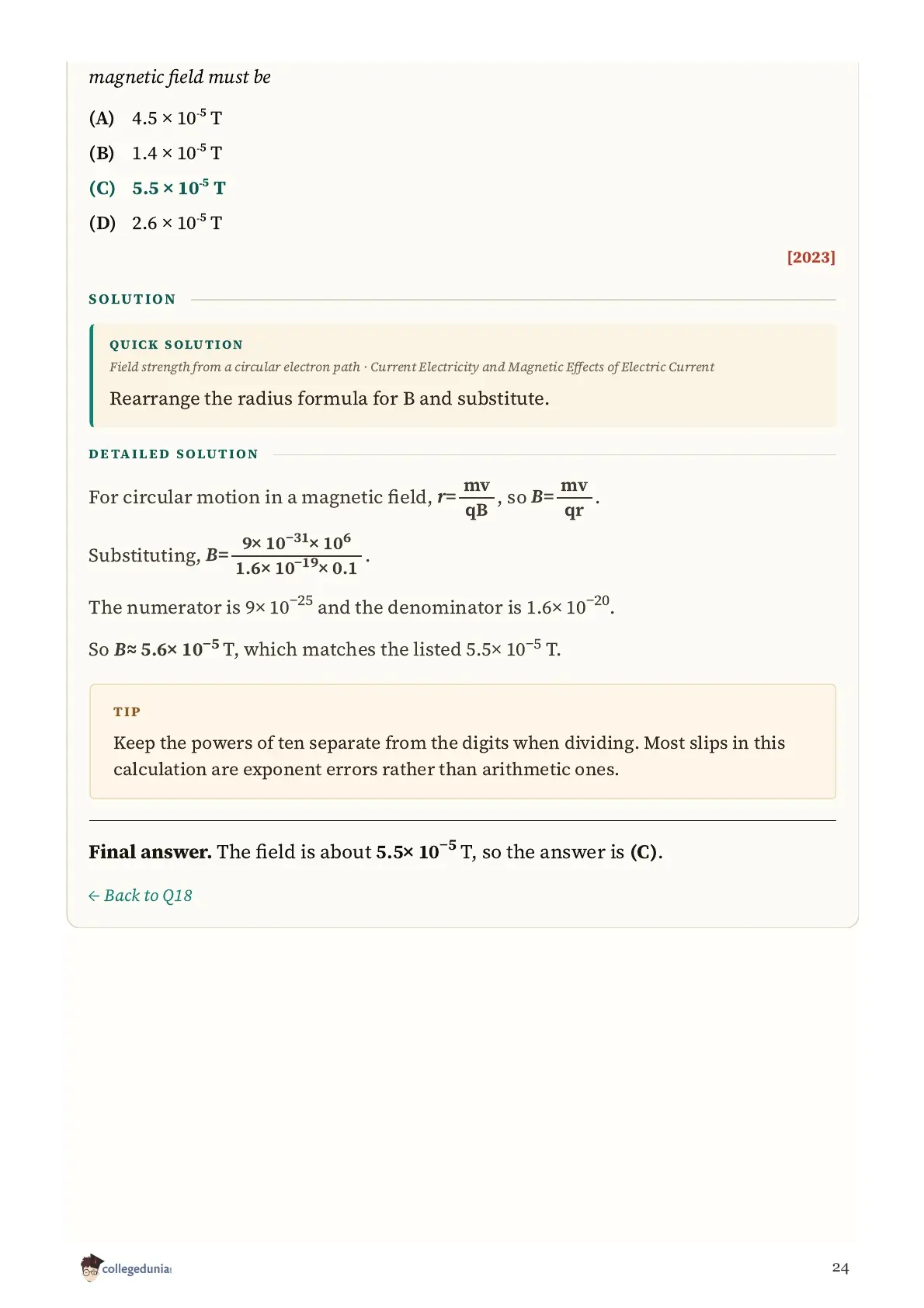
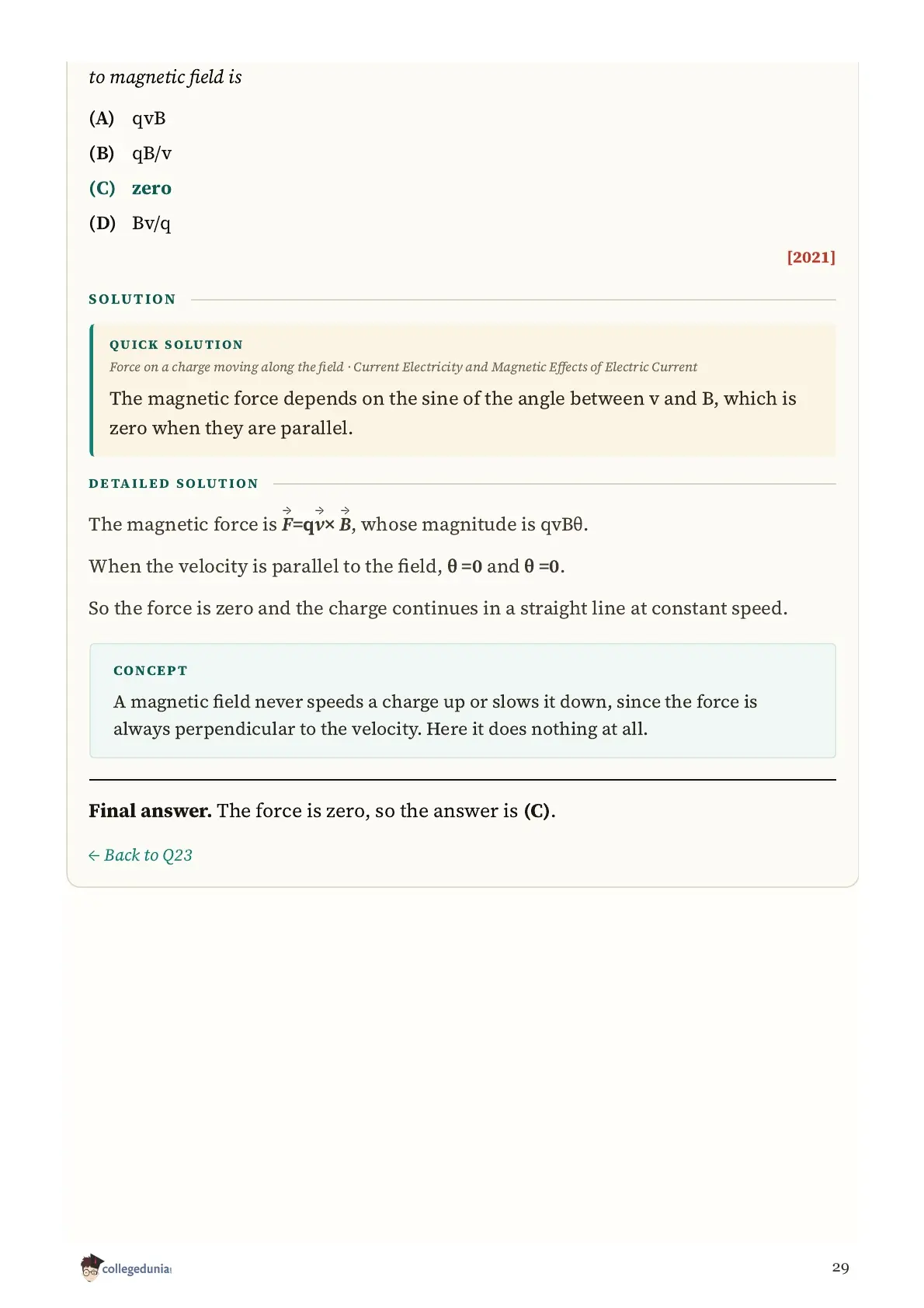
Questions run newest year first, with the options exactly as printed. The answer key follows, then a worked solution for each one.
VITEEE Current Electricity Weightage
VIT titles Unit 3 Current Electricity and Magnetic Effects of Electric Current, so magnetism has no unit of its own and lives here instead. Two chapters under one heading makes it one of the largest units in the paper.
| Year | Questions in this bank |
|---|---|
| 2026 | 7 |
| 2025 | 2 |
| 2024 | 8 |
| 2023 | 2 |
| 2022 | 1 |
| 2021 | 3 |
2024 and 2026 between them account for fifteen of the twenty-three. Under the 2026 marking scheme of plus four and minus one, a unit this size is worth putting real revision time into.
The seven questions from 2026 ask for a value rather than a lettered option, since VIT does not release its papers.
Formulas Worth Memorising
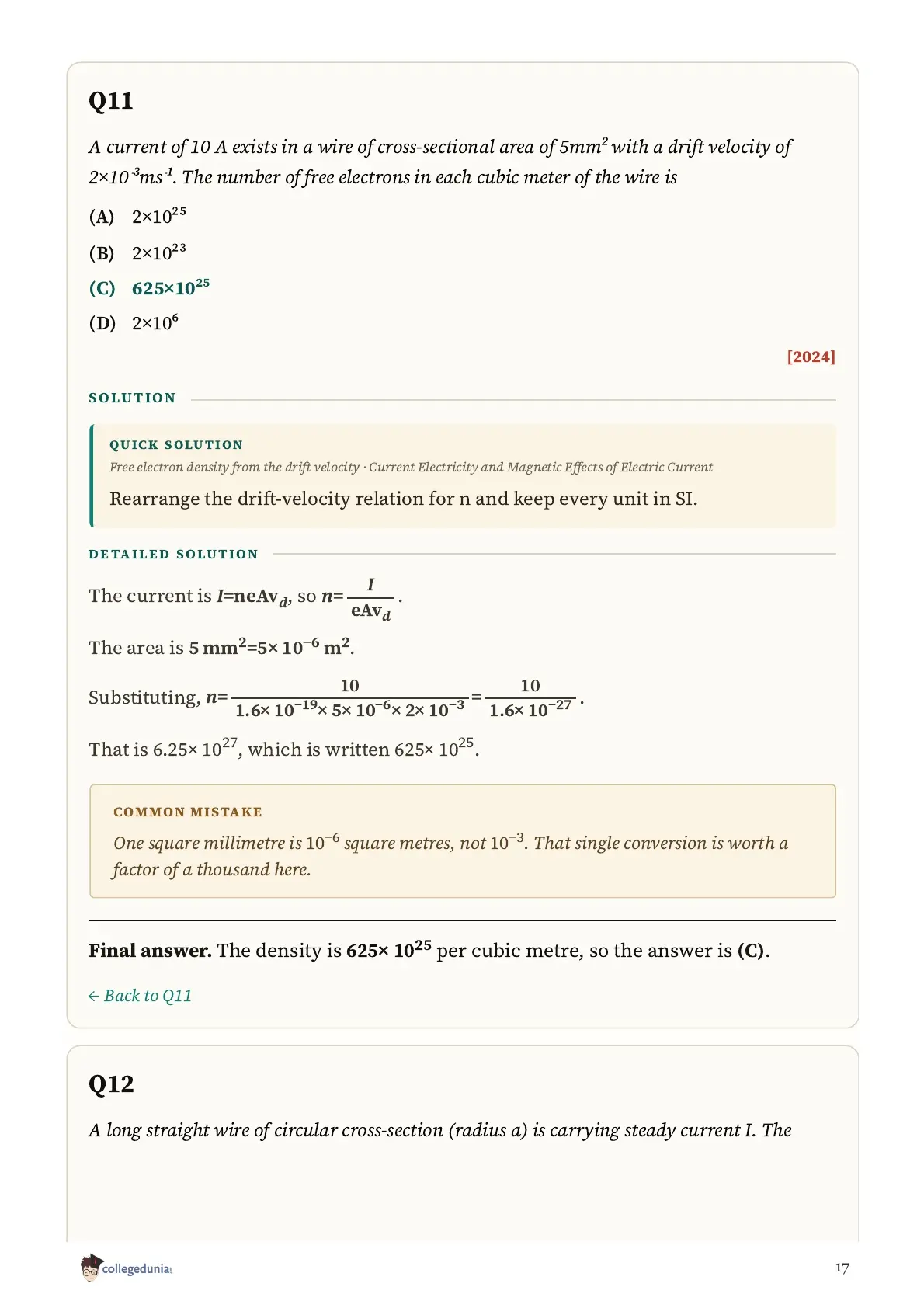
- I = n e A v, linking current to drift velocity
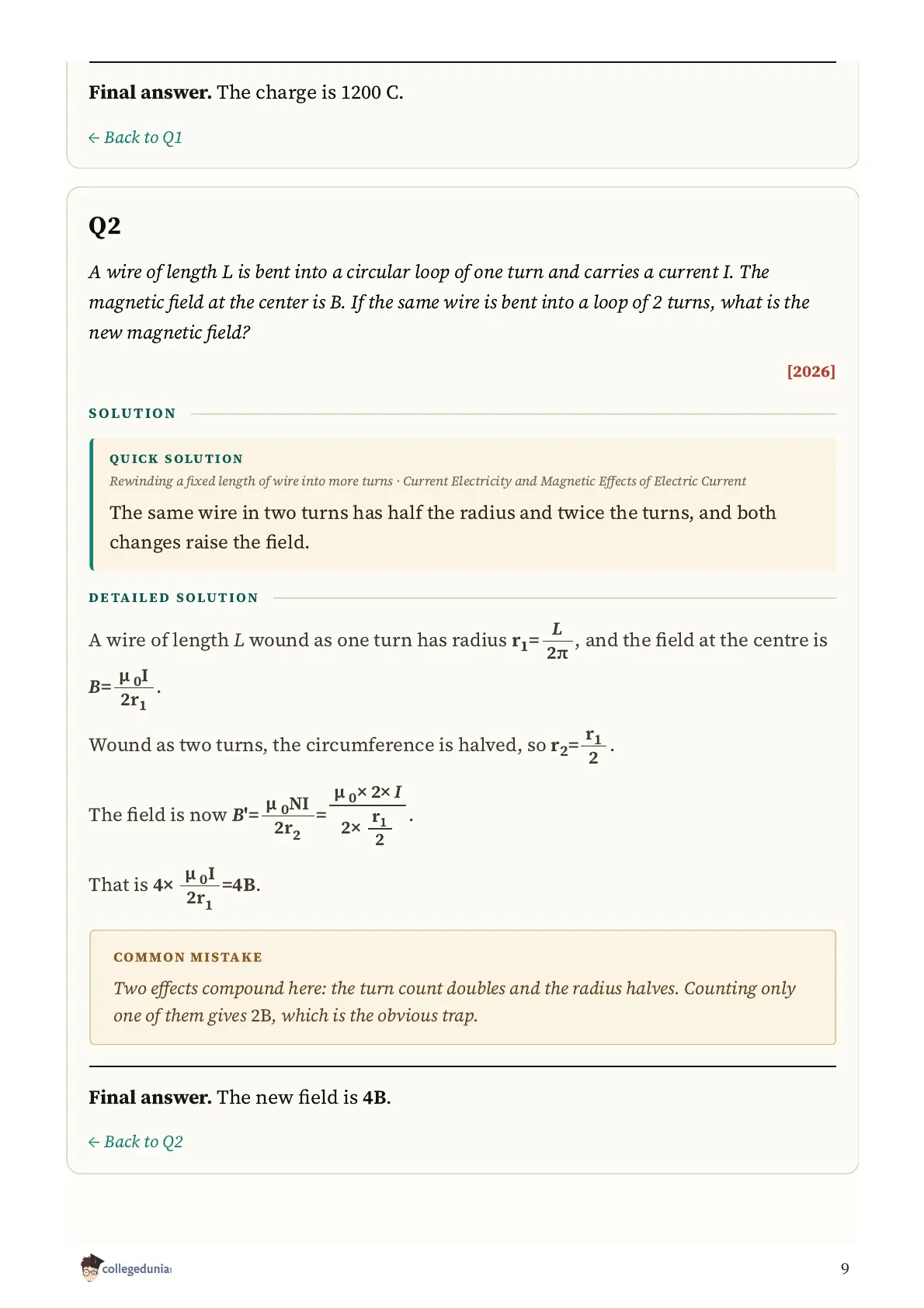
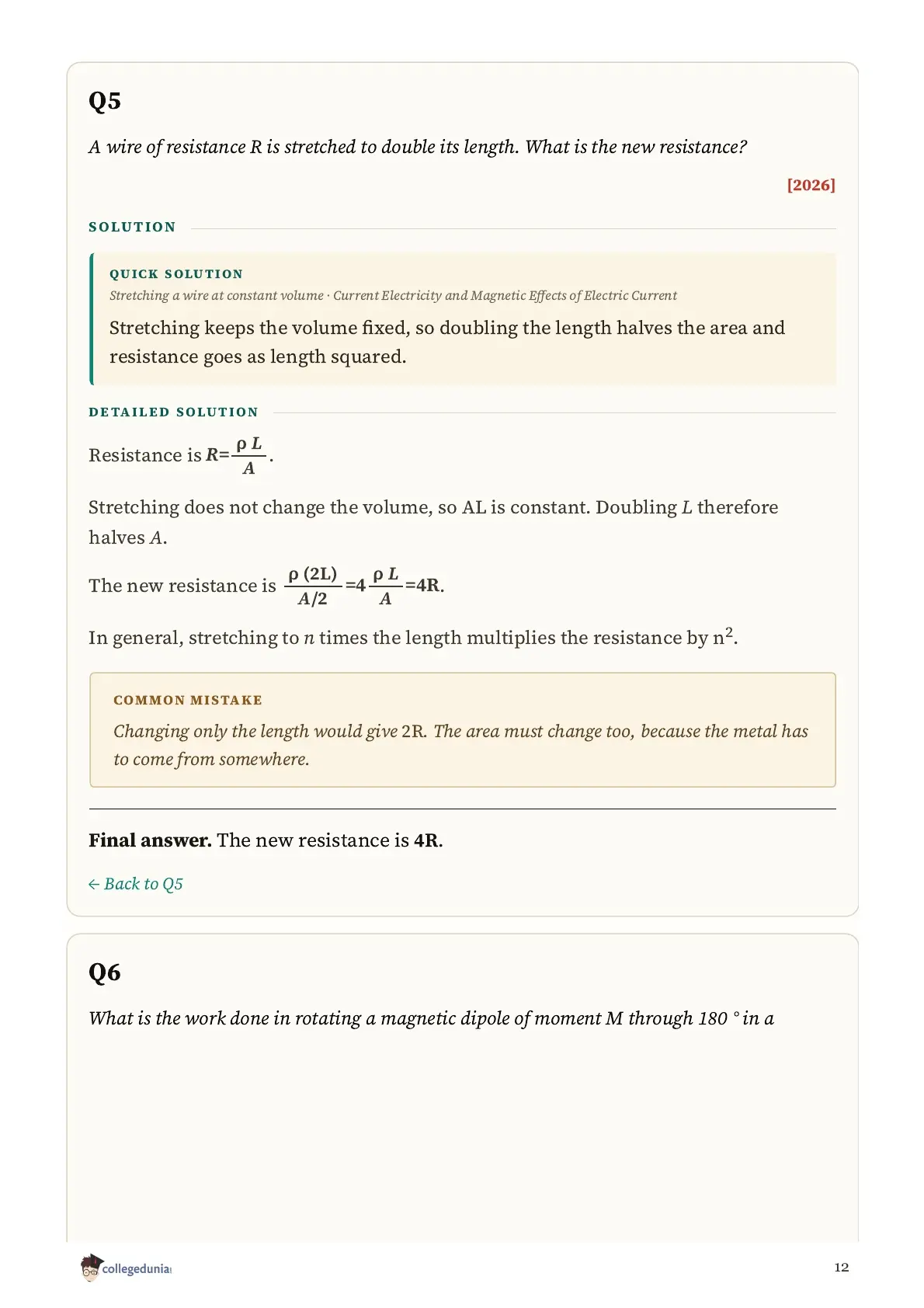
- R = rho L over A, so a wire stretched n times has n squared the resistance
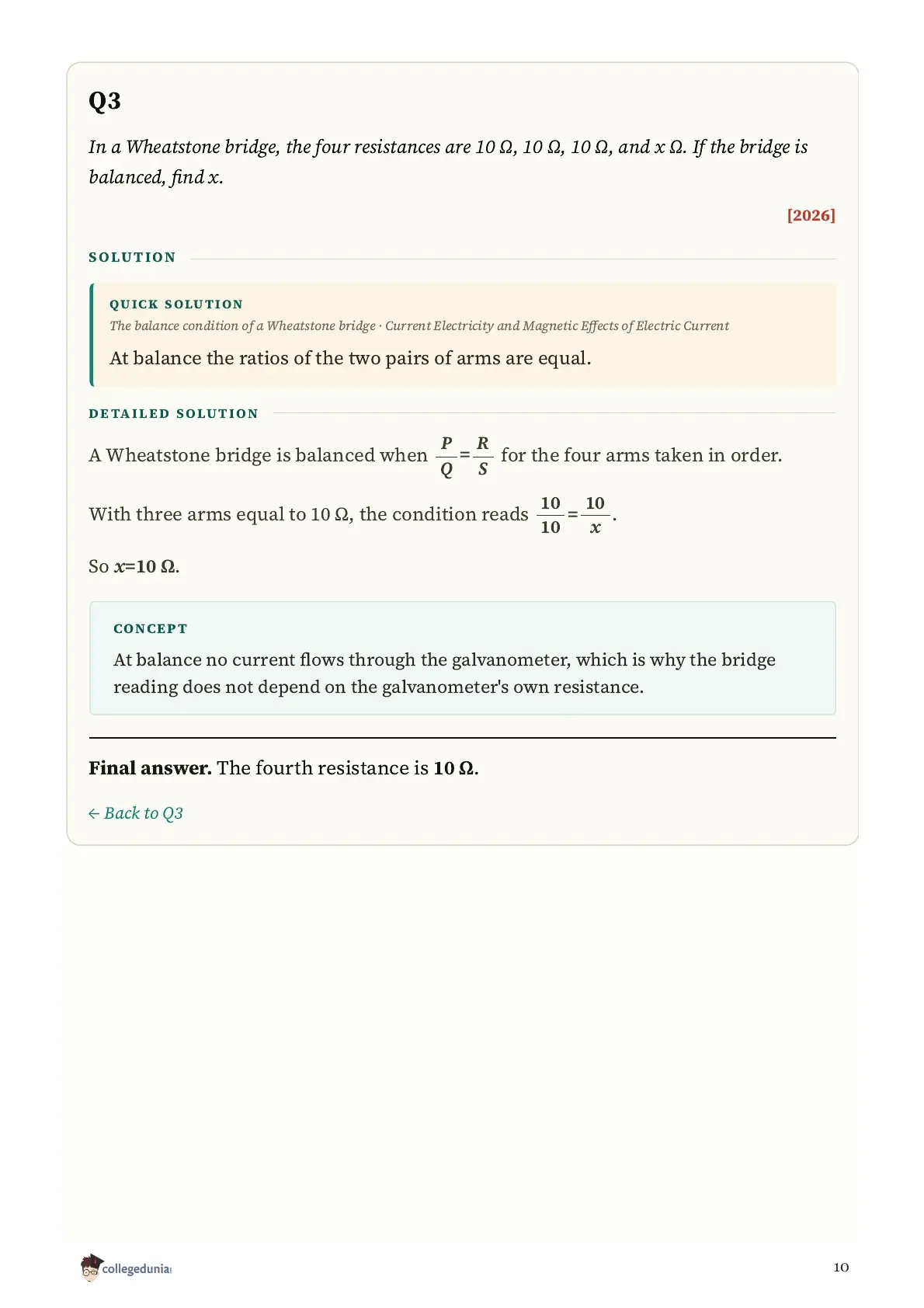
- Wheatstone balance: P over Q equals R over S
- Centre of a coil: B = mu nought N I over 2r. Long solenoid: B = mu nought n I
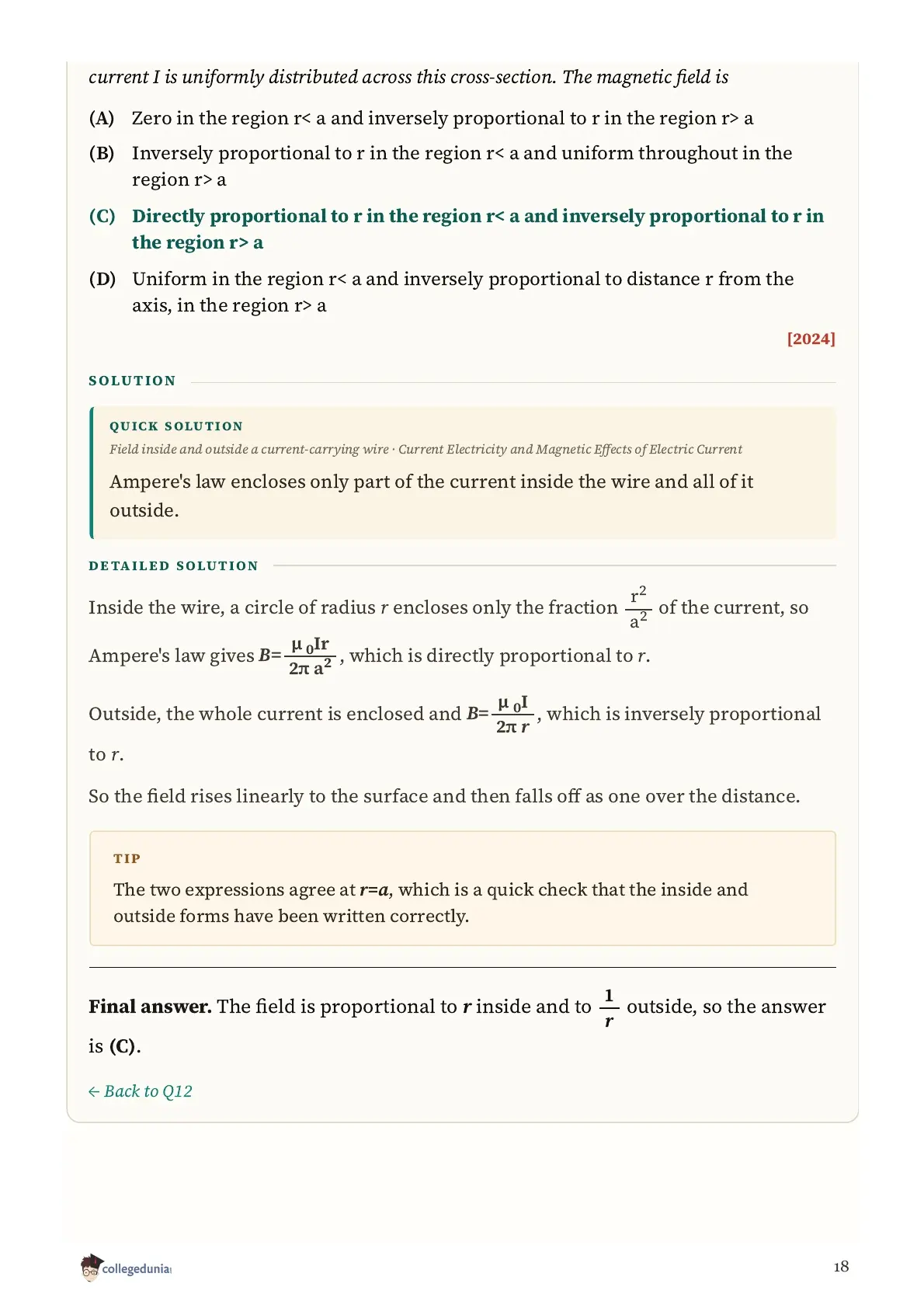
- Inside a wire B rises with r; outside it falls as 1 over r
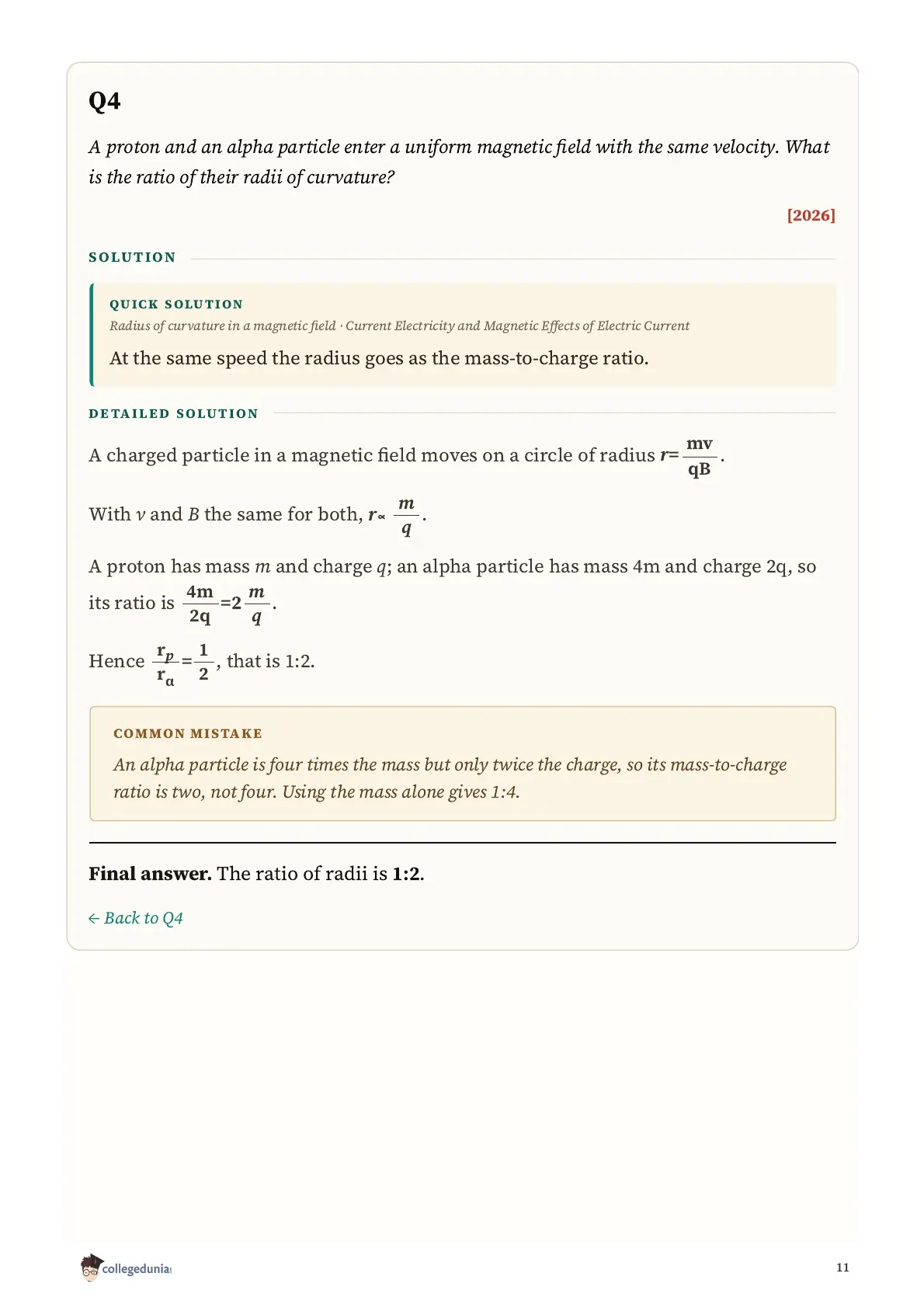
- Charge in a field: r = mv over qB, and frequency qB over 2 pi m
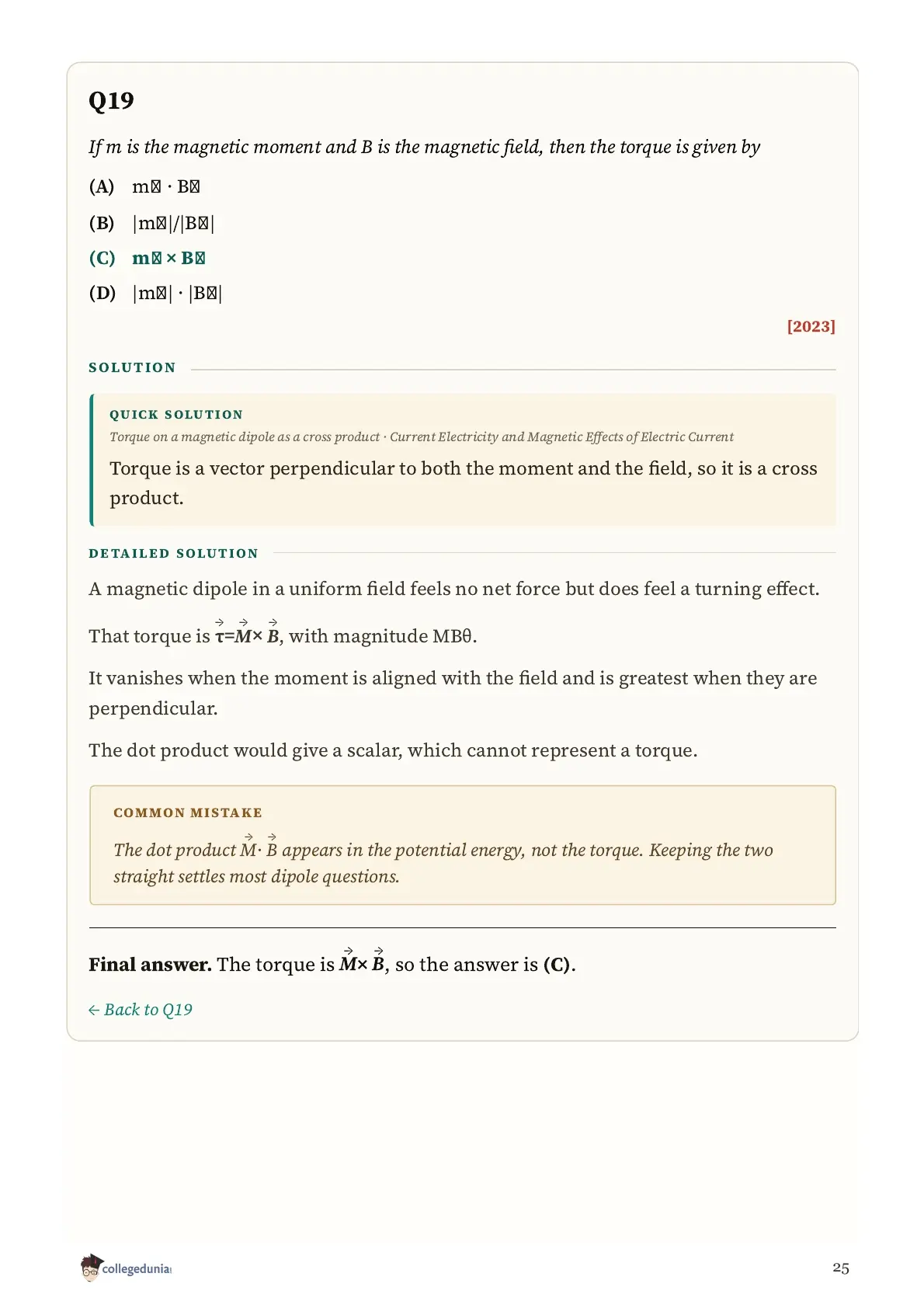
- Magnetic dipole: torque is M cross B, energy is minus M dot B
How to Approach the Set
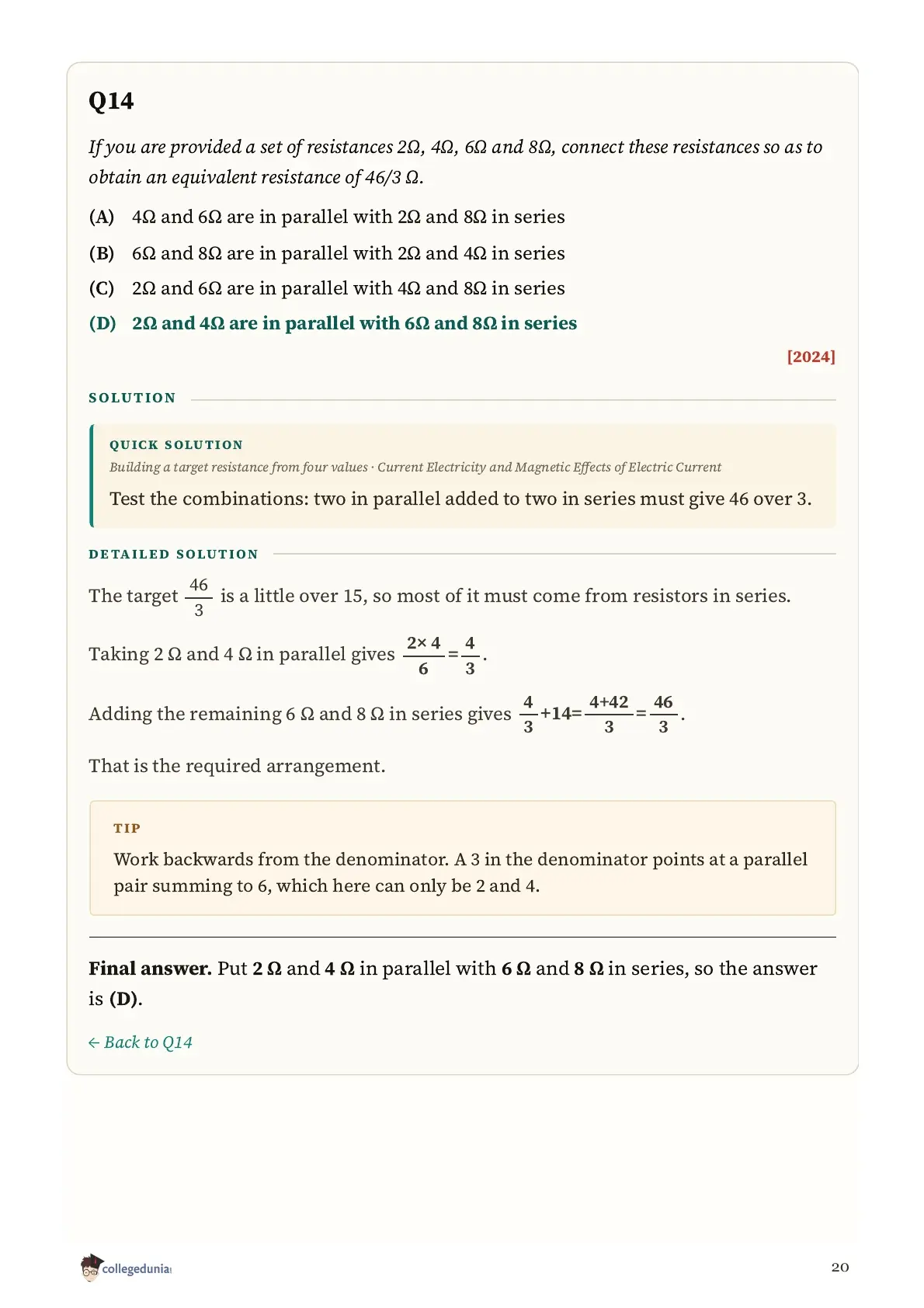
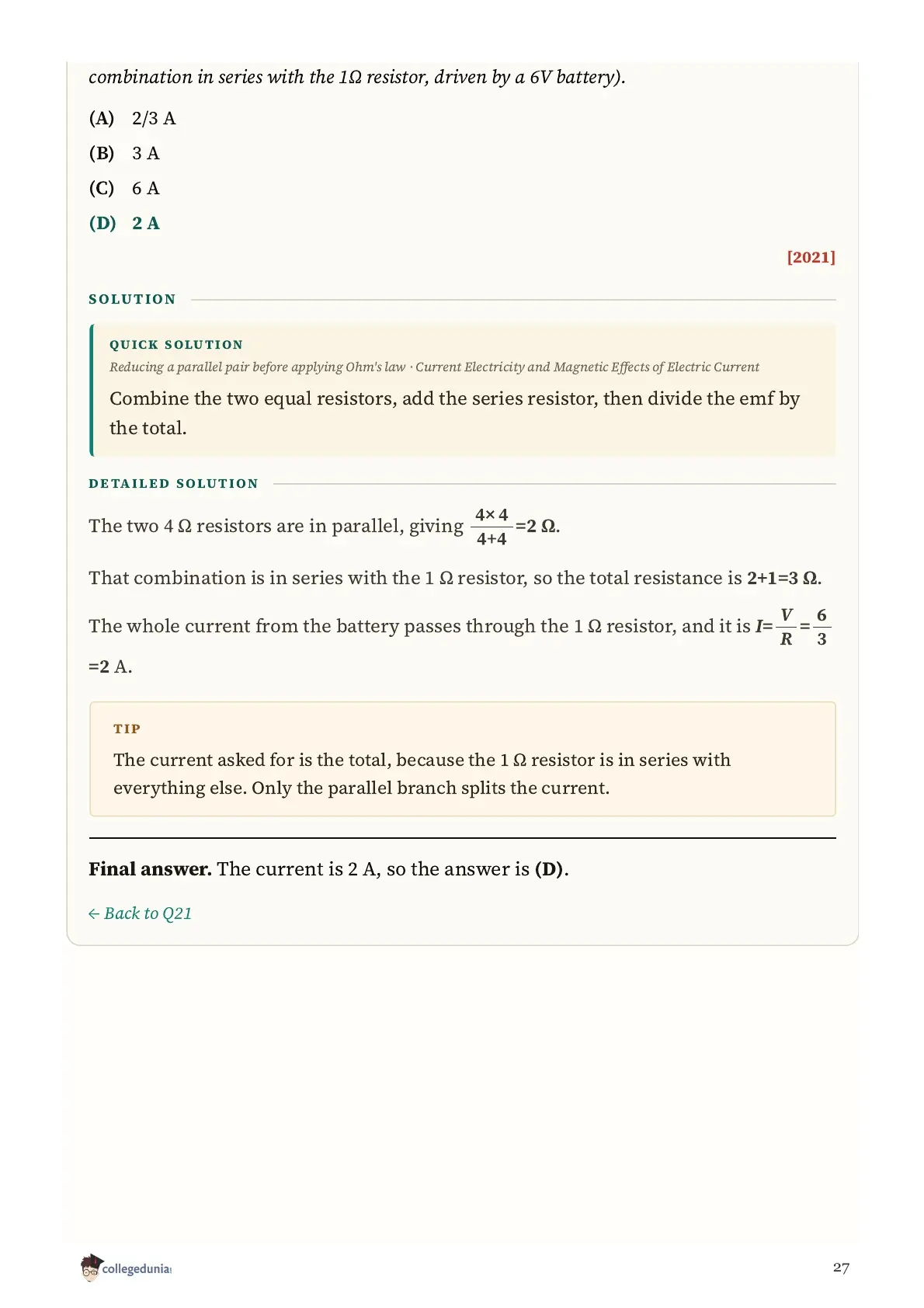
Circuit questions are almost always a reduction problem. Collapse the parallel pairs first, add the series resistances, then apply Ohm's law once at the end. Trying to track currents branch by branch from the start is slower and where most errors creep in.
For the magnetism half, the useful fact is that cyclotron frequency does not depend on speed. A revolution rate alone gives you the field, which is why those questions never bother to state a velocity.
Keep cross product and dot product straight. Torque and force on a moving charge use the cross product; only potential energy uses the dot.
Common Mistakes
- Stretching a wire and changing its length but not its cross-section
- Rewinding a coil into more turns and counting the turns but not the smaller radius
- Reading square millimetres as square metres over a thousand. It is a millionth
- Using the mass ratio for the radius of a charged particle instead of the mass-to-charge ratio
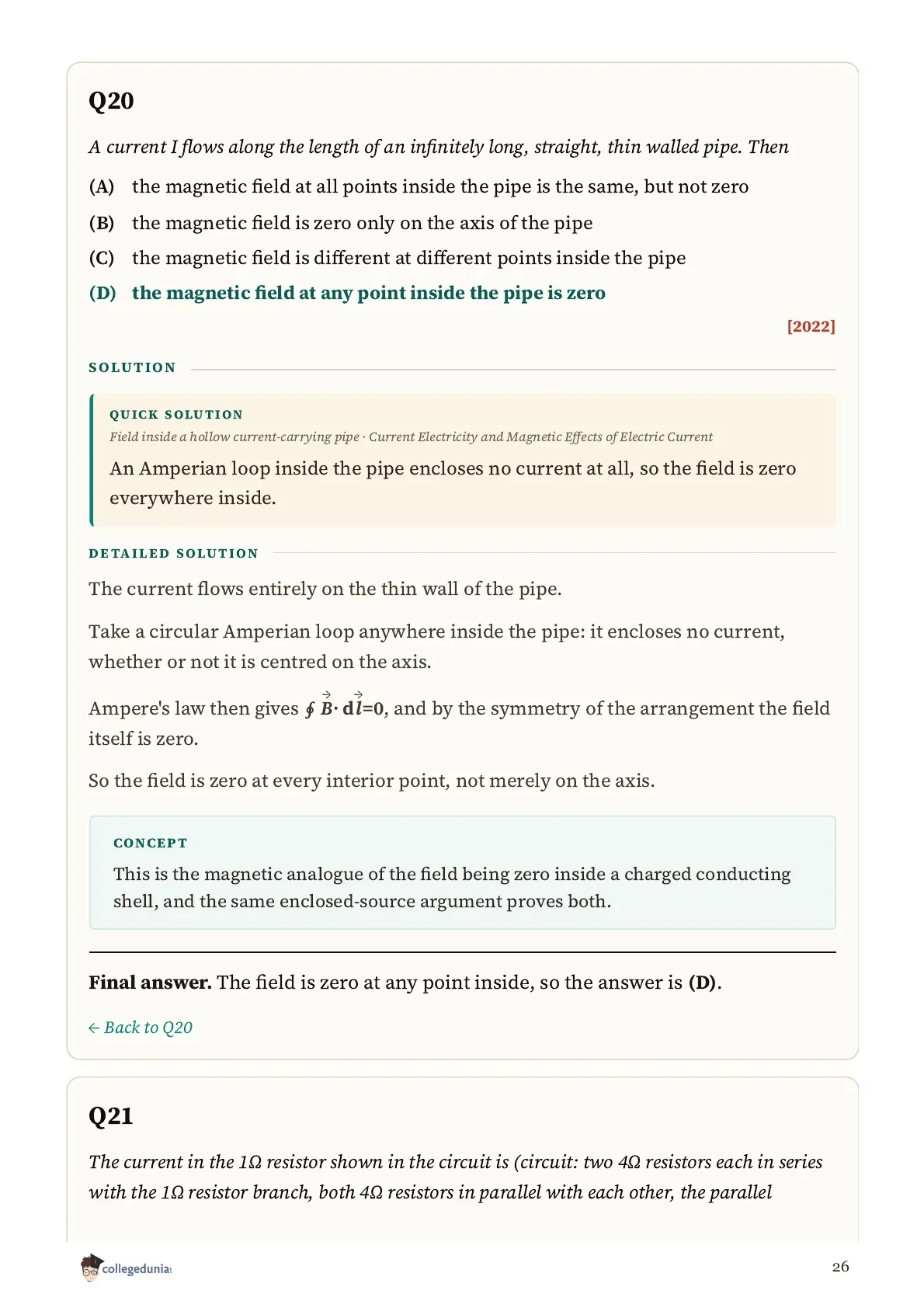
- Thinking a hollow current-carrying pipe has zero field only along its axis. It is zero everywhere inside
Two to Solve First
The 2024 alpha-particle question takes about thirty seconds once you see it. At the same speed the radius follows m over q, and an alpha is four times the mass but only twice the charge, so the ratio is one to two. Using the masses alone gives one to four, which is offered.
The 2023 drift-velocity question is worth doing for the conversion alone. Five square millimetres is five times ten to the minus six square metres, and getting that wrong moves the answer by a factor of a thousand onto a listed option.
Video Solutions
Source: CrackVIT
Using the Answer Key
Attempt all 23 in one timed sitting, allowing about ninety seconds each. Mark the key in one pass, right or wrong only, then read the solution for every miss and every lucky guess. Each one opens with a one-line quick solution you can stop at and retry from.
VITEEE Current Electricity PYQ FAQs
Ques. How many current electricity questions come in VITEEE Physics?
Ans. It is the heaviest of the seven physics units, contributing several questions in every recent year. Physics as a whole is 35 of the 125 questions in the paper.
Ques. Which years does this PYQ bank cover?
Ans. 2021 to 2026. 2024 and 2026 are the best represented, at eight and seven questions. The 2021 to 2025 questions are multiple choice; the 2026 ones ask for a numerical answer.
Ques. Does this unit include magnetism?
Ans. Yes. VIT titles it Current Electricity and Magnetic Effects of Electric Current, so Biot-Savart, Ampere's law, solenoids, moving charges and dipole torque all sit inside it alongside circuits and resistivity.
Ques. Which topics repeat most?
Ans. Circuit reduction, and the field produced by a wire or a coil. Series and parallel combinations appear almost every year, and so does at least one question on a magnetic field. Drift velocity and the Wheatstone bridge come next.
Ques. Are the answers official?
Ans. No. VIT publishes neither the papers nor a key, so every answer here was worked out from the question itself.
Ques. Can the PDF be downloaded free?
Ans. Yes. All 29 pages can be read on this page and downloaded at no cost.



Comments