



Content Curator
Apospory and apogamy are two types of asexual reproduction processes which take place in plants and are types of apomixis. Apogamy is the asexual process, where a sporophyte is produced from a cell or all the cells of the gametophyte. Whereas, apospory is the process of development of a gametophyte from a sporophyte. Therefore, these two processes could lead to the alteration of sexual reproduction in plants. Both processes are mainly present in bryophytes.
| Table of Content |
Also Read: Difference between Sporophyte and Gametophyte
Keywords: Apospory, Apogamy, Sporophyte, Gametophyte, Haploid, Diploid,
What is Apospory?
[Click Here for Sample Questions]
The biological process of Apospory was first discovered by Druery (1884) in the plant, Athyrium filix-foemia var. clarissima. In Apospory, the gametophyte is produced directly from the cells of the sporophyte (diploid in nature, 2n), without undergoing any meiotic division or formation of spores. These gametophytes are diploid in nature, i.e., 2n. They occur predominantly in pteridophytes. Few plants that reproduce by Apospory are ferns: Dryopteris, Osmunda (Osmunda javanica), Pteris (Pteris aquiline), etc.
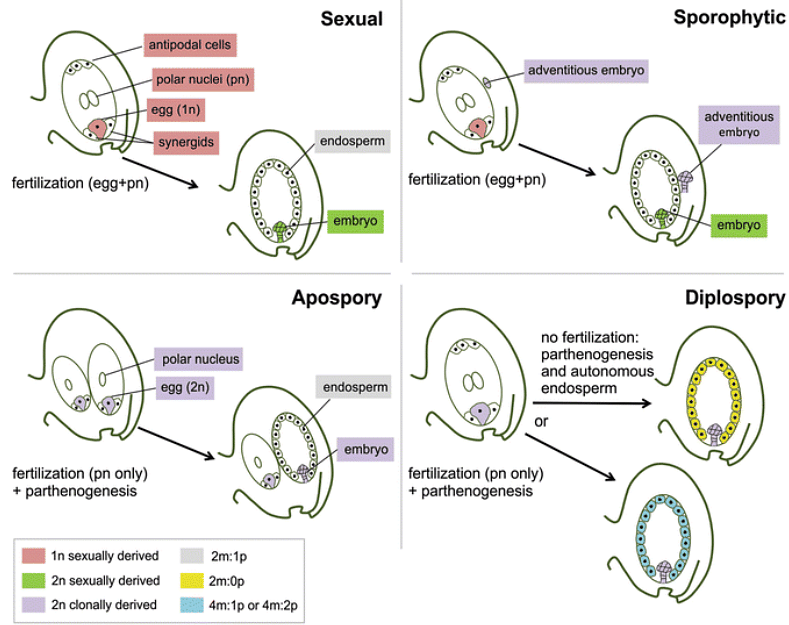
Apospory
Apospory occurs in pteridophytes in cases of improper growth conditions, and lack of nutrients. For example, if there is a loss of minerals in the soil, or in case of improper sunlight and water availability, these plants undergo apospory to reproduce.
Read More:
Apospory in Ferns
The process by which Apospory occurs in ferns is detailed below.
Step 1: The sporophytes, a diploid multicellular organism that either produced haploid spores or diploid zygote, which are produced by the fern.

Apospory in Ferns
Step 2: These sporophytes then undergo gene activation, form an embryo sac, and result in the formation of gametophytes after maturation.
The gene activation can directly form the gametophytes or produce spores too.
Read More:
Types of Apospory
[Click Here for Sample Questions]
Apospory is divided into two categories depending on the cell from which the embryo sac is developed. It may be from the archesporial cell, the nucellus, or from any other cell. These two classes are:
Generative or Haploid Apospory
Here the embryo sac is produced from the megaspore, which is haploid in nature. These cannot be regenerated, and if the fertilization fails, these later form non-recurrent apomicts.
Somatic or Diploid Apospory
Here the embryo sac is produced from the nucellus or any other cell, which is diploid in nature. These can be regenerated even if fertilization fails.
Also Read:
| Reproduction in Plants | Vegetative Propagation in Plants |
| Sexual Reproduction in Flowering Plants | Pollination |
What is Apogamy?
[Click Here for Sample Questions]
The biological process of Apogamy was first discovered by Farlow in 1874, in Pteris cretica. In apogamy, the sporophyte is from a gametophyte (haploid in nature, n) without any fertilization or syngamy. These sporophytes are also haploid in nature, n due to the nature of gametophytes. A few ferns reproduce via apogamy, the holly fern (Crytomium falcatum), Adiantum, etc.

Apogamy
This mainly occurs in plants where the gametes have to pass the time interval of fusion, they form sporophytes. Moreover, it occurs in cases of improper growth conditions, and lack of nutrients. For example, if there is a loss of minerals in the soil, or in case of improper sunlight and water availability, these plants undergo apogamy to reproduce.
Read More:
Apogamy in Ferns
[Click Here for Sample Questions]
Apogamy process in Ferns occurs in the following manner.
Step 1: The gametophytes, a haploid multicellular organism undergoes gene activation to undergo apogamy.
Step 2: These result in the formation of sporophytes directly after maturation.

Apogamy in Ferns
Types of Apogamy
[Click Here for Sample Questions]
There are two types of apogamy:
Induced or facultative apogamy
Here, apogamy is induced artificially in the plants even with the presence of sexual organs in the plants. It is induced via gamma radiations, UV radiation, illumination, etc.
Obligate apogamy
Here, apogamy is the only process of reproduction. This is because of the loss of sexual organs in the gametophytes, or because of the non-functional nature.
Read More:
Difference between Apospory and Apogamy
[Click Here for Sample Questions]
The differences between apospory and apogamy are tabulated below.
| Apospory | Apogamy |
|---|---|
| Here the gametes are produced by the sporophytes without spore formation or miosis. | Here sporophytes are produced by the gametophytes without undergoing fertilization. |
| The end product is a gametophyte. | The end product is sporophyte. |
| The gametes may then undergo fusion to form a plant. | Here is no fusion of the gametes to produce plants. |
| The gametophyte is diploid in nature. | The sporophyte is haploid in nature. |
| The two types of apospory are Haploid apospory and Diploid apospory. | There are two types of apogamy are Induced apogamy and Obligate apogamy |
| It occurs in Dryopteris, Osmunda (Osmunda javanica), Pteris (Pteris aquiline), etc. | It occurs in the holly fern (Crytomium falcatum), Adiantum, etc. |
Apospory and Apogamy
[Click Here for Sample Questions]

Apospory and Apogamy
Read More:
Things to Remember
[Click Here for Sample Questions]
- Sporophyte is a diploid multicellular organism that results in the formation of spores and gametophytes.
- Gametophyte is a haploid multicellular part that is developed from the spores, and further forms gametes having one set of chromosomes.
- Apospory and apogamy both are two types of asexual reproduction processes which take place in plants and are types of apomixis.
- Apogamy is the asexual process, where a sporophyte is produced from a cell or all the cells of the gametophyte.
- There are two types of apogamy: Induced apogamy and Obligate apogamy
- There are two types of apospory: Haploid apospory and Diploid apospory.
Sample Questions
Ques: What is apogamy? (2 marks)
Ans: In apospory, the gametophyte is produced directly from the cells of the sporophyte (diploid in nature, 2n), without undergoing any meiotic division or formation of spores. These gametophytes are diploid in nature, i.e., 2n. They occur predominantly in pteridophytes. A few plants reproducing by apospory are ferns: Dryopteris, Osmunda (Osmunda javanica), Pteris (Pteris aquiline), etc. There are two types of apogamy: Induced apogamy and Obligate apogamy
Ques: What is apospory? (2 marks)
Answer: In apospory, the gametophyte is produced directly from the cells of the sporophyte (diploid in nature, 2n), without undergoing any meiotic division or formation of spores. These gametophytes are diploid in nature, i.e., 2n. They occur predominantly in pteridophytes. A few plants reproducing by apospory are ferns: Dryopteris, Osmunda (Osmunda javanica), Pteris (Pteris aquiline), etc. It is of two types, Haploid apospory and Diploid apospory.
Ques: What are the different types of apogamy? (2 marks)
Ans: There are two types of apogamy:
- Induced or facultative apogamy
Here, apogamy is induced artificially in the plants even with the presence of sexual organs in the plants. It is induced via gamma radiations, UV radiation, illumination, etc.
- Obligate apogamy
Here, apogamy is the only process of reproduction. This is because of the loss of sexual organs in the gametophytes, or because of the non-functional nature.
Ques: What are the different types of apospory? (2 marks)
Ans: Apospory are divided into two categories:
- Generative or haploid apospory
Here the embryo sac is produced from the megaspore, which is haploid in nature. These cannot be regenerated, and if the fertilization fails, these later form non-recurrent apomicts.
- Somatic or diploid apospory
Here the embryo sac is produced from the nucellus or any other cell, which is diploid in nature. These can be regenerated even if fertilization fails.
Ques: List down the differences between apogamy, and apospory? (2 marks)
Ans: Both apogamy and apospory are asexual processes of reproduction in plants, however, they have differences in their development process. In apospory, the gametophyte develops from the sporophyte, whereas, in apogamy, the embryo or the sporophyte develops without fertilization of the gametes. Moreover, in apogamy, a diploid gametophyte is produced whereas, in apospory, a haploid embryo is formed.
Ques: What are the similarities between apogamy and apospory? (2 marks)
Ans: Apogamy and apospory both are asexual reproduction processes that take place in plants. They play a crucial role in the development of different generations of plant life. In both of the procedures, the ploidy of the sporophyte and gametophyte is the same as the one from which it is generated. These processes take place mainly in bryophytes.
Ques: What are the other asexual reproduction in plants? (2 marks)
Ans: The other type of asexual reproduction is vegetative propagation. Vegetative reproduction results in new plants without the production of seeds or spores. There are several plant parts that undergo vegetative reproduction. Roots exhibit vegetative propagation. Rhizomes in ginger, bulbs in garlic and onions, and stem in potato are also used and are involved in vegetative propagation.
Ques: Layout the steps for apogamy, and apospory. (2 marks)
Ans: Apospory in ferns:
Step 1: The sporophytes, a diploid multicellular organism that either produced haploid spores or diploid zygote, which are produced by the fern.
Step 2: These sporophytes then undergo gene activation, form an embryo sac, and result in the formation of gametophytes after maturation.
The gene activation can directly from the gametophytes or produce spores too.
Apogamy in ferns:
Step 1: The gametophytes, a haploid multicellular organism undergoes gene activation to undergo apogamy.
Step 2: These result in the formation of sporophytes directly after maturation.
Read More:



Comments