



Content Curator
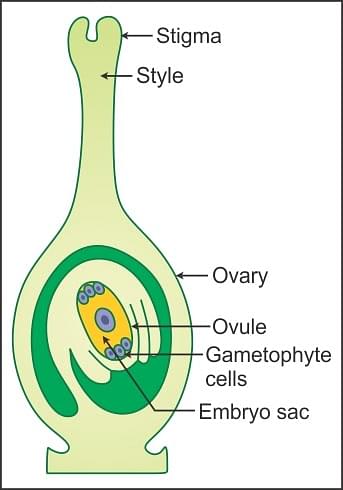
Many Plants reproduce through the process of double fertilization. Double fertilization refers to the process that involves the fusion of two male gametes with one female gametophyte. This fertilization takes place inside the embryo sac.
| Table of Content |
Keyterms: Plants, Fertilization, Double fertilization, Fusion, Gamete, Gametophyte, Embryo sac, Angiosperm, Egg cell, Fruit, Seed, Zygote, Endosperm, Nucleus
Read Also: Difference Between Open and Closed Circulatory System
Double Fertilization Overview
[Click Here for Sample Questions]
Double fertilization is a complex process that occurs in Angiosperms. Double fertilization was first discovered in 1898 by a Russian biologist named Sergei Gavrilovich Navashin.
To understand the process of fertilization in Angiosperms, it is important to understand what Angiosperms are.
Angiosperms are flowering plants. They are the most varied group of terrestrial plants. They bear their seeds in fruits. They are the predominant plants on the earth’s surface and are the most important source of food for birds, animals, and humans.
During the process of double fertilization, a female gamete fuses with two male gametes to form a zygote and a primary endosperm nucleus (PEN). The process involves one egg cell, two sperm cells, and the polar nuclei.
Read More: Lysosomal Storage Disease
Process of Double Fertilization
[Click Here for Sample Questions]
The pollen grains land on the stigma through the process of pollination. The process of germination starts. The pollen has two cells: a pollen tube cell and a generative cell. From there, the pollen tube cell develops and creates a pollen tube through the style. The male gamete then passes through the pollen tube.
Pollen tube requires water, oxygen, and some other chemical signals. As the male gamete is passing through the pollen tube, it is supported by the tissues in the style.
The nucleus of the male gamete divides into two. It travels through the ovary, towards the embryo sac. When the pollen tube reaches the ovule, the polar nuclei fuse into one. The synergids release chemicals that assist the pollen tube’s path. The pollen tube goes into the ovule tube through the micropyle.
One sperm cell fertilizes the polar nuclei (secondary nuclei) that evolves into a triploid cell that further evolves into the primary endosperm nucleus (PEN). The primary endosperm nucleus further develops into the primary endosperm cell (PEC). It eventually evolves into the endosperm. The other sperm cell fertilizes the egg to form a diploid zygote.
This is the process of double fertilization. As one sperm cell fertilizes the polar nuclei and the other fertilizes the egg cell, this process is called double fertilization.

Read More: Difference Between Carpel and Pistil
Development of Embryo
[Click Here for Sample Questions]
As fertilization has already taken place, other sperms can’t enter the ovary. The fertilized ovule starts evolving into a seed and the ovary starts developing into a fruit. (Remember that angiosperms have their seeds within the fruit)
As fertilization has occurred, the development phase has started. The embryo starts developing and the zygote starts splitting. The zygote splits to form the basal cell (also called the lower cell) and the terminal cell (also called the upper cell).
The basal cell develops into a suspensor. This suspensor assists in transporting food and nutrients from the parent plant to the embryo. The terminal cell develops into pro-embryo. In some cases, the shape of the embryo is close to the shape of the heart.
After the process of fertilization, the process of cell division starts, and the zygote splits into the upper-end cell and lower-basal cell. The basal cell evolves into a suspensor that aids in the transportation of food to the developing embryo. The upper terminal cell grows into pro-embryo. This is due to the presence of two primary cotyledons. The embryo grows until it has taken up all the space inside the seed.
The development of the embryo is then withheld but resumes when the seed starts growing.
Also Read:
| Related Articles | ||
|---|---|---|
| Insulin and Glucagon | Application of Enzymes | Why Arteries have thick walls? |
| Population Control | Hormones in Animals | Pollination by Water |
Things to Remember
- Double fertilization is the process of fusion of two male gametes with one female gametophyte.
- Angiosperms (flowering plants) reproduce through the process of double fertilization. The process involves polar nuclei, two sperm cells, and one egg cell.
- The pollen lands on the stigma and creates a pollen tube through the style to reach the ovary.
- The male gamete passes through the pollen tube and divides into two during the travel. It then enters the ovule through synergids. One sperm cell fertilizes the polar nuclei and the other fertilizes the egg.
- The fertilization of an egg leads to the formation of a diploid zygote and fertilization of nuclei leads to the formation of a primary endosperm nucleus. This process is called double fertilization.
- Other sperms can’t enter the ovary anymore. The ovule evolves into a seed and the ovary evolves into a fruit. The development of the embryo starts.
Sample Questions
Ques. Why is the reproductive process of flowering plants called double fertilization?
Ans: The process of reproduction in angiosperms is called double fertilization as the fertilization process takes place in the embryo sac twice. One sperm cell fertilizes the egg cell and the alternate sperm cell fertilizes the polar nuclei.
Ques. What is triple fusion?
Ans: The process of fusion of the sperm cell with the polar nuclei is called triple fusion. The process is called triple fusion as three haploid nuclei are involved in the process: two nuclei from the polar nuclei and one nucleus from the sperm cell.
Ques: What is Pollination?
Ans: The process of transfer of pollen from the male part (anther) of a flower to the female part stigma is called pollination. This allows the process of fertilization to occur. Pollination is aided by pollinating agents such as birds, insects, rain, wind, etc.

Pollination
Ques. The outer layer of the pollen grain is called:
a) Intine
b) Exine
c) Cellulose
d) None of the Above
Ans. b) Exine
Ques. What is the significance of double fertilization?
Ans: Double fertilization increases the chances of polyembryony i.e. a fertilized egg forming more than one embryo. This increases the chances of survival of the plant. Also, the primary endosperm nucleus (PEN) develops into endosperm and provides necessary nutrients to the embryo.
For Latest Updates on Upcoming Board Exams, Click Here:https://t.me/class_10_12_board_updates
Do Check Out:



Comments