



Content Curator
Ginkgophyta has the only extant species in the genus, called Ginkgo biloba. A hardy deciduous tree, the ginkgo is similar to an angiosperm in that it has broad, fan-shaped leaflets with dichotomously branching veins and a woody stem that is often and irregularly branched. Ginkgo is an endangered species because its native populations have been restricted to a tiny area of the mountains in southeast China, although it is now widely farmed around the world.
- Ginkgo trees have microsporangia and megasporangia on distinct trees, just like cycads do.
- Among the fan-shaped leaves, a Ginkgo microstrobilus is borne on a dwarf branch.
- Two microsporangia are seen at the extremities of each stalked appendage on the microstrobilar axis. Megastrobili are produced on long, thin stalks with two terminal ovules on each.
- In most cases, just one ovule develops into a seed. Ginkgophyta has the only extant species in the genus, called Ginkgo stems that resemble conifer stems in terms of anatomy.
- Ginkgo trees have two different types of branches: lengthy primary branches and leaf-bearing dwarf lateral branches.
- Those little shoots evolve into short, stubby stem outgrowths after several years.
Read More: Polyembryony and its Occurrence in Gymnosperms
| Table of Content |
Key Terms: Gymnosperms, Ginkgophyta, Ginkgo Biloba, Angiosperm, Endangered Species.
Gymnosperms
[Click Here for Sample Questions]
In contrast to angiosperms, gymnosperm plants do not encapsulate their ovules. Gymnosperm trees can have branching stems or unbranched stems. Additionally, gymnosperms are unable to produce either fruits or flowers.
- It is generally known that they can endure both dry and wet weather.
- It is thought that gymnosperms were the earliest vascular plants.
- Gymnosperm has a circulatory system that enables it to move water throughout the entire plant.
- It is thought to have been created between 208 and 245 million years ago.
- It is made up of trees like ginkgos, conifers, gnetophytes, and cycads. Spruces, pines, ginkgoes, and firs are some further recognizable trees and bushes.
Read More: Economic Importance of Gymnosperms
Characteristics of Gymnosperms
[Click Here for Sample Questions]
Gymnosperms can be distinguished by the following traits:
- It is well known that gymnosperms are unable to create flowers.
- The seeds that are produced after fertilization don't have a covering and aren't created inside of a fruit. They are unclothed.
- They are typically concentrated in colder locales, particularly those that get snowfall. Pines and firs are two examples. They can also be seen in hot, humid weather.
- Their plants are known to produce needle-structured leaves.
- Gymnosperms often form shrubs or trees and are perennial (live for 2 or 3 years).
- Ovary, style, and stigma are not separate and distinguishable parts of gymnosperms.
- They can be directly pollinated by wind or by birds since they lack the stigma.
- Ginkgophyta has the only extant species in the genus, called Two gametes are produced by the male gametophytes. But just one of them is operational.
- Cones having reproductive features are formed by them.
- Endosperm, which stores nourishment for the plant's growth and development, is known to be present in the seeds.
- It is thought that gymnosperms were the earliest vascular plants. Vascular tissues of these plants aid in the movement of nutrients and water through the Xylem and Phloem.
- Gymnosperms are distinguished by their xylems, which lack any vessels, and their phloem, which lacks companion cells and sieve tubes.
Ginkgophyta
[Click Here for Sample Questions]
Another class of gymnosperms with only one extant species is the Ginkgophyta. There is no known evidence of any of the other species in this class since they are all extinct. Ginkgo trees are another name for them. Only a few regions of China have the natural growth conditions for these plants.
- These plants have an estimated lifespan of a few thousand years.
- Older and thicker trees in the Ginkgophyta species have deeper roots than regular trees do.
- These gymnosperm trees do best in areas with plenty of sunlight and in locations with good water supply and soil drainage.
- These trees are distinguished by their broad, fan-shaped leaves, which turn colors in the autumn.
- These trees may reach heights of up to 160 feet.
- Male or female cones make up these plants.
Read More: Difference Between Xylem And Phloem
Characteristics of Ginkgophyta
[Click Here for Sample Questions]
The living Gingko has some resemblance to all of the Triassic and Jurassic fossil records.
- Group: Ginkgophyta
- Kingdom: Plantae
- Clade: Tracheophytes
From the extant species in this group, Ginkgo Biloba, a few characteristics can be observed as follows–
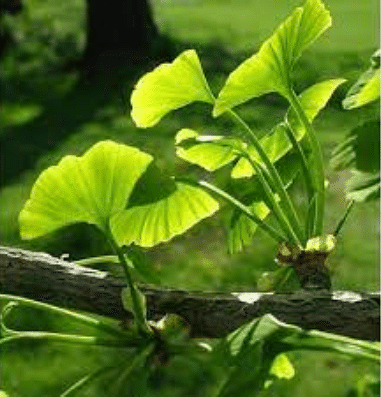
Ginkgophyta
- Double-lobed leaves that resemble fans
- The xylem and phloem are both parts of the vascular system.
- The leaves typically grow in bunches and resemble maidenhair ferns in appearance.
- The trees have two sexes.
- Only the lowest surface of leaves has stomata in a taproot system.
Healthy Benefits and Uses of Ginkgo Biloba
[Click Here for Sample Questions]
A few beneficial health advantages and general usage of this plant are–
- Scientists claim that these subtrees' leaves have been successfully used to treat memory-related conditions like Alzheimer's, mild cognitive impairment, and normal pressure hydrocephalus through ingestion.
- It is well known that ginkgo trees are extremely resistant to pollutants, as well as to illnesses and insect infestations. They were the only living thing to have survived the Hiroshima bombs within a two-mile radius.
- Symptoms of premenstrual syndrome (PMS) may be lessened with ginkgo.
- Additionally, there was no proof that ginkgo extract lowers the risk of heart attack or stroke.
- Positive study findings were also discovered for ADHD, autism, and generalized anxiety disorder by the study's researchers.
Read More: Difference Between Algae and Fungi
Things to Remember
- Ginkgophyta has the only extant species in the genus, called Ginkgo biloba.
- Ginkgo trees have two different types of branches: lengthy primary branches and leaf-bearing dwarf lateral branches.
- In contrast to angiosperms, gymnosperm plants do not encapsulate their ovules.
- Ginkgo trees have microsporangia and megasporangia on distinct trees, just like cycads do.
- Another class of gymnosperms with only one extant species is the Ginkgophyta.
- Older and thicker trees in the Ginkgophyta species have deeper roots than regular trees do.
- These gymnosperm trees do best in areas with plenty of sunlight and in locations with good water supply and soil drainage.
Sample Questions
Ques: What are gymnosperms? (2 marks)
Ans: Gymnosperms are a particular class of flowering plant that produces bare, unprotected seeds. Additionally, gymnosperms don't produce any fruits or blooms.
Ques: Why did ginkgo go extinct? (2 marks)
Ans: The disappearance of the tree is primarily attributable to human activity. Botanists are, nevertheless, employing drastic steps to conserve extinct species.
Ques: What is the last extant species in the Ginkgophyta genus? (1 mark)
Ans: Ginkgo biloba, is the last extant species in the Ginkgophyta genus.
Ques: How are the gymnosperms classified? (3 marks)
Ans: Gymnosperms are classified into 4 categories which are:
- Cycadophyta
- Ginkgophyta
- Gnetophyta
- Coniferophyta
Ques: What is Ginkgophyta used for? (2 marks)
Ans: Scientists claim that these subtrees' leaves have been successfully used to treat memory-related conditions like Alzheimer's, mild cognitive impairment, and normal pressure hydrocephalus through ingestion. It is well known that ginkgo trees are extremely resistant to pollutants, as well as to illnesses and insect infestations. They were the only living thing to have survived the Hiroshima bombs within a two-mile radius.
Ques: State a few characteristics of Gymnosperms. (3 marks)
Ans: Gymnosperms can be distinguished by the following traits:
- It is well known that gymnosperms are unable to create flowers.
- The seeds that are produced after fertilization don't have a covering and aren't created inside of a fruit. They are unclothed.
- They are typically concentrated in colder locales, particularly those that get snowfall. Pines and firs are two examples. They can also be seen in hot, humid weather.
- Their plants are known to produce needle-structured leaves.
- Gymnosperms often form shrubs or trees and are perennial (live for 2 or 3 years).
- Ovary, style, and stigma are not separate and distinguishable parts of gymnosperms.
Ques: State a few characteristics of Ginkgophyta. (3 marks)
Ans: From the extant species in this group, Ginkgo Biloba, a few characteristics can be observed as follows–
- Double-lobed leaves that resemble fans
- The xylem and phloem are both parts of the vascular system.
- The leaves typically grow in bunches and resemble maidenhair ferns in appearance.
- The trees have two sexes.
- Only the lowest surface of leaves has stomata in a taproot system.
Ques: Which stage dominates the life cycle of gymnosperms? (1 mark)
Ans: The gymnosperm's haploid stage predominates throughout its life cycle. It begins as a spore and matures into haploid gametes.
For Latest Updates on Upcoming Board Exams, Click Here: https://t.me/class_10_12_board_updates
Check-Out:



Comments