




Download the Class 11 Biology Chapter 14 Breathing and Exchange of Gases NCERT Book PDF, the official 2026-27 NCERT textbook chapter. It opens the human physiology unit and explains how the respiratory system takes in oxygen and removes carbon dioxide, a topic that returns repeatedly in the Boards, NEET and CUET.
- Official NCERT 2026-27 chapter, clean and print-ready.
- Covers respiratory organs, the mechanism of breathing, gas exchange, transport of gases and respiratory disorders.
- Read it alongside the solved exercises and the revision notes linked below.
This Class 11 Biology Chapter 14 Breathing and Exchange of Gases NCERT Book PDF is the official 2026-27 NCERT text, checked page by page against the latest edition.
What Class 11 Biology Chapter 14 Breathing and Exchange of Gases Covers
The chapter moves from the different respiratory organs used across the animal kingdom to the detailed structure of the human respiratory system, then explains how air is drawn in and pushed out, how oxygen and carbon dioxide diffuse across the alveoli, and how the blood carries these gases. It closes with the neural regulation of breathing and common disorders such as asthma and emphysema. The official NCERT sections are listed below so students can see exactly what the chapter contains.
| Section | Topic |
|---|---|
| 14.1 | Respiratory Organs |
| 14.1.1 | Human Respiratory System |
| 14.2 | Mechanism of Breathing |
| 14.3 | Exchange of Gases |
| 14.4 | Transport of Gases |
| 14.4.1 | Transport of Oxygen |
| 14.4.2 | Transport of Carbon dioxide |
| 14.5 | Regulation of Respiration |
| 14.6 | Disorders of Respiratory System |
Key Concepts You Will Study
Students should read this chapter with a diagram of the human respiratory tract in front of them, because most questions test the sequence of structures and the numbers attached to lung volumes and gas pressures. The ideas of partial pressure, oxygen dissociation and the roles of haemoglobin appear again in circulation and in NEET physiology questions, so they are worth fixing firmly now. The main ideas to master are listed below.
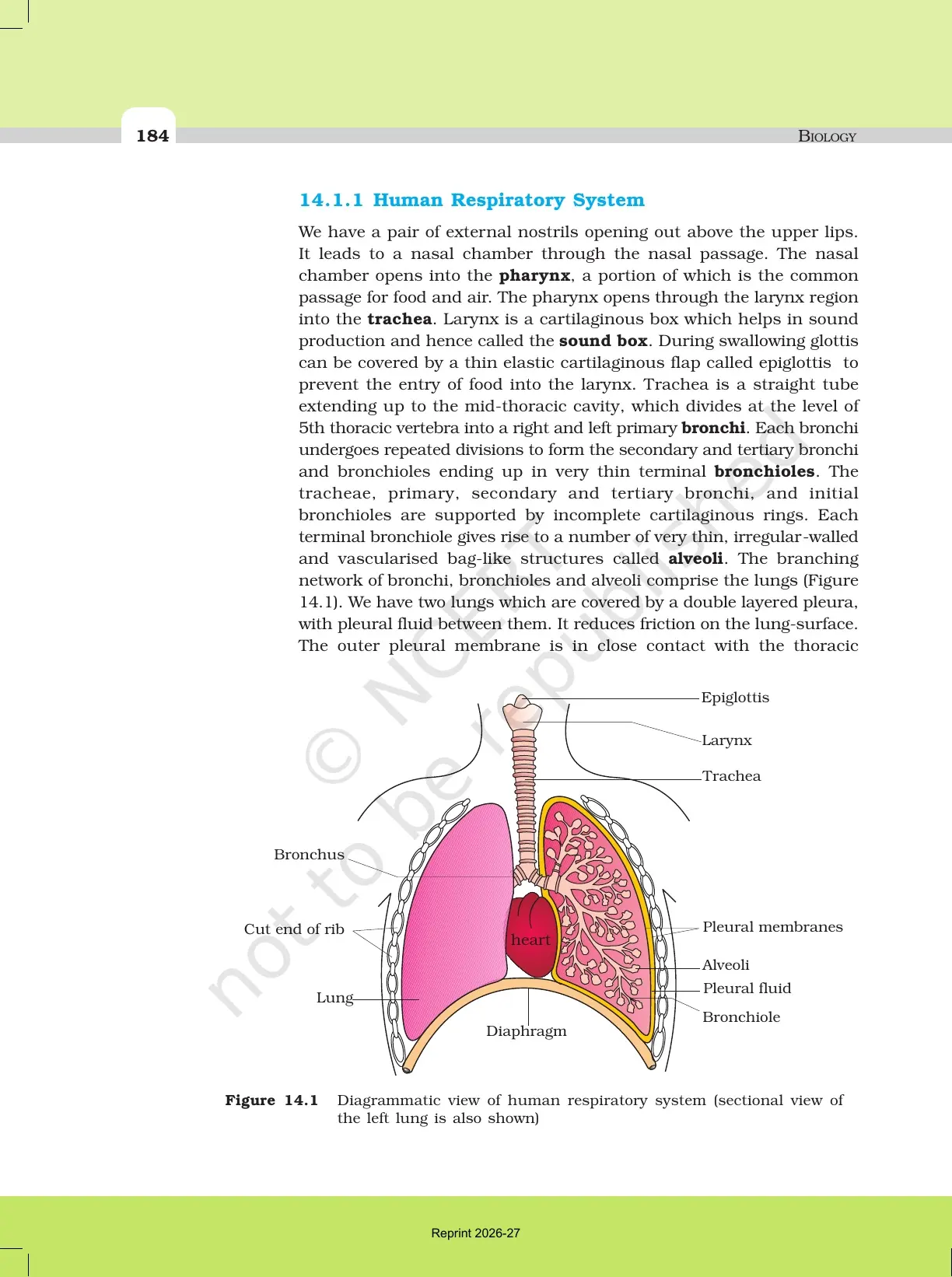
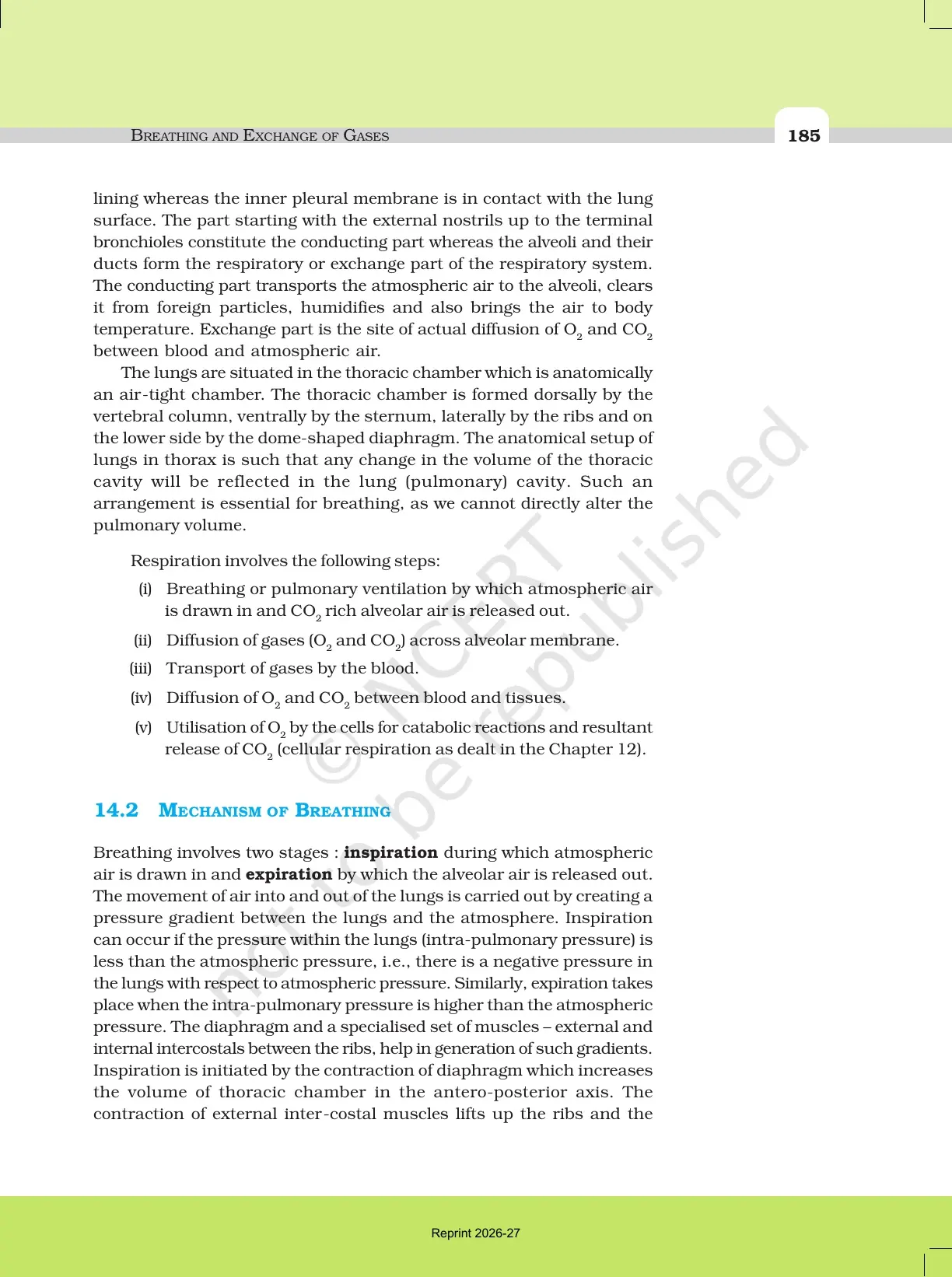
- The pathway of air from the external nostrils to the alveoli and the parts of the human respiratory system.
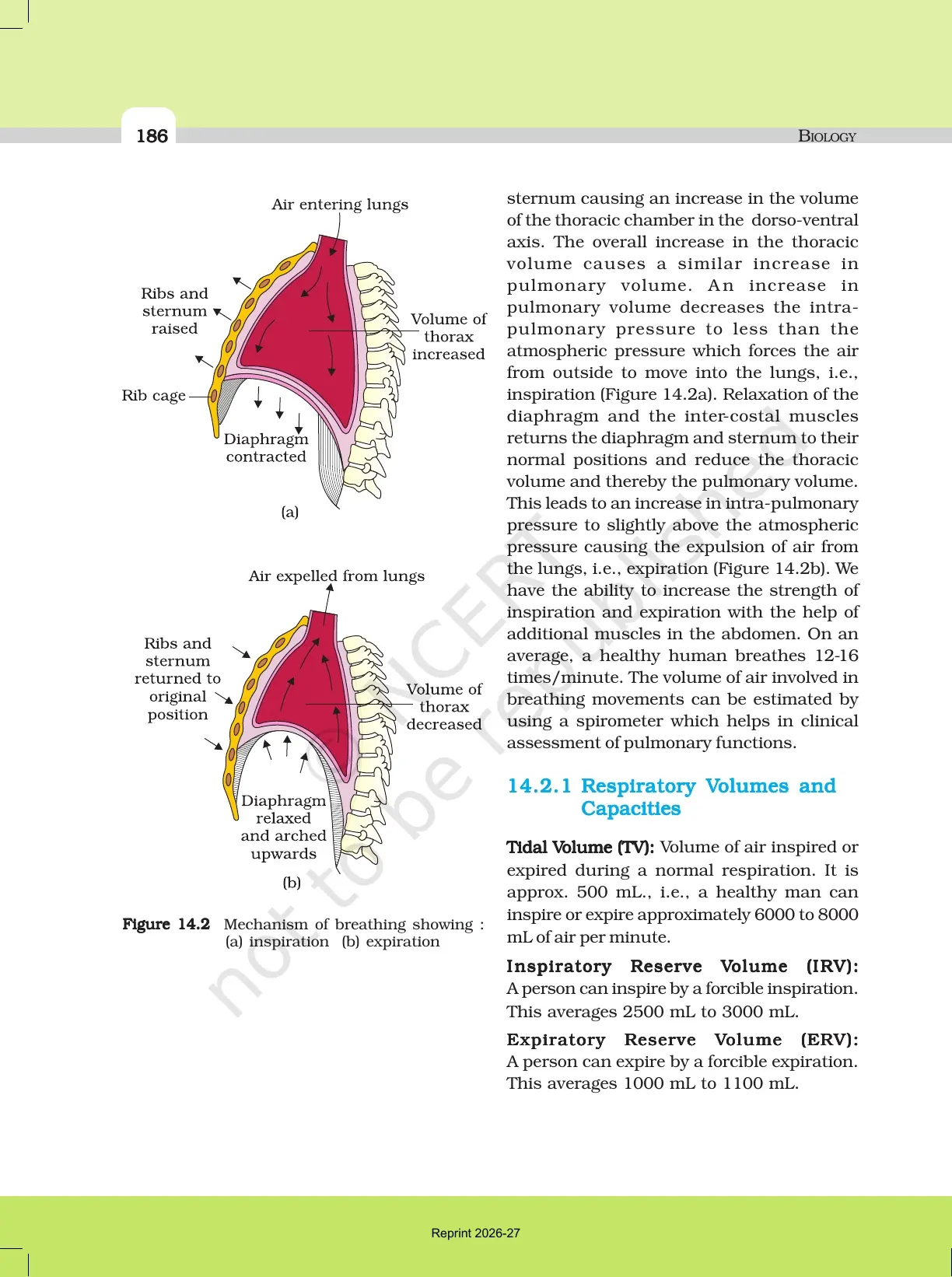
- The mechanism of breathing, the role of the diaphragm and intercostal muscles, and respiratory volumes and capacities such as tidal volume and vital capacity.
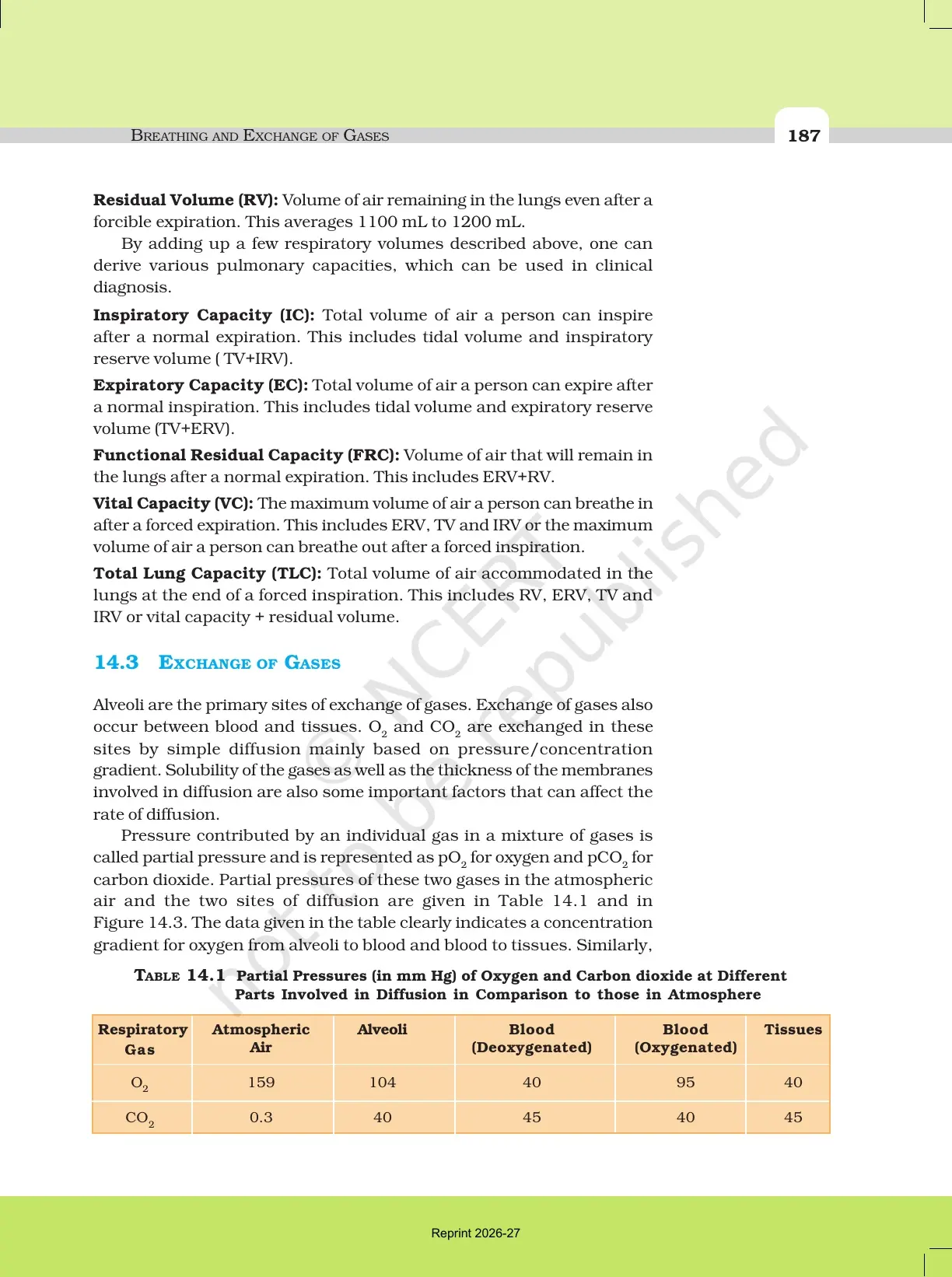
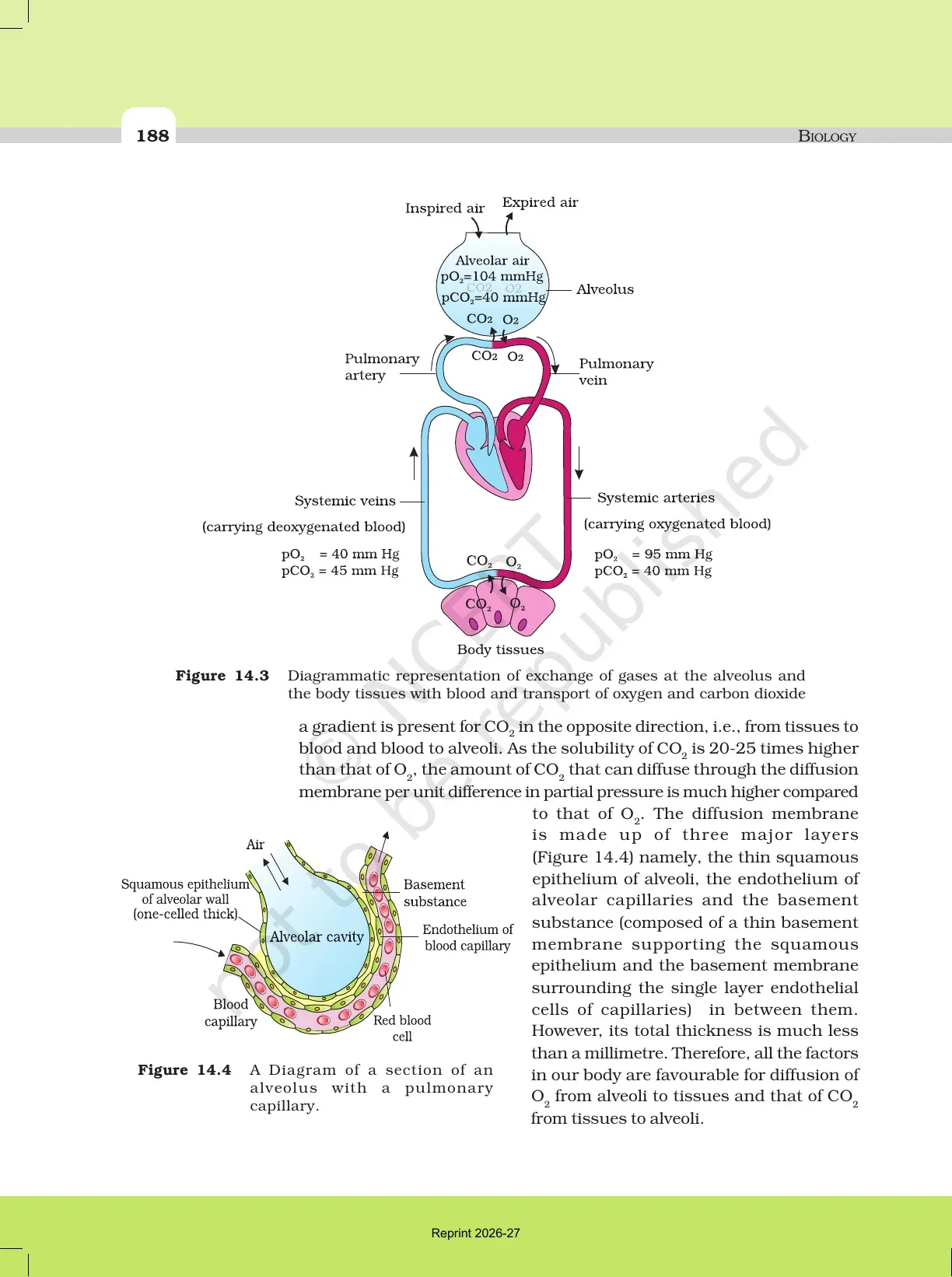
- Exchange of gases at the alveoli and tissues, driven by differences in partial pressure of O2 and CO2.
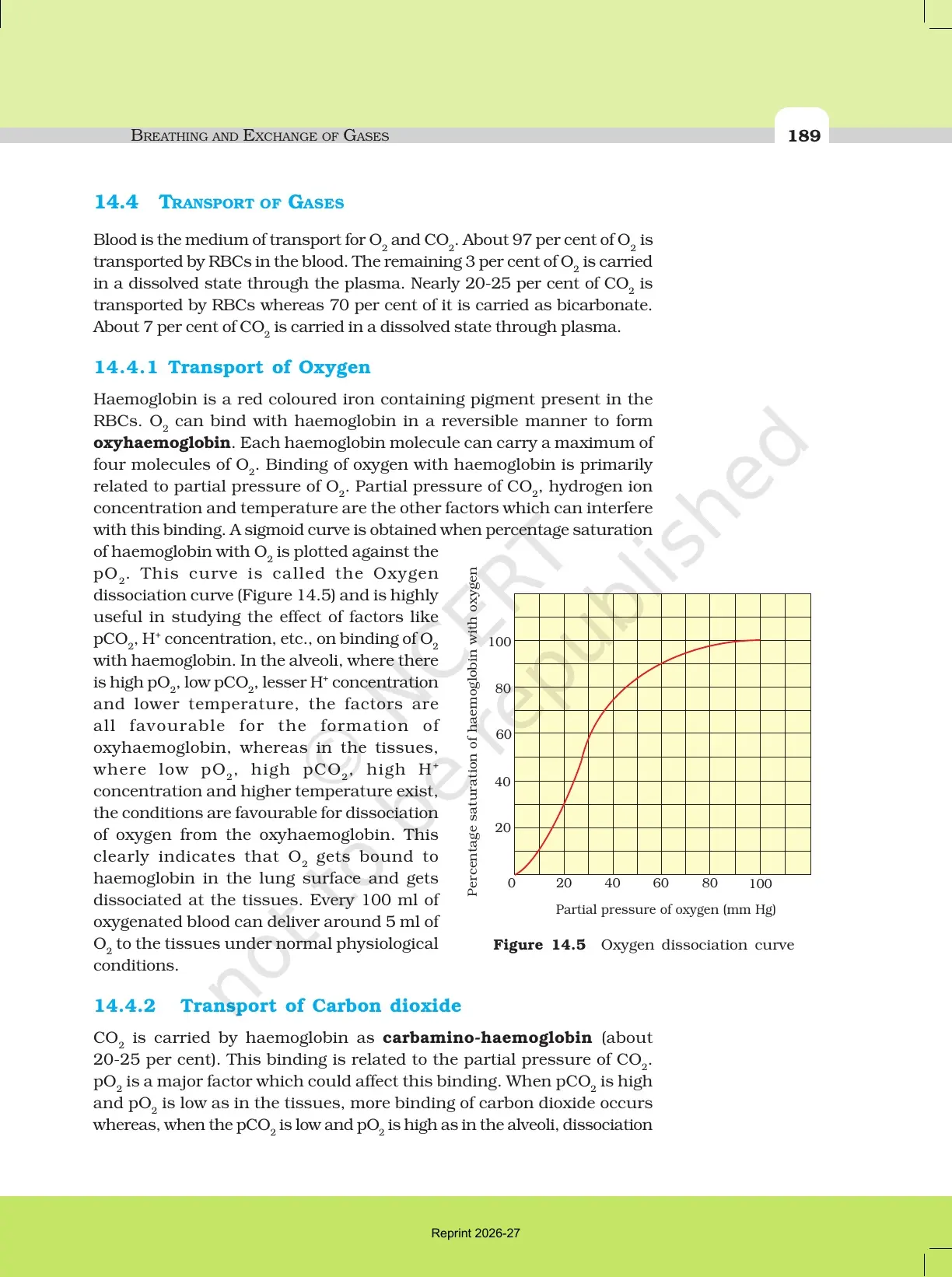
- Transport of oxygen as oxyhaemoglobin and the sigmoid oxygen dissociation curve, plus the Bohr effect.
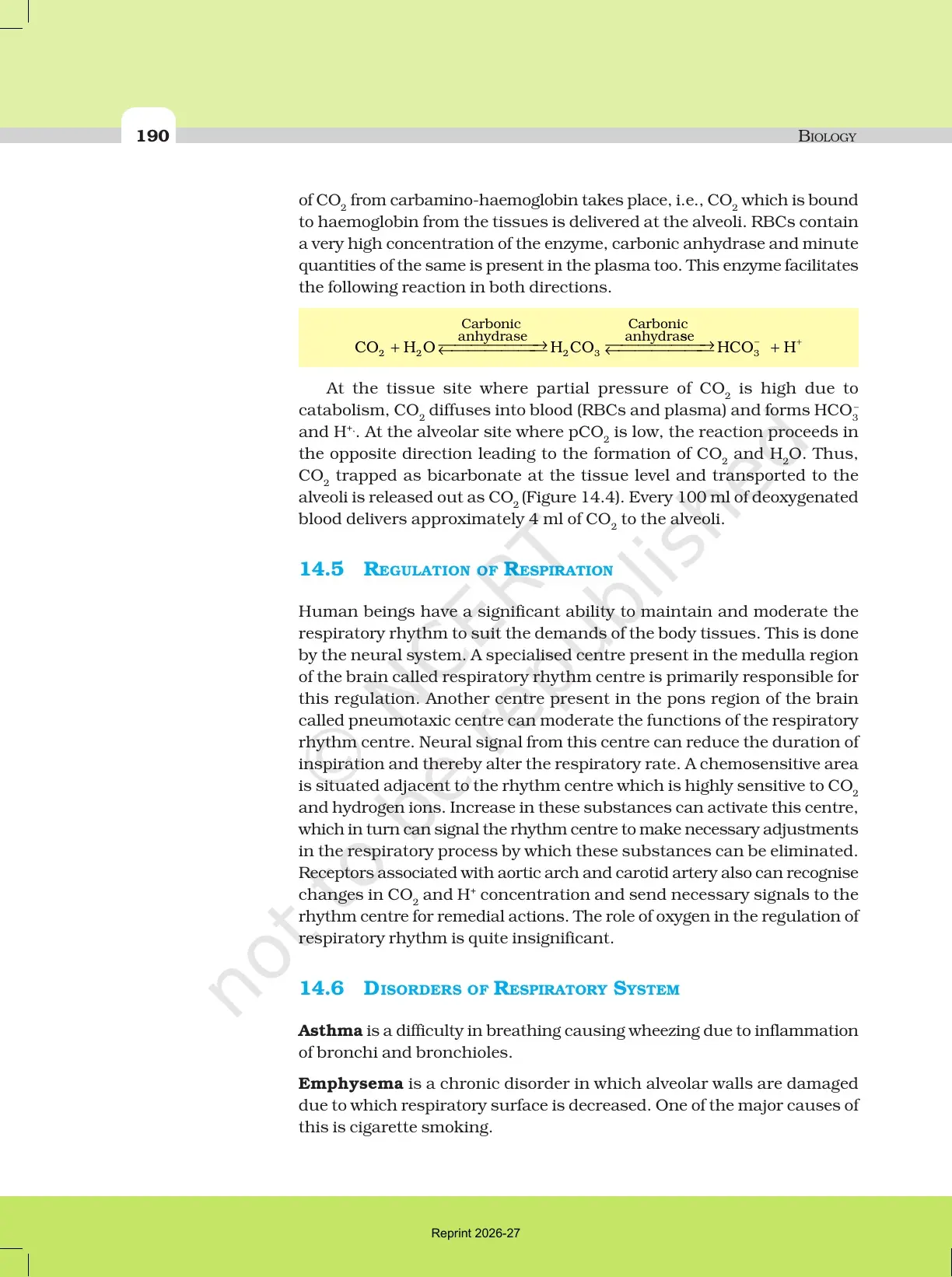
- Transport of carbon dioxide as bicarbonate, in dissolved form and as carbamino-haemoglobin, and the role of carbonic anhydrase.
- Regulation of respiration by the respiratory centre, and disorders such as asthma, emphysema and occupational lung diseases.
Why Download the NCERT Book PDF for This Chapter
The NCERT textbook is the single most important source for the CBSE exam, and a large share of NEET and CUET questions from this chapter are lifted from its definitions, its labelled figures and the values given for lung volumes. Because breathing physiology mixes named structures with exact numbers, reading it from the official PDF keeps students from picking up wrong figures from secondary notes. The points below explain why the book PDF is worth keeping on your device.
- Board and NEET questions on gas transport, the dissociation curve and respiratory volumes come straight from this text.
- The labelled diagram of the human respiratory system and the alveolar gas exchange figure match the format examiners expect.
- Reading offline from the PDF keeps the numerical values for tidal volume, vital capacity and partial pressures accurate.
How to Use the NCERT Book PDF for Breathing and Exchange of Gases
Read the chapter once fully to follow the journey of a breath of air, then work through it again with the diagrams and the numerical values noted separately. Since this chapter carries several volumes, capacities and pressure values, a short ordered plan keeps them from blurring together. The routine below works well for most students preparing for the Boards and NEET.
- Label a blank diagram of the human respiratory system from memory after each read.
- Make a single table of respiratory volumes and capacities with their definitions and approximate values.
- Attempt the back exercises, then check them against the NCERT Solutions linked below.
- Revise the oxygen dissociation curve and the three forms of carbon dioxide transport the night before the exam.
Other Class 11 Biology Breathing and Exchange of Gases Resources
Pair the textbook PDF with the solved answers, revision notes, formula sheet and exemplar material for the same chapter so that reading, practice and revision all stay aligned to the same NCERT sections. The linked resources below cover Breathing and Exchange of Gases in full and are matched to the 2026-27 syllabus.
| Resource | Link |
|---|---|
| NCERT Solutions | Breathing and Exchange of Gases NCERT Solutions |
| Revision Notes | Breathing and Exchange of Gases Notes |
| Formula Sheet | Breathing and Exchange of Gases Formula Sheet |
| Exemplar Solutions | Breathing and Exchange of Gases Exemplar Solutions |
| Exemplar Book PDF | Breathing and Exchange of Gases Exemplar Book PDF |
All Class 11 Biology NCERT Book Chapters
Students revising the whole human physiology unit can jump to the official NCERT book PDF of any other Class 11 Biology chapter from the table below. The current chapter is highlighted, and every other row opens the matching 2026-27 chapter PDF.
Class 11 Biology Chapter 14 Student Feedback
Breathing and Exchange of Gases is one of the first physiology chapters students revise before the Boards and NEET, and their feedback helps new students plan their reading. Across more than 10,000 students who used these Collegedunia resources for the 2026 boards, the response to the NCERT book PDF for this chapter has been strong, as the summary below shows.
- Over 9 in 10 students said the labelled respiratory system diagram in the NCERT PDF was clearer than their coaching notes.
- Students rated the oxygen dissociation curve as the single most useful figure to revise before NEET.
- Most reported that noting the lung volumes directly from the NCERT text reduced silent mistakes in numerical questions.
FAQs on Class 11 Biology Chapter 14 NCERT Book PDF
Breathing and Exchange of Gases NCERT PDF - Frequently Asked Questions
Ques. Is this the latest 2026-27 NCERT Book for Class 11 Biology Chapter 14?
Ans. Yes. This is the official NCERT 2026-27 textbook chapter for Class 11 Biology Chapter 14 Breathing and Exchange of Gases, matched page by page against the latest rationalised edition.
Ques. What topics are in Class 11 Biology Chapter 14?
Ans. The chapter covers respiratory organs and the human respiratory system, the mechanism of breathing, exchange of gases at the alveoli and tissues, transport of oxygen and carbon dioxide, regulation of respiration, and disorders of the respiratory system such as asthma and emphysema.
Ques. Is the NCERT Book enough for this chapter in NEET and CUET?
Ans. The NCERT Book is the base for this chapter, and most NEET and CUET questions on gas transport, the dissociation curve and respiratory volumes are drawn straight from its text and diagrams. Pair it with the Exemplar for extra higher-order practice.
Ques. Where can I download the Class 11 Biology Chapter 14 NCERT Book PDF?
Ans. You can download the Class 11 Biology Chapter 14 Breathing and Exchange of Gases NCERT Book PDF free from the download card at the top of this page, in both standard and HD quality.



Comments